Federal Water Tap, April 21, 2025: Agencies Fast-Track Controversial #FossilFuel and Mining Projects in Great Lakes, #Arizona — Brett Walton (circleofblue.org)

Click the link to read the article on the Circle of Blue website (Brett Walton):

April 19, 2025

The Rundown

  • Army Corps expedites permit process for Line 5 oil tunnel that crosses beneath the Great Lakes.
  • White House fast-tracks 10 mining projects in its quest for domestically produced minerals.
  • FEMA cancels grant program meant to prepare communities for weather hazards, while USDA overhauls climate-smart agriculture grant program.
  • Federal agencies intend to shrink wildlife habitat protections under the Endangered Species Act.
  • Judge sets a trial date for Rio Grande lawsuit between New Mexico and Texas.
  • EPA extends public comment period for health risk assessment of PFAS in sewage sludge.

And lastly, the Justice Department seeks to end an agreement to improve sewage infrastructure in Alabama.

“The DOJ will no longer push ‘environmental justice’ as viewed through a distorting, DEI lens. President Trump made it clear: Americans deserve a government committed to serving every individual with dignity and respect, and to expending taxpayer resources in accordance with the national interest, not arbitrary criteria.” – Assistant Attorney General Harmeet K. Dhillon of the Justice Department’s Civil Rights Division, as reported by Inside Climate News.

Dhillon is referring to a Biden-era civil rights agreement with the state of Alabama that sought to improve sewage infrastructure in the state’s poorest counties, which are also majority Black. The Justice Department is trying to end that agreement.

The agreement directed Alabama agencies to take a number of actions, such as halting referral of home wastewater violations to law enforcement and expanding a public health campaign about the dangers of raw sewage. It included a sewage system assessment and an infrastructure plan for at-risk areas.

By the Numbers

$882 Million: Funding that FEMA is rescinding from the Building Resilient Infrastructure and Communities program, which was meant to prepare towns for floods, sea level rise, hurricanes, and heat. FEMA is canceling the grant program, Engineering News Record reports.

$3 Billion: Biden-era funding for the Partnership for Climate-Smart Commodities that is being retooled by the Trump administration. The U.S. Department of Agriculture said it will reevaluate the program it has rebranded as Advancing Markets for Producers to ensure that less money is spent on administrative costs. Expenditures under the previous grants that were incurred through April 13 will be paid out.

Great Lakes satellite photo via Wikipedia.

News Briefs

Line 5 Tunnel Expedited
The Army Corps of Engineers determined that the Line 5 tunnel, a proposal to drill an oil pipeline tunnel beneath the strait that separates lakes Michigan and Huron, is being put on the permitting fast track.

The determination is in response to President Donald Trump’s declaration of a national energy emergency in order to speed up the permitting and construction of fossil fuel infrastructure.

Carrie Fox, an Army Corps spokesperson, told Circle of Blue that the new permit review procedures and timeline are not known right now.

“We are coordinating with the applicant, who is Enbridge, and also coordinating with the Council on Environmental Quality, who will assist in establishing the review timeline,” Fox said. “So until those steps take place, we don’t have a timeline. And so we won’t know how exactly it’ll change yet. We just know right now that the permit has been placed under emergency procedures, but the timeline is to be determined.”

Enbridge proposes drilling a 3.6-mile tunnel beneath the Straits of Mackinac. The existing seven-decade-old pipeline sits exposed on the lakebed. It has been hit by ship anchors and a rupture would be calamitous for Great Lakes ecology, tourism, and water supplies.

Six Great Lakes tribes, after learning in March that the project permitting would likely be expedited, withdrew from the federal review process in protest, the Milwaukee Journal Sentinel reports.

Mining Projects Fast-Tracked
The White House put 10 mining projects on the fast-track for regulatory approval, continuing the administration’s desire for more domestically produced minerals.
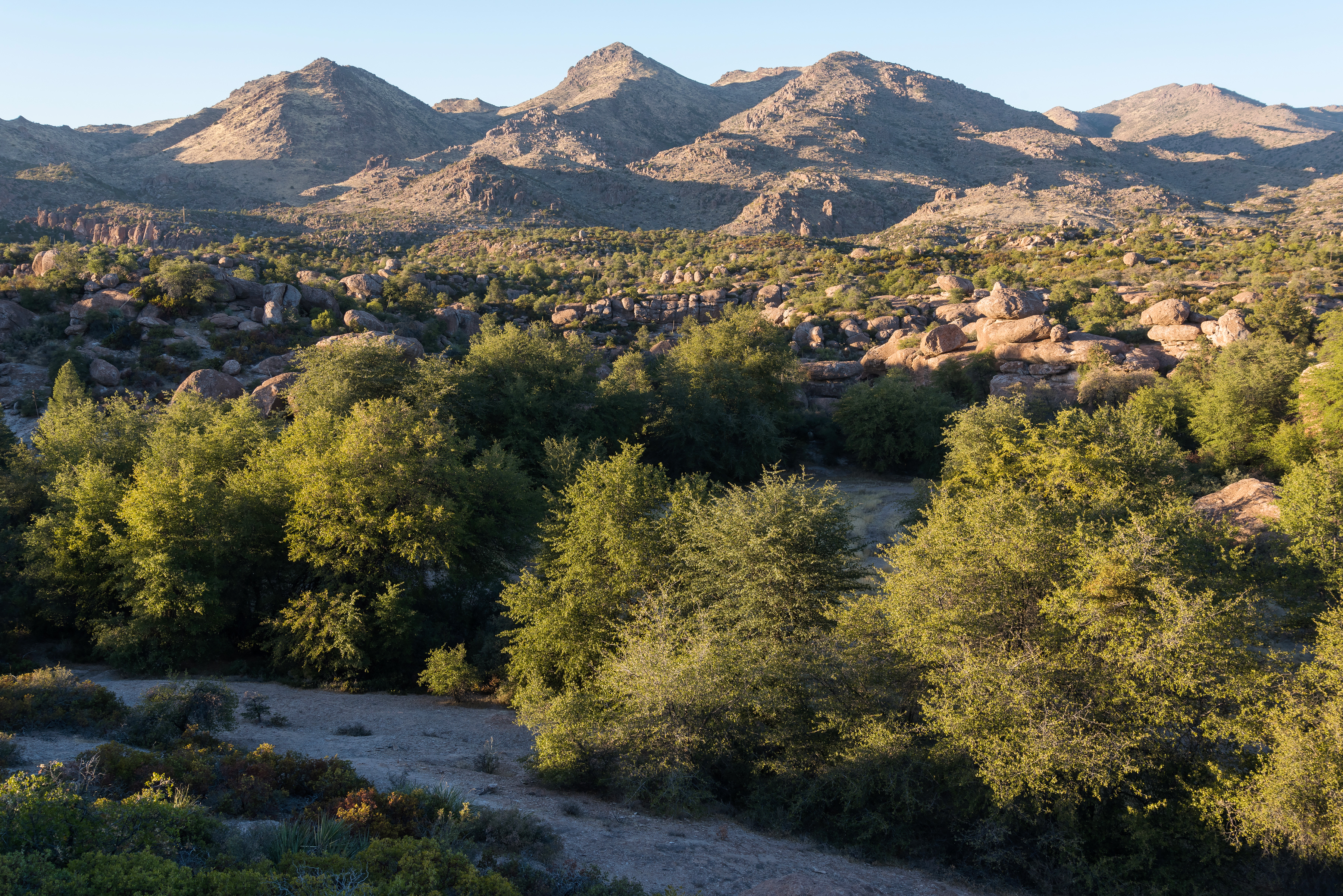
Oak Flat, Arizona features groves of Emory oak trees, canyons, and springs. This is sacred land for the San Carlos Apache tribe. Resolution Copper (Rio Tinto subsidiary) lobbied politicians to deliver this National Forest land to the company with the intent to build a destructive copper mine. By SinaguaWiki – Own work, CC BY-SA 4.0, https://commons.wikimedia.org/w/index.php?curid=98967960

The list includes the Resolution Copper mine, in Arizona, which would be located on land that is sacred to the Apache people. Tribe members have petitioned the U.S. Supreme Court to halt the project, the Arizona Republic reports.

The U.S. Department of Agriculture, the lead permitting agency for the Resolution project, will update the timeline by May 2.

The other mining projects would produce gold, phosphate, copper, lithium, and other critical minerals.

Redefining the Endangered Species Act
Two federal agencies that oversee the Endangered Species Act intend to eliminate the definition of “harm” because it does not fit with the new administration’s interpretation of a recent Supreme Court ruling.

The National Marine Fisheries Service and the U.S. Fish and Wildlife Service had considered harm to mean habitat destruction. No longer, after the Loper Bright decision that the administration reads as curtailing agency authority in this matter.

The only wrongful actions under the ESA would be those that “take” an animal, meaning to capture, injure, or kill it.

The proposed change would apply only to new permits and would not affect existing actions. Public comments are being accepted through May 19 via www.regulations.gov using docket number FWS-HQ-ES-2025-0034.

Studies and Reports

Army Corps Water Storage Agreements
The Army Corps could improve its communication with utilities about the fees it charges them for water storage space in its reservoirs, according to a Government Accountability Office report.

The fees are a portion of the cost to operate and maintain the reservoirs. The Corps had 438 water storage agreements nationwide, as of 2023.
Tile Drainage and Transportation
The U.S. Geological Survey published a report describing how drainage from farm fields affects downstream flows.

The only wrongful actions under the ESA would be those that “take” an animal, meaning to capture, injure, or kill it.

The proposed change would apply only to new permits and would not affect existing actions. Public comments are being accepted through May 19 via www.regulations.gov using docket number FWS-HQ-ES-2025-0034.

Studies and Reports

Army Corps Water Storage Agreements
The Army Corps could improve its communication with utilities about the fees it charges them for water storage space in its reservoirs, according to a Government Accountability Office report.

The fees are a portion of the cost to operate and maintain the reservoirs. The Corps had 438 water storage agreements nationwide, as of 2023.

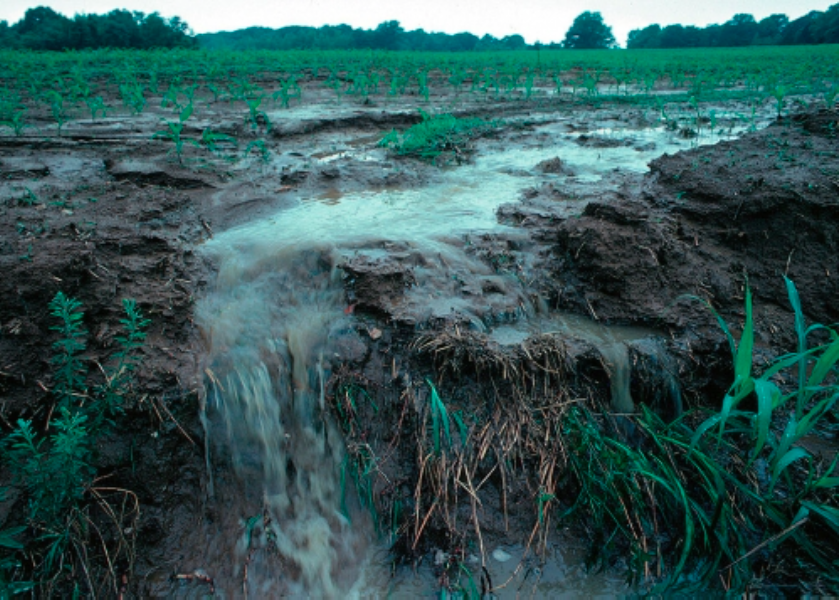
View of runoff, also called nonpoint source pollution, from a farm field in Iowa during a rain storm. Topsoil as well as farm fertilizers and other potential pollutants run off unprotected farm fields when heavy rains occur. (Credit: Lynn Betts/U.S. Department of Agriculture, Natural Resources Conservation Service/Wikimedia Commons)

Tile Drainage and Transportation
The U.S. Geological Survey published a report describing how drainage from farm fields affects downstream flows.

Tile drains, common in the Midwest, move water from beneath fields into ditches.

The report was supported by state transportation departments, which want to build roads, bridges, and culverts that can withstand high water flows.

On the Radar

Future Army Corps Projects
The Army Corps is seeking proposals from states, tribes, and regional bodies for projects to be considered for future feasibility studies or improvements.

Proposals are due August 15.

PFAS in Sewage Sludge
The EPA is extending the public comment period for its draft risk assessment of two PFAS in sewage sludge, also known as biosolids.

Comments are now due August 14. Submit them via http://www.regulations.gov using docket number EPA-HQ-OW-2024-0504.

In the assessment, the agency evaluated risks to people living on or near lands where these biosolids are applied. The analysis, which looked at PFOA and PFOS, also considered risks for people whose primary consumption of water and food comes from these lands. It is not intended to assess risk for the general public.

Rio Grande and Pecos River basins. Map credit: By Kmusser – Own work, Elevation data from SRTM, drainage basin from GTOPO [1], U.S. stream from the National Atlas [2], all other features from Vector Map., CC BY-SA 3.0, https://commons.wikimedia.org/w/index.php?curid=11218868

Rio Grande Lawsuit
The lawsuit between Texas and New Mexico over water supply from the Rio Grande will have a 10-day trial starting June 9, Source NM reports.

The parties to the case, which include Colorado and the federal government, are continuing to seek a mediated solution before the trial begins.

Federal Water Tap is a weekly digest spotting trends in U.S. government water policy. To get more water news, follow Circle of Blue on Twitter and sign up for our newsletter.

A dam upgrade left one Colorado section of the #RioGrande dry in the winter. What will it take for water to flow again? Local group says state, irrigation district failed to fulfill promises in project — The #Denver Post

Rio Grande Reservoir release. Photo credit: Rio Grande Basin Roundtable

Click the link to read the article on The Denver Post website (Elise Schmelzer). Here’s an excerpt:

January 5, 2025

The mighty and fabled Rio Grande dwindles to barely a trickle in the winter west of Creede, exposing nearly a mile of rocky riverbed to dry under the weak sun. This section of the river near its headwaters wasn’t supposed to be left dry in the winter, according to environmental groups. A rehabilitation project on the dam that creates the Rio Grande Reservoir was billed as an upgrade that would make the river healthier and improve recreation throughout the year. But even four years after the construction project concluded, those promises haven’t materialized. That’s because the dam’s new valves cannot safely release water during the winter, according to the Committee for a Healthy Rio Grande, a group formed to push for more water releases from the reservoir for fishing, rafting and environmental health. The irrigation district that operates the dam closes the valves from November through March. The lack of water in the winter kills off aquatic insects and vegetation — the base of the river ecosystem’s food cycle…

A solution may be in the works. After four years, the San Luis Valley Irrigation District — which owns and operates the reservoir — on Dec. 1 applied for state grant money to study how the dam’s valves could be modified to work in the winter, said Cole Bedford, the chief operating officer of the Colorado Water Conservation Board

“We are developing a solution that will safely provide low-flow releases during the winter,” San Luis Valley Irrigation District Superintendent Rob Phillips said in an emailed statement.  “And, we look forward to continuing our work with those water users and organizations in the San Luis Valley who have a unique and valued history of working together to find constructive solutions.”

The issue is part of a larger challenge: How should Colorado balance the different uses of its water as climate change shrinks supplies and adds volatility to decades-old climate patterns?

River advocates say promises broken on state-funded #RioGrande dam safety project — Jerd Smith (Fresh Water News)

Rio Grande Reservoir

Click the link to read the article on the Water Education Colorado website (Jerd Smith):

September 12, 2024

Four years after a high-profile dam restoration project was completed in the scenic headwaters of the Rio Grande, promises to deliver water for fish during the winter and other recreational benefits have not been met, environmental groups charge.

The Rio Grande Reservoir Project was funded by state loans and public grants provided by the Colorado Water Conservation Board, which often bases financing approvals, in part, on a project’s ability to serve multiple purposes, including water for fish, habitat and kayakers.

“The Colorado Water Conservation Board … provided $30 million in the form of loans and grants to complete the project,” the CWCB said In a project update posted on its website. “Benefits include: instream flow enhancement; channel maintenance; outdoor recreation opportunities; terrestrial and aquatic wildlife habitat; irrigation, augmentation; and storage to comply with the Rio Grande Compact between Colorado, New Mexico, and Texas.”

The public-private project was completed in 2020.

The CWCB declined an interview request for this story, but said in an email that there were no specific conditions in the loans and grants tied to providing environmental benefits.

“CWCB does not have the ability to impose extra terms on the recipients of funds that are not articulated in the funding agreements. In the case of the Rio Grande Reservoir Rehabilitation, the final deliverable was completion of the project,” a spokesperson said.

Still Kevin Terry, southwest program director for Trout Unlimited, said the project would likely never have been funded without assurances that the dam would be operated differently to help the river, including releasing water in the winter to aid the fish and changing the time water is released throughout the summer to keep the river cooler and healthier during prime fishing and kayaking season.

“There were lots of environmental benefits touted before the Colorado Water Conservation Board and the roundtable,” Terry said,  referring to the Rio Grande Basin Roundtable. The roundtable is one of nine public groups across the state’s major river basins that help address local water issues and funnel state grants to projects they approve.

The San Luis Valley Irrigation District, which owns and operates the dam, serves farms around Center and has delivered water from the dam since 1912, according to its website. Neither District President Randall Palmgren nor Superintendent Robert Phillips responded to numerous requests for comment.

The district uses the reservoir to store water for irrigators. Trout Unlimited and others aren’t asking for any water, they say, just that existing water that would be released anyway be sent downstream at times that are beneficial to the river.

Screenshot from Google Maps

Among key complaints by environmentalists is that the irrigation company is not allowing water to flow out of the rehabilitated dam during the winter, something that would benefit young fish and allow them to grow larger for the next fishing season.

Terry said the irrigation district has said it can’t deliver that winter water because it is difficult to operate the new equipment in freezing winter weather. But Terry said he doesn’t understand how the project could have been built without the ability to deliver in cold weather, something that occurs routinely in other reservoirs in the valley.

Jim Loud, a Creede resident and avid angler who lives on the river, said he and others are tired of waiting for the river to receive the benefits many believed would have been delivered by now.

“All we want is to get them to do what they said they were going to do,” said Loud, citing numerous CWCB documents dating back several years outlining the environmental benefits of the project. Loud is part of the Committee for a Healthy Rio Grande.

Rio Grande and Pecos River basins. Map credit: By Kmusser – Own work, Elevation data from SRTM, drainage basin from GTOPO [1], U.S. stream from the National Atlas [2], all other features from Vector Map., CC BY-SA 3.0, https://commons.wikimedia.org/w/index.php?curid=11218868

The old days weren’t fun

The conflict comes as the Rio Grande Basin, which begins high above Creede and flows south to the Gulf of Mexico, continues to struggle with declining aquifer levels due to heavy agricultural use and low stream flows due to drought and climate change. In Colorado, the Rio Grande waters a potato industry that is one of the largest in the nation.

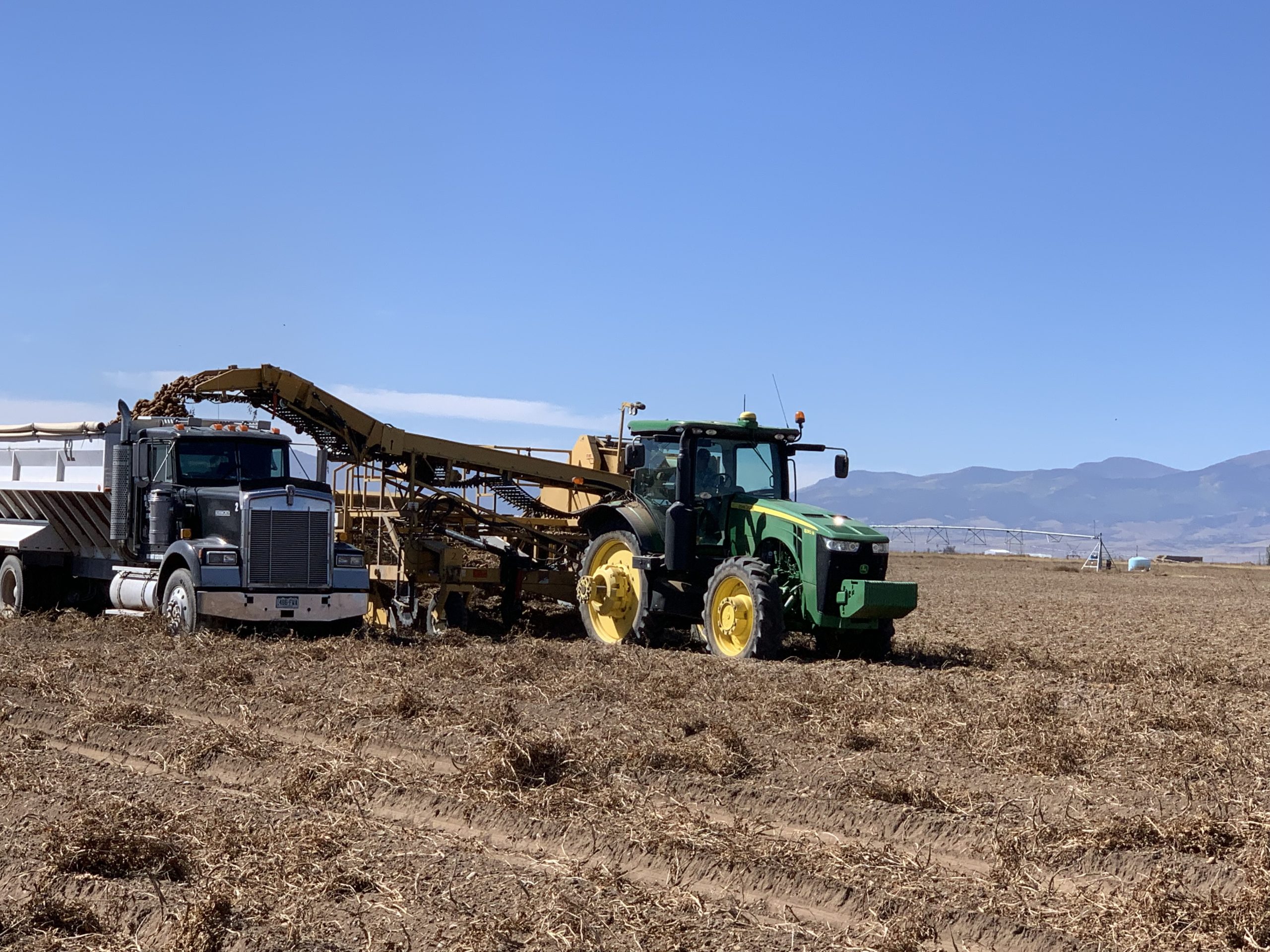
The last days of the potato harvest. Photo credit: The Alamaosa Citizen

Creede local Dale Pizel, who owns a ranch on the river and caters to the fishing community, said river conditions have improved some since the dam was rebuilt. Prior to the project, the irrigation company would routinely dry up the river for weeks during the high summer tourist season to make repairs to the dam.

“That doesn’t happen anymore,” Pizel said. He too serves on the Rio Grande Basin Roundtable, which also approved some grants for the project.

“I voted for that project knowing it would have environmental benefits, and it did,” Pizel said, because there is no need for the irrigators to dry up the river to repair a failing dam anymore.

Still, he said, if environmental promises are being made publicly, the state needs a better way to make sure they are kept.

Trout Unlimited’s Terry said for years he was hopeful that the rehabilitated dam would serve as another multiuse storage project in the water-short valley helping farmers and the environment.

“We are so disappointed in the delivery of what was promised and the lack of the CWCB holding the irrigation district accountable in any way,” he said.

Altering the dam’s new equipment so that winter releases can occur will likely require spending about $5 million, according to Terry.

Pizel and others hope a resolution between the farmers and the environmentalists can occur without legal action.

“We don’t want to start thumping each other in the chest,” Pizel said. “That’s the way it was in the old days. It was not fun.”

More by Jerd Smith

Jerd Smith is editor of Fresh Water News. She can be reached at 720-398-6474, via email at jerd@wateredco.org or @jerd_smith.

A look at the San Luis Valley Irrigation District

Rio Grande Reservoir

From The Valley Courier (Helen Smith):

The San Luis Valley Irrigation District and Rio Grande Reservoir is one of the biggest success stories to ever emerge from the Rio Grande Basin. As a key provider of water from critical sources to the San Luis Valley and beyond, this district plays a pivotal role in the water delivery cycle that stretches all the way to Mexico. SLVID is the keeper of the gateway for the Rio Grande.

Originally formed on December 8th, 1908 as a result of the Irrigation Act of 1905, the San Luis Valley Irrigation District continues to serve water users over 100 years later. SLVID is governed by a board of directors that is composed of five elected members. The current board is led by president Randall Palmgren. The district encompasses portions of Rio Grande, Saguache and Alamosa Counties with the headquarters being in Saguache County (Center).

Quite simply, SLVID exists to serve the famers who reside in the counties it is made of. SLVID delivers water to 62,000 acres of highly productive farmground in the Center-Hooper areas. Crops that are produced within district boundaries include fresh market potatoes, Coors barley, and dairy quality alfalfa.

One of the key assets that SLVID possesses is the Rio Grande Reservoir. In 1888, farmers near the Center-Hooper area established the Farmer’s Union Irrigation Company. The intent was to build a canal system that could deliver irrigation water to 90,000 acres. The Farmer’s Union Canal became a reality. However, the need for a secondary source of water quickly became apparent for the control of these deliveries and the insufficient amount of water that the canal was delivering because it had a junior water right. Due to an embargo from the federal government which prevented any new dams/reservoirs from being constructed on the Rio Grande this initiative was put on hold. The present site of the reservoir was purchased from A.V. Tabor who had claimed it in 1903. The construction plans began in earnest once the embargo was lifted in 1907. In 1908, the process of forming the San Luis Valley Irrigation District began in order to raise the additional capital that would be needed for construction. The first board of directors took shape. On June 10th, 1910, the San Luis Valley Irrigation District signed a contract for construction of a dam and spillway with Ellswoth, Knowles, and Klaner of Pueblo. An engineer by the name of J.C. Ulrich drew the plans and specifications and was hired as the project supervisor. The tunnel was drilled in 1910. By 1912, Rio Grande Reservoir was storing water. The dam and spillway were fully completed by September of 1913 and the reservoir was full by June 16th, 1914. The result was a reservoir that is still standing after over 100 years that continues to deliver water for agricultural needs, serve as a tool for compliance with the Rio Grande Compact, and aid for fish and wildlife habitat, recreation and flood control.

Age can bring the necessity for repairs and Rio Grande Reservoir was/is certainly no exception. The dam and spillway began to be in need of repairs. Out of this necessity resulted the Rio Grande Cooperative Project. This project is a public-private partnership that was established in 2002 when the SLVID board of directors recognized the need to address the dam safety issues of the Rio Grande Reservoir. In 2003, a Yield Analysis Study to find what benefits would be obtained from improved storage and release was conducted with the assistance of a $25,000 contribution from the San Luis Valley Water Conservancy District. In 2005, SLVID was awarded Rehabilitation Study Grant from the Colorado Water Conservation Board. Another grant came in 2007 for $230,000 from the Rio Grande Roundtable for a rehabilitation and enlargement study. In 2008, SLVID received another $100,000 grant for the development of an operations model.

Finally, in 2011 the Rio Grande Cooperative Project became official and plans were underway. In 2012, the Colorado General Assembly passed the Colorado Water Conservation Board Projects Bill which included a funding package for the repairs of Rio Grande and Beaver Reservoir.

Phase 1 of the Rio Grande Cooperative Project began following the 100th Anniversary of Rio Grande Reservoir. The Dam at Rio Grande was completely resurfaced to address seepage issues and saw completion in the fall of 2013. Repairs of the Beaver Reservoir Dam also took place. This monumental task was accomplished in spite of obstacles such as the West Fork Complex Fire. The Rio Grande Cooperative Project continues to move forward with Phase 2 which is the repair of the outlet tunnel at Rio Grande Reservoir.

The partners in this project are The San Luis Valley Irrigation District, Colorado Parks and Wildlife, and the Colorado Water Conservation Board. The main purpose of the cooperative project is to optimize the use of available water through the reoperating and retiming of the reservoirs owned by the partners. Additionally, volunteer efforts have aided in the use of compact storage for the native trout species to adjust to water level changes and the benefit to recreation. Methods that were dismissed before are now being put to use and the larger water community is now profiting from the results. Travis Smith, superintendent of SLVID has observed that it is about “culture change” and addressing how needs can be met.

The story of the San Luis Valley Irrigation District continues to unfold, but there are many great chapters that have already been written. SLVID continues to be a mainstay for San Luis Valley water.

Is the seepage at Rio Grande Reservoir under the jurisdiction of the USFS or a water rights question?

Rio Grande Reservoir

From The Pueblo Chieftain (Matt Hildner):

A pair of environmental groups are challenging a proposed land exchange by the U.S. Forest Service that would assist with repairs to the San Luis Valley’s biggest reservoir.

The Forest Service would exchange 6 acres of federal land with the San Luis Valley Irrigation District that would help the district repair the 103-year-old Rio Grande Reservoir in return for 8 acres of private land.

As part of the package, the irrigation district also has offered to sell the agency a 23-acre inholding on the Weminuche Wilderness for $1 and grant a 1,400-foot trail easement.

Jen Pelz, the wild rivers program director for WildEarth Guardians, said the groups do not object to the dam repairs.

They do, however, want the Forest Service to better analyze the impact from eliminating seepage at the dam, which ranges from zero to 6 cubic-feet-persecond, and mitigate the impact to fish and wildlife on the river segment below the dam.

Mike Blakeman, a public affairs officer for the Rio Grande National Forest, said the criticism of the agency’s analysis of the seepage was off base.

“Rio Grande Reservoir dam seepage was repaired last year and occurred on private property,” he said. “We don’t have jurisdiction over that.”

He added that the seepage also was part of the irrigation district’s water right that also was not subject to agency authority.

The reservoir, which sits roughly 20 miles west of Creede on the Rio Grande, assists the irrigation district in delivering water to roughly 70,000 acres of farm ground in the northern half of the valley.

The 54,000-acre-foot reservoir also plays a key role in helping water officials time deliveries to comply with the Rio Grande Compact and mitigate the impact to the river from groundwater pumping on the valley floor.

Resolution of the objection by WildEarth and Western Lands Project now sits with officials at the agency’s regional office in Denver.

The resolution period started Tuesday and could take anywhere from 45 to 75 days.

Colorado Water 2012: 100th anniversary celebration of Rio Grande Reservoir August 23

riograndereservoir.jpg

Here’s the latest installment in the Valley Courier’s Colorado Water 2012 series. Travis Smith writes about the recent 100th anniversary celebration for Rio Grande Reservoir. Here’s an excerpt:

This 100th anniversary is a time to capture for a few moments, the vision of people like Frank Sylvester, David Miles, S.J. Schoonover and Charles Speiser who, in October of 1908, formed the San Luis Valley Irrigation District under authority of the newly created Irrigation District Statute of 1905 from the former Farmers Union Irrigation Company.

The Farmers Union Irrigation Company was formed in the late 1880’s as a mutual ditch company to provide irrigation water to the lands near Center, and extending eastward to Hooper. The Farmers Union Canal is a junior canal, and its priorities did not provide for a reliable water supply. Frank Sylvester and the Farmers Union Board recognized in the early 1890’s the need for a reservoir to provide a more reliable water supply.

Discussions of building Rio Grande Reservoir began in 1892, with a preliminary survey during 1905 -1907; plans of site purchases, reservoir design, and how to finance such a large and bold undertaking. The board of the newly formed San Luis Valley Irrigation District, in 1908, moved quickly to secure funding for the actual construction of the reservoir at the headwaters of the Rio Grande by issuing bonds worth $530,000. The reservoir site was purchased from a Creede entrepreneur named A.V. Tabor.

Engineering work including test pits and surveying began in 1907. The tunnel was drilled and completed by 1910 and the outlet was installed soon after. In June of 1912 the reservoir stored and released water to be used beneficially on District lands while the dam was being completed to establish a storage right.

The 100th anniversary celebrates the successful effort and continued operation of the reservoir by the people of the San Luis Valley Irrigation District, and the dedication of the board of directors, who are landowners elected by the members of the District. 100 Years of Rio Grande Reservoir, guided by the board of directors, is a story of determination and commitment…

There are names which are not often mentioned today, but were very instrumental in the building of Rio Grande Reservoir. The Honorable Charles Holbrook, General Bloomfield, F.C. Goudy and San Luis Valley Irrigation District Attorney Charles Corlett made many trips to Washington D.C. on behalf of the citizens of the San Luis Valley to persuade the federal government to rescind the prohibition on storage projects on the upper Rio Grande. The Chief Engineer J.C. Ulrich from Denver designed and supervised the construction of the reservoir, which took three years and involved 50 to 100 teams working in very harsh conditions…

Rio Grande Reservoir is now preparing for the future by honoring those who made the first 100 years possible. The San Luis Valley Irrigation District is pleased to celebrate Rio Grande Reservoir’s 100th Anniversary on August 23, 2012 at the reservoir.

More Colorado Water 2012 coverage here.

Colorado Water 2012: Rio Grande Reservoir tour July 14 to celebrate 100th anniversary

riograndereservoir.jpg

From the Valley Courier:

In celebration of the 100th anniversary of the Rio Grande Reservoir, Water 2012 in the Rio Grande Basin invites everyone interested in the early history of water in the San Luis Valley to take a caravan tour of the historic Rio Grande Reservoir on Saturday, July 14th, 2012.

The tour is co-sponsored by the San Luis Valley Irrigation District, the Colorado Field Institute and the Rio Grande Inter-basin Roundtable. Hosts of the tour include Travis Smith of the San Luis Valley Irrigation District and other special guests.

The theme for the Reservoir’s 100th Anniversary is the past, present and future of Rio Grande Reservoir. A walking tour of the Reservoir and a presentation of the Rio Grande Cooperative Project will be made.

Construction on the Rio Grande Reservoir began in 1912 and was completed in 1914.

The reservoir provides storage for agricultural needs and is used for compact compliance, fish and wildlife habitat, recreation, and flood control. Rio Grande Reservoir has been in operation since 1912 as the only pre- compact on channel reservoir on the Rio Grande main stem.

The reservoir has endured many issues during the last 100 years including many facelifts. Rio Grande Reservoir represents the vision and determination of the Landowners of the San Luis Valley Irrigation District.

The tour will begin in South Fork at the Visitors Center. The group will meet there at 10:30 a.m. and caravan up to the Rio Grande Reservoir via Highway 149. The tour will arrive at the reservoir at 11:30 a.m. From 11:30 a.m. to 12:30 p.m., there will be a walking tour of the reservoir. From 12:30-2 p.m., lunch will be served and the San Luis Valley Irrigation District will give a presentation on the history of the reservoir. Lunch will be provided by the San Luis Valley Irrigation District.

Remember, Rio Grande Reservoir is in the high country (approximately 10,000 ft) please bring a light jacket and a hat.

The tour will be capped at 30 people and all participants must register online at http://www.rgwcei.org, http://www.water2012.org, or http://www.coloradofieldinstitute.org. To register, click on “Calendar of Events” , select “July 14th Tour” and follow the registration instructions.

More Colorado Water 2012 coverage here.

Rio Grande River basin: The San Luis Valley Irrigation District is looking for ways to fund reservoir repairs

riograndereservoir.jpg

From The Pueblo Chieftain (Matt Hildner):

Beaver Creek Reservoir, which sits roughly five miles south of South Fork, currently can store only half its capacity of 4,400 acre-feet. The development of a sinkhole last year forced the reservoir to be drained down.

The district owns the 52,000-acre-foot reservoir that sits on the Rio Grande, roughly 20 miles southwest of Creede. Built in 1914, the Rio Grande Reservoir is in need of a spillway enhancement, a new outlet tunnel and a fix for seepage problems — repairs that are estimated to cost between $16 million and $23 million. “That’s a tall order,” said Travis Smith, the district’s superintendent…

A key aspect of this proposal is that the DOW is looking at partnering on the reservoir repairs so it can store up to 5,000 acre-feet at Rio Grande Reservoir. That amount of storage in the Rio Grande’s only on-channel reservoir could give the DOW more flexibility in how it moves both water from the basin and transmountain water, said Tom Spezze, a DOW regional director. The DOW, which is the largest holder of water rights in the valley, uses the water to enhance habitat for fish, waterfowl and other wildlife and to increase hunting and fishing opportunities. The repairs also would benefit agriculture because the irrigation district delivers water to roughly 60,000 acres of farm ground in the north-central part of the valley.

More Rio Grand River basin coverage here.

Rio Grande River basin: Some ditches to start running early

A picture named riogranderiver.jpg

From the Valley Courier (Ruth Heide):

At the request of the majority of water users attending the Rio Grande Water Users Association meeting Wednesday afternoon, Colorado Division of Water Resources Division 3 Division Engineer Craig Cotten agreed to permit an early irrigation start date for irrigators on the Rio Grande main stem (District 20.) Irrigators in District 27 (La Garita Creek and Carnero Creek) will also be permitted to turn on their water on March 28, not quite a week before the normal start date. In keeping with a new irrigation policy, the presumptive irrigation season for the Rio Grande Basin (the San Luis Valley) is April 1 to November 1. However, the current dry, warm conditions in the Valley have prompted irrigators to seek an earlier irrigation season start date this year. The irrigation season for La Jara Creek drainage began on March 16. Saguache Creek irrigation season began a couple of days ago, and Schrader Creek has also been permitted to turn on…

Some farmers said a small amount of water immediately would make a big difference in their crop success, and they believed they would require less water later in the irrigation season if they could begin irrigating sooner, on this end of the season. On the other hand, every week irrigators wait to turn on their sprinklers and ditches means less curtailment during the irrigation season to meet Rio Grande Compact obligations to downstream states, Division of Water Resources staffer Patrick McDermott said. He estimated that each week the irrigators held off, the curtailment would drop by 1-2 percent. Cotten estimated curtailment to meet the compact at 11 percent but said return flows have been 4 percent, so he was looking at a 7-percent curtailment, if the irrigation season began April 1…

Cotten said as of Wednesday, the Rio Grande at Del Norte was only running 200 cubic feet per second (cfs). Taking reservoir water out of storage would only push the cfs up to 250, he added…

Cotten said this is the first year the new irrigation policy has been in effect, so it is a learning process for his office as well as irrigators. This is also the first year well users have to follow the same irrigation season as surface water users.

More Rio Grande River basin coverage here.

Energy policy — hydroelectric: The San Luis Valley Irrigation District is looking at a hydroelectric retrofit for Rio Grande Reservoir

A picture named riograndereservoir.jpg

From The Mineral County Miner:

“We wanted to ask the basic questions first,” Irrigation District Superintendent Travis Smith told the Rio Grande Interbasin Roundtable on Tuesday. He said the results of two previous hydro feasibility studies completed on the reservoir in the last 40 years showed that hydro would not pay for itself without reservoir repair and other changes…

Technical Consultant Kelly DiNatale discussed the hydropower feasibility analysis performed so far. He looked at the potential for generating 500 kilowatts and 2 megawatts . The 500 KW hydro generation would supply enough power for the local area through the existing transmission line while 2 MW would provide for local needs plus power that could be exported via Rural Electric Cooperative, DiNatale said. He said the Rio Grande Reservoir has about 90 feet of net head to work with when it is full (54,000 acre feet), and if 70 cubic feet per second (cfs) were released from the reservoir at that capacity, it would generate 500 kilowatts. Releasing 300 cfs would generate 2.1 megawatts…

To get that kind of flow, the reservoir would need to be full, and the reservoir reach its full capacity without rehabilitation, DiNatale explained. Increasing the amount of water in the reservoir would take cooperation from various entities, he added. For example, the reservoir could store water for the Rio Grande Compact, Division of Wildlife, sub-districts and other groups. Reservoir rehab would cost about $22 million, Smith said. Reservoir rehabilitation would involve construction of a new outlet, enhancement of the spillway and correction of a seepage problem. With another approximately $8 million the rehabilitated reservoir capacity could be expanded by another 10,000 acre feet, according to Smith.

More hydroelectric coverage here and here.

Rio Grande Reservoir: Expansion project final design stage

A picture named riograndereservoir.jpg

Here’s an update on the San Luis Valley Irrigation District’s plans to enlarge Rio Grande Reservoir, from Alex Rice writing for The Mineral County Miner. From the article:

The final design stage is in the fourth of five phases of the project, which would expand the large reservoir approximately 20 miles southwest of Creede by 10,000 acre-feet. The fifth stage would include the expansion of the reservoir, which is near the headwaters of the Rio Grande…

Currently in the third phase, the district is looking at its Reservoir Allocation Enhancement Model, which deals with how to operate the reservoir once the expansion project is completed, specific to the needs of the district and its water users, along with compact and direct flow storage. Smith, also the chairman of the Colorado Water Conservation Board (CWCB) and its representative on the Rio Grande Roundtable, said that this third phase will cost $100,000, and is being funded through the CWCB’s water supply reserve account. The district is currently consulting with the Colorado Division of Water Resources, the District 20 Water Commissioners, the Rio Grande Water Users Association, the Nature Conservancy and Trout Unlimited on the expansion project.

“It’s a 100-year-old reservoir, and it needs a fix,” Smith said when asked why the SLVID undertook the project in the spring of 2002. “It has physical repair issues that need to be addressed so you have a reservoir to meet the needs of the next 100 years.”