What exactly is #Nebraska’s dispute with #Colorado about? — Allen Best (BigPivots.com) #SouthPlatteRiver

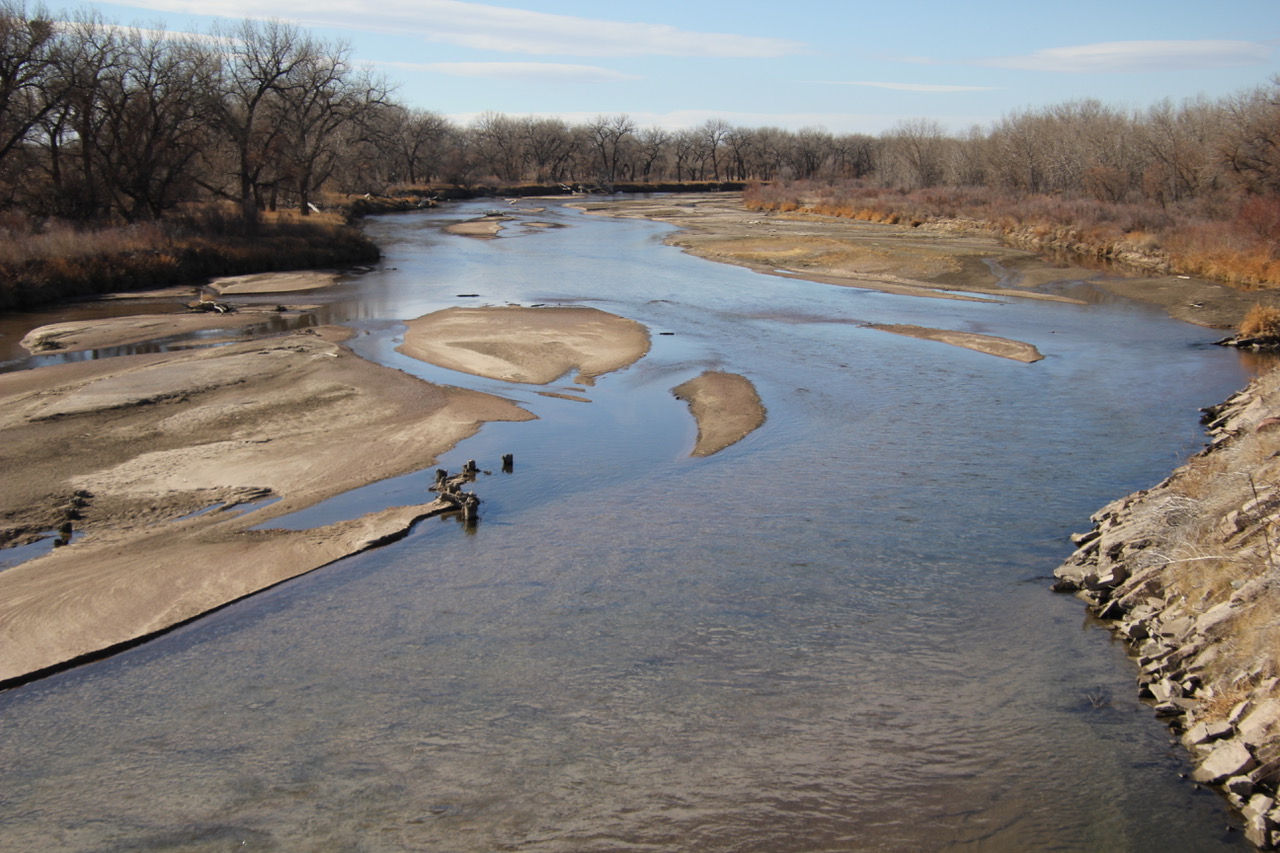
South Platte River south of Brush. Photo/Allen Best

Click the link to read the article on the Big Pivots website (Allen Best):

October 16, 2025

Colorado say this is really an effort by Nebraska to renegotiate the 1923 South Platte River Compact. But is the core of this story about water for metropolitan Denver?

Mark Twain in July 1861 traveled through the northeast corner of what was then Colorado Territory, stopping briefly at a place called Overland City. It’s now called Julesburg. It lies along the South Platte River no more than three or four miles from the Nebraska border.

After briefly serving in the Civil War, the young fellow was on his way to the gold mining riches of the Sierra Nevada. In “Roughing It,” his later recounting of that and other Western adventures, he called the encampment the “strangest, quaintest, funniest frontier town that our untraveled eyes had ever stared at and been astonished with.”
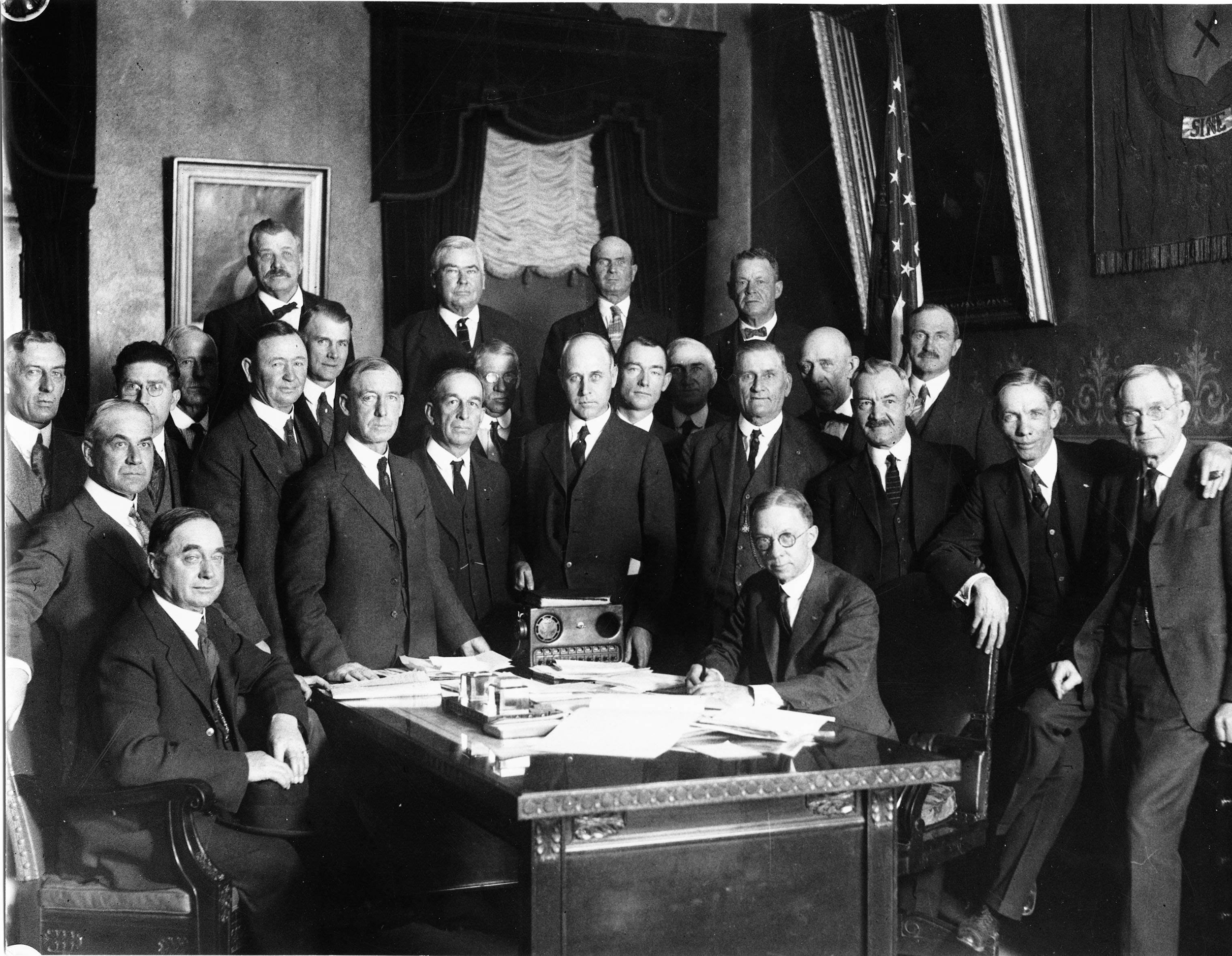
Governor Clarence J. Morley signing Colorado River compact and South Platte River compact bills, Delph Carpenter standing center. Unidentified photographer. Date 1925. Print from Denver Post. From the CSU Water Archives

Twain always was the master of overstatement. But then, you need to remember he had come of age on the Mississippi River when reading his description of the South Platte River. He called it a “melancholy stream” that was “only saved from being impossible to find with the naked eye by its sentinel rank of scattering trees standing on either bank. The Platte was ‘up,’ they said — which make me wish I could see it when it was down, if it could look any sicker and sorrier.”

Oh, that Clements fellow could milk a moment. He spent only an hour there before continuing west. I actually spent a night in Julesburg. The next morning I drove to the community cemetery. It’s located east of the town, the river, and Interstate 76. From the cemetery I made out an incision in the side of a hill. It was the remnant of the effort begun in 1894 to create a ditch. The ditch was to export water from the South Platte 13 river miles in Colorado and into Nebraska, there to irrigate farms in Perkins County.

Investors in that ambition, the Perkins County Canal, ran out of money. A compact governing the South Platte between Colorado and Nebraska negotiated in 1923 left Nebraska with the right to build the canal and divert up to 500 cubic feet per second from mid-October until April 1, according to Nebraska Public Media, and the idea was studied again in the 1980s. But again, it got no traction.

Three years ago, Nebraska set out again to realize the diversion. It has set aside $628 million, most of it received from the federal government as part of the Covid-19 pandemic stimulus. The state has taken steps to plan and permit the project through the U.S. Army Corps of Engineers.

In July, Nebraska asked the U.S. Supreme Court to rule that Colorado has violated the compact, both by not delivering enough water in the non-irrigation season and also by preventing Nebraska from building the canal. Colorado has said it is abiding by the compact and acknowledges Nebraska’s right to build a canal.

Colorado Gov. Jared Polis and Attorney General Phil Weiser, who hopes to succeed Polis as governor, announced yesterday that they had urged the U.S. Supreme Court to reject the case.

“Nebraska’s claimed violations rely on speculative and premature allegations. To the extent any legal issues arise in the future, there are alternative forums to resolve them. The Supreme Court need not take a case that would put the court and the parties on a long, time-intensive, and expensive path that might well, in the end, put the states right back where they were before Nebraska filed (its) proposed complaint,” said Weiser.

“Even if the court decides to take up part or all of Nebraska’s case. I’m confident that we will win on the merits. Both the facts and the law are on our side.”
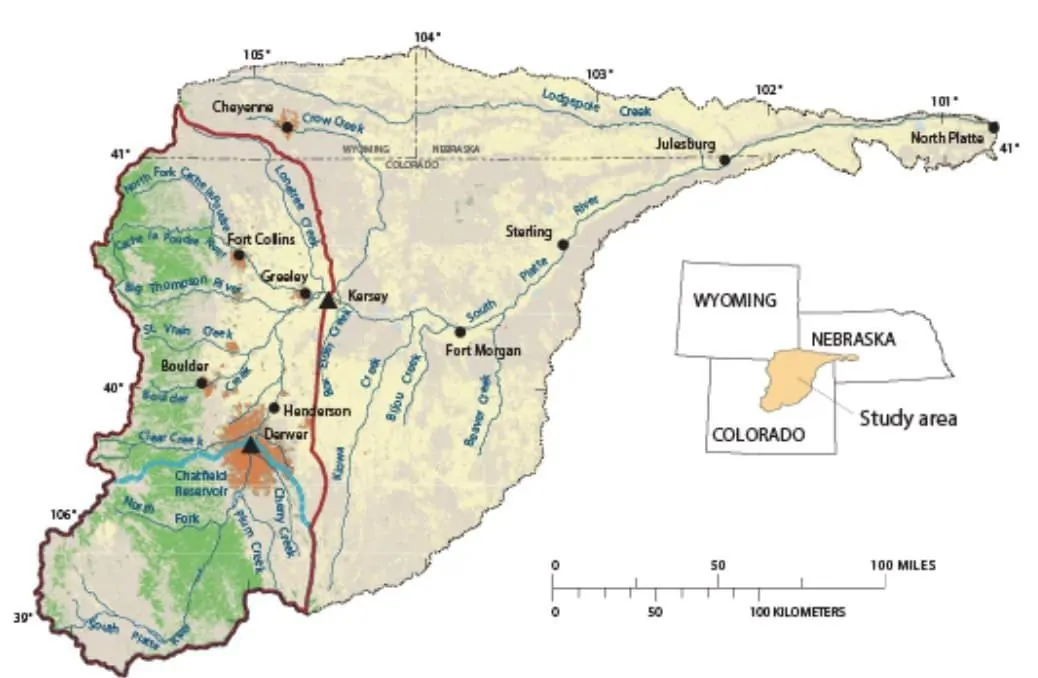
The South Platte River originates in South Park and then wanders northeast, entering Nebraska just a few miles west of Colorado’s northeast corner. The red line here distinguishes the upper South Platte Basin in Colorado from the lower basin. The compact between Colorado and Nebraska speaks only to the lower basin. Image: U.S. Geologic Survey.

Colorado’s brief in response to Nebraska’s lawsuit is just that, at least by legal standards: 35 pages long. It opens with this statement: “Like every western state, Nebraska wants more water.” Colorado acknowledges Nebraska’s right to build a canal, it says, but the Cornhusker state has “only just begun to plan and permit its project.”

In other words, Colorado contends that whatever may eventually be disputed is not ready for prime time. The Supremes have better ways to spend their time.

Why the Supreme Court? Because interstate issues must go before the highest court. In such cases, it commonly appoints a “special master,” typically a retired judge, to hear the case and report findings to the Supremes.

For example, a special master was used in the dispute between Texas, New Mexico and Colorado involving the Rio Grande. A special master was also enlisted in the dispute between Kansas and Colorado involving the Arkansas River.

Colorado wants to avoid this battle.

Coyote Gulch’s VW Bus South Park 1973.

A hard-working river

The South Platte may be among the hardest-working rivers in the United States. It arises in South Park, flanked by the Mosquito and Tarryall ranges, southwest of Denver, flow 380 miles through Colorado before entering Nebraska. Between 70% and 85% — seemingly authoritative sources differ substantially in estimates — of Colorado’s nearly 6 million residents live in the South Platte River Basin. The basin also has 30% of the state’s irrigated agriculture, well more than half coming from the flows of the South Platte or its tributaries.

What exactly is this dispute about?

Nebraska, says Colorado, “appears to be using the prospect of the canal and this request for Supreme Court action as leverage to renegotiate the South Platte River Compact.”

Oct. 15 was Colorado’s deadline for responding to the lawsuit filed by Nebraska against Colorado on July 15. The press conference where Nebraska’s politicos announced the lawsuit was full of rhetoric. “We’re going to fight like heck. We’re going to get every drop of water,” said Nebraska Gov. Jim Pillen. “We’ve been losing to Colorado on this issue for too long.”

He piled it on. “They want absolutely everything. They’re even stealing the water from their own farmers, for crying out loud,” he said according to a July 16 story in the Nebraska Examiner.

Pillen said Colorado is storing more water for its “upstream economy,” presumably reference to the Denver metropolitan area.

Polis, in his Oct. 15 comments, made no mention of metropolitan Denver, instead emphasizing the threat to “our robust agriculture industry and our rural communities in Northeastern Colorado.” He dismissed the lawsuit by Nebraska as “meritless.”
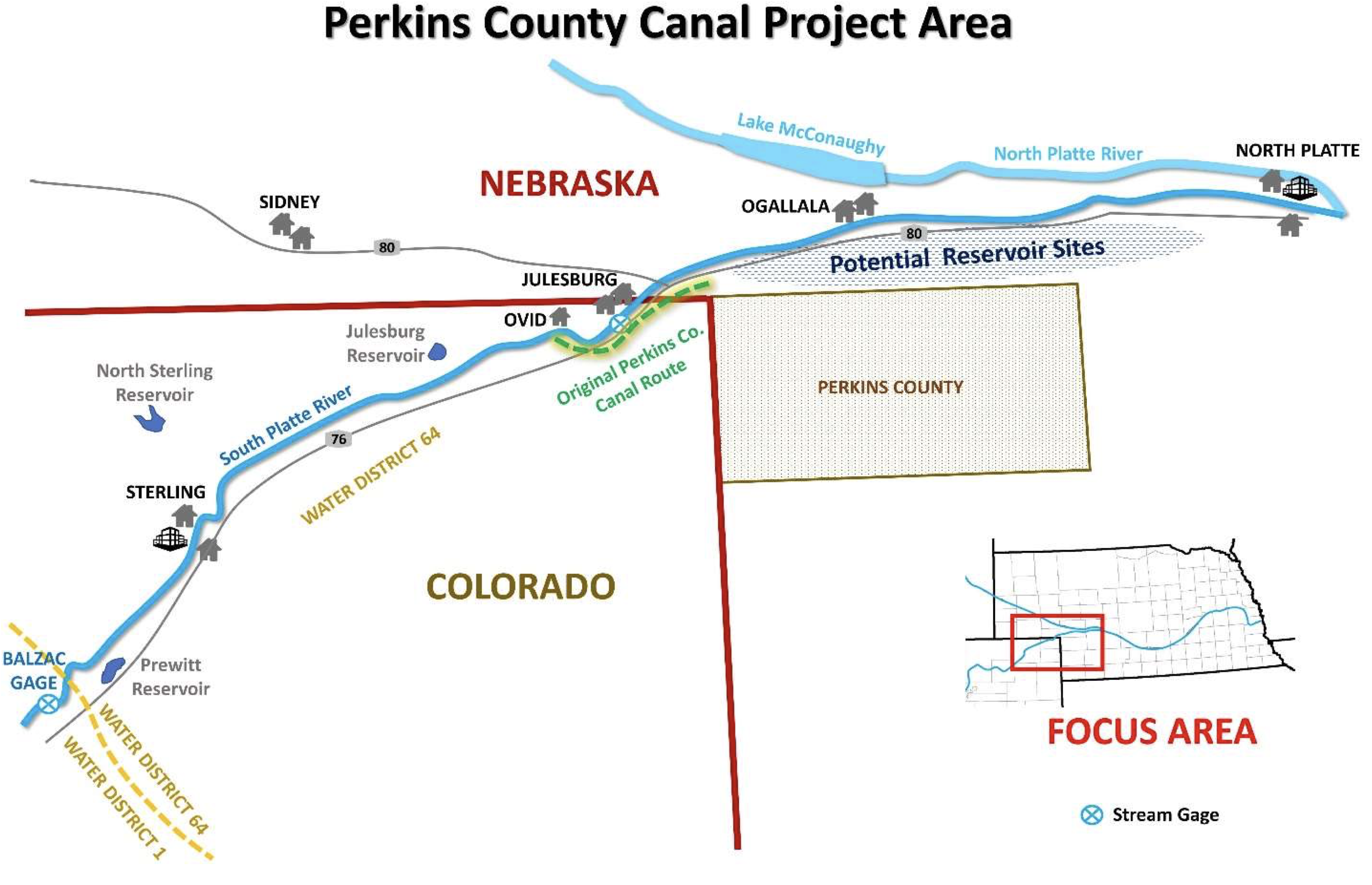
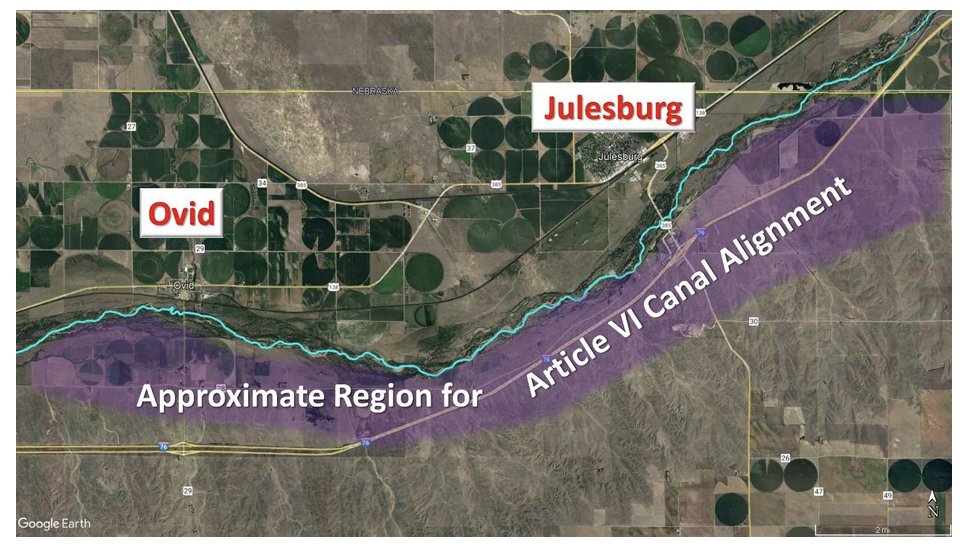
The South Platte River provides the water crucial for even a marginal economy in the lower South Platte River Valley of Colorado. Perkins County Canal Project Area. Credit: Nebraska Department of Natural Resources

The Denver Post, in a Sept. 21 story, mined the agriculture component after reporter Elise Schmelzer followed Weiser to a meeting in Julesburg to meet with farmers there. Darrin Tobin, a Sedgwick County commissioner, said if the canal gets built, it will potentially turn everything in the last 20 miles of the South Platte River Valley to the state line into “almost an unusable wasteland.”

If the canal is built, Nebraska will use much of the winter river flow that Coloradans rely upon to fill ponds, which are used for augmentation. These augmentation ponds allow the farms to use more water during irrigation season.

Irrigated land produces more and hence has higher property values, which means a broader tax base. Sedgwick County ranks 44th among Colorado’s 64 counties in per capita income.

What is this dispute about?

Is this really about retaining the vitality of places like Ovid and Julesburg? I have to think it’s more — as the Nebraska governor insinuated — about the situation of metropolitan Denver and other northern Front Range communities.

The South Platte long, long ago ceased to be able to support a population this large and farms, too. Denver’s first major transmountain diversion began importing water from the Colorado River headwaters through the original bore of the Moffat Tunnel in 1936. Now, the headwaters of the Colorado River are all but plumbed out. Too, the Colorado River has its own problems.

In recent years, Front Range communities have started looking inward, to impose greater efficiencies. Denser populations enable that. Denver has actually expanded its population greatly in the last 20 yeas without using more water. The city has been rising, not expanding. The growth in demand comes from the outer rings of suburbs and the exurbs.
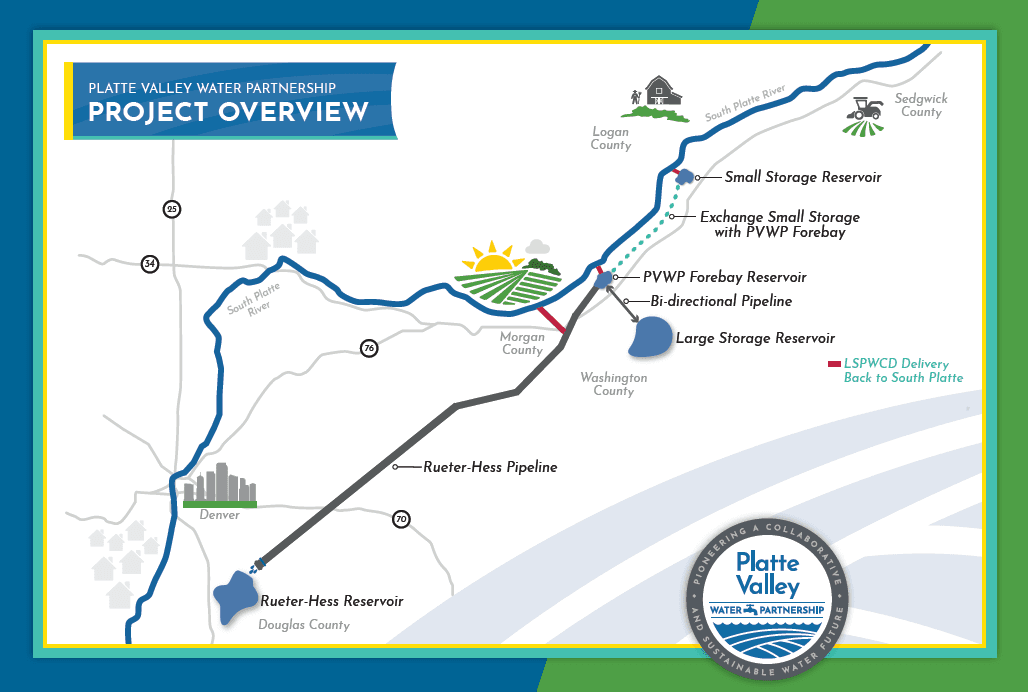
Platte Valley Water Partnership project overview. Credit: Parker Water

Revealing are the plans by Parker Water and Sanitation District, now joined by Castle Rock, to build a pipeline far down the South Platte River to the Sterling area. The plan would be to hold back water during winter or those occasional times of spring runoff when the river is carrying uncommitted amounts of water. This plan, called the Platte River Water Partnership, would involve some new impoundments of water.

The Lower South Platte Water Conservation District, which consists almost entirely of farmers, supports the plan in collaboration with Parker Water. They see some benefits to “new” water, courtesy of Parker’s checkbook, and an alternative to “buy and dry.” The broad outlines are explained in this story published in Big Pivots during July.
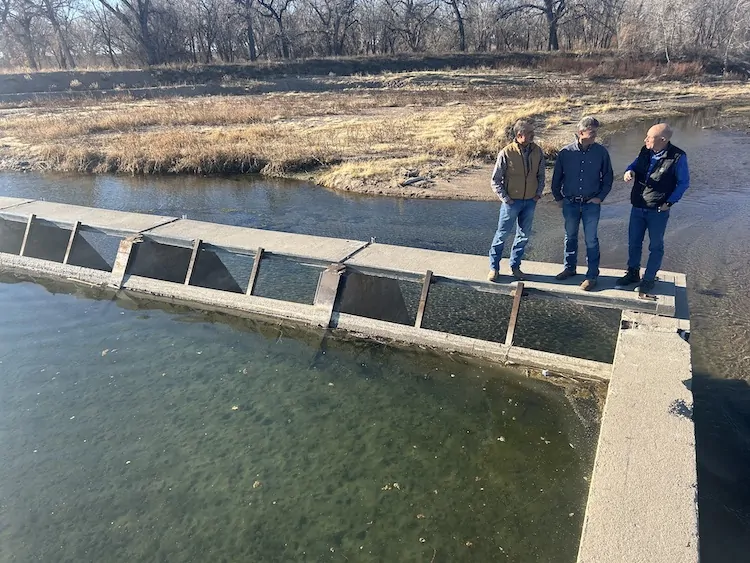
Ron Redd, district manager of Parker Water and Sanitation District, right, makes a point to Jim Yahn and Joe Frank at the structure used to divert water from the South Platte River to Prewitt Reservoir. Owners of Prewitt, who are part of Yahn’s organization, have decided they do not want to be part of Parker’s ambitions. Frank leads the South Platte River Water Conservancy District. Photo/Allen Best

The fundamental story is that the newer and more affluent cities on metropolitan Denver’s southern fringe rely heavily on unsustainable pumping of groundwater. They have started lessening that dependency in the last 20 years, and this is an effort to further reduce that dependency.

As you might expect, the issues in this dispute between the two states are somewhat complex. I found a Sept 24 essay by J. David Aiken, a professor in the Department of Agriculture Economics at the University of Nebraska — Lincoln, illuminating.

Aiken takes the story back to the drought of 2002, the year that Colorado was finally forced to address a long-festering issue about the impact of wells drilled for agriculture along the riverine aquifer in the South Platte Valley. That action yielded 4,000 (out of 9,000 total irrigation wells being required to cease pumping.

We then have a study in 2017 South Platte storage. It found that Colorado was allowing an average 332,000 acre-feet of water to flow into Nebraska beyond minimum compact compliance. That was followed by a study of how these “surplus flows” could be used by Denver instead. of buying agriculture land for its water rights, a.k.a. “buy and dry.”

Then came work by Denver metro water interests on a study about how to take advantage of the 332,000 acre-feet. Soon after came Parker Water’s plans to avoid buy-and-dry in its partnership with the lower-valley irrigators by figuring out how to retain the remaining uncontested water.

Who will this contest between Colorado and Nebraska?

Nebraska has some valid complaints about Colorado’s actions, says Aiken, but Colorado “will likely raise some very interesting legal issues of their own, which could lead to Nebraska’s not being able to pursue the Perkins County Canal project.”
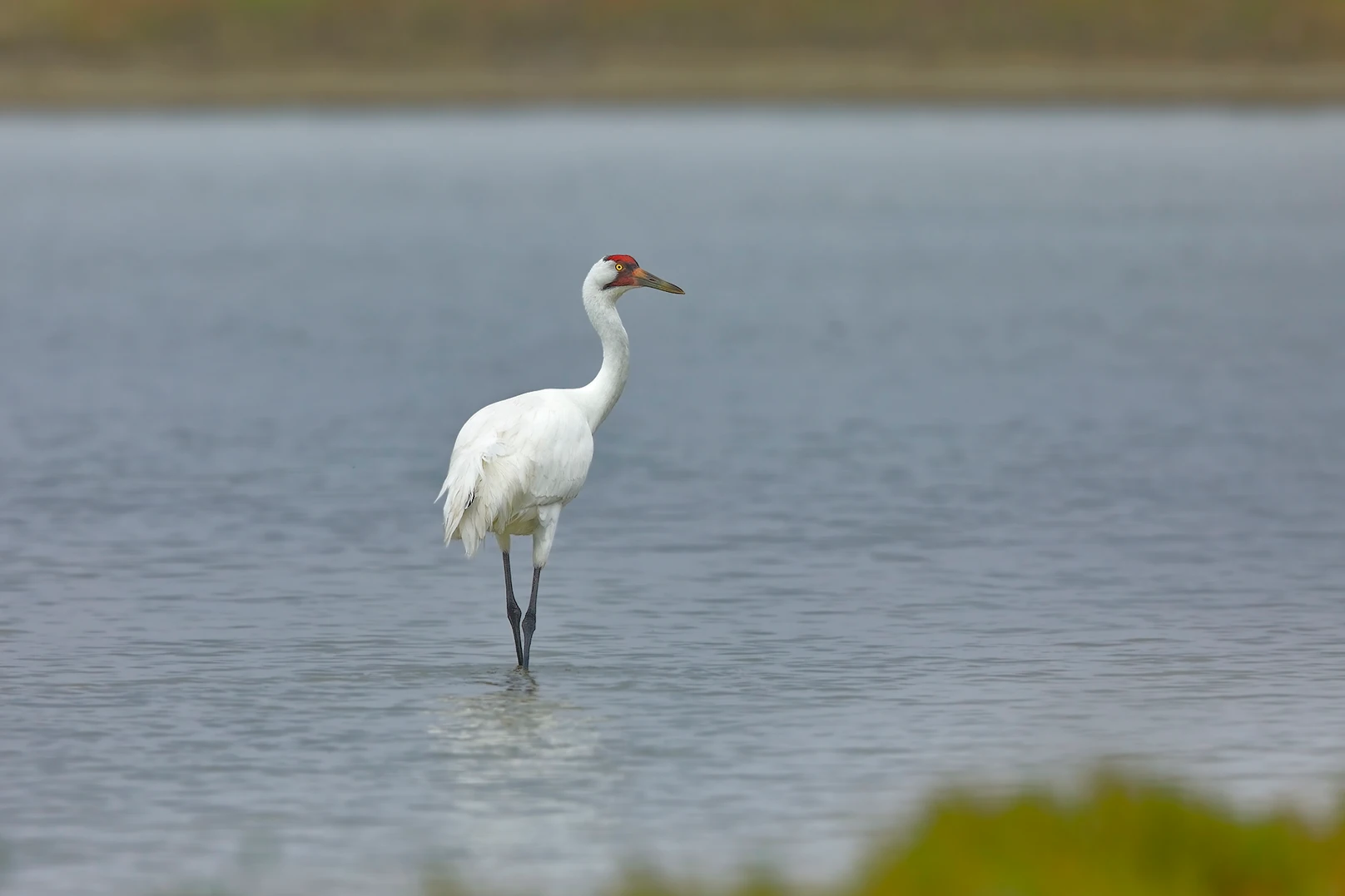
Whooping Crane. Photo: Kenton Gomez/Audubon Photography Awards

A legal wildcard

One legal wildcard will be whether Nebraska could demonstrate that the Denver metro water supply projects in the South Platte Basin would reduce flows through the protected critical habitats in Nebraska used by whooping cranes. The species is listened as endangered by the federal government. This argument could strengthen Nebraska’s case.

Aiken makes many other points, and I won’t try to explain them all here. You can read for yourself hereOr watch the webinar from earlier in September which preceded his essay.

Here is Nebraska’s 55-page filing with the Supreme Court. And Colorado’s 35-page response can be found here.

When Nebraska first announced its renewed Perkins County canal plans, I shrugged it off as a minor tempest. But now I find it more interesting, part of the tightening vise on Colorado’s still rapidly-growing Front Range cities. Certainly, we’re not Las Vegas. Not even a Phoenix. In some ways, we are still luxuriant with water. But now, Colorado is seeing the bottom of the cup. This new reconciliation has been underway since the early 1990s.

As for the South Platte and the 1923 Colorado-Nebraska compact, remember that it allowed Nebraska to divert up to 500 cfs from Oct. 15 through March. On Wednesday night, the river was flowing 270 cfs at the Balzac Gage near Sterling. There are asterisks to this that we don’t want to get into, but the point is that there isn’t much river here and hence the quarrel.

Twain has often been credited with saying that whiskey is for drinking and water is for fighting over. Actually, somebody else almost certainly made up that phrase now grown tiresome in its use. But if Weiser, is correct, there will likely be plenty of fighting. He told the Post in September that more than a billion dollars might be spent in litigation during the next decade, and he insisted that all the time in the courtroom will leave neither state better off.

The South Platte River Basin is shaded in yellow. Source: Tom Cech, One World One Water Center, Metropolitan State University of Denver.

#Nebraska’s $600 million water project faces resistance from #Colorado landowners — Colorado Politics #SouthPlatteRiver

Perkins County Canal Project Area. Credit: Nebraska Department of Natural Resources

Click the link to read the article on the Colorado Politics website (Marianne Goodland). Here’s an excerpt:

April 7, 2025

On or around April 17, six landowners in Sedgwick County will face a decision: whether to sell their land to the state of Nebraska for a canal that will be at least partially constructed in Colorado, or face what is likely to be an unprecedented land grab…The history of the proposed canal dates back more than 100 years, to the compact between Colorado and Nebraska regarding water from the South Platte River. Article VI of the compact states that Nebraska can divert 500 cubic feet per second during the non-irrigation season, as well as any additional available flows, into the canal. That non-irrigation season runs from Oct. 15 to April 1…

However, Nebraska claims that Colorado has increased its own diversions and related water uses during the non-irrigation season, leaving Nebraska with no choice but to construct the canal and claim its non-irrigation season water. The canal would start just east of Ovid, in Sedgwick County, and continue into Perkins County, just across the state line in Nebraska. The 1923 compact allows Nebraska to build the canal, using eminent domain, and to seek it in federal court if necessary.

People work on the Perkins County Canal in the 1890s. The project eventually was abandoned due to financial troubles. But remnants are still visible near Julesburg. Perkins County Historical Society

For one state to grab the land of another is unprecedented, Attorney General Phil Weiser told Colorado Politics earlier this year. While Colorado agreed to the canal in 1923, that’s not how Weiser sees it now. Weiser sent a letter to the Sedgwick County commissioners in January, stating that he is opposed to Nebraska’s potential action. He wrote that he had advised Nebraska’s attorney general that the project would provide little to no benefit to the state of Nebraska. However, if Nebraska moves forward, Colorado will defend its rights, he added.

Perkins canal drawing showing the Colorado portion, courtesy Nebraska Department of Natural Resources.

Prepared remarks: The Way Forward on Water Management (March 10, 2025) — Phil Weiser

Click the link to read the remarks on Colorado Attorney General Phil Weiser’s website:

Talk Given to Business for Water Stewardship on March 10, 2025

In Colorado, we confront challenges as opportunities. As Wallace Stegner, the famed Western writer, once put it—it’s impossible to be pessimistic in the West; it’s the native land of hope. How we manage our water is a test of that ethos.

There are no two ways to put this:  we face significant water scarcity challenges in Colorado and the West. That scarcity is driven, in part, by increasing demands as population booms. And it’s also driven by our changing climate, which is reducing snowpack, changing runoff patterns, increasing evaporation, and drying soils.

While we know that climate change significantly impacts Colorado’s water, its extent and exact impact is presently unknown. That uncertainty, coupled with the unpredictability in rainfall and snowpack, is destabilizing—making it difficult for farmers, ranchers, and even cities to know what to expect each year or how to plan for the future. Unfortunately, the variable weather patterns we are seeing are very likely to be our new normal, creating considerable pressure for us to create more adaptive and resilient systems for water management.

Increased uncertainty and unpredictability in water make planning more important than ever, with an imperative of developing new and innovative strategies for water management. It is no exaggeration to say that the future success of Colorado will depend, in considerable part, on our ability to adapt to scarcity and reduce the uncertainty and unpredictability that come with it. The best and most durable solutions will go beyond individual success and will collaborate with other interests to find win-win solutions.

I know this is important to Business for Water Stewardship, and I’m excited to talk with you about it today.  I also want to speak about how our management of water must remain intertwined with respect for the rule of law, as the solutions we craft are only as good as the laws they are built upon and the institutions charged with implementing and upholding them.

I. Moving Toward a Resilient and Adaptive System of Water Management

Adapting to scarcity and creating more certainty will require us to develop innovative and collaborative strategies for water management. It will also require collective action. We cannot focus on individual successes and ignore the community in which these projects occur. I appreciate how you captured this point on your website:

We believe businesses have an opportunity—and a responsibility— to ensure that their operations and investments improve communities and ecosystems where they do business. And in water-stressed regions, that responsibility is deeply rooted in how we value, use, and protect water.  That’s why we help businesses work collaboratively with community and policy stakeholders to advance solutions that ensure people, economies, and ecosystems have enough clean water to flourish.[1]

I couldn’t agree more. Each of us, whether as businesses or individuals, has a responsibility to ensure that, wherever we can, we work to improve communities and ecosystems where we live and work. Let me begin by focusing on a few projects that have done that. And I want to contrast those with projects that do not.

Maybell Diversion Restoration project. Photo credit: JHL Constructors

A. The Maybell Diversion Project

The Maybell Diversion Project is a wonderful example of a project that has multiple benefits. Updating and modernizing the Maybell Diversion Project improved efficiency for irrigation, increases resiliency to drought, and benefitted threatened and endangered species.[2]

Before the project was completed in 2024, irrigators from Maybell Irrigation District had to trudge two hours through steep, rugged sagebrush country to manually open and close the rusted and broken metal headgate.[3] It was an arduous, yet crucial task because Maybell is one of the largest irrigation diversions on the Yampa.[4]

The Nature Conservancy worked with numerous partners to help fund the $6.8M project. Funding partners include: the Bureau of Reclamation’s WaterSMART program; the National Fish and Wildlife Foundation; the Upper Colorado River Endangered Fish Recovery Program,[5] and the Colorado Water Conservation Board.[6]

Today, the opening and closing of the Maybell headgate can be controlled remotely and is determined by a combination of water user needs and available flows into the Maybell Ditch. The Maybell Irrigation District also coordinates with the Upper Colorado River Endangered Fish Recovery Program and the Division of Water Resources to guide water use in the Lower Yampa.[7]

As I said previously, this project promises mutual benefits. It allows continued irrigation of historical lands, which supports local farmers and the economy. At the same time, it also improves fish habitat and removes barriers to boat passage, supporting the environment and secondary economic benefits like river recreation.

In 2021, I spoke to the Colorado Water Congress about “The Imperative of Investing in Water Infrastructure.”[8] In that speech, I highlighted important water infrastructure projects around the state, including a plan to replace the aging Grand Valley Hydroelectric facility with a new more efficient plant capable of producing 1.5 times as much power. Like the Maybell Diversion Project, that plan brought multiple benefits. In addition to producing more clean electricity, their continued use of the water right will ensure that water flows into the 15-mile Reach, a critical stretch of river for four species of endangered fish. Many local irrigators will also benefit from increased diversions at an upstream diversion point supplying the plant.

In that speech, I also emphasized the importance of developing funding sources and investment opportunities in water infrastructure. I mentioned a few success stories, like Proposition DD, HB 21-1260, which provides $20 million in funding for implementation of the Colorado Water Plan, and HB 21-240, which provides $30 million for watershed restoration in response to wildfires, including funding for flood prevention and mitigation. But those are not enough. With continued growth on the horizon, our commitment to fund projects laid out in the Colorado Water Plan is imperative. That plan is the roadmap for investing in our future and fulfilling the Plan’s vision will take billions of dollars.

Photo credit: Rye Resurgence Project

B. Rye Resurgence Project

The Rye Resurgence Project in the San Luis Valley supports continued farming, while reducing water use, improving soil health, and helping the community flourish.

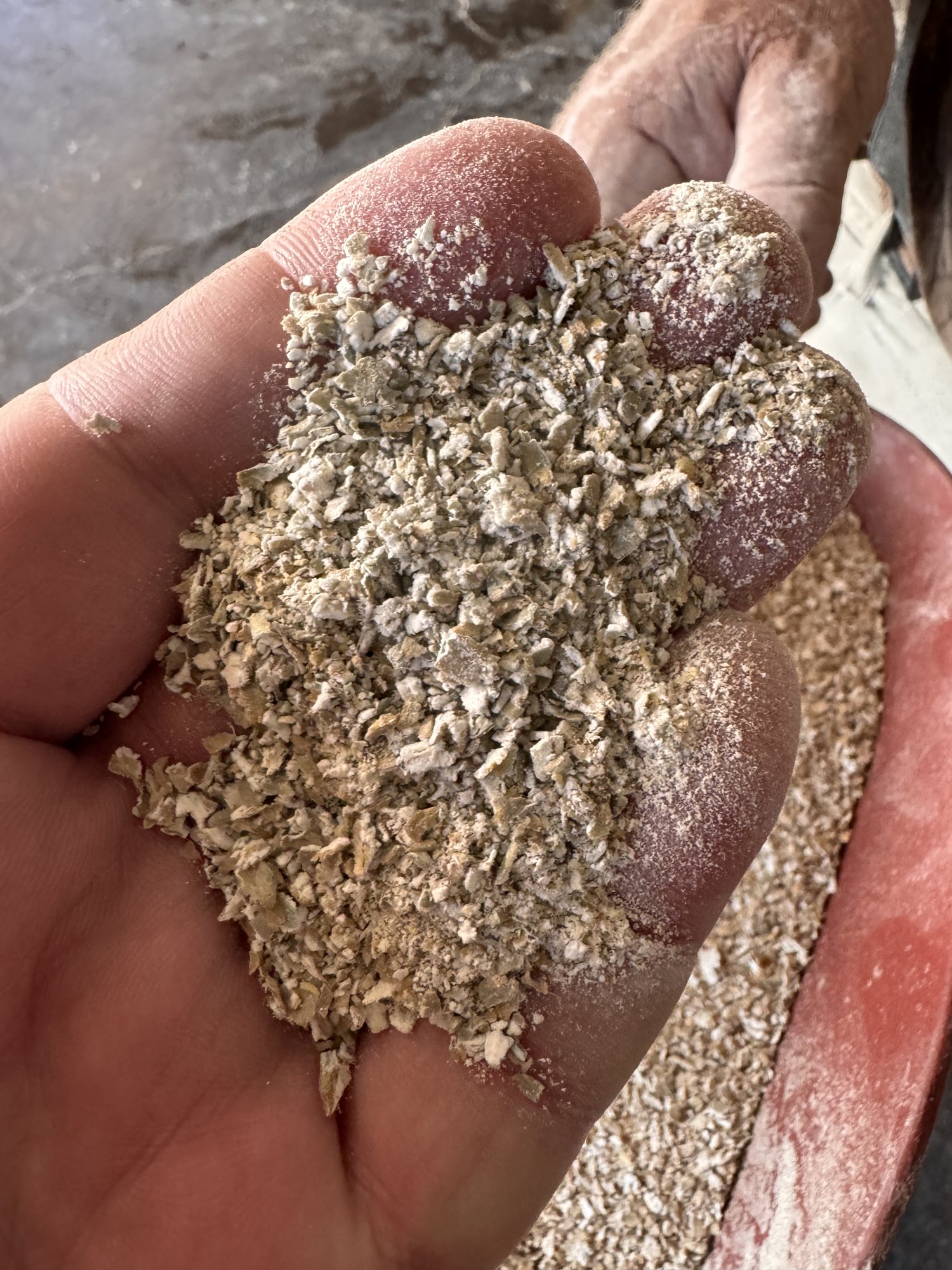
During this time of drought, it is critical that we find ways to use less water without sacrificing economic opportunities. This can help build resilience in the face of shrinking water supplies. Crops, like rye, can use far less water—up to 40%—than other similar crops like barley or oats.[9] This difference is huge in a region that is trying to conserve water in order to balance Rio Grande water use with supply. Data in 2024 shows the San Luis aquifer at its lowest recorded level in history.[10]

An important element of the Rye Resurgence Project is that it recognizes that switching to crops that require less water will only succeed if there is a market where farmers can sell those new crops at a profit. The project helps build a market for Colorado rye by investing significant effort and resources in marketing, branding materials, and personnel to develop relationships between the growers and the end users of rye such as brewers, distillers, millers, bakers, and consumers.[11]  Building the market for San Luis Valley Resurgence Rye gives farmers an option to reduce their impact, earn a living wage, and support the local community. By keeping farmers farming, the future health of the community will be sustained.

II. Two Cautionary Tales to Avoid in the Future

The above two projects reflect effective strategies for managing water during this challenging time. There are, however, examples that have proven to be ineffective that are important to learn from. I will discuss two such cautionary case studies, highlighting some pitfalls of mismanaging water.

          A. Alfalfa for Saudia Arabia

The growing of alfalfa in Arizona to ship to Saudi Arabia is perhaps the most glaring example of a project whose success comes at the expense of the community in which it occurs.[12] The short story of this project is that Saudi firms bought up 9 square miles of land in Arizona for irrigating and growing alfalfa grass.[13] The firms grew alfalfa in Arizona to export to Saudi Arabia and the United Arab Emirates because they had already drained their own aquifers.[14]

Alfalfa is an incredibly water-intensive crop. Growing it in a desert climate drastically impacts the surrounding communities. The Saudis were using the same amount of water to grow hay just for export as what a million people in the state use for water every year.[15] The Saudis invested a huge amount of water into the crop which they couldn’t grow at home because they don’t have the water. Essentially, this is exporting Arizona’s water.

By transporting the alfalfa overseas instead of selling it domestically, this also eliminated all future economic returns on that water. If that alfalfa stayed in Arizona, for example, it could have been sold to domestic cattle producers and benefited local communities and businesses. None of those domestic gains were achieved once the alfalfa left our shores.

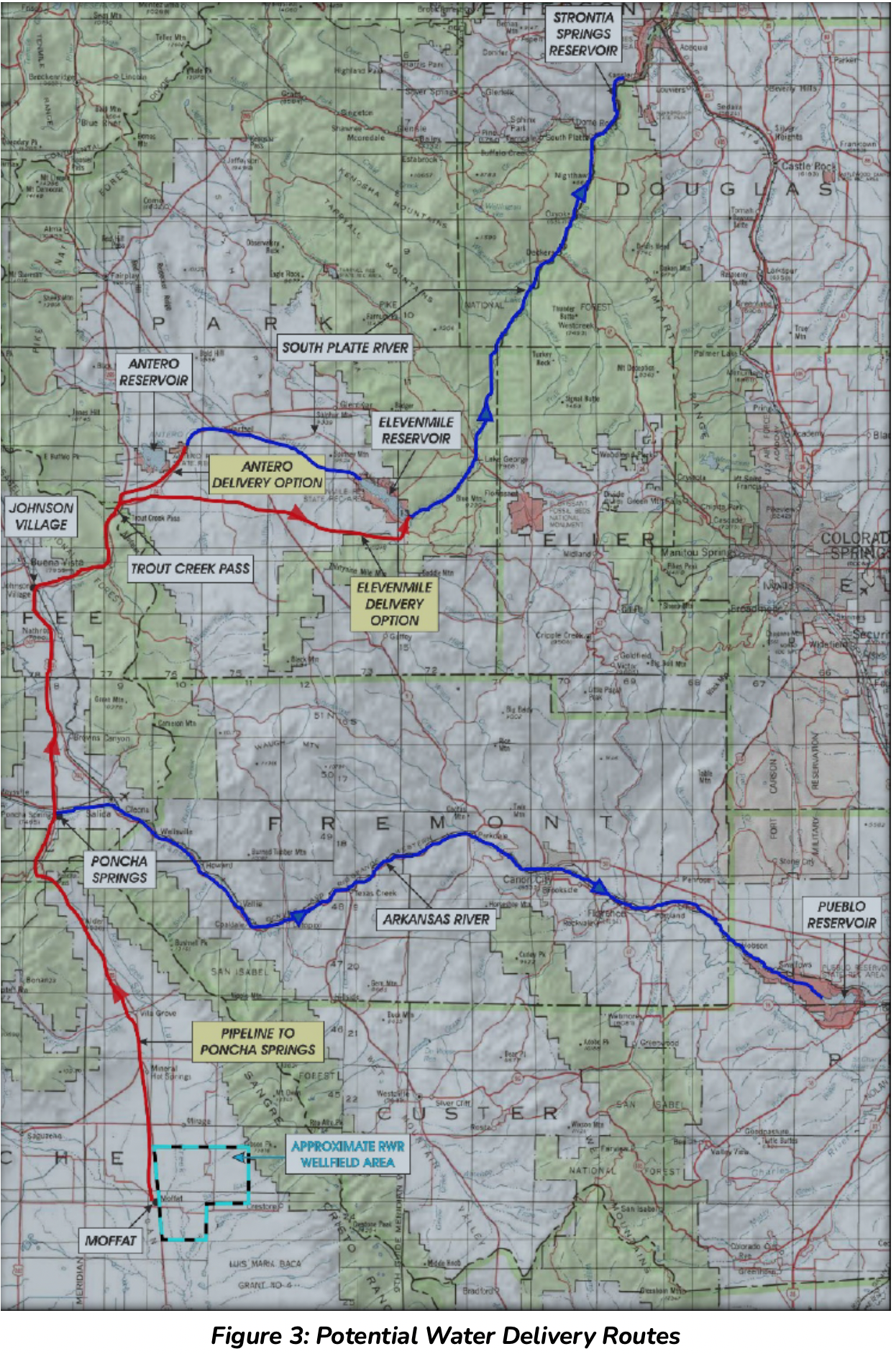
Potential Water Delivery Routes. Since this water will be exported from the San Luis Valley, the water will be fully reusable. In addition to being a renewable water supply, this is an important component of the RWR water supply and delivery plan. Reuse allows first-use water to be used to extinction, which means that this water, after first use, can be reused multiple times. Graphic credit: Renewable Water Resources

B. Buy and Dry Schemes

In Colorado, we have seen before what is now labelled a “buy and dry” scheme. This scheme involves the sale of relatively all the water from a community, shipping it to a thirsty urban community and destroying a local agricultural economy. That is, in short, the tale of what happened in Crowley County.[16] As captured in Colorado’s Water Plan, it is an approach that we are committed to avoiding in the future.[17]

For an example of a buy and dry project now on the table, consider the case of the (improperly named) Renewable Water Resources. That project would buy out wells that are currently used to irrigate lands in the San Luis Valley and, rather than using that water for irrigation and farming, it would be piped to the front range for new suburban houses.[18] This has several direct and indirect negative economic impacts as well as cultural impacts on the San Luis Valley. This project makes one rural community suffer while a suburban community prospers.

In contrast to the Rye Resurgence Project, which invests in farmers to help them adapt to new markets, this project disregards farmers and eliminates the economic driver for their community. Proponents say the water is necessary to ensure other communities have enough water supply to secure their future. But we can’t let ourselves be tricked into believing that economic prosperity or managing our water resources is a zero-sum game.

Perkins County Canal Project Area. Credit: Nebraska Department of Natural Resources

C. Perkins County Canal

For another example of approaching our water management challenges as a zero-sum game, take the case of Nebraska’s proposed Perkins County Canal project. In a zero-sum game, there can be some winners, but at a high cost to others. In this case in particular, there will be many more losers and lots of wasted time and money. Rather than pursue such a costly path, we can find shared goals and interests and build solutions to help achieve those.

Under Nebraska’s plans, it will invest the time, money, and effort to build a canal to divert water in Colorado for use in Nebraska under the 1923 South Platte River Compact. If Nebraska does that, then Colorado water users will likely build countermeasures to offset impacts of the canal. Under this scenario, both Nebraska and Colorado would end up investing hundreds of millions of dollars, but almost all water users in each state would end up in a position that is no better than they were before Nebraska proposed the canal.

A better approach to the issue is one that recognizes that the agricultural economy and the communities it supports doesn’t observe state boundaries. The economy is regional. Farmers own land in both states. An individual farmer might buy supplies in Nebraska and farm in Colorado. And the reverse is likely true. Durable solutions need to benefit the region and not make the success contingent on the failure of the other. I will continue to do all I can to work towards such a solution.

See Article 7.

III.  The Importance of the Rule of Law in Water Management

As we adapt to changing hydrology and look for flexible and collaborative solutions, it will also be important to stand firm on certain principles. Our success not only relies on our adaptability, but also on a solid foundation of laws that are consistently enforced with predictable results.

Colorado’s framework for managing water is based on state-level oversight and ultimate responsibility. This is bolstered by significant reliance on regional and local partnerships to facilitate solutions that are tailored to the water supply needs of local communities. The Colorado model prioritizes respect for and collaboration with regional bodies, such as water conservancy and conservation districts, with a norm of deferring to local expertise and solutions whenever possible. Nonetheless, the ultimate responsibility of managing Colorado’s water and ensuring compliance with compacts, laws, and regulations falls to the State. This is especially true when we talk about compliance with interstate water compacts.

Governor Clarence J. Morley signing Colorado River compact and South Platte River compact bills, Delph Carpenter standing center. Unidentified photographer. Date 1925. Print from Denver Post. From the CSU Water Archives

A. Interstate Compact Compliance

Compliance with Colorado’s nine interstate water compacts, two international treaties, and three equitable apportionment decrees is exclusively the responsibility of the State. This authority is established by the compact clause of the U.S Constitution that allows States, as sovereigns, to enter into agreements to apportion water between them to avoid conflicts over water.

Once ratified by Congress, interstate compacts become federal law. That does not mean, however, that the federal government controls state water resources. The power to control uses of water is an essential attribute of State sovereignty.[19] When states compact with each other to apportion the waters of interstate streams, those compacts also bind the federal government.[20] As we negotiate or litigate over our interstate compacts, I am dedicated to defending Colorado from federal overreach and protecting Colorado’s compact apportionments.

To the extent a state fails to comply with its interstate compact obligations, the State—and not individual water users, conservation or conservancy districts, or local governments—is held solely liable and responsible for complying or possibly paying damages out of the State’s General Fund.[21] In 2006, for example, the State was required to pay nearly $35 million in damages and legal costs to Kansas for violating the Arkansas River Compact.[22] When there is a challenge to State actions under the terms of these agreements, it is the State that is on the hook and local and regional entities are precluded from participating as parties to help defend the State in such litigation.[23] That is because interstate water disputes, reserved to the “original and exclusive jurisdiction” of the Supreme Court,[24] necessarily invoke States’ sovereignty, with each representing “the interests and rights of all of her people in a controversy with the other.”[25]

Elected officials in charge of managing Colorado’s water are accountable to taxpayers who, as noted above, will ultimately bear the cost of any failure to comply with interstate compacts. If the State manages water in a way in which constituents do not approve, they are able express their views directly to their elected officials or engage in the election process to have their voices heard. It is critical for the State to retain full authority to administer and distribute the waters of the State arising there to comply with interstate compacts as the sovereign with the exclusive authority to do so.

For a cautionary tale of how a state mismanaged its water consider what happened in Nebraska, when it faced an issue of how to manage its groundwater. In short, Nebraska delegated its regulatory authority over groundwater to local Natural Resource Districts instead of the state’s Department of Natural Resources.[26] Those local districts represented only the interests of their own water users, and they faced no direct liability for falling out of compact compliance. As a result, the districts failed to make the difficult policy and enforcement decisions necessary for Nebraska to comply with the compact, and Nebraska was forced to pay nearly $6 million in damages to Kansas after the U.S. Supreme Court found that Nebraska had violated the Republican River Compact.[27]

 B. Developing Adaptable and Resilient Strategies for Colorado

Projects like the Maybell Diversion and Rye Resurgence are important to help individuals and communities adapt to variable water supplies. We will also need statewide strategies—and legal institutions—to allow those types of water users to occur while ensuring compliance with our interstate compact obligations. Together, we are well positioned to start a broader conversation on what adaptability and resilient strategies—and what legal tools—can help us achieve this critical goal.

Stakeholders have started to suggest different possible tools that can enable Colorado to better manage our water in an adaptive and resilient manner. One suggested strategy is to create a statewide conservation program that compensates people who forego use of their water rights, particularly at times of great demands on a particular system. The Rio Grande Conservation District is implementing such a system to protect its groundwater resources, for example.[28]

A second concept that some have suggested is to create a strategic reserve of water that Colorado could release to protect its water users from mandatory curtailments that might otherwise result from a shortage of water to downstream states. Under this model, the state would acquire and manage “slack capacity,” putting the state in position to navigate shortages and times when there is more demand for water than available.

Whatever strategies are ultimately developed, they are sure to be more successful if they can be built and tested before we need them. Given the pressures we are seeing on multiple fronts, the time to develop and test such ideas is now. As we know from lessons from other countries, the stakes are high and adopting an imperfect system can give rise to most unfortunate consequences.[29]

* * *

Our ability to adapt to the scarcity of water in Colorado and reduce uncertainty and unpredictability is critical to ensuring a promising future for our state. As I have explained, the best and most durable solutions will go beyond individual success and will collaborate with other interests to find win-win solutions like the Maybell Diversion and Rye Resurgence Projects. As we adapt to changing hydrology and look for flexible and collaborative solutions, it is also imperative to ground solutions in the rule of law and an admirable system. This is a formidable challenge, but one we can undoubtedly meet in the native land of hope.

[1] https://businessforwater.org/frequently-asked-questions/

[2] The Nature Conservancy, Colorado Year in Review 2024, https://www.nature.org/content/dam/tnc/nature/en/documents/TNC_CO_Year_In_Review_Report_24Final.pdf

[3] Id.

[4] Id.

[5] Id.

[6]https://dnrweblink.state.co.us/cwcbsearch/0/edoc/215967/TheNatureConservancy_MaybellDiversionConstruction_Application.pdf

[7] The Nature Conservancy, supra note 2.

[8] https://coag.gov/blog-post/prepared-remarks-the-imperative-of-investing-in-water-infrastructure-colorado-water-congress-summer-conference-aug-25-2021/

[9] https://ryeresurgence.com/the-project

[10] Id.

[11] Id.

[12]Juana Summers, Amid a water crisis, Arizona is using lots of it to grow alfalfa to export overseas, NPR, August 9, 2023, https://www.npr.org/2023/08/09/1192996975/amid-a-water-crisis-arizona-is-using-lots-of-it-to-grow-alfalfa-to-export-overse

[13] Id.

[14] Id.

[15] Id.

[16] https://www.5280.com/high-dry

[17] https://cwcb.colorado.gov/read-plan

[18]Mark Obmascik, Poll shows deep opposition to RWR water export plan, Alamosa Citizen, June 20, 2022, https://www.alamosacitizen.com/poll-shows-deep-opposition-to-rwr-water-export-plan/

[19] Tarrant Regional Water Dist. v. Herrmann, 569 U.S. 614, 631 (2013).

[20] Texas v. New Mexico, 602 U.S. 943, 962 (2024).

[21] Kansas v. Nebraska, 574 U.S. 445, 459 (2015) (finding local district boards bore no responsibility for complying with compact and assumed no share of the penalties Nebraska would pay for violations).

[22] Kansas v. Colorado, 533 U.S. 1, 20 (2001) (remanding the case to the Special Master for a determination of damages); Fifth and Final Report of Arthur L. Littleworth, Special Master, at 3, Kansas v. Colorado, No. 105 Orig., vol. II (Jan. 31, 2008).

[23] Texas v. New Mexico, 583 U.S. 913 (2017) (denying motions to intervene by local water districts in compact dispute between states).

[24] 28 U.S.C. § 1251(a).

[25] Wyoming v. Colorado, 286 U.S. 494, 508-09 (1932); New Jersey v. New York, 345 U.S. 369, 372 (1953); see also South Carolina v. North Carolina, 558 U.S. 256, 267 (1953) (“In its sovereign capacity, a State represents the interests of its citizens in an original action, the disposition of which binds the citizens.”); Nebraska v. Wyoming, 515 U.S. 1, 21 (1995) (“A State is presumed to speak in the best interests of [its] citizens. . . .”).

[26] Neb. Rev. Stat. Ann. § 46-702 (“The Legislature also finds that natural resources districts have the legal authority to regulate certain activities and, except as otherwise specifically provided by statute, as local entities are the preferred regulators of activities which may contribute to ground water depletion.”).

[27] Kansas v. Nebraska, 574 U.S. 445 (2015).

[28] The Citizen, $3,000 per acre-foot to retire groundwater wells, Alamosa Citizen, March 2, 2023, https://www.alamosacitizen.com/3000-per-acre-foot-to-retire-groundwater-wells/.

[29] https://coag.gov/app/uploads/2021/02/Colorado-Water-Congress-Feb-2021-FINAL.pdf

Colorado River “Beginnings”. Photo: Brent Gardner-Smith/Aspen Journalism

2024 #COleg: Wolves, water and wildlife: How will this year’s state budget impact the Western Slope? — Steamboat Pilot & Today

State Capitol May 12, 2018 via Aspen Journalism

Click the link to read the article on the Steamboat Pilot & Today website (Elliot Wenzler). Here’s an excerpt:

March 29, 2024

The budget, which is not yet finalized, includes funding for non-lethal wolf deterrence, water litigation and wildlife management. The six-member Joint Budget Committee, which writes the state budget, settled on a $40.6 billion budget that would take effect July 1…

Water

The proposed budget also includes about $300,000 for two additional full-time employees in the Department of Law to help secure the state’s water interests…Colorado is part of nine interstate water compacts, one international treaty, two U.S. Supreme Court decrees and one interstate agreement. 

“As climate change and population growth continue to impact Colorado’s water obligations, the DOL’s defense of Colorado’s water rights is more critical than ever,” according to the document. 

One of the new employees, a policy analyst, will monitor government regulations and neighboring states’ activities on water policy. The other position will “bolster the representation and litigation support of the DOL across the various river basins,” support the state’s efforts to negotiate Colorado’s water and compact positions and communicate with the state’s significant water interests. 

#Colorado pledges to play nice as #Nebraska plows ahead on $628M Perkins County Canal at the state line — Fresh Water News #SouthPlatteRiver

South Platte River at Goodrich, Colorado, Sunday, November 15, 2020. Photo credit: Allen Best

Click the link to read the article on the Fresh Water News website (Jerd Smith):

January 17, 2024

Nebraska is moving quickly to build a major canal that will take water from the drought-strapped South Platte River on Colorado’s northeastern plains, and deliver it to new storage reservoirs in western Nebraska.

But after a tumultuous project announcement last year, with both states angrily declaring their thirst and concerns, the conflict has quieted, and talk of lawsuits, at least for now, has stopped. Water watchers liken this apparently calm work period with a similar period 100 years ago when early threats of legal battles gave way to an era of study and negotiation that preceded the signing by both states of the South Platte River Compact.

Governor Clarence J. Morley signing Colorado River compact and South Platte River compact bills, Delph Carpenter standing center. Unidentified photographer. Date 1925. Print from Denver Post. From the CSU Water Archives

“In my mind, it’s ‘what is there to fight over,’” said Jim Yahn, a fourth-generation rancher, and former member of the Colorado Water Conservation Board who runs the North Sterling Irrigation Company. “Under the 1923 South Platte River Compact, it is Colorado’s obligation to deliver. So now we’re going to start suing and fighting over it? We agreed to do this. I don’t think it’s worth losing sleep over.”

With $628 million in cash from its state legislature, Nebraska has begun early design work and is holding public meetings outlining potential routes for the canal and reservoirs, according to Jesse Bradley, assistant director of the Nebraska Department of Natural Resources. At least one Colorado land purchase has been made.

Nebraska intends to complete design and start construction bidding in three years, and finish the project seven to nine years later, Bradley said.

“We’re just trying to make sure we can protect the water we have under the compact,” Bradley said. “We don’t want to be any more intrusive than we need to be … and we believe there are opportunities for some win-wins,” he said, including stabilizing levels in the popular Lake McConaughy and ensuring there will always be enough water in the river to protect one of the nation’s most successful endangered species programs, the Platte River Recovery Implementation Program.

Engineering studies indicate the project could deliver 78,000 to 115,000 acre-feet of water annually, and perhaps just 30% of that in drought years, Bradley said. But that is still big water. If the top estimates hold, that’s enough water to irrigate more than 115,000 acres of corn, or supply water to more than 230,000 urban homes for one year.

At the state line, a difficult river

On the high prairie around Sterling and Julesberg, the solitude and silence mask a complicated water arena, with cities such as Parker and Castle Rock planning major projects themselves, and large- and small-scale cattle and corn producers watching every drop that flows.

Perkins County Canal Project Area. Credit: Nebraska Department of Natural Resources

“There is a lot going on up there,” said Ron Redd, Parker Water and Sanitation District’s general manager. “I think that there is a fear that the way [Nebraska] has it laid out is going to be difficult. But the tone has changed because people understand it better. When we look at the numbers, we think it’s not the end of the world.”

Colorado has a history of working with Nebraska on other water issues, including the successful negotiation of the South Platte River Compact and the settlement of a lawsuit involving the Republican River and Kansas.

Still, Colorado water regulators say they will carefully monitor the project and plan to meet regularly with Nebraska’s team.

“There are issues,” said Kevin Rein, the former director of Colorado’s Division of Water Resources who retired in December. “The canal’s location and the route it would follow is important. But more substantively, we want to ensure that the placement of the headgate [diversion structure] and the canal don’t create a burden on Colorado and its water users.”

Water projects inside Colorado are subject to in-depth reviews in special water courts, but the Perkins Canal Project, as it is known, is governed by the federal compact, and won’t necessarily be subject to that process, officials said.

Colorado growers with junior water rights on the Lower South Platte, who are only allowed to divert during the winter, will likely be the most affected, according to Mike Brownell, a Logan County commissioner and dryland farmer. Under the compact, Nebraska too has a winter diversion right. The success of the deal will likely come down to how well both states and their diverters manage the water that is flowing, often in difficult icy conditions, officials said.

Local meetings in Sedgwick and Logan counties have been ongoing. Brownell said some people in those meetings estimate that vulnerable growers could lose half the water they are typically able to divert.

“If that would come to pass, it would be pretty catastrophic,” Brownell said. “We’re really not certain yet, but if we go from having thousands of irrigated acres, to having thousands of dryland acres, it’s going to severely impact the property tax base in Logan and Sedgwick counties.”

Platte River Recovery Implementation Program target species (L to R), Piping plover, Least tern, Whooping crane, Pallid sturgeon

Also of concern is the health of the Platte River Recovery Implementation Program. Funded and overseen by Colorado, Wyoming, and Nebraska, and the federal government, the nearly 17-year-old program helps keep more water in the central Platte River and has dramatically boosted at-risk bird populations, including piping plovers and whooping cranes, and expanded their habitat. It has also allowed dozens of water projects in Colorado, Wyoming and Nebraska to comply with the federal Endangered Species Act and continue operating.

But that hard-won agreement took 10 years to negotiate. Don Ament, a Sterling-area rancher and former Colorado Commissioner of Agriculture who helped negotiate the deal, said he’s worried that political strife over the canal and any additional strain on the river’s supplies, could endanger the recovery program.

Still, with few details on canal location and actual water diversions available yet, it’s difficult to say what impact the Perkins Canal will have, according to Jason Farnsworth, executive director of the recovery program.

“We could see more water in the river, we could see less. We just don’t know yet,” he said.

Nebraska’s Bradley said he believes the recovery initiative will actually benefit from the canal, as his state seeks to gain control over its new winter water supply and deliver it to the main stem of the river, where it will benefit birds and fish.

“Though the recovery program is not the primary objective of the canal, we think we are aligned with its goals because we are trying to maintain the flows we have today without seeing them erode,” Bradley said.

The South Platte River Basin is shaded in yellow. Source: Tom Cech, One World One Water Center, Metropolitan State University of Denver.

The South Platte, like other Western rivers, is seeing flows shrink, thanks to climate change and growth farther west along Colorado’s Interstate 25 corridor.

Good water years, such as 2023 and 2013, still can dramatically boost flows on the Colorado/Nebraska state line. Water managers in Colorado believe careful management of the lower river and perhaps increased storage, could allow all the water users to coexist.

“There is a potential impact to (water) rights in the river, whether it’s for storage or for the recovery program. So what do we do about that? We administer according to the compact,” Rein said. “It sounds a little like we’re giving up, but the water users are pretty smart. They know how to legally, and in good form, develop strategies to mitigate the impacts.

“The current perspective of Colorado,” he added, “is that we need to recognize that there is an interstate compact that has been approved by the United States and we place a high regard on the need to comply with that compact.”

More by Jerd SmithJerd Smith is editor of Fresh Water News. She can be reached at 720-398-6474, via email at jerd@wateredco.org or @jerd_smith.

2023 South Platte Forum #southplatte23 #SouthPlatteRiver

What a great learning experience yesterday in Greeley at the 2023 South Platte River Forum. The panels were all excellent as were the speakers (even the presentation by Brent Young about crop insurance 😊).

Here’s the link to the forum Tweets.