
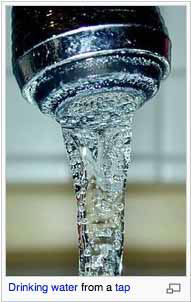
From the UN News Center:
Studies indicate that an absence of clean water or sanitation exacts a huge human toll. About 1.5 million children under the age of five die each year and 443 million school days are lost because of water- and sanitation-related diseases. “With almost a billion people suffering from lack of access to an improved water source, and 2.6 billion without access to improved sanitation, recognition of the human right to water and sanitation is a positive signal from the international community and shows its commitment to tackle these issues,” Ms. de Albuquerque said.
On Wednesday 122 members of the General Assembly voted in favour of the resolution declaring water and sanitation to be a human right. No countries voted against the text but 41 Member States abstained.
More coverage from the Environment News Service. From the article:
Safe and clean drinking water and sanitation is a human right essential to the full enjoyment of life and all other human rights, the United Nations General Assembly declared Wednesday, voting to expand the Universal Declaration of Human Rights to include the right to clean water and sanitation. The 192-member Assembly called on United Nations member states and international organizations to offer funding, technology and other resources to help poorer countries scale up their efforts to provide clean, accessible and affordable drinking water and sanitation for everyone. Introduced by Bolivia, the resolution received 122 votes in favor and zero votes against, while 41 countries abstained from voting…
The United States was one of the 41 countries that abstained from voting on this measure – not because the U.S. does not support the universal right to water, but because the UN’s Human Rights Council in Geneva is working on the issue in a better way, said John Sammis, U.S. deputy representative to the Economic and Social Council. “This resolution describes a right to water and sanitation in a way that is not reflective of existing international law; as there is no “right to water and sanitation” in an international legal sense as described by this resolution,” Sammis said. “The United States regrets that this resolution diverts us from the serious international efforts underway to promote greater coordination and cooperation on water and sanitation issues,” said Sammis. “This resolution attempts to take a short-cut around the serious work of formulating, articulating and upholding universal rights,” he said. “It was not drafted in a transparent, inclusive manner, and the legal implications of a declared right to water have not yet been carefully and fully considered in this body or in Geneva.”