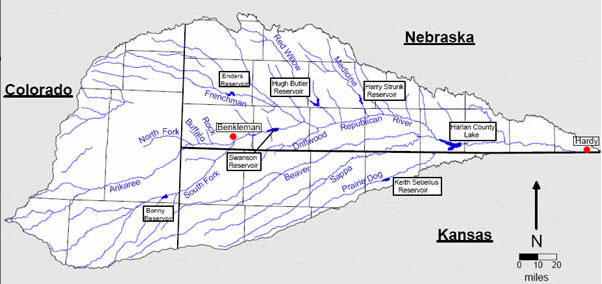
The Republican River Compact Administration annual meeting is August 11-12

A picture named republicanriverbasin

From The Yuma Pioneer (Tony Rayl):

A work session of the Engineering Committee kicks things off Wednesday at 2 p.m. The RRCA annual meeting then is set to begin at 9 a.m. on Thursday, August 12. All of it will be held at the Burlington Community and Education Center, 340 S. 14th St. State engineers from Colorado, Nebraska and Kansas comprise the RRCA board…

There will be reports from the three states, federal agencies, and committees, as well as public comment. Figures in acre feet on how much Colorado and Nebraska were out of compliance with the Republican River Compact used to be released during the RRCA annual meeting. However, those figures have not been available in recent years as the states cannot agree on final accounting due to some active litigation issues.

More Republican River Basin coverage here and here.

Montezuma County: Tamarisk control update

A picture named tamariskleafbeetlesatwork

From the Cortez Journal (Melinda Green):

The beetle is working in McElmo Canyon, stripping the leaves from tamarisks, then flying away to another stand of tamarisks. The beetles may return when the tamarisk grows more leaves, until in three to four years, the tree dies, Miles said. That gives time to revegetate with more desirable plants.

However, in June, the U.S. Department of Agriculture ended its program of releasing the beetles in 13 states, including Colorado. The move came after the Center for Biological Diversity and the Maricopa Audubon Society sued, saying that release of the beetle in southern Utah in 2006 had destroyed tamarisk trees containing endangered southwestern willow flycatcher nests. When tamarisks crowded out the native willow preferred by the flycatcher, the bird moved to tamarisk trees, Miles said. He believes a better strategy would be to reintroduce the willow in areas where the beetles have killed the tamarisk. The beetles already released continue to thrive and help with tamarisk control, he said.

With an estimated 9,000 acres of tamarisk in Montezuma County in 2005, organizers have been successful in slowing its progress, Miles says. “We’ve definitely made progress (controlling the tamarisk locally),” he said. “You don’t see much around McPhee Lake. We treated (chemically) 200 acres in 2005 above McPhee. We’re helping keep tamarisk out of 50,000 to 60,000 acres of agricultural land in the county, spread through irrigation water. The Conservation District, National Resource Conservation Service, private agencies, and state agencies spent half a million dollars here in the last seven years.”

Work was also done on the upper reaches of McElmo Creek and the Hawkins Preserve. In addition, Miles said the Mancos Conservation District and the Ute Mountain Ute Tribe have been working to control tamarisk on the Mancos River.

“We’re working on revegetation projects with landowners to find the best way to get appropriate plants back in,” he said. “Most of the time there’s enough native seed source to come back in. Nature abhors a vacuum, so if we take out one noxious weed, we don’t want another noxious one to come in.”

More tamarisk control coverage here and here.

2010 Colorado elections: Scott McInnis and the Hasan Family Foundation agree to terms for repayment of $300,000 for water articles

A picture named telluridevalleyfloororg

From The Pueblo Chieftain (Patrick Malone):

So when Hasan is asked whether the $300,000 his foundation paid McInnis soon after McInnis left Congress was a way of influencing a powerful man, Hasan redefines where the power really rests. ā€œI didn’t need Scott’s influence,ā€ Hasan said. ā€œScott has come to me multiple times. I don’t think he would deny it.ā€

Hasan said his favor to McInnis was to offer him a fellowship with the Hasan Family Foundation after McInnis’ aspirations to the presidency of Mesa State College failed to materialize. ā€œEither he was already out of Congress, or it was within a few days of him leaving Congress, I can’t tell you precisely,ā€ Hasan said. ā€œBut he was looking for a job.ā€

Click through and read the whole article. Mr. Malone details Melik Hasan’s side of his relationship with McInnis.

Meanwhile there still seems to be questions about $112,000 of the payments to McInnis, according to this report from David O. Williams writing for the Colorado Independent. From the article:

The money went to a corporation called Invest 2, LLC, that was dissolved in 2006 and not listed among McInnis’s assets in tax returns he allowed members of the media to examine in April. It was originally registered to McInnis’s wife, Lori McInnis. The Independent sent several questions regarding Invest 2 to Duffy on July 22 but still has not received any answers…

The Denver Post Friday afternoon reported McInnis has signed a legally binding settlement agreeing to repay the $300,000 to the Hasan Family Foundation, although the Post reported it was unclear when the money would be repaid. Duffy told the Post, which broke the original plagiarism story, that there would be no further comment on the repayment deal.

More 2010 Colorado elections coverage here.

Southern Delivery System: Colorado Springs City Councilman Tom Gallagher wants Reclamation to start over with project EIS

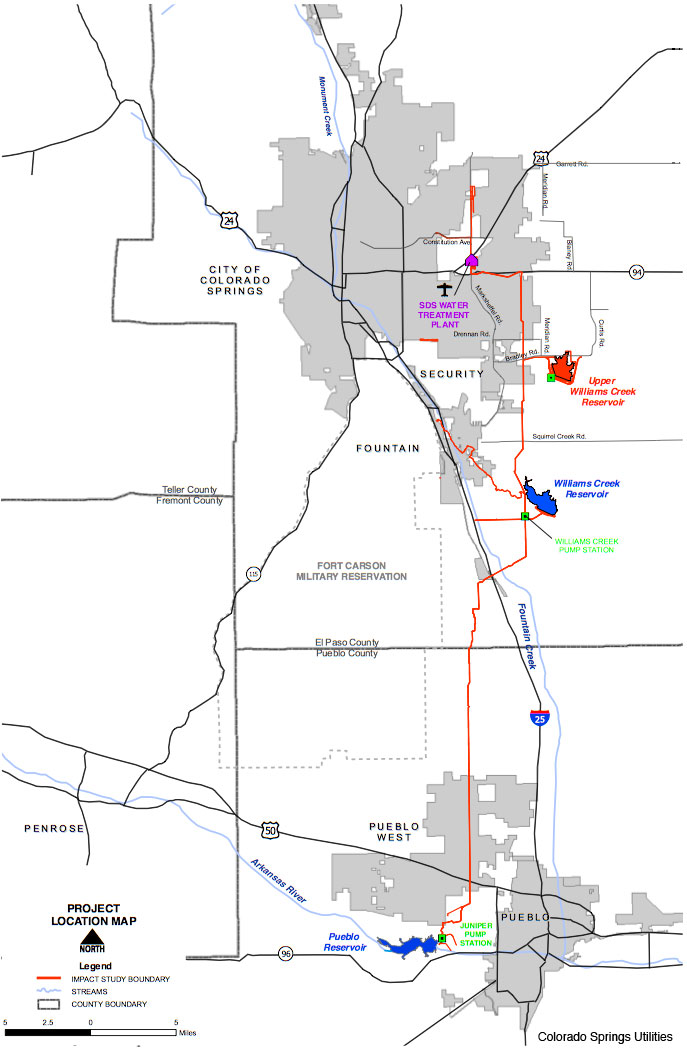
A picture named sdspreferredalternative

From The Pueblo Chieftain (Chris Woodka):

[Tom Gallagher] is charging that there was a conflict of interest in developing the environmental impact statement, that concerns brought up in the EIS process were ignored and that Reclamation would ignore its own policies if it allows SDS storage in Lake Pueblo…

ā€œI ask you on behalf of myself and my constituents to suspend the current SDS contract negotiations and reopen the SDS National Environmental Policy Act process so that these and other questions can be asked and directly answered,ā€ Gallagher concludes at the end of a 27-page letter he wrote last month to Secretary of Interior Ken Salazar. ā€œIf the NEPA process for the SDS proposal has been conducted objectively (rather than as an exercise in engineered outcome), it should be able to withstand the added scrutiny.ā€[…]

Reclamation Commissioner Michael Connor answered the letter this week by defending the EIS and declining to reopen the NEPA process. ā€œReclamation believes the NEPA process used during preparation of the SDS Project (final) EIS was analytically and procedurally complete,ā€ Connor wrote. ā€œYour letter states numerous conditions which you believe trigger a need to revise or supplement the FEIS. The issues you raise have been previously considered and responded to by Reclamation.ā€

Gallagher disagrees, saying concerns he presented at public meetings on the EIS were never answered. In his letter, he adds new issues that have arisen in the last year. Chief among those is the dissolution of the stormwater enterprise by Colorado Springs voters in 2009, which was also brought up by state Rep. Sal Pace, D-Pueblo, in a letter to Reclamation, the Environmental Protection Agency and the Army Corps of Engineers earlier this year. It was assumed in the EIS that the stormwater enterprise would be in place to help address negative impacts from the EIS, Gallagher said.

The EIS also ignored the Arkansas Valley Conduit as a reasonably foreseeable project, even though it is part of the Fryingpan-Arkansas Project, Gallagher said. The conduit this year received funding for the first time, and its storage space in Lake Pueblo, guaranteed under operating principles of the Southeastern Colorado Water Conservancy District, could affect the availability of future storage for SDS, Gallagher said.

Gallagher asserts that the use of MWH, and principal partner Bill Van Derveer, as primary contractor for the EIS was a conflict of interest because the engineering firm at the same time received $5 million in payments for design work related to the Lower Fountain Valley Wastewater Treatment Facility, which has been shelved for now but which was at the time a component of the SDS preferred action. MWH also was hired this year by Colorado Springs to manage construction of the SDS project.

More Southern Delivery System coverage here and here.

Yampa River: Stagecoach Reservoir releases water prior to raising dam to increase storage

A picture named stagecoachreservoir1

From Steamboat Today (Tom Ross):

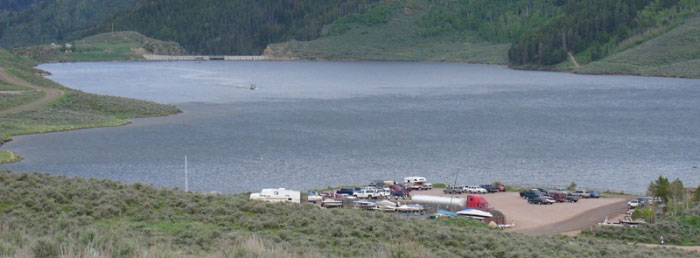
…the underlying reason that river flows are so healthy this year is that the Upper Yampa Water Conservancy District is releasing an unusual amount of water from Stagecoach Reservoir east of Oak Creek. The district is preparing for a construction project that will increase water storage by almost 10 percent. ā€œMost of what folks are seeing is definitely from the reservoir right now,ā€ Conservancy District Engineer Andy Rossi said. ā€œWe began releasing about 142 cfs two weeks ago, and we’ve drawn down the reservoir 3 feet.ā€

So the unusually high early August flows that are a boon to tubers, trout and the anglers who stalk them are a one-time event as the district adds 4 feet to the top of the concrete dam at Stagecoach. The work will add 3,185 acre-feet of storage capacity to the reservoir that already holds 33,375 acre-feet of water when full. To complete the expansion, the district will draw down the reservoir 15 feet by Sept. 18, but no more than 10 feet by Labor Day…

An overhaul of the turbines used to generate electricity at Stagecoach almost was complete Friday, Rossi said, and power generation will resume within days.

More Yampa River Basin coverage here.

Grand Lake: Long-term solution sought for clarity problems

A picture named grandlake

From the Sky-Hi Daily News (Tonya Bina):

The Northern Colorado Water Conservancy District, which supplies water to users from Broomfield to Fort Collins, was pumping water at the beginning of May, then shut off the pumps at the end of May and into June while heavy natural spring runoff filled Front Range and West Slope reservoirs to near capacity. During that runoff time, the clarity in Grand Lake decreased as high inflows brought a lot of suspended solids into the system, according to data from the Grand County Water Information Network, which records clarity readings from various parts of reservoirs and lakes. The readings show that Grand Lake clarity increased significantly as snowmelt subsided and as lake temperatures rose, all the while water flowed in its natural direction during ceased pumping activity.

But clarity deteriorated again around the time pumps were turned back on as temperatures increased and Shadow Mountain Reservoir water flowed into Grand Lake, according to the Network. Northern returned to pumping at 194 cfs on July 1, increased pumping, then dropped down to 225 cfs on July 18, according to Northern. Now nearly halfway through an eight-week experimental pumping regimen, the utility is hoping slow moving water pumped at a lower rate will prevent an algae bloom in shallow Shadow Mountain Reservoir, caused by water sitting too long in hot summer. This is the third summer where such pumping experiments have taken place. This year, because the system will be out of commission in October for replacement of the dam and walking bridge at the connection of Grand Lake to the canal, the utility is trying something different: instead of shutting pumps off for a two-week period in late summer, it is moving water at 225 cfs for eight weeks.

A 2009 study conducted by Associate Director for the Center for Limnology of University of Colorado, Boulder, James McCutchan, confirms that the shallowness of Shadow Mountain Reservoir causes high temperatures in the lake, leading to increased algae production and higher levels of suspended solids. When pumping is turned on, this water is transferred to Grand Lake, which experts believe reduces its transparency. McCutchan’s study found that non-algal particulate matter, which may include sediment, decaying leaves, weeds and dead algae, have the most direct impact to Grand Lake clarity, materials carried into the lake from Shadow Mountain Reservoir…

Northern maintains that clarity problems in Grand Lake could be created by many other factors, such as nutrient levels from surrounding development and summer’s rising water temperatures. A ā€œThree Lakes Technical Advisory Teamā€ through Northern’s multi-year ā€œNutrient Projectā€ is charged with studying ongoing problems in the Three Lakes region, with an eventual look toward solutions to the problems. The team comprises representatives from Grand County, the Colorado River Water Conservation District, several watershed organizations, the EPA, Northern, the U.S. Geological Survey, Division of Wildlife, Bureau of Reclamation, the U.S. Forest Service, Northwest Colorado Council of Governments, Colorado Department of Health and Environment and the City of Fort Collins. Presently, the Advisory Team is studying the surrounding Grand Lake watershed for potential sources of pollution…

The low flows of 225 cfs for eight weeks, less than half of the system’s full flow capacity, is intended to keep Shadow Reservoir water ā€œfresh.ā€ The pump regimen came from a recommendation by Northern’s Water Quality Consultant Dr. Jean Marie Boyer, who has been studying water quality at the three lakes for more than a decade. She determined the flows are low enough so not to spill East Slope reservoirs, said Jeff Drager, project manager at Northern.

More Grand Lake coverage here and here.

Moffat Collection System Project: Grand County meeting recap

A picture named grossdam

From the Sky-Hi Daily News (Tonya Bina):

On Monday, [Kirk Klancke] along with Grand County commissioners, Grand County’s major landowners along the river, and other representatives from the Colorado and National Trout Unlimited met with three out of five Denver Water Board members and staff at a conference room at Winter Park Resort. For Klancke, who has supplied a strong local voice of Fraser River protection in firming project proceedings, the meeting was his first opportunity to sit at the table to learn the status of negotiations with key decision makers. For him, he said, it quelled many of his concerns. ā€œIt shined the light on what’s going on. Powerful people are saying that their interests are the same as ours, that they can keep a river alive and have a water supply,ā€ he said.

Having heard about [Moffat Collection System Project] negotiations ā€œbehind closed doorsā€ between Denver Water and West Slope interests for 3.5 years, Klancke said it was refreshing to hear first-hand Denver Water’s perspective. Klancke said he came out of the meeting feeling encouraged that the political will of that particular water utility appears to be to make steps to protect the resource. ā€œI felt like history was being made as we sat there,ā€ Klancke said.

More Moffat Collection System Project coverage here.

Ditch riders keep the water flowing

A picture named rockyfordditch

From the Boulder Daily Camera (Jason Blevins):

[Edd] Perkins is one of hundreds of Colorado`s ditch riders, guardians of the state`s aquatic arteries. Their job veers from mud digging and weed pulling to complex scheduling and negotiating as they patrol the thousands of ditches that ferry water from Colorado`s hills to basins. It is a job that hasn`t changed much in 150 years — and that includes worrying when the water doesn`t run.

“The underlying premise in Colorado is that there isn`t enough water,” said Bob Carlson, a 21-year water commissioner for Colorado`s District 6. “Demand exceeds supply. That was true in 1882 and it`s true today. That`s why these guys work so hard today. It`s a very limited resource.” In Boulder, issues are resolved at the Burger King where twice a week, Carlson holds a sort of water traffic court over a plastic table. Power company representatives, municipal leaders and watershed guardians are typically on hand. Ditch riders gather around, their phones chirping with shareholders hoping for water to flow. Each day is different as Carlson adjusts the amount of Boulder Creek and South Boulder Creek water each ditch can carry…

It was out-of-luck gold miners who turned their picks toward ditches in the late 1800s. Their work set the stage for today`s Front Range growth. Ditch riders keep the show going. “They realize the real gold in Colorado is water and that`s why we have an economy here today, because we have figured out how to use the water for farms, ranches and people,” said Bob Crifasi, water resource manager for Boulder and longtime ditch rider who serves as president for four regional ditch companies. “The guys who run the water realize that the trees and green vistas we have in the cities are only there because of their effort to keep water moving down ditches. A lot of it is about really having an appreciation for what has gone into making Colorado an urban oasis.”

More Colorado water coverage here.

Arkansas Valley: Future of farming depends on keeping water in the valley

A picture named irrigation

From The Pueblo Chieftain (Chris Woodka):

When it comes to water, however, [Ryon Sallee, who farms on the Oxford Ditch near Fowler] is not interested in leasing it to help cities grow, saying he’s soured on the Super Ditch, an enterprise he helped incorporate in 2008. ā€œI’m concerned about them taking any water out of the valley. If they take it above us, will we be able to get the same amount?ā€ Sallee asks. Still, he says, the Super Ditch might benefit some farmers, just not him. ā€œUp to this point, the only ones who’ve made money on the Super Ditch are the lawyers and engineers.ā€

He’s even more concerned about proposals such as Woodmoor’s plan to buy shares on neighboring ditches, after watching how areas like Rocky Ford and Crowley County have been decimated in past water sales. Sallee also doesn’t like proposed irrigation rules that might limit his ability to make efficiency improvements in the future — he says the state ā€œsold us down the riverā€ to Kansas in adopting them. ā€œWe already have to buy our own deeded water to use the wells,ā€ he said.

And, studies that purport to measure consumptive use on an entire canal bother him too. ā€œEach piece of dirt on each farm is different, it can be steep, flat or have rocky soil,ā€ Sallee said. ā€œEvery canal’s different.ā€

Here’s an update on the Woodmoor Water and Sanitation District’s efforts to move water to northern El Paso County from the Arkansas River, from Chris Woodka writing for The Pueblo Chieftain. From the article:

The Woodmoor Water and Sanitation District will have to convince two counties and three ditch companies its plans won’t harm others’ water rights before it is allowed to move water upstream. Woodmoor is committed to spending $10 million to acquire water rights on the Holbrook, High Line and Excelsior ditches in Pueblo and Otero counties. The net effect would be to dry up more than 1,500 acres of farm ground…

Woodmoor plans to move the water through exchanges, but is also open to using the proposed Southern Delivery System, if it is built, to physically move the water. ā€œOur outlook is to work with the ditch company boards, all of them,ā€ said Jessie Shaffer, manager of the Woodmoor district…

Last month, the High Line Canal board initially rejected Woodmoor’s proposal because the ditch company’s bylaws will not allow water to be moved to the northern El Paso County community. Woodmoor has contracts for about 48 shares on the High Line with several owners near the end of the ditch. Each share irrigates 10 acres, so about 480 acres would be taken out of production. Shaffer does not see the situation as a deal-stopper. ā€œWe have to work not only with the property owners, but the board. We will have to discuss the bylaws,ā€ Shaffer said. ā€œWe’re still moving forward with the High Line contracts.ā€

This week, the Holbrook Canal board began to contemplate Woodmoor’s attempt to buy an announced 937 shares on the canal — Shaffer said Woodmoor is talking to other shareholders. Each share irrigates an acre. The first meeting between the Holbrook board and Woodmoor is scheduled in September. ā€œI don’t know that we have a whole lot of information to offer at this point, we plan to present our plan in September,ā€ Shaffer said.

On the Excelsior, Woodmoor has entered a contract with Stonewall Springs LLC to acquire a reservoir site and buying 771 shares, which could yield 326 acre-feet of water. While there is some irrigation on the Excelsior, it is used chiefly to provide augmentation for the Arkansas Groundwater Users Association.

More Arkansas Basin coverage here.

Jackson County: New Zealand mud snails found in South Delaney Butte Reservoir

A picture named newzealandmudsnail

From the Summit County Voice (Bob Berwyn):

Wildlife experts discovered the mudsnails during a shoreline survey at the end of July. This is the fourth location where the invasive freshwater mollusks have been detected in Colorado.
ā€œThe New Zealand mudsnail competes with our native invertebrate species,ā€ said Elizabeth Brown, the division’s invasive species coordinator. ā€œSo far, we haven’t seen huge impacts to our fisheries. But New Zealand mudsnails have the potential to seriously disrupt the aquatic communities that are the foundation of the food web. If mudsnails become numerous enough, they can reduce the availability of nutrients to their point where it harms fish populations.ā€

Native to New Zealand, New Zealand mudsnails were first detected in the United States in 1987 in Idaho’s Snake River. Since then, the species has spread rapidly throughout the West, infesting waters in Arizona, California, Colorado, Idaho, Montana, Nevada, Oregon, Utah, Washington, Wyoming and British Columbia.

State wildlife officials first discovered New Zealand mudsnails in South Boulder Creek in 2004. Subsequently, the DOW has confirmed infestations in the South Platte River between Eleven Mile and Spinney Mountain reservoirs and in the Green River near the Colorado/Utah border…

A major reason for DOW’s concern is the snail’s astounding reproductive capacity. New Zealand mudsnails reproduce asexually and the release of one snail can create a population with a density of between 100,000 to 700,000 snails per square meter. New Zealand mudsnails have no natural predators in outside their native range. Scientists have not yet found a way to contain or eliminate mudsnail infestations.
ā€œOur primary goal at this point is to keep them from spreading, and for that we need anglers and boaters to take common-sense steps to prevent the transport of mudsnails to other locations,ā€ said Brown.

The primary vector for spreading New Zealand mudsnails is human-assisted transport overland, on waders, fishing gear and boats. Unlike zebra and quagga mussels, New Zealand mudsnails cannot attach to hard surfaces. Instead, they ā€œhitchhikeā€ or hide in mud or plant materials embedded on dirty boats and fishing equipment. The mudsnails–only 1/8 inch in length when fully mature–can live out of water for days in mud or other moist environments…

For more information about New Zealand mudsnails and how to prevent their spread, please visit this link.

More invasive species coverage here.

Energy policy — oil and gas: Wellington exploring treated produced water as an emergency supply source

A picture named derrick

From the North Forty News (Cherry Sokoloski):

The Larimer County Planning Commission gave a thumbs-up on July 21 for creation of the Deep Water Metropolitan District north of Wellington…

The applicant, Richard Seaworth, must now obtain approval from the county commissioners, the district court and property owners within the district. The Seaworth family owns all property within the proposed district. Seaworth first proposed the metro district idea in 2006, but the planning staff recommended against the project in its earlier form. He recently developed a revised proposal with the backing of Wellington, which is interested in purchasing emergency water from the district. “The town is heavily involved in this proposal now,” said Larimer County chief planner Russell Legg.

Wellington is interested in having an emergency water supply to protect against drought or the possibility that its primary water source, a reservoir owned by North Poudre Irrigation Co., could become tainted.

More South Platte Basin coverage here.