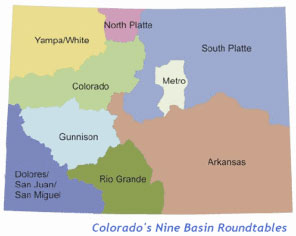
Here’s the link to the information page at the Colorado Foundation for Water Education.
More IBCC — basin roundtables coverage here.

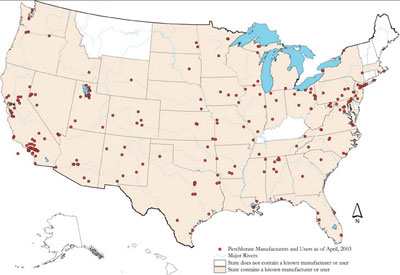
From Water World (Patrick Crow):
The decision to undertake a first-ever national standard for perchlorate reverses a 2008 Bush Administration decision and comes after EPA Administrator Lisa Jackson ordered EPA scientists to make a thorough review of the chemical. The agency said more than 4% of public water systems have detected perchlorate and between 5 million and 17 million people may be served drinking water containing perchlorate.
Perchlorate is both a naturally occurring and man-made chemical best known for its use as rocket fuel ingredient. EPA said research indicates that it may impact the normal function of the thyroid, which produces important developmental hormones.

From email from the Greenway Foundation:
Announcing The Greenway Foundation’s 1st Annual Golf Tournament at Meridian Golf Club. Please join us for a fun date of golf benefitting the Greenway Foundation.
• Support The Greenway Foundation
• Be A Sponsor
• Put Together A Foursome
• Refer Your Friends and Family8:00 am Registration
9:00 am Shot Gun StartLunch and awards to follow the tournament
More information and registration at: www.greenwayfoundation.org/golf
More South Platte River basin coverage here.

From the Arkansas River Basin Forum website:
The 17th Annual Forum will be held at the Norris-Penrose Event Center in southern Colorado Springs.
HOSTED BY:
The 2011 forum will be hosted by the Fountain Creek Watershed, Flood Control, and Greenway District and the District’s Citizens Advisory Group (CAG).DATES:
April 27-28, 20112011 THEME
Retaining. Rethinking. Restoring.
More Arkansas River basin coverage here.

From The Fort Morgan Times (Dan Barker):
When smaller businesses need to buy C-BT water shares, they are not always knowledgeable about buying it on the open market, said City Water Resources Director Gary Dreessen.
Under those circumstances, it would be business-friendly to help them out by selling them shares of the water that the city owns, said Acting City Manager Jeff Wells.
Council members seemed to reach a consensus that the city would sell water shares at a price based on the average cost over the past three years.
However, Councilman Scott Bryan wondered if the city should charge the going price, instead of the average of three years.
Giving local businesses a break is part of being business-friendly, said Councilman Brent Nation.
Councilman James Powers urged city officials to keep an eye on how businesses are buying water shares, so they would not be able to speculate on them to make a profit.
Any company which would want to buy a large amount of water, say 40 or 50 shares, would be helped by the city acting as a kind of broker, but the city would not sell that many shares directly, Wells said.
Powers also insisted that any money the city receives from water share sales go into a fund for purchasing more water, not just into the general water department revenue. In the past, that happened and the money seemed to get lost. Different organizations handle water sales differently, but the Morgan County Quality Water District does use the proceeds to buy more water and that seems to work, Nation said.
Businesses which bought water from the city directly would pay a $500 transaction fee for the work the city put into the sale — over and above the cost of the water, Dreessen said. Given the water market, this policy would likely change in the future, but it should work for now, Nation said.
The price for a business buying a city share of water would be $7,433 this year, which would be an average of the 2009, 2010 and 2011 prices.
This was a work session, which meant the council could not vote on the policy, but it will go on the agenda for the next meeting in two weeks.
From the CSU Extension office (Joanne Jones) via The Fort Morgan Times:
In an effort to help save water – and money, Colorado State University Extension in Morgan County is partnering with the City of Fort Morgan to offer a series of presentations titled “Water Smart Turf Management.”
Presentations begin on April 7, 2011 and will be held on Thursday`s at the Extension office, 914 E. Railroad Ave in Fort Morgan beginning at 6:30 p.m.
April 7 presentation title is Soils and Soil Amendments with Matt Givens, Parks Superintendent for the City of Fort Morgan, presenter; April 14 Advantages and Disadvantages of Different Turf Species with Joanne Jones, Horticulture Agent, CSU Extension; April 21 Fertilizing, Mowing and Aeration of Home Lawns with Steve Cramer, retired Horticulture Agent, CSU Extension; April 28 Turf Pests (insects, diseases and weeds) with Dr. Tony Koski, Professor and Turf Specialist, CSU; May 5 Irrigation Systems with Joel Schneekloth, Regional Water Resource Specialist, CSU Extension; and May 12 Sprinkler Audits of Home Systems with Jacque Weimer and Deb Schauermann, Colorado Master Gardener volunteers. Weimer and Schauermann will discuss the sprinkler audits that participants will schedule for later in the season.
Presentations and audits are available to the public at no charge; however, the City of Fort Morgan has offered an incentive to Fort Morgan utilities users. Participants who attend five of the six presentations and have an audit completed will be eligible for a chance at $25 off one month`s utility bill.
This is not a sprinkler maintenance class; sprinklers should be in good repair before the audit is scheduled. Sprinkler audits show residents how to irrigate more efficiently, in turn reducing the amount of water used and saving money.
To register for the series of presentations and the audits, or for more information, contact Jones at CSU Extension in Morgan County at 970-542-3540, joanne.jones@colostate.edu, or Doak Duke with the City of Fort Morgan at dduke@cityoffortmorgan.com.
More conservation coverage here.

From email from Colorado Trout Unlimited (Sinjin Eberle):
In Colorado, cold, clean water is our most precious resource. Healthy, free-flowing rivers support recreation opportunities like fishing, kayaking and rafting, while also supplying drinking and irrigation water to Colorado’s families and farms. Unfortunately, many of the rivers and streams that we depend on to sustain life and our western way of living are on the brink of collapse. The Colorado River is one such river on the brink.
Today, over 50% of the Upper Colorado River’s water is permanently removed and shipped across the Rocky Mountains to growing Front Range cities and suburbs, threatening the health of fish, wildlife and local headwaters communities. And Now, despite this, proposals like the Moffat and Windy Gap Firming Project threaten to TAKE MORE, leaving less for fisherman, farmers, and West Slope communities and threatening the very survival of our state’s namesake river.
In honor of World Water Day, please take a moment to watch our new video, ‘Tapped Out,’ then take the pledge to use our water resources wisely and keep the Colorado River flowing.
More Colorado River basin coverage here.

From the Vail Daily:
On Tuesday, House Bill 11-1177, Healthy Rivers Fund Tax Donation, sponsored by Sen. Jean White, R-Hayden, was signed today by Gov. John Hickenlooper. This bill continues the work of the Colorado Healthy Rivers Fund, which works to protect outdoor areas across the state.
More instream flow coverage here.

From The Telluride Daily Planet (Matthew Beaudin):
The EPA is tasked with permitting the waste product storage at the would-be uranium mill near the Colorado-Utah border between Telluride and Bedrock, Colo. From now through April 8, the agency will conduct another comment session though it’s not a regulatory requirement. The comments, like the EPA’s involvement, must be narrow in scope and limited to “uranium by-product impoundments,” or waste storage, according to the agency. A passel of citizens and governments in the region have flooded regulators, such as the Colorado Department of Public Health and Environment and the EPA, with letters asking for more review of the mill. “We got a lot of inquires from San Miguel County and others around the mill,” said Deborah Lebow Aal, the acting director of the EPA’s air program. “If there are some really relevant and good comments we will look at them.”
The mill still needs to collect water and air permits from the State of Colorado…
“I think it’s great that the EPA paid attention to the requests that were made. I think all of these processes should be a public process,” [Hilary White, the executive director of Sheep Mountain Alliance] said. “Ultimately, a victory would be for them to deny the permit. I think we understand that that’s a long shot. What we’re really going for is a strong independent analysis.” White said the EPA is reviewing radon emissions, specifically. Radon, a gas, is a uranium mining byproduct that is estimated to cause about 21,000 lung-cancer deaths a year, according to a 2003 EPA study…
Currently, Sheep Mountain Alliance is in a fight with both the state and Energy Fuels. It filed a suit that accused state regulators of violating federal and state laws in the run up to approving the mill and ignoring dangers to air and water quality. The CDPHE and Energy Fuels have both asked the court to throw the suit out. “The Department disputes the vast majority of SMA’s allegations, many of which are misstatement of fact and law, irrelevant, exaggerations and mischaracterizations,” reads the state’s suit, filed by Colorado Attorney General John Suthers.

From The Pueblo Chieftain (Chris Woodka):
The Pueblo Board of Water Works will sell an additional 5,000 acre-feet of water to the Fort Lyon Canal this year. That will bring total sales through short-term leases to 15,000 acre-feet, with revenues of $715,000…
Outside water sales, through short- or long-term leases, make up about one-fourth of the $29.8 million in operating revenue in this year’s budget. Xcel will pay $4.9 million for water used at the Comanche Plant, while Black Hills will pay $360,000 when its new plant starts up later this year. Aurora pays $1.58 million under two long-term agreements to trade and move water. There are several smaller long-term contracts.
More Pueblo Board of Water Works coverage here.

So how is humankind going to get drinking water and grow food for an ever-increasing population? The participants at World Water Day 2011 are hoping to figure out that riddle before more of a crisis builds. Here’s a report about the goings on in Cape Town, South Africa from The Guardian (Lee Middleton):
In Africa, where the rate of urbanisation is the world’s highest and urban populations are expected to double in the next 20 years, water services have been on the decline since 1990. Amcow highlighted the opportunities provided by the conference for African ministers, mayors, civil society organisations and representatives of development banks and the private sector to discuss how they can move faster and more effectively in closing this gap and achieving millennium development goals. The critical need for collaboration and communication between sectors, and the need for visionary leadership to manage the planet’s limited water resources were recurring themes.
Conference sessions covered topics as diverse as how cities can decentralise urban water management systems to make them sustainable, the role of water in urban green growth, and how cities can address sanitation issues in rapidly growing informal settlements and slums. “Urbanisation, a greener world, and coping with climate variability – those are the three issues that just about every session is looking at in some way or another,” said Margaret Catley-Carlson, executive board chair of the Global Crop Diversity Trust.
Numerous speakers highlighted the need for a shift away from “old models” of water management and business-as-usual thinking. “I see a transition from people being consumers of water to people being custodians of water. We need to manage water as a flux instead of a stock,” said Anthony Turton, director of TouchStone Resources, a natural-resource management company based in South Africa, at a World Bank panel on public-private partnerships.
The privatisation of water supplies has been a controversial issue in the past, sparking protests when attempted in Bolivia and South Africa. Last year, the African Development Bank recommended privatisation as the only way to meet the continent’s water and sanitation needs. However, Richard Makolo, leader of the South African Crisis Water Committee, reportedly called privatisation “a new kind of apartheid”.
“I think the issue of who owns the utility and who provides the service is much less than it used to be,” said Julia Bucknall, sector manager of the central unit for water at the World Bank’s Energy, Transport and Water department. “There are some basic fundamentals of good governance of water that need to be respected, independent of who owns them.”
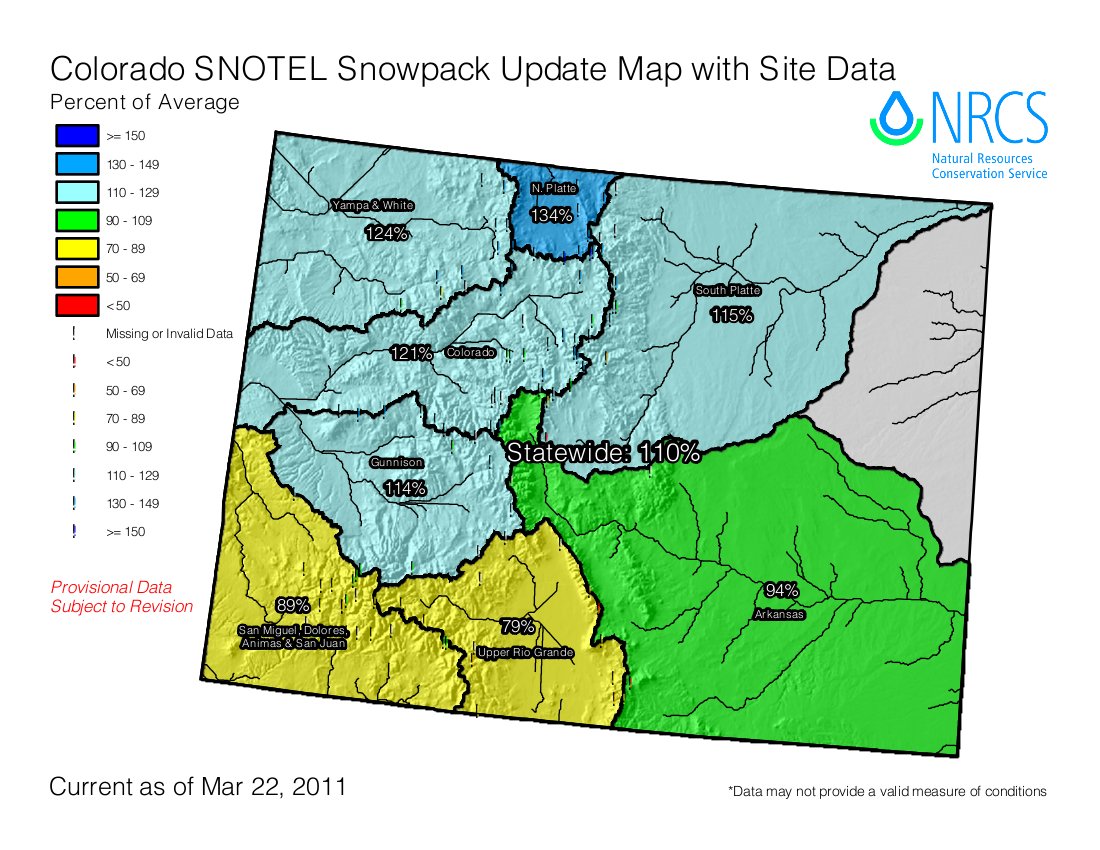
From KOLD.com (Erin Jordan):
Above Lake Powell, upstream of Lake Mead, the average snowpack for the Colorado River watershed is 112% of average. As the snow melts, it’s expected to raise water levels in Lake Powell, which will then allow an increased release of water downstream into Lake Mead. The Bureau of Reclamation forecasts a 97 percent probability that more than 2.5 million acre-feet (more than 850 billion gallons) of additional river water will be released from Lake Powell into Lake Mead this year. The above average release from Lake Powell will raise water levels in Lake Mead about 25 feet.
From the Sterling Journal Advocate:
Presentations begin on April 5 and will be held on Tuesdays at the Extension office, 508 South 10th Ave. Suite 1 in Sterling, beginning at 6:30 p.m.
The April 5 presentation title is “Soils and Soil Amendments” with Joanne Jones, horticulture agent, CSU Extension, presenting. On April 12, the topic will be “Advantages and Disadvantages of Different Turf Species” with Jones. April 19 will be “Fertilizing, Mowing and Aeration of Home Lawns” with Steve Cramer, retired horticulture agent of CSU Extension. Dr. Tony Koski, CSU professor and turf specialist, will present “Turf Pests (insects, diseases and weeds)” on April 26. May 3 will be “Irrigation Systems” with Joel Schneekloth, Regional Water Resource Specialist, CSU Extension. May 10 will be “Sprinkler Audits of Home Systems” with Tammy Maggard and Pat Harrington, Colorado Master Gardener volunteers. Maggard and Harrington will discuss the sprinkler audits that participants will schedule for later in the season.
More conservation coverage here.
From The Denver Post (Karen Crummy):
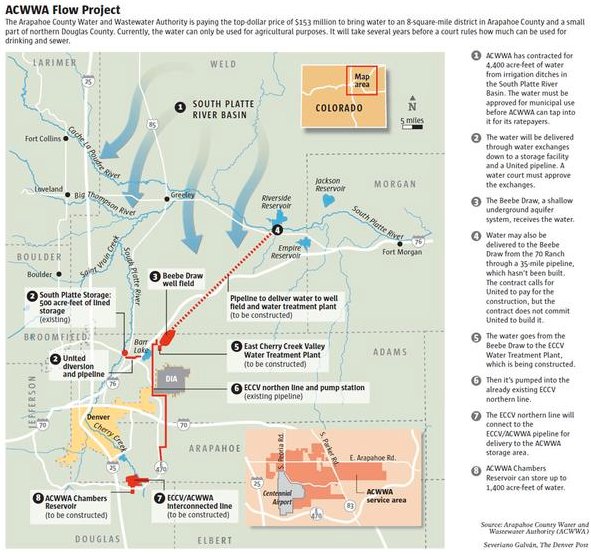
Arapahoe County Water and Wastewater Authority, known as ACWWA, proposes delivering its excess water to Castle Rock, even though the water isn’t yet approved for residential use. Castle Rock officials are wary. “We’re comparing projects. We’re not rushing into anything,” said Ron Redd, the town’s utilities director. “We need to make sure we partner up in a secure, long-term water deal. We can’t afford to make a mistake.”[…]
“Given ACWWA’s current surplus of treated and untreated water capacity and Castle Rock’s future water demands, a joint solution involving Castle Rock, ACWWA and United could be advantageous for all parties,” wrote Jim Dyer, ACWWA’s government-relations director, in a Feb. 11 letter to Redd…
Ten days ago, Redd gave the Town Council a memo that outlined the proposed project: South Platte River Basin water would be treated near Barr Lake and conveyed south through a pipeline to a delivery point near E-470 and Smoky Hill Road. Castle Rock would then have to build infrastructure to get the water to the Rueter-Hess Reservoir in Parker and then to the town service area. Redd’s memo points out his initial concerns, which include the town’s reliance on water that must be changed from agricultural use to municipal use…
Redd and his staff are analyzing the ACWWA/United proposal and another one from WISE — Water, Infrastructure and Supply Efficiency. WISE is a joint collaboration among Denver Water, Aurora Water and the South Metro Water Supply Authority (of which Castle Rock is a member and Redd is board president).
More South Platte River basin coverage here.

From The Pueblo Chieftain (Patrick Malone):
The House Agriculture, Livestock and Natural Resources Committee voted 13-0 to adopt HB1286, sponsored by Reps. Jerry Sonnenberg, R-Sterling, and John Becker, R-Fort Morgan. The bill aims to streamline the decision-making process on water permits. A 2009 Colorado Supreme Court decision found that water used in coal-bed methane natural gas extraction is subject to the requirements of tributary water permitting. The ruling granted Water Courts authority over permitting conflicts and appeals…
Nontributary water can be exempt from permitting, Following the court’s ruling, the state engineer developed rules to govern permitting within the framework of the court’s decision, and developed a map that reflects extraction operations subject to permitting under it. Among them were some wells in the Raton Basin near Trinidad. Under HB1286, the state engineer’s rules would be acknowledged in statute, appeals of permit decisions would be routed through the rule-making process instead of through Water Court and further appeals of those decisions to a Water Court would require a higher standard of proof to overturn earlier rulings in the chain of appeals.
The chief opponent of the bill to testify Monday was lawyer Philip Lopez of the firm White & Jankowski, which represents the plaintiffs who were victorious in the 2009 case. He characterized the bill as an attempt to legislate around judicial decisions, argued the ruling has not led to the shutdown of any gas wells and said the state engineer’s map confers by default a water right to the oil and gas industry that other water users must follow process to attain.
More coverage from Joe Hanel writing for The Durango Herald. From the article:
House Bill 1286 raises the legal standard the ranchers will need to prove to win their lawsuits against State Engineer Dick Wolfe. Last year, Wolfe drew maps that showed which gas and oil wells needed to get water permits and which ones could drill without going to court to fight about who owns the water…
The Vance and Fitzgerald families took Wolfe’s office to court several years ago for not protecting their water rights from gas wells, and they won at the state Supreme Court in 2009. The ruling shocked the gas industry, and legislators worried all 40,000 gas and oil wells in the state would need to get water permits. So they gave Wolfe’s office the power to draw maps that show where gas wells interact with surface water. Gas wells outside the zone do not need to replace the water they use because the water is assumed to be so deep underground that it will have no effect on surface streams.
But the Vance and Fitzgerald families sued again, along with the San Juan Citizens Alliance, the Oil and Gas Accountability Project and the city of Sterling. Several lawsuits are active, and the main one is working its way through the water court in Greeley…
Mike King, director of the Department of Natural Resources, urged legislators to pass the bill. Wolfe’s office is in King’s department, and King cited the extensive work the engineer’s office did to draw the maps. “What we’re asking is an affirmation of that to remove all doubt,” King said. “This is critical that we resolve this issue and that it doesn’t get litigated and then appealed to the Supreme Court, and we have a two-year window of uncertainty that would not be good for oil and gas production in Colorado.”
More 2011 Colorado legislation coverage here. More coalbed methane coverage here and here.

From The Pueblo Chieftain (Patrick Malone):
On Monday, the Colorado House by a 65-0 vote passed an amended version of HB1083, which now moves to Gov. John Hickenlooper’s desk awaiting his signature to become law. It passed unanimously through two committee hearings, two votes in the House and a vote in the Senate — more than 180 votes cast, and not one in opposition.
The bill adds hydroelectric and pumped-hydro operations to the list of new energy technologies that the Public Utilities Commission can consider. Those projects would now qualify for cost recovery through rates…
An amendment to the bill that guides the PUC to consider projects’ impacts on aquatic life and another that firmed-up that downstream water users would not be adversely affected by new hydro projects helped the legislation to sail through the Legislature. In the Senate a provision was added that directs the PUC to consider the costs and benefits associated with projects when mulling their approval.
More 2011 Colorado legislation coverage here. More hydroelectric coverage here and here.

Here’s the link from the American Whitewater website.
American Whitewater is working to identify the range of flows that support the full range of boating opportunities for the main stem and tributaries of the Yampa and White Rivers. As part of our Yampa River Project, we are working with the Colorado Water Conservation Board and the Yampa-White Basin roundtable to identify and define flows needed for continued recreational uses on Northwestern Colorado’s iconic rivers. THe results of our assessment will be used in future negotiations over water supply planning, and resouce management actions.
We have developed this survey so individuals can help American Whitewater represent recreational interests in deciding what the future of the Yampa and White Rivers will look like. Our goal is to utilize information from the survey to help us quantify flow preferences for whitewater boating, which will identify the range of flows necessary to provide whitewater recreation experiences, from technical low water to challenging high water trips. The information will provide us with the data necessary to describe flow-dependant recreation experiences and to protect and manage flows for river-based recreational opportunities.
AW is currently working with local governments, conservation groups, and State and Federal agencies to decide the future of the Yampa and White Rivers and their tributaries. Your honest participation in this study, will help American Whitewater Staff develop new instream flow guidelines for the Yampa and White Rivers.
Please encourage your fellow paddlers to participate in this study. The more responses we get the more robust our results will be. We will publish results of this survey for the benefit of paddlers with an interest in recreational opportunities on the Yampa and White Rivers.
From Steamboat Today (Mike Lawrence):
Survey results will be part of an extensive multiyear assessment of demands on the Yampa and could be used in future discussions of water policy and resource management. “This recreational flow survey is definitely something that’s pretty exciting for us,” said Kent Vertrees, a recreational representative on the Yampa/White River Basin Roundtable. “It’s just one of the components of the environmental and recreational nonconsumptive needs (assessments) of our basin.”[…]
“This has nothing to do with the recreational water right or establishing water rights in the future,” Vertrees said. “This is basically a study that the roundtable is doing to comply with what the state asked us to do, way back in 2005.”

From the Ag Journal:
Colorado U.S. Senator Michael Bennet announced today that general sign-up for the Conservation Reserve Program (CRP) for Colorado landowners and producers begins today and continues through April 15. During the sign-up period, farmers and ranchers may offer eligible land for enrollment at their county Farm Service Agency (FSA) office. The 2008 Farm Bill authorized the U.S. Department of Agriculture to maintain CRP enrollment up to 32 million acres.
“CRP has helped farmers and ranchers preserve top soil, enhance wildlife habitat and protect our land and water,” Bennet said. “The program is a win-win for producers and the people of Colorado. I encourage those interested in taking advantage of this opportunity to contact their FSA office right away.”
CRP is a voluntary program that assists farmers, ranchers and other agricultural producers to use their environmentally sensitive land for conservation benefits. Producers enrolling in CRP plant long-term, resource-conserving covers in exchange for rental payments, cost-share and technical assistance. By reducing water runoff and sedimentation, CRP also protects groundwater and helps improve the condition of lakes, rivers, ponds and streams. Acreage enrolled in the CRP is planted to resource-conserving vegetative covers, making the program a major contributor to wildlife population increases in many parts of the country.
More conservation coverage here.

From the Glenwood Springs Post Independent (John Colson):
A draft of the Roaring Fork Watershed Plan, which is a project of the Roaring Fork Conservancy and the Ruedi Water and Power Authority, aims to increase awareness of, and involvement in planning for a likely scarcity of water in the coming decades. The draft of the plan is available at the conservancy’s website, www.roaringfork.org…
More than 40 percent of the water in the Roaring Fork and Fryingpan river drainages is diverted each year, and sent to cities and counties on the Front Range. Similar diversions are in operation in other Western Slope drainages, to satisfy the needs of a Front Range population that is expected to grow from roughly 5 million today to approximately 8 million by 2030, according to published estimates. At present, it is unknown whether future transmountain diversions will take ever greater amounts of water from the Western Slope, since no new diversion projects currently are under study, the draft plan states. But existing diversion rights are not being fully used, according to a Jan. 7 “Front Range Water Supply Planning Update.” The possibility of increased diversions has galvanized water planners and local governments into figuring out how to cope with the difficult issues surrounding water policy in this region…
The draft plan also relates that nearly 140 miles of streams surveyed in the Roaring Fork Watershed, out of 185 total miles of streams, show “moderately modified to severely degraded riparian habitat.” This habitat zone, although comprising less than 3 percent of the landmass in the watershed, sustains “75-80 percent of wildlife species” in the region. In addition, according to the draft plan, “functioning riparian areas reduce the risk of flooding and increase stream base flows.” Increasing diversions, and resulting lowered water levels in rivers and streams, pose a threat to riparian habitat, as well as to the availability of water for municipal, agricultural and industrial needs.
More Roaring Fork River watershed coverage here.

From The Salt Lake Tribune (Tom Wharton):
Some say Lake Powell and Lake Mead are slowly dying. Others maintain the Colorado River reservoirs, two of North America’s largest, are doing just fine. These experts say they not only meet current needs but have the potential for pipelines that bring water into Denver and St. George as well as a nuclear power plant on the Green River. How the water is managed over coming years has enormous consequences for the West. At stake are the growth potential for many major Western cities that rely on Colorado River water for drinking, crops grown in California, cheap hydroelectric power, recreation enjoyed by millions each year, the ecological health of the Grand Canyon and the survival of several endangered fish.
More Colorado River basin coverage here.

From The Pueblo Chieftain (Nick Bonham):
“My company will not bring suit. I’m content with what ever decision the county makes,” Banner said. “If our community isn’t interested, then neither am I. It’s that simple.” A three-day public hearing last week covered Banner’s zoning request to turn 24,000 acres in eastern Pueblo County into a Clean Energy Park, featuring wind and solar power and a nuclear plant.

From GIS and Science:
Researchers already study how various species of plants and animals migrate in response to climate change. Now, Jason Samson, a PhD candidate in McGill University’s Department of Natural Resource Sciences, has taken the innovative step of using the same analytic tools to measure the impact of climate change on human populations. Samson and fellow researchers combined climate change data with censuses covering close to 97 per-cent of the world’s population in order to forecast potential changes in local populations for 2050.
Samson’s team found that if populations continue to increase at the expected rates, those who are likely to be the most vulnerable to climate change are the people living in low-latitude, hot regions of the world, places like central South America, the Arabian Peninsula and much of Africa. In these areas, a relatively small increase in temperature will have serious consequences on a region’s ability to sustain a growing population.”It makes sense that the low latitude tropical regions should be more vulnerable because the people there already experience extremely hot conditions which make agriculture challenging. An increase in temperature over the next few decades will only make their lives more difficult in a variety of ways,” says Samson
From The Denver Post (Karen Crummy):
[United Water], together with another district — the East Cherry Creek Valley Water & Sanitation District — offered what he called a “turnkey deal.” “The project at the end of the day was able to give us a delivered product at a guaranteed price through infrastructure that was already in place and constructed,” he said, pointing to a critical waterline already built by ECCV.
The authority, which serves about 25,000 customers, has paid or put into escrow $41.6 million for using the waterline but also to build more infrastructure, including a reservoir, a pipeline and a treatment plant. It’s also paid out $65 million for agricultural water rights so far — a price typically paid for water already adjudicated for municipal use — despite the fact that the change-of-use case will take several years and hundreds of thousands of dollars to litigate. And in December, the board amended its budget to pay for “higher than anticipated expenditures for water acquisition” and “unforeseen expenses” associated with the project, according to board minutes.
More South Platte River basin coverage here.
Everyone in the world now knows that the safety and containment of certain nuclear facilities depends on an uninterruptible water supply that depends on an uninterruptible power supply. Some questions: What will be the priority of the water for the nuclear power plant in Pueblo County? Do they get in line according to the water rights they acquire? Do they jump to the head of the line during a crisis? What will be the minimum water requirements after shut down and decommissioning?
Maybe the proponents will go with liquid metal cooled reactors like this oil shale production scheme.
Here’s a report about the possible sources of water for the power plant from Chris Woodka writing for The Pueblo Chieftain. From the article:
“I really don’t want to discuss the water availability, because of the fact that I don’t have it under contract, and that’s intentional. I wasn’t going to spend the money to put it under contract unless this played out,” said Don Banner, who has applied for county zoning on a proposed site for a nuclear plant east of Pueblo…
Water has been a central issue in dealing with tsunami-damaged nuclear plants in Japan. Some nuclear plant designs require large amounts of water for cooling. Others require relatively less, by using air or gas cooling. Reactors that use a steam turbine need a great deal of water, which can either be recirculated or passed through the plant…
A nuclear plant near Holly is one possibility Tri-State Generation and Transmission Association is considering. It also could build a coal- or gas-fired plant. Regardless of which type of plant it builds, Tri-State acquired large amounts of water — nearly half of the Amity Canal, which irrigates 37,000 acres in some years. Tri-State’s yield is estimated at 20,000 acre-feet per year — about 18 million gallons per day — on average. Tri-State’s goal was to buy enough water to operate two coal-fired plants that would produce about 1,200 megawatts of electricity at the site. A nuclear plant might need at least as much, but again it depends on the design of the plant. The needs could be much less.
Banner has talked publicly about several potential sources, even mentioning Evraz Rocky Mountain Steel or Aurora as entities that might be willing to sell water at Thursday’s hearing. “There are wells located near the property, deep water wells. There is the Welton Ditch,” Banner told The Chieftain. “I don’t know if they are sufficient. That’s an engineering determination that has to be made.”[…]
The Welton Ditch has generated an average of 4,481 acre-feet annually since 1912, according to the Colorado Division of Water Resources. Its maximum year was 16,421 acre-feet in 1985. During the 2002 drought, its yield dropped to 463 acre-feet, and no water was diverted in 2003.
There is another ditch on the Huerfano River that feeds the Welton, the Huerfano Valley Ditch. It is connected to the Two Rivers Water Co. plan to renovate Cucharas Reservoir as a storage site. It has similar numbers to the Welton, with average yields of 6,229 acre-feet and a peak year of 16,691 acre-feet. There were no diversions in 2002…
Another possibility could be obtaining water from the Pueblo Board of Water Works, which had preliminary discussions with earlier backers of an energy park on the same land Banner is interested in. The water board now provides water to Xcel’s Comanche power plant and will supply the Black Hills plant now under construction…
“To serve another [power plant the size of Xcel’s] Comanche, say, we would include the costs to buy new water rights so there would be no impact on rates,” [Alan Hamel, executive director of the Pueblo water board] said. “There would be major up-front costs so we could fully recover the cost of water.”
Here’s a table of the 33 most serious nuclear accidents since 1952 from The Guardian Scroll down through the article for the list. Thanks to beSpacific for the link.
From the Kearney Hub (Lori Potter):
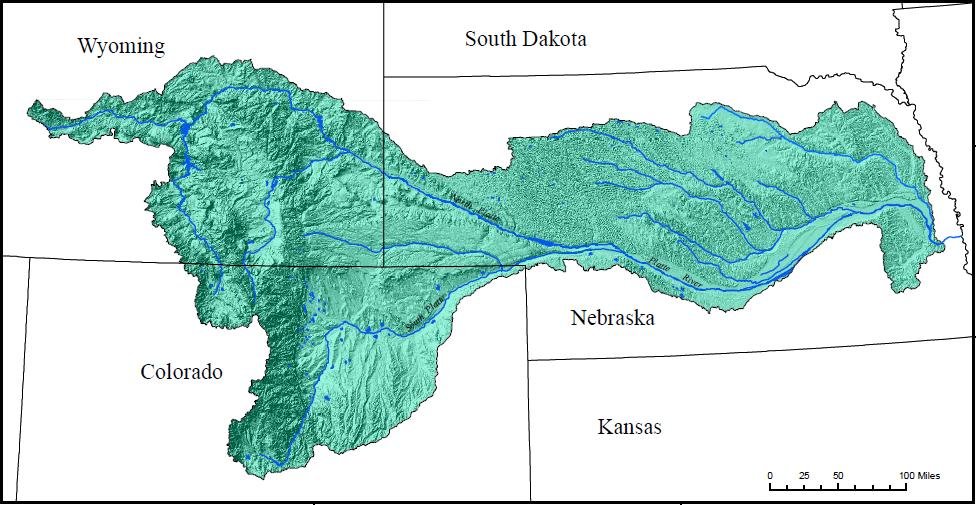
“There is a level of concern,” Executive Director Jerry Kenny of Kearney said Monday, because federal funds — annual appropriations — provide most of the dollars for [Platte River Recovery Implementation Program] projects in the first 13 years. “Will the federal government honor the promises it made in the authorizing legislation?” Kenny asked. “Or will other priorities force cuts? I think it’s a legitimate concern.”
During a visit to south-central Nebraska’s Rainwater Basin and Platte River Monday, U.S. Interior Secretary Ken Salazar said, “I’m very concerned. At the end of the day, if we don’t invest in conservation, we take away the legacy (that’s been built). “Even though we’re in a time of crisis, this is not the time to go back on conservation,” he said, adding that Abraham Lincoln protected Yosemite from development during the Civil War.
More South Platte River basin coverage here. More North Platte River basin coverage here.

Here’s the release from the City of Durango (Sherri Dugdale):
The City of Durango has begun work on revisions to its Water Efficiency Management Plan, the plan that describes how water conservation and other measures will be implemented to more efficiently use the water resources in the area, reduce water system operating costs, postpone the need for investments in city infrastructure, and reduce the need for water rate increases to its customers.
Using a grant from the Colorado Water Conservation Board, the City and its consultant, the Great Western Institute, have prepared a draft plan for review by the citizens of Durango. The draft plan will be available for review for a 60-day period, after which it will be considered for approval by the Durango City Council. The draft plan describes the existing conditions in the City of Durango including per capita consumption of water, water losses in the distribution system and ongoing programs to reduce water waste, and describes new programs the City should consider to postpone the need to invest in new water treatment facilities and alternate supply sources.
The plan is available for review at the Durango Public Library or on-line at http://www.durangogov.org/pubworks/water.cfm. The public comment period will extend until 4:30 p.m. on May 15, 2011. Public comments need to be submitted in writing to:
City of Durango
Department of Public Works
949 East 2nd Avenue
Durango, Colorado 81301Comments may also be submitted by email to ossegeja@ci.durango.co.us
A public hearing will be scheduled before the Durango City Council after the public comments have been reviewed in early summer of 2011. For questions, please contact the Public Works Department at 375-4802.
More Animas River watershed coverage here.

From the Glenwood Springs Post Independent (Heather McGregor):
Workers have poured more than 5,000 cubic yards of concrete, driven nearly 3,000 feet of vertical pilings and hardened more than 18,000 cubic yards of soil at the site. Through the winter months, they dealt with cold and nearly constant shade at the site. “The sun was going down for the day at 10:30 in the morning,” said Buddy Burns, manager of the city’s wastewater treatment system. Now the snow is melting, soils are thawing and the site is mired in mud and puddles…
The city will be paying off the bonds in twice-a-year payments of $958,000 over 21 years, from 2011 through 2032. To cover the bond payments, sewer rates for Glenwood Springs customers have been gradually increasing since 2006. Rates for residential customers have climbed from a minimum of $25.56 in 2007 to a minimum of $47.84 in 2010, and are expected to take another upward jump this spring…
The new wastewater treatment system is actually a series of four projects stretching from the existing plant site at the confluence to the new site at Chatfield Ranch in the far western end of West Glenwood. It includes a new lift station at the existing plant site, a two-mile stretch of pipelines to carry wastewater to the new plant site, a new, mile-long road extending from the west end of Wulfsohn Road to the plant site, and the new plant itself, a complex of three buildings and four giant open tanks.

From The Pueblo Chieftain (Peter Roper):
The three-day public hearing this week on the zoning request for the Colorado Energy Park brought out local residents both for and against the proposed plant. Besides their comments, they brought reports, news articles, petitions, books and other items they wanted noted in the official record of the hearing. “There is a lot there,” Commissioner Jeff Chostner acknowledged Friday. A lawyer, he’s accustomed to reviewing stacks of documents. “From a legal perspective, we need to review what’s been presented for the record. The standard for appealing any decision we make is whether we’ve acted in an arbitrary or capricious manner. So it’s going to mean hours of review.”[…]
The commissioners have three possible decisions on April 25. They can deny Banner’s proposal, approve it, or approve it with conditions. Postponing a decision isn’t really an option, said to Gary Raso, the county’s land-use attorney. After the public hearing ended Thursday night, Raso and county staff spent hours reading all of the offered testimony into the official record, which he will maintain at his law office in case the commissioners’ final decision is appealed by Banner to district court. County officials intend to have much of that material available for public review on the county’s website, but that will take some time. “We’ll have copies of everything that’s come in and it’s monumental,” Commissioner Anthony Nunez said. “That’s a reason we’re taking as much time as we are in reaching a decision. We understand whatever we decide could affect not only the current residents of the county but future generations, as well.” While Banner’s proposal is a land-use request, the commissioners actually have broad latitude in making a final decision. The fundamental question argued at the public hearing — is nuclear power safe or dangerous? — could well be the basis of the commissioners’ decision.
“There are zoning standards the commissioners will have to address in their decision, but the overriding purpose in any land-use proposal is whether it will impact the best interests and safety of the public,” Raso said. “So if the commissioners would determine they don’t believe nuclear power is safe, that would be sufficient to deny the application.”
More coverage from Bob Berwyn writing for the Summit County Citizens Voice. From the article:
Wednesday night, the crowd was so big that the commissioners chose to continue the hearing for another night. Nearly all the citizens commenting at the Wednesday hearing referred to the ongoing disintegration of an entire nuclear complex in Japan, citing the potential for a similar disaster in Colorado. A clip of some public comments is online here.
Questions were also raised about the water needed to cool a nuclear reactor in an area where water is even more of a precious commodity than energy.
More coverage from David O. Williams writing for the Colorado Independent. From the article:
Another strike against nuclear power is the storage of spent nuclear fuels rods, which remain highly radioactive after they’re no longer producing power. The New York Times reports the spent fuel rods still onsite in Japan are now a bigger problem than the stricken reactors.
More coverage from the La Junta Tribune-Democrat (Andrea Flores):
Tuesday, March 14, more than 200 community members, business leaders, engineers, professors, and former nuclear plant workers to name a few, gathered at the Sangre de Cristo Arts and Conference Center to hear Mr. Banner’s testimony to the commissioners. Banner began his testimony by first expressing his concern and regret for the problems Japan is facing. He went on to say that the nation has progressed in 50 years from black and white televisions to having the technology of iPads and iPhones. Banner went on to say this project would bring national attention to Pueblo. He has received calls from major networks such as NBC and CBS. Following Banner’s presentation to the commissioners, several supporters were allowed to give a three-minute presentation to the commissioners. Fowler realtor Sheila Norton told the commissioners, “I have contacted realtors from areas in the United States who have nuclear plants in their neighborhoods. All have said the property values have sky rocketed as well as new schools being constructed and businesses being built.” A former nuclear power plant worker traveled from Silverthorne to attend the meeting to give her support, saying the workers are well trained, and the plants are operated with the utmost care causing no harm to the environment…
Those who oppose Pueblo attorney Don Banner’s proposed nuclear power plant filled the Sangre De Cristo Arts and Conference Ballroom to capacity on Wednesday, March 15. After a four-hour hearing on Tuesday night, the commissioners asked the speakers to limit their comments to five-minutes and to hold any applause until the entire hearing was over. With a couple dozen people stating their disapproval of allowing this project to occur and testimony lasting another four hours, the commissioners had to continue the hearing on Thursday.
From the Northern Colorado Business Report:
The March 24 session will feature Rena Brand, U.S. Army Corps of Engineers. The Corps of Engineers is charged with reviewing applications for water storage projects. The session will be held from 5:30 to 7:30 p.m. in the Larimer County Courthouse, 200 W. Oak St., in Fort Collins. Sponsored by UniverCity Connections, Colorado State University and the Community Foundation of Northern Colorado, the sessions are aimed at educating Northern Colorado residents about water issues and the future of the region’s water supply.
More Poudre River watershed coverage here.

From the Telluride Daily Planet (Katie Klingsporn):
In early February, Telluride environmental organization Sheep Mountain Alliance filed suit against the Colorado Department of Public Health and Environment in the wake of the agency’s decision to grant a radioactive materials permit to Canadian company Energy Fuels. The suit argued that Colorado regulators violated federal and state laws and ignored dangers to Colorado’s air and water when they issued the permit to Energy Fuels, which plans to build and operate a uranium mill in the stark and remote Paradox Valley. The CDPHE and Energy Fuels have responded — both have filed motions urging the court to dismiss SMA’s suit. The CDPHE filed a motion to dismiss in late February, and last week, Energy Fuels filed its own salvo.
The CDPHE motion, filed by Attorney General John Suthers, argues that SMA lacks the standing to file its lawsuit. “In reality, it is a broad but vague and ill-defined attempt by SMA to interject itself, through this court, into the Department’s day-to-day administration of its radiation control program,” the motion reads. “The Department disputes the vast majority of SMA’s allegations, many of which are misstatement of fact and law, irrelevant, exaggerations and mischaracterizations.” The motion goes on to argue that the court itself can’t restrain an executive branch agency from performing its duties nor does it have jurisdiction to interfere with the department’s exercise of its enforcement discretion.
Energy Fuels’ motion buttresses the CDPHE’s arguments, defends the manner in which the licensing process unfolded and requests that the court hold a hearing on the motions to dismiss as soon as possible following the closing of briefing on April 11. “CDPHE and Energy Fuels held at least 8 public meetings — 6 more than required by statute — regarding Energy Fuels proposed license and provided multiple opportunities for the public to comment on the proposed license,” the motion reads.
Travis Stills, an attorney with Energy Minerals Law Center in Durango, is representing Sheep Mountain Alliance. The position taken in these motions, he said, is that only the applicant for a uranium mill is able to participate in any formal process, whether it be administrative or judicial. “I find that to be an astonishing public policy statement for the CDPHE to make,” Stills said. “They are taking the position basically that it’s nobody’s business but theirs and the industry’s, and that everyone else … should take their three minutes and go away.”

From The Colorado Statesman (Marianne Goodland):
The noon conference also featured the presentation of a check for $65,000, representing food and cash donations from the Colorado Ag Council, to five area food banks. The food donations included 130,000 eggs, 40,000 pounds of wheat, 14,000 pounds of onions, and 350 gallons of milk, which will be turned into 250,000 meals.
Commissioner of Agriculture John Salazar pointed out that 40 different food commodities are produced in Colorado. Consumers have numerous options when providing nutritious meals for their families and a wealth of local products to choose from, he said. Coloradans treasure its agricultural bounty, and said the governor has said agriculture will be a priority in his administration. Colorado’s challenge, and the nation’s, will be to help feed the global population; in the next 50 years, more food will be needed than in the previous 10,000 years combined, he said.
“Don’t ever buy Idaho potatoes!” said Sen. Gail Schwartz, D-Snowmass Village, chair of the Senate Agriculture, Natural Resources and Energy Committee. Schwartz’ district includes the San Luis Valley, which produces much of the state’s potatoes. “Make sure it’s a Colorado potato!”
Representing the U.S. Department of Agriculture, former Sen. Jim Isgar said the Obama administration has put an emphasis on exports, and that in Colorado, $1.65 billion had been exported to other countries from Colorado agriculture, almost $1 billion more than just five years ago.
More ag business coverage from Marianne Goodland writing for The Colorado Statesman. From the article:
Tom Vilsack, the Secretary of the U.S. Department of Agriculture, spoke at a Monday conference in conjunction with the Export-Import Bank of the United States. The conference focused on improving global exports for small business, including agriculture. Colorado agricultural exports were up 14 percent last year, Vilsack said, and the USDA is projecting a 21 percent increase in 2011. Colorado is an agricultural state, which he said is not appreciated by people outside of the state. Every billion dollars of trade generates 8,500 jobs, and with Colorado’s $1.65 billion in agricultural trade last year, that’s more than 14,000 jobs, he said. “If we can increase [the number of jobs] by 21 percent, obviously we’re talking about more job opportunities and a better bottom line for farmers and ranchers, one that allows them to stay in business and even expand their business.”[…]
One of Colorado’s problems, as identified by Colorado Agriculture Commissioner John Salazar and his predecessor, John Stulp, is the flight from the farm, and the reluctance of young people to get into farming. Vilsack said the USDA has several programs to address that issue, such as a beginning farmer and rancher loan program, which provides help to farmers and ranchers to get them started. The program helps beginners with learning how to put a business plan together and how to access USDA products and programs. The USDA also helps with marketing, linking new fruit and vegetable growers with local farmer’s markets, he said.

From Summit Daily News:
A water rights and land conservation educational seminar, “Water on the Land, Keeping Water Local: Protecting Water Rights through Land Conservation,” is scheduled for March 29 from 12:30-5 p.m. at the Silverthorne Pavilion. Presented by the Continental Divide Land Trust and the Colorado Water Trust, the seminar is $65 for Realtors, attorneys and CPAs seeking Continuing Professional Education credits and $15 for those not looking to earn credit. Admission includes handouts, refreshments and a complimentary ticket to Peter McBride’s evening presentation on his new book, “The Colorado River: Flowing through Conflict.”
More Blue River watershed coverage here.
I’m on deadline at Colorado Central Magazine. I’ll see you on Saturday.
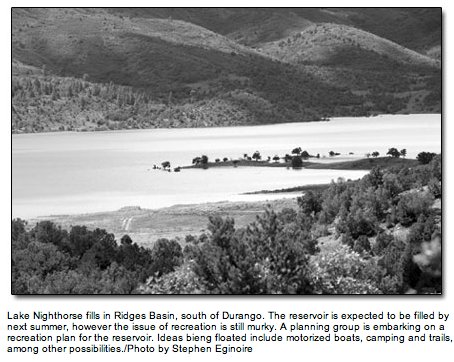
From The Durango Herald (Joe Hanel):
Legislators offered support Wednesday for spending $12 million on the second installment of the purchase, which could total $36 million over three years. The state water board began buying A-LP water from the federal government last year, at the urging of former state Sen. Bruce Whitehead. The state was facing a deadline to either buy into the project and get a seat on its governing board, or lose the chance. A top water official said the Colorado Water Conservation Board will decide by early fall whether to seek the last $12 million from the Legislature or to buy only a portion of the 10,460 acre-feet set aside for the state. If the state doesn’t buy the water, Colorado’s two Ute Indian tribes would get it free of charge…
The La Plata-Archuleta Water District has talked about using Animas-La Plata water to supply drinking water to southeast La Plata County. But the Colorado Water Conservation Board is focusing on the purchase of the water from the federal government, and it is not in negotiations for what to do once it owns the water, Gimbel said. The purchase is by far the largest part of the annual water projects bill, House Bill 1274, by Rep. Jerry Sonnenberg, R-Sterling. This year’s bill spends $14 million, a shadow of past years’ bills that used to be among the most expensive pieces of legislation of the year. The 2007 bill, for example, made $150 million worth of grants and loans.
More Animas-La Plata Project coverage here.
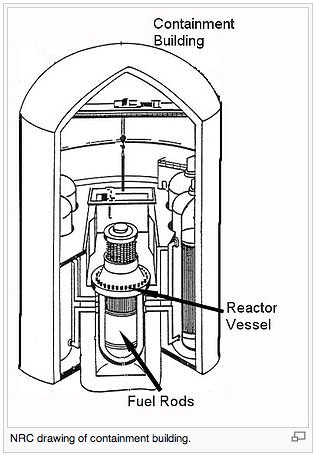
With Japanese reactors in trouble it turned out to be bad timing for Don Banner to be pitching a plant for Pueblo County. Here’s a report from Peter Roper writing for The Pueblo Chieftain. From the article:
So many came [to protest the proposed plant], in fact, that the Pueblo County commissioners listened to more than four hours of testimony before recessing the public hearing until tonight, when the final speakers will get their turn. Banner will also be given time to offer rebuttal of the criticism. The meeting is scheduled to begin at 5 p.m…
And they focused hard on why the county was allowing Banner to try to rezone land through a planned-unit development process to give it faster consideration. Several speakers quoted a letter from Banner to county officials urging the county to “bend the rules” if necessary to give the zoning request fast consideration. “When you bend the rules, somebody gets rich and they leave the waste behind,” charged Suzanne Morgan, one of the speakers who argued that taxpayers end up paying to decommission nuclear power plants…
The commissioners have indicated they will not make an immediate decision, but will take time to consider all the information provided by both supporters and critics. Joseph Leniham, a local attorney, offered them one easy out, saying Congress is considering hearings and a possible two-year moratorium on nuclear plants pending an investigation of the failure at the Fukushima Dai-ichi plant in Japan. “I suggest you punt for two years,” he advised the commissioners…
Water for the proposed nuclear plant also came under scrutiny. Banner had said in earlier presentations that one source of water would be the Welton Ditch, but Larry Trujillo, former state lawmaker, told the commissioners that Banner’s project has no claim on the Welton Ditch…
Doug Wylie, a Boone dairy farmer, said the nuclear plant would be a direct threat to his livelihood. “Our produce would be branded. Pueblo chile would have a new kind of heat added to it,” he said, getting a laugh from the audience. “To build water-intensive industries in a desert is beyond foolish.”
More coverage from Peter Strescino writing for The Pueblo Chieftain. From the article:
Banner is careful with his words, lawyerly you might say, but he has made public meeting comments at least twice that people one mile from the 1945 American atomic bombings of Nagasaki and Hiroshima, Japan, were not badly injured, and that the 1986 nuclear accident at Chernobyl, which was then part of the Soviet Union, was not as bad as nuclear opponents and some scientists made them out to be.
Those claims struck a chord with Tatiana Floka-Cosyleon and Larrisa Bourgeault, who lived with the world’s worst nuclear accident and came to the meeting Wednesday night, along with about 500 others, to dispute Banner’s ideas. “I was living in St. Petersburg (now in Russia) and I remember that Sunday it happened with Chernobyl,” said Bourgeault. “It was raining in St. Petersburg, as usual, and my friend was walking under that rain. She was pregnant…
The women did not speak to the audience, but there was plenty of passion on display. Banner sat stoically with his wife and a few supporters while his proposal, his ideas and at times his integrity were pilloried. Many called Banner’s application to the county arrogant. Some termed it as vague. Banner has asked for a series of variances to the standard application process, and has asked to forego fees others pay for the same considerations.
More coverage from Chris Woodka writing for The Pueblo Chieftain. From the article:
“It would take at least a magnitude 7 earthquake to damage a plant. A smaller quake near a nuclear plant would trigger an automatic shutdown mostly as a precautionary measure,” said Tony Crone, a scientist at the U.S. Geological Survey’s National Earthquake Center in Golden. There are earthquakes in Colorado, with at least one magnitude 4 earthquake each year, Crone said. A USGS map lists Southeastern Colorado as an extremely low-hazard area for quakes, meaning the probability for a damaging quake occurring is very small. Magnitudes are determined on the Richter scale. Each point of magnitude represents 10 times the shaking motion and 32 times the release of energy…
the largest measured recent earthquake in Colorado was magnitude 5.3 in the Denver area in 1967. It was believed to be induced by pumping waste fluids into deep wells at Rocky Mountain Arsenal. There was an estimated magnitude 6.6 quake in either Colorado or Wyoming that was felt in Denver in 1882. There have been numerous earthquakes reported in the Trinidad area south of Pueblo since the 1970s. There was a swarm of 11 earthquakes near Trinidad in 2001 between magnitude 2.8-4.6, with a magnitude 5.0 quake reported in 2005. There was a magnitude 3.4 quake near La Junta in 1998, and several earthquakes in the Upper Arkansas Valley in the past 25 years, including a magnitude 3.1 quake near Texas Creek in 2008. The only earthquake reported in the immediate Pueblo area came in 1870 at Fort Reynolds, located 20 miles east of Pueblo. The details were insufficient to determine the size, but a man reported it was strong enough to knock together two bottles that were sitting about an inch apart, according to USGS historical information.

From The Fencepost (Bill Jackson):
The study was done to try to maximize the use of water in the South Platte River Basin for everyone in the state, said Bob Longenbaugh, who has been in the water business for 50 years. He teamed with Halepaska and Associates, a consulting groundwater engineering firm in Littleton, in a study of the South Platte River groundwater for the Weld County Farm Bureau, the Colorado Corn Growers and other organizations. The study focuses on the importance of groundwater when considering the South Platte as an irrigation source. Logenbaugh said 10.5 million acre-feet of water is in the main stem of the river’s alluvial aquifer — below the surface flow of the river. That’s about eight times the amount that flows down the river annually from snow melt, thunderstorms, return flows, releases from reservoirs and other sources. The study measured irrigation wells along the river and found some of the highest historic water levels ever recorded in the fall of 2009. Those levels have not receded since then…
He said the reduction of well pumping not only limits the return of water to the river, but is probably a factor in high water tables along the river from Brighton to Julesburg. In addition, he said, Colorado lost a tremendous amount of water into Nebraska last year, which continues this year. Between Oct. 1, 2009, and Sept. 30, 2010 — the state designated water year — 610,000 acre-feet of water flowed out of Colorado into Nebraska. From Oct. 1, 2010, to Feb. 28 of this year, another 106,000 acre-feet has left the state on the South Platte, he said. “That’s above what Colorado is required to deliver to Nebraska under the compact. That water belongs to the citizens of Colorado, and Colorado has the right to use that water,” Longenbaugh said…
“(The study) verifies what we have expected for years, that (irrigation) wells don’t have a 50-year depletion of water in the river, and in fact, they recycle and refill annually. That’s why the water tables have come up,” [Bob Winter of Windsor] said. Much of that data has been around since the 1940s, he said, but it’s never been gathered to be analyzed in one place. “We finally have a report with facts, and now there are those who question the facts,” Winter said.
Dick Wolfe is the state engineer and director of the Colorado Division of Water Resources. He said he has reviewed the report completed by Longenbaugh and Halepaska and said there is some misinterpretation of the compact between Colorado and Nebraska. But he agrees with the report that said there is a need for improved management tools.
More South Platte River basin coverage here.

Here’s the release from the Colorado Division of Wildlife:
As the weather warms and boat owners ready for spring, the Colorado Division of Wildlife and Colorado State Parks are launching the annual effort to protect the state’s lakes, reservoirs and rivers from aquatic invaders. The focus of this year’s efforts will be zebra and quagga mussels, but boat inspectors will also check for New Zealand mud snails, rusty crayfish and other invasive species.
“This will be the fourth year of Colorado’s active boat inspection program and we continue to make the process more efficient, more effective and more convenient,” said Elizabeth Brown, who leads the Division of Wildlife’s statewide invasive species efforts. “Boaters stepped up to help improve this process and educate each other and we truly appreciate their partnership with us.”
Since 2007, officials have stressed the “clean, drain and dry” message to educate boaters on how to make sure their crafts aren’t moving anything from one water to another.
“Boats that are clean and dry will get through these inspections more quickly,” Brown said. “Dirty, wet boats are going to get a longer look and may need decontamination before being able to proceed.”
Specially trained State Parks’ staff will inspect boats entering the water at 29 State Parks. Seven State Parks that are open or will open this week for the 2011 boating season are: Barr Lake, Boyd Lake, Chatfield, Cherry Creek, Highline Lake, Jackson Lake, John Martin and Lake Pueblo.
“Inspections at other State Parks will start as the warm weather thaws the ice and the water is available for boating,” said Gene Seagle, invasive species coordinator for Colorado State Parks. “We have a great boating resource and appreciate the growing understanding of the need for these inspection programs within the boating community.”
Division of Wildlife teams have begun boat inspections at Jumbo and Prewitt Reservoirs in northeastern Colorado’s Logan County. The reservoirs opened for boating Friday, March 11. Douglas Reservoir will open to boating April 1.
Other Division of Wildlife inspection operations will be carried out at waters around the state as boating access becomes available in April and May. The Division of Wildlife offers boat inspections on dozens of lakes and reservoirs.
In just the past two years boat inspectors have intercepted more than 30 boats with mussels attached coming into Colorado. Those boats have been stopped from entering Colorado waters, preventing the spread of these invasive species. Because of the success of these interventions, no new zebra or quagga mussel positive waters have been discovered in the state since 2008.
Boaters who live or are traveling through Denver, Grand Junction or Hot Sulphur Springs also have access to the Division of Wildlife’s permanent boat inspection facilities. Boats inspected at these facilities can be affixed with a seal that will allow the boater to get through reservoir inspections much more quickly.
“A lot of boaters find that it is more convenient to run the boat over to the Division of Wildlife office and get the inspection done a few days before they head out,” Brown said. “That way, when the day of the fishing trip comes around, they can get through the inspection and onto the water much faster.”
Inspection stations at the Division’s Denver headquarters at 6060 Broadway in Denver, Northwest regional office at 711 Independent in Grand Junction and Hot Sulphur Springs area office at 346 Grand County Road 362 are available weekdays during regular business hours.
Colorado State Parks has a series of short videos about the topic available on their website at:
http://parks.state.co.us/Boating/Pages/BoatingProgramHome.aspxTo also help boaters learn more about invasive mussels and to help boaters understand the inspection process, the Division of Wildlife has posted several videos on its website. The videos are available at:
http://wildlife.state.co.us/NewsMedia/Videos/Mussel.htm
http://wildlife.state.co.us/NewsMedia/Videos/watercraftinspection.htmBelow are hours for some recently opened State Parks inspection operations. For additional details, see the State Parks website at http://parks.state.co.us/Boating/NewBoatInspection/Pages/BoatInspection.aspx
Barr Lake State Park: inspection hours will be 7 a.m. – 5 p.m. weekends only in March with expanded hours beginning April 1 (see website for additional information)
Boyd Lake State Park, main boat ramp, 8 a.m. – 6 p.m. Mon.-Thur., 7 a.m. – 7 p.m. Fri., Sat., and Sun. through May 1, when hours will expand from 6 a.m. – 10 p.m. daily
Chatfield State Park: north boat ramp open 6 a.m. to 6 p.m. daily. South ramp opens April 1 and hours at both ramps extend May 1 to 6 a.m. to 10 p.m. daily.
Cherry Creek State Park, East Ramp, 6 a.m. – 6 p.m. daily
Highline Lake State Park, main boat ramp, 8 a.m. – 4 p.m. daily
Jackson Lake State Park will open for boating Friday, March 18, inspections 9:00 a.m. to 5:00 p.m. Mon. through Fri. and 8:00 a.m. to 6:00 p.m. Sat. and Sun. On May 1, the hours will be 7:00 a.m. to 8:00 p.m. daily.
John Martin State Park will open Wed., March 16, inspections 7:30 a.m. – 4 p.m. Mon. through Fri. and 6 a.m. to 6 p.m. on weekends.
Lake Pueblo State Park, main ramp, 5 a.m. – 11 p.m. daily (see website for additional information)Below are hours for some recently opened Division of Wildlife State Wildlife Area waters. For additional inspection sites and hours, see: http://wildlife.state.co.us/Fishing/MandatoryBoatInspections.htm.
Prewitt Reservoir, 9 a.m. – 7 p.m. on Fri., Sat., Sun. and Mon. Beginning April 1, inspections will be seven days a week from 6 a.m. – 8 p.m.
Jumbo Reservoir, 9 a.m. – 7 p.m. on Fri., Sat., Sun. and Mon. Beginning April 1, inspections will be seven days a week from 6 a.m. – 8 p.m.
Douglas Reservoir will open to boating April 1.
More coverage from The Fort Morgan Times.

From The Denver Post (Bruce Finley):
On Tuesday, Penley Water Co. [Chris Fellows] called the reservoir essential for weaning Front Range suburbs from wells, which produce less and less water as underground aquifers are depleted. The proposed $105 million reservoir would inundate about 306 acres west of Sedalia and hold up to 22,500 acre-feet of water. That’s slightly larger than Denver Water’s Marston reservoir.
It would be the second major new reservoir in the Denver area for which little or no water has been acquired. Parker Water & Sanitation District is building the $230 million Rueter-Hess reservoir to store up to 72,000 acre-feet of water…
Building before buying water reflects a need for storage capacity, said Ralf Topper, senior hydrologist for the Colorado Geological Survey. “The available water storage systems on streams and rivers are few and far between, because all the water rights have been previously allocated. So one of the options is to create these off-channel reservoirs,” Topper said. “The challenge is to get water to them.”[…]
State records show 18 pipeline companies have been formed to move water in and out of Penley reservoir. These would connect Penley to Colorado Springs, Castle Rock, Highlands Ranch and other Front Range locations.
More Penley Dam Project coverage here.

From The Pueblo Chieftain (Jeff Tucker):
The appeal, which was filed in Pueblo District Court, names Colorado Springs Utilities, the Colorado Water Quality Control Commission and Steven H. Gunderson, director of the water quality control division, as defendants. Thiebaut claims their actions to approve a certification for SDS were arbitrary, capricious and contrary to law. He has asked the court to reverse the decisions by the division and commission, and declare they exceeded their jurisdiction or abused discretion in issuing the certification. The appeal also asks the court to issue an injunction prohibiting the water quality division and the commission from taking any action contrary to the court’s order…
It also claims the approval of the certificate by the Water Quality Control Division and its commission failed to comply with public notice requirements and anti-degradation requirements. The division’s certificate and the commission’s affirmation of the permit” was not based on a reliable scientific or quantitative methodology or competent evidence,” the suit stated…
Further, the appeal claims that the determinations SDS would cause no significant degradation to water quality on the Arkansas and Fountain or that water quality standards would be met weren’t supported by any facts, data or analysis in the record…
Finally, the appeal claims the Water Quality Control Division failed to conduct a full analysis of whether SDS would degrade water quality or whether the degradation was necessary to accommodate important economic or social development in the area.
From The Pueblo Chieftain (Patrick Malone):
The bill passed the Senate by a 33-0 vote. One Senator was absent, and Senate Minority Leader Mike Kopp, R-Littleton, sat out the vote to avoid a conflict of interest. Kopp is managing corporate officer of the Intermountain Rural Electric Association. He said he opted not to vote because his organization may have taken a position on the bill, and it wanted to avoid any possible conflict of interest. After it was adopted, almost every Senator in the chamber signed on as a co-sponsor to the bill. It has enjoyed universal popularity in the Legislature since its introduction, thanks to the work Rep. Keith Swerdfeger, R-Pueblo West, did to build consensus for the idea even from groups that typically eye hydroelectricity projects skeptically, according to the bill’s other sponsors…
Next, it returns to the House for review of an amendment added by a Senate committee that instructs the PUC to weigh costs and benefits of proposed hydro projects before approving them. If it is readopted in the House, the bill will be forwarded to Gov. John Hickenlooper, whose signature would make it law.
More HB 11-1083 coverage here. More 2011 Colorado legislation coverage here. More hydroelectric coverage here and here.
From The Pueblo Chieftain (Peter Roper):
With nuclear power being debated around the world, a crowd of more than 200 people turned out Tuesday night to hear local attorney Don Banner try to persuade the Pueblo County commissioners to zone 24,000 acres for the possible development of a nuclear power plant here…
“I want to make you aware that you will receive national attention,” he said, noting that ABC News and CBS News had contacted him about his project. Denying the project would have consequences, he warned. “I think they believe this could be a bellwether of a small town’s reaction to nuclear power. There could be tremendous negative consequences for this community’s image.”
Tuesday’s hearing was just the opening act in the commissioners’ decision because only Banner’s supporters were invited to testify at the four-hour hearing. Opponents, and there are many, will give their side of the argument tonight at the Sangre de Cristo Arts and Conference Center, beginning at 5 p.m. in the ballroom.
More coverage from Peter Strescino writing for The Pueblo Chieftain. From the article:
Although Tuesday night before the Pueblo County commissioners was set aside for Banner and proponents of the plant, there were many opponents in the crowd, who listened politely, without loud comment. People on both sides of the issue nodded in either approval or incredulity at many points the local lawyer gone nuclear salesman proffered. The crowd thinned after Banner’s 80-minute presentation, which included solemn words for Japan’s dead and those threatened by the nuclear problems set off by the giant earthquake and the tsunami that followed.
Lon Stewart said he came to support Banner. “I’m an iron worker and there will be lots of work out there building the plant, 10 years worth of work. I lived near a big power plant in California most of my life and there were no problems with it,” he said…
Jacob ElBekhty said he disagreed with Banner and he’s tired of taxpayers subsidizing energy plants and not doing as much for renewables such as wind and solar. “I don’t believe what Banner says. I don’t believe we’ll get the financial benefits he says. “We already don’t get the benefits from the power plants we have here,” ElBekhty said. “But we get the problems.”
From the Highlands Ranch Herald (Chris Michlewicz):
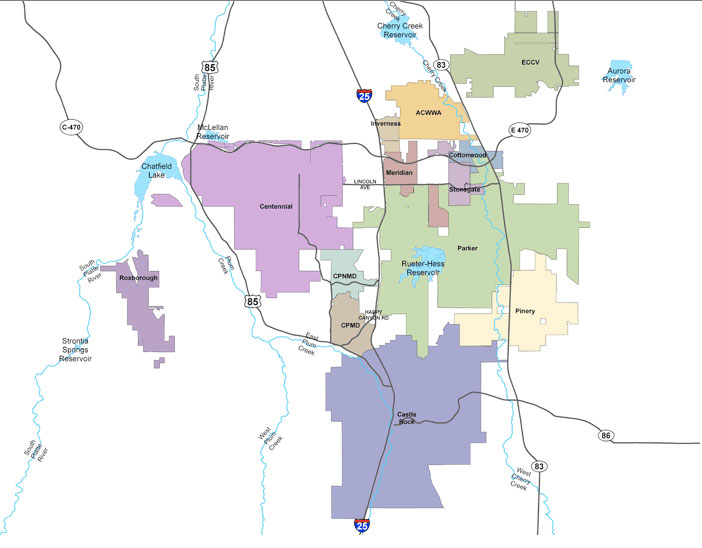
Water providers that would once compete for water rights have joined sides to ensure the future vitality of the south metro area, said Ron Redd, utilities director for the Town of Castle Rock, who was recently appointed to lead the board of the South Metro Water Supply Authority. Its members — managers of water districts large and small — use their expertise and vision to strategically calculate what needs to be done today and in the future. They know that water pulled from underground aquifers is a finite resource. That’s why the group is hoping to finalize an agreement this summer that will enable it to purchase hundreds of thousands of acre-feet of treated water from Denver and Aurora. The SMWSA is also trying to secure permission from the U.S. Army Corps of Engineers to store the water in Rueter-Hess Reservoir, a 72,000-acre-foot reservoir southwest of Parker…
“It does not solve the long term water supply issue because it’s interruptible and depends on the hydrologic cycle, but it helps go a long way toward meeting our needs,” Redd said. Wise, which stands for Water, Infrastructure and Supply Efficiency, would in its first phase bring between 5,000 and 11,000 acre-feet of reclaimed water per year to the supply authority during the first five years. It would increase to 10,000 acre-feet per year on average during the second phase. The entities are still negotiating the terms of the contract…
The project is only a small part of the group’s overall goals. SMWSA leaders developed, phased and priced out a master plan that serves as a guide to future water procurement. The public can view the plan at www.southmetrowater.org.
More South Platte River basin coverage here.

Here’s an in-depth analysis of the potential reservoirs and the conditional water rights associated with them, from Brent Gardner-Smith writing for the Aspen Daily News. Click through and read the whole thing. Here’s an excerpt:
[Osgood Reservoir is] one of two conceptual dams on the books for the upper Crystal, the conditional water rights for which were created by congressional decree in 1958. While it is not clear if anybody actually plans to build these dams, or a smaller version of them, officials are keeping the plans alive in state water court, sustaining the prospect of some sort of water storage project in the area. That’s raising alarm among Crystal Valley residents, many of whom would like to see the conditional water rights abandoned and the Crystal protected for its wild and scenic qualities…
The other potential dam would create what would be known as the Placita Reservoir, to be located upstream near Marble. That is seen as potentially more feasible, as it would not put an entire town underwater…
[Redstone resident Bill Jochems] is a member of the Crystal River Caucus and a veteran of the Crystal Valley Environmental Protection Association (CVEPA), which fought against the reservoirs in the 1970s, and won. Or so it seemed, until a fresh set of color maps showed conceptual plans for the Osgood and Placita reservoirs are still alive. After reviewing these maps, the caucus voted 34-0 in January approving a motion to ask Pitkin County to fight the conditional water rights associated with them. And then the Crystal Valley Environmental Protection Association sent a letter to Pitkin County, warning the specter of dams is hindering a federal Wild and Scenic River designation. The group is also concerned the potential reservoirs will push back the boundaries of the proposed Hidden Gems wilderness areas, as the maps show and the districts have requested.
The fresh opposition in the Crystal River Valley comes as the two organizations that hold the conditional water rights, the Colorado River Water Conservation District and the West Divide Water Conservation District, are expected to file their diligence reports in state water court in Glenwood Springs by a May deadline for Judge James Boyd to review and rule on…
Today, the River District still holds a conditional right to store 128,728 acre-feet of water behind a 280-foot dam just downstream from Redstone’s historic main street. The Osgood Reservoir, named for Redstone founder John C. Osgood, would be larger than Ruedi Reservoir, which holds 119,000 acre feet. The district also holds a conditional right to store 62,009 acre-feet behind a 285-foot-tall Placita dam, just downstream from the turnoff to Marble, at the site of what was once the largest coal mine along the Crystal.

Here’s the release from Colorado State University (Emily Wilmsen):
Colorado State University students will spend part of their spring break, March 16-18, on an educational outreach tour showing children in the Four Corners region how science can be fun.
Students from Colorado State’s Native American Cultural Center will join student volunteers from the Little Shop of Physics to travel to schools in Ignacio, Colo., and Kirtland, N.M. The Little Shop of Physics program engages young students with experiments that use everyday objects to demonstrate scientific principles. Watch a video highlighting Little Shop’s recent open house at Colorado State University at http://www.youtube.com/watch?v=99owQZni0Ew.
On Wednesday, March 16, the group will visit Grace B. Wilson Elementary School in Kirtland, N.M., where they will spend time with students from 8 a.m. -1 p.m. with students followed by a teacher workshop from 1:30-3:30 p.m.
The students will visit the Southern Ute Education Center in Ignacio all day on March 17 and 18. A teacher workshop will follow the student visits from 4-5 p.m. on March 17.
Accompanying the students are Brian Jones, director of the Little Shop of Physics, and Ty Smith, director of the Native American Cultural Center.
“It is very important to introduce science and technology education to these students and their communities,” Smith said. “These students need to know they can succeed in these academic areas, and that can best happen through a positive experience with hands-on experiments developed by the Little Shop of Physics. We are very supportive of any program that will inspire children to become more inquisitive of scientific fields.”Each visit to the schools involves hands-on science experiments for children and after-school workshops for teachers to enhance their curriculum.
All experiments were built by undergraduate students at Colorado State. The heart of the Little Shop of Physics is its traveling program that has visited more than 250,000 students in the past 20 years. Each year, Little Shop visits about 40 different schools and presents programs to about 15,000 students from kindergarten to 12th grade.
More education coverage here.
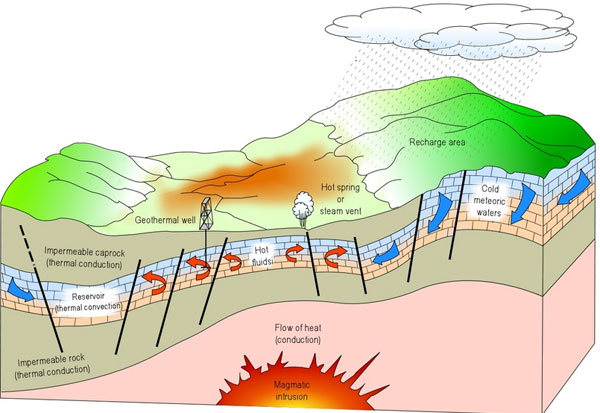
From The Grand Junction Daily Sentinel (Dennis Webb):
The deal is designed to improve cooperation and communication between the U.S. Bureau of Land Management and Colorado Department of Natural Resources when the BLM and Colorado State Land Board receive geothermal lease nominations, and when any other DNR divisions seek to convey geothermal rights, the BLM said in a news release. It also ensures that those obtaining leases will be notified of any state and federal rules regarding considerations such as water rights and protection of existing geothermal features.

From The Trinidad Times (Randy Woock):
The Colorado Oil and Gas Conservation Commission’s (COGCC) annual report to the Water Quality Control Commission and Water Quality Control Division of the Colorado Department of Public Health and Environment stated that the 2,055,900,000 gallons (6,309.3 acre feet) of produced water extracted by CBM wells in Las Animas County comprised 89 percent of the region’s produced water in the first half of 2010. The produced water amounts were reported in terms of barrels, with each of the 48,950,000 barrels extracted in Las Animas County equivalent to 42 gallons. A total of 55 million barrels of produced water were extracted by CBM operations in southeastern Colorado during the first half of last year. “There’s still numbers coming in for 2010,” COGCC Environmental Manager Debbie Baldwin said. “Those final numbers (for a 2010 produced water total) haven’t been published yet.”[…]
The most recent produced water figures are a drastic decline from previous years. The fiscal year (FY) 2009-2008 report showed 462,4746,197.4 gallons of produced water generated from Las Animas County wells, and the FY 2007-2008 reported 6,454,568,642.3 gallons of produced water in the area, though that amount was from a combined Las Animas and Huerfano counties calculation. The FY 2006-2007 report showed 7,127,366,514 gallons of produced water from CBM wells in Las Animas and Huerfano counties…
“Approximately 70 billion cubic feet of gas was produced in this region (southeastern Colorado) during the first six months of 2010, with 84 percent of the gas produced from the 2,906 CBM wells in Las Animas County,” the COGCC report stated. “Approximately 212 drilling permits were issued for oil and gas wells in southeastern Colorado in 2010. Approximately 82 percent of the 212 were issued in four counties (41 percent in Las Animas, 23 percent in Lincoln, 11 percent in Fremont, and 8 percent in Cheyenne).”
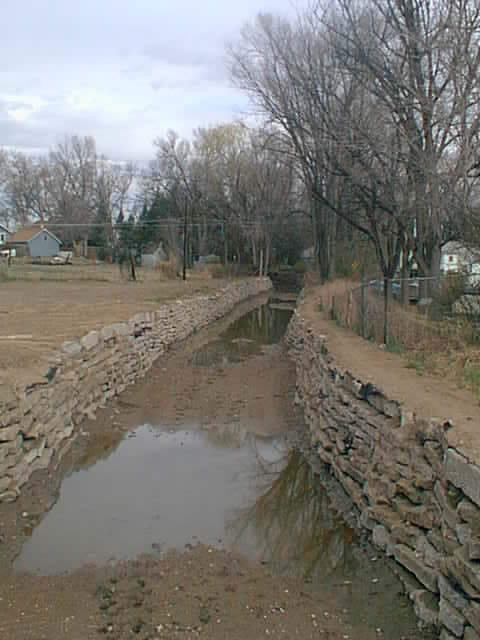
FromThe Greeley Tribune (Bill Jackson):
“It’s difficult to differentiate red tape and what is an appropriate regulation,” [Governor] Hickenlooper said in addressing the problem. To do that, he said, he wants to find ways to help business grow while holding the state at the highest level of accountability and ethics. He also wants to assure that the state is pro-business but is also intent on protecting the state’s natural resources…
Vilsack addressed the red tape and regulation complaints by noting the federal government has been given a reality check and that it must become more fiscally responsible and use resources more effectively to “create economic opportunities.” Agriculture, Vilsack said, was the one bright spot in the recession the country is now starting to move out of. He noted that the export of agricultural products is expected to increase again this year after seeing the same from 2010. Those exports, he said, generate jobs. At the same time, the federal government is working to open new foreign markets for agricultural products, noting a new trade agreement being worked out with Korea will help open doors to China. And programs like the Know Your Farmer Know Your Food effort by the U.S. Department of Agriculture is helping develop local markets for locally grown food.
During the morning and early afternoon, Hickenlooper’s staff and cabinet members hosted breakout sessions ranging from rural communities and government contracts to hurdles and achievements in energy and from small business success stories to water conflicts between agriculture, municipalities and industry as the state looks at future growth…
Sharing agricultural water with municipal and industrial needs and new water projects were two sessions, directed by John Stulp, the governor’s special adviser on water, drew standing-room-only crowds. Stulp said the fallback of drying up agriculture to meet growth demands, “which is what we’ve been doing for the past 150 years,” is no longer the answer. Finding those answers, however, will not be easy, he said, but there are efforts being made. Some of those will be developing partnerships between municipalities and farmers may be one answer. Jon Monson, director of Greeley’s water and sewer department, said if cities lease water from farmers, they must have a first right on that lease if the farmer decides to sell his water.
Gary Herman of Platteville, who is a board member of the Central Colorado Water Conservancy District, mentioned another problem with rules and regulations. Central, along with several others, has been working since the 1980s, he said, on the reallocation of Chatfield Reservoir water, which would provide farmers along the South Platte River from Denver to Julesburg with an additional supply of irrigation water.
More Colorado water coverage here.

From The Pueblo Chieftain (Patrick Malone):
On Monday, a bill that aimed to compel fair-market values for easements was retooled, and now calls for a task force to study the issue in the months between legislative sessions. Hundreds of conservation easements ceded to the state for tax credits are being challenged by the Colorado Department of Revenue on grounds that appraisers overvalued the parcels…
The 12-member interim task force that SB50 proposes would be appointed by Senate President Brandon Shaffer, D-Longmont, and House Speaker Frank McNulty, R-Highlands Ranch. It would include two landowners who have placed easements on their property…
Sen. Kevin Grantham, R-Canon City, asked the bill’s sponsor, Sen. Ellen Roberts, R-Durango, whether the task force would be seated with respect to regional representation. Roberts said she hoped so, but that would be up to the Senate president and the House speaker. Legislative Council is studying the feasibility of the interim effort, and will report back to the Legislature.
More 2011 Colorado legislation coverage here. More conservation easements coverage here and here.
From The Pueblo Chieftain (Patrick Malone):
Next, the bill faces a formal vote in the Senate. If it passes there, it will return to the House for consideration of an amendment attached in a Senate committee that directs the PUC to consider costs and benefits of hydro projects when issuing permits for new plants.
In its first trip through the House, the bill passed unanimously. To date, there hasn’t been a vote against it in either of the committees that head the bill. [Sen. Kevin Grantham] credited House sponsor Rep. Keith Swerdfeger, R-Pueblo West, for building consensus among groups that tend to oppose hydro projects before introducing it. “Keith carried a lot of the water on this thing from the front end,” Grantham said. “He laid the foundation for the broad support it’s getting.”
[Sen. Angela Giron] emphasized that HB1083 is an example of bipartisan cooperation in the interest of job creation. She said if the South Slope project comes to be, it could be the bill with the greatest economic impact of the 2011 legislative session.
More HB 11-1083 coverage here. More 2011 Colorado legislation coverage here. More hydroelectric coverage here and here.

