Click here to download your copy.
More conservation coverage here.


From The Grand Junction Daily Sentinel (Charles Ashby):
Phillip Doe of Littleton and Richard Hamilton of Fairplay have proposed two ballot measures for next year’s election that are designed to institute a “public trust doctrine” on the ownership of water in the state. That means if any Coloradan believes water isn’t being used properly anywhere in the state, that person would have legal standing to sue water users, including cities, water-conservation districts, or the state…
Douglas Kemper, executive director of the Colorado Water Congress, said the idea would turn water law on its head. He said it would force the Legislature to redo 150 years worth of Colorado water law, and the courts to rehear more than 150,000 water-rights decrees. “The Constitution says water is the property of the people, subject to appropriation,” Kemper said. “The general concept of the public trust doctrine says … you may have this legal piece of paper that has a decree, but those decrees should be always considered to have been subject to a great public need. That means each would be subject to modification.” As a result, anyone’s water decree could be re-examined at any time, meaning some users could lose their water rights, he said.
More water law coverage here.

Aaron Million has a history of trying to be all things to all people. At various times he’s said the Flaming Gorge pipeline will save agriculture in northeast Colorado, be environmentally friendly by using existing utility corridors, use natural gas for pumping instead of coal-generated power, etc. Last week he suggested that the project could supply the needed water for hydraulic fracturing. At least the oil companies could afford to pay the water haulers just about any price that he needs to charge to make a profit on his speculative venture. However, water providers in Weld County might object. The City of Greeley will sell about $1.4 million worth of water to oil companies this year, helping to keep rates down, according to their water manager, Jon Monson.
Last week ten conservation organizations filed the paperwork to intervene in the permit process now that the project has morphed into a hydroelectric generation project. Here’s a report from Deb Courson Smith writing for the Public News Service – Wyoming. From the article:
Duane Short, wild species program director with the Biodiversity Conservation Alliance, Laramie, is a spokesman for the coalition that has filed to intervene. “Probably the most local concern is the impact that this pipeline, which would consume some 81-billion gallons of water a year, would have on the Green River area water-sport and recreation industries.”
The list of objections is long, Short says. It includes violations of the Endangered Species Act, landscape destruction to build the pipeline, and downstream effects of removing so much water from the Green River, which connects to the Colorado River in Utah.
The company proposing the pipeline, Wyco Power and Water Inc., has touted its job-creation benefits and the fact that it includes hydropower construction plans. Short claims the hydropower was only added so FERC would look at the permit. He says the project will use much more power than it generates, because the water has to be pumped uphill across Wyoming and over the Continental Divide. The developer also recently announced that some of the water would be used for hydraulic fracturing (fracking). “With that type of history, and with all these other concerns that have been expressed in Wyoming, Colorado and even in Utah, to make this water available for fracking is sort of an ‘insult to injury’ type of proposal.”

From The Fairplay Flume (V. Christian Kingsford):
The sanitation district’s attorney, Robert Tibbals, explained the legal and financial requirements and obligations of setting a rate hike for the district to $76.67 a month per EQR (equivalent residential unit) from the old rate of $62.48 per month…
[Dale Fitting, board secretary and treasurer] added: “A lot of our expenditures are the bond and the loan [for the new wastewater treatment plant]; we can’t get out from under that. As with many loans, we were paying interest only on the loan at first; now we’re paying interest and principle. The growth spurt that was anticipated when the system was installed didn’t happen, so now the established residences are carrying the load.”[…]
“Budgets are hard to figure, and we’ve reduced some expenditures and would like to reduce others such as the attorney’s fees, but we can’t. The preventive maintenance of cleaning and jetting the lines along with sludge removal is a big expense, but it’s needed,” he added. “Then there’s payroll taxes, social security and medicare for our employee.”
More wastewater coverage here.
Update: Here’s a correction from The Pueblo Chieftain about the article cited below:
Rainfall in Pueblo was 0.79 inches for August 2011, and 1.18 inches for October 2011. Wrong information was included in a graphic Monday. A reporter made the errors.
From The Pueblo Chieftain (Chris Woodka):
Rainfall in Pueblo has been close to normal since July, but that has not been enough to erase the effects of drought. About 8.5 inches, or 70 percent of normal, have been recorded so far this year. Barring a heavy snowstorm in the next week or two, 2011 is shaping up to be one of the driest years in the last 40 years…
Pueblo typically gets about 12 inches of precipitation annually. Since 2001, four years have been above average; two have been significantly below average. The drier spring conditions triggered an increase in lawn watering that broke a trend toward more conservation that’s been evident since the drought of 2002-03. The Pueblo Board of Water Works reported 9 billion gallons pumped and 8.5 billion gallons consumed through its system at the end of November, about 7 percent above the five-year average…
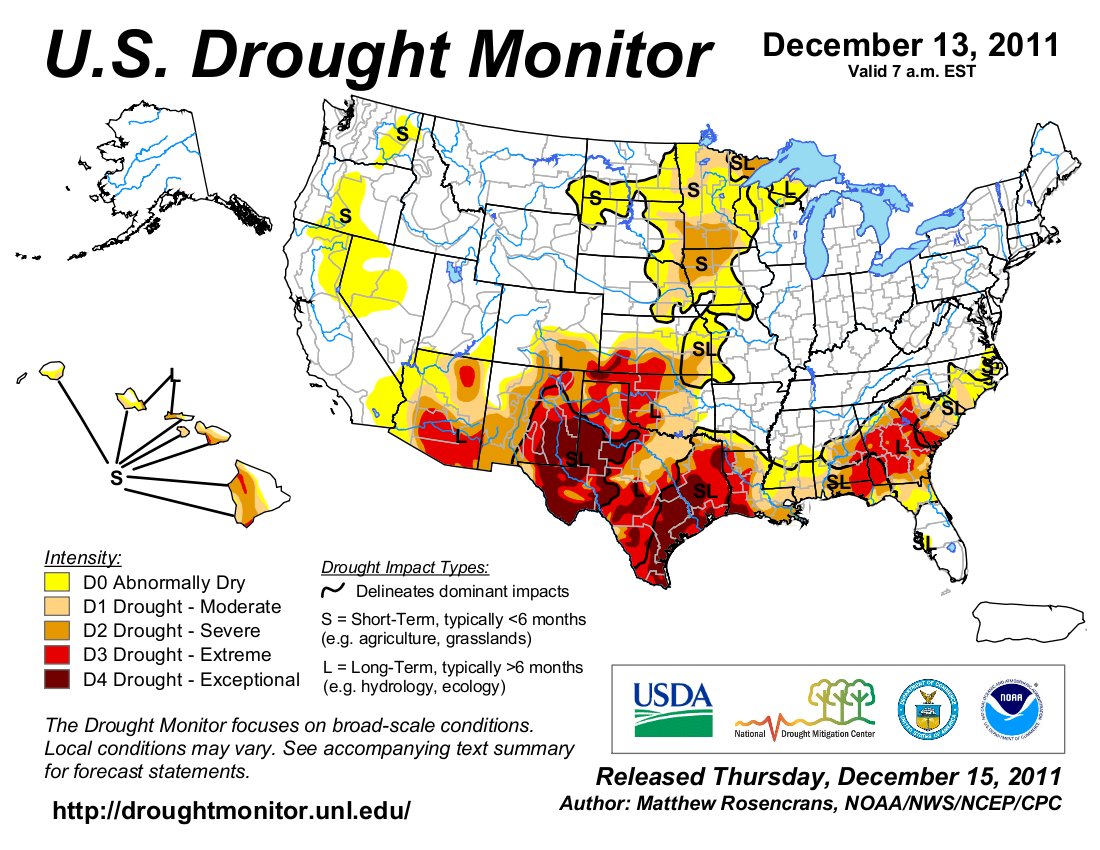
The U.S. Drought Monitor lists Pueblo, and much of Southern Colorado, in severe drought. Parts of Baca County remain in extreme drought.
From email from the Colorado Foundation For Water Education (Nona Shipman):
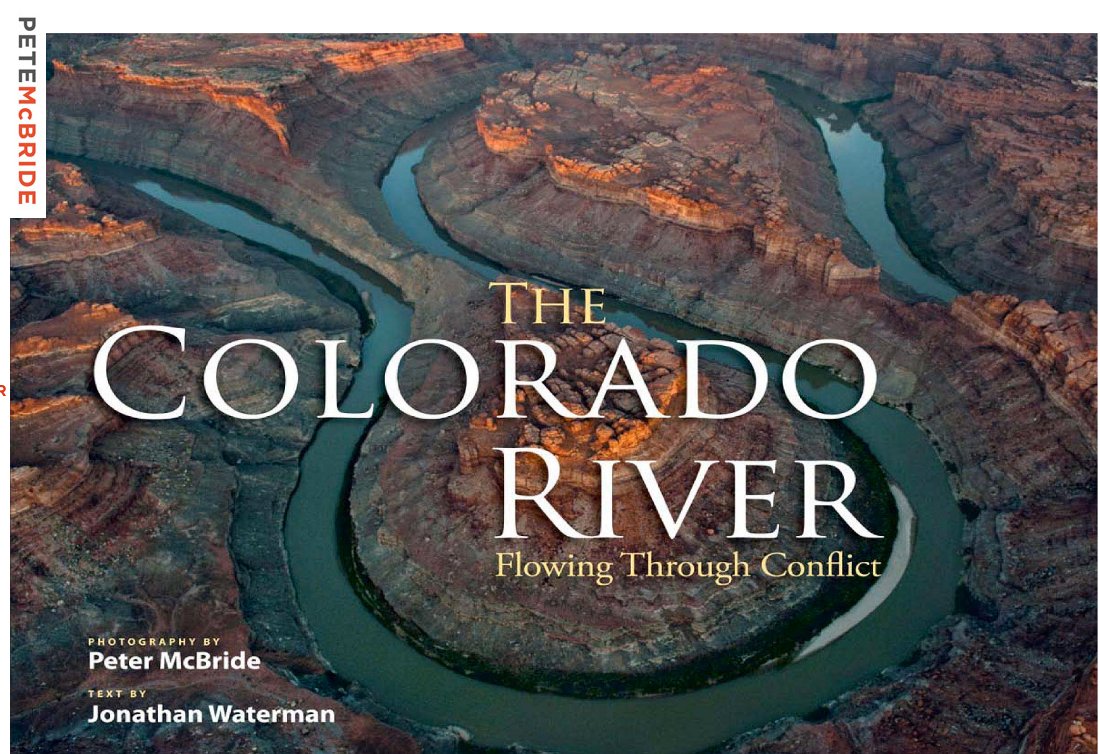
You are invited to attend an exciting opportunity to meet with Peter McBride, photographer, writer, storyteller, and co-author of one of the Colorado Water 2012 Book Club selected books, The Colorado River: Flowing Through Conflict. Join us in person or attend via live special webcast! There is no charge for this event.
Tuesday, January 17, 2012 ~ 5pm-6pm
Colorado Car CLE
1900 Grant St, Suite 300
Denver, CO 80203To attend the presentation in person, please RSVP to Monica Santillanes at 303-824-5356 or msantillanes@cobar.org. Please RSVP with your name, email, and phone number if you plan to attend in person or via webcast. After you RSVP you will be emailed the appropriate information.
Peter McBride traveled and photographed the entire Colorado River through seven states and two countries to document his journey with Jonathan Waterman in The Colorado River: Flowing Through Conflict. One of McBride’s challenges was “to find fresh perspectives while focusing on the beauty within the tragedy of such an overtaxed system.” McBride certainly finds that balance. He starts his journey at Snowmass Mountain and ends in Mexico where the Colorado is mostly non-existent. Although the future of the Colorado River seems dire, McBride is optimistic that the delta can be saved. Peter will be interviewed by Colorado Supreme Court Justice, Greg Hobbs, and there will be time for questions.
This book is one of the selections from the Colorado Water 2012 Book Club. Please visit the Book Club Page on the Colorado Water 2012 website for more information on this book and other Book Club selections.
More Colorado Water 2012 coverage here. More Colorado River basin coverage here.
From The Denver Post (Bruce Finley):
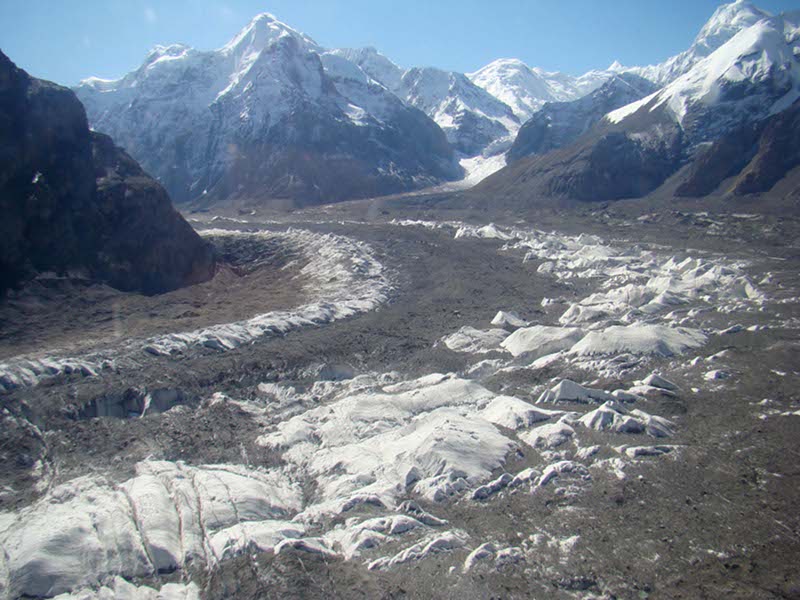
The question: Are rivers that sustain more than 2 billion people fed primarily by water from rainfall, by seasonal snowmelt or by the glaciers that are vulnerable to climate change?[…]
The high-mountain glaciers, seen as water towers for Asia, have been shrinking at a rate of 0.5 percent a year — similar to glaciers in South America’s Andes and the European Alps. As Asia’s glaciers recede, Chinese and Indian governments are moving to control headwaters with at least 19 proposed dam projects, adding to eight or so existing major dams.
U.S. intelligence agencies were among those interested in enlisting University of Colorado senior research scientist Richard Armstrong and geography professor Mark Williams. “If you cannot plan for effective use of water resources, you’re in trouble,” Armstrong said last week, after launching the project in Kazakhstan with Asian policymakers and scientists.
“There are irrigation systems on these rivers. Hydroelectric plants. They need to understand where their water comes from in order to plan with respect to climate change.” Hard data has been scarce, and research is difficult at elevations up to 18,000 feet, across a 10-nation region. Project leaders plan to send researchers into Karakoram, Hindu Kush, Pamir, Tein Shan and Himalayan mountain watersheds covering 1 million square miles.
The researchers will collect samples of snow, river water, groundwater and glacier-melt water in 6-ounce plastic bottles that will be mailed back to CU. Investigators at an Institute of Arctic and Alpine Research lab in Boulder will use spectrometers and other instruments to analyze the water’s origins.
Meanwhile, November saw above average global temperatures, according to this report from Bob Berwyn writing for the Summit County Citizens Voice. Here’s an excerpt:
The combined global land and ocean average surface temperature for November 0.81 degrees above the 2oth century average. The global land temperature was 1.10 degrees above average, the 16-warmest on record, while the ocean surface temperature for the month was 0.70 above the historic average, the 12th-warmest on record. For the year-to-date, the combined global land and ocean average surface temperature was 0.94 degrees warmer than average, which is the 11th-warmest on record. For land surface temperatures separately, the year-to-date is the seventh warmest on record…
Warmer-than-average conditions were recorded across central and eastern North America, Northern and Western Europe, northern Russia, most of China and the Middle East, southeastern Australia, and southern South America. In particular, parts of northern Europe experienced much above average temperatures, with the warmest November on record in Norway, where temps for the month were 8.3 degrees above average. The United Kingdom reported its second-warmest November on record, behind 1994. In general, land temperatures were well above normal across most of the Northern Hemisphere higher latitudes, including most of Canada, Northern Europe, and most of Russia.
Arctic sea ice is lingering below average according to this report from Bob Berwyn writing for the Summit County Citizens Voice. From the article:
Overall, the Arctic gained 2.36 million square kilometers (911,000 square miles) of ice during the month, slightly more than the average November ice gain. At the end of the month, sea ice covered 4.19 million square miles, the third-lowest in the satellite record for the month, behind 2006 and 2010. The linear rate of decline for November during the satellite era is now 53,200 20,500 square miles per year, about 4.7 about per decade relative to the 1979 to 2000 average.
Low sea ice extent this summer may be contributing to warmer November temperatures and lower November ice extents in some areas. Norway, for example, reported the warmest November on record. The record warmth in parts of Scandinavia is probably linked with the current positive phase of the Arctic Oscillation.
In recent years, low sea ice extent in the summer has been linked to unusually warm autumn air temperatures, resulting from the larger areas of open water that absorb more heat during the summer. This heat must escape back to the atmosphere in the fall, before the ocean can freeze over. This escaping heat contributes to warmer-than-average conditions, which have been most apparent in October but may also extend into November.
The release of more methane trapped for thousands of years under Arctic ice is another area of study by researchers. Here’s a report from Justin Gillis writing for the New York Times. Click through and read the whole article, there is a lot of great information there. Here’s an excerpt:
Experts have long known that northern lands were a storehouse of frozen carbon, locked up in the form of leaves, roots and other organic matter trapped in icy soil — a mix that, when thawed, can produce methane and carbon dioxide, gases that trap heat and warm the planet. But they have been stunned in recent years to realize just how much organic debris is there.
A recent estimate suggests that the perennially frozen ground known as permafrost, which underlies nearly a quarter of the Northern Hemisphere, contains twice as much carbon as the entire atmosphere.
Temperatures are warming across much of that region, primarily, scientists believe, because of the rapid human release of greenhouse gases. Permafrost is warming, too. Some has already thawed, and other signs are emerging that the frozen carbon may be becoming unstable.
“It’s like broccoli in your freezer,” said Kevin Schaefer, a scientist at the National Snow and Ice Data Center in Boulder, Colo. “As long as the broccoli stays in the freezer, it’s going to be O.K. But once you take it out of the freezer and put it in the fridge, it will thaw out and eventually decay.”
If a substantial amount of the carbon should enter the atmosphere, it would intensify the planetary warming. An especially worrisome possibility is that a significant proportion will emerge not as carbon dioxide, the gas that usually forms when organic material breaks down, but as methane, produced when the breakdown occurs in lakes or wetlands. Methane is especially potent at trapping the sun’s heat, and the potential for large new methane emissions in the Arctic is one of the biggest wild cards in climate science [ed. emphasis mine].
And for those of you that think that human activity can’t be felt across the oceans or borders, here’s an article, from the Daily Mail about nitrogen pollution of remote watersheds from industrialization. Here’s an excerpt:
Even though they are nowhere near any cities or farms, deposits at the bottom of three quarters of the 36 lakes studied were found to contain more nitrogen than expected. Combined with global warming, the effects could alter the eco-system of the lakes in ways not seen in the last 10,000 years, it was warned.
‘It turns out the world, for nitrogen, is a much smaller place than we’d assumed,’ said author Daniel Schindler of the University of Washington. Human-sourced nitrogen comes from fossil fuels and fertilisers and once in the atmosphere it is spread before being deposited to earth in rain or snowfall.
Although it is vital for life too much can be harmful, and the US Environmental Protection Agency says humans have already doubled the rate of nitrogen released to the biosphere since 1950. We now contribute more nitrogen to the biosphere than all natural processes combined, reports the journal Science…
Prof Gordon Holtgrieve said: ‘When it comes to nitrogen associated with humans, most studies have focused on local and regional effects of pollution and have missed the planetary scale changes.
‘Our study is the first large-scale synthesis to demonstrate that biologically-active nitrogen associated with human society is being transported in the atmosphere to the most remote ecosystems on the planet.
‘Given the broad geographic distribution of our sites – and the range of temperate, alpine and arctic ecosystems – we believe the best explanation is that human-derived nitrogen was deposited from the atmosphere.’
Finally, Todd D. Stern, the top U.S. negotiator at the recently conclude Durban talks on climate change expressed relief that the sessions ended on a positive note. Here’s a report from John M. Broder writing for New York Times Green blog. From the article:
“I think this has ended up being quite a significant agreement and very much along the lines of what we’ve been pushing,” Mr. Stern said in a telephone interview on Tuesday. “That was not fully expected when we went in.”
He said the United States team arrived in Durban with two goals. The first was to deepen the agreements reached at the two previous United Nations climate conferences, in Copenhagen and Cancún, Mexico. That meant establishing the terms for a fund to help poor nations adapt to climate change, strengthening programs to monitor emissions reductions and setting up a center to develop and spread clean energy technology.
There were, as always, disagreements about how countries report progress toward their emissions reductions goals and what sort of international verification regime is acceptable. Negotiators ultimately resolved these questions or agreed to deal with them later.
“There were lots of bumps, lots of difficulties, right up to the last 48 hours,” Mr. Stern said. “It would be an overstatement to say it went smoothly, but in the end it went.”The Americans’ second goal was to find some solution to what could be called the Kyoto conundrum — that is, what sort of treaty or agreement should replace the Kyoto Protocol, the 1997 deal that essentially required developed countries to reduce greenhouse gas emissions by specified amounts while putting no limits on those from the developing world, including fast-rising economies like China, India, Brazil and South Africa.
The United States never joined Kyoto, Canada just announced it was quitting it, and a number of other major countries, including Russia and Japan, said they would not participate in any further rounds of emissions pledges under it.
Resolving that problem proved to be a huge challenge, and the reason that a conference that was supposed to end Friday evening did not conclude until sunrise on Sunday. The battle pitted the European Union and a bloc of less developed countries that were determined to see Kyoto live on at least for a while, against the United States, China and India. The standoff boiled down to a dispute over what most observers would consider arcane legal language but that meant a lot to the parties involved.
In Mr. Stern’s telling, the United States was decisive in resolving the fight, first by announcing earlier in the week that it was willing to participate in some legally-binding future international climate regime, as long as all nations participated under the same terms. That was seen as a breakthrough, although, as Mr. Stern noted, it has been the American position for years.
Then, in an early-morning huddle on Sunday on the floor of the conference, the American team came up with the language that finally persuaded India to accept the legal character of any future agreement, simply by rearranging a few words.
Mr. Stern credited Susan Biniaz, a veteran lawyer at the State Department, with devising the formula that broke the logjam. At her suggestion, Mr. Stern said, the words “legal outcome” were changed to “agreed outcome with legal force.” That proved to be enough for the Indian delegate, Jayanthi Natarajan, who had insisted angrily all week that India could not agree to any climate treaty that hindered her nation’s economic growth.
“That was the last sticking point, and then we were done,” Mr. Stern said.

From The Pueblo Chieftain (Chris Woodka):
The Fountain Creek Watershed Flood Control and Greenway District board approved a $568,000 budget for 2012 Friday, but only $37,250 will be spent in the general fund. The remainder of the money will be basically pass-through costs for studies under grants the district manages. The U.S. Geological Survey is currently completing a study of the effects of building dams on Fountain Creek or its tributaries. Another study, funded by El Paso County cities, is looking at stormwater and parks options that could reduce the impact of minor floods on Pueblo. The district’s funds so far have come entirely from a $1.2 million master plan project by Colorado Springs Utilities and the Lower Arkansas Valley Water Conservancy District. The district received $200,000 of the money to pay administrative costs, and has managed to stretch the funds over several years…
Under the 2009 legislation that formed the district, it could collect up to 5 mills in property tax in Pueblo and El Paso counties, but that would require approval of voters in both counties. The district has, informally, discussed the timing of a mill-levy election, but no plans have been made.
More coverage from Chris Woodka writing for The Pueblo Chieftain. From the article:
The Fountain Creek Watershed Flood Control and Greenway District board Friday reviewed the decision earlier this week by Great Outdoors Colorado to invite the district to submit an application for a River Corridor Initiative grant. “This could really help move these projects ahead,” said Dennis Hisey, an El Paso County commissioner who chairs the Fountain Creek board.
Executive Director Larry Small told the board that the cooperative approach could help the Fountain Creek projects survive a competitive bid process for the GOCo grants. The GOCo grant was submitted by Pueblo, on behalf of Colorado Springs, Fountain and El Paso and Pueblo counties. The grant is asking for $7 million in lottery revenues to be applied toward a series of projects to build trails and preserve land on Fountain and Monument creeks…
The district approved spending $25,000 to pay THK consultants to complete the application. The money comes from the Corridor Master Plan fund.
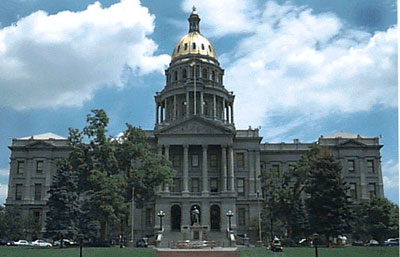
Here’s a preview of potential legislation from the Pueblo area state senators, written by Patrick Malone writing for The Pueblo Chieftain. From the article:
Grantham will introduce another bill aiming to speed up the air and water permitting processes for industry by the Colorado Department of Public Health and Environment.
More 2012 Colorado legislation coverage here.
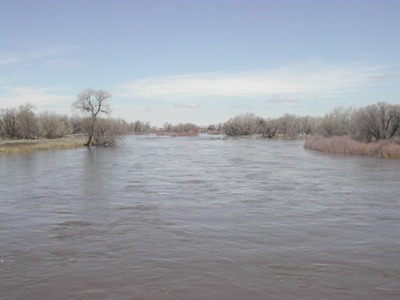
Here’s a recap of a recent presentation at a Fort Morgan brown-bag lunch affair, from Jenni Grubbs writing for The Fort Morgan Times. Thanks to Downstream Neighbor (@downstream2012) for the link. Click through and read the whole thing. Here’s an excerpt:
“The South Platte has been the mainstream of Colorado history,” [Dr. Noel] said. “That’s how the gold-rushers came in.” Yet, he pointed out that the origins of the word “platte” are none too auspicious; it comes from a French word that means “flat” or “insipid.”
“When they called it ‘insipid’ or ‘flat,’ they didn’t venture far enough,” he said, smiling and pointing to the river’s start up in the Rockies near South Park and Long’s Peak.
Dr. [Noel] said that Maj. Stephen Harriman Long gave the first recorded report of about the South Platte, which mentioned flat-bottomed steamboats travelling on it. “Any of you ever tried to navigate the Platte?” Dr. [Noel] asked to laughs. “The steamboat pilots had various names for the Platte, none very flattering.”
When the explorers couldn’t get through Waterton Canyon, they went south instead, missing the non-flat parts of the South Platte, he said.
He also pointed out that they called what is now Castle Rock “pound cake,” saying, “They must have been hungry.”[…]
By the late 1850s, though, the South Platte and Cherry Creek became famous as the start of the gold rush in Colorado, which brought many, many fortune seekers across the Eastern Plains and along the river to Denver. At this time, the Rocky Mountain News “encouraged people to ‘come to the promised land'” by following the Platte River, Dr. [Noel] said…
“As the Platte gets liberated from Denver, it’s fun to walk along it,” he said. “It’s fascinating to see how the Plains agriculture sprouted. The Great American Desert turned into the breadbasket.”[…]
… he also spoke about water diversions and current efforts to revitalize the river, including projects to make it a “greenway” in Denver at its confluence with Cherry Creek. And he pointed to history alongside the river, such as the fact that the current site of Elitch Gardens amusement park in LoDo was once where the city’s “biggest car junk yard” was located.
More South Platte River basin coverage here.

From The Denver Post (Bruce Finley):
A letter from Cotter president Amory Quinn says Cotter “will not seek to renew” the radioactive materials license Cotter has from the state health department. Cotter plans to decommission and decontaminate the mill site and to request license termination, Quinn said in the Dec. 12 letter…
The decision marks a possible turning point in a long-running controversy over the mill.
Cañon City residents opposed to the mill applauded the move.”We think this is the first sign of serious progress on getting this place cleaned up. They have stated now that they are going away. The challenge is to see that they clean it up properly before they do,” said Sharyn Cunningham, leader of Colorado Citizens Against Toxic Waste, who praised Gov. John Hickenlooper’s office “for engaging” on the issue…
Cotter’s operating license expires Jan. 31. The company could have submitted a renewal application 30 days before the expiration. Now the company must submit a decommissioning plan and schedule, the state health department said this morning. Under the state Radiation Control Act, decommissioned uranium mill sites must be thoroughly cleaned up and restored at the operator’s expense.
For months, Cotter work crews have been jack-hammering concrete foundations and ripping apart contaminated remaining buildings a the mill. Quinn’s letter says that, by Dec. 31, only eight structures will remain at the site. The work aims to consolidate all waste in a massive impoundment pond. Next year, workers are expected to dig out toxic soil and bury that, too. The dismantling work has cost about $3.5 million, according to Cotter mill manager John Hamrick, and eventually will include construction of a new evaporative waste pond to store water pumped from a potentially contaminated creek that flows near Cotter’s property.
Here’s the release from the Colorado Department of Health and Environment (Jeannine Natterman):
The Colorado Department of Public Health and Environment announced today Cotter Corp. has notified the department of its decision to terminate its Cañon City Uranium Mill radioactive materials license.
The current license expires Jan. 31, 2012, and Cotter was faced with submitting a renewal application 30 days prior to that expiration date. Instead, Cotter now must submit a decommissioning plan and schedule as defined in the regulations.
“This is good news for the Cañon City community,” Gov. John Hickenlooper said. “We appreciate Cotter Corp.’s containment and cleanup efforts and look forward to the company’s continued involved in the community as remediation and decommissioning activities occur over the next 10 to 15 years.”
The decision not to seek licensure sets the mill on a course for closure. The Radiation Control Act requires decommissioned uranium mill sites to be thoroughly cleaned up and restored at the operator’s expense.
“A comprehensive, meaningful public involvement process will be followed for the license termination,” said Steve Tarlton, radioactive materials program manager for the department’s Hazardous Materials and Waste Management Division. “Through transparent and open communication, the state is committed to getting community input as the termination process moves forward.”
The current license conditions will remain in effect beyond the expiration date until the Department of Public Health and Environment notifies Cotter in writing that the license is terminated. No operations are allowed under the current license conditions and the termination process precludes restarting operations.
Specific documents required in the decommissioning plan must be submitted to the department and made available for public review and comment prior to any final approval. The documents include:
• An on-site conceptual characterization plan that describes how Cotter will address on-site and windblown soils, and on-site groundwater — due Dec. 19, 2011
• An impoundment reclamation plan that includes an alternative disposal analysis – due March 31, 2012
• A review and documentation of historic cleanup actions – due March 31, 2012 • A contaminated groundwater cleanup analysis – due Feb. 17, 2012For more background and technical information about the Cotter Cañon City Uranium Mill, see: www.cdphe.state.co.us/hm/cotter/licenseinfo.htm.
More coverage from Tracy Harmon writing for The Pueblo Chieftain. From the article:
“We are just beside ourselves,” said Sharyn Cunningham of Canon City, co-chairwoman of the Colorado Citizens Against Toxic Waste, an opposition group that formed 10 years ago to fight a Cotter proposal to bring new radioactive waste to the mill for disposal. “Finally, we can focus on a really good cleanup, set out by absolute standards and planning that will involve public participation,” Cunningham said. “The mill has been in no man’s land for so long and I just feel so happy about this.”
“I have worked on (opposing) this for 40 to 50 hours a week for years and I just never let up. We all worked together and kept applying pressure,” Cunningham said.
State health officials have been overseeing the cleanup of “legacy” contamination at the Cotter mill and the neighboring Lincoln Park community, which became part of a Superfund site in 1984 after the 1958-79 use of unlined tailings impoundments allowed uranium and molybdenum contamination to seep into the groundwater…
“If the mill is headed to decommissioning, I certainly hope the finances are in place to see the reclamation is paid for,” said Ed Norden, Fremont County Commission chairman. “I doubted we would ever see uranium processing out there again since there has been so much cleanup and I hope the company is committed to reclamation and the financial obligation that goes with that.” Cotter employs a dozen workers and makes use of contractors for specific jobs.
Norden said he knows some residents in the community will be disappointed there will never be high-paying mill jobs at Cotter again. “But it will be interesting to see how many jobs are created through the cleanup and reclamation. I think it is going to be a massive project,” Norden said.
More coverage from the Associated Press via The Durango Herald. From the article:
Cotter once processed uranium for weapons and fuel at the mill. Federal authorities placed the mill on a national list for Superfund cleanups in 1984 after radioactive materials traced to the mill were found to have contaminated the soil and groundwater. The U.S. Environmental Protection Agency eventually turned oversight of cleanup work to state officials. Uranium hasn’t been processed at the mill since 2006. The state requires sites that are being decommissioned to be thoroughly cleaned and restored at the operator’s expense. It’s expected to be a multimillion-dollar effort. One of Cotter’s first steps will be to submit a conceptual characterization plan describing how Cotter will address on-site and windblown soils and on-site groundwater. That’s due Monday.
From the Cortez Journal (Reid Wright):
For the water fund, [City Public Works director Jack Nickerson] asked for a 25 cent increase in the residential base rate for water service from $13.50 to $13.75 per month. A 10 cent increase is proposed to the additional usage rate from $1.65 per 1,000 gallons to $1.75. He said the increase is necessary to keep up with the rising costs of water treatment chemicals and replacement projects. He cited the recently completed South Broadway waterline replacement project costing approximately $700,000 and approximately $25,000 still needed for water tank repairs.
More infrastructure coverage here.

From the Grand Junction Free Press (Sharon Sullivan):
Colorado’s rule, approved Tuesday, goes further than other states regarding mandatory disclosure of chemicals and their concentrations. Some states are required to disclose chemicals deemed hazardous in the workplace by OSHA (Occupational Safety and Health Administration). Until now, that disclosure has been voluntary in Colorado…
“We support transparency,” [Encana spokesman Doug Hock] said. “We’re already participating in FracFocus” — an online chemical disclosure registry, a joint project of the Ground Water Protection Council and the Interstate Oil and Gas Compact Commission…
The rule does allow for a disclosure exemption in some cases because of the Colorado Uniform Trade Secrets Act which allows companies to protect their trade secrets. “If a company wants to claim a trade secret, they have to file a claim with the oil and gas commission and explain why they deserve trade secret protection,” [COGCC commissioner Richard Alward] said. Chemicals will be listed, but not the makeup of a particular formula deemed a trade secret thus preserving a “company’s competitive advantage while revealing to the public the names of chemicals,” Alward said…
“Developing policy is always a compromise,” Alward said. “I think we’ve taken a real positive step forward.”
Here’s a release from Governor Hickenlooper’s office:
Gov. John Hickenlooper today applauded the collaborative efforts of the oil and gas industry, many environmental groups and the Colorado Oil and Gas Conservation Commission in approving new hydraulic fracturing chemical disclosure rules.
The new rules, endorsed by industry and environmental groups and approved by the nine-member Colorado Oil and Gas Conservation Commission (COGCC), require oil and gas operators to publicly disclose all chemicals used in the hydraulic fracturing of their wells, while still recognizing and protecting trade secrets.
The mandatory disclosure rules will take effect April 1, 2012, and apply to all oil and gas wells hydraulically fractured in Colorado.
“These new rules give Colorado the fairest and most transparent set of fracking regulations in the country and will likely serve as a model for other states,” Hickenlooper said. “We commend everyone involved for coming together to create a chemical disclosure rule that marks another big step forward for Colorado’s responsible regulation of this important industry. We believe oil and gas development can thrive while also meeting our high standards for protection of public health, water and the environment.”
The amended rules adopted today require that operators post the hazardous and non-hazardous chemicals used to hydraulically fracture a well, as well as the concentrations of each chemical, to the disclosure website http://www.FracFocus.org. Disclosure must be made within 60 days of completion of hydraulic fracturing.
The rules strike a balance by recognizing and protecting industry trade secrets. Such confidential business information is already protected by state laws, including the Colorado Open Records Act and the Colorado Uniform Trade Secrets Act, and major federal environmental statutes. Regulators and medical professionals, however, can still obtain trade secret information upon request under the rules. Further, operators must file a form ensuring trade secret claims meet the appropriate definition, and sign an affidavit – under penalty of perjury – that chemicals cited qualify for trade secret protection.
The rule builds upon major progress in chemical disclosure associated with oil and gas development. In 2008, nationally groundbreaking amendments to COGCC rules mandated disclosure of hydraulic fracturing chemicals to state regulators and health professionals upon request. Earlier this year, the COGCC worked with industry for voluntary disclosure to the publicly available FracFocus.org website. Since then, operators have posted information on about half of the wells drilled this year in Colorado to the site, with substantially all of the state’s largest operators participating.

From the Northern Colorado Business Report (Steve Porter):
The rule, proposed by the district’s board of directors, is intended to keep cities and towns and others with C-BT water rights from selling the water for use outside the district. In this case, that means selling it to oil-and-gas companies or water haulers who intend to use it on hydraulic fracturing – or fracking – operations in the region. Federal and state laws prohibit the use of C-BT water outside the district, but oil-and-gas companies and the water haulers who serve them have been eagerly buying water from any source available to them.
Brian Werner, Northern spokesman, said the rule was proposed because the district has been contacted by some of the 33 communities it serves about whether selling C-BT and Windy Gap Project water is allowed under their contracts. “My guess is the vast majority of them have been approached by water haulers,” he said…
Northern’s proposed rules explicitly target the use of C-BT and Windy Gap water: “The use of C-BT Project water and the first use of Windy Gap Project water as well development water cannot and shall not be made for any oil or gas well located outside the boundaries of Northern Water or the Subdistrict.” The proposed rule also calls for the water supplier – city, town or other possessor of C-BT or Windy Gap water – to keep strict accounting records to assure that the water is being beneficially used within district boundaries. Penalties for violating the rules would include the water supplier being fined $500 per acre-foot of C-BT and Windy Gap water illegally delivered to a water hauler. Other possible corrective actions include requiring water suppliers to provide a replacement water supply to Northern Water or the subdistrict…
Werner said Northern’s board will take the matter up again at its Jan. 13 meeting. He said written comments can be submitted through Jan. 3…
While the city of Greeley has become one of the region’s biggest suppliers of water to the oil and gas industry, Longmont, Loveland, Fort Lupton, Frederick and Firestone are also reportedly selling water.
Jon Monson, Greeley’s water and sewer director, said the city has been selling surplus water to the oil-and-gas industry for the last five years, an amount that held relatively steady through 2010 but which jumped by 50 percent this year. “This extra revenue can lower the bond costs and the amount of bonds we need to issue,” he said. “This lowers the cost of the bonds to the ratepayers and will cut down future water bills.”
Here’s the announcement (including to proposed rule) from Northern Water.
As the Federal Energy Regulatory Commission’s Monday deadline for comments on the proposed project approaches conservationists have galvanized their opposition to Aaron Million and Wyco Power and Water and the 500 mile pipeline. Western Resource Advocates, on Thursday, labeled it a boondoggle. Here’s a report from Chris Woodka writing for The Pueblo Chieftain. From the article:
The Colorado River Protection Coalition, representing 10 environmental groups, also filed to intervene in the case.
“The Flaming Gorge Pipeline would be one of the biggest, most environmentally damaging water projects in the history of the western United States,” said McCrystie Adams of Earthjustice, the coalition’s lead attorney. “The pipeline would devastate the Green River, one of the West’s last great rivers and a sanctuary for native fish and wildlife, and severely harm the Colorado River downstream.”
Communities Protecting the Green River, which includes the cities of Green River and Rock Springs, Wyo. and Sweetwater County, Wyo., filed in opposition to the project earlier this week…
Million has said the pipeline is cost-competitive with other plans to import water and environmentally friendly because it would prevent worse impacts from occurring within Colorado.
The project also has attracted interest from Colorado and Wyoming municipalities, which have launched their own study of the project’s viability. They are awaiting revised water availability studies by the Bureau of Reclamation.The Interbasin Compact Committee, formed by the Colorado Legislature in 2005 to sort out state water issues, at the request of member roundtables, has formed a task force to identify impacts of Flaming Gorge. The task force is being funded by the Colorado Water Conservation Board, over the objections of the environmental groups, as a model to develop a way to talk about statewide water projects.
Here’s the release from Earthjustice (McCrystie Adams/Gary Wockner/Steve Jones/Taylor McKinnon):
Today a coalition of 10 conservation groups from Colorado, Utah, Wyoming, and Arizona—the Colorado River Protection Coalition—moved to intervene in the Federal Energy Regulatory Commission (FERC) review of the Regional Watershed Supply Project, more commonly known as the Flaming Gorge Pipeline. FERC is currently evaluating a preliminary permit application for the Flaming Gorge Pipeline from Wyco Power and Water Inc. FERC allows members of the public with a stake in projects to intervene in preliminary permit proceedings, and the Colorado River Protection Coalition, represented by Earthjustice, has called upon FERC to deny the permit on numerous grounds.
“The Flaming Gorge Pipeline would be one of the biggest, most environmentally damaging water projects in the history of the western United States,” said McCrystie Adams of Earthjustice, the Coalition’s lead attorney. “The Pipeline would devastate the Green River, one of the West’s last great rivers and a sanctuary for native fish and wildlife, and severely harm the Colorado River downstream.”
In its intervention comments, the Colorado River Protection Coalition asserted that the Flaming Gorge Pipeline is extremely unlikely to be permitted because it would likely violate the Endangered Species Act, would adversely affect four national wildlife refuges, and part of the project would be located in a U.S. Forest Service roadless area. The Coalition also argued that the permit should be denied because the applicant failed to meet various requirements during a previous attempt at permitting a nearly identical project with the U.S. Army Corps of Engineers. Further, the Coalition asserted that the Pipeline is an extremely environmentally damaging water supply project that would irrevocably harm the Green and Colorado Rivers, not a “hydropower project,” and thus FERC is not the appropriate agency to lead federal review of the proposal.
“The Flaming Gorge Pipeline would severely harm the Wyoming landscape it crosses,” said Steve Jones of the Wyoming Outdoor Council. “Our state’s heritage, wildlife, and economy are dependent on protecting roadless and wilderness areas.”
“Four endangered fish—the Colorado pikeminnow, humpback chub, razorback sucker, and bonytail chub—are dependent on the water this pipeline proposes to drain out of the Green and Colorado Rivers,” said Taylor McKinnon of the Center for Biological Diversity in Flagstaff, Arizona. “The pipeline would spell disaster for those fish and the river ecosystems we and they depend on. It’s a foolish proposal in the face of global warming and projected declines in river flows.”
“The Green River flows through Utah’s largest roadless area, provides 40 percent of the water entering the Colorado River at Lake Powell each year, and supports a world-famous trout fishery averaging 6,000–8,000 fish per mile” said Zach Frankel, executive director of the Utah Rivers Council. “This catastrophic proposal would not only mar these treasures, it would forever alter life in Utah.”
The applicant previously sought a permit for the Pipeline from a different federal agency, the U.S. Army Corps of Engineers (Corps). In July of 2011, the Corps terminated its review of the project because the applicant missed multiple deadlines and did not provide information requested by the Corps. A few months later, the applicant redesigned the project to include some incidental hydropower components and requested review through FERC. Despite the modifications, the project remains a huge energy hog—at least nine air-polluting natural gas-fired pumping stations would be required to pump the water uphill across Wyoming and over the Continental Divide. Wyco’s president has acknowledged that pumping the water uphill would use more energy than the project would create through hydropower.
“We know this project would burn more energy than it produces,” said John Spahr of the Sierra Club. “Claiming it is a hydropower project is nothing more than a thinly veiled attempt to make an end-run around federal law.”
Since its inception, the extremely controversial Flaming Gorge Pipeline has met with great opposition in Colorado, Wyoming, and Utah. The water would go to the Front Range of Colorado which is projected to double in population in the next 50 years. Colorado is already a parched state with severely depleted rivers while the majority of the water in Colorado’s cities is used to keep lawns green for three months in the hot, dry summer across sprawling suburban landscapes.
Duane Short of Biodiversity Conservation Alliance noted, “The Coalition believes that Colorado and other western citizens are beginning to realize that unbridled consumption of water from our rivers and aquifers will leave our precious water resources depleted leading to even more severe water shortages for our children and grandchildren. We hope the public will work with us to prevent this shortsighted and irresponsible water grab.”
“The Flaming Gorge Pipeline would be a flaming disaster for Colorado,” said Gary Wockner of Save the Poudre: Poudre Waterkeeper. “The Pipeline would be a devastating step backwards for water supply policy and river protection in Colorado and the Southwest U.S.—our coalition will work as long and hard as it takes to stop this project.”
This Coalition’s intervention is one of several being filed by public interest groups and local communities. Over a hundred public comments urging FERC to deny the preliminary permit have already been filed before the deadline on Dec. 19th. Comments are posted on FERC’s website. (Search for Docket Number: P-14263.)
View a map of the pipeline’s proposed 550 mile route across Wyoming and down through Colorado.
Meanwhile, Governor Matt Mead of Wyoming has submitted his comments on the pipeline. Here’s a report from Ben Neary writing for Associated Press via The Columbus Republic. From the article:
“This project would cut a vast swath across southern Wyoming, with the potential for huge impacts in many significant sectors of our economy and aspects of critical resources to Wyoming and Colorado,” Mead wrote…
“Although in its proposal a hydroelectricity angle has been attempted, it is important to note that hydroelectric production is a minor purpose of the project,” Mead wrote. “The project first, foremost and always is a water supply project.” Mead stated that it appears Million shifted federal agencies “to short-circuit the regulatory process and/or sidestep fundamental issues.”[…]
Mead stated that Million has not shown how much water Colorado is still entitled to under the Colorado River Compact. The U.S. Bureau of Reclamation, which operates Flaming Gorge Reservoir, is working on a study of how much water, if any, it believes could be available for withdrawal there…
Mead wrote that Wyoming has been involved in efforts to recover endangered fish species on the Upper Colorado River for decades. He said the agency’s review must consider the likely effect on the fish both of the pipeline project as well as Wyoming’s possible future use of its share of water from the Green River. The Wyoming Game and Fish Department filed a separate request with FERC to intervene in the permit application to track the issue…
[Aaron Million] said he agrees federal regulators need to consider water supply issues as well as his project’s likely effect on wildlife and recreation.
More coverage from Amy Joi O’Donoghue writing for the Deseret News. From the article:
Since its inception, the controversial Flaming Gorge Pipeline has met with opposition in Colorado, Wyoming, and Utah. The water would go to the Front Range of Colorado which is projected to double in population in the next 50 years. Although the project would be privately financed, critics say the end water would be so publicly expensive it wouldn’t be viable. It also smacks at tapping water that river watchers say is already over allocated.
Million has said that the water his project proposes to take from the Green River in Wyoming is sustainable, according to a review of water resources by federal water managers with oversight of Flaming Gorge.
According to a Tweet from Jennifer Petersen (@BCAWY): “Last night [December 14], Laramie Council voted unanimously to oppose the Million pipeline & send in a letter intervening in the FERC permitting process.”
From The Rifle Citizen Telegram (John Gardner):
The new flat fee for water up to 4,000 gallons per month will cost a resident $18.29. The user will then be charged an additional $3.54 for every 1,000 gallons, or any part thereof, over the initial 4,000 gallons, in a single month. For single family residential users will be charged $3.81 for every 1,000 gallons over the 30,000 gallons. Whereas, multi-families will be charged $3.81 for every 1,000 gallons exceeding 21,000 gallons in a single month. Water fees will increase 5 percent starting on Jan. 1. However, there is no change in corporate city limits or senior citizens, per the ordinance. Those customers will still see the flat fee increase, but will pay according to the current city code. Senior customers will receive a 20 percent discount, and water customers utilizing city water who live outside the corporate city limits will be charged at the same rate per city code…
Residents will also pay increased sewer rates. The flat fee will increase to $36.92 for sewer up to 4,000 gallons of monthly water use, and an additional $8.27 for every 1,000 gallons over 4,000, or part thereof, used in a single month. Those rates, too, will also increase 5 percent annually starting in 2012. This 5 percent increase is in addition to the $3 base fee increase needed to help increase revenues for the fund in order for the city to meet the requirements of the loan agreement which funded construction of the wastewater treatment plant. The city has not met a provision in that agreement to generate 110 percent of associated expenses for the past two years.
More infrastructure coverage here.
From The Greeley Tribune (Eric Brown) via Windsor Now!:
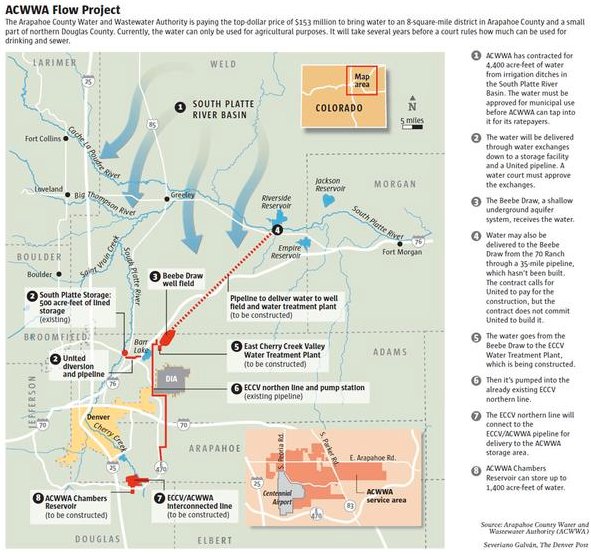
Arapahoes’s purchases, negotiated over the past couple of years and finalized in September, still leave a couple of major questions yet to be answered. The county must win approval from water courts to use the water for municipal purposes and it must figure out a way to get the water from here to there. According to documents, Steve Witter, water resources manager for the Arapahoe County Water and Wastewater Authority, said during a presentation at an authority board meeting in September that 43 percent of the 4,400 acre-feet of water purchased by United Water and Sanitation District — on behalf of the authority — came from the Poudre River, while the other 57 percent came from the South Platte River. In an interview Monday, Witter noted that this marks the first time Arapahoe County — the third-most populous county in the state with nearly 600,000 people and whose municipalities include suburbs of Denver — has purchased water rights from farmers in northern Colorado. Witter said all of the agricultural water rights purchased on behalf of the water authority came from the Poudre and South Platte rivers. The transactions were made between United and individual shareholders of irrigation, ditch and reservoir companies — including 12 companies in Weld County, according to documents obtained by The Tribune…
Front Range municipalities, because of their rapid growth, have been buying agricultural water rights from farmers to secure the future water needs for decades. But because of the ongoing “buy and dry” trend, the 2010 Statewide Water Supply Initiative, compiled by the Colorado Water Conservation Board, estimates that 500,000 to 700,000 acres of irrigated farmland could be dried up by 2050 — a year by which Colorado farmers will also be expected to help feed a state population that will have doubled to about 10 million people, according to some estimates.
More Arapahoe County Water and Wastewater Authority coverage here and here.

From The Pueblo Chieftain (Chris Woodka):
Woodmoor completed its purchase of the JV Ranch near Fountain in late November, and its board last week voted to pull a water court case that sought to deliver water by exchange from three ditch systems east of Pueblo. Woodmoor also has terminated all of the contracts on the Holbrook, High Line and Excelsior ditch systems…
The water court application had been moving toward trial after the Pueblo Board of Water Works refused to settle the case. The Pueblo water board objected to the plan partly because it could involve the removal of water from Pueblo County to another basin. Woodmoor straddles the Arkansas and South Platte basins…
The Lower Arkansas Valley Water Conservancy District also opposed the move, and took steps to help a farmer buy one of the farms Woodmoor was seeking on the High Line Canal, putting it in a conservation easement to ensure continued farming. “We ensured the water will run to the end of the High Line Canal forever,” said Jay Winner, general manager of the Lower Ark district…
After dropping its plans for Lower Ark water, Woodmoor opted to purchase the 3,500-acre JV Ranch, which has water rights of 2,500-3,500 acre-feet of water as well as a 70-acre reservoir. The purchase price will be $25 million to $35 million, depending on the historic average amount of water determined when a water rights change case is filed.
More Woodmoor Water and Sanitation District coverage here and here.
Here’s the release from the Sheep Mountain Alliance via The Telluride Watch:
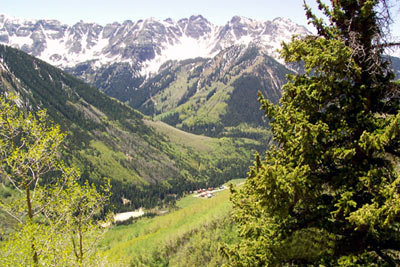
Sheep Mountain Alliance (@sheepmtn), a grassroots citizens organization, initiated a citizen enforcement suit against PacifiCorp in federal court last Monday, Dec. 12 that asks the Oregon-based utility corporation to stop discharging pollutants into the San Miguel River and violating the Clean Water Act.
The suit alleges that PacifiCorp, a subsidiary of MidAmerican Energy Holdings Company owned by Berkshire Hathaway, violated the conditions of its federal discharge permit at the Silver Bell tailings site, allowing contaminants to enter the Howard Fork of the San Miguel River for the past five years. PacifiCorp, which owns the Silver Bell tailings site and has financial responsibility for its cleanup, began remediating the site in 1998. Citizens are allowed to file enforcement actions under federal law as a means of holding polluters accountable if their permits are not being enforced by regulators.
“Unfortunately, PacifiCorp has failed to meet the standards of its federal discharge permit at the Silver Bell site, and over the past five years PacifiCorp has repeatedly allowed excessive pollutants to enter the Howard Fork of the San Miguel,” said Hilary White, executive director of Sheep Mountain Alliance. “These problems could have been fixed but they haven’t been, and PacifiCorp needs to be held accountable for these violations.”
The types of pollutants reportedly being discharged into the Howard Fork include acid drainage, suspended solids, heavy metals, and excessive iron. Typically associated with hard rock mining contamination, these pollutants enter streams and wetlands and degrade overall water quality in the San Miguel basin as well as contribute to localized problems that can harm fish and aquatic life.
In October, SMA had notified PacifiCorp that it would file suit in 60 days if the company did not take action to correct the problems at the Silver Bell site. Although the 60-day notice period is intended to provide the responsible company time to address Clean Water Act violations without legal penalty, SMA’s suit alleges PacifiCorp has not fixed the problems.
“The pollution of the San Miguel from this site has been going on for years,” White said. “Sheep Mountain Alliance wants to make sure that PacifiCorp not only complies with the law, but fixes the problem permanently. The health of the San Miguel River is too important to ignore and we have to be vigilant in holding them accountable.”

First up is a release from Western Resource Advocates calling the project a boondoggle:
Western Resource Advocates (WRA) announced that it is filing formal objections today with the Federal Energy Regulatory Commission (FERC) regarding the proposed ‘Flaming Gorge Pipeline.’ The objections are being filed by WRA along with the Colorado Environmental Coalition and the National Parks Conservation Association.
“The Flaming Gorge Pipeline has more unanswered questions than a Presidential debate,” said WRA Water Attorney Robert Harris. “The bottom line is that there is no good reason for FERC to contemplate the proposal. The pipeline idea is getting messier by the day, and it’s not going to get cheaper or more realistic in the future.”
Aaron Million, President of Wyco Power and Water, Inc., is seeking a federal permit from FERC to review his ‘Flaming Gorge Pipeline’ (FGP) proposal to pump water more than five hundred (500) miles from the Green River in Wyoming to the Front Range of Colorado.
The objections to a potential FERC permit as filed by WRA focus on four points:
1. Ridiculously Expensive: The Colorado Water Conservation Board estimates that the project would cost $9 billion, which would easily qualify the FGP as the most expensive water project in Colorado history. The 2011 General Fund for the entire state of Colorado is about $7.4 billion.
2. Unnecessary and Illegal Water Hoarding: There is simply no need for the FGP. If it proceeded, the project would be open to charges of water hoarding [ed. speculation], which is against state law.
3. Against the Public Interest: There is no scenario in which the FGP could be completed in an
environmentally-safe manner, and there is widespread opposition to the proposal in both Wyoming
and Colorado. Wyoming Gov. Matt Mead, among others, has publicly condemned the project.4. Wyco and Million are Unsuitable Applicants: Mr. Million and Wyco Power and Water have a history of missing deadlines and failing to provide complete information; in July 2011, the U.S. Army Corps of Engineers terminated Million’s application for these reasons.
“The real shame of this entire process is that it is a distraction from discussions of much more reasonable and cost-effective water supply projects that Wyoming and Colorado can implement already,” said Stacy Tellinghuisen, Energy & Water Policy Analyst at WRA. “If Wyco or any other company wants to go off chasing unicorns, they should do it on their own time and their own dime.”
Becky Long, organizer for the Colorado Environmental Coalition, said: “Citizens across Colorado and Wyoming think this project is a bad idea. Multiple cities and counties in both states have publicly condemned the plan, and a recent survey by the sportsmen’s group Trout Unlimited showed that almost 80% of Wyoming residents opposed the proposal.”
The complete filing from WRA will be available this afternoon on the FERC website and at www.WesternResources.org.
BACKGROUND INFORMATION
On September 1, 2011, Mr. Aaron Million of Wyco Power and Water, Inc. applied to FERC for a permit application for the Regional Watershed Supply Project proposal (generally referred to as the Flaming Gorge Pipeline, or FGP). Two months earlier, the U.S. Army Corps of Engineers terminated its review of the project, citing Million’s failure to meet required deadlines to provide information. Wyco applied to FERC under the premise of reclassifying the FGP as a hydropower project, but because it is primarily a water-delivery system, FERC only has limited jurisdiction and cannot approve the entire project.The FERC deadline for public comments and ‘Motions to Intervene’ is December 19, 2011. If FERC eventually decides to consider permitting for the FGP, it would begin a 3-year study period of the project. Before the FGP could begin to be constructed, Wyco would almost certainly need a permit from multiple additional federal agencies, such as the Forest Service and the Bureau of Land Management. At some point, Wyco would also likely need to resubmit an application to the U.S. Army Corps of Engineers.
For More Information on the Flaming Gorge Pipeline, go to:
http://www.westernresourceadvocates.org/water/pipeline/million.phpTo access FERC Submissions/Filings directly, go to:
http://elibrary.ferc.gov/idmws/file_list.asp?accession_num=20111013-5035
More coverage from Bruce Finley writing for The Denver Post. From the article:
Federal authorities deciding whether to grant a preliminary permit for the project proposed by Fort Collins entrepreneur Aaron Million have received more than 170 mostly negative comments on the proposal.
But Million said he’s undaunted. He said he’s talking with energy-industry representatives about using the water for oil and gas production. The pipeline to move up to 200,000 acre-feet of water a year could sustain water-intensive hydraulic-fracturing operations in Wyoming and Colorado, Million said. “We’ve heard rough figures of 15,000 to 20,000 acre-feet annually for fracking needs,” Million said. “If this new water supply helps with the fracking issues, then, without question, we would consider delivering water for the industry.”[…]
“A preliminary permit does not authorize construction or operation of a project,” federal regulatory commission spokeswoman Celeste Miller said. “All it does is give you priority over a site for three years to study feasibility.”[…]
The Colorado Environmental Coalition, National Parks Conservation Association and Western Resource Advocates on Thursday were filing formal objections to the project. Another coalition of 11 environmental groups, including Sierra Club, Wyoming Outdoor Council and Save the Poudre, also objected…
“If (the Federal Energy Regulatory Commission) takes on this application, they will be using taxpayer dollars and resources to look into the project,” [Stacy Tellinghuisen, an energy and water policy analyst for Western Resource Advocates] said. “This is a totally unrealistic project.”
Writer Bobby Magill posted a link to the City of Fort Collins letter to FERC on his website. Also, according the Magill’s Twitter feed (@bobbymagill), “DOI Comments on #FlamingGorgePipeline: NPS worries lower flows in Green River could hurt Dinosaur National Monument”
More coverage from Brandon Loomis writing for The Salt Lake Tribune. Here’s an excerpt:
A coalition of 10 conservation groups is seeking to intervene in a federal permitting process for a proposed pipeline that would take water from the Green River to Colorado’s Front Range…
Groups, including the Utah Rivers Council and the Wyoming Outdoor Council, formed the Colorado River Protection Coalition to advocate against the project, which they argue would imperil endangered fish and water rights in Utah. “This catastrophic proposal would not only mar these treasures, it would forever alter life in Utah,” said Zach Frankel, executive director of the Utah Rivers Council.
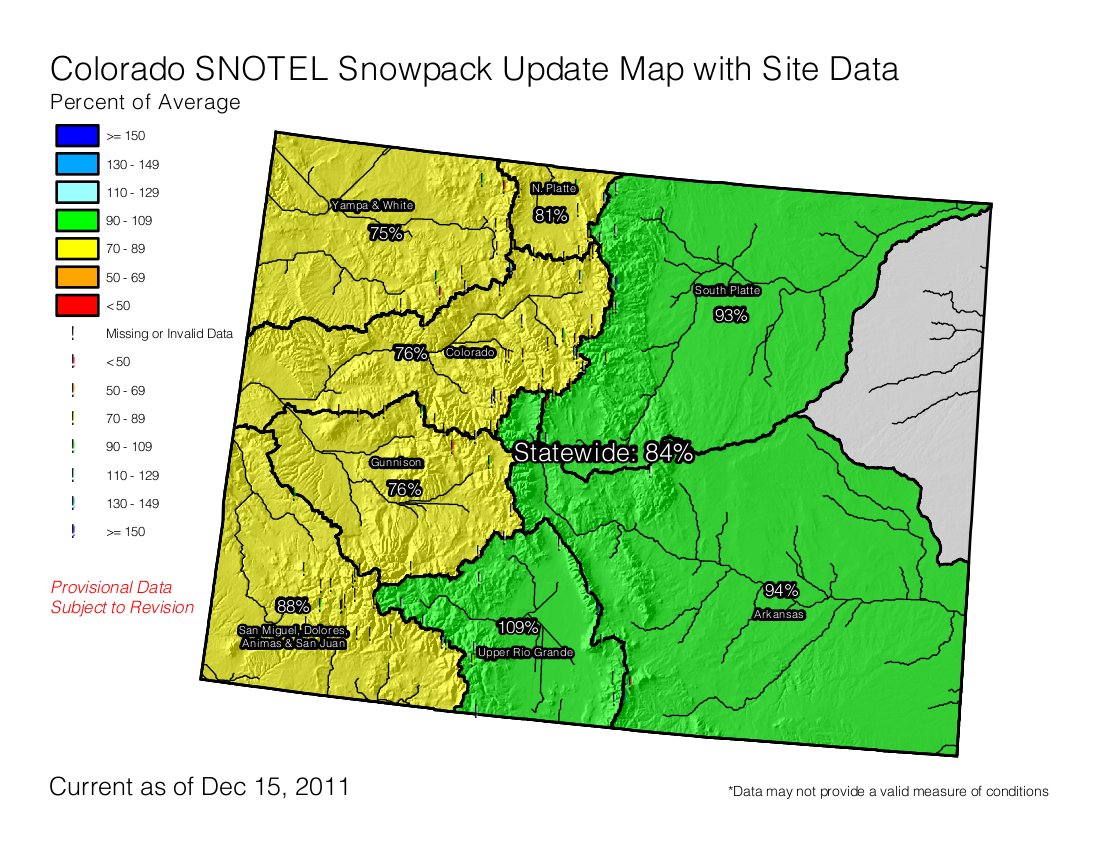
Click on the thumbnail graphics to the right for the U.S. Drought Monitor and current snowpack map. Here’s a report from Bob Berwyn writing for the Summit County Citizens Voice. From the article:
This year’s La Niña has been a bit of a disappointment so far, said Klaus Wolter a meteorologist with NOAA’s Climate Diagnostic Center who specializes in evaluating the impacts of the El Niño-La Niña cycle in the southwestern United States…
“The Front Range has done really well,” he said. At his backyard weather station, Wolter picked up 31 inches last week and has recorded more than 70 inches for the season, second only to 1997 in the past 20 years or so.
But Wolter, who recently updated the seasonal forecast for the SWcasts website, expects at least normal snowfall for the remainder of the winter.
The official three-month outlook (December to February) calls for a 33 to 40 percent chance of above-normal precipitation for most of northern Colorado, including the Summit County area.
The overall dryness from New Mexico into eastern Colorado since the beginning of October matches the forecast issued in September. The early November windstorms were also typical for a La Niña.
“My forecast for January through March 2012 is more optimistic than my earlier forecast from September for our north-central mountains, but not for the Four Corners region. The Arkansas Valley has better prospects (near-normal moisture) than is typical for La Niña, while northeastern Colorado has no clear preference for dry or wet this winter,” Wolter wrote in the SWcast outlook.
From the Vail Daily (Lauren Glendenning):
Weather forecasters say La Nina — a weather system where cold ocean temperatures in the eastern Pacific Ocean bring wetter than normal conditions across the Pacific Northwest and drier and warmer than normal conditions across much of the southern United States — is weaker than it was last winter. Recent weather patterns, however, just don’t follow any conventional wisdom about snow in northern Colorado, La Nina winter or otherwise. Joel Gratz, a meteorologist who runs the website www.onthesnow.com, formerly http://www.coloradopowderforecast.com, calls the weather pattern we’ve seen over the last six or so weeks “pretty difficult.” The computer forecasting models that Gratz and other weather forecasters use haven’t been helpful in predicting when the current pattern will shift…
The pattern is such that storms have been coming in from the Pacific Ocean over British Columbia, Washington or Oregon — as they typically do in La Nina winters — but then the systems have been splitting into two sections. The southern portion has been tracking farther south, while the northern portion stays north of Colorado, said Jim Daniels, a forecaster with the National Weather Service in Grand Junction. The systems have just been going too far south to bring any significant snowfall to the Interstate 70 corridor. The next 14 days just show more of the same, too, Daniels said…
The news has been great for resorts like Wolf Creek, which has received significant snowfall accumulations over the last week and a half or so. And Vail and Beaver Creek have seen some light snowstorms move through in the same time frame, but accumulations have been minimal. The U.S. Department of Agriculture’s Natural Resources Conservation Service snow measurement data shows Vail Mountain precipitation from Oct. 1 to Dec. 13 of this year at 72 percent of normal.

Here’s the release from Colorado Parks and Wildlife (Michael D. Seraphin):
Two rare minnows are once again swimming in the Arkansas River thanks to pioneering research efforts at the John Mumma Native Aquatic Species Restoration Facility.
Plains minnows (Hybognathus placitus) and suckermouth minnows (Phenacobius mirabilis) are native species on the Colorado threatened and endangered list. The small minnows were stocked into the Arkansas River above John Martin Reservoir in the vicinity of the Rocky Ford and Oxbow State Wildlife Areas in November. The fish will be monitored annually to determine the success of the stocking effort.
“We’ve been working on getting them re-established in portions of their native habitat for over a decade but were unable to reproduce them successfully until recently,” said Paul Foutz, Southeast Region Native Aquatic Species Biologist for Colorado Parks and Wildlife.
Because plains minnows and suckermouth minnows are exceedingly rare, efforts to aid in their recovery were hampered by the fact that very little research was available about the optimal conditions for them to reproduce in a hatchery. Since 2000, the staff at the Native Aquatic Species Restoration Facility near Alamosa has worked meticulously and persistently to produce viable offspring. Several times they were able to achieve successful reproduction, only to encounter difficulties raising the young fish to maturity.
Colorado Parks and Wildlife hatchery technicians worked in conjunction with fish culturists at Colorado State University and the Albuquerque Aquarium investigating spawning and rearing techniques using methods similar to those that were successful for another small fish, the silvery minnow.
After a breakthrough in 2010, hatchery staff was able to create the proper conditions and reared approximately 38,000 plains minnow and 4,000 suckermouth minnows in 2011. The fish ranged in size from one to two inches.
As State listed endangered species, re-establishing populations of plains minnow and suckermouth minnow will have no impact on normal agricultural operations.
The original bloodstock of plains minnows came from collections in Kansas on the Salt Fork of the Arkansas River in Barber County. The suckermouth minnows are offspring of fish that were collected from the wild in Colorado in areas where small populations existed in the Arkansas River.
Species summaries:
Suckermouth minnow (Phenacobius mirabilis)
Suckermouth minnows are native to the eastern plains of Colorado in the South Platte, Arkansas, and Arikaree Rivers. Its range extends to most of the Mississippi River basin from Ohio west to Wyoming, and south to Louisiana and Texas. This species has spotty and rare distribution and is currently a state listed endangered species. This small (2-5 inch) fish is slender with a conspicuous dark spot at the base of the tail fin. It inhabits shallow riffles with sand/gravel substrate, but utilizes deeper pools during low flow periods.Plains Minnow (Hybognathus placitus)
This plains fish is native to the Arkansas, Republican and South Platte basins in Colorado. Its range includes the Missouri River and western Mississippi River systems from Montana south to Texas. A few specimens were collected on the eastern plains in the South Platte in the early 1980’s and mid-1990’s. It has not been seen in the Arkansas River since the 1960’s. It is olive or yellow-green with brassy reflection and grows to about five-inches. It is currently a Colorado state endangered species.For additional information and pictures of the plains minnow and suckermouth minnow along with some of Colorado’s other native aquatic species please visit the following web sites: http://wildlife.state.co.us/Education/TeacherResources/ColoradoWildlifeCompany/Pages/FishCWCF03.aspx
More coverage from the Summit County Citizens Voice (Bob Berwyn):
Plains minnows (Hybognathus placitus) and suckermouth minnows (Phenacobius mirabilis) are on the Colorado threatened and endangered list.The plains minnow hasn’t been seen in the Arkansas River since the 1960s.
The two species have different requirements for habitat, food and reproduction. Plains minnow primarily feed on algae as well as other microscopic plants and animals, while suckermouth minnows typically feed on larval insects and other microscopic organisms which they glean from the riverbed with their sucker-like mouth, according to Colorado Parks and Wildlife biologists.
Both species declined due changes that have taken place on the Arkansas River during many decades due to water and land development.
More endangered species coverage here.

From the Summit County Citizens Voice (Bob Berwyn):
Right now, the reservoir is about three feet below full, a level that enables Denver Water to place a big steel and wood cap on the glory hole.
In late November, the inflow from the tributaries that feed the reservoir was at about 93 cfs, while the outflow into the Blue River was about 88 cfs. Those flows are expected to fluctuate between a minimum required flow of 50 cfs and 105 cfs, sometimes dependent on downstream calls.
This year, the Roberts Tunnel, which transports water from the Blue River Basin under the Continental Divide to the South Platte River, was turned off in late November and will likely remain shut off until well into spring.
Steger said Denver Water is doing some maintenance on the valves at the eastern end of the conduit. But the tunnel itself will remain filled of water during the winter. It holds about 220 acre feet of water. Keeping it full enables Keystone to draw water from the Montezuma Shaft to augment Snake River flows during snowmaking season and also prevents the inside of the tunnel from icing up.
More Blue River watershed coverage here.
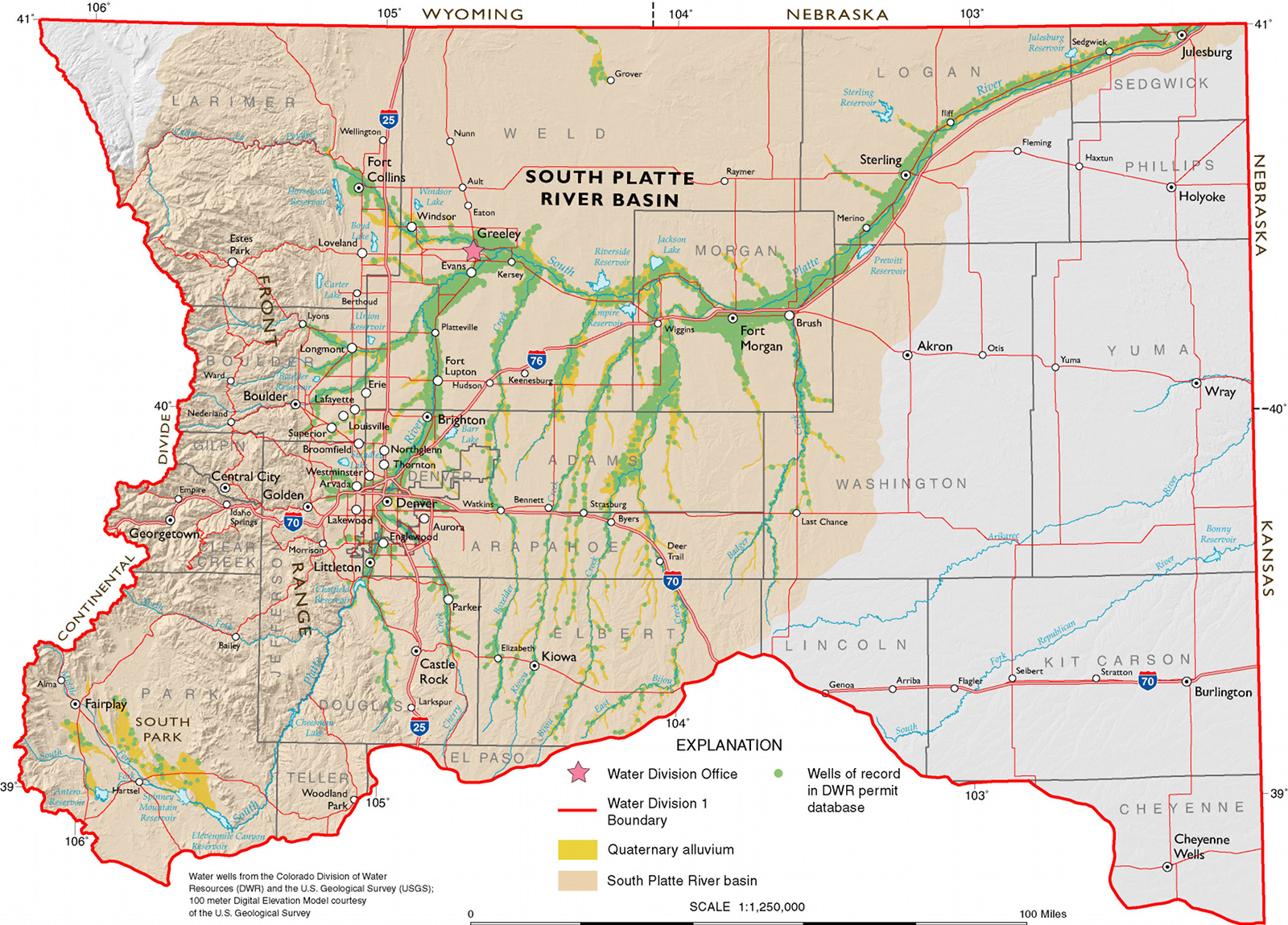
Here’s the link to South Platte Basin Roundtable Education Action Plan from the CWCB website. Here’s an excerpt:
As each basin roundtable carries out its charge to develop basin-wide water needs assessments, they are also required to advance the understanding of future water needs through educational programs and processes. In the statutes of HB 05-1177, each basin roundtable has powers and responsibilities that include the following:
“(c) … Basin roundtables shall actively seek the input and advice of affected local governments, water providers, and other interested stakeholders and persons in establishing its needs assessment, and shall propose projects or methods for meeting those needs.
(d) Serve as a forum for education and debate regarding methods for meeting water supply needs; and (e) As needed, establish roundtable subcommittees or other mechanisms to facilitate dialogue and resolution of issues and conflicts within the basin.”
Moreover, the Public Education, Participation, and Outreach (PEPO) Workgroup is a legislatively created committee of the IBCC. This group is tasked with: creating a process to inform, involve, and educate the public on the IBCC’s activities and the progress of the interbasin compact negotiations; creating a mechanism by which public input and feedback can be relayed to the IBCC and compact negotiators; and educating IBCC and roundtable members on water issues. The PEPO Workgroup’s membership consists of the Education Liaisons, a volunteer position on each basin roundtable, members of the IBCC, statewide water education experts, staff of the Water Supply Planning section of the Colorado Water Conservation Board (CWCB), and a consultant firm that facilitates the PEPO Workgroup. The members of this committee work to identify the best approaches for education and outreach at the statewide and basin-specific levels. The PEPO Workgroup and roundtable members are collectively defining the most helpful and meaningful ways in which the public can participate in the work of their basin roundtable.
In 2011-2012, the PEPO Workgroup will assist the basin roundtables in strengthening their education and outreach activities. By the end of 2012, each roundtable is expected to have a functioning Education & Outreach Committee tasked with creating an Education Action Plan (EAP). The EAP will detail the educational goals and tasks most effective for the basin roundtable. It will identify roundtable member education activities that promote a well- informed and high-functioning basin roundtable. It will also define public participation objectives and appropriate implementation methods.
In 2012, the Colorado Foundation for Water Education (CFWE) will work with the South Platte Basin Roundtable by providing assistance in forming or strengthening an Education & Outreach Committee and creating their Education Action Plan (EAP). To assist the basin roundtables in implementing their completed EAPs, the Colorado Water Conservation Board (CWCB) has created an application-based education fund. All basin roundtables with a completed EAP will have the opportunity to apply for up to $1,800 in state funds per year for action plan implementation.
More education coverage here.

From Alan Prendergast writing for Westword:
“We wanted to find the right balance,” [Governor Hickenlooper] explained, while predicting that the arrangement would allow companies to develop “greener, cutting-edge fracking fluids.”
Yet disclosure of what’s in the fracking brew probably won’t allay public concerns about the process, Governor Good Gas acknowledged. Fracking requires astonishing amounts of water, and the scale of projected drilling in Colorado and other western states is staggering. Disclosure needs to be coupled with exacting standards for how wells are drilled and operated, or Colorado could end up with a scenario similar to the suspected water contamination reported in Pavilion, Wyoming, last week, which has been blamed on shallow wells and inadequate casing.
“As drilling goes to where it’s never been before, we’re going to hear concerns,” Hickenlooper said. “But I have said all along that our groundwater is so far from [the formations being fracked] that there’s almost no possibility that we’re going to see contamination from fracking.”
Flanked by environmental and consumer advocates and gas industry execs, the governor announced the new fracking era in front of the giant John Fielder photograph of Lost Dollar Ranch in his office. Time will tell if the state can have its gas boom and keep its gorgeous scenery, too.
More on the reaction to the new rules from Cathy Proctor writing for the Denver Business Journal. From the article:
U.S. Sen. Mark Udall (D-Colo.): “These new rules are a strong step forward for Colorado and our local communities. It’s vital that the industry does everything possible to show the public in a transparent way that hydraulic fracking is being done in a safe manner. It’s also important that the state continues to provide strong oversight and require a transparent process. I’ve always said that one well contaminated or one person made sick is one too many.”[…]
Tisha Schuller, President & CEO of the Colorado Oil & Gas Association: “The Commission’s unanimous support for the new hydraulic fracturing disclosure rule is great news for Colorado. The Hickenlooper Administration, environmental groups, and the oil and gas industry have agreed upon a rule of which all Coloradoans can be proud.”[…]
Fred Krupp, president of the Environmental Defense Fund advocacy group: “The public expects and deserves full transparency from the oil and gas industry. Today, Colorado has taken a critical step toward building the public trust.”[…]
Mike Chiropolos, Boulder-based Western Resource Advocates’ lands program director: “The disclosure compromise is a model for future collaborative efforts where industry concerns are balanced against the need to protect Colorado’s water as drilling expands across the state. This is an important step in creating the necessary protections for Colorado families, but there is more work to be done.”
More coverage from Nick Snow writing for the Oil and Gas Journal. From the article:
Colorado adopted hydraulic fracturing fluid ingredient regulations, effective Apr. 1, requiring disclosure of all chemicals and establishing ways to protect proprietary information. The rules drew praise from both oil and gas industry and environmental organizations…
Neslin said while disclosing frac fluid ingredients is important to increased transparency and better public confidence, the commission has other tools that provide more direct influence, notably casing and cementing requirements, and regulations for handling fluids and wastewater at the surface. He said the final regulations reflected an effective collaborative process. Leaders of both oil and gas and environmental groups quickly expressed their approval…
Environmental Defense Fund Pres. Fred Krupp said Colorado’s new regulations build on the experience of Wyoming, Arkansas, Texas, and Montana. Krupp believes Colorado’s regulations make important strides in requiring disclosures in ways that are both useful and user-friendly. “Moving to a searchable database format will allow land owners, neighbors, regulators, and policymakers to focus their questions and their research about hydraulic fracturing operations,” he said. “This is a big step forward, and possibly Colorado’s most important contribution to disclosure efforts in states across the nation.”
More coverage from David O. Williams writing for the Colorado Independent. From the article:
[Western Resource Advocates] now wants the Colorado Oil and Gas Conservation Commission (COGCC) to implement recommendations made in October by a group called the State Review of Oil & Natural Gas Environmental Regulations (STRONGER) suggesting minimum surface casing depths for oil and gas wells that are fracked.
It’s been suggested that the failure to properly case and cement natural gas wells to depths below the groundwater aquifer may have been to blame in Pavillion, Wyo., where a report last week by the U.S. Environmental Protection Agency (EPA) linked fracking chemicals to well-water contamination.
“[STRONGER] recommends that the COGCC work with stakeholders to review how available information is used to determine minimum surface casing depths and how those depths assure that casing and cementing procedures are adequate to protect fresh groundwater,” the October STRONGER report reads.
COGCC director David Neslin said on Tuesday that fracking chemical “disclosure is not our first line of environmental defense. It’s important for transparency, it’s important to build public confidence, but our first line of environmental defense is the integrity of the wellbore. It’s the work that our engineers and environmental staff do in reviewing the permit applications.”
Neslin has long said that disclosure won’t stop spills caused by bad cement jobs of wellbores, pipeline problems or leaks from holding ponds that store fracking and other fluids. On Tuesday he said another line of environmental defense is “groundwater sampling, baseline sampling that we require our operators to do, and the prompt response that our field inspectors make when complaints or allegations of impact arise.”
WRA, however, would like to see another rulemaking on both the STRONGER recommendations and “a mandatory program for baseline testing, monitoring and tracers to protect our water quality.”
“Baseline testing can help eliminate the he said, she said arguments over contamination so that we can focus on keeping people safe,” WRA’s Chiropolos said. “One sick person is one too many. The [COGCC] should continue to be proactive in 2012 in order to protect Colorado families and our water.”[…]
“Colorado citizens are justifiably worried about the practice of fracking and deserve full confidence that the state is protecting the quality of their air, water and soil,” said Josh Joswick, energy issues organizer of the San Juan Citizens Alliance. Joswick was a La Plata County commissioner when local drilling rules were implemented in that gas-rich area of the state.
Increased drilling activity on the Front Range from Colorado Springs all the way north of Denver to the Wyoming state line will occur where far more Coloradans live than on the sparsely populated Western Slope. “This [disclosure] compromise means there is no free pass for drilling firms,” state Rep. Deb Gardner, D-Longmont, said in a release. “There is now a greater degree of checks and balances.”

From the Colorado Springs Independent (Pam Zubeck):
Colorado Springs Utilities is required to serve Banning Lewis Ranch under the annexation agreement, in which the annexor relinquishes the land’s water rights to the city forever, except for 2,000 acre feet of groundwater on the south end. That water, about 652 million gallons, is to be split between the city and annexor.
But Utilities, still building the SDS pipeline, hasn’t heard a water request from Ultra, says spokesman Dave Grossman. He says the city doesn’t know how much is needed, because “fracking is new to our area, so we don’t have past data for planning purposes.” Ultra did not respond to a request for comment for this story, but Montgomery says 1 million to 5 million gallons is used per frack.
If the 326 million gallons to which Ultra would have access under the annexation agreement isn’t enough, and the company doesn’t want to buy water from Utilities, Cherokee Metropolitan District, which serves the 18,000-customer Cimarron Hills enclave east of Powers Boulevard, is open to the idea of selling water, manager Sean Chambers says. Five years ago, Cherokee lost its use of several wells in the Upper Black Squirrel Creek Ground Water Management District, east of its service area, after illegally exporting water from the basin to its customers.
Chambers now wonders if that water, which Cherokee still owns, could be sold to drillers.
“We would consider it, so long as we were assured certain protections and we could confirm our decrees are consistent with what’s allowable,” he says. “The state is a little unsure … They don’t want this oil bonanza to turn into a water problem.”[…]
[Charlie Montgomery, energy organizer of the Colorado Environmental Coalition] says the next battle will be over local control. The Pueblo Chieftain has reported that Rep. Marsha Looper, R-Calhan, wants to require a more comprehensive state accounting of oil and gas drilling’s water needs. Meanwhile, the Longmont Times-Call says that Rep. Matt Jones, D-Louisville, wants to give local governments more control over the industry, including fracking.

Computing a water balance amongst the various consumptive and non-consumptive uses with an eye towards avoiding large-scale dry-ups of agricultural land is one goal of the tool. Another is to demonstrate how an increase in one use affects the other uses. Here’s a report from Chris Woodka writing for The Pueblo Chieftain. From the article:
The Colorado Water Conservation Board has developed the portfolio tool to weigh how the success of water projects already under development, urban conservation, new projects and agricultural transfers fit into meeting a projected “gap” in urban water supplies. Members of the Arkansas Basin Roundtable were given the chance to learn how to use the tool Wednesday in a computer lab at Colorado State University-Pueblo, but only a few showed up.
Water resources workers from Pueblo, Colorado Springs and Aurora also attended the meeting to learn more about the tool and offer suggestions about assumptions that have been made…
The Metro Basin Roundtable, for instance, developed four scenarios, looking at different levels of future demand. It took another step and developed a white paper on how more conservation might be achieved to reduce the need to dry up farms or import more water. The Colorado Basin Roundtable produced a model that showed how agricultural preservation statewide could be maximized. “I think the tool shows how if you make a change in one area, it affects something else, like Whac-a-Mole,” said Dave Taussig, a member of the roundtable from Lincoln County.
The group moved parameters within the model to look at low, medium or high demand in the future, and agreed to share these with the full roundtable at a future date. In some cases — for instance, low demand, high conservation and development of identified projects — there would be very limited impact on agricultural land.
More IBCC — basin roundtables coverage here.

Here’s the release from the Colorado Environmental Coalition:
Several conservation groups and water treatment utilities filed early statements on Friday in the upcoming water quality rulemaking being held by the Colorado Water Quality Control Commission, slated for March of 2012. The rulemaking will focus on controlling high concentrations of nitrogen and phosphorous, pollution that impacts Colorado’s drinking water, whitewater recreation and waterways.
Colorado Environmental Coalition, San Juan Citizens Alliance, Colorado Trout Unlimited and High Country Citzens’ Alliance are gearing up in advance of the formal rulemaking to ensure that Colorado’s water remains of the highest quality. The groups are collaborating with some of the largest water treatment providers in Colorado to pass strong standards to protect our health, environment, and to help curb the cost of future upgrades to water treatment facilities.
“Colorado has an exciting opportunity to show our neighbors and the Environmental Protection Agency (EPA) that we can protect our rivers and streams while minimizing costs to local communities. Our rivers really are the lifeblood of our communities and we must use this opportunity to ensure they remain clean, clear and safe for all uses,” said Becky Long with the Colorado Environmental Coalition.
Along with other states, Colorado has been directed to implement new standards by EPA. Pollution from nitrogen and phosphorus is the culprit behind “dead zones” like those in the Mississippi River Delta, resulting in massive fish die-offs. In Colorado, small communities have recently suffered drinking water scares, when chemicals needed to treat for these types of contaminants have made drinking water unsafe for human consumption. This past August the town of Hotchkiss, warned citizens to avoid the local tap water after a similar scare. Efforts to ensure the safety of local water supplies in Hotchkiss could take up to six months.
Many communities have been concerned with the potentially high costs of treating this type of contamination. As a result, the state agency and many water providers are proposing a ten-year phase-in period allowing for needed facility upgrades and reducing costs to customers.
The Metro Wastewater Reclamation District is also working to ensure Colorado’s rule is protective in order to head off additional federal regulations, which could be handed down if Colorado fails to pass a state rule.
“We believe the Water Quality Control Division’s proposal provides an opportunity for Colorado to make meaningful progress to reduce nutrients, protect small communities during these tough economic times, and put in place statewide monitoring to better understand the impacts of nutrients on a local, watershed basis,” said Barbara Biggs, Governmental Affairs Officer with the Metro Wastewater Reclamation District.
Water quality is also a major driver for recreation and tourism across Colorado. Murky water and slippery algae that can take over rivers and lakes does not enhance the post card image of Colorado’s environment. In recent years, the Water Quality Control Commission has had to implement standards for Grand Lake in order to control high concentrations of these same elements because of the impacts on water clarity and the fisheries in Colorado’s largest natural lake.
“My business really drops off when water quality is a concern. As Colorado’s population grows and human impacts contribute to water quality problems, we could face additional warnings and restrictions on the South Platte River. Our shop is only steps away from the river and we really rely on a safe river for our customers to recreate on,” said Jon Kahn, owner of Confluence Kayaks in Denver.
Statements were filed in Denver on Friday and the Water Quality Control Division will have until late January to respond.
Thanks to @beckylong for the link.
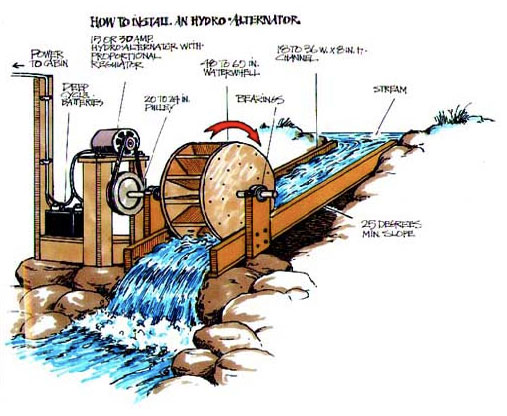
From The Aspen Times (Andre Salvail):
For nearly nine hours split between two meetings at Aspen City Hall on Monday, experts, consultants, residents and city officials debated the pros and cons of the proposed Castle Creek hydroelectric facility.
When the discourse was finally over at 10:20 p.m., the City Council voted unanimously to advance the project, conditionally approving a staff request to rezone property off Power Plant Road west of Aspen for a 1,761-square-foot building that would serve as the plant’s operations center. The vote also removes the land from the city’s open space inventory…
Council members heard from numerous opponents throughout the day, some of them landowners along the banks and within the watershed of Castle and Maroon creeks. An afternoon work session was designed to answer questions elected officials had about the project at large; the council’s regular meeting during the evening was supposed to focus only on the land-use request. In both instances, the public was allowed to comment…
The day began at 11:30 a.m., prior to the 1 p.m. work session, when representatives of the Washington, D.C.-based group American Rivers discussed a report it commissioned to evaluate the economic feasibility of the project.
The report, conducted by Tier One Capital Management LLC, questions the city’s estimate of $10.5 million for the project’s cost and puts the actual price tag at more than $16 million, citing interest payments on bonds used to finance construction. City officials have disputed the report and its conclusions, saying that it contains “egregious errors.”
At the work session, City Manager Steve Barwick discussed financial aspects of the plant and noted that the city need only spend a little more than $3 million more to complete the project. Most of that amount is for the building on Power Plant Road. An estimated $275,000 has been projected for handling the FERC application process.
Barwick stressed that the project is the best way to further the city’s goal of supplying 100 percent renewable energy through its electricity utility. He said every financial model shows that the new plant would save the community money in the long run.

From The Telluride Daily Planet (Benjamin Preston):
“This is an important project for western Colorado, and is going to mean an awful lot of job opportunities in a depressed part of the state,” said Gary Steele, an investor relations officer for Energy Fuels, Inc., the Canadian company slated to develop the project.
In order to obtain the permit from Montrose County, Energy Fuels had to agree to 18 conditions, which covered everything from the quality of uranium processed in the mill to the amount of water it can use. The conditions also include a 500-ton per day processing limit, plant footprint restrictions and a water quality monitoring requirement. The company has seven years to commence construction of the mill before having to go through the permitting process again.
“While those conditions aren’t adequate in our opinion, they’re better than no conditions at all, and they help protect the San Miguel River,” said Jennifer Thurston, a project coordinator with Sheep Mountain Alliance. In the wake of Energy Fuels’ recent triumph, Thurston said that SMA has not yet decided if they will attempt to have the case heard again by the appellate court, or try to push the case up the ladder to the state Supreme Court.
One thing is certain: SMA will pursue legal action against the project by way of the permit Energy Fuels received from the Colorado Department of Public Health and Environment in January. The towns of Ophir and Telluride are co-plaintiffs in that case. Telluride Mayor Stu Fraser said that although Telluride isn’t opposing the mill just for the sake of opposing it, the town council wants to make sure air and water quality standards are as tight as possible.
Montrose County officials applauded the appellate court’s decision, but County Commissioner Ron Henderson wondered why SMA filed the suit to begin with. He said the case cost the county hundreds of hours of staff time, plus litigation fees, the amount of which he did not know.
“We included everyone who would possibly have a say during the permitting process,” he said. “I really don’t understand why Sheep Mountain Alliance filed [these lawsuits]. I guess it’s the American way, but it wasn’t very productive.”

From Reuters via The Calgary Herald:
Pressure has been mounting on U.S. companies to be more open about the fracking technique that has been linked to water pollution.
The measures, which come into effect in April, go further than any other state to publicly highlight the exact contents of fracking fluid, which has become a major point of contention between the energy industry and environmentalists as its use increases…
On Tuesday, Texas adopted its own disclosure ruling for drillers, though it is considered less strict, with companies required to only include chemicals considered hazardous under certain drill site rules. Wyoming, Arkansas and Montana have similar disclosure rules to Texas.
More coverage from the Associated Press via The Aurora Sentinel. From the article:
The guidelines are similar to those required by a first-in-the-nation law passed in Texas this year but go further by requiring the concentrations of chemicals to be disclosed.
“That’s the big advancer here. We’re getting a full picture of what’s in that fracking fluid,” said Michael Freeman, an attorney for Earthjustice who worked with industry to write the rules.
Also, if Colorado drillers claim a trade secret, they would still have to disclose the ingredient’s chemical family. In emergencies, companies would have to tell health care workers what those secret ingredients were…
“I think we’ve reached the fairest and most transparent rules on the transparency of frack fluids of any state in the country,” Hickenlooper said afterward. “I think this will likely become a national model that if other states they don’t copy it, they will certainly use it as a touch point.”
More coverage from Bob Berwyn writing for the Summit County Citizens Voice. From the article:
The Colorado requirements are among the most extensive in the U.S. and the Colorado Oil & Gas Association is also satisfied with the outcome.
“Colorado now has the strongest hydraulic fracturing rule in the country,” said COGA president and CEO Tisha Schuller. “But more importantly, we have gained a model process to bring together industry, environmental advocates, and regulators to ensure energy development continues in keeping with protecting the environmental resources of our state.”
“The Commission’s unanimous support for the new hydraulic fracturing disclosure rule is great news for Colorado. The Hickenlooper administration, environmental groups, and the oil and gas industry have agreed upon a rule of which all Coloradoans can be proud.
More coverage from The Greeley Tribune (Sharon Dunn) via Windsor Now!. From the article:
Most oil and gas wells in Colorado have been completed through fracking since 1960, said Ed Holloway, CEO of Synergy Resources Corp., based in Platteville. The process has been widely used since 1947, he said. Holloway, who has been in the business for 30 years and who has seen paperwork associated with oil and gas well drilling double in that time frame, said the new rule will go a long way toward transparency. “I think it’s come to the point now that we can take that veil, that one veil of mystery off,” Holloway said.
Most drillers in Weld already have been disclosing their chemicals voluntarily through the website http://www.fracfocus.org. Come April 1, that will become mandatory. The new rules also require companies to disclose the concentrations of chemicals used.
“There’s always concerns with groundwater contamination, regardless of the industry,” said Weld County Commissioner Chairwoman Barbara Kirkmeyer. “This rule will help with some of that. The industry already does baseline water sampling, and they’re going to continue doing that. And most of the industry players, at least the ones in Weld, have already been disclosing their chemicals. The rule just kind of galvanizes that.”
Some area farmers said they had little concern about fracking. Gege Ellzey, president of the Weld County Farm Bureau, said the disclosure issue had not been heavily discussed among local farmers. “For the most part, no one around here seems to be all that concerned about it,” said Ellzey, who allows oil and gas companies to drill on her land, and noted that she’s had no problems with how they’re operating…
“The end of the story is just a continual attack on our industry,” Holloway said. “My personal belief is this rule is good for the industry, and it’s where the industry should be.”

From The Pueblo Chieftain (Chris Woodka):
The board met at the Lower Arkansas Valley Water Conservancy District offices in Rocky Ford, and approved the sale of 500 acre-feet of water for $510 per acre-foot under a one-year lease agreement. The cost includes a $10 per acre-foot administrative fee. “The pilot program is important because it will prove if we can actually move the water,” said John Schweizer, president of the Super Ditch and the Catlin Canal. “This will open the door for more leases.”
While the Super Ditch ultimately could use water rights from seven ditches east of Pueblo, only the Catlin Canal will be involved in the pilot program. The Catlin board will review the contract on Dec. 27…
The water will go to the city of Fountain, and possibly other members of the El Paso County Water Authority, after it is exchanged upstream to Lake Pueblo…
About 250 acres will be dried up to provide the water, and one purpose of the program is to demonstrate through engineering how land can be taken out of production and how augmentation flows can be timed to return water to the Arkansas River. Farmers retain ownership of water rights and voluntarily participate.

From the Fort Collins Coloradoan (Bobby Magill):
Rock Springs, Wyo.-based Communities Protecting the Green River was the first to lodge objections to Fort Collins entrepreneur Aaron Million’s Regional Watershed Supply Project.
The group includes the cities of Green River and Rock Springs, Wyo. and Sweetwater County, Wyo.
“In reality, it is an investment scheme masquerading as a water supply project, which is masquerading as a pump-back hydropower project,” Don Hartley, the group’s vice-chairman, wrote in a letter to the Federal Energy Regulatory Commission on Dec. 9…
“This project is portrayed as a hydropower project, but pumping water over the Continental Divide will require more energy than can be generated from the fall of the water on the east side (of the divide),” Hartley wrote.
He added that consideration of such a massive water pipeline is premature because a federal study of the amount of water available to be consumed by growing communities in the Green River-Colorado River watershed is ongoing.
More coverage from the Associated Press via the Billings Gazette. Here’s an excerpt:
Many in western Wyoming say they’re concerned the project would draw down Flaming Gorge Reservoir. The city of Green River has joined the city of Rock Springs and Sweetwater County to fight Million’s proposal.
Green River Mayor Hank Castillon said Monday that residents are unified in opposition to the project. “They just don’t want to see Wyoming water going to Colorado,” Castillon said. “The main issues are recreational, and they feel that it’s going to affect their lifestyle as far as sporting events and water because we have the Flaming Gorge here also the fishing up and down the Green River, fish habitat.”[…]
Million filed an application with the Federal Energy Regulatory Commission this summer spelling out plans to construct a system of turbines and reservoirs along the pipeline to generate electricity. While he has said the project wouldn’t generate more electricity than pumping the water would consume, he said generation would help cover its pumping costs. He wants to construct a reservoir on the slopes of Sheep Mountain, west of Laramie, and generate electricity by pumping water into the reservoir and having it flow through turbines on its way downstream to another lake nearby, Lake Hattie…
Steve Jones, watershed protection program attorney with the Wyoming Outdoor Council in Lander, said his group is concerned with the prospect of such large-scale pumping out of the Green River. “It’s obvious to me that some years, there is not going to be any water available, and other years there might,” Jones said. “But to me, the idea that, that reservoir could supply that year in and year out, is just wrong, according to the statistics that I’ve looked at.”[…]
Duane Short, wild species program director with the Biodiversity Conservation Alliance in Laramie, said federal roadless policies would prohibit construction on Sheep Mountain…
Wyoming Gov. Matt Mead has expressed opposition to Million’s project. His office said this week that the state plans to file comments with FERC.

From the Denver Business Journal (Cathy Proctor):
The rule allows oil and gas companies to claim that some of the chemicals used in hydraulic fracturing, also called “fracking,” are proprietary trade secrets, but requires companies to disclose the names and concentrations of all other chemicals…
“We have a good rule that’s an important step forward for Colorado,” said Mike Freeman, a Denver-based attorney for the Earthjustice environmental advocacy group. “This is the first state rule that I know of that requires the disclosure of chemical concentrations of all chemicals, not just those covered by workplace safety rules,” Freeman said…
“The industry gave dramatically” when it agreed to include chemical concentrations, said Tisha Schuller, president and CEO of the Colorado Oil & Gas Association (COGA), a trade group. “And we gave because Colorado requires a level of transparency that’s not required by other states,” she said…
“We think these rules are a model for other states, and also that they’re the right rules for Colorado, our families and our neighbors,” said Dave Neslin, director of the Colorado Oil & Gas Conservation Commission. The rule, which takes effect on April 1, will give oil and gas companies between 60 and 120 days to post information about the chemicals used in fracking operations at a website, http://www.fracfocus.com.
Companies claiming trade secret protection for the name or concentration must fill out a new form, Form 41, that outlines what can and can’t be considered a trade secret. If someone believes that companies are inappropriately using the trade secret claim they can ask the COGCC to look into the matter, and file a lawsuit if they’re not happy with the commission’s response, Neslin said.
The Denver Business Journal is running a roundup of their articles about hydraulic fracturing, as well.
More coverage from Mark Jaffe writing for The Denver post. Click through for the cool photo from the Associated Press. Here’s an excerpt from the article:
“The level of detail required in this rule is much greater than other states require,” said Mike Freeman, an attorney for the environmental law group Earthjustice.
The Colorado Oil and Gas Commission unanimously adopted the rule after last-minute negotiations among environmental groups, industry and state regulators…
Some states, such as New Mexico, only require that chemicals identified by the U.S. Occupational Safety and Health Administration as hazardous in the workplace, be listed.
“We know that is about half the chemicals in fracking fluid, so we are doubling the number of chemicals” to be disclosed, said David Neslin, the commission’s executive director.
Other states, such as Wyoming and Arkansas, require all chemicals be listed, but do not require revealing the concentrations of the ingredients, Freeman said…
The compromise on the chemical concentrations was that the chemicals and concentrations would be listed separately from the descriptions of the products in the frack fluid. This would make it difficult to know which chemicals go in which products.
More coverage from P. Solomon Banda writing for the Associated Press via the Boston Globe. From the article:
The guidelines are similar to those required by a first-in-the-nation law passed in Texas this year but go further by requiring the concentrations of chemicals to be disclosed. Also, if Colorado drillers claim a trade secret, they would still have to disclose the ingredient’s chemical family. In emergencies, companies would have to tell health care workers what those secret ingredients were…
In recent years, Arkansas, Louisiana, Michigan, Montana, New Mexico, Pennsylvania, Texas and Wyoming have proposed or adopted rules requiring disclosure of fracking chemicals.
More coverage from Hendrik Sybrandy writing for Fox31. From the article:
“It’s a real win for the citizens of Colorado,” said Tom Thompson, Chairman of the COGCC. “This is really a small part in ensuring that our water supplies are protected.”
Tisha Schuller, the President of the Colorado Oil and Gas Association, which represents the industry, also heralded the collaboration that led to the adoption of the new rule.
“The Commission’s unanimous support for the new hydraulic fracturing disclosure rule is great news for Colorado,” Schuller said. “The Hickenlooper Administration, environmental groups, and the oil and gas industry have agreed upon a rule of which all Coloradoans can be proud.”[…]
Anadarko Petroleum is currently doing tests near the Murphy Creek and Cross Creek subdivisions in east Aurora. Ward Two Council member Renie Peterson held an informational session at the city’s municipal building to provide residents details about the project and fracking in general.
“Constituents, they don’t understand, and of course fear triggers outrage,” Peterson said before the meeting.
“As a scientist that studied a lot of neurotoxins and neurodegenerative diseases, I know some of these chemicals they’re putting in the ground and what they can do long-term to human health,” said Eric Neeley, a Cross Creek resident who’s opposed to the Anadarko project.
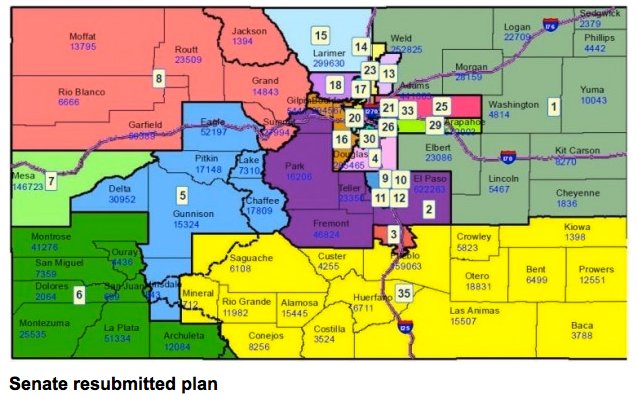
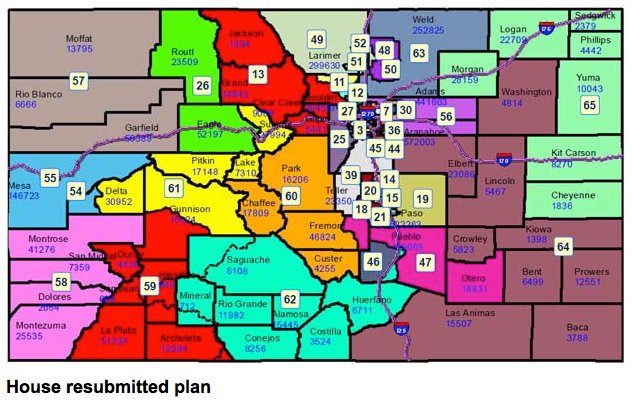
Here’s the link to the final plans submitted by the Colorado Reapportionment Commission in Google Earth format.
From The Denver Post (Tim Hoover):
“It is ordered that Resubmitted Plan for districts for the Senate and House of Representatives shall be, and the same hereby is approved,” the court said in a short order issued today, rejecting Republican arguments that the maps were unconstitutional. “It is further ordered that the resubmitted plan shall be filed with Colorado Secretary of State no later than Dec. 14, 2011.” The state’s high court earlier this year kicked back a first set of maps drawn by the Colorado Reapportionment Commission, agreeing with Republican arguments that the maps — which had been approve on bipartisan votes — split too many counties. The commission then went back to the drawing board in late November, approving a new set of maps – drawn by Democrats – on 6-5 votes over Republican objections.
The maps would make 38 of 100 legislative seats competitive, with 24 in the 65-member House and 14 in the 35-member Senate.
More coverage from Joe Hanel writing for The Durango Herald. From the article:
The court accepted a map that puts Durango and Gunnison in the same state House district and ships off conservative Montezuma County to join a Montrose-based district…
Monday’s three-paragraph decision did not elaborate on the justices’ reasoning, and it did not say how each of the seven justices voted.
The new map makes big trouble for many Republicans, including Rep. J. Paul Brown of Ignacio. Brown now will have to travel three mountain passes between Durango and Gunnison, and he will be in a district that is much easier for Democrats to win than his old one, which was drawn along the Cortez-Durango-Pagosa Springs axis…
Other Republicans were angry, including Senate Minority Leader Bill Cadman, R-Colorado Springs. “It is disappointing to see the Supreme Court validate such blatantly partisan and politically vindictive maps. It is clear that the reapportionment process in Colorado is broken and in need of reform,”
Cadman said in a news release. Cadman now shares a Colorado Springs district with Sen. Keith King, the Senate Republican with the most experience in education policy. Only one of them will survive past 2012. Other senior and up-and-coming Republicans also will have to run against each other in primaries if they want to stay in the Legislature.
The map harms a few Democrats, too, by either putting them in safe GOP districts or into districts with other incumbent Democrats. But Democrats were happy about Monday’s decision, which creates – by their definition – 35 House and Senate districts that both parties have a chance to win. “These new districts will favor representatives who are accountable and responsive, and Democrats will field candidates who fit this profile,” said Colorado Democratic Party Chairman Rick Palacio in a news release.
More coverage from Patrick Malone writing for The Pueblo Chieftain. Here’s an excerpt:
Rep. Keith Swerdfeger, R-Pueblo West, landed in House District 46, where Pueblo City Councilman Leroy Garcia, a Democrat, had announced his candidacy months earlier. The new House District 46 is 40 percent Hispanic. Voter registration, based on the 2010 election, is 48.66 percent Democratic, 25.82 percent Republican and 25.06 percent unaffiliated…
The bipartisan Colorado Reapportionment Commission has met and heard public testimony on reapportionment since May. The first set of maps it submitted to the Supreme Court enjoyed broad support on the commission from Democrats and Republicans alike. However, the court ruled that the original submission did not sufficiently minimize splitting counties and cities into multiple districts and rejected it. When the commission resumed its work, Mario Carrera, its unaffiliated chairman, sided with Democrats to cast the deciding vote. Republicans reacted fiercely to the outcome and criticized Democrats’ re- drawn proposals as an opportunistic strike to pit incumbent GOP leaders in districts with each other.
“It’s not required that incumbents be protected,” [Rick Palacio, chairman of the Colorado Democratic Party] said…
Senate Minority Leader Bill Cadman, R-Colorado Springs, finds himself in a district with Sen. Keith King, R-Colorado Springs. “It is disappointing to see the Supreme Court validate such blatantly partisan and politically vindictive maps,” Cadman said. “It is clear that the reapportionment process in Colorado is broken and in need of reform. I am now considering sponsoring a bill for the 2012 session to address this problem.”[…]
“I am confident that with hard-working candidates and a winning message of economic growth and job creation Republicans will expand our majority in the state House (and) win a majority in the state Senate,” [Ryan Call, chairman of the Colorado Republican Party] said.
“When you level the playing field, Democrats are going to prevail,” Palacio said. “They are the candidates standing up for middle-class families, as opposed to today’s Republicans, who are standing up for corporate interests.”
More coverage from Patrick Malone writing for The Pueblo Chieftain. From the article:
House District 47 now spans from eastern Fremont County through Otero County, lassoing much of Pueblo County in between. No incumbent lives in the district, so an election will be held next year to fill it. Las Animas County now is paired with Eastern Plains counties in a House district.
In the Senate, another orphan district was created by peeling eight counties from District 2, currently held by Sen. Kevin Grantham, R-Canon City. The new district spans from the San Luis Valley to the Lower Arkansas Valley, taking away a portion of District 5 represented by Sen. Gail Schwartz, D-Snowmass Village.
More coverage from Patrick Malone writing for The Pueblo Chieftain. From the article:
Newly created Senate District 35 will stretch from the San Luis Valley to the Kansas line, snaring 16 counties — but no incumbent — along the way. Half of the counties in the new district were plucked from present day Senate District 2, where Sen. Kevin Grantham, R-Canon City, was elected just last year, and another seven counties were extracted from the district represented by Sen. Gail Schwartz, D-Snowmass Village. “It’s going to be a pretty tough district to campaign and represent,” Grantham said. “It’s very big, but the interests are the same in rural Colorado — the interests that I have still. I’ll represent rural interests whether I technically represent the Arkansas Valley or not.” Grantham’s new district will link Fremont County to El Paso, Teller and Park counties. He will represent the district in part of 2012 and all of 2013 and 2014, when he will be up for re-election…
Las Animas County, which objected that it originally was split into two districts and paired with Pueblo in one, will be in a rural, Eastern Plains district that stretches east to Kansas and north to Washington County. Rep. Wes McKinley, D-Cokedale, lives in that district. He is term-limited, and the seat will be up for grabs next year.
More coverage from Ivan Moreno writing for the Associated Press via The Columbus Republic. From the article:
The Colorado Supreme Court’s decision to approve the maps gives Democrats a sweep in the once-a-decade redistricting battles. The new congressional maps the court approved last week were also drawn by Democrats and give them a chance to unseat Republican Rep. Mike Coffman next year in a district never held by Democrats.
The court did not immediately issue a written opinion on the state legislative maps, which were drawn in a process that became tense with partisanship during the last meetings of the 11-member redistricting commission.
Republicans criticized the maps, calling them “politically vindictive” because they pair several GOP incumbents in the same districts. The most notable are House Republican Leader Amy Stephens and Senate Republican Leader Bill Cadman, both of whom will be in the same districts as members of their own party in El Paso County.
“I’m surprised the court would put its seal of approval on the most partisan state map in 30 years,” said Rob Witwer, one of the Republicans on the commission.
Pairing Republican incumbents in contests could increase Democrats’ five-vote advantage in the Senate and jeopardize the GOP’s one-vote edge in the House…
The new maps for the Colorado House and Senate also mean that 38 of the Legislature’s 100 districts will be considered competitive in the coming years. Because of the state’s growing Latino population, 24 seats would be in districts where Hispanics would account for at least 30 percent of the vote.
Bob Loevy, a political science professor at Colorado College and Republican member of the commission, said his feelings about the maps were “quite mixed.” He said he approves that there are more competitive districts, but he criticized Democrats for what they did to Republican incumbents in leadership…
But [Bob Loevy, a political science professor at Colorado College and Republican member of the commission] said it may not be all bad for Republicans in the end, noting that Republicans now have 35 seats in the Legislature that are considered safe, compared with the Democrats’ 25. “The long-range view is that Republicans didn’t do badly,” he said.
More coverage from Lynn Bartels and Tim Hoover writing for The Denver Post. From the article:
But House Speaker Frank McNulty, R-Highlands Ranch, said that even with a Democratic “gerrymander,” the GOP is still in good shape to keep control of the House. “The Democrats are still fighting an uphill battle,” McNulty said. “Colorado continues to be a center-right state.”…
The open-and-shut ruling by the Supreme Court on Monday raises the question: Would Republicans have been better off if they hadn’t appealed the initial maps approved by the Colorado Reapportionment Commission? “No one realized the Democrats would be so vindictive when they drew the second set of maps,” said Sen. Greg Brophy, R-Wray…
Under the new maps, a variety of Republicans will have to either face off in primaries or agree on who bows out to avoid a fight. This dynamic, coupled with hard feelings toward Democrats over the maps, is not likely to make for a pleasant 2012 legislative session. “I think this might be the session you wouldn’t wish on your friends or your enemies,” said House Majority Leader Amy Stephens, R-Monument. “It’s going to be tough.”[…]
“The stars are perfectly aligned for a difficult, contentious and frustrating legislative session,” said John Straayer, a political-science professor at Colorado State University. “You have disgruntlement over apportionment and redistricting, a 2012 presidential election and, with the Lobato (school funding) case, enormous financial pressures on the state. It will take an enormous level of statesmanship to get through the session.”
More coverage from Lynn Bartels writing for The Denver Post. From the article:
“It’s plain dirty politics and we’re going to remind the voters of that at election time,” said [House Majority Leader Amy Stephens], R-Monument…
But one Democrat on the reapportionment commission, former Denver Mayor Wellington Webb, argued that Republicans did it to themselves by appealing to the Supreme Court a pair of maps that had passed with bi-partisan support. When the court sent the maps back to the commission saying too many communities had been split, Democrats drew new maps reducing the splits but pairing GOP incumbents in the same districts…
…Webb said anyone who thinks it was “dirty politics didn’t watch the process.”
More coverage from Charles Ashby writing for The Grand Junction Daily Sentinel. From the article:
Under the new maps, Grand Junction becomes its own House district while the rest of the county continues to be paired with western Delta County in a separate district.
From the Pagosa Daily Post:
During the two-day conference, a wide variety of speakers will discuss their views on timely subjects facing ditch and reservoir companies. The presentations will include topics on the recent United FRICO change case, administrative issues, and keeping the next generation on the farm. Colorado Supreme Court Justice Gregory J. Hobbs will address the ditch and reservoir group on “Prior Appropriation: Does it Still Meet Changing Needs?”
DARCA will be having three concurrent workshops on the morning of Friday, Friday 24. The workshops are: What Directors and Officers Need to Know, Water Quality Issues, and Managing the Ditch Company.
DARCA will present Is Your Great-Grandpa’s Dam Ready for the 21st Century, the pre-convention workshop, on Wednesday, February 22, from 9:00am to 4:00pm…
For information regarding convention registration as well as sponsorship or exhibitor opportunities please visit the DARCA website or contact John McKenzie at (970) 412-1960 or john.mckenzie@darca.org.
More water law coverage here.

From the Associated Press (Jim Suhr) via The Denver Post via Twitter:
While much of America worries about the possibility of a double-dip recession…[some]…U.S. farmers enjoy their best run in decades, thanks to high prices for many crops, livestock and farmland and strong global demand for corn used in making ethanol.
Farm profits are expected to spike by 28 percent this year to $100.9 billion, and the amount of cash farms have available to pay bills also is expected to top $100 billion—the first time both measures have done so, according to the U.S. Department of Agriculture. All the while, crop sales are expected to pass the $200 billion mark for the first time in U.S. history, and double-digit increases are expected in livestock sales.
“We’re just experiencing the best of times,” said Bruce Johnson, an agricultural economist at the University of Nebraska in Lincoln. “It’s a story to tell.”
That’s not to say that everyone is sharing in the good fortune. Near Gardner, Kan., a short drive south of Kansas City, a lack of rain and nagging winds conspired to leave Bill Voigts with about half of the soybeans he expected. His harvest of corn was worse, coming in at about one-third of his normal production. Even with insurance, he didn’t quite break even on the 2,400 acres he farms—most of them rented. “Had it not been for insurance in his area, it’d be a disaster. That’s the only thing that saves us,” said Voigts, 66.
But he noted that the drought plaguing farmers like him helped drive up prices for commodities like corn, soybeans and wheat, benefitting those fortunate enough to get a good crop. “At the expense of some farmers, other farmers become wealthy,” he said. “That’s really the whole story. That’s not the government’s fault, it’s nobody’s fault. That’s just the way things happen.

From the Sky-Hi Daily News:
The project’s key feature, construction of Chimney Hollow Reservoir southwest of Loveland, would increase the reliability of the existing Windy Gap Project, which started delivering water to Front Range municipalities in 1985.
The Windy Gap Firming Project is a regional collaboration among 13 growing Northeastern Colorado water providers (Platte River Power Authority, Broomfield, Erie, Greeley, Longmont, Louisville, Loveland, Superior, Central Weld County Water District, Evans, Little Thompson, Louisville, Loveland, Superior, Central Weld County Water District, Evans, Little Thompson Water District, Lafayette and Fort Lupton) who in 2050 face a population totaling more than double what it was in 2005, according to Northern.
Water demand projections for the participants show a storage of 64,000 acre feet in 2030 and 110,000 acre-feet by 2050. Northern Water’s Municipal Subdistrict is coordinating the review on behalf of the providers, who will pay for the estimated $270 million project.
Chimney Hollow would be just west of and slightly smaller than Carter Lake and would be part of Larimer County’s Open Lands Program, with non-motorized boating, fishing and trails.
“We put a lot of time and effort into developing these plans, and we’re proud to say that they will make conditions on the Colorado River better in the future than they are today,” said Jeff Drager, project manager of Northern Colorado Water Conservancy District, in statements released this week.
From the Loveland Reporter-Herald (Pamela Dickman):
Officials are looking at the best — and least harmful to the environment — way to tap mineral resources under the state park before a private company beats them to the well. “The resources are going to be drilled anyway,” said Theo Stein, spokesman for the Colorado Parks and Wildlife Commission. “Resources can be reached from outside the state park.”[…]
St. Vrain State Park is located just off Interstate 25 at Colorado 119 on the site of former gravel mines. The 604 acres boast ponds, fishing, wildlife and camping. And underneath the land is oil. Unlike other state parks, the state actually owns 439 acres of mineral rights below the park, giving it the opportunity to tap that resource and make an estimated $400,000 per year. The money, according to project staff, would help an already strapped state parks and wildlife system. But, according to the wildlife commission at a meeting in Fort Collins this week, the proposal is about more than the money. It is also about drilling in the least harmful way to the environment because officials say if the state doesn’t drill, a private company will. The resources could be accessed from neighboring land, and if that happened, the state would have no say on when or how much or how to mitigate environmental issues.
The process itself, however, could cause some environmental concern. The horizontal drilling procedure the state is looking at entails fracking — a practice the U.S. Environmental Protection Agency announced Thursday may have caused groundwater pollution.

Wow, sometime after midnight Coyote Gulch running on WordPress surpassed the half million page view mark. That seems like a lot of hits but I’m sure that there are those for which 500,000 hits would be a slow day.
Colorado water issues will never draw the crowd that other subjects do but I’m content with that.
Coyote Gulch is a labor of love. I started out covering politics, getting a bit of recognition for my coverage of the Denver municipal election in 2003. After that came Governor Owens’ Referendum A (a political reaction to the shock of the 2002 statewide drought) in the fall of 2003. The referendum failed in all 54 counties in Colorado but launched Coyote Gulch as a water issues blog. Thank you Governor Owens.
The original Coyote Gulch ran on software from a now defunct company named Userland Software. The archives are still available at http://radio-weblogs.com/0101170/.
I moved Coyote Gulch to WordPress in February of 2009 after experiencing publishing problems with the old software. WordPress is great — Open Source — software. I’m continually amazed at the versatility and ease of use.
Thank you to all of you that bother to give me a read now and again. In keeping with the times you can follow Coyote Gulch on Twitter (@coyotegulch), Facebook and Linkedin.

From the Associated Press (Arthur Max) via Bloomberg Business Week:
South Africa’s foreign minister and chairman of the 194-party conference, Maite Nkoana-Mashabane, told delegates that failure to agree after 16 days of work would be an unsustainable setback for international efforts to control greenhouse gases.
“This multilateral system remains fragile and will not survive another shock,” she told a full meeting of the conference, which had been delayed more than 24 hours while ministers and senior negotiators labored over words and nuances.
Nkoana-Mashabane said the package of four documents, which were being printed as she spoke, were an imperfect compromise, but they reflected years of negotiations on issues that had plagued the U.N. climate efforts.
The 100-plus pages would give new life to the 1997 Kyoto Protocol, whose carbon emissions targets expire next year and apply only to industrial countries. A separate document calls on major emitting nations like China and India, excluded under Kyoto, to accept legally binding emissions targets in the future.
After her brief address, Nkoana-Mashabane adjourned the session. The documents were to be discussed and put up for approval later Saturday. The convention operates by consensus, and the package will not be put up for a vote.

More coverage from Louise Gray writing for The Telegraph. From the article:
At the end of the gruelling talks the world decided on the “Durban Platform for Enhanced Action”. The two-page document commits all countries to cutting carbon for the first time. A “road map” will guide countries towards a legal deal to cut carbon in 2015, but it will only come into affect after 2020.
Is this a step forwards for the world or backwards?
It depends who you ask. It is a success in terms of keeping the climate change talks on track after it was feared no decision would be reached, making a mockery of the UN process – especially after the collapse of the last high profile talks in Copenhagen in 2009. The EU, who led calls for the so-called “road map” are hailing it as “an historic breakthrough”. The bloc point out that this is the first time that the world’s three biggest emitters: The US, China and India have signed up to a legal treaty to cut carbon.
However it is a failure in terms of the expectations of certain countries, like the small island states, and the charities, who wanted a much stronger agreement. They argue that the legal language needs to be a lot stronger to force countries to act and dates should be brought forward to stop global warming. They point out that carbon emissions will have to peak by 2020 and start to come down for the world to limit temperature rise to 2C.
What about the Kyoto Protocol?
The EU and a few other developed countries have signed up to a second commitment period of the Kyoto Protocol, that ends in 2013. This will ensure that there is still some form of legally binding treaty to cut carbon in place in the interim eight years before the new agreement comes into force at the end of 2020. However most of the developing world and the US remain in voluntary agreements to cut carbon until 2020.
Meanwhile, Dr. James Hansen is warning the the 2 degree celsius target is not enough to head off the disaster of anthropogenic climate change. Here’s a report from Bob Berwyn writing for the Summit Daily News. From the article:
“Limiting human-caused warming to 2 degrees is not sufficient,” Hansen said. “It would be a prescription for disaster … Humans have overwhelmed the natural, slow changes that occur on geologic timescales,” Hansen said. Hansen, along with co-author Makiko Sato, studied how Earth’s climate responded to past natural changes to try and answer one of the fundamental climate science questions: “What is the dangerous level of global warming?”[…]
Based on Hansen’s temperature analysis work at the Goddard Institute for Space Studies, the Earth’s average global surface temperature has already risen .8 degrees Celsius since 1880, and is now warming at a rate of more than .1 degree Celsius every decade. This warming is largely driven by increased greenhouse gases in the atmosphere, particularly carbon dioxide, emitted by the burning of fossil fuels at power plants, in cars and in industry…
Hansen and Sato compared the climate of today, the Holocene, with previous similar “interglacial” epochs – periods when polar ice caps existed but the world was not dominated by glaciers. Studying cores drilled from both ice sheets and deep ocean sediments, Hansen found that global mean temperatures during the Eemian period, which began about 130,000 years ago and lasted about 15,000 years, were less than 1 degree Celsius warmer than today. If temperatures were to rise 2 degrees Celsius over pre-industrial times, global mean temperature would far exceed that of the Eemian, when sea level was four to six meters higher than today, Hansen said…
Two degrees Celsius of warming would make Earth much warmer than during the Eemian, and would move Earth closer to Pliocene-like conditions, when sea level was in the range of 25 meters higher than today, Hansen said. In using Earth’s climate history to learn more about the level of sensitivity that governs our planet’s response to warming today,
Hansen said the paleoclimate record suggests that every degree Celsius of global temperature rise will ultimately equate to 20 meters of sea level rise. However, that sea level increase due to ice sheet loss would be expected to occur over centuries, and large uncertainties remain in predicting how that ice loss would unfold.

From the Associated Press via The Grand Junction Daily Sentinel via The Colorado Springs Gazette:
The Telluride-based Sheep Mountain Alliance challenged the county’s process, saying the state’s open meetings law was violated and the county had abused its discretion in approving a permit.
According to the Grand Junction Daily Sentinel (http://bit.ly/sJpbZI ), the court on Thursday also upheld the ability of the mill to process an average 500 tons of ore per day.
The alliance has another lawsuit pending against the state Health Department, which the alliance says will address broader issues than the zoning case in Montrose County.
From The Aspen Times (Andre Salvail):
Matt Rice, Colorado director for American Rivers, said his organization wasn’t trying to “drop a bomb” in advance of the city’s meetings. He said the report, released Thursday, was intended for council members, city officials and others involved in the debate over the merits of the project. Rice also expressed disdain for a press release the city issued Friday stating that the American Rivers-commissioned report contains “egregious errors.”[…]
A work session at 1 p.m. Monday is designed to give council members answers to some long-pressing questions surrounding the project; the council’s regular meeting Monday evening will include a public hearing on a zoning request for the proposed facility, dubbed the Castle Creek Energy Center.
At the core of the organization’s report, researched and prepared by Tier One Capital Management LLC, is an estimate that the project will cost between $16 million and $18 million, with $7.3 million in interest payments over the life of bonds used to finance construction. The city of Aspen has disclosed a capital cost of $10.5 million, according to Tier One.
The city’s financial analysis, Tier One claims, does not include debt service on the $5.5 million bond that local voters approved in 2007. “Debt service will add significantly to the cost of the project, and it is inappropriate not to consider debt service in assessing financial feasibility,” the report states.
“Tier One concludes that the project is not cost effective,” the report continues. “Given the very high price of this project and debt service extending for 28 years, future electrical rate increases are a likely result.”
The city’s Friday statement says that Tier One’s alternative analysis of the project’s costs includes “many factual errors and egregious mistakes.” The city listed what officials have determined to be “three of the most fundamental” errors:
— Tier One “incorrectly states that the city of Aspen didn’t consider debt service” in its analysis.
— Tier One’s conclusion that the project should be abandoned is deeply flawed “due to its failure to consider only the incremental costs needed to complete the project [as] opposed to considering investments already made with benefits for projects other than the hydro plant.”
— Tier One “assigned ridiculously low inflation rates” for the cost of coal -— a power source on which the city is hoping to lessen its dependence through hydropower — using rates between .3 percent and .6 percent annually.

From the Summit County Citizens Voice (Bob Berwyn):
Colorado Parks and Wildlife collected 11 million eggs from kokanee salmon running out of Blue Mesa Reservoir this fall. The record harvest will ensure that Colorado Parks and Wildlife will have adequate supplies for stocking 26 reservoirs around the state with salmon fry next year. But biologists say much more work needs to be done before they declare the population of kokanee salmon in the 9,000-acre reservoir recovered. Kokanee numbers have declined precipitously during the past 10 years as the population of predatory lake trout boomed, knocking the fishery out of balance. “One good spawning run does not mean we’ve fixed the problems,” said John Alves, senior aquatic biologist for Colorado Parks and Wildlife’s southwest region. “Blue Mesa is critical for our statewide kokanee program and the fishery is out of balance. There is no quick fix.”
More Aspinall Unit coverage here.
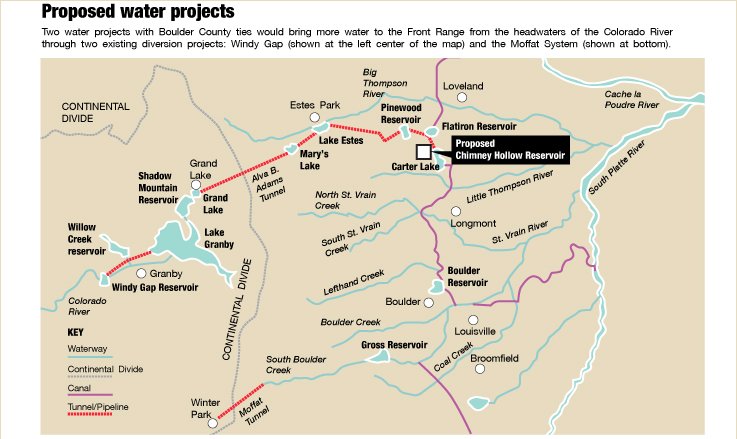
From the Boulder Daily Camera (Laura Snider):
“It’s been a long haul for us, but we see a light at the end of the tunnel,” said Dana Strongin, spokeswoman for Northern Water, which is spearheading the project that will serve a number of local towns, including Louisville, Lafayette, Longmont, Broomfield, Erie and Superior. “We entered into this process in 2003. It takes a lot of work to take this water planning and put it into action.”
The goal of the Windy Gap Firming Project is to make the supply of water from the original Windy Gap project, which was finished in 1985, more reliable. The original Windy Gap project was never able to deliver all the water promised to towns on the Front Range because it has to piggyback on some parts of the Colorado-Big Thompson diversion system to make it across the mountains.
That’s a problem because in wet years — when there’s more water to divert from the river — the Colorado-Big Thompson system doesn’t have room to store the Windy Gap water in its already-full reservoir. During dry years, there’s room to store Windy Gap water, but the project’s water rights are so junior that it can’t draw water from the river.
The key feature of the $270 million firming project, if approved, would be the construction of a new reservoir in Larimer County to solve the storage problem. The proposed Chimney Hollow Reservoir would sit just west of Carter Lake and have a capacity of 90,000 acre-feet. The water to fill the reservoir would largely be pumped through existing pipes and canals.
Environmentalists have been concerned about the effects the Windy Gap project could have on the upper reaches of the Colorado River, which already has been severely depleted. In particular, they worry that taking more water from the headwaters of the Colorado will cause an increase in water temperature, which can be lethal for fish, and a decrease in “flushing flows,” which are critical for cleaning out the sediment that can armor the bottom of riverbeds, smothering aquatic insects.
When the Draft Environmental Impact Statement for the Windy Gap Firming Project was released in 2008, Trout Unlimited was one of the groups that said the document was inadequate. Now, the nonprofit organization says the final version of the document is an improvement over the draft, though still not good enough.
From the Castle Rock News Press (Rhonda Moore):
Castle Rock Town Council will hold off on an election date for a ballot question to fund long-term water with a property tax increase and TABOR question.
Councilmembers on Dec. 6 opted against the town’s original plan to ask voters for a decision in the April 2012 election pending a recommendation from town staff on the preferred water provider.
Castle Rock is in the process of reviewing four proposals from water providers to secure a long-term renewable water supply that is expected to cost up to $200 million. The town’s original plan to invest in the WISE proposal, a coalition of south metro municipalities and metro districts to buy water from Denver and Aurora, was derailed earlier this year when other water providers decried the absence of a competitive bid process. The resulting public bid invitation netted four proposals to provide water to Castle Rock. Those proposals are under review by town staff, which is creating a comparative analysis to take to town council for consideration. Until that analysis is complete and town council has made its selection, the town cannot accurately tell voters what they would be paying for in an election question, said Ron Redd, Castle Rock director of utilities.
“It was always our intention to go to the voters with a complete project and have everything identified,” Redd said. “Voters like to see an actual project versus thoughts, ideas or studies. The perception would be the town would be given a blank check. Recent history shows that hasn’t been very successful at the voting booth.”[…]
While town staff favors a November 2012 ballot question, election strategists recommend against a property tax question in a general election, Redd said…
“If you want a tax to pass you’d better start getting the public involved in how that plan is going to come together,” said Ben Cox, a Castle Rock resident who spoke during the public comment portion of the meeting. “So they can see we’re not buying into something like Hess Reservoir, (which) looks to the public right now that we made a very big expenditure with no idea as to how we are going to fill it.”
More Denver Basin aquifer system coverage here.

From the Switchboard (Barry Nelson):
Early next year, the Redford Center will release a documentary on the Colorado River called The River Red, directed by Mark Decena. (Take a moment to follow the film on Facebook) [ed. and Twitter @riverredfilm]. The film couldn’t come at a better time. The Colorado, and the seven Western states that depend on it, face unprecedented challenges…
The team producing The River Red is hoping to help meet this challenge for a new vision of the future of the Colorado River. They’ve spent the past year filming people across the Basin, examining the importance of the river, the challenges facing it today (like oil shale production) and pointing the way to promising solutions.
Especially if you live in the West, take a moment to forward The River Red’s web site to friends and colleagues. More than 20 million people, from Denver to San Diego, have a great deal at stake. And all of them can be part of the solution.
More Colorado River basin coverage here.
Here’s the release from the Colorado Oil and Gas Conservation Commission (Todd Hartman):
The Parties to the Colorado Oil and Gas Conservation Commission’s hydraulic fracturing disclosure rulemaking are engaged in discussions to attempt to resolve the remaining rulemaking issues. To allow these discussions to continue, the continuation of the Rulemaking Hearing will move from 8:00 a.m. Monday at the COGCC hearing room, to 8:00 a.m. Tuesday at the COGCC hearing room. The COGCC hearing room is on the 8th floor of the Chancery building at 1120 Lincoln St. in Denver.
The Commission’s regular December hearing will still commence at 1:00 p.m. in Greeley, on Monday Dec. 12, as previously scheduled. The Greeley meeting will be held at the Weld County Administration Building, 1150 O Street.
More coverage from The Wall Street Journal (Stephanie Simon And Daniel Gilbert). From the article:
The proposed Colorado regulations also would allow companies to withhold some chemical names from public disclosure, since trade secrets are protected by both federal and state law. But at an emotional 11-hour hearing last week, environmental activists pleaded with state officials to limit that privilege. The activists renewed that call on Friday, in light of the EPA’s findings in Wyoming. “That should be a gut check for the state,” said Mike Chiropolos of Western Resource Advocates, an environmental group in Boulder, Colo…
Industry executives in Colorado say they do support some mandatory disclosure. But they have resisted some of the specific proposals pushed by environmentalists, such as a requirement that they publicly disclose the concentration of each chemical in their fracking fluid. They say that would in effect give a recipe book to rivals looking to copy their technique.
The state’s regulatory body, the nine-member Oil and Gas Conservation Commission, will debate the issue on Tuesday. Also up for debate: whether private citizens should be able to challenge drilling companies over their use of the trade-secret privilege to withhold chemical names.
More coverage from Alan Prendergast writing for Westword. From the article:
The EPA draft report comes after three years of resident complaints about fouled drinking water around the town of Pavilion in west-central Wyoming, where the gas giant Encana operates 169 production wells. Monitoring wells detected numerous chemical compounds used in the fluids energy companies inject into the ground to force out pockets of oil and gas, including benzene and toluene. “Given the area’s complex geology and the proximity of drinking water wells to groundwater contamination, EPA is concerned about the movement of contaminants within the aquifer and the safety of drinking water wells over time,” the agency noted in a statement on the report.
Environmental activists contend that the Pavilion results show that the industry’s claims about the safety of the process are overblown. While supporters of fracking say the chemicals are injected thousands of feet below aquifers and can’t possibly reach them, the Wyoming wells were fracked at a shallow level, around a thousand feet below the surface, and the casing that’s supposed to protect the groundwater went down less than 400 feet.
But at least Wyoming officials know what toxic chemicals the company was using. The Cowboy State passed a law last year requiring the companies to disclose their fracking recipes, while Colorado is still mulling over such a measure.
More coverage from David O. Williams writing for the Colorado Independent. From the article:
Colorado’s conservation community wants to make sure oil and gas regulators get it right the first time Tuesday when they decide on a new hydraulic fracturing chemical disclosure rule. Otherwise, they say state officials should keep working on the new rule.
And getting it right means taking into consideration new U.S. Environmental Protection Agency (EPA) findings in Pavillion, Wyo., showing chemicals used in fracking present in groundwater testing wells near where residents have been warned not to drink their tainted well water.
Getting it right also means pre-disclosure of chemicals before fracking (which is required in Wyoming and Montana), full disclosure of any toxic chemicals (no trade secret exemptions) and full public access (requiring immediate website access so the public can sort by type of chemical, date and location of a frack job). In its draft rule, the Colorado Oil and Gas Conservation Commission (COGCC) may not require full sorting on http://www.fracfocus.org until 2013.
Most of all, says former oil and gas commissioner Trési Houpt, the COGCC should not adopt an inadequate rule on Tuesday in hopes that it can later revisit and correct deficiencies.
More coverage from Joe Moylan writing for the Craig Daily Press. From the article:
“The Environmental Protection Agency and the COGCC are both on public record stating there has never been a case of fracking polluting a water source. I think there is some public misconception that there is this great risk and I think there is a middle ground between the extreme environmental viewpoint and common sense.” — Tom Gray, Moffat County Commissioner[…]
Gov. John Hickenlooper has said oil and natural gas companies need to be up front with state residents about the potential danger hydraulic fracturing poses to ground water reserves. Currently, oil and natural gas companies can voluntarily disclose the fluids used in fracking at http://www.fracfocus.com. The governor wants to make reporting mandatory…
However, the Colorado Environmental Coalition believes the draft rule includes a loophole that would allow oil and natural gas companies to hide certain chemicals from the public by listing them as trade secrets. “We understand the need for trade secrets,” CEC energy organizer Charlie Montgomery said. “Every business needs trade secrets, but we are looking for some type of approval process. The way the rule is currently drafted allows companies to simply ask for the exemption and they’ll get it.”
David Ludlam, executive director of The West Slope Colorado Oil & Gas Association, believes the rule is appropriate in its drafted form. “Stakeholders operating in good faith recognize that all Colorado businesses have reasonable legal protections of research and inventions,” Ludlam said. “Stakeholders not operating in good faith might be tempted to ignore the fact that citizens will have a very clear pathway to challenge trade secrets they believe are not valid…
The CEC, Earthworks Oil and Gas Accountability Project, National Wildlife Federation, San Juan Citizens Alliance and High Country Citizens Alliance pressed the COGCC to close the trade secret loophole through its collective legal representative Earth Justice during Monday’s meeting.
More coverage from the Dallas Business Journal (Matt Joyce). From the article:
Encana Corp. takes exception to an Environmental Protection Agency report that suggests a link between hydraulic fracturing and contaminated groundwater in Pavillion, Wyo., and says the town’s poor water quality has been known since before natural gas development took place there…
Encana has used hydraulic fracturing – the same drilling technique used to develop natural gas in the Barnett Shale of north Texas – to drill natural gas wells in the Pavillion area. Encana sold its Barnett Shale assets in November.
Meanwhile the Northern Colorado Water Conservancy District is laying out new rules for selling water for hydraulic fracturing operations, according to Kirk Siegler writing for KUNC. From the article:
New regulations proposed by Northern Water would ensure that its water is only being leased to fracking companies for use within the agency’s strict boundaries in the South Platte River basin. Much of Northern’s jurisdiction also lies within Weld County where state regulators have permitted some 500 new wells this year alone. “What we’re trying to do is just be proactive,” said Eric Wilkenson, general manager for Northern. “We’ve got a new situation developing that is going to result in an increased water demand, so to address that in a proactive way, we want to put rules and regulations and procedures in place so that we can handle that.”[…]
But oil industry representatives and officials from area cities including Greeley told Wilkenson and the rest of his board Friday that the new regulations are so punitive they could halt the leasing of water for fracking, and curtail economic growth. “This remarkable technology that could help supply domestic energy for many many years to come could be at risk if reliable water supplies are not available to do that,” said Kent Holsinger of the Colorado Oil and Gas Association.
More oil and gas coverage here.
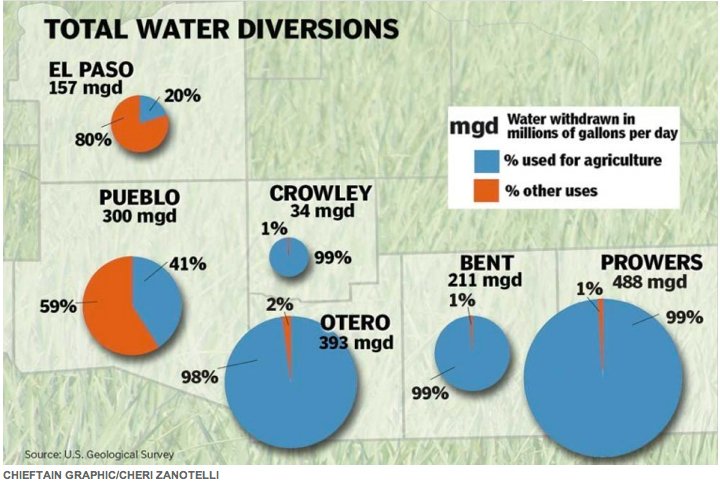
From The Pueblo Chieftain (Chris Woodka):
The major portion of the budget, $11.8 million, goes to repay federal costs of constructing the Fry-Ark Project, which includes the Fountain pipeline. Another $270,000 is revenue from state and federal grants.
The operating budget for the district is $5.1 million, with about 60 percent in the general fund, and 40 percent in the enterprise fund.
Of the $3 million district fund, $1.36 million goes toward personnel.
The budget also includes a capital expenditure of $850,000 as the district’s share for purchase of the Red Top Ranch near Lake Granby. That cost will total $1.7 million over two years. The ranch purchase is part of a plan by Front Range water users, including Aurora, Colorado Springs, Denver, Pueblo and the Northern Colorado Water Conservancy District, to provide flows for endangered fish species in the Colorado River. Participation in the program is a condition for importing Fry-Ark water each year.
The major project in the $2.1 million enterprise fund will be the Arkansas Valley Conduit. The U.S. Bureau of Reclamation is preparing an environmental impact statement for the conduit.
More Southeastern Colorado Water Conservancy District coverage here.

From The Pueblo Chieftain (Chris Woodka):
Understanding irrigation in the Lower Arkansas Valley
Consumptive use refers to the amount of water a crop uses to grow, either through uptake into the plant and transpiration, or through evaporation. Usually it is measured in inches, but presumptive factors have been incorporated into the hydrologic-institutional model under the U.S. Supreme Court Kansas v. Colorado case.
Return flow is excess water applied to fields that runs off as tailwater or infiltrates soil. Water also can seep out of earthen ditches as it makes its way to the fields.
Water-short ditches, such as the Fort Lyon Canal or Holbrook Ditch, typically have more ground available to irrigate than water supplies will cover. Other ditches, such as the Catlin or High Line canals, have plentiful water except in very dry years.
Sprinklers, drip irrigation and ditch lining allow water to be applied more efficiently to fields. In the process, more water could be consumed as more acreage is planted on water-short ditches or used more often on ditches with adequate water. Return flows could be reduced as a result.
State engineer rules were adopted in Division 2 water court in 2009 to prevent shortages of return flows on the Arkansas River, to downstream users in both Colorado and Kansas…
This year, the Lower Arkansas Valley Water Conservancy District established a group plan for farmers who use ponds to feed sprinklers to comply using formulas under Rule 10 of the surface irrigation rules. The plan also covers other types of improvements such as ditch lining and drip irrigation, but sprinklers account for nearly all of the impact so far. The Lower Ark district will use water from other sources, such as a five-year lease agreement with the Pueblo Board of Water Works, to provide augmentation water to make up depletions from increased consumptive use.
While the group plan requires a retainer fee and payment for augmentation water if the formula shows depletion, the payment is far less than farmers otherwise would spend on engineering at each site to show losses. So far, 88 farms with 104 improvements covering 19,767 acres are enrolled in the Lower Ark’s Rule 10 plan, said Heath Kuntz, the district’s engineering consultant. “We’re anticipating a lot of growth over the next few years,” Jay Winner, general manager of the Lower Ark district, told the compact administration.
From the state’s point of view, the program has been the backbone for enforcing the new rules. About 75 farms were signed up at the beginning of the program in April, and the others have signed on at the end of the irrigation season as the state assessed impacts, said Bill Tyner, assistant engineer for Water Division 2. “The Rule 10 plan has turned out to be the most successful part of the rules,” Tyner said, thanking the Lower Ark district and the Colorado Water Conservation Board for the seed money which launched the group plan.
More Ark Valley consumptive use rules coverage here and here.