
From The Pueblo Chieftain (Chris Woodka):
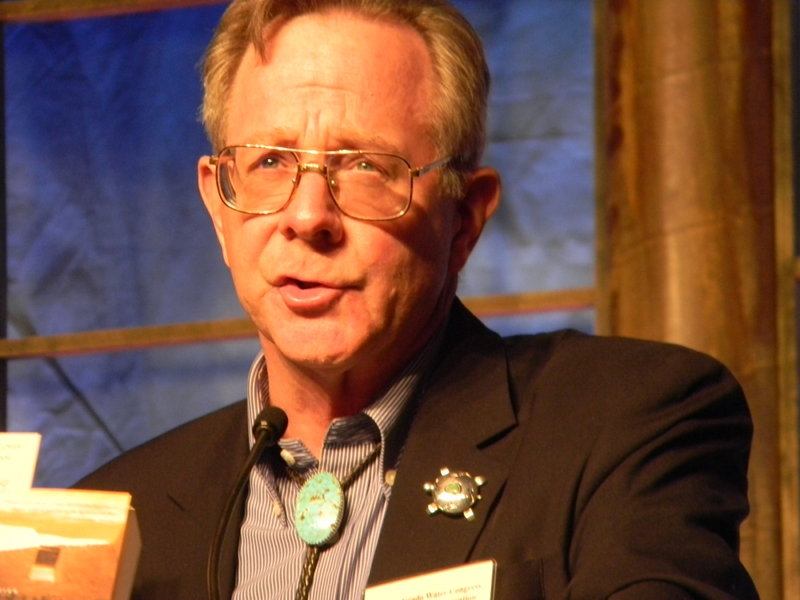
“The courts are taking a harsher look,” Colorado Supreme Court Justice Gregory Hobbs told the Ditch and Reservoir Company Alliance last week. “We are seeing a doctrine of scarcity and an effort to fix the time, place and use of water.”[…]
The amount of consumptive use depends on past weather conditions, crop yields or temporary transfers of water that might have taken land out of production, [attorney Jeffrey Kahn] explained. Hobbs put a sharper point on it, saying that while the state constitution states that a water right shall never be denied and sets beneficial use by historical priority, the water must actually have been used to retain a water right’s place in line. “The one true water right is water put to beneficial use. Conditional use is a place-holder in that system,” Hobbs said…
In 2005, the court upheld a decision by Pueblo District Judge Dennis Maes that ruled against a change on the Fort Lyon Canal sought by High Plains A&M. “A group of investors bought one-third of the Fort Lyon Canal and sought to market it to 21 counties,” said Hobbs, the only justice who specialized in water law prior to appointment. “We said the obvious, that this water right arose from beneficial use of water on actual ground.”
Hobbs also mentioned 2007 and 2009 decisions on Pagosa Water and Sanitation District v. Trout Unlimited ruling that cities must show reasonable needs for water in a specific time period before in order to claim a conditional water right…
“When you market a water right, it’s a double-edged sword,” Hobbs said. “It’s limited to consumptive use and needs to be quantified.”
More water law coverage here.