Here’s the release from Denver Water (Stacy Chesney):
Leaders from Grand and Summit counties, Denver Water and the Clinton Ditch & Reservoir Co. — entities that for decades battled in court over water — stood today with Gov. John Hickenlooper and signed the Colorado River Cooperative Agreement, changing the way water will be managed in Colorado.
The Colorado River Cooperative Agreement is the product of years of negotiations, and ultimately included more than 40 parties stretching from Grand Junction to the Denver metro area. The historic agreement is the largest of its kind in the history of the state. It shifts Colorado away from a path of conflict to a path of cooperation and collaboration in managing the state’s water resources.
Signatories described the agreement as a meaningful way forward to protect the Colorado River.
“Our goal through the whole negotiation was to be better off tomorrow than we are today with our water resources,” said Grand County Commissioner Nancy Stuart.
“The collaborative spirit is alive and well in Colorado,” said Gov. John Hickenlooper. “This is a state where we get things done. From farmers and families to businesses and wildlife, this agreement will help protect Colorado’s water and is a testament to how collaboration can overcome even long-standing differences in managing this vital resource.”
The comprehensive agreement focuses on significantly enhancing the environmental health of Colorado’s rivers and streams, as well as supporting many West Slope cities, towns, counties and water providers as they work to improve water quality and quantity of water through new municipal projects and river management initiatives.
“This is a new way of developing water in Colorado,” said Grand County Commissioner James Newberry. “Only through cooperative effort can we do the right thing for the resource.”
“The agreement we sign today marks the beginning of a new era of inter-regional cooperation with one broad goal: a brighter and more sustainable future for Colorado,” said Penfield Tate, vice president, Denver Board of Water Commissioners. “Today, we are saying there is a better way — a way that will make the Colorado River and its tributaries healthier, ensure a more reliable water supply for our customers, and that will develop and use water in a way that protects and improves the environment and benefits all users from the West Slope to the Front Range.”
In exchange for environmental enhancements, including financial support for municipal water projects and providing additional water supply and service area restrictions, the agreement, with the required mitigation, will remove opposition to Denver Water’s Moffat Collection System Project.
“This agreement honors the recognition that protecting water resources and tourism in our headwaters counties also protects the entire state of Colorado’s economy,” said Summit County Commissioner Karn Stiegelmeier.
Bill Baum, president of the Clinton Ditch & Reservoir Company, said: “Since 1992, Clinton Ditch & Reservoir Company has been a monument to what cooperation can achieve. Governmental entities and private industry have worked together through Clinton to provide a source of water for the residents of Summit and Grand County, for the visitors who are our economic lifeblood, and for the industry that provides the resources that allows all of us to live and play in this magnificent part of Colorado.” He continued: “Twenty years later, this new cooperative agreement carries on and extends that spirit of collaboration to a wider group and a new century. Clinton is pleased to be a part of it, and we will all be better off as a result of it.”
The entities also signed on to the “Learning by Doing” process, by which Denver Water, Grand County, the Colorado River District, the Middle Park Water Conservancy District and others will use the flexibility in Denver Water’s water system to manage flows for the benefit of the environment in Grand County.
In addition to today’s signatories, the agreement has been signed by Eagle County, Eagle River Water & Sanitation District, the Upper Eagle Regional Water Authority and Eagle Park Reservoir Company. Other West Slope entities are expected to sign in the near future.
From the Denver Business Journal:
“The collaborative spirit is alive and well in Colorado,” said Gov. John Hickenlooper. “This is a state where we get things done. From farmers and families to businesses and wildlife, this agreement will help protect Colorado’s water and is a testament to how collaboration can overcome even long-standing differences in managing this vital resource.”
The agreement specifies that any new water project by Denver Water in the Colorado River Basin will be developed only in cooperation with those entities impacted by the development.
Other provisions of the agreement:
• Additional water for towns, districts and ski areas in Grand and Summit counties to serve the needs of residents and to improve the health of rivers and streams.
• An agreement to operate key Denver Water facilities, such as Dillon Reservoir in Summit County, and Williams Fork Reservoir and the Moffat Collection System in Grand County, in a way that better addresses the needs and concerns of neighboring communities and enhances the river environment.
• Greater certainty for Denver Water to develop future water resources for its customers by resolving long-standing disputes over its service territory, its ability to use West Slope water, its ability to develop future water supplies in the Colorado River Basin, and other legal issues.
• Additional water and enhanced system reliability for customers of Denver Water, representing nearly 25 percent of the state’s population, by moving forward the Moffat Collection System Project.
• Agreement by all partners to not oppose Denver’s storage of its Blue River and Moffat Project water on the Front Range.
• Reinforcement of the priority and increased conservation and reuse within Denver Water’s service area.
• Improves the health of Colorado’s rivers and streams by dedicating funds to pay for watershed, water treatment and aquatic habitat improvements in the Colorado River Basin.
• Changes in water management associated with the Shoshone Power Plant in Glenwood Canyon that preserves historic flows in the middle and lower Colorado River.
A key part of the agreement allows Denver Water to move ahead with the Moffat Collection System Project to address shortages like the one that occurred in the drought of 2002, when the north end of the system nearly ran dry.
“It is critical to the Denver region that this project moves forward,” said U.S. Rep. Diana DeGette, D-Denver. “I applaud Denver Water and all of the signatories for their dedication to settling old conflicts and coming together to the benefit of our quality of life and economy.”
From email from Colorado Trout Unlimited (Randy Scholfield):
Statement by Trout Unlimited on Denver Water Cooperative Agreement:
Colorado Trout Unlimited today praised the Cooperative Agreement to be signed Tuesday, May 15 in Hot Sulphur Springs by Denver Water, west slope officials and other stakeholders, but cautioned that additional measures are needed to protect the Upper Colorado River ecosystem.
“The Cooperative Agreement shows that by working together, we can find ways to meet our water needs while protecting our natural resources,” said Mely Whiting, counsel for Trout Unlimited’s Colorado Water Project. “But the job isn’t finished. It’s important to remember that this agreement does not cover the future impacts of Denver Water’s proposed Moffat Tunnel expansion on the Fraser River Basin, nor does it address the combined impacts of the Moffat Tunnel expansion and Northern Colorado Water Conservancy District’s Windy Gap Firming Project on the Upper Colorado.” Collectively, these diversion projects will take another 15-20 percent of the flows of the Upper Colorado River, which is already significantly impacted by water diversions. Unless the impacts of these new projects are mitigated, the river habitat will continue to decline, according to the state’s own studies.
“The Colorado River is still very much a river at risk,” said Whiting. ”We call on Gov. Hickenlooper, Denver Water, Northern and other key players to follow through on this achievement by securing a package of protections that offsets these looming impacts on the Upper Colorado.”
For more info: http://www.defendthecolorado.org
More coverage from Bob Berwyn writing for the Summit County Citizens Voice. From the article:
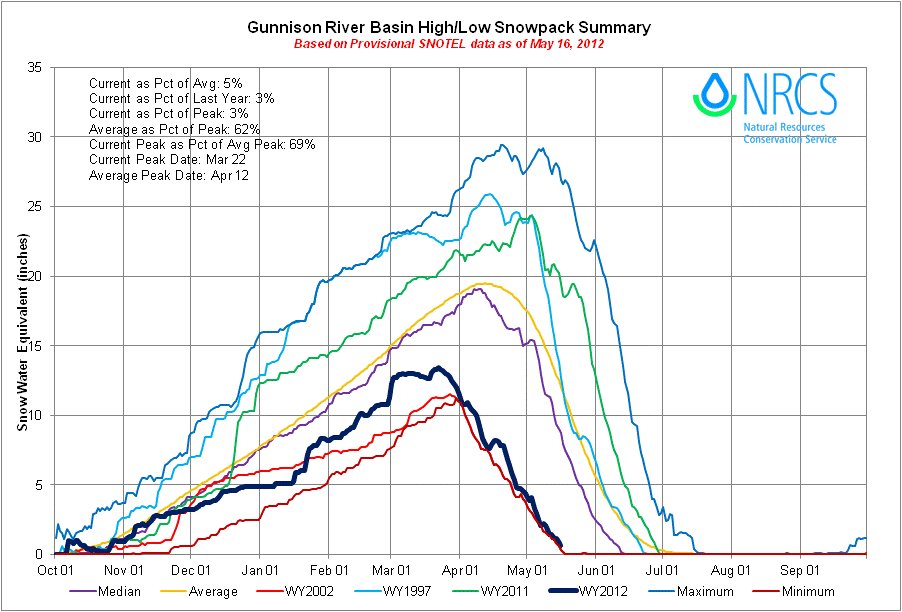
Against a backdrop of an intensifying mountain drought, Hickenlooper said this year’s dry conditions magnify the need for cooperative solutions and highlight the fragility of the state’s rivers in the face of possible climate change impacts and increasing demand from a growing population. “Some of our watersheds are reporting the driest conditions in our recorded history … this puts Colorado on a better footing, with more secure water sources both for headwaters counties and Denver,” Hickenlooper said.
Most importantly for Denver Water, Summit and Grand counties agree not to oppose a plan to expand diversions from the West Slope through the Moffat Tunnel Collection System, a project that, in its present form, is still bitterly opposed by conservation and river advocacy groups.
In return, the headwaters counties get some assurances on flows, as well as money for mitigation and enhancements. All the agreement documents are online at the Colorado River District website. Denver Water also agrees not to expand its service area and to increase water recycling and storage for reuse.
More coverage from the Associated Press via The Columbus Republic:
Gov. John Hickenlooper joked that the water wars have now been scaled back to “rubber bullets and bean bag shotguns.” He said he hoped other similar deals would be worked out across Colorado, where 80 percent of the water comes from west of the Continental Divide but 80 percent of the demand is in the more populous east.
“Colorado is the ultimate beneficiary,” he said.
Denver Water — which serves about 1.3 million people in the Denver area — and nearly three dozen Western Slope water users announced the proposal last year. Eagle County and its water districts became the first to sign in February. The endorsement of the cities of Rifle and Glenwood Springs and some irrigation districts is still pending.
Under the deal, Denver Water will contribute $25 million to western Colorado projects and limit its service area. In return, the signers won’t oppose Denver Water’s proposal to hold more mountain water in Gross Reservoir…
In Summit County, home of the utility’s largest reservoir, Denver Water agreed to pay $11 million for projects including improvements to a wastewater treatment plant and to provide 250 acre-feet of water to districts and towns for free. Denver Water also plans to keep Dillon Reservoir full enough to support summer boating and fishing.
More coverage from KUNC (Kirk Siegler). From the article:
“This agreement solidifies and shows a new way of doing water business in Colorado,” said Grand County Commissioner James Newbury. Newbury spoke at a signing ceremony in Hot Sulpher Springs that included Governor John Hickenlooper, the head of the Colorado River District and others.
More coverage from Tonya Bina writing for the Sky-Hi Daily News via the Summit Daily News. From the article:
The signing took place more than one year after Gov. John Hickenlooper last visited Grand County, when he first rolled out the Colorado Cooperative Agreement, deemed an unprecedented water agreement for our time. The agreement aims to settle years of East and West Slope water disputes. “I’m not sure the fighting’s ever going to completely stop,” Hickenlooper said…
Denver Water’s Moffat Firming Project and its goal to enlarge Gross Reservoir to divert more water from the West Slope, plus its 2006 diligence application in federal court regarding water rights under the Blue River decree, sparked negotiations in an arena when litigation and political disputes between Colorado’s West and East Slopes were ripe with potential. A mediator was hired in 2007 under then-Denver Mayor Hickenlooper’s advisement, and as many as 35 parties from the Front Range to the western state line joined in to try and resolve some of the state’s longest-standing water issues.
The result is a 50- page document, plus pages upon pages of legal attachments, that spells out water resolutions or “enhancements” for the Fraser and Blue rivers, certain tributaries and the upper and middle rivers of the Colorado River to the Grand Valley…
Besides $11 million in Denver Water dollars promised to address some river issues specifically in Grand County, with more dollars for Summit and Eagle counties, the agreement highlights the importance of the Shoshone Power Plant to the entire Western Slope. The plant, which has been around since 1902, “puts a demand on the stream,” according to Eric Kuhn, executive director of the Colorado River District, during an annual State of the River meeting last week. “When it puts a demand on the stream, water is released from Wolford to Green Mountain and from Williams Fork (reservoirs). All that water reaches Kremmling and runs downstream and provides stability,” he said. “The thing we’ve been concerned about is the 110 year-old plant has started to behave like a 100 year-old plant. We’ve asked, and Denver has agreed … to operate its system like the plant was operating, so we wouldn’t put a hole in the river. That hole in the river causes problems for irrigators, causes problems for fishing and causes problems for rafting.”
The agreement is also poised to settle a Green Mountain Reservoir administration dispute, which has been brewing since 1955, according to Kuhn, as well as the Blue River Decree settlement. And in the agreement, Denver Water set its service area so that it does not become a conduit for expansion on the Front Range.
More Colorado River basin coverage here.