
From The Denver Post (Bruce Finley):
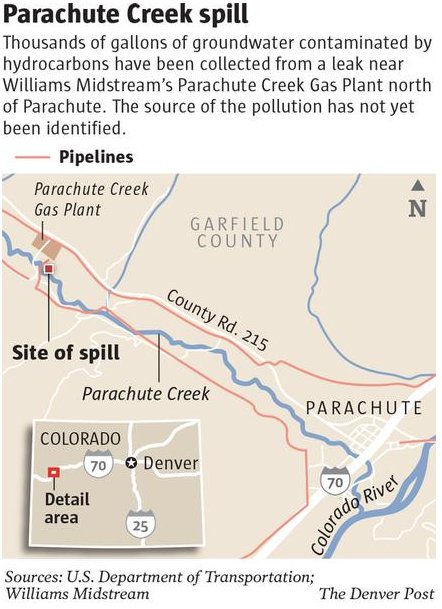
Aerators have been set up on Parachute Creek to remove cancer-causing benzene, detected downstream from a hydrocarbons spill in western Colorado. Williams energy company crews also expanded their pumping of hydrocarbons from trenches dug along the creek to try to prevent seepage of super-concentrated benzene in groundwater into the creek.
Test results released Monday showed benzene in surface water at levels around 3 parts per billion, said Kirby Wynn, Garfield County’s liaison to the oil and gas industry…
The benzene detected last week, at 2.7 ppb, was below the federal drinking water standard of 5 ppb. The limit for benzene in Parachute Creek is 5,300 ppb, set by Colorado’s Water Quality Control Commission at a level deemed protective of aquatic life because the creek isn’t designated as a drinking water supply…
Absorbent booms have been laid across the creek, including near the headgate for Parachute’s reservoir, town administrator Bob Knight said. Farmers and ranchers near Parachute use the reservoir water for irrigating crops. They rely on springs and other sources for drinking water, Knight said. Knight said he’s keeping headgates closed and that he’d prefer not to have benzene or diesel at any level in town water. “I’d like to keep the people assured that the water going into the reservoir is the same quality it has always been. That’s our goal.”[…]
Western Colorado residents, meanwhile, were pressing lawmakers to treat the spill from Williams’ gas plant, built by the creek and slated for expansion, as a warning. “There’s inadequate safety regulation to protect public health and the environment,” Grand Valley Citizens Alliance president Leslie Robinson said. “With all the drilling along the Colorado River, we know anything could happen. There should be increased setbacks from waterways and residential areas.”