
From The Aspen Times (Scott Condon):
The lower Fryingpan River ecosystem is relatively healthy even though an algae with the notorious nickname “rock snot” has taken hold, according to preliminary results of a study commissioned by the Roaring Fork Conservancy.
Muck from the stream bottom was scooped up from three sites last fall to get a count of macroinvertebrates — bugs that can’t leave the river. An analysis over the winter showed the numbers were in line with results from a similar study in 2003, according to Heather Tattersall Lewin, watershed action director for the nonprofit organization.
“That was good for us to see,” she told the Basalt Town Council on Tuesday night in a briefing about the preliminary results. Macroinvertebrates provide food for the fish in the river.
Populations of the American dipper bird, an important indicator species for river health, were also promising, according to Tattersall Lewin. A consultant found 28 mating pairs and observed that 23 of them were successful in producing young.
Constant monitoring of water temperatures since October 2013 also didn’t produce any red flags…
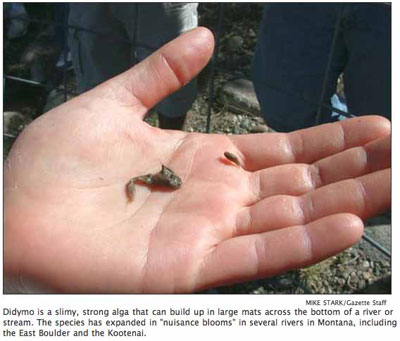
The Roaring Fork Conservancy’s study didn’t produce all good news. Rock snot, formally known as Didymosphenia geminate and often called Didymo, appears here to stay.
The conservancy hired students from Colorado Mountain College in Leadville to monitor the river periodically for rock snot. They searched for the specific algae in the spring and after peak runoff at 20 sites. They found the coverage was in fewer places after runoff and that it wasn’t as dense in places where it was still found, Tattersall Lewin said.
The CMC students will search for the algae again this weekend to see if it surged back after the lower flows of summer.
Tattersall Lewin said rock snot isn’t your typical, slippery algae. It grows in clumps in a consistency she compared to coarse toilet paper. It appears to collect more easily on the flat, angular rocks of the Fryingpan than the rounded cobble of the Roaring Fork River, she said.
The effects of rock snot on the ecosystem aren’t certain. International studies show Didymo is proliferating even in the healthiest streams, according to Tattersall Lewin. Studies are examining whether the growth is related to climate change.
Rick Lofaro, the conservancy’s executive director, said two management policies by the reclamation bureau, which controls water flows from the dam, appear capable of reducing rock snot. First, maintaining a higher minimum flow during winters and dry times could avoid the buildup. Second, high, sustained water releases during spring runoff would help flush the river and benefit it in numerous ways. The rock snot would disintegrate.
More Fryingpan River watershed coverage here.