The health of our waters is the principal measure of how we live on the land — Luna Leopold
Restoring the Eagle River in Camp Hale — The Mountain Town News
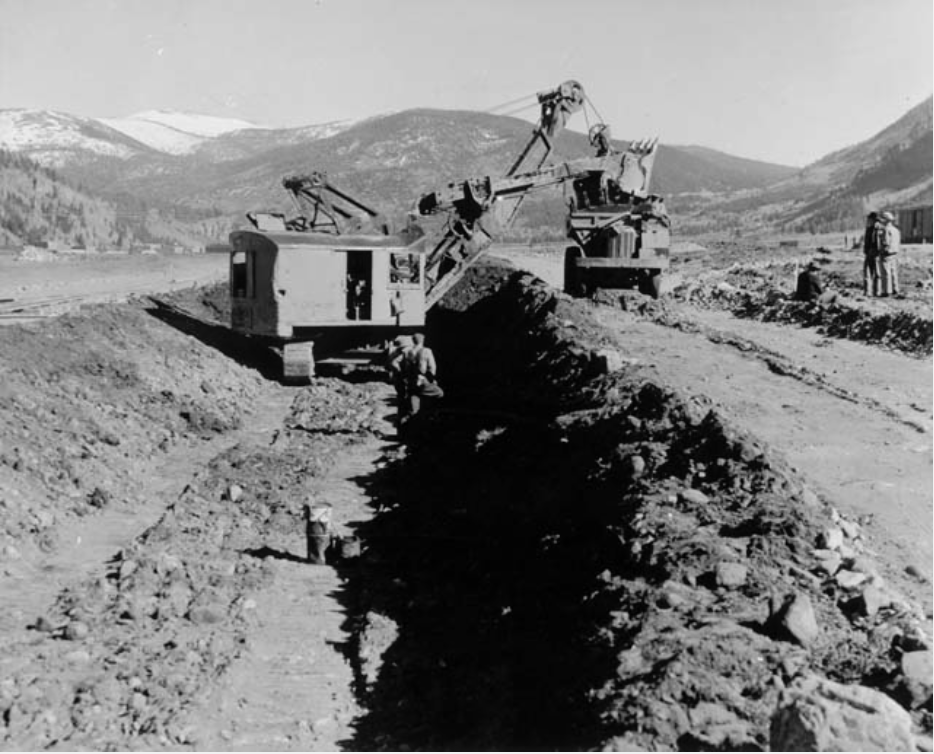
In 1942, a new channel for the Eagle River was built at Camp Hale to replacing the naturally meandering route. Photo/Denver Public Library Western History Department via The Mountain Town News.
A vision gains support for freeing Eagle River from WWII straitjacket
Work could begin in 2018 in restoring the Eagle River at Camp Hale, the training site for the 10th Mountain Division, to something more closely resembling its pre-World War II look and functions.
Photos of the valley by William Henry Jackson, the famous landscape photographer of the 19th century, show a meandering river through the valley, called Eagle Park, clogged with willows and wetlands. A steam train chugged through the valley and later, at a railroad siding called Pando, ice was harvested.
All this changed in 1942. The U.S. Army first considered a site near Yellowstone National Park and other options before settling on the valley, elevation 9,200 feet, for training of elite troops capable of engaging enemy soldiers in mountainous terrain. Access to a transcontinental railroad was key. Within a few months, streets had been created, barracks erected, and the river confined to a straight-as-an-arrow ditch.
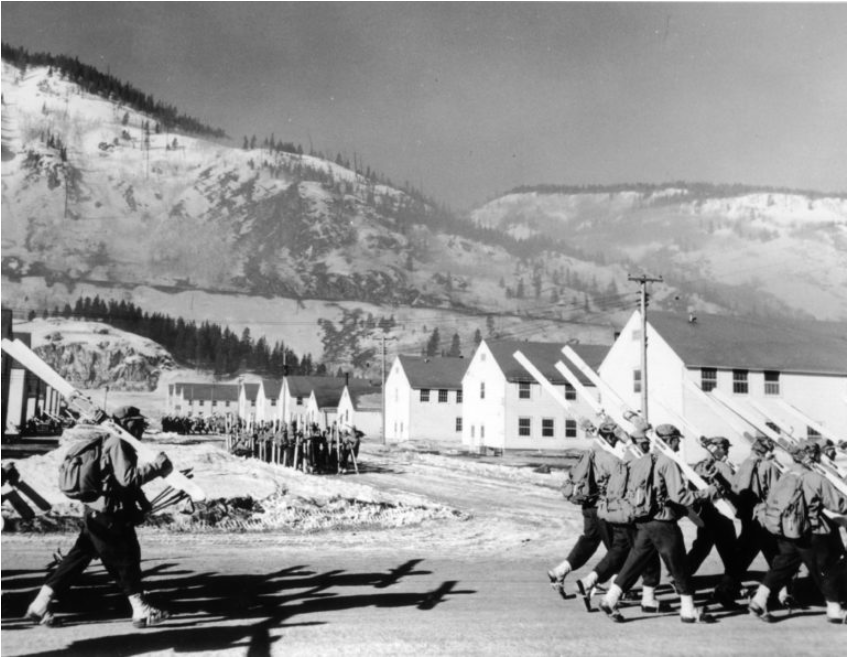
Photo via The Mountain Town News.
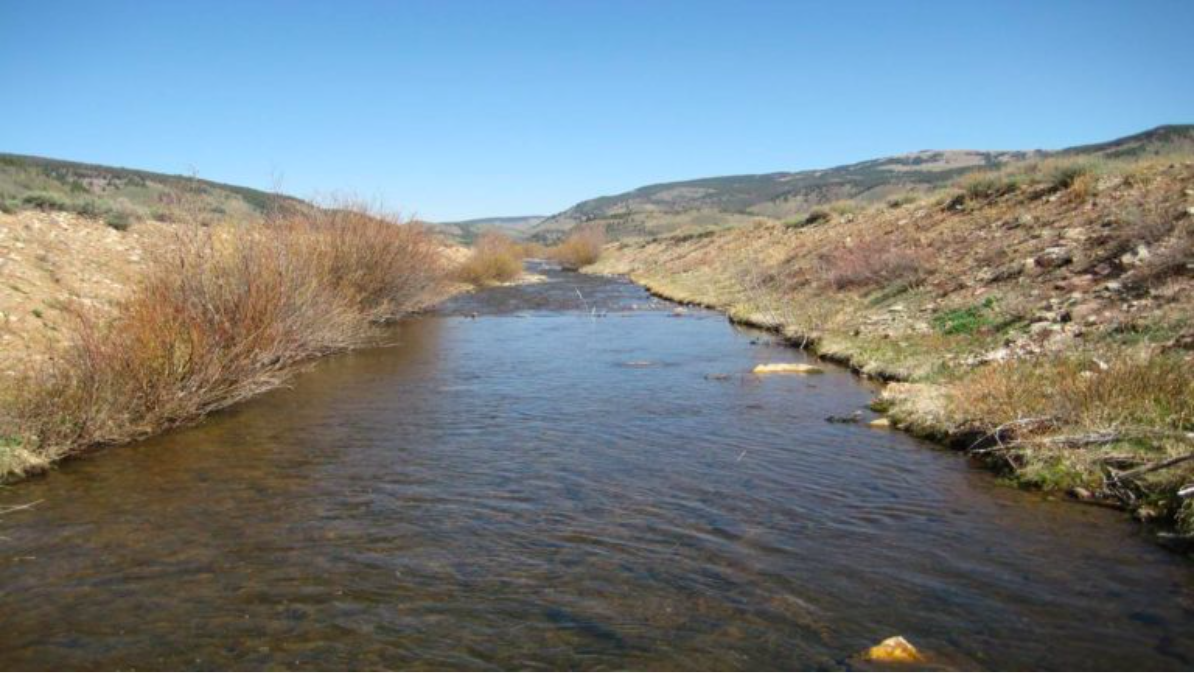
Now, 74 years later, it’s still in that same ditch.
After the 10th Mountain soldiers were dispatched in 1944 to Texas for toughening up, the Army began dismantling Camp Hale. Barracks and other buildings were leveled, including the auditorium where visiting dignitaries such as prize- winning fighter Joe Louis and actress Jane Wyman, the first Mrs. Ronald Reagan, appeared. The camp was used once more from 1959 to 1965, this time by the Central Intelligence Agency for training of Tibetan guerrillas, before the military reservation was returned to the U.S. Forest Service.
But even now, cleanup from the war efforts continues. In 1997, an unexploded mortar shell was discovered on Mt. Whitney, in the nearby Homestake Valley. The U.S. Army Corps of Engineers later tried to recover all old weapons of war from the landscape,
returning again this summer for a final sweep using metal detectors. There’s some lingering asbestos. And there’s the ditch called the Eagle River.
Many stakeholders in Camp Hale
Talk about restoring the river has occurred several times since the 1970s, says Marcus F. Selig, of the National Forest Foundation, a non-profit partner of the U.S. Forest Service, but never made significant progress. The new effort began in 2013, when 40 groups with a direct interest in the valley were gathered to work toward a coherent vision for a restored landscape.
While adjoining streets and buildings were quickly removed, the Eagle River today flows in a ditch created at Camp Hale in 1942. Photo credit Allen Best The Mountain Town News.
The Aspen-based 10th Mountain Division Hut Association has several huts in the area. Meeker residents Sam and Cheri Robinson have grazed thousands of sheep every summer in the mountains above Camp Hale. The dwindling number of 10th Mountain vets and now their descendants want the legacy of their war training remembered.
Stakeholders agreed that what exists now is “not a healthy aquatic ecosystem,” says Selig, the vice president of programs for the National Forest Foundation.
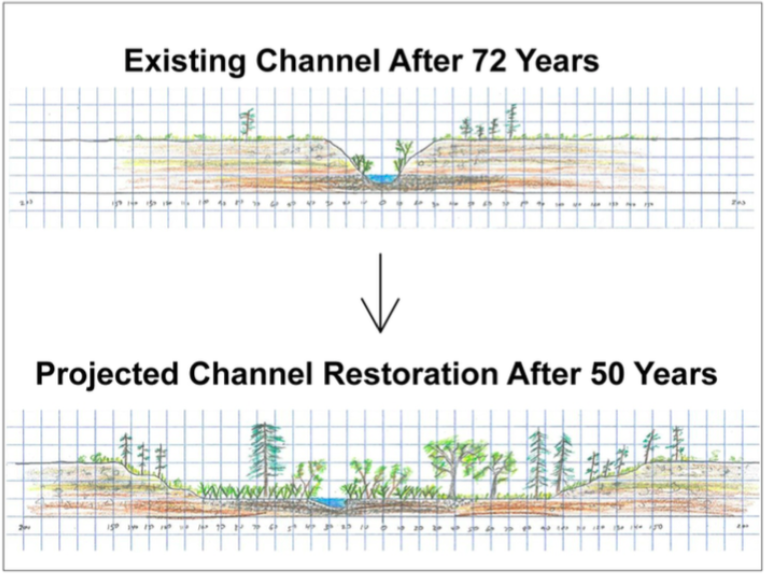
What has emerged is a plan that would create five to seven miles of a meandering, ox-bowed Eagle River in the valley bottom as it winds around to the east, from the Climax Mine. The work would also create 200 acres of wetlands. The dirt moving would create a 300-foot-wide flood plain or riparian area.
A related but somewhat separate effort involves creating an even stronger historical presence. A pullout along Highway 24 has exhibits, but the 10th Mountain has enough of a compelling story to justify a book. In fact, about 10 of them have been written, along with films and other remembrances.
In Italy, the 10th Mountain engaged in fierce fighting in the Apennine Mountains of Italy. Among the veterans were Fritz Benedict, the architect who was an integral part of the post-World War II revitalization of Aspen, and Pete Seibert, who also spent several years in Aspen during its early incarnation as a ski town before eventually creating Vail. The two are just the tip of the ski history iceberg involving Camp Hale.
Then there are side-stories. Camp Hale was also used to hold prisoners of war, in particular those of Field Marshal Erwin Rommel’s Afrika Corps. For mystifying reasons, the Army also stationed German sympathizers deemed too risky to become front-line soldiers next to the POW camp.
One of them included a brilliant Harvard- trained philologist, Dale Maple, who engineered an escape with two POWs. As told in a New Yorker story, they made it as a far as Mexico before being apprehended.
What it will take
What will it take to get the Eagle River out of its straitjacket? Money, obviously. The cost has been estimated at $10 to $20 million. The plan also needs Forest Service approval. The proposal is currently being reviewed under the National Environmental Policy Act process.
“It’s not happening anytime soon,” says Selig, of dirt-moving. “It’s a multi-year project. In the best-case scenario we would start work in 2018.”
One possibility is that wetlands created at Eagle Park could be used to offset wetlands destroyed elsewhere, such as by creation of a reservoir. One such reservoir is among the options on nearby Homestake Creek being studied by two Front Range cities and their Western Slope partners. Such in- lieu payments would provide money.
Another possibility is if Camp Hale gets federal designation as a national historic landscape. The idea was proffered by U.S. Sen. Michael Bennet on Memorial Day. No such designation classification now exists. It would literally take an act of Congress. But there is some speculation that a designation could also produce money for river restoration along with historical preservation.
Plans for Camp Hale call for a loosening of the Eagle River into a setting resembling what existed prior to 1942. Graphic via The Mountain Town News.
“That would be wonderful,” says Aaron Mayville, district ranger for the Eagle-Holy Cross District of the Forest Service, of the idea of federal funding. However, he also reports he has seen nothing in writing.
Mayville reports that the Army Corps of Engineers this year, in addition to trying to find old bullets and perhaps mortars with a metal detector, has been working to clean up asbestos. “They used asbestos building materials at just about every building out there,” he says. He says the final work on asbestos removal will occur this fall.
Whatever happens in the future, says Mayville, the plans must honor the reality that there have been both multiple historic and current users. “It’s a very complex piece of ground,” he says.
Selig says the National Forest Foundation’s plan recognizes these different histories and the multiplicity of current stakeholders. “We are not doing full ecological restoration. We not putting it back to exactly what it was. We are not leaving all history untouched,” he says. It is a “vision built on compromise.”
This story was originally published in the Aspen (Colo.) Daily News on Sept. 25.