
Day: November 2, 2016
The last harvest
4 water-related tips as you ‘fall back’ for winter
Weekly Climate, Water and #Drought Assessment of the Upper #ColoradoRiver Basin #COriver
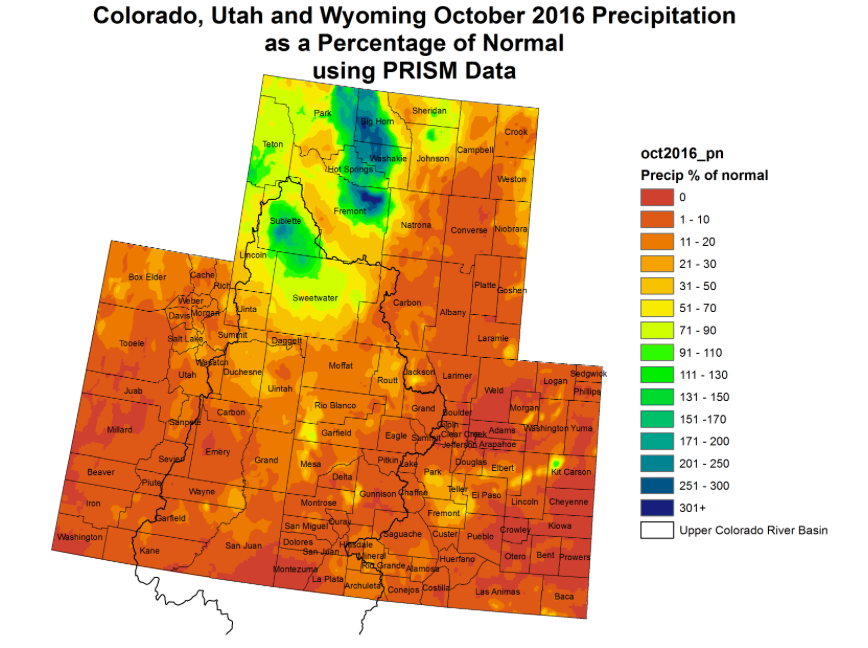
Click here to say hello to the new website for the Weekly Climate, Water and Drought Assessment of the Upper Colorado River Basin. Click here for the current assessment.
San Juan water commissioners pony up $20,000 to study pipeline from Lake Nighthorse
From The Farmington Daily Times (Hannah Grover):
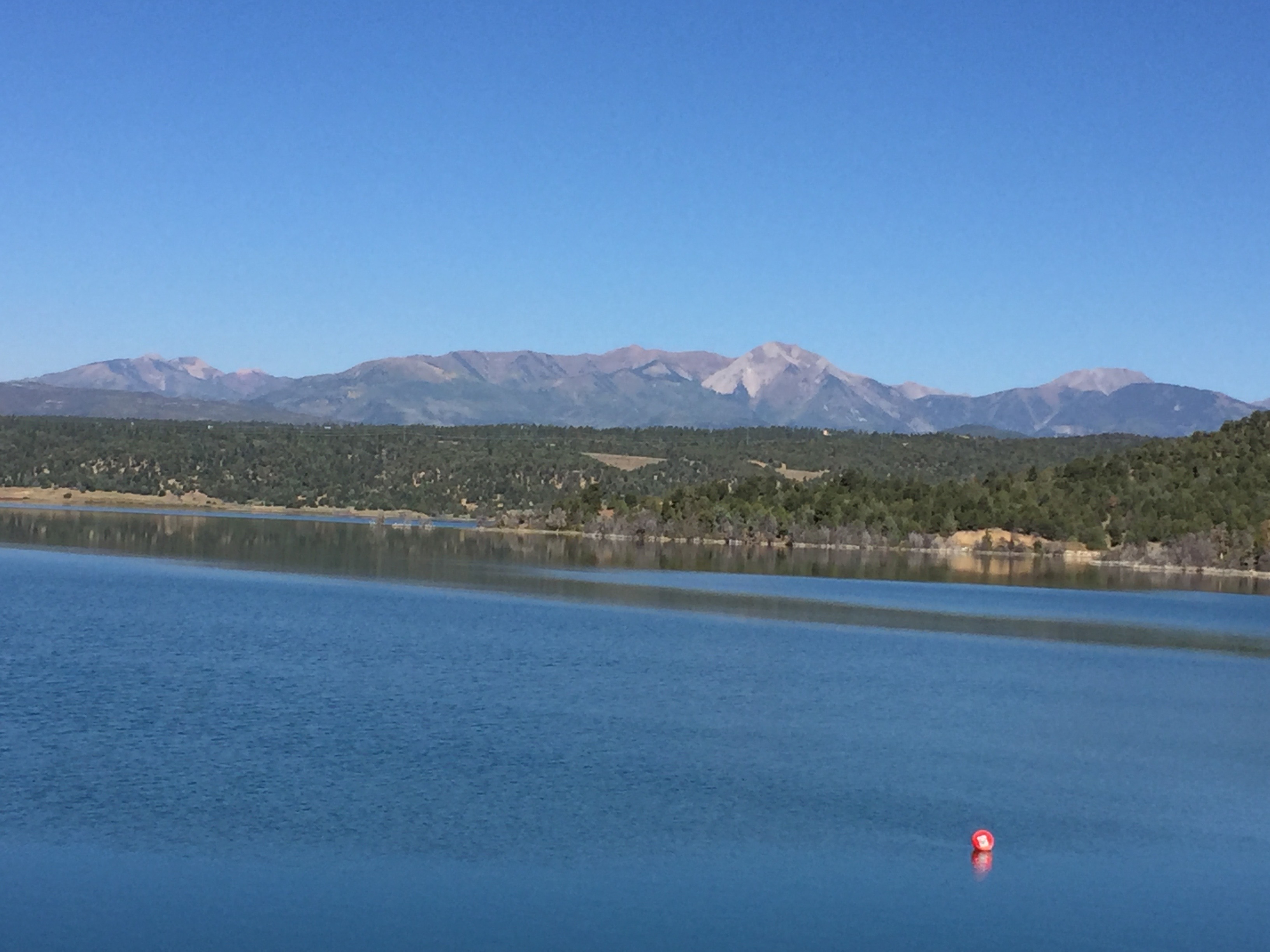
The pipeline could supply the water commission’s share of water from the Animas-La Plata project — a water storage project that led to the creation of Lake Nighthorse south of Durango, Colo.
Aaron Chavez, the executive director of the San Juan Water Commission, said the study will examine three alternatives — construction of a small-diameter pipe that could supply water in case of emergencies, construction of a larger-diameter pipe that would provide San Juan County with all of its Animas-La Plata water rights or increased raw water storage.
Commissioner Jim Dunlap, who represents rural water users, said there will always be a lot of questions about the possibility of a pipeline.
“Nineteen-thousand or $20,000 is a small amount to pay to answer some of the questions,” he said.
He said the study could help the commission determine if a pipeline is feasible.
“It may be a good idea, but it may cost so much that we can’t afford it,” Dunlap said.
Dunlap also advocated for making the results of the study available to the public…
In other business, the commission heard a presentation from the New Mexico Interstate Stream Commission about the Colorado River Basin System Conservation Pilot Program, which aims to combat the dropping water levels in Lake Powell and Lake Mead. The two reservoirs are experiencing declining levels in light of a 15-year drought in the Colorado River Basin, which includes San Juan County, according to the presentation.
Kristin Green, a representative of the New Mexico Interstate Stream Commission, said hydropower generated at Lake Powell funds the San Juan River Basin Recovery Implementation Program. The program focuses on recovering populations of endangered fish.
Green warned that a loss of money from hydropower could impact the fish populations in the San Juan River basin.
The water conservation pilot program began in 2014 and has had several rounds of applications for project funding. The final round of project applications opened at the beginning of October. The application deadline is Nov. 30.
Of the 35 projects approved, only two have been from New Mexico. One of the two projects was a municipal efficiency improvements project, and the other involved fallowing — or taking agricultural land out of production.
Dunlap cautioned about taking agricultural land out of production to conserve water.
“If you take all the agriculture out of a community, then you kill the community,” he said.
Green said the majority of the approved projects have been fallowing projects and are temporary.
“We’re not looking to buy and dry,” she said.
NASA: New, Space-Based View of Human-Made Carbon Dioxide

Here’s the release from NASA (Carol Rasmussen):
Scientists have produced the first global maps of human emissions of carbon dioxide ever made solely from satellite observations of the greenhouse gas. The maps, based on data from NASA’s Orbiting Carbon Observatory-2 (OCO-2) satellite and generated with a new data-processing technique, agree well with inventories of known carbon dioxide emissions.
No satellite before OCO-2 was capable of measuring carbon dioxide in fine enough detail to allow researchers to create maps of human emissions from the satellite data alone. Instead, earlier maps also incorporated estimates from economic data and modeling results.
The team of scientists from the Finnish Meteorological Institute, Helsinki, produced three main maps from OCO-2 data, each centered on one of Earth’s highest-emitting regions: the eastern United States, central Europe and East Asia. The maps show widespread carbon dioxide across major urban areas and smaller pockets of high emissions.
“OCO-2 can even detect smaller, isolated emitting areas like individual cities,” said research scientist Janne Hakkarainen, who led the study. “It’s a very powerful tool that gives new insight.”
The results appear in a paper titled published Nov. 1 in the journal Geophysical Research Letters.
Human emissions of carbon dioxide have grown at a significant rate since the Industrial Revolution, and the greenhouse gas lingers in the atmosphere for a century or more. This means that recent human output is only a tiny part of the total carbon dioxide that OCO-2 records as it looks down toward Earth’s surface. “Currently, the background level of carbon dioxide in the atmosphere is about 400 parts per million, and human emissions within the past year may add only something like three parts per million to that total,” said Hakkarainen. The data-processing challenge, he noted, was to isolate the signature of the recent emissions from the total amount.
The team’s new data-processing technique accounts for seasonal changes in carbon dioxide, the result of plant growth and dormancy, as well as the background carbon dioxide level. To be sure their method was correct, they compared the results with measurements of nitrogen dioxide — another gas emitted from fossil fuel combustion — from the Ozone Monitoring Instrument, a Dutch-Finnish instrument on NASA’s Aura satellite. OMI and OCO-2 are both in the A-Train satellite constellation, so the two measurements cover the same area of Earth and are separated in time by only 15 minutes.
The two measurements correlated well, giving the researchers confidence that their new technique produced reliable results.
Coauthor Johanna Tamminen, head of the atmospheric remote sensing group at the Finnish Meteorological Institute, noted that with its comparison of OCO-2 and OMI data, “The research demonstrates the possibility of analyzing joint satellite observations of carbon dioxide and other gases related to combustion processes to draw out information about the emissions sources.”
OCO-2 Deputy Project Scientist Annmarie Eldering of NASA’s Jet Propulsion Laboratory, Pasadena, California, said, “We are very pleased to see this research group make use of the OCO-2 data. Their analysis is a great demonstration of discovery with this new dataset.” Eldering was not involved in the study.
NASA uses the vantage point of space to increase our understanding of our home planet, improve lives and safeguard our future. NASA develops new ways to observe and study Earth’s interconnected natural systems with long-term data records. The agency freely shares this unique knowledge and works with institutions around the world to gain new insights into how our planet is changing.
For more information about OCO-2: http://oco.jpl.nasa.gov/
CSU: “Explaining Western water law,” November 7

Here’s the release from Colorado State University (Jessica Bennett):
Learning more about the complexities and inner-workings of western water law is the purpose behind the 2016 Interdisciplinary Water Resources Seminar series. The series will discuss topics including the history and evolution of western water law; state compacts and federal water law; hybrid water law systems; water quality law; groundwater law; and environmental law. The seminar series will provide attendees the opportunity for in-depth discussion about water-related court cases and interaction with prominent water resource professionals.
Each seminar is held Monday at 4 p.m. in the Behavioral Sciences Building, Room 103. All faculty, students, off-campus water professionals, and members of the Fort Collins community who are interested in water and western water law are invited to attend.
For individuals unable to attend, the seminars will be recorded and uploaded online. The full semester schedule is accessible here. Or there’s more information regarding all of the Interdisciplinary Water Resources Seminars.
Larry MacDonnell, Nov. 7
Lawrence J. MacDonnell is an attorney and consultant. He retired in 2013 as a professor of law at the University of Wyoming College of Law, where he taught water law, public land law, and natural resources law.
MacDonnell will be speaking at the Nov. 7 seminar titled “Other Systems for Allocating and Administering Water in Western States.” MacDonnell will discuss several approaches for the allocation and administration of water and water rights including the riparian doctrine for surface water, non-appropriation doctrines that are applied to use of ground water, the use of permit systems for allocation of rights, and the public trust doctrine.
MacDonnell is also a senior fellow at the Getches-Wilkinson Center and an adjunct professor of law at the University of Colorado School of Law. He was the first director of the Natural Resources Law Center at the University of Colorado School of Law, a position he held from 1983 to 1994. MacDonnell worked as an attorney and consultant in Boulder until 2009.
Cañon City: NRC staff rejects Black Range Minerals’ contention about ablation
From The Pueblo Chieftain (Tracy Harmon):
Uranium mining opponents got some good news when Nuclear Regulatory Commission staff indicated last week that a proposed new uranium extraction technology may be less safe than proponents indicate.
Black Range Minerals, now owned by Western Uranium of Canada, initially started exploring for uranium in the Taylor Ranch area northwest of Canon City in 2008 and got approval from the Fremont County Commission in 2010 to expand exploration on an additional 2,220-acre site. Residents concerned about the potential impact of renewed uranium mining formed the opposition group Tallahassee Area Committee.
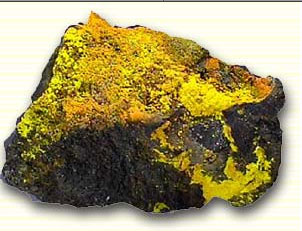
The opponents weighed in during a public comment period hosted by state health department officials last summer as they considers what regulatory requirements should be put in place for a new proposed practice called “ablation technology.” Ablation uses finely crush particles of uranium ore and water in a pressurized manner to extract the uranium.
State health department officials also asked for input from the Nuclear Regulatory Commission.
“The NRC staff responded with a bombshell completely rejecting the Black Range Minerals/Western Uranium position that ablation is merely a continuation of mining,” said Lee Alter, who monitors government for the Tallahassee Area Committee. “They concluded that ablation technology is a uranium milling activity and should be licensed as such.”
In responding to the state’s request for information, Paul Michalak, from the office of nuclear material safety, said, “It is our understanding that no current NRC regulation explicitly addresses uranium ablation. To the best of our understanding, commercial-scale uranium ablation activities are being proposed solely in Colorado at this time.
“Given this, we believe Colorado would have the flexibility to adopt and implement program elements within the state’s jurisdiction that are not addressed by NRC,” Michalak said.
In addition, Michalak indicated that, “Since uranium ablation technology involves the extraction or concentration of uranium or thorium from any ore processed, then any wastes produced by the process would be byproduct material as defined in the Atomic Energy Act.”
Michalak offered his help to state health officials as they go forward in trying to decide how to deal with the new technology.