
Here’s the release from the US Department of Interior:
U.S. Secretary of the Interior Sally Jewell today issued a Secretarial Order directing the Department of the Interior and its bureaus to continue collaborative efforts to finalize important drought contingency actions designed to reduce the risk of water shortages in the Upper and Lower Colorado River Basins and build on recent progress to complete “Minute 32X” – a long-term Colorado River bi-national cooperative agreement with Mexico.
“I am proud of the tremendous progress we have made over the last eight years to work with our basin states, tribal and Mexican partners to address water resource challenges in the Colorado River Basin,” said Secretary Jewell. “With water from the Colorado River supporting the life and livelihood for an estimated 40 million people, it is absolutely critical for the Department of the Interior to continue to build on this progress and finalize these agreements.”
“The Department of the Interior has worked tirelessly with its partners to come to agreements to ensure that all the basin stakeholders move forward with coordinated plans to address the increasing challenges facing all Colorado River communities,” said Deputy Secretary Michael Connor. “This Secretarial Order ensures that Interior will continue to provide essential support for critical actions and paves the way to help carry these important agreements across the finish line.”
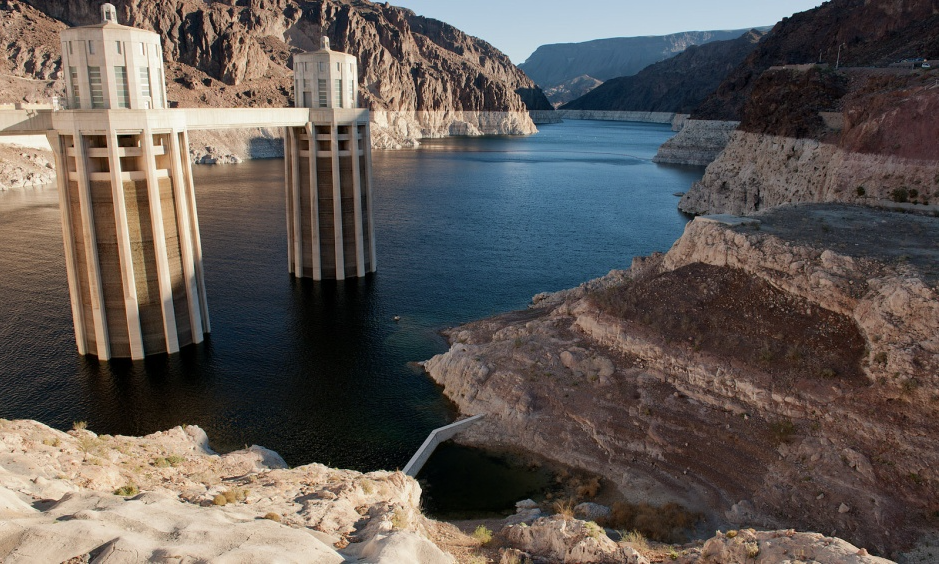
The Order describes hydrologic conditions in the basin and ongoing challenges associated with a 17-year period of historic drought and an ongoing deficit of available water compared to demands. Although water stored in reservoirs in the Colorado River Basin has protected the Basin from crisis during the current drought, those reservoirs are now at near-historic lows; basin-wide reservoir storage ended water year 2016 at just 51 percent of total capacity. In 2016, the lower basin narrowly avoided a shortage declaration, which would trigger mandatory cuts to water deliveries from Lake Mead. Although recent precipitation brought some relief to northern California, there has been no measurable improvement in the Colorado River System.
In addition to drought contingency actions and updating the water agreement with Mexico, the agreements referenced in the Secretarial Order will maintain significant hydropower production and associated financial support for critical environmental programs, and they will help protect Indian treaty rights and recognized water rights.
The Secretarial Order provides direction for Interior, particularly the Bureau of Reclamation, to continue work with the basin states, Indian tribes in the Colorado River Basin and Mexico to finalize these agreements during the first half of 2017. It calls for three actions:
1. Finalizing the Drought Contingency Plan. The order directs Reclamation to work with and support the efforts of the seven basin states and key principals of several water management agencies to finalize a Drought Contingency Plan that includes federal operations of Lower Basin facilities and proposed water conservation actions. Reclamation will participate in remaining negotiations and actions that are required to finalize agreements and provide information in support of any legislation that might be necessary to implement the final agreement.
2. Investing to Support Drought Contingency Actions. In connection with the order, Reclamation Commissioner Estevan López today executed an agreement with Governor Stephen Roe Lewis of the Gila River Indian Community to provide the community with $6 million for water conservation in fiscal year 2017 funding to acquire system water consistent with the drought plan to protect levels in Lake Mead. This agreement between Reclamation and the Community also sets the stage for future drought contingency planning to occur within Arizona.
On the agreement, Governor Stephen Lewis stated, “Our agreement with the Department of the Interior is an essential step toward a plan for comprehensively addressing Arizona’s pressing drought problem. The Community is working hard to try and create a framework that will work for all in the State and is pleased with this very successful first step in that right direction. We want to thank the Commissioner of Reclamation, Estevan López, and his entire team for their tireless efforts and we very much appreciate our cooperation with them. This is just the beginning, but it an essential first step, which hopefully will keep the momentum going in the days and weeks ahead.”
In addition, under the order, Reclamation will continue to invest in drought contingency actions such as the recent Salton Sea Memorandum of Understanding with the State of California. Interior also amended its current Memorandum of Understanding with the State of California to provide greater certainty on mitigation actions over the next decade.
3. Completing Minute 32X Negotiations with Mexico. The order directs Reclamation to continue to work with the International Boundary and Water Commission, the Republic of Mexico, the basin states and non-governmental organizations to finalize the bi-national cooperative agreement with Mexico – “Minute 32X.”
Over the past twenty years, collaboration between Interior and its bureaus along with American Indian tribes, the seven Colorado River basin states—Arizona, California, Colorado, Nevada, New Mexico, Utah, and Wyoming—and others has resulted in significant success in collaboratively addressing water resource challenges across the basin. Today’s order includes information on these important successes, while highlighting the need for prompt action to respond to historic drought conditions and the increasing risk to water supplies in the basin from climate change and other factors.
These successes include the Minute agreements Numbers 316 through 319 with Mexico; a historic 12 Indian water rights settlements totaling $3 billion in funding; historic water conservation agreements adopted in 2014 and a Memorandum of Understanding to strengthen coordination of management activities to benefit the Salton Sea.
From InkStain (John Fleck):
The Obama administration’s senior western water leadership this afternoon announced a Colorado River water management package that appears intended to signal a bridge for the administration transition, to continue work on nearly-completed deals to reduce the draining of the river’s big reservoirs.
The package falls short of two major deals some had hoped to be completed before the current team left – a deal with Mexico over future Colorado River water sharing, and a set of agreements among US states and the federal government to reduce water use in the Colorado River Basin, protecting the river’s beleaguered reservoirs. But it suggests that those deals are now the subject of widespread and bipartisan agreement, and appears to create a framework for continuity as the deals’ final details are worked out, rather than a risk of a sudden change in direction as the new administration takes office Jan. 20.
The package is embodied in a “secretarial order” signed this afternoon by Sally Jewell that includes new data suggesting that, without action, the risk to Colorado River water supplies is growing. Absent action, according to the new Bureau of Reclamation modeling runs, there is a one in three chance of Lake Mead dropping below the critical elevation of 1,025 feet above sea level by 2026. At that level, drastic water supply cuts to be needed to keep the reservoir from dropping to dead pool.
With the proposed actions discussed in Jewell’s order, that risk drops to about a one in 16 risk, according to the new USBR analysis…
QUIET DIPLOMACY?
As with much in Washington right now, what happens next is shrouded in uncertainty. But the deal appears to reflect quiet diplomacy between the Obama team and the incoming Trump administration to create a bridge toward solving these problems as the government changes hands later this week. I didn’t have time to catch Interior nominee Ryan Zinke’s testimony yesterday, but I’m told that in response to questioning from Catherine Cortez Masto, Zinke testified favorably about the nearly completed “Drought Contingency Plan” described in Jewell’s secretarial order. If true (anybody who watched, feel free to jump into the comments and elaborate) that would provide evidence for my hypothesis that the bridge is being built to try to ensure continuity in the final steps of working out these deals, and that the incoming administration may look favorably on this stuff.
CONCRETE STEPS
Jewell’s announcement includes concrete steps toward a near term reduction in Colorado River water use, including an agreement to pay the Gila River Indian Community in Arizona $6 million this year to forebear water use, leaving the unused apportionment in Lake Mead. That’s a critical piece of Arizona’s part of the complex water saving deals now being negotiated. While the amount of water is relatively small, it fills a critical political and policy niche by demonstrating a new path to reduced water use in Arizona.
The deal also adds an addendum to an agreement between the federal government and the Salton Sea. Dealing with the Salton Sea is critical (see my Sacramento Bee piece from last month for details on why). Jewell’s move here is an effort to bolster efforts to deal with the Salton Sea problems, which is critical to winning support in return from the giant Imperial Irrigation District for the water use deals.
Jewell’s order also sets out an interesting set of steps to be implemented should further negotiations to finalize the water-saving agreements among the states fizzle, including this: “undertaking a review of the Secretary’s authorities under the Law of the River to implement policies that will reduce depletions in the Lower Basin”. Of course any order by the old Secretary of the Interior can be un-order by the new one, but this provides a threat in the background – if the states don’t work out the final details of a deal, the federal government should at least consider stepping in and ordering action to protect Lake Mead.
