Central Colorado Water Conservancy District passes $48.7M bond for storage, acquisition projects — The Greeley Tribune

Recharge pond graphic via the Central Colorado Water Conservancy District.

From The Greeley Tribune (Tyler Silvy):

Voters in the Central Colorado Water Conservancy District passed a bond issue worth $48.7 million 57.99 percent to 42.01 percent, according to preliminary election results.

Central’s boundaries stretch through parts of Weld, Adams and Morgan counties and serve about 550 farmers who operate about 1,000 irrigation wells. But thousands of people live and vote in the district.

The Yes for Water campaign helped sway those voters, and in a statement sent Tuesday night to The Tribune, officials said they were pleased with the passage of Ballot Question 7E.

“Issue 7E’s passage demonstrates our region’s commitment to supporting family farms and our agricultural economy, providing water storage and resources now and in the future, and protecting and maintaining our rural way of life,” according to the statement.

The bond issue represents a property tax increase of about $22.80 per year for a home valued at $500,000.

Those taxes will go toward paying off debt for a variety of projects, including more lined reservoir storage near Fort Lupton, Greeley and Kersey to increase the district’s holdings by 25 percent, allow the district to buy more water rights and help construct a massive artificial recharge project in Wiggins near the Weld and Morgan county line.

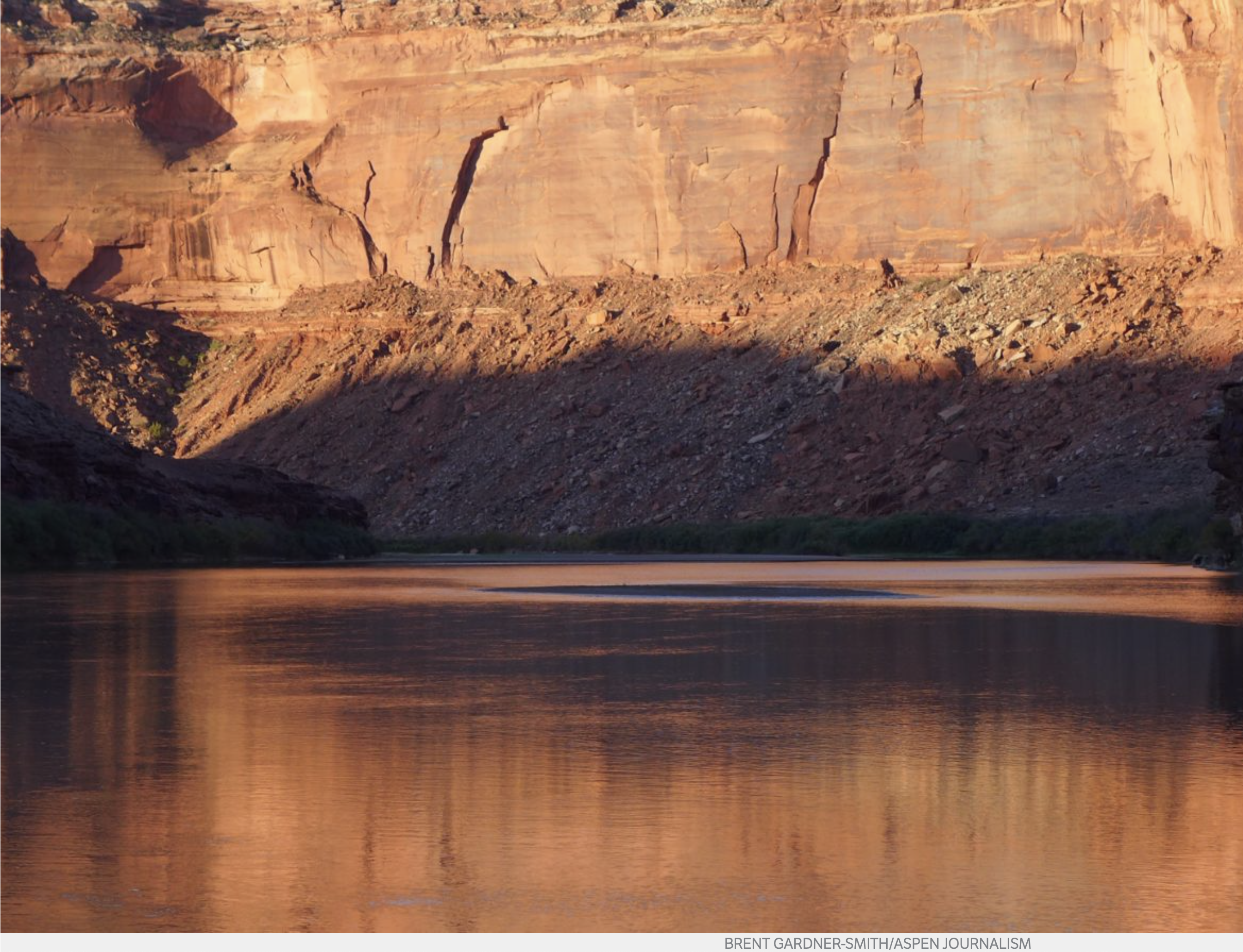
Portrait of low flows on the #GreenRiver and #ColoradoRiver, late Sept. 2018 — @AspenJournalism #COriver #aridification

Sunlight, over sandbars, on the Green River September 2018. Photo credit: Brent Gardner-Smith/Aspen Journalism

Here’s a beautiful photo essay from Brent Gardner-Smith and Aspen Journalism. Click through to view it (Be patient, the photos can take a few moments to load) and while you are there toss a few bucks into the tip jar to help fund the great water journalism coming from the Roaring Fork Valley.

#ColoradoRiver: “We’re really talking about augmenting or increasing the water supply [via cloud seeding] for 40 million people that rely on the Colorado River Basin” — Dave Kanzer #COriver #aridification @ColoradoWater

From Aspen Public Radio (Elizabeth Stewart-Severy):

The Colorado River District says adding to the snowpack is one way to address dwindling water supplies; a study in Wyoming showed that, when the conditions are right, cloud seeding can increase snowfall by 5 to 15 percent per storm. That translates to a slight increase in water supplies — a 1 to 5 percent increase in snowpack-derived water.

Dave Kanzer, an engineer with the River District, said more efficient storms with more snowfall can mean more water across the West.

“We’re not just talking about one county and one city,” Kanzer said. “We’re really talking about augmenting or increasing the water supply for 40 million people that rely on the Colorado River Basin.”

The River District has ongoing cloud seeding operations across Colorado, all along the Continental Divide, but not in Aspen and Pitkin County.

“We are proposing to fill in those areas upstream toward Independence Pass, to include all of the Ski Co properties, and all of the upper Roaring Fork Watershed,” Kanzer said.

He will present a proposal for a three-year cloud-seeding program to Pitkin County’s Healthy Rivers Board at its meeting this Thursday. The River District has also been in talks with the City of Aspen and Aspen Skiing Company.

From Aspen Public Radio (Elizabeth Stewart-Severy):

Kanzer says the science is clear, but the process is not precise. A study conducted in Wyoming shows the conditions are only right in about 30 percent of storms, but when they are, cloud seeding can increase snowfall. That snowpack contributes to the water supply not just in the Roaring Fork Valley, but across the west.

“Even if we only increase the water supply by a small fraction, it can have wide ranging benefits,” Kanzer said, including more water in local rivers and more snow on the mountain.

The River District wants to see more cloud seeding activities in the Aspen area. On Thursday, the Pitkin County Healthy Rivers Board will hear a proposal from Kanzer about expanding cloud seeding activities. He also has met with City of Aspen water officials and Aspen Skiing Company.

Rich Burkley, vice president of mountain operations for SkiCo, said the company is interested in supporting the River District, but not as a business investment. The small increase in snowfall doesn’t translate to extra powder days for skiers and riders.

“A 10-inch storm going to a 10.5-inch storm, doesn’t really do too much,” Burkley said.

While cloud seeding might not be a boon for powder skiers, Burkley said SkiCo is supportive of any measures that might help the water supply. The company has offered to participate as a site for the generators and to help with manpower to operate them.

The River District is looking for funding from Pitkin County’s Healthy Rivers Board and the City of Aspen; the proposal would then need a permit from the State of Colorado.

As Deadline Looms, @Arizona Cancels Another @Drought Planning Meeting — The Phoenix New Times #ColoradoRiver #COriver #aridification

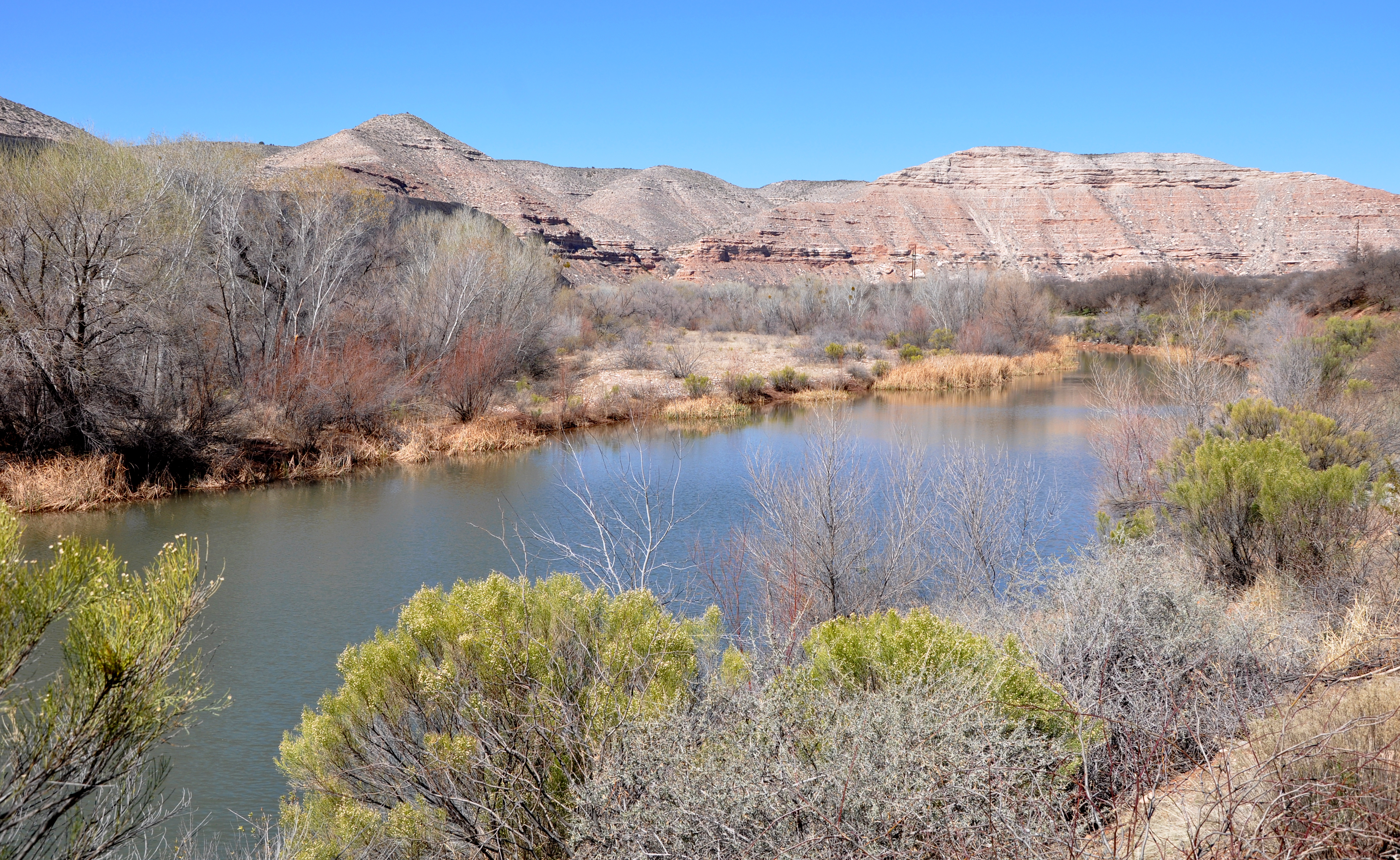
Verde River near Clarkdale along Sycamore Canyon Road. Photo credit: Wikimedia

From The Phoenix New Times (Elizabeth Whitman):

A major public meeting in Arizona that was scheduled for Thursday to discuss plans to deal with a potential drought on the Colorado River has been canceled. Again.

For the second time in two weeks, the 38-member steering committee for Arizona’s Drought Contingency Plan needs more time to negotiate and will not meet as planned, the Arizona Department of Water Resources and the Central Arizona Project said in two announcements on Monday and Tuesday.

Sally Lee, spokesperson for the ADWR, said that steering committee members were notified at around 2 p.m. on Monday and on Tuesday. Last month’s canceled October 25 meeting was called off with even less notice — less than 48 hours’ worth.

Initially, organizers said Thursday’s steering committee meeting would be replaced with a private workgroup meeting to discuss mitigation. But by Tuesday, that private meeting had been canceled too, per steering committee co-chairs Tom Buschatzke, director of the ADWR, and Ted Cooke, general manager of CAP…

“Stakeholders participating in mitigation discussions have indicated that there are still major areas of conceptual disagreement that are not likely to be reconciled” before Thursday, the cancellation notice on the Central Arizona Project’s website read on Tuesday…

By the end of November, the committee is supposed to negotiate how potential water cuts would be distributed among the Arizona’s water users, if Lake Mead enters into an official drought in 2020. Arizona’s own negotiations are part of a broader effort by seven states to deal with the potential drought on the Colorado River.

The odds of this are about 50/50, according the federal Bureau of Reclamation. A Tier 1 drought shortage is declared if the Lake Mead reservoir’s levels drop below 1,075 feet above sea level. At 5 p.m. on November 6, its levels stood just above 1,078 feet. Lake Mead supplies Arizona with 40 percent of its water.

Heather Macre, a board member of the Central Arizona Project who does not sit on the steering committee but is familiar with the negotiations, said that everyone was concerned about making the November deadline. But she also suggested it was somewhat flexible, because Arizona needs to get legislative approval for its plan, and the legislative session doesn’t begin until January.

“Even if we have it mostly done by November and we’re still tweaking in December, we can get it to the Legislature in January,” Macre said. No one really wanted to do that, she added.

“I don’t want to push the deadline any more than anyone else does,” she said. “I think we can get it done by the end of the month. And if we don’t, we still do have a little bit of time.”

Ballot measures taking aim at #climatechange fall short — The Washington Post

Karley Robinson with newborn son Quill on their back proch in Windsor, CO. A multi-well oil and gas site sits less than 100 feet from their back door, with holding tanks and combustor towers that burn off excess gases. Quill was born 4 weeks premature. Pictured here at 6 weeks old.

From The Washington Post ( Brady Dennis and Dino Grandoni):

Initiatives in Arizona, Colorado and Washington that would have propped up renewable energy and tamped down on fossil fuels failed to garner enough votes.

Voters in Arizona, one of the nation’s most sun-soaked states, shot down a measure that would have accelerated its shift toward generating electricity from sunlight. Residents in oil- and gas-rich Colorado defeated a measure to sharply limit drilling on state-owned land.

Even in the solidly blue state of Washington, initial results were poor for perhaps the most consequential climate-related ballot measure in the country this fall: A statewide initiative that would have imposed a first-in-the-nation fee on emissions of carbon dioxide, the most prevalent of the greenhouse gases that drive global warming.

The failure of the ballot measures underscores the difficulty of tackling a global problem like climate change policy at the local level, even as environmental advocates and lawmakers have turned to state governments to counter the Trump administration’s rollback of Obama-era efforts to reduce the nation’s greenhouse gas emissions and as scientists warn the world has only a bit more than a decade to keep global warming to moderate levels…

But elsewhere on the ballot in Colorado, environmental advocates failed to pass a measure known as Proposition 112. The initiative would have required new wells to be at least 2,500 feet from occupied buildings and other “vulnerable areas” such as parks and irrigation canals — a distance several times that of existing regulations. It also allows local governments to require even longer setbacks.

As oil production has soared in Colorado in recent years and the population has grown, more and more residents are living near oil and gas facilities. Those who supported the ballot measure argued it was necessary to reduce potential health risks and the noise and other nuisances of living near drilling sites. Opponents countered that the proposal would virtually eliminate new oil and gas drilling on non-federal land in the state — they have derided it as an “anti-fracking” push — and claimed it would cost jobs and deprive local governments of tax revenue.

The industry-backed group, Protect Colorado, raised roughly $38 million this year as it opposed the controversial measure, which it says would “wipe out thousands of jobs and devastate Colorado’s economy for years to come.” By contrast, the main group backing the proposal, known as Colorado Rising for Health and Safety, raised about $1 million…

Meanwhile in the state of Washington, the effort to put a price on carbon emissions is on the verge of defeat, with 56.3 percent of voters rejecting the measure and 43.7 percent supporting it as of Tuesday evening, when two-thirds of the votes were counted. An official at the Washington secretary of state’s office said Monday the vote-by-mail system in the state means it could take several days for a final vote tally.

With the measure known as Initiative 1631, Washington would become the first state in the nation to tax carbon dioxide — an approach many scientists, environmental advocates and policymakers argue will be essential on a broad scale to nudge the world away from its reliance on fossil fuels and to combat climate change.

But that proposal, like other environmental initiatives across the country, had come with a fight, pitting big oil refiners against a collection of advocates that includes unions, Native American groups, business leaders like Bill Gates and former New York City mayor Michael R. Bloomberg, as well as the state’s Democratic governor, Jay Inslee…

Florida voters, likely with the 2010 Deepwater Horizon oil spill still fresh in mind, decided to amend the state constitution to ban offshore oil and gas in state waters.

That decision served as another blow to efforts by the Trump administration and the oil industry to expand offshore drilling nationwide. While Trump’s Interior Department initially suggested allowing drilling across 90 percent of the outer continental shelf, oil lobbyists eyed the section of the Gulf of Mexico off the coast of Florida as one of the biggest prizes.

Floating #Solar Is Best Solution For Walden’s High Electric Bills — CleanTechnica.com #ActOnClimate

From CleanTechnica.com (Charles W. Thurston):

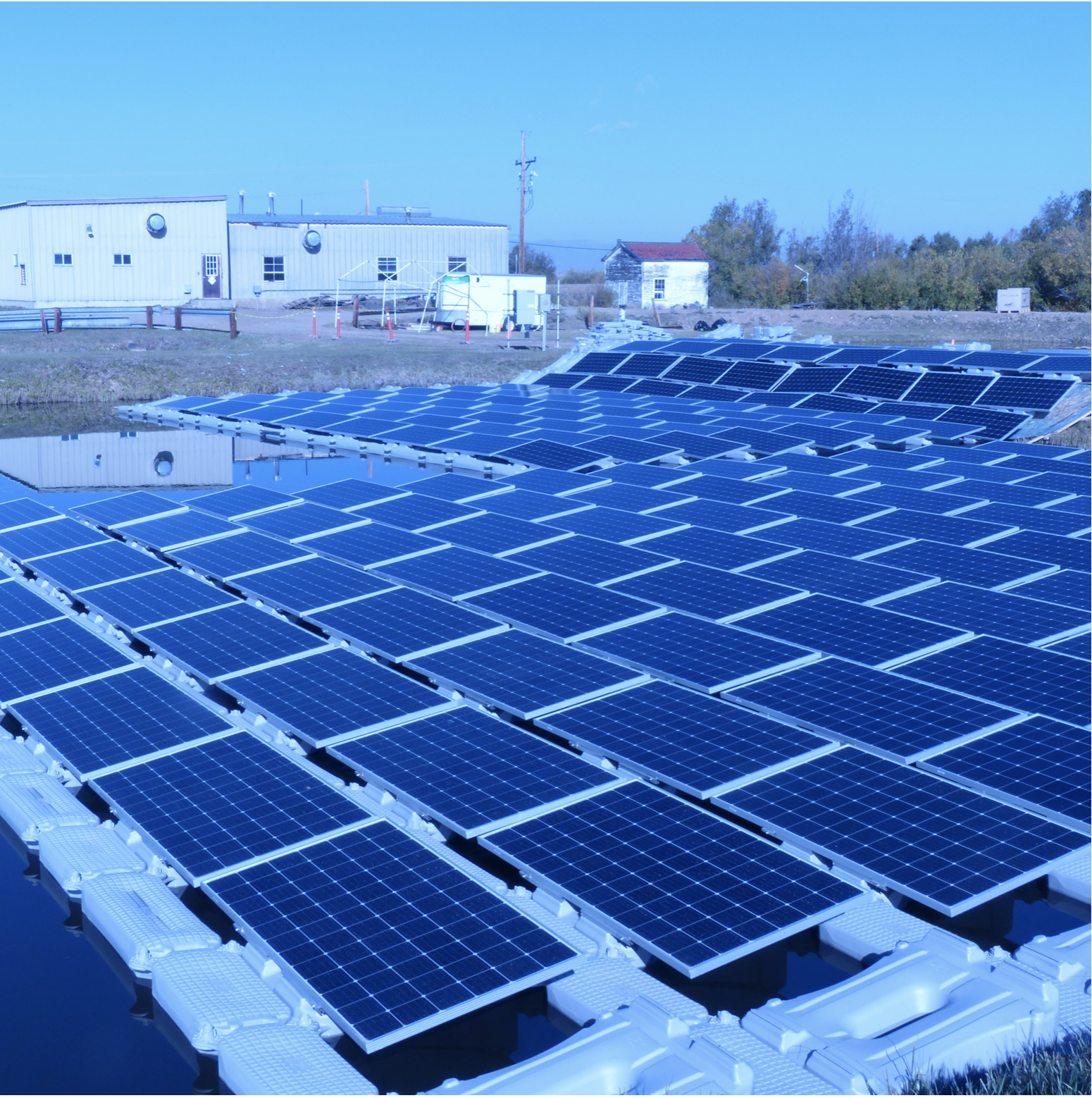
When a town has high electric bills and no available land for a solar farm, a floating solar plant on the pond of a waste water plant makes great sense. Walden, Colorado, population 750, elevation 8,000 feet plus, and land area of 0.34 square miles, is such a town.

Photo credit: CleanTechnica.com

“We were spending about $22,000 a month for electricity for the water treatment facility, and this 75 kW solar installation will save us $10,000 a month,” says Jim Dustin, mayor of Walden, Colo. “We’ll pay for the plant in 20 years, and it is still expected to run 10 more years after that,” he says.

The plant technology was furnished by floating solar specialists Ciel & Terre USA and was installed by GRID Specialists. The $400,000 cost of the plant was offset by a $200,000 grant from the Colorado Department of Local Affairs, which manages revenues earned by oil and gas development tax in the state. The project also was supported by the Colorado Energy Office.

“The Energy Office is interested in this installation because it gets down to minus 40 or 50 degrees in the winter, and we have very high winds. They want to know if the technology will work, because there are irrigation ponds and unused water bodies all over this state,” says Dustin. The energy office has offered $120,000 to move the installation to another location if it doesn’t work in Walden, he adds.

The Energy Office is also interested in conserving water in the state, where evaporation reduces holding pond levels by up to 90 inches per year, according to Taylor Lewis, a program engineer at the agency. “We have 2,000 man-made reservoirs in the state to keep water so if we can identify a few where it makes sense to cover them with solar, there could be a double benefit of water savings and electricity generation,” he says.

The concept of covering drinking water bodies to reduce evaporation is not new. “I’ve been looking at claims by the City of Los Angeles that they have saved billions of gallons of water over the past 10 years at four reservoirs, using black floating plastic balls,” Lewis says. “We’re interested in studying the impact with floating solar here,” he adds.

Johnson Controls came up with the initial idea of a floating solar array for Walden, says Dustin. “The floating solar array is a milestone for the Town of Walden and highlights the potential for Colorado’s overall energy efforts,” said Rowena Adams, a Performance Infrastructure account executive at Johnson Controls, in a statement.

“It was a practical choice for Walden given the surrounding bodies of water and the town’s energy resiliency efforts at the Town Water Treatment Facility, as well as the desire to conserve water and minimize algae growth,” Adams said.

Ciel & Terre, the technology provider, has more water projects in mind for Colorado. “With demand for solar power continuing to rise and available real estate becoming more expensive, floating solar is the ideal solution for anyone with a manmade pond or body of water. It’s cost-effective, quick to install, easy to maintain, and offers a variety of environmental benefits,” said Eva Pauly-Bowles, the representative director for the US office of the French company.

“Floating solar is no longer an exotic niche in the US, but a rapidly growing sector of the solar market. Ciel & Terre USA has other larger floating solar projects under construction and planned across the country,” Papuly-Bowles said.

Deploying a floating solar array on manmade bodies of water improves energy production by keeping the solar system cooler, Ciel & Terre says. At the same time it reduces evaporation, controls algae growth, and reduces water movement to minimize bank erosion, it says. Floating solar arrays also make optimal use of pond surfaces, providing clean solar energy without committing expensive real estate or requiring rooftop installations, the company adds.

Established in 2006 as a renewable Independent Power Producer (IPP), Ciel & Terre has been fully devoted to floating solar PV since 2011. The French company pioneered Hydrelio, the first specific and industrialized system to make solar panels float on water, with criteria such as cost-effectiveness, safety, longevity, resistance to winds and waves, simplicity, drinking water compliance, and optimized electrical yield, the company states in its profile.

Ciel & Terre has floating solar installations in Japan, Korea, China, UK, France, Brazil, Singapore, Malaysia, Italy, and Taiwan as well as the United States. The company has its United States headquarters in Petaluma, California.

#Drought Conditions Continue to Improve across Southeast #Colorado — The Prowers Journal

From The Prowers Journal (Russ Baldwin):

Abundant precipitation over the Summer of 2018 across southeast Colorado has continued throughout the early Fall, with several weather systems bringing more beneficial precipitation across the area in September and October. This abundant moisture has brought an end to the drought across portions of the far Southeastern Colorado Plains, as well as helped to ease the drought across portions of South

Central and Southeast Colorado.

With that said, the latest US Drought Monitor, issued Thursday November 1st, is indicating most of Baca County, as well as eastern portions of Prowers and Kiowa Counties, as drought free.

However, the current map continues to depict portions of South Central and Southeast Colorado deep in drought, with Exceptional Drought (D4) conditions indicated across most of Mineral County and extreme western portions of Conejos County, as well as across portions of the Sangre de Cristo Mountains of Southern Colorado, which includes portions of Costilla, Huerfano, Alamosa, Custer and Saguache Counties.

Extreme Drought (D3) conditions remain depicted across Las Animas Counties and extreme southwestern portions of Pueblo County.

Severe Drought (D2) conditions are also depicted across the rest of Pueblo and Huerfano, Counties, extreme western portions of Otero County and western into central portions of Las Animas County.

Moderate Drought (D1) conditions are also indicated across Crowley County, most of Otero County, western Kiowa County, extreme northwestern Bent County and central into eastern portions of Las Animas County.

Abnormally Dry (D0) conditions are indicated across northeastern Teller and northwestern El Paso Counties, central into eastern Kiowa County, extreme southeastern Otero County, the rest of Bent County, western Prowers County, eastern Las Animas County, and extreme northwestern and southwestern portions of Baca County…

AGRICULTURAL

Summer and early Fall precipitation has helped to improve soil moisture, especially across southeastern portions of the state. The latest monthly Evaporative Demand Index across indicating near normal to well above moisture across the area. However, longer term dryness continues to be indicated across South Central Colorado and into the Eastern Mountains.

HYDROLOGIC…

After a subpar 2018 Water Year (October 2017-September 2018) across Colorado as a whole, the 2019 Water Year has gotten off to a great start. Statewide snowpack on November 1st came in at 138 percent of average overall, with the Southern Basins coming in with the most snow pack, which is a total switch over the previous few years. Although it is too early in the season to draw any conclusions on the overall Water Year, it certainly is a good start to the water year.

In the Arkansas Basin, the November 1st snowpack came in at 189 percent of average, with the Upper Rio Grande Basin coming in at 216 percent of average. Again, it is too early in the season for these numbers to have much weight, but is certainly a much better start to the Water Year, especially across the Rio Grande Basin.

With the hot and dry conditions over the past several months, especially across western portions of the state, statewide water storage came in at 80 percent of average overall at the end of September, as compared to 117 percent of average storage available statewide at the same time last year.

In the Arkansas Basin, end of September storage came in at 104 percent of average overall, as compared to 157 percent of average storage available at the same time last year.

In the Rio Grande Basin, end of September storage came in at 88 percent of average overall, as compared to 125 percent of average storage available at the same time last year.

Large #hydropower dams ‘not sustainable’ in the developing world — BBC

Click here to read the paper. Here’s the abstract:

Abstract

Hydropower has been the leading source of renewable energy across the world, accounting for up to 71% of this supply as of 2016. This capacity was built up in North America and Europe between 1920 and 1970 when thousands of dams were built. Big dams stopped being built in developed nations, because the best sites for dams were already developed and environmental and social concerns made the costs unacceptable. Nowadays, more dams are being removed in North America and Europe than are being built. The hydropower industry moved to building dams in the developing world and since the 1970s, began to build even larger hydropower dams along the Mekong River Basin, the Amazon River Basin, and the Congo River Basin. The same problems are being repeated: disrupting river ecology, deforestation, losing aquatic and terrestrial biodiversity, releasing substantial greenhouse gases, displacing thousands of people, and altering people’s livelihoods plus affecting the food systems, water quality, and agriculture near them. This paper studies the proliferation of large dams in developing countries and the importance of incorporating climate change into considerations of whether to build a dam along with some of the governance and compensation challenges. We also examine the overestimation of benefits and underestimation of costs along with changes that are needed to address the legitimate social and environmental concerns of people living in areas where dams are planned. Finally, we propose innovative solutions that can move hydropower toward sustainable practices together with solar, wind, and other renewable sources.

We need innovative sustainable solutions to meet energy demands, guarantee food security, and ensure water availability around the globe. Over the years, dams have been used for land management and flood control; to store water for irrigation and agriculture; to provide recreation and navigation, and to address management of aquatic resources. There are over 82,000 large dams in the United States alone. In addition, over 2 million small low-head dams fragment US rivers, and their cumulative impacts are largely unknown, since they have escaped careful environmental assessment.

Beginning in the late 19th century, the first hydroturbines were invented to power a theater in Grand Rapids, Michigan and then, to power streetlights in Niagara Falls, New York. Alternating current then made possible the first hydropower plant at Redlands Power Plant, California in 1893. Beginning in the 1920s, the US Army Core of Engineers began to build hydropower plants. The Tennessee Valley Authority in 1933 developed hydropower in the Tennessee River with the clearly stated goal of promoting rural electrification, later widely imitated throughout the country—the most notable being the Hoover Dam in 1937. The New Deal gave an enormous boost to hydropower construction, tripling output in 20 years until it accounted for 40% of electrical use in the United States. Hydropower dams were an important part of North American and European energy development.

Starting in the late 1960s, big dams stopped being built in developed nations, because the best sites for dams were already developed, the costs became too high, and most importantly, growing environmental and social concerns made the costs unacceptable. Since then, the contribution of hydropower to the United States’ electrical supply has steadily declined to 6.1% of energy consumption, and other energy sources, such as nuclear, gas, coal, solar, and wind, began to replace it. Dam removal rather than construction has become the norm in North America and Europe, because many that were built before 1950 are at the end of their useful lives, they would be too costly to repair, many no longer serve their initial purpose, and their social and environmental negative externalities became unacceptable. European countries with favorable topography and rain patterns, such as France and Switzerland, continue to have hydropower as an important part of their energy mix through technological innovations at existing dams. In contrast, 3,450 dams have been removed to date in Sweden, Spain, Portugal, the United Kingdom, Switzerland, and France (https://www.damremoval.eu). Hundreds of dams were removed in the United States (546 from 2006 to 2014) and Europe at enormous financial cost. This situation contrasts with what is happening in developing countries.

Developing countries, where millions of people are still not connected to the electric grid, have been ramping up hydroelectric dam construction for decades. These often involve megaprojects, which repeat the problems identified with big dams built in the past by the United States and European nations: disrupting river ecology, causing substantial deforestation, generating loss of aquatic and terrestrial biodiversity, releasing large amounts of greenhouse gases, displacing thousands of people, and affecting the food systems, water quality, and agriculture near them. The sustainability of these undertakings is commonly insufficiently scrutinized by those promoting them. The priority in large dam construction is to generate energy to serve growing industries and urban populations—these two things often overwhelm socioeconomic and environmental considerations. Left behind are local communities saddled with socioenvironmental damages and loss of livelihoods. Often, they do not even gain access to electricity, because they are not provided the power from the large dams, and they are not sufficiently compensated for their disrupted lives. All countries need renewable energy, and hydropower should be part of this portfolio. However, there is a need to find sustainable and innovative solutions that combine hydropower development with other energy sources, thus providing benefits that will outweigh, reduce, or even eliminate the negative environmental, behavioral, cultural, and socioeconomic externalities resulting from large dams.

Here, we review the socioeconomic and environmental situation in several major river basins where dams are being built. We examine the proliferation of large dams in developing countries, the lack of attention to climate change in the decision of whether to build a dam, some of the governance and compensation challenges, and the overestimation of benefits and underestimation of costs. We also identify changes that are needed to address the legitimate social and environmental concerns of people living in areas where dams are planned and propose innovative solutions to meet the food, water, and energy needs of citizens in those regions. These solutions have relevance worldwide, as hydropower can also contribute to meeting goals of reducing fossil fuel emissions and building sustainable communities with diversified energy sources.

From the BBC (Matt McGrath):

A new study says that many large-scale hydropower projects in Europe and the US have been disastrous for the environment.

Dozens of these dams are being removed every year, with many considered dangerous and uneconomic.

But the authors fear that the unsustainable nature of these projects has not been recognised in the developing world.

Thousands of new dams are now being planned for rivers in Africa and Asia.

Hydropower is the source of 71% of renewable energy throughout the world and has played a major role in the development of many countries.

But researchers say the building of dams in Europe and the US reached a peak in the 1960s and has been in decline since then, with more now being dismantled than installed. Hydropower only supplies approximately 6% of US electricity.

Dams are now being removed at a rate of more than one a week on both sides of the Atlantic.
The problem, say the authors of this new paper, is that governments were blindsided by the prospect of cheap electricity without taking into account the full environmental and social costs of these installations.

More than 90% of dams built since the 1930s were more expensive than anticipated. They have damaged river ecology, displaced millions of people and have contributed to climate change by releasing greenhouse gases from the decomposition of flooded lands and forests.

Elwha River. By Elwhajeff at English Wikipedia, CC BY-SA 3.0, https://commons.wikimedia.org/w/index.php?curid=9740555

“They make a rosy picture of the benefits, which are not fulfilled and the costs are ignored and passed on to society much later,” lead author Prof Emilio Moran, from Michigan State University, told BBC News.

His report cites the example of two dams on the Madeira river in Brazil, which were finished only five years ago, and are predicted to produce only a fraction of the power expected because of climate change.

In the developing world, an estimated 3,700 dams, large and small, are now in various stages of development.

The authors say their big worry is that many of the bigger projects will do irreparable damage to the major rivers on which they are likely to be built.

On the Congo river, the Grand Inga project is expected to produce more than a third of the total electricity currently being generated in Africa.

However, the new study points out that the main goal for the $80bn installation will be to provide electricity to industry.

“Over 90% of the energy from this project is going to go to South Africa for mining and the people in the Congo will not get that power,” said Prof Moran.

“The people that I study in Brazil, the power line goes over their heads and goes 4,000km from the area and none of the energy is being given to them locally.”

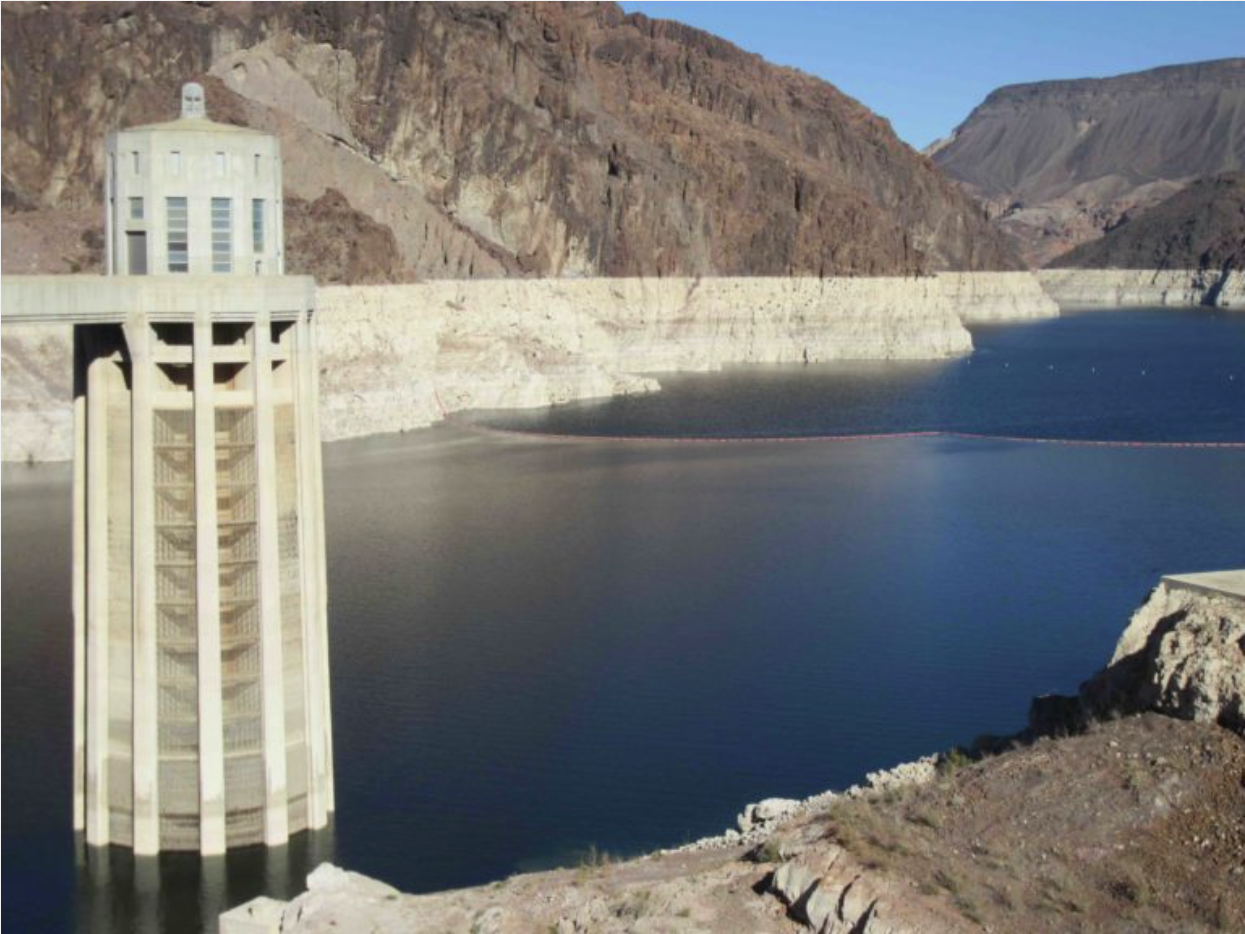
Reservoir levels in Lake Mead continue to decline and were down to 37 percent of capacity recently. December 2015 photo/Allen Best

“The nice goal of rural electrification has become completely subverted by large-scale interests who are pushing this technology, and governments are open to being convinced by them that this is the way to go.”

The report points our that the large installations on these great rivers will destroy food sources, with 60 million people who live off the fisheries along the Mekong likely to be impacted with potential loss of livelihoods greater than $2bn. The authors also believe that dams will destroy thousands of species in these biodiversity hotspots.
In Brazil, which gets 67% of its electricity from hydropower, the response to reduced water capacity because of climate change is to build more dams.

With the election of Jair Bolsonaro in Brazil, a temporary halt to building new hydro projects is likely to be overturned. Plans for 60 new dams are already in place.

The authors say that with huge pressure on countries to press ahead with renewable energy developments, a mix of energy sources including hydro is the most sustainable approach.

“Large hydropower doesn’t have a future, that is our blunt conclusion,” said Prof Moran.

“To keep hydropower as part of the mix in the 21st Century we should combine multiple sources of renewable energy,” said Prof Moran.

“There should be more investment in solar, wind and biomass, and hydro when appropriate – as long as we hold them to rigorous standards where the costs and benefits are truly transparent.”

The study has been published in the journal Proceedings of the National Academy of Sciences.

I voted the #environment! #vote today! You can register and vote in person today in #Colorado.

The photo below is not me it’s from Twitter pal @CalamityKater in 2014 and it is still my favorite from the archives. Put the environment at the top of your voting priorities and you will sleep very well tonight knowing that you did what you could to provide a future for all species.

The latest E-Newsletter is hot off the presses from the Hutchins Water Center

What’s for breakfast, in the Grand. Photo: via Aspen Journalism

Click here to read the newsletter. Here’s an excerpt:

GRAND CANYON ENVIRONMENT

This in-depth feature from the Arizona Republic reviews how dams and water management have thoroughly altered the environment in the Grand Canyon, and how some of those alterations could now be, paradoxically, protecting native fish.

Central Arizona Water Conservation District agrees to $97.5 million deal with the Gila River Indian Community to bolster supplies

Gila River watershed. Graphic credit: Wikimedia

From KJZZ (Brett Jaspers):

The agency that runs the Central Arizona Project on Thursday approved a deal to acquire water from the Gila River Indian Community, or GRIC.

The Central Arizona Water Conservation District, in addition to operating the CAP canal, is also in charge of finding water to put back into the ground on behalf of some housing developments, typically those on the outskirts of metro areas. That particular arm of the organization is called the Central Arizona Groundwater Replenishment District, or CAGRD.

In the new deal, the replenishment agency will get access to hundreds of thousands of acre-feet of water from the GRIC over 25 years. (One acre foot covers one acre with one foot of water.) The agreement has an initial cost of $97.5 million.

CAWCD board member Jim Holway voted for the deal, but said they still need to look for more sources of water to meet groundwater replenishment obligations…

The GRIC Council will take up the agreement next week. If it approves, the federal government will need to sign off as well.

In the short term, this deal may make approval of a separate drought deal easier, as developers were facing a cutback under the proposed Drought Contingency Plan. That was an important reason the deal received the endorsement of both the Environmental Defense Fund and the Arizona Municipal Water Users Association.

#Snowpack news: #Colorado is blue (and it’s to early to be dancing in the streets)

From 9News.com (Rebekah Ditchfield):

Newly-released statistics from the National Weather Service for Denver’s October shows our temperatures were slightly below average and precipitation was about average.

Southwest Colorado has also seen plenty of snow with resorts like Wolf Creek reporting 56 inches of snow so far this season.

However, we still haven’t seen much of a change in our drought conditions

A severe to exceptional drought continues through the west and southwest, but dry weather in Colorado is not unusual. We’ve seen our fair share of droughts. In fact, our climate is considered arid. Compared to many other states, we don’t get a lot of rain…

How did this drought get so bad in the first place?

The Colorado Climate Center measures water years from October to September. Generally that marks the beginning of snowfall in the mountains and follows it through the draining of our reservoirs for public use. The 2017-2018 water season saw record low volume of snowpack in higher elevations, especially in the San Juans, Sangre de Cristos and parts of the Gunnison Basin…

Peter Goble, a climatologist at the Colorado Climate Center based out of Colorado State University, says that was then followed up by “a brutal one-two punch of really warm and dry conditions in the summer.”

Reservoirs that had been overflowing the year before weren’t able to fill back up. However, Colorado residents still needed their water, so they continued to drain. That’s why many of those reservoirs sit at extremely low levels today.

So… what will it take to dig us out of the exceptional drought?

“If we have an average year, we’ll muscle through it,” Goble said. “If we have a couple average years, we can probably claw our way, at least a good amount, out of this drought. What we’re really wanting to see is one of those epic Colorado snow years.”

West Drought Monitor October 30, 3018.

Timely #Denver trivia: #Queen’s first U.S. concert was at the old Regis Fieldhouse

Queen concert poster for 1974 Regis College Fieldhouse.

With the release of Bohemian Rhapsody.

As Shortages Loom in the #ColoradoRiver Basin, Indian Tribes Seek to Secure Their Water Rights — @WaterEdFdn #COriver #aridification

Many Indian reservations are located in or near contentious river basins where demand for water outstrips supply. Map courtesy of the Bureau of Reclamation.

From the Water Education Foundation (Gary Pitzer):

As the Colorado River Basin becomes drier and shortage conditions loom, one great variable remains: How much of the river’s water belongs to Native American tribes?

Native Americans already use water from the Colorado River and its tributaries for a variety of purposes, including leasing it to non-Indian users. But some tribes aren’t using their full federal Indian reserved water right and others have water rights claims that have yet to be resolved. Combined, tribes have rights to more water than some states in the Colorado River Basin.

Increasingly, tribes are pressing to have the importance of their water rights recognized and seeking the means to use them. And because in most circumstances a century-old U.S. Supreme Court case moved Native Americans to the head of the line for water rights, they are likely to be the last to have to absorb a cut when water’s in short supply. That could matter as questions are addressed about how water in an already overallocated Colorado River Basin is shared by everyone in a sustainable manner.

“Certainly, tribes with existing decreed rights are part of the overallocation,” said Stanley Pollack, an attorney for the Navajo Nation in New Mexico. “To the extent that newly adjudicated rights either by settlements or through litigation arise, there may be pressures on water supplies to the extent that such new rights put additional stress on the system. However, there is a strong incentive in both settlement and litigation to protect existing water users, so it is possible that it will be the tribes that lose.”

As the Colorado River Basin becomes drier and shortage conditions loom, one great variable remains: How much of the river’s water belongs to Native American tribes?

Native Americans already use water from the Colorado River and its tributaries for a variety of purposes, including leasing it to non-Indian users. But some tribes aren’t using their full federal Indian reserved water right and others have water rights claims that have yet to be resolved. Combined, tribes have rights to more water than some states in the Colorado River Basin.

Increasingly, tribes are pressing to have the importance of their water rights recognized and seeking the means to use them. And because in most circumstances a century-old U.S. Supreme Court case moved Native Americans to the head of the line for water rights, they are likely to be the last to have to absorb a cut when water’s in short supply. That could matter as questions are addressed about how water in an already overallocated Colorado River Basin is shared by everyone in a sustainable manner.

“Certainly, tribes with existing decreed rights are part of the overallocation,” said Stanley Pollack, an attorney for the Navajo Nation in New Mexico. “To the extent that newly adjudicated rights either by settlements or through litigation arise, there may be pressures on water supplies to the extent that such new rights put additional stress on the system. However, there is a strong incentive in both settlement and litigation to protect existing water users, so it is possible that it will be the tribes that lose.”

An impending Colorado River Basin Tribal Water Study by the Bureau of Reclamation and the Ten Tribes Partnership—a group that includes tribes across the Colorado River Basin, from northern Utah to south of Yuma, Ariz.—is expected to shed some light on the current and projected state of tribal water use and development.

Formed 26 years ago, the Ten Tribes Partnership consists of federally recognized tribes with federal Indian reserved water rights in the Colorado River or its tributaries. Not all federally recognized tribes in the Colorado River Basin are members of the Partnership.

The study, expected to be released before the end of this year, was prompted by a mutual recognition by Reclamation and the Partnership that a thorough understanding of tribal water rights is crucial as the future needs of water users are considered.

Longtime observers of Colorado River water policy said resolving the quantification of tribal water rights is an important matter that demands attention by stakeholders throughout the Basin.

“Many of the tribes have settlements that quantify their entitlements to water, but not all that water is being used. That’s a potential new draw on a river that is already substantially oversubscribed in the Lower Basin,” said Anne Castle, former assistant secretary for water and science at the U.S. Department of the Interior. “The tribes want to be able to market that unused water. That causes great heartburn to the states and other major water users.”

Nonetheless, greater utilization of tribal water seems to be inevitable.

“We are entering an era where there is a lot more interest on tribal rights and how they might be used both on the reservation and off the reservation,” said Patrick Sigl, supervising attorney for land and water rights with the Salt River Project, the Phoenix entity that reached a major agreement with the Salt River Pima-Maricopa Indian Community more than 30 years ago. “As water supplies get tighter, the non-Indian water users are recognizing that if they can work out mutually beneficial deals with tribes that are consistent with water law principles, that would be a place to acquire additional supplies.”

Lorelei Cloud, chair of the Partnership and treasurer of the Southern Ute Indian Tribe in Ignacio, Colo., said the Tribal Water Study “is very much needed because it’s going to show exactly how much water the tribes have a right to.”

“Before, we’ve been kind of discounted of what actually is the part that we have,” she said.

Yet Pollack sees an uphill fight ahead for Native American tribes, saying he believes non-Indian water users have no interest in upsetting the status quo.

“The political clout that the large water users have in Congress will likely ensure that tribal water supplies are not developed and that water-leasing mechanisms are not authorized—if tribal water can be leased, the current users of those unused supplies could be displaced,” he said.

Securing Tribal Water Rights

Writing on the matter in a 2016 report, “Tribes and Water in the Colorado River Basin,” the Colorado River Research Group, a collection of veteran Colorado River scholars, noted that “the story of tribal water use in the Colorado River Basin is checkered, with some tribes having quantified rights and functioning projects, others with clear rights but without the infrastructure needed to benefit from those rights, and still others lacking both quantified rights and the opportunity to put them to use.”

Federal Indian reserved water rights were recognized in the historic 1908 Winters v. United States Supreme Court decision, in which the Court held that when the federal government reserved land for an Indian reservation, it also impliedly reserved water rights. Since that time, water necessary for federal reserved water rights and the resolution of claims have been included in the Colorado River allocation for the state in which the reservation is located.

The Indian reserved water rights usually have a very senior priority date, meaning they take precedence to most other water users whose rights have later dates.

Sigl said the doctrine of prior appropriation, used to assign water rights in Western states, and which is based on “first in time, first in right,” developed in arid regions “because it provided a lot of certainty for water users and therefore promoted investment and economic development.” Through Winters, he added, the United States government said that “there is this other kind of water right out there that is not dependent on prior use.”

As a result, there has been a move toward quantifying tribal water rights through settlements instead of facing the reality of adjudication through courts. “Litigating these Indian water rights claims to judgment, the risk is the non-Indian water users may have to make due with less water,” Sigl said.

‘This is their water.’

Indian water rights have been on the books for decades but have been largely overlooked, said John Fleck, director of the University of New Mexico’s Water Resources Program.

“For a long time on paper the Indians had water rights, but in practice they were ignored as all the non-Indian water rights were developed,” he said. “You have a whole bunch of communities that built themselves on junior water rights and they need to recognize that if they are going to continue to use water in the way they would like to, they need to be collaborative with their Native American neighbors and recognize their prior and aboriginal rights. And if we need to have collaborative deals in which everybody reduces water, Indians will have to be compensated for that which is rightfully theirs and which for a century had been taken from them without compensation. The law says this is their water.”

Resolution of outstanding Indian tribal water rights claims is important because it allows states in the Upper Basin—Colorado, New Mexico, Utah and Wyoming—to plan for future demand, said Amy Haas, executive director of the Upper Colorado River Commission.

“Because a tribe’s claim is counted against a state’s allocation under the 1948 Upper Colorado River Basin Compact, having certainty that a tribal claim, along with all other uses in the state, will be within a state apportionment is critical,” she said. “And while some tribes have not fully developed their rights, in the Upper Basin we account for those rights in the demand schedules for each … state.”

Lower Basin users are cognizant of the need of tribes to access their water from the river, as well as the opportunity to partner with them in further water marketing ventures.

“Native American tribes have the opportunity to put their water rights to beneficial use on their lands,” said Jeff Kightlinger, general manager of the Metropolitan Water District of Southern California. “Metropolitan Water District supports and has a history of establishing mutually beneficial partnerships with tribes.”

Launched on the heels of the signature 2012 Colorado River Basin Study, the Tribal Water Study aims to explore what effects future water supplies and the future development of tribal water could have on the Colorado River System, using a scenario planning process, said Pam Adams, Native American affairs program manager with Reclamation’s Lower Colorado Region.

In preparing the study, Reclamation noted that the tribes of the Ten Tribes Partnership “hold a significant amount of reserved water rights and unresolved claims to Colorado River water” and Basin stakeholders should be aware of the effects if a “substantial amount” of the presently unused or unquantified tribal water is used by the tribal water rights holders prior to 2060.

The Ten Tribes Partnership consists of the Chemehuevi Indian Tribe, Cocopah Indian Tribe, Colorado River Indian Tribes, Fort Mojave Indian Tribe, Jicarilla Apache Nation, Navajo Nation, Quechan Indian Tribe, Southern Ute Indian Tribe, Ute Mountain Ute Tribe and Ute Indian Tribe of the Uintah and Ouray Reservation.

Seeking Tribal Settlements

For tribes, meeting their own water needs can be a challenging proposition. Funding is scarce and assistance from the federal government usually requires coming up with matching funds. “For a few reservations, there is a lack of infrastructure and a lack of funding for the infrastructure to get the water to where it needs to be,” said Cloud, with the Ten Tribes Partnership.

According to Reclamation, 13 federally recognized tribes located within the Basin have some or all of their claims still unresolved. Tribes have pursued quantification of their water rights through both litigation and negotiated settlements. The settlements involve negotiation between tribes, the federal government, states, water districts and private water users.

“Over the last 50 years, negotiated settlements have been the preferred course for most tribes because they are often less lengthy and costly than litigation,” according to Indian Water Rights Settlements, a 2018 report by the Congressional Research Service. “Additionally, many stakeholders have noted that these negotiated agreements are more likely to allow tribes not only to quantify their water rights on paper, but also to procure access to these resources in the form of infrastructure and other related expenses, at least in some cases.”

Tribes with reservations in the Colorado River Basin have quantified rights to divert about 20 percent of the Basin’s annual average water supply, based on an annual flow of 14 million acre-feet, according to the Colorado River Research Group. That 20 percent “is a significant amount of water compared to what everybody else has,” Cloud said.

Under the standards for federal reserved water rights the courts have mostly used, the criterion applied is whether a reservation could use water on “practically irrigable” acreage, said Robert Glennon, professor of law and public policy at the University of Arizona in Tucson.

“It works beautifully for the Gila River Indian Community,” he said. “It is low-level land, you get the water and apply it. That doesn’t work so well in canyon country for the Hopi and Navajo, who are in some places thousands of feet above the river.”

Sigl noted that the Arizona Supreme Court, in its quantification of federal reserved water rights, concluded that the reservations “were intended as permanent homelands” and that factors such as tribal history, culture, geography, topography, natural resources, economic development and past water use are components of quantifying a tribal water right.

For their part, tribal council members believe there is a sense of urgency in resolving long-standing claims because of the concern that if they don’t use their water, someone else will.

“Those that plan on and base a lot of their growth on the excess water going down the river, pretty soon, that’s not going to take place,” Timothy Williams, chair of the Fort Mojave Indian Tribe, said in a presentation to the Colorado River Water Users Association last year. “There is going to be no excess water from the tribes because we are working harder than ever to ensure that we protect our own selves by utilizing every drop of water that we possibly can. It’s going to be used for what it was originally intended for—on the reservation.”

But the path toward getting water to the reservation is uncertain. Pollack, the Navajo Nation attorney, said the drive by tribes to get water on their lands for irrigation and drinking runs into the political reality of negotiating the necessary financing.

“You always have that question of ‘Can you get funding for water development and, if so, what are the political consequences?’” he said. “I think a lot of people don’t really appreciate just how difficult it is to develop water in a political sense. If a tribe has unlimited resources, then the politics are not quite as big an issue. But it’s very difficult to wrest water away from communities that have been relying on it and using it.”

The report by the Congressional Research Service noted that courts generally have held that many tribes have a reserved right to water “sufficient to fulfill the purpose of their reservations” and that this right took effect on the date the reservations were established within the context of first in time, first in right. “Many tribes have water rights senior to those of non-Indian users with water rights and access established subsequent to the Indian reservations’ creation.”

Resolving the matter means determining whether Congress should approve new Indian water rights settlements, and whether it should fund—and, in some cases, amend—existing settlements.

“Some argue that resolution of Indian water rights settlements is a mutually beneficial means to resolve long-standing legal issues, provide certainty of water deliveries, and reduce the federal government’s liability,” the report said. “Others argue against authorization and funding of new settlements, either on general principle or with regard to specific individual settlements and activities.”

Because of issues such as tribal sovereignty and the desire to retain confidentiality, there is a degree of separation between tribes and state and federal governments regarding tribal water issues.

“Part of this is rooted in a historic and well-earned distrust,” said Fleck, director of the University of New Mexico Water Resources Program. “Native communities have been deeply, profoundly and strikingly mistreated. They have every reason to be mistrustful of non-Indian America because of the way they’ve been treated and so they have every reason to be cautious in their approach to this. They hold the best hand—senior water rights.”

And that is the challenge Indians face as they seek to access their water to provide service and sanitation to homes and to irrigate farmland. There is also the possibility of leasing water rights to nontribal users to provide tribes with economic development, depending on the terms of individual settlements or court decrees.

Pollack likened the scenario to the resolution of the Arizona/California water conflict of 50 years ago in which Arizona achieved “a very large, substantial victory” over California, but the water came at a price: The state subordinated its water priority to California to help secure the federal backing for the Central Arizona Project.

Water marketing agreements between tribes and other water users are already a part of the landscape in the arid West. In July 2018, officials in Gilbert, Ariz., approved a $31.2 million water lease with the San Carlos Apache Tribe to give the town access to about 6,000 acre-feet of water annually. (An acre-foot typically is enough water to serve two to three households for a year.) Two years earlier, the city of Chandler agreed to pay the Gila River Indian Community about $43 million for rights to a portion of the tribe’s water from the Central Arizona Project, which delivers Colorado River water to the Phoenix and Tucson areas.

The agreement stems from a sweeping 2004 tribal water settlements act in Arizona that, among other things, provided the Gila River Indian Community with an annual water budget of 653,500 acre-feet.

“Arizona has already addressed tribes gaining more access to water with the … water settlement act,” said Warren Tenney, executive director of the Arizona Municipal Water Users Association. “The Phoenix area cities have the opportunity to work with the Gila River Indian Community and other tribes on water resources issues because the tribes now have certainty about their water. The Gila River Indian Community has been more than willing to work with the state and municipalities on water issues facing Arizona.”

‘Water is our common ground’

What’s likely a turbulent water future in the Colorado River Basin means everyone, including tribes, will have to increase their level of involvement as an even greater level of cooperation is needed to meet the challenges, most notably the struggle by the anchor reservoirs of Lake Powell and Lake Mead to reliably provide water to the Lower Basin states.

“The tribes are going to have to be part of the solution over the long term to building sustainable, economically vibrant communities both on and off the reservations and that’s really what drought drives—ingenuity,” said Sigl with the Salt River Project. “We are all in this together and everybody that has an asset and resource that can be dedicated to solving the water supply problem will have to be part of the solution.”

Castle, the former Interior official who now is with the Getches-Wilkinson Center for Natural Resources, Energy and the Environment at University of Colorado Boulder, said she believes tribes will have to move from their “relative lack of participation” to a more robust role in the overall discussions of Colorado River management.

“The states control the diversions within each state and that includes the tribal rights, so it’s understandable and appropriate that it’s the states that are the ultimate decision-makers about overall use,” she said. “But the tribes’ collective share of water exceeds that of some of the states, and with the increasing tightness in the system, the tribes have got to be part of the highest-level discussions. A significant barrier to be overcome is that the tribes don’t speak with one voice and there are 25 or so different tribes. …. It’s hard to have that many people involved in those high-level discussions.”

Writing in the Arizona Journal of Environmental Law & Policy this summer, Glennon, the University of Arizona law professor, noted that while “Yogi Berra warned against making predictions, especially about the future … I hazard to predict that the future holds more settlements involving water exchanges, sales and leases.”

The numbers bear this out, he wrote. The Colorado River Indian Tribes, which he deemed “the proverbial 800-pound gorilla,” have adjudicated diversion water rights to 662,402 acre-feet of Colorado River water for its reservation lands in Arizona.

“A rhetorical question is, if you have a community like CRIT, with a very small population with rights to 720,000 acre-feet in Arizona and California, and some of that water they are not using and the rest is being used to grow alfalfa, what do you think is going to happen a generation out?” he told Western Water.

For its part, the Colorado River Research Group, in its 2016 tribal water report, noted that providing Colorado River tribes with the water needed to sustain communities and build economies “is both a legal and moral imperative,” and must be done “in a way that embraces creative, flexible and efficient uses of water, often in partnership with non‐Indian water users.” The way forward, they said, is through negotiated settlements, especially those that empower the tribes to lease water to off-reservation users.

In New Mexico, the Navajo Nation agreed to receive less water than they believe they were entitled to in return for an agreement that the federal and state governments would provide the infrastructure to bring water to the Navajo communities where it was needed.

“That’s the way these deals work,” Fleck said. “That’s why they are called settlements. It’s because the Indians agreed to settle for less than they might get, which is a benefit to the non-Indian water users.”

Not all non-Indian water users agree. After an appeals court allowed the Navajo Nation settlement to proceed in April 2018, Victor Marshall, an attorney for more than 20 community water and irrigation districts in New Mexico, vowed to press on, telling the Albuquerque Journal that the appeals court decision “destroys New Mexico’s remaining water supply.”

Cloud said tribes are expecting to engage nontribal users in a conversation about what the fulfillment of their full water rights means.

“That is where this tribal water study really comes into play because it will have the data to back that up,” she said.

While progress for the tribes will be a slow grind, Pollack said, declining water levels at Lake Powell and Lake Mead and the impending threat of water cutbacks for Arizona and Nevada will likely “create a different paradigm on the river.”

“They are talking about a 50-50 chance of a shortage in 2020 and once these shortages start kicking in and start having their effect on existing water supplies, folks are going to start looking around and saying, what are all the tools that we have in the toolbox?” Pollack said. “They [major water users] have been using a number of tools, such as the drought contingency plan, but I think at some point they are going to realize that tribes need to be a part of the solution and the tribes need to have their assets be part of the toolbox.”

While the Ten Tribes Partnership includes many different people across a wide geographic swath, it is unified in its desire to get all the water it is entitled to.

“That’s what drives our partnership,” said Cloud, the partnership’s chair. “We do realize that each tribe, they govern themselves differently; they have different traditions and different uses for their water. But the water is our common ground. We all have the same voice that we want to protect the water. We value the water—the spirit of the water. It’s a driving force for us as tribes coming together as one.”

@EPA asks courts to toss #NavajoNation’s lawsuit over #GoldKingMine spill — The Durango Herald #AnimasRiver

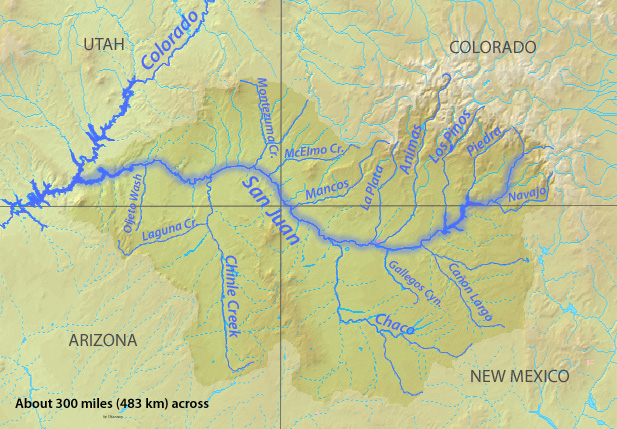
San Juan River Basin. Graphic credit Wikipedia.

From The Durango Herald (Jonathan Romeo):

The U.S. Department of Justice, on behalf of the Environmental Protection Agency, has asked that a federal court dismiss a lawsuit filed by members of the Navajo Nation seeking repayment of damages associated with the 2015 Gold King Mine spill…

While the EPA initially encouraged people and businesses to file claims for financial losses, the agency backtracked in January 2017, saying it was legally protected from any damages associated from the spill.

The states of New Mexico and Utah, as well as the Navajo Nation, filed lawsuits seeking compensation. New Mexico is seeking $130 million, Utah is seeking $1.9 billion, and the Navajo Nation is seeking $130 million.

Over the summer, the EPA, through the Department of Justice, filed similar requests to dismiss the claims, arguing the agency is protected from litigation under federal law.

The motion filed Thursday argues the same point in seeking to dismiss a lawsuit that represents about 300 individual members of the Navajo Nation who claim a cumulative of $75 million in damages…

The Department of Justice’s motion argues the EPA is protected under the Federal Tort Claims Act, which gives federal agencies a “discretionary function exemption.”

The EPA was acting according to the Comprehensive Environmental Response Compensation and Liability Act by evaluating the mine for remediation and preventing environmental pollution of the Animas River watershed when the inadvertent release occurred, the motion states.

The motion states that so far, the EPA has spent $29 million on past and continuing efforts to address mine pollution in the Animas River watershed, including building a temporary water treatment plant and designating the area as a Superfund site.

The stage was set for a blowout at the Gold King Mine years before the EPA became involved in the situation.

With the plugging of the American Tunnel, many researchers and experts of the mine district around Silverton believe the waters of the Sunnyside Mine pool backed up, causing the Gold King Mine to discharge mine wastewater…

The lawsuit on behalf of Navajo members says the spill, which carried arsenic and lead, prevented them from using water for their crops and care for their animals, as well as personal use…

Ferlic said a hearing Monday will brings together her clients, the states of Utah and New Mexico, as well as the Navajo Nation, to set a date to discuss the motions to dismiss.

#Snowpack news: It’s been a good start to the snow accumulation season

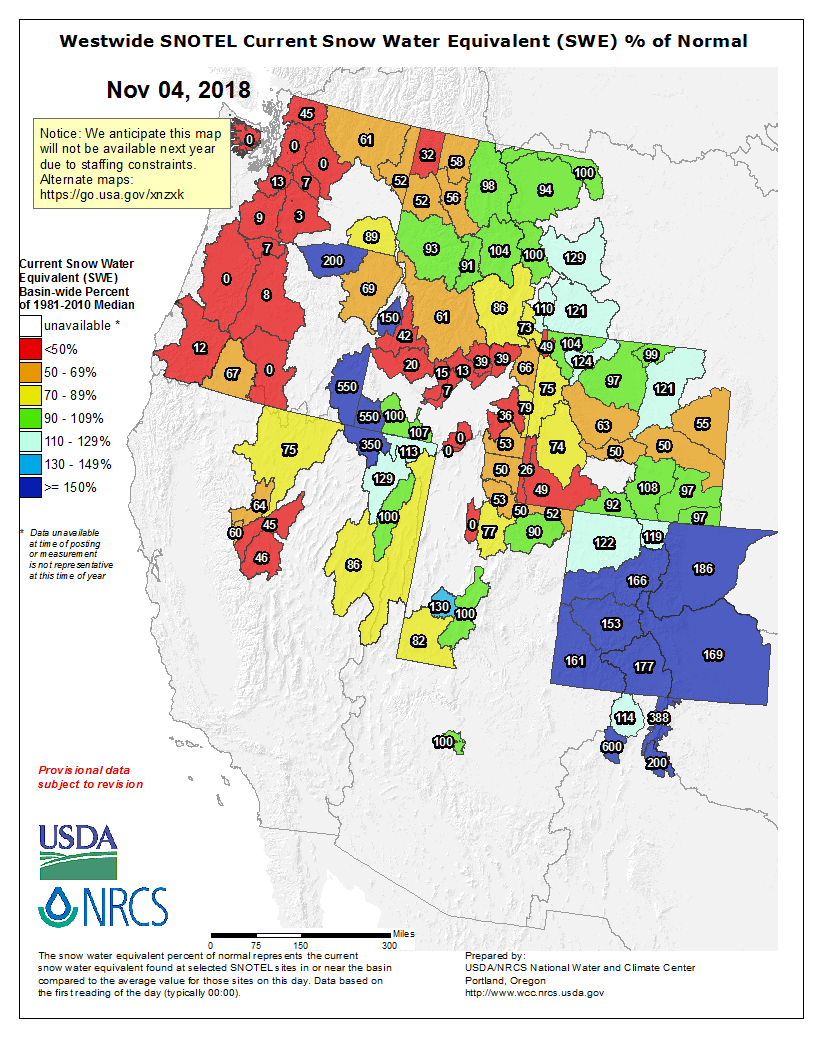
Westwide basin-filled SNOTEL map November 4, 2018 via the NRCS.

From RealVail.com (David O. Williams):

Vail opens in just 12 days and conditions are already guaranteed to be so much better than the last two seasons, when warm and sunny weather lingered through November. It’s been bordering on full-on winter in the Vail Valley for the past week after a solid shot of snow in mid-October.

Vail picked up nearly a foot of new snow with a couple of separate storms late last week, and forecasters are calling for another 5 to 10 inches Sunday night into Monday. Opening day is set for Friday, Nov. 16, at Vail, and Wednesday, Nov. 21, at Beaver Creek.

There are currently only three ski areas open in Colorado – Arapahoe Basin, Loveland and Wolf Creek – but two more – Breckenridge and Keystone – join the fray on Friday, Nov. 9. Breck picked up 18 inches from the last storm cycle, and Loveland saw nearly a foot of fresh Saturday.

Copper Mountain and Eldora join in the action the same day Vail opens on Friday, Nov. 16, and forecasters are calling for more winter weather later this week and early next week.

#AnimasRiver: Which was worse for water quality: #GoldKingMine spill or #416Fire floods? — The Durango Herald

From The Durango Herald (Jonathan Romeo):

Study compared metal loading in both events; results surprised researchers

A new report shows that runoff from the 416 Fire burn scar this summer dumped higher concentrations of potentially toxic metals into the Animas River than the Gold King Mine spill three years ago…

It has been a rough couple of years for the Animas River.

In August 2015, the Environmental Protection Agency accidentally caused the Gold King Mine, near Silverton, to blow out, sending 3 million gallons of toxic waste down the Animas River, turning it orange.

Then, this July, heavy rain fell over the 416 Fire burn scar in the Hermosa Creek drainage, just north of Durango, and sent a torrent of black mud, rocks and other debris down the Animas River.

After both events, Mountain Studies Institute, an environmental research and education nonprofit, extensively monitored and researched the impacts on aquatic life and water quality in the Animas River.

Though only a few months removed from the July floods, the preliminary data show the impacts of the Gold King Mine spill pale in comparison to the mudslides and debris flows from the 416 Fire burn scar.

Peter Butler with the Animas River Stakeholders Group said that point was made clear when the 416 Fire runoff caused nearly all the fish in the Animas River to die.

By comparison, there has never been any evidence that the tainted Gold King Mine water caused any die-off of aquatic life.

Roberts’ study backs this with data.

The study took samples at the height of the 416 Fire debris flows on July 17 and July 24 on the Animas River, near Rotary Park, and compared it to samples taken during the mine spill as it passed through the same spot Aug. 6 to Aug. 9, 2015.

Rural America’s Own Private Flint: Polluted Water Too Dangerous to Drink — The New York Times #vote

Fertilizer applied to corn field. Photo credit: USDA

From The New York Times (Jack Healey):

Now, fears and frustration over water quality and contamination have become a potent election-year issue, burbling up in races from the fissured bedrock here in Wisconsin to chemical-tainted wells in New Hampshire to dwindling water reserves in Arizona. President Trump’s actions to loosen clean water rules have intensified a battle over regulations and environmental protections unfolding on the most intensely local level: in people’s own kitchen faucets.

In Wisconsin and other Midwestern states where Republicans run the government, environmental groups say that politicians have cut budgets for environmental enforcement and inspections and weakened pollution rules. In Iowa, for example, the Republican-led Legislature dismissed a package of bills that would have blocked any new large-scale hog operations until the state cleaned up its nitrogen-laden rivers and streams.

There are no precise water-quality surveys of the galaxy of private wells that serve 43 million people in the United States, but sampling by the United States Geological Survey has found contamination in about one of every five wells.

Few water-quality rules regulate those wells, meaning there is no water company to call, no backup system to turn to, and often no simple way to cure the contamination. In Flint, lead-tainted water prompted a public health emergency that led to a criminal investigation.

Homeowners say they are forced to choose between installing expensive filtration systems, spending thousands to dig deeper wells, ignoring the problem or moving.

The new #ColoradoRiver #drought plan is an important first step — @AmericanRivers

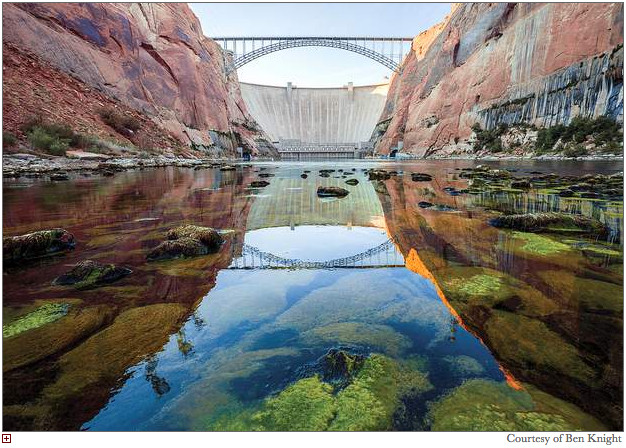
Glen Canyon Dam

From American Rivers (Jeffrey Odefey):

An increasingly arid Southwest isn’t something we can control. But surviving it with enough water is.

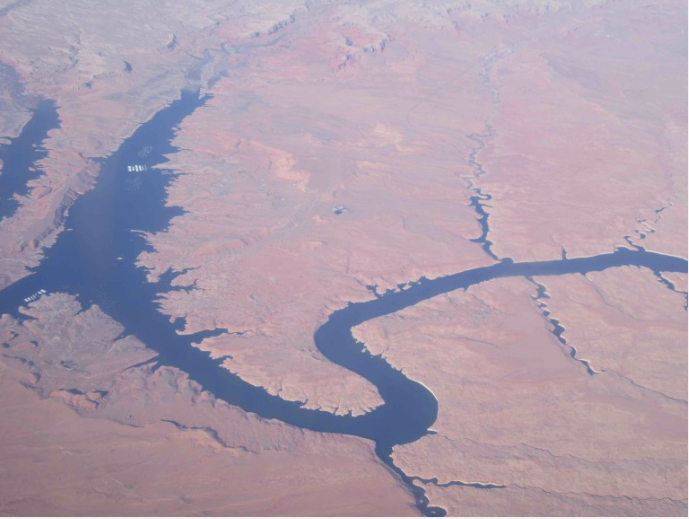
The ominous bathtub rings in Lakes Mead and Powell are evidence of the most serious challenge facing the seven U.S. states that depend on water from the Colorado River. The bands of blanched rock, several stories high, tell the story of the nation’s largest two reservoirs in crisis, and a Colorado River that’s steadily losing its ability to meet all the demands placed upon it.

The Colorado River wends its way through southern Utah and, at Glen Canyon, is impounded into Lake Powell. Photo/Allen Best

Earlier this month, after years of fitful effort, state agencies and water providers agreed on a Drought Contingency Plan to deal with the very real possibility of shortages in the water supply provided by the river. This tentative agreement is big step toward slowing the decline of Lake Mead and setting up a future of more sustainable water use in the Colorado River Basin.

On the positive side, the tentative agreement creates a framework to save more water in Lake Mead in coming years and to allocate the supply cutbacks that will accompany the nearly inevitable shortage.

According to the Bureau of Reclamation, the federal agency which oversees management of the river system, there’s a nearly 60 percent chance that a “Tier 1” shortage will be declared in the Lower Basin states (California, Arizona and Nevada) in 2020. The goal of the Drought Contingency Plan is to prevent even deeper cutbacks in the future supply available to the Lower Basin.

A successfully implemented Drought Contingency Plan will reduce the risk of deeper shortages. It is our best chance to avoid significant cuts to Arizona’s water supply.

From the moment a Drought Contingency Plan is formally signed, central Arizona will have to live without 192,000 acre feet of water per year. (One acre foot is enough water to cover a football field 1 foot deep.)

It’s also likely that the federal government will declare a “Tier 1” shortage in 2020, forcing a cutback of 512,000 acre feet of water per year, or nearly 30 percent of Arizona’s annual Central Arizona Project supply. Without an Arizona agreement on how to equitably allocate this cutback, shortages on the river will likely deepen, forcing the state to forego an additional 128,000 acre feet.

Right now, all of this water is used by farms in central Arizona, the new subdivisions sprouting up around the Valley of the Sun, and homes and businesses in cities around Phoenix. Protecting people and farms while securing the future of the river is a difficult challenge and must be done in an equitable way within established laws and priorities.

But the Lower Basin Drought Contingency Plan only gets us so far. It provides the river community with breathing space to tackle the deeper problems facing the Colorado River and its communities — including the original over-allocation of the river’s water; over-consumption by farms and cities in California, Arizona and Nevada; and the intensified aridification of the region caused by climate change.

Ever-shrinking water levels in the Colorado River Basin aren’t short-term hiccups in hydrology and precipitation. They are the inevitable result of long-term forces that will require bold action to alleviate.

This month’s agreements will help get river communities through the near-term shortages that seem inevitable, and they are an important first step toward more lasting solutions. In the next few years, river leaders and water managers have an opportunity to build on the Drought Contingency Plan and to think ahead. Protecting the river and the water it provides will require us to develop resilient solutions that reduce water consumption and efficiently share the river’s waters.

Governor Hickenlooper’s proposed budget include $30 million for implementation of the #COWaterPlan

Gov. John Hickenlooper touts his water plan as pioneering. (Photo by Rachel Lorenz for The Colorado Independent)

from The Summit Daily (Deepan Dutta):

On Thursday, several Colorado conservation and river advocacy groups praised Gov. John Hickenlooper’s proposal to add a record $30 million to implement Colorado’s Water Plan and help the state prevent water shortages as the state continues to experience an extended drought.

In his budget request for fiscal year 2019-2020, the governor proposes to invest $30 million over the next three years from the general fund, on top of funds already earmarked for water projects that benefit river health and our communities across the state.

The groups – Theodore Roosevelt Conservation Partnership, Environmental Defense Fund, Western Resource Advocates, The Nature Conservancy, Conservation Colorado, American Rivers and Audubon ­­— called the proposal a “smart investment in healthy rivers that will have ripple effects across Colorado.”

“This budget request is a recognition of the importance of water to Colorado families, of water challenges that Colorado could face, and the imperative that Colorado secures its water future,” the groups said. “This is a tremendous step forward, and a sustainable water future for Colorado families will require continued investments. We look forward to working with the next governor and the legislature on longer-term commitments that will ensure the state has the resources to fully implement the Colorado Water Plan.”

“We have to save the planet. So I’m donating $1 billion” — Hansjörg Wyss #ActOnClimate #conservation

From The New York Times (Hansjörg Wyss):

Plant and animal species are estimated to be disappearing at a rate 1,000 times faster than they were before humans arrived on the scene. Climate change is upending natural systems across the planet. Forests, fisheries and drinking water supplies are imperiled as extractive industries chew further into the wild.

But there is another, encouraging side to this depressing story: how a simple idea, born in the United States in the 19th century and now racing around the globe, may yet preserve a substantial portion of our planet in a natural state.

It is the idea that wild lands and waters are best conserved not in private hands, locked behind gates, but as public national parks, wildlife refuges and marine reserves, forever open for everyone to experience and explore. The notion of holding these places in public trust was one I became deeply influenced by as a young man, when I first climbed and hiked on public lands in Colorado’s Rocky Mountains.

Since the creation of the world’s first national park, Yellowstone, in 1872, 15 percent of the earth’s lands and 7 percent of its oceans have been protected in a natural state.

Old Faithful. Photo credit: Ansel Adams

But some scientists, including the Harvard biologist Edward O. Wilson, have concluded that at least half the planet needs to be protected to save a large majority of plant and wildlife species from extinction. Indeed, the food, clean water and air we need to survive and prosper depends on our ability to protect the planet’s biological diversity. In other words, we have to protect half to save the whole.

Every one of us — citizens, philanthropists, business and government leaders — should be troubled by the enormous gap between how little of our natural world is currently protected and how much should be protected. It is a gap that we must urgently narrow, before our human footprint consumes the earth’s remaining wild places.

For my part, I have decided to donate $1 billion over the next decade to help accelerate land and ocean conservation efforts around the world, with the goal of protecting 30 percent of the planet’s surface by 2030. This money will support locally led conservation efforts around the world, push for increased global targets for land and ocean protection, seek to raise public awareness about the importance of this effort, and fund scientific studies to identify the best strategies to reach our target.

I believe this ambitious goal is achievable because I’ve seen what can be accomplished.

Indigenous peoples, local leaders and conservation groups around the world are already busy setting aside protected areas that reflect the conservation, economic and cultural values of nearby communities. Financial support from philanthropists and governments is critical to helping these leaders conserve places like the coral reefs of the Caribbean, the glaciers of Argentina and what is known as the “place of many elephants” in Zimbabwe.

I’ve seen this unfold firsthand. Over the past two decades, my foundation has supported local efforts to protect wild places in Africa, South America, Europe, Canada, Mexico and the United States, donating more than $450 million to help our partners conserve nearly 40 million acres of land and water. And just as the Grand Canyon and the Grand Teton national parks have become economic engines in the United States, these new, locally developed protected areas will create jobs, attract visitors and support sustainable economic growth.

For me, these efforts underscore the power we each have, as individuals, to join together to save the places and wildlife that matter most to us. Every conservation gain I have witnessed in my two decades of philanthropy — from the Crown of the Continent in Montana to Colombia’s newly expanded Chiribequete National Park — was set in motion by local communities that wanted to safeguard these places for their children and grandchildren.

This is an important time. The international community will gather in two weeks to discuss new global targets for land and ocean protection. Representatives of more than 190 nations will meet in Egypt to step up efforts to halt biodiversity loss and protect ecosystems under the Convention on Biological Diversity, an agreement that establishes global goals for nature conservation. Given the scale and urgency of the extinction crisis, world leaders should update the agreement to make a shared commitment to protect at least 30 percent of the world’s marine and land environments by 2030. This clear, bold and achievable goal would encourage policymakers around the world to do far more to support communities working to conserve these places.

We need to embrace the radical, time-tested and profoundly democratic idea of public-land protection that was invented in the United States, tested in Yellowstone and Yosemite, and now proven the world over.

For the sake of all living things, let’s see to it that far more of our planet is protected by the people, for the people and for all time.

Hansjörg Wyss is a philanthropist who was born in Switzerland, founded the medical device company Synthes and now lives in Wyoming.

Denver Water officially hops into the driver’s seat – News on TAP

Nov. 1, 1918, was a big day in our 100-year history.

Source: Denver Water officially hops into the driver’s seat – News on TAP

The biggest share of #ColoradoRiver water in the West is up for grabs #COriver

The American Canal carries water from the Colorado River to farms in California’s Imperial Valley. Photo credit: Adam Dubrowa, FEMA/Wikipedia.

From The Palm Springs Desert Sun (Sammy Roth):

A public agency and a powerful farmer are gearing up for a high-stakes court battle to determine who owns the largest share of Colorado River water in the West, complicating the river’s future as seven western states scramble to avoid severe water shortages.

There’s a long history of fighting over water in California’s Imperial Valley, which has a legal right to more than 1 trillion gallons of Colorado River water each year — twice as much as the rest of California, and as much as Arizona and Nevada combined.

But officials at the publicly owned Imperial Irrigation District say the lawsuit brought against the agency by Mike Abatti, an influential farmer, could be a game-changer for the U.S. Southwest. They say Abatti’s lawsuit could shift control of the Imperial Valley’s water supply away from the public and toward a small group of landowning farmers.

Abatti has made the same argument.

“This case presents a pivotal struggle over the ownership and control of what may be the most historic and invaluable water rights in the Southwest United States,” Abatti’s lawyers wrote in their opening brief to an appellate court in San Diego last month.

Abatti’s lawsuit is a key issue in next week’s election for one of five seats on IID’s board of directors. Norma Sierra Galindo, the incumbent, has pledged to keep fighting the lawsuit, frustrating farmers who have urged IID to settle the case. Galindo’s challenger, Carlos Zaragoza, recently received campaign contributions from Abatti’s brother Jimmy, and from another farmer who has leased land from Abatti. Zaragoza has refused to discuss his views on the Abatti lawsuit or to say whether he would support a settlement.

“As to who owns the water, that’s to be determined by the courts,” Zaragoza said at a debate earlier this month. “I would support the law as determined by the courts.”

Abatti won a sweeping ruling in Imperial County Superior Court last year. The ruling was written by Judge L. Brooks Anderholt, who presided over the case despite his long history of business and social ties to members of the Abatti family, as The Desert Sun has reported. Anderholt ruled that IID “holds mere legal title to the water rights,” and that farmers “own the equitable and beneficial interest in the water rights.” He described the farmers’ interest in the water rights as “a constitutionally protected property right.”

[…]

The Abatti case has also pitted Imperial Valley city governments, industrial developers and labor unions against powerful farmers. Agriculture uses 97 percent of the valley’s Colorado River water, and critics of Abatti’s lawsuit say giving farmers more control would cripple IID’s ability to guarantee a reliable water supply for cities and industry. The city councils of El Centro and Calipatria have passed resolutions supporting IID in the lawsuit, at the urging of a group called the Imperial Valley Coalition for Fair Sharing of Water, which was organized by former Imperial County supervisor Wally Leimgruber.

“Without access to water, there is no reason for the valley to exist,” El Centro Mayor Cheryl Viegas-Walker said last month, before the city council voted 5-0 to support IID’s position. “We know that the municipalities within Imperial County use only 3 percent. But that 3 percent is the lifeline for every single person that lives within Imperial County.”

South Platte and Metro basin roundtables release new basin data tools — @AspenJournalism

An interactive graphic from one of the new storyboards shows the instream flow rights of rivers and streams throughout the South Platte Basin.

From Aspen Journalism (Lindsay Fendt):

For anyone in Colorado wondering how water reaches their pipes, there is plenty of public information out there. But a cursory internet search will quickly turn up incomprehensible acronyms — SWSI, TBD, BIP and CWP, just to name a few — along with hydrology charts, infrastructure designs and a complicated set of laws that traces back all the way to the 19th Century.

In an effort to simplify the deluge of data out there, the water community in the South Platte Basin teamed up with a local non-profit to develop a new set of tools to explore data about water management in the basin.

“I thought that rather than referring to big documents and PDF reports that people could look at these live interactive resources and have more engaging discussions on the issues,” said Steve Malers, chief technology officer at the Open Water Foundation and the project’s creator.

With a year and $100,000 in combined funding from the Colorado Water Conservation Board, the South Platte and Metro basin roundtables, Malers was able to sift through reams of water data to create three interactive storyboards.

“There are lots and lots of things out there already, but they aren’t all easy to understand,” said Lacey Williams, public education and outreach coordinator for both the South Platte and Metro roundtables. “We liked the idea of putting together maps and data into a story.”

The storyboards are designed to explain the more dense aspects of water management to the public (and to shed light on some of those acronyms).

Malers also incorporated information specifically for people who work in water.

By crunching numbers and reformatting data to fit into one readable page, Malers hopes that roundtable members and others working in water can use the storyboards to make more informed decisions.

“If they find those things useful, perhaps that can change the paradigm a bit and we can have more data-driven discussions,” he said.

For now, these storyboards are tucked away on the South Platte Basin Roundtable’s website, but Malers and Williams are working to spread the link across the web.

According to Williams, the education committees are already considering expanding the storyboards to other parts of the state.

South Platte River Basin via Wikipedia

#Drought news: Improved conditions E. of the Great Divide

Click here to go to the US Drought Monitor website. Here’s an excerpt:

Summary

The U.S. Drought Monitor week ending on October 30, 2018 was marked by several weather events. The first, Hurricane Willa, made landfall as a category 3 storm on Mexico’s Pacific Coast just after the cutoff for last week’s map (8:00 AM ET, Tuesday). The remnants of this storm brought heavy rain and thunderstorms to Texas, which had already been saturated with excess rain over the last several weeks, and to other states in the southern tier of the country. These rains brought improvements to areas impacted by drought, including the long-term drought areas of Arizona and New Mexico. Moisture from Willa helped fuel the season’s first nor’easter, which soaked the Northeast and brought snow to the higher elevations of New England over the weekend, helping to ameliorate drought and abnormal dryness across the regions. Storms also brought precipitation to the Pacific Northwest, the upper Midwest, and the Ohio Valley, bringing drought relief to these areas. Virtually no degradations occurred this week, except for an expansion of abnormal dryness across the Florida Panhandle..

High Plains

The trend toward improvement continued across the High Plains this week as recent moisture helped to improve both short- and long-term deficits. Broad reductions were made in North Dakota as precipitation deficits were reduced, soil moisture was replenished, and ground and surface water conditions improved. Changes include the elimination of extreme drought and a reduction of severe and moderate drought. South Dakota saw 1-category improvements to the drought depiction east of the Missouri River due to reductions in precipitation deficits, increases in soil moisture, reduced evaporative demand and feedback from local experts. Since remaining deficits are at longer time scales, the drought designation was changed from SL to L to reflect this…

West

Heavy precipitation in the Pacific Northwest, with amounts of 5 to 10 inches, brought 1-category improvements to the moderate and severe drought areas in western Washington. The excess rainfall helped increase streamflow, replenish soil moisture, and recover precipitation deficits. Likewise, improvements were made in south-central Idaho this week, where above-normal precipitation over the last 30-days was enough to improve soil moisture and precipitation deficits. Drought conditions in Montana remained unchanged, though the short-term designation was removed from the easternmost drought area because moisture deficits are only apparent at longer time scales. Colorado saw improvements in response to recent moisture, which reduced short- and long-term precipitation deficits and helped surface and soil moisture recover. Changes were limited to the eastern half of the state, which saw the removal of extreme drought and reductions in severe and moderate drought. Farther south, rain and thunderstorms associated with the remnants of Hurricane Willa helped to chip away at the long-term deficits in the southwest. The Rio Grande Valley in New Mexico saw 1-category improvements to moderate, severe, and extreme drought areas as most indicators in these areas are beginning to show recovery. Locally heavy rain in south-central Arizona led to an improvement in moderate drought conditions…

Looking Ahead

The greatest chances for precipitation in the coming week are in the Pacific Northwest, Northern and Central Rockies, and across the eastern half of the continental U.S., particularly in a band stretching from east Texas to New England. In the West, this could impact drought-affected areas in western Washington and Oregon, northern Idaho, and parts of Colorado and New Mexico. Much of the rainfall in the eastern half of the country is expected to fall in areas that are currently drought free, with the exception of northeast New York and northern Vermont.

Gov. Hickenlooper joins western governors in continued commitment to uphold standards of the Clean Air and Water Acts

Mount Rainier and Seattle Skyline July 22 2017.

Here’s the release from Governor Hickenlooper’s office:

Gov. John Hickenlooper today joined governors from California, Hawaii, Oregon, and Washington in signing a letter committing to upholding the standards set forth in the Clean Air and Water Acts, despite changes to federal standards in Washington D.C.

“We will not run from our responsibility to protect and improve clean air and water for future generations,” said Governor John Hickenlooper. “We know it will take collaboration just like this to make it happen. Changes at the federal level will not distract from our goals.”

Colorado continues efforts to reduce greenhouse gas emissions as outlined by the state’s Colorado Climate Plan. Last week Colorado submitted comments pushing back on the Trump administration’s proposal to weaken federal auto standards. State agencies continue work on finalizing a low emissions vehicle plan by the end of the year.

In their letter, the governors wrote “Each of our states has a unique administrative and regulatory structure established to protect clean air and clean water, but we share a commitment to science-based standards that protect human health and the environment. As governors, we pledge to be diligent environmental stewards of our natural resources to ensure that current and future generations can enjoy the bounty of clean air, clean water and the highest quality of life.”

View the full letter here.

On-Going Experiment In High-Volume CO River Releases From Glen Canyon Dam Set — Arizona Department of Water Resources

Before and after photos of results of the high flow experiment in 2008 via USGS

From the Arizona Department of Water Resources:

Science is all about experimentation, and one of the more spectacular experiments in the movement of Colorado River sediment is set to begin in a matter of days.

Beginning November 5, the Department of Interior will begin a High-Flow Experiment (HFE) release of water out of Glen Canyon Dam, slowly ramping up the volume to 38,100 cubic feet per second, which it will maintain for 60 hours over three days.

The forceful water release is intended to mimic the floods that once drove enormous volumes of sand through the river canyons prior to the construction of Glen Canyon Dam, which rebuilt eroded sandbars downstream.

Those reconstituted, enlarged beaches serve a number of valuable purposes – from providing camping space for river-rafters to creating backwater habitat for native fish populations. The enlarged eddies and pools enhanced by those bigger sandbars also encourage the growth of riparian vegetation that provides habitat for birds and other wildlife.

The upcoming “HFE” release is the first under the newly minted 2016 Record of Decision for the Glen Canyon Dam, which provides a framework for adaptively managing Glen Canyon Dam over the next 20 years. The goal of the “ROD” is to create certainty and predictability for water and power users while protecting environmental and cultural resources in Grand Canyon National Park and the Colorado River ecosystem.

The high-volume water release experiment, meanwhile, is a component of the 1992 Grand Canyon Protection Act, which mandated that Glen Canyon Dam be operated in a manner that protects the values for which Grand Canyon National Park and Glen Canyon Recreational Area were established. The first-ever release was conducted in 1996. Known as the Beach Habitat Building Flow, it was designed to mimic the dynamics of a natural system, including building high-elevation sandbars, depositing nutrients, and restoring backwater channels.

Given its unprecedented mission – imitating the sediment-rich flood conditions of a pre-Glen Canyon Dam river – the HFE releases have been genuinely experimental, adapting and changing as more data were accumulated about their impact.

The Colorado River below Glen Canyon Dam. Photo credit: USBR

South Platte Forum highlights #SPforum

“Women in Water” panel South Platte Forum October, 2018, moderator Jayla Poppleton

Click here to read about the forum. Here’s an excerpt:

Over 175 attendees, 25 speakers, and 30 sponsors and exhibitors came together at the 29th annual conference at Embassy Suites in Loveland, Colorado this week.

We heard from two expert keynote speakers, Patty Limerick and Luke Runyon, and dove into topics from Women in Water to an Update on the 2013 Flood Recovery over the two day conference.

Eric Wilkinson, who recently retired from a 30-year career with Northern Water, was honored with the 2018 Friend of the South Platte Award. Thank you for all of your work in the South Platte Basin, Eric!

Gitanjali Rao at the 2018 South Platte Forum.

Eighth-grader Gitanjali Rao (you may have seen her on Good Morning America or The Tonight Show), dazzled us with her youth, poise and intellect as she told us about the device that she created to test lead levels in water. We can’t wait to see what’s next for her!

Click here to view the #SPforum hash tag from the forum. (Read from the bottom, it’s in reverse chronological order.)

@WaterEdCo: Four #Colorado counties seek additional cash for land, water projects

The confluence of Weir Gulch and the South Platte River. The partners on the river are widening the floodplain and placing fish structures. Photo from one of @WaterEdCO’s great summer rides in the Denver urban area

From Water Education Colorado (Jerd Smith):

Four Colorado counties next week will ask voters to approve new or to extend existing taxes to preserve land, and to protect and improve waterways.

Denver, Park and Chaffee county initiatives involve sales taxes, while Eagle County voters will be asked to extend an existing property tax.

If all measures are approved, it would mean more than $50 million annually in new funds for these land and water efforts.

“It just demonstrates the importance that rivers and open space and parks have in Colorado,” said Fay Augustyn, American Rivers’ conservation director for the Colorado River Basin. “Counties continue to recognize the importance of protecting this.”

Denver’s Ballot Question 2A asks voters to raise the city and county sales tax .25 percent, or 25 cents on a $100 purchase, with funds dedicated to acquiring and improving park lands and restoration of waterways. If approved it would raise an estimated $45 million annually.

Eagle’s County’s Ballot Question 1A asks voters to extend a 1.5 mill property tax to protect working farms, wildlife habitat, wetlands, floodplains and public access points to rivers and streams. The existing tax generates $4 million to $4.5 million annually, according to Matt Scherr, a backer of the campaign.

Chaffee County Ballot Question 1A is seeking a new sales tax of .25 percent or 2.5 cents on a $10 purchase. If approved the new tax would generate $1.2 million annually, a portion of which would help to protect watersheds in the region.

And in Park County Ballot Question 1A seeks to extend an existing 1 percent sales tax through 2028 and 1B seeks authorization to use those tax dollars to preserve, acquire, lease, improve and maintain water rights, along with water systems and infrastructure, among other items. The existing tax raises $850,000 annually.

“They all take a slightly different angle,” said Gini Pingenot, legislative director at Colorado Counties Inc. Given that nearly one-third of Colorado’s 64 counties are seeking some kind of tax hike, she said it was surprising to see land and water issues landing a spot on the ballot.

“Knowing the amount of stress [counties] are under, I found it intriguing that they would be seeking voter approval for natural resource protection. It probably plays into their recognition that it is part of the lifeblood of their community. Clearly their residents are valuing it,” she said.

Anti-tax forces, however, believe the call for new taxes may be premature. Opponents, of the Denver measure, point out that the city is facing its longest ballot in history with four requests for new taxes, including 2A.

Mike Krause, public affairs director for the Independence Institute in Denver, said the local tax measures are in keeping with Colorado’s TABOR Amendment, which requires local approval of any new taxes. “That’s working the way it should,” he said. But he cautioned that Denver’s 2A, would add unneeded revenues to Denver’s healthy tax coffers.

“The Denver city budget is already growing faster than inflation and population growth. We see 2A as a way to avoid having to use existing revenue to expand the parks, even though they could do it if they really want to,” Krause said.

Denver City Council President Jolon Clark said he hopes voters give the city the go ahead, in part because Denver is one of the only counties in the state that doesn’t have its own open space tax. And, he said, preserving water is key to protecting other green spaces in the city.

“Forty years ago, the South Platte was largely dead ecologically, but today we have trout that are thriving. If you look at the reach between Overland and Grant Frontier [parks, south of downtown Denver], we were able to re-channelize that whole stretch of the river to create high flow and low flow channels because the water had become so slow moving and wide that it would heat up and kill everything in that stretch. Those are the kinds of projects that 2A will help fund,“ Clark said.

The tax questions come as Colorado water officials are researching how best to raise money to help implement the state’s water plan, an effort with a price tag of roughly $20 billion. The money would help create water conservation programs, environmental programs and some water storage projects to stave off future shortages.

Whether these initiatives will serve as an indicator of voters’ willingness to fund bigger projects isn’t clear. Pingenot said counties, traditionally, are much better at convincing residents to tax themselves to reach community goals. Statewide taxing questions are a tougher sell.

“We will know more after November,” Pingenot said. “But I think it is probably instructive for the legislature to observe the sentiment and the desire by communities to protect their resources.”

The idea of asking local residents to pay up to protect regional watersheds isn’t new. In 2003, the state approved the Colorado Healthy Rivers Fund income-tax check-off. After falling into dormancy, it came back in 2016 and was broadened to accept non-income tax related donations. To date the fund has raised nearly $1.5 million, according to Casey Davenhill, executive director of the Colorado Watershed Assembly, which administers the fund.

But it is Pitkin County that has created the most far-reaching watershed tax. In 2008, voters approved the Pitkin County Healthy Rivers Fund, which has generated $8 million for water projects. To date, it has helped build a recreational in-channel diversion on the Roaring Fork River, among dozens of other projects.

Pitkin County Attorney John Ely said the initiative’s backers hoped other counties would follow suit.

“We always thought other counties would join in but it has been slow,” he said. “It’s nice to see other people joining us now.”

Jerd Smith is editor of Fresh Water News. She can be reached at 720-398-6474, via email at jerd@wateredco.org or @jerd_smith.

Click here to read the latest “Fresh Water News” from Water Education Colorado.

New funding available for #climate adaptation research at @ColoradoStateU #ActOnClimate

Improving communications between scientists, managers and decision-makers can result in benefits for a number of issues related to natural resources, including wildfire and water management. Photo: Ryan Cox, Colorado State Forest Service

Here’s the release from Colorado State University (Rob Novak):

Colorado State University has joined the Southwest Climate Adaptation Science Center, based at the University of Arizona. CSU will receive $300,000 in initial funding to support research on climate science and adaption through the partnership. Full funding for the five-year, $4.5 million project comes from the United States Geological Survey.

The center, one of eight hosted by universities across the nation, is a consortium of seven academic institutions from across the region, including Desert Research Institute in Nevada; University of California, Davis; University of California, Los Angeles; Scripps Institution of Oceanography; and Utah State University.

Doctoral students Martha Wohlfeil and Ken Zillig install temperature loggers in the mountains of central Nevada. Photo courtesy of Erica Fleishman, CEMML

Principal investigators at CSU include Erica Fleishman, director of the Center for Environmental Management of Military Lands (CEMML) and professor in the Department of Fish, Wildlife and Conservation Biology, and Brad Udall, senior research scientist with the Colorado Water Institute.

Fleishman said that research at CSU’s center will focus on ecological studies of wildlife adaptations to direct and indirect impacts of climate change throughout the southwestern United States, including the Great Basin. Additionally, funds will support hydrologic analyses of the Colorado River system and analyses of water policy to support decision-making by water managers and communities.

Communications bridge

The Climate Adaptation Science Centers in the U.S. serve as a bridge between scientists and managers and decision-makers, ensuring communication flows to benefit all parties. Research that meets the needs of practitioners and policymakers can address the challenges of managing natural resources, given the significant uncertainty and volatility driven by climate change.

“If communication runs from managers and scientists and vice versa, it’s more likely the research will meet their needs and be useful to decision-makers,” explained Fleishman. “Our hope is that information can be brought to bear to help meet desired outcomes.”

This type of communication also can result in significant benefits for a number of issues related to natural resources, including wildfire and water management.

“In the world of water in the West, it’s a zero-sum game in many respects,” said Udall. “Forecasting future conditions is becoming more and more difficult due to changes in climate, creating conditions we’ve never seen. Water managers rely on standard conditions, and those simply no longer exist.”

Informed management and policy

Udall also described the tendency for decision-makers to look to scientific consensus to inform management and policy.

“Consensus is far more difficult now because there’s no precedent for much of what we are seeing,” he added. “That’s why we need to continue to learn as much as we can about the coming changes.”

Udall also described the tendency for decision-makers to look to scientific consensus to inform management and policy.

“Consensus is far more difficult now because there’s no precedent for much of what we are seeing,” he added. “That’s why we need to continue to learn as much as we can about the coming changes.”

Martha Wohlfeil and Ken Zillig take aerial photographs of vegetation in the Wassuk Range in western Nevada. Photo courtesy of Erica Fleishman, CEMML

The climate adaptation funds will create new opportunities for scientists in different disciplines to work together and foster creative solutions to problems that impact every aspect of people’s lives, said Fleishman.

“We’re hoping to engage a wide variety of scientists throughout CSU to take on different facets of natural systems and humans’ ability to adapt to the changes we’re facing,” she said.

Funds will also support science communication training for researchers and graduate students and opportunities for early career scientists to build their professional networks.

The Southwest Climate Adaptation Science Center — formerly called the Southwest Climate Science Center — was established in 2011 to provide objective scientific information, tools and techniques that land, water, wildlife, cultural resource managers and others can apply to anticipate, monitor and adapt to climate change impacts in the southwestern United States, a region with a population of nearly 54 million.

@ColoradoClimate: Weekly #Climate, Water and #Drought Assessment of the Intermountain West

Click here to read the current assessment. Click here to go to the NIDIS website hosted by the Colorado Climate Center.