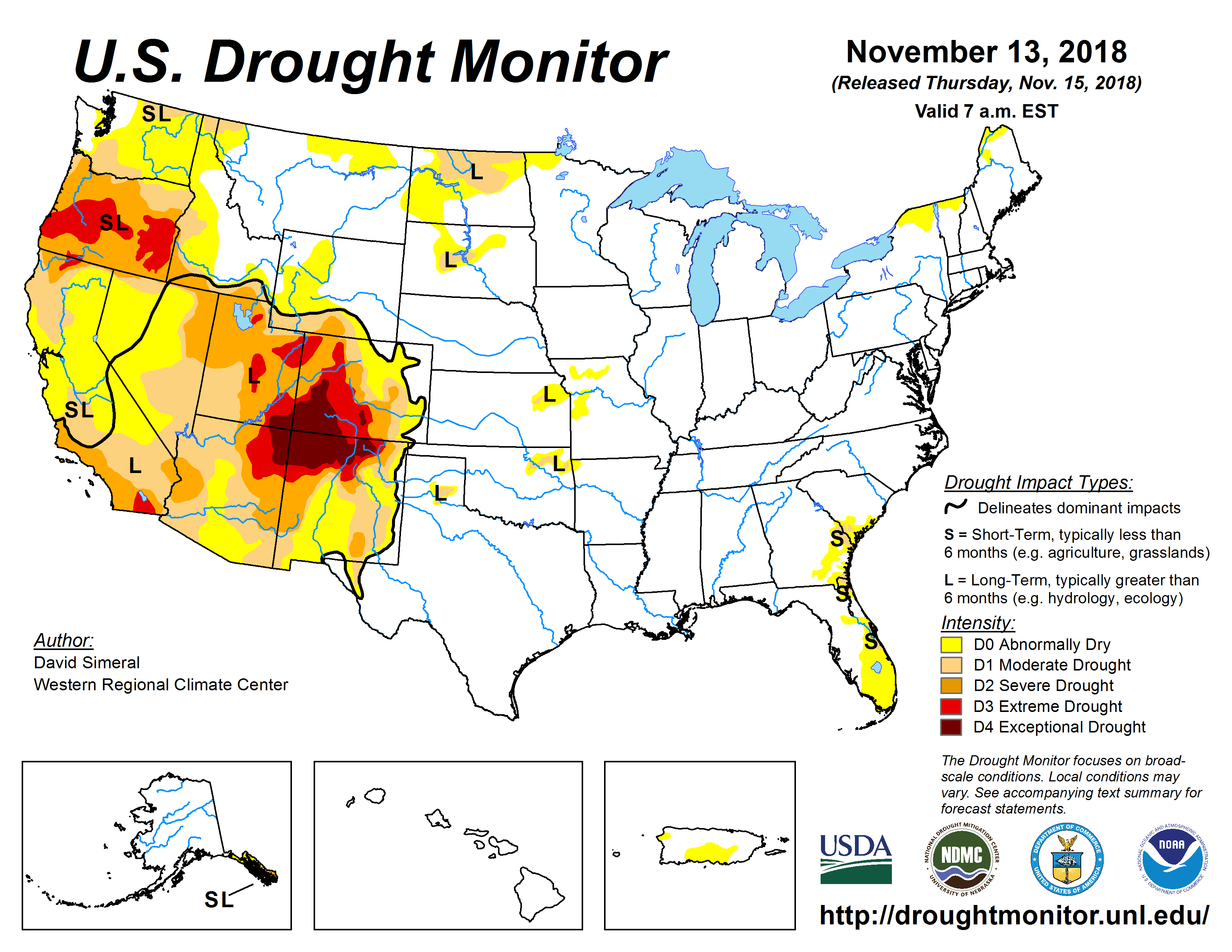
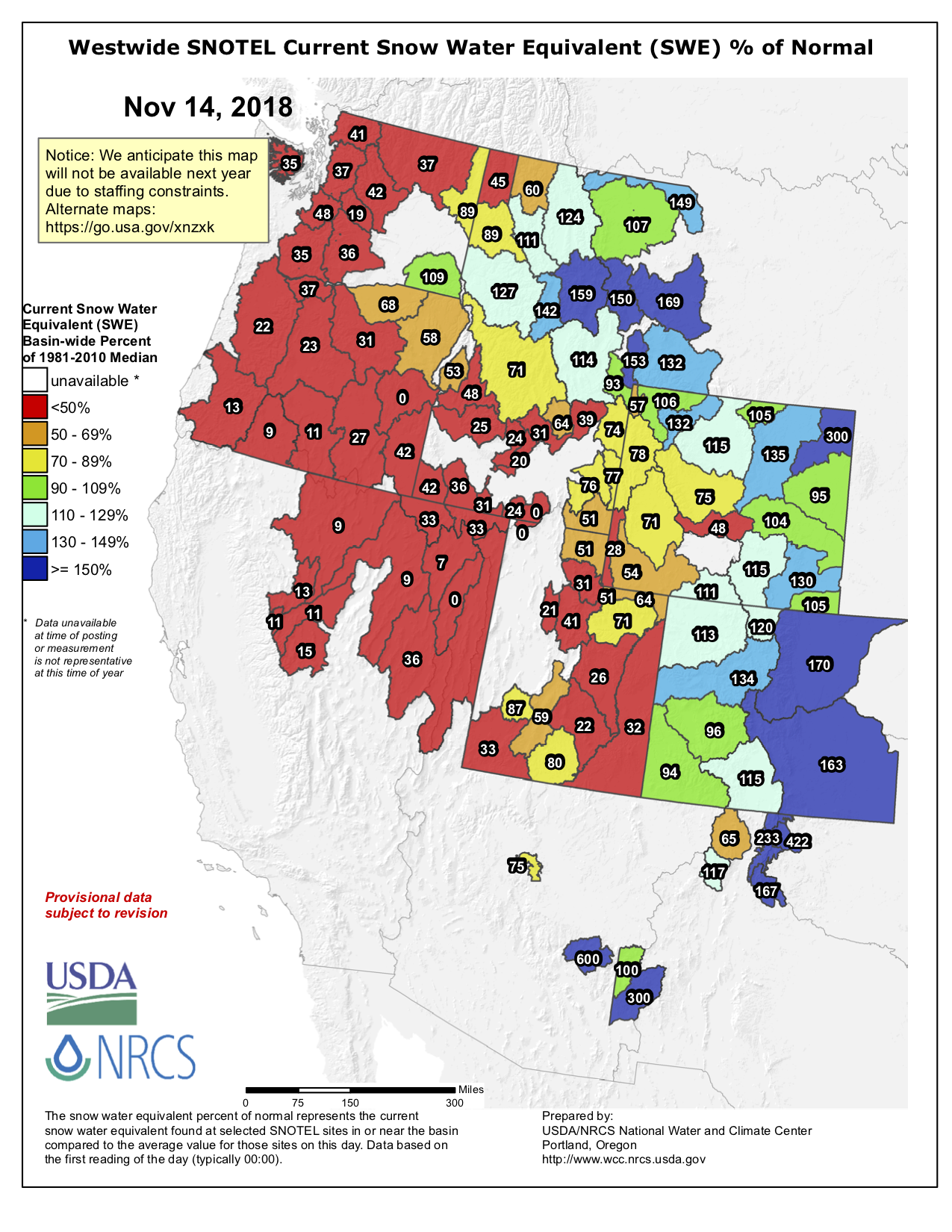
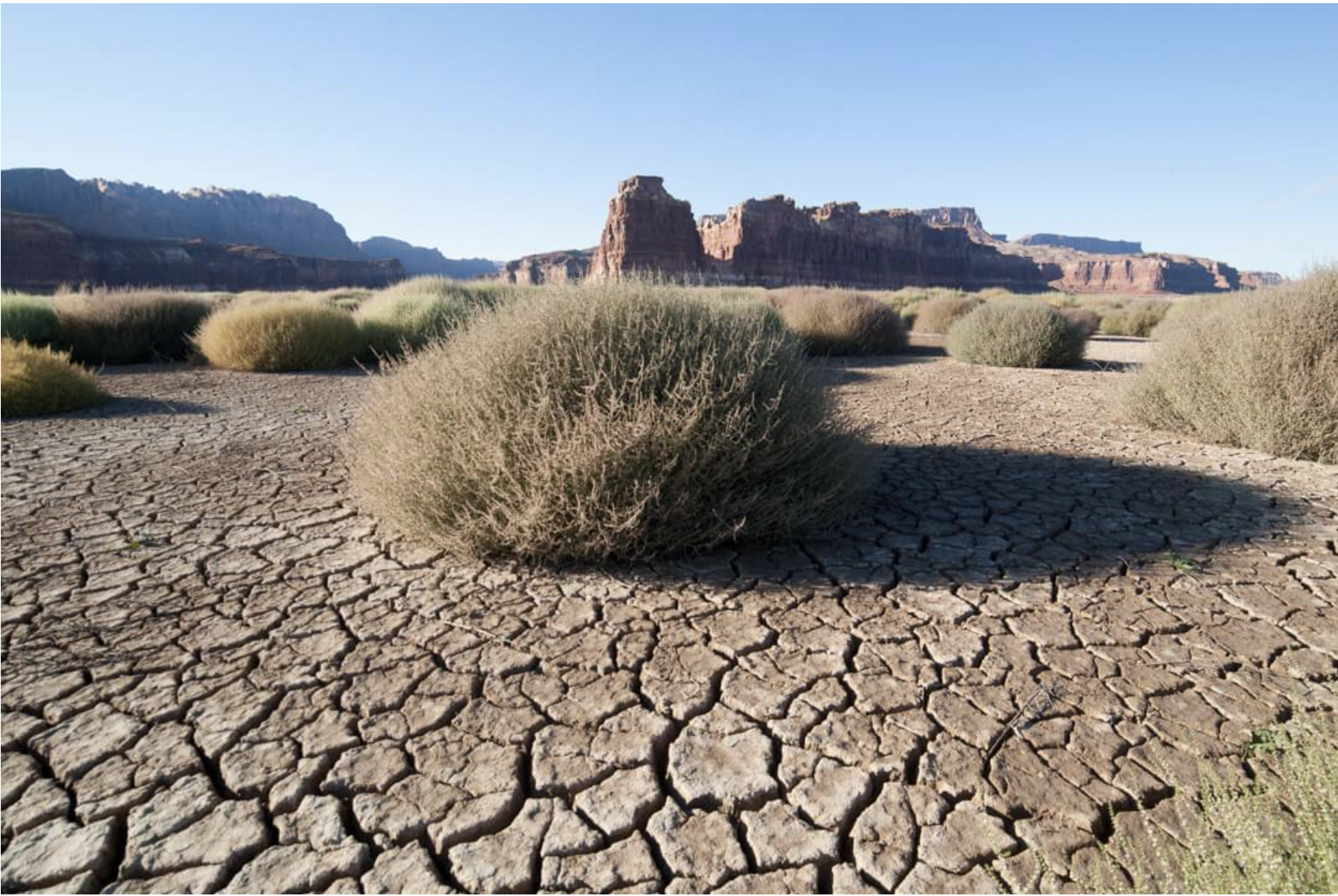
…in the long-term puzzle of ensuring that the Colorado River — the main artery of the American West — provides water to the millions of people in the basin who depend on it, the challenges are mounting. And in the face of a complicated tangle of population growth, long-term drought and climate change, does 2019’s water stand a chance of making a meaningful impact?
Water experts say the answer is: Sadly, not likely.
Colorado River District general manager Andy Mueller likened it to a year-end salary bonus. It’s a great development in the short term, but if it’s an anomaly in the broader picture, its effects will be minor.
“This is a short-term boon, and we should be happy,” Mueller said before adding the caveat stressed by many in the water community: “But we’re not out of the woods yet.”
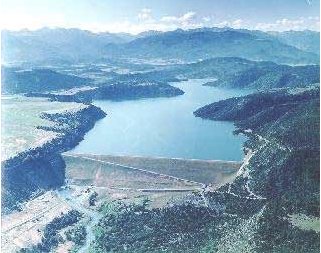
Blue Mesa Reservoir
A pattern of aridification
Going from the record-breaking drought of 2018 to the record-breaking water year of 2019 is a stroke of luck that has enabled a much faster recovery of fisheries, soils and watersheds, said Taryn Finnessey, Colorado’s senior climate change specialist.
Here, reservoirs such as Blue Mesa, Navajo and Ridgway are expected to rebound as snowmelt flushes through rivers.
“However, on the broader Colorado River, even with a banner water year, we won’t see a significant recovery,” she said.
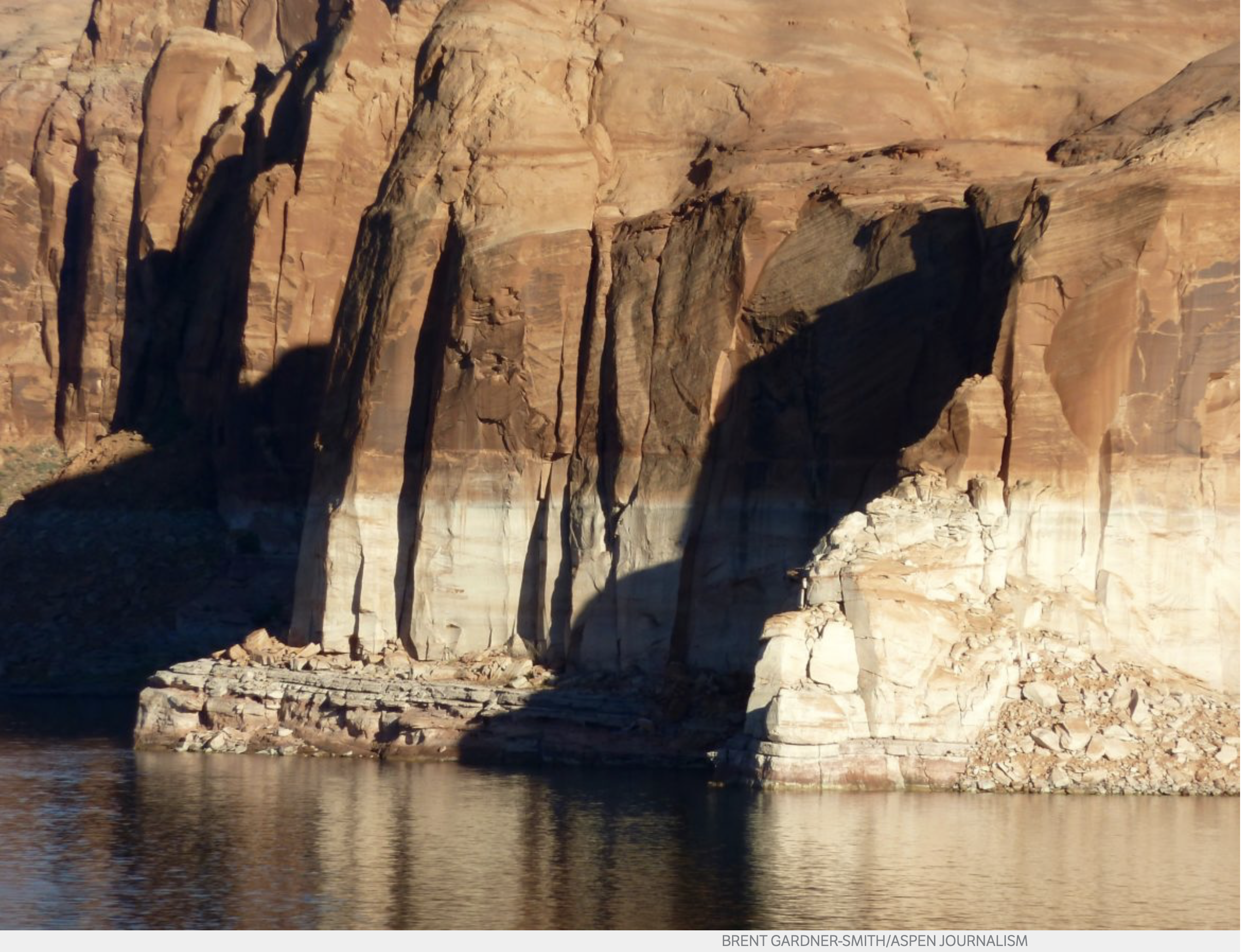
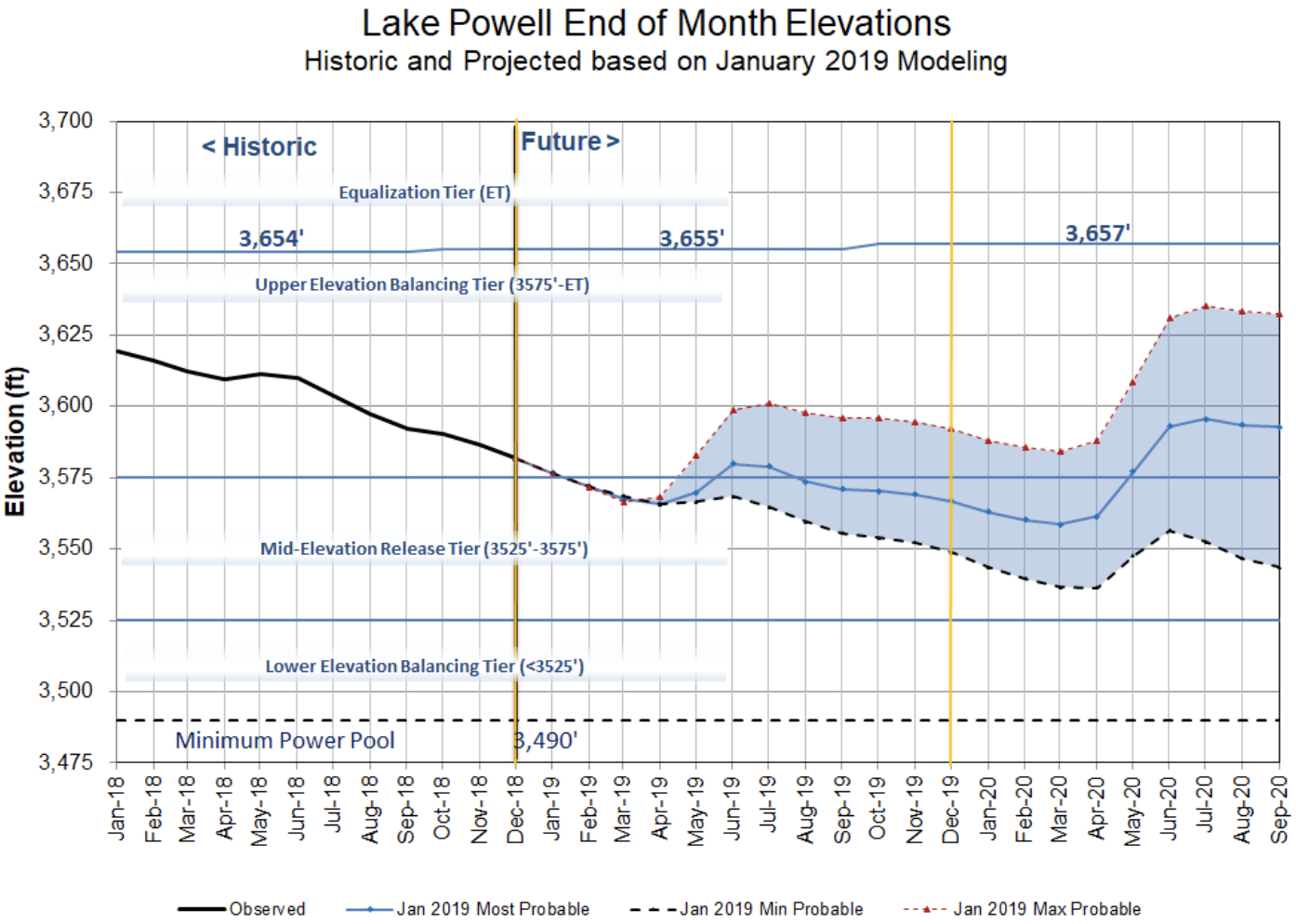
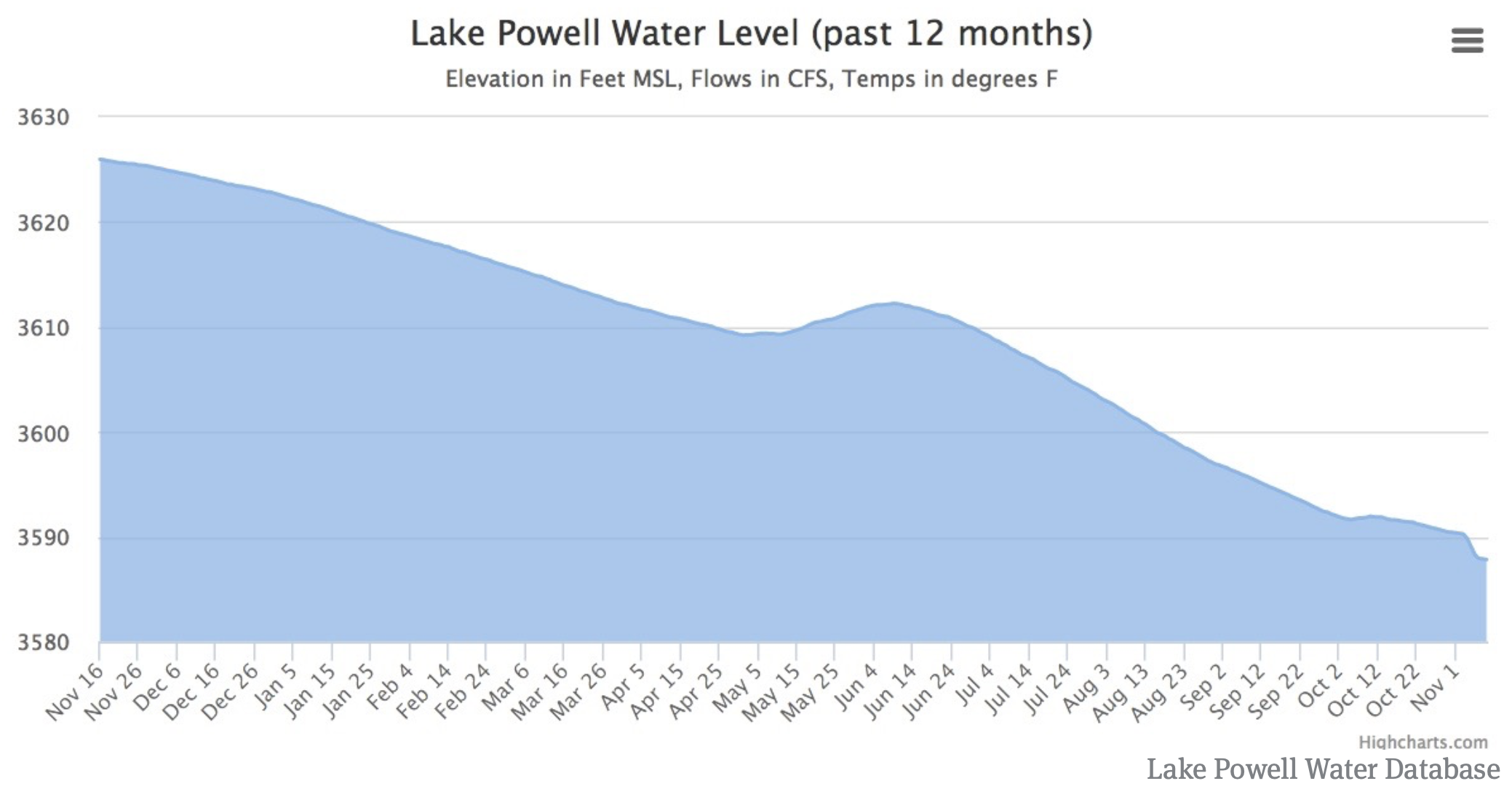
Large inflows are expected into both Lake Powell on the Utah/Arizona border and Lake Mead downstream — the big reservoirs considered to be the savings accounts for the Colorado River basin. The reservoirs, which have been steadily dropping for years, are projected to end the year at slightly higher levels.
But both are so far from capacity — as of June 24, Mead was only at 40 percent, while Powell was at 51 percent, according to the Bureau of Reclamation — that these increases will, at best, put them a little more than half full by year’s end.
“So we’re not seeing a huge rebound in those really large storage buckets that provide long-term storage in the Southwest,” Finnessey said.
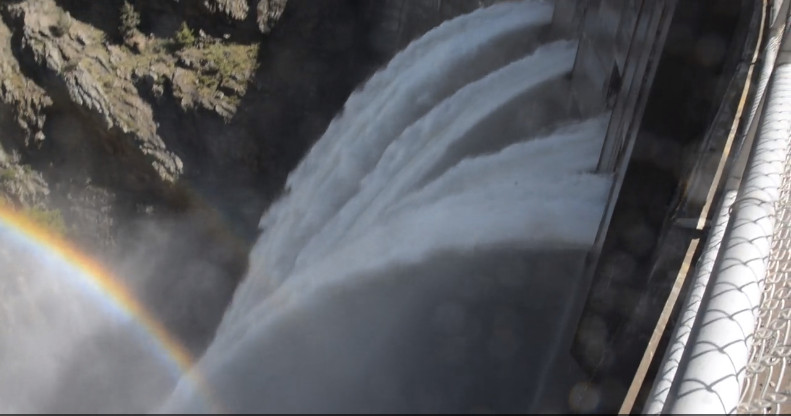
Ridgway Dam
Why not? The short answer, she said, is climate change.
Over the past 20 years, the broader Colorado River system has experienced not only decreased precipitation — in the form of 19 years of drought — but also increased temperatures. The hotter weather creates more rapid evaporation and thirstier soils, and causes the snow to melt more quickly, transforming it from the steady flows that were once typical, into an annual big-water flush that’s harder to capture and store.
The result, Finnessey said, is a slow shift in the basin “from drought to long-term aridification” that’s drawing down the water. A growing population only exacerbates the problem. And one good year of water won’t reverse that.
In fact, Mueller said the river district’s engineer guesses it would require eight to 13 years “exactly like this one” to emerge from the deficit. So, relying on Mother Nature to turn things around isn’t a reliable option.
James Eklund, the state’s representative on the Upper Colorado Basin Commission, said the problem is that the entire system of storing, capturing and using the water of the Colorado River is predicated on the way things functioned before climate change…
Make no mistake, Eklund said, managers will store every drop they can in a year like this. Unfortunately though, “climate change is boxing Colorado water managers in from all sides.”
[…]
The result of those talks is the Colorado River Basin Drought Contingency Plan, which was signed in May. In that agreement, the Lower Basin states agreed to specific decreases in water use.
The plan is designed to bank water and leave it in Lake Mead, which in turn keeps more water in Lake Powell (by preventing large releases from Powell required to bail out the Lower Basin’s supply.) And unlike in the past, the water that is banked in Powell by the Upper Basin states will belong solely to Colorado, Wyoming, Utah and New Mexico as a sort of emergency water account.
Previously, all the water saved by Upper Basin states in Lake Powell could be released to Lake Mead for the Lower Basin states to use.
“That was a perverse incentive,” Eklund said of the former arrangement that didn’t really reward water conservation by Upper Basin states. “What we decided to do is make it a positive incentive.”
The Upper Basin states, meanwhile, agreed in the Contingency Plan to explore methods for managing and reducing consumption.
(As part of that promise, the Colorado Water Conservation Board has assembled eight workgroups to study a demand-management program for the state, which is envisioned as a voluntary program that would pay users to not use their water rights. The water saved through that program, the river district’s Mueller said, could be stored in Lake Powell to be used explicitly for Upper Basin needs.)
Finally, the contingency plan makes reservoir operation more flexible for Colorado’s Blue Mesa and Navajo reservoirs and Flaming Gorge in Wyoming — while still respecting the environmental considerations of their water releases…
But it’s also a problem that can’t be ignored away. “Everybody in the basin has to get better, faster, smarter at our jobs,” Eklund said. “Our policies have to become more flexible, smarter and better.”
Mueller echoed that, noting that if Lake Powell is a measure of how secure the Upper Basin should feel about its future, “we should not feel that secure.”
He said it’s time to take a hard look at measures such as removing sod, improving agricultural efficiency, crop switching and even cloud seeding.
There are models of success out there. Denver Water, which serves 1.4 million people in Denver and the surrounding suburbs, has seen its per-capita water use drop 34 percent since 2001 thanks to major conservation efforts.
“We’re actually using the same amount of water that we used in the ’70s even though our population has grown by half a million,” said Dave Bennett, the utility’s director of water-resource strategy. “And that’s really a testament to conservation.”
When it comes to the Colorado River, conservation may not be enough. For now, though, it’s one of the best tools available. So, while nobody has come up with the end-all answer for solving the long-term crisis, water managers are unanimous on one thing: Users can’t afford to waste a single drop of water, even in a year of abundance.
“We were lucky this year,” said Finnessey, the climate change specialist. “But I don’t think that’s something that we can ever assume will happen again. So we need to be really wise stewards of our resources.”
Click here to read the update (Taryn Finnessey/Tracy Kosloff):
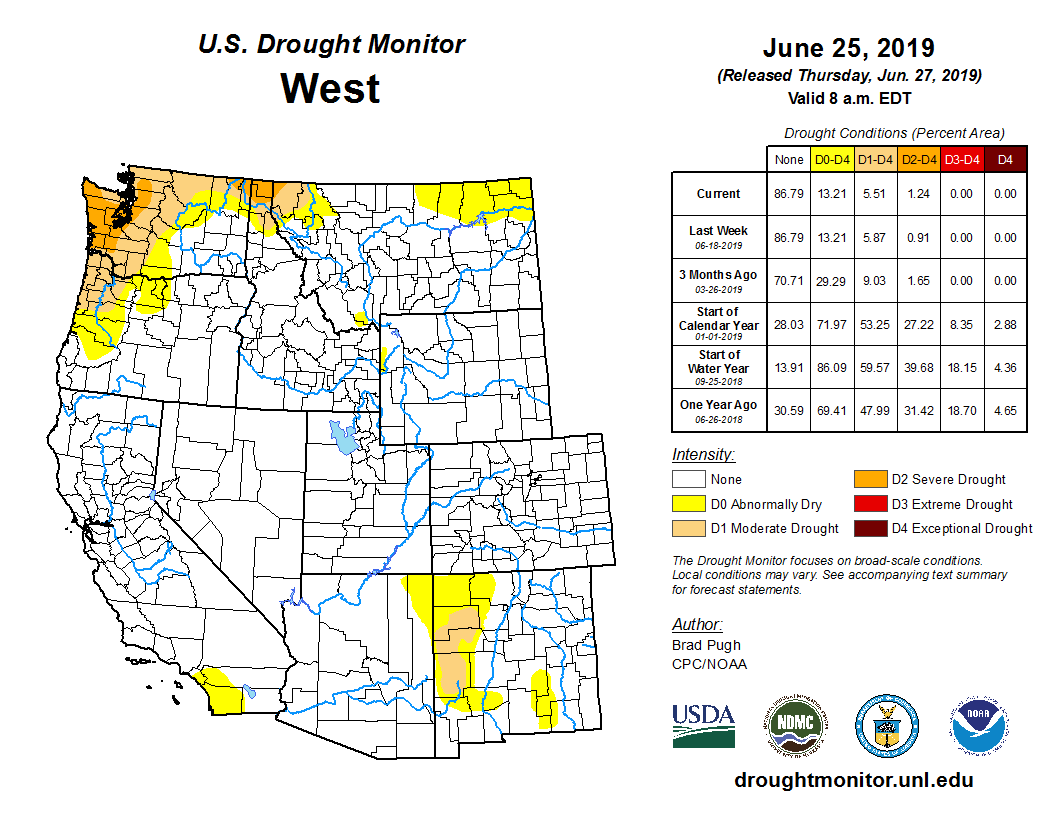
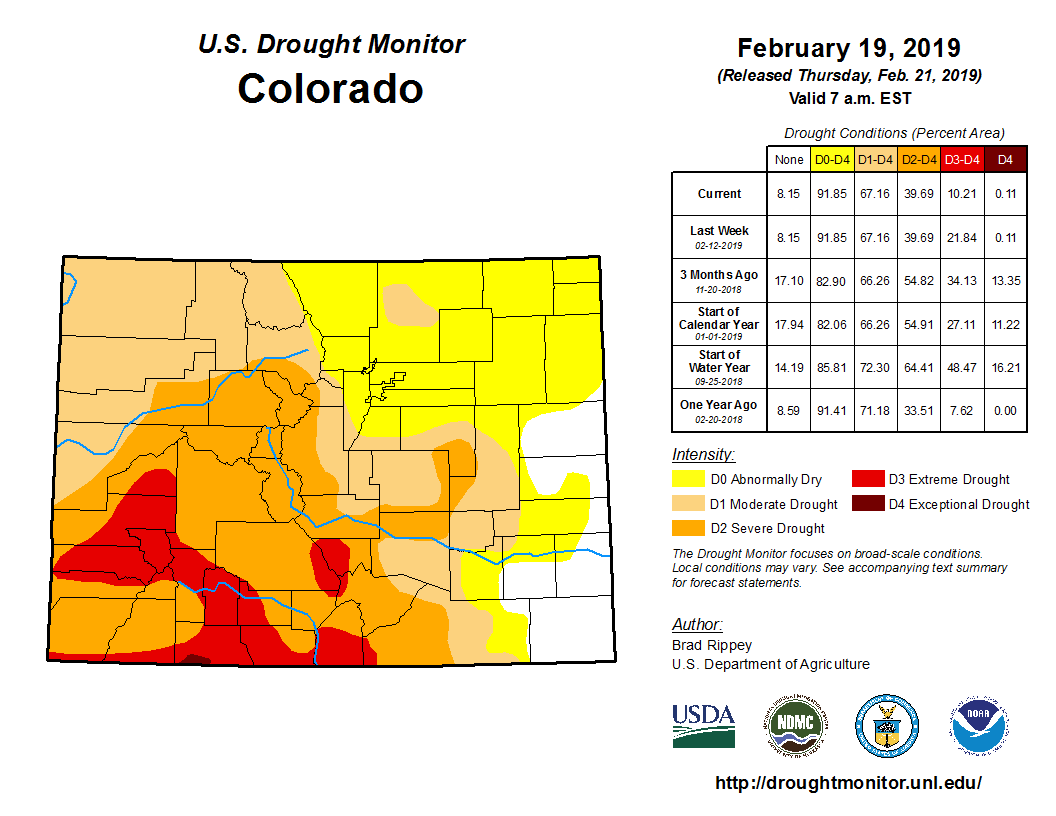
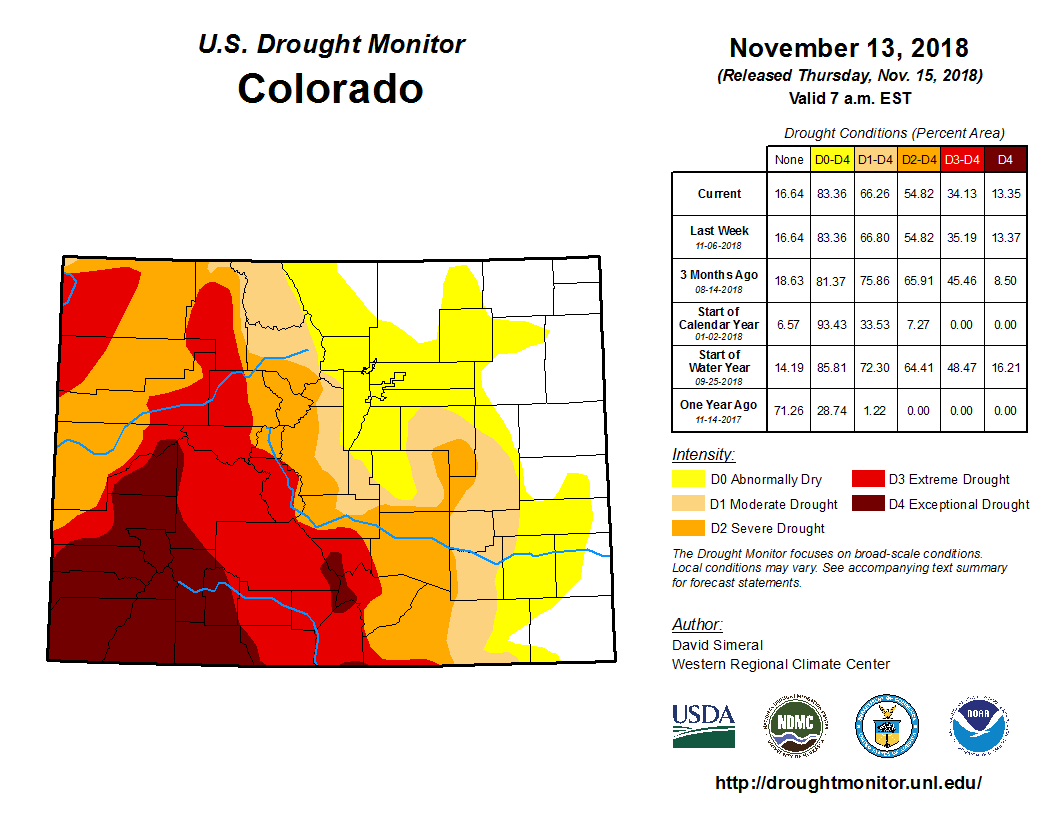
For the first time in nineteen years, the U.S. Drought Monitor Map of Colorado has officially been free of D0-D4 for four weeks. The month of May brought cool temperatures across the state and midwest. Not far behind, June has delivered lower than average temperatures and increased precipitation in the form of rain and snow. The last week of June is anticipated to be fairly dry and warm following below average temperatures and above average precipitation. Streamflows are forecast to continue to increase from precipitation and remaining snowpack melt. Current reservoir storage is slightly below normal.
June has been completely free of D0-D4. The smallest amount recorded of D0 last occurred in May 2001, when only 0.13% of our state showed D0.
A weak El Niño is in effect and forecast to remain through the fall. There is an increased chance of cool and wet extremes from July to September.
The Yampa and White River Basins have accumulated 227 percent of average precipitation from the beginning of June to date while the Gunnison Basin has only received 78 percent of average precipitation this month. This is historically a drier time of year in both these basins.
As of June 24th, the precipitation in June is 150 percent of average. The upcoming months of July, August, and September are projected to have an increased chance of above average precipitation as well. July and August are considered critical months of the year, as they are the wettest for the eastern plains.
Current SNOTEL Water Year to-date precipitation is 124 percent of average, with all basins above average. June has been a wet month across the far eastern plains. According to SNOTEL, 12 percent of this year’s remaining snowpack continues to melt. The 2019 peak snowpack ranked 6th at 130 percent median among the last 34 years.
Reservoir storage across the state (as of the end of May) is 90 percent of average. This is slightly lower than last year’s statewide reservoir storage at the same time which was 106 percent of average.
Flooding in post wildfire burn scars remains a concern and is being monitored closely. The daily flood threat bulletin can be accessed May 1 through September 30 HERE.
Everything you love about Colorado is connected back to water: kayaking, fishing, peaches, beer, the thriving economy. But the fact is, we’re using more water than the Colorado River supplies. Our population is booming. And snowpack, which feeds our rivers, has been below average all across Colorado most years since 2000. This year’s snowpack has been great, but it’s just a drop in the bucket compared to how much we’ll need. So in order to keep this amazing state a great place to live, work, and do business we need to support Colorado’s Water Plan.
Heart Attack on Oh Be Joyful Creek. The creek has become the most popular Class V creek run in all of Colorado. The sickening gradient slides down generally smooth flat slate resulting in surprisingly easy lines. Don’t take it too lightly though, the swims are few but there is potential for epic carnage. The creek has taken on the nickname “Oh Be Careful”. This run gets dramatically easier the more times you’ve run it. After the 2nd or 3rd time down most competent Class V boaters can bomb it in less than 10 minutes without breaking a sweat. Photo credit: American Whitewater
Will Hobbs, Greg Hobbs, Dan Hobbs, and a string of fish for dinner, Mary Alice Lake, Weminuche Wilderness, 1986 via Greg Hobbs
Palisade peach orchard
Former Colorado Gov. Bill Ritter interviews Amory Lovins at the Center of the New Energy Economy conference on Oct. 30, 2017. Photo/Maury Dobbie
Colorado Water Plan website screen shot November 1, 2013
Colorado has launched a public messaging campaign aimed at increasing public awareness of water scarcity as well as to promote the state’s water plan.
The campaign, For the Love of Colorado, was created to educate the public about water conservation, leaning on sobering facts and figures about the Colorado River.
For one, Colorado’s population is expected to double by 2050. The campaign also notes that 80% of the state’s water comes from snowpack runoff, which could shrink by as much as 50% by the end of the century.
To avoid a slow-building water supply catastrophe, the state has drafted its own water plan — which integrates work done by Colorado’s nine Basin Roundtables, the Interbasin Compact Committee, the Colorado Water Conservation Board and other organizations — since 2005 to implement water management plans.
For the Love of Colorado is trying to push the water plan into the public consciousness, inviting residents to engage in the process and learn more about efforts to protect one of the most critical water supplies in the country.
With Colorado’s snowpack at historically high levels and several towns turning their attention from avalanches to potential flooding, most people in the state probably aren’t thinking about preparing for drought years. But state lawmakers, farmers and environmentalists are.
Together, they are working over the summer on potential expansions to a program that allocates water specifically to benefit streams and aquatic habitat in dry times.
The measure failed at the State Capitol this year, but HB19-1218, Loaned Water for Instream Flows to Improve Environment, will be taken up again this summer by the legislature’s Interim Water Resources Review Committee.
The first effort was championed by conservationists like The Nature Conservancy and opposed by some farmers, who worry it could harm water rights reserved for agriculture.
“Our businesses are totally based on the value of those water rights,” said Carlyle Currier, vice president of the Colorado Farm Bureau and a rancher in Molina, Colo. “We’re very concerned that changes would allow that right to be injured.”
Colorado’s Instream Flow Program was established amid the environmental movement of the 1970s to integrate environmental water needs into the state’s intricate system of water rights. Colorado’s water laws work on a priority system: Those whose water rights were established earliest get first dibs in dry years. Before the instream flow law was created, there was no mechanism to establish a water right specifically to keep water in a stream to protect fish and the environment. Rather, water rights were all about diverting that water from the stream.
The Instream Flow (ISF) Program uses water rights within that same priority system to reserve water for environmental purposes, protecting the plants and animals that depend on streamflows.
To date, 9,600 miles of stream have been protected through ISF, according to Linda Bassi, chief of lake and stream protection with the Colorado Water Conservation Board — nearly a quarter of the state’s 40,000 miles of waterways. The CWCB doesn’t have a goal for how many miles of stream it would like to eventually protect, Bassi said, instead taking recommendations from state and federal agencies, local governments and environmental groups for specific stream segments in need of protection.
The CWCB is the only entity that can legally hold ISF water rights. It gets them through establishing new, junior water rights, or by acquiring existing water rights via donation, purchase, lease or other contract. HB19-1218 was concerned with the leasing of existing water rights for ISF purposes.
Under current law, water rights holders can lease their water to the ISF Program only three years out of any 10-year period, and are limited to one 10-year timeline. After that, to maintain ISF protection on a given stretch of stream, the CWCB has to find another water rights holder to lease from, or work out another agreement to preserve the water.
The state can and does employ different means to protect a stretch of water on non-lease years. But “leases are the simplest and easiest way to pull this off,” said Andy Schultheiss, executive director of the Colorado Water Trust, a nonprofit that works with the CWCB on the ISF Program.
Under the proposed legislation, the CWCB would be able to lease water rights for five years out of 10, and the 10-year periods could be renewed twice. Extending protection to 15 years out of 30 will help sustain the environment as drought cycles become more erratic due to climate change, said Aaron Citron, policy advisor at The Nature Conservancy.
“What we’re trying to do is provide a tool that can address critically low stream conditions under a more variable future scenario,” Citron said. Even if HB19-1218 had passed as-is, the expanded ISF Program would not “fully meet the need we think we will see under climate change.”
Both Schultheiss and Citron agree that the way ISF rights are being used today shows that there is more demand for instream flow protection than supply. Two of three available years have been used in a lease of water from Stagecoach Reservoir near Steamboat Springs to benefit the Yampa River, according to Citron, and the Colorado Water Trust is holding off on using the third for when conditions are most dire.
“Last summer, there were stretches when the only water in the Yampa [River] through Steamboat Springs had been leased [for instream flow],” Schultheiss said.
As far as the state’s farmers are concerned, expanding instream flows goes a step too far. The Colorado Farm Bureau opposed HB19-1218 for the primary reason of protecting existing water rights.
“It seems like it was a little bit of a backdoor to expand ISF rights without going through the vetting process,” said Currier. “That’s a little frightening to those of us who own water rights.”
To establish a new ISF water right on a particular stream, there is a three-year process that ends with a review by Colorado’s water court to determine, among other things, that the instream right won’t negatively impact other water rights holders. Extending lease periods that significantly without a return to water court could harm farmers, Currier said.
Under the proposed rules, Currier worries that two five-year leases could be stacked back-to-back, leaving water in streams for 10 consecutive years while fields go fallow.
The Farm Bureau is also concerned about a third proposal for the ISF Program. Currently, leased water rights can only be allocated for instream purposes in a quantity great enough to preserve the natural environment “to a reasonable degree.” The Nature Conservancy wants to go beyond preserving existing conditions to allow improvement of natural conditions as well.
“That language is a little troubling to us,” Currier said. “That is not a quantitative term. Who determines what’s an improvement? What exactly does that mean?”
The CWCB already has the authority to acquire water rights that improve the environment, Citron said, just not for ISF leases.
This and other ISF issues will be discussed at the next meeting of the legislative interim water committee as part of the 2019 Colorado Water Congress annual summer conference, being held Aug. 20-22 in Steamboat Springs. Both sides remain hopeful that a compromise could be reached, though Currier noted farmers are resistant to making changes that they feel haven’t been properly vetted for potential negative impacts.
“We’re not out to destroy the environment; we’re more dependent on it than the average citizen,” Currier said. “We really feel the existing water law is written fairly well and we don’t see a lot of need for changes to that.”
If the interim water committee is able to craft new language that satisfies agricultural and environmental interests, a new bill will be introduced during the next legislative session, which convenes Jan. 8, 2020.
Shay Castle is a freelance journalist based in Boulder, Colorado. She can be reached at shay.castle6@gmail.com
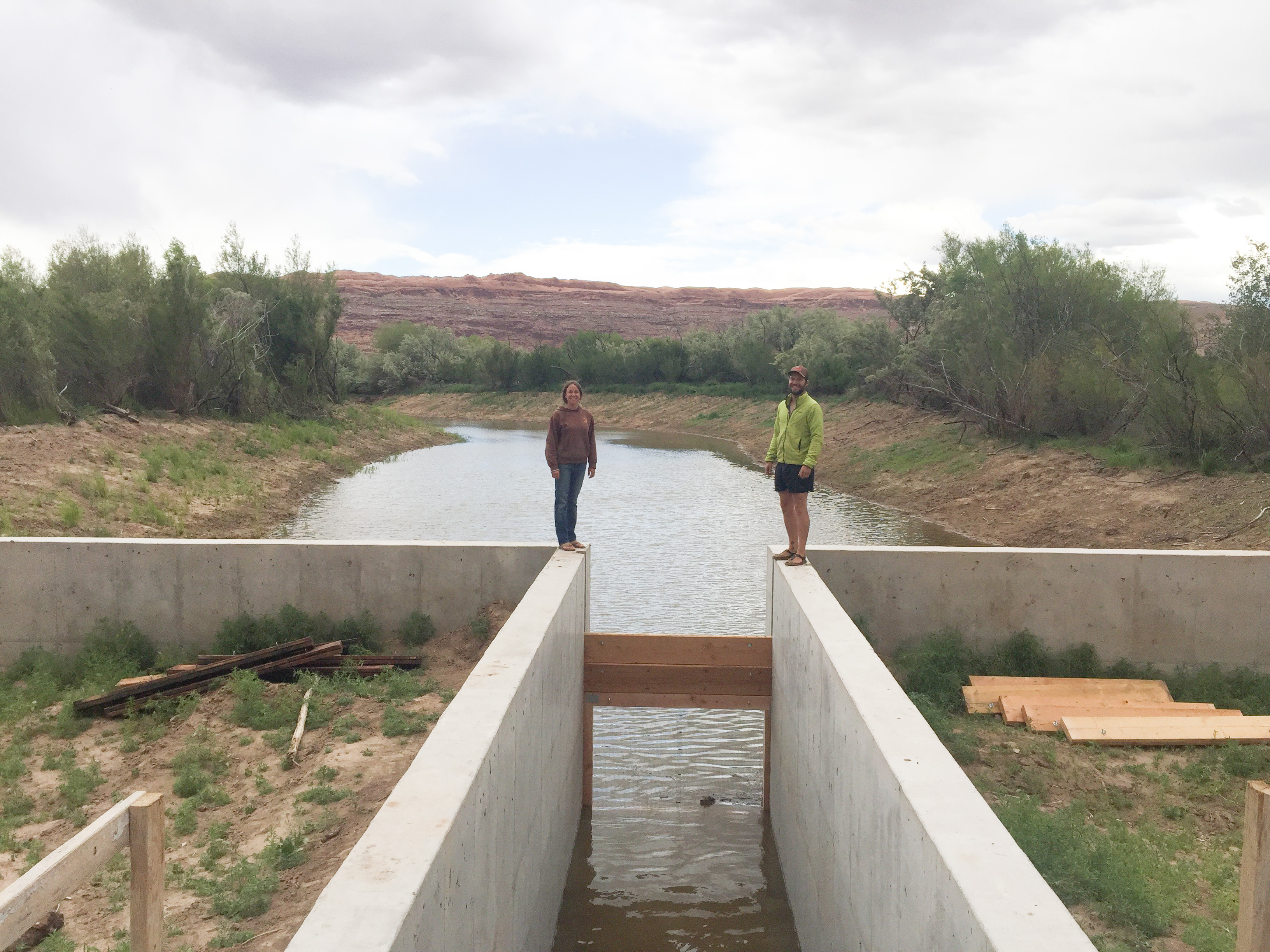
Katie Creighton and Zach Ahrens both native aquatics biologists for Utah Division of Wildlife Resources (UDWR) standing on the temporary Matheson screen. The Nature Conservancy and UDWR partnered together to build the structure to allow the endangered razorback sucker larvae to enter the Scott M. Matheson Wetlands Preserve without the predators also coming in. Courtesy & Copyright Katie Creighton, Photographer via Utah Public Radio
FromThe Grand Junction Daily Sentinel (Dennis Webb):
Entities including Front Range water utilities and the Bureau of Reclamation on Friday began coordinating water releases from upstream reservoirs in a voluntary effort to prolong peak runoff flows in what’s called the 15-Mile Reach upstream of the confluence with the Gunnison River. It’s a critical stretch of river for four endangered fish — the humpback chub, razorback sucker, bonytail chub and the Colorado pikeminnow.
River flows at Cameo exceeded 20,000 cubic feet per second Saturday. The coordinated reservoir operations are intended to slow the decline of high flows, sustaining those flows for three to five days this week. The first releases from the coordinated program were expected to arrive Monday night; the flows at Cameo earlier Monday were at 18,900 cfs, according to the U.S. Geological Survey.
Strong flows help remove fine sediment from cobble bars that serve as spawning habitat for the fish, according to the U.S. Fish and Wildlife Service. They also help reconnect the river to backwaters where the fish, especially at the larval stage, can find refuge from the stronger river flows, said Don Anderson, a hydrologist with the agency.
The releases are being made possible by this year’s ample winter snowpack, which means reservoir operators can release reservoir water without risking the ability to fill the reservoirs.
Anderson said that in some years the releases are coordinated with the goal of raising peak flows to beneficial levels, but this year the peak flows were high enough it was decided that the reservoir water instead could be used to prolong those flows.
According to a Fish and Wildlife Service news release, under the coordinated operations:
The Bureau of Reclamation is increasing releases at Ruedi Reservoir and Green Mountain Reservoir, with the Green Mountain releases including inflows bypassed by Dillon Reservoir, operated by Denver Water.
Denver Water is likely to increase releases from Williams Fork Reservoir.
Homestake Reservoir, operated by Colorado Springs Utilities, may participate in the releases after peak flows on the Eagle River recede.
The Windy Gap Reservoir and Pump Station, operated by Northern Colorado Water Conservancy District, will delay pumping water to Granby Reservoir.
The current effort follows reservoir releases by the Bureau of Reclamation earlier this spring on the Gunnison River to boost flows for endangered fish there. In both cases, the efforts are planned in a way intended to keep from resulting in flooding impacts downstream.
Anderson said the coordinated spring operations on the upper Colorado River started in 1997, and by his count have occurred in 11 years since beginning…
He said that while the coordinated releases target the 15-Mile Reach, their benefits extend as far as Moab, Utah, improving management of a river floodplain wetlands there that is being used to help in the recovery of razorback suckers.
Entities including the Colorado River Water Conservation District, Grand Valley Water User Association, Orchard Mesa Irrigation District, Palisade Irrigation District, National Weather Service, Colorado Basin River Forecast Center, Colorado Water Conservation Board, and Xcel Energy also participate in the coordinated reservoir operations effort.
FromThe Grand Junction Daily Sentinel (Dennis Webb):
The river is flowing so fast right now that people can float the entire 25-mile Ruby-Horsethief stretch in a day — even as few as four or five hours, Baier said. He said his company is running guided one-day trips there right now and he thinks some people are realizing they can float the stretch in a day rather than needing to make reservations for Bureau of Land Management campgrounds.
In Glenwood Canyon, raft companies currently aren’t running the Shoshone stretch of the Colorado River due to strong flows, as is typical this time of year. Ken Murphy, owner of Glenwood Adventure Co., said that closure might last perhaps a week longer this year than in a normal year. He said the Shoshone rapids have a brand appeal and people want to raft there, but high water provides lots of other good rafting options. Last year, the Roaring Fork River didn’t provide much of a rafting season, but this year is different. While it usually offers good rafting until maybe the first or second week of July, “now we’re going to be on it we hope maybe until August,” Murphy said.
He said the Roaring Fork offers beautiful scenery away from Interstate 70 and sightings of bald eagles and other wildlife. And rapids that are usually rated Class 2 are currently Class 3.
“It gives people enough whitewater to get wet but not scare them,” he said.
Colorado River trips that put in at the Grizzly Creek area of Glenwood Canyon below Shoshone also are heading farther downstream than normal right now, to New Castle, due to the fast-flowing water, Murphy said…
Murphy said his company also owns Lakota Guides in Vail. He said the Eagle River in Eagle County will be good for rafting for longer this summer due to the big water year, meaning the company can continue offering trips to guests there rather than having to bus them to Glenwood Springs or the upper Arkansas River. He said the Blue River in Summit County also will benefit from a longer boating season.
An impromptu workgroup works on a problem on the Colorado River. The group members came together below Doris Rapid in the Grand Canyon after a small raft flipped, and needed to be flipped back over to proceed. The CWCB could be considered to be embarking on a similar exercise in setting up eight workgroups to discuss ways to leave more water in the Colorado River system above Lake Powell. Photo credit: Brent Gardner-Smith/Aspen Journalism
The Colorado Water Conservation Board on Monday released the names of the 74 people it has asked to volunteer on eight workgroups being formed to investigate how a demand-management program might work in the state.
The list of people asked to serve reads like something of a who’s who of Colorado water mavens, and they will be helping the CWCB investigate what’s billed as a “voluntary, temporary and compensated” demand-management — or water-use reduction — program in the state.
The workgroup meetings, which the CWCB considers similar to staff meetings, are to be closed to the public and the media. However, the CWCB staff members holding the meetings then plan to share the insights they’ve gleaned from the workgroup meetings in open settings, including meetings of the CWCB’s board of directors.
“From our point of view, the workgroups are assisting the CWCB’s project-management team in framing demand management issues for public review, comment, and contributions,” said Brent Newman, the chief of CWCB’s Interstate, Federal and Water Information section. “We want to come to our usual public forums with a more informed initial ‘first stab’ at demand management.”
The workgroups, as currently configured, include Andy Mueller, the general manager of the Colorado River Water Conservation District; Jim Lochhead, the CEO of Denver Water; Mely Whiting, an attorney for Trout Unlimited on Colorado river issues; Kathy Chandler-Henry, an Eagle County commissioner; Doug Kemper, the executive director of the Colorado Water Congress; Mark Harris, the general manager of the Grand Valley Water Users Association; and many other notable water managers and experts.
(Please see full list of workgroup participants below).
The workgroups are divided by the following topics: law and policy; monitoring and verification; water-rights administration and accounting; environmental considerations; economic considerations and local government; funding; education and outreach; and agricultural impacts.
A ninth workgroup, on tribal interests, was to be formed, according to a CWCB staff presentation at the agency’s meeting in May, but a tribal workgroup was not included on the workgroup roster released Monday.
The Colorado River Water Conservation District, which is based in Glenwood Springs and represents Western Slope water interests, has five of its employees on five different workgroups.
They are Mueller, who also is an attorney, on the law and policy workgroup; John Currier, the district’s chief engineer, on the monitoring and verification workgroup; Chris Treese, the district’s external affairs manager, on the economic considerations and local government workgroup; Jim Pokrandt, director of community affairs, on the education and outreach workgroup; and Dave Kanzer, deputy chief engineer, on the agricultural impacts workgroup.
Colorado, Utah, Wyoming and New Mexico are each developing demand-management programs after a series of drought contingency-planning, or DCP, agreements were signed last month by representatives of those four states and the three lower-basin states of California, Arizona and Nevada.
The DCP agreements give the four upper-basin states an opportunity to store as many as 500,000 acre-feet of water in Lake Powell, and three other federal reservoirs in the upper basin, to use as insurance against violating the Colorado River Compact of 1922.
The water in the new demand-management pool must be water that otherwise would have been consumed by fields, pastures, lawns and other uses, but instead has been sent down the river system to be stored.
Before any of the demand-management programs can be launched in the four upper-basin states, they each need to be approved by the Upper Colorado River Commission, which includes representatives from the four states and the federal government.
The commission will hold a demand-management stakeholder workshop in Salt Lake City on June 21. The workshop will be open to the public.
The CWCB plans to hold a series of public demand-management workshops — as opposed to the closed workgroups — throughout the state this year.
Despite the closed-door workgroup meetings, the CWCB plans to hold an orientation webinar in July for the workgroup members that also will be open to the public.
The roster of the invited workgroup participants from the CWCB was slated to be released by June 1, but the effort was delayed after a six-page draft confidentiality agreement that was circulated by the state raised concerns among some of the potential workgroup members.
“We heard from multiple people that it was more than was necessary to achieve the goal of being able to have open conversation, and so we really took those words to heart,” CWCB director Becky Mitchell said of the first confidentiality agreement. “After some reflection, we realized that was just not the direction we wanted to go. So we’re taking a good hard look at that.”
An update sent out last week by CWCB staff said the agency was now “considering an approach that will entail a simpler and less restrictive agreement between the parties.”
Mitchell said the next version of the agreement will be closer to one page, not six pages.
The confidentiality agreements are seen by the CWCB as necessary to create “an environment for frank, candid and open discussions,” according to a recent memo to the workgroup participants.
But the confidentiality agreements are also meant to try to keep confidential some of the information provided by the state to the members of the workgroups.
A workgroup, of sorts, on the Colorado River in the Grand Canyon. Photo credit: Brent Gardner-Smith/Aspen Journalism
Proposed roster of CWCB demand management workgroups
Law and Policy
Facilitator:
Karen Kwon, first assistant attorney general, Colorado
Staff:
Brent Newman, chief, Interstate, Federal and Water Information Section, CWCB;
Amy Ostdiek, assistant attorney general, Colorado
Members:
Andy Mueller, general manager, Colorado River District
Jim Lochhead, CEO/manager, Denver Water
Bennett Raley, attorney at Trout Raley, representing Northern Water
John McClow, general counsel, Upper Gunnison River Water Conservancy District
Taylor Hawes, Colorado River Program director, The Nature Conservancy
Anne Castle, senior fellow, Getches-Wilkinson Center, University of Colorado
Beth Van Vurst, attorney, represents Southwestern Water Conservation District
Lee Miller, general counsel, Southeastern Colorado Water Conservancy District
Monitoring and Verification
Facilitator:
Michelle Garrison, water resources specialist, CWCB
Staff:
Brian Macpherson, decision support systems specialist, CWCB
Members:
Kelley Thompson, lead modeler, Colorado Division of Water Resources
John Currier, chief engineer, Colorado River District
Kevin Lusk, principal engineer, Colorado Springs Utilities
Tom Simpson, manager, Colorado and Arkansas Basins, Aurora Water
Luke Gingrich, Western Colorado area manager, J-U-B Engineers Inc.
Laura Belanger, water resources and env. engineer, Western Resource Advocates
Perry Cabot, research scientist and extension specialist, Colorado State University
Cary Denison, Gunnison Basin Project coordinator, Trout Unlimited
Gerry Knapp, consultant, Lower Arkansas Valley Water Conservancy District
Robert Sakata, owner, Sakata Farms
Carrie Padgett, engineer, Harris Water Engineering
Water-Rights Administration and Accounting
Facilitator:
Lain Leoniak, assistant attorney general, Colorado
Staff:
Mike Sullivan, deputy director, Colorado Division of Water Resources
Kevin Rein, state engineer, Colorado Division of Water Resources
Ryan Gilliom, water resource scientist, Colorado School of Mines
Members:
Frank Kugel, general manager, Upper Gunnison River Water Conservancy District
Rick Marsicek, planning manager, Denver Water
Drew Peternell, Colorado director, Trout Unlimited
Kyle Whitaker, Colorado River programs manager, Northern Water
Dick Wolfe, retired Colorado state engineer
Steve Witte, retired Division 2 engineer
Cleave Simpson, general manager, Rio Grande Water Conservation District
Environmental Considerations
Facilitators:
Lauren Ris, deputy director, CWCB;
Linda Bassi, chief, Stream and Lake Protection Section, CWCB
Members:
Kathy Kitzman, water resources principal, Aurora Water
Maria Pastore, senior water resources project manager, Colorado Springs Utilities
Melinda Kassen, senior counsel, Theodore Roosevelt Conservation Partnership
Abby Burk, western rivers regional program manager, Audubon Rockies
Matt Rice, director, Colorado basin program, American Rivers
David Graf, water resource specialist, Colorado Parks and Wildlife
Al Pfister, wildlife biologist, Western Wildscapes, LLC
Torie Jarvis, director, NWCOG Water Quality/Quantity Committee
Mely Whiting, Colorado Water Project legal counsel, Trout Unlimited
Karen Wogsland, director of programs, Colorado Water Trust
Economic Considerations and Local Government
Facilitator:
Amy Moyer
Staff:
Amy Ostdiek, assistant attorney general, Colorado
Members:
Chris Treese, external affairs manager, Colorado River District
Alexandra Davis, deputy director of water resources, Aurora Water
Seth Clayton, executive director, Pueblo Water
Sean Cronin, executive director, St. Vrain and Left Hand Water Conservancy District
Kathy Chandler‐Henry, Eagle County commissioner
Barbara Biggs, general manager, Roxborough Water and Sanitation District
Steven Ruddell, forester and environmental economist, CarbonVerde, LLC
Patti Wells, former general counsel, Denver Water, former CWCB board member
Liesel Hans, water conservation manager, City of Fort Collins
Karn Stiegelmeier, Summit County commissioner
Kelly Romero‐Heaney, water resources manager, City of Steamboat Springs
Funding
Facilitator:
Anna Mauss, chief operating officer, CWCB
Staff:
Russ Sands, senior program manager, Water Supply Planning, CWCB
Members:
Ted Kowalski, Colorado River Initiative lead, Walton Family Foundation
Dave Bennett, director, Water Resource Strategy, Denver Water
Pat Wells, GM, water resources and demand management, Colorado Springs Utilities
Aaron Citron, policy adviser, The Nature Conservancy
Dick Brown, economist
Keith McLaughlin, finance director, CO Water Resources and Power Dev. Auth.
Alan Matlosz, executive VP, Colorado Public Finance Group, George K. Baum & Co.
Education and Outreach
Facilitator:
Brent Newman, chief, Interstate, Federal and Water Information Section, CWCB
Staff:
Megan Holcomb, program manager, Water Supply Planning Section, CWCB
Members:
Jim Pokrandt, director of community affairs, Colorado River District
Todd Hartman, media-relations coordinator, Denver Water
Chris Woodka, issues-management coordinator, Southeastern Water
Andy Schultheiss, executive director, Colorado Water Trust
Hannah Holm, coordinator, Water Center, Colorado Mesa University
Doug Kemper, executive director, Colorado Water Congress
Laura Spann, program coordinator, Southwestern Water Conservation District
Lisa Darling, executive director, South Metro Water Supply Authority
Agricultural Impacts
Facilitator:
Alex Funk, agricultural water resources specialist, CWCB
Staff:
Andrew Rickert, program associate, CWCB
Erik Skeie, special project coordinator, CWCB
Members:
Dave Kanzer, deputy chief engineer, Colorado River District
Alan Ward, water resources division manager, Pueblo Water
Eric Wilkinson, former general manager, Northern Water
John Stulp, former water policy adviser to Colorado’s governor
Cindy Lair, program manager, State Conservation Board, CO Dept. of Agriculture
Mark Harris, general manager, Grand Valley Water Users Association
Aaron Derwingson, agricultural coordinator, The Nature Conservancy
Paul Bruchez, rancher, fly-fishing guide, member of the Colorado Basin Roundtable
Travis Smith, senior water consultant, DiNatale Water Consultants
Allen Distel, president, Bostwick Park Water Conservancy District, Montrose
Ken Curtis, chief of engineering and construction, Dolores Water Conservancy District
Tom Gray, former Moffat County commissioner, Colorado River District Board
Aspen Journalism is collaborating with The Aspen Times and other Swift Communications newspapers on coverage of water and rivers. The Times published a version of this story on June 10, 2019.
Click here to read the newsletter. Here’s an excerpt:
H2infO – Water Provider Information Tool
Peak Spatial deployed the initial seven county pilot H2infO water provider/home buyer tool on May 10th. The tool provides realtors and home buyers address specific water provider identification and information in the seven county area of Pueblo, El Paso, Teller, Douglas, Arapahoe, Denver and Adams counties. Peak built the tool with CWP and WSRF grant support from the CWCB and the Metro RT.
The information tool can be accessed at https://h2info-co.com and includes over 320 water providers in the seven counties with links to conservation plans, rates and fees, and consumer confidence/water quality information for home buyers. The Peak team will operate the tool and work with realtor organizations and water providers to continue to refine and support data updates.
For more information or input on the site contact Royal Koepsell at royal.koepsell@peakspatial.com or call (719) 649-3477.
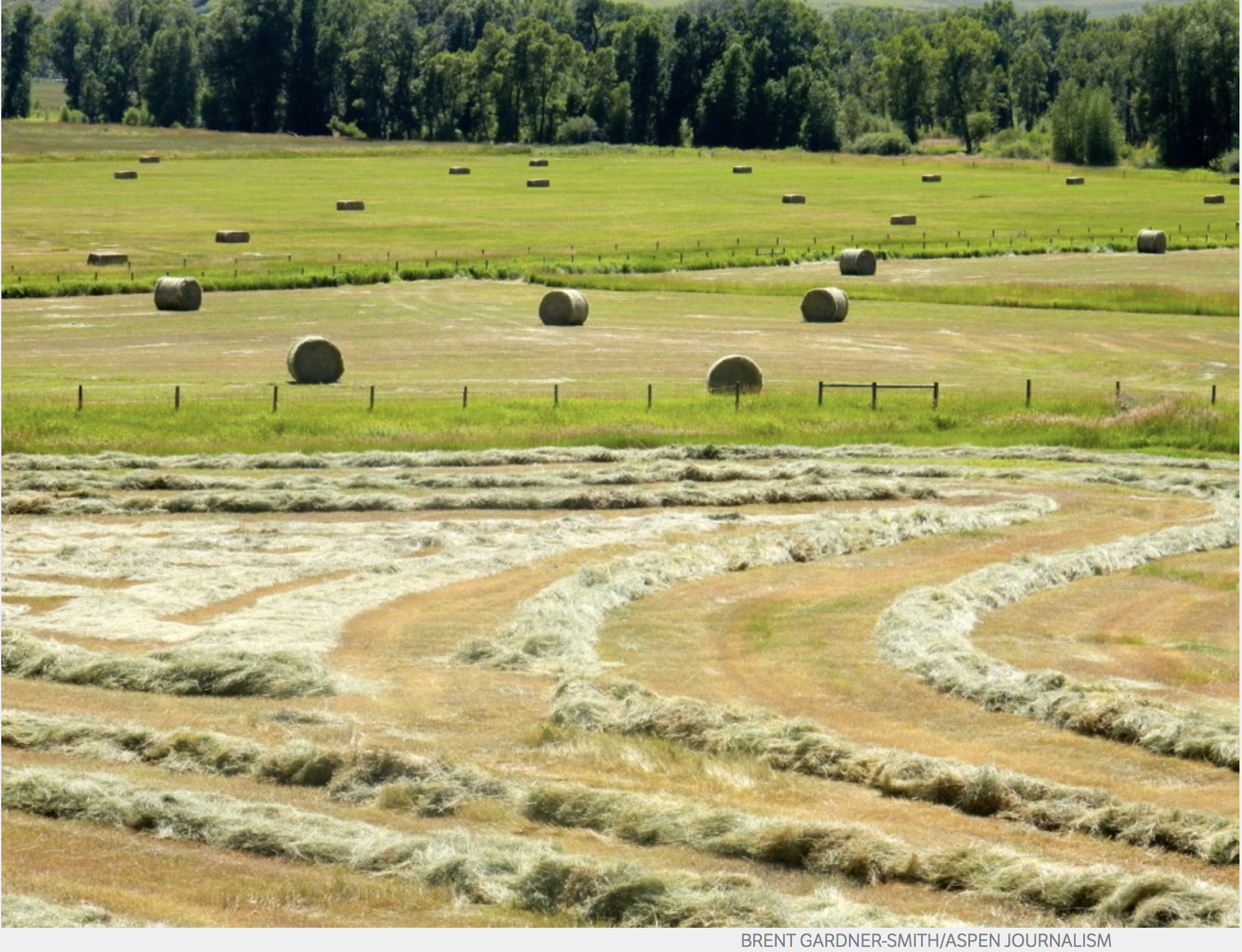
The looming possibility of mandatory curtailment of water use has raised concerns among Western Slope water managers, who feel that such cuts could harm Western Slope agricultural, such as this hay filed in the Yampa River basin. However, as water levels continue to drop to record lows in Lake Powell, mandatory curltailments are being discussed as a real possibility, especially by Front Range water managers. Photo credit: Brent Gardner-Smith/Aspen Journalism
FromThe Steamboat Pilot & Today (Eleanor C. Hassenbeck):
The collective group of [recently signed] agreements is called the Colorado River Drought Contingency Plan.
It aims to raise the unprecedented low water levels in the largest reservoirs on the Colorado River system, Lake Powell and Lake Mead, to enable them to continue to deliver water and produce hydropower.
In Colorado, it calls for three possible actions:
Creating a bank of stored water in federally owned reservoirs upstream of Lake Powell. This water would be released into Lake Powell in order to make sure Colorado continues to meet obligations to deliver a certain amount of water to downstream states under the Colorado River Compact.
Increasing cloud seeding and removing deep-rooted, invasive plants that take up a lot of water, such as tamarisk.
Creating a voluntary program that would temporarily pay agricultural water users to fallow their land and send water they have a right to downstream. This is called demand management.
Of the options on the table, demand management — the option that would pay farmers not to use their water — is the one most likely to impact Routt County…
Demand management is still only a hypothetical, so the Yampa River Basin could opt out of a program if it doesn’t work for the area.
The Colorado Water Conservation Board has assembled workgroups on topics related to demand management. These groups are now meeting behind closed doors to develop preliminary reports outlining how the program might work.
Brown said once these reports are completed and released to the public, there will be opportunities for community members to provide input on the idea. She said there will be the “opportunity for a real, thoughtful conversation, especially in the Yampa and White (river) basins.”
From email from the Colorado Department of Water Resources:
[Please find below] two documents relating to the investigation of demand management feasibility – both at the Upper Basin level and within Colorado. First, a statement from Director Mitchell on the path forward on demand management feasibility investigations within Colorado. Also, information regarding an upcoming workshop hosted by the Upper Colorado River Commission on the topic of demand management feasibility.
For more information on these topics email demandmanagement@state.co.us.
Demand Management Investigation: The Path Forward
Colorado water users, stakeholders, and interested parties:
Now that the Colorado River Basin Drought Contingency Plan (DCP) is finalized, the Colorado Water Conservation Board (CWCB) is beginning its efforts to investigate the feasibility of a potential demand management program within Colorado.
The strong connection between Coloradans and our water has established a foundation of public input, deliberation, and participation in the decision-making process, which leads to informed and thorough policymaking. This is the model that informed the Colorado Water Plan, and it is this model that the CWCB will utilize to assess demand management: by Colorado, for Colorado.
At the March 2019 meeting, the Board of Directors of the CWCB approved the 2019 Work Plan for Intrastate Demand Management Feasibility Investigations. Below are highlights of the current and upcoming steps that the CWCB staff will be taking to implement the 2019 Work Plan, including opportunities for engagement, processes to inform the Board, and informational events. These elements are designed to ensure that the CWCB and all interested water users and stakeholders are fully informed of demand management concepts and challenges as they are identified. Through this process, the multitude of considerations demand management presents will be fully understood, to promote an informed and fully realized public policy discourse.
General Outreach: Staff will continue to work directly with interested water users and stakeholders to inform them of the process for investigating demand management feasibility within Colorado, and to solicit input on specific elements of potential implementation and solution identification. The direct interaction between staff and the various basin roundtables, policy boards, water users, and stakeholder groups is where the conversations begin. This will then lead to identification of considerations and development of potential solutions, which will be used to inform an evaluation of demand management.
Workgroups: Staff has begun to reach out to subject matter experts on various elements that must be considered for any potential demand management program within Colorado. The purpose of these workgroups is to help CWCB staff identify and frame the complex issues associated with demand management feasibility for public and Board consideration. In this capacity, workgroup members operate like “think tanks” to help CWCB staff prepare to conduct meaningful public discussion of the issues associated with demand management based on useful insight and understanding from experts in the field. Workgroup members have been selected for their subject matter expertise and willingness to work in assisting the State as it implements the public process to evaluate a potential demand management program.
To respect the integrity of the workgroups, members are being asked to participate in a non-disclosure setting. This will allow the participants to brainstorm all sides of an issue, and to have open and frank discussions as they assist CWCB staff in framing demand management considerations for public discussion and evaluation. The decision-making process for consideration of demand management solutions and approaches for potential implementation will be achieved in public meetings and through the comment and input process established in the formulation of the Colorado Water Plan. The workgroups serve as the “think tank” for staff as they begin to develop an understanding of the full complement of considerations, issues, and challenges that demand management presents.
Transparency of Process – Demand management investigations and decision-making by the CWCB will be done through an open dialogue. Once the range and multitude of complex topics associated with demand management are identified and framed, they will be introduced in a process akin to the development of the Water Plan, including workshops, basin roundtable presentations, consideration of public comment, and the like. Additionally, the CWCB will be updated regularly in open session on the progress of the demand management investigation process, and provided with any staff recommendations as appropriate.
Upcoming Demand Management Investigation Events –
CWCB will be hosting an Orientation Webinar for members of the workgroups in July. This Orientation Webinar will be open to the public. The Webinar will provide an overview of the evolution of DCP and demand management, discuss the statewide perspective for analysis of demand management, and outline the timeline and process for the workgroups’ assistance in demand management issue identification. Information about the Webinar will be forthcoming as details are finalized.
The Upper Colorado River Commission will be hosting a Demand Management Stakeholder Workshop in Salt Lake City, Utah on Friday, June 21. The goal of this regional workshop is to provide a baseline understanding of the Colorado River DCP and discuss proposed next steps to examine the feasibility demand management in the Upper Basin. Additionally, Upper Basin State representatives will receive comment and input from interested water users and stakeholders on possible considerations in evaluating the feasibility of a successful demand management program throughout the Upper Basin. When the agenda is finalized, more information regarding the Workshop and registration will be posted on the CWCB website and circulated to interested parties.
CWCB staff will be scheduling public demand management workshops around the state, as outlined in the 2019 Work Plan. These workshops will be in addition to the usual array of roundtables, Interbasin Compact Committee, informational forums, and other water meetings in which staff participate to discuss and receive feedback on demand management. Staff hopes to schedule the first intrastate workshop in alignment with the summer conference of Colorado Water Congress.
The investigation of the feasibility of a potential Demand management program presents a challenge for the CWCB, water users, and stakeholders across Colorado. The Board and staff take this assessment very seriously, and are committed to providing an opportunity for everyone with an interest in Colorado River system sustainability to make their voices heard, while remaining true to the water values identified in the Colorado Water Plan. For more information, to provide comments, or to learn more about the 2019 Work Plan and demand management feasibility process, email demandmanagement@state.co.us or contact CWCB staff.
The directors of the Colorado Water Conservation Board have consented to let staffers hold closed-door meetings of nine workgroups that would explore a water demand-management program and to let staffers require the participants to sign confidentiality agreements.
“Workgroup members will be expected to sign a confidentiality agreement to abstain from discussing outside of the workgroup forums any information that is deemed confidential or privileged per the terms of the agreement,” read a slide shown at the state agency’s most recent meeting, which took place here May 15.
In presenting the closed-meeting plan, Brent Newman, the chief of CWCB’s interstate, federal and water information section, told the agency’s 15 directors: “We need these groups to be able to candidly identify, discuss and examine important issues without undue attribution.”
Newman also stressed that any recommendations formed in the closed-door workgroups, expected to meet throughout the year, would be shared in a series of public workshops. He also said any decisions about whether, and how, the state sets up a demand-management program will be made by CWCB directors.
The closed-door meetings about demand management, also known as water-use reduction, are being slated just as the prospect of such a program in Colorado is increasing.
On Monday [May 20, 2019] at Hoover Dam, representatives of seven states and the federal government signed a set of drought contingency planning agreements to better manage falling water supplies in federal reservoirs, including Lake Powell and Lake Mead.
The DCP agreements outline a process for the four states in the upper Colorado River basin — Colorado, Utah, Wyoming and New Mexico — to each develop demand-management programs.
And the agreements also create a new regulatory pool to store, mainly in Lake Powell, up to 500,000 acre-feet of water, conserved through such water-use reduction programs.
Demand management also could get a financial boost this fall if voters approve a statewide ballot question legalizing sports betting in Colorado.
The betting question, now slated to be question “DD” on the ballot, includes a provision for the state to keep up to $29 million a year from a 10% tax on gambling revenue, most of which is to go to the CWCB to make grants tied to the state water plan.
A fiscal note prepared for the bill estimated tax revenue of between $9.7 million and $11.2 million for the first full year of the program, while a January study done for a race track near Aurora estimated $361 million in total revenue by 2023, which would produce $36.1 million in tax revenue.
But the tax revenue, according to [HB19-1327], which sets up the sports-betting program, can be used for more than water plan grants. It can also be used for “expenditures to ensure compliance with interstate water allocation compacts” and “to support projects and processes that may include compensation to water users for temporary and voluntary reductions in consumptive use.”
The primary compact in question is the 1922 Colorado River Compact, which requires the upper basin states to deliver a set amount of water to the lower-basin states: California, Arizona and Nevada.
Lake Powell, formed by Glen Canyon Dam on the Colorado River in Arizona, serves as the upper basin’s storage vessel to meet its requirements in dry years. Today, the giant reservoir is 41 percent full.
And while the reservoir’s water level is expected to rise with this spring’s healthy runoff, the Colorado River basin has been in a lingering drought since 2000 and there is a concern the reservoir could drop so low that the upper basin would fail to meet its compact obligations.
State Sen. Kerry Donovan, a Democrat representing District 5, which includes Pitkin County, was a sponsor of the sports-betting bill. She confirmed that the bill’s language about “temporary and voluntary reductions in consumptive use” refers to a potential demand-management program.
“It may fund demand management,” she said. “It could. It’s not a ‘shall.’”
She also pointed out that demand management is referenced in the state’s water plan.
Demand management in Colorado was also given additional momentum this year when the state legislature approved $10 million in revenue from the state’s general fund for the CWCB, with $1.7 million of that earmarked for both investigating the feasibility of demand management and for outreach and education about the potential program.
In November, the CWCB adopted a policy to guide the development of a demand management program. The policy said the agency would “investigate voluntary, temporary and compensated reductions in consumptive use of waters that otherwise would deplete the flow of the upper Colorado River system for the specific purpose of helping assure compact compliance.”
Such reductions are expected to come mainly by fallowing fields and crops or reducing water in urban areas on the Front Range, which rely heavily on water from the Colorado River system delivered via transmountain diversion systems, including at the headwaters of the Roaring Fork and Fryingpan river basins.
In addition to investigating voluntary curtailment though demand management, the state is studying how a mandatory curtailment program, if necessary, might be managed.
The nine closed-door workgroups are being set up by CWCB staff to explore aspects of demand management: law and policy; monitoring and verification; water-rights administration and accounting; environmental considerations; economic considerations; funding; education and outreach; agricultural impacts; and tribal interests.
Several veteran water managers in Colorado interviewed for this story said they couldn’t remember the CWCB inviting participants to serve on workgroups in closed-door settings and requiring confidentiality agreements.
Denver Water CEO Jim Lochhead served as CWCB director from 1983 to 1994 and as director of state’s Department of Natural Resources, where the CWCB is housed, from 1994 to 1998.
He said he has not seen the approach before, nor has he or anyone else at Denver Water yet been invited to serve on a workgroup.
“I’m just presuming that they want smaller groups that are going to have very candid and frank conversations with the state about how this can be implemented,” Lochhead said.
And he said any recommendations about any new policies or legislation must be made public eventually.
While some of the CWCB’s directors had clarifying questions for Newman about the staff’s recommended closed-door approach, none of the directors challenged it during last week’s meeting.
“I certainly support the idea of allowing these workgroups to operate in the right environment without a lot of public interference,” said director Steve Anderson, who represents the Gunnison River basin.
Anderson said he was comfortable with that closed-door approach because the product of those workgroup discussions would eventually be shared with the state’s nine river-basin roundtables.
In an interview Wednesday, Newman said the basin roundtables are already talking about demand management, and he sees the workgroups as engaging in “parallel conversations.”
For example, the Colorado Basin Roundtable, which meets monthly in Glenwood Springs, has set up a demand management workgroup, for example, and it has developed and circulated a draft list of questions and concerns it has about the program after holding several public meetings and phone calls.
Celene Hawkins, who represents that San Juan, Dolores and San Miguel river basins on the CWCB, asked Newman if CWCB directors could attend the closed workgroup meetings.
Newman said no, but that CWCB directors could attend the planned workshops about demand management, which would be open to the public.
“When you have a decision-making body like this board, having you all directly participate in some of the conversations of these working groups, it contravenes some open meeting requirements, and we don’t want to do that,” Newman told Hawkins and the other CWCB directors “The workgroups are kind of an extension of staff at this point, that’s how we’re seeing them. They’re here to help inform staff about these solutions from a more technically diverse perspective. And then we’re going to bring those solutions to you guys.”
Invitations to serve on the CWCB’s new workgroups are to be extended to various “subject-matter experts,” who will be told they need to sign confidentiality agreements.
Newman told the directors that people are not being invited based solely on their affiliation with different water organizations and that, generally, the invitees “are not already an active voice or in a leadership role in other forums and groups discussing demand management.”
And any professional consultants who want to serve on a workgroup are advised they should not do so if they plan on bidding on related state contracts in the future.
The final roster of workgroup participants will be posted on the CWCB’s website by the end of the month, Newman said.
The workgroup participants are expected to gather for an “all-hands” meeting in June, and then meet periodically through 2019 and beyond.
The development of a demand management program is seen as a large undertaking for the staff at CWCB. Rebecca Mitchell, the director of the CWCB, likened it in scale and intensity to the effort taken by CWCB staff to produce the state water plan in 2015.
“We all know that this is going to be heavy lift,” Mitchell said during the CWCB meeting in Gunnison. “Some of the folks that are involved in this were involved in Colorado’s water plan, and know what that effort took. And I think this is going to be a similar type effort.”
Aspen Journalism covers water and rivers in collaboration with The Aspen Times. The Times published a shorter version of this story on Friday, May 24, 2019.
Burned forests shed soot and burned debris that darken the snow surface and accerlerate snowmelt for years following fire. Photo credit: Nathan Chellman/DRI
From the Environmental Defense Fund (Brian Jackson):
The Colorado Legislature approved a bill [May 3, 2019] for a measure to legalize sports betting and dedicate a 10% tax on net profits to protect and conserve our state’s water. The measure will go to voters for approval this fall.
The bill enjoyed widespread, bipartisan support, clearing the House in a 58-6 vote and the Senate in a 27-8 vote. Environmental Defense Fund was a key member of a large, diverse coalition of supporters of the bill, including the Colorado Cattlemen’s Association, Colorado Municipal League, Colorado River District, Denver Metro Chamber of Commerce, Denver Water, Conservation Colorado and Western Resource Advocates.
Colorado is one of several states considering a sports betting tax since a Supreme Court decision last year gave states such authority.
“Colorado leaders are making a safe bet to ensure a more resilient future for our thriving communities, agriculture, businesses, recreation and wildlife. We are hopeful voters will recognize the urgent need to protect our most precious resource, water, and that this measure will be a slam dunk at the ballot box this fall.”
From the Environmental Defense Fund (Brian Jackson):
Here’s a pop quiz: What are two finite resources in the West?
If you answered money and water, you win. This is especially true when it comes to money for water in the state of Colorado, where hurdles for raising new funds are particularly high.
It’s a rare opportunity when new money bubbles up for water projects in the Centennial State. But that is exactly what is happening as a result of a bill approved this week with strong bipartisan support in the Legislature.
The bill, HB 1327, proposes to raise new money to protect and conserve water in Colorado by legalizing sports betting and imposing a 10% tax on its revenue. But legislative approval isn’t the final play. State legislators are handing off the measure to voters for a final decision at the ballot box this fall.
Down payment on much larger need
The measure could raise roughly $10 million to $20 million a year – a down payment on the $100 million that Colorado’s Water Plan is estimated to need annually for the next 30 years to secure the state’s water into the future. Colorado’s population is projected to double by 2050. But at current usage rates, the state’s water supply will not keep up unless Colorado establishes a dedicated public funding source to protect it.
Since the water plan was developed in 2015, Environmental Defense Fund and partners have been looking for creative ways to fund and implement it. Nearly a year ago, a Supreme Court ruling authorized states to legalize sports betting. Since then, 40 states and the District of Columbia have proposed or enacted laws to legalize, study or regulate sports betting, according to the National Conference of State Legislatures.
Deep bench
EDF has been a key player on a large, diverse team of supporters of the Colorado measure, including the Colorado Cattlemen’s Association, Colorado Municipal League, Colorado River District, Denver Metro Chamber of Commerce, Denver Water, Conservation Colorado and Western Resource Advocates.
Revenue would go to a Water Plan Implementation Cash Fund governed by the Colorado Water Conservation Board to support a variety of water projects, including conservation, river health, storage, water education and outreach.
Funds from the measure would make an immediate impact across the state. For instance, in Durango, $500,000 would fund the first phase of restoration of the watershed damaged in the 416 fire, which burned 54,000 acres of mostly Forest Service lands last year. Steamboat Springs could begin a $4 million floodplain restoration. Both projects would protect vulnerable water supplies.
From the Steamboat Pilot & Today (Nicole Seltzer):
Boring. Arcane. Those are words I hear when I ask people their opinions on water management. If you don’t own a water right or rely on water for your paycheck, it’s usually an afterthought in the grand scheme of things.
Until it isn’t.
Until there isn’t enough water in the river to bring in tourism dollars. Until low river levels mean ranchers without senior water rights must stop irrigating hay fields. Until water levels in Nevada’s Lake Powell go low enough to require all Colorado water users to send more water downstream. These realities are at the forefront for only a small percentage of people, but the rest of us will notice the ripple effects eventually.
One of the reasons I moved to Routt County a few years ago was the slow pace of change. Having witnessed 15 years of Front Range growth, I was ready to celebrate the value of maintaining the status quo. The Yampa River is healthy and hard working, and most water users don’t face imminent threats. But we can’t let the lack of an emergency blind us to a slow accumulation of changes that require good planning.
That’s why I am involved in helping the Yampa-White-Green Basin Roundtable develop the first Integrated Water Management Plan for the Yampa River basin. The planning effort takes advantage of state grant dollars available for water planning. A coalition of Basin Roundtable members, local water agencies and NGO partners has raised over $500,000 to make progress on roundtable goals and build relationships with water users.
This plan will combine top-down and bottom-up tactics. The roundtable is currently hiring segment coordinators to meet with water users and other stakeholders to understand the opportunities they see and the challenges they face. They will also hire science and engineering experts to characterize existing conditions and identify future trends.
The outcome of the plan will be a prioritized list of actions that users can take to protect existing and future water uses and support healthy river ecosystems in the face of growing populations, changing land uses and climate uncertainty. The roundtable has its own grants to help fund implementation of those actions and will identify federal, state and local partners that can contribute as well.
The plan is just starting to take shape, and there will be ample opportunity for involvement. You can learn more at yampawhitegreen.com.
Nicole Seltzer is the science and policy manager for River Network, a national nonprofit that empowers and unites people and communities to protect and restore rivers. She lives in Oak Creek and now owns more irrigation boots than high heels.
Click here to read the update (Tracy Kosloff/Taryn Finnessey):
As a result of consistent fall and winter precipitation, near record breaking snowpack, and near normal reservoir storage levels, the Drought Task Force has made a recommendation to Governor Polis to deactivate the Colorado Drought Mitigation and Response Plan statewide.
While April ended with slightly below average precipitation across the state, May has started off cool and wet and, following a brief warmup, is forecast to end in a similar fashion. May through August is an important period for precipitation accumulation east of the continental divide as much of the annual precipitation falls during this time. Water year to date precipitation remains above average statewide, with some areas still seeing spring snow accumulation. Stream flows have increased reflecting the start of runoff season and reservoir levels are responding.
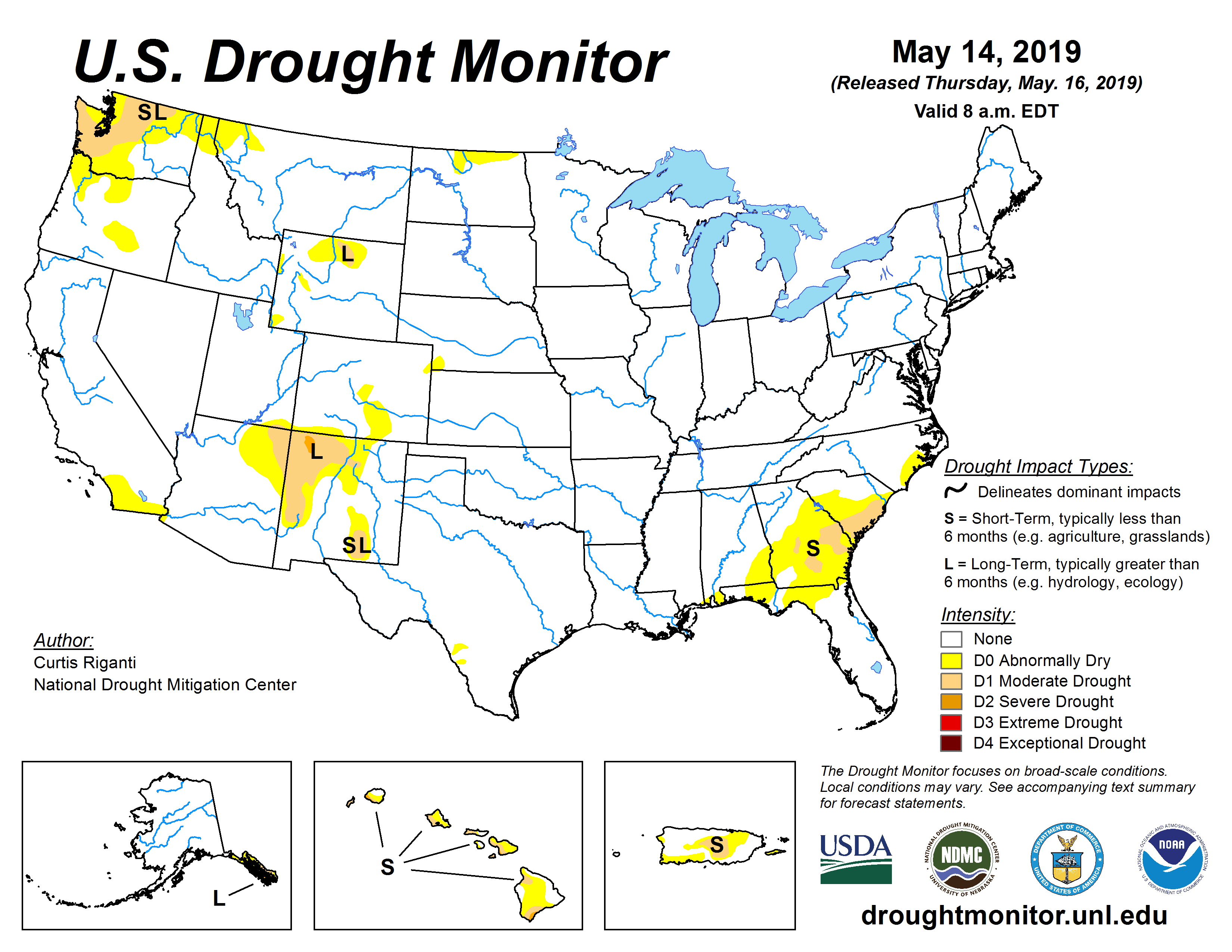
US Drought Monitor May 16, 2019.
As of May14th, only 11 percent of the State is classified as abnormally dry. This spring has seen the record lowest amount of drought coverage over the contenital United States, according to the US Drought Monitor, which has been tracking conditions since 2000.
El Niño conditions remain, and are likely to continue through summer (70 percent chance) of this year. Historically summer during an El Niño are more likely to be wet than dry, and the NOAA Climate Prediction Center outlooks for the June-July-August period show increased chances of wetter-than-average conditions.
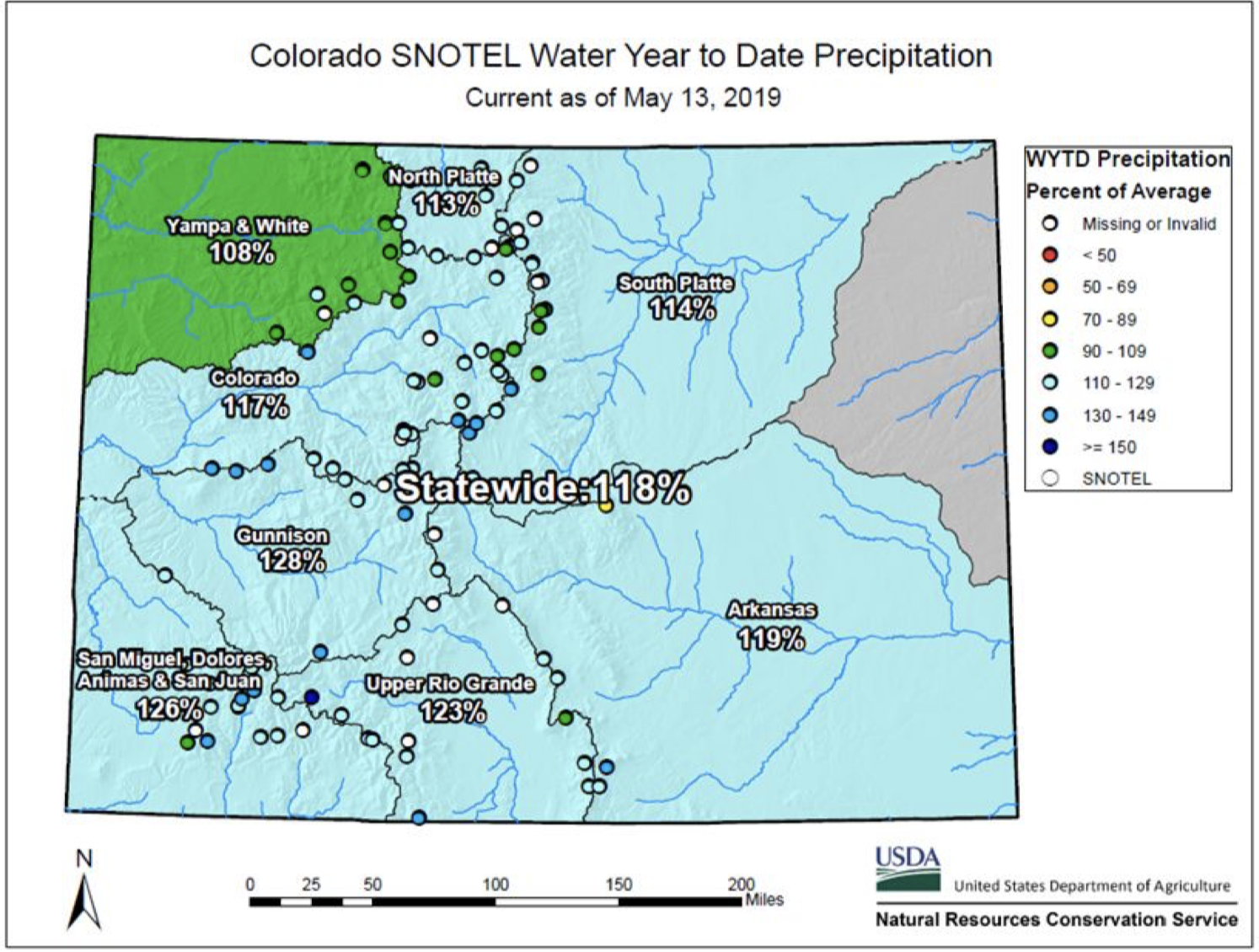
Current SNOTEL Water Year to-date precipitation in 118 percent of average, with all basins above average.
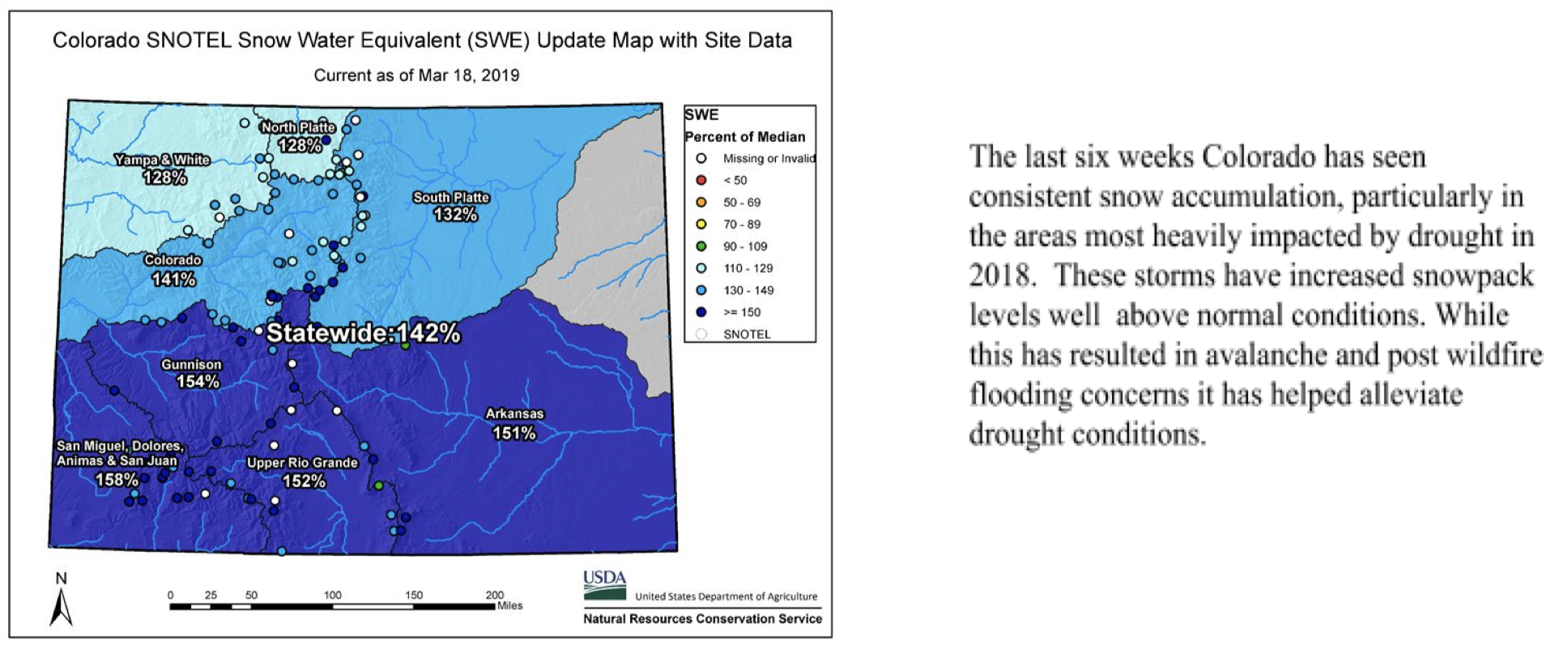
SNOTEL snow water equivalent statewide is 155 percent of median with all basins above normal. These figures can fluctuate greatly during the spring season when snowmelt has begun, but storms can still result in accumulation.
Statewide reservoir storage as of May 1, is 90 percent of average and increasing as the runoff season begins with widespread above average streamflow forecasts. Blue Mesa Reservoir, heavily impacted by the 2018 drought, has increased more than 26 feet in elevation since April 1 and has seen an increase of more than 55,000 acre-feet since May 1.
Flooding in post wildfire burn scars remains a concern and is being monitored closely. The daily flood threat bulletin can be accessed May 1 through September 30 HERE.
CSU junior Brad Simms gets to work with his shovel in efforts to restore the area around Left Hand Canyon from the floods. Brad is a member of CSU’s Watershed club. (Jenna Van Lone | Collegian)
The St. Vrain Left Hand Conservancy District, whose mission is to protect water rights and improve management practices in the river basin, is in the first phase of developing a stream management plan for the 300,000-acre watershed. Its goal is to align strategies for maintaining the reliable delivery of water to agricultural users while also satisfying ecological and recreational goals, some of which could require higher flows in the main stretches of streams that feed the St. Vrain, such as Left Hand Creek, as well as the St. Vrain itself, which is a key South Platte River tributary.
“Whether you’re a domestic or agricultural water user, you have an opportunity to really be part of a strategic, balanced approach to meeting competing demands,” said Sean Cronin, the district’s executive director.
But Colorado water law is focused on the use of the state’s most valuable resource, and not on conservation, notes a September survey prepared by a firm hired by the conservancy district for the stream management plan.
“This causes water owners to shy away from change of use, dam modifications or other river improvements, fearing legal or financial challenges and a burden on their time — and farmers do not have time to give away,” the survey states, adding it also will be a challenge to have rights owners “‘open up’ about their decrees or the way they manage, use or store water, and there are sometimes long histories of relationships between agencies or people in how they work together with their water. Overcoming some of these social and political legacies, or positively using these relationships, will be a challenge to the process.”
Seeking balance at what cost?
Diverting water from stream beds through ditch delivery networks has long quenched otherwise dry agricultural lands on the Front Range, but the expansion of the practice over time has led to impacts some are now interested in mitigating.
Boosting the ability for fish and recreational users such as kayakers to pass diversions by altering or replacing infrastructural barriers has consistently been expressed as a priority.
So have improved ability to control timing and quantity of both ditch and stream bed flows, enhancing flood resiliency in the watershed and preventing impacts from municipal development.
“For the most part, this basin wants to work toward finding that balance,” Cronin said. “I won’t say we’re all in agreement of what the balance is, where that pivotal point is to make the balance, and I don’t think we’ll ever get there and that’s fine, as long as folks want to continue sitting at the table.”
While some Longmont-area ditch companies have already designed and implemented more passable diversions or are in talks with local officials about doing so in the near future, a move toward automating the opening and closing of ditch gates that are now moved manually to accommodate water share holders’ calls for supply also could emerge as a consideration for those relying on the watershed.
Being able to remotely open and close gates could help prevent flow heading into ditches when it isn’t needed, possibly allowing higher flows in main stream beds through areas where such water levels could benefit recreation and environmental health.
But doing so could come at a major cost. Terry Plummer, vice president of maintenance and operations for Left Hand Ditch Co., said the company, for reasons unrelated to stream management, next week will install an automated ditch gate that can be operated remotely in one location on its network at a cost of about $30,000.
If an effort to automate water delivery equipment were applied across the broader watershed, though, it would be needed in dozens of locations, and could require the construction of entirely new diversion structures in some areas, which can run cost hundreds of thousands for just one spot, Plummer said.
“We have no intentions of automating at this point in time,” Plummer said. “It’s just too expensive. The assessments (charged to share holders for ditch maintenance) are so high now because of the 2013 flood (damage) that we would have to raise assessments dramatically, and the farming can’t support that.”
He said grant funding would have to become available, with the right terms, to pursue widespread automation.
A method that helped maintain higher wintertime flows in the St. Vrain is likely no longer an option — for about 20 years until 2013, Longmont released water from its Ralph Price Reservoir storage at a rate of 3 cubic feet per second to maintain a winter flow of 5 cfs along the entirety of the river, according to city Water Resources Manager Ken Huson.
But state officials nixed that practice after changing how they account for water.
“It’s not something Longmont can just do on its own anymore like we used to,” Huson said.
Flow not only way to go
Other opportunities for bettering stream management in the St. Vrain watershed might not address flow, however, and still offer environmental and social benefits.
“What we’re going to come up with are management activities,” Cronin said. “Those could address flow, but it could be that an opportunity area doesn’t necessarily have a flow challenge, but a riparian floodplain connectivity challenge.”
Allowing streams to more easily access the floodplain by preventing their banks from becoming overly incised or congested can help avoid rushing waters during flood events via letting the excess flow spread out over flatland, instead of accumulating in steep, deep channels.
Removing the invasive crack willow tree, which has problematically proliferated across dozens of states, from local stream banks could help achieve that, and has already been worked on in some areas of the St. Vrain basin by the Left Hand Watershed Oversight Group.
“That’s really the issue with the current conditions and why there are disconnected floodplains, because we’ve had this encroachment of this invasive tree that has created a super stable bank, and has allowed incision to happen,” said Jessie Olson, the oversight group’s executive director. “We’ve got a number of places like that throughout the watershed that could use some additional connectivity basically by removing the invasive tree and laying back slopes.”
Persistent moisture and near normal temperatures throughout March resulted in significant drought improvements across the region. While April has seen warmer temperatures and decreased precipitation, water year to date precipitation remains above average statewide. This is helping to reduce the threat of large wildfires. We will continue to monitor throughout the snow melt season to determine inflows to reservoirs, streamflow levels. Post wildfire flooding remains a concern and will be closely monitored. The daily flood threat bulletin can be accessed May 1 through September 30 HERE.
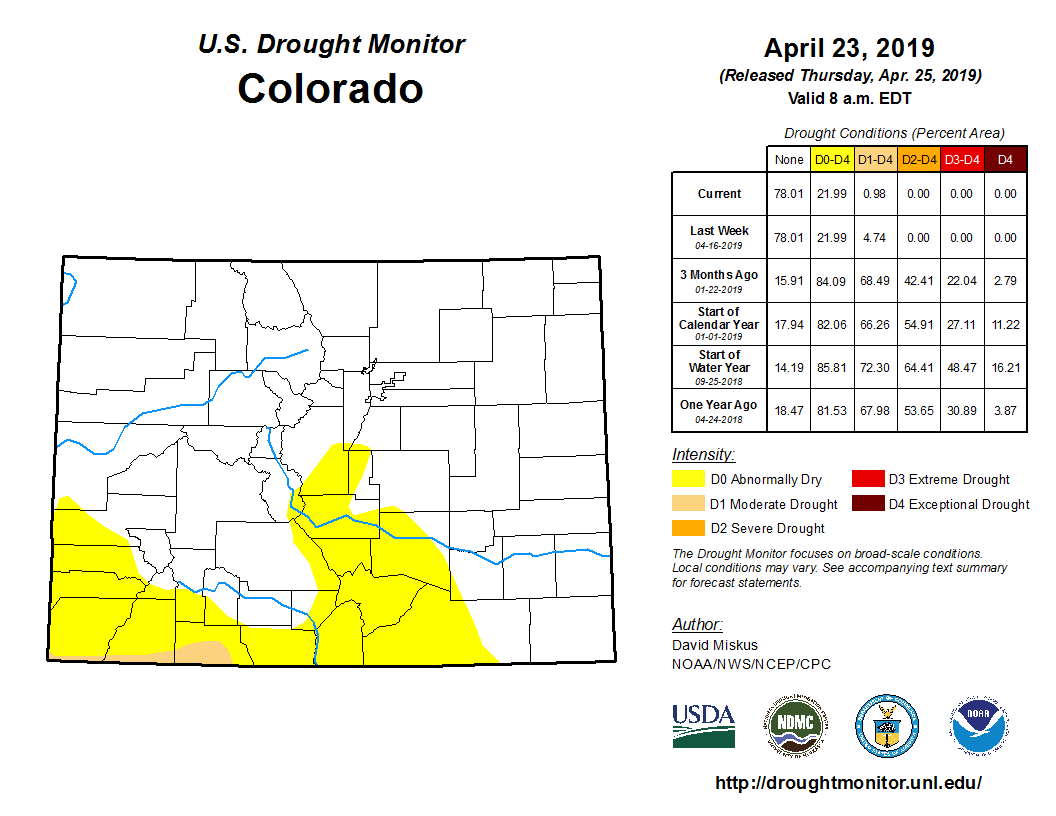
Colorado Drought Monitor April 23, 2019.
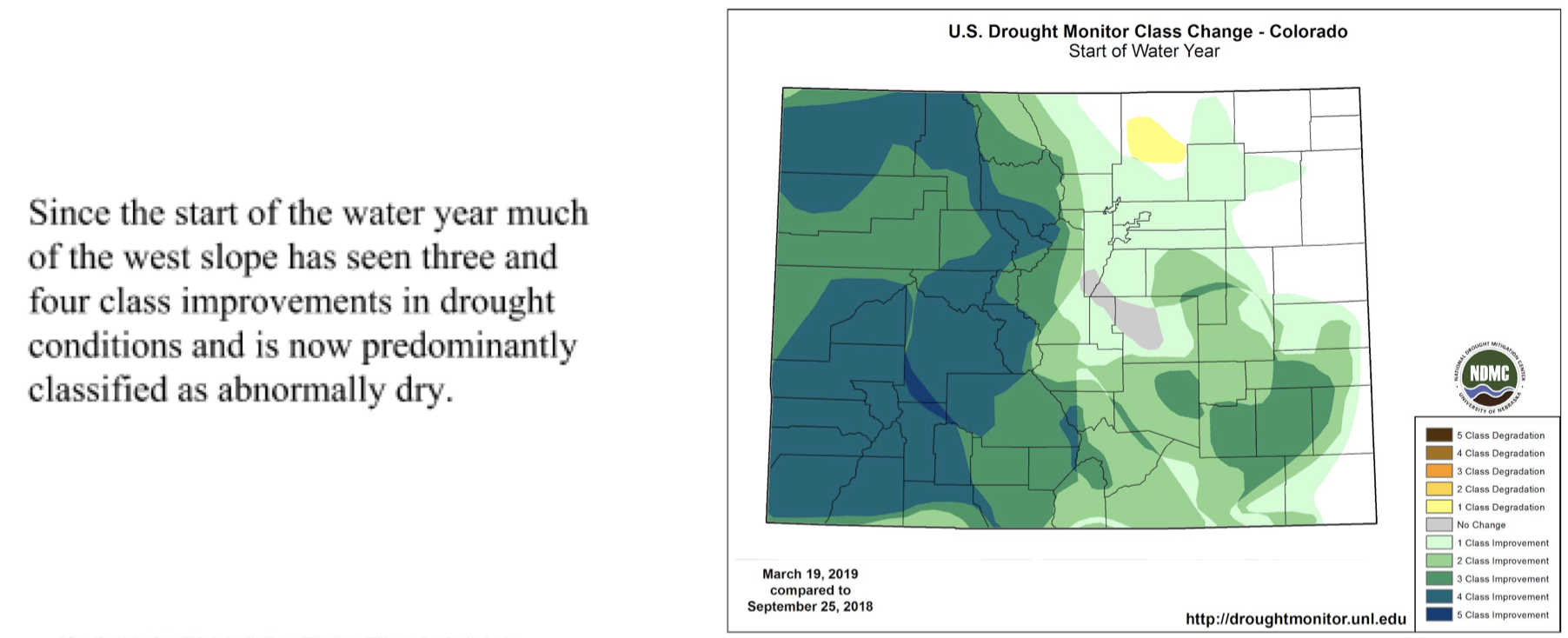
As of April 23, a mere one percent of the state remains in moderate drought and an additional 22 percent is abnormally dry. This represents a 71 percent reduction in D1-D4 conditions since the start of the water year.
El Niño conditions are now present, and a weak event is likely to continue through summer (65 percent chance) and possibly fall (50-55 percent chance) of this year. Historically spring & summer during an El Niño are more likely to be wet than dry, and the NOAA Climate Prediction Center outlooks for May, and for the May-June-July period show increased chances of wetter-than-average conditions.
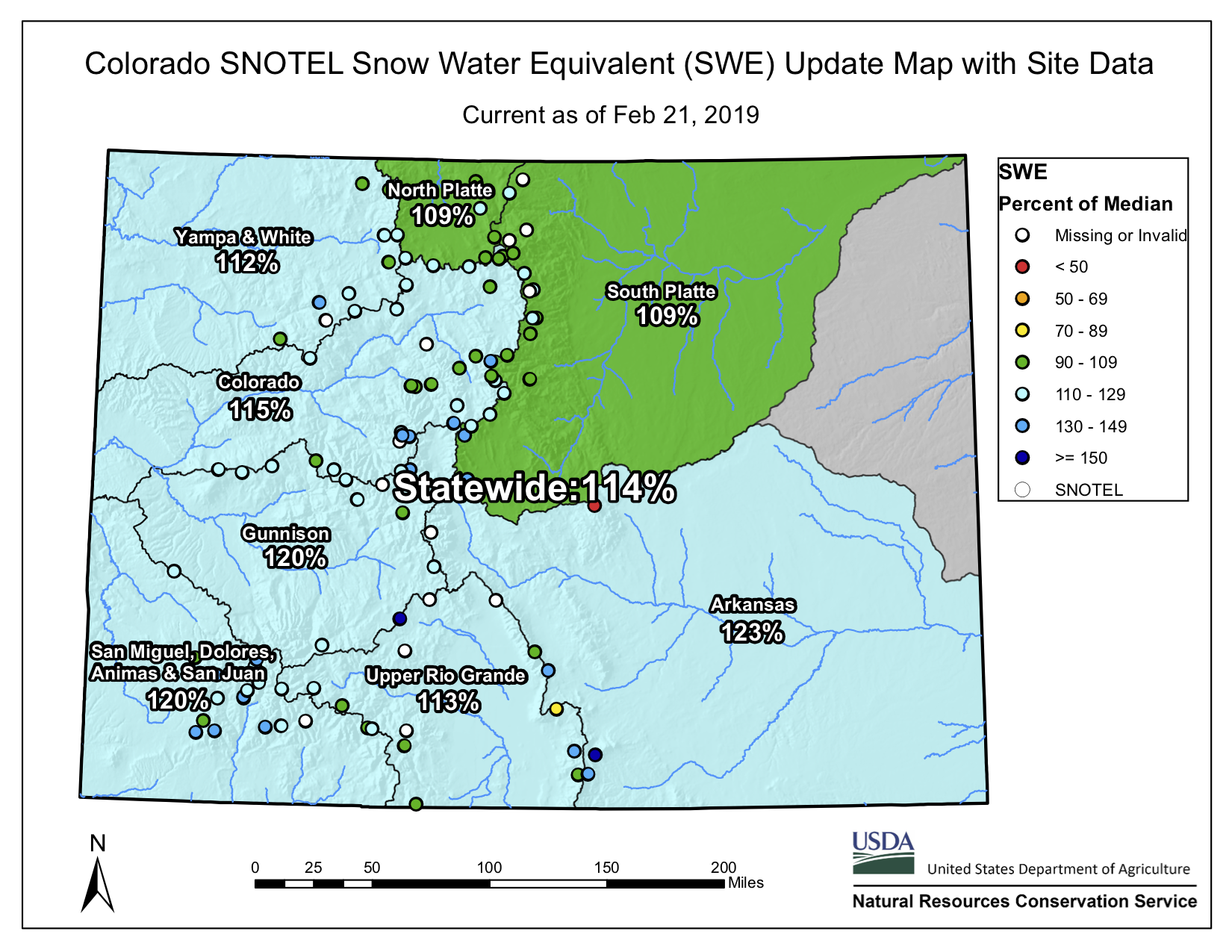
SNOTEL snow water equivalent statewide is 120 percent of median with all basins near or above normal. The highest snowpack is in the Southwest basins of the San Miguel, Dolores, Animas & San Juan at 157 percent of median, while the lowest is the Yampa-White at 100 percent of median.
Statewide reservoir storage as of April 1, is 84 percent of normal but is expected to increase as the runoff season begins. The South Platte, Arkansas, Colorado, and Yampa-White, are all above 90 percent of average, while the Upper Rio Grande basin has 79 percent of normal storage. The Southwest basins of the San Miguel, Dolores, Animas & San Juan, and Gunnison remain the lowest in the state at 58 and 67 percent of normal, respectively.
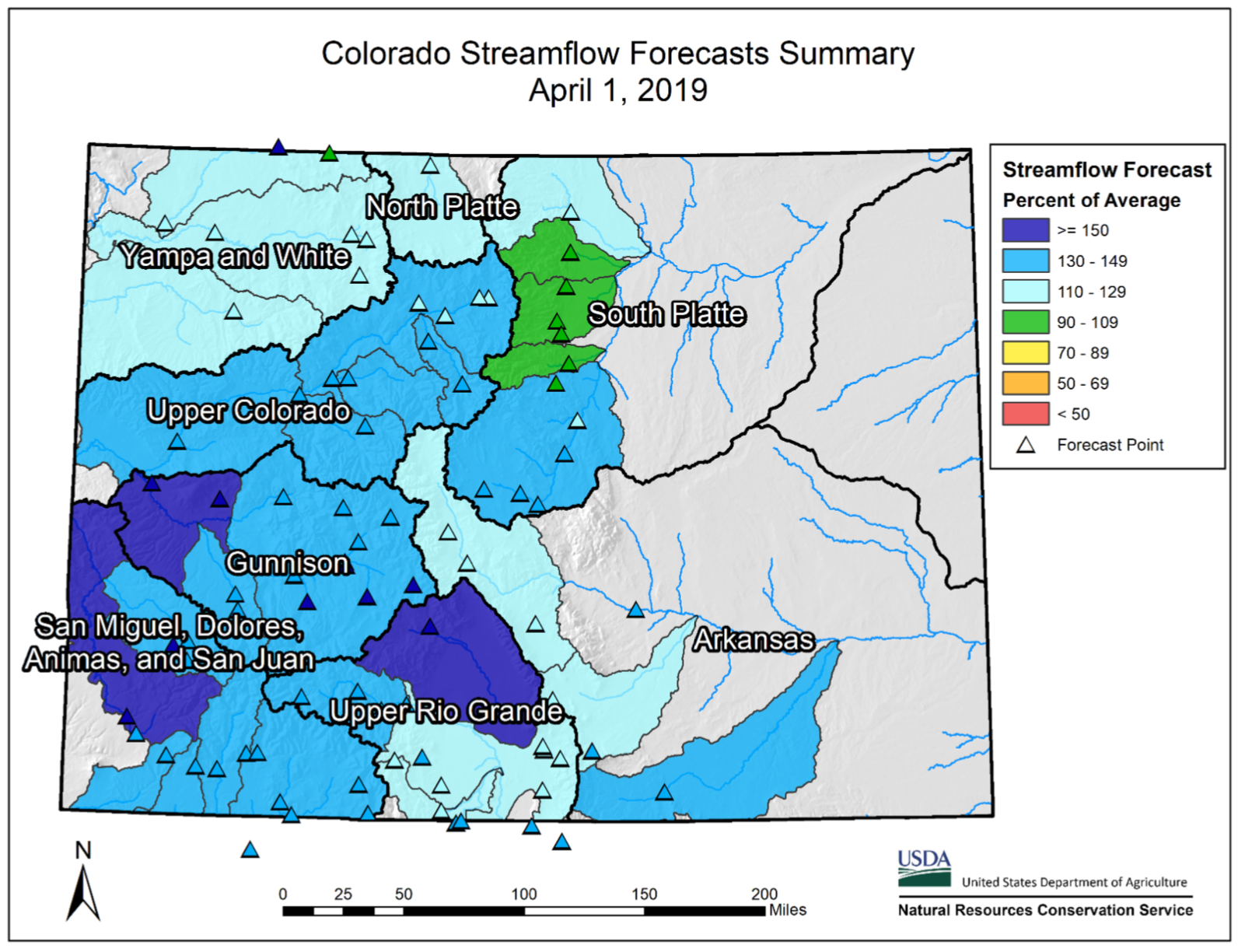
Streamflow forecasts are near to above normal statewide. Snowpack in the southwestern corner of the state is driving streamflow forecasts greater than 150 percent of average in the Dolores, Surface Creek and Saguache-San Luis Basins. Above average streamflows can help to replenish reservoir storage in these regions of the state.
The surface water supply index (SWSI) has improved in recent months with the majority of the state trending to the wetter conditions, this is in part due to strong streamflow forecasts.
Click here to read the newsletter. Here’s an excerpt:
Colorado Water Loss Initiative
Stage 1 workshops begin in April. Join the free CO Water Loss Initiative now! Space is limited.
The Colorado Water Loss Initiative (CWLI) is a 4-stage program developed by the Colorado Water Conservation Board to train water suppliers on the cutting-edge practices for water loss and revenue recovery. This technical assistance program is being offered at NO COST to your utility, and will run Spring 2019 to Summer 2020. Join your peer systems who have already signed up to learn how to reduce costs and increase revenue!
Register at http://www.coloradowaterloss.org. From there you‘ll receive information on selecting your preferred workshop in Stage 1. A kickoff webcast has also been posted to the program website for additional information.
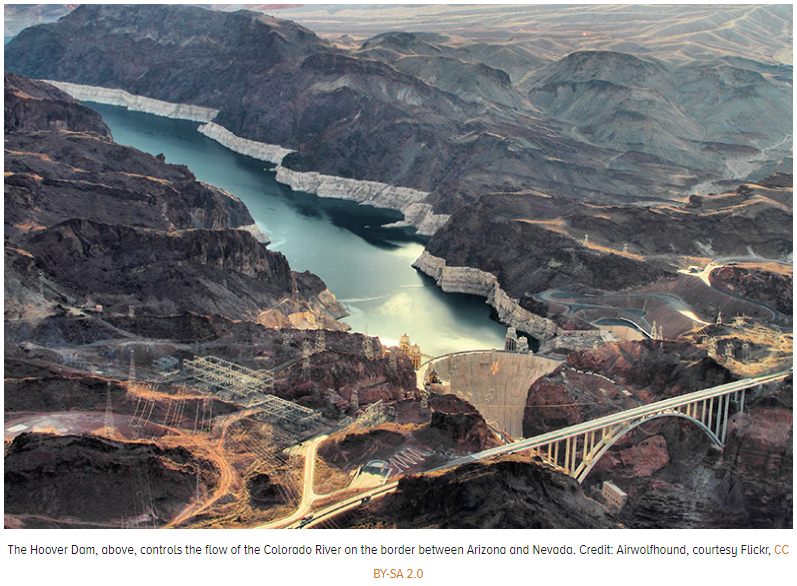
Hoover Dam. Photo credit: Air Wolfhound Flickr Creative Commons
Here’s a guest column by Matt Rice, Bart Miller, and Aaron Citron that’s running in The Pagosa Daily Post:
After 19 years of drought across the Colorado River Basin, we know that our state’s water supplies are vulnerable, and we can’t rely on fluctuations in the weather — or a season of above-average snowpack – for the water security we need.
We are using more water than we have. As our population continues to grow, we need to implement structural, far-reaching conservation solutions to support healthy communities, businesses, and ecosystems. Although snow has been plentiful this winter, last year’s drought devastated local businesses, communities, and fish and wildlife across the state. We can’t afford to forget the images from just months ago: firefighters dropping gravel and mud on wildfires because there wasn’t enough water in the rivers, a first-ever “call” because of record-low water on the Yampa River, farmers standing in dry alfalfa fields, outfitters unable to operate because of low rivers, and fish so stressed from warm temperatures and low flows that anglers were urged to stay away.
Governor Polis has already shown leadership in his commitment to funding Colorado’s Water Plan, which lays out a blueprint for addressing the risks and uncertainties of a continued dry future. In his State of the State address, Gov. Polis committed to providing bipartisan, sustainable funding for the plan, and pledged that his administration would do its part to implement the Plan. He commended the work of his predecessor, Governor Hickenlooper, but acknowledged that there is much more work to do. He also requested $30 million this year to help pay for the water plan.
We recently learned that the budget proposed to the Colorado legislature would cut this $30 million in proposed funding down to $10 million. This reduction primarily cuts funding to lay the groundwork for the implementation of a multi-state Colorado River strategy that will be reviewed by Congress this week. The conservation strategies envisioned in that process can increase our water security and introduce more flexible water management strategies to the benefit of all Coloradans.
To implement this program, all Colorado River Basin states will need to reduce their use of water for the benefit of the whole system. In Colorado, this “demand management” would be a voluntary and market-based approach to conservation. It would be a flexible, dynamic way to provide greater water security, with benefits for the entire Colorado River Basin. The program would pay willing water users like farmer, ranchers, industries, cities and towns to temporarily reduce their water consumption, thereby keeping more water in our rivers and reservoirs. Those reductions can result from temporarily reducing the number of acres under irrigation or switching to crops that use less water, or similarly instituting drought restrictions in cities and towns.
This multi-state program, including demand management, is premised on stabilizing the levels in the Colorado River Basin’s largest reservoirs, providing greater certainty that we will have enough water in dry times. Conserved water would then be delivered to Colorado’s water “bank account” in Lake Powell, supporting the health of our rivers along the way. These increased water-flows support small businesses, rural communities, the outdoor recreation industry, and river habitats as well as birds and other wildlife.
On March 19, seven Colorado River Basin states finalized their drought contingency plans (DCPs), setting the stage for a more secure water future. A key part of the DCP for Colorado is the opportunity to store saved water in Lake Powell. It’s now up to Colorado to create a demand management program and starting putting water into it. Colorado has an opportunity to start building the framework we need to protect our water, but we can’t do it without the resources and support to construct proactive conservation measure like our demand management program.
We know how critical it is to protect our state’s rivers, provide clean, reliable drinking water supplies for our communities, and preserve our agricultural heritage. Colorado has made some progress toward implementing the Water Plan, but further action and investment is urgently needed.
Authors of this essay include Matt Rice, American Rivers; Bart Miller, Western Resource Advocates; and Aaron Citron, The Nature Conservancy.
Colorado Water Plan website screen shot November 1, 2013
From Water Education Colorado (Jerd Smith) via The Colorado Springs Gazette:
Colorado lawmakers, citing lower revenue forecasts and competing needs, have dramatically reduced proposed funding for the Colorado Water Plan and Colorado River drought work, providing roughly one-third of what Gov. Jared Polis had requested in his budget for this year.
This year, the Colorado Water Conservation Board, the agency charged with overseeing the state water plan and developing the Colorado River drought contingency plan, said it would have $30 million to work with as a result of the governor’s request.
Of that, $20 million would be used to pursue work on a historic, multiyear initiative to find ways to reoperate reservoirs and voluntarily cut back water use to relieve pressure on the drought-stricken Colorado River. The rest would go toward grants to fund entities across the state that are working to implement the Colorado Water Plan.
But lawmakers aren’t required to honor all budget requests from governors, and Joint Budget Committee members said they would provide just $10 million.
That appropriation leaves intact the $1.7 million the Colorado Water Conservation Board had budgeted this year to do public outreach and technical studies for the drought contingency plan.
The rest, $8.3 million, will be used to fund water plan grants over the next three years and comes in addition to the annual funding toward water plan implementation that the Colorado Water Conservation Board has been providing from its budget.
Even with the reduction, state officials said they are pleased that, for the first time since it was finalized in 2015, general fund money is being dedicated to the water plan.
Polis’ office said the new general fund allocation is an important step forward.
“There is always more work to do, but we are excited the JBC has provided unprecedented general funds to make progress toward the state’s water plan,” the office said in a statement.
Rebecca Mitchell, director of the Colorado Water Conservation Board, said the reduction in funds is manageable. “The $1.7 million we had expected for this year is still there. And we have $8.3 million for the water plan. With that, we feel like we can still move forward.”
Two weeks ago, the Colorado Water Conservation Board formally approved the drought contingency plan effort and expects to begin recruiting people to serve on several public drought work groups this week…
Colorado water leaders have been pleading with the state to move quickly on the drought contingency plan to ensure there is some protection should Colorado and its neighboring states in the Upper Colorado River Basin be unable to meet legal obligations to deliver water to Arizona, California and Nevada.
This year’s task is to determine if there is an equitable way to cut back on water use, where and how those cutbacks would occur, how to measure the reductions and how to protect the environment, local economies and the legal rights of water users while the drought plan is in effect. Up to 500,000 acre-feet of the water saved through such efforts, known as demand management, could be stored in Lake Powell via the new seven-state drought agreement.
Despite the need for action, Andy Mueller, general manager of the Glenwood Springs-based Colorado River Water Conservation District, said the enormity of crafting a statewide demand management plan requires that the state be prudent in data gathering and analysis.
“If you do the math on voluntary, compensated demand management, you know it will cost tens of millions of dollars a year to run. That is a frightening concept, but in a complex situation like this, where there are so many multifaceted components, you have to plan.”
Financing water projects in Colorado has rarely been easy, particularly in small, rural communities or when there is no clear connection to taxpayers. After finalizing the Colorado Water Plan in 2015, officials estimated the state would need roughly $100 million a year to fully fund it and help close the gap on water shortages the state is likely to face by 2030.
Four years later, though, little progress has been made on securing a permanent funding source, although several nonprofits, such as the Walton Family Foundation, together with the state’s Interbasin Compact Committee are exploring funding options, including a possible ballot initiative in coming years. The committee represents the state’s eight major river basins plus the Denver metro area and was involved in the Colorado Water Plan’s development.
The state Senate on Thursday adopted Colorado’s $30.5 billion budget, often termed the “long bill,” for 2019-20 and sent it on to the state House for the next step.
The budget includes a last-minute compromise between Senate Democrats and Republicans, who have been at war for the past two weeks in an effort to delay action on items like the “red flag” bill and other measures.
The compromise added $106 million to the state’s transportation funding, using existing general fund revenues. With that addition, the Colorado Department of Transportation might have $336 million in one-time money available for road and bridge projects. That amendment still must be adopted by the House in order to be included in the final budget.
Despite the compromise, lawmakers indicated they are nervous about the prospects of another recession and what it could do to the state budget. That included Joint Budget Committee Chair and Sen. Dominick Moreno of Commerce City, who noted a recent revenue forecast “erased” $250 million in expected revenues, due to a growing economic slowdown.
The budget did not increase the state’s rainy-day fund, which would help weather such a downturn. As passed by the Senate, the rainy-day fund is at 7.25 percent of general fund revenue, or about $843 million. However, economists have warned that Colorado needs a rainy-day fund at least double that amount to survive even a moderate recession. A slowdown like 2008’s Great Recession would require $2 billion, according to a George Mason University study from a couple of years ago.
While most of the budget package sailed through, one bill drew more opposition than one might expect. Senate Bill 212 puts $10 million in general fund revenue into continued implementation of the state water plan. But that’s $20 million less than was sought by the previous administration (Gov. Jared Polis didn’t say one way or the other how he felt about it) and for the first time tapped general fund dollars, rather than severance tax revenues.
The bathtub ring in Lake Powell in October 2014. Today, the reservoir is under 40 percent full and water managers in Colorado, Utah, Wyoming and New Mexico are working on demand management programs that would reduce water use and send more water to the big reservoir that sits on the mainstem of the Colorado River. Photo credit: Brent Gardner-Smith/Aspen Journalism
The directors of the Colorado Water Conservation Board voted Thursday [March 21, 2019] to start exploring the feasibility of a demand-management program as part of a larger effort to manage falling water levels in Lake Powell and Lake Mead and avoid violating the Colorado River Compact.
Basalt resident Gail Schwartz, a former Colorado senator sworn onto the CWCB board Wednesday, said the effort to develop a demand-management, or water-reduction, program was “equally as large in concept and far-reaching” as developing the state’s 2015 water plan.
“This is a statewide conversation,” said Schwartz, who spent eight years working on water bills while on the Senate’s agriculture, natural resources and energy committee.
And Schwartz encouraged CWCB staff to find ways to involve citizens outside of the professional water-management sector in developing the plan.
“I think the whole state needs to have an opportunity to weigh in,” she said.
To fund the demand-management feasibility study, expected to take until at least January, the state budget bill now includes a $1.7 million line item.
A Thursday memo from CWCB staff and the state Attorney General’s Office said a demand-management program was part of an effort to avoid “mandatory” cutbacks in water use.
“The term ‘demand management’ loosely refers to the intentional conservation of water for the purpose of helping assure compliance with the Colorado River Compact, and in so doing, avoiding the need to implement mandatory water administration strategies to fulfill the Upper Basin’s compact obligations,” the memo said.
The demand-management study effort is in addition to the ongoing effort by CWCB staff to update the 2015 water plan. A technical update of a 2010 water-supply study is due this summer from CWCB, and there also is a $5 million effort planned to update the plans and project lists in each of the state’s river basins.
Brent Newman, the CWCB’s section chief for Colorado River issues, said he would begin the demand-management effort this week by setting up dates for workshops on the topic and developing lists of experts to serve on small work groups.
But he emphasized that starting an investigation of demand management is different than implementing the program.
Newman said a project team would be formed to guide the demand-management study, with representatives on the team from the CWCB, the Attorney General’s Office, the state’s Department of Natural Resources and Division of Water Resources, and the Upper Colorado River Commission.
Also, eight work groups of selected experts will be formed to look at demand management from various perspectives: law and policy, monitoring and verification, water-rights administration and accounting, environmental considerations, economic considerations; funding, education and outreach and agricultural impacts.
“To have these work groups operate in the way they need to, they are going to have to be efficient,” Newman told the CWCB board at its meeting in Fort Collins last week. “And when I say efficient, I mean small.”
Information from the work groups will then be shared with the various basin roundtables and the public, he said.
A hayfield near Grand Junction irrigated with water from the Colorado River. State officials are now exploring a demand management program that would pay willing irrigators to fallow hay fields and send the water otherwise use to Lake Powell. Photo: Brent Gardner-Smith/Aspen Journalism
DCP in DC
The state’s emerging demand-management program is tied to a seven-state drought-contingency planning effort, which is to be presented to Congress this week.
James Eklund, the commissioner for Colorado on the Upper Colorado River Commission, is scheduled to testify Thursday on the drought-contingency plan before the House Subcommittee on Water, Oceans and Wildlife.
Reclamation Commissioner Brenda Burman also is slated to testify at both the House hearing, as well as at a Senate subcommittee hearing on the drought plan Wednesday.
The seven states want Congress to approve a short piece of legislation authorizing the Interior secretary to implement the drought-contingency plan “in order to respond to the historic drought and ongoing dry conditions in the basin,” according to a March 19 letter sent to Congress by representatives of the seven basin states.
If the federal legislative effort is successful, the states will still need to finalize and sign the drought-contingency planning documents and agreements.
There are different sets of DCP agreements in the upper and lower basins. In the lower basin, agreements define how the lower-basin states of California, Arizona and Nevada will cut back on water use to maintain water levels in Lake Mead.
In the upper basin, agreements create a new regulatory pool of water within Lake Powell where water saved through demand management can be stored to be used as needed by Colorado, Utah, Wyoming and New Mexico.
The upper-basin agreements also allow for water stored in Flaming Gorge, Blue Mesa and Navajo reservoirs to be released to prop up water levels in Lake Powell.
In November, the CWCB adopted a demand-management policy stating that a demand-management program would be a voluntary, temporary and compensated.
The water savings would come, in large measure, by paying willing irrigators to fallow hayfields and let water that would otherwise have been consumed run down the Colorado River system to Lake Powell, which is less than 40 percent full.
Eklund, the former director of the CWCB, said he understood that the state’s study of demand management may take a year or more to complete, but he said despite this winter’s good snowpack, renewed drought and falling reservoir levels may still force the state’s hand.
“I understand that we have to hear from the many stakeholders, but at some point, Mother Nature may not cooperate with us,” Eklund said. “If that’s the case, we will have to move from study mode and talking mode to doing mode, whether we are comfortable with it or not.”
Editor’s note: Aspen Journalism covers rivers and water in collaboration with The Aspen Times, the Glenwood Springs Post Independent, the Vail Daily, the Summit Daily and the Steamboat Pilot. The Times and the Post Independent published the story on Monday, March 25, 2019.
Gail Schwartz, a resident of Basalt, is poised to represent the Colorado River basin on the Colorado Water Conservation Board. She’s the first woman to do so, and she’ll be a part of the first CWCB board, since 1937, to have a female majority. Photo credit: Gail Schwartz
Former state Sen. Gail Schwartz is expected Wednesday to join the board of directors of the Colorado Water Conservation Board, a state agency established in 1937 to protect and develop the state’s water supply.
In doing so, Schwartz will become part of the first female majority on the CWCB board, and she’ll be the first woman to represent the Colorado River Basin on the board.
Schwartz moved to Aspen in the early 1970s, lived in Snowmass Village when she served in the state Senate for two terms (2007 to ’15) and then moved to Crested Butte. While there, she lost to Rep. Scott Tipton in her race for Congress in 2016. She has since moved to Basalt and has now volunteered for a three-year term on the CWCB board.
Schwartz and two other women — appointed by Gov. Jared Polis and now slated to be confirmed on March 20 by the state Senate — are expected to be sworn in Wednesday at a CWCB meeting in Fort Collins, and then six of the 10 voting members of the CWCB board will be women.
And if the board’s five nonvoting members are added to the mix, it means eight of its 15 members will be women.
Will a majority of women on the CWCB board help solve the water challenges facing Colorado and the Colorado River system?
“I think it will change the conversation,” Schwartz said, noting her experience in the state Legislature, where about 40 percent of the lawmakers were, and are today, women.
“Women are about looking for solutions,” Schwartz said. “They go into public service or elected office to serve, and it’s not a power grab, and what I found at the state level is that women are willing to compromise, they are willing to seek resolution and they draw less of a hard line on issues.”
And Schwartz won’t be alone in making state water history this week.
Jaclyn “Jackie” Brown of Oak Creek will become the first woman to hold the CWCB seat allocated to the Yampa, White and Green river basins in northwestern Colorado.
Brown is the current chair of the Yampa, White and Green river-basin roundtable, and she is one of only two women on it. She also is the natural resource policy adviser for the Tri-State Generation and Transmission Association.
“The water industry is moving in a direction where there is more diversity,” Brown said. “And I do think that matters. I think every board does better with more diversity.”
That said, Brown said her goal in serving on CWCB is to represent all the water users in the northwest corner of the state.
Also joining the board this week is Jessica Brody, the general counsel for Denver Water, who will be representing the seat allocated to the city and county of Denver.
Brody said she’s proud to follow in the footsteps of Patricia Wells, who was also the general counsel for Denver Water and served on the CWCB from 1996 to 2000 and from 2012 to this past January. She noted that Wells also was the first female city attorney for the city and county of Denver.
And Brody will be the fourth woman to represent Denver on the CWCB board, following Wells, Barbara Biggs and Carolyn McIntosh.
“It’s really to be celebrated that there are so many incredible women rising to prominence in this industry and in this sector,” Brody said. “Obviously, we all bring our own unique perspective, and gender may influence our perspective, but honestly, it’s just a thrill to be part of this new class and to get to share this moment with so many incredible women, and men.”
Of the remaining six voting members on the CWCB board appointed by the state’s governor, three are women. They are Curran Trick, the first woman to represent the North Platte River Basin; Heather Dutton, the first woman to represent the Rio Grande River Basin; and Celene Hawkins, the fourth woman to represent the San Miguel, Dolores and San Juan river basins in southwestern Colorado.
The other three appointed voting members on the CWCB are Steven Anderson, who represents the Gunnison River Basin, which has never had a female representative on CWCB; Jim Yahn of the South Platte River Basin, which has previously had two women on CWCB; and Jack Goble of the Arkansas River basin, which has not had a woman on the CWCB since Vena Pointer, who was a founding board member and served from 1937 to 1948.
Of the nine appointed voting members, four (Schwartz, Brown, Brody and Hawkins) are Democrats, four (Curran, Dutton, Anderson and Yahn) are Republicans and one (Goble) is unaffiliated.
There also is one ex-officio voting seat on the CWCB board reserved for the director of the Department of Natural Resources, which brings the number of voting seats to 10. Dan Gibbs now holds that seat.
And there are five nonvoting seats, two of which are currently held by women: Rebecca Mitchell, the director of the CWCB and the agency’s second female director, and Kate Greenberg, who is the first female commissioner of agriculture in Colorado since the office was created in 1949.
As such, here’s how the gender math works out: Six of the 10 voting members are women, and eight of the 15 members are women — a female majority in each case.
For Mitchell, the CWCB director, the gender makeup of the board is not as important as the ability for the board members to work together to further the agency’s mission, which is “to conserve, develop, protect and manage Colorado’s water for present and future generations.”
Still, Mitchell recognizes the gender milestone being reached.
“It is historical, and being an engineer, the numbers are the numbers,” Mitchell said. “But it wasn’t a goal — it’s just the way it turned out.”
However, the water sector in Colorado is still dominated by men — including many older white men — so the first female majority on the CWCB board is notable for those who follow the agency.
“It’s about time that we have this level of representation on our most important water board in the state regarding water policy,” said Tom Cech, co-director of the One World One Water Center at Metropolitan State University of Denver.
He, along with William McDonald, wrote “Defend and Develop: A Brief History of the Colorado Water Conservation Board’s First 75 Years,” published in 2012.
“I’m very pleased to see this change occurring on the CWCB because it provides a different outlook and voice to our important water issues of the day,” Cech said. “That said, our next challenge is engage more people of color in this conversation and as members of boards like the CWCB, because then we get a true voice of the people in the state of Colorado.”
Editor’s note: Aspen Journalism covers rivers and water in the Colorado River basin in collaboration with The Aspen Times, the Glenwood Springs Post Independent, the Vail Daily, the Summit Daily, and the Steamboat Pilot. The Times published this story on Tuesday, March 19, 2019.
From the Colorado Water Conservation Board/Colorado Division of Water Resources (Ben Wade):
In response to persistent and prolonged drought conditions throughout the southern half of the state and along the western border, the Colorado Drought Mitigation and Response Plan was activated for the agricultural sector on May 2, 2018, additional counties in northwest Colorado were added in September and activation remains in effect; information can be found HERE.
February and March-to-date have both seen impressive snow accumulation statewide, but especially in the southern half of the state where snowpack is currently above 150 percent of normal for all basins. This persistent moisture and near normal temperatures has resulted in significant drought improvements across the region. We will continue to monitor throughout the snow melt season to determine inflows to reservoirs and streamflow levels. Post wildfire flooding remains a concern and will be closely monitored. The daily flood threat bulletin can be accessed May 1 through September 30 HERE.
As of March 19th, exceptional drought (D4) and extreme drought (D3) have been entirely removed from Colorado. Severe drought covers just 0.63 percent of the state while moderate drought covers an additional six percent. Forty percent of the state is currently experiencing abnormally dry conditions, a significant improvement in recent weeks. Most of the western slope has seen three and even four class improvements in drought conditions since the start of the water year (see image below).
El Niño conditions are now present, and will likely continue through spring (80 percent chance) and even summer (60 percent chance) of this year. Historically spring during an El Niño event trends toward wetter conditions, and the NOAA Climate Prediction Center outlooks for April, and for the April-May-June period show increased chances of wetter-than-average conditions, with less confidence in the temperature outlook.
SNOTEL snow water equivalent statewide is 142 percent of average with all basins well above average. The highest snowpack is in the Southwest basins of the San Miguel, Dolores, Animas & San Juan at 158 percent of median, while the lowest is tied with both the Yampa-White and the North Platte at 128 percent of median (see image below).
Many basins, as well as the state as a whole are near maximum observed snowpack for this time of year and short term forecasts indicate that an active storm pattern is likely to remain.
Reservoir storage, statewide remains at 83 percent of normal but is expected to increase as soon as the runoff season begins. The South Platte, Colorado, and Yampa-White, all above 90 percent of average as of March 1st. Storage in the Arkansas and Upper Rio Grande basins are at 87 and 78 percent of normal, respectively. The Southwest basins of the San Miguel, Dolores, Animas & San Juan, and Gunnison remain the lowest in the state at 58 and 63 percent of normal, respectively.
Streamflow forecasts are near to above normal statewide and have been steadily increasing in recent weeks. As a result the Colorado Basin River Forecast Center has adjusted their April-July unregulated inflow forecasts as follows: Blue Mesa Reservoir 960 KAF (142% of average) a 32 percent of average increase, McPhee Reservoir 480 KAF (163% of average) a 51 percent of average increase. The Lake Powell inflow forecast is 9.50 MAF (133% of average) an increase of 2.2 million acre-feet or 31% of average.
The Drought Visualization Tool is now live; please take a minute to provide feedback on this tool HERE.
Map of the Rio Grande watershed. Graphic credit: WikiMedia
From the San Luis Valley Water Conservancy District via The Monte Vista Journal:
During the 2019 “State of the Basin Symposium” at Adams State University, the Rio Grande Basin was reminded that Colorado has a water plan as Heather Dutton, manager of the San Luis Valley Water Conservancy District and Rio Grande Basin representative on the Colorado Water Conservation Board, shared some insights on the Colorado Water Plan.
Officially completed on Nov. 19, 2015 by the Colorado Water Conservation Board, the statewide effort followed an Executive Order from Governor John Hickenlooper and represents a great deal of work and input from many experts across the state. Dutton opened her remarks by giving a brief history of the San Luis Valley Water Conservancy District. Next, she turned the focus of her presentation to some of the components of the plan and the work of the Colorado Water Conservation Board.
Dutton noted that the plan was designed to address the major water issues that Colorado faces. Some of the key areas that the plan focuses on include agriculture, conservation, land use, the supply-demand gap, storage, and watershed health environment, funding, and outreach and education. The plan has been called a roadmap for the future of Colorado’s water. There are numerous goals that the plan has outlined such as maximizing alternatives to permanent agriculture dry-up and the promotion of water efficiency ethic for all Coloradans. The overarching goal of the plan is to help Colorado meet its water needs relative to growing population levels and reach a degree of sustainability by 2030.
Dutton also mentioned the Colorado Water Plan Grant Program, which is the funding portion of the plan that is designed to provide needed financial assistance for vital water projects across the state. “The CWCB is putting its money where its mouth is,” said Dutton.
Dutton further noted that part of the process of creating the plan included gathering input from each of Colorado’s respective basin roundtables. Each basin was required to submit its own plan. This led to the Rio Grande Basin Implementation Plan. The result was the San Luis Valley water community having a voice in the entire process. Dutton acknowledged the work of many of the leaders that were present.
While the implementation process is ongoing, Dutton expressed optimism that Colorado Water Plan will continue help the Rio Grande Basin and the rest of the state see a brighter future when it comes to water.
Hundreds of men and women who work in the state’s oil and gas fields flocked to the state Capitol this week to protest a bill that, if passed, will impose dramatic changes on the way oil and gas drilling is conducted in Colorado. Workers filled the halls of the Capitol ahead of what ended up being a 12-hour committee hearing on the proposed legislation. Many who lined up to testify said they feared the new regulations would end up costing them their jobs.
Also waiting to testify was Dan Gibbs, the newly appointed executive director for the Department of Natural Resources. The 43-year-old from Breckenridge will play a key role in guiding oil and gas regulators — who work in his department — through any regulatory changes. The bill, which is expected to win approval of the Democrat-controlled legislature and Gov. Jared Polis, calls for landmark regulatory changes, including elimination of the mandate that state regulators foster oil and gas development.
Gibbs, a former county commissioner and state lawmaker, has made it clear that he supports the bill, especially a provision that would give local communities more say in permitting decisions. Current Colorado law says that responsibility for regulating fracking falls to the state. Still, several cities across the Front Range have sought in vain to control drilling within their borders, including outright bans. As a state representative, Gibbs helped strengthen regulations over oil and gas, sponsoring a bill to protect wildlife from drilling impacts. He brings his more regulation-focused perspective to the department on the heels of a record production year for the $31-billion industry.
During his testimony, Gibbs said he heard similar fears of job cuts when he was a lawmaker working on oil and gas bills.
“We didn’t see any evidence of any job loss as a result of these bills. In fact, there was an increase in activity from 2007 to what we see now,” said Gibbs, who was sitting next to Erin Martinez, a survivor of the Firestone explosion in April 2017. Her husband and brother were killed.
Gibbs grew up rafting, fly fishing, skiing and ultrarunning. He wears a sports watch and carries his wildland firefighting red card at all times. He worked for former U.S. Sen. Mark Udall in Washington, D.C., served as a state representative before being appointed to the Senate by a vacancy committee, and has been elected Summit County commissioner three times.
The Department of Natural Resources, made up of 1,465 employees, oversees drilling, mining, water management and state parks in Colorado. In addition to navigating changes to Colorado Oil and Gas Conservation Commission [COGCC], the body that regulates and promotes oil and gas development, he will also be responsible for another urgent challenge: trying to figure out how to pay for the Colorado Water Plan. The plan, which will cost an estimated $100 million a year to implement, is part of a solution to avert projected water shortages due to population growth, climate change and obligations to other states and tribes that rely on the Colorado River.
We spoke to Gibbs before Tuesday’s marathon Senate Transportation and Energy committee hearing, and again afterward. Our conversation has been edited for clarity and brevity.
You spend a lot of time outdoors. Is there anything you’ve seen that for you really exemplifies climate change?
In 2009, I was fighting the Old Stage Fire in Boulder County during the second week of January on the first day of the legislative session…
That’s when former Gov. Bill Ritter was giving his State of the State address.
Yeah, he actually mentioned me. ‘As we speak, Dan Gibbs in on the fire line.’ Never did I think I would be fighting a fire in Colorado in January. But that just shows how clearly things are changing. You know, in Summit County, we have 156,000 acres of dead trees as a result of the mountain pine beetle. It was like a slow-moving tsunami, moving from Grand County into Summit County. … I mention this because the mountain pine beetle is a situation of climate change where the winters historically have not been cold enough.
What do you think the economic impacts of oil and gas drilling in Colorado are?
There can be a balance with doing things in a more environmentally friendly way while recognizing the economic impacts of having oil and gas industry do well in Colorado. I don’t think it’s either-or. I worked on a bill that added a higher level of wildlife protections for oil and gas. … I was in the committee room. It was packed full of sportsmen wearing camo and blaze orange. And I also had support from oil and gas industry. At that time they were willing to be supportive of this particular bill, believe it or not. As a local government person, formerly as a county commissioner, county commissioners are in charge of looking at health, safety and welfare of people that live in that community and visit. … If someone wants to build something they have to go through a planning process to get approval. If they want to mine something — you know we have a lot of historic mines in Summit County — they need to get a [permit]. We have a gravel pit. And people had concerns about the trucks going by their house. Well, we can make sure the rocks are covered. We can mitigate the times of operation. We can make things more doable for people that have to be directly impacted by that.
What about the economic impacts of drilling on industries like the outdoor recreation industry? I’m wondering if you think the economic impacts of drilling and coal mining go beyond just the jobs of the people that are working in the oil fields or the coal mines.
I don’t think we need to pit one industry against another. I wouldn’t even call it the recreation industry because, where I live, it’s the environment that’s the economic driver. So the more we can protect the environment, the more it is beneficial to our economy. And I think that’s reflective of many parts of Colorado.
How do you reconcile those two competing imperatives: to protect the environment, while at the same time protecting an industry that offers good-paying jobs and provides money for your department.
We need to look at ways we can protect people, protect the environment, and people’s way of life. I think oil and gas can do things in a way that is not harmful to people’s health. I think there is a way to do it. I don’t think you need to set up oil and gas wells right next to where people live. I think there are ways to do better environmental monitoring of wells when they are close to where people live or when they are close to critical water storage areas. I think we can do things in a more environmentally friendly way where oil and gas can continue to do business in Colorado while minimizing harming the environment.
The state legislature wants to do way with COGCC’s role of fostering oil and gas development and make it solely a regulatory agency. What’s your reaction to the bill in the legislature?
I think there should be serious reforms within the structure with how we do things in Colorado. I support this bill, Senate Bill 181. I like having local government have a seat at the table if they want to. … Local governments are in the business of regulating land use issues. I’m shocked that local communities have never had the authority to shape land use decisions as it relates to oil and gas. Depending on many truckloads go through an area, things can be mitigated based on how close [that activity] is to homes, how close it is to critical wildlife areas like sage grouse.
You’re going to be over at the state Capitol today. You may end up talking to a number of people who work in the industry who will say ‘I’m going to lose my job’ because of this bill. What are you going to tell them?
I will say that’s not true. There is no evidence to reflect that this bill is trying to shut down industry in any way. What it’s trying to do is balance oil and gas activity with looking at what’s best for people and their communities. It’s not creating necessarily a veto power. It is adding a layer of oversight that doesn’t exist now. New oversight. So I would say that’s just not an accurate statement. But I’m sure we’ll hear that a lot. The industry is important in Colorado. And the bill, as it goes through the process, will have five, six hearings and discussions in the House and Senate and opportunities to amend. It’s not the ending point, but the starting point. The bill will likely change.
I wanted to transition to water. Water projects are funded through severance taxes. And severance taxes are dependent on the production of oil and gas. Would you describe that as a competing mission — on one hand you have these environmental programs that are reliant on an industry that has an environmental impact?
It’s funny you say that. Well, not funny. As a county commissioner, we funded all of our recycling programs through tipping fees at our landfills. The more trash we got, the more programs we could fund for diversion. And so, it’s similar, the more oil and gas activity you have in the state, the more we can fund environmental programs. … I think we need a new strategy in terms of how we fund environmental programs. And not just be dependent on severance funds. Looking at other programs I have: the Parks and Wildlife budget is about 85 percent contingent on hunting and fishing licenses. I’m going to be working on a more sustainable funding source moving forward that is not just contingent on hunting and fishing licenses.
Should people who recreate, like backpackers, pay more to Colorado Parks and Wildlife?
What we have right now for Parks and Wildlife is not sustainable. We need to look at every option on the table. … We really need to be creative to figure out who might be willing to help fund the trail system throughout Colorado and what opportunities exist with new foundations that could help with funding.
What are you doing to come up with a new funding mechanism or revenue stream for the Colorado Water Plan?
I just met with a group of stakeholders. The governor has more or less a line item request of $30 million this year. And that will go along with the [state budget]. And then, on top of that, we have the Colorado Water Conservation Board’s water projects bill, and that’s going to have $20 million associated with that. So we’re going to have $50 million going toward implementation strategies. We need about $100 million [per year] moving forward. I think this is a great place to start. You need a lot of local partners. It’s not just the state flipping the switch. … We have all these folks that are working hard to figure out a plan moving forward. There is talk of a possible ballot question in the future. All options are on the table.
When do you expect the Surface Water Supply Index (SWSI) report [which projects Colorado’s water shortages] to be ready?
Sometime over the summer.
It was supposed to come out years ago. What explains the delay?
I don’t know. But I will tell you that I think moving forward it’s important that we do regular updates to SWSI. Climate change, population growth, and a variety of different factors impact water availability. I think we need to get on a set schedule that gives us updates — I’m not saying every year — but fairly frequently. That will help us set policies going forward.
Water shortages are projected in future years and there is no clear way to pay for the water plan. You still have oil and gas and local communities duking it out in the suburbs. There are a lot of pressing issues without easy answers. This job will pay about $160,000, but aside from that, what made you want to take on this challenge?
I think daily about my young kids and the fact that I could be in this position right now and I can shape how we manage natural resources right now, but have an eye on what Colorado will look like in the next generation, in future generations. That really appeals to me. Working for a governor like Jared Polis, I support his vision of protecting the environment, understanding that protecting the environment is the best way that we can protect our economy in Colorado.
What keeps you up at night?
I think about the employees that work here for DNR. We have amazing staff here and ensuring that they are OK in the jobs that they have. But any day I could hear about an oil and gas explosion similar to Firestone. That definitely keeps me up. I worry about hearing about the mountain lion attack in Fort Collins and then looking at strategies that we have to deal with lions. This jobs is so diverse. Folks can call me at two in the morning with catastrophic situations like Firestone.
Someone might call you up and bring you out to the fireline, too, right?
Yeah, exactly. I get nervous about oil and gas. But once it hits summertime, I feel like we are one lighting strike, one unattended campfire, from having a mega-fire in Colorado that would have devastating consequences.
Cherry Creek Flood August 3, 1933 — photo via the Denver Public Library
Click here to read the newsletter. Here’s an excerpt:
As of mid-February, Colorado’s statewide snowpack sat at 108% of normal. Snowpack is higher in the northern and eastern basins and lower in the southwestern basins. The climate forecasts through the runoff season suggest that these numbers could climb higher as fore- casts indicate a wet spring statewide.
Higher snowpack percentages can increase the possibility of snow- melt flooding. Generally, watersheds are monitored for this once they reach 130% snowpack. Currently, no watersheds exceed this threshold, but state officials continue to monitor conditions due to the wet climate forecast moving forward. To view snowpack conditions and better understand the potential flood threat in your location, visit the Natural Resources Conservation Service’s Snow Telemetry (SNOTEL) and Snow Course Data and Products page.
It is worth mentioning that, as indicated by looking back through Colorado’s history, the majority of flooding events occurring through- out the state are rain-based and not snowmelt-based. In fact, the last year of widespread snowmelt flooding was in 1984, although isolated instances have occurred since then. One area of ongoing concern relates to rain-on-snow events, in which high elevation, late spring rainstorms fall on still surviving snowfields. This can quickly exacerbate runoff and create problems that wouldn’t exist in the absence of either the rain or the snow.
Aspen trees in autumn. Photo: Bob West via the Colorado State Forest Service.
From email from the Colorado Department of Natural Resources:
Governor Polis has announced three new board appointments to the Colorado Water Conservation Board.
· Gail Schwartz of Basalt, Colorado, representing the Colorado River basin
· Jackie Brown of Oak Creek, Colorado, representing the Yampa-White River basin
· Jessica Brody of Denver, Colorado, representing the City and County of Denver
In addition, the Governor appointed Russ George as the Director of the Inter-Basin Compact Committee in addition to five gubernatorial appointees.
“I’m excited to work with these appointments,” said Dan Gibbs, Executive Director of the Department of Natural Resources. “Their collective experience is unmatched.”
Gail Schwartz has spent over two decades serving Colorado in both appointed and elected office. Jackie Brown brings a diverse background in natural resources and is a leader in the water community as the current Chair of the Yampa-White-Green basin roundtable. Finally, as General Counsel for Denver Water and formerly with the Denver City Attorney’s Office, Jessica Brody brings both municipal and environmental law experience.
“I’m looking forward to working with the newly appointed board and IBCC members to continue implementing Colorado’s Water Plan. They bring valued expertise and leadership to the water community,” said Rebecca Mitchell, Director of the CWCB. “We sincerely thank the outgoing Board members and IBCC appointments for their service. Their dedication has been instrumental on numerous policy and planning efforts, including bringing a diversity of perspectives to Colorado’s Water Plan.”
Russ George is a fourth generation native of the Rifle, Colorado area and brings a depth of state government and public service. Russ was instrumental in creating the IBCC and basin roundtables.
“As the first champion of the IBCC and roundtable process, there’s no one better equipped to lead the IBCC. We’re embarking on a future of great opportunity in water, and Russ is the perfect choice to navigate the times ahead,” said Gibbs.
A standup surfer in the Arkansas River at Salida during Fibark, the river celebration held in late June. Photo/Allen Best
Here’s the report from the CWCB and DWR (Taryn Finnessey and Tracy Kosloff):
In response to persistent and prolonged drought conditions throughout the southern half of the state and along the western border, the Colorado Drought Mitigation and Response Plan was activated for the agricultural sector on May 2, 2018, additional counties in northwest Colorado were added in September and activation remains in effect; information can be found HERE.
Calendar year 2019 has brought with it beneficial moisture that has nearly eliminated all exceptional drought conditions in Colorado and increased snowpack to above normal conditions. As a result, streamflow forecasts have increased in some areas and water providers looking ahead to the 2019 demand season are cautiously optimistic given current conditions. However, much of the snow accumulation season remains and reservoir storage and soil moisture will take time to rebound to pre-drought levels.
■ As of February 19th, exceptional drought, D4, has been almost entirely removed from the state. Only a small sliver remains in Archuleta county, covering about a tenth of a percent of the state. Extreme drought, D3, has also decreased and now covers 10 percent of the state; severe drought 29 percent and 27 percent is classified as moderate drought. An additional quarter of the state is currently experiencing abnormally dry conditions (see image below).
■ El Niño conditions are now present, and may continue through spring (55 percent chance). This is a weak event and given the timing it is unclear the impact that it will have.
■ SNOTEL snow water equivalent statewide is 115 percent of average with all basins above average. The highest snowpack is in the Arkansas basin at 123 percent of median, while the lowest is the Rio Grande at 111 percent of median (see image below).
■ Reservoir storage, statewide is at 83 percent of normal, with the South Platte, Colorado, and Yampa-White, all above 90 percent of average as of February 1st. Storage in the Arkansas and Upper Rio Grande basins are at 89 and 79 percent of normal, respectively. The Southwest basins of the San Miguel, Dolores, Animas & San Juan, and Gunnison remain the lowest in the state at 57 and 61 percent of normal, respectively.
■ Individual reservoir storage levels are highly variable statewide, some reservoirs have strong storage while storage in other reservoirs remain at low levels for this time of year. Historically, reservoirs take a long time to refill following a drought event.
■ March through May is an important period for annual average precipitation in Colorado, many regions receive a large portion of total precipitation during these spring months.
■ Outlooks for the spring season do not show a clear direction. There is a slightly increased chance of above-normal precipitation for the spring across Colorado, and equal chances of above, below, and near-normal temperature.
Statewide snowpack basin-filled map February 21, 2019 via the NRCS.Colorado Drought Monitor February 19, 2019.
Gross Reservoir , in Boulder County, holds water diverted from the headwaters of the Colorado River on the West Slope. The reservoir is part of Denver Water’s storage system. Photo: Brent Gardner-Smith/Aspen Journalism
Colorado will launch a far-reaching $20 million conservation planning effort this spring designed to ensure the state can reduce water use enough to stave off a crisis in the drought-choked Colorado River Basin.
The money, likely to be spent over a period of two to three years, will pay for a major public, consensus-based initiative to determine how to equitably set aside enough water to protect Colorado’s share of the river and how to pay farmers and potentially cities to reduce their use.
The river is critical to Colorado’s water supply, with roughly half of the supplies for the Denver metro area coming from its annual flows and even larger amounts fueling the state’s farms.
The initiative will include at least seven technical and public work groups examining the legal, economic, and environmental issues inherent in such a demand management program, according to Brent Newman, head of the Interstate and Federal water section of the Colorado Water Conservation Board (CWCB). Demand management is the term water officials use to describe water conservation. It will also include a feasibility study and several pilot programs.
State staffers expect the work to take more than a year to complete as they iron out whether and where to cut back use, how to measure those reductions, and how to protect the environment, local economies, and the legal rights of water users while the program is in effect.
“We’re going to do this one bite at a time,” Newman said. “It’s not something that can be slammed together.”
Water users on both the West Slope and Front Range are gearing up for the project, hopeful that a proactive conservation program will provide a sort of insurance policy should a full-blown crisis erupt on the river.
“We’re pretty anxious,” said Brad Wind, general manager of the Berthoud-based Northern Colorado Water Conservancy District, which manages the Colorado-Big Thompson Project. The project diverts Colorado River water from the West Slope for farmers and cities on the Northern Front Range. “We realize it’s going to take some time, but we would feel better having a little insurance than having nothing and having everything implode.”
Seven states comprise the Colorado River Basin, with Colorado, New Mexico, Utah and Wyoming forming the Upper Basin and Arizona, Nevada and California making up the Lower Basin.
Last October, after nearly four years of work, the seven states agreed to a broad, preliminary set of drought guidelines, known as the DCP, or drought contingency plan, that begin to spell out how cutbacks will occur on the river.
Under those agreements, Colorado and its Upper Basin neighbors could set aside up to 500,000 acre-feet of water in a special drought pool in Lake Powell. That’s enough water to serve roughly 1 million homes for a year.
In addition, the U.S. Bureau of Reclamation will be allowed to release up to 1 million acre-feet of water from three Upper Basin state reservoirs that, together with Powell, are part of the Colorado River Storage Project, to boost storage in Lake Powell if it reaches critical lows. Two of those are located at least partially in Colorado.
How much time Colorado and the other states have to refine these drought plans and put them into action isn’t clear yet.
On Feb. 1, after California and Arizona failed to hit a federal deadline for finishing their drought plans, the U.S. Bureau of Reclamation said it was moving forward to impose its own water-saving plan on the region.
Reclamation Commissioner Brenda Burman said she would halt that federal initiative only if Arizona and California complete their work by March 4. If that deadline isn’t met, the states may have to incorporate the federal government’s directives into their own work.
Equally concerning is the weather.
The drought has pushed Lake Powell and Lake Mead, the river’s two primary storage buckets, to critical lows. If the region endures another year as desperately dry as 2018, Lake Powell’s ability to produce hydropower, the major source of revenue for complying with the Endangered Species Act, could be in jeopardy. If utilities don’t have the money to comply with the ESA, the federal government can shut down their water diversions, as it has done in the past in places such as the Klamath Basin in Oregon in 2001.
Even though early snows have helped boost mountain snowpacks across the region, they aren’t likely to be deep enough to pull the region back from the brink of a major water crisis. Inflows into Lake Powell this year, for instance, are projected to be just 64 percent of average, according to the U.S. Bureau of Reclamation, well below the super-sized numbers needed for it to begin to refill.
At that rate, by August of this year, Powell will be shockingly close — within about 81 feet — of hitting its minimum power pool, a level it flirted with in 2012 and 2013, according to Heather Patno, a hydrologist with the U.S. Bureau of Reclamation in Salt Lake City.
In the Lower Basin, Lake Mead is already so low that Arizona is facing mandatory water cutbacks this year.
“We need as much time and space to craft and sharpen these tools as we can get,” said James Eklund, Colorado’s representative on the Upper Colorado River Commission. “Knock on wood we’ll get a reprieve from the hydrology for a while.”
If not, Newman said that the U.S. Bureau of Reclamation may release water from the Colorado River Storage Project reservoirs in Utah, Wyoming and Colorado to boost levels in Powell, giving Colorado and other states more time to figure out how to execute these unprecedented conservation measures.
Water users across the state are closely watching this new water-saving initiative, with farm interests on the West Slope and out on the Eastern Plains intent on ensuring that any water cutbacks that may occur are done only on a paid, voluntary basis and that all water users shoulder the reductions equally.
At the same time large urban water users, most of whom have less favorable water rights than the state’s farmers do, want to ensure their municipal supplies aren’t radically reduced.
“We are at a point where the Upper Basin does have some time to get this demand management right,” said Andy Mueller, general manager of the Glenwood Springs-based Colorado River Water Conservation District. Looking for ways to reduce water use, he said at a meeting of the Colorado Water Congress earlier this month, “is an incredibly threatening concept to West Slope water users. But the River District is committed to proactively engaging and working with the CWCB to figure out how we can stand a program up that truly protects all of us.”
A clearer outline of the state’s approach to developing the demand management initiative will be presented at a meeting of the CWCB March 20-21. Depending on the outcome of that meeting, the various task forces could begin work in April or May, Newman said.
Jerd Smith is editor of Fresh Water News. She can be reached at 720-398-6474, via email at jerd@wateredco.org or @jerd_smith.
A raft coming out of Cataract Canyon into upper Lake Powell encounters the bathtub ring left by the receding reservoir. As Lake Powell, and Lake Mead, continue to see less and less water, it’s prompting water managers, including those at the Colorado River District, to coordinate on ways to send more water downstream. Photo credit: Aspen Journalism/Brent Gardner-Smith
At the invitation of Doug Kemper, executive director of the Colorado Water Congress, I presented the keynote address at its annual meeting Jan. 31. My presentation was on water as a business risk and opportunity, and the role of innovation — technology and partnerships, among other things — in solving water challenges.
One of the water challenges discussed at the gathering is close to the organization’s Denver home: the Colorado River Basin. The timing of the Colorado Water Congress (CWC) meeting and my participation in the annual meeting was timely, as the Colorado River Basin states had until the end of the day to agree to finalize the Drought Contingency Plan (DCP).
The CWC is an important organization that brings together stakeholders that are engaged in managing water in Colorado. This includes state government, water utilities, NGOs and other interested parties such as the private sector. Two of the more prominent discussions at the CWC meeting were the DCP negotiations and how to fund the implementation of Colorado’s Water Plan. Central to solving both challenges is engaging the private sector. However, there was little discussion, if any, about the private sector’s critical interest in finalizing the DCP and ensuring the implementation of Colorado’s Water Plan is funded.
This essay centers on thoughts about how progress has unfolded to date and the role of the business sector in the Colorado River Basin DCP. (I will focus on funding the implementation of Colorado’s Water Plan in another article.)
The economic value of the Colorado River Basin is significant. It represents about $1.4 trillion in annual economic activity, the equivalent of about 1/12th of the total U.S. GDP, or roughly 16 million jobs. It is estimated that if 10 percent of the river’s water were unavailable, there would be a loss of $143 billion in economic activity and 1.6 million jobs in just one year.
The Colorado River Basin has two main reservoirs, Lake Mead on the Arizona-Nevada border and Lake Powell upstream. The combined storage of these reservoirs is at the lowest level since the early 1960s. As a result, if the water level in Lake Mead falls to an elevation of 1,075 feet, water deliveries to Arizona and Nevada would be curtailed. This is a real possibility next year.
The goal of the DCP is to spread the curtailments more widely and eventually include California. Essentially, the plan advocates for keeping more water in Lake Mead to keep it from falling drastically and avoiding severe curtailments of water delivery to the Lower Basin states.
The state of play as of Jan. 31 among the seven Colorado Basin States was less than ideal, in my opinion. (Wyoming, Colorado, Utah and New Mexico have been designated as Upper Basin states, while Arizona, California and Nevada are Lower Basin states.)
Accordingly, on Feb. 1, the U.S. Department of the Interior’s Bureau of Reclamation (the bureau has broad authority to manage water supplies in the Colorado River’s Lower Basin) stated that since two states — California and Arizona — missed the deadline to reach consensus, the federal government could intervene and decide the rules.
The agency’s commissioner, Brenda Burman, said she prefers that the seven states that rely on the river reach a consensus for how to protect the basin. But she said, “We are close, and I applaud those who have worked to get us close but only done will protect this basin,” she told reporters. “Time to get the job done.” So, as of this writing, the future is still uncertain.
Arizona lawmakers did pass legislation supporting the drought plan, and Gov. Doug Ducey signed it. Arizona was the only state that required lawmakers to review the plan. Now, water users must sign 15 agreements that address water storage, conservation and other details.
James Eklund, Colorado’s representative on interstate river negotiations, said he wasn’t surprised or discouraged by Burman’s position. “You’ve got to stick with deadlines or sometimes people won’t take you seriously. She wasn’t draconian about it,” Eklund said.
While there has been much discussion of the positions of the various state and federal agencies on the DCP, the substantial interest and influence of the private sector only seems to be marshaled in times of crisis.
The Arizona business community, for example, seemed to weigh in on the DCP discussion only at the proverbial 11th hour. But the legislation it supported passed overwhelmingly.
Regardless, it is long overdue for the private sector’s strong voice on how to implement long-term solutions to manage the Colorado River Basin to be heard. A positive development: State Colorado River principals, such as Colorado’s Eklund, are asking the business community to weigh in, by engaging business groups such as the Denver Metro Chamber of Commerce.
We are not experiencing a “drought” — in my view, this situation is a result of overallocation of the Colorado River Basin water coupled with the impacts of climate change.
It’s time for businesses to speak up and for them to ally with organizations such as the CWC, The Nature Conservancy, Business for Water Stewardship and other organizations to ensure there is sustainable water for economic development, business growth, ecosystem health and social well-being.
From “Conservation Conversations” (Sara Dunn) via The Glenwood Springs Post Independent:
The Colorado Water Plan marked its three-year anniversary in November of 2018. Developed in response to an executive order from Gov. Hickenlooper, Colorado’s Water Plan answers the questions of how to implement water supply planning solutions that meet Colorado’s future water needs while supporting healthy watersheds and the environment, robust recreation and tourism economies, vibrant and sustainable cities, and viable and productive agriculture.
Basin implementation plans were developed by each Basin Roundtable to implement the Colorado Water Plan objectives through identification of local water needs, priorities and projects.
To further define localized water needs and project challenges and solutions, stream management and integrated water management plans are being developed for prioritized rivers and streams. Stream management plans use hydrological, biological, chemical, geomorphological and other data to assess flows, water quality, aquatic and riparian health and other physical conditions of the stream. Integrated water management plans also consider the consumptive use requirements in the planning process.
The Colorado River was identified as one of the State’s highest priority rivers. Encompassing approximately 9,830 square miles, it is one of the State’s largest watersheds. The Colorado River supplies municipal, recreational, environmental and agricultural uses on both the West Slope and East Slope of Colorado.
Approximately 80 percent is utilized on the Western Slope while the remaining 20 percent is utilized on the Eastern Slope. Each year between 450,000 to 600,000 acre feet of water is diverted from the Colorado River system to the Eastern Slope. The Colorado River will play a central role in supporting Colorado’s growing population which is expected to be between 8.6 million and 10 million people by 2050.
The Colorado Basin Implementation Plan estimates that currently 584,000 acre feet of Colorado River Basin water is used to irrigate 268,000 acres and there is an existing annual average shortfall of 100,000 acre feet, sometimes referred to as the agricultural water gap.
Cattle and hay represent the highest percentage of agricultural production in the Colorado River Basin. Other crops include fruits, vegetables, wine grapes, grains and other specialty crops. Industrial hemp production is expected to have exponential growth and could represent a much higher percentage of agricultural production in the coming years.
The communities in the middle section of the Colorado River Basin from Glenwood Springs to DeBeque rely on tourism and the energy industry, in addition to agriculture, to sustain their economies. The Bookcliff, South Side and Mount Sopris Conservation Districts, in collaboration with the Middle Colorado Watershed Council are developing an integrated water management plan for the middle section of the Colorado River.
The goals of the plan include protecting and restoring streams, rivers and riparian health; sustaining and promoting agriculture; securing safe drinking water for our growing population; encouraging conservation across all uses; working with local land use planning authorities to develop water-conscious land use strategies; and ensuring reliable and predictable administration pursuant to Colorado’s water laws and interstate compacts. The initial evaluation and planning process undertaken by the districts and the Middle Colorado Watershed Council will continue through 2020.
The conservation districts are focusing on the consumptive use components of the integrated water management plan which include agricultural uses, municipal and drinking water uses, and industrial use. The districts are gathering information on current consumptive use practices and demands and identifying where shortages exist on a localized level to recommend possible solutions to address these gaps and to identify projects that can benefit multiple water demands.
The conservation districts’ objectives in the planning process are to reduce agricultural water shortages, minimize potential for non-voluntary transfer of agriculture water rights to municipal use, develop incentives to support agricultural production and increase education among the agricultural community and general public about Colorado River Basin water issues.
Offering opportunities to safeguard the ability of agriculture to continue producing food and fiber in a healthy and sustainable landscape has been the mission of the Conservation Districts since they were established in 1937 by Congressional Act. This grassroots leadership evolved out of the Dust Bowl Era and the recognition that individuals working on a local level can provide more effective assistance in conserving our natural resources.
The Bookcliff, South Side and Mount Sopris Conservation Districts coordinate technical, financial and educational resources to mitigate drought issues on private lands, improve riparian areas and wildlife habitat, and address water quality and quantity challenges. Please visit our website to learn how you can participate in the integrated water management planning process: http://www.bookcliffcd.org.
Platte River photo credit US Bureau of Reclamation.
Click here to read the newsletter. Here’s an excerpt:
The Platte River Recovery Implementation Program
The Platte River Recovery Implementation Program is an innovative and successful approach to endangered species recovery and water development in Colorado. For almost 13 years, this program has been running smoothly in the background allowing for economic growth in the North and South Platte Basins, as well as species conservation in the Central Platte. Now, Colorado and other partners are taking steps to extend the program for another 13 years. Program partners are confident that the success of the program will speak for itself during the process of seeking congressional re-authorization. Learn more about what the CWCB and program partners are doing to reauthorize the Platte River Recovery Implementation Program in this article.
Colorado officials and regional water managers are poised to start working together on a plan to reduce water use in Colorado, mainly by paying willing irrigators to fallow hayfields, in order to bolster falling water levels in Lake Powell and guard against a compact call on the Colorado River system.
After a series of meetings held last week by the Colorado Water Conservation Board and by Western Slope and Front Range water interests, state officials are now set to begin investigating the feasibility of a “demand management” program that’s “voluntary, temporary and compensated,” and water users and managers throughout Colorado will be asked to help shape the new program.
“Demand management, reduction in consumptive use, is an incredibly threatening concept to Western water users, and certainly to West Slope water users,” Andy Mueller, the general manager of the Colorado River District, told a ballroom full of water professionals Friday during the last day of a three-day Colorado Water Congress meeting here. “Our agricultural community is concerned that what this is really about is taking water from ag and bringing it into urban areas.”
Nonetheless, Mueller said, “this is a time where we have to work collaboratively, with both our urban friends and our rural friends, to figure how we do this together, and how we recognize the values that are important to each of us.”
Mueller also told the Water Congress audience that “the River District is committed to proactively engaging and working with the CWCB and the Front Range to figure out how we can stand up a program that truly protects all of us in this situation. To not do so, to not engage proactively in that conversation, would be irresponsible of every one of us in this room.”
He also laid out the Western Slope’s vision for the program, which centered on sustaining rural communities.
“We want, from a West Slope perspective, our agriculture and our industries and our cities that are going to participate in these programs to have the opportunity to use the water when they need it, and to monetize their assets into a program when they can figure out ways not to use it,” Mueller said.
Demand management is based on the idea that if water that otherwise would be used to grow hay, or turf in suburban settings, can instead be left in the river system to flow into Lake Powell, and into a new regulatory pool of water within the big reservoir, it will help boost water levels in the reservoir, allow for continued hydropower production at Glen Canyon Dam and help the upper-basin states meet their obligations to deliver a minimum amount of water to the lower-basin states under the terms of the Colorado River compact.
A recently concluded four-year test program called the System Conservation Pilot Program paid irrigators in the Upper Colorado River Basin an average of about $200 per acre-foot of conserved consumptive use of water.
Fresh turf, in Thornton, near Denver.
Denver engaged
Jim Lochhead, CEO and manager of Denver Water, was sharing the stage with Mueller on Friday during a panel discussion, after they together had met Thursday with other Front Range water providers in a behind-the-scenes meeting.
Lochhead said the Front Range and the Western Slope are united in their desire to avoid violating the terms of the compact.
“No one wants the result of a situation where we haven’t come together collectively to arrive at a solution,” Lochhead said.
And, he stressed, “Colorado needs to do our part to make sure that the demand-management piece is done in a way that protects all water users in Colorado, East Slope and West Slope.”
“From Denver Water’s perspective, we’re prepared to engage productively, as I’ve indicated many times in the past,” Lochhead said. “We’re prepared to contribute our share of water into a solution that would be collectively agreed to within Colorado and the other upper-basin states, if it is necessary, for our own mutual benefit and survival.”
The state’s emerging demand-management program is tied to the ongoing effort to approve “drought-contingency planning,” or DCP, agreements in the seven states in the Colorado River Basin: Colorado, Utah, Wyoming, New Mexico, California, Arizona and Nevada.
Arizona’s governor on Thursday signed a required piece of state legislation in order to meet a federally imposed deadline, but there are still other DCP agreements that need to be finalized by a new working deadline, March 4. Federal legislation also is required to implement the regional agreements designed to keep both Lake Powell and Lake Mead operating as designed.
Sand and silt are piling up on the Colorado River above Lake Powell, as water levels continue to fall due to persistent drought and encroaching aridification. Water managers from San Diego to Wyoming are working to find ways to keep the river’s reservoirs, and water delivery systems, functioning.
State investigating
On Tuesday during a regular public meeting held in Westminster, the directors of the Colorado Water Conservation Board indicated they were in support of a staff proposal to form seven different work groups in 2019 to study demand management.
Brent Newman, the CWCB’s interstate, federal and water information section chief, and point person on Colorado River issues, told the agency’s board of directors that the state is not yet starting up a demand-management program; it is only studying the feasibility of doing so.
He also said the state is not studying how a curtailment, or mandatory cutback in water use, would be administered by the state if the Colorado River Compact were to be violated.
Karen Kwon, a first assistant attorney general of Colorado, echoed that stance in her remarks to the CWCB directors Tuesday.
“We are not talking about how we would administer a curtailment,” Kwon said.
Newman and Kwon are proposing that the CWCB set up work groups, staffed by hand-picked experts, to explore a “plethora of issues” raised by demand management, including policy; monitoring and verification; water administration; the environment; economics; funding; and education and outreach.
The staff also proposed to set up a quarterly series of workshops for water users, managers and stakeholders, as well as engaging the state’s basin roundtables, which meet regularly in each of the state’s major river basins, on the issues raised by demand management.
A detailed work plan for the proposed process is to be presented by CWCB staff to the agency’s directors in March.
Editor’s note: Aspen Journalism covers rivers and water in collaboration with The Aspen Times and other newspapers owned by Swift Communications. The Times published this story Feb. 4.
Newly inaugurated Governor Jared Polis had a low-key and positive start on water. His natural resource transition included Hickenlooper’s in-house water expert, John Stulp. Water policy in his State of the State address was only one paragraph, but it succinctly supported the State Water Plan and advocated getting it funded. He linked Colorado’s water to its agricultural needs, which is one of the key principles of the plan. That is, preserving agriculture in Colorado requires intelligent and prudent water management.
State of the State on Water
“The lifeblood of our agriculture industry is water – which is why we must commit to a bipartisan and sustainable funding source for the Colorado Water Plan. Governor Hickenlooper, along with the leadership of John Stulp, did extraordinary work bringing together a coalition of Coloradans from all corners of our state to create the Water Plan. Now we’re going to do our part by implementing it.” State of the State address, Jan. 10, 2019
Dealing with the water gap that is well identified in the State Plan is essential to protect irrigated agriculture and support the state’s quality of life and economy. The largest number of residential, business and agricultural water users are in the Arkansas and Platte basins. Their needs must be balanced with other users and uses, including recreation, wildlife and aesthetics.
From the San Luis Valley Water Conservancy District via The Monte Vista Journal:
The San Luis Valley Water Conservancy District (SLVWCD) is seeking farmers for a pilot project in 2019 to cost-share on the purchase and installation of soil moisture probes. The project will include soil mapping and placement of probes that will give farmers immediate access to soil moisture data in their fields through an online portal and smartphone app. The goal of the effort is to determine if this data can help farmers with their irrigation decisions and lead to water conservation.
The project is open to farmers in parts of Alamosa, Conejos, Rio Grande and Saguache counties. The SLVWCD will contribute up to $2,000 per quarter section of land. The financial cost to the farmer will vary, depending on the selected vendor. Farmers are allowed to leverage other incentive programs such as RCPP to meet their cost-share requirement.
Participating farmers will select a vendor who is able to complete detailed soil mapping of each field. The vendor will then install soil moisture probes in accordance with the recommendations from the soil mapping. The vendor will also provide software that will allow farmers to access real-time weather information and soil moisture data from either a cell-phone application or a web-site portal.
Participants will be required to share the following data with the SLVWCD: The Water District Structure Identification (WDID) of the well or diversion structure used to irrigate the field; the annual quantity of water applied in water years 2013-2018 by the WDID structure and other water sources; the quantity of water applied on a minimum of a monthly basis for any year(s) enrolled in the pilot program; and soil mapping and soil moisture probe data.
At the end of the program’s first year, the average water application data will be compared to 2013-2018 in an effort to determine if use of the soil moisture probes improved water conservation.
Funding for the project was provided by the San Luis Valley Conservation and Connection Initiative and the Colorado Water Conservation Board Colorado Water Plan Grant Program.
To apply for the program contact Matt at the SLVWCD at 589-2230 or matt@slvwcd.org by Feb, 28.
Tuesday, Gov. Jared Polis took the oath of office, in a ceremony that included poets and blessings from a variety of faith leaders. Thursday, the state’s 43rd governor presented his first state of the state address under a theme of “A Colorado for All.”
“The state of our state is solid. It is strong. It is successful. It is daring. And it is bold,” one of Polis’ favorite watchwords and one that he repeated eight times during the speech….
On agriculture, Polis pointed out that “volatile commodities markets, a damaging trade war from Washington” and an increasingly serious water shortage are making life harder for those in the ag industry. He said his pick for ag commissioner — Kate Greenberg, formerly of the National Young Farmers Coalition — will focus on the future of farming.
Polis also pledged to a “bipartisan and sustainable funding source” for the state water plan, and to partner with groups like the Rocky Mountain Farmers’ Union to “reduce barriers to employee ownerships and to grow wages in the ag sector,” as well as expanding access to capital for the next generation of farmers.
Polis emphasized his commitment to renewable energy and addressing climate change, both which will require less dependence on fossil fuels. But he also pledged to find ways to take care of those who work in the energy industry. “Some of the hardest-working people in Colorado today work in the coal and oil-and-gas industries and we will not leave them behind,” he pledged. That means transitioning to good-paying jobs that take advantage of the skills and experience of those workers…
Polis later told reporters he would favor a 3 to 5 percent reduction in the income tax rate, a proposal contained in a bill introduced in the state Senate on Thursday.
Senate Bill 55 is sponsored by northeastern Colorado lawmakers Sen. Jerry Sonnenberg of Sterling and Rep. Rod Pelton of Cheyenne Wells. Polis said he had not yet seen the bill as of Thursday, but it appears to match his proposal from the speech.
SB 55 would reduce the individual and the corporate state income tax rate from 4.63 percent to 4.49 percent; and reduces the state alternative minimum tax by 0.14 percent. It has been assigned to the Senate Finance Committee; no hearing date has yet been set…
“While it is important to look towards the future of agriculture, it’s vital not to forget the lessons the past has taught us,” said Colorado Farm Bureau president Don Shawcroft. “Support of all farmers and ranchers across the state is key, whether they are big or small, organic or conventional, young or old.”
As to the water plan, Shawcroft added that agriculture “is most profitable and most productive when farmers and ranchers have access to the water resources they need. Those resources can’t be tied up on the Front Range.”
[…]
On Monday, that committee is scheduled to review House Bill 1029, which would redraw the boundaries of the Republican River District. Democratic Rep. Jeni Arndt of Fort Collins is sponsoring the bill on behalf of the interim Water Resources Review Committee, and told this reporter that new boundaries will pull in well owners whose groundwater pumping is depleting the flow of the Republican as well as interfering with compact compliance. The district was drawn by the legislature in 2004 along a geographic ridge and now must be modified to include these additional well owners. Arndt said that those in the district pay $14.85 per irrigated acre for compact compliance; the well owners brought in under HB 1029 will also pay that fee.
The largest group of well owners to be brought into the district are located in Kit Carson and Cheyenne counties. The redrawn boundaries also would bring in a small portion of Washington County.
Karley Robinson with newborn son Quill on their back proch in Windsor, CO. A multi-well oil and gas site sits less than 100 feet from their back door, with holding tanks and combustor towers that burn off excess gases. Quill was born 4 weeks premature. Pictured here at 6 weeks old.
Polis’ uber-reasonable tone had a disarming effect. Who would profess to be against early childhood education or lower health-care costs? The new governor artfully framed long-contentious issues as solvable so long as lawmakers have the state’s best interests at heart…
Other items that resonated with rural communities: supporting the outdoor recreation economy, but “doubling down” on supporting the state’s agricultural producers. That means protecting the industry’s lifeblood — water. “We must commit to a bipartisan and sustainable funding source for the Colorado Water Plan,” Polis said…
Infastructure — broadband, roads, public transit — all need investment and funding sources. Polis’ framed his call for 100 percent renewable energy as “not just about climate change,” but saving money for consumers withe cheaper energy and “making sure the good-paying green jobs of the future are created right here in Colorado.”
The governor’s speech hit on all the points meaningful for his supporters without causing undue fear for the rest of the state — with the possible exception of oil and gas companies and “influential” corporations. Polis indicated he wants to let communities have more say about industrial activities withing their borders and he wants to make the tax code more fair. That means closing loopholes that benefit corporations.
In his first major policy speech in office, Colorado Gov. Jared Polis outlined an optimistic and ambitious plan for his first year in office and promised to work to make law his lofty goals regarding education, climate change, health care, infrastructure and energy and to work to keep Colorado “the best state in the nation.”
[…]
He won applause early in his speech when he acknowledged the “record-setting number of women” now serving in the General Assembly – second in the U.S. to Utah. And he received another standing ovation for a thinly-veiled dig at the Trump administration.
“Here in Colorado, we treat each other with respect. We reject efforts to intimidate immigrant families, or tear children from their parents’ arms,” Polis said. “We don’t tolerate bigotry or discrimination of any kind. And we don’t accept hostage-taking as a form of governance. … So, in the spirit of putting problem-solving over partisanship, let’s work together.”
[…]
Regarding energy, Polis reiterated his commitment to Colorado using 100 percent renewable energy by 2040 and said there would be no more doubting the effects of climate change.
“Climate change is a scientific reality. It’s real. There’s no pretending otherwise for farmers and ranchers wo are facing historic water shortages. There’s no pretending otherwise for the 46,000 men and women who work in Colorado’s ski industry and see their jobs threatened by decreased snowpack,” Polis said. “And there will be no pretending otherwise in this administration.”
He said that his administration would also “do right by all the men and women in today’s energy workforce” and acknowledge the state’s coal and oil and gas workers, saying, “We will not leave them behind.”
“We will embrace the skills and experience these Coloradans bring to the table. Their help will be needed and rewarded at every single step of this transition,” Polis said. “And we will support the communities these jobs have sustained, to ensure they can continue to thrive in the renewable-energy economy.”
But at the same time, Polis hinted that he would allow for local control over some industries, like oil and gas, which several Front Range communities have called for in the face of new fracking development.
“Just as we stand up for workers and good jobs, so too must we stand up for our communities and their right to have a voice when it comes to industrial activities within their borders,” he said. “It’s time for us to take meaningful action to address the conflicts between oil-and-gas drilling operations and the neighborhoods they impact, and to make sure that all of our communities have clean air and water.”
The Roaring Fork River in Woody Creek, not far below where the Snowmass Water and Sanitation District is seeking the right to divert up to 500 acre-feet of water a year for use in Snowmass Village. Photo credit: Brent Gardner-Smith/Aspen Journalism
The Snowmass Water and Sanitation District is seeking a new water right to divert as much as 500 acre-feet of water a year from the Roaring Fork River as backup in case something happens to its primary water sources on East Snowmass Creek and Snowmass Creek.
Under the proposed right, the district could divert, at a point just downstream from Jaffee Park, as much as 9 cubic feet per second of water from the Roaring Fork and pump it up to Snowmass Village via a roughly 6-mile pipeline running along the Brush Creek valley.
The district calls the project the “Roaring Fork intake pipeline.”
“This is an insurance policy for the district,” district manager Kit Hamby said.
The district, whose service area includes the town of Snowmass Village, filed an application for the water right in Division 5 water court in Glenwood Springs on Dec. 31, 2017.
The proposed diversion point will allow the district to capture and reuse water that has flowed down Brush Creek from the district’s wastewater-treatment plant on the Snowmass golf course.
The diversion would deliver water from the river to a pumphouse located “river right” a few hundred yards below the put-in for the popular Toothache run on the Roaring Fork and about a mile above Woody Creek’s post office.
The project’s initial pump station would be built on what is now private land, and the pipeline would come up along the river, cross it and then head up the Brush Creek valley, where other pump stations would be used to move the water.
The Roaring Fork water would be sent either to the district’s wastewater-treatment plant, which sits under the Village Express chairlift at the Snowmass Ski Area, or to Ziegler Reservoir, which holds 252 acre-feet of water.
From Ziegler, which sits on the divide between the Snowmass Creek and the Brush Creek basins, the district can gravity-feed the water to the rest of its system.
“This is a project that probably won’t happen for years, maybe even decades, and it may never happen,” Hamby said, noting it’s in the category of “long-term resiliency planning.”
“We’d have to have some catastrophic event in Snowmass Creek to move forward with this,” he said, referencing a drought, landslide or wildfire. “If we were to lose that source of water, we’d need to go to another source of water, and we wouldn’t want that source of water to be in Snowmass Creek.”
Hamby said there is no current cost estimate on the project.
Given the project’s long-range nature, he said, “In today’s dollars, (an estimate is) just about meaningless.”
The Roaring Fork River, in Woody Creek, below the confluence with Brush Creek. Photo credit: Brent Gardner-Smity/Aspen Journalism
Instream flows
The Colorado Water Conservation Board, which filed a statement of opposition in the district’s water-court case, holds a series of “instream flow” rights in the Roaring Fork meant to leave water in the river to benefit the environment.
The state agency’s rights include a 1985 right in the section between Maroon Creek and the Fryingpan River of 30 cfs from Oct. 1 to March 31 and 55 cfs from April 1 to Sept. 30, and Hamby said the district intends to honor those instream flow rights, and won’t divert if the river is too low.
The district also plans to use the 500 acre-feet of water it owns in Ruedi Reservoir, on the Fryingpan River above Basalt, as a backup supply water so that the new water right does not get “called,” or turned off, by senior downstream water rights on the Colorado River above Grand Junction.
If the senior water rights call out upstream junior water rights, instead of turning of the diversion into its new pipeline, the district would release the water it owns in Ruedi to flow down the Fryingpan through Basalt and onto the Colorado River.
The district has existing water rights to divert out of East Snowmass Creek as many as 5 cfs, which the district can gravity-feed down a pipeline to Ziegler Reservoir.
Hamby said about 96 percent of the water used daily in the resort town comes from the East Snowmass Creek diversion point, at a steady flow of about 2 cfs.
The district also has a right to divert as much as 6 cfs out of Snowmass Creek, just downstream from the Campground lift. It can then pump that water uphill to Ziegler.
Hamby said about 2 percent of the water used by the district now comes from Snowmass Creek, and most of that is used for snowmaking.
Christie Duckett, an employee of the Snowmass Water and Sanitation District, with an ancient 50-pound tusk in the district’s office, shortly after it had been dug out of the ground by construction workers in 2011 at what is now an expanded Ziegler Reservoir. Photo credit: Brent Gardner-Smith/Aspen Journalism
The Ziegler effect
Until 2013, the district provided water for snowmaking directly from Snowmass Creek, but a complex instream-flow right held by the CWCB limited the amount of water available.
Now, the district provides water for snowmaking directly out of Ziegler Reservoir, buffering the creek and allowing the ski area’s snowmaking system to turn on and go all out.
Expansion of Ziegler Reservoir started in 2011, and was delayed when the bones,tusks and horns of prehistoric animals started emerging from the bottom of the reservoir during excavation. The reservoir started holding water in 2013. According to Hamby, Aspen Skiing Co. put $3.75 million into the project, which cost $10.7 million.
The district also has a right to divert .77 cfs of water out of West Fork Brush Creek, a tributary of Brush Creek that forms Garrett Gulch at the ski area.
Hamby says the project is not meant to simply allow the district to use more water or to allow the town of Snowmass to grow more than it has to date.
He said he’s proud the district has driven down the amount of water used by it and town residents, adding that Roaring Fork water is truly seen as backup.
In 2002, the district was annually providing 660 million gallons, or 2,025 acre-feet, of water. Today, the district is annually providing 425 million gallons, or 1,304 acre-feet.
Hamby credits the reductions to the district’s aggressive leak-detection and repair program and high-tech smart meters, which let homeowners closely track their indoor- and outdoor-water use.
A status conference in the ongoing water-court case is set for Jan. 3.
Editor’s note: Aspen Journalism collaborated on this story with the Snowmass Sun, which published the story on Wednesday, Dec. 2, 2019.
George Washington addresses the Continental Congress via Son of the South
FromThe Grand Junction Daily Sentinel (Charles Ashby):
Sen. Don Coram, R-Montrose, along with others, are looking for ways to fund the Colorado Water Plan, the product of a collaborative effort during Gov. John Hickenlooper’s term in office designed to assess and meet the state’s water needs for years to come.
That plan calls for doing many things over the years, not the least of which is to create about 400,000 acre-feet of additional water storage, and save another 400,000 acre-feet through conservation efforts. Estimates to achieve all of its goals, however, have been as high as $20 billion.
As a result, Coram says there’s no time like the present to find long-term funding sources to pay for it, and he doesn’t believe that it can come from severance taxes, which are collected by companies that extract natural resources, such as oil and gas drilling.
Not only are severance taxes subject to huge swings in how much the state can collect because of market forces, but Front Range legislators are always quick to dip into that money when the economy goes sour, he said.
To date, they’ve done that to the tune of more than $400 million in recent years, money the Legislature has yet to pay back.
“The fact is, if we are going to meet our needs, the Colorado River is certainly overallocated and everybody’s got their eye on it,” Coram said. “We’ve got to come up with a sustainable funding source and not rely on severance taxes, which the General Assembly goes in and robs when it feels like it.”
Estimates project that about $100 million a year would be needed to implement the water plan.
Though Coram said he’s not yet sure what funding source to turn to, he’s heard talk of special taxes to pay for it all, such as a surcharge on all water users and a special bottle fee. He predicted that there is no single source that could raise the money needed to implement the plan.
If a new tax is to be a source, it will have to be placed before the voters as required by the Taxpayer’s Bill of Rights.
“We’ve got to create a designated funding mechanism for water infrastructure, conservation and storage, and every piece to the puzzle has to be a part of it,” Coram said.
“My concern is the Front Range wants us to change our life so they don’t have to change theirs. We’ve got to move slowly, but we’ve got to put some cash in the till to do these things.”
Meanwhile, Rep. Don Catlin, R-Montrose, expects to be working on a water-related measure of his own.
Catlin plans to introduce a bill to strengthen easements for irrigation ditches. He says a problem is reoccurring all around Colorado as various areas of the state become more urbanized.
He said an increasing number of city dwellers are buying property in rural areas that include easements for irrigation ditches, but they don’t fully understand why those easements exist.
As a result, some of those new property owners are treating the ditches as their own private streams, even placing cobblestones in them as part of their landscaping, Catlin said.
When ditch riders try to access their systems, they’re running into conflicts with these homeowners, including being sued.
“It’s an urban versus rural issue, but I think one of the big problems is a lot of people don’t understand water needs,” Catlin said. “This would be a way of sharpening up that right. A lot of these urban people move in, they don’t want you to walk up the easement to check your ditch. That can’t be right.”
[…]
Rep.-elect Matt Soper, R-Delta, who also is looking for ways to fund the water plan, is considering a bill to expand the state’s grant program for school construction and infrastructure. He’s also working on measures to crack down on sexually explicit electronic messages that are sent to juveniles, and a measure to require all local governments to post meeting notices online.
Swim class on the San Juan River. Photo: Brent Gardner-Smith/Aspen Journalism
From the The Upper San Juan Watershed Enhancement Partnership (Al Pfister) via The Pagosa Sun:
The Upper San Juan Watershed Enhancement Partnership (WEP) is coordinating an effort to identify opportunities to optimize the use of our water resources in the face of a drier and warmer climate.
Rivers and streams provide a bounty of beneficial uses — agricultural, municipal, industrial, recreational and environmental. The WEP’s goal is to promote cooperative efforts to ensure that all uses are met.
The geographic area of focus includes the Upper San Juan River watershed, to include the San Juan, Piedra, Navajo and Chama rivers and their tributaries.
The WEP wants to work with all water users to identify opportunities for cooperative projects that will enhance our ability to use our water resources in recognition of the “prior appropriation doctrine” of water use in Colorado. This is a locally driven effort supported by funding from the Colorado Water Plan.
Over the past few months, the WEP has formed a steering committee comprised of representatives from the agricultural, municipal and industrial, recreational and environmental communities. The committee has developed a proposed framework for moving forward. Goals and objectives have been drafted and are awaiting stakeholder input, involvement and refinement. More details can be found at http://www.mountainstudies.org/sanjuan/smp.
We want to secure input from the public to make sure our efforts adequately address the concerns of the community. A public meeting will be held with the goal of informing all stakeholders interested in the future of our water resources. The meeting is Jan. 10, 2019, at the CSU Extension Office from 6 to 8 p.m. Light snacks will be provided.
The group is also offering the opportunity to offer input through a survey. You can find it on the website. We hope you can attend and provide your input on this important topic for our community.
On Nov. 15 Wyoming started using small airplanes to flare silver iodide into snowstorms that roll into the Sierra Madre and Medicine Bow mountains, north of the Colorado-Wyoming border. North Dakota-based Weather Modification Inc. operates the planes. Since starting this fall, WMI has seeded clouds over southern Wyoming four times.
Now, the Jackson County Water Conservancy District wants to expand the practice near the headwaters of the North Platte River in northern Colorado. The district is seeking a permit from the state’s Water Conservation Board to begin aerial seeding during winter storms.
Recent studies have shown cloud seeding can marginally increase snowpack in theory. But a 2018 study from researchers at the University of Wyoming and the University of Colorado said big questions still remain regarding the practice’s effectiveness.
If the state approves the permit, this would be Colorado’s first aerial cloud seeding program.
Wyoming’s program costs the state roughly $425,000, with Cheyenne’s water utility contributing $45,000. The state also oversees cloud seeding towers in the Wind River mountain range, which are partially paid for by water agencies in Arizona, California and Nevada.
Some of Colorado’s cloud seeding operations receive funding from the same states, all in the Colorado River’s lower basin. Earlier this year, water managers in the seven basin states signed a new agreement to continue cloud seeding operations in the southern Rockies, allocating up to $2 million annually. The practice was included as a way to increase water supplies in Drought Contingency Plans being negotiated now, and recently approved by Colorado’s top water authority, the Colorado Water Conservation Board.
Aerial seeding in northern Colorado could begin later this month.
A view of the White River foreground, and the Wolf Creek gulch, across the river. The Rio Blanco Water Conservancy District has been using state funds, and their own, to study two dam options for this area between Meeker and Rangely on the White River. Photo credit: Aspen Journalism/Brent Gardner-Smith
The Colorado Water Conservation Board has given $843,338 to the Rio Blanco Water Conservancy District since 2013 to study a potential dam on the White River, yet officials at the Colorado Division of Water Resources say the project appears “speculative” and Rio Blanco lacks evidence for its claims for municipal, irrigation, energy and environmental uses.
On Nov. 14, the CWCB directors approved the most recent grant application from Rio Blanco for $350,000 to keep studying the proposed White River dam and reservoir project near Rangely.
But while the CWCB is spending more state money to help prepare the White River project for federal approval, another state agency, the Division of Water Resources, is asking hard questions about the project in water court.
“There are concerns whether the district can show that it can and will put the requested water rights to beneficial use within a reasonable period of time and that the requested water rights are not speculative,” wrote Erin Light, the division engineer in Division 6, who oversees the White and Yampa river basins, and Tracy Kosloff, the assistant state engineer in Denver, in a report filed in water court Oct. 4.
In addition to pursuing a series of grants from CWCB, Rio Blanco applied in water court in 2014 for a new water right to store 90,000 acre-feet of water from the White River.
The two engineers in the Division of Water Resources filed their report after consulting with the state attorney general’s office. Review of water rights applications by division engineers is routine, but the report filed by the division engineer and assistant state engineer raised a higher level of concerns than normal.
Also known as the Wolf Creek project, it could store anywhere from 44,000 to 2.92 million acre-feet of water, according to the array of proposals, presentations and applications that have been made public over the project’s ongoing evolution. (Please see: Timeline: tracking the proposed White River dam and reservoir).
The water would be stored either in a reservoir formed by a dam across the main stem of the White River, or in an off-channel reservoir at the bottom of the Wolf Creek gulch.
The latest grant from the CWCB to Rio Blanco was to “finalize the preferred reservoir size and firm-up financial commitments of key project partners so that applications for federal permits can be filed,” according to a CWCB staff memo on the grant.
Asked about the apparent conflict between CWCB and DWR on the White River project, CWCB Director Becky Mitchell said she was aware of the concerns voiced by the division and state engineers and was confident that the next phase of study supported by CWCB would help answer some of the questions raised.
“All of the grants given to Rio Blanco thus far have been all about feasibility, so we are not necessarily in disagreement with DWR, but it needs to trued up,” Mitchell said Tuesday. “There may be concerns with what DWR is stating and the grant will help us evaluate those concerns.”
In another sign of CWCB’s support for the potential project, the agency’s finance section has added a potential $100 million loan to Rio Blanco on a list of potential loans it compiles and publishes as part of the CWCB director’s reports to the agency’s directors.
Brad McCloud of EIS Solutions in Grand Junction is serving as Rio Blanco’s project manager for the White River project.
When asked Tuesday about the contradictory messages sent by the two state agencies, McCloud said, “I think one side is working on one end and the other is doing the other and it’s a good check and balance and the way the system is supposed to work. And there are probably things that will get worked out along the way.”
A view looking downstream of the White River in the approximate location of the potential White River dam and reservoir. The right edge of the dam, looking downstream, would be against the brown hillside to the right of the photo. Photo credit: Aspen Journalism/Brent Gardner-Smith
State questions
In their report filed in water court, the state’s water engineers challenge Rio Blanco oft-stated claim it is seeking the new storage facility at Wolf Creek in order to meet the future water needs of the Town of Rangely, which today takes its water directly from the White River.
“While every case is different and may require evidence tailored to the particular facts of the case, the engineers have not received sufficient evidence to support the district’s claimed water demands for Rangely nor evidence that Rangely intends to rely on water storage in one of the Wolf Creek Reservoirs to meet its demand,” the report from Kosloff and Light says.
The engineers’ report also questions the demand for water in the potential new reservoir from the energy sector.
They said Rio Blanco should, at a minimum, show how much of the 45,800 acre-feet of industrial demand it is claiming is located within the district’s boundaries.
They also say Rio Blanco should make public how much of the demand from the energy sector within the district’s boundaries can be satisfied by the existing water rights of the district.
In addition to challenging Rio Blanco’s claims for municipal and industrial use of water in their 2018 report, Light and Kosloff also question Rio Blanco’s claims for irrigation and environmental uses.
They said a storage report prepared for the project “notes that irrigated acreage and irrigation water demand is projected to decrease in the future” in the area downstream of the reservoir.
And the engineers said they “do not believe that a water right for irrigation use should be awarded in this case.”
And the engineers question Rio Blanco claim that it will release up to 42,000 acre-feet of water from its proposed reservoir to the benefit of endangered fish downstream on the White and Green rivers.
They say an ongoing study has yet to make clear how much water is needed for the endangered fish.
“Long story short, it is still unclear what flows should be used when determining if or how much water needs to be stored to assist with meeting the recommended flows,” the report says. “Until these numbers are known, claiming any quantity of water for these uses is speculative.”
Consultants for the Rio Blanco Water Conservancy presenting a slide earlier this year showing how a dam could be built across the main stem of the White River between Rangely and Meeker. A report from engineers at the Division of Water Resources is questioning the claims made in a water court case in which Rio Blanco is seeking new water rights for the project.
Size in flux
The White River project has a wide range of potential uses, according to Rio Blanco, and it also has a wide range of potential sizes, as various presentations and applications have included potential sizes from 44,000 acre-feet to 90,000 acre-feet to 400,000 acre-feet to 2.92 million acre-feet.
Alden Vanden Brink, the manager of the Rio Blanco district, told the CWCB directors Nov. 14 that his district is not seeking to build a 400,000 acre-foot reservoir, despite the reference in Rio Blanco’s grant application to study a reservoir between 44,000 acre-feet and 400,000 acre-feet.
“The 400,000 is maximum size,” Vanden Brink said. “That is not what the Rio Blanco Water Conservancy District is looking to build. It’s going to take somebody from a way outside source to come to the table for that.”
Vanden Brink said the district was seeking to store “anywhere from 44,000 to about 130,000” acre-feet of water.
However, the grant application from Rio Blanco notes that a 400,000 acre-foot reservoir might have some benefit to the state.
“If the higher end of the storage is implemented, the project has tremendous potential to help the majority of the state of Colorado address Colorado River Compact administration issues,” the grant said.
An earlier study on the dam by W.W. Wheeler and Associates for the Rio Blanco district found it was possible to build a dam on the White River at Wolf Creek that would hold 2.92 million acre-feet of water.
The latest grant application to CWCB from the Rio Blanco district says “the preferred reservoir size will be developed based on the amount of water needed and committed to by key project stakeholders.”
Wade Cox, the president of the Rio Blanco Water Conservancy District, discussed the project in October with the board of the Colorado River District, and referenced the varying potential sizes of the reservoir.
“There is never going to be enough water,” Cox said. “I don’t care how big you build it. Whatever you do, it’s never going to be enough. Somebody somewhere is going to utilize it.”
Editor’s note: Aspen Journalism covers water and rivers in collaboration with The Aspen Times and other Swift Communications newspapers. The Times published the story on Thursday, Nov. 29, 2018.
A heron on a big sandbank in upper Lake Powell, above Hite. As the big reservoir recedes due to almost 20 years of drought in the Colorado River basin, new sights are emerging. A regional effort to send more water into Lake Powell in a new regulatory pool of water is gaining momentum in anticipation of a regional water meeting in mid-December in Las Vegas. Photo credit: Aspen Journalism/Brent Gardner-Smith
The directors of the Colorado River Water Conservation District voted Monday to endorse a new state policy regarding “drought contingency planning” designed to bolster water levels in Lake Powell and Lake Mead, with the larger goal of avoiding violating the Colorado River Compact.
The support of the River District board, which represents 15 Western Slope counties, was expected. The district’s general manager, Andy Mueller, spoke in favor of the policy before the CWCB directors unanimously voted to approve it Nov. 15 at a meeting in Golden.
Expected or not, the support by the River District board was seen a key step in the fast-moving effort to get the four states in the upper Colorado River basin, Colorado, Utah, Wyoming and New Mexico, and the three states in the lower river basin, California, Arizona and Nevada, to keep working together on a plan to keep the two biggest reservoirs on the river system functioning as intended.
Lake Powell today is 43 percent full. The giant reservoir formed by Glen Canyon Dam typically receives 10.3 million acre-feet of water flowing into it from the Colorado, Green and San Juan rivers each year. But annual inflows have been less than 5 million acre-feet for seven of the past 18 years, and have been below average for 15 of the past 18 years, according to a summary of recent water meeting at Colorado Mesa University prepared by Ken Ransford, the secretary of the Colorado River Basin Roundtable.
Water from the Roaring Fork, Fryingpan and Crystal rivers flows into the Colorado River in Glenwood Springs.
Water managers say three more dry years could leave the reservoir too low to make hydropower at the dam, and then if drought continues, too low to release enough water to meet the upper basin’s obligations to the lower basin, which could trigger a compact call.
The timing of the River District’s vote Monday was also important, as the seven basin states are working to gain basin-wide consensus on a series of related drought contingency agreements by the annual meeting of the Colorado River Water Users Association in Las Vegas from Dec. 12 to 14.
And if the River District had not endorsed the state’s new policy, it could have signaled discord on the plans between Colorado’s Western Slope and Front Range.
“We recognize that these policies are far from perfect. We do, however, believe that they represent a good-faith effort by the CWCB at demonstrating leadership and a commitment to many of the policies adopted by our board,” Mueller said in a Nov. 23 memo to the district’s board of directors.
The new Colorado policy, which has now been endorsed by the River District, voices the state’s support for setting up a regulated pool of water in Lake Powell designed to boost reservoir levels.
That pool of water — a tiny bucket within a very big bucket — is to be filled through a voluntary, temporary and compensated demand management, or water-use reduction, program that has yet to be set up across the upper basin states.
Colorado’s new policy also says if the voluntary program does not send enough water to the new pool in Lake Powell, and a mandatory curtail program is necessary to avoid a compact call, that such a mandatory program be set up only after a public process.
The policy also says that the voluntary program will be designed to cut back on water use on both sides of the Continental Divide so as to minimize economic hardship being focused on just one part of the state.
“One of the primary areas of concern for the West Slope conservation districts is that any demand management program not have disproportionate impacts on the West Slope and that water contributed to such a program be produced in rough proportion to the post compact depletions to the Colorado River system from both sides of the continental divide,” wrote Mueller in his Nov. 23 memo.
Marti Whitmore, who represents Ouray County on the River District board, put that concern in plain terms Monday: “I want the Front Range to actually have to turn off the spigot, so to speak.”
A raft coming out of Cataract Canyon into upper Lake Powell encounters the bathtub ring left by the receding reservoir. As Lake Powell, and Lake Mead, continue to see less and less water, it’s prompting water managers, including those at the Colorado River District, to coordinate on ways to send more water downstream. Photo credit: Aspen Journalism/Brent Gardner-Smith
Soft on prior appropriation?
The River District’s endorsement of the new state policy was not without some contention, including issues raised by Glenn Porzak, the water attorney for the Eagle River Water and Sanitation District and the Upper Eagle Regional Water Authority, which together provide water for 65,000 users in the Vail and Eagle County region.
Porzak had concerns about whether the state policy represented a retreat from the prior appropriation doctrine in Colorado, which is summed up by the phrase “first in time, first in right.”
In his letter, Porzak said language in the new state policy about potential future compact administration “is an obvious effort to protect transmountain diverters with junior water rights and should be alarming to all senior West Slope water managers, owners and organizations charged with protecting those rights.”
Porzak also questioned whether the CWCB would advocate in the future for strict adherence to the prior appropriation system, where junior water rights are cut off before senior rights, and especially water rights in use before the 1922 Colorado River Compact was signed.
“The lack of commitment to the state’s constitution and laws demonstrates its intent to deviate from them should a compact call occur,” Porzak said in his letter.
The River District board discussed Porzak’s concerns and then ended up taking three votes on carefully worded motions, all of which passed.
The first vote was to formalize the River District’s support for the regional drought contingency planning efforts and the setting up a voluntary demand management program in Colorado and the other upper basin states.
That motion also said “the River District will continue to advocate on behalf of West Slope water uses in future discussions concerning a demand management program.”
The second vote was to voice the district’s support for a public process in the event that a mandatory effort was needed.
And in response to Porzak’s concerns, that motion also said the River District will only support curtailment policies or actions that are consistent with the district’s own policies regarding the Colorado River Compact.
The River District’s policy, last updated in July, recognizes that some flexibility in how the prior appropriation system is administered may be needed in the future, given the complexity of actually curtailing water rights across four Western Slope river basins based strictly on their priority date.
The third vote taken Monday by the River District board was to support, in concept, the short piece of federal legislation that is soon to be introduced and is required to allow the drought contingency planning efforts to take effect.
Editor’s note: Aspen Journalism covers water and rivers in collaboration with The Aspen Times and other Swift Communications newspapers. The Times published this story on Tuesday, Nov. 28, 2018.
Colorado transmountain diversions via the State Engineer’s office
Cache la Poudre River May 2018. Photo credit: Greg Hobbs
From the Thornton Northglenn Sentinel (Scott Taylor):
A Thornton plan to improve the flows of water through Cache Poudre River isn’t meant to clear the way for a drinking pipeline Larimer County officials demurred on this summer — but it might help.
Thornton City Councilors pledged their support to an effort called Poudre Flows with Greeley and Fort Collins officials, the Cache La Poudre Water Users Association and the Northern Colorado Water Conservancy District to redirect an estimated 3,000 acre-feet of water Thornton owns to flow through the river annually.
“All along the river there are flow targets, flow rates set by the Colorado Department of Park and Wildlife, that required to keep the fish alive in the river,” Thornton Water Resources Manager Emily Hunt said. “There’s a higher threshold required to improve the environment to a reasonable degree and those are the flows we are trying to reach.”
[…]
But it’s not as easy as turning on a spigot, Hunt said, and Thornton and the coalition behind the Poudre Flows proposal need to negotiate difficult legal and water rights issues before it can happen.
“Say we dump that water someplace upstream and we hope to deliver it some 20 miles downstream,” Hunt said. “If there’s no specific water right associated with that water, any user can come along and divert it themselves. And the users downstream that own those rights lose it.”
The coalition hopes to designate that water as an “instream flow,” but that’s a designated water right that only the state can hold currently. The coalition will have to work to get that instream flow designation recognized.
If the Colorado Water Conservation Board signs off on the idea, the Poudre Flows coalition can file a request with the state Water Court. Hunt said she expects a decision from the conservation board early in 2019.
Hunt said the coalition and the City of Thornton have been working on the plan for three years.
An irrigation ditch on Orchard Mesa in the Grand Valley, bringing water from the Colorado River to orchards and fields. If Colorado fails to send enough water downstream to meet the terms of the Colorado River Compact, could the use of water in ditches such as this be curtailed?
When uttered in regard to the Colorado River Compact, the phrase “anticipatory mandatory curtailment” of water diversions makes Western Slope irrigators shudder.
And while a policy adopted last week by the state might reduce some of the fear and anxiety among irrigators about being forced to someday soon send water downstream, it’s still a lively subject of discussion.
To set the table, here’s how Andy Mueller of the River District described the situation to his board of directors, in an October 5 memo.
He was describing events at the September meeting of the CWCB, in Steamboat.
“Certain water users are calling for the potential implementation of a demand management program which includes uncompensated anticipatory mandatory curtailment of water rights within the state,” Mueller wrote.
“The Front Range representatives affirmed their position that no Colorado Water Conservation Board action was needed, that a voluntary program was a fine goal but that they believed the state needed to roll out a program which includes rules and requirements for mandatory anticipatory curtailment.
“The presentation from the string of Front Range entities confirmed the River District Staff’s concerns that major water users in the state would like the Upper Basin demand management pool established quickly with the intent that it be filled with water from a program highly or exclusively dependent upon water contributed via uncompensated, anticipatory, mandatory curtailment of water rights in the Colorado River Basin.”
Muller also said in the memo, “ … we recognize that the overuse in the Lower Basin, coupled with the continuation of extremely poor hydrology may, in the future cause us all to support or at least be willing to endure an anticipatory mandatory curtailment.”
That seems to duly raise the question, does the state of Colorado even have the authority to curtail water rights, in an anticipatory fashion, so as not to violate the Colorado River Compact?
A headgate on an irrigation ditch on Maroon Creek, a tributary of the Roaring Fork River.
State have the power?
First, consider this nugget of state law (CRS 37-80-104): “The state engineer shall make and enforce such regulations with respect to deliveries of water as will enable the state of Colorado to meet its compact commitments.”
And then there is the 1938 U.S. Supreme Court decision, Hinderlider v. La Plata and Cherry Creek Ditch Co., which found that the state pretty much has the authority to do what it takes to meet agreements, or compacts, it has made.
There is a worthwhile explanation of the case, and the decision, in “Vranesh’s Colorado Water Law.”
“Interstate compacts, and the equitable apportioning of water among various states, are necessities, especially in times of water shortage. If interstate allocation is subordinated to individual rights, interstate compacts would be valueless,” Vranesh writes.
“Allocation establishes a state’s right to a given amount of water. The right of an individual to use water in a particular state is thus limited by the physical availability of water minus the amount of water allocated to the state.
“The amount allocated to an upper basin state such as Colorado is that amount of water physically available minus that amount which must be delivered at the state line.
“Any regulation by the state engineer within this limitation, with the goal of maximizing beneficial use is a valid exercise of police power, barring other constitutional complications,” Vranesh, a well-respected water attorney, concluded.
The diversion structure for the Maybell Canal on the Yampa River east of Maybell.
Compact commisison
Eric Kuhn, the former general manager of the Colorado River District, was familiar with the Hinderlider case, but said he’s an engineer and not an attorney.
Attorney or not, Kuhn is still an expert on the 1922 Colorado River Compact, and he pointed to the 1948 Upper Colorado River Basin Compact as also being relevant to the discussion.
That compact created the Upper Colorado River Commission and gave it the authority to take steps to avoid violating the 1922 compact, including notifying the individual upper basin states if they are are close to doing so.
“The purpose of the commission is to always be in compliance with the compact,” Kuhn said. “When I read the minutes, they weren’t talking about that you go into a hole and then you do a curtailment to catch back up, they were always saying that you take action ahead of time to make sure you are always in compliance.
“They don’t use the word ‘pre-compact curtailment’ or anything like that in the record of the commission, but it’s pretty clear that the reason the commission exists is that you needed to have somebody that would say ‘we’re making the call that we need to curtail in order to not be in violation of the compact.’ And it’s the commission that makes that call.”
Today, based on the ten-year running average used as a measure of the upper basin’s compliance with the compact, the upper basin looks comfortably in compliance. But Kuhn said the running average is being propped up by the big water year of 2011, and once that falls off the list, things will look different.
And currently, the bigger threat isn’t so much the ten-year average, it’s that if water levels in Lake Powell fall too much further, it will be physically impossible to deliver, through the outlets in the dam, the required amount of water to meet the compact’s obligations.
James Eklund, who is an attorney, and the former director of the Colorado Water Conservation Board and the state’s representative on the Upper Colorado River Commission, was willing to discuss the issues raised by the prospect of mandatory curtailment on Wednesday, during a stopover en route from Denver to his family’s ranch on the lower slopes of the Grand Mesa.
He said that the Hinderlider decision is “one of the most venerable cases in this legal space” and that the common takeaway from the case is that “the Supreme Court said the sovereign state can bind private property owners in its state.”
He noted, however, that how people view the force of the decision, or how to respond to it, sometimes turns on a subtle distinction in Colorado water law that is often overlooked by some water rights owners: a water right is a right to use a set amount of water, not a claim to the water itself.
“The state constitution says the molecules of water are owned by the people of the state of Colorado,” he said. “But the right to use the molecule, that’s a private property right. That’s a use right, not a right to the actual molecule.”
As such, Eklund said ‘you’ve got this body of case law that says that the state is pretty empowered to do what it feels is necessary. The question that you bleed right into, however, is the question of ‘Well, you can, but should you?’ Then it’s a policy question.
“Then you are going to have somebody along each part of the spectrum line up on that. You’ll have the really hardcore hawks say ‘The state has absolute authority, the court has spoken. The state should go do whatever it can to reduce the risk to the state as a whole, to the economy, and to water users generally.’
“And then you’ve got the other end of the spectrum that says ‘No, no, no, the state should always be deferential to a private property right and should not make policy that supersedes that.’ And that the Hinderlider line of cases and philosophy is only meant to be deployed in an emergency, catastrophic, threat-to-public-health-and-human-safety situation.”
Inflows to Lake Powell in 2018 were among the lowest since Glen Canyon dam was built, and giant sandbars are visible in the Green and Colorado rivers above the reservoir.
What about the DCP pools?
Notably, Mueller, the current River District general manager, said the district does not fully share the opinion of others when it comes to the state’s authority to avoid violating the compact by curtailing water use, especially when it comes to new pools of water now being proposed to be legally created in Lake Powell in order to keep Glen Canyon Dam functioning as intended, under “drought contingency planning.”
“We would agree that he has compact compliance authority if we are in violation,” Muller said, referring to the state engineer, during an interview after last week’s CWCB meeting in Goldend. “And where the difference of opinion may lie within our state, still, and frankly, probably will for a long time, is can he curtail water rights in anticipation of a compact violation, and put that water in a pool down in Lake Powell? And we would say, we don’t think that that is a legal right that our state engineer has today. I think there are others who think that the state engineer could curtail water in an anticipatory fashion. We would disagree with that.”
Mueller, during an interview on Nov. 15, also said “there is a difference in administering water rights to keep us in compliance with the compact, where that water is flowing down into a river, not into a (new drought contingency) pool. It’s very different to store it in a pool that may someday keep us in compliance. So there are fine distinctions in there that I think lots of lawyers will argue about one day if we get to that point.”
Mueller was willing to put that debate aside, at least for the moment, and openly consider how the state might eventually go about an anticipatory curtailment if it decided to do so.
“It is probably a rule making,” Mueller said. “But I don’t think they can, through rule making, change some inherent rights associated with water rights. So I think it would require, frankly, a state law change, and some may argue that it may even require a constitutional change. It’s not a small matter.”
Mueller added that if “worst-case-scenario hydrology stays really bad, we’ll all be talking about mandatory. We’ll figure out, I hope, in a very public process, what that looks like. Because there are lots of different ways that mandatory could roll out. Unfortunately, there are probably winners and losers in each way.”
Part of the machinery that controls how much water is diverted out of the Colorado River for use on Orchard Mesa in the Grand Valley. If the state needed to meet its obligations under the Colorado River Compact, it would be up to the state engineer to decide how to curtail water use.
Next question
So, if the dreaded anticipatory, mandatory, curtailment were to happen, how would it happen?
It’s up to the state engineer, who serves as the state’s water referee, to figure that out.
And Kevin Rein, the state engineer, prefers the term “compact administration in the absence of a violation” when discussing the concept.
Will the state engineer use the prior appropriation system, where junior water rights are cut off before senior water rights?
That’s not clear.
Prior appropriation is probably what most people expect the state engineer would use to administer an actual violation of the Colorado compact.
In a water meeting held by the Grand Valley Water Users Association, in Grand Junction on October 23, Rein told about 250 water users that “If I found out today that our agency needs to administer a compact call tomorrow, then that’s where we go, priority of administration. Then we go through that list of priorities. That’s the way we are going to go. And of course, the pre-compact rights would not be impacted.”
So those are the current rules in place, to be deployed by the state engineer if, in fact, Colorado violates the compact, but many wonder if those rules will stay in place because of the now heavy reliance by Front Range cities on junior, post-compact, water rights.
A strict administration of the priority system would cut off almost all of the transmountain diversions to the Front Range from the Colorado River system, and some experts say that could prompt the Front Range interests to buy-and-dry land with pre-compact water rights on the Western Slope, or prompt the Front Range to seek exceptions to the priority system.
As of today there is no specific set of tools, or rules, for the state engineer to use to cut back water rights that technically are not yet in violation of the Colorado River Compact, just because some day they might be, or more precisely, because the state as a whole might be.
“If I’m concerned that in a few years, we might be out of compliance, that’s a personal concern I may have, but I can’t go out and do some administration to build a buffer, to accomplish what they are trying to do through demand management,” Rein, the state engineer said during a short interview after the CWCB had adopted its new policy, in Golden, on Nov. 15.
“Demand management” is a new program the CWCB plans to set up, in order to send water to the new regulatory pools in Lake Powell.
Instead of “anticipatory mandatory curtailment,” or AMC, the demand management program’s mantra is “voluntary, temporary and compensated,” or VTC, and that’s the approach the state says is the best place to start when it comes to sending water down Colorado’s rivers.
“Right now, it’s the drought management plan,” Rein said. “But if somehow the state engineer is tasked with some focus on that (referring to AMC), it would be through outreach, and a well-contemplated approach that complies with the law. But for right now it appears the drought management plan is the best effort to do that.”
Rein declined to speculate on how, exactly, AMC might someday, or somehow, be implemented, other than to re-affirm that it would be a stakeholder-driven process and it would be, again, a “well-contemplated” approach.
Others expect that any future anticipatory mandatory curtailment would be based, but perhaps to varying degrees, on cutting back junior rights over senior rights.
“The question is which one is most consistent with the prior appropriation doctrine, while still being most equitable to folks,” Mueller said, during an interview in Golden, about the available options. “And hopefully designed in a way to cause the least economic damage to not only the state as a whole, but to one segment of the state, or one industry, or one region.”
And Eklund, during Wednesday’s discussion in Glenwood Springs, observed that despite all the unknowns that could come with implementing anticipatory mandatory curtailment, it is likely to be the case that owning pre-compact rights (pre-1922 or 1929) will still be better than owning post-compact rights.
But, as Kuhn said on Wednesday during an interview, “There are not firm guarantees. It’s not your water, it’s the state’s water. And if the state doesn’t have a right to that water under an interstate compact, then your place in line, whether it’s pre or post compact, well, it’s not going away, but there’s just going to be nothing there when you get there. If the state doesn’t have any legal right to the water, you have nothing to divert, whether you have a pre or post compact rights.”
An irrigation ditch off the Crystal River used to irrigate fields. Many such ditches have senior, pre-compact water rights, but it's increasingly unclear how much that may matter in a future with less water, and compact obligations for the state to meet.
Free hand?
So, can the state engineer just cut back on water use however they want to meet the state’s compact obligations?
No. The engineer has the authority to initiate a rule-making process, but he, or she, would have to go through some sort of public process that includes talking to water users.
In regard to other compacts on other rivers in the state, such as the Rio Grande River, the state engineer has used a stakeholder-driven process that includes submitting proposed rules to water court so others can respond to them.
Eklund noted that, as such, Rein was looking at the issue from a “practical standpoint.”
“He’s looking down the long road of what it would take to produce a rule, and go through a rule-making process that would satisfy people and not just get them all riled up and ticked,” Eklund said. “As he stares down that road, there are multiple obstacles that he will hit. He has to go out and do a real-hard listening session, a whole bunch of them, across a number of water divisions. Every basin in the state, with the exception of the N. Platte and the Republican rivers, sees water, in one shape or form, from the Colorado River basin.
“And he would have to adopt a new rule that says, ‘Here is how I’m going to honor the differences and the unique attributes of each of those basins,’ because state law says he has to do that.”
Asked why the state hasn’t already developed such a plan, Eklund said “it’s such a painful process, that you don’t do something like that unless you have to. It’s like going in for elective surgery, ‘I’ll do it when my knee is hurting so bad that I can’t walk anymore, then I’ll go in and do the surgery.’”
Also of note here is how Karen Kwon, first assistant attorney general of Colorado, described how the state might be forced to move from voluntary to mandatory compliance, in her remarks to the CWCB board in Golden on Nov. 15.
“While demand management activities would be intended to try avoid that situation, and provide a proactive mechanism for Colorado to be going forward, there is no guarantee that demand management will work to the level that we need it to to completely avoid curtailment,” Kwon said. “Whether it is because hydrology persists and gets worse immediately and we’re not ready to stand up a demand management program, or that there is not enough money to fund a demand management program, or there is not enough interest in participation, whatever it is, there are lots reasons why we might not have a full operational demand management in the appropriate time.”
Kwon then drew the distinction between actually violating the compact, and working to avoid doing so.
“If we are in compact violation, the Division of Water Resources has to act,” Kwon said. “Outside of a compact violation, there is a situation where people are concerned that the Division of Water Resources is going to act in a vacuum. I have every assurance that is not going to be the case. We would have an open process going forward.”
A map of Colorado showing the urban areas of the state in red.
Divided state?
The ongoing situation, driven by poor hydrology, has, perhaps not surprisingly, opened up a new chasm between water interests on the Western Slope and those on the Front Range.
On Nov. 15, after the CWCB meeting, Mueller of the River District, which is chartered to protect Western Slope water, said “We do talk a lot with the Front Range. This isn’t going to come out of left field. But we want our water users on the West Slope to know that these are the issues that are being talked about. Because it is their water rights that people are talking about.”
And in an interview in September, Jim Lochhead, the CEO of Denver Water and the president of the Front Range Water Council, shared his thoughts on the relationship between a voluntary and a mandatory effort to send water to Lake Powell.
“I think that what we need to do is just proceed step by step,” he said. “The first step is to finalize the drought contingency planning. The next step is to create the demand management pool in Lake Powell, because without that it doesn’t matter what we do. And the third step is to work on a program where, if needed, we can use voluntary, temporary, compensated means to put water in that pool.”
But beyond that, Lochhead said that “Colorado River compact compliance” is a “state responsibility.”
“If we’re in trouble from a compact standpoint, the state is going to have to exercise its authority,” Lochhead said. “I also don’t think that by not talking about mandatory curtailment we can pretend the problem will go away. We need to be thinking about it, and we need to be thinking about it proactively.”
And Bennett Raley, the general counsel for the Northern Water Conservancy District, told the CWCB directors in September that mandatory curtailment may be necessary in Colorado.
“If the drought continues, there are two paths,” he said. “If there is an infinite source of money, then voluntary works. Great, we’re all happy. If the drought continues and there is not an infinite source of money, then the state will go to mandatory. The Supreme Court will ensure that, sooner or later, it’s not a question.”
The Weaver Ditch as it winds through Sopris Park in Carbondale. While the ditch is an a
State policy
Now, let’s go back to where this started and consider a relevant portion of the state’s new policy.
The policy speaks to what the state, via the CWCB, may do someday, if the now still-conceptual demand management program, designed to be voluntary, temporary, and compensated (VTC), does not end up sending enough water downstream.
“If the quantity of conserved water made available through the demand management strategies described in this policy is not sufficient to ensure Colorado’s compliance with the Colorado River Compact, it will be the Board’s policy to encourage and collaborate with the Division of Water Resources to engage in timely and extensive public outreach regarding development of any alternative measures or rules for compact compliance administration to fully inform and seek input from intrastate water rights holders and stakeholders with interests in the Colorado River.
“Such process would be with the goal, but not the requirement, of achieving general consensus within the state, without constraining the Division of Water Resources’ lawful administration of water rights in order to meet Colorado’s compact obligations.”
There are three key clauses of note in there.
The first is, “the Division of Water Resources’ lawful administration of water rights in order to meet Colorado’s compact obligations.”
The second clause is “alternative measures or rules for compact compliance.”
And the third is to “seek input from intrastate water rights holders and stakeholders with interests in the Colorado River.”
Editor’s note: Aspen Journalism is covering water and rivers for The Aspen Times and other Swift Communications publications. The Times published a version of this story on Thursday, Nov. 22, 2018.
From the Colorado Water Conservation Board (Taryn Finnessey/Tracy Kosloff):
In response to persistent and prolonged drought conditions throughout the southern half of the state and along the western border, the Governor activated the Colorado Drought Mitigation and Response Plan for the agricultural sector on May 2, 2018, additional counties in northwest Colorado were added in September; information can be found HERE
The 2018 Water Year (which ended on September 30) was the warmest and second driest in 124 years of records for the state of Colorado. Water Year 2019, which began on October 1st, has seen above normal precipitation and below average temperatures across most of the state. This is the first time in over a year that the statewide average monthly precipitation was above average and monthly temperature was below average. Recent precipitation gains have helped to relieve some drought conditions in Southeastern and Northwestern Colorado; and have led to a good start to the snowpack accumulation season. Cold temperatures and above average precipitation has continued in the first half of November, however, precipitation has not benefited southwestern Colorado as much.
■ As of November 13th, exceptional drought, D4, continues to affect southern Colorado covering 13 percent of the state, extreme drought, D3, covers 21 percent of the state; severe drought 21 percent and 12 percent is classified as moderate drought. An additional 17 percent of the state is currently experiencing abnormally dry conditions.
■ An El Niño watch remains in effect, with a greater than 80 percent chance of an El Niño developing by the end of the calendar year, which could bring an increased chance of wet extremes for southern Colorado.
■ SNOTEL water year to-date precipitation statewide is 124 percent of average, but ranges from 92 percent of average in the Southwest basins to 170 percent of average in the South Platte River Basin. The Arkansas is at 163 percent, while the Colorado is at 134. The Rio Grande and Yampa- White are at 115 and 113 percent of average, respectively; while the Gunnison is at 96 percent.
■ Reservoir storage, statewide is at 81 percent of normal, with the Arkansas, Rio Grande, Yampa-White, and South Platte all above 90% of average for the end of October. Storage in the Colorado River basin is 89% of normal. The Southwest basins of the San Miguel, Dolores, Animas & San Juan, and Gunnison are now at 55 and 53 percent of normal, respectively.
■ Ridgway Reservoir is currently at its lowest point since it was first filled. Recovering from the rapid reservoir declines seen during the summer of 2018 will likely take some time. As of November 1, reservoir storage levels vary widely from near record high to near record low levels, with the Colorado, Gunnison and Southwest basins all below normal.
■ Long term forecasts indicate an increased likelihood of above average temperatures statewide November through January. Southwestern Colorado is forecast to continue to benefit from moisture as a result of the developing El Niño and has an increased likelihood of above average precipitation over the same time period.
■ Water providers are seeing decreased demands consistent with typical winter demands.
■ Fall moisture has helped with winter wheat planting and limited prevented acres were reported.
Widespread precipitation in October helped to alleviate drought conditions in some areas. Many areas of the state saw more precipitation in October than they saw collectively in the first half of Water Year 2018.
Colorado basin-filled snowpack map November 19, 2018 via the NRCS,
Snowpack is off to a good start with most areas of the state seeing above average accumulation in October and the first half of November.
Colorado Drought Monitor November 13, 2018.
Despite recent precipitation, Western Colorado is still dealing with severe, extreme and exceptional drought. Continued above average snow accumulation may help to alleviate these conditions as the winter progress and will be closely monitored.
Looking upriver at the confluence of the Green and Colorado rivers in late September, one of the driest years on record for the Colorado River system. Water managers in both the upper and lower basins are working to get more water to this point in order to bolster the low level of Lake Powell, which is not far downstream.
The state of Colorado is now officially on board with a regional water strategy designed to keep enough water in Lake Powell behind Glen Canyon Dam to avoid violating the Colorado River Compact and keep generating hydropower at the dam.
At a meeting Thursday in Golden, the directors of the Colorado Water Conservation Board unanimously adopted a state policy giving its “full support” to proposed drought-contingency plans and agreements now being reviewed in both the upper and lower Colorado River basins.
“I think we’ve really done something important for the state today,” Russ George, a CWCB director from Rifle who represents the Colorado River basin within Colorado, told a meeting room filled with water managers, water users and water attorneys from around the state.
The new policy means Colorado, along with the other upper basin states of Utah, Wyoming and New Mexico, can declare its support for the drought-contingency plans (DCP) and agreements at a mid-December meeting in Las Vegas of the Colorado River Water Users Association.
The lower basin states of California and Nevada also are in support of the agreements, but water managers in Arizona are still working through a series of contentious, complicated issues and have yet to reach consensus.
If consensus in both basins can be reached by mid-December, legislation may be introduced during the current lame-duck session of Congress.
A sense of urgency to do something about the falling water levels in Lake Powell has been growing, and was heightened in Colorado in 2018 by the hot and dry conditions.
Lake Powell on Friday, November 15 was at 44 percent full and at an elevation of 3,588 feet above sea level on the upstream face of Glen Canyon Dam. That’s 98 feet above the “minimum power pool” level of 3,490 feet.
The reservoir level has dropped by 38 feet in the last year, and water officials are concerned if dry conditions persist, the reservoir could reach the minimum power pool level within three years.
Operations, and reservoir levels, in Lake Powell are tied by regulatory guidelines with levels in Lake Mead, which is 38 percent full today. The new DCP storage pool in Lake Powell would be exempt from the operating guidelines, however, and would serve as a secure, and separate, savings account within Lake Powell for the upper basin states.
A graphic showing the 38-foot-drop in the surface level of Lake Powell over the last year, from the website, lakepowell.water-data.com. Regional water managers want to keep the reservoir above minimum power pool level of 3,490 feet.
Bridging the divide
The new Colorado state policy adopted Thursday was crafted by staff members at the CWCB, a state agency within the Dept. of Natural Resources, and the attorney general’s office to bridge the latest chasm that had emerged between water managers on the Western Slope and the Front Range.
Water officials on both sides of the Continental Divide want to store water in Lake Powell in a regulatory pool controlled by the upper basin, with the goals of first, keeping the reservoir levels high enough to keep producing hydropower at the dam, and second, high enough to continue to release enough water from the dam to meet the upper basin’s downstream obligations under the Colorado River compact.
But exactly how water that is now being consumed by farmers and ranchers and city dwellers will be conserved and sent downstream to fill the new pool in Lake Powell is uncertain, and a key issue is whether the state might require mandatory cuts in water use to fill the new pool to avoid a compact call.
The Western Slope, lead by the Colorado River District in Glenwood Springs, also wanted the state to help ensure that the creation of the new pool of water didn’t lead to a buy-and-dry of irrigated agriculture on the Western Slope.
And they wanted assurances that the state would use a public process to devise any new rules or laws requiring mandatory cutbacks in water use, should low water conditions persist.
Meanwhile, Front Range water interests wanted to make sure that the state didn’t tie its own hands and restrict its abilities to take steps to avoid a compact.
The confluence of the Green and Colorado rivers, in September 2018. Most of the water that flows into Lake Powell each year flows past this remote spot in Canyonlands National Park.
Responsive to concerns
The state’s new policy says it will use an open public process to create a “demand management,” or water-use reduction, program that incentivizes water users — primarily irrigators — to temporarily cut back on their consumptive use of water, in exchange for monetary compensation.
And if mandatory cutbacks in water use are ever necessary, “any alternative measures or rules for compact compliance administration” will be developed after “timely and extensive public outreach” and with “the goal, but not the requirement, of achieving general consensus within the state,” the policy says.
“The CWCB was very responsive to our request that they display state leadership in establishing a policy that going forward provides some security for the Western Slope and other regions of the state, and that no one region is going to suffer the brunt of a demand-management program,” said Andy Mueller, the general manager of the Colorado River District, after the meeting.
Mueller also said the CWCB “clearly separated demand management from some form of involuntary curtailment. It was very important to do that, as they are two different things.”
Both Mueller and Bruce Whitehead, the general manager of the Southwestern Water Conservation District in Durango, thanked the CWCB board for listening to their concerns, and drafting a policy that attempted to address them.
“This was a hot topic,” said Whitehead.
Between the two, the Colorado River District and the Southwestern District represent all of the Western Slope. Both Mueller and Whitehead said they will recommend to their boards that they formally endorse the state’s policy at their upcoming board meetings.
The Front Range Water Council, an ad hoc group that includes the major municipal water providers between Fort Collins and Pueblo, sent the CWCB a letter of support for the DCP policy, urging adoption “without any changes.”
“Thank you for your thoughtful consideration of public input on this topic of critical importance to Colorado, and for developing a policy that will allow Colorado to engage in further processes that will protect our collective interests in the Colorado River and Upper Colorado River compacts,” said the letter, which was signed by Jim Lochhead, the CEO of Denver Water and the head of the Front Range Water Council.
Patti Wells, who represents the Denver metro area on the CWCB, said it was important that Colorado not be split by differences between the east and west slopes.
“There clearly is more that unites us in the ability for Colorado not to be subject to a compact call, then there is in the details of how we might avoid that,” she said.
She also challenged water managers to come up with a demand-management program that “makes everyone better off.”
“We ought to be able to figure out a way to get some water into Lake Powell without doing harm to anyone, and really making it a program that will benefit all the participants to the extent that we can,” said Wells, who recently retired as the general counsel for Denver Water. “I see no reason why we can’t approach this in that way, because we are Coloradans for God’s sake, and we are not anyone else.”
Colorado closed out its second-driest water year on record Sept. 30, with 72 percent of the state in some level of drought.
The water year, which started October 1 of 2017, was marked by abnormally high temperatures, low precipitation and some of the largest fires in Colorado history, but state climate scientists and hydrologists say the 2019 water year, which began Oct. 1, is off to a much better start.
“We are trending towards the path of a good or near-average water year,” Becky Bolinger, a research associate with the Colorado Climate Center, said at a statewide water-availability task force meeting Tuesday in Denver.
Colorado Drought Monitor November 13, 2018.
Still dry
October and the first half of November saw above-average precipitation and below-average temperatures in most of the state. While much of this precipitation along the Front Range will have little bearing on the water year as a whole, the heavy snowfall in the mountains near Grand Junction, on the Western Slope, will probably stick around until spring.
Despite a good start to the 2019 water year, water managers warn that a few early snowstorms will do little to lift Colorado from its water problems. The state has been in water-shortage conditions for almost two decades.
“I continue to be skeptical,” Russ George, a board member representing the Colorado River basin on the Colorado Water Conservation Board, said during the board’s meeting Thursday. “We know — and we need to keep telling the public — that this moisture doesn’t solve the Lake Powell problem.”
Lake Powell, the largest reservoir on the Colorado River, has dropped more than 94 feet since the year 2000 and is now 44-percent full.
If the reservoir falls much further, it will be below “minimum power pool,” and water will not be able to flow through the penstocks in the upstream face of the dam down to turbines near the base of the dam.
And if water levels drop even further, the surface of the reservoir will be below the level of the outlet pipes in the dam, and not enough water will be sent downstream to meet the legal obligations of the upper basin states as required by the Colorado River Compact of 1922.
The threat of El Niño has also tempered water managers’ celebration about recent snowfall.
Climate models show an 80 to 90 percent chance for a winter El Niño. The weather phenomenon typically causes drier weather in the northern part of North America and wetter weather in the south.
Since Colorado falls in the middle of the continent, El Niño weather patterns are hard to predict for the state, but past El Niños have left most of the mountains on the Western Slope drier than normal and sent large amounts of snow to the state’s southeastern corner.
Although an El Niño could be bad news for Western Slope ski resorts and limit the mountain snowpack that feeds the rest of the state, it could help alleviate drought conditions in the Four Corners region.
This section of the state experienced its worst drought this year since the Dust Bowl of the 1930s. To meet summer demand, the region drew down its reservoir storage to record levels and will need a wet winter to recoup those reserves.
“There’s a lot of winter to come, but that’s an encouraging start,” said Karl Wetlaufer, a hydrologist with the Natural Resources Conservation Service, which is part of the U.S. Department of Agriculture.
Westwide SNOTEL basin-filled map November 14, 2018 via the NRCS.
On Thursday, several Colorado conservation and river advocacy groups praised Gov. John Hickenlooper’s proposal to add a record $30 million to implement Colorado’s Water Plan and help the state prevent water shortages as the state continues to experience an extended drought.
In his budget request for fiscal year 2019-2020, the governor proposes to invest $30 million over the next three years from the general fund, on top of funds already earmarked for water projects that benefit river health and our communities across the state.
The groups – Theodore Roosevelt Conservation Partnership, Environmental Defense Fund, Western Resource Advocates, The Nature Conservancy, Conservation Colorado, American Rivers and Audubon — called the proposal a “smart investment in healthy rivers that will have ripple effects across Colorado.”
“This budget request is a recognition of the importance of water to Colorado families, of water challenges that Colorado could face, and the imperative that Colorado secures its water future,” the groups said. “This is a tremendous step forward, and a sustainable water future for Colorado families will require continued investments. We look forward to working with the next governor and the legislature on longer-term commitments that will ensure the state has the resources to fully implement the Colorado Water Plan.”
A big beach during sunset in Cataract Canyon, above Lake Powell, on Oct. 1, 2018. Low flows in the Green and Colorado rivers have left Lake Powell less than half full and left big beaches along the rivers above the falling reservoir. Photo credit: Brent Gardner-Smith/Aspen Journalism
Western Slope water managers have doubled down on their position that they will oppose federal legislation creating a new regulated pool of water to boost the falling level of Lake Powell unless Colorado adopts a policy that the pool should be filled only on a voluntary basis.
At a well-attended water meeting last week, Andy Mueller, the general manager of the Colorado River Water Conservation District, said that without a new state policy putting limits on how water can be stored in the big reservoir, “You will find that our district, the Southwest District and hopefully others will be, frankly, opposing the federal legislation.”
Mueller said his district and the Southwestern Water Conservancy District “have to have those guidelines” in order to protect agriculture on the Western Slope, a stance first expressed by both districts in September.
In response to the Western Slope’s concerns, a policy on how to fill a new “demand management storage” pool in Lake Powell is being drafted by the staff of the Colorado Water Conservation Board for review by the agency’s directors Nov. 15.
“I can’t say with certainty, but I believe that policy will be established and will allay the concerns that we’ve heard,” Steve Anderson, a CWCB board member representing the Gunnison River Basin, said Tuesday at the meeting.
But there may be still be a gap between the protections the Western Slope wants and the Front Range’s stance, which is that it may be necessary to fill the proposed pool of water in Lake Powell through mandatory cutbacks in water use if voluntary efforts are not enough.
Water managers from Southern California to Wyoming are watching the ongoing debate because if Colorado can’t reach a consensus, an ongoing effort to establish a “drought contingency planning” program could falter.
Draft “DCP” agreements are now under review in seven states. They would change the way water is stored in Lake Mead, which primarily affects the lower Colorado River Basin states of California, Arizona and Nevada.
In the upper-basin states of Colorado, Utah, Wyoming and New Mexico, the DCP agreements would set up a process to release water from Flaming Gorge, Blue Mesa and Navajo reservoirs, if necessary.
The agreements also would create a pool of water in Lake Powell that would be shielded from current regulations that balance water levels in both Lake Powell and Lake Mead.
Regional water officials are working hard to gain widespread consensus by Dec. 14 for the DCP agreements in both the upper and lower basins, and given how slow water policy usually moves, it’s a tight timeline.
The necessary federal legislation to implement the program may be introduced during the coming lame-duck session in Congress, and any significant opposition to the legislation, such as that from the Colorado River district, could derail the effort.
And the differing views between Western Slope and Front Range water managers now appear to be the largest obstacle to gaining consensus in the four upper-basin states.
“I’m not aware of any other issue that has risen to the top like this,” said Amy Haas, the executive director of the Upper Colorado River Commission, which is coordinating the upper basin’s drought contingency efforts. “I know that some discussions have been difficult in other states, but not to this degree.”
Officials on both the Western Slope and the Front Range do agree on many aspects of demand management storage in Lake Powell, which is designed to keep Glen Canyon Dam both producing hydropower and releasing enough water to meet the requirements of the 1922 Colorado River Compact.
They agree that such a program should include equitable reductions in the use of water from both sides of the Continental Divide.
And they agree that the effort should start with a “voluntary, temporary and compensated” approach, with the goal of incentivizing irrigators to fallow fields and send the conserved water downriver to Lake Powell.
But where they differ is the potential use of mandatory reductions in water use if voluntary measures are not enough to keep Glen Canyon Dam operating as usual.
In a Sept. 17 letter to the CWCB, the Colorado River and the Southwestern districts said the state must declare that “Colorado’s contributions to the demand management program will be generated exclusively through voluntary, temporary and compensated contributions of water.”
The key word there is “exclusively.”
The two districts also said they were concerned “that a demand management program might morph into a mandatory ‘anticipatory curtailment’ program or something else that has not been publicly vetted.”
Meanwhile, the Front Range Water Council, which includes the biggest water providers from Pueblo to Fort Collins, told the CWCB in a Sept. 13 letter that if there is not enough water generated through a voluntary program, the state “may wish to pursue alternative measures to ensure continued compliance with the Colorado River Compact.”
To Western Slope officials, “alternative measures” sounds like mandatory “anticipatory curtailment,” where water rights are cut back by the state to avoid a compact call.
State officials continue to stress that the state is not developing a mandatory curtailment program and is only focusing on a voluntary program.
However, the Colorado River District’s Mueller has been telling Western Slope water managers that the Front Range, which uses large amounts of water from the Colorado River, is eager for mandatory curtailment.
“There are major water users, major interests in this state on the Front Range, who are talking about that,” Mueller said Tuesday at the water meeting, which was attended by about 200 Western Slope water managers and users. “Because they either don’t think we are going to get the money for a voluntary program or maybe they see advantages to be had in mandatory curtailment.”
But Jim Lochhead, the CEO of Denver Water and the president of the Front Range Water Council, on Friday rejected Mueller’s assertions that it was pushing for mandatory curtailment.
“That’s not our preference, that’s not our hope, that’s not what we want to see — it’s just reality,” Lochhead said. “It may happen. I hope it doesn’t happen. But it’s not something we’re rolling out, and the first priority should be voluntary, temporary and compensated.”
But he also said, “At the end of the day, if we’re in trouble from a compact standpoint, the state is going to have to exercise its authority.”
Aspen Journalism collaborates with The Aspen Times and other Swift newspapers on coverage of rivers and water. The Times published this story on Monday, Oct. 29, 2018. The Glenwood Springs Post Independent also published it on Oct. 29. The Summit Daily News published the story in its print edition on Oct. 30.
Gov. John Hickenlooper’s water plan has been big on collaboration, but short on action. He’ll leave the toughest decisions to his successor.
Russian thistle in dry former Lake Powell along the Colorado River in Hite, October 2018. (Photo by John Herrick)
Colorado had plenty of reasons to worry about water by the time it elected John Hickenlooper in 2010.
The state was in its 11th year of drought. The health of its rivers was waning. And early projections of a statewide shortfall had cities and suburbs starting to stress out.
More urgent concerns have surfaced over Hickenlooper’s two terms as governor.
The drought has now lasted 19 years. Low precipitation and hotter temperatures have cut river flows by nearly 20 percent, with no end in sight. And the Colorado River, the state’s main source of water, is over-tapped to the point of possible federal intervention.
Colorado’s population, in the meantime, has skyrocketed with help from Hickenlooper’s pro-growth agenda, while its main source of water funding has proven unreliable. Ranchers are auctioning their cattle early because vegetation is so dry. Trout this past summer were too hot and sluggish to put up a fair fight. And nearly all Coloradans could smell the smoky urgency as wildfires burned our parched forests.
The “dry heat” that used to seem like a plus in Colorado has started, increasingly, to seem like a minus.
Hickenlooper has touted his administration’s 567-page water manifesto as the answer to a looming shortfall in which the state’s water demands are expected to exceed its supply. “Colorado’s Water Plan shows us how we can move forward together to ensure we continue to enjoy sufficient supplies for our vibrant cities, productive farms and incomparable environment,” he said when releasing it in 2015.
“We are not at a crisis,” he told The Colorado Independent earlier this month. “I don’t think (Coloradans) should be hysterical, but I think it’s a necessary concern for everyone.”
Factors both in and out of Hickenlooper’s control, however, have cast doubts about Colorado’s ability to avert a water shortage. Though the governor with the glass-half-full outlook has raised awareness about the state’s water supply problems, he’ll leave office in January without a strategy on how, specifically, to solve them. A growing chorus of experts says his failure to put forth lasting solutions has left Colorado in hot water.
“We’re not goring oxes any more.”
Colorado’s governors typically have acted as referees rather than visionaries on water policy, if they’ve acted at all. Hickenlooper set out to make a difference in 2013 when he ordered the first statewide water plan to stave off what at that point was projected to be a shortfall in 2050.
By most accounts, he didn’t engage in the specifics. But he saw to it that planners invited input from farmers and ranchers, anglers, rafters and kayakers, environmentalists, and industrial users and municipal users, meaning those of us who hope to keep washing our dishes and showering. All told, his administration likes to note, some 30,000 Coloradans commented on the plan as it was being drafted.
It fell to the Colorado Water Conservation Board (CWCB), a division of the state Natural Resources Department, to write a plan that reflected the state’s diverse water interests and put them in the broader context of 19th century water laws and 20th century legal obligations to keep the Platte, Arkansas, Rio Grande and Colorado rivers flowing to neighboring states.
Released in November 2015, the plan calls for gleaning 500,000 acre-feet of additional water a year – or enough to supply nearly a million people – to avoid the projected shortfall. It seeks to achieve 80 percent of that through conservation, 10 percent through storing more water in aquifers or reservoirs created by new dams, and 10 percent through temporary water transfers from agriculture.
An unusable dock at Green Mountain Reservoir, October 2018. (Photo by Susan Greene)
Environmentalists, though unhappy with the prospect of more dams, applauded the plan for acknowledging the effects climate change is having on water supplies. (Utah’s water plan avoids that subject altogether.) They, along with members of Colorado’s $28-billion-a-year outdoor recreation industry, saw it as a victory that the plan seeks to keep as much water as possible flowing in rivers.
Farmers and ranchers, though fearful that those environmental goals might threaten their water rights, embraced the plan’s commitment to preserving agriculture at a time when massive swaths of farmland and the water rights tied to them are being sold off to cities. That practice, known as “buy and dry,” has, along with urban sprawl, caused Colorado to lose about 1 percent of its agricultural acreage a year since the turn of the century.
For the officials who run municipal water districts, the plan didn’t much affect their efforts to keep water flowing from the faucets, toilets and sprinkler systems of the 90 percent of Coloradans who live in cities and suburbs. Though most of those districts were already managing their limited supplies, they embraced the spirit of statewide collaboration with agriculture and environmentalists that Hickenlooper says is needed to work out solutions.
That spirit, that ethos that “we’re joined at the hip,” as the governor puts it, has earned his water plan props in a state that is said to have coined the term “whiskey is for drinking, and water is for fighting.” Those who’ve worked around water policy long enough to remember the bitter, two decade-long fight over the proposed Two Forks Dam see the kinder, gentler approach as the only path forward.
“Colorado’s water world badly needed a new construct,” said Melinda Kassen, a Colorado-based water policy expert with the Theodore Roosevelt Conservation Partnership. “What the water plan does is make a shift in who needs to be at the table, and insist that there be a table instead of just litigation in the first place.
“We’re not about goring oxes any more.”
“Because this administration opened lines of communication about water,” added CWCB Director Becky Mitchell, “we’re in a better place than before Gov. Hickenlooper took office.”
Where the plan falls short
For all its big ideas about collaboration, the state water plan lacks specifics.
Its broad-brush, aspirational goals have left water users in all sectors wondering about details. Some are asking how, for example, the state will be able to preserve its farming and ranching heritage while also quenching the needs of population growth, which long has been slurping up agricultural water supplies. Others wonder how, especially in a prolonged drought, the state will manage to store more water in aquifers and reservoirs while simultaneously keeping more water flowing in rivers.
“There are a lot of ideas in that plan that seem, to me at least, mutually exclusive,” said Max Schmidt, general manager of the Orchard Mesa Irrigation District in Palisade. “If you ask me, it’s all feel-good words with nothing concrete coming out of it. I mean, they’re not even working with current numbers.”
Max Schmidt, general manager of the Orchard Mesa Irrigation District in Palisade. (Photo by Osha Gray Davidson)
By numbers, Schmidt means data projecting water demands and supplies. CWCB’s last comprehensive set of projections, known as the Statewide Water Supply Initiative (SWSI), was released in 2011 but was based on 2008 data that didn’t factor in climate change. Those were the numbers upon which the projected 2050 water shortfall was based.
James Eklund, who ran the Colorado Water Conservation Board while the plan was being written, told The Colorado Independent in 2015 that a new SWSI would be ready in 2016. Months later, he pushed that date to early 2017. That deadline came and went as Eklund quit for a job as a private water lawyer. Mitchell, the state water planner who replaced him at CWCB’s helm, said the agency had been having problems coming up with roughly $2 million to pay for the study, which is now expected for completion in July 2019, three years behind schedule.
“We were overly optimistic about when we could get it out,” said Greg Johnson, the state’s chief of water supply planning.
Some experts question the wisdom of having released a water plan based on such outdated numbers. Tying the plan to more accurate supply and demand projections, they say, would have offered a clearer picture of Colorado’s water realities and conveyed to policy makers a more pressing sense of urgency.
That urgency stems not just from the fact that 19 years of drought have dropped significantly less snow in Colorado’s high country, but also from research showing hotter temperatures are causing what water there is to evaporate or be absorbed by plants at alarming rates. A study by Colorado State University shows that from 2000 to 2014, flows in the Colorado River averaged 19 percent below those recorded the previous 93 years. Similar shifts could be seen this past summer when the state had to set unprecedented use restrictions on the Yampa and Crystal rivers to keep them from running dry.
Hydrologists note that so much has changed in their projections that they are no longer referring to the 19-year dry spell as a drought because that term implies a return to 20th century snowpack levels, which they say is not going to happen. If temperature and precipitation trends continue, as they are expected to, CSU’s data shows Colorado’s water supplies would diminish another 15 percent more by 2050 in addition to the 19 percent decrease that already has taken place.
“That 34 percent turns this drought from a serious challenge to a disaster,” said CSU hydrologist Brad Udall, co-author of the CSU study (and former member of The Colorado Independent’s board of directors). “Policy makers need to be paying attention, close attention, to this data.”
Map courtesy of Colorado State University
Aside from updated data, the water plan also lacks specifics on strategy. The planners assigned to write it struggled for more than a year with the last section, Chapter 10, which promised to lay out “measurable objectives, goals, and critical actions,” and was meant to be the plan part of the plan.
But a close read of that chapter shows very few measurable goals for which the administration can be held to account. The plan underscores the importance of “instream flows” – keeping more water in rivers to protect their ecological balance – for example, but avoids setting levels for what those flows should be. Without those kind of specifics, critics say it’s toothless.
“I found that incredibly frustrating,” said Amy Beatie, former executive director of the Colorado Water Trust, a nonprofit that buys and leases water so it can be returned to rivers. “We need more than conceptual agreement. We need specific expectations and goals before we’ll see any real progress.”
The administration’s reluctance to commit to specific strategies is perhaps most apparent in the way it has structured decision-making. Under the plan, nine “roundtable” groups – representing Colorado’s eight river basins plus metro Denver water users – are free to choose which water projects should receive state funding.
“You’d think that if they’re spending the state’s money, there would be a clear articulation by the state of the objectives for that spending,” said Jim Lochhead, CEO of Denver Water, Colorado’s biggest municipal water district. “Instead, what you get with that type of bottoms-up approach is a grab bag, a something-for-everyone dynamic that’s not particularly effective in advancing a statewide vision.”
Lochhead is a former state Department of Natural Resources director who served as Colorado’s lead water negotiator under three governors. Although he has described Hickenlooper’s willingness to create a water plan as an “act of political courage,” he has been saying for three years that the end product is not a plan at all, but rather a “compendium of ideas and platitudes.”
He is especially critical that Hickenlooper has not done more to address the impact urban sprawl is having on water supplies. He says the administration should have made more progress helping to establish water markets to allow farmers and ranchers to temporarily lease their water rights without losing them long term. And he cites what he calls the state’s “failure” to not eliminate regulatory impediments to water reuse and recycling projects and to not speed up permitting processes that, for example, have delayed Denver Water’s proposed expansion of Gross Reservoir for almost 20 years.
“A commitment to collaboration is all well and good, but it’s not going to get us there,” Lochhead said. “Somebody needs be more aggressive in making some real decisions on where we’re going to come up with enormous amounts of water. But that’s not going to happen, at least under this administration.”
More than a dozen municipal and state water officials interviewed over the past year have echoed Lochhead’s frustrations, but would not speak on the record for fear of losing their jobs or jeopardizing their agencies’ working relationships. Almost all said the water plan lacks clear strategic goals. And several felt that the public engagement aspect took on absurd proportions. Though they laud efforts to seek public comments while the plan was being drafted, they say the administration’s insistence that the number of comments reach into the tens of thousands had less to do with an authentic interest in those comments than it did an interest in inoculating the plan from criticism.
One Front Range water manager who asked not to be named likened state water planners, during the public comment phase, to “those kids in high school who rushed around asking everybody to sign their yearbook.” The manager added: “The thinking seemed to be that the more people they got to comment, the more validating or popular … the plan would seem. It’s kind of hard to take a plan like that seriously.”
For all the time and the nearly $4 million the administration put into creating the water plan, Beatie, the Colorado Water Trust’s former executive director, says she expected it would reflect what she calls “the strategic heart of Colorado’s water community” – an honest recognition that “there’s not enough water right now, right here, for progress, real progress not to hurt.”
“But what they came up with is basically just a multi-page tome that’s more narrative than a plan. It’s just a giant thing that just sits on everybody’s desk.”
Gov. John Hickenlooper touts his water plan as pioneering. (Photo by Rachel Lorenz for The Colorado Independent)
Hickenlooper dismisses criticism that his plan lacks depth, saying, “One of the most important things we laid out are sets of priorities.”
“Any time you try to do something for the first time and you are … a pioneer, you’re going to get some challenges,” he added. “We knew it was going to be hard and that’s why we tried to engage so many people in the process.”
Who should conserve
The governor raised the hopes of environmentalists and water policy reformers in his 2014 State of the State address by saying that “any conversation about water needs to start with conservation.” The “C” word long had been left out of statewide water discussions.
It still is.
That’s because Hickenlooper’s plan puts the entire conservation burden on municipal districts, whose users consume about 8 percent of the state’s water. The plan expects virtually no conservation from agriculture, which consumes about 87 percent.
The governor defends the approach, saying, “Denver Water and all the utilities along the Front Range” have “a moral obligation” to “conserve as much as humanly possible,” and also an obligation to help “sustain food supplies.”
Colorado’s biggest municipal water districts say their conservation programs are meeting those obligations.
Denver Water has reduced per-capita water consumption by 25 percent and says it’s using about the same amount of water district-wide since 2000 despite the addition of about 250,000 more customers. The agency serves about a quarter of Colorado’s population with 2 percent of the state’s water.
“We and the other Front Range water utilities are all basically moving as fast as we can through water efficiency. It’s not something we need to be told to do or incentivized to do by the state. It’s something that we’ve been doing and paying for by ourselves for a long time,” Lochhead said.
Aurora Water has more junior water rights than Denver’s water rights and has started quenching many of its customers’ needs with a $653-million reuse project that turns Platte River water captured downstream of Denver’s wastewater treatment plant into drinkable water. Fast-growing communities such as Castle Rock and Parker have similar projects in the works.
Though most of Colorado’s large municipal water districts are willingly embracing further conservation efforts, their managers say the additional water they’ll collectively be able to save won’t be nearly enough to meet Hickenlooper’s 400,000 acre-foot statewide conservation goal.
“The numbers aren’t realistic because the margins don’t make sense. It’s not feasible to expect all the conservation to come from municipalities when they don’t use even close to most of the water in the state,” said Alexandra Davis, Aurora Water’s deputy director and head of its water resources division.
“What the plan doesn’t say – what nobody will say out loud – is that some of the conservation burden is going to have to fall on agriculture because there’s nowhere else for it to come from. It just is. We need to face that idea rather than pretending that agriculture doesn’t need to be part of this equation.”
That equation, Davis and other municipal water bosses say, needs to address what they describe as enormous amounts of water being wasted by flood irrigation techniques and by seepage from the unlined, dirt ditches through which water is still delivered to many farms and ranches. If cityfolk and suburbanites have to use water more efficiently, they argue that countryfolk should, too.
John Harold, a sweet corn grower in Olathe, is one of the few growers who’ll agree, at least publicly.
“What you see out here are farmers buying all kinds of fancy new tractors but using irrigation methods and open ditches that are more than 100 years old,” he said.
“We’ve got to wake up and become more efficient. But, unfortunately, you have to hit most farmers with a sledgehammer to get them to realize that.”
Others say it’s a myth that farms waste massive amounts of water, and a misconception that more efficient farming and ranching practices could save enough to make a significant difference in the statewide conservation goal.
“That portrayal of us as big water wasters, it’s offensive,” said Paul Kehmeier, a farmer in Eckert who says his 93-year-old father Norman raised him, like Norman’s father and grandfather before him, to use only what’s needed.
Unlined water ditch in Fort Collins. (Photo by Tina Griego)
As Kehmeier tells it, water delivered through the kind of unlined dirt ditches his forebearers built “isn’t being wasted” through seepage, “it’s just being rerouted to natural drainage.” He says any amount that could be saved through lining those canals would be “marginal.” Likewise, he adds, it would make no significant difference if he watered his alfalfa “using flood irrigation or using an eyedropper” – “those alfalfa are going to consume the same amount of water to grow, no matter what.”
That viewpoint is shared by some outside the agricultural community. Anne Castle, who served as assistant secretary for water and science in the Obama administration’s Interior Department, agrees that “agricultural efficiency doesn’t necessarily save water.”
“So it’s a hard question about what additional contribution agriculture should make,” said Castle, now a senior fellow at the Getches-Wilkinson Center for Natural Resources, Energy, and the Environment at the University of Colorado. She said expects that economics, not efficiency efforts, will ultimately drive agriculture’s role in helping to avert a statewide water shortfall.
A leap of faith
Colorado’s water law system is predicated on the notion of “beneficial use” – meaning that water must be “used,” even if that means wasted, in order for users to keep their rights to it. That system long has created a built-in disincentive for farmers and ranchers to conserve.
It also has led to suspicions about “alternative transfer mechanisms,” the kind of economic incentive on which Hickenlooper’s water plan is banking. ATMs are deals in which farmers or ranchers are paid to temporarily fallow their land and transfer their water rights for municipal use or conservation purposes. Water planners tout them as a flexible way to save more water as prolonged drought and population growth are putting firmer demands on state supplies.
“The key word here is ‘flexible,’ meaning that by changing cropping patterns temporarily – which is something agriculture has a long history of doing – these are short-term solutions when there’s a squeeze,” said Eric Wilkinson, who recently retired as chief of the Northern Colorado Water Conservancy District.
But few growers have been willing to agree to such deals, fearing that the process will strip them of their water rights.
“Farmers, from my perspective, don’t like change. They also don’t like risk,” said CSU’s Udall. “For these things to work, farmers need to believe they won’t lose their water.”
The High Plains Aquifer provides 30 percent of the water used in the nation’s irrigated agriculture. The aquifer runs under South Dakota, Wyoming, Nebraska, Colorado, Kansas, Oklahoma, New Mexico and Texas.
In the Central Colorado Water Conservancy District – which spans from Brighton north to Greeley, and east to Fort Morgan – not even one grower has been willing to make that leap of faith. The concern, says Executive Director Randy Ray, is that even temporary water transfers like ATMs require applicants to go to water court and quantify their “yield” – the amount of water their farms or ranches use. Once a yield is quantified, it’s open to public examination, which can trigger long and expensive battles in which more junior water rights holders pose challenges, sometimes trying to degrade or devalue the applicant’s senior water rights. Ray likens that process to getting an involuntary haircut.
“Once you go to water court to quantify your yield, you make yourself vulnerable to getting scalped. Nobody wants to take that risk, at least around here.”
Some 340 miles to the west in Eckert, Paul Kehmeier rolled the dice on the land his great-grandparents homesteaded in 1894. In the hierarchy of water rights, his are senior – and valuable.
When the drought hit in 2001, he and his father Norman figured it would pass the way other dry spells had on the West Slope. Farmers, Kehmeier notes, are “eternal optimists.”
But in 2016, after a decade and a half of drought conditions, father and son decided that waiting for more rain and snowmelt would be less an act of optimism than of foolishness. And so they agreed to participate in a pilot project with CSU and the Nature Conservancy whereby, for a price, they stopped irrigating about 60 acres of land from late June through mid-September of that year and let the water flow “down the creek” into the Gunnison River, then to the Colorado River. The deal was part of a larger project funded by the Walton (as in Walmart) Family Foundation to test the efficacy of water markets in Colorado.
“The only way to meaningfully conserve water in agriculture is to not grow crops, plain and simple. And the only way to make that happen is to make it worth a farmer’s while financially,” said Kehmeier, who was pleased with the outcome and would agree to similar water transfers in the future.
Although he said he and family appreciate what he calls “all the nostalgia and warm feelings about agriculture” put forth in Hickenlooper’s water plan, they realize that “when push comes to shove, (municipal) users with the political power and money are going to get what they want, and everybody knows that.
“I don’t think we can turn back the tide.”
The funding question
Paying farmers to send water “down the creek” on a scale large enough to achieve meaningful savings will require money. Lots of it. And the most frequent criticism of Hickenlooper’s water strategy is that nobody knows where that money will come from.
Even the water plan’s price tag has been questionable.
Eklund said in 2015 that implementing the plan would cost $20 billion. He wouldn’t specify which water priorities and projects that amount would fund. Rather, he said that his estimate was a rough, “back-of-the-napkin” analysis that considered “numerous funding areas.”
Weeks after her appointment as Eklund’s successor in 2017, Mitchell put the water plan’s price tag at what she called “a more realistic $40 billion.” That higher price included water quality projects and funding to restore flows and ecosystems in Colorado’s rivers.
Hickenlooper’s pro-business-, pro-development-, and PR-sensitive office cringed at that disclosure. Over the past year, Mitchell has reined the figure back to $20 billion. “It’s what we can do, reasonably, as a state,” she now says.
Of the $20 billion, about $16 billion is expected to come from municipal water districts via consumer water rates, and another $1 billion from federal grants and revenues from the state severance tax. That tax, levied on oil and gas companies for drilling, long has been Colorado’s biggest source of water funding. Revenues were at $68 million annually in fiscal year 2014-2015, but took a nosedive in fiscal year 2015-2016 just as the water plan was being released. State officials have decided that severance tax revenues fluctuate too dramatically to reliably carry out the water plan.
That leaves a funding gap of more than $3 billion for parts of the plan that don’t already have revenue streams. Those include subsidizing conservation by municipal water districts in economically depressed parts of the state, paying to rehabilitate streams and rivers after decades of over-depletion, and paying farmers like the Kehmeiers to temporarily fallow their land.
Hickenlooper will leave office in January without having identified a way to fill that funding gap. “Some of the funding is still not locked down,” he acknowledges. His departure comes just as a new development on the Colorado River has created additional pressure – one far more urgent than a looming shortfall in 2050 – to conserve.
The federal government has given Colorado, Wyoming, New Mexico and Utah until the end of the year to agree on a plan to send more water to Lake Powell, the massive reservoir in which the four Upper Basin states store Colorado River water, to ensure they can meet their contractual obligations to deliver a certain amount annually to the lower basin states of Arizona, Nevada and California. Lake Powell is less than half full after years of drought and overuse. If Colorado fails to conserve enough water to help replenish it or otherwise meet the terms of the “drought contingency plan” the Upper Basin states are currently negotiating, the feds could step in and curtail our access to river water.
Rain above Hite Crossing. (Photo by Osha Gray Davidson)
“If the same hydrology (patterns) that started in 2001 continue, Lake Powell will be dry within three years. It is a very serious situation, an existential threat that we need to be acting on sooner rather than later,” Lochhead said, noting that the state’s water strategy needs to be more proactive than simply hoping we have a few big snow years “To me, that’s not preparing. We’re staring a crisis in the face.”
“We have to get after it,” added CU’s Castle. “Every year we wait, it gets worse.”
Tom Gougeon is president of the Denver-based Gates (as in Gates Rubber Company) Family Foundation, which funds ways of balancing Colorado’s disparate water needs. Given that “there’s a lot of stress on the system right now,” he says it’s important to harness “that sense of impatience and urgency.”
Gates has an ally in the even deeper-pocketed Walton Family Foundation, the biggest private funder of sustainable water projects on the planet. Walton has taken a special interest in funding conservation projects and water banks along the Colorado River.
Recognizing that Colorado can’t wait for Hickenlooper’s successor to come up with a funding source, the two philanthropies have formed a 25-member working group to make a recommendation.
“This plan is only as valuable if it has secure, sustainable funding to support it,” said Ted Kowalski, the head of Walton’s Colorado River Initiative.
Made up of experts representing a wide variety of water interests throughout the state, the working group is considering a bottle tax, a tourism tax, and a tax on sports betting as possible funding options. Whichever of those or other methods it picks, the goal is to raise $100 million in revenues annually, totalling $3.2 billion by 2050, the year in which the shortfall is currently projected.
The group aims to come up with a suggested funding plan in the next few weeks, then urge lawmakers to start crafting bills for the 2019 session, which starts when Hickenlooper leaves office in January.
In the meantime, a state-organized group called the Interbasin Compact Committee (IBCC) is attempting a parallel effort to come up with a water funding recommendation, but sources close to those talks say they’re languishing.
By most accounts, it’s easier for philanthropies to prod movement because they don’t face the political pressures that politicians do. Hickenlooper is eyeing a bid for president.
“We don’t operate on two- or four- or six-year terms. We’re uniquely situated in asking people to participate in the conversation because we can have a longer view,” said Kowalski.
Added Gougeon: “The fact that we’re not the decision makers, I think, gives us the freedom to explore these possibilities.”
Water, post-Hickenlooper
Whichever funding option is recommended, it will likely require voter approval. The working group is eyeing the 2020 ballot, allowing almost two years to educate Coloradans about statewide water needs.
But state Sen. Don Coram, a Republican from Montrose who serves on the Agriculture, Natural Resources and Energy Committee, wants to push for a ballot issue in 2019: “The truth is that Colorado doesn’t have the luxury of waiting,” he said.
Parched lakebed of Green Mountain Reservoir, October 2018. (Photo by Susan Greene)
Regardless of which year, there will be obstacles. A long list of other statewide needs – such as education, health care, rural broadband, and possibly transportation – will be competing for state funding. And Coloradans have a less than stellar record of approving water taxes. Voters in 2003 soundly rejected a statewide water funding ballot measure in a defeat blamed largely on the fact that the initiative gave no specifics about which water projects it would fund. Politicos say a future measure, if it’s to succeed, would need to be more specific than the 2003 effort and than Hickenlooper’s 2015 water plan.
It will be in the ironing out of those specifics and deciding which water projects would and wouldn’t be funded that one of Colorado’s most outspoken water watchdogs expects the spirit of collaboration at the core of Hickenlooper’s water plan could break…
As Castle, the former Interior Department undersecretary, tells it, “It will require dedicated leadership at the highest levels in order to make progress” convincing voters to approve a statewide water tax and leading Coloradans to conserve enough water to start replenishing Lake Powell.
“I don’t know the extent to which either of the two candidates (for governor) will prioritize achieving some of these goals,” she said.
Neither Democrat U.S. Rep. Jared Polis nor Republican state Treasurer Walker Stapleton has much experience with water policy. Neither tends to raise the issue on the campaign trail. And neither particularly impressed their audiences when speaking to state and local water officials at the Colorado Water Congress in August. In prepared remarks that Stapleton recited like a term paper and Polis delivered with a notable lack of energy, both said they’d carry out the water plan and find a way to raise the $100 million a year to do so.
Stapleton seemed to favor sports gambling as a funding option. He hedged when asked about climate change’s effects on water resources. And he said the state will need to build new ways to store water because “conservation won’t get us where we need to go.” Some water wonks bristled when he mispronounced the word aquifer.
Polis emphasized a heavy investment in conservation and water efficiency. He said “growth needs to pay its own way” when it comes to water infrastructure. And he said he would oppose any transmountain diversions (projects carrying water from the West Slope to the Front Range) “that are not universally agreed upon.”
Both campaigns since have refused to answer The Independent’s questions about the specifics of their candidates’ water stances.
“I would like to hear more specifics from them about some of the fundamental policy issues. I think a lot of people would,” Lochhead said. “My concern is that we’re not moving fast enough. Things need to move more quickly, a lot more quickly, than they are today.”
Whichever candidate wins in November will have to persuade state lawmakers and voters from urban areas – who already will be shouldering 80 percent of the cost of implementing the plan through their water rates – to agree to an additional water tax.
He also will have fences to mend with folks who’ve complained that Hickenlooper’s administration has iced them out about where state water policy is headed.
In September, a group of West Slope water users slammed Eklund (the former CWCB director whom Hickenlooper kept as Colorado’s lead negotiator on the Colorado River), accusing him of a lack of transparency about his talks with other Upper Basin states on how to manage water in severe drought and replenish Lake Powell. Andy Mueller, general manager of the Colorado River District, had especially harsh words about what he saw as Eklund’s refusal to keep his group apprised on the agreement to bank water in Lake Powell. Growers on the West Slope fear that water banking efforts could strip them of their water rights.
“We haven’t seen those documents that are about to be executed. We’ve been told that we don’t need to see them. We’re not OK with that. We don’t think it’s acceptable. We think those documents need to be shared with us and frankly the impact of those documents needs to be shared with the water users of the Western Slope and the state of Colorado,” Mueller was quoted last month by The Daily Sentinel in Grand Junction.
His remarks called into question how “joined at the hip” statewide water interests really are, despite Hickenlooper’s push for collaboration and trust.
Eklund since has shared the details Mueller sought, but continues to be distrusted not just on the West Slope, but also among some of his former state colleagues and other water officials who have questioned whether his work practicing water and infrastructure law at the law firm of Squire Patton Boggs conflicts with his representation of the state on Colorado River issues. In response, he says he won’t make his client list public. “My firm wouldn’t allow that.”
Though he has advised Polis on water, infrastructure and regulatory issues, Eklund says he’s not vying for another political appointment. “I’m not interested in a position with a Polis administration, or a Stapleton administration, for that matter,” he told The Independent Sunday.
He says he has told Polis what he tells anyone who asks about the water challenges Colorado is facing: “That at this point, we’ve not been doing the kind of conservation that we need to bend the curve at Lake Powell, and that Colorado’s governor will need to oversee and encourage scaling up by the entire water community for it to do any good. That’ll take leadership right now, when it’s hard for me to overstate the urgency that we face on this river.”
Eklund lauds Hickenlooper for setting a tone of collaboration not just in Colorado, but with the six other Colorado River states with whom he negotiates. That approach, that ethos of “we can work together to control our destiny,” he said, “has become our brand as a state.”
“Governor Hickenlooper believes that our brand can be exported.”
Leadership on water and other environmental issues requires a certain art in messaging, the ability to strike a balance of conveying urgency without creating panic. Udall underscores this point by quoting Colorado physicist and environmental activist Amory Lovins: “You can’t depress people into action.”
“In politics, being a doomsdayer doesn’t get you anywhere,” said Udall, the son of a congressman and presidential candidate, nephew of an interior secretary, and brother of a U.S. senator. “This state has more positive things going on than anywhere else in the West. We have a lot of really good people here trying to come up with solutions. Are they trying hard? For the most part, yes. Are they doing enough? No.”
As Udall tells it, Colorado needs more than branding to avert a water crisis.
“Climate change is coming at us faster than anyone expected just a few years ago. The wheels are coming off and nobody seems to be responding quickly enough,” he said. “We need leaders willing to take swifter action.”