Inside #Wyoming’s fight against cheatgrass, the ‘most existential, sweeping threat’ to western ecosystems — Mike Koshmrl (WyoFile.com)

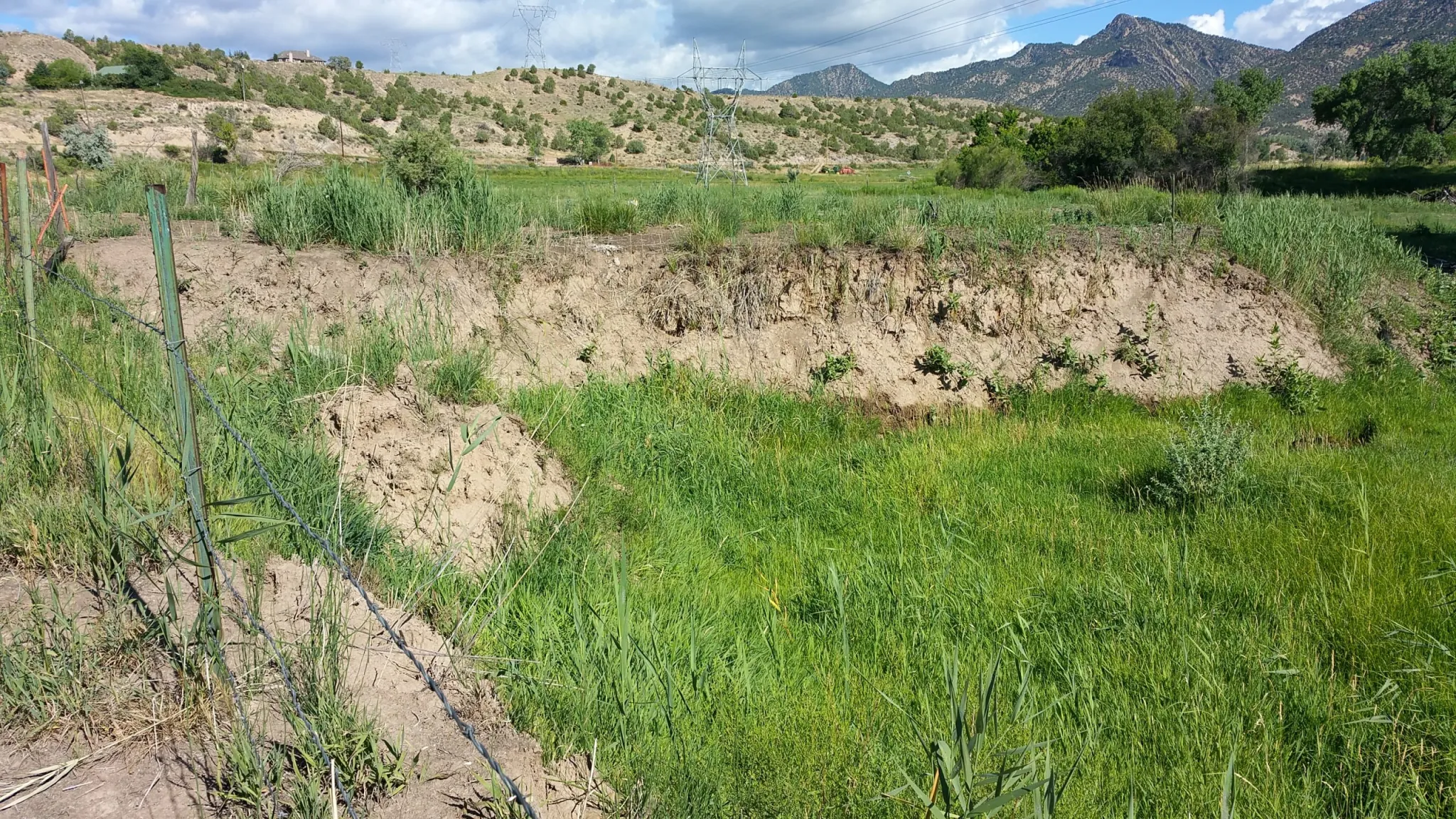
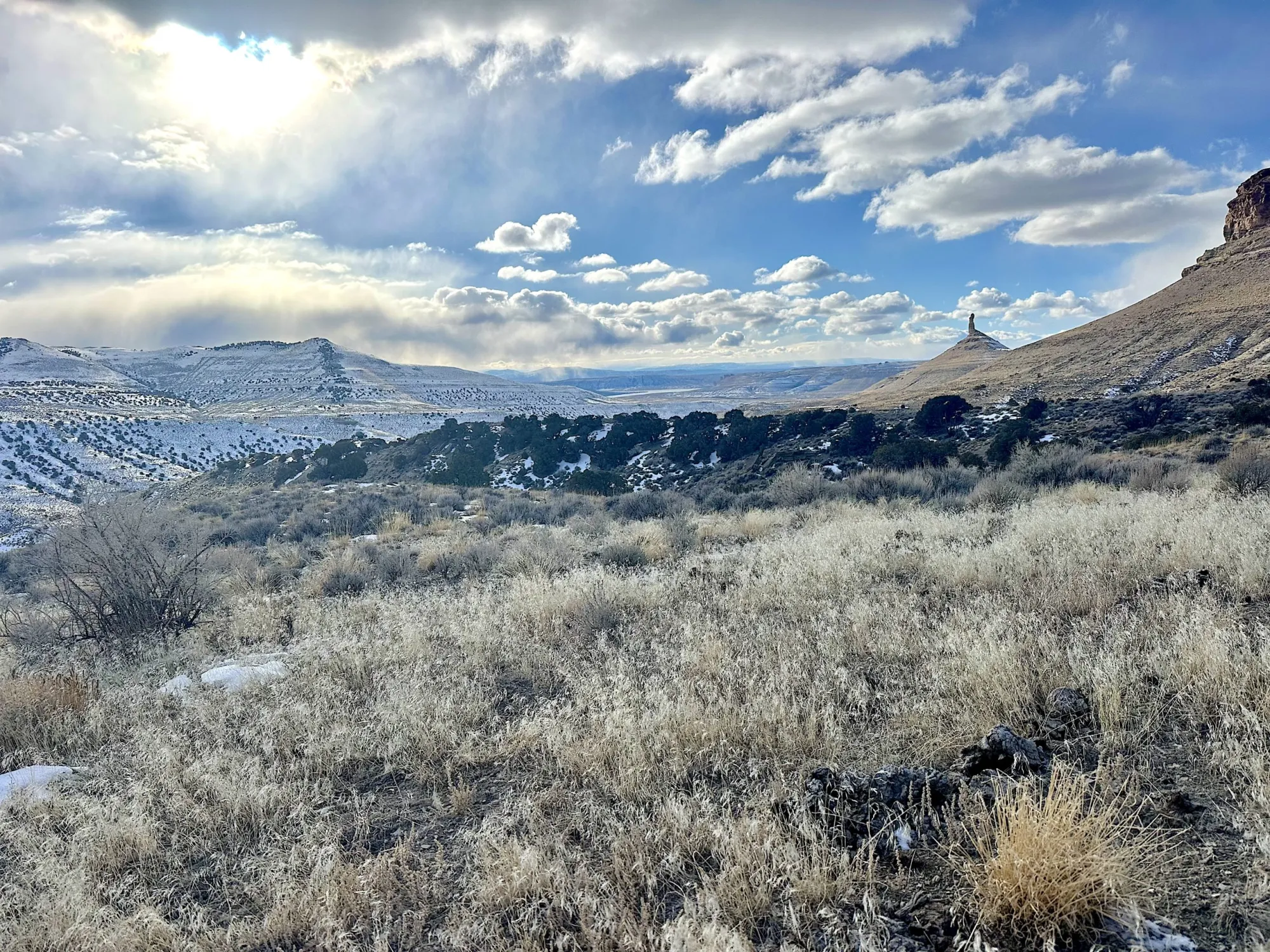
A patch of cheatgrass, pictured here in January 2025, emerged from a mountainside along the east shore of Flaming Gorge Reservoir. Cheatgrass has steadily invaded the lower Green River Basin, about half of which “needs attention,” according to the Sweetwater County Weed and Pest District. (Mike Koshmrl/WyoFile)

Click the link to read the article on the WyoFile website (Mike Koshmrl):

December 1, 2025

An all-hands-on-deck effort, tens of millions in funding and a breakthrough herbicide are slowing but not halting a destructive force steadily enveloping the best sagebrush left on Earth.

POWDER RIVER BASIN—Brian Mealor scanned the prairie east of Buffalo, but his mind drifted west to a haunting scene in northern Nevada. 

In the burn scar of the Roosters Comb Fire, a single unwelcomed species had taken over, choking out all competitors. Mealor saw few native grasses or shrubs, scarcely a wildflower. 

Not even other weeds.

“Literally everything you see is cheatgrass,” Mealor recalled of his June tour of the scar. “I just stood there, depressed.”

A sea of cheatgrass photographed about 20 miles north of Battle Mountain, Nevada, off of Izzenhood Road. (Claire Visconti/University of Wyoming)

Mealor already knew plenty about the Eurasian species’ capacity to decimate North American ecosystems since he leads the University of Wyoming’s Institute for Managing Annual Grasses Invading Natural Ecosystems. But he was still shocked walking through the endless cheatgrass monoculture taking over the 220,000 once-charred acres northwest of Elko. 

The same noxious species, he knew, is steadily spreading in Wyoming.

The ecological scourge made Silver State officials so desperate that they were planting another nonnative, forage kochia, because it competes with less nutritious cheatgrass and offers some nourishment for native wildlife, like mule deer. 

“They’ll just die, because there’s nothing there,” Mealor said. “That’s why we have to do stuff. Because we could turn into that.” 

Brian Mealor, center, looks off into the sagebrush along the outskirts of the House Draw Fire scar near Buffalo in November 2025. The 2024 blaze eliminated over 100,000 acres of core sage grouse habitat, including 18 active leks. (Mike Koshmrl/WyoFile)

Scientists, rangeland managers and state and county officials are doing everything in their power to prevent Wyoming from becoming another landscape lost to cheatgrass. There’s a powerful new herbicide that’s helping. And funds enabling the spraying of hundreds of thousands of acres are being secured and raised. Yet, Wyoming is still losing its cheatgrass fight, and ultimately far more resources are needed to turn it around.

“Let’s not kid ourselves,” said Bob Budd, executive director of the Wyoming Wildlife and Natural Resource Trust. “The magnitude of the need is utterly staggering. We’re talking hundreds of millions of dollars over the next decade. That’s daunting.”

Budd voiced that warning Tuesday while addressing a statewide group that focuses on bighorn sheep, which depend on seasonal ranges being invaded by cheatgrass. A recent study co-authored by Mealor underscores the need to act soon to protect Wyoming’s wildlife. UW researchers concluded that cheatgrass, which is only edible in spring, could cost northeast Wyoming’s already struggling mule deer half their current habitat in the next couple of decades.
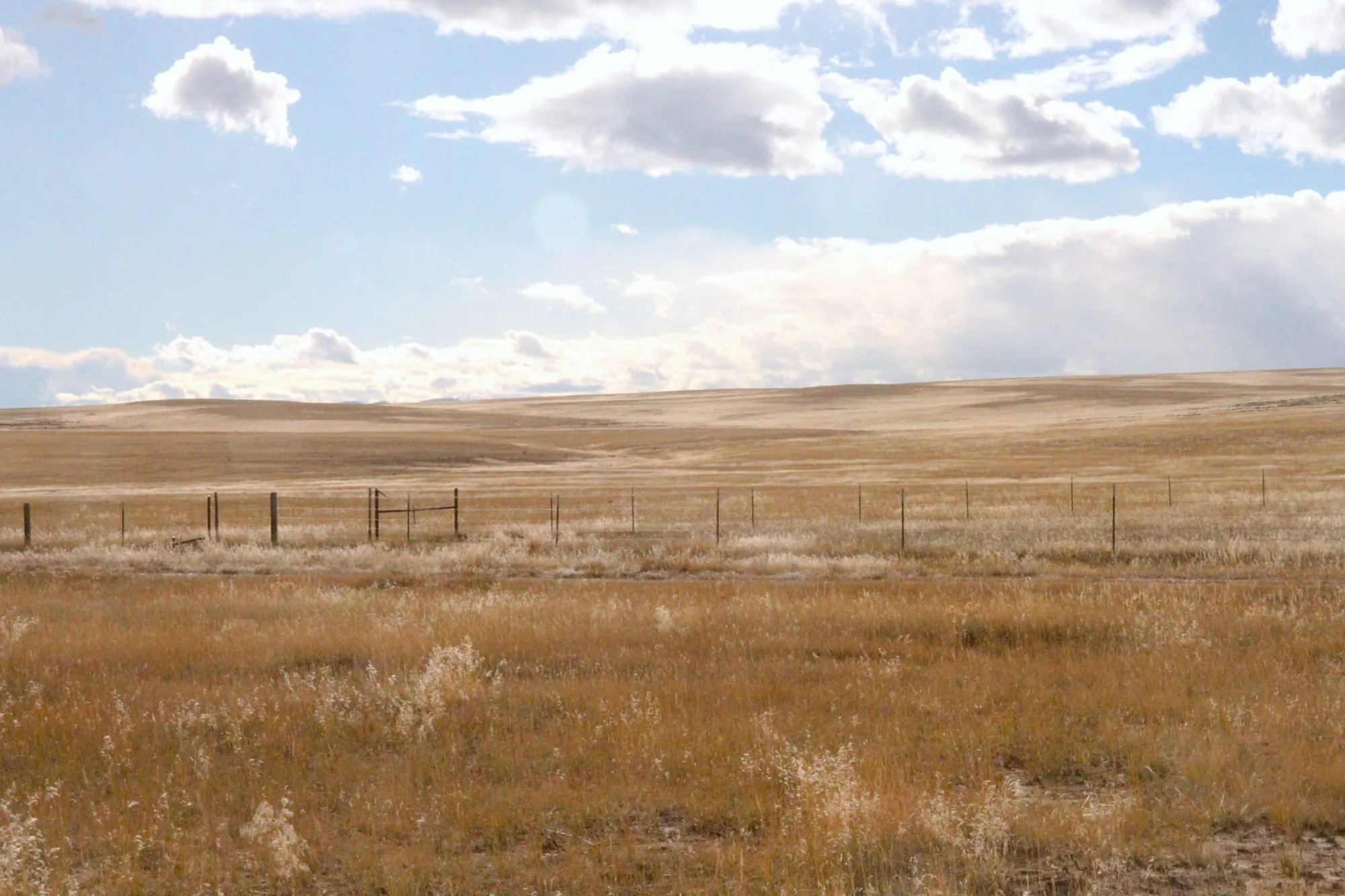
Eighteen months ago, green sagebrush plants would have dominated this vista all the way to the horizon in the Powder River Basin. Today, because of the House Draw Fire, it’s a golden prairie — the lighter-hued portions are dominated by invasive cheatgrass and Japanese brome. (Mike Koshmrl/WyoFile)

On Nov. 6, the Sheridan-based professor joined fellow academics, biologists and volunteers on a field trip to a mixed-grass prairie. Like the Nevada burn scar, this was a Wyoming landscape on the mend from wildfire. In fact, it wasn’t a grassland until last year. 

Before Aug. 21, 2024, the ground where they stood had been considered the best of what’s left of northeast Wyoming’s sagebrush biome. 

Transformation

A lightning storm that sparked a conflagration abruptly ended that era. Over the course of two days, the House Draw Fire tore a 10-mile-wide, almost 60-mile-long gash into the landscape, inflicting over $25 million in damage. In a fiery blink, the native plant community mostly disappeared. 

Once-prized sagebrush within roughly 100,000 acres of the burn area is basically gone, a worrisome loss of habitat for the region’s already struggling sage grouse. What grew back isn’t a monoculture, like in Nevada. Native species are easily found. But portions of the Powder River Basin’s rolling hills are now dominated by big densities of cheatgrass and Japanese brome, another invasive annual grass. Without mature sagebrush shrubs to compete with, there’s reason to believe the invaders, which flourish with fire, will expand their grip. 

“It’s not like you have a fire and all of a sudden you’re just completely covered with cheatgrass,” Mealor said. “There’s a lag.”

Cheatgrass grows in thick amid sagebrush southeast of Buffalo, adjacent to the House Draw Fire scar. (Mike Koshmrl/WyoFile)

The Johnson County Natural Habitat Restoration Team is throwing everything it can at the fire scar to try to prevent invasive grasses from taking over. Armed with $12 million in state funds, crews will aerially spray some 120,000 acres with a cheatgrass-killing herbicide. Aerial sagebrush seeding is also underway on 3,000 acres of burned-up sage grouse nesting habitat. And there are even funded plans to build hundreds of simple erosion-controlling Zeedyk structures to protect the wet meadows within the fire scar. 

Yet, on a broader scale, Mealor is a realist about the immense challenge of keeping cheatgrass and its noxious counterparts at bay in Wyoming, let alone enabling sagebrush to stage a comeback — a costly, complicated feat

“If we were talking about a 25,000-acre fire here and there,” Mealor said, “it would be a little different.” 

About a half-million acres of northeastern Wyoming burned in 2024, the state’s second-largest fire year in modern history. Wyoming lawmakers agreed to carve out $49 million for wildfire recovery grants statewide, less than half of Gov. Mark Gordon’s requested amount. Optimistically, Mealor said, the awarded sum might be enough to treat a million acres. That sounds significant — it’s half the acreage of Yellowstone. But cheatgrass is spreading just about everywhere in a state that spans 62 million acres.

Gov. Mark Gordon gives his State of the State address Feb. 12, 2024, at the Capitol in Cheyenne. (Ashton J. Hacke/WyoFile)`

“If you think about it from a statewide level, it’s not a lot,” Mealor said of the funding. “That’s not an attack. I’m not downplaying the importance of the money that was set aside by the Legislature for this. It’s a lot of money. But it’s also not enough.” 

The governor, who’s a rancher by trade, has voiced the same concern. Pushing for $20 million in cheatgrass spraying funds during the Legislature’s 2024 budget-making process, Gordon acknowledged Wyoming is “losing the battle” against invasive annual grasses. Lawmakers ultimately agreed to $9 million, less than half the requested amount, according to the budget

‘Best of the best’

The incursions that cheatgrass, Japanese brome and fellow invasives medusahead and ventenata are making into Wyoming rangelands are significant because of what’s at stake. The Equality State is the cornerstone of what remains of the sagebrush-steppe biome, a 13-state ecosystem vanishing at a rate of 1 million-plus acres per year.  

“Half of the best of the best is in Wyoming,” said Corinna Riginos, who directs the Wyoming science program for The Nature Conservancy. 
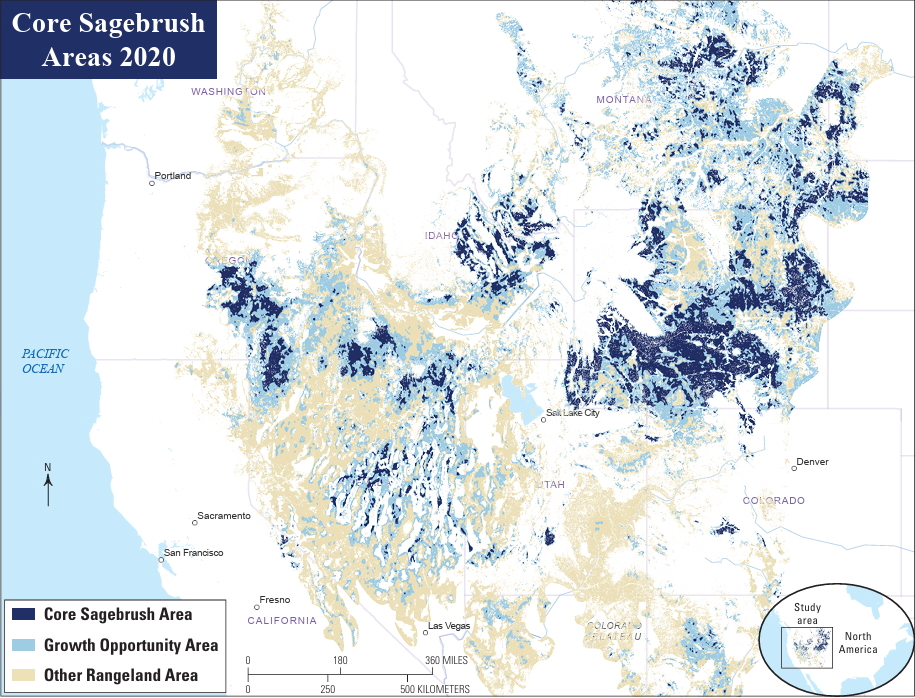
In 2020, the U.S. Geological Survey, U.S. Fish and Wildlife Service and Western Association of Fish and Wildlife Agencies completed a conservation plan to proactively restore the United States’ declining sagebrush habitat. This map from the plan illustrates Wyoming’s importance, being the stronghold of the biome. (USGS)

The Lander-based scientist is spearheading a Camp Monaco Prize-winning project that seeks to safeguard the Greater Yellowstone Ecosystem from cheatgrass. The flanks of the ecosystem, such as the Golden Triangle, southwest of the Wind River Range, contain some of the most expansive unbroken tracts of sagebrush remaining on Earth. Distribution maps show that almost all of those areas are in Wyoming. It’s no coincidence that the same places also host remarkable biological phenomena, like the world’s largest sage grouse lek and longest mule deer migration

Riginos’ research is focused on defensive measures to catch and kill cheatgrass early on, when it exists at low levels. Keeping the invasion out of core tracts of sagebrush, she said, is a more efficient use of funds than trying to shift heavily contaminated landscapes back to what they used to be. 

“Maybe we live with what they are, we cope with it, rather than trying to recover from it,” Riginos said of cheatgrass-dominated areas. 
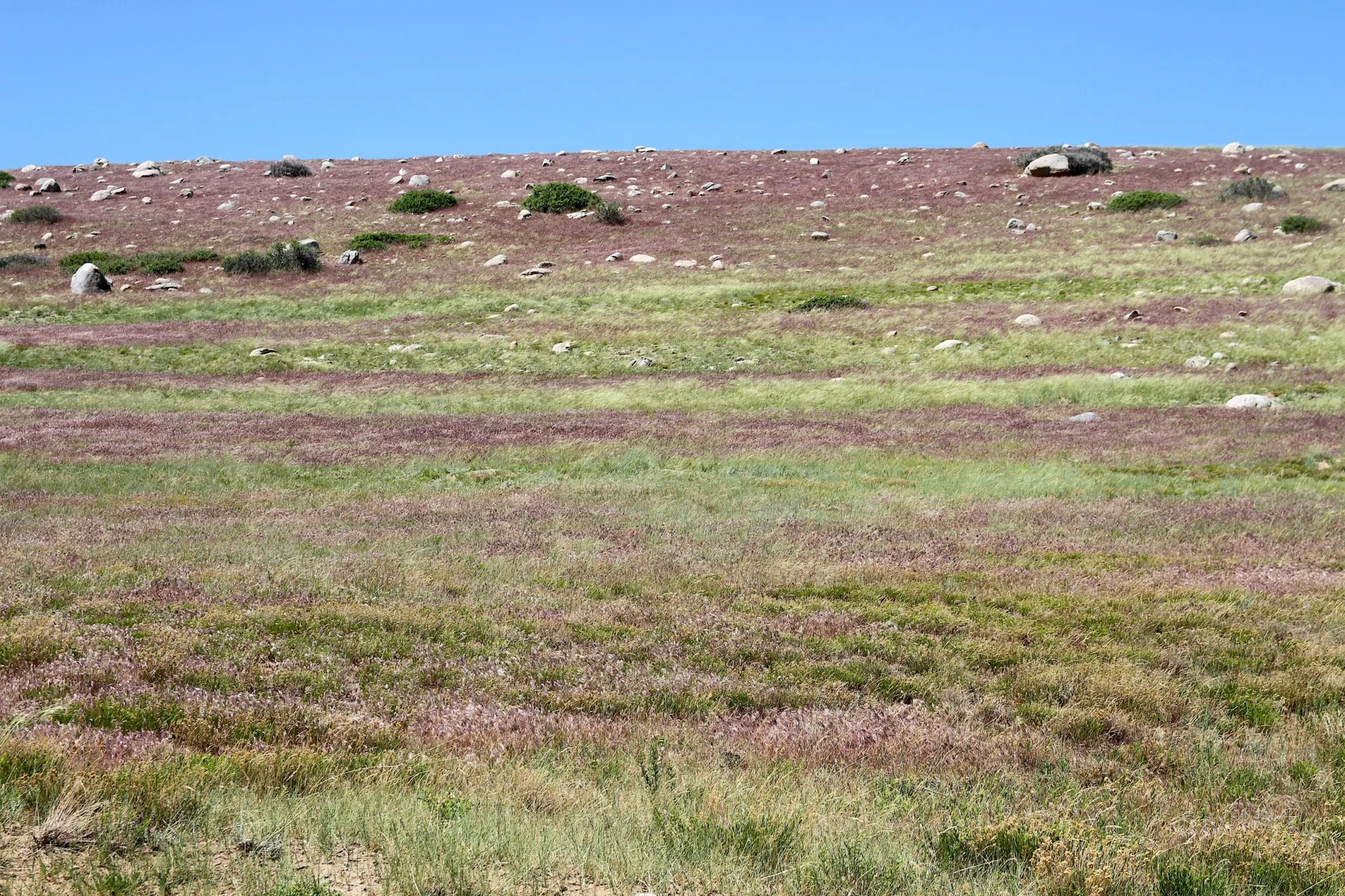
Cheatgrass grows where reddish stripes appear on the hillsides leading up to Washakie Reservoir in June 2024. The green stripes are where an herbicide, Indaziflam, was experimentally applied. Rangeland managers have since scaled up the effort, funding 16,000 acres of cheatgrass removal in the Washakie Park area. (Mike Koshmrl/WyoFile)

Within Wyoming, invasive grass experts don’t have to go far from the world’s most unsullied sagebrush stands to find heavily infested landscapes. In June 2024, Riginos toured cheatgrass treatments in the Wind River Indian Reservation’s Washakie Park area. Although they stood about 40 straight-line miles from the Golden Triangle, scientists, wildlife managers and weed experts on the tour were surrounded by hillsides purple-hued from cheatgrass. 

“You have to respect it, as an organism,” Riginos said. “The adaptability and just kind of sheer ability to get a toehold and take over is pretty remarkable.”

Cheatgrass gets its name from its ability to “cheat” surrounding vegetation out of moisture and nutrients. Its mechanism for success is essentially a head start. It germinates in the fall and starts growing in cold temperatures. Then it overwinters, matures, throws off prolific amounts of seeds and dies by midsummer when native grasses and forbs are much earlier in their life cycle.

A patch of cheatgrass colors a 7,500-foot-high northern Wyoming Range ridgeline in November 2025. (Mike Koshmrl/WyoFile)

On top of the advantageous life cycle, the West’s ever-increasing, climate-driven wildfires help cheatgrass flourish. When a cheatgrass-infested area burns and becomes more cheatgrass dominant, it’s more prone to burn again, creating a vicious feedback loop. 

Giving cheatgrass yet another advantage, research has shown the plant in North America adapts well to different locales. That trait enables it to flourish in a wide range of temperatures and moisture conditions across the West, Riginos said.

“I don’t want to see the West become a wasteland of cheatgrass, I really don’t,” she said. “I feel that this is the most existential, sweeping threat to our western ecosystems. It really concerns me.” 

Closing in

All those traits have enabled an impressive, though foreboding, expansion. Since its introduction from Europe in the 1800s, cheatgrass has spread to all 50 states and parts of Canada and Mexico. There are signs it’s not slowing down. Rangeland ecologists have detected an eightfold increase in cheatgrass across the Great Basin since the 1990s, according to the National Wildlife Federation

Simultaneously, sagebrush-dominated landscapes have sustained a decline. A 2022 U.S. Geological Survey reportfound that an average of 1.3 million acres are being lost or degraded every year. That’s an area larger than Rhode Island.

Although the spread of Wyoming cheatgrass hasn’t been as overwhelming as in lower-elevation, drier western states, the invasion has, and continues to be, successful. A whitepaper distributed by the Wyoming Outdoor Council in the state Capitol during the 2024 funding fight reported that invasive annual grasses already affect 26% of the Equality State’s landmass, which pencils out to over 16 million acres.

Cheatgrass is widespread along the east side of South Pass, just a couple dozen miles away from the most expansive and intact reaches of the sagebrush biome remaining on Earth. (Mike Koshmrl/WyoFile)

Historically, Wyoming land managers believed that much of the nation’s least-populated state was too high and too cold for cheatgrass to gain much ground. But the climate has tilted in its favor, according to Jeanne Chambers, an emeritus U.S. Forest Service research ecologist who has studied cheatgrass for decades.

“Cooler temperatures, especially those cold nighttime temperatures, used to keep cheatgrass at bay,” Chambers said. “But now that things are warming up and people and livestock and animals are all over the place, the propagules — the seeds — are getting everywhere.” 

As a result, slightly lower-elevation reaches of Wyoming, like the Bighorn Basin, are seeing more and more cheatgrass, she said. The same goes for where the salt desert transitions into sagebrush in the state’s southwestern corner.   

“Those areas are pretty vulnerable,” Chambers said. 
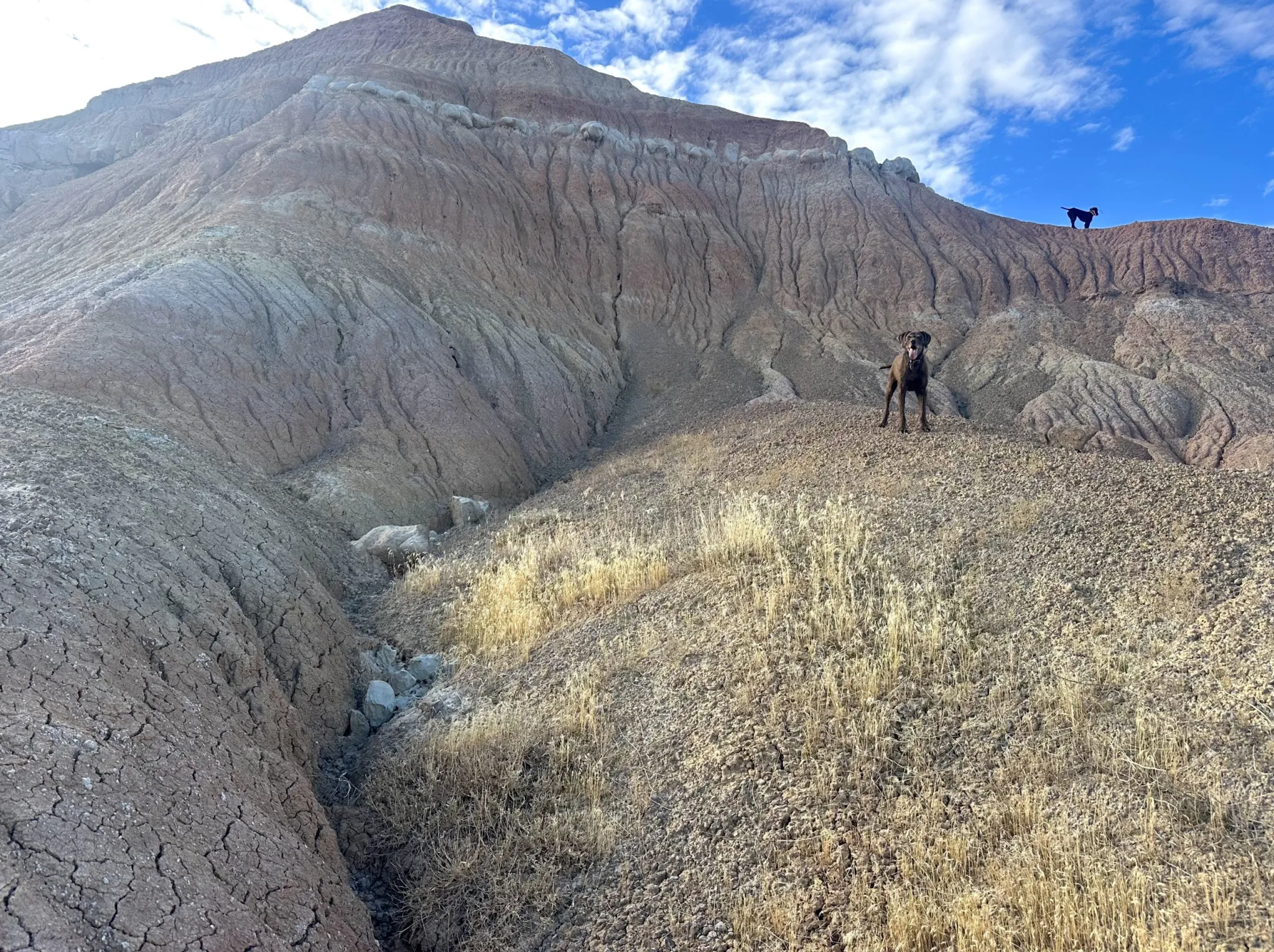
Cheatgrass sprouts off a badland-like formation near Burlington in November 2025. The noxious grass is widespread in the Bighorn Basin, and wildfires that have flared up in recent years are exacerbating its spread. (Mike Koshmrl/WyoFile)

Wyoming specialists in those communities corroborate the claims.

“Cheatgrass is moving into our county, primarily on the south end — but it’s not exclusive to the south end,” Sweetwater County Weed and Pest Supervisor Dan Madson said. “There are hot spots throughout the county invading mule deer, antelope and elk habitats, as well as sage grouse core areas.” 

Some of the encroachments are well north into the Green River Basin and Red Desert, noted sagebrush strongholds. North of Rock Springs, north of Superior and in the Seedskadee National Wildlife Refuge are all places being actively invaded, Madson said.  

Sweetwater County is scaling up its response, Madson said. The county is spending about $750,000 to spray nearly 12,000 acres of cheatgrass this year and plans to treat more like 15,000 acres in 2026. 

But money is a limiting factor. Wyoming landscapes have been the recipient of many millions of federal dollars, including from the Inflation Reduction Act and Bipartisan Infrastructure Law, which have complemented the state’s contributions. 
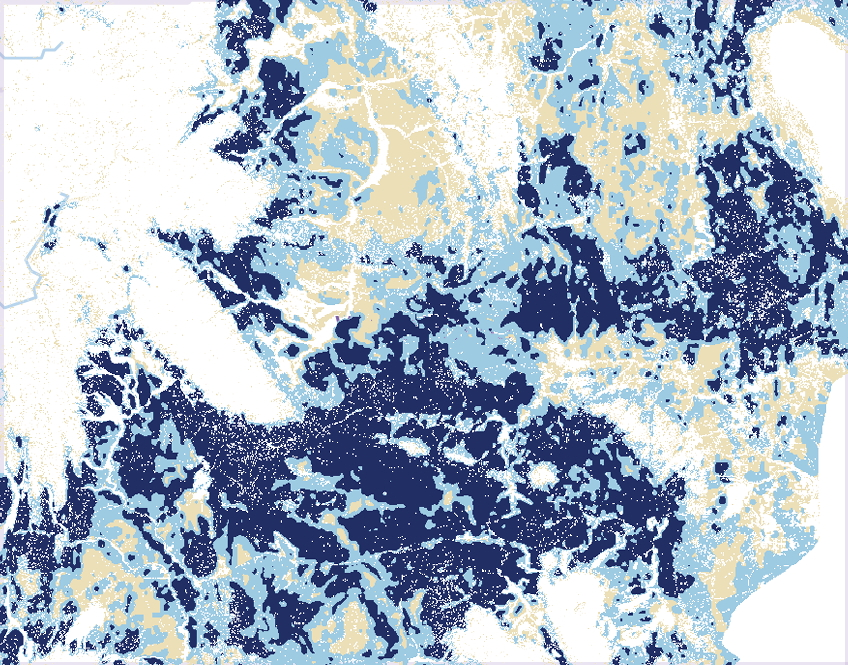
Wyoming contains half of the core sagebrush-steppe habitat, in dark blue, that remains in the United States. Light blue signifies areas habitat managers have identified as having potential for restoration and tan areas are classified as “other rangeland.” (U.S. Geological Survey)

Still, the pace of infestation statewide and in Sweetwater County far exceeds the total resources available. 

“We could easily, easily triple that [15,000 acres] in a year,” Madson said, “and still have enough to do for the rest of my career.”

Funding issues aren’t only due to federal government turmoil. One potential pot of $11 million that would have been directed toward spraying evaporated when the Wyoming Senate opted to forgo a supplemental budget

“That money got lost,” said Budd, at the Wyoming Wildlife and Natural Resource Trust. “It actually hurt some parts of the state that were doing a very good proactive job, managing to keep cheatgrass down.”

‘Defending the core’

The upper Green River Basin is one example of a landscape where cheatgrass advances have been reversed. Its remoteness, harsh climate and high elevation helped, but those factors alone didn’t prevent a slow incursion of the virulent vegetation early in the century. By 2014, for example, hues of red and purple — hallmarks of cheatgrass — were painting the ridges rising over Boulder Lake. 

The Sublette County Weed and Pest District fought the invasion with repeated treatments. In 2018 alone, some 30,000 acres of the western front of the Winds were aerially sprayed. It worked. 

By the summer 2020, no cheatgrass was being detected at Boulder Lake, once a hotspot, District Supervisor Julie Kraft said. Nowadays, she said, no major problem areas remain in Sublette County.
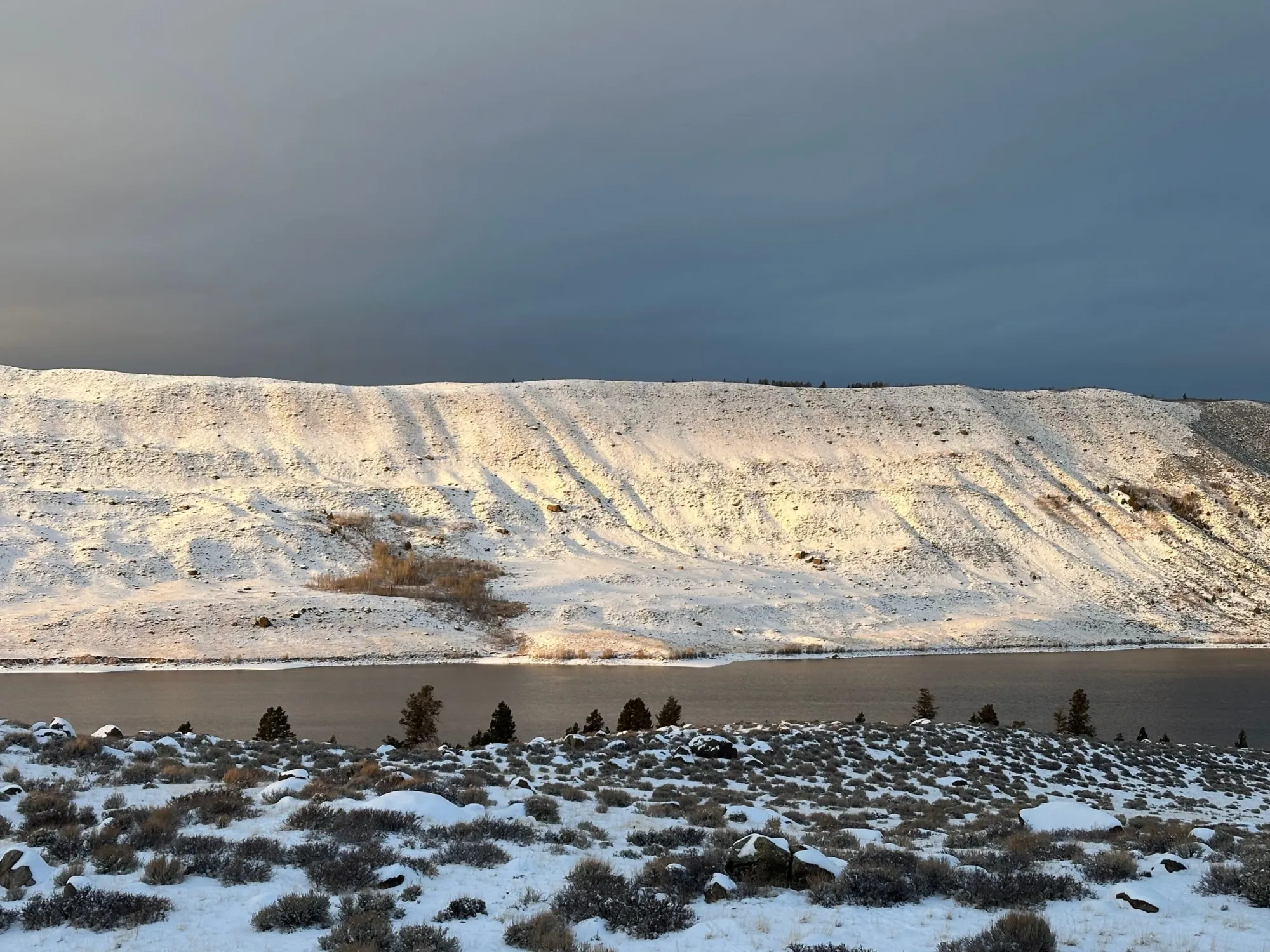
In August 2019, a recreational shooter hit an exploding target and sparked the Tannerite Fire, which ripped across the pictured ridge on the north end of Boulder Lake. Afterwards, cheatgrass that was already in the area grew in thick where the sagebrush once stood, but the mountainside was subsequently treated and today the invasive grass occurs only in trace levels. (Mike Koshmrl/WyoFile)

Kraft even felt “good” about the future of her cheatgrass fight, expressing uncommon optimism for those grappling with an organism overtaking so many places. 

“A couple of years ago, I might not have said the same thing,” Kraft said. “But with this new tool, and particularly because of the influx of money that came [during] the [Biden] administration, it allowed us to do so much more.” 

That new tool is an herbicide, Indaziflam. It’s a product, also known by its trade name, Rejuvra, that provides far more enduring protection against cheatgrass than any previous chemical treatment. It works by attacking the seedbank and shallow root structure of cheatgrass, while not infiltrating the soil deep enough to kill perennial native grasses and plants like sagebrush. 

“It depletes it down until there won’t be a seedbank of cheatgrass anymore,” Kraft said. “We’ve seen that on our sites. Year one, you can go out and grab handfuls of cheatgrass seed off the top of the soil. Year two, you can’t find those handfuls anymore. By year three, you can’t dig [cheatgrass seeds] out of the bottoms of sagebrush.”

Sublette County, a stronghold of the sagebrush biome, has fared better than other parts of Wyoming at keeping cheatgrass at bay. Still, patches can be found here or there, like this pocket overlooking Half Moon Lake in March 2025. (Mike Koshmrl/WyoFile)

The June 2024 outing that drew Riginos, the Nature Conservancy scientist, to Washakie Park along the east slope of the Winds included a stop at an experimental Indaziflam treatment plot. 

Although a mix of the herbicide had been misted over strips of cheatgrass nearly four years earlier, its effect remained obvious and unmistakable. Curing, purple drooping brome blanketed untreated strips, and native green grasses filled the niches between. 

“It’s holding still,” said Aaron Foster, Fremont County’s weed and pest supervisor, who led the cheatgrass treatment tour on the reservation. “It’s been holding now for four growing seasons. Pretty impressive.”  
#Colorado Parks and Wildlife continues increased zebra mussel sampling on the #ColoradoRiver with multi-agency effort

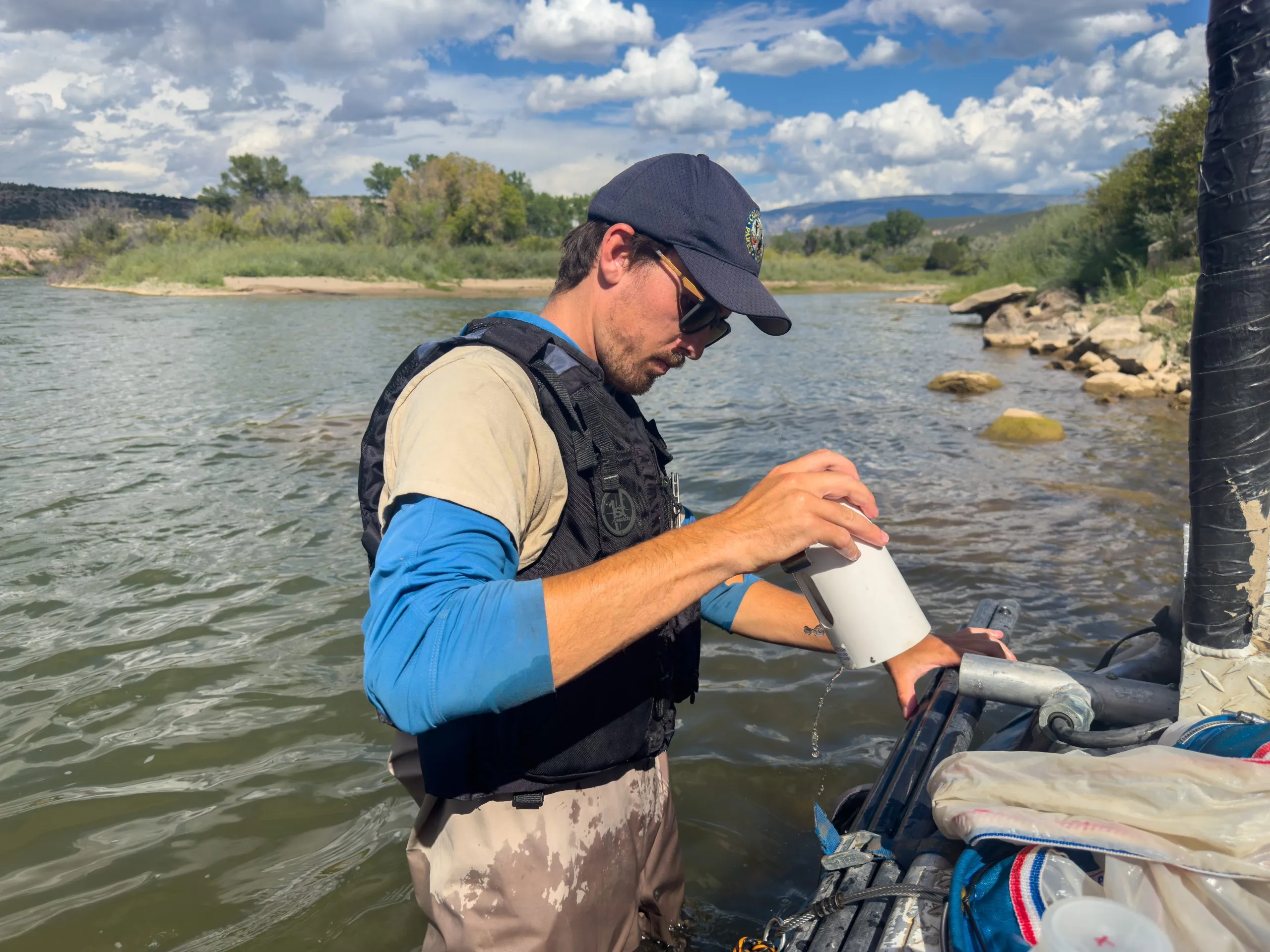
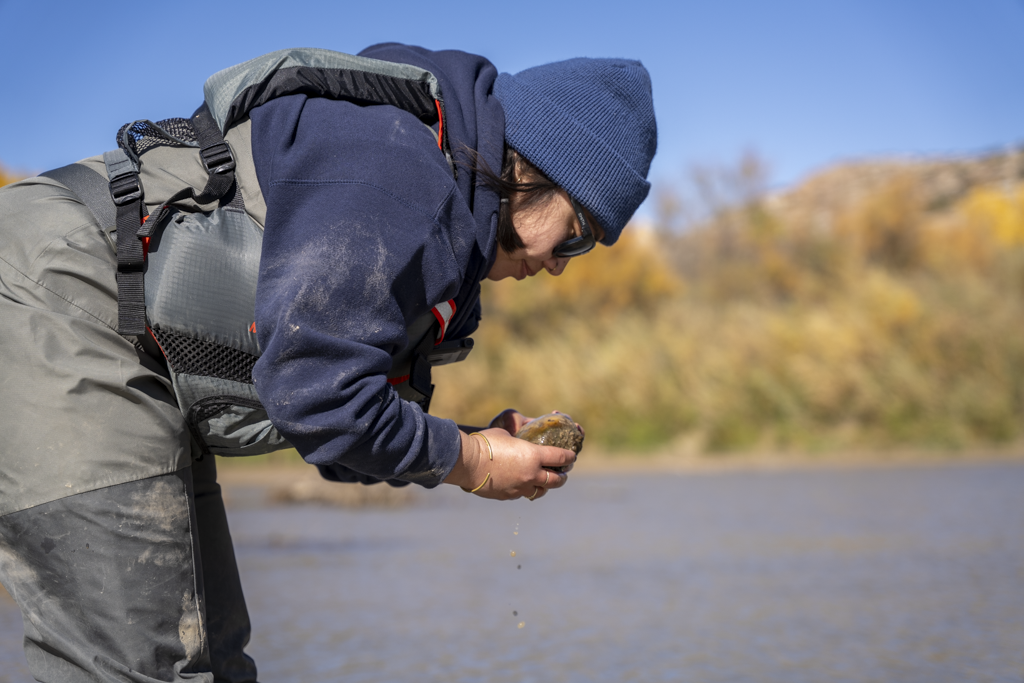
A Colorado Parks and Wildlife Aquatic Nuisance Species staff member looks for adult zebra mussels on a rock from the Colorado River on Oct. 29. That day, over 70 individuals from Parks and Wildlife and its partner agencies and groups searched Western Slope rivers for signs of zebra mussels. Colorado Parks and Wildlife/Courtesy Photo

Click the link to read the article on the Colorado Parks & Wildlife website (Rachael Gonzales):

November 13, 2025

GRAND JUNCTION, Colo. — On Oct. 29, over 70 people from multiple partner agencies and groups joined Colorado Parks and Wildlife (CPW) for a one-day sampling effort on the Colorado River. From the headwaters in Grand County to Westwater, Utah, volunteers from nine agencies spent the day floating the river in search of adult zebra mussels. 

Similar surveys were conducted on the Eagle and Roaring Fork rivers, as well as the tail end of the Gunnison River near the confluence of the Colorado River. 

The rivers were divided into smaller sections to simplify the identification of potential zebra mussel habitat and maximize the amount of surveying that could be done in each section. Stopping at points along the way, teams conducted shoreline surveys by inspecting rocks and other hard surfaces where zebra mussels may attach. 

Staff and volunteers sampled approximately 200 locations, covering over 200 miles between the four rivers. 

Through this sampling effort, CPW  confirmed a single adult zebra mussel in the Colorado River near Rifle. During surveys following the large-scale effort, CPW Aquatic Nuisance Species (ANS) staff discovered additional adult zebra mussels within Glenwood Canyon.

With these new findings, the Colorado River is now considered infested from the confluence of the Eagle River down to the Colorado-Utah border. 

“Although it is disappointing to have found additional zebra mussels in the Colorado River,”  said Robert Walters, CPW’s Invasive Species Program Manager, “this survey achieved its primary objective of gaining a more comprehensive understanding of the extent of the zebra mussel population in western Colorado.”

To date, no zebra mussels — adult or veliger — have been found in the Colorado River upstream of the confluence with the Eagle River.

Mudsnails next to a coin. Adult mudsnails are about the size of a grain of rice. Photo credit: City of Boulder

As a result of the one-day sampling effort, CPW also confirmed the presence of New Zealand mudsnails in the Roaring Fork River. While New Zealand mudsnails have previously been identified in the Colorado, Gunnison and Eagle rivers, this is the first time they have been detected in the Roaring Fork River.

“We could not have pulled off such a massive effort without our partners. These partnerships are instrumental in the continued protection of Colorado’s aquatic resources and infrastructure from invasive mussels,” said Walters.

CPW would like to thank the following agencies and groups who also participated in the one-day sampling effort, in addition to our federal partners at the U.S. Fish and Wildlife Service and Bureau of Reclamation:

  • City of Grand Junction
  • Eagle County
  • Mesa County
  • Orchard Mesa Irrigation District
  • Roaring Fork Conservancy
  • Utah Department of Natural Resources

“It’s not just our federal, state and local partners that play a role in understanding the extent of zebra mussels in the Valley, but also the general public,” Walters continued. “That is why we are continuing to ask for the public’s help.”

If you own a pond or lake that utilizes water from the Colorado River or Grand Junction area canal systems, CPW would like to sample your body of water. You can request sampling of your body of water by CPW staff at Invasive.Species@state.co.us.

In addition to privately owned ponds and lakes, CPW also encourages those who use water pulled from the Colorado River and find any evidence of mussels or clams to send photos to the above email for identification. It is extremely important to accurately report the location in these reports for follow-up surveying.

CPW will continue sampling through Thanksgiving, focusing on smaller ponds in the Grand Valley.

Prevent the spread: Be a Pain in the ANS
Simple actions like cleaning, draining and drying your motorized and hand-launched vessels — including paddleboards and kayaks — and angling gear after you leave the water can make a big difference to protect Colorado’s waters.

Learn more about how you can prevent the spread of aquatic nuisance species and tips to properly clean, drain and dry your boating and fishing gear by visiting our website. Tips for anglers and a map of CPW’s new gear and watercraft cleaning stations are available here.

Colorado Rivers. Credit: Geology.com

How is #Colorado’s response to invasive mussels going? Funding and public education are key, experts say — Shannon Mullane (Fresh Water News)

Adult Zebra mussel. Photo credit: Colorado Parks and Wildlife

Click the link to read the article on the Water Education Colorado website (Shannon Mullane):

October 23, 2025

Colorado is in its first year of responding to a zebra mussel infestation in a big river, the Colorado River. State staff say they have what they need to handle the high-priority needs — they just need their funding to stay off the chopping block.

The fast-reproducing mussels, or their microscopic stage called veligers, were first detected in Colorado in 2022. Since then, the state’s aquatic nuisance species team and its partners have been working to monitor water, decontaminate boats, and educate the public to keep the mussels from spreading. That effort logged a serious failure this summer when state staff detected adult zebra mussels in the Colorado River, where treatment options are limited.

CPW sampling on the Colorado River found zebra mussel veligers. The river is now considered “positive” for zebra mussels from its confluence with the Roaring Fork River to the Utah state line. CREDIT: PHOTO COURTESY OF COLORADO PARKS & WILDLIFE

“We’re continuing to sample the Colorado from below the Granby Dam all the way out to the [Utah-Colorado] state line,” said Robert Walters, who manages the invasive species program for Colorado Parks and Wildlife.

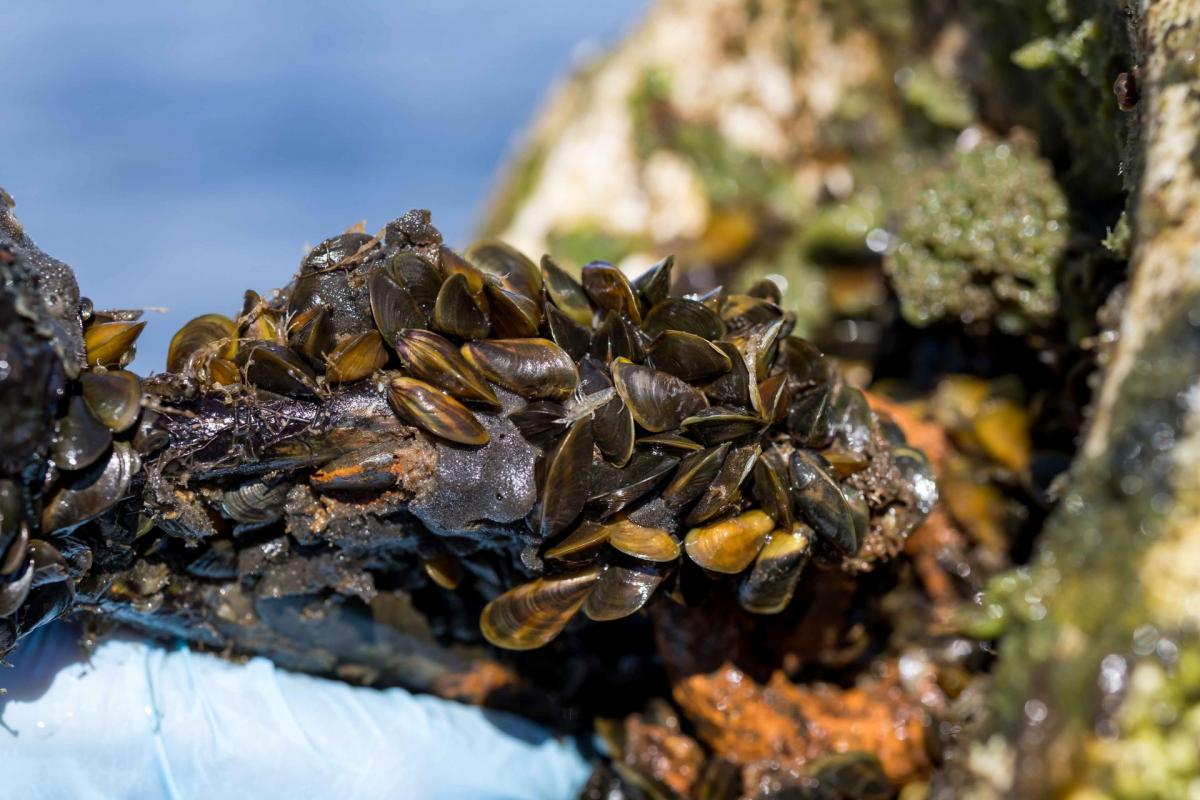
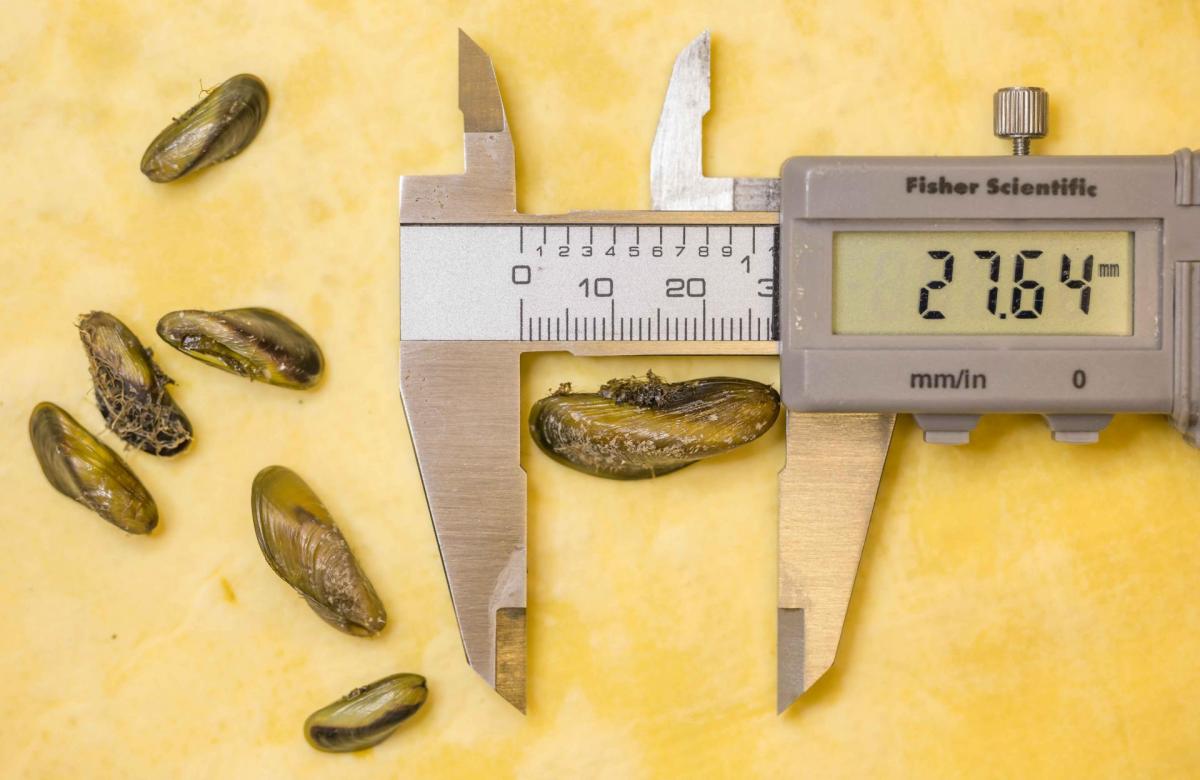
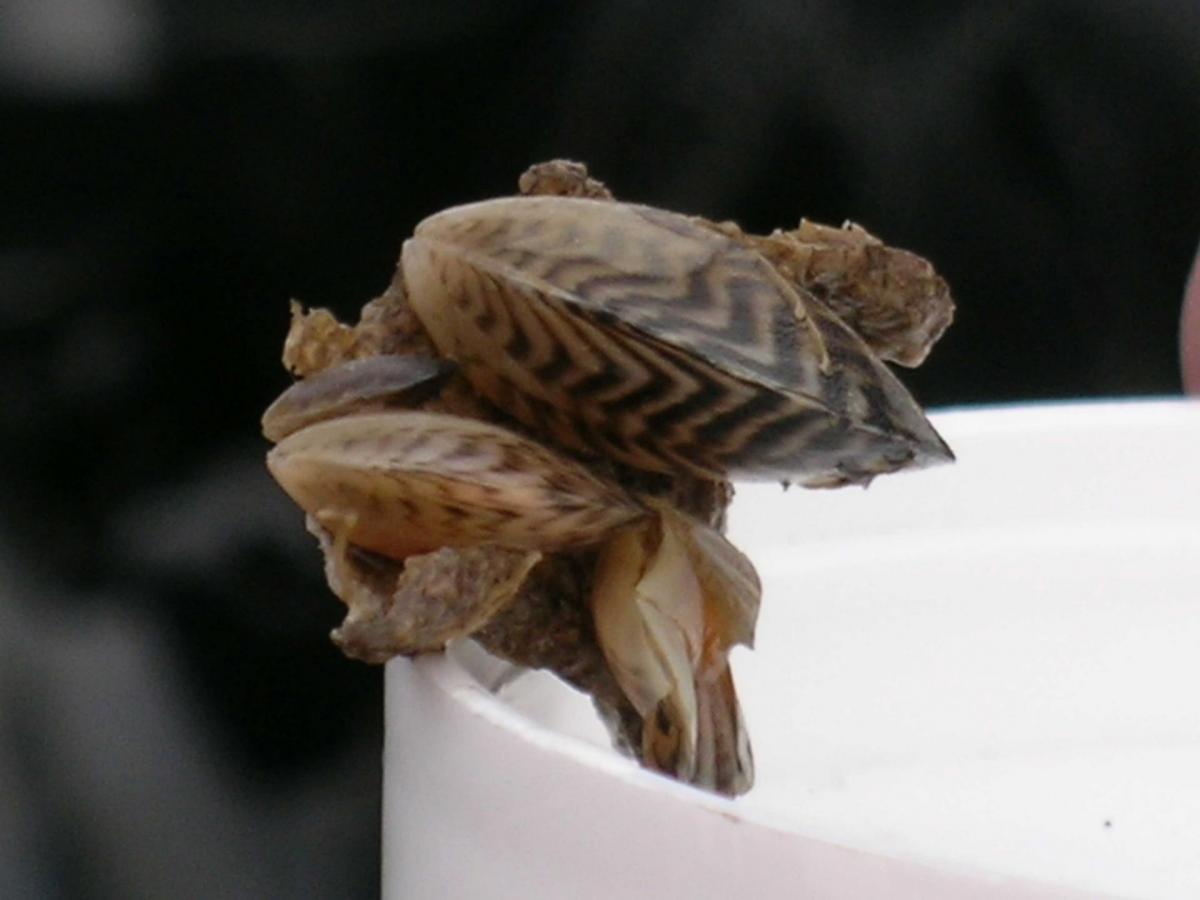
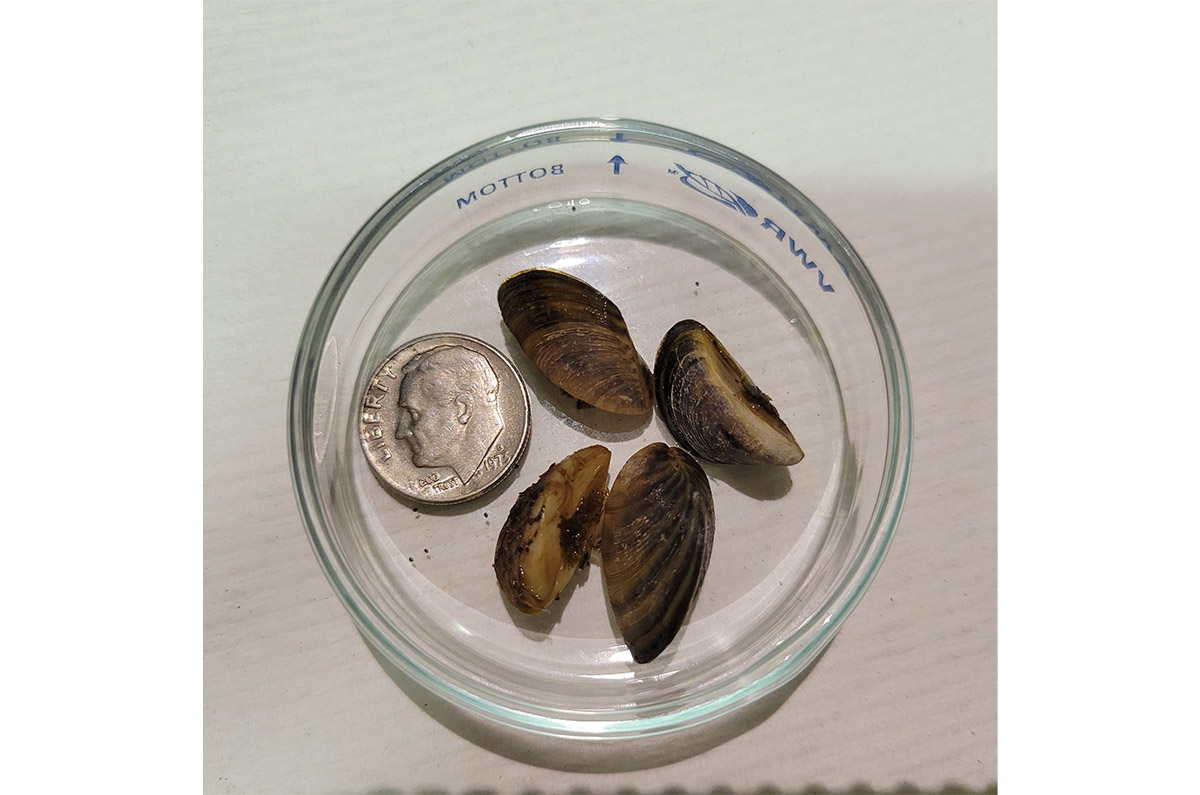
Adult zebra mussels, about the size of a thumbnail with a zebra-striped shell, reproduce quickly and can clog up pipes, valves and parts of dams, costing millions of dollars to remove. They also suck up nutrients, out-eating other native aquatic species, and their razor sharp shells cause headaches for beachgoers.

The state’s first adult zebra mussel showed up in Highline Reservoir near Grand Junction in 2022. But even after the lake was drained and treated, the mussels appeared again.

Then this year in July, the mussels showed up in a private reservoir in Eagle County near the Colorado River. And in September, specialists found adult zebra mussels in a stretch of the Colorado River itself.

Colorado has been working to keep these invasive species out of its waters since 2007, when a task force was created to coordinate management efforts.

In 2008, Colorado approved a law that makes it illegal to possess, import, export, transport, release or cause an aquatic nuisance species to be released.

Now, the program completes over 450,000 inspections each year, according to Colorado Parks and Wildlife’s website. The teams have intercepted 281 boats with zebra or quagga mussels attached.

But their treatment options are limited on the Colorado River. CPW does not intend to treat the main stem of the Colorado River due to multiple factors, including risk to native fish populations and critical habitat, the length of the potential treatment area and complex canal systems, the agency said in a mid-September news release.

The goal continues to be educating the public — including lawmakers who are scheduled to hear an update on the zebra mussel issue during the Oct. 29 Water Resources and Agriculture Review Committee meeting.

“What I think that we really need to help us more effectively tackle this issue is a higher level of public awareness,” Walters said.

The first year of infestations

For invasive species teams, the first year involves a lot of monitoring, according to Heidi McMaster, the invasive species coordinator for the U.S. Bureau of Reclamation.

She’d know: She has helped Reclamation with its response to invasive species, like quagga mussels.

Quagga mussels were discovered in Lake Mead, Lake Mojave and Lake Havasu on the Colorado River in January 2007. The mussels were later confirmed in Lake Powell in 2013, according to the Bureau of Reclamation.

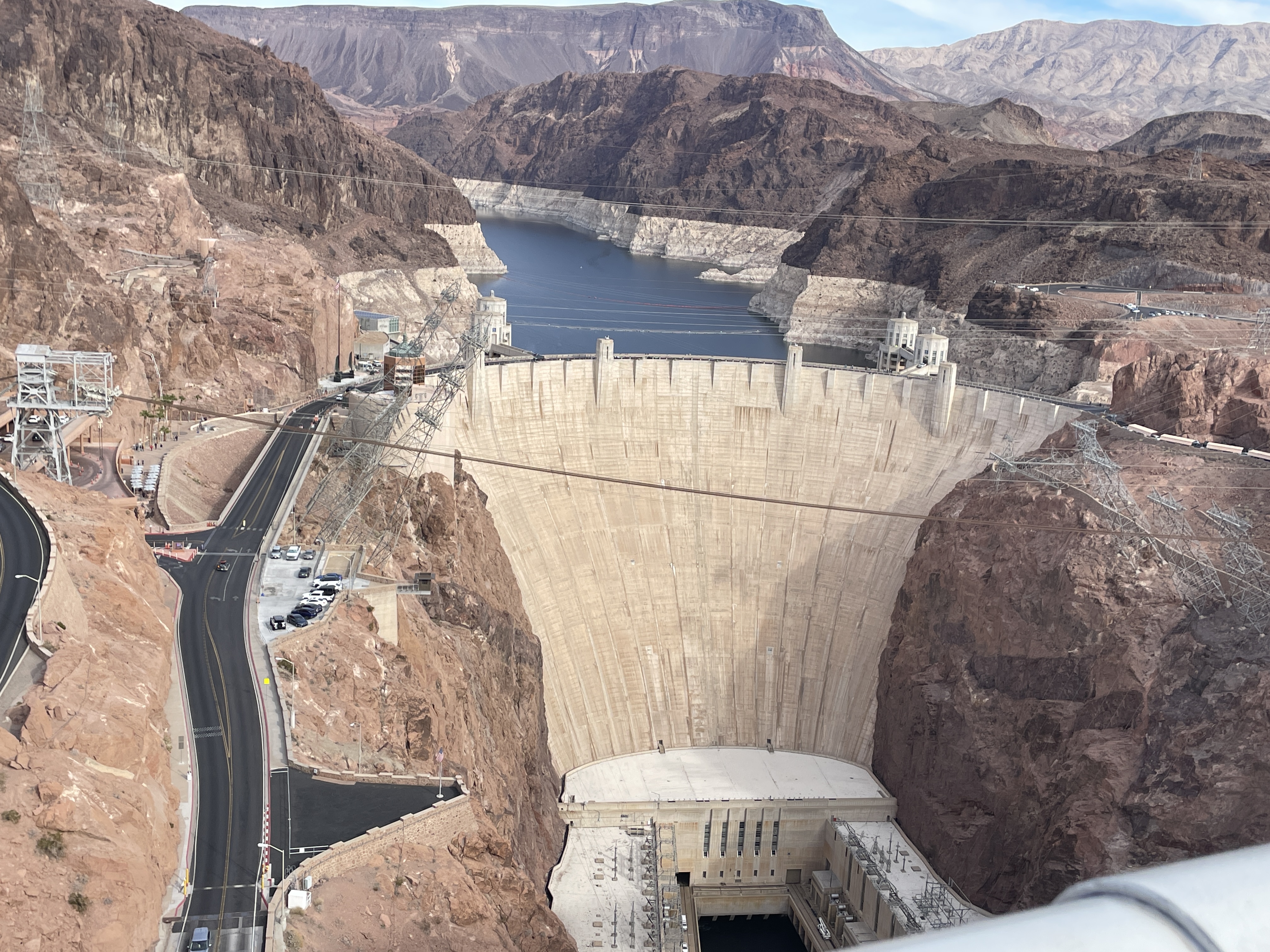
Hoover Dam with Lake Mead in the background December 3, 2024.

Colorado River water from Colorado’s mountains eventually collects in Lake Powell before flowing through the Grand Canyon to downstream states, Lake Mead and Mexico.

“I would think that the first response is probably panic, especially if people are not prepared for it,” McMaster said. “Once that initial panic wears off, it is tapping into the existing resources, the preparedness plans that state or managers have on how to deal with it.”

During the first year, specialists are looking at existing rapid response plans, vulnerability assessments and communication plans. They take samples and track life cycles to try to understand how the mussels reproduce, how environmental conditions impact breeding and what kinds of treatments might work to stop the spread.

In the Southwest and along the Colorado River, the temperature of the water allows invasive species to breed multiple times a year, McMaster said. Each one can produce a million larvae. Not all survive: There are turbulent waters, areas with fewer nutrients, and other threats, like predators. But if they grow to adulthood they can layer on top of each other on underwater surfaces.

If left unchecked, invasive mussels could clog up pipelines that carry cooling water to turbines used to generate hydroelectric power. Without the cooling effect of the water, the turbine would “burn up” and power generation would shut down, McMaster said.

The goal at the end of the first year is mainly to inform the public. That means repeating the “clean, drain, dry” refrain as often as possible to anyone moving watercraft from one body of water to another, she said.

After that, a successful first-year response will also include setting up inspection and decontamination stations. Then, specialists move onto treatment options, McMaster said.

At Hoover Dam and Lake Mead, on the Nevada-Arizona border, managers took an aggressive treatment approach to avoid damage to the dam, she said. They used UV lights to stun and temporarily paralyze the microscopic veligers so they cannot attach inside the dam.

“Prevention is still the No. 1 goal,” McMaster said.

It’s the cheapest and least risky option, she said. Once an invasive mussel species arrives in an area, however, the costs can ramp up exponentially into the millions of taxpayer dollars. The goal is always to keep them at bay as much as possible, she said.

“They might be in the state of Colorado,” McMaster said, “but if you look at the overall percentage of uninfested areas, that’s still a lot of maintenance that’s not having to happen.”

Pest control on a private lake

On July 3, Colorado Parks and Wildlife staff discovered adult zebra mussels in a privately owned lake in western Eagle County, according to a news release.

CPW also identified additional zebra mussel veligers in the Colorado River near New Castle, Highline Lake and Mack Mesa Lake at Highline Lake State Park, the release said.

There were too many mussels in the Eagle County lake to count, Walters said in late August. Any hard structure in the lake and any underwater rocks were relatively covered in adult mussels, he said.

An invasive species specialist said in July that they believed the lake was an upstream source of the mussels in the Colorado River, and that an outlet from the lake was bringing zebra-mussel-infested water into the Colorado River, according to news reports.

Walters said that has not been confirmed.

“We are just continuing to try to monitor,” Walters said during an interview Aug. 29. “What I can say is that, to the best of our knowledge, there currently is no connection from this privately owned body of water into any of the river systems of the state.”

The state’s team spent about eight hours on Aug. 25 treating the lake with a copper-based molluscicide, a substance used to kill mollusks, he said.

Staff also sampled the private lake’s water Aug. 27 to make sure the treatment’s concentration was at the right level and planned to continue monitoring and treating the water throughout September, Walters said.

No boats or other watercraft were entering or exiting the lake, he said.

“It’ll be a long time before we know if it was truly effective at eradicating the zebra mussels,” he said.

Zebra mussels. Photo credit: Colorado Parks & Wildlife

The state focuses its monitoring efforts on public waters, mainly those with high recreational use. Motorboats and other types of boats are the main way the mussels spread, he said.

However, that doesn’t mean the teams don’t survey private ponds and lakes, Walters said.

After the state discovered zebra mussel veligers in the Colorado River and Grand Junction area, they started asking landowners if they could survey private lakes, ponds, gravel pits and more near the river. They often survey privately owned recreational areas, like water skiing clubs, he said.

“We have been trying to work with those private landowners to allow us access to come out and sample them for invasive species,” Walters said.

We need to keep our existing funding

But with thousands of private and public water bodies in the state, CPW alone is never going to be able to monitor all of them as frequently as the high-risk water bodies, he said.

The staff normally work in teams of two to inspect reservoirs and lakes. They pull fine mesh nets through the water to try to find microscopic veligers. They do shoreline surveys to look for razor sharp shells and other signs of invasive species.

On a small pond, the process can take one to two hours. On a big reservoir like Blue Mesa, Colorado’s largest reservoir, it would take six to eight hours, he said.

“I don’t think that there is ever going to be capacity to monitor every public and private body of water in the state of Colorado. And I don’t think that that’s ever going to be our expectation,” Walters said.

The aquatic nuisance species program has more resources than ever, but there’s always room for more, Walters said.

“At this time, we feel like we do have a good amount of resources to be able to sample the waters that we consider to be the highest priority,” he said.

Formerly, the team was based in Denver. Now, the state has established a traveling team to cover the Western Slope and another focused on the Grand Junction area.

They don’t need more authority to monitor private water bodies, he said.

“What we need is to continue to receive the funding that we are receiving today, and hope that does not get threatened if there’s any sort of budget cuts that are considered,” Walters said.

Aquatic nuisance species stamp sales cover about $2.4 million, or 50%, of the program’s annual funding needs. All motorboats and sailboats must have this stamp before launching in state waters, according to the CPW website.

Colorado state law calls on federal agencies, like the Bureau of Reclamation and U.S. Forest Service, to cover the other half of the funding needs since many high-risk waters in Colorado are federally owned or managed.

How are other water providers responding?

Zebra mussels go with the flow. They naturally move downstream with the river’s current, but boats traveling from one lake to another can carry them upstream.

That has upstream water managers, like Northern Water and Denver Water, keeping a close eye on developments along the Colorado River.

The Northern Colorado Water Conservancy District works with the federal government to transfer Colorado River water on the Western Slope through a series of reservoirs, pump stations and tunnels — called the Colorado-Big Thompson Project — to farmland and over 1 million residents from Fort Collins across northeastern Colorado.

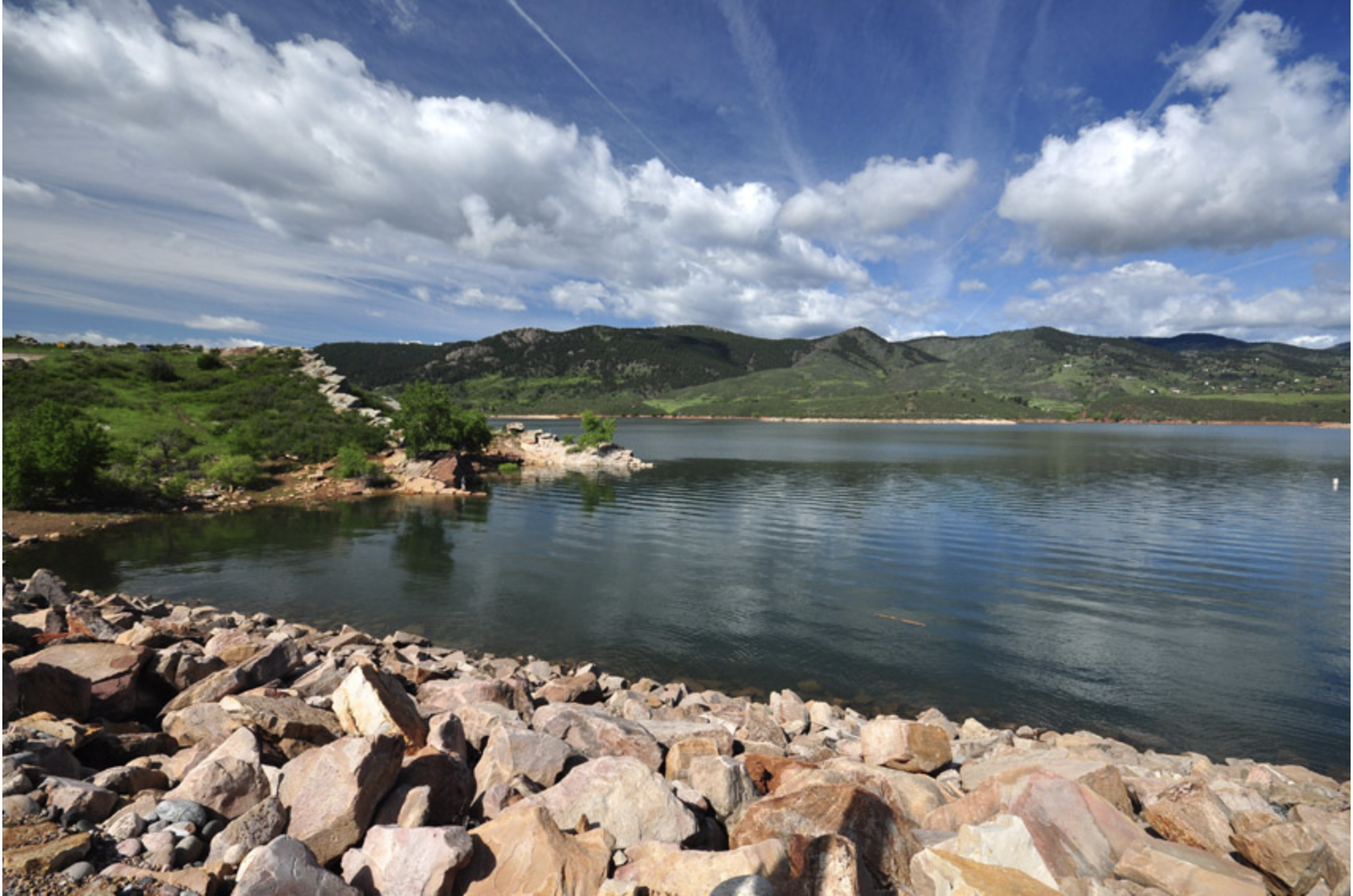
Horsetooth Reservoir looking west from Soldier Dam. Photo credit: Norther Water.

Zebra mussels are such prolific reproducers they can clog up water delivery pipelines, the main concern for a water manager like Northern Water, spokesman Jeff Stahla said.

The C-BT project is no stranger to invasive species. In 2008, quagga mussels showed up in several reservoirs, including Grand Lake, Lake Granby and Shadow Mountain Reservoir. Another reservoir, Green Mountain, was also positive for quagga mussels in 2017.

All of the lakes are mussel-free and delisted, Stahla said. Now they’re tightening up security.

“The biggest task we can right now is to inspect those boats going into the reservoirs to make sure that they’re not going to be causing the problem,” he said.

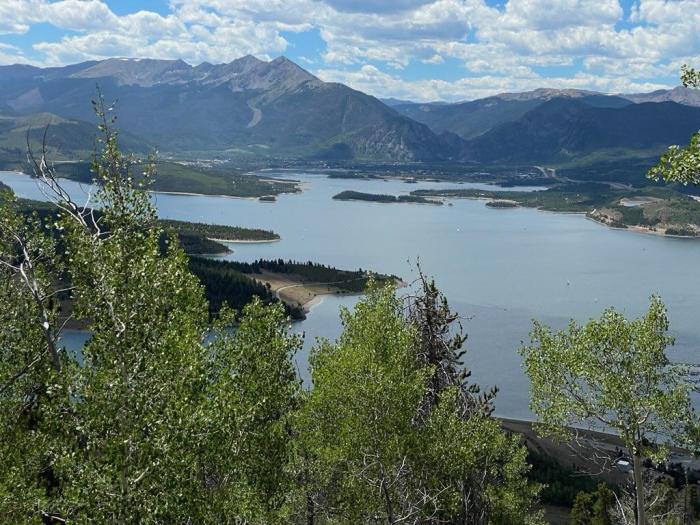
Dillon Reservoir in Summit County is Denver Water’s largest reservoir. Photo credit: Denver Water.

Denver Water, which serves 1.5 million people in Denver and nearby suburbs, is also focused on inspecting and decontaminating boats.

“It’s a little unnerving. That’s for sure,” Brandon Ransom, recreation manager for Denver Water, said. “It’s certainly not welcome news that anybody in the state wants to see.”

The water provider also transfers Colorado River water through mountain tunnels and ditches to Front Range communities. Not only are the invasive mussels a concern for gates, valves, pipes and tunnels, they also cause problems for recreation. The shells are sharp enough to cut feet and the decaying mussels and old shells “smell to all heck,” Ransom said.

They haven’t launched new prevention efforts in response to zebra mussels reports, but that’s because the provider and its partner agencies already had fairly controlled boat launch and inspection procedures, he said.

A view of part of Eleven Mile State Park in Park County, Colorado. The view shows the Eleven Mile Canyon Dam and part of the Eleven Mile Canyon Reservoir. By Jeffrey Beall – Own work, CC BY 4.0, https://commons.wikimedia.org/w/index.php?curid=154086653

They already intercepted adult zebra mussels on boats this year, he said. The latest catch was at Eleven Mile Reservoir in early October.

They’re trying to get the word out to people to make sure their boats and gear are clean, drained and dry. The zebra mussels like to hide in dark cavities, particularly around motors.

The good news is that Denver Water’s reservoirs, pipelines and tunnels on the Western Slope are upstream from the main infested areas, Ransom said.

“It doesn’t help me sleep at night, let’s put it that way,” he said. “We know that it’s closer and closer, and we’re trying to be extra vigilant when it comes to prevention in our waters.”

More by Shannon Mullane

Colorado Rivers. Credit: Geology.com

More mussels found in Highline Lake — The #GrandJunction Daily Sentinel #ColoradoRiver #COriver

Highline Lake. Photo credit: Colorado Parks & Wildlife

Click the link to read the article on The Grand Junction Daily Sentinel website (Dale Shrull). Here’s an excerpt:

October 7, 2025

As five staff members clad in Colorado Parks and Wildlife gear departed from the swim beach area [October 4, 2025], it didn’t take long for the answer to be revealed. Once the first buoy was pulled from the water, two adult mussels were found. They were sent to the lab to confirm whether they are zebra or quagga mussels. It was a bummer of a day for CPW staff.

“We did expect to see some mussels but pulling that very first buoy out and seeing the big mussel on the bottom was really disheartening,” Highline Lake State Park Manager Ashlee Wallace said. “Especially, after working so hard over the past two years.”

[…]

The discovery of the two mussels came after more than two years of various attempts to eradicate the invasive species from the lake, which had become the first and only body of water in the state to be infested with mussels in October 2022. That started a series of moves that included chemical treatments to the lake, lowering the water level 27 feet to do more chemical treatments, then during those routine end-of-season tasks, more mussels were found in October 2023. That’s when CPW made the decision to completely drain the lake in hopes of eradicating the mussels for good. With Saturday’s discovery, it’s clear that all the previous moves were for naught.

Adult Zebra mussel. Photo credit: Colorado Parks and Wildlife

#Colorado Parks and Wildlife confirms additional adult zebra mussels discovered in #GrandJunction #ColoradoRiver #COriver

Adult Zebra mussel. Photo credit: Colorado Parks and Wildlife

Click the link to read the release on the Colorado Parks and Wildlife website (Rachael Gonzales):

September 15, 2025

GRAND JUNCTION, Colo. — Through ongoing increased sampling efforts on the Colorado River and nearby bodies of water, Colorado Parks and Wildlife (CPW) Aquatic Nuisance Species (ANS) staff have detected adult zebra mussels in the Colorado River and a nearby lake in Grand Junction. 

“While this is news we never wanted to hear, we knew this was a possibility since we began finding veligers in the river,” said CPW Director Jeff Davis. “I can’t reiterate this enough. It was because we have a group of individuals dedicated to protecting Colorado’s water resources that these detections were made. It is because of these same dedicated individuals and our partners that we will continue our efforts to understand the extent of zebra mussels in western Colorado. ”

On Thursday, Aug. 28, the Aquatic Animal Health Lab (AAHL) notified Robert Walters, CPW Invasive Species Program Manager, that suspect veligers (the microscopic larval stage of zebra mussels) collected from West and East Lake, west of 31 Road within the Wildlife Area section of James M. Robb-Colorado River State Park, had tested positive for zebra mussel DNA. During a follow-up survey on Tuesday, Sept. 2, staff discovered suspected adult zebra mussels in the lake. 

Surveys were also conducted in the side channel, where water from the lake is released before flowing into the Colorado River.  During these subsequent surveys, additional suspect adult zebra mussels were found in the side channel and in the Colorado River where the side channel meets the mainstem of the river. 

Visual identification of the samples from the lake, channel, and river was performed by ANS staff. Samples were then sent to the AAHL for DNA confirmation. On Monday, Sept. 8, the AAHL confirmed the samples collected are adult zebra mussels. 

With this discovery, the Colorado River is now considered an “infested” body of water from the 32 Road bridge downstream to the Colorado-Utah border. This is the first time adult zebra mussels have been detected in the Colorado River. 

A body of water is considered “infested” when a water body has an established (recruiting or reproducing) population of invasive species; in this instance, multiple zebra mussel life stages have been found in that body of water. 

The following bodies of water have the designation of an “infested” body of water:

  • Highline Lake at Highline Lake State Park (2022)
  • Mack Mesa Lake at Highline Lake State Park (2025)
  • West and East Lake at the Wildlife Area Section of James M. Robb – Colorado River State Park (2025)
  • Colorado River from 32 Road bridge downstream to the Colorado-Utah border (2025)
  • Private body of water in Eagle County (2025)

The Colorado River remains “positive” for zebra mussels from the confluence of the Roaring Fork River to the 32 Road bridge.

No detections of zebra mussels have occurred between the headwaters of the Colorado River and the confluence of the Roaring Fork River.

CPW, in collaboration with our partners at the local, state and federal levels, will continue our increased sampling and monitoring efforts from the headwaters of the Colorado River in Grand County to the Colorado-Utah border.  

“We won’t give up,” said CPW Invasive Species Program Manager Robert Walters. “Our priority remains utilizing containment, population management and education to protect the uninfested waters of the state.”

CPW will continue to evaluate options for the future containment and mitigation of Highline Lake, Mack Mesa Lake, and West and East Lake. CPW does not intend to treat the mainstem of the Colorado River due to multiple factors, including risk to native fish populations and critical habitat, length of the potential treatment area, and complexity of canals and ditches that are fed by the Colorado River.

Since sampling efforts began in mid-April, CPW has collected 427 water samples from various locations in the Colorado River. Of those samples, CPW has confirmed six samples to contain zebra mussel veligers. ANS staff has also collected 41 samples from the Eagle River and 42 samples from the Roaring Fork River. There have been no detections of zebra mussel veligers in the samples from the Eagle and Roaring Fork rivers. 

Private Body of Water in Eagle County treatment
During the week of August 25, CPW ANS staff treated a privately owned body of water in western Eagle County using EarthTec QZ, an EPA-registered copper-based molluscicide. In follow-up surveys conducted during the weeks of Sept. 1 and Sept. 8, staff observed positive initial results, having found dead adult zebra mussels in multiple areas around the body of water. CPW staff will continue to routinely monitor the water to evaluate its effectiveness. 

Oh, Shell No!
The Colorado Parks and Wildlife Aquatic Nuisance Species team is asking for your help. If you own a pond or lake that utilizes water from the Colorado River or Grand Junction area canal systems, CPW would like to inspect your body of water. You can request sampling of your body of water by CPW staff at Invasive.Species@state.co.us.

“Despite these additional detections, it remains critical for the continued protection of Colorado’s aquatic resources and infrastructure to fully understand the distribution of zebra mussels in western Colorado,” said Walters. “We can only achieve this with the assistance and participation of the public.”

In addition to privately owned ponds and lakes, CPW  also encourages those who use water pulled from the Colorado River and find any evidence of mussels or clams to send photos to the above email for identification. It is extremely important to accurately report the location in these reports for follow-up surveying.

Prevent the spread: Be a Pain in the ANS
With the additional discoveries of adult zebra mussels, it is even more important for everyone to play their part in protecting Colorado’s bodies of water and preventing the spread of invasive species. Simple actions like cleaning, draining and drying your motorized and hand-launched vessels — including paddleboards and kayaks — and angling gear after you leave the water can make a big difference to protect Colorado’s waters.

Learn more about how you can prevent the spread of aquatic nuisance species and tips to properly clean, drain and dry your boating and fishing gear by visiting our website. Tips for anglers and a map of CPW’s new gear and watercraft cleaning stations are available here.

Efforts underway to return greenback cutthroat trout to headwaters of #Colorado Rivers: Native species to be restocked after brook trout are poisoned away — Sky-Hi News

The greenback cutthroat trout is a threatened species under the Endangered Species Act. Biologists are hoping to return the species to the Colorado River headwaters in the Kawuneechee Valley. Kevin Rogers/U.S. Forest Service

Click the link to read the article on the Sky-Hi News website (Izzy Wagner). Here’s an excerpt:

September 9, 2025

13 years ago, Colorado’s state fish could only be found in a single stream in the entire state. Today, a coalition of agencies and experts are working to change that.  The Poudre Headwaters Project is a 10 to 12-year effort led by Rocky Mountain National Park and Colorado Parks and Wildlife, among other organizations, to restore the greenback cutthroat trout to its native waters — about 40 miles of streams in parts of Rocky Mountain National Park and the Arapaho National Forest…

For decades, the National Park Service and state fisheries stocked millions of fish, mostly brook trout, in the native waters of the greenbacks. But once brook trout have established themselves in a stream, they will outcompete greenbacks for food and habitat, Clatterbuck said. Restoring native greenbacks requires killing off the non-native brook trout that have long threatened their survival. To kill the fish, crews must apply the pesticide rotenone to streams with invasive brook trout and other non-natives. Rotenone is a dangerous chemical in high concentrations, but it has been widely used by fisheries for decades and is carefully managed when applied to streams…The pesticide specifically targets aquatic species, making it the ideal treatment method for fish removal. Consuming rotenone-treated fish is unlikely to poison a mammal, Clatterbuck said…

A map of the Poudre Headwaters Project area. U.S. Forest Service, J.Scott/Courtesy photo

Once the areas are confirmed to be free of non-native trout, biologists will reintroduce the native greenback cutthroat trout to its original habitat in the headwaters of the Cache la Poudre River, according to park officials…Colorado State University Professor Robert Behnke reported that once brook trout gained access to streams, greenback cutthroat trout were virtually gone within five years. In the 1960s, Behnke spearheaded efforts to restore greenback cutthroat trout to streams of their native range east of the Continental Divide. Since then, fisheries have worked to build fish barriers, often in the form of small dams, near the downstream ends of headwater streams to protect native fish while applying chemicals to kill off brook trout upstream. However, none of these projects have been able to prevent non-native trout invasion long term. Clatterbuck is hopeful that with time and collaboration, this new restoration project will build a metapopulation, or a network of connected subpopulations that can strengthen the species’ genetic diversity and resilience.

Cutthroat trout historic range via Western Trout

Private lake in Eagle County source of zebra mussels in #ColoradoRiver: #Colorado Parks & Wildlife is continuing to monitor, mitigate — Heather Sackett (AspenJournalism.org) #COriver

CPW sampling on the Colorado River found zebra mussel veligers. The river is now considered “positive” for zebra mussels from its confluence with the Roaring Fork River to the Utah state line. CREDIT: PHOTO COURTESY OF COLORADO PARKS & WILDLIFE

Click the link to read the article on the Aspen Journalism website (Heather Sackett):

July 31, 2025

State officials may have solved the puzzle of how zebra mussels got into the Colorado River. 

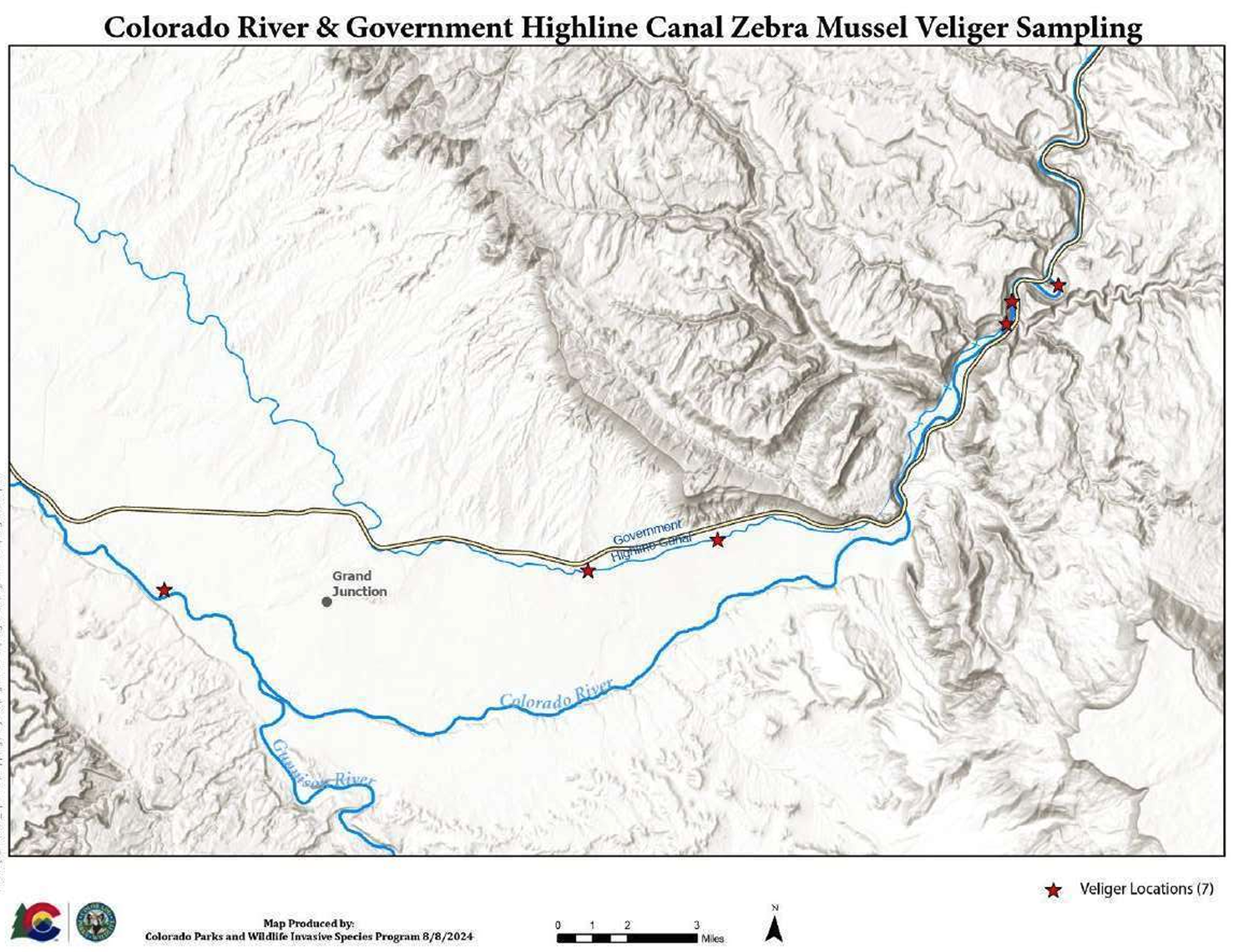
On July 3, Colorado Parks and Wildlife officials discovered a large number of adult zebra mussels in a privately owned body of water in western Eagle County. On Monday, Madeline Baker, an invasive species specialist with CPW, told members of the Colorado Basin Roundtable they believe this private lake is an upstream source of the mussels that have contaminated the Colorado River, the Government Highline Canal, Highline Lake and Mack Mesa Lake. 

“We do believe this to be the primary source, but it could now have created other secondary sources downstream with locations that hold water,” Baker said. “There is a lot of speculation of could these veligers survive the journey from Eagle County down to Highline and create a new population there or is there some sort of intermediate population in between. So we still have a lot to figure out.”

Baker said that the lake’s owner is collaborating with CPW on a mitigation plan. CPW is not releasing the owner’s name or specific location of the lake.

“The property owner is unsure of how this could have happened, but is being cooperative,” she said.

Baker said there were quite a few dead shells on the shoreline of the private lake, which indicates the zebra mussel population has been there for several years. She said CPW staff found the lake by searching Google maps for bodies of water on private property near the Colorado River and then calling property owners and asking if they could inspect their lakes. An outlet from the lake was bringing zebra-mussel-infested water into the Colorado River, an issue that has since been fixed. 

“We’ve done a dye test at the reservoir to be sure that nothing more is flowing into the river, and that dye test showed us that it should be contained at this point, which will allow us to pave a path toward mitigation,” Baker said.

Zebra mussels are a prolific invasive species that if left unchecked could clog irrigation infrastructure, and strip the plankton and nutrients from the water. Once established, they are nearly impossible to eradicate. 

For the last two summers, microscopic zebra mussel larvae, known as veligers, have been found in the Colorado River at several locations. In June, they were found at the boat launch in New Castle, in Highline Lake and Mack Mesa Lake. The Colorado River is now considered “positive” for zebra mussels from the confluence with the Roaring Fork River to the Colorado-Utah border.

CPW staff inspects a boat motor at Highline Lake in 2023. The lake is infested with zebra mussels. CREDIT: PHOTO COURTESY OF COLORADO PARKS & WILDLIFE

Threat to the Grand Valley

The arrival of zebra mussels has been especially alarming for the Grand Valley, which is one of the most important agricultural areas and home to the biggest agricultural water users of Colorado River water on the Western Slope.

“At least from a Grand Valley perspective, we feel like we are under a very serious threat,” said Kirsten Kurath, a Grand Valley attorney and vice-chair of the roundtable.

Adult mussels were found in 2022 in Highline Lake near the Utah state line. Officials treated it with a form of copper that kills zebra mussels called EarthTec QZ and drained it for the 2024 boating season. The lake reopened for recreation this year but on June 10, CPW staff found more veligers in Highline Lake, which is now designated an infested body of water. Highline Lake is filled with water from the Government Highline Canal, which pulls water from the Colorado River.

“We now know that Highline Lake was continuously being reinfested with mussels after the treatment, so it’s difficult to ascertain the effectiveness of the treatment,” Baker said.

Veligers were also found last year in the Government Highline Canal, which brings water from the Colorado River to Grand Valley farms, vineyards and orchards. Realizing the mussels could be disastrous for commercial peach growers who use micro-drip irrigation, water managers sprang into action last fall, treating their systems with a copper solution that kills the mussels. 

An adult zebra mussel found at Highline Lake in 2023. The lake was treated with a copper solution and drained for the 2024 boating season in an effort to eradicate the invasive species. CREDIT: PHOTO COURTESY OF COLORADO PARKS & WILDLIFE

Grand Valley Water Users Association General Manager Tina Bergonzini said the copper treatment was successful — the irrigation company has not seen any signs of adult mussels in their system — and the Government Highline Canal has not had any more positive tests for veligers. Still, Bergonzini said GVWUA will probably do the copper treatment again this fall, and that preventing zebra mussels from becoming established is something they will be working on for the foreseeable future.

“I don’t think there is any way around [doing the copper treatment again],” Bergonzini said. “We can’t risk our infrastructure. It’s a financial hurdle for the irrigation companies because it’s very costly, but not as costly as having fouled infrastructure.”

The discovery of the source pond in Eagle County is a step in the right direction, but it doesn’t mean the fight against zebra mussels is over. CPW will continue sampling and mitigation work, Baker said.

“Finding the source was always the main focus,” Bergonzini said. “There’s no way you can win the war if you can’t figure out where they are coming from. So I think discovering that pond was huge. That gives us a really good chance.”

CPW says cleaning, draining and drying fishing gear, motorized boats and hand-launched vessels like paddle boards is key to preventing the spread of invasive species.

Quaggas on sandal at Lake Mead

#Colorado Basin Roundtable takeaways: Less snowmelt, less water, and zebra mussels — KJCT

Colorado River May 2023 swelled from low elevation snow runoff.

Click the link to read the article on the KJCT website. Here’s an excerpt:

July 28, 2025

On Monday, the Colorado Basin Roundtable had a meeting to discuss the state of the Colorado River. The Roundtable discussed the potential Shoshone stream flow acquisition. The area of interest is the 2.4 miles in Glenwood Canyon. It is important for Western Colorado because of its stream flow rate that mimics the current water rates used for hydropower. Wildlife organizations did habitat studies on it, and they show it improves the natural environment.

Another topic of discussion was the basin hydrology. With a limited snowpack this year, there is less water. The biggest concerns people had in the meeting related to that was the stress of many systems struggling from prolonged drought and aging infrastructure. Lindsay DeFrates, Deputy Director of Communications for the Colorado River District, said, “The Colorado Basin Roundtable is a great example of a room where a bunch of different stakeholders from agriculture, recreation, environment, municipal, industrial, water users all come together to talk about those solutions. It’s never an easy conversation. And we can’t forget about zebra mussels. Zebra mussel veligers were found at the Silt Boat Ramp and near New Castle.

Increased sampling efforts result in additional zebra mussel detections in Western #Colorado — Colorado Parks & Wildlife #ColoradoRiver #COriver

Zebra mussels. Photo credit: Colorado Parks & Wildlife

Click the link to read the release on the Colorado Parks & Wildlife website (Rachael Gonzales):

On Thursday, July 3, Colorado Parks and Wildlife (CPW) Aquatic Nuisance Species (ANS) staff discovered a large number of adult zebra mussels in a privately owned body of water in western Eagle County. 

“This news is a direct result of increased sampling efforts, ” said CPW Director Jeff Davis. “This discovery is a significant step toward identifying a potential source of zebra mussels and advancing our efforts for eradication. It would not have been possible without the commitment to protect Colorado’s bodies of water by our Aquatic Nuisance Species staff.”

During the survey, staff discovered evidence of and collected samples of suspected adult zebra mussels in various locations. Visual identification of the samples was performed by ANS Staff and samples were sent to Aquatic Animal Health Lab (AAHL) for DNA confirmation. 

CPW staff is currently evaluating options for the next steps in eradicating zebra mussels from the body of water.

“Understanding the current extent of zebra mussels in western Colorado is a critical step in stopping their spread into new locations,” said CPW Invasive Species Program Manager Robert Walters. “Every new detection puts us one step closer to achieving this desired outcome.” 

CPW, in collaboration with our partners at the local, state and federal levels, will continue our increased sampling and monitoring efforts. We also appreciate the willingness of private businesses and individuals who allow our staff to access their properties to conduct surveys.

In addition to the discovery found in western Eagle County, CPW also identified additional zebra mussel veligers in the Colorado River near New Castle, Highline Lake and Mack Mesa Lake at Highline Lake State Park.

Colorado River
On July 3, CPW Aquatic Animal Health Lab (AAHL) confirmed three additional zebra mussel veligers in samples collected in the Colorado River between Glenwood Springs and Silt. Samples were collected on June 16 and taken to the ANS laboratory where the additional zebra mussels veligers were found. These samples were then sent to AAHL for DNA confirmation.

With the additional detections in sample results, the Colorado River is now considered “positive” for zebra mussels from the confluence of the Roaring Fork River to the Colorado-Utah border.

Since sampling efforts resumed in May, CPW has collected 225 water samples from various locations along the Colorado River, stretching from the headwaters in Grand County to the Colorado-Utah border. In addition to the samples from the Colorado River, ANS staff has collected 25 samples from the Eagle River and nine samples from the Roaring Fork River. There have been no detections of zebra mussel veligers in the samples from the Eagle and Roaring Fork rivers. To date, no adult zebra mussels have been detected in the Colorado, Eagle or Roaring Fork rivers. 

Highline Lake
On June 10, CPW ANS staff collected plankton samples from the patrol dock and inlet at Highline Lake as part of routine increased sampling efforts. ANS laboratory technicians identified one suspected zebra mussel veliger in each sample. The samples were sent to AAHL where they were genetically confirmed as zebra mussels.

“While we had maintained hope that our eradication efforts at Highline Lake would be successful, we have always known this was a lofty goal. This is the primary reason we have continued the implementation of the containment watercraft inspection and decontamination program at Highline Lake,” said Walters.

With Highline’s current designation as an infested body of water, boaters are reminded of the following protocols in place since 2023.

  • Boats launching​ at Highline Lake will be subject to inspection and decontamination protocols before launching. 
  • All boats must be clean, drained and dry before launching at Highline Lake, or they will be decontaminated.
  • Upon exiting the lake, all boats will be inspected and decontaminated, and boaters will be issued a green seal and a blue receipt​ indicating the boat was last used on a body of water with a known aquatic nuisance species. 

Mack Mesa
On June 10, CPW ANS staff collected plankton samples in the area near the fishing pier at Mack Mesa Lake, located at Highline Lake State Park. ANS laboratory technicians identified one suspected zebra mussel veliger in the sample. The samples were sent to AAHL where the zebra mussel veliger was genetically confirmed.

On July 8, additional samples collected from Mack Mesa indicated additional zebra mussel veligers. With these additional detections, Mack Mesa is now considered “positive” for zebra mussels.

CPW is continuing to evaluate options for the future management of Highline Lake and Mack Mesa based on the latest sampling results.

Prevent the spread: Be a Pain in the ANS
Everyone has a part to play in preventing the introduction and spread of invasive species in Colorado. Simple actions like cleaning, draining and drying your motorized and hand-launched vessels — including paddleboards and kayaks — and angling gear after you leave the water can make a big difference to protect Colorado’s waters.

Learn more about how you can prevent the spread of aquatic nuisance species and tips to properly clean, drain and dry your boating and fishing gear by visiting our website. Tips for anglers and a map of CPW’s new gear and watercraft cleaning stations are available here.

CPW also encourages those who use water pulled from the Colorado River and find any evidence of mussels or clams to send photos to Invasive.Species@state.co.us for identification. It is extremely important to accurately report the location in these reports for follow-up surveying.

Colorado Parks and Wildlife (CPW) is an enterprise agency, relying primarily on license sales, state parks fees and registration fees to support its operations, including: 43 state parks and more than 350 wildlife areas covering approximately 900,000 acres, management of fishing and hunting, wildlife watching, camping, motorized and non-motorized trails, boating and outdoor education. CPW’s work contributes approximately $6 billion in total economic impact annually throughout Colorado.

Riparian restoration on Rifle ranch marks 10 years: John Powers hopes #RifleCreek project can be living lab for improving habitat — Heather Sackett (AspenJournalism.org)

Rifle ranch owners John Powers, left, and plant ecologist Lisa Tasker talk about the Rifle Creek restoration project at a tour of the property on June 3. The project has replaced invasive species with native plants. CREDIT: HEATHER SACKETT/ASPEN JOURNALISM

Click the link to read the article on the Aspen Journalism website (Heather Sackett):

June 18, 2025

The banks of a previously degraded 1-mile stretch of Rifle Creek are now thick with willows and cottonwoods, and have signs that deer, elk and beavers are once again frequent visitors. 

This summer marks 10 years since an ambitious, multiphase riparian restoration project began on John Powers’ ranch, located north of Rifle and off Colorado 325. Since 2016, the property has been a worksite of the Colorado Natural Heritage Program, which has cataloged species; replaced invasive Russian olive, thistles and weeds with native trees, flowers, shrubs and grasses; and trained the next generation of scientists and conservationists on how to restore the health of a stream. 

On June 3, Powers, who is a self-described lover of the outdoors, along with friend and associate Janna Six, as well as interns from CNHP, hosted a public-outreach day with conservation professionals who worked on the project, including representatives from local governments, agencies and nonprofit organizations, for a tour of the project. Powers called it a living lab for education and hopes it can serve as a demonstration project for other ranches in the area that want to control erosion. 

A decade ago, the banks of the creek were severely eroded — bare of vegetation in places and steep. Part of the reason for these conditions is the upstream Rifle Gap Reservoir, which was completed in 1967. Sediment collects behind the dam, meaning the water released downstream is clean and erosive, cutting into the streambanks. The three-phase project sought to remedy that.

“Rifle Creek used to be shallow, allowing horse-drawn hay wagons to cross it,” Powers said in a written response to questions from Aspen Journalism. “After the Rifle Gap Reservoir was built, severe erosion occurred downstream, making creek banks vertical and 12-15 feet deep.”

Powers said the goals of the project are to improve the habitat for songbirds, pollinators and wildlife; increase carbon sequestration, including cultivating healthy soil and minimizing erosion; and maintain the economic benefits of a working ranch while enhancing the ecological condition of the riparian area.

Small cottonwoods and other native trees have fencing to protect them from wildlife and livestock until they get established. The riparian restoration project on the Powers Ranch near Rifle planted thousands of native trees, shrubs and grasses. CREDIT: HEATHER SACKETT/ASPEN JOURNALISM

The thousands of native plants were put in over a three-year intensive effort by volunteers and interns, led by plant ecologist Lisa Tasker. Some are protected by fencing from wildlife and livestock until they become established, and are watered with a drip irrigation system. 

“My hope is that I live long enough that I won’t be able to see one side of the creek from the other side of the creek,” Powers told tour participants.

David Anderson, director and chief scientist at CNHP, said conditions on the ranch have changed dramatically for the better over the past decade due to the restoration work.

“We’re seeing a lot more birds now that there’s some woody structure,” he said. “There’s just a whole different suite of wildlife that can utilize the riparian area there now.”

Anderson added that with the new vegetation providing shade to cool the stream, conditions for native fish will improve.

Sprinklers have replaced flood irrigation on part of the Powers Ranch property near Rifle. This summer marks the 10th year since the beginning of a creek restoration project on the ranch. CREDIT: HEATHER SACKETT/ASPEN JOURNALISM

Restoration tactics take time

Rivers and wetland habitats comprise a small amount of Colorado’s land area, but they are of outsize importance to wildlife. Improving the health of Rifle Creek is a focus of the Middle Colorado Watershed Council, a nonprofit organization that works to protect and improve watershed health. Between 2015 and 2019, the creek was the subject of a watershed assessment, which looked primarily at water quality. 

The council has also been implementing the goals of its Riparian Restoration Implementation Plan, which spans the entire Colorado River watershed from Glenwood Springs to DeBeque. But the stretch of Rifle Creek from below Rifle Gap Reservoir to its confluence with the Colorado River is a main concern. 

“We won’t be able to restore the whole thing right away,” said Kate Collins, executive director of the council, referring to plans to conduct additional restoration work along Rifle Creek beyond the Powers ranch. “But what we want to do is identify certain projects that are either the most urgent or perhaps they are the most low-hanging fruit — in other words, there’s the best opportunity for restoration.” 

The health of many streams across the Western Slope is impacted by erosion, invasive species and agriculture. Collins said the tactics for fixing them are often low-tech, such as replacing invasives with native plants. 

“Some of these techniques are being widely used, and this Rifle Creek project could be a model for others,” she said, referring to the Powers ranch restoration project.

Rifle Creek in 2015 before the riparian restoration project. The banks of the creek were severely eroded. CREDIT: JOHN POWERS

Future plans for the ranch include another bio blitz in 2026 in which CNHP interns will document as many species of plants and animals on the ranch as possible over a 24-hour period and compare the results to their bio blitzes in 2016 and 2017. 

Powers and Anderson are also interested in potentially building what are called beaver dam analogs (BDAs), which are human-made structures that mimic beaver dams, helping to slow streamflow and keep water on the landscape. These temporary wood structures usually consist of posts driven into the streambed with willows and other soft materials weaved across the channel between the posts. Environmental groups and local governments are using BDAs to improve stream health and wildlife habitat.

“We’re really interested in doing some of those,” Anderson said. “I hope that maybe next year or in another subsequent year that we’ll work with the interns to build some of those structures right in Rifle Creek.”

For Powers, the Rifle Creek restoration on his ranch has been a passion project that keeps a riparian area thriving, as well as adapting to climate change and a future with less water. Collins sees the project as a step toward reconnecting the community to its local waterway.

“(Rifle Creek) is a vital part of what runs through that town and that community, and it’ll be exciting to see what positive ecological changes those bring about to virtually everything else,” Collins said…

This story ran in the June 23 edition of the Grand Junction Daily Sentinel.

Rifle Gap Reservoir via the Applegate Group

Dropping the Bass: USGS science helps stop the spread of Smallmouth bass in the #ColoradoRiver #GrandCanyon

Click the link to read the relase on the USGS website (Jordan M. Bush, Drew E Eppehimer (Click through for the video):

The USGS helps Department of the Interior partners explore possible management decisions to prevent invasive fish from spreading into the Grand Canyon.

Sources/Usage: Public Domain. View Media Details
Learn about how USGS scientists work with the U.S. Fish and Wildlife Service and Bureau of Reclamation to protect Grand Canyon ecosystems from invasive smallmouth bass. From modeling fish population growth to forecasting the effects of future dam operations, the USGS’s unbiased, high-quality science helps on-the-ground managers rise to new challenges brought on by climate change. (Click to view the video)

Part 1: The River

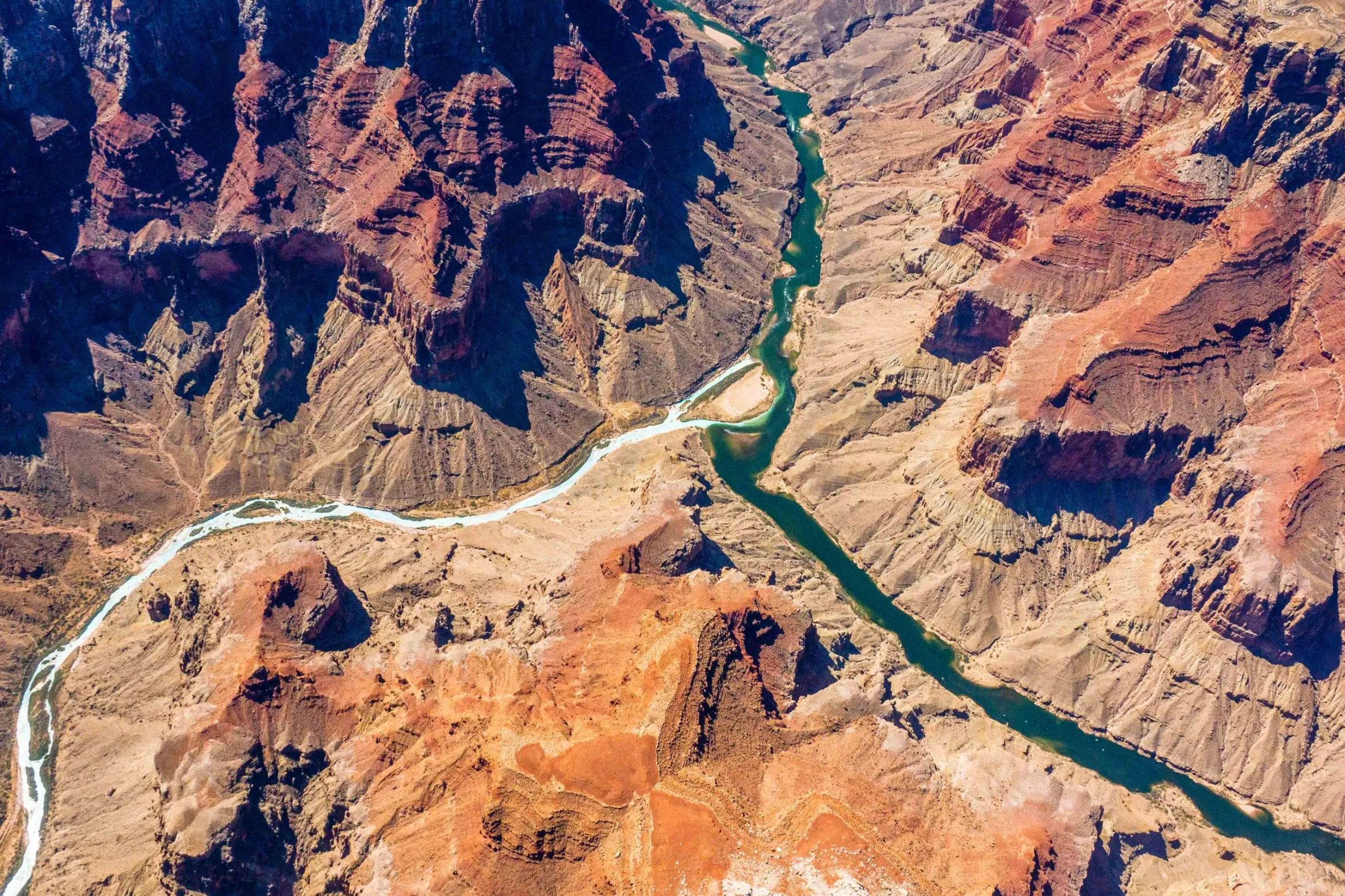
The Colorado River is not a naturally flowing river, not anymore. With Glen Canyon Dam upstream and Hoover Dam downstream, the Colorado River in Grand Canyon is one of the most highly regulated water systems in the world. Its flow generates hydroelectricity, irrigates crops and provides water to nearly 40 million people across seven U.S. states, 30 Tribal Nations and two Mexican states.  

ten tribes
Graphic via Holly McClelland/High Country News.

Managing the Colorado River Basin is complicated. Federal, state and Tribal agencies balance the needs of many user groups, from anglers to farmers to city municipalities. They also care for the river as an ecosystem, home to rare fish and the foundation of Grand Canyon, one of the Nation’s natural treasures. In an era of heat waves and drought, when there is less water than ever to go around, managers increasingly need high-quality science to respond to emerging challenges. 

The USGS provides critical science to resource managers in the Colorado River and Grand Canyon. Our stream gages monitor water quality and flows, our researchers track fish populations and our modelers forecast how resources may respond to future conditions. We help managers anticipate new threats and consider potential outcomes of management decisions. 

And on a scorching day in June 2022, the summer Lake Powell reached its lowest water level in five decades, we sprang into action when one of our predictions became suddenly real.

Did you hear what they caught in Lees Ferry? 

For the first time, National Park Service staff caught baby smallmouth bass in the lower Colorado River, south of the Glen Canyon Dam holding back Lake Powell. While this voracious, predatory fish had previously been caught in very low numbers in the relatively pristine Grand Canyon ecosystem, such captures had been rare, and they had never been observed reproducing. 

The finding raised fresh concerns about the future of native fish of the Grand Canyon. 

Part 2: The Fish

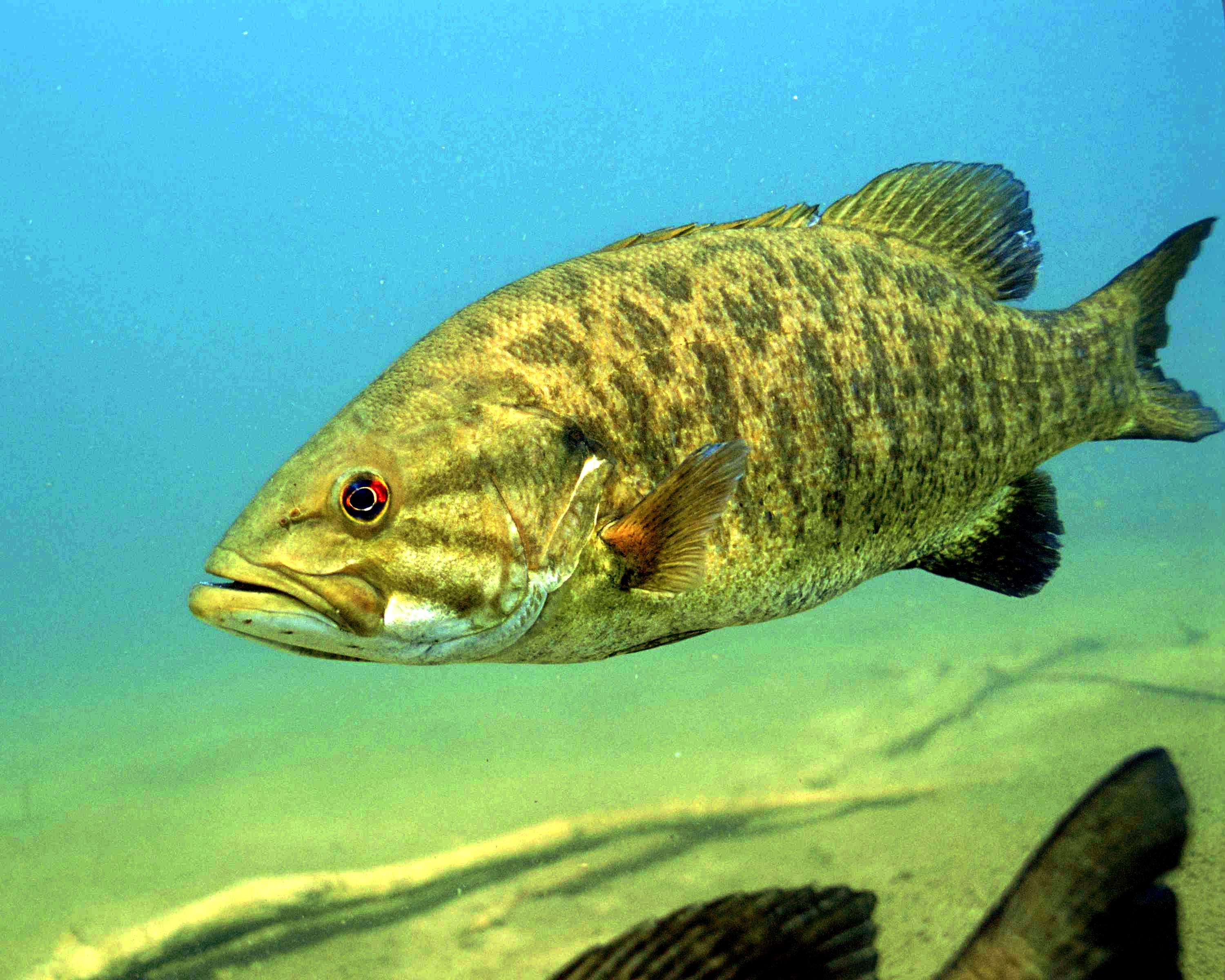
Smallmouth bass were originally stocked in Lake Powell as a valued catch for anglers and have since established healthy populations throughout the lake. But with low lake levels in recent years, smallmouth bass can be sucked through the dam and spat into the Colorado River. Worse, extended drought means river temperatures are warmer than usual, creating especially hospitable conditions for the warm-water fish to proliferate. 

To slow the spread, Eppehimer and USGS research statistician Charles Yackulic worked with academic, state and federal cooperators to develop models predicting when and where the fish might invade, based on projected temperatures and Lake Powell water levels. These models help the National Park Service prioritize locations for smallmouth bass monitoring and eradication.  

Adding extra urgency: Smallmouth bass threaten to erase years of conservation gains for the threatened and endangered species of Grand Canyon. Most of the fish in the park today are native species, a hard-fought accomplishment in an era of constant non-native species invasions. And the humpback chub was recently downlisted from “endangered” to “threatened” after successful conservation efforts from park staff. 

But smallmouth bass are a particularly lethal threat. Laboratory predation trials by the USGS and U.S. Fish and Wildlife Service (USFWS) show that smallmouth bass eat native fish at all life stages, from small babies to grown adults. 

“Most of the sport fish species have big mouths and big teeth and they like to eat native fish,” says David Ward, fish biologist and assistant project leader for USFWS Conservation Office in Flagstaff, AZ. “When you get all those species preying on the chubs at all different life stages, they just don’t get a break.” 

Part 3: The Dam

If managers want to prevent smallmouth bass from becoming a permanent addition to Grand Canyon, they need to act fast. Once a species becomes established, it becomes virtually impossible to eradicate completely. 

Smallmouth bass management is a high priority for the Glen Canyon Dam Adaptive Management Program (GCDAMP) and the Adaptive Management Work Group (AMWG), a Federal Advisory Committee in the Colorado River Basin. Led by the Bureau of Reclamation (BOR), this group brings together twenty-five stakeholder and rightsholder groups representing different interests, including states, Tribal Nations, economic sectors, non-profit environmental organizations and hobby groups. Together, they provide recommendations to the U.S. Secretary of the Interior for how to manage flows from Glen Canyon Dam.  

The USGS’s Grand Canyon Monitoring and Research Group (GCMRC) is a fixture of these quarterly meetings, tasked with providing science to help members understand environmental change happening on the landscape and how different management alternatives may perform under future conditions.

A major discussion point for the advisory committee is how water should flow out of the dam – how often water should be released, how much water at a time, which part of the dam it should be released from, etc. These questions are important, impacting everything from hydroelectricity production to downstream rafting conditions. 

Eppehimer, Yackulic and other USGS researchers created models to predict how changes to Glen Canyon Dam flows may affect different systems, including energy production, river hydrology and sandbar formation. Of particular interest: they explored how pumping cold water from the dam’s deep bypass jet tubes could impact smallmouth bass viability below the dam. They identified ideal water temperatures for bass to grow and reproduce and modeled how cooling river temperatures using dam flows could impact overall population growth.  

This work served as the foundation for dam flow alternatives presented in the Glen Canyon Dam Long-Term Experimental and Management Plan and the supplemental Environmental Impact Statement.  

Using one of the USGS-modeled alternatives, the Bureau of Reclamation has begun modifying Glen Canyon Dam flows to try to prevent smallmouth bass spawning. When river temperatures reach 60°F (15.5°C) in the Colorado River at the confluence with the Little Colorado River tributary (76 miles downstream from the dam), the BOR releases deeper, cooler flows from Glen Canyon Dam to create less favorable conditions for smallmouth bass growth and reproduction. They began these releases on July 9, 2024, and are now working with the USGS and other DOI agencies to actively monitor the effects on river conditions and smallmouth bass populations.  

This work was funded by USGS’s Southwest Climate Adaptation Science Center (Southwest CASC), Ecosystems Mission Area, Water Mission Area, and the U.S. Bureau of Reclamation. The project embodies the USGS’s actionable science model, which prioritizes applied research designed to meet on-the-ground needs. 

“It is an excellent example of partnership-based science,” says Sarah LeRoy, Research Coordinator with the Southwest CASC. “From the very beginning, managers asked a question about what’s going to happen to fish, native and invasive, in the Colorado River Basin, and the scientists answered their questions in a way that helps them better care for the river in the future.” 

Take your children out into these landscapes” — Kevin Fedarko

My friend Joe’s son and the Orr kids at the top of the Crack in the Wall trail to Coyote Gulch with Stevens Arch in the Background. Photo credit: Joe Ruffert

Kevin Fedarko was the keynote speaker at the symposium and he is as inspirational a speaker as you could ask for. It doesn’t hurt that the landscape that he spoke about is the Grand Canyon. He urged the attendees to, “Take your children out into these landscapes so that they can learn to love them.” He is advocating for the protection of the Grand Canyon in particular but really he is advocating for the protection all public lands.

Kevin Fedarko and Coyote Gulch at the Rio Grande State of the Basin Symposium hosted by the Salazar Rio Grande del Norte Center at Adams State University in Alamosa March 29, 2024.

What an inspirational talk from Kevin. I know what he is saying when he speaks about the time after dinner on the trail where the sunset lights up the canyon in different hues and where, he and Pete McBride, his partner on the Grand Canyon through hike, could hear the Colorado River hundreds of feet below them, continuing its work cutting and molding the rocks, because the silence in that landscape is so complete. He and I share the allure of the Colorado Plateau. Kevin was introduced to it through Collin Flectcher’s book The Man Who Walked Through Time, after he received a dog-eared copy from his father. They lived in Pittsburgh in a landscape that was industrialized but the book enabled Kevin to imagine places that were unspoiled.

My introduction to the Colorado Plateau came from an article in Outside magazine that included a panoramic photo of the Escalante River taken from the ledges above the river. Readers in the know can put 2 and 2 together from the name of this blog — Coyote Gulch — my homage to the canyons tributary to Glen Canyon and Lake Foul.

Stevens Arch viewed from Coyote Gulch. Photo via Joe Ruffert

Kevin’s keynote came at the end of the day on March 29th after a jam-packed schedule.

Early in the day Ken Salazar spoke about the future of the San Luis Valley saying, “Where is the sustainability of the valley going to come from.” Without agriculture this place would wither and die.” He is right, American Rivers and other organizations introduced a paper, The Economic Value of Water Resources in the San Luis Valley which was a response to yet another plan to export water out of the valley to the Front Range. (Currently on hold as Renewable Water Resources does not have a willing buyer. Thank you Colorado water law.)

Claire Sheridan informed attendees that their report sought to quantify all the economic benefits from each drop of water in the valley. “When you buy a bottle of water you know exactly what it costs. But what is the value of having the Sandhill cranes come here every year?”

Sandhill Cranes Dancing. Photo by: Arrow Myers courtesy Monte Vista Crane Festival

Russ Schumacher detailed the current state of the climate (snowpack at 63%) and folks from the Division of Water Resources expounded on the current state of aquifer recovery and obligations under the Rio Grande Compact.

The session about the Colorado Airborne Snow Measurement Program was fascinating. Nathan Coombs talked about the combination of SNOTEL, manual snow courses, Lidar, radar, and machine learning used to articulate a more complete picture of snowpack. “You can’t have enough tools in your toolbox,” he said.

Coombs detailed the difficulty of meeting the obligations under the Rio Grande Compact with insufficient knowledge of snowpack and therefore runoff volumes. Inaccurate information can lead to operational decisions that overestimate those volumes and then require severe curtailments in July and August just when farmers are finishing their crops. “When you make an error the correction is what kills you,” he said.

If you are going to learn about agriculture in the valley it is informative to understand the advances in soil health knowledge and the current state of adoption. That was the theme of the session “Building Healthy Soils”. John Rizza’s enthusiasm for the subject was obvious and had me thinking about what I can do for my city landscape.

Amber Pacheco described how the Rio Grande Basin Roundtable and other organizations reach out to as many folks in the valley as possible. Inclusivity is the engine driving collaboration.

Many thanks to Salazar Rio Grande del Norte Center director Paul Formisano for reaching out to me about the symposium. I loved the program. You can scroll through my posts on BlueSky here

Orr kids, Escalante River June 2007

Death by a thousand cuts: Global threats to insect diversity — @violin4all

Western Water: Golden Mussel, #California’s Newest Delta Invader, Is Likely Here To Stay – And Spread — Spencer Fordin and Douglas E. Beeman (Water Education Foundation)

Golden mussels are clustered on a buoy during a survey in November 2024 at O’Neill Forebay at the foot of San Luis Reservoir in Merced County. (Source: California Department of Water Resources)ion Foundation

Click the link to read the article on the Water Education Foundation website (Spencer Fordin and Douglas E. Beeman):

February 13, 2025

A new aquatic invader, the golden mussel, has penetrated California’s ecologically fragile Sacramento-San Joaquin Delta, the West Coast’s largest tidal estuary and the hub of the state’s vast water export system. While state officials say they’re working to keep this latest invasive species in check, they concede it may be a nearly impossible task: The golden mussel is in the Golden State to stay – and it is likely to spread.

The fingertip-size mussel is believed to have hitchhiked into the Delta in the ballast water of a freighter from Asia that docked at the Port of Stockton. The mussel was first detected there in October 2024, and its discovery set off alarm bells among water managers and environmental scientists. The reason: Unlike their cousins the quagga mussels, which have infested major Colorado River facilities in Southern California, golden mussels can tolerate a wider range of aquatic environments and may have more opportunities to do so.

The golden mussel is just the newest invasive headache for water agencies across the West. Quagga mussels turned up in the lower Colorado River in 2007, and agencies in California, Arizona and Nevada that draw water from the river have had to intensify monitoring and costly maintenance to try to limit their impact. Another cousin, the zebra mussel, was discovered last summer in the upper Colorado River in Colorado. The zebra mussel also has turned up in a small reservoir in San Benito County south of San Francisco that, as a result, has been closed to the public since 2008.  

In Northern California, federal, state and local water managers are already trying to limit the golden mussels’ spread. They’re inspecting boats entering and leaving many lakes and reservoirs or have even shut down boat ramps entirely until more is known about the threat. And operators of state and Northern California water agencies have stepped up monitoring, inspections and cleaning of equipment where they’ve found mussels.

Golden mussels have been found at various locations in the Sacramento-San Joaquin Delta and at O’Neill Forebay, at the foot of San Luis Reservoir in Merced County. (Source: California Department of Fish and Wildlife)

State officials believe the golden mussels may have arrived a couple of years ago given their size and spread. The mussels have been found as larvae and adults in about 30 areas around the central and southern Delta. More concerning because it suggests a wider infestation, golden mussels have been detected in O’Neill Forebay at the foot of San Luis Reservoir in Merced County. The reservoir impounds water exported from the Delta by both the State Water Project and the federal Central Valley Project, two of California’s largest water projects. From O’Neill, golden mussels could potentially spread deep into the San Joaquin Valley via the Central Valley Project, and all the way to San Diego through the State Water Project.

Andrew Cohen, director of the Center for Research on Aquatic Bioinvasions based in Richmond, believes that their presence in O’Neill Forebay is just an indicator of things to come.

Given how far they’ve spread from the Delta and how interconnected the state and federal water projects are, Cohen said, “there’s no precedent for thinking we’re going to be able to eradicate them.”

A different kind of mussel

Golden mussels are native to the rivers and creeks of Southeast Asia and can be distinguished by the yellow-brown hue of their shell. While they were known to have spread to South America, they had not been detected in North America until their discovery in the Delta last fall.

Adult golden mussels, like those shown here, are about the size of a fingertip. (Source: California Department of Water Resources)

They are prolific reproducers and prodigious filter feeders that can alter the food web, rob native species of food sources and, by clarifying source water, contribute to algal blooms. Golden mussels are an added burden in the Sacramento-San Joaquin Delta, which already must contend with more than 185 other non-native plants, fish and animals.

Golden mussels are similar in size and shape to quagga and zebra mussels, which have invaded other waters of the state but not the heart of the Delta. 

Like their more established cousins, golden mussels are known to attach in clusters to hard surfaces like pipelines and other water system infrastructure, clogging pipes and screens. Clearing them from water facilities could add millions to maintenance costs.

An important factor that differentiates golden mussels is biology. They are able to complete their lifecycle in water bodies with lower calcium levels than what is needed to sustain shell growth for quagga or zebra mussels. That means more areas of the California watershed are vulnerable to infestation.

Eradicating mussels from larger bodies of water is nearly impossible, experts say. Nascent efforts in South America employ genetic splicing to produce sterile golden mussels in the hopes that in the wild they will neutralize proliferation. Whether it will work remains to be seen.

Quagga and zebra mussels have been eradicated only from closed systems where water has been drawn down to expose the mussels to air or by flooding the water body with a chemical biocide. Neither of those methods is possible in the Delta. Chemical treatment could affect a host of other life forms.

“We can’t draw the Delta down. We can’t flood it with any kind of biocide,” said Cohen, with the Center for Research on Aquatic Bioinvasions. “It’s just not possible to do those things, aside from the fact that the environmental impacts will be such that we would never do them.”

With eradication unlikely, Thomas Jabusch, a senior environmental scientist with California’s Department of Fish and Wildlife, said more resources are going to be needed to contain golden mussels and limit their spread. “We have to up the ante now,” he said, “because more water bodies are open to an infestation by invasive mussels and all the consequences that brings.”

Slowing the inevitable

If golden mussels do spread throughout California, experience with mussel infestations elsewhere suggest it may take years or decades to occur. Cohen noted that in the East, zebra and quagga mussels have spread slowly, riding the flow of water or hitchhiking on boats.

Their impact on the Great Lakes, however, has been costly. A 2021 report titled Economics of Invasive Species estimated that zebra mussels cause $300 million to $500 million annually in damages to power plants, water systems and industrial water intakes in the Great Lakes.

Their impact in California, so far, has been more limited. The state Department of Water Resources spends around $3.3 million annually on early mussel detection and prevention at its various State Water Project facilities.

Additional prevention costs are shouldered by California State Parks and Los Angeles County. The focus right now is on preventing golden mussels from proliferating.

Tanya Veldhuizen, Special Projects Section Manager for DWR’s Environmental Assessment Branch, said that efforts are being made to increase the cleaning of infrastructure, application of anti-fouling coatings, and manual cleaning and flushing of small diameter piping. Boats are required to pass inspection before entering a State Water Project reservoir. If they fail inspection, boats must dry out for seven days.

Their impact in California, so far, has been more limited. The state Department of Water Resources spends around $3.3 million annually on early mussel detection and prevention at its various State Water Project facilities.

Additional prevention costs are shouldered by California State Parks and Los Angeles County. The focus right now is on preventing golden mussels from proliferating.

Tanya Veldhuizen, Special Projects Section Manager for DWR’s Environmental Assessment Branch, said that efforts are being made to increase the cleaning of infrastructure, application of anti-fouling coatings, and manual cleaning and flushing of small diameter piping. Boats are required to pass inspection before entering a State Water Project reservoir. If they fail inspection, boats must dry out for seven days. 

State Fish and Wildlife Warden Timothy Bolla and K-9 Warden “Luna”, a German shepherd, perform a routine random quagga mussel inspection of a boat before it is put in on this ramp to the Sacramento River in August 2020. (Source: California Department of Water Resources)

All watercraft leaving State Water Project reservoirs with established golden or quagga mussel populations are required to undergo an exit inspection in which boat drain plugs are pulled so that all residual water in bilges, livewells and ballasts drains out.

Some facilities – like the East Bay Municipal Utility District’s Pardee and Camanche reservoirs and the Bureau of Reclamation’s New Melones Lake, all in the Sierra foothills – have elected to suspend boat launches until the threat from golden mussels can be better evaluated.

California’s Department of Fish and Wildlife uses three methods to search for mussels. They check their infrastructure by looking and feeling for mussels. They also place sediment samplers in strategic locations to see if mussels are growing on them. Finally, they filter plankton out of the water and then look at those samples under microscopes.

“Once mussels are in a water body, it’s more about control and containment than specifically about eradication,” Jabusch said. “The main focus should really be on prevention; containment in the places where they currently are and preventing water bodies that don’t have mussels from getting mussels.”

Containing the Spread of Mussels

Metropolitan Water District, which serves 19 million Southern Californians as the largest supplier of treated water in the United States, has been on the front lines of the battle against quagga mussels and expects a lengthy fight to keep its infrastructure clear of golden mussels. Although a costly nuisance, the mussels don’t directly affect the quality of treated drinking water, Metropolitan says. 

Paul Rochelle, Metropolitan’s water quality manager, said that chemical controls have played a large role in controlling the spread of quagga mussels.

Metropolitan Water District continually injects a low dose of chlorine into three locations of the Colorado River Aqueduct to target quagga mussel larvae and keep them from settling and becoming adults. The annual cost just for chlorine is between $3 million and $5 million, Rochelle said.

“The challenge with chlorinating large volumes of water or large distances of water is that chlorine eventually either dissipates or it gets bound up by organic material in the water,” Rochelle said. “So we apply chlorine at the start of the Colorado River Aqueduct. And by 12 to 15 or so miles in, much of the chlorine has dissipated.”

Metropolitan crews also put muscle into mussel control. Every year, the entire aqueduct is shut down for three weeks for routine maintenance, allowing it to dry out and for mussels to be scraped off the concrete and equipment. Those costs for quagga control are part of the agency’s larger operation and maintenance budget, he said, and aren’t broken out.

Rochelle said it would be harder to chlorinate State Water Project pipelines because the water has different characteristics than Colorado River water. Chlorine could react with organic matter in the State Water Project and produce potentially harmful disinfection byproducts. Still, he said, water agencies are evaluating the feasibility of chemical controls due to the lingering presence of quagga mussels in Pyramid and Castaic lakes in Northern Los Angeles County, which receive State Water Project water.

Quagga mussels were first found in both Pyramid and Castaic lakes in 2016. Years later, the frequency of the mussels significantly increased. Metropolitan believes the calcium concentration in Lake Castaic increased enough so that quagga mussels could thrive. What accounts for the rise in calcium is hard to pin down, but Rochelle said wildfires may release calcium in the soil and rain may wash that into the water.

Quagga mussels like the ones seen here were first detected in the lower Colorado River in 2007 and have since spread to a number of Metropolitan Water District facilities in Southern California. (Source: California Department of Water Resources)

Two of Metropolitan’s reservoirs in Riverside County, which receive Colorado River water, have also been infested with quagga mussels. But a third reservoir, the massive Diamond Valley Lake, Southern California’s largest at 810,000 acre-feet, quit receiving Colorado River water about a year before quaggas were discovered. The lake now receives only State Water Project water and has been protected from quagga infestation by rigorous boat inspections.

“If boat inspections hadn’t been effective, then it’s possible Diamond Valley Lake would’ve been infested by now,” Rochelle said.

For now, Rochelle believes the best prevention against the spread of golden mussels lies in monitoring. Metropolitan conducts eDNA testing on plankton samples that can identify golden and quagga genetic material. It is consulting with other agencies on the best way to protect bodies of water connected to the State Water Project.

“Because if you can prevent the infestation, job done,” Rochelle said. “It’s a lot harder to eradicate them once they’re established.”

Southwestern Water Conservation District awarded $25.6M grant: Money will fund projects supporting aquatic ecosystems during periods of #drought — The #Durango Herald

A headgate on an irrigation ditch on Maroon Creek, a tributary of the Roaring Fork River. Photo credit: Aspen Journalism/Brent Gardner-Smith

Click the link to read the article on The Durango Herald website (Jessica Bowman):

January 21, 2025

A news release from the SWCD said the funding will support 17 projects aimed at supporting aquatic ecosystems during periods of drought across the Dolores and San Juan River Basins in Southwest Colorado. General Manager of SWCD, Steve Wolff, said the projects will address three broad categories: the removal of invasive plants, erosion control and habitat connectivity…One example Wolff provided was the rebuilding of headgates – structures at the tops of stream diversions that regulate water flow – to allow fish to move upstream and downstream during periods of drought. The projects were selected on their feasibility, readiness and level of local engagement, and had the support of 37 different federal, state, tribal and local entities representing regional and local stakeholders.

In 2023, the SWCD board of directors organized a partnership of over 30 regional groups in preparation for the B2E grant application after recognizing the need for rural stakeholders in Southwest Colorado to compete more effectively for federal funding. Southwest Colorado has always needed a lot of funding; it has numerous small conservation districts, irrigation districts and conservation groups that individually lack the capacity to prepare applications for large federal grants, Wolff said. The final grant contract isn’t expected to be executed until late 2025 or early 2026. All funding must be spent by Sept. 30, 2031.

San Juan River Basin. Graphic credit Wikipedia.
Dolores River watershed

Grand Valley water managers have plan to outmuscle invasive species — Heather Sackett (@AspenJournalism) #ColoradoRiver #COriver #aridification

Palisade Irrigation District Superintendent Dan Crabtree shows an irrigation control box and headgate near the piped Price Ditch that could be susceptible to a zebra mussel infestation. PID plans to begin treating its water with copper this fall. Credit: Heather Sackett/Aspen Journalism

Click the link to read the article on the Aspen Journalism website (Heather Sackett):

September 4, 2024

Grand Valley water managers have a plan to nip a potential zebra mussel infestation in the bud, with one irrigation district beginning treatment of its water this fall.

Officials are hoping to secure federal funding to treat the water that irrigators and domestic water providers pull from the Colorado River with liquid ionic copper, which kills zebra mussels. Mesa County plans to ask for the money through the U.S. Bureau of Reclamation’s Bucket 2 Environmental Drought Mitigation program.

Microscopic zebra mussel larvae, known as veligers, were found this summer in the Government Highline Canal, a crucial piece of irrigation infrastructure for the Grand Valley’s agricultural producers. If these aquatic invasive species become established, it could be disastrous for the region’s farms, vineyards, orchards and Colorado’s famous Palisade peaches. The fast-reproducing mussels, which are native to Eastern Europe, can clog water infrastructure and are incredibly hard to eradicate once established.

“Our concern is for our smaller partners,” said Tina Bergonzini, general manager of Grand Valley Water Users Association. “Many of our commercial peach growers and vineyards use microdrip irrigation. It would take just absolutely nothing to pinch off those systems completely, and it would be catastrophic. … It could absolutely cripple agriculture from Palisade clear to Mack depending on the extent of the infestation.”

Mesa County plans to apply on behalf of the irrigation districts and water providers for more than $4 million in funding, which will come from the remaining $450 million of Inflation Reduction Act funding for projects in the Colorado River’s Upper Basin (Colorado, New Mexico, Utah and Wyoming). “B2E” funding, as it’s called, is intended for projects that provide environmental benefits or ecosystem restoration and must be awarded to public entities or tribes. Several irrigation districts and domestic water providers would take part in the copper treatments: GVWUA, Grand Valley Irrigation Company, Orchard Mesa Irrigation District, Palisade Irrigation District, Mesa County Irrigation District and Clifton Water.

“Mesa County recognizes the serious threat posed by the recent discovery of zebra mussels in the Colorado River and the Government Highline Canal,” Mesa County Commissioner Bobbie Daniel said in a written statement. “We understand the urgency of the zebra mussel situation, and that is why Mesa County is leading the charge in applying for federal funding to tackle this issue.”

Famous Palisade peaches hang heavy on the branches of an orchard in the Palisade Irrigation District. PID plans to treat its water with liquid ionic copper this fall in an effort to prevent a zebra mussel infestation. Credit: Heather Sackett/Aspen Journalism

Palisade Irrigation District is not waiting for federal funding. It plans this fall to begin treating with copper the roughly 8 miles of the Price Ditch and its many laterals that irrigate about 5,000 acres of orchards, vineyards, alfalfa, cornfields and lawns. PID gets its water from the Government Highline Canal.

PID Superintendent Dan Crabtree saw the issues with quagga mussels, a relative of zebra mussels that causes similar problems, in Lake Powell on his yearly trips to the reservoir and knew mussels could someday become a problem for the Upper Basin too.

“It just seemed inevitable that we would get them up here somehow,” Crabtree said. “The Palisade Irrigation District actually started a line item in our budget for this very thing maybe four years ago, so we’ve got a little money set aside. Our system, I believe, is very susceptible to mussels because we are all pipes.”

Crabtree said PID plans to start the copper treatment in October, which will cost the district about $60,000.

Copper has been used by water providers in the Colorado River’s Lower Basin (Arizona, California and Nevada), including the Central Arizona Project, to kill invasive mussels that threaten infrastructure. Experts say the treatment doesn’t harm fish or crops.

#ColoradoRiver ‘positive’ for invasive zebra mussels as wildlife officials hunt for source — #ColoradoNewsline #COriver

Rafters float down the Colorado River in Horsethief Canyon near the Colorado-Utah border on May 15, 2023. (Chase Woodruff/Colorado Newsline)

Click the link to read the article on the Colorado Newsline website (Chase Woodruff):

August 22, 2024

Colorado Parks and Wildlife officials have launched an extensive monitoring and public outreach plan following the detection of invasive zebra mussel larvae in several locations along the Colorado River near Grand Junction last month. But their next steps will depend on what they learn about the extent and the source of the invasive population, which could pose an “extreme risk” to local ecosystems and water utilities.

“If they are in a small pond, as an example, there is a completely different arsenal of tools that we may have in our tool belt to try to address that situation than if they are in an open water system like the Colorado River,” Robert Walters, CPW’s invasive species program manager, told a committee of state lawmakers on Wednesday. “Until we identify the source of the population, it’s really difficult to say what those control options might be.”

Zebra mussels are dangerous to water ecosystems because they strip plankton, an essential food source, from the water. Additionally, they can threaten water supplies and irrigation systems by impeding or stopping water flows and attaching to infrastructure, causing millions of dollars in damages and increased maintenance costs.

The fingernail-sized mussels, which are native to the Black and Caspian seas, are “almost impossible to eradicate” once a population is established, CPW officials say. The species has impacted ecosystems in the Great Lakes region since the late 1980s, and has subsequently spread throughout many parts of the United States by attaching to boats and other aquatic equipment.

Walters said that after additional sampling in the last few weeks, the agency now considers the Colorado River to be “positive” for zebra mussels. CPW previously deemed the river and the Government Highline Canal, a 55-mile-long irrigation project that diverts some of the river’s water to farms in the Grand Valley, “suspect” after initial testing detected zebra mussel DNA in early July. The total number of locations where the species has been detected is now seven.

“Our focus now is really on the monitoring,” Walters said. “We want to know where these are coming from and how far they have spread here in the state, as that is going to influence our long-term planning.”

A Colorado Parks and Wildlife map shows the locations where zebra mussel DNA has been detected along the Colorado River and Government Highline Canal. (CPW)

The agency is coordinating its response with the U.S. Fish and Wildlife Service and the U.S. Bureau of Reclamation, which owns the Highline Canal, along with the Army Corps of Engineers, which is conducting a “west-wide boater movement study” to identify how and where contaminated boats may have entered Colorado waterways. Public awareness campaigns and a network of inspection and decontamination stations at popular boating sites are key prevention strategies, Walters said. A 10-second high-pressure spray of hot water is enough to kill and remove zebra mussels that have attached to a boat.

CPW urges anyone using the Colorado River to clean, drain, and dry their vessels and equipment — including boats, rafts, kayaks, paddle boards and fishing equipment — after they leave the water.

So far, no adult zebra mussels have been found in the Colorado River, Walters said — only so-called veligers, the species’ larval form. Public education and awareness will be critical to minimizing the impacts of what for now is a “very low density of veligers that we are detecting,” he said.

“We have had zero positive detection since those last ones in the middle of July,” Walters added. “That doesn’t mean we aren’t continuing to look. We are out there every single week collecting additional samples, trying to identify where these are coming from.”

Bicycling the Colorado National Monument, Grand Valley in the distance via Colorado.com

As #LakePowell shrinks, a thriving desert oasis is coming back — KUNC

Researcher Seth Arens prepares to count plants in Glen Canyon on July 16, 2024. His study shows that many plants in areas once submerged by Lake Powell are the kind of native species that lived in the area before the reservoir. Alex Hager/KUNC

Click the link to read the article on the KUNC website (Alex Hager):

August 20, 2024

This story is part of ongoing coverage of the Colorado River, produced by KUNC and supported by the Walton Family Foundation. KUNC is solely responsible for its editorial coverage.

Seth Arens has all the adventurous swagger of Indiana Jones. His long hair is tied up in a bun, tucked neatly under a wide brimmed hat. His skin bears the leathery tan of someone who has spent the whole summer under the desert sun.

But as Arens pushed his way through a taller-than-your-head thicket of unforgivingly dense grasses, he explained why he doesn’t carry a machete, betraying his differences from the whip-cracking tomb raider.

“I guess, as an ecologist, I can’t quite bring myself to just hack down vegetation,” Arens said.

Arens is a scientist with Western Water Assessment and the Cooperative Institute for Research in Environmental Sciences, both environmental research groups headquartered at the University of Colorado Boulder.

He has spent weeks traversing the smooth, twisting red rock narrows of Glen Canyon in search of his own kind of treasure: never-before-collected data about plants.

Glen Canyon is perhaps best known for the reservoir that fills it. Lake Powell, the nation’s second-largest reservoir, has kept much of the canyon underwater since the 1960s and 70s. The 21st Century has changed that. Climate change and steady demand have brought its water levels to record lows, putting once-submerged reaches of the canyon above water for the first time in decades.

Katie Woodward, Seth Arens and Eric Balken stand in a stream-fed pool in Glen Canyon on July 16, 2024. This area was once completely submerged by Lake Powell, but now thrives with native plants. Alex Hager/KUNC

What happens next is still up in the air. Some environmental advocates want to see the reservoir drained so plants, animals, and geologic features can come back. Boaters and other recreators want to maintain the status quo – keep storing water in Lake Powell and sustain a tourism site that brings in millions of visitors each year.

In the snaking side canyons that were once under Lake Powell, Arens is methodically counting plants at different sites over the course of multiple years. He is creating a record of which species are taking root, and what might be lost if the reservoir were to rise again.

“Nature has given us a second chance to reevaluate how we’re going to manage this place,” Arens said.

While the study is still underway, Arens said native species dominate the landscape alongside the area’s creeks. The same kinds of plants that lived in Glen Canyon before Lake Powell have taken root again — even after their habitats were drowned — filled in with towering piles of sediment deposits, and then shown the light of day once more.

“It turns out nature is doing a pretty good job by itself,” Arens said, “Of coming back and establishing thriving ecosystems.”

‘Old assumptions’ and new policies

The data produced by this study is going public during a pivotal time for the Colorado River and its major reservoirs.

Decisions made over the next two years will shape who gets how much water from the shrinking river, which supplies roughly 40 million people. Cities and farms from Wyoming to Mexico are all trying to make sure they get their fair shares, and environmental advocates are trying to make sure the region’s plants and animals aren’t an afterthought.

A killdeer stands in a spring-fed stream in Glen Canyon on July 17, 2024. The native plants alongside the canyon’s streams are host to a variety of birds and other animals such as beavers, toads, lizards and insects. Alex Hager/KUNC

The current guidelines for managing the river expire in 2026. Right now, policymakers are working on a set of replacements. Eric Balken, director of the nonprofit Glen Canyon Institute, wants those new rules to factor in the wellbeing of plants around Lake Powell.

“If the old assumption was that we can store water in Glen Canyon because there’s nothing there, that assumption is wrong,” he said. “There is a lot here. There is a serious ecological consequence to putting water in this reservoir, and we cannot ignore that anymore.”

Balken’s group, which advocates for draining Lake Powell and storing its water elsewhere, provided some funding for the plant study being conducted by Seth Arens. Glen Canyon Institute is hoping it will provide data that proves the value of the canyon’s plant ecosystems to policymakers.

That’s extra important, Balken said, because federal water managers aren’t doing enough for Glen Canyon’s plants right now.

The Bureau of Reclamation, the federal agency that manages the West’s reservoirs, outlined its current strategy for river management in an October 2023 document called the “Draft Supplemental Environmental Impact Statement.” Balken called that document’s assessment of Glen Canyon plants “demonstrably false.”

In short, Reclamation describes an environment dominated by invasive plants that only stand to cause problems.

“When I read that,” Balken said, sitting near a patch of native willow plants feet from Lake Powell’s edge. “I just thought, ‘Had these people even been to Glen Canyon?’” This place is a vibrant, burgeoning ecosystem.”

Reclamation’s report mentions some native species that form “unique ecosystems within the desert,” but appears to conclude that rising reservoir levels – which are partially the result of the agency’s own management decisions – would ultimately be good for plant life around Lake Powell.

Seth Arens pilots a boat across Lake Powell between research sites on July 17, 2024. Some environmental advocates want to see the reservoir drained and its water stored elsewhere, while proponents of Lake Powell hail its value as a recreation area. Alex Hager/KUNC

It highlights the presence of invasive plant species and says “any additional acreage of exposed shoreline around Lake Powell has the potential to be invaded by invasive plant species such as tamarisk and Russian thistle.”

Balken and Arens argue the opposite, pointing to early survey findings that include widespread native plant life in areas that have been exposed by declining reservoir levels.

Reclamation declined to be interviewed for this story, but a spokeswoman for the agency wrote in an email to KUNC, “Reclamation’s consideration of impacts to vegetation are primarily for resources downstream of Glen Canyon Dam that are affected by dam releases.”

The spokeswoman wrote that “most of the releases, even on the annual time scale, have negligible effects on lake levels and vegetation,” and pointed to inflows, such as annual snowmelt, as having a bigger impact on water levels in the reservoir than Reclamation’s releases of water from Glen Canyon Dam.

Balken suspects that Reclamation lacks data about Glen Canyon’s plants and hopes that the ongoing study will fill in those gaps and help shape management plans going forward.

The National Parks Service, which manages recreation on Lake Powell and gathers some data about the surrounding environment, was not able to provide comment for this story in time for publication.

‘A chance for survival’ around Lake Powell

While Arens’ study hasn’t produced any hard data yet, he is taking a mental tally of plants every time he trudges through the lush, winding creekbeds that channel spring-fed streams into Lake Powell.

These riverside ecosystems were shaped by their years spent underneath the reservoir, and little signs of that reality are everywhere.

Seth Arens looks at plants growing from crevices in a rock wall in Glen Canyon on July 16, 2024. These “hanging gardens” thrive in shady canyon bends where water seeps from the wall. Alex Hager/KUNC

Standing in the baking desert sun, Arens poked at a digital map on his phone screen while trying to find his next research site, and the map showed that he was standing underwater. Much of the canyon is lined with banks of sediment, sometimes more than a dozen feet tall, that were left behind by the still waters of Lake Powell. Those banks now provide heaps of soil for the roots of native plants.

Now that some of those areas have been left to grow for more than two decades, in some cases, they abound with life.

In one canyon, frogs and toads hop along the clear trickle just downstream of a beaver pond while birds flit in and out of tall, shady cottonwoods. In another, ferns sprout from crevices where water seeps onto a damp rock wall.

It’s a veritable oasis in the desert – the kind of cool, spring-fed Eden that populated the heat-induced daydreams of thirsty cowboys traversing the expanses of the Old West.

Katie Woodward, Arens’ research assistant, is finding inspiration in these canyons, too.

“It’s very obvious that nature can take care of its own and turn a highly disturbed landscape, a landscape that was disturbed because of the follies of man, and change that into something that is diverse and productive,” she said. “I would have never believed how possible that was until I came down here.”

The researchers hope their findings about that recovering landscape end up in front of policymakers, whose decisions could shape the future of Glen Canyon’s native ecosystems.

Katie Woodward takes notes on plant species in Glen Canyon on June 16, 2024. She and researcher Seth Arens trek through remote desert canyons to tally the plants within, and have found mostly native vegetation in the canyon’s riparian ecosystems. Alex Hager/KUNC

“As Glen Canyon resurfaces, there’s an incredible moment for species that are feeling the pressures of both human-induced and naturally driven change on water resources in riparian areas in the west, to have a chance for survival in a future that feels really unknown and kind of scary.”

Some of those unknowns might get settled soon, as the next rules for Colorado River management are likely to include new plans for storing water in Lake Powell. State water negotiators have projected optimism that policy meetings will result in a new agreement for water management before the 2026 deadline.

A bend in Glen Canyon of the Colorado River, Grand Canyon, c. 1898. By George Wharton James, 1858—1923 – http://digitallibrary.usc.edu/cdm/ref/collection/p15799coll65/id/17037, Public Domain, https://commons.wikimedia.org/w/index.php?curid=30894893

Wildlife experts still hunting for source of invasive mussels in #ColoradoRiver — KUNC

This tiny young zebra mussel larvae was found in water from the Colorado River near Grand Junction. Wildlife officials are doing more tests to find the source of the invasive mussels and stop them from establishing. Photo credit: Colorado Parks & Wildlife

Click the link to read the article on the KUNC website (Alex Hager):

August 5, 2024

This story is part of ongoing coverage of the Colorado River, produced by KUNC in Colorado and supported by the Walton Family Foundation. KUNC is solely responsible for its editorial coverage.

Water users in Western Colorado are awaiting results of ramped-up testing efforts to control invasive zebra mussels after they were found in the Colorado River and an irrigation canal near Grand Junction. The mussels spread quickly, and can cause wide-reaching harms such as damage to irrigation equipment and disruptions to river ecosystems for native fish.

Ongoing testing is aimed at finding the source of the young zebra mussel larvae and stopping them before they become fully established.

“It’s really kind of looking for a needle in a haystack,” said Rachel Gonzales, a spokeswoman for Colorado Parks and Wildlife.

Colorado Parks and Wildlife found young zebra mussel larvae during routine testing in early July. A few weeks later, more samples from two different locations in the Colorado River included those young mussels, called veligers. Another sample, taken from the Government Highline Canal also had a mussel veliger.

Zebra mussel infestation

State officials and local agricultural leaders have sounded an alarm about the mussels, which had never before been seen in that particular stretch of the Colorado River. Tina Bergonzini, Grand Valley Water Users Association General Manager, called the discovery “devastating.”

The mussels, which latch on to hard surfaces, can clog irrigation pipes and cut off farmers from their water supplies. That would cause harm for the area’s economy, much of which relies on irrigation.

“The Grand Valley is based on agriculture,” Bergonzini said. “A lot of it is vineyards and peach growers. So having zebra mussels get infested into the infrastructure of our commercial ag growers hits not only the agricultural industry, but also our tourism industry.”

Bergonzini’s agency, which provides irrigation water to more than 23,000 acres in Mesa County, is working with an environmental consultant to come up with a response plan. She said the consultant has learned from other mussel infestations in the region. Similar mussels are a persistent challenge for some water providers in the lower portion of the Colorado River Basin, such as the Central Arizona Project, which carries Colorado River water to the Phoenix area.

Cattle graze in the Grand Valley on Jan. 25, 2024. Zebra mussels could clog the valley’s irrigation pipes and cause trouble for the area’s agriculture-driven economy. Alex Hager/KUNC

“We are going to be quite aggressive with mitigating and managing moving forward to make sure that we don’t have the presence of adult mussels,” Bergonzini said.

Wildlife experts also worry about the impact of zebra mussels on the river food chain. They eat small aquatic prey like plankton, adding new competition for fish with similar diets.

Zebra mussels and a related species called the quagga mussel are widespread throughout the Great Lakes region and other areas east of the Colorado River basin. Native to Europe, they were likely introduced and spread throughout parts of the U.S. by boats. To stem further spread in the Southwest, wildlife agencies track boats to prevent cross-contamination and require boaters to clean, drain and dry their watercraft before putting them back in a new body of water.

Reclamation’s cool water releases sound fishy to these scientists — @AspenJournalism #GrandCanyon

A non-native smallmouth bass on the Green River, caught with a native bluehead sucker in its mouth. The biggest threat to native endangered fish are non-native predators, especially the smallmouth bass. Credit: USFWS. Credit: USFWS

Click the link to read the Runoff on the Aspen Journalism website (Heather Sackett):

August 2, 2024

‘We’re reengineering the river in even crazier ways’

In an effort to prevent smallmouth bass — an invasive, voracious predator that feasts on native fish, including the threatened humpback chub — from establishing populations below Glen Canyon Dam, the U.S. Bureau of Reclamation in early July began releasing colder water from Lake Powell via the river outlet works (which are 100 feet lower in a cooler part of the water column) in addition to the hydropower penstocks. Known as the “Cool Mix Alternative,” Reclamation chose this option with the goal of keeping water temperatures below the dam under 15.5 degrees Celsius (60 degrees Fahrenheit), which is too cold for smallmouth bass to thrive. 

But a report by a group of scientists at the Center for Colorado River Studies at Utah State University says that factors other than temperature should be taken into consideration when trying to manage the nonnative species. The Western Area Power Administration, which sells the hydropower generated by Glen Canyon Dam, funded the participation of two of the four scientists who authored the report.

The report says the nearest population center of humpback chub is 76 river miles downstream in Grand Canyon water that is too turbid for smallmouth bass to proliferate. 

“We think the uncertainty in predictions about smallmouth bass establishment near the downstream humpback chub population centers and their impact on chub populations if smallmouth bass do become established is not adequately recognized,” the report reads.

The report urges water managers to not develop reservoir operation plans that are too prescriptive given the uncertainty about hydrology in the coming years. 

“We think the various management actions being considered to control smallmouth bass recruitment are unlikely to be effective given the modest history of success of similar actions in the last two decades in the Colorado River ecosystem,” the report reads. “We recognize that our report differs from the dominant paradigm related to smallmouth bass in the Colorado River basin and that even suggesting this alternative paradigm will likely create disagreements among scientists and … stakeholders.”

This infographic shows how as Lake Powell water levels decline, warm water containing smallmouth bass gets closer to intakes delivering water through the Glen Canyon Dam to the Grand Canyon downstream. Credit: U.S. Geological Survey

Jack Schmidt, a Colorado River expert, professor and lead author on the report, said that it’s ironic that in order to preserve one of the last remaining native components of the river’s natural ecosystem (humpback chub), water managers are looking to increasingly unnatural actions on the already highly engineered river. Messing with nature only begets more messing. 

“We’re making the river more unnatural, and we’re reengineering the river in even crazier ways to try to protect the remaining elements of the native ecosystem,” Schmidt said. “And although the intentions of that are incredibly well-meant, over the long run, that may not be possible. … At what point does making the river more unnatural just not make sense anymore?”

What is another way to ensure that releases out of Lake Powell’s hydropower penstocks are cold enough to prevent the establishment of smallmouth bass? Keep the reservoir more full. But with the effects of steady demand, drought and climate change, that’s easier said than done. 

The back of Glen Canyon Dam circa 1964, not long after the reservoir had begun filling up. Here the water level is above dead pool, meaning water can be released via the river outlets, but it is below minimum power pool, so water cannot yet enter the penstocks to generate electricity. Bureau of Reclamation photo. Annotations: Jonathan P. Thompson

Invasive species discovered in #ColoradoRiver is capable of wiping out ecosystems, causing costly damage — The #Denver Post #COriver

Click the link to read the article on The Denver Post website (Elise Schmelzer). Here’s an excerpt:

July 18, 2024

An invasive species capable of wiping out entire aquatic ecosystems and causing millions of dollars in damage to infrastructure has been found for the first time in the Colorado River, the most important river in the American Southwest. Colorado Parks and Wildlife officials on Tuesday announced the discovery of zebra mussel larvae in the river east of Grand Junction. The mussels are nearly impossible to remove and pose an extreme risk to the critical river, its wildlife and its infrastructure, experts and state officials said. The discovery of the mussels so far upstream on the 1,450-mile river means the species could easily spread downstream and take over large swaths of the Colorado, said Reuben Keller, a professor who studies aquatic invasive species in the School of Environmental Sustainability at Loyola University Chicago. There is no effective way to remove the mussels from a river once they are established, he said…

The Government Highline Canal, near Grand Junction, delivers water from the Colorado River, and is managed by the Grand Valley Water Users Association. Prompted by concerns about outside investors speculating on Grand Valley water, the state convened a work group to study the issue.
CREDIT: BRENT GARDNER-SMITH/ASPEN JOURNALISM

Colorado Parks and Wildlife found the first zebra mussel larva — called a veliger —  on July 1 during routine testing in the Government Highline Canal, which is diverted from the Colorado River just east of Grand Junction. On July 8, CPW staff collected samples from two locations upstream of the canal diversion. They found a single veliger in each sample. CPW staff have not yet found adult mussels, but they plan to conduct increased sampling. Slower sections of water, like pools and eddies, are more susceptible to mussel infestation, according to the agency. Anyone who uses the river or surrounding waters needs to clean, drain and dry any watercraft or equipment, CPW spokesman Rachael Gonzales said.

“We’re looking at what’s next,” she said. “It’s going to be very difficult — if not impossible — to remove and eradicate them in a system as large and complex as the Colorado River.”

While the zebra mussel is new to the river, the closely related and equally pernicious quagga mussel has established a population further downstream. Large infestations have taken root in the system’s largest reservoirs — Lake Mead and Lake Powell — and caused millions of dollars in damage to dam infrastructure.

#Colorado Parks & Wildlife provides update on the discovery of zebra mussel veligers in the #ColoradoRiver and Government Highline Canal #COriver

Mark Harris, General Manager of the Grand Valley Water Users Association, checks on the entrance to Tunnel 3, where water in the Government Highline Canal goes through the mountain to Palisade, continuing to Grand County. Photo credit: Bethany Blitz/Aspen Journalism

Click the link to read the release on the Colorado Parks & Wildlife website (Rachael Gonzales)

July 26, 2024

Colorado Parks and Wildlife (CPW) announces additional zebra mussel veligers found in the Colorado River and Government Highline Canal after increased testing. With these additional detections, both the Highline Government Canal and the Colorado River meet the criteria for being considered “positive” for zebra mussels.

After the discovery of zebra mussels in the Government Highline Canal and Colorado River, CPW initiated an Invasive Species Rapid Response Plan and increased sampling efforts in the Colorado River from Glenwood Springs down to the Colorado/Utah border and within the Highline Government Canal. 

Through these sampling efforts, one additional zebra mussel veliger was discovered and confirmed in the Government Highline Canal and two additional veligers were discovered and confirmed in the Colorado River at two separate locations between Deb Beque and Grand Junction. There have been no veligers found upstream of the Beavertail Mountain Tunnel in the De Beque Canyon nor have any adult mussels been found in the Colorado River or the Government Highline Canal.

“These results will help guide us on the next steps as we continue working closely with our partners to work on a plan to protect our natural resources and infrastructure crucial to the Grand Valley, including our goal of locating the source,” said CPW Director Jeff Davis.

CPW Aquatic Nuisance Species (ANS) and Northwest Region aquatics staff, along with our partners at the U.S. Fish and Wildlife Upper Colorado Native Fish Recovery Program and U.S. Bureau of Reclamation will continue sampling efforts in the Colorado River and Grand Valley canal systems over the next several weeks. The goal of these efforts is to locate the source of the zebra mussel veligers.

In addition to sampling, CPW continues the increased education efforts on the Colorado River, including voluntary watercraft inspections. From Friday, July, 19 through Sunday, July 21, CPW worked with our local government and the BLM partners to post signage and conduct education outreach at multiple water access points from the De Beque boat ramp to the Westwater boat ramp in Utah. During this three-day operation, ANS and Grand Junction area parks and wildlife staff talked to close to 600 people regarding the importance of cleaning, draining, and drying their watercraft and equipment. 

CPW is continuing to evaluate options for the future management of Highline Lake based on this new information. Updates regarding access, fishing regulations, and water management will be provided once those decisions have been made.

‘Devastating’ — Zebra mussels found in #ColoradoRiver, officials scramble to develop rapid response: The invasive species is capable of damaging ecosystems, clogging waterways — #Colorado Politics #COriver #aridification

In May of 2018, USGS Hydrologic Technician Dave Knauer found a batch of zebra mussels attached to the boat anchor in the St. Lawrence River in New York. (Credit: John Byrnes, USGS. Public domain.)

Click the link to read the article on the Colorado Politics website (Thelma Grimes). Here’s an excerpt:

July 18, 2024

After years of taking steps to keep zebra mussels out of Colorado’s rivers and lakes, state officials said on Tuesday they are “devastated” to learn the invasive species has now made its way into the Colorado River, potentially affecting four states, and they are working on a rapid response to stop it from spreading…According to the Colorado Parks and Wildlife, the zebra mussel was found in the Colorado River and Government High Line Canal through routine testing in early July. On July 1, the state’s Aquatic Nuisance Species team collected a plankton sample from the Government Highline Canal near Clifton. The sample was evaluated at a lab in Denver, where a suspected single zebra mussel veliger was found, officials said.

Photo of a zebra mussel veliger discovered by CPW in the Colorado River near Grand Junction after routine testing in early July. A veliger is the mussel’s free-floating (planktonic) larval stage that can only be seen under a microscope. Photo Credit: CPW

A veliger is the free-floating larval stage of a mussel. At this stage in the life cycle, a zebra mussel can only be confirmed through a microscope. The mussels eat plankton, which takes away from fish that rely on it for food…After further analysis on July 9, the lab notified Invasive Species Manager Robert Walters that the sample was positive for zebra mussel DNA, officials said.  Since the positive testing, the nuisance species team had collected plankton samples from two locations in the Colorado River upstream of the Grand Valley Water Users Canal. By July 11, both samples were confirmed for zebra mussel DNA.

Justyn Liff, the Bureau of Reclamation’s public affairs specialist, told Colorado Politics that sampling will increase upstream, and more meetings will be held between state and federal agencies to develop a solution to stop the species from spreading. Colorado Parks and Wildlife officials said that, with single detections in both waters, the areas are now designated as “suspect” for the presence of zebra mussels. The response must be rapid, with the state wildlife agency rolling out the Invasive Species Rapid Response Plan, which starts with taking more samples to determine if the official classification should be changed from “suspect” to “positive.”

The Government Highline Canal flows past Highline State Park in the Grand Valley. CREDIT: BETHANY BLITZ/ASPEN JOURNALISM

This is big news—we’ve discovered zebra mussel larvae in the #ColoradoRiver and Government Highline Canal near #GrandJunction — #Colorado Parks & Wildlife #COriver

Photo of a zebra mussel veliger discovered by CPW in the Colorado River near Grand Junction after routine testing in early July. A veliger is the mussel’s free-floating (planktonic) larval stage that can only be seen under a microscope. Photo Credit: CPW

Click the link to read the release on the Colorado Parks & Wildlife website (Rachael Gonzales):

July 16, 2024

Colorado Parks and Wildlife (CPW) announces the discovery of zebra mussel veligers in the Colorado River and Government Highline Canal after routine testing in early July. 

On July 1, staff from CPW’s Aquatic Nuisance Species (ANS) team collected a plankton sample from the Government Highline Canal near Clifton. This sample was evaluated at the ANS Lab in Denver where a suspected single zebra mussel veliger was found. The Sample was then sent to CPW’s Aquatic Animal Health Lab (AAHL) for further analysis. On July 9, the lab notified Robert Walters, Invasive Species Program Manager, that the sample was positive for zebra mussel DNA.

The Government Highline Canal, in Palisade. The Government Highline Canal near Grand Junction. The Grand Valley Water Users Association, which operates the canal, has been experimenting with a program that pays water users to fallow fields and reduce their consumptive use of water. Photo: Brent Gardner-Smith/Aspen Journalism

On July 8, CPW ANS staff collected plankton samples from two locations in the Colorado River upstream of the Grand Valley Water Users Canal diversion. On July 10 ANS technicians identified single suspect zebra mussel veligers in both samples. The samples were sent to the AAHL for confirmation. On July 11, the lab confirmed the samples were positive for zebra mussel DNA.

With single detections in both waters, these locations are now considered “suspect” for the presence of zebra mussels. In response to this detection, CPW has initiated their Invasive Species Rapid Response Plan and increased sampling is underway to determine if the classification should be changed to “positive,” a designation given when two or more subsequent sampling events detect mussel veligers in a water body. 

A veliger is the free-floating (planktonic) larval stage of the mussel. At this stage of their life cycle, zebra mussels can only be seen under a microscope. No adult zebra mussels have been found at this time at either location.

“This challenging discovery has ecological and economic impacts not only on the Grand Valley but potential statewide impacts as well. CPW is committed to working with all of our partners as we work to better understand the extent of this discovery and the next steps in protecting the natural resources and infrastructure,” said CPW Director Jeff Davis. 

Zebra mussels pose an extreme risk of ecological impacts to Colorado. The establishment of zebra mussels in the Colorado River is likely to negatively impact native fish populations due to their filter-feeding strategies that strip essential prey items, such as plankton, from the water. Slower-moving sections of the Colorado River, such as pools, eddies, and backwaters, are especially prone to invasion.  

Zebra mussels also pose a risk to infrastructure that pulls water from the Colorado River. Female zebra mussels can produce up to 1,000,000 eggs in a spawning season. As they mature, the mussels bond to surfaces with byssal threads making them extremely difficult to remove. This rapid reproduction coupled with their attachment by byssal threads can lead to clogged water infrastructures creating long-term maintenance issues. 

“We are disappointed in the situation we find ourselves in,” said Ed Warner, Area Manager, BOR Western Colorado Area Office. “We know how much effort CPW has put into keeping the Colorado River clear of zebra mussels. This is an extremely difficult scenario for all who rely on the Upper Colorado River system. We look forward to partnering with CPW, our stakeholders, and all involved to do what we can to address the situation.”

“This news is devastating,” said Tina Bergonzini, Grand Valley Water Users Association General Manager “Having our canal and the Colorado River test positive increases the threat of this invasive species and could impact everyone in the Grand Valley. From irrigation to drinking water, the ramifications cannot be underestimated or overstated. Our efforts, alongside our partners at CPW and the BOR, will be increased to protect our infrastructure, the livelihoods of so many, and water security for us all.”

CPW staff will continue working closely with our partners at the Bureau of Reclamation and Grand Valley Water Users Association on the next steps. Signs alerting the public of the river status will be posted at river access points starting in the De Beque Canyon to the Loma Boat Ramp. 

“Detecting mussels in the Colorado River highlights how critical it is for boaters, paddlers, anglers, and any person recreating in Colorado’s waters to do their part in preventing the spread,” said Robert Walters, Invasive Species Program Manager. 

CPW strongly encourages anyone boating, floating, paddling, or fishing in the Colorado River to clean, drain, and dry their vessels and equipment, including motorized boats, rafts, paddle boards, kayaks, and fishing gear after exiting the river. 

CPW is evaluating options for the future management of Highline Lake based on this new information. Updates regarding access, fishing regulations, and water management will be provided once those decisions have been made.

Questions from the media for the Bureau of Reclamation can be directed to BOR Public Affairs Specialist Justyn Liff at 970-248-0625 or jliff@usbr.gov.

Questions from the media for the Grand Valley Water Users Association can be directed to GVWAU General Manager Tina Bergonzini at 970-242-5065 or tbergonzini@gvwua.com.

SPANISH TRANSLATION:

CPW anuncia el descubrimiento de mejillones cebra en el río Colorado y el canal Highline del Gobierno

GRAND JUNCTION, Colorado. – El Departamento de Parques y Vida Silvestre de Colorado (CPW, por sus siglas en inglés) anuncia el descubrimiento de veligers de mejillón cebra en el río Colorado y el canal Government Highline después de hacer pruebas de rutina al principio de julio.

El 1 de julio, el personal del equipo de Especies Acuáticas Molestas (ANS) de CPW recolectó una muestra de plancton del Canal Highline del Gobierno, cerca de Clifton. Esta muestra fue evaluada en el Laboratorio ANS en Denver, donde se encontró un presunto veliger de mejillón cebra. Luego, la muestra se envió al Laboratorio de Salud de Animales Acuáticos (AAHL) de CPW  para más análisis. El 9 de julio, el laboratorio notificó a Robert Walters, Gerente del Programa de Especies Invasoras, que la muestra era positiva de ADN de mejillón cebra.

El 8 de julio, el personal de CPW ANS recolectó muestras de plancton de dos lugares en el río Colorado aguas arriba del desvío del Canal de Usuarios de Agua de Grand Valley. El 10 de julio, un técnico de ANS identificó a un solo sospechoso de mejillón cebra en ambas muestras. Las muestras se enviaron a la AAHL para su confirmación. El 11 de julio, el laboratorio confirmó que las muestras eran positivas de ADN de mejillón cebra.

Con detecciones únicas en ambas aguas, estos lugares ahora se consideran “sospechosos” de la presencia de mejillones cebra. En respuesta a esta detección, CPW ha iniciado su Plan de Respuesta Rápida de Especies Invasoras y se está llevando a cabo un aumento de muestreo para determinar si la clasificación debe cambiarse a “positiva”, una designación que se da cuando dos o más eventos de muestreo posteriores detectan mejillones veligers en agua. 

Un veliger es la  etapa larvaria flotante (planctónica)  del mejillón. En esta etapa de su ciclo de vida, los mejillones cebra solo se pueden ver bajo un microscopio. No se han encontrado mejillones cebra adultos en este momento en ninguno de los dos lugares.

“Este desafiante descubrimiento tiene impactos ecológicos y económicos no solo en el Gran Valle, sino también posiblemente en todo el estado. CPW está comprometido a trabajar con todos nuestros socios para comprender mejor el alcance de este descubrimiento y los próximos pasos para proteger los recursos naturales y la infraestructura”, dijo el director de CPW, Jeff Davis.

Los mejillones cebra representan un riesgo extremo de impactos ecológicos para Colorado. Es probable que el establecimiento de mejillones cebra en el río Colorado tenga un impacto negativo en las poblaciones de peces nativos debido a sus estrategias de alimentación por filtración que despojan del agua a las presas esenciales, como el plancton. Las secciones más lentas del río Colorado, como pozas, remolinos y remansos, son especialmente propensas a la invasión.

Los mejillones cebra también representan un riesgo para la infraestructura que extrae agua del río Colorado. Las hembras de mejillón cebra pueden producir hasta 1,000,000 de huevos en una temporada de desove. A medida que maduran, los mejillones se adhieren a las superficies con hilos bisales, lo que los hace extremadamente difíciles de eliminar. Esta rápida reproducción, junto con su fijación por roscas bisales, puede provocar la obstrucción de las infraestructuras de agua, lo que crea problemas de mantenimiento a largo plazo.

“Estamos decepcionados con la situación en la que nos encontramos”, dijo Ed Warner, Gerente de Área de la Oficina del Área Occidental de Colorado de BOR. “Sabemos cuánto esfuerzo ha puesto CPW para mantener el río Colorado libre de mejillones cebra. Este es un escenario extremadamente difícil para todos los que dependen del sistema del río Colorado. Esperamos asociarnos con CPW, nuestras partes interesadas y todos los involucrados para hacer lo que podamos para abordar la situación”.

“Esta noticia es devastadora”, dijo Tina Bergonzini, Gerente General de la Asociación de Usuarios de Agua de Grand Valley, “El hecho de que nuestro canal y el río Colorado den positivo aumenta la amenaza de esta especie invasora y podría afectar a todos en Grand Valley. Desde el riego hasta el agua potable, las ramificaciones no pueden subestimarse ni exagerarse. Nuestros esfuerzos, junto con nuestros socios en CPW y BOR, se incrementarán para proteger nuestra infraestructura, los medios de vida de tantas personas y la seguridad hídrica para todos nosotros”.

El personal de CPW continuará trabajando en estrecha colaboración con nuestros socios en la Oficina de Recuperación y la Asociación de Usuarios de Agua de Grand Valley en los próximos pasos. Se colocarán letreros que alerten al público sobre el estado del río en los puntos de acceso al río, comenzando en el cañón De Beque hasta la rampa para botes de Loma.

“La detección de mejillones en el río Colorado pone de manifiesto lo importante que es para los navegantes, remeros, pescadores y cualquier persona que se recree en las aguas de Colorado hacer su parte para prevenir la propagación”, dijo Robert Walters.

CPW recomienda encarecidamente a cualquier persona que navegue, flote, reme o pese en el río Colorado que limpie, drene y seque sus embarcaciones y equipos, incluidos botes motorizados, balsas, tablas de remo, kayaks y equipos de pesca después de salir del río.

CPW está evaluando opciones para la futura administración del lago Highline en función de esta nueva información. Las actualizaciones sobre el acceso, las regulaciones de pesca y la gestión del agua se proporcionarán una vez que se hayan tomado esas decisiones.

Las preguntas de los medios de comunicación para la Oficina de Reclamación pueden dirigirse al especialista en asuntos públicos de BOR, Justyn Liff, al 970-248-0625 o jliff@usbr.gov.

Las preguntas de los medios de comunicación para la Asociación de Usuarios de Agua de Grand Valley pueden dirigirse a la Gerente General de GVWAU, Tina Bergonzini, al 970-242-5065 o tbergonzini@gvwua.com.

Ruedi Reservoir detects invasive mussels — KDNK #FryingpanRiver

Mussels covering a propeller. Colorado Parks And Wildlife

Click the link to read the article on the KDNK website (Lily Jones). Here’s an excerpt:

May 17, 2024

On Wednesday, May 1st, the Ruedi Reservoir boat ramp opened along with motorized watercraft inspection and decontamination for aquatic nuisance species such as the quagga and zebra mussels. On the second day of the season, two boats were found to be infested with mussels as opposed to only three boats for the entirety of the 2023 season. Most of the infected boats are coming from Lake Powell, which is ridden with quagga mussels. Due to the increasing threat they pose, Reudi Reservoir has a mandatory inspection and decontamination protocol in place for entry and departure in compliance with state regulations. The inspection station is operated by CPW from daylight to dark through October.

Consultant selected to conduct assessment of the Grand Valley #ColoradoRiver corridor — The #GrandJunction Daily Sentinel #COriver #aridfication

Bicycling the Colorado National Monument, Grand Valley in the distance via Colorado.com

Click the link to read the article on The Grand Junction Daily Sentinel website (Dan West). Here’s an excerpt:

March 27, 2024

The river ecosystem will be getting a health check up this year as part of the Grand Valley River Initiative, a planning effort for the river corridor being coordinated by One Riverfront, RiversEdge West and the Hutchins Water Center at Colorado Mesa University. RiversEdge West Executive Director Rusty Lloyd said Lotic Hydrological was recently selected to perform a riparian and floodplain assessment this year, which will help establish a baseline of the river ecosystem.

“This would really identify areas of restoration and conservation that would support native riparian vegetation, versus maybe areas where recreation or development might happen,” Lloyd said. “That riparian and floodplain assessment is really supposed to get at where are our good quality ecosystem values and habitat along our river in the valley. That assessment will feed into the decision making processes, hopefully.”

Lloyd said the state of the river has been changing in recent years with more recreation and development along the river. He said the initiative is intended to help local planners and policy makers as they make decisions about the future of the river corridor. OV Consulting has also been selected to coordinate communications with local municipalities and stakeholders about how to plan for the future of the river, Lloyd said. He said what that looks like could vary from a framework local governments could use to a signed agreement on planning around the river between local governments.

Yellowstone seeks to stiffen invasive species rules, ban some boats: To defend against troublesome mussels, large motorboats and sailboats would have to be dried for 30 days before being launched — @WyoFile #YellowstoneRiver #MissouriRiver #SnakeRiver

A motorboat on Yellowstone Lake. (NPS/Diane Renkin)

Click the link to read the article on the WyoFile website (Angus M. Thuermer Jr.):

March 12, 2024

To protect the headwaters of three major Western rivers from invasive, troublesome mussels, Yellowstone National Park wants to require larger boats to undergo a 30-day “dry time” before launching.

New rules up for comment also would ban any boat that’s once been contaminated by invasive Dreissena zebra or quagga mussels, regardless of decontamination cleaning.

The proposal builds on existing rules, including inspection of all watercraft, designed to protect Yellowstone and downstream waters from the fingernail-sized freshwater bivalves that cling to hard structures like boat hulls, docks and irrigation headgates. The proposal would help protect the ecological integrity of Yellowstone Park and the Yellowstone, Missouri and Snake rivers downstream in Idaho, Montana and Wyoming.

Map of the Yellowstone River watershed in Wyoming, Montana and North Dakota in the north-central USA, that drains to the Missouri River. By Background layer attributed to DEMIS Mapserver, map created by Shannon1 – Background and river course data from http://www2.demis.nl/mapserver/mapper.asp, CC BY-SA 4.0, https://commons.wikimedia.org/w/index.php?curid=9355543
Map of the Missouri River drainage basin in the US and Canada. made using USGS and Natural Earth data. By Shannon1 – Own work, CC BY-SA 4.0, https://commons.wikimedia.org/w/index.php?curid=67852261
Map of the Snake River watershed, USA. Intended to replace older File:SnakeRiverNicerMap.jpg. Created using public domain USGS National Map data. By Shannon1 – Own work, CC BY-SA 4.0, https://commons.wikimedia.org/w/index.php?curid=62294242

Under the proposed rules, boats with inboard, inboard/outboard and inboard jet motors — as well as sailboats — would have to be dried under a certified program for 30 days before launch. “Large, complex, trailered watercraft pose the highest risk of transporting and introducing invasive mussels … because they are difficult to inspect and less likely to … be fully decontaminated,” the park said in a release.

Manual cleaning is not 100% effective, the park said.

Mussels were recently discovered in waters within a day’s drive of Yellowstone, including the first found in the Columbia/Snake drainage last year near Twin Falls, Idaho. The year before, mussels showed up in Pactola Reservoir, South Dakota, not far from Wyoming’s eastern state line.

People can comment online through April 5 or to Yellowstone Center for Resources, Attn: AIS Proposed Changes, PO Box 168, Yellowstone National Park, WY 82190.

Spreading threat

The zebra mussel is native to the Black, Caspian, and Azov Seas and the quagga also comes from that area of Europe. They have infected the Midwest and lower Colorado River drainage.

Zebra Mussels in Lake Ontario. (John Manier/USGS)

They could threaten Yellowstone cutthroat trout, a species the park has spent more than two decades restoring. The mussels can also be destructive to water and power infrastructure, according to the U.S. Department of Interior. There are no known ways to eradicate the mussels. Any invasion would be expensive to mitigate.

Motor- and sailboats falling under the new rule would be inspected and sealed to a trailer for the 30-day dry period. Seals from Yellowstone National Park, Idaho State Department of Agriculture, Montana Fish, Wildlife, and Parks and Wyoming Game & Fish Department would be honored.

Once-infected boats would be banned because of the possibility they could, even if cleaned, cause a false detection during routine DNA monitoring and consequently waste resources.

Spawning cutthroat trout, Lamar Valley; Jay Fleming; July 2011. By Yellowstone National Park from Yellowstone NP, USA – Spawning cutthroat trout, Public Domain, https://commons.wikimedia.org/w/index.php?curid=50246593

#Colorado Parks & Wildlife announces plan to eradicate zebra mussels from Highline Lake

Highline Lake. Photo credit: Colorado Parks & Wildlife

Click the link to read the release from the Colorado Parks & Wildlife website (Rachael Gonzales):

GRAND JUNCTION, Colo. – Colorado Parks and Wildlife has finalized a new plan to eradicate zebra mussels at Highline Lake State Park after five adult mussels were found while removing buoys on Sunday, Oct. 1.

“We did not make this decision lightly or in haste,” said Invasive Species Program Manager Robert Walters. “Over the past year we have had numerous discussions with CPW’s Northwest Region aquatic, regional, and state park staff, and we have come up with a plan that builds upon that work that was performed last spring.” 

The new plan will once again be a phased approach. The first phase will begin late 2023, with the second phase taking place gradually over 2024. During the first phase, CPW staff will apply a higher concentration of EarthTec QZ, the same EPA-registered copper-based molluscicide that was applied to the lake in March. The goal of this application is to suppress the population to minimize reproductive potential in 2024.

“While the efforts in early 2023 did not achieve our ultimate goal of eradicating zebra mussels, we believe it helped to keep population numbers at a manageable level,” said Walters. “A single female zebra mussel can produce more than 30,000 eggs per reproductive cycle. Any mussel we can keep from reproducing in the immediate future increases the probability of our success next fall.”

In early 2024, CPW will begin slowly lowering Highline Lake with an anticipated complete emptying of the lake by the end of the year.

With the lower water levels, CPW is announcing Highline Lake will be closed to all motorized boating for the 2024 boating season.  

“We understand that this isn’t ideal for our boating and angling community,” said Alan Martinez, Highline Lake State Park Manager. “What we hope is that people see this and understand how serious this problem is, and that it can be avoided by simply cleaning, draining, and drying your boat or any equipment that comes in contact with the water in between each and every use.”
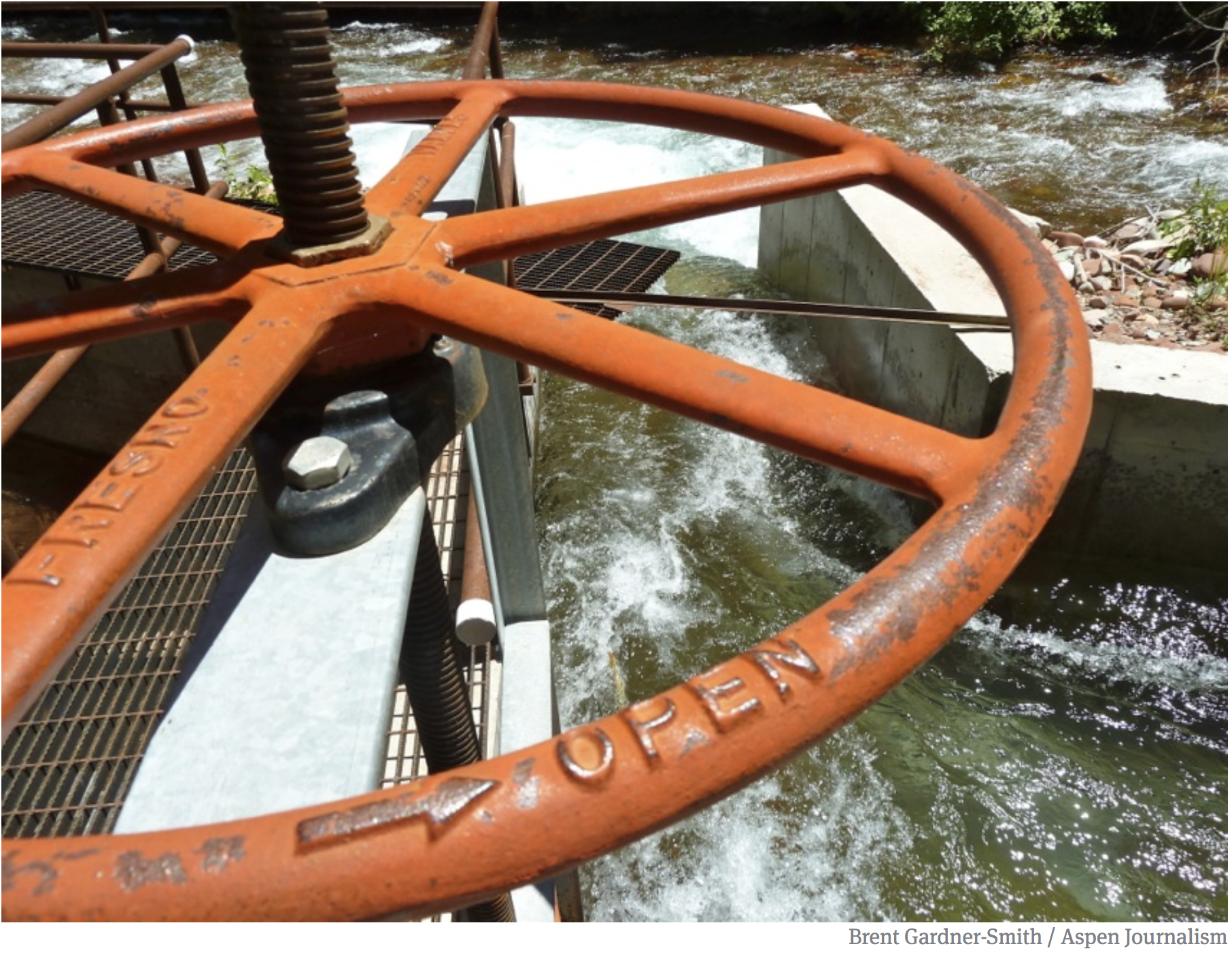
Unfortunately, CPW cannot move fish out of Highline Lake into other waters prior to draining due to the risk of moving viable mussels on or inside fish. In this case, the only option is to reduce fish loss by removing bag and possession limits. 

Anglers are reminded, effective Monday, Oct. 9, that an emergency fish salvage is in place at Highline Lake until further notice. All bag and possession limits for the reservoir are removed for the duration of the salvage. Anglers can keep all of the fish they catch from the shoreline utilizing the lawful angling methods currently allowed at the lake. CPW reminds anglers that all fish must be dead prior to transport away from the lake. 

“Eradication of zebra mussels has been, and will continue to be, our goal at Highline Lake,” said Ben Felt, Northwest Region Senior Aquatic Biologist. “Earlier this year, we pursued an option that had the potential to eradicate the mussels while maintaining the fishery. Based on this recent discovery, we recognize achieving both is not feasible. To do nothing would be detrimental to Highline Lake and would put fisheries across the state at risk. CPW is committed to rebuilding the Highline Lake fishery once the zebra mussel eradication project is complete.”
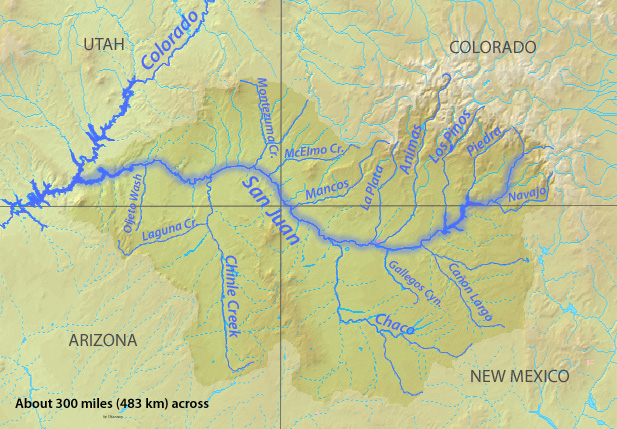
Zebra and Quagga Mussels

#Colorado Parks & Wildlife announces discovery of Rusty Crayfish in Lake Granby

Rusty crayfish. Photo credit: Colorado Parks & Wildlife

Click the link to read the release on the Colorado Parks & Wildlife website (Rachael Gonzales):

GRAND LAKE, Colo. – Colorado Parks and Wildlife announces the discovery of rusty crayfish in Lake Granby, south of Grand Lake, Colorado.  

Multiple crayfish were found at Lake Granby during routine Aquatic Nuisance Species (ANS) sampling by CPW’s ANS Sampling and Monitoring team near Sunset Point campground, on Aug. 17. Samples were collected by the tam, preliminary species identification was performed at CPW’s ANS laboratory and suspect specimens were sent to Pisces Molecular in Boulder for genetics testing, where the samples were confirmed to be rusty crayfish on Aug. 31. 

CPW’s ANS Sampling and Monitoring team and area aquatic biologists set multiple crayfish traps around Lake Granby and other waters in close proximity to determine the extent of the rusty crayfish population in the area during the week of Sept. 11. Sampling traps were left overnight before being collected. Crayfish traps collected from the surrounding lakes did not contain crayfish; however, two traps from Lake Granby did contain rusty crayfish. A trap was set below the dam on the Colorado River in addition to the lakes. No crayfish were found in this trap upon removal.

“While this is not the first time we have found rusty crayfish west of the divide here in Colorado, it is the first detection in the Upper Colorado River basin,” said Robert Walters, CPW’s Invasive Species Program Manager. “While finding any invasive species is detrimental to our state’s aquatic ecosystems, finding rusty crayfish in Lake Granby, which feeds into the Colorado River, poses an even greater threat to the entire Colorado River Basin.” 

Rusty crayfish were first discovered in Yampa River and Catamount Reservoir in 2009.They are a la​rger, more aggressive freshwater crayfish, native to the Ohio River Basin. The rusty patches on either side of their body can sometimes identify them. They are believed to have been illegally introduced to Colorado by anglers ​​as bait.

The public is reminded by following these simple steps, they can prevent the introduction and spread of invasive species in Colorado.

  • Use only bait that is legal in Colorado! Never bring in live aquatic bait from another state.
  • Do not throw unused bait of any kind, back in the water alive.
  • Clean, Drain, and Dry your gear and water craft before heading to the next body of water.
  • Do not dispose of pets or unwanted aquarium plants or animals in natural systems. 

“When you follow these simple steps, you’re not just protecting the lake or river you’re recreating in, you’re protecting every water body in Colorado,” said Walters.

Crayfish of any species are not native west of the continental divide. CPW reminds the public the live transportation of all crayfish from waters west of the Continental Divide is prohibited. All crayfish caught west of the Continental Divide must be immediately killed (by removing the head from the thorax) and taken into possession, or immediately returned to the water from which they were taken. To learn more about the rusty crayfish and what the public can do to prevent the spread, visit our website.

ANS Sampling and Monitoring team members separating and identifying crayfish from Lake Granby during trapping efforts the week of Sept. 11. Photo credit: Colorado Parks & Wildlife
Empty crayfish traps used in trapping efforts at multiple sites at Lake Granby, and additional bodies of water nearby. Photo credit: Colorado Parks & Wildlife

Grant-funded effort will remove invasive species from along the #UncompahgreRiver — The #Montrose Daily Press

Tamarisk

Click the link to read the article on the Montrose Daily Press website (Kylea Henseler). Here’s an excerpt:

RiversEdge West, a Grand Junction-based nonprofit, received $22,035 from the Colorado River District’s Community Funding Partnership and $34,433 from the Colorado Water Conservation Board to restore two river sites owned by the city of Montrose.

According to RiversEdge West Restoration Coordinator Montana Cohn, the two sites together total around 70 acres, and the project will allow the group to remove about 8 acres worth of invasive tamarisk and Russian olive plants and replace them with native species…One site is off Mayfly Drive, and the other is near Home Depot off Ogden Road. Cohn said restoration efforts at these sites have yielded positive results before, and the new project will expand on previous work.  He explained invasive thorns and plants like Russian olive and tamarisk crowd out native vegetation, degrade soil quality and, since some are thorny, block access to the river for wildlife, livestock and recreationists…

The project will go down in phases, starting with volunteer efforts this summer. Then in the fall, paid crews from the Americorps program Western Colorado Conservation Corps will come in with herbicides and chainsaws and remove as many of the invasive plants as possible. Efforts, including volunteer replanting efforts of native plants, will continue into 2024.

Russian Olive

RiversEdge West receives grant for riparian restoration on the #WhiteRiver — The Rio Blanco Herald-Times

White River Basin. By Shannon1 – Own work, CC BY-SA 4.0, https://commons.wikimedia.org/w/index.php?curid=69281367

Click the link to read the release on the Rio Blanco Herald-Times website:

RiversEdge West (REW) is pleased to accept a $48,788 grant award from the Colorado River District’s Community Funding Partnership to continue important riverside (riparian) restoration work along the White River in Rio Blanco County.

REW leads the White River Partnership (WRP), a group committed to restoring and maintaining healthy riparian areas along the White River in northwest Colorado and northeast Utah through collaboration among public, private, and non-profit entities. REW works with WRP partners to prioritize and plan restoration sites, coordinate invasive plant removal with contractors and youth corps, and to monitor restoration sites after invasive plant removal.

Tamarisk

This project will remove invasive plant species, like tamarisk and Russian olive, from the White River corridor on public and private lands. Removing these invasive plants will enhance public access to river recreation areas and improve wildlife habitat and agricultural productivity on nearby privately-owned property. To complete this work, REW will partner with Western Colorado Conservation Corps, based in Grand Junction, which engages young adults on the Western Slope in conservation and restoration work by training them for careers in land management.

“The Community Funding Partnership is a solution-driven funding program to ensure our communities thrive in a hotter, drier future. Riparian restoration projects, such as the White River Project, are critical to West Slope rivers by protecting water quality, improving habitat, and moderating high flow events,” said Amy Moyer, Director of Strategic Partnerships with the Colorado River District.

In addition to the award from the River District, this project is also supported by the Colorado Water Conservation Board and the Bureau of Land Management.

Standley Lake Boating: what was lost — #Northglenn #Thornton Sentinel

Standley Lake sunset. Photo credit Blogspot.com.

Click the link to read the article on the Northglenn Thornton Senitinel website (Luke Zarzecki). Here’s an excerpt:

Many members of Standley Lake’s boating community saw a huge aspect of their community taken away with the ban of trailered boats in 2019. [Gary] Gambino used to work a graveyard shift and after, went straight to the lake. 

“I would come home, hook up my boat, go out onto Standley, take it out in the back bay anchor in and take my four hours of sleep,” he said…

With Westminster’s city council revisiting the item, Northglenn’s council sent a letter signed by all council members indicating they will not be revisiting the item. 

“Northglenn’s water in Standley Lake is irreplaceable, valued at more than $209 million dollars. There is no level of risk that our community is willing to accept when it comes to protecting our drinking water supply,” the letter reads.

Clear Creek, Standley Lake watersheds including the Standley Lake Canal Zone via the Clear Creek Watershed Foundation.

Click the link to read “Standley Lake heads toward fifth summer with a firm no to powerboats” on The Denver Post website (John Aguilar). Here’s an excerpt:

But Westminster Councilman Dave DeMott said it’s “not realistic” to operate on a zero-risk basis “as there is no area where zero risk exists in this world.” He’s heard from boating enthusiasts that they are “frustrated” with the ban, which was made permanent in late 2019

Northglenn — along with Westminster, Thornton and the Farmers Reservoir and Irrigation Company — own the 42,000 acre-feet of water in the lake, which serves as the sole supply of drinking water for both Westminster and Northglenn. Standley Lake, which is fed by three canals diverted off of Clear Creek, accounts for about a quarter of Thornton’s drinking water supply. It, too, is in favor of maintaining the trailered boat ban. Any change in boating policy would have to be agreed to by the three cities…

Northglenn’s decision was likely re-affirmed by the September discovery of a single zebra mussel in Highline Lake State Park, northwest of Grand Junction. In late October, Colorado Parks & Wildlife announced more zebra mussels had been found in Highline Lake, giving the lake an official infestation listing. CPW says Highline Lake is currently the only Colorado body of water infested with zebra mussels. No quagga mussels are known to exist in the state, though Lake Powell in Utah has them.

“We don’t see the value in risking our drinking water supply for the benefit of a small group of people,” said Tami Moon, Northglenn’s environmental manager. “That is the only place we have to store our water.”

In May of 2018, USGS Hydrologic Technician Dave Knauer found a batch of zebra mussels attached to the boat anchor in the St. Lawrence River in New York. (Credit: John Byrnes, USGS. Public domain.)

Invasive Plant Species Found in #Boulder Reservoir — @Norther_Water #SouthPlatteRiver

Cleaned-Illustration Myriophyllum spicatum (Eurasion watermilfoil). CC BY-SA 3.0, https://commons.wikimedia.org/w/index.php?curid=451399

From the latest newsletter from Northern Water:

Colorado Parks and Wildlife officers have detected the presence of a nonnative invasive plant species in Boulder Reservoir.

The plant, Eurasian watermilfoil (EWM), was detected during a routine inspection at the reservoir in the summer of 2022 and confirmed during a follow-up survey in the fall. The plant is established primarily along the western coves of the reservoir and in areas along the southern and northern shorelines, according to a release from the City of Boulder. It is not harmful to public health and at its current growth levels, there are no impacts to recreation use at the reservoir or its use as a municipal and irrigation supply.

If the growth becomes very dense, the plant could impact swimming and boating and cause taste and odor issues with drinking water.

“While the survey confirmed the presence of EWM at the reservoir, we don’t know how it arrived. It can easily be transported by wind, connected waterways, humans fishing, dogs, watercraft, or wildlife, so we encourage anyone who recreates in the water to be vigilant about checking for aquatic nuisance species,” said Boulder Parks and Recreation Director Ali Rhodes. “The survey did find that there are no other aquatic nuisance or invasive plant species in the reservoir, which is good news.”

According to the city, recreation users will see a continuation of changes put in place in summer 2022. Upon initial detection of the plant, the city adjusted operations to include exit inspections on watercraft, increased education to users and added notification signage.

High Line Canal Conservancy receives grant for invasive species removal: $41,100 will enhance stewardship, youth employment, education — The Littleton Independent

Russian Olive

Click the link to read the article on the Littleton Independent website (Nina Joss). Here’s an excerpt:

Russian olive is an invasive species that spreads aggressively and deprives native species of important resources like water, according to Julia Clover Clark, natural resources manager at the High Line Canal Conservancy.

“We don’t want the canal to become a vector for Russian olive to spread throughout open spaces,” she said.

With a recent $41,100 grant from Great Outdoors Colorado, the High Line Canal Conservancy will continue efforts to rid the canal of the invasive species. Working with the Mile High Youth Corps, they will spend four weeks eliminating Russian olive along the corridor in Greenwood Village and Cherry Hills Village.

“It’s just such an exciting opportunity because not only (does) it allow us to get out there and do this important work of mitigating Russian olive along the corridor, but it really aligns with our values to be able to have a partnership with (the youth corps),” Clark said.

The grant program is implemented in partnership with the Colorado Youth Corps Association, a coalition of eight accredited conservation service corps that employ and train people aged 14-25 in the natural resource sector…Last year, the High Line Canal Conservancy also received the grant, which it used to started Russian olive mitigation along 20 miles of the canal corridor. This pilot project covered parts of the corridor in Denver, unincorporated Arapahoe County, Centennial and Greenwood Village during the summer of 2022. At the end of that project, a 5.5 mile gap between the project areas remained. This year, their work will address the gap.

“After (the corps’) work is completed, there will be 27 continuous miles (with no Russian olive),” Clark said.

Old cottonwoods line the banks and trails of the historic Highline Canal, which is being converted into an ultra modern stormwater system even as its trail systems continue to serve metro area residents. July 21, 2020 Credit: Jerd Smith via Water Education Colorado

Invasive zebra mussels arrive in #Colorado — The Ark Valley Voice

In May of 2018, USGS Hydrologic Technician Dave Knauer found a batch of zebra mussels attached to the boat anchor in the St. Lawrence River in New York. (Credit: John Byrnes, USGS. Public domain.)

Click the link to read the article on The Ark Valley Voice website (Jan Wondra). Here’s an excerpt:

CPW staff first discovered the presence of invasive zebra mussels at Highline Lake State Park on an artificial PVC substrate in the lake during routine invasive species sampling on Sept. 14. In October, during increased testing by CPW staff additional adult zebra mussels were found in Highline Lake. Zebra mussels are an invasive species in the United States…

This is the first time a body of water has been categorized as infested with zebra mussels in the state of Colorado. The discovery is an alert for water managers, fishermen, and recreationists to be on the lookout for a striped invader and to be careful not to be a human carrier. 

#Northglenn said they won’t be revisiting the IGA they signed with #Westminster and #Thornton banning trailered boats on Standley Lake — The Westminster Window #ClearCreek #SouthPlatteRiver

Standley Lake sunset. Photo credit Blogspot.com.

Click the link to read the article on The Westminster Window website (Luke Zarzecki). Here’s an excerptt:

Letter puts kibosh on Westminster’s efforts to bring boating back

Northglenn Mayor Meredith Leighty sent a letter, signed by the eight other council members, declining Westminster’s request to meet regarding bringing boating back to Standley Lake.

“Northglenn’s water in Standley Lake is irreplaceable, valued at more than $209 million dollars. There is no level of risk that our community is willing to accept when it comes to protecting our drinking water supply,” the letter reads.

That means unless Northglenn changes their minds, Westminster will have to wait until 2030 to renegotiate the Intergovernmental Agreement. According to Thornton Spokesperson Todd Barnes, the agreement needs all three cities to agree to amend it. The move comes after Westminster held a study session on Nov. 21 discussing the possibility of reallowing boating on the lake. At the meeting, Mayor Pro Tem David DeMott, City Councilor Rich Seymour and City Councilor Lindsey Emmons said they wanted to make sure all councilors —  for Northglenn and Thornton — understand the entire issue.  DeMott emphasized that the decision comes down to risk and the threshold each council is comfortable accepting. Seymour said it’s a complicated subject and takes a long time to understand.  In response to the letter, DeMott said he was disappointed. 

Quaggas on sandal at Lake Mead

Additional invasive zebra mussels found at Highline Lake State Park — #Colorado Parks & Wildlife

CPW staff has discovered the presence of additional invasive zebra mussels at Highline Lake. Photo credit: CPW

Click the link to read the article on the Colorado Parks & Wildlife website (Travis Duncan):

CPW staff has discovered the presence of additional invasive zebra mussels at Highline Lake located at Highline Lake State Park north of Loma, Colorado. The discovery comes following increased testing after CPW found a single adult zebra mussel on an artificial PVC substrate in the lake during routine invasive species sampling on Sept. 14.

The discovery of additional invasive mussels in the water is indicative of an established population in the reservoir and has prompted CPW to change the status of the body of water from “Suspect” to “Infested.” This is the first time a body of water has been categorized as infested with zebra mussels in the state of Colorado. 

There is currently no boating on the lake because Highline Lake closes to all surface-water activities for the season annually on October 1. 

“Thanks to Colorado’s robust early detection sampling and monitoring program, we were able to make this discovery,” said CPW Acting Director Heather Dugan. “As more and more people use our water resources for boating, we must continue to work tirelessly to prevent the spread of these harmful invasive species.”

The State of Colorado requires boats to be professionally inspected if:

  • a boat has been in any body of water that is positive, or suspect for ANS
  • a boat has been in any body of water outside of Colorado
  • a boat will be entering any water body where inspections are required

Boats exiting infested waters that are not cleaned, drained, and dry are subject to mandatory decontamination requirements.

The establishment of invasive species can lead to millions of dollars in damages to water-based infrastructure, impact water quality and limit recreational opportunity. CPW’s invasive species experts are evaluating next steps and will have more to communicate on the actions it is taking at Highline Lake at a later date. 

Please help CPW stop the movement of harmful invasive species, such as zebra mussels, into new waters. Public awareness and participation is the best weapon in the prevention of invasive species. 

Please visit the CPW website for more information about zebra and quagga mussels.

Click the link to read “Mussels muscle into Highline: Infestation is first in Colorado” on the Grand Junction Daily Sentinel website (Dennis Webb). Here’s an excerpt:

Alan Martinez, manager of Highline Lake State Park, said that after previous sampling found no more of the mussels, 10 adults have now been found at different locations in the lake, thanks to additional discoveries on Friday and Sunday. The discovery of multiple adults means they’re assumed to be reproducing.

“We are unfortunately the first-ever body of water infested” in the state, he said. “It’s not a title that we want. Now we’ve got to figure out how to protect the rest of Colorado.”’

He said there will now be a lot of discussion within Colorado Parks and Wildlife about how to do that.

“We need to figure out where we move forward at this point and right now we don’t have an answer on that,” he said.

Now the new protocol will remain as long as the lake is infested, and Martinez said there’s no way of getting rid of the mussels short of draining the lake. He previously has said that doing that would mean losing a warm-water fishery there that took decades to build. Robert Walters, Parks and Wildlife’s invasive species program manager, has said that even draining a lake doesn’t guarantee eradication.

On the #ColoradoRiver, growing concern for trout and chub — The Associated Press #COriver #aridification

Colorado River from Lee’s Ferry. Photo credit. Gonzo fan2007 – Own work, CC BY-SA 4.0, https://commons.wikimedia.org/w/index.php?curid=3631180

Click the link to read the article on the Associated Press website (Brittany Peterson). Here’s an excerpt:

Key Colorado River reservoirs Lake Powell and Lake Mead are both only about one-quarter full. The continued drop, due to overuse and an increasingly arid climate, is threatening the fish and the economies built around them…since late August, the water temperature at Lees Ferry — the site of a world-famous trout fishery — has risen above 70 degrees seven times. That might be idyllic for a summer dip under the blazing Arizona summer sun, Gunn said, but approaches peril for the beloved sport fish. A few degrees higher can be lethal. To make matters worse, when temperatures rise, the amount of oxygen dissolved in the water falls, making it tough for fish to even breathe.

The Colorado River from Navajo Bridge below Lee’s Ferry and Glen Canyon Dam. The proposed Marble Canyon Dam would have been just downstream from here. Jonathan P. Thompson photo.

As the reservoir drops, it sends warmer water with less oxygen into the river below the dam. Should that water reach 73 degrees, [Terry] Gunn said his family’s guide service could start calling off afternoon trips…

Detailed underwater photo of Smallmouth Bass Micropterus dolomieu. By Engbretson Eric, U.S. Fish and Wildlife Service – http://www.public-domain-image.com/public-domain-images-pictures-free-stock-photos/fauna-animals-public-domain-images-pictures/fishes-public-domain-images-pictures/bass-fishes-pictures/detailed-underwater-photo-of-smallmouth-bass-fish-micropterus-dolomieu.jpg, Public Domain, https://commons.wikimedia.org/w/index.php?curid=24858275

Just a few miles north of Lees Ferry and its trout fishery there’s another threat — nonnative predatory smallmouth bass. They’re supposed to be contained in Lake Powell. But this summer they were found in the river below the dam. Smallmouth bass already wreaked havoc on native fish way upriver where the government spends millions of dollars each year to control the predators. They were held at bay in Lake Powell because Glen Canyon Dam has served as a barrier for them for years — until now. The reservoir’s recent sharp decline is enabling these introduced fish to shoot through the dam and edge closer to the Grand Canyon, where the biggest groups of humpback chub, an ancient, threatened, native fish, remain.

Highline Lake mussel find means years of inspections for departing boats — The #GrandJunction Daily Sentinel

Zebra and Quagga Mussels

Click the link to read the article on the Grand Junction Daily Sentinel website (Dennis Webb). Here’s an excerpt:

Colorado Parks and Wildlife staff found an adult zebra mussel at the popular Grand Valley boating destination on Wednesday during routine invasive-species sampling, and said Friday that two of its experts independently confirmed the identification of the mussel, including through genetic confirmation…This is the first-ever discovery of an adult zebra or quagga mussel in Colorado. Both are native to Europe and pose concern because they quickly reproduce and spread to new waters, clogging pipes and other infrastructure with their shells and posing ecological impacts as they filter out and eat plankton, threatening the aquatic food chain and fisheries.

In May of 2018, USGS Hydrologic Technician Dave Knauer found a batch of zebra mussels attached to the boat anchor in the St. Lawrence River in New York. (Credit: John Byrnes, USGS. Public domain.)

Colorado has had intensive protocols in place in an attempt to keep the two species out of the state. On occasion larval-stage mussel “veligers” have been found in some state reservoirs or lakes, but fortunately in all those cases, the mussels never established themselves in those water bodies, all of which are now considered negative for them. Under the precautionary protocols followed in Colorado whenever there is a single confirmed instance of either mussel being present at any age in a water body, however, boats leaving Highline will now be subject for three years to mandatory inspection, and if necessary decontamination, to prevent the mussel from spreading elsewhere. If three years pass without further detections, the measures can be dropped.

Biologists’ fears confirmed on the lower #ColoradoRiver — The Associated Press #COriver #aridification

The Colorado River from Navajo Bridge below Lee’s Ferry and Glen Canyon Dam. The proposed Marble Canyon Dam would have been just downstream from here. Jonathan P. Thompson photo.

Click the link to read the article on the Associated Press website (Brittany Petersen). Here’s an excerpt:

For National Park Service fisheries biologist Jeff Arnold, it was a moment he’d been dreading. Bare-legged in sandals, he was pulling in a net in a shallow backwater of the lower Colorado River last week, when he spotted three young fish that didn’t belong there. “Give me a call when you get this!” he messaged a colleague, snapping photos.

Minutes later, the park service confirmed their worst fear: smallmouth bass had in fact been found and were likely reproducing in the Colorado River below Glen Canyon Dam.

The confluence of the Colorado and Little Colorado rivers in the Grand Canyon, shown here in a September 2020 aerial photo from Ecoflight, represents an area where the humpback chub has rebounded in the last decade. That progress is now threatened by declining water levels in Lake Powell, which could lead to non-native smallmouth bass becoming established in the canyon. CREDIT: JANE PARGITER/ECOFLIGHT

They may be a beloved sport fish, but smallmouth bass feast on humpback chub, an ancient, threatened fish that’s native to the river, and that biologists like Arnold have been working hard to recover. The predators wreaked havoc in the upper river, but were held at bay in Lake Powell where Glen Canyon Dam has served as a barrier for years — until now. The reservoir’s recent sharp decline is enabling these introduced fish to get past the dam and closer to where the biggest groups of chub remain, farther downstream in the Grand Canyon.

Declining levels at #LakePowell increase risk to humpback chub downstream: As temperatures rise, so does risk of invasive fish — @AspenJournalism

The confluence of the Colorado and Little Colorado rivers in the Grand Canyon, shown here in a September 2020 aerial photo from Ecoflight, represents an area where the humpback chub has rebounded in the last decade. That progress is now threatened by declining water levels in Lake Powell, which could lead to non-native smallmouth bass becoming established in the canyon. CREDIT: JANE PARGITER/ECOFLIGHT

Click the link to read the article on the Aspen Journalism website (Heather Sackett):

As climate change continues to shrink the nation’s second-largest reservoir, water managers are scrambling to prevent the release of an invasive fish into the Grand Canyon.

Smallmouth bass, a voracious predator and popular game fish, have been introduced into reservoirs throughout the Colorado River basin, including Lake Powell. The looming problem now is that as lake levels drop to historically low levels, the invasive fish are likely to escape beyond Glen Canyon Dam, threatening endangered fish in the canyon, whose populations have rebounded in recent years.

Detailed underwater photo of Smallmouth Bass Micropterus dolomieu. By Engbretson Eric, U.S. Fish and Wildlife Service – http://www.public-domain-image.com/public-domain-images-pictures-free-stock-photos/fauna-animals-public-domain-images-pictures/fishes-public-domain-images-pictures/bass-fishes-pictures/detailed-underwater-photo-of-smallmouth-bass-fish-micropterus-dolomieu.jpg, Public Domain, https://commons.wikimedia.org/w/index.php?curid=24858275

Smallmouth bass are a warm-water-loving species, hanging out in the top part of the water column, which is warmed by the sun. Until recently, the intakes for turbines at Glen Canyon Dam had been lower in the water column, where colder temperatures kept the fish away. But as the lake level falls, the warmer water band containing the smallmouth bass is sinking closer to the intakes, making it more likely that they will pass through the dam to the river below.

Warmer water below the dam also means a more ideal environment for the bass, which thrive in temperatures above 61 degrees Fahrenheit (16 degrees Celsius).

“With the levels we are expecting to get to this coming year, water temperatures are going to be warmer than they’ve been in 52 years in the Grand Canyon,” said Charles Yackulic, a research statistician with the U.S. Geological Survey’s Grand Canyon Monitoring and Research Center.

The research center has been modeling the likelihood that smallmouth bass will become established below the dam under different scenarios and providing that information to decision-makers and water managers.

Jack Schmidt, a Colorado River researcher at Utah State University and former director of the research center, co-wrote — along with Yackulic and others — a March 2021 paper that sounded the alarm that future warming is likely to disproportionately benefit nonnative fish species to the detriment of native species. The problem from which all others stem, including the changing fish communities, and the reason Powell is so low in the first place is the climate-change-driven supply-demand imbalance, Schmidt said.

Annual CO2 emissions from fossil fuels, by world region

“If we are going to continue to load the atmosphere with carbon such that the atmosphere warms and the runoff in the Colorado River keeps getting lower and if we are going to keep consuming water, … then you can only play this game of staving off the inevitable for so long before it’s game over,” he said.

Report: Insights Gained on Agricultural #Water #Conservation for Water Security in the Upper #ColoradoRiver Basin — Hutchins Water Center #COriver #aridification

Photo from http://trmurf.com/about/

Click the link to read the report on the Hutchins Water Center website (Hannah Holm). Here’s the introduction:

A series of hot, dry years in the Upper Colorado River Basin has led to increasing concern about the security of water supplies at region-wide and local scales for the following purposes and sectors:

• Maintaining compact compliance and preventing Lake Powell’s water level from dropping too low to generate power.
• Maintaining agricultural production and the vitality of rural communities.
• Maintaining municipal and industrial water security.
• Maintaining river ecosystems.

Without a strategic, collaborative approach to addressing these issues, there is a risk that individual entities will act independently to secure their water supplies against climate and legal uncertainties. This could lead to more permanent transfers from agriculture, with detrimental impacts on rural communities and unpredictable impacts on river ecosystems.

Over the past several years, there have been numerous explorations into new approaches to meeting community and environmental needs in the Upper Basin, including deliberate, temporary, and compensated reductions in water use in order to help balance supply and demand in the Colorado River system, share water supplies between agriculture and cities, and aid troubled streams.

This report distills insights from these explorations that can help illuminate how such deliberate, temporary reductions in water use could play a role in:

• Enhancing long-term water security for farms, municipalities, industries and rivers in the Upper Basin (upstream objectives).
• Compact compliance and protection of power generation capacity in Lake Powell (downstream objectives).

In this report, the term “strategic conservation” will be used to describe these deliberate reductions in water use to meet specific goals.

The insights covered in this report focus on the following topics:

• Water user interest
• Agronomic impacts of reducing water use
• Monitoring and verification of saved water
• Shepherding and conveyance of conserved water
• Pricing considerations
• Environmental considerations
• Additional considerations

For each topic, key insights and remaining uncertainties are highlighted and illustrative research, experiences and resources are described. Links to documentation are provided wherever possible.

Virtual event: The #ColoradoRiver: Where do we go from here? March 16, 2022 — Nature Conservancy #COriver #aridifcation

Colorado River “Beginnings”. Photo: Brent Gardner-Smith/Aspen Journalism

Click the link to view the event on The Nature Conservancy website.

Due to low levels of water, the federal government has declared a Tier 1 water shortage in the Colorado River for the first time ever. Now in effect, this shortage declaration impacts municipalities, agriculture, tribes, and many other stakeholders in the Colorado River Basin.

What does this mean for Colorado and surrounding states? What are The Nature Conservancy and its partners doing to address this issue?

Join us to learn how the Colorado River can be a model for resiliency and sustainability, and what you can do to help. Speakers include:

  • Taylor Hawes – Director, Colorado River Program, The Nature Conservancy
  • Aaron Derwingson – Water Projects Director, Colorado River Program, The Nature Conservancy
  • Carlos Fernández – State Director, Colorado Chapter, The Nature Conservancy
  • Register today to secure your spot!

    Archuleta County Board of County Commissioners consider funding request for south Yamaguchi Park — The #PagosaSprings Sun #SanJuanRiver

    Yamaguchi South Planning Project site layout via the City of Pagosa Springs.

    From The Pagosa Springs Sun (Clayton Chaney):

    During a work session held by the Archuleta County Board of County Commissioners (BoCC) on Dec. 7, the board heard from Al Pfister with the Upper San Juan Watershed Enhancement Program (WEP) in regard to a matching fund request for the south Yamaguchi Park project.

    The WEP is requesting $10,000 in matching funds. The funds would come from the county’s Conserva- tion Trust Fund (CTF), which can only be used for outdoor recreation purposes.

    The total cost of the project is estimated at just over $664,000, with more than $500,000 coming from the grant.

    The WEP needs a 25 percent cash match, or just over $166,000 to be awarded the grant.

    Pfister explained the WEP is a stakeholder group that was formed to develop a stream management plan for the upper San Juan River basin…

    He explained the WEP is working under the Colorado Water Plan and the Southwest Basin Roundtable Implementation Plan (SWBIP), “which sets the framework for how water issues are going to be addressed throughout the state.”
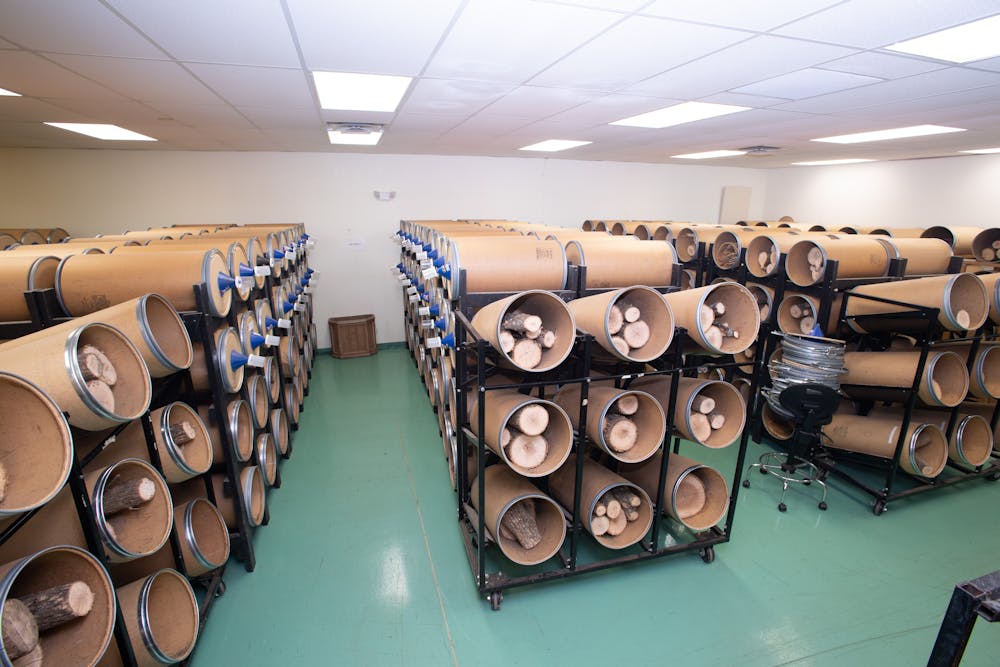
    He mentioned that, currently, the SWBIP is being revised and should be coming out for public comment in January 2022.

    As part of that plan, the WEP is applying for a matching grant from the Colorado Water Conservation Board (CWCB), Pfister noted…

    He explained that the project objectives are to enhance the recreational experience for both anglers and river enthusiasts, improve pub- lic access to recreational features, improve fish habitat quality and pro- mote sediment movement through this section of the San Juan River.

    “Everybody in the county is going to see some benefit from it, even if they don’t get in the river,” Commissioner Alvin Schaaf said.

    During a work session held by the BoCC on Dec. 14, County Attorney/ Interim Administrator Todd Weaver indicated that the county does have sufficient funds in its CTF to commit $10,000 to the WEP out of the 2021 budget.

    He noted the BoCC will likely vote on the matter at its next regular meeting scheduled for 1:30 p.m. on Dec. 21at 398 Lewis St., in the commissioners’ room.

    The invasive emerald ash borer has destroyed millions of trees – scientists aim to control it with tiny parasitic wasps — The Conversation


    Emerald ash borer larva cut these feeding galleries on the trunk of a dead ash tree in Michigan.
    corfoto via Getty Images

    Kristine Grayson, University of Richmond

    The emerald ash borer (Agrilus planipennis) is a deceptively attractive metallic-green adult beetle with a red abdomen. But few people ever actually see the insect itself – just the trail of destruction it leaves behind under the bark of ash trees.

    These insects, which are native to Asia and Russia, were first discovered in Michigan in 2002. Since then they have spread to 35 states and become the most destructive and costly invasive wood-boring insect in U.S. history. They have also been detected in the Canadian provinces of Ontario, Quebec, Manitoba, New Brunswick and Nova Scotia.

    In 2021 the U.S. Department of Agriculture stopped regulating the movement of ash trees and wood products in infested areas because the beetles spread rapidly despite quarantine efforts. Now federal regulators and researchers are pursuing a different strategy: biological control. Scientists think that tiny parasitic wasps, which prey on emerald ash borers in their native range, hold the key to curbing this invasive species and returning ash trees to North American forests.

    Metallic green beetle.
    Adult emerald ash borer beetles are about 0.5 inches long (photo not to scale).
    PA DEC, CC BY

    I study invasive forest insects and work with the USDA to develop easier ways of raising emerald ash borers and other invasive insects in research laboratories. This work is critical for discovering and testing ways to better manage forest recovery and prevent future outbreaks. But while the emerald ash borer has spread uncontrollably in nature, producing a consistent laboratory supply of these insects is surprisingly challenging – and developing an effective biological control program requires a lot of target insects.

    The value of ash trees

    Researchers believe the emerald ash borer likely arrived in the U.S. on imported wood packaging material from Asia sometime in the 1990s. The insects lay eggs in the bark crevices of ash trees; when larva hatch, they tunnel through the bark and feed on the inner layer of the tree. Their impact becomes apparent when the bark is peeled back, revealing dramatic feeding tracks. These channels damage the trees’ vascular tissue – internal networks that transport water and nutrients – and ultimately kill the tree.

    Before this invasive pest appeared on the scene, ash trees were particularly popular for residential developments, representing 20-40% of planted trees in some Midwestern communities. Emerald ash borers have killed tens of millions of U.S. trees with an estimated replacement cost of US$10-25 billion.

    Ash wood is also popular for lumber used in furniture, sports equipment and paper, among many other products. The ash timber industry produces over 100 million board feet annually, valued at over $25 billion.

    Why quarantines have failed

    State and federal agencies have used quarantines to combat the spread of several invasive forest insects, including Asian longhorned beetles and Lymantria dispar, previously known as gypsy moth. This approach seeks to reduce the movement of eggs and young insects hidden in lumber, nursery plants and other wood products. In counties where an invasive species is detected, regulations typically require wood products to be heat-treated, stripped of bark, fumigated or chipped before they can be moved.

    The federal emerald ash borer quarantine started with 13 counties in Michigan in 2003 and increased exponentially over time to cover than a quarter of the continental U.S. Quarantines can be effective when forest insect pests mainly spread through movement of their eggs, hitchhiking long distances when humans transport wood.

    However, female emerald ash borers can fly up to 12 miles per day for as long as six weeks after mating. The beetles also are difficult to trap, and typically are not detected until they have been present for three to five years – too late for quarantines to work.

    Map showing range of ash trees and counties where emerald ash borer has been detected.
    The emerald ash borer has been detected throughout much of the range of ash trees in the U.S.
    USDA

    Next option: Wasps

    Any biocontrol plan poses concerns about unintended consequences. One notorious example is the introduction of cane toads in Australia in the 1930s to reduce beetles on sugarcane farms. The toads didn’t eat the beetles, but they spread rapidly and ate lots of other species. And their toxins killed predators.

    Introducing species for biocontrol is strictly regulated in the U.S. It can take two to 10 years to demonstrate the effectiveness of potential biocontrol agents, and obtaining a permit for field testing can take two more years. Scientists must demonstrate that the released species specializes on the target pest and has minimal impacts on other species.

    Four wasp species from China and Russia that are natural enemies of the emerald ash borer have gone through the approval process for field release. These wasps are parasitoids: They deposit their eggs or larva into or on another insect, which becomes an unsuspecting food source for the growing parasite. Parasitoids are great candidates for biocontrol because they typically exploit a single host species.

    The selected wasps are tiny and don’t sting, but their egg-laying organs can penetrate ash tree bark. And they have specialized sensory abilities to find emerald ash borer larva or eggs to serve as their hosts.

    Ash borer larva and a wasp species that preys on it.
    An emerald ash borer larva in wood (left); Tetrastichus planipennisi, a parasitic wasp that preys on ash borers; and wasp larva that have grown and eaten the ash borer.
    USDA, CC BY-ND

    The USDA is working to rear massive numbers of parasitoid wasps in lab facilities by providing lab-grown emerald ash borers as hosts for their eggs. Despite COVID-19 disruptions, the agency produced over 550,000 parasitoids in 2020 and released them at over 240 sites.

    The goal is to create self-sustaining field populations of parasitoids that reduce emerald ash borer populations in nature enough to allow replanted ash trees to grow and thrive. Several studies have shown encouraging early results, but securing a future for ash trees will require more time and research.

    One hurdle is that emerald ash borers grown in the lab need fresh ash logs and leaves to complete their life cycle. I’m part of a team working to develop an alternative to the time- and cost-intensive process of collecting logs: an artificial diet that the beetle larva can eat in the lab.

    Fresh cut ash logs await processing to collect newly emerging emerald ash borer adults, which will lay eggs for the laboratory colony.
    Anson Eaglin/USDA

    The food must provide the right texture and nutrition. Other leaf-feeding insects readily eat artificial diets made from wheat germ, but species whose larva digest wood are pickier. In the wild, emerald ash borers only feed on species of ash tree.

    In today’s global economy, with people and products moving rapidly around the world, it can be hard to find effective management options when invasive species become established over a large area. But lessons learned from the emerald ash borer will help researchers mobilize quickly when the next forest pest arrives.The Conversation

    Kristine Grayson, Associate Professor of Biology, University of Richmond

    This article is republished from The Conversation under a Creative Commons license. Read the original article.

    Once a Rich Desert River, the #GilaRiver Struggles to Keep Flowing — Yale 360 #ColoradoRiver #COriver #aridification

    Gila River. Photo credit: Dennis O’Keefe via American Rivers

    From Yale 360 (Jim Robbins). Click through for Ted Wood’s photo gallery:

    The Gila was once a vibrant desert river, providing a lifeline for the riparian habitat and wildlife that depended on it in the U.S. Southwest. But population growth, agricultural withdrawals, and, increasingly, climate change have badly diminished the river and threaten its future.

    The confluence of the tiny San Pedro River and the much larger Gila was once one of the richest locales in one of the most productive river ecosystems in the American Southwest, an incomparable oasis of biodiversity.

    The rivers frequently flooded their banks, a life-giving pulse that created sprawling riverside cienegas, or fertile wetlands; braided and beaver-dammed channels; meandering oxbows; and bosques — riparian habitats with towering cottonwoods, mesquite and willows. This lush, wet Arizona landscape, combined with the searing heat of the Sonoran Desert, gave rise to a vast array of insects, fish and wildlife, including apex predators such as Mexican wolves, grizzly bears, jaguars and cougars, which prowled the river corridors.

    The confluence now is a very different place, its richness long diminished. A massive mountain of orange- and dun-colored smelter tailings, left from the days of copper and lead processing and riddled with arsenic, towers where the two rivers meet. Water rarely flows there, with an occasional summer downpour delivering an ephemeral trickle.

    On a recent visit, only a few brown, stagnant pools remained. In one, hundreds of small fish gasped for oxygen. An egret that had been feeding on the fish flew off. The plop of a bull frog, an invasive species, echoed in the hot, still air.

    Gila River watershed. Graphic credit: Wikimedia

    The Gila River, which was listed by the advocacy group American Rivers in 2019 as the nation’s most endangered river, drains an enormous watershed of 60,000 square miles. Stretches have long been depleted, largely because of crop irrigation and the water demands of large cities. Now, a warmer and drier climate is bearing down on ecosystems that have been deprived of water, fragmented, and otherwise altered, their natural resilience undone by human activities.

    Other desert rivers around the globe — from the Nile to the Tigris and Euphrates to the Amu Darya in Central Asia — face similar threats. Efforts are underway to restore some integrity to these natural systems, but it is an uphill battle, in part because desert rivers are more fragile than rivers in cooler, wetter places.

    Last year was the second-hottest and second-driest on record in Arizona, where heat records are frequently broken. The last two years have seen fewer desert downpours, known locally as monsoons, an important source of summer river flow.

    “We’re dealing with a rapidly changing climate that is becoming, overall, more dry and varied and warmer,” said Scott Wilbor, an ecologist in Tucson who studies desert river ecosystems, including the San Pedro. “We are in uncharted territory.”

    Born of snowmelt and springs in the mountains of southern New Mexico, the Gila is the southernmost snow-fed river in the United States. It was once perennial, running 649 miles until it emptied into the Colorado River. As the climate warms, scientists predict that by 2050 snow will no longer fall in the Black and Mogollon ranges that form the Gila’s headwaters, depriving the river of its major source of water.

    “We’re seeing a combination of long-term climate change and really bad drought,” said David Gutzler, a professor emeritus of climatology at the University of New Mexico. If the drought is prolonged, he said, “that’s when we’ll see the river dry up.”
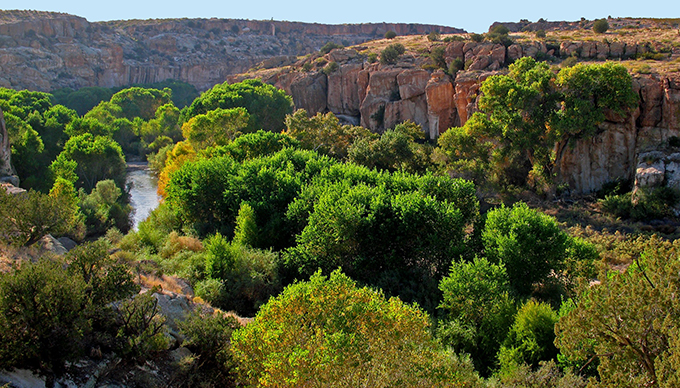
    The Gila River as it nears the Florence Diversion Dam in Arizona was almost dry by May this year. Photo credit: TED WOOD via Yale 360.

    The same scenario is playing out on the once-mighty Colorado, the Rio Grande, and many smaller Southwest rivers, all facing what is often called a megadrought. Some research indicates that a southwestern U.S. megadrought may last decades, while other scientists fear the region is threatened by a permanent aridification because of rising temperatures.

    Worldwide, said Ian Harrison, a freshwater expert with Conservation International, “pretty much where there are rivers in arid areas, they are suffering through a combination of climate change and development.”

    Like the Gila, many of these rivers have high degrees of endemism. “Life is often highly specialized to those particular conditions and only lives on that one river, so the impacts of loss are catastrophic,” he said.

    Rivers everywhere are important for biodiversity, but especially so in the desert, where 90 percent of life is found within a mile of the river. Nearly half of North America’s 900 or so bird species use the Gila and its tributaries, including some that live nowhere else in the U.S., such as the common blackhawk and northern beardless tyrannulet. Two endangered birds, the southwestern willow flycatcher and yellow-billed cuckoo, live along the Gila and its tributaries, including the San Pedro and the Salt.

    Desert rivers, of course, make life in the desert possible for people, too. Growing crops in the perpetual heat of the desert can be highly lucrative, especially if the water is free or nearly so thanks to subsidies from the federal government. Agriculture is where most of the water in the Gila goes.

    A vermillion flycatcher perched near the Gila River in Safford, Arizona. Photo credit: TED WOOD via Yale 360

    This spring, photographer Ted Wood and I made a journey along the length of the Gila, from the headwaters in New Mexico to west of Phoenix. In most of Arizona, the Gila is dry. Where it still flows, I was impressed by how such a relatively small river, under the right conditions, can be so life-giving. The trip brought home what desert rivers are up against as the climate changes, and also how much restoration, and what types, can be expected to protect the biodiversity that remains.

    Our journey began at the river’s source, where Cliff Dweller Creek spills out of a shady canyon lined with Gambel oak in Gila Cliff Dwellings National Monument. The creek is barely a trickle here. Above the creek, ancestral Puebloans, known as Mogollon, once lived in dwellings wedged into caves, making pottery and tending vegetable gardens. The Mogollon abandoned these canyons in the 15th century, perhaps done in by an extended drought.

    From inside a Mogollon cave, I looked out at rolling hills, covered with ponderosa pine, pinyon and juniper trees. The green-hued water gains volume where three forks come together near here. Historically, the mountain snow melts slowly each spring, providing high steady flows through April and May. Flows slow to a trickle in June. In July and August, monsoons pass through and, along with frontal systems, cause flash flooding and a rise in water levels.

    Flooding is a “disturbance regime,” not unlike a forest fire, that rejuvenates aging, static ecosystems. A healthy river in the mountains of the West is one that behaves like a fire hose, whipping back and forth in a broad channel over time, flash flooding and then receding, moving gravel, rocks, logs and other debris throughout the system. A flooding river constantly demolishes some sections of a river and builds others, creating new habitat — cleaning silt from gravel so fish can spawn, for instance, or flushing sediment from wetlands. A river that flows over its banks, recharges aquifers and moistens the soil so that the seedlings of cottonwoods, mesquite trees and other vegetation can reproduce. Along healthy stretches of the Gila, birds are everywhere; I spotted numerous bluebirds in the branches of emerald green cottonwoods.

    Gila Cliff Dwellings National Monument New Mexico, an ancestral Puebloan ruin at the headwaters of the Gila River. Photo credit: TED WOOD via Yale 360

    The riparian ecosystem that lines the 80 or so miles of the New Mexico portion is largely intact because of the protections afforded by federal wilderness areas, the lack of a dam, and the river’s flow not being completely siphoned off for farming. This is an anomaly in a state that has lost many of its riparian ecosystems. “This is the last free-flowing river in New Mexico,” said Allyson Siwik, executive director of the Gila Conservation Coalition.

    The future of the New Mexico stretch of the river is uncertain because of the possibility of more water withdrawals and the loss of snowpack. “We’ve seen flows in the last 10 years lower than we’ve ever seen,” Siwik said. This year, she said, set an all-time low on the river, with flow less than 20 percent of normal.

    Undammed, the Gila River through New Mexico still floods, refreshing the Cliff-Gila valley, which contains the largest intact bosque habitat in the Lower Colorado River Basin. The valley is home to the largest concentration of non-colonial breeding birds in North America. The river is also a stronghold for threatened and endangered species, such as nesting yellow-billed cuckoos, the Gila chub, Chiricahua leopard frogs and Mexican garter snakes all live there.

    At odds with efforts to keep the Gila wild are plans by a group of roughly 200 long-time irrigators in southwestern New Mexico. Each summer they divert water from the Gila to flood-irrigate pastures, which de-waters stretches of the river. The irrigators have been trying to raise money to build impoundments to take even more of their share of water, but so far have been unsuccessful, in part because of opposition from conservation groups.

    Severe drought this spring combined with water overuse resulted in the drying of the Gila River in eastern Arizona and the death of the fish population. Photo credit: TED WOOD via Yale 360

    Cattle are another threat to the river’s biological integrity here — both unfenced domestic cattle and feral cows. Cattle break down riverbanks, widen the stream and raise water temperatures. They eat and trample riparian vegetation, causing mud and silt to choke the flow, and destroy habitat for endangered species. The Center for Biological Diversity recently sued the U.S. Forest Service to force the agency to take action.

    “We’re in a cow apocalypse,” said Todd Schulke, a founder of the Center for Biological Diversity. “They are even in the recovered Gila River habitat. It’s just heartbreaking.”

    As the river enters Arizona, the riparian ecology remains largely intact, especially in the 23 miles of the Gila Box National Riparian Area. Here, 23,000 acres of bosque habitat is in full expression, with thick stands of cottonwoods, velvet mesquite trees and sandy beaches. It is one of only two national riparian areas in the country set aside for its outstanding biodiversity; the other is on the San Pedro River.

    As the river leaves the riparian area, it undergoes a striking change: massive cotton farms near the towns of Safford, Pima, and Thatcher, first planted in the 1930s, cover the landscape. The dried, brown stalks of harvested cotton plants stand in a field, bits of fluff on top. Growing cotton in the desert — which uses six times as much water as lettuce — has long been seen as folly by critics, made possible only by hefty federal subsidies.

    Farmers in Safford, Arizona, pump groundwater near the Gila River to irrigate their fields. Photo credit: TED WOOD via Yale 360

    Much of the flood pulse ecology is lost here, as the river is diverted or subject to groundwater pumping. Instead of flooding, the river cuts deeper into its channel, lowering the water table, which many plants can no longer reach. The cottonwood stands and other riparian habitats have disappeared. “You want the groundwater within five feet of the ground, but it’s mostly 8 to 12 feet,” said Melanie Tluczek, executive director of the Gila Watershed Partnership, which has been doing restoration here since 2014.

    It is a harsh place for new planting. The river is dry in long stretches. Tamarisk, a pernicious invasive tree also known as salt cedar, needs to be cut down and its stumps poisoned to prevent regrowth. Small willows and Fremont cottonwoods have been planted on barren desert ground. Wire cages over infant trees keep elk, beaver and rabbits from gobbling them up.

    Meanwhile, tamarisk grows prolifically, slurping up water, changing soil chemistry and the nature of flooding, robustly outcompeting natives, and increasing the risk of wildfire.

    “If you can do restoration here, you can do it anywhere,” Tluczek said. She said the Gila Watershed Partnership has removed 216 acres of tamarisk along the river and planted 90 acres with new native trees. But the Gila here will never look like it did. “We can’t restore the past,” Tluczek said. “We’re going to see a floodplain that has more dryland species and fewer floodplain species.”

    The Coolidge Dam in Arizona forms the San Carlos Reservoir, which is now at historic lows. Photo credit: TED WOOD via Yale 360

    Downstream, the Coolidge Dam forms a giant concrete plug on the Gila. Built in the 1920s by the federal government, it was the result of irrational exuberance about the amount of water on the Gila and meant to supply farmers with water. Today, however, the reservoir is usually dry. Built to hold 19,500 acres of water, this year the water in the lake covered just 50 acres.

    From here to Phoenix and on to the Colorado, water only occasionally flows in the Gila. Yet even the small amount of water that remains is vital to wildlife. “Where there has been water near the surface, animals smell it and will dig down in the sand in the riverbed to free it up,” Wilbor said. “You set up a camera and it’s like an African watering hole, with species after species taking turns to come use the water.”

    Will the Gila River through most of Arizona to the Colorado ever be restored to a semblance of the biological jewel it once was? The chances are slim. But two pioneering efforts have brought back elements of the desiccated river.

    In 2010, Phoenix completed a $100 million, eight-mile restoration of the long-dewatered Salt River where it joins the Gila and Agua Fria rivers at Tres Rios. Fed by water from the city’s sewage treatment plant across the road, this constructed complex includes 128 acres of wetlands, 38 acres of riparian corridor, and 134 acres of open water. It is thick with cattails and other vegetation, an island of green around a lake amid the sere surrounding desert.

    Ramona and Terry Button run Ramona Farms on the Gila River Indian Community, where some water allocated to the tribe is being released into the Gila. Photo credit: TED WOOD via Yale 360

    On the nearby Gila River Indian Community, meanwhile, home to the Pima — or the name they prefer, Akimel O’othham, the river people — is something called a managed area recharge. The Akimel O’othham, who share their community with the Maricopa, are believed to be the descendants of the Hohokam, an ancient agricultural civilization with a vast network of irrigation canals that was largely abandoned centuries ago. The Akimel O’othham continued to farm along the Gila in historic times until their water was stolen from them in the late 19th century by settlers who dug a canal in front of the reservation and drained it away.

    After a century of the Akimel O’othham fighting for their water rights, in 2004 the Arizona Water Settlement Act provided the tribe with the largest share of Colorado River water from the Central Arizona Project, a share larger than the city of Phoenix’s allotment. The tribe is now water-rich, using much of that water to restore its tribal agricultural past, though with modern crops and methods.

    Last year, some of the Colorado River water was released into the Gila to be stored in an underground aquifer and used to create a wetland.

    Both of these projects, at Tres Rios and at the reservation, have created oases in a harsh desert landscape, bringing back an array of birds and wildlife, and — in the case of the Akimel O’othham — helping revitalize the cultural traditions of these river people.

    “We’re not going to have rivers with native species in the Southwest unless we can protect and restore these systems,” especially with a changing climate, Siwik said. “Protecting the best, restoring the rest — or else we lose these systems that we need for our survival.”

    Tamarisk are turning brown all because of a beetle — The #GrandJunction Daily Sentinel

    Tamarisk leaf beetles at work

    From RiversEdge West via The Grand Junction Daily Sentinel:

    Tamarisk trees, those green bushy plants seen along waterways, have been turning brown across the county thanks to a special beetle used to control the invasive species.

    Ben Bloodworth, Tamarisk Beetle Program coordinator with RiversEdge West, sent out a note Monday responding to social media posts from local people wondering why they were seeing so many browning tamarisk plants.

    “These are tamarisk trees, or salt cedars, and the phenomenon is currently so pervasive here in the valley that folks are starting to wonder about it on social media,” Bloodworth said. “So, before you blame anyone for over-spraying, or the hot, dry air of June, let’s chat about the millions of little beetles that live in the valley with us.”

    According to Bloodworth, tamarisk, which is native to Asia and the Mediterranean, became such an environmental and economic problem in the western United States that the U.S. Department of Agriculture (USDA) decided to research and release a biological control agent to address the issue.

    “Biocontrols are natural ‘predators’ that feed on plants in their native ranges but are not found in the U.S.,” Bloodworth said. “In 1987 the USDA began a program to find natural enemies of tamarisk and see if they could live and feed on tamarisk in North America without feeding on anything else.”

    Out of hundreds of candidate species, the tamarisk beetle was found to be the most successful. It was found to only feed on tamarisk and not any other species of plants. So the USDA began releasing it, including in Moab, Utah, in 2001. From there the beetle spread up the Colorado River to Mesa County.

    “Since tamarisk beetles survive on tamarisk as their only food source, they were never intended to eliminate the invasive plant,” Bloodworth said. “Rather, they were released to help control the spread of the plant and reduce the amount that land managers must remove by other, more costly means.”

    The small green beetles, when there is a large enough population, can defoliate a large amount of tamarisk in just a few weeks. Left behind are the orangish brown remains of the formerly green tamarisk.

    “The populations ebb and flow with available tamarisk and some years we have almost no tamarisk beetles anywhere,” Bloodworth said. “As you may have noticed by all the brown tamarisk, this is not one of those years!”

    Counterintuitively the brown, dead tamarisk is actually less of a fire danger than the green plant, Bloodworth said. It may initially, for a few weeks, be more susceptible to catching fire, but once it has dropped its leaves it is actually less of a fire risk, according to Bloodworth.

    “The brown trees may not be pretty, but they do provide for opportunities to restore native vegetation alongside our rivers,” Bloodworth said.

    2014 Tamarisk leaf beetle distribution map via the Tamarisk Coalition

    Low-flow research on #ColoradoRiver sheds light on eventual new normal for #GrandCanyon — Oregon State University

    Quagga mussels: Glen Canyon photo by Jeremy Monroe, Freshwaters Illustrated/USGS

    Here’s the release from Oregon State University (Steve Lundeberg and David A. Lytle):

    Researchers from Oregon State University say ecological data gathered during a recent low-flow experiment in the Grand Canyon is a key step toward understanding Colorado River ecosystems as the amount of water in the river continues to decline.

    Dave Lytle, professor of integrative biology, and Ph.D. students Angelika Kurthen and Jared Freedman teamed with scientists from the United States Geological Survey during the March 2021 project to examine the quantity and diversity of invertebrates in the river. Monitoring aquatic invertebrates is an important tool for keeping track of stream health.

    “The Colorado River and its dams are important to cities throughout the Southwest, and as a result of that management the river experiences some pretty unusual flows,” Lytle said. “During the day in the Grand Canyon, river levels can rise several feet, then they can drop down several feet, stranding your boat if you’re not careful. That’s because there’s high electricity demand during the day and lower demand at night.”

    The high flow during times of heavy demand for power is known as hydropeaking.

    “Hydropeaking can cause trouble for ecosystems downstream, and with our collaborators we’re experimenting with ways to change river flows to make them more compatible with productive ecosystems,” Lytle said. “Invertebrates are food for fish, birds and bats, and we want to enhance that food base by testing out different flow regimes that mesh with management ideas.”

    During the low-flow event, releases from Lake Powell through the Glen Canyon Dam were restricted so that the Colorado ran at 4,000 cubic feet per second compared to its usual flow of 8,000 to 15,000 CFS. Lytle’s team took samples to measure the quantity of invertebrates stranded by the low flows and environmental DNA samples to analyze the diversity of invertebrates in the water.

    “During this spring’s low flow, gravel bars and parts of channels that had been submerged were exposed for the first time in decades,” Lytle said. “We saw really large areas of vegetation and invasive species like New Zealand mud snails and quagga mussels, which are there in high numbers at the expense of native invertebrates such as black flies, mayflies and midges that are better food sources for native fish.”

    The Colorado River follows a 1,450-mile route generally southwest from north central Colorado to just east of Las Vegas. From there it turns south to form Arizona’s western border with Nevada and California, and then the border between Mexican states Sonora and Baja California before emptying into the Gulf of California.

    Between the U.S. and Mexico, 40 million people depend on water from the Colorado. The snowmelt-fed river has seen its flows drop by 20% over the last 100 years as runoff efficiency – the percentage of precipitation that ends up in the river – has declined as summers have become hotter and drier, cooking the soil.

    This year, for example, snowpack is 80% of average but sending just 30% of the average amount of water into the Colorado. Lake Mead, the reservoir behind Hoover Dam, is at an all-time low, and between them Lake Mead and Lake Powell, behind Glen Canyon Dam, are projected to be just 29% full within two years.

    Completed in 1966, Glen Canyon Dam is 710 feet high and 1,560 feet long and named for the series of deep sandstone gorges flooded by Lake Powell. The lake draws its name from John Wesley Powell, the leader of the first boat expedition to traverse the Grand Canyon.

    “Typically the Colorado River is coming out of Lake Powell fast and cold, which is a hostile environment for desert adapted organisms,” Lytle said.

    For the recent experiment, low flow was maintained from March 15 through March 20, and immediately after that there was a big release of water, known as a high-pulse flow event, intended to scour out areas and possibly create new habitat for native fish and their food sources.

    “During the first part of the low flow, we were in the far upper reaches of the canyon, and as soon as we finished sampling, we packed up the truck and raced across the desert 200 river miles away to Diamond Creek, where you can access the Grand Canyon from a road, just in time to capture the low-flow event moving its way down a long, sinuous canyon,” Lytle said. “And a USGS team was taking samples by boat throughout the entire canyon, complementary to what our group was doing. It was a real team effort, with people measuring riparian vegetation, taking drift samples of invertebrates in water, checking respiration of aquatic plants, and also noting the effect on fish and fisheries.”

    As the climate continues to warm and the amount of water available for humans continues to drop, low flows such as the one during this year’s experiment may become the new normal, he added.

    “That presents challenges but also opportunities for research,” Lytle said. “Prior to there being any dams on the river, low-flow events were part of the normal annual cycle of flows. In the spring, the river could flood quite spectacularly in some years, and by late summer or early fall into winter, flows could get to 4,000 CFS or even lower than that.”

    Lytle says that kind of variation amounts to “exercise” for the river, which needs it for health just like a person needs both activity and rest.

    “One question we’re asking is whether there could be ecological benefits, at least at certain important times of year, to low flows,” he said. “Low flows allow the water temperature to increase and let more light to reach the benthic zone, where the productivity of algae and invertebrates occurs. It also might favor greater production of those important native black flies, mayflies and midges.”

    Low flows on #DoloresRiver will hurt fish — The #Cortez Journal #snowpack #runoff

    Dolores River snowpack
    April 16, 2021 via the NRCS.

    From The Cortez Journal (Jim Mimiaga):

    Below-average snowpack and ongoing drought will hurt flows and fish habitat below McPhee Dam going into spring and summer, reports Colorado Parks and Wildlife.

    Water releases from the dam are expected to be under 15 cubic feet per second and could possibly drop as low as 3 cfs, said Jim White, a CPW aquatic biologist, in a April 14 news release.

    During normal snowpack years, McPhee Reservoir fills, and the allocated fish pool allows for a sustained dam release of 60 cfs in summer.

    Fish flows increase if snowpack runoff exceeds reservoir capacity, which prompts a recreational boating release. But a recreational water release will not happen this year because of below average snowpack and low reservoir carryover from last water season.

    As of April 13, Snotels in the Dolores Basin reported 39% of average snowpack for snow water equivalent.

    Trout and native fish will be adversely impacted by the water shortage below the dam, White said.

    The 12-mile section of river that flows through the Lone Dome State Wildlife Area from below the dam to Bradfield Bridge is a popular tail-water fishery. Most trout fishing is done within the first 6 miles.

    White said the lower flows will shrink the river habitat, and many brown and rainbow trout likely will die. The water coming out of the dam is about 42 degrees Fahrenheit, which is an ideal temperature for trout. But with such a low flow the water will warm quickly as it moves downstream…

    Roundtail chub

    The low flows will also affect native fish that live in the lower reaches of the Dolores River ─ the flannelmouth sucker, the bluehead sucker and the roundtail chub. The fish, listed by CPW as species of concern, have adapted to warm water, but they still need pools and flowing water to survive.

    White is concerned about lower sections of the river drying up or being connected by only tiny rivulets of water.

    Making the problem worse is the smallmouth bass, an invasive non-native fish that thrives in the lower Dolores River but preys on young native fish. Anglers are encouraged to fish for smallmouth bass; they are abundant, fairly easy to catch, tasty and have no bag or possession limit.

    As drought continues to grip the West, more and more rivers will face the same scenario — this year and beyond.

    “All of this is a result of three things: low snowpack, dry soil that will absorb runoff and no carryover water in the reservoir from last year,” White said.

    Dolores River watershed

    Invasive Zebra Mussels Found in Pet Stores in 21 States — @USGS

    Here’s the release from the USGS:

    A citizen’s report of an invasive zebra mussel found in an aquarium moss package found in a pet store prompted a U.S. Geological Survey expert on invasive aquatic species to trigger nationwide alerts that have led to the discovery of the destructive shellfish in pet stores in at least 21 states from Alaska to Florida.

    A moss ball sold in pet stores containing an invasive zebra mussel. USGS photo.

    Amid concerns that the ornamental aquarium moss balls containing zebra mussels may have accidentally spread the pest to areas where it has not been seen before, federal agencies, states, and the pet store industry are working together to remove the moss balls from pet store shelves nationwide. They have also drawn up instructions for people who bought the moss balls or have them in aquariums to carefully decontaminate them, destroying any zebra mussels and larvae they contain using one of these methods: freezing them for at least 24 hours, placing them in boiling water for at least one minute, placing them in diluted chlorine bleach, or submerging them in undiluted white vinegar for at least 20 minutes. The decontamination instructions were developed by the U.S. Fish and Wildlife Service, the USGS and representatives of the pet industry.

    Zebra mussels are an invasive, fingernail-sized mollusk native to freshwaters in Eurasia. They clog water intakes for power and water plants, block water control structures, and damage fishing and boating equipment, at great cost. The federal government, state agencies, fishing and boating groups and others have worked extensively to control their spread.

    In 1990, in response to the first wave of zebra mussel invasions, the USGS set up its Nonindigenous Aquatic Species Database, which tracks sightings of about 1,270 non-native aquatic plants and animals nationwide, including zebra mussels. State and local wildlife managers use the database to find and eliminate or control potentially harmful species.

    The coordinator of the Nonindigenous Aquatic Species Database, USGS fisheries biologist Wesley Daniel, learned about the presence of zebra mussels in moss balls on March 2 and alerted others nationwide about the issue. Moss balls are ornamental plants imported from Ukraine that are often added to aquariums.

    “The issue is that somebody who purchased the moss ball and then disposed of them could end up introducing zebra mussels into an environment where they weren’t present before,” Daniel said. “We’ve been working with many agencies on boat inspections and gear inspections, but this was not a pathway we’d been aware of until now.”

    On February 25, an employee of a pet store in Seattle, Washington, filed a report to the database that the employee had recently recognized a zebra mussel in a moss ball. Daniel requested confirming information and a photograph and received it a few days later.

    Daniel immediately notified the aquatic invasive species coordinator for Washington State and contacted invasive species managers at the USGS and USFWS. He visited a pet store in Gainesville, Florida, and found a zebra mussel in a moss ball there. At that point federal non-indigenous species experts realized the issue was extensive.

    The USFWS is coordinating the response along with the USGS. The U.S. Department of Agriculture, several state wildlife agencies and an industry group, the Pet Industry Joint Advisory Council, are also taking steps to mitigate the problem. National alerts have gone out from the USFWS, the federal Aquatic Nuisance Task and regional aquatic invasive species management groups. Reports of zebra mussels in moss balls have come from Alaska, California, Colorado, Florida, Georgia, Iowa, Massachusetts, Michigan, Montana, Nebraska, Nevada, New Mexico, North Dakota, Oklahoma, Oregon, Tennessee, Vermont, Virginia, Wisconsin, Washington and Wyoming.

    “I think this was a great test of the rapid-response network that we have been building,” Daniel said. “In two days, we had a coordinated state, federal and industry response.”

    The USGS is also studying potential methods to help control zebra mussels that are already established in the environment, such as low-dose copper applications, carbon dioxide and microparticle delivery of toxicants.

    To report a suspected sighting of a zebra mussel or another non-indigenous aquatic plant or animal, go to https://nas.er.usgs.gov/SightingReport.aspx.

    In May of 2018, USGS Hydrologic Technician Dave Knauer found a batch of zebra mussels attached to the boat anchor in the St. Lawrence River in New York. (Credit: John Byrnes, USGS. Public domain.)