Mrs. Gulch’s landscape January 3, 2026

Click the link to read the article on the Associated Press website (Michelle l. Price and Meg Kinnard). Here’s an excerpt:
President Donald Trump issued the first vetoes of his second term on Tuesday, rejecting two low-profile bipartisan bills, a move that had the effect of punishing backers who had opposed the president’s positions on other issues. Trump vetoed drinking water pipeline legislation from Republican Rep. Lauren Boebert of Colorado, a longtime ally who broke with the president in November to release files on convicted sex offender Jeffrey Epstein. He also vetoed legislation that would have given the Miccosukee Tribe of Indians of Florida more control of some of its tribal lands. The tribe was among groups suing the administration over an immigration detention center in the Everglades known as “ Alligator Alcatraz.” Both bills had bipartisan support and had been noncontroversial until the White House announced Trump’s vetoes Tuesday night…
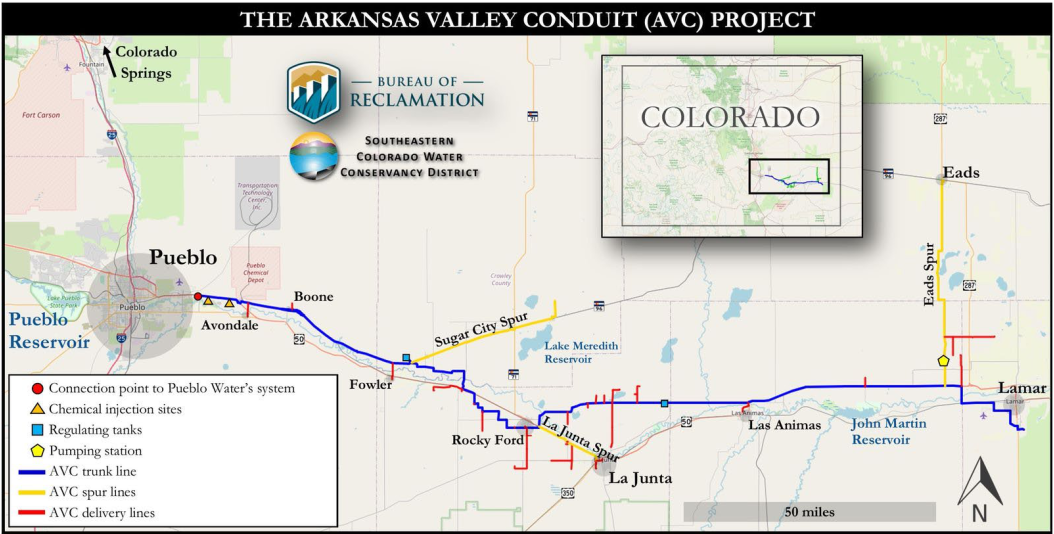
Trump did not allude to Boebert in his veto of her legislation, but raised concerns about the cost of the water pipeline at the heart of that bill. Boebert, one of four House Republicans who sided with House Democrats early on to force the release of the Epstein files, shared a statement on social media suggesting that the veto may have been “political retaliation.” Boebert’s legislation, the “Finish the Arkansas Valley Conduit Act,” aimed to improve access to clean drinking water in eastern Colorado.

Click the link to read the article on The Denver Post website (Elise Schmelzer). Here’s an excerpt:
Colorado farmers plant tens of millions of corn seeds every year, nearly every one of them covered in a thin layer of insecticide. The neonicotinoids used in the coatings protect the seed from pests in the soil and, as the crop matures, the chemical is absorbed into the plant’s tissue, where it continues to paralyze and kill insects that chomp on the crop. Farmers say the insecticide is necessary, but growing concerns about its impact on crucial pollinator species and the wider environment are prompting a push in Colorado for more regulation of the widely used class of chemicals. Environmental advocates plan to seek a bill in the state legislature in 2026 that would limit their use in hopes of protecting pollinators and water quality. While a draft bill has not yet been made public, the environmental groups working on it said the legislation would ban the use of neonicotinoids without prior approval by inspectors overseen by the Colorado Department of Agriculture.

Click the link to read the article on the Colorado Newsline website (Chase Woodruff):
January 2, 2026
Following the Trump administration’s last-minute invocation of an energy “emergency” to order a Colorado coal plant to postpone its scheduled retirement, the electricity provider that co-owns the plant is warning that the high costs of continuing to operate it will be shouldered by Colorado utility customers.
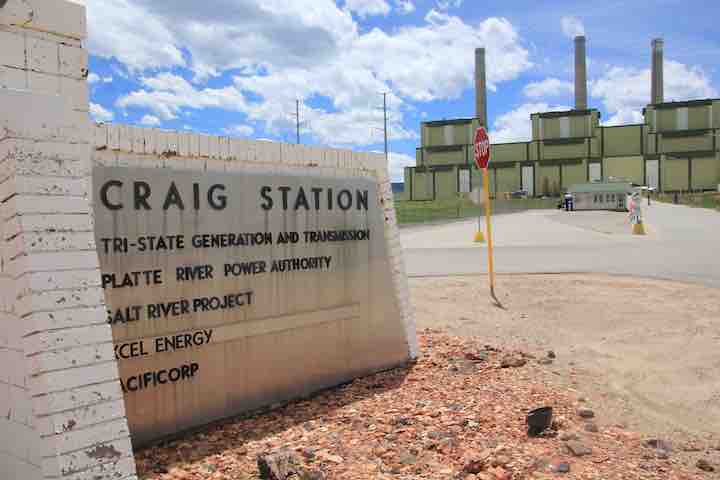
Located in Moffat County, Craig Generating Station’s 446-megawatt Unit 1 had been scheduled to go offline on Dec. 31, 2025, part of a wave of coal retirements planned across Colorado through 2030. But an emergency order issued Dec. 30 by the Department of Energy requires the plant to “take all measures necessary to ensure that Craig Unit 1 is available to operate” until at least March 30, 2026.
Tri-State Generation and Transmission Association, co-owner of Craig Generating Station, said in a press release that the “additional investments in operations, repairs, maintenance and, potentially, fuel supply” required by the order will raise costs for the plant’s customers, which include dozens of electric utilities and rural co-ops. Unit 1 was already offline due to a mechanical failure on Dec. 19, Tri-State said.
“We are continuing to review the order to determine what this means for Craig Station employees and operations, and the financial impacts,” said Tri-State CEO Duane Highley. “As a not-for-profit cooperative, our membership will bear the costs of compliance with this order unless we can identify a method to share costs with those in the region. There is not a clear path for doing so, but we will continue to evaluate our options.”
The five-page DOE order, signed by Energy Secretary Chris Wright, cites “growing resource adequacy concerns” as justification for the move, which followed similar actions in Indiana and Washington.
Shortly after taking office last year, President Donald Trump declared a “national energy emergency” in an executive order blasted by environmental advocates as a pretext for advancing the interests of fossil-fuel companies. Despite the declaration’s stated concerns about “insufficient energy production,” the administration has continued to cancel and delay major wind and solar projects.
An analysis released in December by the Sierra Club estimated that keeping Craig’s Unit 1 open for 90 days would cost ratepayers at least $20 million. Critics of the administration anticipate that the DOE’s orders will continue to be renewed every 90 days under the authority granted to the department by Federal Power Act, raising costs by $85 million to $150 million annually.
“Keeping this dirty and outdated coal plant online will harm the health of surrounding communities and hurt all of our pocketbooks,” said Michael Hiatt of environmental group Earthjustice. “This unlawful order will benefit no one but the struggling coal industry.”
The DOE order comes amid a series of Trump administration actions targeting Colorado that are widely viewed as retaliation for the ongoing incarceration of Trump ally and former Mesa County Clerk Tina Peters, who was convicted on felony charges for her role in a breach of her own office’s secure election equipment in 2021.
Colorado U.S. Sen. Michael Bennet voted to confirm Wright, a former Denver oil executive, as Trump’s pick for Energy Secretary in January 2025, calling Wright “passionate about strengthening America’s energy independence and lowering costs for Colorado families.” In a statement Wednesday, Bennet, a Democrat who is running for Colorado governor, said he was “disappointed but not surprised by this continued revenge tour.”
“The DOE order is the latest in a string of attacks against Colorado, because we refuse to bend to the President,” Bennet said. “President Trump continues to take out his personal and political grievances on Coloradans who are already struggling to make ends meet.”