Northern Integrated Supply Project (NISP): The Corps of Engineers delays supplemental draft EIS until the fall of 2013

nisppreferredalternative.jpg

Here’s a release from Save The Pourdre/Poudre Waterkeeper (Gary Wockner):

On Friday, July 20, the U.S. Army Corps of Engineers informed Save The Poudre that the next draft of the Environmental Impact Statement (EIS) for the Northern Integrated Supply Project (NISP) and its Glade Reservoir would not be released to the public for at least another year — “Fall of 2013.” The information came in a letter from the Corps that was written to Governor Hickenlooper. The letter cites “concerns regarding cumulative impacts to the Cache la Poudre River.” The letter goes on to say, “The size of the proposals, types of analysis, and the amount of interest they have generated has resulted in substantial reviews.”

“This is great news for the Poudre River,” said Gary Wockner, Director of Save The Poudre. “This river-destroying scheme has now been delayed for 5 years with no end in sight.”

Save the Poudre has been relentlessly bird-dogging NISP. Over the last 18 months, Save the Poudre has sent the Corp 17 letters, reports, and documents demonstrating the need for more analysis in the NISP EIS, some of that specifically regarding cumulative impacts of NISP with other proposed projects in the basin.

While the next draft of the EIS may be released in the Fall of 2013, NISP has a vast array of hurdles to jump after that. For example:
1. The next draft of the EIS (called the “Supplement Draft” EIS) allows for another public comment period.
2. After that public comment period, the Corps must again consider those comments and re-analyze any significant concerns.
3. After that analysis, the Corps will release a “Final” EIS, which also allows for yet another public comment period and re-analysis of significant concerns.
4. Then NISP must apply for and receive several additional state and federal permits, which may have significant analysis involved, including from the State of Colorado Water Quality Control Division and the Colorado Department of Public Health and Environment.
5. Assuming all of those hurdles can be jumped, the Corps will then issue a “Record of Decision” (ROD).
6. After the ROD is released, then anyone can formally challenge the project in court, which could take years to resolve.

As one example of a similar process, the Animas-La Plata dam/reservoir project in southwest Colorado was recently completed after 40 years of permitting and court challenges. As another example, the “Two Forks” dam and reservoir proposal west of Denver on the South Platte River was never completed because it was denied by another federal agency because the project would have irrevocably harmed the river as opposed to alternatives such as increasing water conservation in the Denver metro area.

At a recent public meeting (as reported in Windsor Now), the spokesperson for NISP said he expected NISP to be completed in the year 2022, 10 years from now.

“Ten years is extreme optimism,” responded Gary Wockner. “Our mission is to protect and restore the Poudre River and NISP violates our mission. NISP participants need to invest in alternatives now — such as the “Healthy Rivers Alternative” which focuses on water conservation and efficiency — rather than throwing away more ratepayers’ money on NISP.”

More coverage from Monte Whaley writing for The Denver Post. From the article:

Werner said a recent decision by the U.S. Army Corps of Engineers to delay issuing its environmental impact statement for at least another year — sometime in fall 2013 — is not a sign the project is in trouble.
“We are at the mercy of the process, we’ve never been tied to a deadline,” Werner said The Army Corps delivered its latest assessment in a letter to Gov. John Hickenlooper, who wanted to know when the impact statement would be completed. That’s a sign that Hickenlooper and the cities and towns that would benefit from NISP want the project done…

…a comprehensive review of NISP was expected to attract a similar review by the Corps, Werner said. “We’ve never been held to a hard and fast deadline,” he said. “What I am hearing from the 15 communities and the governor, is ‘Hey, let’s get this thing done.’ “

More Northern Integrated Supply Project coverage here and here.

Northern Integrated Supply Project (NISP): Storage is key to future growth

nisppreferredalternative.jpg

From the Boulder Daily Camera (Bob Juhl/Joseph A. Wilson/Carolyn Cutler):

Erie and Lafayette and the Left Hand Water District, which serves Eastern Boulder County, have spent the past decade studying the best methods to ensure our ability to access enough water to meet our future dry year needs. Together with 12 regional water providers, we determined that NISP is our best option from more than 200 options studied. NISP is not only the most environmentally sensitive project, but also the best solution from an economic standpoint.

Some believe the region will be fine without NISP. We wholeheartedly disagree. In fact, the Draft Environmental Impact Statement states clearly that if NISP is not built, one of the consequences will be the elimination of 100 square miles of irrigated farmland in Northern Colorado because communities will have to purchase necessary water supplies from farmers. One of NISP’s goals is to keep water on farms to ensure their continued operation.

Northern Colorado will continue to grow regardless of whether NISP is built or not. Colorado needs to keep available water supplies in the state for its citizens. From 2009 to 2011 Colorado saw more than 1.4 million acre feet of water leave the state to Nebraska over and above what is required. That’s enough water to supply the entire Front Range of Colorado with water for a year…

Please go to gladereservoir.org for more information about NISP and an upcoming support rally scheduled for July 24.

More Northern Integrated Supply Project coverage here and here.

Northern Integrated Supply Project update: ‘The NISP project really fits like a glove on our water portfolio for the future’ — said Doug Short (Lafayette)

nisp2.jpg

From the Boulder Daily Camera (Breanna Draxler):

“The NISP project really fits like a glove on our water portfolio for the future,” said Doug Short, the public works director in Lafayette. The city is trying to diversify its water supply to prevent vulnerability from dependence on a single source, especially considering the unknown future impacts of climate change, Short said.

The proposed supply project would include two reservoirs, two pump plants and a series of pipelines aimed at providing water for the growing population east of the Rockies. “One way or another we’re going to need additional water,” said Brian Werner, of Northern Water, the organization proposing the project…

The proposed project would increase Northern Water’s storage capacity so it could collect more water in wet years, like last year, to be used in dry years, like this year. “We’re there for those dry times,” Werner said, equating Northern Water to a water supply savings account.

The proposed Glade Reservoir would store water from the Cache la Poudre River. Its location northwest of Fort Collins would require the relocation of seven miles of U.S. 287. The second proposed water storage facility, Galeton Reservoir, would be located northeast of Greeley and would collect water diverted from the South Platte River…

In addition to the economic costs, opponents fear environmental degradation related to the project. Laura Belanger, a water resources and environmental engineer at Boulder-based Western Resource Advocates, said diverting water from the rivers will be detrimental to the riparian ecosystems. “There will be no peak flows left in the Poudre River,” Belanger said.

Peak flows provide habitat and spawning areas for wildlife, she said, as well as move sediment and remove vegetation. “If you remove peak flows from a stream system, that stream system can’t survive,” Belanger said…

Belanger commended Northern Water and the project’s participating communities for their conservation efforts and outreach, and she said that these savings should be considered a larger portion of future water supplies. But Northern Water is unconvinced that it will be enough. Limiting water projects will not limit growth, Werner said. “We can’t conserve our way to future supply,” he said.

More Northern Integrated Supply Project coverage here and here.

Colorado Water 2012: The Northern Colorado Water Conservancy District turns 75 this year

coloradowater2012

Here’s the latest installment of the Valley Courier’s Colorado Water 2012 series written by Brian Werner. From the article:

The rich water development history of the South Platte Basin goes back another 75 years before Northern Water’s creation. In fact the earliest water rights in the basin date to 1861 when the first farmers began diverting water from the Poudre River near Fort Collins.

A little more than a decade later, in 1874, a confrontation between the downstream Greeley residents and the upstream Fort Collins residents led to the codification of the doctrine of prior appropriation and eventually as part of the State Constitution in 1876.

As ditch, reservoir and irrigation companies were developed and canals built during the remainder of the 19th century the region flourished and developed a robust agricultural economy. Beginning in the 1890s and continuing for 20 years, hundreds of storage reservoirs were built to store water for late summer irrigation or for future dry years.

When Northern Water was created in the 1930s as a direct result of the ongoing drought and depression, there were more than 120 ditch, reservoir and irrigation companies in existence within the boundaries of what was to become the Northern Colorado Water Conservancy District.

Northern Water was established under the Water Conservancy Act of Colorado in September 1937. Its first order of business was to work with the Federal government – the Bureau of Reclamation which had been established in 1902 – to build what was to become the largest transmountain diversion project in the state. The project, the Colorado-Big Thompson, was a direct result of the 1930s drought and depression and was viewed as a life saver for the economy of northeastern Colorado…

Today, Northern Water is working through the environmental permitting on two water storage projects – the <a href="Today, Northern Water is working through the environmental permitting on two water storage projects – the Windy Gap Firming and the Northern Integrated Supply projects. When built these will provide an additional 70,000 acre feet of new supply to the region and lessen the pressure on agriculture to supply those needs.”>Windy Gap Firming and the Northern Integrated Supply projects. When built these will provide an additional 70,000 acre feet of new supply to the region and lessen the pressure on agriculture to supply those needs.

More Colorado Water 2012 coverage here.</p

Fort Lupton council ponies up the $75,000 annual payment for the Northern Integrated Supply Project

nisp2

From the Fort Lupton Press (Gene Sears):

Voting in the affirmative, Fort Lupton City Councilors approved the seventh in a series of payments for the Northern Integrated Supply Project Feb. 13. For 2012, the prorated portion for the city comes to $75,000, the amount necessary to retain a stake in the water supply project.

The overall 2012 price tag for NISP among all participants is $1.5 million for some 40,000 acre-feet, 3.000 of which is earmarked for the city upon completion. That amount is in addition to $10.8 million already spent by all participants on the project since inception, the majority of which centers around permitting preparations and cost.

Plagued by opposition from environmental groups such as Save The Poudre, final permitting and construction has repeatedly been pushed back until 2025 and possibly farther in the event of lawsuits, likely as the project gains ground.

While there are no guarantees that NISP will ever move past the planning stages, if the city dropped its payment schedule, any monies invested in the project thus far would be forfeited. For Fort Lupton, that total before the upcoming payment is approximately $825,000

More Northern Integrated Supply Project coverage here and here.

2012 Colorado November election: Congressman Gardner talks water at Berthoud town hall meeting

berthoudautostorage.jpg

From the Loveland Reporter-Herald (Pamela Dickman):

“Conditions at the beginning of 2012 are similar to the beginning of 2002,” Colorado Congressman Cory Gardner said at a town meeting in Berthoud on Monday…

“We must have the water that is necessary to thrive and grow,” Gardner said. That includes water storage, such as the proposed Northern Integrated Supply Project, as well as water conservation, Gardner said…

Decreasing business regulations, supporting water storage projects, protecting Social Security and Medicare and Medicaid are all in his purview this session, he said. So is supporting collaborations between private industry and the public sector — such as the Rocky Mountain Center for Innovation and Technology project in Loveland, which will bring jobs to the region — protecting agriculture from federal legislation that could harm the industry and urging renewable and traditional energy development.

More coverage from Bobby Magill writing for the Fort Collins Coloradoan. From the article:

Alarmed that the NRCS warned him this year’s mountain snowpack conditions are dangerously similar to those of 2002 – the year of the Hayman Fire and one of the Rockies’ worst droughts in recent memory – Gardner said these kinds of conditions will hurt Colorado farmers and the economy if more water storage isn’t available during dry years. “If we are going to have a long-term outlook for economic growth, we must have the water that is necessary to survive and grow,” he said. “That’s not only to meet the needs of the population, that’s to meet the needs of agriculture and industry. That’s why I think we need to go forward with projects like NISP, and we need to go look for other new projects.”[…]

Gardner said EPA regulations imposed by other federal agencies should not be used to stall new water storage projects, including NISP. The EPA criticized an environmental review of NISP for insufficiently addressing the project’s impacts on water quality and other issues. “The numbers speak for themselves: 69 percent-of-average snowpack,” he said. “Two-thirds of the value of the state’s agricultural production occurs in the South Platte Basin. Last year, a million acre-feet of water left the state that we could have stored right up here (in Glade).” Monday’s NRCS snowpack data show the South Platte River Basin, which includes the Poudre River, has a snowpack 72 percent of average, while the Laramie-North Platte River Basin, which includes Cameron Pass west of Fort Collins, has a snowpack 61 percent of normal. The driest river basins in the state are the Gunnison and Colorado river basins, which are at 56 and 57 percent of normal, respectively.

From the Greeley Gazette (Craig Masters):

The location at Northern Colorado Water was symbolic of what may well become a critical issue this coming year in much of rural Colorado; water for agriculture and industry. In his opening remarks, Congressman Gardner reviewed the current snowpack statistics, since snow on the ground in the winter is critical to water in the rivers during spring and summer growing seasons…

The 4th U.S. Congressional District, Gardner’s district, is only one of the several U.S. congressional districts spanning several states dependent on the flow of Rocky Mountain snowmelt feeding into the Platte River system.In response to audience questions about their concerns over the storage of Colorado River water for Mexico being considered by the Obama administration, Gardner stated he supports strong state control over water usage within the state. But he emphasized that to minimize federal intervention, it is important to establish workable cooperative agreements with downstream states. He further assured the resident, who identified himself as a local rancher, that no agreement for storage beyond 2013 had yet been worked out with Mexico. (The concerns were over a Dec. 2010 agreement to store 260,000 acre feet of Mexico’s Colorado River water in Lake Mead until 2013. This was to allow Mexico time to repair earthquake damage to water delivery infastructure in northern Mexico.)

More 2012 Colorado November election coverage here.

The Larimer County Agricultural Advisory Board unanimously supports findings on the Northern Integrated Supply Project (NISP)

nisp2.jpg

From a release from the Northern Colorado Water Conservancy District (Brian Werner):

The Agricultural Advisory Board to the Larimer Board of County Commissioners has reported that the Northern Integrated Supply Project will not dry up farms in Northern Colorado as represented in the Save the Poudre’s “Farm Facts” report. The AAB’s general conclusion was that NISP will help slow down the rapid and accelerated dry up of farms throughout Northern Colorado.

In an October 26 memo to the Board of County Commissioners (see link to memo in Reporter-Herald story), the AAB said, “It’s better for agriculture for future municipal and domestic water supplies to come from the combination of conserved water and from new stored supplies (such as NISP) derived from available undeveloped water rather than from additional agricultural dry-up. Population growth will occur with or without NISP. Water conservation alone will not provide adequate future water supplies.”

The County Commissioners thanked the AAB for their input and study of NISP and it’s agricultural related impacts. As reported in the Loveland Reporter-Herald, Commissioner Steve Johnson said to the three board members who attended the elected board’s meeting, “You guys are the ones that are experts. You are the ones dealing with this every day. It’s not just debate. It’s your livelihood.”[…]

The AAB memo disputes the Save the Poudre claim that free river opportunities will be greatly diminished if NISP is built. “Currently, this undeveloped water is leaving Colorado without being beneficially used within the state … water for NISP will not be diverted unless and until all water rights senior to NISP have been fully satisfied,” the AAB report said. The report added “Glade will not curtail in any way the rights or the abilities of ditch companies to fully utilize their senior ditch water rights…”

Save the Poudre’s “Farm Facts” were also disputed by Alamosa rancher and Colorado Farm Bureau President Don Shawcroft last April. In a press release Shawcroft said, “Save the Poudre does not speak for Colorado agriculture, an industry forthright and vocal in its support for NISP. Colorado farmers and ranchers support the NISP project. If we support the development of a water project, you can bet it will help keep irrigated farmers on the land.”

More Northern Integrated Supply Project coverage here and here.

The Agricultural Advisory Board to the Larimer County Commissioners reports that the Northern Integrated Supply Project (NISP) will not stimulate increased growth in N. Colorado

nisppreferredalternative.jpg

From the Fort Collins Coloradoan (Kevin Duggan):

A memo by the Larimer County Agricultural Advisory Board states NISP would not necessarily accelerate the selling and subdivision of farms to meet the water needs of growing cities as predicted in a study released earlier this year by Save the Poudre, which opposes the project. “The need for NISP is the result of growth, which has occurred or will occur, rather than NISP being a cause of that growth,” Val Manning, chair of the advisory board told the county commissioners Tuesday…

The board also found construction of Glade Reservoir north of Ted’s Place would not take significant agricultural land out of production because the property already is owned by Northern Water, which has proposed building NISP. There’s no evidence the project would increase salinity levels in Weld County fields and reduce crop productivity as stated in Save the Poudre’s report, “The Farm Facts about NISP,” the board stated…

The board’s analysis questioned Save the Poudre’s contention that the amount of “free water” available for diversion during years of high flow would be eliminated by NISP because water rights for the project are junior to other claims on the river’s water. [Board member George Wallace] told the commissioners some downstream farmers have become accustomed to using “free” water for production during years of high flow and they would be affected by reduced availability.

More Northern Integrated Supply Project coverage here and here.

The Agricultural Advisory Board to the Larimer County Commissioners reports that the Northern Integrated Supply Project (NISP) will not dry up agriculture

nisp2.jpg

From the Loveland Reporter Herald (Pamela Dickman):

The Agricultural Advisory Board, made up of several working farmers, released a report to the commissioners Tuesday saying the Northern Integrated Supply Project reservoirs would not dry up farmland and would not harm productive crops with increased salinity. The report was in response to an April release from Save the Poudre, the environmental advocacy group leading opposition to the proposed reservoirs…

The region will need additional water supply for growth with or without the reservoir projects. NISPwill meet those needs and take pressure off farmers’ water, according to the report.

There is no evidence that shows salinity will increase on farmland despite the fact that eastern Colorado farmers will be receiving effluent water. The dirtier water will be diluted enough that farmland should not be affected.

The water to initially fill, and to maintain the reservoirs, would be extra water above that already claimed from the Poudre River and would not come out of allocations to farmers. The water would be, in essence, extra water during wet years that would flow out of state if not captured.

More Northern Integrated Supply Project coverage here and here.

CSU to present six week non-credit adult education course — ‘Whiskey’s For Drinking; Water is for Fighting: The Social Organization of Water in Colorado’, starting October 26

grandriverditchlookingupstream.jpg

From email from Colorado State University:

The non-credit adult education water organization course at CSU addresses how a succession of conflicts were each resolved by self governing organizations: On the irrigation ditches (mutual companies, irrigation districts); among ditches on the rivers (State Engineers Office); how supplemental supplies were organized via water exchanges; trans-mountain imports (mutuals and Northern Colorado Water Conservancy District); groundwater use (4 varieties of augmentation organization); incorporation of a federal endangered species agenda (Colorado, Wyoming, Nebraska and the U.S. Department of Interior); and finally, the Northern Integrated Supply Project (NISP) will be reviewed along with alternatives. Find more information here.

‘Future Horizons for Irrigated Agriculture’ tour recap: Greeley and other Weld County Communities are gearing up for population growth

miltonseamanreservoiroutlettunnel07252011.jpg

Here’s an in-depth look at efforts by northern Colorado cities to water the expected growth in population from The Greeley Tribune. Click through and read the whole article and check out the photo gallery. Here’s an excerpt:

Water storage for the future is viewed as so vital to the northern Front Range that the 15 participating municipalities and water districts of the Northern Integrated Supply Project, or NISP, have spent about $10 million during the past seven years just to plan and analyze the endeavor. But there is no guarantee that NISP — a project that includes the construction of two new reservoirs in northern Colorado — will ever take shape. The federal government continues to analyze the Environmental Impact Statement…

Jon Monson, director of the city of Greeley’s Water and Sewer Department, said the city’s current supply will meet the needs of the community for only 25 more years, maybe less. In preparation, Greeley officials want to expand the Milton Seaman Reservoir, one of six high-mountain reservoirs from which the city draws its water. The reservoir holds about 5,000 acre-feet of water, and the proposed project calls for it to be expanded more than 10-fold to 53,000 acre-feet. The expansion would allow Greeley to pull 7,800 acre-feet of water off the reservoir annually, up from the 750 acre-feet it can pull now. Greeley uses about 45,000 acre-feet of water per year; demand is expected to grow to about 65,000 acre-feet by 2050. After initiating efforts in 2004, the draft Environmental Impact Statement for the project is expected by 2013, and a final EIS is expected by 2015. Afterward, construction would take two years and filling the reservoir could take another five to 10 years…

Another water storage effort is The Windy Gap Firming Project. The 25-year-old Windy Gap Project near Granby diverts water from the Colorado River to the Front Range via the Colorado-Big Thompson Project on a space-available basis. According to Monson, during wet years when water is available for Windy Gap diversions, Lake Granby is often full with little or no space for the water. During dry years, the water right can be too junior to come into priority, so no water is available to pump. Greeley is allotted 4,400 acre-feet of water annually from the Windy Gap Project, but that supply hasn’t always been available. The Windy Gap Firming Project was proposed to ensure reliable future deliveries. Nine other municipalities, including Evans, participates in the project, along with the Central Weld County Water District and two other districts. The U.S. Bureau of Reclamation is expected to publish the final Environmental Impact Statement for the Windy Gap Firming Project in November.

More Colorado Foundation for Water Education coverage here.

Colorado Water Congress annual summer meeting: U.S. Representative Cory Gardner — ‘Water projects in Colorado have been set back, delayed or canceled because of federal policies’

nisppreferredalternative.jpg

From The Pueblo Chieftain (Chris Woodka):

“In Colorado, job creators rely on water and a stable water future,” Gardner said. “If job creators know we are committed to building future water supplies and enacting common-sense conservation policies, it will boost our economy and continue to attract new employers to the state.”[…]

One of the key themes of the summer meeting of Water Congress has been the need for more storage to capture the ample water that flowed out of both the Colorado and South Platte basins this year…

The $400 million Northern Integrated Supply Project, promoted by 15 communities in the Northern Water Colorado Conservancy District, is an example of the type of project that could move more quickly without restrictive federal policies, he said. The storage would benefit agriculture as well as cities, Gardner said, pointing to agricultural losses in Southeastern Colorado this year.

More coverage from Joe Moylan writing for the Craig Daily Press. From the article:

Gardner said he helped pass H.R. 2018, or The Clean Water Cooperative Federalism Act of 2011, in July. The legislation preserves the authority of each state to make determinations on its own water quality standards and limits Environmental Protection Agency controls that undermine state and local water authorities concerning water management. “I know that some people oppose this legislation,” Gardner said. “But I just happen to believe that Coloradans know best when it comes to their water.”[…]

Gardner pledged to fight for Colorado by abiding to his three-prong strategy that focuses on water storage, water conservation and creating critical partnerships when necessary, without sacrificing Colorado as the leader when it comes to its own water and economy.

“Because of limited storage, good Colorado water is flowing out of the state,” Gardner said. “This water could have been and should have been stored right here, growing our farms and our businesses.

“And, as (State Rep.) Jerry Sonnenberg said, ‘We didn’t even get a thank you note from Nebraska.’”

More coverage from Allen Best writing for the Colorado Independent. From the article:

…Gardner, in his speech at the meeting of the Water Congress, Colorado’s top organization for traditional water providers, said that Colorado and other states should have the right to determine their own water quality. “I just have to believe that Colorado knows what’s best when it comes to their water resources,” he said…

Becky Long, of the Colorado Environmental Coalition…panned the idea of pulling back federal authority. Problems with hormones and petrochemicals persist, and the problem of nutrients creating dead zones isn’t just one found where the Mississippi River pours into the Gulf of Mexico. Grand Lake—the lake, not the town – has the problem too, she pointed out…

Gardner also called for more water storage, a theme of many speakers at this conference. It was, after all, an epic year for water runoff in much of Colorado. A new record for snowfall was set in the state, with Buffalo Pass, located about 8 miles from Steamboat, still having so much snow by late May that there was still seven feet of water content…

Again, environmentalists were not persuaded. “There are different kinds of storage,” observed [Steve Glazer]. Dams to control floods must be kept empty, those to steel communities against drought should be kept full…

As Gardner noted, Aspinall famously noted that when you touch water in the West, you touch everything. But a lot of that stored and diverted water was the result of federal loans and grants–something we aren’t seeing a lot of these days.

Finally, here’s a Tweet from the Colorado River District:

Day1 #ColoradoWater Congress Summer Conf focuses on energy-water nexxus and features Colo Congressmen Tipton and Gardner and state reps

More Colorado Water coverage here and here.

Northern Integrated Supply Project (NISP) update: Supplemental environmental impact statement delayed until 2012

A picture named nisppreferredalternative.jpg

From email from Save the Poudre (Gary Wockner):

Chandler Peter from the U.S. Army Corps of Engineers confirmed that the permitting processes for the Northern Integrated Supply Project (NISP) and other proposed dams and reservoirs on the Poudre River (Halligan and Seaman) have been delayed yet again, now for the third time. The initial release for the Supplemental Draft Environmental Impact Statement (SDEIS) for NISP was supposed to be in June of 2010, and was initially delayed until the summer of 2011, and then delayed again until the latter part of 2011, and has now been delayed “into 2012” with “no refined ETA for the SDEIS” according to an email from Mr. Peter to Save the Poudre: Poudre Waterkeeper today. Additionally, the first draft of the EIS for the new Halligan (Fort Collins) and Seaman (Greeley) dams and reservoirs on the North Fork of the Poudre was slated for the summer of 2011, but then was delayed for a half year after the release of the NISP SDEIS, which will now put them into 2012 or 2013.

More NISP coverage here and here.

Northern Integrated Supply Project (NISP) rally for proponents draws 300 people

A picture named nisppreferredalternative.jpg

From The Fort Morgan Times (Jenni Grubbs):

Fort Morgan, which is one of 15 municipalities and water districts that have helped fund the project thus far, was represented at the rally by Councilmen Jim Powers and Brent Nation. Also there from Fort Morgan were Water Advisory Board member Bill Baker, Water Resources Director Gary Dreessen, Water Treatment Plant Superintendent John Turner, Quality Water District General Manager Mark Kokes and city resident Don Ostwald, as well as Morgan County resident Brad Wind…

Northern Water Conservancy District General Manager Eric Wilkinson kicked things off with some good news for the project, telling the crowd that the latest round of environmental studies “are finding that the impacts of NISP are much less” than previously thought…

“If we are going to (grow the northeast Colorado economy), the only way to sustain it long term is to build water storage,” [Congressman Cory Gardner] said. “That is why NISP is especially important.” The congressman, who spoke at previous rallies for the project when he was in the state legislature, passionately talked about the water that would be stored there helping agricultural communities to thrive while also providing the lifeblood of growing centers. “Construction of NISP will mark when we no longer rely on the past, but create our future,” he told the crowd, adding that the state`s business future depends on “a better water future.”[…]

Agland CEO Mitch Anderson took a darker approach, warning people, “If we don`t do things like this, we need to be prepared to send people around the world to fight the unrest caused by food shortages.”

More NISP coverage here and here.

Northern Integrated Supply Project: Supporters of the project rally in Loveland

A picture named nisppreferredalternative.jpg

From the Fort Collins Coloradoan (Bobby Magill):

Northern Water holds a rally for NISP once each year to keep the support for the project high among business leaders, local governments and the agricultural community…

As the list of NISP supporters continues to grow, political momentum has reached a tipping point, Weld County Commissioner Sean Conway said. “We started to achieve critical mass two years ago,” he said, adding that most people in Weld County are tired of seeing farmland dried up so water can go to Thornton and other growing suburban cities and towns…

“This is a shovel-ready project,” U.S. Rep. Cory Gardner said. “We could actually start creating jobs today.” Gardner said NISP will create many jobs and spark millions of dollars of investments in the local economy. “Our state’s businesses depend on a brighter water future,” he said. “Our state’s agricultural economy faces the threat of the buy up and dry up of 60,000 acres of some of the most productive agricultural land in this nation. Our economy, our businesses are linked to water.”[…]

Save the Poudre Director Gary Wockner said after the rally that the group has published an alternative to NISP that proposes to provide water for growing cities while protecting the Poudre River. “It has two main components,” Wockner said. “One is a very strong focus on water conservation and the second is a new partnership with farmers that focuses on rotational fallowing and water-sharing programs.”

More coverage from Tom Hacker writing for the Loveland Reporter-Herald. From the article:

The rally organized by the Northern Colorado Water Conservancy District promoted the Northern Integrated Supply Project, a controversial water storage project. Backers say it is needed to shore up a regional water supply that demand will outstrip in the next decade, and that failure to build it would doom agriculture. Critics say it would threaten the free-flowing Cache la Poudre River, degrading water quality and harming wildlife habitat. But the water-storage faithful ruled on Thursday at “Water, Jobs and the Economy,” a business rally to boost support for NISP…

Featured speaker Rep. Cory Gardner, R-Colo., said that by 2020, water demand in the region will require another project the size of the Colorado-Big Thompson Project, the region’s largest, which began delivering water in the late 1950s. “It’s time we stop talking and start working,” Gardner said. “Let’s get it done.”[…]

On hand were the future owners of NISP — 15 municipalities and water districts that have stakes of varying sizes in the project.

Their upfront costs already have been substantial, with more than $10 million spent on studies since the project was proposed, most of them required to satisfy state and federal regulatory agencies that have criticized the project, Wilkinson said…

While many of the rally participants urged united — and bipartisan — support for the project, some noted that most elected officials who favor the project are Republicans, and most who oppose it are Democrats. “One of the worst things that could happen would be for this project to be about R’s, D’s and other labels,” said Eric Doering, mayor of NISP participant Frederick.

More coverage from Monte Whaley writing for The Denver Post. From the article:

“We don’t get a thank-you card from Kansas or Nebraska when our water leaves the state,” said state Rep. Jerry Sonnenberg, R-Sterling. The project calls for the Cache La Poudre River to be diverted during high-flow periods to fill two reservoirs, Glade northwest of Fort Collins and Galeton east of Ault. The project is estimated to cost about $490 million. NISP is backed by 15 water suppliers and 14 chambers of commerce. They say NISP is needed to bridge an advancing water-supply gap of between 190,000 and 630,000 acre-feet statewide by 2050…

Several major farm organizations also support NISP. They contend that without NISP, more than 60,000 acres of Colorado farmland could dry up because cities will likely buy up agricultural water rights…

NISP is still being studied by the Army Corps of Engineers, which might issue a supplemental draft environmental-impact study by the end of the year.

More coverage from Bill Jackson writing for The Greeley Tribune. From the article:

[U.S. Rep. Cory Gardner] was one of more than a dozen speakers who addressed the crowd, estimated at about 300 attendees. He said Colorado jobs, its economy and future depends on the state’s ability to “store and deliver clean, affordable water.” He cited the vision of such water pioneers as W.D. Farr of Greeley and Wayne Aspinall, who represented Colorado’s 4th District in the U.S. House from 1947-73. “They captured the usefulness of our natural resources beyond imagination,” he said, noting the present generation is benefiting from their vision. He said the present generation must do the same for future generations, and he quoted Colorado poet laureate Thomas Hornsby Ferril who described Colorado as “a land written in water.”[…]

The Weld commissioners closed the meeting with a chant of “Conserve water, build NISP.”

Severance Mayor Don Brookshire was joined at the meeting by his 3-year-old daughter, Savannah. “This is why we are here today. Savannah is what this is all about,” Commissioner Sean Conway said.

More coverage from NorthernColorado5.com. From the article:

More than 200 supporters rallied today for the development of the Northern Integrated Supply Project which would store water in both the Glade and Galeton reservoirs. Participants and business leaders say that this project is critical to the future of the region.

More coverage from the Northern Colorado Business Report:

“It’s incumbent on each one of us here to get out and make NISP a reality,” said Eric Doering, mayor of Frederick, one of 15 cities, towns and water-related entities that have signed up to receive water from the project. NISP includes Glade Reservoir in Larimer County and Galeton Reservoir in Weld County. “It’s going to benefit all of our communities to grow jobs and maintain our ag resources for our farmlands,” Doering said.

More coverage from Catherine Tsai writing for The Associated Press. From the article:

A selection of mayors, state lawmakers and U.S. Rep. Cory Gardner, R-Colo., told supporters at The Ranch in Loveland that the project would help the region’s economy and shield farmers’ irrigation supplies as demand for drinking water grows, especially during droughts.

The event had been billed as a barbecue, but it was raining, chilly and gray outside. “People in the water community look outside and say this is beautiful weather,” said Eric Wilkinson general manager of the Northern Colorado Water Conservancy District…

The city of Fort Collins is among those that have expressed concerns with the project over the years, and the group Save the Poudre: Poudre Waterkeeper contends it would drain too much of the river. It proposes an alternative that relies heavily on water conservation and a proposal to pay farmers to fallow land on a rotating basis when needed and lease their water to cities.

More Northern Integrated Supply Project coverage here and here.

Northern Integrated Supply Project: The Colorado Association of Commerce and Industry backs Northern Water’s proposed project

A picture named nisppreferredalternative.jpg

Here’s the release from Northern Water (Brian Werner):

The Colorado Association of Commerce and Industry (CACI), the state chamber of commerce, today announced its endorsement of the Northern Integrated Supply Project (NISP) as an essential project for the economy of the Northern Front Range. CACI President Chuck Berry said that the CACI Executive Committee agreed to support the building of NISP at its April meeting.

“An adequate, reliable supply of water is essential for economic development and quality of life of residents of Northern Colorado,” Berry said, adding that NISP will be a major economic development opportunity for Northern Colorado and will result in more than $450 million in construction projects.

NISP will provide 40,000 acre feet of water annually to 15 municipalities and water districts representing more than 200,000 residents in Northern Colorado.

The CACI endorsement comes as NISP business supporters, chamber of commerce members and public officials gather May 19 to show their support for the project. The Water, Jobs and the Economy rally will be from 11:00 a.m. to 1:30 p.m. at the Larimer County Fairgrounds and Events Complex at The Ranch in Loveland.

CACI joins Club 20, the Western Slope’s leading business advocacy organization in endorsing NISP. Club 20 endorsed NISP in September 2010. More than 15 area and statewide business organizations have now endorsed NISP as critical for the Northern Colorado economy, including the following:

Berthoud Area Chamber of Commerce
Carbon Valley Chamber of Commerce
Club 20
Colorado Association of Commerce & Industry
Evans Chamber of Commerce
Fort Collins Board of Realtors
Fort Lupton Chamber of Commerce
Greeley Chamber of Commerce
Lafayette Chamber of Commerce

Longmont Chamber of Commerce
Mead Area Chamber of Commerce
Progressive 15
United Power
Upstate Colorado
Weld Community Development Group
Weld County Builders Association
Windsor Chamber of Commerce

CACI was created in the mid-1960s when Colorado’s business leaders merged the Colorado Chamber of Commerce with the Colorado Manufacturing Association. About 435 companies, local chambers of commerce, trade associations and local economic development organizations belong to CACI. CACI’s mission is to champion a healthy business environment. To achieve this mission, CACI has key four objectives: (1) maintain and improve the cost of doing business; (2) advocate a pro-business state government; (3) increase the quantity of educated, skilled workers; and (4) strengthen Colorado’s critical infrastructure (roads, water, telecommunications and energy).

More Northern Integrated Supply Project coverage here and here.
Northern Integrated Supply Project: Business rally May 19 in Loveland

A picture named nisppreferredalternative.jpg

Here’s the release from Northern Water (Brian Werner):

Colorado business leaders, chamber members, residents and public officials will gather May 19 to show their support for the Northern Integrated Supply Project. The Business Rally for NISP will be from 11 a.m. to 1:30 p.m. at the Larimer County Fairgrounds and Events Complex at The Ranch in Loveland.

U.S. Rep. Cory Gardner will be the keynote speaker at the event. The program will also include business owners, mayors from participating NISP communities, county commissioners, state legislators and Don Marostica, the former director of the Colorado Office of Economic Development and International Trade.

The rally, which is open to the public, will include a barbecue luncheon and an opportunity to discuss the proposed water storage project with participants and staff.

“Water is and will continue to be vital in promoting the economy and jobs for Northern Colorado residents, and NISP is a critical piece of that,” said Kathy Peterson, Chairwoman of the NISP Participants Committee. “As the permitting process continues, we are grateful for the increasing support and endorsements from businesses and economic development groups.”

NISP participants are 15 local and regional water districts and municipalities in Northern Colorado who are dedicated to providing current and future generations with sustainable and environmentally sound water supplies. Northern Water is coordinating the NISP on participants’ behalf…

Additional information about NISP can be found at gladereservoir.org.

More coverage from Bobby Magill writing for the Fort Collins Coloradoan. From the article:

Werner said the rally will tie NISP to the creation of jobs and the expansion of the local economy. “If we’re going to expand our economy, we have to have some water for it,” he said. The rally will be a chance for business owners who support the project but aren’t familiar with its details to learn more about it, he said.

More Northern Integrated Supply Project coverage here and here.
The Colorado Farm Bureau counters the claim from ‘Save the Poudre’ that the Northern Integrated Supply Project will harm agriculture

A picture named nisppreferredalternative.jpg

Here’s a release from the Colorado Farm Bureau:

Statement by Don Shawcroft, President, Colorado Farm Bureau, Regarding Save the Poudre: Poudre Waterkeepers ‘Farm Facts’ Report

Alamosa rancher and Colorado Farm Bureau President Don Shawcroft had strong words for Save the Poudre: Poudre Waterkeepers upon reading their ‘report’ on the impact of NISP on northern Colorado agriculture.

“The so-called report is nothing but propaganda, spread by Save the Poudre in a vain attempt to derail the Northern Integrated Supply Project (NISP). Save the Poudre does not speak for Colorado agriculture, an industry forthright and vocal in its support for NISP. Their attempts to divide the ag industry are tiresome. They speak only for themselves and their attempts to stall a project supported by large majorities of northern Colorado citizens.

The NISP project is a crucial step in reducing the pressure from development on irrigated agriculture in Northern Colorado. Opponents of NISP would have us do nothing in the face of increasing water needs along the northern Front Range. Whether the Save the Poudre crowd likes it or not, more people are moving into the region served by the NISP participants. The project is a proactive, environmentally sound step to manage the growth along the Front Range and it will insure that irrigated farmers along the South Platte Basin will have access to their water for years to come.

Colorado farmers and ranchers support the NISP project. Unlike the Poudre Waterkeepers, food producers in Colorado have been managing our states water resources for hundreds of years. If we support the development of a water project, you can bet it will help keep irrigated farmers on the land. The public knows this. Lawmakers know this. So does Gary Wockner and the rest of the Waterkeepers. They just won’t tell you that.”

More coverage from Bill Jackson writing for The Greeley Tribune. From the article:

“There’s nothing new in the filing. We can tear each one of their claims apart. Where’s the science come from?” Brian Werner said Monday. He’s the spokesman for the Northern Colorado Water Conservancy District, which filed a detailed EIS report with the Corps more than five years ago. The Corps, in 2008, asked for additional comment, and Werner said it is hoped the final EIS will be released later this year or early next.

In its filing, the Fort Collins group said if NISP is built, it would harm about 123,000 acres of agricultural land, or about one-sixth of all the irrigated land in northern Colorado. In addition, the group claims the project would accelerate the buy-up of farms for subdivision development, would accelerate salinization of productive croplands, would end most “free river” diversion opportunities and impact existing water users, and would submerge and divide productive agricultural land. It also says the initial filling of the two reservoirs and ongoing diversions into the two would likely come from northern Colorado and Western Slope farm water.

“There has not been, to our knowledge, one farm organization that has come out in opposition to the project. In fact, most of them are in favor of it. This latest filing is nothing but garbage. It’s not based in reality. We can easily refute anything they have said,” Werner said.

[ed. I’ll be on radio AM 1310 in Greeley Thursday afternoon discussing surface water and Colorado’s water supply gap sometime after 3:00 p.m.]

More Northern Integrated Supply Project coverage here and here.

Northern Integrated Supply Project: A Save the Poudre report submitted to the U.S. Army Corps of Engineers says the project will have a deleterious effect on irrigated farmland in the basin

A picture named nisppreferredalternative.jpg

From The Denver Post (Monte Whaley):

Save The Poudre: Poudre Waterkeeper — a loud critic of the dam proposal — is asking the Army Corps to review the report as it considers a go-ahead permit for the Northern Integrated Supply Project, also known as NISP…

The report, “Farm Facts About NISP,” claims the project would cause a host of problems for about 123,000 acres of Colorado farm land. It would speed up the buy up and subdivision of irrigated farms in northern Colorado, accelerate salinization of productive crop lands, end most “free river” diversion opportunities and impact many existing water users and submerge and divide productive agriculture land, the report says. Also, the report says, the initial fill of 100,000-acre feet and the ongoing diversions into Glade and Galeton Reservoir are likely to come from agriculture water from northern Colorado and the Western Slope…

NISP is backed by 14 northern Colorado water providers, who see the project as the best way to preserve water for Colorado farmland, Werner said. “Why else would the Farm Bureau and various ditch companies, support NISP?” Werner asked. “We’re pretty confident this project can stand on its own.”

More coverage from Bill Jackson writing for The Greeley Tribune. From the article:

In its filing, the Fort Collins group said that if NISP is built, it would harm about 123,000 acres of agricultural land, or about one-sixth of all the irrigated land in northern Colorado. In addition, the group claims the project would accelerate the buy-up of farms for subdivision development; would accelerate salinization of productive crop lands; would end most “free river” diversion opportunities and impact existing water users; would submerge and divide productive agricultural land; and that the initial filling of the two reservoirs and on-going diversions into the two would likely come from northern Colorado and Western Slope farm water.

More Northern Integrated Supply Project coverage here and here.
Loveland: ‘Water, Jobs and the Economy Rally for NISP’ May 19

A picture named nisppreferredalternative.jpg

From The Fort Morgan Times:

A “Water, Jobs and the Economy Rally for NISP” (the Northern Integrated Supply Project) is scheduled for 11 a.m. to 1 p.m. Thursday, May 19, 2011at the Ranch Courtyard at Budweiser Event Center, 5290 Arena Circle, Loveland…The event is sponsored by NISP participants, Northern Colorado’s chambers of commerce, regional economic development organizations, business and agriculture organizations.

More Northern Integrated Supply Project coverage here and here.

U.S. Representative Cory Gardner: ‘No technological advancement has ever had the singular power to transform society and economy like the application of water to dry land’

A picture named nisp2

Here’s a guest column from Representative Gardner running in the Sterling Journal Advocate. Click through and read the whole thing. Here’s and excerpt:

While new technologies have transformed the agricultural and urban landscapes over the past 100 years, no technological advancement has ever had the singular power to transform society and economy like the application of water to dry land. Visionary Coloradans Wayne Aspinall and W.D. Farr took leadership roles to create the infrastructure that waters our state today. Their work has stretched well beyond a generation, but as populations grow and demands increase, that work is now stretching thin. It is time for our generation to pick up the mantle and provide the water leadership for our future.

Here’s guest column about the Northern Integrated Supply Project, from Eric Doering the mayor of Frederick running in The Greeley Tribune. Here’s an excerpt:

[The Northern Integrated Supply Project] is an integral part of the long-term health of our community and the other participants involved. It is the most proactive partnership to be seen by the communities and water districts and will result in an ability to meet the long-term needs of our population both current and future…

Growth will continue in the Front Range communities along the Interstate 25 corridor. We must be poised to meet those growing demands of primary employers and others who desire to have their workforce live, work and play in the community in which they establish their businesses. The NISP participants are gathering support for this project from a varied group of individual and business leaders, as well as chambers of commerce and agricultural interests. To date, the participants have spent more than $9 million to work through review and design processes, and it is now with the U.S. Corps of Engineers to review and indicate whether the project can move forward. Many political leaders from both parties are supporting this project.

Most of the largest communities along the North Front Range were foresighted many years ago to ensure their water portfolio and participated in projects similar to NISP. It is now time for Frederick, Erie, Firestone, Windsor, Dacono and other communities to have that same shared vision and commitment to adequate and reliable water for future use.

More infrastructure coverage here.

Poudre River watershed: ‘The Poudre Runs Through It’ final installment — public dialogue — April 11

A picture named cachelapoudreriver.jpg

From the editorial staff of the Northern Colorado Business Report:

The final public dialogue portion of the program will be held in two sessions in Fort Collins: Monday, April 11, from 6 to 8:30 p.m. at the Timberline Church on South Timberline Road, and Saturday, April 16, from 2:30 to 5 p.m. at The Drake Center on West Drake Road. These sessions, facilitated by CSU’s Center for Public Deliberation, will be where we all can discuss alternatives for Northern Colorado’s water future.

To prepare for the public deliberation and to see recordings from previous sessions of The Poudre Runs Through It, go online to www.univercityconnections.org/.

More Poudre River watershed coverage here.

Northern Integrated Supply Project update

A picture named nisp2

From the Loveland Reporter-Herald (Jackie Hutchins):

Rena Brand, a regulatory specialist from the Corps of Engineers office in Littleton, updated people attending a regional water meeting (The Poudre Runs Through It) Thursday night about the status of the water project…

Brand told those attending the Poudre Runs Through It: Northern Colorado’s Water Future forum that her agency has taken the unusual step of doing some further study to create a supplemental draft environmental impact statement. When the document is finished, probably in December, it will be released to the public, and another round of public hearings will take place, she said. “So we still have a little ways to go.”[…]

She said besides Army Corps of Engineers approval, the NISP project will need a water quality certificate from the state, Larimer County planning approval, and approvals from the Bureau of Reclamation, U.S. Fish and Wildlife, Environmental Protection Agency, Colorado Historical Society and Colorado Department of Transportation, which is involved because the proponent has proposed moving a highway to make room for Glade Reservoir.

More Northern Integrated Supply Project coverage here and here.

‘The Poudre Runs Through It’ final session March 24

A picture named cachelapoudre.jpg

From the Northern Colorado Business Report:

The March 24 session will feature Rena Brand, U.S. Army Corps of Engineers. The Corps of Engineers is charged with reviewing applications for water storage projects. The session will be held from 5:30 to 7:30 p.m. in the Larimer County Courthouse, 200 W. Oak St., in Fort Collins. Sponsored by UniverCity Connections, Colorado State University and the Community Foundation of Northern Colorado, the sessions are aimed at educating Northern Colorado residents about water issues and the future of the region’s water supply.

More Poudre River watershed coverage here.

‘Poudre runs through it’ forum recap

A picture named laramiepoudretunnelinlet.jpg

From the Northern Colorado Business Report:

Mary Lou Smith, a policy and collaboration specialist with the Water Institute, said the main message of the forum was to get people with diverse opinions about the region’s water future talking together. “The message was it’s important for us to look at the various values we bring to the table when we look at the future of the water supply in this area,” she said. “We said how can we work together? That really set the tone.”[…]

Smith said the purpose of the forum was not to push any particular agenda as to how the region’s future water needs should be met. One ongoing controversial water issue in the region is whether Glade Reservoir – a proposed new storage project- should be built just outside Poudre Canyon. Smith said Glade may or may not be part of the solution. “There’s a whole portfolio of solutions, including storage,” she said. “This isn’t about building Glade – it’s much broader than that. It’s about realizing there are trade-offs and helping the public better understand how water law works and forming educated opinions.”

Three more educational sessions are set to continue the discussion on Feb. 24, March 10 and March 24. All three will be held in the Larimer Courthouse, 200 W. Oak St., from 5:30 to 7:30 p.m.

More Cache la Poudre River watershed coverage here and here.

‘Poudre runs through it’ forum recap

A picture named cachelapoudre.jpg

From the Fort Collins Coloradoan (Bobby Magill):

More than 300 people turned out Thursday night at the Larimer County office building in Old Town to consider the best ways to keep the various future needs of Poudre River water from being fodder for a fight as part of a UniverCity Connections-sponsored series of public forums called “The Poudre Runs Through It: Northern Colorado’s Water Future.”

Author Laura Pritchett suggested people find “the radical center,” the place where those with sometimes drastically different ideas about the river can meet to civilly discuss their views and find solutions to the region’s water needs without fighting. The radical center, she said, should be that middle ground where people discover there isn’t just one solution for the water – either store it in Glade Reservoir or not at all. Those in the radical center, she said, seek to find a “portfolio” of solutions…

The fundamental threat to the Poudre River is urban growth, said Reagan Waskom, director of the Colorado Water Institute at Colorado State University. “Much of the future water demand will be right here in the Front Range corridor,” he said. “We haven’t as a society decided if we want to control that growth yet.”[…]

Lynn Hall of Fort Collins said her biggest fear is losing the wildlife habitat along the Poudre River through the city. “To have a natural river with as much wildlife habitat as it has a few blocks from downtown is really a miracle,” she said. “We need to be really clear to figure out how we can make this accessible to humans, but not as an urban construction.”

The second part of the series of forums will be three education sessions scheduled for Feb. 24, March 10 and March 24 at the Larimer County office building, 200 W. Oak St. Those will be followed by two public dialogue sessions on April 11 and 16.

More coverage from the Rocky Mountain Collegian (Vashti Batjargal):

The public forum served as a place for residents to discuss the value the Poudre River holds and how water should be allocated to each of the region’s competing needs. “We have a fixed resource and it’s all about trade-off,” said Reagan Waskom, director of the Colorado Water Institute. “In everything we choose, we also choose not.”[…]

George Reed, owner of 62 acres of land 10 miles north of Fort Collins, said he’d like a reservoir. “We could learn a lesson from the squirrels: You have to put some water away,” Reed said. “I’ve never seen a reservoir I didn’t like.”[…]

The forum was designed to get community input for decisions on water distribution and conservation for growth and agricultural needs. CSU associate professor of history Mark Fiege said the decisions the community will ultimately make concerning water distribution will have an effect on future generations. “It will impose a burden and responsibility that we cannot fully predict,” he said.

More coverage from Bill Jackson writing for The Greeley Tribune. From the article:

The initial session turnout surprised organizers, but only a small percentage of the crowd offered public comment. Organizers, including UniverCity Connections, Colorado State University and the Community Foundation of Northern Colorado, collected comments from the crowd as they left. Those comments will be compiled and used at educational sessions later this year. MaryLou Smith, a policy and collaboration specialist with the CSU Colorado Water Institute, said the sessions were conceived as a city of Fort Collins event, but she realized, from the turnout, that other communities along the 126-mile stretch of the river should also be included.

Reagan Waskom, director of the water institute at CSU, said the Poudre River, as well as others in northern Colorado, face serious demands in the future. Much of those demands will come from expected growth along the Front Range. To meet those demands, he said, an additional 500,000 to 800,000 acre feet of water a year will be needed; an acre-foot of water is considered enough to supply two families with a year’s supply of water. The annual flow of the Poudre is about 275,000 acre feet…

Tom Moore is a local farmer and business owner who said cities in the area are willing to pay $10,000 an acre-foot for water. “It’s hard to put an agricultural value of one-third that,” he said, adding it is the quality of water in the region that draw people and businesses.

More Poudre River watershed coverage here and here.

Northern Integrated Supply Project update

A picture named nisppreferredalternative.jpg

From the Fort Collins Coloradoan (Bobby Magill):

Chandler Peter, the Army Corps’ coordinator for the study, said Tuesday he expects the study to be complete sometime in late 2011, making it more than a year late. He said he can’t predict precisely when the study will be released. “It’s just because there are things that pop up that you don’t anticipate,” Peter said. “One thing leads to another.”

Specifically, the draft study is being held up by difficulties in reconciling a hydrological analysis of NISP with corresponding analyses for the proposed Halligan and Seaman reservoir expansion projects. “We’ve been trying to pull those together and look at that with one voice,” Peter said. “That’s more complex than we anticipated.”

More Northern Integrated Supply Project coverage here and here.
‘The Poudre Runs Through It: Northern Colorado’s Water Future’

A picture named cachelapoudre.jpg

Update: Here’s the release from the Community Foundation of Northern Colorado (Contact: Ray Caraway 970-488-1980 or Ray@CommunityFoundationNC.org):

WATER AND THE POUDRE RIVER: PUBLIC INVITED TO LEARN AND ENGAGE


What do we use every day, but know little about? Water! The future of the Poudre River and water for Northern Colorado is much debated, but how well do we understand the issues surrounding it?
The public is invited to join three entities providing community leadership – UniverCity Connections, Colorado State University, and the Community Foundation of Northern Colorado – in creating shared understandings of the complex topic of water in Northern Colorado. The organizers believe these shared understandings will result in a better informed and more engaged community.

The Poudre Runs Through It: Northern Colorado’s Water Future is a three-part series that begins with a public forum on Thursday, February 3 from 5:00 – 8:00 pm. The gathering will highlight the river and its social, environmental and economic impacts – past, present and future. It will take place at the Larimer County Courthouse Office Building (200 West Oak Street, Fort Collins).

Subsequent “Northern Colorado Water 101” educational programs in February and March, facilitated by the Colorado Water Institute, will offer members of the public opportunities to learn in a user-friendly format. These programs will cover a broad range of topics, including the importance of the Poudre to agriculture, the city, the environment; the water law that governs diversions from the river and its quality; various efforts to preserve and enhance the river; and objective coverage of current controversies surrounding the river. The public will gain a better understanding of potential options for securing water for future water needs including conservation, agricultural transfers, storage, reuse, and land planning strategies.

In April, public dialogue opportunities will be facilitated by the CSU Center for Public Deliberation to give community members a chance to hear from their neighbors, have their voice heard, and collaboratively work through the tough issues.

“Our region has gained well-deserved national recognition for its excellence and innovation,” Ray Caraway, president of the Community Foundation of Northern Colorado said. “How we deal with the complex issues surrounding water will shape our future and test our ability to find solutions in the midst of controversy.”

Co-sponsored by UniverCity Connections, Colorado State University, and the Community Foundation of Northern Colorado, the entire series is free and open to the public. For more information or to RSVP, visit http://www.UniverCityConnections.org or contact Chelsea DeFoort at Chelsea@CommunityFoundationNC.org.

###
UniverCity Connections, an initiative of the Community Foundation of Northern Colorado, facilitates productive conversations regarding Colorado State University, Downtown Fort Collins and the Poudre River. Colorado State University and the Colorado Water Institute are leaders in research, education, and outreach for water issues in Colorado and around the world. CSU Center for Public Deliberation enhances local democracy through improved public communication and community problem solving. The Community Foundation of Northern Colorado, founded in 1975, is a nonprofit organization that manages more than 300 individual charitable funds and $44 million in assets.

From the Fort Collins Coloradoan (Bobby Magill):

Should Glade Reservoir be built? How would it and other proposed water-storage projects affect the Poudre River? CSU and the Community Foundation of Northern Colorado will help answer those questions during a series of public forums in February, March and April…

Called “The Poudre Runs Through It: Northern Colorado’s Water Future,” the series of three forums will address how the Poudre River affects agriculture and the city of Fort Collins and how water law governs how water is used and diverted from one river basin to another. The forums are designed to help the public gain a greater understanding of Northern Colorado’s future water needs, where the water might have to come from and how the Poudre River fits into that future…

The first event will be a public forum about the river’s social, environmental and economic impacts. The forum is scheduled for 5 p.m. Feb. 3 at the Larimer County office building at 200 W. Oak St. Educational forums called “Northern Colorado Water 101” will be scheduled in March and April, followed by other forums facilitated by CSU’s Center for Public Deliberation. The series, co-sponsored by the Community Foundation, UniverCity Connections and CSU, is free and open to the public.

More Poudre River watershed coverage here and here.

Northern Integrated Supply Project: Supplemental EIS expected, ‘…latter part of 2011’

A picture named nisppreferredalternative.jpg

From email from Save the Poudre (Gary Wockner):

The initial release for the Supplemental DEIS for NISP was supposed to be in June of 2010, and was initially delayed until the summer of 2011, but is now estimated to be delayed until the “latter part of 2011” according to an email from [Chandler Peter from the U.S. Army Corps of Engineers] to Save the Poudre.

Additionally, the Draft EIS for the new Halligan (Fort Collins) and Seaman (Greeley) dams and reservoirs on the North Fork of the Poudre was slated for the summer of 2011, but is now delayed for a half year after the release of the NISP SDEIS (according to the email from Mr. Peter), which will put them into 2012 and well beyond previous estimates.

More Northern Integrated Supply Project coverage here and here.

IBCC strategy report

A picture named farviewreservoir.jpg

Here’s an look at how the sides are lining up with respect to the strategy report from the Interbasin Compack Committee presented to Governor Ritter and Governor-elect Hickenlooper, from Bobby Magill writing for the Fort Collins Coloradoan. From the article:

The report says water suppliers and interests from across the state need to work together to get that done. But Fort Collins-based Save the Poudre is opposing those efforts, saying the IBCC doesn’t represent environmental interests and its policies harm the Poudre River.

Save the Poudre Executive Director Gary Wockner said in a statement that if the IBCC were to include more environmental groups, harm to the Poudre from new water projects might be averted. The group opposes the Halligan and Seaman reservoir expansion proposals, the Windy Gap Firming Project and the Northern Integrated Supply Project, or NISP. An environmental review of each project is expected to be released in 2011. “The Poudre River is at ‘ground zero’ for river destruction in the southwest U.S.,” Wockner said, adding that the IBCC doesn’t represent diverse interests in Colorado because it doesn’t include any members of the groups that form the Save the Poudre Coalition…

Several South Platte Roundtable members represent environmental interests, including Bob Streeter, who is retired from the U.S. Fish and Wildlife Service and was nominated to the board by Trout Unlimited. Streeter said roundtable and IBCC meetings are open and transparent to the public and have involved members of the Nature Conservancy, Ducks Unlimited, Trout Unlimited and the Audubon Society. “I don’t recall ever seeing any representative from the Save the Poudre organization itself in Fort Collins, though they’re welcome to attend (the roundtable meetings),” Streeter said…

But some of those water projects aren’t likely to do the damage to the Poudre River that Wockner fears, Streeter said. “I don’t think Halligan-Seaman is a Poudre-killing project,” he said, adding that he wants to withhold judgment on NISP, which proposes to construct Glade Reservoir north of Fort Collins, until all the facts on its potential impacts are in.

Update: Here’s a response to Mr. Magill’s article from Gary Wockner at Save The Poudre.

Hi Bobby,

Thank you again for covering these important environmental articles in the Coloradoan. It is great that you are reporting on these stories, and it is wonderful that the Coloradoan prioritizes environmental stories in the newspaper.

Today’s article about water is a complicated issue and it’s a hard story to fit into an easy-to-tell framework…Thank you for taking a shot at covering it.

I’d like to offer a few suggestions for improvements:

1. Your sentence that states, “But Fort Collins-based Save the Poudre is opposing those efforts…” is not accurate. Please note that in the letter to the Governors, we thank the IBCC for their work, we say they made a good start at a very difficult topic, and we strongly suggest “improvements” to the product and process. We do not “oppose” the IBCC or the South Platte Roundtable’s work. We do believe, however, that they desperately need more environmental input — if they do not get more environmental input, it may represent a fatal flaw in their work.

2. Your next sentence says, “The group opposes Halligan and Seaman reservoir expansion proposals, Windy Gap Firming Project and the Northern Integrated Supply Project….” Please note that in the letter to the Governors and in the press release, we do not say we oppose these projects. Officially, our organization only opposes NISP. We have not taken an official position for or against Halligan, Seaman, or WGFP yet. We are awaiting the EIS releases before we do that on those three projects. Our official position on Halligan and Seaman is here:
http://poudreriver.home.comcast.net/~poudreriver/STP_Alternatives_to_Halligan-Seaman_7-18-2010.pdf (I believe I gave this document to you when I visited with your editorial board last year). We have not issued a formal position on WGFP yet, but we did insert very serious concerns into the public comment period for the DEIS.

3. Your article states, “Several South Platte Roundtable members
represent environmental interests…” My understanding is that there
are only two — Bob Streeter representing TU, and and Greg Kernohan
representing Ducks Unlimited (DU). They are both excellent men doing excellent work. Ducks Unlimited, officially, is a “recreational”
representative on the Roundtable (not “environmental”), but since they
do such excellent environmental work, I prefer to call them environmentalists. Officially, there is only one “environmental” representative on the Rountable. The list of people on the Roundtable is here on the CWCB’s website: http://cwcbweblink.state.co.us/weblink/0/doc/126395/Page1.aspx?searchid=aacce0cc-a3ef-4b7b-85bd-fa08f748588f

4. Bob Streeter’s statement about not recollecting seeing reps from STP at the Roundtable is not accurate. We are a part of a big coalition, and we have had coalition partners attend several South Platte Roundtable meetings and report back to us. In addition, our Board and staff have attended his Roundtable meetings a few times.

5. Your sentence that starts, “While the IBCC suggests….” is not
accurate.

a. We quite adamantly do support water conservation.
b. We absolutely do not say that “instead” of focusing on water conservation, the state should control population growth.
c. We do not say anything about “controlling” population growth.

We say “managing” population growth. “Managing” is different than “controlling.” The IBCC report mentions managing population growth and land-use planning several times — we agree, and we want to support that direction of thinking and see more of it in their future work.

6. Bob Streeter says that he doesn’t think Halligan-Seaman is a
Poudre-killing project. We are awaiting to see the EIS before we make
any such statement. The science that came out of the Halligan-Seaman SVP process that we participated in suggested that the projects would have profound negative impacts on the North Fork of the Poudre, and have some negative impacts on the mainstem of the Poudre River through Fort Collins. A list of those impacts is here in our letter to the CWCB (which provided the grant for Shared Vision Planning): http://poudreriver.home.comcast.net/~poudreriver/STP_letter_to_CWCB_SVP_7-18-2010.pdf

7. Finally, Brian Werner’s statement is accurate — the bill was passed 5 years ago under a different Governor and a different legislature. However, at that time, environmentalists did voice opinions about having more environmental representation into the committees, but our environmental community’s opinions were not adopted into the law.

Thank you again for taking a shot at this complex story. I am
continually striving to improve the way that I communicate with public
officials, agencies, and the press, and I think that this story shows
that I need to work harder to do that. I should have called you and
talked this over. Feel free to call me anytime.

Gary

p.s. Because this Coloradoan story contains some inaccurate statements saying we “oppose” projects and processes that we do not, I also have to forward this email to specific representatives at the EPA, the Army Corps, the Bureau of Rec, the cities of Fort Collins and Greeley, and the IBCC leaders at the State (I will Cc you on that email). We are involved in some official and legal processes with these regulatory agencies, and with these EIS applicants, and we have to make sure that our positions are conveyed accurately.

More IBCC — basin roundtables coverage here and here.

2010 Colorado elections: Governor-elect Hickenlooper is ‘inclined to support it’ (Northern Integrated Supply Project)

A picture named coloradocapitolfront.jpg

From The Greeley Tribune (Bill Jackson):

And while the state “needs serious conservation” efforts, the needs of agriculture also have to be met when it comes to water, Hicklenlooper told a crowd of close to 200 at the 2010 Colorado Ag Classic at the Embassy Suites in Loveland. The classic is the joint annual convention of Colorado Wheat organizations, Colorado Seed Growers Association, Colorado Seed Industry Association, Colorado Corn, Colorado Sunflower Administrative Committee and the Colorado Sorghum Producers. Hickenlooper joined Cory Gardner, recently elected to represent Colorado’s 4th District in the U.S. House, as featured speakers. The soon-to-be governor was asked where he stands on the proposed Northern Integrated Supply Project, which includes a new reservoir northwest of Fort Collins that would supply 40,000 acre-feet of water annually to 15 water providers in Larimer and Weld counties. “I have seen a presentation, and I think I’m inclined to support it. But I want to see the results of the environmental study first,” Hickenlooper said.

Water will be one of Gardner’s priorities when he joins Congress in January. “We’ve got to store more water,” the Yuma Republican told the group. If that doesn’t happen, the buy-up and dry-up of agricultural water will escalate, he said, noting that the state not only needs to build additional storage but enlarge existing storage facilities where appropriate.

More 2010 Colorado elections coverage here.

Fort Morgan: U.S. Representative-elect Cory Gardner listens to locals

A picture named nisp2

From The Fort Morgan Times (Dan Barker):

Gardner said one of his top priorities is to make sure the Northern Integrated Supply Project reservoirs get built near Fort Collins, and to work with water suppliers to build more storage. Although there are contending views on NISP, everyone needs to work through the issues, Gardner said. It is not a zero sum game to find ways to meet all water needs, and without NISP agriculture will suffer, he said.

More Northern Integrated Supply Project coverage here and here.
Interbasin Compact Committee meeting recap: Strategies to take the pressure off agricultural water

A picture named ibccroundtable.jpg

From The Pueblo Chieftain (Patrick Malone):

During its meeting at the Denver West Sheraton on Wednesday, the IBCC unveiled that progress in a draft strategy for sustaining the state’s future water supply. Its four-pronged tenets are a blend of water conservation, identified projects and processes (IPPs), agricultural transfers and developing new supplies.

While agricultural transfers are a staple in the strategy, delicate handling of them and a mindful perspective on their impact also are keys, and minimizing agricultural transfers is an objective of the IBCC’s strategy. “Large-scale dryup of irrigated agriculture has considerable adverse economic and environmental impacts,” the report said. “While some future portion of (municipal and industrial) water will come from agricultural sources, encouraging alternative agricultural transfers and new water supply development is essential to prevent the dryup of agricultural land. To the extent the conservation, IPPs and new water supply development is successful, less water will be transferred out of agriculture to meet the (municipal and industrial) gap.”

One mechanism proposed in the report to protect agricultural water is a legislative fix that makes long-term leasing of water rights more enticing to municipalities. [IBCC member Jay Winner of Pueblo] said that could be an effective step away from the “buy-and-dry” approach that can cripple agricultural areas and the economies they support.

Winner forecast that projects mirroring the Arkansas Valley Super Ditch that feed the urban thirst for water while halting buy-and-dry situations will be another alternative to selling the water that feeds Colorado farms. “It could be the model for the Western United States that keeps agriculture whole while saving municipalities,” Winner said…

The IBCC recommended proceeding with planned water projects such as the Super Ditch in order to be prepared for the population boom and to accommodate its water needs as it gradually arrives. Among the report’s more bold recommendations was state funding for those long-term projects, even if it costs $18 billion. That is a monumental sum at a time when the state is confronting a $1 billion budget deficit, and the general fund at the Colorado General Assembly’s disposal is about $7 billion annually…

Among the more radical ideas contained in the report were the means of conservation. They included adopting a statewide plumbing code for reduced flows and requiring retrofits of water-using fixtures (such as toilets and sinks) to meet certain use conservation standards before a building or house could be sold. Gov. Bill Ritter said he recognized the value of those recommendations, but warned the IBCC to expect a fight from cities and counties that presently enjoy local control over those matters…

Winner said the conservation efforts outlined in the plan aren’t folly, but will be absolutely necessary in order for the state’s water needs to be met a half-century from now. “If the people of Colorado want the state that they envision, they need to take a serious look at this now,” Winner said. Other strategies proposed in the plan include greater state support from permitting to completion of water projects and steep fees to areas that gain water by taking it from another part of the state…

Winner said the timeline is indefinite for the recommendations in the plan to progress from draft to implementation. Certain aspects could be the topic of legislation in the General Assembly when it reconvenes in January, but much of the report will next be vetted by basin roundtables throughout the state.

More coverage — Governor Ritter’s speech at the meeting — from Patrick Malone writing for The Pueblo Chieftain. From the article:

The only way to balance the competing water interests of municipalities and agriculture is to move forward with a strategy for sustained water availability that takes both into account, Ritter said. Likewise, other opposing water forces — energy and nonenergy users, and consumptive and nonconsumptive uses — also must be weighed on the scale of reason when crafting water strategies for the future, the governor said. “You have to reinvent this,” Ritter said, emphasizing that factious fighting between the competing interests in the water arena must join forces to assure that none is left without…

Along with funding for higher education, Ritter said he warned his successor, Gov.-elect John Hickenlooper, that water is a matter of paramount importance awaiting him when he takes office in January. Ritter interjected his belief that human-caused global warming could impact precipitation levels in the future and further limit the water available to the state in the future. He urged even those in the water community who doubt global-warming theories to take heed of the projected impact on precipitation as they plan for the future. “You can’t think about water without some of the forecasting that’s been done, because it’s dire,” Ritter said. “I don’t think it’s something you can dismiss or ignore in terms of planning the future of water availability in Colorado.”

More coverage from the Associated Press (Stephen K. Paulson) via CB Online. From the article:

The panel suggested the state should coordinate, support and endorse projects. One of their main conclusions was that the state needs more storage on the Western Slope. They also suggested that the governor issue an executive order to state agencies to implement a water use reduction and conservation plan. Suggestions included requiring people who sell their house to replace appliances with water efficient models and help utilities reduce water use. Until now, the state has left most water development projects to loca l communities and shied away from promoting water projects until the federal government gave its approval…

“We can’t get to a state with 10 million people without thinking about water. We have often prided ourselves on local control of these issues … but at the same time, we need the statewide vision. If we don’t have statewide vision, we will do the unthinkable, which is become less of an agricultural state and become a state where water usage is for residential and municipal use,” he told the panel…

Former state Agriculture Commissioner Don Ament, a farmer who attended the water basin meetings but has no official role, said the report does little to solve problems in conservation, loss of agricultural land and finding new water sources.

More IBCC — basin roundtables coverage here.

Northern Integrated Supply Project: Club 20 endorsement hinges on diversions of west slope water

A picture named nisppreferredalternative

From The Denver Post (Monte Whaley):

Club 20 executive director Reeves Brown said that at first glance, the $490 million Northern Integrated Supply Project — which calls for the construction of two new reservoirs in northern Colorado — appears reasonable. That’s because the project — also called NISP — is not supposed to divert more water from the Western Slope, Brown said. “We were assured it will better utilize and fully entail an in-basin water supply without additional transfer from the Western Slope,” Brown said. “But if those circumstances change, we would have to revisit our support.” To make sure the reservoir project won’t endanger Western Slope water, Club 20 officials will ask for reassurance from project proponents at a meeting scheduled for Tuesday.

Brown asked for the meeting after hearing from Gary Wockner, director of Save the Poudre: Poudre Waterkeeper, a group that opposes the reservoirs. Save the Poudre claims the project would destroy the Poudre and is already five years late and $150 million over budget. Wockner said Brown was not aware that as much as 100,000 acre-feet of water can come from the Colorado River for the initial fill of Glade Reservoir, one of the proposed water-storage facilities…

The 100,000 acre-feet from the Colorado would only be drawn under the most extreme circumstances, including if Glade Reservoir is built first and the state has been suffering under several years of drought, said Brian Werner, spokesman for the Northern Colorado Water Conservancy District. “It’s after a series of dry years would we use that Colorado River water,” Werner said.

More Northern Integrated Supply Project coverage here and here.

Northern Integrated Supply Project: Club 20 endorses NISP

A picture named poudrereservoirexpansion

Here’s the release from the Northern Colorado Water Conservancy District (Brian Werner):

Club 20, Western Colorado’s leading advocacy organization, has endorsed the Northern Integrated Supply Project. Club 20 stated NISP is a project that “appropriately proposes to develop water supply solutions from within the basin of demand.” The water would come from the Cache la Poudre and South Platte rivers.

Club 20 described NISP as “an environmentally sound project and will help contribute to the economic stability of the agricultural economy by preserving the dry-up of 100 square miles of irrigated ag lands.”

“Club 20’s endorsement is a major boost for NISP. They have been the voice of the Western Slope since 1953. Their endorsement shows that NISP not only serves communities on the Front Range, but does it in a way that doesn’t harm the West Slope,” said Kathy Peterson, NISP Participant Committee Chairperson. “We are especially pleased that Club 20 recognized the project’s efficient use of water within Northeastern Colorado.”

More Northern Integrated Supply Project coverage here and here.

Windsor: Town Board is wrestling with securing water supplies for the future

A picture named waterfromtap

From the Windsor Beacon:

It’s not cheap. And, it won’t be getting cheaper any time soon, water consultants say.
That’s why they are recommending that the town buckle down, buy additional water, and take part in the Northern Integrated Supply Project, or NISP, that will essentially build two new reservoirs for Windsor and 14 other municipalities. What might that cost us? Are you sitting down? $46 million. That’s a 46 followed by six zeroes. We don’t need to tell you that’s a big number. You can figure that out by yourself. That breaks down into $40.4 million to be a partner in NISP and $5.5 million to purchase 300 acre feet of water for future development…

Water consultants, hired by the town earlier this year, have identified some options. They presented those options to the town board last Monday night. They were:

> Increase the town’s rates by 5 percent every year for five years beginning in 2011, while also increasing the fee charged to developers to add new taps to the water supply system or . . .

> Increase the water rates by about 5.2 percent every year or . . .

> Increase the town’s rates by 5 percent and add a water resource fee to developers’ costs.

The town board, after hearing the options, took a look at its tiered water rate system. Windsor currently uses a two-tiered residential system, with a fee of $3.20 for every 1,000 gallons of water used up to 17,000 gallons. When that threshold is reached, the rate jumps to $4.80 per 1,000 gallons.

More coverage from Ashley Keesis-Wood writing for the Windsor Beacon. From the article:

“The question we’re setting out to answer is: What it will cost to fully fund NISP (Northern Integrated Supply Project) and anticipate what you’ll need to pay for additional water in the future?” said Webster Jones, a consultant with the Water Consulting Group, during last Monday night’s joint Water and Sewer Board and Town Board work session…

The town commissioned a water rate study from Clear Water Solutions in January, most of which was paid for by a grant from the Colorado Water Conservation Board. Water Consulting Group is working with Clear Water Solutions on the study. The water rate study will look at the way the town’s water payments are structured and options to raise money for the town’s $40.4 million share of the NISP project…

With that in mind, Jones presented three options to the boards to acquire the money. The first option would increase the town’s rates by 5 percent every year for five years beginning in 2011, while also increasing the fee charged to developers to add new taps to the water supply system…

A second option would increase the water rates by about 5.2 percent every year, and a third option would increase the town’s rates by the 5 percent as well as adding a water resource fee to developers’ costs. “That’s about $500 per tap and is added to only new taps when developers build,” Jones said…

The board also began discussion about its tiered water rate system. Currently, Windsor has a two-tiered residential system, with a fee of about $3.20 for every 1,000 gallons of water used up until about 17,000 gallons, when the rate jumps to about $4.80 per 1,000 gallons. “A three or four-tiered system is pretty popular among conservation-minded communities, with steep price increases going up each tier,” Jones said.

More Windsor coverage here and here.

Northern Integrated Supply Project: Second annual support rally recap

A picture named nisp2

From the Fort Lupton Press (Kevin Drake):

Armed with a clever, new retort to familiar pleas of “Save the Poudre,” proponents of the Northern Integrated Supply Project rallied support for the divisive regional reservoir project Thursday in a Weld County barn…

The second-annual rally at Anderson Farms in Erie, emceed by Weld County Commissioner Doug Rademacher and former state Ag Commissioner Don Ament, was billed as an opportunity for farmers to voice their support for the project. But a lengthy line of state legislators and representatives, as well as county and municipal officials, took to the podium atop a wooden farm trailer to tout the benefits of the project.

“I’m proud to stand before you and support NISP,” said State Sen. Mary Hodge (D-Brighton). Hodge said she is concerned about the continued disappearance of rural agriculture due to what she called “buy and dry” practices and the area’s dwindling water supply. “The West Slope seems to think they don’t need to send us any more water, so we need to effectively use what we have,” Hodge said. “This project takes us in that direction. It’s our water. We’re saving it for a not-so-rainy day.”[…]

“It is not one or the other,” [Frederick Mayor Eric Doering] said. “Those agricultural needs continue to need to be met. They can’t be met without the kind of project that this fits. It’s not only farmers for this, it’s municipalities for this, to protect the agricultural interests of this state, especially this region as we move forward.”

More Northern Integrated Supply Project coverage here and here.
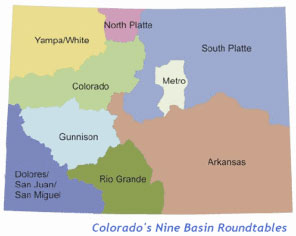
Northern Integrated Supply Project: The Waterkeeper Alliance delivers cease and desist letter to the Northern Colorado Water Conservancy over use of the trade name ‘Save the Poudre’

A picture named cachelapoudre

Update: From the Fort Collins Coloradoan (Bobby Magill):

The same day Northern Colorado Water Conservancy District officials said they wouldn’t print anymore “Save the Poudre, Store it in Glade” bumper stickers after environmentalists cried foul, Northern Water announced Friday that the Western Slope’s largest coalition of local governments, Club 20, threw its support behind Glade Reservoir.

From The Denver Post (Monte Whaley):

The Northern Colorado Water Conservancy District recently printed 500 bumper stickers that read: “Save the Poudre: Store it in Glade.” The bumper stickers were produced for about $2.50 each, paid for by the 15 cities and water districts funding the reservoir project, said district spokesman Brian Werner…

Waterkeeper Alliance sent a cease-and-desist letter Wednesday to the Northern Colorado Water Conservancy District, saying “Save the Poudre” is a protected trade name. It was registered by Save the Poudre: Poudre Waterkeeper with the state and should not be used by the district, said Gary Wockner, director of Save the Poudre. “We’ve been using the name for four years on our website, press releases and printed literature. We’re the only ‘Save the Poudre’ in the world, and we’ve recently filed for service-mark protection with the U.S. Patent and Trademark Office,” Wockner said. “That this public agency stole our name and is using it against us is reprehensible.”

More Northern Integrated Supply Project coverage here and here.

Northern Integrated Supply Project: The Town of Frederick is solidly on board with the project

A picture named nisp2

From the Carbon Valley Farmer & Miner (Emily Dougherty):

The town’s sole source of water for potable water system is the Colorado Big Thompson (CB-T) project, which Frederick officials say they have outgrown, especially considering the projection that few CB-T units will be available on the open market beyond 2015…

“After studying many options and consulting true experts related to water issues, we firmly believe that NISP is the best choice available for Frederick and that it will prove to be a great benefit for all economic and social sectors of Northern Colorado,” Frederick mayor pro-term Tony Carey said in a letter in support of the NISP…

Carey went on to say that the town’s current water supplies are barely meeting the area’s needs and that if NISP is not approved, “Frederick and other participants will be forced to look at acquiring agricultural water rights to meet future demands,” he wrote…

the town strongly prefers to implement the NISP plans for Glade Reservoir and the South Platte Water Conservation Project, and to also work with the Larimer and Weld and the New Cache La Poudre irrigation companies to improve their operations rather than buying water rights that would negatively impact them.

Here’s a recap of last week’s rally by supporters of the project where 200 or so showed up, from Monte Whaley writing for The Denver Post. From the article:

At one point, Weld County Commissioner Sean Conway led the throng with shouts of “NISP now” before sending them out to spread the gospel of the Northern Integrated Supply Project.”You go and send that message about how much we need this,” Conway said, rallying the troops from inside a barn at Anderson Farms, northwest of Erie…

The go-ahead for NISP rests largely in the hands of the Army Corps of Engineers, which released a draft environmental-impact statement for the project in 2008. But the corps decided to do a supplemental study after critics said the original failed to answer critical questions, including the extent of the environmental damage the dams may cause. The supplemental report should be completed and released by next summer, said Brian Werner, spokesman for the Northern Colorado Water Conservancy District…

Don Korrey — who works 800 acres of corn and alfalfa northeast of Sterling — said NISP is desperately needed to preserve water that otherwise would flow out of the plains and into cities. “Any storage anywhere will help farmers everywhere,” Korrey said. “It’s obvious cities are asking for more water rights, and if they keep doing that, our water will be depleted and their goes our livelihoods.”

More Northern Integrated Supply Project coverage here and here.

Northern Integrated Supply Project: Supporters of the project rally in Weld County

A picture named nisppreferredalternative

Here’s a report from Tom Hacker writing for the Loveland Reporter-Herald. From the article:

The Anderson Farm, once a working farm but now an entertainment and education venue, hosted the event organized by the Colorado Farm Bureau and the Northern Colorado Water Conservancy District, the architect of the project. “People say there is a crisis coming,” former Colorado Agriculture Commissioner Don Ament said in warming up the crowd of about 200. “I’m here to tell you the crisis is already here.”

Farmers in Northern Colorado have said since the time the project was unveiled six years ago that it is the only thing standing between their livelihoods and the water needs of growing Front Range communities…

Opponents, led by the conservation group Friends of the Poudre, say the project would drop Poudre flow levels so low that water quality and wildlife habitat would be severely affected. They use the slogan “Save the Poudre” to make their point. But the mantra Thursday was “Save the Poudre, Store it in Glade,” with banners carrying the message hoisted at the Anderson Farm and bumper stickers available for attendees to take with them.

Well it has been an interesting week for politicians and alleged plagiarism. It looks like two northern Colorado lawmakers helped themselves to a colleague’s opinion piece in support of the Northern Integrated Supply Project. Here’s a report from Kelly King writing for the Loveland Connection. From the article:

Columns purportedly authored by Rep. BJ Nikkel, R-Loveland, and Weld County Commissioner Doug Rademacher focused on the need for new water storage capabilities in Northern Colorado, highlighted their support for the Northern Integrated Water Supply Project, or NISP, and encouraged readers to attend a Thursday agricultural rally in Erie. Nikkel’s and Rademacher’s columns published in the Berthoud Recorder, Windsor Beacon and Greeley Tribune closely mirrored a column published in the Denver Post, written by Weld County Commissioner Sean Conway.

Conway admits he provided his writings to Nikkel and Rademacher after they expressed interest in spreading news about the agricultural rally and their support of NISP. “Anyone who knows me, knows that I’m a longtime supporter of NISP,” Conway said. “Leading up the ag rally, I wanted people to know about the event. I submitted a column to the Denver Post as an exclusive update about the event, authored by me. “Over the course of the next few days, my office mate, Doug Rademacher, said he wanted to submit something to the Greeley paper about the event. I offered him the column and said ‘Use what you want.’ Essentially, he took it and ran with it and I’m fine with that.”

Conway said he also talked with Nikkel, who wanted to submit a column to newspapers in her district, in Loveland, Berthoud and Windsor. “I sent her the column and told her she had my permission to use it,” Conway said.

More Northern Integrated Supply Project coverage here and here.
Northern Integrated Supply Project: Supporters are planning a rally on Thursday

A picture named nisppreferredalternative

State Representative B.J. Nikkel is trying to rally the troops with this opinion piece running in the Berthoud Recorder. She writes:

In the 1930’s, W.D. Farr and other visionaries led the effort to build the Big Thompson Water Project. Today, this tremendous project provides an invaluable supply of water to our ranchers and farmers, and families living in our Northern Colorado communities.

Over the past 30 years, Northern Colorado’s population has more than doubled and yet no new significant water supply facility has been built. Growing cities in the Denver metro-area are looking north to find the water supply their communities need and they have their sights on thousands of acres of irrigated farmland in Northern Colorado.

Without a new significant water project, a recent environmental study showed that more than one hundred square miles of currently irrigated productive farmland will be dried up forever. The result would be catastrophic and would be an environmental and economic disaster for Northern Colorado.

Today the Recorder is running the rebuttal from Mark Easter and Gary Wockner (Save the Poudre. They write:

In their ground-breaking report “Farming on the Edge: Sprawling Development Threatens America’s Best Farmland”, the American Farmland Trust identified the Cache la Poudre Valley as some of the best farmland in the world. The report identifies our Ag heritage as critically endangered due to poor land use planning, sprawling development, inefficient use of water resources and inadequate protections for agricultural water rights.

More Northern Integrated Supply Project coverage here and here.

Northern Integrated Supply Project: Supporters plan rally for July 15

A picture named nisp2

From The Greeley Tribune:

Northern Colorado farm and ranch organizations and public officials have announced an agricultural rally to show support for the Northern Integrated Supply Project, a proposed water storage project that is a cooperative venture between agricultural ditch companies and growing northern Front Range communities. The rally will be from 11 a.m.-1:30 p.m. July 15 at Anderson Farms, outside Erie. The farm, at 6728 Weld County Road 3.25, is 2.5 miles east of Interstate 25 on Colo. 52 and a mile north on Weld 3.25…

“Had the NISP project been in place in the last two years, Colorado would have been able to capture and store more than 150,0000 acre-feet of water from the Poudre and South Platte basins alone,” Foutz said in a news release. “Instead, Colorado must watch as that water flows downstream to Nebraska.” The rally is designed to demonstrate the agricultural communities’ strong support for the water storage project. It will feature speakers from the farming and livestock community in northern Colorado, agricultural industry representatives and elected officials. It also will be an opportunity to highlight the importance of water storage to the future of agriculture in the region, and the strong farm and ranch community support for NISP, Foutz said. The rally will be open to the public and a barbecue lunch will be served.

More coverage from The Pulse – of Colorado Farm Bureau (Shawn Martini).

More Northern Integrated Supply Project coverage here and here.

Windsor: Water conservation plan update

A picture named watersprinkler

From the Windsor Beacon (Ashley Keesis-Wood):

Windsor Public Works Director Terry Walker presented details about that plan and the steps needed this year to the town board during last Monday night’s work session. “We’ve completed the meter replacement program, and now we’re working on the leak detection program,” Walker said.

The water conservation plan was implemented in 2008 and designed in conjunction with Clear Water Solutions. The plan will allow the town to apply for low-interest loans from the Colorado Water Conservation Board and the Colorado Water Resources and Power Development Authority for projects like the Northern Integrated Supply Project. Windsor’s share of the NISP costs will end up being about $33 million or $34 million. Up until now, the town has paid its share from its cash reserves each year. However, the cost to help build NISP will escalate, with the biggest single year payment toward the project for Windsor being 2012, at $5.4 million.

The water conservation plan calls for a total reduction of 12 percent water consumption, or about 268 acre-feet over a three-year period. Broken down, the goal is to reduce consumption during that time period by 8 percent for residences, 15 percent for businesses, 6 percent for industrial users, 11 percent for public use, 16 percent in landscaping use and 3.5 percent in unaccounted loss.

For 2010, the town budgeted $7,000 to cover the leak detection program. “We’re doing this now, so hopefully we catch leaks when they’re still small and before the pipes freeze in the winter,” Walker said. “We’ll go over the town in pieces, and then start over.”

More conservation coverage here.

Northern Integrated Supply Project: Would Glade have had a flood control effect this year?

A picture named nisppreferredalternative

From The Greeley Tribune:

With NISP online, some of the recent regional flooding concerns would have been alleviated and the floodwaters would have been stored for future use, according to Northern Water. The proposed project includes two reservoirs, the Glade Reservoir off the Poudre River north of Fort Collins and the Galeton Reservoir east of Ault. The two would provide storage for 215,000 acre-feet of water…

Diversions off the Poudre to fill the two reservoirs would mostly be available during high runoff years, according to Carl Brouwer, manager of the proposed project at the district. Galeton would have filled during the past fall and winter and remained full with the huge spring runoff this year, Brouwer said in a news release. “More than 50,000 acre-feet of water from this spring could have been stored in Glade Reservoir were it built, in addition to water during 2009,” Brouwer said.

Glade and Galeton reservoirs are the key components to NISP, which is proposed by 15 northern Front Range cities, towns and water districts. The project is under review by the U.S. Army Corps of Engineers. When full, Glade would store 170,000 acre-feet of water and Galeton would hold 45,000 acre-feet.

“This is one of those years when you wish we had these projects in place so the water could be saved for the citizens of northern Colorado,” Eric Wilkinson said. He is Northern Water’s general manager.

More Northern Integrated Supply Project coverage here and here.

Northern Colorado Water Conservancy District sets 80% quota for Colorado-Big Thompson Project shares

A picture named coloradobigthompsonmap

From the Northern Colorado Business Report (Steve Porter):

The water district felt confident enough in early April to increase a 50 percent initial quota set in October to 80 percent for Colorado-Big Thompson water share owners. A quota of 80 percent means each unit of C-BT water will yield eight-tenths of an acre-foot…

The 80 percent quota will make available a total of 248,000 acre-feet of C-BT water this year to its owners, which include 33 cities and towns, about 120 ditch and reservoir companies and around 1,800 individual allottees, according to Brian Werner, water district spokesman. Werner and [Karen] Rademacher said additional Western Slope snowfall after the 80 percent quota vote by the water district’s board of directors on April 9 has painted a much rosier picture than was foreseen mid-winter. “The numbers are definitely trending up,” Werner said. “We’re going into the (summer) with the highest storage in 10 years, and the soil moisture is way up.”

One example of this year’s heavy late season snow can be seen near Gould just across the Continental Divide in Jackson County. On May 24 the Colorado State Parks department reported that the Ranger Lakes, Bockman and North Michigan Reservoir campgrounds would remain closed through the Memorial Day weekend because of snowy conditions and the Crags Campground will be closed until July 1 because of still-deep snow…

About two-thirds of C-BT water is consumed by agriculture and the remaining third goes to municipal and industrial users. When it comes to ownership, Werner said those ratios are flipped, with cities owning two-thirds of the total 310,000 C-BT units and ag users owning about one-third.

Rademacher said another reason for the region’s water users to celebrate is the fact that most of April and the first part of May were cooler than normal. “It was cold,” she said. “The weather turned cold through much of April and stayed cold through mid-May, so that slowed the runoff.”

More Northern Colorado Water Conservancy District coverage here.

U.S. House Subcommittee on Water and Power hearing recap

A picture named glencanyonconst.jpg

From The Greeley Tribune (Bill Jackson):

The formal hearing last more than two hours and was chaired by Rep. Grace Napolitano, D-Calif., who said the meeting was brought to Greeley at the request of Rep. Betsy Markey, D-Colo. Rep. John Salazar, D-Colo., also joined on the congressional side. Two panels were invited to address the formal hearing, one primarily composed of federal, state and local government officials, and another featuring farmers and agricultural and municipal water experts. The purpose of the meeting, Napolitano said, was to look at managing water for the future and how federal, state and local entities are supporting agriculture. For the most part, the answer the politicians got was not very good.

All panel members agreed conservation is part of the puzzle to meeting future water needs of the state, but they said it’s not the only — or even the most important — part. “If Two Forks (pdf) had been built, this hearing today would not have been necessary,” said Bob Sakata, who began farming in Adams and Weld counties 65 years ago…

Sakata was joined by several others on the panels in urging the construction of the Northern Integrated Supply Project, paid for by the 15 municipalities and water and irrigation districts, which is currently undergoing environmental studies. That project, like others planned in the state, is tied up in the federal bureaucracy, several panelists said…

Colorado Commissioner of Agriculture John Stulp and Doug Rademacher, who farms in southwest Weld County and chairs the board of county commissioners, stressed that water is the lifeblood of the state. “Buy out and dry up is not acceptable to our future here in Colorado,” Stulp said, while Rademacher noted that Weld is ranked No. 8 in the nation in terms of receipts for agricultural products. “If you take all the nuts and fruits out of California, we’d be No. 1,” Rademacher said, which got the attention of the two California lawmakers in attendance. Stulp, in response to a question, said agriculture remains either No. 2 or No. 3 in terms of importance to the state’s economy…

Sakata, who farms 3,000 acres of vegetables in the two northern counties, said if more storage is not constructed, future farmers will be impacted. “If something doesn’t get done, my heirs will be forced to sell out or quit,” he said.

More infrastructure coverage here.

Interbasin Compact Committee water transfer meeting recap

A picture named coloradotransmountaindiversions.jpg

From The Pueblo Chieftain (Chris Woodka):

“We’ve been given a pop quiz,” Chips Barry, former director of Denver Water told the Interbasin Compact Committee. “If the reaction to Denver’s [Moffat Collection System Project] and Northern’s [Northern Integrated Supply Project] proposals are any indication, the IBCC has not fixed anything yet. We’ve got a ways to go.”[…]

Now, Denver faces the same sort of opposition to the enlargement that it experienced with Two Forks, even though it has done more than it was asked on the other two points. “We don’t oppose (Gross Reservoir enlargement),” said Drew Peternell, of Western Resource Advocates, who attended the IBCC meeting. “We want to see more documentation for conservation and reuse to make sure everything that can be done is being done.”

Barry, however, said the Gross Reservoir enlargement has every aspect the IBCC has talked about, with increased water and cash payments for Grand County concerns on the Western Slope and environmental flows on Boulder Creek in the South Platte. “We’ve done everything that we’ve been talking about,” Barry said. Barry acknowledged that basin roundtables and the IBCC have served to make Denver aware of concerns in the state, but said if the IBCC is going to succeed, it needs to address wider concerns. “If we take care of agriculture and recreation, what’s left?” Barry said. “There needs to be an economic test for the area from which the water was moved.”[…]

Other members of the IBCC see more sharing of water as the best solution for preserving agriculture while meeting the needs of cities. The roundtable’s central task Thursday was to begin talking about how “fairness” in water transfers can be measured. The IBCC began last year looking at factoring agricultural demands in with municipal demands to determine the future of the state…

While it was suggested that the amount of irrigated acreage could be a standard, [Jeris] Danielson suggested more profitable crops could be grown — cantaloupes and peppers rather than alfalfa and corn, for example — allowing water to become an additional “crop.”

Peter Nichols, a water lawyer appointed by Gov. Bill Ritter to the IBCC, said there has to be more bargaining in the process. “There has to be a willingness to give up something to get something,” Nichols said. He cited the example of the Palo Verde Irrigation District in Blythe, Calif., which he visited with a group of farmers in 2007 as a step in forming the Arkansas Valley Super Ditch. The Metro District paid more for the water than it was worth to lease from farmers as a way of mitigating economic impacts. “As a result, Blythe is thriving,” Nichols said…

IBCC Director Alex Davis also answered concerns raised by state Rep. Sal Pace, D-Pueblo, about how the IBCC is dealing with the question of water transfer mitigation. Pace said his legislation on empowering conservancy districts to work out mitigation plans was killed because some claimed the IBCC was already doing the work. “Mitigation is a narrow question that applies to the basin of origin. We need to meet all of the environmental and economic needs of each basin,” Davis said. “If we’re successful, we’ll answer those questions.”

More IBCC — Basin Roundtables coverage here.

Northern Colorado Water Conservancy District’s 2010 Spring Water Users meeting recap

A picture named coloradobigthompsonin2007

From The Greeley Tribune (Bill Jackson):

Jim Martin, executive director of the Colorado Department of Natural Resources, was the luncheon speaker for the 2010 Spring Water Users meeting of the Northern Colorado Water Conservancy District at the Radisson Conference Center. Martin said the [Environmental Protection Agency] has a major role in determining the approval of any of the nation’s proposed water projects, and that includes several in Colorado now in the planning and permitting process. Those include the Northern Integrated Supply Project, which would provide an additional 40,000 acre-feet of water per year for 15 entities in northern Colorado, and the Windy Gap Firming Project, which provides a storage facility in a new reservoir west of Loveland. Both those projects are in the process of undergoing Environmental Impact Studies and, if approved, will be built in the next five to 10 years. The problem, Martin said, is that the EPA doesn’t get involved until after the Environmental Impact Study of a project is complete. “As a result, it doesn’t have the history of the planning that go into those projects. That’s a serious institutional problem and it’s one that I don’t have a solution,” Martin said.

More Colorado-Big Thompson coverage here and here.

South Platte Basin Roundable: Northern Integrated Supply Project presentation

A picture named nisppreferredalternative.jpg

From the Sterling Journal Advocate (Judy Debus):

Brian Werner of the Northern Colorado Water Conservancy District gave an update on the status and the scope of projects and processes that have been identified by the roundtables. “We’re living on people that fought for the systems and infrastructure that we benefit from today — 50, 60 and 75, 80, 90 years ago, we are living on today,” he said. “It’s been decades since we’ve done much in terms of water infrastructure in northern Colorado.”[…]

There are 33 cities and towns that get at least part of their water from the Big Thompson Project, and the need is to find out how to add to that without drying up all the agriculture land. “Even if all the proposals we have on the board were completed, there is still going to be a gap out there,” he said. At this time, most of the projects being considered will take many years to complete and there is more pressure on the ag water supplies.

More Northern Integrated Supply Project coverage here and here.

Northern Integrated Supply Project: Cost estimates increase to $490 million

A picture named nisppreferredalternative.jpg

From The Denver Post (Monte Whaley):

NISP officials blamed much of the cost hike on the addition of capacity for pump plants and pipelines by participants, and for increasing the storage capacity of Galeton Reservoir. The changes, say project officials, will increase efficiency and its sustainability. Cost increases were also brought on by a desire to answer questions about water quality, hydrology and riparian corridor issues. “We wanted to make sure, as does the Army Corps, that all questions are being answered,” said Kathy Peterson, chairwoman of the participant group. “It costs additional dollars and is taking additional time, but we believe it’s necessary.” In all, the cost estimate changes were not surprising, because estimates for projects of this size change over time, the district said.

But to [Save the Poudre’s Gary Wockner], it appears the project’s cost is spiraling out of control. “This project started out in 2003 for $350 million and it’s now $490 million,” he said. “There just seems to be no end in sight for the cost escalation.”

More Northern Integrated Supply Project coverage here and here.