The Environmental Protection Agency has qualms about the review process for the Northern Integrated Supply Project, detailed in 20 pages of comments made public Thursday.
The EPA gave a rating of “Environmental Objections — Insufficient Information” to the Army Corps of Engineers’ supplemental draft environmental impact statement, which was subject to public comments until Sept. 3.
The “environmental objections” rating means the EPA has identified significant environmental impacts that the project must avoid. The “insufficient information” rating means the EPA found that the SDEIS doesn’t contain enough information to fully analyze the project’s environmental impacts.
The EPA’s comments aren’t necessarily binding, but the agency has veto power over the permitting process.
Both ratings are one step away from the worst the EPA can dole out. The EPA could have rated the project “environmentally unsatisfactory,” meaning it shouldn’t proceed as proposed, and “inadequate,” which would have required the Army Corps to release another supplemental draft.
The EPA’s rating is consistent with calls from the Fort Collins City Council, Save the Poudre and the Larimer County Board of Commissioners that the Army Corps conduct additional analysis of how NISP would affect water quality in the Poudre River, the primary source of water for a project that would create two reservoirs to provide 40,000 acre feet of water annually to 15 participants. Those include 11 cities/towns and four water districts. Towns include Windsor, Severance, Dacono, Eaton, Evans, Erie, Frederick, Firestone, Fort Lupton, Fort Morgan and Lafayette. The Fort Collins-Loveland Water District is a participant.
Essentially, the SDEIS includes a half-finished water quality analysis that predicts what kind of water quality effects might occur — temperature changes and increased concentration of certain sediments — but not the magnitude of those effects. The SDEIS says the full analysis will be in the final environmental impact statement, slated for release next summer.
NISP opponents took issue with the lack of full analysis because the Army Corps isn’t planning for a public comment period between the final EIS and its record of decision on the project.
In its comments, the EPA recommends the Army Corps publish the additional analysis before the final EIS and allow for a formal public comment period.
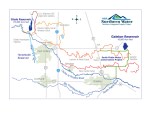
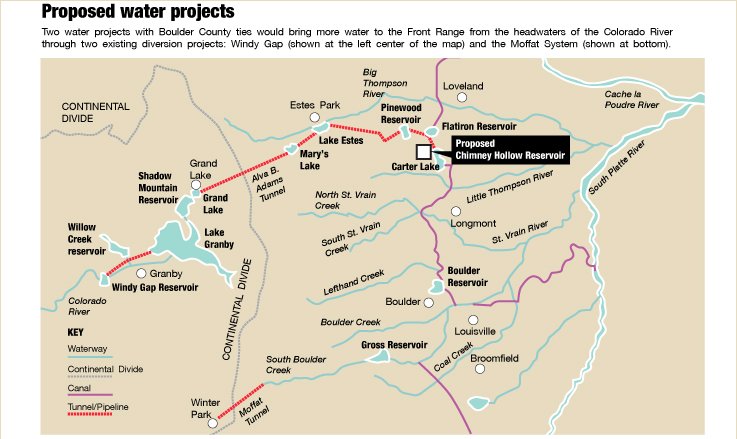
Map of the Northern Integrated Supply Project via Northern Water
Larimer County commissioners on Tuesday voted to forward a citizens’ advisory board’s list of critical comments about a controversial water-storage proposal to the U.S. Army Corps of Engineers — but added their own letter supporting the project.
The commission had asked the all-volunteer Environmental and Science Advisory Board to review a Supplemental Draft Environmental Impact Statement on the proposed Northern Integrated Supply Project, which the Corps released in June. The ESAB report, dated Aug. 18, blasted what it called the SDEIS’ lack of detail on key issues and included a long list of concerns about NISP’s effect on such things as flows, fish habitat and water quality in the Cache la Poudre River as well as plans to mitigate the problems.
The county commissioners voted 3-0 to send the ESAB report to the Corps — accompanied by a letter from the commissioners saying that Larimer County is not opposed to NISP and believes the ESAB concerns can be addressed sufficiently. The commissioners’ letter lays out why it believes NISP to be very important to the future of Northern Colorado.
Fort Collins’ city staff also was critical of the impact statement for leaving key questions unanswered, and recommended last week that the Fort Collins City Council vote to express conditional opposition to NISP. The city council will consider that recommendation at Tuesday night’s regular session, which will be broadcast on cable Channel 14.
The Northern Colorado Water Conservancy District would build NISP if it receives a federal permit.
From email from the Northern Colorado Water Conservancy District (Brian Werner):
Earlier this week, Larimer County commissioners submitted a letter supporting NISP to the U.S. Army Corps of Engineers. It is the third county board to endorse NISP, following earlier endorsements from Morgan and Weld County commissioners.
All three commissioners have voiced their support of the project to build Glade and Galeton reservoirs. Utilizing these reservoirs, the project will provide water entities with approximately 40,000 acre-feet of new, reliable water supply each year.
NISP has the support from every newspaper representing project partners including: BizWest, Longmont Times-Call, Fort Morgan Times, Greeley Tribune, Carbon Valley Independent, Erie Review, Lafayette News, Lost Creek Guide, Louisville Times, Loveland Reporter Herald and the Coloradoan. This link contains the complete list of NISP supporters/endorsers.
Reasons for support are broad, but there is a shared view that NISP needs to be built has soon as possible to capture and store water in wet years for the needs of current and future generations in all years.
During the July 2 NISP rally, State Sen. Jerry Sonnenberg summarized what NISP will achieve for the 15 northern Front Range water providers. Sonnenberg said, “There’s been a lot of talk about using rain barrels this year. Well, we’ve got to find a way to keep Colorado’s water in Colorado. We have the ultimate rain barrel, ready to be filled, right up the road here.”

Another common theme among NISP supporters is that water conservation alone cannot meet the water needs of Northern Colorado. Several regional newspapers have made this point including the Ft. Collins Coloradoan, Loveland Reporter-Herald and Longmont Times-Call.
The Coloradoan editorial board editorial “NISP Needed to Solve Region’s Water Problem” pointed out: “The future of water in Northern Colorado – and our state as a whole – is now.” It also stated, “Our state – and Northern Colorado – faces a water shortage as the population grows. The Northern Integrated Water Supply project, in tandem with other efforts, is key to solving that problem.”
The U.S. Army Corps of Engineers extended the public comment period an additional 30 days.The comment period ended Thursday, September 3.
From the Fort Collins Coloradoan (Jacy Marmaduke):
The end of the public comment period signals an important step in a lengthy review process of a project that would transform the future of water use for Northern Colorado. Northern Water began petitioning more than a decade ago for the project, which would draw from the Poudre and South Platte rivers to supply 40,000 acre feet of water a year to 15 participating communities and water districts.
So, what’s next?
The Corps will review the comments and prepare a Final Environmental Impact Statement by next summer. At this point, no public comment period is planned for the final statement, project manager John Urbanic said Thursday.
After the final EIS, the Corps has to issue a record of decision – a final decision on whether it will grant Northern Water the federal permit necessary to carry out the project. That decision can be challenged in court.
The Corps’ final EIS will include additional analysis of how the project would influence water quality in the Poudre River. NISP opponents argue the Corps’ omission of that analysis in past environmental impact statements constitutes a violation of federal law, which requires the Corps to thoroughly analyze all potential environmental impacts of a proposed project.
Urbanic said the Corps may allow for public comments on the water quality data even if there’s no official public comment period for the final EIS…
Northern Water spokesman Brian Werner said he’s as excited to see the SDEIS comments as anyone else – but he’s not expecting any big surprises.
“I don’t think we’re gonna see a lot we haven’t already heard,” he said.
Northern Water is continuing to work on its plan to mitigate the project’s environmental impacts and developing another mitigation plan in communion with the Colorado parks and wildlife department.
Werner said he’s confident the Corps’ next report will unearth “good information” about NISP’s potential influence on Colorado’s environment.
“It’s not going to erase all questions and doubts, but it’ll do a great deal,” he said. “There’s nothing like good quality data to back up what you’re saying.”
Map of the Northern Integrated Supply Project via Northern Water From the Fort Collins Coloradoan (Kevin Duggan):
The City Council on Tuesday voted unanimously to support a resolution stating the city “cannot support NISP as it currently described and proposed” in a supplemental draft environmental impact statement, or EIS.
The recommendation from city staff to conditionally oppose the massive water-storage project, which would draw water from the Poudre River, was based on what the city describes as inadequate information and scientific analysis in the 1,500-page EIS document.
The staff’s comments will be forwarded to the Army Corps of Engineers, which is developing the EIS for the project.
Council members said staff did an “excellent” job of analyzing the document and highlighting its deficiencies, such as describing the project’s impact to water quality if it were built.
John Stokes, director of the city’s Natural Areas Department, said the resolution “leaves the door open” for continuing to work with the Corps and NISP’s proponents, including the Northern Colorado Water Conservancy District and 15 participating municipalities and water districts…
Council tweaked the language of its resolution to hint that the city might support NISP if it were changed in the ways proposed by city staff. The modified alternative would have water drawn from the river farther downstream, leaving flows through Fort Collins relatively intact.
Rather than Glade Reservoir, water would be stored in a reservoir near Cactus Hill, near Ault.
The council’s vote came after members heard more than two dozen speakers, with opponents of NISP outnumbering supporters about five to one…
But the city plays a role in the state of the Poudre River, said Mike DiTullio, general manager of the Fort Collins-Loveland Water District, which serves much of the southern third of Fort Collins.
The district is a participant in NISP, as is Windsor. Other participants are in Morgan, Weld and Boulder counties.
The city draws 12 million gallons a day from the river, he said.
“We’re all partners in this area, and Fort Collins is as much responsible for the condition of the river today as anybody else,” he said. “I hope you would take that into consideration …”[…]
The supplemental draft EIS looks at four alternatives for the project, including a “no action” alternative. The version of NISP preferred by Northern Water would build Glade Reservoir northwest of Fort Collins…
Differing views
Fort Collins city staff members and consultants who reviewed the supplemental draft environmental impact statement, or EIS, for the proposed Northern Integrated Supply Project took issue with several elements of the 1,500-page document.
Below are some of their concerns as noted in a report to City Council and the response from Northern Water, which has proposed NISP in cooperation with 15 participating municipalities and water districts, in a letter to city officials.
Fort Collins: The absence of a water quality and stream temperature report that quantifies the water-quality impacts of the project. Many of the potential impacts to Fort Collins hinge on the report’s findings.
Northern Water: The draft document describes findings from the first phase of a two-phase water-quality analysis. The second phase will be included in the final EIS, and will include modeling for sensitive parameters such as water temperatures.
Fort Collins: The project has the potential for water quality degradation that could affect the city’s treatment facilities for drinking water and wastewater.
Northern Water: A study done by Black & Veatch, an international water and wastewater treatment engineering firm, concluded NISP would have negligible impacts to Fort Collins’ facilities.
Fort Collins: Flawed analyses and conclusions related to the project’s reduction of peak flows, which are likely to harm the environment and potentially increase flood risk.
Northern Water: NISP participants are developing a mitigation plan that would improve habitat along the river and guarantee flows during winter months.
Fort Collins: The project would have significant negative impacts to the recreation values of the river.
Northern Water: Glade Reservoir, which would be about the size of Horsetooth Reservoir, would offer residents increased recreational opportunities.
What’s next
Comments on the supplemental draft environmental impact statement on the proposed Northern Integrated Supply Project are due Thursday. Comments may be emailed to nisp.eis@usace.army.mil.
Meanwhile the Larimer County Board of Commissioners reaffirmed their support for the project. Here’s a report from Nick Coltrain writing for the Fort Collins Coloradoan. Here’s an excerpt:
The U.S. Army Corps of Engineers will receive a Larimer County advisory board’s concerns about the Glade Reservoir project, but county commissioners want to make sure their support of the proposal isn’t questioned.
Commissioner Steve Johnson rewrote a neutral cover letter to the Environmental and Science Advisory Board’s findings — the board’s chief concern was that it lacked all the analysis needed to fully weigh the Northern Integrated Supply Project — to say that the concerns shouldn’t jeopardize the project moving forward. The other two county commissioners signed off on the new letter Tuesday.
“We believe NISP to be very important to the future of Northern Colorado and we appreciate the input and concerns that many have shared,” Johnson wrote in the letter. “We believe that by working through these concerns collaboratively and constructively, NISP can and will be an even better project.”
All three commissioners have publicly voiced their support of the project to build Glade and Galeton reservoirs, which would add more than 215,000 acre-feet of water storage in Larimer and Weld counties.
From the Rocky Mountain Collegian (Rachel Musselmann):
NISP was originally proposed in 2008 by the Army Corps of Engineers and was unanimously opposed by city council. It was re-proposed this year with an updated environmental impact statement, and was opposed again, although conditionally…
Concerns about the program include economic loss due to lower river levels and water quality. According to Environment Colorado, the state of Colorado saw $18 billion spent on tourism in the past year, with over 16 million visitors, 662,601 fishing licenses sold and 83,683 registered boats.
Vivian Nguyen, an organizer with Environment Colorado, said in a press release that water levels and quality are central to Fort Collins culture.
“Our rivers and lakes are a big part of what makes summer fun,” Nguyen said. “There’s nothing quite like rafting down the Cache La Poudre River or fishing at Horsetooth Reservoir to cool off on a hot day.”
A lack of moderate water flow, called “flushing flows,” was also discussed by the council. Director of the Natural Resources Department John Stokes said he believes low water flow could be detrimental to the health of the river and lead to flooding.
“John Stokes is an incredible diplomat, and he is very kind to NISP, but as it stands the project is unacceptable,” Speer said. “It appears the updated environmental statement is not an improvement on the original.”
The council passed the motion to oppose NISP as it stands, under the condition that it may be revisited if modified.
Stokes said in his closing remarks he hopes for a more sustainable water use plan in the future.
“We need to be asking ourselves if a vision for Poudre River health is possible,” Stoke said.
From the Loveland Reporter-Herald (Pamela Johnson):
While Fort Collins staff members have criticized Northern Integrated Supply Project for its potential harm to the Poudre River, the Larimer County commissioners have reiterated their support for the reservoir project.
“We believe NISP to be very important to the future of Northern Colorado, and we appreciate the input and concerns that many have shared,” the commissioners state in a letter written by Steve Johnson and approved Tuesday by all three elected officials.
“We believe that by working through … concerns collaboratively and constructively, NISP can and will be an even better project,” it states.
Their letter, which will be forwarded to the U.S. Army Corps of Engineers with a report from the county’s Environmental and Science Advisory Board, stressed that Glade and Galeton reservoirs are needed to provide future water supply for a healthy and prosperous region and to prevent that needed water from being taken from farmers.
They compared NISP to the Colorado-Big Thompson Project, on which the entire region relies today for a clean and abundant water supply.
“It’s impossible to imagine a healthy and prosperous Northern Colorado without it,” the commissioners’ letter states. “We should do no less for our children and their children.”
This is the opposite stance from the one released by Fort Collins staff members, who reported extreme concerns about what the project would do to the Poudre River. Echoing the concerns of long vocal opponents of the project, city staff members worry in the report that the project would degrade habitat, affect stream flow and even increase the potential for flooding.
These factors would kill the river and the community’s economy, including recreation, tourism and other businesses that are tied to the river corridor, according to opponents of the project, including three residents who spoke before the commissioners Tuesday. Also mentioned was the millions of dollars invested in natural areas and habitat along the river.
“The expected harmful impacts upon the Poudre River … are significant,” said Gina Janett, Fort Collins resident, calling the Poudre a “beloved resource.”[…]
The U.S. Army Corps of Engineers is wrapping up public comment on its supplemental draft environmental impact statement. Between this step and the final decision, the Corps has said it will complete additional technical analysis on stream flow and on mitigations to other concerns.
When that happens, those reports, too, should be open for public comment, according to the report created the Larimer County’s Environmental and Science Advisory Board…
The county commissioners forwarded that report to the federal agency despite two of the three commissioners (Tom Donnelly and Lew Gaiter) saying they did not want to cause more unnecessary delays in the final decision on NISP.
Donnelly said he is comfortable that the experts from the corps will complete the plan and make the right decision without public comment that could delay the permitting decision.
“This isn’t about whether you support the reservoir or not support the reservoir,” Donnelly said. “This is about if the reservoir gains support, this is what we need to do to mitigate these issues.”
“It’s a technical matter, it’s not a political matter,” he said. “We should leave the technical things, the scientific things in the hands of the experts.”
The third member of the board, Johnson, agreed that the remaining environmental concerns regarding the proposed reservoir project can be addressed by Northern Water. However, he noted that the project has been underway for eight years, so what is another 30-day to 90-day comment period.
Map of the Northern Integrated Supply Project via Northern Water
From the Northern Water Twitter feed and FaceBook:
“The 15 Northern Integrated Supply Project participants and Northern Water are disappointed in the City of Fort Collins’ staff report pertaining to the NISP supplemental draft environmental impact statement.
“NISP participants have spent $12 million on the detailed SDEIS process. Under the direction of the Army Corps of Engineers, several expertly qualified independent consultants have thoroughly studied all aspects of NISP as reflected by the funding provided by the NISP participants to complete those studies. Two different consultant teams have independently studied the issues surrounding water and wastewater treatment and have concluded that NISP will have little to no impact on the City of Fort Collins operations. As a result of these efforts, we had sincerely hoped that staff would have had a more favorable opinion of those analyses and of the SDEIS as a whole.
“As planned by the Corps, in addition to the river water quality evaluation completed for the SDEIS, detailed water temperature and water quality analyses will be completed prior to the release of the Final EIS.
“We are very pleased that NISP has received more than 100 endorsements from throughout the state including the Fort Collins Coloradoan editorial board, BizWest, the Fort Collins Area Chamber of Commerce and the Larimer County commissioners.
“The NISP participants and Northern Water look forward to establishing working groups with both the City of Fort Collins and the City of Greeley to develop measures to address their concerns and further enhance the Poudre River.”
The council on Tuesday is expected to consider comments the city would submit to the U.S. Army Corps of Engineers on its draft Environmental Impact Statement regarding the project, which would draw water from the Poudre River.
After studying the document, city staff members and consultants concluded the project would adversely impact the river’s ecology and go against the city’s interests if it were built.
A resolution drafted to go with the staff comments proposed to be submitted to the Corps states the council “cannot support NISP as it currently described and proposed” in the document.
The city’s 108-page report details technical issues with the draft EIS as well as impacts NISP would have by reducing the river’s flow levels through town during times of high runoff.
Potential problems cited in the report include degraded water quality, wildlife habitat and recreational opportunities. The draft EIS does not adequately analyze alternatives to building the project as proposed by Northern Water and 15 participating water districts and towns, according to the report…
In 2008, Fort Collins came out against the project as it was described in the initial draft EIS. After seven years of more research and analysis, the Corps issued a supplemental draft EIS in June.
Comments on the document are due Sept. 3. The Corps is expected to review comments and potentially issue a final EIS next year.
Take part
The Fort Collins City Council will meet at 6 p.m. Tuesday at city hall, 200 Laporte Ave. The meeting will be broadcast on cable Channel 14.
At the heart of the $500-million plan is the construction of two new reservoirs: Galeton Reservoir, northeast of Greeley, and Glade Reservoir, northwest of Fort Collins. Both are designed to provide water for the growing populations of several communities in Larimer, Weld, Morgan and Boulder Counties. Building Glade Reservoir would also involve the relocation of seven miles of Highway 287, at a cost of $45 million.
“We’ve got to figure out how we’re going to provide water for future generations and these communities – the 11 cities and towns and the four water districts – are taking a very proactive step in planning for their future,” [Brian Werner] said.
The water to fill both reservoirs would come from the Poudre River – diverting away about ten percent of that river’s annual flow and use it to provide water for an additional 80,000 to 100,000 households…
Reagan Waskom is with the Colorado Water Institute at CSU, which has taken no formal position on the project.
“We’re playing out in this one basin what’s going to happen all over the state,” Waskom said. “It’s an urban, environmentally conscious group of folks, that don’t want to see another depletion. There’s communities that are growing that need that water – that’s the tension: how much more can we take out of these rivers?”
The Army Corps of Engineers is taking public comment on the NISP until Sept. 3.
Map of the Colorado-Big Thompson Project via Northern Water Click here to read the newsletter. Here’s an excerpt:
<blockquoteThe Northern Water Board of Directors set 2016 water assessments during an Aug. 6, 2015 public hearing. Assessments for open-rate irrigation contracts increased from $10.90 per acre-foot unit to $17.60, and assessments for open-rate municipal, industrial and multipurpose contracts increased from $30.50 per acre-foot unit to $35.90.
The Board followed its general rate-setting objectives, which are outlined in its 2014 forward guidance resolution. Among other objectives, the resolution proposed a 2-year step increase in assessments beginning in 2016, and moving irrigation assessments towards a cost-of-service based rate. Both of these objectives are represented in the 2016 assessments.
The Board will consider forward guidance that provides an estimated range for 2017 and 2018 water assessments at its Sept. 3 Planning and Action meeting.
For information on water assessments, please contact Sherri Rasmussen at 970-622-2217.
Map of the Northern Integrated Supply Project via Northern Water FromColorado Public Radio (Grace Hood):
Colorado’s water planners…see the Cache la Poudre as an opportunity to help quench Colorado’s seemingly endless growth and thirst for water. That’s why Northern Water has proposed building two large reservoirs on behalf of 11 cities. It’s a project that sets them in emblematic conflict with environmentalists and other groups.
Resolving environmental disputes on large-scale water projects takes time. So does the federal permitting process. Water managers say that even without the conflict, projects take years–sometimes decades–to acquire the necessary permits.
“We would not look to short circuit the diligence and the rigor associated with environmental permitting processes. That’s really important,” said Jim Lochhead, manager of Denver Water. “That having been said, the permitting process if you look at it in total between federal and state, and everything else we need to do is broken.”
The Northern Integrated Supply Project
To quench Northern Colorado’s growing thirst for more water, the local agency Northern Water has proposed the Northern Integrated Supply Project. The effort would build one reservoir north of Fort Collins, and another near Greeley. Once both reservoirs are filled, about 40,000 acre feet of additional water supply would be released every year from storage. Households typically use between one-half to 1 acre-foot of water annually.
We can’t conserve our way to future supply. No matter how we phrase it, you just can’t do it,” said Brian Werner with Northern Water.
Northern Water is pursuing the project on behalf of 11 cities along the Front Range. Werner said his agency wants an “all of the above strategy” to meet growing water demand. So it’s eyeing more conservation and the exchange of water rights from agricultural land. Agriculture uses about 80 percent of the state’s water supply.
There were environmental studies done on the river to evaluate problems and propose solutions. Mark Easter with the environmental group Save The Poudre said the measures don’t go far enough.
“I think there’s a new conversation that’s starting around this, asking the question, do we really need these reservoirs?” said Mark Easter, board chair of Save The Poudre.
A swinging pendulum
A century of dam projects across the West have caused ecological harm to some Western rivers. Today the federal permitting process to build a dam or a reservoir is far stricter compared to the early 1900s. But some water managers fear the pendulum has swung too far.
Take Denver Water. It decided in 2002 it needed to expand the reservoir outside Boulder. The agency won’t find out whether it can do this until later this year.
For large-scale projects, it’s up to the U.S. Army Corps of Engineers to decide whether a project gets built. But you need permits from other federal agencies. And there are state permits. Meantime, Denver Water has employees devoted full-time to moving the reservoir expansion forward.
“If we look at a future with climate change and rapidly evolving conditions in terms of climate, and weather and drought, we need to be a lot more nimble in our ability to build critical infrastructure in this country,” said Lochhead.
Water managers like Lochhead say a rigorous environmental assessment is needed for projects. What slows the process down is that each permit has unique requirements…
These two proposed reservoirs in Northern Colorado will take time and money before they get off the ground. The environmental group Save the Poudre says it will continue to fight these efforts. Meanwhile a final decision from the U.S. Army Corps of Engineers on whether these reservoirs can be built won’t happen until 2017 at the earliest.
In 2008, the City Council passed a resolution stating its opposition to the project, which would draw water from the Poudre River and store it in a new facility — Glade Reservoir — that would be built northwest of the city. Another reservoir, Galeton, would be built near Greeley and draw from the South Platte River.
The council at that time cited a variety of concerns raised by city staff members and consultants after reviewing the Draft Environmental Impact Statement, or DEIS, for the project. Issues included potential negative impacts to the river’s water quality, riparian areas and wildlife habitat as a result of substantially reduced flows through Fort Collins.
Here we are seven years later and a Supplemental DEIS for the project has been issued by the U.S. Army Corps of Engineers, which took a deeper dive into the project in response to comments made by Fort Collins and other stakeholders.
Don’t be surprised if the same concerns about NISP are raised this time around when the city submits comments to the Corps. Time and some tweaking of plans for the massive project haven’t made it any more palatable, according an early analysis of the SDEIS by city staff.
The document is improved, city staff say, but in the end, cutting the Poudre’s flow through the city by as much as 66 percent in May, 25 percent in June and 54 percent in July during years of average precipitation and river flows would have significant impacts.
Water quality would suffer — potentially raising the city’s costs for treating drinking water and wastewater — the number of “boatable” days on the river would drop, and the river’s ecology and overall health would be diminished, staff told council members Tuesday.
More Northern Integrate Supply Project coverage here and here.
Although public hearings on the Northern Integrated Supply Project have been completed, the U.S. Army Corps of Engineers will continue to accept written comments about the project from the public until Sept. 3.
NISP is a proposed water storage project in which the City of Fort Morgan is one of 15 participating entities. The project involves the creation of two reservoirs near Fort Collins and Greeley, and Fort Morgan officials consider it the best possible way to secure a stable water supply for the city’s future, according to a city news release. The project is spearheaded by the Northern Colorado Water Conservancy District.
NISP has been in the permitting stages for many years, and the public hearings and comment period on the Supplemental Draft Environmental Impact Statement mark a significant step toward final permitting of the project by the Corps of Engineers.
Written comments can be submitted via e-mail to NISP.EIS@usace.army.mil. Comments can also be mailed to:
John Urbanic, NISP EIS Project Manager
U.S. Army Corps of Engineers, Omaha District – Denver Regulatory Office
9307 S. Wadsworth Blvd.
Littleton, CO, 80128
Map of the Northern Integrated Supply Project via Northern Water Click here to read the newsletter. Here’s an excerpt:
Supporters Gather at NISP Rally
More than 150 Northern Integrated Supply Project supporters rallied at Northern Water’s headquarters on July 2 to celebrate momentum created by the recent release of the project’s Supplemental Draft Environmental Impact Statement.
Speakers U.S. Sen. Cory Gardner, U.S. Rep. Ken Buck, State Senators Mary Hodge and Jerry Sonnenberg, Chris Smith (Left Hand Water District general manager and NISP participants Committee chairman) and Eric Wilkinson (Northern Water general manager) addressed an enthusiastic audience comprised of NISP participant representatives, mayors, county commissioners, lawmakers and private citizens.
Several speakers warned that without NISP, more farmland will be dried up as water providers find necessary supplies for their needs. The SDEIS studies show this could lead to a dry-up of an additional 100 square miles of irrigated farmland – an area approximately twice the size as the City of Fort Collins.
“That would mean a $400 million loss of agricultural output,” said Gardner. “That is economic devastation. We can’t keep pushing it down the road. The longer this takes, the higher the cost, and the more acres that get dried up,” he added.
More Northern Integrated Supply Project coverage here and here.
Here’s the release from Colorado State University (Jennifer Dimas):
What is NISP? What is a supplemental draft environmental impact statement? Why should I care? Colorado State University is today releasing an animated video to answer those questions – “NISP (and its SDEIS) in a Nutshell.”
NISP is the proposed Northern Integrated Supply Project, and the 1500-page Supplemental Draft Environmental Impact Statement (SDEIS), released a month ago by the U.S. Army Corps of Engineers, is part of a federal process to assess the environmental effects of NISP to inform permitting decisions.
CSU hopes the eight-minute video – featuring colorfully animated characters – gives the public a basic understanding of the project and the process. The university has no formal position on the project.
“We produced the video to be an objective resource, knowing that much of what the public hears about the subject comes from either project proponents or opponents, promoting their respective views,” said MaryLou Smith, policy and collaboration specialist with the Colorado Water Institute, part of CSU’s Office of Engagement. “This piece gives the public a foundation from which to dig deeper, if they wish.”
To view the video go to http://www.cwi.colostate.edu/NISP. There are a number of other helpful resources that can be accessed there as well.
More Northern Integrated Supply Project (NISP) coverage here and here.
Map of the Northern Integrated Supply Project via Northern Water
A Northern Colorado water project had its second public hearing in Greeley on Thursday night, and speakers were overwhelmingly in favor.
About 150 people attended the meeting for the Northern Integrated Supply Project, which aims to cure the region’s water woes by diverting from the Cache la Poudre River via pipeline into two newly constructed reservoirs.
The Army Corps of Engineers held the meeting. The agency is acting as the project’s federal supervisor, making sure it is in compliance with the National Environmental Policy Act, and it will ultimately decide whether the plan will come to fruition.
More than 30 people offered to speak, and less than a handful voiced opposition to the project. Those who spoke in favor — which included local farmers, government officials speaking on behalf of their constituents, water policy experts and environmentalists — were passionate. Some were angry, others on the verge of tears.
The project, which has been in the planning process for 12 years, had its first public meeting in Greeley seven years ago. The Corps had released its first report on the project’s potential environmental impacts. Participants in that meeting and a similar one in Fort Collins raised enough concerns to prompt the Corps to conduct a second report. It was published this year.
In 2008, the Greeley meeting’s speakers were predominantly in favor of the project, according to Tribune reports from the time.
Fort Collins’ speakers were staunchly opposed, said Weld County Commissioner Sean Conway. This time, he said, it was 60-40 in support.
The commissioner chalked it up to two changes since 2008: the Corps’ second environmental report and natural events that have transpired since the last meeting.
He said the second report calmed some fears residents might have had. But more importantly, since 2008, Colorado faced one of the worst droughts in its history, as well as some of the worst floods.
It made people realize the need for a water system like NISP, he said…
Proponents voiced their support for a variety of reasons; fear for future generations’ water needs, the damage of “buy and dry” deals, and the effect of population growth. Opponents were inspired by environmental concerns and lifelong love for the Poudre River.
Josh Cook, a speaker who said he has worked for several water districts, approached the stand with a shaking voice.
“I don’t know what we’ll do without NISP,” he said. “I don’t know where my children are going to get food. I don’t know where farmers are going to get water.”
There is already a water shortage in Colorado, said Conway said in his speech. He was speaking on behalf of the South Platte Roundtable.
The current water gap is estimated at 190,000 to 630,000 acre-feet across Colorado, he said.
The gap illustrates the difference between how much water the state needs and how much is available. One acre-foot is 325,851 gallons.
NISP is projected to add 40,000 acre-feet to the region’s water supply.
One solution Coloradans have used to cure water shortages is “buy and dry” deals. Here, municipalities and water districts lease land from farmers to use their water.
These arrangements render farmland useless.
U.S. Congressman Ken Buck’s area representative, Wes McElhinny, was one of the many who raised population growth concerns.
“The population has doubled since 1970, but our storage abilities have barely increased,” McElhinny said.
The region is one of the fastest-growing in the nation, and the discrepancy is only going to get worse.
One of the opponents was Gina Jannet, a Fort Collins resident and Save the Poudre member. She raised water quality concerns. Namely, reducing the amount of water in the river could lead to a higher concentration of pollutants.
“What may appear to be modest changes to water quality… can have significant impacts on the bottom line of Fort Collins,” she said.
This was the last open meeting the Corps has scheduled, but the public input period, during which people can write in to the agency, lasts until September 3rd.
The Corps will take about a year to analyze all of that input and public the final environmental impact report, said John Urbanic, a project manager for the Corps. It’ll be another year until a final decision is made.
“We’re feeling confident,” said Brian Werner, a spokesman for Northern Water, which is overlooking the project.
More Northern Integrated Supply Project (NISP) coverage here and here.
Disagreement over the proposed Northern Integrated Supply Project and its impact on the Poudre River has not mellowed with time.
Supporters of the project, which would build two new reservoirs, say NISP is needed to meet the future water needs of growing Northern Colorado communities.
Opponents say the project would drain and irreparably harm the river and its ecosystem, especially through Fort Collins.
Both sides turned out in force Wednesday for a public hearing in Fort Collins on a supplemental draft Environment Impact Statement, or EIS, for the project, just as they did when the document was initially released in 2008.
The issues haven’t changed over the years, several speakers noted.
Longtime Fort Collins resident and former City Council member Gina Janett said NISP is about growth, not about saving farmland from being bought and “dried up” by municipalities for water.
Development of irrigated farmland has gone on for decades and will continue, she said.
“The truth is, this project will provide water to buy and develop thousands of acres of irrigated farmlands, the willing sellers will be the farmers in the areas adjacent to the towns … and farms won’t be dried up and remain vacant but will be sold along with their water to developers to build new subdivisions and shopping centers.”
Proponents of the project said the “buy-and-dry” phenomenon is real and threatens to take thousands of acres out of agricultural production.
Bruce Gerk, a farmer from Julesburg, said water from NISP is needed to keep farms and cities viable in Colorado’s arid climate.
“If we are going to have a society that has the surety of water in this desert … then we have to control that resource and we need to do it in a responsible way,” Gerk said. “But we do need storage.”
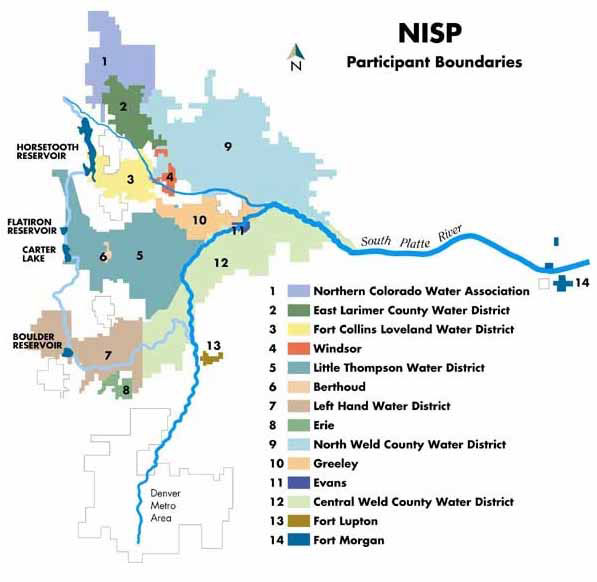
Fifteen municipalities and water districts are participating in NISP through Northern Colorado Water Conservancy District, also known as Northern Water.
The project would yield 40,000 acre feet of water a year to participants. An acre-foot is roughly 325,851 gallons, enough to meet the water needs of three to four urban households for a year.
The draft EIS looks at four alternatives for the project, including a “no action” alternative. The version of NISP preferred by Northern Water is Alternative 2, which would build Glade Reservoir northwest of Fort Collins.
Glade would be a bit larger than Horsetooth Reservoir and inundate the valley through which U.S. Highway 287 currently runs from north of Ted’s Place to a point south of Owl Canyon Road.
Water would be drawn from the Poudre near the mouth of its canyon during times of peak flow, primarily May and June, to fill the reservoir with up to 170,000 acre feet. Seven miles of U.S. 287 would be rebuilt to the east.
Galeton Reservoir would be built east of Ault and draw water from the South Platte River. It would hold about 45,000 acre feet of water.
The project would use new pipelines and existing canals to transfer water and meet requirements for returning water to the rivers.
Opponents of the project maintain the water that would be provided by NISP could be realized through conservation. Another concern is the ecological impact of reduced river flows as water is diverted into reservoirs.
Fort Collins resident Greg Speer said plans for reducing flows in the original draft EIS were “fatally flawed.” The supplement document is no better, he said.
“There are a lot of problems with NISP as well,” he said. “The bottom line is these flows still as projected are fatal for the Poudre.”
Representatives of several communities participating in NISP said they have taken steps to increase their conservation efforts. Dave Lindsay, town manager of Firestone, said the town had reduced its per capita water consumption by 13.5 percent.
“That’s substantial but it’s not enough,” he said.
To have a sustainable future, Colorado needs projects like NISP to store water that otherwise would flow out of the state, he said.
The EIS is required under the National Environmental Policy Act. The U.S. Army Corps of Engineers is responsible for its production. The EIS process for NISP began in 2004.
Northern Water expects the final EIS to be issued next year, with a decision on the project coming in 2017.
More Northern Integrated Supply Project (NISP) coverage here and here.
Michael D. DiTullio is general manager of Northern Colorado Water Conservancy District, a proponent of the Northern Integrated Supply Project. Mark Easter, an opponent, is the board chair for Save the Poudre: Poudre Waterkeeper. Here’s what they had to say about the proposal to build two reservoirs that would add 40,000 acre feet of water to the Front Range’s inventory.
Question: Recently released is the Army Corps of Engineers’ nearly 1500-page supplemental draft environmental impact statement for proposed NISP. What do you want community members to know?
DiTullio: The biggest takeaway is that the SDEIS reveals the impacts of the project are minor and can be successfully mitigated. The participants are committed to making sure this project is built in an environmentally responsible manner. For instance, the low-flow augmentation release will increase the flows in the river at the times it is most needed, which is generally through the summer. By building bypass structures at four diversion dams through Fort Collins the project will allow those minimum flows to move downstream and also allow fish passage back upstream. Both of which do not occur today.
Easter: In nearly every aspect, NISP/Glade Reservoir is as bad, or worse than was previously proposed. The SDEIS reveals that NISP/Glade has not fundamentally changed — it would further drain and destroy the Cache la Poudre River, stripping the heart of the June Rise and diverting a huge chunk of the river at the canyon mouth. The Poudre will not survive if NISP/Glade is built. The Poudre would become a silted up, stinking ditch through Fort Collins.
Q: There’s debate about whether Glade Reservoir, if built, would reduce flows in the Poudre River.
DiTullio: This issue has been studied extensively for the past six years, and the results show there will be a small reduction during the spring rise but only when the snow pack is above normal. The biggest take to the river is that the project will provide more water when it is needed most, when the river is at its lowest level. This will provide for a live stream through Fort Collins year-round and to maintain a trout fishery in downtown Fort Collins. No other group or entity have done anything close to cleaning up the river that this project will.
Easter: The Water Resources Technical Report, published with the SDEIS, shows the stark truth — flows below the canyon mouth would be hurt in almost all years. May, June and July flows — the peak flows so critically important to healthy Front Range rivers — would be cut the most, nearly 15 billion gallons in wet years, 3.8 billion gallons in dry years and 6.1 billion gallons on average at the Lincoln Street Bridge.
Q: A lot of people talk about Glade Reservoir and damming the Poudre River as one in the same. Is that correct?
DiTullio: The Glade Reservoir is not a dam on the main stem of the Poudre River. The reservoir is located off stream, making NISP more environmentally friendly. The reservoir will create a new flat water fishery and recreational area that will benefit the citizens of Northern Colorado.
Easter: No matter where you put the reservoir, the result would be the same. The last free-flowing, unallocated water left in the Poudre would be diverted at the canyon mouth, along with an additional 20,000 acre feet per year (6.5 billion gallons) of water typically diverted by farmers downstream. The river downstream suffers identical fates when that water is diverted, regardless of where the water is stored.
Q: With this project, there is so much information to digest. What are falsities you’d like to address?
DiTullio: There are two major misconceptions that are advanced by the opponents to NISP: No. 1. That the project will dam the Poudre River, and No. 2. is the project will cause the Poudre to dry up. The Glade Reservoir will be located in a dry valley north of Ted’s Place and will have minimal impact on the area. Although the project will take water from the river during the spring runoff, it will not cause the Poudre to run dry. To the contrary, it will in fact add water back to the Poudre, 3600 acre feet annually at critical times to enhance the environment and the fisheries. Further, in response to the concerns of Fort Collins, the NISP participants have agreed not to divert water into Glade if the minimum streamflow’s are not being met.
Easter: The proponents absurdly claim a winter flow “augmentation” plan would leave the river better than before. They refuse to acknowledge the devastating impact of stripping the peak flows off the river. The proponents have some of the highest per-capita water use rates in the region, yet they claim further water conservation is impractical. And, they turn a blind eye to the fact that NISP would harm agriculture at least as much or worse than if no project were built.
Q: It could be years until the final EIS is released and further public comment collected, not to mention the possibility of a group challenging the decision in a court of law. Will Glade Reservoir come to fruition? How many years from now?
DiTullio: We don’t think it will take years. The project is needed now and should be built as soon as possible. The Army Corps on their website states they will release a final EIS next year. When the record of decision is released in 2017 we believe the project will move forward at that time. Obviously, any one or group has the right to challenge the Army Corps if they so choose to do so. One of the reasons that the Corps moved forward with a SDEIS was to have certainty that whatever decision they make is defensible in court.
Easter: It could take the Corps at least three more years to permit or deny the project. If permitted, both EPA and the Colorado Water Quality Control Division have to sign off, taking years more. The Corps faces lawsuits, court battles, and legal action from any proponent or opponent who doesn’t get what they want. Expect at least a decade before a resolution or the project dies of its own weight. We will oppose the project as long as it takes.
Q: What, if any, are alternatives to NISP?
DiTullio: There are no reasonable alternatives. This is well documented in the SDEIS documents. The “no action alternative” is to significantly increase the purchase of water that is used by agriculture which would lead to dry up of existing farmland. Many of the participants rent irrigation water to the ag community and value what they do to enhance the quality of live here in Northern Colorado. Conservation alone will not solve the water issues for Northern Colorado. The opposition champions a scheme that simply is not realistic and will not work.
Easter: The Corps touts the project proponent’s straw man “no action alternative,” an unrealistic and ironic “alternative” that is really no such thing. The Corps and NISP/Glade proponents refuse to accept that new water diversions are a thing of the past, and that conservation, efficiency and partnerships with agriculture must be embraced to keep our rivers alive. The fate of the Cache la Poudre — our home river — depends on collaboration and innovative thinking.
Q: How do we address water in Fort Collins, while also looking at the state’s water future as a whole?
DiTullio: The City of Fort Collins has done a good job of taking care of its citizen’s water needs. They were able to secure senior river water rights on the Poudre before many of the participants existed. However, not all of the citizens of Northern Colorado reside in Fort Collins. The water right for the NISP is junior to those of Fort Collins and the city will not be harmed by the project. The participants have an obligation to their citizens to provide a water supply for the future. It is ironic that my district, the Fort Collins-Loveland Water District, currently serves approximately 32,000 residents within the City of Fort Collins.
NISP is only part of how we address the future water needs of Northern Colorado. The water community and this includes the City of Fort Collins must come together in harmony to collectively manage the water resources that we have. None of us can do it alone or should we. We are all citizens of this planet and we all have the right to choose where we live with our families and this includes Northern Colorado.
Easter: The Fort Collins water utility is not a NISP/Glade participant. Fortunately, our water utility “gets it.” City staff appears to understand the critical importance of innovation in keeping our home river healthy and vibrant while it meets our water needs. In contrast, Northern Water and the NISP/Glade proponents rely on 19th Century solutions to solve 21st Century problems. It is time to embrace the future.
Want to weigh in?
•There is an open house at 5 p.m. Wednesday and a 6 p.m. hearing thereafter at the Hilton Fort Collins, 425 W. Prospect Road. Attendees may share their perspectives during a public comment period.
•Those who can’t attend may submit comments in writing to:
Northern Integrated Supply Project preferred alternative
From email from Northern Water:
More than 150 Northern Integrated Supply Project supporters rallied at Northern Water’s headquarters on July 2 to celebrate momentum created by the recent release of the Project’s Supplemental Draft Environmental Impact Statement.
Speakers U.S. Sen. Cory Gardner, U.S. Rep. Ken Buck, State Senators Mary Hodge and Jerry Sonnenberg, Chris Smith (Left Hand Water District general manager and NISP Participants Committee chairman) and Eric Wilkinson (Northern Water general manager) addressed an enthusiastic audience comprised of NISP participant representatives, mayors, county commissioners, lawmakers and private citizens.
Common themes shared by the speakers included the importance of attending the Supplemental Draft EIS public hearings, hosted by the U.S. Army Corps of Engineers July 22 and 23; and building the project as soon as possible to capture and store water to meet the needs of future generations.
“My challenge to everyone at this rally is to come with their family, friends and neighbors to attend the public hearings in Fort Collins and Greeley,” said Buck.
Sen. Gardner noted, “This year, 1.3 million acre feet of water that NISP would have captured flowed out of Colorado and we didn’t even get a thank you note from Nebraska.”
NISP Called “The Ultimate Rain Barrel”
State Sen. Jerry Sonnenberg echoed the others in discussing Glade’s potential to store water. “There’s been a lot of talk about using rain barrels this year. Well, we’ve got to find a way to keep Colorado’s water in Colorado. We have the ultimate rain barrel, ready to be filled, right up the road here.”
Several speakers warned that without NISP, more farmland will be dried up as water providers find necessary supplies for their needs. The SDEIS studies show this could lead to a dry-up of an additional 100 square miles of irrigated farmland – an area approximately twice the size as the City of Fort Collins.
“That would mean a $400 million loss of agricultural output,” said Gardner. “That is economic devastation. We can’t keep pushing it down the road. The longer this takes, the higher the cost, and the more acres that get dried up,” he added.
Poudre River will be Enhanced
Poudre River Trust board members Joe Rowan and Jim Reidhead said what excites them most about NISP are enhancement opportunities for the Poudre River. “NISP will protect recreation and habitat in the Poudre Canyon for everyone to enjoy,” said Rowan.
“We support NISP, added Reidhead. “The Poudre is a working river and NISP would enhance habitat while keeping the river healthy and sustainable – it can be done.”
We need your support at the upcoming NISP public hearings hosted by the U.S. Army Corps of Engineers. It is critical to have as many NISP supporters as possible attend and testify why they believe the Supplemental Draft EIS findings are sound and why the project is critical to northern Colorado.
Dates and locations for the U.S. Army Corps of Engineers public hearings on the NISP Supplemental Draft EIS are:
Wednesday, July 22
Hilton Fort Collins
425 West Prospect Road
Fort Collins, CO 80526
Thursday, July 23
Weld County Administration Building
1150 O Street
Greeley, CO 80631
The public hearings begin at 6:00 p.m. and will be preceded by open houses beginning at 5:00 p.m.
If you wish to submit your comments in writing, they must be submitted by September 3, 2015. Submit to:
John Urbanic, NISP EIS Project Manager
U.S. Army Corps of Engineers, Omaha District
Denver Regulatory Office
9307 S. Wadsworth Blvd.
Littleton, CO 80129
Email: nisp.eis@usace.army.mil
More Northern Integrated Supply Project coverage here and here.
Northern Integrated Supply Project preferred alternative
Here’s the release from the Northern Colorado Water Conservancy District (Brian Werner):
With the Army Corps of Engineers release of the Northern Integrated Supply Project’s supplemental draft environmental impact statement, NISP proponents have accomplished an important milestone toward constructing two new, and very much needed, reservoirs in northern Colorado.
The SDEIS began in 2009 following a four-year process to produce a draft EIS. The NISP SDEIS is one of the most extensive and intensive reviews of a water project ever undertaken in Colorado. The additional studies closely analyzed riparian habitat, water quality, aquatic resources and hydrologic modeling.
“We are pleased to have reached this important milestone after 12 years and nearly $15 million in expenditures by the NISP participants,” Northern Water General Manger Eric Wilkinson said. “The SDEIS shows that the project is needed to meet a portion of the participants’ future water needs.”
The SDEIS includes a proposed mitigation plan illustrating how NISP participants will provide additional water to the Poudre River during low flows, build low-flow/fish-friendly bypass structures at key sites on the river through Fort Collins, and implement river restoration measures.
“NISP is a collaborative, regional project that will play a key role in addressing Colorado’s challenging water future by managing available water supplies that would otherwise flow out of state and do so while addressing environmental concerns in a proactive way,” Wilkinson added.
Public comment will now be accepted through Sept. 3, versus the initial 45 days. The corps’ posting does not include more public hearings on the proposal. There are two planned — one in Fort Collins and one in Greeley — for near the end of July.
The corps cited “a number of requests to extend the comment period” in its extension notice. At least one request, from U.S. Rep. Jared Polis, a Democrat whose district includes Fort Collins. Anti-NISP group Save the Poudre also planned to ask for an extension and Fort Collins city staff analyzing the NISP report said the length of the comment period would dictate when they presented their findings to the city council.
Polis asked for a minimum of 120 for the report to be digested and commented on. He cited concerns by the Fort Collins city government that it have enough time for complete analysis and outreach on the proposal.
Low flow releases are part of the mitigation plan. From the Fort Collins Coloradoan (Nick Coltrain):
The report, which clocks in at just shy of 1,500 pages, is the precursor to at least two public hearings and a 45-day public comment period on a plan to build two new Northern Colorado reservoirs capable of delivering more water to Colorado’s growing Front Range.
U.S. Rep. Jared Polis, a Democrat whose district includes Fort Collins, has already requested the public comment period be extended to 120 days.
Documents released Friday add to a 2008 draft environmental impact statement for the water storage proposal. The U.S. Army Corps of Engineers, which compiled the reports and is the ultimate authority on whether construction will be permitted, determined “substantial additional analysis was needed” after its initial report underwent public comment.
About 675 letters, emails and oral statements regarding NISP were recorded during that process.
“We are pleased to have reached this important milestone after 12 years and nearly $15 million in expenditures by the NISP participants,” Northern Colorado Water Conservancy District General Manger Eric Wilkinson said in a statement. “The SDEIS shows that the project is needed to meet a portion of the participants’ future water needs.”
Northern Water, a public agency that coordinates water management in Northern Colorado, proposed the project to help meet future water needs along the Front Range. It expects a final permit decision in 2017…
NISP opponents fear the project will siphon water away from the Poudre River, which flows through Fort Collins on its route to connect with the South Platte River near Greeley…
In its statement, Northern Water notes that the supplemental report includes mitigation plans to ensure additional water will be released back into the Poudre River during low flows, and includes construction of fish-friendly bypass structures and river restoration measures…
The project, if approved, would lead to the construction of the Glade and Galeton reservoirs, with an estimated combined storage of more than 215,000 acre-feet of water, 40,000 of which would go to municipal water supplies each year. The larger of the two, Glade Reservoir, would be larger than Horsetooth Reservoir.
Glade Reservoir would be built just north of Ted’s Place, the country store and gas station at the junction of Colorado Highway 14 and U.S. Highway 287. It would require portions of U.S. 287 to be relocated.
The reservoir, capable of holding up to 170,000 acre feet of water, would cover the land north of Ted’s Place and south of Owl Canyon with Poudre River water.
Galeton Reservoir, built northeast of Greeley, would be filled with water from the South Platte River.
RESIDENTS INTERESTED IN COMMENTING ON THE SUPPLEMENTAL DRAFT OF THE NORTHERN INTEGRATED WATER SUPPLY ENVIRONMENTAL IMPACT STATEMENT SHOULD DO SO PRIOR TO SEPT. 3. THERE ARE TWO PUBLIC HEARINGS IN WHICH TO DO SO:
» 5 p.m. July 22 at the Hilton Fort Collins, 425 W. Prospect Road, Fort Collins
» 5 p.m. July 23 at the Weld County Administration Building, 1150 O St., Greeley.
To view the supplemental draft environment statement, and to learn where to send written comments, go to the Army Corps of Engineers’ website.
Submit comments in writing to John Urbanic, NISP EIS Project Manager, U.S. Army Corps of Engineers, Omaha District, Denver Regulatory Office, 9307 S. Wadsworth Blvd., Littleton, CO 80128 E-mail: http://nisp.eis@usace.army.mil..
U.S. Sen. Cory Gardner, who serves on the Committee on Energy and Natural Resources, focused on the harm “buy and dry” deals could do to Colorado…
Weld County Commissioners Barbara Kirkmeyer and Mike Freeman both attended the rally and expressed their support.
“It’s very important to me,” Freeman said. “We know the cost of buy-and-dry.”
Freeman represents Weld County’s District 1, which covers the northern half of the county. It also covers a vast amount of farmland, which would be considered for water lease deals.
Meanwhile, NISP supporters rallied at a shindig at Northern’s HQ yesterday. Here’s a report from Saja Hindi writing for the Loveland Reporter-Herald:
Speakers at the Northern Colorado Integrated Supply Project support rally made a consistent call to action to their attendees — make their voices heard…
The U.S. Army Corps of Engineers began its first environmental impact statement in 2004 with a draft open to public comment in 2008. The following year, they decided to conduct a supplemental draft environmental impact statement, and that was released June 19 of this year for public comment. The comment period was extended recently through Sept. 3.
The final impact statement is scheduled to be released in 2016 with a record of decision in 2017.
If the agency allows for the project to move forward, construction could begin 2019 and be completed in four years…
Senators, congressional leaders and local elected officials were among the 175 attendees at the fifth rally in support of the project at Northern Water in Berthoud Thursday afternoon.
“We all know this is a valuable project needed for this area, and it must move forward,” said Eric Wilkinson, Northern Water General Manager.
It’s not going to dry up the Poudre River, Wilkinson asserted to the crowd, rather make use of available water supplies in Northern Colorado. And it’s needed for the 15 participants in the project, the future of the region, the future of the state and for future generations, he added.
Sen. Jerry Sonnenberg, R-Sterling, told the crowd there’s been a lot of talk this year in Colorado about rain barrels and harvesting water.
“Ladies and gentlemen, let’s help build this ultimate rail barrel,” he said. “Let’s build NISP.”[…]
U.S. Sen. Cory Gardner, R-Colo., also addressed the crowd, stressing the urgency of the project.
“These are the faces of NISP, the faces that know their communities need this water to survive,” Gardner said.
He said residents need to be serious about the infrastructure needs of the country and can’t keep pushing the projects down the road because delays will affect costs, people’s employment and access to water for individuals and agriculture.
Gardner said in an interview that the permitting process in these projects needs to be examined because both NISP and the Chatfield Reservoir project have taken more than a decade — even with broad bipartisan support.
Northern Colorado leaders rallied Thursday urging quicker green lights for their “ultimate rain barrel” — a $713 million project that would divert water from the federally protected Cache La Poudre River and store 71 billion gallons in two new reservoirs.
They contend this Northern Integrated Supply Project is crucial for 400,000 future Front Range residents in some of the nation’s fastest-growing areas around Colorado’s oil and gas boom.
Since April, so much rain filled existing reservoirs and flowed into the South Platte River that Nebraska got 1.3 million acre-feet that Colorado could have caught if it had more storage space such as NISP’s Glade and Galeton reservoirs, Northern Water manager Eric Wilkinson said Thursday. Northern Water has been seeking permits since 2004 and still faces federal and state regulatory hurdles.
Erie, Fort Morgan, Windsor, Firestone, Frederick, Dacono and others “are trying to meet their future water needs,” Wilkinson said.
Poudre water wouldn’t be taken during dry times, ensuring flows of at least 50 cubic feet per second during summer and 25 cfs in winter. Mitigation of harm to wetlands would lead to restoration of habitat elsewhere, he said.
“NISP will not dry up the Poudre River,” Wilkinson said. “This project makes beneficial use of available water supplies.”
Gov. John Hickenlooper’s administration must complete environmental reviews; a state spokeswoman said Hickenlooper and two key water officials were traveling and couldn’t respond to queries. Federal water engineers at the U.S. Army Corps of Engineers this week extended by 30 days a public-comment period on the latest environment impact document, due to be done next year.
Construction couldn’t begin before 2019, Northern Water officials said, assuming permits are issued…
The alternative to developing new water supplies would be for booming cities and industry to buy more water from farmers, leading to a dry-up of 100 square miles of irrigated agriculture, project proponents said. That would mean a $400 million loss of agricultural output, U.S. Sen. Cory Gardner said at the rally.
“That is economic devastation,” Gardner said. “We can’t keep pushing it down the road. The longer this takes, the higher the cost, and the more acres that get dried up.”
This spring, water flows in the Poudre, a South Platte tributary with upper reaches protected as wild and scenic, were sufficient for Northern Water to trap and store 130,000 acre-feet in the two proposed reservoirs, officials said. The project goal is to store enough water to supply 40,000 acre-feet a year to 15 participating water providers.
Gardner said he’ll work to accelerate permitting in Washington, D.C.[…]
More than 150 state lawmakers, mayors, county commissioners, water providers and residents attended Thursday’s rally.
“We’ve got to find a way to keep Colorado’s water in Colorado,” state Sen. Jerry Sonnenberg said. “We’ll have the ultimate rain barrel, ready to be filled, right up the road here.”
More Northern Integrated Supply Project coverage here and here.
Aerial view of the roposed Glade Reservoir site — photo via Northern Water
From the Loveland Reporter-Herald (Pamela Johnson):
When the Northern Integrated Supply Project was first proposed, Northern Water hoped to have Glade Reservoir complete and filled by 2013.
Now as the permitting process has stretched over a decade, the earliest date that construction could begin is 2019, with water flowing in by 2021.
“In this process, we learned a long time ago that there is no set date of when it’s going to be done,” said Brian Werner, spokesman for Northern Water, which is spearheading the project on behalf of four water districts and 11 cities and towns…
Despite delays, Northern Water is convinced that NISP and its two reservoirs, Glade and Galeton, will be built and are the answer to a growing population’s needs by storing water from the Poudre and South Platte rivers.
“Those 15 participants, their resolve is even stronger than ever,” said Werner. “The more time that goes by, the more important it is to have that water supply.”
However, an environmental group that opposes the project is just as convinced that construction will never begin and that participants are beginning to look to alternative options…
The Northern Integrated Supply Project is intended to provide additional water to the 15 Front Range providers by pulling excess water from the Poudre and South Platte rivers during plentiful years to fill two new reservoirs.
The water from the Poudre would be stored in a 5-mile-long reservoir northwest of Fort Collins. Glade Reservoir, which would be slightly larger in capacity than Horsetooth Reservoir, would hold 170,000 acre-feet of water and require relocation of seven miles of U.S. 287.
The second reservoir, Galeton, would hold 40,000 acre-feet northeast of Greeley and would be filled from the South Platte River downstream from Greeley. This water would be delivered to two irrigation companies in exchange for their Poudre River water.
Save the Poudre and other groups that oppose NISP say that science shows this project would drain the river to a mere trickle through Fort Collins, impacting habitat, wildlife, fishing, tubing, kayaking and trails that span the river corridor…
Northern Water says say this scenario will never happen. With required minimum flows in the river, Werner has said the water would be pulled only in years when there is excess.
And as soon as a supplemental environmental impact statement is released, Northern Water will begin working with Colorado Parks and Wildlife to mitigate any habitat or wildlife concerns, Werner said.
“Once the supplemental is out, we will start moving on some of these areas that have been stuck in molasses,” Werner said.
What is the process?
The U.S. Army Corps of Engineer is the lead federal agency on the permitting process for the proposed water project.
The first step of creating an environmental impact statement began more than a decade ago — in August 2004.
Four years later, the first draft EIS was opened to public comment. During that time, supporters and opponents rallied at several public hearings and community events.
The federal agency then announced in 2009 that a supplemental draft EIS was necessary to include additional studies.
The supplemental report was anticipated to be released this year but instead was pushed back to sometime in 2015. If that does indeed happen, a final decision could come in 2016. If it’s approved, design would take place in 2017-2018, then construction in 2019…
How much does it cost?
As the project timeline has stretched out over the years, the cost too has stretched.
Northern Water and the participating water providers are paying for the studies and costs associated with permitting. So far they have spent about $14 million just for permitting, and Werner estimates that each additional year adds $1 million to $1.5 million to the tally.
Once a final decision is issued, and if that decision allows the project, construction is estimated at $500 million. That, too, could change depending on the final design, the year it is built and the economy.
“We’re at the mercy of the process and the federal government on this one,” said Werner. “It’s been an interesting ride.”
More Northern Integrated Supply Project coverage here and here.
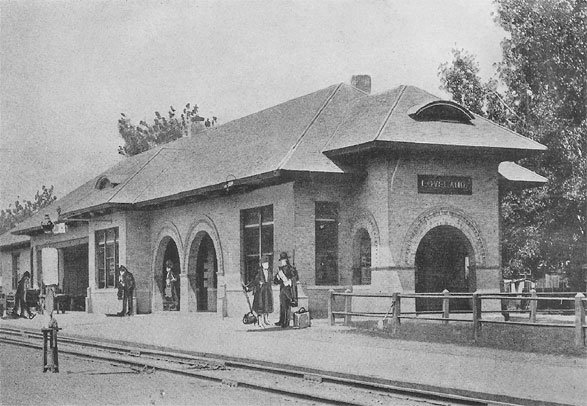
Colorado and Southern depot back in the day via LovelandHistorical.org
From the Fort Collins Coloradoan (Sarah Jane Kyle):
About 50 regional leaders and individuals attended the Regional Issues Summit in Loveland on Wednesday to tackle water and other issues.
Keeping water in mind — especially in “years of plenty” — will be a critical to Northern Colorado’s future because of the region’s ever-shifting water supply, said Northern Water General Manager Eric Wilkinson. Colorado’s population is expected to double in the next 40 years, making good planning “essential.”
“If you’re in a good spot in regards to water supply, you’re one day closer to a drought,” he said. “If you’re in a drought, you’re one day closer to a good water supply.”
Wilkinson added that 2014 is a year of plenty. Lake Granby is 7 inches from spilling over. Horsetooth Reservoir is also running high.
More rainfall meant less people needed to pull from water storage to meet their irrigation needs and contributed to Northern Colorado’s successful year.
Peak snowpack for the North Platte Basin was 140 percent above normal for the 2013-14 snow season, which peaks in April, according to the National Weather Service…
Addressing the need will take a tiered approach, with conservation as an important, but incomplete, piece of the puzzle, Wilkinson said.
“Conservation is the most important thing you can do and the cheapest thing you can do in regards to water management,” he said. “However, it is not a silver bullet. There are limits to what it can do.”
A more controversial approach is to create new water supplies and storage, such as the proposed Northern Integrated Supply Project, or NISP.
“We owe it to ourselves to explore that,” Wilkinson said. “We’re in a very great situation now, but we have a lot to do to plan for what’s coming up.”
More Northern Colorado Water Conservancy District coverage here.
Map of the Northern Integrated Supply Project via Northern Water
Northern Integrated Supply Project via The Denver Post
Northern Integrated Supply Project preferred alternative
Aerial view of the roposed Glade Reservoir site — photo via Northern Water
Reservoirs NW of Fort Collins
Halligan Reservoir
From the Fort Collins Coloradoan (Ryan Maye Handy):
…the modern struggle over Glade Reservoir — which would divert Poudre water into a lake larger than Horsetooth Reservoir — might not inspire a musket-bearing militia, it could cost hundreds of millions of dollars, and has already sparked two complex environmental studies and angered Poudre River advocates.
Glade Reservoir may be just a plan on paper, but some say it is key to keeping Northern Colorado from drying up in the next few decades. Others contend that the highly controversial reservoir will damage the Poudre, not to mention swallow up acres of land, displace a federal highway and transfigure northern Larimer County’s landscape.
But release of a long-awaited environmental study that could pave the way for construction of two new Northern Colorado reservoirs — including Glade — has been postponed until next spring. The delay is the latest stall in an already yearslong battle over expanding Colorado’s water storage.
“We need this project and we need it soon,” said Carl Brouwer, who has been spear-heading the reservoir project, known as the Northern Integrated Supply Project, for the Northern Colorado Water Conservancy District. “We need this project today.”..
Now, the study won’t be released until possibly spring 2015, said Northern Water spokesman Brian Werner. That means the plan that would add millions of gallons to Northern Colorado’s reservoirs to stave off inevitable water loss remains years from realization. Meanwhile, Front Range cities are forced to lease water rights from agriculture in order to make up for water shortages, which continue to grow each year.
The U.S. Army Corps of Engineers has been studying the environmental impacts of the Northern Integrated Supply Project, or NISP, for more than a decade and, in 2008, began a second study into the project after public outcry demanded it. The supplemental study has now taken more time to complete than the first draft released in 2008.
But the future of NISP is not entirely dependent on the results of that study — the project is tied to the fates of several other proposed reservoirs in Northern Colorado, all of which are snarled in years of environmental study.
The Army Corps would not confirm that it had officially changed the deadline for the next environmental impact statement but said it is “continuing to work through a deliberative process on the NISP schedule,” said spokeswoman Maggie Oldham.
But those in the Colorado water community believe the study won’t be released in December or January, as the Corps initially planned. The delay is likely due to the overlap of multiple projects along the Poudre River and their different deadlines…
Regardless, the way forward for NISP will not be simple, as the project’s success depends on the approval of two other potential reservoirs, Halligan and Seaman, both still years away from realization, said Reagan Waskom, director of the Colorado Water Institute.
Northern Water has also yet to acquire all the land necessary to build Glade Reservoir, which would also require the relocation of 7 miles of U.S. Highway 287 north of Fort Collins. But all other elements needed to pull NISP together still await approval from the U.S. Army Corps of Engineers.
Waskom thinks delays on the NISP study can be explained by the complex overlapping of the two water storage projects and a series of staggered deadlines for each.
“You can see why they are having trouble,” he said Tuesday. But while the Corps grapples with balancing decisions on NISP and another reservoir project, the gap between Colorado’s water availability and water use continues to grow, said Waskom.
Decades of challenges
While Brouwer believes he can see the light at the end of the proverbial tunnel for Glade, there are myriad obstacles that stand between the project and completion. In addition to years of environmental studies and public comment, Wockner has vowed to prevent the construction of Glade at any cost by invoking the public right to challenge Army Corps decisions in court.
All these things have kept Glade and NISP wrapped up in years of controversy, to the point that proponents of the project have joked they will never see it completed in their lifetime.
But Colorado might not have a lifetime to wait for more water, according to draft versions of the Colorado Water Plan completed this summer.
The state is on track to be short 500,000 acre-feet of water by 2050 — enough to cover half a million football fields in one foot of water. The Fort Collins-Loveland Water Conservation District has already passed its water shortage date: By 2005, the district was short 1,100 acre-feet of water, an amount that could grow to 7,500 acre-feet by 2050, according to the Army Corps of Engineers.
The NISP project is projected to bring an extra 40,000 acre feet of water to Northern Colorado, to satisfy shortages in cities from Fort Collins to Fort Morgan.
The Northern Integrated Supply Project, of which Glade is a part, is just one of a few solutions offered by the in drafts of the state water plan for the South Platte River Basin, the most populous in the state. While Northern Water can’t begin work until the Army Corps finishes the supplemental study the project remains in limbo.
“We have our good days and our bad days, in terms of ‘is this ever going to end,’ ” said Werner.
The supplemental environmental study will not be an end to the NISP process, but instead just another step in many years’ worth of approvals and studies, not to mention potential court challenges from groups such as Wockner’s. Thanks to a 1980s purchase, Northern Water owns roughly 75 percent of the land needed to build Glade, but the district has yet to acquire land from Colorado State University, the U.S. Forest Service and the Bureau of Land Management, said Werner.
The cost of that land acquisition is unknown, Werner said. But the entire project has been given an estimated price tag of $490 million.
Glade Reservoir would begin just north of Ted’s Place, a Country Store gas station at the junction of U.S. Highway 14 and Highway 287. The reservoir, larger than Horsetooth, would fill 7 miles of highway with Poudre River water, and swallow land north of Ted’s Place and south of Owl Canyon. Only a handful of private property owners will be displaced Werner thinks, but the new reservoir would likely transform a few adjacent properties into lakeside real estate…
Meanwhile, the inevitability of greater water shortages looms. An executive order from Gov. John Hickenlooper required that the state start preparing a state water plan to reconcile water conflicts between the Western Slope and the Front Range, as well as plan for the next several decades. But that plan, the first draft of which is due to the governor by Dec. 10, will also be subject to a year of public comment.
In Fort Collins, which has been experiencing water shortages for almost 10 years, the gap between water needs and availability will grow steadily every year unless something is done.
“The gap only grows if the projects don’t get built,” said Waskom.
Plans for two new reservoirs in northern Colorado are facing more delays as a key federal review is not expected until next spring. The delay is the most recent turn in a long battle over expanding Colorado water resources.
The release of a long-awaited environmental study that could pave the way for construction of the two new reservoirs could be postponed until next spring, according to advocates and opponents.
The plan by the Northern Colorado Conservancy District to build Glade and Galeton reservoirs in northern Colorado was supposed to take a step forward this winter with the release of a second environmental impact statement. The statement has been postponed twice.
The reservoirs are part of North Colorado Water’s Northern Integrated Supply Project to create 40,000 acre-feet of new supplies.
The Army Corps of Engineers has been studying the environmental impacts of the NISP for more than a decade.
In addition to the two reservoirs, the project calls for two pump plants, pipelines and improvements to an existing canal, according to a Northern Water summary.
Northern Water distributes water to portions of eight counties in northern Colorado and a population of 860,000 people.
In 2008, the corps began the second study into the project after public outcry demanded it. The supplemental study has now taken more time to complete than the first draft, released in 2008.
The Corps of Engineers said it is reviewing the schedule for the new report, but no official date has been set.
The study will not end the process, but instead is just another step in the approvals, studies and potential court challenges.
More Northern Integrated Supply Project coverage here.
“High and dry is not a water plan,” Beauprez responded to a question about water storage. “We simply must put a shovel in the ground.”
Saying he supports building water storage, no question, Beauprez contended that regulation gets in the way of building the projects Coloradans need. “A governor needs to lead on behalf of the people to eliminate regulatory hurdles, not add to them,” he said.
Hickenlooper countered that any big water storage project will take decades to complete and that “Every conversation has to start with conservation.” He also declined to take a position on the Northern Integrated Supply Project, a proposal to build reservoirs on the northern Front Range. “I’m not allowed to take — if I took a stand on NISP, it would jeopardize the entire federal process,” he said.
“On my watch,” Beauprez rebutted, “we’re going to build”
FromAspen Journalism (Brent Gardner-Smith) via the Aspen Daily News:
Colorado gubernatorial candidate Bob Beauprez told the Colorado Water Congress Friday that as governor he would be the “lead cheerleader” for new water storage projects in the state. He also drew a distinction between himself and Gov. Hickenlooper on the potential of a major new dam and reservoir project being built in the state.
The governor answered a question on Thursday at the Water Congress meeting in Snowmass Village by saying it was “unlikely” that public opinion in the state had shifted in favor of building a major new water storage project.
“I submit to you that’s not leadership,” said Beauprez. “I think we need a governor that stands up and says we’ve got to build new storage and I’m going to lead the way to make sure it happens. I’ll promote worthy projects. I’ll be your lead cheerleader on that.”
The Water Congress is an advocacy organization whose mission includes the “protection of water rights” and “infrastructure investment.”
Beauprez said he would seek to streamline the approval process for new water projects by asking Congress to pass a resolution exempting Colorado projects from NEPA, which often requires producing an extensive environmental impact statement.
“I’ll seek NEPA waivers for any project that meets the stringent Colorado standards, with the help of our Congressional delegation,” said Beauprez [ed. emphasis mine], a Republican who represented Colorado’s 7th District on the Front Range from 2003 to 2007.
Beauprez also told the Water Congress crowd that he supported approval of the Northern Integrated Supply Project, or NISP. The project’s proponent, the Northern Colorado Water Conservancy District, is seeking federal approval for two new reservoirs near Fort Collins.
The water for NISP will come from the Poudre and South Platte rivers on Colorado’s East Slope, but Northern Water’s existing system also uses water diverted from the Colorado River basin on the West Slope, and some of that water could be used in a system expanded by NISP. The Army Corps of Engineers has been leading the review of the project since 2004 and expects to release a decision document in 2016.
“Frankly, you’ve got a governor who can’t seem to decide if he’s for it [or] against it,” Beauprez said about NISP. “I’m for it. And I’ll do everything to make sure it gets approved and built.”
Given his enthusiasm for new reservoirs, Beauprez was asked by an audience member if he was proposing new transmountain diversions to augment the Front Range’s water supply.
“No,” Beauprez said emphatically.
“Where are you going to get the water from?” the questioner asked, noting that 80 percent of water in Colorado is on the Western Slope.
“What I’m proposing is the same kind of thing that NISP is doing — taking advantage of the opportunity to store East Slope water on the East Slope. I think until we’ve demonstrated that we’ve stored all the water we possibly can on the East Slope, transbasin diversions shouldn’t even be on the table.
“We know we can move water,” Beauprez continued. “And sometimes we’ve moved it because it’s been convenient, or because there’s the money, or because there’s the votes, or because of whatever. But the West Slope of Colorado is Colorado, too. And I understand that. And I want to protect that. And I know that you’ve got a whole lot of people downstream from you on the West Slope that covet that water as well.”
Beauprez, who grew up on a dairy farm in Lafayette and now diverts water to grow alfalfa and raise buffalo in Jackson County, said he has a keen appreciation for Colorado water law and will defend the state’s priority system, which is based on “first in time, first in right.”
“I know what Colorado’s time-honored water laws are for,” he said “I know that our prior appropriations doctrine has worked, and worked very, very well. And I know that there’s a lot of people that would like to gnaw away, erode, and destroy that. I’m not one of them. Our prior appropriations doctrine, our water law, and our right to own and utilize our water needs to be protected every day at all costs.”
Like a bolt of lightning, climate change clearly divides candidates in the Third Congressional District.U.S. Rep. Scott Tipton, a Republican, and his Democratic challenger from Pueblo, Abel Tapia were asked about it at the Colorado Water Congress summer convention.
“We all agree that climate will change,” Tipton said, quickly launching into campaign talking points on all-of-the-above energy policy.
But Tipton criticized the way some have politicized the issue and complained of governmental overreach by the Environmental Protection Agency and other federal departments.
“Anyone who doesn’t believe in climate change is fooling themselves,” Tapia said later in the day. “When you look at the forest fires and floods we have experienced, something has added to that.”
Tapia said the country has the ability and obligation to discover ways to overcome the effects of climate change to keep the county and world secure.
Tipton also stressed his record in Congress on water issues, citing his efforts to stop the National Forest Service from tying up water rights in federal contracts for ski areas and ranch land.
He said the EPA’s Waters of the [U.S.] policies are dangerous to agriculture.
“If the EPA can come in and tell us how to use water, we’re going to be stripping our farmers of their ability to make a living,” he said. “We need common sense in federal regulations.”
Tapia said his own life experiences as an engineer, school board member and state lawmaker give him a unique perspective that would serve the state in Congress.
“I’m a problem solver,” he told the Water Congress. “I know that when you need to know something you go to the experts. You are the experts on water.”
More 2014 Colorado November election coverage here.
Tweets from the conference were tagged with the hash tag #COWaterRally.
Ash and silt pollute the Cache la Poudre River after the High Park Fire September 2012 From the Fort Collins Coloradoan (Ryan Maye Handy):
With Colorado’s water year at its mid-July end and many Northern Colorado reservoirs still flush with the bounty of a plentiful water year, water woes of years past have turned into discussions of how the state will store water in the future.
In the coming months, the Army Corps of Engineers will release an updated study on the Northern Water Conservancy District’s proposal to expand its water storage capacity near Fort Collins. The Northern Integrated Supply Project would build Glade Reservoir northwest of the city, bringing a new reservoir larger than Horsetooth Reservoir to the area.
Before the release of the study reignites the battle over the potential environmental impacts of expanding Northern Colorado’s water storage capacity, we look at where Fort Collins gets the water that provides the basis for everything from the natural resources residents enjoy to the craft beer they drink…
Before the High Park Fire, which burned more than 87,000 acres of the Poudre watershed, Fort Collins Utilities split its water sources between the project and the river. But the Poudre’s water has since become filled with fire and flood debris, which prompted a total shutdown of river water for Fort Collins customers.
Time and the September 2013 floods have cleaned out the river, but the city is still mostly reliant on the C-BT project for more than 60 percent of its water each year.
Fundamentally, snowmelt fills the many reservoirs in the C-BT project. The Northern Colorado Water Conservancy District, which helps manage the project, delivers a certain amount of water to cities like Fort Collins as well as farmers and irrigators — all of whom own hundreds or thousands of acre-feet of the project’s water…
Here’s a look at where our water comes from.
THE WESTERN SLOPE
The water that feeds Colorado — and a vast swath of the nation — begins its downward flow from the Continental Divide high in the Rocky Mountains. In order to harness water that otherwise would flow to the Pacific Ocean, water managers created a vast network of reservoirs, tunnels and canals to reroute Western Slope water to Colorado’s more populous Front Range.
LAKE GRANBY
For Fort Collins, and much of the northern Front Range, this is where it all begins. Snowmelt fills this Western Slope reservoir, and the water from it is pumped to Shadow Mountain Reservoir. From there, it’s literally all downhill — gravity pushes water through five reservoirs until it gets to Horsetooth Reservoir, southwest of Fort Collins. This year, due to above-average snowpack, Lake Granby soon will spill over its banks. It can hold up to 540,000 acre-feet of water.
HORSETOOTH RESERVOIR
Horsetooth was built along with the Colorado-Big Thompson Project and is a fraction of the size of Lake Granby — it holds about 156,000 acre-feet of water. This is where Fort Collins will get most of its C-BT water, which has traveled through the 13-mile Adams Tunnel, under U.S. Highway 34, and through several reservoirs. Fort Collins Utilities has its only operational water treatment plant at Horsetooth. In 2014, Fort Collins gets about 65 percent of its water from the C-BT project.
THE CACHE LA POUDRE RIVER
The Poudre River typically provides Fort Collins with 50 percent of its water. But after the High Park Fire polluted the river, Fort Collins has been forced to shut down its Poudre River sources, sometimes for months. The upper part of the river is considered “wild and scenic” — a federal designation. It is also one of the few remaining dam-free rivers in Colorado. In 2014, Fort Collins gets about 35 percent of its water from the Poudre.
CARTER LAKE
Carter Lake is one of many reservoirs that make up the Colorado-Big Thompson Project. Some of Fort Collins’ water can come from this reservoir, but not frequently. Other reservoirs in the system include Grand Lake, Mary’s Lake, Lake Estes and Flatiron Reservoir, to name just a few.
FORT COLLINS
Treated water coming into Fort Collins comes from a plant near Horsetooth Reservoir. Since Nov. 1, the city has used about 9,700 acre-feet of water from the Colorado-Big Thompson Project, and about 5,200 acre-feet from the Poudre River. Before the High Park Fire, the city typically split its water use between the two sources but has since had to use more C-BT water.
Flooding along the Cache La Poudre River damaged nearly two dozen homes and businesses in Greeley last week, and according to officials at the Northern Colorado Water Conservancy District, the Poudre River does not have any dams or reservoirs specifically for flood control. But there is an effort underway to change that.
The Poudre River is full of melted snow — so much so right now that levels are well above average in Larimer and Weld counties, spilling over banks, and flooding homes and businesses.
“We could fill a reservoir in a year like this,” Brian Werner with the Northern Colorado’s Water Conservancy District said.
He points out farmers’ irrigation dams inside the Poudre Canyon, but says water cannot be diverted to those to prevent flooding. He says there is no reservoir along the river because the idea was unpopular in the past.
“I think the general public is more aware when they see these flows and saying, ‘Boy, couldn’t we just store a little bit of that?’ Which is what this proposal does,” Werner said.
Northern Water wants to build two reservoirs off stream that could store water during high flow times. Planners estimate the project would cost $500 million, including $40 million to re-route Highway 287 to make room for Glade Reservoir, and build a smaller one north of Greeley…
But the federal approval process is moving slowly.
“We’ve been working on this in some form for over 20 years, taking some of the flood flows here on the Poudre and storing it,” Werner said.
They do expect to get some news on the status of studies being conducted on the project by the end of this year. It’s unlikely building would start before 2018.
From the Fort Collins Coloradoan (Ryan Maye Handy):
Several of the reservoirs that feed Northern Colorado are full, or approaching overfull, said Brian Werner, a spokesman for the Northern Colorado Water Conservancy District, which helps manage the reservoirs. Carter Lake, southwest of Loveland, is full, and Lake Granby near Rocky Mountain National Park is about to overflow, Werner added.
“We wouldn’t have guessed that in a million years a year ago,” Werner said Tuesday. Only a month ago, it was fifty-fifty if the reservoir would spill. “Now it looks like it will spill.”
Horsetooth is just 2 feet shy of being full, the highest the reservoir has been in late May and early June in the past six years.
The reservoir can hold enough to submerge 156,735 football fields in a foot of water. As of June 3, Horsetooth was holding 154,480 acre-feet of water, putting it around 98.5 percent full, said Zach Allen, a spokesman for Northern Water.
But what happens if Horsetooth does get full? The answer, Werner said, is basically “nothing.”
“We can control all the inflows to Horsetooth,” he said. Flatiron Reservoir and the Big Thompson River feed Horsetooth, and Northern Water controls all the outflows and inflows to the reservoir; Horsetooth’s water level can’t get higher than Northern Water wants it to, Werner said…
Lake Granby, on the other hand, is fed with snowmelt straight from the mountains. It’s levels are uncontrollable, and it could spill over any day now, Werner said.
“You can’t control what nature is going to do” with Granby, he added…
Northern Water for years has pursued an expansion of its water storage capacity to take advantage of plentiful water years. The Northern Integrated Supply Project would build a reservoir larger than Horsetooth northwest of Fort Collins. The proposal has drawn opposition from environmental groups and is in a yearslong federal review of its potential environmental impacts expected to be released late this year…
Much of Northern Colorado’s snowpack, around 200 percent of normal levels after an early May snow, has yet to melt, which brings the potential for much more water to come down from the mountains in the coming weeks.
From email from Reclamation (Kara Lamb):
We have seen the water level at Green Mountain Reservoir rise to the spillway gates as snow melt runoff inflows continue to come into the reservoir. As a result, we were able to increase the release from the dam to the Lower Blue River by 300 cfs today [June 9], using the spillway.
We are now releasing 1800 cfs to the Lower Blue.
From email from Reclamation (Kara Lamb):
The weekend went pretty smoothly for runoff here on the east slope of the Colorado-Big Thompson Project. Thunderstorms boosted runoff to the Big Thompson River slightly with inflow into Lake Estes peaking early this morning around 721 cfs. But this is still a downward trend.
As a result, outflow through Olympus Dam to the Big Thompson Canyon dropped today down to about 125 cfs. As we move into the rest of the week, visitors to and residents of the canyon will continue to see nightly flows rise with snow runoff, enhanced some by rain runoff, just as they have seen for the past week.
Deliveries to the canal that feeds Horsetooth Reservoir have brought Horsetooth back up to full. Its water level elevation has been fluctuating within the top foot of its storage between 5429 and 5430 feet. With it back up near 5430, we have curtailed the canal to Horsetooth and increased the return of Big Thompson River water to the canyon at the canyon mouth using the concrete chute. By 5 p.m. this evening the chute should be running around 300 cfs.
The drop off in snowmelt runoff inflows will allow us to begin bringing some Colorado-Big Thompson Project West Slope water over again using the Alva B. Adams Tunnel. We anticipate the tunnel coming on mid-week and importing somewhere between 200-250 cfs.
Once the tunnel comes back on, we will also turn the pump to Carter Lake back on, probably on Wednesday of this week. Carter’s water level elevation dropped slightly during runoff operations. It is around 95% full. Now that Horsetooth is basically full, Carter will receive the C-BT water. Turning the pump back on to Carter means residents around and visitors to the reservoir will see it fill for a second time this season.
Pinewood Reservoir, between Lake Estes and Carter Lake, is seeing a more typical start to its summer season. It continues to draft and refill with power generation as it usually does this time of year. This is also true for Flatiron Reservoir, just below Carter Lake and the Flatiron Powerplant. Both are expected to continue operating this way through June.
That is the plan we anticipate the East Slope of the C-BT to follow the rest of this week, June 9-13. We will post information if there is a major change; but as it stands now, I do not plan on sending an update again until next Monday. The state’s gage page is always available for those wishing to continue watching the water on a daily basis.
Word on the street this spring was that Blue Mesa Reservoir would be bursting at its banks this summer. Predictions were based on official and unofficial reports of above-normal river flows. However, a 2012 Environmental Impact Statement (EIS) has changed how local dams are operated in wet years, in deference to endangered fish species downstream. This new operational protocol will preclude the reservoir from filling this year.
“The reservoir is now only scheduled to reach a maximum storage of around 80 percent capacity in 2014,” said Upper Gunnison River District manager Frank Kugel. The U.S. Bureau of Reclamation (BOR) began blasting water through Blue Mesa Dam last week, with simultaneous releases happening at Morrow Point and Crystal Reservoirs, a trifecta of water storage and management that makes up what’s known as the Aspinall Unit.
The Record of Decision (ROD) states, “The EIS modifies the operations of the Aspinall Unit to provide sufficient releases of water at times, quantities, and duration necessary to avoid jeopardy to endangered fish species and adverse modification of their designated critical habitat while maintaining and continuing to meet authorized purposes of the Aspinall Unit.”
Given this new norm of operations adapted by the bureau during wet years, will Blue Mesa ever fill again?
“That’s a valid question, since the reservoir often does not fill in dry years due to lack of supply, and now with the Aspinall EIS, it will have trouble filling in wet years,” said Kugel.
“We all signed onto this because we agreed it’s important to save these fish,” said Colorado Fish and Wildlife Aquatic Species coordinator Harry Crocket.
According to the BOR’s website, an update written by hydraulic engineer Paul Davidson, unregulated inflow to Blue Mesa is 126 percent of normal this year, April through July. That’s 850,000 acre-feet of water entering the lake during the runoff months. “This sets the senior Black Canyon Water Right call for a one-day spring peak flow of 6,400 cfs, the Aspinall 2012 ROD target at a 10-day peak flow of 14,350 cfs… Reclamation plans to operate the Aspinall Unit to meet both the water right and ROD recommendations,” said Davidson.
The Colorado pike minnow, bonytail chub, humpback chub and razorback sucker are the fish that stand to benefit. The big flows are expected to improve the fishes’ critical habitat, at a time when the fish will be looking to spawn. Water will inundate otherwise shallow or dry riverbank areas, creating calm, sheltered spots for hatchlings, and heavy flows will wash the larvae into those areas.
The Gunnison River, said Crocket, was “mostly omitted” from the EIS as critical habitat. However, he said, “Historically, it was home to at least a couple of these species.”
“It’s a highly migratory fish,” Crocket said of the Colorado pike minnow. “It’s adapted to this big river system.”
It’s a system irrefutably changed by humans. Critical habitat for the Colorado pike minnow includes 1,123.6 miles of river, to include stretches of the Green, Yampa and White rivers, from Rifle to Glen Canyon, and the Yampa River to its confluence with the Colorado River.
“They [US Fish and Wildlife] did designate critical habitat [from the mouth of the Gunnison] to the Uncompahgre confluence [at Delta],” Crocket said.
The Colorado pike minnow called the Gunnison River home through the 1960s. “After that,” said Crocket, “it blinked out. It’s not been possible for it to be re-colonized.” A new fish passage at the Redlands structure, two miles upriver from the Gunnison-Colorado River confluence at Grand Junction, allows fish to make their way around the barrier and upstream, marking the first time in more than 100 years for those downstream fish to gain passage to the Gunnison.
Meanwhile, upstream, a form of collateral damage resulting from the big water releases at Blue Mesa worries Fish and Wildlife personnel. The number of fish sucked into and blown out through the dam is staggering. The technical term for this is entrainment.
“Bigger water years mean more water through the dam, and more fish entrained,” said Gunnison area Colorado Fish and Wildlife aquatic biologist Dan Brauch. “Certainly, loss of kokanee with those releases is a concern.”
Water levels and snowpack are 121 percent of normal, with as much as 40 percent yet to melt at some higher elevation areas, according to Snotel data…
Snow water equivalent at the Fremont Pass Snotel site, the headwaters of the Eagle River, had 15.1 inches of snow water equivalent on Friday morning still to melt and run into the river. It hit 17 inches on March 18 and kept piling up until May 17 when it peaked at 25.6 inches. It usually doesn’t melt out until June 18, Johnson said.
Streamflow on the Eagle River in Avon may have peaked on May 30, when the daily mean discharge was 4,110 cubic feet per second, which was 249 percent of median for that date. Thursday’s daily mean discharge was 3,650 cfs, 197 percent of normal for Wednesday.
Gore Creek in Lionshead may have peaked June 4.
“Having 20 to 40 percent of the total snowpack remaining in higher elevations in the Colorado Basin is good overall. It should help sustain streamflows through the month,” [Diane Johnson] said…
Copper Mountain still has 4.1 inches of snow water equivalent. That would normally be melted out by now, Johnson said…
Reservoir storage in the state is running 95 percent of normal and 62 percent of capacity. That, however, depends on where you are.
The town has always purchased its water from suppliers. Currently, it has three providers: Fort Collins-Loveland Water District, North Weld County Water District and the city of Greeley.
But by purchasing its treated water and not having access to a water treatment facility of its own, Windsor loses something: control.
“As long as people are going to build houses, we’re going to need water,” Windsor’s Director of Finance Dean Moyer said, referring to Windsor’s continued growth in recent years. “And, being that we don’t have our own plant, we’re always controlled by someone else.”
Moyer said the town has always kicked around the idea of having its own water treatment facility.
“It comes up every year and we talk about it, but up until now it seems to be getting more serious, you know?” Moyer said. “We really need to do something here.”
Twenty-five years ago, when the town’s population was roughly 5,062, Windsor residents used a total of 335 million gallons annually, according to Windsor Director of Engineering Dennis Wagner.
Now, with that population more than quadrupled, residents use about 650 million gallons of water per year…
Windsor is currently one of 15 participants in Northern Water’s Northern Integrated Supply Project (NISP). The regional water supply project aims to provide its participants with 40,000 acre-feet of new water supply each year through the Glade Reservoir and Poudre Valley Canal.
The town also has been involved in conversations with a handful of other Northern Colorado communities about the possibility of sharing a regional water treatment facility.
Arnold said eight municipalities, including Windsor, Severance, Loveland, Eaton and Milliken, and water districts like Fort Collins-Loveland, Central Weld and Little Thompson are involved.
A feasibility study for the possible treatment facility has been conducted, Arnold added, and it would cost Windsor anywhere from $11 million to $17 million to buy in at a certain capacity level.
The next step for the possible project is the formation of an authority that would be responsible for building the regional plant, Arnold said, adding that the communities involved just initiated that discussion about a month ago.
I’m really uncomfortable writing this post in a public forum, but Gary Wockner chose a public forum…
Today Gary Wockner retweeted one of my Tweets from the Colorado Water Congress’ Annual Convention. The Twitter UI allows you to edit the retweet.
Gary Wockner called Brian Werner a liar in the retweet. That was out of line.
First, he should clarify his charge. He is wrong about Brian being a liar.
Second, he should of used his own website — bare ass and all — or his own Twitter feed, and not piggybacked on mine. Brian Werner is my colleague and my friend. Anyone reading the Tweet could easily think that I typed the word liar and I would never characterize Brian in that way.
Here’s the offensive retweet:
Gary Wockner calling Brian Werner a liar piggybacking on @CoyoteGulch
I wish Gary hadn’t chosen such a public place to vent. I believe that he lives in a world without context.
Here’s the release from Colorado State University (Jennifer Dimas):
The Cache la Poudre River is life-blood for Northern Colorado. In recognition of its importance to the area, the community is invited to the first Poudre River Forum, 10 a.m. – 4:30 p.m. on Saturday, Feb. 8 at The Ranch Events Complex in Loveland. The forum, “The Poudre: Working River/Healthy River,” will focus on all of the river’s stakeholders, representing perspectives from agricultural, municipal, business, recreational and environmental backgrounds. Topics to be discussed include:
• The water rights of agricultural and municipal diverters;
• Where the water in the Poudre comes from and what it does for us;
• Ecological factors such as flow, temperature, fish and sedimentation.
The forum will feature presentations and dialogue, including remarks by State Supreme Court Justice Greg Hobbs about how the Poudre itself was the site of early conflict and cooperation leading to the development of the doctrine of prior appropriation in the West, and how water law has evolved in recent years.
Following the event, a celebration of the river will be held until 6 p.m. with refreshments and jazz by the Poudre River Irregulars.
The Fort Morgan City Council on Tuesday night approved spending $90,000 in 2014 to continue funding work toward getting the Northern Integrated Supply Project built.
The expenditure further ensures the city’s 9 percent stake in the massive water storage project would remain in place. NISP would involve building two reservoirs to hold water for 15 participants, including Fort Morgan and Morgan County Quality Water District, which has a 3.25 percent share…
The money the city is giving to the Northern Colorado Water Conservancy District for 2014 participation will go toward providing more information to the Army Corps of Engineers by consultants from Northern Water, as well as to administrative costs for Northern Water, “continuing engineering efforts” and “a fair amount” of public relations work, Nation explained.
“We’ve been working with the various members that are participants in the NISP project, and our latest report was actually one of the most positive reports that I think we’ve heard in a long time,” City Manager Jeff Wells said. “The’ve actually come up with a date when we’re going to get the supplemental (environmental impact statement)back for public comment,” likely in July.
He said that once public comment is opened, it gets closer to ending that portion of the study and moving toward a decision about permitting the project from the Army Corps of Engineers.
More Northern Integrated Supply Project coverage here and here.
Fort Morgan’s stake in NISP is 9 percent, with the city having invested around $1 million so far. And much more would need to flow from city coffers toward the project before it is all built, according to Nation.
The city has budgeted $90,000 for that purpose for 2014, and planned water rate increases are likely this year and in 2015 to start preparing for needing to contribute even larger amounts toward the project in coming years, he said.
“That’s just kind of where we’re at,” Nation said. “We need to be prepared for when we’re ready for construction.”
Right now, the plan calls for preliminary construction activities to start in 2018 and 2019, he said.
And while the costs to the city may seem astronomical, Nation quickly puts the numbers in perspective:
• Each unit of C-BT water that the city buys right now costs $18,500, a number that keeps rising.
• One C-BT unit is 7/10 of an acre foot of water, and each acre foot is going for $26,000 currently.
• But because of the city’s participation in NISP, the city will have water for about $12,500 per acre foot.
“We’re investing in something that will give us water at $12,500 an acre foot versus $26,000 an acre foot,” Nation said…
Getting the project built is a complicated process, and the Northern Colorado Water Conservancy District, aka Northern Water, is working its way through that process, according to Nation.
During the environmental review process, the engineers for Northern Water have been gathering up data for technical reports, which they soon will pass on to the Army Corps of Engineers for the project’s updated draft environmental impact statement.
The Corps is the lead federal agency for the Northern Integrated Supply Project’s compliance with the National Environmental Policy Act, which aims “to help public officials make decisions based on understanding of environmental consequences, and take actions that protect, restore, and enhance the environment,” according to a press release from Northern Water.
The process of putting together the environmental impact statement helps the Corps make a final decision ultimately on whether to issue a permit to build NISP.
The environmental impact statement process for NISP started in August 2004, which led to an initial draft being released for public comment in April 2008, according to Northern Water.
In February 2009, the Corps had announced they would move forward with a supplemental draft environmental impact statement “to include additional studies primarily centered around hydrologic and flow modeling,” the press release stated.
Also helping with the environmental impact statement process are the U. S. Bureau of Reclamation, Colorado Parks and Wildlife, the Colorado Department of Transportation, the Colorado Department of Public Health and Environment, the U.S. Environmental Protection Agency, the U.S. Fish and Wildlife Service and Larimer County, according to Northern Water…
With all of the technical reports due to the Corps by Dec. 23, Nation said work on the supplemental draft environmental impact statement could begin “right after the first of the year.”
Once the Corps has all the updated technical data, both from the project’s supporters and objectors, a draft report is put together and then made public. Then there would be public hearings and comment periods.
“We should be getting the draft environmental impact statement taken care of yet this coming calendar year, possibly by summer 2014,” Nation said.
The final environmental impact statement would then be completed in spring 2015 with a final permit decision “due in fall 2016,” according to Northern Water.
But just getting further into the environmental impact statement process shows progress, Nation said.
More Northern Integrated Supply Project coverage here and here.
Northern Integrated Supply Project via The Denver Post
Update: Here’s the release from Northern Water about the Ciruli poll showing strong support for NISP in Weld, Larimer and Morgan counties. Here’s an excerpt:
After five years of extended Environmental Impact Statement (EIS) studies, public support for the Northern Integrated Supply Project (NISP) remains steady. A survey conducted in July 2013 with 900 voters in Larimer, Weld and Morgan counties shows voter support for the project at 72 percent. The 2013 survey follows a survey conducted in August 2008 with 800 Larimer and Weld county voters that showed NISP had combined county support of 70 percent.
Public support for the Northern Integrated Supply Project remains steady after five years of extended Environmental Impact Statement studies, according to a recent survey. The survey was conducted in July 2013 with 900 voters in Larimer, Weld and Morgan counties, and shows voter support for the project at 72 percent. The 2013 survey follows a survey conducted in August 2008 with 800 Larimer and Weld county voters that showed NISP had combined county support of 70 percent.
The NISP project would build two new reservoirs, along with necessary pump stations and pipelines in Larimer and Weld counties. The project would store runoff from the Poudre River.
A draft supplemental Environmental Impact Statement is due in 2014.
Ciruli Associates conducted both surveys for the consortium of water providers proposing the Northern Integrated Supply Project.
The latest telephone survey, conducted in July 2013 with 900 registered voters in Larimer (400), Weld (300) and Morgan (200) counties, has a statistical range of accuracy of plus or minus 3.3 percentage points for the entire sample.
More coverage from Ryan Maye Handy writing for the Fort Collins Coloradoan. Here’s an excerpt:
The recently completed survey is the second the company has commissioned since 2008. The first survey was released when the first Environmental Impact Statement — a U.S. Army Corps of Engineers examination of the project’s potential environmental damage — was finished. Although 70 percent of Larimer and Weld county participants in the first survey said they were in favor of the NISP project, outcry at the environmental study’s results convinced the Corps of Engineers to do a supplement study, to be completed in 2014.
The second survey, completed in July, showed participants slightly more in favor of NISP — 72 percent said they support the project, according to Denver-based polling and consulting company Ciruli Associates.
Cirulli, which also did the 2008 survey, called 900 registered voters in Larimer, Weld and Morgan counties and asked them two questions. One asked if residents were basically in favor of the project, while the second asked if the decade spent studying the environmental impacts of the project is sufficient time…
The project still has several hurdles to clear before it can become a reality. Once the new EIS is released, Northern Water must settle legal disputes.
More Northern Integrated Supply Project coverage here and here.
…whatever the contentious Northern Integrated Supply Project might be to Northern Coloradans, at least one thing is (mostly) certain: Despite numerous claims to the contrary, the Poudre River-fed reservoir could have done little to stem the tide of the Poudre during the September floods.
“As much as I’d like to say ‘Glade would have had a big impact on the flood,’ it really wouldn’t have,” said Brian Werner, spokesman for Northern Water, the water managers organizing the NISP project…
The project to build Glade Reservoir is roughly 30 years in the making, since President Ronald Reagan declared the Poudre a National Wild and Scenic River in October 1986. Then, the declaration was a victory for environmentalists — it limited where the river could be diverted for water conservation but set aside a portion of the river, at the bottom of the canyon, for projects such as the Glade Reservoir.
In theory, the reservoir would divert water off a swollen Poudre River when flows were high, conserving it in the reservoir for dry years, such as 2012, when extra water would be desperately needed, Werner said. The system would hypothetically pull up to 1,000 cubic feet per second from the river; typically, a Poudre flow peak reaches up to 3,000 cfs, Werner said.
But during the early September floods that pushed record levels of water down the Poudre, a loss of 1,000 cfs would have done little to mitigate the water’s power, Werner said. Glade’s ability to help Northern Colorado would be in its ability to hold water in reserve for dry times, Werner argued, not in its capacity to control a 500-year flood event…
Until it gets the results of the 2014 assessment, Northern Water is checking off the necessary boxes to put the project in order — checks that mean nothing until the project gets the go-ahead. Re-routing portions of U.S. 287, which currently runs through the center of the reservoir’s footprint, is one of those “checks.”
For the re-route, CDOT has chosen a 7-mile “rock cut route” through a hogback ridge just north of the current intersection of Overland Trail and U.S. 287, northwest of Fort Collins. It would mean new passing lanes at Ted’s Place — the intersection of U.S. 287 and Colorado Highway 14 — and would cost between $40 million and $50 million.
In the project’s early days, the highway re-route was one of its more contentious aspects. Public meetings were held to address residents’ concerns about the road changes; diverting water from the Poudre wasn’t “the overriding issue” that it has become, Werner said.
“We used to joke in the early days of this project that it was a highway reclamation project, with a reservoir on the side,” Werner added…
“We are mired in the environmental permitting process,” Werner said…
“The CDOT decision is irrelevant. Because NISP would drain and destroy the Poudre River and violate the National Environmental Policy Act, Clean Water Act and Endangered Species Act, the project will never get built,” he said in an email to The Coloradoan. “So, where CDOT proposes to put a road that will never be built for a project that will never be built is irrelevant.”
More Northern Integrated Supply Project coverage here and here.
Keeping the Glade Reservoir environmental review on schedule is worth $139,254.95 to Northern Water. That’s how much the Northern Colorado Water Conservancy District is giving the U.S. Army Corps of Engineers to pay for a project manager who will help complete the supplemental environmental review for the Northern Integrated Supply Project, or NISP.
A draft of the review, part of the yearslong permitting process for NISP, had been expected to be released to the public sometime this year, but now the Army Corps is saying it’ll be sometime in early 2014, said Northern Water spokesman Brian Werner. Northern Water and the Army Corps signed an agreement May 17 for the Army Corps to take Northern Water’s money to pay for a part-time project manager for two years. The money is coming from all the cities and water and irrigation districts that are participating in NISP…
In the Army Corps’ May 23 announcement that it had decided to take the money, the agency said it would take numerous steps to prevent the permitting process from being biased toward the approval of NISP. Northern Water’s money will not pay for any work done by people high up in the Army Corps’ chain of command who will be making final decisions on NISP, the announcement said. Franklin said the Army Corps will be unbiased in its decision-making process regardless who pays for the NISP permitting process.
Environmentalists opposing NISP said the money creates the appearance that the Army Corps will have a conflict of interest when decideing whether to give final approval to Glade Reservoir and NISP.
More Northern Integrated Supply Project coverage here and here.
From the Northern Colorado Business Report (Steve Lynn):
Northern is discussing raising flows in the stretch that runs from the mouth of Poudre Canyon to an area near Gateway Park. The river normally runs at a trickle in that section, but Northern Water says it could increase flows 30 to 40 cubic feet per second from June to September. That would amount to10,000 to 20,000 acre feet running through the five-mile section…
Northern Water is exploring the possibility as part of its $490 million Northern Integrated Supply Project (NISP)…
As part of the reservoir project, Northern Water has proposed that the irrigation company leave the water in the stream through the five-mile stretch and allow Northern to divert it farther down and pump it back up to the proposed Glade Reservoir, where it would be stored for the irrigation company’s use.
Under this scenario, Northern Water would receive credit from the Corps of Engineers for adding water to the river as it draws from the river during spring runoff to fill Glade.
However, the irrigation company believes it would lose out on credit from the Corps of Engineers if Northern Water moved the diversion downstream. It wants credit for its Halligan-Seaman Water Management Project, which involves expanding Fort Collins’ Halligan Reservoir and Greeley’s Milton Seaman Reservoir.
Northern Water and North Poudre Irrigation Co. value those credits because they give the water companies standing to remove water from other places of the river at various times for storage in reservoirs.
“We’re not going to give up potential mitigation credits on our project,” said Steve Smith, operations manager for the irrigation company. “They actually would be in competition with ours.”
Both the irrigation company and Northern Water said they intend to keep negotiating to see if mutually acceptable terms can be reached.
More Cache la Poudre River Watershed coverage here and here.
New water-supply projects could come to fruition much faster if a Colorado congressman has his way in Washington. Rep. Cory Gardner, R-Colo., is piecing together a bill aimed at speeding up the federal permitting process for new water endeavors, if they are endorsed by the governor of that state.
Many regional water projects have been in the federal permitting stages for years, with participants having spent millions of dollars along the way, and they still have no guarantee the projects will be built.
Brian Werner — a spokesman for the Northern Colorado Water Conservancy District, which is overseeing efforts to build the Northern Integrated Supply Project, or NISP — said the project has been in its federal permitting phase since 2004, with the 15 participating cities and water districts having already spent about $12 million. He suspects the process will go on for yet another year. Gardner said it’s taking “way too long.”
The details of his bill aren’t finalized, but Gardner said it could call for federal agencies to say “yay” or “nay” on a proposed water project within six to nine months after a governor puts his support behind it.
Colorado Gov. John Hickenlooper has yet to endorse NISP, which would supply its partners with 40,000 acre feet of new water supplies annually, if ever built.
Opponents say water-storage projects like NISP could interfere with river flows and impact wildlife, fisheries, forests and recreational use.
Gardner and others say that — with future water shortages expected for a number of regions — new water-supply projects must get a “yay” or “nay” quicker, so those projects can get built or participants can go back to the drawing board. Agriculture, the biggest user of water, will suffer the most if these lulls continue, Gardner added.
Participants of large-scale, water-supply projects must work with the U.S. Army Corps of Engineers, Environmental Protection Agency, U.S. Fish and Wildlife and others to make sure all needed wildlife-, habitat- and environmental-protection measures are taken before dirt is moved. “No doubt; mitigation efforts need to be taken,” said Randy Ray, executive director with the Central Colorado Water Conservancy District in Greeley. “But maybe we’re having the federal government check too many boxes.
“I’d like to see the federal government have more faith in the state, the local water districts and the engineers who are working on these projects.”
Without new water-supply projects in the region, farmers and some water experts worry that growing cities will continue buying up farmland and agricultural water rights in the future to meet their growing needs.
The Colorado-Big Thompson Project, the largest water project in northern Colorado, has seen its water go from 85 percent owned by agricultural users, to now 34 percent owned by agricultural users. Many farmers have sold rights in times when farming wasn’t profitable. Farmers who need water today now depend on leasing it from the cities who own it. But in dry times, like this year, cities say they don’t have enough water in storage to lease to agriculture.
If Colorado had NISP-like projects in place already, Werner and others say, the above-average snowpacks of recent years would have filled those reservoirs, local cities and farmers would have more water in storage now and they would be in much better shape to endure the ongoing drought. Instead, during 2009, 2010 and 2011, a total of about 1.4 million acre-feet of water above what’s legally required flowed from Colorado into Nebraska, according to Werner. “Even if we could have captured just some of that in new reservoirs, how much better off would we be right now?” Werner asked.
Colorado’s ag industry has a $40 billion impact on the state, the second-largest contributor to Colorado’s economy, behind oil and gas.
But according to the 2010 Statewide Water Initiative Study, the South Platte River basin in northeast Colorado could lose as much as 190,000 acres of irrigated farmland by 2050 due to water shortages. Farmers and water experts agree that conservation and water-sharing projects could help Colorado meet its growing water needs, but they say new water-storage projects will also be needed.
Ray didn’t want to comment specifically on Gardner’s bill, but he stressed the need to speed up the federal permitting process for new water projects. He explained that the Central Water and others have been discussing the Chatfield Reservoir Reallocation Project since the 1980s, but are still working with the federal government to get all permitting in order. “It needs to change,” he said “Because we’re not getting anywhere.
“And we really need to get somewhere.”
More Northern Integrated Supply Project coverage here and here.
With Colorado cities facing austere watering restrictions and farmers unable to plant crops this year, U.S. Rep. Cory Gardner, R-Yuma, believes the wait for a decision on the Northern Integrated Supply Project has gone on too long.
“The unpredictable nature of snowpack and rainfall in Colorado underscores the need for more water storage in good years, so we are better prepared for the bad ones,” said Garner who is hoping to hurry along a U.S. Army Corps of Engineers decision regarding the project. “NISP would provide the water storage we need to support northern Colorado’s growing communities and provide protection to farmers and families when the weather turns dry.”
An Environmental Impact Study process conducted by the U.S. Army Corps of Engineers for the project has already taken nine years and cost the participants about $11 million. The congressman is currently drafting water-storage legislation to streamline the approval process for projects like NISP, according to a statement from his office.
“This will ensure that these projects don’t drag on for decades and waste millions of dollars,” said Rachael Boxer-George, Gardner’s spokeswoman. “We are going to set a deadline on when the initial application needs to be approved or denied. The length of the EIS process is being discussed as we draft this bill, but so far we’re focusing on just the permits.”
Ten-year waits on an EIS are certainly not unprecedented, for instance the Northern Colorado Water Conservancy District has gone through a similar wait on the Windy Gap firming project. But as growing municipalities on the Front Range seek new quality water sources, the undammed Cache-La Poudre is a natural place to look, and participants in NISP includes not only Weld and Larimer county water districts and municipalities, but also Erie, Lafayette and the Left Hand water district in Boulder County.
Though the two project elements will not actually dam the Poudre, the project has also attracted substantial opposition, including Western Resource Advocates of Boulder. That organization has suggested a program of water conservation, reuse of municipal water and transfer and coordinated use of agricultural water could provide the same amount of water while maintaining the riparian ecosystem of the Poudre.
“I certainly hope the congressman doesn’t believe that he can cut out public input on this process,” said Laura Belanger, the water resources engineer with the Boulder environmental organization.
More Northern Integrated Supply Project coverage here. More Windy Gap Firming Project coverage here.
Almost a decade ago, the Northern Colorado Water Conservancy District formulated a plan to deal with the growing demand for water. They came up with two projects: The Windy Gap Firming Project and the Northern Integrated Supply Project.
The Windy Gap Firming Project calls for the creation of the Chimney Hollow Reservoir, a 90,000 acre-feet facility that would be built near Carter Lake. It would supply water to two water districts, 10 cities and the Platte River Power Authority.
The Northern Integrated Supply Project calls for the creation of two reservoirs: Glade Reservoir and Galeton Reservoir. Glade would be the biggest in the project with a capacity of 170,000 acre feet of water. That would make it a larger water storage facility than Horsetooth Reservoir. It would stretch for five miles and be located northwest of Fort Collins.
Galeton Reservoir would be built northeast of Greeley and have a storage capacity of 45,000 acre-feet of water. The Northern Integrated Supply Project would serve 15 municipal water providers and two agriculture irrigation companies…
“We need more storage to meet that gap between supply and demand,” [Dana Strongin, a spokesperson for Northern Water] said…
“They’re just trying to get the last legally allowed drops of water off the river and we’re saying no. Let’s stop doing that old idea and let’s move forward with a new paradigm in water management where we conserve, we recycle and we start sharing water with farmers. That is going to be the future,” Gary Wockner, director of the Save the Poudre organization, said.
Wockner fears that building the Glade Reservoir will destroy the Cache La Poudre River by lowering water levels in it. He says that will do damage to the economy in northern Colorado by taking away from fishing, rafting and tourism.
“Because here is the bottom-line, if they get the last legal drops of water off the river then in 10 years or 20 years they’re going to have to start sharing and conserving and recycling eventually. We’re saying let’s do it now and protect this river so there’s at least a small amount of water,” Wockner said.
In 2012, Colorado experienced its worst drought in 10 years and what Colorado State Climatologist Nolan Doesken has called one of the all-time worst droughts in state history. It appears that 2013 will bring a second consecutive drought season which will include many more watering restrictions than Coloradans saw in 2012.
Drought is a fact of life in the arid West, but experts agree that climate change will lead to an increase in drought frequency and severity.
As the population in the West continues to grow, there will be a greater demand for water for all sorts of uses…and drought will have a greater impact.
FromThe Greeley Tribune via the Northern Colorado Water Conservancy District (Brian Werner):
We agree with Colorado Commissioner of Agriculture John Salazar when he said last week that a combination of conservation and new water storage are needed to solve an impending catastrophe for farmers and
ranchers.
Salazar was referring to a projected 600,000 acre-foot water shortage that is expected to hit Colorado by the
year 2050.
Speaking at last week’s Colorado Farm Show, Salazar said municipal users, including those of us who apply a
vast amount of water to our Kentucky bluegrass, must get smarter about water consumption. He also said
farmers and ranchers must take better advantage of technology to do a better job of conserving water. And he
said, too, that water-storage projects (can you say Northern Integrated Supply Project?) must be part of the
state’s 50-year water plan.
We agree on all three accounts.
Salazar’s message hits home with extra impact this winter. Statewide snowpack is sitting at 67 percent of
average, and many of the state’s reservoirs already range from near empty to two-thirds full. Unless the final
three months of the winter provide bountiful snow, Colorado could very well be facing the reality of a water
shortage starting this summer.
Salazar pointed out that Coloradans consume about 120 gallons of water every day. Australians, by
comparison, use 36 gallons per day. That stark difference points out that more can, and must, be done to
conserve the water we use on an everyday basis. Those who grow crops certainly must be participants in that,
and we know from previous coverage that some Weld County farmers already are converting to drip irrigation
systems, which save a considerable amount of water compared to the conventional flood irrigation. Residential
water users must do a better job of embracing xeriscaping and reducing other household water consumption,
and we know that Greeley has been among the state’s leaders in securing significant water savings over the
past few years.
But we must do more.
And that includes building more water storage. The NISP project in northern Colorado is one of the most
responsible, common-sense water storage projects this state has seen in decades. It has to win the approval
of federal regulatory agencies, but we would expect that to happen within a few years and hopefully
construction can start soon thereafter.
Salazar said “massive cooperation” must occur for the state to meet its future water needs. We would agree,
and if we don’t, we’re likely to encounter a massive water problem.
More Northern Integrated Supply Project coverage here and here.
Here’s a recap of yesterday’s meeting about the South Platte River Basin groundwater study authorized last session by the legislature [HB12-1278], from Grace Hood writing for KUNC. Groundwater levels are rising, some say, due to the alluvial wells that have been shutdown and augmentation. Here’s an excerpt:
Reagan Waskom is director of the Colorado Water Institute, which hosted the event. He framed the issue this way:
“Are these the only areas in the basin? Is this beginning of a trend toward higher groundwater levels? Are we at the end of something? Was it a blip in time?”
Waskom is working with dozens of scientists, and aggregating data from as far back as the 1890’s to find the answer.
It’s something that matters to farmers like Robert Sakata. Speaking in a facilitated dialogue, Sakata explained he used to own and use wells connected to the South Platte. In the ’70s, he and other junior water rights holders were required to replace the water they used.
“We just felt like it wasn’t economically viable for us as a vegetable farmer to do that,” he said. “Our returns are usually between .5 to 1 percent. That additional cost we just couldn’t justify. So we ended up unhooking the wells.”
Fortunately for Sakata, he also owned surface water rights he could use to irrigate his crops. But other farmers weren’t as lucky. The drought of 2002 and a subsequent state Supreme Court decision in 2006 resulted in thousands of wells being curtailed and about 400 being shut down completely.
“That’s almost the analogy that I see in the state right now is that to make sure we’re not injuring every person along the way, we have to have an oversupply along the whole system,” said Sakata.
Meantime, Joe Frank with the Lower South Platte Water Conservancy District spoke of another reality: some of his water rights owners aren’t getting all the water they’re entitled to.
“Going into this next year, if we continue this drought, we’re going to see severe curtailment,” he said. “So ultimately it comes down to water supply. We’re water short in this basin. We need to work together to develop that supply.”[…]
The meeting raised a lot more questions than it answered for the more than 100 who attended. But Weld County Commissioner Sean Conway said it was a good beginning.
“Everyone who spoke here today said the big problem was we aren’t taking advantage of our compacts to capture the necessary water that we’re going to need as a state over the next 50 years for agriculture, municipal use.”
Conway is referring to the Northern Integrated Supply Project (NISP), which would build two water storage reservoirs in the region. In recent years it’s become a hotly contested project in the area. Despite the intractable nature of these water debates, the Colorado Water Institute’s Reagan Waskom said he’s determined to make the South Platte River study meaningful.
More 2012 Colorado legislation coverage here. More South Platte River Basin coverage here. More coverage of the shutdown of irrigation wells in the basin here.
…a local business organization, the Northern Colorado Legislative Alliance, is prepared to support bills dealing with both issues if they match its agenda, which includes developing more water storage facilities and encouraging growth in the energy economy.
Growth in the oil and gas industry should be encouraged, along with innovative approaches to energy, said Sandra Hagen Solin, the NCLA’s issues manager, during the organization’s annual legislative preview on Friday. The event at the Budweiser Event Center was attended by local business leaders and elected officials. The energy sector is critical to Northern Colorado and the state, she said.
“We want to protect those interests and ensure that both sides of that energy equation are protected and are encouraged and are enhanced,” Solin said…
The NCLA is the public policy arm of regional chambers of commerce and economic development agencies. Its priority remains supporting “business vitality first,” Solin said. Its interests include developing additional water storage, especially the Northern Integrated Supply Project, or NISP, and Glade Reservoir.
More coverage from Steve Lynn writing for the Northern Colorado Business Report. From the article:
Representatives of the lobbying arm of Fort Collins, Greeley and Loveland chambers of commerce and the Northern Colorado Economic Development Corporation outlined their goals at a luncheon Friday at the Ranch in Loveland.
The alliance will seek funding for expansion of the interstate, said Sandra Hagen Solin, the alliance’s lobbyist. It also will take steps to encourage development of the Northern Integrated Supply Project.
NISP, led by the Northern Colorado Water Conservancy District, is expected to supply cities and towns with 40,000 acre-feet of water annually if approved by the federal government.
The increase, which will be effective Jan. 1, 2013, means that someone whose water bill had been $67.52 per month in 2012 would start seeing water bills around $70.65 in 2013. Yearly, the increase means about $37 more for the average residential customer…
The increase is part of a multi-staged plan to increase water rates gradually to keep up with coming large costs of infrastructure replacement and investment in water storage through the proposed Northern Integrated Supply Project (NISP).
“We want to be ready for NISP,” City Manager Jeff Wells said.
Because of the city’s commitment to NISP, a number of large payments will come due for it in coming years, especially if the project gets the go-ahead from state and federal regulators.
“NISP will have significant impacts on the revenue requirements for the city’s water utility,” Water Resources and Utilities Director Brent Nation stated in a memo to the council. “Currently, the city pays for minor NISP expenses mostly involved in permitting the project, but construction is anticipated to begin within the next five years. Once construction begins, so does the city’s larger financial obligation to the project.”
More Northern Integrated Supply Project coverage here and here.
A Better Future for the Poudre River Alternative is a solution for meeting future water demands in northeastern Colorado. This report outlines a better approach than the Northern Integrated Supply Project (NISP), a proposal by Northern Water that would cause significant harm to the Poudre River. A Better Future provides a strategy for meeting the water needs of 15 towns and water districts while also preserving the Poudre River and the communities and businesses that depend on a healthy river.
Planning for and meeting the water needs of NISP participant communities is critical, as is ensuring the health of the Poudre River and the numerous benefits it provides. Through the recommendations outlined in the Better Future report, Northern Water and NISP participants can chart an innovative path forward that differs from the traditional approach of building large reservoirs. The Better Future for the Poudre River Alternative (“Better Future Alternative” or “Better Future”) relies on a combination of supplies from conservation, reuse, water transferred as a result of growth onto irrigated agricultural lands, and voluntary agreements with agriculture. We encourage the U.S. Army Corps of Engineers to incorporate elements of the Better Future Alternative into its No Action Alternative when completing the NISP Supplemental Draft Environmental Impact Statement (DEIS), which is anticipated sometime in 2013. Western Resource Advocates (WRA) offers the following key recommendations that Northern Water, NISP participants, and the U.S. Army Corps of Engineers should consider carefully in planning for the region’s future water needs:
Meet projected demands with balanced strategies that are the least environmentally damaging, in contrast to large traditional reservoir and pipeline projects.
Use reliable and up-to-date population data and projections
from the State Demography Office.
Implement more aggressive water conservation strategies. Conservation is often the cheapest, fastest, and smartest way to meet new demands; NISP participants have significant opportunities to boost their existing water conservation efforts.
Integrate conservation savings—passive and active—into water supply planning.
When calculating future water supply projections, include all existing supplies, supplies from growth onto irrigated lands, as well as NISP participants’ water dedication requirements.
Maximize the role of water reuse in meeting future needs. Include NISP participants’ existing and planned reuse—as well as additional Better Future reuse supplies—in any analysis.
Include increased cooperation between agriculture and local communities in the form of voluntary water sharing agreements that benefit both NISP participants and the agricultural community—without permanently drying up irrigated acres. Alternatives to “buy and dry” transfers present excellent opportunities for meeting future municipal demands.
More Northern Integrated Supply Project coverage here and here.
Here’s the link to the 75th Anniversary webpage from Northern Water:
The public is invited to come celebrate Northern Water’s 75th anniversary at its Berthoud headquarters on Sept. 20.
The celebration kicks off at 1 p.m. with an open house and tours of Northern Water’s award-winning Conservation Gardens and an interpretive model of the Colorado-Big Thompson Project – the reason for Northern Water’s creation on Sept. 20, 1937.
The Sept. 20 celebratory remarks will begin at 2 p.m. Speakers include former Congressman Hank Brown, historian Dan Tyler and Mike Ryan, regional director for the U.S. Bureau of Reclamation.
After the program, Conservation Gardens tours will continue, along with the opportunity to walk through the Berthoud campus, 200 Water Ave., and learn more about Northern Water’s operations and activities from employees firsthand. Refreshments will be provided.
More Northern Colorado Water Conservancy District coverage here.
Lawyers, Front Range city council members, a grain elevator operator, water purification company executives and a power company representative were among the others making the trip.
The group also heard from Joe Frank of the Lower South Platte Water Conservancy District about efforts by people from Kersey to the Colorado-Nebraska state line to work together and better manage water, particularly augmentation plans.
The group would like to partner with some Front Range municipalities to do some leases and exchanges of water instead of the “buy and dry” philosophy some Front Range entities are pursuing…
Morgan County Quality Water District started in the mid-1970s from efforts by dairy farmers Paul McDill and Bob Samples to get better water for their cattle, Kip Barthlama of the district’s board of directors said.
Water quality gets worse as one moves downstream along the Platte, it was noted. Frank pointed out that Sterling is in the process of building a $30 million reverse osmosis plant.
More South Platte River Basin coverage here and here.
Here’s an excerpt from a recent Northern Colorado Water Conservancy District eNews email:
Colorado Governor John Hickenlooper wrote a letter to the U.S. Army Corps of Engineers in May requesting an expeditious conclusion to the National Environmental Policy Act study being conducted by the Army Corps for the Northern Integrated Supply Project.
In a response to the governor, Corps of Engineers Colonel Robert Ruch, responded that his agency anticipates the Supplemental Draft EIS for NISP will be released to the public in the Fall of 2013. “The size of the proposals, types of analyses, and the amount of interest they have generated has resulted in substantial reviews,” Colonel Ruch wrote. “Please be assured that I have made the review of all ongoing water supply actions in the Omaha District’s purview a high priority for my Regulatory staff.”
This was positive news on many fronts. First, is that a definite date for the release of the SDEIS has been given. The SDEIS process began in February 2009. Second, having Gov. Hickenlooper weigh in on the project is enormous. While not an endorsement, his insistence that the studies be brought to conclusion and his affirmation that wise water development, including projects like NISP, are a necessity in Colorado, was welcome indeed.
The Governor also referenced the ongoing drought in Colorado and the pressing need for water for NISP water providers. He also committed the State to moving through their approval process in a timely manner.
Governor Hickenlooper also wrote a letter to President Obama where he addressed Denver Water’s Moffat Enlargement Project and its ongoing permitting process.
In the letter he states, “Colorado is at a critical juncture in forging a more secure future for the development and management of water supplies critical to both our economy and the natural environment that makes our state so great.” Governor Hickenlooper added, “Therefore, we urge you to exercise your authority to coordinate your agencies and bring an expeditious conclusion to the federal permitting processes for this essential project, in order that we can have certainty moving forward as a state.”
More Northern Integrated Supply Project coverage here and here
A letter to Obama seeks help spurring decisions on Denver Water’s diversion of 18,000 acre-feet of Colorado River Basin water from the west side of the Continental Divide to an expanded Gross Reservoir west of Boulder. A separate letter to the U.S. Army Corps of Engineers asks that the Northern Integrated Supply Project — which would siphon the Cache la Poudre River into new reservoirs storing 215,000 acre-feet of water — be given a high priority.
Colorado faces “a significant gap in our supplies to provide water for future growth — a gap that cannot be met by conservation and efficiencies alone,” Hickenlooper began in a June 5 letter sent to the White House and copied to cabinet secretaries and agency chiefs. “We urge you to exercise your authority to coordinate your agencies and bring an expeditious conclusion to the federal permitting processes for this essential project, in order that we can have certainty moving forward as a state,” he wrote.
Click here to read the letter to President Obama. Click here to read the Governor’s letter to the U.S. Army Corps of Engineers.
More Moffat Collection System Project coverage here. More Windy Gap Firming Project coverage here.
Here’s a guest column arguing the necessity of the Northern Integrated Supply Project (NISP) to keep Front Range cities from drying up more irrigated agricultural land, written by Hank Brown, running in The Denver Post. Here’s an excerpt:
Taking water used by agriculture for new homes involves drying up thousands of acres of our most productive irrigated farms. The result will be higher temperatures in the summer, more carbon dioxide in our atmosphere, and the loss of food and fiber production in Colorado.
What is the answer? The Northern Integrated Supply Project (NISP) is being proposed by northern Colorado cities and water districts to save for Colorado thousands of acre-feet of water that is now being lost to Nebraska. The water belongs to Colorado under the federally recognized interstate compact, yet from 2009 to 2011, more than 1 million acre-feet of water left the state — water the state had rights to use.
What will the project do for our environment? It will improve minimum stream flow, protect against flood and drought, and help prevent the drying up of our farm land. Without NISP, environmental studies estimate that an additional 100 square miles of northern Colorado farmland will be dried up.
More Northern Integrated Supply Project coverage here and here.
…the 2012 drought has brought an often breathless sense of urgency to the debate over the need for the big alternative to damming up Poudre Canyon – a massive dam building project called NISP that would siphon water from the Poudre River and turn a valley on U.S. Highway 287 north of Fort Collins into Glade Reservoir – a lake bigger than Horsetooth Reservoir.
The drought proves that Northern Colorado still needs to find “buckets” in which to store water during wet years so the region can have a water savings account for years like this one, said Brian Werner, spokesman for the Northern Colorado Water Conservancy District, NISP’s mastermind and chief advocate…
“The current drought throughout Northern Colorado has brought home a stark reality — we need more water storage and soon! Without it, our children’s and grandchildren’s future will be at risk,” Weld County Commissioner Sean Conway wrote in the Windsor Beacon on July 17. He warned that a Colorado without NISP would be a Colorado with 100 fewer square miles of irrigated farmland in Weld and Larimer counties. It would be an economic and environmental disaster, he said…
“You can conserve only so much,” [State Sen. Mary Hodge of Brighton] said. “When you conserve as much as humanly possible you don’t leave yourself room for a year (like) you have now.” The bottom line, she said, is that the Front Range isn’t going to stop growing, and all those new Windsorites, Erieans, and Frederickers must have access to more water.
Perhaps to illustrate the political peril surrounding NISP, Gov. John Hickenlooper‘s administration has no official position on the project except to say that it encourages water projects to have “multiple benefits.” NISP has those benefits, and the state hopes that the Army Corps has prioritized its review of the project, Hickenlooper wrote in a May letter to the Army Corps. “The governor has not endorsed NISP,” Hickenlooper’s special water policy advisor John Stulp said Thursday, adding, “There’s no question about when we have a drought that we start looking at what our options might be to help minimize the impacts of future drought.”[…]
As the river’s spring flows would be heavily reduced, more than 2,700 acres of native plant communities would be lost, the Army Corps concluded in its draft environmental review. The city of Fort Collins worries water quality in Horsetooth Reservoir could be degraded by a pipeline sending Glade water into Horsetooth Reservoir, possibly costing the city millions in capital costs to ensure the quality of its drinking water is maintained depending on how much water is transferred between reservoirs. And, in addition to harm city natural areas along the Poudre could suffer if the river is diminished, the city could have to spend in excess of $125 million to upgrade its water treatment facilities to protect the river…
…the era of big dam proposals on the Poudre River evaporated decades ago after Congress protected a long stretch of the river as wild and scenic in 1986, effectively canceling the Cache la Poudre Project, a proposal to build a chain of reservoirs throughout Poudre Canyon. A later plan to build a dam lower in the canyon was also scuttled…
…even Poudre River advocates are divided on NISP and Glade. “NISP is the natural outgrowth (of the fact that) we didn’t build a dam on the main stem at Grey Mountain,” said Bill Sears, president of Friends of the Poudre, who said the primary concern in the 1980s was to ensure that the values of a free-flowing river in Poudre Canyon trumped the value in storing water there. But now that the canyon is protected, “the need for water storage doesn’t go away,” he said. “So, where are you going to put it? “To their credit, Northern has scoured the area thoroughly,” he said. “I think they make their case for Glade, but until the Corps of Engineers makes their final ruling, I’m hesitant to make a hard and fast stand.”
Tuesday’s forecast high of 92 degrees could be as cool as it gets in the city for a week, according to the National Weather Service office in Denver. The drought-parched Eastern Plains have a slight of rain, but “precipitation amounts will generally be light,” forecasters said Monday. Western Colorado could see slightly cooler temperatures this week, with highs in the low 80s in Steamboat Springs and Durango, and in the 70s in Aspen, according to the weather service.
All of Colorado remains in a severe, extreme or exceptional drought, according to the federal government’s U.S. Drought Monitor. After the hottest July on record in Denver, when temperatures were 4.7 degrees hotter than usual, August so far is 2.7 degrees above average.
More Northern Integrated Supply Project coverage here and here.
It plans to do that through a campaign called “Restore the Corridor” and dogged activism when reviewing development proposals, working to restore wildlife habitat and promoting recreational opportunities, said executive director Gary Wockner.
The group doesn’t expect to be the only “voice” for the river when it comes to determining what happens around it, said Mark Easter, Save the Poudre board of directors chairman. But somebody has to speak out when it comes to guarding the river’s health, he said, adding many community groups have an interest in what happens along the Poudre…
But critics worry the nonprofit will use its political muscle to sink all development projects along the river. Save the Poudre last month filed two appeals of projects that were approved through Fort Collins’ planning process…
“(Wockner) is saying ‘no’ to everything, across the board,” [Gino Campana, owner of Bellisimo Inc.] said. “I believe there is not a solution we can engineer to satisfy Save the Poudre.” Conceptual plans for the project call for restoring riparian forest along sections of the property closest to the river. It’s the type of work city officials and Save the Poudre say they support, Campana said.
“We should be on the same side of the table,” he said. “He wants to be on the other side.”
Wockner declined to comment on Campana’s project until its development plans are formally submitted. The only item being contested at the moment is the density issue and its potential impact on wildlife, he said…
The Save the Poudre Coalition formed about six years ago to battle the proposed Northern Integrated Supply Project, or NISP, and Glade Reservoir. Glade would be built north of Ted’s Place and draw water from the Poudre…
Save the Poudre has a right to express its opinion and take action on any topic, [Jim Reidhead, a longtime local businessman and community activist] said. It is skilled at following legal processes such as appeals in making its case. But it appears to be determined to obstruct any type of development or water-storage project on the river, especially if it might promote growth.
“This isn’t a Republican or Democrat issue, this is a Colorado issue,” said Fort Lupton Mayor Tom Holton. The rally under the blistering sun took place at the Fort Lupton Historic site – an adobe replica of a fur-trading post along the South Platte River between Denver and Greeley…
Saving farms is one of the main arguments put forth by cities and districts like Left Hand backing the estimated $400 million NISP project. The idea being that if these cities and districts had their own water supplies, they wouldn’t have to buy up all the farmers’ water…
“There is no water left in our rivers and that’s what we have to come to grips with and find a new path forward,” [Gary Wockner] says…
Backers of NISP say other proposals floated by environmentalists such as water leasing from farms still won’t meet the region’s long-term needs.
The Army Corps delivered its latest assessment in a letter to Gov. John Hickenlooper, who wanted to know when the impact statement would be completed. That’s a sign that Hickenlooper and the cities and towns that would benefit from NISP want the project done…
Northern Water is a chief proponent of NISP, which calls for the Cache La Poudre to be diverted during high-flow periods to fill two proposed reservoirs, Glade Reservoir northwest of Fort Collins and Galenton Reservoir east of Ault. The latest cost of the project is at $490 million. At least 15 northern Colorado water providers also back NISP, believing it will sustain them during times of drought…
However, a comprehensive review of NISP was expected to attract a similar review by the Corps, [Brian Werner] said. “We’ve never been held to a hard and fast deadline,” he said. “What I am hearing from the 15 communities and the governor, is ‘Hey, let’s get this thing done.’ “
“The current drought throughout Northern Colorado has brought home a stark reality – we need more water storage and soon,” Weld County Commissioner Sean Conway has said. “Without it our children and grandchildren’s future will be at risk.”[…]
Meanwhile, Weld County farmers have struggled to maintain their crops during the drought. Crop insurance claims are up, people in the industry say, despite overflowing groundwater wells that remain shut off to Weld farmers.
The project “would provide the water storage we need to support Northern Colorado’s growing communities and provide protection to economies and families when the weather turns dry,” Rep. Cory Gardner said in a statement.
From the Fort Collins Coloradoan (Ashley Keesis-Wood):
During the July 16 work session, the [Windsor] town board spent some time refreshing itself on a topic that hasn’t gotten a lot of traction in the last couple of years: the status of the Northern Integrated Supply Project…
Windsor has been a player in Northern Water since its formation and is currently a 8.25 percent shareholder in the project…
The project will cost an estimated $500 million, and that cost will be borne by participants in the project, in proportion to the amount of water they’re requesting from NISP. Windsor’s share of water is 3,300 acre-feet, which comes to about $40 million. There are, Brouwer said, multiple ways to fund the project, including special bond financing, loans or upfront payment…
In short, [Carl Brouwer] said he hopes the project will be producing water by 2018. “Glade would be built and completed by then, and we’d be completely finished with all construction by 2022 or 2023,” Brouwer said. “We can postpone a phase or two as needed, depending on the financial capacity of the partners involved.”
Thus far, Windsor has contributed about $933,000 to the project. Once the project is online, Windsor and other participants will enter into allotment contracts where the shares of water become tangible assets that can be bought and sold within the boundaries of the Northern Water district…
The 3,300 acre-feet that Windsor is in for in NISP is enough water to basically double Windsor’s water allotment from the Colorado Big Thompson Project and its other water sources, allowing the town’s population to essentially double, as well.
Board member Don Thompson asked whether there were negative implications from buying town water from other sources. “We’re paying other entities to treat the water we already own,” said Dennis Wagner, engineering director. “We’re not buying water from other entities.”
More Northern Integrated Supply Project coverage here and here.