
From 9News.com (Dave Delozier):
Almost a decade ago, the Northern Colorado Water Conservancy District formulated a plan to deal with the growing demand for water. They came up with two projects: The Windy Gap Firming Project and the Northern Integrated Supply Project.
The Windy Gap Firming Project calls for the creation of the Chimney Hollow Reservoir, a 90,000 acre-feet facility that would be built near Carter Lake. It would supply water to two water districts, 10 cities and the Platte River Power Authority.
The Northern Integrated Supply Project calls for the creation of two reservoirs: Glade Reservoir and Galeton Reservoir. Glade would be the biggest in the project with a capacity of 170,000 acre feet of water. That would make it a larger water storage facility than Horsetooth Reservoir. It would stretch for five miles and be located northwest of Fort Collins.
Galeton Reservoir would be built northeast of Greeley and have a storage capacity of 45,000 acre-feet of water. The Northern Integrated Supply Project would serve 15 municipal water providers and two agriculture irrigation companies…
“We need more storage to meet that gap between supply and demand,” [Dana Strongin, a spokesperson for Northern Water] said…
“They’re just trying to get the last legally allowed drops of water off the river and we’re saying no. Let’s stop doing that old idea and let’s move forward with a new paradigm in water management where we conserve, we recycle and we start sharing water with farmers. That is going to be the future,” Gary Wockner, director of the Save the Poudre organization, said.
Wockner fears that building the Glade Reservoir will destroy the Cache La Poudre River by lowering water levels in it. He says that will do damage to the economy in northern Colorado by taking away from fishing, rafting and tourism.
“Because here is the bottom-line, if they get the last legal drops of water off the river then in 10 years or 20 years they’re going to have to start sharing and conserving and recycling eventually. We’re saying let’s do it now and protect this river so there’s at least a small amount of water,” Wockner said.
Say hello to Western Resource Advocates Drought portal. From the website:
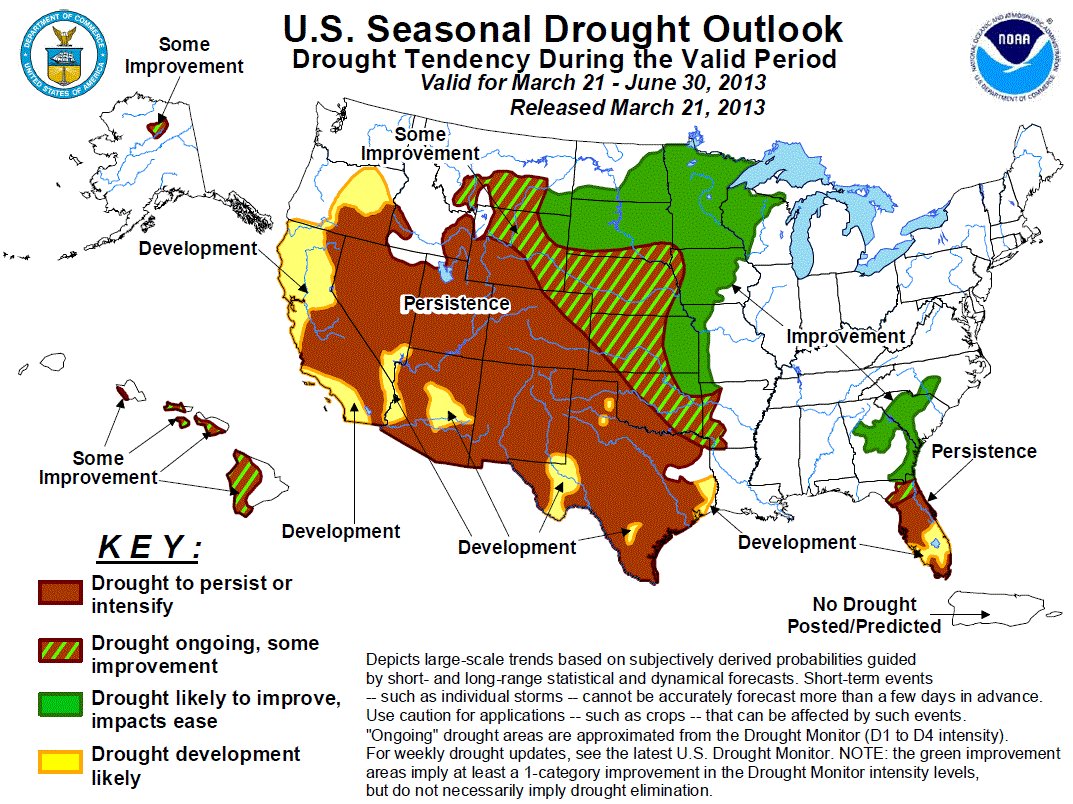
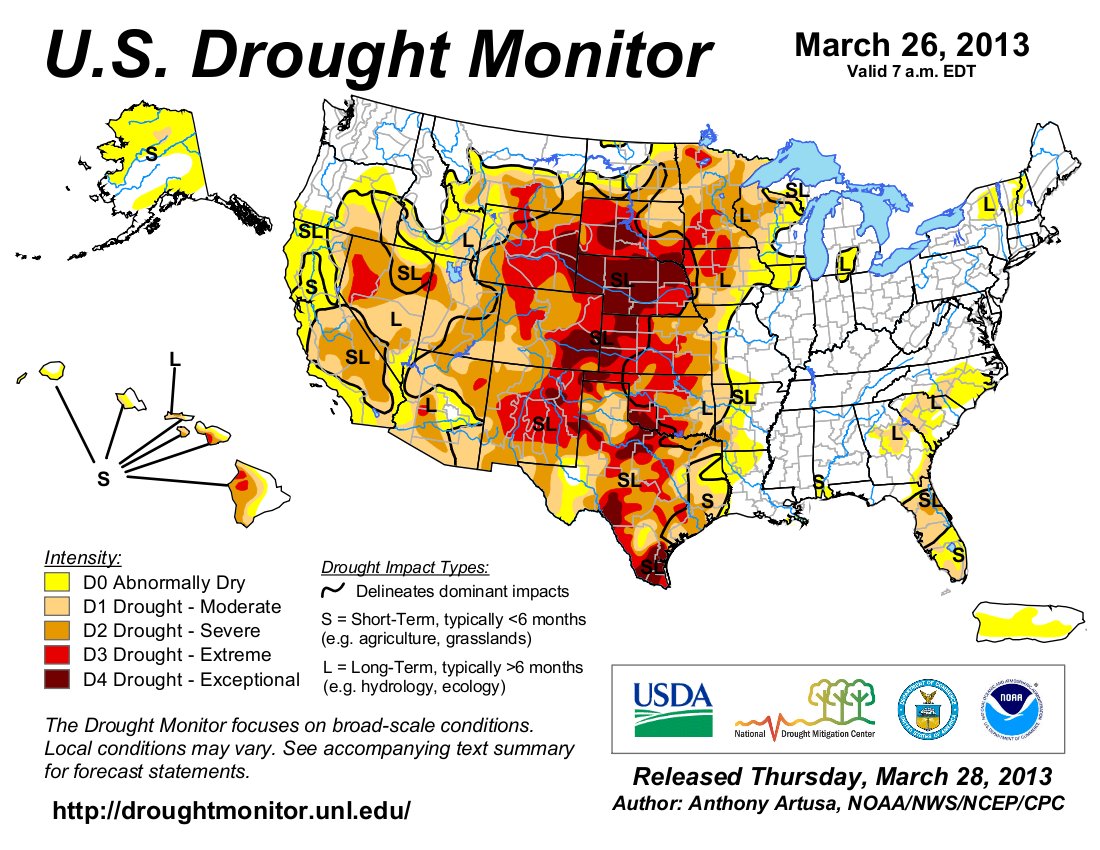
In 2012, Colorado experienced its worst drought in 10 years and what Colorado State Climatologist Nolan Doesken has called one of the all-time worst droughts in state history. It appears that 2013 will bring a second consecutive drought season which will include many more watering restrictions than Coloradans saw in 2012.
Drought is a fact of life in the arid West, but experts agree that climate change will lead to an increase in drought frequency and severity.
As the population in the West continues to grow, there will be a greater demand for water for all sorts of uses…and drought will have a greater impact.
Click here to download their drought fact sheet.