Here’s a release from Denver Water (Stacy Chesney/Travis Thompson):
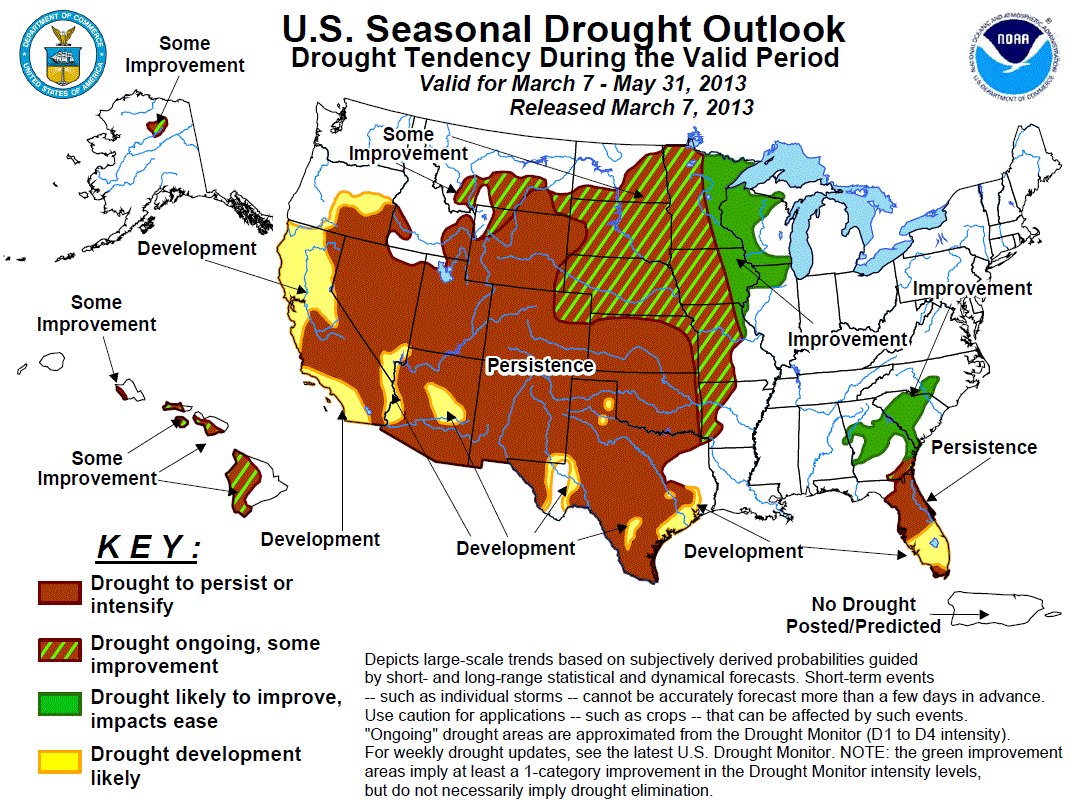
Despite recent snows in parts of Colorado, most of the state is in the second year of a severe drought that’s not getting better. The drought has led to low snowpack, above-average temperatures and low reservoir levels across the state. As a result, the Denver Board of Water Commissioners intends to declare a Stage 2 drought later this month, which means customers will have two assigned watering days a week beginning April 1. Commissioners discussed their intention during yesterday’s board meeting.
“We’ve never seen conditions like this, and we are concerned about our water supply,” said Jim Lochhead, CEO/manager of Denver Water. “Our reservoirs haven’t been full since July 2011. We need our customers’ help to reduce water use and keep as much water as possible in storage as we move through this year and into the next.”
“Our goal this summer is to ensure water is available for public health and safety, while balancing the quality of life and economic vitality of our community,” Lochhead said. “Last year was dry, and this year has been, too. Ultimately, we need to be prepared for a potentially worsening situation in 2014.”
The utility asks customers to be cautious with water use this spring. While April is a good time to get irrigation systems set-up and examined, they don’t need to be used yet. Instead, postpone turning on sprinkler systems and hand-water sloped areas of the lawn or sections that are receiving full sunlight. April is typically a cool month with some precipitation, so it may not be necessary to water lawns two days a week, which will help save water.
Mandatory watering restrictions mean Denver Water customers may only water two days a week and must follow this schedule:
Single-family residential properties with even-numbered addresses: Sunday, Thursday
Single-family residential properties with odd-numbered addresses: Saturday, Wednesday
All other properties (multi-family, HOA, commercial, industrial, government): Tuesday, Friday
In addition, customers must follow these annual watering rules:
Do not water lawns between 10 a.m. and 6 p.m.
Do not waste water by allowing it to pool in gutters, streets and alleys.
Do not waste water by letting it spray on concrete and asphalt.
Repair leaking sprinkler systems within 10 days.
Do not water while it is raining or during high winds.
Snowpack in the South Platte and Colorado River basins from which Denver Water receives water are 53 percent of average and 68 percent of average, respectively. That snow is what serves as Denver’s water supply.
“This year, we all must do our part to save water indoors and outdoors,” said Lochhead. “Together, we need to save 50,000 acre-feet of water, or 16 billion gallons, by April 2014.”
The utility plans to cut operating expenses, defer projects and tap cash reserves to help balance finances through the drought. A temporary drought pricing structure also is expected to be implemented, starting with May water use, to encourage customers to use even less water and help reduce revenue loss.
The Board expects to declare a Stage 2 drought at its March 27 meeting, which will make official the mandatory watering restrictions and drought pricing.
Use these conservation tips to help save water indoor and out.
From The Pueblo Chieftain (Chris Woodka):
While several Colorado cities are putting in mandatory water restrictions, Pueblo West has implemented voluntary outdoor watering rules, while the Pueblo Board of Water Works is considering its own conservation moves as the drought deepens.
Statewide, snowpack is only at 78 percent of average, while reservoir storage is just 71 percent of average. In the Arkansas River basin, snowpack is 74 percent of average, while storage is at 55 percent of average, according to the Natural Resources Conservation Service’s most recent update. “What we’re seeing so far hasn’t triggered restrictions based on water we have in storage,” said Paul Fanning, spokesman for the Pueblo water board. “We’re talking about voluntary restrictions, so that if the drought continues, we’ve had some practice.”
The water board staff is still mulling possible action and should make recommendations to the board next week. “We still encourage people to use the Wise Water Use tips available on our website, and people have been watering lawns less since 2002,” Fanning said.
Meanwhile, Pueblo West put odd-even water restrictions in place on March 1 on a voluntary basis. Residents were asked to restrict watering according to whether addresses end in an odd or even number. No watering is allowed on the 31st of any month.
Denver Water and Fort Collins this week announced mandatory outdoor water restrictions to two days a week beginning April 1. Colorado Springs and Aurora are considering similar restrictions.
Aurora already has some mandatory limits on outdoor use, but is looking at stricter controls as its reservoir levels drop. Aurora has been looking for water leases in the Arkansas River basin to supplement rights it owns, but no deals have been announced.
Several other Northern Colorado cities have restrictions in place, including Thornton, Westminster, Northglenn, South Adams and Brighton.
From the Associated Press via The Columbus Republic:
Denver Water, Aurora Water and Colorado Springs Utilities are all contemplating strict drought restrictions, which have yet to be approved. Denver Water spokeswoman Stacy Chesney told the Denver Post the only way lawn-watering restrictions could be avoided in Denver is if the mountains were to receive at least 8 feet of snow by April…
Snowpack in the South Platte and Colorado River basins from which Denver Water receives its supply are 53 percent of average and 68 percent of average, respectively. That snow serves as Denver’s water supply. Denver Water provides about one-third of the state’s treated water supply, serving most of the Denver metro area and suburbs…
Meanwhile, Colorado lawmakers are also considering steps to cope with the drought. Legislators have tentatively approved 15 water storage and other projects that they said will help Colorado better plan for future dry spells. More than $70 million in water projects throughout Colorado are planned. The money will come from funds set aside for construction that have helped nearly 440 water projects since 1971.