

From the Fort Collins Coloradoan (Bobby Magill):
With Colorado’s mountain snowpack still starved of water, Fort Collins isn’t sending its excess water to farmers this year. “I’m going to be 70 percent short of water,” [Eldon Ackerman] said. “I’m going to have to make some drastic decisions. It’s going to be a disaster, really.”[…]
The final word about how much water many farmers will be able to draw from the region’s reservoirs comes in April, but region agricultural producers are bracing for bad news as they make decisions about what and how much to plant because there isn’t as much water in the reservoirs as last year…
Drought is forcing farmers close to the foothills to fallow their land because they rely more on reservoir water and snowpack runoff than well water, said Colorado State University agricultural and resource economist James Pritchett. Farmers in far eastern Colorado rely on the Ogalalla Aquifer, preventing them from having to fallow their land.
There are 350,000 fewer acre feet of water sloshing around in the area’s lakes and reservoirs than there was a year ago — enough water to fill two reservoirs the size of Horsetooth Reservoir. And, the water locked up in the snow destined to drain into the Poudre and South Platte rivers is 29 percent below the normal level for this time of year…
One of the biggest reasons northern Larimer County farmers will be stuck with a water shortage this year is that Fort Collins isn’t allowing them to rent its water because the city’s water supply is taking a hit from both the drought and the effects of the High Park Fire…
After the High Park Fire destroyed the quality of water flowing down the Poudre, the city started taking nearly its entire water supply from Horsetooth Reservoir. Last year, the city was able to take about the full amount of water it is allowed to take from the Colorado-Big Thompson Project, or C-BT.
The Northern Colorado Water Conservancy District will decide in April how much C-BT water Fort Collins will be allowed to receive this year. Because of the drought and the weak snowpack, Fort Collins is likely be allotted between 50-60 percent of its allowable share of water, Northern Water spokesman Brian Werner said…
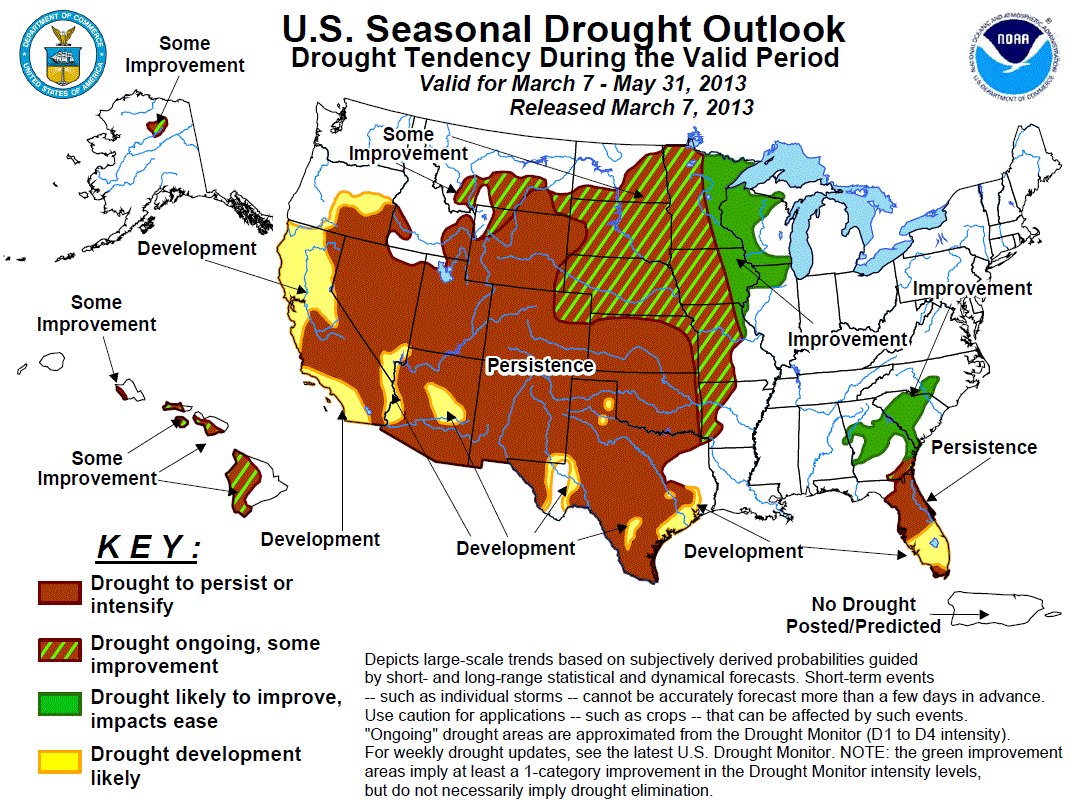
Even if Northern Colorado has a wetter-than-normal spring, all that water won’t be enough to make up for more than a year of drought, and it won’t be enough moisture for the plains to weather the normal late-spring dry season, said Colorado State Climatologist Nolan Doesken. It takes more than one year to recover from a drought, he said, and the region is still in the midst of a severe one that is likely to continue.