2 Northern #Colorado communities back away from #NISP, but project is ‘pressing on’ — The #FortCollins Coloradoan #PoudreRiver

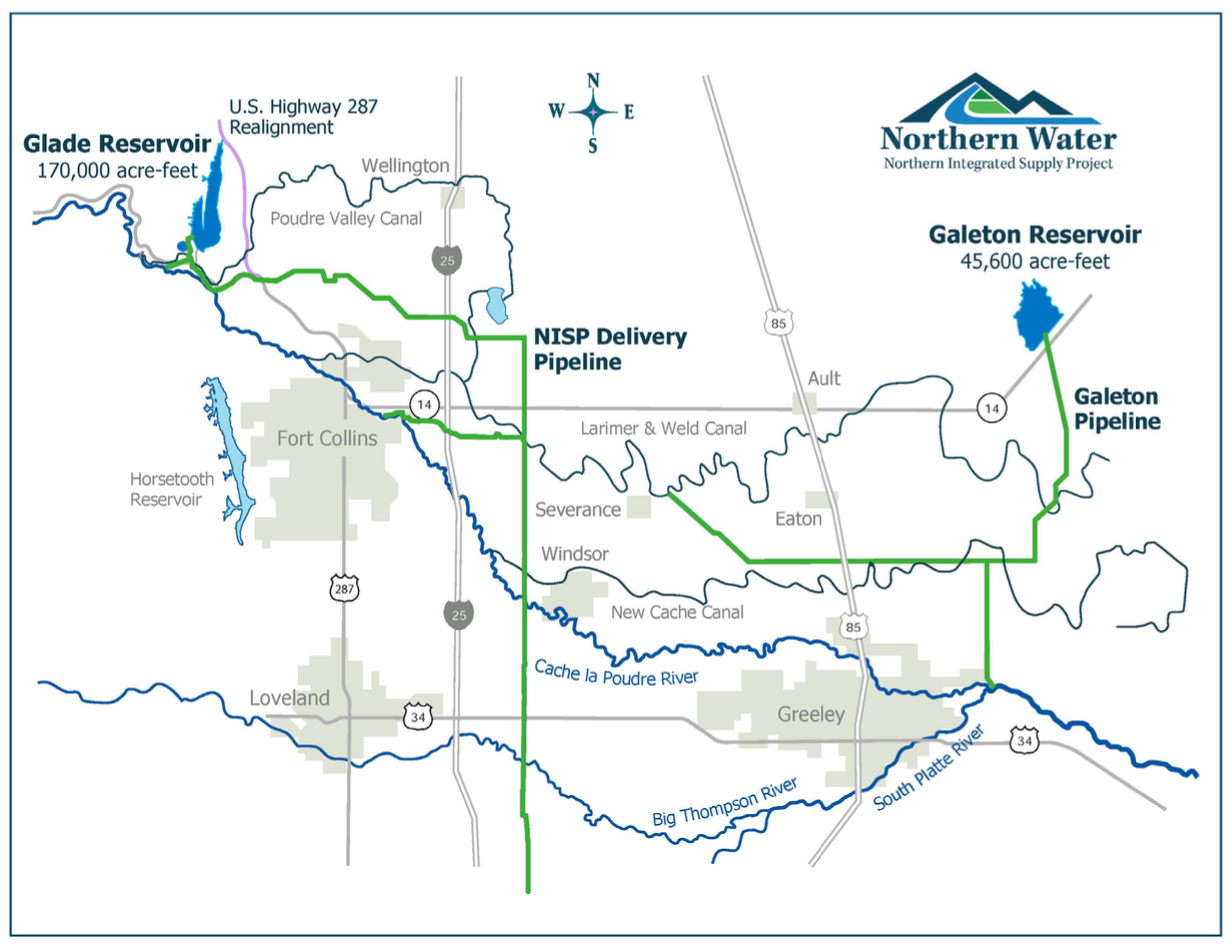
The Northern Integrated Supply Project, currently estimated at $2 billion, would create two new reservoirs and a system of pipelines to capture more drinking water for 15 community water suppliers. Credit: Northern Water

Click the link to read the article on the Fort Collins Coloradoan website (Erin Udell). Here’s an excerpt:

October 24, 2025

Key Points

  • Eaton and Evans recently announced they are backing away from the Northern Integrated Supply Project, or NISP, due to rising costs.
  • The news comes months after Fort Collins-Loveland Water District, NISP’s largest participant, announced its hopes to sell its 20% share in the project.
  • Despite some growing reluctance, Northern Water plans to move forward with the full project.

Eaton and Evans recently notified Northern Water they will not be participating in the interim agreement or water allotment contract for its Northern Integrated Supply Project, or NISP, next year. Eaton Mayor Scott Moser notified Northern Water in a Sept. 2 letter. Evans Mayor Mark Clark’s letter was dated Oct. 7. Both communities, which cited NISP’s rising project costs in their decision, would entertain offers to sell their NISP shares, Evans and Eaton staff told the Coloradoan on Oct. 21. The project’s largest participant,ย Fort Collins-Loveland Water District, notified Northern Water of its interest in selling its 20% share in NISP back in July, the water district’s General Manager Chris Pletcher told the Coloradoan at thetime...

Over the years, the project has grown in both scope and price. As NISP’s once conceptual designs met reality, the scale of its reservoirs, pipelines and pump stations increased and the relocation of U.S. Highway 287 to accommodate Glade Reservoir proved to be “more complex and expensive than originally planned,” according to a staff presentation to Evans City Council on Oct. 7.

Efforts underway to return greenback cutthroat trout to headwaters of #Colorado Rivers: Native species to be restocked after brook trout are poisoned away — Sky-Hi News

The greenback cutthroat trout is a threatened species under the Endangered Species Act. Biologists are hoping to return the species to the Colorado River headwaters in the Kawuneechee Valley. Kevin Rogers/U.S. Forest Service

Click the link to read the article on the Sky-Hi News website (Izzy Wagner). Here’s an excerpt:

September 9, 2025

13 years ago, Coloradoโ€™s state fish could only be found in a single stream in the entire state. Today, a coalition of agencies and experts are working to change that.ย  The Poudre Headwaters Project is a 10 to 12-year effort led by Rocky Mountain National Park and Colorado Parks and Wildlife, among other organizations, to restore the greenback cutthroat trout to its native waters โ€” about 40 miles of streams in parts of Rocky Mountain National Park and the Arapaho National Forest…

For decades, the National Park Service and state fisheries stocked millions of fish, mostly brook trout, in the native waters of the greenbacks. But once brook trout have established themselves in a stream, they will outcompete greenbacks for food and habitat, Clatterbuck said. Restoring native greenbacks requires killing off the non-native brook trout that have long threatened their survival. To kill the fish, crews must apply the pesticideย rotenoneย to streams with invasive brook trout and other non-natives. Rotenone is a dangerous chemical in high concentrations, but it has beenย widely usedย by fisheries for decades and is carefully managed when applied to streams…The pesticide specifically targets aquatic species, making it the ideal treatment method for fish removal. Consuming rotenone-treated fish is unlikely to poison a mammal, Clatterbuck said…

A map of the Poudre Headwaters Project area. U.S. Forest Service, J.Scott/Courtesy photo

Once the areas are confirmed to be free of non-native trout, biologists will reintroduce the native greenback cutthroat trout to its original habitat in the headwaters of the Cache la Poudre River, according to park officials…Colorado State University Professor Robert Behnke reported that once brook trout gained access to streams,ย greenback cutthroat trout were virtually goneย within five years. In the 1960s, Behnke spearheaded efforts to restore greenback cutthroat trout to streams of their native range east of the Continental Divide. Since then, fisheries have worked to build fish barriers, often in the form of small dams, near the downstream ends of headwater streams to protect native fish while applying chemicals to kill off brook trout upstream. However, none of these projects have been able to prevent non-native trout invasion long term. Clatterbuck is hopeful that with time and collaboration, this new restoration project will build a metapopulation, or a network of connected subpopulations that can strengthen the speciesโ€™ genetic diversity and resilience.

Cutthroat trout historic range via Western Trout

Save The Poudre won’t try to stop #Thornton from finishing water pipeline — The #FortCollins Coloradoan #PoudreRiver

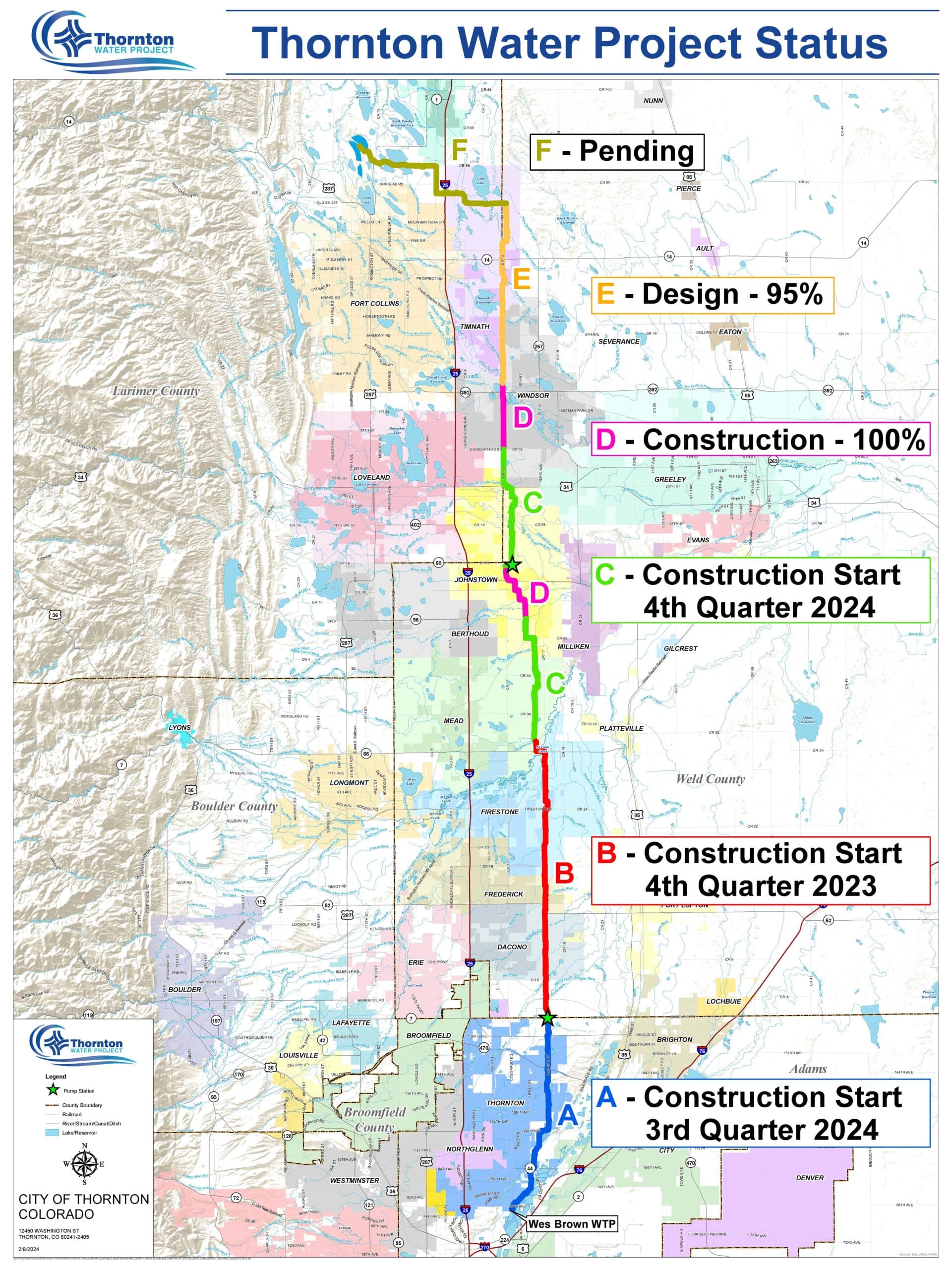
The black line shows the preferred route of the pipeline as of November 2023. Credit: City of Thornton

Click the link to read the article on the Fort Collins Coloradoan website (Rebecca Powell). Here’s an excerpt:

August 18, 2025

Key Points

  • Save The Poudre will not appeal a judge’s ruling allowing Thornton’s pipeline project to proceed.
  • The environmental advocacy group focused on the Poudre River contends Colorado water law, created more than 100 years ago, is not in line with public values today.
  • Save The Poudre urges Thornton to take a more active role in protecting and restoring the Poudre River

The environmental advocacy group that seeks to protect the Poudre River says it will not appealย a judge’s ruling that allowed the project to proceed. Theย project is set to bring water from the Poudre to Thornton via a pipeline running through Larimer, Weld and Adams counties.,Larimer County commissioners, and the planning commission before them, approved the pipeline permit in 2024. Then Save The Poudre sued, saying the board of commissioners exceeded its jurisdiction and abused its discretion when it granted the permit…

In announcing the decision not to appeal the judge’s ruling, Save The Poudre Executive Director Gary Wockner said Colorado’s water law gives agencies the right to drain rivers, and it doesn’t seem like a wise use of resources to appeal when a challenge would likely fail…

Todd Barnes, communications director for the city of Thornton, noted the deadline to appeal is still ahead, on Aug. 21. He said Thornton doesn’t plan to issue a statement about the development as of now…Thornton and Northern Water have planned to co-locate a few miles of their pipelines to reduce disruption. But Barnes said Thornton has heard nothing concrete from NISP. Regardless, he said, the city will follow through with all of the requirements of its permit, which includes co-location.

Here’s the statement from Save the Poudre:

This week in history, Larimer County experienced 2 of its worst floods — The #FortCollins Coloradoan

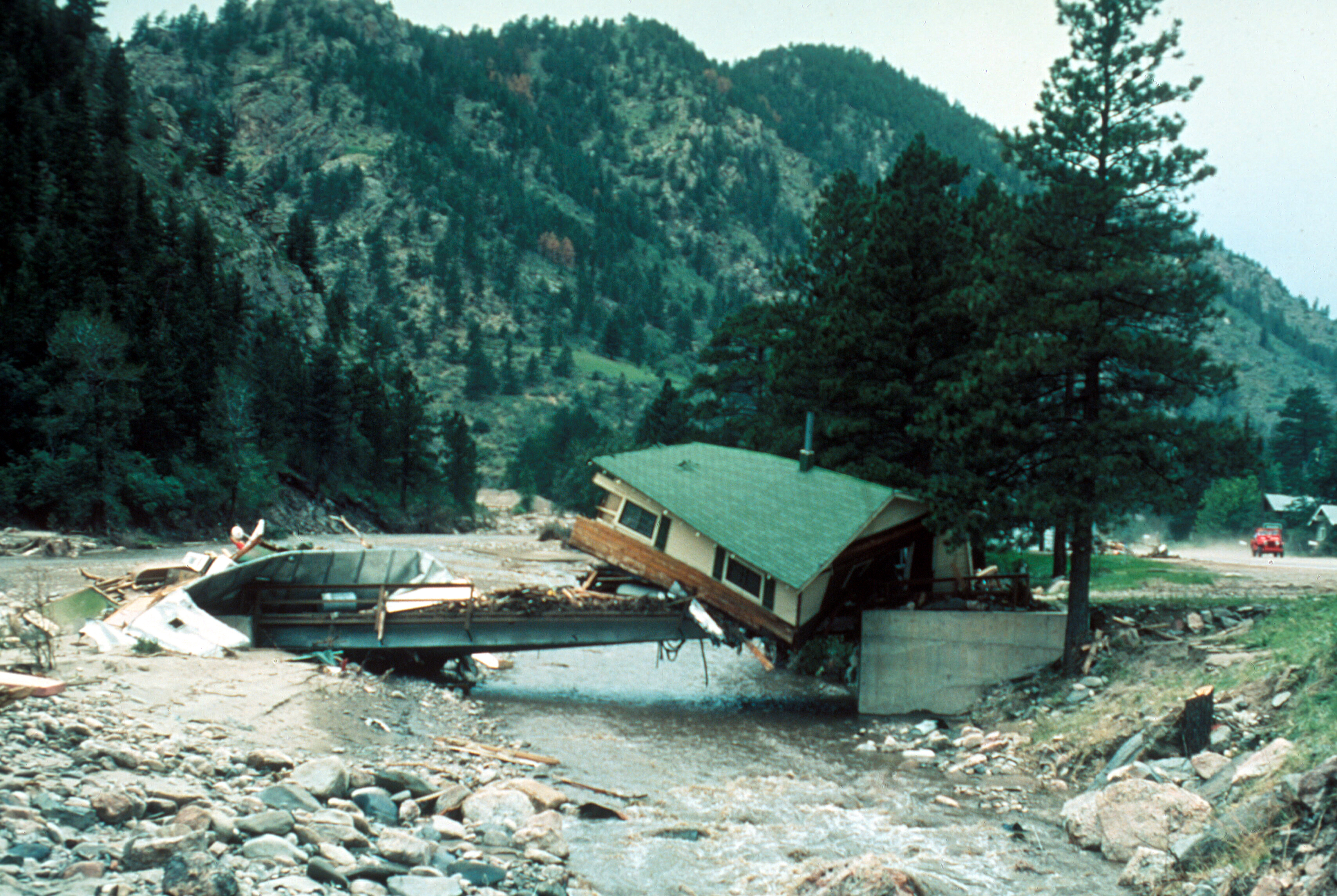
Big Thompson Flood, Colorado. Cabin lodged on a private bridge just below Drake, looking upstream. Photo by W. R. Hansen, August 13, 1976. Photo via the USGS.

Click the link to read the article on the Fort Collins Coloradoan website (Rebecca Powell). Here’s an excerpt:

July 29, 2025

Fort Collins, Spring Creek flood July 28, 1997
  • Heavy rainfall in late July in Colorado’s past caused two of the state’s worst floods, the Spring Creek Flood and the Big Thompson Flood.
  • The 1997 Spring Creek Flood resulted in five deaths and over $200 million in damages in Fort Collins.
  • The 1976 Big Thompson Flood led to 144 fatalities and $35 million in damages.

Twenty-eight years ago this week, 14 inches of rain fell on Fort Collins in just over a day, overwhelming the Spring Creek and leading to the deaths of five people.

And 49 years ago this week, more than a foot of rain fell on the Big Thompson River west of Loveland in about four hours, creating a wall of water that swept away and killed 144 people. It’s not a coincidence that both events happened in the same week of July, though they were years apart. It’s flash-flood season in Colorado, and three of the state’s worst floods occurred from mid-July through mid-September, which is also the state’sย monsoon season.

‘We’re very proud of what we do’: #Colorado State University students help test dam safety on Halligan Reservoir model — Alex Hager (KUNC.org) #PoudreRiver

Engineering students take measurements from a scale model of the dam at Halligan Reservoir in a lab at Colorado State University in Fort Collins on July 15, 2025. Their data will help make the soon-to-be-built dam safer in the real world. Alex Hager/KUNC

Click the link to read the article on the KUNC website (Alex Hager):

July 15, 2025

This story is part of ongoing coverage of water in the West produced by KUNC and supported by the Walton Family Foundation.

If youโ€™re going to build a new reservoir, you better be dam sure itโ€™s safe.

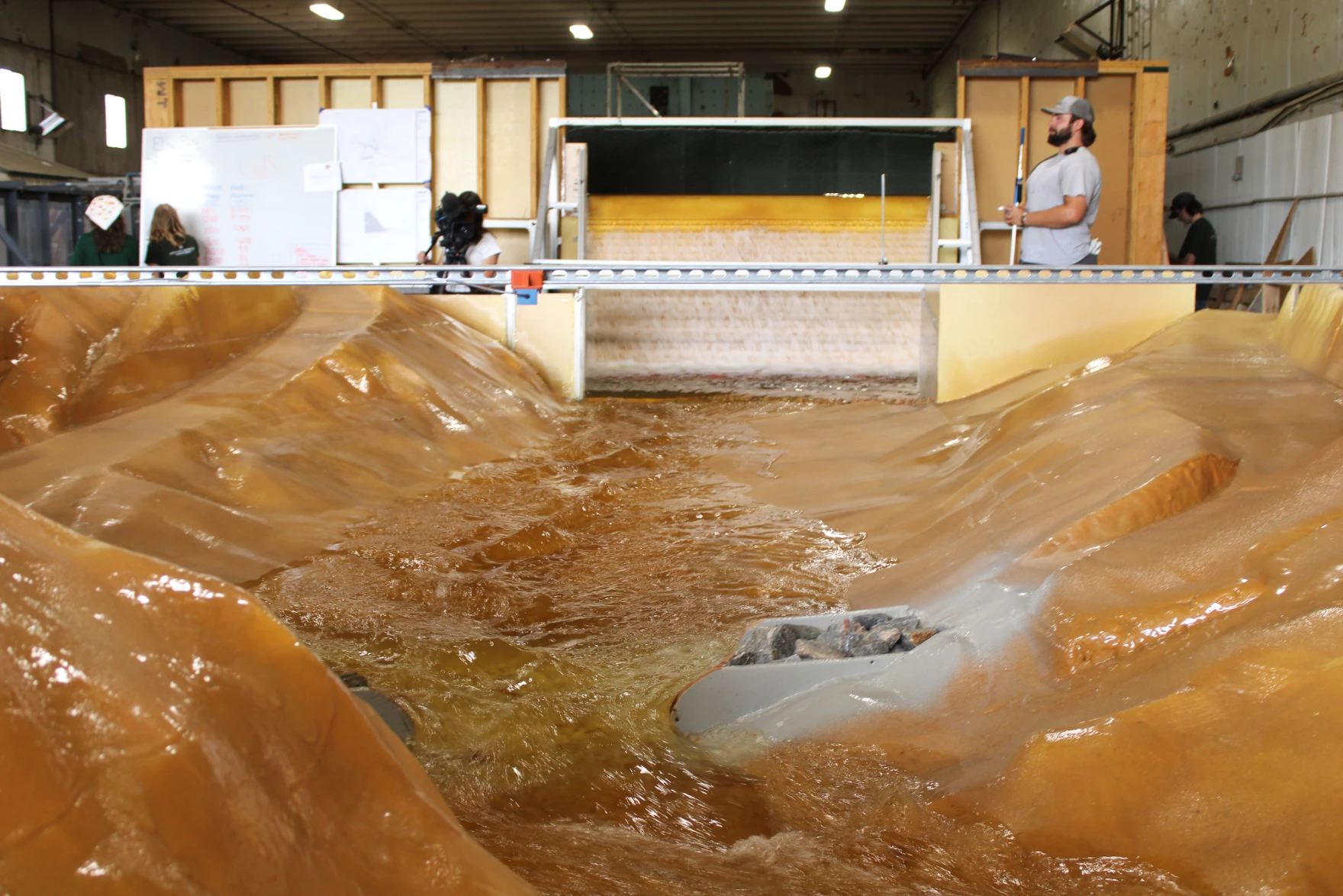
Engineers at Colorado State University are doing exactly that by running tests on a giant model of a dam that will soon be built near Fort Collins. In an airy warehouse at CSUโ€™s foothills campus, theyโ€™re sending water through a 24:1 scale mockup of the dam that will hold back an expanded Halligan Reservoir.

โ€œIt just gives us assurances on so many different levels that our design is sound, that it is going to be constructable, and that it is going to perform when itโ€™s built, as expected,โ€ said Darren Parkin, Halligan Water Supply Project Manager with the City of Fort Collins.

Water flows through a scale model of the area surrounding Halligan Reservoir in a lab at Colorado State University on July 15, 2025. The model was built to precisely mimic conditions at the actual reservoir. Alex Hager/KUNC

The new dam will be built to survive a one-in-ten-million year precipitation event โ€” or 72 inches of rain โ€” which is required to get building permits. For comparison, the devastating Spring Creek flood of 1997 was caused by 14.5 inches of rain.

Running that test, even on a dam thatโ€™s a fraction of the size of the real one, requires a huge pulse of water. It tumbles and whooshes through the manmade river with so much force that itโ€™s hard to hear the person standing next to you.

When engineering students switch on the model, a large tank fills behind the dam. First, it spills down the stairstep-like face of the structure with a gentle trickle. Before long, itโ€™s hitting the base as roiling whitewater. Thatโ€™s exactly where most of this teamโ€™s research has been focused.

They built a series of โ€œbafflesโ€ to slow that water down and prevent it from bashing the dam and eroding its base. They are essentially large blocks that change the speed and direction of water cascading over the dam. The engineers working on the dam say they were able to figure out precisely the best place to put those baffles, how many to install, and how far apart they should be because they were running tests on this model instead of a computer program.

A Colorado State University student monitors data at a scale model of the Halligan Reservoir dam in Fort Collins on July 15, 2025. Alex Hager/KUNC

โ€œWe can easily change things in a physical model,โ€ said Jeff Ellis, who manages the hydraulics lab where the model is housed. โ€œWe can move things by an inch and just keep on retesting, and it’s really optimizing performance.โ€

The City of Fort Collins is nearing construction on the dam, which will enable them to expand Halligan Reservoirโ€™s storage capacity. City officials say that itโ€™s necessary to supply water to the growing city in the future. Work on the new dam, about 25 miles northwest of Fort Collins, is expected to start in early 2027 and finish in late 2029 or early 2030.

Ellis said the project serves another function, too. Itโ€™s giving engineering students a new kind of experience.

โ€œItโ€™s super rewarding,โ€ he said. โ€œA lot of time in class, youโ€™re doing a lot of theoretical work, itโ€™s not hands-on. Where this, theyโ€™re actually doing design and theyโ€™re helping solve these real world problems.โ€

Water tumbles over a model of the Halligan Reservoir dam in a lab at Colorado State University in Fort Collins on July 15, 2025. Students tested different baffles at the base of the dam to help prevent erosion during times of excess flow. Alex Hager/KUNC

Students helped build the intricate model, which is shaped exactly like the area around Halligan Reservoir, and they operate the data-gathering equipment that helps engineers form conclusions from their testing. Catherine Lambert, an undergraduate senior studying Environmental Engineering, said the experience was fun and exciting, but would also help prepare her for a career.

โ€œIt’s really cool to see all of our hard work actually translate into the real world,โ€ she said, โ€œWe’re very proud of what we do here.โ€

Halligan Reservoir aerial credit: City of Fort Collins

Judge’s ruling keeps #Thornton water pipeline project moving forward — The #FortCollins Coloradan #PoudreRiver #SouthPlatteRiver

Thornton Water Project preferred pipeline alignment November 16, 2023 via ThorntonWaterProject.com

Click the link to read the article on the Fort Collins Coloradoan website (Rebecca Powell). Here’s an excerpt:

July 7, 2025

Key Points

  • A Larimer County judge ruled in favor of Larimer County commissioners, upholding their approval of a permit for Thornton’s 10-mile pipeline project.
  • Save The Poudre, an environmental group, sued the county, arguing the commissioners didn’t properly consider the ‘Poudre River option.’
  • Save The Poudre is considering an appeal, while Thornton says it continues to focus on providing water to its residents.

The city of Thornton is the true winner in a recent court ruling focused on the pipeline it’s planning to build in Larimer County to bring more water to its residents. The lawsuit was filed a year ago by Save The Poudre,ย an environmental advocacy group. Its target was theย Larimer County commissioners, who had approved a permit for construction of the pipeline.

On July 3, Larimer County District Court Judge Michelle Brinegar ruled that commissioners were justified in their decision to approve the application for 10 miles of pipeline through the county…In its lawsuit, Save The Poudre asked the judge to vacate the board’s decision to approve the pipeline. The nonprofit alleged that commissioners didn’t adequately follow the county’s standards for these kinds of applications. Specifically, Save The Poudre contends that commissioners should have required Thornton to present a plan for the so-called Poudre River option, which would have conveyed the water through the Poudre River downstream of Thornton’s current diversion point…But commissioners concluded that while they could encourage the Poudre River option, they couldn’t require it. Brinegar sided with commissioners, saying they can’t compel Thornton to present all possible alternatives, only those that are reasonable.

Project Managers to Investigate Uranium Mitigation Strategies at Chimney Hollow reservoir site — Northern #Colorado Water Conservancy District

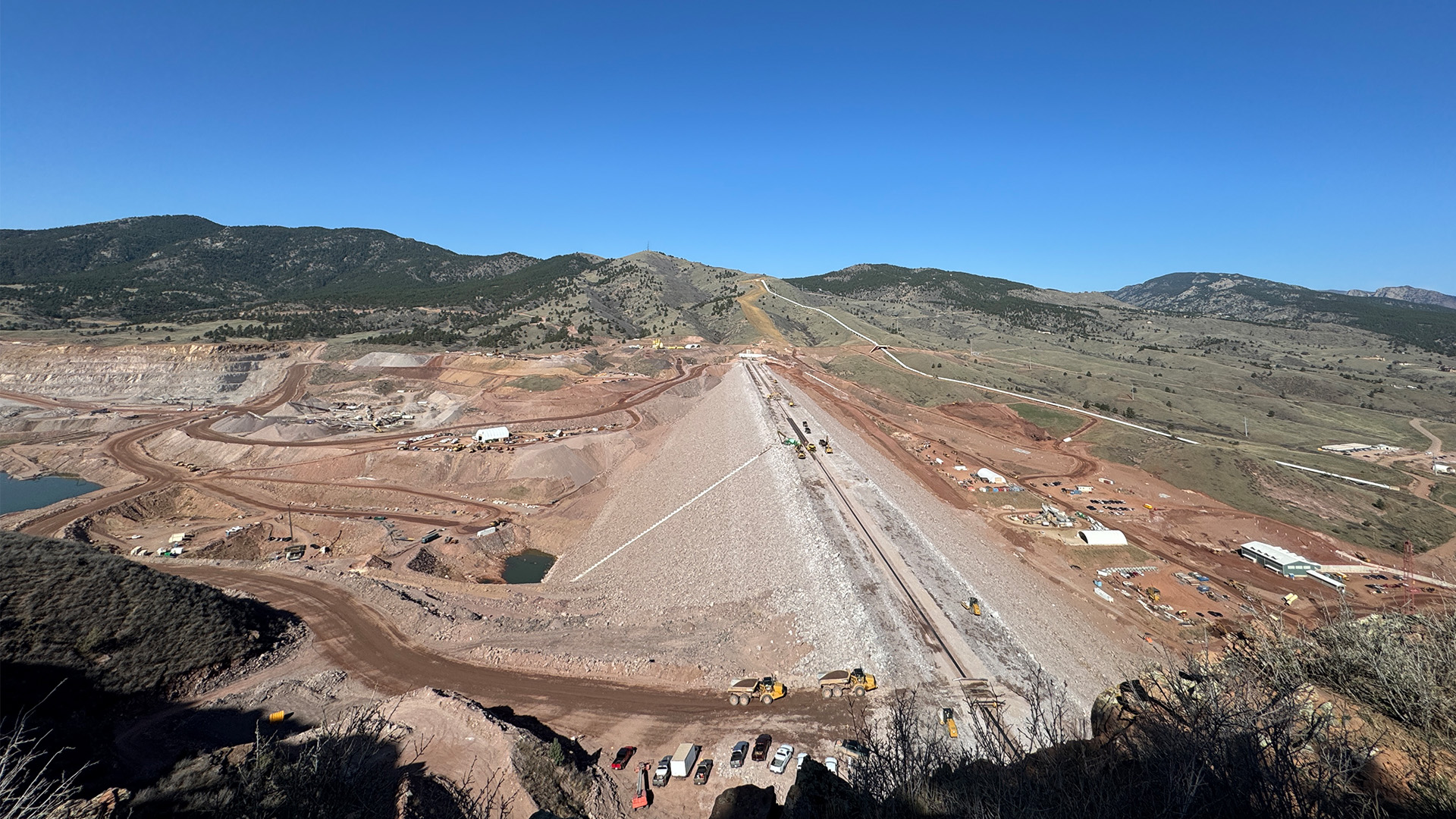
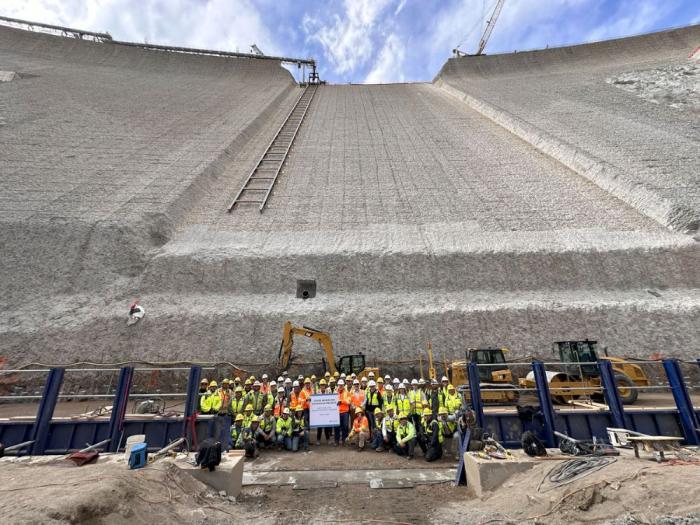
Chimney Hollow Dam construction site. Photo credit: Northern Water

Click the link to read the release on the Northern Water website:

June 11, 2025

Chimney Hollow Reservoir Project managers are investigating strategies to mitigate the presence of mineralized uranium that is anticipated to be present in the first fill of the reservoir. 

Mineralized uranium was detected in water samples taken from behind the cofferdam at the site following a series of major precipitation events in summer 2023. Further testing through 2024 identified the source of the minerals as being the granitic rock being quarried on the west side of the reservoir for placement in the rockfill shell of the asphalt-core dam. The low-level uranium minerals detected were not anticipated to be the result of leached material at the site. 

During dam testing and first fill of the reservoir starting later this summer and continuing through 2027, no releases of water from Chimney Hollow Reservoir are expected. Ongoing monitoring of water quality at the reservoir will help managers develop a mitigation strategy that could include treatment and dilution with the significant sources of other water present in the infrastructure nearby. 

As more information becomes available, Northern Water will share it with project participants, partner agencies and the public. 

Opinion: Protecting Northeastern #Coloradoโ€™s Water Supply Requires Cooperation, Transparency — Brad Wind (Northern Water) #NISP #PoudreRiver #SouthPlatteRiver

The Northern Integrated Supply Project, currently estimated at $2 billion, would create two new reservoirs and a system of pipelines to capture more drinking water for 15 community water suppliers. An environmental group is now suing the Army Corps of Engineers over a key permit for Northern Waterโ€™s proposal. (Save the Poudre lawsuit, from Northern Water project pages)

Click the link to read the column on the Northern Water website (Brad Wind):

May 20, 2025

You might have read recently about how the Northern Integrated Supply Project, or NISP, is contributing $100 million to a fund for projects to improve the Cache la Poudre River in northeastern Colorado. That funding is part of an agreement between the Northern Colorado Water Conservancy District, known as Northern Water, and the nonprofit group Save the Poudre that will conclude a federal lawsuit against the project.

Itโ€™s an outcome that both sides can accept because of the importance of both the Poudre River and a much-needed water supply to communities throughout the region.

The agreement should catch the attention of Denver metro-area water providers that are looking to export existing irrigation water supplies out of northeastern Colorado to serve their future customers. 

Brad Wind of Loveland is the general manager of Northern Water, which supplies water to more than 1 million people in northeastern Colorado.

For background, NISP was conceived in the 1990s and early 2000s to provide water to the emerging communities of the northern Front Range. The project will consist of two off-channel reservoirs, one located northwest of Fort Collins and one north of Greeley. It also anticipates exchanges of water with nearby farmers eliminating the dry-up of some agricultural land in the future. 

Throughout the lengthy permitting process for NISP, the public has had many opportunities to offer comments and concerns to federal, state and local officials. Some of the concerns were incorporated into mitigation and improvement requirements associated with the project, and all written comments were addressed specifically in the final Environmental Impact Statement produced by the U.S. Army Corps of Engineers.

The $100 million settlement of the federal litigation identifies even more improvements that can be made in the region beyond those required by permitting agencies.

Unfortunately, actions by certain Denver metro-area water providers that anticipate removing water from northeastern Colorado do not undergo such robust scrutiny. Oftentimes, advocates for water resources in the region learn about potential water transfers only when an item appears on a meeting agenda of a metro-area water provider. By then it is too late to consider the regional economic, environmental and social impacts that such a change could produce.

Frequently, these water deals are brokered by third parties who quietly accumulate water and land assets to present them behind closed doors in neat and tidy packages to thirsty cities. There are few, if any, opportunities to discuss how these water transfers will impact local communities in northeastern Colorado or how these impacts could be mitigated by those who seek to move water to the Denver metro area.  

The half-million residents who receive water from NISP participants are going to pay billions of dollars to develop water resources for their communities while addressing concerns in the Poudre River watershed. At the same time Denver metro communities are working to undercut the existing supplies that previous northeastern Colorado residents have invested in and relied upon for decades. 

Water providers in the Denver area need to be part of the long-term solution to how our northeastern Colorado communities remain vibrant, not distant parties to single point-in-time transactions that provide a perpetual benefit to communities beyond the horizon. 

If native water supplies must depart for the Denver metro area from northeastern Colorado, it is appropriate that the new water user should not just pay for the costs to acquire water but also offset the impacts to northeastern Coloradoโ€™s degraded quality of life, and diminished regional economy. 

All of our futures are diminished by the loss of water from our region. Public processes and mitigation can lessen, to a degree, the perpetual impacts such a loss will endure.

Northern #Colorado will soon have new reservoirs, but the cost to build them has skyrocketed — Alex Hager (KUNC.org) #PoudreRiver #SouthPlatteRiver

The Cache la Poudre River flows through Bellevue, Colorado on May 12, 2025. Water from the river will be used to fill the nearby Glade Reservoir once it’s built. The cost to build the new water storage project has grown from $400 million to $2.2 billion. Alex Hager/KUNC

Click the link to read the article on the KUNC website (Alex Hager):

May 15, 2025

This story is part of ongoing coverage of water in the West, produced by KUNC in Colorado and supported by the Walton Family Foundation. KUNC is solely responsible for its editorial coverage.

Thereโ€™s a stretch of highway in Larimer County where prairie grasses sway with each passing vehicle. Cars, horse trailers and semi trucks zip through the valley on their way between Fort Collins and Laramie. Soon, itโ€™ll be under more than 200 feet of water.

U.S. Highway 287 runs through the future site of Glade Reservoir. The Larimer county Board of County Commissioners approved the 1041 Land Use Permit for NISP in September, 2020. Photo credit: Northern Water

Itโ€™s the planned site of Glade Reservoir, the cornerstone of a massive new water storage system designed to meet the demands of fast-growing towns and cities in Northern Colorado. After more than two decades of permitting, planning and environmental lawsuits, itโ€™s closer than ever to breaking ground.

But along the way, some things changed. Over the years, costs to build the reservoir system โ€” and reroute seven miles of U.S. Highway 287 โ€” have ballooned. Price estimates for the Northern Integrated Supply Project, often referred to as NISP, went from $400 million to $2.2 billion. Because of that, some of the towns that signed up to use its water are cutting back on their involvement before the reservoir system stores a single drop.

Northern Water, the agency building NISP, has projected confidence that it will still get built as planned. The long road from idea to construction, and the things that have changed along the way, can tell us a lot about how Northern Colorado uses water, and how much it costs to keep taps flowing.

The Northern Integrated Supply Project, currently estimated at $2 billion, would create two new reservoirs and a system of pipelines to capture more drinking water for 15 community water suppliers. (Northern Water project pages)

Rising costs

When it was first pitched, in the early 2000s, NISP garnered support as a way to make sure small towns with fast-growing populations could host new housing developments without going dry.

For a tiny town like Severance, that was an attractive proposition. Just 11 years ago, about midway through the NISP planning process, the town had a population of about 3,000. Thatโ€™s when Nicholas Wharton took the job as town manager. Since then, heโ€™s overseen the installation of the townโ€™s first stoplight, the from-scratch development of its own police department and a homebuilding boom that has nearly quadrupled Severanceโ€™s population.

Signing on to NISP, he said, was a way to make sure Severance had enough water for all that growth.

โ€œI think for smaller towns,โ€ he said, โ€œIt was a great idea back when it was affordable to us.โ€

Wesley Lavanchy, the town administrator for Eaton, Colo., poses outside of his office on April 15, 2025. His town is one of four water agencies that reduced the amount of water it would store in NISP, and the amount it would pay to keep it there. Alex Hager/KUNC

Since then, Severance has cut back on the amount of water it will store in NISP, and the amount it will pay to be a part of the project. At one point, the town held 2,000 shares of the project. In 2024, it sold off 1,500 of those shares. Wharton said the town council might try to sell off even more.

And Severance isnโ€™t alone.

Due West, in Eaton, town officials also got cold feet. They were one of four NISP shareholders to offload a portion of their involvement in the new reservoir project on the same day in July 2024.

For years, the water agencies that were part of NISP were mostly focused on paperwork โ€” making sure the project had the permits it needed to get built. Then, there was a lawsuit from environmentalists standing in the way. But after NISPโ€™s proponents were mostly seeing green lights on permits and decided to settle a major lawsuit, the focus shifted to money.

โ€œI think the question for us now is, how do we afford this?,โ€ said Wesley Lavanchy, Eatonโ€™s town administrator. โ€œMoving forward, how much can we afford? It’s like chocolate cake. You like it, it tastes great, but you can’t eat the whole thing.โ€

Ultimately, Eaton decided to sell off more than half of its NISP shares.

โ€œI suspect that more entities would have been able to hold their commitment had the permitting process not drug on so long, the cost escalated, the litigation kind of wrapped things up,โ€ Lavanchy said.

Cheaper alternatives

While the cost to build NISP has gone up, the cost of other water sources has gone down. Eaton and Severance said itโ€™s getting easier to afford shares of the Colorado-Big Thompson project, which was a big motivator in their pullback from NISP.

That project, referred to as CBT, pipes water from the Colorado River across the continental divide. It flows underneath Rocky Mountain National Park and into major reservoirs along the Northern Front Range, such as Horsetooth Reservoir near Fort Collins and Carter Lake outside of Loveland.

Water from the Colorado-Big Thompson project is managed by Northern Water, the same agency building and operating NISP.

Boats cruise across Horsetooth Reservoir near Fort Collins, Colorado on May 12, 2025. The reservoir holds water from the Colorado-Big Thompson project, which has seen prices level off in recent years. Glade Reservoir is expected to be even larger than Horsetooth. Alex Hager/KUNC

For years, the CBT system was the main way for growing cities in Larimer and Weld Counties to get water for residential development. Typically, farms have sold their portion of CBT water to cities, towns, or developers. Occasionally, they are taken to auction, where cities bid against one another for water stored in those big reservoirs.

The cost of that water skyrocketed between 2010 and 2022. Estimated prices, adjusted for inflation, went from less than $20,000 per share, to around $100,000 per share, according to data from the consulting firm Westwater research. Since 2022, that soaring rise has leveled out.

โ€œWe believe that’s largely driven by a softening in the home construction sector,โ€ said Adam Jokerst, a Fort Collins-based regional director for Westwater. โ€œA lot of CBT purchases are by municipalities and developers who dedicate them to municipalities. And when new home construction slows, we see less demand for those shares.โ€

How did NISP get so expensive?

Northern Water said the price to build NISP has been climbing for about 15 years. Brad Wind, the agencyโ€™s general manager, cited inflation and rising interest rates as major drivers. He doesnโ€™t, however, expect that to stop or significantly change the reservoir project.

โ€œIt’s an expensive project,โ€ Wind said. โ€œWe and the participants advancing the project like it was envisioned.โ€

The lengthy process to get the projectโ€™s two reservoirs โ€” Glade, and a smaller one called Galeton reservoir โ€” from concept to construction gave time for the winds of economic change to shift direction. Itโ€™s not uncommon for a massive dam project like NISP to take more than fifteen years to attain a laundry list of environmental permits.

The project also faced opposition from local governments and nonprofits. At one point, Fort Collins voted to oppose the project. The most significant roadblock came from the environmental nonprofit Save the Poudre.

The group rallied local support and took legal action to try and stop NISP. At a 2015 event, Save the Poudre director Gary Wockner told a crowd of supporters that he would โ€œfight to stop the project for as long as it takes.โ€

In late February, Wocknerโ€™s group settled for $100 million dollars. Northern Water will pay that sum into a trust over the course of the next two decades, and the money will be used to fund river improvement projects. In the intervening time, though, the price tag to build NISP likely grew significantly.


New Northern Colorado reservoirs moving ahead after settlement of NISP lawsuitAlex Hager, March 5, 2025.


Wind said Northern plans to hire a contractor that could find ways to bring down the price by changing construction methods, but doesnโ€™t expect โ€œsubstantial reductionsโ€ to building costs, especially with rising prices of imported construction materials.

Over the years, the towns and water agencies that wanted to use NISP signed periodic agreements to stay part of the project. Now, time is ticking for those participants to sign a binding contract.

Eatonโ€™s Lavanchy said that upcoming contract made his town take a harder look at their water needs, and whether those needs would be satisfied by NISP.

โ€œWe’re not dating anymore,โ€ he said, โ€œWe’re getting married, and there’s no way out. Divorce is not an option. So it’s like, โ€˜Let’s be smart and think about, what are these obligations going to run us?โ€™โ€

โ€˜Demand continues to increaseโ€™

Even as some entities cut back on their financial ties to NISP, the project still has momentum.

For one, those towns and water agencies looking to sell their shares found a willing buyer. Eaton, Severance, Fort Lupton and the Left Hand Water District all sold their shares to the Fort Collins Loveland Water District.

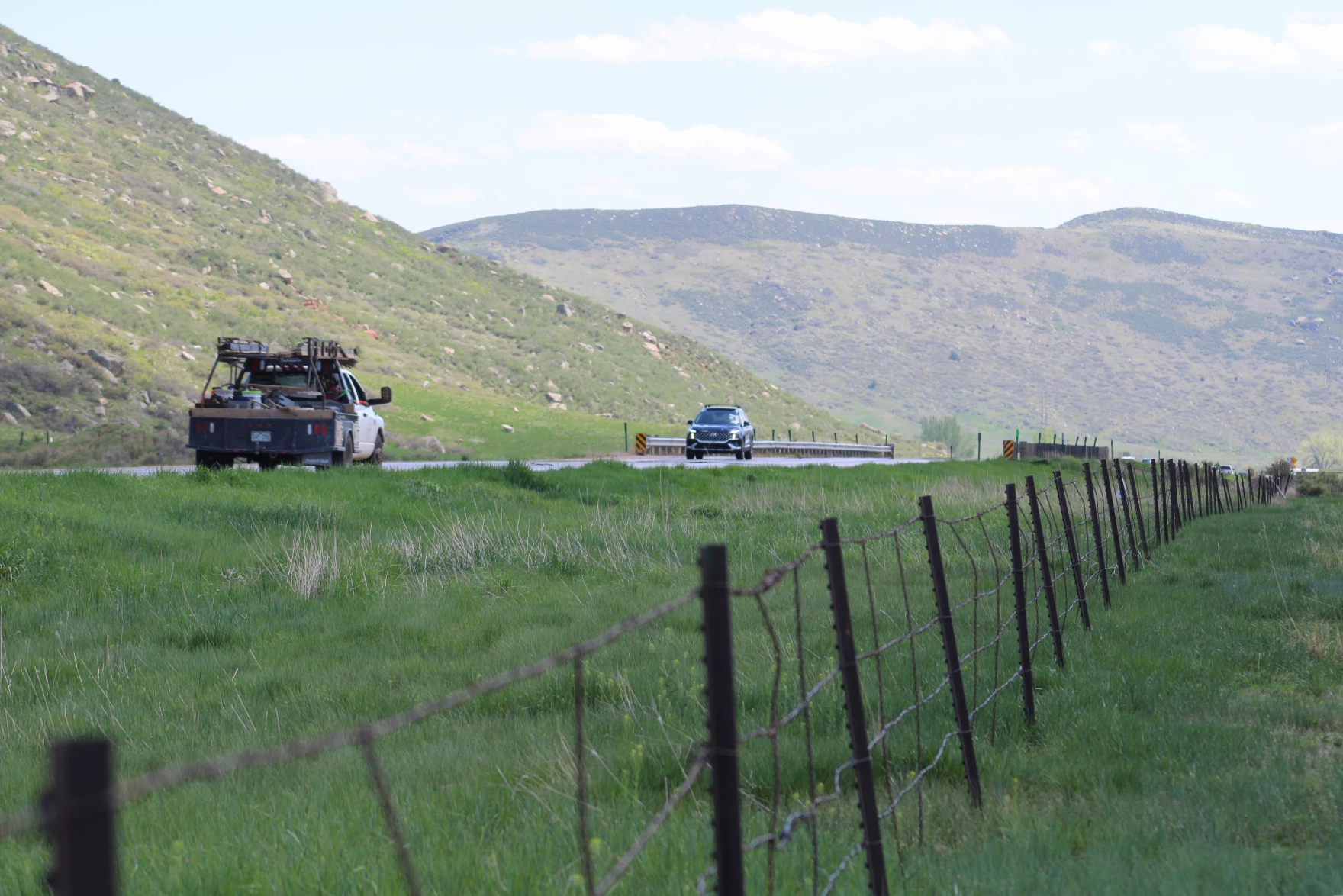
Vehicles drive on U.S. Highway 287, near Bellevue, Colo. on May 12, 2025. The highway will be rerouted to make way for a massive new reservoir. Alex Hager/KUNC

The Fort Collins Loveland Water District, which serves an area roughly between Harmony Road and State Route 34, declined to be interviewed for this story.

Second, NISP has a total of 15 participants, and many of them are still on board for the same amount of water they signed up for years ago.

โ€œNo matter what,โ€ Severanceโ€™s Wharton said, โ€œIn one way, you’ll see those 15 probably still continue to be a part of it no matter what, because everybody does realize how precious that water is and how this will be one of the last [big reservoirs.] I don’t think anybody’s discouraged.โ€

Even the towns that reduced the amount of water theyโ€™ll pay to use from NISP are keeping some. Severance and Eaton said they want to make sure theyโ€™re getting water from a diverse group of sources, especially with climate change and political bickering threatening their main source of water โ€” the Colorado River via the CBT.

Ultimately, the fast-growing region served by Northern Water โ€” from Boulder County to Fort Collins, and east to Fort Lupton โ€” will keep needing water for a future that will likely see plenty of new home construction.

โ€œIt doesn’t appear that folks are shying away from moving to Northern Colorado,โ€ Brad Wind said. โ€œEither from within our state or from outside of our state, so the demand continues to increase for a high quality water supply, which NISP will produce.โ€

$100 million settlement allows #Colorado reservoir projects to move forward, ending decades of dispute — The #Denver Post #NISP

The Northern Integrated Supply Project, currently estimated at $2 billion, would create two new reservoirs and a system of pipelines to capture more drinking water for 15 community water suppliers. Credit: Northern Water project pages

Click the link to read the article on The Denver Post website (Elise Schmelzer). Here’s an excerpt:

March 5, 2025

Two new bodies of water in northern Front Range will boost water supplies for 15 communities

Plans for a $2 billion water supply project in northern Colorado will move forward after the communities supporting it agreed to pump $100 million into improving the health of the Cache la Poudre River โ€” a settlement ending decades of dispute over the water infrastructure plans. Leaders from theย Northern Integrated Supply Projectย and the nonprofit environmental groupย Save the Poudreย finalized the settlement on Friday, clearing the way for two new reservoirs. The deal will funnel $100 million over 20 years into a fund to sustain 50 miles of the river from the mouth of the Poudre Canyon, northwest of Fort Collins, to the riverโ€™s confluence with the South Platte. The Poudre River Improvement Fund will pay for projects to enhance the riverโ€™s flows, water quality, ecosystem and recreational opportunities. The settlementย ends Save the Poudreโ€™s 2024 lawsuit alleging the Army Corps of Engineers did not adequately consider the environmental impacts of the Northern Integrated Supply Project when itย issued a Clean Water Act permit for its construction. Environmentalists with the group have opposed the project for decades because it would drain the river and damage its ecosystems…

Northern Water, the utility thatโ€™s spearheading the project, and other water suppliers haveย pursued the water infrastructure improvements since 1980,ย stating they are critical to meeting the needs of the growing region. When complete, the Northern Integrated Supply Project will include Glade Reservoir northwest of Fort Collins, Galeton Reservoir northeast of Greeley, 50 miles of buried water pipelines and five pump plants. The project will send more than 40,000 acre-feet of water annually to the participating water suppliers in Boulder, Weld and Larimer counties โ€” enough water for about 80,000 households.

โ€œThis is a milestone day for the communities participating in the project,โ€ Northern Water General Manager Brad Wind said in a news release. โ€œThe settlement agreement will close the permitting process for the project, open the door to constructing a project that will deliver much-needed water supplies to vibrant communities, and allow for dozens of large-scale riverine investments in and along the Poudre River.โ€

Construction of Glade Reservoir is expected to begin in 2026. It will hold about 170,000 acre-feet of water from the Poudre River โ€” a capacity slightly larger than that of Horsetooth Reservoir, according to Northern Waterโ€™s release. Construction of 45,600-acre-foot Galeton Reservoir will begin after the first reservoir is complete, and it will store water from the South Platte. An acre-foot of water is enough to support two Colorado households for a year. The project will support water supplies for 15 towns and water districts in northern Colorado, including the Fort Collins-Loveland Water District, the Left Hand Water District, Fort Morgan and Erie.

Peace on the #PoudreRiver: $100M dam settlement has everyone basking in the rarity of the moment — Jerd Smith (Fresh Water News) #NISP

Cache la Poudre River near the Poudre Canyon Chapel. (Provided by Colorado Parks and Wildlife)

Click the link to read the article on the Water Education Colorado website (Jerd Smith):

March 20, 2025

Fort Morgan has never fully owned its water supplies. The small farm town on the Eastern Plains has always leased its water from whomever had some to spare.

But with the late February settlement of a lawsuit that will allow construction of the $2 billion Northern Integrated Supply Project, or NISP, to move forward, Fort Morganโ€™s 10,564 residents will rest easier, knowing that for the first time, they will own the water that flows from their taps, according to City Manager Brent Nation.

โ€œIt has been our intention all along to own our water,โ€ Nation said. โ€œWith this settlement, we can finally move forward. Itโ€™s a good thing for us.โ€

Fifteen water districts and cities in northern Colorado have banded together to build the massive project, which will take water from the Cache la Poudre River and create two dams and reservoirs and a sprawling pipeline system.

Participants include Fort Collins-Loveland Water District, Erie, Fort Morgan, Left Hand Water District, Central Weld County Water District, Windsor, Frederick, Lafayette, Morgan County Quality Water District, Firestone, Dacono, Evans, Fort Lupton, Severance and Eaton.

The Northern Integrated Supply Project, currently estimated at $2 billion, would create two new reservoirs and a system of pipelines to capture more drinking water for 15 community water suppliers. Credit: Northern Water

When completed, sometime after 2030, according to Northern Water, which is NISPโ€™s sponsor, it will deliver 40,000 acre-feet of water annually to some 80,000 families. One acre-foot equals nearly 326,000 gallons, enough to serve two to four urban households each year.

But before then, and for years to come, the settlement will begin reshaping and restoring the Poudre.

Why the fuss?

Concern over the river has been rising for years.

According to Save the Poudre, nearly 400,000 acre-feet of water flow out of Poudre Canyon, but some 300,000 acre-feet are taken out by farmers and others almost immediately, leaving the river shallow, stressed and over heated as it flows more than 100 miles to its confluence with the South Platte River east of Greeley.

According to the settlement agreement, the $100 million will pay to move water diversion points farther downstream, leaving more water in the river as it flows east, rather than taking the water out higher up and reducing its flows.

Water-sharing arrangements between cities and farmers will be written to enhance recreation and stream improvements. New fish and boat passages will be installed around existing dams on the river. A new network to track the health of the river, its temperature and water quality, will also be added…

New dams and reservoirs must go through extensive permitting and environmental reviews to win approval from federal and state regulators. It took NISP about 15 years to win its final permit. That permit already includes requirements that will help the river, according to Northern spokesperson Jeff Stahla.

Under the federal permit, for instance, one-third of the total water delivered by the project must be delivered at specific volumes to boost stream flows in the winter and in the summer to aid fish and cool water temperatures, Stahla said.

Help delivered through the new settlement will come in addition to the federal and state requirements.

โ€œItโ€™s going to make a significant difference to the Poudre,โ€ Northern Water General Manager Brad Wind said.

The settlement has also taken a lot of the heat out of the rooms where water planners and environmentalists…fought for more than a decade…

Dan Luecke is a well-known hydrologist and environmentalist who led the successful fight to stop Two Forks dam southwest of Denver in the 1980s. That too was a long, tortured battle, which largely ended when the U.S. Environmental Protection Agency, with backing from the White House, rejected the proposal in 1990. There was no financial settlement then, Luecke said. But the $100 million Poudre agreement, though not as large as others in the American West, such as the $450 million Klamath River settlement, is noteworthy.

โ€œ$100 million is a pretty substantial number. Itโ€™s impressive in my mind,โ€ Luecke said. โ€œAnd the complexity of it, that they have to pump water in these reservoirs and use long pipelines to get the water back out to the urban areas. โ€ฆ Itโ€™s monumental.โ€ (Luecke is a board member of Water Education Colorado, which founded Fresh Water News.)

The Fort Collins-Loveland Water District, which serves parts of both cities, is the largest participant in the NISP project, and will pay hundreds of millions of dollars for its share of the project and the settlement. And thatโ€™s OK with Stephen Smith, a member of the districtโ€™s board.

The Fort Collins-Loveland Water District, which serves parts of both cities, is the largest participant in the NISP project, and will pay hundreds of millions of dollars for its share of the project and the settlement. And thatโ€™s OK with Stephen Smith, a member of the districtโ€™s board.


โ€œI feel comfortable with that,โ€ Smith said, adding that he was speaking as a private individual, not a board member. โ€œThis money is going to go into the Poudre. If the money were going to buy off Save The Poudre, that would be a negative to me, but to have this six-member committee and to have an opportunity to put $100 million into the river, I consider that to be outstanding, I couldnโ€™t be happier.โ€

New Northern #Colorado reservoirs moving ahead after settlement of #NISP lawsuit — Alex Hager (KUNC.org) #PoudreRiver #SouthPlatteRiver

An artist’s rendering shows what Glade Reservoir, a key component of the Northern Integrated Supply Project would look like after construction. The project is going ahead after Northern Water agreed to settle a lawsuit by Save the Poudre for $100 million.

Click the link to read the article on the KUNC website (Alex Hager):

March 5, 2025

This story is part of ongoing coverage of water in the West, produced by KUNC in Colorado and supported by the Walton Family Foundation. KUNC is solely responsible for its editorial coverage.

A massive new reservoir project in Northern Colorado is closer to reality after its architects settled a lawsuit with an environmental group seeking to block construction. The Northern Integrated Supply Project, or NISP, will go ahead sooner than expected after a lawsuit settlement. Northern Water will pay $100 million into a trust after Save the Poudre, a nonprofit, agreed to drop its lawsuit. That money will fund river improvement projects.

The controversial water project, which will cost around $2 billion to build, has been tied up in planning and permitting for more than two decades. Advocates for the new reservoirs say it’s an important way to make sure fast-growing communities in Larimer and Weld counties have enough water for new homes and residents. Opponents worry it will take water out of a Cache la Poudre River that is already taxed by diversions for cities and farms.

…the settlement money will go into a new โ€œPoudre River Improvement Fund.โ€

[…]

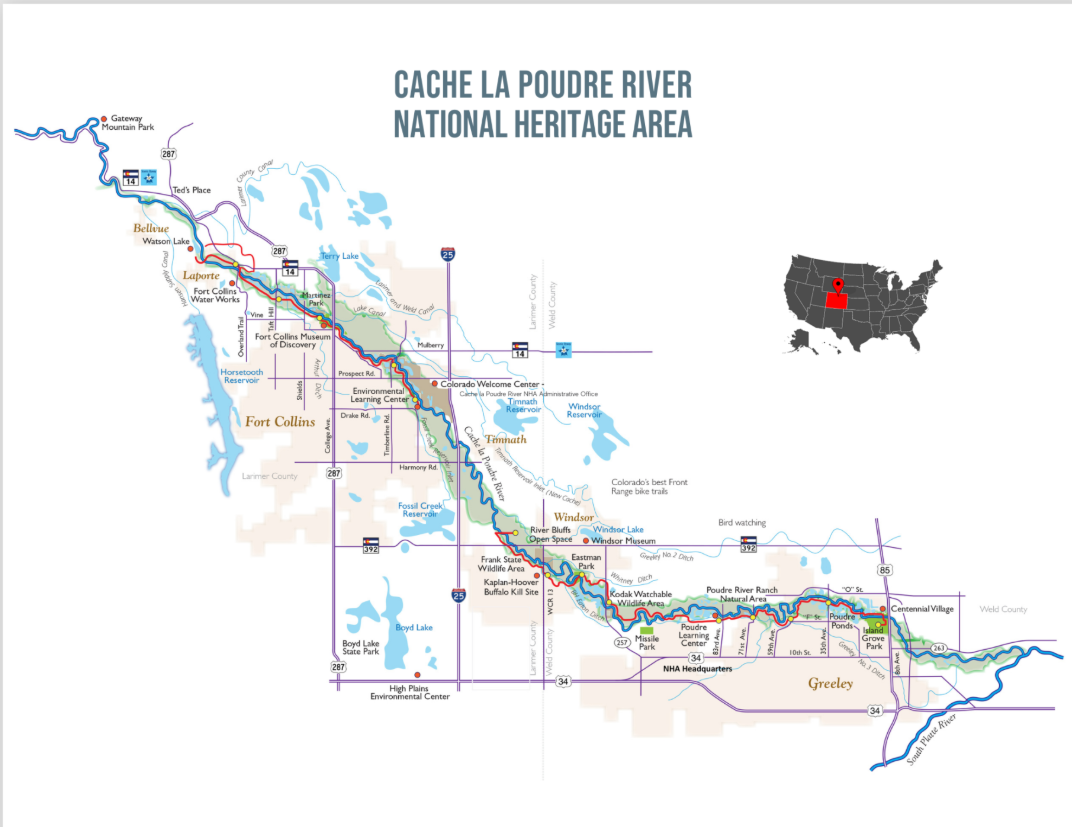
The fund can be used for โ€œecological, habitat, and recreational improvements,โ€ including the potential creation of a โ€œPoudre River Water Trailโ€ from Gateway Park in Poudre Canyon to Eastman Park in Windsor. The fund will be managed by a six-person committee, three of whom will be appointed by Save the Poudre, and three by the NISP enterprise…

Proponents of the Northern Integrated Supply Project say it will help fast-growing communities along the northern Front Range keep pace with the volume of new residents. (From Northern Water project pages)

NISP would supply 15 different water providers along the northern Front Range through two reservoirs and a system of pipelines and pumps. Northern Water, the agency that would build and operate NISP, projects that it will provide water to nearly 500,000 people by 2050.

Water from the system would flow to a diverse group of towns and cities north of Denver. Small, fast-growing towns such as Erie and Windsor stand to receive some of the largest water allocations from NISP. The list also includes the Fort Collins Loveland Water District, the Left Hand Water District, which is just north of Boulder, and Fort Morgan on the eastern plains.

โ€œThese are communities that have identified the need for housing as something that will increase the quality of life,โ€ said Jeff Stahla, a spokesman for Northern Water. โ€œSo this is an important time for us as residents to realize that we can help to solve some of the problems and some of the the challenges that we’re seeing out there on the horizon as more people choose to live here.โ€

Stahla said construction is expected to take off in 2026, with some pipes being laid in the summer and fall of this year. If Save the Poudreโ€™s lawsuit was still in place, he said, construction would have begun in โ€œ2027 or even beyond.โ€ Glade Reservoir, the centerpiece of NISPโ€™s water storage system, would flood a valley northwest of Fort Collins that is currently home to a stretch of U.S. Highway 287 connecting Fort Collins and Laramie, Wyo. That section of road would be rebuilt further East.

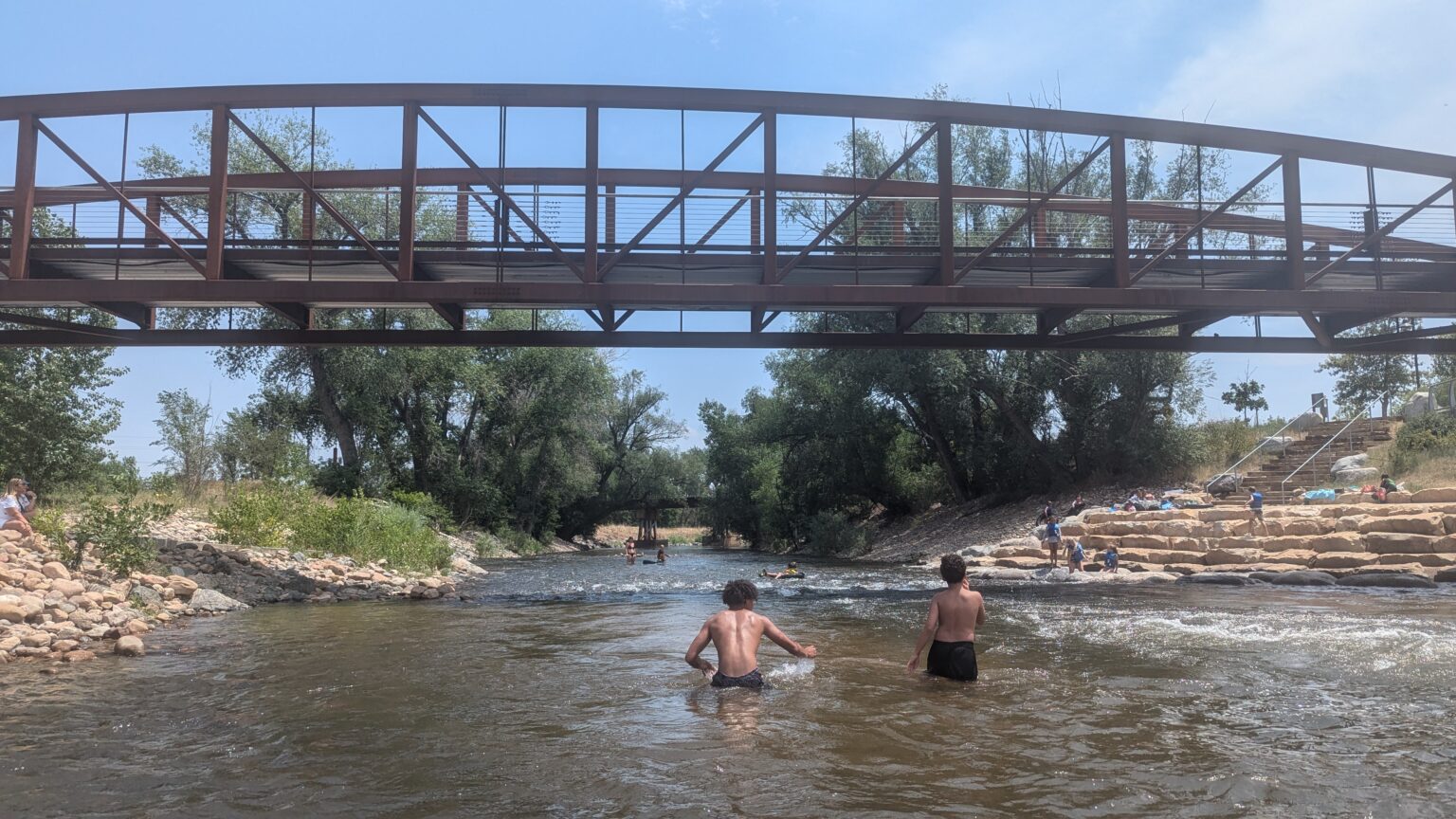
Kids play in the Poudre River Whitewater Park near downtown Fort Collins on Oct. 20, 2023. The Cache la Poudre is often referred to as a “working river” because it carries a large volume of water from manmade reservoirs to cities and farms far from its banks. Photo credit: Alex Hager/KUNC

Stahla said Northern Waterโ€™s permit includes requirements to mitigate environmental impacts caused by the new reservoirs. He alluded to the fact that the river is already connected to a number of large reservoirs and its water is piped and pumped far away from its original course.

โ€œThe Poudre River has really been a working river for 150 years now,โ€ he said. โ€œWhat NISP is planning to do certainly is not the only impacts to the river that have been occurring or will occur.โ€

…Stahla…suggested work on diversion structures, which redirect the riverโ€™s water towards farms and water treatment plants. Stahla suggested they could be modernized… and moved further downstream to allow more water to flow through certain sections of the river.

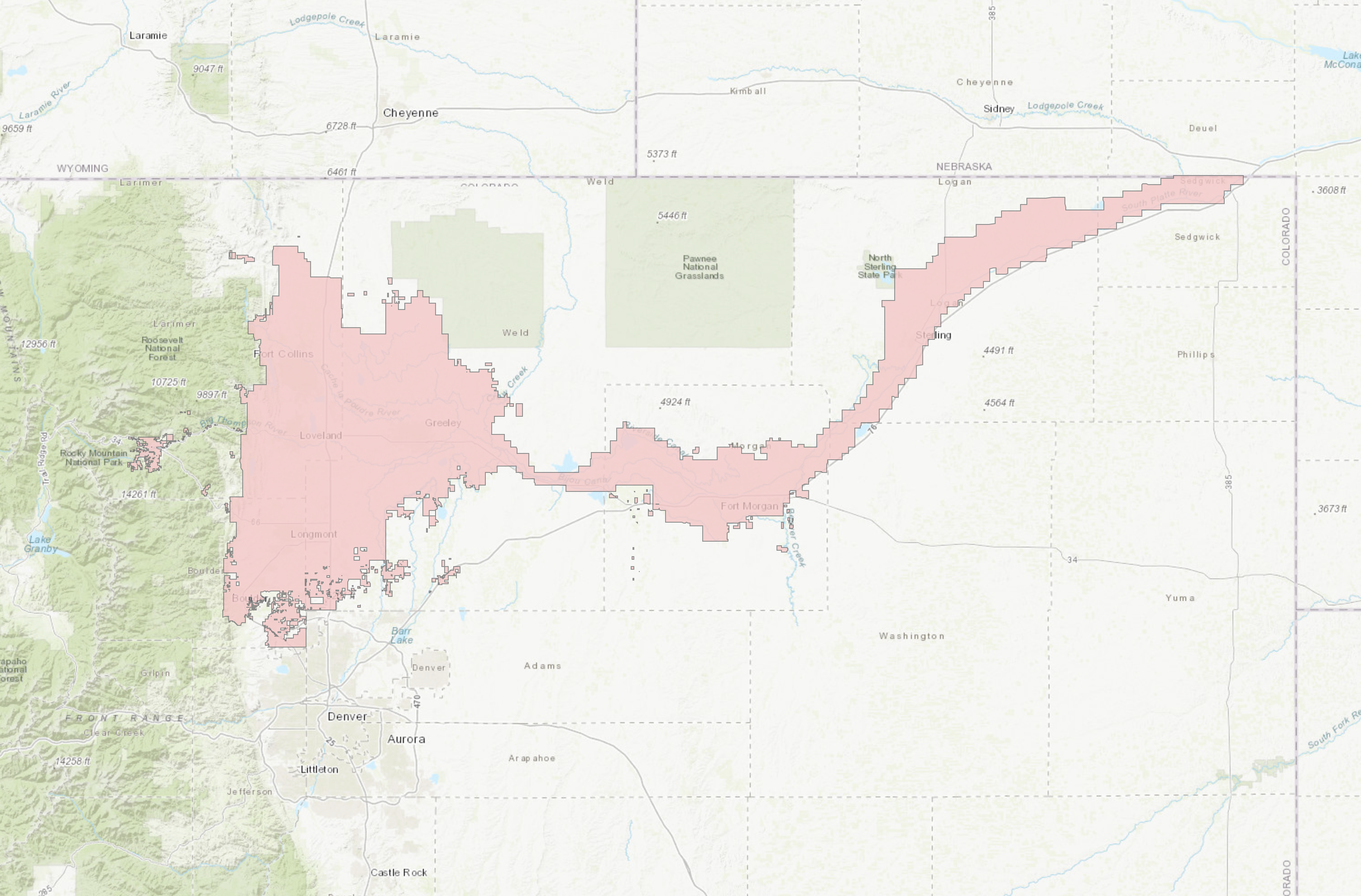
The South Platte River Basin is shaded in yellow. Source: Tom Cech, One World One Water Center, Metropolitan State University of Denver.

Northern Water may be nearing settlement of lawsuit filed to stop $2 billion reservoir project — Jerd Smith (Fresh Water News) #NISP #PoudreRiver #SouthPlatteRiver

A stretch of the Cache la Poudre River, between Fort Collins and Greeley. Credit: Water Education Colorado.

Click the link to read the article on the Water Education Colorado website (Jerd Smith):

February 13, 2025

More than a year after an environmental group sued to stop a $2 billion northern Colorado water project, whispers of a settlement are being heard as the case winds its way through U.S. District Court in Denver.

Last January,ย Save The Poudre suedย to block the Northern Integrated Supply Project, a two-reservoir development designed toย serve tens of thousands of people in northern Colorado. The suit alleged that the Army Corps of Engineers had not adequately weighed the environmental impacts and less harmful ecological alternatives to the project…

Colorado-Big Thompson Project map. Courtesy of Northern Water.

Northern Water, which operates the federally owned Colorado-Big Thompson Project for the U.S. Bureau of Reclamation, is overseeing the permitting and construction of NISP. The agency also declined to comment on any potential settlement. Northern Water serves more than 1 million Front Range residents and hundreds of growers in the South Platte River Basin.

โ€œWeโ€™re still moving forward with what we need to do on the litigation,โ€ Northern spokesman Jeff Stahla said.

Northern Waterโ€™s board discussed the litigation in a confidential executive session last week at a study retreat and it is scheduled to discuss it in another private executive session Feb. 13 at its formal board meeting, according to the agenda.

Sources told Fresh Water News and The Colorado Sun that those discussions are related to the potential multimillion-dollar settlement.

Key developments this past year

In October, a federal judge deliveredย a favorable rulingย to Wocknerโ€™s Save the Colorado on a case involving Denver Waterโ€™s Gross Reservoir expansion project. Now [envisonmental groups] are seeking an injunction to force Denver Water to stop construction of theย dam, which began in 2022.

Workers from Denver Water and contractor Kiewit Barnard stand in front of Gross Dam in May to mark the start of the dam raise process. Photo credit: Denver Water.

Raising the Boulder County dam by 131 feet will allow Denver Water to capture more water from the headwaters of the Upper Colorado River on the Western Slope. In its ruling, the federal court said the U.S. Army Corps of Engineers had failed to consider the impact of climate change on the flows in the Colorado River.

What impact that ruling may have on the NISP case isnโ€™t clear, but [the environmental group that sued Denver Water] said they believe it will give his organization more leverage to push for changes in NISP.

In addition, the City of Fort Collins has dropped its formal opposition to NISP. And Stahla said Northern has continued to push forward with key parts of the development, including the design work needed to relocate a 7-mile stretch of U.S. 287 northwest of Fort Collins.

Fort Collins Mayor Jeni Arndt said the city changed its stance because most of its environmental concerns had been met through the 21-year federal permitting process.

โ€œThe EPA had signed off, and the Corps of Engineers had signed off,โ€ she said. โ€œIt was obvious that this was not going to be another Two Forks,โ€ referring to a massive dam proposed in the 1970s by Denver Water on the South Platte River near Deckers. It was rejected by the EPA due to environmental concerns.

Arndt said the city also planned to use a later review process, known as a 1041 review, to address other environmental concerns that might arise.

If NISP is ultimately built, and most believe it will be, it will provide water for 15 fast-growing communities and water districts along the Interstate 25 corridor, including the Fort Collins-Loveland Water District, Fort Morgan, Lafayette and Windsor.

The largest participant in the giant project is the Fort Collins-Loveland District. Board member Stephen Smith said he believes NISP will move forward one way or another and that it is critical to serving the water-short region.

โ€œNISP is going to get built and it will provide water to Fort Collins by 2033,โ€ he said.

More by Jerd Smith

The Northern Integrated Supply Project, currently estimated at $2 billion, would create two new reservoirs and a system of pipelines to capture more drinking water for 15 community water suppliers. An environmental group is now suing the Army Corps of Engineers over a key permit for Northern Waterโ€™s proposal. (Save the Poudre lawsuit, from Northern Water project pages)

Larimer County Sets Public Meetingsย forย 1041 Permit Application — City of #FortCollins

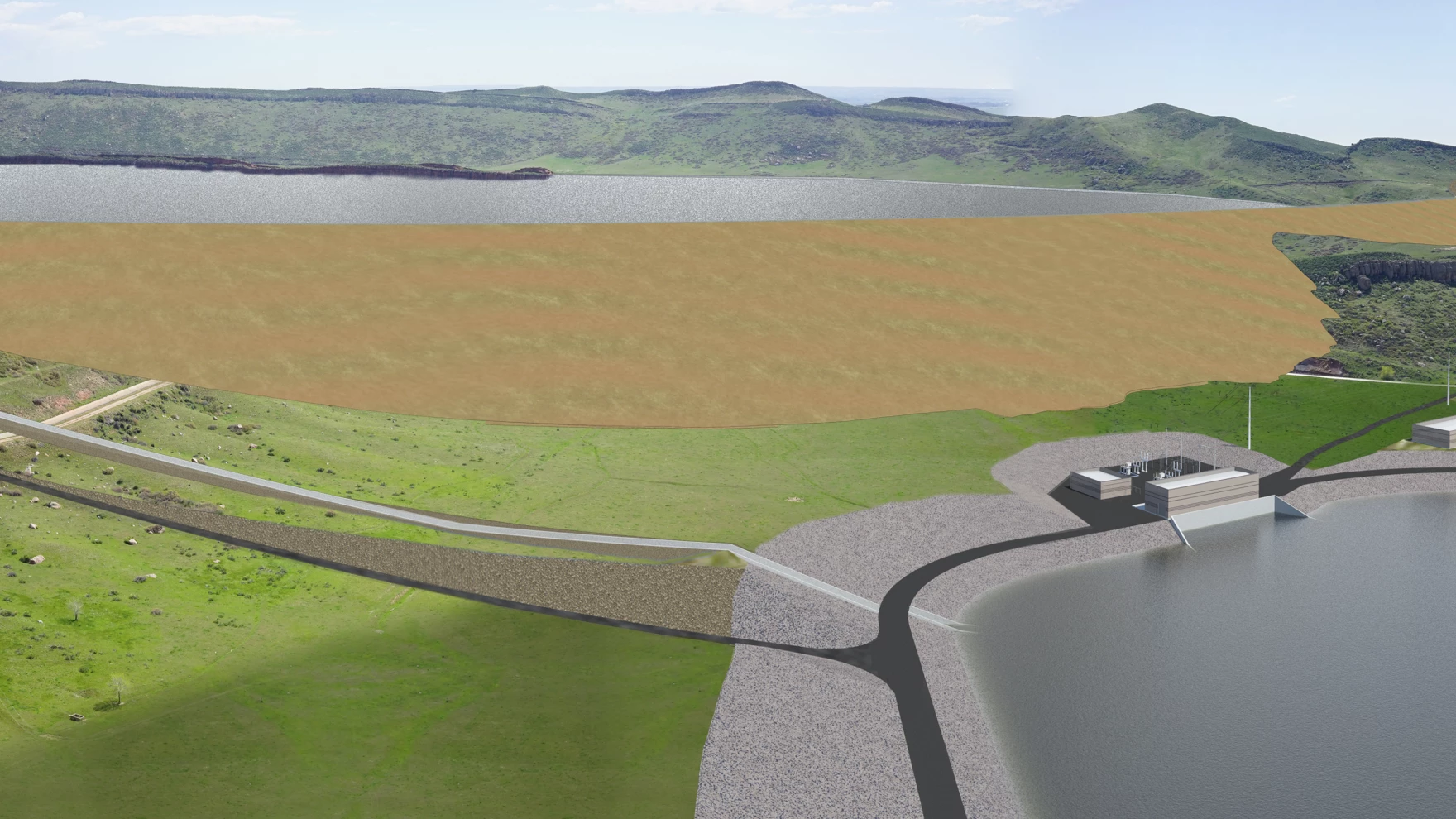
Halligan Reservoir. Credit: City of Fort Collins

Click the link to read the release on the City of Fort Collins website:

In 2024, the City of Fort Collins applied for aย 1041 permit from Larimer County. As a part of the permit process, two public hearings will take place with the county’sย Planning Commission and the Board of County Commissioners.

The meetings are scheduled at the Larimer County offices at 200 W. Oak St. in Fort Collins at the following times:

  • Planning Commission: February 19, 2025 at 6 p.m.
  • Board of County Commissioners: March 24, 2025 at 6:30 p.m.

The Planning Commission holds its hearing to provide a permit recommendation to the County Commissioners. The County Commissioners hold a hearing to make a final decision on the permit application.

The Halligan Project requires a 1041 permit from Larimer County because it includes the enlargement of a reservoir resulting in a surface area at high water line in excess of 50 acres. The permit process looks at all aspects of the project. To view the application, visit the county’s portal by clicking the button below.

If you have questions about the Halligan Project, you can email halligan@fcgov.com. If you want to submit comments to the county about the 1041 permit application, you can visit publicinput.com/halligan This link opens in a new browser tab

View the 1041 Application


Also from the City of Fort Collins via email:

Information Session on Larimer County Permit Application

As someone who is interested in the Halligan Water Supply Project, we are reaching out to inform you about recent developments. In 2024, the City of Fort Collins submitted an application for a 1041 permit from Larimer County. The City, acting through Fort Collins Utilities, is proceeding with this permitting process now as the project is moving through phases of design and closer to construction. The permit process looks at all aspects of the project. To view the application, visit the county’s website by clicking this link.

To increase awareness, the City is hosting an Information Session on Feb. 12, 2025 from 6-7:30 p.m. at the Livermore Community Hall. City staff will be on hand to highlight elements of the application and answer questions. While this wonโ€™t be part of the official public comment process with Larimer County, we encourage you to engage directly with us. To RSVP, click the button below. Light refreshments will be provided.

RSVP Here

Reservoirs NW of Fort Collins

Water rates are going up 30% for residents in #FortCollins-#Loveland Water District — The Fort Collins Coloradoan

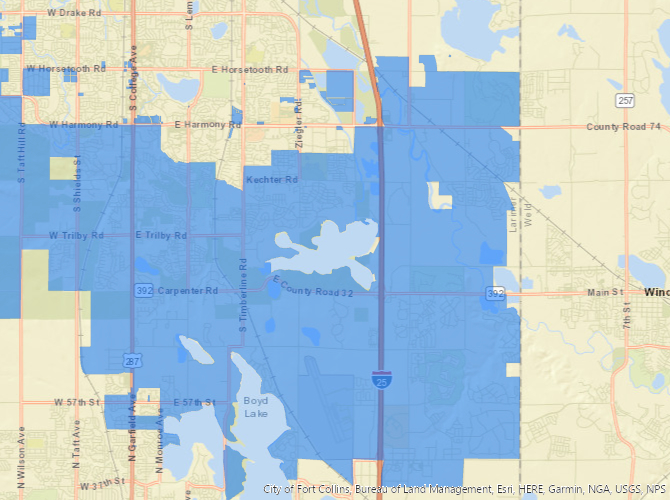
Service area map via the Fort Collins-Loveland Water District.

Click the link to read the article on the Fort Collins Coloradoan website (Rebecca Powell). Here’s an excerpt:

November 26, 2024

Fort Collins, Loveland, Timnath and Windsor residents who get their water from the Fort Collins-Loveland Water District will see a 30% increase or more in rates for 2025…Residents who reach higher tiers of water use and homeowners association accounts that go over allotments will be hit even harder if they don’t find ways to reduce. But after hearing from representatives of HOAs, the Fort Collins-Loveland Water District board backed off charging “irrigation customers” five times as much when they go over their allotments, which were assigned at the time their accounts were created but haven’t been enforced. Instead, this segment of ratepayers, which includes commercial customers and parks, will pay twice as much as the normal rate for overages…The board approved the rate increases for 2025 on Nov. 19…

Base fees for residential, commercial and irrigation customers are increasing 30%. On top of that, rates per 1,000 gallons of water are increasing 30% across all tiers for residential customers. The 30% rate increases also apply to the three or four developments in what is known as “The City of Fort Collins service area as defined by IGA.”

[…]

The water district is also introducing a new fourth tier for residential customers. The cost of water will be five times higher than the next closest tier โ€” for extremely high water use that exceeds 50,000 gallons per month…

  • Fees for single-family development taps will increase anywhere from 19% to 31%.
  • Fees for multifamily development taps will increase 15%.
  • Fees for commercial development taps will increase 33%.
  • Fees for new irrigation taps will increase 33%.

Poudre Flows: Collaboration to Protect the Cache la #PoudreRiver — #Colorado Water Trust

Cache la Poudre River at Lions Park, Fort Collins. Photo credit: Colorado Water Trust

Click the link to read the blog post on the Colorado Water Trust website (Josh Boissevain):

October 29, 2024

On October 14th, the Poudre Flows Project, a collaboration of Colorado Water Trust, the Colorado Water Conservation Board, Cache la Poudre Water Users Association, the cities of Fort Collins, Greeley, and Thornton, Northern Colorado Water Conservancy District, and Colorado Parks and Wildlife, began increasing flows in the Cache la Poudre River. During the week of October 14, Thornton added flows between the mouth of the Poudre River and the confluence with the South Platte.

The Poudre Flows Project aims to reconnect the Cache la Poudre River past numerous frequent dry-up locations between the mouth of the Poudre Canyon and the confluence with the South Platte River while still allowing water rights owners to use their water. Under a temporary plan approved by the State, water provided by the cities of Thornton and/or Greeley can be used in a trial run of the innovative Poudre Flows Project. As conditions allow, the temporary plan allows water provided by Thornton to be used to increase flows by up to 20 cubic feet per second (โ€œcfsโ€) for up to two weeks this fall and again in the spring. As conditions allow, the plan will also allow water provided by Greeley to be used to increase flows between 3-5 cfs between the months of April to October.

โ€œThe Poudre Flows project has brought a cross section of water users and river advocates together to add and protect flows on the Poudre River,โ€ said Emily Hunt, Deputy Utilities Director for the City of Thornton. โ€œThornton is proud to contribute the first deliveries of water in a trial run of this project and is excited to continue its work with the  Colorado Water Trust and the Poudre Flows partners to achieve significant environmental benefits for the Poudre River.โ€

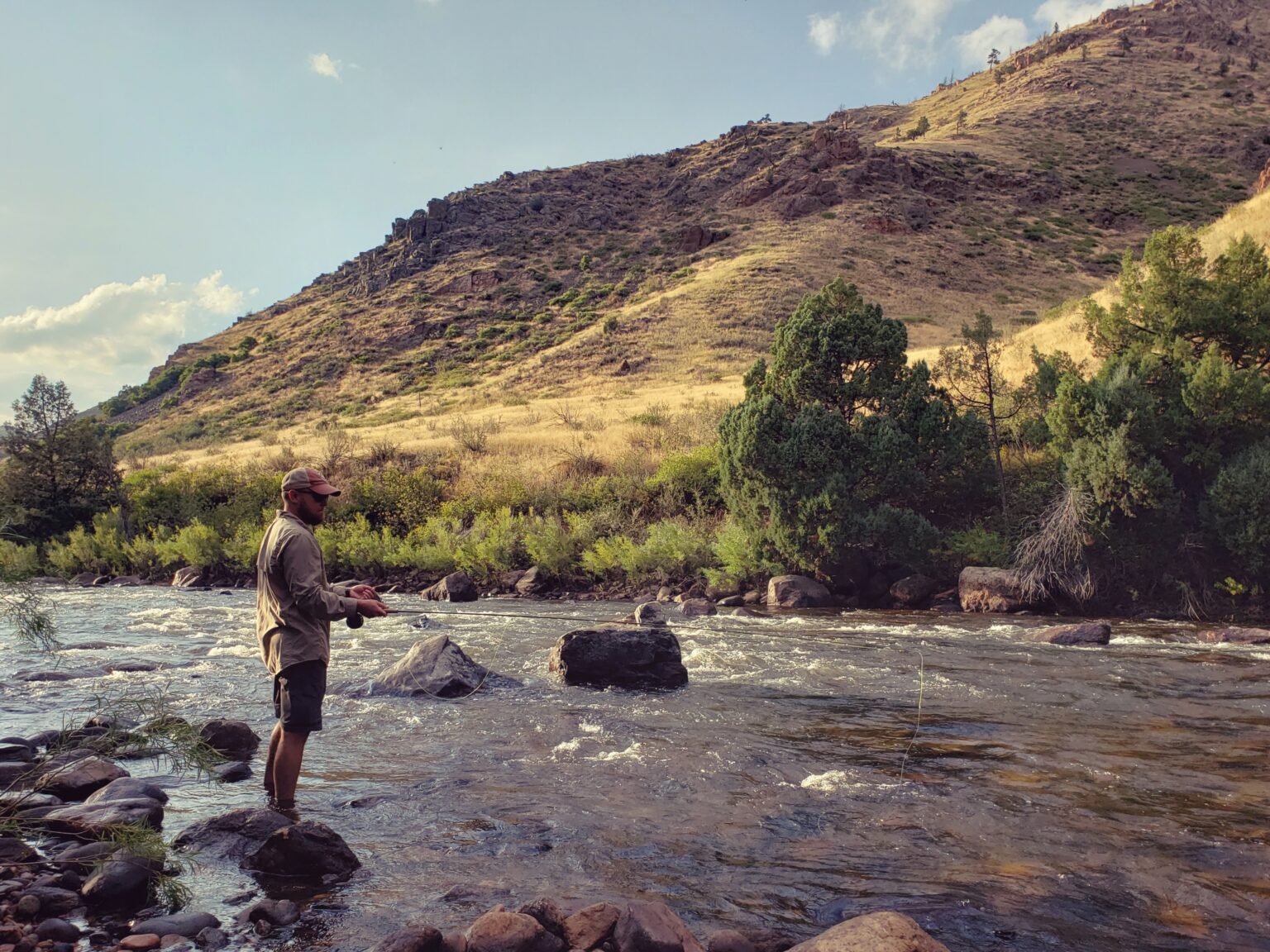
Fly fishing on the Poudre River west of Fort Collins. Photo credit: Colorado Water Trust

The Poudre Flows Project implements a new mechanism known as a Streamflow Augmentation Plan that was approved by the Colorado legislature to help restore depleted river flows. Generally, an augmentation plan is a tool used by water users to increase flexibility and maximize utilization of water supplies on a stream while still protecting other water users. While augmentation plans are typically used to replace water diverted from the river to meet water use needs, the Poudre Flows Project uses this same tool to meet environmental needs by releasing water to the river and protecting it from diversion by others as it flows downstream.

โ€œThe Colorado Water Conservation Board is proud to be a part of this critical effort to protect flows on the Cache La Poudre River,โ€ said Lauren Ris, CWCB Director. โ€œThrough our agencyโ€™s Instream Flow Program, we are able to ensure that the river maintains its vital flows, supporting both the environment and the communities that depend on it. This collaboration highlights the importance of innovative solutions to protect Coloradoโ€™s water for generations to come.โ€

Historically, environmentalists and recreationalists have been at odds with water users who take water out of the river. The Poudre Flows Project is bringing together those who have previously been in conflict, including municipalities, water conservancy districts, state agencies and agricultural producers. This group will strategically leverage water rights to preserve and improve river flows in times of low flow. The Poudre Flows Project has a pending water court case; but in the meantime, Greeley and Thornton have obtained temporary approvals in October from the Colorado Division of Water Resources, via substitute water supply plans, to use their water rights in the Streamflow Augmentation Plan for one year. This is the first Streamflow Augmentation Plan in the state and could be a model for streamflow improvement in other river basins.

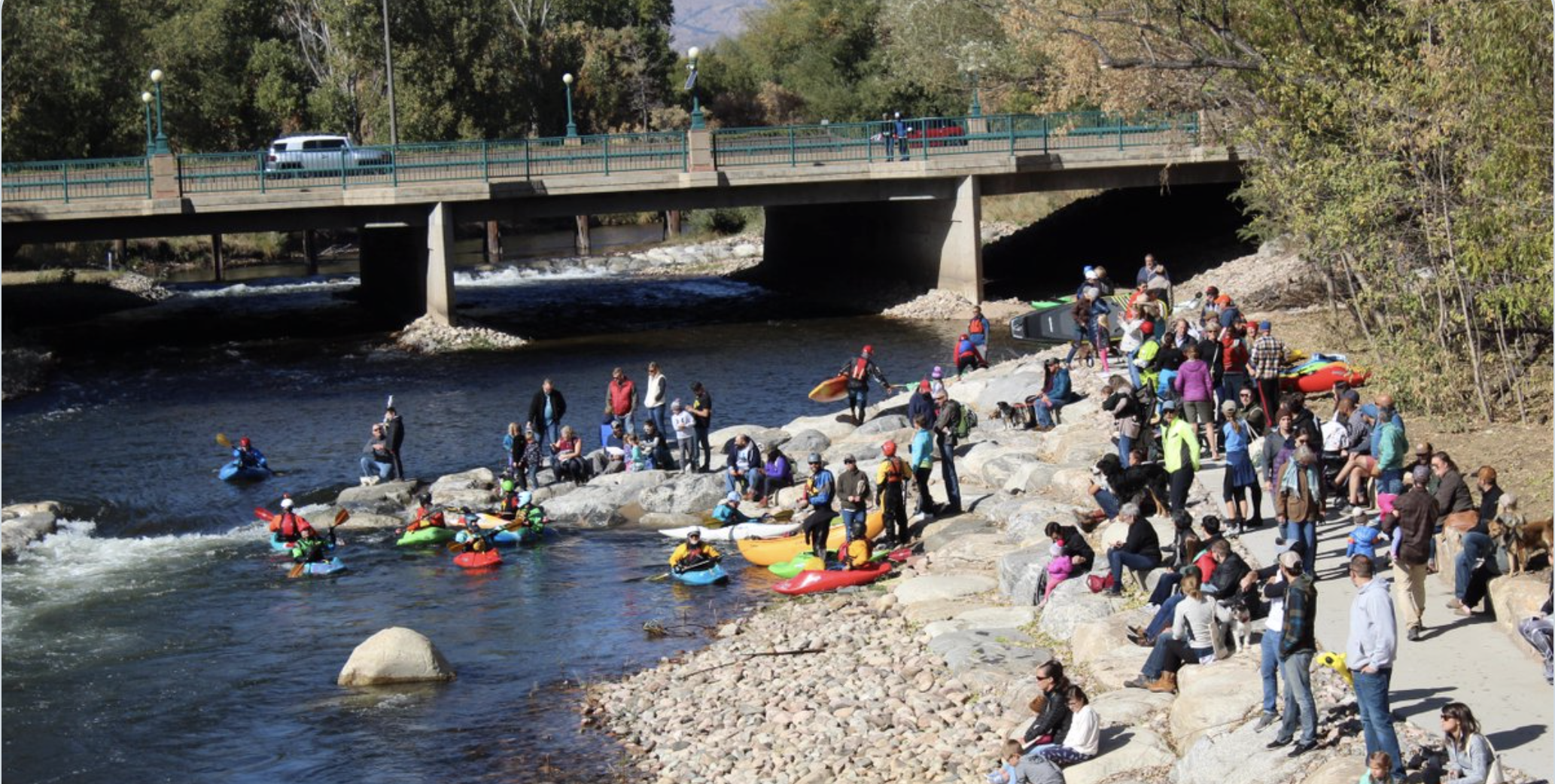
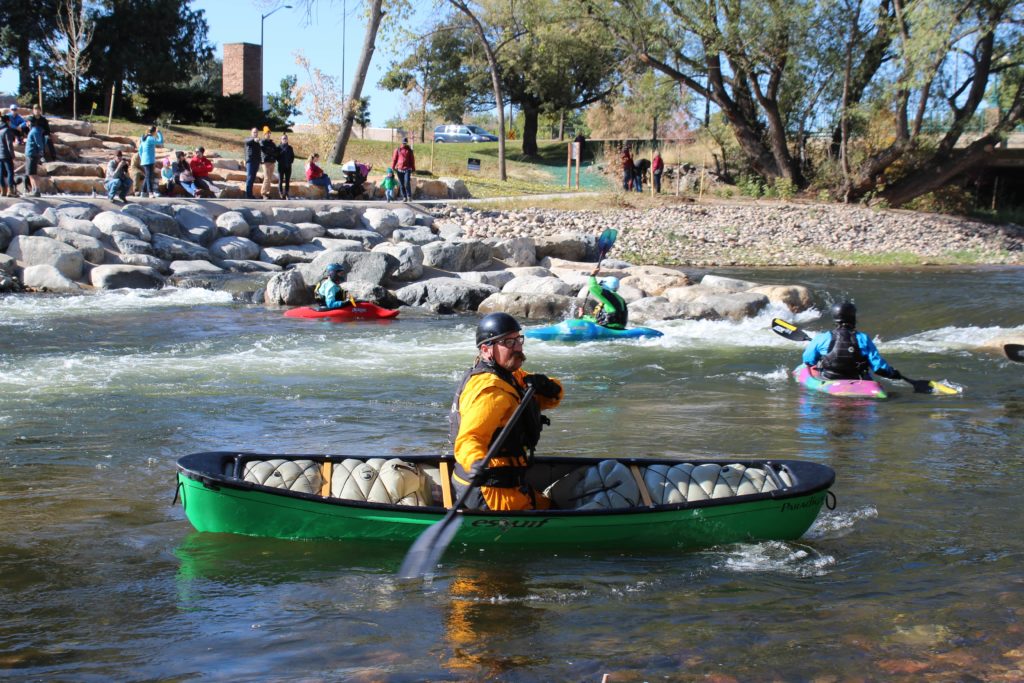
Playing in the Poudre River at the Fort Collins whitewater park. Photo credit: Colorado Water Trust

โ€œGreeley is excited to see the Poudre Flows project going live after many years of regional collaboration, enabling legislation, and investment in this innovative water administration strategy,โ€ said Sean Chambers, Director of Water Utilities for the City of Greeley. โ€œThe project will physically enhance the Cache la Poudre river, its aquatic habitat, and the administration of water rights, and Greeley appreciates the Colorado Water Trustโ€™s leadership and project management.โ€

THE POUDRE FLOWS STORY:
For more than a decade, the water community of the Poudre River Basin has been working on an innovative plan to reconnect one of the hardest working rivers in Colorado, the Cache la Poudre River. Since the Colorado gold rush in the mid-1800s, people have diverted water from the Cache la Poudre River for beneficial uses that have helped northeastern Colorado grow into the agricultural and industrial powerhouse it is today.

While the Poudre River flows are high during the spring runoff, there are times throughout the year when the river dries out entirely in places below some water-diversion structures. To combat dry conditions and improve river health, local communities have worked hard over the past decade with the goal of improving and bringing vitality to the Cache la Poudre River. The Poudre Flows Project is a perfect example of those efforts.

The Poudre River during a dry-up period. Photo credit: Colorado Water Trust

Colorado Water Trust, a statewide nonprofit organization with a mission to restore water to Coloradoโ€™s rivers, has been one small part of this process. Over a decade ago, Colorado Water Trust had an unorthodox, pioneering idea to reconnect the Poudre River, and the water community of the Poudre River Basin said, โ€œLetโ€™s get it done.โ€ A broad collaboration of water providers, cities, state government, nonprofits, and a collective of farmers have worked tirelessly to make this novel idea a reality and rewater the Poudre River. Finally, this year, the Poudre Flows Project will be put into action through the generous contributions of water by the cities of Greeley and Thornton. This is the first step toward reconnecting the Poudre River both now and for future generations.

โ€The Poudre Flows Project is such a great example of collaboration and innovative thinking when it comes to water, and it shows a recognition of how important our streams are to us as Coloradans,โ€ said Kate Ryan, Executive Director of Colorado Water Trust. โ€œYou have all different types of water users on the Poudre River coming together to take responsibility for the health and vitality of this river and to find ways to protect it for future generations. The success of this project could serve as a blueprint across the state for communities of water users to protect their own rivers and streams in the face of a changing climate.โ€

Coloradoโ€™s water landscape is very complex and the legal structure for this project is innovative. The Poudre Flows Project will provide water right owners a flexible opportunity to add their water to the plan on a temporary or permanent basis. This groundbreaking project has the potential to be replicated in other basins throughout Colorado. Lastly, one of the unique aspects of this project is that it doesnโ€™t change the Poudre River from being the hardest-working river in Colorado. Instead, the Poudre Flows Project provides an avenue for optimal management of river water, to protect peopleโ€™s livelihoods AND the river itself. The Poudre Flows Project proves that if we work together, we can maintain all that we love about Colorado, from the beauty and thrills of a flowing river to the local food and beer that river water helps provide, and the flourishing neighborhoods that depend on the riverโ€™s water in their homes.

โ€œPartnerships are the key ingredient to the success of the Poudre Flows Project,โ€ said Katie Donahue, Director of the City of Fort Collins Natural Areas Department. โ€œTogether we are launching a new chapter of river resiliency for our community.โ€

FUNDERS FOR THIS PROJECT INCLUDE:
โ€ข Xcel Energy Foundation
โ€ข City of Fort Collins
โ€ข City of Greeley
โ€ข City of Thornton
โ€ข Northern Water
โ€ข Gates Family Foundation
โ€ข Eggleston Family Fund of the Community Foundation of Northern Colorado
โ€ข New Belgium Brewing Company
โ€ข Odell Brewing Company
โ€ข Alan Panebaker Memorial Endowment of the Yampa Valley Community Foundation
โ€ข Telluray Foundation
โ€ข Colorado Water Conservation Board

FOR MORE INFORMATION, CONTACT:

Josh Boissevain
Staff Attorney, Colorado Water Trust
(720) 579-2897 ext. 6
JBoissevain@coloradowatertrust.org

Appeals court rejects lawsuit, says Northern Integrated Supply Project can move forward — #Colorado Public Radio #NISP

The Northern Integrated Supply Project, currently estimated at $2 billion, would create two new reservoirs and a system of pipelines to capture more drinking water for 15 community water suppliers. An environmental group is now suing the Army Corps of Engineers over a key permit for Northern Waterโ€™s proposal. (Save the Poudre lawsuit, from Northern Water project pages)

Click the link to read the article on the Colorado Public Radio website (Ishan Thakore). Here’s an excerpt:

October 8, 2024

The Colorado Court of Appeals rejected a lawsuit from environmentalists last week that sought to force Larimer County to reevaluate a massive northern Colorado water project, which would eventually supplyย 13 billion gallons of water to 15 Front Range communities.ย  Theย Northern Integrated Supply Projectย would pump water from the Poudre River into two large reservoirs that would be built near Fort Collins and Greeley and would include dozens of miles of new pipelines and a major renovation of existing canals. The utility proposing the project, Northern Water,ย saysย itโ€™s the only way to meet demand for an additional 500,000 customers it expects to serve by 2050…In promotionalย materials, Northern Water said the reservoir project would add water into the Poudre River during dry spells, and that the project would improve water quality in the river basin…

In 2019, Save the Poudre and No Pipe Dream, another advocacy organization, sued the Larimer County Board of Commissioners for approving a local permit for the project. The groups alleged that two commissioners were biased in favor of the project and that the permit โ€” a critical step before construction โ€” should be denied. In an Oct. 3ย decision, the appeals court upheld a lower court decision and confirmed the permit was properly issued…The ruling inches the reservoir project one step closer to construction more than 20 years after it started in earnest. Northern Waterย first startedย planning for the project in the 1980s. It has already cleared significant hurdles, including approval from multiple state and county agencies and the federal government through the U.S. Army Corps of Engineers…

The reservoir project may still require a local permit from Fort Collins, since part of its pipelines may cut through the city. For years, the cityย opposedย the project because of its potential impact to wetlands and other natural features. In 2023, the city strengthened its approval process for large infrastructure works, which means it will have to be impartial when evaluating those permits. In July 2024, the city council formally rescinded its opposition to the project.

From Coors to Leprino, #Colorado companies dial down water use as water shortages loom — Fresh Water News

Beer bottles are washed on a conveyor belt in a microbrewery. Less water used in the cleaning process is one way factories are trying to increase water savings. Photo by AETB

Click the link to read the article on the Water Education Colorado website (Emily Payne):

September 5, 2024

Denver-based Leprino Foods Company generates some of its own water. In fact, the company holds a water right for water developed at its Greeley manufacturing facility.

โ€œWe actually are contributing more water to the river than we take in from our municipal source,โ€ says Erik Nielsen, associate general counsel at Leprino Foods, which is the worldโ€™s largest producer of mozzarella cheese and a global producer of whey protein and other dairy ingredients.

Leprino has been a net contributor to Colorado watersheds since at least 2017. In 2020, the company was granted a water right associated with the quantity of water that it conveys to the Poudre River after deducting the amount of water that it takes in from municipal sources.

Milk is about 87% water. The process of evaporating or concentrating milk products produces condensate of whey water. Leprino recovers this water and stores it on-site in silos, often reusing it multiple times. Later, it is cleaned to stream quality standards and discharged. This, in addition to other water efficiency and recovery projects, generates about 600 acre-feet per year, or enough water to supply around 1,000 homes for a year. Leprino licenses most of this byproduct water to the City of Greeley for municipal uses, says Nielsen.

These water-saving processes not only reduce the companyโ€™s environmental footprint but are also critical to Leprinoโ€™s manufacturing future in Colorado.

โ€œIt seems like you shouldnโ€™t be doing business in Colorado if youโ€™re not thinking really deeply about water,โ€ says Nielsen. โ€œYouโ€™ve probably heard the saying, you never think about the value of water until the well runs dry.โ€

Water is required for cooling, heating, washing, diluting and other processes at nearly 6,000 manufacturing facilities in Colorado. As historic droughts threaten water availability across the state, consumers increasingly demand water-smart practices, and inflation continues to squeeze the private sector, many manufacturers are shifting their approach to water use and conservation.

โ€œManufacturers are increasingly becoming good stewards of water,โ€ says JC Ye, corporate business director of water reuse at Veolia, a global water services company. โ€œMany have a strong incentive to implement water stewardship practices and invest in improving the reliability of water supply. In most industrial processes, disruption of water availability has an immediate, acute impact on manufacturing operations.โ€

But water is highly contextual. Every river and stream has a unique ecosystem and different needs depending on the season. Solutions to protect and restore these resources are just as complex. Companies are taking a variety of approaches to water stewardship, from investing millions in local conservation work to making small but impactful infrastructure upgrades.

Leprino Foods processing facility. Photo Courtesy Leprino Foods

A reputational imperative

The original Coors brewery was built in Golden specifically for Clear Creekโ€™s remarkable water quality. The company has a history of conducting projects aimed at protecting this water, which ends up in its product. As a founding member of the Clear Creek Watershed Foundation, the Molson Coors Beverage Company has helped to clean up some of the estimated 1,600 orphaned mines in the watershed, which threaten water quality by overflowing and discharging heavy metals and mine drainage into the river.

These days, water stewardship is about both public perception and product quality: Consumer-facing brands like Coors know that they face a reputational risk if they donโ€™t invest in water-use reduction and watershed protection.

โ€œ[People] need to have confidence that we are serious about our water use, that weโ€™re serious about protecting the watershed,โ€ says Ben Moline, director of water resources and environmental policy for Molson Coors Beverage Company.

The entire state of Colorado has experienced severe to extreme drought on and off for more than two decades. The public is watching water use more closely as resource scarcity becomes a more serious concern. Recently, some communities have pushed back against water consumption for manufacturing.

BlueTriton โ€” the owner of major U.S. bottled water brands, including Poland Spring โ€” has been embroiled in legal battles with water boards, environmentalists, and other activists across the country for years. The company pumps water from Coloradoโ€™s Upper Arkansas River Basin, a semi-arid region particularly impacted by historic drought. In July 2021, about 20 community members protested outside of the Chaffee County Courthouse, opposing the renewal of a permit that allows BlueTriton to export 65 million gallons of water per year. After negotiating more than $1.25 million in community contributions from BlueTriton, county commissioners approved the permit the following month.

Veolia found in a 2023 study that fewer than 30% of surveyed companies had set water conservation goals, with water lagging behind carbon and waste as the environmental priority for companies. But Ye notes a recent shift in the way companies approach sustainability. Water scarcity concerns, public pressure, reputational risk, and cost-saving opportunities are leading to the proliferation of water initiatives across the private sector.

Michael Kiparsky, founding director of the Wheeler Water Institute at the University of California Berkeley School of Law, sees this as an opportunity: โ€œCan we use transparency coupled with some degree of public awareness of water as a resource to put pressure on corporate entities to do something that might not be strictly in their economic interest otherwise?โ€

Small changes, big impact

The Coors brewery in Golden uses an estimated 2.7 billion gallons of water from Clear Creek each year: about 782 million gallons for its products, and 2 billion gallons for brewing processes, including production and malting. Of those 2 billion gallons of process water, 95% is cleaned and returned to Clear Creek.

This is representative of manufacturers at large: According to the Colorado Water Plan, industrial users account for only 3% of Coloradoโ€™s total annual water consumption, or water that is permanently removed from its source.

โ€œWe are diversion heavy, but depletion light,โ€ says Moline, noting that Molson Coors is actively working to bring its water consumption rate even lower, while continuing to work with the Colorado Department of Public Health and Environment (CDPHE) to ensure wastewater discharged back to Clear Creek after treatment meets permit requirements.

Molson Coors treats wastewater from its operations as well as much of the City of Goldenโ€™s wastewater. The company entered into a consent order with CDPHE earlier this year to address permit exceedences for total suspended solids, metals, oil and grease, and whole effluent toxicity in its discharge water. Even before the consent order, the brewery began upgrading its wastewater treatment plant in preparation for meeting tightening water quality limits. Water treatment improvements are big changes with big impact, but small infrastructure changes also lead to big results โ€” for example, fermentation tank design.

A few times per month, depending on the type of beer, the brewing team empties each fermentation tank through a valve on its side, leaving a small amount of beer just below the valveโ€™s opening. The team clears the excess beer and thoroughly cleans the floor of the tank to prepare for the next batch, using water and a squeegee multiple times over. Across more than 100 fermentation tanks of varying sizes, which produce approximately 9.7 million barrels of beer per year, a portion of beer is lost in the cleaning process.

Molson Coors Beverage Company is updating its fermentation tanks to a new, vertical design with a cone-shaped bottom, through which a valve completely empties the beer directly below the tank. Now, the brewery can produce the same number of barrels for less, because beer โ€” and water โ€” isnโ€™t left on the tank floor. This means less water used for malting, heating and cooling beer that ultimately doesnโ€™t make it to consumers, and less water used in the cleaning process.

The upgrades are a part of Molson Coors Beverage Companyโ€™s G150 project, in honor of the 150-year anniversary of the Coors breweryโ€™s inception. The company has invested โ€œseveral hundred million dollarsโ€ in the project, which is expected to save 80 million gallons of water annually after its completion by the end of 2024. Moline says that upgrading its fermentation tanks is contributing a large part of these water savings.

Other food and beverage manufacturers are updating infrastructure to save water: Swire Coca-Cola, which produces, sells, and distributes Coca-Cola and other beverages in 13 states across the American West, says that it installed a new filtration and recovery system at its Denver plant to reduce water usage by about 20%. And Bellvue-based Morning Fresh Dairy, a fifth-generation dairy farm that produces the nationally popular Noosa Yogurt brand, installed an automated clean-in-place system to clean the interior of food and beverage process pipes, reducing water consumption by 30%.

Corporate mandates

PepsiCo, Amazon, Google and Facebook have all committed to being water-positive, or replenishing more water than they use from natural systems, by 2030. In addition to water-efficiency projects, much of this work is done through cross-sector partnerships, which have provided critical support to local water stewardship efforts.

โ€œCorporate support has been very important to our ability to staff project work and, even more so, to purchase water for streamflow restoration,โ€ says Kate Ryan, executive director of the Colorado Water Trust.

For example, the tech giant Intel relies on the Colorado River and the Rio Grande to supply water downstream to its Arizona and New Mexico manufacturing facilities. The company has partnered with the Colorado Water Trust and Trout Unlimited on multiple projects to support the Colorado River watershed. Intel reports that 120% of the water it used across the U.S. in 2023 was either returned to the source or restored through investment in water stewardship projects.

The Colorado Water Trust has received more than $421,000 in corporate funding from companies like Intel, Coca-Cola, MCBC, Seltzer, and Niagara Cares, a philanthropic arm of Niagara Water, since 2019. This money, in addition to foundation funding, individual contributions, and water donations, has enabled the organization to lease well over 10,000 acre-feet of water, which would typically cost $400,000 to $2,500,000, depending on the water right, says Ryan. The projects improved flows on the 15-Mile Reach of the Colorado River โ€” a critical stretch of river for endangered fish species near Grand Junction, Colorado โ€” as well as on the Yampa River and tributaries to the Fraser River.

And while BlueTriton has received pushback from community members on its water use, the company has partnered with Colorado Parks and Wildlife to dedicate a conservation easement to preserve 122 acres of wildlife habitat and protect groundwater resources along the Arkansas River.

โ€œThese sustainability programs work well, and Western rivers would benefit from more of them,โ€ says Ryan. โ€œThe amount of water they have made possible for streamflow restoration in recent years is significant.โ€

But experts agree that the pathway to meet water-positive goals, or even water-neutral goals, is not straightforward.

Context is key

A Colorado Water Trust project benefits the Little Cimarron River using a senior water right that keeps productive land irrigated in a split-season arrangement, where water is applied to fields in the first part of the season, then left in the river during later summer months when fish need it most. The trust also partners with corporations, such as Coca Cola, to secure funding for water conservation work. Courtesy Colorado Water Trust

โ€œBeing โ€˜water neutralโ€™ in an honest way requires a great amount of thought and engagement with people who have direct interest or represent the interest of the communities and environment that might be affected,โ€ says Kiparsky.

In 2023, the nonprofit Ceres published a benchmark analysis of 72 companies from four water-intensive industries โ€” apparel, beverage, food, and high-tech โ€” and found that only 35% consider contextual factors such as local watershed conditions, regulatory dynamics, and community water needs when assessing water use risks. Only 14% consider contextual factors when assessing water quality risks.

โ€œ[We] found that while many companies are setting goals aimed at using less water, most are not setting strong targets to reduce water pollution,โ€ says Kirsten James, senior program director for water at Ceres. โ€œWe also noted a lack of commitment around protecting freshwater ecosystems and clean water supplies for communities.โ€

Where and when water is replenished makes a significant difference for water systems. Simply measuring the amount of water a company uses and returns to its source each year, for example, does not account for when that water was used or returned. If most water is pumped during the summer and returned during the winter, these activities could still be disruptive to wildlife, ecosystems, and overall river flow rates.

โ€œUnlike in sustainability efforts involving carbon offsets, there is no single atmosphere to improve. Every river has different needs at different times of the year,โ€ says Ryan.

Implementation of corporate water goals requires detailed reporting and independent validation to ensure the efforts are sustaining or restoring and not damaging ecosystems.

โ€œItโ€™s a simple concept, becoming water neutral, but putting it in practice is not simple,โ€ says Kiparsky. โ€œA lot of the implications are going to rely on analysis by third parties that are experts in understanding water impact.โ€

This year, the U.S. Securities and Exchange Commission (SEC) began requiring most public companies to disclose climate-related information, including water-related financial risks, so investors can consider how companies are managing climate risks when making investment decisions. James says this is an important step that will help raise the bar with U.S. companies on water-related disclosures.

โ€œAs water risk continues to escalate, investors and companies need full transparency to be able to manage and adapt to these threats,โ€ says James.

#Colorado Department of Public Health and Environment approves higher capacity of safe drinking water for 150,000 residents in Northern Colorado: Soldier Canyon Water Treatment Plant expands from 60 to 68 million gallons per day — North Weld County Water District

The Soldier Canyon Dam is located on the east shore of Horsetooth Reservoir, 3.5 miles west of Fort Collins, Colorado. The zoned earthfill dam has an outlet works consisting of a concrete conduit through the base of the dam, controlled by two 72-inch hollow-jet valves. The foundation is limey shales and sandstones overlain with silty, sandy clay. Photo credit Reclamation.

Click the link to read the release on the North Weld County Water District website:

September 17, 2024

Nearly 150,000 residents will have greater access to safe drinking water without high costs for decades to come, after an approval by the Colorado Department of Public Health and Environment (CDPHE). This authorization will increase capacity at the Soldier Canyon Water Treatment Plant from 60 to 68 million gallons per day (MGD).

โ€œThe approval from CDPHE is a big win and a huge savings in dollars for the Tri-Districts all operating from the Soldier Canyon Water Treatment Authorityโ€™s Plant,โ€ says Eric Reckentine, General Manager of North Weld County Water District.

The re-rating by the CDPHE which increases capacity from 60 to 68 million gallons per day (MGD), was successfully accomplished by the collective work of the three water districts operating out of Northern Colorado โ€“ North Weld County Water District (NWCWD), East Larimer County Water District (ELCO), and the Fort Collins-Loveland Water District (FCLWD).

โ€œThe expansion ensures that we can continue to provide water supplies to match our customersโ€™ future growth needs and provide added resilience to our water supply systems,โ€ states Mark Kempton, P.E, CWP, General Manager of Soldier Canyon Water Treatment Authority. โ€œThe Authority achieved the 8 MGD expansion using the Plantโ€™s existing facilities, resulting in no construction and minimal costs. This efficiency has allowed us to keep our water rates low for our customers while continuing to provide a reliable, safe, and affordable drinking water supply to the Tri-Districts.โ€

The CDPHE expansion will provide water and larger capacity many years into the future for the tremendous development and population growth that Northern Colorado towns are experiencing.

โ€œWe continue to see projections for additional growth in the northern Colorado region and expanding water treatment capacity is a fundamental building block to sustain that growth. This treatment capacity increase represents the most cost-effective expansion in Soldier Canyonโ€™s history and ensures all three partners can continue delivering high-quality drinking water well into the future,โ€ explains Chris Pletcher, P.E., General Manager of Fort Collins โ€“ Loveland Water District.

โ€œLike much of Northern Colorado, we anticipate continued growth within the East Larimer County Water District (ELCO) service area, and this addition of water treatment capacity will aid in meeting that new demand,โ€ states Mike Scheid, General Manager of ELCO.

โ€œI am very proud of the work of the other water districts and the staff and board of North Weld County Water District for helping to make accomplishments like this happen โ€“ it further stands by our commitment that we follow-through on what we promise for our customers,โ€ says Reckentine. โ€œThis collaborative undertaking between the districts ensures we have secured the highest quality treated water for our Northern Colorado customers today, tomorrow, and into the future.โ€

ABOUT THE SOLDIER CANYON WATER TREATMENT AUTHORITY:

The Soldier Canyon Water Treatment Authority (SCWTA) owns and operates the Soldier Canyon Filter Plant, which is a 68 million gallon per day (MGD) conventional water treatment plant located in Fort Collins, CO. Since 1961, the Authority has provided high quality, reliable, safe, and affordable drinking water to over 145,000 people living in three water districts and adjacent communities in the Northern Colorado region. The three water districts (Tri-Districts) are:

Save The Poudre sues over #Thornton pipeline, extending 6-year saga — The #FortCollins Coloradoan #PoudreRiver #SouthPlatteRiver #ColoradoRiver

Thornton Water Project preferred pipeline alignment November 16, 2023 via ThorntonWaterProject.com

Click the link to read the article on the Fort Collins Coloradoan website (Rebecca Powell). Here’s an excerpt:

July 12, 2024

Save The Poudre is suing the city of Thornton and the Larimer County commissioners. The lawsuit, filed in Larimer County District Court, specifically names Commissioners John Kefalas, Jody Shadduck-McNally and Kristin Stephens. It asks the court to find that the board exceeded its jurisdiction and/or abused its discretion in granting permission for a 10-mile water pipeline that would convey Poudre River water to Thornton…

The lawsuit said Save The Poudre was denied due process rights because it and members of the public weren’t allowed to combine public comments into an extended group presentation exceeding three minutes, while the commissioners placed no time limits on Thorntonโ€™s presentations, “which lasted hours and allowed for group presentations.” It said the board erred in not requiring Thornton to present an alternative that would use the Poudre River itself to convey the water and not requiring presentations outlining alternative water diversion locations.

The lawsuit also cited several sections of the county’s land use code that it believes Thornton’s application did not meet. Save The Poudre alleges the project:

  • does not have “benefits, in terms of physical improvements, enhanced services, or environmental impacts, of the proposed projectโ€ that โ€œoutweigh the losses of any natural resources or reduction of productivity of agricultural lands.”
  • does not, โ€œto the greatest extent possible,” mitigate impacts to the environment and natural resources.
  • will โ€œexacerbate or worsen climate change.”
  • does not โ€œmitigate impacts on rivers, streams and wetlands to the greatest extent possible.”
  • โ€œwill have a significant impact on natural resources of statewide importance.โ€
  • does not significantly mitigate and will have significantly adverse impacts on water quality and quantity in the Poudre River.
  • does not โ€œimplement the vision and policies of the Larimer County Comprehensive Plan.โ€
  • does not โ€œregulate development in a manner consistent with legitimate environmental concerns.”
  • does not โ€œreflect principles of resource stewardship and conservation.”

The lawsuit also states the board exceeded its jurisdiction and/or abused its discretion by not requiring “complete co-location of the Northern Integrated Supply Project (NISP) pipeline, a separate project also set to run through Larimer County. And it says the board was wrong in its finding that water diversion and water right are beyond the scope of the 1041 review.

#Thornton gets green light from Larimer County for long-sought water pipeline segment: Cityโ€™s proposal faced widespread pushback from county residents who urged Thornton to keep its water in the #PoudreRiver — The #Denver Post #SouthPlatteRiver

Graphic credit: ThorntonWaterProject.com

Click the link to read the article on The Denver Post website (John Aguilar). Here’s an excerpt:

May 9, 2023

Thornton will be able to build a critical segment of a 70-mile pipe to bring water from the Cache la Poudre River to the fast-growing suburb north of Denver, after elected leaders in Larimer County unanimously โ€” if begrudgingly โ€” approved a permit for the northern segment of the pipe on Wednesday night…But a procession of county residents has spoken out against the proposed project at a series of public hearings held over the past couple of weeks, insisting that Thornton simply could allow its shares in the Poudre River โ€” equaling 14,700 acre-feet a year โ€” to flow through Fort Collins before taking the water out for municipal use. Doing so, they say, would increase flows and improve the riverโ€™s health. But just hours before Wednesdayโ€™s meeting, one of the opposition groups to the project โ€” No Pipe Dream โ€” said it sensed momentum had turned the cityโ€™s way, issuing a public statement that said โ€œweโ€™ll skip the torture of tonightโ€™s hearing on our โ€˜good neighborโ€™ Thorntonโ€™s plans to win the water tap lottery and appease hungry developers.โ€

[…]

Before casting her yes vote Wednesday, Larimer County Commissioner Kristin Stephens said she wished Thornton would send its water down the Poudre โ€œbecause thatโ€™s what the community wants.โ€

[…]

โ€œWe canโ€™t do that,โ€ she said, referring to a 2022 Court of Appeals decision that ruled that Larimer County cannot force Thornton to use the river as a conveyance…

The fight over Thorntonโ€™s water pipe has been going on for years, and a denial of a permit for the project by Larimer Countyโ€™s commissioners more than five years ago set off a flurry of unsuccessful court challenges that ultimately prompted the city this year to resubmit its application โ€” this time with a different route and 17 fewer miles of pipe within the countyโ€™s boundaries. The city also relocated a pump house from the original plan to a site that is not near any houses, and it agreed to 83 county land use conditions to move the project forward.

Click the link to read “Larimer County commissioners approve city of Thornton’s water pipeline application” on the Fort Collins Coloradoan website (Rebecca Powell). Here’s an excerpt:

May 9, 2024

Commissioners Kristin Stephens, Jody Shadduck-McNally and John Kefalas all said they believed the permit application, now with 83 conditions, met the criteria set by the county’s 1041 regulations that govern the permit process…[John Kefalas] said while advocates have suggested that Thornton’s 2023 application is no different than the one submitted a few years ago, “I must respectfully disagree, as the pipeline proposal and process have been different.”

[…]

Kefalas said the county legal counsel’s “prudent” interpretation of a 2002 Colorado Court of Appeals ruling, which sided with commissioners in their decision to reject but also said the county couldn’t require the water to be run through the Poudre, indicates what could be decided if the matter returns to the courts…

Thornton representatives have said that the water they are conveying is already being taken out of the river at a diversion point to the Larimer County canal. No additional diversions will be made after the project is complete, they’ve said. Shadduck-McNally said she looked thoroughly and critically at the 3,000-page application to make sure it complied with the criteria and believes the county’s higher standards did lead to a stronger application from Thornton.

“This is the system that we have in Colorado โ€” the Colorado water system and the Colorado water court system โ€” and I wish it was different, but itโ€™s the system that I canโ€™t change today. Water court and water decrees are serious business.”

See Article 7.

Itโ€™s do-or-die time for a water pipeline #Thornton says it needs to keep home construction alive: Larimer Countyโ€™s commissioners set to decide โ€œcritical voteโ€ on permit for $500 million project — The #Denver Post #PoudreRiver #SouthPlatteRiver

Graphic credit: ThorntonWaterProject.com

Click the link to read the article on The Denver Post website (John Aguilar). Here’s an excerpt:

May 2, 2024

Larimer Countyโ€™sย board of commissionersย will decide the fate of the 70-mile, half-billion-dollar infrastructure project as soon as Monday [May 6, 2024]. As now proposed, the pipelineย would follow an alignmentย thatโ€™s different from the one rejected in 2019…Ultimately, the commissioners will have to balance Thorntonโ€™s demands for water to supportย much-needed housingย in the city of 145,000 against calls by county residents and environmentalists for an alternative that avoids putting the Poudreโ€™s water in a pipe in the first place. They contend other outcomes would maintain the health of the river.

Coloradoโ€™s sixth most populous city wants to move 14,000 acre-feet of Poudre water to the city annually, via a 42-inch-diameter pipe.

Itโ€™s possible a final vote by the commissioners could be delayed until Wednesday, depending on how much more public comment there is Monday…

Carolynne White, an attorney representing Thornton, noted during the hearing that the city has owned its shares in the Poudre River for decades. Itโ€™s been diverting that portion of water into reservoirs northwest of Fort Collins, for use on farms in the area. Those water shares are the ones Thornton would send directly to the city through the pipe, rerouting water that does not flow through Fort Collins currently.

โ€œThis project does not reduce the river flows in the Poudre River,โ€ White said.

Missed the public hearing for Thorntonโ€™s 1041 water pipeline application (April 22, 2024)? Hereโ€™s a recap — The #FortCollins Coloradoan #PoudreRiver

Graphic credit: ThorntonWaterProject.com

Click the link to read the article on the Fort Collins Coloradoan website (Ignacio Calderon). Here’s an excerpt:

April 22, 2024

Monday’s hearing started with a presentation from county staff, during which the Larimer County Planning Commission recommended approval of the project if proposed conditions were met. Thornton then gave another presentation to talk about how the city’s new application is different from the previous one. After that, the session was open to public comment, which will continue at the next hearing…

Planning Commission recommends approval

โ€œWith the proposed conditions of approval in place, this application meets the review criteria for a water transmission pipeline,โ€ [John] Barnett said. โ€œ… Therefore, the development service team recommends approval of the Thornton water project.โ€

[…]

The public hearing session will resume at 6 p.m. May 6 via Zoom and in person in the First-Floor Hearing Room of the Larimer County Administrative Services Building, 200 W. Oak St. in Fort Collins. For more details on how to sign up for public comment and the 1041 regulations, visitย www.larimer.gov/planning/1041-regulations. You can also track the progress on the permit and access related documentsย on this county portal.

Record Demand for #Colorado Water Conservation Board Water Plan Grant Funding — @CWCB_DNR

South Platte River at Goodrich, Colorado, Sunday, November 15, 2020. Photo credit: Allen Best

From email from the Colorado Water Conservation Board (Katie Weeman):

March 13, 2024 (Denver, CO)ย – The Colorado Water Conservation Board (CWCB) approved 52 Water Plan Grant applications today, which will distribute $17.4 million to fund critical projects to manage and conserve water, improve agriculture, spark collaborative partnerships, and much more. This funding cycle, CWCB received a record 70 applications requesting $25.6 millionโ€”$8.2 million more than is currently available.ย 

โ€œWater is on the top of many Coloradansโ€™ minds. And the projects this program funds are critical to meet and mitigate our stateโ€™s most critical water challenges,โ€ย said Lauren Ris, CWCB Director.ย โ€œWe received significantly more applications than we had funding for this cycle of Water Plan Grants, showing just how much demand there is for this important funding, and how critical it is that we continue to fuel this effort.โ€

Every year, theย Water Plan Grant Programย provides millions of dollars of funding for projects in five key categories: Water Storage & Supply, Conservation & Land Use, Engagement & Innovation, Agricultural Projects, and Watershed Health & Recreation. Water Plan Grants support the Colorado Water Plan, and funded projects are wide-ranging and impactful to the state, focusing on enhancing water infrastructure, restoring ecosystems, supporting education and community collaboration, boosting water conservation and efficiency, guiding resilient land use planning, and more.

During this fiscal year, the CWCB awarded 83 grants totaling $25.2 million. CWCBโ€™s Water Plan Grants run on two application cycles: the December application deadline receives final Board approval during the March Board Meeting, and the July deadline receives votes in September. On March 13, 2024, the Board voted to approve Decemberโ€™sย 34-project cohort.

This cycleโ€™s project applications are diverse in scope and location. A few examples include:ย 

  • South Platte River Basin Salinity Studyย (Agricultural, $464,361): Colorado State University will conduct a comprehensive study on salinization across seven regions in the South Platte River Basin, to understand the severity and variability of salinity in water and land resources.
  • Denver One Water Plan Implementation Phase 2ย (Conservation & Land Use, $200,000): Mile High Flood District will continue Phase 2 of Denverโ€™s One Water Plan, which promotes coordination and collaboration among various city departments, organizations, and agencies in charge of managing all aspects of the urban water cycle.
  • Watershed PenPal Programย (Engagement & Innovation, $136,947): Roaring Fork Conservancy will connect communities across the Roaring Fork Valley and Front Range, fostering understanding of water challenges through discussion, letter writing, and shared experiences.
  • Park Creek Reservoir Expansionย (Water Storage & Supply, $1,750,000): The North Poudre Irrigation Company will expand the Park Creek Reservoir, increasing water storage capacity by 3,010 acre-feet to benefit agricultural use and water management.
  • South Boulder Creek Watershed Restoration Phase 3ย (Watershed Health & Recreation, $1,000,000): Colorado Trout Unlimited will build upon previous phases of this project to support final design and permitting for multiple in-stream diversion structures in South Boulder Creek in Boulder, Colorado.

Looking forward, the CWCB hopes to continue and advance the Water Plan Grant program for decades to come. Projects funded and supported through this program address water-related challenges by harnessing the latest research, tapping into community engagement, and developing innovative solutions that allow water partners, agencies, and Coloradans to work together.

In the last two weeks, #snowpack gains were 137 percent of average at our West Slope stations and 99 percent of average at our East Slope stations — @Northern_Water

January 29, 2024

The West Slope stations are now at 96 percent and East Slope stations are at 93 percent of median snowpack for this date.

Save the Poudre is suing to stop NISP project that would provide water to 15 communities — The #FortCollins Coloradoan #PoudreRiver #SouthPlatte #River

U.S. Highway 287 runs through the future site of Glade Reservoir. The Larimer county Board of County Commissioners approved the 1041 Land Use Permit for NISP in September, 2020. Photo credit: Northern Water

Click the link to read the article on the Fort Collins Coloradoan website (Rebecca Powell). Here’s an excerpt:

Environmental group Save The Poudre has filed a lawsuit to try and stop the Northern Integrated Supply Project from going forward to construct two reservoirs and supply water to 15 communities…In the lawsuit, filed Thursday,ย Save The Poudreย says the diversion of water from the Poudre River would cause severe damage to the river, including its aquatic life, the Poudre River Whitewater Park in Fort Collins and the riparian corridor…The lawsuit also alleges that in approving the permit, the Army Corps violated both the National Environmental Policy Act and the Clean Water Act because it didn’t adequately consider alternatives and didn’t choose the least environmentally damaging alternative, respectively…

NISP would divert water from the Poudre and South Platte rivers to store in two new reservoirs: Glade Reservoir north of Fort Collins and the smaller Galeton Reservoir east of Ault. Communities that would be served by the project include the Fort Collins-Loveland Water District and others in Weld and Boulder counties.

Northern Integrated Supply Project (NISP) map July 27, 2016 via Northern Water.

#Greeley Water survey, workshops to shape new #conservation program — The Greeley Tribune #PoudreRiver #SouthPlatteRiver

A chock full Milton-Seaman Reservoir spilling June 8, 2019. Photo credit: Chuck Seest

Click the link to read the article on The Greeley Tribune website (Chris Bolin). Here’s an excerpt:

January 23, 2024

The city of Greeley launched a multi-language survey to gather thoughts on designing a new water conservation program to fit everyoneโ€™s needs, according to a city news release. City officials will also host a pair of community workshops to engage with residents and bridge the gap between the city and its water users.

โ€œWe want our conservation programs to serve all water users in our growing and diverse community,โ€ Water Conservation Specialist Rita Jokerst said in the release. โ€œAnd weโ€™re excited to use this survey to hear from as many residents as possible.โ€

Residents can enter to win one of three $100 gift cards by filling out the survey atย greeleygov.com/LILACย or by attending one of the two come-and-go community workshops. The first will be hosted from 4-7 p.m.ย Jan. 23 at the Greeley Recreation Center, 651 10th Ave. The second will take place from 5:30-7:30 p.m.Feb. 21 at the LINC Library, 501 8th Ave. Greeley Water Efficiency Resource Coordinator Margarita Padillaย said she is excited about the survey and looks forward to engaging with the community…

For more information on the survey or workshop details, go toย greeleygov.com/LILAC.

If you thought #FortCollins’ warm December was odd, you’re right. Here’s how weird it was — The Fort Collins Coloradoan

Colorado Drought Monitor four week change map ending January 2, 2024.

Click the link to read the article on the Fort Collins Coloradoan website (Miles Blumhardt). Here’s an excerpt:

Fort Collins had a very dry and warm December 2023

  • The city received no measurable snowfall in December, which is the first time that happened since 2002. Before 2002, it happened only three other times, the last of which was in 1935.
  • The city received 0.14 inches of precipitation, which fell as rain. It was the driest December since 2018.
  • The average temperature was 37.3 degrees, which was the warmest for December since 1980.
  • December reached above 60 degrees five times, including the high of 65 degrees on Dec. 6 and the last balmy day of 62 degrees on Dec. 21.
  • It never got colder than 15 degrees. That happened on Christmas night and was the highest minimum temperature for the month since the beginning of city weather record-keeping in 1889. Compare that to December 2022, when we dropped to minus 17 degrees, the coldest temperature recorded of any month since the 1990s.

Despite a dry December, 2023 was a wet one for Fort Collins

  • 2023 was the fourth-wettest year on record, ending with 24.36 inches of precipitation, which was 153% of our 1991-2020 normal of 15.88 inches.
  • Theย last wetter yearย was in 1997, the year of the Spring Creek Flood, when we received 25.23 inches.
  • The city’s record for precipitation in a calendar year is 28.28 inches in 1961.

#Greeley water utility rates to increase by an average of $7.84 per month in 2024 — The Greeley Tribune

Photo credit: Greeley.gov

Click the link to read the article on The Greeley Tribune website (Trevor Reid):

Most Greeley residentsโ€™ average monthly utility bill for water, sewer and stormwater services will increase by about $7.84 starting Jan. 1.

The cityโ€™s Water and Sewer Board approved new water utility rates for 2024 to support ongoing investments needed to continue providing safe, reliable and great-tasting water, the city announced in a news release.

The city explained the increases with the following breakdown:

  • $2.53 for water, to support projects for water supply and storage and help fund the location and removal of water service lines that contain lead;
  • $2.80 for sewer, to ensure compliance with environmental regulations for wastewater treatment;
  • $2.51 for stormwater, to upgrade storm drains to prevent flooding and protect local rivers.

The estimated increase covers an average-sized house and yard. Factors affecting customersโ€™ individual bills include weather, property size and type of watering.

#Wellington faces ‘hard decisions’ as it raises water rates, looks to future — The #FortCollins Coloradoan #SouthPlatteRiver #PourdreRiver

Looking west on Cleveland Avenue in Wellington. By Jeffrey Beall – Own work, CC BY 3.0, https://commons.wikimedia.org/w/index.php?curid=47841975

Click the link to read the article on the Fort Collins Coloradoan website (Pat Ferrier). Here’s an excerpt:

On Tuesday, the town trustees approved a 5% annual rate hike for 2024-2028 that would cost the average ratepayer and extra $5.37 per month in winter and $12.45 in summer, when more water is used to water lawns. New rates will go into effect Jan. 1. Trustees also approved an increase in capital investment fees paid by developers from $10,437 for water and $9,742 for wastewater per single-family home to $10,959 and $10,229, respectively. The 2024 base water rate will go from $49.71 to $52.20 and the usage rate will go from $11.70 to $12.29 for the use of 4,000 to 7,000 gallons.

This is not a new problem for Wellington, which raised water rates and impact fees in 2020 to pay for an expansion of its water and wastewater treatment plants, imposed water restrictions andย limited new residential building permits until the expansions are complete. Once the water and wastewater treatment plant expansions are completed, they should accommodate additional growth for 20 to 30 years, which would generate more building and tap fees, allowing the water and wastewater funds to show a profit.

Currently, however, the water fund will be in a $593,000 hole in 2026 and the sewer fund $700,000 short…Trustees also approved transferring the maximum amount from the general fund to the water and wastewater enterprise funds to reduce the impact to residents. Enterprise funds may only receive up to 10% of the revenue received in the fund from taxpayer transfers through the general fund under the Colorado Taxpayer’s Bill of Rights, known as TABOR. The total transfer will reduce the general fund by $935,000 in 2023 and an estimated $1.06 million in 2024.

#Thornton Water Project update

Thornton Water Project preferred pipeline alignment November 16, 2023 via ThorntonWaterProject.com

Click the link to read the article on the Fort Collins Coloradoan website (Rebecca Powell). Here’s an excerpt:

The city says the new application is unique because Thornton asked community members about what was most important when it comes to site selection and used that information to determine the preferred route…The application is not yet available from the Larimer County Planning Division, but the city of Thornton hasย posted some information and a map of the preferred route on a project website. The city also sent the Coloradoan its executive summary for the application…

Thornton says the new proposed route through the county is about 10 miles long, 16 miles shorter than what was first proposed in 2018. A pump station would be moved two miles north of where it was proposed to land owned by Water Supply and Storage Company…The new proposed placement affects 20 outside property owners, according to Thornton, whereas the last project crossed 40 properties, according to Todd Barnes, communications director for Thornton…The plan incorporates other changes the city proposed after commissioners told the city to go back to the drawing board in late 2018, like locating the pipeline along County Road 56 instead of through Douglas Road and aligning part of it with the proposed pipeline for the Northern Integrated Supply Project, a separate water project…Thornton says the new application provides precise locations for the pipeline and its parts so residents “can have a clear understanding of potential impacts from the project.”

[…]

In the new application, Thornton contends any concerns about how the project affects river levels is an issue outside of the county’s authority and is under the jurisdiction of a water court. The city also asserts that because of the court ruling, Larimer County may not consider Thorntonโ€™s potential use of eminent domain and “may not require (or criticize Thornton for not including) inclusion of concept of putting water ‘down the river.’ “

Thornton Water Project update

Cache la Poudre River. Photo credit: Greg Hobbs

Click the link to read the article on The Denver Post website (John Aguilar). Here’s an excerpt:

As Thornton filed its latest application for a water pipe permit with Larimer County on Monday, officials had hope that they would face less resistance this time…A no vote [from the Larimer County Commissioners] wouldย jeopardize long-term growth plans in Thornton, Coloradoโ€™s sixth-largest city, for years to come by hampering the ability to access water it bought the rights for decades ago.

โ€œThough it has been frustrating all these years, I firmly believe this is a better project with all the community feedback,โ€ said Brett Henry, executive director of utilities and infrastructure for the city of Thornton. โ€œItโ€™s more clear about what to expect. There are less unknowns.โ€

[…]

Thornton says the pipeโ€™s new proposed alignment through Larimer County holds several advantages over a routeย the county rejected in early 2019. It would take 16 fewer miles of pipe in the county than the original route called for, and the projectโ€™s western terminus would avoid a number of neighborhoods that had raised concerns around construction disruption. The city is also willing to move a proposed pump station well apart from homes. The station would be used to divert the water shares Thornton owns in the Poudre to a collection of reservoirs northwest of Fort Collins. The pipe would then traverse 22 properties in Larimer County before crossing into Weld County and turning south. City spokesman Todd Barnes said Thornton already has begun discussions with most of the landholders about obtaining easements for the pipe.
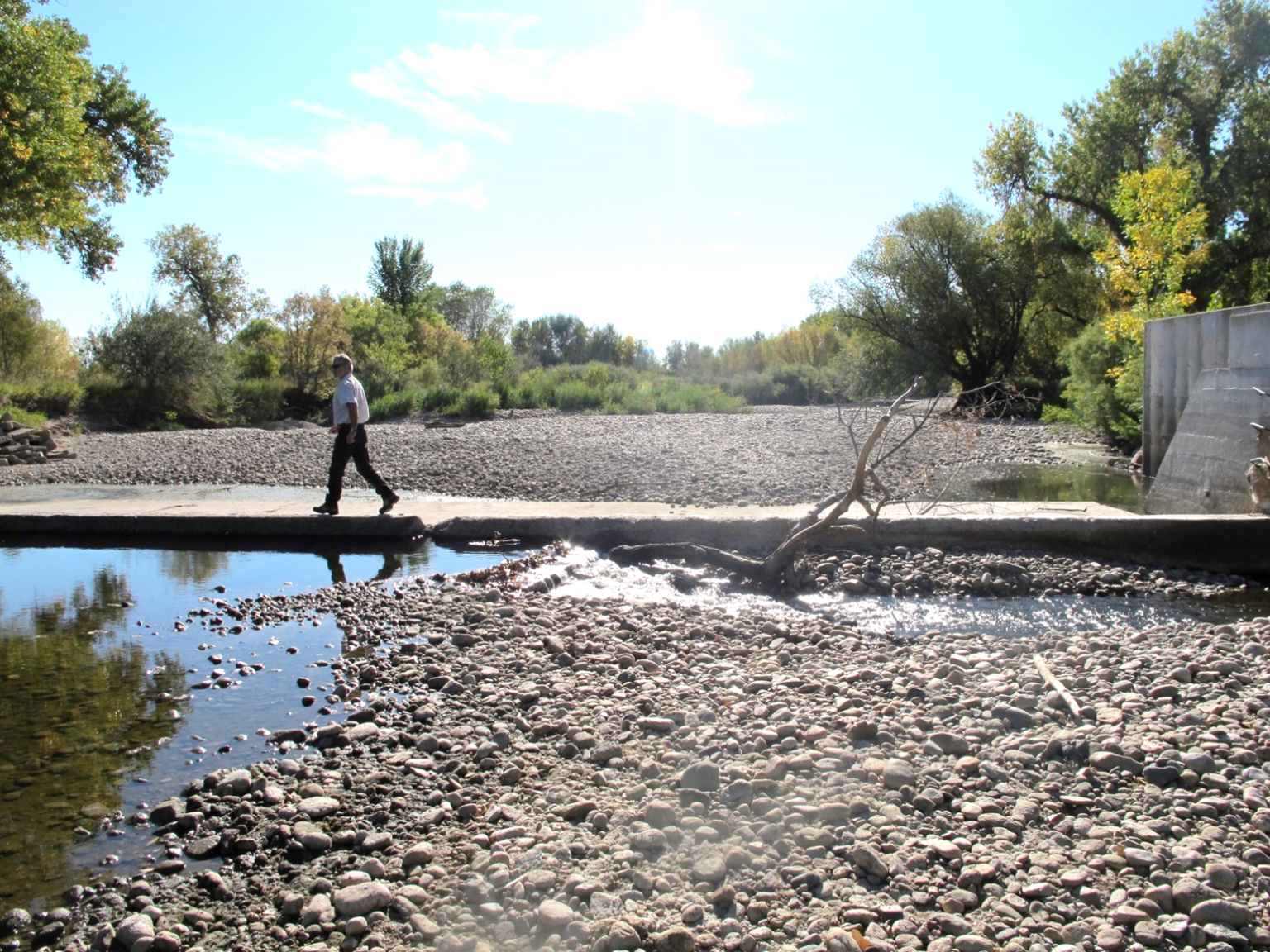
A final environmental report for FortCollins’ Halligan Reservoir expansion is out — The #FortCollins Coloradoan #PoudreRiver

Halligan Reservoir. Photo credit: The City of Fort Collins

Click the link to read the article on the Fort Collins Coloradoan website (Rebecca Powell). Here’s an excerpt:

A final environmental impact statement for Fort Collins’ proposed Halligan Reservoirย expansion is out, and now the public has about a month to weigh in on it. The Halligan Reservoir project north of Fort Collins would expand the reservoir from 6,400 acre-feet to 14,600 acre-feet to help the city meet its projected water demands through 2065. The reservoir stores water from the Poudre River, which makes up half of Fort Collins Utilities’ water supply.

“The project will provide added space to store Utilitiesโ€™ water rights, enabling a more robust, resilient, and reliable water supply for Utilitiesโ€™ current and future customers,” according to a news release from Fort Collins Utilities.

The project would require excavation and would discharge dredged or fill material into the North Fork of the Cache la Poudre River and adjacent wetlands, so it requires approval from the U.S. Army Corps of Engineers under the federal Clean Water Act. Since a draft environmental impact study, or EIS, came out in 2019, the city has modified its plans to address some challenges in meeting guidelines for dam safety and construction. Rather than raising the height of the current dam by about 25 feet, it now plans to build a replacement dam that is 26 feet higher than the current dam. It would be located about 200 feet downstream. The existing dam, which is more than 110 years old, would be either partially or fully removed.

#Greeley #water officials declare adequate water year — The Greeley Tribune #runoff

Seaman Reservoir upstream of confluence of the North Fork of the Cache la Poudre River. Photo credit Greg Hobbs.

Click the link to read the article on The Greeley Tribune website (Trevor Reid). Here’s an excerpt:
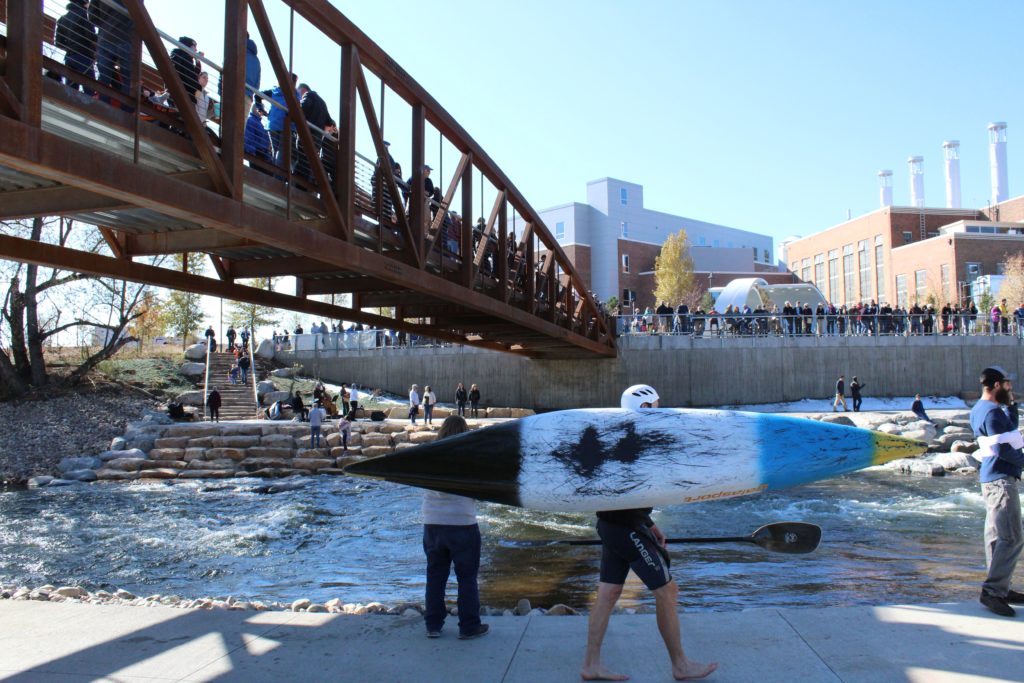
Greeley residents can continue watering their lawns, gardens and outdoor landscapes under normal watering rules through Oct. 31, thanks to the declaration of an adequate water year by the cityโ€™s Water and Sewer Board this past month. Above-average snowpack and low temperatures in the high mountains have helped the mountains maintain the snowpack before it melts and feeds the rivers. Recent rainstorms have caused river flows to increase, according to a city news release. The cityโ€™s water resources confirmed the cityโ€™s reservoirs are either full or filling, with Cache la Poudre and Big Thompson runoff peaking in early June…

Given the adequate water year, the city will also continue its water rental program, renting excess water to farmers and ranchers. Excess water may be rented out so long as the target storage volume of 21,300 acre-feet is maintained. Depending on snowmelt and river conditions, the city may rent out additional water after the initial April allocation…The city averages 6.41 inches of precipitation each year through May 21, according to a city news release. As of earlier this week, the city received 8.03 inches of rainfall โ€” 1.6 inches above average.

National Park Foundation awards $26,800 to Cache la Poudre River National Heritage Area for youth education — The #Greeley Tribune #PoudreRiver

Cache la Poudre River from South Trail via Wikimedia Foundation.

Click the link to read the article on The Greeley Tribune website (Trevor Reid). Here’s an excerpt:

More than 3,500 students are expected to get out of the classroom and into the Cache la Poudre River National Heritage Area after the area received a grant from the National Park Foundation.

The foundation, the nonprofit partner of the National Park Service, awarded a $26,800 Open OutDoors for Kids grant to the national heritage area as part of the foundationโ€™s Youth Engagement and Education Initiative.

The funding will support the heritage areaโ€™s Learning in Our Watershed program, providing scholarships to public, charter, home and online schools for field trips to locations throughout the heritage area. Scholarships are available for all grades, but fourth-grade classrooms from Title I schools receive priority.

On-site field trips for the program include the Poudre Learning Center, the Environmental Learning Center, Centennial Village Museum, the Fort Collins Museum of Discovery, the Windsor History Museum and Study Outdoors Learn Outdoors. Learning in Our Watershed has initiatives for learners of all ages.

Poudre School District investigating high copper levels found in new #Wellington school’s #water — The #FortCollins Coloradoan

Looking west on Cleveland Avenue in Wellington. By Jeffrey Beall – Own work, CC BY 3.0, https://commons.wikimedia.org/w/index.php?curid=47841975

Click the link to read the article on the Fort Collins Coloradoan website (Erin Odell). Here’s an excerpt:

Editor’s note: Rice Elementary School became the second Wellington school to find elevated copper levels in some of its drinking water sources over PSD’s winter break, according to a district email sent to the school’s staff and families Wednesday. The Coloradoan will continue its reporting on this development.

Poudre School District is investigating the cause of issues with Wellington Middle-High School’s drinking water after two science classes at the school found high levels of copper in it late last year. Following the class tests โ€” which showed levels more than double the Environmental Protection Agency’s action level for copper in drinking water at two water bottle filling stations โ€” PSD took its own water samples from around the school Dec. 22, later confirming through a third-party lab that copper levels in several fixtures and bottle filling stations exceeded the EPA’s threshold, according to a district email to the school’s staff and parents Tuesday [January 3, 2023]…

The Town of Wellington also took samples of its own around the same time, ultimately ruling out the town’s water distribution lines as the cause for the elevated copper levels, the town and PSD both said. While PSD hasn’t yet confirmed what’s causing the elevated copper levels, the general contractor who built Wellington Middle-High School believes the issue could be tied to the newly constructed building’s water softener equipment, according to the district.

15 Northern Colorado communities win key federal #water project OK as legal battle looms — @WaterEdCO #PoudreRiver #SouthPlatteRiver

Erie is among 15 Northern Colorado entities participating in the Northern Integrated Supply Project. Water to supply new growth is a key driver of the project. Construction underway in Erie. Dec. 4, 2022. Credit: Jerd Smith, Fresh Water News

Click the link to read the article on the Water Education Colorado website (Allen Best):

Fifteen towns, cities and water districts in northern Colorado hope to begin building two dams and other infrastructure in 2025 to deliver enough water to meet needs for a quarter-million people, many of them along the fast-growing Interstate 25 corridor.

Northern Water, the agency overseeing whatโ€™s known as the Northern Integrated Supply Project (NISP), hailed federal approval of a critical permit last month as a milestone. โ€œThis action is the culmination of nearly 20 years of study, project design and refinement to develop water resources well into the 21st century,โ€ said Brad Wind, general manager of Northern Water. Wind said that NISP will enable the 15 project members, including Windsor, Erie and Fort Morgan, to grow without buying farmland, then drying it up and using its water for growth.

The environmental group, Save the Poudre, hopes to dash those plans. The nonprofit says it will file a lawsuit in an attempt to block the $2 billion NISP. To succeed, the group will have to overcome precedent. It failed to block Chimney Hollow, the dam that Northern Water is constructing as part of a separate project, in the foothills west of Berthoud whose construction began in 2022 after a three-year court case.

โ€œWe have a much stronger case against NISP because the project would drain a dramatic amount of water out of the Poudre River, which would negatively impact the riverโ€™s ecology, its habitat, and its jurisdictional wetlands โ€” protected by the Clean Water Act โ€” all the way through Fort Collins and downstream,โ€ said Gary Wockner, director of Save The Poudre.

This new court challenge was set up by a U.S. Army Corps of Engineers announcement Dec. 9 that it was issuing a crucial permit under the Clean Water Act. Directors of Northern Water, the overarching agency for the participating jurisdictions, areย scheduledย on Thursday, Jan. 5, to take up whether to accept the terms of the permit. Staff members have advised them to do so.

Northern Integrated Supply Project (NISP) map July 27, 2016 via Northern Water.

The impetus for NISP can be traced to the early 1980s when Northern Water began drawing up plans to dam the Poudre River in the foothills near Fort Collins. Federal agencies balked at Denverโ€™s plans for a similar project on the South Platte River at Two Forks, in the foothills southwest of Denver. Northern shelved its initial plan. But after the scorching drought that began in 2002, Northern developed plans for NISP, which it submitted to federal agencies in 2004.

Two reservoirs are central to NISP. Glade Park, an off-channel reservoir, would be built north of La Porte, bounded by the Dakota hogbacks and a dam that would cross todayโ€™s Highway 287. It would have a capacity of 170,000 acre-feet, slightly larger than the 157,000 acre-feet of Horsetooth Reservoir. Northernโ€™s water rights are relatively junior, dating from the 1980s and would only generate water in spring months during high runoff years.

The project promises delivery via pipeline of 40,000 acre-feet of high-quality water annually to the 11 mostly smaller towns and cities and the 4 water districts. Erie is buying the largest amount of water from the new project, claiming 6,500 acre-feet. An acre-foot equals 326,000 gallons.

The second storage pool, Galeton Reservoir, at 45,000 acre-feet, would impound water northeast of Greeley. Unlike the water from Glade, which is to be strictly dedicated to domestic use, Galeton would hold water that will be delivered to farms in Weld County that otherwise would have received water from the Poudre River. This will be done via a water-rights swap with two ditches north of Greeley. Those agreements have not been finalized.

Preservation of agricultural land, costs of water, and water quality figure prominently in the talking points both for โ€” and, in some cases, against โ€” the project.

Northern and its project participants argue that NISP will allow them to grow without drying up farms. It can do so, they say, by delivering the water at a lower cost.

The federal environmental impact statementโ€™s no-action alternative found that population growth would occur regardless of whether a federal permit was issued, said Jeff Stahla, the public information officer for Northern Water. That analysis found that in the absence of NISP, the 15 cities and water districts would look to buy water rights currently devoted to agriculture, ultimately taking 64,000 acres โ€” or 100 square miles โ€” out of production.

The 15 utilities will be able to get NISPโ€™s new water at $40,000 per acre-foot, substantially below current market rates for other regional water sources such as the Colorado-Big Thompson Project shares. Those shares, which constitute seven-tenths of an acre-foot, have been selling for about $75,000.

In some cases, expanding cities will take farmland out of production โ€” and presumably gain access to the water, but not always.

โ€œWe do not want to dry up northern Colorado,โ€ says John Thornhill, Windsorโ€™s director of community development.

Thornhill said that Windsor, a town of 42,000 with its 20th Century sugar beet factory still standing, is participating in NISP to improve the resiliency of its water portfolio as it prepares for another 10,000 to 15,000 residents in the next 10 to 15 years.

โ€œThe town of Windsor has just as much interest in having a clean, healthy river as anybody else does,โ€ he says. โ€œ[The Poudre River] goes right through our town.โ€

Fort Collins is not participating in the project. In a 2020 resolution, it said it would oppose the proposal or any variant that failed to โ€œaddress the Cityโ€™s fundamental concerns about the quality of its water supply and the effects on the Cache la Poudre River through the city.โ€

Water quality will be at the heart of Save the Poudreโ€™s lawsuit against the Army Corps of Engineersโ€™ 404 permit. The groupโ€™s Wockner says the diversion to Glade Reservoir will reduce peak flows in the Poudre, a river already suffering from E. coli and other pollutants, by up to 40%. โ€œThe water quality in the river will worsen because as you take out the peak flows what is left is dirty water,โ€ he says.

Also at issue, says Wockner, will be the impacts to Fort Collinsโ€™ wastewater treatment. With reduced flows downstream from its two treatment plants, those plants would have to be upgraded.

On the flip side, Fort Morgan got involved partly because of Glade Reservoirโ€™s higher water quality, according to City Manager Brent Nation.

The city of 12,000 historically relied upon aquifer water heavily laden with minerals for its domestic supply. As the aquifer became increasingly tainted by chemicals used in agricultural production, the city, in the late 1990s, began importing water through an 80-mile pipeline from Carter Lake, a reservoir that stores imported Colorado River water southwest of Loveland.

To use aquifer water for its new population growth Fort Morgan would need to upgrade its water treatment system to use reverse osmosis. Thatโ€™s a more expensive treatment that also produces a problem of brine disposal.

Both Fort Morgan and Windsor have started working on land-use regulations that will restrict high-quality water for domestic use, at least in some subdivisions, leaving lower-quality water for landscaping.

If NISP as proposed survives Save the Poudreโ€™s legal challenge, it may still need a 1041 permit from Fort Collins. Those regulations have not yet been adopted, however.

Allen Best grew up in eastern Colorado, where both sets of grandparents were farmers. Best writes about the energy transition in Colorado and beyond at BigPivots.com.

Congratulations to Northern Water — The Buzz @FloydCiruli #NISP #PoudreRiver #SouthPlatteRiver

Click the link to read the post on The Buzz website (Floyd Ciruli):

The NISP project in the North Front Range has just received its critical permit from the U.S. Army Corps of Engineers in compliance with the National Environmental Policy Act. The project, which will cost $2 billion and take years to complete, will provide water to a host of cities and agricultural water districts in Larimer, Weld, Morgan, and Boulder counties.

The review by Colorado and federal environmental agencies took 20 years and added millions in additional cost to the project in scientific study and mitigation, including sending more water down the Poudre River through Fort Collins to maintain flows above what currently exist. It also adds major recreational opportunities and flatwater fishing.

Ciruli Associates provided public relations and public opinion research to the project managers to assist in the regulatory compliance.

After years of opposition and delay, some adversaries now threaten lawsuits, their success after these long environmental reviews has been limited. Most recently, they filed lawsuits to stop the Windy Gap project on the western slope and Gross Reservoir in Boulder County and failed in both.

Fortunately, the regionโ€™s water leadership maintained a steady and determined commitment to achieving the projectโ€™s approval.

The Chimney Hollow Reservoir Project hosted a groundbreaking event on Aug. 6, 2021. Photo credit: Northern Water

READ MORE: https://www.northernwater.org/Home/NewsArticle/3d7f713d-6df9-4549-bb87-37629b707b66

#NISP won federal permit to proceed. Here’s what it means for the $2 billion #water project — The #FortCollins Coloradoan #PoudreRiver #SouthPlatteRiver #CRWUA2022

Northern Integrated Supply Project (NISP) map July 27, 2016 via Northern Water.

Click the link to read the article on the Fort Collins Coloradoan website (Sady Swanson). Here’s an excerpt:

The planned $2 billion Northern Integrated Supply Project received a federal Clean Water Act Section 404 Record of Decision from the U.S. Army Corps of Engineers on Friday, Northern Water Conservancy District โ€” the group leading the project โ€” announced in a news release, calling this โ€œa major milestoneโ€ for the project.This is the final large-scale permit needed for the project to move forward, Northern Water spokesperson Jeff Stahla told the Coloradoan.

โ€œThis action is the culmination of nearly 20 years of study, project design and refinement to develop water resources well into the 21st century,โ€ Northern Water General Manager Brad Wind said in the news release. โ€œThis Project will also allow participating communities to serve their customers without targeting water now used on the regionโ€™s farms.โ€

NISP will divert water from the Poudre and South Platte rivers to store in two new reservoirs โ€” Glade Reservoir north of Fort Collins and the smaller Galeton Reservoir east of Ault โ€” to supply water for 15 growing North Front Range communities and water suppliers, including the Fort Collins-Loveland Water District and others in Weld and Boulder counties.,.Northern Water is still in the design phase for NISP, and Stahla said construction could begin in late 2024 or early 2025 and should be operational four years after that, based on the timeline for the Chimney Hollow Reservoir.

Northern Integrated Supply Project Achieves Major Milestone from Federal Agency — @Northern_Water #PoudreRiver #SouthPlatteRiver #NISP

A computer rendering shows Glade Reservoir and its forebay northwest of Fort Collins. Credit: Northern Water

From email from Northern Water (Jeff Stahla):

The U.S. Army Corps of Engineers has issued a federal Clean Water Act Section 404 Record of Decision for the Northern Integrated Supply Project. This is a major milestone for NISP, as it reflects the lead federal regulatory agencyโ€™s review and approval of the Project.

The Corpsโ€™ approval was based on a lengthy and rigorous scientific analysis under the National Environmental Policy Act and a host of other environmental laws, including the federal Endangered Species Act, National Historic Preservation Act, State Water Quality compliance certification, and State Fish and Wildlife Mitigation Plan requirements.

The Corps has concluded that the Projectโ€™s 40,000 acre-foot yield will meet a substantial amount of the 15 Northern Front Range participantsโ€™ future water need and that NISP is the least environmentally impactful means of satisfying that need. The Corps considered a range of other potential alternative approaches, including the adverse impacts to the region if no federal action was taken.

โ€œThis action is the culmination of nearly 20 years of study, project design and refinement to develop water resources well into the 21st century,โ€ said Northern Water General Manager Brad Wind. โ€œThis Project will also allow participating communities to serve their customers without targeting water now used on the regionโ€™s farms.โ€

Through the federal permitting process, the Project was refined to further avoid and minimize environmental impacts and provide mitigation and enhancements to river-related resources. NISPโ€™s operations will send more water down the Poudre River and through downtown Fort Collins in most months of the year, providing additional flows through the city in late summer, fall and winter than currently exist. NISP will also offer significant new flatwater recreation opportunities to everyone.

NISP includes Glade Reservoir, Galeton Reservoir, and associated project infrastructure to deliver high-quality water to more than 250,000 Northeastern Colorado residents.

Participants in the Project include the Town of Erie, Town of Windsor, City of Fort Morgan, Town of Frederick, City of Evans, City of Fort Lupton, Town of Eaton, Town of Severance, City of Lafayette, Town of Firestone, and City of Dacono, as well as the Fort Collins-Loveland Water District, Left Hand Water District, Central Weld County Water District, and the Morgan County Quality Water District.

Learn more about NISP at www.NISPwater.org.

Northern Integrated Supply Project (NISP) map July 27, 2016 via Northern Water.

#Wellington residents remain frustrated over high #water bills as town plays catch-up — The #FortCollins Coloradoan

Looking west on Cleveland Avenue in Wellington. By Jeffrey Beall – Own work, CC BY 3.0, https://commons.wikimedia.org/w/index.php?curid=47841975

Click the link to read the article on The Fort Collins Coloradoan website (Bethany Osborn). Here’s an excerpt:

Wellingtonโ€™s Board of Trustees is now playing catch-up. During its regular meeting on Oct. 25, Wellingtonโ€™s board heard several options on how the town plans to decrease water rates for residents and distribute the cost of the new treatment plants more equitably across all classes of users. While residents could see some decrease in their monthly water costs, the town still has some of the highest water bills in the region. Some residents say they donโ€™t think the problem will go away until the town stops prioritizing growth over updating the existing infrastructure…

Currently, Wellington residents pay a base rate of $66 and anywhere between $4.56 to $7.72 per 1,000 gallons used, depending on how many thousands of gallons of water they use per month.ย The average household in Wellington uses about 4,000 gallons of water during winter months and 10,000 gallons of water in the summer, said Meagan Smith, Wellington’s deputy director of public works. Under current water rates, the average resident is paying anywhere from $85 to $112 per month for just their water usage depending on the time of year. For Fort Collins Utilities customers, similar bills would be about $30 to $47. In January 2021, Wellington raised the base rate from aboutย $31 to $66, leaving residents to make significant changes in order to cover their bills…

While nothing is official until the board votes, which will likely happen later this month, members indicated during the Oct. 25 meeting they would support an option for residents that would have a tiered base rate, dependent on the size of the residential tap, that includes a capital charge โ€” the fee to cover new infrastructure and what made base rates so high in the first place โ€” and a minimum of 3,000 gallons of โ€œessential use.โ€ Previous base rates didn’t include any sort of essential use. According to a rate study the town conducted, roughly half or water bills in Wellington use 3,000 gallons or less per month.

Western Forests, #Snowpack and Wildfires Appear Trapped in a Vicious #Climate Cycle — Inside Climate News #ActOnClimate

A burnt sign on Larimer County Road 103 near Chambers Lake. The fire started in the area near Cameron Peak, which it is named after. The fire burned over 200,000 acres during its three-month run. Photo courtesy of Kate Stahla via the University of Northern Colorado

Click the link to read the article on the Inside Climate News website (Bob Berwyn):

When Stephanie Kampf visited one of her wildfire test plots near Coloradoโ€™s Joe Wright Reservoir in June of 2021, the charred remains of what had been a cool, shady spruce and fir forest before the Cameron Peak Fire incinerated it nearly took her breath away.

โ€œWe would walk through these burned areas and they were just black, nothing growing and already getting kind of hot,โ€ she said. โ€œAnd then you walk into an unburned patch, and thereโ€™d still be snow on the ground. You could almost breathe more.โ€

The surveys, up at about 10,000 feet in the Rocky Mountains west of Fort Collins, were part of a rapid response science assessment to measure just how much the extreme 2020 wildfire season in the West disrupted the water-snow cycle in the critical late-snowmelt zone which serves as a huge natural reservoir. The snowmelt sustains river flows that nurture ecosystems, fills irrigation ditches for crops and delivers supplies of industrial and drinking water to communities.

The findings of the study, published earlier this month in the Proceedings of the National Academies of Sciences, suggest that the relationships of snow and water in many Western mountain forests are caught in a vicious climate cycle, with more fires leading to faster snowmelt and reduced water, which, in turn, makes forests more flammable.

The critical areas are at different elevations in various parts of the West, depending on latitude and other geographic factors, but long-term wildfire records suggest that for millennia, fire was a rare visitor in many high-altitude forests, with burn intervals of 200 to 300 years, or even longer in wetter regions. 

In Colorado those snow accumulation zones can produce โ€œon the order of half of all streamflows,โ€ with some geographic nuances, said Kampf, a Colorado State University researcher who is currently on sabbatical in Spain, where she studying the impacts of similarly devastating wildfires that have scorched the Iberian Peninsula in recent years.

During her Colorado research, โ€œIt was just so striking to go up to these places and see no snow left,โ€ she said. In one unburned comparison plot a short distance away, there was still more than three feet of snow. โ€œItโ€™s disturbing when youโ€™re accustomed to a place and how it was, and you see it change that much. Itโ€™s kind of mind blowing. I suspected that what we experienced in 2020 was outside the norm, but I didnโ€™t realize how far outside the norm it was. And that was just honestly pretty disturbing.โ€

A helicopter drops water on the Cameron Peak Fire near CSUโ€™s Mountain Campus. Photo credit: Colorado State University

With the measurements of the Cameron Peak Fire in Colorado as a case study, Kampโ€™s research team also analyzed satellite data from 1984 to 2020 to show how wildfires are encroaching on the critical snow-storage zones across 70 percent of the Western mountain study area, including the Sierra Nevada, Cascades, Rocky Mountain and Great Basin ranges.ย 

Peak snowpack is declining, which can reduce or even choke off streamflows completely in late summer because the snow is melting off the burned areas much faster. Colorado and New Mexico appear especially vulnerable to fires threatening watersheds that are critical to local residents as well as distant communities on both sides of the Continental Divide.

Wildfires are leaving mountains free of snow earlier in the year, the authors wrote, โ€œand this loss of snow can reduce both ecosystem water availability and streamflow generation in a region that relies heavily on mountain snowpack for water supply.โ€ And as the snowpack melts earlier, the ground and plants warm up and dry faster, setting the stage for more fire in a vicious cycle of climatic changes.

The Extreme 2020 Wildfire Season Was a Warning

The overall drying from climate change is expanding the threat in areas โ€œthat historically have provided a large fraction of annual water supplies,โ€ said Paul Brooks, a hydrology researcher at the University of Utah, who was not involved in the new study. โ€œFires are becoming more frequent in colder, wetter environments that typically burned rarely.โ€

The research shows that burned forests often reduce the total amount of water stored in the snowpack and speed up melting, he added.

Kampf described her findings in the broader context of the extreme wildfires in the summer of 2020, when wide swaths of the West choked under gloomy layers of toxic smoke that sometimes spread all the way to the East Coast. In Colorado, the Cameron Peak fire burned from mid-August through early Decemberโ€”112 daysโ€”with a last patch left smoldering under winter snow near her universityโ€™s mountain campus.

โ€œIt just kept growing. And it grew to a size that was just unprecedented. And we hadnโ€™t seen anything like that, way up in the higher elevations,โ€ she said. โ€œThen the East Troublesome Fire, which burned in really damp, snow-dominated areas, and then over the Continental Divide, which was not something anyone expected. And so this was just really shocking and concerning.โ€

Lands in Northern Water’s collection system scarred by East Troublesome Fire. October 2020. Credit: Northern Water

#FortCollins moves toward oil and gas regulations that would prevent new drilling in city — The Fort Collins Coloradoan #ActOnClimate #KeepItInTheGround

Downtown “Old Town” Fort Collins. By Citycommunications at English Wikipedia, CC BY 3.0, https://commons.wikimedia.org/w/index.php?curid=50283010

Click the link to read the article on the Fort Collins Coloradoan website (Molly Bohannon). Here’s an excerpt:

In April 2018, Colorado adopted a law that changed the way oil and gas development is regulated, required updates to state regulations and allowed local government authorities to adopt tighter regulations than those established by the state. Following that,ย Larimer County adopted โ€œcomprehensive regulationsย along with resources for regulatory compliance programs,โ€ according to city documents.ย  Meanwhile, some in the Fort Collins community have expressed concerns about new oil and gas developments within city limits or city natural areas, largely because of traffic, leaks and spills, regional air quality and climate change impacts…

So in response to the changing regulations locally and community feedback, staff developed its own set of regulations for existing and new oil and gas facilities in Fort Collins. Those regulations were presented to City Council at a work session Tuesday night. All in all, council members broadly showed support for the regulations and no concrete changes were suggested.ย Mayor Jeni Arndt told staff she felt they had โ€œreally thought it out wellโ€ and appreciated that their updates werenโ€™t adding a high amount of regulations but adjusting and expanding what is in place…

Current oil and gas regulations around setbacks and where wells could be built have left about 3% of city land and open space available for development, but the proposed changes for new facilities decrease that to about 0% availability.

Proposed changes to new well regulations include 2,000-foot setbacks from occupiable buildings, parks, trails or natural areas and would limit developments to industrial zone districts, which are intended to house โ€œa variety of work processes and work places such as manufacturing, warehousing and distributing, indoor and outdoor storage, and a wide range of commercial and industrial operations,โ€ according to the cityโ€™s land use code. Very few, if any, land in city limits meets all these requirements, so the regulations would essentially prohibit new drilling.ย Cassie Archuleta, the city’s air quality program manager who presented to council, said this isn’t “a ban” on drilling in the city but uses zoning to make available surface area “highly restrictive.” Adding to the severity of the regulations, the 2,000-foot standard would leave no room for exceptions, differing from the stateโ€™s standard, which allows exemptions.

Wattenberg Oil and Gas Field via Free Range Longmont

@Northern_Water Board Sets Initial #Colorado-Big Thompson Quota at 40 Percentย 

Cache la Poudre River drop structure. Photo credit: Northern Water

From email from Northern Water (Jeff Stahla):

Northern Waterโ€™s Board of Directors has set the initial 2023 quota for the Colorado-Big Thompson Project at 40 percent.ย 

At its meeting on Thursday, Oct. 13, the Board voted to set the quota at 40 percentย in light ofย uncertainty regarding Colorado River Basin hydrology and Northern Waterโ€™s commitment to system resiliency. In recent years, the initial quota had been set at 50 percent.ย 

โ€œThis is what we need to do to protect the system for the long term,โ€ said President Mike Applegate.ย ย 

Quotas are expressed as a percentage of 310,000 acre-feet, the amount of water the C-BT Project was initially envisioned to deliver to allottees each year. A 40 percentย initialย quota means that the Board is making 0.4 acre-feet of water availableย at the beginning of the water year (Nov. 1)ย for eachย of the 310,000ย C-BT Project units.ย In April, the Board will assess conditions such as available local water storage levels, soil moisture, mountain snowpack and more to adjust the quota for the 2023 peakย water-use season.ย 

Water from the C-BT Project supplements other sources for 33 cities and towns, 120 agricultural irrigation companies, various industries and other water users within Northern Waterโ€™s 1.6 million-acre service area. According to recent census figures, more than 1 million residents now live inside Northern Waterโ€™s boundaries. To learn more about Northern Water and the C-BT quota, visitย www.northernwater.org.ย 

Screenshot of the Colorado-Big Thompson Project boundaries via Northern Water’s interactive mapping tool , June 5, 2019.

#Thornton won’t appeal Court of Appeals ruling on #water project — #Northglenn/Thornton Sentinel #PoudreRiver #SouthPlatteRiver

Click the link to read the article on the Northglenn/Thornton Sentinel website (Luke Zarzecki). Here’s an excerpt:

The City of Thornton will not appeal Colorado’s Court of Appeals’ decision denying their permit to construct a water pipeline in Weld County, the city said on Oct. 6.

“After thorough consideration of its options, the City of Thornton has decided against filing a petition with the Colorado Supreme Court in its lawsuit against Larimer County,” the city announced in a statement. 

The statement said the decision is about time. The time waiting for a potential Supreme Court decision is better spent working with Larimer County and its community…

Weld County landowners were influential opponents of Thornton when the city went through the permit application process. In 2019, the Weld County Planning Commission recommended approval of the project, but protests from landowners caused the planning commission to reverse its recommendation in 2020. Residents’ complaints were also cited by commissioners as a reason for denying the permit at a hearing on May 5, 2021.

Thornton Water Project route map via ThorntonWaterProject.com

Click the link to read “Thornton will not appeal its case against Larimer County over pipeline to Colorado Supreme Court” on the Fort Collins Coloradoan website (Bethany Osborn). Here’s an excerpt:

The announcement comes over a month after the state Court of Appeals upheld a decision from 8th Judicial Districtย Judge Stephen Jouard, who ruled that Larimer County was within its right to deny the permit, though there were some exceptions.ย Larimer County commissioners originally denied Thornton a 1041 permit to construct 12 miles of a pipeline through unincorporated parts of the county in 2018 and again in 2019. Larimer County commissioners said both times that Thorntonโ€™s proposed project failed to meet several criteria required under 1041 permit and would significantly impact residents who lived along the proposed construction route. Commissioners said the city of Thornton failed to explore other options like running the water through the Poudre River, but both the district and appeals court said commissioners did not have the right to deny the permit for that reason alone…

Larimer County has been a major roadblock for the city’s plans to transport water from several farms in Larimer and Weld counties the city purchased over 30 years ago. Thornton hopes to be able to use the water to accommodate its growing population by 2025. The denial from county commissioners doesn’t appear to be halting progress on the project. According to the project website, 7 miles of the pipeline have already been installed.

Thornton officials said in the press release their preferred outcome is “an agreed upon solution between Thornton and Larimer County.” And “finding solutions to the benefit of the Coloradans living in both communities.”

Register Now for Fall Symposium Set for November 15, 2022 –@Northern_Water๏ฟผ๏ฟผ๏ฟผ

Map of the Colorado-Big Thompson Project via Northern Water

From email from Northern Water:

Registration has opened for Northern Waterโ€™s Fall Symposium, set for 9 a.m. to 3 p.m. Tuesday, Nov. 15, at the Embassy Suites in Loveland.

Northeastern Colorado water users will hear from multiple speakers about challenges facing the Colorado River and the intricacies of land use and water planning in times of water scarcity. A theme throughout the Symposium will highlight change and how best to adapt.

Additional presentations at the event will include a look ahead at reinvesting in our forests and protecting our source watersheds, as well as offer brief updates on the Chimney Hollow Reservoir Project and the Northern Integrated Supply Project.ย 

Registration isย now open on our website. Spaces fill quickly for this event, so we encourage you to register no later than Nov. 1. This symposium is a great opportunity to invite your co-workers and industry professionals to learn more about the latest water challenges in our region. Doors will open at 8 a.m. for check-in and to allow attendees to network. ย 

If you have any questions, please emailย events@northernwater.org.

Court of Appeals denies the #Thornton #Water Project: City considers next steps — The #Northglenn #Thornton Sentinel #CacheLaPoudreRiver #SouthPlatteRiver

Click the link to read the article on the Northglenn Thornton Sentinel website (Luke Zarzecki). Here’s an excerpt:

City Spokesperson Todd Barnes said the city will decide between three ways to move forward: asking for a rehearing at the Court of Appeals, appealing to the Colorado Supreme Court or applying for a new permit.  The project will now cost the city an additional $126 million because of the delays and increase in labor and steel costs. 

โ€œWhile we are disappointed with the courtโ€™s ultimate decision, we appreciated that the court acknowledged Thorntonโ€™s lengthy and active efforts to work with Larimer County and its citizens as we went through the permit process,โ€ said Barnes…

The Larimer County Planning Commission voted to deny the permit on May 16, 2018. In response, Thornton worked to address the concerns raised by the Commission. Thornton then submitted a revised application, which included changing the preferred route: a corridor approach that was recommended by the Commission. With the new edits, the Commission recommended to the Board of Commissioners to approve the project.  However, the Board voted unanimously to deny the application on Feb. 11, 2019, saying the project did not meet seven of the 12 criteria.  Thornton took the decision to the District Court, claiming the board abused its discretion in denying Thorntonโ€™s application. While the Board said that seven of the criteria werenโ€™t met, the District Court ruled that there were only three instances with competent evidence to support the Boardโ€™s conclusion. Thornton appealed the decision at the Court of Appeals, who dealt a blow to Thornton, but recognized the Boardโ€™s abuse of power.

โ€œAlthough we agree with Thornton that the Board exceeded its regulatory powers in several respects, we ultimately affirm its decision to deny the permit application,โ€ they wrote in the opinion…

The Larimer Board of County Commissioners also recommended Thornton use the river, but Thornton said that running that water through the City of Fort Collins would degrade the water. The Court of Appeals said the method would also require modification of the water decree and ruled in favor of Thornton. As well, that court noted that making that request is outside of the Boardโ€™s power. Additionally, the Court of Appeals ruled the Board abused its discretion by suggesting Thorntonโ€™s potential use of eminent domain weakened its application because it was โ€œdisfavored by property owners.โ€ The Court said that canโ€™t be considered in the 1041 process.

โ€œIt is clear that the Board may not consider Thorntonโ€™s potential use of eminent domain during its 1041 review,โ€ the judges wrote. 

Thornton Water Project route map via ThorntonWaterProject.com

Concerns about water rise as #ColoradoRiver negotiations continue — The Rocky Mountain Collegian #COriver #aridification

Colorado River Allocations: Credit: The Congressional Research Service

Click the link to read the article on the Rocky Mountain Collegian website (Ivy Secrest):

Dry, hot air settles over a small suburb in Fort Collins. The heat pushes residents indoors to crank the air conditioning, and the constant spurt of sprinklers is the only sound breaking the midday silence.ย This is a common occurrence of exceptional waste that may need to become a scene that only exists in memory, especially for states like Colorado.

Colorado has been experiencingย drought conditionsย on and off for decades. And combating the issue of water scarcity in the region has been a priority for the states that rely on Coloradoโ€™s water resources.

โ€œAs a headwater state, weโ€™re a really critical location in terms of the different rivers that originate in Colorado,โ€ said Melinda Laituri, professor emeritus in ecosystem science and sustainability at Colorado State University.

One of these rivers is the Colorado River, theย sixth-longestย river in the country, which serves nearly 40 million people. Itโ€™s a critical resource for the Southwest United States and Mexico.

โ€œThe lower basin and the southern half of the upper basin had been in drought for 22 years,โ€ said Steven Fassnacht, a snow hydrologist and professor at CSU.ย 

Governor Clarence J. Morley signing Colorado River compact and South Platte River compact bills, Delph Carpenter standing center. Unidentified photographer. Date 1925. Print from Denver Post. From the CSU Water Archives

ย The Colorado River Compact of 1922ย has been a focus, as the rights established in the compact are beingย renegotiatedย to protect the river. [ed. this statement is not correct, no renegotiation of the Compact is in the works.]

A lot of this water access is dependent on snowpack. From the flow of the Colorado River to ground water resources, snow isย integralย to water access, and Colorado is simply not getting the amount it used to.ย 

โ€œFrom the mid โ€™30s to the mid โ€™70s, the snowpack was actually increasing,โ€ Fassnacht said. โ€œAnd since then, the trend has been a decrease in the snowpack.โ€ย 

This is particularly concerning when resources are used to manufacture snow for skiing or water lawns that arenโ€™t beneficial to local ecosystems. The larger ecological impacts Colorado has been facing, like fires and excess use of resources, have to be considered.ย 

The aftermath of July 2021 floods in Poudre Canyon, west of Fort Collins. (Credit: Colorado Parks and Wildlife)

โ€œIf you burn the hillside, then you really increase the likelihood that youโ€™re going to have rainfall causing erosion,โ€ Fassnacht said. โ€œYouโ€™ve got a lot of sediment that ends up in the river. Ash is terrible for the water treatment plants.โ€

Think of what it would mean to have ash in your drinking water or even just damaging water treatment facilities. This reality means the way we interact with water may have to drastically change in order to protect it.ย 

โ€œWe have the expectation that we can go to the tap and turn it on and water will be there,โ€ Laituri said.ย 

Even using your sprinklers in the middle of the day or overusing natural resources by running your AC all of the time can have serious impacts on water resources and the ecosystems they serve.ย 

โ€œIt comes down to education too because not everyone is a watershed scientist,โ€ said Eric Williams,ย president of the Watershed Science Clubย at Colorado State University.

Williams said lawns and developers should concern the public in regard to water use.

โ€œI think if we want to point the finger at something, it should be all of these lawns that we have,โ€ Fassnacht said. โ€œIโ€™m not saying letโ€™s get rid of every last piece of lawn, but letโ€™s be a lot more strategic.โ€ย 

This is not a new idea. Nevada has begun toย remove lawns, and the City of Fort Collins has an initiative toย encourage xeriscaping, the replacement of lawn with local plants that fare better in drought conditions. Participating in these programs and educating yourself, Williams said, are some of the best ways to get involved. However, the average citizen canโ€™t simply stop watering their lawn and expect the drought to no longer exist.ย 

โ€œI donโ€™t know if this can be really driven at the individual level,โ€ Laituri said. โ€œYes, it makes us feel good to do things that we feel are contributing. โ€ฆ Will that be enough? Itโ€™s the larger water users that are going to have to really come to the table.โ€

We cannot continue to live in a world wherein wealthy citizens andย major celebritiesย can abuse their water allocations while others go without access to clean water at all. The issue of water scarcity is an elaborate entanglement of social justice and environmental concern, meaning the resource must first be treated like a necessity before it can be allocated for luxury.ย 

Native American lands where tribes have water rights or potential water rights to Colorado River water. Graphic via Ten Tribes Partnership via Colorado River Water Users Association website.

โ€œThereโ€™s 30 federally recognized (Indigenous) tribes across the lower basin that should have access to water, and many other reservations actually donโ€™t have running water,โ€ Laituri said. โ€œAssuring that they have access to that resource is part of this conversation.โ€

Indigenous groups were not included in the Colorado River Compact, and as some of the mostย prominent advocatesย of water rights, they have a lot to contribute to the conversation.

Indigenous groups are not the only population to be considered as water rights are negotiated. Laituri emphasized new populations coming to Fort Collins should be considered.ย 

Laituri said if we want to conserve water, we need to consider the stateโ€™s capacity when developing. We need to consider if we can house more people and if itโ€™s responsible to continue this growth in population.ย 

While the concerns around the river are complex and still not fully understood, that doesnโ€™t mean action isnโ€™t being taken. And it doesnโ€™t mean there arenโ€™t any solutions.ย 

โ€œPlease be curious,โ€ Williams said. โ€œNo question is (a) dumb question.โ€ย 

Reach Ivy Secrest atย life@collegian.comย or on Twitterย @IvySecrest

State appeals court upholds Larimer County’s decision to deny permit for #Thornton pipeline — The #FortCollins Coloradoan

Thornton Water Project route map via ThorntonWaterProject.com

Click the link to read the article on the Fort Collins Coloradoan webslite (Bethany Osborn). Here’s an excerpt:

The Thornton pipeline continues to face obstacles after the Colorado Court of Appeals on [September 1, 2022] upheld Larimer Countyโ€™s denial of a permit that would allow the pipeline to run through private property north of Fort Collins.

The decision against the major water project for the city of Thornton comes after a long journey through Coloradoโ€™s judicial system. Larimer County commissioners originally denied Thornton a 1041 permit to construct 12 miles of a pipeline through unincorporated parts of the county in 2018 and again in 2019. Commissioners said both times that Thorntonโ€™s proposed project failed to meet several criteria required under 1041 permits…

The next step in the judicial process for Thornton could be an appeal to the Colorado Supreme Court, though project officials have not yet announced if this will be their next move.ย 

โ€œWe will take some time to analyze what the court said in the ruling and consider our next steps,โ€ Todd Barnes, Thorntonโ€™s communications director, told the Coloradoan in an email. โ€œThornton remains committed to bringing the high-quality water we own down to the people in our community.โ€

Summer work begins at Glade Reservoir as #NISP awaits federal permit — The #FortCollins Coloradoan

U.S. Highway 287 runs through the future site of Glade Reservoir. The Larimer county Board of County Commissioners approved the 1041 Land Use Permit for NISP in September, 2020. Photo credit: Northern Water

Click the link to read the article on the Fort Collins Coloradoan website (Sady Swanson and Jacy Marmaduke). Here’s an excerpt:

Crews began conducting rock and soil assessmentsย in June at the site of the planned Glade Reservoir, north of Tedโ€™s Place on U.S. Highway 287. The assessments will give Northern Colorado Water Conservancy District officials site-specific geotechnical and geological information that will inform the design and construction of the Glade Reservoir dam.ย 

The assessment work is expected to continue through November, according to a Northern Water news release. This work includes:

– Digging a 1,000-foot-long trench at the main dam site to test materials and drill the foundation

– Building a test pad of embankment material types

– Producing aggregates and rock fill from quarries and investigating material characteristicsย 

This work is being done ahead of the project’s anticipated approval by the U.S. Army Corps of Engineers, which is expected to make its final determination this year. If that happens, construction could start as early as 2023 with completion expected by 2028.