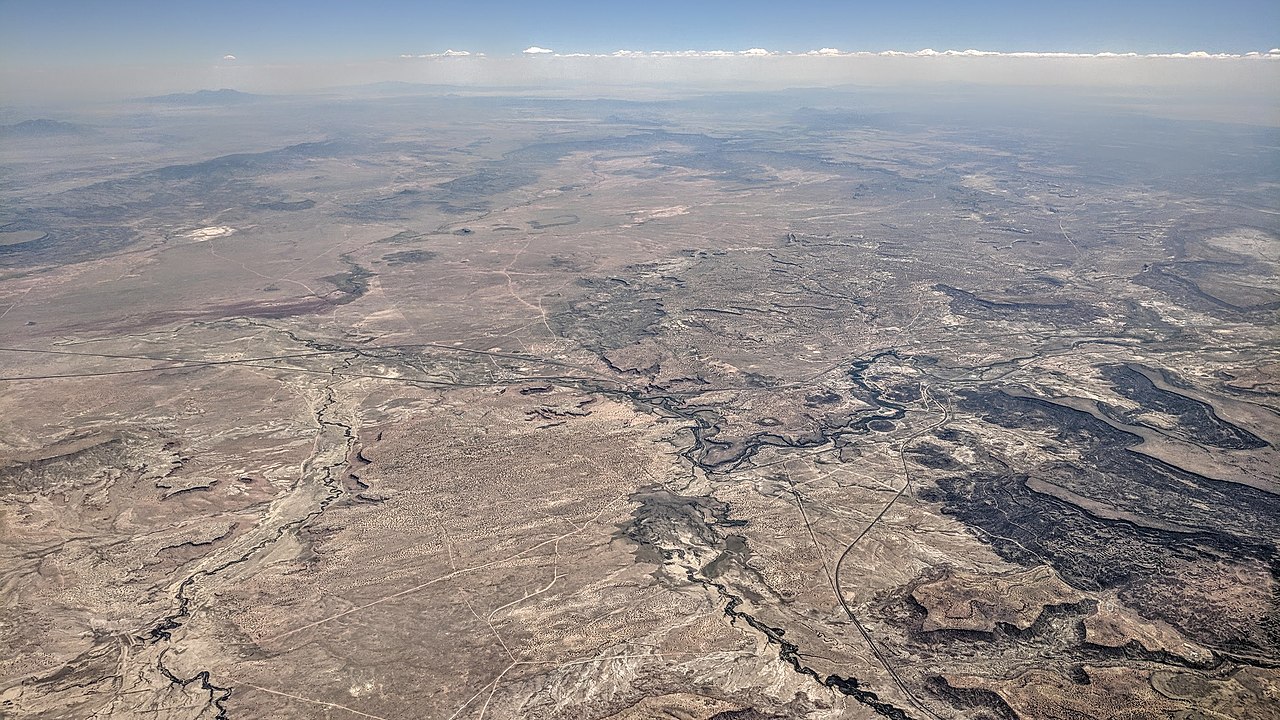
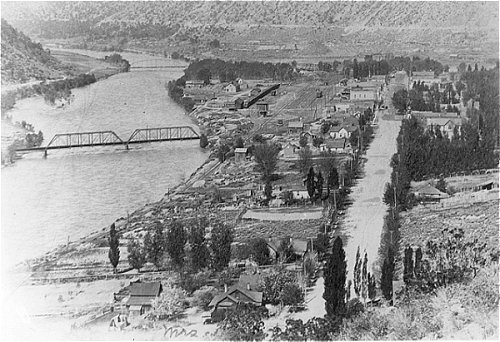
Moab tailings site with Spanish Valley to the south
Click the link to read the article on The Deseret News website (Amy Joi O’Donoghue). Here’s an excerpt:
August 6, 2024
Sixteen million tons of radioactive uranium tailings once sat near the banks of the Colorado River, putting the waterway in peril of contamination on the outskirts of Moab. Removal began in 2009 and was halted for a time due to lack of funding for the U.S. Department of Energy cleanup project, but work is continuing at a steady clip — with nearly 15 million tons shipped by rail to a disposal cell about 30 miles away at Crescent Junction. At this rate, the tailings removal may be completed by next year, but much work remains to be done afterward for full remediation of the area in which the uranium mill operated for nearly three decades…
Mary McGann, a Grand County commissioner who heads up the steering committee involved in the project, said she envisions something similar to Las Colonias Park in Grand Junction, Colorado. It, too, was a remediation site for tailings removal and it, too, is adjacent to the Colorado River…
Contamination from what the locals call “The Pile” has been a problem for the Colorado River in Grand County — before the establishment of the Moab Uranium Mill Tailings Remedial Action, or UMTRA, Project. But the project established groundwater wells to prevent the leaching and to serve other useful purposes.
During the reporting period, which ran in mid-July of 2023 to mid-July this year, officials noted there were over 1,036,719 tons of uranium mill tailings shipped by rail four times a week. To date, the project has shipped more than 14.8 million tons, or about 92% of the total estimated 16 million tons in the tailings pile to be moved. During that same reporting period, more than 151,162 tons of debris was placed in the disposal cell — also shipped by rail. That includes the successful removal of 14 autoclaves — each weighing 16,000 pounds, according to project spokeswoman Barbara Michel.
Petersen Air Force Base. Photo credit: Peterson Air and Space Museum
Click the link to read the article on The Guardian website (Tom Perkins). Here’s an excerpt:
August 12, 2024
The US air force is refusing to comply with an order to clean drinking water it polluted in Tucson, Arizona, claiming federal regulators lack authority after the conservative-dominated US supreme court overturned the “Chevron doctrine”. Air force bases contaminated the water with toxic PFAS “forever chemicals” and other dangerous compounds. Though former US Environmental Protection Agency (EPA) officials and legal experts who reviewed the air force’s claim say the Chevron doctrine ruling probably would not apply to the order, the military’s claim that it would represents an early indication of how polluters will wield the controversial court decision to evade responsibility. It appears the air force is essentially attempting to expand the scope of the court’s ruling to thwart regulatory orders not covered by the decision, said Deborah Ann Sivas, director of the Stanford University Environmental Law Clinic…
The supreme court in late June overturned the 40-year-old Chevron doctrine, one of its most important precedents. The decision sharply cut regulators’ power by giving judges the final say in interpreting ambiguous areas of the law during rule-making. Judges previously gave deference to regulatory agency experts on such questions. The ruling is expected to have a profound impact on the EPA’s ability to protect the public from pollution, and the Tucson dispute highlights the high stakes in such scenarios – clean drinking water and the health of hundreds of thousands of people hangs in the balance…
Several air force bases are largely responsible for trichloroethylene (TCE) – volatile organic compounds – and PFAS contaminating drinking water sources in Tucson. A 10-sq-mile (26 sq km) area around the facilities and Tucson international airport were in the 1980s designated as a Superfund site, an action reserved for the nation’s most polluted areas. The EPA in late May issued an emergency order under the Safe Drinking Water Act requiring the air force to develop a plan within 60 days to address PFAS contamination in the drinking water.
From satellite view, the land north of the Arkansas River is a seemingly random checkerboard of vital green and desperate brown, quickly fading from a few thriving farm acres to the broad, water-drained desolation of northern Crowley County.
From the cab of Matt Heimerich’s pickup, each alternating square of emerald corn or desiccated knapweed is a decision by a distant big city — to either share Colorado resources responsibly or toss rural Arkansas River counties to the fate of the hot summer winds.
That square was reseeded with native grass after Aurora bought the water in the 1970s, Heimerich says. That plot, Colorado Springs dried up and it’s all weeds. That farm, Aurora wants to dry it up soon, but the water court referee wants a better reseeding plan.
Heimerich’s family is one of the few farmers remaining in the 790 square miles of Crowley County after city water buy-ups shrank the county’s irrigated acres from more than 50,000 in the 1970s to just a few thousand this year. He jumps down from the pickup to clear invasive kochia weeds from a pipe opening gushing cool canal water down a 1,500-foot corn row.
Straight line diagram of the Lower Arkansas Valley ditches via Headwaters Magazine
Two miles away is downtown Olney Springs, population 310. Crowley County as a whole has only 5,600 residents, and more than a third of those are inmates at two prisons. The only retail operation left in Olney Springs is a soda vending machine against the wall of town hall.
As Heimerich clears his irrigation pipe, he pauses to jab a thumb over his shoulder 150 miles to the north at Aurora, where the population increased by more than 100,000 over 20 years. “When you build a new development, at the end of the day, you’re drying up a farm,” Heimerich said. “Where else is it going to come from?”
“Crowley is just the worst example of what can happen when nobody cares, and nobody pays attention,” he said. The tiny community serves as an enduring reminder of the cultural and economic ruin that occurs when big cities in Colorado and elsewhere purchase farms, dry up the land and move the water to urban areas. It gave rise to the term “buy and dry,” a practice now widely condemned.
The practice was supposed to end in the Lower Arkansas Valley in 2003 with a hard-fought federal court battle and settlement. Since then, state lawmakers and top water and farm agencies have changed laws and spent millions of dollars testing new protective methods for sharing water temporarily between rural and urban areas. They have also spent heavily to improve water quality for thousands of people living near the river who still don’t have clean water to drink.
The big cities insist they have learned their lessons from the Crowley County disaster.
“The results of what happened in Crowley County are unacceptable and widely recognized as a travesty,” said Colorado Springs Utilities spokesperson Jennifer Jordan. “We’ve taken those lessons to heart.”
Arkansas River Basin — Graphic via the Colorado Geological Survey
But outraged Lower Arkansas growers and water districts say new efforts to protect their farm water aren’t working. At the same time, the big cities say new laws making it easier to share farm water don’t provide enough reliable water to grow their communities.
The cities also say big changes in the future water picture, climate-driven reductions in stream flows and threats to their Colorado River supplies leave them little choice but to draw more farm water.
This year they did that, inking deals in the Lower Arkansas worth more than $100 million to buy and lease land and water, raising alarms among local growers and generating big questions about whether the state is doing enough to protect rural farm communities and the water that keeps them going.
Buy and dry light
The cities say a lot has changed in the past 20 years and that these new deals represent innovations in water sharing. But critics in the Lower Arkansas Valley say these same deals signal that no one is doing enough to prevent “buy and dry” or the latest tool in the water acquisition quiver, “lease and dry,” in which water is pulled from farmland periodically.
Aurora, for instance, spent $80 million in April to buy nearly 5,000 acres of farms in Otero County and the more than 6,500 acre-feet of water associated with that land. An acre-foot equals nearly 326,000 gallons of water, enough to irrigate half an acre of corn, or supply at least two urban homes for one year.
Aurora plans to use the water itself in three out of 10 years, leaving it on the farms the rest of the time. Some 4,000 acres of land will be dried up intermittently when Aurora is using the water, according to Karl Nyquist, a developer and grower who negotiated the deal with Aurora and who is operating the farms for Aurora under the lease agreement.
Colorado Springs has a different arrangement just downriver in Bent County, where it will permanently purchase up to 15,000 acre-feet of water from local farmers. Colorado Springs will also help pay local farmers to install modern center pivot irrigation systems that use less water, allowing the city to keep the saved water for its use.
In Crowley County. Photo: Brent Gardner-Smith/Aspen Journalism
In this deal, Colorado Springs and the farmers will be responsible for revegetating any dried-up land. It will use the water in five out of 10 years, and it has agreed to make a one-time, upfront payment of $2.5 million to Bent County plus payments each year based on how much water is taken off the fields. The money is in addition to payments to farmers.
“We wanted to make sure Bent County was kept whole,” said Scott Lorenz, a senior water projects manager with Colorado Springs Utilities.
Bessemer Ditch circa 1890 via WaterArchives.org
And in Pueblo County, perhaps the least controversial of the three deals, Pueblo Water agreed to purchase nearly one-third of the shares in the local historic Bessemer Ditch system for $56.2 million. Pueblo continues to lease the water back to the farmers for now. At the same time, the Palmer Land Conservancy has developed a sophisticated new framework that measures farm productivity on land watered by the Bessemer Ditch and will eventually help direct water to the most productive farms as Pueblo takes its water. The hope is that the new system will increase overall farm productivity on the ditch system and help make up for anything lost when the less productive lands are dried up, according to Dillon O’Hare, Palmer’s senior conservation manager.
Palmer is also working to analyze the impact of the deals on water quality downstream and how to prevent further damage, O’Hare said.
Irrigated farmland is evaporating
The three projects come as new data shows Colorado’s irrigated farmlands are shrinking. Since 1997, the state has lost 32% of these lands, with areas in the Lower Arkansas Valley seeing losses higher than that, according to an analysis of federal agricultural data by Fresh Water News.
Crowley County has lost 90% of its irrigated lands in that period. Pueblo has lost 60.2%, and Bent and Otero have lost 37.6% and 35.2%, respectively.
State agriculture and water officials are worried about the decline, but say they have few tools to prevent it because farmers are free to sell their water rights to whomever they want.
“Am I concerned? Definitely,” said Robert Sakata, a long-time vegetable grower near Brighton, and former member of the Colorado Water Conservation Board who now serves as the director of water policy for the Colorado Department of Agriculture. “We all talk about water being a limited resource, but prime farmland is also limited and it’s important to take that into consideration.”
Not all these losses are due to big city water prospecting. Climate change, market challenges and legal obligations to deliver water to downstream states are also fallowing Colorado farmlands.
Everyone is sympathetic. No one is in charge.
Still, more than 20 years after the intergovernmental peace accords, it wasn’t supposed to be this way.
The Lower Arkansas Valley region is part of the sprawling Arkansas River Basin. The river has its headwaters near Leadville and flows through Buena Vista, Salida, Cañon City, into Pueblo Reservoir and on over the state line east of Lamar.
Its counties were once a sweet spot in the basin’s agriculture economy. The river fed a bountiful chain of tomato, sugar beet and onion fields, as well as acres of luscious Rocky Ford melons, and chiles, corn and alfalfa.
Cities say these latest deals, which they call “water sharing” agreements, will bolster the agricultural economies and keep remaining water on farm fields forever. But the term “sharing” doesn’t sit well with some local farmers and water officials who have a deep distrust of the cities they blame for the region’s decline.
“I call it a charade,” said Mike Bartolo, a retired Colorado State University Extension research scientist who farms in Otero County near Rocky Ford. “You dry up an acre, you’re drying up land that was formerly irrigated. That’s buy and dry.”
While the state’s highly touted Water Plan cheers for the concept of cities helping rural areas thrive after water losses, there is no mechanism or state law or bureaucracy to watchdog new sales.
After the 2003 agreement in the Lower Arkansas Valley, state and local water leaders began testing new ways for cities and farmers to temporarily share water, something that had been almost impossible under older water law.
But Aurora and Colorado Springs say the early experimental programs didn’t provide enough water at reasonable prices to fulfill their fast-growing community needs permanently.
Lorenz, the Colorado Springs Utilities manager, said the city does lease some water in the valley, but it hasn’t been enough to ensure the stability of its long-term water supply.
“The major concern is that we would lease from a particular farmer, and then a different city would come out and buy those water rights and the farmer wouldn’t lease to us anymore,” he said.
And in fact that is what just happened in April, when Aurora purchased the Otero County farms, which had formerly leased water to Colorado Springs.
Colorado Springs Utilities formally opposes the latest Aurora water deal, as do the Southeastern Colorado Water Conservancy District based in Pueblo, and the Lower Arkansas Valley Water Conservancy District in Rocky Ford.
But their anger has so far been expressed by passing resolutions, not filing lawsuits.
How Aurora Water and other cities have treated Arkansas River counties like Crowley after past buy-ups leaves nothing but suspicion about newly announced deals, local leaders say.
Though Aurora says it is not attempting any more permanent dry-ups of local land, “I don’t think any of us believe them,” said Heimerich, Crowley County’s representative on the Southeastern Conservancy board. Heimerich also is a member of the board of Water Education Colorado, which is a sponsor of Fresh Water News. “They’ll do whatever they need to do and apologize later.”
Thornton, Larimer and Weld counties conducted a similar debate publicly — from the 1990s to this year — as Thornton bought up 17,000 acres of northern Colorado farms and their water rights and began drying up the land. County commissioners and other local officials brought their legal weight and bully pulpits to bear in demanding extensive concessions from Thornton. The Adams County city has been reseeding dried up land with native grass and backfilling lost property taxes, but gets mixed reviews from locals.
The latest Lower Arkansas water deals are also pitting Colorado’s big cities directly against each other in conflicts not seen for decades. When the board of Colorado Springs Utilities passed a resolution earlier this year condemning Aurora’s Otero County deal, it was a direct shot from leadership of a city of nearly 500,000 — the Colorado Springs City Council is the utility board.
“The idea is that there’s Denver, there’s a Denver metro complex and they’re going to just do whatever they want to do and the rest of the state has to go along with it,” City Councilman Brian Risley said.
But Alex Davis, a top Aurora Water official, said Colorado Springs’ ire is unwarranted.
“Aurora has worked in close partnership with Colorado Springs for decades and that will continue,” she said. “This is a case where we disagree.”
Peter Nichols, general counsel for the Lower Arkansas Water Conservancy District in La Junta, said he is deeply concerned by what cities are proposing now.
“We thought we were through with all of this. We thought we had it under control,” he said of the Aurora and Colorado Springs purchases.
Nichols is among those who have spent much of the past 20 years creating a system, now known as the super ditch, that allows seven local irrigation companies to negotiate leases with cities.
A map of the Fry-Ark system. Aspen, and Hunter Creek, are shown in the lower left. Fryingpan-Arkansas Project western and upper eastern slope facilities.
Importantly, it also won the legal right to move leased water stored in Pueblo Reservoir out of the valley, via the federal Fryingpan-Arkansas Project and the Otero Pipeline, removing what had been a key barrier to leasing.
Nichols said local growers and water districts have worked hard to find ways to share water so that it doesn’t permanently leave the valley. That the cities are now jumping the line with these new deals isn’t OK with him.
A farmer’s — and a county’s — greatest asset
Colorado Springs and the other thirsty Front Range cities want farmers like the young Caleb Wertz to be the new face of urban water agreements. On a recent 95-degree summer afternoon, Wertz high-tailed it across Bent County driving an ambulance to take an injured neighbor to the hospital. He had planned to be on his farm, but that’s life in the Lower Arkansas Valley.
The population is shrinking, and everyone has too many jobs to count. The local farmer is also a first responder. Your primary care provider is a farmer’s wife.
Arriving back at the farm just after 5 p.m., Wertz talks about what is perhaps the most controversial decision he has ever made: Selling a portion of his agricultural water to fuel housing growth in Colorado Springs.
The deal will pay him enough so that he can install modern irrigation systems, drying up portions of the fields, known as corners, that won’t be reached by the new, center pivot sprinklers, and allow Colorado Springs to buy the saved water.
He is also planting cotton alongside his traditional corn, and he believes he is the first in the state to do so. A new modern variety is supposed to use half the water, just one acre-foot per acre, rather than the two acre-feet of water that older types, such as those grown in Arizona, use.
For Wertz, the agreement will give him enough money to keep farming and enough new technology to make his remaining agricultural water go farther. He will become a rarity in the area: A young farmer with enough land and water to continue the business his family started in 1919 and to expand it.
“The water purchase makes it a lot more doable because we can farm those acres so much more with pivots,” Wertz said. “That’s the case even though we’re drying up the corners. … That has a bad connotation to it. But Colorado Springs is reimbursing the farmers to turn those corners into pasture land or to revegetate. … Even if it is not producing corn, it’s not just becoming wasteland.”
But to some of his neighbors in the valley, Wertz has entered a hostile no-man’s land, facilitating yet another dry-up of farmland in a region that has already lost too much water and land to urban thirst.
“I know people don’t like it and people are entitled to their opinions, but a lot of those are the older generation who don’t like seeing it because of what happened years before I was even born,” said Wertz, who is 23. “I was glad to see the Springs come in and ask questions about working with us.
“We were quite leery at first. But they have proved it to us. It is extending the water use for them and us, and allowing my brother and I to start taking over some of these acres that haven’t been farmed for a while because there isn’t enough manpower.”
But can the land come back after fallowing?
Another worry for Lower Arkansas growers is whether new methods that allow cities to take the water off the fields for one or more years and then return it at a later time, do more harm than good. They’re not sure farmland in the region is resilient enough to bounce back from cycles of city-caused drought.
Perry Cabot, a research scientist and specialist in farming practices and farm economies, has spent years studying the issue. He says that there is hope for fallowing, after years of experiments and tests, but only with crops such as alfalfa and other grasses and sometimes corn.
“The programs we have done saw alfalfa return almost with a vengeance,” Cabot said. “Grass hay is the second-best candidate.”
Nyquist, the developer and grower who is leasing back and farming the land he recently sold to Aurora, agreed, saying fallowing programs do work, but they are not good for small growers who don’t have the cash to buy the necessary new equipment and nutrients that are needed to help fully restore the crops once water returns.
Still, Jack Goble, general manager of the Lower Arkansas Valley Water Conservancy District in Rocky Ford is wary of plans that take water from parts of farm fields over long periods of time.
“And I haven’t found a farmer yet that believes that that’s a viable farming situation, ” he said. “It’s tough to bring that land back.”
Dan Hobbs irrigating from the Bessemer Ditch. Credit: Greg Hobbs
For years, valley water hasn’t been drinkable
Anger aimed west and north from Lower Arkansas Valley towns extends to water quality issues, not just water volume.
For many decades, groundwater wells and the river have been contaminated by farm runoff, mining operations and some naturally occurring pollutants.
The same federal Fryingpan-Arkansas Project that in 1962 created Pueblo Reservoir was also supposed to solve the drinking water problem for 40 communities downriver by building the 130-mile Arkansas Valley Conduit to move clean water from Pueblo Reservoir. But it wasn’t until 2023 that final funding for the $610 million pipeline arrived.
Some downstream leaders are galled that Aurora can start taking more fresh water out of the Arkansas before serious pipeline construction has begun to serve the 50,000 people in long-suffering downstream towns.
“My whole life has been under drinking water restrictions, not being able to attain safe drinking water except to go buy it or to go through extraordinary measures to treat it,” said Dallas May, whose family ranches 15,000 acres north of Lamar. May also is on the Southeastern Colorado Water Conservancy District board.
The Colorado Department of Public Health and Environment’s Water Quality Division, which tests Lower Arkansas water a few times a year, classifies most of the river below Pueblo Reservoir as not supporting drinking water or “aquatic life use.” The classification calls the Lower Arkansas suitable for “warm-water aquatic life” and recreation.
The state did not respond to requests for more detailed assessments of Lower Arkansas water health. Asked if state efforts were improving water quality on the Arkansas, a spokesperson said in an email, “Trend studies require extensive data over a significant period of time. The water quality in watersheds is influenced by a wide variety of factors, including precipitation and weather trends that can highly influence the water quality from year to year.”
Some Lower Arkansas farmers and officials are tired of waiting. They see the problem getting worse as, for instance, Aurora takes more water out of Otero County, “What happens is all of the bad things are concentrated into what is left,” May said, “and that is a huge problem.”
Silence at the state level?
The Colorado Water Conservation Board spent years writing the statewide Water Plan, convening forums and task forces, and conducting listening sessions on the tensions between city water needs and the survival of agricultural communities. They say they are concerned about new city water buys, but add they have no authority to influence any deals because water rights are private property rights and can be bought and sold at will.
The board declined an interview request about Aurora’s water purchase or the broader water use questions.
“The Colorado Water Plan sets a vision for meeting the state’s future water needs and was broadly supported by local communities,” Russ Sands, the board’s water supply planning chief, said in email responses to questions. “But the decisions that happen in local communities regarding their water purchases and planning are largely outside of the state’s control. Accountability for staying true to the vision of the Water Plan is a collective responsibility.”
The loss of irrigated farmland isn’t expected to slow anytime soon as climate change dries up streams and population growth drives cities to buy more. The Colorado Water Plan’s forecast shows the population of the Arkansas River Basin, which includes Colorado Springs and Pueblo, surging more than 60% by 2050, increasing the pressure to tap farm water.
Sakata, the state water policy advisor, who farms near Brighton, said protecting the state’s irrigated farmland will take more work. “We can’t just say lease the water for three out of 10 years. We need to have agreements so that water sharing will be really available.”
As an onion grower, Sakata can’t do interruptible water supply agreements because he has long-standing yearly agreements with suppliers that require him to deliver vegetables. If he fallows his land for a year, the money he would likely be paid wouldn’t be enough to compensate him for the loss of onion sales and the need to support his employees during the break.
Farm research scientist Cabot would like to see the state begin buying irrigated farms, using conservation easements to protect them from development or purchase, and then leasing that land and its water to young growers.
What else state leaders can do to preserve what’s left of Colorado’s irrigated land isn’t clear yet, but Alan Ward, a Pueblo native who is also director of water resources for the Pueblo Water, said the state needs to reexamine its policies and goals.
“There is only so much water available, and I don’t think it’s realistic for the state to continue to think that we can control our urban areas and grow them fast without impacting agriculture.” Clarifying that he was speaking as a private individual, rather than a water official, he said, “I’d rather have the farms continue and not have the urban growth, but I am probably in the minority on that.”
Where does the battle flow next?
Water veterans such as Cabot said the state is likely doing everything it can right now to protect irrigated ag lands. But like Sakata, he says more work needs to be done to shore up farm markets and to create easier, more lucrative water sharing arrangements.
“I don’t want to oversimplify this,” Cabot said, “but the simplest way for cities to get this water is to go to farmers and say ‘How much did you make last year?’ and then offer them 10% more. … These are not just fields. They are farm enterprises.”
Kate Greenberg, Colorado’s agriculture commissioner, is overseeing multimillion-dollar efforts to protect farmlands by improving soil health, solving market challenges and making farm water use more efficient. She says the people of Colorado are on board with her agency’s efforts.
“We did a study last year that showed over 98% of Coloradans believe agriculture is an integral part of our state. If we’re taking water out of agriculture, where are we putting it to beneficial use?
“Are we conserving it to grow urban developments and do we want to see that over preserving agriculture and biodiversity. We need to answer that question as a state.”
Bartolo, the retired CSU researcher, hopes the answer comes soon, before any more of the valley water is siphoned off for urban use.
As news of the deals spreads, Bartolo’s sense of deja vu is growing and his fears for the future of the valley’s irrigated ag lands is growing too. No one knows yet what will happen when Aurora’s contract to use the Fryingpan-Ark to deliver water expires in 2047.
“Having lived through it in my lifetime, I have seen the drastic changes,” Bartolo said.
What worries him, and other growers too, is “what happens if they come back after 2047? What happens then?”
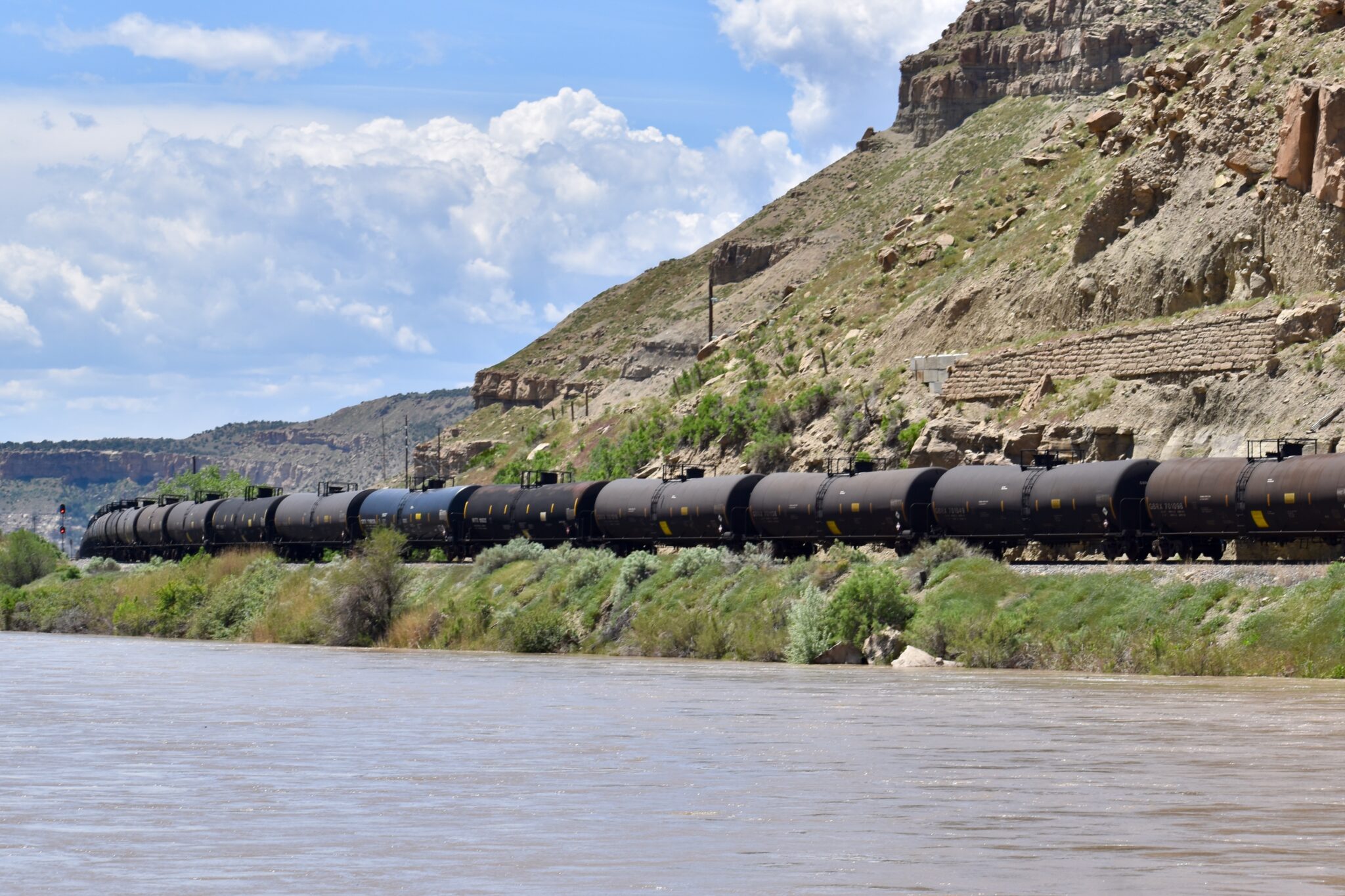
Proposed Uinta Basin rail project in #Utah could result in surge of hazardous shipments along Colorado River
Colorado’s attorney general recently left open the possibility he will take a formal role in a case before the U.S. Supreme Court to help block a proposal that would send a massive surge of oil trains along the Colorado River.
“The proposed plan to run two-mile-long trains filled with hundreds of thousands of barrels of waxy crude oil along the Colorado River daily poses an extreme risk to this critical water source and the communities, industries, and farmers that rely on it,” Weiser wrote in an email statement to Colorado Newsline. “This proposal was rightfully tossed out by an appellate court. I am presently considering all options to protect the Colorado River — that includes weighing in with the U.S. Supreme Court as it reviews the case.”
The U.S. Court of Appeals for the D.C. Circuit last year ruled the U.S. Surface Transportation Board, which is the primary federal regulatory agency overseeing U.S. rail projects, erred under the National Environmental Policy Act and ordered the agency to fix significant problems with the proposed 88-mile rail spur’s environmental impact statement.
The appeals court found the STB failed to properly weigh both the upstream and downstream impacts of oil production, including accident data, downline fire risks and the impact to endangered fish from predicted oil spills in the Colorado River.
The seven Utah counties surrounding the Uinta Basin oil fields, which formed the Seven County Infrastructure Coalition, petitioned the Supreme Court to hear the case in March. The Seven County Infrastructure Coalition v. Eagle County case will be heard during the high court’s next session, which begins in October.
Weiser — a former Supreme Court clerk to justices Byron White and Ruth Bader Ginsburg, former dean of the University of Colorado law school, and former U.S. Justice Department attorney in the anti-trust division — has been one of the top state officials critical of the Uinta Basin Railway project.
“I am disappointed the Supreme Court heard (the Uinta Basin) case. We won an important decision,” Weiser said in a phone interview last week. “I have been a vocal critic of the idea of taking what seems to me a high-risk move through a fragile ecosystem by allowing there to be the shipping of oil in railway cars that could lead to the sort of ecological harms we’ve seen happen elsewhere.”
Weiser points to the environmental devastation of Norfolk Southern railroad’s East Palestine, Ohio, chemical train derailment last year.
“It doesn’t take much for a single incident to create extraordinary and lasting damage, and that, too, is a good basis for prohibiting (the Uinta Basin) project for going forward, so we’ll continue to make that case,” Weiser said. “I worry that a Supreme Court that is not interested in protecting our land, air and water could be less sympathetic to this point. We did see that lack of sympathy in the case involving the Clean Water Act.”
Weiser said the only silver lining in that case was that conservative Justice Brett Kavanaugh sided with the liberal minority, joining Justices Sonia Sotomayor, Elena Kagan and Ketanji Brown Jackson in dissenting against the ruling.
“We were successful in that case with Justice Kavanaugh, but obviously we were still a vote short,” Weiser said. “I’m worried about all of our environmental statutes if the mindset is, ‘How do we gut any environmental protections?’ We as a society are going pay a price for that, whether that’s coming from the Supreme Court or a second Trump administration.”
From an antitrust standpoint, Weiser says consolidation in the railroad industry has opened up new risks of harm, because less competition leads companies to be less committed to reliable, safe service and adequate staffing. While federal legislation is stalled, Colorado lawmakers took up the issue last session and set up a new state rail safety office.
“Part of the challenge from a competition standpoint is the Surface Transportation Board I believe has had the sole authority to evaluate mergers in rail, and they’ve been willing to approve mergers in rail that really highly concentrated that industry,” Weiser said, specifically referring to the U.S. Justice Department objecting to the Union Pacific merger with Southern Pacific in 1996.
“I think the system of oversight that does not allow the Justice Department to stop anti-competitive mergers is problematic, and it’s problematic that the Surface Transportation Board took action in this case and did not take the Department of Justice competition concerns more seriously,” Weiser added. Now Union Pacific controls most east-west freight through Colorado and is currently negotiating with the state for a new lease at the state-owned Moffat Tunnel.
Eagle County officials have said they hope the state will take a more active role in the Uinta Basin Railway battle going forward, citing $450,000 in legal fees.
Democratic Colorado Gov. Jared Polis, in a rare statement on the Utah oil-train project, which has united the state’s Democratic lawmakers in opposition, said that if the Supreme Court greenlights the Uinta Basin Railway this fall, it will have “profound implications across the West.”
“It’s a legal case that we’re following, of course,” Polis said recently in Vail, as quoted in the Colorado Times Recorder. “We’re actively monitoring it. It would have a major impact on our state for sure, in terms of transportation. I don’t have any say over it. It’s not up to the governor. It’s a pending court case, so we’re aggressively monitoring it, and it would have profound implications across the West.”
It was nine years ago yesterday, while I was sitting in our Durango home, when a tweet from La Plata County popped up on my screen warning residents of an upstream spill of some sort. “I gotta see this,” I said to myself, running out to the old Silver Bullet and driving it to the 32nd Street Bridge. When I found the water to be its usual placid green, brimming with SUPers and boaters and scantily-clad tubers, I continued north into the broad, flat-bottomed Animas Valley, where the generous monsoon had left pastures green and cottonwoods lush.
I turned onto Trimble Lane, passed the golf course and rows of McMansions to a little turnout by the bridge and was transfixed by the river: Turbid, electric-orange water, utterly opaque, sprawled out between the sandy banks, as iron hydroxide particles thickened within the current like psychedelic smoke.
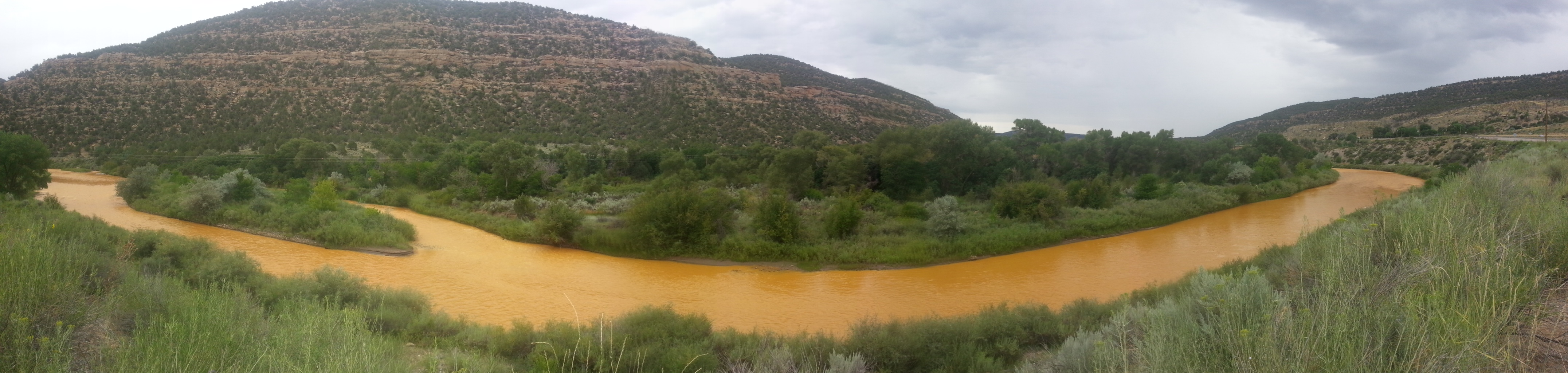
This image was taken during the peak outflow from the Gold King Mine spill at 10:57 a.m. Aug. 5, 2015. The waste-rock dump can be seen eroding on the right. Federal investigators placed blame for the blowout squarely on engineering errors made by the Environmental Protection Agency’s-contracted company in a 132-page report released Thursday [October 22, 2015]
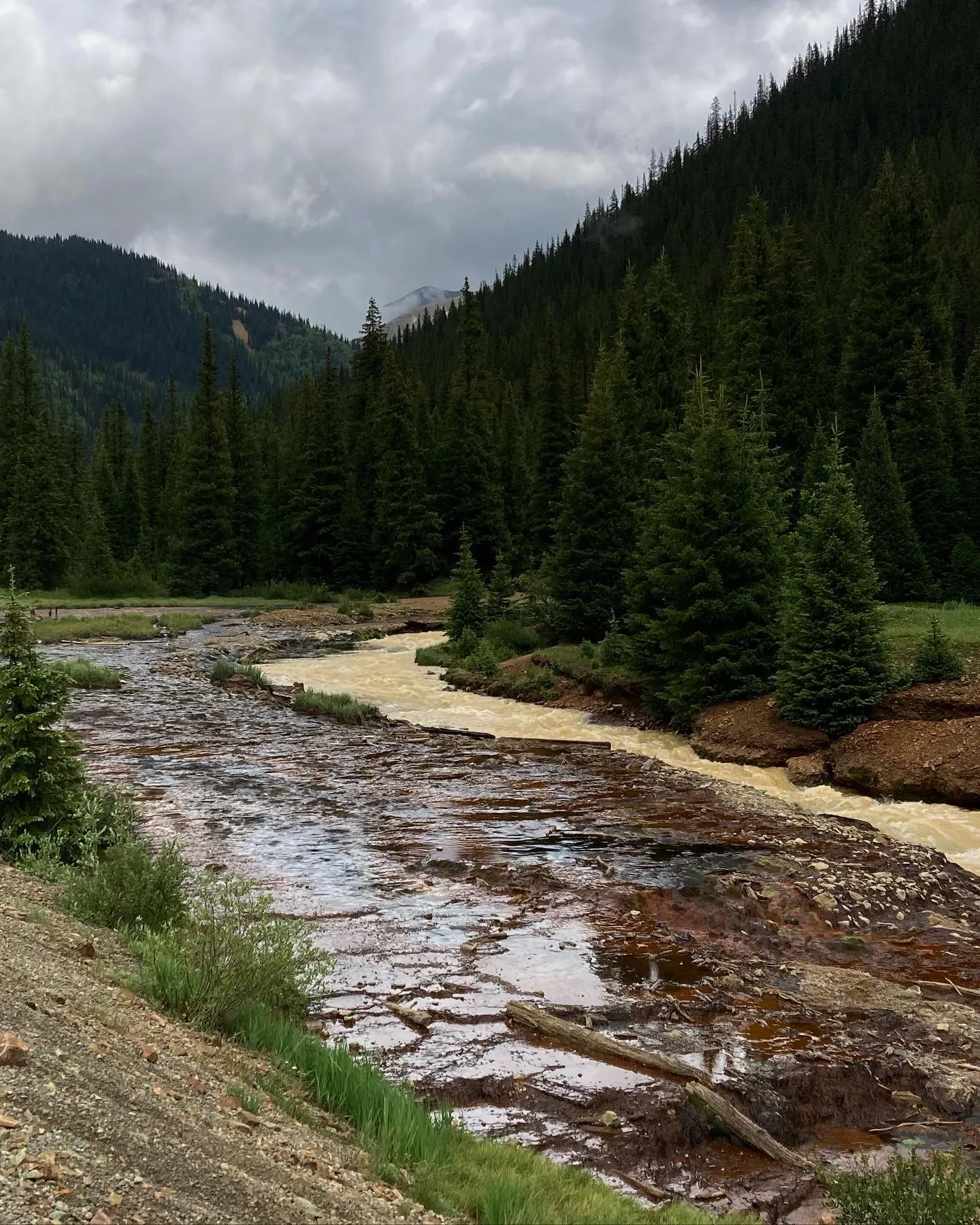
The crazy color was the result, of course, of the Gold King Mine spill, when contractors for the EPA inadvertently breached an earthen plug in the portal of the Gold King Mine, releasing some 3 million gallons of TANG-hued, acidic, metal-tainted water into a tributary of the Animas River, turning the waterways various shades of yellow and orange for a good 100 miles downstream. The incident drew global attention, shut down the river, and affected recreation, commerce, and agriculture, as well as inflicting trauma on the collective psyches of the riverside communities — some of which still lingers today.
It really seemed, at the time, to be a turning point. After years of lurking under the public radar, abandoned mines and the ways they harm the environment, impair water quality, and sometimes harm human health were finally getting attention. There were congressional hearings on the problem, dozens of stories in the national media, and Gold King downstreamers demanded that the Upper Animas River watershed be declared a Superfund site in order to fix the problem, once and for all.
The “Bonita Peak Mining District” superfund site. Map via the Environmental Protection Agency
Nine years have passed, a Superfund site — the Bonita Peak Mining District — was established, numerous lawsuits have played out, and as much as $160 million has been spent responding to the initial disaster and on Superfund-related activities in the years since. And yet, no meaningful federal policy regarding abandoned mines has been passed by Congress or implemented by the White House. And while Gold King Mine discharges are being treated, keeping some harmful metals out of the streams, very little additional progress has been made on solving the larger problem of abandoned mines in the Upper Animas watershed and their effect on water quality.
It is all a bit discouraging, to say the least. Though none of it is all that surprising.
On the federal policy part, the Biden administration issued a report last summer calling for major reforms to the 1872 General Mining Law. The proposed changes would increase protections on mining claim/lease and permitting end, so as to avoid future Gold King events. And they would establish a reclamation fee and royalties on federal hardrock minerals to help fund a restoration industry tasked with cleaning up abandoned mines.
It all sounds great, but so far has yielded very little actual policy. Yes, the Biden administration increased mining claim fees from $165 to $200. And the Infrastructure Investment and Jobs Act and the Inflation Reduction Act did earmark billions of dollars for abandoned mine — and oil and gas well — cleanup. As for Congress, the closest they’ve gotten to a viable mining law reform bill is one clearing the way for corporations to use public lands as waste dumps.
The problem is that the mining industry wields a great deal of power, especially in Nevada, Arizona, and Utah. And that means that even Democratic, otherwise green-leaning politicians tend to bow down to industry (see Sens. Jacky Rosen and Catherine Cortez Masto, both of Nevada). The Biden administration, meanwhile, has developed a case of carbon tunnel vision, and is looking to streamline and encourage mining for so called “green metals” such as lithium, manganese, cobalt, and copper. And it has also signed on to efforts to bolster the domestic uranium mining industry to support a growing advanced nuclear reactor sector. Implementing the administration’s own recommended reforms could slow those efforts.
Prior to mining, snowmelt and rain seep into natural cracks and fractures, eventually emerging as a freshwater spring (usually). Graphic credit: Jonathan Thompson
As for a lack of progress in the Upper Animas? That’s a more complicated situation. In fact, it’s the complicated nature that makes it so challenging.
Superfund — or CERCLA — seems to work well as a blunt instrument for cleaning up old factories, waste dumps, or other contained industrial sites, and for holding the responsible parties to account. It has a good track record on some mining sites, as well, including several in the West. Even then, however, the cleanup can last for decades, and in the case of draining mines, may require water treatment in perpetuity.
But there’s nothing straightforward or simple about the environmental legacy of mining in the Upper Animas watershed and the 48 sites within the Bonita Peak Mining District Superfund site. The mountains’ innards resemble Swiss cheese, with miles and miles of drifts and shafts in addition to natural fractures and faults that blur hydrological understanding. Indeed, mysteries remain around the exact source and pathways of the water that blew out of the Gold King in 2015. (For what is likely the most exhaustive, and exhausting, chronological dive into the Gold King/Sunnyside/American Tunnel connections, check out this old Land Desk wonkfest. But remember, only paid subscribers have access to the archives!)
Further complicating issues is a fair amount of natural acidity and metal loading that can never be cleaned up, along with the still unanswered question of which stretches of stream may have been able to support fish before mining commenced, and which ones may feasibly be able to support fisheries in the future. In other words, what is the end goal of the project? What would “fixing” the problem, as downstreamers demanded in 2015, look like in terms of specific water quality improvements in specific stretches of streams? And are those desired fixes feasible? Nine years later and those questions linger.
The saddest part of it all, perhaps, is the fact that those questions were being asked and answered, and solutions were being implemented, prior to the Gold King spill. The Animas River Stakeholders Group moved maddeningly slow at times, but they were thorough, realistic in what could be achieved, and effective. They were also efficient: Since their funding was limited, they had to prioritize projects that would give them the biggest water quality bang for their buck. They were also somewhat limited in what they could do thanks to liability issues. While moving or capping a waste pile is fairly low risk, if a “good samaritan” like ARSG tries to fix a draining, abandoned mine, it could become responsible for future problems — like the Gold King blowout, for example. So, ARSG relied on industry partners for draining adits, or called in the EPA.
A lot of folks, myself included, hoped that the Superfund cleanup would incorporate ARSG as an active partner and build upon their efforts. Just imagine what the group, which was formed in 1994 and included a vast storehouse of water quality data and analysis and human expertise, could have done with EPA funding and liability protection? Instead, the EPA started virtually from scratch. The ARSG ultimately disbanded and was replaced by the citizens advisory group, or CAG. Former ARSG Coordinator Peter Butler was brought on as CAG’s chair.
I’d run into Butler on occasion while running or hiking the trails around Durango, and he always seemed a bit frustrated about the lack of progress at the Superfund site and the EPA’s lack of receptiveness to the advisory group’s advice and data collection.
Shortly after the Gold King spill, the EPA had spent many millions of dollars setting up a water treatment facility in the former mining town of Gladstone, at the mouth of the bulkheaded and defunct American Tunnel (which accessed the Sunnyside, the last operating mine in the region, which was shuttered in 1991). But it only treats drainage from the Gold King, letting acid mine drainage from other nearby adits flow unmitigated into Cement Creek, which ultimately joins up with the Animas River. Other than that, the EPA had done very little in the way of substantive remediation, and downstream water quality has remained poorer than it was in the early 2000s, when the Sunnyside’s treatment plant was still up and running. (It’s a very long story, but to sum it up: Legal issues, a lack of funding, and an eviction shut treatment down in 2004, causing water quality and downstream fish populations to deteriorate).
Still, I was a bit shocked when Butler announced his resignation from the CAG late last year, and sent a letter detailing his reasons for moving on. He cited the lack of CAG influence on decision-making, the high turnover among local EPA administrators, and the EPA’s failure to honor promises made to the local community prior to Superfund designation. And, he wrote:
(The EPA later responded, as reported by the Durango Herald’s Reuben M. Schafir)
It was damning criticism and the EPA lost an important advisor when Butler stepped down. And while the CAG continues its work with a capable group of local advisors, Butler’s exit also seemed to signal the end of the Animas River Stakeholders Group era, in which environmentalists, bureaucrats, scientists, and industry collaborated to find working solutions to complex problems.
It has taken me a while to write about this, in part because I do find it somewhat heartbreaking. It also worries me. Earlier this year Navajo Nation advocates and residents celebrated when the EPA finally designated the Lukachukai Mountains Mining District Superfund site after years of lobbying for it. They saw it as a guarantee that dozens of abandoned, Cold War-era uranium mines would finally be cleaned up and would stop oozing toxic material into the water and homes. And maybe it is, but how long will it take?
The sad reality is that no one — not the EPA, not the Stakeholders group, not industry — will ever totally fix the problem of polluting abandoned mines in the Upper Animas watershed. All they can really do is manage it and, in an ideal world, learn from the experience and develop better and more innovative ways to carry out that management. I suppose in EPA-time, nine years isn’t all that long. There’s still time to right the ship so that the project can benefit the water and the local community.
Last week’s $90 million settlement relating to the 2015 Gold King Mine Blowout that turned the Animas and San Juan Rivers TANG-orange for over 100 miles downstream did not bring an end to the legal saga that has dragged on for more than six years (lawsuits against the federal government are still pending). But when the agreement is finalized, Sunnyside Gold Corp—the owner of the nearby, now-shuttered Sunnyside Mine—will finally be free of the mess. Extricating themselves from any further liabilities has cost them about $67.6 million: $40.5 million to the feds; $6.1 million to the State of Colorado; $11 million to the State of New Mexico; and $10 million to the Navajo Nation, not to mention the tens of millions they’d already spent cleaning up a century’s worth of mining mess.
🥵 Aridification Watch 🐫
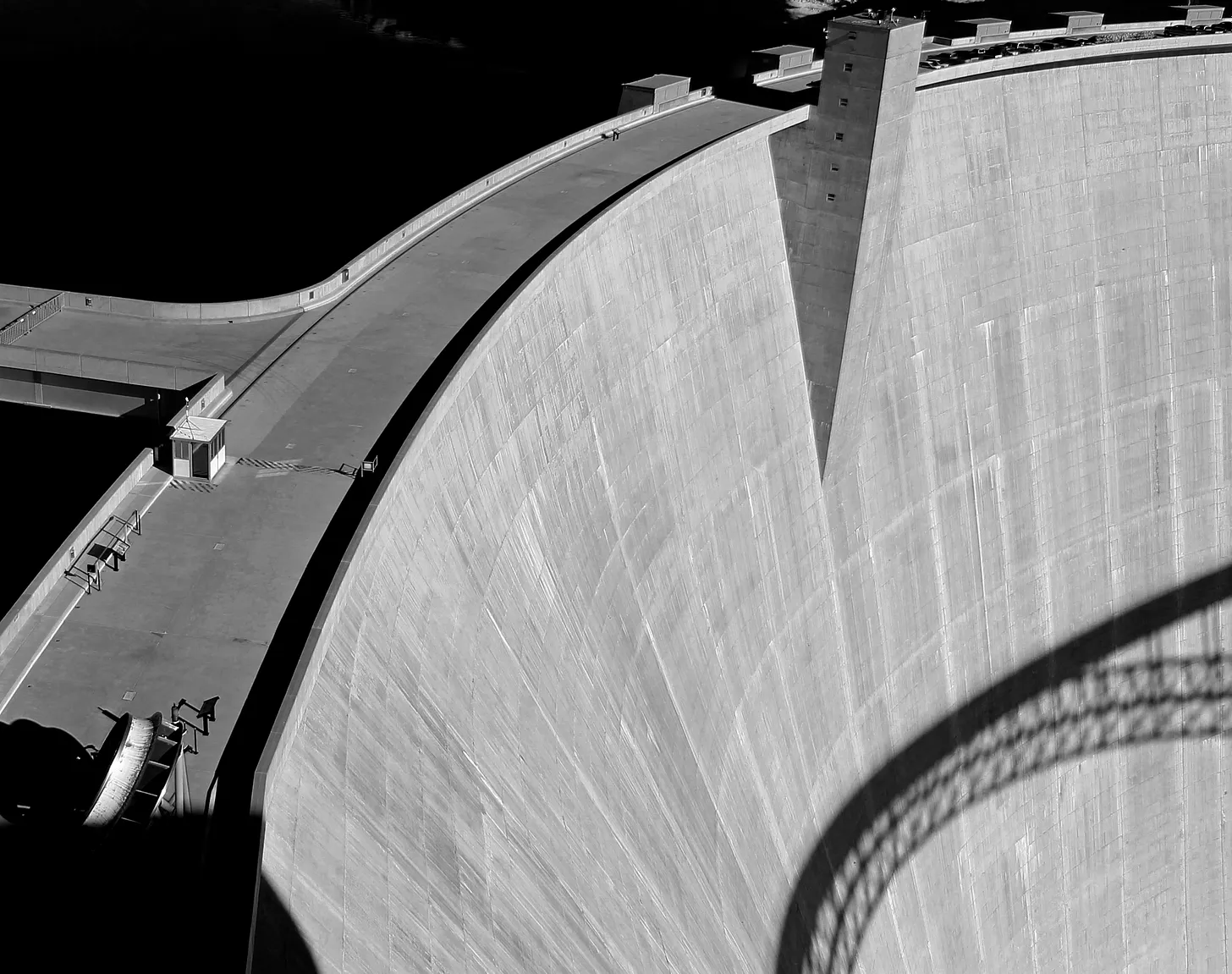
Glen Canyon Dam. Photo credit: Jonathan P. Thompson/The Land Desk
I’ve seen a bunch of headlines lately to the effect of: “Lake Powell water hits highest level in three years.” It’s accurate and it’s certainly good news for everyone who relies on water from the Colorado River, but it doesn’t really tell the whole story. Yes, deadpool has been delayed for another year or so, boaters have better access to the reservoir, hydropower output should be a bit better, and the ferry between Halls Crossing and Bullfrog Marinas is operating once again.
That said, the headline is a bit of a glass half-full sort of thing. Yet in this case, it wasn’t even half full, at its seasonal peak in early July it was only about 41% of capacity — or 59% empty for all the pessimists. Now water levels are dropping again and likely will continue to do so until next spring, as releases exceed inflows.
In some ways you could say that Lake Powell’s levels are a microcosm of the Southwest’s climate as a whole. We’ve had a few decent to downright-abundant water years, which have eased the drought in most places and helped reservoir levels recover. But the wet years have not ended the Southwest megadrought, now going on its 25th year, which is the most severe dry spell of the last 1,200 years, according to new research out of UCLA. Nor has the above-average snowpack brought Lakes Powell or Mead back to their 1980s glory days. It will take several more consecutive wet years to make that happen.
The increase may not be enough to quell concerns about future water supplies, but the ferry’s up and running again, which is a good sign. I’ve only taken it once: My dad and brother and I took the Lowrider, a 1967 Pontiac Catalina, across Lake Powell many years ago, before taking some hairball, oil-pan-busting Henry Mountain route for which the car was not appropriate. The ferry ride only lasts a few minutes, but it’s kind of cool, and it allows you to see a lot more country with less driving. It only runs when the water level is above 3,575 feet, though, which means you probably only have a month or two to try it out.
Figure 4. Graph showing the distribution of reservoir storage in different parts of the Colorado River basin between 1 January 2021 and 15 July 2024. Credit: Jack Schmidt/Center for Colorado River Studies
The orange plume flows through the Animas across the Colorado/New Mexico state line the afternoon of Aug. 7, 2015. (Photo by Melissa May, San Juan Soil and Conservation District)
As the CEO of Northern New Mexico Indigenous Farmers, I see firsthand the struggles our farmers face every day. Our community, inherently connected to our land and rich in agricultural traditions, has been hit hard by an unreliable water system that makes it tough to keep our crops healthy and our livelihoods secure. The Hogback pump station, which should be a dependable source of water, often breaks down, causing us to lose crops and hope. Today, I want to share why securing Energy Transition Act funding for a new pump station is so crucial and how this project will bring much-needed hope to our community.
This image was taken during the peak outflow from the Gold King Mine spill at 10:57 a.m. Aug. 5, 2015. The waste-rock dump can be seen eroding on the right. Federal investigators placed blame for the blowout squarely on engineering errors made by the Environmental Protection Agency’s-contracted company in a 132-page report released Thursday [October 22, 2015]
Our organization was born out of the Gold King Mine spill, a disaster that laid bare the lack of support for our farmers. The spill made our existing problems worse, showing that without quick action, our farming future was at risk. One of the biggest issues we face is our broken-down irrigation system, specifically the Hogback pump station. Its frequent failures leave us with no reliable water supply for our crops, creating a constant state of anxiety for our farmers and resulting in fallow land. This situation can’t go on if we want our community to thrive. That’s why we applied for the ETA grant from New Mexico’s Economic Development Department, and I’m thrilled to announce we were awarded $3.6 million in funding to replace our failing pump station. This isn’t just a fix for our water problems; it’s a lifeline for our entire community. The new pump station, complete with its own solar power, will make sure our farms get a steady and reliable supply of water, leading to healthier crops and more stable incomes for our farmers. But the benefits of this project go beyond water. A reliable pump station will help us rebuild our agricultural sector, providing jobs and boosting local businesses that rely on farming. It will also help us keep our cultural traditions alive, as farming is more than just work for us — it’s a way of life that connects us to our heritage and our land. This project will also bring our community together. Alongside the new pump station, we plan to offer training for our farmers on modern irrigation techniques and sustainable land management. This training will give our farmers the tools they need to use water more efficiently and improve their yields. By learning and growing together, our community will become stronger and more united.
Little is known about the full impact of so-called ‘forever chemicals,’ and settlement would prevent participants from suing in the future
In the fall, the district and authority declined to participate in two PFAS-related settlements. Last month, district staff received information about a new settlement the district and authority could elect to participate in, with similar terms to those in the fall, and lower compensation. During their regular meetings on Thursday, July 25, the district and authority boards reviewed and declined the new settlement proposal, and authorized district staff to make decisions about similar settlements going forward…
The district and authority have conducted three studies to sample the water they provide for PFAS over the last five years. Data from the most recent study, conducted in 2023, shows that PFAS have been detected in five out of 11 of the two water providers’ sources, with four detections within the authority, and one in the district. All five detections were below the maximum contaminant level of four parts per trillion. For reference, one part per trillion is the equivalent of one drop of water in 20 Olympic-sized swimming pools…
Part of the challenge of sampling for PFAS is that technology has not caught up to the chemicals — though there are thousands of PFAS chemicals, only 29 can currently be detected. At the moment, not all labs in the United States can test for PFAS, and the testing is very expensive. The district and authority will next sample for PFAS in 2025.
One year ago, the Supreme Court issued its sweeping decision in the case Sackett v. EPA, which invalidated federal Clean Water Act protections for most streams and wetlands in the United States. Since then, the fight for clean water protections has been at the state level. This report outlines the state of clean water protections one year out from the Sackett decision and why federal protections for our critical waters is vital in the face of worsening climate change and other threats.
In the year since the Supreme Court ruling, two states passed or introduced legislation to create new permitting programs to fill the gap in federal protections and eight states passed or introduced stronger laws and policies to strengthen state protections. Two states passed legislation weakening state-level protections, while efforts to weaken state protections failed in four other states.
The Importance of Wetlands and Streams
Wetlands and streams are the livers and heart of our ecosystems. These critical waters prevent flooding, filter pollution, store carbon, and provide critical habitat for wildlife. According to the Environmental Protection Agency (EPA), ”Wetlands are among the most productive ecosystems in the world, comparable to rain forests and coral reefs.”
Similarly, streams that flow only part of the year play a critical role in maintaining the quality and supply of our drinking water and aid water conservation.
Our lakes and rivers depend on these critical waters, which in turn depend on the Clean Water Act (CWA or the Act) for protections to keep them healthy for fishing and swimming, agriculture and other business uses, and as a source for drinking water. In many cultures, particularly Indigenous cultures, water has a deep religious and spiritual element, and water is seen as life — waters are considered sacred places to cherish and protect. To limit their protection under the CWA could degrade the quality of water in waterways that people and wildlife depend on.
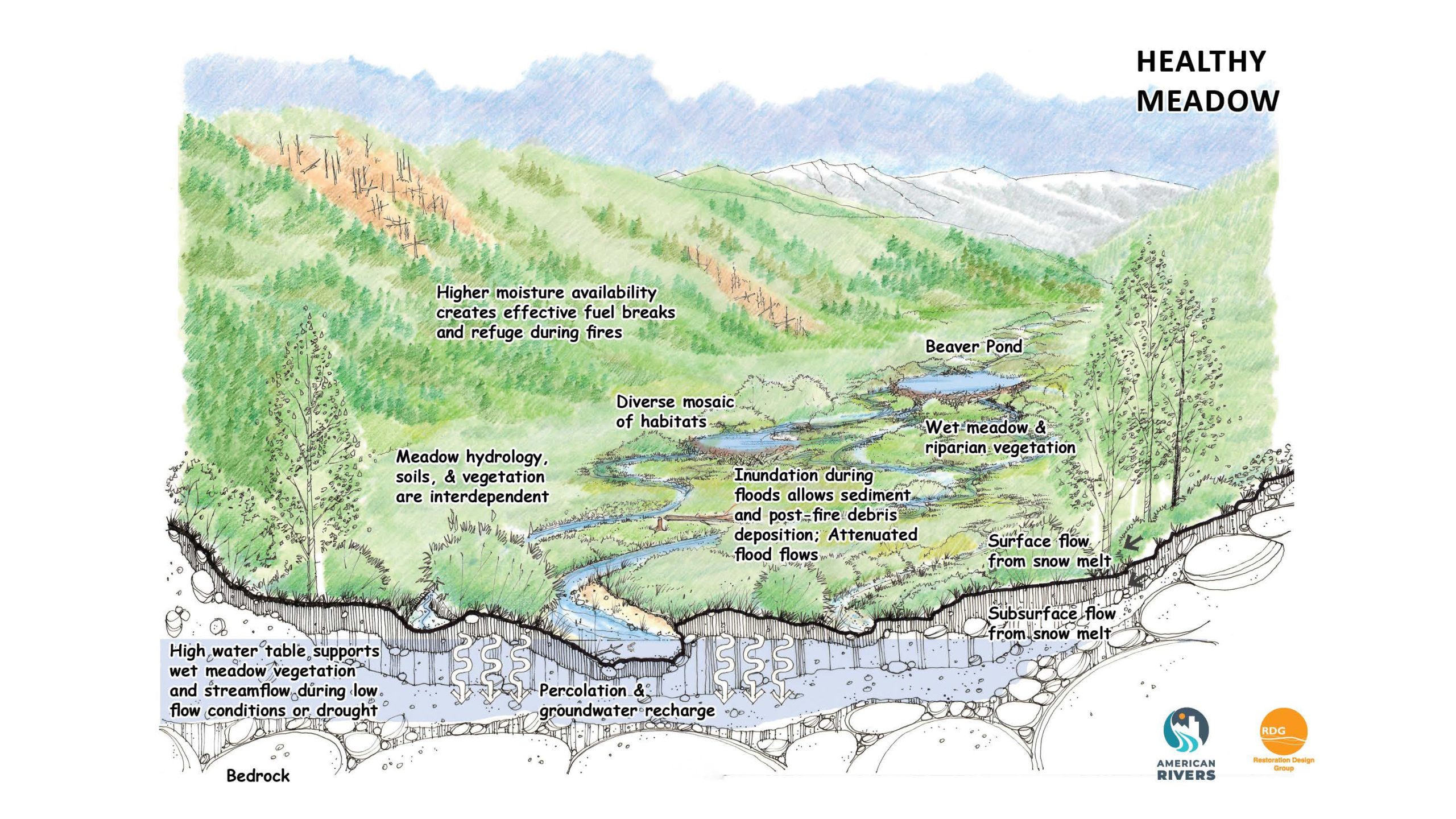
Healthy mountain meadows and wetlands are characteristic of healthy headwater systems and provide a variety of ecosystem services, or benefits that humans, wildlife, rivers and surrounding ecosystems rely on. The complex of wetlands and connected floodplains found in intact headwater systems can slow runoff and attenuate flood flows, creating better downstream conditions, trapping sediment to improve downstream water quality, and allowing groundwater recharge. These systems can also serve as a fire break and refuge during wildfire, can sequester carbon in the floodplain, and provide essential habitat for wildlife. Graphic by Restoration Design Group, courtesy of American Rivers
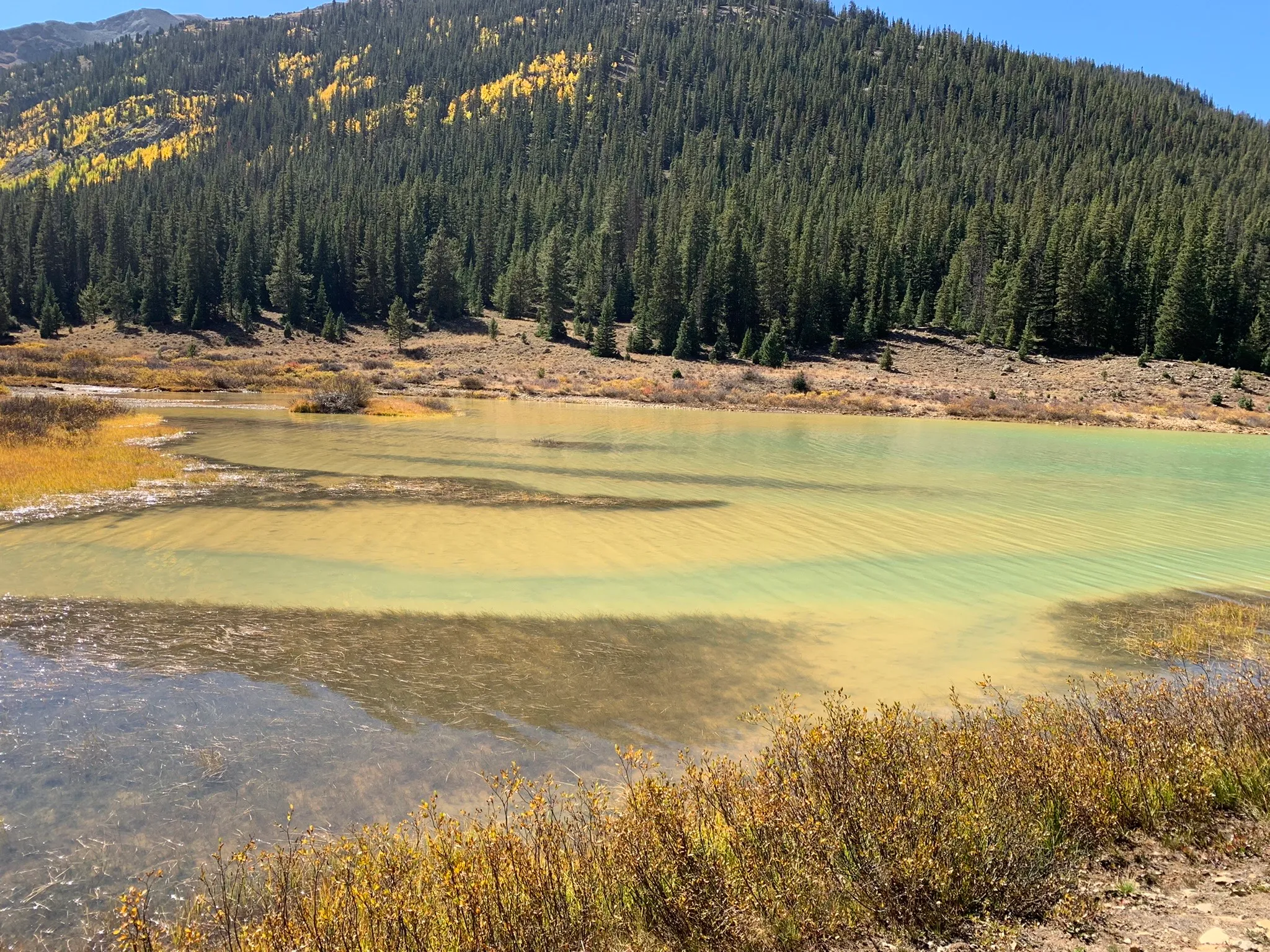
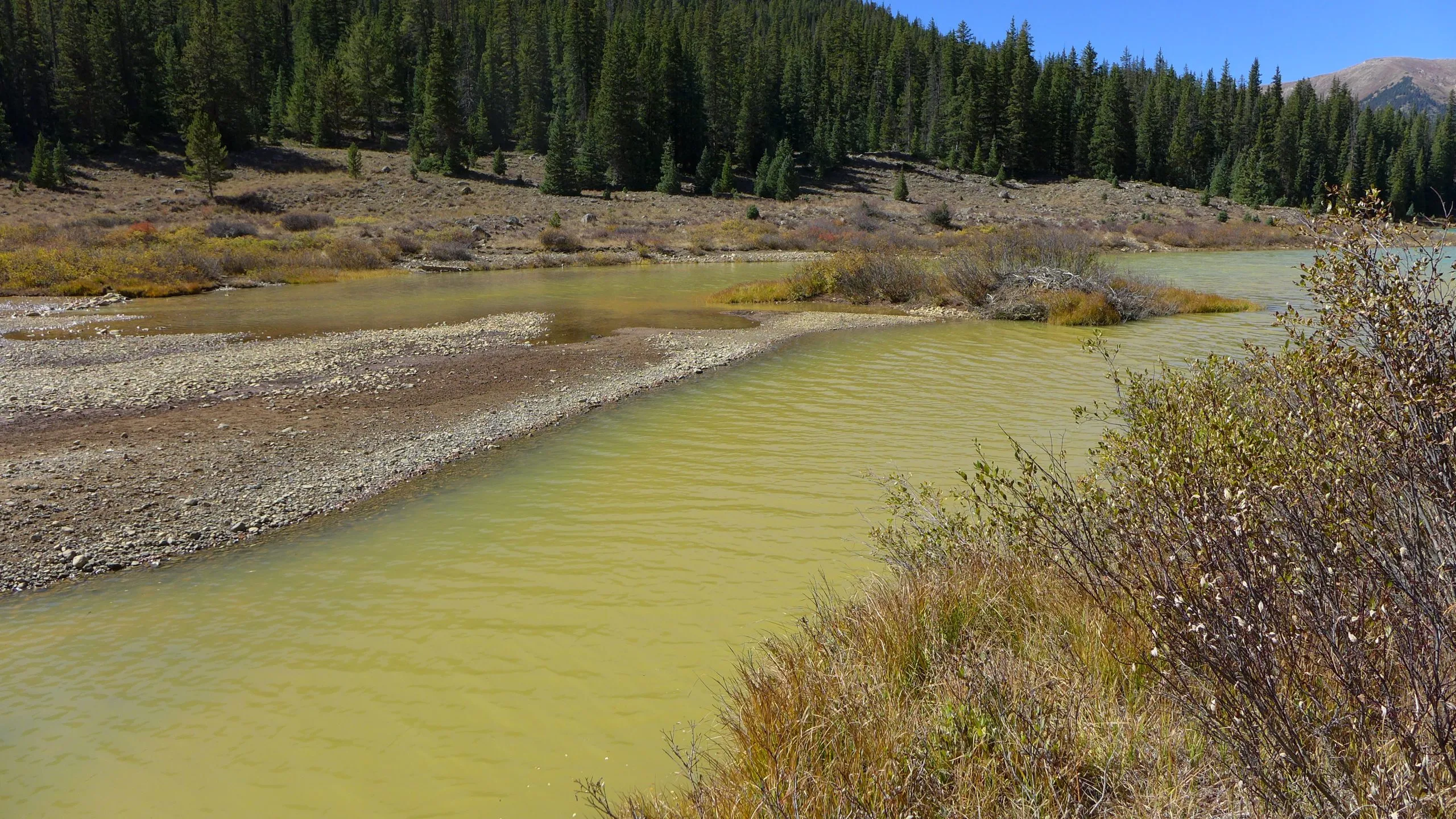
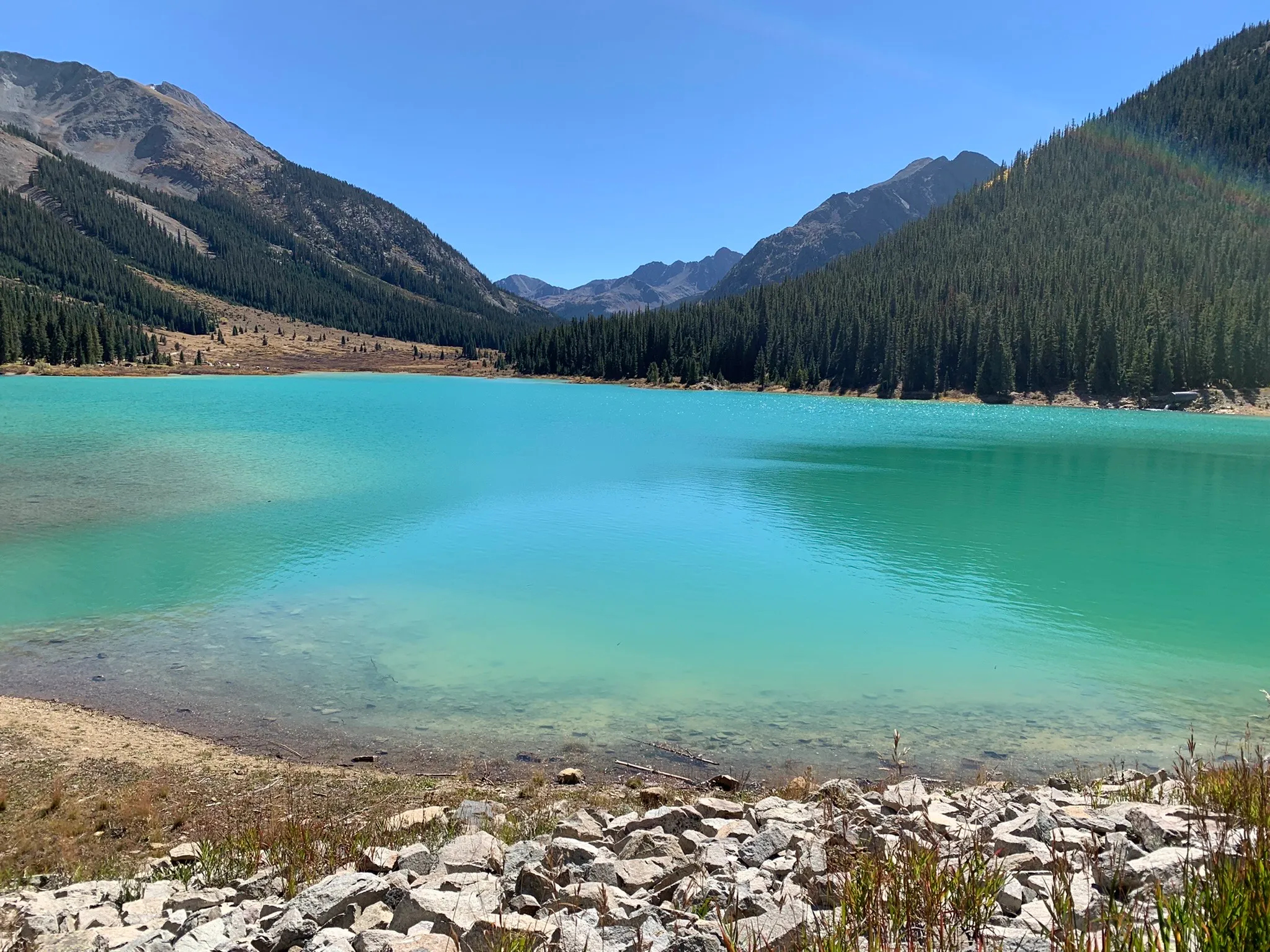
Lincoln Creek was yellow as it flowed into Grizzly Reservoir in September 2022. A report from the Environmental Protection Agency says metals contamination in the creek and reservoir is a result of natural causes, not a nearby mine. CREDIT: HEATHER SACKETT/ASPEN JOURNALISM
Click the link to read the article on the Aspen Daily News website (Austin Corona). Here’s an excerpt:
July 17, 2024
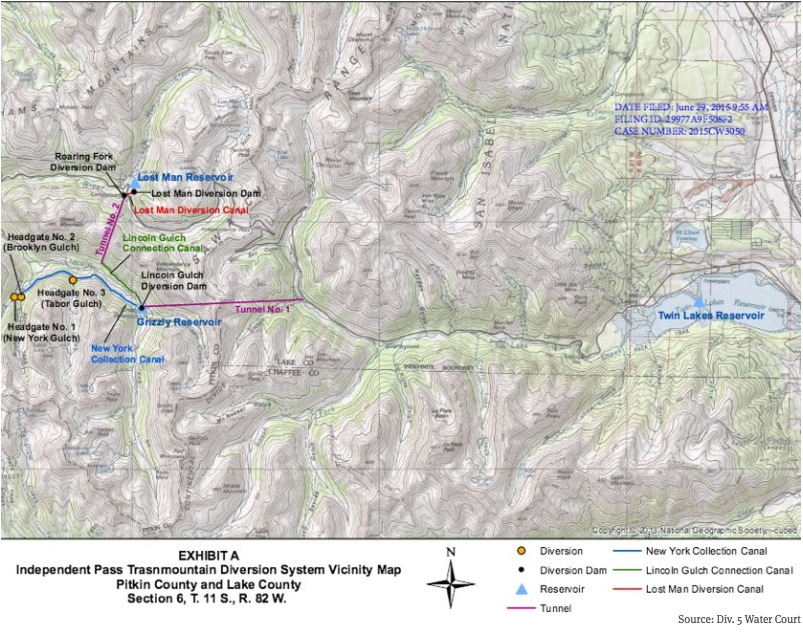
Ongoing construction at the Grizzly Reservoir turned the Roaring Fork River orange as it ran through Aspen on Tuesday. The discoloration had remained in the upper valley as of Tuesday afternoon, with some cloudiness visible as far downstream as Woody Creek. The river appeared clear at Old Snowmass. The city of Aspen said in a Facebook post that its municipal drinking water is safe to drink. Aspen takes its drinking water from Castle and Maroon creeks, not the Roaring Fork. The only drinking water intake located directly on the Roaring Fork is in Glenwood Springs. Nonetheless, county officials have warned recreators to be cautious when playing in the river and avoid ingesting river water. The county also warned against allowing pets in the river. A county alert on Tuesday said the river could appear muddy and discolored over the next few days. Sediment from Grizzly Reservoir likely contains high loads of copper, aluminum, iron and other minerals. The reservoir is located on Lincoln Creek, where the Environmental Protection Agency discovered high metals contamination in 2023 (the contamination was found to be naturally occurring). After leaving Grizzly, the creek flows into the Roaring Fork River roughly 10 miles upstream of Aspen.
Ordway, Colorado-based Twin Lakes Reservoir and Canal Company, which maintains and operates Grizzly, is installing a liner on the reservoir dam this summer. The company is draining the reservoir as part of the project, which has apparently allowed sediment from the bottom of the reservoir to flow downstream in Lincoln Creek…Twin Lakes Reservoir and Canal began draining the reservoir in late June, sending the drainage water through a tunnel under the continental divide. Toward the end of the process, the water level dropped below the tunnel’s intake, causing project managers to send the remaining reservoir contents down Lincoln Creek.
Contractors move equipment as part of a 2021 study of removing per- and polyfluoroalkyl (PFAS) from the aquifer under Cannon Air Force base, near Clovis, New Mexico. New Mexico asked a judge to require the federal government to pay current and future damages from PFAS in court documents filed Monday, July 8, 2024. (Courtesy U.S. Air Force Staff Sgt. Maxwell Daigle)
Click the link to read the article on the SourceNM.com website (Danielle Prokop):
July 10, 2024
New Mexico requested a judge order the federal government to pay the past and future costs of cleaning up ‘forever chemicals’ from military bases across the state, per court documents filed Monday.
New Mexico officials argue the federal government needs to be accountable for PFAS contamination costs at Cannon Air Force Base, Holloman Air Force Base, Kirtland Air Force Base, White Sands Missile Range and Fort Wingate.
Now, after a federal rules change on Monday, they hope it will allow the state to recover damages and future cleanup costs for PFAS contamination left by the U.S. Department of Defense at military bases across New Mexico.
“We applaud the EPA’s listing of certain PFAS, or ‘forever chemicals,’ as hazardous substances under the Superfund statute,” New Mexico Attorney General Raúl Torrez said. “This enables us to pursue monetary damages and costs at federal facilities, as stated in our amended complaint.”
Torrez said the change means a federal law requiring polluters to pay to clean up contamination now applies to PFAS.
The designation of PFAS as a hazardous substance is separate from the EPA’s efforts to remove the forever chemicals in drinking water.
The filing makes the federal government liable to pay for current and future costs, repair damages to water, land, air and address impacts to wildlife and the state’s economy.
“This opens the door for us to really help communities like Clovis who have been suffering for far too long with this threat, if not actuality of PFAS,” New Mexico Environment Secretary James Kenney said.
He told Source New Mexico that if a judge grants the request, the timeline for payment would be uncertain, but pointed to a similar process on the Gold King Mine, which took several years.
The state has spent an estimated $8 million to $10 million on technical, legal costs and clean-up at Cannon and Holloman, Kenney said, but the estimates for cleanup at all sites will be expensive.
“We could easily be looking at up to 150 million, if not more, especially once we understand the magnitude of the damages,” Kenney said.
He said it’s unclear when the state will have an estimated cost of damages available.
“It depends if we have cooperation by the United States,” Kenney said. “I would say to be five and-a-half years in, and to be where we are today, does not scream – to me – cooperation.”
As part of those costs, New Mexico is looking to recoup at least $850,000 for the removal of thousands of PFAS-contaminated cow carcasses from a dairy farm next to Cannon, another $1.3 million for investigation contamination around bases, according to the complaint.
The filing amends a five-year old civil case before the federal District of South Carolina Court. That case combined 500 claims from across the country seeking damages from contamination caused by the use of a fire-fighting foam containing PFAS. The case has been in a discovery phase since 2020.
Specifically, New Mexico said the U.S. Army and the U.S. Air Force broke state law by failing to contain or “address contaminants, hazardous wastes, and hazardous substances,” listing how PFAS was found in groundwater and surrounding environment.
The original 2019 complaint only focused on Cannon and Holloman Air Force bases, but the amended complaint filed Monday expands to five sites.
New Mexico argued in their 65-page motion that while the federal government has acknowledged that PFAS poses “an imminent and substantial danger,” at Cannon, that they have failed to take action to clean up.
The complaint asked that the court grant the state the power to direct the federal government to “to take all steps necessary” on clean-up.
The U.S. Department of Defense deferred comment to the U.S. Department of Justice Tuesday.
New Mexico is embroiled in a second, separate federal lawsuit with the U.S. Department of Defense over PFAS, which is still in mediation, and is not part of the effort to recoup damages.
On July 5 2024, a court in Quito, Ecuador ruled that the Machángara River, which runs through the city, is a subject of rights. The Machángara River case was filed as a Protection Action by the Kitu Karu Indigenous people to address the serious pollution of the river. The fundamental rights that have been affected by this situation include the rights of nature, the right to water, a healthy environment, sanitation and health, as well as the right to the city. The court recognized that since the river is alive, it is subject to rights under the Constitution of Ecuador, which establishes that nature possesses a right to protection, promotion, and restoration. The Constitutional Court of Ecuador previously recognized that rivers are protected under Chapter 7 of the Constitution in 2022.
The judge determined that the Municipality of Quito had breeched the rights of the Machángara River by failing to treat 98% of wastewater that runs into the river from the municipality. As a result of this decision, the judge ordered the implementation of a decontamination plan, following the precedents established by the Monjas River ruling in the north of the city. This plan must include specific measures to reduce the levels of contamination, in addition to considering alternative and sustainable solutions for water treatment. The Municipality of Quito will have to manage the available resources and request financial support from the central government to expand these projects. This ruling must be complied with immediately and the municipality must start implementing the necessary measures for the decontamination of the Machángara River without delay.
The municipality filed an appeal against this decision and the litigation will continue in the Provincial Court of Justice.
Click the link to read the article on The Denver Post website (Lauren Penington). Here’s an excerpt:
Rocky Mountain Lake — located at 3301 West 46th Avenue in Denver — closed Thursday after recent testing found toxic levels of algae around the shoreline, the Denver Department of Public Health and Environment said in a statement on social media…Recent routine testing at Lake Arbor in Arvada also revealed blue-green algae was approaching toxic levels, forcing the city to close the lake indefinitely Thursday, Arvada officials said in a news release…
The number of algae blooms will increase as Colorado’s climate becomes warmer, according to previous reporting. The blue-green algae found in the lakes are naturally occurring and an important part of the ecosystem, but the blooms can produce toxins if they grow big enough. Harmful algae looks like thick pea soup or spilled paint with a green, red, gold or turquoise color. They also often have foam or scum.
Toxic-algae blooms appeared in Steamboat Lake summer of 2020. The lake shut down for two weeks after harmful levels of a toxin produced by the blue-green algae were found in the water. As climate change continues, toxic blooms and summer shutdowns of lakes are predicted to become more common. Photo credit: Julie Arington/Aspen Journalism
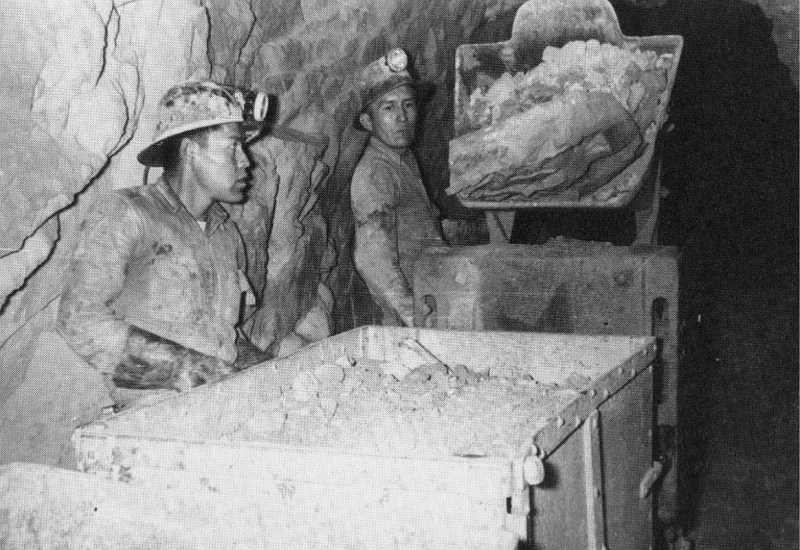
In 1953, the Anaconda Minerals Company leased nearly 8,000 acres of land in central New Mexico from the Pueblo of Laguna to mine uranium for nuclear weapons. The company gouged and blasted away at the earth, constructing the three massive holes known as the Jackpile-Paguate Mine.
The Jackpile-Paguate became the world’s largest open-pit uranium mine, producing some 24 million tons of ore. It employed hundreds of Laguna Pueblo members and transformed the community’s economy. But mining companies and regulators gave little thought to the safety of miners and nearby residents. Miners were exposed to radioactive and toxic heavy metals daily, even spending their lunch breaks sitting on piles of radioactive ore. Blasting sent tremors through the pueblo’s adobe homes, and a cloud of poisonous dust drifted into the village of Paguate, just 2,000 feet from the mine, coating fruit trees, gardens, corn and meat that was set out to dry.
In 1982, uranium prices plummeted, and Atlantic Richfield, Anaconda’s successor, shut up shop, conducted a cursory reclamation and walked away.
Aerial view of Laguna Pueblo, Rio San Jose, and Interstate 40 in New Mexico. This file is licensed under the Creative Commons Attribution-Share Alike 4.0 International license.
But the pollution didn’t end when the Jackpile closed. A toxic plume continued to spread through groundwater aquifers, and the Rio Paguate, a Rio Grande tributary, remains contaminated more than a decade after the facility became a Superfund site, despite millions of dollars in cleanup work. And Laguna residents and former mine workers still suffer lingering health problems — cancer, respiratory illnesses and kidney disease — from the mine and its pollution.
There are at least 250,000 abandoned mining “features,” including at least 4,000 involving uranium, scattered across the Western U.S. — mines, waste piles, prospect holes and other infrastructure. Some are harmless and invisible to the untrained eye. Others continue to threaten the environment, people and wildlife, even after millions of dollars have been spent attempting to clean them up. Mining is hard — but healing the earth and the health of the communities affected by it is immeasurably harder. [ed. emphasis mine]
Data visualization by Jennifer Di-Majo/High Country News
Data visualization by Jennifer Di-Majo/High Country News
Data visualization by Jennifer Di-Majo/High Country News
❶ The Iron Mountain Mine operated from the 1870s until it was abandoned in the 1960s. It was listed as a Superfund site in the 1980s and cleanup continues, including round-the-clock treatment of draining, heavily contaminated water so acidic it can devour a metal shovel blade in less than 24 hours.
❷ Cold War-era uranium mining companies left behind more than 100 waste piles contaminated with radium and heavy metals in and around the Navajo Nation community of Cove. This March, some 50 years after mining ended, it was designated as the Lukachukai Mountains Mining District Superfund site.
❸ The Formosa Mine — shuttered and abandoned in the early 1990s — discharges millions of gallons of acid mine drainage into the Umpqua River each year. It was designated a Superfund site in 2007, and cleanup efforts received additional Infrastructure Act funding in 2021.
❹ Mining ended and groundwater pumps shut down at the Berkeley Pit in the early 1980s, allowing the massive hole to fill with acidic, heavy metal-laden water. More than 3,000 snow geese died in 2016 after landing on the Berkeley “lake,” which is part of the Silver Bow Creek/Butte Area Superfund site.
❺ The Bonita Peak Mining District Superfund site — nearly 50 abandoned mines and related features — was designated following the 2015 Gold King Mine blowout, when some 3 million gallons of acid mine drainage spewed into the Animas River drainage.
❻ Mining occurred at the Questa Molybdenum Mine from 1920 until 2014, contaminating soil, surface- and groundwater. A water treatment plant operates in perpetuity to keep contaminants from streams at a cost of more than $5 million annually.
❼ Thousands of uranium mines were abandoned after the Cold War in the Lisbon Valley, White Canyon, and Uravan Mineral Belt in Utah and Colorado. (The USGS labels many of this area’s uranium sites as “unknown.”)
Data visualization by Jennifer Di-Majo/High Country News
Hardrock mining introduces oxygen and water to sulfide-bearing rocks, and the resulting reaction forms sulfuric acid. The now-acidic water dissolves and picks up naturally occurring metals such as zinc, cadmium, lead, arsenic, mercury and even uranium, ultimately depositing these harmful minerals in streams or lakes long after mining ceases. Acid mine drainage is mining’s most insidious, pervasive and persistent environmental hazard.
Data visualization by Jennifer Di-Majo/High Country News
SOURCES: U.S. Geological Survey, U.S. Environmental Protection Agency, Government Accountability Office, Congressional Research Service, University of New Mexico Native American Budget & Policy Institute, Mining and Environmental Health Disparities in Native American Communities, by Johnnye Lewis et al.
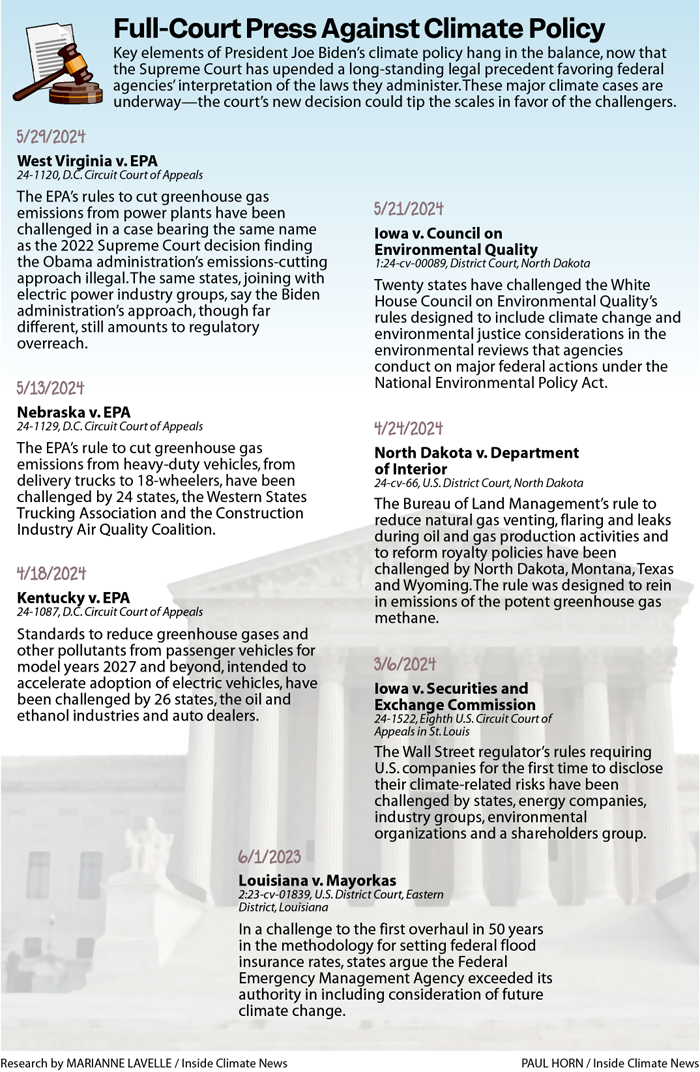
The case concerned a 40-year-old precedent known as “Chevron deference.” That doctrine held that when a federal law is ambiguous, the courts must defer to the interpretations offered by the agencies the law covers — as long as those interpretations are “reasonable.” On Monday, the court discarded Chevron deference. This may sound like an abstruse legalistic squabble, but it has massive implications for Americans in all walks of life. It could subject agency decisions on scientifically based issues such as clean air and water regulations and healthcare standards to endless nitpicking by a federal judiciary that already has displayed an alarming willingness to dismiss scientific expertise out of hand, in favor of partisan or religious ideologies. The ruling amounts to an apogee of arrogance on the part of the Supreme Court’s conservative majority, wrote Justice Elena Kagan in a dissent joined by Justices Sonia Sotomayor and Ketanji Brown Jackson. But it’s not a new development.
“The Court has substituted its own judgment on workplace health for that of the Occupational Safety and Health Administration,” Kagan wrote; “its own judgment on climate change for that of the Environmental Protection Agency; and its own judgment on student loans for that of the Department of Education…. In one fell swoop, the majority today gives itself exclusive power over every open issue — no matter how expertise-driven or policy-laden.”
Conservatives have had it in for the Chevron doctrine for a long time; given their current majority on the court, the doctrine’s death has been a foregone conclusion, awaiting only the appearance of a suitable case to use as a bludgeon. Indeed, the majority was so impatient to kill the doctrine that the court’s six conservatives chose to do so by using a case that actually is moot. That case arose from a lawsuit brought by the herring industry, which objected to a government policy requiring herring boats to pay for government observers placed on board to make sure the boats were complying with their harvesting permits. The rule was imposed under the Trump administration, but it was canceled in April 2023 by Biden, who repaid the money that had been taken from the boat owners — so there’s nothing left in it for the court to rule on.
Interestingly, Chevron deference was not always seen as a bulwark protecting progressive regulatory policies from right-wing judges, as it’s viewed today. At its inception, it was seen in exactly the opposite way — as giving conservative policies protection from progressive-minded judges.
This term, the court’s conservative supermajority handed down several rulings that chip away at the power of many federal agencies. But the environmental agency has been under particular fire, the result of a series of cases brought since 2022 by conservative activists who say that E.P.A. regulations have driven up costs for industries ranging from electric utilities to home building. Those arguments have resonated among justices skeptical of government regulation. On Friday [June 28, 2024], the court ended the use of what is known as the Chevron doctrine, a cornerstone of administrative law for 40 years that said that courts should defer to government agencies to interpret unclear laws. That decision threatens the authority of many federal agencies to regulate the environment and also health care, workplace safety, telecommunications, the financial sector and more…
But more remarkable have been several decisions by the court to intervene to stop environmental regulations before they were decided by lower courts or even before they were implemented by the executive branch. On Thursday, the court said the E.P.A. could not limit smokestack pollution that blows across state borders under a measure known as the “good neighbor rule.” In that case, the court took the surprising step of weighing in while litigation was still pending at the United States Court of Appeals for the District of Columbia Circuit.
Iron Fen. Photo credit from report “A Preliminary Evaluation of Seasonal Water Levels Necessary to Sustain Mount Emmons Fen: Grand Mesa, Uncompahgre and Gunnison National Forests,” David J. Cooper, Ph.D, December 2003.
The court also acted in an unusually preliminary fashion last year when it struck down a proposed E.P.A. rule known as Waters of the United States that was designed to protect millions of acres of wetlands from pollution, acting before the regulation had even been made final…Similarly, in a 2022 challenge to an E.P.A. climate proposal known as the Clean Power Plan, the court sharply limited the agency’s ability to regulate greenhouse gas emissions from power plants, even though that rule had not yet taken effect.
That kind of intervention has little in the way of precedent. Usually, the Supreme Court is the last venue to hear a case, after arguments have been made and opinions have been rendered by lower courts…Collectively, those decisions now endanger not only many existing environmental rules, but may prevent future administrations from writing new ones, experts say…
Coyote Gulch’s Leaf charging at Red Rock Hyundai in Grand Junction May 23, 2023. The Biden administration’s effort to boost sales of electric vehicles while cutting emissions from gasoline-powered vehicles could face a tough test in the courts
Three years ago, President Bidenpromised to “deliver a whole-of-government approach to the climate crisis,” including by making half of all new cars electricby 2030. Now the Supreme Court has imperiled that broad agenda — and possibly other climate and environment rules for decades to come. In recent rulings, particularly two last week, the high court added obstacles tothe government’s ability to regulate air pollution, water pollution and the greenhouse gases that are heating Earth. The decisions could empower conservative judges on lower courts throughout the country to block even more environmental regulations — not only under Biden but presidents who follow him. The recent rulings are “especially valuable for conservative judges who are inclined towards striking down [environmental] regulations,” said Sam Sankar, senior vice president for programs at the environmental law firm Earthjustice. “They had a knife before; they have a chain saw now.”
On Thursday, the Supreme Court put on hold the Environmental Protection Agency’s plan for cutting industrial air pollution that wafts across state lines. On Friday, the justices overturned the so-called Chevron doctrine, severely limiting the power of federal agencies to regulate fundamental aspects of American life, including the environment. And court rulings in 2022 and 2023 targeted the EPA’s authority to curb greenhouse gases and to protect wetlands from runoff. Together, the decisions underscore how a multiyear campaign by industry and conservative groups is successfully weakening the power of the administrative state, and the EPA in particular.
In western communities, mobile home parks provide a more affordable place to live, but residents often face problems with their drinking water.
In Colorado, a new law gives the state authority to test water quality in these communities and force owners to fix any issues.
The state plans to start testing the water at hundreds of parks across the state this summer. Officials have already gotten a head start at one community in Western Colorado that helped spur the legislation.
Apple Tree Park sits on the banks of the Colorado River just across from the town of New Castle.
Silvia Barragán moved to the park in 2015. Her street is lined with trees and she has a big yard with a garden.
“Some people might look at this as just a trashy mobile park, but it’s not,” Barragán said. “It’s a nice, nice neighborhood. There’s a lot of kids in the summer running around and there’s a lot of elderly people that have lived here most of their lives.”
Barragán is originally from Michoacán, Mexico, and she raised her family in western Colorado. Her experience at Apple Tree Park over the last decade has mostly been positive.
“Since I moved here, I felt peaceful and at home,” Barragán said. “My neighbors are great neighbors and I haven’t had any issues in Apple Tree except the water.”
For years, Barragán and her neighbors have been speaking out about the discolored water that comes out of their taps.
“It’s kind of brownish, yellowish. It’s kind of nasty,” she said. “It’s like river water, like if I’m camping and I go get river water, that’s what it looks like.”
Barragán only wears black now because the water stains her clothes and laundry, and it ruins her appliances.
It has an unpleasant smell and taste, so she fills up water jugs at the local grocery store.
“I buy water,” Barragán said. “I buy water for cooking, I buy water for drinking, I buy water for the dogs.”
When the state tested the water at Apple Tree Park, they found it meets federal EPA standards under the Safe Drinking Water Act, passed in 1974, but it has higher than normal levels of heavy metals such as iron and manganese. The park is supplied by groundwater wells, and is outside the limits of the nearby town of New Castle, which draws the majority of its drinking supply from a nearby creek.
Joel Minor used to manage the Colorado Department of Public Health and Environment’s environmental justice program, and said Apple Tree’s situation — of heavy metals showing up in underground well water — is pretty common.
“Because of the taste and color and odor of the water, it can be unpleasant to drink and can cause other issues,” Minor said. “We recognize that that creates challenges for park residents and may require them to spend money on things like bottled water or repairing or replacing appliances.”
While Apple Tree’s overall water system meets federal health standards for drinking, a recent round of testing this winter found that a few samples out of the 200 taken had manganese levels that were above the EPA’s health advisory for infants. High levels of manganese can negatively impact babies’ brain development.
When the state got the test results back in February, they worked with the park owner—Utah-based company Investment Property Group (IPG)—to notify residents and local health officials about the issue.
“What we want folks to know is to be cautious about using tap water from the park for making formula for infants under the age of six-months-old,” Minor said. “These particular locations where this occurred seem to be spots where maybe the water isn’t being flushed quite as well.”
With the passage of the Mobile Home Park Water Quality Act in 2023, the state’s been working with IPG to do more regular testing and to fix the water issues. The company didn’t respond to multiple requests for comment.
In 2020, IPG bought the mobile home park from the local Talbott family, which had owned the park since its inception. The company has properties across 13 states, including more than 110 mobile home parks, according to the Mobile Home Park Home Owners Allegiance’s online database.
The state has been having regular meetings with IPG, Garfield County health officials, local advocacy groups and park residents to come up with a variety of ways to improve the water.
“One key short-term solution that we’ve been working with the park on is flushing the water system more frequently, which can help remove iron and other metals that have accumulated in the system,” Minor said. “We’ve also worked with that same coalition to put on an informational webinar about how to do in-home flushing for appliances like water heaters and pipes so that residents are also able to flush their own water systems.”
Another short-term fix already underway is putting in water stations where residents can fill up jugs for cooking and drinking.
The state is providing direct funding to the park in the form of an assistance grant to help install these stations. One has already been installed at a local school across from the mobile home park that’s also owned by IPG, and the company plans to install a second by early June in a communal area near the entrance to the park.
“That was something we came up with based on feedback from park residents that folks are having to drive across the river and across the highway into New Castle to fill water jugs for drinking and other purposes,” Minor said. “So these are key short-term solutions, but we recognize they don’t address the root cause of the problem.”
To address the root cause, the state is proposing bigger engineering solutions like installing a filtration system, or even connecting Apple Tree to a municipal water supply.
But Apple Tree is just one of about 750 mobile home parks in Colorado. The new legislation gives the state authority to test, but the full scope of just how bad water quality could be at those parks, and the costs to fix the various causes could easily begin to rise as testing ramps up.
There is additional funding available for park owners to make these system-wide changes, and if they don’t, the state could impose fines until the problem is fixed.
“We are really trying to prioritize solutions that won’t increase rent for park residents by either looking at lower cost options or ways of getting outside funding that can ensure that some of those costs don’t get passed on to residents,” Minor said. “We know that passing along the cost could potentially make the equity challenges that are already at play worse if residents have to pay more for their water bills or their space rents.”
Alex Sanchez leads the Glenwood Springs-based Latine advocacy nonprofit Voces Unidas, which worked with Apple Tree residents and Democratic Colorado House Representative Elizabeth Velasco of Glenwood Springs to pass the water quality legislation.
“We’re not opposed to getting state dollars and federal dollars to be able to support or incentivize some of these solutions,” Sanchez said. “But ultimately, we believe it’s the responsibility of those corporate owners who have been making a lot of profit off the backs of hardworking folks without having access to, you know, quality water, potentially sidewalks, infrastructure and other benefits that many of us take for granted.”
For Sanchez and Voces Unidas, the new law is just the first step in addressing a widespread environmental justice issue — many people living in these communities have lower incomes, don’t speak English as a first language, don’t have access to resources to file complaints, and are Latines or other people of color.
“The issue is not just contained to one or two parks. Something is happening in these mobile home park communities and because they’re not regulated, there’s not a lot of accountability,” Sanchez said. “Many of these communities across Colorado are owned by corporations that are from out of state.”
In a recent statewide poll in Colorado, Voces Unidas found 41% of mobile home park residents surveyed did not trust or drink their water.
Since 2020, the state’s health and environment department has received 66 formal water quality complaints from 42 parks. State officials estimate that it will take them four years to test the water at all of Colorado’s roughly 750 parks.
For her part, Apple Tree Park resident Silvia Barragán is glad that her community is at the top of the state’s list.
“When I bought this place, I thought I was gonna retire here,” Barragán said. “So I would be sad to think that I need to buy another place just because, you know, I haven’t seen any change.”
Barragán hopes the new legislation will speed things up, but she doesn’t know how much longer she can wait for clean water.
This story was produced by Aspen Public Radio, in partnership with The Water Desk, an independent initiative of the University of Colorado Boulder’s Center for Environmental Journalism.
On May 29, 2024, Colorado Governor Jared Polis stated “Water is life in Colorado and today I was proud to protect our water resources that are essential for our agriculture, our economy, and our way of life.” That day, he signed HB24-1379 Regulate Dredge & Fill Activities in State Waters, making Colorado the first state in the nation to pass legislation that addresses the stream and wetlands protection gap created by the May 2023 Sackett vs. Environmental Protection Agency (EPA) decision. It took a lot of hard work, long days, collaboration, substantive and technical outreach, leaning into complex topics, working through misinformation, and dealing with a competing bill. We had to make some compromises, but ultimately, we came together in the “Colorado way” on a new law that works for Colorado’s unique intermountain waterways and protects wetlands and streams that were put at risk of losing protection by the Sackett decision.
Audubon convened and facilitated conversations to support consensus around a good solution and worked to depoliticize wetland and stream protections. After all, they support all of us. Audubon celebrates our network who submitted 2,248 comments to legislators in support of creating a robust Colorado Dredge and Fill Program that covers all streams and wetlands. Audubon members also made more than 60 contributions to the “What’s Your Wetland?” storymap in support of HB24-1379. Audubon celebrates our critical partnerships with the Protect Colorado Waters Coalition and the Colorado Healthy Headwaters Working Group as we worked together to preserve our critical needs through a storied and challenging process.
The new law—led by Speaker of the House Julie McCluskie (D-Dillon), Senator Dylan Roberts (D-Frisco), Representative Karen McCormick (D-Longmont), and Colorado Department of Public Health and Environment’s (CDPHE) Director of the Water Quality Control Division, Nicole Rowan—is excellent news for Colorado’s birds and communities that critically depend upon clean water. It helps lead the way for other states in their pursuit of wetland and stream protections in the post-Sackett landscape.
House Bill 24-1379 was one of two proposed bills that sought to address the regulatory gap created by the Sackett decision. Senate Bill 24-127, sponsored by Senator Barbara Kirkmeyer (R-Brighton), was the second. Due to the two competing approaches of the two bills, consensus was found after a wild ride of public engagement, testimonies, intense negotiations, and 29 amendments. Notably, Senator Kirkmeyer became a co-sponsor to the amended and final HB24-1379 within the last week of the legislative session, winning bipartisan backing.
Why Was a “Colorado Program” Necessary to Protect Wetlands and Streams?
Wetlands and stream systems are essential for birds and provide ecosystem services such as water purification, wildlife habitat, and flood, wildfire, and drought mitigation. Colorado has lost about 50 percent of its wetlands due to development since statehood, so protecting what remains is imperative.
The Clean Water Act provides authorities for the EPA and the U.S. Army Corps of Engineers (USACE) to define and regulate different types of water bodies. This includes the 404 Permit Program, which determines which wetlands must be regulated and which kinds of dredge-and-fill activities must be permitted for specific waterways. The U.S. Supreme Court decision in Sackett v. EPA dramatically narrowed the scope of these regulations and undercut waters subject to federal regulation and placed an estimated 60 percent of Colorado wetlands at risk of losing protections. Moreover, all ephemeral streams and a significant portion of intermittent streams in every area of the state would have lost protection if a new state program was not adopted. The United States Geological Survey’s National Hydrography Dataset* (as reported in Colorado’s 2022 Sackett Amicus Brief) estimates that 24 percent of Colorado’s streams are ephemeral and 45 percent are intermittent** meaning over two-thirds of Colorado’s waters are temporary and lack year-round flow.
The Sackett decision opened the doors for development to occur next to and on top of wetlands on private land, so long as there is no surface water connection between them and flowing waterways. House Bill 24-1379 was drafted to moderate the pendulum swings in federal wetland and stream protection levels in Colorado by creating a predictable State permitting and protections program that would work for Colorado’s intermountain semi-arid waterways.
What Does the New Law do for Colorado’s Wetlands, Streams, and Restoration Projects?
The new state Dredge and Fill Permit Program created by HB24-1379 contains many details established in statute, and there are areas where more time and attention is needed to determine outcomes through a rulemaking process. Although the new law contains all of the federal 404 agricultural exemptions and some new exemptions tailored to Colorado needs on irrigation ditches, and much more, the below list pertains to Audubon and the Colorado Healthy Headwater Working Group’s direct work in protecting wetlands and streams and restoration project capabilities.
The new regulatory protections program, with its broad application to Colorado ‘State Waters,’ surpasses the scope of the federal ‘Waters of the United States.’
“State Waters” C.R.S. 25-8-103(19) means any and all surface and subsurface waters which are contained in or flow in or through this state, but does not include waters in sewage systems, waters in treatment works of disposal systems, waters in potable water distribution systems, and all water withdrawn for use until use and treatment have been completed.“
The new permitting program is structured to prioritize avoidance of adverse impacts to State Waters, followed by minimization and, finally, compensatory mitigation of the unavoidable impacts.
Federal 404 guidelines are the floor and not the ceiling for any state rules, allowing Colorado to customize regulations that work for intermountain semi-arid waterways.
The existing Water Quality Control Commission (WQCC) will draft the new rules and review and issue individual permits so that no new regulatory commission will be formed, and reports will be generated detailing the functionality of the new permitting approach.
The new law creates a new definition in the statute of “ecological lift,” which “means an improvement in the biological health, as well as the chemical, geomorphic or hydrologic health of an area that has been damaged, degraded for destroyed.”
This new definition is used as one of several criteria for when certain restoration projects will not be required to obtain a state dredge and fill permit: For ephemeral streams, the WQCC must promulgate rules that include: “An exemption for voluntary stream restoration efforts in ephemeral streams that do not require compensatory mitigation and are designed solely to provide ecological lift where the activity is taking place.” This was one of the provisions that Audubon pressed hard for to maintain the status quo that restoration of rangeland ephemeral drainages to stop erosional headcuts from destroying critical mesic areas could continue to take place without having to obtain a dredge and fill permit (as these areas have always fallen outside of the federal 404 permit jurisdiction). These mesic area restoration projects have been happening for about 10 years in Colorado with great success.
For perennial and intermittent streams, if your restoration project requires a federal USACE 404 Nationwide Permit 27 or other general permit, provided those activities result in net increases in aquatic resource functions and services, then a project proponent will not need a separate permit from the Water Quality Control Division.
What Are the Next Steps?
CDPHE will initiate the rulemaking process starting September 2024 through December 2025 to fully form the regulatory program put in place by HB24-1379. All voices will play a role in both the design and implementation of HB24-1379’s regulatory program, helping to set up Colorado for long-term success. Watch for additional information and engagement from Audubon. Sign up for notifications and learn more here!
Conclusion
Water connects us all, and rivers do not stop flowing at state lines. More must be done to restore federal protections for interstate river health while adequately supporting state wetland and stream protection programs. As a headwater state, Colorado must continue to lead the way for the rest of the West and the nation in terms of what can be accomplished with collaboration and shared vision. HB24-1379 does that and puts Colorado on a path to protect its waterways for future generations. At Audubon, we know the value and connectivity of our watersheds, wetlands, streams, and rivers; these are waterways we all depend upon—birds and people. We also know the value of bringing people together for durable solutions and we cannot do this work without you. Together, we can protect our most precious natural resource, water, and the health of our waterways and continue the Colorado way of coming together to address our most pressing issues.
Thank you for helping us pass this historic legislation.
Healthy mountain meadows and wetlands are characteristic of healthy headwater systems and provide a variety of ecosystem services, or benefits that humans, wildlife, rivers and surrounding ecosystems rely on. The complex of wetlands and connected floodplains found in intact headwater systems can slow runoff and attenuate flood flows, creating better downstream conditions, trapping sediment to improve downstream water quality, and allowing groundwater recharge. These systems can also serve as a fire break and refuge during wildfire, can sequester carbon in the floodplain, and provide essential habitat for wildlife. Graphic by Restoration Design Group, courtesy of American Rivers
West Fork Fire June 20, 2013 photo the Pike Hot Shots Wildfire Today
From email from Western Resource Advocates (Erin Overturf):
June 28, 2024
STATEMENT FROM WESTERN RESOURCE ADVOCATES
This morning, the Supreme Court ruled to overturn Chevron v. NRDC, one of the most cited cases in American law.
This is just the latest in a series of SCOTUS decisions designed to undermine the effectiveness of federal administrative agencies like the Environmental Protection Agency.
Today’s far-reaching ruling overturns a 40-year legal framework, marking the culmination of a decades-long effort to undermine federal agencies’ efforts to protect our health and our environment. Overturning Chevron v. NRDC will exacerbate existing dysfunction in federal policymaking, inviting litigation and making it increasingly challenging to secure public health and safety standards – including solutions addressing climate change – at the federal level.
Administrative agencies are the workhorses of our modern system of government. The issues confronting our day-to-day lives are too numerous and too nuanced for the three main branches of government to address alone, but agencies have the technical expertise and flexibility to fill in the gaps.
This decision will make it harder for federal agencies to take action to protect our health and our environment, allowing unelected federal judges with lifetime appointments to reject the policy judgements of agencies with more expertise and replace those agency judgments with their own policy preferences.
“This ruling makes the work we do before state utility regulators and legislatures all the more important. Given the challenging new landscape for federal agencies created by today’s decision, state-level policy on climate action and environmental protection is more critical than ever. The feds will not be able to solve this problem for us. It is time for leadership at the state level.”
In light of this decision, advocacy within our states to protect our health, our environment, and our climate has never been more important. States can and should set their own standards to reduce pollution, conserve water, and protect wildlife.
WRA is committed to continuing to leverage our expertise driving state-level policies that protect our health and fight climate change and its impacts in the Interior West.
Attorney General Phil Weiser released the following statement regarding today’s U.S. Supreme Court decision overruling 40 years of regulatory law precedent:
“Under 40 years of precedent known as the Chevron doctrine, the Supreme Court has given reasonable deference to federal agencies to implement statutes passed by Congress, notably, when a statute is unclear. As the court has consistently acknowledged, it is impossible for Congress to legislate every detail needed to carry out and enforce complex laws.
“With today’s opinion in Loper Bright Enterprises v. Raimondo, the Supreme Court appoints itself as the super regulator. The court says that it knows better than highly trained experts when it comes to protections for the air we breathe, the water we drink, public lands, worker safety, food and drug safety, public safety, disaster relief, public benefits, or any other regulation that affects American lives. [ed. emphasis mine] The court’s decision in this case threatens to create regulatory uncertainty for businesses, government agencies, and everyday Americans. As a result, it promises not only confusion, but also higher costs and greater harms. Rather than clarifying the scope of the Chevron doctrine, the court chose to sow chaos and uncertainty.
“Today’s decision does not impact state regulations promulgated under Colorado state law. The Department of Law will continue to work with state agency partners to implement and enforce state regulations.”
This article originally appeared on Inside Climate News (hyperlink to the original story), a nonprofit, independent news organization that covers climate, energy and the environment. It is republished with permission. Sign up for their newsletter here.
The high court sweeps away a ‘Goliath’ of modern law, weakening agencies’ legal authority as courts weigh Biden’s policies to cut greenhouse gases.
Just as federal regulators move forward with a climate change policy rooted in dozens of complex provisions of law, the Supreme Court on Friday overturned the principle that has guided U.S. regulatory law for the past 40 years.
That principle held that a federal agency’s interpretation of the law should be honored, as long as it is reasonable, in cases where there is any question about the law’s meaning.
Now, the so-called Chevron doctrine has been swept aside by a 6-3 court split along ideological lines. Chief Justice John Roberts, who two years ago authored a major opinion limiting the Environmental Protection Agency’s authority to regulate greenhouse gases, wrote the majority opinion, reining in the power of all federal agencies. The court “gravely erred” in 1984 when it gave the regulators deference to decide what the laws they implement mean, he wrote.
“Chevron’s presumption is misguided because agencies have no special competence in resolving statutory ambiguities,” Roberts wrote. “Courts do.”
In response to the argument by the Biden administration that resolving such ambiguities involves policymaking that is best left to political actors, not to unelected judges, Roberts said Congress—itself a political branch—expects courts to decide the meaning of the law. And Congress can always change the law, he said.
“To the extent that Congress and the Executive Branch may disagree with how the courts have performed that job in a particular case, they are of course always free to act by revising the statute,” Roberts wrote.
But Congress has backed away in recent decades from substantive stand-alone bills like the Clean Air Act, and has included much of its recent health and environmental decision-making in must-pass budget legislation that can leave lawmakers’ intent subject to interpretation. Experts say the end result of the decision to overturn Chevron will be increased power for the courts and less for the executive branch.
The decision to overturn Chevron fulfills a long-held wish of conservative groups that seek a smaller role for the federal government. They are led by a network funded by the Koch family, which made its billions in the petrochemical industry. Although small fishing operations brought the case against federal regulators, they were represented by a titan of conservative law, former U.S. Solicitor General Paul Clement, and lawyers for the Cause of Action Institute, which shares an address and personnel with the Koch-funded organization Americans for Prosperity.
Ironically, the 1984 case articulating the deference principle, Chevron v. Natural Resources Defense Council,was an anti-regulatory decision. In that case, a unanimous court upheld a Reagan administration air pollution regulation that environmentalists challenged as too weak.
That rule was issued by an Environmental Protection Agency then led by the late Anne Gorsuch, a fierce opponent of regulation. Her son, Supreme Court Associate Justice Neil Gorsuch, today wrote a lengthy concurring opinion affirming the wisdom of sweeping away the Chevron precedent, finding the reason in the roots of common law, from ancient Roman law to the efforts of King George to control the American colonies.
“Today, the Court places a tombstone on Chevron no one can miss,” Gorsuch wrote. “In doing so, the Court returns judges to interpretive rules that have guided federal courts since the Nation’s founding.”
In the years since Chevron was decided, courts invoked the doctrine repeatedly to uphold regulations that industries chafed at, making the case one of the most-cited in administrative law (it appears in more than 41,000 cases, according to Google Scholar.) Advocates of unfettered industry began to view the legal principle as a tool of government overreach, and called for the courts to abandon it.
No one articulated that view more memorably than Gorsuch when he was a federal appeals court judge, just months before he was hand-picked by the conservative Federalist Society to be President Donald Trump’s first addition to the Supreme Court.
“What would happen in a world without Chevron? If this Goliath of modern administrative law were to fall?” Gorsuch wrote in a 2016 immigration case. Congress would write laws, agencies would “offer guidance on how they intend to enforce those statutes,” and judges would “exercise their independent judgment” on those laws, not bound by what agencies said they meant, he wrote. “It seems to me that in a world without Chevron very little would change—except perhaps the most important things.”
Chevron’s Climate Stakes
When it comes to President Joe Biden’s effort to put a national climate policy in place, the most important things may well be the outcomes of a slew of lawsuits filed against the Environmental Protection Agency and other federal agencies in the past year.
These lawsuits, most of them in the names of Republican-led states that have been joined by fossil fuel industries, essentially accuse the agencies of overstepping their legal authority with regulations to curb greenhouse gas emissions or otherwise address climate change.
The agencies in most cases are applying broad legal authority Congress gave them years before the dangers of climate change were fully recognized or even contemplated. The EPA’s regulations to cut carbon pollution from the nation’s two leading sources—vehicles and power plants—are based on the Clean Air Act, passed in 1970 and amended in 1990. The Securities and Exchange Commission is seeking to standardize corporate disclosure of climate risks by relying on Great Depression-era laws that require publicly traded companies to fully inform investors of factors that could affect their financial conditions.
In some cases agencies have more explicit direction from Congress than others—for example, the Clean Air Act provisions on vehicles are more specific than those governing power plants. But in virtually all pending challenges to Biden policy, foes have identified what they see as legal ambiguities, or faults in agencies’ interpretation of the law.
“It’s very hard to write statutes in technical, controversial areas and not have a shred of ambiguity,” said Lisa Heinzerling, a professor at Georgetown Law School, in an interview prior to the decision. “Even if someone is really trying to be careful, people with enough money and enough lawyers can, after the fact, really bring ambiguity out of something that was intended to be clear.”
Now that Chevron has been overturned, the Supreme Court has placed the onus squarely on judges to interpret regulatory law, which typically involves application of science and knowledge of the latest technological advances.
In a scathing dissent, Associate Justice Elena Kagan said the court had removed “a cornerstone of administrative law,” upending the structure that supported much of the federal government’s functions.
The Chevron doctrine “has become part of the warp and woof of modern government, supporting regulatory efforts of all kinds—to name a few, keeping air and water clean, food and drugs safe, and financial markets honest.”
Contrary to Roberts’ view, Kagan said that Congress has assigned federal agencies to address interpreting the law in regulatory areas, which often involve scientific or technical subject matter. “Agencies have expertise in those areas,” Kagan wrote. “Courts do not.” Now she said such decisions will be made by courts that have no political accountability and no proper basis for making policy.
“A rule of judicial humility gives way to a rule of judicial hubris,” she wrote.
A Move Long Coming
But the Supreme Court for years has been moving in the direction of giving less authority to federal agencies; the trend accelerated after Trump gave conservatives a commanding 6-3 majority with his three appointees. Although the lower courts still invoked Chevron often, the high court has not relied on the doctrine in any case since 2016. And without mentioning Chevron, the Court recently has displayed little deference for agencies’ reading of the law.
Two weeks ago, for example, the Supreme Court struck down the federal ban on “bump stocks,” rejecting the Bureau of Alcohol, Tobacco and Firearms’ technical and legal analysis that the rapid-fire gun accessories convert rifles to machine guns, long banned by federal law. Associate Justice Clarence Thomas wrote that a converted rifle wasn’t a machine gun, in an opinion accompanied by a highly unusual set of trigger mechanism illustrations.
“What that opinion looks like is pretty much the court figuring out on its own how guns work,” Heinzerling said. “That decision is a sign of things to come.”
On Thursday, in a 5-4 opinion by Gorsuch, the Supreme Court put a hold on the EPA’s effort to address the difficult problem of smog-forming pollutants that drift across state lines, saying the agency had not adequately explained how it would address the cost-effectiveness of the “Good Neighbor” program over time. (Associate Justice Amy Coney Barrett broke from other conservatives in a dissenting opinion, warning the court was downplaying the EPA’s role under the Clean Air Act and leaving “large swaths of upwind States free to keep contributing significantly to their downwind neighbors’ ozone problems for the next several years.”)
Especially relevant to climate law was the court’s 2022 decision in West Virginia v. EPA case, written by Roberts and also settled 6-3 with Republican-appointed justices in the majority. In that case, the Supreme Court set a new standard of skepticism for federal agency authority on “major questions” of national importance, throwing out the Obama administration’s approach for cutting carbon emissions from power plants.
That case, and now the loss of Chevron deference, could well tip the balance against climate policy in the courts, experts say. A case in point is the litigation (Loper Bright Enterprises v. Raimondo, and Relentless, Inc. v. Department of Commerce) that was before the court, brought by fishing operations against the agency charged with enforcing fishing law in U.S. waters, the National Marine Fisheries Service, or NMFS.
For three decades, NMFS has had a program of putting scientific observers on board fishing vessels to prevent overfishing and ensure compliance with other federal laws, like those to protect endangered species. Lack of observer coverage has been a chronic problem in the underfunded program and in 2020, to increase coverage to address strain on the important Atlantic herring fishery, in part due to climate change, NMFS set new rules requiring that the fishing operations pay the cost of the observers.
The fishing operations ended up being reimbursed for 100 percent of their costs (about $30,000), but the Supreme Court did not focus on such details. Instead, it focused on what it viewed as the correct roles of agencies, Congress and the courts. Roberts wrote that it was an error for courts to give the executive agencies the benefit of the doubt whenever there was a question of the law’s meaning.
“By forcing courts to instead pretend that ambiguities are necessarily delegations, Chevron prevents judges from judging,” Roberts wrote.
Tara Brock, Pacific legal director and senior counsel for the advocacy group Oceana, said the result would be less monitoring of the industry at a time when more is needed.
“Things are changing in fisheries,” Brock said. “Suddenly somebody in Alaska is catching species that they historically haven’t. Well, what does that mean for fisheries management? Observers being present and being able to document what we are seeing on the water and having that really critical data is going to become even more valuable as climate change continues to change our oceans.”
But lawyers representing the fishing operations that brought the challenge said that the Supreme Court has restored balance to decision making about federal regulation.
The U.S. Supreme Court struck down a precedent Friday that had for decades limited judicial power to strike executive branch regulations, in a decision immediately criticized for potentially undermining decisions by scientists and agency experts.
The 6-3 and 6-2 decisions in two cases brought by fishing operators in New Jersey and Rhode Island challenged a National Oceanic and Atmospheric Administration rule and overturned the principle known as Chevron deference.
That precedent gave federal agencies broad discretion to use their judgment to resolve any ambiguity Congress left in a federal statute.
The court’s six conservatives reasoned that courts “routinely confront statutory ambiguities” that have nothing to do with the authority of regulatory agencies, Chief Justice John Roberts wrote in the majority opinion.
“Of course, when faced with a statutory ambiguity in such a case, the ambiguity is not a delegation to anybody, and a court is not somehow relieved of its obligation to independently interpret the statute,” Roberts wrote.
Under the 40-year-old precedent, courts gave up their interpretive role and deferred to agencies, Roberts wrote.
But they shouldn’t, he added. Judges should apply their own legal reasoning to reach a sound decision.
“Courts instead understand that such statutes, no matter how impenetrable, do — in fact, must — have a single, best meaning.”
1984 ruling overturned
The decision overturned Chevron v. Natural Resources Defense Council, a 1984 Supreme Court ruling that said courts must defer to federal agencies’ expertise when considering legal challenges to a rule. The 1984 ruling significantly raised the bar for overturning an agency rule.
The precedent strengthened the executive branch under presidential administrations of both parties, but experts worry its reversal will strip agencies of the power to enact regulatory safeguards across a broad spectrum of issues including clean air and public health.
In a dissenting opinion, the court’s three liberals — not including Justice Ketanji Brown Jackson in one of the cases, after she recused herself because she’d heard the case as an appeals court judge before joining the Supreme Court — said the majority erred by misunderstanding the roles of three branches of government.
Congress knows it cannot “write perfectly complete regulatory statutes,” Justice Elena Kagan wrote in a dissent. Interpretation of those statutes is a given, and Congress usually prefers a “responsible agency” instead of a court.
Agencies are more politically accountable and have greater technical expertise in a given issue than courts, she wrote.
“Put all that together and deference to the agency is the almost obvious choice,” Kagan wrote.
Kagan went on to criticize the decision as a power grab by the judiciary at the expense of agency experts.
“A rule of judicial humility gives way to a rule of judicial hubris,” she wrote. “In one fell swoop, the majority today gives itself exclusive power over every open issue — no matter how expertise-driven or policy-laden — involving the meaning of regulatory law.”
Liberals see a weakening of safeguards
Liberal groups and elected Democrats worried the reversal will strip agencies of the power to enact strong regulatory safeguards across a broad spectrum of issues, especially climate and environmental regulations.
“It weakens our government’s ability to protect us from the climate crisis, threats to worker safety, public health, clean air and water, safe medicines and food, a sound financial system, and more,” Manish Bapna, president of the environmental group NRDC Action Fund, wrote in a statement.
“Today’s reckless but unsurprising decision from this far-right court is a triumph for corporate polluters that seek to dismantle common-sense regulations protecting clean air, clean water and a livable climate future,” Wenonah Hauter, the executive director of the advocacy group Food & Water Watch, said in a statement.
Rachel Weintraub, the executive director of the Coalition for Sensible Safeguards, a group that advocates for strong federal regulations, said in an interview before the decision was released that Chevron deference has allowed a host of regulations affecting consumer safety, labor, environmental protections and other issues.
“The important role that government plays in ensuring the health and safety of our families and the fairness of our markets could be undermined here,” she said.
The ruling takes power away from the experts on a particular subject of a federal regulation — traffic engineers at the Department of Transportation, disease experts at the Food and Drug Administration or scientists at the Environmental Protection Agency, for example — and gives it to the federal judiciary, Weintraub said.
U.S. Rep. Raúl Grijalva, an Arizona Democrat who is the ranking member on the U.S. House Natural Resources Committee, called the ruling a gift to polluters and the fossil fuel industry.
“For 40 years, Congress has passed laws with the understanding that the interpretation of those laws is for the courts, but the implementation laid in the hands of the scientific and policy career experts at our federal agencies,” Grijalva said in a statement.
“But now, thanks to this extremist power-grab, our most fundamental protections will be at the whim of individual judges — many of whom are far-right ideologues — regardless of their lack of expertise or political agenda.”
Conservatives applaud rollback
Republicans in Congress and conservative activists praised the decision for weakening the administrative state, saying it would return power to the legislative branch.
“The Constitution vests Congress with the sole authority to make law,” Senate Republican Leader Mitch McConnell of Kentucky said in a statement. “After forty years of Chevron deference, the Supreme Court made it clear today that our system of government leaves no room for an unelected bureaucracy to co-opt this authority for itself.”
Rep. Bruce Westerman, an Arkansas Republican who chairs the House Natural Resources Committee, said Friday’s ruling should spur Congress to write more prescriptive laws.
“Congress has sidestepped our legal duties for far too long and today’s ruling puts us back in the driver’s seat when it comes to rulemaking and regulatory authority,” Westerman said in a written statement. “We’re no longer going to let federal agencies fill in the details when it comes to the policies we enact.”
Roman Martinez, an attorney who argued on behalf of the Rhode Island fishing operators, called the ruling a “win for individual liberty and the Constitution.”
“The Court has taken a major step to shut down unlawful power grabs by federal agencies and to preserve the separation of powers,” Martinez said in a statement distributed by the conservative public relations firm CRC Advisors. “Going forward, judges will be charged with interpreting the law faithfully, impartially, and independently, without deference to the government.”
No plans to reopen old cases
In the majority opinion, Roberts said the court did not plan to reopen cases that had been decided by Chevron “despite our change in interpretive methodology.”
Even prior to Friday’s decision, the court had used Chevron less often. During the oral argument, Roberts cited a study that the court had relied on the precedent sparingly over the past 14 years.
The court’s conservative majority has shown a willingness to move away from deference to agency decision-making, demanding more explicit congressional instruction.
In West Virginia v. EPA in 2022, for example, the court ruled that the EPA lacked the authority under the Clean Air Act to regulate greenhouse gas emissions.
Daniel Wolff, an administrative law attorney at the law firm Crowell & Moring, downplayed the effect the ruling would have on the administrative state.
Congress at times explicitly directs agencies to craft regulations, and those rules will still be subject to the same standard that they were written reasonably, Wolff said in an interview prior to the decision.
Rules with solid legal and statutory foundations would survive under either standard, he said.
“Rolling back Chevron is simply going to mean agencies don’t get the benefit of the doubt in the case of a tie,” Wolff said. “They have to come into the court and persuade the court that they have the better reading of the statute.”
Fishing operators
The cases decided Friday was brought by herring fishing operators from New Jersey and Rhode Island who challenged a NOAA rule requiring the operators to pay for the federal monitors who regularly join fishing boats to ensure compliance with federal regulations.
The fishing operators said the rule forced them to hand over up to 20% of their profits.
After a lower court relied on Chevron deference to rule in favor of NOAA, oral arguments at the Supreme Court in January focused almost entirely on Chevron.
The U.S. Supreme Court on Monday accepted a last-ditch appeal from the backers of a controversial oil-by-rail project in eastern Utah, agreeing to review a lower-court ruling that sided with a Colorado county and environmental groups who accused federal regulators of failing to adequately analyze the proposal’s downstream risks.
In an August 2023 ruling, the U.S. Court of Appeals for the D.C. Circuit found that the Surface Transportation Board’s approval of the 88-mile Uinta Basin Railway contained “numerous” and “significant” violations of the National Environmental Policy Act, and ordered the STB to correct deficiencies in the project’s environmental impact statement. The Seven County Infrastructure Coalition, a group of Utah county governments backing the project, appealed the ruling to the Supreme Court in March.
In a list of case orders released Monday morning, the court issued a so-called writ of certiorari and agreed to review the case. With the Supreme Court set to enter its summer recess next week, arguments in the case, Seven County Infrastructure Coalition v. Eagle County, will be heard during the court’s next term, which begins in October.
An ambitious multibillion-dollar scheme first formally proposed in 2019, the Uinta Basin Railway aims to connect Utah’s largest oil field to the national rail network, allowing drillers there to ship large volumes of the basin’s “waxy” crude oil to Gulf Coast refineries. At an estimated capacity of up to 350,000 barrels exported per day, it would rank among the largest sustained efforts to transport oil by rail ever undertaken in the U.S., singlehandedly more than doubling the nationwide total in 2022, and causing a tenfold increase in hazmat rail traffic through environmentally sensitive and densely populated areas in Colorado.
Colorado’s Eagle County joined five environmental groups in suing the STB over its 2021 approval of the project, arguing the agency’s analysis had violated NEPA. A three-judge Court of Appeals panel agreed, directing the STB to further scrutinize downstream risks of increased oil-train traffic in Colorado, wildfire hazards, impacts on communities along the Gulf Coast and more.
“It’s disappointing the Supreme Court took up this case but the appellate court’s decision on this destructive project is legally sound and should ultimately stand,” said Wendy Park, an attorney with the Center for Biological Diversity, one of the environmental groups that sued to block the project. “The proposal for the Uinta Basin Railway cut corners from the start but federal laws are now catching up with this climate and environmental catastrophe.”
In its March 4 petition to the Supreme Court, the Seven County Infrastructure Coalition argued that the lower court’s ruling conflicted with existing case law, and that analysis of such “distant effects” would exceed the STB’s authority.
“Agencies need a manageable line to guide their NEPA studies, and this Court is now the only place to find one,” the coalition wrote.
In a reply brief, Eagle County and the environmental groups wrote that the lower court “correctly concluded the Board has authority to consider the reasonably foreseeable effects of oil production and refining that the Railway would induce.”
Keith Heaton, the Seven County Infrastructure Coalition’s executive director, told a committee of Utah lawmakers in February that while he believed the project had “a very good case before the Supreme Court,” his organization was prepared for a do-over of the NEPA process if necessary. The project is a public-private partnership between Heaton’s group, the Rio Grande Pacific Corporation and the private equity firm Drexel Hamilton Infrastructure Partners.
“Worst case scenario is we can always go back and re-do the environmental impact statement,” Heaton said.
Even with federal approval, however, critics have expressed widespread doubts about the partnership’s chances of securing the billions in financing necessary to build and operate the rail line. Backers have signaled their intent to apply for $1.9 billion in special tax-exempt infrastructure bonds that must be approved by the Department of Transportation, a move that also drawn staunch opposition from Colorado lawmakers.
“The fossil fuel industry’s insistence on a doomed project at the expense of taxpayers underscores that it’s only interested in protecting its own bottom line,” said Luis Miranda, director of the Sierra Club’s Utah chapter. “The Uinta Basin Railway threatens public health, as well as treasured landscapes and waterways. A derailment would carry immeasurable harm.”
Dr. Jessica Ray, assistant professor of civil and environmental engineering at the University of Washington, explains what PFAS are, how scientists are trying to remove them from the environment, and what you can do to reduce the impact of PFAS on your own health.https://player.vimeo.com/video/946246279 Dr. Jessica Ray discusses PFAS in our water supply.
The Conversation has collaborated with SciLine to bring you highlights from the discussion, which have been edited for brevity and clarity.
What are PFAS, and how are they used?
Jessica Ray: PFAS are a class of thousands of synthetic chemicals originally manufactured and heavily used in the 1950s. They were the active ingredient in fire suppressant foams that were used at military bases on aircraft fires.
Since then, they’ve been used in many applications and consumer products – shampoos, dental floss, nail polish. They’ve been used in waxy coatings found in food containers. They have also been applied as nonstick coatings; for example, in cookware. They’ve been used in outerwear to help with rain protection.
Why are PFAS called “forever chemicals”?
Jessica Ray: It is difficult for PFAS to degrade naturally in the environment or even during processes like water treatment.
How do PFAS move through the environment?
Jessica Ray: Unfortunately, PFAS like to stick to solid surfaces like soils. They can dissolve in water and enter the Earth’s atmosphere. And because PFAS can permeate air, water and soil, humans and animals can be exposed to them in a multitude of ways.
Jessica Ray: You can do a number of things. If you’re cooking, you could purchase and use stainless steel or cast iron cookware, very tried and true cookware that should not contain PFAS.
Jessica Ray: A handful of companies are selling essentially a version of a Brita water filter that are targeted for PFAS. Generally though, just using something like a Brita or Pur water filter at home should help reduce exposure to not only PFAS, but other contaminants that might persist even in drinking water that’s distributed to your tap at home.
What about your research on removing PFAS from water?
Jessica Ray: My research group is exploring two different approaches for treating PFAS in water. One approach is to remove or separate PFAS from water. The other is to destroy PFAS in water.
For the separation approaches, we’re looking at existing water treatment processes used in drinking water and wastewater treatment, and then trying to modify those processes to selectively target PFAS in water apart from other contaminants that might be in the water.
How is your group trying to improve PFAS filtration?
Jessica Ray: If you are filtering your water at home using a filtration cartridge, then that can help to remove a wide variety of contaminants. These contaminants can include heavy metals or other dissolved contaminants in water.
But often, PFAS in drinking water sources tend to exist in very, very low concentrations, while other contaminants exist at much higher ones. Filters only have so many adsorption sites available where contaminants are bound. And so there is a strong likelihood the adsorption sites will be occupied before the PFAS can be removed from the water.
One approach that we’ve been using is to develop new adsorbents that help target PFAS. My group has been developing this material for the last couple of years. And we’ve been talking to people who can help commercialize this technology so consumers can apply these kinds of point-of-use treatments to help protect them from PFAS. It’s hard to say exactly how long it will be until the treatments will be commercially available – maybe in one or two years.
Are there alternatives to PFAS that are safer to use?
Jessica Ray: Researchers are looking into what’s called green chemistry – designing chemicals that behave similarly to PFAS but aren’t as toxic and will break down in the environment. So there is hope for the future.
SciLine is a free service based at the nonprofit American Association for the Advancement of Science that helps journalists include scientific evidence and experts in their news stories.
In recent years, Michigan has spent tens of millions of dollars to limit residents’ exposure to the harmful “forever chemicals” called PFAS. And some cities there have spent millions of their own to filter contaminated drinking water or connect to new, less-polluted sources.
“We’ve made significant investments to get up to speed,” said Abigail Hendershott, executive director of the Michigan PFAS Action Response Team, which serves as a coordinating group for the state’s testing, cleanup and public education efforts. “There’s still a good chunk of the country that hasn’t taken on anything.”
That’s about to change.
The U.S. Environmental Protection Agency issued new standards last month for PFAS levels in drinking water, giving water systems three years to conduct testing, and another two years to install treatment systems if contaminants are detected. State officials and utilities say it’s going to be difficult and costly to meet the requirements.
“This is going to take a lot more investment at the state level,” said Alan Roberson, executive director of the Association of State Drinking Water Administrators, a group that convenes leaders in state health and environmental agencies. “It creates a big workload for everybody.”
PFAS chemicals are widespread, found in a host of everyday products and industrial uses, and they don’t break down naturally, meaning they stay in human bodies and the environment indefinitely. Exposure has been shown to increase the risk of cancer, decrease fertility, cause metabolic disorders and damage the immune system.
To date, 11 states have set limits for PFAS, or perfluoroalkyl and polyfluoroalkyl substances, in drinking water. Several others have pending rules or levels that require public notice. While the federal rule builds on those efforts, it also sets limits that are stricter than the state-issued rules.
“We really have looked to the states as leaders in setting standards and doing some of the foundational science,” said Zach Schafer, director of policy and special projects for the EPA’s Office of Water. “The state agencies are the ones who will be playing the point role [in implementing the national rule].”
Schafer said the agency estimates that 6% to 10% of water systems nationwide will need to take steps to reduce PFAS contamination, at a cost averaging $1.5 billion per year over an 80-year span.
Public health advocates say the EPA’s rule is an important step to ensure all Americans have access to safe water. They say state actions show that such efforts can work.
But some state regulators and water suppliers — even in states that already have their own rules — say the strict thresholds and timelines imposed by the feds will be difficult for many utilities to achieve. While the Biden administration has dedicated billions in funding to help clean up water supplies, experts say the costs will far exceed the available money.
“It’s going to have a significant impact nationally on water rates and affordability of water,” said Chris Moody, regulatory technical manager with the American Water Works Association, a group that includes more than 4,000 utilities.
An estimate, conducted on behalf of the association, pegs the national cost of cleaning up contaminated water at nearly $4 billion each year. The report found that some households could face thousands of dollars in increased rates to cover the costs of treatment.
‘There’s a lot of concern’
New Jersey in 2018 became the first state to issue standards for PFAS in drinking water. While the state’s regulations given New Jersey a head start, officials say they still have a difficult task ahead to meet the stricter thresholds.
“When we bring in the EPA number, the number of noncompliant systems goes up dramatically,” said Shawn LaTourette, the state’s commissioner of environmental protection. “There’s a lot of concern about cost and implementation.”
LaTourette said state leaders are working to analyze which water systems may fall out of compliance when the federal thresholds take effect. And he’s calling on lawmakers to provide more money to communities that can’t afford the upgrades.
In Washington state, utilities have begun testing for PFAS under state standards passed by regulators in 2021. Officials say that roughly 2% of the water systems tested so far aren’t in compliance, but that number would jump to 10% when factoring in the stricter federal limits. State leaders say they’ll be able to grandfather in the data they’ve been collecting to meet EPA’s testing requirements.
The agency may ask state lawmakers for a “substantial” increase in staffing to implement the new rules, said Mike Means, capacity development and policy manager with the Washington State Department of Health.
Michigan has had its drinking water standards for PFAS since 2020. Hendershott said state officials are well prepared to incorporate the EPA’s thresholds. But the strict new limits could quadruple the number of water systems that fall out of compliance.
Sarah Doll, national director of Safer States, an alliance of environmental health groups focused on toxic chemicals, said state efforts were key to bringing about the federal rule.
“They created the urgency for the feds to bring these standards,” she said. “States that already have regulatory standards absolutely are in a better position.”
‘It’s very expensive’
While many states have not enacted their own standards, some have conducted testing or taken other steps to address residents’ exposure.
Missouri has been testing water systems for PFAS for more than a decade and created maps to notify residents of potential exposure. Of the 400 systems it’s sampled, 11 may have trouble complying with the EPA rule, said Eric Medlock, an environmental specialist with the state Department of Natural Resources. The agency aims to bring on a chemist and laboratory equipment to conduct more testing in-house.
Medlock expressed concern that the federal limits are so strict that they’re near the threshold of what can be detected.
“When you get down to these really low detection levels that are right at the regulatory limit, that poses a problem,” he said. “We’re going to have to enforce and regulate what EPA proposed. It is going to be an issue.”
Medlock and others noted that states will face longer-term issues with the storage of the waste products filtered from the water, which carry their own PFAS contamination risk.
The infrastructure bill passed by Congress in 2021 includes $5 billion over five years to help communities treat PFAS and other emerging contaminants.
More funding for cleanup may come from state lawsuits filed against chemical manufacturers. Thirty attorneys general have filed litigation against polluters, and Minnesota settled its case against 3M Company for $850 million. But leaders say such settlements aren’t a predictable funding source.
In addition to the upfront cost of installing treatment systems, utilities face ongoing expenses, such as replacing filters and disposing of waste, that are less likely to benefit from federal grants and loans. Meanwhile, some water system leaders say the federal compliance timelines may not be long enough.
“It takes time to design and build a major capital project,” said Erica Brown, chief policy and strategy officer for the Association of Metropolitan Water Agencies, a policy group that advocates for public water utilities. “It’s not one of those things that you say, ‘You have to do this, and next year,’ and you can just turn it on.”
And some officials fear the drinking water limits could lead to more state regulations on wastewater plants and other entities whose discharges may affect drinking water sources.
“It seems like it’s going to be problematic, because [treatment] is very expensive,” said Sharon Green, manager of legislative and regulatory programs with the Los Angeles County Sanitation Districts, an agency whose members operate 11 wastewater treatment plants.
Both state regulators and regulated utilities say state leaders need a broader approach to the PFAS problem than just treating the water that comes out of the tap. Officials need to stop pollution at the source, regulate industrial operations and limit products that contain the chemicals.
“If we keep it out of the river in the first place, … [the utility] doesn’t have to spend millions of dollars for treatment,” said Jean Zhuang, senior attorney with the Southern Environmental Law Center, an advocacy group focused on the South.
While Southern states have not adopted drinking water standards for PFAS, Zhuang said South Carolina’s requirement that polluters disclose their discharges of PFAS is a good model to begin cutting off contamination sources.
As states face down the expenses of fixing the PFAS problem, some advocates also want them to remember the public health costs of inaction.
“People will ultimately be consuming less of these chemicals and getting sick less often,” said Melanie Benesh, vice president of government affairs at the Environmental Working Group, a public health advocacy nonprofit.
Stateline is part of States Newsroom, a nonprofit news network supported by grants and a coalition of donors as a 501c(3) public charity. Stateline maintains editorial independence. Contact Editor Scott S. Greenberger for questions: info@stateline.org. Follow Stateline on Facebook and Twitter.
Climate change is a real bummer for mountain streams — it depletes the groundwater that feed creeks and rivers and makes them dirtier, besides. That’s the grim conclusion one reaches after reading two recently published papers. Let’s take them one at a time:
The Colorado River region is in the grips of the most severe, multi-decadal drought in over a millennium. The most obvious signs of this are declining streamflows across the region. But these declines, the authors of the paper point out, “cannot be explained solely by lower precipitation.” In 2021, for example, the Upper Colorado River Basin received about 80% of the normal snowfall. But the river’s unregulated flow into Lake Powell was just 30% of normal — indicating that some of that snow was going missing somewhere along the line.
Some of the vanishing act can be attributed to sublimation, or the direct conversion of snow to water vapor, skipping the in-between liquid state (so the snow evaporates into the atmosphere rather than into streams). Climate change-exacerbated warming temperatures and dust-on-snow (and the resulting decrease in albedo) can increase sublimation. But researchers suspected something else was also at play here, namely changes in groundwater storage.
Scientists have long assumed that groundwater didn’t play a significant role in streamflows in mountainous regions because the geology didn’t support large underground storage. But newer research suggests that networks of fractures in crystalline and metamorphic rock can store more water at greater depths than previously believed. Perhaps that was what was stealing the water?
The researchers focused their investigation on the drainage of the East River, a stream that flows from the mountains above Crested Butte, Colorado, and on whose banks the Rocky Mountain Biological Laboratory sits. They used a high-resolution hydrological model that maps what’s going on 400 meters underground.
The East River Valley, northwest of the historic town of Gothic, home to the Rocky Mountain Biological Laboratory. The mountain with the pointed peak in the distance is Mount Crested Butte. Photo credit: Mark Stone/University of Washington
They found that, normally, groundwater storage can help stabilize streamflows during fluctuations between wet and dry years. Big snow recharges the aquifer, and the aquifer bolsters stream flows during droughts. But modeling shows that after just one extremely dry year, the groundwater storage does not recover, even after subsequent wet years. Higher temperatures, meanwhile, increase vegetation’s evapotranspiration — or consumption of groundwater — which further diminishes groundwater storage recharge. Wintertime snowmelt actually increases groundwater recharge during the winter and early spring, but in doing so, steals water that would otherwise go to streamflow.
So, yeah, not only does global warming diminish the snowpack, it also depletes groundwater storage, which ultimately leads to reduced Colorado River flows and more tension and conflict over how to divide up what little water — that could be contaminated with metals (see below) — remains. I’d recommend reading the whole paper, since my summary really doesn’t do it justice. It has interesting insights into how mountain hydrology works. Here’s a diagram from the paper giving a good overview of the phenomenon:
As if that wasn’t bad enough, now we learn that those depleted streams are also getting dirtier. That is, concentrations of potentially toxic metals are increasing in mountain streams. And, yes, it’s thanks to human-caused climate change (though the metal-loading itself isn’t necessarily human-caused).
It’s important to note that this paper focuses on acid rock drainage as opposed to acid mine drainage. Both phenomena work the same: Water and oxygen react with sulfide minerals, usually pyrite, to form sulfuric acid. The acid then dissolves other minerals and “loads” the water with those metals, such as lead, copper, aluminum, arsenic, cadmium, and zinc — each of which can harm aquatic life in high concentrations. Acid rock drainage is the more overarching term, but generally refers to this reaction occurring naturally. Acid mine drainage is when mining catalyzes or exacerbates the phenomenon by introducing subterranean minerals to oxygen and water.
Cement Creek and an iron fen above Silverton, Colorado. Cement Creek is affected by both natural acid rock drainage and human-caused acid mine drainage. Jonathan P. Thompson photo.
An analysis of 40 years of water chemistry from 22 mineralized watersheds across Colorado found that sulfate, zinc, and copper concentrations were increasing by about 2% per year average — and have nearly doubled over the last 30 years. Some of this may be due to declining streamflows, which carry less water to dilute the metals. But the researchers found that load — or the amount of metals in the water — is also increasing, and is on average “at least an equal contributor” as the dilution effect. They also found that loads began climbing more dramatically beginning in 2000, when the current mega-drought kicked in.
And there appears to be a correlation between the mean annual air temperature, or MAAT, and the acid mine drainage load and concentration. This led researchers to theorize that warming temperatures are melting previously frozen ground, opening up new pathways for oxygenated groundwater flow (in the same way that mining does), which in turn leads to more formation of acid rock drainage. Similarly, declining groundwater storage could lower water tables, exposing more subterranean sulfides and minerals to oxygen, thus increasing groundwater acidity and metal loading.
The authors conclude: “Our correlation analysis therefore points to accelerating sulfide weathering rates from melting of frozen ground as perhaps the most important driving mechanism for observed regional increases in concentration and load at acidic sites.”
📖 Reading Room 🧐
In my teens and early twenties, I made a nearly annual springtime pilgrimage from Durango or Santa Fe to the Tucson area for some sunshine and desert time. One of my favorite things to do while there was to hike up Mt. Wrightson. The trailhead is at around 5,000 feet in elevation in the lush, jungle-like Madera Canyon, itself a stark contrast to the blazing cacti and scrub-smattered lowlands nearby. The well-worn trail takes you through a variety of eco-zones before topping out on the 9,456-foot summit where, inevitably, there would be snow. And, yes, I know that it’s weird to hike back to the high country climate while on an escape from the same, but it’s different when at the end of the day I’d be sitting in an open air cafe under a brilliant bougainvillea.
Wrightson is in the Santa Rita Mountains, one of dozens of Madrean Sky Islands, or wildly biodiverse mountain ranges in southern Arizona and northern Mexico. The Arizona Republic’s Brandon Loomis has a good and heartbreaking story about how the Sky Islands are threatened by climate change, development, and a new mining boom — especially to extract so-called “green metals” such as manganese, which is used in electric vehicle batteries.
⛏️ Mining Monitor ⛏️
Defunct uranium mines and waste rock above the San Miguel River near the former townsite of Uravan in western Colorado. Jonathan P. Thompson photo.
Maybe uranium’s too hot to handle? In March we reported that Sassy Gold was set to acquire 345 uranium mining claims on 8,206 acres in La Sal Creek, the Lisbon Valley, the Uravan Mineral Belt, and on the San Rafael Swell from Kimmerle Mining and its associated firm, Three Step Partnership, both of Moab. Now Sassy is retracting its offer, saying it “identified a number of material political, environmental and technical risks associated with the properties” that “fundamentally altered the value of the proposed transaction.” You don’t say?
***
Congress continues to push legislation that would “reform” the 1872 General Mining Law. Good news, right? Wrong. These lawmakers — which include both Democrats and Republicans from mining-heavy states — are looking to codify an older interpretation of the law allowing mining companies to dump waste rock or mill tailings on federal mining claims that are not valid, i.e. they don’t contain minerals of proven value. The bill passed the House and is now working its way through the Senate. Inside Climate News has more on that.
Meanwhile, efforts to actuallyreform the 152-year-old law to make it less of a giveaway to corporations appear to be at a standstill.
Click the link to access the report on the American River website. Here’s the introduction:
Introduction One year ago, the Supreme Court issued its sweeping decision in the case Sackett v. EPA, which invalidated federal Clean Water Act protections for most streams and wetlands in the United States. Since then, the fight for clean water protections has been at the state level. This report outlines the state of clean water protections one year out from the Sackett decision and why federal protections for our critical waters is vital in the face of worsening climate change and other threats.
In the year since the Supreme Court ruling, two states passed or introduced legislation to create new permitting programs to fill the gap in federal protections and eight states passed or introduced stronger laws and policies to strengthen state protections. Two states passed legislation weakening state-level protections, while efforts to weaken state protections failed in four other states.
Autumn view of the wetlands and cottonwood groves in the Yampa River basin at Carpenter Ranch, located west of Steamboat Springs, Colorado. Photo courtesy of The Nature Conservancy
One year after the U.S. Supreme Court removed federal regulations protecting wetlands and streams from development pressures in its Sackett v. the EPA decision, Colorado is the first state in the nation to pass legislation replacing those regulations, according to a new national report.
The report, by the Clean Water For All coalition and Lawyers for Good Government, shows that eight other states have taken action to restore some level of protection or are trying; five launched failed attempts to impose further cutbacks; and one state, Indiana, rolled back protections further. Thirty-five states have taken no action.
Environmentalists say the spotty response is a clear indication that Congress must intervene to create consistent, clearly defined protections that work for all states, and which protect rivers and wetlands that cross state boundaries.
“Different states are struggling to see how to respond to it,” said Kristine Oblock, senior campaign manager for the Clean Water for All coalition. “And the state-by-state solutions are not going to be enough to protect our waters. … Our goal is to restore federal protections.”
The problem is particularly acute in Colorado and other Western states, where vast numbers of streams are temporary, or ephemeral, flowing only after major rainstorms and during spring runoff season, when the mountain snow melts. The Sackett decision said, in part, that only streams that flow year-round are subject to federal oversight. It also said that only wetlands that had a surface connection to continually flowing water bodies qualified for protection. Many wetlands in Colorado have a subsurface connection to streams, rather than one that can be observed above ground.
The Sackett decision came after decades of federal court battles over murky definitions about which waterways fall under the Clean Water Act’s jurisdiction, which wetlands must be regulated, and what kinds of dredge-and-fill work in waterways should be permitted. There also were long-running disputes over what authority the act had over activities on farms and Western irrigation ditches, and what activities industry and wastewater treatment plants must seek permits for.
Finding a clear, bipartisan solution that Congress might embrace isn’t likely to be easy. “It’s only been a year, so a lot of different entities are still working out the path forward,” said Jonathan Wood, vice president of law and policy at Montana-based Property and Environment Research Center, or PERC, a conservative think tank that filed a brief supporting the Sacketts, in last year’s Supreme Court case. The Sacketts are private landowners.
“It’s possible that Congress could act,” Wood said. “I think there is an appetite for it but it seems unlikely. And if the suggestion is to just go back to how it was applied pre-Sackett, I don’t see a path forward for that.”
Polls in Colorado and nationwide show majority support among Democrats, Republicans and independents for restoring protections.
Colorado lawmakers were able to win bipartisan backing for their bill after weeks of intense negotiations. Whether the same thing could occur at the national level is a big question.
“Bipartisan is easier at the state level because you aren’t trying to regulate different hydrologies across the country. Any time you’re trying to establish a rule that applies to New England and the West, it is difficult,” Wood said. That Colorado lawmakers were able to agree on regulatory exemptions for agriculture, developers, some cities and other industries also likely helped propel the measure to passage, Wood said.
And there are other options besides Congress. PERC’s mission is to find free market solutions to environmental problems. Wood said PERC would like to see incentives for private landowners to protect wetlands, something Indiana lawmakers approved this year, even after removing other protections. PERC would also like to see industry held accountable for paying the costs of restoring the wetlands that have already been lost.
“Wetlands reduce pollution from someone else, so why not make the polluters pay,” Wood said. “These kinds of opportunities all provide a path forward that is less conflict ridden than the Clean Water Act regulations that have applied for the last several decades.”
Still, environmentalists plan to keep their eyes on Congress, said Josh Kuhn, senior water campaign manager for Conservation Colorado.
“It’s clear that there is bipartisan support for this effort from the public and we need them to make their voices heard,” Kuhn said. “Doing so will create the political will to address the threat of deteriorating water quality and the impacts of climate change,” Kuhn said.
More by Jerd SmithJerd Smith is editor of Fresh Water News. She can be reached at 720-398-6474, via email at jerd@wateredco.org or @jerd_smith.
Staff from New Mexico’s Congressional Delegation, Rep. Melanie Stansbury, and U.S. Environmental Protection Agency Region 6 Director Earthea Nance present New Mexico Environment Department Secretary James Kenney, and Rebecca Roose, the infrastructure advisor to the governor, with an $18.9 million dollar check for ‘forever chemical’ detection on Thursday, May 23, 2024 at the Roundhouse rotunda. (Danielle Prokop / Source NM)
Federal grant is authorized in two-year chunks, NM Environment Department aims to pull more than $47M for PFAS detection and clean-up over the next five years.
Big check energy at the Roundhouse.
National and state environmental officials celebrated a $18.9 million federal grant for most of New Mexico’s water systems to use over the next two years to detect “forever chemicals,” in the state’s drinking water.
State officials say they hope to pull down a total of $47.2 million in the next five years in additional rounds of federal grants. The first two years will focus on detection and subsequent phases will address removal of Per-and polyfluoroalkyl substance (PFAS for short) in drinking water.
More than 496 systems serving 231,000 New Mexicans are eligible for the funding, state officials said.
A check of this size will help the state “fund its way” out of pollution, said New Mexico Environment Secretary James Kenney from the Roundhouse Rotunda.
“These forever chemicals will not be a forever legacy. We will address these chemicals and New Mexico will be the leader in the way we do that,” he said.
What are PFAS?
This class of synthetic chemicals are ubiquitous, present in the blood of most people in the U.S. They are toxic and extremely hard to break down. There are nearly 15,000 types of these chemicals, according to the U.S. Environmental Protection Agency.
Their resistance to breaking down in sunlight, water, oil and fire over time makes them useful in fabrics, nonstick cookware, food packaging, in our carpets, clothes and firefighting foam. It also means they build up in our bodies, linked to cancer, heart and liver problems, developmental damage, vaccine resistance and other health issues.
Despite decades of rising concern about the dangers of these chemicals, the EPA only implemented drinking water limits for only the five most-common, releasing the final rule in April 2024.
These drinking water limits for the two most-studied and common chemicals – PFOA and PFOS – is 4 parts per trillion, the lowest limit the EPA believes to be technologically possible. The new rule requires water systems to be compliant by 2029.
The size of the problem will require billions of dollars in spending, with an estimated cost of $1.5 billion to implement the drinking water rules.
And that’s just the low estimate. The U.S. military estimated PFAS clean-up just on military bases and surrounding communities to be at least $31 billion.
New Mexico context
As the nation grapples with the reality of these contaminants’ omnipresence – in rainwater, in our bodies, in animals – New Mexico water systems are already struggling.
In 2021, the environment department found PFAS in at least 15 water systems in New Mexico, according to tests performed with federal assistance.
The most impacted communities are in Curry County and Otero County, according to that data. That’s also where PFAS plumes from firefighting foam infiltrated the groundwater for decades next to military bases. The state tested more than three dozen cities and water systems for 28 compounds. Only five compounds are subject to the proposed limits.
Firefighting foam containing PFAS chemicals is responsible for contamination in Fountain Valley. Photo via USAF Air Combat Command
A Clovis dairy had to euthanize more than 3,600 cows after Cannon Air Force base contaminated water sources infiltrated wells on the dairy.
Rep. Melanie Stansbury described hearing about the moment, saying that the disaster made PFAS not just an economic issue, but a personal one for New Mexico.”
“It’s a big day for New Mexico. it’s a big day for families, it’s a big day for ranchers, and it’s a big day in our fight to really tackle the chemical contaminants that affect our communities,” Stansbury said.
Rebecca Roose, acting as the infrastructure czar in the governor’s office said addressing PFAS is part of a larger plan to address water scarcity in the arid state.
“When we talk about our water being polluted and contaminated and not safe, there’s few things we take more seriously than that,” Roose said. “Perhaps right up there with it is protecting the water so that it never becomes polluted, contaminated or unsafe, because there is not a drop of water to spare.”
The federal grant is funded from the 2021 Bipartisan Infrastructure Act, which contained at least $9 billion earmarked for addressing PFAS contamination.
This is the first grant of its kind in the region, said Earthea Nance, who oversees EPA Region 6, which includes Texas, Louisiana, Oklahoma and New Mexico.
Nance said there are no set plans for enforcement for holding PFAS polluters accountable in Region 6, but said that could change with more information.
“I don’t want to say no, because we mean, tomorrow, we could start putting a plan together,” she said.
Nance said the EPA Region 6 office is relying on state officials to help determine how large the enforcement response will be.
“Because we’re giving this money to the state of (New) Mexico, some of that will fall on them in terms of assessing the situation so that we can then figure out how to identify enforcement issues,” Nance said.
EPA R6 Director Earthea Nance, right, sits with NMED Secretary James Kenney at Thursday, May 23, 2024 event in the rotunda. (Danielle Prokop / Source NM)
How does the program work?
The grant has the unwieldy name; Emerging Contaminants in Small or Disadvantaged Communities Program (EC-SDC). Name aside, it will allow for New Mexico’s environment leaders to spend up to $18.9 million over the next two years.
The program’s first phase will oversee water sampling, creating a statewide database and outreach to water systems, according to environment department officials.
Public water systems with 10,000 or fewer connections, or communities where the median household income falls between $56,828 – $75,770 are eligible to opt in, using this form.
“The great thing about this grant is we will be hiring and controlling a lot of the contract work and actually implementing it, which does take a little bit of a relief off the water systems,” said Kelsey Rader, the deputy division director for Water Protection with the state.
Rader said further federal money, two years from now, would offer more than testing, but also water treatment.
“That’s what’s really special about this grant is that it covers everything from the testing, from the design to the actual remediation, in paying for the necessary upgrades,” she said.
When asked if the $18.9 million is close to addressing the scope of PFAS in New Mexican’s water systems, Rader said the department doesn’t have a date set on when they’ll be able to test every New Mexico system.
“It’s difficult to say when that’s going to happen,” she said.
More work to do
Kenney said the state is still working to address current contamination, noting the environment department recently sent a letter asking for the federal government to commit to clean up water surrounding the Cannon Air Force base, not just beneath it.
A contentious court fight continues on, as the New Mexico Environment Department is still attempting to require the U.S. Air Force to follow state testing and treatment protocols over contamination at Cannon Air Force base. The case has stretched on for years in federal district court and now is in the 10th Circuit Appeals Courts.
The state is currently in mediation with the U.S. Air Force over the litigation and has been for over a year, said Bruce Baizel, the compliance and enforcement director for the environment department. The parties just extended that mediation period through late June.
The $18.9 million for clean-up would go farther, if people’s contact with PFAS in everyday items were reduced, said Kenney.
“In our legislative session, I’d like to see a bill introduced that bans PFAS but for essential uses, like medical devices,” he said. “But if given the choice of having a toxic chemical in your house that then becomes a toxic chemical in your body, I would choose not to have it in my house, or my body.”
With the obligatory shovels in pre-softened dirt, a group of political leaders from the Navajo Nation, New Mexico state and local government, and water agencies this morning (Wed. 5/15/2024) formally inaugurated a new pipeline being built to connect the Navajo community of To’Hajiilee to the 3.5 million gallon reservoir in the picture – clean, piped water to a community that now has one working well and water so bad no one drinks it.
One of the oldtimers who’d been working on it for more than two decades walked up to me and said, “This is an impossible project.”
What he meant was that the project had overcome seemingly insurmountable hurdles in the interactions between a welter of government agencies with overlapping jurisdictions and sometimes incompatible responsibilities.
I went to the event wearing two hats – as a member of the Albuquerque Bernalillo County Water Utility Authority’s Technical Customer Advisory Committee, and on behalf of the Utton Center, which has a long history of working on Native American water stuff. (I was literally wearing my ABCWUA gimme cap, I don’t have an Utton one.)
To’Hajiilee, 35-ish miles west of Albuquerque, has six water wells. Five have already failed. The sixth is regularly off line. When it’s down, they have to shut down school and the clinic. When it’s working, the water is awful.
The vision statement from the Universal Access to Clean Water For Tribal Communities project is simple: “Every Native American has the right to clean, safe, affordable water in the home ensuring a minimum quality of life.”
In this 1999 book Development as Freedom, the Nobel laureate economist and moral philosopher Amartya Sen explains freedoms as “the capabilities that a person has, that is, the substantive freedoms he or she enjoys to lead the kind of life he or she has reason to value.”
“Rights” are tricky political terrain, because they’re often framed in negative terms – the absence of coercion or interference from others, particularly the state. But Sen’s making an affirmative argument here. It is not enough for the collective to simply get out of the individual’s way. The collective has an affirmative moral obligation to create the conditions under which the individual can flourish – to pursue that which they “have reason to value,” to repeat Sen. That’s sorta what my friends at the Universal Access project are saying with their vision statement.
At the urging of a colleague, I’ve been reading Sen lately in an effort to make sense of the moral underpinnings of the collective choices we face as we cope with the reality of less water. (For those familiar with Sen, know that I am not reading the mathy parts – they’re impenetrable!)
THE PLUMBING – PHYSICAL AND FINANCIAL
The Albuquerque Bernalillo County Water Utility’s 7W reservoir, the tan thing in the picture, sits on high ground midway between Albuquerque and To’Hajiilee, a perfect water source for the community. In eighteen months under the current construction schedule, we’ll have a 7 mile pipe from here to there.
If the tally in my notes is correct (don’t hold me to this, I’m not a real journalist any more), it’s a ~$20 million project, with a mix of federal, state, and Navajo Nation funding.
The actual water in the pipes is the result of a fascinating agreement between the Navajo Nation and the Jicarilla Apache Nation in norther New Mexico. The Navajo Nation will lease Jicarailla water, which will be wheeled down the San Juan River, into the Rio Grande, and then diverted by the Albuquerque Bernalillo County Water Utility Authority, treated, and pumped up to 7W.
THE STRUGGLES TO GET THIS DONE
Former Bernalillo County Commissioner Debbie O’Malley, speaking at the groundbreaking, told the story of the bare-knuckle politics it took to overcome the intransigence of a landowner that stood in the way of the project – Western Albuquerque Land Holdings. And for sure, O’Malley and the group she worked with deserve a ton of credit for the use of their knuckles at a critical point in the struggle to get the pipeline built.
But more important is the community of To’Hajiilee itself, people like Mark Begay, my colleague on the Albuquerque water utility’s Technical Customer Advisory Committee. For decades, Begay and the other leaders in To’Hajiilee acted on behalf of their community to pursue “that which they had reason to value” – water!
This is about the community’s own collective agency, “the result of collective processes and collective actions in which people’s interactions shape their common destiny.” (Oscar Garza-Vázquez)
It was a joy to share the celebration of their success. I’ll be back in 18 months when they open the taps.
Lincoln Creek flows into Grizzly Reservoir and is a source of drinking water for Colorado Springs. Experts say mineral concentrations are increasing in streams across Colorado due to climate change. CREDIT: HEATHER SACKETT/ASPEN JOURNALISM
Colorado’s mountains are pockmarked with orange tailings piles, adits, tunnels and rusted tramways, the remnants of a historic mining industry often blamed for fouling the state’s waterways.
But a recent study points the finger at a different culprit as the cause of increasing metals concentrations in Colorado’s high mountain streams: climate change. And these findings have implications for local ecosystems and the water supplies of mountain communities.
Scientists from the U.S. Geological Survey and the University of Colorado Boulder analyzed water chemistry data over the past 40 years for 22 stream sites throughout Colorado’s mountains. They found that concentrations of zinc and copper have doubled over the past 30 years, with melting of previously frozen ground being a likely major cause.
“These trends are concerning because, even at low concentrations, dissolved metals can negatively affect downstream ecosystem health and the quality of water resources,” reads the paper, which was published in Water Resources Research in late April.
Tanya Petach, a climate scientist at the Aspen Global Change Institute, worked on the study. She said the trend of increasing metals concentrations is relatively steep and widespread across Colorado’s mountains.
“There’s this theory that those increases in metal concentrations in these streams are really driven by a climate change signal,” Petach said. “We are really used to tying increases in metals to mining activities, but in this case, we’re only seeing a climate response.”
The process that causes metals leaching into streams can be both naturally occurring and caused by mining activities. In both cases, sulfide minerals in rock come in contact with oxygen and water, producing sulfuric acid. The acid can then leach the metals out of the rock and into a stream, a process known as acid rock drainage. As temperatures warm, rock that has long been encased in ice becomes exposed to weathering.
“These high-elevation streams, some of them have mean annual air temperatures right around freezing,” Petach said. “So you go from having permafrost to melting that permafrost. Once you lose the ice, you’ve created a phenomenal conduit for new water and oxygen to come into contact with sulfide minerals that have been blocked for centuries, if not millennia.”
Diane McKnight, an environmental engineering professor at CU Boulder’s Institute of Arctic and Alpine Research, has been measuring the pH levels of the upper Snake River in Summit County for decades. On a recent trip with students, a stream that usually had a pH level of about 4 measured 2.75, meaning the acidity had greatly increased.
“I said: Wait, the probe must be wrong, the probe must be broken,” McKnight said. “Guess what, the probe was not broken. … The public should be aware the world is changing and there are surprises.” [ed. emphasis mine]
The study says declining streamflows are also contributing to increasing metals concentrations, but not as much as the increase in acid rock drainage caused by climate change.
This map shows 22 stream sites throughout Colorado’s mountains where scientists from the U.S. Geological Survey and the University of Colorado Boulder analyzed water chemistry data over the past 40 years.
Lincoln Creek similarities
These findings on the Snake River and other sites in Colorado are important for the members of a workgroup trying to figure out how to address increasing metals concentrations in Lincoln Creek above Aspen. Although Lincoln Creek wasn’t one of the sites included in the study, the conditions in Lincoln Creek mirror many of the headwaters study sites.
“Lincoln Creek is very intriguing because it matches a similar pattern,” Petach said. “The Lincoln Creek system seems fairly similar to a lot of these other high-elevation headwaters catchments where this occurs.”
Water quality issues in Lincoln Creek have been a concern for years and have been getting worse. A November report by the U.S. Environmental Protection Agency showed that metals concentrations in Lincoln Creek are high enough to be toxic to fish and aquatic life. The creek above Grizzly Reservoir exceeds state water quality standards for aluminum, cadmium, copper, iron, lead, manganese and zinc, and aluminum and copper concentrations were higher than standards set by the Colorado Department of Public Health and Environment (CDPHE) in multiple locations.
The report found that the vast majority of the contamination was coming from a “mineralized tributary” to Lincoln Creek and not from the nearby Ruby Mine, where prospectors in the early 1900s dug for gold, silver and lead.
A workgroup dedicated to Lincoln Creek and composed of officials from state, local and federal agencies, nonprofit environmental groups and others has been meeting often since the EPA report was released. Since the EPA is authorized to address elevated metals concentrations only from human-caused activities like mining, it’s unclear how the contamination would be cleaned up or what agency is responsible for it.
But the workgroup is making headway on the issue, said member Karin Teague, executive director of the nonprofit environmental group Independence Pass Foundation.
“It could be a model for how a community might respond to contamination in its watershed,” Teague said. “We are really getting our arms around the problem, the extent of it, the nature of it, and then, of course, the million-dollar question being: What, if anything, can be done about it?”
Pitkin County Environmental Health Manager Kurt Dahl and Pitkin County Healthy Rivers Administrator Lisa Tasker gave an update on the group’s progress to county commissioners at a work session Tuesday. There are plans for four different water quality projects this summer: the U.S. Forest Service plans to collect water quantity and flow data; Colorado Parks and Wildlife will monitor metals concentrations in Lincoln Creek and the Roaring Fork River; the Roaring Fork Conservancy will take samples below Grizzly Reservoir to look for impacts related to a Grizzly Dam rehabilitation project; and scientists and students from CU’s INSTAAR program will look for rare earth metals in the water, sediment and bugs of Lincoln Creek. Pitkin County has approved grants for three of the four projects so far.
Grizzly Reservoir was a bright shade of turquoise in September 2022. The man-made alpine lake has high concentrations of metals that are toxic to fish, according to a report from the Environmental Protection Agency.
CREDIT: HEATHER SACKETT/ASPEN JOURNALISM
What about the water supply?
Lincoln Creek is one of seven streams in the Roaring Fork basin’s headwaters that feed the Twin Lakes Reservoir and Canal Co.’s Independence Pass transmountain diversion system, which provides drinking water sources for Front Ranges cities, including Colorado Springs, which owns a majority of the system’s water. Grizzly Reservoir, on Lincoln Creek below the contamination source, is used as a collection pool for water collected from the creeks, which is sent through the Twin Lakes Tunnel to the Arkansas River basin and eventually to the Front Range. The Snake River system where McKnight has conducted research flows into Dillon Reservoir, Denver Water’s biggest storage bucket.
A map of the Independence Pass Transmountain Diversion System, as submitted to Div. 5 Water Court by Twin Lakes Reservoir and Canal Co.
The EPA report said that in the case of Lincoln Creek, the dilution, the distance the water travels and the water-treatment process limit the impacts to drinking water. But since the issue is widespread across Colorado’s mountains, communities that get their drinking water from high-elevation streams could be impacted.
“These metal concentrations tend to be diluted when the small tributaries confluence with larger, cleaner streams, so we don’t tend to think of these as being a huge problem for large municipal water supplies,” Petach said. “But the place where it could impact the drinking water supply is in high-elevation mountain communities that are receiving waters from smaller tributaries.”
The city of Aspen gets the majority of its drinking water from Castle Creek, a mountainous tributary of the Roaring Fork River. Aspen’s Utilities Resource Manager Steve Hunter said that source water protection is a key concern for the city.
“After talking with our water treatment staff, they are not seeing a rise in these metals at the treatment plant and all treated water meets or exceeds CDPHE/EPA requirements,” Hunter said in a prepared statement. He added that the city has not done source water sampling for these compounds in either Castle or Maroon Creek watersheds as CDPHE/EPA does not require testing Aspen’s source water for these compounds.
Climate change is worsening floods, droughts and is reducing water quality, posing an increasing threat to our health, according to a European Environment Agency (EEA) report published today. Fast-tracking implementation and better coordination of efforts by governments, water authorities and healthcare providers are urgently needed to prevent and reduce health impacts.
Between 1980 and 2022, 5,582 flood-related deaths and 702 wildfire-related deaths were recorded across 32 European countries. Already today, one in eight Europeans lives in areas potentially prone to river floods and around 30% of people in southern Europe face permanent water stress. Climate change will further increase exposure of people to weather extremes with serious health consequences. Senior citizens, children, those in poor health, lower income groups, farmers and emergency service teams are among the groups experiencing greatest health impacts from floods, droughts, wildfires or water- and vector-borne diseases.
With these facts, the report underscores the critical need to urgently implement existing EU legislation, notably various European climate, water and health policies and integrate them further, and roll out the already existing solutions across all sectors and government levels to protect lives, prevent adverse health outcomes and increase wellbeing.
“Protecting human lives and health from the impacts of climate change, including droughts, floods and worsened water quality is of utmost importance and urgency. Existing European climate, water and health policies offer a solid foundation for action, but they need to be implemented more broadly and systematically. To ensure our future well-being all levels of government across many sectors need to put in place effective solutions so that we can prevent and reduce physical and mental health impacts. We support them with knowledge through the activities of the EEA and the European Climate and Health Observatory.” — Leena Ylä-Mononen
Faster rollout of effective solutions
To enhance our preparedness for future climate-related challenges to health from floods, water scarcity and deteriorated water quality, responses are needed in both the health sector and other sectors that have an impact on health, including water management, spatial planning, building design or insurance.
The EEA report seeks to inspire action by showing various examples of practical solutions implemented in the EEA member and collaborating countries.
A precondition for upscaled action is the greater integration of climate change into health policies in Member States and increased resources and competencies for climate change adaptation with a focus on health at subnational levels. Quick wins include raising public awareness about the risks and solutions, while longer-term actions, including infrastructure improvements and nature-based solutions, require systematic planning and investment. The differences in vulnerability of various population groups and the geographical variation of impacts require an equity-based, targeted approach to preventing health impacts for all under the changing climate.
Sources/Usage: Public Domain.
Post-wildfire flooding and debris flow in a small canyon above the Las Lomas debris basin in Duarte, the winter after the the June 2016 Fish Fire in Los Angeles County, California.
Key risks calling for action
Floods
Between 1980 and 2022, 5,584 flood-related deaths were recorded in the 32 EEA member countries.
Currently, around 53 million people (12% of Europe’s population) live in areas potentially prone to river flooding, although often with flood defences in place. This number increased by 935,000 between 2011 and 2021, showing continuous development on floodplains.
One in nine hospitals in Europe is located in areas potentially prone to river flooding.
US Drought Monitor June 28, 2012
Droughts and water scarcity
Due to demand for water and droughts, regions in Europe are under nearly permanent water stress, and not just in the south.
Prolonged spells of dry and hot weather facilitate the spread of wildfires, mainly in southern Europe, but increasingly in other regions. Between 1980 and 2022, 702 people lost lives directly through wildfires in the 32 EEA member countries, and many more were affected by wildfire smoke.
Waterborne diseases are a significant global concern, particularly in regions with inadequate sanitation and contaminated water sources. Understanding the symptoms of waterborne diseases and implementing preventive measures is crucial to maintaining public health. Credit: Medium
Water quality
Rising air and water temperatures facilitate pathogen growth, increasing the risk of waterborne diseases.
Heavy rainfall events make it twice as likely to have harmful pathogen concentrations in water bodies due to contaminated run-off and combined sewage overflows.
In low-lying areas, sea level rise causes intrusion of saline water into groundwater and surface water aquifers, with spillover effects on crops.
Low flows during dry periods result in higher concentrations of pollutants, requiring costly wastewater treatment. During dry and hot periods, cyanobacterial blooms in nutrient-rich waters can jeopardise water quality.
About the report
The report is published as part of activities of the European Climate and Health Observatory, building on and complementing the Observatory’s work. The report follows from the European Climate Risk Assessment published earlier this year, which highlighted health as one of the at-risk sectors.
Kathleen Tsosie remembers seeing her dad come home every evening with his clothes covered in dirt. As a little girl, she never questioned why, and she was often more excited to see if he had any leftover food in his lunchbox.
“We used to go through his lunch and eat whatever he didn’t eat,” Tsosie said, recalling when she was around 4 years old. “And he always had cold water that came back from the mountain.”
Tsosie’s father, grandfather, and uncles all worked as uranium miners on the Navajo Nation near Cove, Arizona, from the 1940s to the 1960s. The dirt Tsosie’s father was caked in when he arrived home came from the mines, and the cold water he brought back was from the nearby springs.
In the late 1960s, Tsosie said her grandfather started getting sick. She remembers herding sheep with him and how he would often rest under a tree, asking her to push on his chest because it hurt.
Tsosie said she was about 7 years old when her uncles took her grandfather to the hospital. At the time, she didn’t know why he was sick, but later on, she learned he had cancer. Her grandfather died in October 1967.
Over a decade later, Tsosie’s father also started getting sick. She remembers when he came to visit her in Wyoming; she was rubbing his shoulders when she felt a lump. She told him to get it checked out because he complained about how painful it was.
Her father was diagnosed with cancer in 1984 and went through treatments, but died in April 1985.
“When my dad passed away, everybody knew it was from the mine,” Tsosie said. He was just the latest on a long list of Navajo men from her community who worked in the uranium mines and ended up getting sick and passing away.
She recalls how her father used to tell her that, one day, it may happen to him, but she did not want to believe him. Her dad worked in the uranium mines for over 20 years.
The sickness did not stop there. In February of 2007, Tsosie was diagnosed with breast cancer, and she would spend years in treatment and eventually go into remission in December 2007.
But, this year, Tsosie got the news in February that her cancer has returned, and she is now taking the steps toward getting treatment.
Tsosie’s family history with uranium mining and growing up in an area downwind from nuclear testing sites is similar to many Navajo families in Arizona, Utah and New Mexico. Her family is among the thousands potentially impacted by radiation from nuclear weapon testing, according to National Cancer Institute research.
Because of that history, Tsosie became an advocate for issues related to downwinders and uranium mine workers from the Navajo Nation, including the continuation of the Radiation Exposure Compensation Act.
The Radiation Exposure Compensation Act, or RECA, provides a program that compensates individuals who become ill because of exposure to radiation from the United States’ development and testing of nuclear weapons.
RECA was initially set to expire in 2022, but President Joe Biden signed a measure extending the program for two more years. Now, it’s set to expire in less than a month.
Tsosie first heard of the program in the 1990s after her mother applied for it because her father was a uranium mine worker. She remembers the day her mother got a compensation check for $100,000 and handed it to her.
“She gave it to me, and she said, ‘This is from your dad,’” Tsosie said, adding that her mother didn’t go into many details at the time, only saying that families with loved ones who died of cancer were getting checks.
Tsosie said she was upset about the check because her father had died, and $100,000 was nothing in comparison.
“I was really mad, and that’s just how the federal government thinks of us as Navajo people,” she explained.
The second time she worked with RECA was for her own case. After her cancer treatments concluded in December 2007, she took some time to heal before determining in March 2008 whether she qualified for RECA. She did qualify and received compensation.
Since RECA was passed in 1990, more than 55,000 claims have been filed. Of those, more than 41,000 claims, or about 75%, have been approved — and roughly $2.6 billion had been paid out as of the end of 2022.
Claims for “downwinders” yield $50,000. For uranium mines and mill workers providing ore to construct nuclear weapons, claimants typically receive $100,000.
Proving that exposure to nuclear waste and radiation causes cancers and other diseases is difficult. However, the federal program doesn’t require claimants to prove causation: They only have to show that they or a relative had a qualifying disease after working or living in certain locations during specific time frames.
In July 2023, the U.S. Senate voted to expand and extend the RECA program, and it was attached as an amendment to the National Defense Authorization Act, which funds the Department of Defense.
It could have extended health care coverage and compensation to more uranium industry workers and “downwinders” exposed to radiation in several new regions — Colorado, Missouri, New Mexico, Idaho, Montana, and Guam — and expanded coverage to new parts of Arizona, Nevada and Utah.
The defense spending bill for 2024 was signed into law on Dec. 22 by Biden, but the RECA expansion was cut from the final bill before it landed on his desk.
When she heard that the Radiation Exposure Compensation Act amendments failed to pass, Tsosie said it really impacted her, and she cried because so many people deserve that funding.
“I know what it feels like. I know what it feels like to suffer,” she said.
The sunset of the Radiation Exposure Compensation Act is approaching fast, and leaders from the Navajo Nation are urging Congress to act on the expansion bill that has been waiting for the U.S. House of Representatives to take it up for more than two months.
“Time is running out,” Justin Ahasteen, the executive director of the Navajo Nation Washington Office, said in a press release.
“Every day without these amendments means another day without justice for our people,” he added. “We urge Congress to stand on the right side of history and pass these crucial amendments.”
The bill passed through the U.S. Senate with a bipartisan 69-30 vote on March 7. But since being sent to the House on March 11, the bill hasn’t moved.
The RECA expansion bill would include more communities downwind of nuclear test sites in the United States and Guam. It would extend eligibility for uranium workers to include those who worked after 1971. Communities harmed by radioactive waste from the tests could apply for the program, and expansion would also boost compensation payments to account for inflation.
“The Navajo Nation calls for immediate passage of S. 3853,” Ahasteen said in a press release. “This is to ensure that justice is no longer delayed for the Navajo people and other affected communities.”
Ahasteen told the Arizona Mirror in an interview that congressional leaders holding the bill back due to the program’s expense is not a good enough reason not to pass it.
“They keep referencing the cost and saying it’s too expensive,” he said. But, he explained, the RECA expansion is only a sliver of U.S. spending on foreign aid or nuclear development.
And it shouldn’t even be a matter of cost, Ahasteen said, because people have given their lives and their health in the interest of national security.
“The bill has been paid with the lives and the health of the American workers who were exposed unjustly to radiation because the federal government kept it from them and they lied about the dangers,” he said.
Navajo uranium miners at the Rico Mine in 1953. (Source: The Navajo Uranium Miner Oral History and Photography Project at the Center for Southwest Research, University Libraries, University of New Mexico)
From 1945 to 1992, the U.S. conducted a total of 1,030 nuclear tests, according to the Arms Control Association.
Many were conducted at the Nevada Test Site, with 928 nuclear tests conducted at the site between 1951 and 1992, according to the Nevada National Security Site. About 100 of those were atmospheric tests, and the rest were underground detonations.
According to the United Nations Scientific Committee on the Effects of Atomic Radiation, atmospheric tests involved unrestrained releases of radioactive materials directly into the environment, causing the largest collective dose of radiation thus far from man-made radiation sources.
Between the 1940s and 1990s, thousands of uranium mines operated in the United States, according to the United States Environmental Protection Agency. Most operated in Colorado, Utah, Wyoming, New Mexico and Arizona, typically on federal and tribal lands.
The number of mining locations associated with uranium is around 15,000, according to the EPA, and of those, more than 4,000 have documented uranium production.
Navajo Nation leaders advocated and worked with officials in Washington, D.C., for decades to get the amendments added to the RECA that would benefit more Navajo people who have been impacted by uranium mining, as well as radiation exposure.
Their efforts continue with the current expansion bill: Navajo Nation President Buu Nygren, Navajo Nation Council Speaker Crystalyne Curley and the Navajo Nation Washington Office team have been working on an advocacy push this week with congressional leaders.
“Our people have borne the cost of America’s nuclear program in their health and well-being,” Nygren said in a written statement. “The amendments we advocate for today are not merely legislative changes; they are affirmations of justice and a commitment to heal the wounds of the past.”
On May 14, Nygren and Curley met with former Navajo uranium miners and members of Congress to urge passage of the amendments before RECA expires in a few weeks.
“As the Navajo Nation, we feel that that’s the best fit for us, especially for our miners,” Curley told the Mirror about her support of the expansion bill.
Curley said she’s spent her time in Washington educating congressional leaders about the Navajo Nation and the impact uranium mining has had on their people.
“A lot of our Navajo fathers, grandparents, and uncles went into these mines without any protection,” she said. “And now, many decades later, we’re dealing with the health effects.”
The legacy of uranium mining has impacted the Navajo Nation for decades, from abandoned mines to contaminated waste disposal.
From 1944 to 1986, nearly 30 million tons of uranium ore were extracted from Navajo lands, according to the EPA, and hundreds of Navajo people worked in the mines, often living and raising families in close proximity to the mines and mills.
Ahasteen said those numbers show exactly how large the uranium operations were on the Navajo Nation and the impact it would have on the Navajo people.
“There are photos on record to show Navajo people being exploited, not given any proper protective equipment, but (the federal government) knew about the dangers of radiation since the ’40s,” Ahasteen said. “They were given a shovel and a hard hat, and they were told: Go to work. You’ll earn lots of money. You’ll have a nice life, and we did that, but it didn’t work so well for us.”
Although the mines are no longer operational across the Navajo Nation, contamination continues, including 523 abandoned uranium mines in addition to homes and water sources with heightened levels of radiation.
The health risks associated with this contamination include the possibility of lung cancer from inhaling radioactive particles, as well as bone cancer and impaired kidney function resulting from exposure to radionuclides in drinking water.
“We want to remind all of the members of Congress that it was because of the Navajo Nation that we are where we are today,” Ahasteen said. “It is because of the uranium workers (that) the United States is the nuclear power that it is today.”
Ahasteen said the Navajo people have demonstrated their patriotism for the U.S. time and time again, but the country continues not to recognize that.
“That’s really what’s appalling,” he added.
As of December 2022, the U.S. Department of Justice stated that 7,704 claims from tribal citizens representing 24 tribal nations had been filed with the RECA program, 5,310 had been granted and more than $362.5 million had been awarded.
Navajo people make up 86% of the claimants, according to the DOJ, and they have received awards totaling more than $297 million.
RECA’s downwind affected area covers land within multiple federally recognized tribal nations, including the Navajo, Hopi and White Mountain Apache.
Ahasteen provided RECA claim numbers for Arizona as of April 2023. A total of 15,603 RECA claims had been submitted in Arizona, 3,052 of which came from the Navajo Nation.
“That accounts for about 20% of all claims in Arizona,” he said.
In New Mexico, he said that there were a total of 7,300 claims, and 2,900 were Navajo.
“That means 40% of all of New Mexico claims are Navajo,” Ahasteen said. “Combined between Arizona and New Mexico, Navajo makes up about a fourth of all RECA claims.”
Ahasteen said it is disappointing that the program is approaching expiration and that the expansion bill still hasn’t moved in the House.
“We are hopeful that when it is brought to the House floor for a vote, Congress will speak, and they will move forward with the amendments because it’s the right thing to do,” he added.
Arizona Mirror is part of States Newsroom, a nonprofit news network supported by grants and a coalition of donors as a 501c(3) public charity. Arizona Mirror maintains editorial independence. Contact Editor Jim Small for questions: info@azmirror.com. Follow Arizona Mirror on Facebook and Twitter.
Kindra Arnesen is a 46-year-old commercial fishing boat operator who has spent most of her life among the pelicans and bayous of southern Louisiana, near the juncture where the 2,350-mile-long Mississippi River ends at the Gulf of Mexico.
Clark Porter is a 62-year-old farmer who lives in north-central Iowa where he spends part of his day working as an environmental specialist for the state and the other part raising corn and soybeans on hundreds of acres that his family has owned for over a century.
Though they’ve never met, and live 1,100 miles apart, Arnesen and Porter share a troubling kinship – both of their communities are tied to a deepening water pollution crisis that is fouling the environment and putting public health in peril across multiple US states.
Gulf hypoxic dead zone
Arnesen’s home lies near an oxygen-depleted expanse of the northern Gulf known as the “dead zone,” where dying algae blooms triggered by contaminants flowing out of the Mississippi River choke off oxygen, suffocating shrimp and other marine life.
Porter’s farm is positioned at the center of the Upper Mississippi River Basin where streams and other surface waters saturated with farm wastes flood into the big river, and contaminated groundwater permeates drinking water wells. Cancer incidence in Iowa is among the nation’s highest, and is rising.
Unprotected farm fields yield topsoil as well as farm fertilizers and other potential pollutants when heavy rains occur.
The culprit at the center of it all is a colossal tide of fertilizer and animal manure that runs off fields in Iowa and other farm states to find its way into the Mississippi River. The same agricultural pollution problems are plaguing other iconic US waterways, including Chesapeake Bay and Lake Erie.
US farmers use more fertilizer and spread more manure than in most other countries, accounting for roughly 10 percent of global fertilizer use, behind China and India. But while the nutrients contained in animal manure and fertilizer are known to nourish crop growth, the resulting nitrogen and phosphorous that end up in waterways are known to create severe health problems for people.
A grand government plan to address the problem has cost taxpayers billions of dollars with minimal results so far, and nowhere is the problem more pronounced than in the Mississippi River Basin.
The reasons for the persistent pollution problem are multi-fold, including strong industry opposition to regulations to control the farm contaminants, and a perverse system in which some government programs incentivize farming practices that add to the pollution even as other government programs try to induce farmers to reduce the pollution.
“You’re talking about systemic dysfunction,” said Matt Liebman, professor emeritus of agronomy and sustainable agriculture at Iowa State University.
(The MARB has some of the most productive farming regions in the world and contains parts of 31 states. Source: Paper No. JAWR-20-0047-P of the Journal of the American Water Resources Association.)
An “extraordinary task”
The US Environmental Protection Agency (E.P.A) has called nutrient pollution “the single greatest challenge to our nation’s water quality,” and acknowledges that much of the nutrient pollution flowing into the northern Gulf originates on agricultural land. For nearly 30 years the agency has led a task force that includes tribal leaders and officials from 12 states working together to try to impede fertilizer and manure from running off cropland at the center of the country.
The task force has set a goal of reducing the five-year average extent of the hypoxic zone in the Gulf to less than 2,000 square miles by 2035. To meet that goal, the task force has been trying to cut total nitrogen and phosphorous loads in the water 20 percent by 2025 and 48 percent by 2035.
Key to the effort are a suite of voluntary conservation practices promoted by the US Department of Agriculture (U.S.D.A.) aimed at reducing the pollution, including idling land, not tilling before planting, using cover crops to protect the soil, and building retention ponds and wetlands to collect and absorb nitrogen. Farmers are also encouraged to plant nitrogen-absorbing vegetation in buffer strips along streams. The U.S.D.A. said in 2015 that the conservation programs were making headway, but in 2022 reported that efforts to reduce flows of nitrogen and phosphorus off farmland were showing negligible results.
The E.P.A. did not respond to a request for an interview. The U.S.D.A. said in an email message that In separate reports in 2017 and 2022 agency researchers “documented some promising trends nationally for reducing nutrient losses, such as increases in cover crop use, increased use of advanced technologies such as use of enhanced efficiency fertilizers and use of variable rate fertilizer application technologies, and a slight increase in soil testing. However, the key finding was that there was a national decline in nutrient management over a decade resulting in an increased loss of subsurface nitrogen and soluble phosphorus loss.”
The US has spent more than $30 billion since 1997 on efforts to clean up the Mississippi Basin, but in a 2023 progress report to Congress the E.P.A. said much more work is needed. Reducing nutrient loads is “an extraordinary task,” the E.P.A. report states. “Attempts to intercept, treat, or otherwise address nutrients after they are mobilized on the landscape are complex, difficult, and often costly.”
Last summer, the oxygen-depleted Gulf “hypoxic” zone measured roughly 3,000 square miles, which was smaller than in previous years. But experts said that was mostly due to a deep drought in the Midwest that reduced the river’s flow into the Gulf. In 2021, after a wet spring and summer, the Gulf’s hypoxic zone was close to 6,000 square miles.
And despite government efforts, nutrient loads to the Gulf in 2020 tallied roughly 3.7 billion pounds of nitrogen and 452 million pounds of phosphorous from what the government calls the Mississippi/Atchafalaya River Basin (MARB), the task force said in its report. That was up from total MARB nutrient loads to the Gulf in 2017, which were approximately 3.3 billion pounds of nitrogen and 314 million pounds of phosphorus, according to the 2019 task force progress report.
“More nitrogen is coming off the fields,” said R. Eugene Turner, professor emeritus of oceanography and coastal sciences at Louisiana State University and an expert on the Gulf hypoxic zone. “On average the load and the concentrations of nitrogen in the river are not coming down.”
The primary cause is more nitrogen pouring off the land from the big upper Mississippi River Basin farm states. From 2010 to 2022 the average annual amount of nitrogen leaving farmland in Iowa was 666 million pounds. That was 14 percent more nitrogen than from 1980-1996, according to state data.
In Minnesota, state authorities found nitrogen in major rivers, including the Mississippi increased from 21 percent to 55 percent over the past 20 years, according to a summary report in 2020.
Silvia Secchi, a professor and natural resource economist at the University of Iowa, agreed. Government agencies “tell you they are spending all this money, therefore they must be doing something right. But if you look at water quality data, at what’s really happening, it’s getting worse, not better.
“We have a tremendous amount of nutrients that pollute all the waters here, and end up killing fish and damaging the environment downstream,” Secchi said.
Jerry Stoefen, a farmer from New Liberty, Iowa concerned about nutrient pollution reads results of a nitrate test strip that shows nitrate concentrations in Rock Creek behind his house at 20 parts per million, or 20 times natural background levels. Nitrate, a toxic pollutant, forms when nitrogen mixes with oxygen. Photo credit: Circle of Blue
“Like a jigsaw puzzle”
There’s a reason federal and state agencies count so heavily on conservation practices to cure nutrient pollution. In field trials conducted by agricultural universities, and where farmers apply them over a period of years, they really work. The use of cover crops, which are planted not to be harvested but to provide a protective layer over soil, have been found to significantly reduce nutrient runoff. Planting vegetation in drainage ditches, installing sediment retention ponds, and building wetlands are also known to be effective.
Two of the largest conservation programs are the Conservation Stewardship Program (CSP) and the Environmental Quality Incentives Program (EQIP), both administered by the US Department of Agriculture (U.S.D.A).
Last year, the U.S.D.A. spent $400 million in CSP and EQIP payments in the six biggest Mississippi River Basin farm states – Illinois, Indiana, Iowa, Minnesota, Missouri, and Wisconsin. It’s a portion of the roughly $2 billion that the federal and state governments annually spend on conservation programs in the Mississippi Basin, according to Michael Happ, a researcher at the Minneapolis-based Institute of Agriculture and Trade Policy
But farmers in those six states – the basin’s largest source of nitrogen – applied CSP and EQIP practices to fewer than 3 million acres, according to federal data. That’s less than 3 percent of the 119 million acres of cropland in those states.
Sociologists who study why producers aren’t flocking to be paid to improve soil, conserve water, reduce runoff, and lower expenses, say the biggest impediments are the substantial changes required in how they farm. And their fear of losing productivity and revenue.
As a specialist with the Iowa Department of Agriculture who counsels farmers on best management practices, Porter explains it this way: “It’s perceived risk. Fear and worry about the effects on their drainage and their bottom line, and on yields. It’s a different system of farming than the one they’re using.”
Porter says his Iowa farm is an example of how effective changing farm practices can be in improving water quality. He started planting cover crops in 2011 on 550 acres to reduce erosion, build soil health, and keep excess nitrogen fertilizer in the ground. He constructed buffer zones in low-lying areas to prevent nitrogen from draining into streams. He retired 13 acres and raised a fertilizer-free meadow. The cost has been paid by state and federal grants.
As his diligence and techniques took hold over a decade, the farm’s soil fertility improved and the amount of fertilizer he spread diminished, as did the level of toxic nutrients leaving his land. Samples of water draining from his farm showed nitrogen concentrations of 1 to 2 parts per million, equivalent to natural background levels.
“It’s a little like a jigsaw puzzle,” said Porter. “It’s a systemic solution with multiple layers of best management practices that you fit together based on your topography, your soil types. It’s all available. It can work.”
Porter is trying to convince other farmers in his state to follow in his footsteps. “I’m getting yields that I’m happy with. I’m not spending as much money on the front end,” he said. “I feel better about the effects on my neighbors and people downstream.”
Nancy Rabalais, a marine ecologist at Louisiana State University, has led voyages to document the expanse of the Gulf hypoxic “dead” zone, since 1985. (Photo courtesy of Nancy Rabalais)
“Not like it is now”
One big reason many farmers have not been eager to embrace changes that lead to cleaner water is simply because they have not had to.
The federal Clean Water Act enacted in 1972 provided the E.P.A and states powerful authority to limit chemicals and contaminants from being discharged into US waterways through a “point source”, defined as pipes and manmade ditches. The law does not consider flows from irrigated croplands or stormwater discharges as point sources.
At the time in the early 1970s, the implications of waiving oversight of farm pollution was not thoroughly evaluated. US agriculture largely consisted of smaller, lower-polluting, mixed crop and livestock farms that grazed animals in manure-absorbing pastures.
But carving farms out of the Clean Water Act’s reach has since proved to be a significant factor in worsening water quality. Had the farm sector been held accountable for its waste, it would have been compelled to keep fertilizer and manure spread on fields out of surface and groundwater. That, in turn, would have kept farms operating at a scale that brought environmental costs in line with revenue.
Another barrier to any meaningful reduction in nutrient pollution is the action by Congress to incentivize farmers to plant corn, a crop that when conventionally grown requires large amounts of nitrogen fertilizer. US farmers grow more corn each year than they can sell, driven by government incentives – a practice that enriches companies selling corn seed and the chemicals used to grow corn – but results in range of harmful environmental injuries, including fouling waterways.
“The scale of the problem dwarfs the level of response, unless you change the design of the dominant crop and livestock production systems,” said ISU’s Liebman.
When it was first identified in the 1950s, what scientists now call the Northern Gulf Hypoxia Zone was seen as a small biological curiosity. But in the 1980s, as researchers gained greater understanding of the peril to marine life, they started mapping the size of the toxic zone, documenting its ominous growth. Congress passed the Harmful Algal Bloom and Hypoxia Research and Control Act in 1998 to address pollution in US coastal waters by pinpointing sources of nutrient contamination and their environmental consequences, and working to slash the pollution.
Now, more than two decades later, the money and time seems largely wasted, at least to Arnesen, who sees the deadly toll the toxic tide takes on marine life in her work operating a fishing boat.
“I started fishing offshore in the Northern Gulf of Mexico 25 years ago,” she said in an interview. “We caught everything. Not like it is now. Algae blooms cause massive fish kills. We’re seeing it all over the northern Gulf. It’s affecting the overall ecology of the system. It also affects me as a human being. We consume water out of the river. I try not to think about it. It scares me.”
This report was originally published by The New Lede and is part of an ongoing series looking at how agricultural policies are affecting human and environmental health.
Created by Imgur user Fejetlenfej , a geographer and GIS analyst with a ‘lifelong passion for beautiful maps,’ it highlights the massive expanse of river basins across the country – in particular, those which feed the Mississippi River, in pink.
A wetland along Castle Creek. Photo credit: Brent Gardner-Smith/Aspen Journalism
Click the link to read the article on The Denver Post website (Elise Schmelzer). Here’s an excerpt:
May 18, 2024
Nine major bills aim to reduce water use in cities, replace nixed federal protections of wetlands and minimize the amount of toxic “forever chemicals” leaching into water supplies. Gov. Jared Polis already has signed four of the bills into law, while four more await his signature and one will go to voters…But momentum must continue if Colorado is to avoid looming water shortages, lawmakers and advocates said. Critical conversations about paying farmers and others to use less water and making sure that conserved water is used thoughtfully must turn into policy, they said…
The biggest achievement this year, lawmakers and advocates said, was the passage of House Bill 1379, which fills a gap in wetlands and stream protection created by a U.S. Supreme Court decision last year…Among other water-related bills passed this session were two focused on quality: Senate Bill 81, which has been signed into law, bans the sale of some consumer products with intentionally added PFAS chemicals — like cookware and ski wax — beginning in 2026 and another class of products in 2028, in part to reduce how much of the chemicals reach waterways. And Senate Bill 37 (not yet signed into law) orders a study of ways to use “green infrastructure” to improve water quality…Voters will be asked in November to decide a ballot measure referred by House Bill 1436 allowing the state to keep more sports betting tax revenue for state water projects. The measure would remove the cap on the amount of money that goes for those projects…
Several other bills are targeted at conservation in various ways:
Senate Bill 197 (not yet signed into law), would implement recommendations from the Colorado River Drought Task Force convened last year. That includes making it easier for tribal nations to apply for state water grants and allowing people who hold agricultural water rights to loan them to the state water conservation board to boost flows.
House Bill 1362 (signed into law), allows the installation of graywater systems in new construction statewide. Graywater systems collect water after its first use and reuse it for a variety of purposes, like flushing toilets or watering plants.
House Bill 1435 (not yet signed), would allocate $56 million to water projects through state agencies, including water supply forecasting and turf replacement. The bill also includes $20 million for the purchase of the Shoshone power plant water rights.
Click the link to read the article on The Denver Post website (Elise Schmelzer). Here’s an excerpt:
A company in Leadville wants to truck 1.2 million tons of the waste to a mill on the southwestern edge of the high mountain city, use cyanide to extract gold and silver from the rocks, and then return the hills to a more natural state. CJK Milling says its proposed operation would be “one of the largest, most innovative environmental cleanups of abandoned mine waste” in Leadville — and a model for other historic mining areas.
But the company’s proposal has prompted skepticism and alarm in Leadville, with some locals opposing the additional trucks the project would put on roads in the area. Others fear the use of toxic cyanide — up to 600 pounds a day — so close to town and the Arkansas River. They worry about the project’s potential impacts on soil, water and air quality.
The proposal has also raised a broader question: What is the future of mining in a town that once relied on it but has cultivated a new identity as a high-altitude hub for tourism and recreation?
[…]
Company leaders, however, say their project is not a mining operation — and instead is focused on removing the waste piles and returning the land they sit on to its natural state. The project could be an example of profitable, privately funded cleanup of mining waste, said Nick Michael of CJK Milling.
In February 2023, the current Radiation Materials License holder, Colorado Legacy Land (CLL), declared insolvency and stated they could no longer maintain staff to ensure site security or continue regular operations. The Department of Public Health and Environment (CDPHE) took emergency action and contracted with the existing company, Ensero Solutions LLC, to continue with the necessary on-site activities. CDPHE assumed the monitoring program including wells and air monitoring stations because CLL had abandoned these responsibilities.
At the end of February, the CDPHE sent a letter to residents of Lincoln Park who have been part of the well-monitoring program established decades ago to keep track of groundwater contamination associated with the former Cotter Uranium Mill. The agency was asked for permission to access properties and test wells as had been done routinely in the past by either Cotter or CLL.
At the Community Advisory Group (CAG) meeting on April 16, Shiya Wang, CDPHE Radiation Project Manager, announced that of the 38 letters sent to well owners, only 16 responses were received to allow CDPHE representatives to continue the monitoring program. If you, the well-owner, receive a follow-up letter, please take the time to complete your information and get it back to the CDPHE. Any questions can be directed to the agency or the CAG at its Facebook page, “Lincoln Park/Cotter Community Advisory Group”
The reason for monitoring, as stated in the letter, is: “Continuous sampling of environmental media provides valuable data to both the State and to the Lincoln Park Community regarding the migration of hazardous constituents in the environment that have been associated with historical operations at the Site. Residents are encouraged to continue providing access to the sampling location so that this information can continue to assist the State’s, as well as the community’s, understanding of the current conditions in the area.
These wetlands, located on a 150-acre parcel in the Homestake Creek valley that Homestake Partners bought in 2018, would be inundated if Whitney Reservoir is constructed. Photo credit: Heather Sackett/Aspen Journalism
Thousands of acres of Colorado wetlands and miles of streams, left unprotected by a U.S. Supreme Court decision last year, would be shielded under a hard-won measure that was approved this week by a bipartisan group of state lawmakers.
Environmental advocates say Colorado leads the nation in adopting such regulations, which will replace certain Clean Water Act rules that were wiped out last year in the U.S. Supreme Court case Sackett v. EPA.
“Colorado is the first state to pass legislation on this issue,” said Josh Kuhn, senior water campaign manager for Conservation Colorado. “It had a lot of attention because of the magnitude of the bill. There were dozens and dozens of meetings to try and strike the right balance. We’re really happy with this final piece of legislation.”
The Sackett case sharply limited the streams and wetlands that qualify for protection under the Clean Water Act, a decision that water observers said had a particularly broad impact in the West. In Colorado and other Western states, vast numbers of streams are temporary, or ephemeral, flowing only after major rainstorms and during spring runoff season, when the mountain snow melts. The Sackett decision said, in part, that only streams that flow year-round are subject to oversight. It also said that only wetlands that had a surface connection to continually flowing water bodies qualified for protection. Many wetlands in Colorado have a sub-surface connection to streams, rather than one that can be observed above ground.
The legal decision came after decades of federal court battles over murky definitions about which waterways fall under the Clean Water Act’s jurisdiction, which wetlands must be regulated, what kinds of dredge-and-fill work in waterways should be permitted, what authority the act has over activities on farms and Western irrigation ditches, and what activities industry and wastewater treatment plants must seek permits for.
With the passage of House Bill HB24-1379, which passed Monday, Colorado wetlands are once again formally protected, as are ephemeral streams, said Kuhn.
“It also sets the federal regulations as the floor, not the ceiling, so that Colorado can go above and beyond those to ensure we are protecting our resources,” Kuhn said.
House Bill 1379, sponsored by House Speaker Julie McCluskie, D-Dillon, Rep. Karen McCormick, D-Longmont, and Sen. Dylan Roberts, D-Frisco, was one of two proposed bills that sought to address the regulatory gap created by the Sackett decision. Senate Bill 127, sponsored by Sen. Barbara Kirkmeyer, R-Brighton, was the second.
While Senate Bill 127 ultimately was not approved, a number of exemptions it contained to address concerns of farmers, miners, developers and some cities, were eventually added to House Bill 1379 and Kirkmeyer signed onto the measure as well, becoming a Senate sponsor along with Roberts.
Those exemptions were important to gathering the support of farm and real estate interests, among others, according to John Kolanz, an attorney who represents developers and who served in a state workgroup that helped lay the groundwork for the new regulations.
“There was significant movement from the first draft to the end. Barb’s bill played a big role in that. This is an important program that touches a lot of people, and interests and activities. I think the end result is pretty good,” Kolanz said.
Among the exemptions that were added is a rule that specifically exempts maintenance work on irrigation ditches and canals. Another exempts work that disturbs less than one-tenth of an acre of wetland or 3/100th of an acre of a streambed.
“If you’re a developer … and you’re under those thresholds, you don’t need a permit, you just need to follow best management practices,” said Kuhn, who was among the negotiators who hammered out the details of the final legislation.
In addition, if a pipeline is installed or a ditch is lined, that activity is exempted if it can result in water conservation.
House Bill 1379 also gives regulators the option to add one staff person on the Western Slope to help with program administration in that region, and provides nearly $750,000 in the state 2024-25 fiscal year budget and nearly $250,000 in the next year to get the new regulatory program, housed within the Colorado Department of Public Health and Environment, up and running.
Senate Bill 127 had proposed housing the program within the Colorado Department of Natural Resources, due to concerns about an existing backlog in the CDPHE’s wastewater discharge program.
With the decision to house the program in CDPHE come requirements that require frequent reporting to lawmakers to ensure that health officials have the resources they need to review and issue permits, Kuhn said.
The Water Quality Control Commission will have until Dec. 31, 2025 to finalize the rules implementing the new law.
The bill is awaiting the governor’s signature.
“In Colorado, where the rivers and streams are the lifeblood of our land, our agriculture, and our communities, the importance of water cannot be overstated,” Kirkmeyer said in a text message. “I believe that House Bill 1379 will be the strongest protection for Colorado streams and wetlands that we have had in the last 50 years.”
More by Jerd SmithJerd Smith is editor of Fresh Water News. She can be reached at 720-398-6474, via email at jerd@wateredco.org or @jerd_smith.
The report which covers microplastics and nanoplastics states “a myriad of environmental exposure pathways to humans including ingestion, inhalation, and bodily absorption, are likely to exist.” It adds there is growing evidence that bioaccumulation of microplastics in tissues and organs of humans can potentially lead to nutritional and reproductive effects.
Current science gaps are mentioned. The report says that “understanding if or when environmental exposures pose a health risk is complicated by the diversity of microplastic sizes, morphologies, polymer types, and chemicals added during manufacturing or sorbed from the environment; ongoing challenges in analytical methods used to detect, quantify, and characterize microplastics and associated chemicals in our ecosystems; and the fact that ecotoxicological studies regarding microplastics are still in their infancy.”
It also adds that a better understanding of the sources, pathways, fate, and biological effects of microplastics has become a priority of the federal government as well as some state governments.
Federal environmental officials have rejected a request by Aethon Energy to pump Moneta Divide oilfield wastewater into the Madison aquifer, saying the deep reservoir could be used for drinking water, especially by tribal nations on the Wind River Indian Reservation.
The Wyoming Oil and Gas Conservation Commission in November 2020 approved wastewater disposal into the 15,000-foot deep well, but the U.S. Environmental Protection Agency said last week the state’s decision did not align with federal rules.
Aethon’s plan does not support a finding “that the aquifer cannot now and will not in the future serve as a source of drinking water,” the EPA wrote in a 20-page record of decision. Aethon argued, and the Wyoming commission agreed 4-1, that the underground Madison formation was too deep and remote to be used for drinking water.
The EPA relied on the Safe Drinking Water Act as the authority under which to protect the aquifer. It also cited climate, environmental justice and tribal interests in its decision, pointing to the nearby Wind River Indian Reservation as a community that could use the water.
“The significance of that is the EPA finally didn’t wimp out on us,” said Wes Martel, a member of the Wind River Water Resources Control Board. “We’re just glad they now have some people in place following up on their Indian policy.”
The Eastern Shoshone and Northern Arapaho Tribes “foresee increased reliance on groundwater for drinking water purposes and anticipate needing to access deeper aquifers, such as the Madison aquifer, as the climate changes and water resources grow scarcer,” the EPA wrote in a 94-page analysis of tribal interests. The agency cited historic cultural and spiritual ties to the land and water and tribes’ status as sovereign nations in its decision.
“We have to make sure our future generations have a reliable source of clean water,” Martel said. “Our reservation, this is all we have left. We’ve got to do our best to protect it.”
The Powder River Basin Resource Council, along with the Wyoming Outdoor Council and others, has spent years monitoring discharge reports and industry permits and was vital in challenging pollution threats, Martel said.
The EPA understood that science, and the law did not support Aethon’s request, said Shannon Anderson, organizing director and staff attorney with the resource council. “They recognized the value of our groundwater resources and the need to protect those into the future,” she said, hailing the decision.
Vast quantities of water
Aethon must find a way to dispose of produced water — a brine pumped from energy wells to release gas and oil — as it expands the Moneta Divide field by 4,500 wells. The U.S. Bureau of Land Management authorized that expansion in 2020, leaving the question of water disposal to Wyoming, which has authority over surface and underground water quality under overarching federal standards.
Aethon must find a way to dispose of the equivalent of 120 Olympic-sized swimming pools full of produced water a day to expand the field. Aethon and Burlington Resources, a co-producer at Moneta, could generate $182 million a year in federal royalties, $87.5 million a year in Wyoming severance taxes and $106 million annually in County Ad Valorem taxes from the expansion.
An elk skull adorns a fencepost near the Eastern Shoshone’s buffalo management land on the Wind River Indian Reservation. (Katie Klingsporn/WyoFile)
But Aethon has violated state permits that allow it to pump some produced water into Alkali and Badwater creeks that flow into Boysen Reservoir, a drinking water source for the town of Thermopolis. Wyoming’s Department of Environmental Quality has notified the Dallas-based investment company of its infraction and has required Aethon to reduce the salinity of surface discharges this year.
The DEQ this year listed the two creeks as “impaired” and unable to sustain aquatic life. Underground injection of wastewater into the Madison was to be a new component of the disposal program.
The EPA cited climate change, drought, increasing temperatures and use of reservation surface water by others as some of the reasons to preserve the Madison aquifer.
“Removing the existing statutory and regulatory protections for a potential source of high-quality drinking water for the rural and overburdened communities in Fremont County and on the WRIR would further exacerbate existing inequities particularly with respect to historic and ongoing adverse and cumulative impacts to water resources and community health,” the EPA wrote.
“Thus, equity and environmental justice considerations, which include Tribal interest considerations, support maintaining the existing [Safe Drinking Water Act] protections that apply to the aquifers consistent with Congressional intent to protect both current and potential future sources of drinking water,” EPA documents state.
Neither Aethon nor a representative of the Oil and Gas Conservation Commission responded immediately to a request for comment Wednesday. But WyoFile received this response from Tom Kropatsch, oil and gas supervisor for the Wyoming Oil and Gas Conservation Commission, shortly after publication:
“We do not agree with EPA’s decision on this application. We are still reviewing their decision and the information utilized by EPA in support of their decision. Much of this information was not part of the original application or a part of the record. EPA did not follow the standard procedure of allowing the WOGCC and the applicant to review and respond to the additional information they had available prior to making their final decision. EPA evaluated data that differs in its geographic, geologic, engineering, and other technical information. EPA also inappropriately related the proposed injection location to other areas of the state. Since the data EPA reviewed does not accurately reflect the conditions at the location of the proposed disposal well it is not appropriate to rely on it for a decision on this application. The WOGCC is reviewing EPA’s decision and weighing its options for further action.”
Blanca Wetlands, Colorado BLM-managed ACEC Blanca Wetlands is a network of lakes, ponds, marshes and wet meadows designated for its recreation and wetland values. The BLM Colorado and its partners have made strides in preserving, restoring and managing the area to provide rich and diverse habitats for wildlife and the public. To visit or get more information, see: http://www.blm.gov/co/st/en/fo/slvfo/blanca_wetlands.html. By Bureau of Land Management – Blanca Wetlands Area of Critical Environmental Concern, Colorado, Public Domain, https://commons.wikimedia.org/w/index.php?curid=42089248
On May 6th, 2024 the Colorado Legislature passed HB24-1379 – a bill designed to protect the wetlands and streams at risk after the U.S. Supreme Court’s ruling in Sackett v. EPA (Environmental Protection Agency). The passage of the house bill saw overwhelming support from the regulated community, environmentalists, and concerned citizens.
HB24-1379 would not have been passed if not for the hard work and dedication of the bill sponsors; Speaker Julie McCluskie, Senator Dylan Roberts, Representative Karen McCormick, and Senator Barbara Kirkmeyer. These sponsors worked tirelessly to advocate for our state waters by compromising with and listening to stakeholders throughout the session.
Colorado is one of the first states in the country to pass legislation to restore protections to wetlands and streams from development activities. Other states will be able to model the stakeholder engagement process utilized by the bill sponsors to provide protections from unmitigated development.
The Protect Colorado Waters Coalition was the primary driver behind the campaign which helped HB24-1379 cross the finish line. Both Kristine Oblock, Campaign Manager with Clean Water for All and Josh Kuhn, Senior Water Campaign Manager with Conservation Colorado, upheld the coalition and worked behind the scenes to have foundational elements included in the legislation. For example, the coalition was successful in keeping the current definition of state waters. The bill sponsor went a step further to directly include wetlands within that definition to permanently expand the scope of covered waters. As we detailed in previous posts, the more comprehensive definition of state waters removes the need to quibble over jurisdiction and streamlines the permit process for applicants. Additionally, the coalition advocated for the federal 404(b)(1) guidelines to act as the floor rather than the ceiling for environmental review of permit decisions.
We, here at the Getches-Wilkinson Center, are ecstatic to see the coalition’s efforts result in meaningful legislation designed to protect our aquatic ecosystems for generations to come. Our mission is to promote the sustainability of the lands, air, and water in the Western United States and HB24-1379 aligns with that mission. We look forward to the rulemaking process where the Water Quality Control Commission within the Colorado Department of Public Health and the Environment will promulgate rules to establish how permits are issued, and the requirements applicants must follow.
Ephemeral streams are streams that do not always flow. They are above the groundwater reservoir and appear after precipitation in the area. Via Socratic.org
WASHINGTON– Today, May 2, the U.S. Environmental Protection Agency (EPA) announced a final rule that will help protect water quality where Tribes hold and assert rights to aquatic and aquatic-dependent resources. For the first time, this action establishes a clear and consistent national framework for EPA and states to consider Tribal treaty and reserved rights when establishing Water Quality Standards under the Clean Water Act. In addition, this rule advances the Biden-Harris Administration’s commitment to uphold the United States’ treaty and federal trust responsibility to federally recognized Tribes. When implemented, this final rule will better protect waters that Tribes depend on for fishing, gathering wild rice, cultural practices, and other uses.
“President Biden is committed to ensuring that all people have access to clean and safe water. Strengthening our regulations to support Tribes and protect precious water resources is essential,” said EPA Administrator Michael S. Regan. “With this action, EPA is establishing clear rules of the road that will support healthier Tribal communities. We look forward to partnering with Tribes and our state co-regulators to implement Clean Water Act protections consistent with Tribal treaty and reserved rights.”
Historically, EPA has addressed Tribal reserved rights under the Clean Water Act on a case-by-case basis in state-specific actions. This practice fostered uncertainty for Tribes, states, and entities seeking to comply with Clean Water Act requirements. EPA’s final rule provides clarity and transparency by revising the federal water quality standards regulation to better protect Tribal reserved rights under the Clean Water Act. With this action, EPA is ensuring that water quality standards are established taking into consideration Clean Water Act-protected aquatic and aquatic-dependent resources where Tribes hold and assert rights to those resources under federal treaties, statutes, or executive orders. This final regulatory framework will be applied consistently while accounting for local conditions and factors to inform the development of specific water quality standards.
“The Tribal Reserved Rights rule protects the rights of Tribal citizens, accorded by treaties, statutes, and other federal laws, to hunt, fish, and gather food in their usual and accustomed territories—including areas under state jurisdiction,” said National Tribal Water Council Chairman Ken Norton. “When treaties are honored as the highest law of the land, as the Constitution directs, it is a victory for Tribes across the nation.”
“Upholding treaty reserved rights in Ceded Territories is the right thing to do, both for Tribal members and the environment. As stressors such as climate change, pollutants and development harm the environment, it is increasingly important for Tribal members to have the opportunity to exercise their rights in Ceded Territories,” said Leech Lake Band of Ojibwe Environmental Director, Brandy Toft. “It is our hope that this rule will assist to preserve the Leech Lake Band of Ojibwe’s treaty protected right to harvest resources, such as fish and wild rice for subsistence, for generations to come.”
“In the Anishinaabe (or Ojibwe) language, gibimaaji’igomin nibi means ‘water is life,’” according to Jason Schlender, Executive Administrator of the Great Lakes Indian Fish and Wildlife Commission (GLIFWC). “Anishinaabe people recognize that clean water sustains the more-than-human relatives (natural resources) that they rely on to continue their lifeways. It was these lifeways that our member Tribes were protecting when they reserved the right to hunt, fish, and gather on land that they ceded (or sold) in treaties with the United States. GLIFWC welcomes federal actions that will ensure that water quality is improved and sustained to ensure the continued health of our more-than-human relations.”
“Elwha Tribe is pleased that the federal rule will ensure that Tribes will be heard,” said Lower Elwha Klallam Tribe Vice-Chairman Russell N. Hepfer. “I always advocate for consultation to occur early and often. Water quality is important for our human health and for our resources. More important for our future generations. Elwha Tribes looks forward to consultation with EPA as this rule is implemented.”
The final rule will be effective 30 days after publication in the Federal Register. Learn more about EPA’s final Tribal Reserved Rights rule.
Background
Water quality standards define the water quality goals for a waterbody and provide a regulatory basis for many actions under the Clean Water Act, including reporting on water quality conditions and status; developing water quality-based effluent limits in National Pollution Discharge Elimination System permits for point-sources; and setting targets for Total Maximum Daily Loads.
Click the link to read the article on the KNAU website. Here’s an excerpt:
May 1, 2024
Navajo leaders signed onto legislation Tuesday asking President Joe Biden to use his executive authority to halt uranium transportation on the Navajo Nation ahead of some of the first scheduled trips. The Pinyon Plain Mine near the South Rim of the Grand Canyon began production in December. Mine owner Energy Fuels is expected to transport uranium ore on highways through northern Arizona and the Navajo Nation to a southern Utah mill. The legislation emphasizes the historic impact uranium mining has had on the Navajo people.
“During the Cold War, the demand for uranium surged, prompting extensive mining operations on Navajo lands without adequate environmental safeguards, resulting in lasting devastation to land, water, and public health, including high rates of cancer and other illnesses among Navajo uranium miners and their families.”
EPA announces latest round of funding toward President Biden’s commitment to replace every lead pipe in the nation, protecting public health and helping to deliver safe drinking water
WASHINGTON – Today, May 2, the U.S. Environmental Protection Agency announced $3 billion from President Biden’s Investing in America agenda to help every state and territory identify and replace lead service lines, preventing exposure to lead in drinking water. Lead can cause a range of serious health impacts, including irreversible harm to brain development in children. To protect children and families, President Biden has committed to replacing every lead pipe in the country. Today’s announcement, funded by the Bipartisan Infrastructure Law and available through EPA’s successful Drinking Water State Revolving Fund (DWSRF), takes another major step to advance this work and the Administration’s commitment to environmental justice. This funding builds on the Administration’s Lead Pipe and Paint Action Plan and EPA’s Get the Lead Out Initiative.
Working collaboratively, EPA and the State Revolving Funds are advancing the President’s Justice40 Initiative to ensure that 40% of overall benefits from certain federal investments flow to disadvantaged communities that are marginalized by underinvestment and overburdened by pollution. Lead exposure disproportionately affects communities of color and low-income families. The $9 billion in total funding announced to date through EPA’s Lead Service Line Replacement Drinking Water State Revolving Fund program is expected to replace up to 1.7 million lead pipes nationwide, securing clean drinking water for countless families.
“The science is clear, there is no safe level of lead exposure, and the primary source of harmful exposure in drinking water is through lead pipes,” said EPA Administrator Michael S. Regan. “President Biden understands it is critical to identify and remove lead pipes as quickly as possible, and he has secured significant resources for states and territories to accelerate the permanent removal of dangerous lead pipes once and for all.”
President Biden’s Bipartisan Infrastructure Law invests a historic $15 billion to identify and replace lead service lines. The law mandates that 49% of funds provided through the DWSRF General Supplemental Funding and DWSRF Lead Service Line Replacement Funding must be provided as grants and forgivable loans to disadvantaged communities, a crucial investment for communities that have been underinvested in for too long. EPA projects a national total of 9 million lead services lines across the country, based on data collected from the updated 7th Drinking Water Infrastructure Needs Survey and Assessment. The funding announced today will be provided specifically for lead service line identification and replacement and will help every state and territory fund projects to remove lead pipes and reduce exposure to lead from drinking water.
The Lead Service Line-specific formula used to allot these funds allows states to receive financial assistance commensurate with their need as soon as possible, furthering public health protection nationwide. The formula and allotments are based on need — meaning that states with more projected lead service lines receive proportionally more funding.
Alongside the funding announced today, EPA is also releasing a new memorandum that clarifies how states can use this and other funding to most effectively reduce exposure to lead in drinking water. Additionally, EPA has developed new outreach documents to help water systems educate their customers on drinking water issues, health impacts of lead exposure, service line ownership, and how customers can support the identification of potential lead service lines in their homes.
The Biden-Harris Administration’s ambitious initiative to remove lead pipes has already delivered significant results for families across the nation. Today’s latest funding will ensure more families benefit from these unprecedented resources, and support projects like these:
West View Water Authority in Pennsylvania has received $8 million through the Bipartisan Infrastructure Law to replace 750 lead service lines in underserved areas of the community — primarily in Allegheny County. Of that funding, more than $5.4 million is forgivable, reducing the overall financial burden on ratepayers and the community.
In Tucson, Arizona, the city received $6.95 million in Bipartisan Infrastructure Law funds to develop lead service line inventories for their nine public water systems. The city will use this inventory to develop a plan to replace lead service lines in the community and improve drinking water quality for residents — many of whom live in low-income and disadvantaged communities.
Located in between Chicago and Milwaukee, the community of Kenosha, Wisconsin has been at the forefront of the state’s efforts to remove 5,000 lead service lines in their community. To accelerate lead service line removal, Kenosha is working with EPA’s Bipartisan Infrastructure Law-funded Water TA team to help customers self-inventory their service line material and apply for federal funding to remove and replace lead service lines.
The Eastern Band of Cherokee Indians, located across western North Carolina, has been selected to received support from the Bipartisan Infrastructure Law’s lead service line replacement funds to conduct service line inventories and prepare preliminary engineering reports for five of the public water systems on their land.
Today’s allotments are based on EPA’s updated 7th Drinking Water Infrastructure Needs Survey and Assessment (DWINSA) including an assessment of newly submitted information. To date, this is the best available data collected and assessed on service line materials in the United States. Later this summer, EPA will release an addendum to the 7th DWINSA Report to Congress which will include the updated lead service line projections. EPA anticipates initiating data collection, which will include information on lead service lines, for the 8th DWINSA in 2025.
For more information, including state-by-state allotment of 2024 funding, and a breakdown of EPA’s lead Drinking Water State Revolving Fund, please visit EPA’s Drinking Water website.
Excessive levels of PFAS have been detected at 80 percent of active and decommissioned military bases.
In 2016, Tony Spaniola received a notice informing him that his family shouldn’t drink water drawn from the well at his lake home in Oscoda, Michigan. Over the course of several decades, the Air Force had showered thousands of gallons of firefighting foam onto the ground at Wurtsmith Air Force Base, which closed in 1993. Those chemicals eventually leached into the soil and began contaminating the groundwater.
Alarmed, Spaniola began looking into the problem. “The more I looked, the worse it got,” he said. Two years ago, his concern prompted him to co-found the Great Lakes PFAS Action network. The coalition of residents and activists is committed to making polluters, like the military and a factory making waterproof shoes, clean up the “forever chemicals” they’ve left behind.
PFAS, or per- and polyfluoroalkyl substances, are a class of nearly 15,000 fluorinated chemicals used since the 1950s to make clothing and food containers, among other things, oil- and water-repellent. They’re also used in firefighting foam. These chemicals do not break down over time, and have contaminated everything from drinking water to food. Research has linked them to cancer, heart and liver problems, developmental issues, and other ailments.
The U.S. Department of Defense, or DOD, is among the nation’s biggest users of firefighting foam and says 80 percent of active and decommissioned bases require clean up. Some locations, like Wurtsmith, recorded concentrations over 3,000 times higher than what the agency previously considered safe.
Today, the EPA considers it unsafe to be exposed to virtually any amount of PFOA and PFOS, two of the most harmful substances under the PFAS umbrella. Earlier this month, it implemented the nation’s first PFAS drinking water regulations, which included capping exposure to them at the lowest detectable limit. As of April 19, the agency also designated these two compounds “hazardous substances” under the federal Superfund law, making it easier to force polluters to shoulder the costs of cleaning them up.
Meeting these regulations means that almost all of the 715 military sites and surrounding communities under Defense Department investigation for contamination will likely require remediation. Long-standing cleanup efforts at more than 100 PFAS contaminated bases that are already designated Superfund sites, like Wurtsmith, reveal some of the challenges to come.
“The heart of the issue is, how quickly are you going to clean it up, and what actions are you going to take in the interim to make sure people aren’t exposed?” said Spaniola.
A sign warning hunters not to eat deer because of high amounts of toxic PFAS chemicals in their meat, in Oscoda, Michigan. Drew YoungeDyke, National Wildlife Federation
In a statement to Grist, the DOD says its plan is to follow a federal clean up law called the Comprehensive Environmental Response, Compensation, and Liability Act, or CERCLA, to investigate contamination and determine near- and long-term clean up actions based on risk. But many advocates, including Spaniola, say the process is too slow and that short-term fixes have been insufficient.
The problem started decades ago. In the 1960s, the Defense Department worked with 3M, one of the largest manufacturers of PFAS chemicals, to develop a foam called AFFF that can extinguish high-temperature fires. The PFAS acts as a surfactant, helping the material spread more quickly. By the 1970s, every military base, Navy ship, civilian airport, and fire station regularly used AFFF.
Firefighting foam containing PFAS chemicals is responsible for contamination in Fountain Valley. Photo via USAF Air Combat Command
In the decades that followed, millions of gallons flowed into the environment. According to the nonprofit Environmental Working Group, or EWG, 710 military sites throughout the country and its territories have known or suspected PFAS contamination. Internal studies and memos show that not long after 3M and the US Navy patented the foam in 1966, 3M learned that its PFAS products could harm animal test subjects and accumulated in the body.
In a 2022 Senate committee hearing, residents from Oscodatestified about the health impacts, such as tumors and miscarriages, from the PFAS contamination at Wurtsmith. In 2023, Michigan reached a settlement after suing numerous manufacturers, including 3M and Dupont. Today, thousands of victims across the country are suing the chemical’s manufacturers. While some organizations and communities have tried to hold the military financially responsible for this pollution — farmers in several states recently filed suits in the U.S. District Court in South Carolina to do just that — the DOD says it’s not legally liable.
Congressional pressure on the Pentagon to clean these sites has been growing. In 2020, National Defense Authorization Acts required it to phase out PFAS-laden firefighting foam by October, 2023. Since passing that law, Congress has also ordered the department to publish the findings of drinking and groundwater tests on and around bases.
Results showed nearly 50 sites with extremely high levels of contamination, and hundreds more with levels above what was then the EPA’s health advisory. Following further congressional pressure, the military announced plans to implement interim clean-up measures at three dozen locations, including a water filtering system in Oscoda.
According to a report by the Environmental Working Group, it took an average of nearly three years for the Department of Defense to complete testing at these high-contamination sites. It took just as long to draft stopgap cleanup plans. Today, 14 years after PFAS contamination was discovered at Wurtsmith, the first site to be tested, no site has left the “investigation” phase, and there has yet to be a comprehensive plan to begin permanent remediation on any base.
The Department of Defense says any site found to have PFAS contamination exceeding the Environmental Protection Agency’s previous guideline of 70 parts per trillion will receive immediate remediation, such as bottled waters and filters on faucets. When a site is found to be contaminated, the EPA says, the department has 72 hours to provide residents with alternate sources of water.
After six years spent working with various clean up initiatives, Spaniola says waiting for the military to take action has taken a toll on the people of Oscoda. “The community had a really good relationship with the military,” he said. “I’ve watched that change from a very trusting relationship to a terrible one.”
Dozens of states have mandated additional requirements to treat PFAS in municipal water systems, but such efforts often overlook private well owners. That’s leaving thousands of people at risk, given that in Michigan, where some 1.5 million people drink water from contaminated sources, 25 percent of residents rely on private wells.
Nationwide, the Environmental Working Group found unsafe water in wells near 63 military bases in 29 states. While the DOD has tested private wells, it has not published the total number of wells tested or identified which of them need to be cleaned up.
Typical water well
“For those who are on well water, it’s a real problem until there’s a bit of recognition for some sort of responsibility for the contamination,” said Daniel Jones, associate director of the Michigan State University Center for PFAS Research. He is advising cleanup efforts near Grayling, Michigan. “It sort of comes down to who has pockets deep enough to pay for the things that need to be done.”
The EPA’s recent decision to designate PFOA and PFOS “hazardous substances” under the federal Superfund law is unlikely to provide quick financial assistance to communities, even though the agency has made $9 billion available for private well owners and small public water systems to address contamination. Whether that support reaches private well owners is up to individual states, which can work with regional EPA offices to draft project plans before applying for grants to secure funding.
The agency has established a five-year window for water systems to test for PFAS and install filtering equipment before compliance with the newly tightened levels will be enforced. While EPA says the new PFOA and PFOS regulations do not immediately trigger an investigation or qualify them as Superfund sites on the National Priorities List, decisions for each site will be on a case-by-case basis.
“It is a tremendous win for public health, it is tremendously important and cannot cannot come soon enough, particularly for military communities who have been exposed for decades,” said Melanie Benesh, vice president of governmental affairs at the Environmental Working Group. Benesh hopes that the new rules help push the Defense Department to move more quickly.
PFAS contamination in the U.S. October 18, 2021 via ewg.org.
The U.S. Environmental Protection Agency on Thursday released a sweeping set of rules aimed at cutting air, water and land pollution from fossil fuel-fired power plants.
Environmental and clean energy groups celebrated the announcement as long overdue, particularly for coal-burning power plants, which have saddled hundreds of communities across the country with dirty air and hundreds of millions of tons of toxic coal ash waste. The ash has leached a host of toxins – including arsenic, mercury, lead, cadmium, radium and other pollutants – into ground and surface water.
“Today is the culmination of years of advocacy for common-sense safeguards that will have a direct impact on communities long forced to suffer in the shadow of the dirtiest power plants in the country,” said Ben Jealous, executive director of the Sierra Club, one of the nation’s oldest and largest environmental organizations. “It is also a major step forward in our movement’s fight to decarbonize the electric sector and help avoid the worst impacts of climate change.”
But some electric industry and pro-coal organizations blasted the rules as a threat to jobs and electric reliability at a time when power demands are surging. They also criticized the rule’s reliance on largely unproven carbon capture technologies.
America’s Power, a trade organization for the nation’s fleet of about 400 coal power plants across 42 states, called the number of new rules “unprecedented,” singling out the new emissions standards that will force existing coal plants to cut their carbon emissions by 90% by the 2032 if they intend to keep running past 2039. Michelle Bloodworth, the group’s president and CEO, called the rule “an extreme and unlawful overreach that endangers America’s supply of dependable and affordable electricity.”
The Pennsylvania Coal Alliance, a nonprofit organization representing Pennsylvania coal mining companies, called the new rule “a haphazard and dangerous threat to our grid’s electricity supply, national security and our economy,” in a news release.
‘This forces that’
Many experts expect the regulations to be litigated, particularly the carbon rule, since the last time the EPA tried to restrict carbon emissions from power plants, a group of states led by West Virginia mounted a successful legal challenge that went to the U.S. Supreme Court.
But Julie McNamara, deputy policy director with the Union of Concerned Scientists, said the agency took great pains to conform the rule to the legal constraints outlined by the court.
“This rule is specifically responsive to that Supreme Court decision,” she said. “Which doesn’t mean that it won’t go to the courts but this is so carefully hewn to that decision that it should be robust.”
The four rules EPA released Thursday mainly target coal-fired power plants.
“By developing these standards in a clear, transparent, inclusive manner, EPA is cutting pollution while ensuring that power companies can make smart investments and continue to deliver reliable electricity for all Americans,” EPA Administrator Michael S. Regan said.
In some ways, they attach a framework to a sea change in electric generation that is already well under way, McNamara said.
Coal accounted for just 16% of U.S. electric generation in 2023, according to the U.S. Energy Information Administration. In 1990, by comparison, it comprised more than 54% of power generation. However, some states are more reliant on coal power than others.
In 2021, the most coal-dependent states were West Virginia, Missouri, Wyoming and Kentucky, per a 2022 report by the EIA.
“This rulemaking adds structure to that transition,” McNamara said. “For those who have chosen not to assess the future use of their coal plants, this forces that.”
The same EIA report found that Ohio and Pennsylvania had the largest declines in coal-fired capacity over the past two decades. Both states shifted from coal to natural gas as their largest source of electricity over that period.
Heather O’Neill, president and CEO of the clean energy trade group Advanced Energy United, said the new regulations are a chance for utilities to embrace cheaper, cleaner and more reliable options for the electric grid.
“Instead of looking to build new gas plants or prolong the life of old coal plants, utilities should be taking advantage of the cheaper, cleaner, and more trusty tools in the toolbox,” she said.
The carbon rule
In 2009, the EPA concluded that greenhouse gas emissions “endanger our nation’s public health and welfare,” the agency wrote, adding that since that time, “the evidence of the harms posed by GHG emissions has only grown and Americans experience the destructive and worsening effects of climate change every day.”
The new carbon emissions regulation will apply to existing coal plants and new natural gas plants. Coal plants that plan to operate beyond 2039 will have to capture 90% of their carbon emissions by 2032. New gas plants are split into three categories based on their capacity factor, a measure of how much electricity is generated over a period of time relative to the maximum amount it could have produced.
The plants that run the most (more than 40% capacity factor) will have to capture 90% of their carbon emissions by 2032. Existing gas plants will be regulated under a forthcoming rule that “more comprehensively addresses GHG emissions from this portion of the fleet,” the agency said.
Michelle Solomon, a senior policy analyst for Energy Innovation, an energy and climate policy think tank, predicts that most coal plants will close rather than install the costly technology to capture carbon emissions.
“Climate goals aside, the public health impacts of the rules in securing the retirement of coal fired power plants is so important,” she said. Coal power in the U.S. has been increasingly pressured by cheaper gas and renewable generation and mounting environmental restrictions, but some grid operators have still been caught flat-footed by the pace of coal plant closures.
“I think the role of this rule, to provide that certainty about where we’re going, is so crucial to get the entities that have control over the rate of the transition to start to take action here,” she said. But the National Rural Electric Cooperative Association’s CEO, Jim Matheson, called the rules “unlawful, unrealistic and unachievable” noting that it relies on technology “that is not ready for prime time.”
And Todd Snitchler, president and CEO of the Electric Power Supply Association, a trade group for competitive power suppliers, called the rule “a painful example of aspirational policy outpacing physical and operational realities” because of its reliance on unproven carbon capture and hydrogen blending technologies to cut emissions.
A beefed up Mercury and Air Toxic Standards rule
The EPA called the revision to the Mercury and Air Toxic Standards “the most significant update since MATS was first issued in February 2012.” It predicted the rule would cut emissions of mercury and other air pollutants like nickel, arsenic, lead, soot, sulfur dioxide, nitrogen oxide and others. It cuts the mercury limit by 70% for power plants fired by lignite coal, which is the lowest grade of coal and one of the dirtiest to burn for power generation.
For all coal plants, the emissions limit for toxic metals is reduced by 67%. The EPA says the rule will result in major cuts in releases of mercury and other hazardous metals, fine particulate matter, nitrogen oxides and carbon dioxide. The agency projects “$300 million in health benefits,” including reducing risks of heart attacks, cancer and developmental delays in children and $130 million in climate benefits.
Stronger wastewater discharge limits for power plants
Coal fired power plants use huge volumes of water, and when the wastewater is returned to lakes, rivers and streams it can be laden with mercury, arsenic and other metals as well as bromide, chloride and other pollution and contaminate drinking water and harm aquatic life.
The new rule is projected to cut about 670 million pounds of pollutants discharged in wastewater from coal plants per year. Plants that will cease coal combustion over the next decade can abide by less stringent rules.
“Power plants for far too long have been able to get away with treating our waterways like an open sewer,” said Thomas Cmar, a senior attorney at Earthjustice, a nonprofit environmental law organization, during a briefing on the new rules earlier this week.
Closing a coal ash loophole
Coal ash, what’s left after coal has been burned for power generation, is one the nation’s largest waste streams. The 2015 EPA Coal Combustion Residuals rule were the first federal regulations for coal ash. But that rule left about half of the ash sitting at power plant sites and other locations – much of it in unlined disposal pits – unregulated because it did not apply to so-called “legacy impoundments” that were not being used to accept new ash.
“We’re going to see a long-awaited crackdown on coal ash pollution from America’s coal plants, and it’ll be a huge win for America’s health and water resources,” said Lisa Evans, a senior attorney with Earthjustice. “They are all likely leaking toxic chemicals like arsenic into groundwater and most contain levels of radioactivity that can be dangerous to human health.”
Groundwater monitoring data shows that the vast majority of ash ponds at coal plants are contaminating groundwater, said Abel Russ, a senior attorney with the Environmental Integrity Project. Butunder the old rule, Russ said, facilities could dodge cleanup requirements by blaming contamination on older ash dumps not covered by the regulation.
“This is a huge loophole,” Russ said. “You can’t restore groundwater quality if you’re only addressing half of the coal ash sources on site.”
However, several attorneys on the Earthjustice briefing said the new rules, which will require monitoring at clean up and hundreds of more ash sites, will only be as good as the enforcement.
“It’s meaningful only if these utilities obey the law. Unfortunately to date, many of them have not,” said Frank Holleman, a senior attorney with the Southern Environmental Law Center.
Utah News Dispatch is part of States Newsroom, a nonprofit news network supported by grants and a coalition of donors as a 501c(3) public charity. Utah News Dispatch maintains editorial independence. Contact Editor McKenzie Romero for questions: info@utahnewsdispatch.com. Follow Utah News Dispatch on Facebook and Twitter.
This USGS map shows the number of PFAS detected in tap water samples from select sites across the nation. The findings are based on a USGS study of samples taken between 2016 and 2021 from private and public supplies at 716 locations. The map does not represent the only locations in the U.S. with PFAS. Sources/Usage: Public Domain. Visit Media to see details.
From email from the EPA:
DENVER (April 23, 2024) — On Thursday, April 25, U.S. Environmental Protection Agency (EPA) Regional Administrator KC Becker will join U.S. Senator Michael Bennet on a visit to the South Adams County Water and Sanitation District (SACWSD) to break ground on a water treatment system that will allow SACWSD to deliver high-quality drinking water that meets all state and federal regulations, including EPA regulations for to treat PFAS chemical contamination by 2029.
WHO:
· U.S. Senator Michael Bennet
· EPA Regional Administrator KC Becker
· South Adams County Water and Sanitation District Board President Heidi McNeely
· South Adams County Water and Sanitation District Manager Abel Moreno
Additional representatives from South Adams County Water and Sanitation District will be in attendance, along with other key project partners from:
· Brown & Caldwell, engineering consultant
· PCL Construction, construction manager
· United States Environmental Protection Agency
· Colorado Department of Public Health and Environment
WHAT:
EPA and partners will break ground on the Klein Enhancement Project. The project, a partnership with Brown & Caldwell Engineering and PCL Construction, will construct an ion-exchange water treatment system that will allow SACWSD to deliver high-quality drinking water that meets all state and federal regulations, including EPA regulations required to treat for PFAS chemical contamination. SACWSD was recently awarded nearly $61 million in federal funding to complete the construction. The project is expected to be completed in late 2026.
Tours of existing treatment facilities and the enhancement project site will be available after speakers’ remarks.
WHEN:2 p.m., Thursday, April 25, 2024
WHERE: 7400 Quebec Street, Commerce City, Colorado
Industries that discharge toxic PFOA and PFOS compounds into the environment will now be held legally and financially responsible for the contamination, according to a final rule issued by the EPA last week.
The Department of Defense is also subject to the new requirements.
PFOA and PFOS are now classified as hazardous substances under Superfund law, which authorizes the EPA to use its enforcement powers to require polluters pay for and clean up the contamination. The designation also mandates new reporting requirements for facilities that release the compounds into the environment.
These facilities include 3M, DuPont and its spinoff company, Chemours.
“Designating these chemicals under our Superfund authority will allow EPA to address more contaminated sites, take earlier action, and expedite cleanups, all while ensuring polluters pay for the costs to clean up pollution threatening the health of communities,” EPA Administrator Michael Regan said.
The EPA announced the new rule a week after setting legally enforceable drinking water standards for five types of the toxic compounds, as well as a mixture. PFOA and PFOS are among those compounds with maximum contamination limits of 4 parts per trillion.
Exposure to PFOA, PFOS and other similar compounds has been linked to multiple health problems, including thyroid and liver disorders, reproductive and fetal development problems, immune system deficiencies, high cholesterol, and kidney, testicular and other cancers.
There are several exemptions to the rule — entities that receive, often unknowingly, these compounds from industrial sources: community water systems and publicly owned treatment works, municipal storm sewer systems, publicly owned/operated municipal solid waste landfills, publicly owned airports and local fire departments, and farms where biosolids are applied to the land.
When Regan announced the new drinking water standards, public utilities clamored for ways to pass the treatment costs to polluters. PFOA and PFOS, as well as other types of the toxic compounds, can’t be removed through traditional treatment methods. The upgrades can run in the tens of millions of dollars. The $1 billion in federal funding to help utilities meet the drinking water standards is not enough, given the widespread contamination.
“Communities across the Southeast and the country have been shouldering the costs of PFAS contamination for far too long,” said Kelly Moser, senior attorney and leader of the Water Program at the Southern Environmental Law Center. “Today’s designations will help put the burden of addressing PFAS pollution back on the polluter. Now states and municipalities must use the tools they have to stop ongoing toxic PFAS pollution before more contaminated Superfund sites are created.”
Under the new rule, entities are required to immediately report releases of PFOA and PFOS that meet or exceed the reportable quantity of one pound within a 24-hour period to the National Response Center, as well as state, tribal and local emergency responders.
“After decades of industry using and disposing PFOA and PFOS, EPA can now accelerate cleanups of the most contaminated sites,” said Earthjustice Legislative Counsel Christine Santillana, in a prepared statement.“It’s highly encouraging to see EPA initiate this designation and gives hope to impacted communities that their health will be better protected.”
The final rule also means that federal entities that transfer or sell their property must provide notice about the storage, release, or disposal of PFOA or PFOS on the property and guarantee that contamination has been cleaned up or, if needed, that additional cleanup will occur in the future. It will also lead the Department of Transportation to list and regulate these substances as hazardous materials, according to the EPA.
Under federal law, hazardous materials can be transported only with a special permit, accompanied by a shipping manifest. Transportation documents for most hazardous substances are public through the EPA’s e-Manifest database; it will now be easier to track the transport of PFOA and PFOS.
This designation of the two chemicals will also ensure that hundreds of Department of Defense installations with PFOA and PFOS contamination are finally cleaned up.
This could affect the Tarheel Army Missile Plant in Burlington, where PFOA and PFOS were found in the groundwater and soil last year. Although the military has already transferred that property to private owners, the Department of Defense is responsible for cleaning up contamination below the ground — now including PFOA and PFOS.
“Nearly 500 military installations are contaminated with PFAS, but the DOD has failed to make PFAS cleanup a priority – and our service members and defense communities are paying the price,” said Jared Hayes, a senior policy analyst at the Environmental Working Group.
The national Sierra Club had submitted public comments last year, asking the EPA to crack down on industrial dischargers.
“We’re grateful that the EPA continues to find ways to fight what can only be described as an uphill battle against PFAS contamination,” said Erin Carey, acting director of the North Carolina chapter of the Sierra Club. “Right now, the regulation of these dangerous chemicals is far too narrow to be fully protective. With more than ten thousand of these compounds in production, we must move toward regulation of PFAS as a class, rather than this ‘whack-a-mole’ method of regulating individual compounds. Broader and more ambitious action will be required of this agency, of industry and of our elected leaders to meaningfully tackle the terrifying and widespread threat of ‘forever chemicals’ in our bodies and our environment.”
NC Newsline is part of States Newsroom, a nonprofit news network supported by grants and a coalition of donors as a 501c(3) public charity. NC Newsline maintains editorial independence. Contact Editor Rob Schofield for questions: info@ncnewsline.com. Follow NC Newsline on Facebook and Twitter.
This USGS map shows the number of PFAS detected in tap water samples from select sites across the nation. The findings are based on a USGS study of samples taken between 2016 and 2021 from private and public supplies at 716 locations. The map does not represent the only locations in the U.S. with PFAS. Sources/Usage: Public Domain. Visit Media to see details.
Click the link to read the article on The Denver Post website (Noelle Phillips and Elise Schmelzer). Here’s an excerpt:
April 21, 2024
The 27 water systems identified by the Colorado Department of Public Health and Environment as exceeding the new standards range in size from Thornton, which serves about 155,000 customers, to Dawn of Hope Ranch, a religious retreat in Teller County that serves 55 people. Some of the larger utilities on the state’s list already are planning to build multimillion-dollar filtration systems, but experts say the smaller water providers will be among the last to fall into compliance. While grant money is available, experts note it’s likely water customers will pay some of the costs via higher rates.
The federal regulations announced 10 days ago require drinking water providers to lower the concentration of forever chemicals below the new limit by 2029. The chemicals — perfluoroalkyl and polyfluoroalkyl substances, collectively known as PFAS — have been used for decades to make waterproof, nonstick or stain-resistant products and are linked to a wide range of health problems, including cancer and reduced fertility…
In Colorado, state water regulators have a good idea which water systems have PFAS in their drinking water supplies, said Christopher Higgins, a professor of civil and environmental engineering at the Colorado School of Mines, who is an expert in PFAS contamination. Fifty-six other water providers in the state have found PFAS in their water but in concentrations below the EPA’s limit, including Aurora, Frisco and Gunnison…
The federal government set aside more than $10 billion to help communities test and treat drinking water for PFAS. That money is intended for rural or disproportionately impacted communities. That’s not nearly enough, Zobell said…Unless there is a leap in PFAS-removal technology in the next three years, many providers will have to raise rates or find money elsewhere, Zobell said. Moody, with the American Water Works Association, said the financial burden has been a primary concern among water providers…There are just a handful of companies in the United States that build and install the filtration systems, Moody said. They will go after the larger contracts, leaving the smallest, more rural water companies in the back of the line because those contracts will be less profitable.