Norwood Water Commission switching to chloramines instead of free chlorine for disinfection

A picture named norwood.png

From The Norwood Post (Ellen Metrick):

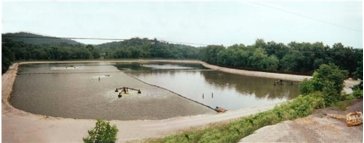
In order to increase the quality of drinking water in the Norwood water district, the commission will stop using chlorine to disinfect water. On March 3, chloramines will be introduced into the system, which will reduce the amount of trihalomethanes, a carcinogenic by-product that occurs when chlorine is mixed with the organic matter in water…

The public is invited to an information session on Feb. 23, at 7 p.m., at the Norwood Community Center.

More San Miguel River watershed coverage here and here.

Telluride Town Council approves statement of opposition to San Miguel Valley Corp’s water court application for raw water facilities

A picture named telluridevalleyfloororg.jpg

From the Telluride Watch:

The filing concerns conditional water rights SMVC alleges it retained when the town acquired the 572-acre parcel in June 2008 after a lengthy condemnation battle. “It is SMVC’s understanding, based upon relevant case law concerning the use and enjoyment of water rights, that it therefore has retained all land use interests necessary for the full use and enjoyment of SMVC’s retained water rights, including the SMVC Conditional Water Rights,” attorneys for the company notified the town last February in a letter obtained by The Watch through a public records request. In essence, the company is putting forth a legal argument that maintains it has the right to access the Valley Floor and to construct whatever facilities there it deems necessary in order to exercise its water rights – including buildings or reservoirs.

More coverage from The Telluride Daily Planet (Katie Klingsporn):

In January, SMVC filed an application with the District Water Court seeking to make changes regarding points of diversion, conditional water rights, ground water rights and others on the Valley Floor. And on Tuesday afternoon, the Telluride Town Council voted unanimously to file a statement of opposition in the case. The town has until the end of February to file its statement.

The statement of opposition is a legal maneuver that makes the town a party to the proceedings. In water court proceedings, it doesn’t necessarily indicate a dispute. However in this instance, the town is opposed to some of SMVC’s assertions in the application about its water rights on the Valley Floor, according to Town Attorney Kevin Geiger. SMVC may have had water rights on paper that were proposed for the land at one time, Geiger said. But “now that they don’t own that property anymore, it seems highly doubtful that they can move forward on that.”[…]

[Chris Cummins, an attorney who represents SMVC] said the purpose of the application is to make changes to SMVC’s conditional water rights in light of the town’s condemnation. He did not comment on the disagreements the town and SMVC have over those rights.

More San Miguel watershed coverage here and here.

Flaming Gorge pipeline: Fort Collins opposes route through the city’s new Soapstone Prairie Natural Area and Meadow Springs Ranch

A picture named flaminggorgepipelinemillion.jpg

From the Fort Collins Coloradoan (Bobby Magill):

In a July 2009 letter made public Tuesday by the U.S. Army Corps of Engineers, Fort Collins City Manager Darin Atteberry wrote that, in its environmental review of Million’s project, the Army Corps should seriously consider the harm the pipeline would do to Soapstone Prairie, which was opened as a city natural area just last year. “At Meadow Springs Ranch, the proposed (pipeline) routing could seriously impact water infrastructure critical to ranch cattle operations and would traverse acreage included in a formal watershed protection program designed to protect the local aquifer as a drinking water source,” Atteberry wrote.

He said the city believes the pipeline would be “highly detrimental” to natural resource values at Soapstone Prairie and threaten endangered species and archaeological sites. The city, he said, recommends the pipeline be routed away from Soapstone Prairie. “In short, it makes little sense to bisect the heart of a previously undisturbed area with a major pipeline when viable alternatives exist,” Atteberry wrote.

More coverage from the Fort Collins Coloradoan (Bobby Magill):

In letters written to Million in January, the Fort Collins-Loveland Water District and the East Larimer County Water District both said they each want 5,000 acre-feet of water from the pipeline annually…

After the city raised concerns about the pipeline’s impact on Soapstone Prairie, Million said he offered to move the pipeline around the natural area. “He indicated he would try to do that,” said John Stokes, Fort Collins Natural Resources director. “If he can do that, that would be great, if in fact they ever build the project.”

More Flaming Gorge pipeline coverage here and here.

HB 10-1188 passes the State House of Representatives 40-25 and moves on the State Senate

A picture named raftingarkriver.jpg

Bump and update: From The Durango Herald (Joe Hanel):

In a 40-25 vote, the House approved a bill that allows licensed river outfitters to briefly touch the riverbanks and portage around obstacles when streams flow through private land. Republicans Ellen Roberts of Durango and Scott Tipton of Cortez voted no because of concerns the bill could violate private property rights…

Two Durango-based rafting companies applauded the decision Tuesday. “I have had problems with landowners and various things they do like stringing fences across the river,” said Stephen Saltsman, who with Robin Fritch owns Flexible Flyers Rafting Co. Saltsman, who is also a landowner along the Animas River, said he understands the property-rights arguments, but he doesn’t have a problem if someone needs to portage around an obstacle in the river…

Rep. Jerry Sonnenberg, R-Sterling, spoke for many bill opponents. “We can’t have it both ways. Either we understand the value of property rights, or we don’t,” Sonnenberg said.

Agricultural groups oppose HB 1188, and some predicted grave harm to Colorado ranchers. But all other Western states have greater rights for public use of rivers than Curry’s bill would establish, and agriculture is alive and well in those states, Curry said. “In fact, in Montana you can get out of the boat and wade-fish on private land,” Curry said.

From the Aspen Daily News (Brent Gardner-Smith):

“Today’s vote shows that 1188 is a bipartisan solution,” said Ben Davis, spokesman for the Colorado River Outfitters Association, who noted that the House Minority Leader, Republican Mike May, voted for the bill. “Everyone wants to see Colorado’s rivers stay open for business.”

But certainly not everyone thinks HB 10-1188 is a good idea. The bill has attracted the attention and opposition of private-property advocates, including the Colorado Farm Bureau and the Colorado Cattleman’s Association because it gives commercial rafting companies the right to portage across private land to avoid hazards in the river, such as a low bridge or a tree across the river. “It’s not about floating the river, it is about trespassing outside of the river,” Rep. Jerry Sonnenberg, a Republican and a rancher, said on the House floor while urging a “no” vote on the bill.

The bill also gives commercial rafting companies the right to continue to run stretches of river that have been run the last two years on a commercial basis, and it prevents private landowners from blocking their passage down the river, as a landowner along the Taylor River near Gunnison has threatened to do this summer to two rafting companies. The bill requires that commercial rafting companies clearly number their boats so that property owners can identify individual boats if they feel there has been a problem. And it limits liability to landowners from boaters portaging over their land.

The bill is silent on the rights, or lack thereof, of private boaters passing private land…

But Rep. Christine Scanlan, a Democrat representing Eagle, Lake and Summit counties, said on the House floor Tuesday that “you do actually have a right to float in Colorado,” citing language in the state Constitution that “the water of every natural stream, not heretofore appropriated, within the state of Colorado, is hereby declared to be the property of the public …”

But Rep. Gardner said it was important to read the entire constitutional clause that Rep. Scanlan referred to, which is in a section on mining and irrigation rights. He said the Constitution deals with water rights and did not provide a right to float…

[State Representative Kathleen Curry] remarked on the House floor that she has heard from a lot of landowners “who’ve had bad experiences with commercial outfitters” and that she hoped “we can all be honorable and respectful of others.” She also said that there are broader rights to float, and wade, in other Western states such as Montana, Wyoming and Utah and that the agricultural industry in those states has not suffered because it gives boaters those rights. And Curry pointed out that the Supreme Court in People v. Emmert stated that “if the increasing demand for recreational space on the waters of this state is to be accommodated, the legislative process is the proper method to achieve this end.”

More coverage from The Crested Butte News (Seth Manning):

The bill, H.B.10-1188, passed through the subcommittee after three readings on a 7-3 vote and made it out of the House with 40 votes in favor and 25 votes against. Now it is up to the Senate, which hasn’t yet assigned the bill to a subcommittee, to turn Gunnison Rep. Kathleen Curry’s so called “Commercial Rafting Viability Act” into law…

The only stretches of river locally that have been used by outfitters historically and would be affected by the bill would be the Lake Fork from Lake City to Curecanti, the Taylor River from Lotus Creek to Almont and the Gunnison River from Gunnison to Blue Mesa Reservoir.

From The Pueblo Chieftain (Patrick Malone):

Sponsored by state Rep. Kathleen Curry, unaffiliated-Gunnison, HB1188 sparked debate over commercial rafters’ rights to travel public waterways and the rights of property owners. In the end, rafters won out, as the bill passed 40-25…

Opponents of the bill said it strips property owners to their right of exclusion. State Rep. Jerry Sonnenberg, R-Sterling, said allowing rafters portage is akin to setting aside circumstances that allow trespassing through one’s house, yard or car. “Once you allow government to start saying who can and cannot come on your property, that’s a very dangerous door,” Sonnenberg said…

The bill makes no provision for private rafters or others to float down the state’s rivers, and they are still subject to prosecution for trespassing.

More 2010 Colorado legislation coverage here.

Animas-La Plata proponent Fred Kroeger steps down from Durango Water Commission

A picture named durango.jpg

Bump and update: From The Durango Herald editorial board:

If they are smart, members of the Durango Water Commission will take Fred Kroeger out to lunch once in a while. That is because his roots in La Plata County are deep, and what he did not experience in local leadership roles after returning from service in World War II, he learned from the older generation. Hearing his perspectives on Durango’s growth and the role water played will always be valuable to younger decision-makers.

From The Durango Herald (Garrett Andrews):

Kroeger, 92 this month, will step down from the city’s Water Commission after 64 years advocating for agricultural and Native American water rights. When asked why he decided to step away from public service, Kroeger was succinct: “I’m 92. I’ve been on some of these boards for 40, 50 years, and I thought maybe it’s time to take a break and let someone else do the right things.”

From The Durango Herald via an old Coyote Gulch post:

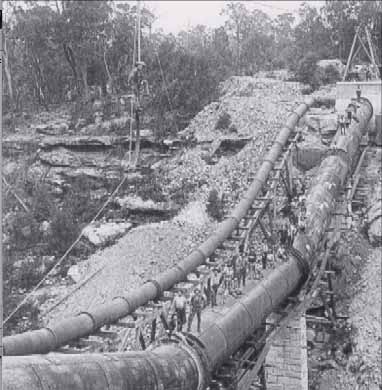
Fred Kroeger, a longtime advocate for the project, said he attended his first meeting to discuss future water needs in 1947, and in numerous subsequent meetings, the idea for the A-LP was born. “I think it’s wonderful,” Kroeger said. “It is tremendous for our community.” A groundbreaking was held in 1991, but because of delays due to environmental impacts, work did not start until 2002. In addition to the dam, other major components of the project include a 2[product]-mile, 76-inch pipeline between the pumping station next to the Animas River and the reservoir, and the Navajo Nation municipal pipeline from Farmington to Shiprock, a distance of about 22 miles.

More Animas River watershed coverage here and here.

Snowpack news

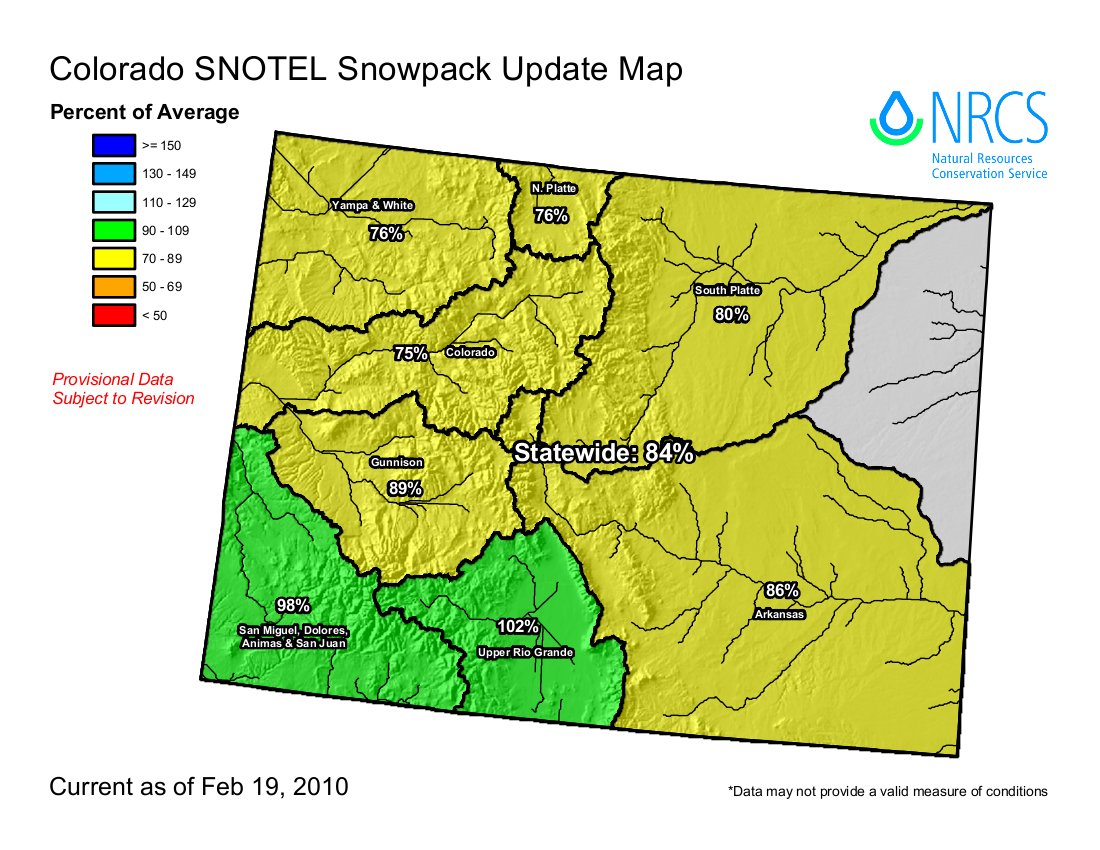
A picture named coloradosnowpack02192010

From the Grand Junction Daily Sentinel (Dennis Webb):

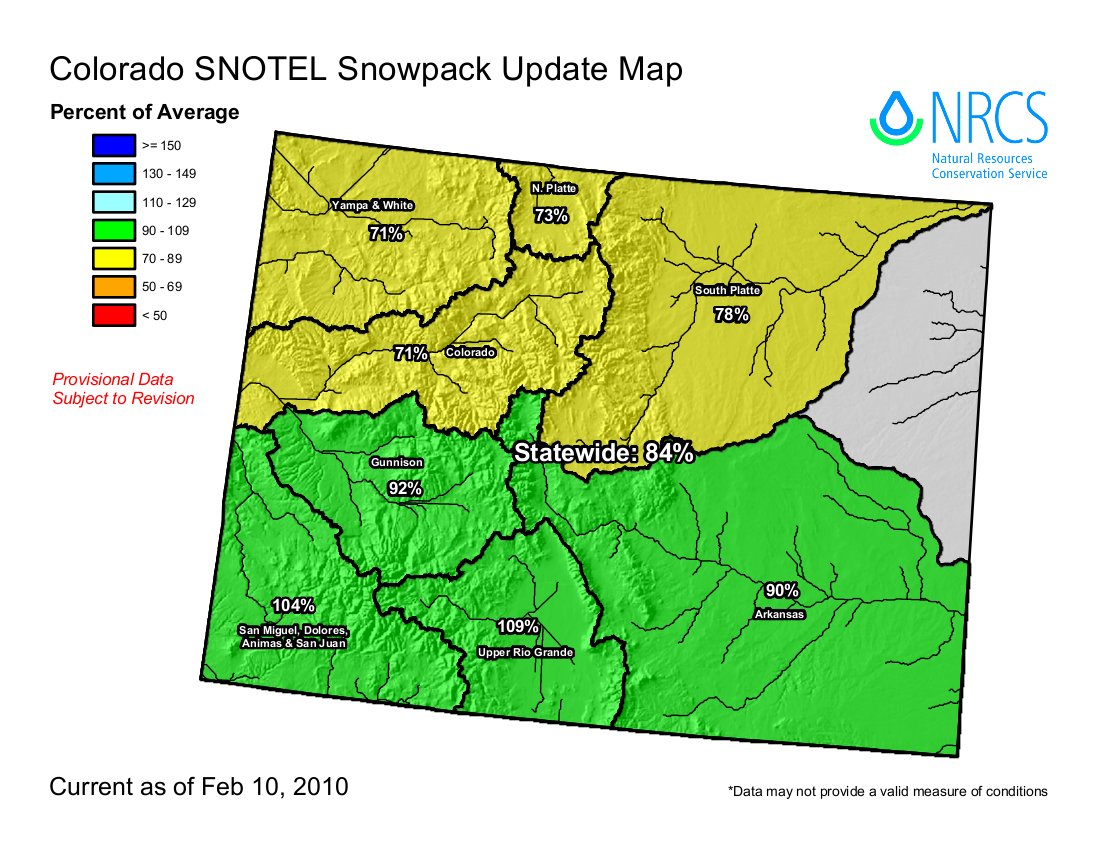
With snowpack levels below average in the Upper Colorado River Basin, the forecast is for runoff from melting snow to range from 70 to 90 percent of average within much of the river and its tributaries. The volume at Cameo is projected to be 75 percent of average, and the volume forecast for the Gunnison River in Grand Junction is 83 percent of average. Flows into Lake Powell are expected to be 70 to 75 percent of normal…

Snow levels on Grand Mesa, which supplies municipal water to Grand Junction and Palisade, also are in decent shape, [Bryon Lawrence, a hydrologist with the National Weather Service in Grand Junction] said. The snowpack level at Mesa Lakes on Thursday was 88 percent of normal, the Conservation Service reports.

From the Telluride Daily Planet (Matthew Beaudin):

According to a report released by the National Weather Service’s Grand Junction hydrologist, the San Juan Mountains are holding slightly more snow than normal but the water tables north of here aren’t as set, with roughly 25 percent less snowpack than normal. “It’s been a moderately strong El Niño, which has peaked and is starting to weaken,” said Bryon Lawrence, the service hydrologist for the NWS in Grand Junction. “Most of western Colorado, despite the drier conditions, is still in pretty good shape.”[…]

According to the report, runoff volumes in early spring will range from 70-90 percent of normal in the Upper Colorado River and its tributaries across the central and northern mountains, such as the Yampa River near Steamboat Springs. South of there, though, flows are expected to be at or above average. The San Juan should run at about 102 percent of normal and the Animas at 93 percent. The San Miguel and Dolores rivers are anticipated to run at 95 percent of normal…

Southeastern Utah has seen a monster winter, and its snowpack is at 150 percent of normal in the Abajo mountains. Spring inflows into Lake Powell are expected to come in at about 70 percent of normal. Lawrence said that in spite of the below-average snowfall across the state, reservoirs are full because Colorado enjoyed a few years of above-average precipitation.

From the Indy Blog (Pam Zubeck):

Although some portions of the Rockies are less snowy than normal, Pikes Peak received 187 percent of its normal precipitation from Feb. 1 to 15. That, coupled with higher-than-usual storage, makes for a sunny outlook for water supply, Colorado Springs Utilities water expert Kevin Lusk said Wednesday…

He said the Springs’ storage of water stands at 76 percent capacity, compared to the 34-year average of 63 percent this time of year. Rampart Reservoir is at 90 percent capacity and Pikes Peak storage at 78 percent of capacity.

Arkansas Valley Conduit update: $3 million in President Obama’s budget will enable the final design by 2013

A picture named pipeline.jpg

From The Pueblo Chieftain (Chris Woodka):

“It will allow us to finish the preliminary work to get to the final design by January 2013. Then we can move into land acquisition and construction,” Jim Broderick, executive director of the Southeastern Colorado Water Conservancy District, said Thursday…

The conduit received $5 million in funding this year, and funding for $3 million is included in President Barack Obama’s budget for next year. The Southeastern district is trying to convince members of Congress to add an additional $5 million in the 2010-11 fiscal year. The district is working with the Bureau of Reclamation to “fast-track” the project, allowing the environmental review and conceptual design to move ahead on parallel tracks. Meanwhile, the district is wrapping up its $1 million project to develop baseline engineering data for the conduit, said consultant Kevin Meador.

More Arkansas Valley Conduit coverage here and here.

HB 10-1197: Reduce Conservation Easement Cap Amount

A picture named saguachecreek.jpg

From The Pueblo Chieftain (Chris Woodka):

“This will give us the ability to mold easements in the future,” [Jay Winner, the general manager of the Lower Arkansas Valley Water Conservancy District] said Wednesday. “It should also give the landowners surety in an easement that was not there in the past.” The Lower Ark district has a big stake in making easements work as part of its mission to protect water in the Lower Ark Valley. The district has received about 50 conservation easements since it was formed by voters in five counties in 2002. Winner has been working with a state oversight commission through the Division of Real Estate to clean up a system that has been plagued by improper appraisals and tax credits which cannot be marketed because of the cloud of suspicion surrounding conservation easements statewide.

Last week, the state House passed the legislation, HB1197. It has moved to the state Senate. The legislation would cap tax credits at $135,000, rather than the $375,000 currently allowed, at 50 percent of the fair market value. It also would limit the impact to the state budget to $26 million. In 2008, $63 million in tax credits were claimed. To sort out conservation easement claims, the Division of Real Estate would be given the power to promulgate rules and issue certificates for easement claims. The Department of Revenue would make quarterly reports to the Legislature on the amount of net gain to state revenue, under the assumption that claims would have remained at 2008 levels. Tax credits would be based on a first-come, first-served basis of approved certificates.

More 2010 Colorado legislation coverage here. More conservation easement coverage here and here.

Aspinall Unit update

A picture named aspinallunit.jpg

From email from Reclamation (Dan Crabtree):

Due to dryer than average conditions in the Gunnison Basin, flows from the Aspinall Unit will be reduced by 200 cfs, from 800 cfs to 600 cfs. This change will be achieved through two 100 cfs cuts occurring on Sunday, February 21.

More Aspinall Unit coverage here.

Energy policy — coalbed methane: SB 10-165, Adjust Oil And Gas Well Regulation

A picture named nontributarycoalbedmethane.jpg

From the Cortez Journal (Joe Hanel):

[Senate Bill 10-165] (pdf) passed the Senate Agriculture Committee 6-0 on Wednesday. Sen. Bruce Whitehead, D-Hesperus, voted yes… SB165 extends the [March 31 deadline to file a substitute water supply plan] until August, because the state engineer’s office was facing a flood of paperwork.

Meanwhile the Colorado Water Conservation Board’s construction fund avoided being dried up completely as the legislature moves to pass a budget bill. Here’s a report from Joe Hanel writing for The Durango Herald. From the article:

A year ago, the Colorado Water Conservation Board had two of the richest bank accounts in the state government. But after the recession arrived, the Legislature took $107 million from the accounts. Today the balance stands at about $19 million, and the Legislature’s budget writers had plans to take that, too…

But Gov. Bill Ritter’s Department of Natural Resources rebelled, and a bipartisan group of representatives joined to defeat the effort on a 39-22 vote…

The spat was a sideshow to the major work the House did Wednesday – cutting hundreds of millions out of this year’s budget. Wednesday’s bills bring the total cuts to about $2 billion. And there’s more to come. In March, the Legislature will take up the 2010-11 budget, which needs an added $1 billion in cuts. For the most part, Wednesday’s work formalized cuts that Gov. Bill Ritter proposed last year. The savings come from eight unpaid days off for state workers and cuts in payments to Medicaid doctors and caretakers of disabled people. The plan also takes $64 million in gas and oil taxes that had been earmarked for local governments.

More 2010 Colorado legislation coverage here.

Energy policy — nuclear: President Obama promises $8.3 billion for new nuclear facilities

A picture named nukeplantcattenomfrance.jpg

From USA Today (Julie Schmit):

The guarantees will help fund two reactors in eastern Georgia which, if licensed and built, could begin running in 2016 and 2017, supplying electricity to 1.4 million people. More money is coming. The Department of Energy has $18 billion to dole out, and Obama, in his 2011 budget, asked that the number be tripled to $54.5 billion, enough to help fund six to 10 reactors. Obama says more nuclear power, which doesn’t emit greenhouse gases and produces 20% of the nation’s electricity, is needed for the U.S. to meet greenhouse gas emission goals and keep pace with others, such as China, Japan and France, which are investing heavily in nuclear.

New construction in the U.S. nuclear industry stopped after the Three Mile Island accident in 1979. But Energy Secretary Steven Chu said that the U.S. pioneered nuclear energy and has sat on the sidelines for too long. “It’s time to take the lead once again,” he said…

Opponents also say that federal subsidies should be reserved for new industries. Nuclear “should be able to stand on its own feet,” says Arjun Makhijani, president of the Institute for Energy and Environmental Research. He fears a repeat of the 1970s and early 1980s, when the industry overstated power demands and underestimated costs, resulting in dozens of canceled plants. Of 26 new nuclear reactor license applications submitted to the Nuclear Regulatory Commission since 2007, 19 have been delayed or canceled, says Mark Cooper, senior fellow at the Institute for Energy and the Environment at Vermont Law School. “The technologies aren’t ready for prime time, and the economics aren’t there,” he says.

More nuclear coverage here and here.

Flaming Gorge pipeline: U.S. Army Corps of Engineers releases report on the public comment period

A picture named flaminggorgepipelinemillion.jpg

Bump and update: More coverage from The Denver Post (Bruce Finley):

Although he declined to provide details, Million said Tuesday that he has lined up financing for construction, which he said could start in 2013. He estimated total costs at $2.2 billion to $2.8 billion. Million has applied for a federal permit to move up to 225,000 acre-feet per year more than 400 miles from the Flaming Gorge Reservoir and the Green River in Wyoming…

Water providers in Douglas County, Brighton, Fort Collins, Loveland, Cheyenne and agricultural areas along the way have indicated interest in buying water from the Million Conservation Resource Group, according to letters filed with federal authorities.
Those potential customers’ projected water demands — and conservation practices — will be reviewed and verified to determine “how much is truly needed,” said Rena Brand, a regulatory specialist for the Army Corps of Engineers.

In its summary of the comments received from people in Wyoming, Colorado and downriver states such as Utah and Arizona that depend on Colorado River Basin water, the Corps of Engineers concluded there are major concerns about the effects of diverting water from prime Wyoming fishing and recreation areas.
“They’re concerned that the project would result in a lower elevation (of water) in Flaming Gorge Reservoir, which would impact fisheries,” Brand said. “I received very few favorable comments. Most people just had a lot of questions.”

All this “is as it should be,” Million said. “We’ve had the same concerns on our side — which we’ve looked at for the last four years,” he said. “The public should have the right and obligation to weigh in on the project.”

Update: More coverage from The Pueblo Chieftain (Chris Woodka):

The Corps released the comments Tuesday on its Web site as it continues the five-year process of developing an environmental impact statement for the controversial proposal…

More than 1,500 comments were received in writing; another 500 gathered at Corp-hosted public meetings last year. About 63 percent of the comments are from Wyoming, where cities, counties, conservancy districts, businesses, recreation groups and environmental or wildlife advocates oppose the project. Another 27 percent of the comments are from Colorado, where many of the same groups also oppose or raise questions about the project. Even Front Range cities like Fort Collins, where Million lives, object to the proposed pipeline route. Five percent of the comments that object or raise concerns are from Utah, where the Green River flows after leaving Flaming Gorge…

The most frequent issue cited in the comments (18 percent) is the actual availability of water for the project. The Green River and Flaming Gorge are part of the Colorado River watershed, and diversions proposed by Million could impact the seven-state Colorado River Compact, many of the comments state. Wyoming interests want to preserve development opportunities within their home state. “Any one change could upset the balance that has successfully maintained since the development of the river,” said Kenneth Fackrell, manager of the Bridger Valley Water Conservancy District.

Wyoming counties are firmly united in opposition to Million’s project, with several filing lengthy objections to it. “A trans-basin diversion of this magnitude will mean a perpetual shortage of water for basin users,” said Joe Evans, executive director of the Wyoming County Commissioners Association, who cites a 30-year record of opposition by Green River users to the leasing water to the lower basin state of California.

Socioeconomic factors were cited in about 13 percent of the comments, according to the Corps tabulation. Recreation, particularly in western Wyoming on Flaming Gorge Reservoir, was cited in 7 percent of the comments, while water rights and wildlife issues were each brought up in 5 percent of the comments. The withdrawal of water from Flaming Gorge Reservoir could hurt power production at the dam, said Pacificorp Energy Managing Director Bob Aramel…

The Corps now is verifying the potential water customers and needs submitted by Million in response to some of the comments that there were no end users identified in the proposal, said Rena Brand, regulatory specialist.

From the Associated Press via KJCT8.com:

The Corps of Engineers on Tuesday said it received more than 1,500 written public comments and more than 570 comments at public meetings about the pipeline…

The Corps took public comment on what issues it should consider in a forthcoming environmental study. Some local governments in southwestern Wyoming are opposing the project, saying it threatens fishing and recreation. Some Colorado municipalities and irrigation districts say they could use the water.

More Flaming Gorge pipeline coverage here and here.

HB 10-1188 passes the State House of Representatives 40-25 and moves on the State Senate

A picture named raftingarkriver.jpg

Bump and update: From The Durango Herald (Joe Hanel):

In a 40-25 vote, the House approved a bill that allows licensed river outfitters to briefly touch the riverbanks and portage around obstacles when streams flow through private land. Republicans Ellen Roberts of Durango and Scott Tipton of Cortez voted no because of concerns the bill could violate private property rights…

Two Durango-based rafting companies applauded the decision Tuesday. “I have had problems with landowners and various things they do like stringing fences across the river,” said Stephen Saltsman, who with Robin Fritch owns Flexible Flyers Rafting Co. Saltsman, who is also a landowner along the Animas River, said he understands the property-rights arguments, but he doesn’t have a problem if someone needs to portage around an obstacle in the river…

Rep. Jerry Sonnenberg, R-Sterling, spoke for many bill opponents. “We can’t have it both ways. Either we understand the value of property rights, or we don’t,” Sonnenberg said.

Agricultural groups oppose HB 1188, and some predicted grave harm to Colorado ranchers. But all other Western states have greater rights for public use of rivers than Curry’s bill would establish, and agriculture is alive and well in those states, Curry said. “In fact, in Montana you can get out of the boat and wade-fish on private land,” Curry said.

From The Pueblo Chieftain (Patrick Malone):

Sponsored by state Rep. Kathleen Curry, unaffiliated-Gunnison, HB1188 sparked debate over commercial rafters’ rights to travel public waterways and the rights of property owners. In the end, rafters won out, as the bill passed 40-25…

Opponents of the bill said it strips property owners to their right of exclusion. State Rep. Jerry Sonnenberg, R-Sterling, said allowing rafters portage is akin to setting aside circumstances that allow trespassing through one’s house, yard or car. “Once you allow government to start saying who can and cannot come on your property, that’s a very dangerous door,” Sonnenberg said…

The bill makes no provision for private rafters or others to float down the state’s rivers, and they are still subject to prosecution for trespassing.

More 2010 Colorado legislation coverage here.
Palisade: Replacement of water lines now the town’s maintenance priority

A picture named fountainpavementdrawing.jpg

From the Grand Junction Daily Sentinel (Mike Wiggins):

Town Public Works Director Frank Watt estimates roughly half of the 20 miles worth of old, small water lines within the town’s service area need to be replaced within the next 10 years. “We know that we have got substandard water lines or aging water lines in places,” Town Administrator Tim Sarmo said. Watt said many of the lines in town are 50 to 60 years old, too small to accommodate modern fire hydrants and made out of cast iron, which can rust and deteriorate. He said the new lines will be made of plastic, which is more durable, and the 2-inch lines will be replaced with 6-inch lines. Watt said the town will add more valves to the lines so that if there is a break, he can shut off water in smaller areas so that fewer residents would be affected. The town also will rely more heavily on its own funds for line replacements than in the past, and it will do the work in-house rather than contract it out…

For the first time, Watt set aside money in this year’s budget specifically for line replacements. He plans to spend the $150,000 to replace a line as part of the reconstruction of Kluge Avenue as well as a yet-to-be-determined line.

More infrastructure coverage here.

Arkansas Valley Super Ditch Company files exchange case to enable leasing of water to municipalities

A picture named arkbasinditchsystem.jpg

From The Pueblo Chieftain (Chris Woodka):

The application would cover exchanges of water from points along a 75-mile reach of the Arkansas River from Pueblo Dam to the Fort Lyon Canal headgate, and would allow shareholders from seven canal companies to move water into Lake Pueblo, where it could be moved into municipal water systems. “We figured it was time to file,” said John Schweizer, Super Ditch president. “We can’t do much until we get this done. There are still a lot of other things to get done as well.”

The exchanges are needed in order to store water so the users can move it into their systems, because there is no other way to move the water upstream from its historic use. The application names Colorado Springs, Aurora and the Pikes Peak Regional Water Authority as potential customers. “Adjudication of changes in the type and place of use of the water rights to be used for substitution and exchange is not a purpose of and not requested in this application,” said Peter Nichols, Super Ditch attorney. “The applicants anticipate that they will file one or more applications in the future to change the types and place of use and to quantify the consumptive use.” Right now, the only agreement the Super Ditch board has reached to sell water is with the Pikes Peak group — Fountain, Cherokee, Donala, Monument, Palmer Lake, Triview, Woodmen Hills and Woodmoor water providers in El Paso County. Deliveries of up to 2,000 acre-feet at $500 per acre-foot could begin as soon as 2011 under the agreement…

The application claims 58,000 acre-feet of exchanges — about twice Pueblo’s annual potable water use — but acknowledges there is probably not the capacity in the Arkansas River to take advantage of them all. The exchanges would make use of structures — including at least one reservoir that has not been built — which are not owned by the individual irrigators who would be making the leases. “Applicants will operate the exchanges when there is exchange potential available,” the application stated. “Applicants may operate exchanges continuously for a few hours or days whenever exchange potential is available, which will generally be during spring runoff and following major precipitation events.” There are also release points named in the application such as Lake Meredith or Stonewall Springs on the Excelsior Ditch where water could be released to satisfy the water rights of downstream users…

The 58,000 acre-feet equals the maximum historical diversion of every canal, including the Fort Lyon storage canal, and the “reasonably anticipated demands” of those buying the water, according to the filing. “The claimed exchange rates will allow all shareholders of all Lower (Arkansas) Valley ditches an equal opportunity to voluntarily lease their water,” the application stated.

More Super Ditch coverage here and here.

How can the Arkansas Valley keep agriculture along the Bessemer Ditch now the the Pueblo Board of Water Works is the largest water rights holder on the ditch?

A picture named arkbasinditchsystem.jpg

From The Pueblo Chieftain (Chris Woodka):

“There needs to be strong incentives to preserve agriculture,” [Mike Bartolo, a small farmer on the Bessemer Ditch] said. That could mean new crops, new ways of sharing water or new uses for crops, such as biofuels, he said…

Using the models, which broadly project effects under uncertain scenarios, Bartolo wants to find out if the crop mix on the Bessemer Ditch could be changed in the future to benefit Pueblo. “We’re looking at what happens when you change the crop mix. For instance, growing canola to make biodiesel for the Pueblo transportation system,” Bartolo said. “We’ve got to have alternatives to prevent buy-and-dry, and look at new partnerships. The city could look at the ag industry as getting a new Vestas plant. It could have that kind of economic impact.”

More Arkansas Basin coverage here.

HB 10-1188 — Clarify River Outfitter Navigation Right moves on for final reading

A picture named raftingarkriver.jpg

From the Aspen Daily News (Brent Gardner-Smith):

The Colorado House approved House Bill 10-1188 on a voice vote Friday to clarify that commercial rafting companies have the right to float down a historically run stretch of river, even if they have incidental contact with rocks and the river banks, and that they have the right to portage across private property to avoid hazardous obstacles in the river. Third and final reading of the bill is expected to take place on Monday…

The House chamber was lively during the debate Friday on HB 10-1188, and several members made jokes, including a quip about people who portage frequently needing a “porta-potty” and a proposed amendment with a reference to the controversial abortion decision in the case of Roe v. Wade. The joke was relevant to the debate, however, as it begs the question of whether wading fishermen would have the same rights to a river as rowing boaters. The amendment, which was withdrawn when the laughter died down, said “if you have the opportunity to row, you have the opportunity to wade.”

More 2010 Colorado legislation coverage here.
SB 10-115: Facilities May Donate Unused Medications

A picture named genderbendingpollution.jpg

From The Denver Post (Monte Whaley):

Senate Bill 115, which would allow facilities such as nursing homes and hospitals to donate unused — but still good — medications to nonprofit organizations such as Project CURE or Doctors Without Borders or to redispense the drugs to needy patients in Colorado.

[SB 10-115] (pdf), co-sponsored by Rep. Dianne Primavera, D-Broomfield, and Sen. Lois Tochtrop, D-Thornton, passed unanimously in the Senate and is awaiting a hearing in the House. If approved, the bill would allow a licensed health care facility to redispense or donate unused medications without getting permission from a patient’s family member. The law would allow the unused medications to be given to another patient in the facility or to be donated to a nonprofit serving disaster victims. All donations to a nonprofit, say the lawmakers, are to be reviewed by a licensed pharmacist. However, some drugs could not be redistributed, such as narcotics, medications removed from their original packaging and dispensed in child-resistant “amber” bottles, and medications that need refrigeration.

More 2010 Colorado legislation coverage here.

La Junta area water providers plan further discussions around forming a regional water authority

A picture named lajuntaskatepark.jpg

From the La Junta Tribune Democrat (Dave Vickers):

Area water providers will meet Tuesday evening at Otero Junior College to take the discussion of forming a regional water authority to the next level. The meeting will run from 6 to 8 p.m. and be hosted by Lower Arkansas Valley Water Conservancy District. Bill Hancock, conservation program manager for LAVWCD, conducted a similar meeting in Lamar recently with water providers in that area. But there are 27 separate water providers in Otero County alone, necessitating a meeting of representatives from those companies on the west end of the Lower Arkansas Valley…

Significant changes have occurred in the Lower Arkansas Valley in the past year that will make a regional authority necessary if water systems are going to be improved. Not only do water users in the valley want improvements in the supply of water, they also know that quality of drinking water must be improved to meet safe standards. These changes have included federal funding for the Arkansas Valley Conduit project, a pipeline to improve water quantity and quality in the Lower Arkansas Valley, and the emergence of the Super Ditch consortium, which has been developed to help farmers utilize their water rights to a higher degree without selling outright to thirsty cities along the Front Range.

But the third significant development has been the focus on CO-RADS, or radionuclides in the drinking water supplies. Most of the drinking water in Southeastern Colorado contains radionuclides, a byproduct of naturally occurring uranium deposits in the valley. Health officials now believe long-term exposure to uranium in drinking water might cause toxic effects to the kidney, and can lead to cancer. Tuesday night’s meeting will have experts from the state health department, the Colorado Department of Local Affairs, Southeastern Colorado Water Conservancy District, LAVWCD and Otero County who can address the ongoing efforts to deal with CO-RADS and demands of the EPA.

More Arkansas Basin coverage here.

Englewood, Littleton, Sheridan and Arapahoe County, Tri-Cities meeting recap

A picture named confluenceparkdenver.jpg

From the Englewood Herald (Tom Munds):

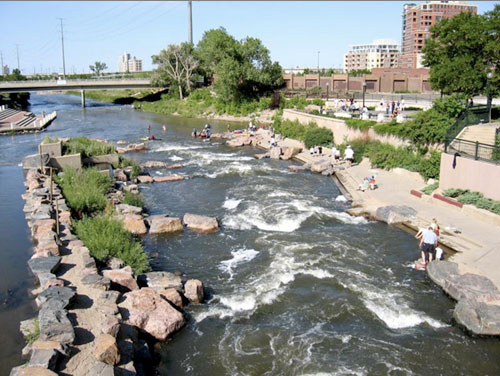
Jeff Shoemaker, chairman of the foundation, talked about the work of the organization to representatives of Englewood, Littleton, Sheridan and Arapahoe County at the Feb. 5 Tri-Cities meeting. Since the foundation was formed in 1974, it has overseen an estimated $100 million in environmental, aquatic, recreational and open-space improvements along the South Platte rivers and its tributaries as they flow through portions of the Denver metro area. “We seek to improve and enhance the urban river environment all along the waterways,” Shoemaker said. “We estimate the $100 million in environmental improvements multiplies to almost $10 billion in economic development.”

He later explained that, if the banks of the South Platte and Cherry Creek had remained as they were 35 years ago, it is very unlikely those areas would have been chosen for the development stretching on the banks of the waterways from Invesco Field to Coors Field. He said the same it true farther south with the development of South Platte Park, the RiverPoint at Sheridan development and the new housing development on the site of the former Cinderella Twin Drive In.

More South Platte Basin coverage here.

Saint Vrain River: Rubicon gate installed on Oligarchy Ditch as part of the Saint Vrain Corridor Committee winter minimum streamflow program

A picture named rubiconflumegate.jpg

From Colorado Trout Unlimited:

We are pleased to announce that one of the rubicon gates is fully operational on the Oligarchy Ditch and the remaining two are partially installed on the Palmerton and Highland Ditches. The ditches should be fully operational by late Spring if all goes well. Maintaining consistent flows in the St. Vrain river is the first step in strengthening the health of the river and the fish and animal life that depend upon the St. Vrain.

More instream flow coverage here.

Southern Rocky Mountain Agricultural Conference and Trade Fair recap

A picture named farviewreservoir.jpg

From The Pueblo Chieftain (Matt Hildner):

He noted that the efforts of the ancients in both Peru and the Four Corners region were plagued by dry times and wet times, according to ice-core data. “Life in the Americas, including the Americas we live in, is flood and drought,” he said.

Hobbs’ slide show featured pictures of canals at Machu Picchu and the work of an archaeological crew that excavated the water collection systems that were found at Mesa Verde National Park. Moving to the state’s modern history, Hobbs noted that Hispanic settlers in San Luis, borrowing on centuries-old traditions from southern Spain, carved out the first irrigation ditch recognized by the state’s courts with an 1852 priority date…

“The priority system is a system of scarcity,” he said. “There’s no value to a senior right when you don’t enforce priority.”

More coverage from the Valley Courier (Julia Wilson):

“I think it went very, very well,” Lyons said. “I was busy making coffee and hauling garbage, but it looked like everybody enjoyed it, vendors and farmers.”[…]

There were around 70 vendors and between 300 and 350 people every day. “We did our head count based on how many lunches we served,” Lyons said. “We wanted it to be relaxed, so farmers could have plenty of time to visit and go enjoy the speakers. The educational part is very important.”

Northern plans to kick off their Regional Pool Program to expand leasing for Colorado Big-Thompson Project water

A picture named coloradobigthompsonmap.jpg

From The Fence Post:

Allocation of RPP water may come as soon as Friday, Feb. 12, when the Northern Water Board of Directors will decide whether to implement the program this year and, if so, how much water to place up for bid. Uncertainty about 2010 runoff potential might prompt the Board to postpone a decision until its March 12 meeting. RPP water is C-BT water that wasn’t needed by C-BT water users the year before. The Board allocates a quota of C-BT water each year for allottees, or unit holders. When allottees don’t use all their quota water, they can preserve, or carry over, some of it. If more remains, it automatically goes into the RPP and in certain circumstances can be leased the following year…

People who want to stay informed about the RPP can sign up for updates by e-mailing RegionalPool@NCWCD.org, check http://www.NorthernWater.org for the latest RPP news or call the Northern Water Distribution Systems Department at (970) 292-2500.

More Colorado-Big Thompson coverage here.

Groundwater contamination primer

A picture named groundwater.jpg

Here’s a primer of sorts about the spread of groundwater pollution, from the Environmental News Network via Loretta Lohman at Nonpoint Source Colorado.

More groundwater coverage here and here.

HB 10-1006 killed in committee on Friday, HB 10-1327 marches on

A picture named coloradocapitolfront.jpg

From the Sterling Journal Advocate (Marianne Goodland):

The appropriations committee voted Friday morning to kill [HB 10-1006] (pdf), sponsored by Rep. Kathleen Curry, I-Gunnison. The bill would have moved funding from the Division of Wildlife, under the Department of Natural Resources, to fund four vacant water commissioner positions in the Division of Water Resources. HB 1006 came out of an interim committee last summer on water resources. It would have moved $409,000 from a severance tax fund in the Department of Natural Resources to fund 5.3 full-time equivalent employees in the Division of Water Resources. According to Curry, four of those positions would be field positions held by water commissioners who monitor water rights. The bill moved the Division of Wildlife into a different funding tier (Tier II), and moved the Division of Water Resources into Tier I, thereby freeing up the severance tax money. The House Agriculture, Livestock and Natural Resources committee, however, previously amended the bill to put the DOW back into Tier I…

[State Representative Kathleen Curry] argued that the bill would cash fund the water commissioners and that the interim water committee had found another way to do it.

[State Representative Jerry Sonnenberg] argued for funding the positions. “The state engineer is charged with administering state waters,” he said. “When it comes to setting priorities we’ve found money for this priority. It’s important to have people watching the head gates, to make sure Denver gets the water it needs and farmers on the East and West slope get the water they’re entitled to.”
Without the water commissioners who monitor the head gates, Sonnenberg said, people will change the head gates and there will be no one to watch it. “This is law enforcement as far as I’m concerned,” he said.

Meanwhile here’s the lowdown about HB 10-1327 from the same article:

Under [HB 10-1327] (pdf), which is sponsored by the Joint Budget Committee as part of its budget-balancing package, the CWCB would lose $19.6 million in its construction fund that gets money from federal mineral lease revenue. CWCB Director Jennifer Gimbel said this week anything that has already been approved and under contract would be okay. In 2009, the CWCB provided $1.494 million in loan funding for a pipeline project for the Fort Morgan Reservoir and Irrigation Company. The CWCB is scheduled in March and May to hear funding requests totaling $4 million for four projects, but that money is now gone, Gimbel said. The construction fund also covers other CWCB projects, such as maintaining a satellite monitoring system and funding a stream-gauging program to support more than 500 operated and maintained gauges through the state. According to a CWCB review of the projects, the gauges “are critical for administering thousands of water rights for municipal, industrial, agriculture, domestic, recreation and environmental uses,” as well as vital for state compact administration, dam safety, and flood monitoring and warning. Losing the funding for the gauges, about $250,000, would “cripple state and local efforts to utilize the state’s water resources,” and hamper collection of data used for assessment of climate change and to address future water shortage.

HB 1327 is scheduled to be heard Tuesday by the House Appropriations Committee.

I have to say that I have been enjoying Ms. Goodland’s legislative analyses since things got rolling on Capitol Hill.

More 2010 Colorado legislation coverage here.

Wet Mountain Valley: Round Mountain Water and Sanitation District board meeting recap

A picture named waterboosterstation.jpg

From the Wet Mountain Tribune (Nora Drenner):

Engineering firm Crabtree Group was invited to the table to discuss RMW’s projects over the last year. Those projects included the construction of the new Gallery Well south of town and the installation of a booster station in Silver Cliff to increase water pressure…In a separate matter, [RMW chairman Darrell Niles] asked why a drainage system had not been installed near the booster station.

More Custer County coverage here and here.

Battlement Mesa: Grand Valley Citizens Alliance endorses Hidden Gems proposal

A picture named hiddengemswildernessproposal.jpg

From The Aspen Times:

The alliance gets involved in issues that affect life in western Garfield County. It has a membership of 168 area residents, and is a chapter in the broader Western Colorado Congress. The Hidden Gems plan has evolved into a controversial battle between Wilderness advocates and forest user groups that want to preserve existing access to public lands. The proposal would place a special designation on about 400,000 acres in Pitkin, Eagle, Garfield, Summit and Gunnison counties. About 1,600 acres targeted by proponents are located in Garfield County.

More Hidden Gems coverage here.

Energy policy — nuclear: CWCB and BLM file statements of opposition to Energy Fuels’ water rights application for Piñon Ridge Mill

A picture named pinonridgesite.jpg

From The Telluride Watch (Karen James):

The Colorado Water Conservation Board and the U.S. Bureau of Land Management also filed individual statements of opposition against the applications. The CWCB is concerned that an instream flow water right it owns on the Dolores River could be adversely affected by water rights sought by Energy Fuels, and noted the company’s lack of augmentation plan in its statement of opposition. Additionally, the application presents insufficient information to fully evaluate the extent to which the CWCB instream flow rights may be injured, the statement notes. Linda Bassi, chief of the CWCB’s Stream and Lake Protection Section, said that the filing was not unusual for her agency. “We participate in Water Court cases to get protective terms and conditions,” she continued. “It’s not to stop the application but to ensure that it’s done in a way that will protect our water rights.”

Similarly, the U.S. government holds four water rights on public lands that are adjacent to the groundwater rights being sought by Energy Fuels that the BLM is concerned may be injured, “If the application is granted without terms and conditions related to monitoring and mitigating the impacts associated with the proposed wells,” the agency’s filing states. As a result, the BLM, “Seeks to incorporate similar water rights monitoring and mitigation measures as part of the water rights decree in this case,” as those Energy Fuels has already committed to as part of a limited-term land use authorization granted by Montrose County.

Energy Fuels Chief Executive Officer George Glasier called the statements of opposition filed by the existing water rights holders “fairly standard,” and not unexpected. “It’s a process you see all the time in Colorado,” he said…

Glasier said he anticipated a series of conferences over the coming months to see if the differences with the objecting parties can be worked through. “It will be a long process over the next year at least to sort out things with the water rights,” he said.

More nuclear coverage here and here.

CWCB delays until January 2011 the instream appropriation on San Miguel River to allow time to study more storage off the mainstem

A picture named sanmiguelriver1109

From The Telluride Watch (Karen James):

The decision represents and effort to find a middle ground between groups seeking an immediate appropriation of the water right and others who are opposed to it. “The board agreed to table it for a year, but expressed concern about progress being made” on plans for storage, said Linda Bassi, Chief of the CWCB’s Stream and Lake Protection Section. As a result, the CWCB will expect a progress report on the storage plan effort when it meets in Durango in May, she said. “They sent a strong message that they are very supportive of this instream flow, but they are willing to hold off to allow these different communities to determine their needs and come together, “ said April Montgomery, who represents the San Miguel, Dolores, Animas and San Juan Rivers on the CWCB…

The instream flow being considered for the lower San Miguel River would designate minimum flows in a 16.5-mile stretch of the river in Montrose County that reaches from Calamity Draw west of Naturita to the Dolores River confluence. It has been recommended by both the Colorado Division of Wildlife and the U.S. Bureau of Land Management, primarily to prevent three dwindling species of native fish: flannelmouth sucker, bluehead sucker and roundtail chub, from being listed for federal protection under the federal Endangered Species Act. “The board members did acknowledge the need to protect an instream flow to prevent a federal listing of any of the sensitive species,” said Bassi…

The CWCB vote honored recommendations made to it by the San Miguel and Montrose County Commissioners and the Southwest Water Conservation District Board. “The two counties and the Southwest Water Conservation District Board asked the [CWCB] to do that so they could work together on assessing water user needs,” Bassi explained.

More San Miguel watershed coverage here and here.

Sterling: The city council is struggling to raise the dough necessary for water treatment plant upgrades

A picture named waterfromtap.jpg

From the Sterling Journal Advocate (Forrest Hershberger):

Sterling has been in violation of state health department and Environmental Protection Agency water contamination standards. The city is now under a time deadline to show progress on constructing a new water treatment plant that will remove uranium and a byproduct of water purification processing, trihalomethanes.

The debate Tuesday hinged how the new fees will be structured. The proposed fee structure would be tiered according to the size of tap and how much water is consumed. Councilman Patrick Lawson questioned if a tiered system is the best option. He said he isn’t convinced the tiered system would result in the conservation the city needs to achieve. Councilman Rocky Joy said he is concerned the council doesn’t have time to go back and restructure the fees. He added that he recalls the council not choosing the uniform volume rate plan because it could result in a significant loss in funding during low-use years. “My own personal opinion is it’s a little late to look at restructuring (water fees),” said councilman Jerry Haynes.

More Sterling coverage here and here.

Snowpack news: Lower South Platte reservoir levels higher than last year at this time

A picture named northsterlingreservoir.jpg

The Sterling Journal Advocate is running a nice graph showing water levels over the last year at the three big reservoirs on the lower South Platte, Prewitt, North Sterling and Julesburg.

From the Wet Mountain Tribune (Jacque Keller):

South Colony is really good,” said district conservationist James Sperry of the NRCS office in Silver Cliff. “We’re carrying the Arkansas Basin.” The South Colony water equivalent is at 12.1 inches which is 106 percent of long term average for the year so far, said Sperry. An average year is 11.4 inches based on the last 30 years.

Precipitation from storms so far this year is 14 inches which is 89 percent of average…

While most ranchers watch the South Colony Snotel site, some use Medano Pass numbers to get an idea what the mountain is holding. Medano drains into the Rio Grande river drainage on the west side of the mountains. The water equivalent at Medano is 2.7 inches or 56 percent. The average is 4.8 inches. Medano precipitation is at 5.6 inches or 98 percent. The average is 5.7 inches.

Colorado snow pack numbers from around the state, as of early February, are as follows: White and Yampa–73 percent, North Platte–75 percent, South Platte–80 percent, Colorado–75 percent, Gunnison–91 percent, Delores, Animas, San Juan–104 percent, Rio Grande– 108 percent and Arkansas– 88 percent.

From the Leadville Herald-Democrat:

Colorado’s statewide snowpack was 86 percent of average as of Feb. 1, and is only 73 percent of last year’s snowpack totals on this same date. The increased snowpack totals across southern Colorado were essentially offset by the decreases in percentage across the central and northern basins and has resulted in the same statewide snowpack percentage for two consecutive months. Once again, this month’s percentage is the lowest since 2003…

The greatest decreases were measured in the South Platte basin, which decreased by 18 percentage points from the Jan. 1 readings. Other basins seeing sizable decreases include the North Platte and Colorado basins, decreasing by 10 and 9 percentage points, respectively.

Energy policy — oil and gas: Carbondale to chip in $7,000 for the Thompson Divide Coalition’s watershed study

A picture named derrick.jpg

From The Sopris Sun (Jeremy Heiman):

Carbondale officials were interested in supporting the study, initiated by the Thompson Divide Coalition (TDC), in part because contamination from gas drilling in those areas has the potential to enter ground water and pollute town water wells. Carbondale’s Crystal River wells, which are relatively shallow, could be threatened by such contamination, said Mark O’Meara, Carbondale’s utilities director. O’Meara said the risk presented by chemicals from gas drilling in the Thompson Divide area is difficult to calculate. “If it gets into the groundwater, I don’t think there’s any model to predict where it’s going to go,” he said.

He compared underground geology to a sandwich, with multiple layers, sloping toward the Crystal and Roaring Fork valleys. Contamination released by drilling activities could enter groundwater between any of those layers and follow the slope to the valley bottom. The Crystal wells are a secondary source of water for the town, but are nevertheless used on a regular basis for domestic drinking water for residents, as are another series of wells in the Roaring Fork drainage. Carbondale’s primary source of water is Nettle Creek, south of town.

TDC has budgeted almost $79,000 for the study, which is intended to establish baseline data on the purity of streams and underground water in the Thompson Divide area, where gas drilling companies hold leases. The largest share of the cost has been paid for by grants from Pitkin County Open Space and Trails, the Aspen Skiing Company Environment Foundation and Patagonia, and grants expected from two other sources. Carbondale’s trustees offered to pay half the remaining budget shortfall of $13,970. The study has been under way since last fall, and will involve sampling at several sites during each season through this summer.

More oil and gas coverage here and here.

CWCB acquires water for instream flow use on Washington Gulch and the Slate River

A picture named ohbejoyfulslatecreek.jpg

From the Crested Butte News (Mike Horn):

If the transaction goes through between the Colorado Water Trust, the CWCB, the Skyland Metropolitan District, and Verzuh Ranch, Inc., Skyland residents will likely have a little more drought-protection as well. After being used for instream flows in the rivers, the acquired water will be diverted into Skyland Metropolitan District’s system, namely Grant Lake reservoir. The diversion point would be just upstream of the Hwy. 135 bridge that crosses the Slate River…

According to Skyland Metropolitan District Manager Mike Billingsley, “The transaction is under contract but not closed; we’re about halfway through the 180-day diligence period. The CWCB approved their contribution during their January meeting, but we don’t have it in hand yet.” Billingsley said they’ve been working on the water right acquisition for four to five years. “It’s been pretty hot and heavy since I started a year-and-a-half ago,” he said. “The water right itself is important for Skyland to complete our water portfolio,” explained Billingsley. “In drought years, the reservoir goes low, the golf course goes dry, and it’s a struggle.”

As Billingsley said, “It’s still far from being closed.” But if the arrangement goes through, there’ll be more water in the rivers, the wetlands will get recharged, and Skyland will be hydrated, even if drought conditions arrive.

More CWCB coverage here.

Pagosa Springs: PAWSD revises water and sewer fees

A picture named fountainpavementdrawing.jpg

From the Pagosa Sun (Chuck McGuire):

Of particular concern to most consumers, monthly water and sewer services fees remained unchanged. The base rate for in-district water service is still $12 per equivalent unit (EU), while the base rate for wastewater service is $23 per EU. The number of EUs is determined by water meter size, with a 5/8-inch meter being one EU. The board also maintained existing charges for water use by volume. The use of 1-8,000 gallons in the district still costs an additional $4.20 per 1,000 gallons over the base rate. For 8,001 to 20,000 gallons, the fee adds another $8 per 1,000 gallons, and anything over 20,000 gallons is assessed an extra $9.45 per 1,000 gallons.

During dry periods when available water is low and mandatory water conservation requirements are in effect, an additional in-district, drought surcharge will be imposed as follows: 0-8,000 gallons usage (per 1,000 gallons), no additional charge; 8,001 – 20,000 gallons usage, $2.18 per 1,000 gallons; Over 20,001 gallons usage, $2.40 per 1,000 gallons…

Those building a new home, or involved in the construction industry, will be happy to know the district has held Capital Investment and Water Resource fees to last year’s levels. The water CIF is still $3,579 per EU, while the wastewater CIF remains at $4,252 per EU. Last year’s $5,617 WRF will continue, with a five-year, 5-percent per annum amortization available again this year.

Perhaps the most significant changes to the fee schedule were the additions of an equipment-replacement fee and labor charge for repairing damage to the district’s automated meter reading equipment. The “FireFly,” which relays water meter readings to the district’s central database, is located either on the lid of the water meter, or attached to a post next to the meter pit. Upon discovering evidence of someone tampering with, damaging or destroying the FireFly, the district will charge the respective customer $104 — plus an hour of labor — for repairs, as necessary. Should a customer inadvertently damage a FireFly or its wiring, he or she may still be subject to the charge.

Here’s Part two of Bill Hudson’s series from the Pagosa Daily Post, Three Districts, Two Dilemmas. Here’s Part three.

More infrastructure coverage here.

Coyote Gulch running on WordPress turns one year old

A picture named johnnellcg.jpg

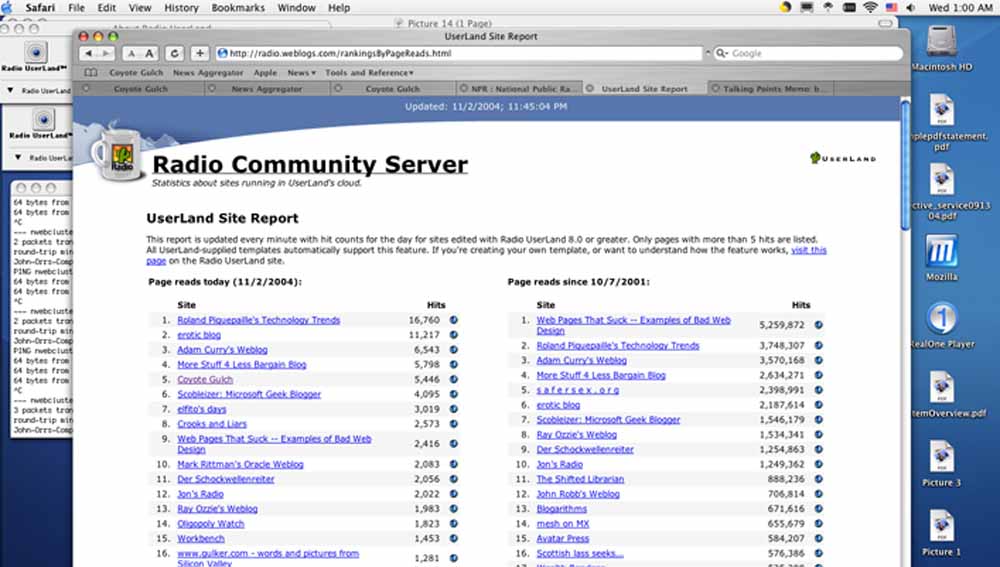
I switched blogging software a year ago yesterday. One year posting on WordPress. The software is really good and much faster than the old software, Radio Userland.

I started Coyote Gulch in 2002 and caught some rhythm covering the 2003 Denver municipal election. Politics and technology issues dominated until I found my “beat” with Colorado water issues during the fall of 2003. Thank you Governor Owens for Referendum A. I haven’t looked back since.

There are now 2,117 posts here on WordPress and 13,426 posts still archived at the old Coyote Gulch — now hosted by the WordPress gang. I’m so happy that they are still available for research and background.

For example, here’s a post about Frank Jaeger and Parker Water and Sanitation’s Rueter-Hess reservoir. It was based on a newspaper article from The Pueblo Chieftain (no surprise there) and probably written by Chris Woodka (the most prolific reporter I’ve ever known) although the link back the the Chieftain is dead so I can’t say for sure. The post highlighted Jaeger’s efforts to keep Parker from going dry. Some things mentioned have changed however. From the post:

On Wednesday, Jaeger voiced complete support for Aaron Million’s plan to build a pipeline from Flaming Gorge, if it would help fill Reuter-Hess reservoir.

I guess Mr. Jaeger has decided that Million’s pipeline will mainly serve irrigators.

My biggest day for hits was 5,446 on November 2, 2004 in the heat of President Bush’s landslide victory over John Kerry. Towards the end my old blog was getting around 300 hits a day normally.

Once I switched software last year my hit counts started rising. The big day so far was Wednesday of this week when 760 readers came by to check out the water news. WordPress tracks total hits and so far we’ve seen 133,790.

Thanks so much for the words of encouragement. It keeps me going. And thanks for indulging me this trip down memory lane.

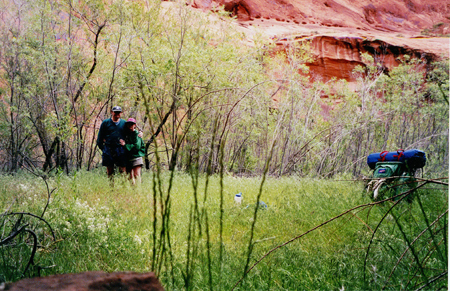
If you click on the thumbnail graphic at the top of this post you can get an idea about the beauty in those Colorado River system canyons in southeast Utah. That’s Mrs. Gulch on my left. The photo was taken sometime around the turn of the century in Coyote Gulch.

CWCB: Governor Ritter re-appoints three to board

A picture named longspeak.jpg

From the Grand Junction Free Press (Wyatt Haupt Jr.):

The governor reappointed two Grand Junction residents, John D. Redifer and Barbara J. Biggs, this week to the Colorado Water Conservation Board. Geoff Blakeslee of Hayden was also reappointed to the 15-member board. The board is charged with aiding in the “protection and development of the waters of Colorado,” the governor’s office said. The appointments require confirmation by the state Senate.

More CWCB coverage here.

CWCB acquires water for instream flow use on Washington Gulch and the Slate River

A picture named ohbejoyfulslatecreek.jpg

FromThe Grand Junction Daily Sentinel (Dave Buchanan):

The board acquired 5.45 cubic feet per second of water in the Breem Ditch water right for instream-flow use in Washington Gulch and the Slate River, two highly visible, water-short streams north and east of Crested Butte. According to the board, irrigation demands often completely dry up Washington Gulch by the middle of July and significantly deplete flows in the Slate River. The acquisition will allow Washington Gulch to flow year-round, even during dry summers, and it will help fix flow shortages to the Slate River…

A portion of this latest acquisition was purchased using funds authorized in 2008 for instream flow water acquisitions while the Colorado Water Trust donated a portion of the water. The acquisition will protect water through Washington Gulch and about two miles of the Slate River below the confluence with Washington Gulch.

More CWCB coverage here.

Southern Delivery System: Colorado Springs Utilities briefs CDOW about potential fish and wildlife impacts

A picture named arkansasdarter.jpg

From The Pueblo Chieftain (Chris Woodka):

The draft plan was presented Thursday at a Colorado Wildlife Commission workshop. It includes aquatic wildlife research and monitoring throughout the life of SDS and working with the Division of Wildlife to improve habitat and expand fish stocking operations during the second phase of SDS, when reservoirs in El Paso County would be created. The plan also incorporates mitigation measures that have been included as conditions for other permits that would benefit wildlife.

Colorado Springs has been in discussions with Division of Wildlife staff for years in developing its fish and wildlife mitigation plan, said Tim Monahan, attorney for the state agency. In the past year, the details of the plan have been worked out and were presented to the public for the first time. During the next month, the plan will be finalized, and the public will have the opportunity to comment on it in the next month, Monahan said. Colorado Springs is asking the Colorado Wildlife Commission to approve the plan at its March meeting. The plan would then be referred to the Colorado Water Conservation Board and Gov. Bill Ritter for final approval, Monahan said…

The most important parts of the mitigation, in the state’s view, would be the impacts on the fishery at Lake Pueblo once Colorado Springs begins storing water in its proposed Upper Williams Creek reservoir, said Greg Gerlich, aquatic section manager for the DOW. “We spent a considerable amount of time looking at the littoral zone, the shallow water in Lake Pueblo,” Gerlich said. “Also the Upper Williams Creek reservoir would be highly productive as it comes on line.”[…]

A few examples:

– Wetlands are minimally affected because the original terminal site at Jimmy Camp Creek was scrapped in favor of Upper Williams Creek.
– Construction will be broken into segments that allow for wildlife corridors.
– A new district on Fountain Creek would get $50 million in funding from Colorado Springs, which could be used to improve habitat.
– Work at Clear Springs Ranch, south of Fountain, will create wetlands and improve river health.

In addition, there would be fishing and recreation activities at the Upper Williams Creek reservoir. Colorado Springs Utilities plans to post the draft plan on its SDS Web site today.

More Southern Delivery System coverage here and here.

Energy policy — hydroelectric: Delta County is getting a new micro-hydroelectric plant powered by irrigation flows

A picture named microhydroelectricplant.jpg

From the Delta County Independent (Hank Lohmeyer):

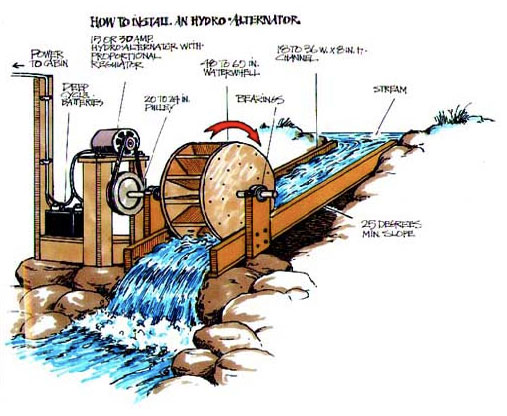
Five cubic feet-per-second of decreed irrigation water which has been irrigating crops for more than a century along Sawmill Mesa Road on the pioneer family Obergfell farm will one day soon be producing electricity as well. The water, which flows in the Uncompahgre Water Users Association F&F Lateral, falls 105 feet from atop California Mesa to the irrigation works of Sandra Tarr, who uses it to water 100 acres of corn and hay along the Gunnison River. At the bottom of that 105-foot fall, Sandra, her husband Pete, and her daughter Janell Dawson are planning to install a small electricity-producing turbine. The turbine will generate electricity, an estimated 15 to 30 kilowatts – more than they expect can be used by three nearby homes of family members. The Tarrs said they are currently in discussions with DMEA for purchase of their excess homemade electricity which, they estimate, will be available 24 hours per day during the eight months of the farm’s irrigating season.

The turbine will be installed on the farm’s headwater. Since the farm has a senior right and is located at the lateral’s end, the water will flow — creating electricity — throughout the irrigating season, even when Sandra is using it for her crops.

More hydroelectric coverage here.

Yuma: City council raises sewer rates

A picture named fountainpavementdrawing.jpg

From The Yuma Pioneer (Tony Rayl):

The council went ahead and moved forward with the proposed sewer rate increase. Sanchez again offered a 33 percent increase, going from the current rate of $12.50 to $16.60. It would raise approximately $90,000 per year in new revenue. Ebert said the increase definitely is needed due to the new sewer truck and some other work that needs to be done. He made a motion to approve the first reading of the ordinance, including making it effective May 1. It was passed on a 6-1 vote with Seward voting against…

The council will have a public hearing regarding this proposed increase at its March 16 meeting, after which it will vote on the second reading of the ordinance.

More wastewater coverage here and here.

Sam Houston State University has developed a new bio-reactor water treatment plant

A picture named anaerobicdigester.jpg

From Sam Houston State University:

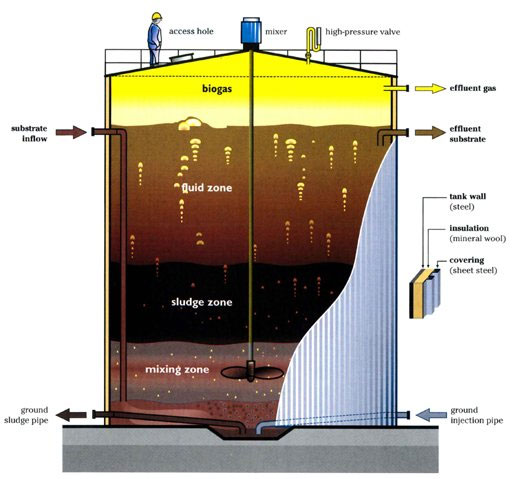
The United States Army has taken delivery of the first two units of a “revolutionary” waste-water treatment system that will clean putrid water within 24 hours and leave no toxic by-products, according to scientists at Sam Houston State University. “The system is based on a proprietary consortium of bacteria – you can find them in a common handful of dirt,” said lead scientist Sabin Holland. “In the right combination and in the right medium, they have the capability to clean polluted water with a very high efficiency very quickly. It truly is a revolutionary solution.” Holland said the physical systems themselves – called “bio-reactors” – use little energy, are transportable, scalable, simple to set-up, simple to operate, come on-line in record time and can be monitored remotely. The first two units, housed in standard 20-foot ISO shipping containers, are being deployed by the Army to Afghanistan.

“The science and engineering technology behind this process have both military and civilian applications,” said Holland. “The technology was developed for remote applications where little infrastructure exists, such as remote military operations, disaster relief and nation-building situations.” “These systems would be immensely useful right now in Haiti,” Holland said. “One of the most pressing threats to public health in the aftermath of the recent earthquake is contaminated water and the lack of infrastructure to clean it up. This technology is an ideal application to mitigate that urgent need.” Holland has managed the research and development of the systems and works for the Texas Research Institute for Environmental Studies at Sam Houston State. “We have gone from basic research into the bacteria to actual construction and deployment of the systems in seven years…

“The technology is scalable,” Holland said. “We can make the units as large as required for large scale treatment applications, or as small as a single home unit.” The research has been funded over the last three years by U.S. Department of Defense. The Army’s systems will be deployed in rugged terrain and transported by the Army’s standard heavy trucks using a standard pallet loading system.

More water treatment coverage here.

Montrose: Prescription drug drop off at health fair March 13

A picture named genderbendingpollution.jpg

From the Telluride Watch:

Think of it as an annual physical for your medicine cabinet. The public is invited to drop off expired prescription drugs and medicines at the Montrose Memorial Hospital Health Fair on Saturday, March 13 at the Montrose Pavilion.

To help encourage proper disposal of prescription drugs, the Montrose Underage Drinking/Drug Task Force (UDDTF) will host the drug take back as its final public event. The UDDTF has served the Montrose region for seven years and closes its offices in February. MMH staff will provide a pharmacist on site to receive the expired medications and proper disposal will take place thereafter…

The March 13 Montrose Health Fair is open to the public from 6:30 a.m. to noon, offering a multitude of health screenings and blood testing. For more information about the Health Fair, contact the MMH Marketing Department at 970/240-7344.

More water pollution coverage here.

Delta: Seminar on reducing selenium concentrations in local waterways

A picture named selenium.jpg

From the Telluride Watch:

The Gunnison Basin and Grand Valley Selenium Task Force is hosting a free educational workshop on how land and water users can reduce selenium impacts to local waterways while taking advantage of economic opportunities and agricultural incentives. The “Climbing the Selenium Summit” is scheduled for Feb. 18 from 9:30 a.m. to 3 p.m. at the Bill Heddles Recreation Center in Delta…

The workshop will feature a host of experts who will present study results that examine the interaction of land, water, development, and wildlife as they relate to selenium. Attendees will learn about the potential effects of growth and development on selenium loading, and about exciting opportunities that exist for landowners, planners and growers to minimize impacts on the environment while taking advantage of economic opportunities and incentives. The agenda includes presentations by the U.S. Fish and Wildlife Service, U.S. Geological Survey, Uncompahgre Valley Water Users Association, Colorado State University Cooperative Extension, U.S. Natural Resource Conservation Service, U.S. Bureau of Reclamation, and the Selenium Task Forces. Interested members of the public, local growers and land use decision makers are encouraged to attend. Lunch and refreshments will be provided and no registration is required.

More Gunnison Basin coverage here and here.

Craig: Willow Creek cutthroat habitat expansion planned for August

A picture named cutthroat.jpg

From the Craig Daily Press (Brian Smith):

Currently there is a pure, core conservation population of trout located in northern sections of the creek, but as the river winds toward Moffat County Road 38, the DOW found a mixed population of Brook trout and Yellow trout hybridizing with the cutthroat, DOW representative Boyd Wright said. “We have a conservation strategy for Colorado River cutthroat trout with an agreement between multiple state and federal agencies with the goal to not only protect those populations, but also to expand them where there are opportunities,” Wright said.

The DOW will start the project in August when the water is at its lowest flow. A barrier will be installed first to prevent other trout from entering the area. The project is estimated to cost $15,000. Willow Creek, a catch and release, fly and lure only stream, will see no change in fishing regulations as result of the project.

More endangered/threatened species coverage here.

Pagosa Area Water and Sanitation District board meeting recap

A picture named sanjuan.jpg

Here’s part one of Bill Hudson’s series about the Pagosas Area Water and Sanitation District board meeting on Monday from the Pagosa Daily Post.

More Pagosa Springs coverage here.

Arkansas Basin roundtable recap

A picture named arkansasriverbasin.jpg

From The Pueblo Chieftain (Chris Woodka):

The Arkansas Basin Roundtable had a frank talk about water sales at its monthly meeting Wednesday after Tom Brubaker, a retired gravel business operator from Rocky Ford, told the roundtable in November that most of its members have a poor understanding of the dilemma farmers face. “The economy of the Lower Arkansas basin is in decline,” said Brubaker, whose great-grandfather homesteaded on 160 acres in Bent County. All of the family has left the farming business because it takes increasingly more ground to support a family, he added…

“I’ve farmed on the low end of the High Line for 50 years,” said Don Scofield, a 70-year-old farmer who is talking to a water broker working for the Woodmoor Water and Sanitation District in El Paso County. “I’ve got to make a decision.” Scofield has no members to leave the farm to, and would like to retire. “Farming’s a hard life, but it’s a good life,” he said…

Ron Aschermann, a Rocky Ford farmer who now works for Aurora’s revegetation program after selling his farm, talked about a changing landscape farmers on the Rocky Ford Ditch faced. First, they tried to save the sugar beet business when it began to flounder in 1974. A depressed farm market prevented the local purchase of 5,000 acres once owned by the sugar company when it went on the open market. Aschermann helped organized farmers who did not sell to Aurora in 1983, but finally sold to Aurora in 1999. “Our group said ‘no,’ ” Aschermann said. “In those years in between we thought things would get better, but they did not.”[…]

John Schweizer, a Catlin Canal farmer, said his grandfather started farming, his son is taking over the business and two grandsons are also interested. “I have never been interested in selling my water,” Schweizer said. “Then, lo and behold, here comes the Super Ditch. I can lease the water and still own the water rights. It was just what I was hoping for.”

More coverage from The Pueblo Chieftain (Chris Woodka):

The roundtable got an update on a $3 million upgrade to water and sanitary sewer systems in Las Animas, which received a $300,000 grant through the roundtable at its monthly meeting Wednesday. “This is the kind of project they envisioned when they created the roundtables,” said Jeris Danielson, a La Junta water consultant who represents the roundtable on the state Interbasin Compact Committee…

“We need more projects lined up for when there is money available,” Winner said. The roundtable learned that the Joint Budget Committee is looking at taking $25 million from the Colorado Water Conservation Board construction fund, and is scheduled to take up the issue today. Thursday…

CWCB Director Jennifer Gimbel, in a letter to roundtables, said the transfer of $25 million from the fund now would leave it about $6 million in the hole. In order to be viable, the fund needs to have a balance of $7.2 million at the end of the fiscal year in June. “Continuing to divert CWCB cash funds to the general fund will reduce the state’s ability to meet water supply needs,” Gimbel said. “CWCB estimates that Colorado’s population will double by 2050 and it will take over $2 billion of projects to help meet the associated water supply needs of that population.” In addition, the proposed water projects bill (HB 1250) is at risk and may have to be withdrawn, Gimbel said. The bill includes funds for satellite monitoring, flood plain mapping and response, weather modification program and the watershed restoration program. “Combined these programs leverage at least $6 million of federal and other nonstate funds,” Gimbel said.

More IBCC — basin roundtables coverage here.

Snowpack news: Colorado River Basin declines 9% since January 1

A picture named coloradosnowpack02102010

From The Grand Junction Daily Sentinel (Dave Buchanan):

Allen Green, state conservationist with the National Resources Conservation Service, is the latest snow surveys show slightly above average totals in the southwestern mountains while snowpack percentages decreased elsewhere across the state. Green said Colorado’s statewide snowpack was 86 percent of average as of Feb. 1, which is 73 percent of last year’s snowpack totals on this same date. He said this month’s percentage is the lowest since 2003. Snowpack in the Colorado River basin declined by 9 percent since the Jan. 1 snow surveys…

The greatest increase in snowpack percentages was found in the Rio Grande and the combined San Juan, Animas, Dolores and San Miguel basins. “The remainder of the state continued to stagnate with only minor increases during the latter half of January,” Green said. As the winter progresses, the outlook for water supplies continues to point toward below normal runoff volumes, especially in the river basins across northern Colorado, Green said. “The outlook for runoff in the Upper Colorado, North Platte, Yampa, White and South Platte rivers continues to call for well below average flows,” Green said.

During the recent Aspinall Unit Operations meeting in Montrose, the Bureau of Reclamation reported that as of Jan. 20, snowpack in the Gunnison Basin is 79 percent of average and 83 percent of average for the basin upstream of Blue Mesa Reservoir. Blue Mesa Reservoir is expected to fill this spring, said Dan Crabtree, chief of the Water Resources Group in Grand Junction. He also emphasized that with so much of the snow year ahead, the forecast may change between now and May 1.

The Town of Fowler plans to study the use of algae in the sewage lagoons instead of mechanical aeration components

A picture named sewagelagoon.jpg

From the Fowler Tribune (Elaine White):

According to Town Manager, Wayne Snider, the technology will allow Fowler’s current system to meet regulatory requirements with far lower cost, far lower power consumption, lower odor and lower environmental impact. It is even possible the current need for nine lagoons could be significantly reduced.
“Our current system is very efficient,” says Snider. “But, new restrictions on selenium and ammonia will continue to rise, and by using the algae system, Fowler could meet those requirements even more effectively at a lower cost.”[…]

If implemented, the system would utilize power from a future 600 watt solar installation near the lagoons. While electric consumption would be minimized, a small amount of power would still be needed to maintain an on site greenhouse as well as a mixing system to effectively disperse algae throughout the water.

More wastewater coverage here.
Report: Five Case Studies on the Effects of the SWANCC and Rapanos Supreme Court Rulings on Colorado Wetlands and Streams

A picture named fens.jpg

While national politicians argue and do nothing about the recent U.S. Supreme Court rulings that have muddied enforcement of the Clean Water Act, Trout Unlimited, Ducks Unlimited and the National Wildlife Federation have been doing the science around the issue(s) here in Colorado. Here’s a report from Chris Woodka writing for The Pueblo Chieftain. From the article:

“These are islands of moisture,” said Dennis Buechler, author of the report released Tuesday (pdf) by the National Wildlife Federation, Ducks Unlimited and Trout Unlimited. The wetlands are important to wildlife. While covering less than 2 percent of the land, they are home to 75 percent of the state’s wildlife species. “A lot of these little streams are ephemeral (flowing intermittently) and off the radar. I like to call them the Rodney Dangerfields of the aquatic world. They don’t get enough respect.”

Buechler, a former U.S. Fish and Wildlife employee who now is a wetlands consultant, looked at five types of wetlands in the South Platte watershed to see how regulatory confusion has set back preservation. The Corps has authority over projects on streams, rivers and lakes in the United States under Section 404 of the 1972 Clean Water Act.

Conflicting U.S. Supreme Court decisions in 2001 and 2006 cases have led to regulatory confusion. “The result was the effective removal of regulatory oversight and protection of the fish and wildlife habitat and other important functions on 20 million acres of so-called geographically isolated wetlands in the lower 48 states,” Buechler wrote in the report. Under one interpretation, the Corps has jurisdiction only in “navigable waters” or tributaries. That leaves fens (mountain bogs), playas (shallow basins) and intermittent streams at risk, Buechler said.

The groups support federal legislation, S.787, which was introduced last year to clarify the Corps role in enforcing the Clean Water Act, said Jim Murphy of the National Wildlife Federation. The bill, as introduced, would give the Corps permit authority over habitats like those of concern to the wildlife groups…

Buechler looked at fens near Fairplay, a lake in a residential development in Westminster, a playa wetland in Washington County, a dry creek subject to flooding near Broomfield and a creek with urban and industrial encroachment near Aurora…

“We all live downstream. Watersheds are connected systems, and if degradation of wetlands and discharge of pollutants and fill material are allowed in headwater areas, those impacts will over time migrate downstream to mainstream reaches and effect drinking water as well as fish and wildlife habitat,” Buechler wrote in the report.

More S.787 coverage here and here.