HB 10-1188 (Clarify River Outfitter Navigation Right): State Senate morphs bill into a study

A picture named taylorriver.jpg

From The Denver Post (Scott Willoughby):

Before a political end-around coordinated by Senate President Brandon Shaffer and others last Friday, HB 1188, the so-called “River Outfitters Navigation Bill,” had the potential to firmly establish the rights of Colorado’s professional and private boaters to continue floating on rivers that pass through both public and private property. The bill passed in the Senate on Monday, but not before it had been gutted by an amendment effectively reducing it to a privately funded six-month study by the Colorado Water Congress — a group that has already gone on record in opposition to the legislation originally drafted by Rep. Kathleen Curry of Gunnison…

According to Curry, boaters can float through private property without criminal trespass charges if they don’t drop anchor or touch the banks. Boaters lack the same protection for civil trespass complaints. And current law provides no guidance on what to do if a river is blocked by an obstacle such as a fallen tree or, as in the case of the Jackson-Shaw property, a poorly designed bridge.

Above it all, however, Shaw is somehow under the impression that he now owns the river that Russell and others have been floating for decades. “It is my firm opinion any individual or group or company rafting through our private property is committing an act similar to someone walking across your front lawn on a short cut to the grocery store. It may be convenient, but it is nonetheless illegal,” states the letter signed by company president Lewis W. Shaw II. “I encourage you to select counsel who can look freshly at the specific circumstance of private property and rafting in Colorado without merely arranging ideas to confirm a previously espoused opinion.”[…]

Given the vast quantity of private property lining the banks of float-friendly rivers throughout Colorado, Schumacher’s concerns are legitimate. At least one small, underfunded rafting company facing civil trespassing suits already has been put out of business by lawyers representing Shaw and other out-of-state landowners in Colorado — the same lawyers currently sitting on the Colorado Water Congress. Bear in mind that episode occurred shortly after a similar “blue ribbon” panel had been appointed to study the same matter for two years a decade ago. Until the state’s muddled right-to-float laws are clarified on both the civil and criminal sides, others realistically face the same fate…

Contributing to the problem is the antiquated bridge on the Shaw property that becomes dangerously low for boats to pass under when the Taylor runs high. In Shaw’s view, the portage necessary to avoid the hazard constitutes a further violation. Just the same, the developer — who has invested a small fortune in other upgrades — has yet to make good on a promise to replace the bridge and bring it up to code. Amendments allowing short portages around hazardous obstacles in the river and expanding HB 1188’s reach to include private boaters had been approved before last Friday’s tactical death sentence. Those amendments helped establish a solid bill that provided firm legal footing for practices that have been established in Colorado for almost half a century, while the Senate’s final version did nothing more than offer weak politicians an escape clause until the next election.

More HB 10-1188 coverage here.

Snowpack news: South Platte River Basin gains a bit against average

A picture named snowflakesbentley.jpg

From the Fort Collins Coloradoan (Bobby Magill):

Even with Friday’s snowstorm, the snowpack for the South Platte River Basin, which includes the Poudre River watershed, is 19 percent below normal, according to Natural Resources Conservation Service, or NRCS, data. That’s right in line with the well-below-normal snowpack in river basins north of Interstate 70, a product of a relatively dry winter.

Today, that all changes. A major snowstorm is targeting the Front Range, with between 3 to 6 inches on the way for the Interstate 25 urban corridor, said Don Day of DayWeather in Cheyenne. The National Weather Service on Monday afternoon issued a winter storm warning for Denver beginning at 3 p.m. today, calling for 5 to 10 inches of snow…

“We’re not on track for a very decent water year because we’re still a fair amount below average,” said Michael A. Gillespie, snow survey supervisor for the NRCS. “If we could repeat last year, in a nutshell, we’d be doing great. There might be some hope for that.” Klaus Wolter, a University of Colorado climate research scientist, said he expects the wet weather pattern to continue through May, though he won’t place any bets on a late spring similar to that of 2009, which produced “crazy” hailstorms and a plethora of cool, wet weather. The storms, he said, are a product of El Nino, which was also one of the main drivers behind last year’s frequent storms. But, Wolter said, it’s unusual to have two El Nino-driven wet springs in a row.

From the Summit County Citizens Voice (Bob Berwyn):

After starting to weaken a bit in late January, this year’s El Niño was revived by a giant Kelvin wave sweeping warm water eastward across the Pacific in February. The surge of tropical water made this El Niño the fifth-strongest on record for this time of year, in a pattern expected to influencing Colorado’s weather for the next few months, according to climate researchers with the National Oceanic and Atmospheric Association…

Kelvin waves are bumps of warm water in the Pacific that form around Indonesia. They are typically just a few inches high, hundreds of kilometers wide and a few degrees warmer than the surrounding water, according to Bill Patzert, an oceanographer with NASA’s Jet Propulsion Laboratory. Usually, prevailing easterly trade winds near the equator push sun-warmed water away from the Americas and toward Australia and Indonesia, where the globe’s biggest pool of warm ocean water forms. During El Niño, in a complex atmospheric dance, the trade winds falter, enabling pulses of warm water to slide back to the east. The waves can actually increase the height of tides along west-facing shorelines of North and South America by a few inches, as well as warm the water on those beaches.

Haxtun: Lower South Platte Watershed Conservation Input Forum March 30

A picture named soplatteapril09

From The Fort Morgan Times:

This meeting is designed to provide participants the opportunity to provide input and make recommendations regarding NRCS programs and activities in their communities. The meeting is beneficial for any landowner interested in helping the land. The meeting will run from 1 to 4:30 p.m. March 30 at the Haxtun Community Center, 125 E Wilson St. in Haxtun. “Please do not miss this important opportunity to contribute your input into conservation programs and initiatives that will benefit the resources in the Lower South Platter Watershed,” Loose said. For more information contact [Val Loose, manager of the Morgan Conservation District] at (970) 867-9659, ext. 126.

More South Platte River Basin coverage here.

EPA is toughening standards for tetrachloroethylene, trichloroethylene, acrylamide and epichlorohydrin

A picture named watertreatment.jpg

From the Associated Press via ABCNews.com (Matthew Daly):

In a speech Monday, EPA Administrator Lisa Jackson said the agency is developing stricter regulations for four chemical compounds: tetrachloroethylene, trichloroethylene, acrylamide and epichlorohydrin. All four compounds can cause cancer.

Trichloroethylene, also known as TCE, and tetrachloroethylene are used as industrial solvents and can seep into drinking water from contaminated groundwater or surface water. The other two compounds are impurities that can be introduced into drinking water during the water treatment process.

Jackson said the EPA will issue new rules on TCE and tetrachloroethylene within the next year. Rules for the other two compounds will follow.

Jackson made the comments Monday as she announced a new strategy to better protect public health from contaminants in drinking water. With budgets strained and new threats emerging, the EPA, states and utilities need to foster innovation that can increase cost-effective measures to protect drinking water, Jackson said.

More water treatment coverage here.

CWCB: Colorado River Water Availability Study Ready for Public Comment

A picture named coloradoriverbasincgs.jpg

From email from the Colorado Water Conservation Board:

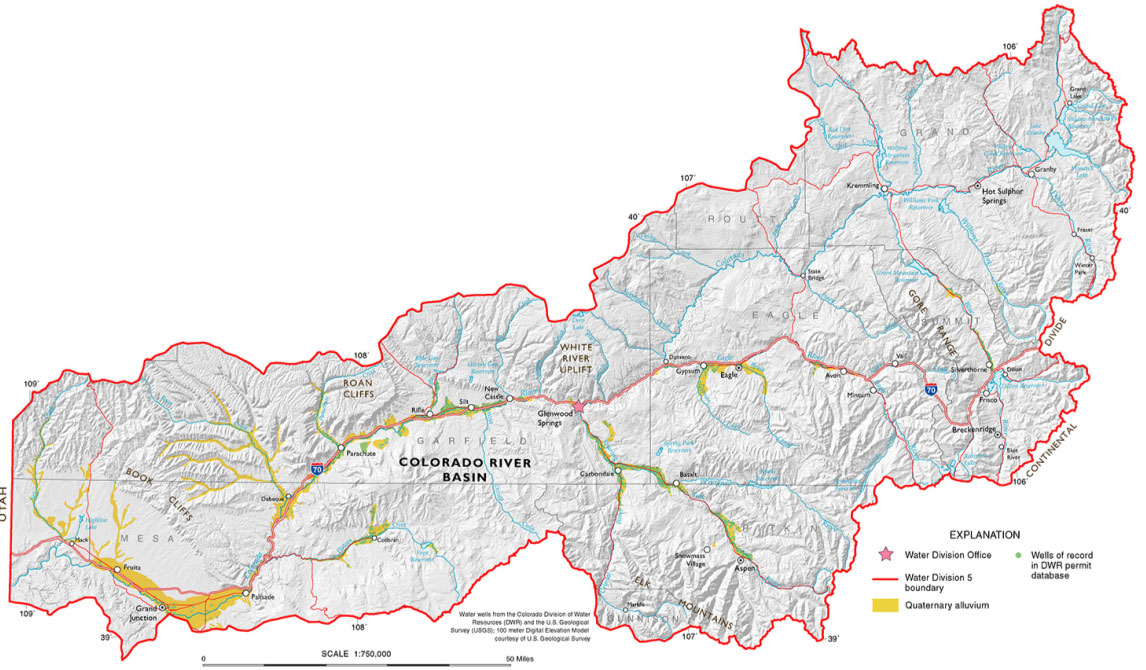
The Colorado River Water Availability Study (CRWAS) (pdf) is now available for public review on the CWCB website. There will be a 90 day review period. We value your input; please send your comments to Ray Alvarado.

More Colorado River Basin coverage here.

World Water Day 2010: Clean Water for a Healthy World

A picture named ircwwd2010

Update: From the Associated Press via The Durango Herald:

The report, launched Monday to coincide with World Water Day, said an estimated 2 billion tons of waste water — including fertilizer run-off, sewage and industrial waste — is being discharged daily. That waste fuels the spread of disease and damages ecosystems. [Clearing the Waters] (pdf) — the report from the U.N. Environment Program — said that 3.7 percent of all deaths are attributed to water-related diseases, translating into millions of deaths. More than half of the world’s hospital beds are filled by people suffering from water-related illnesses, it said. “If we are not able to manage our waste, then that means more people dying from waterborne diseases,” said Achim Steiner, the U.N. Undersecretary General and executive director of UNEP.

From the UN News Centre:

More people die from unsafe water than from all forms of violence, including war, Secretary-General Ban Ki-moon said today, calling for better protection and sustainable management of one of the Earth’s most precious resources on the occasion of World Water Day. “These deaths are an affront to our common humanity, and undermine the efforts of many countries to achieve their development potential,” Mr. Ban said in his message for the Day, which this year focuses on “Clean Water for a Healthy World” as its theme. “Our growing population’s need for water for food, raw materials and energy is increasingly competing with nature’s own demands for water to sustain already imperilled ecosystems and the services on which we depend,” he noted. “Day after day, we pour millions of tons of untreated sewage and industrial and agricultural waste into the world’s water systems. Clean water has become scarce and will become even scarcer with the onset of climate change,” added the Secretary-General.

In his message, Mr. Ban highlighted that water is vitally linked to all UN development goals, including maternal and child health and life expectancy, women’s empowerment, food security, sustainable development and climate change adaptation and mitigation.

Today is World Water Day. The United Nations has declared March 22 each year for this celebration and education experience. Here’s a look at some of the events via their mapping tool.

Take some time out today to look at your water footprint and the pollution you may be adding to our waters. Wastewater treatment plants don’t remove everything from effluent, only those that are mandated in their permits. Pollutants spilled onto roadways or into storm drains get to the surface water eventually, without treatment, adding to problems for downstream users.

HB 10-1188 (Clarify River Outfitter Navigation Right): State Senate morphs bill into a study

A picture named southplattecanoe.jpg

From Steamboat Today (Joel Reichenberger):

Colorado House Bill 1188, which sought to settle the state’s “right to float” laws, was put on hold rather than voted into law in the state Senate. A study was commissioned and isn’t due to be reported until the end of October, ending for now what some view as a perilous threat to landholders’ rights…

“I support it because it clarifies the rules,” he said Friday. “It has always been a contentious issue. For me, this would allow me to float knowing if I do everything I’ve always been doing, respecting landowners and acting in good behavior, that I’m OK, and I’m not doing anything wrong. It could give me some peace of mind that I’m doing everyone OK.”

The status quo is full of gray area, but oftentimes rafters think they are fine crossing through private property as long as they don’t touch the river bottom or the shore. The bill would have hammered that right into stone and would have made allowance for touching the bottom of the river and the bank…

The bill read as a disaster to [Steamboat-based lawyer Michael Holloran] and those who stood against it. “It is like the state saying, ‘We’ve decided we want people to walk through your house,’ like it would open our doors and let them come through,” Holloran said. “It would have a very serious impact on owners, and it is what I consider an egregious taking of private property.”[…]

The long-term effects of such a bill, he said, could be far more devastating than those short-term changes, removing fishing leases as a potential revenue source for farmers and ranchers who make up the fabric of Steamboat.

More HB 10-1188 coverage here.

Moffat County Collection System Project: Boulder County wants deeper study of impacts

A picture named grossdam.jpg

From the Boulder Daily Camera (Laura Snider):

The document outlining the purpose and impacts of the proposed Gross Reservoir expansion is “inadequate,” and fails to consider the big picture, according to Boulder County’s Board of Commissioners…

“We were surprised by how many things there were that the EIS did not adequately address,” Commissioner Will Toor said. “Fundamentally, in terms of purpose and need, I think that the EIS gives remarkably short shrift to water conservation. We’ve seen in the efforts of the last several years since the drought that there’s an awful lot of potential for significant reduction of per capita water use.” The commissioners also expressed specific concerns over taking more water from the Fraser River and the fact that the EIS does not take into account the cumulative effects of other proposed projects seeking to divert water from the Colorado River watershed. And closer to home, the commissioners are concerned about the flooding of hundreds of acres of high-quality forestland, and the impact of construction trucks on county roads. “We are hopeful that the federal agencies will really require a full explanation of these issues and an adequate analysis,” Toor said, “and if the project does move forward, adequate mitigation.”

Western Resource Advocates, based in Boulder, also expressed concern that the need for the project wasn’t adequately explained and that Denver Water hasn’t fully explored its conservation options. Denver Water does plan to meet half of the water shortfall it projects in 2030 with water conservation measures, and it has a strategy to reduce overall water use in its service area by 22 percent — compared to water use before the 2002 drought — by 2016.

“Denver Water has done a great job of what they’re doing with conservation,” said Drew Beckwith, water policy analyst for Western Resource Advocates in Boulder. “They have a pretty holistic conservation program, but what they’re missing is an outdoor landscape retrofit program for the residential sector.” These types of programs in other arid regions often offer “cash for grass” to incentivize people to plant drought-tolerant native plants in their yards instead of lawns. And in Denver, where 62 percent of residential water goes to outdoor use, that kind of program could make a big difference, Beckwith said. “Conservation is the cheapest, it’s the fastest and it’s the smartest water-supply strategy,” he said.

The Environmental Protection Agency also weighed in on the EIS last week, giving the document an “EO-2 rating,” which means the agency has environmental objections based on “insufficient information.”

More Moffat Collection System Project coverage here.

Windsor: Town is sorting out options for long-term supply

A picture named coloradobigthompsonin2007

From the Windsor Beacon (Ashley Keesis-Wood):

Windsor Engineering Director Dennis Wagner agreed, saying the CBT’s carryover system has allowed the town to manage its water needs. The carryover allows the town to “bank” a certain amount of water to be used the following year. The primary concern, and one that is addressed extensively in the new plan, is that the town’s water portfolio relies heavily on CBT water. “I know we’re in the NISP (North Integrated Supply Project) pool for water shares,” Vazquez said. “I do wonder though, with the delays in that project, whether that’s truly going to be the biggest bang for our buck.”

Vazquez said he felt the Windy Gap [Firming] project, which [will include the Chimney Hollow Reservoir] will be constructed near Carter Lake, would be a better buy. “I’m not saying we should abandon NISP but that we want to look at other options,” he said.

Wagner acknowledged the delays in NISP’s construction. “We definitely should meet with the Windy Gap participants and see about that,” Wagner said.

Windsor Town Manager Kelly Arnold recommended a joint work session between the town board and the Water and Sewer Advisory Board to discuss the next steps moving forward.

More Windsor coverage here.

Snowpack news: Snow water equivalent in some areas of the northern mountains increase with latest storm

A picture named snowpackcolorado03212010

From the Vail Daily (Edward Stoner):

Just before the storm hit, the snowpack for the Colorado River Basin region of the state, which includes Eagle County, was 76 percent of average. It was 85 percent of average statewide. “It is a little bit (troubling), especially given that we’ve got about two to three weeks of our normal season remaining when we can really accumulate much snow,” said Mike Gillespie, snow survey supervisor for the Natrual Resources Conservation Service…

Municipalities and farmers with more junior water rights may not get all the water they want this year, Gillespie said. The Vail area will need three times average snowfall between now and April 14 to return to normal, Gillespie said. This is the lowest snowpack year in Colorado Basin since the 2002 drought year, he said. But Friday’s storm is a good boost. Eight inches of wet snow would boost the area’s snowpack by 10 percentage points compared to average, he said.

On Fremont Pass, where the Eagle River Water and Sanitation District gets much of its water supply, the snowpack was at 85 percent of average as of Monday.

the northwest part of the state is at just 73 percent of average snowpack, while the Rio Grande Basin in the south is at 108 percent of average.

From the Colorado Daily (Vanessa Miller):

Flakes started flying after midnight Friday, and 12.3 inches of snow had stacked up in Boulder as of 6 p.m. — breaking the previous record of 10.8 inches for the date, according to a local meteorologist…

On March 1, in two locations where snowpack experts measure the weight of water content just below the Continental Divide near Nederland, readings were 81 percent and 59 percent of the long-term averages for that time of year, respectively. Boulder also gauges its water-supply conditions at a “snow pillow” in the same area. As of March 15, the pillow was at 64 percent of the long-term average, [Carol Ellinghouse, Boulder’s water resources coordinator] said.

Is there a ballot issue in the future to fund water projects?

A picture named fountainpavementdrawing.jpg

From The Tri-Lakes Tribune (Nicole Chillino):

Several months ago, [Dick Brown] said he became concerned about the state of Colorado’s budget with respect to water due to the loss of severance tax, the largest source of revenue to Colorado Water Conservation Board projects. According to him, severance tax is paid by producers of minerals, mining, oil and gas pay on their operations, with oil and gas paying about 90 percent of the total tax revenue received. In large part as a result of the loss of oil and gas production on the Western Slope, revenues from the severance tax have dropped off, he said. Brown added that he and Gary Barber came up with a fee on containers of non-alcoholic beverages to fill in the gap created by the loss of revenue to go toward the state water conservation board, the state engineer and toward projects for municipal and agricultural water use. “The real common denominator in a lot of the things that we want is the sale and production of non-alcoholic beverages that are basically water; they’re flavored water,” he said…

The Colorado Water Congress has appointed a subcommittee to evaluate the state budget, Brown said. It is his plan to introduce the idea to the subcommittee in the anticipation of putting it on the November ballot. It could take another year or two before it appears on the ballot, he said, but he and Barber thought it necessary to get people thinking about a solution to help finance a long-term water supply.

More infrastructure coverage here.

Energy policy — nuclear: Piñon Ridge mill could be operating by 2012 according to Energy Fuels’ president

A picture named uraniummill.jpg

From The Grand Junction Daily Sentinel (Gary Harmon):

“Uranium is back in favor,” Glasier told the Colorado Plateau Section of the Society of Mining, Metallurgy and Exploration Inc.

Energy Fuels’ Piñon Ridge mill in the west end of Montrose County is being evaluated by the Colorado Department of Public Health and Environment. Energy Fuels also is looking to establish long-term contracts that will help it to establish the revenue stream needed to gain financing for the mill, Glasier said. Energy Fuels has put $10 million into the project so far and has yet to turn dirt on the mill, which will be permitted at first to process 500 tons per day of ore. Eventually it will process 1,000 pounds per day, Glasier said.

Uranium now is about $40 per pound on the spot market, but it was $138 per pound a little more than two years ago, he said. The relatively low price could change quickly, in 2013, when the United States no longer can use uranium taken from the former Soviet Union’s warheads to power the nuclear-generation stations in the U.S., Glasier said. Largely as a result of using uranium from sources such as Russia, uranium production has fallen sharply in the United States, but it will go up when stockpiles no longer exist, Glasier said.

The Piñon Ridge mill would be the nation’s second operating mill. The White Mesa mill near Blanding, Utah, is the nation’s only operating mill.

More nuclear coverage here and here.

Energy policy — nuclear: HB 10-1348 (Increase Oversight Radioactive Materials) passes out of House Transportation and Energy Committee

A picture named cottercontamination.jpg

From the Cañon City Daily Record (Rachel Alexander):

“We had amazing bipartisan support,” said Matt Garrington, of Environment Colorado, one of the groups that developed the bill. The bill also was developed by Colorado Citizens Against ToxicWaste. It is sponsored by Rep. Buffie McFadyen and Sen. Ken Kester.

Among those who testified for the bill were Fremont County Commissioner Mike Stiehl, CCAT co-founder Sharyn Cunningham and Gloria Stultz.

The bill now will go to the full House for debate and a vote. If it passes there it will go to the Senate committee.

More 2010 Colorado legislation coverage here. More nuclear coverage here and here.

Creede: Two San Luis Valley water leaders die in freak accident

A picture named riograndevalleynearcreede.jpg

From The Pueblo Chieftain (Matt Hildner):

Ray Wright, 56, and Doug Shriver, 54, both farmers in eastern Rio Grande County, were clearing the roof of Wright’s cabin when more than two feet of snow on top of the building gave way. “It buried them like an avalanche,” said Mineral County Coroner Charles Downing, who pronounced the men dead at the scene, roughly 17 miles west of town.

Their deaths leave an absence at the top of the valley’s water community.

Wright served as president of the Rio Grande Water Conservation District and as a member of the Interbasin Compact Committee, a statewide board tasked with balancing the state’s water needs. He had also served two terms on the Colorado Water Conservation Board.

Shriver was on the Colorado Ground Water Commission and served as president of the Rio Grande Water Users Association, an umbrella organization for ditch companies along the Rio Grande.

R.I.P. Stewart L. Udall

From The Aspen Times (Barry Massey):

Stewart Udall, an elder in a famed political family who led the Interior Department as it promoted an expansion of public lands and helped win passage of major environmental laws, has died at the age of 90. During his 1961-1968 tenure as interior secretary, Udall sowed the seeds of the modern environmental movement. He later became a crusader for victims of radiation exposure from the government’s Cold War nuclear programs…

Udall, brother of the late 15-term congressman Morris Udall, served six years in Congress as a Democrat from Arizona, and then headed the Interior Department from 1961 through 1968 under Presidents Kennedy and Johnson…

Udall helped write several of the most far-reaching pieces of legislation, including the Wilderness Act of 1964, which protects millions of acres from logging, mining and other development. “I never lost an argument with the budget people under either Kennedy or Johnson. If you had a new national park or a new policy on wilderness or something on wild rivers … they’d say, ‘Go ahead. It’s a good idea,'” Udall once said in an interview.

More than 60 additions were made to the National Park system during the Udall years, including Canyonlands National Park in Utah, North Cascades National Park in Washington, Redwood National Park in California and the Appalachian National Scenic Trail stretching from Georgia to Maine…

In a 1963 book, Udall warned of a “quiet conservation crisis” from pollution, overuse of natural resources and dwindling open spaces. He appealed for a new “land conscience” to preserve the environment. “If in our haste to ‘progress,’ the economics of ecology are disregarded by citizens and policy makers alike, the result will be an ugly America,” Udall wrote. “We cannot afford an America where expedience tramples upon esthetics and development decisions are made with an eye only on the present.”

After leaving government service, Udall taught, practiced law and wrote books. In 1979, he left Washington to return home to Arizona. In doing so, Udall began another career — leading a legal battle against the government he had once served as an influential insider. Udall helped bring a lawsuit against the government on behalf of the families of Navajo men who suffered lung cancer in mining uranium for the government. Another lawsuit sought compensation for people who lived downwind from aboveground nuclear tests in Nevada during the 1950s and early 1960s. The lawsuits failed in court, and Udall said the experience left him angry and discouraged. “The atomic weapons race and the secrecy surrounding it crushed American democracy,” Udall said in a 1993 interview with The New York Times. “It induced us to conduct government according to lies. It distorted justice. It undermined American morality.” But the lawsuits eventually produced results. They provided a mountain of evidence for congressional investigations into the safety of the nation’s nuclear weapons complex. And in 1990, the Radiation Exposure Safety Act was enacted to compensate thousands of Americans. Udall helped write the measure and lobby for its passage.

Udall, born in St. Johns, Ariz., on Jan. 31, 1920, was raised on a farm in the desert country near the Arizona-New Mexico line, an area settled in 1879 by Mormons led by his missionary grandfather. The Udalls became one of the most prominent families in the state.

More coverage from the Colorado Independent (Scot Kersgaard). From the article:

During his eight years as Secretary, the National Park System expanded to include four new national parks, six new national monuments, eight seashores and lakeshores, nine recreation areas, 20 historic sites, and 56 wildlife refuges. In other words, Udall expanded the number of stunning natural places where you can spend weeks pulling fish out of rivers or just strolling around and thinking and breathing without ever catching a an industrial-life rash.

More coverage from the Arizona Daily Star (Jamar Younger):

Some of the accomplishments from Udall’s Cabinet career included the creation of the Wilderness Act of 1964, The Wild and Scenic Rivers Act and the expansion of the National Park system. He also helped create The Land and Conservation Fund…

Udall started as a Tucson attorney who fought to desegregate the city’s schools, open UA eating facilities to blacks and help pass a law banning discrimination against minorities in hiring. In 1968, he and his brother pushed through a bill creating the Central Arizona Project, which was signed by President Johnson. As a private attorney in the 1970s and ’80s, he won a 30-year battle to get Navajo uranium miners compensated for lung cancer incurred on the job. He also wrote “The Quiet Crisis” in 1963, a landmark book offering an early warning on threats to the environment.

CWCB: Joint Meeting of the Water Availability & Flood Task Forces Thursday

A picture named southplatteflood.jpg

From email from the Colorado Water Conservation Board (Ben Wade):

A Joint Meeting of the Water Availability & Flood Task Forces is scheduled for Thursday, March 25, 2010 from 9:30a-12p at the Colorado Division of Wildlife Headquarters, 6060 Broadway, Denver, CO, in the Bighorn Room. A meeting agenda has been attached and will be posted on the WATF and Flood Task Force web pages.

In the event you are unable to attend in person, but still wish to participate, please contact Ben Wade at ben.wade@state.co.us NO LATER than 4pm on Wednesday, March 24 to get call in and webinar information. This will allow you to hear as well as see the presentations live. An email will be sent prior to the meeting that will have the link to the online meeting and the number to call. Please note that we will have limited phone capabilities and the conference call service will be offered on a first come first serve basis.

More CWCB coverage here.

Energy policy — coal: Mercury emissions from coal-fired power plants rise recently across the U.S.

A picture named mercuryincoloradodp.jpg

From The Denver Post (Renee Schoof):

Many coal- fired power plants lack widely available pollution controls for the highly toxic metal mercury, and mercury emissions recently increased at more than half of the country’s 50 largest mercury-emitting power plants, according to a report released Wednesday. Five of the 10 plants with the highest amount of mercury emitted are in Texas, according to the nonpartisan Environmental Integrity Project. Plants in Georgia, Missouri, Alabama, Pennsylvania and Michigan also are in the top 10. The report, which used the most recent data available from the U.S. Environmental Protection Agency, found that mercury emissions increased at 27 of the top 50 plants from 2007 to 2008. Overall, power- plant emissions of mercury decreased 4.7 percent in that period, but that amount was far less than what would be possible with available emissions controls, the report said. No Colorado plants were among the top 50 cited.

More coal coverage here and here.

Glenwood Springs: City council approves contract for new wastewater plant

A picture named wastewatertreatmentwtext.jpg

From the Glenwood Springs Post Independent (John Gardner):

City Council unanimously approved the award of the wastewater treatment plant bid Thursday night at its regular scheduled meeting. Council awarded the contract to Salida-based Moltz Construction at a low bid of $22.3 million…Now the city just has to close on the financing agreement with the Colorado Water Resource and Power Development Authority, which is expected to occur in May.

More wastewater coverage here.

Energy policy — oil and gas: U.S. Environmental Protection Agency to pony up $1.9 million to study frac’ing

A picture named hydraulicfracturing.jpg

Update: Here’s the release from the EPA:

The U.S. Environmental Protection Agency (EPA) announced that it will conduct a comprehensive research study to investigate the potential adverse impact that hydraulic fracturing may have on water quality and public health. Natural gas plays a key role in our nation’s clean energy future and the process known as hydraulic fracturing is one way of accessing that vital resource. There are concerns that hydraulic fracturing may impact ground water and surface water quality in ways that threaten human health and the environment. To address these concerns and strengthen our clean energy future and in response to language inserted into the fiscal year 2010 Appropriations Act, EPA is re-allocating $1.9 million for this comprehensive, peer-reviewed study for FY10 and requesting funding for FY11 in the president’s budget proposal.

“Our research will be designed to answer questions about the potential impact of hydraulic fracturing on human health and the environment,” said Dr. Paul T. Anastas, assistant administrator for EPA’s Office of Research and Development. “The study will be conducted through a transparent, peer-reviewed process, with significant stakeholder input.”

EPA is in the very early stages of designing a hydraulic fracturing research program. The agency is proposing the process begin with (1) defining research questions and identifying data gaps; (2) conducting a robust process for stakeholder input and research prioritization; (3) with this input, developing a detailed study design that will undergo external peer-review, leading to (4) implementing the planned research studies.

To support this initial planning phase and guide the development of the study plan, the agency is seeking suggestions and comments from the EPA Science Advisory Board (SAB)—an independent, external federal advisory committee. The agency has requested that the Environmental Engineering Committee (EEC) of the SAB evaluate and provide advice on EPA’s proposed approach. The agency will use this advice and extensive stakeholder input to guide the design of the study.

Hydraulic fracturing is a process that drills vertical and horizontal cracks underground that help withdraw gas, or oil, from coalbeds, shale and other geological formations. While each site is unique, in general, the process involves vertical and horizontal drilling, taking water from the ground, injecting fracturing fluids and sands into the formation, and withdrawing gas and separating and managing the leftover waters.

A federal register notice was issued March 18, announcing a SAB meeting April 7-8.

More information on hydraulic fracturing: http://www.epa.gov/ogwdw000/uic/wells_hydrofrac.html

More information on the SAB and the supporting documents: http://www.epa.gov/sab

From the Glenwood Springs Post Independent (John Colson):

The U.S. Environmental Protection Agency (EPA) announced on Thursday that it is launching a probe into whether the procedure, known as hydraulic fracturing or “frac’ing,” is contaminating aquifers that supply drinking water. The study, expected to be finished by 2012, is to examine the industry’s effect on groundwater, surface water, human health and the environment generally…

“Our research will be designed to answer questions about the potential impact of hydraulic fracturing on human health and the environment,” said Dr. Paul T. Anastas, assistant administrator for EPA’s Office of Research and Development. “The study will be conducted through a transparent, peer-reviewed process, with significant stakeholder input.”[…]

The industry has long maintained that in the 60 or so years since the practice became common, there has not been a single documented case of water contamination attributed to the procedure. Critics of the industry, however, say no cases have been found because no one looked very hard, and because the practice has been exempted from the national Safe Drinking Water Act since 2005. The exemption came at about the same time that new techniques in drilling and frac’ing, as well as rising prices for natural gas, lead to a significant increase in drilling activity around the U.S., including Western Colorado.

The industry also has long maintained that the chemicals used in the formulation of “frac’ing fluids” are not actually secret, and that they are available on various websites, including the site maintained by the Garfield County Oil & Gas Liaison office (www.garfield-county.com, under “County Departments”). Industry critics, however, have been skeptical of that claim, arguing that the lists that are publicly available are not actually complete.

In Garfield County, Ron Galterio of the Battlement Concerned Citizens group called the announcement “welcome news” in light of the BCC’s “great concern about the hydraulic fracturing process, the many unknown and toxic chemicals used, and the long-term effects on ground water.”[…]

“Many opponents of hydraulic fracturing in Western Colorado suffer from 90/10 syndrome: 90 percent of their information is usually less than 10 percent accurate,” said David Ludlam of the West Slope Colorado Oil and Gas Association. “As a result,” he continued, “[we] look forward to working with the EPA demonstrating that technological breakthroughs in hydraulic fracturing can continue to be safely applied as Western Colorado develops its tremendous natural gas reserves. An EPA data-driven analysis that results in fact-based decision-making; it might just be the inoculation our industry needs against an ongoing plague of misinformation.”

More oil and gas coverage here and here.

Colorado Trout Unlimited Annual Auction and Gala

A picture named coloradotroutunlimitedannualgala.jpg

Every now and then it’s good for the soul to hobnob with a crowd that supports healthy trout waters and riparian areas. That was the common hook for the crowd at Trout Unlimited’s bash last night at the Arvada Center.

It was a hoot.

A TU member from the Wet Mountain Valley told me, “I moved to the Wet Mountain Valley after living under the Redwoods all my life. Now I have 324 days of sunshine per year and miles and miles of trout streams nearby.”

Miles and miles of trout streams indeed.

South Fork of the Republican River restoration efforts update

A picture named republicanriversouthfork.jpg

From The Yuma Pioneer (Bethleen McCall-Griffiths):

The target area for restoration is southern Washington and Yuma counties, and northern Kit Carson County. In 2002 the YCPCD, USGS and the Tamarisk Coalition mapped the Russian Olive infestation on the North and South Fork of the Republican.

On the North Fork they found that approximately 351 acres were infested. The South Fork had roughly 2,900 acres. A grad student will monitor vegetation return rates and aquatic insects. A total of 283 acres were treated on the North Fork last year.

The YCPCD has developed a comprehensive restoration plan. The restoration steps planned for acreages enrolled to restore the river include planning, control work, bio-mass reduction, re-vegetation, long term monitoring and maintenance. Currently YCPCD has raised roughly $253,000 through grants and other sources. The district also has applications for more than $750,000 still pending. The current program, which is open for enrollment, covers 75 percent of the cost, and the landowner matches that with the remaining twenty-five percent.

More Republican River Basin coverage here and here.

Pikes Peak Area Council of Governments green light lift station project for Wakonda Hills

A picture named wastewaterliftstation.jpg

From The Tri-Lakes Tribune (Nicole Chillino):

The lift stations will pump wastewater to the Tri-Lakes wastewater treatment facility, according to information from the council. One station will be located south of Hunters Glen Road and the other will be located at the south end of Crestwood Drive. The homes in the area are on septic systems presently, but there is a state requirement that homeowners go on the central sewage system if there is a central wastewater line within 400 feet of their property, said Rich Muzzy, environmental program manager for the council.

Mike Wicklund, manager of the Monument Sanitation District, said the property owners can hook up when they want to. If a homeowner’s septic system is working properly, the owner does not have to hook into the central sewer line. “If their septic system fails the El Paso County Health Department will compel them to hook up,” he said.

More wastewater coverage here.

The Woodmoor Water & Sanitation District wants to drop out of Pikes Peak Regional Water Authority’s negotiations with the Arkansas Valley Super Ditch

A picture named arkbasinditchsystem.jpg

From The Tri-Lakes Tribune (Nicole Chillino):

Woodmoor district manager Jessie Shaffer wrote a letter addressed to the authority suggesting the district stay out of the negotiations with the ditch due to a possible conflict with a recent filing for an exchange plan for water in the Lower Arkansas Valley. The letter was written under the direction of the water and sanitation district’s governing board, said assistant district manager Randy Gillette. “They have given us direction that we don’t have to be involved with these negotiations,” Gillette said. “We do want to be a part of the Super Ditch concept […] but it’s always been stated, at least what I’ve heard, is that individual contracts are going to be the bottom line.” In exchange for stepping away from the issue, the water purveyor also wanted to be excluded from the costs associated with the authority’s negotiations with the Super Ditch.

More Super Ditch coverage here and here.

HB 10-1188 (Clarify River Outfitter Navigation Right): State Senate changes bill to a study

A picture named coloradocapitolfront.jpg

From The Durango Herald (Joe Hanel):

Technically, the bill is still alive, but all it does now is ask the Colorado Water Congress to study the issue by Oct. 1. The Water Congress is a private group made up of people interested in water. It is the most prominent water lobbying group in Colorado. Seven Democratic senators, including Bruce Whitehead of Hesperus, voted for a plan by Sen. Al White, R-Hayden, to turn the bill into a study Friday morning in the Senate…

[State Senator Mary Hodge] opposed White’s move to do a study. A previous study led by the Department of Natural Resources began in 2000. It took three years and left the issue unresolved. “A study gets us nowhere,” Hodge said.

Only one Republican, Sen. Greg Brophy of Wray, sided with Hodge. Brophy argued against “another blue-ribbon study instead of solving real problems for people in Colorado.” Brophy said the Water Congress should not handle this issue because anyone who pays for a membership can join. “It’s pay to play,” he said.

Whitehead defended the Water Congress as an established group with a good reputation. “I think they would be open to anybody sitting at the table trying to sort out the mess that this bill has created,” he said…

Doug Kemper, executive director of the Colorado Water Congress, was in Washington, D.C., on Friday and did not know the Senate handed responsibility for the study to his group. “It’s one of those things – if you don’t attend a meeting, you get put in charge,” Kemper said in a phone interview…

Rep. Kathleen Curry, U-Gunnison, introduced HB 1188 after a developer in her district closed a stretch of the Taylor River to rafting companies. She said Friday if the study passes the Senate, she will risk killing the bill by sticking to her original position.

More coverage from Charles Ashby writing for The Grand Junction Daily Sentinel. From the article:

House Bill 1188, introduced by unaffiliated Rep. Kathleen Curry of Gunnison, instead was converted into a study that is to be done by a non-governmental group that primarily focuses on agriculture and municipal water use, not recreation or tourism. The Senate still must formally vote on the bill, which could happen as early as Monday, giving Curry and its Senate sponsor, Sen. Mary Hodge, D-Brighton, the weekend to get the votes they need to change it back into its original form…

“There are problems with the bill … in regards to water rights development in the future,” Whitehead said. “The way the bill is currently drafted, it could prohibit future appropriations on these rivers that will be our future supplies in this state.”

More coverage from The Pulse- of Colorado Farm Bureau (Garin Vorthmann):

The CWC is directed to study the issue, taking into account the “legal, economic, environmental and law enforcement issues related to boating through private property.” The amended version of the bill has one more vote to go through in the Senate then it will be sent back to the House. At that time, the House must decide whether to accept the Senate version of the bill. If they do, the bill will be sent to the Governor. If the House does not accept the updated version, the bill may be sent to a conference committee for additional debate.

More coverage from The Mountain Mail (Audrey Gilpin):

Terry Scanga, general manager of the Upper Arkansas Water Conservancy District, said, “These 11th hour amendments [added last Monday in committee] could directly impact water rights.” He referenced an amended landowner liability section of the bill in which a waterway obstruction doesn’t include “in the least restrictive manner necessary” the following structures: diversions, storage, any fence reasonably necessary for livestock, any existing bridge or any fish habitat. Scanga said “necessary” waterway obstruction is unclear. “This could have an impact on water rights if a landowner can’t divert water to get the full decree. “Sometimes a landowner needs to dam an entire stream to get his full decree.”

Before the amendments Monday, the bill stated, “Nothing in this article shall be construed to create a water right or affect any existing water right in any way.” Scanga said because the bill didn’t involve water rights, the district didn’t take a position. He said he’s asking the district water attorney to draft a memo for the board, and members will determine if the district should become involved. “They snuck amendments into the bill that have nothing to do with its purpose,” he said.

Tim Canterbury, president of the Colorado Cattlemen’s Association, echoed Scanga. “A paramount concern to the association is that the bill, as amended Monday, doesn’t protect senior water rights,” he said. Worried about the minimum obstruction to waterway language of the bill, Canterbury said, “Often, during low water, we have to extend our fence into the river to keep livestock contained. If fences are cut, that’s bad for our business.” He said, “The bill’s never been about a right to navigate or float. Frankly, it’s about the right to trespass.”[…]

Greg Felt, co-owner of ArkAnglers and also a water district board member, said the bill could be less controversial if historically run rivers were listed. “Most commercially run rivers are permitted by state and federal agencies. The master list should consist of about 17 or so rivers. Rivers we’ve all heard of.” Small, rarely run creeks, non-commercially run rivers or future floatable rivers, Felt said, aren’t included in the bill. “Boaters aren’t going to be cutting fences or destroying diversion structures. Boaters are about forward progress. We’re about floating.” Felt mentioned local diversions boaters sometimes portage including a dam near Clear Creek, an area below the Royal Gorge during low flow and a diversion dam at the Division of Wildlife Mount Shavano fish hatchery. “We’re talking about the same rivers and diversions we’ve dealt with before,” he said.

Additional major amendments include omitting reference to English Common Law in connection with navigation rights. Other changes omitted “portage,” replacing it with “incidental contact;” clarifying waterway as a “segment of river on which one or more regulated trips have been run in any year from 2000 through 2009” and extending the bill to private boaters.

More 2010 Colorado legislation coverage here.

Energy policy — nuclear: Supporters of HB 10-1348 (Increase Oversight Radioactive Materials) rally in Denver

A picture named cottercontamination.jpg

From the Colorado Independent (David O. Williams):

Proponents of the comparatively carbon-free nuclear power industry, including Colorado Sen. Mark Udall, maintain the state’s toxic past was born of ignorance about the dangers and new technology makes mining and processing much safer. State lawmakers clearly want more concrete assurances. “Our number one goal as a legislature should be public safety,” Rep. McFadyen said in a release. “This no nonsense legislation ensures toxic waste cleanup and the health of our citizens.”

HB 1348 would require uranium operators to clean up existing problems before applying for expansion permits; allow local governments, the public and other stakeholders to provide input during the Colorado Department of Putlic Health and Environment’s annual reviews of cleanup financing; require uranium companies to notify residents with water wells near groundwater contamination; and require state licensing when companies accept “alternate feed,” or toxic waste from industrial or medical operations.

“Actions have consequences, and uranium companies need to clean up their mess,” said Sen. Ken Kester, R-Las Animas, another sponsor of the bill.

More coverage from The Grand Junction Daily Sentinel (Charles Ashby):

Though the measure could affect one operating near Canon City, the planned Piñon Ridge mill 12 miles west of Naturita already would be required under existing laws to do much of what House Bill 1348 calls for, said George Glasier, president and CEO of Energy Fuels Inc., which is hoping to open the first uranium mill in the nation in 25 years.

Glasier said the measure, introduced by several southern Colorado lawmakers, is aimed at the Cotter Uranium Mill in Fremont County, which has been plagued with contamination problems since the late 1950s. The lawmakers said they introduced the measure to deal with long-standing concerns over cleanup of that mill, parts of which already are a federal Superfund cleanup site. The bill is aimed at existing mills that release radioactive material into the groundwater, requiring them not only to report how it is being cleaned up, but also ensuring they have set aside enough cash to pay for it, said Rep. Buffie McFadyen, D-Pueblo West, and the bill’s sponsor. It would bar mills from expanding operations until the contamination is removed, she said…

The bill would make it harder for Cotter to get the site cleaned and make it impossible for other sites, including ones not yet opened, to stay in business, [John Hamrick, Cotter’s vice president of milling] said. “The bill as written essentially will prevent uranium milling within the state because of language concerning release of materials,” Hamrick said. “If you have a shovel full of uranium ore and you dump it on the ground, at that point you have a release that would exceed standards. That’s a poison pill for uranium mills.”

More 2010 Colorado legislation coverage here. More nuclear coverage here and here.

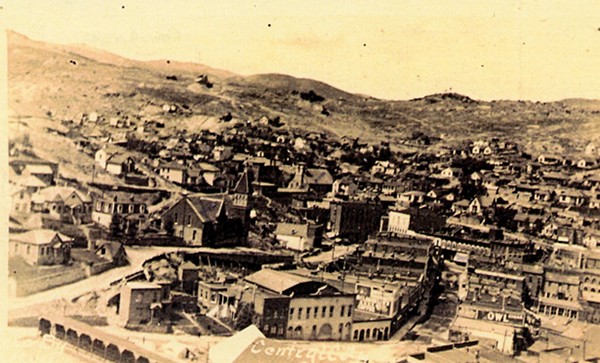
Energy policy — solar: Central City Town Council approves solar installation for the water treatment plant

A picture named centralcity.jpg

From the Weekly Register-Call/ Gilpin County News (Lynn Volkens):

The Aldermen approved a purchasing agreement with Sun Spot Solar, LLC to install and maintain solar panels at the Boodle Mill site to power the City’s water treatment plant which is adjacent to the Boodle. 312 panels, each about 3’ x 5’ will cover approximately 6,000 square feet of surface area. The solar system is designed to generate 135,000 Kilowatt hours per year (Kwh/yr), 125% of the monthly average energy consumption needed to operate the water plant. The 70 Kilowatt system will cost $285,000 which the City will pay to Sun Spot over a five year period. The City expects to save 57% in energy costs over the five year period ($10,499 per year, totaling $52,494). At the end of the five year period, the City will purchase the system for $9,975 (3.5% of the installation cost). Energy costs, after purchasing the system, are reduced to $0.00 (based on current consumption). The life cycle of the system is 20-25 years. The water plant remains connected to XCEL as a back-up so the plant will never be without power, however, while the solar panels generate energy, all excess power reversed the XCEL energy meter at the plant and build up a credit that the City can use if needed. With this system the City will pay a fixed rate of approximately 6.5 cents kwh ($7,935 annually) compared to the 2010 XCEL rate of 15.056 cents kwh…

Last October the Council directed the City Manager to look into outsourcing day-to-day operations of the City’s water system. The Council considered two companies and ultimately selected Ramey Environmental Compliance, Inc. (REC) to take over operations of the water plant, pumps, reservoirs and general water distribution system. REC is a Colorado certified operator. The City will pay REC $8,050 per month until the contract is terminated, which can be done by either party with 30 days’ notice. REC is to provide a certified operator daily who is to prepare a hand written report and each visit. The operator will also assist in budget preparation. Operations had been handled by an employee of the City’s Public Works Department. That employee will return to duties with that department.

Thanks to Loretta Lohman at Nonpoint Source Colorado for the link.

More solar coverage here and here.

South Grand Mesa Planning Team is forming to draft a source water protection plan

A picture named grandmesa.gif

From the Delta County Independent (Hank Lohmeyer):

The objective of the effort is to create an official, documented record of watershed areas which are of critical concern to the domestic water providers in the Surface Creek and Ward Creek drainages. Then, with their watershed areas of interest clearly defined, it is hoped the group will continue working cooperatively to identify and mitigate potential impacts to the quality of their domestic source water supplies.

Representatives of a steering committee that will take the work forward, once a final plan is completed, is expected to include representatives from the following domestic water suppliers and others: The towns of Cedaredge and Orchard City, Upper Surface Creek Domestic Water Users Association, Coalby Domestic Water Company, Grand Mesa Water Conservancy District, Grand Valley Ranger District, and WSERC.

According to a draft of the source water protection plan which was distributed last week, the planning team identified the following issues of concern to water quality within the South Grand Mesa source water protection area: agricultural practices, oil and gas development and operations, septic systems, transportation on gravel roads and unimproved trails, private water wells, residential landscaping practices and chemicals, zebra and quagga mussels, reservoir operations and repairs, noxious weeds and invasive plant species, livestock grazing, various routine forestry practices including logging for needed timber sales, recreational vehicle use, wild land fires, above ground fuel storage tanks, Sudden Aspen Decline Syndrome and spruce beetle infestation on Grand Mesa old growth forest, and forest land management practices.

More Gunnison River Basin coverage here.

Durango: East Animas Road mudslide video

A picture named eastanimasroadmudslide.jpg

Check out the video of the mudslide that has East Animas road in La Plata County closed indefinitely, from The Durango Herald (Garrett Andrews).

Durango: City Council is considering drying up the Animas River through town — proposed river floating rules would ban alcohol

A picture named animasriver.jpg

From The Durango Telegraph:

In a study session next Tuesday, the Durango City Council will consider changes to existing city ordinance that would ban alcohol on the river and at the put-ins and take-outs; put and end to late-night boating missions; and require personal flotation devices for all private boaters. The City is pursuing the clampdown in light of the exploding number of private boaters, most notably tubers, and escalating tensions between them and residents, particularly at the 32nd Street put in. There are also safety concerns over unprepared or inebriated boaters. Over the last few years, Durango Fire and Rescue has responded to a growing number of stranded river users, most of who are not wearing PFDs or proper foot wear.

If commercial traffic is any indication, the Animas River was the third-busiest in the state last year, with 42,000 paying to get their feet wet. Commercial outfitters were not the only ones keeping busy. In 2009, Durango police arrested 38 people at the 32nd Street put-in and issued 68 citations for everything from drunk and disorderly to open container, indecent exposure and littering. “For a while, it’s been unclear if the river is considered a public place where you can’t have an open container,” said Durango Director of Parks and Recreation Cathy Metz. “These proposed changes would make it clear that, yes, it is a public place.”[…]

And while tubers and rafters can expect big changes this summer, kayakers awaiting the much-talked about Whitewater Park upgrades shouldn’t hold their breath. Although hope was to begin construction late this summer, work on the park has been pushed back, possibly as far as 2012 “We haven’t budgeted yet for 2011, but there is a chance the city might not be able to afford it in 2011 because of budget constraints,” said Metz.

In addition to funding, work on the Whitewater Park is also dependent on approval of a 404 permit from the Army Corps of Engineers. The City is in the process of making revisions to the final permit application and hopes to resubmit it this spring. Metz said the permit is for in-stream work as well as work along the eroded river left bank, paralleling the Animas River Trail. “The plan calls for bank enhancement between the river and trail to stabilize the bank, re-vegetate it and provide better access,” she said. Money for the park, expected to cost upwards to $2 million, would come from the ¼-cent sales tax for park improvements approved by city voters in 2005. The City set aside $550,000 for the project in 2010.

As per provisions of the city’s recreational in-channel diversion water rights, which were secured in 2007, the city must build permanent structures to direct the flow. With its RICD, Durango is allowed use of 185 to 1,400 cubic feet per second, depending on time of year, for the 1,200-foot stretch from Smelter Rapid down.

The design includes four river-wide features as well as various smaller ones, was the end result of numerous public meetings and river-user input, and was completed by Scott Shipley, of S20 Engineering, in Boulder.

More Animas River watershed coverage here and here.

Pagosa Springs: Dry Gulch Reservoir update

A picture named sanjuan.jpg

From the Pagosa Sun (Chuck McGuire):

The San Juan Water Conservancy District (SJWCD) and Pagosa Area Water and Sanitation District (PAWSD) boards of directors met in joint session Monday afternoon, with talks centering around acquiring rights to flood land owned by the Laverty family two miles northeast of Pagosa Springs. While uncertainty appeared paramount throughout the discussion, both boards and their attending legal counsel appeared intent on assisting the Lavertys in creating two separate conservation easements on their property, with hope of eventually acquiring fee title ownership of the inundated portion…

By agreeing to conservation easements on Laverty land, Whiting said the districts will also gain the right to store water up to the 7,400-foot contour line — a level that would constitute a reservoir of 35,300 acre feet. Though few people envision the need for an impoundment of that size in the foreseeable future, the districts feel it prudent to plan for the maximum allowed by court decree.

Problem is, the original court decree, which initially granted the districts sufficient water rights to develop a 35,300-acre-foot lake, has been appealed by Trout Unlimited multiple times. While both sides await yet another decision by Judge Gregory G. Lyman of District Court, Water Division 7, State of Colorado, the court has already reduced district water rights to allow a reservoir of just 25,300 acre feet, including 6,300 acre feet currently held by the SJWCD. Nevertheless, as previously guided by former SJWCD board president Fred Schmidt, the districts believe they must secure a site adequate for expansion, should future growth dictate a need for additional water storage. To do so, according to Whiting, the districts’ only two options have always been to either grab the Laverty land through eminent domain, or agree to conservation easements that will prohibit any future development, other than the reservoir…

On Tuesday, [Southwest Land Alliance (SLA) Executive Director Michael Whiting] insisted easements will give the districts what they need, while avoiding higher costs and the pubic relations nightmares associated with taking land through eminent domain. Given two separate easements, they could eventually flood the portion up to the 7,400 contour line, while resting assured the land above 7,400 feet would not bring residential or commercial development along the Dry Gulch shoreline…

At Monday’s meeting, however, districts’ attorney Evan Ela expressed concern with what he envisioned as their agreeing to a “partner in their lake.” While referring to the SLA, who will hold, maintain and enforce the easements in perpetuity, he feared an SLA board 20 or 30 years down the road that could interpret the agreement terms differently. Further, he suggested the districts try and find some way of eventually “purchasing” the easement on the inundated portion from the SLA. With that, they could eventually gain fee title ownership.

But, Whiting insists that’s not possible. “Only a land trust can hold whatever easements are created,” he said. “The Lavertys selected the Southwest Land Alliance to do these easements. They could’ve used another land trust, but we’re the only game in town. “The districts are a developer,” he continued. “No developers can ever hold an easement that encumbers a property that they themselves would develop, it’s illegal. Water districts can hold easements, but not on property they will develop, and Dry Gulch will be a development of that land.” That said, it appears the only real option the districts have in eventually developing Dry Gulch to the fullest extent possible is to agree to the conservation easements as proposed.

Meanwhile here’s Part VII of Bill Hudson’s series PAWSD Gets Called on the Carpet which is running in the Pagosa Daily Post. From the article:

As we will see in today’s article, the numbers that PAWSD shows us — or that it shows to lenders like the Colorado Water Conservation Board — are never complete numbers, nor are they always “up to date” numbers. PAWSD has at hand numerous reports and studies, dating from various years, and is able to select projections and water usage data as needed from those various reports.

Our readers may have noticed in yesterday’s article that the Pagosa Area Water and Sanitation District put the district’s taxpayers another $11 million in debt by submitting a 2008 loan application to the CWCB — and then used most of that money to pay off a previous loan they’d already used to purchase land for their proposed Dry Gulch Reservoir, to be built, PAWSD says, some time in the next 50 years.

Here’s Part IV of the series.

Here’s Part V of the series.

Here’s Part VI of the series.

Here’s Part VIII of the series.

More Dry Gulch coverage here and here.

Beautiful snow

A picture named snowstorm03192010

Beautiful wet snow is falling this morning in Denver. Water watchers have great hopes for this storm. Some mountain locations are hoping for a foot or more. That should bolster the low snowpack over the northern part of the state.

Aurora: Prairie Waters Project update

A picture named prairiewaterstreatment.jpg

From the Aurora Sentinel (Sara Castellanos):

Once it’s completed later this year, city officials guarantee that Aurora residents will have enough water to sustain them during droughts for decades…

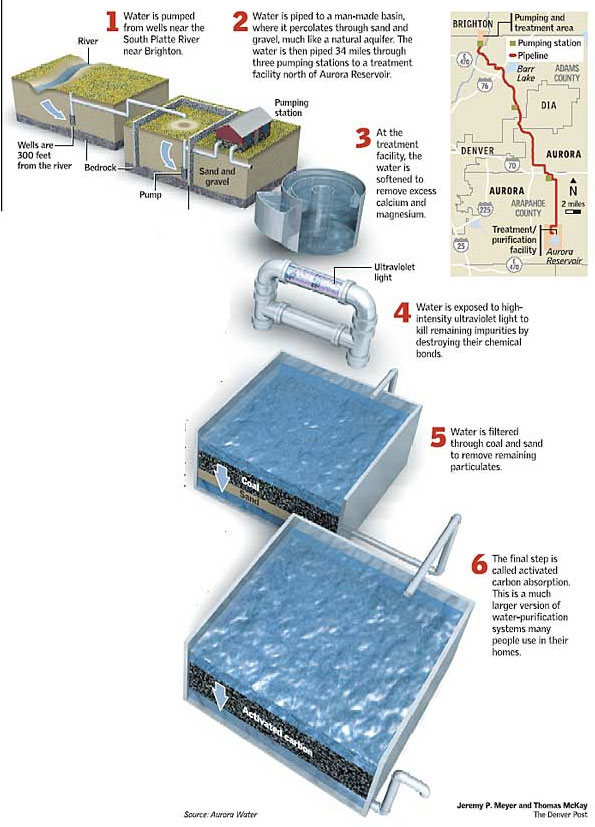
The goal of the project, which broke ground in July 2007, is to collect water from the South Platte River in Brighton and deliver it to the city through a 34-mile-long pipeline, while using state-of-the-art technology to purify the water to the highest degree. When the project is completed in a few weeks, it could increase Aurora’s water supply by 20 percent and deliver up to 10,000 acre-feet of water per year…

The project was funded by raising residential water prices and tap fees, and by issuing $450 million in bonds to be repaid over 30 years. The total estimated cost of the project at completion is $659 million, lower than the original projections of $755 million. “We were the beneficiary of an unfortunate deep recession,” said Pifher, who became the city’s water director in 2008 following Peter Binney, who originally conceptualized the Prairie Waters Project. “As a consequence of the recession there were many contractors out there looking for work and they were going to bid as low as they could just to keep their people gainfully employed.”[…]

Much of the project also uses new ideas, Pifher said, not only in terms of the technology that was implemented, but also because the water department found a way to maximize its water rights to the full extent. “The water resource is so scarce today in the arid part of the West that you can’t just go out and appropriate new water,” he said. “So you have to find a way to make use of what you have. That in itself is sort of cutting edge. When you combine all these cutting edge concepts, you do have a state-of-the-art facility and I think this will become the model for similar projects in the West.”

Other counties in the state in search of alternative water sources, such as Douglas County, would also be able to lease some of the excess water that would be produced as a result of the project, he said…

The project begins north of Brighton, off of State Highway 8 and County Road 85, at the site of the South Platte River. The first step in purifying the water from the South Platte River takes place underneath more than 100 acres of open space, where only a few, small man-made structures hint to what’s happening underneath your feet. “If you drove past this, you would never know this is where Prairie Waters begins,” said Greg Baker, spokesman for the water department. “And that was the idea.” More than 22 tunnels were constructed under roadways, waterways and railroad crossings so nearby people, wildlife and environment wouldn’t be disrupted. Water travels from the river through gravel and sand, which are natural filters, to 17 wells located about 300 feet from the river. The gravel and sand act as purifiers that filter out pharmaceuticals and personal care products. Baker said the project was designed so that the filtration systems from Brighton to Aurora would thoroughly remove pharmaceutical products, as city officials expect that the U.S. Environmental Protection Agency will make that a requirement in the near future. Water samples have already been taken from the wells and studies by the Colorado School of Mines show that about 90 percent of the purification process occurs from the river to the wells. “That’s the neatest thing, as far as I’m concerned,” Baker said. “We’re not using any high technology, we’re not using a tremendous amount of energy to do this, and yet we’re addressing probably one of the biggest issues in water today which is the pharmaceutical industry.”[…]

From the North Campus, the water will flow along the pipeline that largely follows the E-470 highway. The pumping stations are located in Brighton, Commerce City and Aurora, and each station has one 1,250 horsepower pump and one 600 horsepower pump to push the water to Aurora over a nearly 1,000-foot increase in elevation. The water will then flow to the Peter D. Binney Water Purification Facility, where the water is further filtered using 14 ultraviolet reactors and activated charcoal to destroy unwanted contaminants.

More Prairie Water Project coverage here and here.

Lake Pueblo: Flood control waiver from U.S. Army Corps of Engineers

A picture named puebloreservoir.jpg

Aurora’s water may not spill this spring, according to a report from Chris Woodka writing for The Pueblo Chieftain. From the article:

Under operational rules, Lake Pueblo’s elevation must be lowered by April 15 to provide space to contain flood waters. About 3,000 acre-feet of water could be spilled. The water spilled would be in excess-capacity accounts held by users outside the Southeastern Colorado Water Conservancy District and spilled on a pro-rata basis. The largest account is Aurora’s, but the Round Mountain Water District in Custer County and the town of Victor in Teller County also have water storage in Lake Pueblo. If snowpack upstream of Lake Pueblo remains below average, however, water users will be granted a two-week extension to move water out of the reservoir under the agreement between the Corps and the Bureau of Reclamation, which operates Lake Pueblo. The agreement allows storage of up to 10,000 acre-feet above flood-control levels until May 1, said Ray Vaughan, manager of the Fryingpan-Arkansas Project. “This is a one-time, temporary, two-week extension,” Vaughan told the Southeastern Colorado Water Conservancy District board Thursday.

More Fryingpan-Arkansas Project coverage here.

Orchard City: $2 million in new debt for water system repairs

A picture named orchardmesa1911

From the Delta County Independent (Hank Lohmeyer):

The Orchard City Town Board learned at its March 10 regular meeting that a loan request for $2 million has been approved by a state agency. That loan money, combined with $750,000 cash from the town’s own Water Fund, will hopefully complete 60 percent of the needed replacement work on the West Side Main transmission line. The leak prone water line is blamed for a large portion of the up to 30-percent treated water loss that has been reported in the Orchard City water delivery system in recent years.

More infrastructure coverage here.

Colorado River District: It’s the same water. It’s all connected

A picture named crditsthesamewater.jpg

Here’s the release from the district:

That’s the water conservation message now being seen in a billboard and bus stop bench campaign unveiled in the Denver metro area by the Colorado River District, which is based in Glenwood Springs, Colo., and the Northwest Colorado Council of Governments, based in Silverthorne, Colo.

“It’s the same water. Conserve it!” is overprinted on images of mountains, a skier, a lawn sprinkler and a woman taking a shower.

The first billboard was recently placed on Interstate 70 near the top of Floyd Hill in Clear Creek County to catch the attention of eastbound traffic heading back to the Front Range from the mountain ski areas. The message is also featured on 200 bus stop benches in the Denver metro area.

While the message is primarily directed at residents living on the Front Range, it applies equally to those living on the West Slope. Billboards will go up in western Colorado this summer to broaden the audience and the water education message.

Up to 25 percent of the state’s share of Colorado River water is diverted to the Front Range through transmountain diversions. Water planners are searching for more water supplies as Colorado’s population is predicted to double to 10 million people by 2050. Water conservation and awareness that water largely comes from rivers, not spigots, are important elements in the challenge to develop water supplies.

The campaign features a smartphone compatible website http://www.itsthesamewater.com, containing a wealth of information on water use, conservation and less-water-intensive landscaping. Much of the web information comes from Denver Water. The state’s largest water utility is widely recognized for its conservation efforts.

More conservation coverage here.

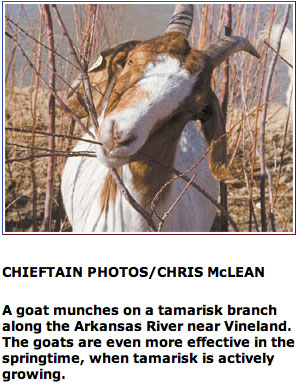
Prowers County: Tamarisk control update

A picture named goatmunchingtamarisk.jpg

From The Lamar Ledger:

Grant funding in the amount of $24,343.65 from the Colorado Water Conservancy Board is available, but funding from the county, Natural Resources Conservation Service Environmental Quality Incentive Program (NRCS EQIP), NRCS Wildlife Habitat Incentive Program (WHIP),State Land Board and Colorado Division of Wildlife funding is yet to be defined. In 2009, 1,414 acres of Tamarisk were sprayed at a cost of $116,748.60. Of that amount, $83,686.86 came from the NRCS EQIP, $7,500 came from NRCS WHIP, $7,405 from the State Land Board, $2,949.69 from the Division of Wildlife and $13,156 from the Colorado Water Conservancy Board. Per acre, tamarisk spraying cost $82.57…

Areas under consideration for tamarisk removal include the Clay Creek tributary and the Arkansas River west between Holly and Granada.

More tamarisk control coverage here and here.

SB 10-027 (Fine Illegal Surface Water Diversions): Bill passes the state house 63-1

A picture named submersiblepump1

From the Cortez Journal (Joe Hanel):

Senate Bill 27 allows the attorney general to slap a $500 per day fine on people who illegally use surface water. The fine matches the penalty for illegal use of groundwater that is already in place. The House passed it 63-1. In testimony on the bill last week, Assistant Attorney General Chad Wallace said his office usually negotiates a much lower fine and only uses the threat of fines when a water user has flaunted water rules laid down by the state engineer.

The state senate repassed the bill and now it moves on to Governor Ritter for his signature.

More 2010 Colorado legislation coverage here.

HB 10-1188: Rafting bill scheduled for second reading tomorrow

A picture named raftingarkriver.jpg

The rafting bill is scheduled for the second reading tomorrow (March 19) according to a legislative aide I spoke to this morning. Meanwhile, heres an update from Julie Sutor writing for the Summit Daily News. From the article:

The state Senate Judiciary Committee gave its approval on Monday to a bill that would guarantee rafters’ right to continue using Colorado rivers after supporters and opponents packed a hearing at the state Capitol. Proponents had worried about the bill’s fate in the committee, but it passed on a vote of 4-3. The bill was amended to include all rafters, not just commercial outfitters. Lawmakers also removed a provision that would allow portages on private land. The bill now goes to the full Senate for debate…

Greg Felt, a whitewater guide and fishing guide, told the committee both sports can coexist.

“We’re not here to undermine agriculture, we’re not here to undermine private property rights, and we’re not here to upset what has been, by and large, a pretty positive working relationship between agriculture and recreation. What we’re here to do is to try and preserve the status quo in face of attacks from various quarters throughout the state,” he told lawmakers.

Christian “Campy” Campton, owner of Frisco-based Kodi Rafting, said relations between the agriculture and rafting communities have historically been very positive for the most part. “We’ve always been able to work it out and be responsive to each other’s needs, Campton said. “It’s when they sell the ranches to developers that it becomes a problem.”[…]

The dispute escalated in December, when Shaw’s company sent commercial rafters a letter saying “there is no credible interpretation of legal statute, case or authorization permitting rafting, floating or any transit through or over private property.” Shaw threatened legal action if rafters or their customers touched the riverbanks or river bottom while on their property. The property has been developed as a fishing resort on the banks of the Taylor River near Gunnison, and the company contends rafters interfere with fishing. Shaw said he gave rafters permission to use his property last year based on guarantees they would not interfere with fishermen. He said he was disappointed when hundreds of them took advantage of his offer, disrupting the fishermen, and he notified them he would not renew his offer this year…

Club 20 opposes the expansion of the bill to include private boaters in addition to commercial rafters. “It’s effectively impossible to regulate individual behavior,” Brown said. “If you own a piece of property, and a commercial rafting party goes through, and they stop on the bank, throw out a bunch of trash, defecate on your property and take off, you know who they are. Their vessel is marked. That scenario never happens, because commercial rafters have something at stake — their license. “By contrast, if you allow every individual to float, you have no clue who that is. You have no recourse,” Brown added.

More coverage from The Pueblo Chieftain (Patrick Malone).

More 2010 Colorado legislation coverage here.

Animas-La Plata project: Reclamation fires up the pumps again to continue filling Lake Nighthorse

A picture named ridgesbasindam.jpg

From The Durango Herald (Dale Rodebaugh):

Pumping began in May 2009 but stopped in July when the flow in the Animas River dropped to the minimum required to protect downstream fish habitat and satisfy landowner water rights…

“We’re just getting going again,” Jim Gates, a geologist and technical service manager with the bureau, said Wednesday of the pumping. “We started pumping on March 5 and have continued sporadically since.” Until April 1, the flow in the Animas must be at least 125 cubic feet per second, Gates said. On April 1 when, theoretically at least, melting snow will increase the flow, there must be 225 cfs to satisfy downstream needs. The Animas was flowing at 185 cfs in Durango on Wednesday.

Gates said the pumping station, on the west side of the Animas near Santa Rita Park, has been pumping a maximum of 42 cfs to the reservoir. The station has eight pumps – two each with capacity of 14, two each with a capacity of 28 cfs and four that each can move 56 cfs.

More Animas River watershed coverage here and here.

Snowpack news: South Platte Basin at 80%

A picture named snowpackcolorado03182010

If you know of a way to squeeze more moisture out of the clouds, and you live in northern Colorado, you need to get to work. The South Platte Basin is sitting at 80% with the Upper Colorado River Basin at 78%. The Yampa/White and North Platte are at 74% and 75% respectively.

In southern Colorado snowpack is above normal with the Dolores/San Juan/San Miguel at 102% while the Rio Grande is at 109% and the Arkansas at 106%. The Gunnison Basin comes in near average at 95%.

Click here to view snotel data from your favorite snotel site.

Coyote Gulch outage

A picture named coyotenaturalbridge0507

I have a deadline at Colorado Central Magazine. I’ll be back Thursday morning.

Aurora: Prairie Waters Project update

A picture named prairiewaterstreatment.jpg

From The Denver Post (Carlos Illescas):

Prairie Waters, the city’s new $659 million water-purification and -recycling system, will be completed ahead of schedule and almost $100 million under budget. Project managers attribute the savings to good planning and trimming nonessential features from the plant. They also say the bad economy helped ratchet costs down. Contractors desperate for work submitted low bids for many of the jobs in the construction of the system, Aurora Water spokesman Greg Baker said. “We took advantage of a strong bidding environment,” he said…

The city has raised residential water prices, nearly quadrupled tap fees and issued $450 million in bonds to pay for the project…

In good-water years, Aurora could lease water to communities such as Douglas County that are searching for new water sources. “Aurora Water has found something that of course will answer their concerns but also something to help the metropolitan area,” said Rocky Wiley, a former water-management planner for Denver Water who now works for a consulting firm. “It’s a viable answer, and it’s wet water,” Wiley said…

Up to 50 million gallons of water a day will be treated at the purification facility. During peak-demand periods, water treated at the facility will be mixed with mountain water and piped to homes.
“You’re always planning for the hottest day in July, when people are watering their lawns, taking showers, washing their cars, when every spigot is open,” Baker said. “We had to make sure our water supply would meet that demand.”

Aurora Water officials expect to dedicate the facility in September and will begin testing the system by December. It is scheduled to be running in full by the late spring or early summer of next year.

More Prairie Waters coverage here and here.

Jackson Lake open to boaters

A picture named jacksonlake.jpg

From The Greeley Tribune:

The reservoir is free of ice and the boating dock is installed. All vessels will need to be inspected for aquatic nuisance species before launching. That station will open at 9 a.m. until 5 p.m. Monday through Friday and 8 a.m. until 6 p.m. on the weekends. The water temperature is in the low 40s, which is dangerous for long-term exposure, so boaters should take precautions. Camping is also open and the shower buildings will open in the beginning of April. Bald eagles have also been spotted at the park lately. Contact Jackson Lake State Park for more information at (970) 645-2551.

HB 10-1188 (Clarify River Outfitter Navigation Right) makes it out of the Senate Judiciary committee 4-3

A picture named raftingarkriver.jpg

From The Durango Herald (Joe Hanel):

Only a last-second decision by Sen. Evie Hudak, D-Westminster, kept the bill alive. “I was undecided until the very last second. I’m not kidding you,” Hudak told reporters moments after the vote on House Bill 1188. The bill has pitted rafting companies against private property owners in a legal entanglement that is more than three decades old. The Senate Judiciary Committee voted 4-3 for HB 1188. It now goes to the full Senate…

Hudak said she remains very concerned that the bill could hurt private property rights. She voted yes only because she thinks the public believes people have a right to float. “This bill is a bad bill, but to kill it is probably bad as well,” Hudak said.

Testimony stretched for more than seven hours, much of it from ranchers and other landowners who argued the bill took away their property rights. Opposition also came from lawyers for a Gunnison developer who is blocking rafting companies from floating a river through his property. Mike Feeley, who represented the developer, said there is no such thing as a “right to float.”[…]

Colorado’s boating law is clear as mud. The constitution specifies that the waters of the state belong to the people. A state Supreme Court case in 1979 found a man guilty of trespassing for treading on the riverbed. In the same decision, the court encouraged the Legislature to clarify the law – something it has not done. The House already has passed HB 1188 in a much different form. Originally, it extended rights only to commercial rafting companies.

Major changes to the bill Monday night were:

– Removing references to English Common Law on the right to navigate rivers.

– Removing the right to portage around obstacles.

– Expanding the scope of the bill to any river that has been floated by a commercial company at any time since 2000.

– Including private boaters among the people with a right to float.

A University of Colorado law professor and several of his students spoke for the rights of private boaters. But the professor, Mark Squillace, wasn’t satisfied with Monday’s changes because the bill does not fully recognize a constitutional right to use the rivers. Colorado has one of the country’s most restrictive floating laws, Squillace said. “Private property rights are alive and well in many other states that recognize broad rights of access – Utah, Wyoming, Montana, New Mexico,” he said.

More coverage from The Grand Junction Daily Sentinel (Charles Ashby):

The measure cleared the Colorado House last month almost entirely on a 40-25 party-line vote, with Democrats arguing that rafters have a right to float, while Republicans said it violated the property rights of local landowners. On a similar party-line vote, the Senate Judiciary Committee sided 4-3 with the floaters’ argument, saying the bill struck a good balance between the two. As a result, some long-establish rafting companies along the Taylor River in Gunnison County said the bill could help keep them from being forced out of business…

Lori Potter, an attorney for the Colorado River Outfitters’ Association, said 42 other states have right-to-float laws, all broader than this bill. “Many (other states) allow fishing, many allow stream access for fishing, some allow hunting,” Potter said. “(HB) 1188 is much more limited … and still ensures that these two rights, the rights of the boater and the rights of the landowner, could still exist.”

More coverage from The Pulse- of Colorado Farm Bureau (Garin Vorthmann):

Amendment language was added to the bill that broadened the bill to include all boaters, not just commercial outfitters. The amendment also expanded the bill to affect more waterways – those that have been commercially ran at least once between the years 2000-2009. Controversial language regarding portaging was removed from the bill but boaters will now be able to get away with incidental touch in order to continue to have forward progress on the river. The right-to-float was also codified in the bill with the new amendment language. The bill was passed 4-3 with Senators Renfroe, King and Lundberg voting in opposition. Colorado Farm Bureau continues to OPPOSE HB 1188 as amended…

Testimony that was given by CFB members was extremely helpful in highlighting the problems with the proposal. Without your help, the bill would have likely passed by a much greater margin.

More coverage from The Denver Post (Jessica Fender):

Kayakers, anglers and all variety of private and commercial boaters could gain the right to float through private land after a state Senate committee on Monday overhauled a bill that has pitted property owners against outdoor enthusiasts. The last-minute amendment addressed a concern of Front Range Democrats, whose constituents’ biggest complaints have been that the original version of House Bill 1188 unfairly applied to commercial outfitters only. But the sweeping changes may have lost the legislation some Republican support in the House. In the Senate Judiciary Committee on Monday, the revised proposal passed on a 4-3 party-line vote after more than seven hours of debate.

Landowners argued it will be too easy for a stretch of river to be open to public traffic and predicted a deluge of new boaters damaging their property, their river improvements and the businesses they run along Colorado’s waterways. Rafters and other users said that without the legislation, property owners could close off a stretch of river by buying both banks. That could jeopardize the industry and enjoyment of boaters elsewhere, said Jack Bombardier, a landowner and river guide. “This says you can’t be sued and eliminated,” Bombardier said. “That’s all that we’re hoping. The bill will stop the lawsuits, stop the controversy.”

Under the amended HB 1188, river users would not be able to touch the bottom or banks, except to free themselves from snags or to bypass bridges and other obstacles spanning the water. And as amended, any stretch of river that was commercially rafted at least once between 2000 and 2009 would be affected. Bill backers were unclear on whether a state agency or courts through civil lawsuits would ultimately decide which sections qualify…

At one point, Democratic Sen. Linda Newell of Littleton seemed to agree that the complex legal matter deserved a more in-depth look. “What’s working now is fine. It’s my understanding we’re here because of one landowner,” she said during committee. “Why are we creating a law (because of) one landowner?”

More HB 10-1188 coverage here. More 2010 Colorado legislation coverage here.
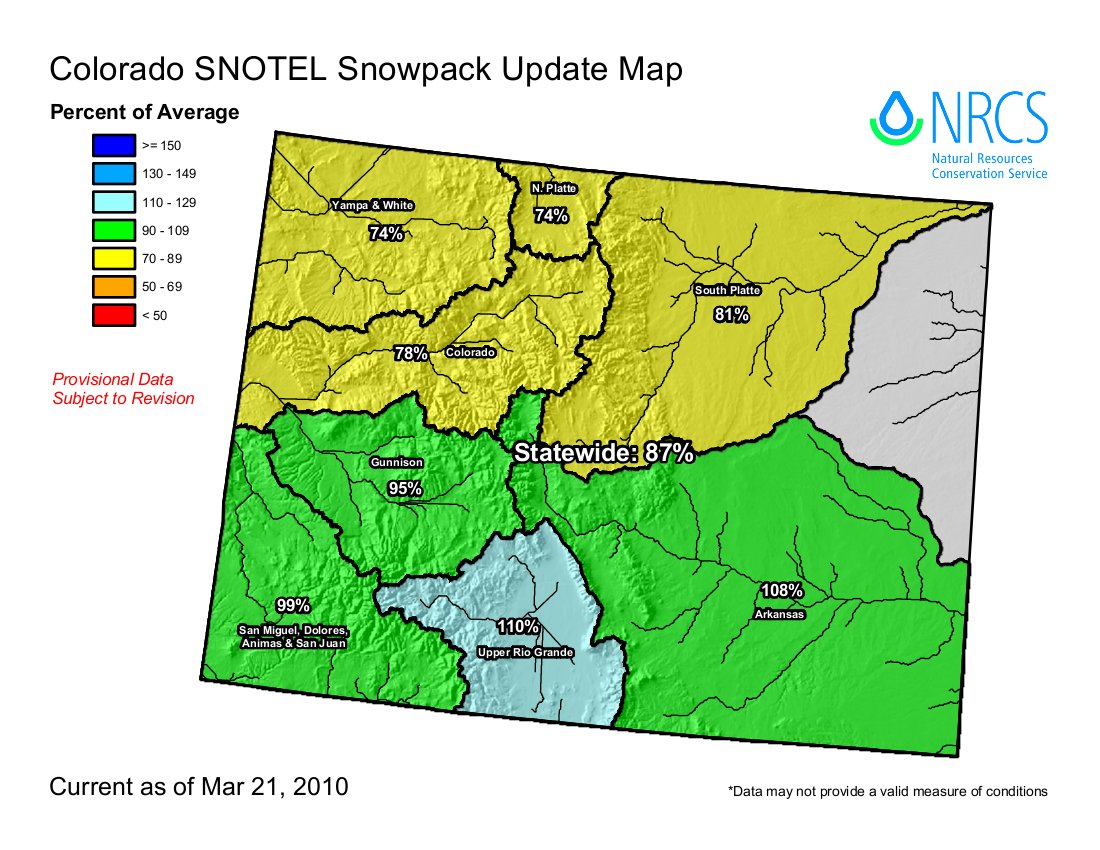
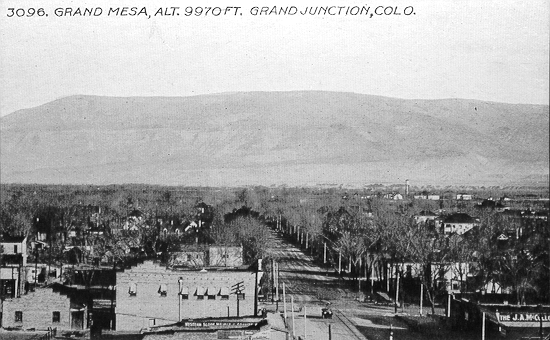
Hayman Restoration Partnership update

A picture named haymanburnarea.jpg

From the Pikes Peak Courier (Norma Engelberg):

Workers from the Coalition for the Upper South Platte are clearing woody debris left by severe flooding last year. They’re hoping to complete the work before another flood washes the jumbled timbers downstream where it can wipe out the bridge at Deckers. Clearing debris along streams in and near the Hayman Fire burn area is the immediate goal chosen by a recently formed Hayman Restoration Partnership that includes Vail Resorts, the National Forest Foundation and the U.S. Forest Service and smaller local organization such as CUSP. The partnership has, so far, infused $4 million into the Hayman watershed recovery effort. Over the next three years the partnership will focus on meeting its long term goal of stabilizing and restoring the streams in the burn area. Forest service project manager Brian Banks said Horse Creek is emblematic of the what has happened to the forest and waterways after the Hayman Fire in 2002…

Eventually, the sediment washed down during floods will end up in reservoirs, displacing drinking water, he said. “Were taking a holistic approach to the problem,” said forest service project coordinator Bob Leaverton. “We’ll do a variety of things — removing debris, riparian planting, bank stabilization — but we’ll also look up slope where the erosion is happening and at the roads and trails that might be adding to the problem.” Bob Cole, representing the National Forest Foundation, explained that the foundation is the nonprofit arm of the U.S. Forest Service…

Carol Ekarius, director of the Coalition for the Upper South Platte said the four-person crew working in the creek bed is part of the coalition’s paid staff. “We have a thousand volunteers but we don’t let the volunteers play with chainsaws,” she said. She explained that some of the larger pieces of debris will be piled up at the edge of the alluvial fans where sediment is deposited at the mouth of ravines leading into the main stream. The timbers will stabilize the fans’ edges and will later be used to restore the stream banks. She explained that restoration will include placing timbers and J-shaped lines of rocks in places at the edges of the stream. These structures will direct the water and its energy into the middle of the stream, instead of allowing it to spread out and eat away at the banks. Nationally renowned hydrologist Dave Rosgen has been hired to work with the project. “Rosgen literally wrote the book on hydrology,” Ekarius said. “We’re lucky to have him. CUSP couldn’t have afforded him. Even the forest service couldn’t afford a guy like him.”

More restoration coverage here.
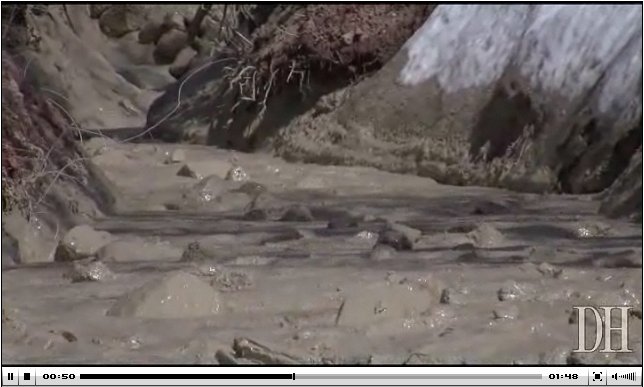
Arkansas River streamflow update

A picture named arkbasinditchsystem.jpg

From The Pueblo Chieftain (Chris Woodka):

On Sunday, gates on Lake Pueblo dam were releasing about 70 cubic feet per second, while another 36 cfs came through the Pueblo State Fish Hatchery. Monday, the gates were pouring 250 cfs into the river. Winter water is a court-decreed program that allows farmers to store water from Nov. 15-March 15 instead of irrigating fields. This year, about 150,000 acre-feet of water was stored in Lake Pueblo dam, John Martin Reservoir and reservoirs operated by the Colorado, Holbrook, Fort Lyon and Amity canals. That was above the 20-year average of about 143,000 acre-feet. As of Monday, the priority in the Arkansas River was at March 1, 1887, at the Fort Lyon headgate, Witte said…

Releasing water from Lake Pueblo dam will begin to lower the lake’s elevation to flood-control levels by May 1. This month, Lake Pueblo dam reached its highest volume of water in the past 10 years, causing concern that water stored by Aurora in its excess-capacity account might be spilled.

More Arkansas River Basin coverage here.

Pueblo Board of Water Works agrees to supply new Black Hills Energy power plant

A picture named coalfiredpowerplant.jpg

From The Pueblo Chieftain (Chris Woodka):

The agreement will mean $5.6 million in revenues to the Pueblo water board, as well as construction of water lines and a backup pumping station at Black Hills’ expense. The water board is expected to approve the agreement at its meeting today. Black Hills plans to have the plant running by June 2011, but there are provisions in the agreement that could lead to some sales of water later this year. Water is used for steam and cooling in electric generation. By 2012, the water board could be realizing more than $1 million a year in revenue for water service to the plant. The initial term of the contract is 20 years, but there are provisions for two 10-year extensions. “We don’t know yet what the demand will be,” said Terry Book, deputy executive director of the water board. Black Hills could take up to 2,530 acre-feet a year under the contract, but would be obligated to “take or pay” for 1,440 acre-feet, Book said. There would be a reservation fee as well for the full amount in case it is needed…

The water used in the Black Hills operation will be fully consumable, either from transmountain supplies or sources within the basin where the consumptive use has been transferred from agricultural purposes.

More coal coverage here.

Snowpack news: Upper Ark and the Spanish Valley get a dumping

A picture named spanishpeaks.jpg

From The Pueblo Chieftain (Tracy Harmon/Anthony A. Mestas):

Canon City residents awoke Monday to 2-3 inches of snow which yielded 0.63 of an inch of moisture. Custer County residents in the Westcliffe area also reported 3 inches of snow.

Salida residents also measured 3 inches of heavy, wet snow. Monarch Mountain reported 5 inches of new snow providing a nice cushion on the 77-inch base of snow ideal for spring skiers and snowboarders. Monarch has received a total of 275 inches of snow so far this season or nearly 23 feet of snow in five months.

Residents in the Spanish Peaks area were greeted with a white blanket of wet snow Monday morning. A weather spotter in Trinidad reported 4 inches of snow falling overnight Sunday. Residents in Cuchara reported more than 8 inches of snow. Nearby Walsenburg picked up about 6 inches of snow by early Monday.

What is the strategy for Arkansas Valley agriculture?

A picture named irrigation.jpg

From The Pueblo Chieftain (Chris Woodka):

[Retired Lamar Community College teacher Fred Heckman of McClave] has been attending water meetings throughout the Arkansas Valley on behalf of the Fort Lyon Canal Co. for several years, with one goal in mind: To make better use of water. The idea was first proposed at a Fort Lyon meeting in 2004, by Heckman’s son Bert and others in an independent shareholders group that resisted selling to High Plains A&M (now Pure Cycle), but liked the idea of finding more profitable uses for water. The stated goal of High Plains, which had purchased about one-quarter of the ditch’s shares by 2003, was to move water to growing Front Range communities through a pipeline. Pure Cycle has continued with that goal, but has been more open to efforts like Super Ditch that could use its water resources within the valley. The shareholders group from the beginning wanted to expand the horizons of Fort Lyon shareholders beyond the flood irrigation that has dominated valley agriculture for more than 140 years…

Heckman is among those who have joined Super Ditch, a water leasing cooperative that would allow farmers to hold onto their water rights while selling some of the water under contract. “Leasing water would put a cushion of income under the farming operation to help the farmer withstand weather losses and variable prices,” Heckman said. Heckman is wary of new state consumption rules that target improvements on farms like sprinklers and drip irrigation using surface water. The rules ultimately will add costs for farmers who already operate on a thin margin. “Government involvement, no matter what department it comes from, is as much a threat to the farmers survival as the weather and price variation,” Heckman said. “Micro-managing the farmer is coming.”

More Arkansas River Basin coverage here.

Energy policy — hydroelectric: Aspen city council approves $2.3 million for Castle Creek hydropower project

A picture named hydroelectricdam.jpg

From The Aspen Times (Carolyn Sackariason):

The council approved a contract with Denver-based Western Summit Constructors to build a pipeline that will deliver water from Castle Creek via the Thomas Reservoir to the plant, which will be located below the Castle Creek bridge.

The city plans to circumvent a full-blown environmental analysis and instead apply to the Federal Energy Regulatory Commission (FERC) for what’s called a “conduit exemption” to build the hydroelectric plant once the pipeline is under construction. Officials say by delivering water from the reservoir to the plant, the city can take advantage of water for hydropower while providing needed flood protection to properties downhill of the Thomas Reservoir, such as the hospital.
The council also approved a $48,400 contract with Miller Ecological Associates to conduct an aquatic biology study to determine the effects of taking water from the creek. The study was requested by the Colorado Division of Wildlife to evaluate the effect of stream-flow changes between the point of diversion and the point of return in the creek…

Several people said they were concerned about a decreased flow in Castle and Maroon creeks because water will be drained out of both to generate power. Under an agreement with the state, the city of Aspen would never go below 12 cfs in Castle Creek and 14 cfs in Maroon Creek…

If approved, the water would travel down a 42-inch pipe, supplying the hydro plant with approximately 25 cubic feet per second (cfs) coming from Castle Creek and 60 cfs out of Maroon Creek. The city diverts water from both creeks for the primary purpose of supplying municipal water and maintains the in-stream flow of 12 and 14 cfs. The third priority would be for hydroelectricity, but if there isn’t enough water available in a dry year or during certain times of the year, it wouldn’t be diverted, officials have said. The project would utilize existing water rights, head gates and water storage of the original Castle Creek hydroelectric plant, which met all of Aspen’s electric power needs from 1892 through 1958, when the plant was decommissioned…

The electricity would be placed on the city’s grid and taken up to the water treatment campus to power those facilities, and to potentially produce hydrogen for hydrogen fuel cells and hydrogen vehicles. When completed, the 1.05 mega-watt facility is expected to increase electric production by 5.5 million kilowatt hours annually. That power production will prevent more than 5,000 tons of carbon dioxide from entering the atmosphere each year, officials said. It would generate renewable energy for the city and increase its supplies by 8 percent over its current level of about 75 percent. City officials say that switching from primarily coal-fired energy purchases to hydroelectric power production would represent a 0.6 percent community-wide reduction in carbon emissions based on a 2004 greenhouse gas emission inventory.

More hydroelectric coverage here and here.