
From The Yuma Pioneer (Tony Rayl):
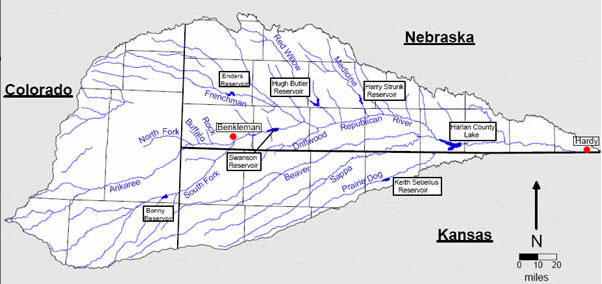
The $60 million loan from the Colorado Water Conservation Board initially was finalized on November 3, 2008, with the completion date set for November 3, 2010. RRWCD authorized spending $45 million last June to purchase the water rights to more than 50 wells north of Laird, to be used for the proposed pipeline that would deliver water to the North Fork of the Republican River at Colorado-Nebraska state line. The board made the move at that time as concerns arose the loan money might be taken away if not used due to Colorado’s financial crisis. The remaining $15 million is to be used toward the actual construction of the pipeline.
However, getting to the construction phase has proved difficult. Kansas and Nebraska, who along with Colorado comprise the Republican River Compact Administration, have voted against the pipeline, as each has raised several concerns both states would like to see addressed to their satisfaction before granting approval. After the RRCA rejected Colorado’s revised proposal last August, Colorado invoked the matter go to fast track arbitration, as allowed by the final stipulation agreed to by the three states. Even that has gone slowly, with an arbitration schedule finally settled just two weeks ago. Due to all those circumstances, it has become obvious the pipeline would not be completed by the initial deadline. Attorney David Robbins recommended during the RRWCD Board’s regular quarterly meeting, last Thursday in Yuma, that the district request the completion date be extended for one year…
Peter Ampe of the Colorado Attorney General’s Office met briefly with the RRWCD Board, last Thursday. He said Colorado’s stance will be that all the objections raised by Kansas and Nebraska are purely arbitrary and really have nothing to do with the pipeline itself. If [Arbiter Martha Pagel] agrees, during the motions phase of the process, then the trial itself simply will be about how the pipeline plan meets compact guidelines. The arbitrator’s decision is non-binding, but Ampe said it is admissible if the case ends up going to the U.S. Supreme Court.