
From The Denver Post (Bruce Finley):
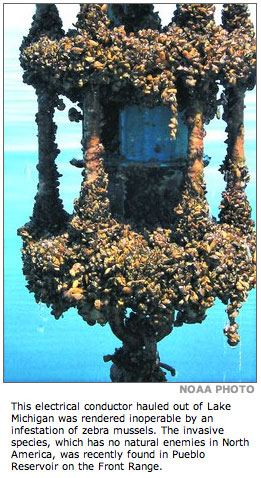
The researchers testing these tactics say some seem to work and, if proved, could save tens of millions of dollars by protecting western hydropower and water delivery facilities against the proliferating Eurasian quagga and zebra mussels. “Once the mussels are there, this would help control them,” said U.S. Bureau of Reclamation mussel program coordinator Leonard Willett, who this week was supervising tests at dams along the lower Colorado River.
Lab tests of the poison are “very promising,” he said. It contains Pseudomonas fluorescens — derived from a bacterium that destroys mussels but apparently not fish. The Environmental Protection Agency has been asked to issue an emergency permit allowing open-water tests…
One tactic involves installing underwater UV-ray devices on pipelines. Mussels inside pipes respond to sudden, intense ultraviolet light by closing up, rendering them unable to attach. Testing of underwater cylinders that emit pulses of energy and discourage mussels from attaching is underway at Colorado’s Leadville Fish Hatchery. Teflon-like coatings also are being tested. And, while quagga and zebra mussels have no natural predator in the United States, researchers are exploring the possibility that a type of sunfish, if introduced, could devour mussels…
This year, the mussels’ spread in Colorado has indeed slowed. A suspected colonization of Blue Mesa Reservoir, west of Gunnison, was not confirmed. Mussels in Pueblo Reservoir and others appear to be somewhat contained, perhaps due to periodic colder temperatures that inhibit breeding, Hosler said. “In Colorado, for right now,” she said, “it looks like we’re winning.”
More Pseudomonas fluorescens coverage here. More invasive species coverage here.