Here’s a report on the study I linked to yesterday, from Bobby Magill writing for the Fort Collins Coloradoan. From the article:
Larimer County’s water supplies – and those of most of the state’s mountain counties – are at little risk of diminishing in the face of climate change because Northern Colorado could see more precipitation as the Earth warms, not less…
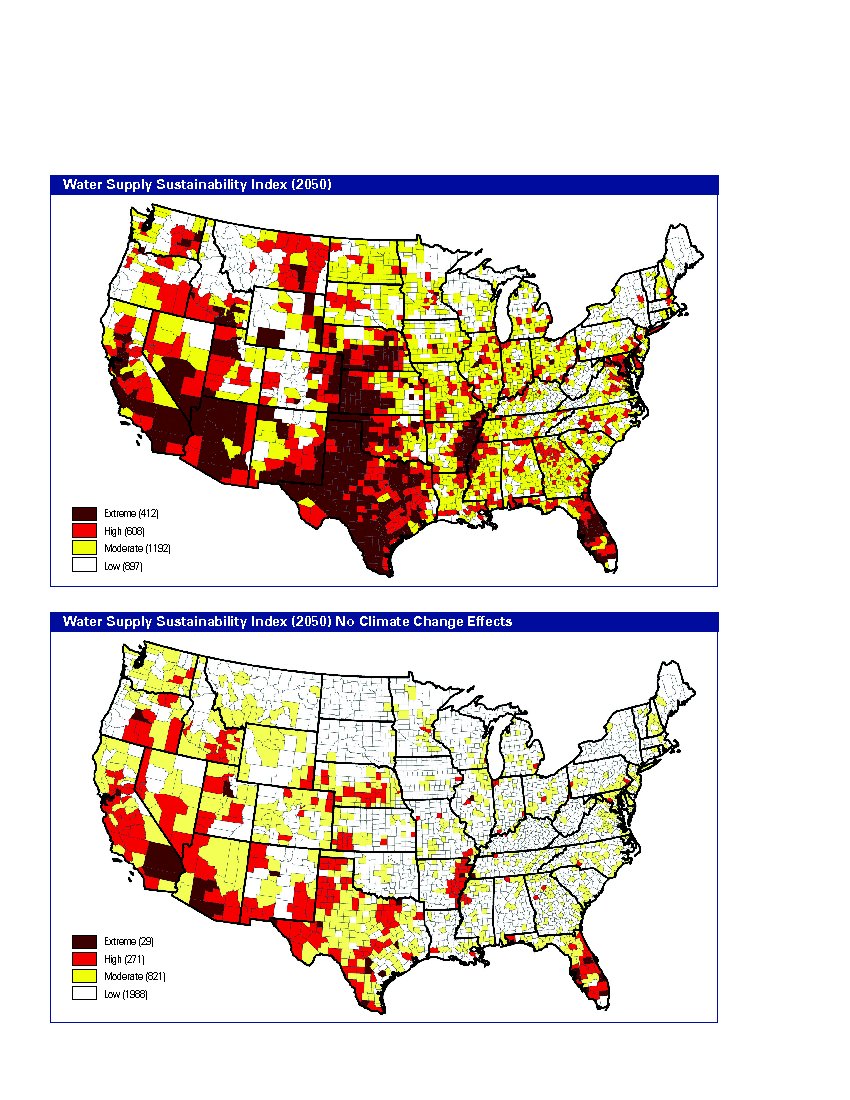
Some of the most devastating effects on water supplies will be felt up and down the Great Plains, including Weld County and Denver, according to the report…
Climate change might pose moderate to extreme risk to water supplies in Jackson, Mesa, Delta, Montrose, Montezuma, La Plata, Alamosa, Rio Grande, Moffat and Saguache counties in addition to those in the Eastern Plains, according to the report. The study’s lead author, Tetra Tech principal engineer Sujoy Roy, said Tuesday that Colorado’s Eastern Plains are at high risk of seeing their water diminish by mid-century because of the region’s heavy use of groundwater, which could begin to dry up…
Larimer County is expected to see more precipitation as temperatures rise, lowering the risk to the county’s water supplies, Roy said.
More coverage from Chris Woodka writing for The Pueblo Chieftain. From the article:
In particular, Pueblo County, the Lower Arkansas Valley and Eastern Plains are among the areas to be hardest hit if temperatures increase and water supply dwindles, as predicted by 16 varying climate models. A report by Tetra Tech for the Natural Resources Defense Council used publicly available databases and a set of models from the Intergovernmental Panel on Climate Change to evaluate the risk posed by climate change…
The report mirrors concerns the Colorado Water Conservation Board has been dealing with in statewide water supply, but puts into focus the impacts that would be anticipated strictly in terms of water demand for agriculture. The report looks at climate and takes other changes, such as growth or the export of existing water supplies into account, said Sujoy Roy, principal engineer and lead report author. “The goal of the analysis is to identify regions where potential stresses, and the need to do something about them, may be the greatest,” Roy said.
More coverage from USA Today. From the article:
High-risk areas include parts of Arizona, Arkansas, California, Colorado, Florida, Idaho, Kansas, Mississippi, Montana, Nebraska, Nevada, New Mexico, Oklahoma and Texas. The rising risk results from decreases in precipitation, based on 16 leading climate models, and increases in water demand, based on current growth trends. The report says water demand is projected to increase by as much as 12.3% between 2000 and 2050. “This analysis shows climate change will take a serious toll on water supplies throughout the country in the coming decades,” said Dan Lashof, director of NRDC’s Climate Center, adding that the only real solution is “meaningful legislation” by Congress to reduce global warming.
More climate change coverage here and here.