FEMA revokes accreditation for hundreds of levees across the country

A picture named leveetypesusace.jpg

From USA Today (Peter Eisler):

The Federal Emergency Management Agency (FEMA) has revoked its accreditation of the levees as part of an effort to update the government’s flood hazard maps, which guide state, local and federal decisions on development in flood-prone areas. Properties protected by the levees now are in flood hazard zones, which means owners who have federally backed mortgages are required by banking laws to carry flood insurance.

More coverage from The Fort Morgan Times (Dan Barker):

Levees across the nation need to be recertified under the FEMA flood map modernization program, which began in 2004 and started in this area in 2008, she said. This mapping sets the flood insurance rate maps, which are also being converted to digital images, said Dawn Gladwell, mapping project specialist for FEMA. The Army Corps of Engineers inspects levees for its own insurance program, but has backed away from certifying levees, except when it maintains them itself in rare instances, said Mark Kempton of Anderson Consulting Engineers, a firm which does certification. One advantage of having complied with the Corps is that Wiggins likely meets FEMA`s requirements for periodic maintenance, and that documentation will help smooth the certification process, said Chris Pauley, senior project manager with Anderson Consulting Engineers. The modernization program must certify that all levees meet the minimum standards consistent with the possibility of a 100-year flood, Gladwell said.

More infrastructure coverage here.

Pueblo: Fountain Creek flood mitigation project groundbreaking ceremony tomorrow

A picture named fountaincreek.jpg

From The Pueblo Chieftain (Chris Woodka):

U.S. Rep. John Salazar, D-Colo., will be on hand for the groundbreaking of a $1 million flood mitigation at 3 p.m. Monday at the site of a side detention pond in Pueblo near Colorado 47 and Dillon Road.

The area, behind the North Side Walmart, is a site that captured some flood water during a major 2007 thunderstorm after an embankment failed. There were damaging floods in a nearby neighborhood that might have been alleviated if the flood detention pond was in place, city officials said at the time. “This project is a demonstration of the tremendous benefits that can be delivered to Fountain Creek when people work together,” Salazar said. “It’s refreshing to see a group create a vision, devise a plan and carry it out. I look forward to continuing my support of collaborative efforts to restore this watershed.”

More Fountain Creek coverage here and here.

CDC: Don’t drink the groundwater near the Lincoln Park/Cotter Mill superfund site

A picture named cottercontamination.jpg

Here’s a report from Tracy Harmon writing for The Pueblo Chieftain. From the article:

Prolonged drinking of contaminated private well water, over several years, may have put some Lincoln Park people at risk for health problems, however, breathing air around the site was not found to be a health hazard, according to the Agency for Toxic Substances and Disease Registry of the Centers for Disease Control and Prevention.

The study found that consuming the molybdenum-contaminated water for many years could put residents at increased risk for certain health effects including gout or other joint problems. Most people in Lincoln Park are now on the public water supply and are not exposed to the contaminant, according to the report. “However, some residents may still have operational private wells. These residents should have their wells tested, and if they are contaminated, they should stop using well water for household purposes such as drinking, cooking or bathing,” according to a statement issued Thursday by Vivi Abrams of the CDC.

Lincoln Park residents also should limit their use of contaminated well water to irrigate vegetables. Exposure to molybdenum through locally grown vegetables irrigated with private well water is not thought to be at levels that would harm people’s health, however, as a precaution the vegetables should be thoroughly cleaned prior to eating them.

Other findings in the report concluded that accidentally eating or touching soil and sediment near the Cotter Mill property or in Lincoln Park will not harm people’s health. Air emissions of particle-bound radionuclides have not resulted in exposures to the public at levels that could cause adverse health effects, according to the report.

Federal health officials will conduct two open houses for the public from noon to 2 p.m. and from 7 to 9 p.m. Sept. 23 at the Holy Cross Abbey, 2951 E. U.S. 50. Public comment on the report will be accepted until Nov. 9.

U.S. Army Corps of Engineers: Flaming Gorge pipeline draft EIS now slated for release in 2016

A picture named flaminggorgepipelinemillion.jpg

From the Associated Press via The Grand Junction Daily Sentinel:

Project manager Rena Brand says the proposal requires more time because it is so complex. Brand tells the Rock Springs Rocket-Miner that a draft environmental impact statement on the project will be released in 2016, rather than in 2012 as originally planned. A final decision by the corps will be released about 2018 instead of 2014.

More Flaming Gorge pipeline coverage here and here.

Nestlé Waters Chaffee County Project update September 15

A picture named nestlehaffeepipelinec.jpg

From The Chaffee County Times:

Bobbi McClead, natural resource manager of Arrowhead Water, a subsidiary of Nestlé Waters, will provide the Rotary Club of Buena Vista with an update on the status of Nestlé Waters construction at Johnson Village on Wednesday, Sept. 15, at 7:30 a.m. at Eddyline Restaurant, 926 South Main St. in Buena Vista. McClead will report on the completion of the storage and loading facilities as well as the commencement of trucking water from the Arkansas Valley to Denver.

More Nestlé Waters Chaffee County Project coverage here and here.

Streamflow news: Lower Blue River tributaries drying up

A picture named blueriver.jpg

From the Summit County Citizens Voice (Bob Berwyn):

Blue River water commissioner Scott Hummer said for the first time ever, a call was placed on Cataract Creek, near Heeney. Some streams are flowing at levels lower than during the historic 2002 drought — and lower than any of the long-time ranching families can remember, going back four or five generations. “It’s not producing enough water to for the most senior water rights holder,” Hummer said of Cataract Creek…

Back in July, Hummer said local streams were headed for record-low levels, but late in the month, steady monsoon rains helped sustain flows through the end of August.But now, all streams in the Blue River Basin are flowing well below their historic averages…

Hummer also reported low flows from the other end of the county, where Tenmile Creek was flowing at 24 cubic feet per second Wednesday morning, well below the 56-year median flow of 42 cfs for this date. The record low flow for Aug. 7 is 17 cfs, set in 1977. Straight Creek was flowing at about 4.5 cfs Wednesday morning, barely above the all-time record low flow of 1.7 cfs, set in 2002.

Stagecoach Reservoir operations update

A picture named stagecoachreservoir1

From Steamboat Today (Tom Ross):

As it turns out, the atypical dam releases probably masked just how low the river might have fallen in August without them. “Whatever it’s been, it was us,” Kevin McBride, district manager of the Upper Yampa Water Conservancy District, said Tuesday. “Here in town, we haven’t seen the real flows, that’s for sure.” He explained that in preparation for the Labor Day holiday weekend, the releases were scaled back to help ensure that recreational boaters still would be able to use the boat ramps at Stagecoach Lake State Park. The tapered flows saw the river at Fifth Street in Steamboat Springs go from almost 180 cubic feet per second Sept. 3 to 65 cfs on Tuesday. Broad stretches of the Yampa within the city limits Tuesday were ankle deep.

More Yampa River Basin coverage here and here.

Wiggins is in line for a USDA grant to help pay for their proposed supply project

A picture named typicalwaterwell.jpg

From The Fort Morgan Times (Dan Barker):

The need for a new source of water is immediate, [Wiggins Town Administrator Bill Rogers] said. People have been complaining about how park lawns are drying out, but the town`s water supply has not been able to keep up with the demand, he said. The water level in town wells has been dropping for years now, and has dropped below 10 feet, Rogers said. “Wiggins is in a critical water situation,” Rogers said, although some people do not seem to want to realize it.

More Wiggins coverage here and here.

Aspinall Unit update

A picture named bluemesa.jpg

From email from Reclamation (Dan Crabtree):

Click here for a summary of the September 2, 2010 meeting to coordinate Reclamation’s operation of the Aspinall Unit. Highlights of the operation meeting include:

– Actual Blue Mesa April through July inflow was 494,000 af, representing a moderately dry year. On May 1st, the April through July inflow to Blue Mesa was forecasted at 560,000 af or approximately 78 percent of the 30 year average. The 30-year average is 720,000 af.

– Based on the May 1 forecast, 3,883 cfs was the Black Canyon water right 24 hour peak target. A peak flow of 4,190 cfs was provided, exceeding the Black Canyon water right.

– Blue Mesa did not fill this year with live storage reaching a maximum of approximately 736,000 af.

– On August 19, a significant flash flood hit the Gunnison Gorge moving silt and boulders into the river and damaging trails and campsites.

If you have any suggestions on improving the operation meetings or summaries, please let us know. The next operation meeting will be on Thursday, January 20 at the Hampton Inn, 1980 North Townsend, next to the Montrose Airport. If you have any questions, please call me [Dan Crabtree] at 970 248-0652 or … email (DCrabtree@usbr.gov).

More Aspinall Unit coverage here.

Freeze warning issued for Glenwood Springs, Eagle, Carbondale, Cortez, Dove Creek, Mancos, Durango, Bayfield, Ignacio and Pagosa Springs

A picture named moonrisecentennialpeak.jpg

From KJCT8.com:

Freeze warnings are in effect from midnight to 9am Saturday for the central Colorado River Basin, Four Corners, the Upper Dolores River Basin, the Animas River Basin and the San Juan River Basin.

2010 Colorado elections: Proposition 101, Amendments 60 and 61

A picture named boydlakelongspeak.jpg

From the Aspen Daily News (Brent Gardner-Smith):

“Chances are very good that two out of the three of these will pass,” [John Lay of Coloradans for Responsible Reform] told a group of managers of local health and human services organizations this week in El Jebel. “And I just want everybody to hear that.” Lay said his organization recently spent $250,000 on polling for the ballot questions. The polling found that voter sentiment toward Amendment 61, which would sharply curtail borrowing by local governments, is “running 57 positive.” Amendment 60, which cuts property taxes in a variety of ways, especially for school districts, is seen as a positive measure by 50 percent of those polled, Lay said. Proposition 101, which cuts vehicle registration and telecommunication fees, has the support of about 48 percent of those polled…

Proponents of the three measures have not publicly identified themselves, will not send representatives to debate the measure and will not provide a spokesman to talk to the media on the record. “There is no one that shows up,” Lay said. “There is no one that has presented themselves as being the proponent.”[…]

Chris [Treese], the external affairs manager for the Colorado River Water Conservation District (CRWCD), said the district’s board is appointed by member counties, not elected. He added that Amendment 60 prohibits districts with un-elected boards from levying property taxes, which the CRWCD currently does — via a very small mill levy across 15 Western Slope counties. [Treese] said the loss of property tax revenue, and the loss of vehicle registration fees from Proposition 101, would leave the district just enough money “to figure out who stays to turn out the lights.” “So if protecting Western Colorado water resources is important to you, think carefully, and talk to your friends about what these amendments mean,” [Treese] said.

More 2010 Colorado election coverage here.

Uncompahgre ‘River Assessment’ September 18

A picture named uncompahgreriver.jpg

From The Telluride Watch:

The Uncompahgre Watershed Partnership is looking for volunteers to assist in a fact-finding mission on Sept. 18 to evaluate the health of the river corridor. “This is a quick and dirty look at the River,” says Coordinator Sarah Sauter, stressing that no prior experience is required to participate. The Uncompahgre Rapid River Assessment will be a perfect pairing with water quality reports because it will show what key areas look like…

A mandatory training session will be held on Friday, Sept. 17 from 4:30-6:30 p.m. at Rollins Park in Ridgway to prepare for Saturday’s fieldwork. After a full day following a GPS with a digital camera and field data scorecards, the group will meet at Ridgway Town Park for a barbecue finale.

 Anyone interested should email with any questions and please RSVP by Sept. 11 to Rachel at UWPVista@gmail.com. The Uncompahgre Watershed Partnership meets monthly, and will hold its next stakeholder meeting on Sept.23 from 5-7 p.m. at the Delta Library. Visit its website for more events and information, uncompahgrewatershed.org.

More Uncompahgre River watershed coverage here and here.

The EPA is stepping up data gathering for emerging contaminants

A picture named genderbendingpollution.jpg

From The Denver Post (Bruce Finley):

This summer, federal Environmental Protection Agency teams began testing at Denver Water’s Dillon Reservoir, and at the South Platte and other rivers. The EPA also launched new studies of effects on fish. “At low levels, we don’t know what the effects (on people) will be,” said Kristen Keteles, a Denver-based EPA toxicologist…

The EPA is making emerging water contaminants a top national research priority, agency spokesman Rich Mylott said. “Obviously, it’s going to keep building up in the environment,” said David Norris, a CU professor of integrative biology who has documented feminization of fish in three rivers. Solving the problem ultimately “is going to take changes in the composition of what we purchase,” Norris said. “This has the potential of feminizing humans.”[…]

Improvements this year at Boulder’s wastewater treatment plant were shown to reduce feminization of fish. USGS and CU scientists are monitoring fish near the plant. “We’ve found antidepressants, like Prozac, accumulating in the brains of fish,” CU’s Norris said. “We’ve found it slows their reactions down, slows their response to a predator.”

Reverse osmosis and ultraviolet treatment systems being installed at some new suburban water plants can remove some contaminants. Researchers haven’t found ways of removing everything. Costs of plant upgrades run into the hundreds of millions of dollars.

Meanwhile the DEA is sponsoring a Drug Take Back day on September 25, according to a report in the Pikes Peak Courier View. From the article:

The Drug Enforcement Administration and government, communities, public health as well as local law enforcement are partnering together for a national prescription drug “Take-Back” day. From 10 a.m. to 2 p.m. on Saturday, Sept. 25 you will be able to drop off dangerously expired, unused or even unwanted drugs for proper destruction at specific sites across the nation. Drop-off sites are available at the Sheriff’s Office located at 11400 W HWY 24, in Divide. The fee for this event is free and you may remain anonymous.

In addition to the “Take Back” program, the Teller County Sheriff’s Office also participates in prescription drug destruction. Citizens of Teller County may drop off unused or expired prescription medications at the lobby of the Sheriff’s Office Monday through Friday from 8 a.m. – 5 p.m. Tablets, capsules as well as all other solid dosage forms will be accepted. Intravenous solutions, injectibles and syringes will not be accepted.

More water pollution coverage here.

Energy policy — hydroelectric: Hydropower retrofit for Lake DeWeese Reservoir?

From The Wet Mountain Tribune (Nora Drenner):

Discussion regarding the matter ensued during the county commissioners’ meeting on Tuesday, Sept. 7. At that time, Fremont/Custer energy coordinator Karin Milisavljevich of CSU told commissioners Lynn Attebery, Jim Austin and Carole Custer that she is writing a grant seeking $25,000 from Advancing Colorado’s Renewable Energy (ACRE). Total cost of the project is $27,500 so the remaining $2,500 would have to come from local sources, said Milisavljevich. She also said numerous stakeholders within Custer County were interested in the feasibility study to investigate the potential Lake DeWeese dam has to offer Custer County as a secondary power source. Furthermore, said Milisavljevich, Lake DeWeese has been identified by the Idaho National Research Laboratory as a potential micro hydro generating site…

Possible stakeholders held a meeting Thursday, Sept. 2, said Milisavljevich. In attendance were commissioners Attebery and Austin, Silver Cliff mayor Allen Butler, and representatives with the Upper Arkansas Water Conservancy District, Bureau of Land Management, Division of Wildlife, Custer County Natural Resource and Conservation Services, and DeWeese-Dye Ditch and Reservoir Company of Canon City, which owns the reservoir and dam.

The dam was constructed in the early 1900s to bring agricultural water from Grape Creek in Custer County to the Lincoln Park area south of Canon City…

Currently, said Milisavljevich, Custer County has a single source of power, which is transmitted across 50 to 100 miles of lines. “A micro-hydro plant could provide much needed back-up power,” said Milisavljevich.

More hydroelectric coverage here and here.

Governor Ritter appoints Monica Marquez to the Colorado Supreme Court

A picture named grandmesa.gif

Here’s the release from Governor Ritter’s office (Evan Dreyer/Myung Oak Kim):

Gov. Bill Ritter today appointed Monica Marie Marquez, a 41-year-old deputy attorney general, to the Colorado Supreme Court. The appointment to the seven-member court is effective Nov. 30, when Chief Justice Mary Mullarkey retires after 23 years on the bench.

“Today I am pleased to select Deputy Attorney General Monica Marquez to serve on Colorado’s highest court,” Gov. Ritter said. “Monica is an analytical and independent thinker. She has a wealth of personal and professional experiences, and a deep reverence for the role our legal system plays in the everyday lives of Coloradans, and in the inter-relationship between our courts and public policy. She respects the rule of law, is conscientious and will bring an unbiased and just perspective to the court and all the cases that it hears.

“Naming a new Supreme Court justice is a tremendous responsibility and privilege,” the Governor said. “I had three exemplary choices and a difficult decision to make. While Chief Justice Mullarkey leaves behind an irreplaceable legacy, I am confident Monica Marquez will serve the people of Colorado with distinction, honor and integrity.”

Marquez leads the State Services Section of the Attorney General’s Office, which represents nine of the 16 executive branch agencies in Colorado. She specializes in appellate litigation and has represented the state, in both state and federal appellate courts, in cases involving fiscal policy, education, healthcare, elections, redistricting and campaign finance.

“I am both humbled and deeply honored to be appointed to the Colorado Supreme Court,” Marquez said. “I look forward to serving the State of Colorado in this new capacity, and I promise to bring an exceptional work ethic, a collaborative spirit, an open mind, and a reverence for the rule of law.”

Prior to joining the Attorney General’s Office in 2002, she was an associate at the law firm Holme Roberts & Owen and a judicial clerk for two federal court judges.

After graduating from Grand Junction High School in 1987, Marquez earned her bachelor’s degree from Stanford University in 1991 and her law degree in 1997 from Yale Law School, where she was an editor of the Yale Law Journal.

Before attending law school, Marquez taught and worked with inner-city youth in Camden, N.J., and Philadelphia with the Jesuit Volunteer Corps and St. Carthage Catholic School.

She currently serves on the boards of the Colorado Hispanic Bar Association and the Colorado GLBT Bar Association.

The current salary for a Supreme Court justice is $139,660 a year. Marquez will serve for a provisional term of two years. If retained by voters, she will then serve a 10-year term.

Coyote Gulch readers may remember that the Colorado Supreme Court is the court of appeals for Water Court decisions.

Energy policy — hydroelectric: Telluride area update

A picture named bridalveilfallstelluride.jpg

From The Telluride Watch (Martinique Davis):

According to [Kurt Johnson, owner of local hydropower development firm Telluride Energy], the national hydroelectricity industry is on the brink of a new phase of innovation thanks to a more hospitable legislative environment, both on the national as well as the state and local government level. “There is a huge amount of renewed interest in hydropower, and that hasn’t been the case in a long time,” he says, explaining that a recent study commissioned by the National Hydropower Association estimates that about 60,000 megawatts of new hydropower capacity could be developed in the U.S. (To put that in perspective, consider that existing hydropower plants generate about 100 MW, or about 9 percent of the country’s total energy output.) The Colorado Governor’s Energy Office estimates, furthermore, that Colorado has several hundred attractive sites with a combined potential generating capacity of more than 1,400 MW (with one megawatt of small hydro potentially supplying power equivalent to the electricity needs of 500 to 750 homes).

More hydroelectric coverage here and here.

Arkansas Basin Roundtable meeting recap

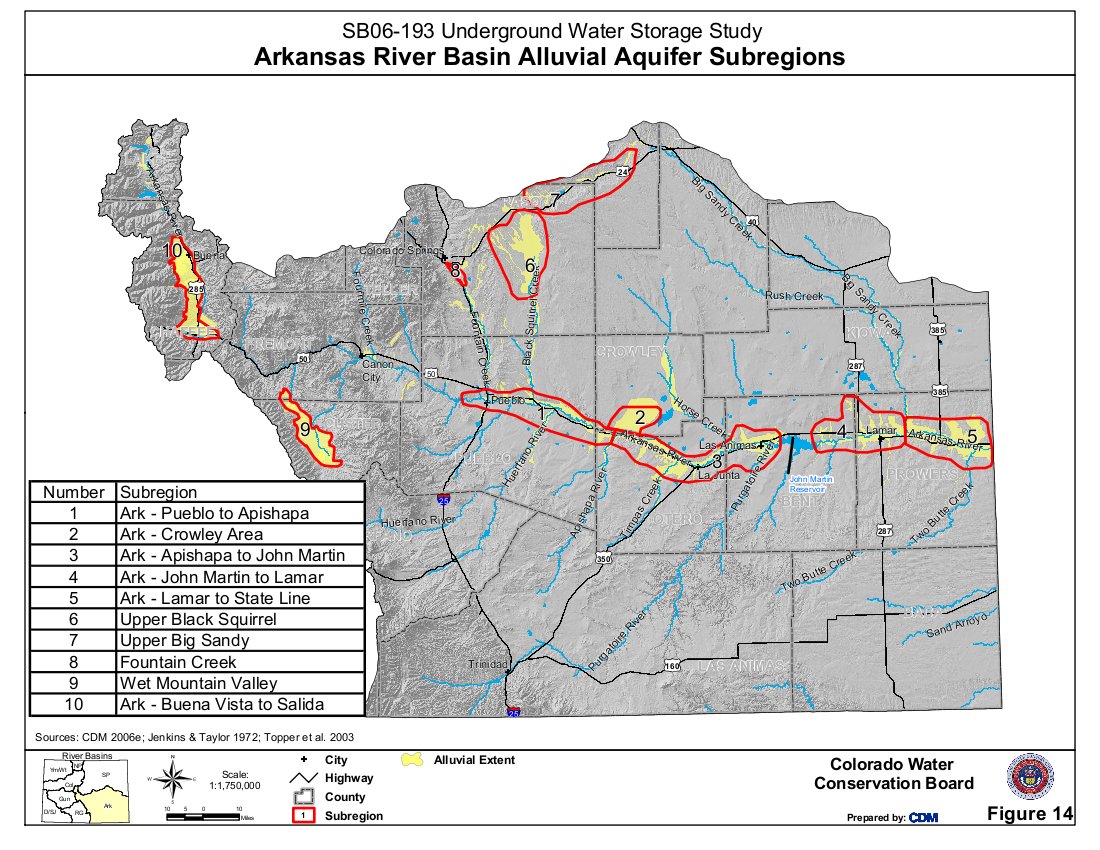
A picture named arkansasbasinalluvialaquifersubregions.jpg

From The Pueblo Chieftain (Chris Woodka):

The [Gunnison and Arkansas] roundtables met in June and assigned committees to look at how water in the Aspinall Unit — Blue Mesa, Morrow Point and Crystal reservoirs — could be used to benefit the entire state. The committee will meet again Friday to further discuss the issue. The full roundtables are planning to meet again as well, possibly in November.

he Arkansas Basin Roundtable Wednesday voted to approve a letter to the Bureau of Reclamation, which runs the Aspinall Unit, with questions about whether the service contract for Blue Mesa could be changed. Basically, the letter seeks to find out if the state could store 200,000 acre-feet of water annually in Blue Mesa, carry it over from one year to the next without reduction and remain exempt from having the water reapportioned in the event of shortage. The water would be used to head off a call on the Colorado River by downstream states under the 1922 Colorado River Compact…

The issue is important to the Arkansas River basin because most of its diversions — and all of the major ones — are junior in water rights priority to the 1922 compact. Twin Lakes, Homestake and the Fryingpan-Arkansas Project were all decreed after the seven-state compact.

More coverage from Chris Woodka writing for The Pueblo Chieftain. From the article:

In late 2004, the CWCB issued the first draft of the Statewide Water Supply Initiative, which projected an 18-percent gap between municipal water supplies and needs by the year 2030. Since that time, roundtables and the Interbasin Compact Committee have been working with the CWCB on solutions to avoid drying up thousands of acres of farm ground. The planning period has been expanded to 2050 and climate changes are being taken into account. A series of reports has been prepared and comments are being solicited from the roundtables and the public on the results, [Todd Doherty, a CWCB staffer] said.

A series of reports has been prepared and comments are being solicited from the roundtables and the public on the results, Doherty said. Among highlights:

Colorado municipal water users currently use 1.1 million acre-feet annually, and will need between 600,000-1 million acre-feet more by 2050, depending on growth and the success of projects already planned. Identified projects would provide about 437,000 acre-feet.

– The Arkansas River basin will need between 36,000-109,000 acre-feet of new municipal water supplies by 2050. If projects like Southern Delivery System and the Arkansas Valley Conduit are completed, the need for new supplies will be at the lower end of the spectrum, but there will be a need.

– If water projects are developed in traditional ways — mainly buying agricultural rights and using existing reservoirs — it would cost $18 billion to meet the municipal gap. With cooperative projects and programs — new reservoirs, pipelines and temporary agricultural transfers — the cost could drop to $11 billion.

– The needs are greatest on the Front Range, while the sources of new supply are on the Western Slope.
One surprising preliminary finding shows it would be less expensive per acre-foot of water gained to build any of four transmountain projects. It would cost more to treat lower quality water from the lower reaches of the Arkansas or South Platte, Doherty explained.

It was the first time the state has indicated a shortfall in water available to agriculture. Until now all reports have focused on the municipal gap and indicated agriculture would dry up because cities were willing to pay higher prices for the water.

More Arkansas River basin coverage here.

La Niña: Will Colorado’s winter be wet or dry?

A picture named elninolanina.jpg

From the Summit County Citizens Voice (Bob Berwyn):

National Weather Service forecasters are pinpointing the potential effects of strengthening La Niña conditions this winter, predicting a dry winter on Colorado’s eastern plains and in the southern part of the state, but above-average snowfall for the northwestern quadrant of Colorado. The forecasters said there is still some disagreement about whether this year’s La Niña will be a strong event, but they said that the strong cooling of sea surface temperatures in the eastern Pacific and a positive feedback loop of the ocean and atmosphere are tilting the odds in favor of a moderate to strong La Niña.

Mr. Berwyn is linking to the National Weather Service powerpoint.

More Colorado Water coverage here and here.

2010 Colorado elections: Kathleen Curry faces an uphill battle as an independent and write-in candidate despite being a 6 year veteran of the State House

A picture named crestedbutte.jpg

From New West (David Frey):

She’s considering more oil and gas regulations to protect landowners from the impacts of spills and water contamination and to ensure royalty owners get all the money they’re owed by energy companies…

And she hasn’t backed away from her right-to-float bill, which would give rafters and kayakers the right to boat through private property, another issue unpopular with many Republicans…

“I’ve kind of walked down the middle,” Curry said. “This is a diverse district. We walk the gamut, from Silt to Aspen, Lake City to Crested Butte. It can’t get much more diverse.”

More 2010 Colorado elections coverage here.

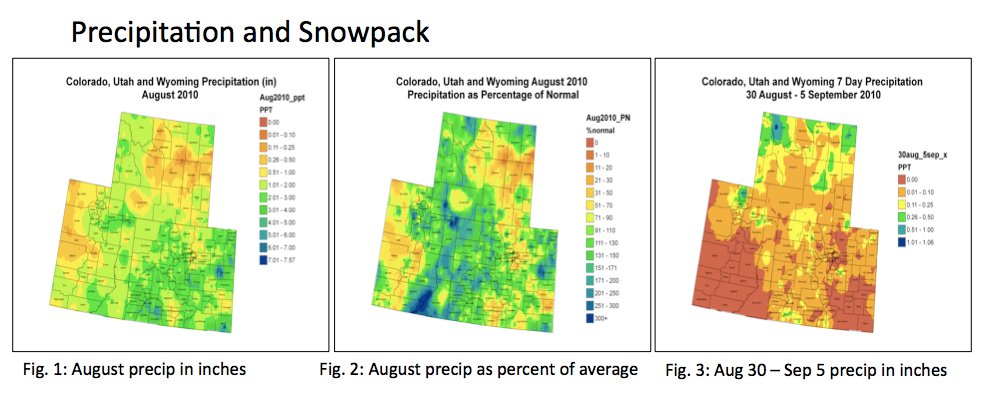
NIDIS Weekly Climate, Water and Drought Assessment Summary of the Upper Colorado River Basin

A picture named augustprecipcoloradouppercolorado2010

Here are the notes from yesterday’s webinar.

More Colorado River Basin coverage here.

Precipitation news

A picture named lightningcj.jpg

From the Cortez Journal (Reid Wright):

Measurements taken in Cortez show 2.42 inches, or 197 percent above normal precipitation for July; and 1.97 inches, or 144 percent above normal precipitation for August. Typically the driest month of the year, June reached 0.43 inches, which is 100 percent of normal, [local meteorologist Jim Andrus] said. Last summer was relatively dry, and the area has not seen this much summer precipitation since 2006, Andrus said.

Horsetooth Reservoir update

A picture named horsetoothreservoir.jpg

From the Fort Collins Coloradoan (Kevin Duggan):

Although the reservoir’s level dropped nearly 16 feet in the last month with the onset of hot, dry weather, its elevation was at 5,400 feet going into the Labor Day weekend and remained there Monday. The water hasn’t been that high this late in the year since 2004, said Kara Lamb, spokeswoman for the U.S. Bureau of Reclamation, which manages the reservoir. Prior to that, the measure wasn’t seen since the late 1990s. “We had a full reservoir all summer, and that’s not typical,” she said…

Demand this year for irrigation water in the Colorado-Big Thompson system, which includes Horsetooth Reservoir and Carter Lake, is about 50,000 acre feet below normal, said Brian Werner, spokesman for the Northern Colorado Water Conservancy District. Precipitation for the year so far is about 118 percent of average. All of that bodes well for the start of the next boating and irrigation season, Werner said. “Unless something completely crazy happens, we should have good carryover water for next year,” he said.

More Colorado-Big Thompson Project coverage here.

Arkansas River Basin: The Pueblo Board of Water Works closes on nearly 27% of Bessemer Ditch water rights

A picture named arkbasinditchsystem.jpg

From The Pueblo Chieftain (Chris Woodka):

“Right now, financially, we’ve acquired what we’re comfortable with to meet our needs for the next 30-40 years,” said Alan Hamel, executive director of the Pueblo water board. “I don’t see any more major purchases in the next seven or eight years.” Still, the water board is acquiring a few more shares. This year, the board budgeted $3 million to purchase another 300 shares. In 2009, the board bought about 5,300 of the 20,000 shares on the Bessemer Ditch…

The board’s offer to allow farmers to lease water back for 20 years was so popular — 97 percent took the deal — that it was difficult to find land to revegetate this year, so that program was delayed. The board has completed engineering for three measurement and control stations, and plans to build them when the ditch is dry, during winter water storage from Nov. 15-March 15. The estimated cost is $250,000-$300,000. “The structures will allow the Bessemer to control local flooding, protect the ditch and improve the efficiency of running water in the ditch,” Hamel said.

The board also is working with one landowner to set up a lease-fallowing program, where the landowner would keep one-third of his water and irrigate a different portion of the farm each year. That way, none of the land would be permanently removed from production, Hamel said. “It has the potential to serve as a model for future shares, or possibly for some we have already purchased,” Hamel said…

In the next year, more engineering work is planned. A change case, which would allow other uses for water now decreed agricultural, will not be filed until late 2011 at the earliest, Hamel said…

“My concern is that we’re headed down the road where they buy more water to the point where there is nothing left to support agriculture,” said Mike Bartolo, a Bessemer shareholder who manages the Colorado State University Agricultural Research Center at Rocky Ford. Bartolo was a vocal opponent of last year’s change in the bylaws of the ditch that make it possible to use the water outside the area historically irrigated by the Bessemer Ditch. The vote, 2-1 in favor of changes suggested by the Pueblo water board, cleared the way for the sale. “The municipal interests can’t see beyond the end of their spreadsheets,” Bartolo said. “They are exterminating the best farm ground in the state.” Bartolo has seen the effects of ditch sales from the Rocky Ford Ditch, now almost completely owned by Aurora, except for the research center and other holdouts. A 20-year agreement to lease back to farmers only delays the demise of agriculture, he said.

Leonard DiTomaso, who opposed the water works’ bid to change the bylaws and briefly served on the Bessemer board as an opponent of the sale, said the only regrets he hears are from others who would like to sell.
“There are more who would sell if they could,” DiTomaso said. “The larger ones are those who had the opportunity, but it’s really a matter of time before someone else comes in with an offer.”

More Arkansas River Basin coverage here.

David Nickum: ‘This is a huge missed opportunity’

A picture named greenbackvscorivercutthroat.jpg

Update: Here’s the release from Trout Unlimited (Randy Scholfield):

A settlement to one of Colorado’s longest-running water disputes – and the opportunity to launch the largest native trout restoration in Colorado’s history – was dealt a blow by the Forest Service’s refusal to accept a collaborative arrangement for funding the project.

Colorado Trout Unlimited (CTU) and the Water Supply and Storage Company (WSSC) last year agreed to settle a long-standing dispute regarding how best to address environmental impacts of the Long Draw Reservoir in the Cache la Poudre headwaters. But the Forest Service on Sept. 3 rejected the cost-sharing arrangement at the heart of the proposal.

The parties based the proposal on a Forest Service concept for restoring native greenback cutthroat trout in 40 miles of the Cache la Poudre headwaters, but they developed a collaborative framework for doing so under which WSSC would provide seed money for the program while CTU and the State of Colorado would leverage that contribution through public and private grants and in-kind contributions. The Forest Service supported the greenback restoration alternative, but rejected the collaborative approach and instead placed full responsibility for the program on WSSC.

“The good news is that the Forest Service, WSSC, and CTU all agreed that restoring native trout in the Poudre headwaters is the right approach to mitigating Long Draw’s impacts,” said David Nickum, Executive Director of CTU. “The bad news is that the Forest Service rejected a carefully crafted proposal that had allowed stakeholders to find common ground after more than 10 years of legal battles. This is a huge missed opportunity.”

Under the proposed collaborative effort, WSSC would take responsibility for reclaiming and restoring native cutthroat trout in Long Draw Reservoir and its tributaries – establishing a large and stable recovery population. WSSC, CTU, and state agencies including the Division of Wildlife and Colorado Water Conservation Board would then leverage that contribution to extend restoration into multiple adjacent drainages that could ultimately create a “metapopulation” – a network of native fish populations across a larger watershed that is more resilient and sustainable than small isolated populations. The effort would be the largest native trout restoration project in Colorado’s history and would represent a major step toward recovery and de-listing of greenbacks under the Endangered Species Act.

“We worked diligently to develop the Forest Service’s concept into a balanced, win-win proposal,” said Dennis Harmon, General Manager of WSSC. “We are disappointed and frustrated that the Forest Service has missed this opportunity to resolve the dispute and has instead adopted a decision that will extend the controversy over Long Draw as well as its economic and environmental costs. We simply do not feel that the cost to the company (estimated by the Forest Service at more than $800,000 and maybe much more) to renew a permit for 53 acres around the perimeter of Long Draw Reservoir is appropriate or fair to the Company and its shareholders.”

The Forest Service has an administrative appeal process by which parties can seek reconsideration of agency decisions. Despite the setback posed by the current decision, CTU and WSSC hope to work with the agency through its appeal process to advance a collaborative approach, avert further legal battles, and bring this long conflict to a positive close for the Poudre River and the fish and farmers that rely upon it.

From the Fly Rod and Reel weblog (David Nickum/Dennis Harmon):

“The good news is that the Forest Service, WSSC, and CTU all agreed that restoring native trout in the Poudre headwaters is the right approach to mitigating Long Draw’s impacts,” said David Nickum, Executive Director of CTU. “The bad news is that the Forest Service rejected a carefully crafted proposal that had allowed stakeholders to find common ground after more than 10 years of legal battles. This is a huge missed opportunity.”

Under the proposed collaborative effort, WSSC would take responsibility for reclaiming and restoring native cutthroat trout in Long Draw Reservoir and its tributaries – establishing a large and stable recovery population. WSSC, CTU, and state agencies including the Division of Wildlife and Colorado Water Conservation Board would then leverage that contribution to extend restoration into multiple adjacent drainages that could ultimately create a “metapopulation” – a network of native fish populations across a larger watershed that is more resilient and sustainable than small isolated populations. The effort would be the largest native trout restoration project in Colorado’s history and would represent a major step toward recovery and de-listing of greenbacks under the Endangered Species Act.

“We worked diligently to develop the Forest Service’s concept into a balanced, win-win proposal,” said Dennis Harmon, General Manager of WSSC. “We are disappointed and frustrated that the Forest Service has missed this opportunity to resolve the dispute and has instead adopted a decision that will extend the controversy over Long Draw as well as its economic and environmental costs. We simply do not feel that the cost to the company (estimated by the Forest Service at more than $800,000 and maybe much more) to renew a permit for 53 acres around the perimeter of Long Draw Reservoir is appropriate or fair to the Company and its shareholders.”

Here’s the USFS record of decision for the project.

More Cache la Poudre watershed coverage here and here.

Energy policy — hydroelectric: Aspen Planners to draw down Maroon Creek as demonstration project for proposed hydroelectric plant

A picture named microhydroelectricplant.jpg

From the Aspen Daily News (Curtis Wackerle):

Water levels in Maroon Creek will be drawn down from the current flow of about 50 cubic feet per second to 14 cfs on Tuesday and Thursday this week as the city of Aspen demonstrates the “look and feel” of a stream running near the minimum rate associated with the proposed Castle Creek hydropower project. The demonstrations are technically site visits with Aspen City Council members, and thus are public meetings…

Maroon Creek has a state-mandated minimum instream flow of 14 cfs. The site visit is intended to allow council members to observe the “look and feel of a stream at those levels,” Hornbacher said.

More hydroelectric coverage here and here.

Windy Gap Reservoir drained to attack siltation

A picture named fortmorganrainbowbridge.jpg

From the Sky-Hi Daily News:

Windy Gap Reservoir outside Granby was drained recently so crews could remove a build-up of silt that was threatening the pumping facility…The reservoir will be refilled when construction is complete.

More Windy Gap coverage here and here.

2010 Colorado elections: U.S. Senator Bennet and U.S. Representative Markey will host an agriculture forum Thursday

A picture named fortmorganrainbowbridge.jpg

From The Fort Morgan Times:

The offices of U.S. Sen. Michael Bennet and Rep. Betsy Markey, along with the USDA, are hosting a forum on agriculture, conservation and rural development in Fort Morgan on Thursday, Sept. 9. The event is to be held from 5:30 to 7 p.m. at Morgan Community College in the Founders Room in Spruce Hall. MCC is at 920 Barlow Road. The forum will allow participants to provide feedback on agriculture, conservation and rural development issues and will include a conversation about the 2012 farm bill…

Key questions for discussion include how to cultivate the next generation of farmers and ranchers, how to provide Colorado producers with the risk management tools and safety net they need in a fiscally responsible manner, and how to address natural resource concerns, such as water quantity and quality, erodible soils and wildlife habitat, while keeping land in production and opportunities open for rural economic development. Those interested in attending should RSVP to agriculture@bennet.senate.gov.

More Morgan County coverage here.

San Luis Valley: Documentary film makers plan to spend a year and a half gathering and telling the valley’s water stories

A picture named smithreservoir.jpg

From the Valley Courier:

At Wednesday’s natural resources and energy workshop sponsored by Adams State College Community Partnerships, about two dozen of the Valley’s water users, including a few of those whom Gibson calls “water buffalos,” gathered to meet Karuna Eberl, film maker and director/producer of Wandering Dog Films. Eberl and her crew plan to spend the next year and a half gathering the stories of water in the San Luis Valley and creating a series of HD-TV documentaries for nationwide distribution.

Under the nonprofit fiscal sponsorship of EarthNest Institute, based in the Sangre de Cristo Ranches of Fort Garland, the project’s first public gathering showed trailers of the production company’s other documentaries and opened the meeting to questions and comments.

As Eberl explained, “This is your documentary, your story. We’re going to take our time, listening very closely and learning about your complex water issues. And we’re going to tell your stories with integrity and with respect for your differences.”[…]

Those who have a water story to tell, contact Nicole Langley, at EarthNest Institute, at 719-588-4109. To see samples of Karuna Eberl’s documentary film productions, go to www.wanderingdogfilms.com.

A look at water and farming in the Arkansas Valley

A picture named arkbasinditchsystem.jpg

From The Pueblo Chieftain (Chris Woodka):

Mauch was president of the Fort Lyon Canal during the 2002 drought, when many of the shareholders decided it was time to sell to High Plains A&M. The investors bought up nearly a quarter of the canal and persuaded others to vote with them. “We were this close to giving up control of the canal,” Mauch said. “Even though our lawyer said we’d be protected, I wasn’t so sure.” Since then, there have been other nettling water issues that Mauch believes continue to chip away at narrow profit margins.

Along with Don McBee, Mauch is helping organize a $200,000 study of leakage in 20 ponds that feed sprinklers. They want to prove something they believe is just common sense: Those ponds lose a lot of water. The Colorado Division of Water Resources has filed a court case on rules governing the consumptive use gains from irrigation improvements and could plug the information into a model that presumes 3 percent seepage. Steering his pickup onto the rim of one of his ponds, Mauch pointed to the curling mud chips on the bottom of the pond: “Three days ago, this was full of water. You’re telling me that’s a 3 percent loss?”

Driving past Harry Reed’s farm — Reed is one of several farmers whose seep ditch rights are under measurement requirements for the first time in 100 years — Mauch shook his head and waved an arm.
“That water never made it back to the Arkansas River,” he said. It’s too close to his own troubles with the state. “They can put a giant pipeline to suck the river out at Pueblo Dam. They talk about building dams on Fountain Creek and recapture water using the Holbrook. I’m 10 miles away from the Arkansas, and they say I’m cheating the river?”[…]

The most important step farmers have taken in recent years to protect their water is the Super Ditch, in Mauch’s opinion. The Super Ditch is the only way to stop municipal water speculators from continuing to raid the Arkansas River basin, Mauch said. “You might think you can keep them away, but you can’t,” Mauch said. “The more prepared we are with a leasing program, the longer we can delay. We have to give them a place to shop, or they’ll buy the store.”

Mauch was among the farmers who incorporated the Super Ditch and praised the Lower Arkansas Valley Water Conservancy District for helping get it off the ground. The leases should not be limited to the Arkansas Valley in order to realize the full value or the water, he said. Temporarily drying up some land can be beneficial, and in very dry years, water could be more valuable in an urban shower than put on a crop that’s not going to make it anyhow, he added.

More coverage from Chris Woodka writing for The Pueblo Chieftain. From the article:

The most important tool in the Lamar farmer’s [Dale Mauch’s] shed appears to be the cell phone, even though he often would rather set irrigation tubes than try to deal with computers, global positioning systems and other technology that dominates modern farming.

More Arkansas River Basin coverage here.

President Obama to request $50 billion for infrastructure

A picture named fountainpavementdrawing.jpg

From The New York Times (Chery Gay Stolberg):

Mr. Obama will lay out the plan, which is intended to promote the creation of construction jobs over the coming year and beyond, during a trip to Milwaukee on Monday afternoon, where he will observe Labor Day by attending a union festival. It would require Congressional approval, as it envisions extending and revising a broad transportation policy bill that is usually renewed every five years or so, but has been stalled in Congress. Despite its uncertain prospects, the White House is highlighting its proposal as one part of a broader economic recovery package that Mr. Obama is to unveil during a speech in Cleveland on Wednesday. With Democrats looking at a bleak election season, in large part because of high unemployment, the White House has been scrambling to find ways to jump-start the sagging economy.

More infrastructure coverage here.

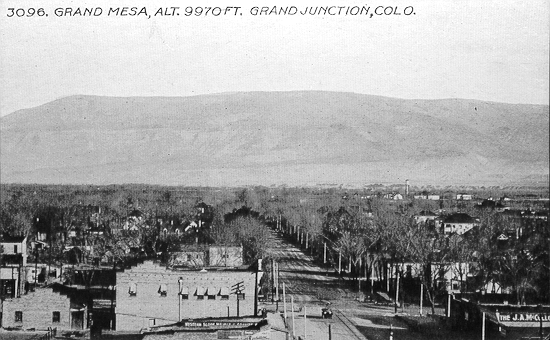
Grand Mesa Water Tour Saturday September 18

A picture named grandmesa.gif

From email from DARCA (John McKenzie):

Grand Mesa provides most of the Grand Valley’s drinking water. It is where we go to ski in winter and beat the heat in summer. Grand Mesa is also home to working ranches, natural gas wells, and wildlife.

On Saturday, September 18, 2010, the Water Center at Mesa State College (a project of the Mesa County Water Association and Mesa State College) will host an all-day tour of the Grand Mesa with expert presenters to explain how Grand Mesa’s water is managed to meet needs for clean drinking water, the environment, recreation and agriculture. Along the way you will see gorgeous vistas from Lands End Road and Hwy 65, as well as aspens in high color. Key topics covered on the tour will include:

– how drinking water sources are protected from wildfire and other threats.
– the biological importance of fens (peat-forming wetlands) and how
protecting them complicates water development.
– how Grand Mesa’s reservoirs are managed for multiple uses.
– how Grand Mesa’s water is used for snowmaking
– the potential for ranching on Grand Mesa to suffer as municipal water needs grow.

We will have expert speakers from Mesa State College, the City of Grand Junction, the US Forest Service, the CO Division of Water Resources, Powderhorn Resort, and Ute Water.

Cost for the tour, including lunch and transportation, is $40 if you register prior to September 8 and $50 for late registrants. Members of the Mesa County Water Association get a $10 discount.

For more information or to register, contact Hannah Holm at 970-683-1133 or hannah@mesacountywater.org or download the draft itinerary and registration form from www.mesacountywater.org.

More Colorado River Basin coverage here.

Forest to Faucet Partnership: Denver Water and the U.S. Forest Service to pony up $33 million for watershed protection

A picture named haymanburnarea.jpg

The Pueblo Chieftain is running an article from Harris Sherman U.S. Department of Agriculture undersecretary of natural resources and environment praising the Forest to Faucet Partnership between Denver Water and the U.S. Forest Service. Here’s an excerpt:

Water for more than 60 million Americans comes from our national forests. Half of those people turn on their faucets and tap directly into watersheds on forested lands in Colorado.

The Forest Service is focused on restoring forest and watershed health to ensure a water source for our nation’s businesses, homes and agriculture. Today, our nation’s forests are threatened like never before. They face a health crisis due in part to climate change and a legacy of fire suppression.

The symptoms of declining health are evident, with widespread outbreaks of forest insect and disease infestations, and the increasing occurrence of large and catastrophic wildfires, such as the 2002 Haymen Fire. That fire was the largest in Colorado’s recorded history, burning more than 137,000 acres. It resulted in massive siltation and erosion into the streams and rivers feeding Denver’s drinking water reservoirs, creating an expensive, challenging task for Denver Water’s managers.

More restoration coverage here.

Energy policy — oil shale: Garfield County Commissioners to get briefing on water requirements for oil shale production September 7

A picture named shelloilshaleprocess3

From the Glenwood Springs Post Independent (John Colson):

Energy industry liaison Judy Jordan is on tap give the Board of County Commissioners an update on the latest estimates about how much water may be needed to extract the estimated 1.2 trillion barrels of “oil” trapped in subterranean rock strata in the Piceance Basin, which is bisected by the Colorado River as it passes through Garfield County…

Jordan told the Post Independent on Friday that she will be basing most of her comments on a recent study by the Colorado River Water Conservation District in Glenwood Springs. That report, according to CRWCD Deputy General Manager Dan Birch, estimated that extracting the shale oil might take as much as 120,000 acre-feet of water per year, which he said translates to roughly one or two barrels of water used for each barrel of oil produced. That is considerably less than the 400,000 acre-feet of water per year estimated in a 2008 study by the URS consulting firm, which translated to roughly 3 to 5 barrels of water consumed for every barrel of oil produced.

But, said Birch, even at the lowered estimate, the oil shale industry would use up to approximately 20 percent of all the Colorado River water now being used by agriculture, municipalities and other users around the Western Slope…

Among the reasons for the reduced estimates of water use, according to the study, is, in part, because earlier estimates were based on the amount of electricity needed to power the “in-situ” process being studied by Royal Dutch Shell. That process would involve using massive amounts of energy to heat up the shale rock in place and draining out the liquid kerogen.

More oil shale coverage here.

The Forest Service and Water Supply and Storage Company ink the deal for the irrigation company’s Long Draw Reservoir operations

A picture named longdrawreservoir.jpg

From The Greeley Tribune (Bill Jackson):

The decision gives the Water Supply and Storage Co. a 30-year easement for operations at Long Draw Reservoir, near the top of the Poudre Canyon. It requires the company to participate with the U.S. Forest and Park Services in the restoration of native trout populations and the installation of an early warning system to provide around-the-clock monitoring at the dam at the reservoir…

The decision signed Thursday, according to a news release from the U.S. Forest Service, includes a description of the background of the project that includes the Environmental Impact Statement. It will be posted online at www.fs.usda.gov/arp.

More Poudre River watershed coverage here and here.

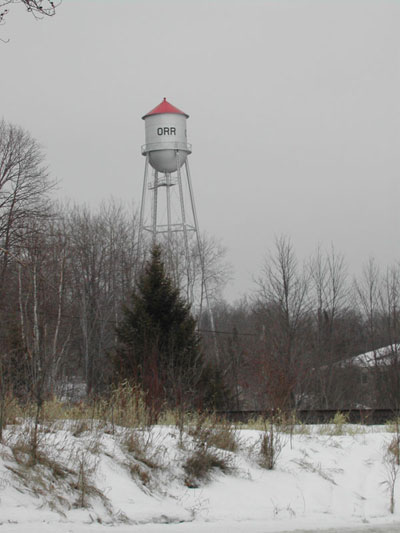
Oak Creek: New tank for the distribution system is in the works

A picture named orrmnwatertower.jpg

From Steamboat Today (Zach Fridell):

…the town, with a federal grant through the De part ment of Local Affairs, is in the first stages of more than doubling its water supply in a project that could be finished by the end of next year.

The current tank, on the hillside at the top of Bell Avenue, is made of concrete. A project engineer with Nolte Engineering told the Oak Creek Town Board that the tank’s structural integrity is in question. The old 200,000-gallon tank can nearly empty at the highest point of demand. The new tank will be placed near the old tank so both tanks can use the same pump. It will be made of steel and will hold 240,000 gallons.

The new water tank also will help the town better handle other water emergencies. In January, water levels in the tank got down to 20 percent when a pipe froze and burst in downtown Oak Creek.

More infrastructure coverage here.

Stockholm: World Water Week 2010

A picture named worldwaterweek2010

World Water Week kicks off today in Stockholm. This year’s theme is The Water Quality Challenge – Prevention, Wise Use and Abatement. Click through for a complete listing of events. Here’s the link for their RSS feed.

Colorado has no water quality challenges unless you consider past mining activities, agricultural runoff, storm runoff from our cities or pharmaceuticals in the water supply and the occasional case of illegal dumping.

Energy policy — nuclear: Proposed Piñon Ridge Mill update

A picture named pinonridgesite.jpg

Here’s a report from Nancy Lofholm writing for The Denver Post. Click through and read the whole thing. Here’s an excerpt:

One fact is clear: The climate surrounding uranium processing is much different than during the secretive era of the Atomic Energy Commission and the Manhattan Project. Mills then were popping up across the state to fill a frantic need for wartime and Cold War nuclear bombs.

The Piñon Ridge Mill that Energy Fuels Resources Corp. wants to build on 880 acres of the Paradox Valley instead would feed nuclear power plants, fill medicinal and other technological needs, and provide steel-hardening vanadium for industrial uses. Unlike earlier mills approved with no consideration for their toxic legacy, Energy Fuels has handed over 15 thick binders to state regulators. The binders are filled with the design, environmental and safety details surrounding its proposed mill. Regulators are examining hydrology, seismology, demographic impacts and effects on flora and fauna, as well as demanding complete plans for how the mill ultimately would be torn down and the site reclaimed. This time around, overseers want to ensure radioactive dust won’t waft over Paradox Valley farm crops, chemical milling agents won’t harm wildlife, and heavy metals and radioactivity won’t trickle into water sources. “We’re taking every precaution with this mill,” [Warren Smith with the Colorado Department of Public Health and Environment’s Radiation Program] said. “If the applicant can’t demonstrate they can conform to our regulations, they won’t get the license.”

In the past, mill owners weren’t required to clean up the detritus created by the crushing, leeching and drying of uranium ore into an enriched product known as yellowcake. As much as 99 percent of uranium ore is left as waste after the milling process. The finely crushed tailings still contain 85 percent of the ore’s radioactivity and heavy metals. It also contains milling reagents such as kerosene and ammonia. That waste wasn’t considered a problem needing a solution until 1978, when the Uranium Mill Tailings Remediation Act passed. Only then were the 200 million tons of health-compromising tailings spread around milling and mine sites across the country suddenly dealt with. In the heyday of uranium mining and milling, those tailings were simply piled along riverbanks or spread across unlined acres around the mills. The hydro-intensive mills were allowed to set up shop alongside rivers. In some cases, the tailings were trucked to nearby towns to be used as fill dirt in construction projects. The contamination left behind by all that, along with a more modern mess at the Cotter Corp. mill site near Cañon City, has cemented the idea of uranium milling as an environmental nightmare.

More nuclear coverage here and here.

Precipitation news

A picture named lightning.jpg

From the Summit County Citizens Voice (Bob Berwyn):

August brought a precipitation surplus to Breckenridge, with 3.07 inches of rain, about 35 percent above the average. The monthly rainfall also brought the seasonal total to within .01 inches of average for the year to date, with just one month left in the hydrological year…

The 2010 year-to-date total is 18.86 inches, the historic average, based on records going back more than 100 years, is 18.87 inches.

At Dillon, the rain gauge at the Denver Water office told a different story, with the monthly rainfall total of 1.63 inches just a shade below the historic average for the month, 1.77 inches.

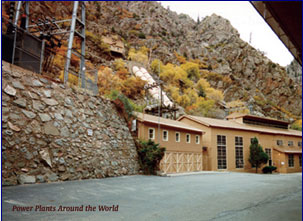
Colorado River: Efforts to keep flows up when the Shoshone power plant is offline

A picture named shoshoneglenwoodcanyon.jpg

Here’s the release from the Colorado River District (Jim Pokrandt):

Rafters, endangered fish and municipalities are iting from an agreement among reservoir owners and water users that maintains flows in the Colorado River even when the Shoshone Hydropower Plant is not calling for its senior water right.

In addition to producing green power for owner Xcel Energy, the Shoshone Plant’s nonconsumptive water right creates an unofficial minimum streamflow in the Colorado River. The rafting industry, individual recreationists, endangered fish and agricultural producers in the Grand Valley depend on the benefits of the Shoshone call. The water also helps communities that draw drinking water from the river.

From time to time, the Shoshone Plant, located on the Colorado River in Glenwood Canyon, must reduce diversions for necessary maintenance and cannot place its call for water. To maintain streamflows, however, water leaders in the river’s upper basin have worked out an agreement that makes Shoshone issues invisible to the public and keeps water in the river.

Currently, the century-old plant is expected to be partially shut down or completely down through the fall for maintenance and repairs. At this time of year, with declining natural river flows, many would notice the impacts of not having Shoshone’s 1,250 cubic feet per second (cfs) call on the river.

To compensate, reservoir owners, including the Bureau of Reclamation, Denver Water and the Colorado River District are operating to maintain a “target flow” of 1,250 cfs at the Dotsero gage, just upstream from the plant. The Colorado Division of Water Resources’ Division 5 office in Glenwood Springs is coordinating the plan.

The target flow is maintained through normal reservoir operations that include power plant releases and water held in storage to help protect endangered fish habitat in the Grand Valley. Some of the water would otherwise be released in the winter to make room for next year’s snowmelt. By releasing it now, the benefits accrue to rafters, agricultural producers and drinking water treatment plants.

Additional support for the program is coming from the Grand County Commissioners who have asked the Bureau of Reclamation to start releasing the water they store in Granby Reservoir to the Colorado River. Grand County paid the Northern Colorado Water Conservancy District to pump the water into Granby through its Windy Gap Project this spring for late summer when flows through the county ordinarily are thin.

To learn more about this collaborative program, contact Jim Pokrandt with the Colorado River District via phone at 970.945.8522 x 236 or e-mail jpokrandt@crwcd.org.

More hydroelectric coverage here and here.

Colorado River: Tagging endangered fish for data collection

A picture named razorbacksucker.jpg

From the Summit Daily News:

At the Price-Stubb Diversion Dam on the Colorado River near Rifle, a new “passive integrated transponder” (PIT) tag system is now monitoring the movement of endangered fish that are PIT tagged. A PIT tag is similar to a small microchip placed in a dog or cat at a veterinary clinic for individual identification if lost. The new PIT tag system, installed in early August, consists of four, 6-foot-by-5-foot antennas attached to the box culvert at the top of the fish passage. The system detects PIT tags to track whether fish are moving up or down the Price-Stubb Fish Passage. The system provides remote sensing and is built to withstand the flows and debris of the Colorado River. “This type of research tool is a safe, cost-effective way to monitor fish movement in the fish passage,” said Recovery Program Research coordinator Tom Czapla.

Four days after the system became operational, the first PIT-tagged fish — an endangered Colorado pikeminnow — used the passage. Data obtained at Price-Stubb and other locations show that the fish swam 130 river miles during the past year. “We anticipate receiving important information about all four species of endangered fish from this remotely sensed structure,” said U.S. Fish and Wildlife Service project leader Michelle Shaughnessy. “Most of the endangered fish are PIT-tagged, and this tracking system will help identify the type and number of species that move through the fish passage and inhabit this river reach.”[…]

More endangered species coverage here.

Creede: Water line replacement update

A picture named fountainpavementdrawing.jpg

From The Mineral County Miner (Toni Steffens-Steward):

The water line project started with the first phase that replaced lines under La Garita Street, and the second phase was just recently finished. The fourth and final phase of construction is planned to start in the spring of 2011. Replacement work will begin at the south end of town on Sept. 7, and the town council is assuring businesses that the project will be done as delicately as possible…

The project became necessary mainly due to the age of the system, but it will also help to increase system capacity and fire protection requirements.

More infrastructure coverage here.
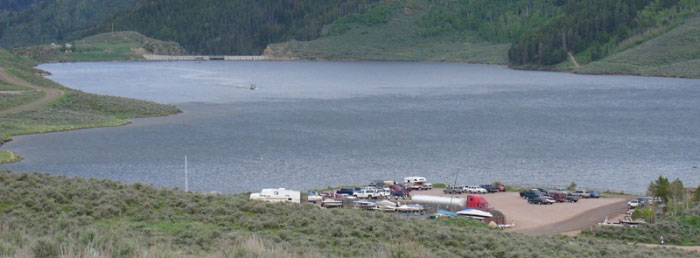
2010 Sustaining Colorado’s Watersheds: Learning from the past to protect the future

A picture named johnwesleypowell.jpg

Click here for all the dope about the conference. Here’s an excerpt:

October 5-7, 2010 at the Vail Cascade Resort and Spa

The draft agenda is available here.

This year’s conference highlights include:

– Pre and post-conference workshops and field trips on water education, 319 grant requirements, algae identification, willow installation and much more
– How to measure results in education, restoration and water quality programs with a workshop by John La Rocca on Outcome Management
– Opportunities for private investment in Colorado’s watersheds by Margaret Bowman of the Walton Family Foundation
– Jon Waterman’s 1,450-mile journey down the Colorado River, documented in his new book Running Dry: A Journey from Source to Sea Down the Colorado River
– Tracks on: tools for watershed restoration, water and land use, statewide water issues, oil & gas regulations, and non-profit management
– And much more!

Registration is $155 for members/$180 for non-members. Register soon! Registrations received after September 20 are subject to a $50 late fee.

More education coverage here.

CWCB: Board meeting September 13-15

A picture named coloradorivereaglecounty.jpg

From email from the Colorado Water Conservation Board (Lisa Barr):

The Colorado Water Conservation Board is meeting on September 13-15, 2010, at Ute Water Conservancy District’s Headquarters Office, 2190 H ¼ Road, Grand Junction, CO 81505.

The agenda is available on the CWCB website. CWCB staff memos and other materials will be available September 3, 2010, on our website.

The meeting will be “streamed” via the internet through the CWCB’s website. Click on the “Listen to the meeting LIVE!” link, found on our home page just before the meeting begins.

Presentations are also being made available. To watch presentations that accompany agenda items, click the “Watch Presentations” link on the CWCB website homepage just before the meeting begins…

If you need more information about this Board meeting, please contact Lisa Barr at lisa.barr@state.co.us.

More CWCB coverage here.

Fryingpan-Arkansas Project update

A picture named ruedidam.jpg

From email from Reclamation (Kara Lamb):

Just wanted to let you know that Ruedi will maintain its current release through the holiday weekend. The Fryingpan River will remain around 322 cfs.

More Fryingpan-Arkansas Project coverage here.
Colorado-Big Thompson Project update

A picture named olympusdam.jpg

From email from Reclamation (Kara Lamb):

This weekend, we will see the water elevation at Lake Estes fluctuate a little, but average out at 7471 feet. It will likely be above 7471 in the afternoons and early evenings, and at 7471, or slighly lower, in the mornings. Releases from Olympus Dam to the Big Thompson are matching the native flow on the Big Thompson River coming into Lake Estes. They will remain around 60 cfs. Pinewood Reservoir has started its more typical flucutation pattern due to power generation. The daily average of the water level elevation through the holiday weekend should be around 6573. Carter Lake is also seeing operations typical of this time of year. Water users continue to take water and the elevation is slowly dropping. We are also running water north from Carter to generate hydropower and meet demands on the Big Thompson River. As a result, the water elevation at Carter is at 5722. It will likely remain in the 5720s through the weekend, a fairly average water elevation for this time of year. Horsetooth continues to see a slow draw. It is at an elevation of 5402 and is anticipated to stay near the 5400 mark through the weekend.

From email from Reclamation (Kara Lamb):

We are currently releasing about 625 cfs from Green Mountain Reservoir to the Lower Blue. There might be some slight fluctuations, but 625 cfs will be the average release through the weekend.

More Colorado-Big Thompson Project coverage here.

Boulder: Wastewater treatment plant exceeds new rules for effluent discharge temperature in winter months

A picture named wastewatertreatmentwtext.jpg

From the Boulder Daily Camera (Heath Urie):

The Colorado Water Quality Control Commission in 2007 approved new standards for wastewater discharge lines that require municipalities to better control the temperature of the water that’s treated and then dumped into creeks and rivers. The rules were put in place to protect fish and other wildlife that are sensitive to water temperature.

Now, Boulder is finding itself to be something of a guinea pig for the state, as it’s the first municipality to renew its wastewater-discharge permit since the rules went into effect last year for streams within the South Platte River Basin. When city utility officials received a proposed draft of the new discharge permit earlier this year, they found out that Boulder’s 75th Street Wastewater Treatment Plant — which discharges about 20 million gallons a day into Boulder Creek — is not meeting the new standards during the coldest months of the year. According to the Water Quality Control Division of the Colorado Department of Public Health and Environment — which is tasked with enforcing the standards and issuing permits — the new rules limit the maximum average temperature of discharged water to 59 degrees during the winter. But Boulder’s water ranges from 53.24 to 61.34 degrees from December through February…

“They’re pretty close to meeting the standards,” Steve Gunderson, director of the state Water Quality Control Division, said of the Boulder utility. “They are not quite there for the winter months.” Gunderson said the state has proposed giving Boulder until October 2013 to comply with all of the standards. “This is a challenge for a domestic wastewater treatment plant,” he said. “It can be pretty expensive to upgrade a wastewater treatment center.”[…]

Williams said it’s not yet clear how the city will meet the new temperature requirements. “We’re trying to sort it out, better understand it, talk to the state about it and see what might happen in our final permit,” Williams said. He told the City Council earlier this week that a worst-case scenario is that the utility will be forced to “chill our wastewater.” That could force the city to make some “very unusual” capital improvements, such as purchasing a giant chiller that would cool the water, or creating detention ponds where water can naturally cool off, Williams said. It is possible that the city could ask the state for an exemption from the temperature rules, but that would have to be approved through both the water commission and the U.S. Environmental Protection Agency. The city has until late September to file a response about the state’s offer for a three-year grace period.

More wastewater coverage here.

Energy policy — oil and gas: Larimer County Commissioners turn down proposed Deep Water Metropolitan District

A picture named derrick.jpg

From the North Forty News:

Despite an affirmative recommendation from the planning commission and planning staff, Larimer County Commissioners voted 3-0 against a metropolitan district that could eventually have provided an emergency water source for Wellington. Commissioners said the proposal did not provide enough information for them to support the idea, which would create a quasi-governmental authority. Commissioner Steve Johnson said water owner Richard Seaworth could just as easily form a private company to sell water to Wellington. Creating a metro district now is “backward to me,” he said.

More Wellington coverage here and here.

Hiawatha Lake outlet works maintenance

A picture named hiawathalake.jpg

From the North Forty News (Stephen Clearheart Johnson):

Truth is the lake is being drained to enable routine maintenance in rebuilding the outlet head gate and strengthening the dam. Routine, that is, if gauged over a long time span. “We think the dam was last rebuilt in 1954,” said Gene Barker, “but the records aren’t clear.” Barker is a board member of Red Feather Storage & Irrigation, the company that owns the lake. Known locally as S&I, the company manages water rights on the many lakes, ditches and diversion controls in the area. The lake has been drained as far as possible. A shallow pool averaging 8 inches remains. The pool will be aerated to keep the water healthy for remaining fish. Barker said he thinks most of the fish went downstream with the water…

“We’ve improved the quality of the system by quite a bit by redesigning the outlet structure,” said Barker. The improvements should prevent the action of winter ice from damaging both metal and concrete components of the outlet gate.

More South Platte River Basin coverage here.

Montezuma County: Tamarisk forum recap

A picture named tamariskleafbeetle.jpg

From the Cortez Journal (Kimberly Benedict):

The evening forum, held at the Calvin Denton Room at Empire Electric, was presented by the Dolores Conservation District in partnership with Colorado State University Extension. “Our main focus is to hear from everybody what you want to be doing with tamarisk in the county,” said Steve Miles, of the Dolores Conservation District. “We really want to hear input as to what you want to see the conservation district do.”[…]

Miles, Clark Tate, with the Tamarisk Coalition, and Dan Bean, of the U.S. Department of Agriculture, gave brief presentations on the progress of tamarisk eradication in the west, focusing on the use of tamarisk beetle biocontrol. First released in 2001 in experimental sites, tamarisk beetles are now widespread throughout Colorado and Utah. The small beetles are native to China and Kazakhstan and were part of a $1 million USDA project aimed at finding a biocontrol agent for tamarisk. “The tamarisk biocontrol project started in the ’70s with a look at tamarisk and the problems and potential for developing agents for control,” Bean said. “At the time their was a belief you could not control trees and shrubs with an insect so they shelved it. In the late ’80s they reconsidered.”

Tamarisk beetles do not kill plants directly, they consume the foliage resulting in stressed plants that have difficulty greening after a few seasons, according to Tate. The beetles have left a wake of dead tamarisk in their path in Nevada, resulting in a 75 percent mortality rate. “We are seeing a lot of stressed out tamarisk,” Tate said. “It is hard to tell if they are actually dead, but just looking at them, they are very, very stressed. It is time to start thinking about the void that is going to be created.”
More tamarisk control coverage here and here.