Rocky Mountain Arsenal superfund site cleanup update

A picture named rockymountainarsenal1964

From The Denver Post (Bruce Finley) via the Sky-Hi Daily News:

For half a century, the arsenal at Denver’s northeast edge loomed as a secretive complex of more than 250 buildings with signs around it warning “Use of Deadly Force Authorized.” There, the Army made chemical weapons and later, Shell made pesticides. Residential and commercial development gradually encroached on the site. Today, 47 bison roam, raptors circle and badgers burrow on recovering short-grass prairie 10 miles from downtown Denver. “We’ve transformed a very highly contaminated site into a beautiful prairie landscape,” said Carol Campbell, the EPA’s assistant regional administrator handling Superfund cleanups and other officials. “Because it is something that people now can go to and enjoy, it is different from other Superfund cleanup sites.”

The Army still will be responsible for 725 acres of fenced-off land where toxic materials were consolidated and buried. Devices called lysimeters, about 6 feet beneath the clay and dirt, are supposed to verify that surface water isn’t reaching the waste. In addition, monitoring of the already-contaminated groundwater at the arsenal must continue to ensure that lethal chemicals don’t spread farther toward the South Platte River…

Once, homesteading farmers and ranchers lived here. In 1942, the Army established the arsenal to make mustard gas and blister agent to deter Japan and Germany. Then, during the Cold War, factory workers in body suits and gas masks produced thousands of tons of napalm and sarin nerve gas, which was stuffed into bomblets that were placed in Honest John rocket warheads.

Army leaders later leased the site to private companies, including Shell, which arrived in 1952 and for three decades produced chemical pesticides, such as dieldrin, that Shell sold worldwide for agriculture. The liquid waste was dumped in evaporation ponds. Solid waste was dumped into trenches. More than 600 lethal chemicals spread through the soil into groundwater.

More South Platte Basin coverage here.

‘Save the Colorado’ donates to several efforts

A picture named coloradotransmountaindiversions.jpg

From the Sky-Hi Daily News:

A campaign to help save the Colorado River is supplying $40,000 to causes that aim to protect the Upper Colorado River. Of that money, three-fourths has been donated to the Colorado Environmental Coalition to address new transbasin diversion threats “which have given the Upper Colorado River the dubious distinction of being named one of the ‘Most Endangered Rivers in America’ for 2010.” The Coalition’s “Colorado River Protection Campaign” will “aggressively promote water conservation in Denver and Front Range cities as an alternative water supply source.”

Meanwhile, about $10,000 was donated to the American Whitewater Association, “to protect streamflows — thus boating opportunities — in the Upper Colorado River.”

Called “The Save the Colorado River Campaign Fund,” the nonprofit Colorado River advocacy organization announced its grants for 2010, totaling $150,000 donated to 10 environmental groups from the top of the river basin all the way to the bottom — all working to protect and restore the Colorado River…

The Save the Colorado Campaign Fund also made a grant to the Glen Canyon Institute in Utah for its “Fill Lake Mead First” project, an effort to address the dwindling water levels in both Lake Powell and Lake Mead. The effort may also provide more stable water supplies to Nevada, Arizona, and Southern California…

Additional funding went to:

• Grand Canyon Trust to protect the Colorado River flowing through one of America’s crown jewels, Grand Canyon National Park.

• Citizens for Dixie’s Future in Utah to address the threat of the Lake Powell Pipeline which will drain even more water from the Colorado River.

• Sheep Mountain Alliance in Colorado to protect stream flows and water rights on a tributary of the Colorado River.

• Sonoran Institute of Tucson to try to create an instream flow program for the Colorado River Delta.

• Earthjustice, the environmental law firm in Denver which is working to protect river flows throughout the basin.

More Colorado River Basin coverage here.

Middle Colorado River Watershed Partnership: ‘Watershed 101’ meeting September 21

A picture named coloradorivereaglecounty.jpg

From the Aspen Daily News (Brent Gardner-Smith):

The recently formed Middle Colorado River Watershed Partnership is hoping to bring people together to talk about the management and health of the Colorado River between Glenwood and DeBeque canyons, east of Grand Junction. The group hopes to develop a regional “state of the watershed” report as a step toward creating a comprehensive watershed management plan. This past spring, the group also started work on a “watershed inventory” to identify activities currently taking place in the watershed, which is a hotbed of natural gas drilling activity. Until recently, this was one of the few stretches of river in the state that did not have a group focusing on its health and management, as well as educating residents about the watershed’s values, according to a press release from the group. In the future, the watershed group also hopes to conduct educational presentations, field tours and water monitoring.

And in an effort to reach out to local residents, the group is holding a meeting called “Watershed 101” on Tuesday, Sept. 21, at 8:30 a.m., at the Garfield County Re-2 School District administration building in Rifle.

More Colorado River Basin coverage here.

Denver Water, the Colorado River District and others are making progress over the Shoshone water right and Blue River Decree

A picture named shoshoneglenwoodcanyon.jpg

From the Aspen Daily News (Brent Gardner-Smith):

The legal settlement could stabilize the flows in the Colorado River at the Shoshone hydro power plant in Glenwood Canyon and reduce the need for large summer flows from Ruedi Reservoir down the Fryingpan River.

“I’m looking to this agreement to forge an entirely new paradigm in the relationship between Denver Water and the Western Slope, as to how we sit down, how we negotiate and how we work together on solving the common problems that we will face in the future,” said Jim Lochhead, the CEO of Denver Water at a water seminar in Grand Junction put on by the Colorado River District.

The pending deal provides for a “certain future for water management” at the Shoshone hydro plant, Lochhead said. And because the deal addresses the use of water from Green Mountain Reservoir, on the Blue River north of Silverthorne, it also could reduce demands on the Colorado River for as much as 500 cubic feet per second (cfs) of water from Ruedi, which disrupts summer fly-fishing on the Fryingpan…

The draft agreement would allow flexibility between the owners of upstream water rights, including Denver Water, in order to maintain consistent water flows past Shoshone as if the plant’s water rights were in effect. “This is a critical element for the economy, the environment and recreation on the Western Slope,” Lochhead said of the Shoshone agreement. The Shoshone water rights, the water in Green Mountain Reservoir, the water in Ruedi Reservoir and fly-fishing conditions in the Fryingpan River are all connected by the water diversion system in the Colorado River basin. And the new settlement with Denver Water could improve the fishing above Basalt.

More Colorado River Basin coverage here.

Fort Collins: 2011 budget news

A picture named fountainpavementdrawing.jpg

From the Fort Collins Coloradoan (Kevin Duggan):

Wastewater rates will increase 9 percent in 2011 and 8 percent in 2012, primarily to continue paying off a $31 million project that is rebuilding a wastewater treatment plant at Mulberry Street and Riverside Avenue. Water rates would increase 3 percent in 2011; no increase is expected in 2012. Stormwater rates are not expected to increase either year.

More Poudre River watershed coverage here.

Upper Arkansas Valley Water Conservancy District board meeting recap

A picture named upperarkansasvalley.jpg

From The Mountain Mail (Joe Stone):

During their business meeting before the [field trip to see new district gauges at Cottonwood Lake and Cottonwood Creek and a tour of Moltz Reservoir on Trout Creek], directors adopted a resolution opposing November ballot Amendments 60 and 61 and Proposition 101.

Discussing the ballot initiatives, district manager Terry Scanga noted water projects are expensive and are generally financed using 30-year loans. Passage of the initiatives, Scanga said, would limit financial agreements to a maximum of 10 years, requiring increased revenue – primarily maintenance and storage fees – to pay off loans within 10 years. For augmentation certificate holders, Scanga said, fees would double from $150 to $300 per unit. For holders of multiple certificates such as Poncha Springs which has about 100, the increase would have significant impact, he said.

District consultant Ken Baker and director Greg Felt suggested the district has obligation notify certificate holders about fiscal consequences of the initiatives, but district legal counsel Julianne Woldridge said such notice isn’t allowed under current law.

District treasurer Jim McCormick, also a Salida City Councilman, said Salida will face a budget shortfall of $250,000 if the initiatives pass…

In other business, directors:

• Learned of a feasibility study for installation of a hydro-electric generating system on DeWeese Reservoir.

• Learned from the treasurer’s report the district general fund has $178,868.15.

• A legislative update from Ken Baker showed calls on the Colorado River are approaching the point they could affect transmountain water diversions into the Arkansas River.

• Heard a report about the Colorado Water Congress summer conference

• Discussed dates and times of upcoming water-related events, including “Managing the Politics of Water,” the Sept. 30 annual conference of Colorado Water Officials Association at Salida SteamPlant.

Other events included the Oct. 1 State Engineer’s Forum at Salida SteamPlant, a Sept. 24 watershed meeting in the district Water Enterprise Building and a Sept. 22 meeting of the governor’s “right-to-float” task force in the Water Enterprise Building.

More Arkansas River Basin coverage here.

Alamosa settles Salmonella claims for $360,000

A picture named salmonella.jpg

From The Pueblo Chieftain (Matt Hildner):

The city and its former insurance company have reached a settlement with the 29 parties who filed a lawsuit for damages that sprung from the city’s 2008 salmonella outbreak, according to attorneys in the case. While copies of the agreements were not available Thursday from the city, attorneys said the settlement payments totaled $360,000. The damage payments were limited by state law to $600,000 for the entire outbreak and no more than $150,000 for any one individual.

More coverage from the Valley Courier (Julia Wilson):

R. Drew Falkenstein of the Seattle law firm of Marler Clark said all the cases have been resolved. “The settlement was approved by a local judge (District Judge Martin Gonzales) and while I can’t discuss the amount of the settlement I can say it was within the Colorado statutory limit on damages,” Falkenstein said. “We represented 16 children who became ill during the outbreak, and all cases have been resolved.”

More Alamosa coverage here and here.

Energy policy — nuclear: Lincoln Park/Cotter Mill superfund site cleanup update

A picture named cottercontamination.jpg

From the Cañon City Daily Record (Rachel Alexander):

[Cotter Corp, Inc.] intends to remove the majority of the old mill’s facilities before applying to amend its license to allow it to restart operations, according to John Hamrick, vice president of milling. All 12 of the company’s CCD tanks — large wooden tanks used to settle sediment out of water in the milling process — have been removed and contractors are working on removing the foundations. An interim cover also has been completed over the secondary impoundment. Jim Cain, environmental coordinator/radiation safety officer for Cotter, said the company is about to submit plans for removing some of the other buildings. Hamrick said the company’s next step is to continue remediation efforts at the site and work with the state on a resolution of the water issue.

More nuclear coverage here and here.

Grand Lake: Watching Florida water case

A picture named grandlake.jpg

Water suppliers, irrigation companies and others spend a good deal of time and money watching water court and other cases with an eye towards protecting their liquid assets. Here’s a report on the Town of Grand Lake’s involvement with a case in Florida, from Tonya Bina writing for the Sky-Hi Daily News. From the article:

At least in a legal sense, new attention may be brought to the declining water quality of Grand Lake through a case that could be tried in the U.S. Supreme Court involving Lake Okeechobee, a 730-square-mile lake in southern Florida. The Town of Grand Lake and two citizen groups — with the backing of Grand County — have filed a brief in support of a case that centers on the threatened health of Lake Okeechobee. The amicus curiae (or ‘friend of the court’) brief supports a petition by attorneys and advocacy groups in Florida hoping to overturn a federal court ruling that states water transfers are not subject to the Environmental Protection Agency’s stringent Clean Water Act permitting requirements.

The Friends of the Everglades, Florida Wildlife Federation and Fishermen Against Destruction of the Environment contend that backpumping of water containing pollutants from canals into Lake Okeechobee required permitting through the EPA. In June 2009, the 11th Circuit Court of Appeals in Friends of the Everglades v. South Florida Water Management District ruled in support of the “unitary waters theory,” an EPA-accepted guidance that all waters of a system belong to the United States, therefore pollutants in one body of water do not “add” pollutants to other “waters of the United States.”

That ruling conflicts with another federal court ruling that took place in New York involving a water transfer from Schoharie Reservoir through the Shandaken Tunnel to Esopus Creek, a system that reverses natural flows to supply drinking water to New York City residents. The Catskill Mountains Chapter of Trout Unlimited alleged that the tunnel discharges pollutants into Esopus Creek. The Second Circuit Court of Appeals ruled that the City of New York should be subject to permitting requirements under the Clean Water Act.

Because of these conflicting decisions, the topic of whether water transfers are subject to Clean Water Act permitting requirements could be reviewed by the Supreme Court.

The outcome of any such ruling could have bearing on Grand Lake’s future, since it is part of the Colorado-Big Thompson Project, which pumps water from reservoirs into Grand Lake and through the Alva B. Adams Tunnel to cities and power utilities in Northern Colorado…

In 2008, the Colorado Water Quality Control Commission established minimal water-quality standards for Grand Lake, but if the “unitary waters” theory holds up, the brief argues, there would be “no practical way” to ensure that the water quality standards for the lake can be met.

More Grand Lake coverage here and here.

Hoover Dam: 75 years old on September 30

A picture named hooverdamaerial.jpg

From CBSNews.com (Susan Spencer):

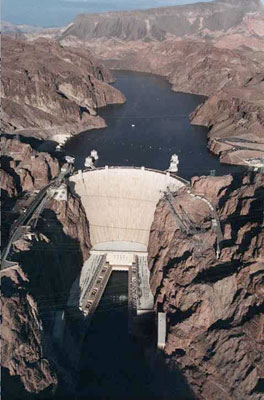
Even the dam’s most diehard fans concede it probably wouldn’t be built today, but they insist it was both right – and remarkable – to build it then. “The foresight that those folks had to build this structure back in the 30’s, to harness the Colorado, was just amazing at that point in time, that those folks could even think of that,” [Ken Rice] said.

“It’s not the tallest dam, and it’s not the biggest dam, but its got a grace and power that really takes people … really seizes the imagination. The simple lines that it has – you know the artistic beauty of the design is really something unique,” [Michael Hiltzik] said.

More Colorado River Basin coverage here.

Charting New Waters: A Call to Action to Address U.S. Freshwater Challenges

A picture named waterfromtap.jpg

Say hello to Charting New Waters: A Call to Action to Address U.S. Freshwater Challenges. Click here to sign up for your copy. From the report:

[Recommendation]: Convene a U.S. Freshwater Resources Commission

We believe the nation would greatly benefit from a diverse, multi-stakeholder commission to clarify and streamline the responsibilities and roles of agencies at different levels of freshwater governance. We recommend that an appropriate entity convene a high-level freshwater resources commission with a focused mission, an explicit timeline with a clear start and end point for the completion of its work, and clear guidelines for reporting its findings. The overarching goal of the commission should be to propose solutions that increase the integration and efficiency of the existing patchwork of jurisdictional authorities overseeing management of the nation’s freshwater resources. Potential convening models that would impart authority and credibility to this crosssector effort include a Presidential commission, a Congressional commission or a commission spearheaded by a private foun- dation or trust.

More…

[Recommendation]: Water Utilities Decouple Revenues from Volume of Service

Water utilities servicing municipalities typically recoup fixed costs based on volume of water sold. The more water sold, the greater the net revenue. As a result, there is an institutional disincentive for utilities to promote water conserva- tion. Decoupling water utility costs so that fixed costs are fully recouped, but are not spread across a declining base of sales, would motivate utilities to proactively and aggressively promote water conservation and efficiency among their customers. Decoupling would allow utilities the flexibility to fully cover costs while also rewarding customers for conservation rather than raising rates to compensate for decreased revenues resulting from conservation. We recommend that water utilities work with municipalities, and their respective public service commissioners and customers, to adapt existing models for decoupling revenues to the water and wastewater sectors such that they can develop water pricing schemes that promote conservation. In the near term, while more sophisticated accounting and pricing mechanisms are under development, we recommend that water utilities consider existing models for incentivizing advantageous consumer behavior, such as seasonal block rates employed by cities such as Los Angeles, Seattle, Salt Lake City, Santa Fe and San Antonio, where the price of water increases for each unit used during dry months.

Thanks to Loretta Lohman for the link.

Animas-La Plata Project: The Bureau of Reclamation is going to pony up some dough for recreation plan at Lake Nighthorse

A picture named lakenighthorserisingwaters052010

From the Cortez Journal (Dale Rodebaugh):

Mark Chiarito, resource management specialist for the U.S. Bureau of Reclamation, told Animas-La Plata Water Conservancy District board members that his agency can help finance the planning of recreation at Lake Nighthorse…

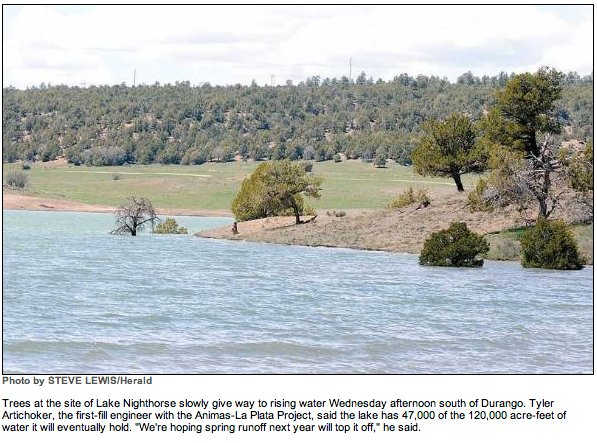
The water district was saddled with the job of bringing recreation to the lake 18 months ago when state parks department officials said they had no money. The district, rebuffed by La Plata County and the city of Durango, put up $25,000 and, with an equal amount from the Southwestern Water Conservation District, hired a consultant for initial planning. A boat ramp – paid for with oil and gas tax money and funding obtained by then-state Sen. Jim Isgar – has been installed. A recreation blueprint will cost $150,000 to $200,000, while development for hiking, horseback riding, camping, boating and fishing will cost $20 million to $25 million. Ongoing operations and maintenance would be extra. After months of uncertainty about the funding for all this, recreation proponents have finally gotten some good news. The National Park Service placed a recreation planner at their disposal for two years for free. The city’s attitude has softened, too. On Wednesday, members of the parks and recreation commission, under chairman Duane Smith, were scheduled to visit Lake Nighthorse to look at possible recreational opportunities.

More Animas-La Plata Project coverage here and here.

Breckenridge: New Upper Blue Sanitation District wastewater plant construction update

A picture named wastewatertreatmentwtext.jpg

From the Summit Daily News (Robert Allen):

Construction has been under way since summer 2009, and the project has been financed through tap fees. It is to expand the district’s treatment capacity from 2 million to 5 million gallons per day to meet the demands of growing communities in and near Blue River, Breckenridge and Farmer’s Korner. The contract has the project finishing by Dec. 31, 2011, but Carlberg said it may be complete by July…

The building structure is to arrive in early October. Carlberg said it’s anticipated the expansion area will be sealed dry from outside conditions by December. The plant is under construction next to the Farmer’s Korner Waste Water Treatment Facility, which opened in the mid-1970s. That building could get upgrades to its exterior to help its appearance match the new one. Like the existing facility, the plant is to treat incoming liquid before mixing it with water from the nearby Blue River. The mixture is released into Dillon Reservoir at an area near the highway.

More wastewater coverage here and here.

Greeley: Leprino to use wastewater stream to generate renewable energy

A picture named anaerobicdigester.jpg

From The Greeley Tribune:

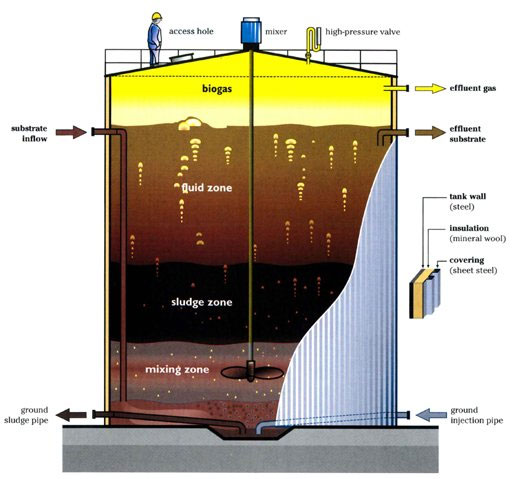
The Greeley Planning Commission approved the facility, which will include an anaerobic digestion system, a process used as a renewable energy source. The system produces methane and a carbon dioxide-rich biogas that is suitable for energy production, and will also reduce the amount of organic matter that would otherwise have to be processed through the city’s treatment system.

More wastewater coverage here.

Rio Grande Basin: First groundwater sub-district assessments to start in 2011

A picture named slvdischargerecharge.jpg

From the Valley Courier (Ruth Heide):

On order of Chief District/Water Judge O. John Kuenhold, the board of managers for the San Luis Valley’s first water management sub-district of the Rio Grande Water Conservation District (RGWCD) this week established fees that will be assessed sub-district irrigators next year. The sub-district board plans a public meeting on Tuesday, Oct. 5, at 7:30 p.m., with the location to be announced, to review and possibly adjust the fees it set this week.

Although the sub-district’s management plan is still on appeal before the Colorado Supreme Court, fees for the Valley’s first water sub-district will go on the tax rolls next year.

More San Luis Valley groundwater coverage here and here.

2010 Colorado elections: Proposition 101, Amendment 60 and 61

A picture named lowersouthplatteriver.jpg

From The Pueblo Chieftain (Chris Woodka):

Concerns about the fallout from Amendments 60 and 61 and Proposition 101 were shared Thursday at the [Southeastern Colorado Water Conservancy District] monthly meeting by Executive Director Jim Broderick.

Proposition 101 would have the greatest impact on operating revenues of the district by rolling back specific ownership taxes on motor vehicles. The tax would be decreased to $2 for new vehicles and $1 for used vehicles over four years, among other provisions of the ballot question. The Southeastern District gets between $600,000 and $700,000 in revenue annually through the tax. Those revenues fund staff and programs of the district, as well as repaying the federal government for parts of the Fryingpan-Arkansas Project.

Amendment 60 could require the district to pay property taxes, and would have some impact, Broderick said.

Amendment 61 would limit the ability of the district to acquire new debt, and the definitions of what would qualify as debt would have to be hammered out if the amendment passes, he added.

More 2010 Colorado elections coverage here.

2010 Colorado elections

A picture named troutcreekpass.jpg

Here’s an in-depth look at the gubernatorial candidate’s solutions for Colorado’s economy from Patrick Malone writing for The Pueblo Chieftain. From the article:

On the issue of water, Hickenlooper said conservation can be attained by following the examples of Colorado’s dryland farmers and city dwellers in Denver, both of which have cut their consumption considerably. He said defending against out-of-state water grabs and finding more storage capacity also are key.

Maes said a willingness to stand up to Washington to keep Colorado’s water here is needed from the next governor. Tancredo agreed that keeping water management out of the federal government’s hands is important.

Tancredo pointed to Pueblo as ground zero of the water issue in Colorado, because it’s a rare community that has a surplus. “We’ve got Aurora, Colorado Springs and Pueblo fighting over that,” he said. “Somebody needs to end that battle.”

More 2010 Colorado elections coverage here.

Energy policy — geothermal: BLM Royal Gorge Field Office releases Determination of NEPA Adequacy for geothermal leasing

A picture named geothermalplant.jpg

Here’s the release from the Bureau of Land Management (Cass Cairns):

The Bureau of Land Management Royal Gorge Field Office has released the 2010 Determination of NEPA Adequacy (DNA) for the proposed Mt. Princeton Geothermal Lease Parcel. The Mt. Princeton Geothermal Lease Parcel is scheduled for the Nov. 10, 2010 Oil and Gas lease sale in Denver.

The DNA demonstrates that leasing geothermal resources for the RGFO within the Mt. Princeton Geothermal Lease Parcel is compliant with our Resource Management Plan as amended by the December 2008 Record of Decision and Resource Management Plan Amendments for Geothermal Leasing in the Western United States Programmatic Environmental Impact Statement.

The Mt. Princeton Geothermal Lease Parcel was deferred from the BLM Colorado Oil and Gas Lease Sale in Feb. 2010 to allow for review of comments received during the lease sale protest period. Those comments were taken into consideration and addressed in the DNA.

To view a copy of the DNA go to http://www.blm.gov/co/st/en/fo/rgfo.html and click on the Mt. Princeton Geothermal Lease Parcel link under the Frequently Requested section. For further information contact Melissa Smeins, RGFO geologist at 719-269-8523.

More geothermal coverage here and here.

Flaming Gorge Pipeline: Southwestern Wyoming and northwestern Utah point of view

A picture named flaminggorgepipelinemillion.jpg

From the Salt Lake Tribune (Brett Prettyman):

It is the cost of losing the water that people in Utah’s Daggett County and Wyoming’s Sweetwater County are worried about. Trophy fishing for kokanee salmon and lake trout in Flaming Gorge and world-class fly fishing on the Green River below the dam could be severely harmed by the loss of water and that, in turn, would hurt local economies.

“It is almost impossible to visualize the project, it is so big,” said Casey Snider, who is organizing sporting and other communities to oppose the pipeline as the northeastern Utah coordinator for Trout Unlimited’s Sportsman’s Conservation Project. “It would cost so much to build, so much to operate and do so much to harm this area. How can you fathom it? It is a huge drain, literally. It will drain the reservoir, drain the river and drain the economy.”[…]

Utah Public Lands Policy Coordination director John Harja sent a letter to the U.S. Army Corp of Engineers, which is conducting a draft of the environmental impact statement on the project in an effort to determine if it is feasible, listing a number of concerns should the pipeline become a reality.

Among the worries listed in the letter:

• Wide fluctuations of water levels at Flaming Gorge would create ideal conditions for noxious weeds along the shore, affecting waterfowl, mule deer, pronghorn, sage-grouse and other species. Open shorelines may become inaccessible for recreation.

• Diminished flows on the Green River below the dam will affect species of concern like the northern river otter, bald eagle, peregrine falcon, osprey, Lewis’ woodpecker, southern willow flycatcher and yellow-billed cuckoo.

• A reduction of flows into the reservoir will inhibit flow recommendations coming out the dam. The recommendations were agreed upon by multiple agencies to benefit endangered fish (razorback sucker, Colorado pikeminnow, humpback chub and bonytail) in the Green River.

More Flaming Gorge pipeline coverage here and here.

Denver Water, the Colorado River District and others are making progress over the Shoshone water right and Blue River Decree

A picture named shoshoneglenwoodcanyon.jpg

From The Grand Junction Daily Sentinel (Gary Harmon):

Attorneys for Denver Water and other water organizations won a weeklong stay Wednesday in the beginning of a trial on a case in federal court in which Denver Water’s handling of its Blue River decree is at issue. That litigation could be set aside next week once an affidavit attesting to the progress of the parties is filed under seal in the court, River District spokesman Chris Treese said…

Denver Water also wants to get about the business of expanding Gross Reservoir near Boulder, [Denver Water General Manager Jim Lochhead] said. The agency, which serves 1.3 million people and is the state’s oldest and largest water utility, needs the flexibility to move water around its system. It’s looking to the settlement to offer Denver Water the kind of flexibility it needs to manage its system, Lochhead said. In addition to completing the Blue River decree, which refers to the stream that fills Dillon Reservoir, one of Denver’s largest water supplies, the agreement would limit the size of the Denver Water service area. It also would offer the Western Slope assurance that Denver Water would take no action to obtain more water without cooperation from the Western Slope. Once it’s complete, “This will be one of the most comprehensive agreements that’s ever been negotiated in the state of Colorado,” Lochhead said. “I’m looking at this agreement to forge an entirely new paradigm” in relations between the Front Range and Western Slope.

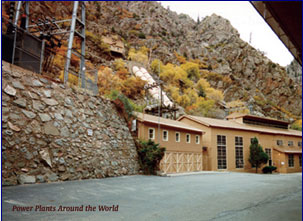
The agreement will give the Western Slope, primarily the River District, a greater voice in the operations of the Shoshone Power Plant. The Shoshone plant generates 14 megawatts of electricity from turbines spun by the Colorado River, and its 1902 water right ensures water will flow from the headwaters of the river to Glenwood Canyon and below. If Shoshone was unable to call water downriver, the Grand Valley’s domestic, agricultural and industrial needs, as well as those of four endangered fish species, would have to be met by other sources, notably the Roaring Fork and Fryingpan rivers. They join above Glenwood Springs, and those waters flow into the Colorado River in Glenwood Springs, below the Shoshone plant. Plateau Creek in De Beque Canyon also could be called down to meet the Grand Valley requirements, leaving some of those junior water rights to go unfilled.

More Colorado River Basin coverage here.

Precipitation news

A picture named usdroughtmonitor09142010

It’s been dry and drier for the past few weeks. D0 conditions are starting to show up around the state. Click on the thumbnail graphic to view the latest from the U.S. Drought Monitor. Here’s a report from Chris Woodka writing for The Pueblo Chieftain. From the article:

The Arkansas River through Pueblo has been buoyed by water releases for farms the past few weeks since river levels began to plunge in July. The state is running water to John Martin Reservoir over the next four days that will keep levels up, but that will end…

Pat Edelmann of the local U.S. Geological Survey office said dry conditions have hit the Western United States for the past month, including the Upper Arkansas River…

“Many gauges along the mainstem of the Arkansas River are below 25 percent of average,” Edelmann said. “In the Upper Arkansas, readings are 100 to 250 cubic feet per second below average.” At Avondale, generally the high point of the river, readings were at about 300 cfs Thursday — half of what they usually are. Water storage levels are still above average, barely, at Turquoise and Twin Lakes, and at 134 percent of average in Lake Pueblo, said Roy Vaughan of the Bureau of Reclamation…

It has barely sprinkled in Pueblo so far this month, and the last appreciable rains came in early August. The forecast from the National Weather Service is calling for dry conditions through early next week. Rainfall for the year is slightly above average, but falling behind last year’s relatively high levels of precipitation.

Fountain Creek: Flood mitigation projects, proposed detention ponds may require a trip to water court

A picture named fountaincreek.jpg

From The Pueblo Chieftain (Chris Woodka):

Planners for the project say they are designing structures that would capture flood waters to shave the peak off flood flows, retain the water temporarily and release it over the next 72 hours. A $1 million-plus demonstration project north of Colorado 47 could be the first of a series of flood control structures up and down Fountain Creek.

After reading newspaper accounts about plans for recreation activities and wetlands that would be associated with the project, [Water Division 2 Engineer Steve Witte] told the Southeastern district it needs to be concerned about the potential to violate water rights…

“There have been discussions in the past of what can and can’t be done,” Witte said. “There is a way to build these in a way that the timing does not injure senior water rights. The proper forum to determine that is in Water Court.” Following the meeting, Witte elaborated, saying that assurances by the planners that flood water would be evacuated within 72 hours are not enough.

More Fountain Creek coverage here and here.

Nestlé Waters Chaffee County Project: Tanker trucks are moving water out of the Arkansas Valley to Denver

A picture named bottledwater.jpg

From The Chaffee County Times (Kathy Davis):

Trucking the water to Arrowhead Water’s Denver bottling plant began Aug. 17, [Arrowhead Water natural resource manager Bobbi McClead] said…

The spring water for Arrowhead is piped from Ruby Mountain Springs near Nathrop to Nestlé Waters’ truck loading facility. The water line for piping the water and the water line crossing on the Arkansas River were completed in late spring. During the installation of the water line crossing, Nestlé installed and paid for a second line for future use by the Town of Buena Vista…

Nestlé has ongoing projects in Chaffee County. One is the installation of a second well at Ruby Mountain Springs. That well will become the primary well, McClead said.

More Nestlé Waters Chaffee County Project coverage here and here.

Northwest Colorado Water Forum September 24

A picture named yampariverbasin.jpg

From Steamboat Today (Tom Ross):

The [Yampa/White River roundtable] recommended funding a $220,800 water storage feasibility study in the Yellow Jacket District south of Craig, and the Colorado Water Conservation Board approved it in January. The study is under way, and project consultant Mike Apple gate is among six speakers slated for the forum. Applegate said Wednesday the Yellow Jacket Board, which oversees a district primarily in Rio Blanco County, but including small portions of Moffat and Garfield counties, is a long way from building a water storage facility…

The board of the Yellow Jacket Water Conservation District made it plain in a September 2008 filing in Water Court that it seeks to ensure adequate water supplies for agriculture, but it’s also determined to create adequate supply for a growing oil shale industry in the region. Applegate said the goal of protecting agricultural water is sincere. “If you don’t figure out in advance how to supply water for (energy development), the result can be a ‘buy and dry agriculture’” approach to securing water for energy, he said. In their 2008 filing, the Yellow Jacket Board members anticipated building Thornburgh Reservoir and filling it with conditional water rights from nearby creeks via pipelines. West Milk Creek Canal, for example, is estimated to be able to supply 90 cubic feet per second of water. Axial Creek Canal could be counted on to supply as much as 315 cfs during its peak, the court filing anticipated. Applegate said the system of creeks and canals feeding an offline reservoir (built in a ravine without live water of its own), is just one possibility that will be looked at in the feasibility study.

More IBCC — basin roundtables coverage here.

The Lower Arkansas Valley Water Conservancy District approves plan geared to soften the blow of new irrigation rules

A picture named irrigation.jpg

From The Pueblo Chieftain (Chris Woodka):

The Lower Ark board plans to set up a compliance program under new rules that are now moving through Division 2 Water Court. Most objectors have settled or are planning to settle in the case before a November trial date. The rules are being sought by State Engineer Dick Wolfe to ensure that improvements like canal lining, sprinklers and drip irrigation do not increase consumptive use. They are primarily aimed at avoiding future claims by Kansas that Colorado is violating the Arkansas River Compact.

The board wants to have the program up and running if the rules are approved and take effect on Jan. 1, 2011.

More Ark Valley consumptive use rules coverage here.

Energy policy — geothermal: November 10 is the next try by the BLM to lease parcels near Mt. Princeton Hot Springs

A picture named geothermalplant.jpg

From The Denver Post (Mark Jaffe):

The Bureau of Land Management said it will offer a 799-acre parcel near Mount Princeton Hot Springs Resort in Chaffee County for geothermal development Nov. 10. The lease sale was postponed in February after a volley of opposition and questions about whether the picturesque and narrow Chalk Creek Valley was an appropriate site for a geothermal power plant. It had been delayed earlier by questions from the state about jurisdiction over geothermal development — which involves water wells.

On Friday, the BLM issued a new environmental assessment that responded to 287 protest letters and issued about a dozen “stipulations” limiting lease activity and protecting wildlife and water. “We wanted to be sure to respond to the issues raised by residents,” said Steve Hall, a spokesman for the BLM. “This is the first lease sale in Colorado, and we had to do a better job of explaining.”

More geothermal coverage here and here.

Energy policy — nuclear: Piñon Ridge Mill update

A picture named pinonridgesite.jpg

From The Denver Post (Bruce Finley):

Heavy-metals waste from Energy Fuels Resources Corp.’s proposed uranium-processing in southwest Colorado would include arsenic, lead, molybdenum and cadmium. A failure to fully address handling of this potentially harmful material “is considered to be a major deficiency in the application,” Colorado Department of Public Health and Environment regulators said in a recent request for information.

Beaches around waste impoundment ponds would be exposed to birds. “What are the risks to wildlife from exposed tailings beaches?” the request asks.

State regulators asserted that people at fences around Energy Fuels’ 880-acre site could be exposed to radiation approaching a 25-millirem limit. “A projected dose that approaches a regulatory limit cannot be considered trivial,” a CDPHE document said.

The Colorado Water Conservation Board is opposing Energy Fuels’ filings to use water from the Dolores River. Energy Fuels has begun drilling wells to supply enough water to process 500 tons of uranium a day. But company officials say they may need additional water…

CDPHE officials are required to decide by Jan. 17 whether to issue a permit. “If they need more information to make their decision, we’ll give it to them,” said Dick White, Energy Fuels’ vice president for exploration. Controlling radiation levels at the fence “may require additional cover” on the ponds,” White said. One option for protecting birds would be “hazing” — setting up motion detectors and noise-making cannons that would drive them away, said Frank Filas, environmental manager for the project.

More nuclear coverage here and here.

La Niña update

A picture named elninolanina.jpg

From Physorg.com:

This OSTM/Jason-2 image of the Pacific Ocean is based on the average of 10 days of data centered on Sept. 3, 2010. A new image depicts places where the Pacific sea surface height is higher (warmer) than normal as yellow and red, with places where the sea surface is lower (cooler) than normal as blue and purple. Green indicates near-normal conditions. Sea surface height is an indicator of how much of the sun’s heat is stored in the upper ocean.

La Niña ocean conditions often follow an El Niño episode and are essentially the opposite of El Niño conditions. During a La Niña episode, trade winds are stronger than normal, and the cold water that normally exists along the coast of South America extends to the central equatorial Pacific. La Niña episodes change global weather patterns and are associated with less moisture in the air over cooler ocean waters, resulting in less rain along the coasts of North and South America and the equator, and more rain in the far Western Pacific.

“This La Niña has strengthened for the past four months, is strong now and is still building,” said Climatologist Bill Patzert of NASA’s Jet Propulsion Laboratory, Pasadena, Calif. “It will surely impact this coming winter’s weather and climate.

“After more than a decade of mostly dry years on the Colorado River watershed and in the American Southwest, and only one normal rain year in the past five years in Southern California, water supplies are dangerously low,” Patzert added. “This La Niña could deepen the drought in the already parched Southwest and could also worsen conditions that have fueled Southern California’s recent deadly wildfires.”

CWCB: Next Water Availability Task Force meeting September 27

A picture named northplatteriver.jpg

From email from the Colorado Water Conservation Board (Ben Wade):

The next Water Availability Task Force (WATF) is scheduled for Monday, September 27, 2010 from 10:00-11:30am at the Colorado Division of Wildlife, 6060 Broadway, Denver, CO, in the Bighorn Room.

More CWCB coverage here.

NIDIS Weekly Climate, Water and Drought Assessment Summary of the Upper Colorado

A picture named precipandsnowpackcoloradowyomingsep6to122010

Click here for a copy of Wendy Ryan’s notes from yesterday’s webinar.

Colorado Trout Unlimited releases their 2009 Annual Report

A picture named coloradotroutunlimited2009annualreport.jpg

Click here to download a copy. Here’s an excerpt:

The proposed expansion of the Moffat Tunnel and Windy Gap water diversion projects threatens to leave the Upper Colorado River and Fraser River with only 25% of their native flows. Through grassroots advocacy and organizing during the projects’ permitting processes, CTU and its local chapters successfully mobilized over 3,000 citizens who voiced their concerns over the potential impacts of these projects on fish, wildlife, and local recreation-based economies. The Colorado River Headwaters Chapter has generated widespread community involvement in protecting their “home waters” — from educational public meetings to inform residents about the projects and their impacts, to a “RiverStock” music festival in Fraser to raise community awareness and engagement. With support and expertise from TU’s Western Water Project, CTU and the chapter will continue to play a part in negotiating and advocating protections for these rivers as the Army Corps of Engineers and other state and federal agencies evaluate the proposed projects throughout 2010.

Fryingpan-Arkansas Project update

A picture named fryingpanarkansasproject.jpg

From email from Reclamation (Kara Lamb):

As we near the middle of September, the Fish and Wildlife Service has requested that we scale back releases for the Endangered Fish Recovery Program. This way, the remainder of water for the endangered fish will last through the month. As a result, we dropped releases from Ruedi this morning by 50 cfs. By noon, the gage at Ruedi Dam on the Fryingpan should read 270 cfs.

More Fryingpan-Arkansas Project coverage here.

Fountain Creek: Demonstration project in north Pueblo to be part of the Front Range Trail

A picture named fountaincreek.jpg

From The Pueblo Chieftain (Chris Woodka):

There already is a trail along Fountain Creek through Pueblo, but that would be improved and added to the Front Range Regional Trail system, ultimately connecting with trails in the Colorado Springs area. The trails are part of the “Crown Jewel” proposal by then-U.S. Sen. Ken Salazar in 2007. The construction of trails would coincide with flood control and wetlands projects as they are completed along Fountain Creek, and eventually that would be the way most people relate to the creek. “Trail planning is included in all the design planning,” said Gary Barber, director of the Fountain Creek Watershed Flood Control and Greenway District.

More Fountain Creek coverage here and here.

Rio Grande Roundtable recap

A picture named riograndebasin.jpg

From the Valley Courier (Ruth Heide):

Colorado Division of Water Resources Division III Division Engineer Craig Cotten told attendees at Tuesday’s Rio Grande Roundtable meeting that the dry appearance of the river, particularly in Alamosa, is a sign the state is current on its debt to downstream states so more water can be diverted to area irrigators without having to send it all down the river. “We are looking really good on the Rio Grande,” Cotten said. “We are meeting all of our obligation right now with return flows. That’s why the river is fairly dry through Alamosa, because we have got a little bit of water going to the West Side and Chicago Ditches and not a lot of water going through Alamosa.”

Cotten said 2010 turned out to be a less-than-average year with water flows on the Rio Grande. The annual forecast for the river is currently 540,000 acre feet. An average year would run 650,000 acre feet, “so we are a fair amount below average at this point in time,” Cotten said. The current forecast is even lower than the June 1 prediction of 575,000 acre feet on the Rio Grande, Cotten pointed out. Of the 540,000 acre feet flow on the Rio Grande for the year, 140,000 acre feet are obligated to New Mexico and Texas to meet Rio Grande Compact requirements. “We do have a fairly good obligation to downstream states, but we have already been able to deliver quite a bit of that water to the downstream states,” Cotten said. He said currently only about 5 percent of the state’s obligation on the Rio Grande is still owed, and that obligation is being met through return flows.

The Conejos River system is also meeting its obligation to downstream states, Cotten explained. That river system is also below average in total forecast flow, Cotten added. An average annual flow on the Conejos River system is 325,000 acre feet. This year’s adjusted forecast is 285,000 acre feet, which is down from the June 1 prediction of 315,000 acre feet. Of the total flow, the Conejos River system is obligated to send 99,000 acre feet downstream, “and currently we have delivered all the water we need to during the irrigation season,” Cotten said. During November and December the Conejos system will deliver more water downstream, and that will be sufficient to meet the Rio Grande Compact obligation, according to Cotten…

In addition to reporting on the status of the Rio Grande Compact and the Valley’s major rivers, Cotten reported to the Rio Grande Roundtable that groundwater rules are still under construction and the state engineer is hopeful they will be promulgated by the end of the year. Modeling work is currently being conducted for different areas of the San Luis Valley to determine how much impact wells have on rivers so adequate replacements for injurious depletions can be made. Cotten said that modeling work is nearly completed and he hoped it would be finished in the next month. With that completed, the advisory group that is working with the state engineer to develop groundwater regulations can finish up the sustainability portion of the regulations, Cotten explained…

Cotten also updated the group on the status of the first water management sub-district case. The sub-district of the Rio Grande Water Conservation District is designed to reduce irrigation in the closed basin area of the Valley to protect senior water rights, help meet Rio Grande Compact obligations and replenish Valley aquifers. The sub-district’s plan of management proceeded through the court, objections, trials and judicial ruling and is now pending a decision from the Colorado Supreme Court, which Cotten said might not occur until next spring.

More IBCC — basin roundtables coverage here.

RMSAWWA/RMEA 2010 Joint Annual Conference recap

A picture named bestofrockymountains2010

From 9News.com (Christina Dickinson/Matt Renoux):

Thirteen cities in all put their water to the test, with first place winning the chance to move to the 2011 national round. Organizer Paul Fanning with the Pueblo Board of Water Works says for those trying to pick the best tasting water, the job can be hard in a place known to have some of the best water around…

Each glass of H2O is judged on taste and given a score from one being the worst, to 10 being the best. Aurora took third place, Silverthorne came in second and Denver water got the best scores of the day, winning first place and heading on to the national round.

More coverage from Alex Miller writing for the Summit Daily News. From the article:

This wasn’t a competition between high-end bottled waters or exotic H20 from faraway lands but, rather, an evaluation of tap water from Colorado and Wyoming municipalities. The occasion was a gathering at Keystone of water professionals as part of the joint conference of the American Water Works Association — Rocky Mountain Section and the Rocky Mountain Water Environment Association. That works out to a lot of acronyms, but the bottom line was water and how to treat it for human consumption. As one of the judges in the “Best of the Rocky Mountains” water taste test Tuesday morning, I was charged with evaluating 13 water samples from different municipalities in a blind taste test with three other judges.

When I came across sample “C,” however, I figured I was close to a winner. The water was clean, crisp and devoid of any kind of unidentifiable smell or taste — yet it had a pleasant flavor and “finish” that ultimately yielded it a “10” on my scorecard. That it turned out to be from Silverthorne didn’t surprise me, since I lived in that town for many years and always loved the tap water. “We spend a lot of time on it,” said Town of Silverthorne water supervisor Chris Shelden of the water’s taste. “It’s all about keeping a minimal amount of treatment while still staying within the state and EPA guidelines for water quality.”

In first place was Denver Water, which one can justifiably point to as our water in the first place as a headwater county. The same goes for Aurora, the third-place finisher. If any other Summit County water providers competed, I wasn’t aware of it since none of them placed in the top six (rounded out by Broomfield, Centennial and Fort Morgan).

Here’s the release from Denver Water (Lori Peck):

Denver Water placed first in a taste test among water utilities in Colorado, Wyoming and New Mexico at the American Water Works Association Rocky Mountain Section’s (RMSAWWA) annual conference at Keystone Resort in Colorado. Today’s event was the Rocky Mountain Section’s third annual taste test and Denver Water’s second first-place ranking in the event.

A panel of four judges that included news media and AWWA President-Elect Jerry Stevens tasted 13 samples submitted by AWWA member utilities. Denver Water’s sample received the highest scores based on appearance, smell, taste and overall impression. The Town of Silverthorne and Aurora Water placed second and third, respectively.

“Denver Water’s mission is to provide our customers with high-quality water and excellent service,” said Ken Pollock, superintendent of water treatment for Denver Water. “The water utility members of the Rocky Mountain section of the AWWA bring strong competition each year. Our win reflects the dedication and commitment that Denver Water employees have to high-quality water”

Denver Water will represent the Rocky Mountain Section in the 2011 AWWA “Best of the Best” national taste test at the association’s Annual Conference and Exhibition in Washington, D.C.

More water treatment coverage here.

Energy policy — nuclear: Fremont County request for a report from an independent water expert delays exploration permit

A picture named uranium.jpg

From The Pueblo Chieftain (Tracy Harmon):

The commission heard more than three hours of testimony during a public hearing Tuesday which focused on Australia-based Black Range Minerals’ request to expand exploration on an additional 2,220 acres of property known as the Hansen Deposit, which is believed to be the largest uranium deposit in the district, said Michael Haynes, Black Range managing director. The commission voted to table the issue until its 10 a.m. Sept. 28 meeting to allow the county’s independent hydrologist a chance to comment on the expansion…

Of the 19 speakers who voiced opinions during the hearing, only two were in favor of the expansion. Of those who opposed it, concerns were voiced about high levels of uranium in domestic water wells to threats to wildlife and plummeting property values. Virgil Burke said his well has, “Gone up to three times the allowable limit (for uranium) since they started drilling the first holes. It has cost me $5,000 to get the radiation down to where it is safe.”[…]

“There are elevated uranium contents in that area — some have gone down, some have gone up, but it could be normal sample variability,” [Black Range hydrologist Susan Wyman] said. “We have not seen a statistical increase in water (uranium) concentrations.”

Opponents also said new monitoring wells were not drilled to get background data before exploration drilling resumed. “Those wells were to be drilled to monitor for the health and safety of the residents and they were not drilled. Who was watching them instead of rubber stamping compliance forms,” Nancy Seger, who opposed the proposal, asked. Wyman said the monitoring wells were put on hold because Black Range was looking at an additional exploration area and it would be appropriate to locate some of those monitoring wells in the new exploration area, if approved.

More nuclear coverage here and here.

Energy policy — geothermal: The BLM is seeking public comment on possible development

A picture named geothermalenergy.jpg

From The Pueblo Chieftain (Matt Hildner):

The agency will use the comments to help identify issues and develop alternative proposals that will be analyzed in an environmental assessment. The environmental assessment would lay out which lands would be eligible for leasing and under what conditions. The agency has already identified 10 preliminary issues for analysis, including impacts to water resources, existing geothermal developments and big game and other threatened or sensitive species, according to the agency’s notice in the Federal Register.

Here’s the release from the Bureau of Land Management (Michael Blakeman):

The San Luis Valley Public Lands Center (SLV-PLC) is seeking public comment to guide a geothermal land use analysis. Ultimately, the environmental assessment will form the basis to amend the Bureau of Land Management’s 1991 San Luis Resource Area Resource Management Plan.

The analysis will identify which public lands and subsurface mineral estates to make available for geothermal leasing. The analysis will also determine under what conditions these lands will be made available for geothermal leasing. Comments will help identify issues and be used to develop alternatives to be analyzed.

Written comments may be submitted by mail to SLV-PLC Attn: BLM Geothermal, 1803 W. Hwy 160, Monte Vista, CO, 81144 or via email to slvplc_comments@blm.gov. Comments are requested by the end of the formal public scoping period Oct 13, 2010. All public comments received to date will be considered in the analysis.

Information regarding the project is posted on the BLM website at www.blm.gov/co/st/en/fo/slvplc.html, or contact Joseph Vieira at 719-852-6213 for more information.

More geothermal coverage here and here.

Denver Botanic Gardens in advisory role with Sterling Ranch developers

A picture named denverbotanicgardens.jpg

From The Denver Post (Margaret Jackson):

The botanic gardens will provide technical services focused on Water-Smart Gardening applications, such as selecting plants that use little water for landscaping. The botanic gardens also will help Sterling Ranch create a community garden using heirloom plants to maintain sustainable agriculture within the development.

The botanic gardens is working on the landscape design for a house on Titan Road, said Brian Vogt, chief executive of the organization. “We will advise on the right pallet of plants . . . and create a prototype to show you can have a lush looking garden, Vogt said.

More conservation coverage here.

CDC: Don’t drink the water near the Lincoln Park/Cotter Mill superfund site

A picture named lincolnparksuperfund.jpg

From The Pueblo Chieftain (Tracy Harmon):

Members of Colorado Citizens Against Toxic Waste voiced disappointment in a recent health assessment relating to exposure to Cotter Uranium Mill contamination…

The study found that long-term ingestion of contaminated private well water may have put some people in the Lincoln Park neighborhood adjacent to the mill at risk for health problems. Most neighborhood residents use the public water supply and are not exposed to the contaminant, according to the report. “I’m disappointed that the agency ignored our local doctors’ request,” said Carol Dunn, co-chair of Colorado Citizen Against Toxic Waste. “Instead of recommending a study of real people with real health problems, they studied the Cotter Mill’s self-sampling data to see if there was a risk to our health…

The agency will host two open houses to present findings from noon to 2 p.m. and 7 to 9 p.m. Sept. 23 at the Holy Cross Abbey, 2951 E. U.S. 50. Written public comment on the report will be accepted until Nov. 9.

More nuclear coverage here and here.

2010 Colorado elections: Proposition 101

A picture named hiawathalake.jpg

From The Pueblo Chieftain (Patrick Malone):

Local services provided by school districts, cities, counties and special districts (such as fire, water, sewer and public transportation) could be affected by the revenue reduction. The state’s budget would lose 6 percent of its revenue in the first year of implementation, and an estimated 23 percent of its revenue upon full implementation. Meanwhile, the state’s obligation to reimburse school districts for the revenue they would lose on vehicle taxes was estimated at $47 million in the first year of implementation and could climb as high as $200 million at full implementation. The state’s transportation budget, which funds road safety, construction and maintenance, would be decreased by 28 percent if Proposition 101 passes…

The cons as identified by Legislative Council include reductions in services citizens depend on for a high quality of life, many of which already have been trimmed because of the budget crisis. “Public health and safety may also be affected due to fewer resources for emergency medical services, vehicle emission programs and road maintenance,” Legislative Council reported. Tuition at colleges likely would increase, and services to low-income and disabled Coloradans also could suffer.

More 2010 Colorado elections coverage here.

Fountain Creek: Demonstration project for flood mitigation in north Pueblo launched yesterday

A picture named fountaincreek.jpg

From The Pueblo Chieftain (Chris Woodka):

After more than three years of effort by local, state and federal interests, the demonstration project in North Pueblo is designed to show how to control flooding, create wetlands and reduce erosion. “If only Washington would learn to work together like this,” U.S. Rep. John Salazar, D-Colo., told a small gathering of politicians and technical advisers gathered at the site of a future off-channel flood detention pond and wetlands in Fountain Creek, north of Colorado Highway 47 near Dillon Drive. “This is a great example of everyone working together.”

Salazar listed $1 million in earmarks — half this year and half next — for the Fountain Creek Project at the request of Jay Winner, executive director of the Lower Arkansas Valley Water Conservancy District. The money will come through the Natural Resources Conservation Service, a federal agency dedicated to land and water conservation. Lower Ark Chairman Pete Moore also praised the cooperation of the Colorado Springs and Pueblo city councils, El Paso and Pueblo County commissioners and state lawmakers who formed the Fountain Creek Watershed Flood Control and Greenway District to get the project off the ground…

In addition to the federal money, the Colorado Water Conservation Board is contributing $225,000; the Colorado Department of Public Health and Environment, $250,000; and the city of Pueblo $75,000 in cash and $125,000 of in-kind services.

The project will capture peak flows during minor flooding, control erosion or sedimentation and establish wetlands, all listed as high priorities in a U.S. Army Corps of Engineers study and the Fountain Creek Master plan. It will serve as a classroom to determine the best ways to achieve those goals, said Allen Green, state conservationist for the NRCS…

Besides the flood detention pond, a sediment collection system will be tested further downstream, Shanks said. “If this works, we can apply the concepts upstream and provide real mitigation,” he said. “We need to learn from this one.”

More Fountain Creek coverage here and here.

Energy policy — hydroelectric: The Aspen City Council has put off the decision about the Castle Creek hydroelectric plant until October 12

A picture named microhydroelectricplant.jpg

From The Aspen Times (Aaron Hedge):

The decision to extend the conversation comes after the city received a significant amount of feedback from residents who live along the stream saying the project will have disastrous effects on the ecosystem there…

Mayor Mick Ireland decided to postpone the vote after the City Council visited the site of the proposed hydropower building on Thursday. “There’s several people … who have approached us about having a stakeholder’s process” to find a middle ground between the city and residents who are opposed to the initiative, Ireland said. The city’s utilities department drew Maroon Creek down to 14 cubic feet per second (cfs) on Tuesday, which is the level Castle Creek will run at for about six months of the year if the project is approved. The average level the stream runs at currently is about 50 cfs, but it plummets to about 14 cfs for the months of February and March. At peak runoff, it holds up to 975 cfs…

Aspen officials say the health of the stream will remain intact, citing a city-commissioned environmental impact study of Castle Creek done by Bill Miller, of Miller Environmental Consultants. The study concluded that the stream would remain healthy as long as it doesn’t go below 13.3 cfs…

The project would take 25 cfs from 2 1/2 miles of Castle Creek and 27 cfs from Maroon Creek. All that water would return to Castle Creek about 300 feet above its merging point with the Roaring Fork River.

More coverage from The Aspen Times (Aaron Hedge):

The main incentive the city cites in building the hydropower plant is that it would save the city from paying energy fees to a Nebraska power authority. The project, they say, would localize Aspen’s energy economy and move it closer to its goal of becoming completely carbon-neutral. But City Manager Steve Barwick said if the city were to divert less water from Castle Creek than originally planned — not letting it go below 19 cfs — the project would still have a huge economic benefit. The city has already spent about $400,000 on the project, building a drainline from Thomas Reservoir that would feed the power turbines, as well as purchasing the turbines for the power plant, which would be located under the Highway 82 bridge that spans Castle Creek on Power Plant Road.

More coverage from the Aspen Daily News (Curtis Wackerle):

What the city hasn’t put off is developing infrastructure for the project, which still requires a permit from the Federal Energy Regulatory Commission, as well as land use approval by the City Council.

The penstock — a steel reinforced pipe that would carry water from Thomas Reservoir to the hydro plant’s turbine — has been under construction all summer. City officials maintain, however, that the pipe also serves as an emergency drainline for Thomas Reservoir, which has more water coming into it than could be drained if something happened to the dam. That project is costing the city $2.3 million.

In addition, the city already has ordered the turbine which would generate the power at the yet-to-be-approved “Castle Creek Energy Center,” public works director Phil Overeynder told council at Monday’s meeting. He has said previously that the turbine costs $1.4 million, which includes a pressure releasing valve.

More hydroelectric coverage here and here.

Englewood and Aurora agree to long-term water deal

A picture named southplattecanoe.jpg

From the Englewood Herald (Tom Munde):

“This is a very good good agreement for both cities,” Stu Fonda, utility director, said as he presented the proposal to the Englewood City Council during the Sept. 7 study session. “The proposal changes the old agreement under which we received an average of 238 acre feet of water a year. The new agreement calls for Englewood to receive 509 acre feet of water single use water. Aurora benefits because it provides that city with water that can be reused over and over. There is no specific amount designated but I would guess the amount of reuse water they realize will exceed what they are providing us.” Fonda said the proposed intergovernmental agreement with Aurora calls for that city to annually deliver the water to Englewood by routing it to Chatfield Reservoir between July 1 and Aug. 15. Englewood then will send water down to city ditch, where it will either be stored in McLellan Reservoir or sold to Highlands Ranch…

Fonda said the additional 271 acre feet of water from Aurora is a valuable asset since water is valued at between $10,000 to $20,000 an acre foot. Using those figures, the additional water is worth between about $2.7 million and $5.4 million.

More South Platte Basin coverage here.

Long Draw Reservoir operations update

A picture named longdrawreservoir.jpg

From the Fort Collins Coloradoan (Kevin Duggan):

Fort Collins-based Water Supply & Storage Co. plans to appeal a U.S. Forest Service decision released Sept. 3 that would make it fully responsible for implementing a 15-year plan to restore the greenback cutthroat trout in the reservoir and surrounding streams. The mitigation program’s cost could be considerably higher than the approximately $800,000 projected by the Forest Service in an environmental impact statement, said Dennis Harmon, general manager of the irrigation company. But even that figure would be more than the company should have to pay in order to keep its permit to operate the reservoir, which was built in 1929 and expanded in 1974. “We just think this is way out of line for something that is already permitted,” he said. “We haven’t changed how this facility operates since the ’70s. “We think this mitigation is more appropriate for a new reservoir in the wilderness than on 53 acres of existing reservoir.”[…]

An effort to renew a Forest Service permit for the expanded portion of the reservoir turned into a decade-long fight when Colorado Trout Unlimited sued in 1994 over a plan that would keep La Poudre Pass Creek dry during the winter. In 2004, a U.S. District Court threw out the permit, forcing the Forest Service to start the permitting process over and to come up with a plan that would protect trout habitat. The revised environmental study came up with a plan for restoring the greenback cutthroat trout to more than 40 miles of streams in and around Rocky Mountain National Park. The plan called for eliminating invasive fish species and building barriers to keep them from getting re-established in the Poudre headwaters. Trout Unlimited worked with Water Supply & Storage and other entities, including the Colorado Division of Wildlife, to come up with a way to fund the mitigation program, which would be the largest native trout restoration project in state history.

But the decision by Glenn Casamassa, supervisor of the Arapaho and Roosevelt national forests, puts the responsibility for funding the restoration program on Water Supply & Storage because it holds the permit for the reservoir…

The National Park Service is expected to release its record of decision on the project within the coming weeks, said Larry Gamble, chief of planning and compliance for Rocky Mountain National Park. The decision will mirror the directions laid out by the Forest Service, he said.

More Cache la Poudre River watershed coverage here.

Energy policy — hydroelectric: A fresh look at hydroelectric generation?

A picture named hydroelectricdam.jpg

Here’s a special report from National Geographic Magazine (Stephanie Simon). From the article:

…engineers and entrepreneurs are pressing an alternative view of hydropower that doesn’t involve new dams. They argue that plenty of efficient, economical energy can be wrung from other water resources, including ocean waves, free-flowing rivers, irrigation ditches—even the effluent discharged from wastewater treatment facilities. There’s a surge of interest, too, in adding small power plants to dams built years ago for flood control or navigation—as well as in turning reservoirs into battery packs of sorts, releasing energy when the grid needs it most.

Globally, hydropower provides 16% of electricity, slightly more than nuclear power and closing in on natural gas, according to the London-based International Hydropower Association. In the U.S., by contrast, hydropower now provides about 7% of electricity generation. All other renewable sources combined account for about 3%. Even without building large dams, expanding efforts to draw power from water could add 40,000 megawatts to the grid by 2025, says the Electric Power Research Institute, a nonprofit research firm in Palo Alto, Calif. That’s the equivalent of putting at least two dozen new nuclear power plants online…

In the U.S., one strategy gaining popularity is to add power plants to some of the 80,000 existing dams that don’t have hydroelectric capacity. Technological advances like turbines that are gentler on fish and oxygen-injection systems that help balance aquatic ecosystems have won favor even among some environmental groups…

Several companies are experimenting with “low-head” turbines that can pull energy from relatively small volumes of water dropping as little as five feet over natural or man-made falls. One such project, launched by Natel Energy Inc. of Alameda, Calif., uses low-head technology to extract energy from an Arizona irrigation canal…

A less-experimental technology, dating back more than a century, is also gaining currency as a means to store energy and back up the grid: pumped storage, the system used by the Mount Elbert hydro plant outside Denver. The plant, sitting on the jewel-like Twin Lakes and managed by the Bureau of Reclamation, plays a key role in keeping lights on and air conditioners humming across the West. At night, when demand on the power grid is low, the Mount Elbert plant sucks water from the lakes, sometimes using wind power to pump that water up into a reservoir above the plant. The reservoir acts as a liquid battery—a huge pool of potential energy. As the day warms up and the grid shows signs of strain, workers begin to release the water down a 470-foot drop, through devices that turn the pent-up energy into usable electricity. The water eventually pours back into the lakes, where it can be recycled into power again the next evening.

More hydroelectric coverage here and here.

CWCB: New transmountain pipeline concepts update

A picture named dnrpipelineconcepts309

From The Pueblo Chieftain (Chris Woodka):

The Colorado Water Conservation Board is looking at three new transmountain possibilities and two pumpback plans in the Arkansas and South Platte river basins in an analysis of supply options that could provide between 100,000 and 250,000 acre-feet per year of new water to the Front Range.

Only one of the projects, a 540-mile pipeline from Flaming Gorge Reservoir in Wyoming to Colorado’s Front Range, is actively being pursued. Entrepreneur Aaron Million and the South Metro Water Supply Authority both looking are at it. The “Big Straw” plan, or Colorado River Reconnaissance Project, was not evaluated in the latest study because of its high initial cost to build. It would bring water from the Colorado River near Grand Junction to the Front Range. Other projects studied were from Blue Mesa Reservoir and the Yampa River. The Green Mountain pumpback plan also was included in the study, although it would provide about 68,000 acre-feet annually — less than the other 100,000 or 250,000 acre-feet plans.

The Arkansas Valley plans would move water from either La Junta or Avondale to Rueter-Hess Reservoir near Parker. From either place, the cost would be nearly $100,000 per acre-foot over the 50-year life of the project and supply 100,000 or 250,000 acre-feet, according to a report by CDM engineering. All of the other options come in around $80,000 per acre-foot or less over 50 years. One of the South Platte options would cost around $70,000, while the Green Mountain option is about $40,000 over the life of the project. The reason for the discrepancy would be the need for reverse-osmosis, coupled with unproven methods of zero liquid discharge, to bring Arkansas Valley water up to drinking quality…

The new report, now in draft form, will be part of a Colorado Water Conservation Board’s water needs assessment expected to be complete in January.

More CWCB coverage here.

Proposed southwestern Kansas power plant would effectively export 3.9 billion gallons of Arkansas River Basin water back to Colorado critics say

A picture named arkansasriverbasinwikipedia.jpg

From the Associated Press (John Hanna):

Sunflower Electric Power Corp., based in Hays, estimates its new plant in Finney County in southwest Kansas will consume 3.9 billion gallons of water a year. Most of the electricity generated by Sunflower’s new plant initially would flow to a partner utility in Colorado, leading critics to suggest Kansas will be, in effect, exporting its water. But as much water as the plant would consume, local officials calculate that it represents less than 1 percent of the existing annual water use in the state’s heavily agricultural southwest corner. Farmers previously held the rights to the water Sunflower would use, and they would have been allowed to consume significantly more.

Ed Quillen calls it an A new twist in an old contention up on the High Country News weblog Range. He writes:

Others point out that even if the water remained in agriculture, it would effectively be exported to other states where the products are consumed. I ran some numbers on this last year. A farm-fresh potato is about 80 percent water, so a ton of potatoes contains about 200 gallons. Every 700-pound yearling steer that leaves my county, and most of them do, is 65 percent water.

So maybe there’s no way around the persistent truth that the two major exports from rural areas are smart kids and water — either flowing, used to make electricity, or contained inside potato skins and cattle hides.

2010 Colorado elections: Amendment 61 limits on government borrowing

A picture named jacksonlake.jpg

Here’s a report on the Legislative Council’s analysis of Amendment 61 from Patrick Malone writing for The Pueblo Chieftain. From the article:

If the amendment passes in November, projects that traditionally have been financed through borrowing would have to be paid for by hikes in fees or funds earmarked for other purposes, according to an analysis by the Legislative Council…

As for negatives, the Legislative Council said important public services could be strangled without borrowed funds. During the past decade, Colorado’s population has grown by 20 percent, increasing demand for services that rely on borrowing to be offered realistically, it said. Private businesses also could suffer if government contracts for projects financed by borrowing disappear, the analysis said…

Unlike the state, which under Amendment 61 would be prohibited from borrowing, local governments could ask voters to approve indebtedness, with certain restrictions. For instance, a local government would be allowed to borrow only the equivalent of 10 percent of the assessed property value within its borders. Those currently with debt of that amount or more would have to pay down their debts before taking on new ones. Local governments typically borrow to construct or improve schools, roads, public buildings (such as jails and recreation centers), mass transit, water and wastewater treatment plants and to buy vehicles, including firefighting and police equipment. The amendment also would require local governments to repay loans within 10 years — rather than the current standard of 20- or 30-year loans — to keep down interest costs. Furthermore, it would require taxes to be lowered when government completes repayment of a loan, even if tax dollars weren’t used to retire the debt.

Here’s a long analysis of Proposition 101 and Amendments 60 and 61 from Pat Ferrier writing for the Fort Collins Coloradoan: Click through an read the whole thing. Here’s an excerpt:

Opponents, including many local business owners, say the measures threaten jobs and could result in a voter-approved recession exacerbating an already slow economic recovery. Coloradans for Responsible Reform, or CFRR, estimates more than 73,000 jobs – 38,000 from the private sector, 35,000 from public sector – and billions of dollars in infrastructure projects would be lost, creat-ing an anti-business reputation in Colorado that would detract from future growth. [Elaine Lauffer] said the amendments could cripple her family-owned business that relies on public-sector construction jobs.

Here’s a video about Proposition 101, Amendment 61 and Amendment 60 from the Bell Policy Center, The Bad 3.

More 2010 Colorado elections coverage here.
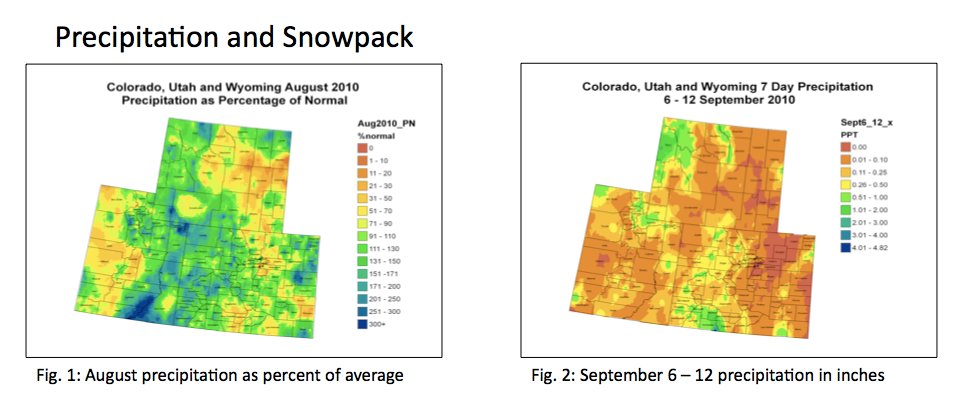
2010 Colorado elections: U.S. Representative John Salazar squares off with Scott Tipton at Club 20 debate

A picture named crystaldamspill052009

From The Pueblo Chieftain (Ellen Miller):

The three-term congressman brought that up in responses to a number of issue questions, including federal payment-in-lieu-of-taxes monies to counties with federal lands. “For somebody who wants to cut the budget 50 percent across the board, I don’t know where you’ll find any PILT funding,” Salazar said. He again used the statement referring to water projects, when Tipton called for funding more of them in Colorado.

More 2010 Colorado elections coverage here.
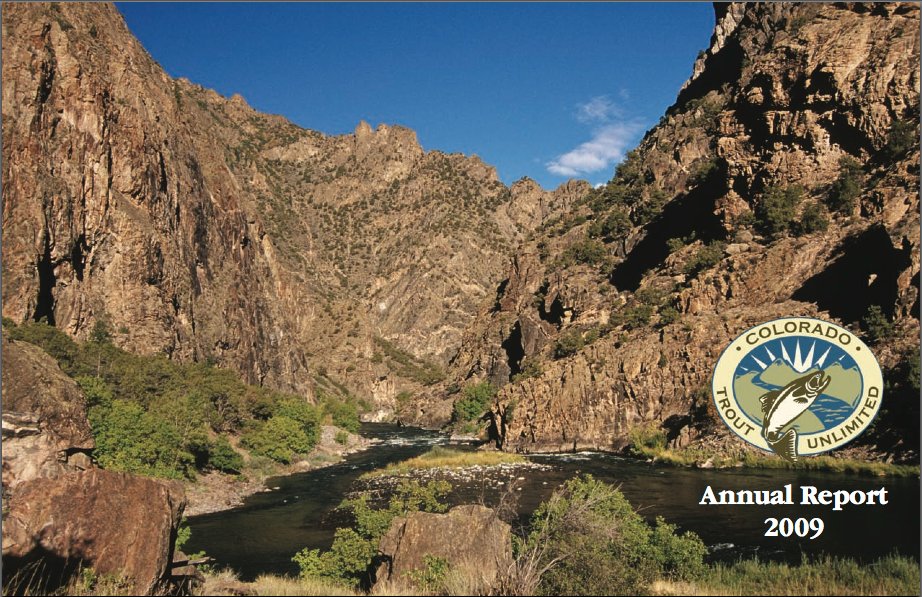
2010 Colorado elections: Hickenlooper and Maes at Club 20 debate in Grand Junction

A picture named yamparivereofmaybell.jpg

From The Denver Post (Lynn Bartels):

The candidates debated a range of issues, from taxes to transportation to water. The debate was one of several held as part of the fall meeting of Club 20, which represents governments, businesses and civic organizations in western Colorado…
The Democrat opened by reminding members of Club 20 he was invited to speak at their fall meeting in 2004, the year after he was elected mayor. “The big thing I talked about that day was water,” he said. “I said as a state we need a more collaborative approach to water. I told you I was willing to lead that effort.” He said that in the past six years Denver Water users have reduced their consumption by 20 percent.

More 2010 Colorado elections coverage here.