
From @CopperCondos:
So far, seasonal totals are well above average, with 231 inches to-date at Copper Mountain, but still below all-time Summit County snowfall records. But January’s snowfall was nothing to sneeze at, according to veteran Breckenridge weather-watcher Rick Bly, who has been tracking precipitation for the National Weather Service in his backyard for several decades. According to Bly’s measurements, January 2014 was the third-snowiest on record, just behind 1899 and 1996. So far for the season, every month since October has delivered above-average snowfall, Bly said.
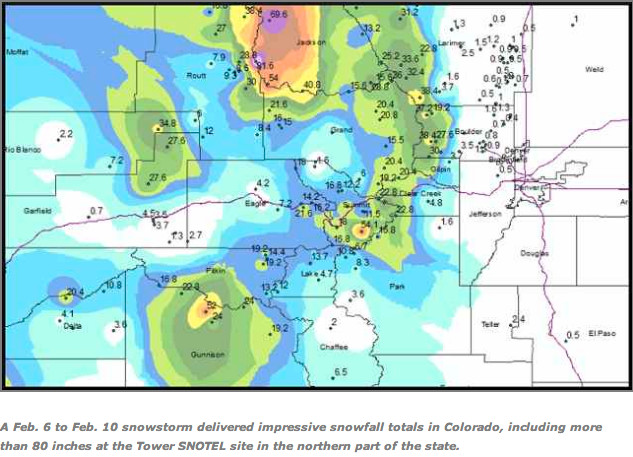
Along with Bly’s manual measurements, weather experts also track Colorado snowfall through a widespread network of automated sensors, called SNOTEL sites. From this year’s data, it appears that Copper precipitation is on par with the totals Bly reported from Breckenridge. For the season to-date, total snowfall ranks in the top five seasons.
The SNOTEL station at Copper Mountain sits at 10,550 feet and has been delivering data since 1978. You can get a wealth of information about snowfall in the area by clicking on the links within the site, including cool graphs showing how this year’s precipitation measures up to the average and to previous winters.
From Steamboat Today (Tom Ross):
The Natural Resources Conservation Service reported Wednesday that the snowpack on Rabbit Ears Pass is 142 percent of the median for Feb. 12…
The automated measuring sites are useful, [Mage Hultstrand] said, but her agency ultimately relies on visits to each site to confirm the data, which is important to planning for the summer’s water supply…
Outside the scope of winter recreation, the snow on Buffalo Pass is significant to municipalities and irrigators all the way down the larger Colorado River Basin. The snow that melts from Buffalo Pass in June will flow into the Yampa River, which joins the Green River just east of Colorado’s border with Utah. The Green in turn flows into the Colorado in Utah’s Canyonlands National Park, not far upstream from Lake Powell, which stores much of the water that is set aside for states such as California, Arizona and Nevada…
Anyone interested in the future of water supplies in the Colorado River Basin is invited to attend Thursday night’s public meeting of the Yampa-White-Green Rivers Basin Roundtable at the Steamboat Springs Community Center.