
From Capital Press (John O’Connell):
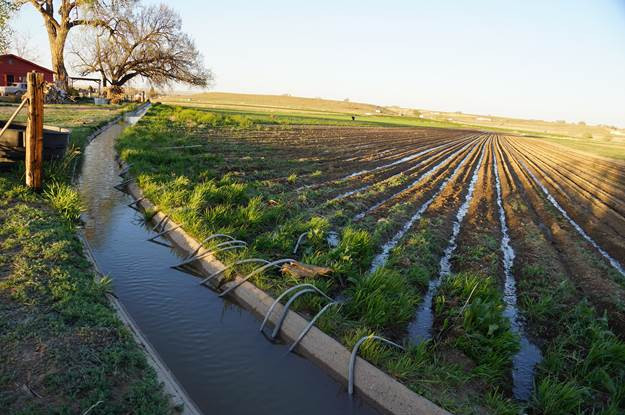
Chris Colson champions an admittedly antiquated and inefficient method of watering crops — flood irrigation.
The Boise-based regional biologist for Ducks Unlimited is part of a movement that recognizes the wildlife and water-supply benefits of flood irrigation, and the need to make certain it continues to be used in floodplains and other strategic locations across the West.
Ironically, his efforts to preserve flood irrigation often tap the same federal dollars that help farmers install high-efficiency pivots, which threaten to render flood irrigation obsolete.
The attraction for Colson and others is that flood irrigation, with its leaky canals and standing water, helps recharge shrinking aquifers and provides migratory birds with a stopover on their annual pilgrimages between the Arctic and points south.
Unlikely partnerships of agricultural landowners, conservationists, government officials and water managers are behind efforts to keep farmers flooding fields in Idaho, Oregon, Washington and California. During the past year, Colson estimates the movement has maintained flood irrigation on roughly 4,000 acres across the West.
“For 15 or 20 years or more, the conservation community has been telling people how wasteful flood irrigation is and convert to sprinkler,” Colson said.
Farmers have relied on flood irrigation — using gravity to spread surface water across fields — for thousands of years.
Since the late 1960s, however, growers have been moving away from flooding in favor of more efficient sprinklers. On average, 120,000 acres in 11 Western states were converted from flood irrigation to sprinklers annually between 1995 to 2010, according to a study of U.S. Geological Survey water-use data.
Unintended consequences
Conservation funding sources, such as the Environmental Quality Incentives Program under the USDA Natural Resources Conservation Service, have long supported sprinkler conversions with water-efficiency grants.
But the pursuit of efficiency has had unintended consequences. Migratory wading birds feed in flood-irrigated fields, which have provided an artificial alternative to the natural marshes lost to river damming. And Western aquifer levels have dropped in correlation with the disappearance of flood irrigation — historically a major source of incidental aquifer recharge.
In Idaho’s Eastern Snake Plain, for example, officials say the aquifer has been dropping by 200,000 acre-feet per year on average, due to increased groundwater use and reduced flood irrigation.
Zola Ryan, NRCS district conservationist in Harney County, Ore., says her agency’s goals of improving irrigation efficiency and preserving flood irrigation needn’t be at odds.
Ryan explained efficient sprinklers are ideal for irrigators using groundwater, and watering where benefits of flooding aren’t as pronounced.
“There is a place and time for flood irrigation and a place and time for sprinkler irrigation,” Ryan said.
