From The Arizona Daily Sun (Taylor Hartman):
In an attempt to restore some natural flow to the Colorado River, high flow experiments are conducted from Glen Canyon Dam. Taking tips from Mother Nature, these experiments mimic natural floods that occurred before the construction of the dam. On Monday, November 7, one such experiment began, freeing a large quantity of water from Lake Powell reservoir over the span of five days.
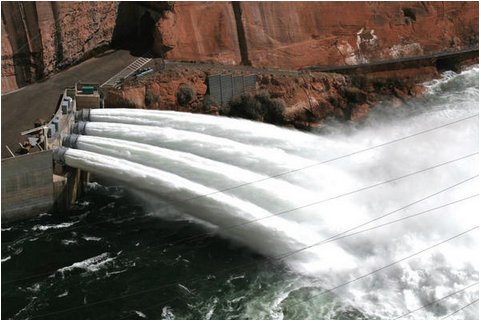
During the controlled flood, the view from the steel bridge changes: the awakened Colorado River thrashes in the canyon below. Water flows through the hydroelectric generators and erupts from four river outlet tubes, with its roar reverberating off the canyon walls and mist sparkling under the warm November sun. Dazzling white due to immense pressure, 36,000 cubic feet of water bursts from the dam every second. This peak flow is four to six times greater than usual discharge, and lasted for 92 hours.
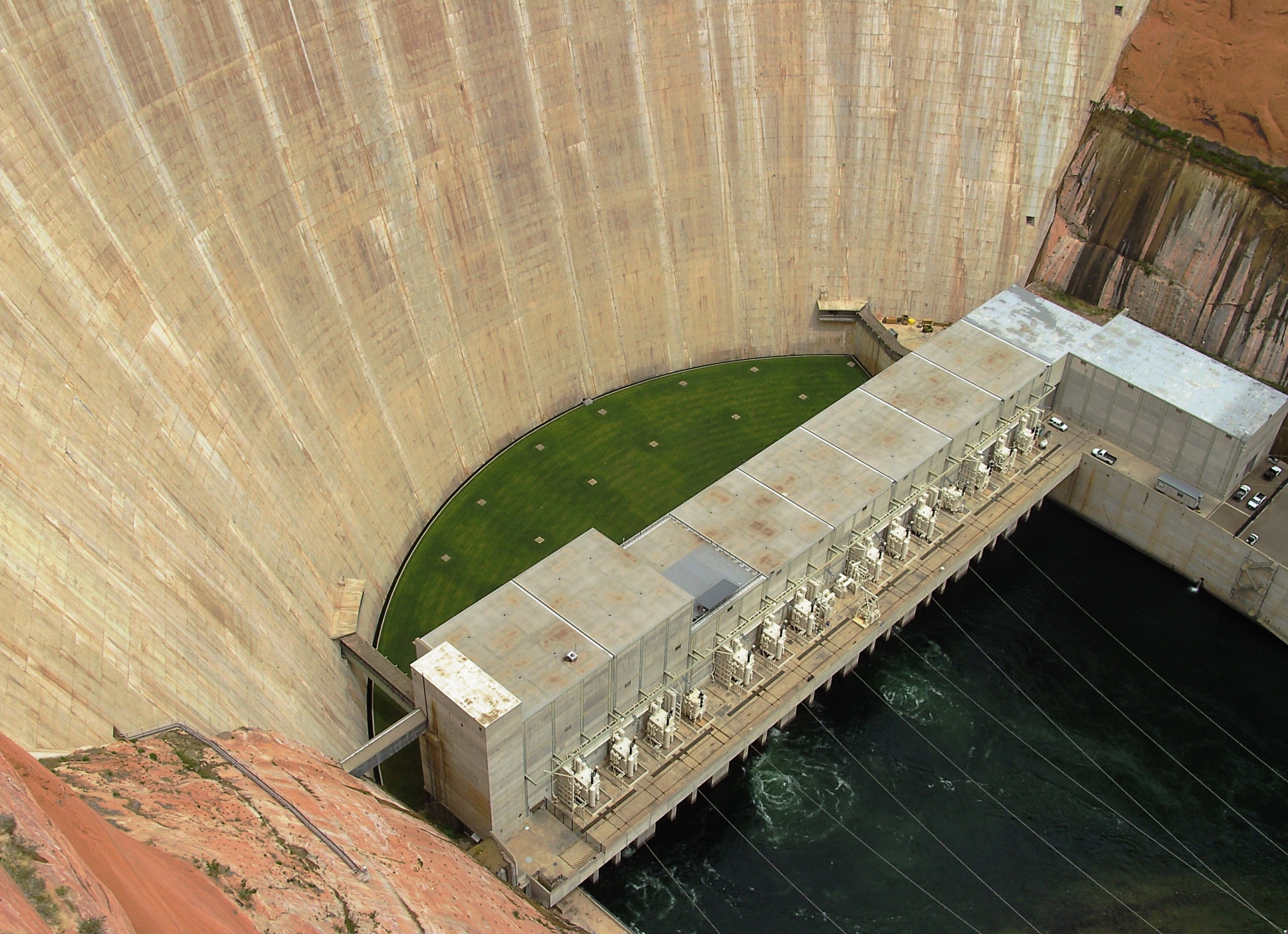
While the bridge offers an incredible view of the dam, canyon, river and reservoir, tours bring visitors inside the dam daily. From within the cold walls of the dam, the sound of rushing water is accompanied by the rhythm of generators turning at 150 rounds per minute. During the experiment, these generators still produce hydroelectric power, but less than usual. The Bureau of Reclamation says that all power demands will still be met.
The ground floor of the dam tour is at river level, and the 710-foot dam is even more impressive when viewed from the bottom. At this level, the sound of water overpowers all other noise, and wild emerald waves crash against concrete and sandstone. As floodwaters leave the dam and travel through Grand Canyon, sediment is picked up from tributary rivers and suspended in the tumultuous flow. The experiment is timed to follow an influx of sand from the Paria River, enabling the flood to redistribute it throughout the river corridor.
Downstream, the river corridor is cleansed: low vegetation is ripped from riverbanks, beaches are submerged, and sand is suspended and deposited. The flood affects campers and rafters through Grand Canyon. People recreating near or on the Colorado River were encouraged to be on alert, camp on high, stable beaches, and practice leave-no-trace ethics. On the other side of the dam, water level at Lake Powell has dropped more than three feet.
This flood is the latest release in a series of high flow experiments since 1996. Controlled floods have the potential to enlarge sandbars and beaches downstream of Glen Canyon Dam, which could provide ecological and recreational benefits. These benefits include: improving the habitat of native fish such as the endangered humpback chub, reducing erosion of archaeological sites, restoring vegetation, and increasing the size of beaches.
As the flood ramps down, the river returns to its usual controlled flow condition. The promising white blast from the outlet tubes subsides, and the buzzing of the generators recaptures the soundscape at Glen Canyon Dam. Scientists will continue to monitor Colorado River conditions in order to understand how this flow affects downstream ecosystem and resources, and to plan future floods. The Bureau of Reclamation says that the occurrence and intensity of future high flow experiments will depend on weather, sediment influx from tributaries, and other resource conditions.