The health of our waters is the principal measure of how we live on the land — Luna Leopold
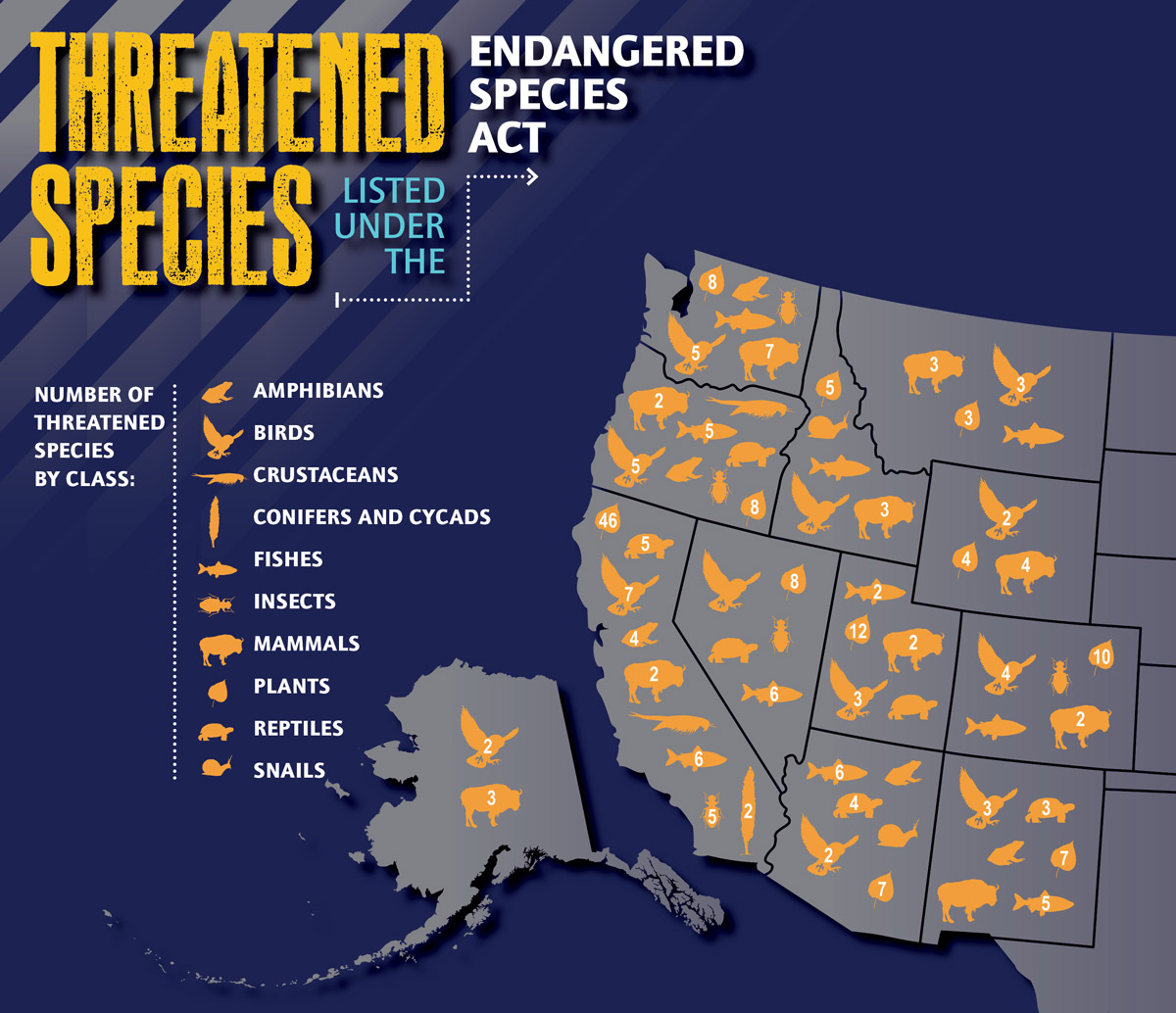
A quick guide to threatened terrestrial and freshwater species in your state — @HighCountryNews
FromThe High Country News (Jolene Yazzie and Helen Santoro):
New rules would weaken protections for plants and animals listed as threatened under the Endangered Species Act
Jolene Yazzie/High Country News, Source: U.S. Fish and Wildlife Service
The Trump administration is proposing several changes to the way the Endangered Species Act is implemented that would weaken the rules governing protections. One change targets species newly listed as “threatened,” or those that are likely to become endangered within the foreseeable future. Under the new rules, the Fish and Wildlife Service will have to create individual regulations for each species based on its conservation needs, rather than simply extending the same level of protection that endangered species receive. Environmental groups worry this will strain the agency’s workload and put animals and plants at risk of extinction. While this change will not impact the species currently listed as threatened, any future additions to their ranks would be subject to the new rules.
Here are the 167 threatened species the U.S. Fish and Wildlife Service is responsible for overseeing in the West; this list does not include marine and anadromous species that are the sole responsibility of the National Ocean and Atmospheric Administration:
Note: This story has been updated to add the northern spotted owl, San Ana sucker, Arkansas River shiner, gypsum wild-buckwheat and southern sea otter; and to reflect that the Little Colorado Spinedace is found in Arizona, the Oregon spotted frog is found in Washington, the bull trout is found in Montana, the Warner sucker is found in California and Nevada, the piping plover is found in New Mexico, and that the Canada lynx is threatened in New Mexico but not Alaska. Spelling errors have also been corrected. Seals have been removed from this list, which reflects U.S. Fish and Wildlife Service data; it does not include species solely overseen by the National Oceanic and Atmospheric Administration.
Helen Santoro and Jolene Yazzie are editorial interns at High Country News. Email them at helensantoro@hcn.org and joleneyazzie@hcn.org.