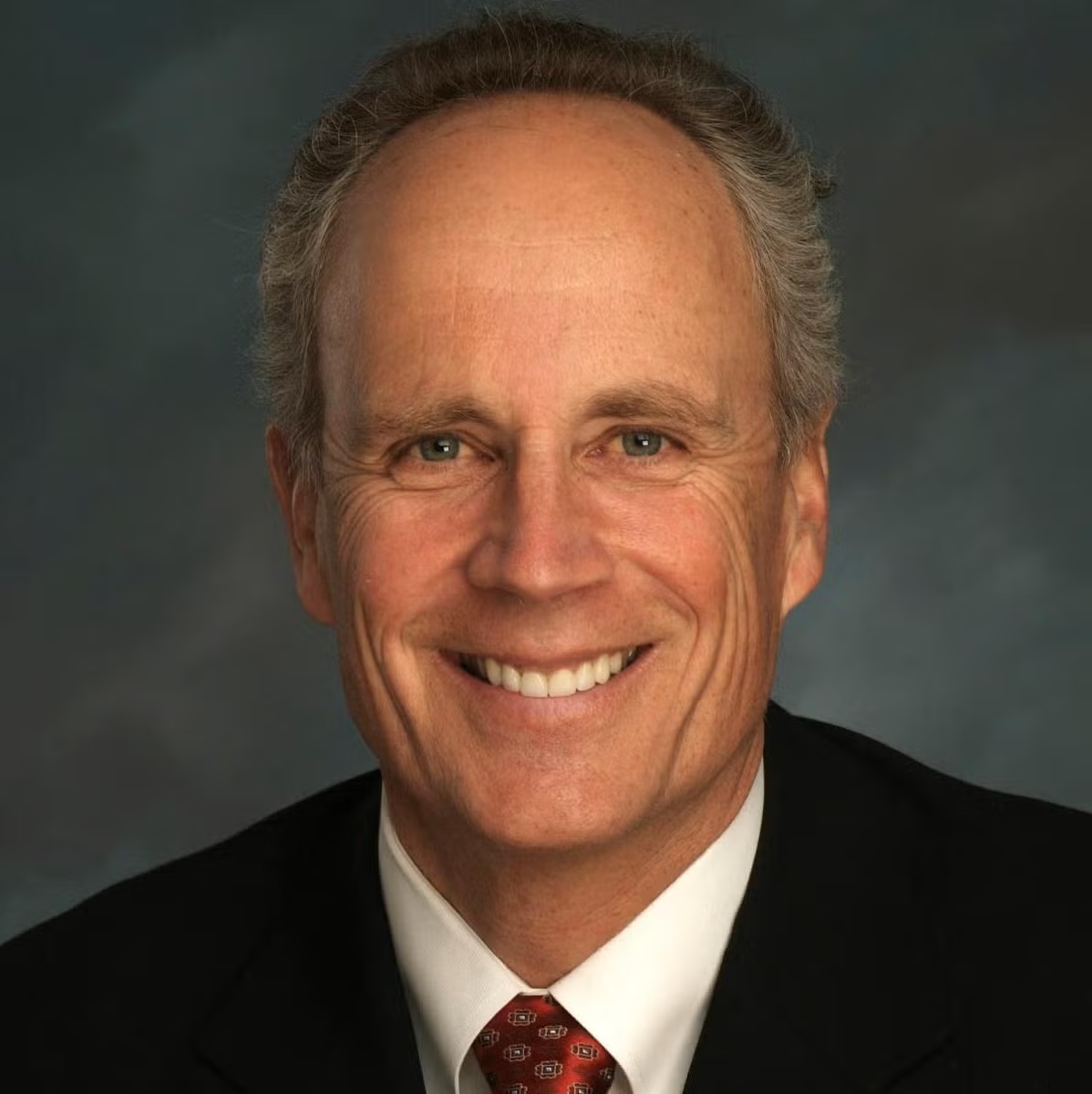
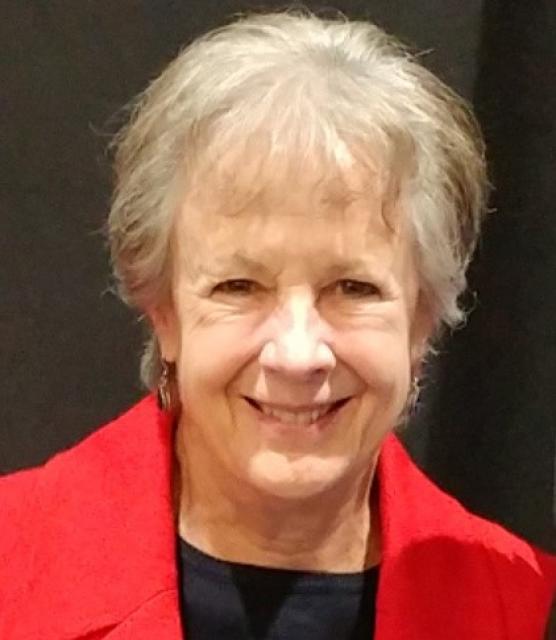
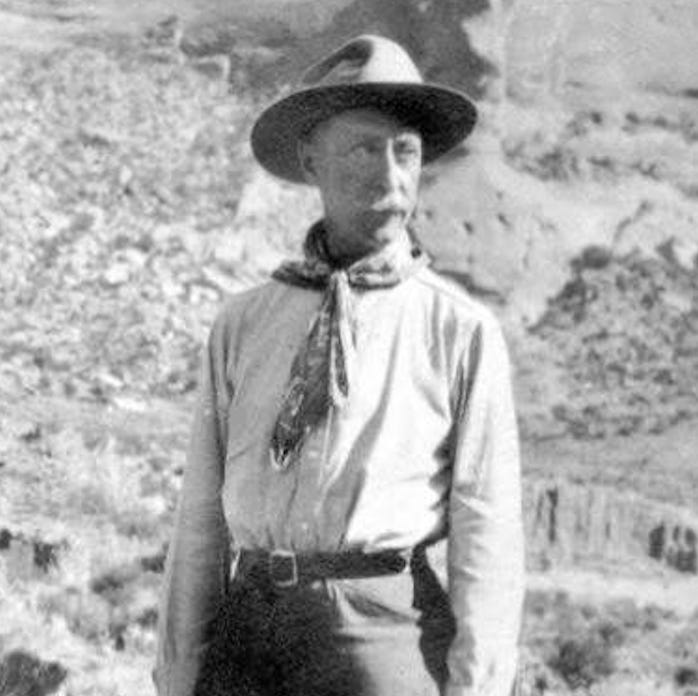
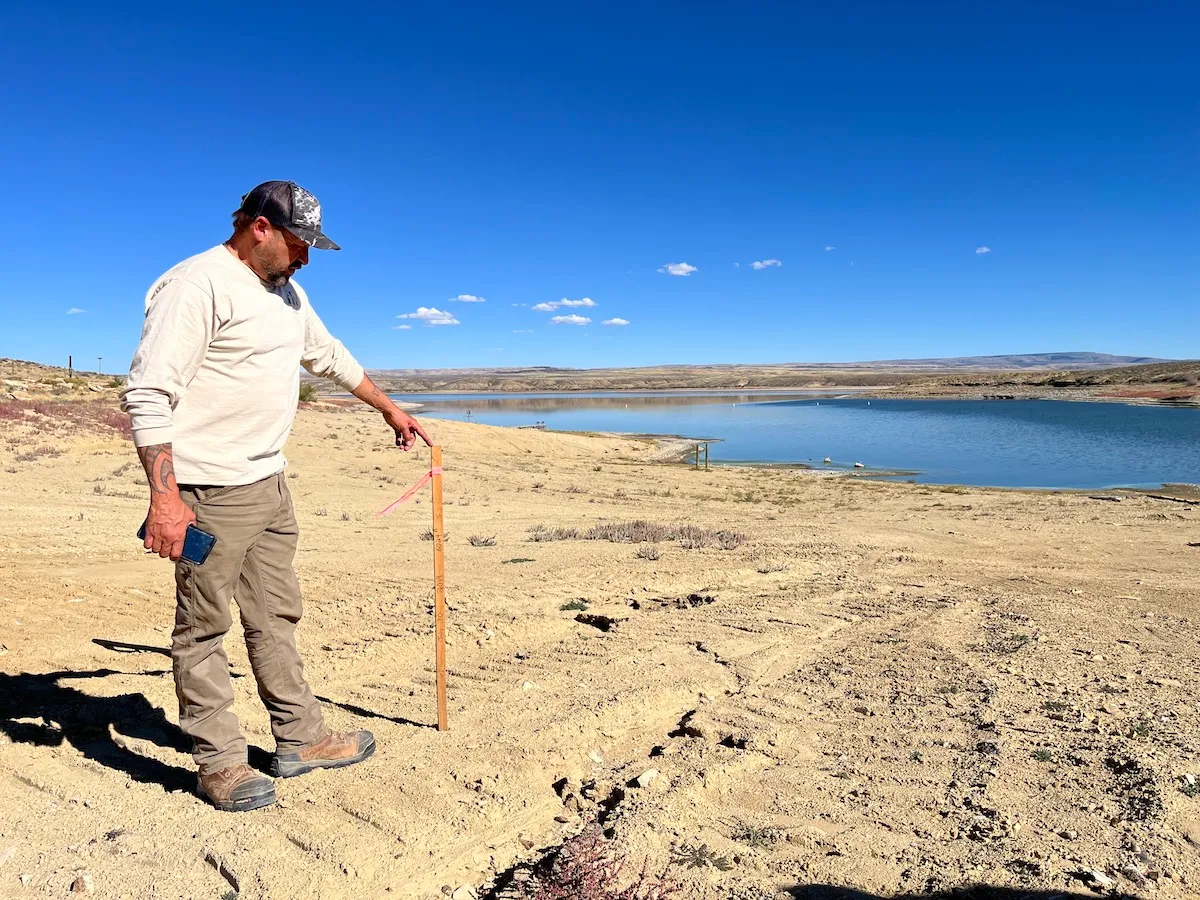
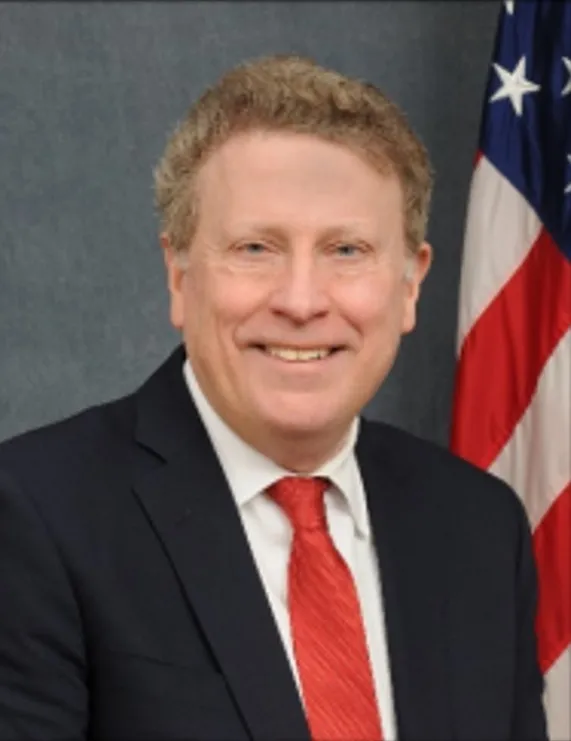
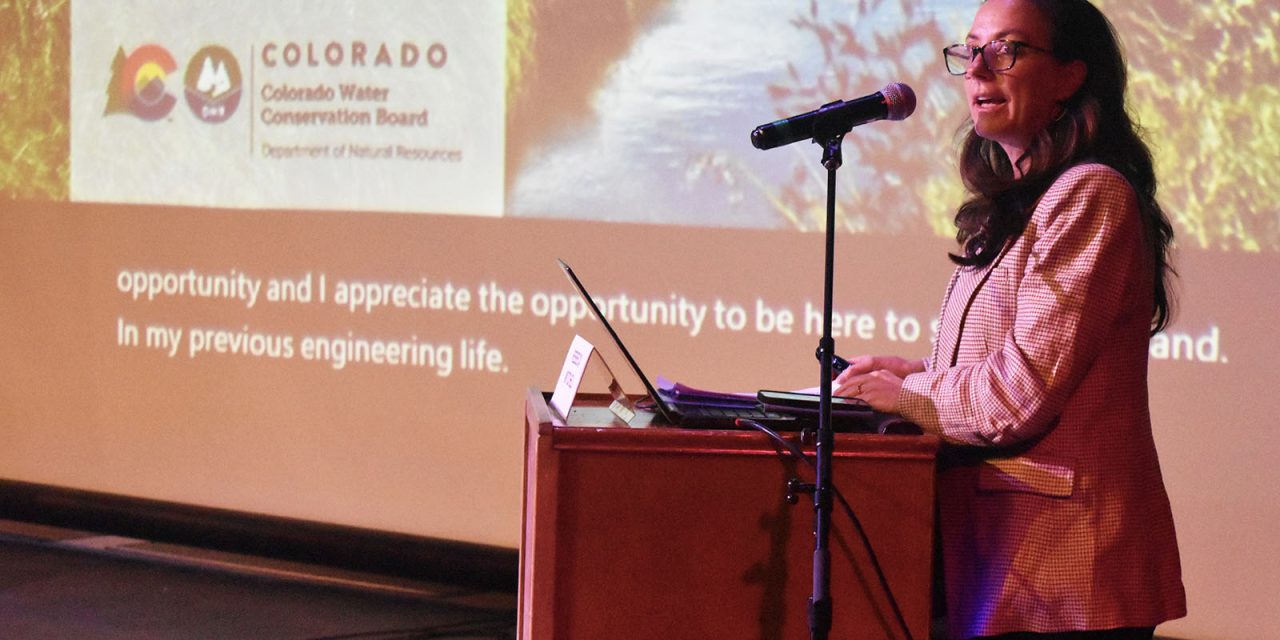
Becky Mitchell. Photo credit: Allen Best/Big Pivots
Click the link to read the article on the Big Pivots website (Allen Best):
June 25, 2026
In haggling with their down-river states about sharing the rapidly shrinking Colorado River, the headwater states have delivered a consistent message.
We don’t have two big reservoirs named Mead and Powell sitting upstream from us, they say. Mostly we must make do with what the sky delivers.
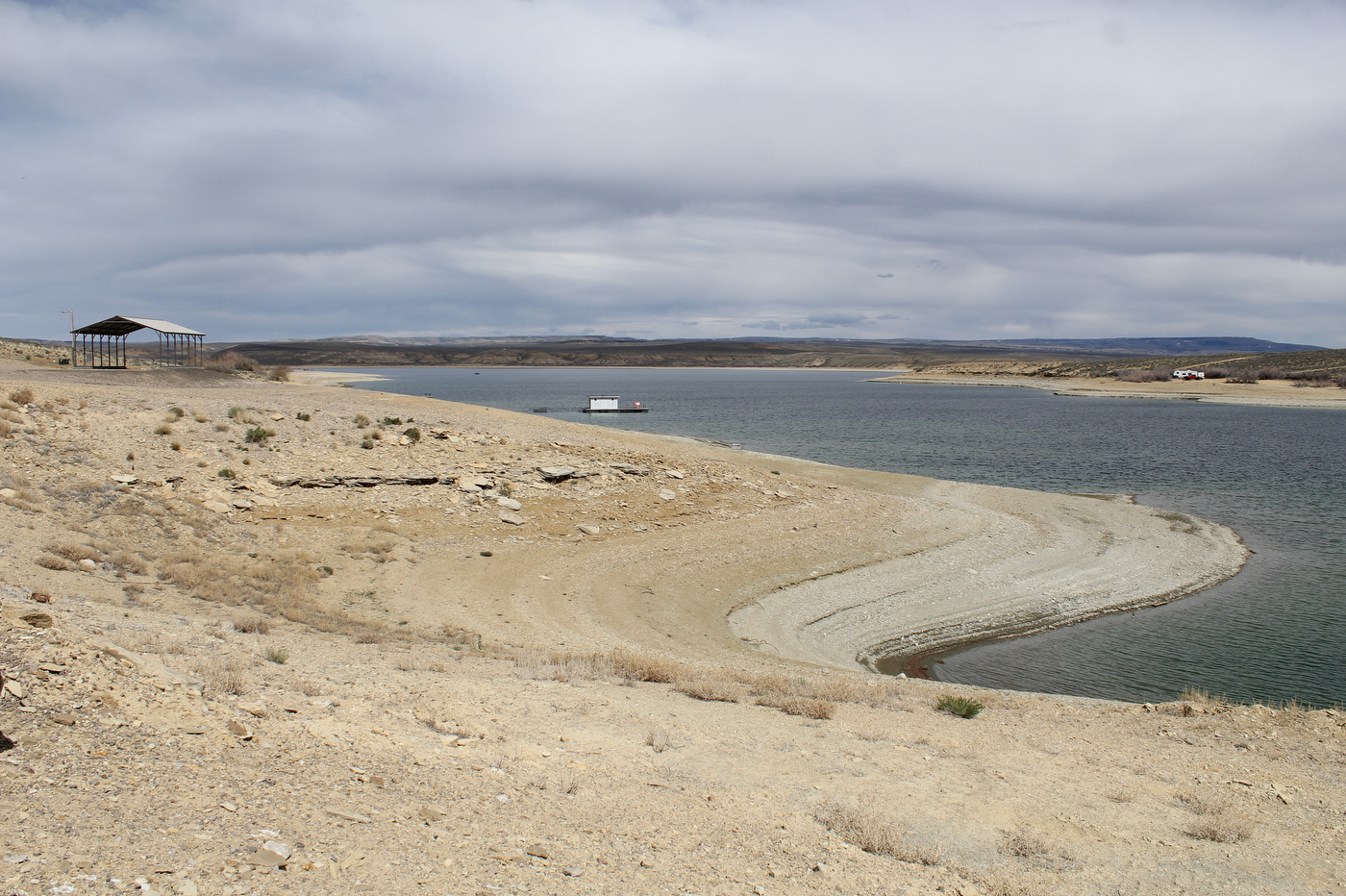
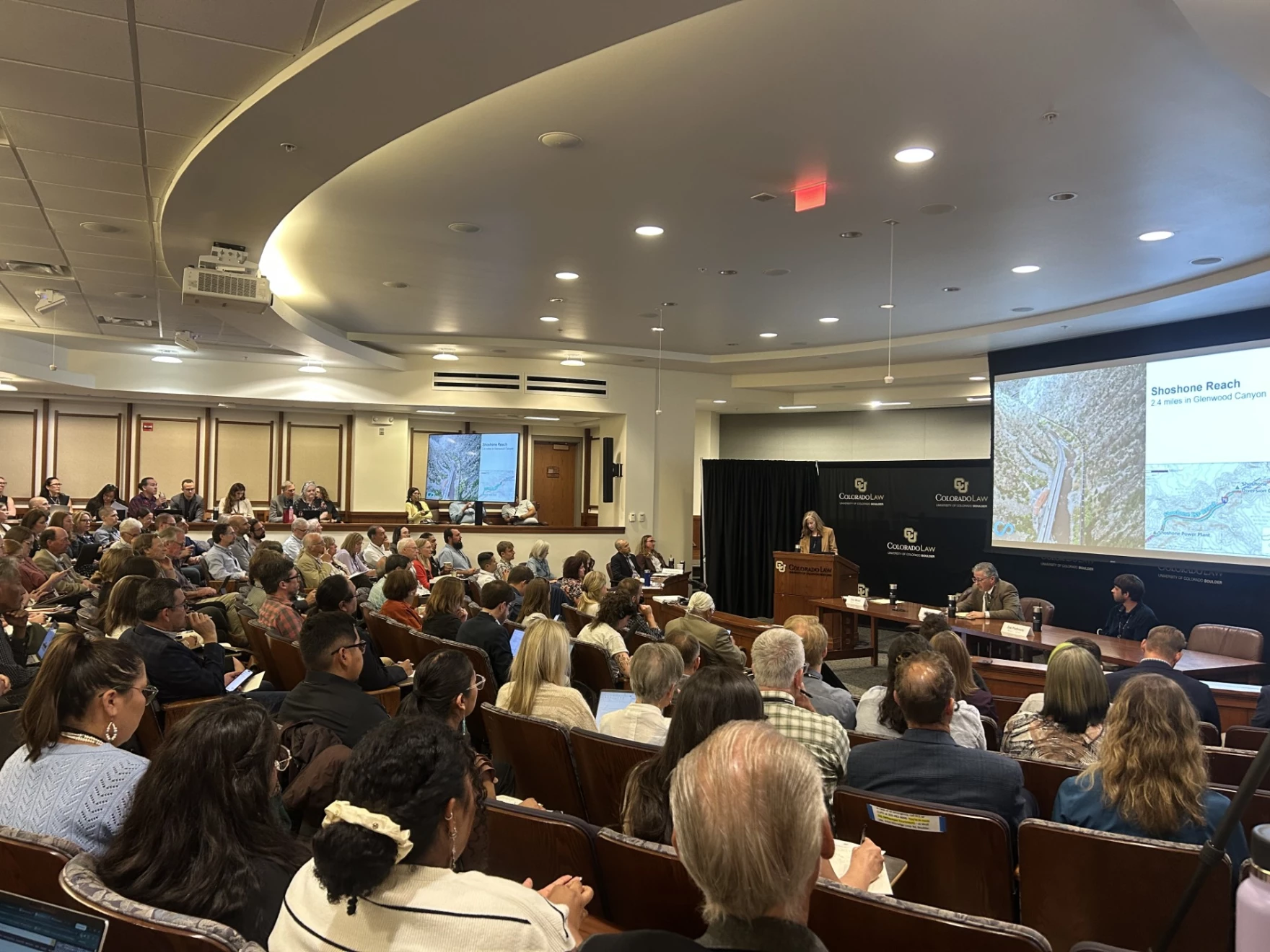
At the Upper Colorado River Commission meeting in Denver this week, the states reiterated this message, offering ample evidence from places like Emery, Utah, and Kemmerer, Wyo.
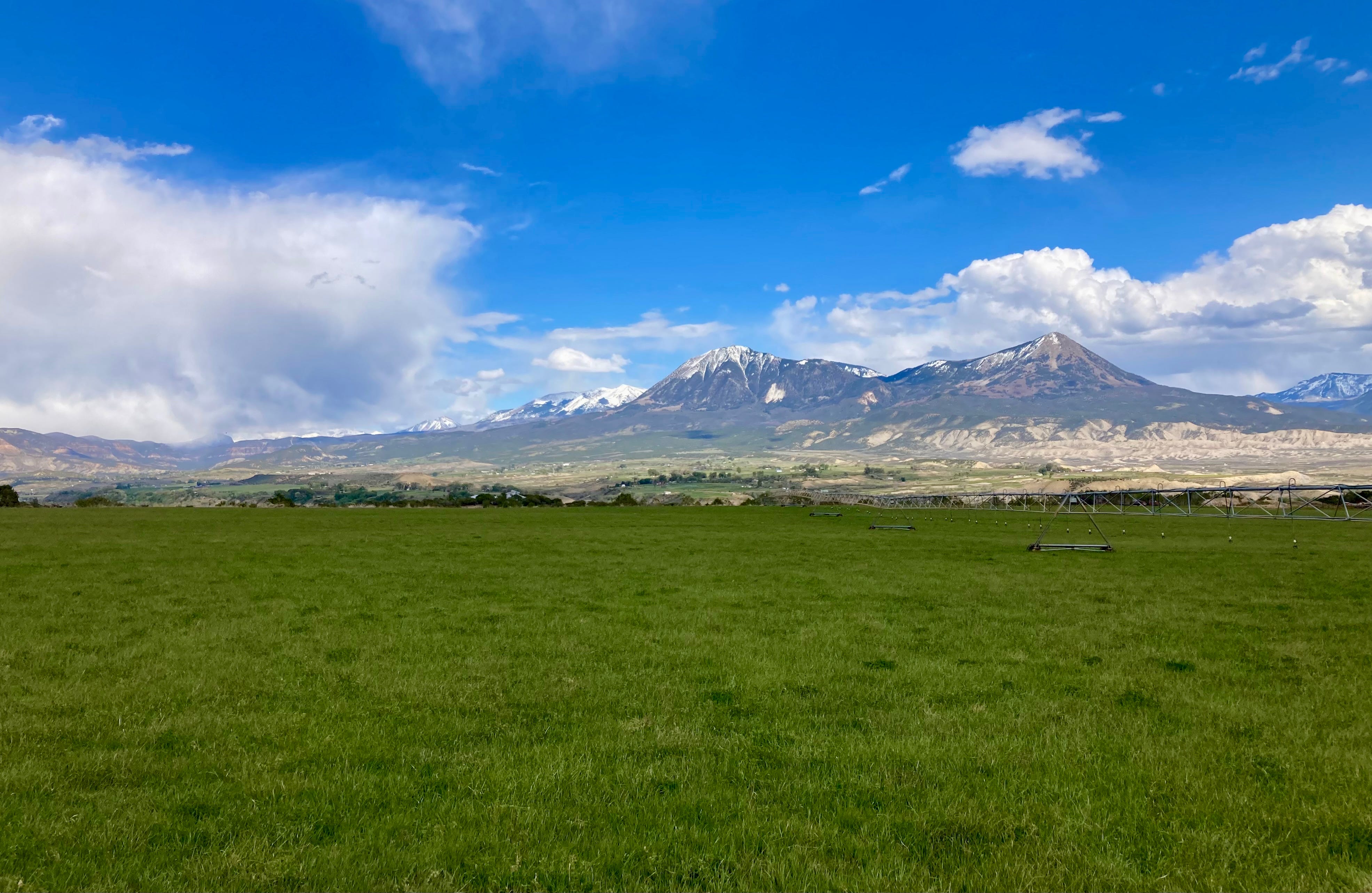
Lest anybody miss the message, Chuck Cullom, the director of the upper-basin commission, showed aerial images of farming areas in Colorado and the other upper-basin states. Far less green was evident in the Montrose area and on the Ute Mountain Ute Reservation during June than in 2024.
This exceptional year for drought and heat was described by several speakers in Denver as dire. “I want you all to recognize the significance and severity of the things we’re dealing with,” said the Utah representative, Gene Shawcroft. “Totally unprecedented.”
In western Colorado, a Meeker rancher used the same word to describe withered streams. “The situation here has gone from bad to dire.”
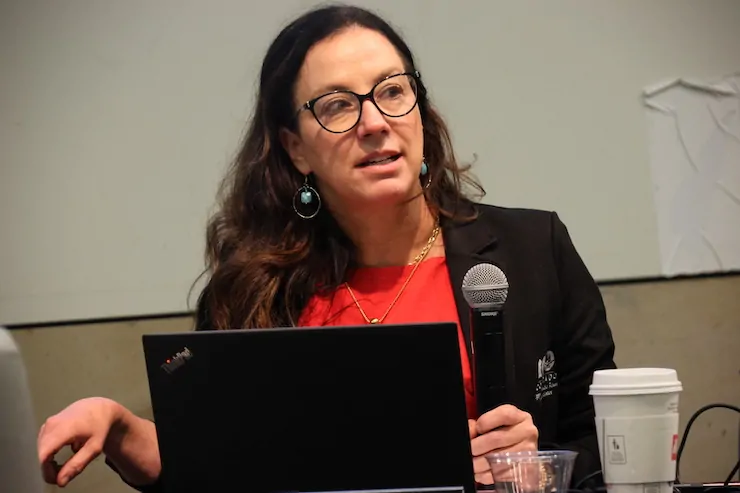
Upper-basin states have been in a tug-of-war for the last three years with lower-basin states about how to share this diminished river. As Becky Mitchell (above), Colorado’s representative, says repeatedly, we have a math problem. It’s impossible to continue releasing more water from reservoirs than flow into them. Upper-basin states, she says, “live within the means of the river.”
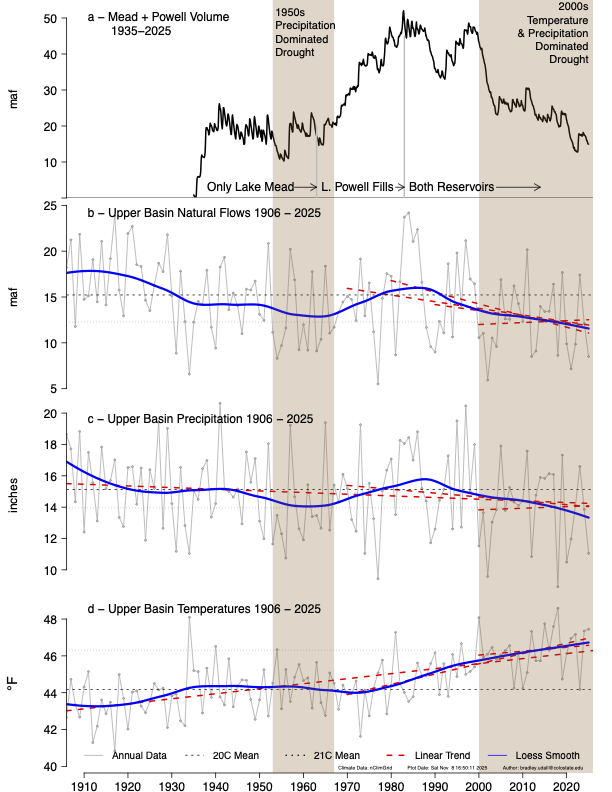
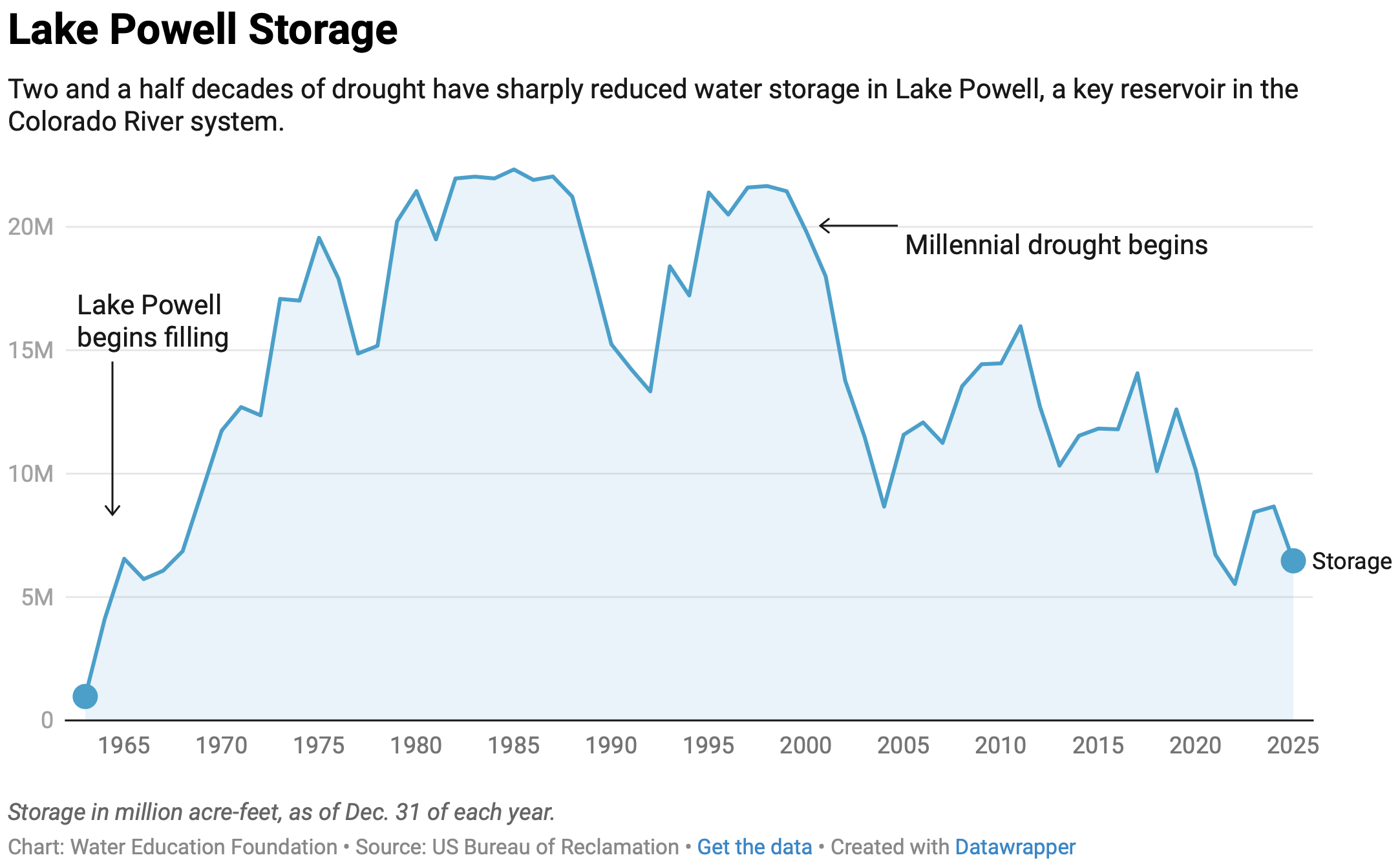
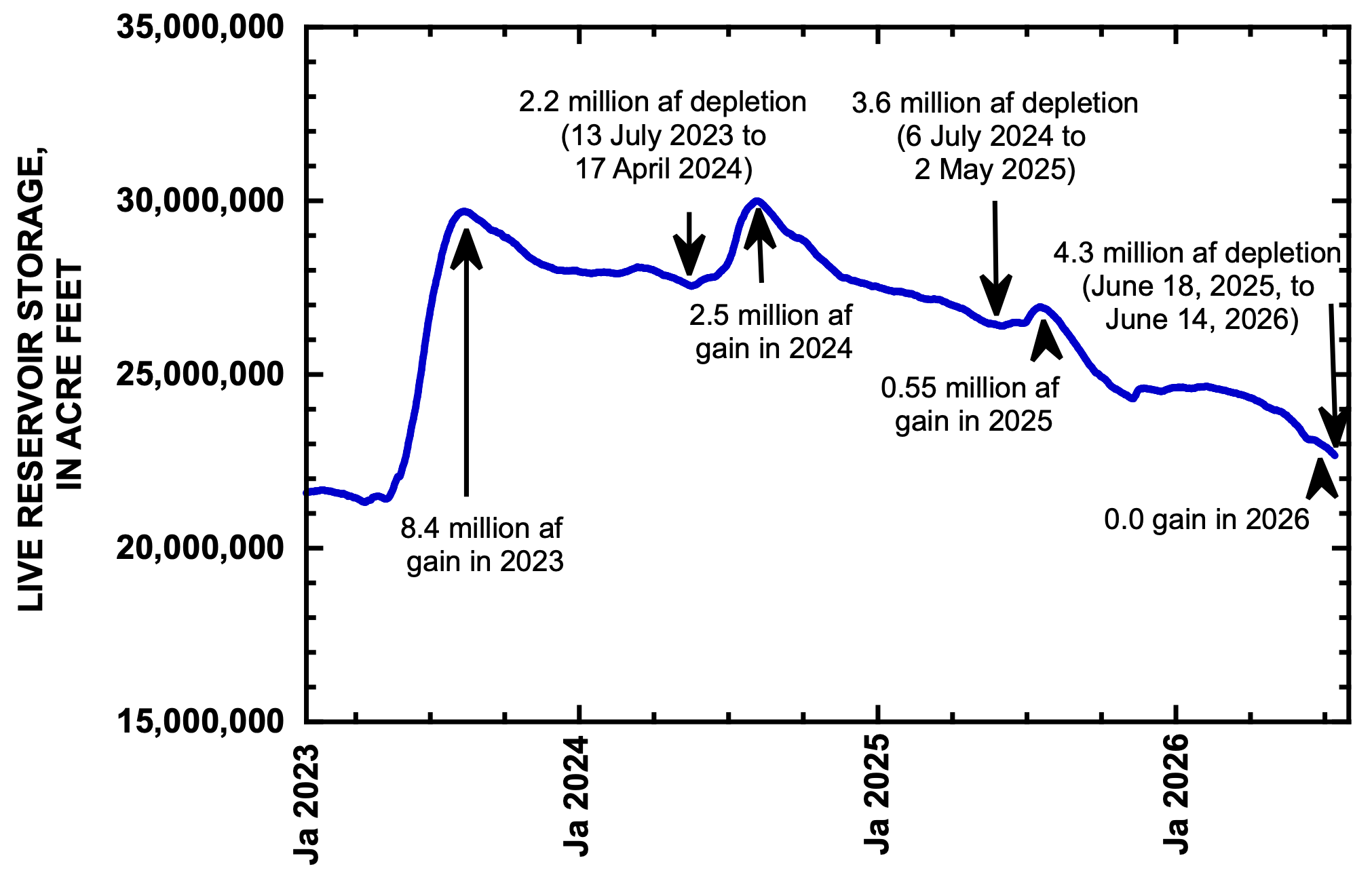
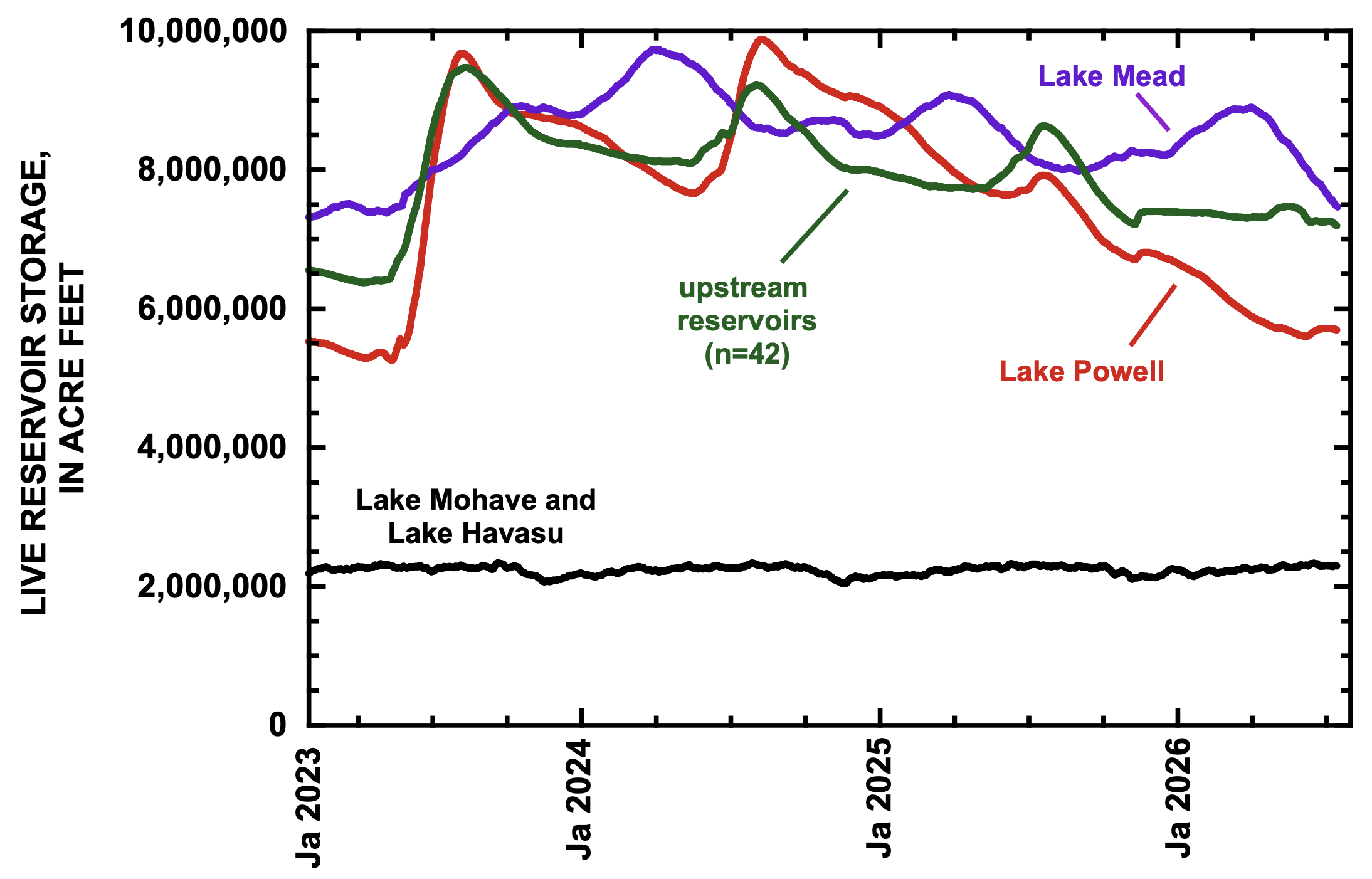
Udall/Overpeck 4-panel Figure Colorado River temperature/precipitation/natural flows with trend. Lake Mead and Lake Powell storage. Updated through Water Year 2025. Note the tiny points on the annual data so that you can flyspeck the individual years. Credit: Brad Udall
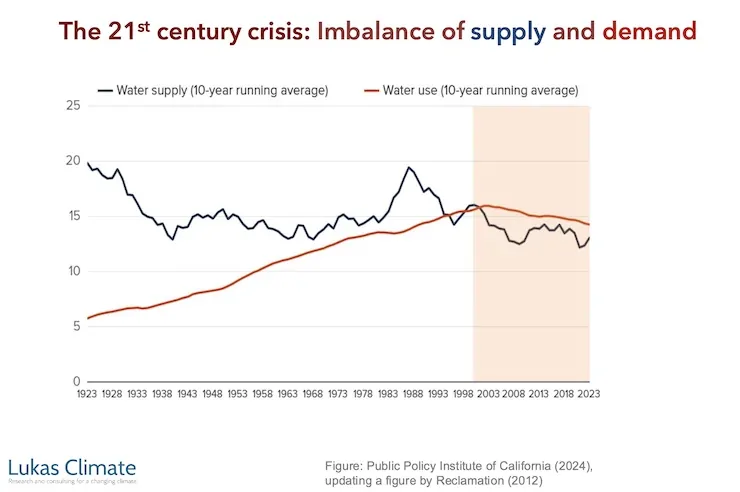
In crafting the Colorado River Compact in 1922, delegates assumed annual flows of roughly 17 to 18 million acre-feet annually at Lee Ferry, the legal division point separating the upper and lower basins. The 20th century delivered naturalized flows of 15.2 million on average.
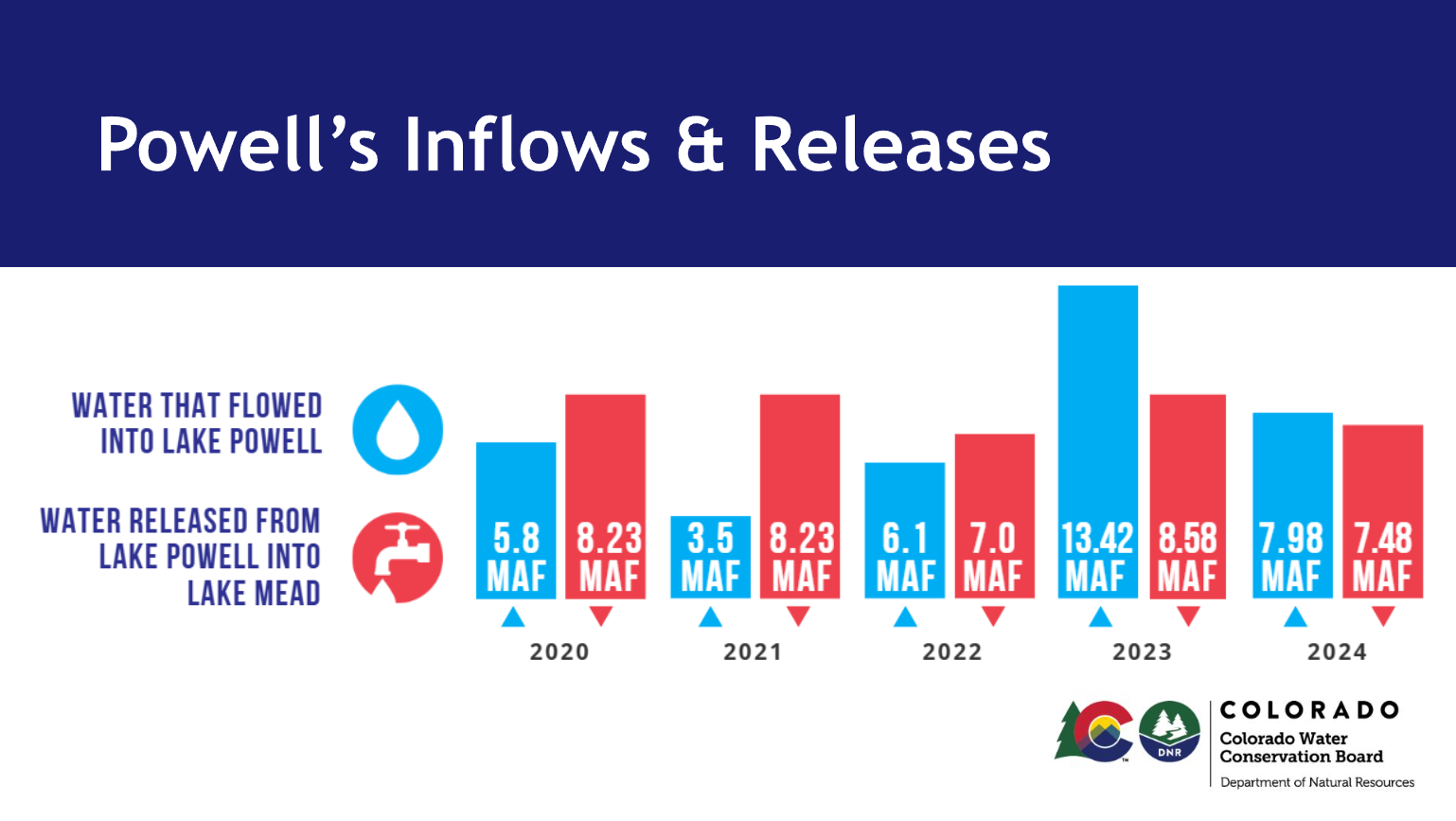
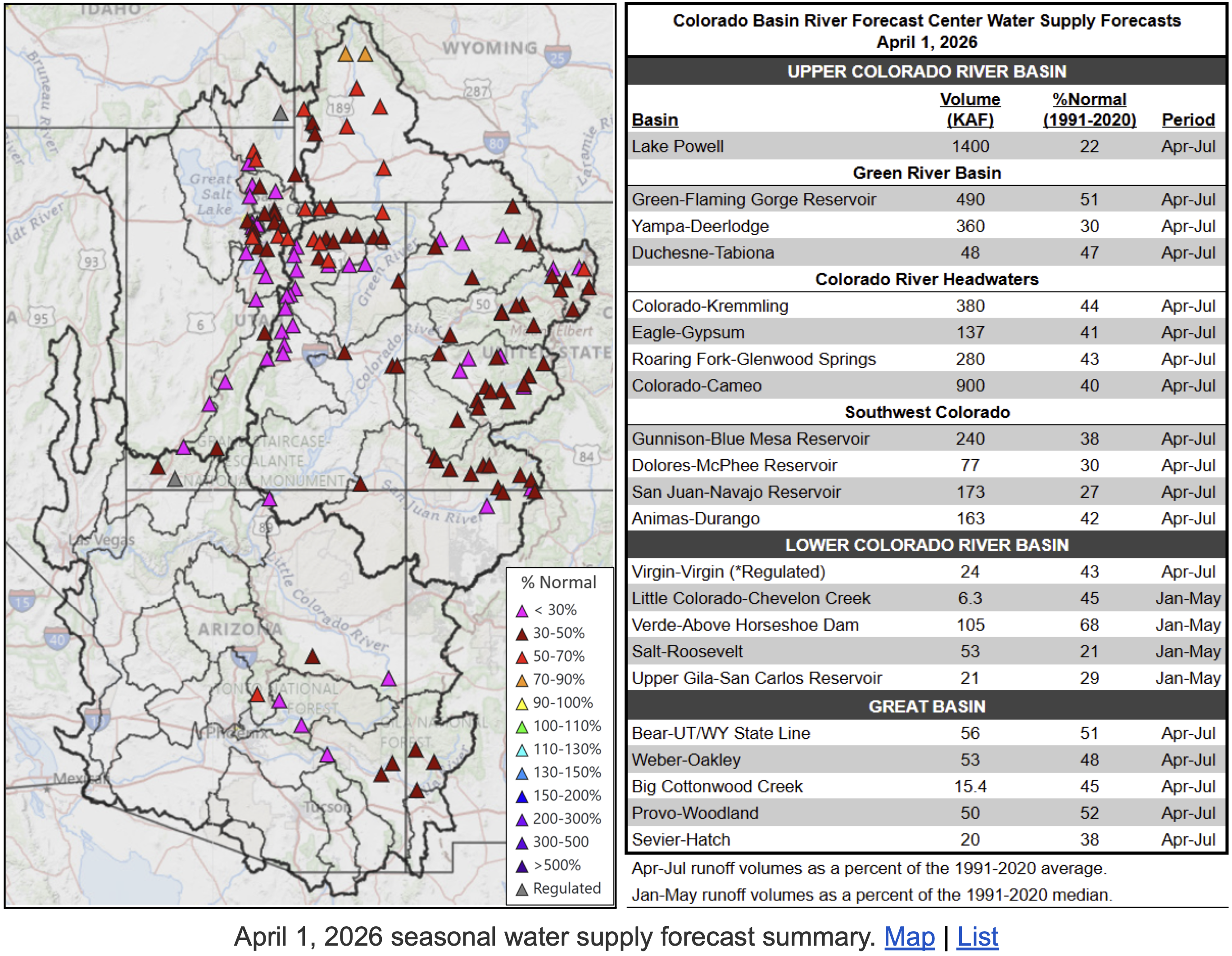
In this century, flows have slackened even more. Since 2019 they have averaged 10.2 million acre-feet. This year less than 1 million acre-feet is expected to flow into Lake Powell other than releases from upstream reservoirs.
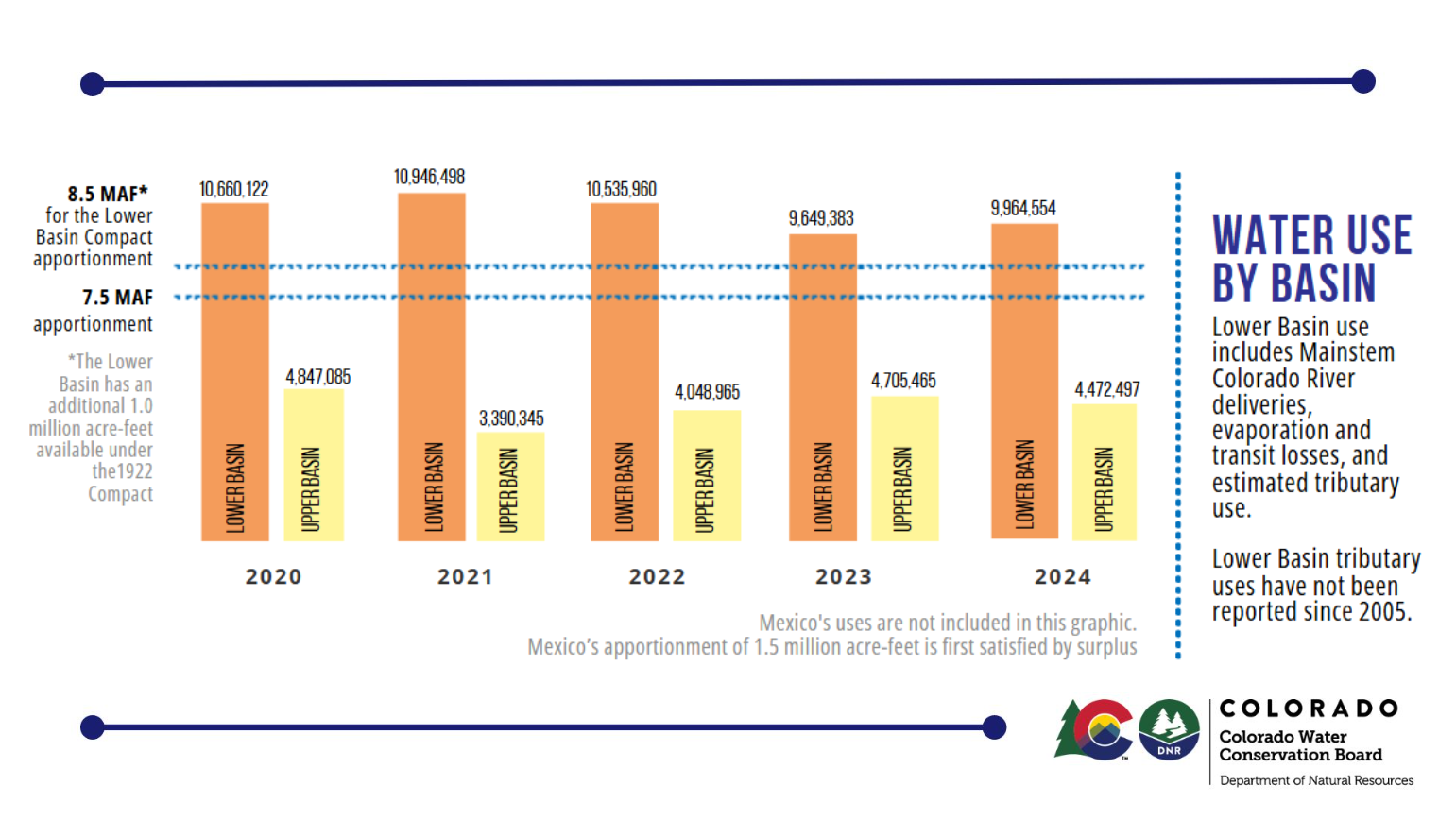
The compact pledged 7.5 million acre-feet to each of the two basins. The lower-basin states for many years over-used their allocation. Upper-basin states topped out at about 4.5 million acre-feet, using 3.5 million acre-feet in drier years.
Colorado and other basins states insist upon the right to use more water — if it’s there. Pre-compact rights of all Native American tribes have yet to be realized. All this creates a different math problem.
When the four upper basin states adopted their own compact in 1948, they wisely chose to use a percentage not an absolute number. That would make sense for the Colorado River Basin altogether — if the two basins could agree upon it. Tensions have elevated. Outwardly this marriage looks very rocky.
Might there be another way? Tanya Trujillo, New Mexico’s new representative, offered an intriguing statement at the Denver meeting.
“I think we need to think differently about some things,” she said. “In New Mexico, we’re going to be taking a fresh look at some of the issues that we are facing and really try to look for a collaborative process going forward.”
In time of crisis, she added, it’s important to “project calm, knowledgeable reassurance and try to be part of the solution, not part of the problem.”
For whom was that message intended? It was not clear. However, even in Colorado, some have suggested upper-basin states have overstated their case.
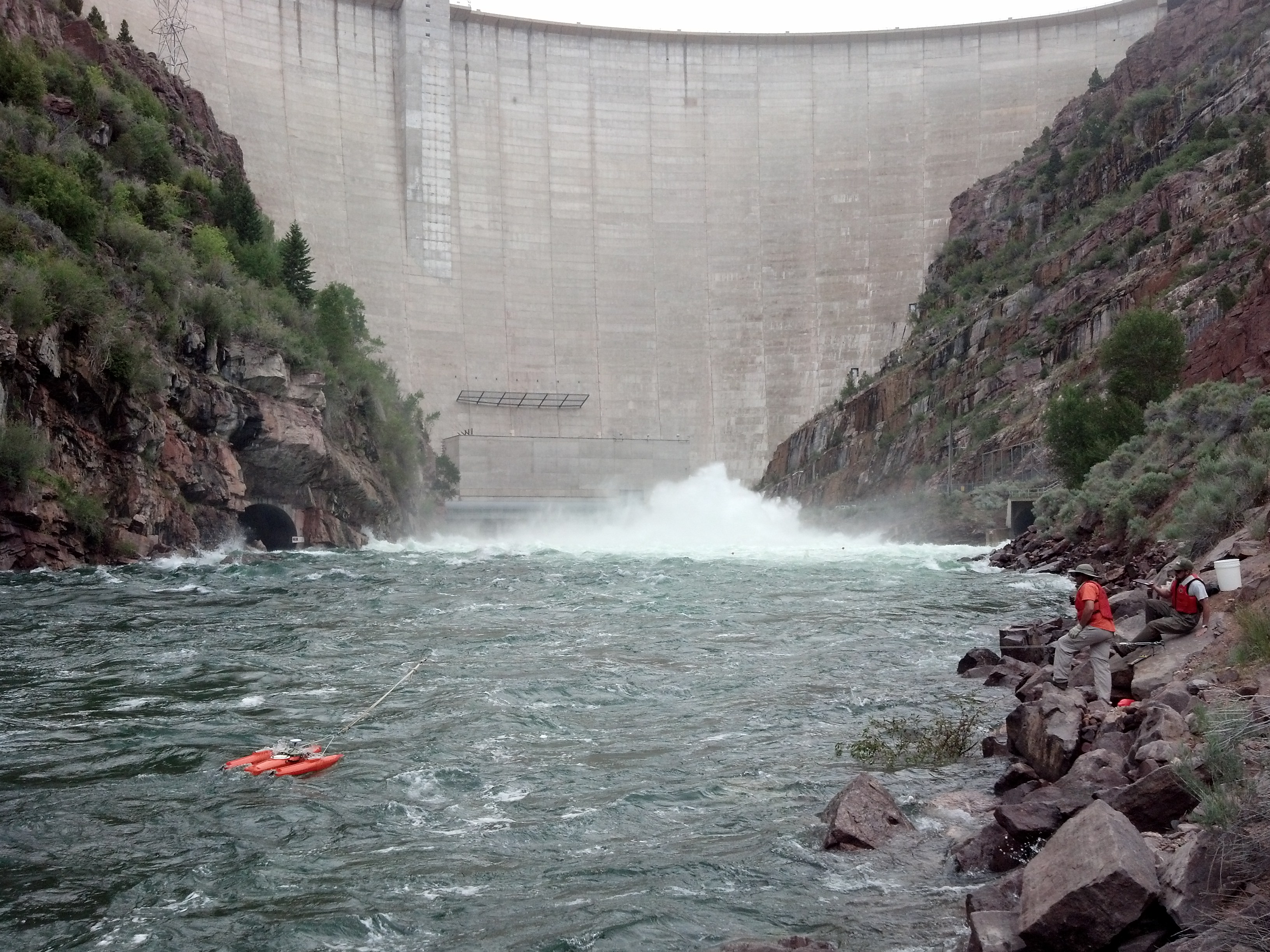
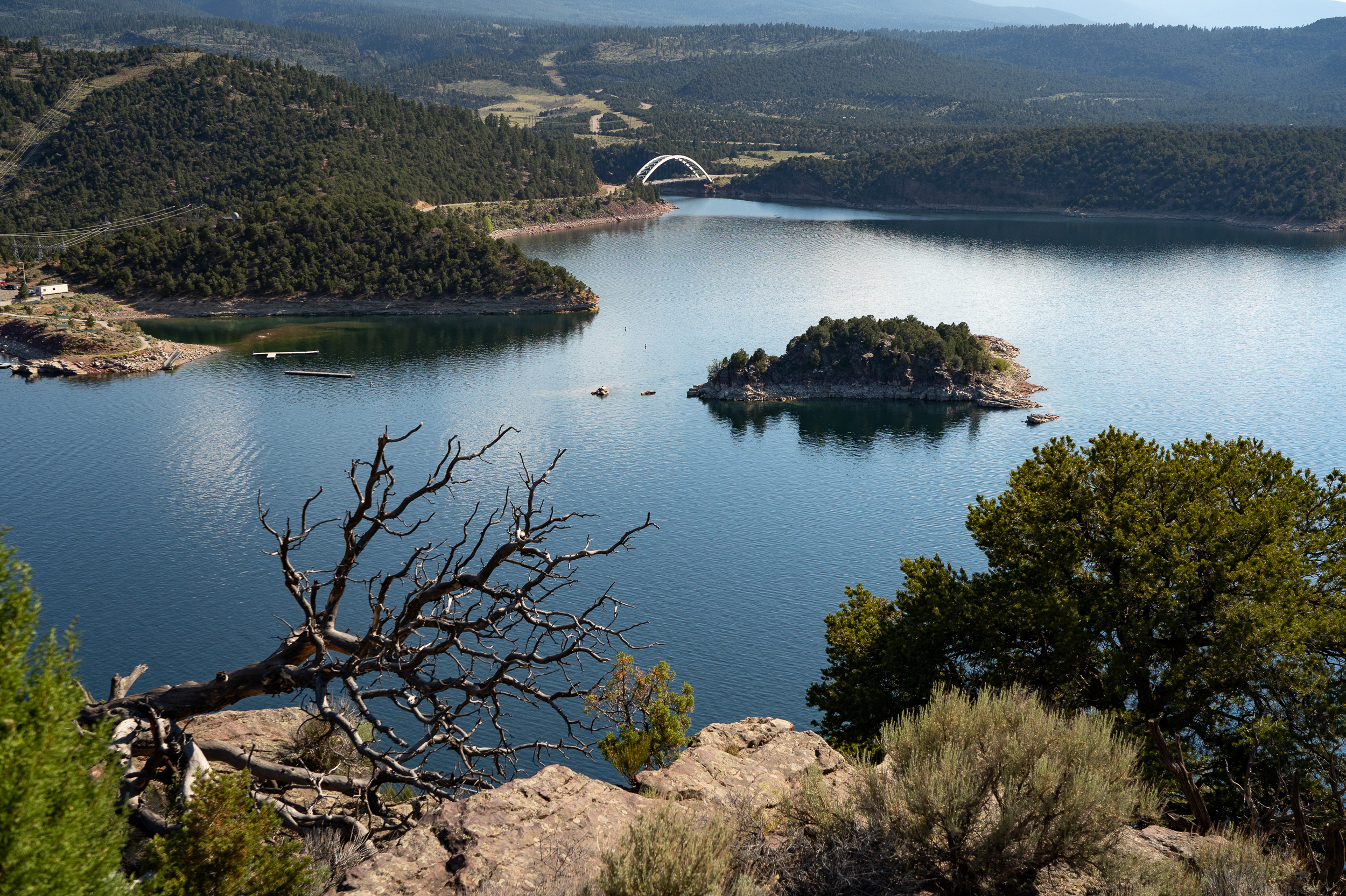
What cannot be contested is Mitchell’s assertion that demands cannot exceed supplies. This year, we’re robbing Peter to pay Paul. Water is being taken from Flaming Gorge and other federal upstream reservoirs to keep water in Powell. Blue Mesa Reservoir near Gunnison may have too little water to release any downstream, a condition called dead pool. The Bureau of Reclamation similarly sees that possibility for Navajo, the reservoir on the Colorado-New Mexico border.
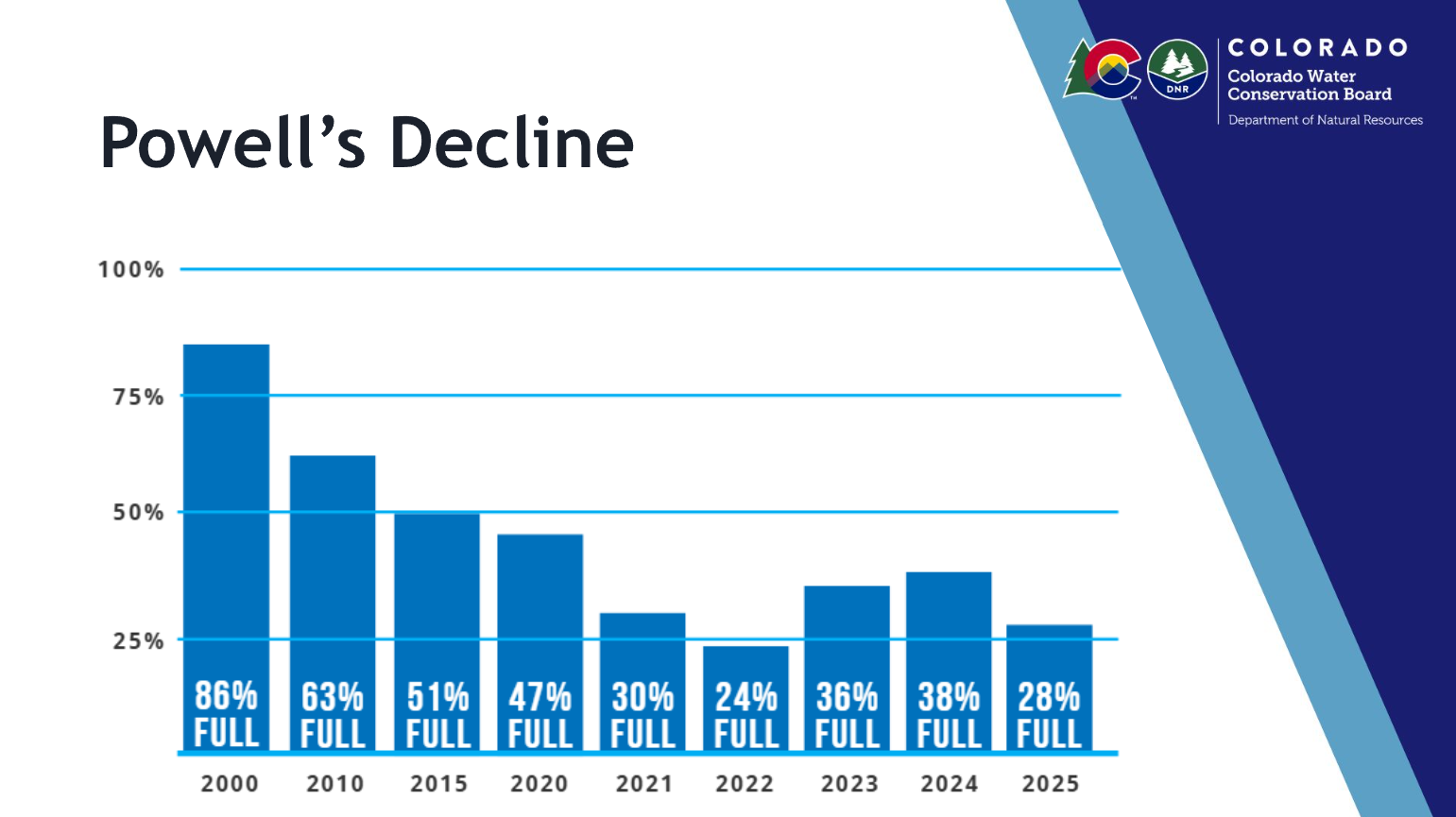
The Bureau intends to release six million acre-feet from Powell for the lower-basin, leaving Powell 80% empty. The agency’s “most probable” projections see reservoir levels at Glen Canyon Dam early next year being too low to generate electricity.
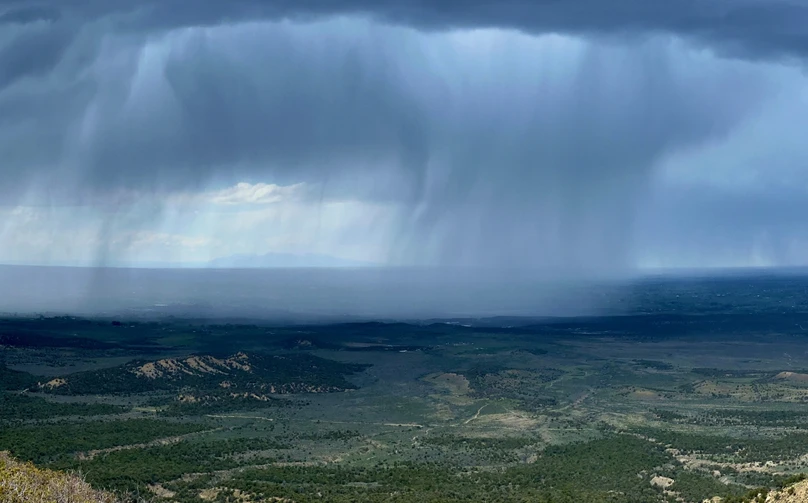
In Grand Junction this week, people stood in the rain with sheer delight. It was a feel-good moment. But will El Niño save us from calamity? Maybe, but don’t bet on it. The warming climate seems to be rewriting the rules about how much water from the Pacific Ocean arrives on our mountains.
hat was the takeaway from a recent presentation by Brad Udall, a scientist scholar affiliated with Colorado State University. El Niños in the past have produced big water years. One was in 1983, the year that flood waters nearly broke Glen Canyon Dam. Often, though, an El Niño produces no more moisture than a La Niña.
“The real question” said Shawcroft, the Utah representative, “is what happens if next year looks like this?”
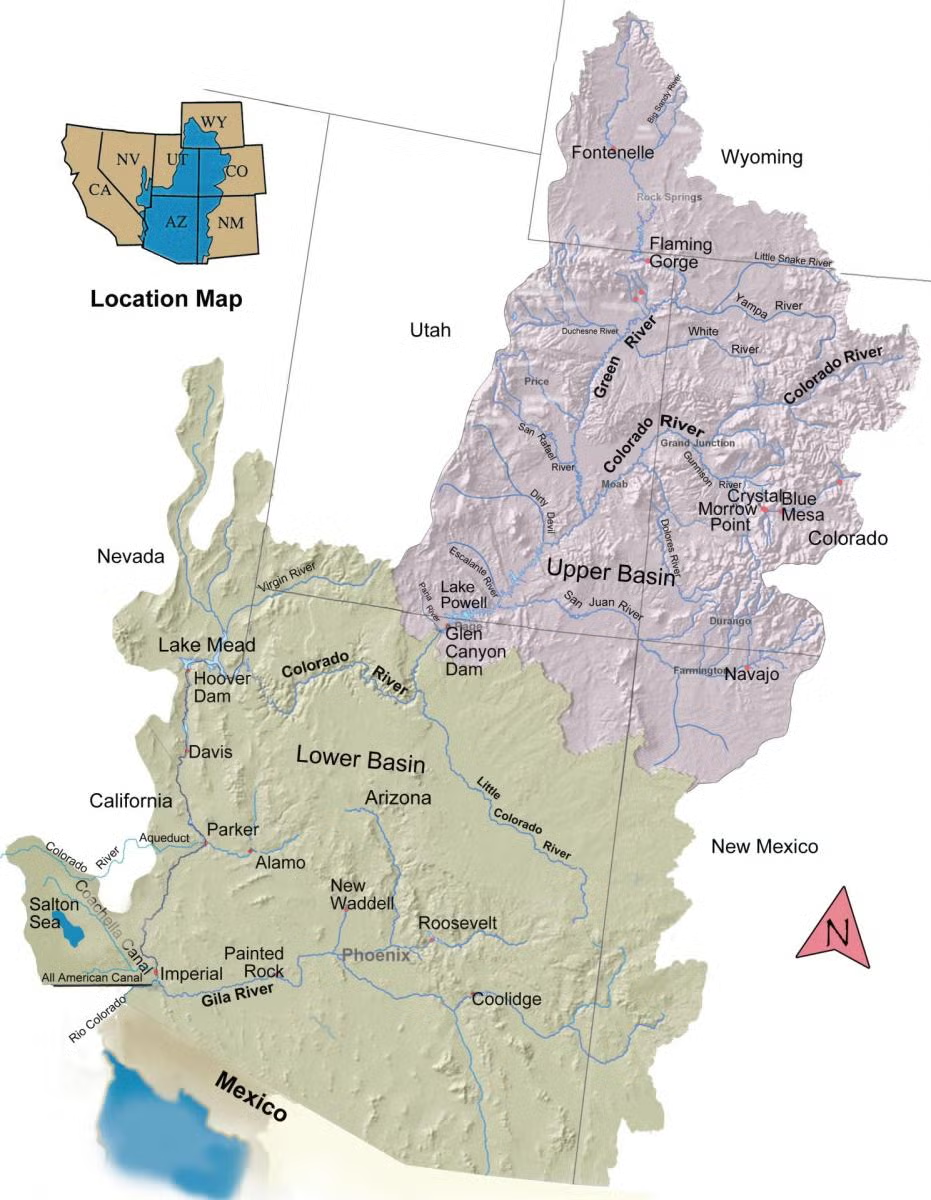
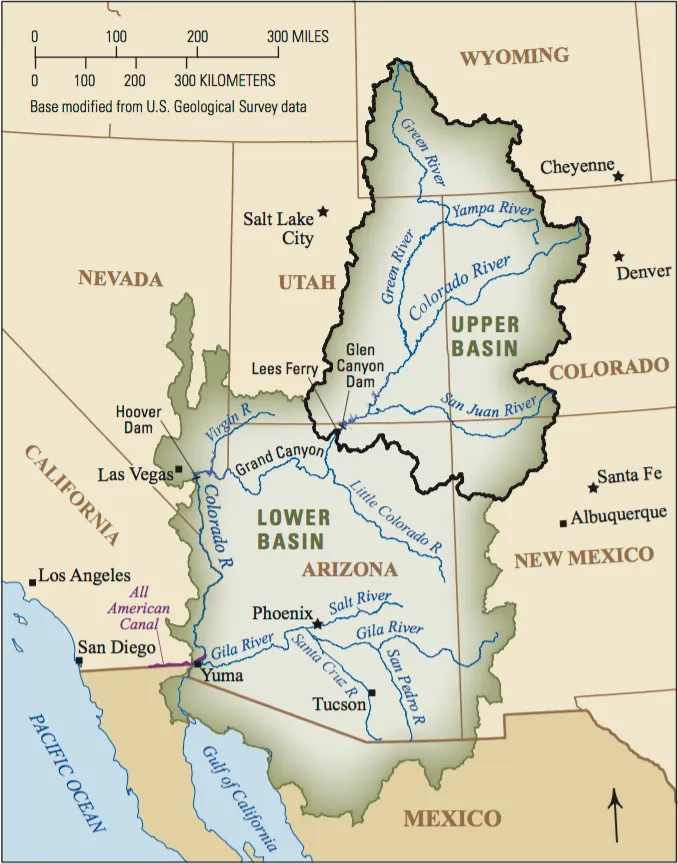
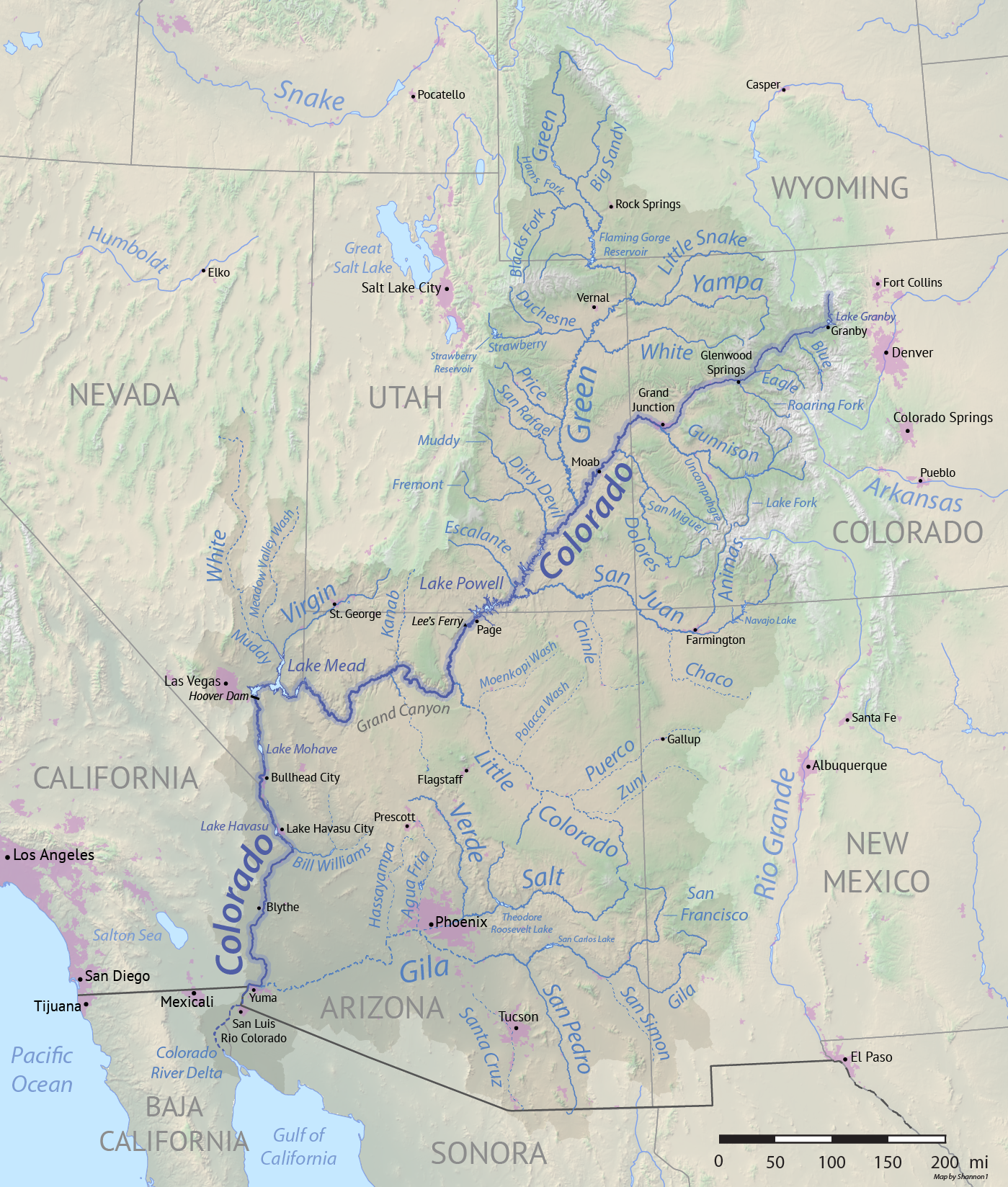
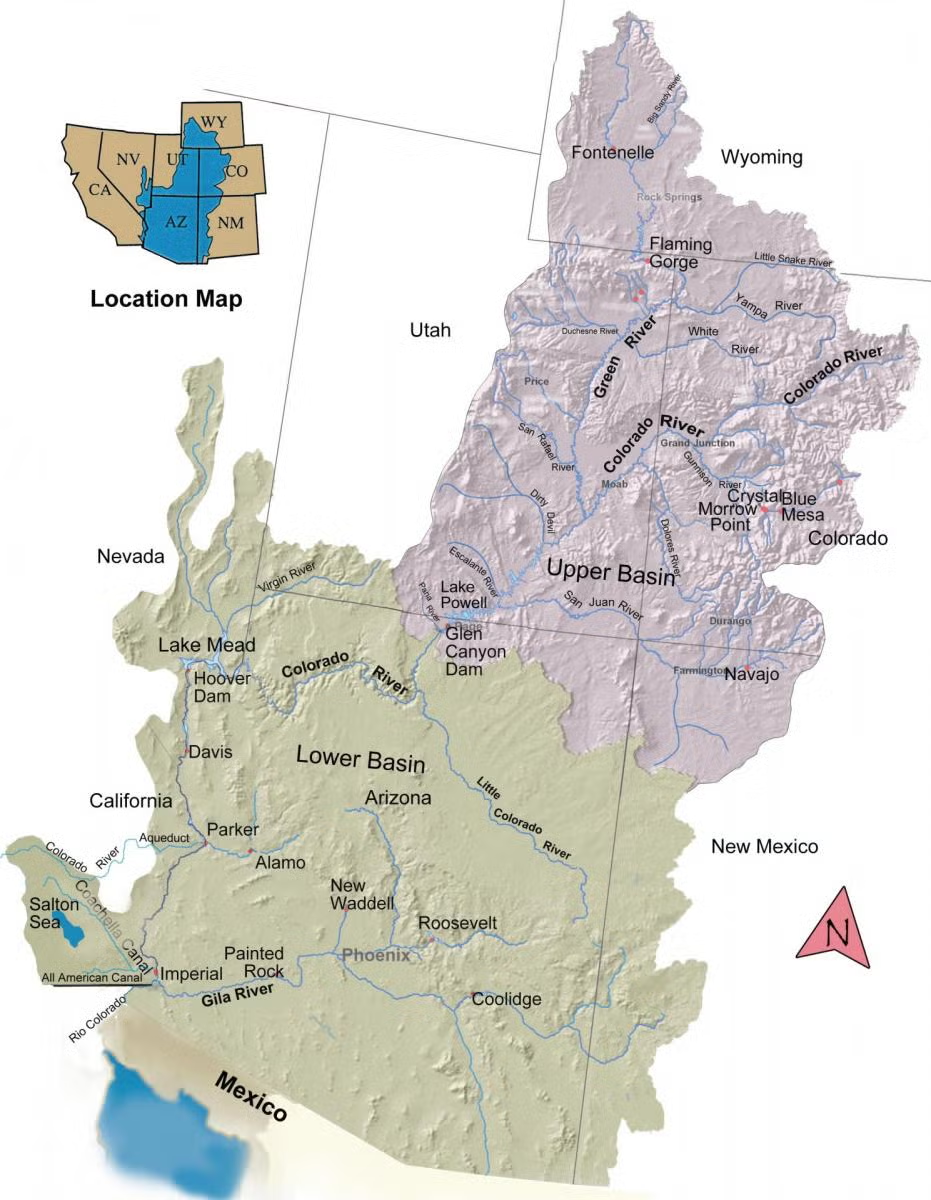
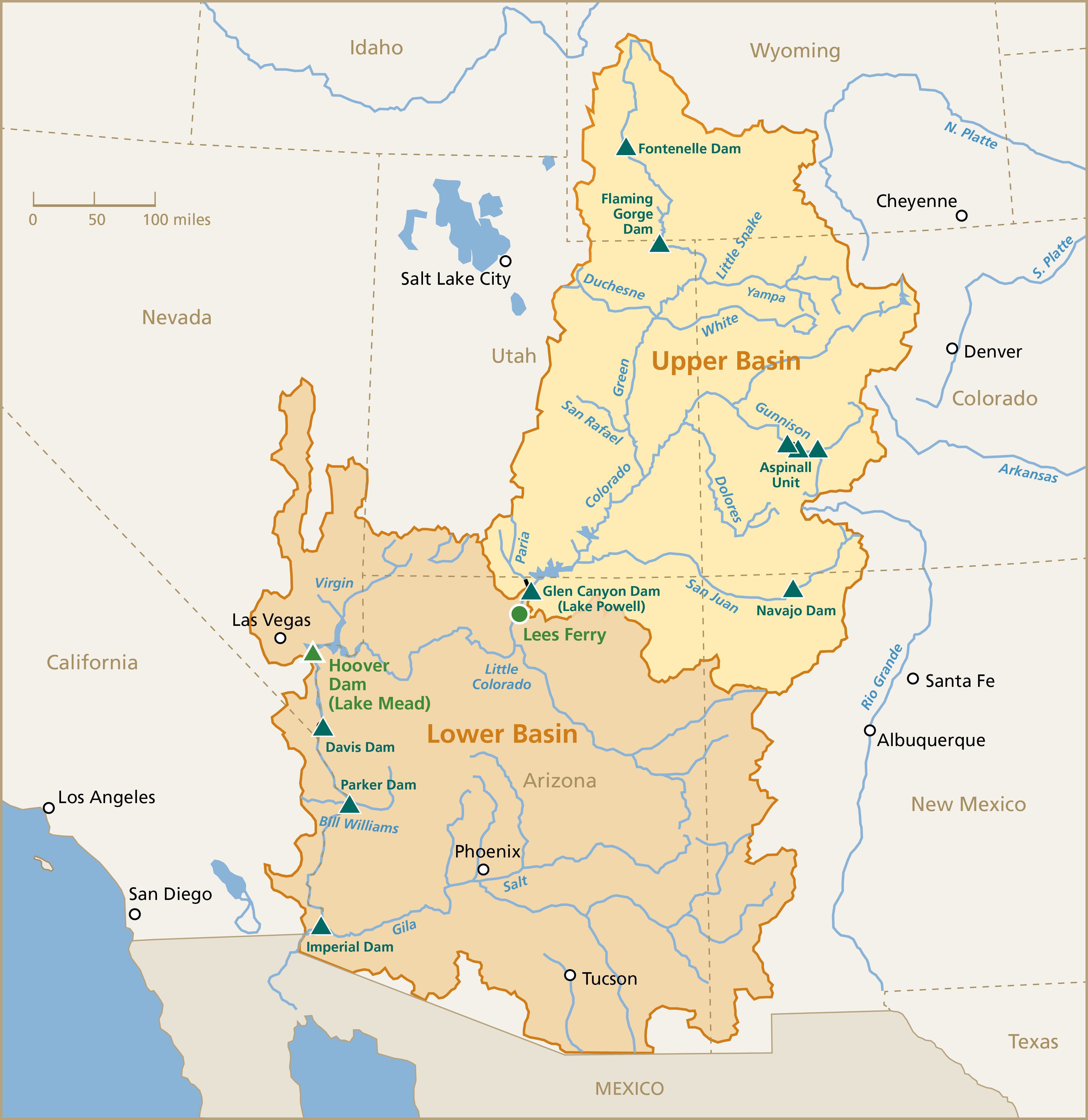
Map of the Colorado River drainage basin, created using USGS data. By Shannon1 Creative Commons Attribution-Share Alike 4.0
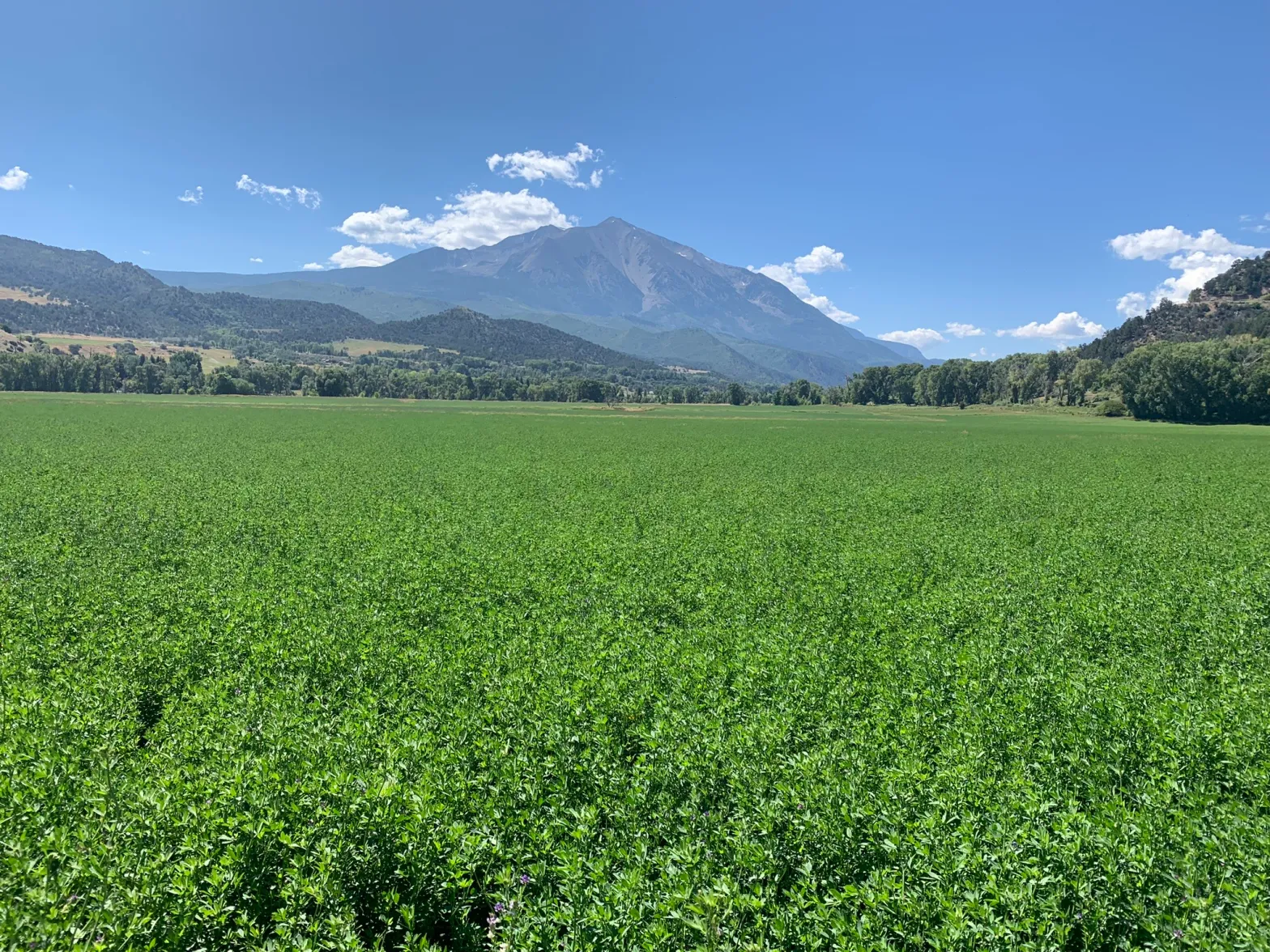
This field of alfalfa near Carbondale is grown with water from the Crystal River. Some Colorado River experts are advocating for a permanent reduction in the use of water by agriculture. CREDIT: HEATHER SACKETT/ASPEN JOURNALISM
Some Colorado River experts are floating a concept to address the basin’s water woes that is both radical and mundane: permanently reducing the amount of water used by agriculture.
Many cities have already reduced their water use in recent decades while adding residents, proving that population growth doesn’t have to be tied to an increase in water use. A 2024 study by Colorado River scientists found that agriculture is responsible for about 74% of water used by people in the basin, meaning urban conservation alone cannot solve the crisis.
“I think we need to have permanent reductions in use on the table and agriculture will have to be part of that,” said Anne Castle, a Colorado River expert and a former federal representative to the Upper Colorado River Commission.
Castle was the lead author on a June 1 paper that urgently called on the entire basin to permanently decrease consumptive uses to avoid the worst impacts to reservoirs and water users. Castle and the paper’s other authors are Colorado River experts and academics, and are the brain trust of the basin sometimes referred to as the Traveling Wilburys, a joking reference to the rock music supergroup. But their message is anything but humorous.
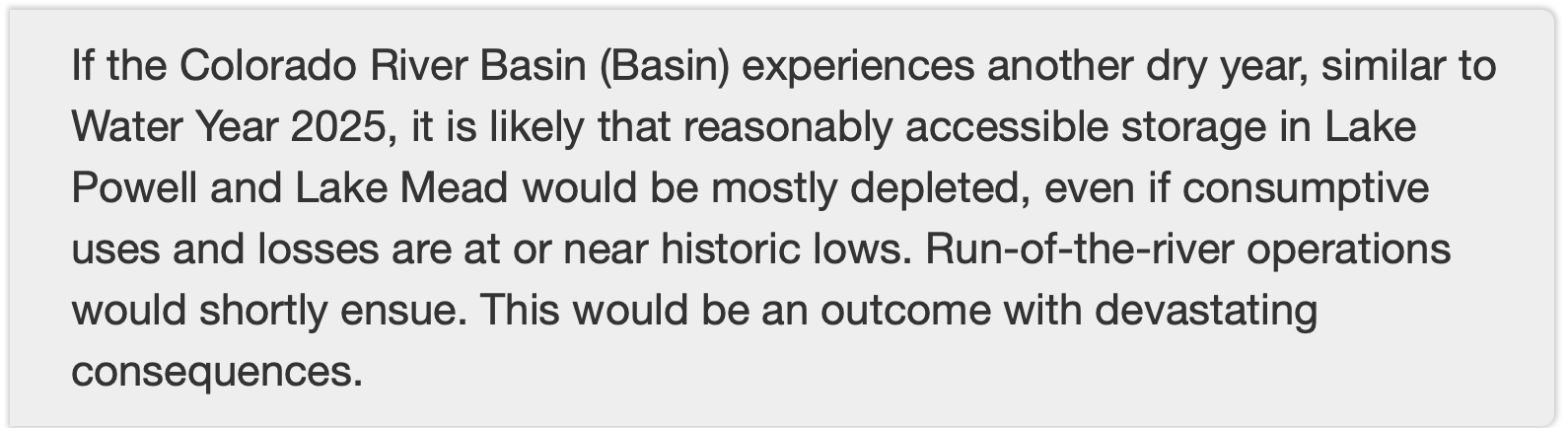
The latest paper says another dry winter would deplete remaining storage and result in devastating consequences like run-of-the-river operations where the nation’s two largest reservoirs can only release downstream the same amount of water that flows into them. It’s the last stop before deadpool, when levels are too low to release water. The authors urge water managers to act immediately to reduce use and avoid a system crash.
But permanently cutting the amount of water that goes to agriculture remains a controversial topic, and water managers from both the Upper and Lower basins say drying up land is not a solution for their basin. Most conservation programs up until now either have been temporary or have allowed the saved water to be used elsewhere. Castle said the problem is especially difficult when people’s livelihoods are on the line.
“The folks who are vulnerable to those kinds of permanent reductions are understandably resistant,” Castle said. “But there’s not enough water. The river won’t allow us to use the same amount of water that we’ve been accustomed to using in the past.”
The seven states that share the Colorado River are under increasing pressure to cut water use as one of the worst droughts on record threatens the water supply for millions of people. On the heels of one of the hottest and driest winters since measuring began, spring flows into Lake Powell this year are projected to be the lowest on record.
Much of the $4 billion from the Inflation Reduction Act earmarked for drought mitigation has gone toward short-term conservation. Water users in the Lower Basin states (California, Arizona and Nevada) were paid to temporarily leave water in Lake Mead. And in the Upper Basin (Colorado, New Mexico, Utah and Wyoming), the feds paid irrigators $45 million to leave fields dry during a two-year reboot of a pilot conservation program.
But in the midst of a climate change-fueled megadrought that has already robbed the river of at least 20% of its flows, experts say temporary measures no longer cut it. Water managers are reckoning with the reality that the river will probably never again deliver what was promised a century ago by the Colorado River Compact. The demand for water now far outstrips the dwindling supply.
“Are we going to continue to spend hundreds of millions of dollars a year and not have a permanent solution?” said author and Colorado River expert Eric Kuhn. “I think, at some point, it just makes economic sense to go ahead and say, ‘Let’s buy out the existing demand.’” [ed. emphasis mine]
These hay bales stand ready to be collected on a ranch outside of Carbondale. Credit: Heather Sackett/Aspen Journalism
Buying out demand
Against this backdrop, some in the academic community are advocating for the federal government to either set up a voluntary program to buy and retire lands that use a lot of water or pay landowners who agree to permanent restrictions on water use.
A paper released last year and authored by Kathryn Sorensen and Sarah Porter, who are Colorado River experts at the Kyl Center for Water Policy at Arizona State, lays out how this could be done. Eligible land would have to meet certain characteristics, including being in an area where the economic impacts of not using water are least painful and where impacted crops could be feasibly grown outside of the Colorado River basin, among others.
According to Porter, the federal government should be the entity that buys down demand. The large infrastructure projects funded by the feds in the 20th century are what created booming irrigated agriculture in the West to begin with. And the other entities in the basin that have the ability to buy agricultural water want to use it themselves, not keep it in the system.
“A reset in the Colorado River basin really is needed,” Porter said. “We have a lot of agriculture that’s really a legacy of how the United States was settled… . And now we’re grappling with overallocation and shortage and struggling to figure out a way to manage the Colorado River.”
The proposal is different from the much-derided “buy-and-dry” which usually involves an opportunistic transferring of water from agriculture to cities, not an overall reduction in water use. Still, the potential negative impacts to rural communities have to be considered.
“You have to have a provision for what happens to the land when you remove agriculture and what happens to the local economy when you remove agriculture,” Porter said.
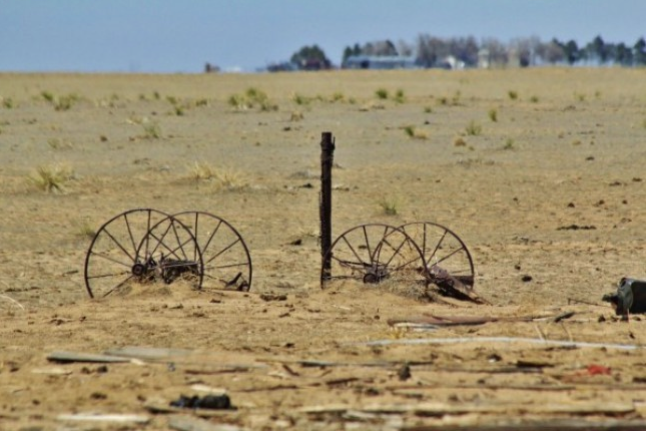
And experts say there is a precedent for the type of federal buyouts that could help the drought-stricken river: the Bankhead-Jones Tenant Farm Act from 1937. This New Deal piece of legislation was a response to the Dust Bowl and allowed the federal government to buy and retire badly eroded or economically unproductive farmland.
The paper says a Colorado River program could start not with those that grow valuable vegetables in winter but, rather, with lands that use a lot of water but have low economic output. The paper says retired agricultural lands could be used for alternative purposes that support local economies such as recreational opportunities or low water-use industries.
Figuring out how to implement conservation programs without harming rural agricultural communities has been a main focus in recent years of the Colorado River Water Conservation District, which works to keep water on the Western Slope. River District General Manager Andy Mueller said that agriculture has a role to play in reducing water consumption, but that permanently retiring agricultural land is a misguided approach that will put the country in danger of not being able to feed itself. Programs should remain temporary, and focus on efficiency improvements and growing less-thirsty crops, he said.
“If it’s temporary, if it’s well-designed in a way that respects local communities, traditions and practices, is custom-built for each community in a way that really tries to do as little economic damage as possible — potentially even bringing some benefits to those farming families that participate — there are ways to do it,” Mueller said.
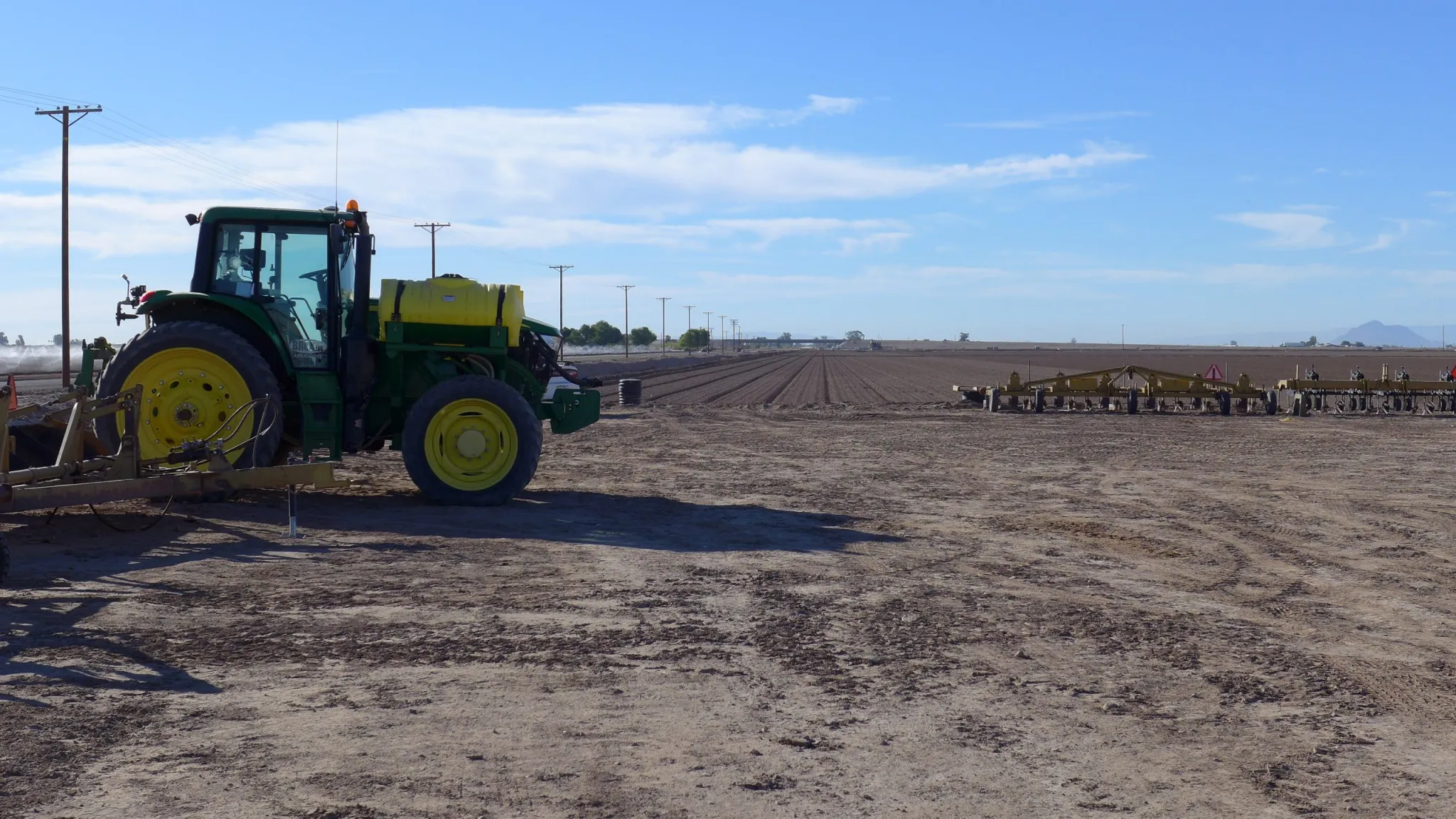
A tractor on a farm in California’s Imperial Irrigation District, the largest user of agricultural water in the Colorado River basin. A California representative says there is no interest in drying up ag land because it’s so extremely productive. CREDIT: HEATHER SACKETT/ASPEN JOURNALISM
On the fringe
Although certain academics and experts are talking about permanently drying up agricultural lands as a means of saving water, the concept remains on the fringe of Colorado River politics. It’s both the third rail and the elephant in the room.
“It’s going to pull away from the fringe really quickly when you’ve got to really justify continuing to pay on an annual basis forever,” Kuhn said. “We’re just trying to get the discussion out there, make it acceptable to have the discussion.”
On top of the abysmal hydrologic conditions, the basin is also in the midst of a management crisis. After two years of negotiating, the Upper Basin and Lower Basin states have failed to reach a consensus on how they will share future cuts and have blown past deadlines to come up with a plan. The responsibility for river management now falls to the federal government, which is scheduled to release this summer a short-term operating plan for Lake Powell and Lake Mead.
Part of what makes the problem so tricky is that water managers are still guided by the Colorado River Compact, a century-old agreement that splits the river’s flows evenly between the two basins. Upper Basin water managers still cling to the notion that because their states are already living within the 7.5 million acre-feet of water allotted to them annually, cutbacks are the responsibility of the Lower Basin, which they say uses more than its fair share.
Becky Mitchell, Colorado’s lead negotiator in talks among the seven states, said that permanent dry-up of agriculture in the Upper Basin isn’t necessary because the Upper Basin states already send more than 8 million acre-feet — more than legally required — of water downstream per year. Dry-up may be part of the overall solution, she said, but each state should take its own individual approach to making cuts.
“Those durable reductions are going to be required (for the Lower Basin) to first get in line with their apportionment, but then getting in line with the available supplies is a whole ’nother conversation,” Mitchell said.
California’s representative, JB Hamby, said permanent fallowing doesn’t have a place in reducing the state’s demand either. California is home to the biggest urban and agricultural water districts, as well as the largest allocation of Colorado River water of any of the seven states that share the river.
“In the case of California, there’s no real discussion or interest whatsoever in the retirement of ag lands,” Hamby said. “Land in Southern California that receives Colorado River water is so extremely productive. There is a year-round growing season where every single day of the year there are things being grown.”
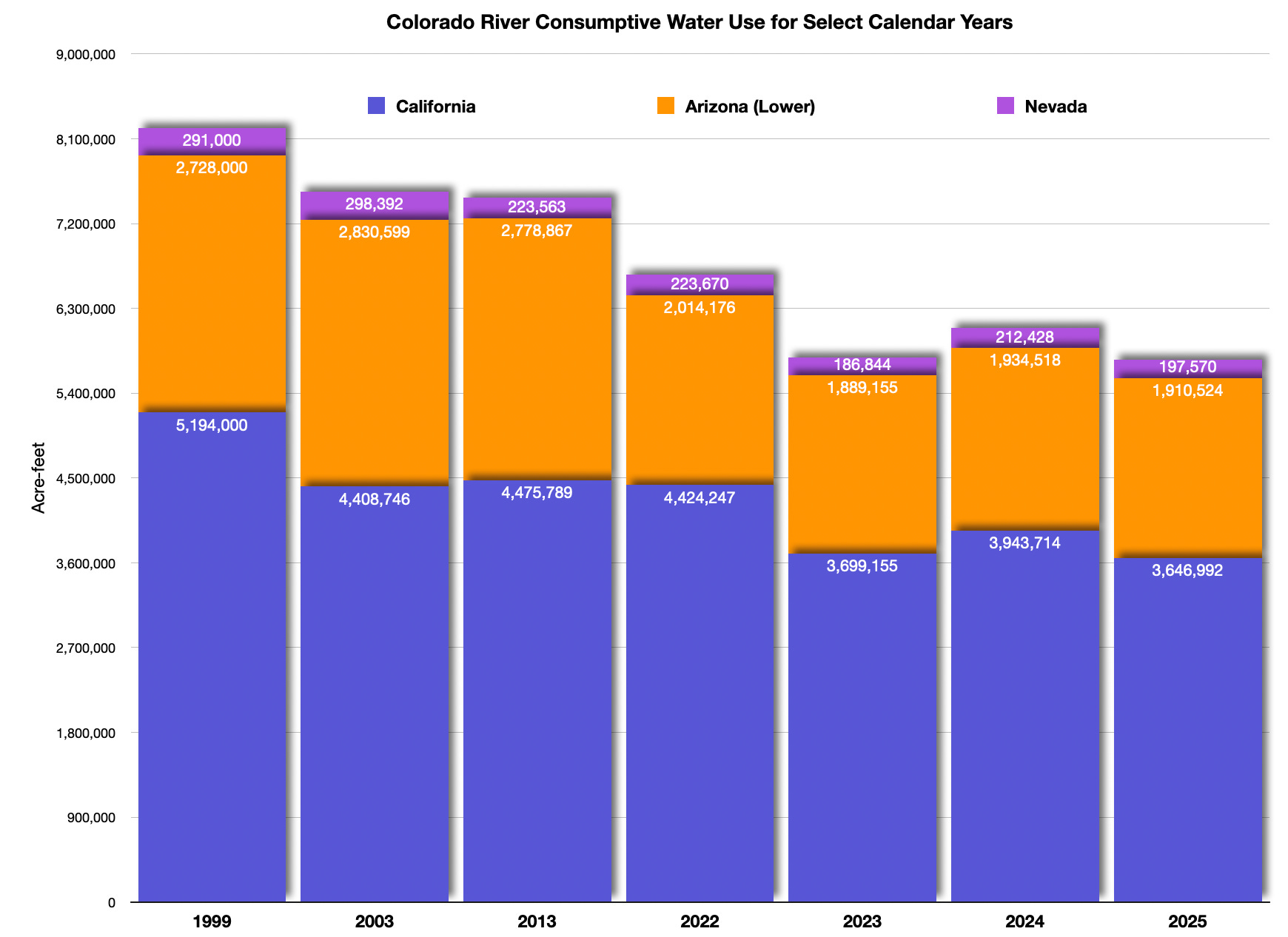
Past water savings in Southern California have mostly come from efficiency improvements on farms and in delivery systems, and from deficit irrigation programs in which water is temporarily taken off fields for part of a season. In the absence of a seven-state deal, the Lower Basin states have offered up 700,000 acre-feet of cuts per year through 2028, which is on top of an initial 1.5 million acre-feet in cuts. Most estimates say the basin needs to cut water use by 2 million to 4 million acre-feet.
“There’s full agreement that water should be reduced,” he said. “There’s not agreement in how or where it should be reduced. So the Lower Basin is moving forward, doing our thing, making reductions.”
Cowgirls wrangle a calf at a Delta County ranch. Farming and ranching are an important part of the heritage of the American West, which makes permanently reducing water for agriculture a tricky issue. CREDIT: HEATHER SACKETT/ASPEN JOURNALISM
Ultimately, discussions about permanently reducing the amount of water that goes to farmlands in the basin remain difficult, in part because agricultural water rights are some of the biggest, oldest and most politically powerful in the basin. But there is also an attachment to the American West’s farming and ranching heritage.
“We love agriculture; it’s part of our roots,” Porter said. “We don’t like to think about losing agricultural production. I think we are generally hesitant to have that conversation, and we really haven’t had it as a basin.”
Map of the Colorado River drainage basin, created using USGS data. By Shannon1 Creative Commons Attribution-Share Alike 4.0
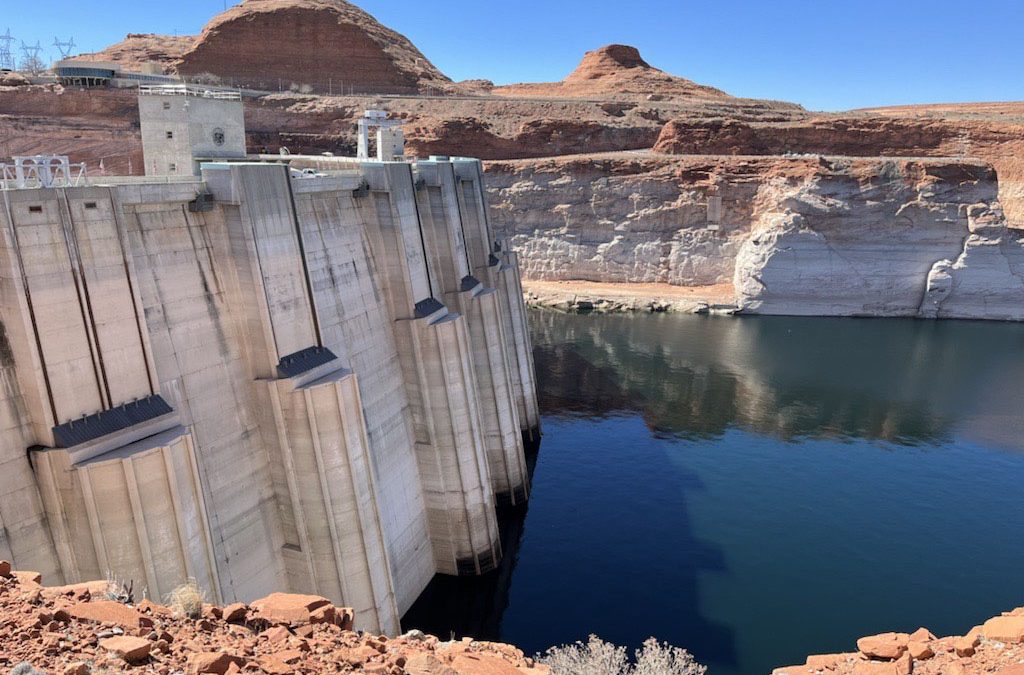
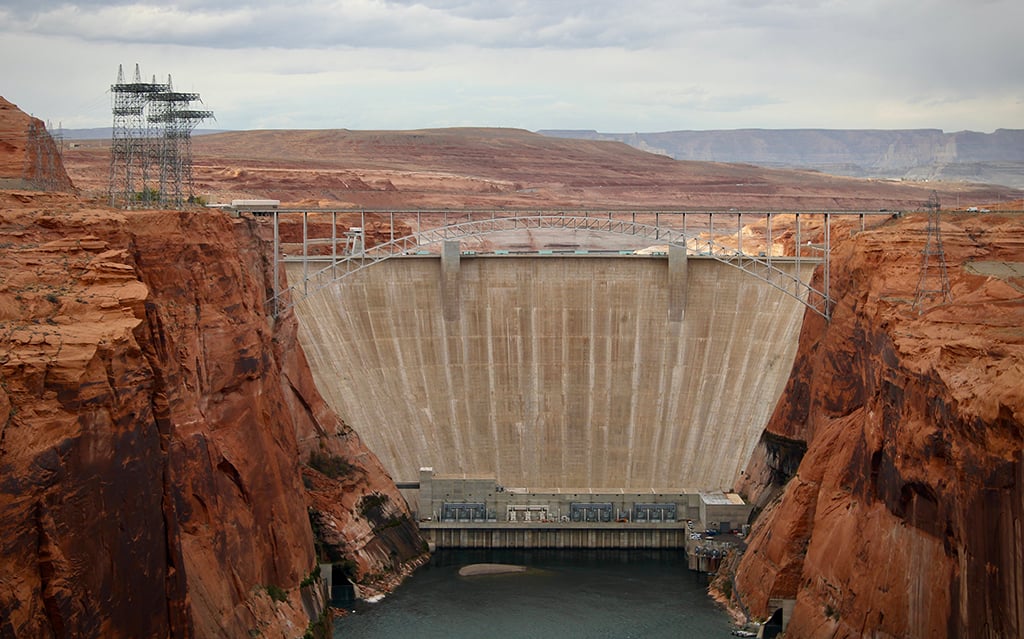
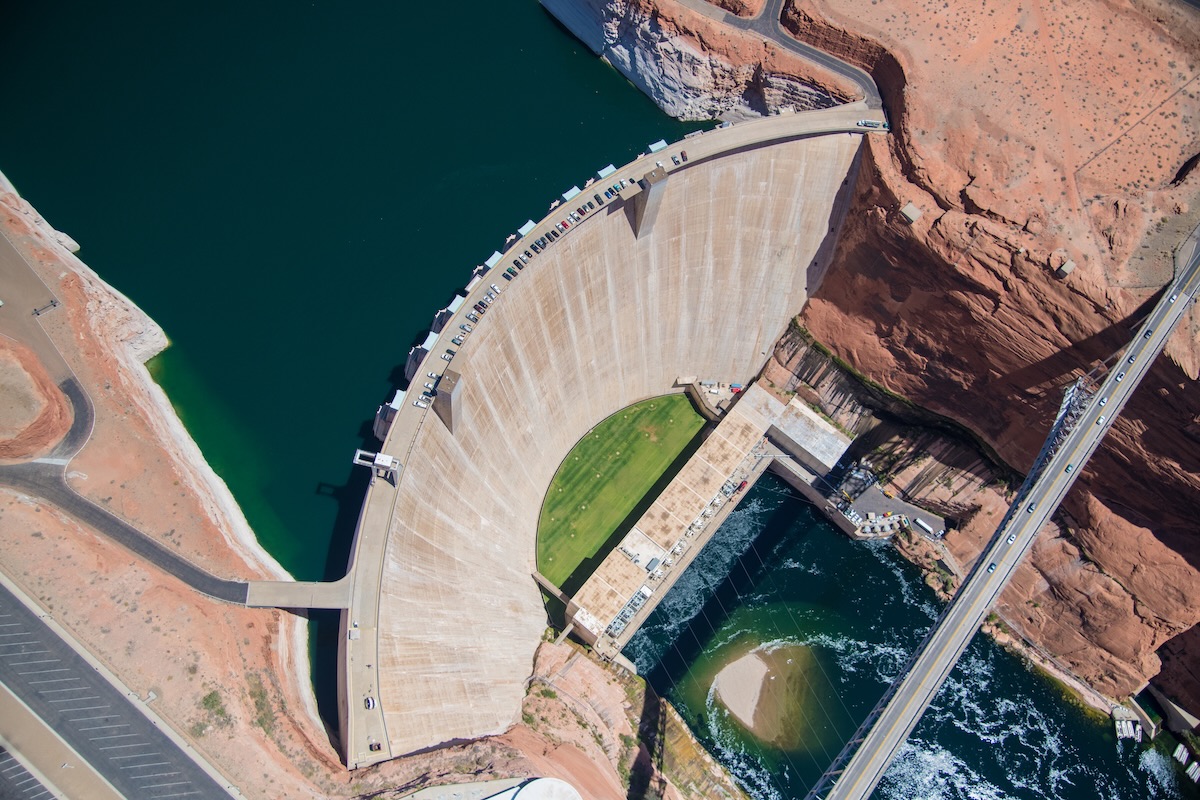
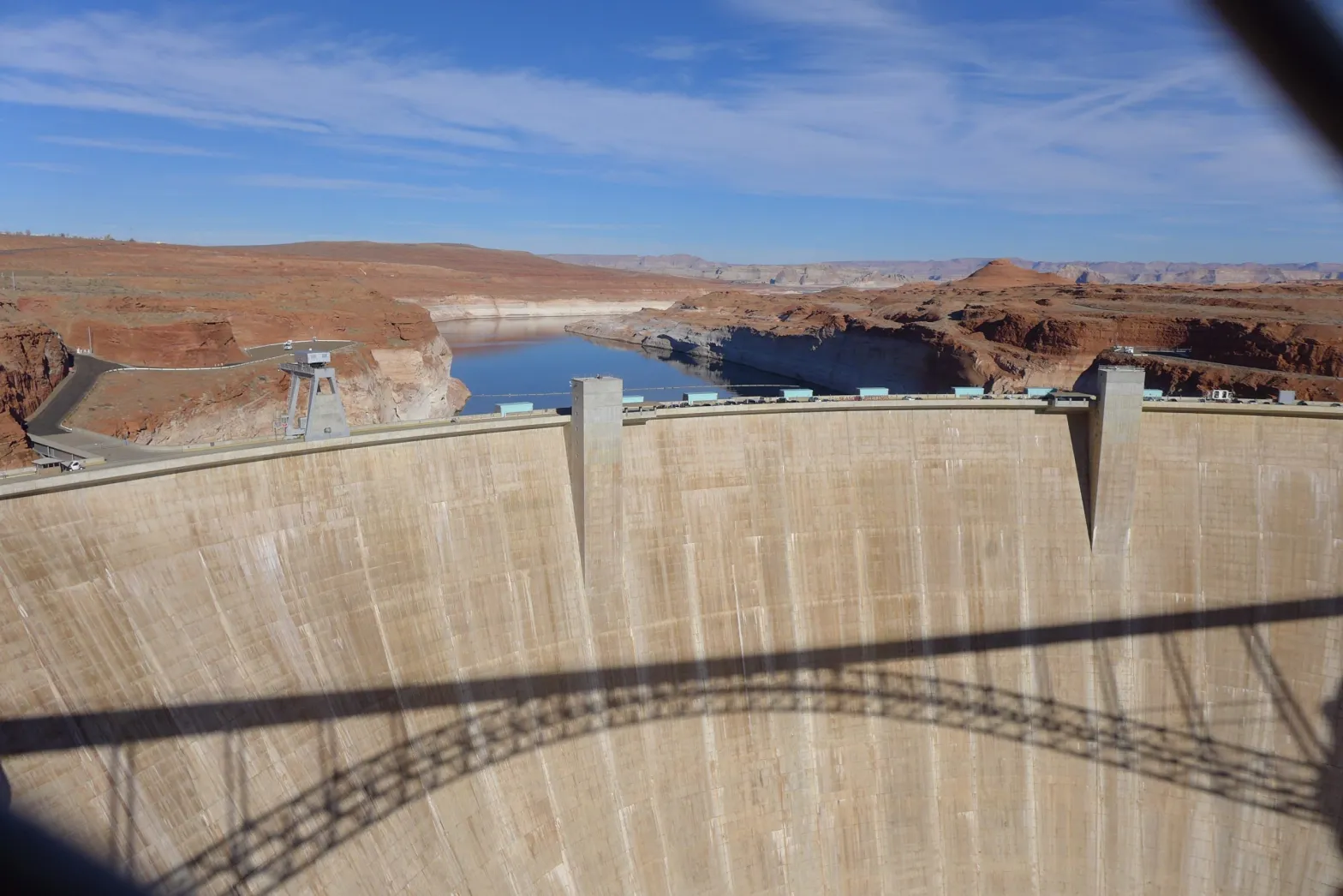
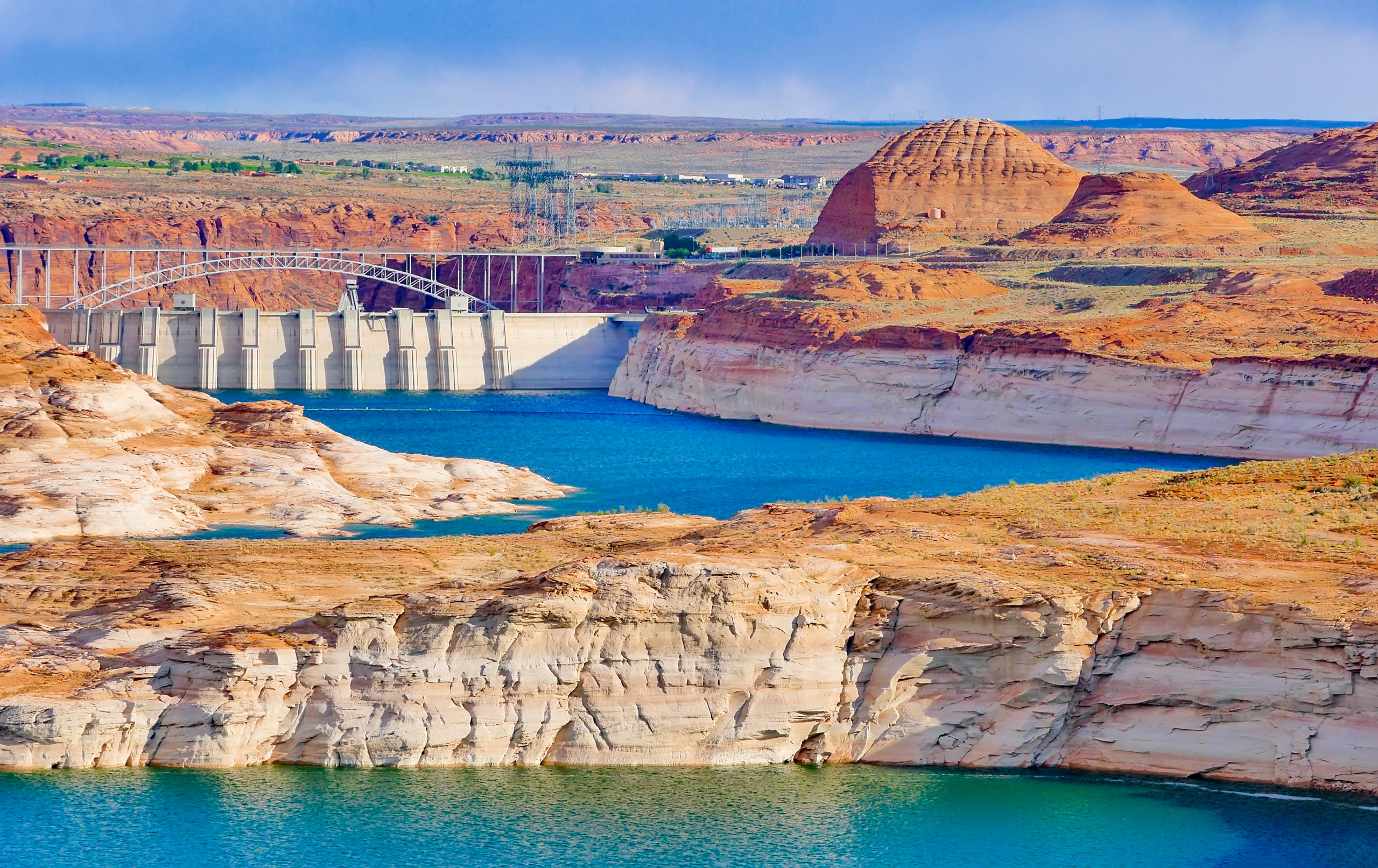
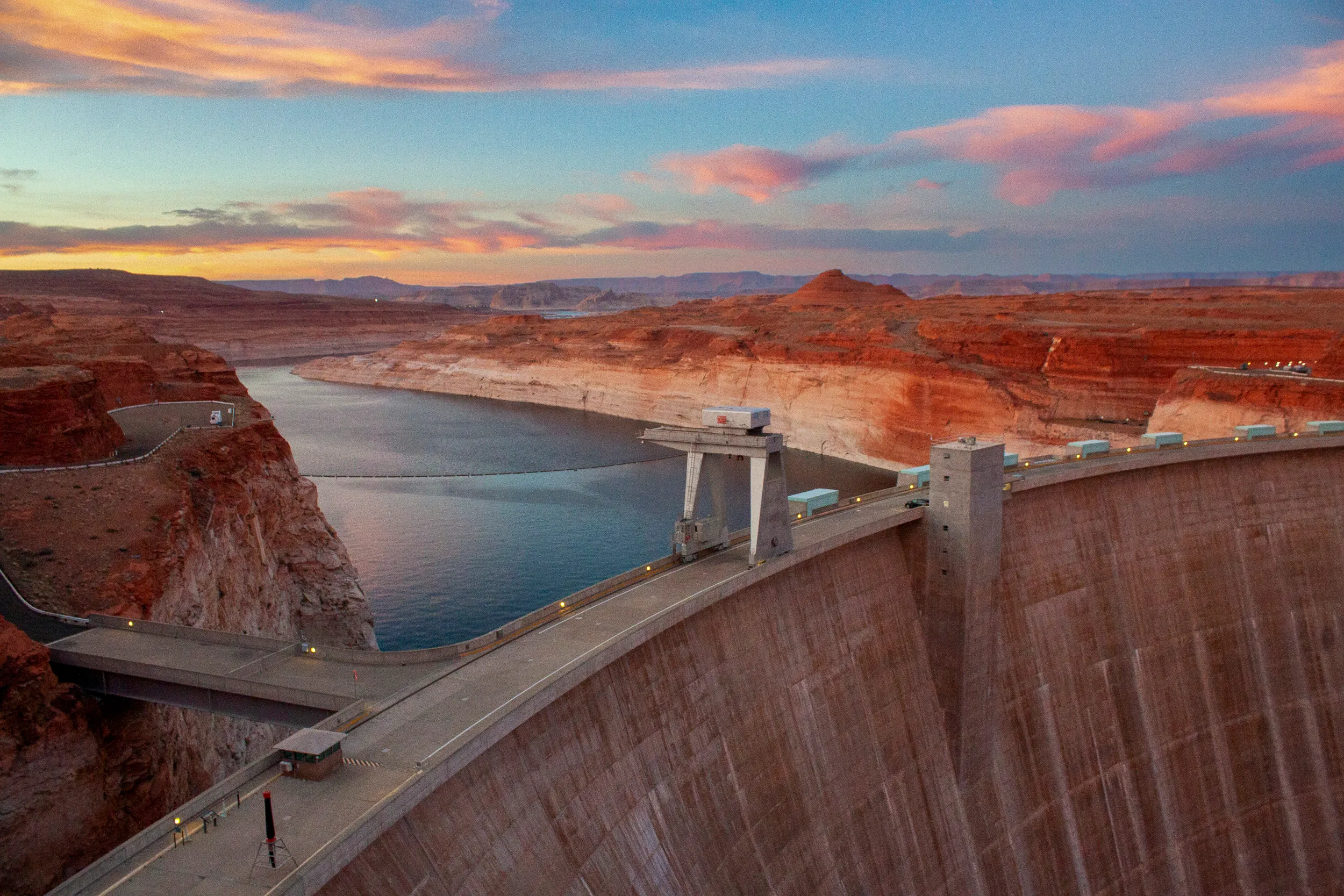
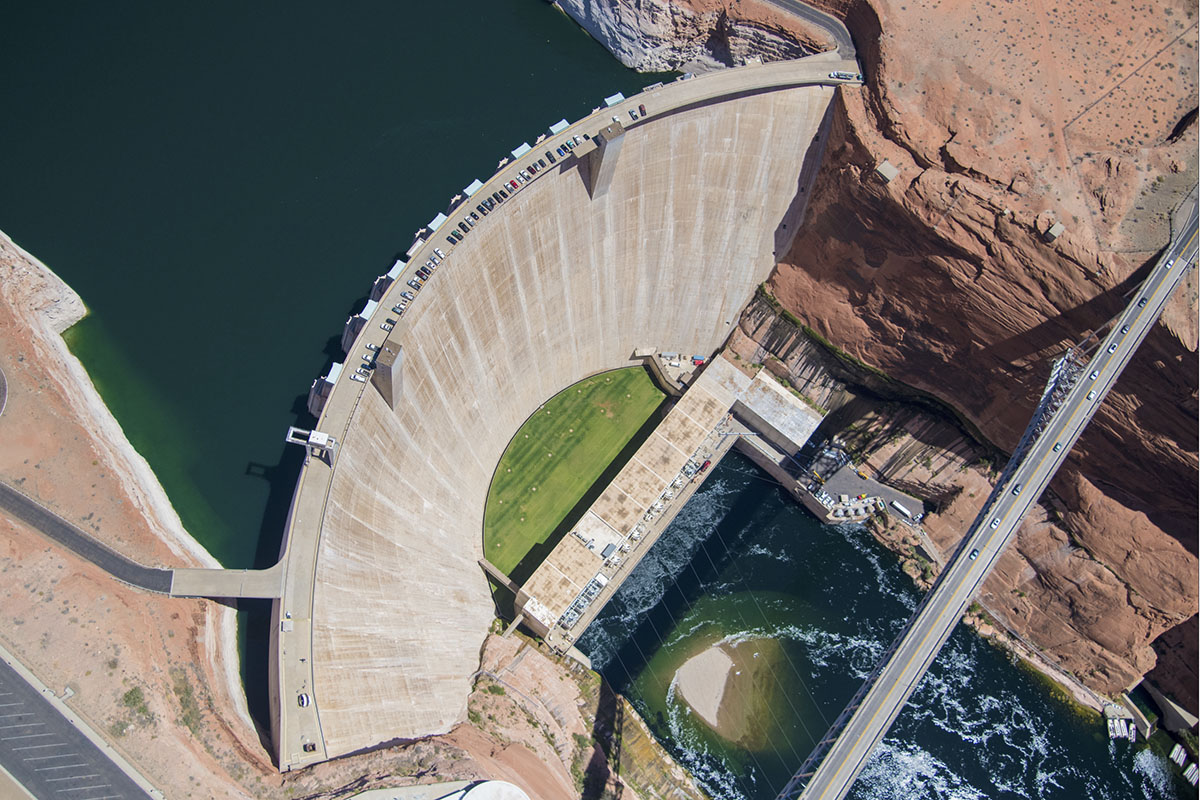
Glen Canyon Dam and Lake Powell, one of the nation’s largest-capacity reservoirs whose operation has been a point of contention between the Upper and Lower Basins of the Colorado River. (Alexander Heilner, The Water Desk)
Western Water In-depth: A ‘wild idea’ to defuse the colorado river compact’s legal time bomb has been kept alive by seasoned observers who believe it could still save the river
For the past 20 years, the Colorado River has been operated under a set of guidelines negotiated between the seven states that depend on the river. Those guidelines expire this year, and after five years of grinding negotiations over a new agreement, the upstream states of Colorado, Wyoming, Utah and New Mexico remain deadlocked against the downstream states of California, Arizona and Nevada.
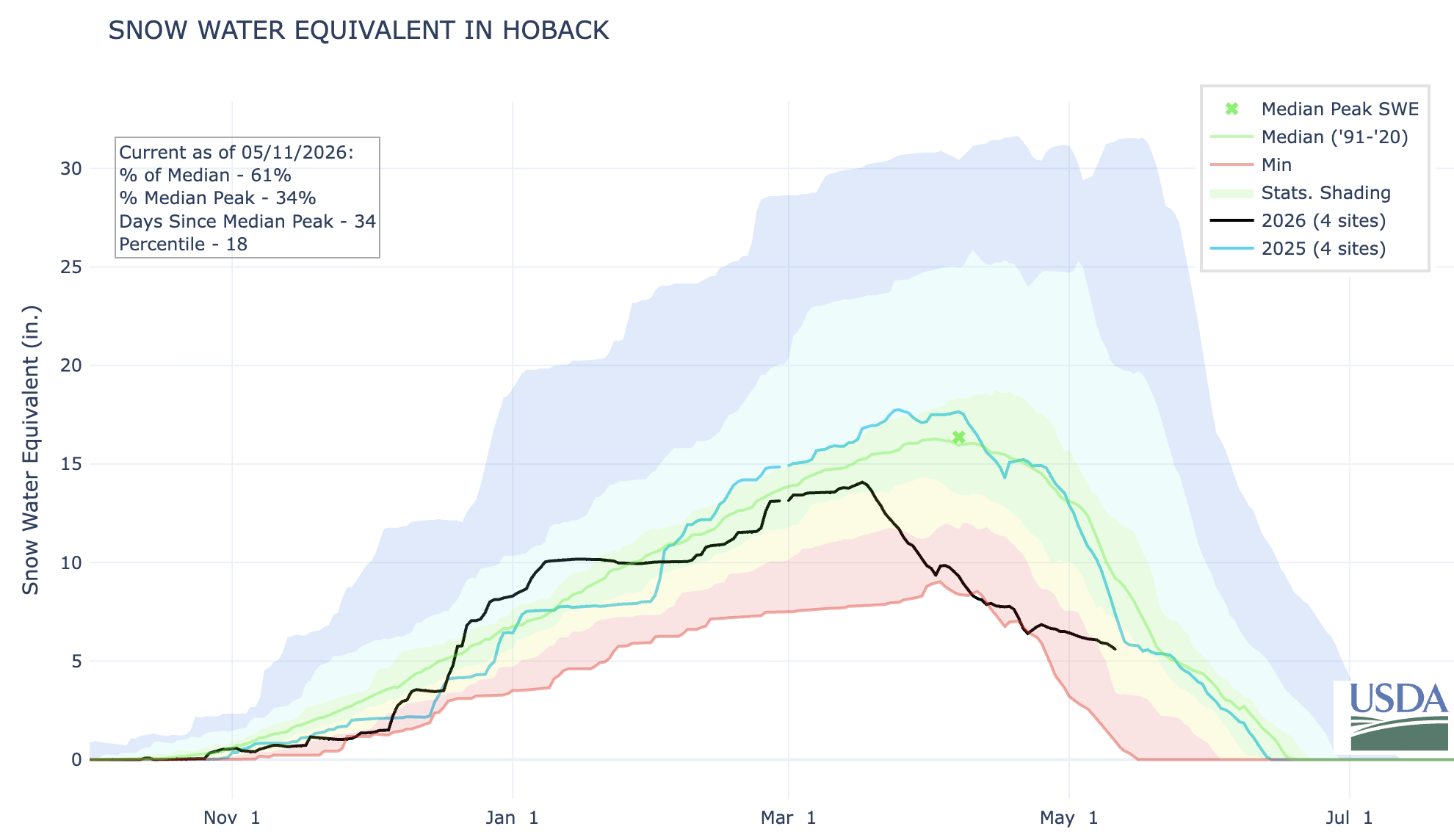
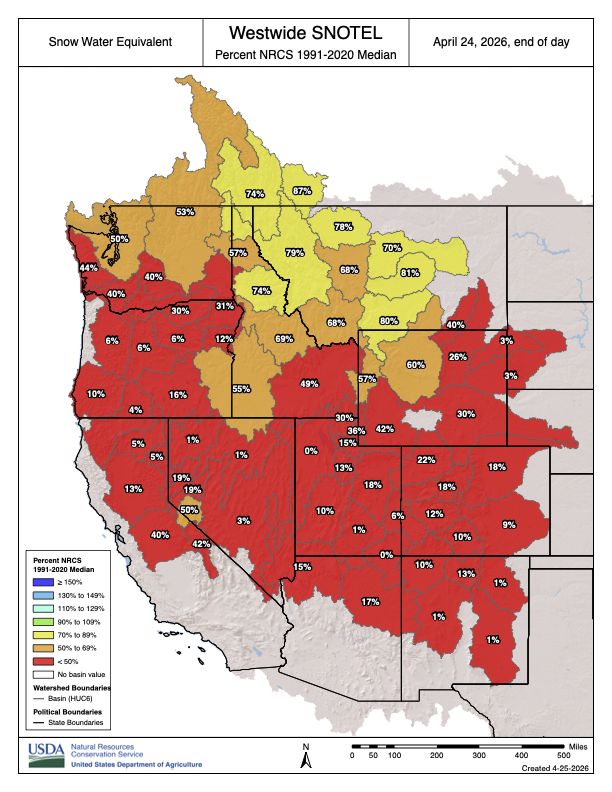
Some 40 million people and 5.5 million acres of farmland depend on the river’s water. But after the states failed to meet two federal deadlines in three months, the river is in a moment of unprecedented crisis. A dire snowpack has left flows just 15 percent of normal, many farms without water and several cities scrambling to secure water supplies as they gird themselves for shortages.
That has set up a showdown over a legal time bomb that’s been ticking away at the heart of the Colorado River Compact since the river’s guiding document was signed more than 100 years ago. The Lower Basin states believe the Compact promised them a minimum delivery of water sent down the river from the Upper Basin. The Upper Basin states believe the Compact promised them a fixed amount of water that they could rely on to meet future growth. As the river’s flows have dwindled, those two supposed guarantees are proving to be irreconcilable.
Experts have seen the showdown coming for a long time, but climate change has accelerated the day of reckoning. In 2000, a drought sunk its teeth into the river and hasn’t let up. Dubbed the Millennium Drought, it is now recognized as one of the worst droughts on the river in more than 1,200 years — and may actually be the beginning of a long-term shift to a drier reality.
Despite near-endless negotiations to find a way to keep the river’s massive reservoir system from crashing — an effort that began over two decades ago — the drought may have finally pushed the Colorado River Compact to its limit. Now, the system is nearly empty and runoff from this winter’s snowpack, the source of any water that might offer even a small hope of relief, will be among the lowest since Glen Canyon Dam was built near the Arizona-Utah border, creating Lake Powell, more than 60 years ago. Flows in the river are perilously close to hitting the primary legal “tripwire” in the Compact. Once that’s crossed, the Lower Basin states would likely try to force the Upper Basin to deliver their water apportionment downstream — a prospect long considered unthinkable.
“All those negotiations helped push the day of reckoning back further, and helped delay the inevitable,” says Doug Kenney, who heads the University of Colorado’s Western Water Policy Program. “But at some point, you just have to acknowledge the fact that the numbers don’t add up and you’re going to have to deal with it. We’re at that point.”
Two obvious paths now lie ahead. One is a courtroom fight, either against the U.S. Secretary of the Interior or a challenge between two states under the terms of the Colorado River Compact, which would go directly before the Supreme Court. A high court case would be a doomsday scenario, a messy and protracted legal battle that, until now, the seven states desperately sought to avoid. The other potential path is a stopgap fix, a short-term interim plan negotiated between the states or imposed by the Interior secretary. That could, at least temporarily, forestall a trip to court, but it wouldn’t resolve the fundamental conflict.
For more than two decades, however, the possibility of a third path has stubbornly persisted in the background: A “grand bargain,” an idea first proposed in 2005 by Colorado’s negotiating team early in the effort to grapple with the worsening drought. The concept was an unorthodox bid to defuse the ticking time bomb — but it would require each basin to trade away its most cherished claim on the river.
‘A WILD IDEA’
Roughly 90 percent of the Colorado River’s flow originates as snowpack in the Rocky Mountains. One of the principal goals of the 1922 Compact, which is essentially a seven-state treaty, was to avoid future legal battles by creating an “equitable division and apportionment” of water between the Upper Basin states in the river’s headwaters and the faster-growing Lower Basin. The Compact apportioned 7.5 million acre-feet a year from the mainstem of the river to each basin. (An acre-foot is 325,851 gallons, enough to supply the average annual needs of roughly 3 households, depending on their location and climate.)
The Colorado River Basin spans seven U.S. states and is divided into Upper and Lower Basins. Lake Powell, upstream from the Grand Canyon, and Lake Mead, near Las Vegas, are the two principal reservoirs in the Colorado River water-supply system. (Bureau of Reclamation)
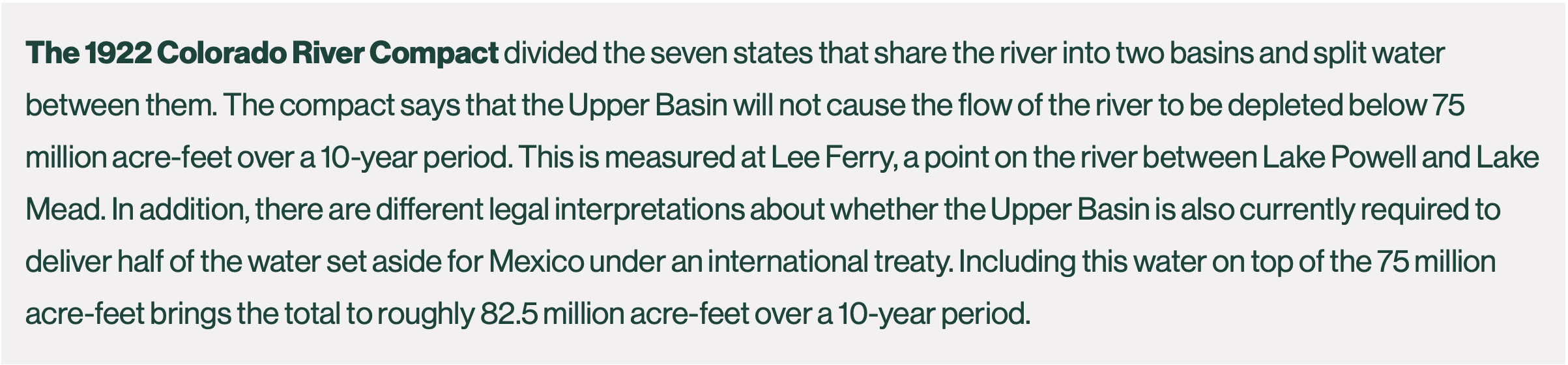
The Compact also contains a requirement that the headwaters states not deplete the flow of the river below 75 million acre-feet, plus another roughly 7.5 million acre-feet (half of the apportionment earmarked for Mexico), on a 10-year running average. Those provisions were intended to provide surety to the downstream Lower Basin states that they would receive their 7.5 million-acre-foot annual apportionment and that the basins would share equally in the Mexican obligation. If the 10-year running average requirement is violated, the Lower Basin states could — at least in theory — initiate a Compact “call” against the Upper Basin in an attempt to force the headwaters states to deliver more water downstream.
For roughly 80 years after the Compact was signed, the prospect of a Compact call was purely theoretical. Then the Millennium Drought set in. By 2005, the two flagship reservoirs on the Colorado River — Lakes Mead and Powell — were half empty.
The drought was pushing the river’s flows closer to a Compact violation trigger, making the risk of a call by the Lower Basin a growing probability. The Lower Basin, particularly Arizona, was insisting on guaranteed releases of water from Lake Powell. And because Colorado has the biggest share of the river within the Upper Basin and uses a greater portion of its apportionment than the other upstream states, it is most at risk. It began searching for a way to slip out of the legal noose of a Compact call.
In September 2005, the seven states’ top negotiators met in Albuquerque, New Mexico. During a lunch break, Colorado’s team made its pitch. The state’s negotiators proposed that the Lower Basin waive its right to force a downstream delivery through a Compact call. In exchange, the Upper Basin states would limit their water use to less than what’s strictly apportioned in the Compact, thereby reducing potential demand in the headwaters of Colorado and Wyoming that supply nearly the entirety of the river’s flow.
The offer was essentially a simplification and reframing of a dizzying array of technical disagreements over various provisions of the Compact — an attempt to throw spaghetti at the wall to see if it would stick.
Jim Lochhead, who had previously been Colorado’s top negotiator and in 2005 was serving as a legal advisor on the state’s team.
“My recollection was that it was a pretty spontaneous proposal,” says Jim Lochhead, who had previously been Colorado’s top negotiator and in 2005 was continuing to serve as a legal advisor on the state’s team. “We weren’t making any progress, and it was pitched as, ‘If you really want to cut through all of this and get to the bottom, here’s a wild idea.’”
The proposal sparked discussion among all the parties at the negotiating table but also raised difficult issues.
“It was a great concept on paper,” says Pat Mulroy, who was the head of the Southern Nevada Water Authority and Nevada’s principal negotiator at the time. “Whether it was politically doable or not is a whole other ball game.”
In large part, that’s because a grand bargain would have forced both basins to give up assurances in the Compact that they consider sacrosanct.
“I’m not sure the Upper Basin would ever have agreed to limiting their ability to fully develop their 7.5. It’s like giving up your birthright — I’m not sure they could have sold that at home,” says Mulroy. Conversely, she says, “giving up that call provision is really the only weapon the Lower Basin has.”
And, indeed, following its spontaneous birth in Albuquerque, the proposal ran into stiff political headwinds back home in Colorado, where it failed to get then-governor Bill Owens’ blessing.
“I wasn’t directly representing the state of Colorado at that time; I was representing Colorado water users,” Lochhead says. “And when I brought the idea back to the state, it pretty quickly got shot down: ‘No, we can’t agree to anything that would not keep the dream alive of 7.5 million acre-feet being developed in the Upper Basin.’”
The prospect of a grand bargain itself faded from discussion. And yet, in ways that aren’t often acknowledged, it continued to shape the broad contours of the negotiations that unfolded over the next two decades.
The quest to escape the noose of a Compact call has remained central to Colorado’s bargaining position.
“The concept of a waiver of a Compact call is alive and well,” says Anne Castle, a former assistant Interior secretary who is now a senior fellow at the University of Colorado. “The quid pro quo for that waiver has taken different forms.”
To a large extent, the details of the various offers the Lower Basin has made in exchange for a possible waiver — which have sometimes been characterized within the negotiations as “mini grand bargains” — have never become public. What is clear is that the two basins have consistently failed to cut a deal.
Instead, the seven states adopted a more incremental approach, negotiating a series of drought-protection agreements based on smaller, more politically palatable deals. While that’s been a safer path for everyone politically, it has brought other kinds of risk.
“It just added layer upon layer of Gorilla Glue and Band-Aids that’s made it much more complicated to try to unwind or develop new agreements,” Lochhead says, “and has obviously proven to be inadequate in protecting the system.”
A SECOND LIFE
While the concept of a grand bargain led a short life at the negotiating table, it has gone on to live a remarkable second life. The idea was picked up and revived by a loose-knit group of seasoned observers of Colorado River issues who, for years, have called for more durable alternatives to the patchwork of ideas [ed. “The Law of the River”] in play among negotiators.
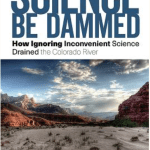
Eric Kuhn was a member of Colorado’s negotiating team when the grand bargain was proposed in 2005. At the time, he was the general manager of the Colorado River Water Conservation District based in Glenwood Springs and he has written thoughtfully and voluminously about the river’s problems. After his retirement in 2018, he partnered with John Fleck, a former journalist who is now author-in-residence at the University of New Mexico’s Utton Center, to write Science Be Dammed: How Ignoring Inconvenient Science Drained the Colorado River.
Kuhn and Fleck concluded the book by observing that “there is not enough water in the Colorado River for all the lawyers to be right,” and suggested the grand bargain as a way to avoid the courtroom.
“The basic idea of a grand bargain is, in lieu of litigation, we’re going to agree to something that both sides want,” says Kuhn.
He and Fleck weren’t the only ones who pushed for more serious consideration of the idea. Doug Kenney at the University of Colorado also has championed the concept. In 2012, he enlisted Kevin Wheeler, a widely respected engineer and fellow at Oxford University, to undertake modeling analysis of the kinds of trade-offs a grand bargain might require.
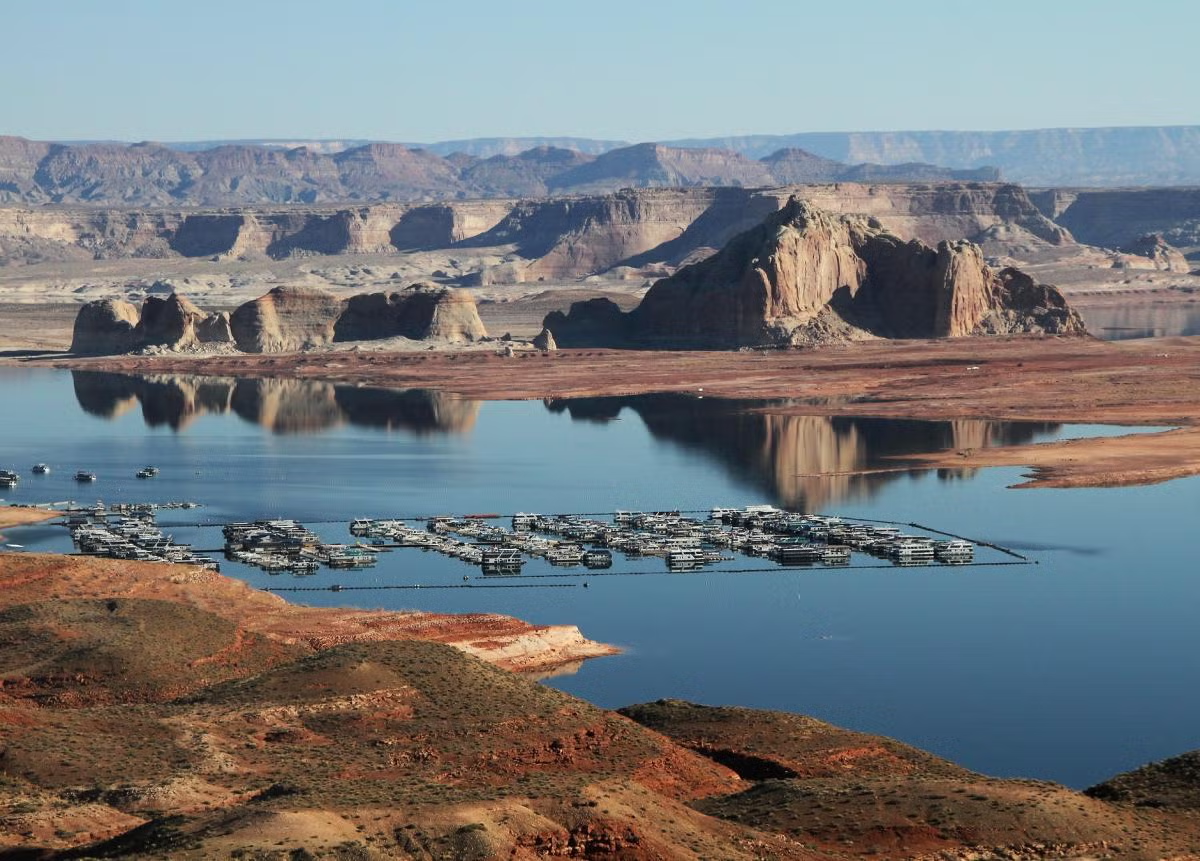
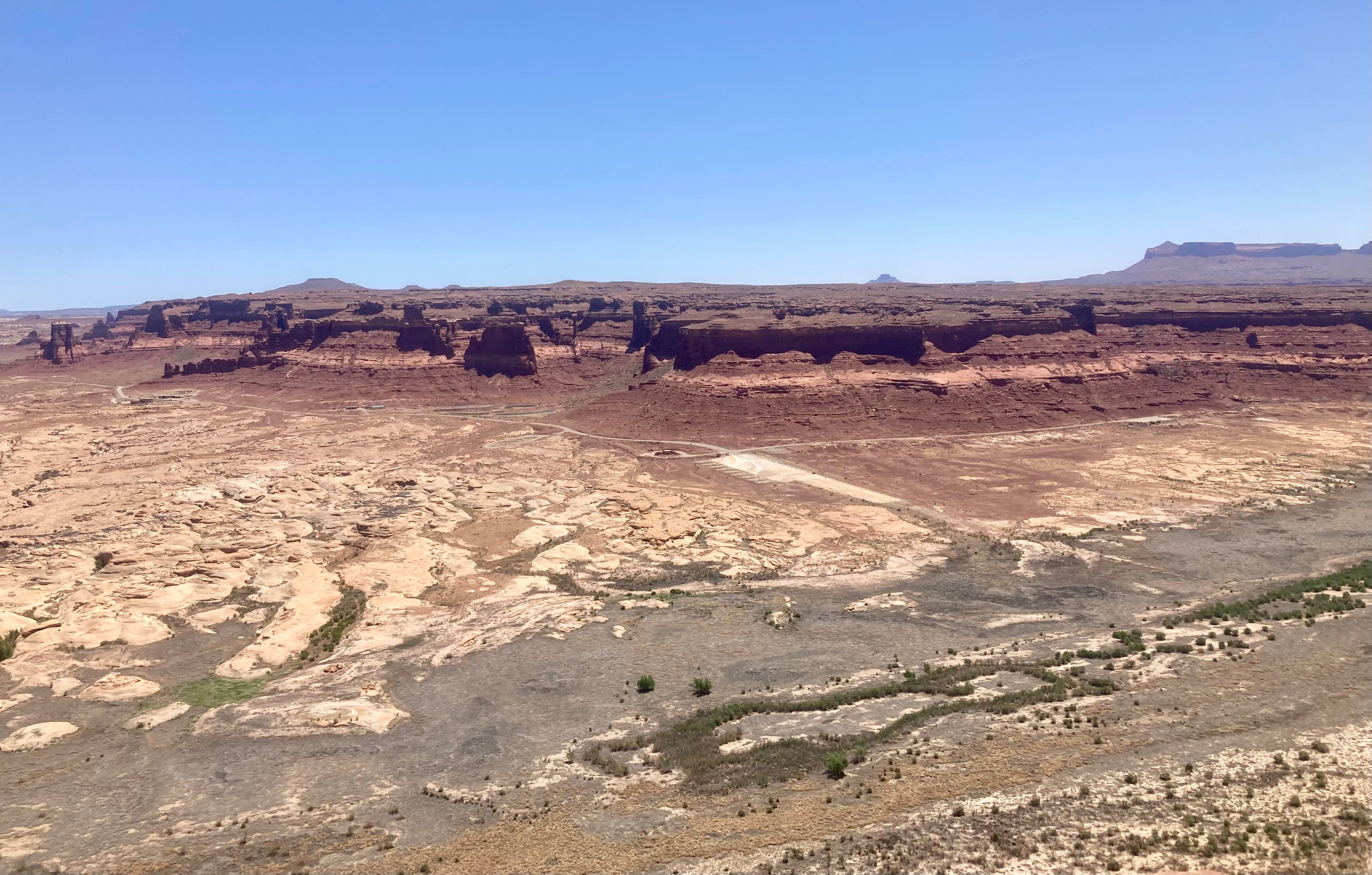
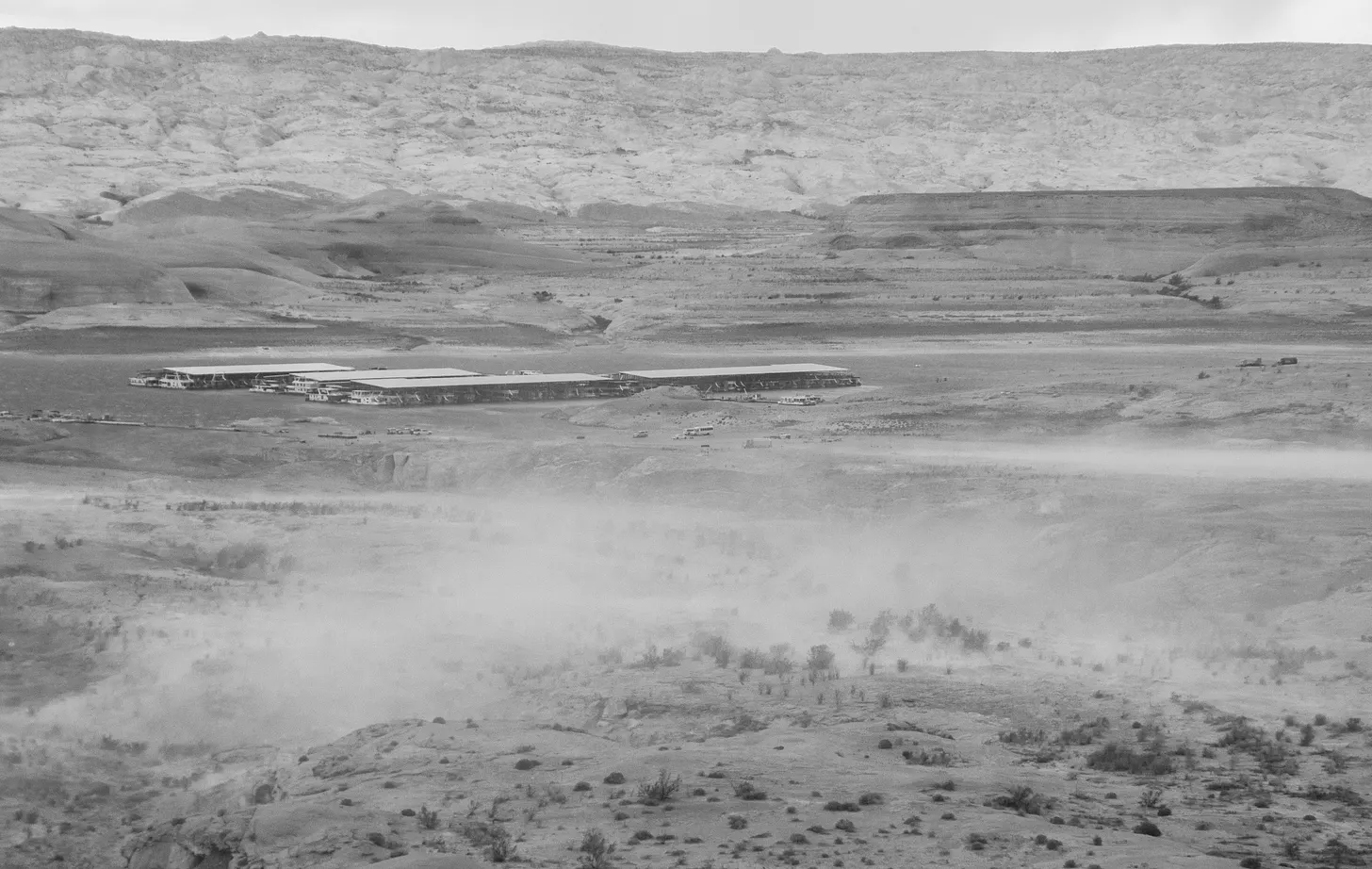
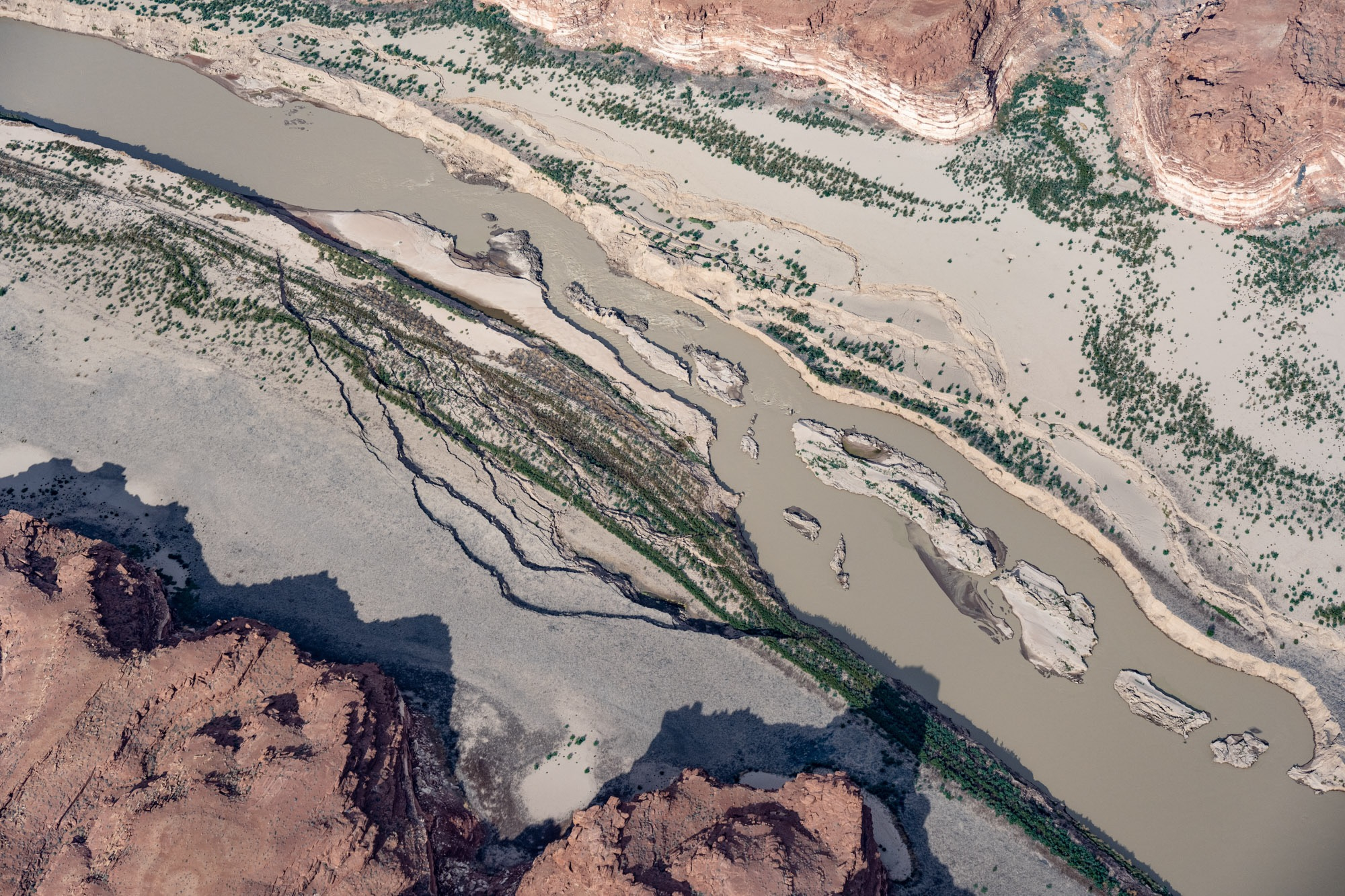
Persistent drought has lowered Lake Powell’s water level and exposed land that was once submerged at Wahweap Marina, as seen in this 2022 photo. (Bureau of Reclamation)
In 2021, Wheeler — together with a group of collaborators including Kuhn, climate scientist Brad Udall and Jack Schmidt, the director of Utah State’s Center for Colorado River Studies — published a white paper called “Alternative Management Paradigms for the Future of the Colorado and Green Rivers.” It was a comprehensive assessment of more ambitious strategies for weathering the drought and climate change than had emerged from now-perpetual negotiations between the states.
“New approaches that are responsive to significantly drier climate conditions and changing patterns of consumptive uses may require bolder policy initiatives that exceed the incremental approach of modern management,” the group wrote. “It is critical to explore alternative water management strategies that may extend beyond the framework of the Law of the River as presently interpreted.”
The following year, the team published a paper in the journal Science titled “What Will it Take to Stabilize the Colorado River?” And, it turned out, stabilizing the system would take something that looked a lot like a grand bargain.
Assuming the drought persists as it has since 2000, Wheeler and his partners identified two scenarios that would stabilize the river, both of which assumed the Lower Basin had waived its ability to make a Compact call. In one, the Lower Basin would need to decrease its water use by about 2 million acre-feet a year when Lake Mead and Lake Powell reach low levels. That would assure it of about 78 percent of its apportionment — an amount roughly in line with cuts it has already committed to taking. In exchange, the Upper Basin would have to cap its water use at 4 million acre-feet. But that’s only slightly more than half of its 7.5 million-acre-foot Compact apportionment, and roughly 300,000 acre-feet less than what it currently uses.
The second scenario — call it the “near-parity scenario” for simplicity — more equally distributed the Upper and Lower Basins’ relative cuts in apportionment. In it, the Upper Basin would cap its use at 4.5 million acre-feet, leaving it with 60 percent of its Compact apportionment. The Lower Basin would be able to use about 67 percent of its Compact apportionment when reservoirs are low, just slightly more percentage-wise than the Upper Basin. But it would have to cut its uses by 3 million acre-feet below its apportionment.
That would stabilize the system — or at least go a long way toward doing so — while largely meeting existing water demands in both basins. The Upper Basin currently uses about 4.3 million acre-feet per year. The Lower Basin, after ramping up an aggressive water conservation effort since 2007, has driven its annual use down to about 6 million acre-feet per year, and has signaled that it could likely reduce demand further.
But it would leave practically no leeway for future growth, at least without reshaping the socioeconomic landscape across the entire Basin. In particular, any future urban growth could come only by shifting significant amounts of water from farms to cities.
HARD MATH
Today, there is a simple, hard reality on the Colorado River: The available water supply is already maxed out. Water use throughout the basin needs to be reduced by roughly 25 percent just to make the numbers work now — to say nothing of the future, which is likely to be significantly drier.
In Colorado, that has raised hard questions about fairness, the “equitable division and apportionment” provision of the Compact, and the assurance the state thought it had that its water would be there to develop when it’s finally ready.
“Everyone agrees that there should be an equitable division of water, and the word ‘equity’ is one that everyone will rally around,” says Kenney. “But does equitable mean equal? That’s the crux of the issue.”
Over the past several years, Colorado’s attorney general, Phil Weiser, has been building his office’s staff of water lawyers. This January, Weiser, who is currently running for governor, appeared before a joint hearing of the state legislature’s judiciary committees.
“If we can’t get a deal — and I’m committed to not getting a bad deal just to get a deal — we’ll be in litigation. We’re ready for it,” he said. “If and when we can get a reasonable deal based in reality, I’m for it. But if we can’t, then we will be falling back on our rights under (the) 1922 Compact.”
Because of the peculiarities of the water-rights hierarchy in the Lower Basin, Arizona is arguably most at risk there. In March, that state — whose governor, Katie Hobbs, is running for re-election — retained the high-powered law firm Sullivan & Cromwell to represent it in potential Colorado River litigation. At the time, a spokesman for the governor said, “it’s critical that Arizona be prepared to defend ourselves in court if an agreement cannot be reached or the Law of the River is violated.”
Anne Castle, a veteran of Colorado River issues. Former U.S. Commissioner, Upper Colorado River Commission • Former Assistant Secretary for Water and Science, U.S. Department of the Interior. (Source: Water Education Foundation)
“It is very difficult for a political figure — and they’re all political figures, even if they’re not elected — to agree to reduce the water use of their constituents and keep their career alive,” says Anne Castle. “They have to be able to tell their constituents, ‘I’m fighting for your water. I’m doing everything I can to keep your water secure, and it’s the other guy’s fault.’ The political incentives are directly at odds with the kind of compromise that’s needed in this type of hydrologic situation.”
Following the breakdown in negotiations between the Colorado River states, the federal government has announced its intention to step in. In May, the Bureau of Reclamation, on behalf of the Department of the Interior, revealed that it is preparing the first of what could be a series of five two-year interim plans for the river.
The final details are expected to be released this summer. But the federal government has indicated that the Interior secretary could cut water deliveries to the Lower Basin states by up to 3 million acre-feet — 40 percent of their Compact apportionment. During a briefing for Arizona water users in May, Brenda Burman, the head of the Central Arizona Project, presented modeling analysis of the proposed reductions and noted that, given the diminished releases from Lake Powell, the Upper Basin is “in a definite breach of the Compact by Sept. 30 of 2026.”
Owing to some quirks of river history, the secretary debatably has less authority in the Upper Basin, and so Reclamation has proposed no cuts there. But as climate change continues to eat away at snowpack and river flows, the Upper Basin states will likely be forced to cut back their uses anyway. Regardless of what the Compact says the Upper Basin gets, the water simply won’t be there.
And so now the seven states are facing a situation eerily similar to those in the near-parity scenario Wheeler and his colleagues laid out in their Science paper four years ago — but without a bargain.
COMING FULL CIRCLE?
In many ways, the prospects have never been worse for something like a grand bargain. Yet the fundamental problems the grand bargain was intended to solve have only grown sharper in the 20 years since it was first proposed.
“The grand bargain has gotten a bad name,” Kuhn says. “But if these issues aren’t resolved through a grand bargain, they’re going to be resolved through litigation.” In 2007, he says, the river’s reservoirs still had ample water to work with. “With empty reservoirs, you cannot finesse these issues.”
Glen Canyon Dam creates water storage on the Colorado River in Lake Powell. Credit: U.S. Bureau of Reclamation
Litigation could come as soon as August, when Reclamation will likely release a record of decision for its proposed new operating plan. Legal action could take one of several paths. The one with the highest stakes would be direct enforcement of the Compact, likely in the form of a Compact call brought by Arizona and the other Lower Basin states against the Upper Basin states. Because the Compact is essentially a treaty between multiple states, that would go directly before the Supreme Court. But such cases are often grindingly long: Arizona’s 1952 lawsuit against California over Colorado River rights took a dozen years to resolve. A case in the Supreme Court could put the river in protracted litigation during a time of profound crisis.
Other, more limited challenges are possible, most likely against the Bureau of Reclamation or the secretary of the Interior for failure to comply with the Compact or violating environmental laws. But they, too, are not without risk.
“I have a hard time believing you could keep litigation contained, once that genie’s out of the bottle,” says Kenney. “I just have to believe that inevitably blows up into a full-fledged interstate litigation and it bumping right up to the Supreme Court.”
As the odds rise of a legal challenge to the Compact that could ultimately wind up before the highest court in the land, the fundamental tension the grand bargain was intended to resolve will likely be front and center before the justices. And, paradoxically, that could force the states themselves to finally make the really tough sacrifices they’ve been trying to avoid.
“I think that a road to a grand bargain runs through litigation,” says Kuhn.
That’s because in past interstate fights over shared rivers, the Supreme Court has typically appointed a water-law expert known as a special master to referee such cases. The most recent example is the dispute between Texas, New Mexico and Colorado over the Rio Grande. In that case, Kuhn notes, “the special master said, ‘You don’t want me or the court to decide this; get in a room and negotiate it.’ The special master kept the pressure on the states to negotiate.”
This May, the Supreme Court approved a settlement between those three states. Still, even that resolution only came a full 13 years after the case was initially filed, and it involves relatively small reductions in overall water use.
On the Colorado River, both water and time are in far shorter supply.
Western Water, our flagship publication by Foundation journalists, is available online. Check out our latest articles. Reach writer Matt Jenkins at mjenkins@watereducation.org.
Know someone who wants to stay connected to water in the West? Encourage them to sign up for Western Water and follow us on LinkedInand Instagram.
Colorado River “Beginnings”. Photo: Brent Gardner-Smith/Aspen Journalism
Last post here, I suggested that at least some of the ongoing failure of the seven Colorado River states to reach agreement on a river management plan for even the next several years, let alone new century, stems from some ‘elephants in the river.’ You know – the big things that nobody wants to look at because they are so big. So big that some of the rules and guidelines we operate under were created to avoid having to address them.
The first ‘elephant in the river’ I discussed last time was the single-minded focus on the Colorado’s surface waters, and a failure to begin considering the whole integrated water supply, surface water and groundwater – of which the surface water is a relatively minor part, with users going to the groundwater in a haphazard way when the surface water is insufficient.
I did make an incorrect statement in that analysis, however. I said that Colorado was the first, and thus far only, state to begin integrating groundwater into its appropriation priority system statewide. (Arizona developed – by federal mandate – a Groundwater Management Plan circa 1970 for those specific parts of the state served by the Central Arizona Project.)
This is true about Colorado – but I was mistaken in implying that the all groundwater use was integrated into its appropriation system by 1969 legislation. Only alluvial groundwater is covered by that law – groundwater that is naturally integrated with surface water, either trickling into the surface streams when the groundwater table is high or drawing riparian water from the surface streams when the water table is low.
Not covered by the Colorado law are ‘non-tributary’ aquifers that have no natural interaction with the surface waters – aquifers like the Oglalla Aquifer in eastern Colorado, or the Denver Basin aquifer. Most of their water filters down from the alluvial groundwater, and only modern pumping technology makes that groundwater accessible to surface use. Most of these deep aquifers have accumulated their water slowly over geological periods of time, and even moderate use of their water dips quickly into ‘water-mining.’ Colorado law for such aquifers attempts to limit annual use to a hundredth of a presumed 100-year supply, but no one knows for sure how much water is really down there, or whether it will truly constitute a 100-year supply.
The standard response throughout much of the basin to shortages in surface water is to go to groundwater pumping; if ‘tributary’ (alluvial) groundwater is tapped, the pumping will gradually lower the water table – which in turn will begin to diminish the surface streams, which in turn will increase the pumping – et cetera, a vicious downward cycle. And the pumping of ‘non-tributary’ aquifers is largely unregulated in the basin.
At any rate – apologies for the error, and thanks to John McClow for pointing it out.
And on to another elephant in the room. Is it finally time to determine limits on the presumed universal applicability of the appropriation doctrine? To avoid being shot before I finish the paragraph, I will say immediately I am not suggesting doing away with the appropriation doctrine; it is a good enough last resort down on the ground where the appropriation doctrine started, for working out local problems of water use on a surface stream when neighborliness fails – that is, when old grumps and feuds preclude the ‘gentlemen’s agreement’ on sharing out what water is available, rather than shutting down the junior users with a ‘call’ so the seniors can get all their decreed water. After two or three generations, seniority can be acknowledged, but is too abstract to apply against your neighbors, if a plan for sharing blameless misfortune can be worked out.
The abstraction, however, becomes more applicable when it is distant water organizations calling out other water organizations upstream, or an earlier developed watershed placing a call on users in an adjacent more recently developed watershed. And when a stream is declared by the district engineer to be over-appropriated – not enough water to fill everyone’s decrees in a near-average year – it becomes even more abstract, a tool for enforcing a status quo, and nothing anywhere about what represents the best uses of the water.
There are, in other words, some areas in which the appropriation doctrine gets stretched beyond its elastic limits by emerging challenges of water use; any questions about ‘best and highest use’ have been essentially declared unanswerable as a matter of conflicting values, and it just seems easier to let seniority of use be the ultimate determinant of priorities.
A century ago, with California quintupling its population in the first two decades of the 20th century, the other six of the seven states in the Colorado River Basin (Arizona, Nevada, Colorado, New Mexico, Utah and Wyoming) began to worry that California might put so much of the river’s water to use that there would not be enough unappropriated water for them to put to use when their time of growth came. They were all committed to versions of the appropriation doctrine within their states, but came to believe that reliance on the appropriation doctrine alone at the interstate level could cause more regional problems than it would resolve.
That concern was affirmed in 1922 when the U.S. Supreme Court resolved a conflict between Colorado and Wyoming over a Laramie River tributary that started in Colorado but was put to use first in Wyoming; the court declared that states who used the appropriation doctrine intrastate would also have to respect each other’s appropriations interstate. This made real the specter of slow-growing upstream states having to let all their Colorado River water go downstream to fill huge Arizona and California decrees.
So they assembled in 1922 to try to do something about that – a fundamental fact about the Colorado River Compact commission that we tend to forget: the original intent of the compact commissioners in 1922 was to develop an alternative to the appropriations doctrine at the interstate level. They came together with the intent of working out a seven-way division of the use of the river, based on possible future development, that would eliminate a horse-race of interstate appropriative competition. Six of the states convened the commission because they feared California, and California reluctantly participated because it knew the feds would never build the big control and storage dam they needed until all seven states were on board with it. That seven-way division trumping interstate appropriation was what the Compact Commissioners assembled to do –and spent a frustrating week early in 1922 trying to do.
They were unable to effect a seven-way split for a couple of reasons: for one thing they had no good measure of how much dependable water was in the river; estimates at the time ranged from 12 to 20 million acre-feet (maf). But for a second thing, the sum total of the water they each felt their state needed, based on rosy early-20th-century estimates, was closer to 24 maf – and nobody wanted to go home having backed down from their carefully imagined numbers.
Members of the Colorado River Commission, in Santa Fe in 1922, after signing the Colorado River Compact. From left, W. S. Norviel (Arizona), Delph E. Carpenter (Colorado), Herbert Hoover (Secretary of Commerce and Chairman of Commission), R. E. Caldwell (Utah), Clarence C. Stetson (Executive Secretary of Commission), Stephen B. Davis, Jr. (New Mexico), Frank C. Emerson (Wyoming), W. F. McClure (California), and James G. Scrugham (Nevada). CREDIT: COLORADO STATE UNIVERSITY WATER RESOURCES ARCHIVE via Aspen Journalism
What they did instead – in order to persuade Congress that there was general agreement – was to cobble together the Compact we are burdened with today; they created what Commission Chair Herbert Hoover called a ‘temporary equitable division’ of the seven states into Upper and Lower River Basins, until ‘ those men who may come after us, possessed of a far greater fund of information’ could do the ‘further division’ of the river among the states.
They also decided – as early 20th-century Americans would – to lean toward the more optimistic estimates of river flow, dividing ‘equally’ between the Basins only 15 maf of a river they presumed would continue running 16-20 maf – hence the 7.5 maf for each Basin written into the compact, to be further divided among the states of each Basin in their own good time. That left some water for Mexico, but they did nothing specific for the Indian tribes in the basins because national Indian policy at that time was ‘soft genocide’ – full assimilation (‘kill the Indian, save the man’), leaving tribal water a concern they thought would disappear.
This all made reasonable sense with a river running a quarter-century average of just under 18 maf – but then through the 1930s the river experienced a drought unsurpassed until the past quarter century. By the end of World War II, Colorado river water users had a ‘far greater fund of information’ about the river’s flow, which would have made it a good time to have ‘fixed’ the Compact – but the growing fund of information was all bad news that no one wanted to incorporate into a more realistic policy. So by default the ‘temporary equitable division,’ with its mythic 18 maf river, took on the permanence of something carried off a sacred mountain carved in stone.
And now – we are seeing it reduced to a sad irony. The states of the Lower Basin had their fears too, and wanted a clause in the Compact stating that, should the Upper Basin states have a wild spurt of growth, they should not ‘deplete the flow’ to the Lower Basin below an average of 7.5 maf a year. But now – when it looks like diminished flows throughout the basin might really drop the flow at the division point between basins below that average – the Lower Basin is threatening the Upper Basin with an Article III(d) ‘call,’ saying the upper states will have to cut their own uses enough to meet the lower states’ fantasy 7.5 maf. States that set out a century ago to create a compact that would transcend the appropriation doctrine at the interstate level are now trying to turn that ‘temporary equitable division’ into what amounts to a senior interstate water right.
There has to be a level, or category, of action in which the law of first-come first-served is transcended by other considerations. And can we not say, at this point a century later, that the original intention of the compact commission has been achieved de facto? No state will ever get the use of more water than it had (or believed it had) around the turn of the century because there is even less water now. For better or worse, the use of the river has been distributed among the states (including some of the tribes) and Mexico.
Udall/Overpeck 4-panel Figure Colorado River temperature/precipitation/natural flows with trend. Lake Mead and Lake Powell storage. Updated through Water Year 2025. Note the tiny points on the annual data so that you can flyspeck the individual years. Credit: Brad Udall
Whether this is an equitable division is arguable; the states of the Lower Basin have been using roughly two-thirds of the river’s water, the Upper Basin states around one third, rather than the 50-50 split explicit in the Compact (7.5 maf per Basin). But arguably that does reflect the relative productivity of Lower Basin agricultural use (by far the largest use) and also its millions of urbanites drawing on it for at least part of their municipal water. It was a huge step toward reality when the Lower Basin states finally agreed that they must absorb the Lower Basin’s system losses (mostly evapotranspiration) and their half of Mexico’s allotment out of their own shares of the river, rather than relying on a fictional surplus to cover it – a fiction that combined with drought to draw down both Powell and Mead Reservoirs to the dangerous level where they linger today.
Yampa River Basin via Wikimedia. Note the Little Snake River crossing the Colorado-Wyoming line.
The 1948 Upper Colorado River Compact was the first reality-based document in the ‘Law of River’ portfolio because its negotiators knew by then – that ‘greater fund of knowledge’ – that it was doubtful that there would always be 7.5 maf for their use, and actually accepted that as their reality. So the divided their ‘half’ of the river into percentages for each state of whatever was left for the upper states after the Lower Basin got it Boulder Canyon Project Act waters. After three-quarters of a century, the four states are not too far from those percentages in their development of around 4.5 maf; only Wyoming is significantly under its 13 percent; Utah is a little below its 23 percent; and Colorado is a little over its 51.75 percent. Given the geographic irrelevance of western state boundaries (the Little Snake River crosses the Colorado-Wyoming border half a dozen times), this was pretty good 1948 estimating.
The reality today is that all Colorado River water users in all seven basin states are using a finite and measurable resource that will probably continue to diminish for the foreseeable future as we continue to heat up the planet, and we need to come to an agreement on what that means for all users. [ed. emphasis mine]
It seems to me there are three ways to address that diminishing flow. One way is to continue to accept the divine sanctity of the Colorado River Compact, with the Upper Basin states forced by the Supremes (they ride for power, not for the law) to cut back their own uses to meet the 7.5 maf average delivery to the Lower Basin – basically the interstate nightmare (for the upper states) the Compact was meant to address. Call this the stubborn denial option.
A second way would be to accept the evolved eight-way division (seven states plus Mexico) of the use of the river’s water, which was what the seven states wanted to do in 1922, instead of the ‘temporary equitable’ compact they came up with. Percentages for each basin state could be set according to the amount each state was using at the end of the major river development era, say in Y2K (remember that?), when the 70-year average annual flow was ~14.5 maf (1930-2000). Those state percentages of the river’s consumptive use could be retained – but the actual volume of water for each state would gradually diminish as the combination of ‘dry drought’ and ‘heat drought’ continues to diminish the river. Given that losses attributable to climate warming are both everybody’s and nobody’s fault, the losses to each states would be proportionate to their percentage of the river’s consumptive use, with no falling back on seniority, as though it were just a squabble between users. Each state could then either stay with the appropriation doctrine intrastate with junior users bearing the loss, or equitably share out the loss proportionate to use. Call the latter the shared reality option.
Photo of Crowley County by Jennifer Goodland
A third way lies between stubborn denial and shared reality, and will probably prevail as the default American Way: let money work it out. Municipal and industrial users will continue to work out money-for-water deals with agricultural users, like San Diego and the Metropolitan Water District have done with the Palo Verde and Imperial Valley ag districts, with responsible districts using the money for systemic improvements that minimize the impact of lost water. This is by no means going to ‘dry up’ agriculture. With 75-85 percent of the river’s water being used by agriculture, a doubling of M&I use would only require transfer of 10-15 percent of ag water, although (money being blind to all but profitability) the transfers would probably cause some local tragedies like Crowley County in Colorado where too much water was bought out of a single small irrigation district by Front Range entrepreneurs.
The appropriation doctrine, with its strange ‘property right’ independent of the property for which it was granted, is quite compatible with the money option for resolving water distribution, once over-appropriation is achieved. The idea that water’s seniority in a certain use can be transferred to a totally different use along with the water strikes me as strange – shouldn’t a new use initiate a new right? It is also contradictory to the doctrine’s initial democratic-populist effort to prevent the dominance of big money in water distribution by limiting water rights to what one could put to use. But it does seem to be the American way that everything eventually comes down to money as the base determinant of value.
Enough for today. The elephants in the river. I obviously favor ‘ratifying’ the evolved split of the use of the river, and an equitable proportionate sharing among all states – and within all states – of the consequences of our cultural climate changes. But that will not fly among those who have steadfast faith (senior water right holders) in the appropriation doctrine as the answer to all problems.
The river? It abides, rises and falls with the water table in its surrounding groundwater, and it may occasionally disappear, but it won’t have died, it will just have gone underground until the water table rises again and the ground can’t hold all the water – if we figure out how to let that happen.
Map of the Colorado River drainage basin, created using USGS data. By Shannon1 Creative Commons Attribution-Share Alike 4.0
Click the link to read the study (and check out the operating plans for the Colorado River system reservoirs) on the Bureau of Reclamation website:
June 15, 2026
The operation of Lake Powell and Lake Mead in the June 2026 24-Month Study is pursuant to the December 2007 Record of Decision on Colorado River Interim Guidelines for Lower Basin Shortages and the Coordinated Operations of Lake Powell and Lake Mead (Interim Guidelines),1 the Supplemental Environmental Impact Statement for Near-term Colorado River Operations Record of Decision (2024 Interim Guidelines SEIS ROD),2 and reflects the 2026 Annual Operating Plan (AOP). Pursuant to the Interim Guidelines, the August 2025 24-Month Study projections of the January 1, 2026, system storage and reservoir water surface elevations set the operational tier for the coordinated operation of Lake Powell and Lake Mead during 2026.
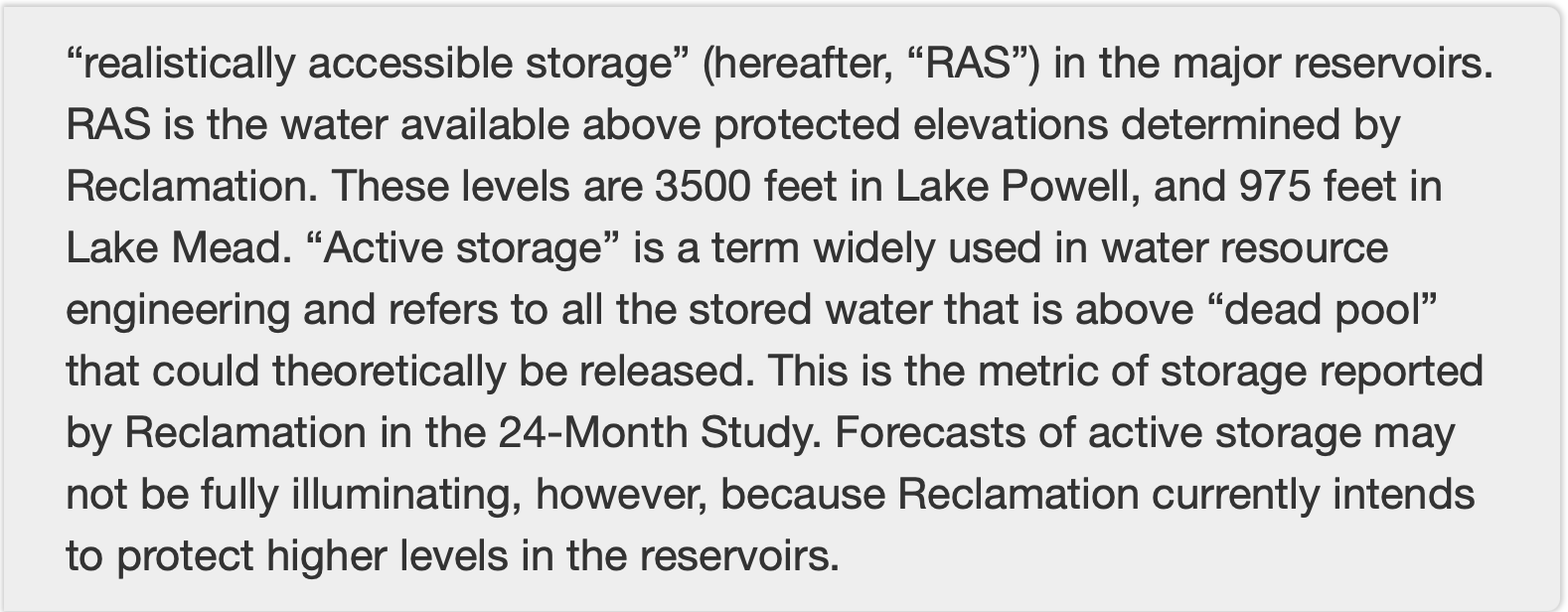
The August 2025 24-Month Study projected the January 1, 2026, Lake Powell elevation to be less than 3,575 feet and at or above 3,525 feet and the Lake Mead elevation to be at or above 1,025 feet. Consistent with Section 6.C.1 of the Interim Guidelines, and Section 6.E of the 2024 Interim Guidelines SEIS ROD, the operational tier for Lake Powell in water year (WY) 2026 is the Mid-Elevation Release Tier and the water year release volume from Lake Powell was originally projected to be 7.48 million acre-feet (maf). Further, given the hydrologic variability of the Colorado River System and potential for declining reservoir conditions, Section 6.E of the 2024 Interim Guidelines SEIS ROD allows for Lake Powell’s release in WY 2026 to be less than 7.48 maf. Consistent with Section 6.E of the 2024 Interim Guidelines SEIS ROD, Reclamation will consider all tools that are available during the interim period to avoid Lake Powell elevation declining below 3,500 feet.
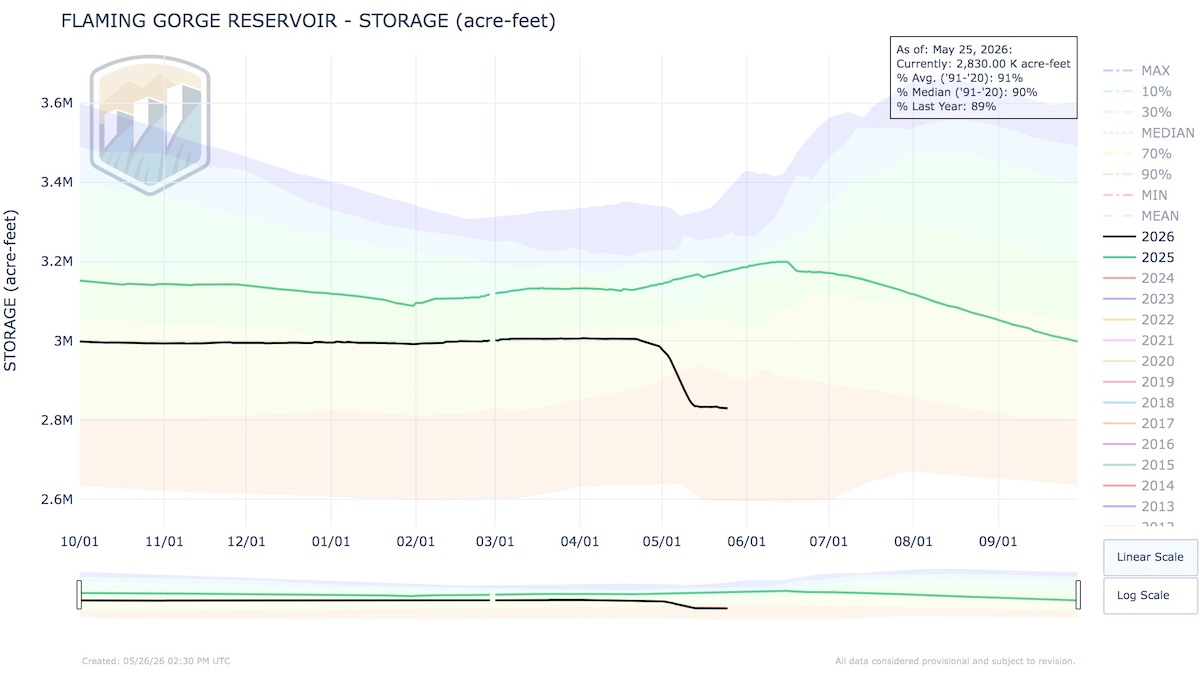
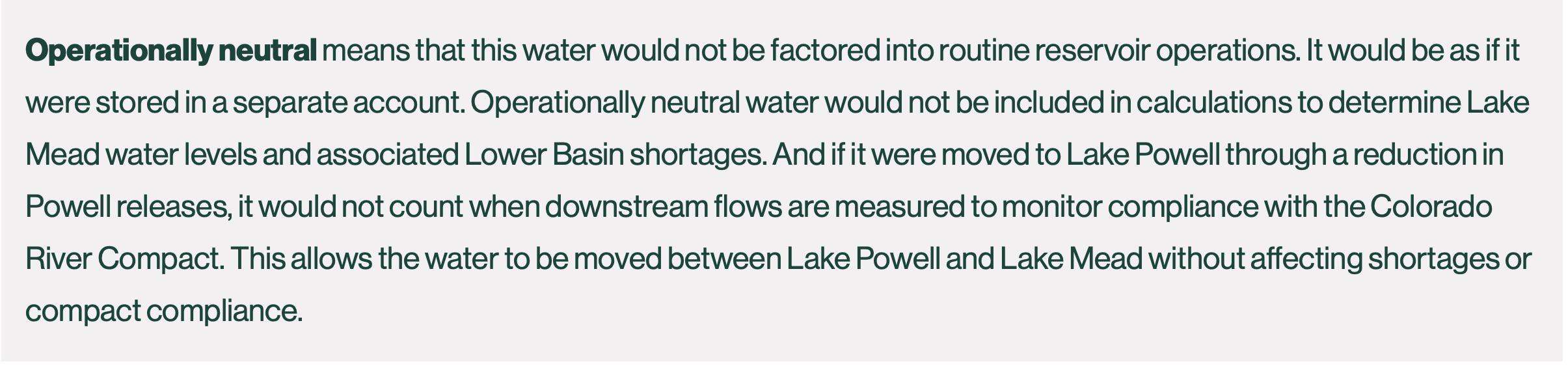
To protect a target elevation at Lake Powell of 3,525 feet, adjustments to Glen Canyon Dam monthly volume releases for the months of December 2025 through April 2026 were implemented in the December 2025 24-Month Study, reducing the release volume for these months by 0.598 maf. As historically dry conditions persisted in WY 2026 and reservoir conditions were projected to decline below 3,500 feet at Lake Powell, the Department of the Interior implemented an action under Section 6.E of the 2024 Interim Guidelines SEIS ROD by reducing Lake Powell’s annual release from 7.48 maf to 6.00 maf in WY 2026.3 This action was taken in conjunction with the 2026 Drought Response Operations Plan which will release between approximately 660,000 acre-feet to 1.00 maf of additional water from Flaming Gorge reservoir to Lake Powell by April 2027.4 The May 2026 Most Probable 24-Month Study reflects a 1.00 maf Drought Response Operations release.
The August 2025 24-Month Study projected the January 1, 2026, Lake Mead elevation to be below 1,075 feet and above 1,050 feet. Consistent with Section 2.D.1 of the Interim Guidelines, a Shortage Condition consistent with Section 2.D.1.a will govern the operation of Lake Mead for calendar year (CY) 2026. In addition, Section III.B of Exhibit 1 to the Lower Basin Drought Contingency Plan (DCP) Agreement will also govern the operation of Lake Mead for CY 2026. Lower Basin projections for Lake Mead take into consideration additional conservation efforts under the DCP and the Lower Colorado River Basin Conservation and Efficiency Program (LC Conservation Program).
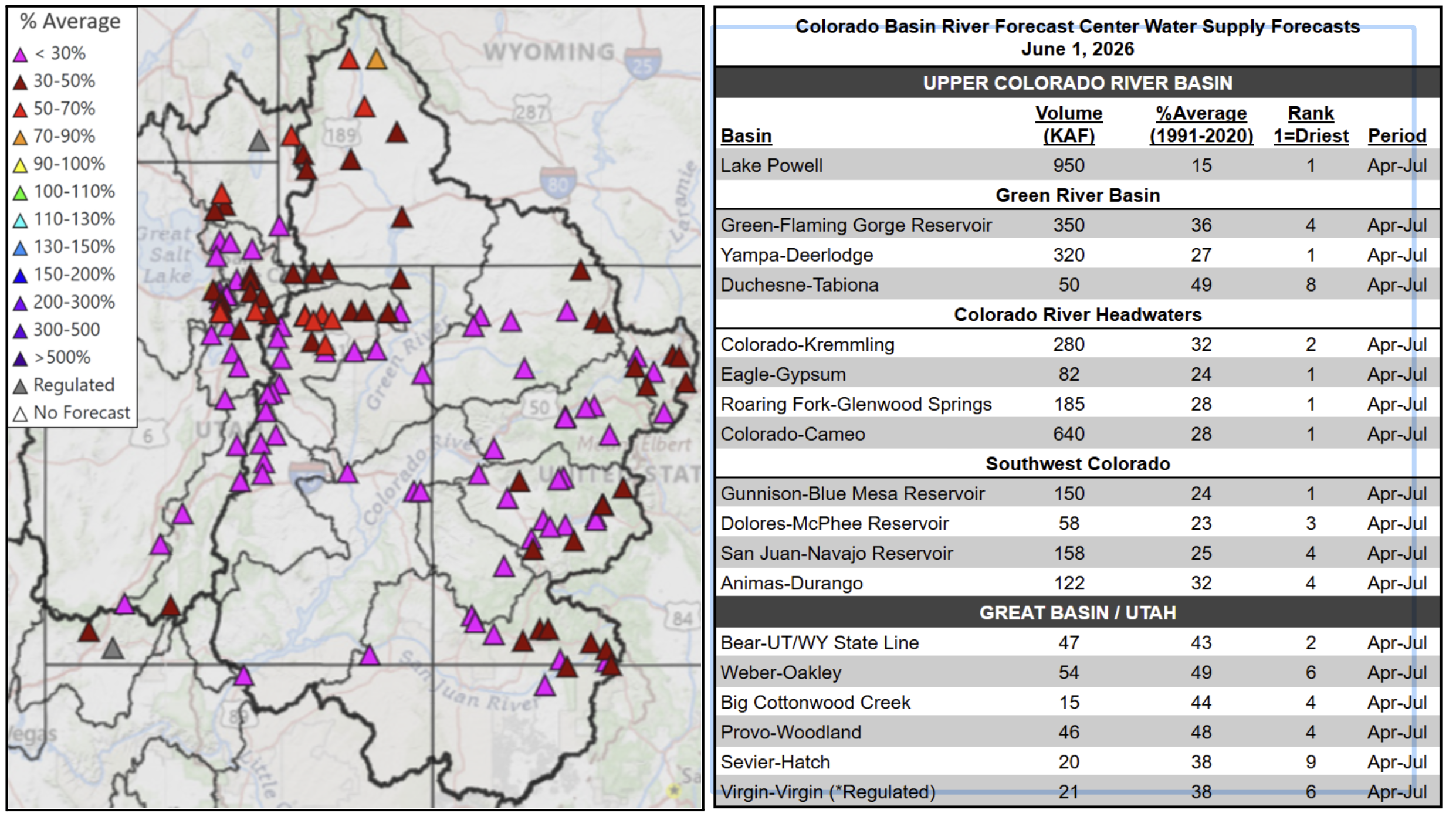
Current runoff projections into Lake Powell are provided by the National Weather Service’s Colorado Basin River Forecast Center. The observed unregulated inflow into Lake Powell for the month of May was 0.383 maf or 18% of the 30-year average from 1991 to 2020. The June 2026 unregulated inflow forecast for Lake Powell is 0.170 maf or 7% of the 30-year average. The 2026 April through July unregulated inflow forecast for Lake Powell is 0.950 maf or 15% of average. The WY 2026 unregulated inflow forecast for Lake Powell is 3.40 maf or 35% of average.
In this study, the CY 2026 diversion for Metropolitan Water District of Southern California (MWD) is projected to be 0.941 maf. The CY 2026 diversion for the Central Arizona Project (CAP) is projected to be 0.924 maf. Consumptive use for Nevada above Hoover (SNWP Use) is projected to be 0.188 maf for CY 2026.
Due to changing Lake Mead elevations, Hoover’s generator capacity is adjusted based on estimated effective capacity and plant availability. The estimated effective capacity is based on projected Lake Mead elevations. Unit capacity tests will be performed as the lake elevation changes. This study reflects these changes in the projections.
For questions on Upper Colorado River Basin (UCB) reservoir operations, please contact Alex Pivarnik, the UCB River Operations Group Supervisor, at apivarnik@usbr.gov. For questions on Lower Colorado River Basin (LCB) reservoir operations, please contact Noe Santos, the LCB River Operations Manager, at nsantos@usbr.gov.
Hoover, Davis, and Parker Dam historical gross energy figures come from Power, Operations, and Maintenance reports provided by the Lower Colorado Region’s Power Office, Bureau of Reclamation, Boulder City, Nevada. Questions regarding these historical energy numbers can be directed to Rebecca Rogers (rrogers@usbr.gov) or Kyra Cubi (kcubi@usbr.gov).
1 For modeling purposes, simulated years beyond 2026 assume a continuation of the 2007 Interim Guidelines including the 2024 Supplement to the 2007 Interim Guidelines (no additional SEIS conservation is assumed to occur after 2026), the 2019 Colorado River Basin Drought Contingency Plans, and Minute 323 including the Binational Water Scarcity Contingency Plan. With the exception of certain provisions related to Intentionally Created Surplus recovery and Upper Basin demand management, operations under these agreements are in effect through 2026. Reclamation initiated the process to develop operations for post-2026 in June 2023, and the modeling assumptions described here are subject to change.
Click the link to read the article on The Denver Post website (Elise Schmelzer). Here’s an excerpt:
June 21, 2026
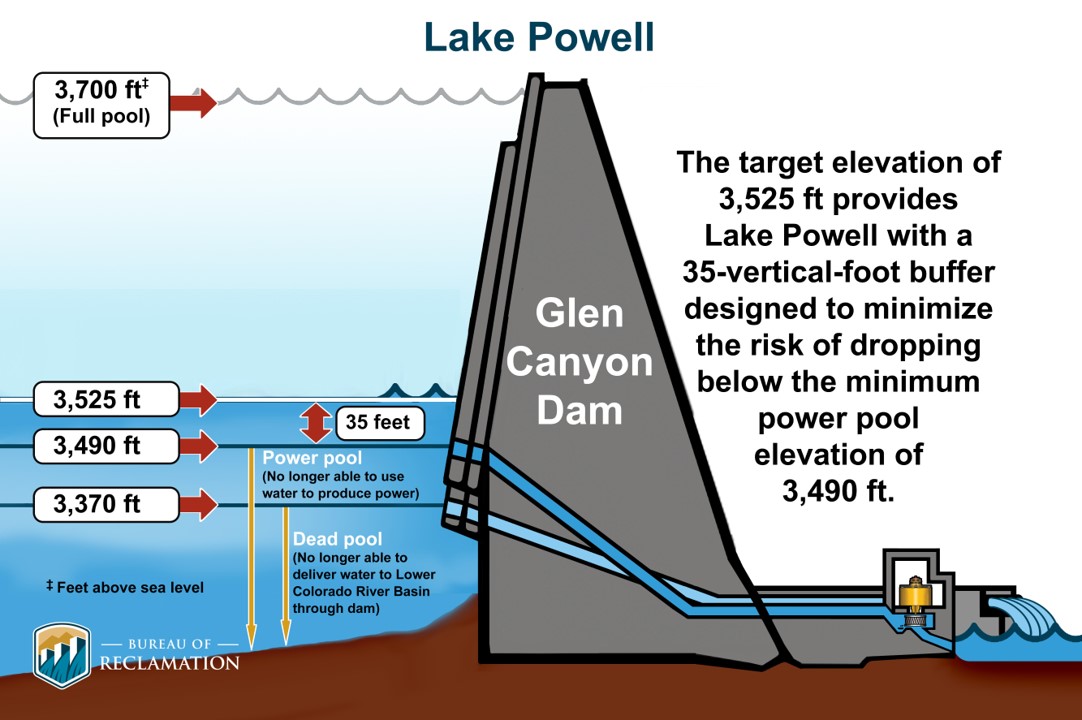
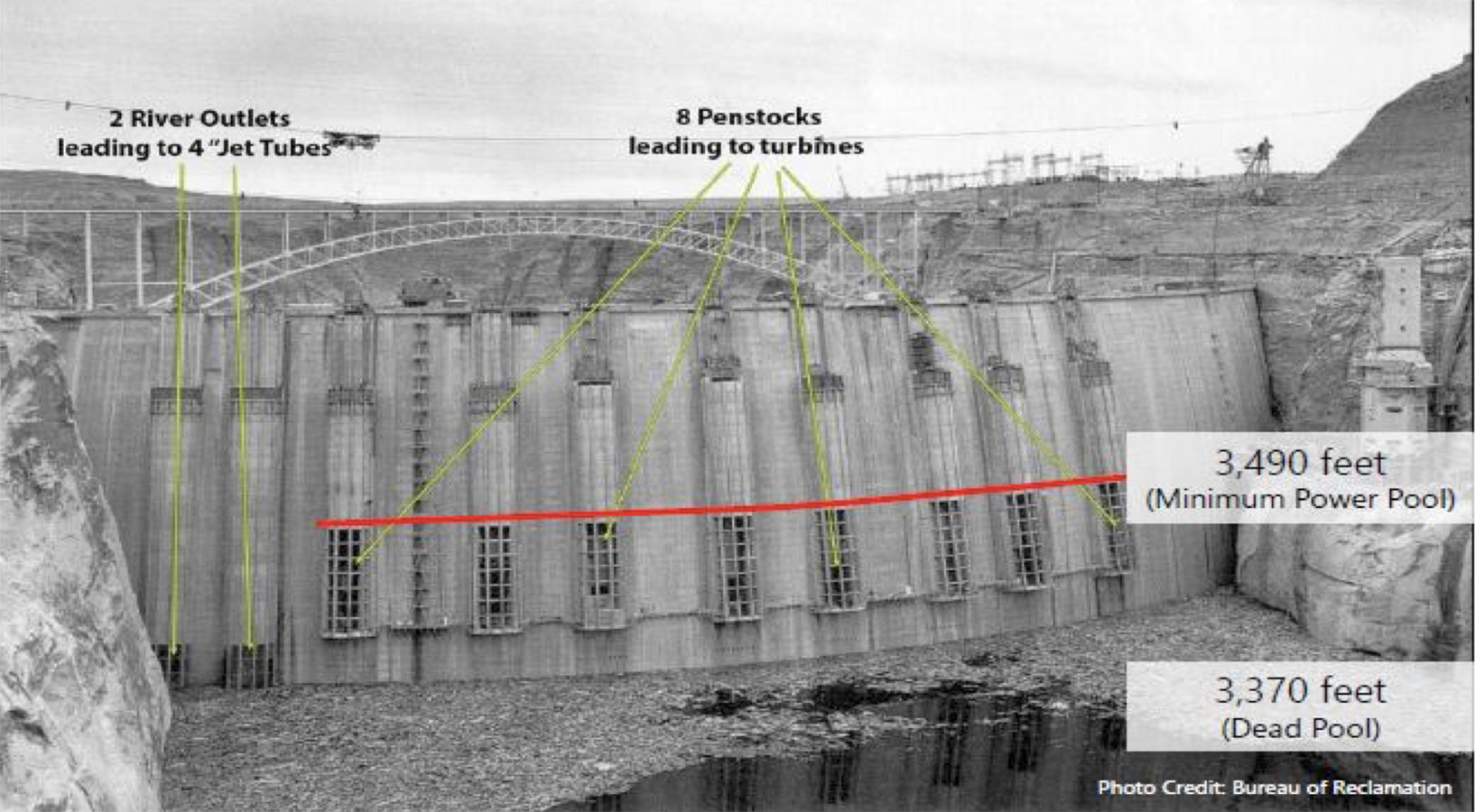
The two major reservoirs on the Colorado River face dire outlooks that will likely spur federal officials to restrict the amount of water flowing downstream — and decrease hydropower generation — in the coming months, even after they ordered recent emergency measures. Projections released last week by the U.S. Bureau of Reclamation show that if dry conditions persist, Lake Powell’s water level could dip below a threshold called “minimum power pool” as soon as February. That’s the level below which water can no longer flow through the reservoir’s hydropower turbines. Without intervention, the projections say, the lake will remain below the critical elevation for the foreseeable future.
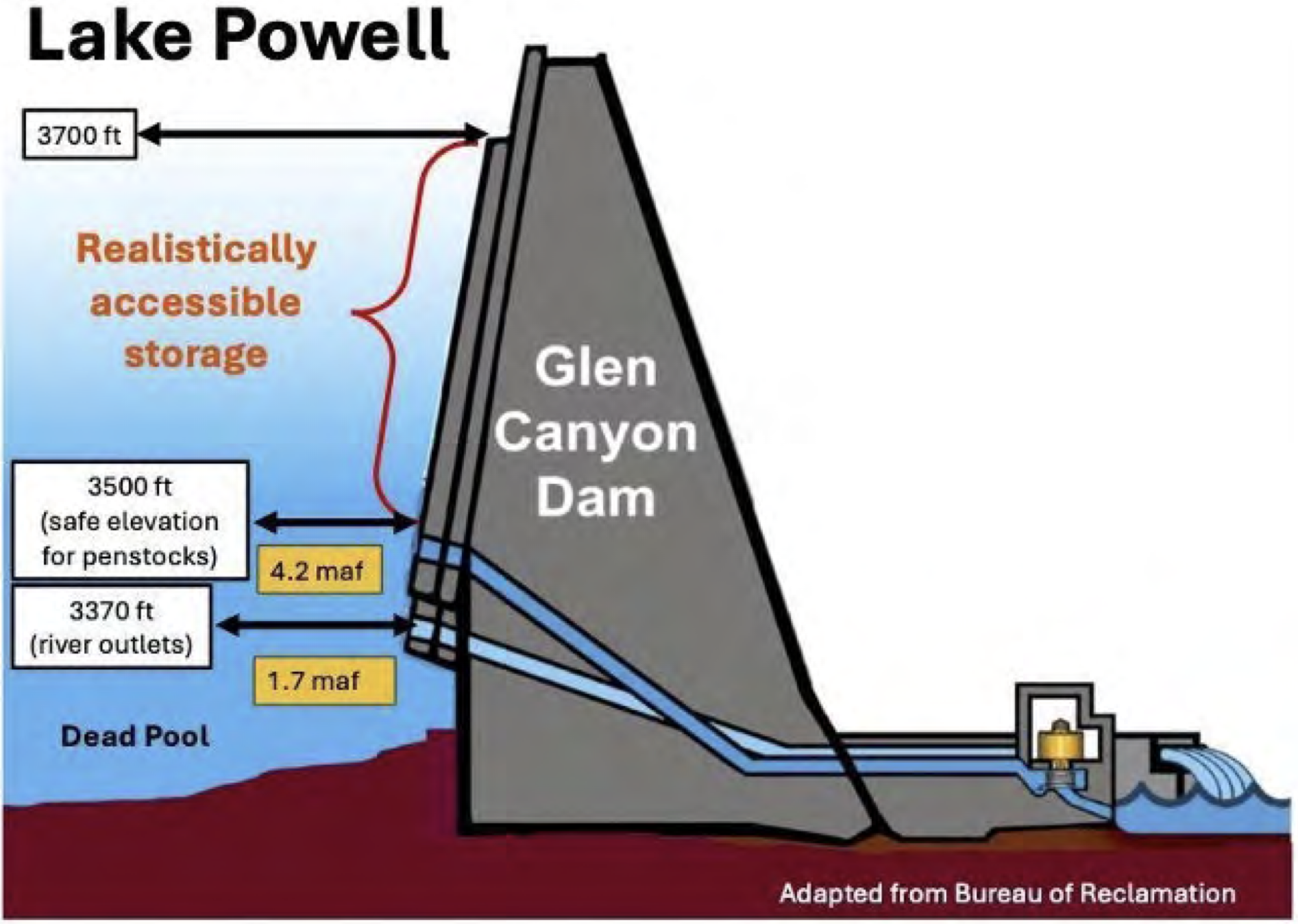
Lake Powell key elevations. Credit: Reclamation
The threat of Powell hitting that threshold — 3,490 feet in elevation — has hovered above federal water managers for months as the reservoir has continued to drop to record-low levels. In April, U.S. Bureau of Reclamation leaders announced that they would send up to 1 million acre-feet of water from the upstream Flaming Gorge Reservoir to Powell and reduce the amount of water released from Powell to keep the reservoir’s level at 3,500 feet above sea level — which includes a small buffer Reclamation officials want to maintain to stay above the power pool level. Powell’s water levels continue to drop as Colorado River leaders deal with two crises: one climatological and one political. Long-term drought fueled by climate change has shrunk the Colorado River’s flows as federal officials and water leaders in the seven basin states — including Colorado, home to its headwaters — struggle to agree on longer-term plans for the river’s management. So far, they’ve failed to find agreement on how to divvy up the usage cuts necessary to adapt to lower flows that reduce the water supply for farmers and residents in a region that’s home to 40 million people.
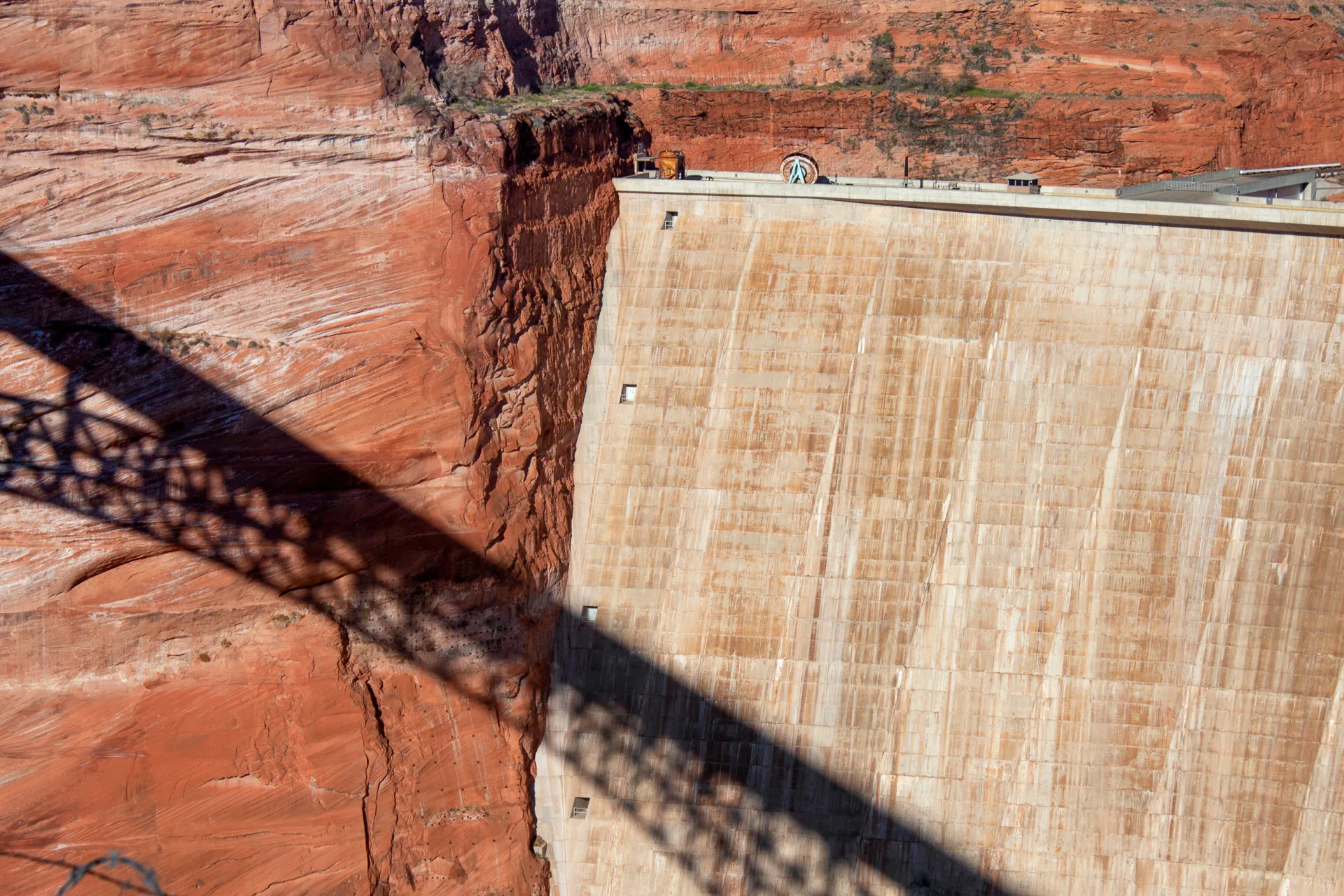
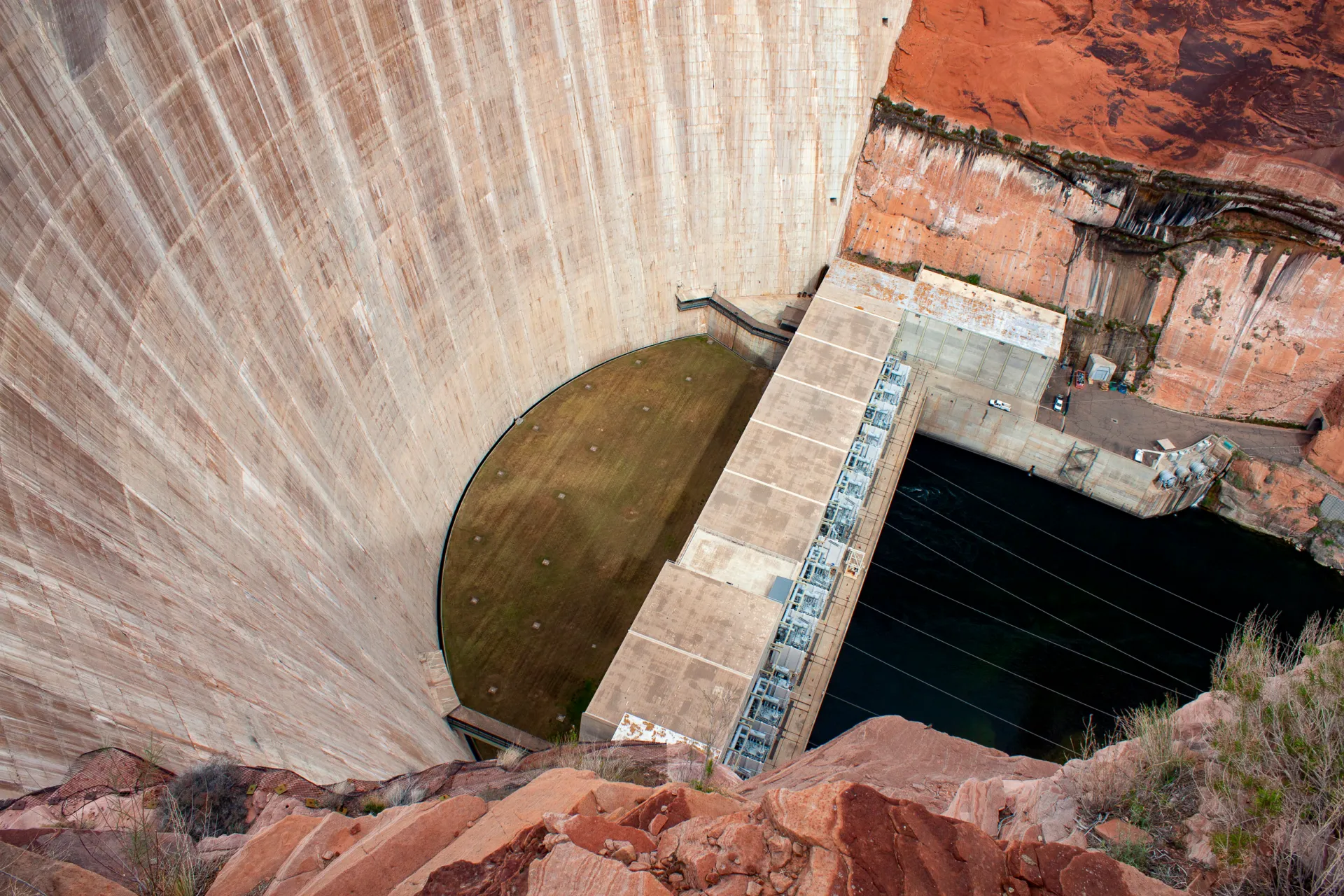
The back of Glen Canyon Dam circa 1964, not long after the reservoir had begun filling up. Here the water level is above dead pool, meaning water can be released via the river outlets, but it is below minimum power pool, so water cannot yet enter the penstocks to generate electricity. Bureau of Reclamation photo. Annotations: Jonathan P. Thompson
When Lake Powell’s levels fall below minimum power pool, that means water can no longer flow through the intake tubes for Glen Canyon Dam‘s hydropower facility, which is the primary method for moving water downstream from the reservoir in southern Utah. Instead, water can move only through much smaller bypass tubes that, for years, have been considered unsafe for long-term use — though Reclamation officials now say they can be operated safely with continuous maintenance. The bureau’s most recent projections, released Tuesday, show that the emergency measures taken this spring will only be a stopgap, unless extremely wet weather returns…If Lake Powell falls below minimum power pool, the only way to release water downstream is through four 8-foot-diameter tubes called the river outlet works. For years, Bureau of Reclamation officials have said the tubes were not designed for long-term use at low water levels, and such use could cause structural damage to the dam. But officials now say there’s a way to safely use the river outlet works, if needed…Recent studies of the river outlet works have shown that managers can operate the backup tubes continuously in a safe way, said Katrina Grantz, the deputy regional director for Reclamation’s Upper Colorado Region, at a conference in Boulder earlier this month. But the outlets require frequent inspections and maintenance when used continuously, which means that one of the four conduits will routinely be offline. Over the course of a year, the maintenance rotation will result in an effective capacity of about three and a half outlets operating continuously, bureau spokesman Peter Soeth wrote in an email in response to follow-up questions from The Denver Post.
“The river outlet works were never designed to serve as the primary or long‑term release pathway,” Soeth said. “Relying on them continuously would reduce operational flexibility and, over extended periods, could introduce wear that requires more intensive maintenance.”
Hite Marina and boat ramp on what once was the northern end of Lake Powell. Jonathan P. Thompson photo via The Land Desk.
Click the link to read the article on the Grist website (Jake Bittle):
June 23, 2026
Desalination. Pipelines. Cloud seeding. Those are just a few ideas for how the Trump administration should save the desiccated waterway.
The crisis on the Colorado River is simple: The seven Western states that border the essential waterway use more water than it contains. Chronic overuse [ed. allowed and caused by the “Law of the River”] has drained its two largest reservoirs, Lake Powell and Lake Mead, and a two-decade drought cycle has pushed them to the point of collapse.
The dream solution to this crisis is an agreement among all involved to use less water. Such a deal would decide who must reduce consumption, which means asking which cities would ban irrigating lawns and washing cars and which farmers would rip up their fields.
This has proven impossible. The states have been trying to work this out since the last dry spell, in 2022, but talks have ended in frustration and name-calling. The main sticking point is between the Upper Basin states, led by Colorado and Utah (along with Wyoming and New Mexico), and the Lower Basin states of Arizona, California, and Nevada. Each side believes the other has a legal and a moral responsibility to cut usage during dry years. The stalemate means the Trump administration must design a schedule of restrictions ahead of a crucial deadline in September. So far, Interior Secretary Doug Burgum has balked at resolving the quarrel.
Instead, the administration is turning to a far less controversial plan: Throw money at the problem. The Interior Department and Congress are pondering a slew of projects that could increase supply — a reversal of President Trump’s zeal for cutting federal grants. The seven state governors have sent Washington a “wish list” of over $50 billion, and several startups have their hands out as well.
Federal investment makes sense given the scale of the problem and the intractable impasse, said Jennifer Pitt, the Colorado River program director at the National Audubon Society and an expert on the governance of the river.
“It is something easier for people to agree on,” she said. “This is a slow moving crisis, but it is a crisis, and we do see the federal funding come in to address crises in other parts of the country. Just because this is a slow moving one doesn’t make it any less worthy.”
During a Senate committee hearing last week, the Interior Department’s top water official, Andrea Travnicek, said the agency has yet to vet the wish list. She didn’t offer a specific funding request, and urged lawmakers to be “thoughtful” about how they spend taxpayer money. But senators in both parties seemed to encourage new investments. “The basin should not be forced to choose between stabilizing the present and negotiating the future,” said Senator Martin Heinrich, a Democrat from New Mexico.
The possibility of new funding marks a return to the policy of Joe Biden’s administration. During the last extreme drought in 2022, the Interior Department paid farmers billions to leave their fields fallow, but that money, from the Inflation Reduction Act, has almost run dry.
The difference now is that the roster of proposals is far more ambitious, and some far less certain to bolster the basin’s water supply. They range from desalination plants and desert groundwater pipelines to forest ecosystem restoration.
Here are a few of the major solutions state officials and companies are proposing.
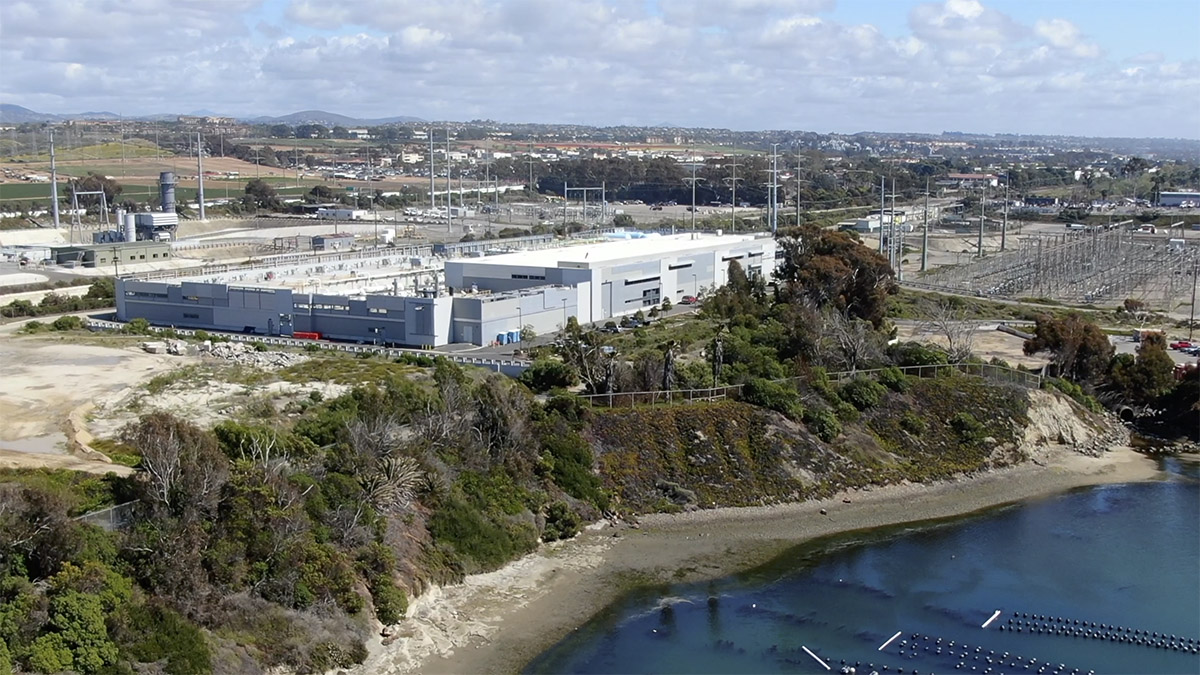
The Claude “Bud” Lewis Desalination Plant in Carlsbad, California. Photo by Robert Marcos
Desalination
As the Colorado River crisis has deepened, some cities in the Southwest have eyed desalination, which extracts salt from sea water. A company called Poseidon Water opened such a plant in San Diego in 2015 and tried for decades to open another in Los Angeles. The wish list to the Interior Department requests as much as $6 billion to build one across the border in the Mexican state of Baja California to supplement Arizona’s vanishing Colorado River supplies.
The Interior Department also signed an agreement in early June with San Diego’s water agency that explains how that plant would help. Rather than sending treated seawater inland, states would pay the city to take less from the Colorado River. Arizona stands to lose the most water during drought years, and it would be the most likely to participate in that exchange.
But desalination is expensive, requires enormous amounts of electricity, and state-of-the-art industrial technology. The Poseidon facility cost $1 billion, but San Diego has diversified its water portfolio so much that it no longer needs all the water it must purchase from the plant. Trading water could help it offset some of that cost.
Taming tech and power
Nevada uses less water than any state on the river and has cut usage in Las Vegas by replacing grass with artificial turf. It is now seeking money to slake some of its last thirsty industries: power plants and data centers. These facilities need a fraction of what agriculture requires, but they dominate usage in the Silver State.
The state’s wish list includes $300 million to retrofit its largest natural gas plant and reduce water consumption by an amount equivalent to more than 3,000 average homes. It also seeks $650 million to install zero-water cooling systems in airports, schools, and industrial facilities. These closed-loop systems, which recirculate the same cooled water or, in the case of data centers, blast hot servers with cold air, have become more popular in Western states amid concerns about the tech boom’s growing thirst.
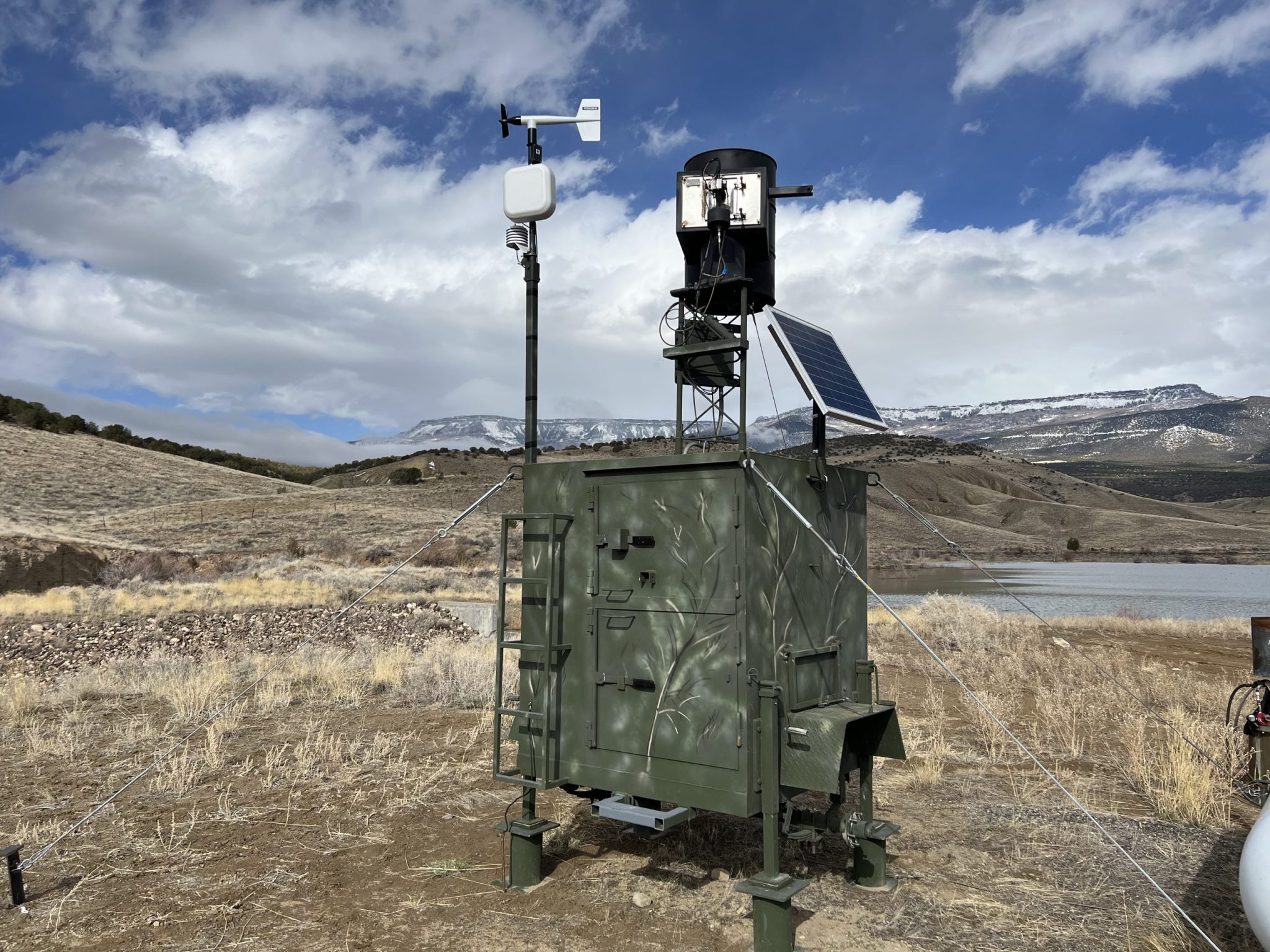
A cloud seeding generator is located in Grand Mesa. The Colorado Water Conservation Board administers the state’s weather modification program, which permits cloud seeding operations. Colorado Water Conservation Board/Courtesy photo
Squeezing rain from the clouds
Whereas Lower Basin states like Arizona and California can draw from the Colorado River’s big reservoirs on demand, northern states at its headwaters only receive the rain and snow that feed it.
These Upper Basin states have been trying for decades to engineer more precipitation, with support from Washington, D.C. It sounds futuristic, but cloud seeding — spraying salt or silver iodide into clouds, forcing them to release water they might otherwise retain — has proven fairly effective on a small scale. Utah spends a few million dollars each year doing this, and officials say it could boost annual snowpack by as much as 10 percent.
In addition, a few startups are pitching cheaper and more scalable versions of this technology. Rain Enhancement, a Florida-based outfit, says it has brought about 15,000 homes’ worth of rain to a river tributary in Utah this year; another, Rainmaker, says it can produce 1,000 times that much by 2031. That’s enough to close the supply gap on the river. That promise is fanciful, but these companies could secure federal funding from an administration that loves the tech industry.
Mining a hoard of desert groundwater
The West teems with companies that have promised miracles, from building a 300-mile pipeline to tapping a hoard of groundwater in Nevada. But perhaps no project has had a longer and more turbulent history than Cadiz, a proposal, almost 30 years old, to export groundwater from an aquifer in the Mojave Desert.
This has drawn vicious opposition from environmentalists and the late California Senator Dianne Feinstein, who called it a “grave threat” to the desert. Cadiz experienced several setbacks during the Biden administration: It lost a federal permit, California ended its pipeline lease, Arizona declined to support it, and its stock price fell to almost zero. But Susan Kennedy, its CEO, says Cadiz is flowing again with a funding agreement from the Interior Department to study exchanges between Cadiz and the Colorado River.
The company still needs to finish two pipelines, one to the Central Valley and another to the aqueduct that carries Colorado River water to California. It also must build a plant to remove contaminants in the water, but Kennedy believes she can have the tap running by 2028.
“This isn’t a competition; it’s an all-of-the-above situation,” she said of the situation on the river. That may be so, but the seven states did not include Cadiz on the wish list sent the Interior Department.
Map of the Colorado River drainage basin, created using USGS data. By Shannon1 Creative Commons Attribution-Share Alike 4.0
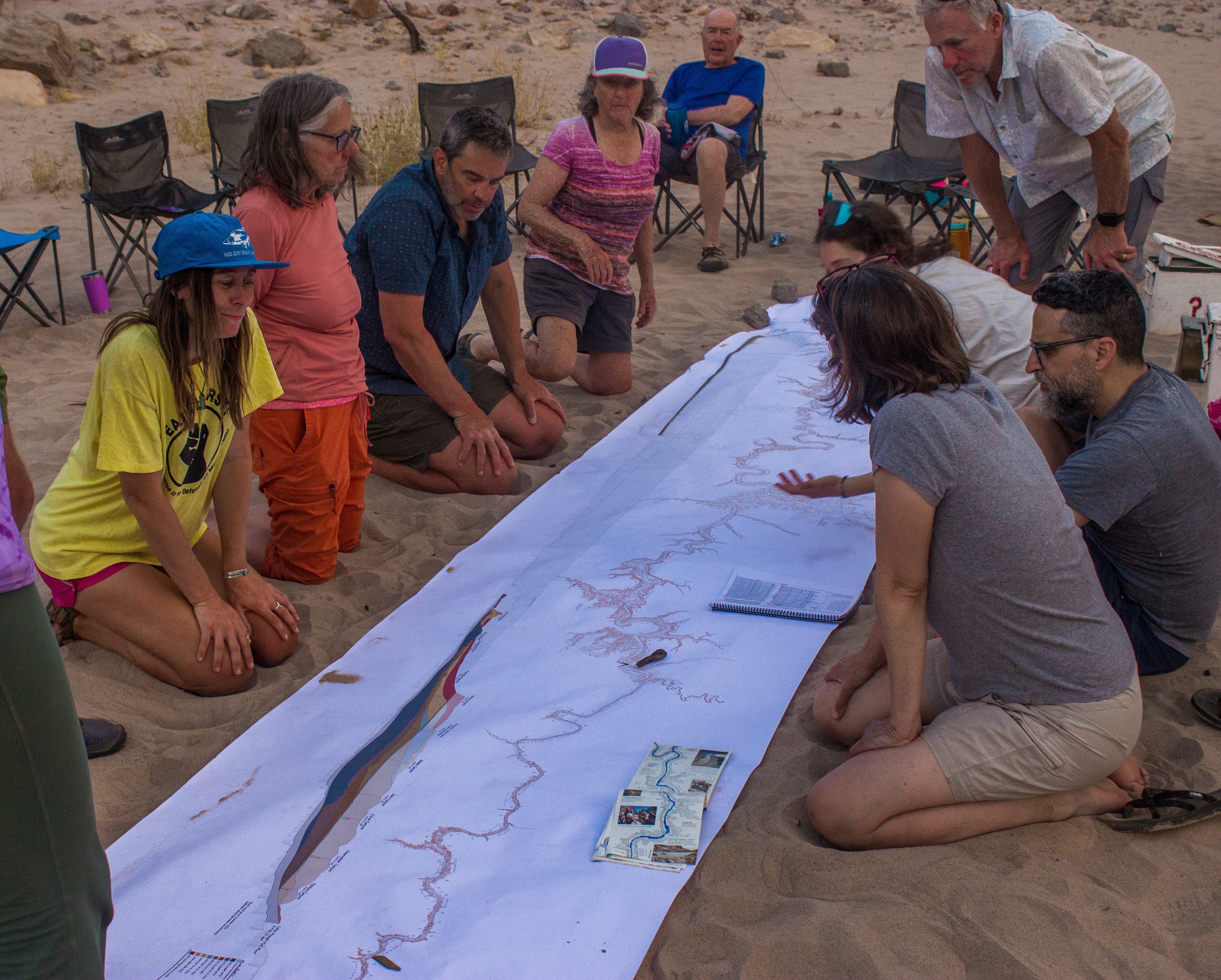
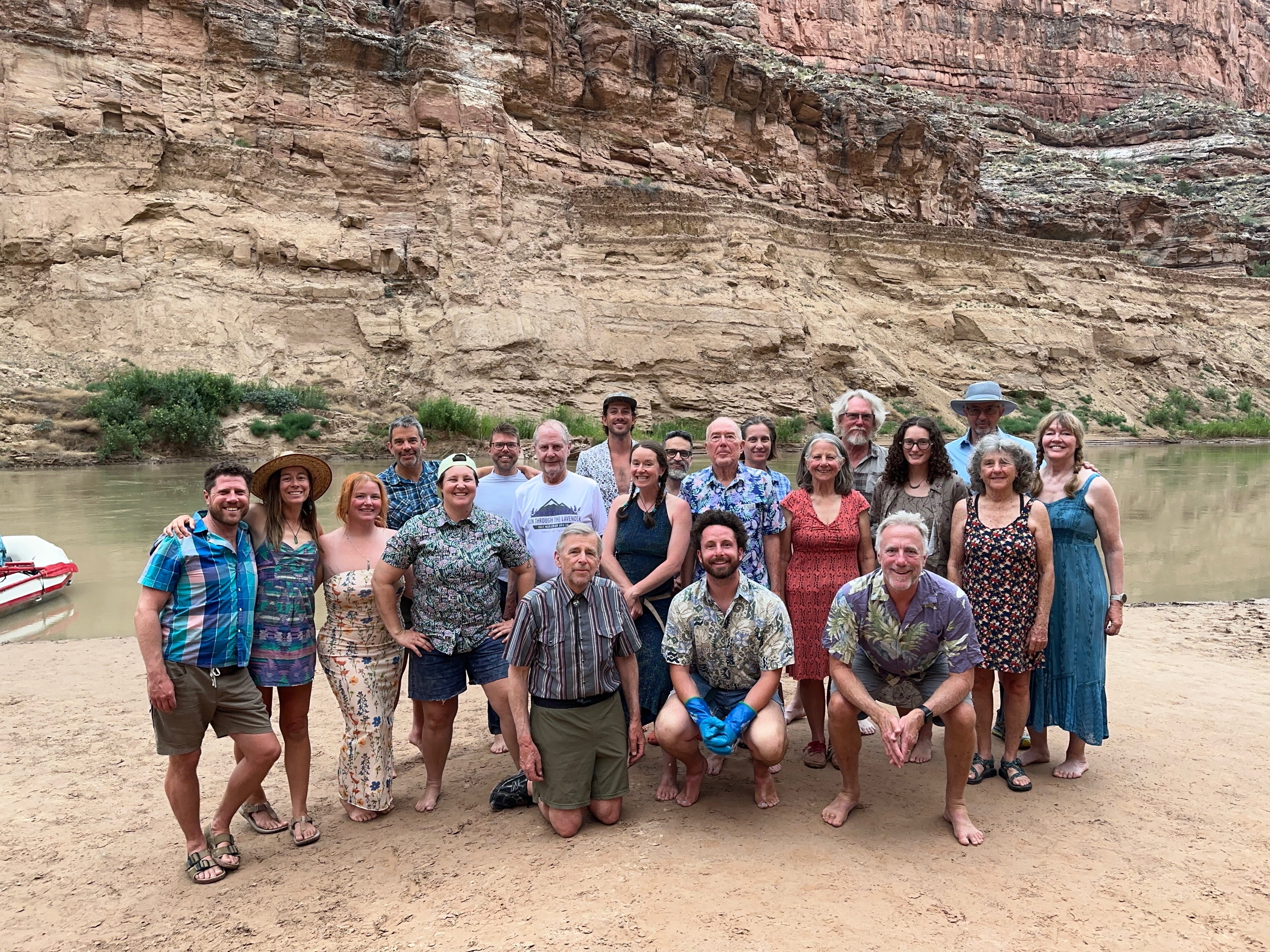
“Colorado River Negotiators” in Cataract Canyon. No clue how the gal in the Earth First! shirt slipped in there? Photo credit: Wild Words
Click the link to read the article on the Wild Words website (Morgan Sjogren):
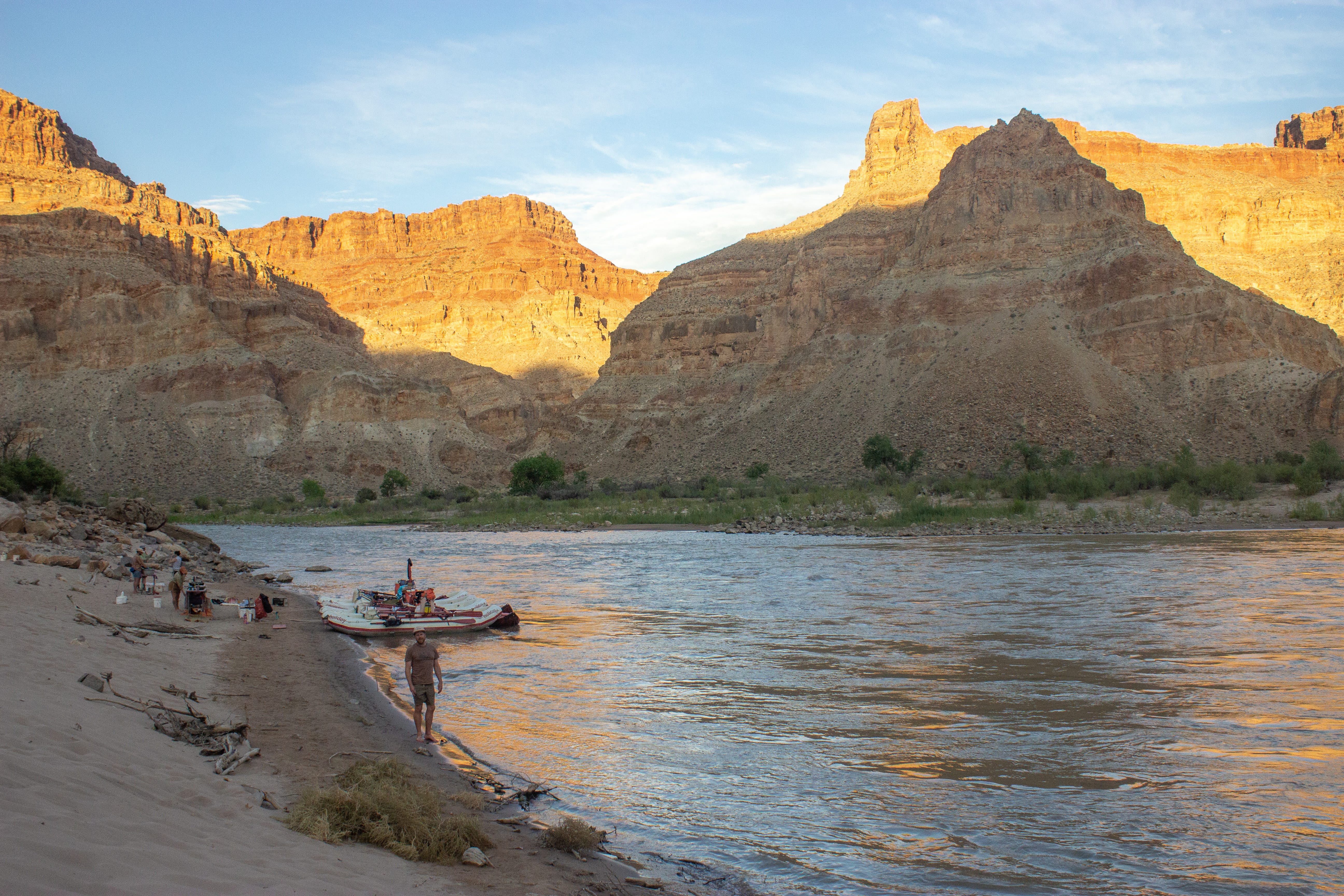
On Monday, June 15, a new cadre of representatives from seven Colorado River Basin states convened below Cataract Canyon for water negotiations. The open-air meeting was held in an eddy flanked by a thick layer of the Dominy Formation.1 Silt tumbled into the banks in low runoff conditions as the Upper Basin (Colorado, Utah, Wyoming, New Mexico) and Lower Basin (California, Arizona, Nevada) prepared statements about how to reduce over-consumption of the shrinking Colorado River.
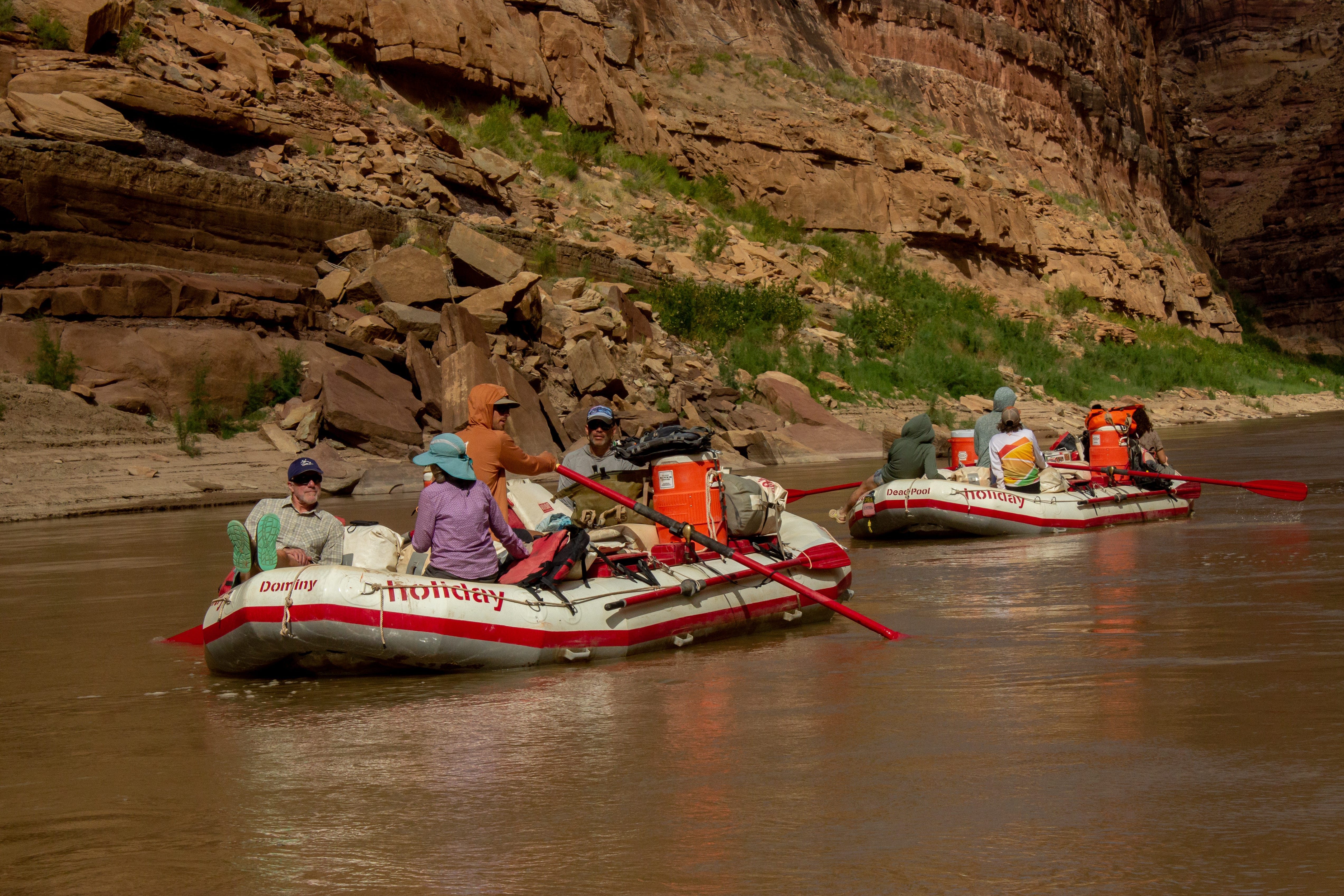
The impromptu Colorado River standoff theater was not real. It was a beach game intended to explain water overallocation. That it still resulted in imaginary litigation speaks loudly to this moment in history. The ability to take this lunchtime activity a little too literally was also because the participants were members of Glen Canyon Institute and guides for Holiday River Expeditions. These shenanigans took place in the final hours of a five-day river trip in Cataract Canyon to support GCI’s ongoing efforts for the restoration of Glen Canyon.
The group was certainly highly astute to Colorado River current events to throw down such an intricate dialogue on the spot. Instead of making a list of the very real solutions to distribute Colorado River water to forty million people, the group recognized what is literally standing in the way: seven state representatives who are just as responsible for the looming potential for a Colorado River crash as Glen Canyon Dam.
The basin-wide impasse is by far the most frustrating aspect of explaining the current problems and future management of the Colorado River. The potential solutions are abundant, even obvious. Everyone in the basin needs to use less water.
Other critical changes, like giving all thirty Colorado River-connected tribes a seat at the negotiating table and updating the 1922 Colorado River Compact to actually meet river flows where they are at in 2026 (an average of 12.5 million acre-feet down from 15 million acre-feet a century ago), are long overdue. Not to mention, ensuring the Colorado River’s right to flow, in line with the Colorado River Indian Tribe’s legal personhood status for the river under their Tribal law.
Beyond the dam, is the Colorado River’s most glaring problem, both concealed and amplified by the water crisis-–is this what democracy is supposed to look like? And what can a citizen of the Colorado River watershed actually do about it?
Despite this broken system, advocacy, especially in the long-term, can move the needle. Until recently, opposition to Glen Canyon Dam was viewed by some as a fringe environmental cult.
Yet Glen Canyon Institute has maintained a constant presence on the front lines of this issue. Since 1996, GCI “embarked upon a multi-year campaign to protect and restore Glen Canyon and reverse the decline of Grand Canyon’s fragile ecosystem.” The Fill Mead First plan takes a hard look at the long-term realities of keeping two major reservoirs, Powell and Mead, more than half empty. Then, in 2024, the Bureau of Reclamation made an announcement that opened minds (and some hearts) to consider that Glen Canyon Dam is a major part of the current problem.
Through persistent love and devotion of these advocacy efforts, awareness for the recovery of Glen Canyon continues to gain momentum. So does dealing with Glen Canyon Dam’s outdated infrastructure which is becoming more mainstream and realistic everyday. In a recent letter, the Lower Basin states urged the Bureau of Reclamation to make dam modifications.2
While it is electrifying to be on the pulse of a major change that stands to benefit Glen Canyon and the lower Colorado River, the current negotiation process is still a dystopian nightmare circus.3
Holiday named a new raft Dominy to spur conversation among guests. Some of us felt superstitiously avoidant of this boat during the rapids. Photo credit: Wild Words
Did I mention mud? Our put-in situation at Mineral Bottom on the Green River was enhanced by recent emergency releases and fish management pulse flows from Flaming Gorge Dam. Holiday’s guides insist this put-in is more challenging than the old North Wash Boat Ramp, which is now repaired and fodder for a different story. Photo credit: Wild Words
For some folks, like myself, this shit show is so fascinating that we are keen to immerse ourselves in the muck. However, even if you care deeply for the Colorado River, this can be overwhelming, especially amid the persistant horrors of this era. Naturally, our instinct may be to turn away. This came up during a riverside policy talk on the trip led by GCI’s projects and development manager Anna Penner and me. With so much going on and the constant information overload online, it is important to trust your gut instinct and give yourself space away from the news. Just don’t pull your heart from the Colorado River itself. [ed. emphasis mine]
The Colorado River carries hope. The side effects of drought, overallocation, and indecision is the steady return of a free flowing Colorado River and Glen Canyon emerging from a shrinking reservoir. I’ve written before that many of us were too late to experience Glen Canyon before the dam, but we are now right on time to witness its resurrection. Cataract Canyon is an ideal place to experience the changes in motion. From muddy sediment-rich river flows and returning rapids to strongholds of native plants like box elders and seep willows propagating in tributary canyons.
Photo credit: Wild Words
For one guest, Tom, these watershed moments for Glen Canyon are major bookends in his life. As a young lad, his family crossed the old Hite Ferry at Dandy Crossing in their station wagon during a road trip. They then drove up the rock-rutted and sandy North Wash, sans road, before it became Highway 95. He also boated on Lake Powell in 1965, before it filled completely, and vividly recalls seeing the fully exposed Hole-in-the-Rock site. Now age seventy seven, Tom and his lifelong friend Paul make time every year to return to the Colorado River with GCI. He has been a member for twenty-one years
Photo of Dandy Crossing: Photo credit: Cindy Stafford
North Wash travel. Credit: Cindy Stafford
This was Aaron’s first Cataract River trip, and a deserved reward for living with my Colorado River obsession. His perpetual and ever-widening smile affirmed how important quality time with the river is, now and always. Post-trip, he told me his favorite part of the trip was “watching the swirling eddy lines at sunset, while sitting on the beach with the group.”
Right now, we are all in an eddy. The decisions made, or not, in 2026 will ripple beyond our lifetime. But so will our unrelenting love for the river and the water that sustains life in the West. Impossible dreams, like the EarthFirst! symbolic crack in the dam, may come to life in yet unimagined ways, so long as we do not give up.
Glen Canyon Institute 2026 river trip group photo. Photo credit: Wild Words
Charles L. Bernheimer. Credit: “Path of Light” — Morgan Sjogren
To this, I pause and take another swig of whiskey and muddy water. This spring, I had more than one interview with so-called major environmental groups that sounded more like public relations agents for Glen Canyon Dam and Lake Powell.
Lee continued:
Exhausting? Perhaps. But better tired than apathetic. With tin cups filled with muddy water, this moment asks us to stand with all who have defended the Colorado River in the past and will continue on into the future. Protecting what we love is a journey without end.
To support efforts to restore Glen Canyon and ensure continued water deliveries below Glen Canyon Dam, consider becoming a supporter of Glen Canyon Institute.
Wild Words is a reader-supported publication. To receive new posts and support my work, consider becoming a free or paid subscriber.
1 The reservoir sediment left behind as Lake Powell drops is not so affectionately named in reference to Floyd Dominy, the former Bureau of Reclamation Director responsible for the creation of Glen Canyon Dam. Some of us have thoughts about this. I am saving these for my next book, Riverside, to be published by Torrey House Press in 2027.)
by Marcus Reichley, Cronkite News June 10, 2026 Cronkite News offers an audio version of this story using an automated voice created by AI. Errors in pronunciation, pacing and intonation may occur. If you notice an error please contact cronkitenews@asu.edu.
WASHINGTON – The chair of the Senate Energy and Natural Resources Committee warned Arizona and two other states that rely on the Colorado River on Wednesday that they will lose access to hundreds of millions in conservation aid if they pursue litigation over water rights.
Roughly $354 million is still available under a 2022 climate law. But the funds expire at the end of September.
“States that choose to sue their fellow basin states over Colorado River operations should not expect Congress to reward that decision with additional federal funding,” Sen. Mike Lee, a Republican from Utah – one of the four Upper Basin states, said at the outset of a hearing on the stalemate among the seven states that share the river. “Federal taxpayers should not be asked to subsidize litigation among the states.”
Glen Canyon Dam holds back Lake Powell on Nov. 2, 2022. States upstream and downstream of the dam have different ideas about how to manage the amount of water released from the reservoir, which has become a key sticking point in ongoing negotiations about the Colorado River’s future. (Photo by Alex Hager/KUNC)
Arizona, California and Nevada have been at odds with Colorado, Utah, New Mexico and Wyoming over how to divide the dwindling water supply when the most recent 19-year deal expires at the end of 2026.
The funds Lee threatened to block are a key element of the Lower Basin’s most recent proposal from May 1, which relies on the funding to incentivize voluntary water conservation as an alternative to mandatory cuts.
The $354 million comes from the Inflation Reduction Act signed in 2022 by President Joe Biden, which set aside $4 billion for drought mitigation and compensation for voluntary conservation. Funds that remain unused when the current fiscal year ends Sept. 30 will revert to the Treasury.
He chastised officials in the Lower Basin states for, among other things, taking out newspaper ads attacking Upper Basin states.
Negotiators appeared to be “preparing actively for litigation,” he said – and in fact, key officials in both camps have told Cronkite News in recent days they are preparing for that possibility.
Congress “will not be a bystander in this process,” Lee said, noting that under the Constitution, Congress holds approval authority over any long-term interstate compact.
He also expressed sympathy with the Upper Basin’s stance, warning that any proposal asking those states to absorb greater operational burdens without regard to the river’s existing legal framework “will face a difficult path forward” in Congress.
The chairman framed the moment as a failure of collective will, cataloguing a string of missed deadlines. “The basin can no longer afford to wait,” he said.
After Lee delivered his rebuke, Arizona Sen. Ruben Gallego, a Democrat, pressed the Trump administration from the opposite direction.
Gallego asked Andrea Travnicek, assistant secretary for water and science at the Department of the Interior, how the department plans to weigh Arizona’s economic stakes as it finalizes its decision.
“The Colorado River is a lifeline for Arizona,” Gallego said, noting the state is home to the most advanced semiconductor manufacturing hub in the Western Hemisphere and that the success of its industries are essential to the nation.
“The technological industries, the domestic food supply, and energy security are all top priorities for the United States, including the president’s agenda,” he said.
Travnicek said the department cannot accept either the May 1 proposal from the Lower Basin nor the latest Upper Basin proposal as they currently stand.
“We have some concerns and areas where we think that there should be adjustments,” she said.
She confirmed that the Interior Department is coordinating with the Energy Department and U.S. Department of Agriculture, among other agencies. She said an interagency water subcabinet meeting will be held Thursday.
The hearing laid bare the tension that has made a seven-state deal so elusive, with senators from both basins on hand.
Travnicek fielded pressure from both directions without committing to either.
The stakes are straightforward and very high.
Decades of drought have pushed water levels to dangerously low levels even as demand and population grow. The river now provides barely half the amount of water each basin has been legally entitled to draw.
“Delay carries its own consequences,” Lee said, “and the basin can no longer afford to wait.”
THE NEWS:Sen. Mike Lee, the ultra-MAGA Utah Republican, failed once again to diminish public lands protections when his bid to use the Congressional Review Act to revoke Grand Staircase-Escalante National Monument’s management plan expired before getting a vote.
THE CONTEXT: This spring, Lee and Rep. Celeste Maloy, also a Utah Republican, introduced a joint resolution of disapproval in both houses of Congress aimed at repealing the 2024 management plan. That started the clock ticking on a 60-day time-limit for a simple majority vote to overturn the plan. The deadline passed on June 11 without any action, meaning that any effort to toss the plan now would be subject to the Senate filibuster, so would need 60 votes to pass — a highly unlikely prospect.
Had the resolution passed, the national monument’s management would have reverted back to the weak and inadequate 2020 Trump I-era plan, which allowed more grazing, more damaging “vegetation management,” and more off-road vehicle use. Plus the 2020 plan only covered the 1 million acres left in the national monument after Trump removed about 900,000 acres from its boundaries, meaning almost half of the national monument would in a sort of management limbo.
This would have sown chaos and confusion, yet it wouldn’t have diminished the national monument or the protections that were baked into the establishing proclamation. The monument boundaries would have remained intact, along with the prohibition on new oil and gas drilling, mining claims, and other energy development.
Nevertheless, it clearly was intended as an attack on the national monument and the attendant protections, which have been a sore spot for Utah sagebrush rebel-leaning politicians since Bill Clinton established it under the Antiquities Act 30 years ago this September. What Maloy or Lee hoped to actually achieve with the attack is a little less clear, even if it had hit its target.
Maloy likely was trying to brush up on her anti-federal-land-management credentials before what could be a bruising primary. Her challenger is notorious sagebrush rebel Phil Lyman, who led an illegal OHV-ride down the archaeologically rich Recapture Canyon in 2014 to protest what he called “federal overreach.”
So far, Maloy is winning the fundraising race by a healthy margin. Utah Political Watchreports that the Defend our Values Super PAC run by former Rep. Chris Stewart, R-Utah, just donated $900,000 to Maloy’s campaign. The American Conservation Coalition PAC, which says it “helps elect leaders who champion American energy dominance, environmental conservation, and cutting-edge innovation,” has spent over $150,000 in support of Maloy, as well. Maloy isn’t exactly living up to the conservation part of that, but I’m not sure the PAC folks care too much about it, either.
And then there’s Lee. Sometimes it feels as if he’s taking up the tasks Project 2025 guided the Trump administration to execute, but that the administration has backed off from because of how deeply unpopular they have turned out to be. It’s almost as if the administration is tasking Lee with feeding some red meat to the MAGA base, but also is setting him up to fail.
Rock climber in Unaweep Canyon, Colorado (not a wilderness area). Jonathan P. Thompson photo.
THE NEWS: The U.S. Interior Department is launching a “review” of rock climbing management and wilderness study area policies. On June 15 it opened the 60-day public comment period on its proposals to establish “a consistent approach to recreational rock climbing management across designated wilderness areas,” and to evaluate whether “existing wilderness study areas and lands with wilderness characteristic policies should be updated, clarified, or revised.”
THE CONTEXT: Any time the Trump administration decides to “review” something, it pays to be wary, since more often than not the review leads to the evisceration of some sort of environmental protection. They tend to couch it in euphemisms, however, such as this bit from an Interior press release: “… Interior is focused on expanding outdoor recreation opportunities, removing unnecessary barriers to access, and use, and managing public lands in a way that benefits the American people.”
Wilderness areas are designated by Congress and are governed by a set of specific rules that can’t be altered by the administration. However, the question of whether installing fixed climbing bolts and anchors is permitted or not is vague and has shifted over the years (what is clear is that power drills cannot be used to install them). The administration is looking to clear this up, and to allow fixed anchors in wilderness areas as long as they follow certain guidelines.
Wilderness study areas share many of the same qualities and protections as wilderness areas, but have not been designated as such by Congress. In 1976, Congress tasked the BLM with identifying potential wilderness areas within its domain and make recommendations regarding them. Those that were identified and fit certain criteria but not designated became wilderness study areas, or WSAs. There are currently 491 wilderness study areas covering over 11 million acres. Look at a map of areas that have large swaths of BLM land — particularly in Utah — and you’ll almost certainly find a few.
The Federal Land Policy Management Act directed the BLM to manage the WSAs “in a manner so as not to impair the suitability of such areas for preservation as wilderness”and prevent “unnecessary or undue degradation.” In other words, you couldn’t build a permanent road through a WSA because that would preclude it from being designated as a wilderness area later.
This leaves room for agency interpretation. The current BLM policy, carried out in accordance with a 2012 manual, is to “continue resource uses on land designated as WSAs in a manner that maintains the area’s suitability for preservation as wilderness.” Under that policy, the agency almost certainly would not permit a road through a WSA, because that would preclude it from being designated as a wilderness area later. And, according to the memo, it most likely would not allow motorized or mountain bike use in a WSA.
The current administration is unlikely to get away with allowing permanent roads in WSAs. However, given its language about removing barriers to access, one can expect it to apply a broader and more permissive interpretation of the non-impairment standard to its policies. This might mean allowing motorized vehicle or mountain bike use within WSAs on existing trails, for example, or even some logging or small-scale mining, so long as the agency officials could convince themselves that it would be cleaned up later.
Finally, the BLM also has a policy for managing lands with wilderness characteristics that are not WSAs or designated wilderness areas. The administration is reviewing this policy, as well.
Interior announced all of these policies in one press release, but you need to comment on them individually. Here’s how:
For the fixed anchors and other climbing management changes in wilderness areas, go to the Federal Register page and follow the instructions, or go directly to the regulations.gov page and click on “Comment.”
For changes to wilderness study area management, go to the Federal Register page, and read the instructions, or go directly to the regulations.gov page and click on “Comment.”
For changes to lands with wilderness characteristics management, go to the Federal Register page, and follow the instructions, or go directly to the regulations.gov page and click on “Comment.”
Colorado River “Beginnings”. Photo: Brent Gardner-Smith/Aspen Journalism
🐟 Colorado River Chronicles 💧
Guest Commentary: A Fair Allocation for the Colorado River
by Levi Tenen
This summer is the last chance for seven Western states to allocate the Colorado River voluntarily before the federal government steps in1. Gridlock persists: Lower Basin states (California, Arizona, and Nevada) have offered to reduce their water usage the most, but they believe that Upper Basin States (Colorado, New Mexico, Wyoming, and Utah) ought to reduce their usage as well if the region dries up too much.2 The Upper Basin states reject this proposal, refusing to reduce the amount of water that was allotted to them under previous agreements.3 The federal government has proposed solutions of its own, all of which seem to favor the Upper Basin states.4
The debate raises fundamental questions: how should resources be allocated in times of scarcity, and do past agreements matter today? From my research in ethics, I think there is an answer, and one that has not been noticed by others. Justice demands that Upper Basin states give up some of their allotted, promised water, but Lower Basin states must greatly limit their water usage and—the new idea—Lower Basin states ought to pay for the extra water they receive.5
To see why, consider a thought experiment from philosopher Jeremy Waldron6: Imagine you and I own ranches in an arid region. We drill wells on our respective properties and enjoy plentiful water. Good times come to an end, however, when a drought sets in and my well runs dry. Unable to relocate, I am stuck in a dire circumstance. Due to the geography of the area, however, you continue to have a surplus of water. What, if anything, do you owe me? Without anyone else around to help me, are you obligated to share your water? The answer is yes, to an extent. It would be wrong, for instance, if you prevented me access to your well just to let the water go unused, leaving me to die. It would also be wrong if you kept me from your well so that you could build a nice new pool, or even so that you could increase your wealth by adding many more head of cattle, all while I perish nearby. Put simply, in times of scarcity and desperation, justice limits a person’s property rights. Justice will never require you to endanger yourself, but more modest sacrifices can become obligatory.
What most people miss, however, is that obligations often fall onto the recipients of aid. Return to the above case. First, even though water is scarce, other resources may not be. So, while you are obliged to give me water, if I have money, labor, or something else to give in return, I ought to do so. It would be unfair, after all, for me to hold onto large amounts of disposable wealth and take your water, leaving you altogether worse off and me only better off.
Secondly, even though I receive water from you, I cannot use it however I want. For, I do not have the right to an endless amount of your water. The water you owe me is only for the basic conditions of life, not for wasting away or for self-serving, economic growth. So, I mustn’t add more cattle to my ranch or build a pretty fountain in my courtyard. Indeed, if scarcity persists, I need to reduce my water consumption greatly, scaling back my ranch operations. To do otherwise would be to limit your future opportunity unjustly.
Carried over to the Colorado River, this much then seems clear: Upper Basin states ought to give some of their unused water to Lower Basin states, even though they all previously agreed to allocate that water to the Upper Basin. The scarce and desperate times limit the past agreements, particularly because the scarcity was unforeseen. And make no mistake: the Lower Basin states are facing dire times. Tens of millions of people in those states depend on the river for drinking water.7 Moreover, 70% of the water goes to food production, with the majority going towards crops in Lower Basin states.8 Running out of water is an existential threat to the cities and peoples in the Lower Basin, and it is a threat to food security the nation over.9
However, the Lower Basin states ought to purchase the water from Upper Basin states and they need to minimize their burden on those states, even if that means ceasing new housing developments and industrial projects. Perhaps if the Lower Basin states add these conditions to their offer, negotiations will move forward and the Upper Basin will accept their share of the burden: sending some of their allotted water downstream.
Levi Tenen is an Assistant Professor of Philosophy at Virginia Wesleyan University. He grew up in Arizona and conducts research at the intersection of Ethics, Political Philosophy, and Environmental Law.
Click the link to read the article on the Getches-Wilkinson Center website (Jack Schmidt,1 Anne Castle,2 Eric Kuhn, 3 Kathryn Sorensen,4 Katherine Tara5
June 18, 2026
In the next few weeks, we will share a few graphs and charts that we find informative in understanding today’s water supply crisis on the Colorado River. This short paper concerns the present status of reservoir storage.
IN BRIEF
In 2026 and for only the third time in the 21st century, there was no accumulation, and no recovery, of total Basin live storage6 during the snowmelt season. Nor was there any accumulation or recovery of total live storage in Lake Powell and Lake Mead during the 2026 snowmelt season. Total Basin live storage (hereafter, total Basin storage) is all the water available in the Colorado River Basin’s reservoir “savings account” and stored in reservoirs within the watershed.7 On June 1, total Basin storage was 22.94 million acre feet (maf), only 1.62 maf above the previous minimum of March 20238 and less than 2 years supply at the current rate at which water is consumptively used or lost in the Basin. Total Basin storage will almost certainly drop to less than the previous record minimum by March 2027.
THE PRESENT CONDITION
On June 1, 2026, total Basin storage in 46 reservoirs in the Colorado River Basin was 22.94 maf, 9 39% of the content of those same reservoirs in late August 1999, the last time those reservoirs were relatively full.10 On June 1, Lake Mead held 33% of the Basin’s active storage, 32% was in 42 reservoirs upstream from Lake Powell, 25% in Lake Powell, and 10% in Lake Mohave and Lake Havasu. The combined live storage in Lake Mead and Lake Powell was 28% of the total live storage of those two reservoirs in late summer 1999.11
Why Total Basin Storage?
Most policy analysis of reservoir storage in the Colorado River Basin focuses on Lake Powell and Lake Mead or, alternatively, on all federally managed reservoirs in the Basin. These reservoirs are the focus of ongoing negotiations among the Basin states and will be impacted by impending management decisions by the federal government. On June 1, 89% of total Basin storage was held in 12 federally managed reservoirs.12 Slightly more than 60% of live storage upstream from Lake Powell was held in 8 federally managed reservoirs.
Total Basin storage is the total amount of water stored in reservoirs in the Colorado River watershed. In addition to the 12 federally managed reservoirs, Basin storage includes federal project reservoirs managed by other entities and non-federal reservoirs managed by municipal water providers and water conservation and conservancy districts. Some of the non-federal reservoirs act as forebays that facilitate trans-basin diversions to the Colorado Front Range or Utah’s Wasatch Front. Water stored in these non-federally managed reservoirs is not subject to current or proposed federal operating guidelines. In the Upper Basin, however, water stored in the non-federally managed reservoirs is one determinant of total Upper Basin consumptive use.Therefore, the status of storage in all the Basin’s reservoirs is an indicator of the overall condition of the Colorado River reservoir system and its ability to buffer continued declining inflow. Transfer of water from one reservoir to another, such as the on-going transfer from Flaming Gorge Reservoir to Lake Powell, does not affect total Basin storage. Although such management policy is critical to protecting dam infrastructure and maintaining realistically accessible storage in Lake Powell, 13 such policy merely shifts the location of the Basin’s deck chairs. What matters is whether the ship is sinking. [ed, emphasis mine]
Accumulation Period And Depletion Period
In terms of reservoir storage, we have previously distinguished two periods of the year – the period of reservoir rise (i.e., accumulation period) and the period of reservoir decline (i.e., depletion period).14 In terms of total Basin storage, the 2-3 month long accumulation period typically begins in mid-April, although it has begun as early as mid-March (Supplemental Table 1). The accumulation period typically ends in early July but has sometimes ended in early June and as late as early August. In rare cases, as discussed below, there has been no accumulation. The depletion period typically occurs from mid-summer until the following spring and lasts 9-10 months.
BASINWIDE STORAGE SHOWS CONTINUED DOWNWARD TREND DESPITE PERIODIC WET WINTERS
Basin Reservoirs in Spring 2023 Were at an Unprecedented Low.
Figure 1 shows total live storage in 46 reservoirs during the past 3.5 years. The minimum amount of water in those reservoirs was on March 14, 2023, immediately before snowmelt began from the winter 2022/2023 snowpack. At that time, the Basin’s reservoirs only held 21.32 maf. Total Basin storage had not been that low since May 1965 when the newly constructed Colorado River Storage Project reservoirs were beginning to fill.15
Figure 1. Graph showing total storage in 46 reservoirs in the Colorado River Basin since January 1, 2023. The minimum amount during this period occurred in mid-March 2023, when total storage was less than at any time since late May 1965. The amount of increase or decrease in total Basin storage during the accumulation and depletion periods of each year are shown. Updated to June 14, 2026.
Snowmelt in 2023 was unusually large for the 21st century, and reservoir storage significantly recovered. The 8.38 maf increase in reservoir storage during the 2023 accumulation period was the second largest single-year increase of the 21st century and resulted from the second largest unregulated inflow to Lake Powell of the 21st century.16 The Basin’s reservoirs were subsequently drawn down by only 2.15 maf between July 13, 2023, and April 17, 2024, the smallest depletion period since at least 2010. Unregulated inflow to Lake Powell in Water Year (WY) 2024, primarily due to the 2024 snowmelt season, was typical of the 21st century,17 and the Basin’s reservoirs recovered 2.45 maf. Because Basin reservoir recovery exceeded the drawdown during the preceding 2023-2024 depletion period, Basin storage reached its highest recent peak at the beginning of the 2024-2025 depletion period.18
The gains of 2023 and 2024 were subsequently lost between summer 2024 and today, because depletion exceeded accumulation. In spring 2027, total Basin storage is likely to be less than it was in March 2023.
In early July 2024, the multi-year downward turn of reservoir storage began. The Basin’s reservoirs were depleted by 3.60 maf during the 2024-2025 depletion period, more than 1 maf greater than the preceding accumulation. Unregulated inflow to Lake Powell in WY2025 was the fourth driest of the 21st century19, and the Basin’s reservoirs only accumulated 0.55 maf, a small amount. Despite hard-fought, politically contentious, and economically expensive system conservation and assigned water efforts as well as a wet fall in the southern part of the Basin, the Basin’s reservoirs were depleted by 4.00 million af during the 2025-2026 depletion period.20 The most probable unregulated inflow to Lake Powell in WY2026 is forecast to be 3.40 maf, the second lowest inflow of the 21st century.21 There will be no accumulation this year.22
As of June 1, 2026, the Basin’s total storage was only 1.62 maf more than total storage at its record-breaking low in March 2023. It is likely that Basin storage in spring 2027, before the 2027 accumulation season begins, will be lower than at any time since 1965, because depletion during the 2016-2027 period will probably exceed 1.62 maf.23
The depletion of reservoir storage that began in summer 2024 occurred despite a significant effort to reduce Lower Basin water use. Water use in California and Arizona in Calendar Year (CY) 2025 was the lowest and third lowest, respectively, since CY2010, and use in those two states in CY2024 was the fourth lowest since CY2010. Water use in Arizona in CY2026 is forecast to be the lowest since CY2010. Upper Basin use in CY2024 was typical for the period CY2010-CY2024; Upper Basin use data for CY2025 are not yet available.
Despite each spring’s snowmelt inflow, each part of the Basin’s reservoir system that stores water – Lake Mead, Lake Powell, and the reservoirs upstream from Lake Powell – has declined since their recent maximums in summer 2024.
Lake Mead typically peaks between January and March and then declines until August (Fig. 2). This pattern contrasts from that of Lake Powell and of reservoirs further upstream. The winter peaks of Lake Mead in 2024, 2025, and 2026 have been progressively lower each year, and the summer minimums have also been lower each year. In 2026, Lake Mead peaked on February 28 and lost 1.23 maf between March 1 and June 1 and will probably continue to drop during the rest of summer. On June 1, 2026, Lake Mead stored only 0.34 maf more than its recent minimum of January 1, 2023.24
Figure 2. Graph showing live storage in Lake Mead, Lake Powell, in 42 reservoirs upstream from Lake Powell, and in Lake Mohave and Lake Havasu since January 1, 2023. Updated to June 14, 2026.
In the last two years, Lake Powell has dropped more than other reservoirs. Lake Powell lost more than 4 maf of stored water since early July 2024. In 2026, Lake Powell steadily declined from the beginning of the year until May 7 and stabilized following the onset of snowmelt runoff, increased releases from Flaming Gorge Reservoir, and reduction of releases at Glen Canyon Dam.25 On June 1, decline in Lake Powell resumed. The total live storage in Lake Mead and Lake Powell on June 1 was 13.38 maf, significantly less than the capacity of either individual reservoir.
Total storage in 42 reservoirs upstream from Lake Powell also declined during the past 3.5 years. Those reservoirs rise every spring and typically recover until sometime in June or July. Presently, many reservoirs in the headwaters of the upper Colorado River are still rising, 26 as are Fontenelle and Big Sandy in the upper Green River Basin. However, total reservoir storage in the Gunnison and Green River watersheds is already at its lowest of the year. Total reservoir storage in the San Juan River watershed has been declining since mid-April but is not yet at its lowest point for the year.
OVERALL TRENDS IN BASIN STORAGE DEMONSTRATE RATCHET EFFECT IN FULL FORCE
In the context of the entire 21st century, Basin storage significantly dropped during two multi-year dry periods, 2000-2004 and 2020-2022 (Fig. 3).27 In other years, the bounty of snowmelt was temporarily stored but completely consumed in subsequent years. The resulting pattern for the 21st century is jagged, but the overall trend in storage has been relentlessly downward, because Basin average uses and losses have consistently exceeded average inflows. We call this pattern the Ratchet Effect, because a rachet is a mechanical device that only allows movement in one direction, in this case towards ever declining Basin storage and deeper into crisis.28 Despite laudable efforts to maintain balance through system conservation and assigned water programs, the ship continues to sink.
Figure 3. Graph showing live storage in the Basin’s reservoirs since January 1, 1999. We call this pattern the Ratchet Effect of declining Colorado River Basin storage in the 21st century. Updated to June 14, 2026.
SUPPLEMENTAL TABLE
Supplemental Table 1. Beginning and end dates of the reservoir storage accumulation period for the entire watershed and for Lake Powell plus Lake Mead. The volume in storage for each date is indicated. The value at the beginning of the accumulation period is the minimum storage at the end of the preceding 9-10 month depletion period. Numbers in bold brackets are the accumulation, in millions of acre feet. Tan shading indicates years that were among the five driest of the 21st century. Blue shading were years that were among the five wettest of the 21st century.
1 Center for Colorado River Studies, Utah State University, former Chief, Grand Canyon Monitoring and Research Center.
2 Getches-Wilkinson Center, Univ. of Colorado Law School, former US Commissioner, Upper Colorado River Commission, former Assistant Secretary for Water and Science, US Dept. of the Interior.
3 Retired General Manager, Colorado River Water Conservation District.
4 Kyl Center for Water Policy, Arizona State University, former Director, Phoenix Water Services.
5 Staff Attorney, Utton Transboundary Resources Center, University of New Mexico.
6 Live storage is all water stored in reservoirs that can be vacated by gravity, no matter how difficult or slow would be the process of withdrawing that water. Active storage is all water stored above minimum power pool, and inactive storage is water stored between dead pool and minimum power pool. These definitions differ from those used in previous papers that we have written. In past papers, we used the term active storage to refer to what we now refer to as live storage. This change is made to be consistent with terminology of Bureau of Reclamation.
7 We do not consider reservoirs that store Colorado River water but are located beyond the watershed boundary, such as Horsetooth or Twin Lakes Reservoirs in Colorado.
8 As discussed below, the March 2023 minimum was the lowest total Basin storage since May 1965 when the reservoirs of the Colorado River Storage Project were beginning to fill.
10 The total amount of water in the 46 reservoirs on August 24, 1999, was 59.52 maf. The only previous periods when total Basin storage exceeded that amount were for ~4.5 months between June 9 and October 24, 1983, and during parts of summer 1984, 1985, 1986, and 1998 The largest amount of live storage in these reservoirs was 63.61 maf on July 15, 1983.
11 Total live storage in Lake Mead and Lake Powell peaked at 47.70 maf on September 19, 1999, and was 13.38 maf on June 1, 2026.
12 The contents of these 12 reservoirs are reported in Reclamation’s 24-Month Study reports and include Taylor Park, Blue Mesa, Morrow Point, Crystal, Fontenelle, Flaming Gorge, Vallecito, and Navajo that are upstream from Lake Powell, as well as Lake Powell, Lake Mead, Lake Mohave, and Lake Havasu. The contents of the latter two reservoirs, as well as Morrow Point and Crystal, do not change much during the year.
15 The 12 federal reservoirs had 18.93 maf of active storage on March 14, 2023, and were at their lowest since early May 1965.
16 The largest single-year accumulation of Basin storage was in 2011, when storage increased 8.78 million af. Unregulated inflow in WY2011 was 15.97 maf, and natural flow in WY2011 was the largest of the 21st century (WY2011 = 20.16 million af). Unregulated inflow to Lake Powell in WY2023 was 13.42 million af, and natural flow of the Colorado River in WY2023 was 17.41 million af, the third largest of the 21st century.
17 Unregulated inflow was 7.98 million af, 2% less than the average for the 21st century (2000-2026). Natural flow at Lees Ferry in WY2024 (11.88 million af) was 1.5% less than the 21st century average.
18 Total Basin storage was 29.99 million af on July 6, 2024, the largest peak since mid-January 2021.
19 WY2025 unregulated inflow was 4.69 million af. Natural flow at Lees Ferry was 8.50 million af, the fifth driest of the 21st century.
20 J. C. Schmidt et al. 2026. Lake Powell and Lake Mead are moving in opposite direction – what gives? https://qanr.usu.edu/coloradoriver/news/blog-2026-2-9. Here, we are arbitrarily ending the 2025-2026 depletion period on June 1, 2026, when the 2026-2027 depletion period begins.
21 June 24-Month Study.
22 The only other years in the 21st century when there was no accumulation of total Basin storage were 2002 and 2012.
23 The median drawdown of the Basin’s reservoirs since 2010 during each depletion period has been approximately 3.6 maf, and the smallest previous depletion was 2.15 maf. There have only been six years when Basin-wide reservoir depletion was less than 3.0 million af: 2023-2024 (2.15 million af), 2022-2023 (2.19 million af), 2014-2015 (2.61 million af), 2016-2017 (2.75 million af), 2019-2020 (2.82 million af), and 2011-2012 (2.93 million af).
24 Active storage in Lake Mead on January 1, 2023, was 7.32 million af.
25 Lake Powell only gained 0.12 million af between May 7 and May 31.
26 These reservoirs include Granby, Dillon, Ruedi, Green Mountain, Taylor Park, and Ridgway.
27 J. C. Schmidt et al. 2023. The Colorado River water crisis: its origin and the future. WIREs Water 10.1002/wat2.1672.
Anglers flock to Flaming Gorge Reservoir on Memorial Day weekend. Kokanee salmon and trophy-sized lake trout draw tens of thousands of visitors to the reservoir each year, supporting a recreational economy in southwestern Wyoming and northeastern Utah. (Hannah Romero/Green River Star)
Click the link to read the article on the WyoFile website (Dustin Bleizeffer and Hannah Romero):
June 4, 2026
As campers with boats flocked to Buckboard Marina at the start of Memorial Day weekend, Tony Valdez was busy issuing refunds and repairing broken boat ramps. One older Green River man, who walked with two canes, left with his money refunded for the season after discovering he could not safely make it down to the boat slip. Due to dropping water levels at Flaming Gorge Reservoir, the ramp is now buckled, angling up and down like a pitched roof.
“It’s devastating, not just to me, it’s all the marina owners,” said Valdez, who owns Buckboard Marina, south of Green River. “It’s a big loss, and this is a big loss to the community.”
Along the cliffs and shoreline, darker and lighter lines of rock and sand trace the water’s elevations, showing where the water hits when the marina is full, where it hovered this spring and where it dropped after an initial “flush.” Valdez estimates the reservoir has dropped by 7 feet since April.
But that’s not the worst of it. Valdez anticipates that by the end of this summer, the reservoir will be as low as it’s ever been.
Why the drain?
For all its charm as a beloved recreation spot and its utility as a local economic driver, Flaming Gorge Reservoir owes its existence to a legal compact that essentially regards it as an insurance policy in times of drought.
Its primary purpose, according to federal officials and Colorado River Compact scholars, is to serve as a backup water bank to help maintain the Colorado River system. Specifically, Flaming Gorge and a handful of other reservoirs in the upper Colorado River Basin states of Wyoming, Colorado, Utah and New Mexico are key to ensuring a minimum flow of 7.5 million acre-feet of water, on a running 10-year average, at Lees Ferry just downstream of Lake Powell, a massive man-made reservoir straddling the Utah-Arizona border.
Today, after more than 20 years of drought intensified by human-caused climate change, the Colorado River is in crisis, putting at risk massive agricultural irrigation operations that consume about 80% of its water. This past winter saw historically low snowpack in the Upper Colorado River Basin — a primary source for the river’s flow.
This annotated 1963 photo of the Glen Canyon Dam shows the minimum level of Lake Powell, below which would render the dam’s power generation components inoperable. (Bureau of Reclamation)
Combined with record heat in March, Lake Powell is at risk of dropping below Glen Canyon Dam’s “minimum power pool,” the point at which it can no longer produce hydroelectric power, according to water officials. If it falls even lower, the dam, which holds back Lake Powell, could be at risk of structural damage or unable to allow water to flow downstream.
The situation triggered a drought response operations agreement that calls for restricting releases from Lake Powell and an order to draw extra water from Flaming Gorge upstream. In total, water managers will release about 1 million additional acre-feet of water from Flaming Gorge in April 2026 through April 2027.
“These actions are expected to lower [Flaming Gorge’s] elevation by roughly 35 feet over the next year to approximately 59% of capacity,” the bureau said in April.
“The elevations are real critical,” Valdez said. At Buckboard Marina, high water has hovered between 6,030 and 6,040 feet above sea level over the past 50 years, he said. Dropping 35 feet could expose 400 feet of shoreline in some places, including marinas with boat ramps, he said.
Dropping water levels in the Flaming Gorge Reservoir by 35 feet could expose over 400 feet of shoreline in some places, including marinas with boat ramps, according to Buckboard Marina owner Tony Valdez. (Hannah Romero/Green River Star)
If the water elevation continues to retreat, it could reach a point where boats can’t be brought in or out.
“By September, this thing is going to be down to 6,000 feet. That’s it,” Valdez said. “Next year, if it goes below that, there’s no more marina here.”
Setting a course
Water managers set a course in April to “stabilize” Flaming Gorge’s outflow to about 1,100 cubic feet per second, representing the rate needed to achieve the 1 million acre-feet of extra water release, according to the bureau. On top of that, there are two previously planned “flushes” from the Gorge. The first, in early May, temporarily increased the outflow to about 8,600 cubic feet per second to enhance the proliferation of razorback sucker larvae, and a second 72-hour flush beginning June 8 will temporarily increase the outflow to about 4,600 cubic feet per second to discourage the proliferation of smallmouth bass.
So far, Flaming Gorge has dropped from about 3 million acre-feet in April (or 82% capacity) to about 2.83 million acre-feet as of May 25. Meanwhile, water managers warn, “This release plan is subject to change depending on evolving river conditions and weather forecasts.”
Click to enlarge: This chart depicts water storage levels at Flaming Gorge Reservoir. (Bureau of Reclamation)
Those evolving conditions include forecasted versus actual flows from streams feeding the system. For example, those “unregulated” or natural flows are forecasted to be much lower than normal: 70,000 acre-feet of water into Flaming Gorge during May (28% of average), 175,000 acre-feet in June (45% of average) and 84,000 acre-feet (42%), according to the Bureau of Reclamation.
Water officials caution that water flowing from the Flaming Gorge Dam could change, and that those recreating on the Green River below should monitor release schedules at this website. The bureau also noted, “Water will be colder than usual and will run high and swift during periods of elevated releases.”
Water floats recreation economy
Buckboard Marina went through a similar drop in water a few years ago. The Bureau of Reclamation began pulling water from the Flaming Gorge in 2021, and by 2022, the marina’s water level was at an all-time low. While the reservoir recovered somewhat in 2023 thanks to a good year for moisture, Valdez said, the reservoir has continued to decline since then.
Buckboard Marina owner Tony Valdez stands next to a stake that indicates the extent of lowering water levels at Flaming Gorge Reservoir Sept. 26, 2022. (Dustin Bleizeffer/WyoFile)
Kokanee salmon and trophy-sized lake trout draw tens of thousands of visitors to Flaming Gorge each year, supporting a recreational economy in southwestern Wyoming and northeastern Utah. But as the lake is drawn down, water recedes from shallow shorelines and fish are forced into a smaller space, essentially shrinking the fishery toward the dam side of the reservoir.
One of Valdez’s primary concerns is that water levels could drop below the ideal elevation for kokanee to spawn in the reservoir.
“I think people don’t realize the economic value it brings,” he said. “It is a big deal when you lose your kokanees.”
Valdez has already lost money this year just from people being concerned about water levels. He estimated that the marina lost roughly $30,000 in cancellations when discussions about releasing water began as early as February.
Other problems also start to arise as the water drops. The marina will lose access to drinking water at 6,010 feet, below their floating pump that supplies potable water. It’s only 7 feet away from the current level.
“That’s scary to me,” Valdez said.
The marina can truck in water from Rock Springs, but it costs about $1,200 to bring in 8,000 gallons, which lasts about two weeks. For Valdez, it feels “asinine” to lose water at a marina.
“Why would we run out of water on a lake?”
Water levels also impact the location of the fuel dock and fuel lines extending to it. If the reservoir sinks too low, it could cost up to $100,000 to adapt, he said.
Drawing down water levels quickly — as happened in early May — can damage marina structures. After the 2021-22 drawdown, Valdez said he spent about $130,000 in repairs.
Buckboard Marina owner Tony Valdez shows a boat ramp that now angles up steeply before dropping down after the reservoir’s water levels dropped several feet. (Hannah Romero/Green River Star)
This time, he’d hoped to keep up. He and a group of 10 men worked to keep pace with the dropping water levels, repairing and modifying ramps. It wasn’t enough.
“The drop was dramatic enough to break all of our approaches, our bridges, our stuff, so it broke a lot of the welds, broke a lot of the structured steel, because it just vertically dropped too fast for the weight,” he said.
When structures go from water to land that quickly, the weight is too much for them to hold up, Valdez said.
“I’m re-rigging everything, and this is only a temporary fix ’til September, because that’s when the season ends.”
The marina should remain mostly functional until the summer season ends, he said. But with extra water releases set to continue through the winter, the lake could drop another 10 to 12 feet by the spring.
“We’re getting into numbers that I don’t even want to talk about,” Valdez said. “I mean, there’s no marina.”
What’s next?
“The guy with the boots on the ground that watches this every day,” as Valdez describes himself, can see what water managers can’t, and he questions whether official numbers and estimates match reality.
“It’s hard to watch this when it’s out of your hands.”
Valdez is critical of the 1922 compact, doubting the legal rationale of sending Wyoming water to places like Arizona. He also wonders about the role of local industries — refineries, coal-fired power plants and trona mines — that use large amounts of water, and the idea of adding more industrial facilities that require even more water, like data centers.
“We don’t have the water to give away,” Valdez said.
Aerial photo of the Glen Canyon Dam near Page, Arizona. Photo by Alexander Heilner/The Water Desk, with aerial support by LightHawk.
Bryan Seppie, general manager for the Joint Powers Water Board for Sweetwater County, Rock Springs and Green River, agrees. “The poor hydrology this past winter has affected most all water users in some form or another,” he said.
His board monitors the Colorado River system closely. Just upstream from Flaming Gorge, the Bureau of Reclamation reduced releases from Fontenelle Reservoir due to poor inflow projections. Although the water will still be enough for river users, the low summer flows will have a negative impact.
“Low river flows typically result in higher water temperatures, which generally leads to higher levels of moss/algae and overall lower water quality,” Seppie said in an email.
What about recovery?
Valdez wonders: What’s the plan to allow the reservoir to bounce back?
Wyoming State Engineer Brandon Gebhart and his staff have warned for months that although Flaming Gorge can serve as a backup to Lake Powell this year, it drains the Gorge’s ability to play a similar role next year, or the year after. It takes time for Mother Nature to replenish the bank.
“The big thing that nobody is talking about is the recovery,” Valdez said. “Where is the recovery of our water?”
This year’s drain on Flaming Gorge began at a low point. The reservoir hadn’t fully recovered after the last major pull. Rather than starting at a high point of 6,040 feet, the marina was at about 6,024 feet, he said.
“There’s no recovery plan,” he said. “We can’t just let them keep taking. I mean, where’s this end?”
Rings line the shore of Flaming Gorge Reservoir, showing the drop in the water level at the popular recreation spot that spans the Wyoming-Utah border. (Hannah Romero/Green River Star)
If there is no grace period for the reservoir to replenish and officials want to take even more in the near future, starting from such a low elevation point, it will be “devastating,” Valdez said.
“The water going down is not the end of the world, it’s the recovery in a timely manner that really matters,” he said. “I can’t preach recovery enough.”
Watching people come to the marina and seeing how happy they are still motivates Valdez to keep going. Despite the drawdown, there’s nowhere else he’d rather be.
“We’re not going to run away. We’re not going to give up,” he said. “We’re going to fight.”
A rainstorm over southern Colorado. Photo: Abby Burk
Click the link to read the article on the Audubon website (Abby Burk):
May 7, 2026
Drought in Colorado isn’t abstract—it’s shaping decisions right now, from headwater streams to major reservoirs. And this year, the signals are hard to ignore. At the same time, conversations about water are tightening. There’s more concern and more sensitivity—especially around anything tied to water availability.
Snowpack across the Upper Basin has dropped to record or near-record lows. By early April, snow water equivalent in many areas fell to a fraction of normal, and snow cover reached the lowest levels observed in the satellite record. At the same time, this winter ranked among the warmest on record—reducing snow accumulation, accelerating melt, and increasing evaporative losses. These patterns are consistent with the impacts of climate change across the Colorado River Basin, where rising temperatures are diminishing snowpack reliability and reducing overall runoff efficiency.
June 1, 2026 seasonal water supply forecast summary.
Those conditions are now reflected in forecasts. Runoff across the Upper Basin watersheds is expected to be among the lowest on record, with sharply reduced inflows into Lake Powell. Meanwhile, Lake Powell and Lake Meadcontinue to sit near historic lows—leaving very little buffer in the system.
Even where spring storms have brought some relief, the underlying deficitremains. Dry soils, warm temperatures, and reduced snowpack mean less water ultimately reaches rivers.
This is not just a dry year. It’s a system under compounding stress.
Why This Matters: Ecological Drought
Ecological drought helps explain what those conditions mean on the ground.
That definition matters because it expands how we think about drought.
It’s not just about precipitation. It’s about how drought moves through a system:
From snowpack to soil moisture
From soil moisture to vegetation and habitat
From ecosystems to the services people depend on
Modern droughts are also changing. They are becoming hotter, longer, and more widespread, with impacts amplified by both climate conditions and human water use.
And those impacts don’t stay contained.
Ecological drought is fundamentally about connected systems. When ecosystems cross critical thresholds—losing wetland function, shifting vegetation, or degrading habitat—those changes feed back into water supply, with wide-ranging implications to agriculture, wildfire risk, and community stability.
What it Looks Like Right Now
In Colorado, ecological drought is showing up as a shift in timing, duration, and connectivity.
Even with recent moisture:
Peak river flows are shorter and less effective
River baseflows drop earlier
Floodplains connect less often
Wetlands and side channels dry sooner
These aren’t always dramatic changes—but they compound, especially when they occur in back-to-back years, reducing recovery time.
That’s a critical shift. Drought is no longer just episodic. It’s increasingly persistent, with ecosystems spending less time in recovery and more time under stress.
Birds Are Early Indicators
For birds, these shifts are immediate.
Migratory species depend on wetlands that function like stepping stones across the landscape. When those wetlands shrink or disappear earlier, habitat becomes compressed.
Riparian birds like the Northern Yellow Warbler and Song Sparrow rely on dense, water-supported vegetation during breeding season. Earlier drying reduces both cover and food availability.
And beneath all of this, food webs shift. Aquatic insects emerge differently under drier conditions, creating mismatches with nesting cycles.
Birds are often the first to show us what’s changing—but they’re not the only ones affected.
People Are In This System, Too
Ecological drought makes one thing clear: this is a single, connected system responding together. The same processes that shape habitat also shape outcomes for people. Soil moisture influences forage conditions for agriculture. Water timing and availability affect the reliability of community supplies. River flows support recreation and local economies, while connected floodplains help reduce risk and support recovery after disturbance.
This is what we mean by ecosystem services—the benefits people receive from functioning natural systems. When those systems are strained or begin to break down, those benefits decline as well.
What This Means for the Basin
The science is pointing to something bigger than a single dry year.
The Colorado River Basin is increasingly operating in a warmer, drier regime, where snowpack is less reliable and variability is higher. Recent conditions mirror some of the most consequential low-flow years in recent history—and they are becoming more frequent.
At the same time, current operating guidelines are set to expire, and the decisions made now will shape how the system responds to these conditions going forward.
What’s needed is a shift—from reactive, year-to-year crisis management to more durable and flexible operations; from short-term fixes to sustained investment in long-term resilience; and from fragmented efforts to stronger alignment across states, Tribes, and water users.
There is growing recognition that solutions must include conservation, efficiency, infrastructure, and watershed health—including restoration that improves how water is stored and functions across the landscape. Without that kind of alignment, risks will continue to compound—ecologically, economically, and socially.
A Clearer Lens for What’s Ahead
Ecological drought is not a new agenda. It’s a way to understand how drought actually works in today’s world—how water shortages move through ecosystems, how impacts cascade, and how those impacts ultimately reach people.
It connects snowpack to rivers, rivers to habitat, and habitat to communities. And it underscores something essential: when ecosystems are pushed beyond their limits, the consequences don’t stay ecological—they become systemic.
That’s why this matters now. Because the question in front of us isn’t just how we respond to this year’s drought. It’s whether we’re building a system that can function—ecologically and socially—under the conditions we know are coming (or are here).
Glen Canyon Dam forms Lake Powell on the Colorado River near Page, Ariz. Officials from the U.S. Bureau of Reclamation are holding back water and releasing water from an upstream reservoir to prop up levels in Lake Powell. CREDIT: HEATHER SACKETT/ASPEN JOURNALISM
Federal officials announced on Thursday that they plan on using a shorter-term framework for future Colorado River management so they can be more responsive to changing conditions and reservoir levels.
Acting Commissioner of the U.S. Bureau of Reclamation Scott Cameron said at an annual conference on water policy that the agency will be using a 10-year framework, issuing new operational guidelines every two years. In the absence of a seven-state deal for sharing shortages and managing reservoirs, river management now falls to the federal government — an outcome nearly everyone had hoped to avoid.
“We would love to have a 20-year deal or a 30-year deal but, frankly, we haven’t even been able to get the seven states to agree on what a two-year deal would look like,” Cameron said. “Given the highly unusual hydrological situation in the basin … we think it makes sense to take a second look at decision making every couple of years.”
As part of the required process under the National Environmental Policy Act, Cameron said Reclamation will release a final Environmental Impact Statement with its “preferred alternative,” in mid-to-late summer. It will lay out a more detailed 10-year operations plan for the nation’s two largest reservoirs, Lake Powell and Lake Mead, and will include short-term operational guidelines for 2027 and 2028. He said the plan provides a stable, transparent and adaptable framework for river management.
Scott Cameron is the acting commissioner of the U.S. Bureau of Reclamation. He announced Thursday the federal agency is planning to release a river management plan in mid-to-late summer that includes a 10-year framework, with new operational guidelines every two years. CREDIT: U.S. BUREAU OF RECLAMATION
“We want to pay more attention to what’s actually happening in the river and what’s happening in terms of the elevation of the reservoirs,” Cameron said. “We want to manage conservatively during low inflow periods and hopefully be able to transition to recovery as conditions improve across the basin to keep the system stable and resilient.”
Cameron left the door open for a return to future management by the states and added that if they eventually come to an agreement, it could supplant the federal plan.
Cameron’s update came at the Colorado Law Conference on Natural Resources at the University of Colorado Boulder, hosted by the Getches-Wilkinson Center and the Water & Tribes Initiative. Water managers from around the basin gathered at the Wolf Law School in the midst of one of the worst droughts on record that threatens the water supply for about 40 million people in the American Southwest. Record hot temperatures and one of the worst snowpacks since measuring began resulted in streamflows that peaked much lower than normal and, in some reaches, a month early. Reclamation’s most recent projections put spring runoff into Lake Powell at just 800,000 acre-feet, which would be 13% percent of normal and the lowest on record.
On top of the abysmal hydrologic conditions, the basin is also in the midst of a management crisis. The Upper Basin states (Colorado, New Mexico, Utah and Wyoming) and Lower Basin states (California, Arizona and Nevada) after two years of negotiating have failed to reach a consensus on how they will share future cuts and have blown past deadlines to come up with a plan. The current guidelines, which have determined shortages and releases since 2007, expire at the end of the year. But for all intents and purposes, water managers need a new plan in place by the start of the new water year on Oct. 1.
Some of the problem still centers around the 1922 Colorado River Compact, which allocated half of the river’s flows (7.5 million acre-feet a year) to each basin. But this framework no longer applies under 21st century conditions, which has seen flows decline by 20% due to climate change. Despite indications a year ago that the states were moving to a supply-driven model based on each year’s snowpack and available water — rather than a fixed allocation of water — a new management framework the states can agree on has remained out of reach.
Colorado representative Becky Mitchell and Nevada representative John Entsminger speak at a conference on Colorado River policy in Boulder on Friday, June 5, 2026. The federal government is set to release a plan for future river management in mid-to-late summer. CREDIT: HEATHER SACKETT/ASPEN JOURNALISM
Beyond the band-aid
The feds’ operating plan for the first two years may be based on a proposal submitted by the Lower Basin states in early May, in which they propose to cut another 700,000 acre-feet of water per year through 2028, on top of the 1.5 million acre-feet they had already promised. California and Arizona will each take another 300,000 acre-feet of cuts and Nevada will take a cut of 100,000 acre-feet. The proposal does not include any mandatory conservation from the Upper Basin.
Federal officials responded in a May 28 letter with adjustments to make the proposal feasible, including the requirement that the Lower Basin states help pay for the 700,000 acre-feet of conservation. In the past, conservation programs have depended heavily on federal funding.
Becky Mitchell, who represents Colorado in the negotiations among the states, said during a Friday panel that the feds’ plan was a starting point but raises some concerns. Constantly renegotiating an operating plan every two years would be hard to fathom, she said.
“How do we fund and finance if we’re constantly renegotiating?” Mitchell said. “And how do we create the certainty that the 40 million people deserve?”
The feds have already stepped in this spring to prevent the worst consequences of the exceptionally dry winter and keep water levels at Lake Powell from falling below the threshold for making hydropower at Glen Canyon Dam. They are releasing up to 1 million acre-feet from Flaming Gorge Reservoir to prop up Powell and holding back Powell releases by about 1.5 million acre-feet. Cameron conceded, however, that these are temporary, stop-gap measures meant to address a critical situation.
“I think we succeeded in making everybody unhappy and everybody mad, which maybe means we’re doing the right thing in terms of Lake Powell,” Cameron said.
The Upper Basin states, including Colorado, are exploring ways to contribute water to a pool in Lake Powell as a means of maintaining higher water levels and an insurance policy against drastic cuts. But officials have not budged from their position that the Upper Basin is limited in what it can do and that cutting Lower Basin overuse is the primary solution to the Colorado River crisis.
Brad Udall, a water and climate scientist at Colorado State University whose presentation kicked off the conference, asked water managers not to waste this unique opportunity to redo 100 years of law and policy around how to manage a critical resource. And he directed a plea at the Upper Basin, saying that they, too, are part of the problem.
“We need everybody with a shoulder to this wheel,” Udall said. “We understand that the Upper Basin is different. We understand that they don’t have (large upstream) reservoirs and that every year people suffer. But we need you to help. Please help us.”
Udall/Overpeck 4-panel Figure Colorado River temperature/precipitation/natural flows with trend. Lake Mead and Lake Powell storage. Updated through Water Year 2025. Note the tiny points on the annual data so that you can flyspeck the individual years. Credit: Brad Udall
Map of the Colorado River drainage basin, created using USGS data. By Shannon1 Creative Commons Attribution-Share Alike 4.0
Click the link to read the article on the InkStain website (John Fleck):
June 1, 2026
I’ve been on a “Colorado River sabbatical” of late, but I took a peek last week at Reclamation’s latest 24-month study. Holy moly things have gotten bad since the last time I looked!
Those not on sabbatical already know all of this, but to keep Lake Powell above a surface elevation of 3,500 feet, Reclamation is:
increasing releases out of Flaming Gorge on the Wyoming-Utah border
dropping releases out of Lake Powell to 6 million acre feet this year
Even with those two “hail Mary” moves, Lake Mead is projected in the “most probable” scenario to drop to elevation 1,020 by summer 2027. Under the “minimum probable” forecast, Mead drops all the way to elevation 1,008 in 2027.
We are on the brink, as a group of my colleagues explains in a new analysis out this morning (Monday June 1, 2026), of a system crash:
Even a wet year, my friends conclude, would only provide a short reprieve from the need to significantly reduce consumptive use.
Building on a similar analysis done last September (I was a co-author on that one), the authors attempt to overcome one of the shortcomings of the traditional Colorado River accounting systems, which is to treat any water above “dead pool” as usable storage. This is not the case, with clear do-not-cross lines in the reservoirs that are maintained for technical reasons well above the bottom, defined by my colleagues as…
One of the reasons for my “sabbatical” is, frankly, an agonized frustration with the abject failure of Colorado River governance at the basin scale, and a desire to turn my attention to the local level, which is where the problem solving responsibility seems to rest right now. Each community needs to be having a serious conversation right now about the specifics of its Colorado River water supply, and how it intends to go about using less. Blaming other people for using too much isn’t particularly useful at this point, we seem to have chosen to hand that set of questions (the rule-based part of “who is entitled to how much”) over to the courts, and who knows what that process holds. We know the answer for everyone is “use less water”, and each community needs to be getting on with that conversation.
A large crowd listens to a presentation at the University of Colorado Boulder law school about securing powerful new water rights on Colorado’s West Slope to benefit the health of the Colorado River. Scott Franz/KUNC
June 5, 2026
This story is part of ongoing coverage of the Colorado River, produced by KUNC in Colorado and supported by the Walton Family Foundation. KUNC is solely responsible for its editorial coverage.
Water negotiators, river enthusiasts, Native tribes and lots of lawyers convened at the University of Colorado Law School on Thursday to take stock of the future of the dwindling Colorado River.
Here are five things KUNC’s water and environment reporter learned on the first day of the gathering.
There’s a thirst for treating the river as more than something to be consumed, and monetized and stretched out
Dale Sinquah, a tribal council member for Arizona’s Hopi tribe, is among a growing number of people who view the Colorado as a living being that should have the same rights as a person.
“If you look at it at that level and you allow it to, then it starts changing the ways in which you think about it, and maybe your actions,” he said.
Late last year, the Colorado River Indian Tribes of Arizona and California voted to give their namesake waterway the same legal rights as a person, saying the ‘living being’ deserves more protection while it’s being threatened by overuse and drought.
Sinquah said he had mixed reviews of the discussions at the water conference halfway through the first day.
“I’m kind of wondering if we’re stuck in that mode where you know personal interest (is winning) instead of how do we fix this as a whole, as a group,” he said. “It works better when you work together as a group.”
There’s still no finalized federal plan for the river yet, and the White House could have the final say…
Scott Cameron, the acting commissioner of the Bureau of Reclamation overseeing the operations of Lake Powell and Lake Mead, said the Interior Department is expecting to publish a short term operating plan for the reservoirs by “mid-summer.”
He said the plan would have to be renegotiated every two years and could be replaced at any time with one that the seven states can agree on.
“The good news is that the White House is very interested in what’s going on with the Colorado, so we’ll probably have to brief the White House on the (Secretary of the Interior’s) decision before it’s final,” Cameron said.
U.S. Interior Secretary Doug Burgum, center, speaks during a gathering with governors from six states in the Colorado River basin on Friday, Jan. 30, 2026. Photo credit: Lowell Whitman/Department Of Interior
River negotiations are ongoing, but details are scarce…
First governors from all seven states in the river basin were summoned to Washington, DC, ahead of the Feb. 14 deal deadline they missed.
Then, after that didn’t work, came the Microsoft Teams meeting.
Scott Cameron, the acting commissioner of the Bureau of Reclamation, said Interior Secretary Doug Burgum recently talked with the seven governors again on the virtual meeting platform.
“The fact that he is trying to wrangle his gubernatorial colleagues twice, I think, indicates how seriously Secretary Burgum takes what’s happening in the Colorado River,” Cameron said.
However, no deal has yet to materialize as the states remain at an impasse, and some in the upper basin have called for a different mediator to intervene.
June 1, 2026 seasonal water supply forecast summary.
One thing is clear.
Forecasts for the river have gotten worse in recent months. And there was an acknowledgement that the status quo is not sustainable.
Graphic via Holly McClelland/High Country News.
Could the feds get more involved in the management of upper basin reservoirs like Flaming Gorge? The answer is murky…
The audience asked Cameron, the Bureau of Reclamation official, about his thinking on how Interior should manage four large reservoirs in the upper basin that are collectively known as the upper initial units (they include Flaming Gorge on the Wyoming-Utah border).
Flaming Gorge is currently being partially drained so water can be sent down to Lake Powell so it doesn’t get so low that it stops producing hydropower.
Cameron said the Interior Secretary could exert more control over the reservoirs in the future in the event of an “emergency.”
“And what an emergency is, I think, is probably in the eyes of the beholder,” he said. “Now, you put four or five lawyers in a room. You’ll probably get nine answers on how much discretion the secretary has or doesn’t have in the upper initial units.”
Parts of the lake that have only recently been uncovered are full of old beer cans and other relics of boating escapades, including sunken boats.
But deeper down, Podmore shared photos of Native artifacts that have survived decades of being submerged.
New ecosystems are also taking shape.
The Colorado River Basin spans seven U.S. states and part of Mexico. Lake Powell, upstream from the Grand Canyon, and Lake Mead, near Las Vegas, are the two principal reservoirs in the Colorado River water-supply system. (Bureau of Reclamation)
Doug Kenney at the Getches-Wilkinson Center 2026 Conference on the Colorado River June 5, 2026. Photo credit: Allen Best
Click the link to read the article on the Big Pivots website (Allen Best):
June 7, 2026
Doug Kenney, principal organizer of annual gathering in Boulder, talks about how the growing tensions among basin states pose challenges in setting the agenda
The Colorado River has always had a magnetic appeal to the public consciousness. John Wesley Powell and his crew were instant national heroes after they emerged from the Grand Canyon in 1869.
That interest continues to this day. Bathtub rings are an absorbing visual, an easy way to communicate declines in the two biggest reservoirs in the basin, Mead and Powell. The river is being hammered by a warming climate and archaic governance of the shared resource.
This provides much to chew on, and that discussion continued again on June 4-5 at the Colorado River Conference hosted by the Getches-Wilkinson Center at the University of Colorado Law School. Organizers reported 373 people were registered to attend in person and another 132 remotely, a record for both. This surpasses a record set last year.
Afterward, Big Pivots sat down with Doug Kenney, the principal organizer of the conference, to take stock of what had just transpired. He directs the Western Water Policy Program and chairs the Colorado River Research Group.
What year did this conference begin? What was the thinking that gave birth to it?
I believe 1983 was the first one. This was mostly a creation of Larry MacDonnell, (the first director of the Natural Resources Law Center, a position he held from 1983 to 1994).
Larry pursued a dual mandate of researching key issues but also of trying to involve the public and other constituencies. A conference was a natural thing to do. We are an educational institution.
I’ve done the last 30 or so of them, but Larry got it started,
It seems like two or three, maybe three years ago, the tribes became a major presence in attendance and on the agenda. How did this come about?
Mostly through our professional networks. We knew people who were associated with the (Colorado River Basin) Water and Tribes Initiative. They wanted to broaden their reach and their influence. At the same time, we’ve here always wanted to involve tribal interests in what we do, going back to the work of David Getches and Charles Wilkinson.
We decided we’d try co-hosting a conference. It’s a partnership, and like all partnerships, it grows over time. But it’s working pretty well, I think.
Am I wrong? Was I missing something? I didn’t notice much of tribal presence in the agenda or participation until just a few years ago.
We’d usually maybe have one tribal speaker sprinkled in the program somewhere, but it was pretty hit and miss, in part I think because you kind of need a critical mass of involvement from the tribal community for other tribes to feel like this is a place that they’d be taken seriously and that they’d be welcomed. It wasn’t a slow linear growth to where we’re at today. There was a pretty dramatic shift four or five years ago.
How new is the Water Tribal Initiative?
They’ve been around I think for about a decade. They’re co-managed by Matt McKinney, who wasn’t here, and Daryl Vigil.
Native America in the Colorado River Basin. Credit: USBR
It’s not a national thing, but the Colorado Basin has 30 different tribes. That’s a pretty big number of tribes to keep track of. It’s a network as much as it is anything, and every so often they try to get together. They consider this conference their big convening. They also get to get together at CRWUA (Colorado River Water Users Association, which holds an annual conference during December in Las Vegas).
They have also produced a few research reports. This week they talked about their report on tribal sovereignty. And they have particular initiatives within the Water and Tribes Initiative, such as universal access to clean water. They are pushing, mostly through federal legislation, to provide assurances that all tribes have access to clean water.
Do they have a strong benefactor?
I don’t think so, but they have a very broad base of funders and supporters. A lot of water agencies, a lot of people, and a lot of organizations that know tribes have been treated poorly and that tribes have legitimate interests in the basin but (know) that many tribes just don’t have the resources to do this without some assistance.
As I’ve attended most years since 2002, I have noticed some ebbs and flows. There were some empty seats this afternoon, but the seats were mostly occupied through the first day and a half, and that’s somewhat different than, say, 10 years ago. What explains the ebb and flow?
I attribute that mostly to two things: one is this partnership with the Water and Tribes Initiative. The other thing is the fact that we’re talking about the Colorado River, which by every measure is in a crisis. It’s easier to get people’s attention when you’re talking about a crisis than when you’re talking about something that’s still not that serious. That’s part of it.
We used to be in another building. This is clearly a better facility for audience and speakers alike. That helps us attract a larger audience. We’ve had good foundation support, good funders. It takes a lot of money to do this, but we’ve had funders that see value in it. That has allowed us to make this a bigger event.
The conference is always the first week of June, so when do you begin rough-drafting the agenda?
Usually January. In some years it’s easier than others. This year was the most difficult. It was the easiest year in terms of attracting an audience. The hardest year in terms of putting the program together.
Everyone’s mad at each other, and everyone is — I can’t tell you all the back stories. Becky Mitchell said something today about how it’s hard to negotiate and prepare for litigation at the same time. She’s right. And I was thinking to myself, it’s hard to bring people together to talk at a conference while acknowledging the fact that they’re all mad at each other, and some of them are about to sue each other, and some can’t be in the same room with each other because they’re that angry, and some will be deeply offended if someone else is there.
It’s one of these years that there’s just so many delicate issues and angry folks — and angry for legitimate reasons; I’m not discounting that. But it’s been a really challenging year.
Your answer anticipates my next question, but I’ll ask it nonetheless. If memory serves me, a few years ago you had representatives of all seven basin states at the same table. This year you had two. I guess it’s fair to say that agenda setting has become more politically sensitive.
Every year for the last four or five years we’ve given all seven principals, all seven states, an opportunity to sit at the same table and have a discussion. In every passing year it becomes more difficult to do that.
Commissioner to the Upper Colorado River Commission Becky Mitchell, center, speaks on a panel with representatives of each of the seven basin states at the annual Colorado River Water Users Association conference in Las Vegas Thursday, December 15, 2022. CREDIT: HEATHER SACKETT/ASPEN JOURNALISM
You have seen this at CRWUA as well. Some years they had to divide into two sessions, upper and lower basin sessions. For awhile we were thinking of just having a lower basin session. The lower basin folks were happy to do that, but the upper basin folks weren’t as comfortable. We (also) thought about a different part of the session or a different location.
Ultimately we came to the conclusion that everyone could agree if it would be a conversation, not a posturing or confrontational thing. (Having) one upper basin person and one lower basin person, that was a format that could work. That’s what we did (with Becky Mitchell from Colorado and John Entsminger of Nevada). Anything more elaborate than that I don’t think was viable this year. It’s a really delicate time.
In terms of conferences devoted to the Colorado River do you have rivals for what you’re doing? Are there other places in Arizona or California, for example, that are kind of like must-go sessions?
There are two must-attend Colorado River conferences each year, and this is one of them. CRWUA (in Las Vegas) is the other one.
We specifically try to be different than CRWUA. We’re the opposite end of the calendar, roughly six months away. CRWUA is in many respects much more of a social event. We try to be more academic and about policy, with serious talk about serious issues. CRWUA, just like us, ebbs and flows from year to year in terms of what it looks like. But we try to be a little more hard-hitting and less of a, you know, take-the-family-and-have-a-vacation sort of event. I don’t mean to sound like I’m negative on CRWUA. I think we’re the perfect compliment.
Aside from that, there are some meetings such as CLE, Continuing Legal Education. It always has a Colorado River event. This year was quite good. Many other years, it’s not as strong. For practicing attorneys, that’s something that they want to go to every year, because they can get some credits there.
Still another one in New Mexico that’s held each year kind of commemorates the signing of the compact.
How do you measure success? I’m sure you constantly ask that question of yourself.
You understand the challenge of it all. We can measure success by the size of the crowd and that they mostly seemed to have a good time. In that sense, that’s success.
The other side of that is that we’ve been focused just on the Colorado River issues for the last five or six of these, and things have only gotten worse on the river. Obviously, we don’t think we’re to blame for that. But clearly, there’s no great success story that we can lay credit to either.
So I think we’re successful in that we promote conversation and the exchange of ideas, and we shine a light on new and innovative ideas, and we give a voice to people who sometimes don’t have a voice. This is where the tribes come into play again.
Some elements I think are successful, but in the very big scope of things, the issues that we’ve been addressing in our conference aren’t getting any better. It does force me to think about (and question) whether there is a better way for us to make a difference. I don’t know what that would be, but I do think about that a lot.
Map of the Colorado River drainage basin, created using USGS data. By Shannon1 Creative Commons Attribution-Share Alike 4.0
The Trump administration is attacking public lands again, this time in an apparent effort to open more special places to off-road vehicles. Late last Friday, Trump issued an executive order revoking a Nixon-era policy aimed at ensuring “that the use of off-road vehicles on public lands will be controlled and directed so as to protect the resources of those lands, to promote the safety of all users of those lands, and to minimize conflicts among the various uses of those lands.”
No, this does not mean unfettered swarms of ATVs will be kicking up dust on your favorite public lands next week. But it does bolster the off-road vehicle lobby’s effort to open up motorized access to federal lands, and takes away one of the long-term planning tools used by land management agencies to protect those places from off-road vehicle use and abuse.
In the nearer-term, Trump’s order could end or diminish the ban on OHVs in national parks, allowing the vehicles to travel backroads in, say, Capitol Reef National Park. This might not sound so bad: If a three-ton SUV can drive there, why not let a smaller side-by-side or four-wheeler on the same road?
The answer lies in the nature of the newer OHVs, namely “side-by-sides” or razors, which more closely resemble souped-up dune buggies than conventional SUVs. While some people use OHVs as mere modes of transportation, the vehicles are more commonly treated and utilized like recreational playthings — very powerful, fast, and noisy toys that tend to travel in herds. They therefore bring their own type of impacts.
Alpine Loop Backcountry Scenic Byway near Lake City, Ouray, Powderhorn, Ridgway, Silverton Credit: ColoradoDirectory.com
Anyone who has traveled on or hiked around the Alpine Loop in the San Juan Mountains of southwestern Colorado on a busy summer day has likely experienced these particular impacts first-hand. Those roads were first opened up to OHVs in the early 2000s. Since then Alpine Loop traffic numbers have exploded, with at least half of the motorized traffic made up of OHVs.
Law enforcement officers now spend a disproportionate amount of time and energy trying to keep the OHV drivers on designated routes and in compliance with traffic laws. OHV crashes, often resulting in serious injury, are not uncommon. And each summer several riders surrender to the temptation to illegally leave the road — these are off-road vehicles, after all — and rip across the tundra, causing irreversible damage. Unlike regular vehicles, OHVs tend to travel in herds, spewing exhaust and kicking up dust, their collective buzzing reaching far beyond the roads on which they travel. It has become almost impossible during the high season to completely escape the incessant din of OHVs on the Alpine Loop, even in wilderness study areas.
This same phenomenon could now be coming to a national park near you.
The administration claims it eliminated the policy because it was outdated, vague, and redundant, because Congress has since passed a host of other laws protecting public lands from OHVs and other uses. The order goes on to say:
This makes very little sense. Sure, the restrictions on OHVs could hamper energy or timber development if it required destructive off-road vehicle use, but you’re not going to haul a drill rig into the backcountry on a side-by-side. And the idea that a hiker might feel “banned” from a trail because they couldn’t ride get there on an OHV is just silly.
The dubious statement reeks of the rhetoric of the crowd that claims that motorized vehicle restrictions are locking folks out of public lands, and therefore are discriminating against the type of people who drive these vehicles. But the discrimination claim simply does not fly. Mountain bikes are banned from wilderness areas, from a majority of trails in national parks, from some trails on BLM land, and are not allowed to ride off-trail on all federal land. This has nothing to do with the people who ride the bikes, or even the funny clothes they tend to wear, and everything to do with the vehicles’ potential impacts.
Trump probably did this at the behest of the Blue Ribbon Coalition and the likes of Sen. Mike Lee, who has pushed legislation that would open up national parks to OHVs. Maybe he’s trying to garner support from somewhere, given his terrible favorability ratings. Or perhaps he’s trying to appease the motorized crowd, which is probably a bit miffed that their drug of choice — gasoline — is so damned expensive thanks to Donny’s dumb war. Maybe he’s even trying to increase national park entry fee revenues so he can funnel it to his ballroom/drone-port or his White House UFC fight.
Near Hite with the Henry Mountains. Jonathan P. Thompson photo.
🐟 Colorado River Chronicles 💧
It pretty much goes without saying that if next winter is as bad as this past winter, in terms of mountain snowpack, then the collective users of the Colorado River and its infrastructure will be toast — at least figuratively (maybe literally, too?). Now, my favorite team of Colorado River wonks1 [Anne Castle, Jack Schmidt, Eric Kuhn, Kathryn Sorensen, Katherine Tara] have crunched the latest water numbers, and they’ve found that even a nearly “normal” winter won’t stop depletion of “reasonably accessible storage in Lake Powell and Lake Mead, leading to “devastating consequences.”
Back in 1999, the Colorado River’s storage system, which consists of Lake Powell, Lake Mead, and several other smaller reservoirs in the Upper and Lower basins, was almost full, holding about 60 million acre-feet of active, or available, storage. This provided a robust savings account that could be tapped during the inevitable dry spells on the notoriously fluctuating river system.
The reserve, however, was not adequate for the megadrought — or long-term aridification — that started in 2000 and continues today. Instead of following the usual up-down cycle, the Colorado River’s flows began a downward trend that is on track to hit its lowest point so far this water year, while consumptive use stayed more or less steady. Demand exceeded supply more years than not, drawing the savings account down significantly. That has forced the Bureau of Reclamation to take extraordinary measures, such as reducing downstream releases and tapping upstream reservoirs, to keep Lake Powell’s surface level from dropping below 3,500 feet, or what I call de facto dead pool 2.
Thanks in part to extra releases from Flaming Gorge Reservoir in May, Lake Powell’s surface level climbed slightly to 3,528 feet last month. Given that spring runoff in the Upper Basin has peaked and most tributary flows are decreasing, we can expect that number to start dropping, perhaps precipitously, at least until the monsoon arrives.
The wonks wanted an idea of how things might play out in the slightly longer-term, so they modeled two scenarios:
In the first scenario, they assume that the Colorado River’s natural flow, or the estimated amount of water in the river without human consumption or interference, will be similar to water year 2025, when the mountain snowpack was below average but not nearly as slim as this year. They also assume that consumptive uses will remain at the lowest levels in recent years.
Natural flow: 8.5 MAF at Lees Ferry + .70 MAF from Grand Canyon and Virgin River = 9.20 MAF Consumptive use: 3.56 MAF Upper Basin (includes evaporation and other losses) + 8.23 MAF Lower Basin + Mexico (incl. evap and other losses) = 11.79 MAF Deficit and resulting reservoir drawdown: 2.59 MAF Realistically accessible storage (RAS) remaining in Mead, Powell, and Flaming Gorge: 3.63 MAF
For the second, they plug in snowpack/flow numbers similar to those from water year 2023, which was a huge winter. Consumptive use would be about the same as in 2023.
Under the first scenario, the BoR will almost certainly have to go to a run-of-the-river situation on Glen Canyon Dam to defend 3,500 feet. That would mean releases would be approximately equal to inflows minus evaporation and seepage from the reservoir, and might drop to 3,000 to 4,000 cubic feet per-second or even lower. In the summer of 2002 inflows at times dropped below 1,000 cfs. This would turn the river through the Grand Canyon into a relative trickle, and cause a significant drawdown of Lake Mead.
The second scenario would be far better, but is far from an enduring solution. At best it would buy a little time, perhaps enough for the feds to build bypass tunnels around Glen Canyon Dam to allow for sustained releases below 3,500 feet. If it were followed by another three or four 2023-like winters, then things would start to look pretty darned good.
But if it were followed by just one more dry year it would bring everything back to today’s rather dire situation.
Since there’s no way to bolster supplies, the only way out of this mess is to continue to slash demand. The paper’s authors write:
Oof.
As long as we’re on the topic, the BoR recently released its Lower Basin accounting report for 2025, which tallies up consumptive uses in the basin. As you can see from the following graphs, which the Land Desk whipped up using the BoR data, the Lower Basin uses significantly less water now than it did in 1999, just before the current megadrought began. Upper Basin consumptive use figures for 2025 are not yet available. The following figures do not include reservoir evaporation, conveyance losses, or Mexico’s use.
All three Lower Basin states have substantially reduced Colorado River water consumption since 1999. However, more cuts will be needed if current climatic and streamflow trends continue. Data: USBR, Graphic: The Land Desk
🤖 Data Center Watch 👾
Has Enchant Energy finally found a raison d’être? The Farmington-based company was created in 2019 to try to save the San Juan coal-fired power plant from retirement by retrofitting it with carbon capture equipment. Enchant would then sell the carbon to oil producers in the Permian Basin, while also receiving generous federal tax credits. Basically they wanted to turn the power plant into a taxpayer subsidized carbon dioxide factory. It flopped for various reasons. Now the San Juan plant — and all of its pollution — are no more. We suspected Enchant Energy had met a similar fate.
But then I received a press release letting me know the not-so-up upstart is not dead, but has instead signed a letter of intent with Creekstone Energy to capture carbon from the tech firm’s proposed hyperscale Delta Gigasite data center in Delta, Utah. As is often the case, Creekstone touts all of the renewable energy it plans on building for its center, but the first phase will be powered by natural gas, which emits carbon dioxide.
Enchant hopes to capture the carbon from the gas plant and convert it into marketable fuel. The company has apparently given up on trying to give coal-burning a slightly more climate-friendly veneer (after all, Trump has declared coal to be “clean” and “beautiful”). Instead, it looks like they’re jumping on the data center bandwagon, along with wannabe nuclear reactor developers and the like.
Who knows, maybe this is the thing that finally gives Enchant some meaning. But we’re not holding our breath. After spending gobs of money on lobbying, pulling in some hefty federal grants, then failing spectacularly with the San Juan generating bid, Enchant partnered with another firm and tried to buy the Intermountain coal plant in Delta to use it to power its own data center. That didn’t work, either.
Dolores Canyon solar project outside of Cahone, Colorado, with Airproduct’s apparently defunct helium plant on the right. Jonathan P. Thompson photo.
🔋Notes from the Energy Transition 🔌
Yes, the energy transition may have run into some stumbling blocks, i.e. the Trump administration’s hatred for anything that might compete with coal and oil and gas, but it’s still quietly underway. For example, out by the aforementioned, defunct San Juan coal plant, DESRI recently broke ground on two utility-scale solar installations: the 170-megawatt Foxtail Flats solar-plus-battery storage array; and the 100-MW Four Mile Mesa solar-plus-storage project.
That’s some pretty serious generating capacity and adds to the existing San Juan solar facility nearby. Los Alamos County has signed on to purchase power from Foxtail Flats, and Meta will be drawing electricity Four Mile Mesa via PNM to power its data centers.
Both of the new facilities are under development on Ute Mountain Ute tribal land.
📸 Parting Shot 🎞️
In last week’s comments, ncoffey94 asked what kind of bike I ride. It’s a 2023 Niner RLT, with an aluminum frame, carbon fork, and SRAM Apex parts. It’s nothing fancy and isn’t super light. But I dig it for riding on the roads, dirt, and even singletrack. It’s got 40 mm tires, so isn’t so great in the sand, and with no suspension I don’t do big drops or super-cobbly stuff. But it sure is nice having just one bike for all uses.
Photo credit: Jonathan P. Thompson.
1Anne Castle, Jack Schmidt, Eric Kuhn, Kathryn Sorensen, and Katherine Tara.
2 Water can no longer be released through the penstocks and hydropower turbine below 3,500 feet, forcing dam operators to rely on the lower river outlets for all downstream water releases. Those outlets are not engineered for sustained, long-term use, however, and could be damaged. The feared scenario looks kind of like this: The penstocks are closed; the river outlets release water faster than reservoir inflows; the reservoir surface level drops down to, say, 3,450 feet; the river outlets get damaged so must be shut down altogether, trapping the remaining water behind the dam and halting all releases until the water climbs back up to 3,500 feet. This would effectively dry up the Grand Canyon and cause Lake Mead to start plummeting as well. Of course, no one wants this to happen, so BoR is doing all it can to defend 3,500 feet, making that level the effective dead pool, even though technically 3,370 feet (the river outlet elevation) is the actual dead pool.
A mini-sandstorm partially obscures the Bullfrog Marina on Lake Powell. Dropping reservoir levels are forcing officials to move the marina to a deeper part of the lake. Jonathan P. Thompson photo.
Maybe sitting next to the wall of plate glass windows was not the smartest move, I thought, as a sienna-colored cloud of sand lifted up from the lakeside and made its way in my direction. I had just tucked into my $16 grilled chicken sandwich at the Anasazi Restaurant at Bullfrog Marina on Lake Powell when the wind kicked up, sandblasting the windows and causing a sizable milk crate to slide back and forth along the railings of the patio outside. It was an eerie scene. Had this been an apocalyptic cli-fi film set in a calamitously aridified West, this would have been the moment when a pterodactyl-like creature smashed through the window and plopped down all bloody and sandy in my plate of fries, an omen of the horrors to come.
It was not, however, a film. The dystopian scene was real as was the aridification, though it did not include any prehistoric creatures — only a handful of staff and other diners who, much to my dismay, seemed utterly unperturbed by the sandstorm and the havoc it was wreaking on a set of outdoor furniture. And, outside, a few ravens who seemed delighted to frolic in the gusts’ updrafts.
When we think of climate change’s effects, we might imagine communities inundated by rising seas, unhoused folks exposed to ever more severe heat waves, or entire towns wiped out by megafires. I was here at Bullfrog to see how a warmer and drier climate is affecting the communities, infrastructure, and economies that rose up around and depend upon Lake Powell-based recreation.
Bullfrog is the largest and most extensive marina on Lake Powell’s northern end. It has a 48-room hotel, the aforementioned restaurant, a gas station and convenience store, an RV park, and other lodging, along with its own school, which this year had four students in grades K-6. The population of some 50 to 100 consists mostly of employees of the National Park Service and Aramark, the private concessionaire that runs the reservoir’s marinas and other facilities. Nearby Ticaboo, which lies outside Glen Canyon National Recreation Area but also relies on Lake Powell recreation, has another 50 to 100 residents. The nearest incorporated town is Hanksville, some 67 miles to the north.
Bullfrog Creek along the southern end of the Burr Trail and Bullfrog Bay on Lake Powell in the distance. Jonathan P. Thompson photo.
Bullfrog lies at the end of the road on a bay at the mouth of Bullfrog Creek, where the water is shallower than on the main channel of the Colorado River, making the marina and its facilities more vulnerable to dropping water levels. While the main boat ramp is still being used, it will likely become unusable later this summer as the reservoir’s surface levels falls toward 3,500 feet. In coming weeks, the entire floating marina will be towed across the reservoir to deeper water adjacent to Halls Crossing Marina; Bullfrog’s fuel and boat rental docks have already been moved. The ferry between Bullfrog and Halls Crossing isn’t functional at low water levels, so is expected to be out of commission for the rest of this year, making for a 145-mile car trip between the facilities at Bullfrog and the boat ramps and marina at Halls Crossing.
I visited Bullfrog on a Sunday in mid-May. Because I needed to do some internet-related work early on Monday morning, I stayed in the hotel. I initially regretted not staying in the campground, since it was mostly empty and had a strong cell phone signal, but when the tent-shredding winds and skin blasting sands kicked up I was happy to be ensconced in more secure lodging, especially given the relatively reasonable price.
It was the high tourist season elsewhere in Canyon Country. The trailhead parking lots at Capitol Reef National Park were all full or overflowing that morning as I drove through, and Torrey had been busy during my stay there for a writing conference. As I slowly made my way down the Notom Road and Burr Trail, stopping frequently to gaze at the curves and crevices in the Waterpocket Fold and for a quick bike ride, I saw maybe a half-dozen other vehicles.
Waterpocket Fold. Jonathan P. Thompson photo.
Waterpocket Fold detail. Jonathan P. Thompson photo.
Bullfrog, meanwhile, was decidedly quiet. The hotel was nearly empty. Only a few sites in the RV park were occupied, and I later saw that most of the sites were out of order and closed. A couple of dozen cars, at the very most, were parked on the only operable boat ramp. The shelves on the little convenience store were sparsely stocked, and a box of Triscuits was going for $7.50 — though there was no cheese to accompany them — and gas was selling for $5.17. In May of 2000, the Bullfrog District received 33,000 visits, according to National Park Service statistics; in May 2025 only 10,886 visitors passed through the entrance gate. Current numbers aren’t yet available, but I imagine this year’s visitation will be far lower. And once the boat ramp ceases to function, I imagine the numbers will plummet further.
Boats, redrock, and snowy Henry Mountains at Bullfrog Marina. Jonathan P. Thompson photo.
The National Park Service is planning to build a new, deeper-water boat launch at Stanton Creek, a couple of miles from central Bullfrog, where the marina can be moved permanently. The project is expected to cost some $73 million, and won’t be completed this year. It’s a type of climate adaptation, I suppose, though one can’t help wonder how long the fix will last if the reservoir’s levels keep dropping.
Meanwhile, Bullfrog’s future is in doubt. A series of especially snowy winters in the high country might be enough to bring Bullfrog back from the edge of obsolescence. Maybe they won’t even need the Stanton Creek site. On the other hand, just one more below-average snowpack year could doom Lake Powell altogether. If Colorado River flows don’t increase substantially in the next year or two, the Bureau of Reclamation will have little choice but to build tunnels to bypass Glen Canyon Dam and effectively drain the reservoir in order to keep water running into the Grand Canyon and on to Lake Mead.
The question then would be whether Bullfrog could (or would even want to) adapt to a different sort of tourism.
The place might try to cater to hikers and small-watercraft users looking to check out newly revealed parts of Glen Canyon that have been inundated for the last several decades. And it could lure travelers exploring the greater region’s backcountry, though it’s not clear that type of visitor is going to be interested in the type of accommodations and services Bullfrog currently offers. Maybe it will just become a destination for disaster-tourist voyeurs looking to see the effects of climate change in real-time. Or, perhaps Bullfrog will become another Hite Marina, which the shrinking reservoir has left high and dry, its boat ramp separated from the lake by some six miles, the store and campground permanently shuttered and gated off.
Sightseers at Hite Overlook gazing down at the “Dominy Formation” of silt left behind by the receding waters of Lake Powell. Jonathan P. Thompson photo.
Hite Marina and boat ramp on what once was the northern end of Lake Powell. Jonathan P. Thompson photo.
The last time I visited Bullfrog was in the late 1980s. My dad, my brother, and I camped at Halls Crossing, then woke up and rode the ferry across the lake. From there we made an epic loop around and over the Henry Mountains along the then-unimproved Burr Trail and another gnarly road in our 1967 Pontiac Catalina. It took at least eight hours and involved some extensive road-building to keep the boat-like vehicle from bottoming out. Anyway, I remember Bullfrog as being a bustling resort with a sort of spring break party vibe, relative to the more bare-bones Halls Crossing. Of course, those were the glory days for Lake Powell, when the reservoir was full, and at the end of a bone-jarring drive across the desert one could stop at the Hite Marina for refreshments.
That night I listened to the sand batter the sliding glass door of my hotel room. The next morning, the reservoir’s placid waters reflected dawn’s first light, and the distant sandstone dunes seemed to glow from within. And to the north, a fresh coating of snow covered the craggy slopes of the Henry Mountains, promising a little bit of relief from these dry and trying times.
Henry Mountains. Jonathan P. Thompson photo.
📸 Parting Shots 🎞️
Early light, the Colorado River canyon, and the Henry Mountains from the White Canyon drainage. Jonathan P. Thompson photo.
Apache Plume and canyon in Utah. Jonathan P. Thompson photo.
Click the link to read the article on the Big Pivots website (Allen Best):
May 26, 2026
Dissonance exists between life-close-to-normal policies regarding urban water use and the growing crisis on the river
Casually surveying the urban landscapes in much of Colorado’s Front Range, you’d never know that the Colorado River — the source for roughly half the water of the cities — has deteriorated to its most pitiful shape of perhaps the last century.
Oh, yes, some utilities — notably Denver Water and Aurora Water, which together serve 1.9 million residents — have imposed rigorous stage-one drought watering restrictions. Outdoor irrigation is allowed twice per week and never during the heat of day. Other water utilities that tap Colorado River water, however, have asked only for voluntary cutbacks, if any at all.
Jeff Lukas via the Western Water Assessment.
Jeff Lukas, a water consultant with several decades invested in climate change work, says this seeming aloofness of some cities will not persist indefinitely. That is certainly true if the record heat and abnormal dryness of the past winter continues into 2027. They may have no choice.
“I think Front Range cities will be asked, whether nicely or not, to reduce their Colorado River diversions,” said Lukas in a May 11 webinar. “The mechanism for that is unclear, but I think it’s going to happen.”
Water rights of the Front Range cities — and many of those on the Western Slope, too — are junior to the Colorado River Compact. It was negotiated in 1922, making diversions more recent than that junior.
Problems in the basin were becoming apparent in the 1990s. The warming climate in this century has provoked changes. By all accounts, they have not been enough.
Lukas, as a dendrochronologist at the Institute of Alpine and Arctic Research in Boulder 20 years ago, was teasing out evidence from tree rings to understand the climates of the Colorado River Basin during the last 1,200 years.
Later, as a scientist with the Western Water Assessment, Lukas co-authored (with Liz Peyton) a 2020 report called Colorado River Basin Climate and Hydrology: State of the Science. That 500-page report integrated more than 800peer-reviewed studies to help water managers understand physical processes, climate risks, and forecasting tools across the basin.
In 2024, with the state climatologist, Russ Schumacher, and several others, Lukas turned out the 100-page volume called “Climate Change in Colorado.”
Based in Lafayette, Lukas now works as a consultant. At Lukas Climate Research and Consulting, he specializes in the overlapping areas of climate hazards, water resources, and ecosystems.
Lukas, in a presentation he titled “Running dry on the Colorado River: The roots of the crisis & its implications for the Front Range,” explained the big picture and Colorado’s Front Range part in it.
Defined by the Continental Divide, Colorado has an inverse relationship between its eastern and western slopes. About 90% of the state’s residents live to the east, nearly all at the foot of the Rocky Mountains, whereas 80% of the state’s precipitation originates on the west side, in the headwaters of the Colorado River and its tributaries.
Snow from the Gore Range and other “islands” of precipitation in Colorado provide 50% to 60% of the water in the Colorado River. Photo credit: Allen Best/Big Pivots
Colorado itself provides 50% to 60% of the water in the entire Colorado River, depending upon the year. This year has been a terrible year everywhere in the basin, Colorado included.
Lukas explained that “islands of moisture” provide nearly all the water in this 244,000-square-mile basin. The high mountains constitute these islands. Some places deliver more than others. Buffalo Pass, near Steamboat, famously has had prodigious volumes of snow. This snow, when melted, can produce 50 inches of water.
It takes 20 inches or more of precipitation in these mountain islands to produce meaningful runoff. Even then, it doesn’t all end up in the Colorado River. In Colorado and the three upper-basin states, he said, 16% of the rain and snow that falls becomes water in the Colorado River. In the hotter lower basin, the figure is 3%.
“The atmosphere takes back most of what it giveth, even in the wetter upper basin,” he said.
Evaporation and transpiration are the pickpockets of this water. Heat produces evaporation, and we’ve had plenty of that this year.
Temperatures during November through April were the warmest on record in Colorado for that span of months. March heat was exceptional. This produced runoff in the rivers that in most cases may surpass that of May or June, the traditional times for peak runoff. Peak runoff has been trending earlier by several weeks during the last few decades, but this was a leap of about two months.
Runoff for April through July — a time that normally accounts for 70% to 80% of annual streamflows — this year will likely deliver no better than 20% to 40%. In its May report, the Bureau of Reclamation said April flows into Lake Powell were 40% of the average during the last 30 years and it expects flows in May to sink to 9% of that average.
Can it get any worse? Count on it, said Lukas.
“We should expect not every year to look like 2026 from here on out, but more years in the future will look like 2026. And somewhere down the pipe, not as far in the future as we would like, there will be a year worse than 2026 for the Colorado River.”
Members of the Colorado River Commission, in Santa Fe in 1922, after signing the Colorado River Compact. From left, W. S. Norviel (Arizona), Delph E. Carpenter (Colorado), Herbert Hoover (Secretary of Commerce and Chairman of Commission), R. E. Caldwell (Utah), Clarence C. Stetson (Executive Secretary of Commission), Stephen B. Davis, Jr. (New Mexico), Frank C. Emerson (Wyoming), W. F. McClure (California), and James G. Scrugham (Nevada) CREDIT: COLORADO STATE UNIVERSITY WATER RESOURCES ARCHIVE via Aspen Journalism
This is so very different from what was assumed by the delegates from the seven basin states who gathered in 1922 in Santa Fe to apportion the Colorado River.
The role of reservoirs
Taking the big, long-term view, Lukas pointed out that the overall story of the Colorado River is one of modifications needed to suit human uses. “It’s all about smoothing out the natural variability in the availability of water over space and over time.”
Reservoirs are the primary means by which humans have been able to “smooth out the natural variability.”
The Colorado River Basin has 60 million acre-feet of storage. That’s four times the annual flow. Five-sixths of the storage capacity is found in the desert in two vessels: lakes Mead and Powell. The headwaters have many reservoirs but they are relatively small. The total storage capacity is 2,000 times more than the volume of Dillon Reservoir.
Illustration from the report, “Antique Plumbing & Leadership Postponed” from the Utah Rivers Council, Glen Canyon Institute and the Great Basin Water Network. Courtesy of Utah Rivers Council
Since 2000, stored water in those two big buckets, Mead and Powell, has declined from 49 million acre-feet to 16 million acre-feet as of May. Of that, 9 million lies at elevations below the lowest outlets. These are called dead pools.
Those delegates in 1922 who crafted the Colorado River Compact, the legal document that provided the basis for nearly all these dams and aqueducts subsequently built, assumed annual flows of 17 million to 18 million acre-feet. They were overly optimistic. The 20th century average was 15.2 million acre-feet.
Now comes the 21st century, and the average at Lee Ferry has dipped to 12.2 million acre-feet. This has implications for the Front Range cities but also farms. If Colorado must reduce its diversions to accord with the compact, those rights dated before 1922 will be exempt from reductions. The giant transmountain diversions have come more recently, as have many of the diversions for towns and cities on the Western Slope.
Accumulating evidence fingers human-caused climate change with large amounts of responsibility for declined flows. Lukas said his rule of thumb is that the role of greenhouse gases overall are responsible for two-thirds of lower flows.
Colorado statewide annual temperature anomaly (°F) with respect to the 1901-2000 average. Graphic credit: Colorado Climate Center
As for the mechanics of this shift, rising heat is one important “knob,” said Lukas. As the atmosphere warms, it reduces “runoff efficiency” even more, sending water into the atmosphere instead of into streams and then rivers. Accumulating evidence fingers human-caused climate change with responsibility for most and possibly all of increased temperatures.
Precipitation has declined about 5% since 2000, with a larger reduction in spring, an important time of year to get moisture. Here, the link to the warming climate is less clear. “It seems increasingly likely that climate change is changing the dynamics of storm tracks and the persistence of, say, high-pressure systems over the interior West,” said Lukas. “That is, at least in part, responsible for why we’ve had less precipitation since 2000.”
The Colorado River, though, had problems even before the warming climate began throwing sharp elbows in water volumes. The reservoirs of the Colorado River Basin were 92% full in 1999, a wet decade overall. Even then, however, the Colorado River had ceased to reach the Pacific Ocean. There were too many straws inserted.
Less than 12% of the river’s flow goes to urbanized and industrial uses. Lukas pointed out that cities have become more efficient in their use of water. The rule of thumb for Denver and other Western cities is that one acre-feet of water meets the needs of a three households on an annual basis. That compares with two households a few decades ago.
Mining of fossil fuels and minerals uses a small amount. Evaporation from reservoirs and rivers and other “system losses” accounts for about 15%.
That takes us to agriculture. It uses 75% of the river’s water in the Colorado River for irrigation on 5 million acres. Some of that land lies outside the basin itself. That includes the South Platte and Arkansas River valleys of eastern Colorado.
Over half of that water — about 9 million acre-feet — gets used to grow feed for livestock, mainly alfalfa and pasture grass.
Might cities want to cut deals with farmers to “share” the water? This discussion has been underway for at least 15 to 20 years. Some pilot projects in Colorado and elsewhere have been launched to see what this might look like. A strong proponent has been James Eklund, a water attorney in Denver. Others question how this is done and, for that matter, whether we want to do it. But certainly, water for urban uses has higher monetary value than growing hay to feed cattle.
Why the restraint of cities?
As for the Front Range cities, the big question is whether they are planning for a river that produces even less than it does now.
In 2024, Andy Mueller, the general manager of the Colorado River Water Conservation District, suggested the need to start planning for a river that may deliver less than 10 million acre-feet in coming decades. Some thought then that the state engineer, Jason Ullman, needed to start sorting through this matter of junior vs. senior rights. Jim Lochhead, a former water attorney on the Western Slope and later CEO of Denver Water, pushed back, saying it was premature given the huge amount of work that would be required. See: “Heading for the Colorado River Cliff,” Big Pivots, Oct. 20, 2024.
At the Zoom session on May 11, I asked Lukas about the modest watering restrictions by Front Range water providers. He had previously described mixed signals from the water utilities. If 2027 is dry again, expect more uniformity around drought restrictions. “But it’s pretty weird right now,” he said.
With the attention to the Colorado River in the news media, it seemed like a perfect opportunity for the water utilities to mount more aggressive campaigns. Any idea why they had not, I wondered.
The utilities, he said, are reluctant to deliver regulations that produce discomfort around outdoor water-use restrictions. They don’t want to do this unless absolutely necessary.
Part of this is because of experiences during the covid epidemic. A lesson to public servants during that time made them more reluctant to push the public to do things they don’t want to do. “You only want to exercise that authority, that public legal authority, sparingly and only when it’s clear that is what is really necessary.”
Revenue was another consideration. Water infrastructure is expensive, and the money to pay for it comes from charges for water use. By imposing limits, you reduce revenue and hence must charge more for water. The conundrum is that reducing use doesn’t necessarily mean you pay less. In some cases, less water may require more infrastructure. This is a hard message to convey.
“What you’re seeing is a dissonance between the circumstances and what’s happening, at least this year,” he said.
Or at least right now. We have had rainy weather in May. Some meteorologists think we may end up with healthy rainfall this summer. If instead the summer is like the winter, very hot and dry, I expect the utilities might pick up their game.
The cover of a new book I’ve just published, Storm in My Head, a collection of poetry written over the 60 years I’ve been living in the headwaters of the Colorado River, since 1966 — George Sibley
This is the cover of a new book I’ve just published, Storm in My Head, a collection of poetry written over the 60 years I’ve been living in the headwaters of the Colorado River, since 1966. My 60-year celebration. Those of you who prefer your literature in sprints and strolls over the marathon essays I impose on you might enjoy this book. I’m in the process of getting it distributed, and it may eventually be in a bookstore near you or on Amazon; but for the time being, if you are interested, an email to me, george@gard-sibley.org, will initiate a response on how to get a little money to me (10 bucks plus shipping) to get an inscribed copy wending its way to you.
End of advertisement – back to the river….
Romancing the River – Elephants in the River
The Colorado River situation is moving toward replacing the existing ‘Interim Guidelines’ for managing the river system with a new set of interim guidelines for managing the river system. This new set is devised mostly by the Bureau of Reclamation, which is growing a little desperate to avoid the embarrassment of having its river system cause the flow of the river to stop – ‘dead pool’ – behind one or another of its big dams, in a river management system built for a considerably larger Colorado River – now as mythic a river as the biblical four that flowed out of the Garden of Eden.
All this makes me think I’ll briefly abandon my historical update of Frederick Dellenbaugh’s Romance of the Colorado River, and try to sort through what has been happening recently in the present, most of which we’ve been reading or hearing about in the media.
Reports on the river’s flow after the Weirdest Winter Ever (at least in recorded time) have just gotten worse and worse; now the anticipated inflow to Powell Reservoir is 13 percent of the thirty-year average, from tributary runoffs that peaked as much as two months earlier than the usual early June. The Bureau of Reclamation’s 24-month projection indicates that, if last year’s releases from Powell were replicated this year, they might have to stop generating power by late summer to protect the power turbines – which in effect declares the remaining quarter of the reservoir’s potential storage ‘dead pool,’ since the only other way past Glen Canyon Dam is through four outflow tubes of questionable viability that the Bureau would like to use as little as possible.
The Bureau will address this with two emergency measures: first, by bringing a large quantity of stored water down the Green River from Flaming Gorge Reservoir, and second, by cutting releases from Powell Reservoir by close to two million acre-feet (maf) – which in turn will leave Mead Reservoir lower and diminish its power generation. This is an emergency plan that can nowise be considered long-range planning.
The Lower Basin states in turn have bumped up their willingness to take more shortages for the next couple years by roughly doubling shortages they have already agreed to accept – if the feds will pay them something for not using water that is not there. Their earlier cuts were basically just enough to finally start taking out of their individual allotments the system losses (mostly evaporation) they have been dismissing, with Bureau cooperation, as being met through ‘surplus flows’ that effectively disappeared when the Central Arizona Project came online in the 1990s.
The four Upper Basin states have responded by suggested that it might be time to bring in a facilitator or mediator to conduct the seven-state negotiations on future management planning. This launched an episode of fussing between the Lower and Upper Basins as to who first had that idea, with the other basin objecting to it. But no one seems to be totally opposed to the idea at this point, and it might happen.
Udall/Overpeck 4-panel Figure Colorado River temperature/precipitation/natural flows with trend. Lake Mead and Lake Powell storage. Updated through Water Year 2025. Note the tiny points on the annual data so that you can flyspeck the individual years. Credit: Brad Udall
But basically it all seems to be in reaction to an ‘emergency’ water year, with no advance on more long-range planning – and there is no reason to believe that this year in just a one-shot emergency like the 1977 water year. It is just the most extreme year in an extreme period – the past quarter century – that is probably the shape of the future in the Colorado River region, and there are no more Flaming Gorge reservoirs to draw down for the next emergency year….
It’s probably important to remember a distinction: there is a river, the Colorado River, and we have overlaid on that river a management systemfor managing the river’s water for its human uses, a system whose parts either store water or distribute stored water to users. But we do not directly ‘manage’ the river itself, which runs according larger ‘operators’ – to global climate factors that we can inadvertently change but do not directly control, to what is happening to precipitation that falls in the river’s watersheds, and to how much what lives on the land (including us) interacts with the flow both on and below the land surface.
That last point – the water ‘on and below the land surface’ – strikes me as very important but largely ignored in the stalemated negotiations. You remember the metaphor of ‘the elephant in the room’: a big thing that everyone in the room is trying to ignore because to acknowledge it is to open a can of worms? (Sorry, mixing metaphors here.)
Well, we have ‘elephants in the river’ – or rather maybe in the ‘box’ containing the sacred Law of the River, through which we try to manage to the river. That’s the box that we’re all supposed to be ‘thinking outside of.’ Beginning to work ‘outside the box’ on anything will open a can of worms, but… are we going to have any choice, further down the road when it will be even harder if the elephants in the river continue to be ignored?
Trying to think in an integrated way of the water under the land as well as that on the land is one of our elephants in the river. We need to keep in mind the distribution of the freshwater all land-based life depends on (basically a solar-distilled three percent of the ocean’s water). In our times more than half of the freshwater on the planet is ‘banked’ in mountain glaciers and the ice sheets of the polar regions and Greenland – although this fraction is gradually diminishing under the changing climate. Of the remaining 35-40 percent, most of it is groundwater – water that soaks into the land, nurturing nearly all of the plant life that is the foundational food, fuel and housing supply for the animal kingdom (including us). This leaves only a small fraction of the water on the surface – lakes, wetlands, streams and rivers – and this is also a diminishing fraction, as the warming climate increases sublimation and evaporation from all waters exposed to the sun’s increasing power.
Typical water well
Yet that is also the fraction of freshwater over which nearly all the human squabbling is happening. For a long time, until the last century-plus, that was all the water that most of the animal kingdom could access, but now we have – and use, not wisely – pumps that make the groundwater accessible too.
We also know that most of that small fraction of surface water is pretty intimately connected to the groundwater. A river is not just a drain for water that failed to soak into the ground; as a river runs through its low-elevation course in a watershed, it constantly interacts with the groundwater, gaining water when the land is wet and the ground is full of water, and giving water to the land, as gravity permits, when the land is dry.
Healthy mountain meadows and wetlands are characteristic of healthy headwater systems and provide a variety of ecosystem services, or benefits that humans, wildlife, rivers and surrounding ecosystems rely on. The complex of wetlands and connected floodplains found in intact headwater systems can slow runoff and attenuate flood flows, creating better downstream conditions, trapping sediment to improve downstream water quality, and allowing groundwater recharge. These systems can also serve as a fire break and refuge during wildfire, can sequester carbon in the floodplain, and provide essential habitat for wildlife. Graphic by Restoration Design Group, courtesy of American Rivers
This knowledge ought to drive us toward thinking of groundwater and surface water as a single water source – not just our awareness that pumping the land dry will also diminish the river, but also our awareness that irrigating the chronically dry lands from the streams and rivers not only grows more plants and animal foods that the dry land could – but some of that irrigation water also sinks below the root zone to recharge the groundwater. The city of Gunnison, where I live, bought a ranch adjacent to the city because the city leaders knew enough about alluvial water to know that their groundwater supply (several relatively shallow wells) depended on keeping that ranch under irrigation from the river — water mostly cleaned by the ground it passes through.
But back to the Colorado River, the fraction of the water that does not soak into the land is a larger fraction than you would find in gentler lands primarily because most of the water falls on mountains in winter as snow, which melts in a relatively short time period as the weather warms, too fast for all of it to sink into land that is often too steep or too rocky for absorbing it anyway. But even in that ‘runoff period,’ scientists are learning that a lot of the water in the stream in the ‘spring flood’ season is groundwater flowing in from saturated lands.
Despite knowing all this, however, we persist in fighting over the fraction of freshwater that flows in the river’s watersheds through the year in the Colorado River region (natural basin plus out-of-basin extensions), and pay little in a basin-wide way to the use and abuse of groundwater. Only Colorado – to the best of my knowledge – has tried statewide to legally integrate the use of surface waters and groundwater: since 1969 all groundwater users had to acquire water rights, in the same priority system with surface water users. And – before there was easy access to computers and spreadsheets – all groundwater uses going back almost a century were also integrated into that priority system, a massive ‘can of worms’ to negotiate.
What’s been happening in Colorado for 35 years then is the beginning of the intelligent management of an integrated surface-and-groundwater supply – apparently far too intelligent for the Trumpish agri-industrialists of the two largest Colorado River water users, Southern California and Arizona. Arizona was forced to develop a groundwater management plan (1970) for the areas of Arizona that would be served by the federal Central Arizona Project, in order to get Congress to pass the project; but the rest of the state has been pumping groundwater at prodigious rates, with surface subsidence as evidence of collapsing emptied aquifers that are lost forever. Most of California’s groundwater overpumping is up in the Central Valley, not ‘served’ by the Colorado River, but as Colorado River flows inexorably diminish in a warming world, there will be growing temptations to pump in the Imperial and Coachella Valleys.
I have not found figures for the amount of unregulated groundwater ‘mining’ that goes on in the Colorado river region, but the number and volume of aquifers that have collapsed and been lost due to water-mining would probably go a long way toward filling Mead and Powell Reservoirs. And if you pause for a second and think about it, storing water underground is probably better than storing it in open reservoirs under a desert sun.
That is not the only elephant in the Colorado River – and most of them lead back, one way or another to the Colorado River Compact. The ‘temporary’ two-basin division that has clearly become toxic. Acknowledgement that the compact commission’s original goal of a seven-state division is not just possible now, but has been realized, to everyone’s discontent, making the two-basin division nothing but a battleground. Acceptance of the fact that the diminished river will continue to diminish so long as we continue to put greenhouse gases into the atmosphere faster than the planet can absorb them. Acknowledgment of the fact that as the planet warms, surface storage in big desert reservoirs is a bad idea that will get worse. Acceptance of the fact that the reconvening of a compact commission is overdue, to formalize the seven-state division and its appropriative consequences. And maybe the biggest worm-can of all: are some reasonable, even moral, limits on the appropriation doctrine possible?
We’ll look at some of these other elephants in future posts here – which I think is where the ‘romance of the Colorado River’ is today. I also think we will never have a workable resolution to our current river-system problems until we take on the elephants and bump our own consciousness of water in the arid regions up a notch from the naive ‘conquest of the desert.’
Map of the Colorado River drainage basin, created using USGS data. By Shannon1 Creative Commons Attribution-Share Alike 4.0
Udall/Overpeck 4-panel Figure Colorado River temperature/precipitation/natural flows with trend. Lake Mead and Lake Powell storage. Updated through Water Year 2025. Note the tiny points on the annual data so that you can flyspeck the individual years. Credit: Brad Udall
Click the link to read the article on the KVNF website (Brody Wilson). Here’s an excerpt:
May 19, 2026
A special mid-year West Slope Water Summit brought together water managers and community leaders to address a dire water year. Projected inflows into Lake Powell are expected to be well below half of normal — and negotiations over the river’s future remain unresolved.
A special mid-year West Slope Water Summit convened this week in Montrose — called early because the situation couldn’t wait until November. Montrose County Commissioner Sue Hansen organized the gathering after attending the Colorado River District’s State of the River address. She told attendees it was time to step up the urgency.
“This year is the first year that I am not optimistic,” Hansen said. “This is unprecedented and perhaps sobering for all of us.”
[…]
“The Lower Basin has put out, maybe you guys have heard of this, bridge proposal a couple weeks ago that in my opinion is a joke,” she said.
Her frustration centers on the math. The proposal calls for reducing water use by 3 million acre-feet over two years. But Flinker says that’s nowhere near enough — the river needs cuts of at least that much every single year. At the heart of the standoff is a hard reality. There is currently much less water in the river than we have been using, and no one anticipates that changing any time soon.
As Flinker puts it, “Well, I can speak for myself and you probably have the same opinion. Who wants to reduce their water usage? Right? No one. And the Lower Basin has used over 10 million, close to 11 million, acre-feet out of this river every year, much above their allocation. They don’t want to use less – especially when it’s not a little less – it’s like half, right?”
The Aspinall Unit spring peak operation has been scheduled for Wednesday, May 27th. The schedule for the ramped increase and decrease in releases is as follows:
The purpose of this release is to satisfy the Black Canyon Decree spring release. Due to the maintenance outage ending on May 20th and unseasonably early peak runoff of the North Fork, this spring peak release timing was chosen to coincide with equal or greater inflows to Blue Mesa Reservoir.
Contact Andrew Limbach (alimbach@usbr.gov or 970-248-0644) for more information regarding Aspinall operations or the Operation Group meeting.
A double rainbow arches over the Painted Wall in Black Canyon at Gunnison National Park. Photo Credit: Dave Showalter
From email from Reclamation (Andrew Limbach):
May 20, 2026
The Aspinall Unit spring peak operation has been tentatively scheduled for Wednesday, May 27th. A final notification of the release schedule will be sent out that will include time of day ramped releases.
Pursuant to the Black Canyon Decree section 31.5.2.1 for peak flows during a “dry” hydrologic year the Black Canyon will have a 24-hour peak flow of 730 cfs.
The purpose of this release is to satisfy the Black Canyon Decree spring release. Due to the maintenance outage ending on May 20th and unseasonably early peak runoff of the North Fork, this spring peak release timing was chosen to coincide with equal or greater inflows to Blue Mesa Reservoir.
Contact Andrew Limbach (alimbach@usbr.gov or 970-248-0644) for more information regarding Aspinall operations or the Operation Group meeting.
Lake Powell is formed by Glen Canyon Dam. In a concept pitched by a conservation organization, a flexible pool of water could be moved between Upper Basin reservoirs to wherever it’s needed most. CREDIT: HEATHER SACKETT/ASPEN JOURNALISM
An environmental organization is floating a concept that could help the Colorado River system during extremely dry years like this one and keep the nation’s two largest reservoirs above critical thresholds.
Boulder-based Western Resource Advocates has released a concept paper that explores the idea of a flexible pool of water that can be moved wherever it’s needed most among the basin’s biggest reservoirs.
Water users in the Lower Basin states — California, Arizona and Nevada — currently have about 3.2 million acre-feet stored in Lake Mead through voluntary conservation and efficiency measures. Water users bank water in this pool, known as the Intentionally Created Surplus, and can take this water back out again to use under certain circumstances.
The paper’s authors — John Berggren, a regional policy manager with Western Resource Advocates, and Kevin Wheeler, principal and engineer with Water Balance Consulting — used the ICS pool as an example to explore how the idea would work. They say that if the ICS pool could be moved from Lake Mead to Lake Powell, the U.S. Bureau of Reclamation could have a buffer to more easily protect Glen Canyon Dam infrastructure, minimize the need for large releases from upstream reservoirs and reduce the risk of litigation among the seven basin states that share the Colorado River.
“If you took a million or two million acre-feet out of Mead in the form of a conservation pool and moved it to Powell, then you could protect Powell without having to do all the DROA and the 6e releases,” Berggren said. “This is a perfect year where we would like to have the flexibility to move this water wherever it’s needed most, in this case in Powell.”
Berggren is referring to the actions that the federal government is taking this year: releasing up to 1 million acre-feet from Flaming Gorge Reservoir to prop up Powell, as well as reducing releases down to just 6 million acre-feet from Powell instead of the originally expected 7.48 million acre-feet. Projections from Reclamation show the reservoir falling below 3,500 feet by this summer if these actions aren’t taken, jeopardizing the ability to make hydropower at Glen Canyon Dam.
This is a pivotal moment for the Colorado River Basin’s 40 million water users, with a historically bad snowpack and streamflows pushing reservoir levels to new lows and management into crisis mode. The seven states that share the river have not been able to reach an agreement for how reservoirs will be operated and shortages will be shared after the current framework expires this year. The feds are poised to step in with their own management rules, but the actions they are allowed to legally take may not go far enough to keep the system from crashing.
Graphic credit: Aspen Journalism
An invisible pool
Berggren’s paper lays out a surplus pool that would be flexible and “operationally neutral,” and would be separate from the rest of the stored water in both reservoirs. That means it wouldn’t count toward calculations of how much water is in Lake Powell or Lake Mead for the purpose of determining how water shortages would be shared.
There isn’t a way to physically move water upstream, but according to WRA, water could be transferred between reservoirs through adjustments to dam releases and careful accounting. A pool could be “moved” from Mead to Powell by holding back water in Powell. It could be moved back to Mead by increasing releases from Powell.
The concept paper does not advocate for taking such actions this year, presenting them as a potential strategy to be used under a new river management framework that is being hashed out between the states that share the river and the federal government.
“There are a lot of concerns about operational neutrality, but we’re trying to show that it’s actually not that scary and can provide benefit with less risk than the current options,” Berggren said.
Reservoir levels in Mead currently determine how deep cuts to the Lower Basin states are; as Mead is drawn down, it triggers deeper cuts. Some water experts have said the ICS pool allows Lower Basin water users to game the system. By leaving their water in the ICS pool, it keeps reservoir levels artificially high and lets water users avoid taking deeper cuts. If the ICS pool had remained separate from the rest of Lake Mead, shortage triggers and mandatory conservation would have happened earlier.
Making this pool “operationally neutral,” or invisible to reservoir operations, fixes this issue.
In a proposal submitted to the federal government May 1, the Lower Basin states expressed support for this concept, but they did not lay out a plan to implement it.
“The goal is to achieve operational neutrality of ICS,” the submittal reads. “The Lower Division States will continue to determine when and how to convert ICS to operational neutrality at higher elevations in Lake Mead.”
They also said the long-term goal is to create an operationally neutral common pool of new water savings to be strategically deployed at low elevations to help delay and offset additional reductions to the Lower Basin.
Some experts say there are concerns and unanswered questions about these types of pools. The dividing line where water delivery is measured from the Upper Basin (Colorado, New Mexico, Utah and Wyoming) to the Lower Basin is Lee Ferry, just downstream of Lake Powell. Water measured at this location determines whether the Upper Basin remains in compliance with the 1922 Colorado River Compact. Moving water between reservoirs would have to deal with this issue.
“You would just have to agree on the rules of when is it considered a delivery at Lee Ferry and when isn’t it a delivery at Lee Ferry,” said Colorado River expert and author Eric Kuhn.
Another problem is that removing the ICS pool from reservoir accounting would leave a 3.2-million-acre-foot hole in Lake Mead that would need to be filled.
“It’s hard to get there because there isn’t a way to make ICS operationally neutral unless you impose the shortages that would occur if the ICS weren’t there,” said Kathryn Sorensen, director of research and professor of practice at the Kyl Center for Water Policy at Arizona State University. “I don’t know how else you can do it. You have to pay the piper.”
The infamous bathtub ring around Lake Mead can be seen in this photo of the intakes at Hoover Dam in December 2021. A conservation organization says flexible pools could be used to “move” water from Lake Mead to Lake Powell, where water levels could be critically low this year. CREDIT: HEATHER SACKETT/ASPEN JOURNALISM
Lower Basin proposal
Last week, the Lower Basin states submitted a proposal to Reclamation to operate the reservoirs through 2028 that includes more conservation. This short-term deal could provide a temporary fix while states continue to hammer out a long-term strategy to share the river.
The Lower Basin states are proposing to cut another 700,000 acre-feet of water per year through 2028, on top of the 1.5 million acre-feet they had already promised. California and Arizona will each take another 300,000 acre-feet of cuts and Nevada will take a cut of 100,000 acre-feet. The proposal does not include any mandatory conservation from the Upper Basin.
“It was a monumental undertaking in a very short time frame to come up with all of this,” said JB Hamby, California’s lead negotiator. “We need a bridge to the future, and we welcome and look forward to an opportunity for a full seven-state deal where all states are part of the solution.”
The Lower Basin proposal also says that this year’s release from Flaming Gorge to prop up Powell should be as close to the maximum amount of Reclamation’s rangeof 1 million acre-feet as possible. The proposal also calls for increasing releases from Lake Powell if hydrology and projected reservoir levels improve.
“The intent under improved hydrology is to share the benefits of improved hydrology between both basins,” the proposal reads.
Colorado’s negotiator, Becky Mitchell, said in a prepared statement that the Lower Basin’s proposal for water-use reductions is a good first step but they still call for too much water to be released out of Lake Powell and other Upper Basin reservoirs.
“The Lower Division States’ proposal would also drain the Upstream Initial Units with limited opportunities for recovery,” Mitchell’s statement reads. “Lake Powell should properly be viewed as a savings account for the Lower Basin: The Lower Basin’s own resiliency depends upon it. The entire Basin should support sustainable, supply-driven operations at Lake Powell that rebuild storage.”
Upper Basin officials have proposed a mediator to help move the needle on talks about future management to try to get to a seven-state deal.
Berggren said that although the concept of a flexible, floating pool doesn’t solve the basic supply-and-demand problem on the Colorado River, it’s still an important tool for future management.
“There are a bunch of other things needed, including Lower Basin users and Upper Basin users using less water overall,” Berggren said. “This is just one component. But it helps provide some benefit in dry years like this one.”
As the keynote speaker at the Arkansas River Basin Water Forum in Salida, Upper Colorado River Commissioner Rebecca Mitchell spoke about the Colorado River crisis and water-use negotiations among the seven Colorado River Basin states. Photo credit: Joe Stone/Heart of the Rockies Radio
As the keynote speaker at the Arkansas River Basin Water Forum in Salida, Upper Colorado River Commissioner Rebecca Mitchell spoke about the Colorado River crisis and water-use negotiations among the seven Colorado River Basin states.
Following a warm winter with the lowest snowfall on record, Colorado faces a dire water-resource challenge. Mitchell acknowledged these unprecedented conditions and repeatedly avowed hydrologic reality in the Colorado River Basin as the basis for administering water use.
The 1922 Colorado River Compact governs water allocations in the Colorado Basin and delineates Upper Basin states – Wyoming, Utah, Colorado and New Mexico – and Lower Basin States – Nevada, Arizona and California.
Negotiated during one of the Basin’s wettest known climate patterns, the Compact allocates 7.5 million acre-feet of Colorado River water to the Upper Basin states. The Lower Basin allocation is 7.5 million acre-feet from the Upper Basin plus a million acre-feet from Lower Basin tributaries.
“Let’s look at the numbers,” Mitchell said. “Even in the most recent years … with reservoirs near the brinks of collapse,” Lower Basin water use was almost 11 million acre-feet in 2021, 2.5 million acre-feet more than the Lower Basin’s allocation. That overuse is based on “a very flawed legal opinion,” not science.
By contrast, the Upper Basin states cut usage by almost a million acre-feet from the previous year, using less than 4 million acre-feet, or 3.5 million acre-feet less than their allocation.
Mitchell also compared annual water flows into Lake Powell with the amount of water that the U.S. Bureau of Reclamation released from Lake Powell. “Sixteen out of 20 years, more water left Lake Powell than came in. That mass balance equation simply doesn’t work.”
Those excessive water releases “were not tied to what was happening with hydrology,” she said. “They were tied purely to the reservoir elevations” established by the 2007 Interim Guidelines “and releases that were desired by the Lower Basin.”
Other numbers Mitchell cited include reservoir levels for recent years in which the Lower Basin states used more than their water allocations under the Compact.
In 2000, “you can see Powell is about 86% full. And you look at where we are in 2025, and we’re predicted to be in an even worse situation at the end of this year. … This didn’t work. You see a steady decline.”
The Interim Guidelines “incentivized pulling down Meade so more water would come from Lake Powell. That put us in the situation that we are in today,” Mitchell said. “These guidelines didn’t respond to real world hydrology. They incentivized use – unsustainable use … and they prioritized one basin over the other” – i.e., the Lower Basin over the Upper Basin.
As a result, “two countries are struggling. Forty million people are struggling. Thirty tribes haven’t been at the table before this, (and they) deserve to be. This wasn’t the way to get security for the Western United States.”
The solution, she emphasized, is having flexibility to adapt to changing conditions across the entire Colorado Basin by planning for variable operations. Colorado’s Prior Appropriation (Priority) System, embedded in the Colorado Constitution, requires that flexibility.
Colorado’s Priority System has produced a system of year-round real-time administration of water use based on legal priority.
“You all know the Priority System,” Mitchell said. “There is a priority system in the Lower Basin” that “has been used … yeah, zero times. …
“I think the truth is important, and facts are important. Science is important. … (The Lower Basin’s) overuse essentially put us in the situation that we are in today. … We’re in this together. But we have to pivot to that.
“And we have to engage the tribal nations and Mexico. We can’t do this the way that we have done it before. … One user is not more important than the other users, one side of the Basin is not more important than the other side of the Basin.”
Upper Basin states, led by Colorado, have proposed multiple collaborative, science-based approaches to resolving the Colorado River crisis, but “the Lower Basin is coming up with yet another one of their own plans that involve our resources. …
“They’re irresponsible. They’re not doing enough.” Their rhetoric “puts all of us at risk. And I think we have the responsibility to do better. … One of the things that we’ve always done is really look at what we can do based on the resources that we have – the systems that we already work under.”
Mitchell insisted that the Upper Basin states had put on the table “a generous rule curve of releases from Powell” as well as upstream reservoirs like Blue Mesa and Flaming Gorge.
“Now that we know a year like this is possible, we need to factor that in and be prepared for that. … We have to figure out how do we save in the good years so we can get through the years like this year? …
“I was just in Grand Junction. I had grown men come to me crying. They know this year is going to suck. Literally. And if we don’t acknowledge that as part of our path forward, then we’re really not acknowledging who we are, and we’re also not acknowledging what needs to be done.”
Udall/Overpeck 4-panel Figure Colorado River temperature/precipitation/natural flows with trend. Lake Mead and Lake Powell storage. Updated through Water Year 2025. Note the tiny points on the annual data so that you can flyspeck the individual years. Credit: Brad Udall
Udall/Overpeck 4-panel Figure Colorado River temperature/precipitation/natural flows with trend. Lake Mead and Lake Powell storage. Updated through Water Year 2025. Note the tiny points on the annual data so that you can flyspeck the individual years. Credit: Brad Udall
Click the link to read the article on the AZCentral website (Brandon Loomis). Here’s an excerpt:
May 14, 2026
Key Points
The U.S. Bureau of Reclamation is now seeking a 10-year water-sharing plan for the Colorado River states, adjusting cutbacks every two years.
A worst-case scenario being modeled could slash water shares for Arizona, California and Nevada by 40%.
The Lower Basin states have proposed their own conservation plan, which could cover the first two years of the new federal framework.
Unable to get Colorado River states to hash out a new 20-year deal to share in worsening water shortages, the U.S. Bureau of Reclamation has told them it’s now aiming for a 10-year plan with prescribed cutbacks to be reassessed every two years. Federal officials informed the seven states of their new preference late last week, and Arizona’s lead negotiator made it public on Wednesday, May 13, during a meeting of a committee representing the cities, tribes and other water users who meet to develop a unified state position.
The shift to what could effectively become five two-year plans carries both opportunities and risks for Arizona. On the one hand, state Water Resources Director Tom Buschatzke said, it means a proposal that the Lower Basin states — Arizona, California and Nevada — recently submitted to boost their conservation through 2028 could cover the first two-year term if federal officials agree. That would keep water moving through the Central Arizona Project Canal, an economic lifeline that is at risk under some other scenarios. On the other hand, a move to bite-size plans “has us in a room negotiating for the next 10 years,” Buschatzke said at a meeting of the Arizona Reconsultation Committee. “That’s not something that creates the certainty that we’ve heard some people desire.”
[…]
New rules are necessary because the shortage-sharing guidelines that covered the last 20 years expire this fall — and because the river keeps shrinking along with a paltry snowpack in the Rocky Mountains. A deepening shortage has increased the stakes, keeping a consensus deal out of reach…In pitching their new 10-year “framework,” federal officials also informed the states that they intend to at least model the potential effects of a 3 million acre-foot annual reduction to what the three Lower Basin states could pull from Lake Mead. That worst-case scenario would slash 40% from what the century-old Colorado River Compact promised those Lower Basin states, and it could dry up the CAP Canal. It’s nearly twice the reduction that those states offered in their recent proposal…A 10-year program with a broad menu of potential guidelines that update every two years allows flexibility to adapt to both the changing hydrology and the potential for a political breakthrough on a consensus deal, [Alex] Smith said.
Map of the Colorado River drainage basin, created using USGS data. By Shannon1 Creative Commons Attribution-Share Alike 4.0
In this special episode, SNWA General Manager John Entsminger joins City Cast Las Vegas Podcast host Jesse Merrick to discuss how the aging Law of the River is colliding with a modern climate. 🎧: https://t.co/uTIfvvnCKbpic.twitter.com/n6Jio3BBFD
— Southern Nevada Water Authority (@SNWA_H2O) May 13, 2026
The weather has been odd this year on the southern side of the Yellowstone Plateau. And summer is setting up to be a little scary – low water, fire danger, and masses of tourists.
Hoback, Wyoming, is an unincorporated area of a few hundred people 14 miles south of the Jackson Town Square. It’s the poorest part of the wealthiest county, Teton, in the United States. The residents here stand a little apart – you see bumper stickers plastered with the message ‘Hoback Nation’. Some four million cars pass through our roundabout each year, mostly tourists, but also people driving to work from more affordable locales like Alpine and Pinedale. It’s also where the Hoback River joins the Snake just before it enters the Snake River Canyon, the site of whitewater trips offered by local outfitters.
The Hoback River runs 66 miles, starting in the slopes of the Wyoming Range around Bondurant, Wyoming. It still runs free – no dams (yet). For a western river it’s medium sized: base flows sit at 200 cubic feet per-second across the winter, with peak flows reaching perhaps 4,300 cfs around the first of June. The last 11 miles of the Hoback, from its confluence with Granite Creek, are protected, part of the National Wild and Scenic Rivers System. My home looks up the Hoback: deer walk across the river in the winter and fishermen and kayakers come down all summer.
Waterwise, conditions were better here than across most of the West until the March warm-up. Teton County was even a bit above normal in snow water equivalent, or SWE, the typical measure of snowpack. But the snowfall was unevenly spread: lots of snow in the mountains, but dry in the valleys. For the first time since the 90s there wasn’t continuous snow cover in the valley across the winter, and we had a brown Christmas. The valleys saw five rain events this winter that melted what snow we did get at 6,000 feet. On the other hand, the warm, wet air meant more snow on the peaks. Jackson Hole Mountain Resort had the best snow in the West.
Up until the late March heatwave, the Hoback watershed was faring better than most of the West, snowpack-wise. But after that? Not so great. Source: NRCS.
The heatwave of March was something to behold. On March 21 the temperature hit 71 degrees, 32 degrees above normal, taking a big bite out of the snowpack. The rivers grew five times from their base flows two months ahead of schedule. Daffodils appeared five weeks early.
On the good side, the winter has been easy on the wildlife. The antelope have been particularly hard hit by the winter of 2022-2023. That year the fawn mortality was nearly 100%, the result of three feet of crusty snow. Whether the antelope, deer, and elk will have enough browse this summer is an open question. Fingers are crossed for a good monsoon.
But even with a good monsoon this summer’s water situation is looking dicey. The local reservoirs, Jackson and Palisades, caught the early runoff, but Wyoming has rights to only 4% of the water in the Snake – senior water rights belong to Idaho farmers. The Bureau of Reclamation recently announced that Jackson Lake may be drained dry this summer to provide water to farmers across the Snake River Plain. We’ll learn more about Bureau of Reclamation plans at its meeting in Jackson in mid-May.
At least the ospreys were on time. The pair that inhabit the nest above our home appeared on April 1. They’ve been busy carrying sticks to replenish their nest. They spend the summer fighting with bald eagles, when they aren’t dismantling fish in the crooked dead conifer that juts out over the river.
This might sound idyllic, but there’s a wealth of political controversy in Teton County. You’d expect nothing less from a place that combines funhogs and billionaires, second homeowners and 4th generation ranchers, a county with 23,000 inhabitants hosting 3.3 million visitors a year. Teton County is a blue dot in a very red state. It creates a weird dynamic: the conservative Freedom Caucus politicians in Cheyenne are often hostile to us while also being dependent on our tourist-generated income (there is no state income tax). There’s also a jarring juxtaposition of the local and the international: the Jackson Hole Economic Policy Symposium, sponsored by the Federal Reserve Bank of Kansas City, meets here each August, and the likes of JD Vance and Kristi Noem come to town for fundraisers. Real estate office windows are plastered with ads printed in both English and Russian. And the average price of a home here is more than six million dollars.
The Trump administration today [May 12, 2026] fully rescinded the Conservation and Landscape Health Rule, a.k.a. the Public Lands Rule. The Biden-era rule was finalized in 2024 and endeavored to put conservation on a par with other uses of federal lands, such as grazing, mining, and drilling, primarily by making leases available for conservation or restoration projects. Now, before it ever even had a chance to be tested, it is being killed to better align the Bureau of Land Management’s regulations with the Trump administration’s agenda, which effectively is to return the agency to the days of the Bureau of Livestock and Mining.
This is yet another volley in the administration’s wholesale assault on public land management and environmental protections designed to benefit the extractive industries, while also sticking it to some of Trump’s many adversaries.
It’s unfortunate, sure, but the reaction from some environmental groups seems totally overblown and aimed more at triggering anger than truly considering the limited effects this will likely have on the ground. While I understand the need to rally the troops, so to speak, I’m not sure hyperbole and constant outrage is all that productive.
I’ve read, for example, that the administration is “stripping conservation” from public lands, and that this is simply a prelude to “dispose of these landscapes entirely.” It sounds a lot like the reactions from the extreme right when the rule was being developed: It would “eradicate grazing” and its framers were akin to tree-spiking eco-terrorists, that it would “lock up more land,” and then South Dakota Gov. Kristi Noem called it “dangerous.”
None of this is accurate.
For the most part, the Public Lands Rule was a sort of reinforcement of the 1976 Federal Land Policy Management Act’s multiple-use mandate, which directed the BLM to manage public lands “on the basis of multiple use and sustained yield” and “in a manner that will protect the quality of scientific, scenic, historical, ecological, environmental, air and atmospheric, water resource, and archeological values.”
The rule applied land health standards and codified a framework for establishing areas of critical environmental concern. Perhaps most significantly, it created a conservation lease system, which allowed entities to lease land to conduct restoration projects or conservation activities. While conservation tends to be considered a “non-use,” this flipped that to make conservation a “use” — one that could even generate revenues for the federal government. Whether this put conservation on a level-playing field with drilling, mining, and other extraction is unclear.
What is clear is that the rule could not be used to boot cows, drill rigs, mines, or any other existing use off public land. Conservation leases would only be available on land that wasn’t already leased or claimed. And it had absolutely nothing to do with public land conveyances, exchanges, transfers, or sales.
Since the rule didn’t stop extractive uses, abuses, or land transfers, revoking it won’t spark an uptick in grazing, drilling, or mining, nor will it lead to wholesale land selloffs.
What the Public Lands Rule did do was attempt to steer the agency — albeit gently — further away from its old identity as a sort of clearing house for extractive industries. It acknowledged the effects of climate change on public lands, and the landscape-health standards — if applied correctly — could have stopped the BLM from leasing out certain parcels for development. And, it seems to me, the conservation lease concept could have helped kickstart a land healing industry.
For example, a conservation group might have been able to lease out one of the vacated grazing allotments in Canyon of the Ancients National Monument, and conduct restoration work on that land, such as replanting native grasses or removing noxious invasive weeds. Or perhaps using federal funds from the Biden-era Infrastructure and Inflation Reduction Acts — which Trump and the GOP gutted — an entity could have taken over terminated leases in the mostly abandoned Horseshoe-Gallup oilfield, cleaned up the mess, and plugged and reclaimed the methane-oozing wells.
Tragically, the initiative was nipped in the bud before anyone could see how it might play out on the ground. Hopefully when this administration is over some semblance of democracy and reason will return to Washington and maybe not only revive this rule, but make it even stronger.
A friend and I went down to Farmington over the weekend to check out some of the newish mountain biking trails around there. We rode the Boneyard trail, which crosses through some interesting country and, as is almost always the case when on public lands in the San Juan Basin, it wound its way around pumpjacks and other gaspatch detritus. It’s sort of like a journey through the energy-economic transition, given that the trails are part of an effort to diversify the fossil fuel economy with outdoor recreation.
The riding is good, though you might want to avoid the trails on a hot day, and sandy areas can bog down bikes with skinnier tires (I rode a gravel bike, which wasn’t a great idea). And, of course, afterwards we went to Blake’s Lotaburger for lunch. The following images are from the trail and downtown Farmington.
Near Farmington, New Mexico. Photo credit: Jonathan P. Thompson
Near Farmington, New Mexico. Photo credit: Jonathan P. Thompson
Near Farmington, New Mexico. Photo credit: Jonathan P. Thompson
Farmington, New Mexico. Photo credit: Jonathan P. Thompson
Farmington, New Mexico. Photo credit: Jonathan P. Thompson
A new concept paper from experts at Western Resource Advocates and Water Balance Consulting shows that flexible water conservation pools can help get the Colorado River through dry years like this one.
The Colorado River’s two major reservoirs are approaching historic lows, threatening the infrastructure that delivers water and hydropower to communities across the West. The current tools to address the problem are limited.
The guidelines for managing the river expire this year. There are several management alternatives being considered that incorporate new flexible conservation pools.
A new concept paper shows how these pools can protect the Colorado River Basin and minimize conflict in critically dry years.
Imagine that you’re about to overdraw your checking account. Would you transfer money from your savings to avoid overdraft fees? Cut back on your spending?
Water managers on the Colorado River are faced with a similar problem, and few people are happy with the options available.
The Colorado River Basin just experienced its warmest winter on record. Snow water equivalent, or the amount of water in snowpack, is on track to be one of the lowest on record. An unprecedented March heat wave quickly melted much of what little snow was available to feed the river. And the West is projected to continue getting hotter and drier in the coming years.
The Colorado River Basin isn’t dealing with a temporary water shortage, it’s bankrupt.
The river’s two major reservoirs — Lake Powell and Lake Mead — were constructed with a much bigger river in mind. Today, these reservoirs are approaching historic lows, threatening the infrastructure that delivers water and power to communities across the West. The Bureau of Reclamation forecasted that Lake Powell could drop below 3,500 feet, or the level needed to protect hydropower production, this summer if no actions were taken.
We are about to overdraw the account, resulting in significant consequences for the West.
Figure 2. Diagram showing schematic of Glen Canyon Dam elevations at which Lake Powell’s waters can be released downstream, and the volumes of water defined by these elevations. Active storage between 3370 and 3500 ft is not realistically accessible for continuous downstream release without risk to engineering infrastructure at the dam and powerplant. Hydroelectricity cannot be produced below 3490 ft, and 3500 ft has been established as a minimum safe level for intake through the penstocks.
Under current management guidelines, Reclamation only has two options to put more water in Lake Powell, and both come with drawbacks. The first is to release water from upstream reservoirs into Lake Powell. This is a stopgap measure — like drawing on your savings account to cover an unexpected expense. There are limits to how much water can be moved and how often. Upstream reservoirs must be allowed to refill after the water is transferred to Lake Powell.
The second option is to reduce Lake Powell releases. However, holding too much water in Lake Powell could trigger litigation from the Lower Basin states as soon as this fall, claiming that the Upper Basin is violating the Colorado River Compact.
Reclamation announced in late April that it will be using both options simultaneously keep water levels in Lake Powell from dropping below 3,500 feet. The agency plans to release between 660,000 and 1 million acre-feet of water from an upstream reservoir while reducing Lake Powell releases by 1.48 million acre-feet. While Reclamation is trying to protect the river with limited tools, the Basin states are not thrilled with the plan. The Upper Basin was quick to point out that increased releases from upstream reservoirs will have significant impacts on local economies and is not an action that can be taken year after year. Meanwhile, the Lower Basin says withholding additional water in Lake Powell could lead to the Upper Basin violating the Colorado River Compact.
The plan also might not work. It is expected to keep Lake Powell just above 3,500 feet — dangerously close to the hydropower intakes. This could potentially draw air into the intakes, damaging equipment and resulting in a complete loss of hydropower production.
The river’s current management guidelines are clearly no match for climate change. We are drawing down our savings in the hope of just barely making ends meet. It might not be enough, and it’s not something we can afford to do every year.
A NEW WAY FORWARD
The river is undergoing dramatic changes. What if we had a new management tool that allowed us to change with it?
WRA worked with Kevin Wheeler at Water Balance Consulting to find out.
We found that flexible water conservation pools can help maintain critical reservoir elevations and minimize the need to release large volumes of water from upstream reservoirs, while also not exasperating compact compliance issues.
We looked at the Intentionally Created Surplus (ICS) program — an existing water conservation program in the Lower Basin — to explore how this might work.
Currently, the ICS program allows water users in the Lower Basin to save water and store it in Lake Mead through actions like increasing irrigation efficiency or fallowing farmland. There is a little over 3 million acre-feet of ICS water currently being stored in Lake Mead.
This water has the potential to provide enormous benefit to Lake Powell as well, but there are institutional barriers to moving it. The water level in Lake Mead is currently used to determine how much water is released to the Lower Basin. Under the current guidelines, moving ICS water out of the reservoir would lower Lake Mead and impact Lower Basin shortages.
The key to solving this problem is creating a conservation pool that is “operationally neutral,” allowing saved water to be moved between reservoirs without impacting Lower Basin shortages or affecting compact compliance. This would allow ICS water to be stored in Lake Mead or Lake Powell — wherever it is needed to protect infrastructure and river health.
There is no infrastructure on the Colorado River to physically move water upstream; however, water can be transferred between reservoirs through adjustments to dam releases and careful accounting. For example, reservoir releases from Lake Powell could be physically reduced by 1 million acre-feet to “move” 1 million acre-feet of ICS water upstream from Lake Mead to Lake Powell. Releases from Lake Powell could later be increased by 1 million acre-feet to physically transfer the water downstream back to Lake Mead.
Because this water is operationally neutral, it would not be considered when calculating Lake Mead water levels and so moving it would not affect Lower Basin shortages. It also would not affect the 10-year Lee Ferry average. On paper, it would be as though there was no reduction in Lake Powell releases to “move” water upstream. This avoids exasperating compact compliance issues. This is in contrast to the operations Reclamation is undertaking this year, which will result in actual decreased Lake Powell releases, affect the 10-year Lee Ferry average, and bring compact implications as a result.
Our analysis shows that if a flexible conservation pool had been available this year, it could have significantly reduced the need to pull additional water from upstream reservoirs — helping to address concerns raised by the Upper Basin states. It also would have minimized compact compliance implications — helping to address issues raised by the Lower Basin.
The guidelines for managing the river expire this year, and there are several new management alternatives on the tablethat incorporate flexible conservation pools. Our analysis shows how these pools could work to protect the river and our communities in critically hot and dry years like this one.
Drawing down our savings isn’t going to work in the long term. We need sustainable solutions to ensure the infrastructure that delivers water and power to the West can function in dry years.
A person looks out over the Colorado River near Page, Arizona on November 2, 2022. The seven states that use its water are caught in a standoff about how to share the shrinking supply. They say they want to avoid a court battle, but some states are quietly preparing for that outcome. Alex Hager/KUNC
Click the link to read the article on the KUNC website (Scott Franz):
May 8, 2026
This story is part of ongoing coverage of the Colorado River, produced by KUNC in Colorado and supported by the Walton Family Foundation. KUNC is solely responsible for its editorial coverage.
A federal hydrologist appeared to be momentarily at a loss for words Thursday as he described how dire the latest forecast has gotten for how much water will flow through the Colorado River Basin this summer.
“Really no good news this winter,” Cody Moser with the Colorado Basin River Forecast Center said before taking a long pause on a webinar.
Moser went on to describe how just 800,000 acre-feet of water is projected to flow into Lake Powell, the upper basin’s largest reservoir, through July. That’s 13% of its average supply. It would also be the lowest summer inflow in the reservoir’s history. The projected flows into Powell have dramatically decreased over the last two months.
The worsening outlook is driven by record-low snowpack around the west and a March heat wave.
“We did see a cool down and a wetter April, but it pales in comparison to this five, six month stretch of just record warm and dry weather that we’ve seen,” he said.
Falling water levels at Lake Powell recently prompted the Interior Department to take emergency measures to prop it up. The goal is to stop it from getting so low that it can no longer produce hydroelectricity for several states in the west. Some forecasts have it reaching that level as soon as this summer.
The rescue plan involves taking a massive amount of water from the Flaming Gorge reservoir on the Wyoming-Utah border upstream and sending it down to Powell.
Meanwhile, there’s been some recent activity in the stalled negotiations involving how the water should be shared and conserved among the seven states depending on it.
The upper basin states have been at an impasse with the lower basin states over how much each basin should have to cut back its use.
Last week, Nevada, California and Arizona made a new short-term pitch for how to avert an ongoing crisis in water shortages.
The states said they would conserve as much as an additional one-million acre feet of water per year through 2028.
Colorado’s water negotiator gave the new pitch a tepid response Monday.
Becky Mitchell said in a statement that the proposal is a “good first step,” but it would be “unsustainable.”
“While the lower division states have made progress, more is needed to protect the Colorado River system now and into the future,” she said. “These differences highlight the urgent need to come back together with the help of a mediator.”
Map of the Colorado River drainage basin, created using USGS data. By Shannon1 Creative Commons Attribution-Share Alike 4.0
The western stretch of the Arkansas River, which flows from its headwaters in the Rocky Mountains across the plains of southeastern Colorado, is in trouble. That trouble is compounded by uncertainty about what, exactly, is polluting and drying the river, and how such problems can be fixed.
Overshadowed by the ongoing political brawl over the Colorado River, the Arkansas River Valley rarely appears in national news. But since Dec. 30, when President Donald Trump vetoed a bipartisan bill that would have secured favorable terms for funding to complete a $1.39 billion, 130-mile water pipeline, the region has become the stage for yet more drama about water in the Western U.S.
Arkansas Valley Conduit map via the Southeastern Colorado Water Conservancy District (Chris Woodka) June 2021.
The Arkansas Valley Conduit is part of a decades-long effort to replace the dwindling, contaminated water in this stretch of the Arkansas Valley with clean water from Colorado’s Western Slope and the Pueblo Reservoir. If completed, it will supply water to roughly 50,000 valley residents, many of whom can no longer count on municipal supplies for safe drinking water.
Pundits portrayed Trump’s veto as retaliation against Colorado politicians: Republican Rep. Lauren Boebert, who helped force the November vote for the release of the Epstein files, and Democratic Gov. Jared Polis, who has resisted pressure to pardon Tina Peters, a county clerk in western Colorado convicted of tampering with voting machines during the 2020 election. Sens. Michael Bennet and John Hickenlooper, both Democrats, condemned the administration for “putting personal and political grievances ahead of Americans.” The Salida-based Ark Valley Voice declared a “Reign of Retribution Punishing Deep Red Southeastern Colorado.” The New York Times, emphasizing the same irony, observed that “A Trump Veto Leaves Republicans in Colorado Parched and Bewildered.”
For those managing the project, the veto is a setback but not a showstopper. The first dozen miles of the conduit have already been completed, and enough capital is on hand for at least three more years of construction. “Some (coverage) has been saying it’s the end of the project, which is totally false,” said Chris Woodka, senior policy and issues manager of the Southeastern Colorado Water Conservancy District. “It’s still being built; the veto was not for any reason that had anything to do with the project, and we’re working in every way we can to make this affordable.”
For valley residents, the issue is personal. This rural region is more culturally aligned with western Kansas than with Front Range cities. Like people throughout the Great Plains, the local residents are grappling with eroding social services and the rising cost of living. The scarcity of safe water magnifies uncertainty. “If you don’t have clean water,” said Jack Goble, general manager of the Lower Arkansas Valley Water Conservancy District and a sixth-generation rancher, “you really don’t have anything.”
“HOW EASY IT IS,” wrote William Mills in his 1988 book The Arkansas, “to take a river for granted.”
The Arkansas Valley of Colorado is the ancestral homelands of the Plains Apache, Comanche, Kiowa, Cheyenne and Arapaho peoples. A geographical corridor across the Southern Plains, it was a route for incursions and ethnic cleansing by non-Native fur trappers, traders, military expeditions, hide hunters, railroad developers and settlers. Those settlers include my ancestors; I grew up in southwest Kansas, where generations of my family farmed and ranched along the dry Cimarron River. The Arkansas Valley, with its dwindling water and flatlands, feels like home.
Straight line diagram of the Lower Arkansas Valley ditches via Headwaters Magazine
By 1900, settlers had diverted the Arkansas into a maze of ditches. Irrigation and migrant labor supported sugar beet factories, vegetable cultivation and Rocky Ford’s famous melons. Such practices remade the riverbed, increased salinity, and reduced flow. As with the Colorado River, water rights were assigned partly on wishful thinking. Today, the Arkansas Valley is one of the region’s most over-appropriated basins, and the river’s annual flow has dramatically declined. A short distance past the Kansas line, the river is entirely dry.
The Arkansas is being drained in new ways. Climate change and a record-breaking snow drought are intensifying the scarcity. Over the last half-century, growing Front Range cities have purchased water rights from farmers in the valley. Exchange agreements allow cities to swap these rights for ones farther upstream, leaving the downstream flow diminished and dirtier. Between 1978 and 2022, nearly 44% of the irrigated farmland in the Lower Arkansas Valley Water Conservancy District was taken out of production.
Rocky Ford Melon Day 1893 via the Colorado Historical Society
Critics call it “buy-and-dry.” They say the removal of water has disastrous consequences for an agricultural region. “If you take all of that water out of an economy that completely depends on it,” Goble said, “it just breaks a community.” Faced with the prospect of litigation from local water districts, cities like Aurora claim to be developing more sustainable arrangements.
THE ARKANSAS’ WATER is changing, too. The river is diverted into dozens of canals and fields. What doesn’t evaporate or get absorbed returns as runoff or sinks through the alluvial gravels that connect to the riverbed. Each time a drop of water returns, it carries more dissolved minerals. As the river’s volume lessens, the concentration increases in what is left. By the time the river reaches the Kansas border, the water regularly contains 4,000 milligrams or more per liter — making it about eight times saltier than a typical sports drink and unsuitable for growing many crops.
Minerals are not the only problem. The river basin and alluvial gravels are also contaminated with radium and uranium. Last year, a study by the Colorado Geological Survey found that the levels of radioactivity in more than 60% of the private wells sampled in the valley exceeded federal standards.
The radionuclides are called “naturally occurring.” But natural uranium usually stays locked in rock. In the valley, irrigated agriculture sets it into motion. Uranium is mobilized by complex interactions between oxygen, sediments, water, microbes and nitrate. Nitrate is a common fertilizer. One study found that valley farmers had over-applied it for decades. This pulls out radionuclides, turns them loose, and flushes them into the river’s shallow aquifer. Levels rise as the river moves east through agricultural lands.
Contamination is not news in the valley. People have worked on cooperative solutions for decades. To meet safe water standards while the conduit is under construction, the towns of La Junta and Las Animas installed filtration systems. But cleaning the water creates hyper-contaminated wastewater, which is currently diluted and poured back into the river. “The only true solution,” said Bill Long, president of the Southeastern Colorado Water Conservancy District board, “is a new source.”
Aerial Photo of AVC Construction. Credit: Southeastern Colorado Water Conservancy District
THE CONDUIT WOULD PROVIDE safe water to a region too often disregarded. But the project also raises questions about what can truly be bypassed and what cannot, and about the fate of the river itself.
Lincoln Park/Cotter Mill superfund site via the Environmental Protection Agency
Near Cañon City, upstream from the conduit, the Lincoln Park/Cotter Superfund site contains a former uranium mill, millions of tons of radioactive waste, coal mineworks and tailing ponds. The site sits less than two miles from the Arkansas River. It is known to be contaminated with the same compounds — radionuclides, selenium, sulfates — that affect communities downstream.
Local residents have worked for decades to raise awareness and hold a revolving cast of agencies, regulators and owners accountable for the pollution. “It has taken us a lifetime,” said Jeri Fry, co-chair of Colorado Citizens Against Toxic Waste. “As the years have gone by, we have been the ones holding the memory.”
Without memory, they say, contamination is normalized as background, treated as an isolated issue, or denied. “We’ve been stonewalled on many of our legitimate concerns,” said Carol Dunn, vice-chairperson of the Lincoln Park/Cotter Community Advisory Group. She believes state regulators avoid testing for fear of uncovering inconvenient facts.
The most inconvenient would suggest connections between contamination in the valley and industrial pollution upstream, which affects not only Cañon City but the communities of Leadville, Pueblo and Fountain Creek. For Fry, all of the known and unknown pressures on the river point to the same fundamental problem. “We are not treating our water as though it is a sacred thing,” she said. “And it is. It’s got to be.”
From the Rockies to the Cascades to the Sierra Nevada, mountainsides across the West are sparsely covered by the snow that usually blankets the high country well into the summer.
That snowpack is like a savings account that the West draws on when the hot, dry months arrive. It moistens the landscape as it melts, lessening the risk of severe wildfire. The runoff feeds into river basins, and the swelling waterways provide power to hydroelectric dams, irrigation to farmers and drinking water to cities.
This year, Western states are heading into the summer with a desperately low balance — threatening wildfires, drinking water, crops, electricity and more.
“This has been an extremely poor year,” said Sharon Megdal, director of the Water Resources Research Center, a research unit at the University of Arizona. “This has gotten a lot of people concerned and alarmed.”
While a late-season storm brought heavy snow to parts of the Rockies this month, the region remains in a deep snowpack deficit.
As warmer weather arrives, states are preparing for a dangerous wildfire season across the drought-stricken West. Farmers and cities are bracing for potential cutbacks in their water allocations from rivers that have less to give. Fisheries managers are watching for low river flows that could threaten vital salmon runs. And worsening conditions could threaten the supply of hydropower that provides cheap, clean electricity to many Western states.
A hot, dry winter
Across nearly the entire West, states spent the winter waiting for snow that rarely arrived. Ski resorts lost millions of visitors as they struggled to stay open. Then in March, a record-breaking heat wave settled across the region, shrinking the already paltry snowpack.
“It’s unheard of,” Megdal said. “Things were already looking bad in January, but if you follow the projections, they had to keep revising the numbers downward because the snow just never came and we had this hugely hot period in March.”
Westwide SNOTEL basin-filled map May 10, 2026.
The federal National Water and Climate Center produces a real-time map showing the snow water equivalent in river basins across the country — a measurement of how much moisture is being held in those mountaintop savings accounts.
The majority of the West is bright red, indicating that snowpack is at less than 50% of the median level for this time of year. Yellow and orange cover most of the remaining areas, showing regions that are still well below the median.
The most recent U.S. Drought Monitor map shows most of the country in abnormally dry or drought conditions, aside from the Great Lakes region and some other parts of the Midwest.
West Fork Fire June 20, 2013 photo the Pike Hot Shots Wildfire Today
Wildfire
For many Western states, the most imminent threat from the dry winter is the prospect of a dangerous wildfire season.
Already, wildfires in Nebraska have burned hundreds of thousands of acres, shattering records and setting the stage for a record wildfire year.
The wildland fire outlook maps produced by the National Interagency Fire Center show above-normal fire risk spreading across much of the West by June and July.
“There’s a lot of red on the map,” said Matthew Dehr, wildland fire meteorologist with the Washington state Department of Natural Resources.
Dave Upthegrove, Washington’s public lands commissioner, said his agency is preparing for fire season as normal but with a heightened awareness that this summer could be demanding. He’s focused on educating residents about the risks, noting that 90% of wildfires in Washington are caused by humans.
“What we’re likely to see are wildfires moving more quickly through forests,” he said. “When we do have a large fire event, it’s likely to move faster, be more significant.”
He also noted that this year is Washington’s fourth consecutive year of drought conditions, making trees more susceptible to diseases and pests and compounding wildfire risk.
Dehr said spring rains could provide a bit of a buffer before the heat of July and August, but a recent stretch of sunny weeks has yet to provide relief.
Upthegrove noted that the challenging conditions across much of the West could make it more difficult for states to send wildfire crews to each other’s aid, if many states are battling big blazes simultaneously.
“As the climate crisis pushes a forest health crisis pushes a wildfire crisis, it’s going to stress the whole system, not just in our state,” he said.
Low water supplies
Many Western states also rely on snowpack to feed rivers that provide irrigation for farming and the water supply for cities. In particular, the Colorado River provides water for tens of millions of people across seven states, a region that has grown even as the river’s supply has dwindled in recent decades. Reservoirs that were full at the turn of the century are now nearing critically low levels.
“There hasn’t been enough flow in the river to meet all these expected demands, even in the good years,” said Megdal, the water researcher. “We’ve used up our savings and storage, so now what do we do?”
Water allocations for states, tribes and farmers in the region are governed by a complicated and fiercely contested system known as the Colorado River Compact. In recent years, cutbacks due to the low supply reduced the water allocation for central Arizona, including all of the water for agricultural users.
“It’s turning out to be very hard to get the states to agree on how to slice up a much smaller pie,” Megdal said. “There are scenarios that are not zero probability that are catastrophic to the region.”
If the states are unable to reach an agreement, allocation for the river’s diminished water will be determined by federal regulators under the “law of the river.” Cutbacks imposed by the feds could fall heavily on central Arizona, Megdal said, cutting the supply for Phoenix, Tucson and some tribal nations.
Such uncertainty in the Colorado River basin and elsewhere “leaves farmers making planting decisions now without knowing whether sufficient water will be available to carry crops through harvest,” the American Farm Bureau Federation wrote in an April report.
The lack of water could force farmers to remove trees or vineyards, the Farm Bureau noted, or reduce cattle herds if the parched landscape does not supply enough forage.
Meanwhile, rivers running at a slow trickle could reduce the hydroelectric power produced by dams across the West. Across 13 Western states, hydropower accounts for nearly a quarter of electrical generation.
The Glen Canyon Dam in Arizona, which forms Lake Powell, produces about 5 billion kilowatt-hours of electricity each year, enough to power nearly half a million homes. But the lake level may soon fall below a threshold from which the dam can no longer generate power.
“Hydropower is so incredibly important because it has been the lowest-cost power for many in the West,” Megdal said. “There are big implications for the energy grid and the cost of electricity.”
This story was originally produced by Stateline, which is part of States Newsroom, a nonprofit news network which includes Utah News Dispatch, and is supported by grants and a coalition of donors as a 501c(3) public charity.
Created by Imgur user Fejetlenfej , a geographer and GIS analyst with a ‘lifelong passion for beautiful maps.’ It highlights the massive expanse of river basins across the country – in particular, those which feed the Mississippi River, in pink.
May 1, 2026 seasonal water supply forecast summary.
Click the link to read the article on the Tucson.com website (Tony Davis). Here’s an excerpt:
May 8, 2026
Very dry and warm weather in the winter and early spring means Colorado River flows into Lake Powell will hit record lows this summer, a new federal forecast says. The past winter brought record-low snowpack in the mountains of Colorado, Utah and Wyoming that feed the Colorado. March brought record heat that caused the snows that had fallen to melt prematurely. The result is that runoff from the melting snow into the river will bring April through July flows into Powell to only 13% of average, says the federal Colorado Basin River Forecast Center, a division of the National Oceanic and Atmospheric Administration. That would make the spring-summer runoff into Powell the lowest of its kind since Lake Powell was created in 1963 by the construction of Glen Canyon Dam. The total amount of water expected to reach Powell is 800,000 acre-feet from April through July.
Arizona is preparing for a legal battle over its rights to Colorado River water.
Following an extraordinarily dry winter along the river basin and what’s expected to be an exceptionally hot and dry spring across the West, where high temperatures in March have already blown past records, the pressure to maintain access to the state’s fair share of river water is growing.
The Colorado River is a vital source of drinking water for 40 million people in the seven basin states, Mexico and 30 Native American tribes, and provides water for farming operations and hydroelectricity.
Reaching a water usage agreement is imperative to the basin states as the river’s water supply continues to decline, as it has done for the past 25 years due to a persistent drought spurred on by climate change.
On Monday, the Arizona Governor’s Office announced that it had retained the law firm Sullivan & Cromwell to represent the state in possible litigation among the Colorado River Basin states and the federal government.
Sullivan & Cromwell is an international firm based in New York City that has represented big names like Microsoft, BP, Goldman Sachs and JPMorgan Chase. The state is using some of the $3 million it put into its Colorado River legal defense fund last year to retain the law firm.
The Governor’s Office doesn’t expect to take any legal action until June at the earliest, but wants to be prepared for the possibility, especially if the dispute ends up before the U.S. Supreme Court.
The Lower Basin states — Arizona, Nevada and California — and the Upper Basin states — Colorado, New Mexico, Utah, and Wyoming — have been negotiating an updated water usage agreement for more than two years.
But so far the states have blown past two deadlines to do so — one in November and one in February — and are quickly approaching October, when the existing usage agreement expires.
If the states can’t reach an agreement before that, the federal government will implement one of its draft plans, all of which would place an outsized burden on the Grand Canyon State.
That’s because the Central Arizona Project, a series of canals that supplies Colorado River water to the Valley and the Tucson area, is one of the newest users of the river water, making it legally one of the first to be cut.
But so far, the Upper Basin states have refused to agree to any federally mandated water usage cuts of their own. While the Lower Basin states insist that every state take their fair share, Upper Basin states have argued that they’ve never used their full allotment and already face regular cuts and shortages based on physical availability of water.
Arizona has offered to reduce its Colorado River allocation by 27%, California by 10%, and Nevada by nearly 17%.
Negotiators for Arizona also insist that the Upper Basin states be held to the original 1922 Colorado River Compact that requires them to release a 10-year rolling average of at least 75 million acre-feet of water to the Lower Basin, in addition to one-half of the annual allotment owed to Mexico, for a total of about 80.2 million acre-feet.
An acre-foot of water represents enough to cover an acre of land to a depth of one foot, or about 325,851 gallons. That’s enough to provide three homes in Arizona a year of water, on average.
So far, the Upper Basin states have held to the original release agreement. But as water levels in the two major reservoirs on the river, Lake Mead and Lake Powell, continue to decline, it’s expected that the Upper Basin states will be unable to meet that requirement as early as 2027.
When the states entered into the original Colorado River Compact in 1922, they allocated 7.5 million acre-feet of water each year to be shared by the Upper Basin states and another 7.5 million to be used among the Lower Basin states.
Since then, the states have updated their water usage guidelines several times, even though the apportionments remain the same. But Lower Basin states face cuts mandated by the federal government during times of drought and Upper Basin states do not. In 2025, for the fifth year in a row, the federal government imposed drought-based cuts, and Arizona’s amounted to a loss of 512,000 acre-feet of water for the year.
Under current allocations, Arizona has rights to 2.8 million acre feet of water per year, and has implemented 800,000 acre feet in reductions per year. In contrast, Colorado has rights to 3.8 million acre feet a year, although it uses an average of 1.9 million acre feet, annually.
However, Colorado doesn’t always get that full allotment, because it relies mostly on melted snowpack for its water, which varies from year to year. This year’s snowpack levels are historically low, forcing water providers in the Upper Basin to place restrictions on usage based on availability and state law.
Upper Basin states argue that they regularly deal with annual shortages based on physical availability and the state laws that govern how the Upper Basin water is shared, with average annual shortages of about 1.3 million acre feet.
The Lower Basin states have undertaken significant conservation efforts for Colorado River water since 2014 and have reduced their consumption from 7.4 million acre-feet in 2015 to just over 6 million in 2024.
The Upper Basin states have increased their usage in the past five years, from 3.9 million acre-feet in 2021 to 4.4 million in 2024. The federal government’s draft plans allow for the Upper Basin states to use even more water.
Gov. Katie Hobbs’s proposed budget for this year would put another $1 million toward the Colorado River Legal Defense fund, and lawmakers earlier this month gave preliminary approval to doing just that.
Even as Arizona prepares for a legal battle, the state plans to continue attempting to reach an agreement with the other river basin states, according to the Governor’s Office.
“Governor Hobbs is committed to working with the federal government and other Colorado River states to deliver a negotiated settlement that protects Arizona’s fair share of water and stabilizes the system,” spokesman for Hobbs Christian Slater said. “However, it’s critical that Arizona be prepared to defend ourselves in court if an agreement cannot be reached or the Law of the River is violated.”
Map of the Colorado River drainage basin, created using USGS data. By Shannon1 Creative Commons Attribution-Share Alike 4.0
From left, J.B. Hamby, chair of the Colorado River Board of California, Tom Buschatzke, Arizona Department of Water Resources; Becky Mitchell, Colorado representative to the Upper Colorado River Commission. Hamby and Buschatzke acknowledged during this panel at the Colorado River Water Users Association annual conference that the lower basin must own the structural deficit, something the upper basin has been pushing for for years. CREDIT: TOM YULSMAN/WATER DESK, UNIVERSITY OF COLORADO, BOULDER
Click the link to read the article on the Tucson.com website (Tony Davis). Here’s an excerpt:
May 5, 2026
The federal government has agreed to pump more than $450 million into programs to carry out additional Colorado River water conservation, Arizona Department of Water Resources chief Tom Buschatzke said Monday. The spending is necessary to make the new proposal from Arizona, Nevada and California work, Buschatzke and other water officials said Friday in releasing their offer to save 700,000 to 1 million acre-feet of river water through 2028. A million acre-feet is the equivalent of approximately 10 years’ worth of Colorado River deliveries to Tucson Water. The U.S. Interior Department proposed that the money be spent, and the U.S. Office of Management and Budget, which must sign off on all federal expenditures, approved it, Buschatze said at a news briefing Monday afternoon on the new plan from the three Lower Colorado River Basin states…J.B. Hamby, California’s Colorado River commissioner, said later Monday that what Buschatzke said is also his understanding of the federal government’s position. The federal funding offer would require the Lower Basin states to engage in a cost-sharing effort to contribute money to the water-saving scheme, Buschatzke said.
Click the link to read the discussion on the CBRFC website:
The Colorado Basin River Forecast Center (CBRFC) geographic forecast area includes the Upper Colorado River Basin (UCRB), Lower Colorado River Basin (LCRB), and Eastern Great Basin (GB).
Water Supply Forecasts
April-July volume forecasts are well below normal and rank in the driest five on record at many locations. Record low snowpack and poor soil moisture conditions are the primary hydrologic conditions impacting the water supply outlook, while future weather is a primary source of forecast uncertainty. May 1 water supply forecasts are summarized in the figure and table below.
May 1, 2026 seasonal water supply forecast summary.
Water Year Weather
The 2025–26 meteorological winter (December–Februrary) was the warmest winter on record for vast swaths of the CBRFC area. It was the driest March on record at numerous SNOTEL sites across the CBRFC area, and an unprecedented heatwave during the last half of March led to significant snowmelt. April weather was cooler and wetter compared to March, with most areas receiving near normal April precipitation. The figures and table below summarize water year 2026 precipitation.
Water year 2026 precipitation summary.
Snowpack Conditions
Snow water equivalent (SWE) has been tracking at or below record low for the past several months. The significant heatwave during the last half of March led to historically low April 1 snow water equivalent conditions across the region. An early April NRCS-Utah Snow Survey Special Report stated that “at no time since systematic snowpack measurements began around 1930 has April 1 snowpack been this low in the state of Utah, and 2026 SWE is roughly five times lower than the previous record low” . A similar analysis performed in early April by the Colorado Climate Center concluded that “this has been the worst year for Colorado snowpack in recorded history, and most locations have less than half of the previous record low”
Precipitation during April led to modest snow accumulation and reduced snowmelt rates due to cooler and cloudier weather. However, May 1 SWE remains at record low values at many SNOTEL stations across UT, WY, and CO. May 1 SWE across the UCRB and GB is generally less than 30% of normal and below the 10th percentile. SWE conditions are more favorable, but still well below normal across northern areas including the headwaters of the Upper Green and the Bear River Basin. SWE conditions are summarized in the figure and table below.
Left: May 1, 2026 SWE – NRCS SNOTEL observed (squares) and CBRFC hydrologic model. Right: CBRFC hydrologic model SWE conditions summary.
Soil Moisture
CBRFC hydrologic model soil moisture conditions impact water supply forecasts. Basins with above average soil moisture conditions can be expected to experience more efficient runoff from rainfall or snowmelt while basins with below average soil moisture conditions can be expected to have lower runoff efficiency until soil moisture deficits are fulfilled. The timing and magnitude of spring runoff is impacted by snowpack conditions, spring weather, and soil moisture conditions.
Mid-November 2025 soil moisture conditions were below normal across most areas as a result of warmer and drier than normal weather during the 2025 water year. Higher elevation soil moisture/baseflow conditions typically don’t change much during winter months as snow is accumulating. However, this has not been the case this season. Early April CBRFC model soil moisture conditions were generally above average due to snow melt that occurred during the late March heatwave. Early May soil moisture conditions are generally below average across lower elevations, with near average soil moisture conditions across higher elevations. CBRFC hydrologic model soil moisture conditions are shown in the figures below.
CBRFC hydrologic model soil moisture conditions as a percent of the 1991–2020 average – Mid-November 2025 (left) and early May 2026 (right).
Upcoming Weather
Weather during the first week of May has been unsettled across the CBRFC area, including a significant winter storm across the mountains of Wyoming and Colorado. Warmer and drier conditions will develop in the coming days. The 7-day precipitation forecast and the Climate Prediction Center (CPC) 8–14 day temperature and precipitation outlooks are shown in the figures below.
7-day precipitation forecast for May 6–12, 2026.
Climate Prediction Center precipitation and temperature probability forecasts for May 14–20, 2026.
The Hoover Dam is a powerhouse! With an impressive output of about 3 billion kilowatt-hours of electricity annually, it provides enough energy to light up about 1 million households in Nevada, Arizona, and California, ensuring the lights stay on un the Southwest. Photo credit: USBR
Click the link to read the article on The Havasu News website (Alan Halaly). Here’s an excerpt:
May 1, 2026
In a Thursday joint statement, the Upper Colorado River Basin states of Colorado, Utah, New Mexico and Wyoming called for “immediate mediation” in the yearslong deadlock with the Lower Colorado River Basin states of Nevada, California and Arizona. They offered no details about who could fill that role or which entity would pay for the costs.
“Time is short, but structured negotiations through mediation offer a new path for authentic discussions,” New Mexico’s Upper Colorado River Commissioner Estevan López said in a statement. “Even at this late stage, we should pursue every opportunity to reach a workable agreement.”
[…]
Asked about how a mediator could differ from the federal government’s intervention or the appointment of a so-called “water master” at the U.S. Supreme Court, Entsminger said states are unlikely to view a mediator’s decision-making as binding.
“It’s certainly not litigation; it’s not even arbitration,” Entsminger said. “It’s more of a marriage counselor.”
[…]
Colorado River Board of California Chairman JB Hamby said in a Tuesday statement that his state proposed a mediation process last year. California officials see the need for both long- and short-term solutions, and mediation could push the Upper Basin toward “verifiable water contributions,” Hamby added.
“Effective mediation requires common ground, and the system cannot wait,” Hamby said. “Current conditions require immediate, measurable water reductions from every state.”
Map of the Colorado River drainage basin, created using USGS data. By Shannon1 Creative Commons Attribution-Share Alike 4.0
The Bureau of Reclamation has adjusted the release schedule from Navajo Dam due to downstream maintenance activities. On Tuesday, May 5th at 4:00 AM, the release will increase from 450 to 500 cubic feet per second (cfs). A further increase to 550 cfs is planned for Thursday, May 7th at 4:00 AM.
Releases are made for the authorized purposes of the Navajo Unit, and to attempt to maintain a target base flow through the endangered fish critical habitat reach of the San Juan River (Farmington to Lake Powell). The San Juan River Basin Recovery Implementation Program recommends a target base flow of between 500 cfs and 1,000 cfs through the critical habitat area. The target base flow is calculated as the weekly average of gaged flows throughout the critical habitat area from Farmington to Lake Powell.
This scheduled release change is subject to changes in river flows and weather conditions. If you have any questions, please contact Conor Felletter (cfelletter@usbr.gov or 970-637-1985), or visit Reclamation’s Navajo Dam website at https://www.usbr.gov/uc/water/crsp/cs/nvd.html
If someone were to be dropped from another planet into the North Fork Valley in western Colorado today, they would be forgiven for assuming there is not a water crisis. A thick carpet of green covers the valley floor, the irrigation canals are filled to the brim, trees are leafing out, the river is running and Paonia Reservoir is almost full, and the mountains are still graced with snow.
I didn’t even come from outer space — I think — and I find the contrast between the news reports of water shortages and restrictions and the on-the-ground situation here to be quite jarring. Is it possible that April precipitation has averted the calamity?
A green hay field on a mesa in the North Fork Valley in western Colorado. Jonathan P. Thompson photo.
Yes, a series of storms, some quite abundant, have moved through the Upper Colorado River Basin, boosting snowpack and soothing the desiccated earth. It has certainly felt cooler and wetter than normal, but that was mostly an illusion brought on by the abnormally dry winter and the searing March heatwave. And it hasn’t been nearly enough to offset the warm winter and the lack of snow, as the graphs below indicate.
As for the full ditches, I guess you could attribute that to a “make hay while the water is available” sort of ethos. You might as well douse the fields and fill ponds while spring runoff is in full swing and the river still runs, knowing that it may not last beyond June. Meanwhile, Paonia Reservoir’s relatively healthy levels are the result of the Fire Mountain irrigation canal — which relies on reservoir water — being shut down for emergency repairs.
Meanwhile, there is a conspicuous absence here in this agricultural hotspot: There are no blossoms or fruit on apple, cherry, peach, or pear trees. The March heatwave sparked a spectacular orchard super-bloom. That was followed by a devastating freeze that killed all of the fruit, even in orchards where extreme preventative measures were taken, and even “burned” the leaves on some trees. Wacky weather indeed.
The North Fork of the Gunnison’s May 1 snowpack this year is tied for the lowest on record with 2012.
The Animas River watershed did get enough of a boost to bring snowpack levels back up above 2002’s for this date. Source: NRCS.
Even with the recent storms, the Upper Colorado River Basin snowpack remained at record-low levels as of May 1. The previous low year (from 40 years of SNOTEL records) was 2012, with 2002 and 2018 not far behind. Source: NRCS.
🐟 Colorado River Chronicles 💧
Phil Lyman, the former and hopeful Utah politician, recently posted this on Facebook:
Just to sum it up: He’s knocking a federal program that pays willing farmers to voluntarily cut off irrigation to their fields in order to conserve water in an effort to balance Colorado River demand with the shrinking supplies. And he’s blaming it all on California.
Lyman’s general sentiment is not new, nor is it uncommon among water users in the Upper Basin states. In fact, it’s basically a cliché. Since I was a kid I’ve heard folks saying something along the lines of: If we don’t use the water, it’ll just run on down to California, where those L.A. folks will guzzle it up to fill their swimming pools and water their golf courses. It’s a rather simplistic view, and one that doesn’t account for the realities of water law or the way the Colorado River system works. In other words, it’s just plain wrong, and a candidate for Congress — as Lyman is — should know better.
Udall/Overpeck 4-panel Figure Colorado River temperature/precipitation/natural flows with trend. Lake Mead and Lake Powell storage. Updated through Water Year 2025. Note the tiny points on the annual data so that you can flyspeck the individual years. Credit: Brad Udall
The Colorado River and its users have a problem: Demand for the water exceeds supply, and the supply is continually shrinking. Since boosting supply is not a feasible option, demand — i.e. consumptive use — must be reduced significantly. While everyone must make cuts, agriculture is the river’s largest water user by far, meaning that sector is going to have to make the largest cuts, by volume. This isn’t about demonizing farmers or alfalfa, it’s not about whether Californians or Utahns are more deserving of the water. It’s simple math.
The farm fallowing program is one way to cut consumption quickly by paying willing farmers to voluntarily forego irrigating some or all of their fields on a year-by-year basis. It’s not ideal, but it is legal, voluntary, and can save junior water rights holders, including cities and towns throughout the watershed, from being forced to shut off their water intakes. And in no way is farm fallowing exclusive to Utah. It’s occurring all over the place.
Let’s do a little fact-check of Lyman’s other points:
Farm fallowing in Utah is being done to benefit California, which “demolished its water storage infrastructure.” No and no. The goal here is to leave a little more water in the river, to keep the whole system from collapsing. Any amount conserved in one place will potentially benefit all other river users, as well as the river itself. Foregoing irrigation on a Utah farm, for example, could help keep the taps on in St. George or some other Utah community that relies on the river. Dams have been removed in California, most significantly four structures on the Lower Klamath River. But those were primarily for hydropower production, not irrigation or water storage, and they are far removed from the Colorado River or any associated water storage.
“Paying farmers not to feed us to bail out California’s failures …” Actually, the feds and state and other programs mostly are paying farmers not to grow alfalfa or hay, which feed cattle, and it has nothing to do with California’s “failures.” Indeed, California grows a lot of alfalfa, too, but it also grows all kinds of vegetables — far more than in Utah.
If the water saved in Utah does make it to the Lower Basin and California, then the biggest beneficiary would be … farmers. Most of the water in the Lower Basin goes to the Imperial Irrigation District, where it is used for farming. Those farmers have also been part of the federal fallowing program, and have managed collectively to reduced their Colorado River water consumption by about nearly 1 million acre-feet since 2003.
Lyman calls for eliminating or restructuring federal farm fallowing programs. I’m curious if he’s talked to the farmers about this, especially the ones who may lose their water and be forced to fallow anyway. Isn’t it better to get paid not to grow something than to not get paid for it?
“… fight to end federal policies that separate water from the people who depend on it. Water rights are property rights.” We all depend on water; the California farmers depend on water just as much as Utah farmers do. Furthermore, the California farmers also own their land, they have some of the most senior water rights on the Colorado River, and according to the “Law of the River,” they could likely go to court to force many Utah farmers to stop irrigating altogether, without compensation. The farm fallowing program does not separate water from the farmers, it simply pays them to temporarily forego irrigation.
“… end the war on farm water.” Look, there is not enough water in the Colorado River for everyone. Everyone will have to take cuts, but irrigated agriculture is the biggest user by far, and therefore will have to make cuts in order to balance supply and demand. It’s simple math: All of Las Vegas and southern Nevada use less than one-tenth of the water that goes to the farms in the Imperial Irrigation District.
“… propose that the federal government build and operate desalination plants in California to free up Colorado River water for Utah …” Desalination will likely be a part of the West’s water future, especially for coastal urban areas. But building the plants, and processing and transporting these kinds of volumes of water, would be outrageously expensive and energy-intensive, which would be especially harmful to farmers, who rely on cheap water.
***
The Bureau of Reclamation recently decreased Glen Canyon Dam releases from about 8,200 cfs to a steady 7,000 cfs (without the usual nighttime reductions). This appears to be the lowest sustained releases since the dam was built, and if continued throughout the entire year would lead to only 5 million acre-feet of annual releases, which would make the Lower Basin states even more grumpy and litigation-happy than they already are.
But not to worry, the feds are still on course to release 6 MAF for the water year, because they released about 10,000 cfs during January and February. Still, it’s going to change the complexion of rafting in the Grand Canyon, for sure, and it is certainly pushing the boundaries of the Grand Canyon Protection Act.
📸 Parting Shot 🎞️
Snow falls on the Abajo Mountains in southeastern Utah as seen from near Dove Creek, Colorado. Jonathan P. Thompson photo.
Udall/Overpeck 4-panel Figure Colorado River temperature/precipitation/natural flows with trend. Lake Mead and Lake Powell storage. Updated through Water Year 2025. Note the tiny points on the annual data so that you can flyspeck the individual years. Credit: Brad Udall
The Lower Basin States of Arizona, California, and Nevada today advanced a plan to stabilize the Colorado River through 2028, responding to declining reservoir levels, record low inflows to Lake Powell, and increasing risk of reaching critical elevations at both Lake Powell and Lake Mead.
Earlier in the post-2026 process, the Lower Basin took a significant step by proposing 1.25 million acre-feet in annual reductions, with an additional 250,000 acre-feet from Mexico, totaling approximately 1.5 million acre-feet per year.
This proposal builds on that foundation with an expanded system conservation program across the Lower Basin with an estimated contribution of at least 700,000 acre-feet. In total, the plan identifies up to 3.2 million acre-feet of water savings to the system through 2028.
The proposal is an integrated package addressing Lake Powell releases, Upper Initial Unit operations, Lower Basin reductions, additional conservation, use of Intentionally Created Surplus, and system infrastructure improvements. Lower Basin contributions are contingent on these coordinated operations to ensure system stability as well as appropriate funding.
“With this proposal, the Lower Basin is putting forth real action to stabilize water supply along the Colorado River. We’re putting forward additional measurable water contributions for the system. Without that, the system will continue to decline,” said JB Hamby
“This proposal is about moving from ideas to implementation,” said John Entsminger. “It pairs real measurable water contributions with sensible dry-condition operations at Lake Powell and across the Upper Initial Units. Now is the time for every water user in the Basin to double down on water conservation as we face historically dry hydrology.”
“This proposal reflects the creativity and commitment of water users across the Lower Basin who continue to step forward with solutions that support the river,” said Tom Buschatzke. “We have shown that collaborative, voluntary efforts and reductions that are certain can produce meaningful water savings.”
The Lower Basin states recognize the Upper Basin’s call for mediation and are open to that process. However, current conditions require immediate, measurable water reductions from every state. The Lower Basin states stand ready to engage in a meaningful process for long-term solutions while encouraging the Upper Basin to step forward now with verifiable water contributions to help stabilize the system and support a near-term, seven-state bridge.
The Lower Basin states confirmed that the proposal preserves legal accountability under the Colorado River Compact, including Upper Basin delivery obligations, while maintaining a clear path toward a broader agreement among all seven Basin States.
The plan has been advanced to the federal government for consideration as part of the ongoing post-2026 planning process and is intended to provide a near-term bridge through 2028 while long-term operating guidelines are finalized.
Implementation of key elements of the proposal, including expanded system conservation, will require federal partnership. The proposal remains subject to approval by the Arizona Legislature and relevant California and Nevada water agency governing boards.
This story was produced by Circle of Blue, in partnership with The Water Desk at the University of Colorado Boulder’s Center for Environmental Journalism.
KEY POINTS
Glen Canyon Dam, completed in 1963, was not designed to be operated at extremely low water levels in Lake Powell.
The decline of Lake Powell is putting hydropower generation and downstream water deliveries at risk.
The Bureau of Reclamation, the federal water manager, is studying options for retrofitting Glen Canyon Dam.
In the span of U.S. history certain years are turning points, milestones in the nation’s story. 1776. 1865. 1929. 1968. Circumstance and consequence conspire to make it so.
For the Colorado River and those who rely on it, 2026 is on the verge of similar prominence. Circumstances in the basin today are that urgent.
Udall/Overpeck 4-panel Figure Colorado River temperature/precipitation/natural flows with trend. Lake Mead and Lake Powell storage. Updated through Water Year 2025. Note the tiny points on the annual data so that you can flyspeck the individual years. Credit: Brad Udall
A slow-developing water supply calamity, decades in the making, has boiled over, like a cold war turning hot. Extreme heat in March – triple-digit temperatures never witnessed that early in the year – obliterated a meager snowpack. The basin’s big reservoirs, the supposed buffers against short-term drought, were already uncomfortably low after a quarter-century of declining river flows. They will drop even lower. The amount of water flowing this summer into Lake Powell, the nation’s second-largest reservoir, will be one of the smallest ever measured, barely a trickle.
“This is unprecedented, but it’s not unpredicted,” said Eric Balken, executive director of the Glen Canyon Institute. “I like to say that this is the most predicted disaster of all time.”
Lake Powell is formed by Glen Canyon Dam, a striking 710-ft tall concrete arch braced against ruddy sandstone walls. It plugs the Colorado just after the river enters Arizona. Meant to ensure water deliveries to the lower basin states of Arizona, California, and Nevada, Glen Canyon Dam was finished in 1963 to complement the Colorado River’s audacious engineering that distributes water through mountains and uphill to the largest cities in the Southwest and to the region’s most productive farmland. When full, Lake Powell holds enough water to flood the entire state of Virginia to the depth of one foot.
Climate change and water demand that still exceeds supply have flipped the engineering script. Lake Powell is less than 25 percent full today. Glen Canyon Dam, instead of being a guarantor of water, is now the most significant water chokepoint in the basin. The hard-won asset has become a glaring liability.
The back of Glen Canyon Dam circa 1964, not long after the reservoir had begun filling up. Here the water level is above dead pool, meaning water can be released via the river outlets, but it is below minimum power pool, so water cannot yet enter the penstocks to generate electricity. Bureau of Reclamation photo. Annotations: Jonathan P. Thompson
The reversal of fortune is because of how Glen Canyon Dam was designed. The dam was never meant to be operated at the extremely low water levels that Lake Powell is rapidly approaching. Doing so for extended periods of time could damage the pipes that move water through the dam, according to the Bureau of Reclamation, the federal agency that manages the structure.
Reclamation is now studying its options for retrofitting Glen Canyon Dam to accommodate a lower Lake Powell. It expects to release those findings later this year or in early 2027. As any home remodeler knows, renovating an aging structure is neither quick nor cheap, especially when failure could have disastrous consequences.
In the short term, Reclamation is relying on operational band-aids for Glen Canyon Dam and Lake Powell. With the consent of the seven states in the basin – Arizona, California, Colorado, Nevada, New Mexico, Utah, and Wyoming – the agency took unprecedented action this month to prop up the reservoir. Releasing more water from upstream reservoirs and holding back more in Powell will delay Glen Canyon’s infrastructure reckoning. But that day will soon come, and Reclamation’s answer to the dam’s engineering problems will have far-reaching implications – not only for the reliability of the basin’s water supply, but also for its power customers, ecology, and recreation economy.
An Assessment Deferred
Dams are difficult to manage under any circumstance. Management is even more troublesome when operators must balance multiple, conflicting objectives. In Glen Canyon’s case those objectives are water supply, flood control, hydropower generation, and releasing water to protect the ecology downstream in the Grand Canyon – namely, beach-building and threatened native fish like the humpback chub. This is in addition to ensuring the safe operation of the dam itself.
How to operate Glen Canyon Dam and Hoover Dam, its larger downstream sibling, is what the seven basin states and Reclamation are attempting to figure out right now. The current agreement covers operations through 2026. Reclamation published a draft environmental impact statement, or EIS, in January that would impose severe cuts on water users in the lower basin, particularly Arizona, in part to protect Glen Canyon Dam’s fragile infrastructure.
For that reason, water users in the lower basin and elsewhere support an engineering fix for Glen Canyon Dam. Many were incredulous that Reclamation did not include an assessment of dam modifications in its draft environmental analysis.
“This EIS could have been a great avenue to look at real changes at Glen Canyon Dam that could solve the water delivery problem and some of the ecological problems, too,” Balken said.
Patrick Dent is the assistant general manager for water policy at the Central Arizona Project (CAP), which delivers Colorado River water to the densely populated center of the state. He said that CAP does not favor any particular fix – only one that provides dam managers with more flexibility.
“Our primary interest is that they could release water at a lower lake level,” Dent said.
The Gila River Indian Community, which receives Colorado River water through CAP, told Reclamation that the agency has a duty to safeguard the tribe’s water rights, which are at risk if the dam cannot release enough water. “The United States must take action to fix Glen Canyon Dam,” Gov. Stephen Roe Lewis wrote in a March 2026 letter.
The Colorado Water Conservation Board, which represents that state’s water interests, said it supports a reevaluation of Glen Canyon Dam, but “in a separate action” from the EIS.
Becki Bryant, a Reclamation spokesperson, said the agency will release an appraisal study assessing three dam modification alternatives at the end of this year or in early 2027. Any action beyond the study, she said, requires congressional authorization and funding.
Illustration from the report, “Antique Plumbing & Leadership Postponed” from the Utah Rivers Council, Glen Canyon Institute and the Great Basin Water Network. Courtesy of Utah Rivers Council
‘Antiquated Plumbing’
The tool for managing the dam’s multiple objectives, which are a legislative requirement as well as a practical necessity, is the water held in Lake Powell, said David Wegner, a scientist who has worked on Glen Canyon policy for more than four decades. But even water has limits when the engineering is inadequate. “Sadly, these dams were not built for multiple objectives,” Wegner said. And Glen Canyon was certainly not built for extremely low water, he added.
The problem with Glen Canyon is what a coalition of environmental groups calls the dam’s “antiquated plumbing.” The groups – Glen Canyon Institute, Great Basin Water Network, and Utah Rivers Council – published a report in August 2022 that outlined these engineering deficiencies.
Water can exit Glen Canyon in only three ways. One is the spillways, a pressure-release valve for flooding, which are located at elevation 3,648 feet, near the top of the dam. They are irrelevant today. Lake Powell rests 122 feet below them.
The main exit point is through the eight penstocks, the 15-foot diameter tubes that move water through the turbines to generate hydroelectricity. The penstocks are incapacitated when Powell drops below 3,490 feet. (The lake today is 36 feet higher than that level.) If the lake falls below what is known as minimum power pool, hydropower generation also ceases.
If that happens, water must be released through four 8-foot diameter pipes called the river outlet works. Smaller than the penstocks, the river outlet works are located at elevation 3,370. Below that elevation water cannot be released from Powell, a status known ominously as “dead pool.” (Functionally, the river outlet works may be useless at elevation 3,394, Reclamation says.)
The environmental groups identified two limitations with the river outlet works. One is that they were not designed to be operated full-time. They are a role player, not the star. The other is that their smaller size means less water can pass through them. That’s a problem because the upper basin states of Colorado, New Mexico, Utah, and Wyoming are required to send a set amount of water downstream to the lower basin, according to the 1922 Colorado River Compact that divided the river.
The flow restrictions imposed by the river outlet works, if they had to be used full time, means that the upper basin could violate the compact, which could mean water cutbacks imposed by the lower basin.
“It’s just so counterintuitive that the tool that was designed to meet this delivery obligation” – the construction of Glen Canyon Dam – “is now going to be the roadblock that may prevent the delivery obligation from being met,” said Balken of the Glen Canyon Institute.
The engineering problems are not a new discovery. Wegner, who was with the Bureau of Reclamation at the time as its Grand Canyon environmental studies manager, helped lead a 1987 National Academies report on Glen Canyon. The report recommended that the Interior Department consider the “installation and operation of multiple outlet structures” at Glen Canyon, which would give dam managers more flexibility with water releases.
Glen Canyon’s structural problems were substantiated in 2023, when Reclamation used the river outlet works during an experimental “high-flow” release of water to flush sediment downstream and rebuild eroding Grand Canyon beaches.
The high-volume release caused pitting, or cavitation, within the river outlet works, a risk that was heightened due to the physics of water when Lake Powell is low. Reclamation coated the pipes with epoxy as a temporary fix to prevent more damage, a process that took several months. The agency has since used two small-scale physical models at its Technical Service Center in Denver to test dam operations at low water levels and the effect on infrastructure.
Reclamation acknowledged the limitations of the river outlet works in a technical memopublished in March 2024 by Richard Lafond, director of the agency’s Technical Service Center. The memo’s conclusions were endorsed by the top decision-makers in Reclamation’s Upper Colorado River Office.
“Long term operation of the river outlet works will result in accelerating regular operation and maintenance tasks,” LaFond wrote. Reclamation should “not rely on the river outlet works as the sole means for releasing water from Glen Canyon Dam.”
Wegner put it in starker terms. If the river outlet works had to be relied upon and the pipes began to erode again, then Reclamation could potentially lose control of water flows.
“Potentially that could fail,” Wegner said, meaning an inability to control water releases through the dam if the pipes are structurally compromised. “And if that fails, now you have a catastrophe on your hand and you have limited options to manage that catastrophe.”
In other words, there would be no way to release water downstream into the Grand Canyon and into the lower basin.
Neither Quick Nor Easy
What fixes are possible? Reclamation received $2 million from Congress in the fiscal year 2022 budget for an appraisal study.
Reclamation outlined three engineering possibilities in a 2023 presentation, most of which centered on preserving hydropower generation as Lake Powell declines.
One possibility is a new, lower intake that uses the existing power generation turbines. An intake located deeper in the reservoir would allow Glen Canyon to pass water in what is currently dead pool. But it would entail “increased risk from penetration through the dam.”
The second would connect new power generation equipment to the river outlet works.
The third option is tunneling through the canyon wall and installing a new underground power station. This would also provide more flexibility for water releases.
Reclamation also included three operational or policy changes for power production, including investing in wind and solar to offset hydropower declines.
Other ideas that seemed kooky and fringe just a few years ago – draining Lake Powell and filling Lake Mead first; changing the basin’s water accounting system – are now being discussed throughout the basin with more seriousness and candor.
Beyond that presentation, Reclamation has not said much publicly about dam modification. The agency declined an interview request to discuss Glen Canyon Dam’s engineering problems.
Whatever direction Reclamation chooses – an option outlined above or something new – the process will not be quick or easy. Any change to Glen Canyon must go through an environmental analysis and public comment period. Congress will have to authorize actions and appropriate the funds. Construction alone will take years.
Wegner, who was the staff director for the House Natural Resources Water and Power Subcommittee from 2008 to 2014, knows the difficulty and sees a lack of leadership. “There’s nobody in Washington who has been willing to lead the charge trying to get Congress to provide authorized funding to do this sort of work.”
‘Reservoir Triage’
Because Reclamation is not confident it can operate the river outlet works for an extended run, the agency is focused on keeping Powell above elevation 3,500 feet.
Protecting 3,500 feet comes with all sorts of baggage. It preserves hydropower generation, which power customers appreciate. But in effect the redline at that elevation strands some 4.4 million acre-feet in Lake Powell. (Only 3.7 million acre-feet is technically accessible with the current plumbing.) Some have called this elevation a “de facto” dead pool. Thus, the agitation in the lower basin for a plumbing system within the dam that provides access to this water.
Balken said that downstream water deliveries, not preserving hydropower, should be Reclamation’s biggest concern.
“When these decision makers are talking about Glen Canyon Dam from only a hydropower perspective, I think it’s missing the larger point, which is the dam is about to become the biggest roadblock of water deliveries that the basin has ever seen,” Balken said.
Flaming Gorge Reservoir, on the Green River, straddles the Wyoming-Utah border south of Rock Springs. The Flaming Gorge dam, on the Utah side, was completed in 1964 and is a critical component of the Colorado River water storage system. The Green River, the chief tributary to the Colorado River, originates in the Wind River Range, flows to Flaming Gorge Reservoir, then connects with the Colorado River in Canyonlands National Park in Utah.
To avoid the infrastructure risks of dropping below 3,500 feet, Reclamation has started to take extraordinary action. The agency has two emergency levers it is pulling. One is to hold more water back in Lake Powell. Reclamation cut water releases to the legal minimum this year, something it has never done. The other is releasing more water from Flaming Gorge, a reservoir upstream that is in better shape.
As Balken describes it, “This is reservoir triage.”
These emergency actions have serious side-effects. Upstream, Flaming Gorge is expected to lose 35 feet of elevation by next spring, once the extra water has been released. That will hurt the recreation economy of northeastern Utah and southwestern Wyoming – fewer boat ramps in the water, less fishing access.
These upstream releases have limited utility, Wegner said. “You can do that once or twice. But you got to then depend upon Mother Nature refilling those reservoirs upstream.”
Hoover Dam at low water. Jonathan P. Thompson photo.
Downstream, Lake Mead will drop quickly and it too will approach a level in which hydropower generation at Hoover Dam severely drops. Algal blooms in a warmer, shallower lake could be a problem. “They’re going to be robbing Mead to pay Powell,” Balken said.
Trying Not to Hit Bottom
The idea of dead pool – when Lake Powell can no longer release water – was almost inconceivable when the reservoir was designed and filled. The official device for measuring Lake Powell’s elevation ends at the top of the penstocks, at elevation 3,477.5 feet. According to Reclamation’s 2024 technical memo, “This is an indication that reservoir elevations below minimum power pool” – 3,490 feet – “were not anticipated.”
Cavitation at the Glen Canyon Dam, the cause of the emergency in 1983 via Flow Science.
Reclamation finished filling the reservoir in 1980. Three years later, after an intense El Niño winter, the dam’s upper limits were tested. Floodwaters in the summer of 1983 nearly broke the dam. Such volumes are almost inconceivable now.
In a typical year, Lake Powell would be rising in late April, flush with the deposits of snowmelt from headwater basins in the Rocky Mountains. Not this year. The snowpack peaked in many basins in late February or early March. What little snow there was has already melted. As of April 28, Lake Powell inflows are projected to be just 16 percent of average. Lake level forecasts from mid-April showed a long downward slope for the next 12 months. Those projections were what triggered the emergency release of water from Flaming Gorge and the reduction in Lake Powell releases.
Scientists have been warning about circumstances like this for years. In a defining period for the basin, all the predictions of water supply shocks in the Colorado River from the past two decades are coming to pass.
“We should have been prepared for this,” Balken said.
Map of the Colorado River drainage basin, created using USGS data. By Shannon1 Creative Commons Attribution-Share Alike 4.0
Click the link to read the article on the Tucson.com website (Tony Davis). Here’s an excerpt:
April 26, 2026
It’s time to bring in a mediator to handle the prolonged dispute over managing the Colorado River between the Upper and Lower Colorado River Basin states, representatives of the four Upper Basin states say.
“The proposal for mediation attempts to address the current deadlock between Upper Basin and Lower Basin approaches and begin to deal with the basin’s dire hydrologic conditions.” said the Upper Colorado River Commission, which represents Colorado, New Mexico, Utah and Wyoming.
“The commissioners believe a structured mediation process can support authentic negotiations and collective action to address the Basin’s operational challenges,” the commission said in a news release last week.
The request for a mediator to handle this dispute follows about two years of fruitless negotiations among the various state representatives. There have been several major sources of dispute, but the biggest one has been over how the two basins should split the cuts in river water use that would be needed to bring human demand in line with shrinking supply…The Upper Basin states’ request comes not long before the U.S. Bureau of Reclamation is supposed to announce its plan for managing the river, in the absence of an agreement among the basin states. A new plan is necessary because the river’s current operating guidelines expire Sept. 30…
The request for mediation also comes as the river’s condition continues to deteriorate. Hot, dry weather has held down water flows in the river for most of the year, and there’s a risk that spring-summer runoff into Lake Powell will be the lowest on record since Lake Powell started filling in the 1960s.
Click the link to read the article on the Summit Daily website (Ali Longwell). Here’s an excerpt:
April 20, 2026
With a historic drought hitting the Colorado River basin, the U.S. Bureau of Reclamation is making preparations to slow releases from the river’s largest reservoir while increasing withdrawals from an Upper Basin reservoir.
“Given the severity of the risks facing the Colorado River system, it is imperative that we take action quickly to protect a resource that supplies water to 40 million people and supports vital agricultural, hydropower production, tribal, wildlife and recreational uses across the region,” said Andrea Travnice, the Bureau of Reclamation’s assistant secretary of water and science in a Friday, April 17 news release…
As a result, the Bureau of Reclamation is anticipating that inflow to Lake Powell will be 29% of the historical average, which it reports is one of the lowest on record. If water levels fall below a certain elevation — below 3,490 feet or roughly 15% of its capacity — it can impact operations, regional power and water supplies as well as reduce hydroelectric power generation. The Bureau is projecting it could hit this minimum power pool level by August. As of April 19, Lake Powell and Lake Mead were 24% and 32% full, respectively.
View below Flaming Gorge Dam from the Green River, eastern Utah. Photo credit: USGS
The Colorado River carves through mud left behind from Lake Powell when the reservoir was at full pool, near Hite, Utah in October 2022. (Alexander Heilner/The Water Desk with aerial support from LightHawk)
This year’s historic winter of low snow might feel novel. But recent years give some insight into just how dry the West’s most important river system can get. This season’s scant snowpack is melting rapidly, and turning up memories of other notably dry years.
Prolonged drought conditions and warming temperatures since 2000 have produced severe single-year droughts in 2002, 2012, 2018 and 2020 in the river’s headwaters states of Colorado, Wyoming and Utah. As severe drought years continue to put the Southwest’s water infrastructure to the test, communities in the region are grappling with how best to understand and adapt to a changing climate.
2002 stands as the worst drought on record for the Colorado River, measured as the flow into one of its biggest reservoirs, Lake Powell on the Utah-Arizona border. It’s possible 2026 could break that record. Back then the year acted as a wake-up call to the region’s water leaders, spurred important policy changes, and reshaped attitudes around conservation.
We asked Colorado River experts Eric Kuhn, Jeff Lukas and Jim Lochhead to share five important takeaways from the 2002 drought, and what to know as we enter the warmer, drier months of 2026.
1. Reservoirs have memory
Reservoirs act as batteries for water availability, charged by inputs such as snowmelt, streams, rivers and precipitation.
“What you did two or three years ago can affect your water supply now,” said Eric Kuhn, former general manager for the Colorado River Water Conservation District. “So in a good year, if you are conserving, you are actually helping the system out for the next drought.”
The 2002 drought prompted municipal utilities to rethink their reservoir usage.
“Water managers and agencies have absorbed several lessons from 2002, including holding something back. They’re operating the reservoirs a little differently,” said Jeff Lukas, an independent climate and water researcher who has lived on Colorado’s Front Range for 40 years.
By conserving reservoir water, municipal utilities can maintain water storage for less abundant water years of the future. But as dry conditions have dogged the entire Colorado River basin for more than a quarter-century, the system’s buffer is gone.
“The biggest issue is that Lake Powell and Lake Mead were relatively full in 2002,” Kuhn said. Now, both Lake Powell and Lake Mead are at critically low levels, and the water scarcity is increasing the likelihood of multi-state litigation.
In 2002, drought was dealt with on a local level; water utilities were not thinking about drought in terms of the entire river system, but instead how to regulate municipal water use. This year’s dry conditions are pushing the whole region to the brink.
2. Conservation can make a big difference, if it is mandatory
Individual contributions to water conservation, adhering to local outdoor watering restrictions for example, can make a difference. Prompted by the 2002 drought, a 2004 University of Colorado study aimed to measure the effectiveness of water restrictions put in place by water providers on the state’s populated Front Range.
The study followed municipal water providers Thornton, Aurora, Westminster, Fort Collins, Boulder, Louisville, Lafayette and Denver Water, comparing 2002 usage to average water usage in 2000 and 2001. Researchers determined that water restrictions are most effective when mandatory. Mandatory restrictions in Lafayette reduced water usage by as much as 53%, according to the study.
The same study found that under mandatory restrictions, savings of expected water use per capita was as successful as 56%, while voluntary restrictions only measured up to 12%.
Outdoor watering represents a big slice of a city’s water budget, and 2002 showed utilities that in times of crisis people can rein in their use.
“Everyone should realize that they can make a small contribution to the solution,” Kuhn said. “Even though their individual contribution might be miniscule, when you add up all their neighbors and other people, it’s not miniscule. It’s very, very big.”
Watering a lawn once or twice a week, and not during peak hours, is a practical way to conserve water while keeping grass alive.
3. This is not a one-off year
It’s easy to shrug off a dry year and hope for wet weather’s return. But the long-term trends are concerning.
“This is really the 26th year of extreme drought,” said former Denver Water CEO Jim Lochhead. On a larger scale, the seven Colorado River basin states—Arizona, California, Colorado, Nevada, New Mexico, Utah and Wyoming—have been preparing for worsening drought conditions since the shock of 2002. But river policy hasn’t kept pace with the aridification, leaving the region’s largest reservoirs at near record lows.
The Colorado River flows through canyons in northern Arizona in October 2020. (Ross Rice/The Water Desk & LightHawk)
“This has been a slow moving train that I think the states have known was coming, and they have frankly failed to do anything about it,” said Lochhead, who also represented the state of Colorado amid interstate Colorado River negotiations in the 1990s and early 2000s.
The Colorado Climate Center anticipates droughts to increase in severity and frequency, a trend that is only expected to continue in Colorado and across the Southwest as warming temperatures upend the water cycle.
“We should be managing and thinking about water, using water, as though it were always a drought,” Lukas said.
4. Communities have more practice dealing with drought, but still struggle
Drought conditions in 2002 led some municipal water utilities to organize and create incentives for conservation, and transformed the urban landscape, swapping grass for more drought-tolerant plants. Those water restrictions allowed municipal water providers to curb water demand while steadily growing in size. However, there is still room for improvement in disproportionately affected communities.
According to Lochhead, urban areas need to prioritize heat reduction in neighborhoods that have fewer trees in order to lessen the impacts of drought and warming temperatures. Using scarce water supplies to encourage tree-planting and increase shade should remain a priority.
“I think we need to work with those communities to enhance some landscaping,” Lochhead said. “Whether it’s the homeless population, whether it’s just kids that are out, whatever it may be, those areas are where they’re pretty hard hit by heat.”
Farmers and ranchers are used to riding the highs and lows of western weather. But extremely dry years like 2002, and now 2026, can push their operations to the limits.
“This is going to be a really tough year,” Lukas said. “You’re going to have a lot of people selling off their herds and taking insurance out because of low crop yields.”
The majority of Colorado’s annual water supply is used for irrigation, so any proposed restrictions can be costly for the agricultural community. “There are going to be a lot of farms and ranches that just can’t operate because they don’t have any water,” Lochhead said. “There are going to be some significant economic consequences.”
5. Stay aware, even if things seem bleak
For Lukas, this year and its predecessors test our expectations about what nature can provide.
Even in periods of prolonged drought, there are wet years. “Judging from history, that tends to put everyone back on their heels, a little complacent,” Lukas said, but maintaining water storage relies on year-to-year vigilance, not complacency.
Another primary concern during drought years is wildfire. With less moisture in the soil, dry vegetation acts as fuel for wildfire, which becomes harder to contain under hot and dry conditions.
“I worry a lot less about municipal water supply than I do about wildfire,” Lukas said. Many of Colorado’s notably dry years have also recorded severe and destructive wildfires.
It comes at no surprise that worsening drought falls in line with worsening wildfires. “Climate change is delivered to people through changes in the hydrologic cycle,” Kuhn said, so being aware of water usage now is just as, if not more important as it was in 2002.
This story was produced and distributed by The Water Desk at the University of Colorado Boulder’s Center for Environmental Journalism.
The federal government ordered Flaming Gorge water released and cuts to Lake Powell releases, to prevent collapse.
Last week, the federal government ordered emergency measures to prevent water levels at Lake Powell from falling so low that Glen Canyon Dam, which created the reservoir, could no longer generate power or deliver water downstream. Without this intervention, models showed that the reservoir could drop below safe operating levels in August, meaning that the river would not have a reliable way to flow past the dam. This would threaten water and power supplies for millions of people across the Southwest, as well as the flow of water through the Grand Canyon.
Westwide SNOTEL basin-filled map April 24, 2026.
Across the Colorado River Basin, an extremely low snowpack combined with a record-shattering March heat wave, have left water managers with few other options. The region’s reservoirs were already depleted from years of relying on wet winters to balance the growing demand with the ongoing drought.
Flaming Gorge Reservoir, on the Green River, straddles the Wyoming-Utah border south of Rock Springs. The Flaming Gorge dam, on the Utah side, was completed in 1964 and is a critical component of the Colorado River water storage system. The Green River, the chief tributary to the Colorado River, originates in the Wind River Range, flows to Flaming Gorge Reservoir, then connects with the Colorado River in Canyonlands National Park in Utah.
“This is a short-term solution,” said Jenny Dumas, water attorney for the Jicarilla Apache Nation, which sits near the border of Colorado and New Mexico. “It’s going to take time to recover these reservoirs before we can do this again. So while we can exhaust our reserves to avoid system collapse this year, it means reserves won’t be there next year.”
This is not the first time water managers have turned to Flaming Gorge to stabilize the larger river system. In 2022, the federal government ordered the reservoir to release 550,000 acre-feet to stabilize the downstream river system, which disrupted recreation and rattled upstream communities. This time, Reclamation has authorized releases of up to 1 million acre-feet. Over the next year, a third of the reservoir’s storage is expected to be gradually released. By September, water levels are projected to drop about 12 feet.
Flaming Gorge Reservoir stores water from the Green River in Wyoming, and is shared by Wyoming and Utah. Ted Wood/The Water Desk
“This is an unprecedented release volume — more than double the last time,” said Amy Haas, executive director of the Colorado River Authority of Utah, who briefed communities bracing for the releases at Flaming Gorge Reservoir. “We really just don’t know the actual impacts of these releases to surrounding communities, and our water users are struggling. My goodness, we are on target to become one of the worst water years on record. The forecasts are stunning to all of us.
The amount of water projected to flow into the river from snowmelt is rapidly declining. Over the first two weeks of April, forecasts for Lake Powell fell by 500,000 acre-feet. The spring forecast is shifting so quickly, some experts believe the releases from Flaming Gorge may need to increase.
“I think it’s a target, and they’re going to have to revise it,” said veteran water manager and researcher Eric Kuhn, who co-authored a paper last September predicting this kind of shortage and calling for action. “It’s many river miles from Flaming Gorge to Lake Powell. What are the transit losses?”
“Also, when March looked like June, what are June and July going to look like?” he added. “I could easily see that 1 million becomes 1.5 million acre-feet by March of 2027.”
Kuhn sees the emergency actions as a sign of broader failure to address the underlying issues that led to the current situation. “The Department of Interior no longer acknowledges that the fundamental problem is climate change. We’re dealing with the symptoms of the disease. We’re not dealing with the underlying problem,” he said. “The law of the river was written for a river that no longer exists from a hydrologic standpoint.”
In a meeting Tuesday, Upper Basin state commissioners acknowledged the need for emergency action but warned that this was not a long-term solution.
“I want to make darn sure people understand … the incredibly difficult, heartbreaking decisions that are having to be made with the lives of generations of cattle production, and farming communities in the Upper Basin states,” particularly in Utah, said Gene Shawcroft, Utah’s Colorado River commissioner.
Wyoming Commissioner Brandon Gebhardt reported that 13,000 acres of agricultural land in the South Piney drainage on the eastern slopes of the Wyoming Range had been cut off from water, adding that even some of the state’s oldest and most senior water rights — some dating to 1898 — will likely be impacted.
“We expect three of the five Flaming Gorge boat ramps in Wyoming will be rendered unusable, and low reservoir levels will have long-lasting negative impacts on reservoir fisheries,” said Gebhardt. “We recognize what we are approving today will have significant negative impacts on our water resources, local economies and recreation.”
Map of the San Juan River, a tributary of the Colorado River, in Arizona, Colorado, New Mexico and Utah, USA. Made using USGS National Map data. By Shannon1 – Own work, CC BY-SA 4.0, https://commons.wikimedia.org/w/index.php?curid=47456307
Shortage is affecting more than agriculture and recreation. The Ute Mountain Ute Tribe, for example, reported its sacred springs going dry, affecting ceremonies, and the tribal farm will have to operate with just 14% of its normal water supply. Meanwhile, the Jicarilla Apache Nation said it received just 25% to 35% of its contracted water allocation, leaving tribal leaders uncertain about whether they can divert enough water from the Navajo River to meet the community’s domestic needs.
With no sign of long-term agreement on how to manage the river past September, legal tensions among the basin states remain high.
Arizona’s Department of Water Resources released a statement agreeing with plans to order upstream releases to stabilize Lake Powell but also warning that the revised downstream releases were “substantially less than required under the 1922 Colorado River Compact,” referencing the foundational legal document dividing the river. “Failure to comply,” the release stated, “is itself a serious development that Arizona will assess and respond to accordingly.”
Upper Basin state commissioners plan to hold a special meeting to revisit the issue and vote on whether to continue emergency actions past August after assessing water levels and determining whether or not the releases are working.
Regardless of the possible legal battles, the reduced water in the river, infrastructure limits and political gridlock have left basin communities feeling uncertain about their future water security. After the planned releases from Flaming Gorge, if next winter brings another dry year, it is unlikely that upstream reservoirs will have enough water to stabilize Lake Powell.
The basin needs more than emergency actions, Dumas said. “We really want to emphasize the need for serious and permanent changes in how we use and manage the river to adjust to current and future hydrology.”
This story was produced by High Country News, in partnership with The Water Deskat the University of Colorado Boulder’s Center for Environmental Journalism.
Illustration from the report, “Antique Plumbing & Leadership Postponed” from the Utah Rivers Council, Glen Canyon Institute and the Great Basin Water Network. Courtesy of Utah Rivers Council
Click the link to read the article on the Aspen Public Radio website (Caroline Llanes). Here’s an excerpt:
April 21, 2026
The agency announced on April 17 that it would release between 600-thousand and one million acre feet of water from Flaming Gorge Reservoir on the Wyoming-Utah state line over the course of the next year. In addition, Reclamation will reduce the amount of water it sends from Lake Powell through Glen Canyon Dam, decreasing flows downstream through the Grand Canyon and into Lake Mead. Through September 2026, the agency will reduce its annual release volume from about 7.5 million acre feet of water to just 6 million acre feet.
Westwide SNOTEL basin-filled map April 23, 2026.
The drought contingency actions come in response to a water year that has been incredibly dire for the Western United States and the Colorado River Basin. Snowpack has been at record lows for much of the winter, which is bad news for a region that relies on snowmelt for much of its water use. The forecast for runoff into Lake Powell from the entire Upper Basin is forecast to be just 23% of normal. The agency estimates that these combined actions will boost Lake Powell’s elevation by 54 feet over the course of the year, bringing it to 3,500 feet in April 2027. Currently, Lake Powell’s elevation is about 3,528 feet. 3,490 feet is the elevation at which hydropower can no longer be produced at Glen Canyon Dam. Any lower, and water will not be able to enter the hydroelectric turbines. Instead, the water has to go through what’s called “river outlet works,” which are tunnels that bypass the turbines to get the water downstream to the Colorado River.
The back of Glen Canyon Dam circa 1964, not long after the reservoir had begun filling up. Here the water level is above dead pool, meaning water can be released via the river outlets, but it is below minimum power pool, so water cannot yet enter the penstocks to generate electricity. Bureau of Reclamation photo. Annotations: Jonathan P. Thompson
Seth Arens, a hydrologist at the Western Water Assessment, said Glen Canyon Dam was not designed to have the river outlet works as the primary way to get water out of the reservoir.
“When the Bureau of Reclamation has used those river outlet tubes, most of the times they’ve used them, there’ve been some damage to those tubes,” he said. “They’ve had to repair damages after relatively short uses, you know, a scale of weeks dumping water out of those.”
Environmental attorney Chris Winter said it’s clear Reclamation has to take emergency actions to protect its own infrastructure. But, he said the plan leaves a lot of uncertainty and unanswered questions.
“We’re not going to be able to release a whole bunch of water from Flaming Gorge Reservoir (next year) because that water will have been released this year, and it’s not going to refill if we get another dry year,” he said. “Releases of water from Upper Basin storage units, that’s like a one-time thing, unless we happen to get some wet years in the future.”
View below Flaming Gorge Dam from the Green River, eastern Utah. Photo credit: USGS
Flaming Gorge is currently about 82% full. Reclamation estimates that its plan will bring the reservoir down to about 59% of its full capacity over the next year. Other Upper Basin reservoirs are not part of the plan at the moment, due to poor forecasted inflows and low water levels. Blue Mesa Reservoir in Western Colorado is currently 47% full and Navajo Lake on the Colorado-New Mexico state line is 63% full. Winter said reducing flows out of Glen Canyon Dam could also lead to legal issues. The Upper Basin states of Colorado, Utah, Wyoming, and New Mexico have not reached a deal with the Lower Basin states of Arizona, California, and Nevada on how to allocate water—and take cuts to usage in the midst of a changing climate—over the next 20 years. On top of that, reducing flows this year would mark a fulcrum point: the first year that the amount of water at Lees Ferry, just below Glen Canyon Dam, falls below the averages set by the Colorado River Compact of 1922.
Click the link to read the article on the KJZZ website (Alex Hager). Here’s an excerpt:
April 21, 2026
The nation’s second-largest reservoir will get a boost to keep water levels from dropping too low, but the fix won’t last long…The Bureau of Reclamation will take water from Flaming Gorge Reservoir in Utah and Wyoming and send it downstream to Lake Powell. The agency, which manages major dams and reservoirs across the Western U.S., will also ratchet back the amount of water released from Lake Powell. The efforts are mainly focused at keeping Glen Canyon Dam running smoothly. If water levels drop much further, Lake Powell’s surface will fall below the intakes that pull water into hydropower generators within the dam…Water levels had been forecast to drop below the hydropower intakes level as soon as this summer…
Illustration from the report, “Antique Plumbing & Leadership Postponed” from the Utah Rivers Council, Glen Canyon Institute and the Great Basin Water Network. Courtesy of Utah Rivers Council
Reclamation’s plan will likely stave off catastrophe at Glen Canyon Dam, but it will do little to solve the problem that imperiled it in the first place. Climate change has left the river with less supply, and humans have not been able to adequately rein in demand.
“This action that’s being taken is a band-aid solution for a gaping wound,” said Eric Balken, executive director of the nonprofit Glen Canyon Institute. “It’s a short-term measure that does not get at the root of the problem, which is over consumption of water.”
The Grand Canyon survey party at Lees Ferry. Left to right: Leigh Lint, boatman; H.E. Blake, boatman; Frank Word, cook; C.H. Birdseye, expedition leader; R.C. Moore, geologist; R.W. Burchard, topographer; E.C. LaRue, hydraulic engineer; Lewis Freeman, boatman, and Emery Kolb, head boatman. Boatman Leigh Lint, “a beefy athlete who could tear the rowlocks off a boat…absolutely fearless,” later went to college and became an engineer for the USGS. The Grand Canyon survey party at Lees Ferry in 1923. (Public domain.)
It’s been a record dry winter across the West — and it’s making an already bad situation on the Colorado River even worse. If water levels get any lower, Lake Powell and the dam that holds it back could be in dire straits. So now, the federal government is stepping in to prop up water levels. But, as KJZZ’s Alex Hager reports, it could be a Band-Aid solution to a much bigger problem. Hager joined The Show to explain.
LAUREN GILGER: Good to have you. So, what’s the situation on Lake Powell right now after this really dry winter? Kind of a worst-case scenario almost.
ALEX HAGER: Well, right now water levels there are forecast to drop to dangerously low levels as soon as this summer. And when I say dangerous, that means we would start to see some of the infrastructure in Glen Canyon Dam, which is up in Page, Arizona, start to fail. So water levels are on track right now to drop below the intakes for the hydropower turbines that sit inside the dam. That means it would become difficult or impossible to spin them and make electricity for 5 million people across seven states. If water drops a little bit further than that, it might not be able to pass through the dam at all. We are already looking at — you know, if it falls below that hydropower intake, it could only travel through this little-used set of backup pipes. We don’t know that it could carry enough water through. You start to have all of these problems. So we are seeing some actions to prevent that from happening now.
LAUREN GILGER: OK. So tell us about those actions. This is the federal government sort of taking control of at least this aspect of it. What are they going to do?
ALEX HAGER: That’s right. The federal government is stepping in. It is kicking into action something of an emergency backup plan. It’s been done before, but it is definitely a backup plan. And they’re going to shuffle some water around. There is another big reservoir up in Utah and Wyoming called Flaming Gorge, and they’re going to release extra water from Flaming Gorge, send it down the Colorado River to help fill up Lake Powell. At the same time, they’re going to start tightening the tap on Lake Powell, meaning that less water comes out of it. That water will — less of it will flow into the Grand Canyon downstream to Lake Mead and downstream to us.
Map of the Colorado River drainage basin, created using USGS data. By Shannon1 Creative Commons Attribution-Share Alike 4.0
The back of Glen Canyon Dam circa 1964, not long after the reservoir had begun filling up. Here the water level is above dead pool, meaning water can be released via the river outlets, but it is below minimum power pool, so water cannot yet enter the penstocks to generate electricity. Bureau of Reclamation photo. Annotations: Jonathan P. Thompson
A bad year in the Colorado River Basin – barring a truly miraculous spring, probably the worst in recorded history. It is bad enough so the Bureau may have to stop creating power from the Glen Canyon powerplant by this coming fall. At that point, the only way to get water downriver from Glen Canyon Dam will be dribbling it through four outlet tubes that the Bureau is now wishing it had built differently (better) 65 years ago. And praying for enough precip to push the level back above the danger point for the turbines.
Meanwhile the negotiations between the seven basin states about the future distribution of the water remained at an impasse. One might think that a really bad year might generate some new thinking, but the two Basins are still debating Compact numbers like 7.5 million acre-feet for the Lower Basin with a river that might produce less than 5 maf this year, and maybe not much more than that more frequently in the future.
It should be obvious by now that any further negotiation between the states needs to have an independent facilitator guiding the discussion, pushing both factions to disassemble their own non-negotiables. A hard-ass facilitator speaking on behalf of river reality. [ed. emphasis mine]
It seems likely that we will go into the 2027 water year this fall with some new ‘interim plan’ for operating the river system for the water year that begins in October – probably some mix-and-match from the Bureau’s five alternatives proposed last year and ‘EISed’ while the seven states fiddled. The real purpose of the new interim plan will be to keep the infrastructure of the river system viable – dancing with the dead pool. This will probably impose serious delivery shortages on those below the Powell and Mead Reservoirs (meaning the Lower Basin), and also drop the Upper Basin’s rolling 10-year total closer to the 75 million acre-feet (maf) that will cause the ‘compact call’ threat to rear its ugly head.
Year-to-year might be the most honest approach now, anyway, getting a habit of feeling our way forward carefully, with our eyes wide open – woke, one might say. The managerial ‘need for certainty’ in projections may not be part of the future we’ve imposed on ourselves.
But that’s a good place to let the present sit and settle, and go back to the unfolding saga of the ‘Era of Conquest’ in this update of Fred Dellenbaugh’s Romance of the Colorado River. You may remember that in the last post here, I related that the Bureau of Reclamation, feeling much loved for the Boulder Canyon Project that watered, fed and powered a massive regional development in Southern California, came out of World War II ready to do the same for the Compact’s Upper Basin, in response to a mandate in the Boulder Canyon Project Act that a plan be developed for the development of the rest of the river.
There was, however, already quite a lot of development going on in the Upper Basin – at least in the state of Colorado, beginning in the 1930s, simultaneous with the Boulder Canyon Project.
Udall/Overpeck 4-panel Figure Colorado River temperature/precipitation/natural flows with trend. Lake Mead and Lake Powell storage. Updated through Water Year 2025. Note the tiny points on the annual data so that you can flyspeck the individual years. Credit: Brad Udall
To establish context – the whole Colorado River Basin was experiencing its first serious modern-times drought, even as the Great Depression was settling over the whole nation. After the ‘pluvial’ of water abundance in the first three decades of the 20th century, which convinced the water mavens that the river would deliver a dependable-enough flow of nearly 18 maf, the basin experienced its first 5 maf flow in 1933; by the end of the 1930s, there was reason to doubt that the river would ever again average 18 maf.
But Colorado had a special problem to resolve about Colorado River water distribution: the transdivide situation. I will not bore you again with my opinion of the imperial arrogance in randomly laying down straight line state boundaries in a region of great geographic and geological diversity. But what this created in the irrelevant rectangle called Colorado was like a blanket laid over a fence – the fence being the Continental Divide. West of the Divide, precipitation that fell (mostly snow in the winter) all ran off toward the Pacific Ocean in the Colorado River tributaries. East of the Divide, it all ran off toward the Atlantic in the Platte, Arkansas and Rio Grande Rivers. Because the weather mostly rode in on the prevailing westerlies, considerably more precipitation fell on the West Slope than fell on the East Slope. But the vagaries of cultural and economic development put most of the population and economic growth on the East Slope – ‘80 percent-20 percent’ is the rough ratio frequently used to describe the imbalance between water and population in the blanket dropped over the fence.
The distribution of water on both sides of the ‘blanket’ was governed by the appropriation doctrine as stated in the Colorado Constitution: all the water in the state belongs to the people of the state, subject to appropriation for individual use, and the right to divert ‘shall never be denied’ – with seniority among users determining the right to use the water in times of shortage. And by the turn of the century, challenges in water court had established the right to divert water from one basin to another.
As the drought of the 1930s settled in, farmers on the East Slope began to experience serious pressures on the water supply. And consistent with the optimism and technological advances of the early 20th century, this was not regarded as a fact of life to be acknowledged and adapted to, but as a problem to be addressed – in this situation, by moving water from the West Slope. A major task – but Franklin Roosevelt’s ‘New Deal’ efforts to alleviate the Great Depression offered the possibility of some help, through new agencies like the Reconstruction Finance Corporation and the Public Works Administration.
So when the Colorado General Assembly gathered early in 1933, two water project bills were in the hopper: one to divert an unspecified quantity from the Upper Colorado River in the Grand Lake area to the South Platte River basin, and one to divert an unspecified quantity from the Gunnison River to the Arkansas River basin.
Inhabitants of the West Slope, however, knew nothing about this until they read about it in the newspapers. And they were even more surprised that summer when construction actually began on two transdivide projects: the Denver Water Board began constructing a system of small canals high in the Fraser River headwaters (Upper Colorado tributary) to bring water to the Moffat railroad tunnel pilot bore, which the Water Board had leased from the railroad – an unused but already dug ‘pipe’ to the northern Denver area. And the sugar-beet industry led by Great Western Sugar was doing the same collection system in the headwaters of the Roaring Fork River above Aspen for diversion into a small tunnel to the Arkansas River basin. Both of those enterprises were self-funded.
All of this precipitated a regional West Slope meeting in Grand Junction of ‘water people’ – county commissioners and attorneys who were also all ranchers or farmers – at which a ‘Western Colorado Protective Association’ (WCPA) was formed, and a letter was drafted to the state engineer expressing concern that the proposed and in-process projects threatened the future development of the West Slope, and requesting inclusion in all future discussion of them.
The situation as the West Slope people saw it was not a ‘water grab.’ The leadership in the WCPA knew that the East Slope irrigators and city-builders were exercising a constitutional right in appropriating ‘the people’s water’ on the West Slope. They also knew that most of the Colorado River water left the state’s West Slope in an unmanageable snowmelt flood anyway, and it might as well go through a tunnel to the Front Range as through Grand Junction and on to – well, soon, on to enviable storage behind the great dam being built far downstream rather than its historical destiny of flowing on into the salty sea unused.
Storage! That was the key to the West Slope’s chief water problem, which was water available throughout the growing season for finishing as well as starting crops. West Slope engineers had been drafting up a number of reservoir-and-irrigation projects to present to the Bureau of Reclamation, but dams are expensive, and all of the proposed reservoirs served mountain-valley populations too small to pass the Bureau’s cost-benefit analyses.
So the concept of ‘compensatory storage’ for water lost through transdivide diversions became the WCPA’s central focus. And despite their small population, the WCPA had two good cards to play. One was the fact that New Deal federal funding distributed to the states had to be for projects approved by the entire state; the transdivide diversions that needed federal assistance needed for the basin of origin to be as happy as the basin of destination.
A image shows a guest column by Rep. Edward Taylor that appeared from the Steamboat Pilot in 1921. Graphic credit: Northern Water
The other card was a congressional representative, Edward Taylor, whom they had returned to Congress for 12 terms by 1933, and who had over that quarter-century ascended to chairmanship of the subcommittee that controlled the Interior Department budget in the powerful House Appropriation Committee. Congressman Taylor launched the WCPA’s ‘defensive offensive’ by saying that any project seeking federal assistance for a transdivide diversion would have to provide, as part of their project, an acre-foot of compensatory storage for the West Slope for every acre-foot to be diverted.
That was a large and very expensive demand. Taylor exempted Denver and its Moffat project from the mandate – because, he said, we all want to see ‘our capital city’ grow unrestricted. More likely, he knew that Denver could fund its own project and would at best just ignore him; he was not their congressman, and the Denver Water Board at that point was coming under the domination by their attorney, Glenn Saunders, a city-builder who envisioned a water supply for a ‘thousand-year city,’ most of which he thought would have to come from the West Slope. He just wanted the hicks to stay out of his way. (Not an exaggeration at all.)
Taylor could, however, impose his acre-foot-for-every-acre-foot demand on those seeking federal Public Works Administration funds or Bureau of Reclamation assistance. And that set up what is really an interesting story of people working out difficult problems they’ve imposed on themselves in draping a blanket over a fence and calling it a state, then adopting a wide-open appropriations doctrine for the distribution of a limited resource statewide. It’s a story with many moving parts that we don’t really have time for here in depth; I will note, however, that the whole story is told in my Water Wranglers book, the story of the development of Colorado’s share of the Colorado River. (Out of print, but copies supposedly in all Colorado libraries.)
The principal players in the story were the Western Colorado Protective Association (WCPA), led by Frank Delaney, a lawyer-rancher, and D.W. Aupperle, a Grand Junction lawyer and fruit grower; the South Platte Water Users Association (SPWUA), led by Charles Hansen, a newspaper editor in farm country and a couple lawyer-farmers; and of course the Bureau which wanted to do a big transdivide diversion to the South Platte River. And what turned out to be the ‘wild card,’ Congressman Taylor.
A seemingly endless series of meetings began between the WCPA and the SPWUA with the Bureau in attendance. There was fundamental agreement that, first, the East Slope had legal right to appropriate West Slope water, and second, that the East Slope owed the West Slope some compensation for diverting part of the West Slope’s base for future development. The challenge was arriving at the amount of compensation. The SPWUA wanted to divert more than 300,000 acre-feet from the Colorado River, for what became the Colorado-Big Thompson Project, but they did not see how (even if they could get some New Deal PWA financing) they could afford to also create that much West Slope storage. But the WCPA felt bound to support their congressman – without whom they really had no card to keep them in the game. Frustration and ire grew on both sides – compounded by having to travel back and forth either on the slow trains or drive on roads that were really ‘country’ (a major West Slope chronic complaint).
Finally, in the spring of 1936, Frank Delaney of the WCPA suggested a compromise. If the Bureau and SPWUA wanted to rush into construction, it would have to be Taylor’s acre-foot-for-an-acre-foot mandate. But if they could delay their project until the Bureau did a thorough study of what the loss of 300,000 af of free-flowing water (most of it annually leaving the state unused anyway) would be to the West Slope, and how much storage would actually compensate the West Slope users for that loss of spring runoff, the West Slope would accept that number (and work on getting Cong. Taylor to accept it).
The ‘Delaney Resolution’ broke the stalemate. The Bureau men spent months poring over existing rights and land maps (long before computers and spreadsheets), and came up with a need for 152,000 acre-feet of compensatory storage: 52,000 af to make sure that the Shoshone power plant water right above Glenwood Springs could be met year round (which would also ensure enough late season water for the Grand Valley farms and orchards), and 100,000 af for future irrigation and domestic water development.
That cut Taylor’s demand in two – and the Bureau planned to add a powerplant to the dam that would significantly reduce what the SPWUA would have to pay back. During this period, Taylor – an old man – was actually too sick to participate, and the Delaney Resolution was adopted for the Colorado-Big Thompson Project. (Taylor would die in office in 1941 – still believing that an acre-foot-for-every-acre-foot was what should be adhered to.)
Graphic credit: RogerWendell.com
The compromise process was codified as ‘Senate Document 80,’ part of the Colorado-Big Thompson Project Act passed in 1937. Senate Doc. 80 became part of all subsequent transdivide project planning – except where Denver was concerned; it wasn’t until the veto of Denver Water’s Two Forks Project half a century later that Denver Water finally conceded to take West Slope needs into account in its transdivide projects.
That process of working through a significant challenge to mutual benefit stands, in at least my mind, as one of the highlights of the Era of Conquest in the Colorado River region – a period not without occasional efforts measuring up to the often naive but high-minded vision driving the developers’ ‘romancing of the river’ – to bring deserts into bloom, to reshape unfriendly environments to accommodate individuals and their families willing to work at it. It is too easy to condemn that from this side where we reap the harvest of all the mistakes involved that they didn’t know about until they had made them.
Next post, we’ll look at what happened to that carefully forged intrastate resolution when serious Colorado River planning came to the Compact’s Upper Basin. Meanwhile – pray for monsoons, or just a good rainy spell.
Colorado transmountain diversions via the University of Colorado