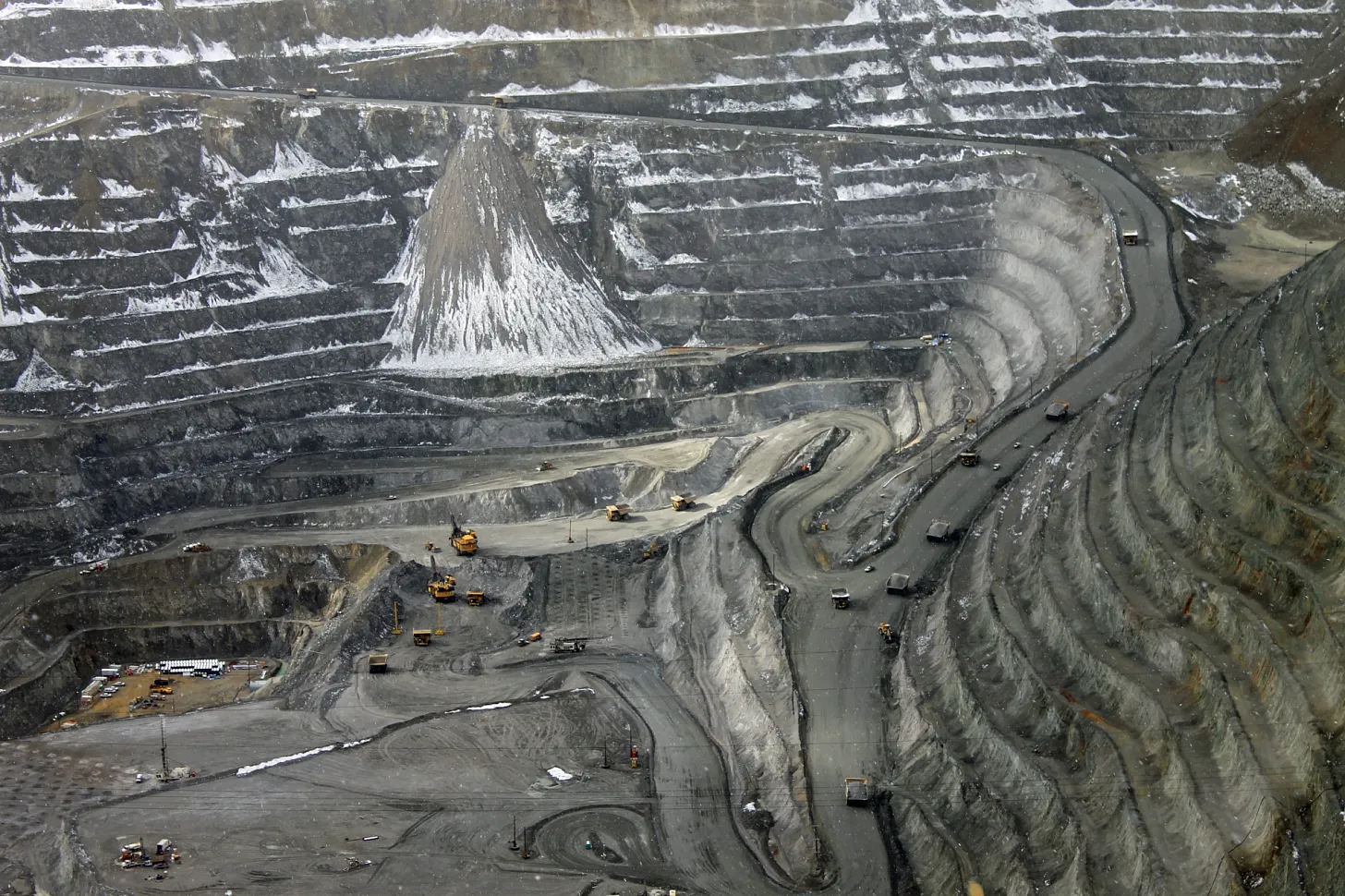
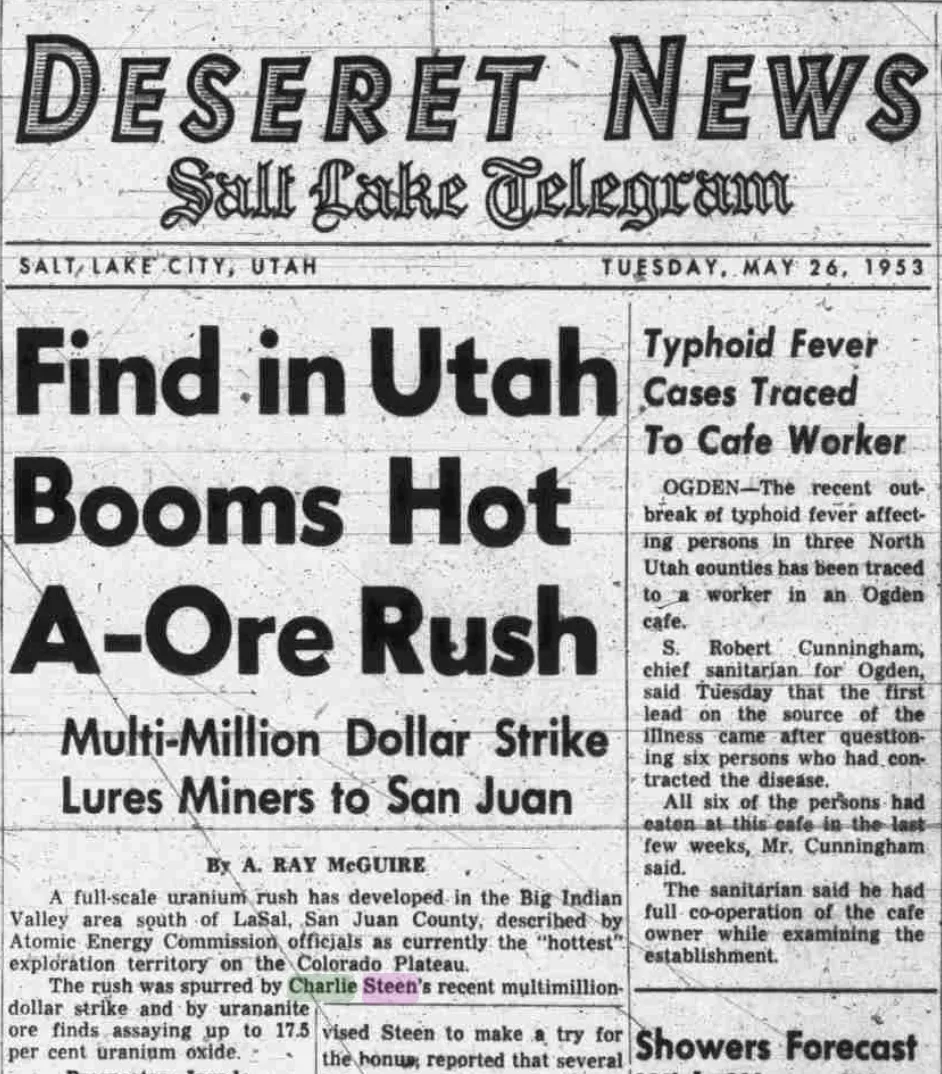
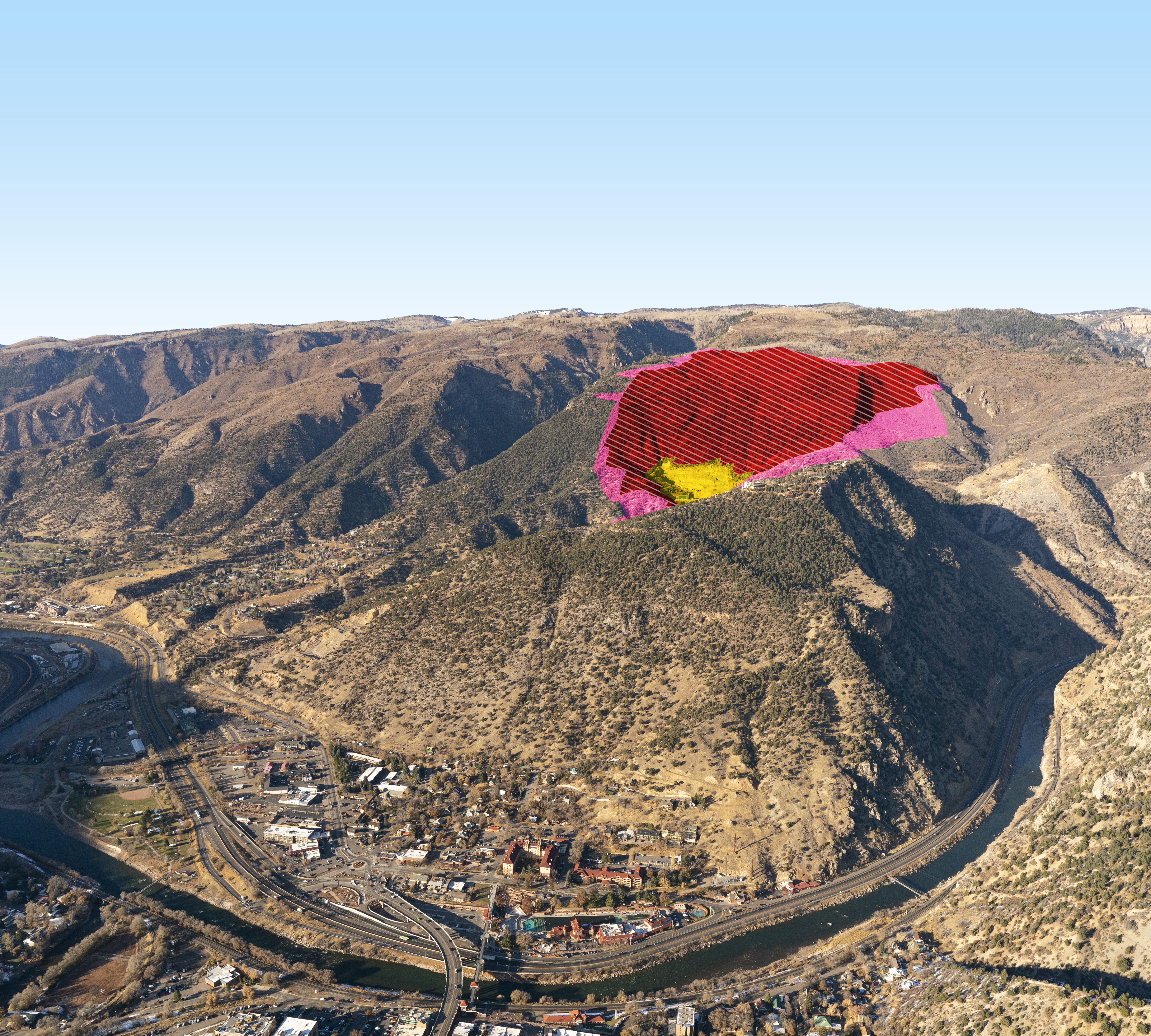
It’s officially over! The fight to save Red Lady (Mt. Emmons) is over — The #CrestedButte News

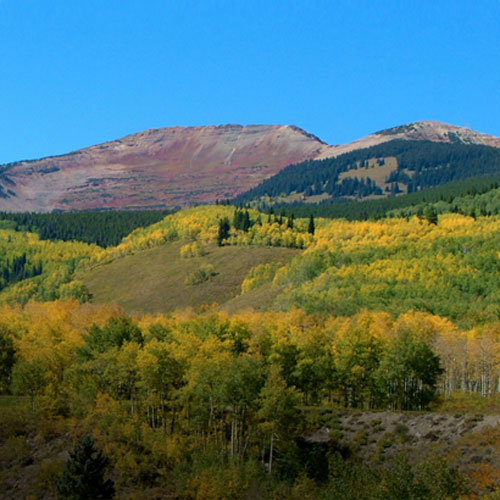
Mount Emmons

Click the link to read the article on The Crested Butte News website (Mark Reaman). Here’s an excerpt:

August 29, 2024

The paperwork officially putting a close to the Red Lady mining fight on Mt. Emmons was filed the morning of Thursday, August 29, ending a battle that has lasted almost five decades. The documents finalized a so-called Mineral Extinguishment agreement, conservation easements on Mt. Emmons, and a major land exchange agreement between the Mount Emmons Mining Company (MEMC), a subsidiary of global mining giant Freeport McMoRan, and the US Forest Service were all signed, sealed and delivered Thursday…Groups, organizations and government entities including the High Country Conservation Advocates, the town of Crested Butte, the Crested Butte Land Trust, the Red Lady Coalition, Gunnison County, the state of Colorado, US senator Michael Bennet and others, all played a role in the outcome. And so did the mining company that made the collaborative decision to work with the local community to basically walk away from its mining rights and focus on reclamation and maintaining water quality on the site that sits in the town’s watershed. The MEMC water treatment plant is on Red Lady and treats water from the old Keystone mine.

“This victory is an incredible testament to the staying power of the greater Gunnison Valley community. To say that not many mine fights end in a collaborative solution eliminating the potential to mine is an understatement,” said Julie Nania, Red Lady Program Director for HCCA.

Hualapai Tribe sues feds over lithium mining project near sacred spring — #Utah News Dispatch

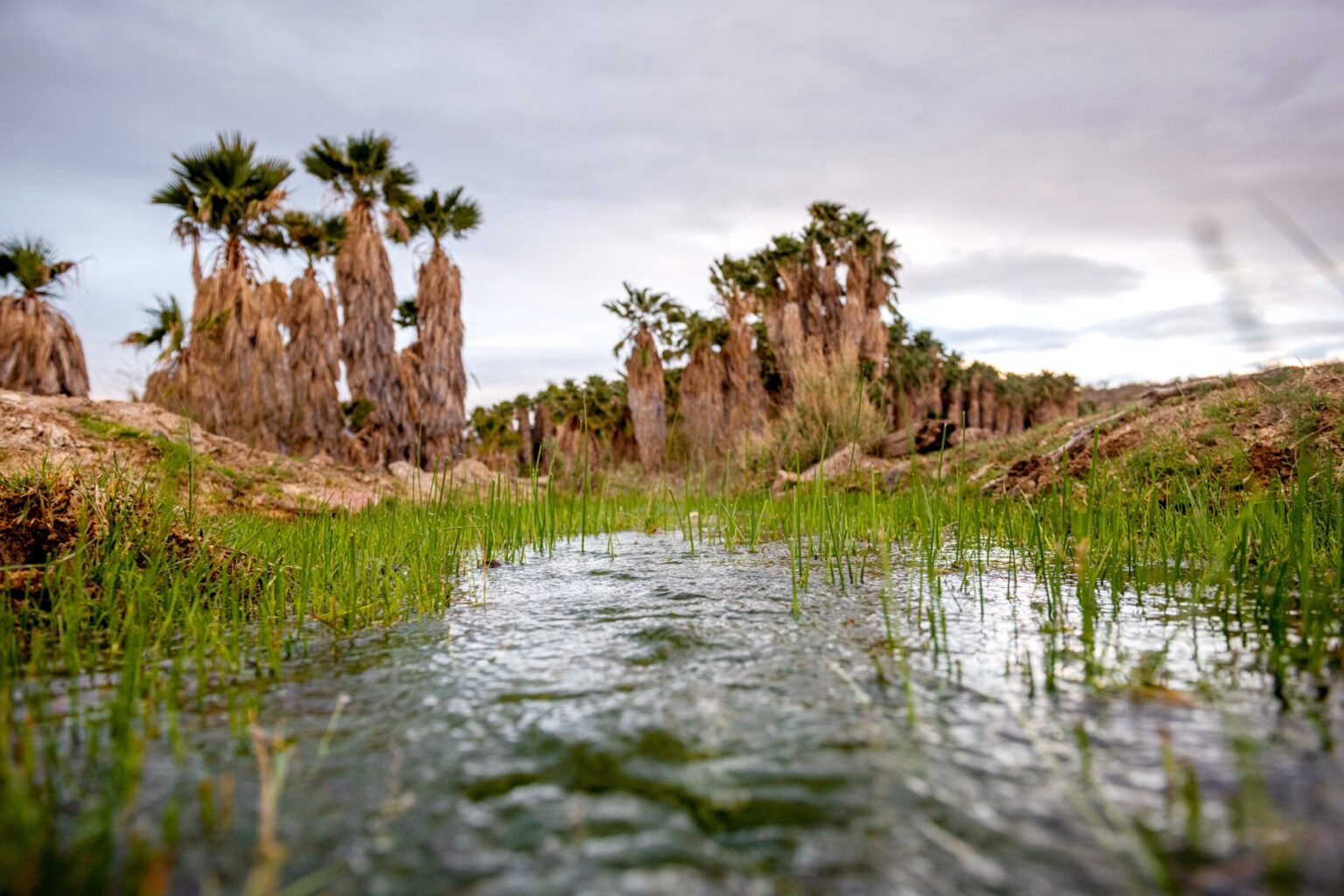
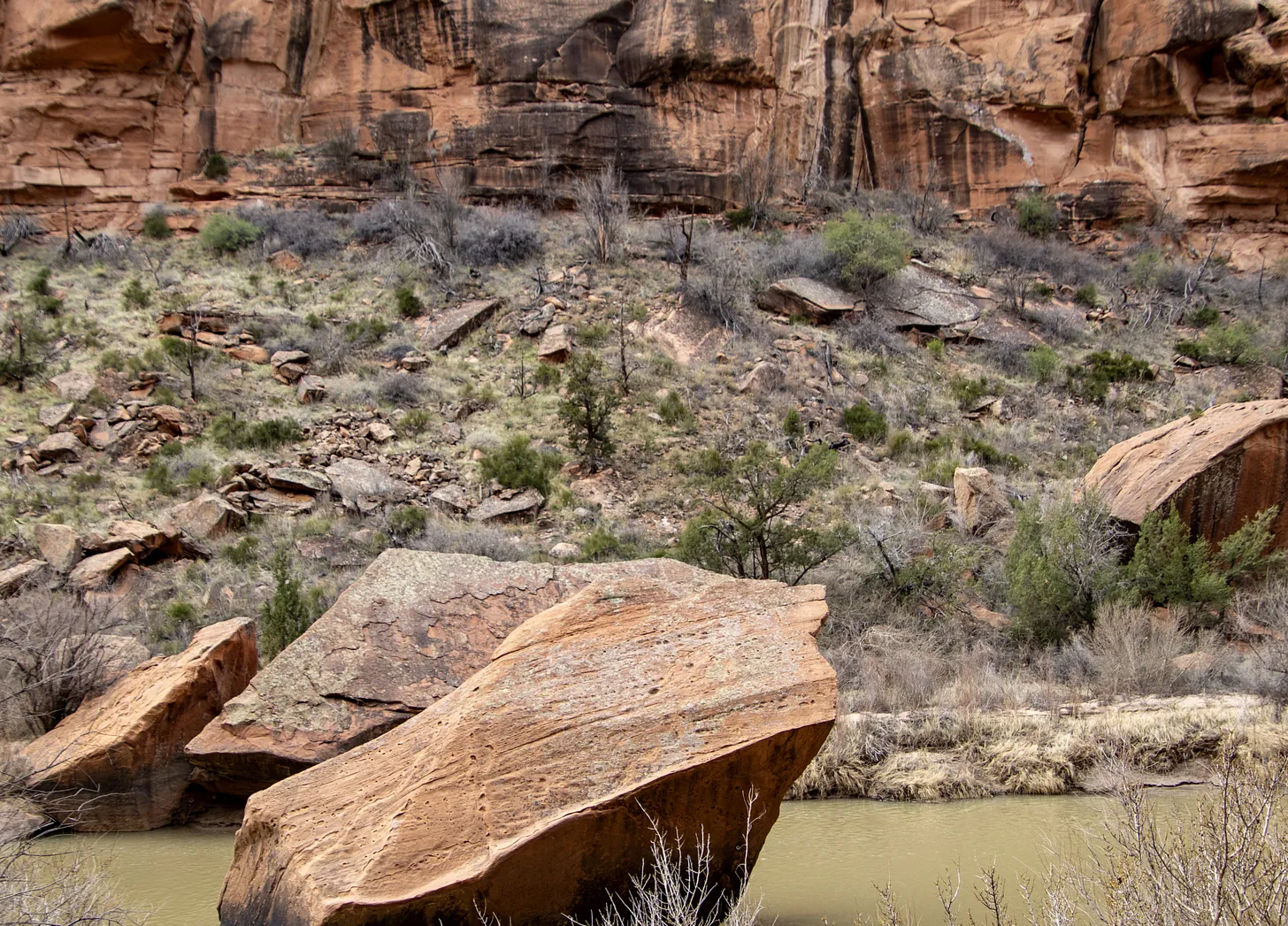
Exploratory wells have damaged the water flow at Ha’ Kamwe’ in Wikieup, Arizona, seen here on Saturday, March 5, 2022. Ha ‘Kamwe is a hot spring sacred to the Hualapai Tribe, which says an Australian company’s proposed lithium mining project threatens. (Photo by Ash Ponders/Earthjustice)

Click the link to read the article on the Utah News Dispatch website (Shondin Silversmith):

August 19, 2024

For years, the Hualapai Tribe tried to work with the U.S. Bureau of Land Management by actively voicing their concerns about a lithium exploration project near Wikieup, in northern Arizona.

The project allows a mining company to drill and test over 100 sites across BLM land that surrounds one of the Hualapai Tribe’s cultural properties, among them Ha’Kamwe’, a medicinal spring sacred to the tribe.

Ha’Kamwe’ is featured in tribal songs and stories about the history of the Hualapai people and their connection to the land. The historic flow and spring temperature are important attributes for its traditional uses, according to the tribe.

Out of concern for Ha’Kamwe’, the tribe submitted multiple public comments, sent several letters of concern and participated in tribal consultations with BLM throughout the planning phase for the Big Sandy Valley Lithium Exploration Project. Big Sandy, Inc., a subsidiary of Australian mining company Arizona Lithium, leads the project.

“It doesn’t feel like the BLM really heard us or took our comments into full consideration,” said Ka-voka Jackson, the director of the Hualapai Department of Cultural Resources, adding that the tribe often felt as if it was “never taken seriously.”

Big Sandy, Inc. has been seeking approval for its project since 2019, and the Hualapai Tribe has been voicing its concerns every step of the way. However, their efforts still fell flat, as BLM gave the project the green light on June 6.

BLM’s approval of the Big Sandy Valley Project allows the mining company to drill and test up to 131 exploration holes across 21 acres of BLM-managed public land to determine whether a full-scale lithium mining operation could be viable.

Two months later, the Hualapai Tribe filed a lawsuit against the Bureau of Land Management, challenging its approval.

Lawsuit: BLM refused to consider alternatives

Ha’Kamwe’ is located within the Hualapai Tribes property known as Cholla Canyon Ranch, and the boundaries of the Big Sandy Valley project nearly surround the entire property.

Only one portion of the tribe’s land does not border the drilling project. Jackson said it’s “surprising, appalling and, frankly, disgusting” that the BLM is trying to say there are no adverse effects on the tribe’s cultural property or cultural resources.

“The tribe maintains that we are opposed to this project,” she said. “This lawsuit is to make sure that BLM is going through the proper processes.”

“These exploratory wells — some of which will be drilled close to Ha’Kamwe’ — will penetrate deep below ground into the aquifer that supports the spring’s flows,” the lawsuit states. “The Project will also create noise, light, vibrations, and other disturbances that will degrade Ha’Kamwe’s character and harm Tribal members’ use of the spring for religious and cultural ceremonies.”

The lawsuit claims that the project violated mandates under the National Environmental Protection Act and the National Historic Preservation Act. Ha’Kamwe’ is recognized as a traditional cultural property and is eligible to be listed on the National Register of Historic Places.

“The litigation is asking for full compliance with the National Historic Preservation Act (NHPA) and the National Environmental Policy Act (NEPA),” said Earthjustice Senior Attorney Laura Berglan, who is part of the team representing the Hualapai Tribe.

This includes BLM taking a “hard look” at the environmental impacts of the exploration activity, as well as considering the impact of its actions on historic properties, she said.

The lawsuit claims that BLM approved the mining project without appropriately considering a reasonable range of alternatives or taking a hard look at water resources under the NEPA and moved forward with the project without providing mitigation measures under the NHPA for Ha’Kamwe’ and other resources important to the tribe, thus violating both acts.

“This isn’t a situation where the tribe wasn’t engaged throughout,” Berglan said, adding that the Hualapai Tribe had provided BLM with traditional Indigenous knowledge related to the project. Still, it was not fully taken into account.

Berglan said the tribe has been trying to work with BLM for years, and has committed a substantial amount of time and resources to review drafts of the environmental assessments and submit extensive comments.

“A lot of time has gone into this process, and to be sort of disrespected by not taking into account their Indigenous knowledge that this (project) is going to have impacts on Ha’kamwe’ is troublesome,” she added.

The lawsuit argues that the tribe even asked BLM to consider alternatives to the project — such as drilling fewer wells or moving them farther from the spring — to reduce its adverse effects. However, BLM refused to consider a reasonable range of alternatives to the project proposal.

“BLM violated NEPA by failing to consider a middle-ground alternative that would address the tribe’s concerns,” the lawsuit states

The Arizona Mirror contacted BLM for comment on the lawsuit, but a representative said the bureau does not comment on pending litigation.

‘We were ignored’

Jackson said that the Hualapai Tribe does not want this mining project to happen, and like many other tribes in Arizona, they are experiencing just how hard it is to stop mining operations in the state.

“We submitted all our comments,” Jackson said. “We were ignored.”

Jackson said the tribe filed the lawsuit because it believes BLM did not follow the proper processes during the Sandy Valley project’s environmental analysis phase.

“Not all of those comments were addressed, and when the (environmental assessment) had been finalized, the BLM said there were no adverse effects on historic property, which is very contradictory to all the tribe’s comments that have been submitted to the BLM,” Jackson said.

Jackson said that before BLM finalized the environmental assessment, the tribe tried to stay in constant communication with the bureau to stay current on the project and were hopeful the bureau would consider their comments, but did not hear back.

“It’s been very upsetting for us,” Jackson said, adding that it’s been hard for the tribe because they are going up against an agency that has a lot of their ancestral homelands in their legal possession.

Dolores Garcia, the public affairs specialist at the BLM Arizona State Office, said in an email to the Mirror that BLM conducted outreach to tribes for consultations over the past three years. Details on the type of outreach efforts were not provided.

The tribes include the Chemehuevi Indian Tribe, the Colorado River Indian Tribes, the Fort Mojave Indian Tribe, the Hopi Tribe, the Hualapai Tribe, the Navajo Nation, the Salt River Pima-Maricopa Indian Community, the Yavapai-Apache Nation and the Yavapai-Prescott Indian Tribe.

“Tribal consultation is considered confidential government-to-government communication, so we cannot discuss specific details related to consultation,” Garcia said.

However, Garcia said that, based on input from the tribes and the public, BLM worked with the proponent to revise its exploration plan, which included removing the use of a groundwater well within a few hundred feet of Ha’Kamwe’ and a nearby staging area.

“Water needed to support the drilling operations will be trucked to the site,” Garcia said. “The proponent has also committed to providing the opportunity for the Hualapai Tribe and other descendant tribal communities to monitor ground disturbing activities onsite.”

Jackson said their experience with how BLM moved forward on this lithium project did not give the tribe much faith in potential future projects.

She said when projects like Big Sandy Valley get proposed in the area, the tribe hopes that the BLM will come to work with them and take their comments seriously because they have been the stewards of the land for generations.

“We still use Ha’Kamwe’ as a community,” Jackson said. “When people go there, they have this sense of being, a sense of place, a sense of belonging, and a really deep ancestral tie there.”

‘Temporary’ disruptions don’t need permanent fixes, BLM says

As part of its environmental assessment, BLM listed several short- and long-term effects, including the temporary disruption to cultural practices at or near Ha’Kamwe’ and the impact on native wildlife and vegetation of up to 21 acres.

Even with these effects included in the assessment, which are concerns the Hualapai Tribe has brought up multiple times, BLM concluded that the Big Sandy Valley project would not significantly impact the quality of the area and an environmental impact statement was not needed.

“Visual, noise, and vibration effects from drilling activities would be temporary,” the BLM wrote in its final report. “Coordination with and providing notice to the Hualapai Tribe of drilling activities in the vicinity of the Ha’Kamwe’ may reduce impacts to cultural practices at or near the hot spring.”

Jackson said the tribe and its members have every right to be out at Ha’Kamwe’ utilizing the spring for prayer and healing because it is part of their spirituality and religion. Tribal members have full access to the property and can use it whenever necessary.

“Having that type of noise occurring is really disrupting,” she said. “It takes away from a lot of the spirituality and ability to practice ceremony in peace.”

Jackson said the tribe will have to deal with the disruptions throughout the project’s 18-month duration.

“That’s a long time for tribal members to be affected, and that disrupts all of our activities,” she added. “It disrupts our spirituality.”

The drilling project threatens not only ceremonial ways of life but also natural resources the tribe relies on. Jackson said the community gathers native plants only found in the Big Sandy Valley area, including willows for basket making, traditional tobacco, and clay.

“Those plants coming from that area have meaning,” she said, and they are the same native plants their ancestors gathered from.

“When we gather, we’re not restricted to just the Hualapai property,” Jackson said because tribal members gather on the public BLM land in the area, too.

“That’s our right as people to be able to go out there and gather,” she added, and the bulldozing that will occur to create the paths to the drilling sites will have an impact. “The desert will never recover from all that.”

Jackson said part of what makes the area sacred for the tribe is maintaining the integrity of the land, and the tribe feels that the mining operations will permanently change the location.

They’re concerned about how the project will impact the spring because the drilling will occur so close to the site.

According to BLM, to minimize impacts on Ha’Kamwe’, a water source that was previously proposed to be used for the project has been removed from the plan, and a staging area that would have been set up near Ha’Kamwe’ has also been removed.

“Analysis of water resources has determined that the water source for Ha’Kamwe’ is located in a deeper aquifer,” the report states. The proposed drilling is not anticipated to reach the aquifer, according to BLM, and if water is intersected during the drilling, the hole shall be plugged using cement grout or bentonite clay.

Jackson said the tribe does not think that is good enough because if the mining hits the water and does utilize bentonite clay or cement grout, there is no guarantee that it won’t have an adverse effect or potentially block off the underground water that flows through the spring.

“If the temperature were to be affected that’s changing the entire character of the spring and the integrity of it,” Jackson said, which is a big deal for the tribe because Ha’Kamwe’ translates to “warm spring.”

“We’re going to try every way we can to try and stop this operation,” Jackson said, adding that this is the first lithium mining project of its kind on their homelands and they’ve opposed it the entire time.

“It’s kind of scary looking into the future, seeing how these mining companies can kind of get away with this and how the BLM is letting it happen, even when they know how it will negatively impact the tribes and the tribe’s sacred lands,” Jackson said.

On Trump’s dystopian Agenda 47, Freedom Cities — Jonathan P. Thompson (The Land Desk)

Even AI can’t capture the absurdity of Agenda 47’s “Freedom Cities.” Credi: Jonathan P. Thompson/The Land Desk

Click the link to read the article on The Land Desk website (Jonathan P. Thompson):

August 2, 2024

The News: Agenda 47 — the Trump campaign’s platform — promises to develop 10 “Freedom Cities” on “empty” public lands in the Western United States if he is elected president.

Context: After Trump lost the 2020 election, the ultra-right-wing Heritage Foundation, along with help from dozens of former Trump administration staffers, set about to create Project 2025, a “playbook” for Trump just in case he managed to win this November’s presidential election. 

Suffice it to say, Project 2025 is downright terrifying, as this excellent analysis by Michelle Nijhuis and Erin X. Wong reveals. In fact, it’s so weird — and so unpopular — that Trump has scrambled to distance himself from the whole endeavor, even claiming he doesn’t know anything about it or the people pushing it. That’s despite having praised the plan during a speech to the Heritage Foundation in 2022, despite the fact that many of the plan’s architects were in his administration, and despite the fact that his VP candidate J.D. Vance wrote the foreword to Heritage Foundation President Kevin Roberts’ new book. 

But it doesn’t really matter, because Trump has his own authoritarian plan. It’s called Agenda 47, and serves as a template for the only slightly less creepy sounding Republican Party Platform. Agenda 47 is a bit shorter and less detailed than the 900-page Project 2025, which maybe makes it slightly more palatable to certain voters, but is equally nuts and just as scary. It vows to protect freedom of speech and cut funding for any school that teaches “inappropriate racial, sexual, or political content.” If elected, Trump and company would also “deport pro-Hamas radicals and make our college campuses safe and patriotic again.” Nothing fascist about that! 

When it comes to public lands and the environment, Trump plans to do more of what he did last time he was in the White House — which is to say eviscerate environmental, health, safety, and worker protections in the name of “energy dominance” and corporate profit. The GOP platform also calls for using federal land for housing development. In theory this would bolster supplies of housing, thereby reducing prices and alleviating the housing crisis. The theory is deeply flawed, however, and though it may sound well-intentioned, ultimately it is just another ploy to privatize public land.

On this and other initiatives both Agenda 47 and the GOP platform (which are near-mirrors of each other) are scant on details. Hoping to learn more, I delved into Trump’s Agenda 47 archives and … holy crapoli! I had to wonder if Trump’s running for president or for the mayor of Crazytown — he’s the hands-down favorite for the latter.

Last March the Trump campaign unveiled its Agenda 47. Apparently it wanted to modernize the old “make America great again” slogan, so it went instead with:

Agenda47: A New Quantum Leap to Revolutionize the American Standard of Living.

Despite making no sense, you gotta give them credit for having a forward-looking slogan rather than the backward-looking one (which they have since reverted to, by the way). Indeed, it’s so forward-looking that they would “create a new American future.” Silly ol’ me thought that the future was always new on account of being, you know, the future and all.

And what will this new future look like? Freedom Cities!  

You’re probably thinking: Why the hell would anyone want to build ten new cities in the drought-stricken West when there’s not enough water to go around now? What’s the point anyway? To make a few real estate developers incredibly rich? To realize a megalomaniac demagogue’s dream of building new cities to match some bizarre ideological vision? Will Trump resurrect Albert Speer to design the new cities?

Apart from the big picture flaws, this whole thing is riddled with wrong from start to finish. Let’s break it down:

  • “… open up the American frontier.” Are you friggin’ kidding me? Is this from the Trump campaign or the Andrew Jackson’s Corpse campaign? Referring to the Western U.S. as the “frontier” was racist and ignorant in the 19th century. It was intended to portray the region — and the Indigenous people who live there — as a wild and savage place that needed to be tamed and/or killed by EuroAmerican invaders so they could steal the land and put it into the public domain so some dumbass could come along and build some Freedom Cities there a couple centuries later so they could create a new American future. Using the term now is still ignorant and racist and just downright stupid. 
  • “Hundreds of millions of these acres are empty.” Oh, really? Well, let’s see, the Bureau of Land Management oversees about 248 million acres and the Forest Service another 193 million acres. So, basically, Trump’s saying that at least half of America’s public lands are “empty.” This is age old code (also see “underutilized”) for describing landscapes that haven’t been industrialized, drilled, mined, grazed to death, or otherwise ruined. Of course, none of the public lands are actually empty, but I think y’all know that. 
  • Trump assures us these cities won’t be built on “national parks or other natural treasures.” Thing is, if Trump and his ilk get their way, there will be precious few natural parks or monuments or ‘natural treasures’ remaining. Certainly you remember how the Trump administration eviscerated Bears Ears and Grand Staircase-Escalante National Monuments. There’s zero reason to expect him not to do the same if he were elected again — only to a further degree.

If this whole Freedom Cities thing sounds like something a couple sixteen year olds would dream up while getting stoned while sitting on some desert butte (Free Doritos for everyone, brah!), then just read on. Trump would also “modernize transportation,” not by building trains and buses or even electric cars, but by bolstering efforts to develop “vertical-takeoff-and-landing vehicles for families and individuals.” And to help make these and all of America’s cities “beautiful,” they’ll build “towering monuments to our true American heroes.” Does anyone else catch a whiff of Nicolae Ceausescu or even Albert Speer while reading this?

So these brand new cities, built on public land, would be swarming with people-carrying quad-copters swerving to miss one another and the monumental statues of Donald Trump and Andrew Jackson and Tucker Carlson. And how will they people these cities after carrying out the “largest deportation in American history”? They’ll offer “‘Baby Bonuses’ for young parents to help launch a new baby boom.”

If that seems zany, now imagine having one of these metropolises plopped down smack dab in one of your favorite swaths of “empty” public lands. Eek! Sounds like fodder for a dystopian horror film, working title: Agenda 47.


⛏️Mining Monitor ⛏️

Sign in the Lisbon Valley of southeastern Utah. Jonathan P. Thompson photo.

When two trucks hauling uranium ore rumbled out of Energy Fuel’s Pinyon Plain Mine near the Grand Canyon Tuesday on their way to the White Mesa Mill in Utah, Navajo Nation President Buu Nygren sent law enforcement officers to stop them. The trucks managed to get off tribal land before the police could catch them, but the next shipments are likely to be stopped. It’s the latest episode in a long-simmering battle between the tribe and the uranium industry — and a test case for tribal sovereignty. 

Whether the U.S. uranium mining industry is experiencing a full-on renaissance or is merely having zombie-dream twitches isn’t yet clear. But the ore shipments represent the clearest sign of life, yet, since it is the first time freshly mined ore will be processed in years. Tribal nations, advocates, and lawmakers have pushed back against both the mine and the mill for years due to the potential for contaminating groundwater aquifers. 

In 2012, the Navajo Nation banned uranium shipments across tribal lands. But it is not clear whether it applies to the federal and state highways used by Energy Fuels’ trucks.

Energy Fuels had previously agreed to give the Navajo Nation and other stakeholders a two-week notice before shipping any ore; they actually didn’t notify anyone until after the trucks left the mine. Arizona Attorney General Kris Mayes got involved, and issued a statement reading: “Hauling radioactive materials through rural Arizona, including across the Navajo Nation, without providing notice or transparency and without providing an emergency plan is unacceptable.”

And now Arizona Gov. Katie Hobbs has helped broker a pause in shipments to give the Navajo Nation and Energy Fuels a chance to work things out. 

***

The Pinyon Plain Mine and White Mesa Mill get all of the attention, but the mining industry — uranium and otherwise — is also stirring elsewhere. Some quick hits:

  • Energy Fuels is also doing work at its Whirlwind Mine right on the Colorado-Utah border above Gateway and on its La Sal Complex, which sits less than a mile away from the community of the same name — and a school. Energy Fuels is also looking to develop the Roca Honda Project on Forest Service land near Mt. Taylor in New Mexico. 
  • Utah regulators have accepted Anfield Energy’s application to restart its Shootaring Canyon mill near Ticaboo, Utah, which means the state can now begin its review. Anfield hasn’t had as much luck with its operating plan for its Velvet-Wood Mine in the Lisbon Valley: The BLM’s Monticello Field Office deemed it incomplete, and wouldn’t even consider it until Anfield filled in numerous blanks. 
  • Egad! The BLM is actually raising mining claim maintenance fees. That’s the amount one has to pay when staking, or locating, a claim and once every year after that. It was $165. Next month it will shoot up to $200 per claim (plus a $25 processing fee and $49 location fee tacked onto the initial payment). That’s a whopping 20% increase, but still seems to be a pretty darned good bargain and is unlikely to dissuade speculators. 
  • The Energy Permitting Reform Act, a bill making its way through Congress, would codify mining companies’ ability to stake mining claims on public lands to use as waste dumps and for other ancillary purposes. It’s just one of the ways the legislation, which is being pushed as a way to speed up clean energy projects, would benefit the extractive and fossil fuel industries. Originally pushed by Sens. Joe Manchin and John Barrasso, some Democrats, including Sen. Martin Heinrich of New Mexico, have signed on in support. 
  • You can find most of these projects on the Land Desk Mining Monitor Map and the Land Desk’s Uranium Mining in the Four Corners Map.

Project 2025’s extreme vision for the West: The demolition of public lands, water and wildlife protections are part of conservatives’ plan for a second Trump term — @HighCountryNews

An aerial view of Assignation Ridge in the Thompson Divide area of Colorado. Project 2025 calls to restore mining claims and oil and gas leases in the Thompson Divide withdrawal area. (Courtesy of EcoFlight)

Click the link to read the article on the HIgh Country News website (Michelle Nijhuis and Erin X. Wong:

If Donald Trump is re-elected president in November, a coalition of more than 50 right-wing organizations known as Project 2025 will be ready with a plug-and-play plan for him to follow, starting with a database of potential administration appointees carefully vetted by coalition members; an online “Presidential Administration Academy” run by coalition members to school new appointees; and a 920-page policy platform called Mandate for Leadership: The Conservative Promise.

Written by former members of the Trump administration and other conservative leaders, Mandate for Leadership exhorts its readers to “go to work on Day One to deconstruct the Administrative state.” Among many other measures, it calls for radical reductions in the federal workforce and in federal environmental protections, and for advancing a “Trump-era Energy Dominance Agenda.”

The full text of Mandate for Leadership is below, preceded by an agency-by-agency overview of the proposals that could have the greatest impact on Western land, water and wildlife — as well as on Westerners themselves.

DEPARTMENT OF THE INTERIOR (p. 517)

The Project 2025 recommendations for the Department of the Interior were primarily authored by attorney William Perry Pendley, a vociferous opponent of protections for public lands and wildlife. As acting director of the Bureau of Land Management during the Trump administration, he transformed the agency into what one high-level employee described as a “a ghost ship,” in which “suspicion,” “fear” and “low morale” abounded.

Energy Policy

Pendley notes that the energy section was written “in its entirety” by Kathleen Sgamma of the Western Energy Alliance, an oil and gas industry group; Dan Kish of the Institute for Energy Research, a think tank long skeptical of human-caused climate change; and Katie Tubb of The Heritage Foundation. They recommend reviving the “Trump-era Energy Dominance Agenda” by: 

  • reinstating a dozen industry-friendly orders issued by the Trump administration’s secretaries of the Interior (p. 522);
  • expanding oil and gas lease sales onshore and offshore (p. 522);
  • opening the large portions of Alaska, including the Alaska Coastal Plain and most of the National Petroleum Reserve, to oil and gas exploration and development (pp. 523, 524);
  • halting the ongoing review of the federal coal-leasing program and working “with the congressional delegations and governors of Wyoming and Montana to restart the program immediately” (p. 523);
  • restoring mining claims and oil and gas leases in the Thompson Divide of the White River National Forest in Colorado and the 10-mile buffer around Chaco Cultural Historic National Park in New Mexico. (p. 523);
  • and expanding the Willow Project, a ConocoPhillips oil-drilling operation on Alaska’s North Slope (p. 530).
William Perry Pendley. By Bureau of Land Management

Agency Operations

The project’s organizers plan to upend federal land-management agency operations by:

Land Conservation

The project aims to undo large landscape protections by:

The Cascade-Siskiyou National Monument was expanded via proclamation from President Obama in 2017, making the new monument approximately 112,000 acres. Bob Wick/Bureau of Land Management

Wildlife 

Pendley expresses particular hostility toward the U.S. Fish and Wildlife Service, whose work he described as “the product of ‘species cartels’ afflicted with group-think, confirmation bias, and a common desire to preserve the prestige, power, and appropriations of the agency that pays or employs them.” He recommends:

DEPARTMENT OF AGRICULTURE (p. 289)

The free-market advocate behind Project 2025’s section on the USDA has long railed against the subsidies and food stamp programs administered by the agency. As a fellow at The Heritage Foundation, Daren Bakst penned a lengthy report, Farms and Free Enterprise, that objects to many aspects of the farm bill, which funds annual food assistance and rural development programs. His vision, documented in the report, is present throughout Project 2025’s proposed agency overhaul.

Agency Organization

Project 2025 seeks to limit regulation in favor of market forces by:

  • reducing annual agency spending, including subsidy rates for crop insurance and additional programs that support farmers for lost crops (p. 296); 
  • removing protections for wetlands and erodible land that farmers must comply with to participate in USDA programs (p. 304); 
  • eliminating the Conservation Reserve Program, which pays farmers to enrich and protect parts of their land from agricultural production (p. 304); 
  • removing climate change and equity from the agency’s mission (p. 290, 293); 
  • and working with Congress to undo the federal labeling law, which requires consumer products to disclose where they were made and what they contain, as well as encouraging voluntary labeling (p. 307). 

Forestry

The project will reduce forests on public lands by:

Logging within the Cougar Park timber sale in Kaibab National Forest in 2018. The timber project was part of an initiative intended to treat more than 2.4 million acres of ponderosa pine forest across northern Arizona. Dyan Bone/U.S. Forest Service

ENVIRONMENTAL PROTECTION AGENCY (p. 417) 

Prior to serving as the EPA’s chief of staff during the Trump administration, Mandy Gunasekara was famous for handing Republican Sen. James Inhofe a snowball to disprove the existence of human-caused climate change. At the EPA, she played a key role in the United States’ withdrawal from the Paris Agreement and in the dismantling of the Obama-era Clean Power Plan. Gunasekara’s vision for the EPA is characterized by staff layoffs, office closures and the embrace of public comment over peer-reviewed science. 

Agency Organization

The plan will diminish the agency’s scope of work by:

  • reducing full-time staff and cutting “low-value” programs (p. 422);
  • shuttering offices dedicated to environmental justice and civil rightsenforcement and complianceenvironmental educationchildren’s health and international and tribal affairs, and distributing their functions elsewhere (p. 421); 
  • eliminating all research that is not explicitly authorized by Congress (p. 436);
  • restructuring scientific advisory boards and engaging the public in ongoing scrutiny of the agency’s science — potentially opening the door to a wave of pushback against the international consensus on climate change (p. 422, 436-438);
  • eliminating the use of catastrophic climate change scenarios in drafting regulation (p. 436);
  • relocating a restructured American Indian Office to the West (p. 440);
  • partially shifting personnel from headquarters to regional offices (p. 430);
  • and striking the regulations, including a program to reduce methane and VOC emissions, that enable the EPA to work with external groups to help enforce laws (p. 424).

Natural Resources

The project would jeopardize clean air and water by:

  • limiting California’s effort to reduce air pollution from vehicles by ensuring that its standards and those of other states avoid any reference to greenhouse gas emissions or climate change (p.426);
  • supporting the reform of the Endangered Species Act to ensure a full cost-benefit analysis during pesticide approval (p. 434-435); 
  • repealing some regulations imposed by the Biden administration to limit hydrofluorocarbons, a particularly potent greenhouse gas (p. 425);
  • and undoing the expansion of the Good Neighbor Program, which requires states to reduce their nitrogen oxide emissions, beyond power plants to include industrial facilities like iron and steel mills (p. 424).

Full text of Project 2025 via Document Cloud

Opinion: ‘#DoloresRiver Canyons very foundation of Ute Mountain Ute identity’ — The #Durango Herald

Dolores River near the confluence with the San Miguel River. Photo credit: Jonathan P. Thompson

Click the link to read the guest column on The Durango Herald website (Regina Lopez-Whiteskunk). Here’s an excerpt:

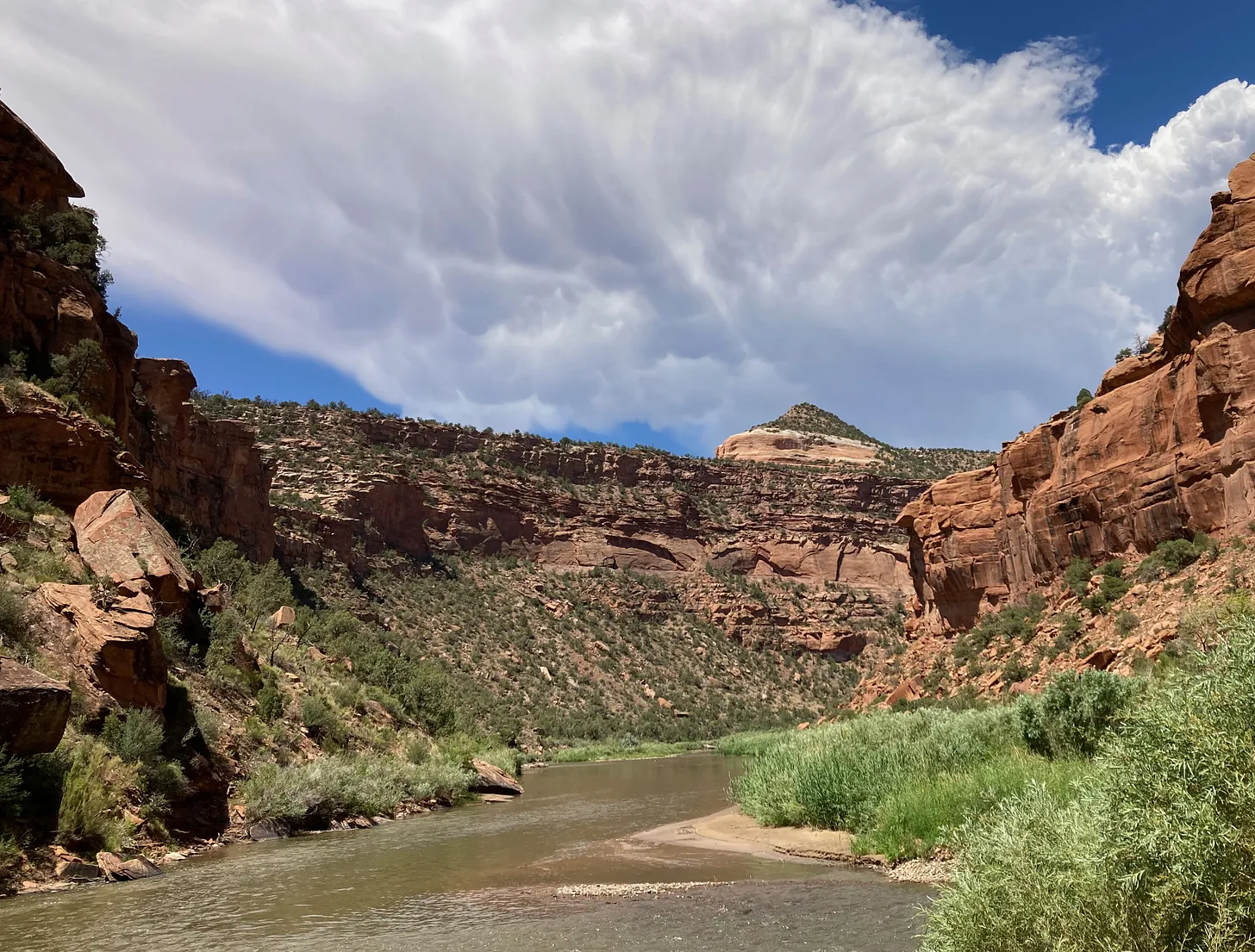
The Dolores River Canyons represent a significant portion of the cultural heritage for the Ute People that serve as a place of spiritual connection, a place to connect with our ancestors’ stories and traditional practices. These lands are not merely scenery; they are the very foundation of the Ute Mountain Ute identity. Increased mining would not just disrupt the delicate balance of the ecosystem, it would sever the cultural ties that bind my people to part of our ancestral home.

The future of the Ute Mountain Ute Tribe, and Indigenous communities across the country, lies in the enduring strength of our cultural heritage. Protecting the Dolores River Canyons is not just about safeguarding the environment; it’s about ensuring that future generations of Indigenous youth can grow up connected to their land, steeped in the traditions of their ancestors. Imagine the richness of a future where Ute children learn about their history by exploring the canyons, not by reading about the environmental devastation wrought by a bygone mining industry.

Let us choose the path that honors the past, protects the present and secures a brighter future for generations to come. Let us choose to leave a legacy of respect and cultural preservation, not one of environmental destruction and broken promises.

Some thoughts on the bid to protect the Lower #DoloresRiver — Jonathan P. Thompson (LandDesk.org)

Boulders in the Dolores River downstream from Bedrock. Jonathan P. Thompson photo.

Click the link to read the article on The Land Desk website (Jonathan P. Thompson):

July 30, 2024

The News: Western Colorado’s Mesa and Montrose counties propose a 30,000-acre national conservation area for the Lower Dolores River corridor as an alternative to the proposed 400,000-acre national monument. While this may look like a peace offering or compromise of sorts from counties that have opposed protections of any kind, it is just as likely an attempt to block any sort of designation and will probably only further fan the flames of controversy. It’s the latest volley in a half-century-long battle over the fate of the beleaguered river. 

The Context: The current controversy over the Dolores River takes me back to when I was a youngster in the early ‘80s. McPhee Dam was under construction on the Dolores River, its proponents having vanquished a movement that sought to block the dam and keep the river free. My parents had been on the losing side of the fight, and I can distinctly remember my father blaming the defeat, at least in part, on outsider environmentalists — including Ed Abbey — deriding the pro-dam contingent as a bunch of “local yokels.

I’m sure my dad took it personally. He was a fourth-generation rural Coloradan, had graduated from Dolores High School, and his mom and sisters still lived in Dolores — apparently making him a “yokel,” even though he opposed the dam. But also he saw it as a major strategic misstep. Not only were these people insulting locals, but they were falling into the pro-dam contingent’s trap, bolstering the dam-building effort in the process.

More often than not, these land protection fights are framed as well-heeled elitist outsiders and Washington D.C. bureaucrats imposing their values on and wrecking the livelihoods of rural, salt-of-the-earth local ranchers and miners. And in almost every case it is a gross oversimplification, at best, and at worst is an inaccurate portrayal and a cynical attempt to disempower locals — and anyone else — who favor land protection. So when those anti-dam folks caricatured the pro-dam contingent as local yokels, they were not only alienating locals who may have been on their side, but also validating the false depiction of the situation. 

Fresh snow on Bears Ears. Photo credit: Jonathan P. Thompson/The Land Desk

We saw this play out in the battle over the Bears Ears National Monument designation and Trump’s shrinkage of it in a gross way. The anti-monument contingent insisted that all “locals” were opposed to the monument — and the media largely bought into it — never mind the fact that effort to establish a monument in the first place was driven by local Navajo Nation and Ute Mountain Ute citizens, and was taken up by tribal nations who have inhabited the landscape in question since time immemorial. Never mind that the anti-monument “locals” were backed by mining corporations, right-wing think tanks, and conservative politicians from all over (including a Manhattan real estate magnate and reality TV personality who became President). Utah’s congressional delegation even had the gaul to attempt to disenfranchise and silence the voices of tribal leaders because they happened to be based on the other side of a state or county line that was arbitrarily drawn based on arbitrary grids by dudes in Washington D.C.  

The movement to protect the Dolores River has been portrayed in much the same way over the last several decades. It has its roots in 1968, when U.S. Rep. Wayne Aspinall, a Democrat from Colorado’s Western Slope, pushed through the Colorado River Basin Project Act, authorizing the construction of five Western water projects. One of them was the Animas-La Plata Project, a byzantine tangle of dams — including one on the Animas River above Silverton — along with canals, tunnels, and even power plants. Another was the Dolores Project, which included building McPhee Dam several miles downstream of the town of Dolores, which would impound water to lengthen the irrigation season for the Montezuma Valley and allow water to be sent, via canal, to the dryland bean farmers around Dove Creek. 

The Dolores River, below Slickrock, and above Bedrock. The Dolores River Canyon is included in a proposed National Conservation Area. Photo: Brent Gardner-Smith/Aspen Journalism.

The prospect of another river being stilled by another giant monolith sparked a movement to block the dam and to designate the Lower Dolores River corridor as a Wild and Scenic River, which would have prohibited mining and oil and gas leasing, while also ensuring enough water would be left in the stream to keep the river “wild and scenic,” which is to say a lot more water than zero, which was the lower river’s flow from mid-summer into fall due to irrigation diversions. 

Local farmers were generally in favor of the dam — and against Wild & Scenic designation, since it would likely deprive them of some irrigation water during dry times. But their cause was also backed by powerful agricultural interests on the state level, the pugnacious Durango attorney Sam Maynes, Sen. Gary Hart, the Colorado Democrat, and, probably most importantly, the Ute Mountain Ute Tribe, which would receive a portion of the vast amounts of water to which they were entitled from the Dolores Project. The project was ultimately authorized (though I doubt the local yokel comment had all that much to do with it, really). Construction of McPhee Dam began in 1979 and the reservoir began filling in 1983. 

La Plata Mountains from the Great Sage Plain with historical Montezuma County apple orchard in the foreground.

No matter how one feels about dams, you have to admit it had some benefits. In 1978 the federally funded Dolores Archaeological Program was launched to survey, excavate, and study the rich cultural sites that were spread out across the area to be inundated by the reservoir. It was a huge project that brought a slew of researchers to the area, significantly advanced scientific knowledge of the Ancestral Puebloan people who inhabited the region for centuries, and provided the seeds for future archaeological work and organizations, including the Crow Canyon Archaeological Center.

And, contrary to opponents’ fears, the dam didn’t kill the river. Rather it was like putting the river’s manic-depressive flows on lithium. The massive spring runoffs were tempered, but water managers released enough water in most years to scour beaches and preserve Snaggletooth’s whitewater snarl. And for the first time in a century the lower Dolores didn’t run dry in July. In fact, the year-round flows were enough to build and sustain a cold-water fishery for trout in the first dozen or so miles below the dam and a habitat for native fish below that. The Ute Mountain Ute Tribe got both drinking water from the project as well as enough to irrigate a major agricultural enterprise near the toe of Ute Mountain, providing much needed economic development. The Town of Dove Creek receives water from the project as do the formerly dryland farmers, allowing them to diversify their crops. The dam’s completion happened to coincide with the demise of the domestic uranium mining industry, meaning that threat mostly went away as well, along with the need for added protections.

The Dolores River at its confluence with the San Miguel River. Jonathan P. Thompson photo.

Unfortunately, drier times set in and the current megadrought, now going on a quarter century, has depleted the river’s flows and reservoir levels. In order to keep the irrigation ditches flowing as deep into the summer as possible, dam managers have released almost no water during 14 of the last 24 years, essentially desiccating the stream bed below the dam and throwing the riparian ecology out of whack. In the midst of it all the uranium industry made a short-lived comeback between 2006 and 2012. Now it seems to be emerging from its zombified state once again and is targeting numerous sites along the Dolores River. The river runs through the Paradox Formation, as well, meaning it could be targeted by lithium and potash miners. Meanwhile, visitation to the Lower Dolores River has ramped up — along with the impacts — as social media posts reveal the canyons to more people and as the Moab crowd seeks new places to play. 

Dolores River watershed

All of that spawned new Wild & Scenic campaigns for the Lower Dolores, but after it became clear they couldn’t get past political hurdles, stakeholders came together to work on a compromise, resulting in a proposal to create a national conservation area on 60 miles of river corridor below the dam, which would withdraw the land from new mining claims and oil and gas leases, bring more attention to the plight of this sorrowful and spectacular river, and possibly more funding to river restoration efforts. But it would leave another 100 miles of the Lower Dolores unprotected, in part because Mesa and Montrose Counties withdrew their support for the plan. Thus the proposal for President Biden to designate 400,000 acres as a national monument.

That proposal, perhaps predictably, has sparked a backlash and an anti-national monument campaign partly fueled by disinformation. And, just as predictably, it’s being falsely framed as a fight pitting locals vs. outsiders. It’s true that a survey commissioned by Mesa County of about 1,200 registered voters in Mesa, Montrose, and San Miguel Counties found that 57% of respondents oppose the national monument proposal. That shows that more locals oppose it, but that quite a few support the initiative, as well. And Center for Western Priorities director Aaron Weiss found that the survey may be biased since its creators consulted with national monument opponents, but not proponents, about which questions to ask and how to word them. And it shows. 

For example, the survey precedes one set of questions with: “Currently, uranium mining in the Dolores River Canyon area in the west end of Montrose County impacts the local economy by providing tax dollars and jobs. The current national monument proposal would allow some but not all existing permit holders to continue to operate, but it has not been decided if the proposal would allow new permits or permit renewals in the future.” But this is misleading, because the uranium mining industry remains virtually dead, so the economic impact is zero to negligible. Furthermore, a national monument grandfathers in all existing valid mining claims and has no effect on patented (private) claims. So even if there were operating mines, a monument wouldn’t hamper operations. [ed. emphasis mine] Other questions were similarly misleading by implying that a national monument designation would remove management from the BLM or Forest Service.

Tellingly, the survey also found that 72% of respondents support existing national monument designations “such as Browns Canyon, Chimney Rock, and Colorado National Monument.” Why? Because they value conservation and they’ve seen that national monuments don’t hurt the economy or agriculture or significantly restrict access. That they are less sure about a new national monument might have something to do with the opponents’ simplistic and unfounded argument against it, which is that it could “impose severe economic hardships,” without explaining how.

Nevertheless, Mesa County used the survey to justify a resolution opposing the national monument and supporting its proposal for a vastly scaled down national conservation area. Again, this tactic is an echo of ones used by Bears Ears National Monument opponents. National Conservation Areas don’t inherently offer more or less protections or restrictions than national monuments, but they do need to be passed by Congress. Given how dysfunctional our Congress is, that could take years or even decades. 

Yet the Lower Dolores River needs help now. No, a national monument won’t solve all its problems; it may not help the river, itself, at all. Already the fight over the proposal has shone a spotlight on a remote, largely unknown area, which will surely draw more visitors and more damage. A national monument designation at least would provide the possibility of protection against future development and burgeoning crowds.

Our River of Sorrow Jonathan P. Thompson October 27, 2021

Dolores River near Lizard Head Pass. Photo credit: Jonathan P. Thompson

Read full story

Abandoned mines cover the West — Jonathan P. Thompson (@HighCountryNews)

Berkeley Pit and Yankee Doodle tailings pond: Butte, Montana. By NASA – http://www.nasa.gov/multimedia/imagegallery/image_feature_697.html, Public Domain, https://commons.wikimedia.org/w/index.php?curid=20856275

Click the link to read the article on the High Country News website (Jonathan P. Thompson):

July 1, 2024

In 1953, the Anaconda Minerals Company leased nearly 8,000 acres of land in central New Mexico from the Pueblo of Laguna to mine uranium for nuclear weapons. The company gouged and blasted away at the earth, constructing the three massive holes known as the Jackpile-Paguate Mine. 

The Jackpile-Paguate became the world’s largest open-pit uranium mine, producing some 24 million tons of ore. It employed hundreds of Laguna Pueblo members and transformed the community’s economy. But mining companies and regulators gave little thought to the safety of miners and nearby residents. Miners were exposed to radioactive and toxic heavy metals daily, even spending their lunch breaks sitting on piles of radioactive ore. Blasting sent tremors through the pueblo’s adobe homes, and a cloud of poisonous dust drifted into the village of Paguate, just 2,000 feet from the mine, coating fruit trees, gardens, corn and meat that was set out to dry. 

In 1982, uranium prices plummeted, and Atlantic Richfield, Anaconda’s successor, shut up shop, conducted a cursory reclamation and walked away.

Aerial view of Laguna Pueblo, Rio San Jose, and Interstate 40 in New Mexico. This file is licensed under the Creative Commons Attribution-Share Alike 4.0 International license.

But the pollution didn’t end when the Jackpile closed. A toxic plume continued to spread through groundwater aquifers, and the Rio Paguate, a Rio Grande tributary, remains contaminated more than a decade after the facility became a Superfund site, despite millions of dollars in cleanup work. And Laguna residents and former mine workers still suffer lingering health problems — cancer, respiratory illnesses and kidney disease —  from the mine and its pollution. 

There are at least 250,000 abandoned mining “features,” including at least 4,000 involving uranium, scattered across the Western U.S. — mines, waste piles, prospect holes and other infrastructure. Some are harmless and invisible to the untrained eye. Others continue to threaten the environment, people and wildlife, even after millions of dollars have been spent attempting to clean them up. Mining is hard — but healing the earth and the health of the communities affected by it is immeasurably harder.  [ed. emphasis mine]

Data visualization by Jennifer Di-Majo/High Country News

Data visualization by Jennifer Di-Majo/High Country News

Data visualization by Jennifer Di-Majo/High Country News

❶ The Iron Mountain Mine operated from the 1870s until it was abandoned in the 1960s. It was listed as a Superfund site in the 1980s and cleanup continues, including round-the-clock treatment of draining, heavily contaminated water so acidic it can devour a metal shovel blade in less than 24 hours.

❷ Cold War-era uranium mining companies left behind more than 100 waste piles contaminated with radium and heavy metals in and around the Navajo Nation community of Cove. This March, some 50 years after mining ended, it was designated as the Lukachukai Mountains Mining District Superfund site. 

❸ The Formosa Mine — shuttered and abandoned in the early 1990s — discharges millions of gallons of acid mine drainage into the Umpqua River each year. It was designated a Superfund site in 2007, and cleanup efforts received additional Infrastructure Act funding in 2021. 

❹ Mining ended and groundwater pumps shut down at the Berkeley Pit in the early 1980s, allowing the massive hole to fill with acidic, heavy metal-laden water. More than 3,000 snow geese died in 2016 after landing on the Berkeley “lake,” which is part of the Silver Bow Creek/Butte Area Superfund site.

❺ The Bonita Peak Mining District Superfund site — nearly 50 abandoned mines and related features — was designated following the 2015 Gold King Mine blowout, when some 3 million gallons of acid mine drainage spewed into the Animas River drainage. 

❻ Mining occurred at the Questa Molybdenum Mine from 1920 until 2014, contaminating soil, surface- and groundwater. A water treatment plant operates in perpetuity to keep contaminants from streams at a cost of more than $5 million annually. 

❼ Thousands of uranium mines were abandoned after the Cold War in the Lisbon Valley, White Canyon, and Uravan Mineral Belt in Utah and Colorado. (The USGS labels many of this area’s uranium sites as “unknown.”)

Data visualization by Jennifer Di-Majo/High Country News

Hardrock mining introduces oxygen and water to sulfide-bearing rocks, and the resulting reaction forms sulfuric acid. The now-acidic water dissolves and picks up naturally occurring metals such as zinc, cadmium, lead, arsenic, mercury and even uranium, ultimately depositing these harmful minerals in streams or lakes long after mining ceases. Acid mine drainage is mining’s most insidious, pervasive and persistent environmental hazard. 

Data visualization by Jennifer Di-Majo/High Country News

SOURCES: U.S. Geological Survey, U.S. Environmental Protection Agency, Government Accountability Office, Congressional Research Service, University of New Mexico Native American Budget & Policy Institute, Mining and Environmental Health Disparities in Native American Communities, by Johnnye Lewis et al.

We welcome reader letters. Email High Country News at editor@hcn.org or submit a letter to the editor. See our letters to the editor policy.

This article appeared in the July 2024 print edition of the magazine with the headline “Abandoned mines cover the West.”

Data Dump: #ColoradoRiver Consumption Drops — Jonathan P. Thompson (www.landdesk.org) #COriver #aridification

Click the link to read the article on The Land Desk website (Jonathan P. Thompson):

June 25, 2024

PLUS: Biden has not issued more drilling permits than Trump

🥵 Aridification Watch 🐫

Credit: Jonathan P. Thompson/The Land Desk

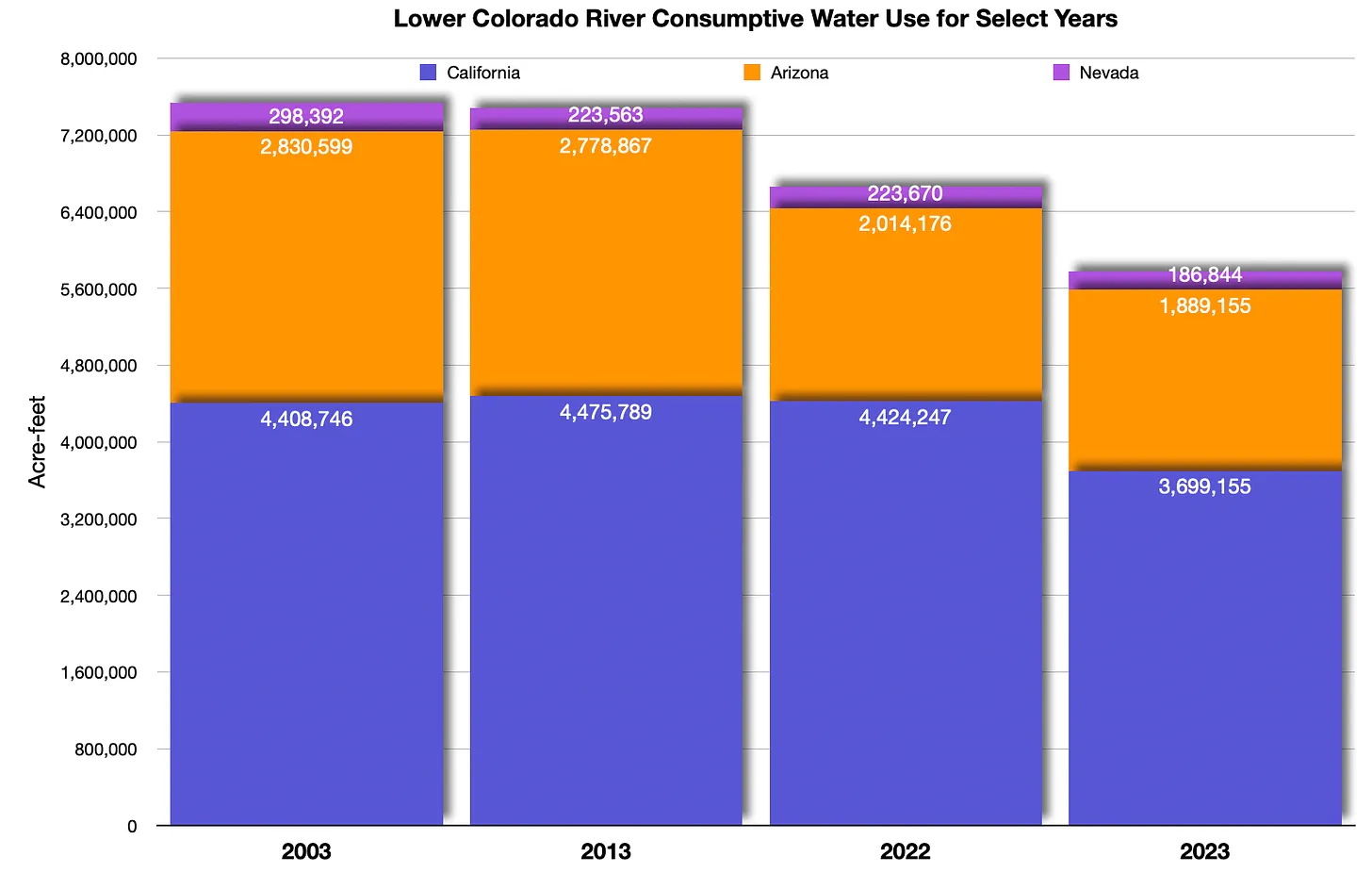
The latest Lower Colorado River Accounting Report is out from the Bureau of Reclamation, and it holds some good news: The biggest guzzlers of the river’s water are using less of it.

Last year, the Lower Basin states of California, Nevada, and Arizona consumed1 5.78 million acre-feet, or nearly 900,000 acre-feet less than in 2022. That’s a huge amount of water that’s staying in — or being returned to — the river rather than getting gulped up by crops or lawns or power plants or swimming pools.

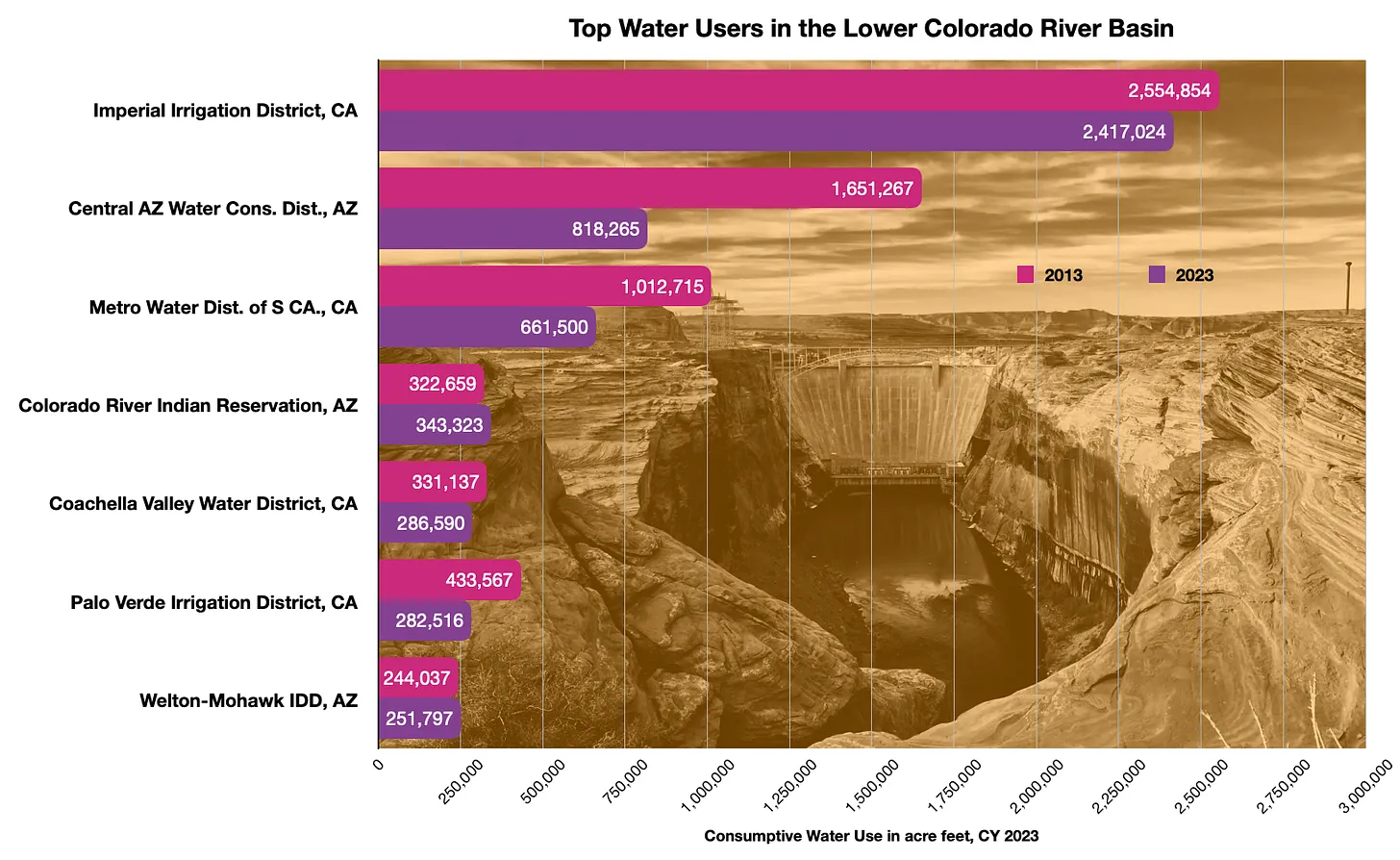
Still more impressive is that consumptive use has decreased by nearly 1.8 million acre-feet since 2003, or a 23% drop, even as the population of the region served by the river has ballooned. Both agriculture and municipal users appear to be taking a portion of the cuts. The predominantly agricultural Imperial Irrigation District, the river’s single biggest user, slashed consumption by 160,000 acre-feet from the previous year, indicating that federal compensation programs for fallowing fields are working. Nevada, where virtually no water is used for farming, is taking less of its already paltry share of the river by cracking down on waste.

The river’s largest water users have cut consumption over the past decade, some more dramatically than others. Source: USBR.

Whether these cuts will be enough isn’t yet clear — they don’t include any changes in Upper Basin use. Federal officials have said 2 million to 4 million acre-feet of reductions will be necessary to offset the effects of climate change-exacerbated aridification and to keep Lake Mead and Powell viable. Others think even deeper cuts will be necessary if the river continues to shrink.
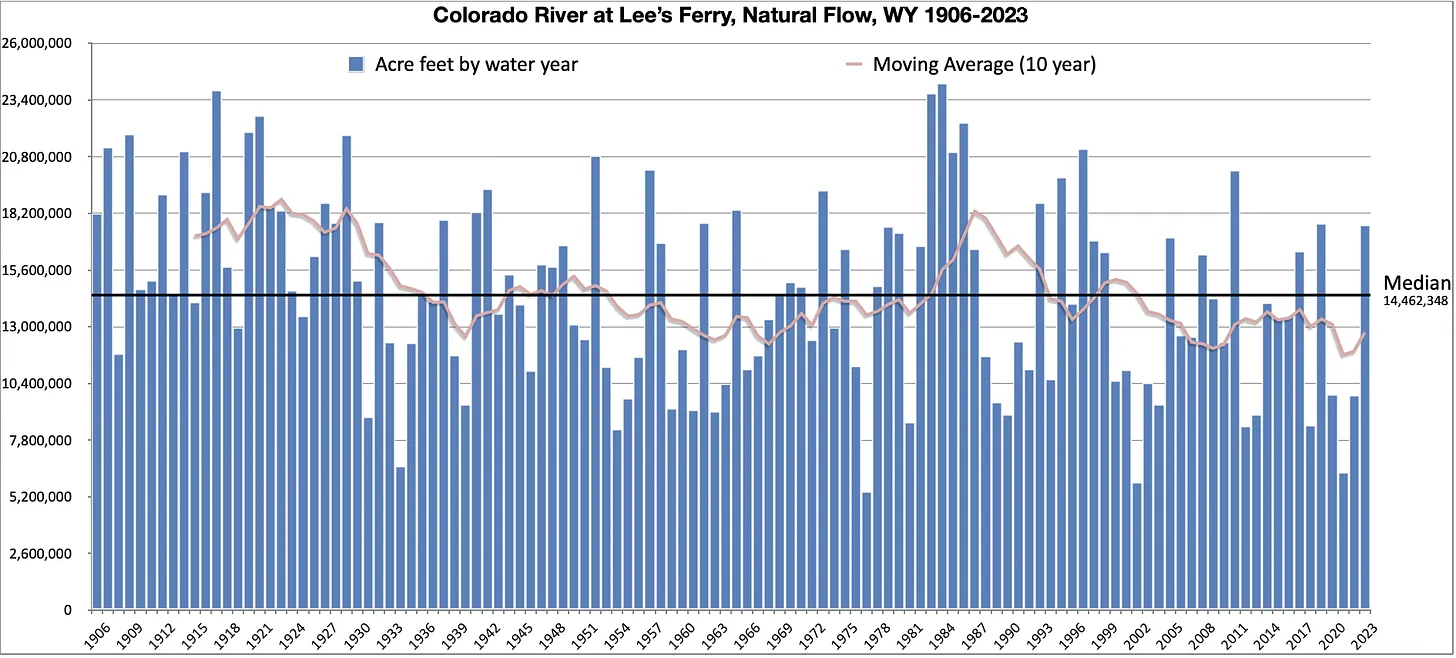
The river has carried less than 10 million feet during nine of the last 22 years. In 2002 and 2023 it only held about 5 million acre-feet — which wouldn’t have been enough to serve just the Lower Basin.

Estimated natural flow of the Colorado River at Lee’s Ferry (the dividing line between the Upper Basin and the Lower Basin). The natural flow is basically the total amount of water the river delivers each year, or the volume that would pass by Lee’s Ferry if there were no upstream diversions. Source: USBR.

***

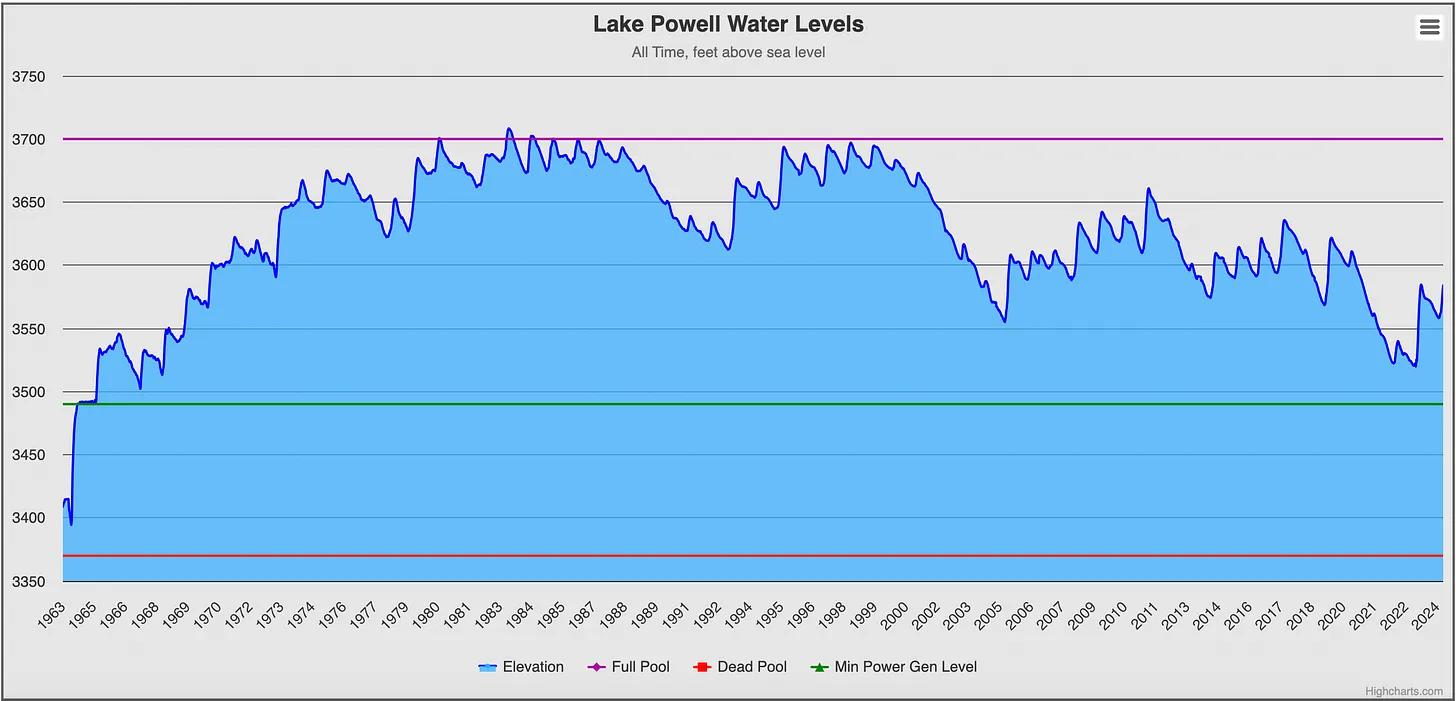
On a related note: Those Summer Solstice storms and flash floods gave a bit of a boost to Lake Powell. On June 21, the average inflow to the reservoir was about 31,000 cubic feet per second — a pretty good volume resulting from the tail-end of the spring runoff. Two days later, it popped up to more than 51,000 cfs, bringing the surface elevation up to 3,583 feet above sea level and a bit further out of the dead pool danger zone. It’s still a long, long ways from full, however.

From the Lake Powell Water Database.

It’s likely the floods delivered another gift to Lake Powell: a herd of rafts belonging to a boating party that happened to set up camp along the banks of the San Juan River above Mexican Hat just before the storm hit. They had tied up their boats and set up their tents right at the mouth of Lime Creek. Pretty soon a wall of hot chocolate-colored water came barreling down the wash, taking gear and all of the boats with it. Thankfully, no one was hurt…

🌵 Public Lands 🌲

Credit: Jonathan P. Thompson/The Land Desk

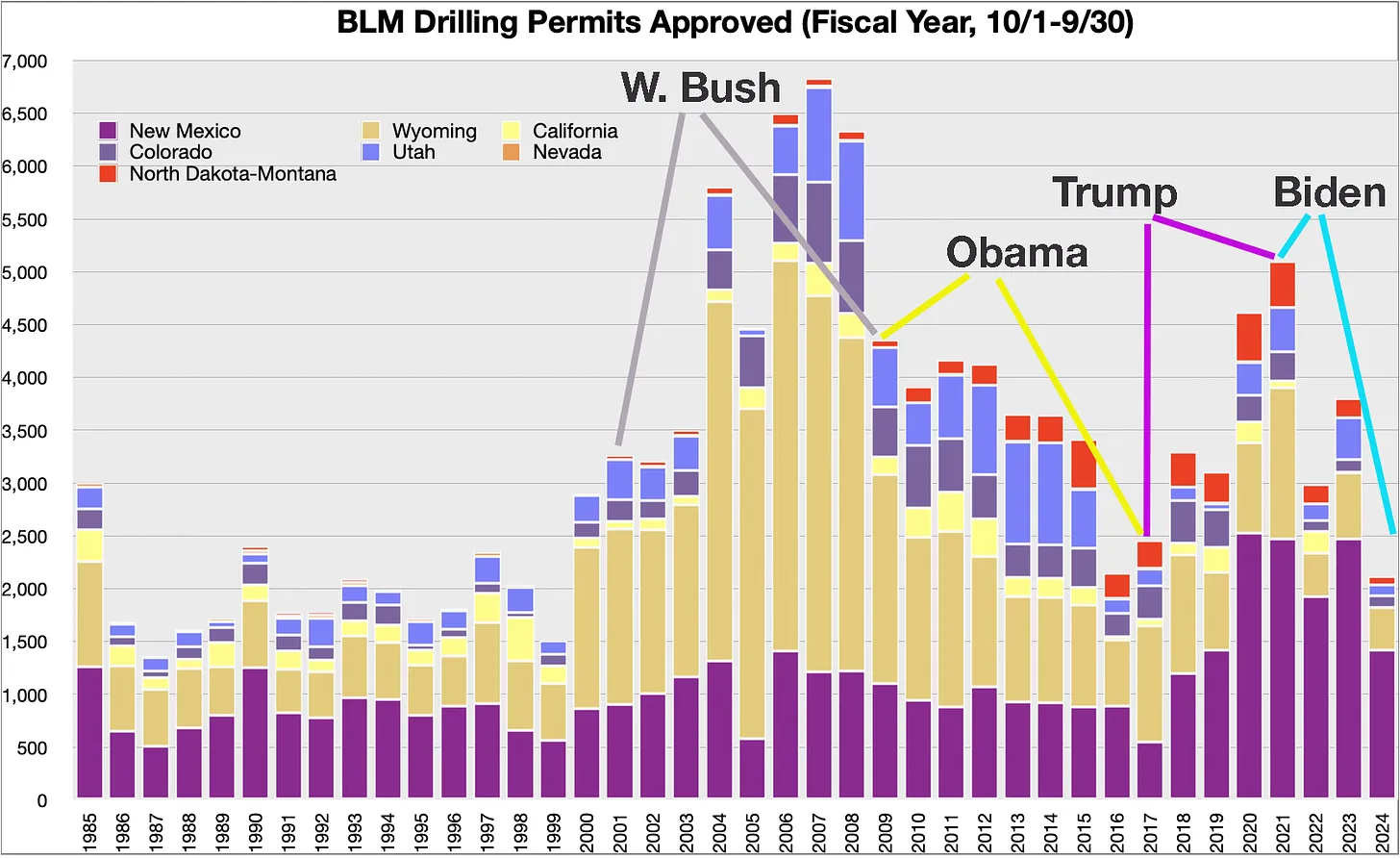
Here we go again: Another media outlet is trying to make hay out of the question of who issued more oil and gas drilling permits, Biden or Trump. And here I go once again, allowing myself to get dragged into this little tiff, which has received so many words in the news and yet is ultimately about as consequential as a hypothetical Jell-O wrestling match between the two main presidential contenders. So why bother with it this time? Because people seem to care. Also, there’s a funny new twist.

As you may recall, about a year after Biden took office, environmental groups began scolding the administration for issuing more oil and gas drilling permits than the Trump administration did during its first year. The trope has been dusted off and repeated every January since, including early this year, as more evidence that Biden is still failing to live up to campaign-era statements that he would end drilling on federal land. Since this statistic is losing Biden support among young, climate-minded folks, the administration has generally played it down or denied it.

Now, the Washington Free Beacon, which is not exactly a legitimate news organization, is claiming that Biden, himself, is bragging about issuing more permits than Trump. Furthermore, the Beacon is arguing that Biden’s boasts are false and based on misleading data — and that Trump actually issued more permits

So which is it? Before I get to the big reveal, let me say this: This whole comparison is stupid. Seriously. It’s all part of the horse-race politics our society has embraced. 

This is being portrayed almost as if Biden and Trump are sitting on opposite ends of the Oval Office in a race to sign the most (or least) drilling permits, with the winner (or loser) getting the most votes. Of course, that’s not how it works. Neither the president, nor their cabinet members, nor the director of the Bureau of Land Management actually sign off on these things. They’re issued at the field or district office level. Those bureaucrats, sitting in Carlsbad or Farmington or Buffalo or what have you, can only approve a permit if an oil and gas company applies for one. And a lot of factors wholly unrelated to who is in the White House dictate whether a company wants to drill in a specific place or not.

So what I’m saying is that the numbers I’m about to present to you are less an indication of how oil and gas-friendly or climate-friendly a president is, than a sign of how healthy the oil and gas market is. So take them with a grain of salt. 

But for now, the “winner” … or, rather, the administration that issued the most drilling permits per month, on average, is … Donald J. Trump (by a hair). Which means (though it pains me to say it): The enviros were wrong and the Free Beacon is right. 

14,543: Total number of drilling permits issued by the Bureau of Land Management during the Trump administration (1/21/2017 to 1/20/2021)

302: Monthly average of drilling permits issued by the BLM under Trump (total permits/48 months).

11,964: Total number of drilling permits issued by the Bureau of Land Management during the first 41 months of the Biden administration. (1/21/2021 to 6/20/2024)

292: Monthly average of drilling permits issued by the BLM under Biden (total permits/41 months).

The bar for 2024 includes permits issued until 6/20/2024.Data is from the BLM’s Approved APDs Report database. During fiscal year 2021, more than 5,000 permits were issued, 2,030 of which were handed out by the Trump administration between Oct. 1, 2020, and Jan. 20, 2021.

So there you have it. Biden’s BLM has issued 10 fewer permits per month, on average, than Trump’s. I suppose this is notable, given the extreme differences in approach and policy between the two: Trump’s “Energy Dominance” vs. Biden’s campaign pledge to end drilling on federal lands. 

But campaign promises, vapid slogans, and even the number of drilling permits issued are far less meaningful than actual policy. And in that realm, Biden has done pretty well on environmental and public lands issues, implementing new protections and pollution-fighting regulations, getting massive amounts of funding for clean energy and abandoned well cleanup from the Infrastructure and Inflation Reduction Acts, establishing new national monuments, extending Endangered Species Act protections to more critters in the path of energy development, and leasing less land to oil and gas companies than any administration in recent memory.  

And let me add that if you’re a climate and/or environmentally minded person or just value public lands and are still on the fence when it comes to Biden or Trump, then you’re not paying attention. A second Trump administration will be a far bigger disaster for our lands, air, water, and climate than the first one. Last time, Trump’s and his cabinet’s incompetence mitigated the damage, somewhat. This time right-wing think tanks (an oxymoron, perhaps?) are preparing a “playbook” to guide a second Trump administration in eviscerating environmental and public health protections, rescinding national monuments, and generally opening up public lands to corporate pillaging and profiteering. [ed. emphasis mine]


1 Consumption = Consumptive Use = Total Diversions – Return Flows. So Nevada may pull more than 400,000 acre-feet from Lake Mead, but because it returns more than half of it to the reservoir in the form of treated effluent, its consumptive use is less than 200,000 acre-feet.

#ClimateChange: A serious downer for mountain streams: Also other stuff that you want to read — Jonathan P. Thompson (www.landdesk.org)

Click the link to read the article on The Land Desk website (Jonathan P. Thompson):

June 4, 2024

🥵 Aridification Watch 🐫

Climate change is a real bummer for mountain streams — it depletes the groundwater that feed creeks and rivers and makes them dirtier, besides. That’s the grim conclusion one reaches after reading two recently published papers. Let’s take them one at a time:

The Colorado River region is in the grips of the most severe, multi-decadal drought in over a millennium. The most obvious signs of this are declining streamflows across the region. But these declines, the authors of the paper point out, “cannot be explained solely by lower precipitation.” In 2021, for example, the Upper Colorado River Basin received about 80% of the normal snowfall. But the river’s unregulated flow into Lake Powell was just 30% of normal — indicating that some of that snow was going missing somewhere along the line.

Some of the vanishing act can be attributed to sublimation, or the direct conversion of snow to water vapor, skipping the in-between liquid state (so the snow evaporates into the atmosphere rather than into streams). Climate change-exacerbated warming temperatures and dust-on-snow (and the resulting decrease in albedo) can increase sublimation. But researchers suspected something else was also at play here, namely changes in groundwater storage. 

Scientists have long assumed that groundwater didn’t play a significant role in streamflows in mountainous regions because the geology didn’t support large underground storage. But newer research suggests that networks of fractures in crystalline and metamorphic rock can store more water at greater depths than previously believed. Perhaps that was what was stealing the water? 

The researchers focused their investigation on the drainage of the East River, a stream that flows from the mountains above Crested Butte, Colorado, and on whose banks the Rocky Mountain Biological Laboratory sits. They used a high-resolution hydrological model that maps what’s going on 400 meters underground. 

The East River Valley, northwest of the historic town of Gothic, home to the Rocky Mountain Biological Laboratory. The mountain with the pointed peak in the distance is Mount Crested Butte. Photo credit: Mark Stone/University of Washington

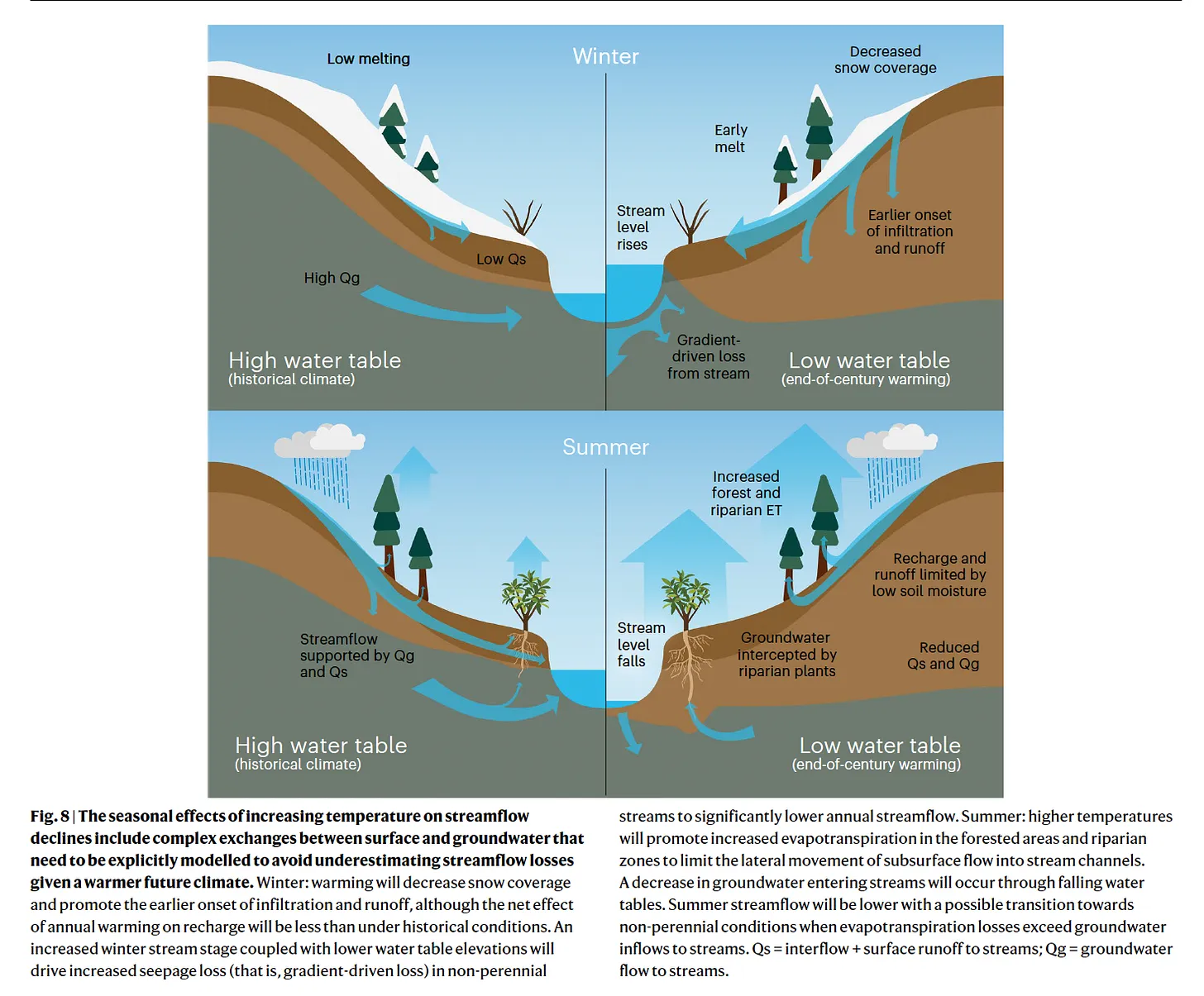
They found that, normally, groundwater storage can help stabilize streamflows during fluctuations between wet and dry years. Big snow recharges the aquifer, and the aquifer bolsters stream flows during droughts. But modeling shows that after just one extremely dry year, the groundwater storage does not recover, even after subsequent wet years. Higher temperatures, meanwhile, increase vegetation’s evapotranspiration — or consumption of groundwater — which further diminishes groundwater storage recharge. Wintertime snowmelt actually increases groundwater recharge during the winter and early spring, but in doing so, steals water that would otherwise go to streamflow. 

So, yeah, not only does global warming diminish the snowpack, it also depletes groundwater storage, which ultimately leads to reduced Colorado River flows and more tension and conflict over how to divide up what little water — that could be contaminated with metals (see below) — remains. I’d recommend reading the whole paper, since my summary really doesn’t do it justice. It has interesting insights into how mountain hydrology works. Here’s a diagram from the paper giving a good overview of the phenomenon:

As if that wasn’t bad enough, now we learn that those depleted streams are also getting dirtier. That is, concentrations of potentially toxic metals are increasing in mountain streams. And, yes, it’s thanks to human-caused climate change (though the metal-loading itself isn’t necessarily human-caused). 

It’s important to note that this paper focuses on acid rock drainage as opposed to acid mine drainage. Both phenomena work the same: Water and oxygen react with sulfide minerals, usually pyrite, to form sulfuric acid. The acid then dissolves other minerals and “loads” the water with those metals, such as lead, copper, aluminum, arsenic, cadmium, and zinc — each of which can harm aquatic life in high concentrations. Acid rock drainage is the more overarching term, but generally refers to this reaction occurring naturally. Acid mine drainage is when mining catalyzes or exacerbates the phenomenon by introducing subterranean minerals to oxygen and water.

Cement Creek and an iron fen above Silverton, Colorado. Cement Creek is affected by both natural acid rock drainage and human-caused acid mine drainage. Jonathan P. Thompson photo.

An analysis of 40 years of water chemistry from 22 mineralized watersheds across Colorado found that sulfate, zinc, and copper concentrations were increasing by about 2% per year average — and have nearly doubled over the last 30 years. Some of this may be due to declining streamflows, which carry less water to dilute the metals. But the researchers found that load — or the amount of metals in the water — is also increasing, and is on average “at least an equal contributor” as the dilution effect. They also found that loads began climbing more dramatically beginning in 2000, when the current mega-drought kicked in. 

And there appears to be a correlation between the mean annual air temperature, or MAAT, and the acid mine drainage load and concentration. This led researchers to theorize that warming temperatures are melting previously frozen ground, opening up new pathways for oxygenated groundwater flow (in the same way that mining does), which in turn leads to more formation of acid rock drainage. Similarly, declining groundwater storage could lower water tables, exposing more subterranean sulfides and minerals to oxygen, thus increasing groundwater acidity and metal loading. 

The authors conclude: “Our correlation analysis therefore points to accelerating sulfide weathering rates from melting of frozen ground as perhaps the most important driving mechanism for observed regional increases in concentration and load at acidic sites.”


📖 Reading Room 🧐

In my teens and early twenties, I made a nearly annual springtime pilgrimage from Durango or Santa Fe to the Tucson area for some sunshine and desert time. One of my favorite things to do while there was to hike up Mt. Wrightson. The trailhead is at around 5,000 feet in elevation in the lush, jungle-like Madera Canyon, itself a stark contrast to the blazing cacti and scrub-smattered lowlands nearby. The well-worn trail takes you through a variety of eco-zones before topping out on the 9,456-foot summit where, inevitably, there would be snow. And, yes, I know that it’s weird to hike back to the high country climate while on an escape from the same, but it’s different when at the end of the day I’d be sitting in an open air cafe under a brilliant bougainvillea. 

Wrightson is in the Santa Rita Mountains, one of dozens of Madrean Sky Islands, or wildly biodiverse mountain ranges in southern Arizona and northern Mexico. The Arizona Republic’s Brandon Loomis has a good and heartbreaking story about how the Sky Islands are threatened by climate change, development, and a new mining boom — especially to extract so-called “green metals” such as manganese, which is used in electric vehicle batteries. 


⛏️ Mining Monitor ⛏️

Defunct uranium mines and waste rock above the San Miguel River near the former townsite of Uravan in western Colorado. Jonathan P. Thompson photo.

Maybe uranium’s too hot to handle? In March we reported that Sassy Gold was set to acquire 345 uranium mining claims on 8,206 acres in La Sal Creek, the Lisbon Valley, the Uravan Mineral Belt, and on the San Rafael Swell from Kimmerle Mining and its associated firm, Three Step Partnership, both of Moab. Now Sassy is retracting its offer, saying it “identified a number of material political, environmental and technical risks associated with the properties” that “fundamentally altered the value of the proposed transaction.” You don’t say?

*** 

Congress continues to push legislation that would “reform” the 1872 General Mining Law. Good news, right? Wrong. These lawmakers — which include both Democrats and Republicans from mining-heavy states — are looking to codify an older interpretation of the law allowing mining companies to dump waste rock or mill tailings on federal mining claims that are not valid, i.e. they don’t contain minerals of proven value. The bill passed the House and is now working its way through the Senate. Inside Climate News has more on that.

Meanwhile, efforts to actually reform the 152-year-old law to make it less of a giveaway to corporations appear to be at a standstill.

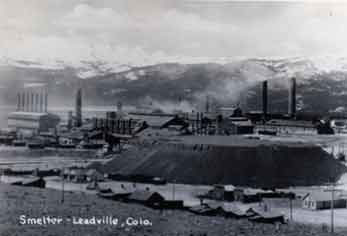
Plan to use cyanide to extract gold from #Leadville mining waste has residents concerned: Proposal has prompted locals to submit hundreds of comments in opposition — The #Denver Post #ArkansasRiver

California Gulch back in the day

Click the link to read the article on The Denver Post website (Elise Schmelzer). Here’s an excerpt:

A company in Leadville wants to truck 1.2 million tons of the waste to a mill on the southwestern edge of the high mountain city, use cyanide to extract gold and silver from the rocks, and then return the hills to a more natural state. CJK Milling says its proposed operation would be “one of the largest, most innovative environmental cleanups of abandoned mine waste” in Leadville — and a model for other historic mining areas.

But the company’s proposal has prompted skepticism and alarm in Leadville, with some locals opposing the additional trucks the project would put on roads in the area. Others fear the use of toxic cyanide — up to 600 pounds a day — so close to town and the Arkansas River. They worry about the project’s potential impacts on soil, water and air quality.

The proposal has also raised a broader question: What is the future of mining in a town that once relied on it but has cultivated a new identity as a high-altitude hub for tourism and recreation?

[…]

Company leaders, however, say their project is not a mining operation — and instead is focused on removing the waste piles and returning the land they sit on to its natural state. The project could be an example of profitable, privately funded cleanup of mining waste, said Nick Michael of CJK Milling.

April is the cruelest month (to the #snowpack): Mining Monitor: Lithium operation gets water permit; some hype comes to fruition — Jonathan P. Thompson (SubStack)

Sprinkler, sky, snowy field. Jonathan P. Thompson photo.

Click the link to read the article on The Land Desk website (Jonathan P. Thompson):

May 3, 2024

🥵 Aridification Watch 🐫

What a difference a warm, dusty month can make. 

In early April, the Land Desk reported that the snowpack in most of the Southwest was at or above normal, and appeared to be peaking right on schedule, presaging a normal spring runoff. But April turned out to be the cruelest month, after all, sending snowpack levels into a free-fall and dashing hopes for a strong spring runoff on most of the region’s streams. 

Take the Gunnison River watershed: Snow water equivalent levels peaked on April 9 at a slightly higher than median level — or about 107% of normal. Within a week, the levels had dropped below normal; and by May 1 were at about 75% of the median level for that date, putting it just about even with 2021, which was a horribly dry year. (More charts and graphs below the text).

A similar pattern is seen throughout Colorado, with northern areas (such as the Yampa) generally faring better than those in the southern part of the state (e.g. the Animas and Dolores). There are exceptions: Snowpack in the high La Plata Mountains in southwestern Colorado is still at about 90% of the median and isn’t falling as quickly as in other areas, which is good news for the La Plata River and the “Dryside” farmers who rely on it for irrigation.

Part of the problem was that the spigot from the sky, after spewing generously for much of March, seemed to shut off in mid-April, with the exception of a single good storm near the end of the month. But a bigger factor was the combination of unusually high temperatures throughout the winter along with relentless spring winds and a series of dust events.

Overall, the United States experienced its warmest meteorological winter(Dec 1 – Feb. 29) on record, and Western states had unusually high temperatures. A sampling of average daily temperature data from individual and river-basin SNOTEL sites reveal that in most cases they were above median for the period of record (which usually reaches back to the late 1980s). 

Hastening the snowmelt have been a series of dust events in the late winter and early spring. The Center for Snow and Avalanche Studies, in its April 22 statewide report, observed dust layers across the Colorado mountains, with severe dust in the McClure Pass and Roaring Fork region, and with Wolf Creek Pass having the heaviest dust in the San Juan Mountains. “Perhaps, besides the Roaring Fork region, overall dust severity is in the ‘average’ category,” wrote CSAS director Jeff Derry, “but don’t believe, combined with the weather, it can’t have drastic affects on snowpack ablation. Without some meaningful precipitation snowmelt season could be over quickly.”

Dust in Western Colorado certainly isn’t new. Old newspapers abound with tales of dusty woe, including this grisly one from May 1911.

In early April, the Dolores Water Conservancy District noted that it was unlikely they’d release enough water from McPhee Reservoir to enable boating in the Lower Dolores River — even for a short period of time. The deteriorating snow situation makes the prospect of raftable flows above the confluence with the San Miguel River highly implausible. As I write this, the river’s flow below the dam is barely more than a trickle at 50 cubic feet per second (and around 500 cfs above the reservoir). 

At the beginning of April, the Bureau of Reclamation predicted Lake Powell’s surface level would increase by about 30 feet from late March levels during spring runoff in June, before subsiding back to about 3,563 feet by the end of the year (It was at 3,560 feet on May 1). The agency hasn’t released it’s end of April projections yet, but they’re likely to be less optimistic now. 

The Animas River in Durango, where the water runs free and flows are influenced entirely by snowmelt, hit 1,600 cfs on April 25 before cooler temperatures brought it back down to 736 cfs. We can get a sense of when and how big peak runoff will be by considering that on May 1 of last year, the snow levels in the basin were about twice what they are now, and the river peaked at 4,500 cfs at the end of May. 

My guess: The Animas River will peak on May 18 at 2,400 cfs. What do you think? Leave your guess in the comments below.

The Animas River Basin’s snowpack was tracking right around median after a wet March, but it’s melting quickly enough that it’s now on a par with 2021, when many a regional irrigator went without water.
Precipitation in the San Juan-Animas-Dolores Basin this water year has been pretty close to normal, but warm temperatures and dust have turned what fell as snow to water sooner than usual.
This shows the averages of the average daily temperatures for a number of SNOTEL stations across the San Juan Mountains in southwestern Colorado. Note that 2024 was warmer than the median for the period of record (beginning in 1987) and was significantly warmer than in the 1990s.
The Northern Rockies have had it tough, as far as snow goes, this year. Snowpack levels in the Upper Green were at their lowest on record in early January. They rebounded to close to normal before declining again in April.
Part of the reason for scant snow is relatively high temperatures. This water year has been the third warmest on record for the Upper Green.

⛏️ Mining Monitor ⛏️

NEWS: Utah’s state engineer approves Blackstone Minerals’ (aka A1/Anson) proposal to withdraw about 13,755 acre-feet of water from groundwater wells near Green River, Utah, clearing the way for what would be the Four Corners region’s first direct lithium extraction project

CONTEXT: Australia-based Anson Resources and its subsidiaries — A1 Lithium, Blackstone Minerals, and Blackstone Resources — have staked more than 1,000 federal mining claims, acquired private land, and secured Utah state land leases in and around southeastern Utah’s Paradox Formation over the last several years. They appear to be working on several projects, with their Paradox direct lithium extraction project the furthest along. 

Anson plans to drill 8,000- to 9,000-foot-deep wells just north of the town of Green River, pump brine to the surface, and use resin beads to extract the lithium from the water, without evaporation ponds. After the lithium is extracted, Anson claims they’ll inject the same amount of water back underground, which if true would mean their consumptive water use — or the amount withdrawn minus the amount returned to the aquifer — will be zero. Last year Anson applied for the right to withdraw water year-round at a rate of 19 cubic feet per second — or about 12 million gallons per day — for non-consumptive use. 

But concerned residents, advocates, and even federal and state regulators have expressed skepticism and concern. Not only is the zero-consumptive use claim somewhat dubious, but pumping that much groundwater could have an adverse effect on the Green River or freshwater aquifers. Plus, the wells will be drilled adjacent to a former uranium mill and current disposal site for radioactive and otherwise contaminated materials, and within the Department of Energy’s “area of concern” surrounding the site. And they will drill through an aquifer contaminated by those activities.

The red “x”s mark the location of Anson’s wells. The dark rectangle is the radioactive waste disposal cell.

The state, however, felt that Anson adequately addressed these concerns, and granted the water right. It did, however, indicate that if Anson’s water use was not 100% non-consumptive, the company would be subject to enforcement and fines. The Great Basin Water Network and local residents have called for public meetings with regulators to address their concerns.


Also… 

  • Congress has passed legislation banning low-enriched uranium importsfrom Russia, sending it to President Biden’s desk for signing. While the U.S. does not import large amounts of the reactor fuel from Russia, the ban likely will cause uranium prices to rise and bolster efforts to reopen uranium mines in Utah, Colorado, New Mexico, and Wyoming. (World Nuclear News)
  • Navajo Nation leaders urge the Biden administration to block a mining company from shipping uranium across tribal land from the Pinyon Plain mine near the Grand Canyon to the White Mesa mill in southeastern Utah. (KNAU)
  • Anfield Energy applies for state and federal permits to reopen its Velvet-Wood uranium mine in the Lisbon Valley of southeastern Utah. (news release)
  • Anson Resources (yes, the lithium folks) is launching a uranium exploration project at its Yellow Cat claims just north of Arches National Park in a historically mined area. (proactive)
  • Don’t forget to the visit the Land Desk Mining Monitor Map for more info on mining activity in the Four Corners Country.

A flurry of public land protections: Biden’s rushing to get new rules in place, just in case … — Jonathan P. Thompson (LandDesk.org)

Beeweed and pumpjack. San Juan Basin, New Mexico. Jonathan P. Thompson photo.

Click the link to read the article on The Land Desk website (Jonathan P. Thompson):

The public lands beat has been rather busy, to put it mildly, as the Biden administration rushes to finalize rules, orders, and protections as soon as possible to make them less vulnerable to being rolled back if Biden were to lose in November to, ummm, a more hostile candidate. Maybe Biden’s also working to more clearly distinguish himself on environmental issues from Trump in advance of the election — as if the stark contrast isn’t abundantly clear already. 

So much has happened that I’ve fallen behind. So forget the pre-amble, let’s get to it:

In late March, the Bureau of Land Management finalized its methane waste prevention rule, which requires oil and gas operators on federal lands to find and repair leaks in their infrastructure and to phase out flaring and venting of methane — a.k.a. natural gas. The rules complement the EPA’s similar regulations finalized earlier this year. 

Methane is a potent greenhouse gas, having about 86 times the warming potential of carbon dioxide over the near-term (methane in the atmosphere breaks down into carbon dioxide and water over the long-term). While methane — which occurs alongside oil in underground reservoirs — can be captured and marketed as natural gas, oil drillers tend to vent or flare it and other associated gases, since it isn’t as profitable as oil. 

Flaring and venting of methane and other gases shot up after horizontal drilling-multistage hydraulic fracturing opened up vast new stores of oil. Source: Bureau of Land Management.

Between 2010 and 2020, after the “fracking”-enabled shale revolution got underway, oil and gas operations on federal and tribal land vented and flared an average of 44.2 billion cubic feet of methane annually. That’s as bad for the climate as burning around 9 million tons of coal. And since operators don’t pay royalties on gas they throw away,  that cost American taxpayers some $166 million in lost revenue over a decade. 

The rules look to rein that in by gradually decreasing the maximum amount of methane that can be flared or vented and charging royalties on the gases that are wasted. It is expected to slash greenhouse gas emissions and result in about $50 million annually in added royalty revenue. 

Methane Madness: Part IJonathan P. Thompson

***

A few days later, the administration finalized its ban on new oil and gas leases and mining claims on about 220,000 acres along Western Colorado’s Thompson Divide. The protections cover a stretch of high-country BLM and USFS land between Glenwood Springs, Crested Butte, and Somerset. It does not affect valid, existing leases or claims. 

In the early 2000s an eclectic group of environmentalists, ranchers, and recreational users banded together to protect the Divide from the growing threat of oil and gas development. Their efforts goaded the feds to halt new development and cancel existing leases on much of the acreage, long before this spring’s move. Meanwhile, a similar uprising in the Crested Butte area blocked a proposed molybdenum mine on Mt. Emmons, or the Red Lady. 

The administration’s withdrawal bolsters these efforts and blocks new development for the next 20 years. By then, one would hope, the administration’s demand-side efforts to reduce fossil fuel consumption — including encouraging clean energy development and pushing zero-emission cars — will have kicked in. 

***

And Biden and Interior Secretary Deb Haaland raised royalty rates and reclamation bonding amounts for oil and gas drilling on federal land. This one was a long-time coming. The previous 12.5% royalty rate has remained unchanged since Congress passed the Mineral Leasing Act in 1920. And oil and gas drillers have been getting away with posting bonds for all of their wells in a state that don’t get anywhere near covering the cost of cleaning up a single well. 

Environmentalists welcomed the reforms, but also criticized them for failing to address climate impacts of oil and gas development on public lands. Oh, and then there’s the thing about the faulty math: Mark Olalde and Nick Bowlin, for ProPublica and Capital & Main, found that even the new bonding amounts wouldn’t cover clean up. The problem? A BLM staffer miscalculated the cost to plug and reclaim a single well, and the inaccurate figure got incorporated into the analysis and final rule. Whoops. 

***

The administration blocked new oil and gas leases on 13 million acres of the National Petroleum Reserve-Alaska. That’s a huge amount of land and especially remarkable given that it’s in a petroleum reserve and it’s likely to result in some 50% less greenhouse gas emissions than Trump’s plan for the same area. Still, it may not be enough for the climate hawks who remain livid over the administration’s approval of a scaled-back, but still gargantuan, Willow (a.k.a. “carbon bomb”) drilling project in the reserve. Meanwhile, Biden’s Willow approval is not enough to soothe the anger of Alaska’s congressional delegation — including Democrat Rep. Mary Peltola — who blasted Biden for ignoring Alaska’s love for fossil fuels and called it an “illegal” move that dealt a “one-two punch” to the state’s economy. You just can’t win for losing, can you? 

*** 

Light and texture. Big Gypsum Valley, Colorado. Jonathan P. Thompson photo.

And last, but certainly not least: The Bureau of Land Management finalized its public lands rule, designed to put conservation on a par with oil and gas development, grazing, and other extractive uses.

The rule’s main provisions include: 

  • It directs the agency to prioritize landscape health in all decision making, which is what it’s already supposed to do when assessing grazing allotments. It hasn’t done a very good job at that, so far. 
  • It creates a mechanism for outside entities — states, tribes, or nonprofits — to lease public land for restoration projects — much as a rancher or oil and gas company might lease BLM land. 
  • It allows firms to lease land for mitigation work to offset impacts from development elsewhere. 
  • It clarifies the process for designating areas of critical environmental concern, or ACECs, where land managers can add extra regulations to protect cultural or natural resources. 
  • And it directs the agency to incorporate Indigenous knowledge into decision-making, particularly when considering ACECs. 

The rule is being hailed by conservationists as a “generation-defining shift” in public land management, and lambasted by Sagebrush Rebel-wannabes as a “misguided land grab meant to prevent oil and gas production … <and> … an attack on our ranchers and farmers that will end grazing on federal lands and will also prevent Coloradans from accessing their public lands.” (A gold star to whoever guesses which MAGA-loving congress member made the latter grossly misinformed quote!).

Honestly, I’m not sure either side’s hoohas are warranted. It’s hard to see how a couple new leasing categories will be generation defining, I kinda doubt the rules will affect oil and gas production, and I’m absolutely certain they won’t end grazing or otherwise block access to public lands. 

The rule doesn’t add any new restrictions or put any land off-limits to development. It doesn’t give greens the power to kick a legitimate drilling, mining or grazing operation off public land to do a restoration or mitigation project. The mitigation leases could actually facilitate energy development. As for grazing, the Biden administration has indicated it considers ranching to be a type of land conservation, a theory that is manifested in the BLM’s policy of veering away from public lands grazing reform. Grazing is allowed in most ACECs. And the agency just set the 2024 grazing fee at $1.35 per animal unit month, the minimum Congress allows. I think the cows and their ranchers will be just fine under this new rule.

It seems to me that this rule’s provisions are fairly open to interpretation. That means the actual implementation — and how it plays out on the ground — will depend largely on BLM state, regional, and field-office managers. And those local-level bureaucrats can be swayed by the prevailing attitudes of the communities where they live and work, and by pressure from local or state officials. 

In the end, the rule is essentially a reminder to the BLM that their job is not just to bend over for corporate and extractive interests, but to actually care for the land that belongs to all Americans. It is simply reinforcing the multiple-use charge Congress set forth when it passed the Federal Lands Policy and Management Act back in 1976. It’s not that big of a deal. But then again, FLPMA helped spark the Sagebrush Rebellion in the late 1970s. So who knows what this rule might inspire now…

📸 Parting Shot 🎞️

Eagles in a tree near Norwood, Colorado. Jonathan P. Thompson photo.

Feds publish “unprecedented” #BearsEars plan: Preferred alternative centers Indigenous knowledge, includes tribal co-management — Jonathan P. Thompson (@Land_Desk)

Fresh snow on Bears Ears. Photo credit: Jonathan P. Thompson/The Land Desk

Click the link to read the article on The Land Desk website (Jonathan P. Thompson):

March 12, 2024

The Bureau of Land Management and National Forest Service released the draft Bears Ears National Monument management plan last week and I don’t think I exaggerate when I say it is potentially history-making. That’s because the agencies’ preferred alternative “maximizes the consideration and use of Tribal perspectives on managing the landscape” of the national monument, and is intended to “emphasize resource protection and the use of Traditional Indigenous Knowledge and perspectives.” 

When it was established by President Obama in 2016, Bears Ears became the first national monument to be conceived of, proposed, and pushed to realization by Indigenous tribal nations. Now it is set to become the first to have a management plan centered around Indigenous knowledge. The Bears Ears Commission, made up of representatives from each of the five tribal nations that made up the inter-tribal coalition, will have an active managing role under the preferred alternative. 

National monument proclamations typically are overarching documents that set the general framework for what kind of protections they will offer the resources within their boundaries. The management plan, however, is where the rubber meets the road, as they say, and lays out more detailed regulations on recreation, grazing, off-road use, camping, and other activities. 

Creating a plan that covers 1.36 million acres of wildly varying landscapes is never going to be easy. But the Bears Ears process has been especially fraught. Before the agencies could even begin fashioning a framework for the Obama-era boundaries, the Trump administration eviscerated the national monument, dividing it into two separate units and shrinking the acreage substantially. A 2020 management plan functioned more like an anti-management plan, hardly bothering to protect what remained and replacing a tribal commission with a slate of vocal anti-national monument picks.

So, after President Biden restored the national monument in 2021, the agencies and the tribal commission had to start from scratch. The two-volume draft plan, covering about 1,200 pages, is the fruit of that labor. The agencies will accept public input for 90 days, after which they will finalize the plan. 

What the preferred alternative does — and doesn’t do

In February, Utah lawmakers nixed a proposed land exchange that would have swapped state lands within the national monument for more valuable federal lands outside the monument. Their stated reason: They had received “signals” that the Bears Ears management plan would be unduly restrictive. 

It appears that they were tuned into the wrong channel. 

In the draft plan, the agencies considered five alternatives, ranging from taking “no action,” or keeping the status quo, to Alternative D, the most restrictive, which would shut down grazing on about one-third of the monument, ban wood harvesting on another third, and close nearly 1 million acres to OHV use. And even that option doesn’t go nearly as far as many environmentalists would like. 
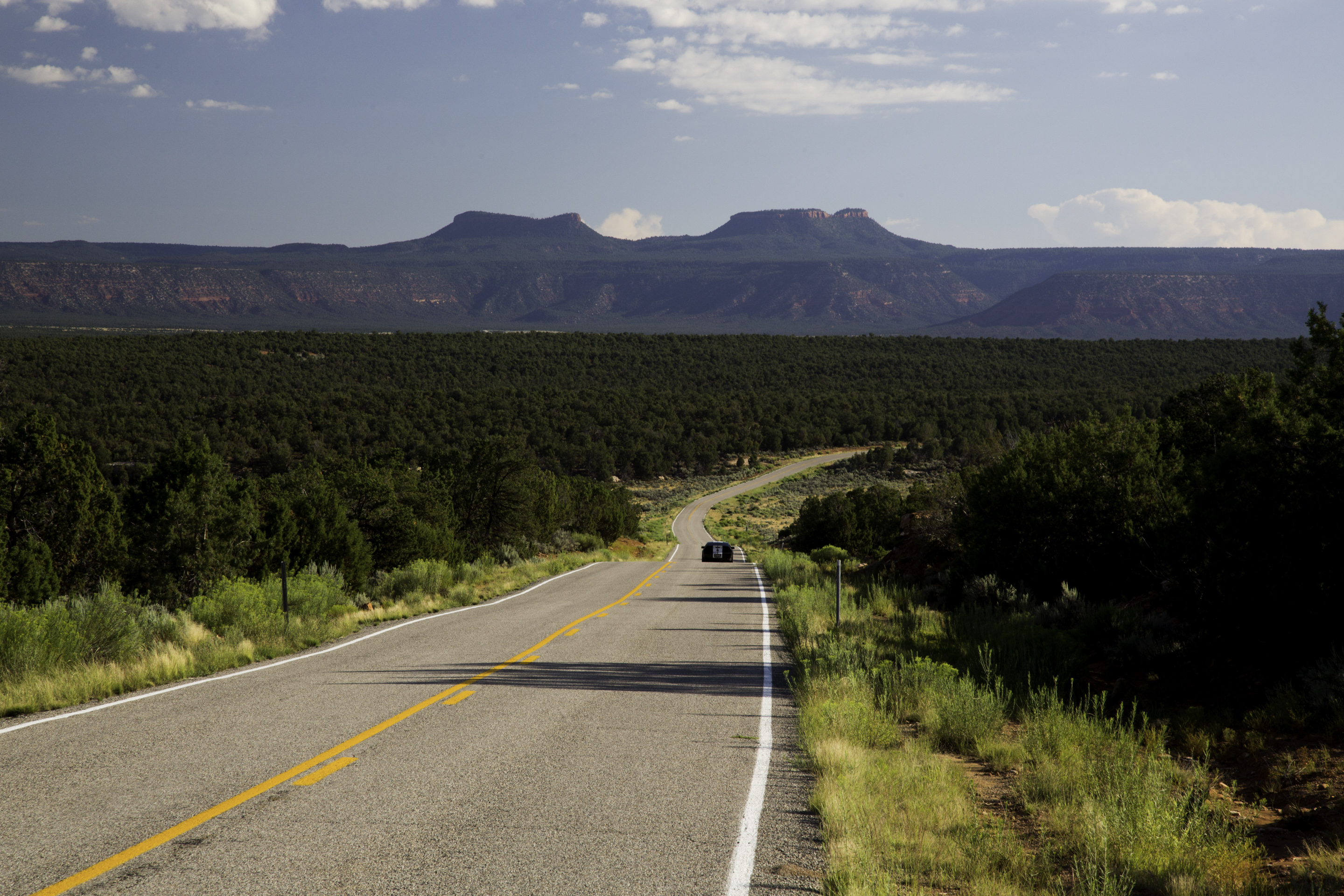
The agencies’ preferred plan, or Alternative E, is decidedly less restrictive than Alternative D in most respects. Here are some of the details:
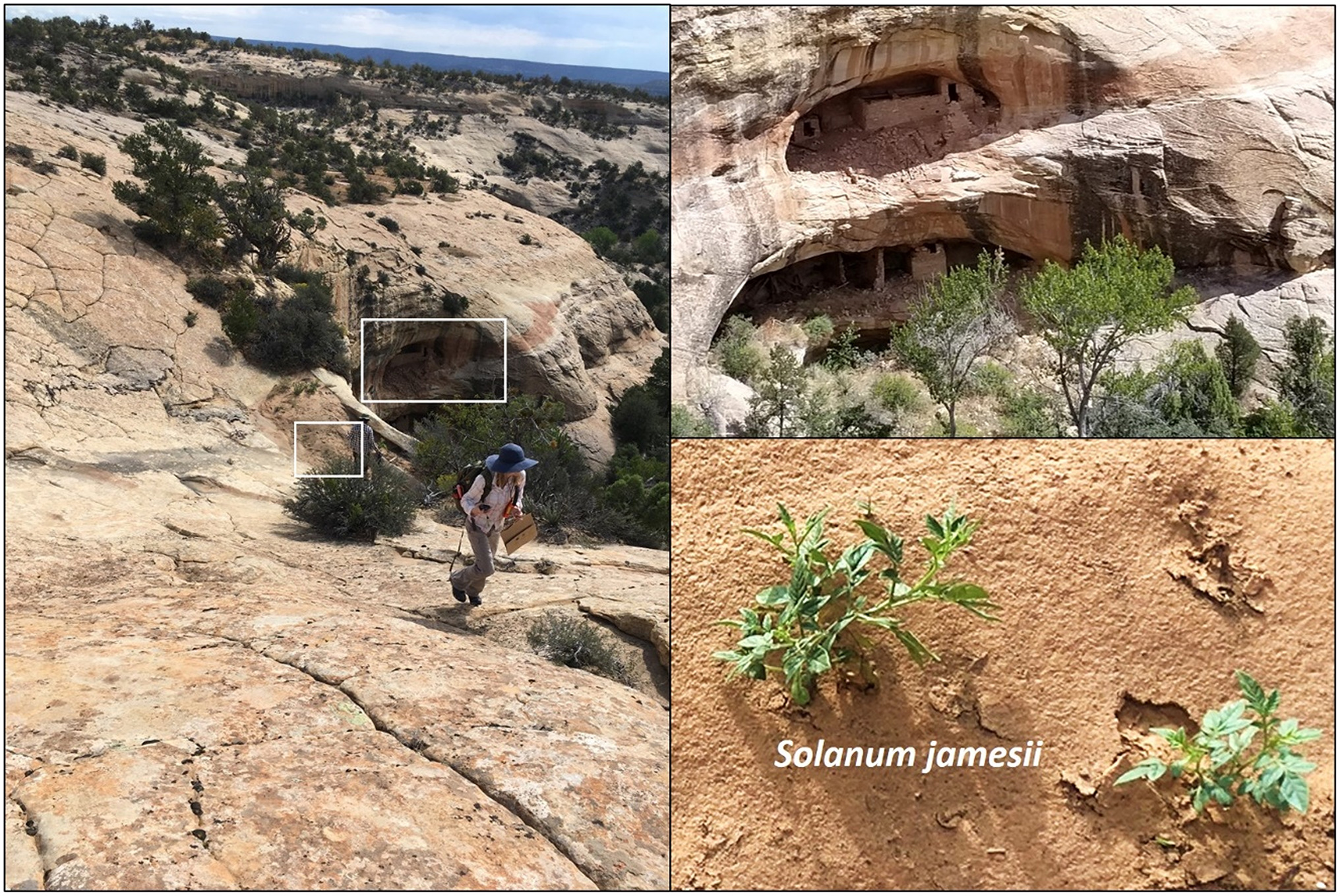
  • It would manage recreation based on four zones: Front Country, Passage, Outback, and Remote.
    • Front Country, consisting of about 19,000 acres, would be the “focal point for visitation and located close to communities and along major paved roads.” Visitor infrastructure development — restrooms, trails, campgrounds, interpretive signs — would be allowed there.
    • The 7,500 acres of Passage Zone would be along secondary travel routes such as maintained gravel roads. New facilities would be allowed here, but designed to be less obtrusive. 
    • The Outback Zone (265,299 acres) would “provide a natural, undeveloped, and self-directed visitor experience.” New facilities or campgrounds would not be allowed. 
    • The 1.07 million acres in the Remote Zone would emphasize “landscape-level protections” and would include wilderness areas and other wilderness quality lands. No new sites, facilities, or trails would be developed here. 
  • Recreational shooting would be banned throughout the national monument. This may seem somewhat arbitrary. But based on my observations, shooting is the number one form of vandalism to rock art panels. Yes, some people actually use ancient paintings and etchings for target practice. Whether they do it out of depravity or because they have an IQ of a fence post, I do not know. (Apologies to fence posts.) 
  • Livestock grazing would be allowed on 1.2 million acres and will be banned on just under 170,000 acres. Ranchers’ fears that a national monument would destroy their livelihood are clearly unfounded, as the preferred alternative represents very little change. Most of the non-grazing acreage under this plan was already off-limits to cattle prior to the monument designation. Livestock was banned in Arch Canyon, Fish Creek, and Mule Creek years ago, for example, after grazing cattle wrecked riparian areas and damaged cultural sites. And it’s not allowed in Grand Gulch, Dark and Slickhorn Canyons and other areas, either. Those prohibitions will remain in place.
  • Two new areas of critical environmental concern — including the John’s Canyon Paleontological ACEC — would be added under this alternative. 
  • Forest and wood product harvest would be allowed to continue through an authorization system in designated areas. The managing agencies and the Bears Ears Commission would establish harvesting areas where cultural resources could be avoided, and where harvest could protect and restore vegetation, wildlife, and ecosystems. Certain areas might be closed permanently or seasonally if monitoring by the agencies and Bears Ears Commission determines they need a rest. 
  • Vegetation and fire management would emphasize traditional indigenous knowledge and fuels treatments would give precedence to protecting culturally significant sites.
  • Motorized aircraft takeoffs and landings would be limited to the Bluff Airport and Fry Canyon Airstrip. Drones (aka UASs) would generally be banned (with exceptions for formally permitted operations). 
  • About 570,000 acres would be managed as OHV closed areas and 794,181 acres as OHV-limited areas (where OHVs would be limited to designated routes, as is currently the case). This represents very little change from the status quo since nearly all of the new “closed” areas would be in areas that don’t have any designated routes now, meaning they are already effectively closed to motorized travel. The one significant exception is Arch Canyon, which would be closed — at last! — to OHVs under the preferred alternative
  • Dispersed camping would continue to be allowed in most of the monument, but would be prohibited within one-fourth of a mile from surface water, except in existing or designated campsites. Camping would also be prohibited in cultural sites. Managers would be allowed to close additional areas to dispersed camping if it is found to be having an adverse effect on water bodies. Campfires would be limited to fire pans or restricted to metal fire rings when available. 
  • Swimming or bathing in “in-canyon stream/pool habitat” will be prohibited
  • Climbing will be allowed to continue on existing routes, but would not be permitted near cultural sites, to access cultural sites, or where it may interfere with raptor nests. 
The dark gray areas would be off-limits to grazing under the preferred alternative (E). Nearly all of these areas are already no-grazing zones. Alternative D, not shown, would nearly triple the acreage of no-grazing zones. Via Jonathan P. Thompson/The Land Desk
Motorized vehicle limited and closed zones under the preferred alternative. It marks a fairly minor shift from the status quo, but significantly closes Arch Canyon to OHVs. Note the squares scattered about: They are sections of state land that would be traded out in a land exchange. Right now it is on hold, however, thanks to Utah lawmakers. Via Jonathan P. Thompson/The Land Desk

This is merely a sampling of a few of the details of the preferred alternative, which is not necessarily the final choice. There are four other alternatives, as well, with varying levels of restrictions and different provisions, and they may be blended or borrowed from for the final plan. While plowing through the entire two volumes may not be your cup of tea, if you’re interested in this kind of thing I would recommend skimming through and checking out the tables comparing the alternatives in volume 1. And then check out the maps in volume 2 which also compare alternatives cartographically. You have until early June to comment. 

Interested parties may check out the plan and related documents and submit comments through the “Participate Now” function on the BLM National NEPA Register or mail input to ATTN: Monument Planning, BLM Monticello Field Office, 365 North Main, Monticello, UT 84535.


⛏️ Mining Monitor ⛏️

Remember how we wrote about a potential lithium extraction boom coming to Utah and how water protectors and advocates were concerned about its impacts? It turns out they were right — to be concerned, that is. Last week one of A1/Anson/Blackstone’s exploratory drilling rigs encountered a subterranean pocket of carbon dioxide, leading to a bit of a blowout. Now water is apparently spewing from the drill hole and could wind up in the Green River. 

I learned about this incident from a new news outlet, the The Green River Observer, which comes in a print form and as a Substack e-mail newsletter. I’ve long thought the Substack platform would be a good one for hyperlocal coverage in so-called news deserts, and now Kenny Fallon’s doing just that with the Observer. So far it has covered uranium and lithium mining, proposed water projects, housing, a local branding campaign, and more. Plus, it alerted readers to the blowout, complete with pictures and videos. Check it out!

Lithium in Paradox: aridity could nip a new #Utah mining rush in the bud — Jonatan P. Thompson @Land_Desk

Click the link to read the article on The Land Desk website (Jonathan P. Thompson):

Myriad proposals to tap lithium deposits in southeastern Utah are progressing from the conceptual to the exploratory phases. But they are running up against a familiar obstacle in these arid parts: concern about how the projects might affect diminishing water supplies in the Colorado River Basin. 

Lithium is the primary ingredient in lithium-ion batteries, which power everything from cell phones to electric vehicles to grid-scale energy storage. Demand for the stuff has shot up tremendously over the last decade, which has also elevated prices. That, in turn, has sparked interest in developing a domestic lithium industry, with projects sprouting in Nevada, at the Salton Sea and Great Salt Lake, in southern New Mexico, and in the Paradox Formation in the Four Corners Country.

The Paradox Basin and Anson/A1/Blackstone’s main target areas: A. Green River Project; B. Paradox Project; C. Wayne County water rights (and possible future processing plant?).

The Paradox Formation (or Basin), stretching from the northwestern edge of the San Juan Basin up to the town of Green River, Utah, contains oodles of lithium (along with potash and bromide and so on). That’s because some 300 million years ago a sea covered the area, then evaporated, then flooded the area, then evaporated, repeating this cycle about 29 times over the course of 15 million years. The process left behind thick deposits of salts and other materials. Over the ensuing millennia, rock piled up atop the salt, squeezing it into fault lines, where the salt was pushed up into domes that shaped the overlying landscape. Those salt deposits contain lithium.

Geologic cross-section of a portion of the Paradox Basin showing a salt dome.

Companies have poked around in the Paradox Formation in search of potash for years. Now they’re going after lithium in a big way, with several firms staking claims in the Lisbon Valley and beyond. 

Anson Resources’ Paradox and Green River Projects are probably the furthest along (if investor presentations are to be believed).  The Australian company and its subsidiaries — A1 Lithium, Blackstone Minerals, and Blackstone Resources — have been staking claims fervently among the sandstone formations northwest of Moab between the Green and Colorado Rivers over the last several years, amassing more than 1,000 federal mining claims. They also acquired private land surrounding the Department of Energy’s uranium tailings disposal site on the southern edge of the town of Green River as well as securing leases on Utah state land.

Conventional lithium operations pump mineral-filled water to the surface, put it in shallow ponds, and allow the water to evaporate, concentrating the lithium and associated materials. Potash is extracted like this, as well — a complex of potash evaporation ponds near Moab have gone viral as instagram targets due to their vivid colors. This method not only requires a lot of land for the ponds, but also is water-intensive, with as much as 200,000 gallons of water evaporating for each ton of material produced. Plus, the process can produce a lot of waste and takes a long time. 

Anson plans a different approach. They say they will partner with China-based Sunresin and use that firm’s patented direct lithium extraction, or DLE, method. Anson would drill a well (or redrill an old oil and gas well), pump the brine to the surface, and use resin beads to extract the lithium from the water, without evaporation ponds. After the lithium is extracted, the water is injected back underground. That, in theory, makes it a non-consumptive use of the water, meaning it shouldn’t have as much of an effect on water supplies. 

But direct lithium extraction is a largely unproven technology, and it’s not clear that it will work in the Paradox Basin. The technique may require fresh water to be injected into the lithium deposits before pumping it to the surface, since the minerals may not be adequately saturated. In the 1950s and 1960s, a couple of facilities in Moab pumped up brine for use in the Atlas uranium mill; they had to pump fresh water into the subterranean salt beds, first, in order to dissolve the salts. Plus, any time you drill deep into the earth and remove or inject water, you’re potentially screwing with the hydrology — and even the geology. 

Paradox Valley via Airphotona.com

This has been shown in the oil and gas fields, where “produced water,” or wastewater left over from the drilling and extraction process, is often reinjected deep underground. The process has induced seismic activity, or triggered earthquakes, in the Permian Basin and elsewhere. During the coalbed methane drilling boom in the San Juan Basin in the 1990s, all sorts of weirdness occurred, from methane flowing from water taps to a freshwater spring suddenly becoming hotter — all likely the result of pumping billions of gallons of water from the coal beds to “liberate” the methane, and then shooting it back into the ground. And in the Paradox Basin, a project that captures salt before it can enter the Dolores River and then injects it 16,000 feet underground (to keep Colorado River salinity levels in check) also triggered tremors in western Colorado. 

In other words, while direct lithium extraction could be a “game changer” for the industry, making it feasible to commercially extract lithium from geothermal brines under the Salton Sea, for example, many unknowns remain about the technology in general and this proposal specifically.  

What we do know is that Anson is looking to secure a bunch of water for its operations. Their water right applications seek:

Dead Horse State Park panorama via the State of Utah.
  • 19 cfs (13,755 acre-feet or 4.5 billion gallons per year) from wells located on Utah state land north of Dead Horse Point state park. The brine presumably would then be piped to a processing plant near the Colorado River, the lithium would be extracted, and the wastewater injected back underground. Intrepid Potash, the National Park Service, and a coalition of environmental groups protested the application, in part for its lack of detail and because, well, there really isn’t any extra water available.

Green River Basin
  • Another 19 cfs from several 8,000- to 9,000-foot deep wells on the south end of Green River adjacent to the uranium tailings depository. After extracting the lithium from a plant on this property, they would inject the wastewater into 5,000- to 7,000-foot deep wells. The Bureau of Reclamation protested this application because of its close proximity to the Green River and the potential to affect surface water supplies and quality. They also worry about direct lithium extraction, writing: “Data shows the success of DLE is hard to predict, consumes both freshwater and brine water, contaminates aquifers, reduces the groundwater table, hurts wildlife, worsens soil conditions …” Ooof.

Hollow Mountain Store, Hanksville, Utah. By Bandgirl807 (talk) – I created this work entirely by myself., CC BY 3.0, https://en.wikipedia.org/w/index.php?curid=22790682
  • And they leased 2,500 acre-feet (814 million gallons) per year from the Wayne County Water Conservancy District. This water may be used for processing, but it’s not clear where, yet. Anson has indicated it could have processing facilities in Green River and on the Colorado River below Moab, neither of which is near Wayne County (home of Hanksville). Perhaps they also plan on having a processing plant there.

The water rights applications are still pending.

For more information, check out John Weisheit’s post for FarCountry.org, the website of the Canyonlands Watershed Council.

Research by Kyle Roerink of the Great Basin Water Network informed this report.

An antiquated law rules mining in the West — @HighCountryNews

Click the link to read the article on the HIgh Country News website (Jonathan P. Thompson):

In October 2022, Canada-based Atomic Minerals Corporation announced it had “acquired by staking” more than 6,500 acres of public land on Harts Point in southeastern Utah, a sandstone mesa just outside Bears Ears National Monument that’s bordered on one side by Indian Creek, a popular rock-climbing area. The company’s word choice was a bit off: It didn’t actually acquire the land, it merely secured the right to exploit it: to mine it by locating — or staking — 324 lode claims. 

Atomic Minerals didn’t need to get a permit from regulators or inform the public in order to do this. Nor did it have to consult with the tribal nations that had unsuccessfully urged the Obama administration to include Harts Point in Bears Ears. Nope; the uranium mining company’s American subsidiary merely needed to file the locations with the Bureau of Land Management and pay $225 per claim in processing, filing and maintenance fees. The BLM then gave the company the preliminary go-ahead to do exploratory drilling on the land, once again without public notice or rigorous review.

If the corporation decides to go forward with mining, the proposal will become subject to environmental analysis. But once it obtains the relevant permits, Atomic Minerals is free to ravage Harts Point and yank uranium and other minerals belonging to all Americans out of the ground, without paying a cent in royalties.

If this sounds like a scenario right out of the 19th century, that’s because it is. Hardrock mineral exploration on public lands is governed by the General Mining Law of 1872, which makes “all valuable mineral deposits” in public lands “free and open to exploration.” The law hasn’t fundamentally changed in 151 years, making it one of the most persistent of what the late scholar Charles Wilkinson dubbed the “Lords of Yesterday,” the old and obsolete laws governing natural resource use and extraction.

Over the past couple of years, companies have staked a slew of new claims on public lands. The current land rush mirrors that of the late 1800s, when corporations used the law to profit from places like the Red Mountain region of Colorado, where the mining legacy lives on in the form of tainted water and torn-up landscapes. Only this time, they’re going after more than gold and silver; they also want the so-called “green metals” — the lithium, cobalt, copper and rare earth elements used in electric vehicles and other clean energy applications. At the same time, a recent push to start building advanced nuclear reactors appears to be rousing the domestic uranium mining industry from its decades-long slumber. 

That, in turn, has sparked a new push from lawmakers, environmentalists and the Biden administration to finally bring federal mining law into the 21st century. But can this Lord of Yesterday really be deposed? Or will corporate greed, profit and political inertia once again use their influence and money to prop up this rusty old framework?   

Map: The Barry Lawrence Ruderman Map Collection/Stanford University Libraries

Prospectors flocked to the Red Mountain Mining District in the San Juan Mountains of Colorado in the 1880s and 1890s, staking claims on the iron-rich red-orange slopes that give the place its name.

The only thing a claimant needed was evidence that some minerals were present and the willingness to do $100 worth of work annually. Today, claimants merely have to pay an annual maintenance fee of $165 per claim in order to keep it active.

Most of these were 10-acre lode claims that follow a mineral vein. A few larger placer claims can also be seen on this map; they were usually staked along riverbeds for extracting minerals from gravel or sand. Scattered amid the chaos are also smaller mill sites, which are claims on non-mineral lands used to build mills or dispose of tailings.

This image was taken during the peak outflow from the Gold King Mine spill at 10:57 a.m. Aug. 5, 2015. The waste-rock dump can be seen eroding on the right. Federal investigators placed blame for the blowout squarely on engineering errors made by the Environmental Protection Agency’s-contracted company in a 132-page report released Thursday [October 22, 2015]

The typical claimant back then was an individual, like Olaf Arvid Nelson, who staked the Gold King claim over the hill from here in 1887. (It was the site of a notorious disaster in 2015.) Claimants then usually leased or sold their claims to corporations or investors with resources to develop the mine.

Then, as now, corporations could pull unlimited quantities of minerals from their claims without paying a cent of royalties to the minerals’ actual owner — the American public. This amounts to a subsidy of hundreds of millions of dollars per year, mostly to multinational corporations. No one knows exactly how much, because no one keeps track of mineral production from federal lands.

The 1872 General Mining Law allows claimants to patent, or acquire, clear title to their claims, for a paltry fee just five years after staking it. This provision encouraged the privatization of thousands of acres of public lands, resulting in a chaotic land-ownership pattern — and headaches for local officials — in former mining zones like Red Mountain.

Then, in 1994, Congress put a moratorium on all new land patents. But it did so without changing the law itself, meaning that lawmakers must renew the moratorium on a yearly basis. Meanwhile, companies continue to stake and mine un-patented claims under the 151-year-old law.

The General Mining Law of 1872 contains no environmental provisions and no reclamation requirements, so corporations can simply walk away from their mines once they’re no longer profitable. Hundreds of thousands of legacy mining sites now dot the Western U.S.; many of them have never been cleaned up and continue to spew acid mine drainage into streams. Most of the claims on this map were part of the Idarado Mine Colorado Superfund cleanup in the 1990s.

Mining law by the numbers

11.36 million
Acres of public land staked with active mining claims at the end of the 2022 fiscal year. This is a 932,000-acre increase from the previous year. 

228,696
Number of active mining claims covering nearly 6 million acres of federal land in Nevada at the end of FY 2021.

267,535
Number of active mining claims on federal land in Nevada as of June 12, 2023, an increase of nearly 40,000 in just 18 months.

13
Minimum number of active mining claims staked within Bears Ears National Monument since 2016. These claims were located either in the months just before the national monument was established, or after it had been shrunk by then-President Donald Trump but before President Joe Biden restored the boundaries. National monument status bars new mining claims, but does not affect existing ones like these.

$34.4 billion
Value of non-fuel mineral production in 2019 on all lands in 12 Western states.

Unknown
Amount of that mineral production extracted from federal lands. The number is unknown because federal agencies do not track production. Earthworks, a mining watchdog group, has estimated that $2 billion to $3 billion worth of minerals is extracted from public lands annually.

12.5% to 18.75%
Royalty rate on oil, natural gas and coal extracted from public lands.

$14.8 billion
Royalties paid on oil and gas production from federal lands in 2022.

$0
Royalties paid on hardrock minerals extracted from mining claims on public land, including copper, gold, silver, lithium, uranium and various “green metals,” between 1872 and 2023.

SOURCES: Bureau of Land Management, Government Accountability Office, Congressional Research Service, Earthworks, Center for American Progress

Jonathan Thompson is a contributing editor at High Country News. He is the author of Sagebrush Empire: How a Remote Utah County Became the Battlefront of American Public Lands. 

Abnormal snow conditions in the San Juan Mountains near Red Mountain Pass, January 2018. Photo: John Hammond/CSU

Is ‘responsible’ mining possible?:  A conversation with the director of IRMA — The Land Desk @Land_Desk

Mining Monitor

I’ve got to admit that when someone suggested I talk to the director of a global initiative that has developed standards for “responsible” mining, I was a bit skeptical. Conceptually I get it, but whenever I try to imagine an environmentally “responsible” mine, visions of the Bingham Canyon Mine in Utah come to mind — the largest human-made excavation on earth where more than 1,000 tons of explosives are used daily to blast loose about 150,000 tons of copper-bearing ore. How can that kind of destruction ever be labeled environmentally or socially “responsible?”

The Bingham Canyon mine in Utah. Jonathan P. Thompson photo.

So I hopped onto a Zoom call a few months ago and put the question to Aimee Boulanger, executive director of the Initiative for Responsible Mining Assurance, or IRMA, which, according to its mission statement, offers “true independent third-party verification and certification against a comprehensive standard for all mined materials.” 

It turns out Boulanger was initially even more doubtful than me. “I hated the idea when I first heard it,” Boulanger said, and even refused to take part in it. At the time she was working for Earthworks, a mining and oil and gas watchdog group, one stop in a now three-decade-long career in environmental and health advocacy. She thought the global mining industry was so far gone that a certification system would only serve to greenwash bad behavior. 

But, crucially, it wasn’t the mining industry looking to clean up its image that catalyzed the effort, but rather the companies that buy mined materials wanting to do so responsibly. Tiffany, for example, did not want to support or be associated with blood diamonds. So its CEO at the time went to Earthworks, hoping the NGO would be able to direct him to more responsible suppliers. They didn’t, but the request indicated a need for such a service, something analogous to the Marine Stewardship Council, which certifies fisheries.

Such a system, if implemented correctly, helps consumers — or downstream purchasers in this case — make informed choices about sourcing materials for their products. Maybe all mining is somewhat destructive, but if you have to buy copper or gold or lithium to make your business run, wouldn’t it be better to buy it from a more responsible operator? An independent audit can also incentivize mining companies to use best practices rather than running roughshod over the land, water, and communities. 

So in 2006, representatives from NGOs, including Earthworks, companies that purchase minerals, affected communities, mining companies, and labor unions came together to form IRMA. By the time Boulanger — having come around to the idea — joined up in 2011, the disparate group was still arguing over the meaning of “responsible mining.” They wouldn’t even bother with designing a logo or building a website until they found consensus on the basic principles. Most members assumed it would be impossible to get environmental groups on the same page as mining companies. 

But with Boulanger’s help they were able to create 10 principle points of engagement, which enabled them to formulate a draft charter laying out what “responsible” means when applied to a mining operation. In 2014, they sent out their standards internationally and field tested them at the Stillwater platinum and palladium mine in Montana. They began actual audits shortly before the coronavirus pandemic hit and paused everything. Now they’re back at it.

By this point in the conversation I had become convinced that with enough buy-in, IRMA could push for major improvements in the way mining companies do business, especially in areas where government regulations are weak — like on U.S. public lands. But I was still a bit blurry on one big point, so I asked Boulanger: “What, exactly, does responsible mining look like?”

There isn’t a simple or short answer. IRMA’s Standard for Responsible Mining is now more than two-dozen chapters and hundreds of pages long. “Here’s this 26 chapters, that span everything from resettling community, to pre-informed consent with Indigenous communities, to water and waste management,” Boulanger said. It covers noise and vibration, mercury and cyanide management, worker safety, and cultural heritage.

To even get on the scoring board, so to speak, the mine must meet 40 critical requirements. Dumping waste into natural bodies of water is a virtual deal-killer. Getting consent from the community is mandatory. Then the mine — not the company — is scored based on how many additional standards it achieves. Anglo American’s Unki platinum mine in Zimbabwe, for example, met the 40 requirements plus 75% of the additional standards and received an IRMA score of 75

Initially the organization worked on a pass-fail system, as do most analogous organizations in other industries. This proved problematic when dealing with existing, legacy mines, which might find it easier to get a passing grade by constructing a new mine rather than upgrade the existing one — which isn’t the goal, obviously. So IRMA shifted to a scoring system, instead, because it leaves room for a mine to improve. 

“If you’re a new mine, you should be able to demonstrate that you’re 100%,” Boulanger said. “But if you’re a legacy mine like Bingham Canyon? It’s better to make Bingham Canyon better than cutting a new hole that is perfect.”

Not all mines are eligible for consideration. IRMA members from the labor sector wanted thermal coal to be included, because the average coal miner has been left behind and underground and in the dark. But the environmental sector pushed back, saying that labeling even the best coal mine “responsible” would further enable coal burning, which is fundamentally irresponsible. Same goes for uranium, Boulanger said. “There are too many ‘risk points’ between cradle and grave,” she added. “Even if you say it (nuclear power) is a low greenhouse gas emissions source, it doesn’t count all of the other stuff.”

Coal and uranium mining companies can use IRMA’s self-assessment tool internally to grade themselves and find areas to improve. But they can’t make their score public or use IRMA’s name to burnish their image. And Earthworks’ continued involvement in the Initiative helps ensure industry can’t hijack the certification process for their own ends.

Since its inception, IRMA’s focus has shifted toward so-called “green metals” — e.g. graphite, lithium, rare earths, nickel, and cobalt — that are used in electric vehicles, batteries, and other clean energy applications. Six carmakers have now joined IRMA as members as they look to source these materials more responsibly. 

A large-scale evaporation pond at the Silver Peak lithium mine on Oct. 6, 2022. The evaporation process can take a year and a half to complete. (David Calvert/The Nevada Independent)

Some of the new lithium mining proposals may have a tough time getting on IRMA’s scoreboard, however. Consent from the community, especially the Indigenous community, is paramount. And tribal nations are opposing some of the largest lithium proposals — Thacker Pass in Nevada, for example. “Let’s say you have an average of 68% in all the chapters but did not have Indigenous consent,” Boulanger said. “You’re not going to get the IRMA 50 award.”

“It’s a train wreck right now,” she said. “You’ve got all these industries looking for materials and you’ve got these communities saying, ‘Hell no!’” 

The mining land rush is on: Lithium and uranium claims are staded en masse in southeastern Utah — @Land_Desk

Sign in the Lisbon Valley of southeastern Utah. Jonathan P. Thompson photo.

Click the link to read the article on The Land Desk website (Jonathan P. Thompson):

In the spring of 1951, a 31-year-old Texan geologist by the name of Charlie Steen staked 11 mining claims in the Lisbon Valley in southeastern Utah. He was guided to the spot not by a Geiger counter’s reading—he couldn’t afford one of those—but by intuition and his geological knowledge. He was convinced that the Valley, which follows a salt anticline between Moab and Monticello, contained rich uranium ore some 200 feet below the surface.

Steen finally was able to rustle up the funds to explore the claims in July of the following year. And as he drilled into the earth on his Mi Vida claim, he hit a dark gray rock: It turned out to be pitchblende, or high grade uranium ore.

Steen would ultimately become a millionaire, his find would lure prospectors from all over the nation to the Colorado Plateau, and Moab would be transformed from a sleepy Mormon town with a touch of tourism to a boisterous uranium boom town where, according to one account, millionaires were sleeping in Cadillacs and offering hundreds of dollars for lodging in the county jail.

Credit: The Land Desk

As demand for the minerals used in electric vehicles and other clean energy application soars and federal efforts to bolster domestic supply chains intensify, prospectors are again converging on the Western U.S. in search of the next big find. Some are sampling subterranean brines for lithium, others are reviving old copper mines, and still others—banking on geopolitical tensions driving up the price of uranium—are going after their own Mi Vida-like strike.

Passage from a story in the Moab Times-Independent, July 1956, referring to the way the Steen-inspired prospecting frenzy died off within a few years because making millions off uranium mining proved more difficult than it appeared from afar.

To get a sense of if and how this rush might be playing out in the Four Corners region, the Land Desk delved into a year’s worth of new mining claims staked in southeastern Utah and western Colorado. I limited the geographical scope so as not to be overwhelmed by the sheer number of claims, which turned out to be a wise choice: More than 1,200 mining claims were filed with the Bureau of Land Management in Utah’s San Juan and Grand Counties alone over the past 12 months.

My research led me to two conclusions. One is that in a sort of rerun of the 1950s, the Lisbon Valley of southeastern Utah will be a focal point for this 21st century land rush. The other is that Bears Ears National Monument were restored just in the nick of time, as many of the new claims push right up against its boundaries.

While a few individual mining claims were staked, most of the filings were in bulk, where a single claimant located as many as 500 claims at one time. I focused on those for this report. Let’s get into the biggest ones filed between Oct. 13, 2021 and Oct. 13, 2022:

URANIUM

Recoupment Exploration Co. LLC—a wholly owned subsidiary of Atomic Minerals Corporation—filed 324 claims totaling 6,500 acres on Harts Point, which borders Indian Creek outside the Needles District of Canyonlands National Park. The tribal nations that originally proposed the establishment of Bears Ears National Monument wanted Harts Point to be included. But the Obama administration ultimately left it out, most likely as a concession to uranium and oil and gas interests. Now it forms a sort of peninsula of un-protected land reaching into the national monument where mining claims and oil and gas leasing can continue. In an Atomic Minerals press release, CEO Clive Massey remarked: “The Harts Point area is an excellent exploration target. We staked the ground based on historical drill data indicating Chinle Formation sandstones with significant gamma ray kicks in three holes … ”

White Canyon Uranium LLC filed 33 lode claims of 20.66 acres each on Wingate Mesa in San Juan County, Utah, just southwest of Fry Canyon. These claims lie just outside Bears Ears National Monument. This is another area that was proposed for national monument protection but did not receive it.

While White Canyon Uranium lists a Salt Lake City law firm’s address on its claim filings, it appears to be a branch of Consolidated Uranium (which in August 2021 registered CUR White Canyon Uranium, LLC with the state of Utah). Canada-based Consolidated Uranium, according to its website, recently “completed a transformational strategic acquisition and alliance with Energy Fuels Inc. … and acquired a portfolio of permitted, past-producing conventional uranium and vanadium mines in Utah and Colorado.”

That acquisition included the Daneros Mine, which is in the same area as the new claims. Energy Fuels runs the White Mesa Mill and lobbied both the Obama and Trump administrations to move or shrink the boundaries of Bears Ears National Monument.

Consolidated Uranium Sage Plain LLC filed 84 lode claims at 20.66 acres each in San Juan County. These are mostly on a mesa between Monticello and the Lisbon Valley and seem to be aimed at adding acreage to an existing Sage Plain and Rim Mine projects. Consolidated Uranium, which is allied with Energy Fuels, also owns the Tony M Mine at the foot of the Henry Mountains and the Daneros Mine in the White Canyon area. 

Clean Nuclear Energy Corp stakes 300 lode claims, each 20.66 acres, in San Juan County, for a total of 6,219 acres. The claims are on Wray Mesa, which is on the southern toe of the La Sal Mountains near the community of La Sal. A few months after the claims were filed, Basin Uranium entered into a letter of intent to acquire 100% interest in the Wray Mesa project. In its news release, Basin noted: “The Property is contiguous to and adjoins Energy Fuel’s fully-permitted and production-ready La Sal projects which includes a number of past-producing uranium and vanadium mines.” Energy Fuels owns the White Mesa Mill. The Vancouver-based company announced in September they received permits to begin exploratory drilling at the project.

Kimmerle Mining LLC out of Moab, which gained notoriety for staking uranium mining claims within Bears Ears National Monument after Trump shrunk the boundaries, filed 47 claims in San Juan and Grand Counties. The claims are scattered about, and some seem to be following or anticipating some of the big bulk claims noted here. At least one is on the northeast slope of the La Sal Mountains, others are west of the town of La Sal, and still others are in the Lisbon Valley. Kimmerle has claims all over the area and has leased some out and worked others in the past.

LITHIUM

Boxscore Brands of Las Vegas, Nevada, file 102 placer claims, at 20 acres each (2,040 acres total) in the Lisbon Valley in San Juan County, Utah. Boxscore Brands is “An American Lithium and New Energy Company” that is looking to extract lithium—used in EV and grid-scale batteries—from ancient subterranean brine deposits. They say their method is “environmentally friendly.” They are probably referring to a form of direct lithium extraction, which pulls geothermal brine from deep underground, filters out the lithium, then re-injects the water. The method requires no strip-mining or evaporation ponds.

The claims were staked for its Lisbon Valley Project, which is in the pre-exploration stages. The company’s website notes: “This asset provides access to the targeted brine deposits. Historical data show a substantial commercially viable concentration of lithium brine.” Read the technical report for the project.

The oil and gas industry is also active in the Lisbon Valley and a copper mine is being revived there, too.

Blackstone Resources Corp. of Midvale, Utah, filed 294 lode claims, at 20.66 acres each, between Moab and Green River south of Dead Horse Point in Grand County. We weren’t able to find much reliable information on Blackstone, in part because it’s a very common name for companies. But it shares a Las Vegas address with A1 Lithium, which is the same as Anson Resources, which recently embarked on a lithium exploration project in the same area. These claims appear to add to existing claims owned by A1/Anson that are part of its Paradox Basin Lithium Project. Anson’s plan can be found here. The odd thing is that these lithium projects typically file placer claims, not lode claims.

OTHER/UNKNOWN

American Potash LLC (based in Vancouver BC) filed128 placer claims in Grand County, Utah, between Moab and Green River. These claims are an extension of the company’s Green River Project.

Potash evaporation ponds in the red rock outside Moab, Utah. Source: Google Earth.

Geobrines International filed 18 claims in Grand County, Utah, near the town of Thompson Springs (which is right off of I-70). Geobrines is a Colorado-based company that says it specializes in providing geothermally sourced brines for use for minerals extraction and geothermal energy applications. Plus, they do something with carbon capture and sequestration. I’m guessing they’re looking to do some lithium extraction on these claims.

TAKEAWAYS

By my estimates, this adds up to more than 20,000 acres of public land that has been “claimed” by corporations for potential mining. But it’s not a reason to panic. At least not yet. It’s so easy and cheap ($165 maintenance fee) to stake a mining claim, thanks to the 1872 Mining Law that still applies, that companies or individuals can literally do so just for the heck of it. And they can’t do much without getting permits first.

That said, this apparent land rush on lithium- and uranium-bearing lands is an indicator in where the industry may be headed (more mining) and which regions it may be targeting (the West). It’s a wake-up call, in other words.

But it’s also incomplete. I found very few new claims in western Colorado, even in the Uravan Mineral Belt. That’s not due to a lack of interest. To the contrary, much of the prime mining land there has already been claimed and even patented, so it can’t be claimed again (only bought or sold, which is something that wouldn’t appear in BLM records). Also, uranium-bearing lands have been withdrawn from the public domain and put under the Department of Energy’s leasing program—those lands can’t be “claimed” under the 1872 Mining Law.

The most emphatic conclusion here is that the 1872 Mining Law should be scrapped and replaced with modern regulations. It’s unconscionable that an individual or corporation can simply claim public land without any advance notice, opportunity for public comment, or tribal consultation and that it can be done for a measly $165. It’s illogical and unfair that companies can rip open the land, extract and profit off Americans’ minerals, and not pay a cent in royalties. Even the inadequate 122-year-old Mineral Leasing Act, which governs oil and gas and coal development on public lands, is an improvement.

A modern mining upsurge is already underway. Isn’t it time to bring mining regulations into the 21st century?

The front sign of the White Mesa Mill located south of Blanding, Utah. It is a uranium ore processing facility operated by Energy Fuels Resources. Photograph taken on 2019-01-22T19:36:57Z. Steven Baltakatei Sandoval – Own work

U.S. mining sites dump 50 million gallons of fouled #wastewater daily — PBS

Settling ponds used to precipitate iron oxide and other suspended materials at the Red and Bonita mine drainage near Gold King mine, shown Aug. 14, 2015. (Photo by Eric Vance/EPA)

Click the link to read the article on the PBS website (Matthew Brown). Here’s an excerpt:

Every day many millions of gallons of water loaded with arsenic, lead and other toxic metals flow from some of the most contaminated mining sites in the U.S. and into surrounding streams and ponds without being treated, The Associated Press has found. That torrent is poisoning aquatic life and tainting drinking water sources in Montana, California, Colorado, Oklahoma and at least five other states.

Bonita Mine acid mine drainage. Photo via the Animas River Stakeholders Group.

The pollution is a legacy of how the mining industry was allowed to operate in the U.S. for more than a century. Companies that built mines for silver, lead, gold and other “hardrock” minerals could move on once they were no longer profitable, leaving behind tainted water that still leaks out of the mines or is cleaned up at taxpayer expense.

Using data from public records requests and independent researchers, the AP examined 43 mining sites under federal oversight, some containing dozens or even hundreds of individual mines. The records show that at average flows, more than 50 million gallons of contaminated wastewater streams daily from the sites. In many cases, it runs untreated into nearby groundwater, rivers and ponds — a roughly 20-million-gallon daily dose of pollution that could fill more than 2,000 tanker trucks. The remainder of the waste is captured or treated in a costly effort that will need to carry on indefinitely, for perhaps thousands of years, often with little hope for reimbursement…

Perpetual pollution

Problems at some sites are intractable.

Among them:

  • In eastern Oklahoma’s Tar Creek mining district, waterways are devoid of life and elevated lead levels persist in the blood of children despite a two-decade effort to clean up lead and zinc mines. More than $300 million has been committed since 1983, but only a small fraction of the impacted land has been reclaimed and contaminated water continues to flow.
  • At northern California’s Iron Mountain Mine, cleanup teams battle to contain highly acidic water that percolates through a former copper and zinc mine and drains into a Sacramento River tributary. The mine discharged six tons of toxic sludge daily before an EPA cleanup. Authorities now spend $5 million a year to remove poisonous sludge that had caused massive fish kills, and they expect to keep at it forever.
  • In Colorado’s San Juan Mountains, site of the Gold King blowout, some 400 abandoned or inactive mine sites contribute an estimated 15 million gallons (57 million liters) of acid mine drainage per day.
    This landscape of polluted sites occurred under mining industry rules largely unchanged since the 1872 Mining Act.
  • #GlenwoodSprings is spending $1.2M in tax money on a public affairs campaign to fight a mine above town — The #Colorado Sun

    Glenwood Springs via Wikipedia

    From The Colorado Sun (Jason Blevins):

    The city is assembling a war chest to ward off an “existential crisis” stemming from a politically connected company, Rocky Mountain Resources, that wants to expand a limestone mine just above Glenwood Springs’ famous hot springs

    “I don’t think citizens have a problem with us spending their money on health and safety issues for things that are a threat to our town. And this proposal, this is 100% a threat to our town. It’s a threat to everything we are,” Glenwood Springs Mayor Jonathan Godes said about the city’s new publicly funded advertising and media campaign to block a politically connected mine owner from exponentially expanding an open-pit limestone quarry just above the city’s hot springs.

    The historic resort city has directed $250,000 toward the fight to stop the expansion of the Mid-Continent Limestone Quarry and put another $1 million in a reserve war chest. And Glenwood Springs leaders have gathered unprecedented support for its first public affairs campaign targeting a business, with council members, trustees and commissioners from every municipality in Pitkin and Garfield counties unanimously backing the fight to block the mine expansion.

    The resolutions the city has gathered in recent months come from the Pitkin County commissioners as well as trustees and council members from Rifle, Silt, New Castle, Glenwood Springs, Carbondale, Basalt, Aspen and Snowmass Village. Every community vote was unanimous…

    Garfield County’s commissioners have not formally issued a resolution opposing the mine, but the board is defending lawsuits filed in both state and federal court by the mine’s owner, Rocky Mountain Resources, which argues the county’s enforcement of the mine’s county permit conflicts with state and federal permitting. The resolutions passed by Glenwood Springs’ neighbors demand that RMR comply with those local regulations.

    “It’s really cool and it’s really wonderful that these other municipalities are coming to help us,” said Steve Beckley, the owner of the Iron Mountain Hot Springs and Glenwood Caverns Adventure Park, which is adjacent to the proposed expansion of the Mid-Continent Limestone Quarry. “When a mine owner sues a county and says you don’t have jurisdiction over us even though we are in your backyard, I hope that everybody in this state stands up and takes notice. This could be a precedent that impacts everywhere in Colorado.”

    RMR, which has owned the Mid-Continent Limestone Quarry since 2016, wants to expand its federal permit with the Bureau of Land Management from 15.7 acres to 447 acres, with mining of chemical-grade limestone and dolomite on 320 acres within that boundary.

    The proposal calls for RMR to increase its now-seasonal operations, which are prohibited from Dec. 15 to Apr. 15 and produce up to 60,000 tons of limestone products a year, to a 20-year, year-round operation that would produce 5 million tons of limestone products a year. The proposal seeks BLM permission to use as many as 30 semi-trucks, each making 15 to 20 daily round-trips from the mill down the unpaved Transfer Trail road to a riverside railyard.

    The BLM is pursuing an intensive Environmental Impact Statement review of the Mid-Continent expansion plan, but the likely years-long process is just beginning and public comment is months away.

    But the communities around the mine are preparing residents for that comment period, hoping the public campaign can sway the BLM to reject the proposal.

    In addition to concerns over visibility, truck traffic and potential disruption of the flow of geothermal water that feeds the town’s hot springs, opponents of the mine fret that RMR’s owner, Chad Brownstein, has deep political connections that could greenlight the expansion despite opposition.

    Interior Secretary David Bernhardt once lobbied on behalf of oil and gas clients for Brownstein’s father’s influential Denver law firm Brownstein Hyatt Farber Schreck.

    The ultimate decision for the mine expansion will fall to Bernhardt, who is under investigation for influencing policy that benefited California’s Westlands Water District, which was his largest client as a lobbyist.

    “Are we worried about the failure of the BLM to listen to the concerns of the community and follow the law? Yes we are and we should be. Some of the lawyers and lobbyists at the Brownstein firm working on this plan are former BLM officials. The revolving door is spinning wildly on this one,” said Matt Ward, an environmental lawyer whose Washington, D.C.-based Sustainable Strategies DC is helping Glenwood Springs plan its campaign…

    The proposed expansion of the Mid-Contintent Limestone Quarry above Glenwood Springs by the politically connected Rocky Mountain Resources has spurred the city to create a taxpayer funded campaign against the plan. The mine’s existing footprint of roughly 16 acres is in yellow and the proposed expansion is in red. Photo credit: City of Glenwood Springs via The Colorado Sun

    In April, Garfield County’s commissioners held a public hearing and found RMR was not in compliance with the county’s special-use permit last amended in 2010, citing five issues:

    * The mine’s federal, state and county permits authorized chemical-grade limestone dust, but RMR was supplying road base and construction materials.

    * The quarry operated between Dec. 15 and April 15, when operations are not permitted.

    * The mine’s operators expanded to almost 21 acres but the county permit allows operations on only about 16 acres.

    * The mine’s exploratory drilling, allowed under a BLM permit, was not authorized by the county permit.

    * Mine traffic on Transfer Trail was violating conditions of the county permit.

    The commissioners gave RMR until June 1 to correct the permit violations. (The Colorado Division of Reclamation, Mining and Safety has approved the operation’s boundary of 38 acres and in 2017 reported the mine was in compliance with its rules.)

    In May, less than two weeks before the county’s deadline, Rocky Mountain Resources sued Garfield County commissioners, arguing the county does not have the authority to enforce the permit.

    The lawsuits urged both courts to stop the county’s permit enforcement, saying the county’s Notice of Violation conflicted with not just federal and state permits, but the General Mining Act of 1872. The fight hinges on that 147-year-old legislation. RMR says it is mining “locatable minerals,” which federal law dating to 1872 encourages with lesser regulation, smaller taxes and easier access to public lands. But RMR’s Mid-Continent mine has historically produced minerals the legislation describes as “common,” like basic limestone and aggregate, which requires stricter regulation and bigger severance tax payments to the federal government and local communities.

    Grand Junction U.S. District Court Judge Gordon P. Gallagher in late September suspended the federal lawsuit while the state court mulled the case…

    The lawsuit is now winding through state court.

    The Colorado Division of Reclamation, Mining and Safety last month contacted RMR asking about the Garfield County Special Use Permit and what the company was doing to resolve “potential noncompliance issues.”

    Last week the company’s attorneys replied to the division, noting the lawsuits and saying the county “has not acknowledged preemption of state and federal law.” RMR’s attorney David McConaughy, with Garfield & Hecht, said Garfield County won’t act on its list of violations until the federal case is resolved and since the federal case has been stayed, the county’s Notice of Violation “will not be enforced and will have no impact on RMR’s operations for at least several months.”

    McConaughy also said RMR is applying for a new special-use permit from Garfield County…

    RMR also is asking the Colorado Department of Public Health and Environment’s Air Pollution Control Division for air quality permits allowing its Mid-Continent mine to expand its current air quality permit limit on limestone production to 800,000 tons a year from 400,000 tons.

    The required Air Pollutant Emissions Notice applications detail air quality mitigation plans for blasting, crushing, screening and moving as much as 3.9 million tons of limestone products for 10 hours a day, 250 days a year. The air quality permit request documents mitigation efforts for 64 daily round-trips by 34-ton trucks on unpaved roads for 10 hours a day, 365 days a year. The request included a check for $573.39 for processing the notice applications.

    50 truck trips an hour

    The potential for as many as 600 truck trips up and down the unpaved Transfer Trail between 6 a.m. and 6 p.m. every day of the year — that’s 50 trips an hour, according to the BLM application — ranks among the most troubling issues for residents of Glenwood Springs.

    Equally troublesome is RMR’s more recent request for the BLM to allow drilling of five wells — between 125- and 250-feet deep — to study water quality and hydrology around the mine as part of a baseline to anchor the BLM’s environmental review of the proposed expansion. RMR is asking the BLM to exclude the monitoring wells from more intensive environmental review.

    That proposal drew 250 comments that the BLM is reviewing, agency spokesman David Boyd said.

    Glenwood Springs residents fear the wells could disrupt the delicate geothermal network that feeds the historic Glenwood Hot Springs Pool and the newer Iron Mountain Hot Springs, two of the city’s top tourist attractions…

    Garfield County’s three commissioners want the BLM to include the drilling of the water-monitoring wells in a comprehensive environmental review to safeguard the hot springs, which they described in a letter to the BLM sent last month as “the lifeblood and economic engine” of the community…

    More than 200 Roaring Fork Valley businesses have signed a petition protesting the planned expansion, Peterson said…

    Mining for highly valuable, or “locatable” minerals is regulated less tightly and allows for smaller severance taxes paid to local communities. That part of the 1872 mining law was designed to encourage mining for valuable minerals on public land. RMR is arguing its mining of chemical-grade limestone for high-end concrete and dolomite falls under the 1872 legislation’s “locatable minerals” protections.

    But opponents of the plan say the mine is producing common minerals, which require stricter regulation and heftier payments. Residents and city leaders have collected sales receipts showing the company is selling aggregate, or road base, for local projects, like Glenwood Springs’ new bridge spanning the Colorado River.

    Mining industry water #pollution: “Having money immediately available from a responsible party would be a game changer” — Amanda Goodin

    From The Associated Press (Matthew Brown) via The Grand Junction Daily Sentinel:

    Every day many millions of gallons of water loaded with arsenic, lead and other toxic metals flow from some of the most contaminated mining sites in the U.S. and into surrounding lakes and streams without being treated, The Associated Press has found.

    That torrent is poisoning aquatic life and tainting drinking water sources in Montana, California, Colorado, Oklahoma and at least five other states.

    The pollution is a legacy of how the mining industry was allowed to operate in the U.S. for more than a century. Companies that built mines for silver, lead, gold and other “hardrock” minerals could move on once they were no longer profitable, leaving behind tainted water that still leaks out of the mines or is cleaned up at taxpayer expense.

    Using data from public records requests and independent researchers, the AP examined 43 mining sites under federal oversight, some containing dozens or even hundreds of individual mines.

    The records show that at average flows, more than 50 million gallons (189 million liters) of contaminated wastewater streams daily from the sites. In many cases, it runs untreated into nearby groundwater, rivers and ponds — a roughly 20-million-gallon (76-million-liter) daily dose of pollution that could fill more than 2,000 tanker trucks.

    The remainder of the waste is captured or treated in a costly effort that will need to carry on indefinitely, for perhaps thousands of years, often with little hope for reimbursement…

    At many mines, the pollution has continued decades after their enlistment in the federal Superfund cleanup program for the nation’s most hazardous sites, which faces sharp cuts under President Donald Trump…

    TAINTED WELLS

    In mountains outside the Montana capital of Helena, about 30 households can’t drink their tap water because groundwater was polluted by about 150 abandoned gold, lead and copper mines that operated from the 1870s until 1953.

    The community of Rimini was added to the Superfund list in 1999. Contaminated soil in residents’ yards was replaced, and the EPA has provided bottled water for a decade. But polluted water still pours from the mines and into Upper Tenmile Creek…

    Estimates of the number of such abandoned mine sites range from 161,000 in 12 western states to as many as 500,000 nationwide. At least 33,000 have degraded the environment, according to the Government Accountability Office, and thousands more are discovered every year.

    Officials have yet to complete work including basic risk analyses on about 80 percent of abandoned mining sites on federal lands. Most are controlled by the Bureau of Land Management, which under Trump is seeking to consolidate mine cleanups with another program and cut their combined 2019 spending from $35 million to $13 million.

    PERPETUAL POLLUTION

    Problems at some sites are intractable.

    Among them:

    — In eastern Oklahoma’s Tar Creek mining district, waterways are devoid of life and elevated lead levels persist in the blood of children despite a two-decade effort to clean up lead and zinc mines. More than $300 million has been committed since 1983, but only a small fraction of the impacted land has been reclaimed and contaminated water continues to flow.

    — At northern California’s Iron Mountain Mine, cleanup teams battle to contain highly acidic water that percolates through a former copper and zinc mine and drains into a Sacramento River tributary. The mine discharged six tons of toxic sludge daily before an EPA cleanup. Authorities now spend $5 million a year to remove poisonous sludge that had caused massive fish kills, and they expect to keep at it forever.

    — In Colorado’s San Juan Mountains, site of the Gold King blowout, some 400 abandoned or inactive mine sites contribute an estimated 15 million gallons (57 million liters) of acid mine drainage per day.

    This landscape of polluted sites occurred under mining industry rules largely unchanged since the 1872 Mining Act.

    State and federal laws in recent decades have held companies more accountable than in the past, but critics say huge loopholes all but ensure that some of today’s mines will foul waterways or require perpetual cleanups…

    QUESTIONS OVER WHO SHOULD PAY

    To date, the EPA has spent an estimated $4 billion on mining cleanups. Under Trump, the agency has identified a small number of Superfund sites for heightened attention after cleanup efforts stalled or dragged on for years. They include five mining sites examined by AP.

    Former EPA assistant administrator Mathy Stanislaus said more money is needed to address mining pollution on a systematic basis, rather than jumping from one emergency response to another…

    Democrats have sought unsuccessfully to create a special cleanup fund for old hardrock mine sites, with fees paid by the mining industry. Such a fund has been in place for coal mines since 1977, with more than $11 billion in fees collected and hundreds of sites reclaimed.

    The mining industry has resisted doing the same for hardrock mines, and Republicans in Congress have blocked the Democratic proposals.

    Montana Mining Association director Tammy Johnson acknowledged abandoned mines have left a legacy of pollution, but added that companies still in operation should not be forced to pay for those problems…

    In 2017, the EPA proposed requiring companies still operating mines to post cleanup bonds or offer other financial assurances so taxpayers don’t end up footing cleanup bills. The Trump administration halted the rule, but environmental groups are scheduled to appear in federal court next month in a lawsuit that seeks to revive it.

    “When something gets on a Superfund site, that doesn’t mean it instantly and magically gets cleaned up,” said Earthjustice attorney Amanda Goodin. “Having money immediately available from a responsible party would be a game changer.”

    Congressional mining reform legislation update

    A picture named big5tunnel.jpg

    From the Associated Press via the San Jose Mercury News:

    Among proposals to reform the 1872 Mining Law are plans to implement royalties on mining profits for the first time and reclamation fees for cleaning up abandoned mines. Interior Secretary Ken Salazar had testified to a Senate committee in July 2009 that he wanted reform that protects mining, protects the environment and provides for the cleanup of such mines. Sen. Jeff Bingaman, the New Mexico Democrat who chairs the Senate Energy and Natural Resources Committee, is shepherding the broadest plan, which calls for an adjusted 2 percent to 5 percent royalty after transportation and processing costs are taken out. It also gives the Interior Department more discretion on environmental matters and calls for the money raised under the bill to be used for reclaiming abandoned mine lands. The proposal has the support of a number of conservation groups, including the Washington D.C.-based Earthworks. Cathy Carlson, an adviser to Earthworks, said Bingaman told conservationists who recently met with him that he hoped to move the bill out of committee in April…

    Republican Reps. Doug Lamborn, of Colorado, and Rob Bishop, of Utah, have introduced a good Samaritan bill that allows mining companies and nonprofit organizations to clean up old mines without liability for old environmental damage. Bills introduced by Sen. Dianne Feinstein, D-Calif., and Sen. Mark Udall, D-Colo., also focus on abandoned mine provisions. Carlson said Udall’s bill, which reduces cleanup liability under the Clean Water Act, has “broad support.”[…]

    Lamborn and Bishop’s proposal calls for a 2 percent net proceeds royalty on new mines on public land, an approach that leaders of the National Mining Association believe is a better fit with mining industry interests. Eklund-Brown said she emphasized in NBC interview yet to air that any royalty must be industry-specific and not compared with those paid by industries such as oil and gas.

    More General Mining Act of 1872 coverage here, S.1777 coverage here, S.787 coverage here and S.796 coverage here.

    S. 1777: Good Samaritan Cleanup of Abandoned Hardrock Mines Act of 2009

    A picture named big5tunnel.jpg

    This video about Good Samaritan cleanups has been making the rounds in the blogosphere. Click through and watch it. It takes about 6 minutes.

    More S. 1777 coverage here.

    S. 796 Hardrock Mining and Reclamation Act of 2009: U.S. Senator Bennet signs on as co-sponsor

    A picture named climaxmine.jpg

    From the Associated Press via The Denver Post:

    The Colorado Democrat said Thursday that he’s joining Sen. Jeff Bingaman, D-N.M., to reform rules covering the mining of gold, copper, uranium and other minerals. The bill would assess royalties on hard-rock mining on public land for the first time at rates of 2 percent to 5 percent. The proposal also would eliminate the ability to buy public land for mining for as little as $2.50 an acre. It would require reviewing whether some public land should be off-limits to development.

    More S. 796 coverage here.

    ASARCO parent Grupo Mexico ponies up $1.79 billion for mining cleanup

    A picture named californiagulchleadville.jpg

    From the Environmental News Service:

    ASARCO LLC is a mining, smelting, and refining company based in Tucson, Arizona that mines and processes primarily copper. Parent corporation Grupo Mexico is providing the $1.79 billion to resolve the ASARCO’s environmental liabilities from operations that contaminated land, water and wildlife resources on federal, state, tribal and private land in 19 states. “Through this historic settlement, the American public is compensated for the damage and loss of natural resources resulting from ASARCO’s past mining, smelting and refining operations,” said Secretary of the Interior Ken Salazar. “Were it not for this agreement, these injured resources would either remain impaired for future generations or require taxpayer expenditures to achieve environmental restoration.” The money from environmental settlements in the bankruptcy will be used to pay for past and future costs incurred by federal and state agencies at the more than 80 sites contaminated by mining operations in 19 states, said federal officials…

    The contaminated Superfund sites are in Arizona, Alabama, Arkansas, California, Colorado, Idaho, Illinois, Indiana, Kansas, Missouri, Montana, Nebraska, New Jersey, New Mexico, Ohio, Oklahoma, Texas, Utah, and Washington.

    More superfund coverage here.

    Uncompahgre River: ‘Examining Abandoned Mine Lands in the Uncompahgre Watershed’ December 11

    A picture named big5tunnel.jpg

    From The Telluride Watch (Gus Jarvis):

    The Uncompahgre Watershed Planning Partnership will be hosting a daylong workshop titled “Examining Abandoned Mine Lands in the Uncompahgre Watershed” on Friday, Dec. 11 from 9:30 a.m. to 3:30 p.m. at the Ouray Community Center. Various representatives from state and local organizations will be attending the workshop, which will focus on reclamation activities and abandoned mine lands in the upper Uncompahgre watershed. The workshop’s organizer, Andrew Madison, who is an AmeriCorps VISTA (Volunteers in Service to America) volunteer working in Ridgway to develop a mine reclamation strategy for abandoned mine lands in the watershed, said that while there has already been a lot of mine reclamation work completed in the area, the work has just begun…

    The Uncompahgre Watershed Planning Partnership is a volunteer group seeking to involve citizens and organizations in the Uncompahgre watershed. Its mission is to protect and restore water quality in the Uncompahgre River through coordinated community and agency efforts. “I am really looking forward to the workshop,” Madison said. “I have had a great response so far and I am looking forward to getting people to talk to each other on these issues.” For more information about “Examining Abandoned Mine Lands in the Uncompahgre Watershed” contact Madison at 413/297-7232 or at ridgway.vista@gmail.com.

    More Uncompahgre River watershed coverage here and here.

    S.1777 and S.796: What do the bills mean for acid mine drainage cleanup efforts?

    A picture named big5tunnel.jpg

    From the Colorado Independent (Katie Redding):

    …toxic waterways around the state and country — are at the center of a legislative tug of war. So-called Good Samaritan laws seek to lift liability so clean-up work can begin. Those laws, however, are opposed by environmentalists who argue they might erode the strong federal Clean Water Act. The better approach, they say, is to make mining companies pay to properly clean up the messes they have made and are making by revamping the nation’s 1872 Mining Law, which has let the extraction industry off the hook for more than a century…

    Proponents of Udall’s Good Samaritan legislation, however, argue that the legislation is not meant to substitute for the new 1872 Mining Law reform bill introduced in the U.S. Senate by fellow Democrat Jeff Bingaman of New Mexico, a bill that would at last set up severance taxes to pay for cleanups. Good Sam legislation, they argue, is a necessary corollary to Bingaman’s legislation. “You need all the pieces,” said Peter Butler of the Animas River Stakeholders Group. “Even if you did set up a fund with severance taxes, you’ve got to have someone who is going to use that money, and they’re not willing to use it if they’re going to be liable.”[…]

    DRMS Abandoned Mine Program Manager Loretta Pineda said fear of legal liability is real and a major stopping point in clean up projects. Pineda said the state is stymied by fear of incurring the Clean Water Act financial burdens that currently faces any third party that would take it upon itself to drain an abandoned mine. “There are several projects we’d like to work on, but we’re unable to do so because of liability,” said Pineda flatly.

    In the Animas River Watershed, the Animas River Stakeholders Group has determined that of the 1,500 historic mine sites contributing cadmium, copper, aluminum, manganese, zinc, lead and iron to the watershed, about 34 waste sites contribute roughly 90 percent of the waste-site pollution, and about 33 draining mines contribute 90 percent of the draining-mine pollution. Bill Simon, a member of the group, explained that the group can address the waste sites without incurring liability, because no water is involved. But work on most of the 33 draining mines — apart from 5 addressed by a mining company and several that are on federal land — await some kind of liability waiver, said Simon. Even if the group had funding, neither the Animas River Stakeholders Group nor any other agency is willing to risk being sued for a problem not of their making, according to Simon.

    More S.1777 coverage here and S.796 coverage here.

    Colorado will score $42 million from ASARCO reorganization plan

    A picture named californiagulchleadville.jpg

    From the Cortez Journal (Joe Hanel):

    A Texas judge on Tuesday finalized the reorganization plan for ASARCO Inc., a copper mining and smelting company that owned mines around Silver Lake, which sits west of Silverton at 12,000 feet. In all, Colorado will get $42 million from the $1.7 billion reorganization plan. The state will use $16 million for ASARCO’s smelter in north Denver. The rest will go to mine cleanup around Colorado, including the Summitville site in Rio Grande County, according to a news release from Attorney General John Suthers.

    “ASARCO’s reorganization is exceptional in that Colorado and the federal government will recover every dollar they claimed for environmental remediation – plus interest,” Suthers said. “These funds will go a long way to improving and remediating sites ASARCO operated at throughout the state.”[…]

    The settlement was a happy surprise for Bill Simon of the Animas River Stakeholders Group, which works on mine cleanup around Silverton. “It seems like $4 million would be more than we expected,” Simon said. “That sounds very good.” ASARCO owned property and mines around Silver Lake, including the lake itself, Simon said. The area saw heavy mining in the late 1800s and early 1900s, and now waste and tailings from the mines are stacked next to the lake and cover the lake bed. At least one mine is draining acid into the lake, Simon said. However, cleanup of the lake hasn’t been the top priority for the Animas River Stakeholders. “That area is so remote and so difficult to remediate, we would probably like to use those funds in a more appropriate area and get more bang for our buck,” Simon said.

    More coverage from The Denver Post (Tim Hoover). From the article:

    The Globe plant has been the site for smelting or refining a number of heavy metals since 1886, and neighborhoods around it have undergone intensive environmental cleanup efforts for decades. Rep. Joel Judd, D-Denver, whose district includes the neighborhoods around the plant, said he hoped the bankruptcy plan would move the Globe site closer to being reused. “That thing’s been sort of a blight on a hill looking down on Globeville for a century,” Judd said. “It has the potential to be a residential site.”

    Randall Weiner, an attorney who has represented Globe ville residents in a lawsuit against Asarco, said the bankruptcy plan appeared to also be good for his clients. “I suspect that moneys will be released, and they (residents in the lawsuit) will all receive the moneys that Asarco promised them 10 years ago,” Weiner said.

    More Colorado Water coverage here.

    S.796, Hardrock Mining and Reclamation Act of 2009: Senator Udall signs on as a sponsor

    A picture named big5tunnel.jpg

    From the Colorado Independent (Katie Redding):

    U.S. Sen. Mark Udall has taken a careful look at mining reform proposals and has announced that he is co-sponsoring the Hardrock Mining and Reclamation Act of 2009, a Senate bill sponsored by New Mexico Democrat Jeff Bingaman…

    The bill has the backing of Secretary of the Interior Ken Salazar, a former senator from Colorado and the Obama administration. However, observers expect Sen. Majority Leader Harry Reid, D-Nevada, to block the reform measure, as he has in the past, to cater to gold mining interests in his home state.

    More S.796 coverage here.

    Peru Creek Basin: Efforts at restoration paint a costly and complicated picture

    A picture named perucreekbasin.jpg

    Many Colorado water watchers were hoping that the restoration work up in the Peru Creek Basin would be a successful demonstration project for good samaritan efforts at mine cleanup. What has been shown is that restoration projects related to past mining activity are complicated and costly. Current estimates for cleaning up the runoff and drainage in the basin is at $20 million. Here’s a report from Bob Berwyn writing for the Summit Daily News. From the article:

    That amount includes construction and annual operations and maintenance for as long as 20 years, but it’s still much higher than expected. When Trout Unlimited entered the picture, there was speculation that a treatment plant could be built for under $1 million. “All the work that’s been done up there paints a much more dire picture of what we need to do,” [Trout Unlimited’s Liz Russell] said. He said the stakeholders working on the cleanup had also hoped that Congress would have passed some Good Samaritan legislation by now. Such a liability limiting law would have eased the cleanup process by enabling a nonprofit to work on remediation without fear of being pinned with responsibility for the cleanup work forever.

    One option that’s not on the table anymore is a Superfund designation for the Pennsylvania Mine. EPA officials previously suggested a Superfund listing would loosen up federal funding for a cleanup. But county officials were not keen on the idea of Superfund status for the mine, preferring to explore alternate options instead.

    This summer, some of the research at mine is focused on treating other sources of pollution in the area besides the mine itself. State and federal experts are teaming up to find sites for repositories, where some of the mine waste could be stored in a place where running water can’t get to it. That could help reduce metals-loading into Peru Creek.

    The Snake River is showing signs of making a comeback. From the sidebar to the article linked above:

    Latest survey shows promising signs of recovery
    Trout populations in the Snake River appear to be making a comeback after a surge of pollution two years ago all but wiped out most of the fish. Colorado Division of Wildlife biologists recently surveyed a stretch of the river running through Keystone Resort and found evidence that some rainbow trout survived over the winter.

    More Peru Creek Basin coverage here.

    Silverton: Acid mine drainage workshop

    A picture named big5tunnel.jpg

    Here’s a recap of yesterday’s acid mine drainage workshop held up in Silverton, from Dale Rodebaugh writing for the Cortez Journal. From the article:

    An all-day workshop Saturday, one of the Moving Mountain Education Seminar series sponsored by the Mountain Studies Institute here, brought together 20 people interested in talking about and seeing the consequences of acid-rock drainage – the leaching of minerals into waterways. The workshop was led by David Borrok, a professor in the geological sciences department at the University of Texas at El Paso, and Rob Runkel, Richard Wanty and Andy Manning, all with the U.S. Geological Survey in Denver…

    Workshop participants, who spent the day in Prospect Gulch a few miles north of town, got an eyeful and an earful of information. Runoff from numerous Prospect Gulch tributary watersheds feed Cement Creek, whose yellowish-colored channel is evidence of the presence of iron. In fact, the caravan stopped twice to view ferricretes – iron oxide formations with their telltale reddish hue that are created when iron reacts with water and air. An ancient ferricrete was visible in a creekside cliff. The other – a terraced formation adjacent to the stream – is still forming. Iron also is responsible for the color of terrain on nearby Red Mountain Pass – the reaction of pyrites (fool’s gold) with air…

    The presence of ferricretes is evidence that some streams in the region were metal-rich and acidic before mining came into its own in the region in the late 1870s, Runkel said. “Minerals are stable in the ground but react with oxygen and water when brought to the surface,” Runkel said. “No one knows the quantity of metals in the water before mining started.” He cautioned that accurate hydrological studies are required to establish standards for cleaning up contaminated mines and waterways.

    Later in the day Runkel demonstrated how the dilution of a tracer solution shows the level of metal loading from different sources. Runkel poured half a bucketful of rhodamine, an organic dye, into a rivulet on the upper reaches of Prospect Gulch. A sonde with a sensor that emits light at the same wavelength as the fluorescent dye traces the flow of the additive as it moves downstream. Similar studies have been conducted on Cement Creek and other streams above Silverton as part of the Abandoned Mine Lands Initiative, he said. At the Galena Queen mine, workshop participants tested the acidity and electrical conductivity of water in the shaft. They also compared the qualities of the mine water to surface water. At a well on a bench immediately above Cement Creek, Manning explained how to age-date water. Tritium, a radioactive isotope of hydrogen (one of the components of water) has a half-life of 13 years, meaning that in 13 years half of any tritium decays to become helium-3. Consequently, the ratio of tritium to helium in water indicates its age. Rain will have a high ratio of tritium to helium-3 while the reverse is true for slow-moving subterranean water. “Age-dating will tell how an aquifer works and how much water it can supply,” Manning said.

    More water pollution coverage here.

    S.796, Hardrock Mining and Reclamation Act of 2009

    A picture named summitvillemine.jpg

    From MineWeb (Dorothy Kosich):

    As environmental special interests congratulated themselves for U.S. Interior Secretary Ken Salazar’s declaration Tuesday that mining law reform is a top priority for the Obama Administration, lost among the rhetoric and news coverage was Salazar’s equally important declaration. “In my view, our own security depends on maintaining a viable domestic mining industry,” Salazar told the Senate Energy and Natural Resources Committee Tuesday. “Minerals are also needed to support development of renewable energy,” he added. Nevertheless, Salazar remained firm in his belief the U.S. mining industry must come to grips with meaningful reform of the 1872 Mining Law, patent reform, and addressing the environmental consequences of modern mining practices “in meaningful and substantive ways.” “In addition, the American taxpayer should receive a fair return for the extraction of these valuable resources and should expect the federal government to develop a reliable process providing for the cleanup and restoration of lands where the responsible party is unable or unavailable to do so, including a Good Samaritan provision,” he advised. Salazar speaks from first-hand experience as much of his Colorado regulatory career was devoted to overseeing and/or participation in the cleanup of the Summitville Mine Superfund site in his state.

    Here’s the full text of Secretary Salazar’s statement yesterday:

    Introduction

    Thank you, Chairman Bingaman, Senator Murkowski, and Members of the Committee. I am here today to discuss with you reform of the General Mining Law of 1872, a complex matter and one that engenders passionate views. Along with most of you, I have spent much time working on various aspects of such reform. I am committed to working with you to develop legislation that will accomplish the following: provide industry with the regulatory certainty needed to make the investments that produce mineral resources vital to our economy; provide a fair return to the public for mining activities that occur on public lands; protect the environment; and result in the cleanup of abandoned mines.

    Balance – Energy Development

    Before I turn to Mining Law reform, I want to thank the Committee for its work in reporting bipartisan energy legislation. I look forward to working with the Members of the Committee in the days ahead to address the challenges of energy and climate change.

    The last time I appeared before the Committee, I spoke about President Obama’s agenda for energy development on the public lands and the Outer Continental Shelf. While we have a lot of work ahead of us on that front, we have made great strides at the Department under our existing authorities as key steps on a comprehensive energy plan for the Nation. We are balancing the responsible development of conventional energy sources, while protecting our treasured landscapes, wildlife, and cultural resources, with the accelerated development of clean energy from renewable domestic sources.

    With regard to conventional resources, since January the Department has offered more than 2.3 million acres on our public lands for oil and gas development in 17 lease sales, with over 780,000 of those acres going under lease and attracting more than $60 million in bonus bids and fees. We have plans for another 20 sales in the next six months, onshore.

    Concerning the Outer Continental Shelf, during the third week in March, I traveled to New Orleans with the Minerals Management Service to attend the Central Gulf of Mexico Oil and Gas Lease Sale 208, which attracted over $700 million in high bids, with 70 companies submitting 476 bids on 348 tracts comprising over 1.9 million acres offshore the States of Alabama, Louisiana, and Mississippi.

    On the matter relating to oil shale, we will announce a second round of research, development, and demonstration leases in Colorado and Utah in the near future.

    We continue working on a plan for the Outer Continental Shelf. I extended the public comment period on the Draft Proposed 5-year Plan produced by the previous Administration until September 21, 2009. At that time I also requested from Departmental scientists a report that detailed conventional and renewable offshore energy resources and identified where information gaps exist. I held regional meetings with interested stakeholders to review the findings of that report and gather input on where and how we should proceed with offshore energy development. I also crafted an agreement with Federal Energy Regulatory Commission Chairman Wellinghoff clarifying jurisdictional responsibilities for our respective agencies for leasing and licensing renewable energy projects on the OCS, which will help facilitate the development of wind, solar, wave, tidal and ocean current energy sources. Several weeks ago I announced the issuance of five exploratory leases for renewable energy production offshore of New Jersey and Delaware.

    We are also moving rapidly to implement the President’s renewable energy strategy onshore. During the last week in June the Senate Majority Leader Reid and I announced a plan to expedite development of solar energy projects on BLM lands in six western states. The two dozen Solar Energy Study Areas will be evaluated for their environmental and resource suitability for large-scale solar energy production, providing a more efficient process for permitting and siting, and could ultimately generate nearly 100,000 megawatts of solar electricity.

    Balance – Mining Reform

    Balance is also an important concept as we discuss reform of the Mining Law of 1872. While the responsible development of our mineral resources is critical to both our economy and our environment, this statute has not been updated in 137 years. In those years, much has changed. As I previously noted, it is time to ensure a fair return to the public for mining activities that occur on public lands and to address the cleanup of abandoned mines. We must find an approach to modernize this law and ensure that development occurs in a manner consistent with the needs of mining and the protection of the public, our public lands, and water resources. It is time to make reform of the Mining Law part of our agenda of responsible resource development.

    Much has been said about the role the General Mining Law of 1872 played in settling the western United States, how it provided an opportunity for any citizen of the country to explore public domain lands for valuable minerals, to stake a claim if the mineral could be extracted at a profit, and to patent the claim. Numerous commodities are mined, under the authority of the General Mining Law, to provide the raw materials essential for the manufacturing and building industries. According to the BLM, the 5-year average for new mining claims staked annually under the law is approximately 76,000, with a current total number of claims at nearly 400,000. These claims generated almost $60 million in federal revenue– mostly from the fees collected by BLM — in fiscal year 2008.

    Our domestic gold mining industry alone directly or indirectly creates more than 66,000 jobs and nearly $2 billion in earnings annually. The United States is the second largest producer of gold and copper in the world, and the leading producer of beryllium, gypsum, and molybdenum. In my view, our own security depends on maintaining a viable domestic mining industry. Metals and minerals are also needed to support development of renewable energy.

    As the United States Senate undertakes reform of the 1872 Mining Law, patent reform, and the environmental consequences of modern mining practices must be addressed in meaningful and substantive ways. In addition, the American taxpayer should receive a fair return for the extraction of these valuable resources and should expect the federal government to develop a reliable process providing for the cleanup and restoration of lands where the responsible party is unable or unavailable to do so, including a Good Samaritan provision.

    Conclusion

    Thank you again, Mr. Chairman, for giving me the opportunity to present you the Administration’s thoughts on this important topic. We look forward to working with the Committee and all interested parties as this process moves forward.

    More from the MineWeb article:

    Cathy Carlson, policy advisor for Earthworks, urged the committee to include the following principles in its update of the mining law including:

    •1. Eliminate patenting of federal lands
    •2. Establish a royalty for mineral production and a fee for use of federal lands for mineral activities
    •3. Enable land managers to say “no” to a mining project on federal lands when conflicts exist with other resource uses
    •4. Adopt comprehensive reclamation requirements, with particular emphasis on protection of water resources
    •5. Ensure that a financial assurance is in place and adequate to cover the cost of mine reclamation
    •6. Create an abandoned mine program with adequate funding to address a backlog of public safety and pollution from old mines

    In her testimony, Carlson claimed that S.796 “falls short in its consideration in the water related impacts of mining. …Congress should go further and deny mining operations that will become permanent sources of pollution on federal lands in the West.”

    More coverage from the Denver Daily News:

    A group of 20 state Democrats have written to U.S. Sen. Mark Udall, D-Colo., chair of the Senate Committee on Energy and Natural Resources, supporting two pieces of mining reform legislation. It is the first time since 1993 that federal mining reform legislation has been introduced in both the House and Senate. “I urge you to join as a cosponsor to signal your strong interest in reforming this outdated law and creating a new legal framework that will protect Colorado communities and taxpayers while allowing for responsible mining and the accelerated cleanup of abandoned mines,” wrote the lawmakers to Udall and the rest of the Colorado Congressional delegation. Environmental groups say mining has left a “lasting legacy of pollution” throughout the state. Citing the Environmental Protection Agency, they believe 40 percent of all Western watersheds have been impacted from mining pollution. “We’re going back to the future on 1872 mining reform,” said Garrington. “This legislation is long overdue.”

    More coverage from Mother Jones (Josh Harkinson):

    Who says the arcane job of rewriting the laws that govern hard-rock mining isn’t of interest to Joe Sixpack? Certainly not Interior Secretary Ken Salazar, who in testifying before the Senate Committee on Energy and Natural Resources today, deftly linked the reform of the nation’s mining laws to the production of better beer. “Relative to the water that was used for Coors beer,” the former Colorado Senator said, “we know that Clear Creek comes off the headwaters. . .where we have thousands of abandoned mines.”

    More Coyote Gulch coverage here and here.

    General Mining Act of 1872

    A picture named summitvillemine.jpg

    From Indian Country Today (Tanya Lee): “A new chapter in the saga of exploitation and destruction, wealth and economic opportunity that describes mining in the Americas is now being written in Congress by a representative from the State of West Virginia, a state that has seen more than its share of devastating mining impacts.

    “Spanish missionaries, conquistadors and colonists enslaved Native peoples to extract valuable hardrock minerals from their own lands for the benefit of foreign governments.

    “While the details have changed, the post-colonial extraction of minerals from Indian country continues to have severely negative impacts on Native American communities.”

    General Mining Act of 1872: Modernization needed

    A picture named summitvillemine.jpg

    On February 16th Gunnison County commissioner Jim Starr traveled testified before a congressional committee on the proposed changes to the General Mining Act of 1872. Here’s a report from Seth Mensing writing for the Crested Butte News. From the article:

    During the hearing, Starr told the subcommittee that although “hardrock minerals are valuable natural resources that should be extracted and put to beneficial use,” the law that permits their removal from federal land is “antiquated” and needs revision.

    He also said the mechanism that allows for mineral extraction “is not the appropriate mechanism and any new mechanism needs to have sufficient protections from exploration and operations in ‘special areas.’”

    Starr said this week, “I focused a fair amount on keeping the water quality and quantity as high as we can, especially given the prospect of global warming,” said Starr.

    “We have long recognized that significant natural resources, such as our natural parks, must not be open for location and entry. Before it is too late, it is imperative that we now also recognize the local and national importance of protecting our municipal watersheds,” he told the subcommittee.

    More Coyote Gulch coverage here.