After a year of anxious waiting, scientists and researchers who’ve helped build one of the most successful species recovery programs in the nation have gotten a 13-year extension to finish their work.
The Platte River Recovery Implementation Program began operating in 2007 with the bi-partisan backing of Colorado, Wyoming, and Nebraska and the U.S. Department of the Interior. Since then it has created some 15,000 acres of new habitat for stressed birds and fish, and added nearly 120,000 acre-feet of new annual water to the Platte River in central Nebraska. An acre-foot equals nearly 326,000 gallons.
The region is critical because it serves as a major stopping point for migrating birds, including the whooping crane, the least tern and the piping plover.
In addition to helping fish, birds and the river, the program also allowed dozens of water agencies, irrigation districts and others to meet requirements under the Endangered Species Act, which can prevent them from building and sometimes operating reservoirs, dams and other diversions if the activity is deemed harmful to at-risk species.
Last year it wasn’t clear that three new governors, three state congressional delegations, and a fractious Congress could come together to re-authorize the program.
Jo Jo La, an endangered species expert who tracks the program for the Colorado Water Conservation Board, said everyone was grateful that politicians united to push the federal legislation, and the new operating agreement, through. It was signed by President Trump at the end of December.
“Our program was fortunate to have the leaders it had,” La said.
But it wasn’t just politicians who were responsible for the program’s extension, said Jason Farnsworth, executive director of the Kearney, Neb.-based program.
It was the diversity among the group’s members that was also key, he said. “Everyone from The Nature Conservancy to the Audubon Society to irrigation districts in the North Platte Basin supported this. You don’t often see an irrigation district sending a support letter for an endangered species recovery program. That’s how broad the support was.”
Of the $156 million allocated, Colorado is providing $24.9 million in cash and another $6.2 million in water, Wyoming is providing $3.1 million in cash and $12.5 million in water, Nebraska is providing $31.25 million in land and water, and the U.S. Department of Interior is providing $78 million in cash, according to PRRIP documents.
With their marching orders in hand, researchers and scientists can now focus on completing the program so that at the end of this 13-year extension it will become fully operational.
Early results have won accolades from Wyoming to Washington, D.C. The CWCB’s La said congressional testimony routinely described it as one of the “marquee” recovery programs in the nation, largely because, even though it isn’t finished, species are coming back in a major way.
In the 1980s and 1990s, the endangered whooping crane, least tern and pallid sturgeon, and the threatened piping plover, were in danger of becoming extinct, with the river’s channels and flows so altered by dams and diversions that it could no longer support the species’ nesting, breeding and migratory habitats.
Today the picture is much different.
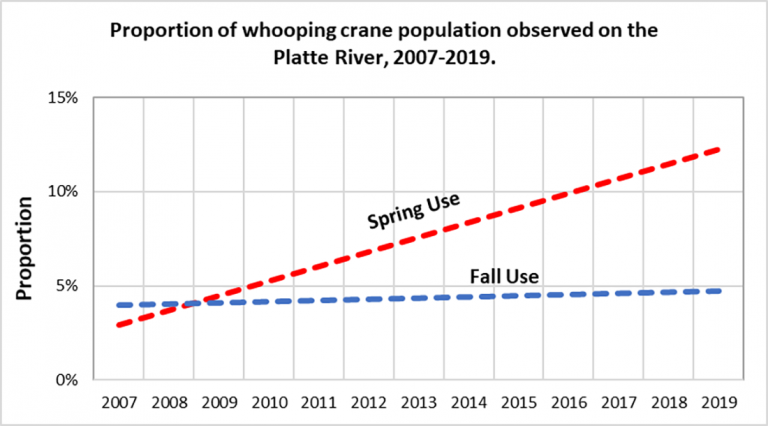
The whooping crane spring migration has risen more than 12 percent since 2007, while the number of least tern and piping plover breeding pairs have more than doubled during that same time period, a major achievement in the species conservation world.
Still ahead is the work to acquire more water and land, and research to understand how to help the rare pallid sturgeon recover. Thus far it has not responded to recovery efforts, in part because it is extremely difficult to locate.
The idea is to ensure there is enough water and habitat to keep the birds and fish healthy once the program enters its long-term operating phase.
“The intent is to spend the next 13 years working on identifying the amount of water and land that is necessary to go into [the final operating phase]. The focus will be less on acquiring and learning, and more on operating and managing,” Farnsworth said.
Jerd Smith is editor of Fresh Water News. She can be reached at 720-398-6474, via email at jerd@wateredco.org or @jerd_smith.
Whooping crane adult and chick. Credit: USGS (public domain)
Least Tern. Photo credit Doug German via Audubon.
Piping plover
Pallid sturgeon
Platte River Recovery Implementation Program target species (L to R), Piping plover, Least tern, Whooping crane, Pallid sturgeon
Screenshot of the Platte Basin Timelapse “Year of the Flood” story map January 17, 2020.
Click here to view the story map from Platte Basin Timelapse. Here’s the preface:
The flood event of 2019 was historic and devastating for parts of Nebraska and the Midwest.
Platte Basin Timelapse team members Grant Reiner, Carlee Koehler, Ethan Freese, and Mariah Lundgren traveled to parts of the state to explore questions they had about this historic weather event. What happens to wildlife during these big weather events? How were people affected by the floodwaters? What does this mean for the birds that nest on the river? How many PBT cameras survived? These are our stories.
The High Plains Aquifer provides 30 percent of the water used in the nation’s irrigated agriculture. The aquifer runs under South Dakota, Wyoming, Nebraska, Colorado, Kansas, Oklahoma, New Mexico and Texas.
Click here for all the inside skinny from Kansas State University.
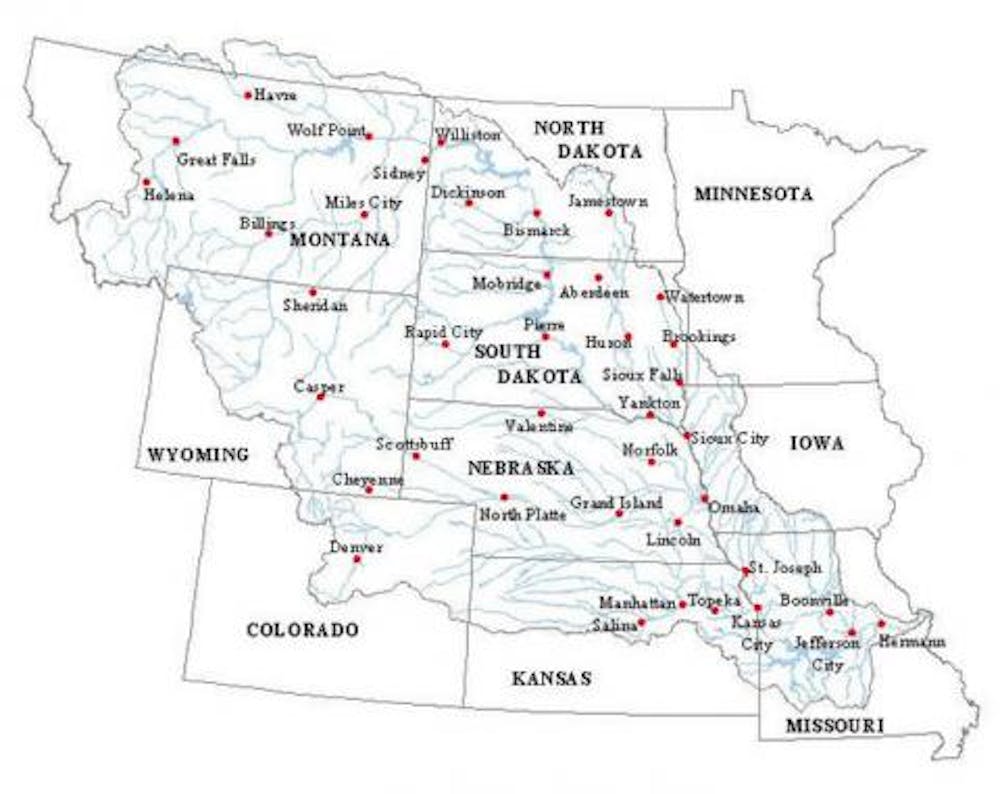
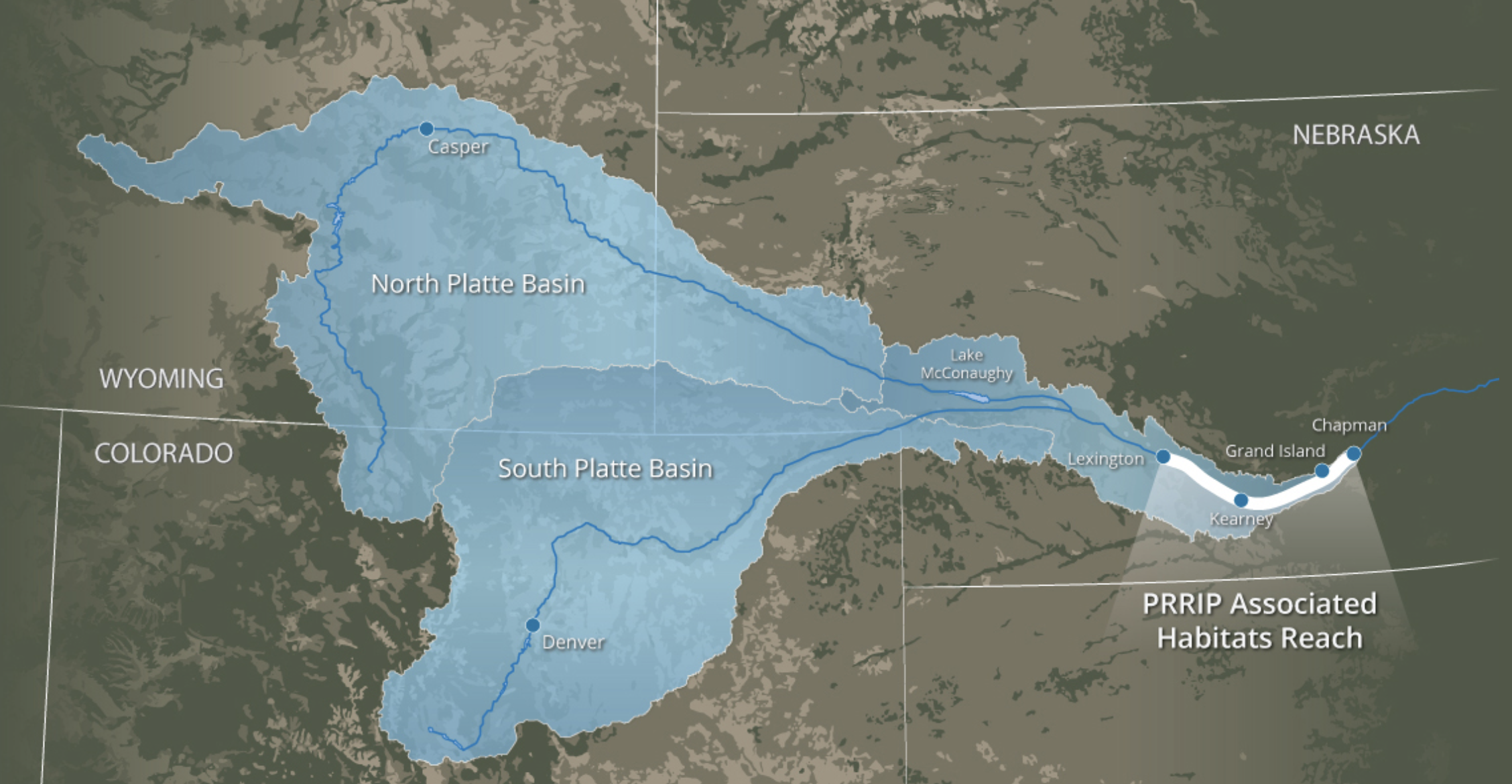
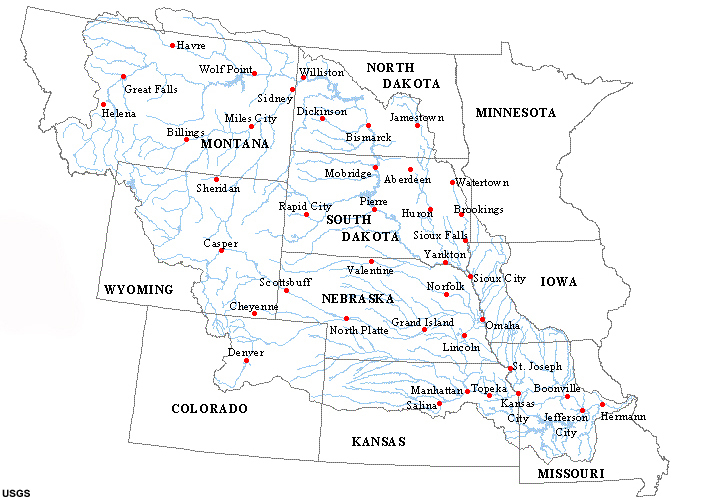
Platte River Recomery Implemtation Program area map.
Here’s the release from the Colorado Water Conservation Board:
A victory for wildlife and Colorado water, Secretary of the Interior David Bernhardt, Colorado Governor Jared Polis, and the Governors of Nebraska and Wyoming signed a Cooperative Agreement to extend the Platte River Recovery Implementation Program (Program) with $156 million.
The Colorado Water Conservation Board has played a major role in this Program’s creation and ongoing efforts, including policy and financial support.
“This collaborative program supports the recovery of four threatened and endangered species by improving and maintaining habitat in the Platte River in Nebraska while allowing for continued water use in Colorado,” said Colorado Water Conservation Board Director Rebecca Mitchell. “We look forward to continuing our role in the upcoming years of the Platte River Recovery Implementation Program.”
“The commitment by the states and the U.S. Department of the Interior to continue the program’s innovative approach to species recovery and Endangered Species Act compliance is a win-win for the future of Colorado’s citizens and the environment,” said Governor Polis.
The Program was set to expire at the end of 2019. However, with support from the Colorado Water Conservation Board; Colorado Parks and Wildlife; the Department of Natural Resources; and other state, federal, and non-governmental partners; a bill supported by the entire Congressional delegation from Colorado, Nebraska, and Wyoming was passed and signed by the President before the New Year.
Together with its water users, the Colorado Water Conservation Board is celebrating the Program’s more than a decade record of success. As the Program enters into its next 13 years, it has momentum to continue to recover threatened and endangered species, which provides assurance for future water use in Colorado.
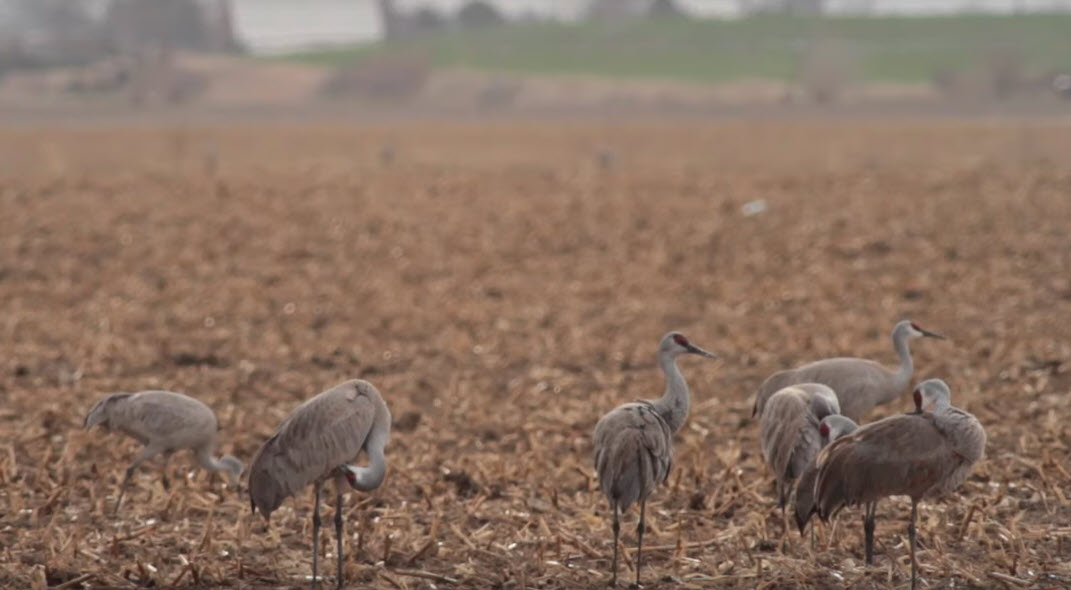
Sandhill crane migration, Platte River via the Colorado Water Conservation Board.
The Colorado River Compact and water infrastructure projects will be among the items discussed at the annual Four States Irrigation Council meeting held Wednesday through Friday in Fort Collins.
the Four States Irrigation Council is a group of irrigators, irrigation and water districts, ditch companies and others looking to discuss water-delivery and irrigation-related issues affecting the Four States region, which encompasses Colorado, Kansas, Nebraska and Wyoming.
Exhibitors at the event will showcase some of the latest innovations and provide attendees with up-to-date information on new products and services. Awards will also be presented.
Membership in the Four States Irrigation Council is open to anyone and free of dues or fees. Someone can become a member by attending the annual meeting or visiting 4-states-irrigation.org and requesting to be added to mailing list.
More information about the meeting is also available on the website.
Platte River Recomery Implemtation Program area map.
Here’s the release from the Department of Interior (Brock Merrill):
Secretary of the Interior, along with Governors of Colorado, Nebraska and Wyoming, commit an additional $156 million for recovering threatened and endangered species in the Platte River Basin
U.S. Secretary of the Interior David Bernhardt signed an amendment to the Platte River Recovery Implementation Program Cooperative Agreement, along with the governors of Colorado, Nebraska and Wyoming, committing resources to extend the program through Dec. 31, 2032. The Platte River Recovery Implementation Program utilizes federal- and state-provided financial resources, water and scientific monitoring and research to support and protect four threatened and endangered species that inhabit areas of the Central and Lower Platte rivers in Nebraska while allowing for continued water and hydropower project operations in the Platte River basin.
“This program is truly an important partnership that has been successful because of the broad collaboration between federal and state representatives, water and power users and conservation groups,” said Secretary Bernhardt. “All of these stakeholders working together to help recover imperiled species is critical as new water and power projects are continued and developed in the Platte River Basin.”
The program provides compliance for four species under the Endangered Species Act (ESA) for new and existing water-related projects in the Platte River Basin. Examples of existing water related projects include the Bureau of Reclamation’s Colorado Big-Thompson Project on the South Platte River in Colorado and the North Platte Project in Wyoming and Nebraska.
“Programs like the Platte River Recovery Implementation Program are critical to ensuring that Reclamation is able to deliver water and power in an environmentally and economically sound manner,” said Bureau of Reclamation Commissioner Brenda Burman “This program is a true success story of how stakeholders and government from across state lines can work together for the common good.”
The program began in 2007 and is managed by a governance committee comprised of representatives from Colorado, Nebraska and Wyoming, water users, environmental groups and the Department of the Interior’s Bureau of Reclamation and U.S. Fish & Wildlife Service.
“The Platte River Recovery Implementation Program has brought together three states, environmental groups, water users, and two federal agencies to forge a common goal of balancing existing use with an eye towards recovery for four threatened and endangered species,” said Wyoming Governor Mark Gordon. “This program has ensured that Wyoming continues existing water uses in the South and North Platte River Basins while making measurable contributions to species recovery.”
“The signing of the Platte River Recovery Implementation Program Cooperative Agreement Amendment marks the celebration of more than a decade of success,” said Colorado Governor Jared Polis. “The commitment by the states and the U.S. Department of the Interior to continue the program’s innovative approach to species recovery and Endangered Species Act compliance is a win-win for the future of Colorado’s citizens and the environment. We look forward to the next 13 years working with our partners to lead in this national model of collaboration.”
“Agriculture is Nebraska’s number one industry. Extending the Platte River Recovery Implementation Program gives Nebraska’s ag producers certainty around water and land use in the coming years,” said Nebraska Governor Pete Ricketts. “We appreciate the collaboration we enjoy with the other states who are party to this agreement, and we look forward to working with them in the coming years.”
The estimated total value of federal and state contributions to the program during the first extension is $156 million. The U.S. Department of the Interior will provide one half of the funding necessary for the extension, which will be matched by states through contributions of non-federal funding and water from state-sponsored projects that is provided for the benefit of target threatened and endangered species.
The people of Colorado, Wyoming and Nebraska got an early Christmas present from the U.S. Senate on Thursday, and it has Don Ament breathing a sigh of relief.
Ament has said he was delighted to hear that the U.S. Senate passed a bipartisan bill Thursday to extend the Platte River Recovery Implementation Program as part of the year-end spending package. The bill was introduced by Colorado Senators Michael Bennet (D) and Cory Gardner (R). The bill was passed by the House of Representatives earlier this week and will now go to the president’s desk to be signed into law…
The first increment of the program is set to expire on at the end of this year; Senate Bill 990 extends the program by an additional 13 years. PRRIP is a cooperative agreement among the governors of Colorado, Wyoming, Nebraska, and the Secretary of the Interior to achieve Endangered Species Act compliance on the Platte River.
Ament, who represents Colorado’s governor on the four-entity board that oversees the program, has been concerned since April about whether PRRIP would be extended. That’s when Bennet and Gardner, along with U.S. Senators John Barrasso (R-Wyo.), Mike Enzi (R-Wyo.), Deb Fischer (R-Neb.), and Ben Sasse (R-Neb.), introduced the Platte River Recovery Implementation Program Extension Act.
Since then, however, Washington, D.C., has been somewhat distracted by political conflict between Republicans and Democrats, making any kind of bipartisanship seem to be impossible. That has had Ament concerned that funding for the program would lapse after Dec. 31, leaving the program’s future in doubt…
In addition to addressing protections under the federal Endangered Species Act, PRRIP has allowed the three states and the Department of Interior to avoid lengthy and expensive litigation involving the Endangered Species Act. According to a statement released by the U.S. Interior Department, “The program has provided a level of certainty to water users in the Platte River drainage that litigation would not have afforded.”
Whooping crane adult and chick. Credit: USGS (public domain)
Governor Mark Gordon has sent a letter to Secretary of Agriculture Sonny Perdue requesting a Disaster Designation for five Wyoming counties where agriculture producers were impacted by powerful early-season snowstorms.
The request covers Laramie, Goshen, Platte, Park and Big Horn counties. The scale, severity and timing of freezing and snow events that occurred in October were devastating to crops, particularly sugar beets. While producers did their best to maximize their harvest, damage from the storms was severe.
A copy of the Governor’s letter can be viewed here.
A wet 2019 delayed construction work throughout Nebraska, including a Platte River Recovery Implementation Program water project southwest of Elm Creek.
At Tuesday’s PRRIP Governance Committee meeting in Kearney, program civil engineer Kevin Werbylo said the completion date for the project on the south side of the Platte River was moved from May 1 to Aug. 1 to Oct. 15.
“Given the conditions the contractor had to deal with, they did a nice job and the engineers did a nice job,” Werbylo said.
The project fits program goals to reduce depletions to Central Platte target flows and to protect, restore or maintain land used as habitat by threatened and endangered species — least terns, piping plovers and whooping cranes.
The basinwide plan allows entities in Nebraska, Colorado and Wyoming with federal licenses, permits and/or funding to comply with the Endangered Species Act. The U.S. Department of Interior is the other major participant.
The Elm Creek project will help meet an immediate goal to reduce by 120,000 acre-feet the annual depletions to target river flows set by the U.S. Fish and Wildlife Service for the protected species. Water held in shallow detention cells on the broad-scale site will seep into the groundwater that eventually reaches the adjacent Platte River.
Platte water will be diverted into Central Nebraska Public Power and Irrigation District’s Phelps Canal at times when flows exceed targets. According to PRRIP 1995-2017 data, that most commonly occurs in December and January.
A new pipeline built as part of the project links the canal to the 416-acre site where earthen berms up to 6 feet tall create eight shallow cells to temporarily hold water at depths of 12 inches or less.
Werbylo said the project budget is $4.3 million and there is $480,000 left to pay.
Dirt work needs to settle and vegetation is being established, he said, so it will be late spring to mid-summer 2020 before any water deliveries are made to the broad-scale project site.
PRRIP Executive Director Jason Farnsworth told the Hub that even if the original construction schedule had allowed the project’s use this fall, there would have been no diversions because of already high groundwater.
2019 Nebraska flooding. Photo Credit: University of Nebraska Lincoln Crop Watch
Here’s the release from the Department of Agriculture:
Agricultural producers reported they were not able to plant crops on more than 19.4 million acres in 2019, according to a new report released by the U.S. Department of Agriculture (USDA). This marks the most prevented plant acres reported since USDA’s Farm Service Agency (FSA) began releasing the report in 2007 and 17.49 million acres more than reported at this time last year.
Of those prevented plant acres, more than 73 percent were in 12 Midwestern states, where heavy rainfall and flooding this year has prevented many producers from planting mostly corn, soybeans and wheat.
“Agricultural producers across the country are facing significant challenges and tough decisions on their farms and ranches,” USDA Under Secretary for Farm Production and Conservation Bill Northey said. “We know these are challenging times for farmers, and we have worked to improve flexibility of our programs to assist producers prevented from planting.”
Cover Crops
USDA supported planting of cover crops on fields where farmers were not able to plant because of their benefits in preventing soil erosion, protecting water quality and boosting soil health. The report showed where producers planted 2.71 million acres of cover crops so far in 2019, compared with 2.14 million acres at this time in 2018 and 1.88 million at this time in 2017.
To help make cover crops a more viable option, USDA’s Risk Management Agency (RMA) adjusted the haying and grazing date of cover crops, and USDA’s Natural Resources Conservation Service held signups in select states that offered producers assistance in planting cover crops. Meanwhile, USDA added other flexibilities to help impacted producers, including adjusting the deadline to file acreage reports in select states.
About the Report
This data report aggregates information from crop acreage reports as of August 1, 2019, which producers file with FSA to maintain program eligibility and to calculate losses for various disaster assistance programs. The crop acreage data report outlines the number of acres planted, prevented from planting, and failed by crop, county and state. To find more information, view the Aug. 12 report.
Because some producers have not completed their filing and data are still being processed, FSA will make available subsequent data reports in September, October, November, December and January. You can find reports from 2007 to the present on FSA’s Crop Acreage Data webpage.
To receive FSA program benefits, producers are required to submit crop acreage reports annually regarding all cropland uses on their farm. This report includes data for producers who had already filed for all deadlines in 2019, including the mid-July deadlines, which are for spring-seeded crops in many locations.
Other Prevented Planting Indicators
In addition to acreage reports filed with FSA, producers with crop insurance coverage for prevented planting file claims with their insurance providers. These claims are provided to RMA and may differ from the prevented planted acres reported to FSA. More information on prevented plant coverage is available on the RMA website.
Official USDA estimates of total acres planted, harvested and to be harvested, yield, and production are available from USDA’s National Agricultural Statistics Service at http://nass.usda.gov.
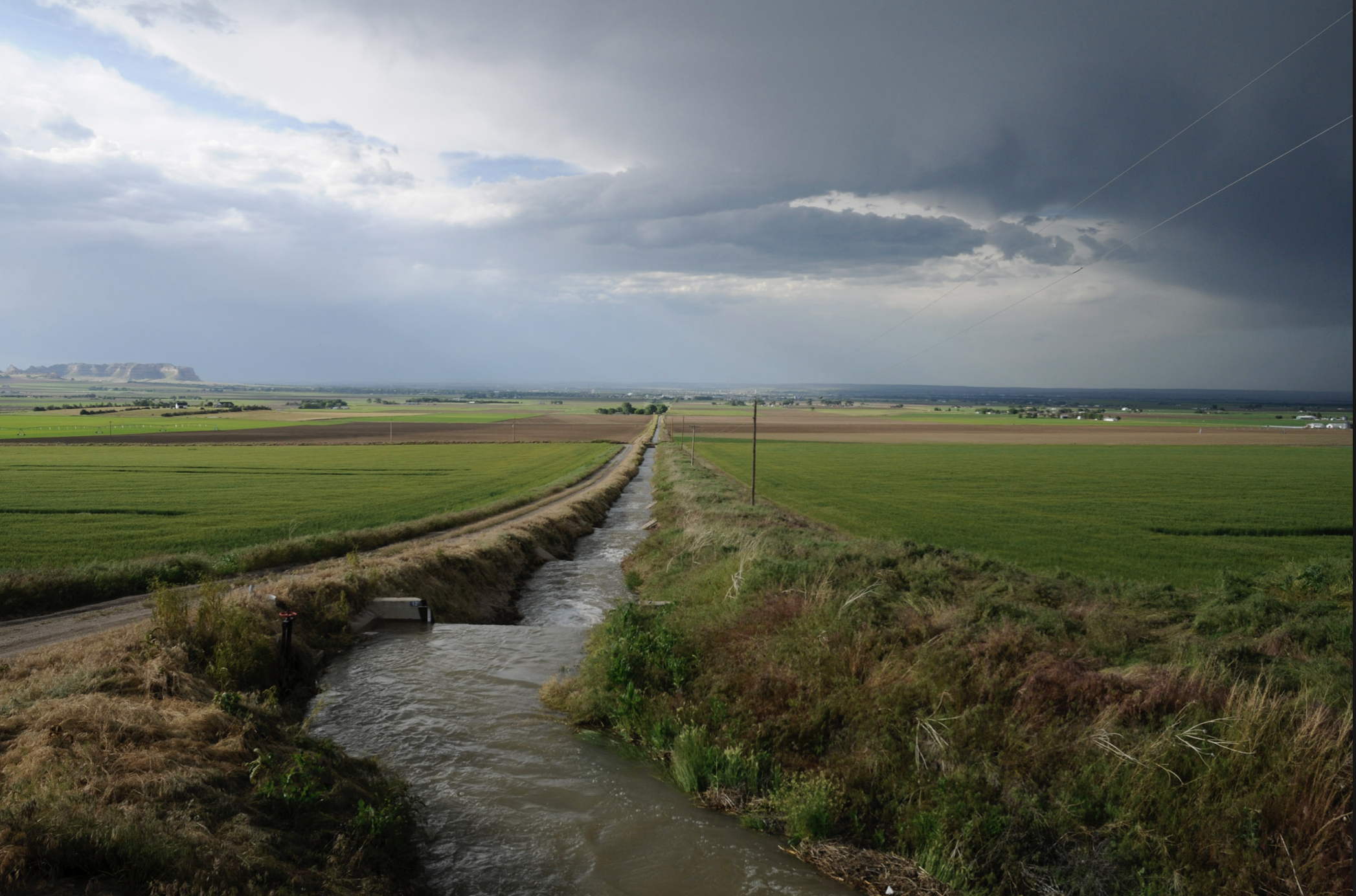
Fort Laramie Irrigation Canal. This camera looks over a north flowing canal that provides irrigation water to surrounding fields. Agriculture in this part of the state is made possible in part by irrigation canals like this. Scotts Bluff National Monument is visible on the horizon. Photo credit: Platte Basin Time Lapse
Here’s the release from Governor Gordon’s office:
Governor Mark Gordon, members of the executive branch, and representatives from multiple state agencies are mobilizing in an effort to provide assistance to farmers affected by a catastrophic irrigation tunnel collapse in Goshen County.
The Governor signed an Executive Order for a Declaration of Emergency today, allowing him to deploy state resources to Goshen County as needed. The collapse occurred early in the morning of July 17 along the Fort Laramie-Gering irrigation canal west of Lingle and caused a large breach of the canal wall. The disaster inundated farmland near the breach and has left more than 100,000 acres of cropland in Wyoming and Nebraska without water during a critical period for growers. Goshen County Commissioners issued a Local Disaster Declaration earlier today.
“This is a serious emergency and we recognize addressing an issue of this magnitude will take coordination, especially because it affects so many Wyoming and Nebraska farmers,” Governor Mark Gordon said. “We are working with an understanding of the urgency of the situation, along with a need to proceed carefully. Wyoming is united in its effort to find the right way to help the Goshen Irrigation District get up and running.”
After visiting the site on Friday, the Governor and members of the executive branch met Monday morning to analyze ways to provide state support to Goshen County and the Goshen Irrigation District. The Governor’s office is assembling resources to engage federal partners and is working with the Wyoming Department of Agriculture, the Wyoming Office of Homeland Security and the State Engineer’s Office to explore potential options for resources and assistance.
State officials and representatives from Governor Gordon’s office will attend a stakeholder’s meeting organized by the Goshen Irrigation District scheduled for 2 pm Wednesday, July 24, at the Eastern Wyoming College auditorium. The meeting is open to the public and will include a discussion of the collapse and a possible timeline for repairs to the tunnel and ditch.
From the Goshen County Commissioners via The Torrington Telegram:
The Goshen County Board of Commissioners has officially declared the collapse of an irrigation tunnel along the Fort Laramie-Gering Irrigation Canal as a local disaster.
In a declaration issued Monday morning, July 22, the county stated that “extensive damage was caused to private property and the loss of irrigation water will result in an extensive loss of agricultural crops to the farmers of Goshen County within the disaster area.”
The declaration, signed by Chairman Wally Wolski, vowed to seek emergency funds from any and all sources.
“All locally available public and private resources available to mitigate and alleviate the effects of this disaster have been insufficient to meet the needs of the situation,” the declaration said. “The Chairman of the Goshen County Board of Commissioners has declared a State of Emergency on behalf of Goshen County, and will execute for and on behalf of Goshen County Commission the expenditure of emergency funds from all available sources, the invoking of mutual aid agreements, and the requesting of assistance from the State of Wyoming.”
The Goshen Irrigation District has organized a stakeholder’s meeting to discuss the Fort-Laramie Gering irrigation tunnel collapse, repairing the tunnel and the ditch, and the timeframe of the repairs. The meeting will be held Wednesday, July 24, 2 p.m. at the Eastern Wyoming College auditorium.
The GID issued a press release on Friday, July 19, to ask people to stay away from the collapse to allow the GID and various contractors space to make the necessary repairs. The collapse occurred in a remote section of the canal, with only a one-lane road to get in or out of the site.
“Goshen Irrigation District and Gering-Fort Laramie District are asking for all patrons to please observe all road closure signs near the tunnel and canal breach,” the release said. “There will be large equipment and contractors in and out of that site every day of the week and for extended hours. Please, for your safety, do not impede the work that needs to be done.”
Least Tern. Photo credit Doug German via Audubon. From Audubon Rockies (Daly Edmunds):
The Platte River Recovery Implementation Program (PRRIP) is a multi-state effort that began in 1997, when the governors of Colorado, Wyoming, and Nebraska joined with the U.S. Secretary of Interior to sign the “Cooperative Agreement for Platte River Research and Other Efforts Relating to Endangered Species Habitat along the Central Platte River, Nebraska.”
Based on the novel idea that a collaborative approach would prevent years of courtroom battles over limited water supplies and individual river species, the PRRIP works to accommodate the habitat needs of these threatened and endangered bird species by increasing stream flows in the central Platte River during relevant time periods. While these species require habitat in central Nebraska for survival, their habitat is created and maintained through a dynamic river system that begins with water from Colorado and Wyoming. The program also enhances, restores and protects habitat, and does so in a manner to accommodate new water-related activities. This is a good program but due to expire this year.
Wyoming Senator Barrasso (R) and Colorado Representative Neguse (D) each took leadership positions on this issue, sponsoring complementary bills in the Senate (S.990) and House (H.R. 3237), that propose to extend the program. Audubon Rockies and Audubon Nebraska thanked the entire Colorado Congressional Delegation for their unanimous, bipartisan support for these bills. Our offices also thanked Wyoming’s Senator Enzi for supporting the Senate bill, and Representative Cheney recently joined other western co-sponsors of the House bill. Additionally, all Colorado and Wyoming Audubon chapters sent letters thanking their respective congressional delegations for their unanimous, bipartisan of a strong stewardship program.
Least tern
Piping plover
Whooping crane adult and chick. Credit: USGS (public domain)
The Platte River is formed in western Nebraska east of the city of North Platte, Nebraska by the confluence of the North Platte and the South Platte Rivers, which both arise from snowmelt in the eastern Rockies east of the Continental Divide. Map via Wikimedia.
Meanwhile click here to enjoy the 2019 Audubon Photography Awards winners.
Birds make fascinating subjects, as the winners and honorable mentions of this year’s contest, our 10th, make clear. They’re at once beautiful and resilient, complex and comical. It’s no wonder why we love them so.
The images that won the 2019 Audubon Photography Awards, presented in association with Nature’s Best Photography, are as impressive as ever, but attentive readers might notice a few more images than usual. That’s because we’ve added two awards. The Plants for Birds category is inspired by Audubon’s Plants for Birds program, supported by Coleman and Susan Burke, which provides resources for choosing and finding plants native to zip codes in the United States. This category poses a new challenge to photographers: Don’t just capture an incredible moment—make sure it also features a bird and plant native to the location in which the photo was taken, in order to highlight the critical role native habitat plays in supporting bird life. And in the spirit of Kevin Fisher, Audubon’s longtime creative director who recently retired, the Fisher Prize recognizes a creative approach to photographing birds that blends originality with technical expertise. It honors a photograph selected from all of the submissions that pushes the bounds of traditional bird photography.
We want to extend a heartfelt thank you to all 2,253 entrants, hailing from all 50 U.S. states, Washington, D.C., and 10 Canadian provinces and territories. Your dedication to appreciating, celebrating, and sharing the wonder of birds and the landscapes they inhabit inspires us now and throughout the year.
In the first publicly released independent review of a 637-page modeling report and 113-page application for a “produced water” discharge permit, consultants hired by four conservation groups let loose on the science in Aethon studies describing methods and results as “misleading,” “very odd,” “questionable and unrealistic,” “surprising,” and “unwarranted and wrong,” among other things.
Aetheon and Burlington Resources seek permission from the BLM to expand the Moneta Divide oil and gas field by 4,250 wells and need a DEQ permit to discharge up to 2,161 tons a month of total dissolved solids at a rate of 8.27 million gallons a day. The effluent from oil and gas wells would flow through Alkali and Badwater creeks, into Boysen Reservoir in Boysen State Park and into the federally protected Class I flows of the Wind River — the source of Thermopolis’ drinking water.
“The draft permit violates the Clean Water Act, the Wyoming Environmental Quality Act, and the Department [of Environmental Quality’s] rules and regulations implementing those laws,” the Wyoming Outdoor Council, Powder River Basin Resource Council, National Audubon Society and Natural Resource Defense Council wrote the DEQ. “The discharge of produced water from this facility has damaged and continues to damage surface waters of the state and threatens downstream communities with undisclosed health risks,” reads the groups’ cover letter, signed by representatives in Lander, Sheridan, Washington, D.C. and Livermore, Colorado.
They urged the state regulatory agency to encourage the Texas-based energy company “to consider other, less environmental damaging alternatives to the discharge.” In the meantime, “the permit should be denied,” the letter reads.
Yet in the arid West, new water can be valuable, if it is properly treated. “Water resources in the West are a topic of great importance and these issues are currently being studie[d] by a multitude of governmental agencies and research institutes,” wrote Peter Jones, a consulting geochemist from Houston, Texas. He reviewed the Aethon proposal and made the seven-page review available to WyoFile.
“As planned, the Moneta Divide development will be on the forefront of technology and may well be a model for how produced water may be converted into a valuable resource,” he wrote.
Nebraska state officials flew over the flood-ravaged Spencer Dam on March 16, 2019. The Niobrara River had been running at 5 or 6 feet of gage height before it broke through the 90-year-old dam early on March 14, 2019. After that, an 11-foot wave rolled through. Photo credit: State of Nebraska
Here’s a report on the flooding in Nebraska from Peter Salter writing for The Lincoln Journal Star. Click through and read the whole article and check out the various videos. Here’s an excerpt:
From their offices in Lincoln early Thursday, hydrologists with the U.S. Geological Survey were monitoring the final few moments of a stream gauge more than 200 miles away, on the Niobrara River.
It was hinting at something catastrophic.
“We were watching it from here, and it looked like something incredible was happening that we couldn’t believe,” said Jason Lambrecht. “And suddenly, everything went dark.”
The gauge had been ripped away by the wall of water released when the 90-year-old Spencer Dam failed under the pressure of the river, swollen with rain and rapid snowmelt and broken ice. But its last readings allowed Lambrecht to measure the size of the surge.
Earlier, the Niobrara had been running at 5 or 6 feet of gauge height. After it broke through the dam, it measured nearly 17.5 feet. It wasn’t a gradual increase, either…
And in its wake, three Nebraska counties would learn how that much moving water can become immediately destructive and potentially deadly. How it can cause instant pain and long-term suffering. How it can harm not only those in its path, but those living miles away.
First, the wave swept away a section of U.S. 281, a nearby riverside saloon and at least one home, possibly occupied. And it continued downstream, barreling toward the town of Niobrara — and its mouth at the Missouri River — about 40 miles away.
Knox County: ‘It’s crazy’
The service station owners thought they were ready for the coming water.
They’d taken the tire machine and other equipment away. They brought the important paperwork home. They put their ’68 Camaro up on the lift. They moved the rest of what they could to higher ground, filling the rafters with inventory.
And the couple had a huge inventory. Vic’s Service has anchored the west edge of Niobrara for 25 years, and had enough hydraulic fittings and plumbing pieces to serve as a kind of farmer’s supply store, said Ruth Janak, who co-owns the station with her husband, Victor.
They checked on their business Wednesday, and found it already swamped with 4 feet of water, her desk upturned, pop machines on their sides. A mess, but nothing they couldn’t handle.
“We thought, when the water recedes, we’ll be able to get in and clean all that up,” she said.
They returned Thursday, and found most of it missing.
“Our main building, the one we did our business at, it’s gone. The gas pumps are gone. We lost the propane tank. So many tools are gone,” Janak said Friday. “Where’s all that stuff at? It’s crazy.”
Later, she would find a jug of hydraulic fluid — and someone else’s pontoon boat — on what remained of the town’s golf course. But their main building, and much of what it contained, had likely tumbled downstream.
Theirs wasn’t the only missing building. The wall of water had brutalized Niobrara’s west side, a low-lying commercial district, and the part of town closest to the river.
Jody Stark, the chair of the village board, listed the other casualties. Several buildings from a hay business? Gone. A state Department of Transportation garage? Gone. A Knox County road shop? Gone. The Mormon Bridge on Nebraska 12? Stark has video of the deck floating away. The Country Cafe? Still standing, but it had been nearly swallowed by water and ice, with maybe a foot of the roof visible at one point.
“A lot of buildings washed away,” he said. “They were pretty much swept right down the river and they’re in the Missouri somewhere.”
The good news? Almost all of the 300 or so residents of Niobrara live on higher ground, and weren’t directly hurt by the floodwaters…
Still, his town was struggling. The flooding compromised the town’s two wells, leaving its residents without a water supply, and the fire department was going door-to-door, filling containers. Getting in and out of town was also difficult; by Friday, the Standing Bear Bridge to South Dakota had reopened, and there was one passable gravel road south of town. Nebraska 14, the main route south out of Niobrara, was so strewn with ice it was only open for emergency travel.
The damage was unprecedented, Stark said, and worse than they had originally expected. But that was before they’d heard the Spencer Dam had failed and even more water was headed their way…
The Spencer Dam was a flow-through hydroelectric dam, with garage-type doors that let water through, and Becker said it wasn’t known whether the doors had been open or closed at the time. They disappeared downstream, he said.
Its breach triggered immediate and long-term problems. It swept away a Holt County house just downstream, and authorities were still searching for its owner.
“On March 14th at around 5 in the morning the dam on the niobrara river south of Spencer NE was overtaken by flooding and ice jams. 2 days prior to this there was significant snow melting. 1 day prior there was all day rain measuring 1-1.5 inches. The ground was still frozen from recent below normal temperatures. All that water broke loose ice chunks the size of cars and trucks. The dam was no match for this extreme force. The dam and the dike were both destroyed. The water then washed out Hwy 281 and flooding many communities downstream.” — Birkel Dirtwork
And the force of the flow severed the supply of water to the north, in Boyd County. Many of its 2,000 residents relied on the pipeline from Holt County that was buried beneath the river. Now that it’s gone, they don’t have the water they need for drinking, for livestock, for flushing.
They received a truckload of bottled water Friday, enough to last maybe a day, said Doug Fox, Boyd County’s emergency management coordinator. They need more…
And Boyd County was struggling to stay connected with the rest of the state. The failure of Spencer Dam took out a pair of routes over the Niobrara River, and the only ways out of Boyd County were north into South Dakota or west into Keya Paha County, Fox said.
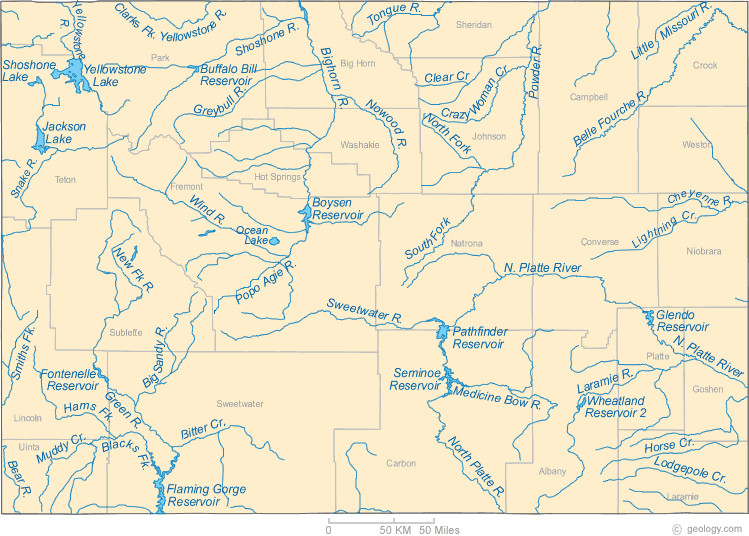
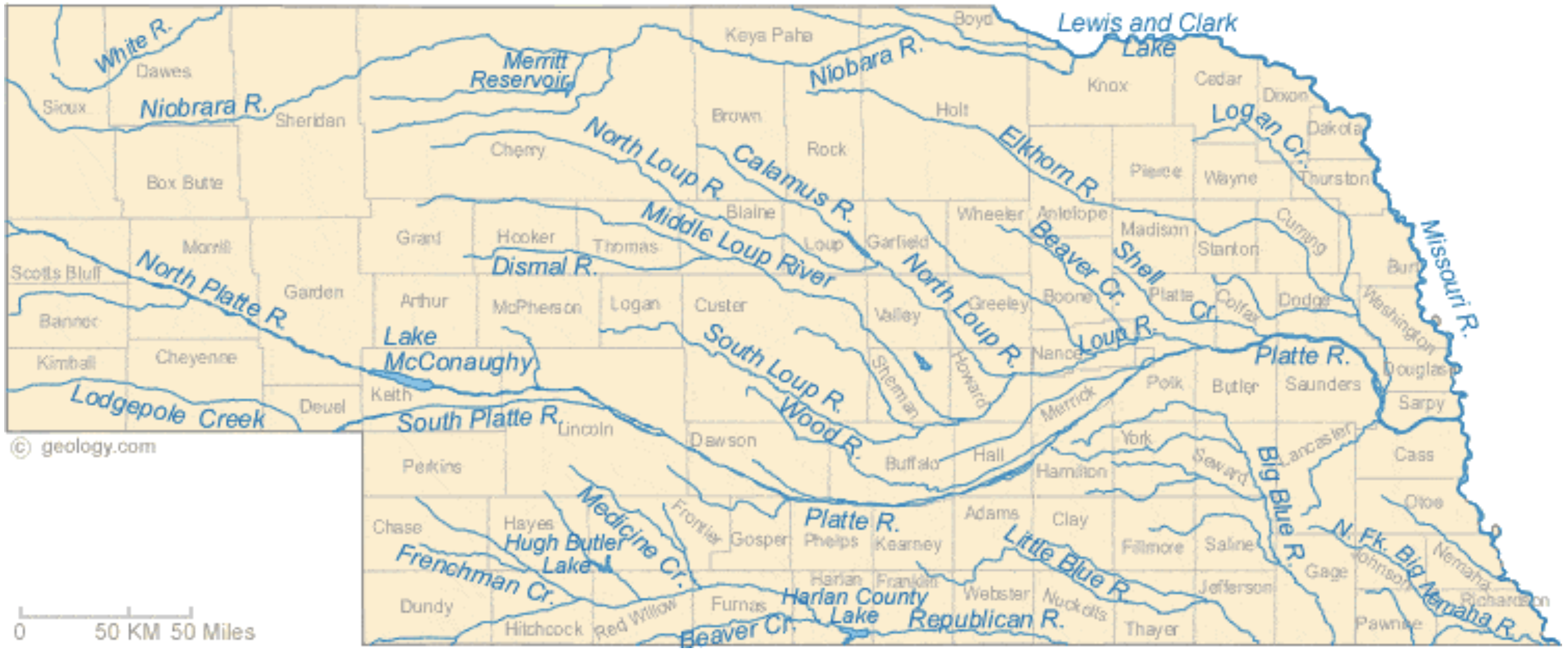
Nebraska Rivers Shown on the Map: Beaver Creek, Big Blue River, Calamus River, Dismal River, Elkhorn River, Frenchman Creek, Little Blue River, Lodgepole Creek, Logan Creek, Loup River, Medicine Creek, Middle Loup River, Missouri River, Niobrara River, North Fork Big Nemaha River, North Loup River, North Platte River, Platte River, Republican River, Shell Creek, South Loup River, South Platte River, White River and Wood River. Nebraska Lakes Shown on the Map: Harlan County Lake, Hugh Butler Lake, Lake McConaughy, Lewis and Clark Lake and Merritt Reservoir. Map credit: Geology.com
Water is a contradiction for Western Nebraska. It’s both seemingly abundant, yet simultaneously finite and scarce.
A new film by a local award-winning documentary filmmaker explores this contradiction and tells the story of water in the Panhandle, from the founding of the numerous irrigation and natural resources districts that line the North Platte valley, to the legal fights surrounding the regulation, distribution and control of that water.
Insight Creative Independent Productions Executive Producer and Director Becky McMillen’s “Rising Water,” was originally designed to be a web series, and viewers will get a first peek at it when the film premiers at the Legacy of the Plains Museum in Gering on Saturday, March 2, at 1 p.m. The screening of the documentary is in conjunction with The Smithsonian’s Museum on Main Street the Water/Ways” exhibit, which is open now until April 13 at Legacy.
“Everyone knows how to use YouTube, and they’ve gotten used to web series,” McMillan said. “They’re used to watching short pieces.”
In essence, each of the segments of the film is a self-contained documentary which covers a different facet of the story of our water, she said.
The hour and fifteen minute feature is the product of more than three solid years of work, with much of the footage and information gathered over a greater period of time. McMillen said that her father, Udell Hughes Sr., helped her with much of the technical research for the film. It also contains material gathered during production of McMillen’s last major project, “River of Time: Wyoming’s Evolving North Platte River,” a half-hour program which premiered on Wyoming PBS in November 2012.
“We’ve been sort of building up towards this film,” she said. “A lot of my historical research was actually done at Legacy of the Plains.”
The film contains interviews with managers of irrigation districts, farmers, UNL researchers and footage from public hearings concerning water issues.
“I knew that I needed to talk about the Ogallala Aquifer, but it took me a while to understand that issue,” McMillen said.
So she consulted UNL research hydrogeologist Jim Goeke, who is known as “Mr. Water.” Goeke researched the aquifer and arguably knows more about the water under our feet than any other human being.
McMillen said she was surprised by how candid Goeke.
“He gave me courage to address issues that probably weren’t very popular and won’t be very popular,” she said. “We have sucked so much water out of the aquifer and I’ve been watching the Pumpkin Creek battle for years, but lost track of it.”
The challenge for McMillen was to tie together the surface water and ground water portions of the story.
And it was a lawsuit over the little western Nebraska stream that became a big State Supreme Court case.
In 2009 The Spear T Ranch settled with more than a dozen upstream ranchers and farmers in a dispute between irrigators feuding over water in Pumpkin Creek.
“I was thinking about Pumpkin Creek, but I didn’t have any visuals,” she said. “I’d filmed a meeting of farmers years ago, but the camera went south on me and there was no way I could recover the footage.”
Then synchronicity struck. McMillen’s bookkeeper was from the Spear T Ranch, and the family over time had saved all of the newspaper clippings about the fight.
“That helped me tie it all together,” McMillen said. “You just have to be able to listen and when you hear something say ‘What was that?’”
And the hunger for investigative work is what fuels most of her projects.
“I have to tell myself to stop, take notes and check things out,” she said. “I hear stories all the time and I’d love to go chase them, but I have to be responsible and pay my bills.”
McMillen said a lot of the project has been self-funded because she couldn’t kick the habit once a lead seemed promising.
Newspapers also provided McMillen a window into the issues. As the “first draft of history,” clippings are featured at prominent portions of the film.
“The Star-Herald is in a lot of these stories that I brought back from the past,” she said. “There was so much information that really help me understand what was going on at the time.”
Another portion of the film is spent exploring contamination concerns, especially the 2015 fight against a Colorado company who sought permission to use an abandoned oil well in Sioux County as a wastewater disposal site. Sioux County landowners eventually won their appeal and state lawmakers reformed the process in which permits are granted.
“I documented almost everything, and there is a lot of that in there, along with newspaper clippings” she said. “The physical thing is really important, because I couldn’t have told any of this story without the work of reporters from back in the 1800s on to the present day.”
And those are the little things, McMillen said.
“I saw articles where they hung effigies of law makers because they were going to shut the water off,” she said. “There’s always a fight about water. One guy will say ‘I was here first,’ and another guy will say, ‘hey I need that.’ And just because you were here first doesn’t mean you get to have all of it.”
And over the course of making the film McMillen said that she’s learned that there needs to be change to protect and preserve not only the Valley’s greatest gift, but the way of life for Farmers and Ranchers who live here.
“We’re going to have to look beyond what we’re calling ‘traditional practices,’” she said. “We can continue on the same track that we have been. We can’t keep expanding and still be able to sustain that.”
It was her discussions with farmers that drove home the point for her.
“I think we need to look at it as growing food,” she said. “I would like us to grow more food that doesn’t have to be shipped, because we’re going to have to address climate change and reverse it.”
And at the same time, caution needs to be exercised when employing solutions, she said.
“What we think are the solutions are not always the best way of doing things,” she said. “We can’t just blindly forge ahead just because we think it’s a good idea. At the time we’re looking at sustainable energy, we’re also wanting to put it in places that will never be the same.
“We need to work within the infrastructure we already have and not go to condemning land so that we can use it for transmission lines or wind farms. There is plenty of space for that without tearing up areas that can’t be returned to their natural state.”
Ogallala Aquifer. This map shows changes in Ogallala water levels from the period before the aquifer was tapped to 2015. Declining levels appear in red and orange, and rising levels appear in shades of blue. The darker the color, the greater the change. Gray indicates no significant change. Although water levels have actually risen in some areas, especially Nebraska, water levels are mostly in decline, namely from Kansas southward. Image credit: Nation Climate Assessment 2018
The Ogallala Aquifer underlies parts of Colorado, Kansas, Nebraska, New Mexico, Oklahoma, South Dakota, Texas, and Wyoming. From wheat and cows to corn and cotton, the regional economy depends almost exclusively on agriculture irrigated by Ogallala groundwater. But according to the Fourth National Climate Assessment (NCA4), producers are extracting water faster than it is being replenished, which means that parts of the Ogallala Aquifer should be considered a nonrenewable resource.
This map shows changes in Ogallala water levels from the period before the aquifer was tapped to 2015. Declining levels appear in red and orange, and rising levels appear in shades of blue. The darker the color, the greater the change. Gray indicates no significant change. Although water levels have actually risen in some areas, especially Nebraska, water levels are mostly in decline, namely from Kansas southward.
In the early twentieth century, farmers converted large stretches of the Great Plains from grassland to cropland. Drought and stress on the soils led to the 1930s Dust Bowl. Better soil conservation and irrigation techniques tamed the dust and boosted the regional economy. In 2007, the market value from the Ogallala region’s agricultural products totaled roughly $35 billion. However, well outputs in the central and southern parts of the aquifer are declining due to excessive pumping, and prolonged droughts have parched the area, bringing back Dust Bowl-style storms, according to the NCA4. Global warming is likely to make droughts across the Ogallala region longer lasting and more intense over the next 50 years.
The Agriculture chapter of NCA4 describes the risks and opportunities for resilience across the Ogallala region:
“Recent advances in precision irrigation technologies, improved understanding of the impacts of different dryland and irrigation management strategies on crop productivity, and the adoption of weather-based irrigation scheduling tools as well as drought-tolerant crop varieties have increased the ability to cope with projected heat stress and drought conditions under climate change. However, current extraction for irrigation far exceeds recharge in this aquifer, and climate change places additional pressure on this critical water resource.”
In 1982, the Army Corps of Engineers released the Plains Ogallala Aquifer Regional Resources Study, which detailed for the first time (in any official capacity) the cost and opportunity related to the construction of a 360-mile concrete aqueduct beginning at the Missouri River in the Northeastern part of Kansas and ending in Utica – traveling nearly three-quarters of the way across the state. This aqueduct would deliver approximately 3.4 million acre-ft (AF) of water annually (1 acre-ft = 325,851 gallons) to parched farmers and communities. In turn, the canal would require 15 pumping stations in order to rise nearly 1,750 ft in altitude to reach its ultimate, Utica reservoir.
The cost? $18 billion up-front with an estimated $1 billion in annual ongoing expenses ($400 million in operational costs and $600 million in interest).
The costs are exorbitant – resulting in a $470/AF price of new water for farmers who, according to a 2013 report by the US Department of Agriculture, currently pay approximately $47/AF for off-farm purchased water. Can an agricultural industry with shrinking margins due to increased competition and international trade tariffs handle a 10x increase in water prices?
And yet, there remains something romantic about the Great Kansas Aqueduct. Arizona has its 336-mile Central Arizona Project; California has its 701-mile State Water Project; why shouldn’t Kansas have its Great Kansas Aqueduct? After all, as the Kansas Aqueduct Coalition has stated, “With sedimentation reducing water storage in the East, and the Ogallala being rapidly depleted in the West, Kansas stands to lose more than 37 percent of its water in 50 counties across the state by 2062, or an annual shortfall of 1.86 million acre-feet.”
Thirty-six years after this project was first conceived in full, though, shovels and backhoes remain in their sheds as the Ogallala aquifer drops nearly two feet per year in some counties due to groundwater over pumping. If groundwater withdrawals continue at current rates, most of southwest Kansas will exhaust its water reserves within 25 to 50 years. One tends to think that in times of yesteryear, individuals would have begun construction on this project in February of 1982, begging for forgiveness later. But the time of unbridled infrastructure construction has passed and Kansas continues to stress its water resources.
As one sits and considers the need for the Great Kansas Aqueduct, three questions come to mind: 1) does the Great Kansas Aqueduct solve a problem? Yes – it would increase water supplies for Western Kansas. 2) would it solve the problem for generations? Yes – it would likely be operational for decades. And 3) would it be cost-effective? Unfortunately, not. While the volume of water delivered to Western Kansas may increase, very few people would actually be able to afford it. In fact, the $18 billion estimated to build the Great Kansas Aqueduct does not even include the legal, economic, and ethical costs inherent to initiating eminent domain and forcibly removing people in the way of the canal off of their land.
Tens of thousands of people on the Navajo Nation lack running water in their homes. But that could change in the coming years, as the Navajo-Gallup Water Supply Project goes into effect. It’s expected to deliver water to the reservation and nearby areas by 2024, as part of a Navajo Nation water rights settlement with New Mexico, confirmed by Congress in 2009.
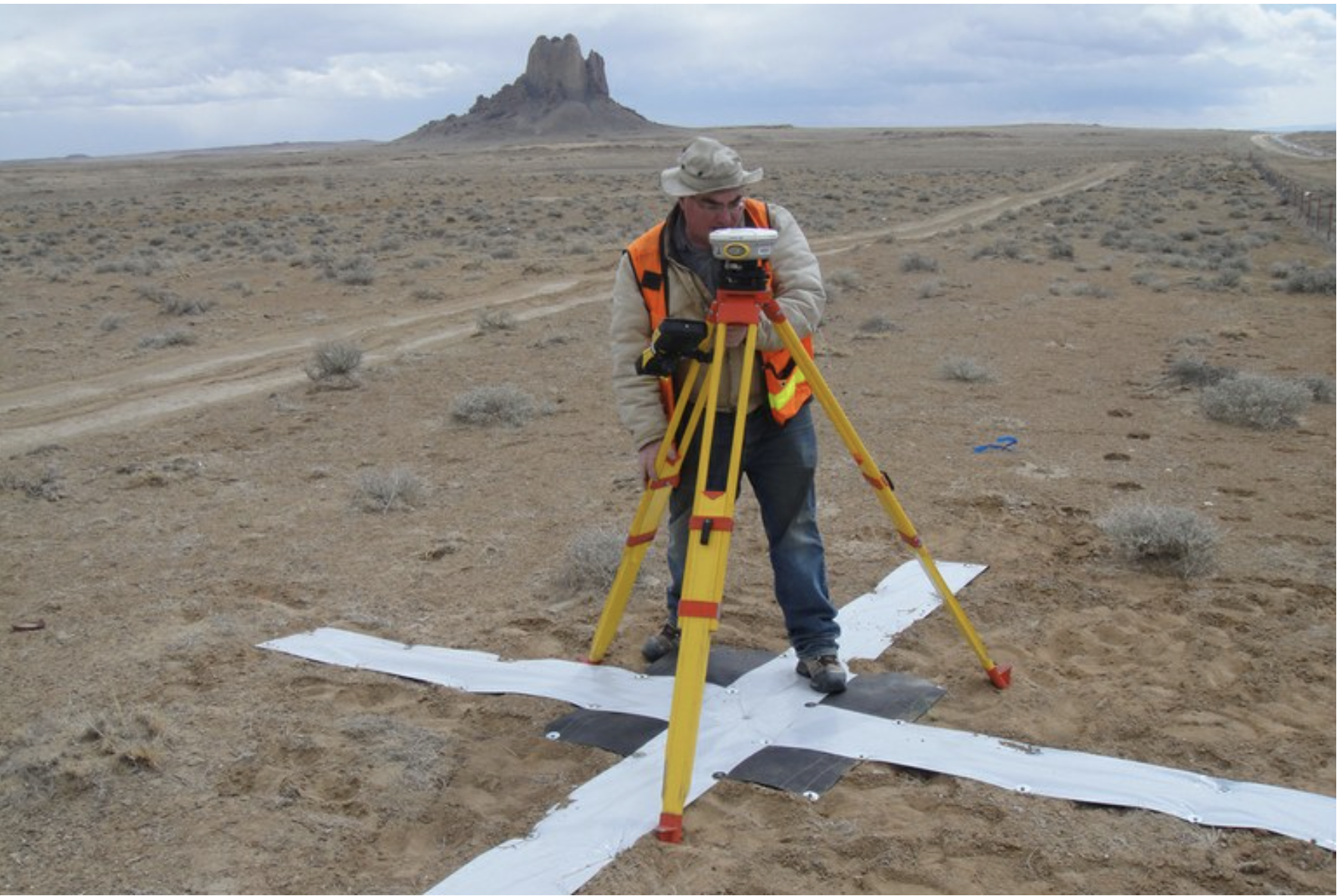
Survey work begins for the Navajo-Gallup Water Supply Project on the Navajo Nation. Photo credit: U.S. Bureau of Reclamation via The High Country News
Three other Native water settlements currently await congressional approval. They arise from federal legal decisions recognizing that many tribes in the West hold water rights that largely pre-date — and therefore override — the water rights of non-Native settlers.
Many tribal nations are currently asserting those rights as a way to ensure economic vitality, affirm sovereignty and provide basic services that some communities lack. In many places, however, Native water rights have yet to be quantified, making them difficult to enforce. Settlement is usually the preferred remedy; it’s cheaper, faster and less adversarial than a lawsuit, and can include funding for things like pipelines or treatment plants. With settlements, “the tribes are able to craft solutions that work for them and that can be more flexible than anything that could be achieved through litigation,” says Kate Hoover, a principal attorney for the Navajo Nation Department of Justice water rights unit.
Once negotiations are complete, Congress has to confirm the settlements. Here are the three introduced in the Senate this session:
Pipes are laid for the Navajo-Gallup Water Supply Project on the Navajo Nation. Photo credit: Northwest New Mexico Council of Governments via The High Country News
THE TAKEAWAY: This settlement allocates 4,000 acre-feet of Colorado River water per year from the Central Arizona Project to the 2,300-member Hualapai Nation. It also authorizes federal spending for a water pipeline to Peach Springs, the reservation’s main residential community, and Grand Canyon West, an economically important tourist destination featuring a horseshoe-shaped “skywalk” jutting out over the canyon.
WHY IT’S IMPORTANT: The legality of Native water rights settlements stems from a 1908 U.S. Supreme Court case involving agricultural irrigation. Winters v. United States established that when reservations were created, they included an implied right to water.
Subsequent legal decisions confirmed that so-called “reserved water” could also be used for livestock, drinking water and even commercial purposes. That’s crucial for this settlement, because the Hualapai Nation plans to use a portion of their water to expand Grand Canyon West — and their economy. “We have done everything possible to provide jobs and income to our people in order to lift them out of poverty — but the lack of a secure and replenishable water supply on our Reservation is our major obstacle to achieving economic self-sufficiency,” wrote Damon Clarke, chairman of the Hualapai Nation, in testimony to the U.S. Senate Committee on Indian Affairs.
THE TAKEAWAY: This settlement affirms the Navajo Nation’s right to 81,500 acre-feet of water each year — enough to serve about 160,000 households — from the Utah portion of the San Juan River, a Colorado River tributary. In addition, it would establish funds for treating and transporting drinking water.
WHY IT’S IMPORTANT: In many Native water rights settlements, tribes agree to give up a portion of the water to which they’re entitled — often allowing other groups to continue using that water, which might otherwise have been cut off — in return for expensive water projects, typically built by a federal agency.
The Navajo Utah settlement is different: It would transfer money directly to the tribe for water infrastructure. During a U.S. Senate Committee on Indian Affairs hearing in December, Russell Begaye, the president of the Navajo Nation, explained why the tribe, rather than the U.S. government, should lead the work: “It’s important as a sovereign nation that we are able to do that — employ our people, use our laws — in order to build and construct any kind of construction that may take place.”
WHY IT’S IMPORTANT: Kansas, like much of the West, is prone to drought. This settlement would help the Kickapoo deal with dry periods by allowing the tribe to store more than 18,000 acre-feet of water in a reservoir that has yet to be built, but that has been contemplated for at least 40 years. A dispute over how to acquire the private land that the reservoir would flood led to a 2006 lawsuit, and, eventually, to settlement negotiations, which concluded in 2016.
Experts say it’s not unusual for settlements to take years or even decades to complete, and that securing congressional approval requires balance. “Ultimately, these settlements are political instruments,” says Steven Moore, a staff attorney at the Native American Rights Fund and an advisor to the Kickapoo Tribe in Kansas. “You really have to work these settlements out so that it’s a win-win for everybody.”
Emily Benson is an assistant editor at High Country News.
This article was published in the June 22, 2018 print edition of High Country News.
From the Kansas News Service. (Ben Kuebrich) via the Hillsboro Free Press:
Great Canal of Kansas
Clayton Scott also uses the latest water technology on his farm in Big Bow. Yet he said that just using water carefully won’t be enough.
He thinks any pumping limits severe enough to preserve the aquifer would dramatically cut back the region’s harvest. That would push up local grain prices, and without cheap grain, livestock feed yards would close, and meatpacking plants would follow.
At its core, the western Kansas economy is built on irrigation.
A 2015 study calculated that losses in irrigation could cost some 240,000 Kansans their jobs and wipe out $18.3 billion of yearly economic activity, or about 10 percent of the state economy.
Scott and others in the region have their eyes on a more drastic solution to the water problem. Kansas could invest in a 360-mile series of canals and pumping stations to bring in water from the Missouri River.
He knows it sounds extreme, but Arizona has already built a similarly sized aqueduct. The Central Arizona Project diverts water from the Colorado River and there’s been extensive research into building a similar canal across Kansas.
“Arizona looked at their situation and decided, ‘We have no other choice,’ ” Scott said. “They estimate almost a trillion dollars of benefit to the economy of Arizona.”
Arizona’s aqueduct has always been controversial. The federally funded canal remains at the center of multi-state disputes of water usage.
Experts say that a generation later, the legal and regulatory hurdles of building a long-distance canal through Kansas only look more daunting.
Water from the Colorado River is channeled through Arizona, much the way some people think it should be diverted from the Missouri River across Kansas.
Pricey pipeline
Still, Kansas and surrounding states have been considering aqueducts for a long time. A 1982 study came up with a plan to bring water from the Missouri River to a reservoir near Utica, Kansas, but nothing ever came of it. At the time, though, losing the Ogallala seemed like a distant prospect.
In 2011, while western Kansas was in a drought and farmers struggled to pump enough water to keep their crops alive, the Missouri River was flooding. Scott says that sparked renewed interest in a canal.
“It’s a long-term solution,” Scott said. “We can harvest the high flows of water off of the eastern rivers and bring them out here into the western High Plains, offset the droughts … and bring things into more of a balance.”
In 2015, the Kansas Water Office and the U.S. Army Corps of Engineers re-assessed that 1982 study. The agencies estimated that, depending on the capacity of the canal, it would now cost between $5 billion and $20 billion to build.
Because the water would have to be pumped uphill as it goes west, it could take more than $500 million a year in energy costs alone, for the largest-capacity canal. With interest costs from construction, the yearly tab could exceed $1.5 billion.
At the time, the head of the water office said, “this thing we studied is unlikely to happen.” The costs would simply run too steep.
A canal project would have other barriers. Although the Missouri river sometimes floods, it also experiences lows, and levels would have to be maintained to permit barge traffic. There would also be challenges displacing people in the path of the aqueduct. While a highway can be redirected to avoid a town, a canal’s path is more constrained by topography.
At the same time, environmental issues could come both from taking water from the Missouri and in the path of any aqueduct. Upstream and downstream states on the waterway already tangle over how to manage the water. An effort to siphon away water would further complicate the situation.
Scott knows the project would be massive, and massively controversial, but that’s why he’s talking about it now—before the Ogallala runs dry.
An uncertain future
At a conference in April, Kansas Secretary of Agriculture Jackie McClaskey said public support for an aqueduct is unlikely unless farmers show first that there’s no other way to water their crops.
“Until we can show people that we are utilizing every drop of water in the best way possible, no one outside of this region is going to invest in a water transfer project,” McClaskey said.
Clayton Scott says he isn’t looking for the rest of Kansas to bail out the farmers out west.
Scott imagines the canal would be a federal project, similar to Arizona’s aqueduct. Water users would repay the costs of construction and maintenance through a water use fee.
He also contends that an aqueduct could help a broader region.
Scott says an aqueduct could extend out to Colorado’s Front Range to supply booming cities such as Denver and Colorado Springs that draw water off of the dwindling Colorado River. If they drank from Kansas’ aqueduct instead, that would leave more water to trickle down the Colorado, which extends out into water-starved southern California.
A canal, advocates contend, could supply water at a fraction of the price that southern California farmers pay now and help alleviate shortages in that region.
Scott’s interest in water transfer is common in southwest Kansas but far from universal. For example, Roth isn’t convinced.
“It’s impractical and it’s one heck of a distraction,” Roth said. “Right now we need to concentrate on local conservation with what we do have, what we can do right now.”
Ray Luhman, Northwest Water district manager, thinks the state should consider all options, including channeling water across the state.
“The conversation needs to be had,” Luhman said. “But to, let’s say, mortgage your future on a project maybe 20 to 30 years from completion? We also need to look to something in the interim.”
Ben Kuebrich reports for High Plains Public Radio in Garden City and the Kansas News Service, a collaboration of KMUW, Kansas Public Radio, KCUR and HPPR covering health, education and politics.
When early explorers Zebulon Pike and Francisco de Coronado came upon the High Plains, they described it as a desert — an impossible region to farm.
Irrigation changed that. It allowed residents to pull water from the Ogallala Aquifer, and grow crops nearly anywhere. The first irrigation wells in Kansas were drilled east of Garden City in 1908.
The Ogallala is a massive, underground sponge, spanning from South Dakota and Wyoming, down through the High Plains to west Texas and New Mexico. Over 27,000 of the total 35,000 wells with active water rights in Kansas overlie the Ogallala, with 87 percent used for irrigation.
But decades of pumping water out, with little return, has taken its toll.
After 110 years of drilling and draining, the world’s largest aquifer is drying up.
The Ogallala is the primary source of water for western Kansas farms, ranches and some communities, but projections indicate several areas that will go dry within 25 to 50 years at current usage rates. Some regions in Haskell County may have a decade or less…
The Ogallala Aquifer Summit was organized by Colorado State University’s Ogallala Water CAP Program — a coordinated agriculture project funded by the United States Department of Agriculture – National Institute of Food and Agriculture. The summit brought together scientists, government agents and producers from the eight states situated over the Ogallala to discuss shared challenges and current initiatives to preserve the aquifer.
Conversations between states had a rocky start, partly because they were spurred out of litigation regarding the Republican River basin along the Colorado, Nebraska and Kansas borders. The conflict led to monthly meetings of the Republican River Compact Administration — comprised of one member from each state — to change the approach and improve water management.
“No offense to those that are here, but I’m just excited to come to an interstate water conference that doesn’t have more lawyers than it does farmers and ranchers,” Kansas Secretary of Agriculture Jackie McClaskey said to applause from the summit crowd.
Nebraska Natural Resources Program Director Jesse Bradley and Colorado Commissioner of Agriculture Don Brown joined McClaskey for the first panel of the summit, discussing the cultivation of interstate conversations.
Brown joked that the whole problem was Nebraska’s fault — Nebraska native Frank Zybach invented center pivot irrigation while living in Colorado — and Bradley fired back that ‘you always blame the upstream state.’
She credits interstate conversations regarding the Republican River as a critical factor for changing the tone of the discussion. Instead of fighting over the water, the group is now working together to preserve water.
“The biggest way we learned this lesson is from the complete 180 we’ve done on the Republican River discussions,” McClaskey said. “In July 2014, we started meeting month-to-month and created a true, long-term agreement, and are using those lessons to expand to all the states.
“Now, I would call my colleagues from Nebraska and Colorado friends, which may not seem like a big deal, but it’s a lot easier to solve a problem with a friend than with an enemy.”
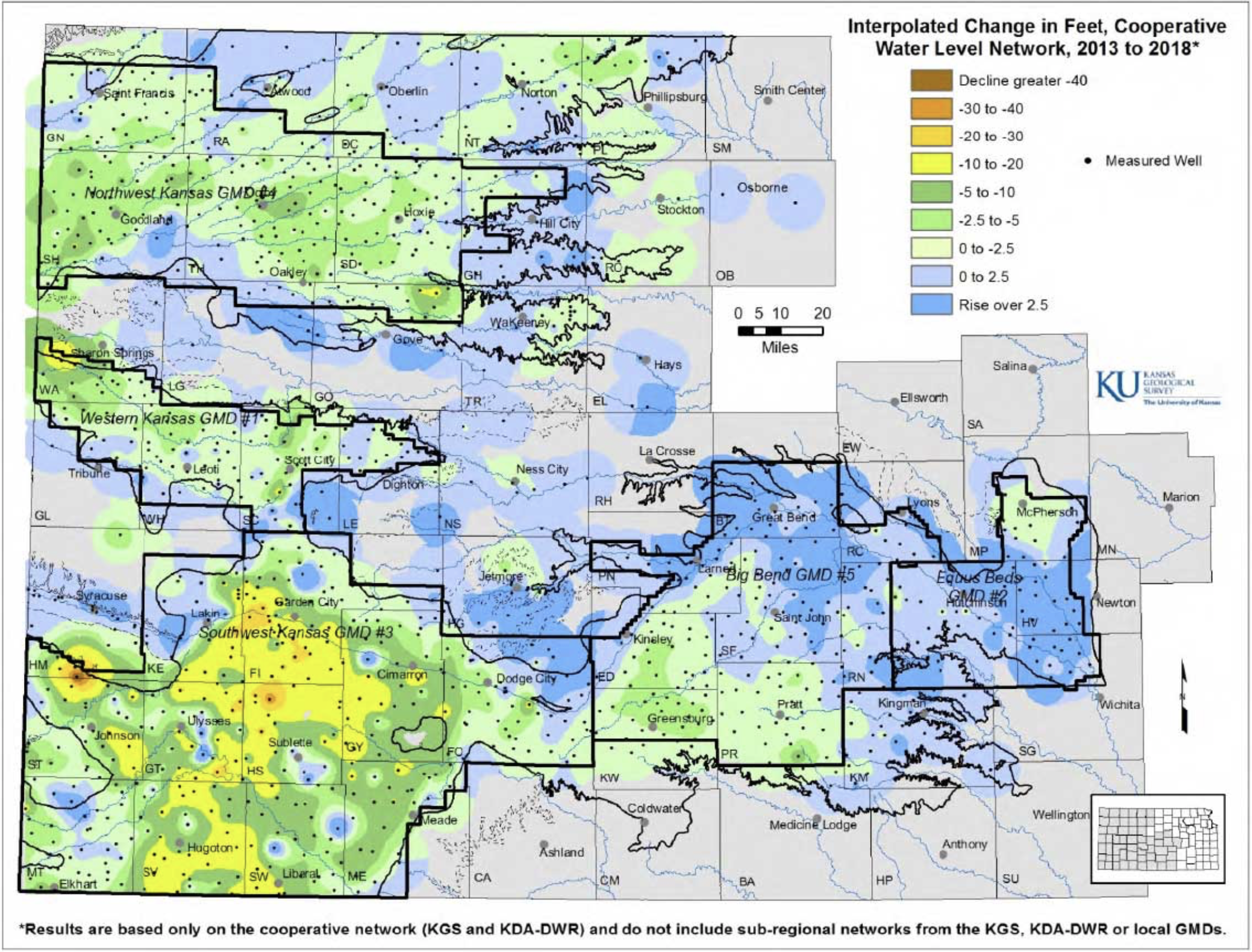
Groundwater levels during 2017, on average, rose slightly or nearly broke even in western Kansas but fell in the Wichita area, according to preliminary data compiled by the Kansas Geological Survey. This was a reversal from 2016 when overall groundwater levels dropped in western Kansas and increased significantly near Wichita.
The KGS — based at the University of Kansas — and the Division of Water Resources (DWR) of the Kansas Department of Agriculture annually measure levels in about 1,400 water wells in western and central Kansas. The collected data are used to monitor the condition and long-term trends of the High Plains aquifer, the state’s most valuable groundwater resource, as well as smaller deep and shallow aquifers.
The High Plains aquifer is a network of water-bearing rocks that underlies parts of eight states and, in Kansas, comprises three individual aquifers—the far-reaching Ogallala aquifer that makes up the majority of the High Plains aquifer, the Equus Beds around Wichita and Hutchinson, and the Great Bend Prairie aquifer in the center of the state. Ninety percent of the measured wells draw from these three aquifers.
Water level changes or stability in the Ogallala aquifer in western Kansas correspond primarily with the amount of water withdrawn for irrigation, which in turn is influenced by the rate and timing of precipitation.
“Much of the western border of Kansas and eastern Colorado saw above normal precipitation patterns in 2017, especially through most of the growing season,” said Brownie Wilson, KGS water-data manager. “As a consequence, water levels were at or above the 2016 levels in much of the region.”
Water level increases in western Kansas mainly occur when the levels in wells rebound as pumping slows. Recharge — water seeping down from the surface — is negligible in western Kansas. In central Kansas, where the aquifer is shallower and average precipitation is higher, recharge can make a difference.
“For areas that have higher local recharge capabilities, such as along and north of the Arkansas River in the Equus Beds and Great Bend Prairie aquifer, precipitation generally influences both pumping and recharge,” Wilson said. “There you can get large swings in declines and rises from year to year.”
The 2017 growing season around the Equus Beds was fairly dry, which led to low recharge and higher withdrawal for irrigation, industry and municipal water supplies. Consequently, the Equus Beds declined nearly 2 feet. The Great Bend Prairie aquifer, which encompasses Great Bend, Kinsley, Greensburg and Pratt, fared better with an increase of about a quarter of a foot.
Most of the wells in the network monitored by the KGS and DWR are within the boundaries of the state’s five Groundwater Management Districts (GMDs), which are organized and governed by area landowners and local water users to address water-resource issues.
In Southwest Kansas GMD 3, average levels dropped just 0.05 feet, the lowest decline there since since the state began administrating the water-level program in 1996. In comparison, the average level fell a total of 23 feet over the previous 10 years.
“Water levels were notably higher in Morton County and along and north of the Arkansas River,” Wilson said. “Still, there were localized areas in the GMD that experienced declines of 1 to 3 feet.”
Even with better overall measurement results in the region for the year, the aquifer is nearly depleted in places.
Wells monitored in GMD 3 are drilled into the Ogallala aquifer except in a few areas where they draw from the deeper Dakota aquifer. The district includes all or part of Grant, Haskell, Gray, Finney, Stanton, Ford, Morton, Stevens, Seward, Hamilton, Kearny and Meade counties.
Another rare water-related event in the region occurred in the summer of 2017 when the Arkansas River flowed in Garden City. The river there has been mainly dry for decades due to high water use and less river flow from Colorado. When there is surface water in the river, it interacts with groundwater in an adjacent shallow alluvial aquifer.
Western Kansas GMD 1 experienced a slight drop of 0.19 feet in 2017 following a 0.55 feet in 2016. Although decreases there have been less drastic than farther south, annual levels have risen only twice since 1996. The GMD includes portions of Wallace, Greeley, Wichita, Scott and Lane counties, where the majority of wells are drilled into the Ogallala aquifer.
Northwest Kansas GMD 4 had an average increase in water levels of 0.33 feet after falling slightly in all but two year since 1996. GMD 4 covers Sherman, Thomas, Sheridan and parts of Cheyenne, Rawlins, Decatur, Graham, Wallace, Logan and Gove counties. Groundwater there is pumped almost exclusively from the Ogallala aquifer and shallow alluvial sources associated with streams.
Big Bend GMD 5 had an average increase of 0.26 feet following an increase of 0.88 feet in 2016. Since 1996, annual levels there rose nine times and fell 13 times. The GMD is centered on the Great Bend Prairie aquifer underlying Stafford and Pratt counties and parts of Barton, Pawnee, Edwards, Kiowa, Reno and Rice counties.
Equus Beds GMD 2, a major source of water for Wichita, Hutchinson and surrounding towns experienced a decline of 1.93 feet, which followed an increase of 2.08 feet in 2016. Since 1996, annual levels there rose nine times and dropped 13 times. The GMD covers portions of Reno, Sedgwick, Harvey and McPherson counties.
“Even with the big declines in GMD 2, this is one of the best years we’ve seen in quite a long time,” Wilson said.
The KGS measures approximately 570 wells in western Kansas each January, and DWR staff from field offices in Stockton, Garden City and Stafford measure about 220, 224 and 360 wells in western and central Kansas, respectively. Most of the wells, spread over 48 counties, are used for irrigation and have been measured for decades.
Measurements are taken primarily in January when water levels are least likely to fluctuate due to irrigation. Infrequently, however, later-than-normal pumping during dry conditions may affect measurement results.
The results are provisional and subject to revision based on additional analysis. Data by well will be available in late February at http://www.kgs.ku.edu/Magellan/WaterLevels/index.html.
The University of Kansas is a major comprehensive research and teaching university. The university’s mission is to lift students and society by educating leaders, building healthy communities and making discoveries that change the world. The KU News Service is the central public relations office for the Lawrence campus.
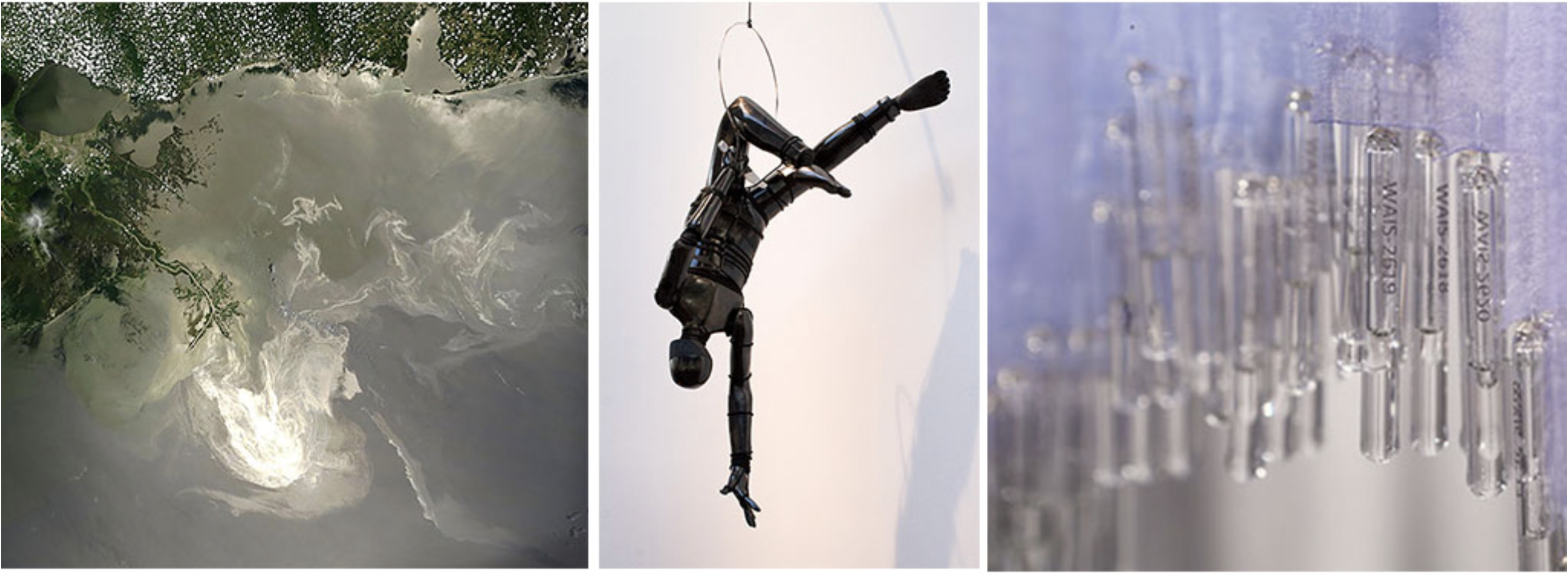
Images: Natascha Seideneck, Uncanny Territory, 2017; Cannupa Hanska Luger, We Have Agency VII, 2016; Anna McKee, WAIS Reliquary: 68,000 Years (detail), 2016, image by Joe Rudko.
I had the time today to tour Water Line: A Creative Exchange at the Metropolitan State University of Denver Center for Visual Art. Make some time to go see the artwork if you haven’t already. The exhibit closes next Saturday.
View of runoff, also called nonpoint source pollution, from a farm field in Iowa during a rain storm. Topsoil as well as farm fertilizers and other potential pollutants run off unprotected farm fields when heavy rains occur. (Credit: Lynn Betts/U.S. Department of Agriculture, Natural Resources Conservation Service/Wikimedia Commons)
Morgan Conservation District’s 62nd annual meeting will be held on February 9th.
It will be held at the Fort Morgan Home Plate Restaurant, 19873 U.S. Hwy. 34. Breakfast will be at 8 a.m. and the meeting will start at 9 a.m. The cost of the meeting will be $25 in advance, and that will cover the annual meeting, annual membership in Morgan Conservation District, and free breakfast that morning.
If you do not RSVP in advance, and show up on the day of the meeting, please be advised that the cost will be the same, however breakfast will not be free, due to our needing to order the food in advance. Our keynote speakers, Bill Hammerich and Andrew Neuhart.
Bill Hammerich has served as the CEO of Colorado Livestock Association (CLA) for the past fourteen years. He grew up on a cattle and farming operation in Western Colorado and he attended CSU where he graduated with a degree in Agricultural Economics. Following graduation, he began working with Monfort of Colorado, then Farr Feeders and was with the Sparks Companies before joining CLA in 2002.
His time spent in the cattle feeding industry provided him not only with an understanding of how to feed cattle, but also the importance of protecting and sustaining the environment in which one operates.
Bill and his wife Sabrina live in Severance, Colorado and have two grown children, Justin and Jessica, and four grandsons.
Andrew Neuhart completed both a B.S. in Natural Resource Management and an M.S. in Watershed Science at CSU. After spending two years assisting in precision farming studies in the San Luis Valley for the USDA Soil, Plant and Nutrient Research team, Andrew went to work for the State of Colorado’s Water Quality Control Division. For 9 years with the WQCD, Andrew led a Permitting Unit for discharge permits under the Clean Water Act, for both industrial and domestic wastewater treatment facilities. Working for Brown and Caldwell over the last 4 years, Andrew assists clients with regulatory issues under the Clean Water Act, and has been working with the Ag Task Force, part of the Colorado Monitoring Framework, to get the word out regarding nutrient regulations and their impacts to agricultural operations.
Mr. Hammerich and Mr. Neuhart will be speaking about Regulation 85.
Regulation 85 establishes requirements for organizations holding a NPDES permit and with the potential to discharge either nitrogen or phosphorus to begin planning for nutrient treatment based on treatment technology and monitoring both effluents and streams for nitrogen and phosphorus.
The data from these efforts is designed to better characterize nutrient sources, characterize nutrient conditions and effects around the state and to help inform future regulatory decisions regarding nutrients. Please come to the meeting and learn more from our very knowledgeable keynote speakers!
Please RSVP as soon as possible to Angela at morganconservationdistrict@gmail.com or call 970-427-3362. Space is limited.
Here’s the abstract from the USGS (Steven M. Peterson, Amanda T. Flynn, and Jonathan P. Traylor):
The High Plains aquifer is a nationally important water resource underlying about 175,000 square miles in parts of eight states: Colorado, Kansas, Oklahoma, Nebraska, New Mexico, South Dakota, Texas, and Wyoming. Droughts across much of the Northern High Plains from 2001 to 2007 have combined with recent (2004) legislative mandates to elevate concerns regarding future availability of groundwater and the need for additional information to support science-based water-resource management. To address these needs, the U.S. Geological Survey began the High Plains Groundwater Availability Study to provide a tool for water-resource managers and other stakeholders to assess the status and availability of groundwater resources.
A transient groundwater-flow model was constructed using the U.S. Geological Survey modular three-dimensional finite-difference groundwater-flow model with Newton-Rhapson solver (MODFLOW–NWT). The model uses an orthogonal grid of 565 rows and 795 columns, and each grid cell measures 3,281 feet per side, with one variably thick vertical layer, simulated as unconfined. Groundwater flow was simulated for two distinct periods: (1) the period before substantial groundwater withdrawals, or before about 1940, and (2) the period of increasing groundwater withdrawals from May 1940 through April 2009. A soil-water-balance model was used to estimate recharge from precipitation and groundwater withdrawals for irrigation. The soil-water-balance model uses spatially distributed soil and landscape properties with daily weather data and estimated historical land-cover maps to calculate spatial and temporal variations in potential recharge. Mean annual recharge estimated for 1940–49, early in the history of groundwater development, and 2000–2009, late in the history of groundwater development, was 3.3 and 3.5 inches per year, respectively.
Primary model calibration was completed using statistical techniques through parameter estimation using the parameter estimation suite of software with Tikhonov regularization. Calibration targets for the groundwater model included 343,067 groundwater levels measured in wells and 10,820 estimated monthly stream base flows at streamgages. A total of 1,312 parameters were adjusted during calibration to improve the match between calibration targets and simulated equivalents. Comparison of calibration targets to simulated equivalents indicated that, at the regional scale, the model correctly reproduced groundwater levels and stream base flows for 1940–2009. This comparison indicates that the model can be used to examine the likely response of the aquifer system to potential future stresses.
Mean calibrated recharge for 1940–49 and 2000–2009 was smaller than that estimated with the soil-water-balance model. This indicated that although the general spatial patterns of recharge estimated with the soil-water-balance model were approximately correct at the regional scale of the Northern High Plains aquifer, the soil-water-balance model had overestimated recharge, and adjustments were needed to decrease recharge to improve the match of the groundwater model to calibration targets. The largest components of the simulated groundwater budgets were recharge from precipitation, recharge from canal seepage, outflows to evapotranspiration, and outflows to stream base flow. Simulated outflows to irrigation wells increased from 7 percent of total outflows in 1940–49 to 38 percent of 1970–79 total outflows and 49 percent of 2000–2009 total outflows.
The Platte River is formed in western Nebraska east of the city of North Platte, Nebraska by the confluence of the North Platte and the South Platte Rivers, which both arise from snowmelt in the eastern Rockies east of the Continental Divide. Map via Wikimedia.
Nebraska has a unique role among the four partners in the Platte River Recovery Implementation Program, according to Nebraska Department of Natural Resources Director Jeff Fassett.
“All the (protected) species and all the habitat are in Nebraska,” he said.
The Central Platte Valley is the target area for least terns, piping plovers and whooping cranes, while pallid sturgeon are in the Lower Platte River.
All the water options for a proposed program extension, which will focus on reducing river depletions by another 40,000 [acre-feet] or more, are in Nebraska to be as close as possible to the target habitat.
Fassett said that with a major reservoir project now off the table, new projects will include groundwater recharge, facilities to hold water for retimed releases and water leasing.
He noted Tuesday at the annual convention of the Nebraska State Irrigation and Nebraska Water Resources associations that initial water projects were completed by all three states toward meeting the program’s first-increment goal to reduce river depletions by 130,000-150,000 [acre-feet].
However, more recent projects and those being considered for the future are only in Nebraska. “There is hydrologic logic about that,” Fassett said, because projects hundreds of miles from the target habitat are not as effective.
Nebraska’s benefits include regulatory stability the program provides for the Platte Basin. Projects in Nebraska, Colorado and Wyoming that must comply with the federal Endangered Species Act can do so through the program instead of individually, he said.
Another issue for Nebraska is its own demands to enhance water in the river. Fassett said state laws for the overappropriated area of the Platte Basin west of Elm Creek require “moving the train backward” to mitigate new water uses since 2007.
HB15-1167 is up for hearing tomorrow in the House Agriculture, Livestock, & Natural Resources committee. The bill is the brainchild of J. Paul Brown representing District 59 down in southwestern Colorado. It would direct the CWCB to study the feasibility of new mainstem storage on the South Platte River downstream from Greeley. It also directs the CWCB to utilize existing studies of the possibility of pumping water from the Missouri River Basin back to Colorado. I suppose he’s talking about the USACE’s alternative to Aaron Million’s pipeline from the Green River or the Kansas Aqueduct project.
The bill calls out the Narrows Dam Project (650,000 AF) that was authorized by the US Congress but never built for a number of reasons, most of which would be faced by any new mainstem project.
Senator Sonnenberg shows up as the Senate sponsor.
Here’s what Representative Brown had to say on the subject in the Pagosa Daily Post:
My time in the legislature is challenging and exciting. I am working hard on my bills as well as keeping up on my committee bills and the bills that come to the floor. I actually have a little advantage over other legislators in that my apartment is half a block from the Capitol, so all of my time, when I am not sleeping, showering, or attending receptions, is spent reading and preparing for action on bills.
My number one issue is water storage and primarily storage in the South Platte drainage in Colorado. Why on the South Platte? Because that is the one drainage on the eastern side of Colorado that regularly has water that leaves the state that can legally be stored and used in Colorado. When I was in the legislature in 2011 and 2012 I started paying attention to the water in the South Platte Basin that was leaving the state. There were two years in particular where over 1,000,000 acre feet per year were wasted, another where 600,000 acre feet left the state, and even today there is excess water running out of the state that could be used to augment other water needs in Colorado. If we could store that water, it would help to satisfy the demand on the Front Range and relieve the need to send water from the Western Slope to the more populated Eastern side of the Continental Divide.
For the past many years I have been learning all I can about water, water law, water compacts with other states, and everything else related to water that I could possibly learn. I started at a young age when my parents were paid to measure the water at the Colorado/New Mexico state line on the La Plata River South of Hesperus, Colorado. On most early mornings before I caught the bus for school I would measure the amount of water in the river. That information was then relayed to the water authorities in both states where ditches were closed or opened depending on their priority. I have monitored Governor Hickenlooper‚s „water plan‰ and have attended as many Water Roundtable meetings as I could possibly make. I have attended the Colorado Water Congress meetings amongst the most knowledgeable water lawyers and providers in Colorado.
I still have much to learn.
Everywhere I go I have asked folks about storage on the South Platte. The more I have learned, the more it became evident that all of the information needed to make good decisions on where and how to store water was scattered in many different places. I decided that it was necessary to pull all of that information together and that the easiest way to do so is to run a bill. That bill is HB15- 1167. It will be heard in the House Agriculture, Livestock, and Natural Resources Committee upon adjournment on the 18th of February.
Here’s the release from the United States Geological Survey (Parker Norton/Marisa Lubeck):
Video footage of an interview with lead USGS scientist Parker Norton is available online.
Streamflow in the eastern portions of the Missouri River watershed has increased over the past 52 years, whereas other parts have seen downward trends.
U.S. Geological Survey scientists recently studied data from 227 streamgages in the Missouri River watershed that had continuous records for 1960 through 2011. The scientists found that almost half of the streamgages showed either an upward or downward trend in mean annual flow since 1960, while the rest showed no trend.
The study is relevant on a large scale because the Missouri River is the longest river in the United States, with a watershed that includes mountainous to prairie topography in all or parts of 10 states and small parts of Alberta and Saskatchewan in Canada.
“The Missouri River and its tributaries are valuable for agriculture, energy, recreation and municipal water supplies,” said USGS hydrologist Parker Norton. “Understanding streamflow throughout the watershed can help guide management of these critical water resources.”
According to the study, streamflow has increased in the eastern part of the watershed, including eastern North Dakota, eastern South Dakota, western Iowa and eastern Nebraska. Annual flows have decreased in the western headwaters area of the Missouri River in Montana and Wyoming, and in the southern part of the basin associated with the Kansas River watershed.
Climate changes that affect how and where moisture is delivered to the continent may be causing some of these trends in the Missouri River Basin. Although the USGS scientists did not conduct a complete analysis of the causes, they noted that increased streamflow over broad regions occurred despite the increasing use of water. Decreased streamflow in some areas could also be related to climate change factors, or to groundwater pumping.
Significant portions of the Ogallala Aquifer, one of the largest bodies of water in the United States, are at risk of drying up if it continues to be drained at its current rate. Courtesy of MSU
The scope of this mounting crisis is difficult to overstate: The High Plains of Texas are swiftly running out of groundwater supplied by one of the world’s largest aquifers – the Ogallala. A study by Texas Tech University has predicted that if groundwater production goes unabated, vast portions of several counties in the southern High Plains will soon have little water left in the aquifer to be of any practical value.
The Ogallala Aquifer spreads across eight states, from Texas to South Dakota, covering 111.8 million acres and 175,000 square miles. It’s the fountain of life not only for much of the Texas Panhandle, but also for the entire American Breadbasket of the Great Plains, a highly-sophisticated, amazingly-productive agricultural region that literally helps feed the world.
This catastrophic depletion is primarily manmade. By the early eighties, automated center-pivot irrigation devices were in wide use – those familiar spidery-armed wings processing in a circle atop wheeled tripods. This super-sized sprinkler system allowed farmers to water crops more regularly and effectively, which both significantly increased crop yields and precipitously drained the Ogallala.
Compounding the drawdown has been the nature of the Ogallala itself. Created 10 million years ago, this buried fossil water is–in many places—not recharged by precipitation or surface water. When it’s gone, it’s gone for centuries…
“The depletion of the Ogallala is an internationally important crisis,” says Burke Griggs, Ph.D., consulting professor at the Bill Lane Center for the American West at Stanford University. “How individual states manage the depletion of that aquifer will obviously have international consequences.”[…]
“We’re headed for a brick wall at 100 miles per hour,” says James Mahan, Bruce Spinhirne’s father-in-law and a plant physiologist at the USDA’s Agricultural Research Service lab in Lubbock. “And, really, the effects of climate change are branches hitting the windshield along the way.”
Last August, in a still-echoing blockbuster study, Dave Steward, Ph.D., and his colleagues at Kansas State University, informed the $15 billion Kansas agricultural economy that it was on a fast track to oblivion. The reason: The precipitous, calamitous withdrawal rates of the Ogallala Aquifer.
The Ogallala is little known outside this part of the world, but it’s the primary source of irrigation not just for all of western Kansas, but the entire Great Plains. This gigantic, soaked subterranean sponge – fossil water created 10 million years ago – touches eight states, stretching from Texas all the way up to South Dakota, across 111.8 million acres and 175,000 square miles.
The Ogallala supports a highly-sophisticated and amazingly-productive agricultural region critical to the world’s food supply. With the global population increasing, and as other vital aquifers suffer equally dramatic declines, scientists acknowledge that if the farmers here cannot meet ever-growing food demands, billions could starve.
Steward’s study predicted that nearly 70 percent of the portion of the Ogallala beneath western Kansas will be gone in 50 years. He’s not the kind of person to shout these results; he speaks slowly and carefully. Yet, he has the evident intensity of one who’s serving a greater purpose. “We need to make sure our grandkids and our great grandkids have the capacity to feed themselves,” he says.
Now the chief executive of the state, himself from a farming family, is using Steward’s report as a call to action.
“One of the things we [have] to get over … is this tragedy of the commons problem with the Ogallala,” says Governor Sam Brownback, a Republican who at age 29 was the youngest agriculture secretary in state history. “It’s a big common body of water. It’s why the oceans get overfished … You have a common good and then nobody is responsible for it.”
“That’s one of the key policy issues that you have to get around,” Brownback says in his roomy, towering office at the capitol in Topeka. “Everyone has to take care of this water.”
In that spirit, a tiny legion of farmers and landowners in the northwest corner of Kansas, where the Rockies begin their rise, have just begun year two of what could be one of the most influential social experiments of this century.
The group is only 125 in number but controls 63,000 acres of prime farmland in Sheridan County. Collectively, voluntarily, they have enacted a new, stringent five-year water conservation target, backed by the force of law and significant punishments.
The Local Enhanced Management Act, or LEMA, is the first measure of its kind in the United States. Specifically, the farmers are limiting themselves to a total of 55 inches of irrigated water over five years – an average of 11 inches per year…
“So now we have the high morality of the need to protect the ecosphere. But it’s legal to rip the tops off mountains. It’s legal to drill in the Arctic. It’s legal to drill in the Gulf. It’s legal to build pipelines. It’s legal to send carbon into the dumping ground called an atmosphere. So we’ve not yet reconciled the high moral with the legal.” [Wes Jackson]
Missouri River Basin
Here’s the release from the United States Geological Survey:
A recent study conducted by scientists from the U.S. Geological Survey and published in the Journal of Geophysical Research – Biogeosciences found that a combination of climate and human activities (diversion and reservoirs) controls the movement of carbon in two large western river basins, the Colorado and the Missouri Rivers.
Rivers move large amounts of carbon downstream to the oceans. Developing a better understanding of the factors that control the transport of carbon in rivers is an important component of global carbon cycling research.
The study is a product of the USGS John Wesley Powell Center for Analysis and Synthesis and the USGS Land Carbon program.
Different downstream patterns were found between the two river systems. The amount of carbon steadily increased down the Missouri River from headwaters to its confluence with the Mississippi River, but decreased in the lower Colorado River. The differences were attributed to less precipitation, greater evaporation, and the diversion of water for human activities on the Colorado River.
For upstream/headwater sites on both rivers, carbon fluxes varied along with seasonal precipitation and temperature changes. There was also greater variability in the amount of carbon at upstream sites, likely because of seasonal inputs of organic material to the rivers. Reservoirs disrupted the connection between the watershed and the river, causing carbon amounts downstream of dams to be less variable in time and less responsive to seasonal temperature and precipitation changes.
The study presents estimates of changes in the amount of carbon moving down the Colorado and Missouri Rivers and provides new insights into aquatic carbon cycling in arid and semi-arid regions of the central and western U.S, where freshwater carbon cycling studies have been less common. This work is part of an ongoing effort to directly address the importance of freshwater ecosystems in the context of the broader carbon cycle. In the future, changing hydrology and warming temperatures will increase the importance of reservoirs in carbon cycling, and may lead to an increase in Greenhouse Gas Emissions that contribute to global warming, but may also increase the amount of carbon buried in sediments.
From the World Resources Institute (Andrew Maddocks/Paul Reig):
The world’s 100 most-populated river basins are indispensable resources for billions of people, companies, farms, and ecosystems. But many of these river basins are also increasingly at risk. As water demand from irrigated agriculture, industrialization, and domestic users explodes, major rivers on several continents are becoming so depleted that they sometimes fail to reach their ocean destinations. Add climate change, nutrient and chemical pollution, and physical alterations like dams and other infrastructure development to the mix and it’s clear that many communities rely on water resources that face an increasingly risky future.
WRI’s Aqueduct project recently evaluated, mapped, and scored stresses on water supplies in the 100 river basins with the highest populations, 100 largest river basins, and 180 nations. We found that 18 river basins— flowing through countries with a collective $US 27 trillion in GDP —face “extremely high” levels of baseline water stress. This means that more than 80 percent of the water naturally available to agricultural, domestic, and industrial users is withdrawn annually—leaving businesses, farms, and communities vulnerable to scarcity…
Decision-makers in many of world’s water-stressed basins have attempted to put management plans in place—with mixed results. The United States’ Colorado River is a prime example of a plan that, while well-intentioned, may ultimately be unsustainable. Starting in Colorado and running 1,400 miles to the Gulf of California, the Colorado River is the 14th most stressed among the world’s most populated river basins, and the sixth most stressed if ranked by size. More than 30 million people depend on it for water. The seven states receiving its water comprised 19 percent of the United States’ total GDP in 2010.
Because of its naturally arid setting—and due to its large and growing number of users and resulting high level of baseline water stress—the Colorado has become one of the most physically and legally managed rivers in the world. It is also under serious duress, exacerbated by a decades-long drought. This imbalance between supply and demand means that the river often runs dry before it reaches the Pacific Ocean—posing significant problems for wildlife, ecosystems, and communities that depend on it.
The Colorado River is an example of a basin where natural water stress is already severe. The complex web of infrastructure and governance structures around the river was, in a sense, created to ensure predictable, steady water supplies in a stressed region. On the other hand, that same development has driven increasing demands for limited supplies. Aqueduct’s country and river basin rankings deliberately do not include the effects of such extensive management, instead focusing on objective measures of underlying hydrological conditions. But the overall picture is clear: Even the most-established, iron-clad management systems start to crumble under increasing scarcity and stress…
What Is Water Stress?
Water stress is the ratio of total water withdrawals to available renewable supply in an area. In high-stress areas, 40 percent or more of the available supply is withdrawn every year. In extremely high-stress areas, that number goes up to 80 percent or higher. A higher percentage means more water users are competing for limited supplies. See the high and extremely high-stress areas highlighted in red and dark red on the maps.
The Nature Conservancy has been involved in protecting a million acres in Montana, including lands along the Rocky Mountain Front such as the Rappold ranch near Dupuyer, where conservation easements restrict development. / Courtesy photo/Dave Hanna
…combined with another recent easement on the Rocky Mountain Front, this one 14,000 acres, it put the The Nature Conservancy over a million acres of land protected in Montana. That’s about an acre protected for every resident.
“To me it’s unbelievable we’ve reached that size,” said Dave Carr, a Nature Conservancy program manager in Helena and a 24-year employee. “That’s a very large amount of land we have helped protect and conserve, and many of those lands are what I call working lands. They’re still being used. They just won’t be subdivided.”
It took 35 years for TNC to reach the million-acre milestone, which the group announced earlier this month. The largest conservation organization in the world, TNC opened its doors in Big Sky Country in 1978 when it secured its first conservation easement in the Blackfoot River Valley, one of the state’s first private conservation easements, Carr said.
Today, the organization has had a hand in protecting 1,004,308 acres of land statewide, from ranches in the Rocky Mountain foothills of northcentral Montana in grizzly bear habitat to unbroken native prairie on the northeastern plains to forested land in the river valleys of western Montana.
Lands TNC works to protect often are privately owned ranches that feature native habitat and wildlife, but the aim isn’t to end agricultural uses.
“We very much like to see lands stay in some productive use,” Carr said. “We feel that for long-term conservation, if the community is not part of that decision or doesn’t buy into that, it won’t be lasting.” [ed. emphasis mine]
Conservation easements are tailored to the needs of the landowner, but generally speaking they restrict development rights and preclude subdivisions, drainage of wetlands, plowing of native prairie and commercial gravel pits.
Easements The Nature Conservancy works on allow the landowner to continue to ranch. In some cases, harvesting timber to manage trees for beetle kill or fire hazards is allowed.
Sometimes The Nature Conservancy purchases the easements from landowners, other times they are donated. The recent 14,571-acre easement on the Rocky Mountain Front that helped push the group past the million-acre mark was an anonymous donation.
Meeting rising costs is a challenge for ranching families, and landowners, particularly those on the Rocky Mountain Front and Blackfoot River Valley, are using easements as a planning tool to keep the family ranch in business, Carr said. Money they received from The Nature Conservancy, for example, can be used to buy adjacent lands…
Almost half of TNC’s protected acreage falls within western Montana, in a geographic region called the Crown of the Continent, but some 200,000 acres (including TNC’s partnership with other land trusts, Montana Fish, Wildlife and Parks and The Conservation Fund) is now conserved along the Rocky Mountain Front and another 66,000 acres is located on northern Montana prairies. Another 320,000 acres won’t be developed in southwest Montana.
“We created the largest artificial watershed in the world,” says Pat Mulroy, the powerful head of the Southern Nevada Water Authority, a wholesaler that supplies Las Vegas.
Water from the Colorado River is piped across deserts, channeled through mountains, and — after being treated in local sewage plants — winds up in rivers that flow to the southern ends of the country:
Some of New Mexico’s share goes into the Rio Grande, eventually flowing south and east through Texas and into the Gulf of Mexico.
What Denver returns to nature flows into the South Platte, a tributary of the Missouri River.
The coastal cities of Southern California dump a good bit of their diversion into the Pacific Ocean.
None of these water bodies is the logical end of the line for the Colorado River, whose natural terminus is a delta at the northern crook of the Gulf of California. A delta that is, ironically, all dried up…
The river’s web, if some have their way, could become even larger. John Kaufman, the man who proposed the Missouri River pipeline, wants to see the artificial boundaries expand. Kaufman is the general manager of Leavenworth Water, which serves 50,000 people in a town that welcomed Lewis and Clark in 1804 during the duo’s westward exploration.
The identity of the pipeline’s proponent, who was anonymous during the Bureau of Reclamation study and is for the first time being named in the media, is important because of where he lives — outside of the natural Colorado River Basin, or in the extended web.
In Kaufman’s vision, Kansas becomes a hydrological keystone for the West, facilitating water transfers that could affect at least 10 states and Mexico.
“We’d hopscotch water across Kansas and sell it to communities in the state,” Kaufman told me during a phone interview last month, explaining the benefit to his home territory. Construction of the pipeline would also supply jobs to Leavenworth, where the intake facilities would be located. At least one groundwater district in western Kansas is advocating for a similar concept, a Missouri River pipeline to the High Plains to compensate for declines in the Ogallala Aquifer, an essential source for irrigation. Kaufman has presented his idea to state and local officials several times this year.
Once the water flows past Kansas, “it’s a horse trade,” Kaufman said. Water delivered to the Front Range would be earmarked for the South Platte River Basin, which includes Denver. (The South Platte, remember, is part of the Missouri River Basin.) A pipeline would close the circle, sending South Platte water, via the Missouri, back uphill. Of course a few drops of the Colorado would be in the pipe, too.
“It’s a reuse project, really,” said Kaufman, who serves on Kansas governor Sam Brownback’s Missouri River advisory committee…
Then there are the swaps. Front Range cities get roughly 72 percent of their supplies from the Colorado River, according to a 2009 study commissioned by the Front Range Water Council. If water from the Missouri were imported, then some of the trans-Rocky diversions could remain within the Colorado River Basin.
Kaufman’s idea — he calls it the Eisenhower Pipeline, in honor of the sponsor of the interstate highway system, which got its start in Kansas — was included in the Bureau of Reclamation’s final report, but top federal officials distanced themselves from the project, once word leaked a few days before the report’s official release last December.
“In my view, [water import] solutions are impractical and not feasible,” said Ken Salazar, Secretary of the Interior at the time. The study actually gave the pipeline high marks for technical feasibility, but the $US 8.6 billion price tag and the high energy costs pushed the pipeline to the bottom of the pile. Conservation was the big winner, deemed to be significantly cheaper and able to deliver more water.
Kaufman knows the scheme is expensive, which is why he says that he needs financial buy-in from the states in the Colorado’s Lower Basin and cooperative agreements among all the Basin states in order to shuffle water supplies.
“It’s not about providing water to the Front Range,” he said. “It’s about providing water to the West.”
Kansas Aqueduct route via Circle of Blue Frominkstain (John Fleck):
…it seems clear that the days of federal funding for big projects like this are long over. There are examples of non-federal projects of this scale. Los Angeles has done it. But that’s for municipal water supplies, for which one can charge a lot more.
The new analysis, to be started this year and completed in 2015, will reassess the Kansas Aqueduct, one of four projects evaluated 31 years ago to provide water to high plains farms in Kansas and reduce the draw on the Ogallala aquifer, the region’s primary source of water for irrigation. None of the water transport projects that were evaluated in the 1982 study were built.
But one project, the Kansas Aqueduct, which would draw water from a turn in the Missouri River about 145 kilometers (90 miles) upstream of Kansas City, and drop it into a reservoir roughly 600 kilometers (375 miles) away in western Kansas, attracted significant attention.
The cost of the new $US 300,000 study will be shared equally by the state and the federal government, said Mark Rude, executive director of the Southwest Kansas Groundwater Management District. Rude added that the region’s strong farm economy and the urgency of extending the Ogallala’s life as a source of water to agriculture make this a useful period to reconsider the Kansas Aqueduct.
“The Kansas Aqueduct Project must be pursued while production income, property values and the economic system are in place to support the project,” Rude wrote in a June letter to state water officials…
Because of high plains geology and climate, water percolates into the aquifer each year in inches; but in order to sustain a thriving grain-and-cattle industry, water is pumped out in feet.
The farmers and cattlemen in Rude’s district in southwest Kansas know this fact all too well. Rude told Circle of Blue that current rates of groundwater extraction – mining, really – are about nine percent sustainable. In other words, the amount of water pumped out of that part of the aquifer would have to be cut by 90 percent to find a balance. Such a reduction would decimate the region’s towns.
Over the years, all that water has created a more prosperous life on the plains than the early pioneers could ever have imagined. The economic structure, formidable for the time being, collapses without water.
“Everything we need is here already,” Rude says, talking about the grain elevators, equipment dealers and related agricultural infrastructure in western Kansas. “But new investment needs water-confidence. How do we provide that when we are cutting water use? It’s ideal to have both cuts and new supplies and manage the aquifer more like a reservoir.”
Farmers in northwest Kansas, in Sheridan County, have agreed to self-imposed restrictions on the amount of water they draw from the Ogallala. It is an experiment that has yet to catch on elsewhere in the state.
Economics are foremost in Rude’s mind because the aqueduct would be a whopper of a project, at least double the estimated $US 3.6 billion price tag three decades ago, and comparable in scale to massive water diversions like the 540-kilometer (360-mile) Central Arizona Project that was approved before the Carter administration and built mostly with federal money.
Rude scoffs at the suggestion that a Kansas aqueduct is a relic of a by-gone age. “I’m comfortable if you say it’s a Roman project in the 21st century,” he said, recalling the channels that satiated Caesar’s capital more than two millennia ago. “The aquifer is a question that has to be dealt with.”
Here’s a guest column about Colorado’s water plan, written by State Senator Gail Schwartz running in the Glenwood Springs Post Independent. Senator Schwartz has been in the middle of water legislation for most of her time in the state legislature. Here’s an excerpt:
The state water plan will pave the way for water decisions that responsibly and predictably address future challenges. The governor’s executive order detailed that the plan must promote a productive economy that supports vibrant and sustainable cities, viable and productive agriculture, and a robust skiing, recreation and tourism industry. It must also incorporate efficient and effective water infrastructure planning while promoting smart land use and strong environmental protections that include healthy watersheds, rivers and streams, and wildlife.
The Colorado Water Conservation Board (CWCB) has been tasked with creating the Colorado Water Plan. The board must submit a draft of the plan to the governor’s office by Dec. 10, 2014, and a final plan by Dec. 10, 2015. The CWCB will incorporate the state’s Interbasin Compact Committee (IBCC) and nine Basin Roundtables recommendations to address regional long-term water needs.
As chair of the interim Water Resources Review Committee (WRRC), I will help ensure that the diverse voices of Colorado’s water community are heard during the development of this plan. The 10-member WRRC comprises legislators representing districts in each of the state’s major river basins. The committee has a full agenda as we are charged to review water issues and propose legislation. The WRRC will also remain actively engaged with the CWCB in development of the State Water Plan…
As charged, the water plan has a broad scope and will inevitably need to address difficult and contentious issues. I believe that we should first focus on conservation and efficiency both at the municipal/industrial level and in agriculture. Water conservation is an area with broad consensus. A recent public opinion study of Coloradans identified conservation as the most important water-related issue. Other studies have strikingly demonstrated that 80 percent of Coloradans favored conservation over new construction projects. In 2013, I sponsored SB13-19 which gives landowners a new tool to conserve water without injuring their water rights. New conservation and efficiency tools are needed in the State Water Plan as they stress wise use of our precious water resource.
Conservation may be just one piece of this larger puzzle, and I want to hear what pieces are important to you.
State Water Plan, meet the “not-one-more-drop-club” from the Grand Valley. Here’s a report from Gary Harmon, writing for The Grand Junction Daily Sentinel:
Colorado should import water to meet burgeoning Front Range demands — and lessen the pressure on the Western Slope to slake that thirst, Grand Valley water officials suggest.
Managers of 10 Grand Valley water agencies and municipalities are preparing to ask their bosses to insist that bringing water into the state [ed. emphasis mine] — which would be known as augmentation — is a needed step in the development of a statewide water plan.
The problem, the water managers have concluded, is that there simply isn’t enough water in the state to meet the demands of growth, particularly on the Front Range, and the demands of millions of downstream Colorado River water users in Arizona, California and Nevada.
“Reallocation of state water resources is not going to do the job,” Larry Clever, general manager of Ute Water Conservancy District, said.
Managers of the agencies sat down together to draft a Grand Valley response to Gov. John Hickenlooper’s call for a statewide water plan, and they began the process as a “not-one-more-drop club,” Clever said, in reference to any further diversion of water from the Western Slope over the mountains to the east. So any additional drops will have to come from elsewhere, Max Schmidt, general manager of the Orchard Mesa Irrigation District, said.
“Our problem is that we’re the cheapest source of good clean water to the Eastern Slope, and there’s no other way around it,” Schmidt said. “We need to find outside water. Actually, we do not. They do.”
The concerns by Grand Valley water managers center on the possibility that the lower basin states will place a call on the Colorado River under the 1922 compact governing the river. “Every time that (the East Slope) takes water from the West Slope, that enhances the chance of a compact call,” that in theory would hit hardest on the Eastern Slope, Schmidt said.
Hickenlooper in May directed the drafting of a statewide water plan, to be complete by December 2014.
The proposed position acknowledges that the Colorado Water Conservation Board estimates that there could be as many as 800,000 acre feet of water available for diversion and storage, but notes there is “considerable doubt” that additional development won’t result in a compact call.
The Grand Valley response would set out nine goals that such a plan would have to include, one of them being “implementation of a long-term, regional water-augmentation plan.” Other goals include protecting the “cornerstones of our economy,” agriculture, resource extraction, recreation and tourism; preparation for the possibility of a compact call; protecting the health and quality of the state’s river basins; and preparing for the effects of climate change.
Other goals include protecting and promoting the area’s agricultural heritage; preserving local control of planning for development; ensuring federal agencies operate within state water law; and ensuring that upstream diversions protect and maintain water quality for downstream users.
Ultimately, “it is imperative for state officials to engage officials from the federal government and other basin states in developing, implementing and paying for an augmentation plan” that will benefit all the states dependent on the Colorado River, the proposed position says.
The proposed position will go before the governing boards of Fruita, Grand Junction and Palisade, as well as Clifton Water District, Grand Valley Irrigation Co., Grand Valley Water Users Association, Mesa County Irrigation District, Orchard Mesa Irrigation District, Palisade Irrigation District and Ute Water.
Here’s a guest column running in The Denver Post, written by Allen Best, that gives an overview of the current state of the Colorado River. Click through and read the whole article. Here’s an excerpt:
Tow icebergs from Alaska? Pilfer from a tributary of the Yellowstone River in Wyoming? Or, even sneak water from the Snake, boring a 6-mile tunnel from a reservoir near Jackson Hole to the Green River? While it’s sure to make Idaho’s spud farmers cranky, it would help Tucson, Los Angeles and that parched paradigm of calculated risk, Las Vegas.
Interior Secretary Ken Salazar and everybody else with a megaphone has carefully branded these ideas as improbable or worse. Only slightly more credible is the idea of a pipeline from the Mississippi River. It could originate near Memphis, traverse 1,040 miles and, if reaching Castle Rock, rise 6,000 feet in elevation. Pumping would require a steady 800 megawatts of electricity, or a little more than what the Comanche 3 power plant in Pueblo produces.
In theory, this 600,000-acre feet of muddy Mississippi would replace diversions from the Colorado River headwaters between Grand Lake and Aspen. Those diversions range between 450,000 and 600,000 acre-feet annually. That would leave the creeks and rivers to the whims of gravity and geography, at least until arriving at Las Vegas and other places with growing thirst.
Cheap water? Not exactly: It would cost $2,400 per acre-foot for this Memphis-flavored sludge, assuming the idea isn’t grounded by protests from barge and riverboat operators. (Sometimes they, too, say they need more water.)
The federal government has come up with dozens of ways to enhance the diminishing flow of the Colorado River, which has long struggled to keep seven states and roughly 25 million people hydrated…
…also in the mix, and expected to remain in the final draft of the report [ed. Colorado River Basin Water Supply & Demand Study], is a more extreme and contentious approach. It calls for building a pipeline from the Missouri River to Denver, nearly 600 miles to the west. Water would be doled out as needed along the route in Kansas, with the rest ultimately stored in reservoirs in the Denver area…
The fact that the Missouri River pipeline idea made the final draft, water experts say, shows how serious the problem has become for the states of the Colorado River basin. “I pooh-poohed this kind of stuff back in the 1960s,” said Chuck Howe, a water policy expert and emeritus professor of economics at the University of Colorado, Boulder. “But it’s no longer totally unrealistic. Currently, one can say ‘It’s worth a careful look.’ ”
The pipeline would provide the Colorado River basin [ed. Denver, Kansas, etc., are not in the Colorado River Basin] with 600,000 acre-feet of water annually, which could serve roughly a million single-family homes. But the loss of so much water from the Missouri and Mississippi River systems, which require flows high enough to sustain large vessel navigation, would most likely face strong political opposition…
Rose Davis, a spokeswoman for the Bureau of Reclamation, said that during the course of the study, the analysis done on climate change and historical data led the agency “to an acknowledged gap” between future demand and future supply as early as the middle of this century.
That is when they put out a call for broader thinking to solve the water problem. “When we did have that wake-up call, we threw open the doors and said, ‘Bring it on,’ ” she said. “Nothing is too silly.”[…]
It is unclear how much such a pipeline project would cost, though estimates run into the billions of dollars. That does not include the cost of the new electric power that would be needed (along with the construction of new generating capacity) to pump the water uphill from Leavenworth, Kan., to the front range reservoirs serving Denver, about a mile above sea level, according to Sharlene Leurig, an expert on water-project financing at Ceres, a nonprofit group based in Boston that works with investors to promote sustainability.
But [Burke W. Griggs] and some federal officials said that the approval of such a huge water project remained highly unlikely.
Ms. Leurig noted that local taxpayers and utility customers would be shouldering most of the expense of such a venture through their tax and water bills, which would make conservation a more palatable alternative.
From Montana to West Virginia, officials on both sides have written President Barack Obama urging him to intervene _ or not _ in a long-running dispute over whether water from the Missouri’s upstream reservoirs should be released into the Mississippi River to ease low water levels that have imperiled commercial traffic.
The quarrel pits boaters, fishermen and tourism interests against communities downstream and companies that rely on the Mississippi to do business.
“We are back to the age-old old battle of recreation and irrigation verses navigation,” said Sen. Claire McCaskill, a Democrat from Missouri.
If the water is held back, downstream states warn that shipping on the Mississippi could come to a near standstill sometime after Christmas along a 180-mile stretch between St. Louis and the southern Illinois town of Cairo. But if the water is released, upstream communities worry that the toll of the drought could be even worse next year for farms and towns that depend on the Missouri.
Obama has not decided whether to enter the dispute, nor has the White House set a timetable to respond. But tensions are rising in this decades-old battle.
From his perch as executive director of the Southeast Missouri Regional Port Authority, Dan Overbey watched this week as workers scrambled to ship out as much grain as possible before the Mississippi gets so low that it is not economically feasible or physically possible to move loaded-down barges…
More than 800 miles to the northwest, Michael Dwyer was also stewing. He’s the executive vice president of the North Dakota Water Users Association.
To Dwyer, the downriver interests are “taking selfishness” to “a level you can’t even comprehend.”
“We suffered the impact of these reservoirs” when they were created decades ago by dams that flooded 500,000 acres of bottomland, Dwyer said. “To have some use of the resource only seems appropriate.”
At the Mississippi River port near Cape Girardeau, Mo., about a million tons of cargo are loaded or unloaded annually, providing about 200 jobs, Overbey said.
The water is also vital in parts of the Dakotas, where the dammed-up Missouri River has spawned a tourism industry centered on boating and fishing…
Over the past three decades, more than a dozen lawsuits have been filed challenging the management of the river, many of which set Missouri and other downstream states against the Dakotas and other upstream states.
The battles started in 1982, when Missouri, Iowa and Nebraska challenged a government contract allowing water to be drawn from the Missouri River in South Dakota to flush coal through a pipeline to power plants in the southeast. The U.S. Supreme Court blocked the project, but other lawsuits followed, including an effort by upstream states to reduce the water released from dams in an attempt to boost sport fishing in the reservoirs.
Missouri, meanwhile, sued the Army Corps of Engineers when it held back water because of droughts and shortened the navigation season. Environmental groups also joined the court battles, advocating for spring surges and summer declines in downstream river levels to help threatened species of birds and fish.
So far, no lawsuits have been filed in the current competition for water. But battle lines have been drawn…
The Corps of Engineers, which manages both the Missouri and Mississippi rivers, says its guidelines prohibit it from releasing water from the Missouri River reservoirs for the primary purpose of improving navigation on the Mississippi. That position was backed up by a 1990 report from the federal government’s General Accounting Office, though officials from downstream states believe Obama could trump that by declaring an emergency to avoid an “economic calamity.”
A pipeline from the Missouri River to Colorado’s Front Range has the potential to bring water to two states — and into the Arkansas River basin — but has not been on the table in Colorado water discussions.
The Missouri River reuse option is being considered as one of about 100 proposals that would relieve pressure on diversion of water from the Colorado River basin. The Bureau of Reclamation began the study in 2009 to assess future supply and demand along the Colorado River and a final report should be coming out this month. Pueblo and other Front Range communities import water from the Colorado River basin each year, so new supplies could reduce that demand. The reuse would provide water to depleted aquifers across Kansas through diversion of up to 600,000 acrefeet annually from the Missouri River near Leavenworth, Kan. A description of the project on file with Reclamation indicates some of the water could reach the Arkansas River basin, north of Colorado Springs. It’s unclear from the documents available if the proposal has a sponsor.
The project would cost billions of dollars and likely face political hurdles. Although water would have to be pumped 600 miles and 5,000 feet uphill from Leavenworth in order to reach Denver, Reclamation rates the project as “technically feasible.”
Although specific plans to move water from Flaming Gorge and the Mississippi River, as well as more general options from the Missouri River, have been debated, the KansasColorado plan has eluded discussion within Colorado.
“No, we have not talked about it,” said Gary Barber, chairman of the Arkansas Basin Roundtable. Barber also represents the roundtable on the Flaming Gorge Task Force, which has not reviewed the idea.
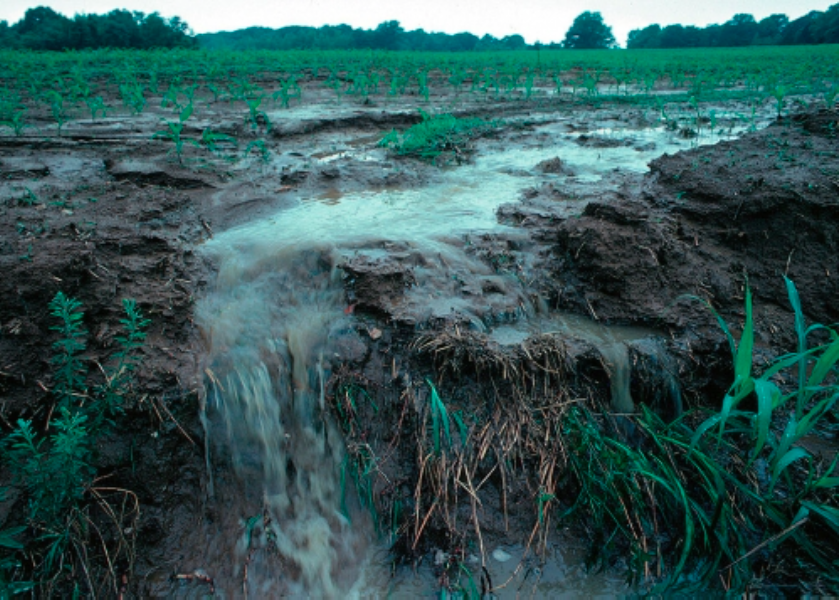
“We’ve gotten monthly reports on the Colorado River basin study,” said Alan Hamel, who represents the Arkansas River basin on the Colorado Water Conservation Board. “There has not been any discussion of this particular proposal.”
More coverage from Bruce Finley writing for The Denver Post. Here’s an excerpt:
Bureau of Reclamation officials on Tuesday said the “Missouri River Reuse Project” will be evaluated for feasibility following the release in coming weeks of a federal government study on water supply for the West.
“The state of Colorado has not taken a formal position on the pipeline or any of the options,” Colorado Department of Natural Resources spokesman Todd Hartman said…
The Missouri diversion described in Bureau of Reclamation documents would require a pipeline across Kansas, with water used to fill surface reservoirs and recharge depleted aquifers along the way to metro Denver.
It would convey 600,000 acre-feet of water a year depending on Midwestern needs. An acre-foot has been regarded as enough water to sustain two families of four for a year.
“Water would likely be stored in Front Range reservoirs such as Rueter-Hess, Carter, Barr and Chatfield,” a project summary said. “Colorado may choose to construct new reservoirs or enlarge existing reservoirs for the project.”
Some water could also be directed to the headwaters of the Colorado River Basin through pipelines and tunnels when there is great need to relieve drought in the basin, the summary continued…
The options for importing water reflect widening worries about future shortages. The Colorado River Basin, which spans Arizona, California, Colorado, New Mexico, Nevada, Utah and Wyoming, is the source of water for 30 million people. The government’s three-year Colorado River Basin Water Supply and Demand Study has found that within 50 years, the annual water deficit will reach 3.5 million acre-feet.
Bureau of Reclamation officials said their primary purpose was to define current and future imbalances in water supply and demand. They asked stakeholders and agencies across the seven basin states to submit ideas to prevent shortages. States have agreed to consider a Missouri River diversion. Other ideas are destined for an appendix.
Here’s the pitch from the U.S. Bureau of Reclamation:
The Missouri River Reuse option is a diversion of up to 600,000 AFY of water from the Missouri River for reuse within the Missouri River Basin of Kansas and Colorado. Water would be diverted from the Missouri River only when flows to support navigation and municipal water diversions along the river from Leavenworth, Kansas to Saint Louis, Missouri, are not impaired.
1. Within Kansas, the water would be used to fill surface reservoirs and recharge depleted aquifers in the upper and lower Republican River Basins, Solomon River Basin, and Smoky-Hill/Saline River Basin as determined from assessment of need and feasibility by the Kansas State Water Office in cooperation with the Kansas Division of Water Resources, Army Corps of Engineers, and the States of Colorado and Nebraska. In particular, the water would be used for irrigation and municipal, commercial, and industrial use and to recharge the Ogallala aquifer in western Kansas. Each of these basins (including the Ogallala aquifer in northwest Kansas) is tributary to the Missouri River. The Ogallala aquifer discharges into the Republican River in northeast Colorado and northwest Kansas. Kansas may choose to construct new reservoirs or enlarge existing reservoirs for the project.
2. Along the Front Range of Colorado, the water (totaling 500 cfs or more as Colorado determines)
would be used for municipal, commercial, and industrial use with return flows allocated for agricultural irrigation use within the South Platte River Basin (a tributary of the Missouri River). Some water could be used to recharge the bedrock aquifers of the Denver Basin. In eastern Colorado, some water could be used for irrigation and municipal use and to recharge the Ogallala aquifer. Water would likely be stored in Front Range reservoir such as Rueter-Hess, Carter, Barr, and Chatfield and in designated alluvial storage along the South Platte River. Colorado may choose to construct new reservoirs or enlarge existing reservoirs for the project.
3. Some water may be available for use outside the Missouri River Basin, particularly that portion of the water in the Missouri River which is non-native (originating as transmountain diversions from the
Colorado and Arkansas Rivers in Colorado and nontributary Denver Basin ground-water withdrawals). Some of this water could be directed to the Arkansas River in western and central Kansas and in eastern Colorado beginning near Colorado Springs. Some water could also be directed to the headwaters of the Colorado River Basin through pipelines and tunnels when there is great need to relieve drought in the basin provided the navigation and municipal supply flows in the Missouri River are plentiful and other water needs of western Kansas and eastern Colorado are being reasonably satisfied.
The location of the Missouri River diversion point is in Leavenworth County, Kansas near the City of Leavenworth. The water would be treated and disinfected at a large treatment plant to be designed and constructed, as necessary, for subsequent conveyance and use. End-user treatment, such as water softening for municipal, commercial, and industrial use, is anticipated.
Conveyance of water across Kansas and eastern Colorado would be through single or parallel largediameter pipelines located more or less adjacent to I-70. Infrastructure would include a series of highcapacity pumping stations (to be located, sized, and designed). The water conveyance infrastructure (pipeline and pumping stations) would be owned and operated by the Kansas Water Office in cooperation with the Corps of Engineers, Bureau of Reclamation, Kansas Division of Water Resources, Colorado Division of Water Resources, Colorado Water Conservation Board, and various public and private stakeholders. The diversion rights would owned by a Kansas entity
The Missouri River Reuse Project is technically feasible as evidenced by other large diversion projects in the western United States including, but not limited to: (a) the numerous transmountain diversion projects in Colorado that bring tens of thousands of acre-feet of Colorado River and Arkansas River water to the Front Range through numerous tunnels; (b) the Colorado River Aqueduct that brings water from the Colorado River at Parker Dam to Southern California; (c) the Los Angeles Aqueduct that brings water from Owens Valley to Los Angeles; (d) the Central Arizona (canal) Project that brings Colorado River water to Phoenix and Tucson, and (e) the State Water Project of California that provides irrigation water to farms in the San Joaquin Valley, and is a major source of supply for cities in Los Angeles, Riverside, San Bernardino, and San Diego Counties and other parts of southern California. Many of these projects involve the Bureau of Reclamation, Corps of Engineers, and numerous state water resources agencies.
A similar serious project has been proposed that would divert surface water from the Mississippi River and pump it west into the Colorado River Basin. Another large project has been proposed that would divert about 300,000 of acre-feet of surface water from the Green River at Flaming Gorge Reservoir in southwest Wyoming, pump the water across southern Wyoming along I-80 to Cheyenne and then south into the Denver Basin. Moreover, private energy and pipeline companies have constructed thousands of miles of interstate pipelines that pump vast quantities of natural gas and petroleum products across the United States.
Legal, engineering and construction costs need to be determined for numerous possible options. Construction costs will likely be in the billions of dollars and would be borne by the various end users — water providers and irrigators in Kansas and Colorado with some participation by the Corps of Engineers and Bureau of Reclamation. Operating costs must be affordable for irrigators and municipal users for the project to be feasible. In exporting water out-of-state to Colorado, Kansas could charge and collect a reasonable severance tax, as well as the State Water Plan fee.
The historic 2007 multi-state agreement among the seven Colorado River Basin States governing the future management of the Colorado River provides for the introduction and recovery of non-Colorado River system water and non-Colorado River system water exchanges. The Front Range of Colorado uses about 345,000 acre-feet of Colorado River water each year and releases that water into the South Platte River Basin, which is tributary to the Missouri River. According to the 2004 Colorado Statewide Water Supply Initiative (SWSI) report, the South Platte River Basin will need an additional 409,700 acre-feet of water by 2030 due largely to forecasted population increase. Bringing Missouri River reuse water to the Front Range provides an opportunity for Colorado to exchange all or a portion of this water for other water in the Colorado River Basin originating in the State of Colorado (such as from the Yampa, White, and Green Rivers) to the Lower Basin states. This exchange of water would engage the States of California, Arizona, Nevada, and New Mexico in helping to pay for the project. The federal government would also have a financial interest in the project because of the Colorado River treaty with Mexico.
The Missouri River Reuse Project could have major interstate impacts on regional and local water supply. Congressional and state legislative approvals will likely be needed with an accompanying environmental impact statement under NEPA. A 404 permit will be needed from the Corps of Engineers including numerous state approvals. Water rights for the diversion will have to be obtained from the Kansas Department of Water Resources and will be held by a Kansas entity.
Even though the water will be used in Kansas and Colorado, the reuse project will likely have profound and unprecedented positive impacts on the Colorado, Republican, and South Platte River compacts affecting Kansas, Colorado, Nebraska, Wyoming, Utah, Nevada, Arizona, New Mexico, California, and the Colorado River treaty with Mexico. The reuse project could also positively impact the North Platte and Arkansas River compacts involving Kansas, Colorado, Nebraska, and Wyoming. The State of Missouri will need solid assurance that the flows in the Missouri River will always be sufficient to support navigation and municipal water diversions in the state. A benefit to the states of Missouri and Kansas and Kansas City area water providers is the possible reduced risk of damage from flooding and river degradation.
The project has numerous options that can be considered in terms of design, construction, operations, and costs. Each of these options needs to be fully explored, which will take time and money. The possible source(s) of funding need to be determined and evaluated. The project is large and will need to engage the cooperation (buy-in) and participation by numerous states and their respective water resources agencies and water providers, the Corps of Engineers, the Bureau of Reclamation, and various Missouri River stakeholders. Other federal agency cooperation will be needed from the Environmental Protection Agency, Fish and Wildlife Service, Natural Resource Conservation Service, US Department of Commerce, US Energy Department, US Forest Service, and the Bureau of Land Management. Considerable risk and uncertainty exists when seeking approval and consensus from such a cadre of stakeholders.
Historic flows in the Missouri River demonstrate that the river it a reliable source of supply for navigation, irrigation, and municipal supply. Flows vary annually and seasonally. The main stem of the Missouri River is managed by the Corps of Engineers pursuant to an annual operating plan that is focused on flood control, navigation, municipal water supply, recreation, and habitat for fish and wildlife. The historic Missouri River flood of 2011 caused significant river-bottom degradation from Atchison, Kansas to Kansas City, Missouri, breached numerous federal and private levees, and considerable damage to public and private property. A large diversion from the Missouri River would provide another means for the Corps of Engineers to control flooding of the Missouri River in the Kansas City reach. During periods of low flow, projected river diversions would be reduced or suspended. Subsequent water stored in reservoirs west of the diversion point could be released as needed to ensure adequate supplies of water for municipal use, such as along the Kansas River.
The amount of electrical energy required for operations would be substantial and needs to be determined based on consideration of reasonable design alternatives. Power supply to the pumping stations would be provided by a combination of existing and expanded coal-fired power plants and wind energy as determined most appropriate and feasible by objective engineering and economic analyses.
Additional water for Kansas and Colorado reservoirs will positively support reservoir recreation activities. The reuse project would likely have a positive affect on the riparian habitat of the lower South Platte River basin, particularly for whooping cranes and other waterfowl in northeast Colorado and southwest Nebraska. Potential impacts on endangered and protected fish and waterfowl along the Missouri River would need to be determined.
Project alternative studies, engineering, design, construction, legal support, and operations would be a significant economic benefit to the States of Kansas and Colorado in terms of employment and population growth. A large diversion works, treatment plant, and pumping station would likely employ hundreds of skilled workers and engineers in Leavenworth County, Kansas. Pipeline and booster pumping stations would likewise employ hundreds of skilled workers across Kansas and eastern Colorado. Severance tax revenue for state of Kansas from the export of water to Colorado would also be significant. The economic benefit could be similar to the Keystone Pipeline from Canada to the United States or nearly any of the aqueduct projects in California. The project could also yield substantial volumes of new water to the Lower Colorado River Basin states under the Colorado River Compact.
700 milelong, $12B pipelines from Missouri River are the right way to meet #CORiver basin water demands...or not. http://t.co/kErEu38W
On Friday, a task force of water interests from across Colorado charged to look into the feasibility of tapping the Green River met in Colorado Springs to discuss whether it’s possible or desirable to build a Flaming Gorge pipeline. While some on the task force said building a massive pipeline from western Wyoming to the Front Range would help restore the headwaters of the Colorado River while also preventing eastern Colorado farms from going dry, others were adamant that a Flaming Gorge pipeline is, at best, a project that could cause more strife than anything else…
“There’s been no real analysis of the environmental impacts,” [Chuck Wanner of Colorado Trout Unlimited] said, adding that he doesn’t believe that it’s possible for the task force to fully assess the feasibility of a Flaming Gorge pipeline by the end of the year.
Whatever project the state decides to build to bring more water to the Front Range, Colorado must tap all the Colorado River Basin water the state is entitled to, including Green River water, said Eric Wilkinson, general manager of Northern Water in Berthoud. That project, whether it’s a Flaming Gorge pipeline or something else, has to maximize currently-available infrastructure, and the proposed pipeline accomplishes that by using the Interstate 80 corridor in Wyoming, he said…
“The most important issue in this is whether or not a project unites the state,” said T. Wright Dickinson, a Brown’s Park rancher and former Moffat County commissioner. He said a Flaming Gorge pipeline as it is being envisioned would be too divisive to be built, doesn’t address what happens when Western Slope farmers need more water and isn’t adequate to address the state’s long-term water needs. Dickinson suggested an even bigger project: Tapping the Mississippi or Missouri rivers with a massive westbound pipeline…
The task force will meet once each month through December before making a final recommendation to state water regulators in January.
Water transfers from the Great Lakes or the Mississippi River or Alaska and Canada to the arid southwestern U.S.
These are perennial favorites: people look at the vast amount of water in the Great Lakes, or flowing down the Mississippi River, or flowing north to the Arctic Ocean and think, gee, what could make more sense than to take that water and move it to where we really need it, like California or Arizona or Las Vegas. After all, we’ve been moving water around since the beautifully designed Roman aqueducts, and even earlier. But most of these mega-projects are zombies – killed off years ago, only to linger, undead.
Patricia Mulroy, who runs the Southern Nevada Water Authority, recently revived the idea of moving floodwaters from the Mississippi River all the way to Colorado, New Mexico, and Arizona to free up Colorado River water that could then be given to feed Las Vegas. Fear that similar projects would take water out of the Great Lakes led to a provision in the new international agreement signed by the U.S. and Canada that effectively prohibits transfers of water out of the basin because of fear that such diversions would lower the Great Lakes levels and threaten the health of fragile natural ecosystems. And of course there is the granddaddy of all water diversion proposals – called NAWAPA (the North American Water and Power Alliance) – proposed in the late 1950s and early 1960s by a consulting/construction company to divert around 150 million acre-feet of water annually (ten times the flow of the Colorado River) from the Yukon, Copper, Kootenay, Fraser, Peace, and other Alaskan/Canadian rivers all the way east to the Great Lakes and south to the southwestern U.S. and even Mexico. And a smaller version of this zombie is the Million Conservation Research Group proposal (named after Aaron Million – if it had anything to do with the cost, it would be the Billion Conservation Research Group) to build a pipeline from Wyoming to eastern Colorado to take 250,000 acre-feet of public water to sell for private gain. Professor Robert Glennon from the University of Arizona quipped that he sees many obstacles to the project, “not the least of which is the Rocky Mountains.”
These mega-projects are certainly technically feasible: there’s no mystery to building dams, aqueducts, pumping plants, and pipelines. What kills these projects is their massive political, environmental, and economic cost. They would cost tens or even hundreds of billions of dollars and lead to vast environmental destruction and devastation. Half a century ago, we didn’t know about the ecological consequences of massive water diversions, or we didn’t care, but those days are over. On top of this, any such project would require unprecedented political and legal water sharing agreements and anyone who believes such agreements can be reached is living in a fantasyland. But that doesn’t stop these zombies from periodically coming back to life.
A study by Halepaska and Associates for the Weld County Farm Bureau and Colorado Corn Growers found that deliveries of water to Nebraska have significantly increased since 2006. As much as 600,000 acre-feet of water more than necessary under the South Platte River Compact flowed out of the state in 2010 because of artificial recharge ordered by the state, the consultants said. The study found elevated groundwater levels and recommended better procedures for measuring the relationship between surface and underground water supplies. “One conclusion is that by neglect, inadvertance or mistake the state of Colorado is assisting the irrigation community of Nebraska, causing the economic dislocation of thousands of Colorado irrigators,” John Halepaska said.
Wolfe said other factors could be in play, and while the state is reviewing the analysis, it doesn’t necessarily agree with the conclusions. “What we’ve been trying to do is get a common understanding,” Wolfe said. “For instance, this year we’ve seen a huge amount of precipitation and a small amount of recharge (from past years).” Wolfe said he plans to meet with the groups in the next few weeks to assess the situation, but his initial assessement was that the study “oversimplified” the state-generated data it used.
The South Platte River Compact [is] indefinite on how much water Colorado is required to deliver, he said. The compact requires curtailment in Colorado if the flow at the state line is below 120 cubic feet per second from April 1 to Oct. 15. The compact requires Colorado to meet deliveries that would have been available at the time of Nebraska’s claim, June 14, 1897…
Wolfe said the state is conducting studies in Northeastern Colorado to refine measurements of how aquifers are recharged, as suggested by the consultants. The state is also developing better management tools for managing water accounting.
More South Platte River basin coverage here and here.
I’ve thought for a long time that Aaron Million’s proposal is akin to him driving a tanker truck across the Colorado/Wyoming border — not subject to Colorado water law — and that any water moved would count against the Upper Colorado River Compact. That’s the way the deputy state engineer sees it as well. Here’s a report from Chris Woodka writing for The Pueblo Chieftain. From the article:
“The state engineer cannot curtail diversions from another state,” Deputy State Engineer Mike Sullivan told the Legislature’s water resources review committee Tuesday. “We can’t go into Wyoming and padlock a headgate.” Sullivan and State Engineer Dick Wolfe told the committee they have concerns about proposals to take water from Flaming Gorge Reservoir and the Green River in Wyoming and send it through a pipeline to Colorado’s Front Range.
Wolfe explained that such plans could interfere with water rights administration in Colorado, particularly if lower basin states in the Colorado River Compact were to put a call on the river. Flaming Gorge Reservoir and the Green River are both part of the Colorado River basin, which supplies 80 percent of Colorado’s water. Under the compact, Colorado, New Mexico, Wyoming and Utah are required to deliver 75 million acre-feet of water over a 10-year period at Lake Powell. If they fail to do so, Arizona, California and Nevada could demand water, calling out junior rights in Colorado [ed. the compact has a 1922 priority, senior, for example, to the Colorado-Big Thompson Project]…
Fort Collins entrepreneur Aaron Million is claiming a Wyoming water right as the basis for his Flaming Gorge project, which would make enforcing it difficult under Colorado’s priority system. The Colorado-Wyoming coalition, led by Frank Jaeger of Parker Water and Sanitation, plans to work with the Bureau of Reclamation, and could claim the Flaming Gorge priority date. “There’s no authority in place for dealing with Flaming Gorge,” Wolfe told the committee.
Meanwhile, meeting attendees were treated to a discussion of population estimates yesterday. Here’s a report from Chris Woodka writing for The Pueblo Chieftain. From the article:
The state population grew to more than 5 million in 2010, from 4.3 million in 2000. Colorado grew at a 17 percent rate over the decade, compared with 9 percent for the nation as a whole…
[Elizabeth Garner, state demographer] gave a detailed analysis of counties, showing that the Eastern Plains and San Luis Valley were flat or lost population in the past decade, while the Front Range and Western Slope were the fastest growing parts of the state…
But the picture gets more complicated because baby boomers are getting older. Colorado’s population over age 65 is expected to grow by 150 percent in the next 20 years, which could also contribute to smaller household sizes, changes in water consumption patterns and the tax base. “We are becoming very different,” Garner said. “For the last decade, the largest part of our population has been the most productive . . . In the next 10 years, 1 million people will be leaving the labor force.”
“Why should agriculture, which is already short on water, be the reservoir for the state?” Brown asked. “We need to go forward with a better analysis of the shortage and what is needed to support agriculture.” Brown also is a member of the Lower Arkansas Valley Water Conservancy District and Arkansas Basin Roundtable, and has often tried to keep the issue in front of those groups…
Earlier this month, the [Arkansas Basin] roundtable formed a committee to address Brown’s concerns. In the process, he hopes to guide the state to a new way of thinking about its water needs. At last week’s Lower Ark meeting, Brown expanded on the need for the committee, which is closely aligned with the district’s goals. “The agriculture industry deserves to be more than the stepchild for water supply in the future,” Brown said…
Water users in El Paso County — Fountain, Widefield, Woodmoor and Donala — have been buying farms and ranches for water in recent years. Large blocks of water have been purchased on the Fort Lyon and Bessemer canals for future municipal use. Half of the Amity Canal was sold to Tri-State Generation & Transmission Association for a future power plant. And there are agricultural operations that easily could turn into municipal supply projects throughout the valley, potentially catching the valley off-guard as GP’s plan did. Large blocks of agricultural water have been consolidated in Pueblo and Otero counties, causing public officials to worry about where the water could be headed…
The Lower Ark board is one of few water agencies in the state that firmly supports a Flaming Gorge pipeline. Last year, it supported Aaron Million’s idea for the 560-mile line from the Green River in Wyoming to Colorado’s Front Range because it would develop unused state entitlement in the Colorado River basin and take pressure off Arkansas Valley farms. Million has always insisted that some water from the pipeline be set aside for agricultural and environmental uses. The state’s roundtables have committed to investigating Million’s plan, along with a similar proposal by the Colorado-Wyoming Coalition, as a way of filling the water supply gap…
At a roundtable meeting earlier this month, Fremont County rancher Tom Young asked whether the state should seriously consider importing water from the Missouri River basin in South Dakota, rather than looking for more out of the Colorado River basin from Flaming Gorge Reservoir.
Several members of the roundtable said they are against the project or skeptical that it will ever be built, but agreed the group needs to have input in case it develops…
The grant application, submitted by roundtable chairman Gary Barber on behalf of the Pikes Peak Regional Water Authority that he manages, does not propose supporting either proposal for a Flaming Gorge pipeline, but would identify impacts and concerns…
“This is not a good project for Colorado,” said Tom Young, a Fremont County rancher. He said a project from the Missouri River basin, just 50 miles further away in South Dakota, would truly bring more water into the state and not jeopardize Colorado’s entitlement under the Colorado River Compact…
[Alan Hamel, who now represents the basin on the CWCB] said there is still some water available to be developed under the 1922 Colorado River Compact. “It might not be available every year, but that’s the type of thing Colorado needs to look at,” Hamel said. “This is a public process, with all participants at the table.”
If innovative thinking is the key to solving Southern Nevada’s complex water puzzle, then Mulroy has a doozy of an idea. She suggests a massive public works project that not only could help relieve Colorado River Basin users but help solve the recurring problem of flooding in the Midwest.
“To me, it’s just counterintuitive,” she says. “One man’s flood-control project is another man’s water supply. You’ve got to remember that Hoover Dam was built as a flood-control project. That was its fundamental purpose: To prevent further flooding of the Imperial Valley down in Southern California.”
The idea is to build diversion dams for flood control and move the water to aquifers beneath the farmlands of Iowa, Nebraska, Kansas and Colorado. If Colorado farmers don’t have to use Colorado River Basin water for their crops, it makes more water available to downstream users, like us.
“It makes no difference to the corn and the alfalfa whether it gets Colorado River water or Mississippi water or Missouri water,” she says.
“You could improve the transportation and cargo transports on the Mississippi River, which have been severely impaired this year by flood conditions, and at the same time provide some security for those communities that have lost everything by pulling some of that water off and moving it. My friends in New Orleans say, ‘Take it tomorrow, please!’ Their wetlands are being destroyed. It’s more water than the system down there can handle. Let’s use it. Let’s recharge the Ogalala aquifer, let’s replace some Colorado River users. Let them use some of this and leave the other water in the Colorado River for those states that are west of the Colorado. Let’s start thinking about this the way we thought about our national highway system.”
If a Missouri-Mississippi flood control project were implemented, Mulroy says she’d stop pressing the Snake Valley project. After this year’s floods in North Dakota, she says, people are starting to talk about it again.
“Every flood makes people start thinking about it,” she says. “And from an economic standpoint… building the national highway network was an enormous economic boon to the country, post-Depression. You build this kind of network and you could effectuate a number of jobs in the short term and provide economic opportunities.
“The instate project wouldn’t be needed because at that point what you’ve done is securitize the Colorado River. You’ve made the Colorado River much more resilient and you’ve augmented the entire river system to the benefit of seven states and two countries.”
Here’s a short Q&A with Ms. Mulroy from Richard N. Velott writing for Vegas, Inc..
More pipeline from the Mississippi River coverage here and here.