Fryingpan-Arkansas Project update: Reclamation is on board with compromise for the spending of project revenues

fryingpanarkansasproject.jpg

From The Pueblo Chieftain (Chris Woodka):

The plan pays off the South Outlet Works connection to Pueblo Dam, about $2 million, using revenues from 2010-11 this year, and begin paying down federal debt on the Fountain Valley Conduit and Ruedi Reservoir next year. During that time, the groups will work on a mutually acceptable plan for future years…

The new plan backs off the Southeastern’s insistence that Arkansas River basin parts of the project be paid down before Ruedi, a compensatory storage reservoir for the Western Slope above Basalt near Aspen…

The South Outlet Works delivers water from the Pueblo Dam to the Pueblo Board of Water Works, Fountain Valley Authority, Pueblo West and the future Arkansas Valley Conduit. Payment of the debt on the South Outlet Works benefits Pueblo water customers, who otherwise would have to pay about $169,000 a year over the next 12 years. More than $52 million is owed on the Fountain Valley Conduit, which serves Colorado Springs, Fountain, Security, Widefield and Stratmoor Hills. Payments for those users total $5.6 million a year, through property tax assessment. More than $32 million is owed on Ruedi, and interest payments increase the amount by $2 million annually. The reservoir was built larger than necessary at the request of Western Slope interests, and the large debt is a result of unused accounts at the reservoir.

More Fryingpan-Arkansas Project coverage here.

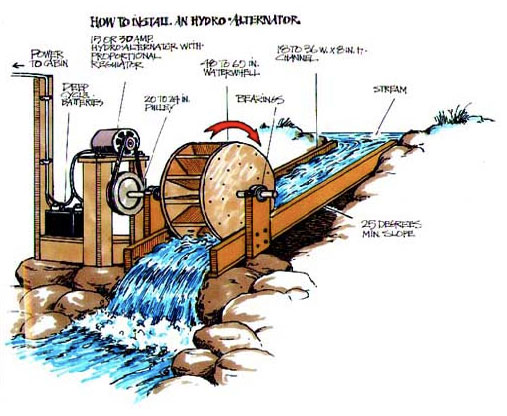
Energy policy — hydroelectric: The Southeastern Colorado Water Conservation District is spearheading a hydroelectric generation plant just downstream of Pueblo Dam

microhydroelectricplant.jpg

I’m a big proponent of hydroelectric power, possibly because I love technology, but also because of the low-carbon nature of hydropower. Of course, the effects on streamflow and aquatic and riparian life when a stream is harnessed, dammed, channeled, etc. are well known so I tend to favor retrofits in a stream system that has already been affected, rather than the taking of another stream life for humankind.

Here’s a report from Chris Woodka writing for The Pueblo Chieftain. From the article:

The Southeastern Colorado Water Conservancy District, Colorado Springs, Pueblo Board of Water Works and Fountain are planning on making a bid for a hydropower plant just downstream of the dam. All of the partners are Southeastern district members and other partners could be added. “We’re putting together a partnership to try to win the award,” said Jim Broderick, executive director of the Southeastern district told the district’s board Thursday. “I think this is an opportunity for the district.”

The plant would require an environmental review. It is not decided what organizational structure the group would use to build the hydropower plant. A preliminary report shows the group would make a profit on a plant generating anywhere from 4 to 8.6 megawatts of power. The cost of building the plant would be $11 million to $18.7 million, and state loans, government incentives and grants would be available to pay much of the cost, said Lindsay George of the Applegate Group…

The plant would hook onto the North Outlet Works river connection that is now being built as part of SDS. The connection includes one pipeline that goes to the Juniper Pump Station and another that would serve as the primary feed for the Arkansas River. The feed to the hydropower plant would use direct flows to spin turbines…

The hydropower plant would only be able to run from about April to September, when river releases are high enough to run turbines.

More hydroelectric coverage here and here.

IBCC: The Pueblo Board of Water Works hopes to sustain agriculture on the Bessemer ditch after converting shares to municipal use

bessemerditch1.jpg

From The Pueblo Chieftain (Chris Woodka):

“We included a 20-year lease-back so we could work on other options to sustain agriculture,” Alan Hamel, executive director of the Pueblo water board, told a state Interbasin Compact Committee group earlier this week…

The IBCC subcommittee is looking at alternative agriculture transfers. The group met in Denver with the Front Range Water Council, which includes the state’s largest municipal water providers, and the Colorado Agricultural Water Alliance, which encompasses the state’s major agricultural associations.

The Pueblo water board now owns 28 percent of the Bessemer Ditch, about 5,400 shares. The ditch is the largest in Pueblo County, and a major factor in the local economy. Other cities also are looking at maintaining the viability of agriculture in their neighboring communities.
“People in the cities are figuring out that they also need to eat,” said Jay Winner, general manager of the Lower Arkansas Valley Water Conservancy District…

“We have to make sure that agriculture doesn’t become a sharecropper,” said T. Wright Dickinson, a Moffat County rancher. “We could be entering a time where agriculture could out-compete the cities in terms of the economic value of water.”

Cities also have concerns about sharing the water. “I can’t make any long-term decision and a big investment up-front knowing that all I’ve got is a five-year water supply,” said Mark Pifher, director of Aurora Water.

Meanwhile the Two Rivers Water Co. is busy buying up agricultural land and shares in the Arkansas River basin. Here’s a report from the Associated Press via The Columbus Republic:

Two Rivers Water Co. says it has finished raising $5.25 million, allowing it to close on its purchase of 2,500 acres of irrigated farmland in Huerfano and Pueblo counties…

Two Rivers bought 91 percent of the Huerfano Cucharas Irrigation Co. last year and added the Orlando Reservoir to its water rights portfolio in February. It says will be able to store more than 70,000 acre-feet of water when its reservoirs and canals systems are fully restored.

More IBCC — basin roundtables coverage here. More Front Range Water Council coverage here.

The Pueblo Board of Water Works approves lease agreement for the Donala Water and Sanitiation District

http://coyotegulch.blog/wp-content/uploads/2010/02/denveraquifer.jpg.jpg

From The Pueblo Chieftain (Chris Woodka):

The 20-year lease agreement calls for either trading or selling up to 250 acre-feet of water annually to Donala, so the water district can meet terms of a proposed court settlement with the state of Colorado in a Water Court case. The Pueblo water board would receive a one-time payment of $7,500 and from $12,000 to $96,000 annually, depending on how much water is traded or sold. The rate also escalates over time, depending on general rate increases approved by the water board…

Under the agreement, the Pueblo water board would receive $50 per acre-foot, plus a 10 percent gain in the amount of water leased in a contract exchange of its water in Turquoise Lake for Donala water in Lake Pueblo. The 10 percent gain comes because there would be no transit loss in moving water in a paper trade. Alternately, the Pueblo water board would receive $385 per acre-foot if it sells water to Donala, according to the proposed agreement…

The ranch will provide part of the water supply for Donala’s 2,700 customers, who now rely primarily on dwindling groundwater reserves from the Denver basin aquifers. In a Water Court case in March, Pueblo District Judge Dennis Maes sided with the state engineer’s opinion that Donala would need to make winter releases to augment the Arkansas River, primarily to meet the in-stream flow requirements of Willow Creek under a decree held by the Colorado Water Conservation Board. Donala chose to seek augmentation water from Turquoise Lake, but had no way of getting an account in the reservoir, said Dana Duthie, Donala manager…

Several board members wanted to make sure the water would stay within the Arkansas River basin, since Donala has a small portion of undeveloped land in the South Platte River basin. “It’s in their contract with Colorado Springs and in the (Water Court) decree that they can’t use the water outside the Arkansas basin,” Executive Director Alan Hamel said.

More Pueblo Board of Water Works coverage here.

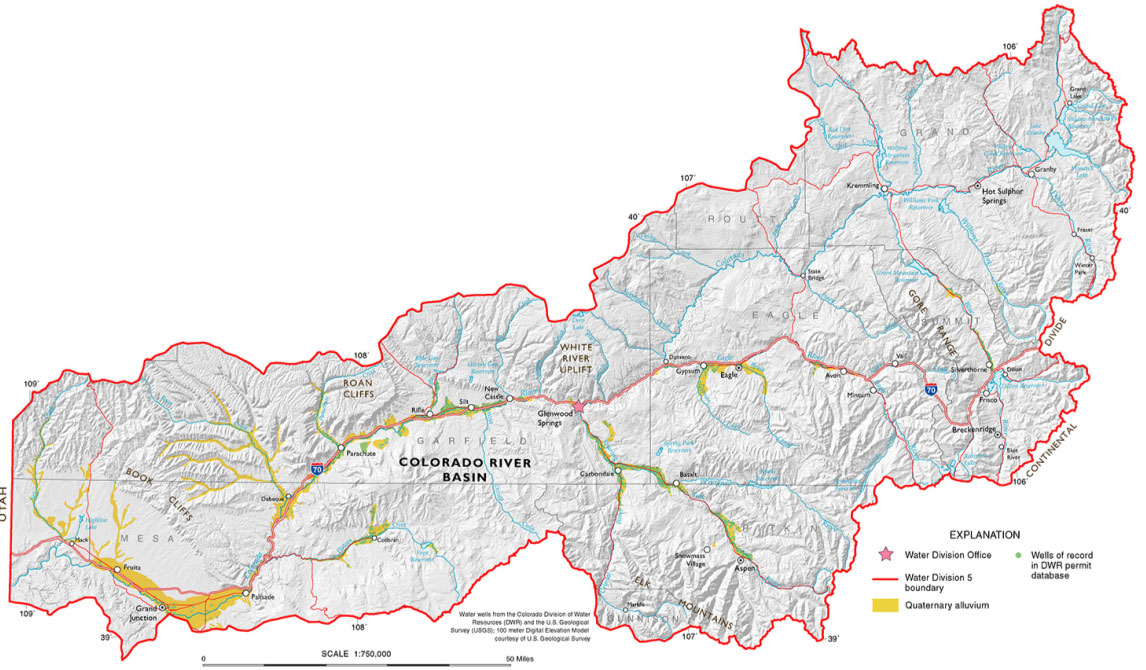
The Front Range Water Council plans to spend $600,000 to study Colorado River basin supplies

coloradoriverbasincgs.jpg

From The Pueblo Chieftain (Chris Woodka):

The Front Range Water Council is planning to hire Grand River Consulting Corp. for $600,000 over two years to work on Colorado River issues that affect the state’s largest water providers. The Pueblo water board’s share will be $36,000 each year, or $72,000 total. The board approved the contract at its Tuesday meeting.

The council represents Denver, Aurora, Colorado Springs, Pueblo, Twin Lakes Reservoir & Canal Co., the Northern Water Conservancy District and Southeastern Colorado Water Conservancy District. Denver and Northern — the largest water providers — would pay 20 percent of the costs of the contract, while the others each have a 12 percent share. Combined, the groups provide municipal and industrial water to 80 percent of the state’s population, using about 6 percent of the total water supply. Agriculture still uses most of the water in Colorado…

Up until now, the council members have been relying on their own staff to provide input to state planning on Colorado River issues, but the tasks have grown so much that full-time staff is needed to work on the issues, said Alan Hamel, executive director of the Pueblo water board…

Among the projects of the group are:

Day-to-day management of a technical work group among the members of the council.

A water bank study to look at how to prevent curtailment of municipal diversions in the event of a Colorado River call.

Input into nonconsumptive needs studies of the Colorado River, which are primarily driven by the state roundtable process.

Working with the Bureau of Reclamation on its Colorado River basin supply and demand study. The study is looking at water availability in all seven states.

A strategic plan for the Front Range Water Council.

Coordinating work with the CWCB, including the state’s ongoing Colorado River water availability study and compact compliance study.

More Colorado River basin coverage here.

Fryingpan-Arkansas Project update: Potential customers voice concerns over storage pricing at Reclamation ‘listening session’

puebloreservoir.jpg

From The Pueblo Chieftain (Chris Woodka):

“Are you trying to maximize return to the Bureau of Reclamation, or maximize benefits to the area?” asked Terry Book, deputy executive director for the Pueblo Board of Water Works. The water board has the lowest rate for storage at Lake Pueblo under a 25-year contract signed in 2000. “At the end of 25 years, if the price is too high, will we have to seek alternatives elsewhere? If the price we passed on were too high, would that keep others out and defeat the whole purpose?”

Reclamation plans to develop a pilot program in the Arkansas River basin that would determine how market pricing for storage contracts could be used throughout the western United States, explained Mike Collins, area manager for Reclamation. “We have no draft documents or analysis,” Collins said, adding that the listening session was to gain input from Arkansas River water users on how to determine market prices.

Collins offered no concrete responses about how the criteria for market pricing are being developed, and said a document would be available further into the process. “We’re gathering perspectives to get this process started,” Collins said.

Ed Harvey, an economist who represented the SDS group and Aurora, told Reclamation that it would be difficult to apply market rates in the Arkansas River basin across the western United States. Water markets are few in number and subject to local conditions. “It’s a difficult, but laudable goal that is fraught with difficulties,” Harvey said. He suggested developing a market simulation, looking at comparable situations in the Arkansas River basin. Harvey did that sort of analysis in 2006 for the Aurora contract hearings, and found storage rates varied from $3-$68 per acre-foot, depending on variables like location and the relationship between buyer and seller. Reclamation basically ignored Harvey’s work during those hearings. Reclamation’s current contracts at Lake Pueblo range from $17.25-$51.32 per acre-foot.

Meanwhile there are problems getting consensus on where to apply Fry-Ark revenues. Here’s a report from Chris Woodka writing for The Pueblo Chieftain. From the article:

The Southeastern Colorado Water Conservancy District last October proposed paying off the South Outlet Works first, the Fountain Valley Conduit second and Ruedi last until the Arkansas Valley Conduit is built. The [2009 law that uses excess-capacity revenues to fund parts of the Fryingpan-Arkansas Project] itself does not indicate priorities among the projects prior to completion of the new conduit. Reclamation suggests other alternatives, including paying the majority of the funds from Ruedi, paying equal shares to all three or adjusting payments to the total amount currently owned. It has not chosen an alternative.

“Our expectations are that the East Slope facilities and obligations will be paid off first, with consideration for Ruedi in the future,” Alan Hamel, executive director of the Pueblo Board of Water Works, told Reclamation officials at a meeting to discuss the law Wednesday. “It starts to appear that there will be additional mitigation for the West Slope.”[…]

Reclamation charges fees to store water in Lake Pueblo, primarily, under either long-term or short-term contracts. Previously, the revenues from that went to the general fund of the federal government. Under the new law, they are to be put toward Fry-Ark debt. This year, $2.2 million is available from short- and long-term excess-capacity contracts — enough to cover the South Outlet Works debt. In the next six years, the revenues drop to about half of that because of the structure of the Southern Delivery System contracts. By 2018, revenues are expected to resume at $2.4 million and begin climbing again. Revenues would be sufficient to pay off the Fountain Valley Conduit by 2020, under the Southeastern District plan, but the Ruedi debt would climb to more than $50 million.

More Fryingpan-Arkansas Project coverage here.

The Pueblo Board of Water Works is looking at micro-hydropower to offset electrical operating costs

A picture named microhydroelectricplant.jpg

From The Pueblo Chieftain (Chris Woodka):

The water board spends about $2.2 million on electricity each year, or about 7 percent of its $30 million budget. Energy costs could increase by $1.2 million annually with proposed rate increases, said Terry Book, deputy executive director. The water board has a 20-year-old plan to retrofit its water line from Pueblo Dam for hydroelectric generation, but it was not economical to build it in the past. The cost to install it in 1990 was $4 million, and the price of selling it to the power company at the time wasn’t high enough to make a deal worthwhile. Hydro would generate only 0.3-1.2 megawatts of electricity, which would only supply a fraction of the water board’s needs.

The water board also could look at solar panels and wind generation.

More Pueblo Board of Water Works coverage here.

Pueblo: The board of water works releases 2011 testing data

A picture named waterfromtap.jpg

From The Pueblo Chieftain (Chris Woodka):

“The report that was mailed to customers shows only the tests where we found something in the water,” said Don Colalancia, manager for water quality and treatment. “We do thousands of tests throughout the year.”[…]

Testing found traces of barium, fluoride, nitrates, nitrites and selenium in the water, at levels well below the federal standards. Turbidity, trihalomethanes, haloacetic acids, sodium and microscopic particles also were measured, and again to be well below acceptable levels…

The report also lists sources of water. Pueblo gets all of its water supply from Lake Pueblo, which is fed by the Arkansas River and its tributaries to the west.

More water treatment coverage here.

The Pueblo Board of Water Works water rights have best yield in five years

A picture named bessemerditch1

From The Pueblo Chieftain (Chris Woodka):

A new report by the water resources department of the water board shows the yield from all sources in 2010 was 86,291 acre-feet, up slightly from yields in the previous three years. In 2006, yields were 89,137 acre-feet. It’s surprising because 2008 was the best recent year for snowpack. The water board didn’t fully take advantage of the conditions then because its reservoirs were relatively full. “I think the difference is that we didn’t take any Fryingpan-Arkansas Project water in 2008,” said Alan Ward, water resources administrator for the Pueblo water board. “You always have to walk that line between having enough and, I guess you’d call it, gluttony.”[…]

Still, 2010 was a banner year for direct-flow water rights in the Arkansas River basin, because a heavy runoff at the right time allowed the water board to capture more water than it otherwise would have. About 60,310 acre-feet, or 70 percent of the total, came from within the Arkansas River basin in 2010. That was the most in a decade from native sources. “The key reason was that for several days we got to store water in Clear Creek Reservoir because all of the downstream rights were satisfied,” Ward said.

More Pueblo Board of Water Works coverage here.

Lake Pueblo excess capacity contracts require Corps of Engineers waiver in order to avoid spilling non-project water

A picture named puebloreservoir.jpg

From The Pueblo Chieftain (Chris Woodka):

for the second consecutive year the problem has been avoided by a waiver by the Army Corps of Engineers to leave water in the reservoir a little longer, rather than vacating the flood pool by April 15. “This isn’t a blanket to do this every year, and the mode we’re running in is spilling,” Jim Broderick, executive director, told the Southeastern Colorado Water Conservancy District last month. “The way we’re managing reservoirs has shifted. In my opinion, we’ve been fortunate to get the two waivers.”

After dealing with the question of scarcity for years, the Southeastern district is bumping up against the limits of storage contemplated in its 1990s studies that led to the controversial Preferred Storage Options Plan.

“The 2002 drought provided a wake-up call for all of us in the valley, and in particular the Pueblo Board of Water Works,” said Alan Hamel, executive director of the board. “It pointed out that relying on historical records was not sufficient, and we had to triple the amount of water we had in storage to work between the wet and the dry years.”

More Fryingpan-Arkansas Project coverage here.

Arkansas River basin: The Pueblo Board of Water Works leases additional water to the Fort Lyon Canal

A picture named arkbasinditchsystem.jpg

From The Pueblo Chieftain (Chris Woodka):

The Pueblo Board of Water Works will sell an additional 5,000 acre-feet of water to the Fort Lyon Canal this year. That will bring total sales through short-term leases to 15,000 acre-feet, with revenues of $715,000…

Outside water sales, through short- or long-term leases, make up about one-fourth of the $29.8 million in operating revenue in this year’s budget. Xcel will pay $4.9 million for water used at the Comanche Plant, while Black Hills will pay $360,000 when its new plant starts up later this year. Aurora pays $1.58 million under two long-term agreements to trade and move water. There are several smaller long-term contracts.

More Pueblo Board of Water Works coverage here.

Pueblo Board of Water Works 2010 water deliveries

A picture named waterfromtap.jpg

From The Pueblo Chieftain (Chris Woodka):

“We aren’t getting a huge increase in customers, but there has been an increase. The total water use has remained flat since the drought in 2002,” said Terry Book, deputy executive director of the Pueblo Board of Water Works.

The water board pumped 9.03 billion gallons of water in 2010, nearly matching the 9.02 billion gallons used in 1980. Rainfall for Pueblo totaled 11.6 inches in 2010, compared with 11.59 inches in 1980. There were 39,470 customers at the end of 2010, compared with 33,182 in 1980. Besides the increase in numbers of customers — and the homes and lawns that come with them — there is a marked difference in the peak days. The highest daily use 30 years ago was 56.8 million gallons on July 8, 1980, while it was 52.3 million gallons on July 2, 2010. “Without the drought, we were headed for higher and higher peak days,” Book said. “We could see the trend in water use creeping up, so we needed more capacity.”[…]

Last summer, there were fewer 50 million-gallon days than in the past, and in three years out of the eight since 2002, there were no 50 million-gallon days at all. The information jibes with a study updated last year that shows Pueblo customers have voluntarily reduced use by 17 percent since the historic drought of 2002, when Pueblo received 3.94 inches of rainfall.

More Pueblo Board of Water Works coverage here.

Pueblo Board of Water Works board meeting recap

A picture named watertreatment.jpg

From The Pueblo Chieftain (Chris Woodka):

The water board could save $50,000 to $60,000 annually in costs for powdered fluoride if the U.S. Department of Health and Human Services lowers fluoride standards for drinking water, Don Colalancia, division manager for water quality and treatment, told the board at its monthly meeting Tuesday…

This week, the Environmental Protection Agency is recommending stricter testing limits for chromium 6. “It’s an oxidized state of chromium,” Colalancia explained, adding that chromium 6 is not likely to be a problem here, but that to be sure it has to be measured…

Right now, the water board tests for total chromium, under EPA standards of 100 parts per billion. Pueblo’s water has less than 4 parts per billion of total chromium. Chromium 6 is probably a small part of the total chromium. California is looking at chromium 6 levels that are 0.06 ppb, a minute quantity which not all labs can measure, so water managers are scrambling to find qualified labs even as prices for testing go up, Colalancia explained.

More Pueblo Board of Water Works coverage here.

Woodmoor District’s exchange application headed to trial

A picture named arkbasinditchsystem.jpg

From The Pueblo Chieftain (Chris Woodka):

The application for an exchange by the Woodmoor Water and Sanitation District in El Paso County will be referred to Division 2 Water Court Judge Dennis Maes at the end of February, ending a process that allows lawyers to reach settlements prior to a court hearing. Since there was not unanimous agreement to extend the negotiation period, a referral to the water judge is necessary, explained Mardell DiDomenico, Division 2 water referee. She set the deadline for Feb. 28 in order to allow time for those who still wish to settle to work out agreements…

“From our standpoint, we wish to extend the process for another six months,” Woodmoor’s attorney Veronica Sperling said during Wednesday’s status conference. An objection was raised by Pueblo Board of Water Works attorney Beth Ann Parsons, however, that abruptly ended discussions about pushing back the deadline for further settlements. “The Board of Water Works objects and requests that the case be re-referred,” Parsons said during the conference phone call. At that point DiDomenico shut down discussion of future settlement conferences…

The Pueblo water board initially objected to Woodmoor’s application, filed in late 2009, in February 2010 because it was speculative, could injure other water rights and that there is not sufficient physical capacity in the Arkansas River to complete the exchanges.

More Arkansas River basin coverage here.

Arkansas River voluntary flow program

A picture named twinlakesdiversionsystem.jpg

From The Pueblo Chieftain (Chris Woodka):

…the outfitters weren’t asking for any water. They just wanted it to come during the warm days of summer when tourism was at its peak. “What turned things around was the attitude of the Bureau of Reclamation, which in 1989-90 drained Twin Lakes for maintenance,” Dils said. The release during the summer months showed that water could be moved without damaging water rights. The details of how much water was enough for rafting or too much for fish had to be worked out.

Beginning in 1990, a voluntary flow agreement that balanced the needs of boaters and fishermen began, and it’s been renewed every year. It came a year after the Arkansas Headwaters Recreation Area was formed. Since the formation of the recreation area, the river has become the most heavily commercially rafted river in the world. The river has also been the site of the annual FIBArk boat races since 1949. “Colorado water law allowed for the water to be moved, and the agreement requires the state to replace the evaporative loss, so no one loses water,” Dils said.

Meanwhile the Pueblo Board of Water Works has approved the recent settlement between Pueblo County and Pueblo West in the lawsuit over the Pueblo Winter Flow Program. Here’s a report from Chris Woodka writing for The Pueblo Chieftain. From the article:

“The water board’s staff is the one group that looks out for that stretch of the Arkansas River, from the dam to Fountain Creek,” said board member Jim Gardner. The agreement was important to the water board not only because it protects the flow program and puts on hold a Pueblo West plan to pump effluent into a wash that leads directly into Lake Pueblo, said Alan Hamel, executive director of the water board. “Importantly, for the entire Pueblo community, we’ve enhanced the flow program without disturbing the three-party and six-party agreements,” Hamel said.

He was referring to 2004 agreements that settled issues relating to SDS and the Preferred Storage Options Program. Those pacts also set up a program that maintains seasonal flows through Pueblo by curtailing exchanges.

More Arkansas River basin coverage here.

Water Treatment: Focus on Pueblo Board of Water Works

A picture named watertreatment.jpg

From The Pueblo Chieftain (Chris Woodka):

While the trace contaminants — called endocrine disruptors — have captured headlines in recent years, there are all sorts of other potential threats to water supply. Cholesterol tablets, birth control pills, mood enhancers and pain killers can be flushed in toilets or move through the human body without being fully used. Other toxins are washed off streets, fields or lawns into the waterways. No federal standards for these compounds in either drinking water or bottled water exist because tests have not been conclusive on how much of the chemicals would be harmful to people.

“The thing you’re at risk for in drinking water is bacteria, which could kill you or make you sick almost immediately,” [Don Colalancia, division manager for water treatment and quality at the Pueblo Board of Water Works] said. “They haven’t demonstrated that any of these (endocrine disruptors) are harmful, even over the long run. A tiny bit may not have much of an effect.”

Pueblo has the good fortune to be located below a large reservoir, which does much of the work of settling out harmful substances from its drinking water. “Lake Pueblo has a high-quality raw water supply,” Colalancia said. “A reservoir that supports a healthy population of fish and algae has a high quality of water. We have a healthy reservoir.”

Click through for Mr. Woodka’s profile of Mr. Colalancia.

More water treatment coverage here.

Pueblo Board of Water Works: Shoring up supply

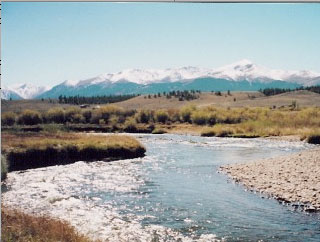
A picture named arkansasriverleadville.jpg

Here’s a look at current municipal water supply planning from Chris Woodka writing for The Pueblo Chieftain. Click through and read the whole thing, it’s a nice synopsis up and down the Front Range and Arkansas Valley. Here’s an excerpt:

“I think it was my most embarrassing moment professionally. I used to say we were drought-proof,” said Alan Hamel, executive director of the Pueblo Board of Water Works. “Now we were in the middle of a 350-year drought; 2002 was a wake-up call.”

The water board had a drought plan at the time, based on records that went back to 1874, when it was formed. “Bud (O’Hara) and Alan (Ward) came into my office, but called first and asked me if I was sitting down,” Hamel recalled, talking about a meeting in 2002 with his water resources staff. ”They said our 1874 rights were about to be called out. I asked, ‘For how many days?’ They said, ‘At least six weeks.’ It was a good thing we were sitting down.”

After 2002 and the relatively dry years that followed, the Pueblo water board adopted a new strategy, planning for 100 years down the road. Immediately, the board doubled the amount of water it keeps in storage, and has since increased the amount in order to supply area power plants. Then, it went looking for new water rights, and found them in 2009, when it completed the purchase of more than a quarter of the Bessemer Ditch, Pueblo County’s largest irrigation canal.

More Pueblo Board of Water Works coverage here and here.

Pueblo Board of Water Works automated meter reading project update

A picture named wirelessmeterreadingexplained.jpg

From The Pueblo Chieftain (Chris Wooka):

Since 2007, the Pueblo Board of Water Works has installed more than 19,000 meters in a system that has nearly 40,000. Four thousand more will be installed this year, and by 2016 the entire system should be fully automated, at a cost of a little more than $200 per meter. So far, about $4.9 million has been spent. Installations have been in the outer areas of Pueblo because that’s mainly where new development occurs and because there’s more travel involved in manually reading meters away from central Pueblo. “The map looks like a donut, but not exactly,” said Terry Book, deputy executive director of the Pueblo water board. “We’re working our way in; converting areas that are difficult to read.”[…]

As meters have been converted, the water board’s six meter readers have seen their jobs change. Three of them, including [Charles Garrett], already are working primarily as installers. Eventually, all six jobs will be converted. The installers will stay busy, though, because meters will be rotated every 10 years, both to maintain the accuracy and to make sure the batteries don’t run down. Changing them out also will allow the water board to take advantage of better technology as it is developed.

“Our meter readers have had almost no misreads,” said Book, who has been on the job for 32 years. But having water-use data available on a twice-daily basis, rather than once a month when meters were read manually, will lead to quicker identification of problems, he said.

More Pueblo Board of Water Works coverage here.

Pueblo County plans to bill Colorado Springs a little over $148,000 for legal costs associated with the Southern Delivery System and the winter flow program

A picture named puebloleveearkansasriver.jpg

From The Pueblo Chieftain (Chris Woodka):

“Colorado Springs should have had this taken care of,” said Jeff Chostner, chairman of the Pueblo County commissioners. “We’re not happy about having to fight with our neighbors because Colorado Springs did not do their job.”

On Tuesday, Pueblo County commissioners and the Pueblo West Metropolitan District board approved a settlement agreement that would end the lawsuit by providing a road map to allow Pueblo West to recover more of the water it’s entitled to under exchanges.Colorado Springs Utilities and the Pueblo Board of Water Works also were part of negotiations and must approve the agreement as well.

More Southern Delivery System coverage here and here.

Pueblo County and Pueblo West settle lawsuit over Arkansas River winter flow program

A picture named puebloleveearkansasriver.jpg

From The Pueblo Chieftain (Chris Woodka):

Lawyers for both sides have reached agreement on language in the settlement, which will allow Pueblo West to receive more credit for return flows of treated wastewater down Wild Horse Dry Creek under the flow program. Pueblo County commissioners will consider the agreement this morning, while the Pueblo West metro district board will take it up at its meeting tonight. The details of the agreement have been hammered out for months and discussed in executive session by both boards. Other parties in the agreement are the Pueblo Board of Water Works, which will consider the agreement at its December meeting, and Colorado Springs Utilities.

The agreement would end a lawsuit filed by Pueblo West in 2009 over conditions imposed by Pueblo County commissioners in approving a 1041 permit for the Southern Delivery System…

Pueblo West would be allowed to exchange water into Lake Pueblo under certain conditions even though its flows enter the Arkansas River about four miles downstream of Pueblo Dam, according to a draft of the agreement. Those flows are upstream of the Pueblo Whitewater Park, so may be counted toward meeting the city of Pueblo’s recreational in-channel diversion decree measurements, the document states. Colorado Springs Utilities agreed to provide up to 900 acre-feet annually in Lake Pueblo to Pueblo West through a contract exchange, or paper trade, of Pueblo West Water in Twin Lakes. Colorado Springs may deliver water directly from Twin Lakes through its Homestake Pipeline. If Pueblo West’s water is delivered to Lake Pueblo via the Arkansas River, it is subject to a 10 percent transit loss. In return, Pueblo West would withdraw a state application to exchange return flows through a pumpback into the golf course wash that flows directly into Lake Pueblo. The plan was discussed in the past two years and met opposition from the Pueblo Area Council of Governments, with the sole exception of Pueblo West. Pueblo West intends to construct a pipeline down Wild Horse Dry Creek that would increase the amount of water it exchanges, and the other parties would support the plan in any PACOG, state health department and water court applications.

More Pueblo West coverage here and here.

Pueblo: The Board of Water Works lays out 2011 budget with 5% rate increase

A picture named fountainpavementdrawing.jpg

From The Pueblo Chieftain (Chris Woodka):

The Pueblo Board of Water Works Tuesday proposed a $30.7 million budget, a little less than originally proposed. The budget will mean a 5 percent rate increase for Pueblo water customers, mostly to cover rising energy costs and increased legal and engineering expenses. Employee salaries and benefits will increase about 2 percent, including a 1.43 cost of living increase. For residential customers, the increase would mean a typical increase of about $1.50 per month in winter months, or less than $5 per month during summer months with lawn watering for single-family homeowners.

More infrastructure coverage here.

The Pueblo Board of Water Works is still in the hunt for shares of the Bessemer Ditch

A picture named bessemerditch1

From The Pueblo Chieftain (Chris Woodka):

A new plan, which will be presented at a budget hearing 2 p.m. Tuesday, includes $1.5 million for new Bessemer shares, as well as $550,000 from the water development fund to pay for legal, engineering and capital costs associated with the transfer of the shares. The purchase of Bessemer shares is part of a long-term plan to reduce Pueblo’s dependence on water imports from the Western Slope. Water probably won’t be needed for years to come, so nearly all of the Bessemer contracts include a provision that leases the water back to farmers for the next 20 years.

More Bessemer Ditch coverage here and here.

The Pueblo Board of Water Works is looking at a five percent increase in water rates

A picture named waterfromtap.jpg

From The Pueblo Chieftain (Chris Woodka):

The board sat down with staff Tuesday to look at specifics in the proposed budget, and will consider approval of the budget following a public hearing at 2 p.m. Tuesday. The water board is looking at a $30.2 million budget in 2001 that is actually less than the previous two years. However, there were extraordinary expenses and revenues in 2009 and 2010…

A 5 percent increase means the average residential water bill will increase $1.45-$1.58 per month, based on 11,000 gallons used per month, depending on tap size. In summer, it would be less than $5 per month, based on higher usage for lawn watering of about 30,000 gallons in a month. Since the drought of 2002, residential use has decreased, and the budget is built on projections of 123,000 gallons annually per residential account, said Seth Clayton, manager of the financial division. In 2009, one of the wettest years on record, single-family households averaged 118,000 gallons. In 2010, use is projected to be 128,000 gallons per household. Similar patterns have been seen in multifamily and commercial accounts. “October and November have been drier and warmer than usual, and that’s really boosted revenues,” Clayton said, in estimating revenues from metered water sales that will come close to projected $20 million this year, about 70 percent of total revenues…

Pueblo water rates increased dramatically during the early 1980s, then hardly at all until the mid-1990s. Since then, they have increased by 1.5 to 5 percent annually.

More Pueblo Board of Water Works coverage here.

Pueblo: The Pueblo Board of Water Works is considering a five percent rate hike

A picture named waterfromtap.jpg

From The Pueblo Chieftain (Chris Woodka):

Water board employees anticipate the 5 percent increase in 2011 largely to cover increased utility costs, which are expected to rise 22 percent to $2.57 million. Other large areas of expenditures include $1.26 million for outside services, up 8 percent; $1.3 million for repairs and maintenance, level; $1.24 million for supplies, level; $1.6 million for new main extension projects; and $870,000 to continue converting meters to an automated reading system. A rehabilitation of the outside and inside of the Hellbeck water tank will cost $400,000. Without using water development money, a rate increase of 8 percent is estimated…

Metered water sales are the largest source of revenue for the water board, and are expected to be about $19.5 million — 3.5 percent below budget — for 2010. Customers continue to use less water as part of a continuing conservation trend. In 2011, $20.5 million in metered sales is projected. The board also is anticipating more than $7.5 million in contract water sales in 2011, including $4.9 million to Xcel’s Comanche plants, $1.58 million from a pair of contracts with Aurora, $812,000 from raw water sales and $360,000 from the Black Hills contract. The budget workshop is scheduled at noon Nov. 9 and the hearing at 2 p.m. Nov. 16 at the Board of Water Works, 319 W. Fourth St.

More Pueblo Board of water works coverage here.

Arkansas River Basin: Pueblo Board of Water Works opposes Woodmoor’s change of use application

A picture named arkbasinditchsystem.jpg

From The Pueblo Chieftain (Chris Woodka):

Bill Paddock, water attorney for the Pueblo board, said the case needed to proceed to Division 2 Water Court Judge Dennis Maes immediately, rather than settling through stipulations before a referee. “This is the kind of case we need to move forward to the judge,” Paddock said during the [attornery’s conference Monday]…

The Pueblo water board said the supply for Woodmoor’s exchange plan is too uncertain to settle through typical stipulation agreements, and the case is speculative since Woodmoor does not yet control the supply of water it intends to move, said Alan Hamel, executive director of the Pueblo water board.
“We have to protect our Pueblo flow program,” Hamel said…

Woodmoor proposes to move water rights from the Holbrook, High Line and Excelsior ditches in Pueblo and Otero counties to homes in northern El Paso County. While it has contracts to purchase agricultural water rights, they have not been decreed as a source for a municipal substitute supply and there is no evidence that the change will occur.

The Colorado Supreme Court also has a pending case, City of Boulder et al. v. City and County of Broomfield, that could put new limits on municipal exchange applications, Paddock said.

Woodmoor submitted an engineering report last week, but Paddock and Steve Leonhardt, attorney for the Southeastern Colorado Water Conservancy District, said it was not sufficient to determine if Woodmoor’s exchange plan would work or is legal. “I’m concerned that virtually everything in this case is framed in the hypothetical,” Leonhardt said. “It’s very difficult to respond to the engineering in these circumstances.”[…]

Division I Water Court Judge Roger Klein sided last year with Broomfield in awarding an exchange decree even though the city did not own the water supply it proposed to use. Broomfield argued it had more flexibility as a government entity in complying with the anti-speculation doctrine. Boulder and Centennial opposed the case saying Broomfield had not proved it either owned the water supply or provided evidence that it “can and will” acquire the supply. Several Arkansas River basin groups, including the Pueblo water board, Southeastern district, Lower Arkansas Valley Water Conservancy District, Pueblo West and Colorado Springs, entered that case on Broomfield’s side. All have exchange decrees pending that could be affected by the Broomfield decision. Oral arguments in the case begin today.

More Arkansas River Basin coverage here.

Pueblo: Water use survey results

A picture named watersprinkler.jpg

From The Pueblo Chieftain (Chris Woodka):

Even as more accounts have been added, overall residential per capita water use has fallen by 12.5 percent, according to a new study by the Pueblo Board of Water Works.

The study built on a 2008 study that measured changes in water use following the drought of 2002. It found rate increases during recent years were not a significant factor in cutting back water use, said Seth Clayton, finance chief. “Although our rates are not as great as others on the Front Range, we wanted to know if they were a factor. We found there was no major swing in elasticity,” Clayton told the board at its monthly meeting Tuesday.

Water use from 1996 to 2003 was compared with use from 2004 to 2009 in the study. Survey respondents were chosen from residents who have remained at the same address during that time and showed a greater conservation rate than all customers. The number of all customers has increased 5.4 percent, accounting for the difference in conservation rates…

“The initial decline in consumption due to conservation measures stemming from the drought of 2002 has remained, and it is unlikely that consumption levels will ever revert back to those experienced prior to 2002,” the report concluded. The report also suggests heavy precipitation in 2009 could have played a factor in reduced lawn watering. But despite dry weather and high temperatures this summer, water use is 2.16 percent below the five-year average, just slightly greater than last year.

More Arkansas River Basin coverage here.

Arkansas River Basin: The Pueblo Board of Water Works closes on nearly 27% of Bessemer Ditch water rights

A picture named arkbasinditchsystem.jpg

From The Pueblo Chieftain (Chris Woodka):

“Right now, financially, we’ve acquired what we’re comfortable with to meet our needs for the next 30-40 years,” said Alan Hamel, executive director of the Pueblo water board. “I don’t see any more major purchases in the next seven or eight years.” Still, the water board is acquiring a few more shares. This year, the board budgeted $3 million to purchase another 300 shares. In 2009, the board bought about 5,300 of the 20,000 shares on the Bessemer Ditch…

The board’s offer to allow farmers to lease water back for 20 years was so popular — 97 percent took the deal — that it was difficult to find land to revegetate this year, so that program was delayed. The board has completed engineering for three measurement and control stations, and plans to build them when the ditch is dry, during winter water storage from Nov. 15-March 15. The estimated cost is $250,000-$300,000. “The structures will allow the Bessemer to control local flooding, protect the ditch and improve the efficiency of running water in the ditch,” Hamel said.

The board also is working with one landowner to set up a lease-fallowing program, where the landowner would keep one-third of his water and irrigate a different portion of the farm each year. That way, none of the land would be permanently removed from production, Hamel said. “It has the potential to serve as a model for future shares, or possibly for some we have already purchased,” Hamel said…

In the next year, more engineering work is planned. A change case, which would allow other uses for water now decreed agricultural, will not be filed until late 2011 at the earliest, Hamel said…

“My concern is that we’re headed down the road where they buy more water to the point where there is nothing left to support agriculture,” said Mike Bartolo, a Bessemer shareholder who manages the Colorado State University Agricultural Research Center at Rocky Ford. Bartolo was a vocal opponent of last year’s change in the bylaws of the ditch that make it possible to use the water outside the area historically irrigated by the Bessemer Ditch. The vote, 2-1 in favor of changes suggested by the Pueblo water board, cleared the way for the sale. “The municipal interests can’t see beyond the end of their spreadsheets,” Bartolo said. “They are exterminating the best farm ground in the state.” Bartolo has seen the effects of ditch sales from the Rocky Ford Ditch, now almost completely owned by Aurora, except for the research center and other holdouts. A 20-year agreement to lease back to farmers only delays the demise of agriculture, he said.

Leonard DiTomaso, who opposed the water works’ bid to change the bylaws and briefly served on the Bessemer board as an opponent of the sale, said the only regrets he hears are from others who would like to sell.
“There are more who would sell if they could,” DiTomaso said. “The larger ones are those who had the opportunity, but it’s really a matter of time before someone else comes in with an offer.”

More Arkansas River Basin coverage here.

Arkansas Valley Conduit update

A picture named pipeline.jpg

From The Pueblo Chieftain (Chris Woodka):

“We need to get this group back together (in June) to talk about the cost estimates before the district goes to each city and water utility,” Southeastern Colorado Water Conservancy District President Bill Long told the conduit advisory committee Tuesday. The committee has met for years discussing the engineering, route and benefits of the conduit. Now, with $5 million in federal funding this year, the project is finally approaching reality. Southeastern is trying to secure $8 million from Congress to continue work next year.

Revised cost estimates are expected next month, and cities or districts east of Pueblo will be formally asked to sign funding agreements later this year. The local share of funding for construction would be offset by federal legislation that allows payment from excess-capacity contracts to defray those costs. Area water suppliers would still have to fund operation and maintenance, said Phil Reynolds, project director. The conduit could be built as soon as 2018, if the environmental review process is not drawn out, if Congress fully funds it and if no major snags develop, said Kevin Meador of Black & Veatch, the lead consultants. With any luck, the National Environmental Policy Act review — most likely an Environmental Impact Statement — by the Bureau of Reclamation will take about 2 years, Meador said…

Four alternatives have been identified either along U.S. 50 or north of the Arkansas River. More than 200 miles of pipeline, a treatment plant to filter the water, storage tanks and pumping stations are part of the plans…

Making its way through Pueblo, the conduit’s route would either cut through the city in a more-or-less straight shot from the Whitlock plant on the north-of-the-river route, or follow the Bessemer Ditch to the St. Charles Mesa, hooking up with U.S. 50 near Avondale…

East of Las Animas, the routes to Lamar and Eads are fairly well determined…

The Southeastern District has determined there are 41 water providers serving 57,655 people who are still interested in participating in the conduit, said Hal Simpson, a former state engineer who is working as a water resources consultant on the conduit. By 2050, the population is projected to increase to between 76,000-82,000. Because some cities are projecting mixing their current supplies with the conduit water, the projected demand from the conduit would be about 9.3 million gallons per day now, increasing to 12.3 million gallons per day by 2050. The pipeline would be sized to deliver for the peak day. Fryingpan-Arkansas Project supplies, on average, would amount to about three-fifths of the water delivered through the conduit. The rest would come from already identified sources, with some potential gaps that could mean the purchase of agricultural water rights, Simpson said.

More Arkanasas Valley Conduit coverage here and here.

Pueblo Board of Water Works agrees to supply new Black Hills Energy power plant

A picture named coalfiredpowerplant.jpg

From The Pueblo Chieftain (Chris Woodka):

The agreement will mean $5.6 million in revenues to the Pueblo water board, as well as construction of water lines and a backup pumping station at Black Hills’ expense. The water board is expected to approve the agreement at its meeting today. Black Hills plans to have the plant running by June 2011, but there are provisions in the agreement that could lead to some sales of water later this year. Water is used for steam and cooling in electric generation. By 2012, the water board could be realizing more than $1 million a year in revenue for water service to the plant. The initial term of the contract is 20 years, but there are provisions for two 10-year extensions. “We don’t know yet what the demand will be,” said Terry Book, deputy executive director of the water board. Black Hills could take up to 2,530 acre-feet a year under the contract, but would be obligated to “take or pay” for 1,440 acre-feet, Book said. There would be a reservation fee as well for the full amount in case it is needed…

The water used in the Black Hills operation will be fully consumable, either from transmountain supplies or sources within the basin where the consumptive use has been transferred from agricultural purposes.

More coal coverage here.

Colorado River District and the Northwest Council of Governments kick off program to educate Front Range residents about their impact on western slope streamflow

A picture named coloradotransmountaindiversions.jpg

From the Summit Daily News (Julie Sutor):

“It’s the same water. Conserve it!” the billboard reads, across images of lawn sprinklers, a snowy mountain and a woman taking a shower. The billboard is the first tactic in a new campaign by local governments in northwest Colorado to remind Front Range water users of their impacts to the state’s western rivers…

The new campaign, a collaborative effort by the Colorado River Water Conservation District and the Northwest Colorado Council of Governments, hopes to make the connection for folks. More billboards and signs at bus stops will pop up throughout the Denver-metro area in coming months. All the promotional efforts will direct people to a website, www.itsthesamewater.com, or a smartphone page where they can learn about where water comes from, the impacts of diversions and how to conserve.

More transmountain/transbasin diversions coverage here.

Gary Barber: ‘[SDS] infrastructure to deliver water needs to support a regional solution’

A picture named sdspreferredalternative.jpg

From The Pueblo Chieftain (Chris Woodka):

“The infrastructure to deliver water needs to support a regional solution and the funding must be equitable,” Gary Barber, chairman of the roundtable, said in comments accompanying an official report to the state. “Otherwise, the Arkansas Basin may not be able to meet the gap, and the consequences will be felt beyond the borders of El Paso County.”

The largest portion of a statewide gap in future water supply is 22,600 acre-feet needed to supply communities outside Colorado Springs in El Paso County, according to the needs assessment included in the report. About 40 percent of that will be new demand, while 60 percent is loss of existing water supplies as pumping increases in the Denver Basin aquifers. As roundtable president, Barber pushed for completion of the reports, “Projects and Methods to Meet the Needs of the Arkansas Basin.” The document includes consumptive and nonconsumptive needs studies and represents the consensus of the roundtable’s first four years of meetings. It also begins to rate the relative importance of projects in meeting the state “gap” in water supply identified in 2004 by the Colorado Water Conservation board. It places the highest priority on sustainable projects. The ideas included in the report are rated on three questions: Is it viable? Is it equitable? Is is bearable?…

Every member of the roundtable represents a constituency – special interests – and Barber’s are his clients in El Paso County, which include two water authorities whose members are hunting for future water supplies. Three of them have purchased ranches for water rights in the past three years, one is trying to buy rights on two valley canals and collectively, they unsuccessfully tried to buy control of the Bessemer Ditch in 2008…

Barber’s comments about SDS reflect years of frustration over including other areas of El Paso County besides Colorado Springs, Security and Fountain in the $1 billion-plus project. He has frequently been outspoken on the need for regionalism…

A study by the Pikes Peak Regional Water Authority concluded it would cost at least $1 billion to build its own pipeline from the lower Arkansas Valley…

Colorado Springs City Council, sitting as the utilities board, has discussed including other El Paso County users as customers of SDS and the possibility of using it as a regional delivery system. No formal decisions on that concept have been made, however.

More Southern Delivery System coverage here and here.

Aurora: City files for change of use for Busk-Ivanhoe rights, teams with Climax Molybdenum to change Columbine Ditch rights

A picture named turquoiselake.jpg

From The Pueblo Chieftain (Chris Woodka):

Aurora bought half of the Busk-Ivanhoe water system from the High Line Canal Co. in 1987, following the purchase of the other half from the ditch company by the Pueblo Board of Water Works in 1971. Aurora filed for a change of use decree in Division 2 Water Court in December. Identical applications have been filed in Division 1 (South Platte) and Division 5 (Colorado River) water courts. The project brings water from Ivanhoe Lake, located at 11,500 feet elevation on a tributary of the Fryingpan River west of Hagerman Pass, through a former railroad and highway tunnel to Busk Creek, which empties into Turquoise Lake near Leadville…

{Aurora] has imported more than 3,000 acre-feet per year from Busk-Ivanhoe for the past few years. The Pueblo water board manages the system, which includes two live-in caretakers at Ivanhoe Lake, but Pueblo and Aurora share the water equally. In its application, Aurora states it intends to use the water for all purposes in two basins, rather than its existing decree for agriculture in the Arkansas River basin. Aurora would continue some of those uses, but would also apply water to its delivery and reuse systems in the South Platte basin. Aurora takes the water through the Homestake Project, which it shares with Colorado Springs. In the application, Aurora lists its Box Creek Reservoir, located between Turquoise and Twin Lakes, as a potential storage place, even though it has not been built. It also lists several recharge pits or reservoirs in the South Platte River basin that have not been built.

Meanwhile here’s the lowdown on the Columbine Ditch, from Chris Woodka writing for The Pueblo Chieftain. From the article:

The Fremont Pass Ditch Co., owned by Aurora and Climax, filed an application for change of water rights in Division 2 Water Court in Pueblo last month. Identical applications were filed in Division 5 (Colorado River) and Division 1 (South Platte) water courts. The Pueblo water board sold the Columbine Ditch to the Fremont Pass Co. last year for $30.48 million, as part of its financing for the purchase of about 27 percent of the water rights on the Bessemer Ditch in Pueblo County.

The Columbine Ditch, located at 11,500-foot-elevation Fremont Pass 13 miles north of Leadville, is about two miles long and was built to serve irrigators in 1931. It diverts water from three small streams in the Eagle River watershed over the pass near Climax mining operations. The water board purchased the ditch in 1953 to meet long-term needs and changed the decree to municipal and other uses appropriate to its needs in 1993. The average yield of the ditch was about 1,700 acre-feet annually, but because of long-term limits that was expected to drop to 1,300 acre-feet per year. Aurora and Climax are seeking further uses, including snowmaking, wetlands creation and direct reuse among others. They also are asking the court to approve new places of use, including at the Climax Mine, a gravel pit reservoir near Leadville and in the Arkansas or South Platte basins as part of Aurora’s extensive water system.

More transmountain/transbasin diversion coverage here.

Raw water systems winter operations

A picture named twinlakesdiversionsystem.jpg

Here’s a look at winter operations for Pueblo’s raw water system, from Chris Woodka writing for The Pueblo Chieftain. Click through and read the whole thing. Here are a couple of excerpts:

“When we plow the roads out, those banks of snow start to melt and freeze again until they turn hard as rocks. The trucks can get pretty banged up, so those guys have to be careful,” said Bud O’Hara, water resources division manager for the Pueblo Board of Water Works. Avalanches, broken bulldozer blades and survival in a dozen feet of snow are all part of the job for those who maintain and clear the systems that bring the water over. “Every one is different,” O’Hara said.

The Twin Lakes system, where a caretaker lives year-round, is in a bowl of mountains where avalanches are common. Those who live with them say you can hear them coming. In the winter, the caretakers at Grizzly Lake, located in the high country of the Roaring Fork valley near Independence Pass, have to drive to Leadville through the Twin Lakes Tunnel for supplies because the drifts are too high to make the trip to Aspen. Their lifestyle is isolated in the remote valley.

More Pueblo Board of Water Works coverage here and here.

Pueblo Board of Water Works closes most of the deals for Bessemer Ditch shares

A picture named thefang.jpg

From The Pueblo Chieftain (Chris Woodka):

The water board has purchased more than a quarter of the Bessemer Ditch, although some contracts have been extended beyond today’s deadline. The board has spent more than $53 million so far, including $30.45 million from the sale of the Columbine Ditch to Aurora and Climax Mines and $23.37 million in revenue bonds. The board expects to spend $60 million on the ditch shares, using money from its water development fund – from outside water sales, also called leases – to make up the difference. Pueblo water rates are expected to be hiked 5 percent, with 3.5 percent going to refinance the bonds. The final rate will be set at a Nov. 17 budget hearing. As of Thursday, the board had wrapped up 62 purchases totaling more than 5,220 Bessemer Ditch shares, said Executive Director Alan Hamel. The board paid $10,150 per share. Four contracts for about 100 shares were extended to give the board and sellers time to work out details, Hamel said…

Every contract came with an option to lease the shares back from the water board for the cost of ditch assessments for up to 20 years. Hamel told shareholders in May that the water board probably won’t need the water for another 20-30 years, barring a severe drought. Water from 84 acres of the total will not be leased back, giving the board an opportunity to test conditions in Pueblo County for revegetation – something that will have to be done on all the farms in the purchase eventually. “In 2010, we will begin to put together a revegetation plan,” Hamel said. “Aurora has done a lot of work on its farms down in Rocky Ford, but conditions here aren’t necessarily the same.” At any time during the 20 years, irrigators can choose not to lease the water. In that case, the shares could still be used within the lateral or the ditch as a whole…

The water board still must take the shares to court to change them to municipal and other uses before it can directly use the water. The change case should be filed within 18 months to two years, Hamel said. “We still have engineering work to do, and we’re looking at a Pueblo County 1041 application,” Hamel explained. It won’t be the first time a change case has been filed on Bessemer shares. The St. Charles Mesa Water District has purchased about 2,000 shares, 10 percent of the ditch, and is converting them at this time. Its service area lies mostly within the Bessemer Ditch boundaries…

The board expects to net about 1.5 acre-feet per share – about 8,000 acre-feet total – based on the average annual historic use for crops. That number will be refined by engineering reports on each property…

The Bessemer Ditch was started in 1873 as a town ditch for South Pueblo. It was owned for a time by Colorado Coal & Iron, but incorporated as a shareholder-owned mutual ditch company in 1894. About 43 miles long, it irrigates nearly 20,000 acres, mostly east of Pueblo, although there are couple laterals west of the city. All of the water board’s purchases are east of Pueblo, Hamel said. The Bessemer Ditch has water rights dating back to 1861, and diverts its water directly from Pueblo Dam. It also has some storage rights in Lake Pueblo through the winter water program.

More Bessemer Ditch coverage here and here.

Pueblo Board of Water Works to raise water rates?

A picture named waterfromtap.jpg

From The Pueblo Chieftain (Chris Woodka):

The Pueblo Board of Water Works is looking at a 5 percent increase in water rates in its 2010 budget, and Tuesday set dates for a workshop and public hearing. The increase in the $32.5 million budget includes a 3.2 percent increase approved in August in relation to the $23.37 million bond issue for purchase of shares of the Bessemer Ditch. The increase is about half of projections as high as 10 percent which were foreseen last summer. A workshop will be at noon Nov. 5, and the public hearing at 2 p.m. Nov. 17 at the water board offices, 319 W. Fourth St.

More PBOWW coverage here and here.

PBOW halfway through Bessemer Ditch water rights acquisition

A picture named measuringwithweir.gif

From The Pueblo Chieftain (Chris Woodka):

The water board has closed 33 of 66 contracts for 5,330 shares, about one-quarter of the Bessemer Ditch. It will spend about $60 million in the purchases. The closings do not represent half of the water, since some of the larger blocks will be closed later Hamel said. All of the closings are expected to be completed by the end of the month.

More Bessemer Ditch coverage here and here.

Pueblo Board of Water Works clears the way for Bessemer Ditch share buy

A picture named bessermerditch.jpg

From The Pueblo Chieftain (Chris Woodka):

The two resolutions clear up the relationship of the new debt to past and future obligations and give the board’s representatives flexibility in issuing the bonds next month. The board will issue up to $27 million in bonds for up to 5.5 percent interest, depending on several factors still undecided. The actual amount of the bonds is expected to be closer to $23 million at 4 percent interest when the bonds are issued on Oct. 22…

The board also is waiting to learn what portion of the bonds will be issued as Build America Bonds, part of the federal stimulus package, which could also reduce the financial impact and what level of bond insurance is needed. Market conditions also have to be taken into account.

More PBOWW coverage here and here.

Pueblo Board of Water Works to mull financing alternatives for Bessemer Ditch shares

A picture named bessermerditch.jpg

From The Pueblo Chieftain (Chris Woodka):

The resolutions Tuesday will set the terms under which the bonds will be sold and authorize the issuance of the bonds. The resolution on terms also sets forth how other debt, present or future, would fit into the structure of the bonds. Bonds would be issued Oct. 22. The bonds would be sold during October, paralleling the time frame for the board to finalize its contracts with 67 shareholders for 5,339 shares on the Bessemer Ditch Ñ a little more than one-quarter of the total. “We did two of the contracts on the Bessemer Ditch, as pilots, to make sure everything was worked out,” said Alan Hamel, executive director. “We wanted to make sure our process was going to work, and there weren’t any problems.” The water board wants to complete all of the contracts by Oct. 30. Closing on the contracts will be coordinated to the flow of money used to buy the shares.

More PBOWW coverage here.

Arkansas Valley: St. Charles Mesa Water District change case(s) update

A picture named bessermerditch.jpg

From The Pueblo Chieftain (Chris Woodka):

The St. Charles Mesa Water District is trying to bring water rights it obtained in the last five years under the same requirements for use as ditch shares changed in a 2004 case. The new case on 180 shares of Bessemer Ditch was filed in late June in Division 2 Water Court. The recently settled 2004 case applied to 1,877 shares of Bessemer Ditch previously acquired by the district. All told, St. Charles owns a little more than 10 percent of the Bessemer Ditch and serves 4,048 customers in the same general area historically irrigated by the ditch.

More Bessemer Ditch coverage here and here.

Pueblo Board of Water Works board meeting recap

A picture named bessermerditch.jpg

The PBOWW finished up the sale of the Columbine Ditch and approved a 3.2 percent rate hike this week. Here’s a report from Chris Woodka writing for The Pueblo Chieftain. From the article:

The 3.2-percent rate hike will raise a little more than $1 million to pay debt service on $23 million in bonds, said Seth Clayton, finance division manager. “We will be coming back in November for another increase to cover our normal operations,” Clayton told the board. Clayton estimated the total increase for 2010 would be about 8 to 9 percent, with another 6 to 8 percent in 2011. That’s lower than initial projections of 10 percent each year…

“Nobody in the community is in favor of a rate increase,” President Nick Gradisar said. “But the people I talk to are in favor of what we are doing on the Bessemer.” The bonds would be issued Oct. 22…

The Columbine sale would close Sept. 21. Columbine Ditch is on Fremont Pass 13 miles north of Leadville and brings water to the Arkansas River from the Eagle River basin. Climax needs the water because it lost a water court claim to Denver Water and plans to expand in the future, said Bud O’Hara, water resources division manager. The agreement also would keep Aurora from objecting in the eventual change of use case for the Bessemer Ditch shares, and would also take the Pueblo water board out of the change of diversion case associated with the Columbine. The Columbine water already is available for all uses under the water board’s decree, so it will not require a change of use decree…

The water board is now looking at 67 contracts for a total of 5,339 shares at $10,150 each, with another 10.5 shares pending on the Bessemer Ditch, Hamel said. There are about 20,000 shares on the ditch. The water board plans to spend about $60 million, and will begin closing contracts in September using funds already in the water development fund and from lease revenue.

More Pueblo Board of Water Works coverage here and here.

Pueblo Board of Water Works to consider raising rates

A picture named waterfromtap.jpg

From The Pueblo Chieftain (Chris Woodka):

The Pueblo Board of Water Works will meet next week and is expected to act on a staff recommendation to raise water rates 3.2 percent next year in order to provide $1.05 million in debt service for bonds to help pay for shares of the Bessemer Ditch. The 3.2 percent increase would amount to about 96 cents per month for the average customer with a 1-inch residential tap. The board meets at 2 p.m. Tuesday in the board room at 319 W. Fourth St.

More Pueblo Board of Water Works coverage here.

Fort Lyon Canal scores 3,000 acre-feet of water from the Pueblo Board of Waters Works

A picture named fortlyoncanal.jpg

From The Pueblo Chieftain (Chris Woodka):

The Pueblo water board approved the sale Friday, extending a schedule of one-time leases of water it approved in February. A lease is a one-time sale of water that does not change water rights…

The Fort Lyon Canal had asked for up to 10,000 acre-feet, but Ward said he is not comfortable with drawing down Pueblo’s supply that much at this time. Fort Lyon is the largest ditch system on the Arkansas River, but is often water-short. It irrigates up to 90,000 acres of farms in Otero, Bent and Prowers counties along its 113-mile length.

More Coyote Gulch Pueblo Board of Water Works coverage here.

Pueblo Board of Water Works approves Aurora’s purchase of Columbine Ditch

A picture named cotransmountaindiversions.jpg

From The Pueblo Chieftain (Chris Woodka):

Aurora will pay the Pueblo water board $30.48 million for the ditch, located on Fremont Pass 13 miles north of Leadville. The water board will use the money from the sale as part of a $60 million package to buy 5,200 Bessemer Ditch shares, about one-fourth of the total. “This action is critical,” said Tom Autobee, a member of the water board. “It allows us to buy a water right in our backyard in exchange for a transmountain right that’s not reliable.” Without the sale of the ditch, Pueblo water rates would have to increase 25 percent in two years beyond the rate increases currently being considered, said Executive Director Alan Hamel.

More Coyote Gulch Columbine Ditch coverage here and here.

Runoff (storage) news: Pueblo Board of Water Works has a record amount of storage for the year

A picture named puebloreservoir.jpg

From The Pueblo Chieftain (Chris Woodka):

The water board has about 50,000 acre-feet of water in storage now, nearly a two-year supply of potable water for the city. The water board supplies about 28,000 acre-feet annually for potable use, or about 9 billion gallons. However, much of the water in storage is needed to fulfill contracts for outside water sales and would be needed for the future growth of the city, Ward said. “If we get below 16,500 acre-feet in storage, then we start thinking about water restrictions,” [Alan Ward, water resources administrator for the Pueblo Board of Water Works] said. “Right now, that would take several years of severe drought. Our target is twice the minimum, or about 33,000 acre-feet. We’re in a position where we can do that, but we wouldn’t have that luxury in the future because we don’t have the storage.”[…]

Right now, Pueblo has about 66,000 acre-feet capacity in storage accounts in four reservoirs. That number could increase by another 9,000 acre-feet by 2025 under a federal contract to use excess capacity at Lake Pueblo. The water board also has filed an application in Division 2 Water Court to triple the size of its Clear Creek Reservoir in northern Chaffee County and has been among those pushing for a study on the enlargement of Lake Pueblo. Pueblo supplies Comanche Power Plant with about 8,000 acre-feet of water annually, and the water board is obligated to provide another 5,000 acre-feet annually for the third unit under a 2005 contract. Pueblo also sells about 5,000 acre-feet of water annually to Aurora, under a lease agreement that can be suspended during a drought, as it was in 2002…

The water supply this year is swollen for several reasons, Ward said. The largest factor is boosting the amount in storage to supply Comanche. The water board also benefitted from a healthy spring runoff – Twin Lakes brought over 120 percent of average. The volume of the runoff surprised everyone and was bolstered by frequent storm systems during June. Finally, farmers who are leasing water from the Pueblo water board are delaying when they take the water, leaving it in storage longer.

Meanwhile the Pueblo City Council has approved the board’s sale of the Columbine Ditch to Aurora. Here’s a report from Chris Woodka writing for The Pueblo Chieftain. From the article:

The Columbine Ditch is located 13 miles north of Leadville on Fremont Pass and brings over water from the Eagle River basin. Council’s approval was the last piece needed for the sale, which already has been approved by the Aurora City Council and Climax. Money from the sale will help buy shares on the Bessemer Ditch. Mike Occhiato and Ray Aguilera voted against the sale at Monday’s City Council meeting, saying the water board should look for better alternatives in purchasing Bessemer shares. “Anytime I hear the word Aurora with the sale of water, it makes the back of my hair curl,” Aguilera said. “Anytime you sell water to Aurora from this basin, it doesn’t wash with me.”

The $30.48 million from the sale should be received in the near future, but details are still being worked out. The money from the sale will go toward $60 million the water board needs to complete its purchase of 5,200 shares of the Bessemer Ditch, about 25 percent of the total. The water board may not need the water for at least 20 years, and has agreed to lease water back to farmers for the cost of assessments during that time. It also has agreed to lease excess water from the sale to Pueblo County interests first and not to lease the water outside the Arkansas River basin. Other shareholders in the Bessemer Ditch would not be restricted from selling their shares to users outside the Arkansas Valley under changes in the Bessemer Ditch bylaws approved in May. However, Aurora – the only outside water provider that currently has the ability to move water out of the Arkansas Valley – is restricted from obtaining new water rights in the valley under several intergovernmental agreements. Last week, the water board entered financial contracts to issue $22 million in bonds to help finance the deal. The rest of the money would come from the water development fund and new long-term lease agreements for outside water sales. The water board is expected to discuss the amount of rate hike needed to finance the bonds at its Aug. 25 meeting and is looking for ways to minimize the increase in water rates.

More Coyote Gulch PBOWW coverage here and here.

Aurora (along with the Climax molybdenum mine) to buy Columbine Ditch

A picture named cotransmountaindiversions.jpg

From The Pueblo Chieftain (Chris Woodka):

Aurora City Council Monday gave the green light for the deal, which would match an offer of $30.48 million from Ginn Development for a private ski resort at Minturn. The council’s action was final because a waiver of reconsideration was included in the initial motion. Pueblo City Council Monday approved the sale on first reading, a requirement under the city charter any time an asset is sold. Council’s final approval will be on the July 27 agenda.

Aurora was able to match the offer because of a clause in a 1997 lease agreement with the Pueblo water board that gave it a right of first refusal if Pueblo sold any of its transmountain water rights. The contract specifies that only water brought into the Arkansas Valley from the Western Slope can be used in the Aurora leases. “Aurora’s concern was that if we sold any of our assets we would not have the ability to supply water for the lease,” said Alan Hamel, executive director of the Pueblo water board. “At the time we had no plans to sell any assets.”[…]

Aurora and Climax formed a partnership called the Fremont Pass Ditch Co., with Aurora controlling two-thirds of the company and holding an option to buy the entire Columbine Ditch in the future, said spokesman Greg Baker. Aurora earlier bid $30.5 million on the Columbine, but wanted to spread out payments over five years. The city reallocated its resources to offer the full amount this year, as Ginn Development had in its bid. “This is high-quality mountain water, and you don’t see that for sale too often,” Baker said. “The fact that it comes into the basin above Twin Lakes makes it perfect for us.” Since the Arkansas River does not flow directly into Twin Lakes – where Aurora removes water from the Arkansas Valley through the Otero Pipeline and Pumping Station – Aurora would have to exchange water from the Columbine Ditch into its accounts. But the exchange opportunities are greater near the headwaters and Aurora has other ways to use the water in the Arkansas Valley, Baker said.

Climax mine, owned by Freeport-McMoRan Copper & Gold Inc., is located on Fremont Pass and could use the water directly. Last year, the company said it is still revamping the mine with the intention of reopening, but timing could be delayed by a weak economy.

More Coyote Gulch coverage here and here.

Pueblo Board of Water Works is trying to work out the details to finance Bessemer Ditch water rights acquisitions

A picture named bessermerditch.jpg

From The Pueblo Chieftain (Dennis Darrow):

Nick Gradisar [board chair], addressing the Greater Pueblo Chamber of Commerce’s monthly luncheon at the Pueblo Convention Center, said the utility is considering a combination of rate hikes, outside water leases and the sale of Pueblo’s interest in the Columbine Ditch on the Western Slope. The increase in local water rates could amount to 10 percent a year for two years, Gradisar said. The extra revenue would go toward repaying a $22 million bond issue the utility is considering as the last piece needed to finance the deal.

The water board recognizes the hardship an overall 20 percent rate hike could cause on low- and fixed-income homeowners in particular, Gradisar said. To further emphasize his point, he shared census statistics about Pueblo’s high poverty rates and low household income levels. Accordingly, the board welcomes public feedback on how to possibly limit the rate hikes, particularly for low-income people, Gradisar said. One idea he wants studied is a so-called “lifeline” discount rate that some utilities charge their poorest customers, Gradisar said…

Overall, though, the board views the rate hike is justified by the long-term value of the water the utility would acquire, Gradisar said. The deal would keep the Bessemer water at home, lessen the utility’s reliance on Western Slope water and aid the recruitment of businesses, Gradisar said. Also, local water rates are currently among the lowest in the state and other communities such as Colorado Springs are spending at even higher levels to strengthen their water resources for the next half-century, Gradisar said…

The rate hike would be in addition to the utility’s continued reliance on water leases and also the sale of the Columbine Ditch, Gradisar said. The ditch sale – either to the city of Aurora or, if that city declines, to a Minturn resort developer – is expected to generate about half of the needed money for the deal, or about $30 million cash, he said. On water leases, Gradisar said the lease program, including a lease deal with Aurora that is the target of criticism by some in Pueblo, currently makes up a significant portion – about 19 percent – of the utility’s current revenues. If not in place, local water rates would need to rise another 19 percent to keep the books balanced, he said. One Aurora lease that nets $550,000 a year is set to expire by 2011.

More Coyote Gulch coverage here and here.

Pueblo: Drinking water passes state tests

A picture named waterfromtap.jpg

From The Pueblo Chieftain:

Pueblo’s drinking water surpassed all federal and state standards for water quality, according to a new report by the Pueblo Board of Water Works. A synopsis of the report is available on the Web site and will be mailed to all customers in this month’s bill. The report describes efforts by the Pueblo water board to monitor for a broad range of potential contaminants, including water quality data, sources of water supply and steps taken to treat the water. The report looks at drinking water testing in 2008, listing tests for bacteria, arsenic, barium, chromium, fluoride, nitrates and selenium. In a press release, the water board noted the level for selenium should have been reported as 5 parts per billion, not million, which is well below the standard of 50 ppb.

More Coyote Gulch coverage here.

Pueblo Board of Water Works: Bessemer Ditch sellers sorting out leases and purchase contracts

A picture named arkbasinditchsystem.jpg

From The Pueblo Chieftain (Chris Woodka):

The Pueblo Board of Water Works has offered to lease back the water it is purchasing on the Bessemer Ditch for 20 years to all sellers. However, until the contracts are closed, probably in October, the water board has no way of knowing how many irrigators will take them up on it. “The early indications are that the overwhelming majority are going to lease back,” said Alan Ward, water resources administrator. “We won’t know until we close the contracts. It’s offered to every seller.” Sellers do not have to accept the 20-year deal, which provides water to those who sold for the cost of ditch assessments. Shareholders already are required to pay the assessments for the operation and upkeep of the ditch…

Excess water that is not leased back to shareholders would first be offered to other users on the Bessemer Ditch, then to others with a need in Pueblo County, according to an agreement the water board signed with the St. Charles Mesa Water District. The district owns about 2,000 shares and has put the same limits on itself. The water board also has committed to revegetating any land that is dried up in the sale. Recent water court cases in the Arkansas River basin, such as the Tri-State acquisition of nearly one-half of the Amity Canal, have placed responsibility for revegetation with the buyer of the water rights as well.

More Coyote Gulch coverage here and here.

Pueblo Board of Water Works okays sale of Columbine Ditch

A picture named cotransmountaindiversions.jpg

From The Pueblo Chieftain (Chris Woodka):

The sale for $30.48 million would transfer ownership of the ditch 13 miles north of Leadville to Ginn Development for use in its Battle Mountain development near Minturn. The sale won’t be complete for more than two months, however, since Aurora has the opportunity to match terms of the contract within the next 60 days under a 1997 agreement with the Pueblo water board. “We haven’t seen the contract, so I don’t know what we’ll do,” said Mark Pifher, director of Aurora water.

There are still conditions that must be met, including the approval of the Pueblo City Council of the sale of a water right. The water board must also complete its contracts to buy 5,000 shares of the Bessemer Irrigating Ditch Co., or about one-quarter of the ditch that flows from Pueblo Dam through Pueblo and irrigates farms on the St. Charles Mesa. The Columbine contract also provides for continued, limited use of the Columbine Ditch during drought years during the next 25 years. The water board would be able to use up to 250 acre-feet in two of every 10 years. The ditch would otherwise yield 1,300 acre-feet per year. The Bessemer shares could yield as much as 7,500 acre-feet per year.

More Coyote Gulch coverage here and here.

Pueblo Board of Water Works starts work to close on Bessemer Ditch shares

A picture named arkbasinditchsystem.jpg

The Bessemer Ditch shareholders approved bylaw changes last week that paved the way for the Pueblo Board of Water Works to purchase shares to convert to municipal use for the long-term supply for the city. Now Pueblo has to get the change of use through water court. Here’s a report from Chris Woodka writing for the Pueblo Chieftain. From the article:

The Pueblo Board of Water Works expects to close contracts for its purchase of Bessemer Ditch shares in the next few weeks, but its work on converting the agricultural ditch water to municipal use is just beginning. “With the change in the Bessemer Ditch bylaws and articles of incorporation, we made one milestone. It’s ano-ther chapter in the novel,” Executive Director Alan Hamel told the board Tuesday. “We have a ways to go, but we made ano- ther step forward.”[…]

The purchase is part of a long-range water resources plan that will reduce Pueblo’s dependence on water imported from the Western Slope. The board Tuesday postponed action on another key piece of the equation: the sale of the Columbine Ditch. The board received a bid of $30.48 million from Ginn Development, which is developing the Battle Mountain Ski Resort near Minturn. “We’re still working on a very complex contract,” Hamel said. “This is something new to us, selling one of our assets. But we’re close and we’re optimistic we’ll have an agreement soon.” The water board could call a special board meeting in the near future to approve the Columbine contract. Even then, it would not be final, because Aurora would have 60 days to match the offer, under terms of an earlier agreement with the Pueblo water board.

Aurora is undecided about what it will do. “We haven’t seen the contract, so we don’t know what’s involved,” said Gerry Knapp, Aurora’s Arkansas Valley manager. “We will consider it, but we have made no decision.”

The Bessemer shares could yield up to 7,500 acre-feet, depending on what happens in water court. That will be a big concern of the water board as it works to close the sale, Hamel said. Hamel said financial, legal and engineering decisions will be needed before the sales are finalized by the end of this year. For two years after that, there will be legal action as the shares are taken through water court. After that, the water board will have ongoing responsibility for revegetation on the ditch.

More Coyote Gulch coverage here and here.