For two hours, a cascade of Zoom presenters on the final day of the 39th Annual Southern Rocky Mountain Agricultural Conference and Trade Show explained different aspects of the San Luis Valley water situation.
Thursday’s, Feb. 4, updates included historical data and projected forecasts, but water users on the call also heard about pressing deadlines. The 2015 Ground Water Use Rules fully take effect on March 15. Some well owners, for example, may not realize how new regulations will affect them this spring…
The program manager for Subdistricts 2, 3 and 6, Pacheco has already been absorbing some of Simpson’s duties since he won the Colorado State Senate District 35 seat. She presented his legislative update while he attended committee meetings in Denver. According to Pacheco, draft legislation called the “30 by 30 Resolution to Save Nature” sets a goal of measuring meaningful improvements in conservation across the country before 2030.
Pacheco said she was “not familiar with the legislation, so I can’t answer many questions. But looking over a short summary, it looks like there may be some potential economic opportunities for producers in the Valley who are looking to participate in conservation efforts.”
Pacheco mentioned retiring wells, planting cover crops and conducting soil projects as examples of these efforts, “just to name a few.”
Before moving on to updates for Subdistricts 2, 3 and 6, Pacheco encouraged participants to contact the San Luis Valley Ecosystem Council Director Christine Canaly for legislative details — 719-589-1518 or info@slvec.org.
In April, Subdistricts 2 and 3 will complete the second year of Annual Replacement Plans (ARPs). “So far,” Pacheco said, “we’ve successfully replaced all stream depletions to all river systems as required under our plans.” Pacheco added that Subdistrict 6 is currently in its first year, and “they have successfully replaced all their depletions to date.”
Subdistricts 3 and 6 operate with sustainability requirements defined in the 2015 Ground Water Use Rules. They are currently within 78% of requirements and look sustainable for a while, although continued drought conditions may threaten the 22% cushion.
Pacheco closed by addressing water users in Subdistricts 2, 3 and 6 who received letters from DWR regarding commercial non-exempt well uses. If they want to become a subdistrict member, they need to contact Pacheco immediately. The customary deadline for receiving subdistrict applications is the first of December for the following year. But the DWR letters mailed in January.
The contract deadline for Subdistricts 4 and 5 is Feb. 15. Although they are no longer soliciting new members, they’re looking for wet water sources on San Luis Creek and Saguache Creeks. They are also seeking Well Injury Payments (WIPs or “forbearance”) on Kerber Creek and Crestone Creek. Partial and full-year Annual Replacement Plans are due. Plans covering March 15 to April 30 are due on March 1, and the annual plan starting in May is due April 15.
The same deadlines apply to Subdistrict 1 water users, according to Program Manager Marisa Fricke. Fricke celebrated 2020, the year with the highest enrollment in subdistrict history. Of the 399 well owners who received letters from DWR, 300 are in the Subdistrict 1 response area. Fricke encouraged owners to reply before making conclusions. One letter recipient called DWR for clarification and resolved the issue right away.
DWR District Engineer Cotten recapped water history from 1938 to present while showing forecasts for hotter, dryer conditions this year. Throughout his update, he referred to the dry years of 2002, 2018 and 2020.
As of Feb. 3, the Snow Water Equivalent for the Upper Rio Grande looks promising at 107%. But runoff forecasts are low. None reach 100% of average as of Feb. 1, and the San Antonio River meandering into New Mexico and back into Colorado ranks lowest among forecasts at 58%.
Referring to letters some well owners received, Cotten reiterated new groundwater rules about to take effect. Wells permitted for domestic drinking and sanitation only will be subject to the Rio Grande rules, which means they will have to cover depletions by joining a subdistrict or presenting an augmentation plan. They can contact DWR for more information.
Closing out the water presentations, SLV Water Conservation District Manager Heather Dutton described opposition to the fifth water export proposal from the San Luis Valley. Previous proposals — San Marcos Pipeline, American Water Development Inc. (AWDI), Stockman’s Water and Sustainable Water Resources – failed. The current pitch from Renewable Water Resources (RWR) does not include water court or permit filings to date, although marketing activities continue.
The RWR website (http://renewablewaterresources.com) provides background and objectives about the proposal. Dutton encouraged people to compare the RWR website with protectsanluisvalleywater.com and the Protect San Luis Valley Water Facebook page to compare data points.
The depth (and salinity) of the water has been disputed since geologist Phil Emery hinted at two billion acre-feet stored in the deposits in 1971. He later explained his miscalculation, but the billion-acre-feet notion persists. Meanwhile, all the Valley water has already been allocated. Two ditches carry water from the Sangre de Cristo mountains to the Wet Mountain Valley between May and July, approximately 1,063 acre-feet a year. The rest heads downstream.
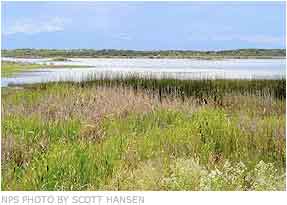
The northern end of Colorado’s San Luis Valley has a raw, lonely beauty that rivals almost any place in the North American West. Photo/Allen Best
From The Rio Grande Water Conservation District (Lisa Cyriacks) via The Crestone Eagle:
In the San Luis Valley: water is and will always be a critical issue. While demands on our scarce water supply grow, there are many community-based efforts working to restore a better water balance and plan for our future.
In the case of groundwater, the amount of water withdrawn by legally permitted wells exceeds the amount of water refilling the aquifers.
At a recent symposium hosted by Adams State University’s Salazar Center, local water leaders presented information on key aspects of current water conditions and challenges.
Salazar Center Director, Rio de la Vista, “With this year’s water shortage, the time is now to raise our level of knowledge on the critical water issues here. We aim to engage more people in community-based efforts for a sustainable water future and we need everyone’s help to make that possible!”
Local water users and State officials recognized something needed to be done in response to a severe drought that started about 20 years ago and reached its peak in 2002. They banded together to form local groundwater sub-districts to balance water use and supply. Their goal is to make groundwater use sustainable and protect senior surface water right holders from water shortages due to groundwater pumping.
Despite efforts to meet a court-mandated goal to replenish the shallow aquifer to pre-2000 levels by 2030, significant progress was curtailed by another serious drought beginning in 2018.
Agriculture is the economic engine in the San Luis Valley. None of the region’s current crops could be grown if growers depended only on the 7.5 inches of annual precipitation that hits the valley floor. The valley is one of the world’s largest high-altitude deserts. Water users draw from the valley rivers and streams to irrigate their crops but the peak flows that are common in May and June dry up by July and August. Given the lack of water storage in the region, growers rely on groundwater to finish watering their crops.
The latest attempt to export water from the valley to the Front Range is led by Renewable Water Resources (RWR), based in the city of Centennial near Denver. This scheme is undermining local farmers’ efforts to address water shortages and could set a dangerous precedent of water export.
There is zero unappropriated water in the Rio Grande Basin. This means all surface water and groundwater is currently used by existing water users, leaving no water available for transport outside the valley.
RWR aims to pump 22,000 acre-feet of water and pipe it over Poncha Pass to the Front Range. Local water leaders believe that if the pipeline is built, the RWR project will be just the start and lead to further attempts to export water.
The proposal is opposed by the Rio Grande Water Conservation District, San Luis Valley Water Conservancy District, Conejos Water Conservancy District, the Rio Grande Basin Roundtable as well as the City of Alamosa, Town of Del Norte, City of Monte Vista, Town of Saguache; joined by environmental groups, local businesses, and many farmers and ranchers.
There is widespread opposition in the valley to the RWR export scheme. Locals are concerned that RWR’s plan could turn Saguache County into another Crowley County, an area east of Pueblo that has been devastated economically by the sale of its water. See https://bit.ly/2CORMbB.
The San Luis Valley is a beloved place for many Colorado residents and travelers from across the country and around the world. With the Great Sand Dunes National Park and Preserve, three extraordinary National Wildlife Refuges, the Rio Grande Natural Area, the Rio Grande National Forest and many other public lands, the valley’s water sustains wildlife for viewing, hunting and fishing, and many forms of recreation. Sandhill crane migration attracts many visitors to the valley. Water export threatens the valley’s economy, which is dependent on agriculture.
Valley water leaders urge residents to take action by seeking out the facts about valley water resources and advocating for the truth about RWR’s export plans and the valley’s water supplies and hydrology.
Please see http://www.rgwcd.org for information about current aquifer levels and the subdistricts’ efforts to manage our groundwater.
Aerial view of the San Luis Valley’s irrigated agriculture. Photo by Rio de la Vista.
FromThe Denver Post (Bruce Finley) via The Brush News-Tribune:
How to survive in hotter, drier world a focus as 93% of state bakes in “severe,” “extreme” or “exceptional” drought
The sun beat down, baking Colorado’s bone-dry, cracking San Luis Valley, where farmers for eight years have been trying to save their depleted underground water but are falling behind.
They’re fighting to survive at an epicenter of the West’s worsening water squeeze amid a 20-year shift to aridity. Federal data this past week placed 93% of Colorado in “severe,” “extreme” or “exceptional” drought .
And Gov. Jared Polis was listening now, as a group of farmers sat around a patio shaking their heads, frowning, frustration etched on their faces — down by 150,000 acre-feet of water below their aquifer-pumping target as the driest months begin.
A center pivot irrigates a field in the San Luis Valley, where the state is warming farmers that a well shut-down could come much sooner than expected. Credit: Jerd Smith via Water Education Colorado
“We’re about as lean as we possibly can be. We’ve re-nozzled our sprinklers. Our pumping is as efficient as it possibly can be. We’re trying different crops,” said Tyler Mitchell, who had cut his water use by 30% after installing soil moisture sensors and shifting from barley to quinoa. “But, at the end of the day, we have too many businesses that are trying to stay in business. I don’t know how we can reduce pumping more than we already have.”
How to adapt to a hotter, drier world is emerging as a do-or-die mission for people living around the arid West. Polis was in the San Luis Valley on Tuesday, embarking on a potentially groundbreaking statewide effort to explore solutions amid increasingly harsh impacts of climate warming, including wildfires burning more than 300 square miles of western Colorado.
Average temperatures will keep rising for decades, federal climate scientists say, based on the thickening global atmospheric concentration of heat-trapping carbon dioxide, now around 412 parts per million, the highest in human history. Heat is depleting water across the Colorado and Rio Grande river basins, where more than 50 million people live.
Nowhere have climate warming impacts exacerbated local difficulties more than here in the Massachusetts-sized, predominantly Hispanic, low-income San Luis Valley between the Sangre de Cristo and San Juan mountains of southern Colorado…
This year, the winter mountain snowpack that determines surface water flow in the Rio Grande River measured 33% of normal in spring. Rainfall so far, 2.7 inches, lags at around 38% of average.
And the Rio Grande barely trickles, at 7 cubic feet per second, leaving Colorado toward New Mexico and Texas. Those similarly drought-stricken states count on shares of surface water in the river under a 1938 interstate legal agreement.
Colorado farmers’ fallback habit of pumping more from the aquifers connected to the river — water use that is restricted under a locally-run, state-ordered conservation plan — has obliterated water savings painstakingly gained since 2012.
The 150,000 acre-feet draw-down this year hurled farmers practically back to their starting point. And a state-enforced deadline of 2030 for restoring the aquifer to a healthy level looms. If not met, state authorities could take control over wells.
Cleave Simpson, bottom right, converses with other water users following a Subdistrict 1 budget meeting. Photo credit: Luna Anna Archey/High Country News
Rio Grande Water Conservation District manager Cleave Simpson said recovery now requires a snow-dependent gain of 680,000 acre-feet — 4.5 times this year’s draw-down…
“A drier and hotter world”
Polis looked out the windows of a black utility vehicle and saw devastation spreading as climate warming impacts hit home. Hot wind churned dust around farms now abandoned and rented to newcomers struggling to get by. San Luis Valley leaders have estimated that low flows and falling water tables may lead to the dry-up of 100,000 irrigated acres, a fifth of the farmland in a valley where residents depend economically and culturally on growing food.
He saw farm crews toiling, coaxing the most from their heavy machinery, after flows from some wells had diminished and even reportedly pulled up just air.
He said he sees different dimensions of problems around climate warming.
On one hand, human emissions of planet-warming greenhouse gases “are going up,” Polis said. “But, then, here in this world, it is about adapting to what is happening. I mean, the global effort needs to succeed. Climate change needs to slow down. Colorado is just a teeny piece of that — a fundamental issue affecting the entire world. America never should have pulled out of the Paris accords. I hope we return, and have a concerted international effort.
“But it is also a reality for how these farmers put food on their plate, for how their communities thrive in a drier and hotter world. … The same crops we have been growing, with one water and warm temperature profile, don’t work with the way things are now.”
Colorado agriculture commissioner Kate Greenberg said state leaders also will hear from producers enduring dry times on the Eastern Plains, where wheat harvests are expected to suffer. Agriculture statewide “is hurting” and the San Luis Valley stands out as “ground zero” in a water squeeze due to low snow, shrinking aquifers, drought and competing demands from inside and outside the valley. Legal obligations to leave water for New Mexico and Texas compel cuts that complicate solutions, Greenberg said…
Few of the farmers on the patio meeting with the governor saw much that state governments can do in the face of a possible environmental collapse.
Many have concluded that, as Jim Erlich said, “we’re going to be farming less here.” Some anticipated an agricultural landscape looking more like western Kansas…
Polis called climate warming “the new normal.” He asked the farmers: “Where does it lead? Do you see a way forward?” State projections show conditions for at lest 15 years will be “likely hotter and drier… What does that mean in terms of crop mix? What does it mean in terms of sustainability? What does it mean in communities?”
The farmers, about a dozen, said they’ll push ahead in the “sub-districts” they’ve formed to encourage saving groundwater — as an alternative to state engineer authorities controlling wells. They now pay fees for pumping and pooled funds can be used to pay farmers for leaving fields fallow…
An entrepreneurial businessman, Polis pushed toward what might be done to create better markets for crops, such as “Colorado quinoa” that use less water, giving a global perspective. “I mean, agriculture does occur in dry parts of the world. It has to work from a water perspective…
The side of a farm building north of Center, Colorado. The farms in the San Luis Valley are known for their fresh potatoes. Photo credit: Luna Anna Archey/High Country News
At another farm, Brendon and Sheldon Rockey showed Polis around. They’ve reduced their use of water from wells by 50% and prospered, growing 25 types of potatoes, shifting off water-intensive crops such as barley and planting more “Colorado Quinoa” along with a half dozen other growers.
Fallow fields fertilized with cows and planted with restorative “cover crops” help boost productivity by improving soil, Brendon Rockey told the governor. “I don’t have a mono-culture anywhere on this farm.”
As president of the potato producers’ council and leader of a water-saving sub-district, Sheldon Rockey is encouraging other farmers — optimistically despite increased stress around the depletion of aquifers. “We can still make it back,” he said, “if we have snow.”
Polis also suggested a relaxed state approach to the 2030 deadline for replenishing the shrinking aquifer. “It is about the long-term trends. … whether goals are being met. There’s nothing that would ever be done based on one bad year.”
The farmers were hanging on that.
“He is genuinely interested in providing what support the state can to help with our water balance challenges,” Simpson concluded following this first meeting.
But “farmers are frustrated,” he said, emphasizing that aquifer recovery can happen only “if mother nature brings snow.”
And Polis left with a more detailed sense of the stakes.
“What we want here is sustainability. That’s why I oppose trans-basin water diversions,” he said. “But we have to make sure that farmers here today don’t live at the expense of farmers here tomorrow and the next decade. This valley is about agriculture. If the water is sold off, or the water is used up, it will become a dust bowl.”
A center pivot irrigates a field in the San Luis Valley, where the state is warming farmers that a well shut-down could come much sooner than expected. Credit: Jerd Smith via Water Education Colorado
The race against time continues for farmers in southern Colorado’s San Luis Valley, with the state’s top water regulator warning that a decision on whether hundreds of farm wells will be shut off to help save the Rio Grande River could come much sooner than expected.
July 28, at a virtual symposium on the Rio Grande River, the state warned growers that they were running out of time to correct the situation.
“We’ll see in the next couple of years if we can turn around this trick,” said State Engineer Kevin Rein. “If we’re not turning it around, we need to start having that more difficult conversation.”
The valley is home to the nation’s second-largest potato economy and growers there have been working voluntarily for more than a decade to wean themselves from unsustainable groundwater use and restore flows in the Rio Grande. Thousands of acres of land have been dried up with farmers paying a fee for the water they pump in order to compensate producers who agree to fallow land.
Artesian well Dutton Ranch, Alamosa 1909 via the Crestone Eagle
The San Luis Valley, which receives less precipitation than nearly any other region in Colorado, is supplied by the Rio Grande, but under the river lies a vast aquifer system that is linked to the river. It once had so much water that artesian springs flowed freely on the valley floor.
As modern-day farmers began putting powerful deep wells into the aquifer, aquifer levels declined, and flows in the river declined too as a result, hurting the state’s ability to deliver Rio Grande water downstream to New Mexico and Texas, as it is legally required to do.
Between July 2019 and July 2020 the valley’s unconfined aquifer, which is fed by the Rio Grande River, dropped by 112,600 acre-feet. All told the aquifer has lost around 1 million acre-feet of water since the drought of 2002.
Through a plan written by growers in the valley and approved by the state in 2011, farmers had 20 years, from 2011 to 2031, to restore the aquifer. But multiple droughts in the past 19 years have made clear that the region can’t rely on big snow years to replenish the valley’s water supplies because there are fewer of them, thanks to climate change.
“So what is the future, the short-term future, if we can’t count on climate? And let’s admit we can’t,” Rein said. “If climate’s not cooperating the only thing that can be done is consuming less water.”
A powerful sprinkler capable of pumping more than 2,500 gallons of water per minute irrigates a farm field in the San Luis Valley June 6, 2019. Credit: Jerd Smith via Water Education Colorado
Adding to pressure on the region is a proposal by Denver developers to buy thousands of acres of the valley’s farm land, leaving some of the associated water rights behind to replenish the aquifer, while piping thousands of acre-feet of water northeast to the metro area.
Rein said drastic steps, like drying up more fields and sharply limiting how much growers can pump, are needed. But this could result in bankruptcies and could cripple the valley’s $370 million agriculture economy, which employs the majority of workers in the region. Worse still, though, would be the shutdown of all wells in the region, which is what could occur if farmers aren’t able to make progress toward aquifer sustainability.
While the deadline to restore the aquifer is set for 2031, if it becomes clear before then that growers aren’t able to restore groundwater levels, Rein will be forced to take action early by turning off all wells.
Rein said his decision likely won’t come as early as next year. But, he said, “Do we wait until 2031, the deadline? Probably not.”
The groundwater challenges and associated deadline stem from Colorado’s historic 2002 drought which led to more groundwater pumping than ever before and resulted in a falling water table, decreases in water pressure, and failing wells.
Groundwater declines have been so severe that they’ve affected surface water levels in parts of the valley. In 2004, state lawmakers passed a bill requiring the state to begin regulating the aquifer to make it more sustainable.
Landowners within the Rio Grande Water Conservation District (RGWCD) responded by forming a groundwater management district known as Subdistrict 1—that was just the first of what will soon be seven approved subdistricts.
Subdistrict 1 set goals and developed a plan of water management in late 2011 that spelled out how to reduce groundwater depletions and recharge the aquifer.
In 2012 they began paying a fee for every acre-foot of water used. That revenue helps pay irrigators who elect to participate in voluntary fallowing programs and other efforts to replenish the river and reduce stress on the aquifer.
Colorado Drought Monitor August 7, 2018.
And by 2017, irrigators had restored 350,000 acre-feet of water in the aquifer, halfway to their goal. But drought and disaster struck in 2018. With less surface water available and high temperatures, irrigators pumped heavily to maintain their crops. And by September 2018, farmers had lost about 70 percent of the groundwater gains they had worked so hard to recover.
“2018 was extremely frustrating,” said Cleave Simpson, manager of the RGWCD who is also a fourth-generation grower. ”It really kind of set us back to where we were when we started this in 2012.”
It’s not over yet. Some of that groundwater lost in 2018 has been recovered and this year participation in the fallowing program is higher than ever, with more than 13,000 acres enrolled, according to Amber Pacheco who manages the RGWCD’s subdistrict programs—that’s in addition to the 8,800 acres fallowed through the conservation programs that have been running since 2012.
Simpson and others, faced with another severe drought year, are deeply worried about the success of their conservation efforts, but dire times are also boosting motivation to solve the problem, Simpson said.
“There’s a sense of urgency from the board of managers that we’ve got to keep doing more,” Simpson said. “We’ve got to get back what we lost.”
Caitlin Coleman is the Headwaters magazine editor and communications specialist at Water Education Colorado. She can be reached at caitlin@wateredco.org.
The Colorado Supreme Court on Monday upheld an agreement that would allow a water conservation subdistrict in Southern Colorado to import water to the Rio Grande and use the entirety of its own imported water under long-standing legal doctrine.
The Closed Basin is a watershed in the San Luis Valley with a physical separation between itself and the Rio Grande. Surface water, therefore, does not flow into the river, and is imported through canals. However, a study revealed that pumping from an underground aquifer in the Closed Basin was causing depletion to the waters of the Rio Grande.
In 2010, a water court judge approved a plan for the Special Improvement District No. 1 of the Rio Grande Water Conservation District that proposed a way to restore river flows otherwise lost to irrigation-related pumping. The subdistrict would have to replace the river depletions, and consequently it contracted with Santa Maria Reservoir Company to lease water from its supply in two reservoirs.
The company, however, had to amend its bylaws to allow for the water to go toward replacement of flows, not just for irrigation. The idea was to release water from a reservoir and have it flow down the Rio Grande, with no diversions for irrigation to the Closed Basin.
By April 2016, all affected parties had withdrawn objections except for one rancher, Jim Warner. He owned property in the Closed Basin and needed the subsurface water created as a byproduct of the importation to stay at a certain level. Warner opposed the change out of a suspicion that he could no longer use flood irrigation of his hay crops.
During the trial, SMRC argued that its importation scheme would not harm other water users in the Closed Basin. Warner did not provide any evidence to support his claim, as well as for his allegation that the Closed Basin and the Rio Grande were not separate water systems after all.
The water court found acceptable the arrangement for SMRC to replenish the Rio Grande and for the subdistrict to use the entirety of its imported water into the Closed Basin for its own irrigation purposes…
Writing for the Supreme Court, Justice Carlos A. Samour Jr. found that the water court was correct to approve the Closed Basin arrangement based on cases as early as 1907.
“We have repeatedly said that when water is introduced into a stream system from an unconnected stream system, it is imported,” he wrote. There was plainly a divide between the Closed Basin and the river, and the SMRC’s actions would not cause Warner injury.
One day in mid-July [2019], Colorado state engineer Kevin Rein stood before a packed room of farmers and ranchers and admitted that he might be forced to ruin their lives. Rein, a middle-aged man with wavy gray hair, spoke in the measured tones of a technocrat, but his message was dire: If the valley’s residents cannot figure out how to sustainably manage their water use, the state would do it for them. And though he stressed, time and again, his office’s dedication to working with them, and though he praised their efforts, his goodwill fell flat in the hot, poorly ventilated room, where more than 120 people were crammed, worried about their future.
For most of the 20th century, water use in this southern Colorado basin outstripped water supply. The people of the valley came up with an uncommon solution to this not-uncommon problem: an experiment in communal water management. And what they’ve found is that self-governance is hard. Rein not only has the authority, but a legal mandate, to end this experiment if its failure becomes assured. If or when it becomes clear that the San Luis Valley’s water system cannot reach a sustainable level by the year 2031, then, yes, he said, his office would shut off irrigation for a substantial part of the area. That would mean no water for many fields, which could mean foreclosures, bankruptcies and family farms sold.
The stifling room went silent for a full 10 seconds. When the questions resumed, they came without outrage. Rein was not the villain. Most people present must have known that, in the end, they themselves represented both the cause of the problem and its only possible solution.
Cleave Simpson, bottom right, converses with other water users following a Subdistrict 1 budget meeting. Photo credit: Luna Anna Archey/High Country News
THE SAN LUIS VALLEY is a high-mountain desert ringed by the Southern Rockies and blessed with unusual water resources. From its headwaters in the San Juan Mountains, the Rio Grande traces southeast down to the valley floor, beneath which lie two enormous stores of water, one just belowground, the other deeper and enclosed by clay. The river and these aquifers sustain more than 1,500 farms and ranches — and the towns that rely on them — in harsh conditions generally inhospitable to agriculture. Center, a small town with a predictable location relative to the rest of the valley, registers some of Colorado’s coldest temperatures and lowest rainfall. Farming at almost 8,000 feet means long winters and a three-month growing season, accompanied by regular dry spells and occasional July killing frosts. But the sandy soil and near-constant sun are great for potatoes, making the valley the nation’s second-largest producer of “fresh” spuds — as in produce found in a store, not French fries. Other crops include barley, which often goes to the Coors Brewing Company, and alfalfa.
When morning comes to the valley, the Sangre de Cristo (“Blood of Christ”) Mountains earn their name, burning blood-red as the sun summits the sawtooth peaks. On high, snowpack endures for most of the year, watched daily by the farmers below, whose yearly water supply depends on the runoff. A drought that began in 2002 and continues today — recent rainfall notwithstanding — made the valley’s water deficit even more acute. In response to this new aridity, the people of the valley sought authority to regulate their own water use, which the state granted in 2004. In 2012, local governing bodies made up of water users across the valley began to tax commercial irrigation, replace water removed from rivers and streams, and pay farmers to fallow their land.
Western water wonks mostly view this attempt at self-management with hope, as a possible model for other communities facing water crises. But on the ground in the valley, the situation is grim. Last year, the snowpack was low and little rain fell; the Rio Grande’s flow in 2018 was one of the lowest ever recorded. The U.S. Department of Agriculture designated the valley a drought disaster area. With little surface water, farmers had to rely on water pumped from belowground, wiping out years of steady accretion to the shallower, or unconfined, aquifer. Last year’s dry spell put the valley back where it started: about 800,000 acre-feet below the aquifer’s legally mandated recovery level. Seven years gone and no net gains. In December, Rein sent the valley a warning letter. If, he wrote, it is “undeniable that the sustainability goals” will not be met by the 2031 deadline, irrigation shutdowns would follow. Rein would repeat this message in July. This threat now haunts thousands of water users, an ever-present doom on the horizon.
Kyler Brown rides along the Rio Grande River, where headgates divert water into irrigation canals. Coming up with a plan to reduce water use is the easy part, he says. Changing peoples’ behavior is trickier. Photo credit: Luna Anna Archey/High Country News
DROUGHTS BELONG TO THE CHAOTIC FORCES OF CLIMATE, and markets to invisible hands. But the San Luis Valley’s experiment in self-governance means that its agricultural producers control their own fate. Among them is Kyler Brown, who farms barley and potatoes a few miles north of Monte Vista. On a windy, warm day, Brown drove me through his family fields. The farm belongs to his father-in-law; Brown married into the valley. He is 36, tall and sturdy, and sports a black beard and a wide-brimmed hat. Brown laughs often in loud bursts and treats the valley’s struggles to moderate water use with a black humor. To him, the valley is suffering from old habits that die hard.
“It hasn’t led to violence yet,” he said with a grin, as the truck bounced down a two-wheel dirt track. The San Luis Valley is occasionally called “the Kumbaya basin” for its collaborative spirit, but Brown dislikes this description. For decades, the locals lived beyond nature’s limits. Now, water is scarce.
It was late March, and the snow still sat heavy on the surrounding peaks. The irrigation ditch adjoining the fields was overgrown with weeds. Soon, the scrub would be burned clean, the gates connecting Brown’s fields to the Rio Grande Canal open, and his water allotment flowing. Brown steered with one square tanned hand and gestured with the other. If the valley’s farms and ranches, its towns and economies, are to survive, he said, their relationship to water must change, and yet Brown does not think the local governance system, as it stands now, is up to the challenge. “People thought the (water management system) was the miracle, that was the amazing thing,” he said. But implementing the system, forming committees and boards, that’s the easy part, Brown went on. Changing how people act, that’s the real work.
This is especially true when water suddenly appears plentiful, as it did this spring. As if in response to Rein’s letter, southwestern Colorado had one of its snowiest winters in decades. In the mountains above the valley, the season-to-date snowpack average stayed above 300% for most of the spring. The Rio Grande, snow-fed, ran fast and full across the heart of the valley. Grazing meadows flooded in places. Ditches and canals, the vascular system that carries the lifeblood of the valley, filled.
This, then, was the challenge the valley faced, after the disastrous drought and Rein’s letter: 2019’s abundant water, set against 2018’s drought, offered yet another test of the farmers’ habits. Could they use the welcome, unexpected snowpack to refill the aquifers? This is a hard ask: Last year’s drought strained farmers financially. This year, the resource is plentiful.
Brown wants to take on this clash between individual and communal interest. Over the winter, he proposed a “consensus-building” plan to the local water management authority — something that would bring farmers, ranchers and community members together to build agreement on a few key conservation points. As Brown sees it, the people of the valley need to accept that the problem is not principally, or only, water scarcity. People’s water habits, the crops they grow, the decisions they make on the farm: All of these need to be held up and examined under the new arid realities.
“Everyone needs to think every time they turn on a pump,” he said.
Kyler Brown rides along a section of pooled water on the land where he runs his cattle. There hasn’t been so much standing water at summer’s end in years. Photo credit: Luna Anna Archey/High Country News
Brown took me to a small meadow near the Rio Grande, where he runs a few dozen cattle on the cottonwood flats. The river was full to its banks, running dark and cold. Seeing so much water makes scarcity hard to imagine. It’s easy to think that way when the river is full.
Perhaps that’s been the problem all along. The valley’s system of water rights dates back to the 1850s, following the Mexican-American War. The Rio Grande supported the area’s early farms and ranches. Acequias, community water channels, shared the resource at the valley’s southern end. Founded in 1852, the San Luis People’s Ditch in Culebra Creek is the oldest continuously used water right in the state. These waterways created thousands of acres of marshy terrain in the low country, grown over with stands of cottonwood and willow that shaded native wildflowers. By 1900, the entire flow of the Rio Grande was allocated via surface water rights.
The well that Kyler Brown uses for irrigation was drilled in 1978. Photo credit: Luna Anna Archey/High Country News
After World War II, electrification enabled farmers to pump water from wells tapped deep into the aquifers. By the second half of the 20th century, surface-water users had to curb irrigation, thanks to river compacts formed with downstream states. Well users faced no such restrictions. They pumped away, which impacted stream flows, since ground- and surface water interact. For a time, this was not a problem; there was enough water to go around for both surface and groundwater users. (In fact, the water table was so high that valley houses built in the early 20th century don’t have basements.)
The development of center-pivot sprinklers in the 1970s brought big changes, expanding agricultural capacity by allowing more efficient irrigation, no matter what the river was doing. Water use and farm size increased. Before this pumping technology, fields were flooded from the irrigation ditches, and the runoff helped replenish groundwater. But now, the combination of pumps and sprinklers drained the groundwater without replenishing it. Few questioned what this technology allowed. The water table dropped, and the rivers and creeks thinned. The pheasants that once thrived in the thickets and woodlands disappeared.
Center, Colorado, is surrounded by center-pivot-irrigated farms that draw water from shrinking aquifers below the San Luis Valley. Photo credit: Google Earth
TODAY, MORE THAN 14,000 PERMITTED WELLS puncture the valley floor. On a map, they appear as a tightly packed confederation of crop circles, laid out like thousands of green sundials set against the dusty waste of the desert. Many of these wells pump within the valley’s first water management “subdistrict,” which began the experiment in self-governance eight years ago. Two more subdistricts became active this year, on May 1. If all goes according to plan, there will be seven of these, distinguished by differences in geography and hydrology.
The actual work of shared governance takes place through the taxpayer-funded Rio Grande Water Conservation District, which includes the subdistricts. In practice, this involves committee meetings, lots of them. Each subdistrict’s board is made up of water users — farmers and ranchers. (Board members are mostly, but not uniformly, older, white and male. The valley is not — about half the population is Hispanic or Latino.) The meetings take place in a drab, reddish stucco building outside Alamosa. Committee members show up in stiff jeans, flannel shirts and seed caps that are removed for the Pledge of Allegiance, which begins each meeting, revealing pale foreheads above weather-beaten faces. The audience resembles the boards. Most people seem to know each other. Before an April session, I heard a farmer in a hat that proclaimed “compost done right” confide to the man next to him that “we’re going to be doing more quinoa this year, for sure.”
The meetings themselves tend to be dry affairs. In April, Subdistrict 2 board members went page-by-page through the annual water plan, discussed a few water leases, and solemnly approved a $78.22 refund to a ranch for a water fee overcharge. Someone cracked a joke about “counting every penny.” But these sessions, however mundane, are where the water management work gets done, amid a patchwork of interests, values and preoccupations.
Board and community members gather at a Rio Grande Water Conservation District’s Subdistrict 1 budget meeting in August. The subdistrict voted to raise pumping fees from $90 per acre-foot to $150 per acre-foot. They also discussed the fallow field program and ways to make it more accessible for farmers, such as allowing half fields to be fallowed. Photo credit: Luna Anna Archey/High Country News
Cattle ranchers sit next to barley and alfalfa producers. Big operators who own thousands of acres farmed with the newest in GPS-driven tractor technology rub shoulders with smallholders who supplement their agricultural income with a second job in one of the scattered towns. Some have water wells and some have river rights, and many have both. There are disagreements and digressions, punishingly long budget sessions, personal gripes, and episodic displays of resourcefulness and democratic good sense. In the middle of all this is Cleave Simpson, the water district manager, a fourth-generation farmer who tends about 800 acres of hay. Tall, thick-shouldered with sun-narrowed eyes, Simpson has a remarkable ability to explain water policy minutiae in clear, everyday language. People remark on his steady presence and decent conduct in an uncertain time. Even people who disagree with him tell me this.
Simpson believes that the valley can fix its water imbalance, but he admits the difficulty. Cutting water use is unpleasant, he told me, “but we can either wait on Mother Nature — or we can give it a shot ourselves.”
For eight years, the first subdistrict has given it a shot, and the results are uneven. Farmers within its borders must comply with the subdistrict’s water plan or get their own through state water court. Some early resistance aside, most chose the first option. Subdistrict 1 has several tools at hand to curb pumping. The primary one is a fee on pumped water; the current rate is $90 per acre-foot. Those with excess water can sell it to those who want more, via a credit system. There is also a program that pays farmers to take land out of production. About 10,000 acres of farmland have been retired this way, only about a quarter of the expected figure by this point.
Though the system is complicated, the aquifer is not. The aquifer responds to two things: recharge from the surface and reduced pumping. The effects are so obvious that locals sometimes refer to the aquifer as “the bathtub.” The amount of surface recharge each year is limited, so replenishing the aquifer effectively means less groundwater pumping for irrigation. That’s the hard part.
Subdistrict 1 sits atop the unconfined aquifer, so in many ways it is the most important. Many of the largest and most lucrative farms are here, in the heart of the valley. The subdistrict stops just before the Rio Grande to the south and stretches into the valley’s northern reaches, where smaller farms and ranches sit amid the sage and chico brush. Most of the farmers here grow barley, alfalfa or potatoes. Almost all of them rely on wells that pump from the aquifer. When Rein threatened a pumping shut-off, he was referring to Subdistrict 1’s more than 3,000 wells.
Rein’s letter woke people up, said Erin Nissen, who plants potatoes and barley with her father, Lyle, outside the small town of Mosca. At a special meeting after the letter ran in the local paper, several dozen people were expected to show. Hundreds came, filling the room and spilling out the door. “The letter was good,” she told me over the phone. “Scary, but good. There was talk from the beginning: ‘Oh, it’s fine, they won’t come and shut off the wells.’ ”
People are realizing now that the state might, indeed, shut off the wells. Part of the problem, according to Nissen, is an inability to require water-use cutbacks. When the subdistrict system was formed after the 2002 drought — the mention of which still makes valley farmers shiver — the architects thought market mechanisms would be enough, given commodity prices, and the hydraulic and climactic data available.
While sound at the time, this model could not account for the realities of a changing climate, and the subdistrict has proven unable to discourage enough farmers from pumping. “There’s a really sad mindset of, ‘I can pay for it, so it’s my neighbor’s problem,’ ” Nissen said.
Dale Bartee checks the soil in his field of organic flax seed. The plant requires less water than crops like alfalfa and barley. Photo credit: Luna Anna Archey/High Country News
IN PRACTICE, THE SUBDISTRICT’S POLICIES cannot account for the valley’s unequal water distribution. Farmers with good surface water rights take what they need from the river and sell the extra as credits, while wealthier farmers and operations owned by corporations and other outside entities pay the pumping fee and buy up credits. In both cases, there is no behavior change. Hiking the pumping fee will eventually hurt large water users, but it would also devastate small, poorer farms and ranches. It doesn’t take much to break them. For some, the cost is already too high.
That was the case for Dale Bartee’s neighbors, in the northern part of Subdistrict 1 near Center. In the past few years, he said, three locally owned farms nearby sold, in part due to the ever-rising pumping fee, with most of the land going to out-of-state investment firms.
“We used to see all our neighbors on the road, and we’d stop and visit with them,” he said. “Not anymore; now, it’s just haul by and never see them.
“It’s really hurt this area,” he added, sitting at his kitchen table in mid-August. He and his 8-year-old son, Kolby, had been out in the fields, and Bartee made sure Kolby washed his hands and arms before sitting down to talk. A laconic man with a horseshoe mustache, Bartee is the fourth generation of his family to work the farm and hopes to make it five. He runs a cow-calf herd, puts up hay and grows small grains. Kolby and his brother run a herd of 57 sheep. Bartee’s operation has middling surface rights, so he does all he can to limit pumping costs.
Kolby Bartee, age 8, drives as his brother, Tyler, 12, feeds hay to sheep on their farm. The boys run their own sheep herd as part of their family’s fourth-generation farm. Photo credit: Luna Anna Archey/High Country News
All summer, farmers discussed a pumping fee increase as if it were a certainty. They were right. At a budget meeting in late August, Subdistrict 1’s board confirmed a $150-acre-foot rate for next year’s irrigation season. In the public comment period, many argued that the fee would drive farmers from the land. Others said an increase was the only choice, given the aquifer’s level. Several board members spoke about the rate hike as a grim necessity. To Bartee, the new fee means that “the big guys and the ones with the surface credits are just going to get bigger.”
The other subdistricts seem to have learned a few things. LeRoy Salazar, the president of Subdistrict 3 near the Conejos River, which flows wide and shallow down from the San Juan Mountains and east across the valley’s southern end, said that his board can mandate water use restrictions during a dry spell. Simpson agrees, but obtaining this capacity for Subdistrict 1 would require an arduous return to water court. A small farmer himself, Simpson said that a $150-acre-foot fee could make his operation untenable.
Without enforcement authority, Subdistrict 1 has minimal tools besides higher taxes to restrain pumping or manage competition between members. As Brown sees it, this sustains incentive structures that are geared toward use, not conservation and replenishment. “I have a decreed right to that water on paper, and I’m going to pump as much as I can, for as long as I can.”
The instinct is understandable. Most farmers operate on tight financial margins and will pump all they can to bring their crops to market. But when it comes to creating a sustainable system for the valley as a whole, these private instincts run afoul of public considerations.
By April, as snowmelt accelerated on the peaks and farmers prepared to plant potatoes, Brown was already souring on the prospects for his consensus-building plan, proposed to address the public-private push-and-pull. The response, he said at the time, had been pretty quiet. At an April presentation of the proposal by one of Brown’s friends, the skepticism was tangible. Brown said he understands public hesitation. The community has already tightened its belt, but it has not been enough. He likened the water challenge to a family budget.
“Every family has a hard time living within its means,” he said. “Not because there aren’t externalities, like going to the emergency room or no Christmas bonus. But it’s about behavior.”
Farmer Erin Nissen with some of her cattle. Under Subdistrict 1’s fallowed field program, she is still able to utilize the land for grazing. Photo credit: Luna Anna Archey/High Country News
IF THE VALLEY IS TO MEET WATER DEMANDS, inherited habits from wetter times will need to change. Right now, for example, many farmers pump to their legal limit, whether or not the crops need water. In a year like 2018, when the rivers and ditches ran low, heavy well pumping is the only option for many. And in a wet year, the economics of farming and the demands of thirsty crops like alfalfa and wheat prevail. If the water is there, alfalfa will keep drinking. Of the crops that grow in the valley, alfalfa uses the most water per acre. It is also extremely lucrative: The valley exports bales by the truckload to dairies and stockyards all over the West, and in a good year like this one, a farmer can get three cuttings.
In Subdistrict 1, it falls to the ranchers and farmers themselves to break these inherited habits. On the ground, this looks something like what Erin Nissen is up to. Nissen, who is in her late 20s, grew up on her family’s farm. She has a calm demeanor, a direct gaze and innovative ideas on how to manage water use.
Her family operation consists of 11 fields, with each 120-acre section divided into 40-acre plots. Each plot is farmed independently, with crops that rotate each year. They currently grow 240 acres of potatoes and 60 acres of barley. Other fields are planted with cover crops, which are chopped up and turned back into the soil. Also in the rotation are fields of sorghum-sudangrass that are grazed by cattle, fertilizing the fields and thereby reducing the need for chemical inputs. All of this is done with an eye towards building up organic material and promoting healthier, more resilient soil, which acts as a sponge and better retains water. Once rare in the valley, crop rotation has become more common, its benefits for the soil now widely recognized.
Erin Nissen shows the quinoa crop she planted to help decrease water use on her family’s farm. Photo credit: Luna Anna Archey/High Country News
For irrigation, Nissen uses evaporation models to predict the precise amount of water her crops will need. If the afternoon turns cloudy, for instance, she’ll reduce irrigation by a few percent. Even the sprinklers have been modified — anything to shave water use down to the minimum. Newly installed nozzles spray water in droplets, like rain. Older models distribute a mist that is more likely to blow away. Nissen has also reduced the total number of acres she cultivates and voluntarily limits her pumping.
Many farmers use some of these techniques, but few use them all. It can be hard to introduce crop rotations, let alone a full switch to less thirsty crops like quinoa and hemp. Habits are durable things, especially successful ones. Barley and potatoes, planted on the same fields every year — and irrigated in the same ways — have made and sustained many livelihoods in the valley.
I asked Nissen why she has introduced so many changes, and her first answer was: necessity. The family has lower-priority surface water rights, so they depend on taxed water that is pumped from belowground. Cutbacks save money, and healthier soil means higher crop yields. But Nissen also called it an ethical move. Like so many young people who grow up on farms, she went away for college, graduating from Texas Tech University with a degree in agricultural and applied economics. After graduating, she returned, the fourth generation of her family on the farm. It’s not just any future she wants for the valley, but this one, where family farms of moderate size endure, where children work the same land their parents and grandparents tilled. Attaining that future, though, Nissen said, demands that she change her farm’s water habits. “It’s important that farmers cut back for the good of the valley,” she said.
Kyler Brown’s five-year-old son, Elijah, plays at the family breakfast table with a swather that he made. Photo credit: Luna Anna Archey/High Country News
THIS COMMUNAL VIEW was what Brown wanted to encourage with the consensus-building plan, breaking away from the system that brought on the current water crisis. In early June, the Subdistrict 1 board gave the proposal a muted response. For now, the idea has little life.
Like Nissen, Brown’s ultimate hope is for people to face up to the conditions at hand and then consider what sort of future they want for the valley, before it’s too late. For both of them, the point of the subdistrict system, this experiment in self-governance, is not simply to guarantee the valley’s economic future, but, crucially, to sustain a certain sort of life on the land and the communities this life supports. “If we want as many people, as many families, working the land as possible, that’s a value we need to be working towards,” Brown said.
Even while family farms and smaller operations endure in the San Luis Valley, many people describe a trend towards consolidation — larger farms growing at the expense of smaller operations, while outside dollars buy up land as investments or tax write-offs. Department of Agriculture census records show an increase in the number of large, rich farms in recent decades.
The side of a farm building north of Center, Colorado. The farms in the San Luis Valley are known for their fresh potatoes. Photo credit: Luna Anna Archey/High Country News
Some of the valley’s larger operations, such as North Star Farm, which is owned by a California-based trust, and Natural Prairie from Texas, are backed by outside money, as are many of the new hemp operations. Without the strong community ties and commitment to family farms that have inspired Nissen to overhaul her farming practices and conserve water, these deep-pocketed operations have little reason to limit their water use beyond the legal mandate.
The San Luis Valley depends on agriculture. Along any of the valley’s highways, most of the storefronts and signs advertise this dependence, from engine shops and welders, to potato warehouses and irrigation engineers, to the shiny new combines that crouch in waiting along the bar ditch. People, too, rely on agriculture. Farm dollars fund a public school system and several hospitals. Monte Vista has more than a dozen churches. Alamosa boasts a small university, Adams State, which offers an agriculture degree tailored to local students.
There is a divide between the valley’s majority-Hispanic towns and the farms that surround them, according Flora Archuleta, director of the San Luis Valley Immigrant Resource Center. “The people in control are white, the farmers,” she said. “They own the land.” Even so, she went on, Alamosa, Monte Vista and Center would likely not exist without agriculture. The resource center sits on a storefront strip down a gravel side street in Alamosa. Across the street, passenger train cars sit humped and rusting in an old railyard. The office is constantly busy — something different every day. In May, Immigration and Customs Enforcement (ICE) invaded a nearby Mexican restaurant, taking five people. Decades ago, more than 10,000 migrant workers staffed the farms each year. Some farmworkers, mainly Mexican and Guatemalan, still come up through New Mexico and Arizona for planting season, but fewer now, Archuleta said, due to the ever-increasing mechanization of industrial agriculture and tightening immigration policies over the past decade. “The valley is a farming community,” she said, “and that’s what people rely on.”
As Heather Dutton, a fifth-generation valley resident and manager of the San Luis Valley Water Conservancy District, put it, even Alamosa’s mountain-bike stores — in a town of fewer than 10,000 people — exist because there are enough people with enough money to ride on weekends. “There’s this huge chain of people who are all able to live here because of farming in one way or another,” she said, sitting in a craft beer and coffee shop in Alamosa. When we got up to leave, Dutton stopped to say hello to several diners she knew. Like her, all of them rely in some way on the success of those farms for a livelihood.
Alamosa, Colorado, in the San Luis Valley, is heavily dependent on the farm economy. Photo credit: Luna Anna Archey/High Country News
A major downturn in agriculture — whether it happens over time, due to climate change and consolidating market forces, or immediately, should the state order well closures — would hurt Alamosa and the other towns. And the valley is already struggling, despite the presence of so many large, wealthy farms. Commodity prices have not been healthy in more than a decade, and the six counties that constitute the valley are among Colorado’s poorest. Shuttered storefronts dot Alamosa’s main street. A recent casualty is a J.C. Penney, which anchored the block for more than a century. Locals took this closure particularly hard, even petitioning the company to keep the store open. Explaining the closure in a statement, the company said it is shutting locations that do not meet financial targets.
Archuleta’s family has lived in the area since before it was part of the U.S. If farming collapses, she predicts, “the valley would become a ghost town.”
Water from an aquifer that lies below Colorado’s San Luis Valley flows through a center-pivot irrigation system, one of some 14,000 that draw water from below. Photo credit:Luna Anna Archey/High Country News
IN FEBRUARY, MANY PEOPLE SPECULATED that, with a large river and some luck with snowmelt, the valley could regain what was lost last year and maybe substantially more. The first part came to pass: The Rio Grande is projected to have its highest annual flow in more than two decades. The second part did not. As of September, the aquifer had gained about 140,000 acre-feet, less than what had been lost in 2018 and not even the largest yearly recharge since 2002. The water level by summer’s end tends to be the replenishment for the year. It is enough to stay the threat of well shutdowns for now, but next year is as likely to return to drought as it is to resemble 2019. Rein’s warning endures. Did the valley take advantage of this year’s snowpack? As with most things, the result is mixed — not exactly a failure, but not all it could have been.
During a Subdistrict 1 meeting, Cleave Simpson consults with a farmer in the audience. Photo credit: Luna Anna Archey/High Country News
The valley’s people know that the subdistrict system may well fail, yet many continue to act on behalf of a project that asks them to place their trust in each other. Simpson was born here, left for the Colorado School of Mines, and spent more than a decade working as an engineer before coming back and buying a farm with his wife, Cathy, who is also a local. This tracks a pattern in Simpson’s family history; his great-grandfather was the first in the family to arrive in the valley. His grandfather left for a time, then came back, as did his father. His son, Jared, left for college. Now 27, he works the farm with his father. Simpson told me he does the often-thankless task of running the valley’s water governance system for his son. “I love agriculture,” he said. “My son loves agriculture. He has a college degree, he doesn’t have to do this. I do wonder why we keep beating our heads against the wall. But this is home.”
And if it fails, this experiment in self-governance, why should people outside the valley, beyond these homes, care? I put this question to Brown in March. We were driving out along the dirt track through the low country that cradles the river. Snow was visible high above, and spring was coming on. He thought about this for a moment. The valley’s inhabitants produce food, and their livelihood depends upon a thriving agricultural economy, he said. Most of the country does not live this way. And failure to address the water crisis would threaten this way of life, another instance of the decades-long economic abandonment of rural America. But then, after a pause, he added something more. Here in the Colorado mountains, there exists a community, one with a past full of mistakes and a future dark with uncertainty — yet a community all the same. “People who live here aren’t any more special than people anywhere else,” he said, “but they also aren’t any less special than anyone else.”
Kyler Brown carries his three-year-old daughter, Olivia, to the truck to drive her to daycare. Photo credit: Luna Anna Archey/High Country News
Nick Bowlin is an editorial fellow at High Country News. Email him at nickbowlin@hcn.org.
Dangling money, the developers at Renewable Water Resources — which counts former Gov. Bill Owens as a principal — contend that because the urban Front Range is the richest part of the state, it has the potential to give the most to the poorest.
They envision pumping 22,000 acre-feet per year from 14 wells drilled 2,000 feet deep at the foot of the Sangre de Cristo mountains, building a pipeline costing $250 million to $600 million, and then pumping water at least 40 miles northward over Poncha Pass toward Front Range cities.
“We need between 300,000 acre-feet and 500,000 acre-feet of new water for the Front Range. The question is: Where’s that going to come from?” said Sean Tonner, managing partner of Renewable Water Resources.
“We can take it out of the Colorado River, but we know what the stresses are there. The Poudre River? The Arkansas? The South Platte is already the most over-appropriated river. Folks are looking at moving water from the Mississippi River back to Colorado,” he said. “These are the lengths people are looking to for adding water.”
Exporting San Luis Valley water would be “fairly easy” compared with other options, Tonner said…
The San Luis Valley retort? “There is no win-win,” said Cleave Simpson, manager of the Rio Grande Water Conservation District and a farmer, who has been traveling statewide to make the case against this trans-basin diversion of water…
The intensifying water battle here reflects the rising tensions and inequities across the arid western United States, where water and control over water looms as a primary factor of power. Thirsty Castle Rock, Parker, Castle Pines and other south metro Denver suburbs, where household incomes top $110,000 and development has depleted the groundwater, can marshal assets that dwarf those of farmers in the San Luis Valley, where families’ average income is less than $35,000…
State officials in Denver say they will study Renewable Water Resources’ proposal once the developers file it at the state water court in Alamosa.
“We’ll have to have a perspective of being open to anything,” said Colorado Department of Natural Resources director Dan Gibbs, declining to take a position…
A Renewable Water Resources diagram provided to The Denver Post presented details of a water-siphon project that would begin near Moffat on a company-owned ranch with 14 wells spaced 1 mile apart. A pipeline, 24 inches to 32 inches in diameter, would convey no more than 22,000 acre-feet of water per year northward at least 40 miles over Poncha Pass to Salida, and also to a point west of Fairplay, Tonner said.
San Luis Valley water then could be diverted into the Arkansas River, the Eleven Mile Reservoir used by Colorado Springs and the upper South Platte River that flows into a series of Denver Water reservoirs, he said.
The exported valley water purchased by south Denver suburbs ultimately would be stored in the newly enlarged Chatfield Reservoir southwest of Denver and Parker’s Rueter-Hess Reservoir, still barely half full. Suburban water users would pay the cost of the pipelines, Tonner said, and Renewable Water Resources would use $68 million raised from investors to purchase water rights in the valley — rights to pump 32,000 acre-feet of water for irrigation. But the developers would export no more than 22,000 acre-feet a year. The difference would mean a net gain for the aquifer…
At least 40 farmers have inquired about selling water rights, some of them meeting with former Gov. Owens and other Renewable Water Resources officials. Tonner also declined to identify those farmers…
The ethics of siphoning water away from low-income areas toward the richest parts of the state would have to be considered as part of the state’s water project planning process, said Rebecca Mitchell, director of the Colorado Water Conservation Board.
“That is definitely something that has to be looked at. Is that the way we want to grow as a state? Is that what the value structure is?” Mitchell said. “There are cases where those (trans-basin diversions) can be win-win. But without the buy-in of the local community, there are going to be struggles.”
In recent months, Renewable Water Resources’ principals have been working quietly in the valley, meeting with farmers and proposing the creation of a $50 million “community fund” and possibly other payments. Just the annual interest income from such a fund could exceed Saguache County’s current budget, Tonner said.
By paying farmers for a portion of their water rights, Renewable Water Resources could help them stay on their land, perhaps growing different crops that require less water such as hemp, and infuse the valley with the $50 million and possibly other payments while also retiring wells to ensure a net gain of water in the aquifer.
Henry, Colo.: As the sun sets at the Colorado Farm Brewery, a light breeze plays over a deep green rye field that borders the patio. As they do most Thursday nights, nearly two dozen people have wandered into this scenic, rural bar 250 miles southwest of Denver to relax and visit with neighbors.
The brewery is part of a 300-acre farm which grows grains and hops, and which also operates a malting company. Wayne Cody, the farm’s 61-year-old patriarch, has just come in from hours of work, roasting malt, examining fields, and preparing to plant buckwheat the next day.
As he visits with customers, it’s clear that most people in this bar tonight know that something almost unholy is in the works here in the San Luis Valley.
A well-connected metro Denver water developer, backed by former Colorado Governor Bill Owens, Front Range real estate interests, and absentee ranchers who themselves control huge amounts of water here, is proposing to export millions of gallons of water out of this drought-stricken, scrappy place for delivery to fast-growing Douglas County.
Sean Tonner, who once served as deputy chief of staff for Owens, is leading the group, which has proposed spending $118 million to acquire water from the farmers here. That sum includes a $50 million community fund to help bolster the poverty-stricken region.
Tonner’s company, known as Renewable Water Resources, is at least the fourth in a stream of developers who’ve beaten a path to this remote region in the past 50 years, intent on harvesting its water. All, up until now, have been decisively turned back.
In February, at a water conference in Alamosa, just up the road from Henry, a man suggesting that Tonner’s proposal had merit was booed.
The proposal to bring water from the San Luis Valley to the metro area would require a pipeline of more than 200 miles. Credit: Chas Chamberlin
Former U.S. Senator Ken Salazar’s family has farmed here for generations. Salazar also spoke at the conference and reassured the 200-plus people in the packed auditorium that no water would ever flow out of the valley into the metro area.
“Over my dead body,” he said to cheers and applause.
In a minute
For Wayne Cody, it isn’t nearly that clear cut. He and his sons, an energetic, muscular lot, are pouring everything they have, including beer, into saving their family farm.
Cody’s grandparents bought the farm in the 1930s, and the family has grown alfalfa profitably, then raised dairy cows, again profitably, for some 80 years. But as farm costs rose, and dairy prices dropped, they turned to a new industry, brewing, with Coors and others as customers.
In 2008, they started the Colorado Malting Company and last year they opened the Colorado Farm Brewery on County Road 12 South. Its custom beer snifters urge guests to “Drink Like A Farmer.”
Until a corporate malting company entered the valley two years ago, the Cody clan was selling 1 million pounds of malt a year, but they haven’t been able to compete well with the big operation, and so this year they have contracts to sell just 600,000 pounds of malt, Wayne Cody said.
Last month, the family laid off a full-time and part-time employee. Still they’re pushing ahead, hoping to make inroads into California’s malt market.
In the interim, the notion of selling some of their water each year to generate additional cash has a certain appeal.
“I would hate to see the water leave the valley,” Cody said, “but would I sell some? In a minute.”
Unequivocally no
Eight miles north, in Alamosa, Cleave Simpson runs the Rio Grande River Water Conservation District, an agency created by state law in 1967 to manage the Rio Grande River. It serves roughly 1,000 farm entities in the valley. Simpson and others are deeply worried about the export plan because the valley’s water supplies are already under severe stress.
The region’s sprawling farm economy is supported by the Rio Grande River and a giant underground aquifer, a sort of bathtub that is refilled by snowmelt and runoff.
But the aquifer has been over-pumped and hasn’t been able to refill itself for decades, thanks largely to the giant thirst of the valley’s thriving potato industry. It is the second-largest potato growing region in the United States.
A stubborn 19-year drought, that broke at least temporarily this year, and a warming climate that is causing declines in western rivers are compounding the problem.
So depleted is the aquifer that the state has ordered the valley to bring water levels back up to where they were prior to 2000, or face a massive shut down of farm wells in 2030.
It wasn’t always like this. When farmers began drilling powerful irrigation wells into the aquifer in the 1950s, subsurface water was thought to be so plentiful that they could irrigate their fields almost endlessly. But as modern hydrology caught up with pumping technology, it became clear that there was a close connection between the aquifer and flows in the river, and that the pumping was harming the aquifer, the river, and other farmers’ water rights in the river.
Soon, the Rio Grande Basin was under legal fire. Eventually the courts determined that the farmers of the San Luis Valley were overusing their fair share.
Still, bringing the aquifer back into balance is no small task. To get it done, valley farmers are voluntarily taxing themselves, and using those revenues to pay other farmers to reduce their pumping and fallow fields. But last year’s drought stripped the Rio Grande River of much of its water, and forced the farmers to pump heavily to protect their crops, wiping out much of the water their voluntary conservation program had placed underground in the prior seven years.
ource: Rio Grande River Water Conservation District. Credit: Chas Chamberlin
Now, even in a good water year like this one, the valley must pay back the water it has overused in the past so that the Rio Grande can be made whole as it flows south to irrigate fields in New Mexico and Texas and refill reservoirs for the citizens and farmers of those states.
It is a bitter reality in the San Luis Valley, one that makes the notion of outsiders taking even more water out of the depleted region particularly painful to many of its farmers and water officials.
“This basin is just highly over-appropriated,” Simpson said. “There are way more decrees for water rights than can be delivered in any one year. We have water rights that haven’t been able to draw from the river in 20 years. Likewise the groundwater system is also over-appropriated.”
Tonner and his team made a presentation to the district’s board in January, asking that the district support its export proposal and help manage the $68 million water purchasing effort.
That’s big money down here. But the district’s board said no. Unequivocally no.
Simpson and other water leaders here believe that most farmers will oppose any Front Range deal to export San Luis Valley water, no matter the dollar figures involved.
Town by town
Tonner is not discouraged.
Since last October, he’s been traveling the mountain passes and dusty two-lane highways that link the San Luis Valley to the Front Range, bringing his 11-slide PowerPoint presentation to the tiny towns of the valley, from Saguache to Moffat to Crestone.
His plan: To buy 22,000 acre-feet of water, a purchase that would dry up roughly 10,000 acres of farm fields and provide enough water for some 44,000 urban homes annually.
He also proposes paying more farmers to fallow enough land to forego the use of another 30,000 acre-feet of water, allowing it to remain in the vast, complex underground water system. According to RWR’s math, even after their 22,000 acre-foot export, ensuring that 30,000 acre-feet is no longer pumped means an 8,000 acre-foot net gain for the system.
Tonner’s Renewable Water Resources is only the latest company to attempt this controversial task. Three others have tried since the 1980s. Tonner was involved with an earlier effort that stalled out due to a ranch owner’s death. Tonner and his backers came back and bought that ranch and are now moving forward with RWR.
RWR says it has raised $28 million from private investors to help fund the deal, but documents on file with the U.S. Securities and Exchange commission indicate that $750,000 has been raised. Tonner said those figures are out of date and that the rest of the money will come once the company has signed a deal with an “end user” in Douglas County.
He says no agreement has been signed yet, but that the end user would need to sell enough bonds to pay the farmers, RWR, and the cost of the massive well fields, pipeline and delivery system that will be needed to bring the water up Highway 285 and across to the Front Range. How much money is that? Tonner estimates construction costs of more than $600 million, depending on the final route of the proposed pipeline.
Tonner said he has signed sale agreements from roughly 40 farmers and that more than 100 farmers have approached him about selling their water. Tonner declined to identify them, citing the tensions in the valley and the potential for public backlash. Wayne Cody is not among them.
But Jerry Berry, a local ranch manager in the town of Moffat who has an ownership interest in RWR, did agree to talk about the proposal.
“This is an 8,000 acre-foot net gain. How does that not benefit the aquifer? You have to be open minded enough to see where the true benefits are. $50 million in a trust fund that they can use for economic growth is more than that water would ever produce agriculturally,” Berry said.
Berry, who is on the local school board, said he believes RWR is looking for a deal that benefits all parties. “I’ve done business with these guys. They are reputable. If it’s not a win-win for everybody they won’t do it.” Other developers, says Berry, have gone straight to water court without seeking community input.
And they’ve all been defeated there.
Having fought off water-hungry invaders before, the San Luis Valley, aided by such powerful politicians as Salazar and former U.S. Senator Tim Wirth, among others, and such powerful environmental groups as The Nature Conservancy, has established a long list of protections that will make any kind of a water export proposal difficult to execute.
Backers would have to prove that the exports don’t harm other users on the Rio Grande River and that they would not harm the aquifer itself. The plan would also have to demonstrate that it would not diminish the groundwater that maintains the Great Sand Dunes National Park and other conserved areas.
Still farmers are entitled to sell their water rights under Colorado law, even if their neighbors disagree.
Insatiable thirst
In his quest to protect the farmers in his district, Simpson too has been traveling the state and in February briefed Colorado’s Interbasin Compact Committee, a group created in 2005 under Colorado state law to facilitate cooperation between river basins.
Jeris Danielson, a former Colorado water regulator who sits on the IBCC, said the RWR proposal exemplifies a long-standing problem in Colorado — how to protect the state’s individual river basins, while ensuring the seemingly endless thirst of the Front Range, whose South Platte and Arkansas basins are also stretched beyond capacity can be satisfied.
“The problem is the six-county sucking chest wound called the metro area,” said Danielson, who represents the Arkansas River Basin on the IBCC. “That’s where all of the people are moving. So how do we solve this problem?”
Transbasin diversions (TBDs), which move water from one river basin to another, are not new in Colorado. More than two dozen pipelines have been harvesting West Slope water and delivering it to the drier Front Range for nearly 150 years, often leaving some of the state’s most scenic, fragile mountain areas and wetlands forever altered.
However, they have become so controversial, and expensive, that no new ones have been built since the 1980s. And Governor Jared Polis, when he was campaigning last summer, said he would do everything in his power to stop any newly proposed TBD.
But that doesn’t address Colorado’s urban thirst. The Front Range needs roughly 300,000 acre-feet of water by 2050 to stave off shortages, according to the Colorado Water Plan. In Douglas County, the number is smaller but the problem is more urgent. Douglas County, along with parts of El Paso and Elbert counties, relies on an aquifer that, unlike the one in the San Luis Valley, cannot renew itself. And aquifer levels are dropping. Cities such as Castle Rock rely on the aquifer for roughly 70 percent of their water, and though they have acquired some surface water rights and they operate a water recycling plant, they still need more fresh water to ensure they don’t drain their own underground supplies.
Will new surface water come from the San Luis Valley? That’s not clear yet.
“RWR has presented to us,” said Castle Rock Director of Utilities Mark Marlowe. “But it’s not part of our long-term plan at this point.”
Tonner said RWR has talked with several major water districts in Douglas County, including Castle Rock and Parker and, very early on, Colorado Springs. But he says he’s not ready to identify the lead water district in the deal thus far.
Marlowe says it isn’t Castle Rock, but that the city might be interested in the plan if the price was right and if there was local support for the proposal in the San Luis Valley.
Colorado Springs said it has not met with RWR and it will not participate under any circumstances, planning instead to pull more water from places such as the Colorado River, where it already has some supplies.
$50 million worth of indifference
Jason Anderson is a Saguache County Commissioner. If this export plan becomes a reality, the well field and pipeline for the project would be built within his district. Saguache is one of the poorest counties in Colorado, with a median household income of $34,765, according to the U.S. Census Bureau.
Across the Continental Divide, in Douglas County, that figure is $111,000. The chasm between rich and poor isn’t lost on anyone in the San Luis Valley.
“It seems like every five years or so, the Front Range tries to figure out how to tap our water,” Anderson said. “I’m trying to keep an open mind because some of the folks in the proposal are from Saguache County. On the other hand, I haven’t had many folks speak to me in a positive manner about the plan.”
So far, Anderson said, the proffered $50 million community development fund, which might be used to support food banks and new industry, hasn’t swayed public opinion, despite the region’s poverty.
“That $50 million doesn’t seem to be playing much of a role in anyone’s decision down here,” he said.
But a look at Front Range water prices makes clear why there is so much pressure to find more and sell it on the Front Range. RWR says it is willing to pay double the market price for an acre-foot of San Luis Valley farm water. That’s roughly $2,000-plus 3,000.
That same acre-foot of water piped east across the mountains would easily sell for ten times that. And in some communities, $30,000 an acre-foot is a blue-light special.
RWR’s Tonner says his backers are now examining whether they can create an additional financial incentive for farmers that could include a sort of annual royalty payment in addition to the economic development fund.
“Look,” said Tonner, “I’ve had some people say we should pay them $1 billion for their water. That’s not going to happen. But we are trying to put some bones on a proposal that would include an annual royalty payment.”
Tonner said he would go public with his plan in six months and begin making presentations to the public water roundtables in the San Luis and in metro Denver.
Once it starts
Among locals, though, there is a much bigger concern than the cash behind the deal. The worry is that if another pipeline is built to the metro area, it will be only the first in a series of urban water exports that sooner or later will permanently strip the region of its agricultural economy and its proud farm culture.
“There is a reality that when you take the water that is being used in the San Luis Valley and open up a 22,000 acre-foot spigot — I can guarantee in 20 years it opens up to 220,000 acre-feet,” Salazar said in February at the Alamosa water conference. Salazar did not respond to requests for comment for this article.
Tonner says his backers have agreed that they will insert into any eventual water court decree an absolute limit of 22,000 acre-feet on their export plan. But that would not necessarily limit others from using the same pipe to export more water, said David Robbins, an attorney who represents the Rio Grande Water Conservation District.
“I don’t care what RWR says, no one is going to build a pipeline out of the valley and simply take 22,000 acre-feet. That is absurd. You would have to be so insanely naïve as to believe in the tooth fairy. Once it starts, it never stops,” Robbins said.
Saving a farm
Out in Henry, the Cody family has grown accustomed to hard work and risk. In recent weeks, they’ve unveiled a new lager and brought in beer steins to sell. It’s not clear that any of this will sustain the farm.
But if selling a small portion of their water and deriving an annual royalty payment from it could help, Wayne Cody might consider such a proposal.
“Everything we’ve done here is to save this farm,” he said. “Selling some of the water is the most profitable thing I could do.”
Clarification: An earlier version of this article failed to make clear that 22,000 acre feet of water is enough to serve roughly 44,000 urban homes annually.
Jerd Smith is editor of Fresh Water News. She can be reached at 720-398-6474, via email at jerd@wateredco.org or @jerd_smith.
Learn the history of ground water administration and get up to date on the new rules and regulations for ground water, at a timely presentation by Colorado’s top water official, State Engineer Kevin Rein. “The State’s Role in the Rio Grande Basin: Our Shared Water Future” will be held on Monday, July 15 at 7 pm, in Adams State University’s McDaniel Hall, Room 101. The event is free and open to the public.
Given the ever-increasing pressures on the water supply in the San Luis Valley and across Colorado, the State Engineer will provide background on the role of the State Engineer and the Division of Water Resources in administering the waters of the State. He’ll present an overview of history of ground water administration in Colorado and a hydrogeologic explanation of how wells deplete streams.
Mr. Rein will then address the State’s emerging role in the Rio Grande Basin, with the court approval of groundwater rules and regulations in March. (See: https://rgwcd.org/images/RGWCD/Decree_Case_No_15CW3024.pdf for the full text of the court ruling.) He will also discuss his letter of December 2018 to the Rio Grande Water Conservation District about efforts to restore the Valley’s aquifers and DWR’s obligations to administer the Subdistrict #1’s Plan of Water Management. (See: https://alamosanews.com/article/letter-to-the-editor-state-engineer-issues-warning.) There will be time for questions and answers as well.
The Adams State University Salazar Rio Grande del Norte Center is hosting the presentation as part of its new Water Education Initiative. They aim to bring relevant and useful information to ASU’s students and faculty and the local community about critical issues related to water in the San Luis Valley, its past and current management, and community-based approaches to sustainable water use for the future.
Parking for this free event is available in the parking lot off 1st St. just to the east of McDaniel Hall, open to the public after 5 p.m. For more information, contact Rio de la Vista, Director of the Salazar Rio Grande del Norte Center, at 719-850-2255 or riodelavista@adams.edu.
Aerial view of the San Luis Valley’s irrigated agriculture. Photo by Rio de la Vista.
From the San Luis Valley Water Conservancy District via The Monte Vista Journal:
The San Luis Valley Water Conservancy District (SLVWCD) is seeking farmers for a pilot project in 2019 to cost-share on the purchase and installation of soil moisture probes. The project will include soil mapping and placement of probes that will give farmers immediate access to soil moisture data in their fields through an online portal and smartphone app. The goal of the effort is to determine if this data can help farmers with their irrigation decisions and lead to water conservation.
The project is open to farmers in parts of Alamosa, Conejos, Rio Grande and Saguache counties. The SLVWCD will contribute up to $2,000 per quarter section of land. The financial cost to the farmer will vary, depending on the selected vendor. Farmers are allowed to leverage other incentive programs such as RCPP to meet their cost-share requirement.
Participating farmers will select a vendor who is able to complete detailed soil mapping of each field. The vendor will then install soil moisture probes in accordance with the recommendations from the soil mapping. The vendor will also provide software that will allow farmers to access real-time weather information and soil moisture data from either a cell-phone application or a web-site portal.
Participants will be required to share the following data with the SLVWCD: The Water District Structure Identification (WDID) of the well or diversion structure used to irrigate the field; the annual quantity of water applied in water years 2013-2018 by the WDID structure and other water sources; the quantity of water applied on a minimum of a monthly basis for any year(s) enrolled in the pilot program; and soil mapping and soil moisture probe data.
At the end of the program’s first year, the average water application data will be compared to 2013-2018 in an effort to determine if use of the soil moisture probes improved water conservation.
Funding for the project was provided by the San Luis Valley Conservation and Connection Initiative and the Colorado Water Conservation Board Colorado Water Plan Grant Program.
To apply for the program contact Matt at the SLVWCD at 589-2230 or matt@slvwcd.org by Feb, 28.
Here’s a report from Luke Runyon writing for KUNC. Click through and read the whole article. Here’s an excerpt:
[In the drought year of 2002] streams that flow from the nearby San Juan and Sangre de Cristo Mountains slowed to a trickle, some of them before the normal irrigation season had even begun. Rushing water created by snow from the previous winter failed to materialize. That left the ditches, creeks and rivers that recharge the valley’s aquifers dry. The precious groundwater had plenty of demands, and no supply.
“The aquifer was declining,” Messick says. “But nobody really started noticing until they started sucking air instead of water.”
Farmers began to cast blame as to who caused the problem. Fingers pointed at the state, water managers, Mother Nature, and among the farmers themselves, divided into camps depending on where they got their water. All the while, many farmers kept pumping whatever water they could find and the aquifer continued its unprecedented decline.
Instead of giving in to the divisions that could have so easily fractured the rural valley of about 47,000 residents, a group of farmers decided to embark on a risky experiment — the first of its kind in the United States. They agreed to pay more money for the water they pump out of the ground by imposing fees, a kind of tax, per acre-foot of water. To get to that point, family farmers had to put aside old grudges and recognize their shared fate in the aquifer under their feet.
Seeing hope in the farmers’ efforts, researchers are studying the risky gambit to see if it is working…
US Drought Monitor August 6, 2002
Community At A Crossroads
By the end of 2002, it was clear the valley’s farmers were fast approaching a crossroads. Colorado’s top water enforcer, the state engineer, made clear that if the farmers continued to pump from the underground aquifer he would be forced to shut them down.
They were running afoul of the state’s [prior appropriation doctrine] water laws, which prioritize water rights based on their effective date. Some farmers who held rights to divert water from streams dating back to the late 1800s were seeing their supplies drop, partially thanks to water wells dug decades later in the 1950s and ‘60s. In Colorado, when a younger water right is curtailing an older one, it is a serious problem.
In the years that followed the 2002 drought, scientists did enough research and monitoring to link the reduction of the aquifer to the limited availability of surface streams.
For the farmers that depend on the aquifer, the choice was simple: keep pumping until everyone’s supplies ran out and risk the ire of state water officials; or, find a way to curb their pumping.
“It was really the first effort here in a recognition that if they didn’t do something that the consequences would be pretty grave,” says Cleave Simpson, director of the Rio Grande Water Conservation District, the valley’s main water management authority.
After years of litigation, court cases and a round of state legislation, the farmers formed a plan. A majority made a painful decision. They agreed that it was in everyone’s best interest to pay more money for water, hoping that the higher cost would cause them to think twice when turning on their pump…
Communities formed a network of subdistricts that could levy fees on water use, self-governed by the farmers themselves. Subdistrict one, the largest and most heavily irrigated in the valley, was the first.
“This is kind of a classic ‘tragedy of the commons’ situation,” says Kelsey Cody, a doctoral student at the University of Colorado-Boulder who is part of a research team that studies groundwater pumping in the valley. “As an individual, I have no incentive to leave any water in the ground because any water I leave in the ground I know my neighbor is going to take out. And he knows the same thing.”
Today, farmers in subdistrict one pay $75 for each acre-foot of water they pump and another $8 for every acre of crops where that water is used. An acre-foot is the standard unit of measurement when talking about vast amounts of water, and easy enough to visualize. It’s the amount of water spread out over an acre at a depth of one foot.
If those same farmers are recharging the aquifer by applying surface water to their crops, they’re given a credit for that added water. Some farmers who pump end up paying nothing at all if their water use finds a balance between the amounts pumped and recharged.
For some bigger farms without surface water rights, that is not the case. Their annual water use fees can total tens of thousands, sometimes hundreds of thousands, of dollars. That money is then invested in a fallowing program that pays farmers not to plant or to purchase farmland outright. While the fees have been tough for some farmers to swallow, at least a majority have internalized the goal.
Every March, thousands of Sandhill cranes stop in #GreatSandDunes National Park & Preserve on their way to their northern breeding grounds. The fields and wetlands of #Colorado’s San Luis Valley provide excellent habitat for these majestic #birds. With the dunes and mountains nearby, they dance and call to each other. It’s one of nature’s great spectacles. Photo @greatsanddunesnps by #NationalPark Service.
From the University of Colorado — Boulder (Lisa Marshall):
With record high temperatures scorching the Southwest this week, farmers were quickly reminded of the severe droughts that threatened their crops and livelihood in recent years. How will they manage increasingly scarce water when drought comes again?
A new CU Boulder-led study suggests that self-imposed well-pumping fees can play an important role, incentivizing farmers to slash use by a third, plant less thirsty crops and water more efficiently.
“When we talk about groundwater crises arising all over the world, the knee-jerk reaction among policymakers is often to ask, ‘What can government do?’ not ‘What can farmers do?’,” said Krister Andersson, director of the Center for the Governance of Natural Resources at CU and co-author of the paper in the Journal of the Association of Environmental and Resource Economists. “This study shows that there exists a good alternative to top-down regulations—that self-organized efforts can have a huge impact on how much water farmers use.”
The study centered around a novel initiative in Colorado’s San Luis Valley, where several hundred farmers voted to self-impose a fee on groundwater—which is typically free and largely unregulated—beginning in 2011. The move came after a historic drought in 2002 and subsequent dryer-than-average years left the region’s aquifer depleted and some farmers worried that the state might begin shutting down wells, as it had in other areas.
Historically, farmers have relied primarily on surface water from streams and run-off, but as population growth and climate change have strained supplies, agriculture has grown increasingly reliant on water pumped from underground.
The new fee, now at $75 per acre foot of water, is among the first in the nation. About 700 farmers who manage 170,000 acres are subject to the fee. Proceeds are used to help local irrigators buy supplemental surface water or to pay them to let their acreage go fallow, or unused, in dry years.
As part of a National Science Foundation grant aimed at assessing self-organized water conservation programs, CU Boulder researchers have spent years in the San Luis Valley Basin meeting with stakeholders and collecting data.
“With this study, we have been able to offer validation that what they are doing is working,” said co-author Kelsey Cody, a graduate research assistant in CU Boulder’s environmental studies program.
The study drew upon five years of data from farmers inside and outside the fee district before and after it was implemented. It found that farmers subjected to the fee pumped 32 percent less water per year on average. Some switched to less water intensive crops. Others upgraded to more water-efficient irrigation equipment. Notably, some did not reduce their water use at all and instead opted to pay extra.
“This is because a fee does not prescribe what one can and cannot do; it just forces the irrigator to consider the cost of the water itself,” notes lead author Steven Smith, who did the research as a doctoral student at CU Boulder and who is now an assistant professor of economics at Colorado School of Mines.
The authors stress that while the study confirms that irrigators are using less water and changing their farming practices, more research is necessary to determine how the fee has impacted them financially and whether the fee has caused the aquifer to recharge. Another study is in the works.
Despite wetter weather in the past year, the participating irrigators intend to keep the fee in place, and other nearby districts are moving to implement a similar one, said Cleave Simpson, general manager of the Rio Grande Water Conservation District, which helps facilitate the fee.
“We are cautiously optimistic about it.”
As lawmakers in California, Texas, and other states ponder ways to regulate groundwater use, the researchers hope what’s happening in the San Luis Valley can serve as a lesson. The authors stress that a self-imposed groundwater fee may not be appropriate for all agricultural areas, but as the state looks for ways to conserve groundwater, it could be one effective tool.
“The punchline here is that irrigators are far more responsive to these price mechanisms than was previously believed,” said Smith. “Through their adoption, they may be able to induce a lot of conservation.”
From the Rio Grande Basin Roundtable (Helen Smith) via The Valley Courier:
Water is the glue that holds the San Luis Valley together. It is vital to the people, the economy, lifestyle and even the physical landscape of the Valley itself.
There are two aquifers that lie beneath the Valley floor. One is the confined aquifer that is trapped below a series of clay lenses deep beneath the Valley floor. The other is the unconfined aquifer that is generally found within the first 100 feet of the surface. Without the water from these aquifers, the San Luis Valley would very likely not be the agricultural workhorse that we know today.
There are also unique geological structures such as Rio Grande Rift that contributes to when and where water travels throughout the Valley subsurface. Aquifers are key, particularly the unconfined. The water of the unconfined aquifer functions very much like surface water. The recharge of this important commodity comes from the mountains and the snow that brings down their runoff. The unconfined aquifer supplies 85 percent of agricultural well water. The largest concentration of these wells lies within Sub-district #1.
The confined aquifer lies beneath the unconfined aquifer. There are clay layers that separate the aquifers. Historic Alamosa Lake is likely responsible for the formation of these layers. The water that lies beneath the surface is heavily relied upon by the agricultural community. There are also differences in how each of the aquifers react. In addition, any well in the San Luis Valley inevitably impacts the river flow at some point.
As a Valley native from Saguache, Allen Davey of Davis Engineering Services has studied the San Luis Valley aquifer system extensively. He also has a great deal of background on the Valley’s water issues. Davey points out that the aquifers and well levels have been monitored since 1970, when accurate measurements were first available. Since that time, there have been notable trends in the increase and decrease of the aquifer and well levels. The water table itself has seen a significant and steady decline partly due to the sheer number of wells that have been drilled. More water has been taken than replaced. The worst decrease was the extreme drought that began in 2002. Historically speaking, demand has simply outweighed supply. Because of these factors, there are now big implications for the future.
Davey also explained that the aquifers are situated very much like a bowl of water. This means that there is pressure that pushes the water upward from beneath the clay and downward pressure from the surface. The result is wells in the confined aquifer have high amounts of pressure, the result of which is artesian flow. Both confined and unconfined wells are heavily relied upon especially for agriculture irrigation. This has resulted in a widening gap between the aquifer waters and the surface.
Because this gap between the water and the surface has increased, it is now not impossible that there is potential for the Valley floor to begin sinking if the aquifer is not replenished. Rebuilding the aquifer system has now become even more necessary than many once thought. It has now become imperative that this issue be addressed. It is also critical that the recharge process is working properly.
The effort to replace the depletions and rebuild the aquifer is another piece to this puzzle. This is where sub-districts, the Rio Grande Water Conservation District and the pending well rules and regulations for Division 3 come in. The pending regulations for Division 3 require well users to replace their depletions. There is also a slow gain in the northern portions of the aquifer system being seen though studies and reports that Davis Engineering Services provides to the Rio Grande Water Conservation District. Because the well owners of Sub-district #1 have been replacing their depletions, Davey believes that the aquifer is headed in the right direction because of monitoring and reduced pumping. Replacing depletions will only help agriculture as well as Colorado’s obligation to the Rio Grande Compact.
The well rules for Division 3 and the replacement efforts are still a work in progress. However, it would appear that these measures are producing some results. The trial to finalize the rules for Division 3 is set for January of 2018. If and when these rules are approved, a great deal of change will arrive. Arguably, it is necessary change.
The future remains to be seen. There is certainly a great deal of importance in this matter when considering the agriculture, the people and the future of the San Luis Valley. This is a unique situation that will require a unique solution.
Helen Smith is the Outreach Specialist for the Rio Grande Basin Roundtable.
The Rio Grande Basin Roundtable meets the second Tuesday of every month. Meetings are located at the San Luis Valley Water Conservancy District office at 623 4th St. Alamosa. For more information visit http://www.RGBRT.org.
The city has already bought some water rights to begin this compliance process.
Alamosa City Attorney Erich Schwiesow told the council Wednesday night that staff has estimated it could take $3.5 million to comply with the rules…
The ordinance provides an outside limit to the terms of the financing of $3.7 million principal, $5.6 million total payment, and maximum annual payment of $375,000.
The $5.6 million is based on 5 percent interest over a 15-year repayment period.
Schwiesow said this ordi-ALAMOSA city council this week set boundaries on how much it will spend on its efforts to comply with new water rules from the state.
The council approved on first reading and scheduled for a March 1st public hearing an ordinance setting $3.7 million as the upper limit of what the city will finance to pay for water rights and associated expenses to bring the city into compliance with new groundwater rules.
Under the new rules, well owners (including municipalities ) must make up for their negative effects to surface water rights as well as providing means to replenish the San Luis Valley’s aquifer to more sustainable levels. nance for financing for the water project including the acquisition of water rights. It does not mean the city will be spending that much, but it means the city will not spend more than that, he explained.
The city will be working with UMB Bank to set up the financing . Alamosa Councilman Charles Griego said he hoped local banks would be involved. City Manager Heather Brooks said UMB Bank would shop around for the best rates, and Schwiesow added that the city council would ultimately approve whatever bank UMB Bank brought back to the council for financing. UMB Bank essentially serves as a broker for the city, he explained. In another water related matter of a different nature, the council on Wednesday approved its first budget amendment for the year in part to cover the costs of replacing failing equipment in the city’s wastewater treatment facility. The city will transfer $250,000 from the Enterprise Debt Fund to the water treatment department to replace ultraviolet equipment that is part of the last disinfection phase at the wastewater plant…
Alamosa Public Works Director Pat Steenburg added that when the plant was constructed 19 years ago, it had two UV systems. One of those quit working five or six years ago and the other is “on its last leg.” There are no parts even available for it now, he added.
The total transfer from the Enterprise Debt Fund was for $383,000, which included the $250,000 for the UV equipment as well as water department operations including $33,000 to add a technician to backfill existing staff.
The budget amendment also includes interdepartmental transfers to cover the cost of a drone purchase for the city, which all departments from IT to fire will be able to utilize.
Southern San Luis Valley water users took charge of their future on Tuesday as they became the third group to form a water management sub-district of the Rio Grande Water Conservation District.
The sponsoring district board unanimously accepted petitions for its latest subdistrict , which encompasses 141 wells covering 170 parcels of land in Conejos County.
The sub-districts are designed to provide an alternative to individual well regulation by grouping wells in geographic or hydrological areas of the San Luis Valley (Rio Grande Basin), which as a group replaces its injurious depletions to surface water rights. Sub-districts are also beginning to repair long-term depletions to the Valley’s aquifer system caused by well pumping.
Sub-district participants pay fees, which are used to buy water and/or provide incentives to reduce pumping. In the sub-district presented on Tuesday, participants will be assessed fees per well and per acre foot of water.
Rio Grande Water Conservation District (RGWCD) Program Manager Amber Pacheco presented to the sponsoring district board on Tuesday petitions representing 141 of a potential 198 wells in Sub-district #3. Nathan Coombs and LeRoy Salazar, who were part of the group that formed the subdistrict , were also present for the petition presentation to the RGWCD board.
Pacheco told the board staff and working group members had been working on this third sub-district for many months. Once they had information from the groundwater model, which determines depletions, the group was able to move forward.
Pacheco said the group was very successful in persuading well owners to join the sub-district , which is an “opt-in” sub-district . People had to choose to join. The first sub-district , on the other hand, was drawn up to cover a specific geographical area in the Valley’s closed basin region, and the work group then had to gather petitions from at least 51 percent of the landowners and 51 percent of the land.
Pacheco said efforts were made to contact every well owner in the Conejos subdistrict to give them the opportunity to join the subdistrict . Only one well owner, whose address was in Florida, did not respond at all, and another did not want to be involved. Both of those wells had not been used in a while.
Four other well owners opted out, not because they were against the sub-district but because they had other plans for their properties, and 21 wells belonging to governments such as towns or school districts indicated they would like to contract with the sub-district but could not participate directly, Pacheco explained.
She added a number of well owners decided to move their wells to exempt status so they would not fall under the groundwater rule process, for example downgrading them to stock or domestic wells, and a couple of well owners planned to seek abandonment of their wells.
All of the irrigation wells in the third sub-district are included, however, Pacheco said.
After receiving the petitions , RGWCD staff verified ownership and legal descriptions before presenting them to the board.
“It’s a massive undertaking ,” said RGWCD General Manager Cleave Simpson who commended the staff who completed that process. He also commended the residents who have been working on this for some time.
“The people have been great to work with,” Pacheco added.
RGWCD Attorney David Robbins said the process now is to file the petitions with the district court in Conejos County (because that is where the land lies in this subdistrict ) and seek the court’s approval for the sub-district’s formation. The court must hold a hearing no less than 60 days and no more than 90 days after receiving the petitions , he added. Individuals with questions or challenges against the sub-district formation may express those to the court.
“With our participation basically 100 percent, we would hope we wouldn’t see much of a protest to the formation of the sub-district ,” Pacheco said.
If there are no challenges, the court will enter an order forming the sub-district , and a board of managers can then be appointed and a plan of management prepared, Robbins explained.
That plan will be submitted to the state engineer’s officer for approval.
The first sub-district , which is one of the largest and most complicated, has been in operation for a few years now, and the second sub-district in the alluvium of the Rio Grande was officially formed in March of this year and is currently working on its plan of water management.
Pacheco said progress is also being made in sub-districts in the San Luis Creek, Saguache and Alamosa/La Jara areas. She said the goal is to have the remainder of the sub-districts in front of the court by early next year.
RGWCD staff has been meeting with entities such as the towns of La Jara and Saguache and the East Alamosa Water & Sanitation District to discuss their options for contracting with sub-districts . Discussions are also occurring with federal agencies.
The shallow aquifer leaned on heavily by farmers in the San Luis Valley is up 58,000 acre-feet over last year at this time.
The news delivered by Rio Grande Water Conservation District Engineer Allen Davey marks the third straight year the aquifer has gained.
“The last three years have seen a significant change in direction,” he told the district’s board Tuesday.
Davey, as he has in previous years, credited gains to the reduction in groundwater pumping by well owners in Subdistrict No. 1, which takes in 163,000 irrigated acres in the north-central part of the San Luis Valley.
The subdistrict, which was implemented four years ago, assesses a combination of fees on its members that aim to reduce pumping and also pay to fallow farm ground.
Groundwater pumping was expected to be 238,000 acre-feet, according to the subdistrict documents, although a final tally won’t come until later in the year.
Landowners in the subdistrict have also fallowed 14,245 acres of ground since 2013 through the U.S. Department of Agriculture’s Conservation Reserve Enhancement Program.
The program pays farmers to either permanently retire ground or fallow for 15 years.
Davey also said Mother Nature has cooperated by providing decent snowpack.
“If we can just get in that cycle where we’re average, we have a good future ahead of us,” he said.
The shallow aquifer, also known as the unconfined aquifer, recharges from stream flow and from the return flows that follow surface-water irrigation by farmers.
Once stream flows dwindle in late summer, farmers typically rely on groundwater to finish their crops.
The shallow aquifer has recovered by nearly 250,000 acre-feet since 2013.
The aquifer would have to recover by another 350,000 acre-feet to meet the goals laid out in the subdistrict’s management plan.
Although the liquid that attorneys argue about evaporates quickly, legal battles around water do not.
Rio Grande Water Conservation District Attorney David Robbins, who has been on the forefront of many of those battles over the years, updated the water district board this week on several ongoing cases of water litigation.
One of the most significant cases revolves around the groundwater rules promulgated by the state engineer about a year ago. About 30 responses were filed to the rules, some for them and some objecting to portions of the rules.
The Division of Water Resources staff has been trying to work with objectors to resolve their concerns short of trial. However, if the objections cannot be resolved, they will go to trial in January of 2018.
Colorado Division of Water Resources Division 3 Engineer Craig Cotten said, “We have met with all of the objectors at least once, most multiple times. We are working out stipulated agreements, getting closer on some of those. We will be continuing to work with those people and see if we can come up with agreements.”
Cotten said the goal is not to need the eight-week trial presently scheduled for early 2018. Robbins said the judge asked parties objecting to the rules to file notices stating specifically what they objected to, such as the model or data the rules rely upon. The parties have done that, he said, and now the state has the opportunity to respond.
Robbins said some objectors are working out stipulated agreements with the state, which will resolve their concerns short of trial. For example, water users with wells in the confined aquifer system in the Alamosa-La Jara and Conejos Response Areas, who objected to the sustainability criteria in the rules, are working out a stipulated agreement with the state. Robbins said he did not think the RGWCD would have any reason to object to the stipulation but he has asked for the documentation.
“The groundwater rules/regulations case is moving along. Judge Swift is doing a good job herding the cats. The state continues to work hard to try to resolve some of the objections so they can winnow it down to people who have concerns they want to pursue before the court,” Robbins said.
Robbins is also monitoring other ongoing cases such as:
• Bureau of Land Management augmentation plan for wells at the Blanca Habitat Area, which could potentially impact flows on the Rio Grande and Conejos Rivers and for which BLM must identify replacement sources for those impacts;
• A Saguache Creek area individual augmentation plan for which Robbins questions the sufficiency of replacements for depletions;
• The City of Alamosa change of water rights case related to the golf course, which is pending information review;
• A case south of the Rio Grande and west of Alamosa revolving around the question of whether recharge replacement can carry over from year to year;
• The Santa Maria Reservoir change case to provide reservoir water for replacement for plans of water management such as those set up in the RGWCD’s subdistricts , and for which a trial is scheduled in April 2017, with James Werner the sole objector remaining;
• Three cases proposing to move water around to provide replacements for well depletions , including one for the City of Alamosa;
• The Texas vs. New Mexico /Colorado compact compliance case, which is being overseen by a special master who has indicated he will deny a motion to dismiss the case;
• Center for Biodiversity’s suit against the U.S. Fish and Wildlife Service to list the Rio Grande Cutthroat Trout as endangered, a case in which the RGWCD has not become involved but is considering whether it should, favoring the opinion of the Fish and Wildlife Service that the trout is not endangered.
RGWCD Board Member Bill McClure cautioned against the district spending dollars and time on cases that were already well represented by other agencies. Robbins agreed and said that is why he had not recommended that the district become directly involved in the Rio Grande Cutthroat Trout suit, as the US Fish and Wildlife Services is already handling it.
Colorado will end the year with a credit in Rio Grande Compact accounting.
Colorado Division of Water Resources Division 3 Engineer Craig Cotten told the Rio Grande Water Conservation District board on Tuesday it appears both the Rio Grande and Conejos River systems will end 2016 on the plus side, with the Rio Grande reflecting about 7,000 acre feet credit at this point and the Conejos River system less than 1,000 acre feet credit.
“We try to over deliver just slightly so there’s no issue with downstream states,” Cotten said.
Colorado must deliver water to New Mexico and Texas according to the Rio Grande Compact. Cotten explained that the annual flow on the Rio Grande this year will be about 670,000 acre feet, which is not a bad water year, especially considering some of the previous dry years in the Rio Grande Basin.
He said that of the 670,000 acre feet, the Rio Grande would owe 190,800 acres feet or about 28 percent, to its downstream neighbors through the Rio Grande Compact . The river has met that obligation and then some, Cotten added. At this point, it appears the Rio Grande will have over-delivered about 7,000 acre feet.
There are currently zero curtailments on Rio Grande users and slight if any curtailments since the beginning of September.
The Conejos River system came closer to its obligation without sending too much extra downstream, according to Cotten.
The annual index flow on the Conejos system will be about 280,000 acre feet, of which about a third, or 95,400 acre feet, was obligated to downstream states.
“We will be close on the Compact delivery, within 1,000 acre feet,” Cotten told the Rio Grande Water Conservation District board on Tuesday. “We are close to where we want to be on the Conejos.”
Southern San Luis Valley water users took charge of their future on Tuesday as they became the third group to form a water management sub-district of the Rio Grande Water Conservation District.
The sponsoring district board unanimously accepted petitions for its latest subdistrict, which encompasses 141 wells covering 170 parcels of land in Conejos County.
The sub-districts are designed to provide an alternative to individual well regulation by grouping wells in geographic or hydrological areas of the San Luis Valley (Rio Grande Basin), which as a group replaces its injurious depletions to surface water rights. Sub-districts are also beginning to repair long-term depletions to the Valley’s aquifer system caused by well pumping.
Sub-district participants pay fees, which are used to buy water and/or provide incentives to reduce pumping. In the sub-district presented on Tuesday, participants will be assessed fees per well and per acre foot of water.
Rio Grande Water Conservation District (RGWCD) Program Manager Amber Pacheco presented to the sponsoring district board on Tuesday petitions representing 141 of a potential 198 wells in Sub-district #3. Nathan Coombs and LeRoy Salazar, who were part of the group that formed the subdistrict, were also present for the petition presentation to the RGWCD board.
Pacheco told the board staff and working group members had been working on this third sub-district for many months. Once they had information from the groundwater model, which determines depletions, the group was able to move forward.
Pacheco said the group was very successful in persuading well owners to join the sub-district , which is an “opt-in” sub-district. People had to choose to join. The first sub-district, on the other hand, was drawn up to cover a specific geographical area in the Valley’s closed basin region, and the work group then had to gather petitions from at least 51 percent of the landowners and 51 percent of the land.
Pacheco said efforts were made to contact every well owner in the Conejos subdistrict to give them the opportunity to join the subdistrict. Only one well owner, whose address was in Florida, did not respond at all, and another did not want to be involved. Both of those wells had not been used in a while.
Four other well owners opted out, not because they were against the sub-district but because they had other plans for their properties, and 21 wells belonging to governments such as towns or school districts indicated they would like to contract with the sub-district but could not participate directly, Pacheco explained.
She added a number of well owners decided to move their wells to exempt status so they would not fall under the groundwater rule process, for example downgrading them to stock or domestic wells, and a couple of well owners planned to seek abandonment of their wells.
All of the irrigation wells in the third sub-district are included, however, Pacheco said.
After receiving the petitions, RGWCD staff verified ownership and legal descriptions before presenting them to the board.
“It’s a massive undertaking,” said RGWCD General Manager Cleave Simpson who commended the staff who completed that process. He also commended the residents who have been working on this for some time.
“The people have been great to work with,” Pacheco added.
RGWCD Attorney David Robbins said the process now is to file the petitions with the district court in Conejos County (because that is where the land lies in this subdistrict) and seek the court’s approval for the sub-district’s formation. The court must hold a hearing no less than 60 days and no more than 90 days after receiving the petitions , he added. Individuals with questions or challenges against the sub-district formation may express those to the court.
“With our participation basically 100 percent, we would hope we wouldn’t see much of a protest to the formation of the sub-district ,” Pacheco said.
If there are no challenges, the court will enter an order forming the sub-district , and a board of managers can then be appointed and a plan of management prepared, Robbins explained.
That plan will be submitted to the state engineer’s officer for approval.
The first sub-district , which is one of the largest and most complicated, has been in operation for a few years now, and the second sub-district in the alluvium of the Rio Grande was officially formed in March of this year and is currently working on its plan of water management.
Pacheco said progress is also being made in sub-districts in the San Luis Creek, Saguache and Alamosa/La Jara areas. She said the goal is to have the remainder of the sub-districts in front of the court by early next year.
RGWCD staff has been meeting with entities such as the towns of La Jara and Saguache and the East Alamosa Water & Sanitation District to discuss their options for contracting with sub-districts. Discussions are also occurring with federal agencies.
1869 Map of San Luis Parc of Colorado and Northern New Mexico. “Sawatch Lake” at the east of the San Luis Valley is in the closed basin. The Blanca Wetlands are at the south end of the lake.
A San Luis Valley consulting firm is undertaking a study of wetlands and riparian habitat that state and federal wildlife officials hope will help their management efforts in the face of climate change and pending groundwater regulation.
The $228,000 project by Wetland Dynamics will look at past and present wetland habitat across the valley, agency capacity in managing that habitat on their respective jurisdictions and the needs of 35 species.
Jenny Nehring, a partner at Wetland Dynamics, said the agencies have a good understanding of what they manage inside their boundaries but the study will make it easier for them to collaborate.
“A valleywide perspective of how these wetlands function as a whole to provide resources for wildlife is not well understood,” she told the Rio Grande Basin roundtable earlier this week. “This effort will help us determine where we have information gaps regarding changes in historic habitats and populations.”
The information they gather will include a look at how wetlands have changed in the valley since its permanent settlement in the 1850s.
Missoula, Mont.-based Intermountain West Joint Venture is partnering with Wetland Dynamics and will analyze historic survey and land records from the U.S. General Land Office.
The General Land Office oversaw the public domain from its creation in 1812 until it was folded into the U.S. Bureau of Land Management in 1934.
The analysis will also include satellite photos that were taken every 16 days between 1984 and now.
That time interval will help determine how wetlands habitat changes between seasons, Nehring said.
The final report, due in 2019, would include information for 35 species, detailing how, when and what type of habitat they use and whether the water source undergirding their habitat is secure.
It would also detail the water held by landuse and wildlife agencies and any limitations on the use of that water — a key piece of information for determining how agencies can work together.
Every March, thousands of Sandhill cranes stop in #GreatSandDunes National Park & Preserve on their way to their northern breeding grounds. The fields and wetlands of #Colorado’s San Luis Valley provide excellent habitat for these majestic #birds. With the dunes and mountains nearby, they dance and call to each other. It’s one of nature’s great spectacles. Photo @greatsanddunesnps by #NationalPark Service.
Just one example of the importance of water use can be found at the Monte Vista National Wildlife Refuge, where U.S. Fish and Wildlife officials use groundwater to provide the roosting pools for the roughly 20,000 sandhill cranes that come through the valley in late winter.
Likewise, the Bureau of Land Management uses groundwater to supplement the Blanca Wetlands Recreation Area east of Alamosa that hosts migrating shore and songbirds.
The agencies that are partnering on the project and contributing manpower include the BLM, USFWS, the National Resource Conservation Service, National Park Service and Colorado Parks and Wildlife.
But it could also help land trusts and state wildlife officials who work with private landowners.
“Really what it’s going to do is help us be better partners,” said Rick Basegoitia, area wildlife manager for CPW’s valley office.
Here’s the release from Stanford University (Ker Than):
A new computer algorithm developed at Stanford University is enabling scientists to use satellite data to determine groundwater levels across larger areas than ever before.
Researchers from Stanford’s School of Earth, Energy & Environmental Sciences have used satellite data and a new computer algorithm to gauge groundwater levels in Colorado’s San Luis Valley agricultural basin. (Image credit: Flickr)
The technique, detailed in the June issue of the journal Water Resources Research, could lead to better models of groundwater flow. “It could be especially useful in agricultural regions, where groundwater pumping is common and aquifer depletion is a concern,” said study coauthor Rosemary Knight, a professor of geophysics in the Stanford School of Earth, Energy & Environmental Sciences.
Knight and her colleagues recently applied the algorithm to determine groundwater levels across the entire agricultural basin of Colorado’s San Luis Valley. As a starting point, the algorithm uses data acquired using a satellite technology called Interferometric Synthetic Aperture Radar, or InSAR, to calculate changing groundwater levels in the San Luis Valley between 1992 and 2000.
InSAR satellites use electromagnetic waves to monitor tiny, centimeter-scale changes in the elevation of Earth’s surface. The program was initially developed in the 1980s by NASA to collect data on volcanoes, earthquakes and landslides, but Knight and her colleague Howard Zebker, a professor of geophysics and of electrical engineering at Stanford, have in recent years adapted the technology for groundwater monitoring.
The Stanford scientists, led by former postdoctoral scholar Jessica Reeves, had previously shown that changes in surface elevation could be correlated with fluctuations in groundwater levels. However, they were only able to do so for a relatively small area because they had to manually identify and analyze high-quality pixels in InSAR satellite images not covered by crops or other surface features that could obscure elevation measurements.
The new algorithm, developed by Jingyi “Ann” Chen, a Stanford postdoctoral researcher in Knight’s group, automates this previously time-consuming pixel selection process. “What we’ve demonstrated in this new study is a methodology that allows us to find high-quality InSAR pixels in many more locations throughout the San Luis Valley,” said Chen, who is first author of the new study.
Chen’s algorithm also goes a step further by filling in, or interpolating, groundwater levels in the spaces between pixels where high-quality InSAR data are not available. Interpolation is a form of averaging, but it requires high-quality InSAR data from places that are located near monitoring wells where groundwater levels are already known in order to calibrate the link between the InSAR data and groundwater levels. In the previous work led by Reeves, only three monitoring wells were “co-located” with high-quality InSAR pixels. Using the new algorithm, that number increased to 16.
As a result, the team was able to calculate surface deformations – and, by extension, groundwater levels – for the entire agricultural basin of the San Luis Valley, an area covering about 4,000 square meters – or about five times greater than the area for which groundwater levels were calculated in the prior study. What’s more, the team members were able to show how groundwater levels in the basin changed over time from 2007 to 2011 – the years when InSAR data that could be analyzed by the algorithm were available.
“Jessica showed that there was useful information in the InSAR-derived deformation, and Ann has made the technique for extracting that information reliable and practical,” Zebker said.
Having a continuous map of deformation in the San Luis Valley led to the team discovering that there is a delay between the time when groundwater is pumped out of an aquifer and when the ground sinks, or subsides, in response to the water removal. These time lags might be useful indicators of the geological properties of an aquifer, said Knight.
“In a sand aquifer, there is no time lag between when the water is pumped out and the ground surface deforms,” Knight said. “However, if clay is present, it will take much longer to deform in response to pumping, so there will be a detectable time lag.”
The next step, Zebker said, is to take the information about groundwater levels and aquifer characteristics extracted from InSAR satellites and incorporate it with data from other sources to develop improved models of groundwater flow.
“The goal is to take into account the full water budget,” Zebker said. “This means accounting for water recharge such as rainfall and for discharge sources such as evaporation and runoff.”
Artesian well Dutton Ranch, Alamosa 1909 via the Crestone Eagle FromThe High Country News (Paige Blankenbuehler):
The San Luis Valley in southern Colorado is an 8,000-square-mile expanse of farmland speckled with potato, alfalfa, barley and quinoa fields between the San Juan and Sangre de Cristo mountain ranges. Only about 7 inches of rain fall each year in the San Luis Valley. But while farmers and ranchers can’t depend on moisture above ground, they make up the difference beneath it. The valley is underlain by a vast aquifer, which is punctured by more than 6,000 wells that pump water onto the valley’s crops and supports the livelihoods of 46,000 residents.
For generations, the aquifer provided enough water to sustain the arid farming community. But beginning in 2002, a multi-year drought shrunk the nearby streams and water table. Farmers and ranchers began to notice the falling levels of the Rio Grande and the rapidly draining aquifer. Some wells throughout the valley abruptly stopped working.
The aquifer dwindled so much that the Closed Basin Project, a Bureau of Reclamation pumping effort that had long met downstream water diversions and delivered flows to the Rio Grande River to maintain the Alamosa National Wildlife Refuge, failed to convey enough water to the valley’s farms and ranches. “We operate in a highly over-appropriated system,” says Cleave Simpson, manager of the Rio Grande Water Conservation District, the main water management entity in the San Luis Valley. “Agriculture had overgrown and far outstretched water supply.”
Without change, state water regulators could shut off thousands of wells. So the valley’s farmers and ranchers, unlike other agriculture communities in the West, did something nearly unprecedented: They decided not to ignore the problem.
In 2006, the Rio Grande Water Conservation District and San Luis Valley water users created the sub-district project, an innovative solution for solving water problems. The plan would charge farmers and ranchers $75 per acre-foot for the groundwater they pumped, and in turn use the funds to pay farmers to fallow portions of their fields, limiting demand on the water supply, as High County News reported in 2013. The experiment began at sub-district 1, the valley’s largest of six sub-districts, which sits at the heart of the San Luis Valley in aptly named Centre, just west of the Great Sand Dunes National Park.
Center-Pivot and Acequia Farms. The green belts along the Río Culebra and tributaries in San Acacio, San Luis, Chama, Los Fuertes and other unmarked villages are the principal acequia farm bottomlands in Costilla County. The center-pivot circles are concentrated in the Blanca-Ft. Garland vicinity to the N and the Mesita-Jaroso vicinity due W and SW of the acequia bottomlands. Source: Google Maps (screenshot).
Today, four years into the operation of the project after it launched in 2012, the aquifer is rebounding. Water users in sub-district 1 have pumped one-third less water, down to about 200,000 acre feet last year compared to more than 320,000 before the project. Area farmers have fallowed 10,000 acres that once hosted thirsty alfalfa or potato crops. Since a low point in 2013, the aquifer has recovered nearly 250,000 acre-feet of water. By 2021, the sub-district project plans to fallow a total of 40,000 acres, unless the ultimate goal of rebounding the aquifer can be reached through other conservation efforts, like improving soil quality and rotating to more efficient crops.
The plan’s proponents say it provides a template for groundwater management in other arid communities whose agricultural economies are imperiled by drought. “The residents of the valley know that they are in this together, and that the valley has overgrown the water available to us,” says Craig Cotten, Almosa-based division engineer for the Colorado Division of Water Resources. “This is a water user-led solution, which makes it unique. I really think this can be a model.”
Crucially, the plan is state-mandated, which requires everyone to either participate in a district, fallow their fields or work with water engineers to develop their own augmentation plans, which in turn need to be approved by state water courts. Those choices — paying premiums for groundwater or scaling down operations significantly — have been tough for farmers. Nevertheless, Simpson says the valley’s water users have gotten on board. “It’s not comfortable but most everyone has really come forward,” Simpson says. “It’s a bit of a paradigm shift for farmers who are individualistic and don’t typically work together — but by necessity they realize that we will bankrupt ourselves if we continue to stretch our water resource.”
But water users in the San Luis Valley have also gone beyond the call of duty, says Heather Dutton, manager of the San Luis Valley Water Conservancy District. While the SLVWCD helps include users in its augmentation plan as an alternative to joining the sub-district project, Dutton says that few water users have gone that route. That’s partly because farmers and ranchers themselves have helped create the sub-district rules, through participating in public meetings and getting involved with the board of managers. “This has been a good exercise in self-governance,” Dutton says. “It’s been a success story in people coming together and trying things that my grandpa’s era would have thought were crazy.”
Although sub-district 1 has proved a success, the broader sub-district project remains in its fledging stages. In March, Colorado District Court in Rio Grande County mandated that sub-district 2, a cluster of a hundred or so wells between Monte Vista and Del Norte, unroll as phase two of the program. The second district is currently forming a board of managers to develop official rules for farmers and ranchers within the territory. The Rio Grande Water Conservation District is still working with valley residents to implement the remaining four sub-districts.
Still, the project’s first phase has been encouraging for residents. Patrick O’Neill grew up in Central California’s San Joaquin Valley and first came to the San Luis Valley in 1998 to work as an intern at Agro Engineering, a consulting company. Though he later returned to his family farm in California, he came to feel that the Central Valley, built on its own wasteful groundwater use, was not sustainable. He returned to the San Luis Valley in 2005, where he now owns Soil Health Services in Alamosa and works with area farmers and ranchers to improve soil health. “I chose this place in a very deliberate way for my home because there’s potential for putting our water system back into balance,” O’Neill says. “People here are much more conscious of how much water they are using.”
1869 Map of San Luis Parc of Colorado and Northern New Mexico. “Sawatch Lake” at the east of the San Luis Valley is in the closed basin. The Blanca Wetlands are at the south end of the lake, via Wikipedia.
Finding out where the San Luis Valley’s wetlands and irrigated acreage used to be could help determine where they should be in the future.
Chronicling that history to chart a future course is one of the focuses of a proposed watershed assessment project that Wetland Dynamics is seeking funding for. How those wetlands relate to wildlife habitat is another big component.
Cary Aloia and Jenny Nehring of Wetland Dynamics made an initial presentation and request for $37,000 to the Rio Grande Roundtable this week. The formal presentation and decision will be made next month. The project total is $164,000.
Although no one objected to the project, it sparked discussion about whether or not the roundtable should fund a project through an individual business, rather than a nonprofit organization, as previous funding requests have been made.
Aloia and Nehring said they were simply cutting out the middleman, and the costs for the project would probably increase $4,000-10 ,000 if it had to go through a nonprofit, which would take its portion and then contract with Wetland Dynamics to perform the work.
Colorado Water Conservation Board (CWCB) Program Manager Craig Godbout said individuals and businesses are not eligible for statewide account funds, but individual roundtables have discretion with regard to basin-allocated funds.
“There are no restrictions that I am aware of on what type of entity can be awarded basin accounts,” Godbout said.
Wetland Dynamics is seeking funds allocated to the Rio Grande Basin.
Funding for water projects around the state through CWCB and the basin roundtables is derived from severance tax revenues.
Nehring said this project will provide a Valleywide perspective about how drought and other changes have affected the wetlands that provide habitat to a variety of wildlife. She said several agencies and groups are monitoring their portion of the picture, but this would encompass the entire Valley and bring those agencies and groups together.
Aloia added that this project meets many of the environmental , recreational, agricultural and water administration goals of the roundtable.
She explained that this project will be completed by two entities: Intermountain West Joint Venture, which already has funding in place to provide historic and current wetland and agricultural uses in the Valley through its GIS model (and has completed similar projects in other parts of the western U.S.); and Wetland Dynamics, which will coordinate the project and bring everyone together to identify priority species, future water delivery projects and the best way to use water and land to benefit habitat.
“We are working cooperatively and collaboratively,” Aloia said.
Nehring said historical information is available as far back as the 1870’s through General Land Office surveys, which can be coupled with imagery captured from 1984 to the present. She said this information will show how wet areas in the Valley have ebbed and flowed through the years.
This information will help determine where habitats still exist and areas that can be targeted for conservation.
Nehring said Intermountain West Joint Venture will begin its work next month and will complete its part of the project in 18-24 months. Wetland Dynamics plans to complete its portion next year and will spread the $37,000 over a two-year period.
Aloia said there is a great deal of information, but it is in different places and with different agencies.
“We need to compile all of that,” she said.
Then priority species lists will be compiled and habitat areas identified for those species. All of the groups will then be able to cooperatively manage their water better to serve those habits, Aloia explained.
Brian Sullivan, wetlands program coordinator for Colorado Parks and Wildlife, said the department sees many benefits for this project and is firmly behind it. For example, it will provide information on the quantity and quality of wetlands for wildlife habitat and will help justify financial investments in the basin, he said.
Sullivan said Colorado Parks and Wildlife has pledged $46,000 towards this project, and he urged the roundtable to also support it. He said this project would be a great tool, “and you can’t have too many tools in the tool box.”
Kevin Terry, Rio Grande project coordinator for Trout Unlimited, added his endorsement of the project. One of the benefits , he said, would be consolidation of data in one place where it would be accessible to the different agencies.
Aloia said another outgrowth of the project will be identification of knowledge gaps, which can be the basis for future projects.
“It will highlight things we still don’t know,” she said. “It’s really a stepping stone for future projects.”
It will identify, for example , places where there could be restoration projects in the future to help bring back water resources that were present historically but are no longer present, she explained.
The information gathering and assessment will encompass the Valley floor up to 8,500 feet. Roundtable member Ed Nielsen said this sounds like a good project, but he believed it needed to encompass the mountains and headwaters too. He said it seems fragmented at this point.
Nehring said this a joint venture, and Intermountain West Joint Venture is setting the scope of this project. Aloia added that agricultural use, which is a key component of this project, is centered on the Valley floor.
Sullivan explained that the focus is on the irrigated landscape, which is where the biggest changes in wetlands have occurred.
Former Rio Grande Roundtable Board Chairman Mike Gibson said he personally had a problem with the roundtable funding an individual entity, because requests in the past have come through nonprofit organizations or state agencies. He said it had nothing to do with Wetland Dynamics, but he was concerned about the roundtable losing control over how money is administered and spent if the roundtable starts funding individual entities. He said he believed the roundtable had more oversight over projects going through nonprofit groups.
“I have a real concern,” he said.
Roundtable member Travis Smith said this is a worthy project, but it sounded like the roundtable needed to clarify some protocol issues.
“This application is about shared partnerships and getting agencies to talk to each other about water resources,” Smith said.
Roundtable member Dale Pizel said this seemed like a good project and he would hate for it not to be conducted simply because the roundtable had never funded projects through individual businesses before.
“If we need to have that discussion, let’s have it,” he said.
Roundtable member Judy Lopez agreed the discussion needed to be held. She also agreed this was a good project but was taking the roundtable into uncharted territory.
She asked if Billy Bob’s Excavating came in with a request for river restoration funding, would the roundtable fund it?
Pizel said if it fit with the roundtable’s goals, he did not have a problem funding “Billy Bob.” He said every project needs to have oversight to make sure it is performed correctly and fiscally responsibly.
Lopez said she did not think anyone had a doubt about how fiscally responsible Wetland Dynamics would be, but the roundtable needed to determine if it wanted to open this door and decide who could go through it. She said Aloia and Nehring are people of integrity, and this project meets many of the roundtable’s goals.
Godbout said his office requires reports and specific information, and he reviews that information carefully. He said he makes sure that the invoices match the work completed.
Roundtable member Rio de la Vista said, “So there is some oversight I think we can feel good about.”
Roundtable member Ron Brink said he was apprehensive about opening the gates to this type of funding.
Roundtable Chairman Nathan Coombs said, “The door can be opened. Just because it has not been opened doesn’t mean we shouldn’t. We should look at the project on its merits, if it accomplishes our goals.”
Although a trial for new groundwater regulations in the San Luis Valley isn’t set until January 2018, State Engineer Dick Wolfe said his staff is working toward settlements to avoid that court date.
Wolfe told a Thursday meeting of the Rio Grande Compact Commission that efforts to compromise with the 30 objectors in the case have been underway for a few months.
“I’m very optimistic we’re going to be successful working through those issues with those other objectors in hopes to reach stipulation with all of those objectors and hopefully avoid going to trial,” he said.
Wolfe’s office submitted rules to the valley’s water court in September.
They were the first attempt by the state to issue comprehensive groundwater rules for the valley since the 1970s, when a previous effort never reached implementation.
The rules governing the roughly 4,500 highcapacity irrigation wells that tap into the valley’s two large aquifers require users to join a subdistrict, have an augmentation plan, or at least a temporary water supply plan.
The aim of the rules is to mitigate the impact of groundwater pumping on the valley’s streams and rivers, which are hydraulically connected to the aquifers in varying degrees. The objections to the rules cover a number of issues but many question the use of the state’s Rio Grande Decision Support System, a computer model that’s used in the calculation of stream loss caused by pumping.
But even if the rules do end up at trial, working toward settlements now can still pay off, Wolfe said.
“Even if we don’t ultimately get to an agreement with all those objectors we hope to at least limit the number of objectors so ultimately that would have to go to trial and the number of issues we would have to litigate,” he said.
Rules changing the way well owners operate in the San Luis Valley will go to trial in 2018.
Rio Grande Water Users Association Attorney Bill Paddock told that group of water users during their annual meeting on Thursday that a trial date has been set to hear objections to the rules, which the state filed last fall. The court has scheduled the trial to begin on January 2, 2018.
One of the reasons for setting the trial so far out is the amount of time the trial could take. The judge has scheduled up to eight weeks for the trial, Paddock said.
He reminded the group that 30 statements of opposition were filed in response to the state’s groundwater rules for the Rio Grande Basin, which encompasses the San Luis Valley. About half of those “statements of opposition” were in favor of the rules and about half against. The only method to voice support for the rules was to file a “statement of opposition.”
The groundwater rules focus on protecting senior water rights, promoting sustainability and upholding the state’s Rio Grande Compact with downstream states. The rules require wells in the basin to make up for the injuries they have caused surface water rights or face the possibility of being shut down.
Paddock said the objections to the rules range from concerns about the irrigation season, which is specified as part of the rules, to challenges about how the state plans to determine and enforce the sustainability requirement that is part of the water rules.
Paddock said the sustainability issue was likely the strongest piece of the legal challenge. The state is requiring water users to bring the confined, or deeper, aquifer back to the level it was during the period of 1978-2000 , but the state does not have enough data to determine what those levels should be, so it will be collecting further data to enforce that portion of the rules.
Paddock said some water users, such as those in the Alamosa/La Jara area defined in the rules, have not changed how much they have pumped since that 1978-2000 period, while other areas of the Valley have experienced dramatic changes in pumping since that time.
“That’s going to be the biggest issue,” Paddock said.
He said the state would begin negotiating with objectors to see if it can work out some of their concerns short of trial. He said he was optimistic a number of issues people have raised could be resolved simply through those negotiations or as legal questions decided by the judge.
If that is the case, the courts will not be looking at an eight-week trial but something less than that, possibly 4-6 weeks, Paddock said.
“On the confined aquifer sustainability issue, there is likely to be a trial,” he said, “and if that’s the issue it’s likely to be a 4-6-week trial because of the complexity of the problem and the number of expert witnesses who will have to testify.”
Pond on the Garcia Ranch via Rio Grande Headwaters Land Trust
The second groundwater management subdistrict in the San Luis Valley cleared an initial hurdle earlier this week.
Rio Grande County District Court Judge Pattie Swift approved the formation of Subdistrict No. 2, although the finalization of a water management plan remains.
There were no protests or objections filed with the court, according to Swift’s order.
The subdistrict lies roughly along the Rio Grande between Alamosa and Del Norte, and only includes landowners who volunteered to join.
It takes in 230 groundwater wells. As with its larger predecessor — Subdistrict No. 1 in the north-central part of the valley — the primary goal is to mitigate the impacts of groundwater pumping on surface water users.
The valley’s groundwater is hydraulically connected in varying degrees to the region’s streams and rivers, meaning that pumping can cause losses to surface water users.
The subdistrict’s parent organization, the Rio Grande Water Conservation District, is seeking to organize as many as four other subdistricts around the valley.
The mechanisms used to raise funds from members have yet to be determined, but the subdistrict’s annual revenue will not exceed $4 million in 2014 dollars.
The subdistrict’s petition for formation included a draft water management plan, but it will be subject to public hearing and approval of the Colorado Division of Water Resources before it can be finalized.
Should objectors remain after those steps, the subdistrict’s water management plan could also be subject to water court review.
Pond on the Garcia Ranch via Rio Grande Headwaters Land Trust
The Court for Water Division No. 3 is expected to set a trial date later this month for the proposed state groundwater rules in the San Luis Valley.
That trial date may not come until 2017, according to a draft case management order filed with the court Friday, but a long window before the trial may help State Engineer Dick Wolfe with his goal of coming to an agreement with objectors before trial.
To date, 29 parties have filed comments, although at least three of them did so in support of the rules.
The rules would cover the roughly 4,500 wells that draw off either of the valley’s two major groundwater bodies.
The unconfined aquifer is the shallower of the two and is recharged both by streamflow at the valley’s edge and by return flows from irrigation.
The confined aquifer is recharged mainly by streamflows on the valley rim, sits beneath the unconfined aquifer and holds artesian pressure.
Both are hydraulically connected, in varying degrees, to stream flows in the valley, meaning that groundwater pumping can injure surface water users.
The rules are designed to protect surface water users and restore aquifer levels by requiring groundwater users to either join a groundwater subdistrict, create an augmentation plan, or create a substitute water supply plan.
All three would require the mitigation of pumping impacts as determined by a staterun computer model that simulates the behavior of the valley’s groundwater.
Comments were filed by 21 parties at the end of November, although the court extended the comment period because of problems noticing the rules in the north end of the valley.
Many of those comments focused on whether the state’s groundwater model was sufficient for the rules.
Since then eight others have also weighed in.
As with previous objectors, there were two protestors among the latest group who argue that the rules only be approved to the extent that the groundwater model is accurate. Other objections focus on the proposed process the engineer’s office would use to set an irrigation season. The subdistrict operating under the Trinchera Water Conservancy District has also entered a protest, calling for the rules to allow it to submit a groundwater management plan. While the valley’s existing subdistrict and the four other proposed ones would all operate under a groundwater management plan, Trinchera is unique in that it is the only subdistrict not operating under the umbrella of the Rio Grande Water Conservation District.
Trinchera is in Costilla County, which is not a part of the Rio Grande district.
The state law that allows for the creation of conservancy districts does not make clear whether Trinchera can create a groundwater management plan.
Complying with the state groundwater rules will not be painless or cheap for the City of Alamosa.
The city, like hundreds of well owners throughout the San Luis Valley, will have to comply with the recently filed state groundwater rules for the Rio Grande Basin.
City staff and legal counsel Erich Schwiesow have already been preparing for the inevitable compliance.
Well owners who must comply with the groundwater rules must join a water management sub-district or submit their own augmentation plans to the water court. The city of Alamosa is submitting an augmentation plan that will detail how the city plans to comply with the rules so it can continue pumping water from its wells for municipal use.
Schwiesow updated the Alamosa city council during a recent work session on the compliance process, and City Manager Heather Brooks updated the council on the compliance cost.
Brooks estimated the city’s cost to comply with the rules would be about $2.1 million. The rules require those who are pumping water from wells which constitutes the city’s water supply to replace the injuries their well pumping causes to surface water rights and to help restore the basin’s underground aquifer system. In Alamosa’s case, Schwiesow said the city must repair injuries to three rivers in the Valley, the Rio Grande, Conejos and Alamosa Rivers.
The city does not yet possess enough water rights to make up for its calculated injuries and sustainability obligations, so city staff members are currently negotiating for one water purchase that would help take care of that problem but may need to make more than one water purchase.
“We are looking for surface water and we are looking for groundwater,” Schwiesow said.
Brooks said the purchase the city is currently negotiating would be for surface water rights, but finding groundwater to help the city meet its sustainability obligations might be more difficult.
“We’ve been looking. There’s just not a lot out there,” she said.
The cost of the water rights is part of the $2.1 million compliance cost, with other portions including legal fees and possible water storage costs. Brooks said initial estimates were much higher than that, at about 3 million.
Bringing that cost down, Schwiesow and Brooks told the council, is the fact the city will receive credit for its accretions, the water it puts back into the system from the wastewater treatment plant. In fact the city has surplus accretion credits of 800 acre feet annually it is offering for bid starting at $250 an acre foot for a five-year lease. See the city’s web site at http://cityofalamosa.org/ultimate-auction/augmentation-credit/
Schwiesow explained that the city has made an application in the water court to exchange the accretion credits it has below Alamosa farther upstream on the Rio Grande and Conejos Rivers to cover depletions the city is obligated to replace on those two rivers.
How much the city will have to replace is determined by a groundwater model that predicts how the pumping of certain groups of wells, designated in “response areas ,” affects surface streams, Schwiesow explained. Alamosa is in the Alamosa/La Jara Response Area, he said.
He also gave a hydrology lesson to the city council about how water melting from snow in the mountains recharges the San Luis Valley’s aquifer system and how the water under the Valley floor is divided by clay into unconfined (more shallow) and confined (deeper) aquifers , but there is connectivity between the aquifers. The city’s potable water wells are located in the deeper confined aquifer ranging in depth from 1,400-1,700 feet, according to Alamosa Public Works Director Pat Steenburg. The city has a total of seven wells.
Schwiesow also gave the council a water history lesson about priority being given to water rights on the basis of when they were first granted, with older rights having more seniority. Groundwater rights are very junior, he explained, because the wells were drilled long after water rights were granted to those using the surface streams. However, the state has not administered the wells in the past under the priority system, and a prior attempt to do so failed. The state was successful , however, in issuing moratoriums on drilling new wells both in the confined and unconfined aquifers, Schwiesow explained to the council.
Last fall the state promulgated rules requiring the junior groundwater rights to replace depletions they are causing to surface streams, and although filed, those rules are not yet in effect, pending challenges being resolved in court, Schwiesow added.
Councliman Charles Griego asked about how soon the city had to come into compliance with the state water rules. Schwiesow said the city has to be in a sub-district or have an augmentation plan or substitute supply plan within a year after the rules are finally approved by the court.
Griego asked why the city was in such a hurry to put the augmentation plan together now if the legal process could take years before the rules are finally approved.
“Because it takes time,” Schwiesow said, “and we want to be ahead of the curve. If we wait until the rules are approved, we can’t get it done in a year. It’s a long process.”
He added, “We can’t just sit here and wait until the court cases are over.”
The council talked about the role of the weather and climate in the basin’s diminished aquifer levels and how important it is to emphasize conservation measures with city water customers. Brooks said city staff is looking at ways the city itself can conserve water, perhaps implementing more xeriscaping for example.
“We could do a better job in the conservation piece,” said Councilor Jan Vigil.
Instead of denying or ignoring the problem, [San Luis Valley] farmers are facing the fact that agriculture has outgrown its water supply. They admit they must live within new limits, or perish. Determined to avoid state intervention, they’ve created an innovative irrigation market, charging themselves to pump and using that money to pay others to fallow their land. Thousands of acres have come out of production, and their sights are set on fallowing tens of thousands more.
Brian Brownell is among those cutting back. When I visited last September, the valley’s potato harvest was in full swing, and dust clouds over fields where farmers were exhuming spuds were visible from miles away. Dust also levitated above a field on Brownell’s farm, but nothing was being harvested. Instead, the Sudan grass he’d planted was being hacked to pieces and tilled into the soil. He’d received $96,000 for putting 480 of his 1,680 acres into this “green manure” instead of a more water-hungry and profitable commercial crop.
“Everybody’s pumping too much water,” he said. His gray sideburns bristled on tanned skin, and his lips curved down in thought. “People have to start to buy in to the community thing, instead of ‘me,’ ‘my farm,’ ‘my deal.’ ”
This time, farmers are scrambling to save local agricultural not from outsiders who covet their water, but from themselves.
“It’s only going to work,” said Brownell, “if everybody does something to save the water.”
The San Luis Valley’s 8,000 square miles are flat as plywood, hemmed in by the San Juan Mountains to the west, and to the east by the Sangre de Cristos, a dramatic wall of serrated peaks edged by sand dunes that seem plucked from a North African desert. The valley’s 46,000 residents live in scattered small towns, beneath lonely willows and cottonwoods, and around highway outposts where a few stores merit a mark on a map. It’s a tough place to live, and attracts some unconventional folks: The valley is home to hot springs (and a communal kitchen) frequented by nudists, an alligator farm, a community of 1,500 with 23 spiritual centers, and a UFO watchtower unimpaired by light pollution, where camping costs $10 a night.
But mostly, there are farms — big ones. The center-pivot sprinklers here are among the most tightly packed in the world, and their hulking aluminum spines give the valley floor the illusion of topography. The annual harvest — largely potato, barley and alfalfa — is worth some $300 million, and without it, a number of the towns probably wouldn’t exist. There are no mines, no ski resorts, no gas wells. Alamosa, the biggest town at 8,937 residents, boasts a small college and a hospital. Almost everything else — the fertilizer and tractor dealers, the Safeway, the county governments and K-12 schools — is supported primarily by money from the fields.
At a more basic level, everything runs on irrigation water. From the 1850s, when Hispanic settlers dug the first ditches, until the 1950s, most of that water was diverted from the Rio Grande and its tributaries and flooded onto fields. Then, drought and technological innovation spurred a well-drilling boom. Groundwater nursed crops through dry years and the late season, when rivers shrank. Soon, center-pivot sprinklers were hooked up to wells, watering crops evenly and efficiently all season long, and many farmers started irrigating exclusively with wells, using river water merely to recharge the aquifer. Marginal land became profitable, crop yields — and water consumption — grew, and large-scale commercial agriculture came into its own.
For decades, the Colorado Division of Water Resources, also called the State Engineer’s Office, granted well permits as generously as dentists dispense toothbrushes, ignoring basic hydrology. The water in the ground and the rivers was connected, and voracious well-pumping could lower streamflows — a serious problem, since the river water was already claimed. Following the logic of prior appropriation — the Westwide system that gives priority to those with the oldest water rights — wells that were connected to streams should only pump after older river irrigators are sated. But the opposite happened. In the late ’60s, the state clamped down on river irrigators to comply with the Rio Grande Compact, which requires Colorado to leave water in the river for Texas and New Mexico. Well owners, meanwhile, pumped happily away.
In 1975, the State Engineer tried to phase out a slew of wells, but a court encouraged a softer approach. Wells were drilled in the valley’s “closed basin,” where streams don’t drain to the Rio Grande. They sipped gingerly from a high water table, “salvaging” what would otherwise evaporate and piping it to the river. The Closed Basin Project seemed like a win-win: Wells kept pumping, river irrigators got water, and regulators backed off. It produced less water than expected, but the ’80s and ’90s were so wet that few people cared. Mother Nature bought rounds for everyone.
For the second year in a row, water ocials have seen a recovery in one of the aquifers that farmers lean on heavily in the San Luis Valley.
The unconfined aquifer, which is the shallower of the valley’s two major groundwater bodies, saw its volume increase by 119,000 acre-feet.
That bump follows an increase of 71,000 acre-feet from the year before.
“If these last couple of years could just continue, it would be wonderful,” said Allen Davey, an engineer for the Rio Grande Water Conservation District. “We’ve seen significant recovery.”
The district maintains a network of monitoring wells in the north-central part of the valley and has kept track of the shallow aquifer’s levels since 1976.
The last two years have marked a reversal from a 13-year run that saw the shallow aquifer drop by more than a million acre-feet due to drought and over-pumping…
Davey credited the improvements of the last two years to eorts by Subdistrict No. 1 to reduce pumping.
The subdistrict, which lies in the north-central part of the valley, levies a fee on its members for pumping to raise money for land fallowing and also to pay for damages pumping causes to surface water supplies.
Davey cited pumping records from 2000 that showed well pumping withdrew 391,000 acrefeet from the shallow aquifer. He expects that figure to come in at around 230,000 acre-feet this year.
Some subdistrict members also enrolled in the federal Conservation Reserve Enhancement Program, which pays farmers to fallow their land.
So far, 5,854 acres of land had been fallowed under the program. There were 109 wells associated with that acreage that pumped roughly 10,000 acre-feet annually.
The volume of the shallow aquifer would have to improve by roughly another 700,000 acre-feet to meet the management objectives laid out by the subdistrict.
With the cooperation of “Mother Nature” and San Luis Valley irrigators, aquifer levels in the Rio Grande Basin are improving.
Rio Grande Water Conservation District (RGWCD) Program Manager Rob Phillips , who oversees the water district’s first sub-district , reported to the board on Tuesday that the unconfined aquifer generally in the area encompassed by the subdistrict had recovered by 119,469 acre feet between September 2014 and September 2015. That is the largest recovery in the unconfined aquifer storage in that area since 2007.
RGWCD District Engineer Allen Davey added, “We have seen significant recovery.”
He said the aquifer has had a couple of good years, which hopefully will continue.
The recovery is encouraging , given that this area of the aquifer has declined by more than one million acre feet since a long-term monitoring study began in 1976.
“We have just seen great recovery this last couple of years,” Davey said. “The runoffs haven’t been really above average, but it’s just been great recovery.”
At least some of that recovery can be attributed to farmers and ranchers in Subdistrict #1 who are reducing the amount of water they pump or paying for water to make up for their depletions.
Davey said irrigators in the area encompassed by Subdistrict #1 were pumping an estimated 391,000 acre feet of water in 2000. Estimated pumping this year in that same area is 230,000 acre feet, he said.
One of the methods the sub-district has used to motivate irrigators to cut down on their pumping is to promote the Conservation Reserve Enhancement Program (CREP) and add sub-district incentives on top of the normal CREP payments to encourage farmers to enroll in CREP.
Phillips said 16 new CREP contracts are in place for the 2016 fiscal year, with 10 of those involving permanent groundwater retirement. These new contracts involve 36 wells that would otherwise be pumping 2,900 acre feet a year, Phillips explained.
Davey said he attributed the aquifer recovery to two reasons: reduced pumping; and “some cooperation from Mother Nature.”
Colorado Division of Water Resources Division 3 Engineer Craig Cotten said the weather service’s forecast for the next few months and even longer calls for above average precipitation for this area.
“Hopefully that will come true and we will have a good year,” he said.
Cotten said the basin snowpack as of January 14 was 112 percent of normal, including both the Sangre de Cristo and San Juan Mountains . (Fred Bunch, Great Sand Dunes National Park & Preserve, said the Medano snowpack was 157 percent of average on Tuesday.)
“If we can keep that up through the end of the snowpack season, we should have a really good year,” Cotten said.
Two years in a row the annual flows on the Rio Grande were close to the long-term average, Cotten added, with 2015 ending up with 665,000 acre feet annual index flow, which is the first time in quite a few years the river has had an above average flow . The long-term average is 650,000 acre feet. The Rio Grande more than met its Rio Grande Compact obligations and actually over delivered water to downstream states in 2015, Cotten said. The Rio Grande wound up the year with 8,700 acre feet credit. The Conejos River system, which is also included in the compact with New Mexico and Texas, had a slight deficit in what it owed, under-delivering about 1,400 acre feet. However, the compact incorporates the two river systems so in total the state of Colorado ended 2015 with a Rio Grande Compact credit.
San Luis Valley Groundwater
San Luis Valley. In this perspective, S is on top. Costilla County is along the edge of the southeastern side of the Valley between the Sangre de Cristo sub-range known as the Culebra Mountains (on the E) and the Rio Grande (on the W); upper left quadrant within SLV on this map. Source: http://geogdata.scsun.edu.
The northern end of Colorado’s San Luis Valley has a raw, lonely beauty that rivals almost any place in the North American West. Photo/Allen Best
The country’s second largest potato producing region, is in its 18th year of drought in 2020. The San Luis Valley in Colorado is known for its agriculture yet only has 6-7 inches of rainfall per year. San Luis Lake via the National Park Service
The country’s second largest potato producing region, is in its 18th year of drought in 2020. The San Luis Valley in Colorado is known for its agriculture yet only has 6-7 inches of rainfall per year. San Luis Valley via National Geographic
Early winter along the Rio Grande on the Gilmore Ranch via the Rio Grande Initiative
Artesian well Dutton Ranch, Alamosa 1909 via the Crestone Eagle
Click here to read the first article in Ruth Heide’s series about responses to the San Luis Valley groundwater rules.
Here’s the second article in Ruth Heide’s series about the responses to the San Luis Valley groundwater rules running in the Valley Courier:
Some well users in the San Luis Valley are asking the water court to reject a portion of the Rio Grande Basin groundwater rules regarding sustainability .
In its statement of opposition to the rules, SLV Confined Aquifer Sustainability, Inc. (CAS), a group founded in 2014 and representing water users with wells in the confined aquifer system in the Alamosa-La Jara and Conejos Response Areas, asked the court to reject the section of the rules regarding sustainability on the basis that section is “arbitrary, confiscatory, inconsistent with Colorado statutes and the Colorado Constitution, speculative, and unsupported by sound science and existing data.”
CAS members were part of the group assisting the state engineer in developing the rules and commended the state engineer for the process he followed in including many diverse interests and groups. CAS supported much of the rules but had concerns about some portions.
“These response areas face significant challenges in meeting the proposed rules,” the group’s response stated. “Not only must they replace injurious well depletions to multiple streams; they are presented with onerous sustainability requirements that may not be achievable.”
One of the objectives of the rules is to bring artesian pressures back (and maintain them) to the level they were between 1978 and 2000, and CAS argued that there is not enough data from that time period to know reliably what the pressure levels were then.
CAS argued the information regarding that time period was incomplete, limited or nonexistent.
The state plans to gather data from monitoring wells from the present forward in order to estimate pressure levels from 1978-2000 , and CAS supported the data collection as useful but stated, “attempting to determine the pressure levels that existed between 1978 and 2000 on the basis of data from 2015 forward cannot provide reliable results.”
Many of the monitoring wells did not exist before this year, “and the reliability of the data to be gathered is untested,” CAS argued. “It is and will be unknown how these monitoring wells can be used in determining and protecting sustainability until they have been in operation for a longer time.”
The state plans to conduct a 10-year study of these new monitoring wells, and CAS argued that any cutbacks on well usage before the 10 years were up would “result in the taking of vested property rights without compensation.”
The only pressure levels that could be relied on at this time, CAS argued, are the ones in existence before this year, so the state engineer should only focus on preserving and improving the pressure levels of 2015.
CAS argued that the state engineer does not have the information he needs to promulgate the sustainability rules at this time, so the court should reject that portion of the rules.
CAS also argued that the rules maintain the confined aquifer can be controlled by limiting withdrawals when there are other factors that can affect aquifer pressures such as climate, geologic conditions, inflows and outflows and the location of withdrawals.
CAS stated, “The pressure levels within the confined aquifer system during the period of 1978 through 2000, upon which the sustainability provisions of the proposed rules are based, may be impossible to restore through curtailment of withdrawals from confined aquifer wells without an improvement in climatic conditions and water supply.”
Other complaints the group had with the groundwater rules included:
the method used to estimate groundwater withdrawals , which CAS argued was inaccurate and would deprive well owners of their legitimate property rights;
requirements differing for confined aquifer wells depending on where they are located in the basin, which CAS argued was a violation of state statute (” aquifers of the same type in the same water division shall be governed by the same rules regardless of where situated);
the confined aquifer system wells were inappropriately grouped and that wells outside a given response area could still affect aquifer pressures within that response area;
the rules should have allowed for a sub-district for the confined aquifer wells in the basin, as a group, which CAS stated retired Chief District/Water Judge O. John Kuenhold had required when the sub-district process began
under the rules, estimated reduction in water withdrawals for confined aquifer irrigators would be disproportionately high, for example approximately 35 percent in the Conejos Response Area, contrary to state statute standards that “any reduction in underground water usage required by such rules shall be the minimum necessary to meet the standards “” CAS stated in its protest to the rules that 35 percent reduction would not be the minimum required to meet the standards and senior water rights would be protected and sustainability standards met by a reduction of much less than 35 percent.
time limits for complying with the 1978-2000 sustainability requirement are too short and too “onerous.” Rather than a 10-year time frame as set in the rules, CAS argued a 20-year time frame would be more appropriate.
Here’s the third article in Ruth Heide’s series about the responses to the San Luis Valley groundwater rules running in the Valley Courier:
While some well users objecting to the Rio Grande Basin groundwater rules argue they went too far, some surface water users objecting to the rules argue they do not go far enough.
Collaborating on one statement of opposition, several Conejos County farmers and ranchers asked the water court not to approve the state engineer’s rules until the groundwater model used to determine how much well users should “pay back” injured surface water rights was “correctly designed and calibrated.”
Specifically , the Conejos County landowners maintained the computer groundwater model did not accurately reflect the injurious depletions well users have caused residents with surface water rights on Arroya Springs and Arroya Creek. Namely, the groundwater model does not show any injuries on those streams because they were dried up as a result of well pumping before the model was developed, objectors stated.
That does not mean well users shouldn’t make up for those injuries, the Conejos County surface water right owners added.
“Groundwater withdrawals from the confined aquifer predominantly by wells junior in priority to the protestors’ water rights have caused the potentiometric head of the confined aquifer in the vicinity of Arroya Springs and Arroya Creek to decrease,” the objectors stated.
They estimated that the aquifer potentiometric head had declined in the vicinity of Arroya Springs 25 feet between 1970 and 2014, adding, “There is a strong inverse correlation between groundwater withdrawals in the vicinity of Arroya Springs and the flow of water from Arroya Springs.”
As more water was diverted by wells from the 1930s to the early 1970s, the Conejos County water users stated , the flow from Arroya Springs decreased. From 1916-1923 , the flows in Arroya Springs ranged from 22-58 .3 cubic feet per second (cfs), they stated, but by 1967, the flow had decreased to 7 cfs, by 1975 to 3 cfs, by 2009 to 1 cfs and by 2013 the Arroya was dry.
To put it another way, annual diversions from Arroya Creek and Arroya Springs declined from more than 9,000 acre feet in 1937 to 655 acre feet in 1964.
Objectors said Arroya Springs was recharged by precipitation, seepage from La Jara Creek and irrigation ditch seepage and return flows . Even though the development of irrigation ditches may have increased the amount of water that discharged at Arroya Springs, the springs existed and discharged water prior to that development, the objectors stated. The groundwater rules will not preserve the priority water system and replace injurious depletions caused by well usage, as they are set up to do, if they rely on a groundwater model that does not take into account depletions to the Arroya Creek and Springs, objectors stated. They added it would be unlikely groundwater users would voluntarily develop an alternative model showing depletions to Arroya because then they would have to replace water to those streams.
Objectors argued that the proposed rules violate state statute because the model the rules rely on “does not preserve the priority system of water rights.” The rules should not become effective until the model is correctly designed and calibrated , the objectors stated.
Those listed in this statement of opposition to the rules included: 2 J Ranches Inc.; Charles and Valerie Finnegan; Colin and Karen Henderson; Donald Larsen; Joseph A. Martinez; LeRoy and Rosalie Martinez; Querina Martinez; Edon Ruybal; Dick and Georgann Smith; and Armando and Jessica Valdez. Their surface water rights date back to appropriation dates of 1889 and 1902.
Colin and Karen Henderson , El Sagrado Farm, filed a separate protest urging the state to take into consideration well monitoring data already available in determining what will be required to replenish the aquifer and replace injuries to senior water users. They did not object to further data gathering but said where there is already data available, the state should use it.
“We demand the rules state the data available from monitoring wells collected between 1978 and 2000 be used immediately in subdistrict reparation plans and our water rights be returned to us,” the Hendersons said in their statement of opposition.
They also argued that the state should close down wells, starting with the most junior well rights, until the Arroya Springs flow again. Those closest to the springs should be curtailed first , they added.
The Hendersons attached a well readings graph as documentation for the injuries they and other Conejos County senior water users had sustained. The graph showed measurements between 1983 and 2013. When the water level in the well was above 7628 feet, the Arroya Springs flowed , the Hendersons pointed out, but when the drought of the early 2000’s began, there was less water replenishing the aquifer, but the wells continued to pump, the aquifer level dropped, and the springs stopped flowing.
“This is hard data that can- not be refuted and demands the state take immediate action to repair our water rights,” the Hendersons stated.
In a similar statement of opposition, a group of Conejos County senior water users on the El Codo Ditch, Llano Ditch, Las Sauces Ditch and Chavez Ditch also argued that the groundwater model relied upon by the state engineer’s rules was not correctly designed or calibrated and the rules should not become effective until the model is corrected.
This group also argued that the rules should include additional provisions to require the demonstration of aquifer sustainability progress on an annual basis. They stated that while the rules refer to a 10-year period when the engineer will gather data to determine what the aquifer sustainability requirements should be, during that 10 years well users would be continuing to injure senior water rights “without remedy to an already depleting water source.”
The objectors added, “The lack of a more concise governance to address immediate injury must be addressed to improve current aquifer sustainability levels.”
The protestors stated that groundwater withdrawals had already lowered aquifer levels over time, which negatively affected surface water rights, some of which dated back to 1855 and 1867.
The objectors also stated that they were curtailed in the amount of water they could use from their ditches in order for the state to meet its Rio Grande Compact obligation to downstream states, but well users had no similar curtailment. That essentially meant that the junior groundwater rights superseded the more senior surface rights, they added.
“Groundwater withdrawals have not been subject to curtailment for compact obligations . Meanwhile, groundwater withdrawals have been reducing the aquifer sustainability levels contributing to streams losses and depletions forcing surface water users to contribute increasing amounts of water from their respective decreed water rights to satisfy compact obligations, in lieu of its intended consumptive use,” objectors stated.
As well usage increased from the late 1930s to early 1970s, the objectors stated, the number of days they were curtailed for compact obligations increased.
“The manner in which groundwater withdrawals have been administered have allowed superseding rights to those groundwater withdrawals over the senior priority right of which prior appropriation allows ” Lack of comprehensive rules improperly reallocates to junior wells the water that was previously appropriated by senior surface water rights, including the protestors’ water rights.”
Here’s the fourth article in Ruth Heide’s series about the responses to the San Luis Valley groundwater rules running in the Valley Courier:
This is the fourth and final of a series focusing on the responses filed to the Rio Grande Basin groundwater rules.
Longwater warrior Kelly Sowards said a mouthful in a few handwritten lines in his statement of opposition to the Rio Grande Basin groundwater rules.
Sowards from Conejos County and Norman Slade from Rio Grande County filed individual statements with concerns about the rules.
Without an attorney or typewriter, Sowards told the water judge the rules should be granted “only in part.” He specifically objected to the 1978-2000 period that the rules and state legislature use as the goal for sustainability in the basin, which encompasses the San Luis Valley. Sowards objected to the “lack of history and facts” for that period and said this time period was “years after the Conejos system lost all of its return flows and artesian springs flows.”
Sowards also found the rules lacking in that they do not require irrigation wells to pay their fair share of Rio Grande Compact requirements ; “administration of water to comply with Colorado obligation under Rio Grande Compact; “the conjunctive use of surface and groundwater by state not enforcing groundwater usage” ; and the use of Closed Basin Project water for the water management sub-districts .
Slade, who retained attorney John Cyran, generally supported the rules and was present during the many meetings occurring over several years to develop the rules. However, Slade stated he believed the rules could be firmed up in a few areas:
provisions to require the curtailment of wells that are not replacing injurious depletions or operating under augmentation or sub-district plans, which are the measures permitted under the rules. Groundwater irrigators who are not replacing injuries to surface water rights through sub-districts or individual augmentation plans are to be curtailed or even shut off. Slade argued that the rules do not include sufficient provisions to require wells to be curtailed if they do not follow the rules.
provisions to provide additional flexibility by recognizing methods such as prepayment, banking or advance dedication of water to satisfy sustainability requirements.
clarity in what the rules mean by allowing water users to replace injurious stream depletions by contractual remedy. “The proposed rules are unclear as to what types of contractual arrangements are acceptable ‘remedies,” Slade’s statement read, “and it is not clear that such ‘remedies’ are acceptable under Colorado law.”
provisions to monitor the effectiveness of the rules and to modify them if they prove ineffective. Slade’s statement argued that the rules should require the state engineer to prepare a report concerning the rules’ effectiveness no later than five years after operation. Based on that report, the state engineer should propose modifications to the rules identifying sources of water for aquifer sustainability or demonstrating why no modification is necessary , Slade stated.
reporting requirements for those operating under sub-districts or augmentation plans should include an annual report regarding sustainability, and the rules should require reporting regarding credit allowed under the groundwater model for phreatophytes (plants soaking up groundwater) “or for other depletions that are determined noninjurious.”
better define/explain “proportional responsibility” for maintaining a sustainable water supply. Slade concluded by questioning whether the rules would be sufficient in achieving their goal of sustainability in this basin.
“The proposed rules generally may be insufficient to ensure sustainability of the Division 3 surface and ground water supply.”
The groundwater rules also incorporate the irrigation season, and the only objection to that portion came from the San Luis Valley Irrigation Well Owners, La Jara, who said the portion setting the beginning and ending of the irrigation season should not be approved the way it is written.
These irrigators operate at the southern end of the San Luis Valley and receive some of their water supply from Los Pinos, which travels through northern New Mexico, as well as the San Antonio River, which has divertible flows earlier than other rivers in the Valley. These irrigators also rely on water associated with the Taos Valley Canal No. 3, which historically diverts water in March.
If San Luis Valley Irrigation Well Owners are not allowed to begin irrigating until April 1, the start date designated in the rules, it might deprive them “of a significant and important portion of their vested water rights,” the group stated.
Diversions in March, they argued, are especially important to them in dry years “due both to the fact that the San Antonio will begin running earlier in the year, the need for augmentation water may be greater in driver years and the relative priority of the water right may result in it being called out earlier in the season.”
The water users stated the irrigation season portion of the rules should be revised to take into account situations like theirs.
They also objected to the compliance time in the rules, maintaining it was too short and should be extended because developing augmentation plans, negotiating agreements and building infrastructure is a lengthy process.
Needing more time may not be the strongest argument of any of the statements of opposition to the rules, since the state engineer has been working on these rules in full view of the public and with public participation since 2009.
Maurice Strong, a Canadian who made a fortune in oil and then went on to organize the Earth Summit in Rio de Janeiro in 1992—a direct forerunner of the climate change negotiations held in Paris this month—died just before Thanksgiving. He was 86.
At least initially, his passing got little attention in the national and international press. Somewhat belatedly, the UK’s The Telegraph had this observation:
“A very odd thing happened last weekend. The death was announced of the man who, in the past 40 years, has arguably been more influential on global politics than any other single individual. Yet the world scarcely noticed.”
The column, “Farewell to the man who created ‘climate change,’” by Christopher Booker, described Strong as “the man who created ‘climate change’ and drew a direct link to news of today: “And all along it has been Strong’s ideology, enshrined at Rio in “Agenda 21,” which has continued to shape the entire process, centered on the principle that the richer developed countries must pay for a problem they created, to the financial benefit of all those ‘developing countries’ that have been its main victims.”
Maurice and Hanne Strong with Graca Marcel and Nelson Mandela
The Telegraph writer wasn’t fond of Strong, and others in conservative websites similarly reported no sorrow. “Maurice Strong, father of the global eco-control movement,” reported LifeSite USA.
Dig a little deeper, and you can find Strong linked to the Aspen Institute and, of course, Al Gore and then other nefarious people, ideas, and schemes.
People in the San Luis Valley might not have marked his passing with regrets, either—if they even took note. “Maurice who?” asked a waitress at Bliss, an organic restaurant in Crestone, a town at the foot of the Sangre de Cristo Range.
She was perhaps 25, so still a baby when Strong’s plan for exporting water from an aquifer underlying the San Luis Valley to Denver’s rapidly expanding suburbs, located about four hours away, was in the news. That was in the early 1990s.
The idea, if now significantly downsized, hasn’t entirely died.
Born into poverty
Strong was born into poverty in Manitoba during the Great Depression and graduated from high school at age 14. He then hopped a train for Vancouver, B.C., working for a year in the merchant marine but soon learned geology. By age 25, he was vice president of a petroleum company in Calgary, Alberta, and by 31 was president of the Power Corporation of Canada. See this short biography from his website.
Early on, he also developed an interest in environmental issues, and by 1972 was involved in putting on a major conference in Stockholm under the auspices of the United Nations. Later that year he was appointed by the UN to launch the Environmental Programme, and he moved to Kenya for several years, as it was based in Kenyatta.
In 1978, by then a billionaire, Strong bought the 200,000-acre Baca Ranch in the San Luis Valley. The ranch was part of an old Spanish land grant (Luis Maria Baca Grant No. 4) located between the Great Sand Dunes National Park and the old mining town of Cretonne.
A Buddhist stupa is located on the Baca Ranch, about two miles from Crestone, with the Sangre de Cristo peaks in the background. Photo/Allen Best
On the ranch, Strong’s Denmark-born wife, Hanne, created a multi-faith spiritual center. To this day, it has two Buddhist stupas amid the pinyon and juniper, along with houses of worships for other religions, plus scores of houses. The ranch is also a real estate development, but the houses tend toward the unusual, many emphasizing environmental-friendly features. It should be noted that many are also for sale. It’s a better place to go once you’ve made money than a place to make money.
The backdrop is so dramatic, though, that you just might be willing to forego a few paychecks. These are mountains that grip your eyes. They rise from the valley floor, at about 8,000 feet in elevation, with a string of 14,000-foot peaks immediately behind Crestone and the Baca Ranch, with only slight hesitation in their ascension. In the Rocky Mountains, only Wyoming’s Teton Range has greater visual drama.
Lying underfoot
With his geological training, Strong saw opportunity to make money from what lay under his ranch.
In an October 1998 article in Colorado Central, the late Ed Quillen explained the geology. The San Luis Valley is drained by the Rio Grande, but the northern half is geologically separate, with no drainage. Instead, water in this 3,000-square-mile Closed Basin percolates into what is called the Confined Aquifer, with bedrock as much as 30,000 feet below the surface.
By some estimates this aquifer has 50 times the volume of water as the combined capacities of Lake Powell and Lake Mead, or about 200 times the annual flow of the Colorado River.
“The Confined Aquifer is a magnificent water supply that seems to make people go crazy,” Alex Prud’homme observed in his 2011 book, “The Ripple Effect: The Fate of Freshwater in the Twenty-First Century.”
Strong, with others, including former Colorado Gov. Dick Lamm, formed AWDI, with the intent of exporting up to 200,000 acre-feet a year to cities along Colorado’s Front Range.
Houses on the Baca Ranch tend toward environmental principles and eccentric designs. A great many are also available for sale. Photo/Allen Best
How much is 200,000 acre-feet? By way of comparison, the total of all of the 25 transmountain diversions in Colorado—including those from near Aspen, Vail, Summit County, Winter Park, and Grand Lake—ranges from 400,000 to 650,000 acre-feet in any given year. In other words, a vast amount.
In the San Luis Valley, though, the plan was hated. The pumping plan was rejected by water courts and in 1991 Colorado Water Court upheld the rejection. In time, The Baca Ranch became protected as the Baca National Wildlife Refuge, and with it the water underneath
Strong moved onto other global save-the-environment advocacies, including the Rio conference, but the idea was taken on by Gary Boyce, a native son of the San Luis Valley.
In the late 1990s, Boyce failed in his water-export proposal and The Nature Conservancy stepped in and gained title to the ranch, ceding a portion to the National Park Service for an enlarged (and new) Great Sand Dunes National Park. It had previously been a national monument. That meant water under the Baca Ranch was off limits—but not the even more northerly part of the valley, from around Villa Grove.
It’s back…
Boyce has now returned with another, down-sized proposal. He now proposes to develop 35,000 acre-feet of water. His new business, Sustainable Water Resources, owns 25,000 acres of deeded ranch lands with senior water rights and will purchase remaining water rights from other sources, explains The Crestone Eagle, in a November 2015 story.
In addition, Boyce and his backers have sweetened the pot for locals: $50 million to be donated over the course of 25 years in Saguache County, one of the nation’s most sparsely populated and most impoverished counties.
The same story said that Boyce had approached the Rio Grande Water Conservation District last year in seek of support, offering $150 million “to buy their cooperation,” in the words of David Robbins, the district’s attorney. The board said no.
In October, Boyce’s group went before the Saguache County commissioners seeking assurances the commissioners would not oppose the water export. They took no position.
Does this new idea have any legs whatsoever? I asked that of a prominent farmer from the San Luis Valley that I sat next to at a water meeting in Denver.
“No,” he said, but did not elaborate.
As for Strong, he may be remembered as a great figure who helped alert us to unsustainable environmental follies. He did a great many things with the United Nations and, for a time, was thought to be a possible candidate for the secretary-general.
In an article several decades ago, The New Yorker almost deified him. “The survival of civilization in something like its present form might depend significantly on the efforts of a single man,” it said.
The National Review saw Strong far less favorably. A 1997 article, “Who is Maurice Strong,” described him as somebody who would advance a world government meddling in local affairs, as with “World Heritage Site” at Yellowstone National Park. A 2013 article about environmentalism, “Our Climate Change Cathedral,” unfavorably discussed his influence on global warming activism.
In Colorado, though, he’ll likely be remembered for the big pipeline that didn’t happen—at least not yet.
This story is from the Dec. 10, 2015, issue of Mountain Town News. Subscriptions are $45 a year.
This is the first of a series focusing on the responses filed to the Rio Grande Basin groundwater rules.
Although water users in Saguache County still have until the end of the month to respond to the Rio Grande Basin groundwater rules filed earlier this fall, the rules had generated nearly two dozen objections by the response deadline for everyone else last week.
About half of the 22 “objections ,” or responses to the rules, were in favor of the state promulgating rules requiring aquifer sustainability , setting the irrigation season and governing well usage in the basin, which encompasses the San Luis Valley. Several other responses were opposed to at least part of the rules, and a few responses were somewhat ambiguous.
The way the response mechanism was set up, those who supported the groundwater rules had to file statements of objections . Organizations filing statements of objections in support of the rules included : Rio Grande Water Conservation District; Rio Grande Water Users Association ; San Luis Valley Irrigation District; San Luis Valley Water Conservancy District; Battle Mountain Resources; Conejos Water Conservancy District; Natural Prairie Colorado Farmlands Holdings, LLC and Alpha Hay Farms, LLC; and Senior Water of the Rio Grande.
The organizations filing in support of the rules reserved the right to challenge future modifications of the rules. They and virtually all those responding to the rules also wanted leeway to respond or object to new information that might arise in the future in connection with the rules.
The towns of Del Norte, Crestone, Saguache and Monte Vista, all represented by the same law firm (Berg Hill Greenleaf Ruscitti LLP of Boulder), acknowledged they owned surface and groundwater rights (except for Crestone, which has no surface rights) in the Rio Grande Basin and might be required to replace out of priority well depletions under the rules.
They all stated the rules should only be approved “to the extent that they are adequately supported by accurate water modeling and equitably protect vested water rights in the Rio Grande Bain from injury from the withdrawal of groundwater.”
Those communities also reserved the right to raise additional objections “as additional information becomes known.”
The same law firm also represented Senior Water of the Rio Grande whose members hold the first 216 priorities decreed on the Rio Grande. The group “endeavors to protect and preserve the doctrine of prior appropriation while working to create partnerships to secure the health of the Rio Grande watershed for generations to come.” The group supported the rules.
The Northeast Water Users Association generally supported the rules but reserved the right to oppose portions of them in the future if it became necessary.
The City of Alamosa also generally supported the rules but stated the rules were subject to interpretation on two points, namely the criteria used in considering deviation from the presumptive irrigation season and in determining compliance with the sustainability requirement with respect to the confined aquifer. The city filed its statement in order to monitor litigation concerning those two aspects and ensure “judicial construction of the rules” on those two aspects was inline with the city’s understanding of those provisions, “allowing for consideration of irrigation needs of specific water users that may differ from overall average irrigation needs and providing benchmark tests for sustainability based on proportionate reduction of groundwater withdrawals of proponents of individual augmentation plans and not response area wide considerations.”
Another point the city of Alamosa wants to monitor is its understanding that the rules “consider point discharge effluent in coming up with net accretions to the stream in which the discharge is located, so long as the model predicts such accretions.”
The Trinchera Water Conservancy District was not opposed to the rules but sought clarification regarding the sub-district’s ability to develop a groundwater management plan. Given no opposition , the water court approved the sponsoring district’s sub-district in 2008.
“The proposed rules appear to contemplate that a subdistrict of a water conservancy district may pursue and implement a groundwater management plan,” the Trinchera district stated.
“However, they are not totally clear in this regard .”
The Rio Grande Water Conservation District has sponsored, and is in the process of sponsoring, several sub-districts , which are permitted under the state groundwater rules. The Trinchera Water Conservancy District sought the same type of clarification and permission for its sub-district .
Since the rules require compliance within a year, the Trinchera District asked for resolution of this issue as soon as possible , since it would have to make plans and investments in water rights, facilities and forbearance agreements or other arrangements “to protect wells within the Trinchera Subdistrict under the proposed rules.”
San Luis Valley. In this perspective, S is on top. Costilla County is along the edge of the southeastern side of the Valley between the Sangre de Cristo sub-range known as the Culebra Mountains (on the E) and the Rio Grande (on the W); upper left quadrant within SLV on this map. Source: http://geogdata.scsun.edu.
A key figure in the San Luis Valley water community will step down from his post this spring.
Steve Vandiver said Friday he’ll resign as general manager of the Rio Grande Water Conservation District in the spring.
The district will begin a formal search for his replacement in the next 10 days.
“It’s been a long road, but a good one,” he said. “It’s time for me to do some other things and let some fresh, young, energetic minds take over.”
Vandiver, who’s been the district’s general manager since 2005 and spent 24 years before that as the division engineer in the valley, said he is stepping down for personal reasons.
“There’s nothing wrong at work. I’m not unhappy with my job,” he said.
The district hopes to hire his replacement by March 1 and Vandiver will stay on for a few months to help with the transition.
“We do so many darn things that trying to sit down in a room and tell somebody in a day what they’re going to do and have them go do it isn’t going to work,” he said.
The district is in the midst of bringing as many as six new subdistricts online in the coming years.
The subdistricts levy fees on their members to help restore groundwater levels and mitigate the impacts of pumping on surface-water users.
It has also sponsored a recovery plan for a pair of federally protected birds to help farmers and ranchers avoid the more stringent provisions of the Endangered Species Act.
The district also plays a formal role in the Rio Grande Natural Area Commission, which was founded to protect a 33mile stretch of the river above the state line.
And it expects to move into a new 7,400-squarefoot building March 1.
Beyond the transition period, Vandiver hopes he can continue to represent the district in some of its external roles.
Vandiver sits on both the Rio Grande Basin Roundtable and the statewide Interbasin Compact Committee.
He also was just appointed to the state’s Water Resources and Power Authority Board, which oversees a $2 billion revolving fund for water and sewer projects.
“I’m not just going to go fishing,” he said, although he allowed that he intended to do more angling once the transition is complete.
The La Junta native came to the valley in 1973 to work at the division engineer’s office and has since been involved in valley efforts to fight off export schemes, avoid federal encroachment on water issues and regulate groundwater use.
“I’ve really come to love this place and certainly have tried my best in my positions to protect it as best I could,” he said.
San Luis Valley. In this perspective, S is on top. Costilla County is along the edge of the southeastern side of the Valley between the Sangre de Cristo sub-range known as the Culebra Mountains (on the E) and the Rio Grande (on the W); upper left quadrant within SLV on this map. Source: http://geogdata.scsun.edu.
The country’s second largest potato producing region, is in its 18th year of drought in 2020. The San Luis Valley in Colorado is known for its agriculture yet only has 6-7 inches of rainfall per year. San Luis Lake via the National Park Service
Artesian well Dutton Ranch, Alamosa 1909 via the Crestone Eagle
San Luis People’s Ditch via The Pueblo Chieftain
Early winter along the Rio Grande on the Gilmore Ranch via the Rio Grande Initiative
The country’s second largest potato producing region, is in its 18th year of drought in 2020. The San Luis Valley in Colorado is known for its agriculture yet only has 6-7 inches of rainfall per year. San Luis Valley via National Geographic
Pond on the Garcia Ranch via Rio Grande Headwaters Land Trust
The proposed rules that would govern pumping by roughly 4,500 high-capacity groundwater wells in the San Luis Valley have gotten comments from 21 parties.
When State Engineer Dick Wolfe submitted the proposed rules to the Division No. 3 Water Court at the end of September, he said he hoped to avoid a trial by negotiating settlements with protesters.
But to do so he’ll be contending with an array of opponents from around the valley, a number of whom have objections to the state’s computer model and the rules’ sustainability requirements for groundwater, among other issues.
When the proposed rules were submitted, some hailed the computer model as an advance over the last time the engineer’s office tried to institute rules four decades ago.
The modeling forms the basis for calculations by the engineer’s office that determine whether and by how much well pumping in a given area depletes stream flows.
But the model and the reliance of the rules upon it drew comments from seven parties.
Four municipalities, including Crestone, Del Norte, Monte Vista and Saguache, said the rules should only be implemented insofar as they are supported by accurate computer modeling. [ed. emphasis mine]
A group of 11 water users in the Alamosa River drainage already have concluded that the model is not a reliable tool for the rules, pointing to its failure to measure depletions from pumping on Arroya Springs and Arroya Creek. Moreover, they call for an avenue by which water users make comment on any changes to the model made by the state.
They also argue that the rules should contain tougher sustainability requirements for the confined aquifer. Another group from the Alamosa River and La Jara Creek drainages, this one made up of well users, also argues against the rules’ provisions for restoring the confined aquifer, which is the deeper of the valley’s two major groundwater bodies.
Their protest argues that there is not enough historical data on artesian pressures in the area to determine what their mitigation should be.
They also contend the rules don’t take into account that factors other than pumping, such as climatic conditions, hydrology and geology that can influence pressure levels of the confined aquifer in a given area.
Some of the submissions to the court stated general support for the rules while also serving as placeholders that would allow the parties to participate in the proceedings.
The Rio Grande Water Conservation District, the Rio Grande Water Users Association and the Conejos Water Conservancy District all submitted such statements.
And more submissions may be on the way.
The court extended the deadline for comment on the proposals to the end of December because published notice was delayed in Saguache County.
So far, the only “statement of objection” filed in connection to the proposed Rio Grande Basin groundwater rules is one in favor of them.
Because of the way the response process is set up, all reactions to the rules must be submitted as “statements of objection.” However, “statements of objections” may be submitted in support of the rules.
Colorado Division of Water Resources Division 3 Engineer Craig Cotten said on Monday the only response filed so far in regard to the basin groundwater rules was a “statement of objection in support” by the Rio Grande Water Conservation District.
He said no objections against the rules have yet been filed.
During a recent water meeting Pat McDermott from the Division 3 office explained that if there are no objections to the rules as written, they will move forward through that meticulously worked its way through the rules over the course of about six years to try to iron out any problematic “wrinkles” in the rules before they were promulgated.
The public has also been involved during that process, with all of the advisory group meetings open.
Wolfe officially filed the groundwater rules on September 23 at the Alamosa County courthouse. The rules apply to hundreds of irrigation and municipal wells in the Rio Grande Basin, which encompasses the San Luis Valley. They set up the means to halt the drawdown of the Valley’s underground aquifers and restore the aquifers to more robust levels. They also are designed to protect senior surface water rights and Rio Grande Compact compliance. the water court for approval and implementation.
Objectors have a specific amount of time to file responses after the rules have been published. The rules have been published in newspapers as well as in the water court resume.
If there is opposition to the rules, the water division will try to work out issues with objectors short of a water court trial.
State Engineer Dick Wolfe is hoping to eliminate or at least minimize the number of objections to the rules and has gone to great lengths to accomplish that goal. He developed a large advisory group, for example, The rules are clear “that nothing in the rules is designed to allow an expanded or unauthorized use of water .”
The rules are also clear that they “are designed to allow withdrawals of groundwater while providing for the identification and replacement of injurious stream depletions and the achievement and maintenance of a Sustainable Water Supply in each aquifer system, while not unreasonably interfering with the state’s ability to fulfill its obligations under the Rio Grande Compact. The rules apply to all withdrawals of groundwater within Water Division No. 3, unless the withdrawal is specifically exempted by the rules, and the rules pertaining to the Irrigation Season apply to all irrigation water rights.”
McDermott reminded folks attending a recent Rio Grande Roundtable meeting that once the rules go into effect which could be sooner than later if there are no objections well irrigators will have a limited time to either join a water management sub-district or submit their own augmentation plans. Those measures will have to be taken in the next year or two.
By 2018, he added, the water division will have the ability to shut down wells that have not come into compliance under the rules.
“This is an exciting time,” he said. “It’s time for us to do the right thing. We have done it in Division 1 and 2, South Platte and the Arkansas, and it’s very important to get it down here.”
Part of the groundwater rules define the irrigation season for this basin, which ended in most parts of the Valley at midnight on November 1. Unless Cotten has good reason to decide otherwise, the irrigation season will run from April 1 to November 1 for all irrigators, including those using wells as their irrigation water sources.
On another note, McDermott said Colorado is in good shape with Rio Grande Compact compliance this year and may in fact over deliver the amount of water it is required to send downstream to New Mexico and Texas. This winter should bring a fair amount of moisture, McDermott added. He said the National Oceanic and Atmospheric Administration (NOAA) is predicting above normal precipitation and slightly below normal temperatures for the next several months in this region.
Pond on the Garcia Ranch via Rio Grande Headwaters Land Trust
When State Engineer Dick Wolfe turned in a set of proposed groundwater rules and regulations to the division water court on Sept. 23, he channeled Yogi Berra.
“When you come to the fork in the road, take it,” he said, quoting the Hall of Fame Yankees catcher who passed away the day before.
But for nearly four decades, the San Luis Valley’s water users avoided any path that involved giving the state engineer the authority to shut down or limit pumping by the valley’s roughly 4,500 irrigation wells.
Two aquifers supply the water for those wells and help farmers irrigate valley staples such as potatoes, barley and alfalfa.
The shallower of the two, the unconfined aquifer, is fed by streams, seepage from irrigation canals and return flows from fields, and some upward leakage from a deeper aquifer.
The deeper aquifer, known as the confined aquifer, is fed by streams at the rim of the valley and is under artesian pressure.
Both aquifers are hydrologically connected to the valley’s surface streams to varying degrees, a fact that underlies complaints from surface-water users that their rights are injured by groundwater pumping.
Wolfe’s predecessor had proposed rules in 1975 only to see them shelved as the valley’s water users looked for another way to mitigate the impacts of well pumping on surfacewater users. And while this version still will have to gain approval from water court, enough had changed in the intervening decades to prompt a second stab at rules and regulations.
To begin, the federal Closed Basin Project, which pumps groundwater from the eastern edge of the valley for delivery to the Rio Grande, has been ineffective.
The valley’s water user groups signed an agreement in 1985 that divvied up how the project’s water would apply toward Colorado’s obligations to the Rio Grande Compact.
The move was regarded as an olive branch to surface-water users on the Conejos and Rio Grande rivers, since they alone carried the burden of complying with compact obligations.
Without the policing powers rules could give the state engineer, groundwater users faced no such burden.
The pact, commonly known as the 60-40 Agreement, also included a provision that kept valley surface-water users from going to court to shut down groundwater wells.
But since 2000, the amount of water produced by the project has never exceeded 20,000 acre-feet — far below envisioned amounts of up to 100,000 acre-feet when it was authorized by Congress in 1972.
Another change since the last rule proposals involved a pair of unsuccessful efforts in the 1990s to ship large amounts of the valley’s groundwater to the Front Range.
The proposals from American Water Development and later the Stockmen’s Water Company put all of the valley’s water users in the same boat, said Ralph Curtis, who managed the Rio Grande Water Conservation District for 25 years.
“We kind of just grew and grew together to realize we are neighbors,” he said.
Moreover, less was known in the 1970s about the two major groundwater bodies that sit beneath the valley floor. When the 1975 rules were proposed, a monitoring network that could measure levels in the unconfined aquifer in the north-central part of the valley still was a year away.
Exactly how much was pumped from the aquifers was not known either until 2006 when the engineer’s office implemented well-metering requirements.
Mac McFadden, who was the division engineer for the valley in 1975, and Steve Vandiver, who later would serve 24 years in the same post, both pointed to the development of the state’s groundwater computer model as an important advancement.
While that model could be a point of contention in court hearings for the current version of rules, it provides the basis for estimating how much instream losses are caused from well pumping Lastly, both Curtis and Vandiver point to the drought that began in 2002 as a pivotal point in the valley’s water politics and one that would pave the way to a new version of state rules.
“The drought of 2002 just tipped over the bucket of worms,” Vandiver said. “It was obvious then what the impacts of wells were on the (Rio Grande) — river just went away.”
The lowest flows ever recorded on the Conejos and the Rio Grande rivers where they enter the valley floor came in 2002.
And much of those meager flows were lost to aquifers that were being drawn on heavily by irrigators that had no surface supplies.
The division engineer’s annual report for that year estimated stream losses on the Rio Grande were as high as 40 percent at times, while on the Conejos they peaked as high as 60 percent.
“That provided the impetus for the surface-water users to say we’ve had enough,” Vandiver said.
Vandiver credited Manassa rancher Kelly Sowards and other surface-water users for creating the subsequent push to regulate wells.
Two years later, state lawmakers would pass a bill that created the framework for the current version of the rules and groundwater management subdistricts.
The first such subdistrict, which buys water to return to the Rio Grande and also pays ditch companies for losses caused by pumping, went into operation four years ago in the north-central part of the valley.
For the second time in 40 years, the state engineer has come up with rules and regulations for groundwater wells in the San Luis Valley.
The rules, which were submitted by State Engineer Dick Wolfe to the Division 3 Water Court Wednesday, aim to restore the valley’s two major aquifers and protect senior surface water users from the harm caused by pumping.
The rules would apply to roughly 4,500 high-capacity irrigation wells spread across the valley, with the exception of southern Costilla County, which is not above either aquifer.
Wolfe pointed to provisions that defined sustainable levels for the valley’s groundwater, noting they were a first for any of the river basins in the state.
“You see a lot of what’s going on in a lot of other parts of the Western U.S., particularly California right now, we’re going to look back on this time and say we’re glad we took this step,” he said.
The engineer’s office aims to return the two major aquifers to the levels that existed until 2000, when drought and persistent withdrawals sent them into steep decline.
Toward that end, the rules will require users of the confined aquifer — the deeper and larger of the two — to submit plans to achieve and maintain a sustainable water supply.
The rules would also give the engineer’s office the ability to shut down wells that are not operating under one of three options to mitigate pumping.
To avoid being shut down, well users could join a groundwater management subdistrict, in which its members pool resources to either buy water or pay surface water users for injury.
They could also take out individual augmentation plans for the same purpose.
Third, they could have a short-term temporary water supply plan.
The development of the sustainability section partly accounted for the six years Wolfe, his staff and upward of 100 valley water users took to come up with the regulations.
Developing the computer model that would eventually be used to calculate stream losses from groundwater pumping also took a period of years, Wolfe said.
But it is that computer model that could be one of the biggest differences from these rules and the version from 40 years ago that was never implemented.
“It was really apparent to me that we did not have the hydrologic knowledge to really effectively control wells,” said Mac McFadden, who served as division engineer in the valley in 1975.
After the water court publishes notice of the rules submission, there will be a 60-day period for objectors and supporters to file statements to the court.
Wolfe said he hoped to work out stipulations with objectors that would allow the court to avoid a trial.
It is possible that at least one group of water users in the La Jara Creek drainage will be among the objectors.
They sued the engineer’s office earlier this year, alleging the state’s computer model had failed to find pumping losses to a spring they depend on to irrigate.
Parties in that case are scheduled to meet in court Oct. 5 to determine if consolidation into the rules and regulations is appropriate.
San Luis Valley Groundwater FromThe Valley Courier (Ruth Heide):
Time’s almost up.
In the works for several years, the groundwater rules for the Rio Grande Basin are now in final draft form and should be filed with the water court within the next month. Last-chance comments on the final draft of the rules are due tomorrow, August 19, with the rules anticipated to be filed with the water court either by the end of this month or next, depending on how many comments come in.
The groundwater rules, which will apply to well owners in the Rio Grande Basin (San Luis Valley), are designed to protect senior surface water rights and Rio Grande Compact obligations in addition to promoting long-term sustainability of the basin’s aquifers.
The rules apply to hundreds of well owners in the Valley including towns and cities. A well solely permitted for in-house use would not need to be regulated under these rules. Primarily these rules will affect those who are using their wells for irrigation of crops, livestock or municipal water supplies, wells required to be metered. Although there’s been a moratorium on new wells for many years, the existing wells have continued to negatively affect senior surface water rights, a problem the well regulations are designed to rectify either en masse through collective water management sub-districts or individually through augmentation plans or substitute water supply plans.
“Essentially, the Confined Aquifer New Use Rules recognize that there is no unappropriated water in the confined aquifer, so that any new withdrawal requires one-for-one replacement,” the proposed rules state.
“The rules are designed to allow withdrawals of groundwater while providing for the identification and replacement of injurious stream depletions and the achievement and maintenance of a sustainable water supply in each aquifer system, while not unreasonably interfering with the state’s ability to fulfill its obligations under the Rio Grande Compact.”
Those themes are stressed throughout the regulatory document: no new withdrawals will be all o w e d w i t h – out the same amount being replaced; injuries to surface r i g h t s m u s t be replaced; and the state’s agreement with downstream states in the Rio Grande Compact must be upheld.
“Nothing in the rules is designed to allow an expanded or unauthorized use of water ,” the rules state.
Colorado Division of Water Resources Division 3 Engineer Craig Cotten told local water leaders last week that State Engineer Dick Wolfe advised legislators serving on the water resources review committee the rules would be completed within the next month.
“We do have the final draft of the rules out for public comment until the 19th,” Cotten said. “We think the rules are basically done, just giving everybody a last chance to make comments. After that we will take those comments and then file in court.”
Deputy State Engineer Mike Sullivan, who previously served as Division 3 engineer, said water court resume timelines start from the end of a month, and folks have 60 days after that to respond to the case in court.
“It doesn’t matter if we filed the rules August 10 or August 31, as the clock starts essentially August 31. Thus I think the earliest we could/ would file would be the end of August or September. It all depends on getting any comments considered and gathering all the pieces into a complete package for the court,” Sullivan stated.
“After all the work from the water user community in helping craft the rules I imagine folks would like to get the next phase rolling as soon as possible.”
The rules will be effective 60 days after publication unless protests are filed in the water court, which would delay the process until the protests were resolved.
An approximately 50-member advisory committee has been working with Wolfe since 2009 to develop groundwater rules for this basin. Advisory committee members included representatives from water conservancy and irrigation districts, water user associations, counties, state and federal agencies, municipalities and attorneys . As a group, the advisory committee concluded its work in May, after meeting 25 times over the last several years. The state sent its final draft out to the advisory committee members for one last look this month.
Once the groundwater rules are in place, well owners in the Valley will have two years to come into compliance with the rules by joining one of several water management sub-districts or filing an individual augmentation plan or substitute water supply plan. The other alternative is to be shut down.
One of the delays in getting the groundwater rules to this stage was the development and refinement of the Rio Grande Decision Support System groundwater model that simulates groundwater flows in this basin and helps determine how much water well users must pay back to make up for the injuries they have caused in the past and are currently causing. That model and subsequent simplified calculations called response functions have been under refinement for several years.
After the first water management sub-district (a subdistrict of the sponsoring Rio Grande Water Conservation District) was formed, subsequent sub-districts throughout the Valley waited for the model and its response functions to be refined to the point that well owners in those sub-districts would know what kind of water debts they were looking at before they formally formed their sub-districts . Many of them have been ready to collect signed petitions from those who will be included in the sub-districts , or have already collected petitions, pending those model runs that would tell them how much they would need to replace to senior surface rights.
Most of the sub-districts are organized by geographical areas of the basin such as Conejos River, San Luis Creek and Saguache Creek, while some are organized by the type of wells they encompass, such as confined aquifer wells.
Only the first sub-district is operating (encompassing wells north of the Rio Grande), but four or five others are in various stages of preparing to file their paperwork and petitions with the water court.
Well irrigators who are part of recognized sub-districts with state-approved water management and replacement plans essentially possess a “get out of jail free card,” but the rules state the sub-districts have to live by their management plans and show some progress over time, or the state will require additional action. Another reason it took longer to finalize the well rules was the lengthy discussions over how to meet the state legislature’s mandate to restore this basin’s confined, or deeper, aquifer to the healthy level it presumably experienced between the years 1978 and 2000, before the devastating drought of the early 2000’s . The draft of the rules, as proposed, allows for fluctuations in the aquifer in the same way the aquifer fluctuated during those years, as long as the average levels are similar to those occurring between 1978 and 2000. Fluctuations will also be permitted in the unconfined , or more shallow, aquifers, which the rules acknowledge are underground water storage reservoirs.
Because artesian pressure data is lacking for the confined aquifer during the period from 1978-2000 , the rules provide for a well network to collect data over the next decade to help estimate artesian pressures in the confined aquifer. Once that data is collected, the state tngineer will define the methods proposed to maintain a sustainable water supply in the confined aquifer system, and if that means a change in the rules, that could trigger another rule making process at that point.
The proposed rules also specify the irrigation season for this basin, presumed to begin April 1 and end on November 1, given some flexibility in climate and other conditions. See http:// water. state.co.us/
Pond on the Garcia Ranch via Rio Grande Headwaters Land Trust From the Valley Courier (Ruth Heide):
In spite of more moisture from “Mother Nature,” plus the efforts of farmers to manage irrigation through self-governed sub-districts and other good intentions, it will take more hard work and painful decisions to get the San Luis Valley’s aquifer back to where it needs to be.
“From the very beginning, I think everybody was under the illusion this wasn’t going to hurt,” Rio Grande Water Conservation District (RGWCD) Board President Greg Higel said during the board’s quarterly meeting on Tuesday in Alamosa. “It’s going to hurt. Some people are going to go out of business. There’s nothing anybody can do about it. Some wells are not going to come back.”
RGWCD Board Member Dwight Martin said, “Nobody said it would be easy.”
He said the sub-districts will keep the Valley alive and “without it, it’s going to die.”
Sub-districts are not an easy fix , but they are making progress, he and other members of the sub-district’s sponsoring board said.
RGWCD Attorney David Robbins said one of the programs that can help ease the pain is CREP (Conservation Reserve Enhancement Program) “because CREP provides the soft landing.”
CREP is a federal program providing incentives to farmers willing to temporarily or permanently fallow acreage, and the sub-district board of managers has offered additional incentives to those willing to sign up for CREP.
“The sub-district has struggled to get as much acreage into CREP as possible,” Robbins said.
RGWCD Board Member Peggy Godfrey said CREP incentives have to be higher than the commodity prices farmers can get for their crops in order to get them to sign up. That has not been the case to this point. Godfrey said if the Valley’s first sub-district is going to meet its mandated goal of taking 40,000 acres out of production and bringing the underground aquifers up to legislatively required levels within 20 years, then the sub- district will need to provide stronger encouragement to farmers to retire acreage. She suggested the sponsoring district board give that kind of direction to the sub-district .
“We can’t force the board of managers,” Higel said. “You are wanting this board to be policing them to push CREP.”
“To do something,” Godfrey responded, “make some sort of decision to get them to move forward.”
“That’s not our job, and I am not going to do it,” RGWCD Board Member Lewis Entz said.
Higel said, “I really don’t feel as a board that’s our place to police them. We are not a police force.”
Godfrey said that’s not what she was asking, but she believed the sub-district board wanted some direction from its sponsoring board.
“They have sat here and said ‘we would really want to know what the board thinks’ .”
“They know what we think,” Martin said.
He said the sub-district has made monumental efforts to reduce pumping and continues to make progress, and that progress will take time.
“We have approved their rules of management, and now we need to let them manage themselves,” Martin said.
RGWCD Engineer Allen Davey addressed the sustainability issue. He said if the aquifer does not recover naturally through really wet years, the only solution to bring it back up is to reduce irrigated acreage.
“That’s going to be very painful,” he said. He added that even if normal runoff occurs and continues to occur, “there has to be even with average conditions significant dry up in that area.”
RGWCD Board Member Lawrence Gallegos said the pending state groundwater rules and regulations would put some teeth into the mandate to bring this basin’s aquifer back up to sustainable levels. However, if irrigators did not address the mandate sooner than later, they might find themselves up against a deadline and requirement they could not meet, and their wells might be shut off.
“I think that would be a tragedy,” he said.
Gallegos added, “if we had more years like this year I think it would solve the problem. If it doesn’t happen, if it goes back to the way we have been having the last few years before this year, I think it would make it really hard for them to meet sustainability . I don’t know it’s our job to go in there and tell them they have to do something, but at the same time they have to be aware if they don’t meet sustainability, the state engineer has said their solution is to come in and shut everybody off.”
Higel said, “They are grown people and they will have had 20 years to figure it out.”
Higel added that the RGWCD board could not make anyone form a sub-district .
Godfrey said at the same time, however, the board could encourage folks to take some actions such as increasing CREP incentives to help the sub-districts succeed and let them know the sponsoring board supports them.
RGWCD Board Member Kent Palmgren said, “Those guys understand they have an issue, but they also want to come up with the best possible plan they can.”
He said the sub-district board has been dealing with very challenging issues, and the sponsoring board cannot fault them or push them.
“They have gone over every issue there is several times,” he said. “They know there’s an urgency there.”
Higel said this is a heated subject, and the RGWCD board needed to be careful about what it decided to push. The only power the sponsoring board has at this point is not to approve the subdistrict’s plan, he explained, and that is not an option he wanted to pursue.
“We have set up an avenue for them to take care of themselves,” he said. “I am not going to sit on the south side of the river and tell guys north of the river how to do things.”
The RGWCD board will try to meet with the Sub-district #1 board this fall.
For the first time in seven years, the Rio Grande will likely experience an above-average year.
The river is currently running at slightly above average, Division of Water Resources Division 3 Engineer Craig Cotten said during Tuesday’s Rio Grande Water Conservation District (RGWCD) board meeting in Alamosa.
“If this holds true, and this is an above average year,” he said, “it will be the first time in the last seven years that we have had an above average year.”
He said the current predicted annual flow for the Rio Grande is 675,000 acre feet, which is about 25,000 acre feet above average. The Conejos River system will likely not quite reach average this year, with its projected annual index flow of 270,000 acre feet just under the average of about 300,000 acre feet, “but it’s a lot better than we anticipated earlier in the season,” Cotten said.
The Natural Resources Conservation Service (NRCS) and the water division that relies on NRCS forecasts have had to increase their predictions as the spring and summer progressed, Cotten added, because the water kept coming. He said early in the season, in May, NRCS was not predicting an average year on the Rio Grande, and it looked like they would be right, based on the flows in the river at that time. By June 1, however, the Rio Grande spiked above average and has remained above average since that time.
The Rio Grande was not the only river experiencing a spike in June, he added. Saguache Creek, which experiences an average flow of 200 cubic feet per second (cfs) nearly reached 600 cfs in June. Saguache Creek continued to exceed average flows and even experienced some flooding , Cotten said.
Sharon Vaughn, who oversees the U.S. Fish and Wildlife Service’s three refuges in the San Luis Valley, said all three refuges experienced flooding this year. In fact the new visitors center office at the Baca refuge was flooded, she said, and the Service had to apply for emergency funding to create a berm around the facility.
The Alamosa refuge did not have as much surface flooding on the river but had some swell events, Vaughn added, that placed water in areas that had not had water for years.
The Monte Vista refuge experienced pretty major flooding , Vaughn said, but that provided good habitat for the waterfowl that rely on the refuge.
Vaughn said people told her they had not seen water like this on the three refuges in many years.
Great Sand Dunes National Park Superintendent Lisa Carrico said the dunes have also benefited from the increased moisture. Precipitation in June was the seventh highest recorded for that month since 1951 when data was first logged at the dunes and the 12th warmest June since that time.
Medano Creek typically peaks at 37 cfs but this year exceeded 40 cfs, Carrico added. Visitor numbers have been higher this summer, in large part due to the creek’s levels, she said. In June, 60,757 visitors came through the entrance gate, which was 22 percent higher than last June.
The increased moisture this year also transformed San Luis Lake, which until this year was literally dry to the bottom.
RGWCD General Manager Steve Vandiver said the plan for this year was to keep Head Lake dry and fill wetlands around Head and San Luis Lakes and if there was excess water, San Luis Lake would receive some. However , Mother Nature had other plans, and Sand Creek charted its own course, filled Head Lake and the wetlands and starting filling San Luis Lake back up.
Richard Roberts, reporting for the Bureau of Reclamation , added, “Before this year, San Luis Lake was dry. It’s been a great year.”
He said the total depth of the lake now is about 6 feet.
“The water is nice and clear and cool.”
He said the water quality is also good, and if the lake continues to fill , it can expect to host a new fish population. It’s too late to stock fish this year, he added, but it is looking promising for the future.
Vandiver said the RGWCD’s first sub-district had based its deliveries to make up for its injurious depletions this year on early river forecasts but because water flows have turned out greater than anticipated, the sub-district will have a significant overdelivery this year and can expected to be reimbursed, water wise.
RGWCD Engineer Allen Davey also reported good news in the long-term water study he has conducted in the closed basin area in the west central area of the Valley . He said the unconfined aquifer experienced recovery of almost 71,000 acre feet in June and nearly 47,000 acre feet in May.
Cotten said the weather service’s moisture prediction for the next three months, August through October, for this area is in the aboveaverage range.
“That’s what we are looking at for the rest of the summer,” he said. Looking ever farther out, the weather service is predicting above-average precipitation in this area for the months of December, January and February.
One of the drawbacks to increased flows on the Valley’s rivers, Cotten reminded the water leaders, is the increased obligation on those flows to downstream states under the Rio Grande Compact. That means higher curtailments on ditches to meet the higher compact requirement to New Mexico and Texas.
For example, the curtailment right now is nearly 40 percent on the Conejos River system ditches and 20 percent on the Rio Grande. Because forecasts were lower in May, the curtailments on ditches were only 0-5 percent at the beginning of the irrigation season but have had to go up as predictions rose.
More San Luis Valley groundwater coverage here and here.
Alamosa National Wildlife Refuge via the National Park Service
Rio Grande and Pecos River basins. Map credit: By Kmusser – Own work, Elevation data from SRTM, drainage basin from GTOPO [1], U.S. stream from the National Atlas [2], all other features from Vector Map., CC BY-SA 3.0, https://commons.wikimedia.org/w/index.php?curid=11218868
Early winter along the Rio Grande on the Gilmore Ranch via the Rio Grande Initiative
Rio Grande River near South Fork via Division of Water Resources
Rio Grande River Basin via the Colorado Geologic Survey
Conejos River
Water from acequias, a shared collection of gravity-fed irrigation ditches have been a historical part of irrigation in the San Luis Valley. Acequia San Antonio via Judy Gallegos
Groundwater levels in the north-central San Luis Valley increased over late spring and early summer, thanks to wet weather and reduced pumping.
“Hopefully we’re changing the direction of the storage,” Allen Davey, an engineer for the Rio Grande Water Conservation District, said Tuesday.
After a three-year decline that saw water levels in the unconfined aquifer drop by 700,000 acre-feet through 2013, the shallower of the valley’s two major aquifers has added over 100,000 acre-feet this spring and summer.
The unconfined aquifer is fed by stream flows, surface-water diversions and the return flows from irrigation.
The Colorado Supreme Court turned back four challenges Monday from San Luis Valley surface water users who objected to the operations of a groundwater management subdistrict.
The court’s opinion written by Justice Monica Marquez upheld rulings from the Water Division No. 3 Court in 2012 and 2013 that, among other points, allowed Subdistrict No. 1 to use groundwater from a federal reclamation project to mitigate the impacts of groundwater pumping.
In 2012, the subdistrict, which takes in 3,400 wells in the north-central valley, issued its first annual plan on the steps it would take to eliminate injury to senior surface water users and restore the aquifer.
The plan, which was approved by the Office of the State Engineer and the local water court, included the proposed use of 2,500 acre-feet from the Closed Basin Project as a source of replacement water. Objectors argued that the project itself caused injury to users along the Rio Grande, because the groundwater it draws from is tributary to the river and any withdrawals in the overappropriated basin is presumed to cause injury.
The state Supreme Court ruled against that argument, noting that objectors offered no proof that the project’s water was tributary to the Rio Grande.
Further, the court found that the use of project water did not violate its initial decree, nor interfere with the state’s ability to meet its obligations under the Rio Grande Compact.
The court also ruled that the subdistrict’s annual plan to replace injurious depletions did not have to be set aside pending the resolution of objections.
Moreover, its handling of augmentation wells in the annual replacement plan was legal.
Objectors included the San Antonio, Los Pinos and Conejos River Acequia Preservation Association, Save Our Senior Water Rights, Richard Ramstetter and the Costilla Ditch Co.
State Engineer Dick Wolfe gave his approval Friday to a plan to mitigate the impacts of groundwater pumping this year in the north-central San Luis Valley.
Wolfe’s approval, issued at the close of business Friday, confirms Subdistrict No. 1 has sufficient water to cover the depletions caused by the 3,412 wells inside its boundary.
The subdistrict, which must get annual state approval for its plan, must replace an estimated 3,655 acre-feet in depletions that well pumping is expected to cause to the Rio Grande this year.
Those wells are projected to pump 238,000 acre-feet of groundwater this year, which impacts surface water given that the two are hydraulically connected to varying degrees around the valley. The subdistrict has a pool of 20,115 acre-feet it can use to replace depletions, drawing off transbasin diversions coming into the basin, reservoir storage and a federal reclamation project that pumps groundwater on the east side of the valley.
The subdistrict also has nine forbearance agreements with ditch companies that will allow it to pay for damages in lieu of putting water in the river.
While mitigating the harm to surface water users is a court-ordered priority, the subdistrict’s other aim is to reduce groundwater pumping through the fallowing of farm ground.
This year, through a federal conservation program, just under 4,000 acres will be taken out of production, a savings to the aquifer of roughly 7,800 acre feet.
Unlike previous years, the subdistrict will no longer have a financial guarantee by its parent organization — the Rio Grande Water Conservation District, which draws property tax revenue from five of the valley’s six counties.
Instead, the subdistrict has placed $3.85 million in escrow to ensure well depletions are replaced in the event the subdistrict dissolved.
More San Luis Valley groundwater coverage here and here.
One of the major efforts to stop the San Luis Valley’s aquifer depletions drew both questions and support on Tuesday during the Rio Grande Water Conservation District’s quarterly meeting in Alamosa.
Some questioned whether the district’s first water management sub-district was working and recommended ways it might work better.
Others defended Sub-District #1 and commended the owners of the hundreds of wells in the portion of the Valley encompassing the sub-district for their volunteer efforts to replenish the aquifer and make up for the injuries they are causing surface water users. Background
Sub-District #1 is the first of as many as six sub-districts to be formed under the direction of the sponsoring district, Rio Grande Water Conservation District (RGWCD.)
The sub-district has used various means to accomplish its goals including: paying irrigators to fallow farmland, first directly through the sub-district and now as supplementary compensation to CREP (Conservation Reserve Enhancement Program); purchasing water/land that could be retired from irrigation ; and paying ditches and canals through forbearance agreements to allow some of the water rightfully owed them to replace depletions the sub-district owes.
RGWCD has hired two full-time staff Rob Phillips and Cleave Simpson whose sole duties are sub-district administration.
Sub-District #1 submitted its annual report on March 1 and its annual replacement plan, detailing how it intends to replace injurious depletions this year, on April 15.
Phillips said much of the variable fees paid by subdistrict participants in the last couple of years have gone to forbearance agreements, “acquiring wet water.” He said in 2014 70 percent of the sub-district’s injurious depletions to the Rio Grande were remedied through forbearance agreements with six of the area’s major canals between Del Norte and Alamosa . This year, the district has agreements with nine canal/ditch companies.
Phillips added that more than 3,900 acres of crop land are being taken out of production through CREP, 40 percent of that permanently and the remainder through 15-year contracts. Sub-district #1 has committed about $1 million for additional CREP incentives.
In addition, the sub-district is holding $3.8 million in escrow for replacement water to cover lag depletions, the depletions that have accrued over time. The water court is requiring the sub-district not only to replace current injurious depletions to surface water rights but also past “lag” depletions, and there must be a way to guarantee those will be replaced in the future even if the sub-district ceases to exist.
Concerns, support
“It’s not working,” William Hoffner said during Tuesday’s public comment portion of the meeting. Hoffner said he appreciated what Sub-District #1 was trying to do but something needed to change to make it work.
“Do we really care about the underground aquifer and do we really care about the Valley as a whole?” he asked.
Phillips told Hoffner he totally disagreed with him. From 2010-2013 , irrigators in Sub-district #1 reduced pumping by 100,000 acre feet, Phillips said.
“We have not seen any reduction of pumping like that anywhere else in the San Luis Valley,” he said. “This is purely volunteer based. The state does not have groundwater rules going right now. Those people came together as a community to try to make things better, and they are doing that.”
He said the sub-district has helped replenish the unconfined (shallow) aquifer. A portion of that aquifer lying in the closed basin area of the Valley, approximately the area where the first subdistrict sits, has been monitored through a series of wells for more than 30 years. That study has reflected a total decrease in the underground aquifer of about one million acre feet from the 1970’s to the present.
Phillips said that between September of 2013 and September 2014 the aquifer came back up about 71,000 acre feet, in his opinion due to the efforts of sub-district participants , “all through one of the worst droughts in the history of the Rio Grande Basin and keeping the agricultural economy sustainable.”
The group discussed the need to increase the subdistrict’s variable fee, which has been $75.
RGWCD Board Member Cory Off commended the sub-district for its accomplishments but said, “there are other problems out there.”
He said between 2011 and 2014 the number of irrigated acres actually increased, and although total pumping between 2011-14 decreased 90,00 acres, pumping actually increased 8,000 acre feet between 2013 and 2014.
He added that even though the aquifer storage in the study area rose 70,000 acre feet last year, between 2011 and 2014 the aquifer in that area declined 423,000 acre feet.
Off said the goal of the subdistrict from the beginning was to make sure the Valley did not experience the catastrophe of the state stepping in and making everyone develop augmentation plans, but another catastrophe would be the aquifer going dry.
Off said if the sub-district is 50 percent successful, that is only 50 percent successful, “and if we go dry because we are not willing to take the next step, that’s illogical.”
RGWCD Board Member Peggy Godfrey added, “if your rent is $600 and you pay $300 on a regular basis, you are going to get evicted.”
The next step is raising the sub-district variable fee enough to get people to stop pumping as much water, Off said.
Godfrey also suggested raising the CREP fee charged Sub-district #1 participants.
Other RGWCD board members and RGWCD Board President Greg Higel defended the sub-district .
“I commend these guys for trying,” Higel said.
He said the sub-district board of managers has put in a tremendous effort to try to make this work. Sub-district #1 Board President Brian Brownell said, “We are just the first [subdistrict ] and we are the only one providing water to the river. I think we are closer than we ever have been to figuring a way that gets us where we need to be.”
Sub-district #1 Board Member Lynn McCullough said the sub-district board has had 36 meetings in 2 1/2 years and has constantly talked about sustainability, so it is not like the board has not been trying to get the job done.
Higel suggested maybe the sub-district board and RGWCD board should meet more often together.
At the conclusion of the water district’s meeting, Great Sand Dunes Superintendent Lisa Carrico told the board it was people like them who made this Valley such a great place. She had lived here as a child and was fortunate to come back after 40 years of seeing a lot of the world, she said.
“This remains for me one of my very favorite places in the world. Part of it has to do with the people that are here. You guys are doing an incredibly hard work ” The complexity of the issues you deal with here and the way you deal with each other is commendable. I believe you are creating a better place for all of us.”
Imminent well rules for the San Luis Valley are now being refined for clarity, consistency and defensibility against potential court challenges.
State Engineer Dick Wolfe reviewed the latest draft of the groundwater rules Tuesday in Alamosa with the group of local residents and water attorneys serving on the groundwater advisory committee. He said although he had hoped the April 7th meeting would be the last one, he expected there would be at least one more next month to review changes related to comments received on Tuesday and within the next couple of weeks.
Other actions that must be completed before the rules can be submitted to the court include: complete statement of basis and purpose; finish the response functions peer review; and complete/gather supporting documents that must be submitted to the court along with the rules. These documents will comprise the evidence that would be presented in court proceedings , should the rules be challenged, Wolfe explained.
The Attorney General’s office is reviewing the rules to make sure they will be defensible in court, Wolfe said. The modelers who would have to testify in court have also been working with the state engineer’s office to make sure the language in the rules is accurate and properly defined.
Wolfe has tried to minimize, if not eliminate, potential objections to the proposed rules by involving a wide variety of folks in the rulemaking process. Each of the advisory committee meetings throughout the multi-year process of formulating the well rules has been public, with crowds generally running from 50-100 people.
The audience was a little smaller Tuesday than the month before, and the questions fewer, with one of the concerns revolving around what happens if efforts to replenish the aquifers do not work, even with everybody giving it their best shot.
The state legislature has mandated that the artesian pressure in the Rio Grande Basin (the Valley) must get back to the level experienced between 1978-2000 , and the well rules are designed, in part, to meet that requirement . Because it is difficult to pinpoint what those pressure levels were, and should be, the state engineer’s office is incorporating data collection in the well rules to better understand the 1978-2000 pressure levels. The state engineer’s office will work with water conservation and conservancy districts, sub-districts and water users to collect data about the confined aquifer system and will release a report within 10 years from the time the well rules become effective.
Based on that investigation and report, the state engineer will determine what’s the best method to achieve and maintain the sustainable water supply in the confined aquifer system that the legislature is requiring.
The new draft on Tuesday included a paragraph giving the state engineer latitude to allow greater pumping in areas of the Valley that might exceed that 1978-2000 level at some point in the future.
“No one knows for sure if that will in fact happen ” if they can demonstrate they are replacing injurious stream depletions, they are in a sustainable condition ” and not interfering with the compact,” Wolfe said.
However, if the opposite is true and efforts to reach that 1978-2000 goal are not successful it might mean going back to the drawing board.
“If pumping levels don’t get them there, then we have to evaluate what else do we need to do,” Wolfe said.
Division 3 Engineer Craig Cotten said the information that will come out of the data collection within the next 10 years, if not sooner, will determine if additional restrictions might be necessary to get the aquifer to the mandated sustainable level. If additional restrictions become necessary, he said, “that will be a new rule making process.”
Division 3 Assistant Engineer James Heath added, “That’s where we would have to come back and do another rule making and redefine additional parameters to reduce pumping more, recharge more “”
Well Rules Advisory Committee Member David Frees suggested that rather than going through the lengthy rule-making process again in 10 years or so, if it turned out that was the necessary course, it might be better to include some provisions in the current rules to allow the state engineer to enact stricter curtailments if necessary to meet the water sustainability goal mandated by the state legislature.
“We want to be careful we don’t specify one solution to that problem if that’s what happens after 10 years,” Wolfe said.
Frees said he was not recommending that only one provision be included, “but I think there ought to be a provision in these rules if we don’t meet that sustainability the state will take some action or require further provisions.”
Wolfe said the rules do provide for that: “Not later than 10 years from the Effective Date of these Rules, the State Engineer must prepare a report concerning the results of the investigations.” Based upon the results of the investigations, the State Engineer must determine the preferred methodology to maintain a Sustainable Water Supply in the Confined Aquifer System and recover Artesian Pressures and thereafter propose any reasonable amendments to these rules.
Wolfe said, “We created these rules. We can amend them.” Another advisory committee member suggested that the rules include a default provision if the sustainability goal is not met so the state and folks in the basin don’t have to go through another 6-8-year process to develop more rules.
Attorney Bill Paddock disagreed that a default provision should be included in the rules. He said the default provision might not work either , which would just create more problems in the future. He recommended collecting the data that will provide a better understanding of how the system operates before setting up a default provision. Advisory Committee Member Norm Slade said, “Some of these sustainability plans might be impossible ” I would like to see you put something in there so you could regulate these wells if it’s impossible to reach sustainability . If a state engineer deems a sub-district can’t or won’t meet sustainability standards, those wells may be regulated.”
Wolfe said that is in the rules, and any well owner who does not comply will ultimately be curtailed.
Slade asked if the state had to wait 10 years if it looked like it would be impossible for a particular plan to meet the requirements. Wolfe said the rules state that the engineer’s office will prepare a report and proposed amendments no later than 10 years but do not specify a time period.
“I agree we shouldn’t be waiting until the 10th year,” Wolfe said.
He said the state would continue monitoring and evaluating the various plans set up to comply with the rules to make sure they are working.
“These things are set up to allow people to adjust as they go along,” Wolfe said.
Wolfe explained that the rules’ assumption is that hydrological conditions in this basin will return to what they were in 1978-2000 , the period of time the aquifers are mandated to recover to. However, the new normal may be drier conditions, as they have been in more recent history, Wolfe explained, and people cannot just wait and hope things get better on their own.
He pointed to the first subdistrict , which is going into its fourth year of operation, and said in his opinion it has proven that water plans can be successful.
He and other Division of Water Resources staff explained that the well rules and the models the rules rely on provide flexibility and ranges to account for variables such as wet years and dry years. That helps water planners like sub-districts decide what they might need to do, for example providing enough water storage to make up for drier years.
Advisory Committee Member LeRoy Salazar said not all of the tools are in place yet, but he liked the direction things were moving and believed the work being undertaken with the rule implementation process would provide more tools for the future.
Wolfe agreed. “Even though there’s been a lot of hard work to get to this point, in some ways this is the beginning ” The state’s going to be working closely with the users as we go forward ” There’s going to be better and better tools to predict the future.”
Irrigators and water officials looking to conserve groundwater in the San Luis Valley got a small dose of good news this week. The volume in the unconfined aquifer — the shallower of the valley’s two major groundwater bodies — increased by 71,440 acre-feet in 2014.
“We did turn the corner,” said Allen Davey, an engineer who conducts the Rio Grande Water Conservation District’s groundwater monitoring.
The increase was the first since 2009.
Davey attributed the hike to better stream flows than had been seen in recent years.
He also pointed to a decline in pumping in Subdistrict No. 1, which has used a combination of fees on pumping and the fallowing of farm ground to reduce demand on the aquifer in the north-central part of the valley.
The unconfined aquifer has traditionally been used by farmers in the valley to water crops like potatoes, barley and alfalfa when the availability of surface water declines in mid- to late-summer.
Recharge to the shallow aquifer occurs from streams entering the San Luis Valley floor, canal leakage and irrigation return flows.
Despite this year’s slight improvement, the unconfined aquifer has declined by more than 1.2 million acre-feet since monitoring began in 1976.
An acre-foot is the equivalent of roughly 325,000 gallons of water.
The long-term decline is of concern to the managers of Subdistrict No. 1, who have the goal of increasing the volume of the unconfined aquifer by 800,000 to 1 million acre-feet.
David Robbins is an attorney for the Rio Grande district, which acts as the umbrella organization for the subdistrict.
He said the subdistrict’s board is wrestling with the question of whether to seek a change in its water management plan.
“There are many within the subdistrict boundaries and elsewhere who are concerned there hasn’t been a more dramatic increase in water supply within the subdistrict,” he said.
More San Luis Valley groundwater coverage here and here.
The proposed Rio Grande Alluvium (aka sub-district #2) is proceeding .
The State of Colorado has assigned or grouped nonexempted wells together to form Response Areas that will become sub-districts . Wells in the Rio Grande Alluvium Response Area are known as Sub-district #2. These are unconfined aquifer wells in close proximity to the Rio Grande River in the general area between Del Norte and Alamosa.
“The work group which is comprised of local land and well owners in the proposed area has been meeting for several years,” said Karla Shriver a work group member . “We have had numerous meetings among ourselves trying to hash out the details of the proposed sub-district formation, and having numerous public meetings trying to get input from those who will be impacted by it.”
The Colorado Division of Water Resources will be submitting Rules Governing the Withdrawal of Ground Water in Water Division #3 for non-exempt wells. Once the rules have been adopted, well owners will have only three options, which include:
1. Be a part of a subdistrict ;
2. Prepare and submit their own augmentation plan;
3. Cease using nonexempt wells on their property .
Proposed Sub-district #2 is a voluntary sub-district , and participation is the well owner’s choice.
“For those in proposed Sub-district #2 if you are wanting to join the subdistrict and have visited with Deb Sarason from Davis Engineering about your farm plan, please contact me at 719-589-6301 to pick up your petition,” said Cleave Simpson, Rio Grande Water Conservation District program manager.
“If you own non-exempt well(s) in proposed Subdistrict #2 and have not completed your farm plan, you will first need to have a meeting with Deb Sarason from Davis Engineering at 719-589-3004 to verify the wells on your lands that you want included in the District” said Simpson. “The goal is to have all the petitions signed by January 31 and then let staff review the petitions for completion and correctness, and then go before the RG Conservation District Board in March.”
The work group is hosting another public meeting so that those interested may come ask questions January 20 at 6 p.m. at the Monte Vista Co-op Community Room.
This is the 15th article in the series from the Rio Grande Basin Roundtable, regarding the formation and implementation of the Basin Water Plan. The primary goal of Subdistrict No. 1 is to remedy injurious depletions to senior surface water rights and keep those water users whole.
The Subdistrict has several methods to do this. First, the subdistrict has purchased and leased water, both native to the Rio Grande Basin and water imported from the West slope. This water is stored and released as directed by the Division Engineer to replace stream depletion replacement within stream reaches of the Rio Grande as they occur. By doing this, the river itself is kept whole with wet water replacing the depletions in time, location and amount.
The subdistrict can also use what are known as forbearance agreements. Colorado law allows the subdistrict to remedy injurious depletions by a means other than supplying wet water. The subdistrict can do this by agreeing with a ditch that, rather than replace depletions with water, the subdistrict will pay the ditch some amount of money for each acre-foot of water the ditch does not receive because of depletions caused by subdistrict wells.
Each day the Division Engineer tells the subdistrict which ditch is “on the bubble,” that is the most junior ditch that is in priority that day and that is not receiving its full water supply under that priority. The subdistrict then looks at the Annual Replacement Plan to see the depletions caused by subdistrict wells on that day, water that the ditch on the bubble would have received. The subdistrict keeps track of the total amount of water due to each ditch that has a forbearance agreement and pays them at the end of the year. The ditch can then do what it wants with the money, for example upgrading the ditch or simply dividing it up among the ditch users. Forbearance agreements allow ditches and water users to remain whole, while not locking up scarce water resources. So far, the subdistrict and the forbearing ditches are very happy with this arrangement and look forward to continuing working together to reach the best solution for everyone. How the subdistrict is working towards aquifer sustainability
Throughout the recent drought, the aquifer has been shrinking as producers pump more water than is recharged back to the aquifer. The other primary goal of Subdistrict No. 1 is to recover and sustain the Unconfined Aquifer below the subdistrict to the level that existed in the early 1980s. The primary way the subdistrict plans to do this is by reducing the amount of irrigated acres within the subdistrict, which will reduce the amount of pumping from the aquifer. This concept is built into the Subdistrict’s Plan and requires 20,000 acres be retired by the fifth year from judicial approval of the plan, 30,000 acres less by the end of the seventh year, and up to 40,000 acres less by the end of the tenth year all from a base year of 2000.
One tool the subdistrict has to meet these goals is financial incentives and participation in the federal Conservation Reserve Enhancement Program (CREP) to retire up to 40,000 irrigated acres. Currently, 1,970 acres were enrolled in the program in 2013 while another 1,370 acres are currently proposed in 2014. However it is not just CREP acres that count towards the 40,000-acre goal, any program or change that retires acres reduces pumping and assists in achieving and maintaining sustainability . But remember, the subdistrict can only provide incentives, it does not have the power to require wells stop pumping.
Conclusion
The producers of the closed basin area within the San Luis Valley stepped forward when no one else did and created a subdistrict and imposed fees on themselves to replace their wells’ depletions and work to recover and sustain the unconfined aquifer. They did this not because rules or regulations were in place requiring this action, but because they believed these things had to be done.
The process has never been easy and the debate about the best way to achieve the subdistrict’s goals continues. But the subdistrict, led by its board of managers, has continuously worked towards those goals and they remain the leaders in the Valley for replacing depletions and working towards sustainability . Currently, other proposed subdistricts within different hydrological areas of the San Luis Valley are going through the same processes in an attempt to have their plan up and running before the state engineer’s ground water rules are approved within the Rio Grande Basin.
These forming subdistricts have watched and learned from Subdistrict No. 1’s struggles and accomplishments . Those other subdistricts will provide the same protection to their wells, a locally based and operated group that provides an alternative to state administration of ground water withdrawals in Division 3 while protecting senior surface water rights and providing for a long-term , sustainable ground water system.
The Plan of Water Management, Annual Replacement Plans and other information on the subdistrict and the aquifers are available on the Rio Grande Water Conservation District’s website: http:// http://www.rgwcd.org/page9.html
Meanwhile Sub-district No. 2 is gearing up for operations according to this report from Lauren Krizansky writing for the Valley Courier:
Well owners residing in the Valley’s second sub-district are ready to push forward with a petition after months of voluntary work.
Rio Grande Water Conservation District (RGWCD) Program Manager Cleave Simpson updated the Alamosa County Commissioners (ACC) Wednesday morning on the latest happenings regarding the creation of the next sub-district , which sits in both Alamosa and Rio Grande Counties.
Sub-district No. 2, also known as the Rio Grande Alluvial Sub-district , is comprised entirely of unconfined wells, and is taking on a different form than Sub-District No. 1, he said. The zone is much smaller, only 300 wells compared to 1,000, participation is voluntary and there is no “sustainability requirement” because the wells do not tap into the confined aquifer.
“We are not drawing a boundary,” Simpson said. “We will go to each individual landowner… There are not the same benchmarks to meet.”
Out of the second sub-district’s 300 wells, 152 average more than 10 acre-feet a year, making them subject to the state’s demand to either join a sub-district or to develop an augmentation plan. There are 10 non-private wells in the mix and 60 private well owners.
“It will be a patchwork of parcels,” Simpson said.
Out of those well owners, he said between 12 and 15 have regularly participated in the workgroups over the past few months, and they represent more or less half the wells in the second subdistrict .
In addition, the City of Monte Vista, the Town of Del Norte, Homelake, Colorado Parks and Wildlife and two school districts are in the zone, but will not join the second sub-district because government entities cannot legally be assessed.
They will be held, however, to the same standards, he said, and have the option to contract with Sub-district No. 2, which would include them in its Annual Replacement Plan.
Although assessment methods and fees to replace depletions are still to be determined, he said Subdistrict No. 2 is ready to petition for legitimacy.
“They are ready to go to the public,” Simpson said. “They are ready to start these discussions.”
It depends on where the state is with its pending water rules and regulations in coming months, he said, but the second sub-district hopes to submit its petition to the district court in January 2015.
“The (water) model and rules and regulations are not final ,” Simpson said. “That could cause a delay.”
Once Sub-district No. 2 is established, he said a board of managers (BOM) will be appointed via a court-approved process.
If there is no opposition to the to the second subdistrict’s formation, he said the BOM’s first task will be to draft a management plan, and, if it is also goes unchallenged , fees assessments will begin in late 2015 with collection notices delivered to Sub-district No. 2 participants in conjunction with their January 2016 county issued tax documents.
Due to its uniqueness, he said the second sub-district has options when it comes to mitigating its groundwater depletions.
“There could be some reduction in irrigated agriculture,” Simpson said, “but we might see changes in technologies, crops requiring less consumption and increases in (water) efficiency.”
He added the value of the zone’s water could also increase, but that is also to be determined.
Sub-district No. 1 has resulted in increased values, in some cases almost double, and is drawing interest from buyers from outside of the Valley. The Rio Grande Alluvial Sub-district is the second out of six identified in the Valley to come to fruition under the watch of the RGWCD. Alamosa County will eventually have three within its borders. In addition to Subdistricts No. 1 and No. 2, the fourth sub-district will also fall within its jurisdiction, but it is still in an infant stage.
“It’s good to see the well owners come together,” said Alamosa County Chair Michael Yohn. “Everyone has to be accountable for their water use.”
The most important resource at the Blanca Wetlands greets visitors the moment they get out of their cars. Mouths, ears, eyes and loose pant legs are all inviting targets for the bugs, which, more importantly, play a critical role in making the 10,000-acre wetlands a magnet for migrating shore birds and songbirds.
“That’s really our job, I think, out here, is to grow bugs,” Sue Swift-Miller, a wildlife biologist for the U.S. Bureau of Land Management, said.
Swift-Miller and fellow wildlife biologist Jill Lucero help oversee the wetlands, which sits 8 miles northeast of town, and manage the complex interplay of water management with the timing of bug hatches and bird migrations.
The bird species that come in the largest number include the Wilson’s Phalarope, Baird’s Sandpiper and the American Avocet.
But the wetlands and their bugs also attract species such as the western snowy plover, American white pelican, and the white-faced ibis. Those species and 10 others that visit the wetlands are designated as sensitive species by the agency, meaning they or their habitat are either in decline or projected to do so.
Overall, more than 163 mammals use the wetlands.
That the birds and the bugs are here in such numbers is the result of the BLM’s decision in the 1960s to restore the wetlands by drilling 43 wells into the confined aquifer, the deeper of the San Luis Valley’s two major groundwater bodies. The water, which averages out to roughly 5,000 acre-feet annually, is then funneled into a series of basins that range from fresh water ponds that support both cold- and warm-water fisheries to shallower basins that have a higher salt content than the ocean.
After years of study, Swift-Miller said it’s become evident that bugs need specific water-quality parameters, depending on the species. BLM officials can, with the help of hundreds of miles of canals and culverts, funnel fresh water to certain basins to dilute the salinity or withhold to emphasize it.
The intermittent use of water is particularly important in habitat areas known as playas, which are generally saline basins with clay dominated soils that historically went through wetting and drying cycles in the valley.
While drought and diversions for agriculture have cut wetting cycles, the BLM has found a jump in insects such as fairy and brine shrimp when it’s added water to the playas.
Macro Invertebrates via Little Pend Oreille Wildlife Refuge Water Quality Research
“We’re getting macroinvertibrates that have been in cyst stage for years,” Lucero said. “Nobody’s seen them for 50 years and suddenly they’re coming out as we wet an area.”
But choosing when to apply water is just as critical.
“If you’ve got bugs available when the birds aren’t here, you really haven’t done yourself any good,” Swift-Miller said.
The agency’s use of groundwater will soon be coming under a new set of state regulations, as is the case with all groundwater users in the valley. Those regulations, which remain in draft form, are expected to require groundwater users to obtain surface water to offset the injury their pumping causes to surface-water users.
But the BLM’s augmentation efforts began even before the draft regulations thanks to 20 illegal wells the agency drilled in the late 1970s.
While the agency will still have to get more augmentation water, SwiftMiller said it’s possible the agency will get enough to avoid shutting down any wells at the wetlands.
“I think we’re in pretty good shape for that,” she said.
Before the agency and other area water users began pumping groundwater, the Blanca Wetlands was the endpoint in a string of marshes, playas and lakes that extended to the north end of the valley. A map from 1869 shows the Blanca Wetlands as part of a large lake. Aerial photos from the 1940s in the agency’s possession show a string of connected wetlands that run to where the current San Luis Lake State Park sits, at the southwestern edge of the Great Sand Dunes National Park.
Earlier this year, the BLM approved a proposal that would allow it to buy property from willing landowners in an effort to expand the Blanca Wetlands and improve habitat connectivity. The search for willing sellers would focus on the area that extends north and northeast from the Blanca to the west side of the state park.
Another focus area for expansion sits further north on the western edge of Baca National Wildlife Refuge and runs east to Mishak Lakes.
While expansion funding would need to navigate the gridlock that has dominated congressional budget proceedings, the proposal did make it into the White House’s budget proposal for the 2015 fiscal year, which begins Wednesday.
San Luis Valley Groundwater From the Valley Courier (Ruth Heide):
Years in the making, rules to govern wells in the San Luis Valley are likely one meeting away. In Alamosa yesterday Colorado Division of Water Resources State Engineer Dick Wolfe told the advisory group assisting his office in developing the rules that he expects next month’s meeting to be the last one before he submits groundwater rules to the water court.
“We have been working at this a long time now,” Wolfe said. “We would like to get this through.”
One of the goals of the rules is to reach sustainability in the confined (deep) and unconfined (shallow) aquifers in the Rio Grande Basin, which encompasses the San Luis Valley. The state legislature has set that sustainability benchmark as the time period between 1978 and 2000, and the rules specify how that goal will be determined and reached.
Wolfe said the peer review team, which has overseen the technical aspects associated with the rules, will be meeting again on Monday to finalize changes to the g r o u n d w a t e r m o d e l t h a t will be used to implement the rules. They will finalize response functions within the next few weeks, Wolfe added, and the final draft of the rules should be ready about this time next month.
Wolfe said anyone with further comments at this point should submit them to Deputy State Engineer Mike Sullivan.
“I envision about a month from now will be the last meeting and would envision very shortly thereafter being in a position to submit these to the water court for their consideration,” Wolfe said.
After Wolfe submits the groundwater rules to the court, objectors and supporters will have 60 days to file responses. If there are objections to the proposed rules, the judge will have to set a trial date to deal with objections that have not yet been resolved by that date. Wolfe said in Division 2, there were 21-22 objections filed , but the state was able to resolve all of the issues raised in the objections short of a trial.
“I hope we get to do that on these. We would like to get these implemented and operational,” he said.
The rules will become effective 60 days after publication or after all protests have been resolved, in the event there are protests.
Trying to minimize the objections that might arise over proposed groundwater rules, Wolfe set up an advisory group at the onset of the rulemaking process. In January 2009 he signed an order establishing the advisory committee, which includes representatives from senior and well user associations, residents from the basin’s various geographical areas, canal and irrigation companies , municipality and county designees, federal and state agencies, engineers and water attorneys. The initial group, comprised of 56 members , met for the first time in March of 2009. At that time Wolfe told the group he hoped to submit well regulations to the water court by the end of that year.
The process took longer than initially expected, in part due to the laborious development and revision of the groundwater model, the Rio Grande Decision Support System.
The arduous process may soon be over, however. Advisory group member LeRoy Salazar told Wolfe yesterday he hoped the rules would be ready by October so the farmers and ranchers could have time to review them in the winter months when they are not as busy.
“I think we are almost there,” Salazar said. “We appreciate all the work so many of you have done getting these rules.”
Wolfe explained as he went through changes in the proposed rules yesterday that most of the modifications now are for the purpose of clarity, consistency and flexibility within the document.
One new definition introduced into the document during yesterday’s meeting was composite water head, the metric by which sustainable water supplies will be evaluated and regulated. The composite water head represents water levels or artesian pressures of an aquifer system within specified areas. It is derived from the annual measurements collected outside of the irrigation season of multiple monitoring wells, water level or artesian pressure and applies weighting within the specified areas. The metric will refer to the change in the composite water head from a baseline rather than an aquifer’s absolute elevation.
Water Division 3 Assistant Division Engineer James Heath explained that this is not based on individual wells but composite water head representative of different areas throughout the Valley that have been divided into four response areas: Conejos Response Area; Alamosa La Jara Response Area; Saguache Response Area; and San Luis Creek Response Area.
“Each well would have its own percentage based on the area it represents,” he said. Wolfe said the water division has been working with the Rio Grande Water Conservation District to add new monitoring wells in areas where there might not be sufficient existing wells to provide representative data.
Those are scheduled to be in place by March 2015, which will serve as a baseline for the groundwater rules. Wolfe said the model would utilize the data that has been gathered over time as well as the new data, which will fill in some gaps that have existed in data collection. He added within 10 years after the effective date of the rules his office, using the model and all of the collected well monitoring data, should be able to establish with a fair amount of confidence the historical average composite water head for each response area for 1978-2000 , the sustainability target set by the state legislature.
“That’s what we are building back to,” Wolfe said. Heath said the new data would be calibrated into the model, which can go back in time to extrapolate the 1978-2000 ranges not available in existing data.
“This 10-year time frame gives us time to add in additional information ” that will better give us confidence when estimating the water levels in these locations going forward.”
The rules require that after five years the composite water head in each response area must be above the minimum level it was in 2015, the starting point.
“If not, there’s a provision they’ve got to reduce their pumping levels back to what they were in the 1978-2000 period,” Wolfe explained. The next benchmark is at 10 years and the next at 20 years, Wolfe added. Between the 11th and 20th years, composite water levels must be maintained above the 1978-2000 range for at least three out of 10 years, Wolfe explained.
“Once we reach the 20th year, they’ve got to meet absolutely that sustainability requirement from that point forward ” This is just the first step in that process getting there.”
Salazar said the 1978-2000 target set by the legislature may have been based on faulty assumptions and may need to be modified.
“I guess in the end we may need to go back to the legislature and say it didn’t make sense to do what you did,” Salazar said. “We didn’t have the database we needed.”
Wolfe said the data collected from this point on may confirm the need to go back to the legislature, but “what this does is gets us started on the path so we can collect data we need.”
He added, “We may have to come back and amend the rules at some point.”
He said the primary purposes of this plan are to protect senior water rights and reach sustainability, and if the plan needs to be modified in the future, the state can go back to the court to do that.
Pat McDermott from the water division office said the state is recognizing this basin has finite water supplies.
“We have to learn to live within our means,” he said. “That’s what this is all about.”
Domestic and irrigation well pumping both come with augmentation requirements under Colorado Water law. Here’s a story about augmentation education and enforcement in the Blue River watershed from Alli Langley writing for the Summit Daily News. Here’s an excerpt:
As water commissioner for District 36 of the state Division of Water Resources, [Troy Wineland] manages water rights in the Blue River basin. This runoff season, he will focus on getting residents using “exempt wells” illegally to change their ways.
“I’m just continually optimistic,” he said, that “if given the information people will make better choices, the right choices.”
Of the county’s 2,500 wells, three-quarters are exempt, meaning the prior appropriation system that governs Colorado water rights doesn’t apply to them…
Exempt wells aren’t shut off during shortages because they require special sewage systems that return used water to the ground. If done properly, the water loss is about 5 percent, which the law says isn’t enough to impact those with senior water rights.
Permits for exempt wells say water must be used only inside the walls of a single-family housing unit and restrict the amount used per year. Owners can pay to use water in ways that violate their permit as long as they augment the water, or ensure that the used water won’t affect the surrounding watershed and senior water rights.
Summit well owners can buy augmented water through the county or Vidler Water Co.
In the next six weeks, Wineland will knock on hundreds of doors where people without the right permits are irrigating, filling hot tubs or using water in other illegal ways. If the well owners are home, he’ll talk with them about the rules and why they’re important.
“You have to back out from the micro level. ‘Oh, this is my own little fiefdom, and what I do here is not going to affect anyone else,’” he said. Remember the long-term drought and projected shortages, he said. Think about the hundreds of nearby wells and cumulative impact on local streams and rivers. They feed the Colorado River, which supplies seven states.
He’ll explain the options: Stop the illegal use or get an augmentation contract. Most people are responsive, he said. They just didn’t know or didn’t think it was important.
In a couple of weeks, if well owners haven’t done anything, he’ll issue a courtesy warning and deadline. After that deadline, violators will receive an injunction and be fined for unpermitted uses: $500 a day.
People who contact Wineland by July 1 with the necessary information will have until June 1, 2015, to get into compliance.
“I’m going to put it in their hands and say, ‘Hey, you can do this on your own time line,’” he said, “‘or if I come and knock on your door, you can adhere to my time line,’ which is much tighter, more than likely 30 days.”
Meanwhile groundwater sub-district 1 implementation rolls on, with state approval of their augmentation plan, in the San Luis Valley. Here’s a report from Ruth Heide writing for the Valley Courier:
Colorado Division of Water Resources State Engineer Dick Wolfe approved the 2014 Annual Replacement Plan for Subdistrict No. 1 on Monday. The state decision will be submitted to the Division No. 3 Water Court today, April 29. Wolfe determined the plan adequately identified sources and amounts of replacement water and remedies the subdistrict would use to make up for injurious stream depletions this year.
The sub-district plans to use up to 2,806 acre feet of transbasin water; up to 5,608 acre feet of Santa Maria Reservoir water; up to 2,500 acre feet of Closed Basin Project water; and up to 4,300 acre feet of forbearance water to meet its obligations this year.
The forbearance agreements are with the Rio Grande Canal Water Users Association (up to 2,000 acre feet); San Luis Valley Irrigation District (up to 1,000 acre feet); San Luis Valley Canal Company (up to 400 acre feet); Prairie Ditch Company (up to 100 acre feet); Monte Vista Water Users Association (up to 300 acre feet); and Commonwealth Irrigation Company-Empire Canal (up to 500 acre feet.) Water currently in storage will be released from the Rio Grande, Santa Maria and Continental Reservoirs at the direction of the division engineer to replace injurious stream depletions in time, location and amounts that they occur, beginning May 1.
Wolfe approved the annual replacement plan with about a dozen terms and conditions including daily replacement water accounting every month to the local division office and replacement water deliveries in a manner acceptable to the division engineer.
The terms also excluded the use of “Big Ruby” water, water purchased from Navajo Development Company (John Parker II) in the last two years and held in Rio Grande Reservoir but previously stored in Big Ruby Reservoir. Wolfe stated his office had not yet received all of the information it required to approve a Substitute Water Supply Plan application so he was denying the use of Big Ruby water in the Annual Replace Plan.
“The approval of this ARP is made with the understanding that if the ARP proves insufficient to remedy injurious stream depletions, the State Engineer has the authority to invoke the retained jurisdiction of the Division No. 3 Water Court,” Wolfe stated.
Wolfe’s approval followed approval locally by the subdistrict board of managers and the board for the subdistrict’s sponsoring district, the Rio Grande Water Conservation District. The plan is required each year to show how the water management sub-district will replace injurious stream depletions caused by well pumping in the sub-district area. The sub-district encompasses more than 3,400 wells pumping about 230,000 acre feet annually on about 163,500 irrigated acres. The amount of pumping in the sub-district has decreased from nearly 308,000 acre feet in 2010 and nearly 325,000 acre feet in 2011 to about 259,000 acre feet in 2012 and approximately 228,500 acre feet last year.
The Annual Replacement Plan anticipates well pumping this year to be about what it was last year.
A groundwater model is used to calculate depletions the sub-district must remedy each year. The only river for which the groundwater model predicts depletions from Sub-district No. 1 is the Rio Grande. This year the estimated total depletions affecting the Rio Grande due to past and projected pumping is 3,971 acre feet. The total lag stream depletions from prior and projected pumping total more than 30,000 acre feet. The sub-district is required to make up those depletions over time in addition to the ongoing depletions.
The state is holding the sponsoring water district financially responsible to make up those lag depletions if Sub-district No. 1 goes under. In previous years Subdistrict No. 1 has offered fallowing programs, with more than 8,200 irrigated acres fallowed to some extent last year. This year the sub-district is not offering that program but is relying on other measures such as the federal Conservation Reserve Enhancement Program (CREP) re-authorized in the new Farm Bill and administered through USDA Farm Service Agency offices. FSA offices have informed the sub-district that sign-up for the Rio Grande CREP would resume sometime in May.



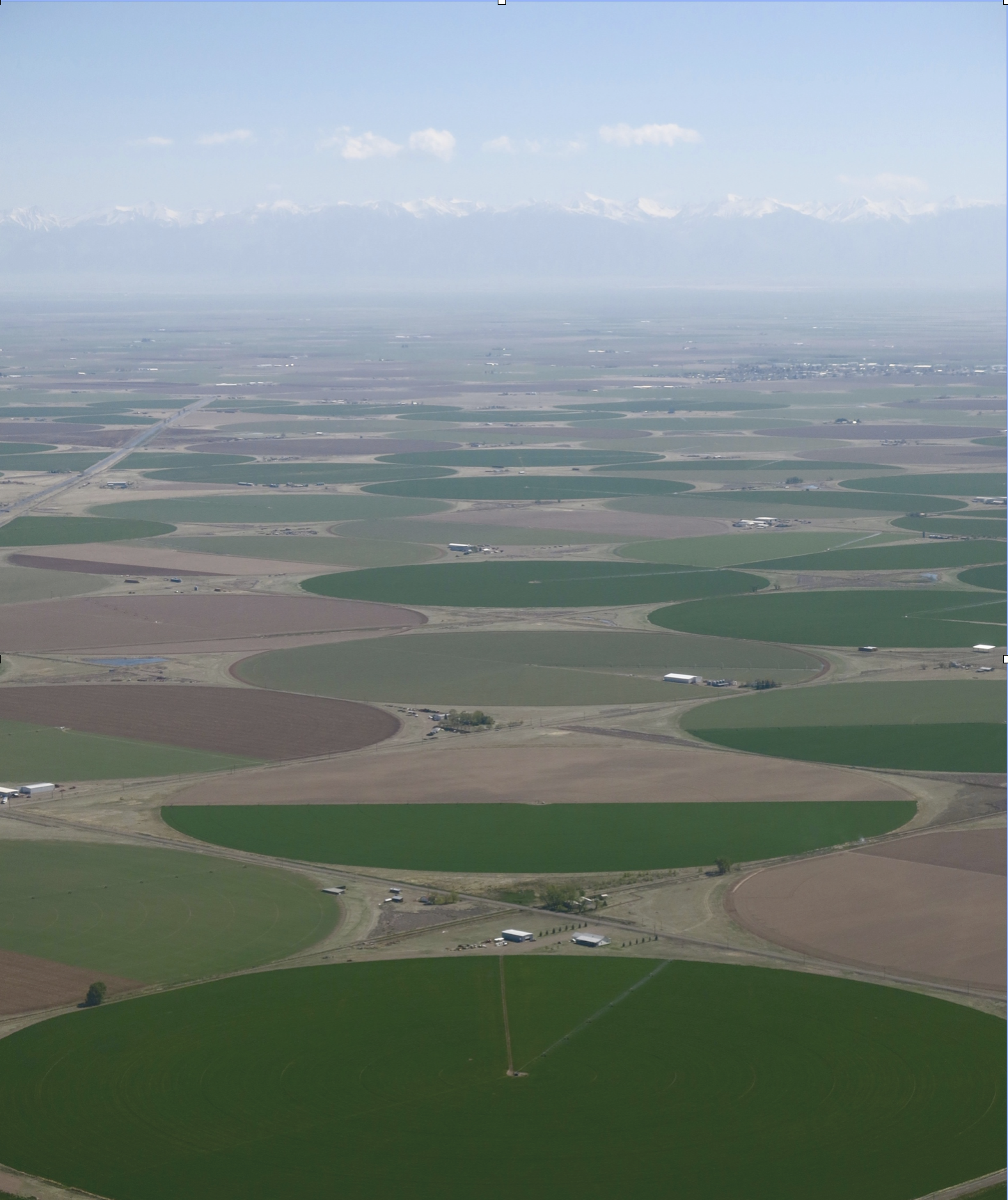

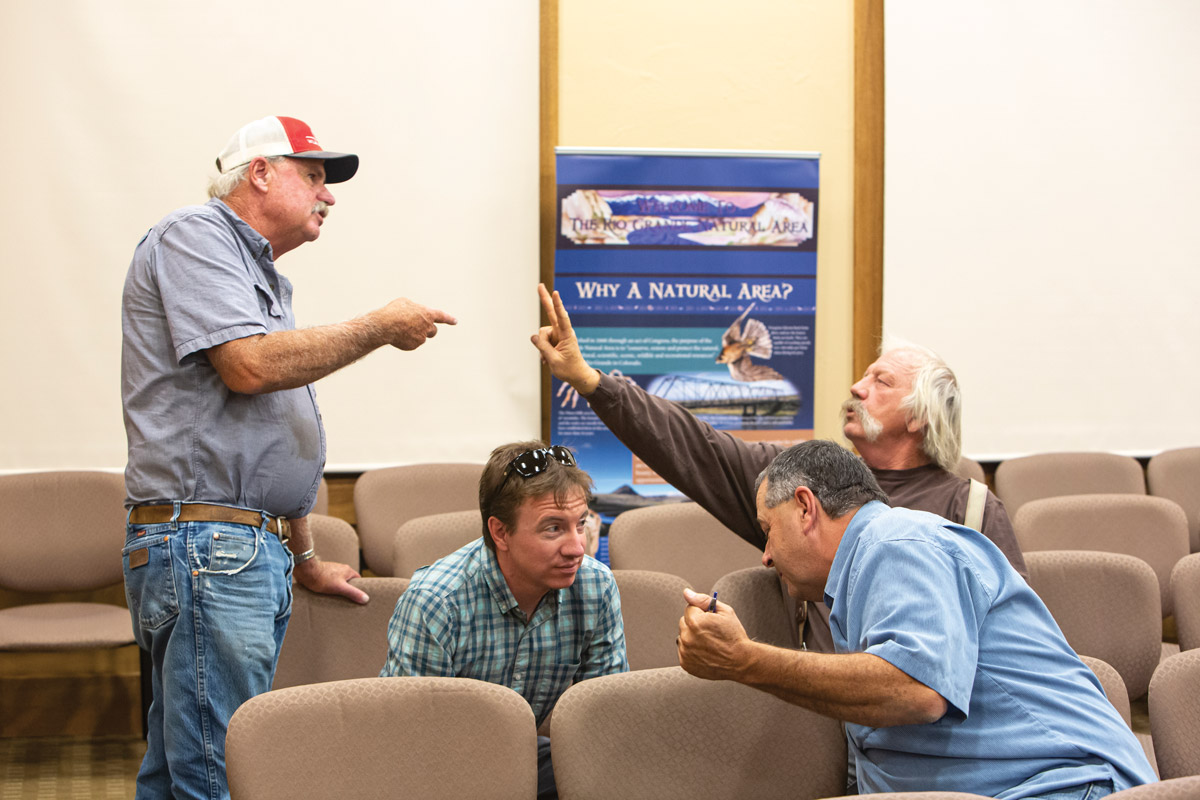


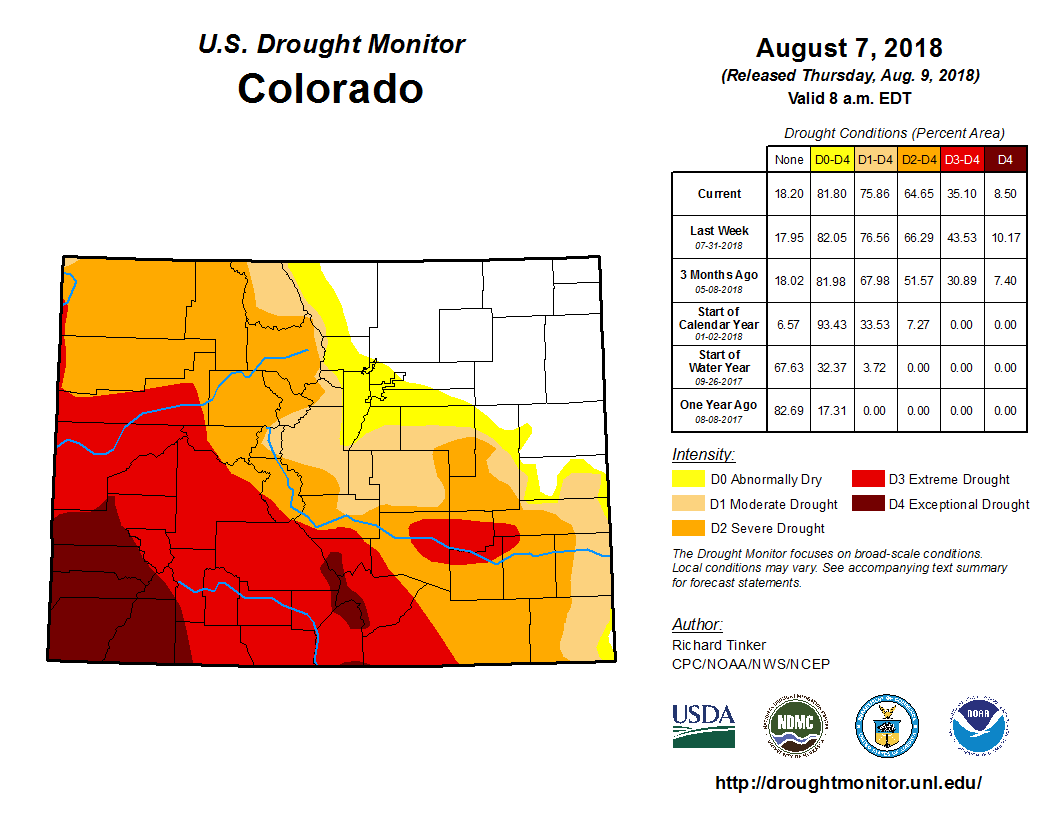

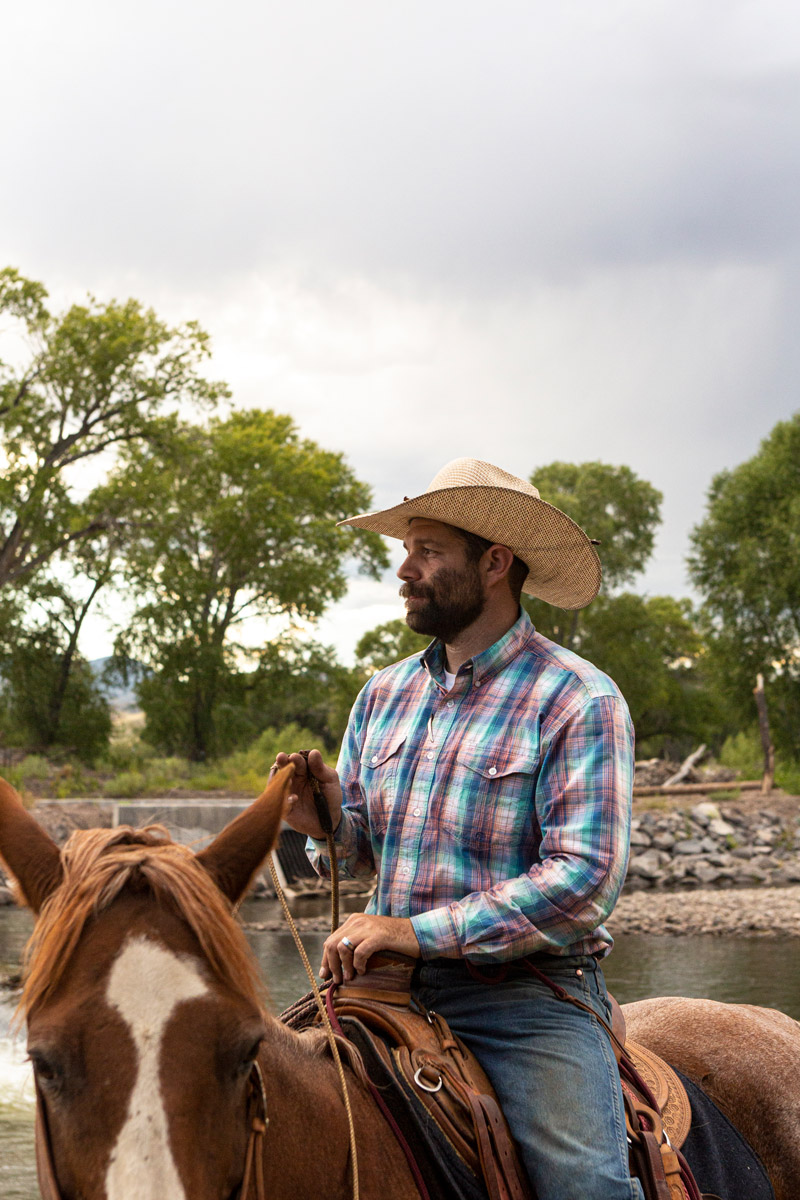
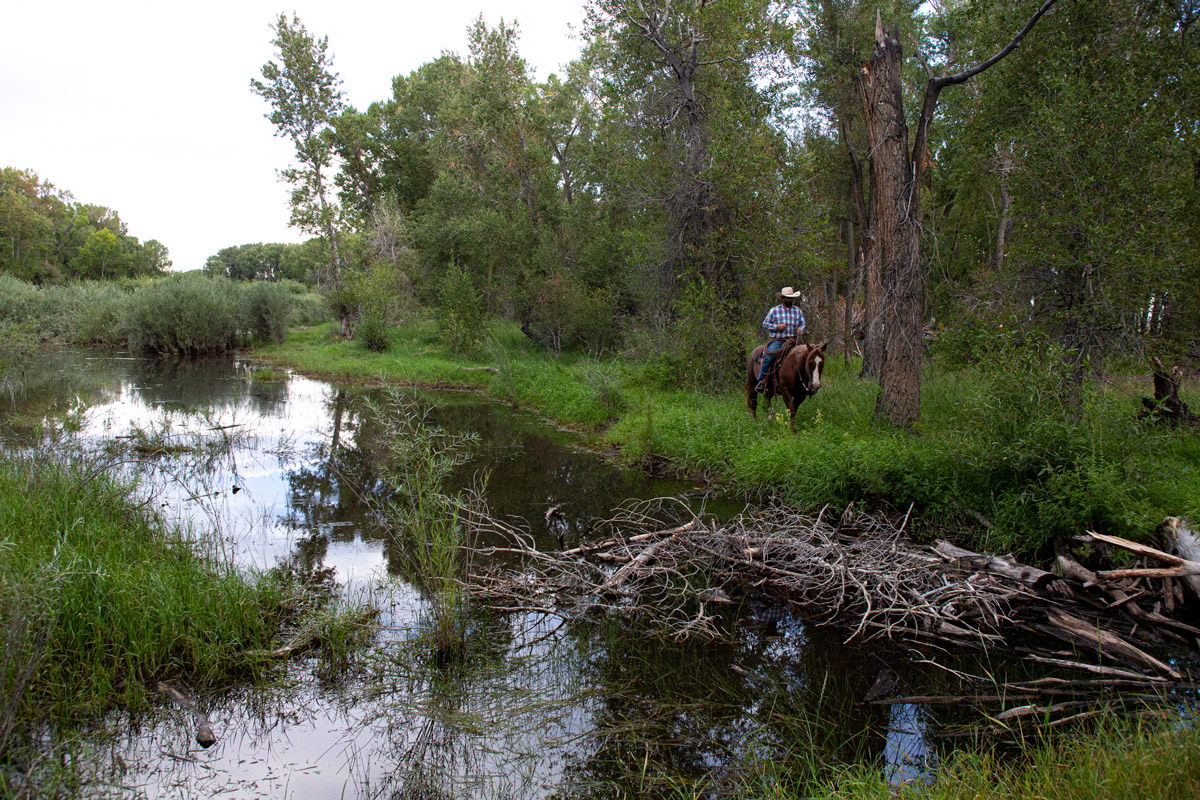

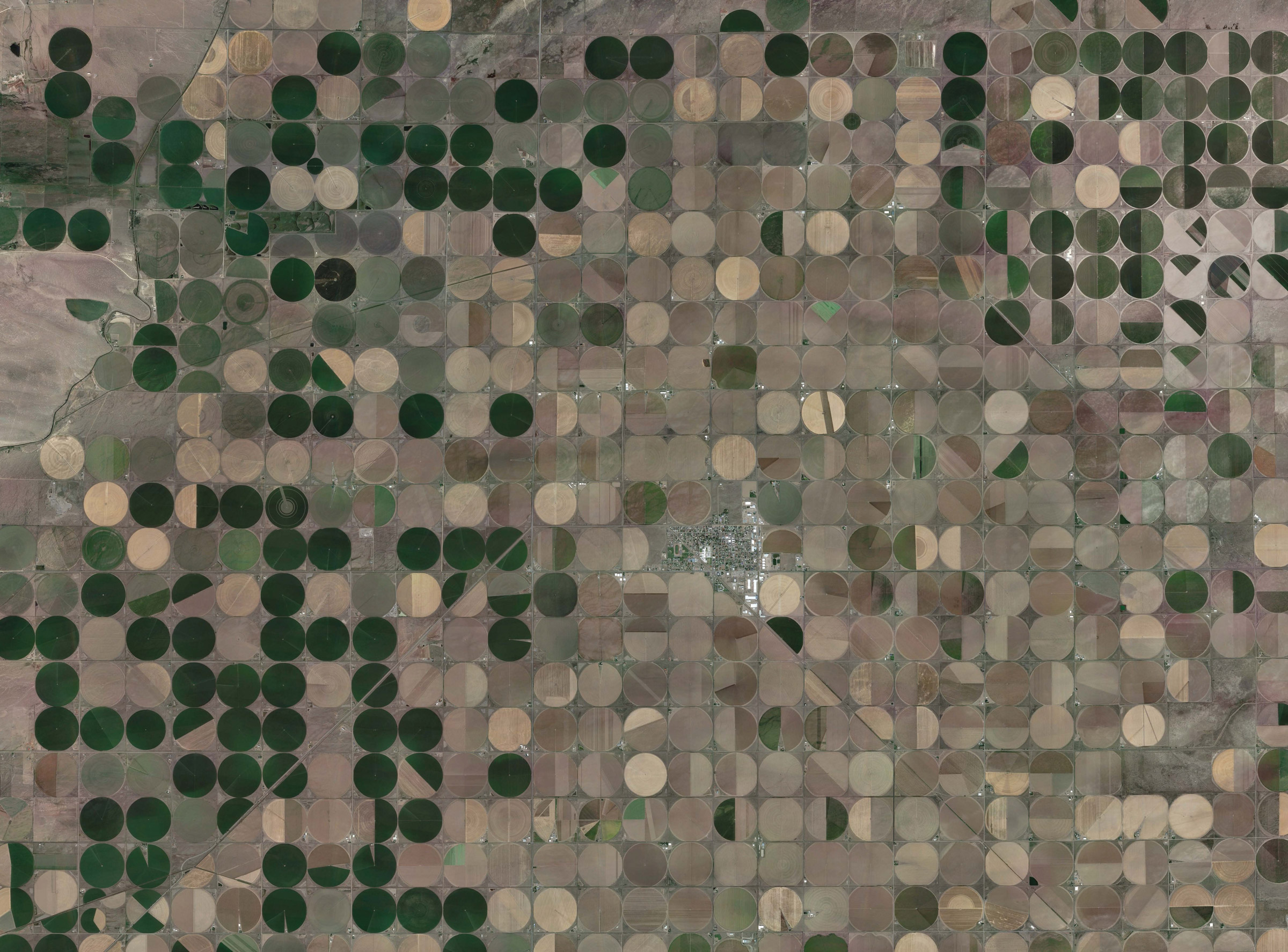


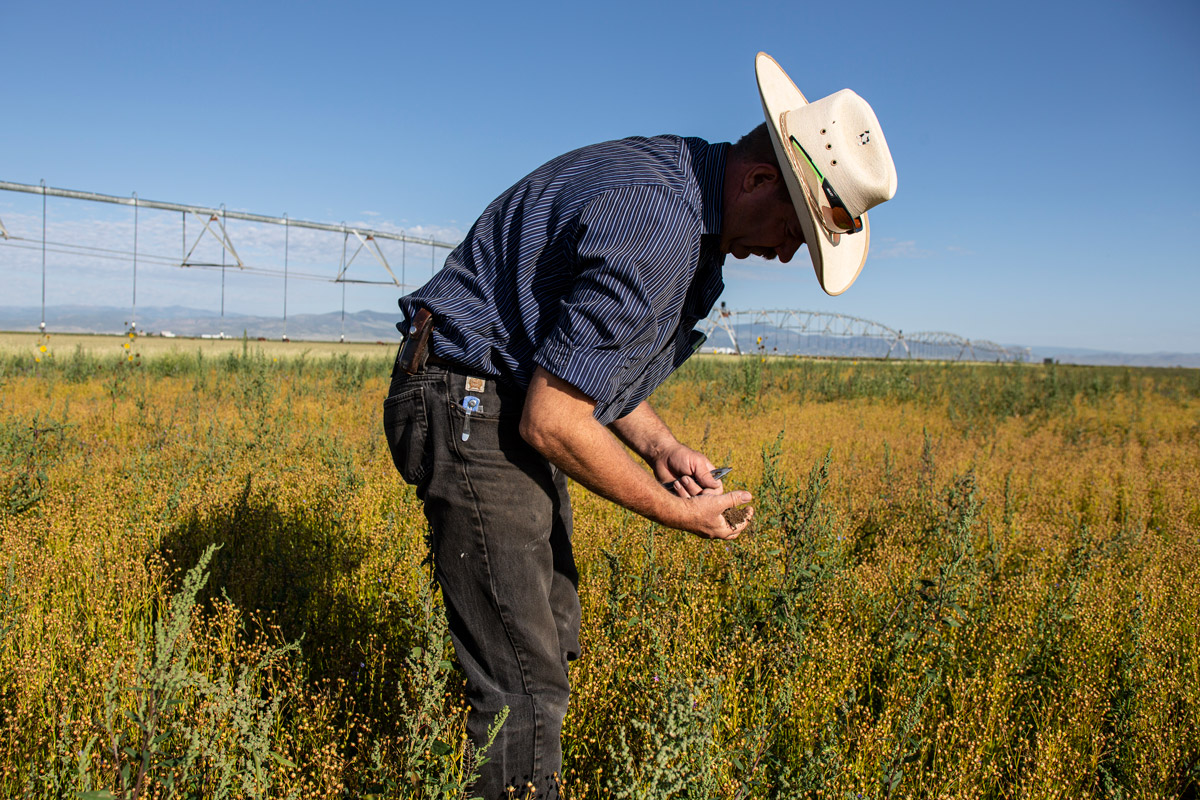


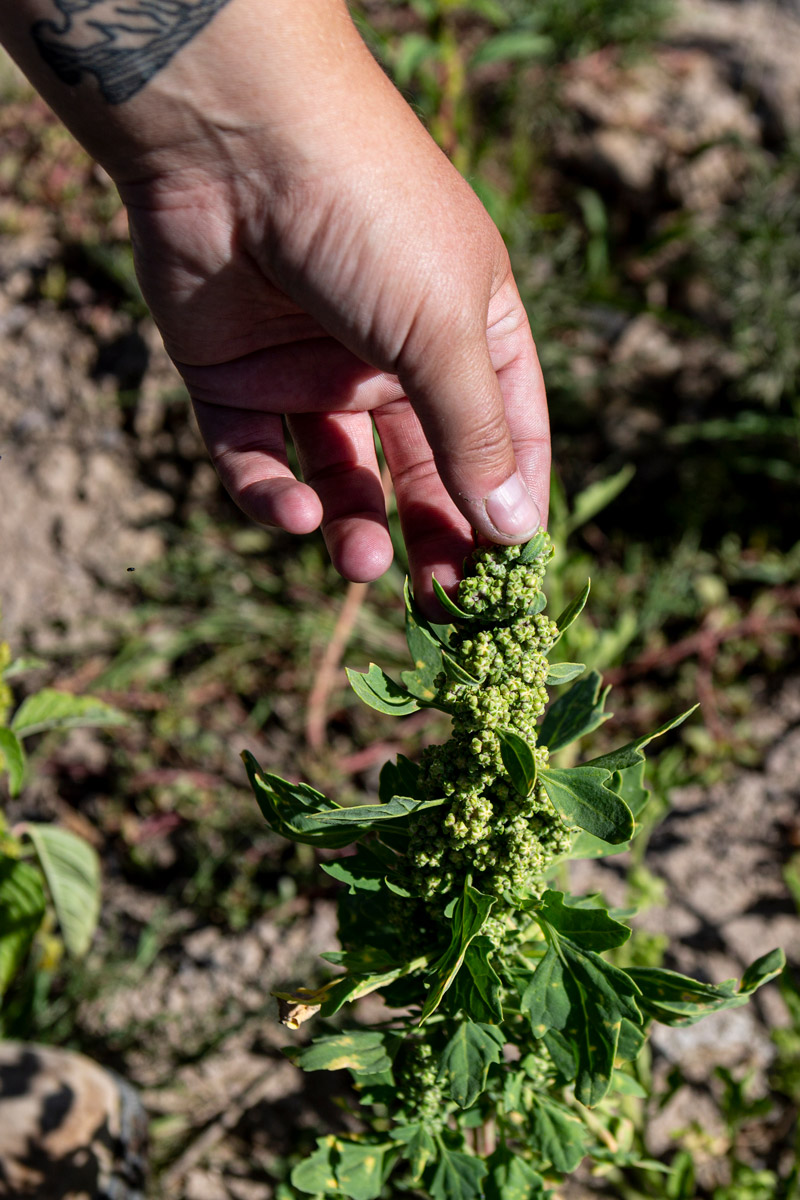


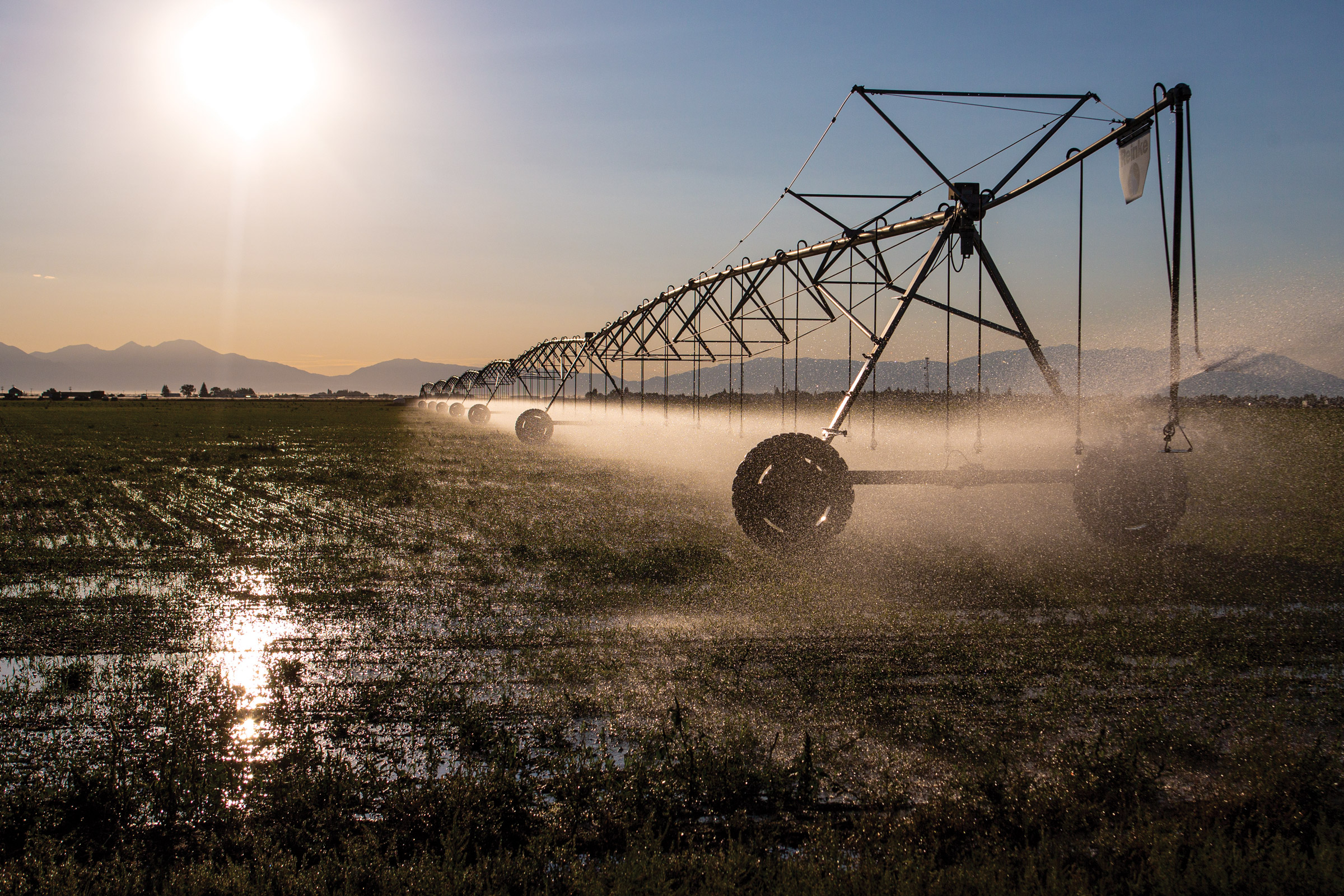
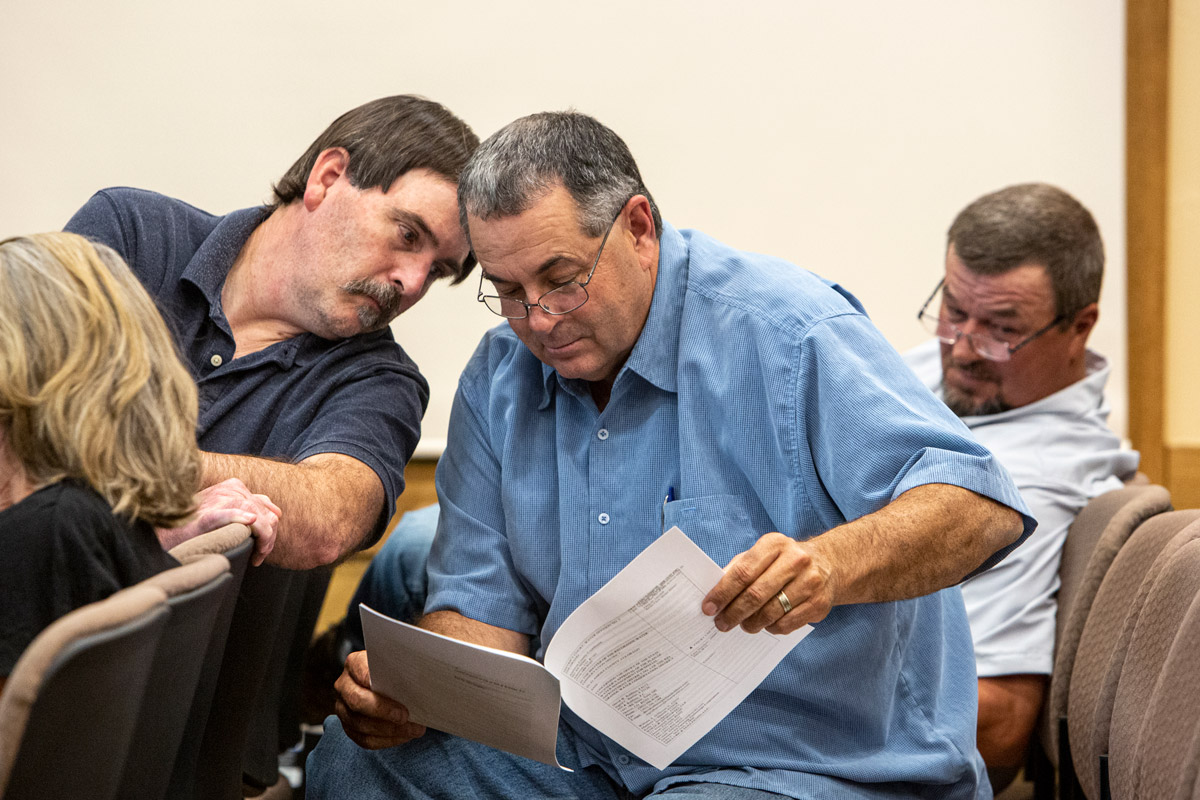


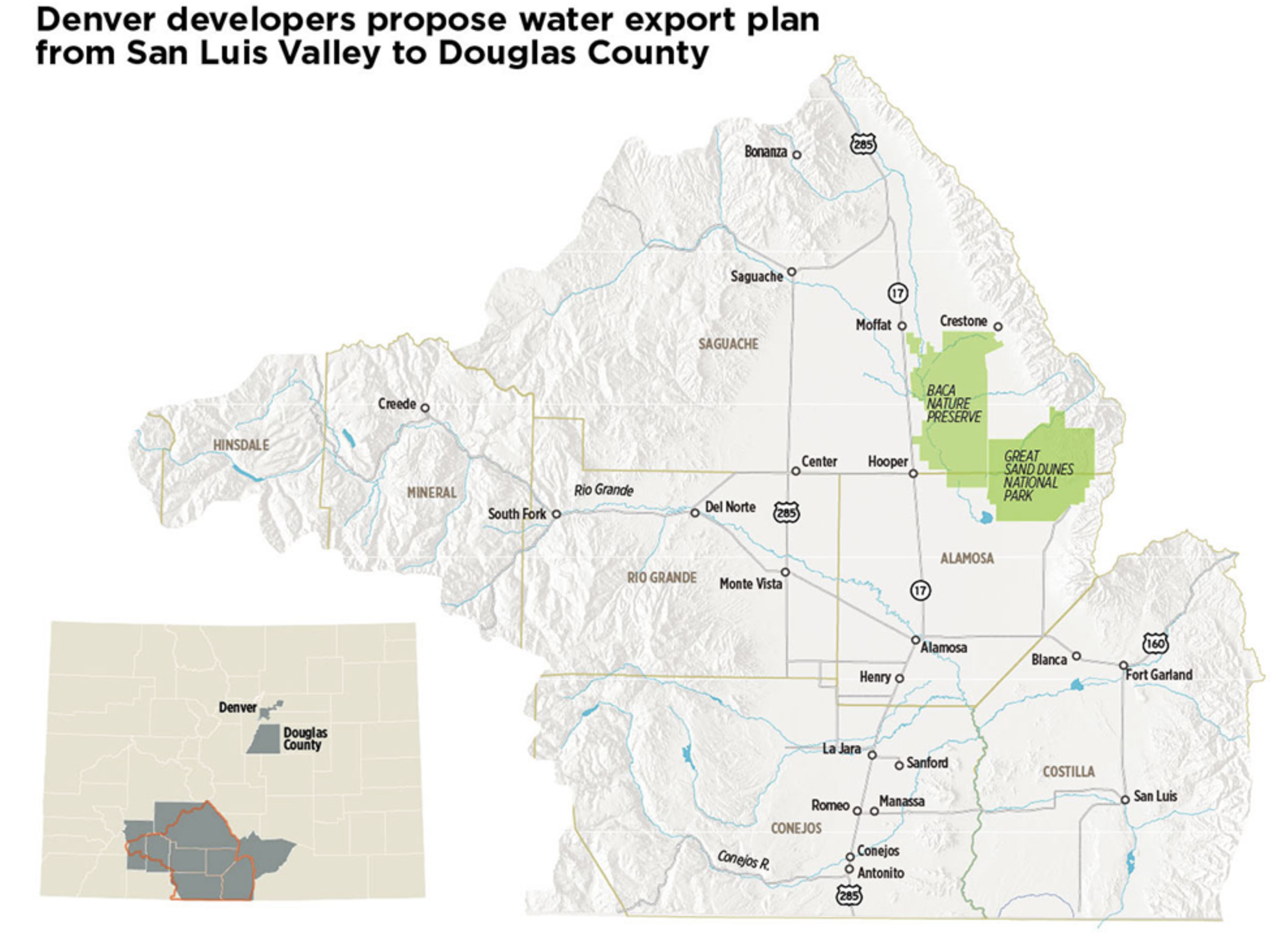

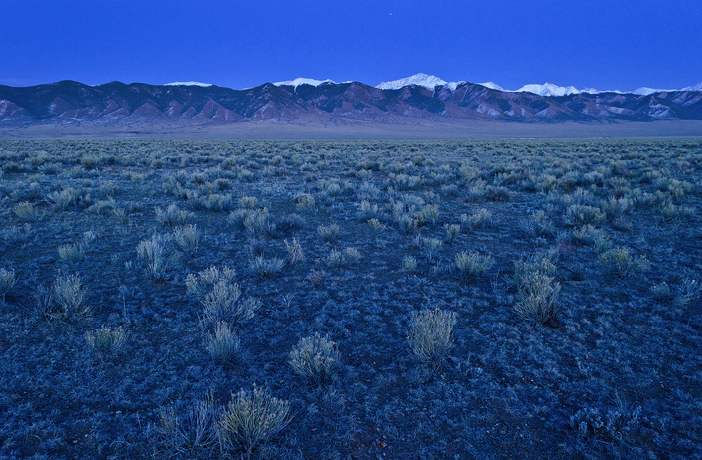
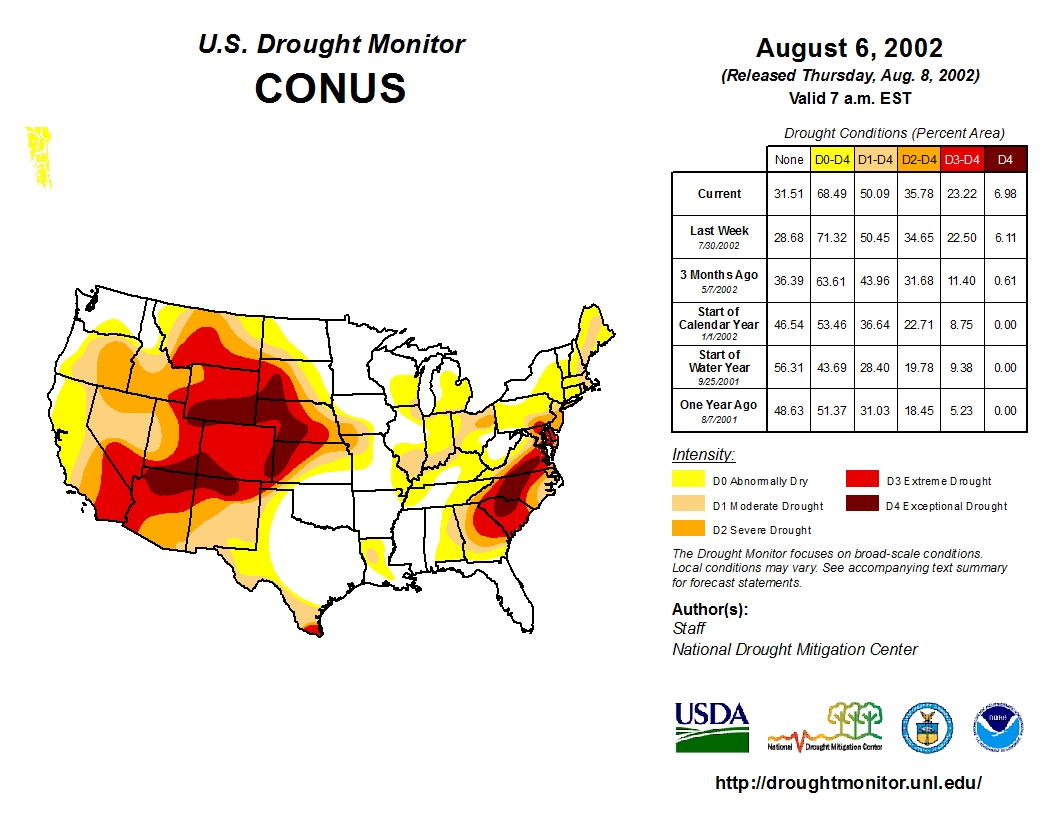


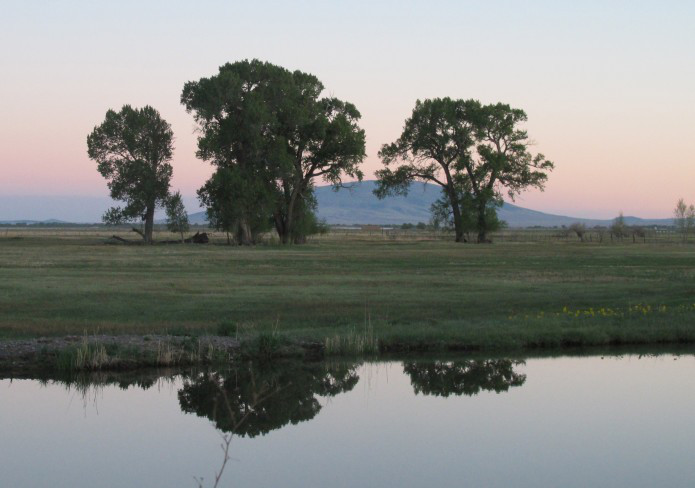
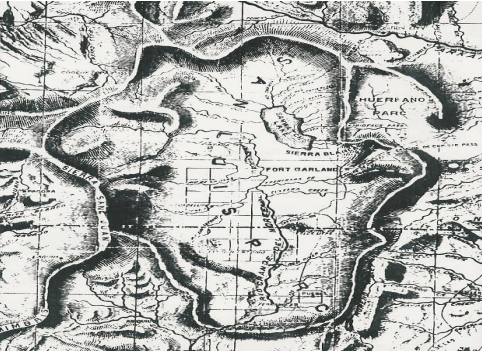

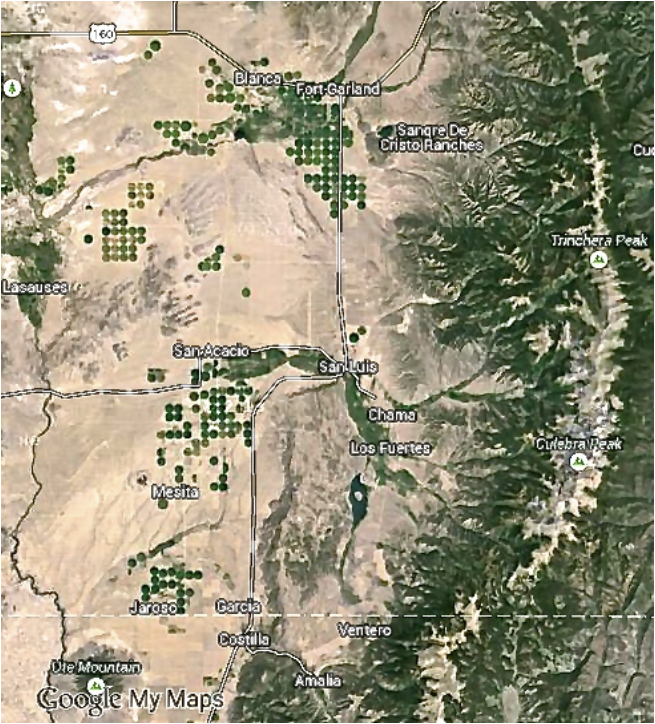

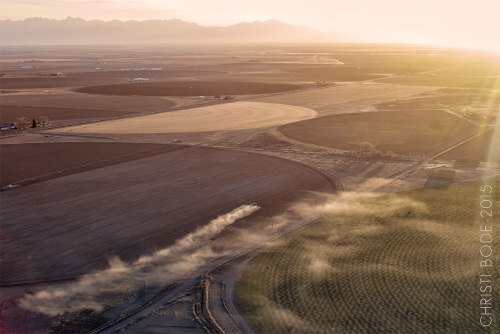




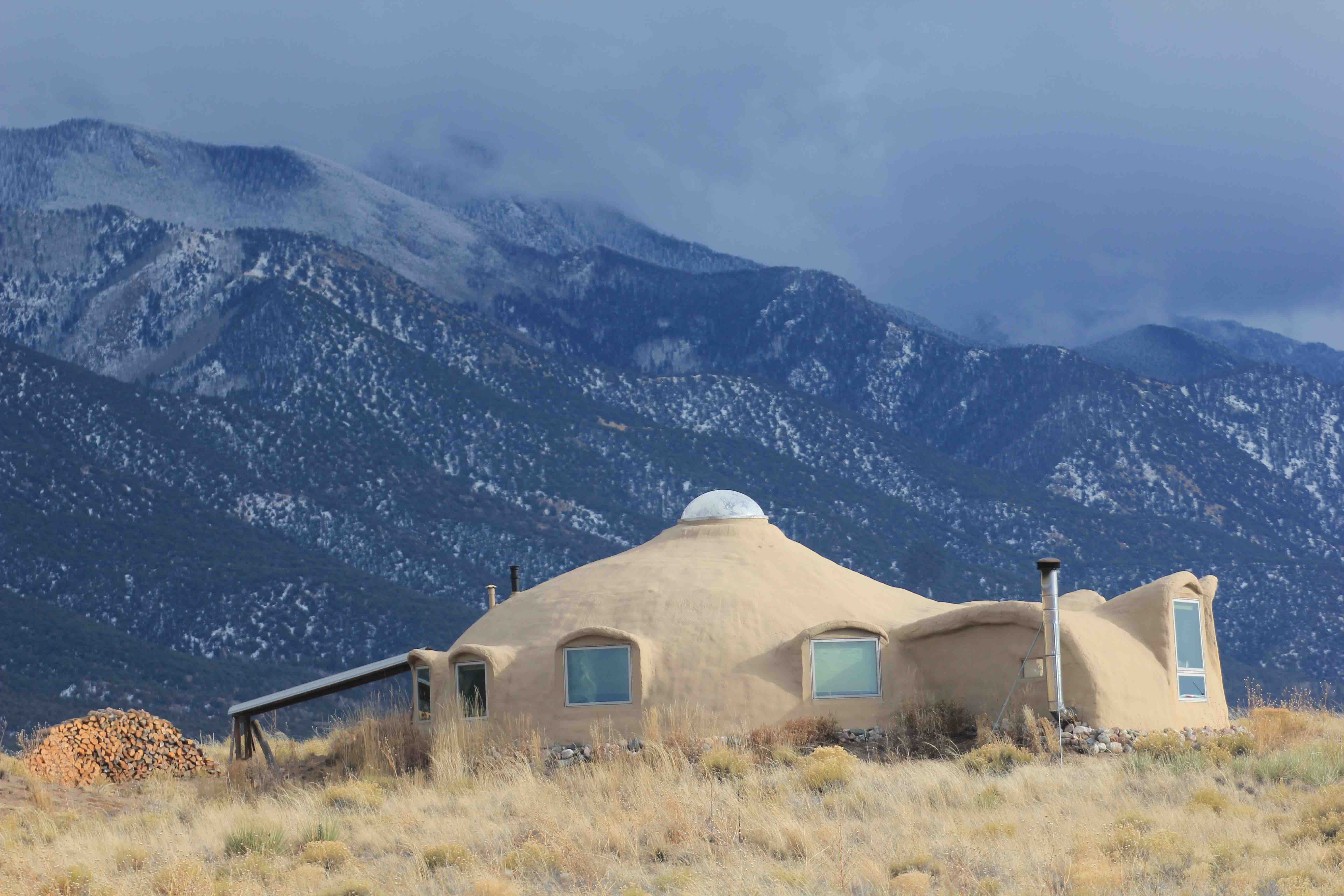


![Rio Grande and Pecos River basins. Map credit: By Kmusser - Own work, Elevation data from SRTM, drainage basin from GTOPO [1], U.S. stream from the National Atlas [2], all other features from Vector Map., CC BY-SA 3.0, https://commons.wikimedia.org/w/index.php?curid=11218868](https://i0.wp.com/coyotegulch.blog/wp-content/uploads/2013/04/pecosriverriograndewatershedswiki.jpg?w=332&h=391&ssl=1 "pecosriverriograndewatershedswiki")