Uranium problem could keep #Colorado’s newest reservoir in limbo for months after initial fill — KUNC

The Chimney Hollow Reservoir Project hosted a groundbreaking event on Aug. 6, 2021. Photo credit: Northern Water

Click the link to read the article on the KUNC website (Scott Franz). Here’s an excerpt:

May 31, 2026

A reservoir built to serve nearly a million Northern Coloradans started filling this spring. But Chimney Hollow’s future is still murky weeks after the initial fill. Chimney Hollow will eventually pull water from the Colorado River near its headwaters in Grand County to serve a dozen fast growing cities on the Front Range from Broomfield to Greeley…Chimney Hollow is holding just 2% of its total volume today because there’s a problem. Northern Water discovered that some of the rocks it used to build the massive dam at the reservoir contained radioactive uranium. It was naturally occurring, but it set the project back at least a year. Northern Water is still coming up with a mitigation plan.

“Really, the best way to kind of move that uranium out is to draw down the water and force that out,” spokesperson Rachel Stevens said. “But before we make any of those decisions, we really want to see what the levels of uranium are.”

So every week, crews are taking water samples from the small pool and sending it to a lab to see how much radioactive material is really in the water. The results are expected soon. Northern Water has only been able to test how uranium leaches out of the rocks in a laboratory setting. Filling the reservoir just slightly will help reveal the extent of the problem.

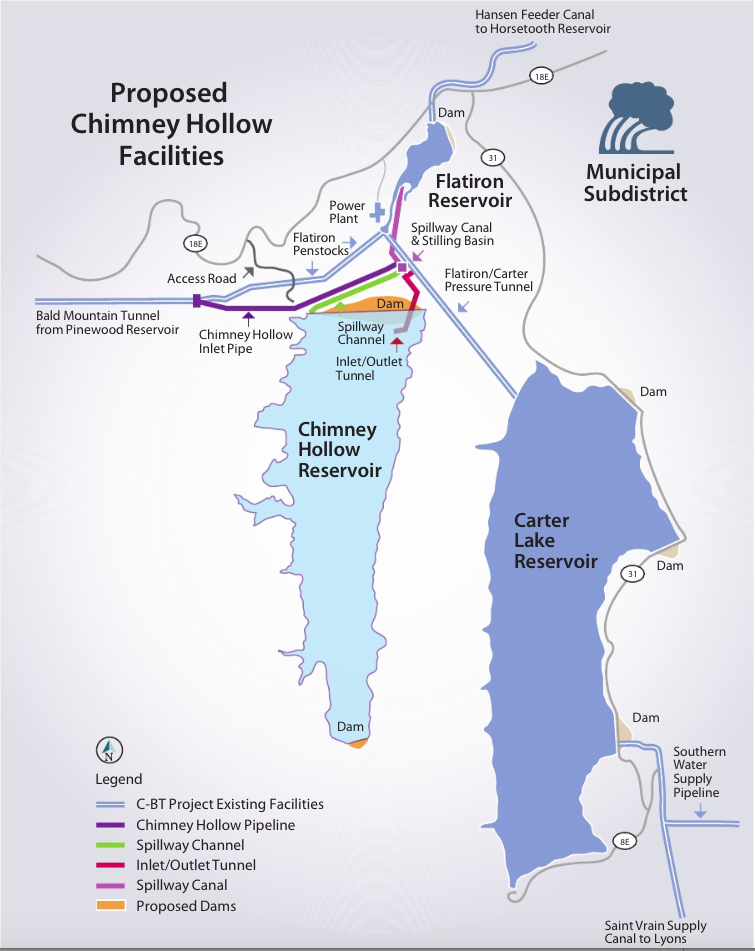
Map from Northern Water via the Fort Collins Coloradan.

Tapped: As fire risk climbs, Colorado faces threat to drinking water — #Colorado Politics

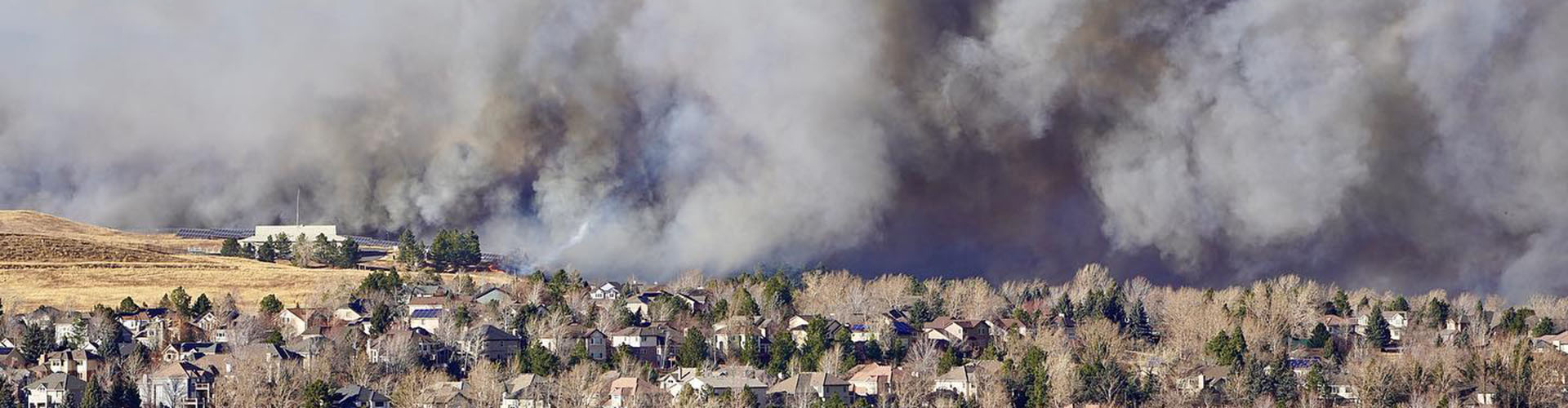
Marshall Fire December 30, 2021. Photo credit: Boulder County

Click the link to read the article on the Colorado Politics website (Thelma Grimes). Here’s an excerpt:

May 26, 2026

Specialists surveying Colorado’s forests know this year will be challenging. Snow melted too quickly, strong winds dried out the trees, and the early signs of danger are already settling across the landscape. Wildfire season is no longer confined to a few months — it’s a year‑round reality, they said…And this year, the risk is even higher.  Snowpack peaked at just 58% of normal — and weeks earlier than usual. An unusually warm March accelerated the melt, and parched soils absorbed much of the runoff before it reached streams and reservoirs, leaving less water to flow downstream. While much of the public conversation focuses on drought, dry fuels, and wildfire danger, another worry runs deeper — what happens to the state’s water supply if a major fire strikes?

[…]

When a large fire burns, the flames strip hillsides of vegetation, said Weston Toll, a watershed program specialist for the Colorado Forest Service. Once rainstorms arrive, there’s nothing left to hold the soil in place.

“When we have a storm event, all the sediment that is now exposed typically runs downhill and … will fill up reservoirs, which is bad from a water quality and quantity standpoint,” Toll said…

A 2023 report by the U.S. Geological Survey echoes that warning. 

The agency found that wildfires pose a significant risk to water supplies by triggering severe flooding, erosion, and the delivery of sediment, nutrients, and metals into rivers, lakes, and reservoirs.

According to the USGS, these changes can degrade water quality, reduce reservoir storage, harm stream habitats, and drive up treatment costs for drinking‑water providers. The effects can vary widely — from barely noticeable shifts to 100‑fold increases in sediment, nutrients, and other contaminants. In the worst cases, experts said the water can resemble “chocolate milk.”

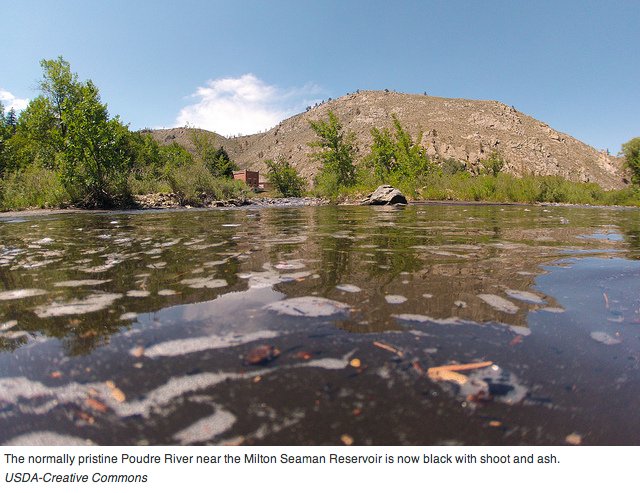
Ash and silt pollute the Cache la Poudre River after the High Park Fire September 2012. Photo credit: USDA

US Supreme Court settles long-running water dispute over dwindling #RioGrande — The Associated Press

Click the link to read the article on the Associated Press website (Susan Montoya Bryan). Here’s an excerpt:

May 27, 2026

In a brief order Tuesday, the court accepted the recommendation of a special master to move forward with agreements first proposed last year by New Mexico, Texas and Colorado. The settlement calls for reducing groundwater pumping along the dwindling river and retiring water rights from irrigated farmland in southern New Mexico. The states held up the proposal as a promise to restore order to an elaborate system of storing and sharing water between two vast irrigation districts in southern New Mexico and western Texas. 

“We’re very excited to be redirecting resources from costly and lengthy litigation to solutions on the ground,” Hanna Riseley-White, director of the Interstate Stream Commission, said Wednesday…

Those solutions will include everything from long-term fallowing programs and more efficient irrigation infrastructure to developing new sources of water, like tapping brackish supplies or importing water, and improving stormwater management so more runoff can be captured and stored.

Sandhill cranes and some mallard ducks roost on a sandbar of the Rio Grande River at sunset on Jan. 22, 2025 in Albuquerque, New Mexico. Copyright Credit © WWF-US/Diana Cervantes.

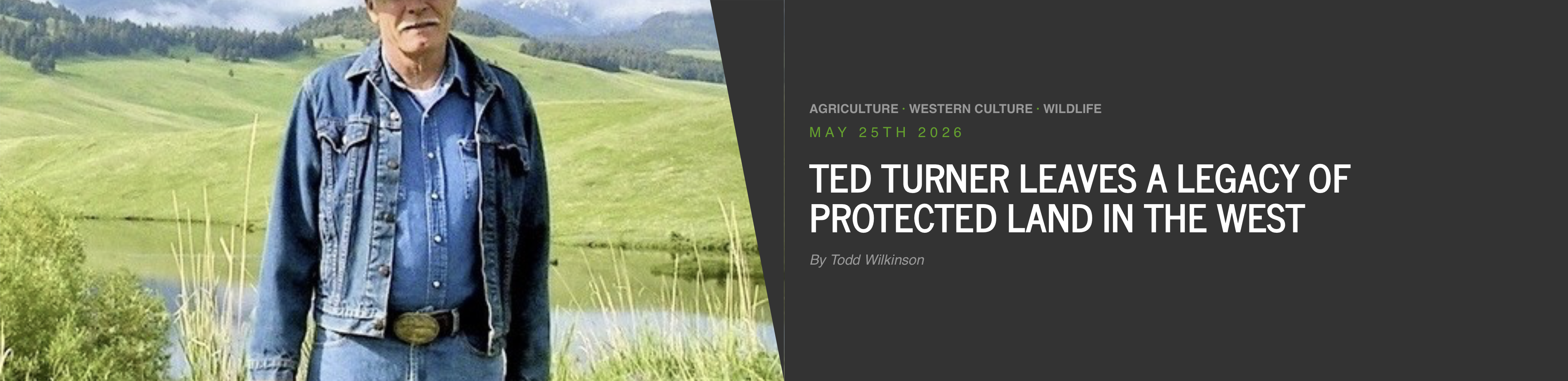
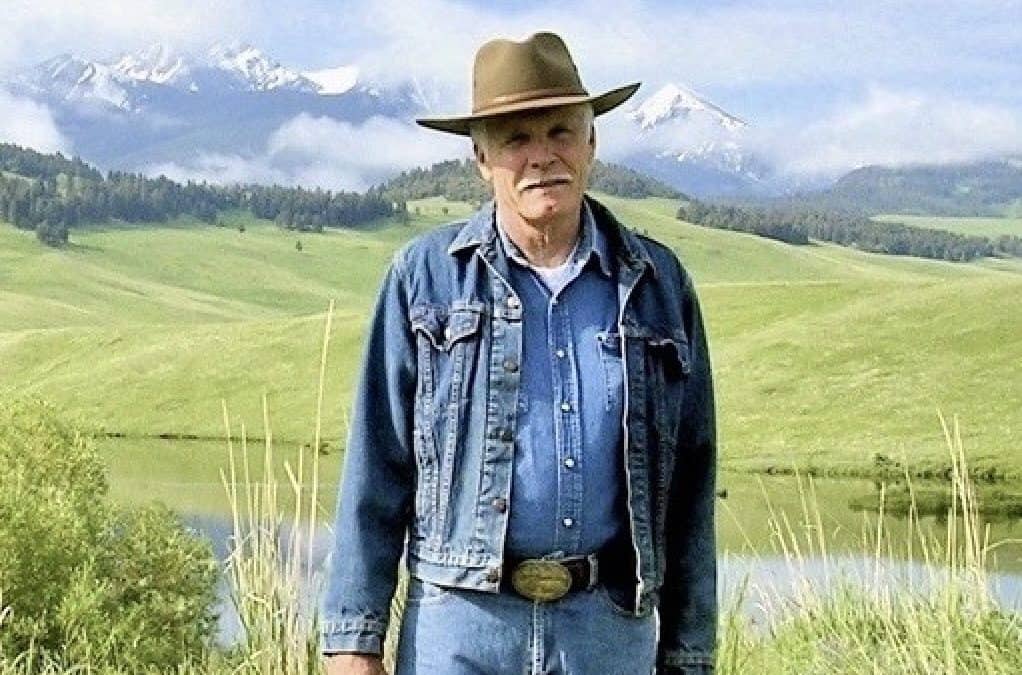
Ted Turner Leaves a Legacy of Protected Land in the West — Todd Wilkinson (writersontherange.org)

Click the link to read the article on the Writers on the Range website (Todd Wilkinson):

May 25, 2026

Before he died at age 87 in early May, Ted Turner knew that stewardship of land would be his real legacy. Of course, he might also be long known for starting CNN and 24-hour news, as well as building a major league baseball team, his hometown Atlanta Braves.

He also started a UN Foundation to help bring peace to the world, thanks to his starter $1 billion contribution, and he tapped former U.S. Sen. Tim Wirth of Colorado to lead it. Wirth recalls how Turner, once dubbed “Captain Outrageous,” liked to shoot from the hip and could never be bothered by whatever passed as political correctness. A plaque on his desk in Atlanta said it all: “Lead, Follow or Get Out of the Way.”.

Most of all, Turner left a significant swath of private lands in better condition than he found them. In Montana and other parts of the Rockies, Turner bought huge ranches and made sure the land was healthy enough to grow a bison herd to over 55,000 animals at its peak.

Turner never subscribed to the notion that property rights trumped the common good. He also challenged the conviction that landowners ought to be able to do whatever they want on their land—even if it resulted in environmental harm.

As an entrepreneur with green intentions, Turner believed he could operate better and cheaper in recovering wildlife and rivers on his ranches that had been degraded by overgrazing. He was able to show that smart management also offered safe harbor to wildlife without sacrificing profit.

Some locals around Bozeman, Montana, in the 1980s thought Turner was out of his mind when he placed a conservation easement on his 113,000-acre Flying D Ranch, one of the largest easements in America at the time. The easement limited development in perpetuity, and had Turner exploited the Flying D as a real estate play, he could easily have made hundreds of millions in profit. 

Turner could make a big impact on people. One was the billionaire businessman Thomas Kaplan, who likens Turner to a combination of John Muir and Teddy Roosevelt. Kaplan says Turner inspired him to co-found Panthera, now the leading global wildcat conservation organization, as well as The Orianne Society, named after his daughter  and dedicated to perpetuating the survival of snakes.

Kaplan likes to recount how, when he visited Turner’s Flying D, he saw a wolf pack and howled back and forth with them. The ranch was home to the one of the largest, free-ranging wolf packs in North America, co-existing with Turner’s buffalo, and a population of elk, deer, moose and other wild animals that moved on and off the property.

Turner issued an edict that wolves visiting his land were never to be hunted or lethally controlled. Emulating the Turner model, Kaplan acquired thousands of acres in a vast wetland area of southwest Brazil called the Pantanal, and there he advanced a model of co-existence between cattle ranchers and jaguars. The Pantanal is considered the best place in the world for watching jaguars, and even cattle ranchers, who used to shoot the cats, now have eco-lodges on their estancias.

Turner was aware of his foibles, for which he hoped he would be forgiven. Biologist Mike Phillips, who oversaw a number of rewilding projects for Turner, told me, “In these recent years, as he was in decline, Ted once asked me, “Mike, we did okay, didn’t we?’ And I replied, “Ted, we accomplished exactly what we set out to do so long ago. I reminded him that he had done more as a private citizen to benefit native species than any other individual in the history of the world.”

Phillips said that Turner choked up with emotion.

Todd Wilkinson

Jane Fonda, Turner’s “third and favorite wife,” according to those who knew the couple, told me that after a brutal childhood with a hard-driving father who took his own life, along with a sister who died young from lupus, Turner found solace in nature.

“What did he want most of all? asked Fonda. “To be recognized as a good guy. There was a part of Ted who believed that by trying to save nature and bring more peace to the world, he could save himself. But he saved much more than that.” 

Todd Wilkinson is a contributor to Writers on the Range, writersontherange.org, an independent nonprofit dedicated to spurring conversation about the West. He is a longtime journalist and founder of Yellowstonian.org, who wrote an award-winning biography about Turner.

Ted Turner