Report: Purpose-Driven #Climate Data Selection and Application Case Studies for Water Managers, Planners, and Modelers — Jeff Lukas and Julie Vano

Click the link to access the report (Jeff Lukas and Juli Vano). Here’s an excerpt:

As water utilities expand climate considerations across business functions and climate hazards—amid a rapidly growing landscape of climate model datasets—selecting data that are truly “fit for purpose” has become increasingly complex. To address this, the Water Utility Climate Alliance (WUCA) Climate Modeling Work Group sought to develop several case studies that would illuminate the factors behind the selection, processing, and application of climate model datasets in planning analyses.

The purpose of the case studies was not to identify general “best practices” or create formal guidance, which has been done elsewhere (here,1 here,2 and here3). Rather, it was to capture the specific circumstances and priorities that drove each utility’s decisions—what climate data to use, in what ways, and for what analyses—providing practical, real-world examples for other utilities to learn from. The case studies were informed by interviews with key utility staff and consultants as well as supporting project documents.

Each of the four case studies follows a WUCA member utility through selecting and processing climate model data, establishing a data workflow, conducting project analyses, and applying the results to planning and decision-making. Three of the projects centered on future water supply and/or demand, and the fourth focused on infrastructure flood risk. Two projects were complete at the time of writing, and the other two were in their final phases. Each case study begins with a brief overview of the utility, followed by sections addressing:

  • Project context
  • Project methods, including data selection and processing
  • Results of the analyses
  • Use of results in decision support (intended and realized)
  • Lessons learned

Each case study also includes links to additional resources that describe the project, climate data, and workflow—such as utility reports and peer-reviewed studies—and a utility contact for further questions.

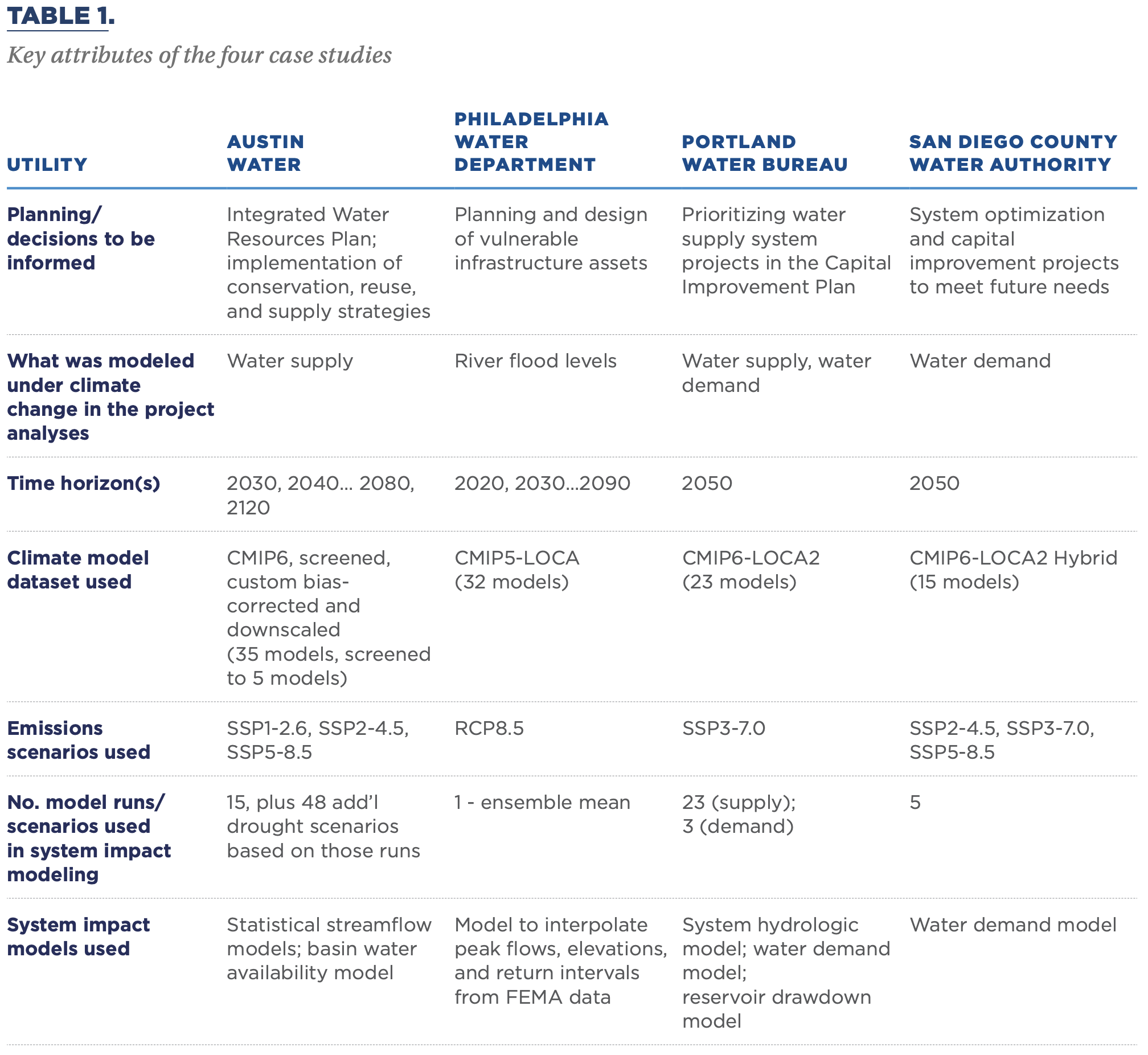
In all four projects, the workflows began with an ensemble of runs from 15 to 35 CMIP5 or CMIP6 climate models. From there, they followed quite different paths in processing those model runs to construct discrete climate and hydrology scenarios for the subsequent impact modeling (Table 1), illustrating that there is no one “right” approach to using climate models to effectively inform planning. Unsurprisingly, the results from all four projects showed the potential for greater climate-related stresses and risks to the utility in the decades ahead—more severe droughts, larger flood events, reduced water supply, and/or increased water demand.
Simpson first witness in state water trial: Testimony centers on overpumping fees and other options for groundwater irrigators under the Fourth Amended Plan of Water Management for Subdistrict 1 — AlamosaCitizen.com #SanLuisValley #RioGrande

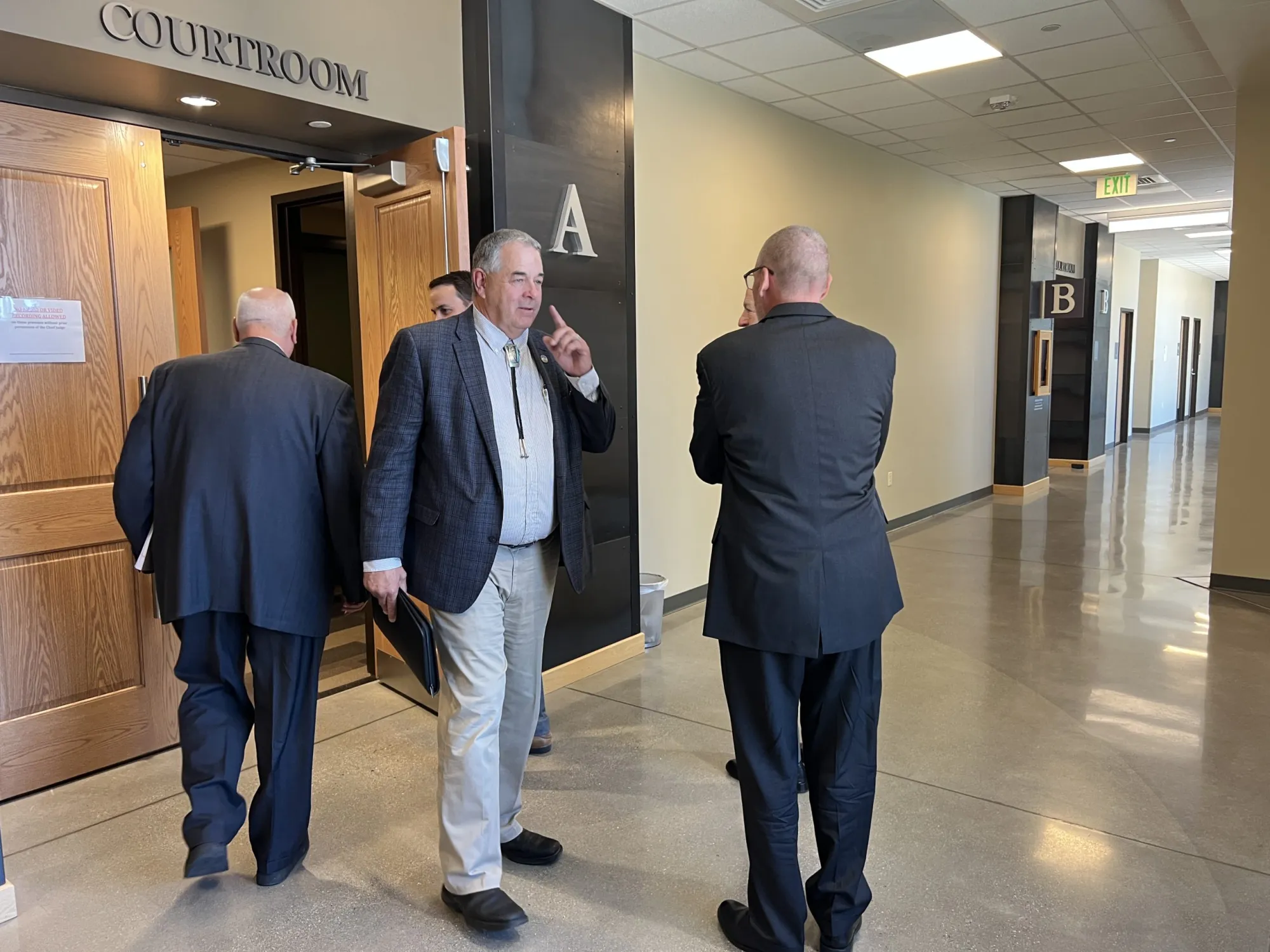
Rio Grande Water Conservation District General Manager Cleave Simpson outside the courtroom as the water trial over the Fourth Amended Plan of Water Management for Subdistrict 1 opened Monday at the Alamosa County Judicial Center. Credit: The Citizen

Click the link to read the article on the Alamosa Citizen website:

June 29, 2026

Rio Grande Water Conservation District General Manager Cleave Simpson testified it’s not a foregone conclusion that groundwater irrigators would pay the $500 per acre-foot fee for overpumping but have other options under the Fourth Amended Plan of Water Management for Subdistrict 1.

Simpson was the first to take the witness stand Monday in a state water trial that will determine if the Subdistrict 1 plan will go into effect. The plan, which calls for Subdistrict 1’s groundwater withdrawals not to exceed the amount of natural surface water that comes into the Upper Rio Grande Basin, has been approved by the state engineer and now is being tested in state water court.

Opponents to the plan argue the state engineer’s review was not thorough, did not follow Colorado water law and should not be allowed to go into effect. Other opponents have more nuanced arguments around surface water credits.

The linchpin to the subdistrict’s Fourth Amended Plan of Water Management is the overpumping fee, which some farmers and ranchers argue will put them out of business. Simpson testified that groundwater irrigators can purchase surface water credits from neighboring operations or submit their own plan of augmentation for approval from the state without incurring the subdistrict’s overpumping fee.

A 2018 letter sent by then-State Engineer Kevin Rein that warned of mass groundwater curtailment without progress on the unconfined aquifer “created a heightened sense of urgency,” within the Rio Grande Water Conservation District and Subdistrict 1, Simpson testified.

The federal government’s voluntary Conservation Reserve Enhancement Program became one program the water conservation district shifted into to reduce the amount of productive acres farmed. A Fourth Plan of Water Management for Subdistrict 1 became another, Simpson said.

The water trial comes three and a half years after the subdistrict water management plan was adopted by Simpson’s Rio Grande Water Conservation District board. The effort is tied to recovering the unconfined aquifer of the Upper Rio Grande Basin and restoring it to sustainable levels.

A group of subdistrict irrigators organized under the Northeast Water Users Association and Sustainable Water Augmentation Group are opposing the plan. They irrigate on 11,000 acres in the Center area. Also in opposition are owners of the L Cross Ranch, who rely on La Garita Creek and Carnero Creek as water sources in addition to their own groundwater pumping.

The trial will continue through July.

Rio Grande and Pecos River basins. Map credit: By Kmusser – Own work, Elevation data from SRTM, drainage basin from GTOPO [1], U.S. stream from the National Atlas [2], all other features from Vector Map., CC BY-SA 3.0, https://commons.wikimedia.org/w/index.php?curid=11218868

U.S. Supreme Court will weigh in on water battle between #Colorado and #Nebraska: #SouthPlatteRiver litigation comes as neighboring state pursues long-considered Perkins County Canal — The #Denver Post

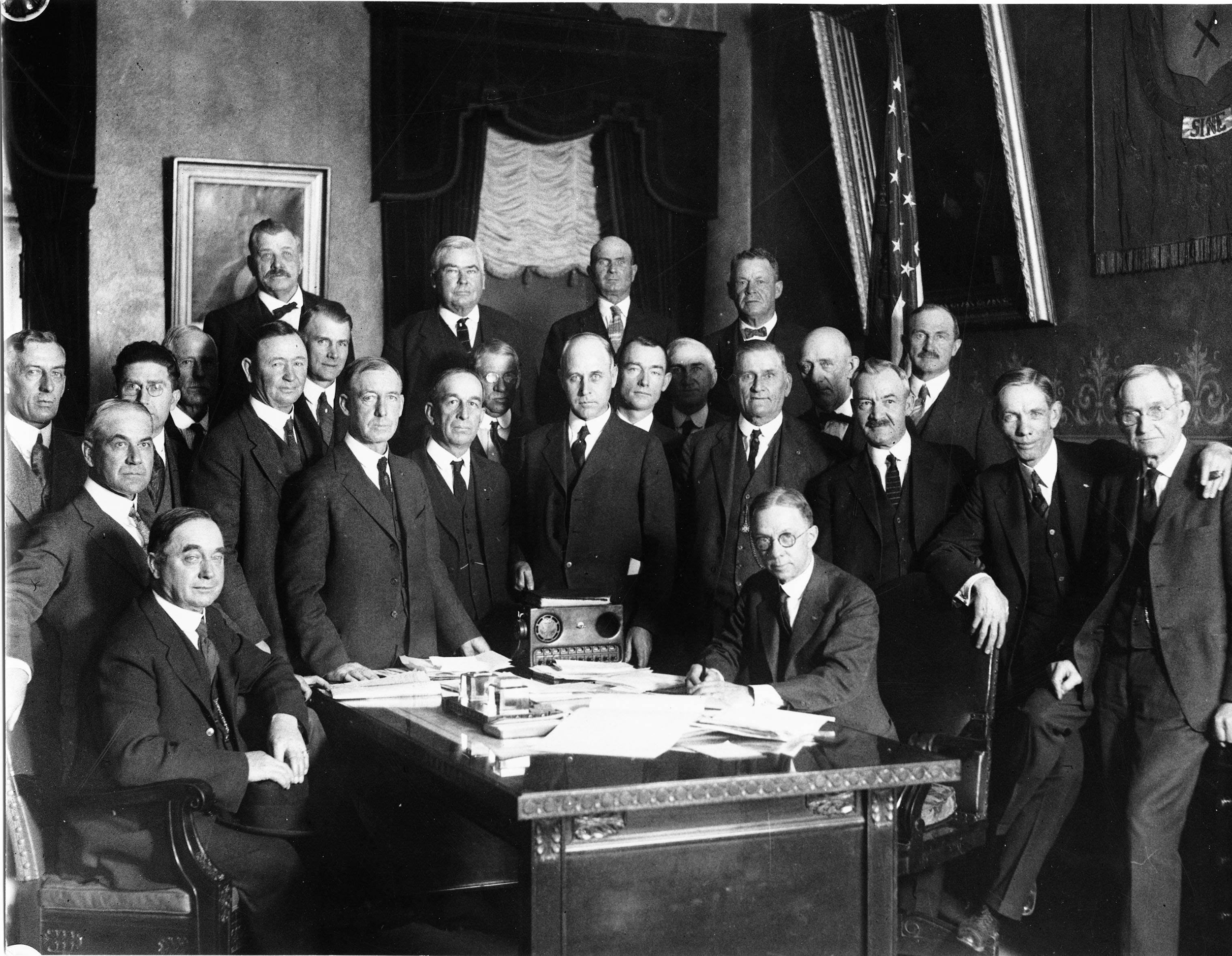
Governor Clarence J. Morley signing Colorado River compact and South Platte River compact bills, Delph Carpenter standing center. Unidentified photographer. Date 1925. From the CSU Water Archives

Click the link to read the article on The Denver Post website (Elise Schmelzer). Here’s an excerpt:

June 29, 2026

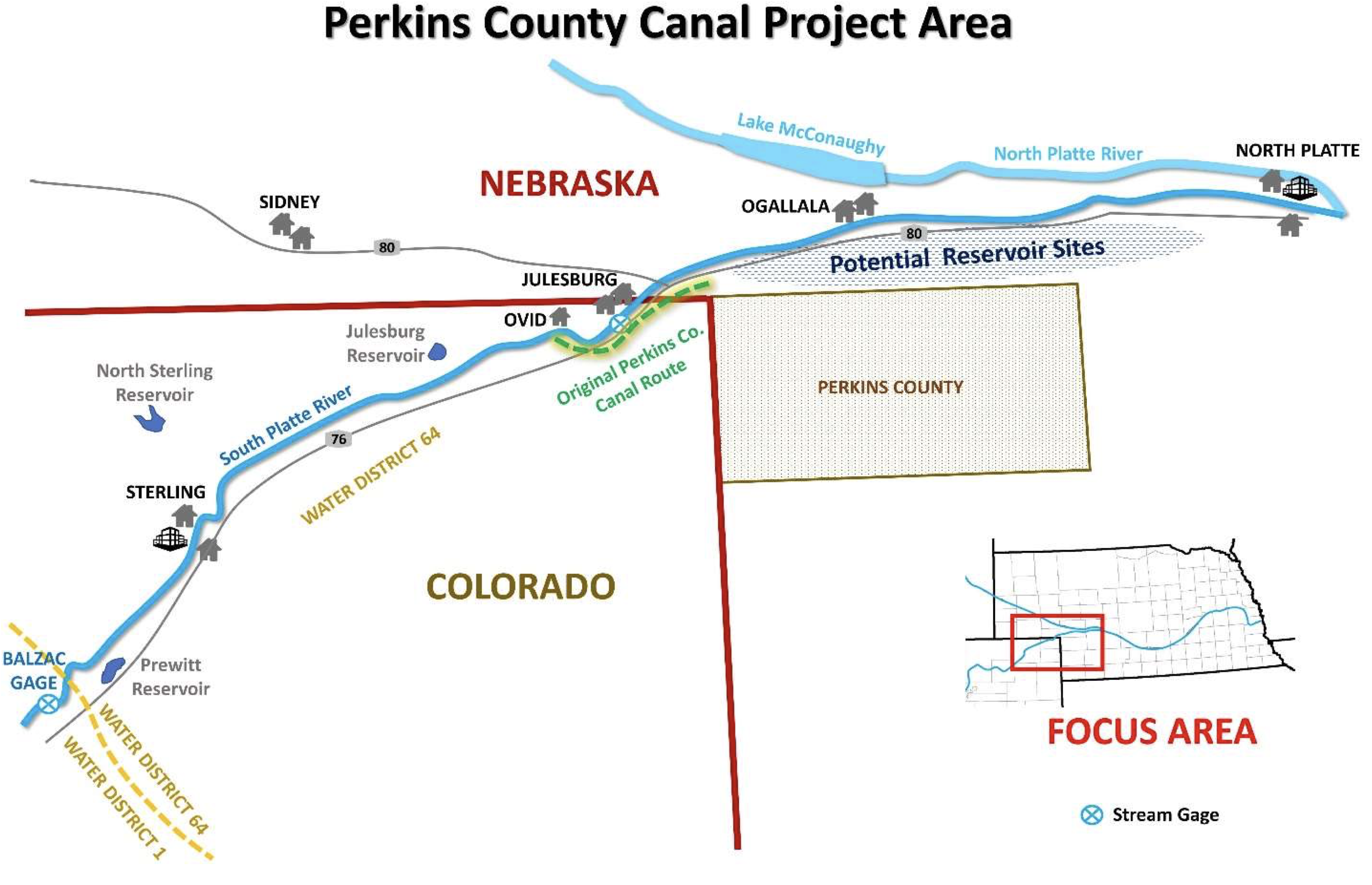
The U.S. Supreme Court will weigh in on a legal battle over one of Colorado’s critical water sources as a neighboring state seeks to use more water from the South Platte River. The nation’s highest court on Monday announced it would hear the case, in which Nebraska officials claim Colorado water administrators are violating a century-old water compact by failing to send enough of the river’s water across the border. They also say Colorado officials are interfering in the neighboring state’s efforts to build a canal that would allow it to take more of the river’s water. Colorado Attorney General Phil Weiser on Monday denied Nebraska officials’ allegations that the Centennial State was violating the 1923 South Platte River Compact.

“Colorado is complying with the South Platte River Compact and not interfering with Nebraska’s efforts to build the Perkins County Canal,” Weiser said in a statement. “Today’s court decision merely opens the door for Nebraska to bring its claims against Colorado. Nebraska’s burden to prove those claims is incredibly high and we will vigorously defend Colorado’s full entitlements under the compact.”

Perkins County Canal Project Area. Credit: Nebraska Department of Natural Resources

Nebraska officials last year surprised Colorado leaders by taking their allegations to the Supreme Court. The two states had been meeting for months to discuss the proposed canal project. The Supreme Court asked the Office of the Solicitor General to weigh in on whether it should take the case. In May, the federal office — tasked with representing federal interests at the Supreme Court — argued that the court should decide Nebraska’s claim that Colorado is not sending enough water over the state border, but deny consideration of Nebraska’s other issues…Controversy over compact-obligated water deliveries between two states is a “quintessential” Supreme Court question, the brief states. The solicitor general’s office suggested appointing a special master — a subject-matter expert outside of the nine justices — to handle the issue. The solicitor general’s brief argues that the Supreme Court should not hear Nebraska’s arguments that Colorado is obstructing its efforts to build the Perkins County Canal because, the office said, Nebraska has not identified any actions by Colorado officials that have substantially interfered in the project. Other potential canal-related problems identified by Nebraska are hypothetical, the solicitor general said, as the state has just begun the permitting process and, therefore, is not ready for Supreme Court consideration. It’s unclear which issues the Supreme Court will consider as it hears the case. The order Monday allows Nebraska to file its complaint against Colorado.

The South Platte River Basin is shaded in yellow. Source: Tom Cech, One World One Water Center, Metropolitan State University of Denver.