Denver: Mayor Hancock reappoints Tom Gougeon and Penfield Tate to the Denver Water Board

firstwaterovercheesman.jpg

From The Denver Post (Jeremy Meyer):

“These two men have been committed to the sustainability of our City, while keeping the best interest of our residents and statewide partners at the forefront of their work,” Hancock said. “I believe they have earned the trust of the people and will continue to provide stable leadership during a critical time in Denver Water’s history.”[…]

Gougeon has been a commissioner since August 2004 and was reappointed in 2005. He is president of the Gates Family Foundation and a principal in Continuum Partners LLC, a Colorado-based development company known for mixed use and transit oriented “green” building projects. He also served as chief executive officer of the Stapleton Redevelopment Foundation, assistant to the mayor of Denver, executive director of a charitable foundation and was a research associate at the Denver Research Institute in community planning and natural resource economics.

Tate, once a candidate for mayor in 2003, has been a water commissioner since October 2005. He also is a former state legislator and a shareholder in the Public Finance Group at the law firm of Greenberg Traurig. He has served on the boards for the Colorado Bar Association, State of Colorado Banking Board, Cerebral Palsy of Colorado, Colorado Housing and Finance Authority, Five Points Community Center and Metropolitan State College of Denver Foundation.

More Denver Water coverage here.

Denver Water’s Chips Barry to be memorialized August 12

barry.jpg

From email from Denver Water (Lori Peck):

Montclair Pump Station will be renamed the Hamlet J. “Chips” Barry III Pump Station

WHAT: Denver Water Board members, employees, local officials, Montclair neighborhood residents and the family of Chips Barry will honor Denver Water’s former manager at a ceremony to rename the Montclair Pump Station. This event will include tribute speeches and an unveiling of the new sign. Montclair Pump Station is in the Barry family neighborhood and is part of the recycled water system put into service during Barry’s tenure as manager of Denver Water.

WHEN: Friday, Aug.12, 8 a.m.

WHERE: Montclair Pump Station; 1100 Quebec St.; Denver, CO 80230

NOTE: Due to space constraints, this event is limited to invitees and members of the news media.

HISTORY: Chips Barry was the manager of Denver Water for 19 years. He had planned to retire last summer, but was killed in an accident May 2, 2010. During his tenure at Denver Water, the utility implemented a conservation program that is nationally and internationally recognized as a model of success, built a recycled water distribution system, invested millions of dollars in improvements at its treatment facilities, monitored recovery from several devastating wildfires in Denver Water’s watershed and led the work to recover from one of the worst droughts in the city’s history.

More Denver Water coverage here.

Moffat Collection System Project: Coal Creek Canyon town hall attended mostly by opposers to Denver Water’s plans

grossreservoir.jpg

From the Boulder Daily Camera (Mitchell Byars):

The meeting was held by state Sen. Jeanne Nicholson and Rep. Claire Levy, who also expressed their opposition to the project. “I’ve made no secret that I don’t think we should have this project,” Levy said. “We can’t keep sucking water out of a river and killing it.”[…]

Residents brought up the noise that would accompany the construction and were concerned about the number of trucks that would be making their way up the winding Colo. 72. Denver Water estimated that construction would put 2.2 more trucks on the road per hour for a 10-hour work day. But residents said that increase in heavy, slow-moving trucks would damage and congest the roads, creating dangerous situations. Denver Water said a rail system would cost about $20 million and would be too costly to put in for the project. Travis Bray, project manager for the project, said studies showed the increase in truck traffic would not pose any significant delay or safety issue, but residents disputed the accuracy of those studies.

“I can’t imagine the road is safe with these trucks,” said Susan Simone, who works in Boulder and commutes on Colo. 72. “We don’t need a study to see that; we’re not stupid. My own car got totaled on that road.”

More Moffat Collection System Project coverage here and here.

Windy Gap Firming Project/Moffat Collection System Project update: Denver and Northern plan to fully mitigate project impacts

A picture named windygapmoffatfirmingboulderviewpoint.jpg

From the Boulder Daily Camera (Laura Snider):

The developers of the two water projects, Denver Water and Northern Water, say they plan to not only offset any future environmental problems created by their new projects in the upper Colorado River basin, but to also work together to voluntarily “enhance” the existing habitat in the area. “By fully mitigating our impacts, we keep (the basin) the same,” said Denver Water’s Travis Bray. “Through enhancement and through our cooperative efforts we’re making it better.”

But [Kirk Klancke], who works as a water manager in Grand County, and some Colorado environmental groups contend that more aggressive mitigation and rehabilitation plans are needed to save what’s left of the Colorado River. “Both of these (water utilities) wrote an environmental statement that said there would be no impacts,” said Klancke, who also serves as the president of the Colorado River Headwaters Chapter of Trout Unlimited. “But the third-grade class at Fraser Elementary can tell you what happens when you take 80 percent of a river.”[…]

Because Windy Gap’s water rights are relatively junior, the project only can divert water during wet years. But in wet years, Lake Granby — a critical storage reservoir for the Colorado-Big Thompson system — is often full, leaving no room for the Windy Gap water to travel to the Front Range. This makes the water supplied by Windy Gap to its original participants extremely unreliable…

If approved, the firming project calls for building a new reservoir west of Carter Lake in Larimer County. The Chimney Hollow Reservoir would be able to store 90,000 acre-feet of water, giving the Windy Gap water that can be drawn in wet years a place to go…

In Boulder County, Denver Water plans to offset the impacts of flooding hundreds of acres of land to expand Gross Reservoir by replanting woody riparian vegetation and by buying credits from buying credits from an approved “wetlands mitigation bank” to offset the two acres of wetland that will be inundated…

But what both water providers are most proud of is their cooperatively created “enhancement plan,” which they say will go beyond mitigating the impacts of the new project and actually improve the current conditions in the upper Colorado River basin. The idea is to restore the section of the Colorado River that lies downstream of both the Windy Gap and Moffat projects where the populations of giant stoneflies and sculpins, both of which are food for trout, have declined over the years. Together, Denver Water and Northern Water have agreed to spend $4.5 million on the restoration effort and put another $1.5 million into a reserve fund that can be used to tweak elements of the restoration project that aren’t working as designed. “This is not what we think is required by the state. We are not required to go back and make changes based on the impacts of past projects,” said Dana Strongin, spokeswoman for Northern Water. “This is a benefit — it’s something extra. We don’t have to do this, but we wanted to…

Mely Whiting, senior attorney with Trout Unlimited’s Colorado Water Project, said the plans don’t adequately address stream temperature problems and flushing flows. When the mountain snowpack begins to melt in the late spring and early summer, the influx of water “flushes” the rivers, scraping sediment off the streambed and, in some years, overflowing the banks and recharging adjacent wetlands. Because both of the new projects plan to draw water during the periods of high runoff, Whiting said the rivers are being robbed of the critical flush. When flows stay low throughout the summer, the sediment builds up on the bottom of the rivers and destroys the habitat used by aquatic insects. The low flows also increase the danger that stream temperatures will climb higher earlier in the summer…

The solution proposed by Trout Unlimited is to essentially reconstruct the habitat of the Fraser and the upper Colorado River to create narrower channels that would allow the remaining water to run deeper, faster and cooler…

Trout Unlimited commissioned a study to see how much it would cost to do the work that it believes needs to be done on the Fraser and upper Colorado rivers. According to the study, $3 million to $5 million more needs to be budgeted in the mitigation plan to adequately rehabilitate the Fraser and about $5 million more is needed for the upper Colorado River. Western Resource Advocates then analyzed how much an additional $5 million each from Denver Water and Northern Water would cost their customers. The result is that Denver Water customers would have to pay an additional $0.53 a year for 30 years and Northern Water customers would have to pay an additional $1.60 a year for 30 years. “Is protecting a river worth a dollar a year?” Beckwith asked. “It’s not a lot of money. People lose that much money in the couch.”

But Denver Water’s Travis Bray said it’s not fair to expect his utility and Northern Water to shoulder the entire burden of rebuilding the upper Colorado River basin, which has been degraded over the decades due to multiple projects. “In a perfect world, Denver Water and Northern Water would have unlimited funding and we could just make the whole Fraser River a gold medal (trout) river,” he said…

The final environmental impact statements for both projects are expected to be released late this year or next year. When each statement is released, the public will have the opportunity to give public comment before a final decision is made about whether to give the projects final approval.

More coverage from Laura Snider writing for the Boulder Daily Camera. From the article:

If a Denver Water plan to nearly triple the size of Gross Reservoir gets the final OK, hundreds of acres of shoreline, tributaries, wetlands and vegetated slopes in southwest Boulder County would be underwater. The construction necessary to raise the dam more than 100 feet also would require trucks laden with sand to make 44 round trips up to the reservoir each day during peak construction from sand quarries near Longmont. Denver Water estimates that it will take five years to complete the project. These impacts have raised concerns with the Boulder County commissioners as well as reservoir neighbors…

Earlier this year, Denver Water also released its proposal for how the utility plans to mitigate fish and wildlife impacts for the project. The plan, which was approved in June by the Colorado Wildlife Commission, calls for mitigating the loss of about two acres of wetlands by buying credits from an approved “wetlands mitigation bank.” Denver Water also plans to replant native woody riparian vegetation along the edge of the newly enlarged reservoir to replace the four acres of riparian habitat that would be flooded if the expansion goes forward. Since the reservoir is largely fed from water traveling through the Moffat Tunnel from the Western Slope and emptying into South Boulder Creek, Denver Water would also monitor the effects of a greater volume of water on stream bank stability. The Boulder County commissioners have said that they do not believe Denver Water’s mitigation plan adequately addresses the impacts of the reservoir expansion.

More Moffat Collection System Project coverage here and here.

More Windy Gap Firming Project coverage here and here.

Colorado River basin: Mitigating further declines to the riparian and stream environment from transmountain diversions in the upper river watersheds

A picture named eisenhowerfishing.jpg

A while back Trout Unlimited signaled pretty strongly that the Moffat Collection System Project and the Windy Gap Firming Project were in for a fight, even as Denver Water and Northern Water were making efforts to appease west slope concerns with increased diversions from the upper Colorado and Fraser rivers. Despite the historic agreement between Denver Water and west slope water wonks and the recently announced Colorado Division of Wildlife approval for mitigation there may be a long battle ahead for the two Front Range providers to move more water through the Adams and Moffat tunnels.

Here’s a guest commentary about new proposed diversions from Drew Peternell running in The Denver Post. Here’s an excerpt:

Earlier this month, Denver Water and the Northern District presented to the Colorado Wildlife Commission plans to mitigate the impacts of their projects. While the plans do include some meaningful provisions, they do not go far enough.

First, under the proposed mitigation, Denver can divert from the Fraser River even when diversions violate stream temperature standards designed to prevent fish mortality.

Second, the increased diversions could eliminate the spring high-water flows necessary to flush stream channels of sediment, which is choking many stretches of the river to death.

Third, the mitigation plans do not include a bypass of Windy Gap Reservoir, a measure that would reduce rainbow trout whirling disease and significantly improve conditions in the Colorado River downstream of the reservoir.

And fourth, while the mitigation plans include some funding for habitat projects to adapt the streams to the new, lower flow reality, the dollar figures fall short of what is needed by nearly $10 million, according to estimates by independent restoration contractors.

Yes, protecting the health of the upper Colorado River basin from the impacts of the proposed water diversions requires money. And $10 million may sound like a lot. But for Denver Water customers, it would be less than $1 a year per household, according to an analysis by Western Resource Advocates.

Denver Water and the Northern District won’t have to pay a nickel for the water they propose to take from the upper Colorado River basin, and they refuse to pony up the money needed to offset the impacts of their diversions, arguing that their customers won’t tolerate the rate increase.

Is saving our state’s namesake river worth a buck a year to you?

More Colorado River basin coverage here.

Trout Unlimited: Upper Colorado River Mitigation Package ‘Not Enough’

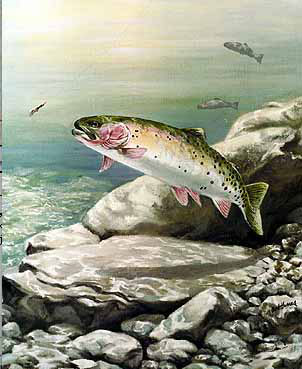
A picture named cutthroat.jpg

Here’s the release from Colorado Trout Unlimited (Randy Schofield):

Trout Unlimited today expressed disappointment in a June 9 Colorado Wildlife Commission decision to approve without changes mitigation plans offered by Denver Water and the Northern Colorado Water Conservancy District for two new water diversion projects, saying the plans fall short of what’s needed to protect the fish and wildlife resources of the upper Colorado River basin.

“We appreciate the hard work the commission and its staff have put into reviewing the proposed Moffat Tunnel and Windy Gap expansion projects,” said Drew Peternell, director of Trout Unlimited’s Colorado Water Project. “While the mitigation package the commission approved yesterday is an improvement over the plans Denver and Northern offered originally, it is not enough to protect the rivers and streams of the upper Colorado River basin from the impacts of the new projects.”

For decades, large-scale water diversions to the Front Range have severely depleted and damaged the upper Colorado River and its major tributaries, including the Fraser River. Already, transbasin water diversion projects, including Denver Water’s Moffat Tunnel pipeline and the Northern Colorado Water Conservancy District’s Windy Gap project, take about 60 percent of the native flows of the upper Colorado River basin. The proposed expansions of the Moffat Tunnel and Windy Gap projects would take an additional 15 percent of flows and further stress an ecosystem that is on the tipping point of survival.

Trout Unlimited vowed to seek additional mitigation conditions in the next phases of project permitting and urged Denver Water and Northern to do more to offset the impacts of the proposed projects on the Colorado River and its tributaries.

At the Wildlife Commission meeting in Grand Junction Thursday, several wildlife commissioners expressed concerns that the final mitigation plans submitted by Denver Water and Northern were inadequate, but the commission voted unanimously to approve the plans anyway, without changes.

“We’re disappointed that commissioners apparently believed they didn’t have the statutory authority to recommend additional protections,” said Mely Whiting, counsel for TU’s Colorado Water Project. “We don’t believe that’s an accurate reading of the statute.”

Last week, TU, West Slope landowners and other stakeholder groups urged the Wildlife Commission to include several provisions in the final mitigation package to ensure the health of the rivers:

– Reconnecting the Colorado River by creating a “bypass” around Windy Gap Reservoir.
– A halt to diversions when water temperatures are on the verge of state “impaired” standards – water warm enough to kill trout.
– Adequate spring flushing flows to keep the rivers healthy and sustain riparian areas that are critical to wildlife.
– An ongoing plan to monitor stream conditions and identify needed habitat restoration projects.
– An endowment fund to pay for those restoration projects as an “insurance policy” for river health.

TU leaders stressed that these were reasonable requests. “We weren’t asking for perfection,” said Whiting. “We were simply asking for adequate mitigation, an ‘insurance policy’ that provides the minimal level of protection needed to keep the rivers and streams of the upper Colorado basin healthy into the future. Yesterday’s decision puts these irreplaceable resources at risk.”

The Fraser River was a big loser in the decision, said TU. Under the plan approved by the commission, Denver Water can divert through the Moffat Tunnel even when those diversions violate stream temperature standards designed to prevent lethal effects on fish. And the project could take so much water that flushing flows critical to clean the stream of harmful sediment would no longer be available. The mitigation plans had several other deficiencies, including:

– Funding for stream projects to protect the Colorado River fell significantly short—between $3 and $5 million short, according to TU’s calculations, based on estimates by independent restoration contractors.
– Funding for a potential bypass of Windy Gap Reservoir, which could significantly improve downstream Colorado River conditions, was not included in the package.
– Northern’s plan allows chronic stream temperature problems and provides insufficient flushing flows in the Upper Colorado River.

TU thanked the commissioners for their efforts and acknowledged the complex, difficult nature of these mitigation decisions. But the sportsmen’s group said that the overriding goal of ensuring the future of the river’s wildlife habitat and fisheries was not achieved.

“The bottom line is that under this mitigation package, the health of the upper Colorado River and its tributaries will continue to decline,” said Peternell.

To learn more about diversion impacts on the river and watch TU’s short video “Tapped Out,” go to www.defendthecolorado.org

More coverage from Scott Willoughby writing for The Denver Post. From the article:

Several wildlife commissioners echoed the sentiment that the final mitigation plans submitted by Denver Water and Northern were not ideal, but the commission voted unanimously to approve the plans anyway. The projects’ Fish and Wildlife Mitigation Plans now move to the Colorado Water Conservation Board, which has 60 days to affirm or modify the state’s position. Gov. John Hickenlooper will also have 60 days to affirm or further modify it before it’s submitted to federal permitting agencies…

Prompted by a coalition of stakeholders led by Trout Unlimited, both water utilities made concessions to plans previously submitted. Among the additional measures are improved safeguards for maintaining cool water temperatures and minimum flow protections, creation of contingency funds for unanticipated impacts and enhanced funding for river restoration plans. The restoration plans were not required by the permitting process but were offered by Denver and Northern to help address impacts from past water development. The agreements hinge on final federal approval of the water projects.

The additional measures are a step in the right direction, watchdogs say, but don’t go far enough. Trout Unlimited vowed to seek additional mitigation conditions in the next phases of project permitting and urged Denver Water and Northern to do more to offset the impacts of the proposed projects on the Colorado River and its tributaries…

Most significant among the stakeholders’ requests is a “reconnection” of the Colorado River by creating a yet-to-be- designed bypass around the 445-acre-foot Windy Gap collection pond that the group has pinpointed as a major problem area near the confluence of the Fraser and Colorado rivers. Most agree that the proposal has merit, although further study is required. “We feel that the reconstruction of the channel downstream is just as important,” DOW aquatic biologist Ken Kehmeier told the commission. “We feel that we can’t determine the necessity for a bypass until a study is done.”

More coverage from Janice Kurbjin writing for the Summit Daily News. From the article:

Trout Unlimited representatives say the plans fall short of what’s needed to protect the fish and wildlife resources of the Upper Colorado River Basin. They vowed in early June to fight the projects on several fronts, including at the federal permitting level, if the plan didn’t include strong protections for the Upper Colorado River. They are now focused on other permitting levels. “We want more,” said Drew Peternell, director of Trout Unlimited’s Colorado Water Project.

Groups such as the Fraser River Basin Landowners and the Upper Colorado River Alliance are on board with the fight…

According to the Division of Wildlife, restoration plans aren’t required by the permitting process but were offered voluntarily by the utilities. A DOW statement said the commission’s authority is limited to mitigating impacts from the proposed projects and restoring the river to a past condition is beyond the scope of commission authority…

Trout Unlimited and other West Slope landowners and stakeholders asked the wildlife commission earlier this month to include several provisions, they called it an “insurance policy,” to protect the health of the rivers. What’s been offered isn’t enough, they say. Despite flow and temperature monitoring proposed by Denver Water, Trout Unlimited claimed the utility is still allowed to divert through the Moffat Tunnel even when those diversions violate stream temperature standards designed to prevent lethal effects on fish. The diversions could also negatively affect flushing flows that clean the stream of sediment, they said. Both utilities agreed to a $600,000 “mitigation insurance policy” that falls between $3 and $5 million short, Trout Unlimited representatives said. In particular, there’s no funding for a Windy Gap Reservoir bypass, meant to improve downstream Colorado River conditions, nor was an endowment fund established to pay for future restoration projects that would be planned and monitored.

More Moffat Collection System Project coverage here and here.

More Windy Gap coverage here and here.

Moffat Collection System Project and Windy Gap Firming Project: The Colorado Division of Wildlife commissioners approve both mitigation plans

A picture named fraservalleycollection.jpg

From The Denver Post (Mitchell Byars):

Now the plan must clear the U.S. Army Corps of Engineers, which is expected to release its final environmental impact study later this year. If the Army Corps gives the project the green light, construction on the expansion of Gross Reservoir in southwest Boulder County could start as early as 2015. The project is expected to take four years. The wildlife commission voted unanimously to accept Denver Water’s environmental mitigation plan. “We take this unanimous vote as an endorsement of our cooperative approach with local stakeholders,” said Denver Water’s planning director Dave Little. “Now we want to move aggressively towards implementing these measures.”[…]

In the mitigation plan, Denver Water agreed to stop diverting water from July 15 through the end of August if temperatures in the river reached levels that could possibly threaten local fish populations. The utility also pledged money to enhance stream habitats in cooperation with local counties and the Northern Colorado Water Conservancy District. “Make the river better, that’s sort of our mantra,” Little said. “We’ve addressed all of the impacts in the scientific study the Army Corps of Engineers did, which was an exhaustive effort. But we know the Corps did not capture the impacts that some others have brought up and that’s why we went above and beyond in our mitigation plan.”

More coverage from Tonya Bina writing for the Sky-Hi Daily News. From the article:

In a series of unanimous votes, the commissioners approved mitigation plans for Denver’s Moffat Collection System project and Northern’s Windy Gap Firming Project and also authorized the Colorado Division of Wildlife to enter into an intergovernmental agreement with Denver and Northern to help manage a significant restoration project for the upper Colorado River…

The votes came after Denver and Northern described to Commissioners several new or modified plan elements, which include enhanced temperature and flow protections, creation of contingency funds for unanticipated impacts and enhanced funding for river restoration plans. The restoration plans were not required by the permitting process but were offered voluntarily by Denver and Northern to help address impacts from past water development. The agreements hinge on the water providers obtaining final federal approval for their projects…

Prior to the vote, Wildlife Commission chairman Tim Glenn summarized concerns expressed by several commissioners regarding the complex package of plans and the potential that development of the projects may have unintended consequences for the Upper Colorado, Fraser and Williams Fork rivers. “Is it perfect?” Glenn asked “No. But staff has evaluated it inside and out and I’m confident that it’s better than where we are.” The Commission’s recommendation will now be transmitted to the federal permitting agency for each project…

To further address impacts from its Moffat Collection System project, Denver has agreed to new elements including increased safeguards for maintaining cool water temperatures and minimum flows in the Fraser during high summer and additional funds for aquatic habitat improvements in that river. Denver also agreed to reserve $600,000 for a “mitigation insurance policy” to address any new impacts identified by the Final Environmental Impact Statement being developed by the U.S. Army Corps of Engineers. This is in addition to Denver’s previous proposal to fund a Colorado River cutthroat restoration project and other aquatic habitat restoration work on the Fraser. On the Colorado River, Denver would maintain two water temperature gauges and agree to release water in August if high temperatures threatened fish…

East of the Divide, Denver would allow Boulder and Lafayette to store water in the enlarged Gross Reservoir for release during winter months, replace wetlands inundated by the larger reservoir and monitor stream channel stability.

In its final proposal, Northern agreed to increase minimum peak flows during drought conditions to maintain fish spawning habitat, to further restrict or curtail pumping during extreme conditions to protect cool water temperatures and to reserve $600,000 for a “mitigation insurance policy” to address any new impacts identified by the Final Environmental Impact Statement for Windy Gap being developed by the Bureau of Reclamation. Northern’s proposal included mitigating impacts on the Upper Colorado River system by managing their pumping to maintain water levels in Lake Granby and keep water temperatures cool, looking for ways to improve flushing flows in the Upper Colorado River below Windy Gap Reservoir and contributing to water quality projects that reduce nutrient loading in Lake Granby, Grand Lake and Shadow Mountain Reservoir.

East of the Divide, Northern proposed to replace lost wetlands and improve enhance wildlife habitat near the new Chimney Hollow reservoir…

In their final plans, Denver and Northern agreed to add $1 million in funding to the Upper Colorado River Habitat Project to $4.5 million and increase money set aside to address future contingencies or operating and maintenance costs on that project to $1.5 million. Denver and Northern also pledged to enter into an intergovernmental agreement with the DOW to manage the habitat project, and urged that the DOW be given a more direct role in developing and managing stream restoration projects contemplated under the Learn By Doing adaptive management process created by Denver’s global settlement with Grand County and other stakeholders…

Senior Northeast Region aquatic biologist Ken Kehmeier said Division staff believes that in total, the agreements, including those made with mountain communities, would not only address impacts from the new projects but also help repair impacts to the Colorado and Fraser rivers caused by previous projects.

More coverage from David O. Williams writing for the Colorado Independent. From the article:

Commissioners were generally still worried about the “unintended consequences for the Upper Colorado, Fraser and Williams Fork rivers” but felt the revised mitigation plans – including greater temperature and flow protections for aquatic life, more funding for river restoration and a contingency fund for unanticipated impacts – were a lot better than previous plans. “It has always been Denver Water’s goal to go beyond mitigating the project impacts to make the river better than it is today,” Denver Water’s director of planning Dave Little said: “We look forward to working with stakeholders on mitigation for the project and the significant enhancement plan also accepted by the Commission that will improve aquatic habitat in the Upper Colorado River Basin.”

The fish and wildlife mitigation plans still must be approved by federal regulators. Also on Thursday, Denver Water provided a statement on the U.S. Bureau of Reclamation report that includes one scenario in which water levels in the Colorado River decrease by 10 to 20 percent by the middle of this century as a result of global climate change.

More Moffat Collection System Project coverage here and here.

More Windy Gap coverage here and here.

Moffat Collection System Project and Windy Gap Firming Project: The Colorado Division of Wildlife commissioners approve both mitigation plans

A picture named eisenhowerfishing.jpg

Here’s the release from the Colorado Division of Wildlife:

The Colorado Wildlife Commission Thursday endorsed Fish and Wildlife Mitigation Plans submitted by Denver Water and the Northern Colorado Water Conservancy District to mitigate impacts that would be caused by two proposed transmountain water development projects.

In a series of unanimous votes, Commissioners approved mitigation plans for Denver’s Moffat Collection System project and Northern’s Windy Gap Firming Project and also authorized the Division of Wildlife to enter into an intergovernmental agreement with Denver and Northern to help manage a significant restoration project for the upper Colorado River. Three members of the Colorado State Parks Board joined the Commission at the workshop, which was held at the Doubletree Inn on Horizon Drive.

The votes came after Denver and Northern described to Commissioners several new or modified plan elements, which include enhanced temperature and flow protections, creation of contingency funds for unanticipated impacts and enhanced funding for river restoration plans. The restoration plans were not required by the permitting process but were offered voluntarily by Denver and Northern to help address impacts from past water development. The agreements hinge on the water providers obtaining final federal approval for their projects.

Prior to the vote, Wildlife Commission chairman Tim Glenn summarized concerns expressed by several commissioners regarding the complex package of plans and the potential that development of the projects may have unintended consequences for the upper Colorado, Fraser and Williams Fork rivers.

“Is it perfect?” Glenn asked “No. But staff has evaluated it inside and out and I’m confident that it’s better than where we are.”

The Commission’s recommendation will now be transmitted to the federal permitting agency for each project. Denver Water’s Moffat Collection System project would firm up the yield from Denver’s existing water rights on the West Slope, primarily by enlarging Boulder’s Gross Reservoir and diverting additional water from the Fraser, Williams Fork and Blue rivers. Northern’s Windy Gap Firming Project proposes to firm up the yield from its existing water rights in the Upper Colorado River by diverting additional water to the proposed new Chimney Hollow Reservoir west of Loveland.

Since last fall, Denver and Northern have been in discussions with Division of Wildlife staff to address concerns voiced by the public and by Wildlife Commissioners. The two utilities have simultaneously been negotiating a complimentary set of agreements with a diverse group of stakeholders, including affected local governments like Grand County.

To further address impacts from its Moffat Collection System project, Denver has agreed to new elements including increased safeguards for maintaining cool water temperatures and minimum flows in the Fraser during high summer and additional funds for aquatic habitat improvements in that river. Denver also agreed to reserve $600,000 for a “mitigation insurance policy” to address any new impacts identified by the Final Environmental Impact Statement being developed by the Army Corps of Engineers.

This is in addition to Denver’s previous proposal to fund a Colorado River cutthroat restoration project and other aquatic habitat restoration work on the Fraser. On the Colorado River, Denver would maintain two water temperature gauges and agree to release water in August if high temperatures threatened fish. East of the Divide, Denver would allow Boulder and Lafayette to store water in the enlarged Gross Reservoir for release during winter months, replace wetlands inundated by the larger reservoir and monitor stream channel stability.

In its final proposal, Northern agreed to increase minimum peak flows during drought conditions to maintain fish spawning habitat, to further restrict or curtail pumping during extreme conditions to protect cool water temperatures and to reserve $600,000 for a “mitigation insurance policy” to address any new impacts identified by the Final Environmental Impact Statement for Windy Gap being developed by the Bureau of Reclamation.

Northern’s proposal included mitigating impacts on the Upper Colorado River system by managing their pumping to maintain water levels in Lake Granby and keep water temperatures cool, looking for ways to improve flushing flows in the Upper Colorado River below Windy Gap Reservoir and contributing to water quality projects that reduce nutrient loading in Lake Granby, Grand Lake and Shadow Mountain Reservoir. East of the Divide, Northern proposed to replace lost wetlands and improve enhance wildlife habitat near the new Chimney Hollow reservoir.

Under state statute, the Wildlife Commission’s authority was limited to mitigating impacts from proposed projects. Restoring the river to a past condition was beyond the scope of Commission authority. However, Denver and Northern voluntarily proposed to help enhance conditions for fish and wildlife resources on both sides of the Continental Divide.

The enhancement plans would support the Upper Colorado River Habitat Project, a collaborative plan designed to re-establish a functional channel system and improve habitat for trout and other important aquatic species on a roughly 14-mile stretch of river between Windy Gap Reservoir and the Kemp-Breeze State Wildlife Area.

In their final plans, Denver and Northern agreed to add $1 million in funding to the Upper Colorado River Habitat Project to $4.5 million and increase money set aside to address future contingencies or operating and maintenance costs on that project to $1.5 million. Denver and Northern also pledged to enter into an intergovernmental agreement with the DOW to manage the habitat project, and urged that the DOW be given a more direct role in developing and managing stream restoration projects contemplated under the Learn By Doing adaptive management process created by Denver’s global settlement with Grand County and other stakeholders.

That global settlement, announced recently by Denver Water, would address longstanding concerns about the health of the Colorado River. The settlement includes funding for aquatic habitat and for an adaptive management process designed to help maintain river health.

Northern is also working on similar agreement with communities on the Upper Colorado River.

Senior Northeast Region aquatic biologist Ken Kehmeier said Division staff believes that in total, the agreements, including those made with mountain communities, would not only address impacts from the new projects but also help repair impacts to the Colorado and Fraser rivers caused by previous projects.

Commissioner David Brougham credited the Division, Denver and Northern for negotiating agreements which went beyond the Commission’s limited jurisdiction under the statute.

“I think in looking at this the Division has gone beyond and done more than that statute gives us the power to do,” Brougham said. “Denver and Northern could have said no, but they didn’t and I think that’s telling.”

Additional information regarding the Wildlife Commission’s review, including links to the mitigation and enhancement plans being offered by Denver Water and Northern, can be found on the Division’s web site at: http://wildlife.state.co.us/LandWater/Water/MoffatWindyGapMitigationProjects/.

During the morning session, North Park District Wildlife Manager Josh Dilley was presented with the 2010 Shikar-Safari Club International Officer of the Year Award. Dilley, who for the past three years has had responsibility for two wildlife management districts in the high mountain basin, was presented with the award by Bob Boswell of Shikar Safari Club International.

Dilley, who was surrounded by his family, said he was honored by the award. “I don’t have to go to work every morning, I get to go to work every morning,” Dilley told the Commissioners. “Wildlife officers in Colorado have a passion like no other. I work with my heroes every day.”

Grand Junction’s Lynn Ensley, who founded the nonprofit Pathways for Fishing, was recognized for his outstanding service in recruiting young anglers in Colorado. “I can’t say enough about Lynn’s continued dedication, his passion and his enthusiasm,” said Northwest Regional Manager Ron Velarde. “Since 1995, Lynn has introduced almost 15,000 kids to the sport of fishing.”

Ensley expressed to the Commissioners his appreciation for the Division’s support over the years, adding that he is looking to develop a new program to recruit young deer hunters.

Commissioners also received an update on draft black bear management plans for the northern Front Range, the Sangre de Cristos, the Uncompahgre and the Bears’ Ears area of northwestern Colorado, as well as an update on the impending July 1 merger of the Division of Wildlife with Colorado State Parks.

In other action, the Commission adopted final regulations removing bag and possession limits at Bonny Reservoir State Park and allow the use of trotlines and jugs. This action permanently implements an emergency regulation passed by the Commission at its last meeting in May 2011. Bonny Reservoir is scheduled to be drained in the fall of 2011, and this change is intended to allow the public to use all game fish prior to the draining of the reservoir.

The Wildlife Commission meets monthly and travels to communities around the state to facilitate public participation in its processes. The complete agenda for the June Wildlife Commission meeting can be found on the Wildlife Commission web page at:
http://wildlife.state.co.us/WildlifeCommission/Archives/2011/June92011.htm.

The Colorado Wildlife Commission is an 11-member board appointed by the governor. The Wildlife Commission sets Division of Wildlife regulations and policies for hunting, fishing, watchable wildlife, nongame, threatened and endangered species. The Commission also oversees Division of Wildlife land purchases and property regulations.

More coverage from Wayne Harrison writing for TheDenverChannel.com. From the article:

Plans for minimizing the effects on wildlife include ways to maintain cool water temperatures and minimum water flows, restoring fish habitat and increasing flows during drought to maintain fish spawning areas. Denver Water planning director Dave Little says the goal is to improve the rivers.

More coverage from the Boulder Daily Camera. From the article:

Members of the Colorado Wildlife Commission voted unanimously Thursday to accept a plan by Denver Water to mitigate the impacts of a proposed expansion to Gross Reservoir in southwest Boulder County. The mitigation plan addresses impacts in Boulder County as well as impacts to the headwaters of the Colorado River, where more water will be drawn to fill the enlarged Gross Reservoir.

More coverage from the Longmont Times-Call. From the article:

The Northern Colorado Water Conservancy District, which has its headquarters in Berthoud, provides water for agricultural, municipal, domestic and industrial uses in portionis of Boulder, Larimer, Weld, Broomfield, Morgan, Logan, Washington and Sedgwick counties. According to the Colorado Division of Wildlife, Northern has agreed: to increase minimum peak flows during droughts to maintain fish spawning habitat; to further restrict or curtail pumping during extreme conditions to protect cool water temperatures, and to reserve a $600,000 “mitigation insurance policy” to address any new impacts identified in a final Windy Gap environmental impact statement being developed by the U.S. Bureau of Reclamation.

More Moffat Collection System Project coverage here and here.

More Windy Gap coverage here and here.

Vote Slated on Water Mitigation Plans

A picture named fraservalleycollection.jpg

Here’s the release from the Colorado Division of Wildlife (Theo Stein):

The Colorado Wildlife Commission plans to vote on the adequacy of plans to mitigate impacts to fish and wildlife resources from two proposed transmountain water development projects during its meeting in Grand Junction.

The vote will complete the Commission’s 60-day review of the Fish and Wildlife Mitigation Plans submitted by Denver Water and the Northern Colorado Water Conservancy District at the Commission’s April meeting in Meeker.

The Moffat Collection System Project proposes to firm up the yield from Denver Water’s existing water rights on the West Slope, primarily by diverting additional water from the Fraser, Williams Fork and Blue rivers to an enlarged Gross Reservoir in Boulder County. The Windy Gap Firming Project would firm up Northern’s yield from existing water rights in the Upper Colorado River by diverting additional water to the proposed new Chimney Hollow Reservoir west of Loveland. The mitigation plan review by the Wildlife Commission is part of each project’s federal permitting process.

Last month, Ken Kehmeier, a senior aquatic biologist with the Division, presented staff’s analysis of the plans during the Commission’s May meeting in Salida. Following Kehmeier’s analysis, Commissioners questioned whether additional protections might be needed to guard against high water temperatures and whether flushing flows contemplated by the plans would be enough to maintain channel health. They also asked for more consideration of mitigation and enhancement funding, and for a clarification of the role that the Division would play in developing and managing restoration projects.

As part of its mitigation package for the Fraser River and upper Williams Fork River, Denver has proposed to fund a Colorado River cutthroat restoration project and fund other aquatic habitat restoration work. On the Colorado River, Denver and Northern Water would monitor water temperatures and agree to release water in August if high temperatures threatened fish. East of the Divide, Denver would replace wetlands inundated by the enlarged Gross Reservoir and monitor stream channel stability in South Boulder Creek. Denver would also allow Boulder and Lafayette to store water in Gross Reservoir to boost minimum flows in the Boulder Creek drainage during winter.

Northern, for its part, has offered [to] manage their diversions to maintain water levels in Lake Granby and keep water temperatures cool in the Upper Colorado River below Windy Gap Reservoir. Northern also said it would contribute to water-quality projects designed to reduce nutrient loading in Grand Lake, Lake Granby and Shadow Mountain Reservoir. On the other side of the Divide, Northern would replace wetlands submerged by the new Chimney Hollow Reservoir and enhance nearby wildlife habitat.

Denver and Northern are also voluntarily proposing enhancement plans to improve conditions for fish and wildlife on a roughly 14-mile stretch of river between Windy Gap Reservoir and the Kemp-Breeze State Wildlife Area. The enhancement plans are not required by the Commission’s review process.

Once the Wildlife Commission adopts its final recommendation, the Colorado Water Conservation Board will have 60 days to affirm or modify the state’s position. Governor John Hickenlooper will also have 60 days to affirm or further modify it before it’s submitted to federal permitting agencies.

Recently, Denver Water announced it had reached a complex legal settlement with Grand County and 33 other groups regarding longstanding concerns about the health of the Colorado River. The settlement includes funding for aquatic habitat and for an adaptive management process designed to help maintain river health.

Additional information regarding the Wildlife Commission’s review, including links to the mitigation and enhancement plans being offered by Denver Water and Northern, can be found on the Division’s web site at: http://wildlife.state.co.us/LandWater/Water/MoffatWindyGapMitigationProjects/.

More Moffat Collection System Project coverage here and here.

More Windy Gap coverage here and here.

Colorado River basin: Wildlife Commission hears water plan concerns

A picture named coloradorivergranby.jpg

Here’s the release from the Colorado Division of Wildlife:

Colorado Wildlife Commissioners heard a day of presentations and testimony Friday as they continued to evaluate draft plans to mitigate impacts to fish and wildlife resources submitted by proponents of two major transmountain diversion projects.

The public hearing came midway through the Commission’s 60-day review of mitigation and enhancement plans pertaining to Denver Water’s Moffat Collection System project and the Northern Colorado Water Conservancy District’s Windy Gap Firming project. The meeting was held at the Hampton Inn and Suites on Highway 50 in Salida.

Wildlife Commission Chairman Tim Glenn said he was encouraged that Denver and Northern had incorporated additional changes to their draft plans based on public input during the past several months.

“Denver Water and Northern have listened to the concerns about impacts to fish and wildlife in the Upper Colorado River system and improved their plans in response,” Glenn said. “I think everyone’s focus is the health of these rivers and we look forward to continuing these discussions through staff during the next month.”

Ken Kehmeier, a senior aquatic biologist with the Division, presented staff’s analysis of Denver’s and Northern’s plans for mitigating impacts from the proposed projects as well as enhancing existing conditions on the impacted streams and rivers.

Following staff and public testimony, Commissioners asked for additional information about whether the mitigation plans were sufficient to protect cool water temperatures in the headwaters of the Colorado and Fraser River systems.

They questioned whether flushing flows would be adequate to rejuvenate cobble beds important for trout spawning and trout forage that have been degraded by previous water development. Commissioners said that they would like to see additional funding to help restore healthy river conditions and a legally binding agreement to ensure restoration would occur. They also suggested the Division should have an integral role in developing and managing restoration projects through the adaptive management process known as Learning by Doing.

Denver Water’s Moffat Collection System Project is designed to firm up the yield from its existing water rights on the West Slope, primarily by enlarging Boulder’s Gross Reservoir and diverting additional water from the Fraser, Williams Fork and Blue rivers.

Northern’s Windy Gap Firming Project is proposing to firm up the yield from its existing water rights in the Upper Colorado River by diverting additional water to the proposed new Chimney Hollow Reservoir west of Loveland.

In addition to the Commission’s fish and wildlife mitigation plan process, Denver Water recently announced it had reached a complex legal settlement with Grand County and 33 other groups regarding longstanding concerns about the health of the Colorado River that includes funding for aquatic habitat and development of the Learn by Doing process.

The Wildlife Commission is scheduled to make a final recommendation on the adequacy of the mitigation plans at its June meeting in Grand Junction.

“Healthy river systems are critically important to the future of this state,” Glenn said. “The Commission’s review of these projects has been lengthy and we greatly appreciate all of the input we have received on how we can best fix the river. Water projects like this have to be done right if we’re going to have healthy wildlife and a healthy tourism economy.”

Additional information regarding the Wildlife Commission’s review, including links to DOW staff evaluations of the mitigation and enhancement plans being offered by Denver Water and Northern, can be found on the Division’s web site at: http://wildlife.state.co.us/LandWater/Water/MoffatWindyGapMitigationProjects/.

More coverage from Bruce Willoughby writing for The Denver Post. From the article:

The commission dedicated the day solely to public commentary on two controversial transmountain water diversion projects proposed for Colorado River headwaters, and river advocates crammed the docket with impassioned pleas for assurance that the projects won’t decimate fragile fisheries such as the Fraser River, Williams Fork, Blue River and the Upper Colorado itself. They came away with none…

Representatives from Grand County, Trout Unlimited, Northwest Colorado Council of Governments, Colorado River Landowners and Western Resource Advocates expressed concerns over the proposals by the Northern Colorado Water Conservancy District to annually draw thousands of acre-feet more water from Windy Gap Reservoir for Front Range storage and by Denver Water to increase diversions through the Moffat Tunnel to an enlarged Gross Reservoir near Boulder…

“I see dead brown trout on the bank every year in August because the water temperatures are too high,” said rancher Ron Jones, whose Fraser River frontage merits Gold Medal designation. “If they want to take the water, then they should put the money into doing what it takes to protect the rivers.”

It’s an interesting perspective — putting the health of the rivers ahead of the perceived need for more water elsewhere. There is some money on the table dedicated to enhancement of a portion of the Colorado, but consensus holds that it’s not nearly enough. And as currently proposed, many mitigation measures are conditional upon the volume of water already diverted and stored in East Slope reservoirs, not necessarily what’s happening in the rivers it’s being drawn from.

The Wildlife Commission, meanwhile, finds itself in the compromising position of attempting to address flaws it has identified in the proposals and finding a way to enforce its stance in the next month. After that, the Colorado Water Conservation Board will have 60 days to affirm or modify the commission’s recommendation as the state’s official position.

More Colorado River basin coverage here.

Colorado River Cooperative Agreement: Prior appropriation often conflicts with maintaining streamflow

A picture named coloradorivercooperativeagreementmap.jpg

From The Pueblo Chieftain (Chris Woodka):

“A change to a water right has become a suicide mission and hamstrings these types of agreements,” [Eric Kuhn, executive director of the Colorado River Conservation District] said at last week’s Interbasin Compact Committee. His comments brought a chorus of agreement, and talk of how to implement flexibility and creativity in water rights among others around the table.

Actually, the state has spent months talking with the negotiators about the kinds of things that might be acceptable in guaranteeing flows, State Engineer Dick Wolfe said this week. “We’ve looked at the agreement in order to talk about implementation,” Wolfe said. “We went through a process to identify flexibility in existing laws.”[…]

There are five separate agreements with state and federal agencies that have to be reached in order to implement the Colorado River Cooperative Agreement. State provisions include a Blue River consent decree from Division 5 Water Court in Summit County, agreement on delivery of consumptive flows from Denver in Grand County, and an agreement on environmental flows. Agreements with the Bureau of Reclamation must be reach on the Shoshone power plant and for Green Mountain Reservoir operations…

“We push to have them take it to water court,” Wolfe said. “It minimizes what a future state engineer or division engineer may decide.” While court decrees are paramount, the state engineer can administer contracts between water users, and can also shepherd state in-stream flow rights (which can only be held by the Colorado Water Conservation Board) to meet flow demands. Water court case filings serve to notify other water users if changes are being contemplated.

More Colorado River Cooperative Agreement coverage here.

Colorado Division of Wildlife: Moffat Collection System and Windy Gap Firming projects hearings recap

A picture named coloradotransmountaindiversionscu.jpg

From The Mountain Mail (Joe Stone):

Commission chairman Tim Glenn pointed out that authority of the commission is limited to review of mitigation plans to address impacts to fish and wildlife by the proposed projects.

Representatives from Grand County, Trout Unlimited, Northwest Colorado Council of Governments, Colorado River Landowners and Western Resource Advocates urged commissioners to seek more extensive measures than those proposed in mitigation plans. Specific issues during public testimony include higher water temperature, insufficient flushing flow, nutrient loading, effect of climate change, need for monitoring and adaptive management and adequacy of long-term financing…

Studies cited during testimony indicate mayfly species below Windy Gap Reservoir have been reduced from 17 species in 1983 to five species in 2010. Stonefly species have declined from 10 to four during the same time. Both insects are important food sources for trout.

Commissioners heard from the City of Broomfield and Platte River Power Authority who support mitigation proposals. They said reservoir projects would strengthen their operations…

Final recommendation from wildlife commissioners is due in June. After the wildlife commission adopts a final recommendation, the Colorado Water Conservation Board will have 60 days to affirm or modify it.

More coverage from the Associated Press via the Aurora Sentinel. From the article:

At a meeting Friday in Salida, Grand County was among those who told wildlife commissioners to better preserve stream flows so that river temperatures are cool enough for fish to thrive, and so that river systems can be flushed of sediment that can choke bugs that provide food for trout…

Both water suppliers have proposed steps such as not diverting water to their systems in the summer when stream flows drop below a certain level or when water temperatures get too high. Critics said diversions should be restricted whenever those thresholds are crossed, not just on certain dates.

More Moffat Collection System Project coverage here. More Windy Gap coverage here.

Colorado River basin: Anglers are still working on protection for upper basin streams

A picture named eisenhowerfishing.jpg

Anglers are still concerned with potential streamflow issues at the Colorado River headwaters, in light of the proposed Moffat Collection System and Windy Gap Firming projects, despite the euphoria over the Colorado River Cooperative Agreement announced a week ago. Here’s a report from Bob Berwyn writing for the Summit County Citizens Voice. From the article:

Altogether, the projects have the potential to reduce Colorado River flows to less than 25 percent of their historic native flows. Biologists and anglers have already observed increases in stream temperatures, algae blooms, and declines in fish populations throughout the Colorado River headwaters. Taking more water out of these rivers could be catastrophic if mitigation efforts fall short, according to Trout Unlimited. Both proposals are currently under review by federal and state agencies, with detailed mitigation plans at issue. The Colorado Wildlife Commission will take input on the mitigation plans Friday, May 6 at a public hearing in Salida, and Trout Unlimited, a coldwater fisheries conservation group, plans to ask the commission to make sure there’s an insurance policy in place for the Fraser River and the Upper Colorado.

“We think what we’re asking for is pretty reasonable,” Whiting said. “This is the only chance we’re going get to address some of these impacts. We need to have an insurance policy,” she added. Whiting said the environmental studies for the Moffat and Windy Gap projects dealt with some of the anticipated impacts in a speculative way, and that there’s no way of knowing exactly how the increased diversions — planned during the peak flow season — will play out. If the money currently earmarked toward enhancements is sufficient, great. But if not, there needs to be a pot of money in reserve to do the needed work, she said. Specifically, Trout Unlimited said that significant restoration work and monitoring will be needed to ensure healthy aquatic ecosystems on the Fraser and Upper Colorado rivers. The group estimates that it will cost about $14 million for the needed work, yet only a fraction of that funding is included in the mitigation plans…

Trout Unlimited also wants the Front Range utilities to make a commitment to stop diversions when the water gets too warm or flows drop too low. Removing too much water from the river during runoff or during critical hot summer months raises stream temperatures and eliminates flushing flows that are needed to keep river ecosystems alive. If flushing flows are not occurring or if temperatures rise above state standards, fish can die. Water providers need to make a commitment to stop diversions when stream temperatures approach state standards or if flushing flows are not occurring in accordance with the community-led Grand County Stream Management Plan. These commitments, combined with ongoing monitoring, are what is referred to by the concept of ‘Adaptive Management.’

More Colorado River basin coverage here.

Colorado River Cooperative Agreement: ‘Summit State of the River’ speakers tout win-win for Summit County and Denver Water

A picture named morninggloryspillwaydillonreservoir.jpg

From the Summit Daily News (Janice Kurbjin):

“I remember thinking, this is the craziest thing I’ve ever gotten myself into. There are so many issues. There are so many players,” said Summit County Commissioner Thomas Davidson, who was the point person for many of the water conversations.

As Denver Water takes on responsibilities such as defining its service area, recycling and reusing water, setting conservation goals and timelines, Summit County reaps many specific benefits, officials said. In particular, county municipalities and ski resorts get more water — 1,743 acre-feet more water. Some is free, some has conditions, but what it translates to is a firmer supply in dry years for towns and ski resort snowmaking — which likely means a more protected economy.

Denver Water has also agreed to maintain the Dillon Reservoir water level at or above 9,012 feet in elevation between June 18 and Labor Day. It’s the critical level for Frisco Marina to be operational, helping drive the county’s summertime economy. “It’s their reservoir and their water rights,” Summit County manager Gary Martinez said, but they’ve agreed to not take water for recreational or hydropower on the Front Range to the detriment of Dillon Reservoir.

Also on the tourism front, the deal helps maintain recreational flows at or more than 50 cubic feet per second — primarily to benefit fishing, Silverthorne-Dillon joint sewer operations and, at higher flows, boating — into the Blue River below Dillon Dam in normal years. Dire drought circumstances are the exception, when lawn watering is banned by Denver Water — an event that’s never occurred, Lochhead said.

A one-time $11 million windfall from Denver Water comes to the county for wastewater treatment plant improvements, environmental enhancements, forest heath projects and local water and sewer work. Also, Denver Water will have the ability to sell water to some south metro area water providers, with some of the money going toward a Western slope fund for similar projects in Summit County.

More Colorado River Cooperative Agreement coverage here.

Colorado River Cooperative Agreement: Deal lauded as win-win at the ‘Summit State of the River’ meeting

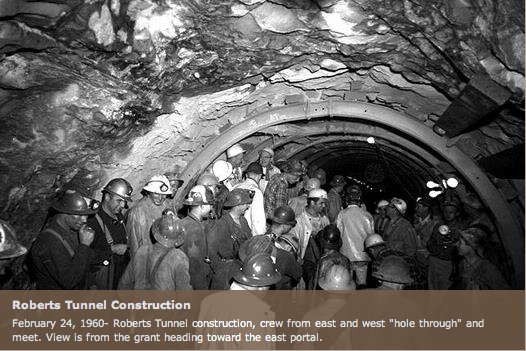
A picture named robertstunnelholethrough02241960dwd.jpg

From the Summit County Citizens Voice (Bob Berwyn):

[Colorado River Water Conservation District general manager Eric Kuhn] sat on a panel with Denver Water manager Jim Lochhead and Summit County manager Gary Martinez, as well as the Summit County commissioners, together outlining the give and take of the deal that clears the way for Denver Water’s proposed expansion of its Moffat Tunnel collection system in Grand County — a project still under scrutiny by federal and state agencies, including the Colorado Division of Wildlife. The Moffat Tunnel project wouldn’t directly take any new water from Summit County, but because of the complex plumbing involved, it would result in increased diversions from the Blue River Basin — 5,000 acre feet, taken during spring runoff in wet and average years…

“Long-time disputes were resolved,” said County Commissioner Karn Stiegelmeier, adding that Denver Water will impose a West Slope surcharge on certain types of water sales, potentially providing an ongoing source of funding for environmental projects, including forest health work.

At one point, Lochhead was asked by an audience member how much of Denver Water’s total usage — about half — goes to outdoor lawn irrigation. “We’re not going to dry up all the bluegrass lawns on the Front Range, we’re not going to get that,” said Commissioner Thomas Davidson. What you’ve got to understand is what we’re getting in this agreement is far more than what we could have gotten in water court from a judge,” Davidson said.

From Steamboat Today (Mike Lawrence):

Local water policy experts say the Colorado River Cooperative Agreement, announced Thursday in Tabernash and touted as a historic framework for future collaboration between Front Range and Western Slope water interests, has little, if any, direct impact on the Yampa River and its tributaries in Northwest Colorado. The agreement primarily addresses Denver Water, metro area suburbs and their interaction with municipalities and river managers along the Colorado River…

While the Upper Yampa and Northern Colorado water conservancy districts are not participants in the agreement, the districts’ interests are deeply intertwined with those who are. In recent years, for example, the Northern Colorado water district has studied the potential for a trans-mountain diversion, or pumpback, of Yampa River water to the Front Range. One hypothetical project proposed diverting Yampa River water near Maybell, in western Moffat County.

Dan Birch, deputy general manager of the Colorado River District, said last week’s agreement, a deal several years in the making, cools pumpback [Yampa Pumpback] proposals. “I think it takes the heat off, for the time being, for trans-mountain diversions,” Birch said…

Talk of pumpbacks also has cooled recently because of the multi-billion-dollar costs of such projects, the recessionary economy and other factors. “I don’t know of anyone else stepping forward at this stage of the game seriously talking about a Maybell pumpback,” Birch said. “I just don’t see anything happening in the near-term out of the Yampa.”[…]

District officials plan to discuss water issues with the Steamboat Springs City Council on May 17 in Centennial Hall.

More Colorado River Cooperative Agreement coverage here.

Denver: Denver Water’s summer watering rules took effect May 1

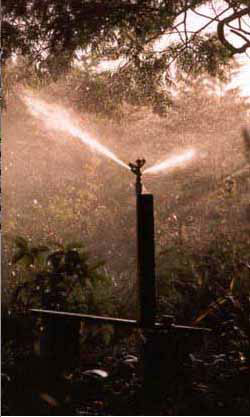
A picture named watersprinkler.jpg

Here’s the release from Denver Water (Lori Peck):

Denver Water would like to remind its customers that its summer water use rules began May 1. In addition to the rules, the utility encourages customers to pay attention to weather and lawn conditions before watering.

“Half of a household’s water use goes to outside watering,” said Melissa Essex Elliott, manager of conservation. “Most lawns don’t need as much water as you might think. Watering your lawn two days a week should be sufficient during May and into June.”

Denver Water’s watering rules, in effect until Oct. 1, are:

– No lawn watering between 10 a.m. and 6 p.m.
– Do not water more than three days per week (there are no assigned days for watering).
– Do not waste water by allowing it to pool in gutters, streets and alleys.
– Do not waste water by letting it spray on concrete and asphalt.
– Repair leaking sprinkler systems within 10 days.
– Do not water while it is raining or during high winds.
– The utility will continue to enforce its rules with a team of 11 Water Savers, including four on bikes.

“The Water Savers’ purpose is as much about educating customers as it is about enforcing Denver Water’s rules,” said Elliott. “We continue to have some monitors on bikes as a more approachable way to talk with our customers one-on-one about wise water use.”

If you see water waste in one of Denver’s parks, call 3-1-1. To report waste elsewhere, call Denver Water at 303-628-6343 or fill out online form.

Colorado’s dry climate means everyone needs to take part to ensure adequate water supplies will be available well into the future. “A small step like adjusting your watering times based on the weather is a great way to become more efficient,” said Elliott. Denver Water’s long-term plan to secure water for the future includes encouraging water conservation as a permanent way of life for Denver residents.

Visit conservation for tips, rebates, irrigation calculators and many more tools for saving water outdoors, including suggested watering times.

More Denver Water coverage here.

Colorado River basin: Grand County ‘State of the River’ meeting May 4

A picture named coloradorivergranby.jpg

Here’s the announcement from the Colorado River District (Martha Moore):

Details of the historic proposed Colorado River Cooperative Agreement between Grand County, 32 other West Slope entities and Denver Water will be discussed with the public at the Wednesday, May 4, Grand County State of the River meeting set for 6:30-8:30 p.m. at the Mountain Parks Electric building, 321 West Agate, Granby.

Representatives from Grand County will join Denver Water Chief Executive Officer Jim Lochhead and Colorado River District General Manager Eric Kuhn in a panel discussion of the proposed landmark water management agreement.

The meeting is sponsored by the Colorado River District.

The proposed agreement, five years in the making, seeks to address many environmental and water supply challenges in Grand County, as well as in Summit County and along the mainstem of the Colorado River all the way to the Grand Valley.
In Grand County, the proposal stems from Denver Water’s desire to permit an expansion of its Moffat Collection System. Benefits in the proposal are meant to go beyond the separate mitigation proposals Denver is making as part of its permit process. The Moffat Project would draw more water to the Front Range from the Fraser River system.

The proposal would provide more consumptive water supplies for Grand County entities as well as water for environmental flows in the late summer. Denver Water would also provide financial support for environmental projects as well as wastewater treatment plant improvements.

The Grand County State of the River will also include an update on the Grand County Water Information Network, the Grand County Outdoor Education Network and projected spring and summer operations of area reservoirs.

More Colorado River basin coverage here.

Colorado River Cooperative Agreement: Should the agreement have included more from a fisherman’s point of view?

A picture named eisenhowerfishing.jpg

The Fraser River was a favorite fishing hole for President Eisenhower whose wife had Colorado roots. The stream has changed much since those days and more changes are coming. In today’s Denver Post Scott Willoughby tempers his enthusiasm for the landmark agreement by asking the obvious question. Where do Colorado-Big Thompson diversions fit in? From the article:

If we can dismiss politics for a moment, the fisherman’s perspective might help simplify things. And by simplify, I mean, point out the obvious flaws in the plan before uncorking the champagne.

For starters, this so-called “global” pact regarding future use of the Colorado River was designed to push Colorado away from trans-basin water diversions, yet it failed to include the Northern Colorado Water Conservancy District, the single largest user of Upper Colorado River water. Northern’s Colorado-Big Thompson and Windy Gap trans-mountain diversions are responsible for removing more water from the Upper Colorado than anything else, and Northern currently has plans on the table to take another 30,000 acre-feet per year through its Windy Gap Firming Project. Yet, during the course of the five-year negotiation, Northern wasn’t at the table.

Denver Water was. And among the greatest rewards it received for playing is a tacit approval of the proposed Moffat Collection System Project that will draw another 18,000 acre-feet annually from the Colorado headwaters and move it to an expanded Gross Reservoir near Boulder…

The Windy Gap Firming Project alone is likely to decrease water level in Lake Granby, reduce trout habitat and food sources in the Colorado River and impose challenges to boaters floating the river at certain times of the year.

And, it seems, the Ute Water Conservancy District is not on board with the agreement. Here’s a report from TheDenverChannel.com. From the article:

The Grand Junction-based district is concerned about its water rights if the Shoshone Generating Station stops operating. The water right for the station is among the most senior on the Colorado River. Ute Water also doesn’t like the way water stored in Green Mountain Reservoir in central Colorado would be accounted for.

More coverage from Joe Hanel writing for The Durango Herald. From the article:

The agreement does not involve water from Southwest Colorado, although it will help the entire western half of the state by creating a new culture that requires agreement from everyone before water can be pumped east, said Eric Kuhn, head of the Colorado River Water Conservation District. “The West Slope’s interests were very simple and that is to preserve what makes Western Colorado special and unique, and that is the ecosystem, and the Colorado River is key to that,” Kuhn said.

Denver and 33 Western Slope groups, including towns and ski areas, signed on to the agreement. But other major Front Range utilities did not join in the accord.

Under the agreement, when water is scarce, Denver Water agrees not to use its legal right to draw down streams in Grand County unless Denver has banned residential lawn watering. In return, Denver secured Western Slope agreement to expand its service area by providing recycled water to its suburbs. The southern suburbs have been among the fastest-growing areas of the country the last 15 years, but they lack a reliable long-term water supply. Denver also agreed not to drain Lake Dillon – its main reservoir – too low, and to support a kayak park in Glenwood Springs that would require water to flow downstream, away from Denver’s system of pumps and reservoirs.

Western Colorado has long been wary of Denver because the city owns legal rights to pump Colorado River water east over the Continental Divide. The Denver suburbs are also on a desperate hunt for water, and their high populations give them the money to buy the rights to even more Western Slope water. Thursday’s agreement is historic because Denver agreed to take less water than it has the legal right to use. The city will devote some of its supply to Western Slope ski resorts and communities.

More Colorado River Cooperative Agreement coverage here.

Summit County: The Colorado River Cooperative Agreement will be on the agenda at Tuesday’s ‘Summit State of the River’ meeting

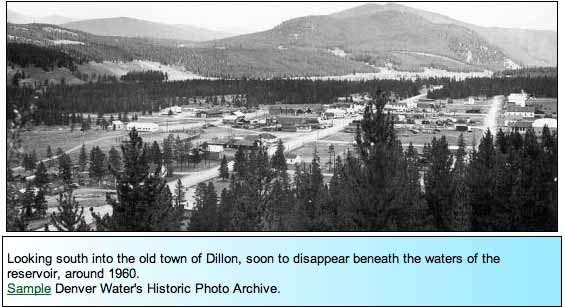
A picture named dilloncolorado.jpg

From the Summit Daily News:

Details of the historic proposed Colorado River Cooperative Agreement between Summit County, 26 other West Slope entities and Denver Water will be discussed with the public at Tuesday’s Summit State of the River meeting set for 6:30-8:30 p.m. at the Summit County Community and Senior Center.

Panelists include Summit Board of County Commissioners, county manager Gary Martinez, Denver Water Chief Executive Officer Jim Lochhead and Colorado River District general manager Eric Kuhn.

The meeting is sponsored by the Colorado River District and the Blue River Watershed Group.

The proposed agreement is five years in the making and seeks to settle many long-standing water disputes between the West Slope and the Front Range, including issues surrounding reservoirs, transmountain diversions, river flows, and financial support for environmental and wastewater treatment projects.

The Summit State of the River meeting will also provide information of snowpack and runoff predictions as well as reports on how Denver Water will operate Dillon Reservoir this year. The Bureau of Reclamation will report on its Green Mountain Reservoir operations.

Another meeting is slated for 6:30-8:30 p.m. Wednesday at Mountain Parks Electric in Granby. Grand County officials join Denver Water and the Colorado River District in the panel discussion.

More Colorado River basin coverage here.

Governor Hickenlooper, Denver Water, the Colorado River District, et al. announce the Colorado River Cooperative Agreement

A picture named coloradorivercooperativeagreementmap.jpg

Bump and update:

Here’s the joint release from the Colorado River District and Denver Water (Lori Peck/Audrey Hughes):

Leaders from Grand, Summit and Eagle counties stood with representatives from Denver Water, the Colorado River District, the ski industry and other main stem Colorado River Basin water interests to announce a historic proposed agreement, the “Colorado River Cooperative Agreement.” This proposed agreement will change the way water is managed in Colorado.

Focused on cooperation, the proposed agreement brings parties who traditionally have been at odds together as partners on a path to responsible water development benefitting both the East and West Slopes. It achieves better environmental health for the Colorado River Basin, maintains high-quality recreational use and improves economics for many cities, counties and businesses impacted by the river. The proposed agreement, which was five years in the making, will now be considered by towns, counties, and water entities from the headwaters to the Utah state line.

“This cooperative effort represents a new way of doing business when it comes to water,” said Gov. John Hickenlooper at today’s announcement. “It shows that water solutions must be crafted from a statewide perspective. We hope and expect that this process will ripple across Colorado to other areas of water conflict.”

With 34 partners stretching from Grand Junction to the Denver metro area, the proposed agreement is the largest of its kind in the history of the state. In addition to its benefits for Denver Water and the West Slope, the proposed agreement will trigger a major water-sharing and conservation arrangement between Denver Water, Aurora Water and water providers in the South Denver metro area. Taken as a whole, these landmark agreements mark the most significant change Colorado has seen in how the state’s water resources are managed.

“This all comes down to the health of the Colorado River Basin for us,” said Eric Kuhn, general manager of the Colorado River District. “I believe we can all agree that, in the end, the Colorado River and many of its tributaries will be healthier under the terms of the proposed agreement than it is today.”

The comprehensive proposed agreement focuses on significantly enhancing the environmental health of much of the Colorado River Basin and its tributaries, as well as supporting many West Slope cities, towns, counties and water providers as they work to improve the quality and quantity of water through new municipal water projects and river management initiatives.

“Denver Water is proud to be part of this new vision for water management in Colorado that seeks to ensure the good of the whole,” said Jim Lochhead, CEO/manager of Denver Water. “We hope this first-of-its-kind agreement sets the standard for how the state thinks about building a secure water future.”

In exchange for environmental enhancements, including financial support for municipal water projects and providing additional water supply and service area restrictions, the agreement will remove opposition to Denver Water’s Moffat Collection System Project.

“We welcome the opportunity to discuss with our constituents this proposed agreement, which benefits Grand County and much of the Colorado River Basin,” said Grand County Commissioner James Newberry. “The specifics of the proposal have been a long time in the making, but we believe they represent the best opportunity to improve the health of the Fraser and Colorado rivers, the economy of our county, and provide additional water for community and recreational use.”

The Colorado River Cooperative Agreement also establishes a process, dubbed “Learning by Doing,” by which Denver Water, Grand County, the Colorado River District, the Middle Park Water Conservancy District and others will use the flexibility in Denver Water’s water system to manage flows for the benefit of the environment in Grand County.

“We hope our constituents will see the proposed agreement as a win for all of us by substantially moving away from the confrontational way water has been managed in the past to a more inclusive, collaborative process that seeks the best solutions for everyone,” said Thomas Davidson, Summit County commissioner. “It’s an impressive accomplishment when groups as diverse as the partners on this agreement come to the table and find common solutions.”

See more details about the proposed Colorado River Cooperative Agreement.

Here’s the link to the executive summary.

More coverage from Chris Woodka writing for The Pueblo Chieftain. From the article:

“This cooperative effort represents a new way of doing business when it comes to water,” said Gov. John Hickenlooper at the announcement of the agreement Thursday at the town of Tabernash in Grand County. “It shows that water solutions must be crafted from a statewide perspective. We hope and expect that this process will ripple across Colorado to other areas of water conflict,” said Hickenlooper, who was Denver mayor through the course of negotiations…

“This all comes down to the health of the Colorado River basin for us,” said Eric Kuhn, general manager of the Colorado River District. “I believe we can all agree that, in the end, the Colorado River and many of its tributaries will be healthier under the terms of the proposed agreement than it is today.”[…]

“While recognizing that much work remains, we join in celebrating what this agreement does accomplish: putting new resources to work to improve the health of the Upper Colorado River, and offering a new model for greater cooperation between the Front Range and Western Slope,” said David [Nickum], executive director of Colorado Trout Unlimited.

Mr. Nickum sent out this release to the Colorado Trout Unlimited email list:

By now, you likely have heard about the historic agreement between Denver Water and a number of Western Slope water and governmental entities. I wanted to share with you some perspective on what this deal means for the Upper Colorado River watershed.

For decades, large water diversions to the Front Range have depleted the Upper Colorado and Fraser rivers, damaging fish populations and critical wildlife habitat. TU has sounded the alarm that the Upper Colorado River is on the verge of ecological collapse. The new agreement is a great step forward and offers promise for the future – but it addresses only a part of the problems facing the Colorado and its tributaries, and we still have much work ahead of us if we hope to defend our state’s namesake river and its gold medal fisheries.

Today, we can celebrate good news for the Colorado River. Denver Water and a broad group of west slope local governments and water districts have entered into a major agreement that will provide resources to benefit the struggling Colorado River headwaters and set a more collaborative approach for future water management and development.

The agreement includes a number of important provisions in terms of river conservation:

– Future water projects using Denver’s facilities (notably the Moffat and Roberts tunnels) will require approval from the west slope – they will need to address concerns on both sides of the Continental Divide.
– Safeguards are included for the Shoshone water right, which helps keep year-round flows in the Upper Colorado.
– Denver agrees to provide 1,000 acre-feet per year of water to help address low flow concerns in both the Fraser and Williams Fork systems.
– Denver will provide $2 million to assist with river habitat restoration.
– Water and funds (including an additional $2 million) will be managed through a partnership effort designed to adapt to changing conditions, called “Learning by Doing.” Notably, TU is the sole conservation organization that has been included in the management committee for Learning by Doing.

These are significant new tools to help protect the Colorado River’s future and to address some of the past impacts that have put it at risk, and Denver Water and key west slope players including Grand County and the Colorado River Water Conservation District deserve great credit for crafting this agreement.

But our work is far from over.

There are also vital issues that are not addressed by the agreement. The deal does not include mitigation to offset the future impacts of Denver’s currently-proposed Moffat Firming project, which will draw another 15,000 acre-feet yearly from the Colorado headwaters. The Wildlife Commission is currently reviewing the mitigation plan for this project – and TU will continue to work for the necessary river protections in the mitigation plan.

Perhaps even more notably, the agreement addresses only Denver Water’s facilities. It does not include the single largest user of Upper Colorado River water, the Northern Colorado Water Conservancy District, which draws Colorado River water through the Colorado-Big Thompson and Windy Gap projects, and is proposing to take another 30,000 acre-feet per year through its new Windy Gap Firming Project.

As you can see, our work in defending the Colorado River has just begun. TU will continue to fight for mitigation from both the Moffat and Windy Gap Firming projects, and we will work to get the Northern District to step up to the plate in addressing its impacts to the Colorado. And of course, we will work constructively with Denver and the West Slope to maximize the benefits of the new “Learning by Doing” effort. Your membership and support helps make these efforts possible.

To get a feel for the challenges facing the Colorado headwaters, I encourage you to take a look at this video, “Tapped Out,” developed by Trout Unlimited and our Colorado River Headwaters Chapter.

Thank you for helping us continue the fight to defend our state’s “Home Waters” and ensuring that the mighty Colorado will be part of our outdoor heritage for generations to come.

More coverage from Bruce Finley writing for The Denver Post. From the article:

Gov. John Hickenlooper and top leaders said Thursday that meeting projected water shortfalls likely will require increased storage. But rather than a massive new reservoir, like the ill-fated Two Forks decades ago, they’re leaning toward a strategy of enlarging existing reservoirs. “Certainly, expansion of existing reservoirs has a couple things going in its favor: Less expensive. Less controversial,” Hickenlooper said. Inundating a large area, as Two Forks would have done, “is a 25-year battle that really ends up with no winners,” he said…

Hickenlooper’s senior water adviser, John Stulp, is charged with identifying potential expansions that would allow some future growth without drying up more acres of cropland. Stulp said the Chatfield and Rueter-Hess reservoirs south of Denver can hold more water, as can Halligan and Seaman reservoirs near Fort Collins. Hickenlooper suggested aquifers depleted by south Denver suburbs also could serve as a reservoir if recharged with water…

Moving ahead to address looming water shortages could not be done without a new collaborative framework, Hickenlooper said in an interview.
“This state has to realize, people in metropolitan Denver have to realize, that their self-interest is served by treating water as a precious commodity and that its value on the Western Slope is just as relevant as its value in the metro area,” he said. “Certain parts of this water may be legally Denver’s water, or Aurora’s water. But it’s all Colorado’s water.”

More coverage from Cathy Proctor writing for the Denver Business Journal. From the article:

“The reality is that ever since the Two Forks [dam] veto [in 1990], with federal permitting requirements and local and state land use controls, the old method of just taking water and moving it from one place to another regardless of impacts — those days are over,” Lochhead said. “We need to be responsible to Western Slope communities and recognize that we impact those communities.”[…]

Colorado Gov. John Hickenlooper attended the Thursday press conference and said he supports the agreement. “This is an historic agreement in every sense of the word,” he said. “It sets a model of how we can have these discussions without pitting one part of the state against another, to figure out where our water comes from while pushing for reuse and conservation. “As more people hear about this and understand the significance of this, Coloradans will applaud the compromises that were made,” Hickenlooper said…

Tom Davidson, a Summit County commissioner, thanked members of the Denver Water Board of Commissioners at the press conference. “For many generations, Coloradans on the Western Slope have watched our water flow uphill, flow toward the money, flow toward the Front Range,” Davidson said.

“It’s important to recognize that the board members of Denver Water are no going to have some of that money, and the water that’s been flowing to the Front Range, flow back to the places where the water came from. Thank you for understanding and providing significant funds to Western Slope communities to mitigate some of the impacts that we’ve been dealing with for generations. It will make Colorado a better place, and the Western Slope a more sustainable place.”

More coverage from Bob Berwyn writing for the Summit County Citizens Voice. From the article:

Key parts of the agreement, including changes in operations at Green Mountain Reservoir, and water use related to operation of the Shoshone power plant, still require buy-in from entities not party to the current agreement. Though hailed as a “global” solution, the deal also would sanction an additional 15,000 acre-feet of diversions from the Colorado River headwaters to the Front Range, exacerbating an entirely different set of issues farther downstream — in the Grand Canyon, for example, where a recent report concluded that existing diversions are already damaging natural resources. It covers existing diversions and projects, but conservation advocates were careful to point out that the agreement does not encompass the effects of two large Grand County projects currently under review — the expansion of the Moffat Tunnel collection system and the Windy Gap firming project, along the upper Colorado. Click here to read the full legal version of the deal…

Kirk Klancke, president of Trout Unlimited’s Colorado Headwaters chapter in Fraser, praised Grand County, the Colorado River Water Conservation District and other West Slope stakeholders who pushed for river protections. “They realized that a healthy river is the basis for healthy communities and local economies. They realized that if we don’t save our rivers, we’ll lose the heart and soul of this magnificent place,” Klancke said…

Many West Slope leaders credited Hickenlooper with nudging the negotiations forward when he served as Denver’s mayor, in part by appointing collaboratively minded people to the Denver Board of Water Commissioners…

More coverage from Dennis Webb writing for The Grand Junction Daily Sentinel. From the article:

Parties to the landmark proposal say it would be the largest agreement of its kind in the history of a state that previously has seen big fights over Front Range efforts to divert Western Slope water. Eric Kuhn, general manager of the Colorado River Water Conservation District, praised it as a means of moving from confrontation to a “culture of cooperation.”[…]

Kuhn said a similar effort already is ongoing between the Western Slope and the Northern Colorado Water Conservancy District. Some conservationists have voiced concern that as the largest user of Upper Colorado River water, Northern Colorado isn’t a party to the Denver proposal. Kuhn said he’s optimistic about how negotiations are proceeding with that district.

More coverage from Scott N. Miller writing for the Vail Daily News. From the article:

A deal between Denver Water and the Western Slope may have been hatched in Grand County Thursday, but the incubation started in a Beaver Creek conference room in 2004. That first meeting, pulled together by the Eagle River Water & Sanitation District, the Upper Eagle Regional Water Authority, the Eagle Park Reservoir Company, Vail Resorts and other local water users and providers, resulted in the framework of the agreement announced Thursday between Denver water and more than 30 Western Slope water districts and agencies. Boulder water attorney Glenn Porzak, who has long represented local water agencies, has a lot of experience in the battles between Front Range and Western Slope water interests. Porzak said what came out of that meeting had never happened before — for the first time, Denver Water was going to negotiate with a unified group, and not just individual communities or agencies.

While a summary of the deal released Thursday doesn’t seem to have much for Eagle County residents, Porzak said the process that started in Beaver Creek has some important ramifications for people who live in the Eagle River basin. Thanks to a 2007 case that was settled out of court, Denver Water gave up most of its water rights in the Eagle River basin. Those water rights could have potentially affected flows in the Eagle River, Gore Creek and other up-valley streams to fill a proposed reservoir in Wolcott. Thanks to that settlement, there’s still a chance that a reservoir could be built at Wolcott, but not without the approval of local water districts and Eagle County.

More Colorado River basin coverage here.
Denver Water: Announcement of historic proposed agreement for cooperative water management and supply

A picture named fraservalleycollection.jpg

Here’s the announcement from Denver Water (Lori Peck/Stacy Chesney):

Governor Hickenlooper to stand with Colorado water leaders: Announcement of historic proposed agreement for cooperative water management and supply

WHO: Governor John Hickenlooper
Eric Kuhn, Colorado River District, General Manager
Jim Lochhead, Denver Water, CEO/Manager
James Newberry, Grand County, Commissioner
Thomas Davidson, Summit County, Commissioner
Glenn Porzak, Attorney, Eagle County water agencies and ski industry
Keith Lambert, Middle River, Mayor of Rifle

WHAT: Leaders from Denver Water and the West Slope will give details of a proposed, unprecedented agreement that addresses water supply challenges for Denver Water and the greater metropolitan area, as well as water supply and environmental needs on Colorado’s West Slope. The proposed Colorado River Cooperative Agreement is the result of five years of “global negotiations.”

WHEN: Thursday, April 28, 2011, 9 a.m.

WHERE: Devil’s Thumb Ranch
Broad Axe Barn
3530 County Road 83
Tabernash, CO 80478


DIRECTIONS: http://www.devilsthumbranch.com/index.cfm/pid/10471

Editor’s Note: Members of the news media are asked to bring their press credentials.

Additional Information: Media packets will be provided at the event.

More Colorado River basin coverage here.
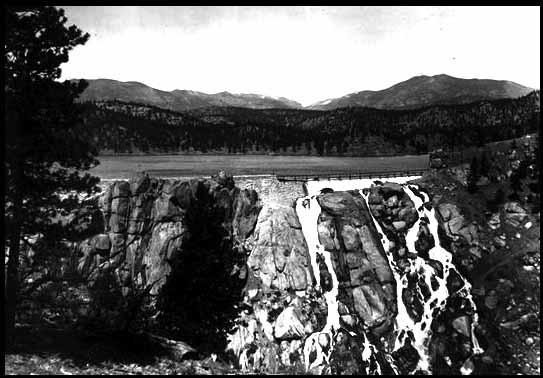
Grand County: Denver Water and several west slope organizations to announce a deal on upper Colorado transmountain diversion projects on April 28

A picture named coloradotransmountaindiversionscu.jpg

The negotiations have been under a nondisclosure agreement. Here’s the link to Allan Best’s analysis running in TheMountainNews.net. He writes:

No single part of this agreement stands out. This is not like a new dam or tunnel. Yet collectively, these elements of compromise may well represent the most important single water news since the veto of the Two Forks Dam in 1990.

Now, the various water agencies will have to sell the deal to their constituencies. Heartburn may be evident on both sides of the Continental Divide. Denver residents may very well question why, if Denver owns the water, it must “pay” Summit and Grand counties to use it.

And for the Western Slope, this does represent further export of water.

Some potential details:

– Key Western Slope organizations remove their opposition to Denver’s plan to draw more water from the close-in headwaters areas near Winter Park and in Summit County.
– The Western Slope also withdraws potential legal opposition to Denver’s plans to sell recycled water from its diversions to thirsty suburbs that now depend upon wells.
– The deal also requires Denver to step up conservation and reuse efforts.
– [The deal] specifies several tens of millions of dollars in grants to Western Slope water organizations
– [It will create] more flexible water-management regimes intended to achieve environmental goals and benefit recreational interests…

This settlement arguably represents a new template for Front Range-Western Slope relations, one that reflects a new balance of power in Colorado and also new sensibilities. This is in sharp contrast with attitudes and laws prior to the late 1960s and early 1970s.

More coverage from Mr. Best running in the Summit Daily News. From the article:

-The deal will also place limits on future diversions by both Denver and key suburbs.
– The agreement also obligates Denver to provide some of its existing water in Summit County for use by local jurisdictions
– The deal obligates Denver to keep Dillon Reservoir nearly full except in specified drought conditions.
– The agreement also requires Denver to provide cash for water projects in Summit and Grand counties.

I wonder where the Shoshone right sits in all of this?

More Colorado River Basin coverage here.

Colorado Division of Wildlife: Commissioners begin water plan reviews

A picture named grossreservoir.jpg

From the Summit Daily News:

On Thursday, the Colorado Wildlife Commission received fish and wildlife mitigation plans from Denver Water and the Northern Colorado Water Conservancy District that describe the water providers’ proposals for addressing expected impacts from two transmountain diversion projects that would provide more reliable water supplies to the Front Range…

The May meeting in Salida should allow additional time for the public to comment and provide input on the two plans as well as two voluntary enhancement plans also being submitted by the water providers. That’s in addition to numerous public and stakeholder meetings since October…

When the Wildlife Commission submits its recommendation to the Colorado Water Conservation Board, the board will then have 60 days to affirm the Commission’s recommendation as the official state position or modify the recommendation. If the board makes revisions, the governor will have 60 days to affirm or further modify the recommendation, which then becomes the official state position with regard to mitigation.

More Moffat Collection System Project coverage here and here.

More Windy Gap coverage here and here.

Denver Water releases their Moffat Collection System mitigation plan

A picture named grossdam.jpg

From the Boulder Daily Camera (Laura Snider):

…the “Fish and Wildlife Mitigation Plan” released last week by Denver Water, which says the Gross Reservoir expansion is necessary to meet a projected shortfall of 18,000 acre-feet of water per year for its customers by 2030. The water to fill the newly expanded reservoir would be drawn from the Fraser and Williams Fork rivers — both tributaries of the Colorado River — and pumped across the Continental Divide to Boulder County via the Moffat Tunnel. The Colorado Wildlife Commission now has 60 days to review the mitigation plan, which addresses impacts on both sides of the divide, before providing a recommendation to the Colorado Water Conservation Board.

In Boulder County, the mitigation plan also calls for monitoring the stability of South Boulder Creek’s stream channel above Gross Reservoir, which would carry an increased amount of water if the expansion is approved. Denver Water would also add an extra 5,000 acre-feet of water to the reservoir that could be released in the winter to increase flows in South Boulder Creek below the dam.

The mitigation plan for the Gross Reservoir expansion was released at the same time as a mitigation plan for the Windy Gap Firming Project, which also seeks to bring more water to the Front Range from the Colorado River watershed. The Windy Gap project, which is being proposed by the Northern Colorado Water Conservancy District, would bring more water to some Boulder County towns, including Erie, Superior, Lafayette, Longmont and Superior…

Managers for the two projects also worked together to create an “enhancement plan” for the upper Colorado River tributaries that would address some of the ecological issues caused by low water flow in the area. Enhancements could include narrowing and deepening the river channel in some areas…

“The heavy focus on what they call enhancements — they are fine and good — but they really address past problems,” [Drew Peternell, director of Trout Unlimited’s Colorado Water Project] said. “What does this mean about these new projects?” Peternell said he also worries that the plan lacks teeth and clear thresholds for enforcement. For example, Trout Unlimited would like assurances that Denver Water will stop withdrawing water from the upper Colorado River if stream temperatures get too high, endangering fish. And they’re also concerned that spring “flushing flows” — which are ecologically important to the river — won’t be preserved.

Here’s the link to the Colorado Division of Wildlife website for the projects.

More Moffat Collection System Project coverage here and here. More Windy Gap coverage here and here.

Colorado Division of Wildlife: Commissioners begin water plan reviews

A picture named coloradotransmountaindiversionscu.jpg

Here’s the release from the Colorado Division of Wildlife (Theo Stein):

The Colorado Wildlife Commission Thursday received Fish and Wildlife Mitigation Plans from Denver Water and the Northern Colorado Water Conservancy District that describe the water providers’ proposals for addressing expected impacts from two transmountain diversion projects that would provide more reliable water supplies to the Front Range.

The meeting was held at the Fairfield Center in Meeker.

Under state statute, the Commission now has 60 days to evaluate the proposed mitigation and provide a recommendation to the Colorado Water Conservation Board. The Commission is expected to render its decision at the June Wildlife Commission meeting in Grand Junction.

Wildlife Commission Chairman Tim Glenn said that during the May meeting in Salida, the Commission would offer the public an extended opportunity to comment and provide input on the two mitigation plans as well as two voluntary enhancement plans also being submitted by the water providers. Commissioners have held numerous public and stakeholder meetings on the issue since October.

“We’ve said all along we’re going to take the time to do this right,” said Glenn, who added that he was grateful that Denver and Northern had already incorporated public input from the February release of pre-draft mitigation proposals into the plans presented last week. “And we’re going to allocate plenty of time in Salida to make sure everyone gets heard.”

The mitigation and enhancement plans, as well as other information regarding the projects, are posted on the Moffat and Windy Gap Mitigations Projects page on the DOW web site.

Denver Water’s Moffat Collection System Project is designed to provide 18,000 acre-feet per year of new water supply to firm up the yield from Denver’s existing water rights on the West Slope, primarily by enlarging Gross Reservoir near Boulder and diverting additional water from the Fraser and Williams Fork rivers.

This project’s likely impacts include reduced stream flows and increased temperatures in the Williams Fork, Fraser and Upper Colorado River systems. The lower flows may increase sedimentation in the affected reaches of these rivers and reduce their ability to support aquatic insects and fish life. The lower flows may also reduce the ability of the river channel maintain hydrologic function over the long term.

On the East Slope, the additional diversions would send more water through the Moffat Tunnel, down South Boulder Creek and into an enlarged Gross Reservoir. The project would create a larger reservoir for recreation, but longer periods of high flows in South Boulder Creek above Gross Reservoir would reduce its ability to support trout and other aquatic wildlife.

To mitigate likely impacts from the project on the Fraser River and upper Williams Fork River, Denver is proposing to fund a Colorado River cutthroat restoration project and other aquatic habitat restoration work. On the Colorado River, Denver would install two real-time temperature monitoring gages and agree to release water in August if high temperatures threatened fish.

East of the Divide, Denver would rebuild the Gross Reservoir Dam larger than necessary to allow Boulder and Lafayette to store water to maintain stream flows during winter months, create new wetlands to replace wetlands inundated by the larger reservoir and monitor stream channel stability to identify impacts from higher flows.

Northern’s Windy Gap Firming Project is designed to provide 30,000 acre-feet per year of new water supply to firm up the yield from its existing water rights in the Upper Colorado River by diverting additional water to the proposed new Chimney Hollow Reservoir west of Longmont.

West of the Divide, impacts could include a decrease of water level in Lake Granby, a reduction in trout habitat in the Colorado River due to lower stream flows and increases in water temperature. There would also likely be a reduction in river flows preferred by rafters and kayakers, with a potential impact on anglers who fish from personal floatation equipment. Fisheries east of the Continental Divide would benefit from potential development of a new flat-water fishery in the proposed Chimney Hollow Reservoir, though some wetlands and big game habitat would be flooded by the new reservoir.

To mitigate impacts from the project on the Upper Colorado River system, Northern is proposing to manage their pumping to maintain water levels in Lake Granby and look for ways to improve flushing flows and provide cooler summer water temperatures in the Upper Colorado River below Windy Gap Reservoir. Northern would contribute to water quality projects to reduce nutrient loading in Shadow Mountain, Lake Granby and Grand Lake. East of the Divide, Northern is proposing to replace lost wetlands and improve enhance wildlife habitat near the new Chimney Hollow Reservoir.

Under state statute, the Commission’s authority is limited to a review of plans to mitigate impacts from proposed projects. Restoring the river to a past condition is beyond the scope of the project approval process and Wildlife Commission authority. However, Denver and Northern are voluntarily proposing steps to address impacts of existing water development projects to fish and wildlife resources on both sides of the Continental Divide by enhancing current conditions.

The enhancement plans would support the Upper Colorado River Habitat Project, a collaborative plan that is designed to restore a more functional channel system and improve habitat for trout and other important aquatic species between Windy Gap Reservoir and the Kemp-Breeze State Wildlife Area.

With the plans submitted, the Division has 10 days to perform a completeness review of the proposals. When the Wildlife Commission submits its recommendation to the Colorado Water Conservation Board, the CWCB will then have 60 days to affirm the Commission’s recommendation as the official state position or modify the recommendation. If the CWCB makes revisions, the Governor will have 60 days to affirm or further modify the recommendation, which then becomes the official state position with regard to mitigation. The final state position is then transmitted to the appropriate federal permitting agencies.

Also during Thursday’s morning session, the Commission received a presentation on draft regulations to amend the existing prohibition on dogs at Lon Hagler and Lone Tree Reservoir State Wildlife Areas near Loveland.

Under the proposed change, dogs must be on a leash less than six feet long, unless they are on a boat. In addition, dogs would be prohibited from portions of both properties during certain times of the year except as an aid to hunting. The current dog ban would be maintained around the Lon Hagler annex pond and adjacent land to protect wildlife habitat. The Commission is scheduled to consider final approval of the change at the May meeting in Salida.

The Commission also heard a presentation on a mule deer research proposal for Middle Park that will help Division biologists better manage deer herds across the state. The proposed study is designed to measure natural buck survival under different harvest structures. During the study, buck hunting pressure would be maintained at current levels throughout the Middle Park data analysis unit for three years. During the following four years, harvest rates on half of the unit would be increased while harvest rates would be decreased on the remaining half of the unit. Natural buck survival would be measured on each half of the unit when hunting season is closed.

The results will help biologists understand the impact hunting pressure has on the survival of mule deer bucks and their subsequent availability for harvest, and improve the Division’s ability to inform sportsmen of tradeoffs between managing for big bucks and hunter opportunity.

The Wildlife Commission meets monthly and travels to communities around the state to facilitate public participation in its processes. During the rest of 2011, the Commission is scheduled to meet in Salida in May, Grand Junction in June and in locations to be determined from July through December.

The complete agenda for the April Wildlife Commission workshop, as well as a discussion of proposed regulation changes for Lon Hagler and Lone Tree state wildlife areas, can be found on the Wildlife Commission web page at: http://wildlife.state.co.us/WildlifeCommission/Archives/2011/April72011.htm.

More information on Denver Water’s Moffat Collection System proposal and Northern’s Windy Gap Firming Project may be found here: http://wildlife.state.co.us/LandWater/Water/MoffatWindyGapMitigationProjects/.

The Colorado Wildlife Commission is an 11-member board appointed by the governor. The Wildlife Commission sets Division of Wildlife regulations and policies for hunting, fishing, watchable wildlife, nongame, threatened and endangered species. The Commission also oversees Division of Wildlife land purchases and property regulations.

More Moffat Collection System Project coverage here and here. More Windy Gap coverage here and here.

The Colorado Division of Wildlife commissioners will open a 60 day comment period for the Moffat Collection System Project and Windy Gap Firming Project Thursday

A picture named eisenhowerfishing.jpg

Here’s the release from the Colorado Division of Wildlife (Theo Stein):

The Colorado Wildlife Commission will initiate a formal review of plans to mitigate impacts to fish and wildlife resources that would be created by two major transmountain water development projects at its April 7 workshop at the Fairfield Center in Meeker.

The 60-day review of mitigation plans to be presented by Denver Water and the Northern Colorado Water Conservancy District is required by statute.

Denver Water is proposing to firm up the yield from its existing water rights on the West Slope, primarily by enlarging Boulder’s Gross Reservoir and diverting additional water from the Fraser and Williams Fork rivers. Northern is proposing to firm up the yield from its existing water rights in the Upper Colorado River by diverting additional water to the proposed new Chimney Hollow Reservoir west of Longmont.

Under state statute, the Commission’s authority is limited to a review of plans to mitigate impacts from proposed projects. Restoring the river to a past condition is beyond the scope of the project approval process and Wildlife Commission authority.

However, Denver and Northern are voluntarily proposing steps to address impacts of existing water development projects to fish and wildlife resources on both sides of the Continental Divide. Both the mitigation and enhancement plans will be presented to the Commission at the meeting.

In other business, the Commission will consider draft regulations to amend the existing prohibition on dogs at Lon Hagler and Lone Tree Reservoir state wildlife areas near Loveland.

Under the proposed change, dogs must be on a leash less than six feet long, unless they are on a boat in which case a leash is not required. Additionally, dogs would be prohibited from portions of both properties during certain times of the year except as an aid to hunting. The current dog ban would be maintained around the Lon Hagler annex pond and adjacent land to protect wildlife habitat.

The Wildlife Commission meets monthly and travels to communities around the state to facilitate public participation in its processes. During the rest of 2011, the Commission is scheduled meet in Salida in May, Grand Junction in June and in locations to be determined from July through December.

The complete agenda for the April Wildlife Commission workshop, as well as a discussion of proposed regulation changes for Lon Hagler and Lone Tree state wildlife areas, can be found on the Wildlife Commission web page at: http://wildlife.state.co.us/WildlifeCommission/Archives/2011/April72011.htm.

More information on Denver Water’s Moffat Collection System proposal and Northern’s Windy Gap Firming Project may be found here: http://wildlife.state.co.us/LandWater/Water/MoffatWindyGapMitigationProjects/.

Members of the public who are unable to attend Commission meetings or workshops can listen to the proceedings through a link on the DOW’s website. This opportunity is provided to keep constituents better informed about the development of regulations by the Commission and how they and DOW staff are resolving issues facing Colorado’s wildlife.

To access the live audio feed during the meeting, click on the “listen to live audio” link at the bottom of the Commission webpage at: http://wildlife.state.co.us/WildlifeCommission/

The Colorado Wildlife Commission is an 11-member board appointed by the governor. The Wildlife Commission sets Division of Wildlife regulations and policies for hunting, fishing, watchable wildlife, nongame, threatened and endangered species. The Commission also oversees Division of Wildlife land purchases and property regulations.

From The Denver Post (Scott Willoughby):

The Colorado Wildlife Commission will initiate a formal review of plans to mitigate impacts to fish and wildlife resources that would be created by two major trans-mountain water-development projects at its Thursday workshop at the Fairfield Center in Meeker.

Denver Water is proposing to firm up the yield from its existing water rights on the Western Slope, primarily by enlarging Boulder’s Gross Reservoir and diverting additional water from the Fraser and Williams Fork rivers. Northern Colorado Water Conservancy District is proposing to firm up the yield from its existing water rights in the Upper Colorado River by diverting additional water to the proposed Chimney Hollow Reservoir west of Longmont.

The 60-day review of mitigation plans to be presented by Denver Water and Northern is required by statute. A voluntary enhancement plan designed to address impacts of existing water-development projects also will be presented.

More Moffat Collection System Project coverage here and here. More Windy Gap Firming Project coverage here and here.

Colorado River basin: Are transmountain diversions degrading the Upper Colorado River riparian habitat?

A picture named fraservalleycollection.jpg

From The Denver Post (Scott Willoughby):

“We do a lot of guiding on the Fraser and Colorado rivers, and even before this we’ve lost a lot of insects. The green drakes on the Fraser are completely gone, a whole insect class that’s just disappeared,” said Ehlert, owner of Winter Park Fly Fisher and a 20-year guide with Grand County Fishing Company. “The other one was the salmonfly hatch on the Colorado. We still have them below Kremmling. But we used to get them on the river above Kremmling and now they are completely gone.” Ehlert believes he knows the culprit behind the mystery, and he’s not alone in pointing his finger squarely at trans-mountain water diversions he believes are sucking the life out of the Fraser River and Colorado headwaters. Shallow rivers and rising water temperatures have pushed the ecosystem to the brink, he said. “We’re fighting right now just to keep the water we have in the river, but I personally think we’re not being aggressive enough. We need to get the water back that’s gone,” he said. “If we lose any more, I think the whole system is going to crash. It may be too late now. Once the insects and food are gone, the fish are going to follow.”

Concerns over the health of the entire Upper Colorado River drainage have been magnified in recent months by proposals from Denver Water and Northern Colorado Water Conservancy District to annually draw an additional 45,000 acre feet from the Fraser, Williams Fork and Blue rivers through the Moffat Collection System Project and Windy Gap Firming Project. If approved, the water that would otherwise make its way into the Upper Colorado will instead be diverted across the Divide primarily for residential use among multiple municipalities along the Front Range from Greeley to Denver.

As part of the proposal, the water districts are expected to submit both a Fish and Wildlife Mitigation Plan and an Enhancement Plan to the Colorado Wildlife Commission at the April 7 workshop in Meeker. While the required FWMP addresses expected future impacts from the two projects, the optional enhancement plans are designed to address past and ongoing impacts to the river suffering the combined effects of development, agriculture, sediment loading, whirling disease and diversions, among others. The formal presentation of the plan starts a 60-day clock in which the Wildlife Commission will determine its official recommendation for or against the projects to the state.

More Colorado River basin coverage here.

Colorado Trout Unlimited’s new video ‘Tapped Out’

A picture named coloradotransmountaindiversions.jpg

From email from Colorado Trout Unlimited (Sinjin Eberle):

In Colorado, cold, clean water is our most precious resource. Healthy, free-flowing rivers support recreation opportunities like fishing, kayaking and rafting, while also supplying drinking and irrigation water to Colorado’s families and farms. Unfortunately, many of the rivers and streams that we depend on to sustain life and our western way of living are on the brink of collapse. The Colorado River is one such river on the brink.

Today, over 50% of the Upper Colorado River’s water is permanently removed and shipped across the Rocky Mountains to growing Front Range cities and suburbs, threatening the health of fish, wildlife and local headwaters communities. And Now, despite this, proposals like the Moffat and Windy Gap Firming Project threaten to TAKE MORE, leaving less for fisherman, farmers, and West Slope communities and threatening the very survival of our state’s namesake river.

In honor of World Water Day, please take a moment to watch our new video, ‘Tapped Out,’ then take the pledge to use our water resources wisely and keep the Colorado River flowing.

More Colorado River basin coverage here.

A Sustainable Solution for Meeting Colorado’s Water Needs Through 2050

I first reported about this report on Wednesday. Here’s an analysis from Alan Prendergast writing for Westword. Click through and read the whole article. Here’s an excerpt:

The challenge is daunting. The population of eleven Front Range counties is expected to swell by another 2.5 million people by 2050, pushing municipal water needs to more than a million acre-feet of water a year. That’s about 365,000 acre-feet more than the available supply. But Filling the Gap makes the case for pragmatic planning now rather than panic later.

Some additional dams and diversion projects are deemed acceptable by the report’s authors. But the Upper Colorado River Basin is already quite stressed by the Moffat, Windy Gap and Colorado-Big Thompson projects, leaving anemic streams and declining water quality. Fully two-thirds of the native waters from the region are drained into the Front Range these days, and city planners have their eyes on much more.

But the new study calculates that much of the increasing demand can be met through common-sense conservation strategies, better cooperation among agricultural and municipal interests, and other measures that don’t involve tapping deeper into overextended supplies.


Colorado River District: Tom Sharp named president of the board of directors

A picture named coloradoriverbasincgs.jpg

From Steamboat Today (Mike Lawrence):

Steamboat Springs attorney Tom Sharp has been named the new president of the Colorado River District’s board of directors. Sharp is the board’s former vice president, has served as a director of the Upper Yampa Water Conservancy District since 1977 and has held numerous prominent, water-related positions in Northwest Colorado…

Sharp said much of his time leading the district will be spent in continuing negotiations with Denver Water and the Northern Colorado Water Con servancy Dist rict, two Front Range entities that are seeking to increase their usage of water from the Colorado River system to fill potential new storage capacity on the Front Range…

“Denver Water has agreed that it will not seek to acquire any new water right on the West Slope, including the Yampa River, beyond its existing supplies except with the cooperation from the (Colorado) River District and the county commissioners of the affected counties,” Sharp said Wednesday in his Fourth Street office. “What we’re principally going to be spending time on this year is finalizing the nuts and bolts of that agreement.”[…]

Colorado River District spokesman Jim Pokrandt said Sharp is more than qualified to guide the district through the challenging times ahead. “Tom is certainly an experienced water leader,” Pokrandt said. “He’s a veteran of serving on the Colorado Water Conservation Board and the Colorado Water and Power Authority over the years. … It’s not his first time around the rodeo.”

More Colorado River basin coverage here.
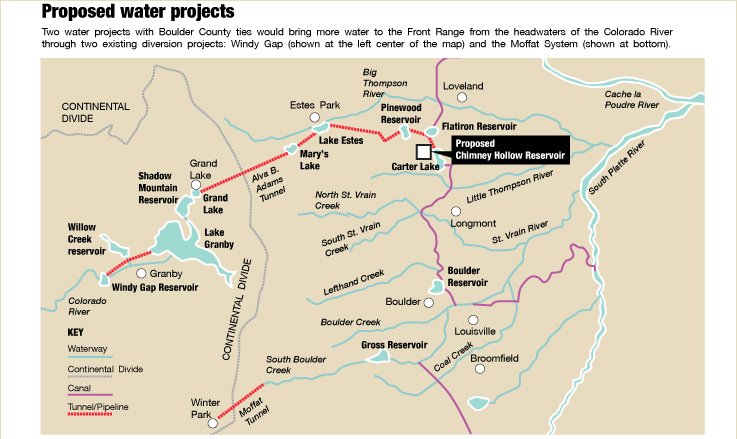
Moffat Collection System Project: CDOW public meetings January 18 and 20

A picture named greenbackvscorivercutthroat.jpg

Here’s the release from the Colorado Division of Wildlife (Randy Hampton). Here’s an excerpt:

Members of the Colorado Wildlife Commission will be hosting two public meetings next week to hear concerns about the impact of Denver Water’s proposed Moffat Collection System Project on fish and aquatic resources.

On Tuesday, Jan. 18, the public is invited to a meeting being hosted by Wildlife Commissioners Dorothea Farris and Dennis Buechler at the Inn at Silver Creek in Granby.

On Thursday, Jan. 20, Wildlife Commissioners Bob Streeter and David Brougham will solicit public comment at the Boulder Senior Center East. This meeting was previously scheduled to occur at The Ranch in Larimer County, but has been moved to the Boulder Senior Center East for the public’s convenience.

Denver Water proposes to meet projected future water needs by developing 18,000 acre-feet per year of new, annual firm yield water that would be delivered to its Front Range delivery system. Denver Water’s preferred project to meet this need is to raise Gross Reservoir in Boulder County to store an additional 72,000 acre-feet of water diverted from the Fraser and Williams Fork river systems. The proposed project would increase Gross Reservoir from its current storage capacity of 41,811 acre-feet to approximately 114,000 acre-feet.

As proponent of the project, Denver Water is developing a mitigation plan that is scheduled to be presented to the Wildlife Commission at its March meeting in Denver. The project must receive a federal permit from the U.S. Army Corps of Engineers. However, state statute does give the Colorado Wildlife Commission the opportunity to review the mitigation plans and work with the proponents to ensure that the plans address project impacts. The Division’s goal is to identify habitat management actions that will ensure a functioning river that supports fish and wildlife given anticipated future flow conditions. Restoring the river to a past condition is beyond the scope of the project approval process and Wildlife Commission authority.

Ken Kehmeier and Sherman Hebein, senior aquatic biologists for the DOW’s Northeast and Northwest Regions, will provide a presentation on the project and lend their expertise to the discussion.

More Moffat Collection System Project coverage here and here.

Moffat Collection System Project: Department of Wildlife public meeting January 20

A picture named grizzlyfishing.jpg

From email from the Colorado Division of Wildlife (Jennifer Churchill):

Commissioners Bob Streeter and David Brougham will meet with the public on Thursday, January 20 at The Ranch in Loveland to take public comment on the potential impacts of the Moffat Collection System Project.

Denver Water proposes to meet projected future water needs by developing 18,000 acre-feet per year of new, annual firm yield water that would be delivered to the Moffat Treatment Plant and raw water customers upstream of the Moffat Treatment. Denver Water’s preferred project to meet this need is to raise Gross Reservoir in Boulder County to store an additional 72,000 acre-feet of water diverted from the Fraser and Williams Fork river systems.

To learn more about the project, visit:
https://www.nwo.usace.army.mil/html/od-tl/eis/moffat-eis.html”

Additional information on the project can be found at: http://www.denverwater.org/SupplyPlanning/Planning/FutureWaterSupply/WaterSupplyProjects/Moffat/

Commissioner Streeter, who represents northern and northeastern Colorado and the public at large, is a retired wildlife professional and lives in eastern Larimer County. He represents the Colorado Wildlife Commission on the Great Outdoors Colorado (GOCO) board and is a representative to the South Platte Basin Roundtable (which includes the Republican Basin). Commissioner Streeter has an agricultural background and is an avid outdoor enthusiast, hunter and fisherman. Issues can be brought to Commissioner Streeter’s attention prior to the meeting by contacting him at 970-222-0383 or rgstreeter@gmail.com.

Commissioner Brougham is an attorney based in Denver, primarily involved in defending public entities and officials. He is a lifelong hunter and fisherman and was appointed by Governor Ritter to represent the public at-large. As a military officer he was a naval aviator and is a Vietnam veteran. In addition, he was a chief deputy district attorney in both the Second and Fourteenth Judicial Districts and a member of the Colorado District Attorney’s Council. Mr. Brougham is a member of numerous associations, including Pheasants Forever, Ducks Unlimited and the American College of Trial Lawyers.

Ken Kehmeier and Sherman Hebein, senior aquatic biologists for the northeast and northwest regions, will provide a presentation on the project and lend their expertise to the discussion.

WHAT: Public Input on Moffat Collection System Project with Wildlife Commissioners Streeter and Brougham

WHEN: Thursday, January 20, 2011, 6:30 pm to 8:30 pm

WHERE: Laporte and Timnath Rooms, Thomas McKee Building at The Ranch – Larimer County Fairgrounds and Event Complex, 5280 Arena Circle, Loveland

Questions? Please contact Jennifer Churchill, Public Information Officer for the northeast region, at 303-291-7234 or jennifer.churchill@state.co.us

More Moffat Collection System Project coverage here and here.

Moffat Collection System Project: CDOW impact report

A picture named grossdam.jpg

From the Greeley Gazette (Mike Bauman):

Ken Kehmeier, [CDOW] senior aquatic biologist for the Platte River Basin, told commissioners that Denver Water’s Moffat Firming project would result in reduced stream flows and increased temperatures in the Williams Fork, Fraser and Upper Colorado River systems. According to Kehmeier, the lower flows would increase sedimentation in the affected reaches of these rivers and reduce their ability to support aquatic insects and fish life.

On the East Slope, the additional diversions would send more water through the Moffat Tunnel, down South Boulder Creek and into an enlarged Gross Reservoir in Boulder County, Kehmeier said. The project would create a larger reservoir for recreation, however, longer periods of high flows in South Boulder Creek above Gross Reservoir would reduce its ability to support trout and other aquatic wildlife, he said…

Kehmeier noted that Denver Water could opt to divert an additional 16,000 acre feet, mainly through Roberts Tunnel and South Platte basin through the southern part of its system without getting a new federal permit. That would likely cause significant impacts to Dillon Reservoir and the high-value trout fishery along the South Platte River, Kehmeier said, and it would not give the Wildlife Commission an opportunity to negotiate mitigation for the increased diversions.

More Moffat Collection System Project coverage here and here.

Moffat Collection System Project and Windy Gap Firming Project update

A picture named windygapreservoir.jpg

From KUNC (Kirk Siegler):

Over the years, Denver Water has built four trans-mountain diversions, five canals and 16 reservoirs to serve its 1.3 million customers. Northern Water relies on 110 miles worth of canals and even a tunnel beneath Rocky Mountain National Park to pump western slope water to its 13 reservoirs. Both agencies have pending projects to expand this footprint…

“This project allows us to take the water that we are currently entitled to take under the Windy Gap Project,” says Jeff Drager, Northern Water’s project manager overseeing the Windy Gap Firming Project. He says making the water more “firm,” or more reliable, means the water customers along the northern Front Range will be able to count on that water year in and year out…

These concerns set the backdrop of a State Wildlife Commission meeting on the two water projects last week in Colorado Springs. A relatively-unknown state law requires the commission to sign off on mitigation plans for water projects like these, which get passed on to federal regulators who have the final say on any proposal. “The number one concern of the Grand County Commissioners, and they said to say this very loudly, is to protect the aquatic environment,” said attorney Barbara Green, who represents the Grand County Commission. “That is their number one concern about these two projects.”[…]

Division of Wildlife biologist Ken Kehmeier said from 1985 to 2010, lower flows have led to some uninvited visitors, wiping out two mayfly and six stone fly insects that trout depend on. “We have chironomids and some muelids that are now dominant groups in some of these areas, these two species are generally indicators of water quality problems,” Kehmeier said. Which could have implications for all of us. So officials with Denver and Northern water say they’re working together to ensure that their projects’ impacts will be negligible.

Northern’s Jeff Drager says his agency’s plans could actually help the river, by carefully taking less water during dry months, and allowing more to flow down the western slope during peak runoff periods.

More Moffat Collection System coverage here and here. More Windy Gap coverage here and here.

Moffat Collection System Project: Colorado Department of Wildlife public meeting recap

A picture named fraservalleycollection.jpg

Here’s the release from the DOW:

A Denver Water proposal to increase the amount of water being diverted to the Front Range would impact five rivers on both sides of the Continental Divide, according to a report presented to the Colorado Wildlife Commission Thursday.

Denver Water’s Moffat Firming project would increase the amount of water imported to the Front Range from the Fraser and Williams Fork drainages by 18,000-acre feet, providing a more reliable supply for the utility’s 1.3 million customers. Under state law, the Wildlife Commission will be asked to review and comment on a plan that Denver Water will develop to mitigate impacts of the project, which will then be forwarded to the Federal permitting agency.

“A healthy Colorado River is critically important to the future of this state,” said Tim Glenn, chairman of the Wildlife Commission. “Water projects like this have to be done right if we’re going to have a healthy river in the future.”

The commission also received a presentation on the Division of Wildlife’s marketing, recruitment and retention efforts, an update on the status of a potential wolverine reintroduction project and reviewed draft Habitat Partnership Program management plans for South Park and the North Fork of the Gunnison that are designed to reduce conflicts between wildlife and agricultural operations. The meeting was held in the Crowne Plaza at 2886 S. Circle Drive in Colorado Springs.

Ken Kehmeier, senior aquatic biologist for the Platte River Basin, told commissioners that Denver Water’s Moffat Firming project would result in reduced stream flows and increased temperatures in the Williams Fork, Fraser and Upper Colorado River systems. The lower flows would increase sedimentation in the affected reaches of these rivers, reducing their ability to support aquatic insects and fish life, Kehmeier said.

On the East Slope, the additional diversions would send more water through the Moffat Tunnel, down South Boulder Creek and into an enlarged Gross Reservoir in Boulder County, Kehmeier said. The project would create a larger reservoir for recreation, but longer periods of high flows in South Boulder Creek above Gross Reservoir would reduce its ability to support trout and other aquatic wildlife, he said.

First Assistant Attorney General Tim Monahan explained that state statutes allow the Wildlife Commission to address impacts of Denver Water’s new diversions so long as the mitigation is economically reasonable and maintains balance between development and reducing impacts to fish and wildlife resources. The commission can also address the cumulative impacts of this project and the Northern Colorado Water Conservancy District’s nearby Windy Gap Firming Project on the Upper Colorado River.

Kehmeier noted that Denver Water could opt to divert an additional 16,000 acre feet, mainly through Roberts Tunnel and South Platte basin through the southern part of its system without getting a new federal permit. That would likely cause significant impacts to Dillon Reservoir and the high-value trout fishery along the South Platte River, Kehmeier said, and it would not give the Wildlife Commission an opportunity to negotiate mitigation for the increased diversions.

Division of Wildlife Director Tom Remington told commissioners that the impending stakeholder meetings offered an opportunity to determine what it is going to take to fix the Colorado river from a technical standpoint, and focusing on how much of that work should be considered mitigation vs. enhancement were premature at this point. Attorney Barbara Greene, representing Grand County, said the county greatly appreciated the Wildlife Commission’s focus on the issue and reported that the county was close to an agreement in principle with Denver water regarding impacts from current diversions.

More coverage from the Summit County Citizens Voice:

Colorado Division of Wildlife Director Tom Remington told commissioners that the impending stakeholder meetings offered an opportunity to determine what it is going to take to fix the Colorado river from a technical standpoint, and focusing on how much of that work should be considered mitigation vs. enhancement were premature at this point.

Attorney Barbara Greene, representing Grand County, said the county greatly appreciated the Wildlife Commission’s focus on the issue and reported that the county was close to an agreement in principle with Denver water regarding impacts from current diversions.

First Assistant Attorney General Tim Monahan explained that state statutes allow the Wildlife Commission to address impacts of Denver Water’s new diversions so long as the mitigation is economically reasonable and maintains balance between development and reducing impacts to fish and wildlife resources. The commission can also address the cumulative impacts of this project and the Northern Colorado Water Conservancy District’s nearby Windy Gap Firming Project on the Upper Colorado River…

On the East Slope, the diversions would send more water through the Moffat Tunnel, down South Boulder Creek and into an enlarged Gross Reservoir in Boulder County, [Ken Kehmaier, senior aquatic biologist for the Platte River Basin] said. The project would create a larger reservoir for recreation. But longer periods of high flows in South Boulder Creek above Gross Reservoir would reduce the stream’s ability to support trout and other aquatic wildlife, he said. Kehmeier explained that Denver Water could opt to divert an additional 16,000 acre feet, mainly through the Roberts Tunnel and via the South Platte basin through the southern part of its system without getting a new federal permit. That would likely cause significant impacts to Dillon Reservoir and the high-value trout fishery along the South Platte River, Kehmeier said, and it would not give the Wildlife Commission an opportunity to negotiate mitigation for the increased diversions.

More Colorado River basin coverage here.

Moffat Collection System Project: The Colorado Wildlife Commission is looking at the possible impacts to the fishery and riparian environment

A picture named grossdam.jpg

From KUNC (Kirk Siegler):

Meeting in Colorado Springs Thursday, state wildlife commissioners got their first look at a proposal by Denver Water to increase the amount of water it sends to the Front Range from the Frasier River and its tributaries in Grand County…

The state wildlife commission has a say though because of concerns about further de-watering rivers, and what that means for trout and the rest of the ecosystem.

Speaking during a public comment session at a hotel conference center, Barbara Green also alluded to economical concerns. Fishing and river guiding is a big business in the central mountains. “The number one concern of the Grand County commissioners, and they said to say this in a very loud voice, is to protect the aquatic environment,” said Green, an attorney representing the Grand County Commission. “That is their number one concern about these two projects,” she said.

More Moffat Collection System Project coverage here and here.

Interbasin Compact Committee meeting recap: Strategies to take the pressure off agricultural water

A picture named ibccroundtable.jpg

From The Pueblo Chieftain (Patrick Malone):

During its meeting at the Denver West Sheraton on Wednesday, the IBCC unveiled that progress in a draft strategy for sustaining the state’s future water supply. Its four-pronged tenets are a blend of water conservation, identified projects and processes (IPPs), agricultural transfers and developing new supplies.

While agricultural transfers are a staple in the strategy, delicate handling of them and a mindful perspective on their impact also are keys, and minimizing agricultural transfers is an objective of the IBCC’s strategy. “Large-scale dryup of irrigated agriculture has considerable adverse economic and environmental impacts,” the report said. “While some future portion of (municipal and industrial) water will come from agricultural sources, encouraging alternative agricultural transfers and new water supply development is essential to prevent the dryup of agricultural land. To the extent the conservation, IPPs and new water supply development is successful, less water will be transferred out of agriculture to meet the (municipal and industrial) gap.”

One mechanism proposed in the report to protect agricultural water is a legislative fix that makes long-term leasing of water rights more enticing to municipalities. [IBCC member Jay Winner of Pueblo] said that could be an effective step away from the “buy-and-dry” approach that can cripple agricultural areas and the economies they support.

Winner forecast that projects mirroring the Arkansas Valley Super Ditch that feed the urban thirst for water while halting buy-and-dry situations will be another alternative to selling the water that feeds Colorado farms. “It could be the model for the Western United States that keeps agriculture whole while saving municipalities,” Winner said…

The IBCC recommended proceeding with planned water projects such as the Super Ditch in order to be prepared for the population boom and to accommodate its water needs as it gradually arrives. Among the report’s more bold recommendations was state funding for those long-term projects, even if it costs $18 billion. That is a monumental sum at a time when the state is confronting a $1 billion budget deficit, and the general fund at the Colorado General Assembly’s disposal is about $7 billion annually…

Among the more radical ideas contained in the report were the means of conservation. They included adopting a statewide plumbing code for reduced flows and requiring retrofits of water-using fixtures (such as toilets and sinks) to meet certain use conservation standards before a building or house could be sold. Gov. Bill Ritter said he recognized the value of those recommendations, but warned the IBCC to expect a fight from cities and counties that presently enjoy local control over those matters…

Winner said the conservation efforts outlined in the plan aren’t folly, but will be absolutely necessary in order for the state’s water needs to be met a half-century from now. “If the people of Colorado want the state that they envision, they need to take a serious look at this now,” Winner said. Other strategies proposed in the plan include greater state support from permitting to completion of water projects and steep fees to areas that gain water by taking it from another part of the state…

Winner said the timeline is indefinite for the recommendations in the plan to progress from draft to implementation. Certain aspects could be the topic of legislation in the General Assembly when it reconvenes in January, but much of the report will next be vetted by basin roundtables throughout the state.

More coverage — Governor Ritter’s speech at the meeting — from Patrick Malone writing for The Pueblo Chieftain. From the article:

The only way to balance the competing water interests of municipalities and agriculture is to move forward with a strategy for sustained water availability that takes both into account, Ritter said. Likewise, other opposing water forces — energy and nonenergy users, and consumptive and nonconsumptive uses — also must be weighed on the scale of reason when crafting water strategies for the future, the governor said. “You have to reinvent this,” Ritter said, emphasizing that factious fighting between the competing interests in the water arena must join forces to assure that none is left without…

Along with funding for higher education, Ritter said he warned his successor, Gov.-elect John Hickenlooper, that water is a matter of paramount importance awaiting him when he takes office in January. Ritter interjected his belief that human-caused global warming could impact precipitation levels in the future and further limit the water available to the state in the future. He urged even those in the water community who doubt global-warming theories to take heed of the projected impact on precipitation as they plan for the future. “You can’t think about water without some of the forecasting that’s been done, because it’s dire,” Ritter said. “I don’t think it’s something you can dismiss or ignore in terms of planning the future of water availability in Colorado.”

More coverage from the Associated Press (Stephen K. Paulson) via CB Online. From the article:

The panel suggested the state should coordinate, support and endorse projects. One of their main conclusions was that the state needs more storage on the Western Slope. They also suggested that the governor issue an executive order to state agencies to implement a water use reduction and conservation plan. Suggestions included requiring people who sell their house to replace appliances with water efficient models and help utilities reduce water use. Until now, the state has left most water development projects to loca l communities and shied away from promoting water projects until the federal government gave its approval…

“We can’t get to a state with 10 million people without thinking about water. We have often prided ourselves on local control of these issues … but at the same time, we need the statewide vision. If we don’t have statewide vision, we will do the unthinkable, which is become less of an agricultural state and become a state where water usage is for residential and municipal use,” he told the panel…

Former state Agriculture Commissioner Don Ament, a farmer who attended the water basin meetings but has no official role, said the report does little to solve problems in conservation, loss of agricultural land and finding new water sources.

More IBCC — basin roundtables coverage here.

Denver Water’s proposed rate increases attract the focus of councillor Jeanne Faatz

From The Denver Daily News (Peter Marcus):

The Board of Water Commissioners will hold a public hearing on Wednesday, as well as again next Wednesday, before voting on the proposal. The plan calls for an average increase for next year of $41 per year for Denver customers, or an increase of about $3.40 per month. The increase would be more than 10 percent for next year and comes as Denver Water officials warn that consumers may see an increase of 31 percent over the next three years. If approved, the increased water rates would take effect in March 2011.

Suburban residential customers would see an average increase of about $2.66 per month, or about $32 per year.

The proposal has already made a splash with Denver City Council members – but not the kind of splash that Denver Water would have liked. In addition to raising concerns over the impact a rate increase could have on constituents, Councilwoman Jeanne Faatz took the opportunity last month to raise questions over the organization of the Denver Water board itself.

Currently, the Board of Water Commissioners is a five-member board that is appointed by the mayor of Denver. Faatz questioned whether it wouldn’t be a better idea to switch to a board that is elected by the people, to perhaps better represent the interests of voters.

“Our same people are paying these rates and they have definitely let us know that they are not interested in increased taxes and we have tried to listen to that and be responsive, and they’re not interested in higher fees, and yet you all just pretty much as an enterprise get to set what you set and charge them,” Faatz told Denver Water officials at a City Council briefing last month.

More Denver Water coverage here.

Grand County: Denver Water and the Northern Colorado Water Conservancy District plan to coordinate efforts to manage the impacts of the Windy Gap Firming Project and the Moffat Collection System Project

A picture named coloradorivergranby.jpg

Here’s a report from Tonya Bina writing for the Sky-Hi Daily News. From the article:

The news that Colorado’s largest utility companies Denver Water and Northern would be working together to manage impacts of their respective firming projects was a small victory for West Slope residents, who’ve feared either project could be approved without factoring in river depletions from the other. The Colorado Division of Wildlife is charged with working with each water provider to “create a healthy system downstream of Windy Gap,” said Ken Kehmeier, the Division of Wildlife’s senior biologist of northeast Colorado, speaking of the threatened upper Colorado River. “We hope the workshops with stakeholders can be a give and take, to come up with the most viable plan we can for the river.”[…[

“We need to be very diligent and thoughtful about what we put together,” said John Singletary, a Pueblo rancher and one of three Wildlife Commissioners who were present at the SilverCreek Convention Center in Granby on Oct. 28, “because too often in Colorado’s past, mistakes were made that can’t be corrected. And so I hope we are very diligent … I for one am delighted to hear the Northern District and Denver are going to work together on this thing, because I don’t know how we could ever make a decision on the future of the Colorado River without having that … The Colorado is a special place, and if we don’t treat this right, this will truly be the river of no return.”

Representatives from both Northern and Denver say the pledge to approach river health jointly is simply a continuation of what the agencies have already been doing…

Northern’s Windy Gap Firming Project Manager Jeff Drager maintains that the “accumulative impacts” of the two projects already have been addressed in the district’s Draft Environmental Impact Statement and in the joint proposal of April 2009. But if working with Denver on the DOW’s plan “alleviates the fears from West Slope friends, then we’re fine with it,” he said…

Northern anticipates its Final Environmental Impact Statement will be released by this January, and Denver Water is planning for a mid-2011 release of its Moffat Final EIS, presently under review by the Army Corps of Engineers.

At its public meeting in Grand County, before individuals went to the microphone for the chance to voice their views, the Colorado Division of Wildlife presented its own data of East and West Slope impacts along with data from the Windy Gap draft EIS. The DOW highlighted a long list of river threats, such as decreases in trout populations, increased water temperatures, reduction in flows and decreases in fish food such as stoneflies and mayflies below Windy Gap, increased sedimentation, lower levels in Granby Reservoir and increased nutrient loading in Granby and Shadow Mountain reservoirs and Grand Lake. With the firming projects, the impacts would also affect kayaking and rafting on the Colorado River, create limited access to boat ramps on locations of Lake Granby, and create a detriment to fishing guide businesses — all hurting the local economy.

More Windy Gap coverage here and here. More Moffat Collection System Project coverage here.

Moffat Collection System Project: What will mitigation look like?

A picture named fraservalleycollection.jpg

Here’s a look at the potential impacts of Denver Water’s Moffat Collection System Project from the Grand County point of view, from the Summit County Citizens Voice. Click through to read the whole thing and while you’re there check out the photo essay describing impacts from the current diversion system. From the article:

“We want to protect the resource, which is our economy,” said Grand County Commissioner James Newberry, addressing a small group of journalists during a lunch break on a day-long tour of the diversion system, which already gulps more than half the river’s native flows from the crystal-clear tributaries in the Fraser River Valley. And Newberry made it clear that it’s not only the impacts from the proposed new diversions that are under scrutiny. Before Grand County gives up another drop willingly, Denver Water needs to address cumulative impacts from existing projects. “We have a hole in the river from past diversions,” he said.

More Moffat Collection System Project coverage here.

Moffat Collection System Project: Grand County meeting recap

A picture named grossdam

From the Sky-Hi Daily News (Tonya Bina):

On Monday, [Kirk Klancke] along with Grand County commissioners, Grand County’s major landowners along the river, and other representatives from the Colorado and National Trout Unlimited met with three out of five Denver Water Board members and staff at a conference room at Winter Park Resort. For Klancke, who has supplied a strong local voice of Fraser River protection in firming project proceedings, the meeting was his first opportunity to sit at the table to learn the status of negotiations with key decision makers. For him, he said, it quelled many of his concerns. “It shined the light on what’s going on. Powerful people are saying that their interests are the same as ours, that they can keep a river alive and have a water supply,” he said.

Having heard about [Moffat Collection System Project] negotiations “behind closed doors” between Denver Water and West Slope interests for 3.5 years, Klancke said it was refreshing to hear first-hand Denver Water’s perspective. Klancke said he came out of the meeting feeling encouraged that the political will of that particular water utility appears to be to make steps to protect the resource. “I felt like history was being made as we sat there,” Klancke said.

More Moffat Collection System Project coverage here.

Cash for grass: Drew Beckwith — ‘The utility pays money for a customer to rip out their turf’

A picture named fraservalleycollection

From CBS4Denver.com (Paul Day):

Jim Creek is one of many tributaries to the Fraser River. In this valley, Denver Water operates dozens of diversion structures that siphon water from what would naturally flow in the Fraser. The big utility now wants approval to take even more water and pipe it to Denver as part of its Moffat Firming Project. Recreation and tourism would suffer if the stream is further imperiled, says [Kirk Klancke, a fly fisherman and Grand County resident] who’s president of the local chapter of Trout Unlimited. “This river is struggling for survival,” Klancke said. “An additional withdrawal could put it over a tipping point where it may not survive.”[…]

Is there a way to keep the Fraser from becoming a liquid graveyard? Yes, say environmental groups. But their solution requires Denver Water customers to make changes in their yards. “The utility pays money for a customer to rip out their turf,” explains Drew Beckwith, a water policy analyst with an environmental group called Western Resource Advocates. The program he’s talking about is called Cash for Grass and it’s already ongoing in Aurora…

Beckwith claims that if just 20 percent of Denver Water customers replanted only half their yards, the amount of water saved would equal the new diversion on the Fraser River requested for Denver’s Moffat Firming project.

The new boss at Denver Water says its not that simple. “Removing turf from resident lawns does not in itself solve the problem,” says Jim Lochhead. Lochhead says a program like Aurora’s would take years to get rolling and Denver needs water in a relatively short time frame. He says the added volume provided by an approved Moffat Firming Project will help handle additional growth and improve the reliability of Denver Water’s system.

More Moffat Collection System Project coverage here.

Moffat System Collection Project: How will the project affect the whitewater season?

A picture named grossdam

From CBS4Denver.com (Stan Bush):

The expansion plans are raising the anxiety level in other parts of the state. Rafting companies say the Denver Water plan could ruin their business. “It could mean shorter seasons and lower flows,” said Campy Campton, Kodi Rafting Owner. “It could significantly affect what we’re doing and what we’re looking at in terms of water flows on the rivers.”[…]

The rafting companies say the plan would decimate a business that brings millions of dollars into Colorado. “The direct expenditures of $350,000 would be, within the community of Summit County, would be all but gone,” Campton said.

Denver Waters says it will need the water for an expected population boom in the metro area. It says an environmentalist’s assessment of its plan should be finished by 2011. Denver Water says if it doesn’t get more storage capacity it may have to cut off service to $85,000 homes by the year 2030.

More Moffat Collection System Project coverage here.

CWCB: Supply uncertainty dogs the Colorado River Water Availability Study

A picture named coloradoriverbasin

From The Pueblo Chieftain (Chris Woodka):

The final version of phase one of the study will be considered by the Colorado Water Conservation Board after a four-month review period ends on July 21. The study received $700,000 in legislative funding in 2007-08. But the conclusions of the study provide little certainty about the amount of water left for Colorado to develop under the Colorado River Compact — it could be anywhere from nothing to 900,000 acre-feet — or how the water would be used…

In the last five years, there has been a heightened concern about the ability of the river to deliver water if there were a call from downstream states, as well as the possibility of changing climate conditions that could alter the hydrology of the Colorado River. Politically, the study has been a sort of hinge in discussions on future water projects that could take even more water over the Continental Divide. Two water projects are looking at bringing water to Colorado from the Flaming Gorge Reservoir and the Green River in Wyoming, and at least four other concepts have been proposed to deliver water from various points in the basin. “The Colorado River is one of the most important sources of water supply for the state,” said Jennifer Gimbel, executive director of the CWCB in January. “Colorado needs solid information in order to make smart decisions about future water development.”[…]

[Study] conclusions:

– Basin roundtables need to refine state estimates about future use.

– Climate change will affect both future water supply and demand, but models do not agree on what the impact will be.

– Some of the models suggest Colorado has no water left for development.

– Models of water use in the study do not take into account changes in future use, but only extend historic use patterns.

– Decision support systems need to reflect transmountain diversions.

More Colorado River Basin coverage here.

American Rivers: Upper Colorado is sixth most endangered river

A picture named coloradorivergranby

From The Glenwood Springs Post Independent (Julie Sutor):

“We can’t continue to take and take water from the Upper Colorado without accounting for the serious impacts to fish and wildlife habitat,” said Ken Neubecker of Colorado Trout Unlimited. “This river is on the brink. A vibrant, healthy river system in the Upper Colorado is every bit as important to the future of Colorado as the water it supplies to our farms and cities.” Neubecker nominated the Upper Colorado for its designation on American Rivers’ 2010 list.

The diversions of concern to conservation groups (and headwaters communities like Summit County) are the proposed Moffat Project and Windy Gap Firming Project. Both proposals would expand reservoir storage capacity on the Front Range to move more West Slope water from the Colorado River and its tributaries, including the Blue River in Summit County and the Fraser River and Williams Fork in Grand County.

Denver Water and Northern Water, the two Front Range water providers behind the projects, say habitat protection and water conservation are big priorities, and such principles already figure into their project plans and their daily operations. “I think we’re going to take care of a lot of their concerns,” Northern Water spokesman Brian Werner said of the Windy Gap Firming Project, which would increase supply for a number of Front Range communities including Loveland, Broomfield, Longmont and Greeley. “We’ve been working long and hard to reach some West Slope compromises, and we’ve proposed some stuff that’s never been proposed in this state before, in terms of taking care of the Upper Colorado.”[…]

Neubecker doesn’t feel either the Moffat Project or the Windy Gap Project necessarily equates to a death sentence for the Upper Colorado. On the contrary, if done in the right way, both have the potential to enhance protections for the river’s aquatic ecosystem and adjacent riparian habitat. But for that to happen, he says, the projects must do two things: First, they should take into account the cumulative environmental impacts of existing water diversions and not just examine the impacts of the proposed projects in a vacuum. The Colorado headwaters have been subject to major water depletions for more than 100 years, and wildlife has paid the price, according to American Rivers. Second, guidelines for future diversions and flow management should be flexible enough to adjust for unforeseen environmental impacts — a concept called “adaptive management” — something Werner said Northern Water supports. “We need to have some serious and meaningful mitigations and have the proponents of these projects recognize the impacts they’re having on these rivers beyond the narrow legal concepts under Colorado water law. Lawns recover a lot faster than rivers do. For a river to lose that water is a matter of life and death,” Neubecker said.

More Colorado River Basin coverage here.
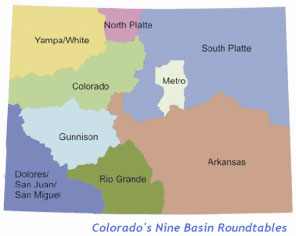
The Upper Colorado River named 6th most endangered river by American Rivers

A picture named coloradotransmountaindiversions

From The Aspen Daily News (Catherine Lutz):

For the third time in 25 years, the upper Colorado, from its headwaters in Rocky Mountain National Park to its confluence with the Roaring Fork River in Glenwood Springs, has made American Rivers’ top 10 list of most endangered rivers, which was released earlier this month. The nonprofit cited water diversions as the main threat to the upper Colorado, the central artery of a major ecosystem and a recreational gold mine for fishing, rafting and kayaking. After more than 100 years of diversions that have collectively degraded the river’s health, two major proposed diversion projects that would take water from the Western Slope to Front Range reservoirs could make it even worse, American Rivers’ report said.

Federal authorities are currently considering the expansion of the two diversion systems. The water authority governing the Windy Gap Firming Project, which transports water from a pipeline near Granby to the Front Range, wants to build a new reservoir that would take about 28,000 additional acre-feet of water per year across the Continental Divide. And the Boulder-area reservoir that’s on the receiving end of the Moffat Tunnel Collection System, which takes water from the Winter Park area, is proposed to be enlarged and would use an extra 18,000 acre-feet…

Another reason everyone should care about the upper Colorado’s issues is that it’s an example of what could happen in other watersheds, said [Ken Neubecker of Carbondale]. The Roaring Fork River, for example, already has the third and fifth largest transmountain diversions in the state: the Fry-Ark Project, which takes water from the upper Fryingpan River, and the Independence Pass Transmountain Diversion Project, which collects water for Twin Lakes from the headwaters of the Roaring Fork River…

…water quality is another issue people need to be concerned about if the increased diversions are approved. The water taken from the Winter Park and Granby areas is closer to the headwaters of the Colorado, and thus clean and pure. Further downstream, the river has picked up sediment, salts and other pollutants. And the more salts in the water the harder it is, said Neubecker…

Both diversion projects are currently making their way through a federal environmental analysis process, and various interested parties throughout the state are in negotiations over what the final projects will look like. Some environmental groups lately have been invited to the negotiating table, and the Glenwood Springs-based Colorado River Water Conservation District (CRWCB) is involved in the talks. Movement toward a final decision could happen sometime this year…

Neubecker, who is not involved in the process, said he doesn’t believe either water authority behind the two projects is looking at the cumulative impacts of their proposals. He added that Front Range diverters need to first “recognize that there is a problem,” and then accept an adaptive management strategy that would allow the river to get the flows it needs at certain times of the year to maintain its riparian health. He also said he wants to be able to revisit whatever agreement is reached in the next decade or so, in case some of the assumptions are wrong and it’s not working…

But CRWCB spokesman Jim Pokrandt said he sees hope in that Western Slope entities are more involved in talks than they had been before.“The good news is there are negotiations with the two projects that could provide improvements for the river, and can be a win-win for everybody,” he said.

More Colorado River Basin coverage here.
American Rivers: Upper Colorado is sixth most endangered river

A picture named coloradotransmountaindiversions

From the Sky-Hi Daily News (Tonya Bina):

[Grand County’s continued negotiations with Denver Water and the Northern Colorado Conservancy District Grand County Commissioner James Newberry] said, is sizing up better than putting the kibosh on diversion proposals altogether. “Enhancements,” or ways to improve the river, are being worked out with East Slope water providers outside of official National Environmental Policy Act processes. If Denver and Northern were forced not to do the projects at all, “then the enhancements are also gone and then we’re left with the third most endangered river being the Fraser and the sixth most endangered river being the Upper Colorado, with no way to fix them.”

Denver Water disagrees its proposal could amount to “sapping the life from the Upper Colorado,” as stated in an American Rivers June 2 press release about the river rating. “We’re working on enhancing stream flows, providing water for wildlife habitats, and working with diverse stakeholders to arrive at a solution related to the Wild and Scenic Act,” said Stacy Chesney, spokesperson for Denver Water. “From what I’ve read on the American Rivers website, they are about water efficiency and against short-sighted projects. The Moffat Collection System Project is a well thought-out part of Denver Water’s approach to ensuring a reliable water supply for the future. We’re doing it alongside conservation and recycled water, and are working to enhance the environment as well.”

And what is Northern’s take on the American Rivers posting? “We’re not taking exception to it. We certainly understand there are concerns that are being expressed,” said Northern spokesperson Brian Werner. But in trying to obtain permits for firming projects, “We think we’ve put a lot on the table over there,” he added, calling possible soon-to-be East and West Slope water agreements “precedent-setting.” Asked about the attention the American Rivers rating may draw to Northern’s increase-in-diversions request, “We’re trying to educate the public on what the projects are about, so we don’t shy away from that,” Werner said.

More Colorado River Basin coverage here and here.

American Rivers: Upper Colorado is sixth most endangered river in U.S.

A picture named fraservalleycollection

From the Fort Collins Coloradoan (Bobby Magill):

American Rivers’ threatened river report mentioned Northern Colorado Water Conservancy District’s Windy Gap Firming Project as one of the Colorado River’s biggest threats. The project would divert more water from the river to be pumped to a new reservoir near Carter Lake in southern Larimer County to provide a reliable water supply for growing Northern Colorado communities. The U.S. Army Corps of Engineers is expected to issue an environmental impact report on the project soon, with a final decision expected by the end of the year.

The report also says another proposed diversion project, the Moffat Collection System Project, will also harm the river.

[Ken Neubecker of Colorado Trout Unlimited] said he’s concerned water diversions from the Colorado River will harm the river’s natural hydrograph, preventing the river’s spring high flow from occurring. “If you don’t have that high flow in the spring, you can’t wash the sediments out, mobilize the bottom of the (river) bed,” something that’s critical for fish and other wildlife in the river, he said.

But Brian Werner, spokesman for Northern Water, said the district is working out a plan to provide enough water in the river for the fish at critical times during each season and ensuring the water temperature is right for the fish to thrive. He said the district has been successfully negotiating with Trout Unlimited and Grand County to ensure their concerns are heard. “We’d like to work it out so the operations (of the diversion projects) are flexible enough so the river doesn’t suffer any more harm,” and Front Range communities can get the water they need, too, Neubecker said.

More Colorado River Basin coverage here.

American Rivers: Upper Colorado is sixth most endangered river

A picture named coloradoriverbasincgs

From the Colorado Independent (David O. Williams):

The scenic Upper Colorado River between its headwaters in Rocky Mountain National Park and its confluence with the Roaring Fork River has landed the sixth spot on the America’s Most Endangered Rivers list…

The national nonprofit group, in concert with other conservation groups such Colorado Trout Unlimited, is calling on the U.S. Army Corps of Engineers and the Bureau of Reclamation to require conservation and efficiency measures in the Final Environmental Impact Statements (FEIS) for both the Moffat Tunnel Collection System Project and the Windy Gap Firming Project. “We can’t continue to take and take water from the Upper Colorado without accounting for the serious impacts to fish and wildlife habitat,” Colorado Trout Unlimited’s Ken Neubecker said in a release. “This is a river on the brink. A vibrant, healthy river system in the Upper Colorado is every bit as important to the future of Colorado as the water it supplies to our farms and cities.”

Recent media coverage has also focused on the growing demands on the Colorado for energy production, including hydroelectric in Glenwood Canyon and oil and gas development further downstream in Garfield and Mesa counties.

The Upper Colorado, though, is a recreational paradise, with world-class whitewater and gold-medal trout fishing. It runs through the heart of the state’s most popular mountain resorts from Grand County to Glenwood Springs, with its tributaries supplying water to ski towns like Breckenridge and Vail. It’s a perennial candidate for federal Wild and Scenic River designation.

More coverage from Tonya Bina writing for the Sky-Hi Daily News. From the article:

“The most endangered river listings get the attention of media and policy-makers,” said Randy Scholfield, spokesperson of Trout Unlimited’s Western Water Project. “It does help to highlight some of the threats facing these rivers and helps them get the grassroots support they need.”

The Upper Colorado considered in the listing flows from about Granby to Dotsero…

The Upper Colorado fit the organization’s criteria for being the subject of major public decisions pending in 2010, specifically the Moffat Firming Project proposed by the Denver Water Board and the Windy Gap Firming Project proposed by the Municipal Subdistrict of the Northern Water Conservancy District. The Upper Colorado, especially the stretch from Granby to Kremmling, can lack healthy peak flows and baseline flows…

Without river protections from cumulative impacts outlined in draft Environmental Impact Statements, advocates fear the river could suffer from further detriment despite on-the-side negotiations for enhancement being conducted by river stakeholders.

“They didn’t consider the accumulative impacts at all like they were supposed to,” Neubecker said of those reports pending Bureau of Reclamation and U.S. Army Corps of Engineers approval. Instead they were saying “that the flows in the river right now are the way they always have been since the beginning of time. We have to be honest with ourselves and everyone on how we use the river.” Neubecker hopes the American Rivers listing can help inform Front Range water users, some of which have little idea “about the connection between what comes out of their faucets and the river resource,” he said.

From 9News.com:

“We really are concerned about destroying the essence of Colorado which includes world-class recreation and beautiful rivers like the Upper Colorado, so we want to make sure there is an appropriate balance struck between the needs of supplying citizens on the Front Range with water and the importance of those benefits of Colorado’s heritage,” [Andrew Fahlund, senior vice president of American Rivers] said…

Currently, meetings between headwater counties and major diverters have the potential to restore river health while also fulfilling domestic and agricultural needs in the state.

From KUNC (Erin O’Toole):

The threat of water diversion from the state’s namesake river has landed the Upper Colorado at number 6 on this year’s list, as compiled by the conservation advocacy group American Rivers. Spokeswoman Amy Kober says they’re primarily concerned about two new proposals – the Windy Gap Firming Project and the Moffat Tunnel Collection System Project. She says both could lower the river flow to the point of threatening its prized trout fisheries “Excessive diversions upset the natural balance of the river, increase water temperatures, and destroy the natural patterns of reproduction for endangered species.”

More Colorado River Basin coverage here.

Grand County ‘State of the River’ meeting recap

A picture named coloradorivergranby.jpg

From the Sky-Hi Daily News (Tonya Bina):

Colorado River Basin snowpack levels are at 77 percent of average, in line with statewide averages this year, according to information shared at the annual State of the River Meeting. “It’s been a poor year until recently,” said Senior Water Resources Engineer Don Meyer of the Colorado River District to a roomful of water stakeholders Tuesday at the Mountain Parks Electric meeting room in Granby…

Forecasted elevation of Lake Granby is expected to be at 8,268 feet, according to Andrew Gilmore, hydraulic engineer with the Bureau of Reclamation, the agency that operates the Colorado-Big Thompson project. That level equates to about 12 feet from full. But Don Carlson of the Northern Colorado Water Conservancy District, the agency that delivers water to Northeastern municipalities, water districts, industries and farms, had a slightly less conservative prediction for Granby Reservoir. Because of moisture on the East Slope, Northern may be able to use some of its low priority rights for water, he said, which will take some pressure off of West Slope supplies this year. Granby Reservoir may be closer to 4 to 5 feet below full, he said…

Snowpack has “been behind all year, although did make a nice recovery recently,” said Bob Steger, Denver Water’s manager of raw water supply. “The good news is, we think we’re going to fill all of our reservoirs anyway, despite the low snowpack.”[…]

State of the River

The Colorado River District, which operates Wolford Mountain Reservoir is extending its offering of bounty for anglers who catch northern pike, a predator to native species. Anglers will be awarded $20 for each Pike caught.

• Northern and the Bureau of Reclamation are planning to replace the dam structure between Shadow Mountain Reservoir and Grand Lake this year. The dam/bridge at the eastern end of the canal is old, doesn’t perform well and poses safety concerns to boaters, said Northern’s Don Carlson. To avoid Grand Lake’s heavy summer traffic season during which many boaters use the canal, work on the dam project is planned for 30 days during the month of October.

• Pumping started at Windy Gap near Granby on April 29 to send 15,000 acre feet for storage to partners in northeastern Colorado, with another 40,000 acre feet from Lake Granby for their use.

• During the 25-year anniversary of the Windy Gap Reservoir, water will be taken down in mid-July through the end of September to address sediment build-up. Although sediment has been building up through the years, the reservoir was further impacted by a pond breach last year at the Orvis Shorefox property, which added silt to the reservoir.

• Denver Water customers are conserving more water due to a tiered rate structure that increases with increased water use per gallon. Graphs show that since Denver Water implemented its new rate structure, water use has plateaued even though the utility’s customer base has increased.

• Denver Water is redoing the outlet works at Williams Fork Reservoir and constructing a new auxiliary power plant at a cost of $17 million. The new outlet works should increase the capacity from 275 cfs to 750 cfs when completed. In the meantime, this summer the dam will operate with temporary outlet works with limited release capabilities, at 125 cfs. “We’ll get through this year as best we can with the limited release capabilities,” said Denver Water’s Steger.

• At the Vasquez Canal, Denver Water is replacing 1,500 feet of covered canal with pipe.

• There were several temperature exceedances in the Fraser River last year, according to the Grand County Water Information Network. They were upstream from Windy Gap and at the conjunction of Ranch Creek, she said. As many as 32 temperature monitoring sites will be in place again this year. Through partnerships, algae toxin monitoring and gathering of water clarity data will also continue at reservoirs and lakes this summer.

More Colorado River Basin coverage here.