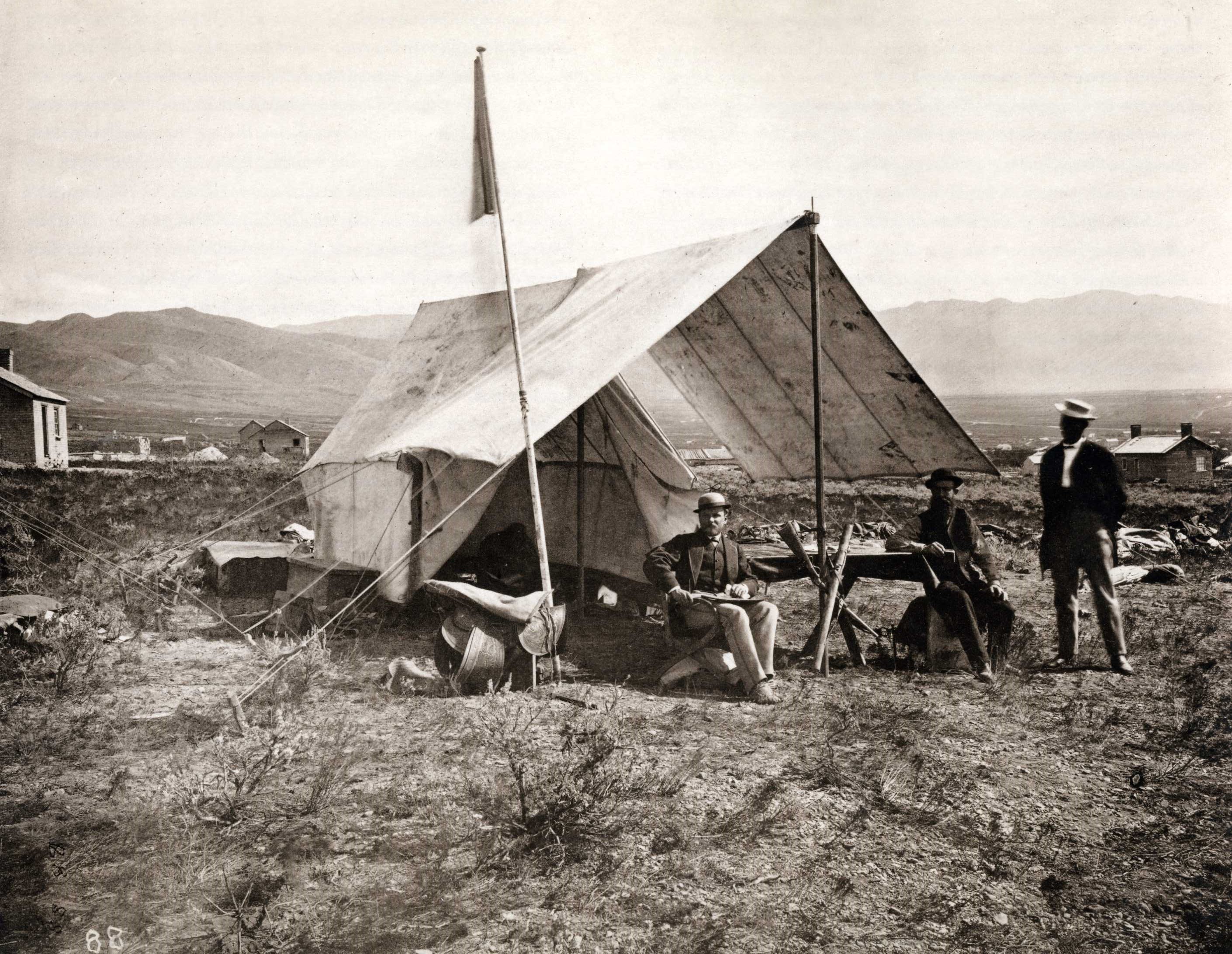
Clarence King; Camp near Salt Lake City, Utah. The exploration of the Survey of the Fortieth Parallel. Photo by Timothy H. O’Sullivan, October 1868. By Timothy H. O’Sullivan – Davis, Keith F., Timothy H. O'Sullivan, Jane Lee Aspinwall, François Brunet, John P. Herron, Mark Klett, and Julián Zugazagoitia. Timothy H. O'Sullivan: The King Survey Photographs. Yale University Press Mass. Published:2011., Public Domain, https://commons.wikimedia.org/w/index.php?curid=56679730
For several years I served on the board of a rural school district, and every year, when our draft budget was presented at our monthly public meeting, the audience would fill with people concerned about higher taxes. Seniors on fixed incomes spoke about the precarity of their budgets, while people of significantly greater means railed against “irresponsible” spending. As a board, we were trying to keep class sizes small enough for good learning outcomes and to avoid having to cut art and music and Spanish classes. I typically let the more senior board members handle the tough questions, but one year, as a young mom, I felt compelled to speak on behalf of the intergenerational social contract: the idea that when we were in school, we benefited from the investment of the generations before us, and it is therefore our moral obligation as adults today to invest in schools for the generations coming after us.
The intergenerational social contract is an old idea, far older than the U.S. government, Social Security and Medicare. It is not about entitlement. It’s about intergenerational caretaking — the recognition that there are no isolated moments of history, that we are obliged to pass on a world of hope and possibility to future generations. Indigenous communities have always understood this, which is why traditional ecological knowledge is increasingly being looked to for ways of managing the land for long-term health and sustainability. It’s a line of thinking that respects, and assumes a responsibility to, future inhabitants of Earth.
The intergenerational social contract also applies to public lands. Land-management agencies in the U.S., including the Bureau of Land Management, Department of the Interior and the Forest Service, have a legal responsibility to manage lands and resources with the future in mind. The words “to the benefit of present and future generations” are all over the charters and laws governing these agencies. Current proposals to sell off public land are not only a blatant violation of the social contract, but a violation of the very idea of public land. Transferring a public good into private hands is a crime against future generations.
The reckless actions of the Department of Government Efficiency (DOGE), as charted by Jonathan Thompson in this issue, are another blatant assault on the public good, slashing budgets for public land and firing its caretakers. Cutting funds for cancer and climate research is an assault on present and future generations, as is defanging the Endangered Species Act and the National Environmental Policy Act. This activity should be considered un-American: enriching the wealthiest while stealing from the everyday Americans of today, tomorrow and as long as our republic shall stand.
Young Montanans, including Rikki Held, center, sued their state government and won a key ruling forcing the state government to consider greenhouse gas emissions when reviewing proposed development projects. William Campbell/Getty Images
An ancient legal principle has become a key strategy of American children seeking to reduce the effects of climate change in the 21st century. A defeat at the U.S. Supreme Court in March 2025 has not stopped the effort, which has several legal actions continuing in the courts.
The legal basis for these cases is called the “public trust doctrine,” the principle that certain natural resources – historically, navigable waters such as lakes, rivers and streams and the lands under them – must be maintained in government ownership and held in trust for present and future generations of the public.
For the past decade, a nonprofit called Our Children’s Trust has argued for a 21st-century interpretation of the public trust doctrine to support lawsuits against state and federal agencies and officials, seeking to force them to take specific actions to fight climate change. Our Children’s Trust has focused on children, saying they are particularly vulnerable to the effects of climate change because their futures, which the public trust doctrine protects, will be lived in an unsafe and unhealthy climate unless governments take action. Children around the world have filed similar lawsuits against their governments on alternate legal grounds, including claims of constitutional and human rights violations.
Initial uses of the public trust doctrine in the US
The U.S. Supreme Court first endorsed the public trust doctrine in 1892, when it ruled that the doctrine prevented the Illinois legislature from selling virtually the entire Chicago harbor in Lake Michigan to a private railroad company. In the 20th century, state courts have ruled that the doctrine bars states and local governments from selling off lakefront property or harbors to private owners and protects public access to beaches, lakes and oceans.
The public trust doctrine had little to do with environmental protection until the 1970s, however, after law professor Joseph Sax wrote an influential article arguing that the doctrine could form the basis for lawsuits to protect water and other natural resources from pollution, destruction and other threats.
Over the past five decades, some states’ courts have expanded the public trust doctrine’s application beyond access to water-based resources, ruling it can also require governments to protect parks and wildlife from development. And Montana, Minnesota and several other states followed Sax’s recommendation to pass laws or amend their state constitutions to impose broader obligations on states to protect natural resources.
In 2011, Our Children’s Trust argued for the first time that governments had a legal obligation to protect the atmosphere as a public trust resource. The group filed lawsuits in all 50 states on behalf of children. Most state courts dismissed the lawsuits quickly, holding that there were no court decisions in their states that supported extending the public trust doctrine to claims involving the climate or the atmosphere.
In 2015 the group filed a similar lawsuit in federal court in Oregon, this time against the federal government. That lawsuit, Juliana v. United States, alleged that the federal government’s inaction to address climate change violated the public trust doctrine as well as the 21 young plaintiffs’ rights to life, liberty and property under the U.S. Constitution.
The plaintiffs asked the court to order the federal government to prepare an inventory of U.S. carbon dioxide emissions and to implement a national plan to phase out fossil fuels to “stabilize the climate system and protect the vital resources on which Plaintiffs now and in the future will depend.”
Since the initial wave of litigation, Our Children’s Trust has continued to file lawsuits to force governments to address climate change. These newer ones are more narrowly tailored to state-specific constitutional and statutory provisions that protect environmental and public trust resources. And, so far, they have been more successful.
The plaintiffs won at trial, and in a landmark opinion in 2024 the Montana Supreme Court upheld the trial court’s finding that greenhouse gases were harmful to the state’s “climate, rivers, lakes, groundwater, atmospheric waters, forests, glaciers, fish, wildlife, air quality, and ecosystem.” The court similarly found that “a stable climate system … is clearly within the object and true principles” of the state’s constitution.
Children in Hawaii filed a similar lawsuit in 2022 against the state Department of Transportation, alleging that its failure to reduce transportation emissions in the state violated the state public trust doctrine and the state’s constitution. The lawsuit relied on Hawaii courts’ previous rulings that the state’s public trust doctrine and state constitution broadly protect natural resources for present and future generations. In 2024, days before trial was to begin, the parties reached a landmark settlement in which the state agreed to take concrete actions to significantly reduce greenhouse gas emissions from the transportation sector. https://www.youtube.com/embed/VjHqeNB89L0?wmode=transparent&start=0 In the Montana lawsuit, a U.S. court ruled that the government had failed to protect the rights of children by failing to take action to reduce or prevent climate change.
The road ahead
Looking back, it was perhaps not surprising that a one-size-fits-all nationwide legal strategy based on a doctrine that varies widely state by state would face long odds. But the public trust doctrine itself has been historically incremental, expanding and contracting as society and the needs of its citizens change over time. And Our Children’s Trust has several cases still pending, including in Alaska and Utah state courts, and in a federal court in California.
The campaign’s successes broke new legal ground: Montana courts held the first trial in the United States that examined evidence of the effects of climate change and states’ obligations to address them. The Hawaii settlement set concrete benchmarks and included provisions for continued feedback on state policies by the youth plaintiffs.
More broadly, Our Children’s Trust’s campaign demonstrates that a combination of legal advocacy and nationwide publicity over the plight of young people in a rapidly changing climate have the potential to result in real change, both in the law and in public perception of the importance of addressing climate change.
Law professors from around the country threw their support behind a lawsuit filed against the state of Utah, arguing officials haven’t done enough to help the Great Salt Lake.
In an amicus brief filed in Utah’s 3rd District Court last week, 36 law professors say Utah is violating public trust doctrine, which requires the state to protect cultural or natural resources for public use, including bodies of water, land, artifacts or wildlife.
It’s the latest in a lawsuit filed in September by Earthjustice, Utah Physicians for a Healthy Environment, American Bird Conservancy, Center for Biological Diversity, Sierra Club and Utah Rivers Council, all conservation groups.
Public trust doctrine was in place when Utah was granted statehood in 1896, according to the Utah Law Review, designed to ensure the state’s navigable waterways would be protected and available for public use. As the Utah Division of Forestry, Fire and State Lands noted in a 2023 presentation to lawmakers, “The beds of navigable bodies of water must be managed in a way that does not interfere with navigation, commerce, fishing, and the ecological value of the waterbody.”
The lawsuit notes that public trust doctrine is “well established” in Utah code and has been upheld by several state Supreme Court decisions. In the brief filed this week, the professors cited court rulings that found states have an obligation to preserve public resources.
“Consistent with this growing judicial chorus, Utah’s public trust duties are to protect and preserve the Great Salt Lake. Utah has not come close to meeting those responsibilities,” the brief reads.
In a statement given to Utah News Dispatch on Thursday, officials pushed back on that argument.
“We have been — and will continue to — work to protect the interests of the state of Utah. Each division within the Department of Natural Resources is mindful of its responsibilities. Together, we are addressing the need to protect the Great Salt Lake,” said Joel Ferry, executive director of the Utah Department of Natural Resources.
The lawsuit names several state agencies, including the Utah Department of Natural Resources, the Utah Division of Forestry, Fire and State Lands, and the Utah Division of Water Rights.
The state has filed motions to dismiss the lawsuit, writing earlier this year in court documents that “The legal solution offered by Plaintiffs is unsupported by Utah law and disregards the many and varied mechanisms the State is utilizing to manage Great Salt Lake.”
That sentiment was echoed in a social media post from Republicans in the Utah Legislature, which didn’t specifically reference the lawsuit, but criticized “litigious outside interests.”
“The Legislature’s progress on the Great Salt Lake has been nothing short of historic,” reads a post on X from the House Majority account. “To continue this work, we need real solutions — not symbolism and theatrics. We need local involvement, not litigious outside interests.”
The brief references several state actions it says endangered the public trust resources. That includes “actively authorizing water appropriations that divert upstream water.”
“Rather than address that problem, the state has instead focused on ‘trying to persuade individual water users to undertake voluntary measures to reduce their consumption,’” the professors write. “Seeking voluntary measures from water users is insufficient to meet the state’s duty to ensure against the ‘substantial impairment’ of the Great Salt Lake while the lake continues to shrink and its ecosystem is undergoing collapse,” the group of professors write, urging the court to force Utah to develop and enforce a plan to restore the lake.
That plan could include “changing surplus water management in wet years, managing flows outside the irrigation season for conservation, and requiring efficiency improvements with the conserved water released to the Lake,” according to court documents.
In a statement, Ferry said the department received and reviewed the brief, and plans to oppose it.
“It is largely duplicative of the Plaintiffs’ arguments and that Utah’s district court rules do not authorize such filings,” he said.
The brief was signed by law professors from around the country, including the Georgetown University Law Center, University of Baltimore School of Law, University of Oregon School of Law, and University of Houston. However, there were no Utah-based signatories.
An amicus brief is a court document usually filed by academics, businesses, subject-matter experts or trade associations who side with one party in a lawsuit. They typically present additional information, perspectives or precedent for the court to consider.
You might call it the great economic riddle of our time: It sustains human life, lubricates the entire economy and has no known substitute, yet a month’s supply can be delivered to your home for less than the cost of cable TV or cell phone service. It belongs to the public but the right to use it is bought and sold, and changing that use requires a pricey court approval process. It supports kayakers and anglers, trout and sparrows, and all the ecosystems in between, yet those benefits are rarely reflected in its cost. It is cheap, and yet it is priceless. What is it?
If you’re reading [Headwaters] magazine, you already know that the answer is water, and you already know that water is invaluable. What you may not know is that water’s price, according to many economists, comes nowhere near to reflecting its true value, and that blunt economic fact has consequences for the long-term sustainability of both our water resources and our water systems.
Aligning water’s price with its value is much harder than it seems. That’s because water is traded and regulated in ways that reflect its unique and irreplaceable role in our economy. Depending on who you ask, water is a private commodity or a public good, an economic input or a human right.
These varying roles affect the accuracy of water prices, and the freedom—or lack thereof—of water markets. Some examples: In Colorado, many water utilities are prevented by their charters from charging more than they need to cover their costs. This keeps water rates affordable but also prevents providers from charging customers for the current market value of their water, also called the “scarcity value,” to encourage conservation. Legal restrictions on water transfers—in place to protect other water users—make those transfers complicated and expensive, slowing the flow of water from farms to cities and helping to preserve the gap between agricultural and municipal water prices. At the same time, many non-market costs of water transfers or appropriations—“externalities” like the open space, wildlife habitat and fishing grounds lost when farmers sell their water rights to a city or a new water right is appropriated, further depleting a stream—are not typically paid for by the buyer or the seller.
Ignoring the full cost of water—and the non-market values that water provides—saves money in the short term by keeping water rates low. In the long run, however, it could prove both financially and culturally expensive. Over time, wasteful use may hasten the need for costly new water projects, and public benefits like wildlife habitat and open space are less likely to be preserved if they aren’t factored into the price of water transfers. Given the stakes, how can we value water more accurately, while preserving the legal framework that protects water users and the environment?
Supply and demand, within limits
When utilities, ditch companies and irrigation districts buy water rights to serve their populations, the price of those rights is determined in part by the basic interplay of supply—what the water costs to deliver—and demand—what it’s worth to buyers. Brett Bovee, intermountain regional director for the consulting firm WestWater Research of Fort Collins, helps clients value water rights for purchase or sale. He considers factors like a water right’s source, location, current use, historical buyers and sellers, ease of storage, and seniority, since older rights are more dependably fulfilled than those appropriated more recently.
Bovee might compare a water right to a handful of others with similar characteristics to arrive at a reasonable price, or, if the water is agricultural, he might use a technique called the income approach, calculating the yields that a farmer could get irrigating with the water compared to dryland farming yields. (A slight variation is comparing the sale price of dry farm ground to that of irrigated land nearby, then using the difference to infer a water right’s value). A final technique, the replacement cost approach, involves calculating the cost of the next-most expensive water supply option and then advising clients to pay just less than that.
“Usually the replacement cost sets the ceiling, the income approach sets the floor, and the market price is somewhere between those two,” Bovee says. “The willing seller must make more off a water transaction than he would in farming, and the willing buyer is only going to buy water if it is cheaper than alternative sources.”
Brett Bovee. Photo credit: Westwater Research
Yet the economic playing field is not completely level where water is concerned, as evidenced by the vast and enduring price differences between agricultural and municipal water. As University of Arizona law professor Robert Glennon and his co-authors point out in the 2014 paper “Shopping for Water: How the Market Can Mitigate Water Shortages in the American West,” agricultural users in many parts of the West may pay just a few cents for a thousand gallons of water, while urban users pay $1 to $3 for the same amount. That’s partly because, in a strictly financial sense, urban users can earn more money with the water they consume: If you ignore the vital non-market values of agriculture like open space, wildlife habitat and food security, urban activities like manufacturing frequently generate more money per acre-foot of water than farming does. Used to grow lettuce in Yuma, Arizona, Glennon writes, an acre-foot of water might generate $6,000. Used to make microchips in California’s Silicon Valley, it would generate $13 million.
The price disparity between agricultural and municipal water is further explained by higher treatment and conveyance costs for urban water, from the chemicals that disinfect drinking water to the pumps that keep it pressurized and ready to flow from the tap. “If farmers needed really clean, pressurized water at their farm headgate on demand, the price between agricultural and municipal water may not be all that different,” Bovee says.
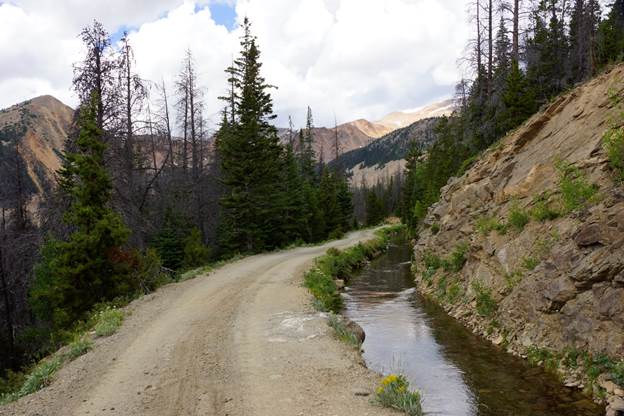
Grand River Ditch July 2016. Photo credit Greg Hobbs.
Agricultural water users who inherit their land also benefit from the investments their ancestors made in ditch and reservoir systems originally constructed to put the water to beneficial use. Today, they pay only the water assessments necessary to maintain or improve these systems or to make the occasional legal filings. When they sell their shares in their infrastructure or water rights, they earn the appreciated value of both, which can be substantial in areas like Colorado’s Front Range where a booming residential real estate market has kept water demand high.
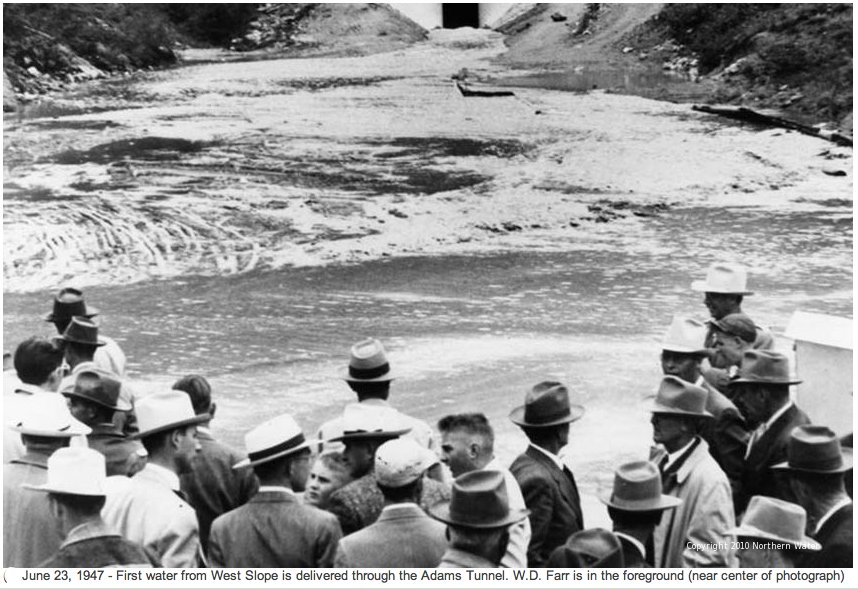
First water through the Adams Tunnel. Photo credit Northern Water.
Finally, federally funded irrigation projects provided a subsidy to early agricultural water users: Many of the West’s large water diversions were paid for with federal dollars between the 1930s and the 1970s. Although those federal outlays were partly recouped through a combination of cost sharing from local governments and revenues from projects’ hydroelectric features, the federal government never required full reimbursement from water users. Examples include the Colorado-Big Thompson Project, authorized by Congress during the Great Depression to provide a supplementary source of water to farmers and cities in northern Colorado, as well as earlier Western Slope projects like the Uncompahgre Project and the Grand Valley Project. “Recipients of irrigation water from federal projects will have repaid, on average, about U.S. $0.10 on each dollar of construction cost,” writes University of California, Berkeley economist W.M. Hanemann In his 2005 paper “The Economic Conception of Water.” Today, federal funds are largely unavailable to help finance water supply infrastructure.
Although they remain much higher than agricultural water prices, municipal water rates are hardly exempt from market manipulation, and for good reasons. Because water is widely considered a basic necessity for human life and economic activity, many Colorado utilities are public entities whose rates are regulated by local governments or appointed boards, and even the rates of private, investor-owned utilities are limited by the Colorado Public Utility Commission. Many municipal utilities set their rates through “cost-of-service” pricing, which doesn’t account for the value of water itself but factors in only what it costs to run the utility—energy, water treatment chemicals, office staff—plus maintain financial reserves, make debt service payments, and repair aging pipes, tanks, reservoirs and other infrastructure. A growing number of utilities also employ “increasing block rate” pricing to keep everyday water use affordable while penalizing higher water users to encourage conservation. Yet their rates include little or no charge for water’s replacement cost or “scarcity value:” what it would cost to obtain their water on the open market today, or what they could earn by selling their water and using the proceeds to pay off debt or meet other obligations.
“For a farmer to keep a tractor, they have to be earning more by keeping it than they could make by selling it,” says Chris Goemans, an associate professor of economics at Colorado State University (CSU) who specializes in water issues. “For water rights portfolios, there is no charge to households to reflect the fact that the water could go somewhere else and earn more money for the utility.”
Failing to account for this opportunity cost encourages customers to use their water for purposes worth less to them than the cost of bringing that water to the tap, whether that’s watering the lawn or filling the swimming pool. That’s highly inefficient from an economist’s point of view. “You don’t want people using water that costs $10 per gallon to produce on applications for which they place a value of a dollar or two,” says Chuck Howe, a professor emeritus of economics at the University of Colorado, Boulder. “If the price to the consumer doesn’t cover all the costs of production, then individual customers will apply water to uses that are, at the margin, worth less than the costs imposed on society.”
Boulder’s Avery Brewing Company is one among 230-plus Colorado craft and micro breweries that have combined water with barley, hops and other specialty ingredients to establish a nationally recognized market for beer enthusiasts. Photo courtesy of Avery Brewing Company
Artificially cheap water saves customers money today, but in the long run will prove expensive as utilities are forced to meet growing demands by acquiring expensive new water rights or building new infrastructure. In a 2013 analysis, city staff in Westminster, Colorado, calculated that water rates would be 135 percent higher and water tap fees 99 percent higher if per-capita water demand in the city had not fallen by 21 percent since 1980. That declining consumption—driven by a combination of utility-sponsored conservation programs, conservation-oriented increasing block rate water pricing and stricter national plumbing codes—saved the city over $5.9 million on water and wastewater treatment, new water rights, and loan interest payments, which would have been passed along to residents in the form of higher rates and tap fees. Even though water rates have risen in Westminster since 1980, in part to compensate for declines in per-capita consumption, they have risen much less than they would have if per-capita consumption had stayed flat as the population grew.
Howe believes that charging customers for the scarcity value of their water could have a similarly virtuous effect on consumption—and thus on water rates—over the long haul. In an unpublished paper co-written with water attorney Peter Nichols of the Boulder firm Berg Hill Greenleaf Ruscitti LLP, Howe argues that utilities could encourage conservation by charging customers more for each 1,000 gallons of water they use, then refunding any resulting profits by reducing the fixed monthly service charges that appear on monthly water bills. By increasing the price of each 1,000 gallons of water by just $1.50, Howe and Nichols surmise, the City of Boulder could earn $20 million per year, a sum equivalent to 5 percent of its $400 million water rights portfolio. This would encourage conservation without harming ratepayers’ overall bottom lines, since higher volumetric usage fees would be offset by reductions in fixed service charges.
Love thy neighbor: Legal restrictions on water transfers
Despite the limits on what municipal utilities can charge, the gap between urban and agricultural water prices persists. That’s partly because significant legal barriers discourage those who get their water cheaply—farmers—from selling it to the cities who will pay dearly for it. Those barriers serve noble goals: Because water, unlike other commodities like land or electricity, is often used several times in succession within the same river basin, many users depend on the reliable timing and amount of return flows from their neighbors upstream. To protect those flows, legal restrictions, such as the “no harm to juniors” rule, prevent anyone who moves their water or changes its use from impacting other water users. Colorado water courts employ several other principles in regulating water trades: The beneficial use requirement is intended to discourage waste and requires water to be put to beneficial uses approved by the legislature or the courts or else abandoned, and the anti-speculation doctrine mandates that anyone changing their water use show precisely its new use, location and amount, to prevent speculators from buying water and simply holding it, unused, until prices rise.
Water courts also limit the salable portion of a water right to its “historical consumptive use,” the average amount actually absorbed by crops, retained by people and lawns, or used up by industrial processes over the water right’s history. This prevents farmers from harming other water users by selling water they no longer have to divert as a result of improving their irrigation efficiency, provided they leave irrigated acreage and consumptive use unchanged. Before the efficiency improvements, the unused portion of the water diverted and applied had served other users in the form of return flows, so Colorado law protects those historical return flows for appropriation by other users after efficiency improvements are made.
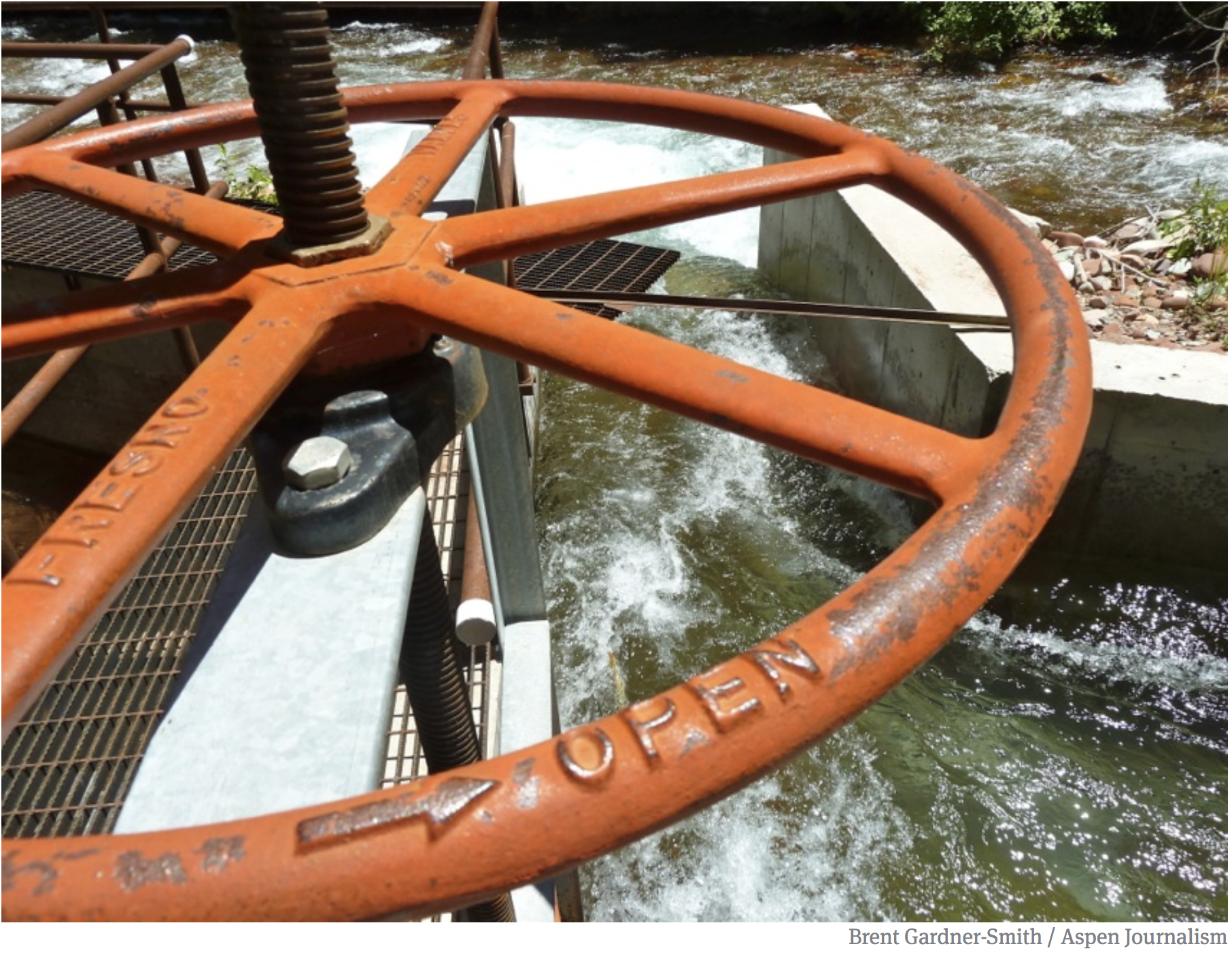
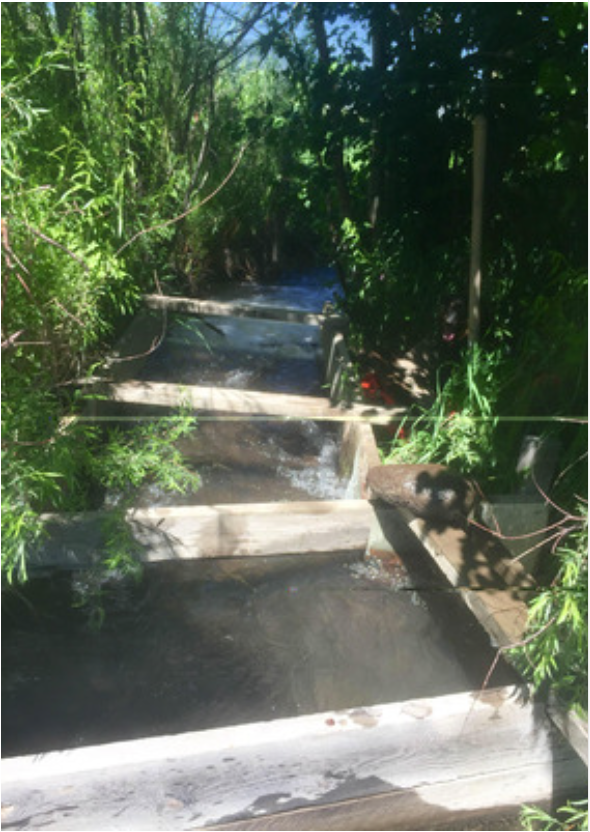
On July 7, 2020, we closed our headgate that takes water from the Little Cimarron for irrigation. The water in the above photo will now bypass our headgate and return to the river. Photo via the Colorado Water Trust.
Taken together, these restrictions discourage water from simply flowing to the highest bidder. They make the process of transferring water rights time consuming and expensive, since detailed engineering studies and costly legal filings are necessary to prevent other water users from being injured without compensation. And yet, examples abound of Colorado water law flexing to accommodate changing state priorities. The nonprofit Colorado Water Trust and the Colorado Water Conservation Board (CWCB)—the only entity in the state that can hold an instream flow water right—are now seeking water court approval for the state’s first permanent “split-season” water right on the Little Cimarron River in Gunnison County. The right, acquired by the Colorado Water Trust, will permit the same water to be used for agricultural irrigation in the early summer and then for instream flows that benefit fish in the fall. Another example: Under a state law passed in 2013, farmers and municipal water providers can now enter into so-called “interruptible supply agreements” three out of every 10 years without the approval of a water court. In this arrangement, farmers fallow some of their land or reduce irrigation and then, with the blessing of the State Engineer, convey the freed-up water to cities in exchange for short-term lease payments. One such arrangement, the Arkansas Valley Super Ditch, is partway through a three-year pilot project that began in spring 2015 when irrigators on the Catlin Canal east of Pueblo leased 500 acre-feet of water to the cities of Fowler, Fountain and Security.
“It went so smoothly the first year that I don’t think we want to mess it up by changing anything,” says John Schweizer, president of the Lower Arkansas Valley Super Ditch Company and the Catlin Canal Company. Because agricultural commodity prices were low in 2015, Schweizer says, the farmers who participated earned at least twice as much fallowing land and leasing water as they would have growing corn, wheat or alfalfa on the same acreage. And they still kept at least 70 percent of their water rights in agricultural production, as required by law. Even though there are two years left in the pilot project, Schweizer says, “The City of Fountain is already talking about coming back and negotiating a longer term lease, which could mean bringing more farmers into the program.”
Ideally, these alternative transfer methods (ATMs) could give cities reliable sources of water in dry years without requiring the “buy and dry” of agricultural lands. Yet short-term leases are a relatively new concept, and because urban water providers must plan for a reliable, long-term supply they often prefer to purchase agricultural water outright. Some urban utilities then lease the water back to farmers until they need it, giving them flexibility in deciding when to begin the sometimes long and arduous process of filing for a change of use in water court.
“If you are a water [utility] manager, when you provide a water tap to a developer you are promising them water. Short-term leases are just not reliable enough right now to fulfill that promise,” says Goemans, at least not for a city’s entire water supply.
Still, reducing regulatory barriers to water leasing is likely to make it more common over time. In the South Platte River Basin, where the Colorado-Big Thompson (C-BT) Project diverts water from the upper Colorado River, owners of contracts for C-BT water are only required to obtain the blessing of the Northern Colorado Water Conservancy District board, rather than a water court, before selling or leasing their water interests, and a robust leasing market has materialized there.
According to a 2016 WestWater Research report, leases have accounted for about 80 percent of all water trades in the South Platte Basin in recent years, and most transactions have involved farmers leasing their water to cities. The value of this streamlined process is also reflected in the sale price of C-BT units—unlike a lease, a sale gives a buyer rights to the unit in perpetuity. In 2015, C-BT units changed hands 67 times and fetched an average sale price of $36,300 per acre-foot—by the second quarter of 2016 the price was above $40,000. Meanwhile area ditch shares, whose transfer requires water court approval, were traded just 23 times for an average price of $13,800 per acre-foot.
Pricing the priceless: The non-market value of water
The market for C-BT units is a compelling example of what freer water trading might look like, yet several factors make it unlikely that such a market could be replicated across Colorado. Under a 1938 contract between Northern Water and the U.S. Bureau of Reclamation, all contracts for C-BT water must be exercised within the boundaries of Northern Water’s service area. Units of C-BT water can only be used once before being allowed to flow down the lower South Platte River between Greeley and the Nebraska border, for the benefit of irrigators there. And yet, irrigators on the lower river have no legal right to claim injury if the lease or sale of C-BT units affects the return flows they rely on, since the prior appropriation doctrine—including the no-harm-to-juniors rule—applies only to native flows within a river basin, not to transbasin diversion water. This minimizes objections when C-BT units are leased or sold.
Colorado-Big Thompson Project Map via Northern Water
Leaving aside these complicated machinations, there is a simpler reason why most of Colorado’s water sales and leases are still regulated by water courts: Legal safeguards like the no-harm-to-juniors rule play an important role in limiting harm to third parties or the environment when water is moved. They also highlight water’s role as both a private good and a public resource with important environmental and cultural values.
Economists have devised a suite of techniques to translate those “non-market” values into financial terms so that they can be factored into cost-benefit analyses of water projects. Perhaps the most prominent technique is “contingent valuation,” where economists survey water users to gauge their financial willingness to pay for environmental benefits or willingness to accept environmental harms.
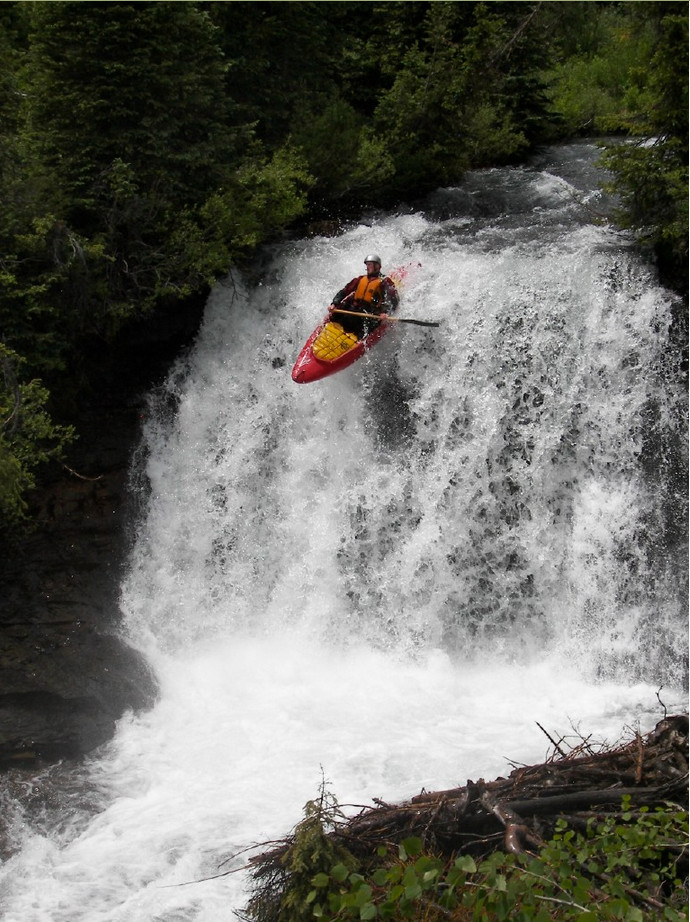
Big Wood Falls photo via American Whitewater (2011)
People value water’s role in the environment for a wide variety of reasons: “Use value” reflects the benefit of using a waterway for kayaking, rafting or swimming; “existence value” measures the well-being gained from simply knowing that a river exists; and “bequest value” shows the worth of knowing that an environmental good will be preserved and passed down to future generations. There is also “intrinsic value”—the notion that other water-dependent species should be allowed to exist regardless of their value to humans.
Because some of these values have an emotional component, it can be tough to give them the same weight as purely financial considerations, and many cost-benefit analyses reflect this problem. In 2011, for instance, the Colorado Department of Public Health and the Environment was considering additional limits on releases of phosphorous and nitrogen from wastewater treatment plants to comply with enforcement of the federal Clean Water Act by the Environmental Protection Agency. A state-commissioned study by the consulting firm CDM Smith weighed the costs of those new regulations—new equipment and more intensive wastewater treatment and monitoring—against benefits like reduced spending on drinking water treatment, better-tasting and better-looking drinking water, improved ecological function in rivers and streams, and increased recreation. The study found that the regulations would yield just $0.79 worth of benefits for every $1.00 spent to implement them. Yet it relied on rough estimates—derived from previous economic studies—of the financial value that people place on environmental benefits. And it did not weigh qualitative benefits like existence and bequest value, despite the fact that these values often account for half of people’s willingness to pay for environmental benefits, according to CSU environmental economics professor John Loomis.
Colorado transmountain diversions via the State Engineer’s office
Those same omissions have characterized, and potentially marred, other studies. A 2009 study by the Front Range Water Council, a group of Front Range water providers that has advocated for new transbasin diversions from Colorado’s Western Slope, found that the Front Range withdraws 19.4 percent of the state’s water but generates 80 to 86 percent of the state’s economic activity, while western Colorado withdraws 41 percent of the state’s water but comprises just 10 percent of the state’s economy. By that logic, the Front Range produces about $132,268 in economic output per acre-foot of water used, compared to just $7,200 per acre-foot on the Western Slope. Yet those figures fail to account for the economic costs that diverting water to the Front Range imposes on the Western Slope, along with the financial benefits of things like tourism and recreation, which rely on keeping western Colorado water in the stream. The Northwest Colorado Council of Governments (NWCCOG), a coalition of Western Slope municipal governments whose members generally oppose new transbasin diversions, attempted to address these omissions with its own 2012 study: “Water and its Relationship to the Economies of the Headwaters Counties.”
“We have struggled to convey how important having water in the river is to the economy in the headwaters region, especially in the summer,” says Torie Jarvis, co-director of the Water Quality and Quantity Committee at NWCCOG. “That study was meant to point out that there were values that studies like the Front Range Water Council’s were not accounting for.”
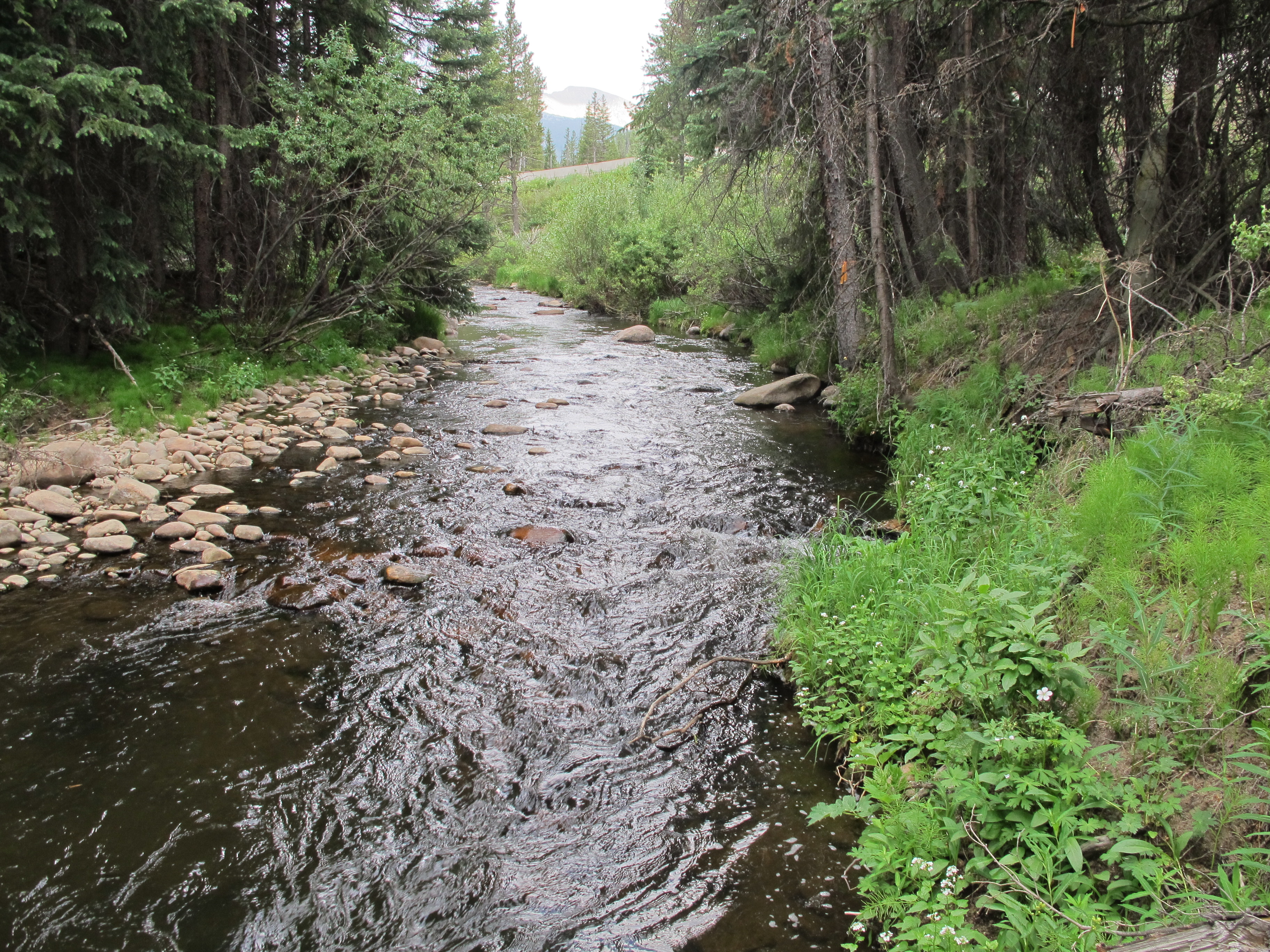
Fraser River at gage below Winter Park ski area. Photo credit: Colorado Water Trust
Some of these values, and the economic implications of protecting them, are relatively easy to quantify: The town of Winter Park, for instance, is forced to treat its wastewater to a higher standard because 65 percent of the Fraser River that once flowed through town is diverted to the Front Range, making wastewater more difficult to dilute. “We have seen an impact on the cost of wastewater treatment year-round due to the lack of dilution flows,” says Bruce Hutchins, manager of the Grand County Water and Sanitation District 1. Faced with ongoing transbasin diversions, Winter Park town leaders have also opted to curtail the town’s development to keep at least 10 cubic feet per second of water in the Fraser River at all times. That has clear economic consequences: At buildout, the town could accommodate about 9,300 single-family housing units if officials were willing to dry up the river to provide them with water. Instead, the town has capped the number of water taps it will dispense to allow for just 8,300 single-family units in order to maintain river flows.
Colorado fly fishing, whitewater and other water-related recreational pursuits contribute significantly to Colorado’s $34.5 billion recreational economy. Photo courtesy of the Winter Park Convention and Visitors Bureau
“It’s a bit backwards from the way that other communities have done it,” says Winter Park community development director James Shockey. “We’ve put the river first, and then looked at how much we can develop from there.”
Other values compromised by transbasin diversions, like the potential effect of changes in water use on tourism, require non-market valuation in order to be expressed financially. In a March 2003 study, CSU economists Adam Orens and Andrew Seidl surveyed winter tourists in the towns of Gunnison and Crested Butte to see how changes in the area’s open space ranch landscape would affect their decision to vacation there. More than half of those surveyed said they would reconsider vacationing in the area if just 25 percent of the existing ranchland were converted to second homes or other uses. If all of the ranchland were converted, the researchers concluded that tourism in the area could drop by as much as 40 percent.
Contingent valuation surveys have also shed light on the value of water left in rivers for recreation, wildlife habitat and scenic views, which sometimes exceeds the economic benefit of diverting that same water to farms or cities. In a 2008 study, CSU Economist John Loomis surveyed a random sampling of Fort Collins residents and found that they were willing to pay an average of $352 per year to keep peak spring and summer flows in the Cache La Poudre River rather than letting agricultural and municipal users deplete them. “It appears the value of these instream flows to Fort Collins residents is of the same magnitude as the market value of the water in alternative uses,” like irrigation and municipal use, Loomis concluded. In Colorado today, there are two legal mechanisms that Fort Collins residents could use to keep that water in the stream, and both involve the prior appropriation system. In theory, they could convince local or state government to acquire a water right on the Poudre from a willing farmer or utility, then convert it to an instream flow right (held by the CWCB) or a recreational in-channel diversion right (held by a local government) to keep its recreational and wildlife benefits intact. Such benefits are protected in some states by the public trust doctrine, a legal concept which holds that certain resources should be held in trust by the government for public benefit. Yet that concept holds no legal sway in Colorado.
“We are not a public trust doctrine state,” says retired Colorado Supreme Court Justice Greg Hobbs. “We are a prior appropriation state with a market. The Constitution provides that the water is owned by the public and is dedicated to the use of the people of the state subject to appropriation. Therefore, the public values protected by the constitution consist of the beneficial uses made by water rights owners.”
The graphic shows the existing dam and water level and how high the new dam will rise above the current water level. Image credit: Denver Water.
Wading through no man’s land: Accounting for social costs
There are some good examples of water users paying for the public and private costs of their diversions. Under a 2012 pact called the Colorado River Cooperative Agreement between Denver Water and 17 Western Slope entities, the Front Range utility won support for its efforts to enlarge Gross Reservoir north of Boulder in exchange for helping to fund dozens of river improvements on the Western Slope. Among them: channel maintenance and habitat improvements on the Fraser River, a catchment basin that reduces sediment in the Fraser and cuts water treatment costs for Winter Park, and a whitewater park in the Colorado River at the mouth of Gore Canyon near Kremmling.
Yet some observers argue that there should be a more formalized way to charge for the public costs of diverting water. Aside from mitigation requirements imposed on water projects by state and federal environmental laws, the existing legal mechanisms for protecting public values—instream flow rights and recreational in-channel diversion (RICD) rights—were introduced into Colorado water law relatively recently. (The legislature authorized the first instream flows in 1973 and RICDs in 2001.) That means that many instream flow rights have junior priorities and cannot be exercised when more senior rights are diverting, which can render them ineffective during dry parts of the year. As an added way to safeguard water-related public goods, the CSU economist Chris Goemans floats the idea of a public fund—perhaps financed by a tax on the buy and dry of agricultural lands—dedicated to preserving water-related public goods like open space and wildlife habitat.
“There are social values of water use that are not factored into the transaction when a farmer sells their water to a city,” says Bovee. “A farmer cannot charge a developer twice as much simply because his water is irrigating nice open land that will dry up once the water is gone. The developer will not pay extra to compensate for the loss of that public good.”
In extreme cases, in the absence of state intervention, the social costs of water diversions can undercut the economy of an entire region. A well-known example of this is southeastern Colorado’s Crowley County, where droves of farmers sold their water rights to the growing cities of Aurora, Colorado Springs and Pueblo between the 1960s and the 1980s, then took the profits, packed up and moved away. Because few of the proceeds from those water sales were reinvested in the community and the region lacked an alternative economy to fall back on, widespread unemployment ensued that persists to this day.
Photo of Crowley County by Jennifer Goodland
“If you looked at this transaction from a statewide perspective, it was a net benefit,” Bovee points out. “The revenue from moving that water to the Denver Metro area was greater than the lost income from farming in the county. But there was a spatial problem—Crowley County did not have a second and third economy to rely upon, so it was economically devastating, and there was huge poverty and social fallout. Open markets see nothing wrong with that transaction. But the state has to look out for the health of its rural populations and mitigate the downside in some way.”
The Colorado Supreme Court heard this month the case, years in the making, of an angler seeking river access that could have wide-reaching implications for public access to wade and fish certain river stretches in Colorado.
Beyond expanding or restricting fishing access, the court’s decision could also have “monumental consequences for water rights in Colorado,” according to an April 2022 brief from Colorado Attorney General Phil Weiser. The state argues that the case could open the door to what’s known as the public trust doctrine, a move that could upset years of water law and impact how water rights are administered.
The lawsuit pits the State of Colorado and water users against the recreation industry and thousands of people in Colorado who believe that the public should have access to streams, even through segments on private lands.
The case, The State of Colorado v. Roger Hill, was initiated more than a decade ago, after Hill waded into the Arkansas River to fish. But private landowner Mark Warsewa, who, with Linda Joseph, owns the land adjacent to that stretch of river, pelted Hill with small stones, shooing him away from fishing on their land. Upon return to his car, Hill found a note threatening that if he returned to the stream, he would be arrested for trespassing on the property.
In 2018, Hill sued Warsewa and Joseph in federal court for Arkansas River access where the river flows past their property, arguing that the state owns the riverbed, and the public has a right to wade, walk, stand and fish there. The case moved to Colorado district court, where it was initially dismissed. But it was heard by the Colorado Court of Appeals in January 2022, and that court agreed that Roger Hill does have standing and sent the case back to the lower court.
Concerned, Weiser weighed in, asking the state’s Supreme Court to intervene in the suit. According to Weiser’s memo, if the state’s high court upholds the Court of Appeals’ decision, it could “disrupt settled agreements for the use of state rivers,” “threaten statewide collaborative efforts providing public fishing access,” upset the “settled expectations” of landowners and water right holders, and “encourage dangerous behavior.”
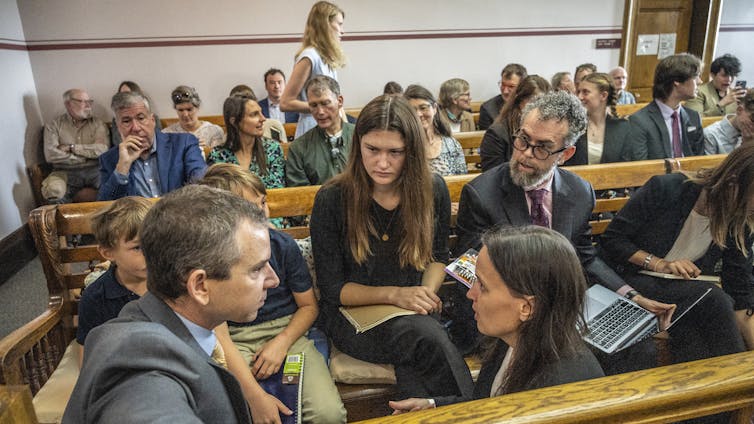
In December 2022, the Colorado Supreme Court agreed to hear the case, and to look at one question only: Whether Roger Hill has the right to even bring the lawsuit, a principal known as standing. The court heard oral arguments on May 2[, 2023].
The Colorado Supreme Court hears arguments May 2, 2023 in a case that could help introduce a public trust doctrine in Colorado. Credit: Caitlin Coleman/Water Education Colorado
“We’ve been focusing on standing for five years now,” said Hill’s attorney Mark Squillace, a University of Colorado law professor, last month during a talk at the University of Denver Water Law Review’s 2023 Symposium. “The argument we’re making is that Roger Hill has the right to stand on the bed of the river which is held by the state in trust for the people if the court is able to determine, which we think it will, that the Arkansas River at this particular location is navigable for title.”
This is the federal “equal footing doctrine,” which says that upon entering the union, a state gains title to the beds of streams that are navigable. For Colorado that means looking at navigability in 1876.
To be considered “navigable for title,” a river must have been used for commerce at the time of statehood using the type of boat or watercraft that would have been used at that time, Squillace said. This “trust” idea comes in if, indeed, the river was navigable in 1876, in which case, the state should be holding the riverbed “in trust” for the people.
During oral arguments, Supreme Court justices focused much of their questioning not on navigability but on the public trust doctrine.
The doctrine is a common law principle which provides that a state hold “in trust” for the public, the public right to navigable waters and the lands beneath them — it must be adopted at the state level.
“The Colorado Supreme Court has held, multiple times, that there is no public trust doctrine,” said Eric Olson, who represented the state on May 2 for the Colorado Attorney General’s Office. Olson has since left the AG’s office.
Establishing a public trust doctrine would require either an amendment to the state constitution or a change in how the Supreme Court interprets the constitution. This case could introduce a public trust doctrine in Colorado.
The Colorado Water Congress, a group that represents water interests in Colorado, opposes any move toward establishing a public trust doctrine because it could undo the way in which the state constitution has been interpreted and interfere with the state’s prior appropriation system of water rights. The state constitution says that water is the property of the public and is subject to appropriation — currently, Coloradans also have a private property right to put water to beneficial use.
According to a fact sheet by the Colorado Water Congress, establishing a public trust doctrine would threaten the state’s “first in time, first in right” prior appropriation system, placing more emphasis on the public’s ownership of water rather than the rights of private water users. The Colorado Water Congress also argues that a public trust doctrine could prohibit or limit the consumptive use of water, alter the timing of diversions, and could invalidate or interfere with existing water rights.
If the court sides with Hill, it would be “destabilizing” said Steve Leonhart, an attorney with the firm Burns, Figa and Will who represents Colorado Water Congress.
“Common law public trust is problematic in itself. If standing is allowed [in State of Colorado v. Hill], what kind of a can of worms could it open for other litigation?” Leonhart asked. “It would just be the beginning of potential litigation up and down the Arkansas River, potential litigation on other streams, potential litigation on land rights but also on water rights,” he said.
But Squillace said other states have public trust doctrines that allow more public access to streams.
“In virtually every other state in the country, the state enjoys broad access rights,” Squillace said during oral arguments. “We’re worse than any other state. One of the things the state is doing in this case is protecting wealthy private landowners. If the public is entitled to have access to those waterways, that’s something the court should protect.”
Groups who filed briefs in support of Hill include American Whitewater, Backcountry Hunters and Anglers, and Colorado River Outfitters Association. Those who filed briefs in support of the state’s arguments include Colorado Water Congress, the landowners, the Colorado Farm Bureau, and the Pacific Legal Foundation.
When Colorado’s high court will rule on the case isn’t clear yet, but attorneys said a decision could come by the end of the year.
Caitlin Coleman is a contributor to Fresh Water News and is editor of Water Education Colorado’s Headwaters Magazine. She can be reached at caitlin@wateredco.org.
Click the link to read the article from The Salt Lake Tribune on the KSL website (Leia Larsen). Here’s an excerpt:
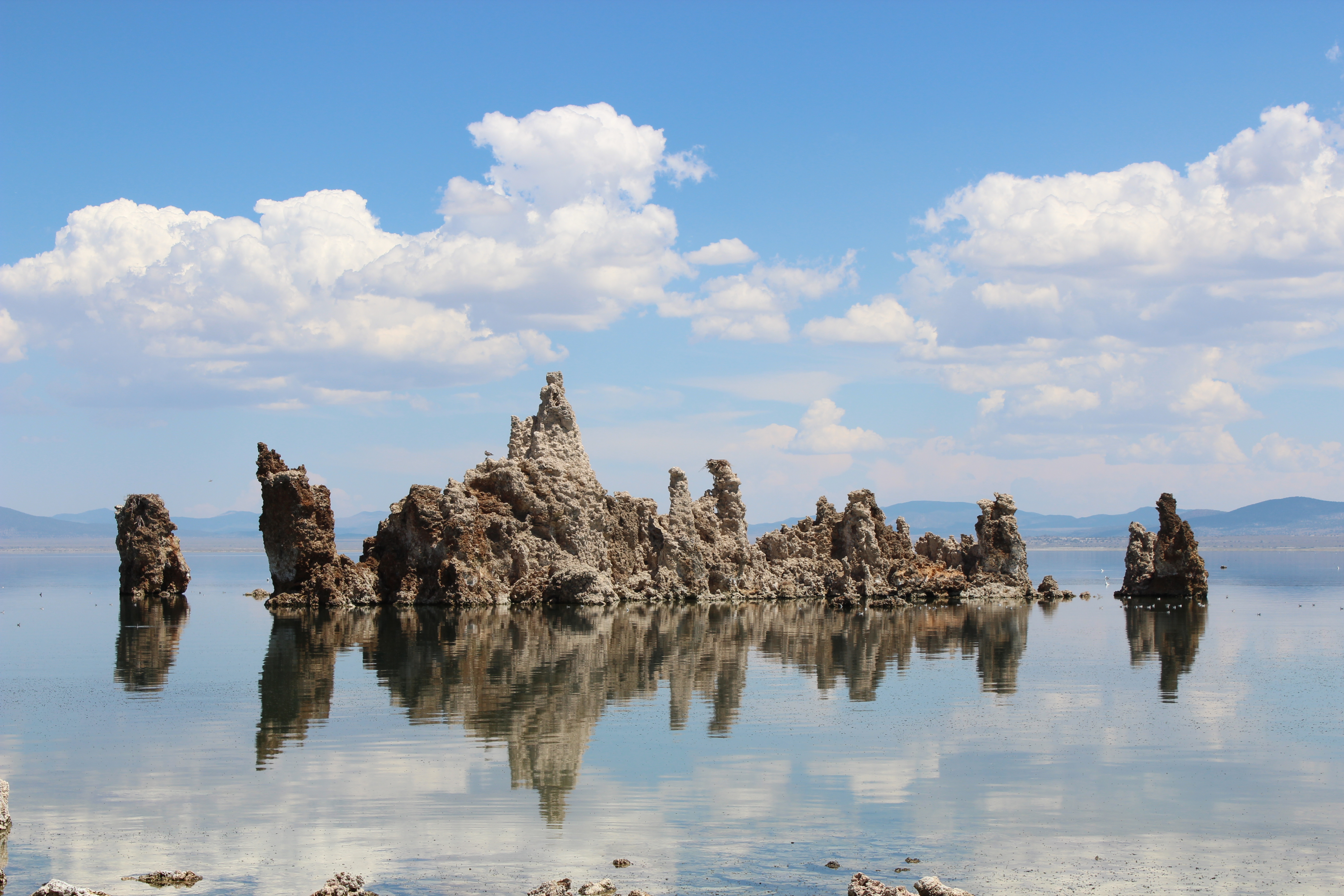
Owens Lake was one of the first cautionary tales about a salty lake with no outlet when it dried completely from human water consumption in Los Angeles. Lake Urmia in Iran and the Aral Sea in Central Asia followed, drained by scaled-up agriculture. All have since become sites of major dust storms. The Great Salt Lake finds itself heading down a similar path, overtapped by agriculture, cities and industry. But Mono (pronounced “moan-oh”) Lake has emerged as a success story of sorts. Alarmed by the lake’s decline when its tributary rivers were diverted away to L.A., environmental advocates fought back.
“We basically said, ‘Hey, the state is in charge of water rights and you gave [away] these water rights,” said Geoff McQuilkin, executive director of the Mono Lake Committee. “What we see [as a result] is Mono Lake being destroyed. That doesn’t meet the public trust obligation of the state to protect resources for future generations.”
They took their case all the way to the California Supreme Court in the 1980s using that public trust doctrine argument. And it worked. The concept of a public trust has its roots in English law, and may date as far back as the Roman Empire. Various courts in various states have applied the doctrine throughout U.S. history, mostly to settle issues of water access. The Mono Lake decision was the first time the public trust argument secured a lake’s right to exist. Now L.A.’s water utility has to scale back its diversions until Mono Lake reaches a sustainable level. So could someone apply the public trust doctrine in Utah to save the Great Salt Lake?
Some Utahns formed FRIENDS of Great Salt Lake in the 1990s after drawing inspiration from the Mono Lake Committee’s efforts. The group has a similar mission to educate and engage Utahns, helping them understand that the Great Salt Lake isn’t just a dead, empty sea. While the public trust doctrine hasn’t been applied to the Great Salt Lake so far, “certainly, the lake is deserving of this kind of justice,” said Lynn de Freitas, executive director of FRIENDS.
One complication is how, exactly, the public trust doctrine would solve the Great Salt Lake’s problems. At Mono Lake, the culprit depleting the lake was clear: a single utility in L.A. that could be obliged to reduce its consumption. In Utah, a patchwork of cities, towns, agricultural fields and industries across the watershed have dropped the Great Salt Lake by as much as 11 feet, according to a Utah State University analysis.
“So who do you target [in] a public trust challenge?” de Freitas wondered. “… I’m not quite sure.”
Satellite photo of the Great Salt Lake from August 2018 after years of drought, reaching near-record lows. The difference in colors between the northern and southern portions of the lake is the result of a railroad causeway. The image was acquired by the MSI sensor on the Sentinel-2B satellite. By Copernicus Sentinel-2, ESA – https://scihub.copernicus.eu/dhus/#/home, CC BY-SA 3.0 igo, https://commons.wikimedia.org/w/index.php?curid=77990895
The California Court of Appeal for the Third Appellate District has issued an important decision declaring that California’s powerful public trust doctrine applies to at least some of the state’s overtaxed groundwater resources. The court’s opinion also rejects the argument that California’s Sustainable Groundwater Management Act (SGMA) displaces the public trust doctrine’s applicability to groundwater resources.
The Court of Appeal’s opinion in Environmental Law Foundation v. State Water Resources Control Board decides two key issues of first impression for California water law: first, whether the public trust doctrine applies to California’s groundwater resources; and, second, if it does, if application of that doctrine has been displaced and superseded by the California Legislature’s 2014 enactment of SGMA. A unanimous appellate panel answered the first question in the affirmative, the second in the negative.
The facts of the Environmental Law Foundation are straightforward and undisputed: the Scott River is a tributary of the Klamath River and itself a navigable waterway located in the northwestern corner of California. The Scott River has historically been used by the public for recreational navigation and serves as essential habitat for migrating salmon listed under the Endangered Species Act.
Critically, there are groundwater aquifers adjacent to the Scott River in Siskiyou County that are hydrologically connected to the surface flows of the Scott River. Local farmers and ranchers in recent years have drilled numerous groundwater wells and pumped ever-increasing amounts of groundwater from those aquifers. As a direct result, the surface flows of the Scott River have been reduced, at times dramatically. Indeed, in the summer and early fall months, the Scott River has in some years been completely dewatered due to the nearby groundwater pumping. The adverse effects on both the Scott River’s salmon fishery and recreational use of the river have been devastating.
Environmental groups and the Pacific Coast Federation of Fishermen’s Associations, relying on California’s venerable public trust doctrine, initially responded to this environmental crisis by petitioning Siskiyou County and the State Water Resources Control Board to take administrative action to limit groundwater pumping in the Scott River watershed. Both the Board and the County declined to do so.
Plaintiffs responded by filing suit, arguing that groundwater resources that are interconnected with the surface water flows of the Scott River are subject to and protected by the state’s public trust doctrine. Siskiyou County disputed that claim, arguing that the public trust doctrine is wholly inapplicable to groundwater and that the country has no duty to limit groundwater pumping, even in the face of the resulting environmental damage to the Scott River ecosystem. (The Board, by contrast, eventually reconsidered its position, ultimately adopting plaintiffs’ view that groundwater resources interconnected with surface water flows are indeed subject to the public trust doctrine.)
The trial court concluded that the public trust doctrine does apply to the groundwater resources of the Scott River region. While the litigation was pending there, however, the California Legislature enacted SGMA, which for the first time creates a statewide system of groundwater management in California, administered at the regional level. Siskiyou County seized upon that legislation to argue that even if the public trust doctrine would otherwise apply to the County’s groundwater resources, the doctrine was automatically displaced and made inapplicable to groundwater as a result of SGMA’s allegedly “comprehensive” statutory scheme. The trial court rejected this backstop argument as well, and the County appealed.
The Court of Appeal’s decision today resoundingly affirms the trial court on both issues. On the threshold public trust claim, the justices rely heavily on the California Supreme Court’s landmark public trust decision, National Audubon Society v. Superior Court. In National Audubon, the Supreme Court held that the public trust doctrine, a foundational principle of California natural resources law, fully applies to the state’s complex water rights system. Specifically, National Audubon found that the City of Los Angeles’ diversion of water from the non-navigable, freshwater streams flowing into Mono Lake, which were reducing the lake level and causing environmental damage to the lake ecosystem, could be limited by state water regulators under the public trust doctrine.
The court in the Environmental Law Foundation concluded that the rationale and holding of National Audubon are fully applicable to the facts of the Scott River case. Rejecting the County’s argument that extractions of groundwater should be treated differently from the diversions of surface water that were found in National Audubon to be causing environmental damage to Mono Lake, the Court of Appeal declares:
“The County’s squabble over the distinction between diversion and extraction is…irrelevant. The analysis begins and ends with whether the challenged activity harms a navigable waterway and thereby violates the public trust.”
Accordingly, the Environmental Law Foundation court concludes that the public trust doctrine fully applies to extractions of groundwater that adversely affect navigable waterways such as the Scott River.
If successful, [the lawsuit] could upend environmental law, possibly allowing the redwood forests, the Rocky Mountains or the deserts of Nevada to sue individuals, corporations and governments over resource pollution or depletion. Future lawsuits in its mold might seek to block pipelines, golf courses or housing developments and force everyone from agriculture executives to mayors to rethink how they treat the environment.
Several environmental law experts said the suit had a slim chance at best. “I don’t think it’s laughable,” said Reed Benson, chairman of the environmental law program at the University of New Mexico. “But I think it’s a long shot in more ways than one.”
The suit was filed Monday in Federal District Court in Colorado by Jason Flores-Williams, a Denver lawyer. It names the river ecosystem as the plaintiff — citing no specific physical boundaries — and seeks to hold the state of Colorado and Gov. John Hickenlooper liable for violating the river’s “right to exist, flourish, regenerate, be restored, and naturally evolve.”
Because the river cannot appear in court, a group called Deep Green Resistance is filing the suit as an ally, or so-called next friend, of the waterway.
If a corporation has rights, the authors argue, so, too, should an ancient waterway that has sustained human life for as long as it has existed in the Western United States. The lawsuit claims the state violated the river’s right to flourish by polluting and draining it and threatening endangered species. The claim cites several nations whose courts or governments have recognized some rights for natural entities.
The lawsuit drew immediate criticism from conservative lawmakers, who called it ridiculous. “I think we can all agree rivers and trees are not people,” said Senator Steve Daines of Montana. “Radical obstructionists who contort common sense with this sort of nonsense undercut credible conservationists.”
The office of Mr. Hickenlooper, a Democrat, declined to comment.
The lawsuit comes as hurricanes and wildfires in recent weeks have left communities across the country devastated, intensifying the debate over how humans should treat the earth in the face of global climate change.
Homestake Dam via Aspen Journalism FromThe Colorado Springs Independent (Pam Zubeck):
The Colorado River, which originates in Colorado, provides water to seven states and Mexico, and it should have rights of its own, according to a soon-to-be-filed federal lawsuit.
The lawsuit seeks status for the river as a person.
Colorado Springs has a huge stake in the Colorado River, as its Homestake Reservoir is located in the Colorado River Basin and supplies a significant amount of water to the city.
Here’s the release from the Community Environmental Legal Defense Fund (CELDF) (Mari Margil):
To be filed next week in federal district court in Colorado, the lawsuit Colorado River v. State of Colorado seeks a ruling that the Colorado River, and its ecosystem, possess certain rights, including the right to exist, flourish, evolve, regenerate, and restoration.
Further, the lawsuit seeks a declaration from the federal court that the State of Colorado – the defendant in the case – may be held liable for violating the rights of the River.
The Plaintiff in the action is the Colorado River itself, with members of the environmental organization Deep Green Resistance serving as “next friends” in the lawsuit on behalf of the Colorado River ecosystem. They are represented by Jason Flores-Williams, a noted Colorado civil rights attorney.
CELDF has been at the forefront of the growing movement to recognize the rights of nature, and has assisted the first places in the world to develop laws that establish legal rights of nature. This includes dozens of municipalities across the United States which have rights of nature laws in place, as well as the country of Ecuador.
Mari Margil, Director of CELDF’s International Center for the Rights of Nature, explained, “This action is the first of its kind in the United States, and comes as courts around the world are beginning to hold that nature and ecosystems possess legally enforceable rights. Recently, courts in India and Colombia held that rivers, glaciers, and other ecosystems possess rights of their own. Building on ongoing lawmaking efforts, we believe that this lawsuit will be the first of many which begins to change the status of nature under our legal systems.”
In 2008, CELDF assisted with the drafting of Chapter 7 of the Ecuador Constitution, which secures rights of nature, or Pacha Mama. CELDF is working in a number of other countries, including India, Nepal, and Australia, to advance legal frameworks that recognize legally enforceable rights of ecosystems and nature.
This fall, CELDF, with Tulane University Law School, will host the Rights of Nature Symposium. This will bring together rights of nature experts from around the world for a public conference in New Orleans on October 27.
About CELDF — Community Environmental Legal Defense Fund
The Community Environmental Legal Defense Fund is a non-profit, public interest law firm providing free and affordable legal services to communities facing threats to their local environment, local agriculture, local economy, and quality of life. Its mission is to build sustainable communities by assisting people to assert their right to local self-government and the rights of nature. http://www.celdf.org/.
“We are more connected than we’d like to admit” — Travis Smith (from the film “The Great Divide“)
The Colorado Water Congress folks have released the Wednesday workshop schedule for the Annual Convention. Here’s the email from Doug Kemper:
Colorado water community:
Wednesday Workshops Program
I am pleased to announce the program for the Wednesday Workshops on January 25 at the 2017 Colorado Water Congress Annual Convention at the Hyatt Regency Denver Tech Center is now posted on CWC’s website. To view, click HERE. There are 25 opportunities for connecting with your colleagues as you learn about the latest happenings in Colorado water.
Annual Convention Program
The main program for the Convention is being built and should be ready next week. Our theme for the Annual Convention is Connectivity. We will go live with the new Colorado Water Congress Strategic Plan and link members with the future direction of our organization.
Flowing from the 2015 member survey, we learned that our outlook must be toward helping members feel connected to the Colorado Water Congress and engaged with our work to protect the interests of Colorado’s water community. And that is our goal!
The top thing that we will work on in 2017 is our communications. We will launch a new Communications Standing Committee at the Convention. Expressing your thoughts as to what you would like to see occur in this dynamic age of communications will be very helpful.
Annual Convention Registration
To receive the standard 10% early registration discount, register by December 31, 2016. Register for the Convention here – 2017 AC Registration
Hotel Registration
For room reservations at the Hyatt Regency DTC, please visit Hyatt Regency – CWC</a
From email from the Colorado Water Congress (Doug Kemper):
Excitement continues to build for our 2014 Summer Conference and Membership Meeting. It will be held at the Westin Snowmass Resort, August 20-22. Our theme this year is “Rallying Our Water Community.” To register please visit: Conference Registration.
We will know in a couple of weeks if enough signatures have been gathered to place Initiative 89, Local Government Regulation of the Environment, on the 2014 Ballot. Whether it does or not, the water community will need to develop a greater public presence on these issues. Our conference is designed to help develop your advocacy skills and knowledge base.
We want to ensure we are focused on our member’s priorities when the Water Congress Board sets our priorities this fall. Summer Conference activities are designed to give you the opportunity to provide direct input to our leadership. We hope that you will take this chance to engage with us.
Our exciting program will again include a session with the Water Resources Review Committee. Additional honored guests include both Republican and Democratic candidates for the U.S. Senate, U.S. House Third District, and Attorney General. Don’t miss this chance to catch up with colleagues and meet new community members during our POND networking activities.
Highlights of our unique program sessions include:
Strategies for Finding Your Voice
Do you have adequate tools to advocate on behalf of Colorado’s water community? Practice conveying your message with other attendees and workshop leaders.
Senator Udall, Congressman Gardner, Congressman Tipton, and Former State Senator Tapia
We are pleased to host candidates for some of our top political offices as they address issues of keen importance to Colorado’s water community.
Costs of Doing the Right Thing
As we plan for our water allocation in the future, we rarely examine the full social and economic costs, including burdens on individual ratepayers. This panel will examine those costs, along with a brief overview of other economic challenges currently faced by Colorado water providers.
Mono Lake
For 100 years, the L.A. Aqueduct has been the source of legend and controversy. Today, drought imperils much of California’s water supply. How is Los Angeles handling the drought within the confines of a Public Trust Doctrine?
Mitigation for Transbasin Diversion
Past Aspinall Water Leaders will discuss historic transbasin water projects and their mitigation. What can we learn from the past?
We are looking forward to seeing you in Snowmass, August 20-22. Additional conference information and registration can be found at: Conference Information.
Flood irrigation in the Arkansas Valley via Greg Hobbs From the Glenwood Springs Post Independent (Hannah Holm):
Which is more important: The public’s enjoyment of healthy streams, or preserving private property rights and agriculture? Do we really have to choose?
Questions swirling around proposed ballot initiatives that assert public rights to Colorado’s water and environment reflect broader tensions between public and private rights that are inherent in our democracy, as well as changing public values regarding natural resources.
The U.S. Constitution barely mentions water, but the Colorado Constitution has an entire article (16) on “Mining and Irrigation,” which provides the underpinnings of Colorado water law. In summary:
• Water in streams is owned by the public: “The water of every natural stream, not heretofore appropriated, within the state of Colorado, is hereby declared to be the property of the public, and the same is dedicated to the use of the people of the state …”
• At the same time, individuals’ rights to take water out of a stream to use it are assured: “The right to divert the unappropriated waters of any natural stream to beneficial uses shall never be denied.” Further details explain that “priority of appropriation shall give the better right…” In other words, first in time, first in right.
• Rights of way have to be provided to move water from a stream to where it’s needed: “All persons and corporations shall have the right-of-way across public, private and corporate lands for the construction of ditches, canals and flumes for the purpose of conveying water … upon payment of just compensation.”
These provisions reflect the necessity of access to water from streams for life and livelihoods in semi-arid Colorado and, according to legal scholar David Schorr, a desire to prevent that access from being controlled by a privileged few. This is a very democratic kind of desire.
Over the last 100-plus years, public values related to water have become more complicated. We all still want to drink water and eat food, but water in streams for recreation and a healthy environment have also become high priorities. And sometimes water taken out of streams to serve those long-established values of domestic use, agriculture and industry, and the livelihoods related to them, ends up leaving streams depleted and unhealthy.
The constitution clearly provides for taking water out of streams, but gives no direction about when water should be left in. The General Assembly passed laws allowing water rights to be filed for environmental and recreational purposes, but most of these rights are very junior to others and vulnerable to going unmet.
Proposed ballot initiatives to establish public rights in water and the environment seek to reverse the priority of these values. Initiative 103, “Public Trust Resources,” which focused on water, was derailed from its track to the ballot by the Supreme Court, but Initiative 89, “Local Government Regulation of Environment,” was cleared for signature collection.
Initiative 89 would amend Colorado’s constitution by asserting that Colorado citizens “have a right to Colorado’s environment, including its clean air, pure water and natural and scenic values.” It directs the state and local governments to protect these resources, and says that when local and state laws conflict, the more restrictive or protective would govern.
In his dissenting opinion, Justice Gregory Hobbs argued that the new public right to the environment “would override existing private and publicly held property rights,” and would require state and local officials “to act adversely to the interests of private parties …”
In addition to reflecting the ever-present tension between public and private rights, the dispute also reflects polarization between parties primarily interested in preserving the status quo and those seeking enhanced environmental protections.
Longtime environmental advocate and vice president of the Upper Gunnison River Water Conservancy District Steve Glazer, speaking at the Colorado Water Workshop in Gunnison in June, urged both sides in the conflict to “listen to each other more, and move together instead of apart” in order to find solutions that don’t sacrifice one set of values to serve the other.
Douglas Kemper, executive director of Colorado Water Congress, joined Bruce Whitehead of the Southwestern Water Conservation District, and elected leaders to educate the council on two initiatives that could change the state’s prior appropriation system for managing water claims. Prior appropriation is a way of water allocation that controls who uses how much water, the types of uses allowed and when those waters can be used.
The secretary of state’s website said any person can draft a statewide initiative to amend the state constitution. If proponents of the ballot measure gets enough signatures, about 86,105, all voters in the state would decide the issue. The Colorado Supreme Court affirmed initiatives 89 and 75.
The Water Congress, a nonprofit group providing leadership on water issues, created a stewardship project that tracks, what it believes are, “public trust doctrine” initiatives that would change how Colorado allocates water. The group opposes public-trust initiatives. Switching to a public-trust system would mean the government would decide how to allocate water rights instead of who came first, according to Kemper.
Initiative 75 would give local governments the power to approve laws that would establish the fundamental rights of residents, communities and nature. It would give local governments expanded power over businesses, such as allowing local laws to establish or eliminate the rights of corporations and other businesses operating in the community to protect the rights of people, communities and nature.
“Those are some pretty far-reaching powers,” Kemper said. “Basically, it says those local laws would be superior to international, federal or state law.”
Initiative 89 declares that Colorado’s environment is the common property of all Coloradoans, including the clean air, pure water, and natural and scenic values. It makes state and local governments trustees of the environment and requires them to protect the environment.
Colorado Supreme Court Justice Gregory Hobbs Jr. wrote in a dissenting opinion on Initiative 89 that the initiative would create a new common property right that would override existing private and publicly held property rights.
“Initiative 89 would upend the existing regulatory balance and thrust private-property owners and governments into an uncertain future,” Hobbs wrote…
State Rep. Mike McLachlan, D-Durango, urged city councilors to draft a resolution opposing these initiatives. The Southwestern Water Conservancy District has issued a resolution in opposition to public trust initiatives.
More 2014 Colorado November election coverage here.
From email from the Colorado Water Congress (Fiona Smith):
The Colorado Supreme Court published an opinion today declaring that Initiative 103 (Public Trust Resources) may not proceed towards the 2014 Ballot. A 4-3 majority holds that the Title Board lacked authority to proceed with a substituted designated representative when one of the proponents could not attend the rehearing. This decision validates a May 1 appeal by the Colorado Water Congress (CWC) and Coloradoans for Responsible Reform.
Initiative 103, by Phil Doe and Barbara Mills-Bria, proposed to establish an “inalienable right” of the people of Colorado to clean air, clean water (including groundwater), and the preservation of the environment and natural resources (called “Public Trust Resources”), as common property of all people, including future generations. It would require the state, as trustee of Public Trust Resources, to conserve and maintain them for the benefit of all the people. CWC and over 70 supporting entities from around the state opposed this Initiative on the grounds that it was unwise, unnecessary, expensive and disruptive to the responsible allocation and stewardship of Colorado’s water resources.
CWC will now shift its energy towards Initiatives 75 and 89, both of which are of concern to Colorado’s water community. A 5-2 Supreme Court majority decided today that Initiative 89 may proceed towards the 2014 Ballot. The Court similarly confirmed Initiative 75 last month. Each will require 86,105 valid signatures to be placed on the ballot in November.
Initiative 75 would strengthen “local control,” allowing local governments to adopt environmental regulations that override state laws, including the laws that limit and balance local governments’ regulation of water facilities. Initiative 89 would combine this local control theme with a Public Trust Doctrine, declaring “common property” in Colorado’s water and environment and obligating state and local government to conserve these resources as trustees. In his dissenting opinion today, Justice Gregory Hobbs cautioned that “Initiative #89 proposes to create an entirely unprecedented form of public trust duty requiring state and local governments to ‘conserve’ what are predominately privately held resources… [It] would upend the existing regulatory balance and thrust private property owners and governments into an uncertain future.”
The Colorado Water Stewardship Project, a special project of CWC, will continue to monitor Initiatives 75 and 89 and inform water stakeholders of the serious implications of amending the constitution to create a Public Trust Doctrine in Colorado.
The so-called “public trust doctrine” measure, No. 103, had drawn opposition from the Colorado Water Congress, representing water users across the state, and the business-backed group Coloradans for Responsible Reform.
The high court ruled Monday that the Title Board, which reviews ballot proposals, made a mistake when it allowed the backers of No. 103 to have a substitute fill in during a hearing on the measure.
The court said that state law “does not allow designated representatives who are unable to attend a Title Board meeting to substitute alternates to serve in their place. Instead, the Title Board must delay its considerations until the next meeting at which both of the designated representatives who were so designated at the initial stages of the initiative process are able to attend the Title Board meeting.”
The ruling means that the proposal can’t be considered for the 2014 ballot because the Title Board is no longer meeting for the 2014 election cycle, said a spokesman for the Colorado Secretary of State’s office.
The backers of the proposal were Phil Doe and Barbara Mills-Bria. But Mills-Bria couldn’t attend a meeting of the Title Board because she as traveling to an out-of-state funeral, according to the court ruling.
The court said the Title Board should have postponed its hearing on No. 103 until Mills-Bria could attend rather than allowing a designee to fill in.
The proposal sought to establish a common property right to “clean air, clean water, including ground and surface water, and the preservation of the environment and natural resources.” It also would have required the state to conserve and maintain those elements for the benefit of all people.
The Colorado Water Congress said it opposed the initiative on the grounds that it was “unwise, unnecessary, expensive and disruptive to the responsible allocation and stewardship of Colorado’s water resources.”
The Colorado Water Congress said it would shift its resources to oppose Initiatives No. 75 and 89.
No. 75 is a proposal by the Colorado Community Rights Network that would allow cities to ban any for-profit business that community leaders don’t want to see in their towns.
No. 89, which says that Coloradans have a right to clean air, water and scenic values, is one of nine proposals that are backed by U.S. Rep. Jared Polis, D-Boulder.
The Colorado Supreme Court has rejected challenges to proposals No. 75 and No. 89, meaning supporters have until Aug. 4 to collect more than 86,105 valid signatures in order to have the initiatives placed on the fall ballot.
More 2014 Colorado November election coverage here.
Water initiatives that could have a significant impact on the San Luis Valley are still awaiting Colorado Supreme Court decisions before moving forward to the November ballot box. Still awaiting the higher court’s direction are two initiatives Initiatives 89 and 103 that advocate the Public Trust Doctrine, which would present a radical change from the current water administration throughout the state.
Another ballot initiative, Initiative 75, has already passed through the higher court and now has the green light to collect signatures to place it on the 2014 ballot. Although not directly related to water issues, Initiative 75, the Right to Local Self-Government , could affect water developments and investments. It drew a court challenge from the business community.
The ballot title states: “An amendment to the Colorado constitution concerning a right to local self-government , and, in connection therewith, declaring that the people have an inherent right to local self-government in counties and municipalities , including the power to enact laws to establish and protect fundamental rights of individuals, communities, and nature and the power to define or eliminate the rights and powers of corporations or business entities to prevent them from interfering with those fundamental rights; and declaring that such local laws are not subject to preemption by any federal, state, or international laws.”
Initiative 75 was just one of more than 100 separate initiatives proposed or re-proposed this year. Eleven have been cleared so far to begin the signature-gathering process , and another 34 are still pending before the Colorado Supreme Court.
Those include Initiatives 89 and 103.
The Colorado Water Stewardship Project challenged the title-setting process for Initiatives 89 (Local Government Regulation of Environment ) and 103 (Public Trust Resources), arguing that the proposed initiatives did not meet the requirement of a single title.
These initiatives promote the Public Trust Doctrine. Since the 1800’s Colorado has operated under the Doctrine of Prior Appropriation, rather than the Public Trust Doctrine, so passage of these amendments could radically change the way water is administered in the state. Public Trust Doctrine holds that natural resources such as water are common property, while the Doctrine of Prior Appropriation operates under the principle that the first to put the water to use has priority over subsequent water users on that stream.
Colorado Supreme Court Justice Gregory Hobbs has described The Public Trust Initiative as dropping “what amounts to a nuclear bomb on Colorado water rights and land rights.”
Initiative 89’s ballot title is: “Shall there be an amendment to the Colorado constitution concerning a public right to Colorado’s environment, and, in connection therewith, declaring that Colorado’s environment is the common property of all Coloradans; specifying that the environ- ment includes clean air, pure water, and natural and scenic values and that state and local governments are trustees of this resource; requiring state and local governments to conserve the environment; and declaring that if state or local laws conflict the more restrictive law or regulation governs?”
Initiative 103’s ballot titles is: “Shall there be an amendment to the Colorado constitution concerning public ownership of natural and environmental resources, and, in connection therewith , creating a public trust in those resources, which include clean air, clean water, and the preservation of the environment and natural resources; requiring the state, as trustee, to conserve and maintain public trust resources by using the best science available to protect them against any substantial impairment, regardless of any prior federal, state, or local approval; seeking natural resource damages from anyone who substantially impairs them, and using damages obtained to remediate the impairment; allowing Colorado citizens to file enforcement actions in court; requiring anyone who is proposing an action or policy that might substantially impair public trust resources to prove that the action or policy is not harmful; and criminalizing the manipulation of data, reports, or scientific information in an attempt to use public trust resources for private profit?”
The Colorado Water Stewardship Project is supporting legal actions before the Colorado Supreme Court regarding these initiatives, and the higher court is expected to rule on these appeals before July.
In the meantime The Colorado Water Stewardship Project is continuing to bring awareness to these initiatives and what they could mean to the water community throughout the state.
About 70 groups ranging from municipal utilities and the Colorado Association of Commerce and Industry to conservation and conservancy districts have approved resolutions opposing the Public Trust Doctrine.
San Luis Valley entities that have passed resolutions include: San Luis Valley Irrigation District, Rio Grande Headwaters Land Trust and the Commonwealth Irrigation Company.
If the Colorado Supreme Court confirms the contested ballot titles and their proponents receive the green light to proceed with acquiring signatures, they would have to collect 86,105 valid registered voters’ signatures to get these initiatives on the ballot this fall. The deadline to collect those signatures and turn them in to the Secretary of State’s office would be August 4.
More 2014 Colorado November election coverage <a href="
From the Ouray County Plaindealer (Sheridan Block):
In an attempt to protect Colorado’s natural resources, the Public Trust Initiative is again trying to make waves and earn its spot on ballots this year. While the initiative aims to secure protection for the state’s precious resources — particularly water — many local ranchers and water users are vehemently against the proposed measure.
Initiative 103, also known as the public trust doctrine, is an effort to protect the state’s natural resources from pollution and irresponsible use. The initiative asserts that it is the state’s responsibility “to secure the rights of the people to protect natural resources” such as “clean air, clean water, including ground and surface water, and the preservation of the environment” which the public is entitled to.
More Public Trust Doctrine coverage here. Here’s the link for the Colorado Water Congress Stewardship Project website for more information about the Public Trust Doctrine.
The CWSP is currently monitoring three proposed ballot initiatives which have the potential to significantly impact Colorado’s water allocation system. Join us March 25, at 12pm for this month’s webinar: Ballot Initiatives 2014- Water and Related Issues.
Doug Kemper of the Colorado Water Congress, Steve Leonhardt of Burns, Figa & Will P.C., and Floyd Ciruli of Ciruli Associates will present an overview of the recently proposed ballot initiatives related to a Public Trust Doctrine in Colorado, and will identify a few other proposed initiatives that may be of concern. They will provide understanding of the impact such initiatives might have and information on how you can take action to advance a sustainable water future for Colorado.
Upper Rio Grande River Basin via the Colorado Geological Survey From the Valley Courier (Ruth Heide):
Groundwater rules, endangered species and interstate lawsuits, public trust doctrine ballot initiatives on top of what could be the sixth belowaverage water year in a row add up to what Rio Grande Water Users Association Attorney Bill Paddock called a “horrifying list of what’s out in front of us.”
“That’s what we’re dealing with,” Paddock told water users at the association’s annual meeting in Monte Vista yesterday.
To make a bitter pill even harder to swallow, the assessments for association members increased by $2 per unit, from $25 to $27 per unit, at the recommendation of the board. Association members, who represent area canals and ditches on the Rio Grande, approved the increase. Association President Greg Higel said the assessment increase was not a unanimous recommendation from the board, especially since many of the ditch companies had already set their own assessments for the year. However, the board believed the assessments had to be increased to handle the pending challenges of the year, such as possible lawsuits that might affect water users along the river.
Higel said the board also voted to allocate 2,500 acre feet for Subdistrict #1 again this year. In addition, the board recommended an irrigation start date for water users association members of April 1, which is the standard start date for the irrigation season.
Water user Willie Hoffner voted against the assessment increase and suggested an earlier irrigation start date for folks on Saguache Creek who might not see water again for a while if they are not able to divert it now. Colorado Division of Water Resources Division Engineer for Division 3 Craig Cotten said he would be meeting with the Saguache Creek water users later this month to discuss their preferred irrigation start date.
Cotten said the storms during the last week brought the Rio Grande Basin’s snowpack up from 77 percent to 87 percent of average, but this basin is still the lowest in the state, with other basins way above 100 percent.
“If we can keep getting some storms coming through we have a good chance of reaching that 100 percent,” he said. “We will have to wait and see what the next couple of months bring.”
If things do not improve, this will be the sixth year in a row with below average stream flow on the Rio Grande, Cotten added. Since 2002, the river has registered only three years with above average stream flow , “which is very unusual, and even more unusual the last five years in a row have been below average.”
He said there has only been one other time since the gauges were put in at Del Norte in 1890 that there were five years in a row of below average stream flow , and never six years in a row.
The preliminary forecast for the Rio Grande this year, based on the Natural Resources Conservation Service’s February forecast, at least promises a bit higher numbers than last year. The February forecast for the Rio Grande is 520,000 acre feet, which is still below average but higher than the 459,900 acre feet that passed through the Del Norte gauge last year. Last year’s total was about 71 percent of the longterm average, Cotten said. If the 520,000 acre-feet forecast holds true, the Rio Grande’s obligation to downstream states this year will be about 133,800 acre feet, and the curtailment to meet that obligation could be about 13 percent. However, Cotten stressed that is a guess at this point, and there are many different factors to consider before implementing a curtailment .
Cotten also shared National Oceanic and Atmospheric Administration predictions for precipitation and temperatures for the next three-month period, which show this area as having equal chances for average precipitation and good chances for above average temperatures. Both Cotten and Paddock spoke to the water users yesterday about pending lawsuits that could have impacts on irrigators in the San Luis Valley.
The state of Texas petitioned the U.S. Supreme Court to file a lawsuit against New Mexico and Colorado concerning the Rio Grande Compact, and the U.S. government joined with Texas in the petition last week. The Supreme Court has accepted that lawsuit, so it will now begin moving forward. Colorado is a minor player in the suit at this point but was named because it is part of the compact. Texas’ main beef was with pumping below Caballo Reservoir in New Mexico.
“It didn’t have a lot to do with us but we got drug into that court case,” Cotten said. Paddock added that if New Mexico were to win such a suit, Colorado would definitely be affected because more water would have to be diverted from Elephant Butte Reservoir, one of the main storage facilities for Rio Grande Compact water, leaving less water that could be counted as usable water for compact purposes. If that total decreases below 400,000 acre feet, which was the case last year and will likely remain the case this year, reservoirs in Colorado built after the compact was ratified cannot store water. Platoro Reservoir Paddock added that no one has filed any specific claims against Colorado in the New Mexico/Texas suit, only including Colorado because it is a signatory on the Rio Grande Compact.
“Hopefully there won’t be any spillback on water users in the Valley,” he said. “There’s significant issues that could come up in that lawsuit that could be concerns to Colorado and that could be concerns to all of you.”
Other pending lawsuits, which would more directly affect the Valley, are suits by the WildEarth Guardians. The environmental group filed notice of intent to sue and has 60 days from the time of its notice before it can officially file suit, which would be March 22. That group is alleging violations of the Endangered Species Act protection of the silvery minnow and Southwestern Willow Flycatcher, and so far those who may be named in the suit include the State of Colorado, Corps of Engineers, Bureau of Reclamation and Fish and Wildlife Service.
“They are claiming that the use of water out of the Rio Grande in Colorado is causing some injury to the endangered species in New Mexico,” said Cotten. “Our position is we have the Rio Grande Compact and we meet our compact obligations each and every year. We have done what we are supposed to do legally to deliver water down there.”
Paddock said if the WildEarth Guardians do bring suit against Colorado it would be a precedent-setting form of litigation nationally, and “it will be an incredibly high stakes lawsuit. They are asserting that endangered species overrule the compact. They are saying you can’t exercise your water rights so water can flow unimpeded to the state of New Mexico to support the silvery minnow. That’s the bottom line.” Regardless of the outcome, such a lawsuit would take years to argue and decide “and will involve every water user from the headwaters of the Rio Grande down to Elephant Butte Reservoir because they would all have the same issues .” He said, the State of Colorado “will not go quietly” if such a lawsuit were to proceed. Paddock and Cotten also reminded attendees of the Rio Grande Water Users Association annual meeting yesterday that groundwater rules will likely be filed with the court this spring. Cotten said the next advisory committee meeting is at 10 a.m. March 12 at the Inn of the Rio Grande in Alamosa, and the state engineer’s goal is to promulgate the rules in April. Paddock added if there are objections to the rules, the court would have to schedule a trial, if those are not resolved beforehand, and that could very likely take place by this time next year. If/Once the rules are ultimately approved, there will be a limited time period for wells to either be under an augmentation plan of their own or through a sub-district , Paddock reminded the water users. Sub-districts would also have a limited time to finalize their formations and plans of management, he added.
“We’re looking at a major change in water management over the next two to three years,” he said.
Capping off “horrifying list of what’s out in front of us,” according to Paddock, is the potential for ballot issues to go before voters this fall regarding a constitutional change from the current priority water system to the Public Trust Doctrine. The Public Trust Doctrine would involve a permitting system, and whoever was in charge of the permitting could choose how water would be diverted and for what uses. For example, the most beneficial use of water could be determined to be instream flows in the Rio Grande rather than diversions for agricultural irrigation, Paddock explained.
“The Public Trust Doctrine is unpredictable,” he said. “It’s terrifying because it takes away people’s certainty of how they can use their water and when it is available.”
He said if those promoting the ballot initiatives collect enough signatures, the Public Trust Doctrine initiatives would probably appear on the ballots this fall.
“It is a significant threat to everyone’s established water rights.” is one of those.
Another even more substantial potential impact of Texas winning this suit and requiring more water to be delivered out of Elephant Butte would be less chance of the reservoir spilling. In a year when Elephant Butte spills, Colorado has no delivery obligation downstream.
“That makes a whole lot more water available in Colorado ,” Paddock said. “That’s pretty high stakes.”
More Upper Rio Grande River Basin coverage here and here.
Click here to read the newsletter. Here’s an excerpt:
Public Trust Ballot Initiative Introduced
A proposed Public Trust Doctrine Ballot Initiative is progressing through the state’s review process. The proponents made changes to their initial version and re-submitted the amendment on February 25. It is set for a Review and Comment Hearing March 11 at 1:30pm.
The current version of proposed Initiative 83 would amend the Colorado Constitution by adding a new section to Article XVI (the provisions of the constitution that govern mining and water rights). This amendment would, among other issues, establish an “inalienable right” of the people of Colorado to clean air, clean water (including groundwater), and the preservation of the environment and natural resources (called “Public Trust Resources”), as common property of all people including future generations.
CWSP and the Colorado Water Congress are monitoring all initiatives that could affect water resources. To view the full initiatives tracking document click HERE.
More 2014 Colorado November election coverage here.
From the Northern Colorado Business Report (Steve Lynn):
One of Colorado’s oldest, most powerful water groups is raising a war chest to battle an initiative that would place the public’s interest in the state’s hallmark rivers and streams ahead of the interests of private water-right owners, changing the state Constitution.
The notion that the public has an inherent interest in free-flowing water is well-established in other states, which embrace what’s known as the “public trust doctrine.”
California, Wisconsin, Montana and New Jersey, for instance, have such a doctrine, according to a 2009 report from the Center for Progressive Reform, a nonprofit policy research organization based in Washington, D.C. In Wisconsin, for example, the public interest in a water source is paramount and a water permit only can be granted if its use does not obstruct navigation, reduce flood-flow capacity or harm the public interest.
This would mark a radical shift from Colorado’s prior appropriation system, which favors individual water rights owners, especially those with older water rights. During drought periods, water is provided to those with senior water rights while those who have junior, or newer, water rights don’t get water.
But the Colorado Water Congress, which represents private water-right owners, contends the Public Trust Doctrine runs counter to state law and 150 years of case law. The legal principle would make rivers and streams public property, superseding water rights of property owners in some cases.
Richard Hamilton, a retired aquatic microbiologist from Fairplay, is behind recent efforts to introduce a ballot initiative to ask voters to enact the public trust doctrine in Colorado. Hamilton and Phillip Doe have tried several times since 1988 to enact a public trust doctrine.
“The state does not now act as a steward of the people’s property,” Hamilton said.
“It goes ahead and decides what is the best interest of everybody and the government makes up its mind as to which of those interests shall supersede the public’s ownership.”
Hamilton said his measure failed last year because the state did not give him enough time to gather signatures for a ballot initiative. He said he does not know whether he will pursue a ballot initiative this year.
The Colorado Water Congress, nonetheless, is spending $325,000 on a campaign to oppose any effort to launch a public trust doctrine initiative. Founded in 1958, the not-for-profit lobbying organization represents water-right owners. The Colorado Water Congress claims an 85 percent “success rate” on state water legislation it endorses, and Colorado governors rarely have signed bills it has opposed.
Justian I first codifier of riparian rights Click here to read the newsletter. Here’s an excerpt:
The Colorado Water Congress Board unanimously adopted a resolution opposing a public trust doctrine at its December 6th meeting.
The resolution declared:
A public trust doctrine is unwise, unnecessary, disruptive to the fair and responsible allocation and stewardship of Colorado’s scarce water resources, and an unwarranted taking of vested property interests. –December 6, 2013
The resolution cites the risks to agricultural users and major concerns for Colorado’s economic stability. The Board also opposed the doctrine because it would increase uncertainty in the ownership and right to use water, and shift control from the local water providers to the courts in the form of litigation.
Board Chairman Regan Waskom said the Colorado Water Congress will strongly encourage its membership to adopt similar resolutions. “It is important that the water community be absolutely clear that the public trust doctrine, in whatever form it might be offered, would be a disaster for Colorado citizens and for good water management.”
View the Colorado Water Congress Resolution on a Public Trust Doctrine HERE.
Inclusions of a public trust doctrine in the Colorado Constitution have been attempted for several years without success. Most citizens may be unaware of the devastation that would be wrought on private water rights should the proponents be successful.
In Colorado water rights are a private property right acquired by diverting and placing the water to a beneficial use. Priority of use is determined by the date of first use – “first in time is first in right.”
Since statehood Colorado’s constitution has guaranteed this right.
The value of a water right is created by the combination of various components. To own a water right, the water must be placed to beneficial use on the lands decreed by the water court in each particular circumstance. The water itself represents a small fraction of the value of the right. The creation of the infrastructure to divert and transport the water to the place of use, the laterals, sprinklers, storage vessels and labor to efficiently distribute the water to its intended use and the ongoing maintenance of the infrastructure account for 90 percent or more of the asset value of the water right. Without all the parts, the right could not be created nor maintained.
Historically public values of water have arisen incidentally from the private application of water rights to beneficial uses.
Examples are the return flows from irrigation or municipal uses to tributaries and rivers from private uses or the creation of wetlands from irrigation that support water fowl and nesting.
Privately held water rights have provided these public benefits we all enjoy, but they have not created public ownership of the water.
A public trust doctrine would create a public ownership of these benefits without just compensation to the private water right owner whose money and labor created the benefit.
In the past quarter-century a movement to recognize the public benefit and ownership of water has taken hold in the West, particularly in California and other Western states. The implementation of this ownership/right has been incorporated in these states into a public trust and has had the effect of undermining private ownership and use of water as a private property right.
Today some owners of irrigation water rights are trying to define the value of irrigated agriculture. In their quest to better understand the values created beyond their immediate application of the water to beneficial use, there is a tendency to quantify the external value incidentally created within the community.
Most of these inadvertently created values are public benefits. The public has little or no financial resources to replicate these values if the owner of the right wishes to move the use to another location or change type of use. Under current law water right owners have standing to defend against negative impacts to their rights from changes of use by adjacent water right owners. Those with no water right have no standing to claim injury to incidental public benefits. A public trust doctrine would create standing.
If a public trust doctrine were successfully adopted by Colorado, a private owner’s right would be diminished or lost to the public domain. Governmental bodies would impose conditions upon water right owners to continue to maintain inadvertently created public benefits without just compensation.
Inundation of these incidental benefits by the water right owner through changes in irrigation practices could trigger fines and require replacement of publicly perceived benefits created from past irrigation practices.
The potential implications of such a public trust doctrine upon existing water rights are infinite. Irrigated agriculture should reconsider how it measures water right value.
The negative implications to municipal water rights are even more tenuous under a Colorado public trust doctrine. As presently envisioned, all water must be diverted and returned unimpaired to the stream. Thus there can be no diminishment in quantity or quality – an impossible task.
The cost of a public trust doctrine to municipal dwellers as well as agricultural users is simply untenable and unaffordable.
Click here to go to the Colorado Water Congress’ Public Trust Special Project page to download the presentation.
Update: Here’s a report about the survey and the issue from Chris Woodka writing for The Pueblo Chieftain:
A survey by the Colorado Water Congress indicates voters trust local water providers, support agricultural water values and generally favor the existing legal framework of water rights in Colorado. The group is gathering the information in preparation for the possible return of a public trust question on next year’s ballot.
“The public trust doctrine in Colorado would be unlimited employment for water lawyers,” Doug Kemper, executive director of CWC, told the Southeastern Colorado Water Conservancy District last week.
“The survey showed most people are uncertain, but (the public trust proposal) does have certain resonance,” Kemper said. “Most people are comfortable with local control of water.”
The CWC has been gearing up for a return bout with Richard Hamilton of Fairplay, who is planning on using the same ballot language that finally was approved in 2012. Hamilton said legal challenges by the CWC to the ballot title hurt chances for gathering signatures by reducing the time needed, so he withdrew the initiative last July. After Hamilton earlier this year announced his intentions to begin a campaign for 2014, CWC began a two-year, $325,000 program to counteract the effort.
Water groups, such as the Southeastern district or Pueblo Board of Water Works — even the CWC itself — are limited in their ability to campaign against the measure once it is on the ballot, Kemper said.
The survey provides arguments that might be made by private groups against the proposal. The Colorado Farm Bureau already has stepped up to fill that niche.
The public trust doctrine, relied on by some other states, could throw the state’s prior appropriation doctrine into chaos because it could elevate “public good” arguments above property rights.
The Colorado Constitution provides that those who first divert water to beneficial use have a senior claim to water, and gives domestic use preference over agricultural and manufacturing uses. Subsequent court cases have interpreted the laws to provide a strict pecking order of water rights within seven water districts in Colorado. Changes in the law in 1969 incorporated groundwater diversions with surface rights. Interstate compacts have added more restrictions about how water can be diverted within the state.
From email from the Colorado Water Congress (Doug Kemper):
After failing to collect enough signatures to place Public Trust initiatives in front of Colorado voters in 2012, the sponsors announced that they are redoubling their efforts to bring the issue to Colorado voters as early as 2014. “We will stay at this until we win,” their leadership stated.
The Colorado Water Congress has strongly opposed the Public Trust Doctrine becoming law for the last two decades. It is critical that we act now to prepare for the next round in the Public Trust battle. Failure to prepare will certainly leave us in a precarious position.
The Water Congress Board established a new Public Trust Special Project to fervently challenge upcoming ballot initiatives and, as importantly, to engage our water community in positive public communication about Colorado’s water future. Our two-year budget is $325,000.
The first phase of fund raising is the reason I am contacting you now. Please review the attached Public Trust Special Project overview, which provides a description of the issue, our position, and the very high stakes at hand. It also details the specific activities that your special fund contribution will support.
Time is of the essence. For public entities, this appeal is your only opportunity to financially contribute toward action on upcoming Public Trust initiatives. If they become certified for the ballot, your activities are severely restricted by law. Because the Water Congress receives a portion of its funding from public entities, we face the same restrictions
We hope that you will consider this issue a priority. If you wish to contribute to this project (in any amount), please click here. Thank you for your consideration.
It’s kind of like watching thunderheads build over mountain ranges.
Colorado Water Congress is seeking to raise $325,000 to fight off the next attempt to apply the public trust doctrine to Colorado water law. The group took the lead role in 2012 to battle an initiative by Richard Hamilton of Fairplay that it claimed would have created legal turmoil over water rights. “We think this issue may be in front of us for some time,” said Doug Kemper, executive director of the CWC. “As the state is trying to develop a state water plan, this cuts the legs out from under it.”
For his part, Hamilton said he plans to launch a campaign to place ballot questions “exactly the same” as he attempted to place on the 2012 ballot.
In 2012, the ballot titles were challenged by the CWC, a process that cut four months off the six-month period to collect signatures, Hamilton said. In July, having collected only about 35,000 signatures of 86,000 needed to put the issues on the ballot, Hamilton withdrew the questions.
“The use of the public’s water is for the public’s good,” Hamilton said, saying Colorado’s constitution clearly says the state’s water is owned by the public. “It’s interesting that the state’s water interests try to block the initiative and refuse to have a full, open discussion with the public.”
Hamilton, a longtime lobbyist for water issues, has worked to place water issues on the ballot for the past 25 years. His concerns are rooted in the state’s priorities of placing development ahead of environmental and recreation concerns. “The water transfers that have happened in this state have benefitted real estate developers in Denver, Aurora, Colorado Springs and at times Pueblo,” Hamilton said.
The Water Congress is concerned about protecting water rights that have been in place for as long as 150 years, property rights associated with stream access and costly water quality legal battles, Kemper said. The fundraising effort will provide money for legal fights, surveying public opinion, tracking ballot issues and distributing information, Kemper said. “As a water community, we need to be organized,” he said. “Once a campaign begins, deadlines can be extremely short and time is limited.”
More 2014 Colorado November election coverage here.
In the 19th century, when Colorado water law was getting established, environmental values simply didn’t figure into the picture — “beneficial use” of water meant taking it out of a stream to do something with it! And whoever got there first had priority.
A pair of proposed ballot initiatives that sought to prioritize stream health and give boaters more access had Colorado’s water community very stirred up earlier this year. There was much concern that the initiatives could throw long-established water rights into question and provide full employment for many, many lawyers.
These initiatives have since been abandoned by their sponsors, due to a lack of success in gathering sufficient signatures, but the water community is well aware that the fundamental questions they raised are not going away. As I write this column, speakers are preparing for a panel discussion on this very topic at the Colorado Water Congress annual conference in Steamboat Springs (Aug. 15-17)…
Water attorney Aaron Clay noted that the greatest strength of Colorado water law is the same as its greatest weakness: The security of the property rights it provides for has led to rigidity. It’s a challenge to accommodate environmental values without running afoul of property rights issues. A challenge, but not impossible — he pointed out that water law and use practices have already adapted to changing values: The law now provides for water rights that can be appropriated for environmental and recreational purposes without taking water out of a stream.
He also pointed out that the Endangered Species Act and the National Environmental Policy Act (NEPA) provide examples of how environmental considerations can be brought into decision-making without changing our system of property rights. Furthermore, many water providers are public entities, and their practices can be influenced by the public to whom they are accountable.
From the Summit County Citizens Voice (Bob Berwyn):
Organizers said that, as of this week, they were able to collect about 30,000 signatures, with about 86,000 needed for ballot certification. With an Aug. 6 deadline looming, the backers said they didn’t think there was enough time left to gather the needed support.
The state’s entrenched water establishment, and even most environmental organizations, opposed the measures, and exaggerated potential impacts of the public trust doctrine, claiming the changes would threaten Colorado’s antiquated water appropriation scheme.
Backers of the measures claimed that a 100-[day] delay by the Colorado Supreme Court in approving the initiatives cost them precious time needed to gather the signatures. The delay came after the state’s water establishment filed a procedural lawsuit, challenging the sufficiency of the ballot titles. The Supreme Court dragged its feet on a relatively minor naming issue, initially taking the case January 19, but not issuing a ruling until April 16.
“That DELAY of ca.100 days of “decision rendering time” by the Colorado Supreme Court was the fatal element in the defeat of this petition collecting process . . . for, after the Supreme Court ruled, the initiative petition forms then needed to be approved by the Secretary of State’s staff (required by statute) – a process that took another two weeks – and then, the petitions could be printed for circulation,” backer Richard Hamilton wrote in an email announcing the decision to withdraw the initiatives.
Here’s the release from the Progressive 15 via The Fort Morgan Times:
Progressive 15 has issued a resolution opposing two initiatives dealing with water. The group’s board of directors has issued a statement that Progressive 15 opposes both 2011-2012 Initiative No. 3 and Initiative No. 45 as unwise, unnecessary, disruptive to the fair and responsible allocation and stewardship of Colorado’s scarce water resources and an unwarranted taking of vested property interests.
The resolution says that:
Water frequently does not naturally exist where and when it is needed in sufficient quantities to sustain human settlement and enterprise in Colorado.
As a scarce natural resource, water in Colorado requires a system of allocation, ownership, and enforcement to meet the needs of Colorado’s citizens and the natural environment.
The Colorado Water Congress supports Colorado’s system of prior appropriation as a fair and orderly system for allocating Colorado’s scarce water resources.
Colorado’s prior appropriation system has proven itself both successful and flexible in addressing the public’s changing demands, beneficial uses, and values regarding Colorado water resources (including instream flow water rights).
These two state constitutional amendment initiatives that would reject Colorado’s historical reliance on the prior appropriation doctrine for water allocation and replace it with an undefined public trust doctrine and certain public control mandates.
The adoption of either of these initiatives would undermine the constitutional foundation for Colorado’s prior appropriation system and result in a takings of private and public water rights that currently meet essential agricultural, commercial, environmental, industrial, and municipal needs.
The adoption of either of these initiatives would create great uncertainty in providing a secure water supply for agricultural, commercial, environmental, industrial, and municipal purposes.
These initiatives are masquerading as a measure to protect the public’s control of water, it would prevent farmers, cities, families and businesses from making beneficial use of water rights that have vested in them over the past 150 years under Colorado’s statues and constitution.
More 2012 Colorado November election coverage here.
The event, known as “Protect Colorado Water,” is being launched by Be the Change, a grassroots political group with an environmental arm. The initiatives were written by Phil Doe, Be the Change environmental director, and Richard Hamilton, a long-time state environmental and conservation lobbyist.The website for Protect Colorado Water identifies Doe as a former environmental compliance officer for the U.S. Bureau of Reclamation…
Hamilton told the Colorado Statesman that state law already is explicit that the public owns water in the state. The initiatives would add teeth the citizens’ ability to demand enforcement. Initiative 3 would create the Colorado Public Trust Doctrine. It would make the water of streams public property and instruct the state to protect the public’s rights. Also, it would make the public’s rights superior to contracts or property law.
More 2012 Colorado November Election coverage here.
Check out this blog post from the Your Colorado Water Blog. From the post:
These Initiatives, introduced by Phil Doe of Littleton and Richard Hamilton of Fairplay, aim to amend the state constitution in a way that would dramatically change water management in Colorado.
Here’s another article written by Jason Mumm that is running on the Stepwise Utility Advisors website. Here’s an excerpt:
The supporters of the public trust initiatives believe the 100+ year -old system of prior appropriation has worked against the public’s interests. The proposed initiatives would replace the existing process with one that would enable the state to determine what uses of water are in the beneficial public good, and which ones are not. The doctrine would appear to apply to all such uses, whether water rights were adjudicated in the past already, or not. In other words, the amendments, if approved, would cause all existing water rights in the state to immediately fall under a new review guided by the public trust doctrine. The Colorado Water Congress, opposes the initiatives for this reason.
No doubt that reviewing all of the state’s existing water rights and potentially reallocating them could be extremely chaotic, especially in a state where water resources are scarce. The current legal structure is a major expense in an of itself. The direct legal costs are astounding, but if one considers the amount of time and resources consumed from all parties, the cost is even higher. The public trust doctrine is used in other states and in the examples that we’ve seen, it tends to work reasonably well and appears to require far fewer resources of our municipal utility clients. What you find in those states that use some kind of public trust doctrine is an approach to water utility management much more focused on the facilities (e.g. treatment, pipes, etc.) than on acquiring and maintaining water rights for the source of supply. It’s a focus toward infrastructure and service, rather than natural resource management.
There are elements of a public trust approach that we like, but the proposed initiatives are fatally flawed because they fail to provide a means to equitably transition from one structure to another. Colorado’s legal system evolved from water scarcity. Within that structure is a very competitive market that is constantly determining the value of water rights and thus informing decisions of how water is used.
Thanks for posting the link in the comments, Mr. Mumm.
More 2012 Colorado November Election coverage here.
The Colorado Statesman (Peter Marcus) is running an article about the initiatives. So far the proponents have little organization or money to get on the ballot according to the article. Here’s an excerpt:
Hamilton says Colorado law is already explicit in that the public owns the water in the state, and not the state itself. The goal of the initiatives is to amend that law to adopt a public trust doctrine in legislative, executive and judicial affairs to protect the ownership interests of the people. “You may use that water… but when you return that back to the public streams, you can’t load it up with crap, or burden it with chemistries, or ruin its temperature,” said Hamilton, who has raised concerns over uranium and other elements from mining activities ending up in Colorado streams…
“Who will watch the watchers themselves?” he asked. “This would force accountability on state government… If they crap in the water, the people of the State of Colorado have a right to say, ‘We’re going to curtail and minimize your use until you clean your act up.’”
Hamilton and proponents have begun collecting signatures to place the initiatives on the November ballot. Proponents must submit 86,105 valid signatures to the secretary of state by Aug. 6 in order to qualify for the ballot. The petition format was only approved on May 14, so proponents have only just begun collecting signatures and developing a plan.
Proponents have registered an issue committee, Protect Colorado Water, to advance their efforts. The registered agent is river conservationist Phil Doe, who is representing the initiatives along with Hamilton. So far, the issue committee has only filed a $100 contribution from Be the Change — USA, described as a Lakewood-based grassroots political organization dedicated to promoting progressive issues…
“It subjects every water right that we have in the state to being reconsidered, or curtailed, or denied entirely based on a determination of what’s in the public’s good,” said Doug Kemper, executive director of the Colorado Water Congress, which is opposing the initiatives along with the Colorado Water Conservation Board — part of the Department of Natural Resources — and the Colorado River Water Conservation District.
Opponents point out that water frequently does not naturally exist in Colorado, and therefore government must step in to divert sufficient quantities to sustain human settlement and enterprise in Colorado. Critics say the state’s current appropriation system is “fair” and “orderly,” proving to be “flexible” and “successful.”
“The adoption of either of these initiatives would result in takings of private and public water rights that Coloradans rely on for beneficial uses for health and human safety as well as economic benefit,” states a resolution adopted by the board of the Colorado River Water Conservation District.
The Colorado Water Conservation Board has raised separate concerns about impacting more than 150 years of court opinions and legislation governing water rights. Kemper shares those concerns. “If you go down that path, then you turn 150 years of water law on its head, you just turn it upside down,” he said.
More coverage from Heather Hansen writing on the Red Lodge Clearing House blog. From the post:
…two motivated Coloradans have made news recently with controversial proposals to amend the state constitution, in a way that would dramatically change water management in the state. Phil Doe of Littleton and Richard Hamilton of Fairplay have introduced Public Trust Initiatives #3 and #45…
The first measure would apply the common-law doctrine of “public trust” to water rights, and make “public ownership of such water legally superior to water rights, contracts, and property law.” Initiative 3 would also grant unrestricted public access to natural streams and their banks.
The second measure proposes to amend Article XVI, Section 6 of the state constitution, which talks about the diversion of un-appropriated waters of natural streams. Initiative 45 seeks to limit, and possibly prohibit, stream diversions that would “irreparably harm the public ownership interest in water.”
Proponents of the initiatives insist that we’re at a crossroads in water control in this state, and that preparation for the future demands of, for example, climate change and fracking, require that a stand be taken for public governance of our most valuable natural resource. Opponents counter that the initiatives are a slash-and-burn assault on consumptive uses, such as agriculture, and that they would invalidate prior, vested waters rights, which have been in place since Colorado became a state.
I tend to agree with the latter if only because the initiatives aim to drain the baby with the bathwater but, what’s spot on about them, and what’s wrong with water allocation in Colorado compared to every other Western state, is that the public interest is not well represented in water law here, and it needs to be improved…
Water is our deliverance in the West, but it can also imprisons us, and establishing a new give-and-take that considers the public foremost will not be easy. But it is possible.
From email from the Colorado Water Congress (Doug Kemper):
The proponents of the Public Trust Doctrine Initiatives #3 and #45 are in the process of collecting signatures to get the initiatives on the November ballot. They have created a website (http://protectcoloradowater.org/), formed a campaign committee, and are soliciting funds and volunteers to support the effort.
We will have a workshop on the initiatives on June 18 from 1:30 to 4:30 at the offices of the Tri-State Generation and Transmission Association in Westminster. Please see the [this flyer] for details.
You are invited to attend the workshop. Seating will be limited and attendees must register in advance for the workshop. To register to attend in person, click on the following link: Attend In Person
More 2012 Colorado November Election coverage here.
You will also have an option of attending the meeting via GoToWebinar. To register for the Webinar, click on the following link: Attend via Webinar
In a rare departure from tradition, there will be no charge for the workshop!
Here’s the link to the Protect Colorado Water website. They are in the process of gathering signatures to get the initiatives on the fall ballot. Here’s the link to their news page.
From the website:
On April 16th, the Colorado Supreme Court approved the text of two state-wide ballot initiatives – 3 and 45 – that create “an obligation to protect the public’s interests in water” and prevent any use that would cause “irreparable harm” to water. The two initiatives, drafted by Richard Hamilton and Phil Doe, were released to the public for collecting signatures.
Meanwhile, here’s an update from one of the opposition organizations, the Colorado Water Congress (Doug Kemper):
…the Colorado Secretary of State’s website posted that the final form for the petitions to collect signatures for Public Trust Initatives #3 and #45 have been approved. Also stated is that ballot proponents have until August 6 to collect signatures. This is a full month longer than we had originally believed. Regardless, the signature collection process may now begin…The Water Congress Board has taken a position to oppose the Public Trust Initiatives.
More 2012 Colorado November election coverage here.
Here’s a letter to the editor written by Dennis Obduskey, Vice Chair, Park County Democrats that’s running in The Fairplay Flume. Here’s an excerpt:
Sponsored by microbiologist Richard Hamilton of Fairplay and Littleton attorney Phil Doe, both of whom have been active in Park County and Colorado water issues for years, Initiatives 3 and 45 are looking to give us more control over our water and treat it as a public trust. The proposals require more than 86,000 signatures to be placed on the November ballot, and we strongly support the effort to put the issues to a public vote. The amendments would change our water laws away from just who owned the water rights first to one related to the public good – something that should be important for the more than five million citizens who call Colorado home.
One underlying theme in Amendment 45 is allowing for control of “fracking,” the process of injecting millions of gallons of water and chemicals, some toxic, into the ground in an effort to induce natural gas back to the surface for profit, and returning that polluted water to large evaporation pools or, worse yet, dumping the contaminated water onto the ground…
Initiative 3 also grants public access to streams and waterways while also requiring state government to act as steward of and to protect, enforce, and implement public ownership of water. Our understanding is that they would allow anyone to use the state’s water and then leave it up to the public to determine if the water is being used for the common good. If members of the public were to determine the water isn’t being used for the common good, they could file a lawsuit in an effort to curtail or prevent further water use in that capacity…
Those proposed pieces of legislation collectively seek to apply the public trust doctrine to Colorado water rights through a constitutional change, and would override the state’s current prior-appropriation system – law that states those who own older water rights have a higher priority in using them…
If you would like to volunteer to help gather signatures to be able to see these initiatives on the ballot in November, please email: ProtectColoradoWater@gmail.com.
2012 More Colorado November election coverage here.
From the Summit County Citizens Voice (Bob Berwyn):
One of the ballot measures would apply the public trust doctrine to water in Colorado, declaring that unappropriated water in natural streams is public property, dedicated to the use of the people of the state. The public trust ballot measure would also clarify once and for all the public’s right to access streams and rivers. The second measure would put limits on diversions to protect the public’s interest in water, potentially prohibiting diversions “that would irreparably harm the public ownership interest in water.”
Upon review, the Colorado Supreme Court decided that the two measures are “single subject” measures sufficient to be placed on the 2012 General election ballot. Backers of the measures now must gather the required number of certifiied signatures to get the measures on the November ballot.
The public trust doctrine is rooted in ancient Roman law established by Emperor Justinian, essentially declaring that the waters of the state are a public resource. Most frequently, it’s been applied to ensure access to beaches, but also extends to other natural resources. This principle became the law in England under the Magna Carta and later part of common law in in the U.S. The legal principle was later subverted in dry western states, as private users came to dominate the allocation and distribution of water…
The public trust doctrine proposed for Colorado would boldly challenge existing water law by declaring that “The public’s estate in water in Colorado has a legal authority superior to rules and terms of property and contract law.”
More 2012 Colorado November election coverage here.
From the Associated Press via The Coshocton Tribune:
The Colorado Supreme Court has approved the titles for two proposals that critics say would change the way Colorado has handled water rights since 1876. The court announced Monday that each proposal properly asks voters to consider only one issue.
Proponents want to amend the constitution to highlight a clause that spells out that unappropriated water in natural streams is public property. A related proposal would spell out in the constitution that water rights can be constricted to prohibit uses that would harm the public’s ownership in the water.
Update: Doug Kemper, Executive Director of the Colorado Water Congress, sent along the Colorado Supreme Court rulings attached to email:
The Court held that Initiative #3 and its Title contain a single subject because they relate to “the public’s rights in the waters of natural streams.” According to the Court, the other subsections are necessarily and properly connected to subsection (2) because they explain the proposed doctrine’s relationship to existing contract, property, and appropriative rights and provide how the new regime will be enacted and enforced. The Court also found that the Titles clearly expressed the initiative’s single subject.
In his dissent, Justice Hobbs agreed with us that Initiative #3 has at least three separate subjects: (1) subordinating existing water rights to a newly created dominant water estate; (2) subjecting the lands of the banks of streams to a newly created navigation servitude for commerce and public use; and (3) creating a new property right of access by the public to any natural stream in Colorado. Because of this, he would have overturned the Title Board’s action in setting the titles.
Similarly, the Supreme Court held that Initiative #45 contains a single subject, concluding that “public control of waters” is one subject and all of the initiative’s provisions properly and necessarily relate to that subject. The Court also held that the Titles fairly and clearly expressed the subject of Initiative #45, because a “yes” vote will expand public control of the state’s water while a “no” vote will reject the proposal’s revisions to the existing constitutional framework.
Again, Justice Hobbs rejected the majority’s opinion and agreed with us that Initiative #45 will enact at least three multiple discrete subjects. He found that it will subordinate existing water rights in Colorado created over the past 150 years to the newly-created public’s dominant estate in water; allow non-tributary groundwater to be appropriated by anyone without consent of the overlying landowner; and impose riparian water law on the State of Colorado and on water rights that have already been appropriated. Justice Hobbs would also have overturned the Title Board’s decision on Initiative #45 because it, too, contained multiple subjects.
We will be discussing our next steps related to the proposed ballot initiatives in the next few days. Please remember that, to our knowledge, no signatures have been collected as yet for either initiative. So today’s rulings do not mean that the initiatives will be on the ballot. Additional information related to the ballot initiatives will be forthcoming.
More coverage from Eric Brown writing for The Greeley Tribune. From the article:
On Monday, the court approved titles to Initiatives 3 and 45. Those proposed pieces of legislation collectively seek to apply the public trust doctrine to Colorado water rights through a constitutional change, and would override the state’s current prior-appropriation system — law that states those who own older water rights have a higher priority in using them. Additionally, more than 130 years of case law that have helped define how water is used in Colorado would be thrown out the window if the initiatives are eventually voted into law, opponents say.
The Supreme Court said in its decision this week the proposals properly ask voters to consider only one issue. That’s been one source of debate in recent months regarding the proposals.
In a strong dissent, Justice Gregory J. Hobbs Jr. said: “Masquerading as a measure to protect the public’s control of water, it would prevent farmers, cities, families and businesses from making beneficial use of water rights that have vested in them over the past 150 years under Colorado’s statutes and Constitution.
Hobbs, one of the nation’s leading authorities on water law, added: “It would deprive Colorado of its interstate allocation of waters of the Platte, Arkansas, Rio Grande and Colorado Rivers by imposing a predominantly non-consumptive water regimen upon the State and its water users, resulting in the free flow of waters across our boundaries for the use of others, devastating Colorado’s economy and way of life.”
With the Supreme Court’s approval Monday, the initiatives could be on the ballot in November, if sponsors can get enough petition signatures.
The ruling means the sponsors of the initiative may collect signatures to place the titles on the ballot. They must collect 86,000 signatures by July…
The initiatives are sponsored by Richard Hamilton of Fairplay and his Littleton attorney, Phil Doe. They seek to apply the public trust doctrine to Colorado water rights. Initiative 3 concerns “public rights in the waters of natural streams,” while Initiative 45 concerns “public control of waters.”[…]
Initiative 3 ignores the potential for the state to assume control of land alongside streams if a public right of use is applied, and ignores how common law measures have been interpreted in other states. Initiative 45 would subordinate water rights adjudicated in Colorado over the past 150 years, Hobbs wrote in the dissent. Passing the initiatives could create a “super water right” for environmental and recreation purposes, he said.
More 2012 Colorado November election coverage here.
Ken Baker, consultant for the Upper Arkansas Water Conservancy District, called the ruling “one of the most important water cases ever heard in the Supreme Court” during the district board meeting Thursday. Baker said the unanimous ruling involves the definition of “navigable waters,” which determines ownership of the streambeds and riverbeds of U.S. waterways. When a state joins the United States, Baker explained, it obtains title to land underneath water that is “navigable.” Baker said the ruling emphasizes “navigability in fact,” a definition based on waterway commerce at the time of statehood, criteria that, for example, classify the Arkansas River as non-navigable. The ruling overturned a decision by the Supreme Court of Montana, whose justices cited the present-day ability of recreational boats to navigate the sections of river in question.
Baker said the State of Montana also argued that denying the state title to the riverbeds would undermine the public trust doctrine, an argument the justices dismissed.
As a result, Baker said the ruling “would support rendering the (‘public trust’) referendum unconstitutional if it were to pass.”
More 2012 Colorado November election coverage here.
Initiatives 3 and 45 — proposed citizen-sponsored legislation pieced together and filed by Richard Hamilton of Fairplay and his attorney, Phil Doe — seek to apply the public trust doctrine to Colorado water rights through a constitutional change.
[Gene Kammerzell], a Weld County produce grower who owns Arborland Nursery and is a member of the Colorado Farm Bureau Water Committee, has joined a number of other farmers, ranchers and agricultural organizations — as well as the Colorado Water Congress — in fighting the initiatives because they could cause chaos with state water rights, according to the opponents. Both sides agree in that the initiatives would override the state’s current prior-appropriation system — which states that those who own older water rights have a higher priority in using them — and 136 years of case law that have also helped define how water may be used in Colorado.
In addition to invalidating water rights, the proposed measures, if voted into law, would allow anyone to use the state’s water and then leave it up to the public to determine if the water is being used for the common good, Hamilton explained in a phone interview Wednesday. If members of the public were to determine the water isn’t being used for the common good, they could file a lawsuit in effort to curtail or prevent further water use in that capacity.
Hamilton, an aquatic microbiologist who has been a lobbyist in the environmental and natural resources industries for nearly 40 years, said the purpose behind his initiatives — in addition to placing control of the state’s water into the general public’s hands — is to prevent further contamination of water, often seen in return flows to the rivers following industrial use, and prevent the further depletion of the state’s rivers, caused by increased municipal, industrial and agricultural use. “Water is a public right,” Hamilton said, “and if you want it, don’t overuse the resource … and don’t send it back to the public filled with crap.”
More 2012 Colorado November election coverage here.
Initiatives 3 and 45, sponsored by Richard Hamilton of Fairplay and his attorney Phil Doe, seek to apply the public trust doctrine to Colorado water rights with a constitutional change.
The Water Congress, which represents varied statewide water interests, has hired Steve Leonhardt to appeal a state title board decision on the grounds that the initiatives do not adhere to the single-subject rule, said Doug Kemper, CWC executive director.
If the initiative reaches the [ballot], CWC as a group will have less ability to fight it, because the group has many members from public-funded entities. Other groups, such as the Southeastern Colorado Water Conservancy District and Pueblo Board of Water Works have expressed similar concerns in recent weeks.
More 2012 Colorado November election coverage here.
From the Associated Press via The Columbus Republic:
Denver-area resident Phillip Doe has proposed amending the state constitution to highlight a clause that says streams are the property of the public — and making the public ownership legally superior to longstanding water rights.
A related proposal would spell out in the constitution that water rights can be constricted to prohibit uses that would harm the public’s ownership in the water…
The Colorado Water Congress is going through the Colorado Supreme Court to try to keep the measures off the ballot.
Mr. Doe was at the Downstream Neighbor 2012 Symposium last week and said that they had a huge task ahead of them in collecting enough signatures. He asked the attendees for help. I gave him my business card with the hopes that he would contact me so that I can sit down with him with a few questions. So far I haven’t heard from him. Mr. Doe?
More coverage from Catharine Tsai writing for the Associated Press via CBS4Denver.com. From the article:
Denver-area resident Phillip Doe has proposed amending the constitution to highlight the clause saying streams are public property – and making the public ownership legally superior to longstanding water rights, contracts or property law. A related proposal would spell out in the constitution that water rights can be constricted to prohibit uses that would harm the public’s ownership in the water, and water that goes back into rivers would have to be returned unimpaired.
“It reaffirms and reasserts that the public of Colorado owns the water, and the state has an obligation to protect the public’s interests,” said attorney Richard Hamilton, who is working with Doe…
Efforts are under way to keep Doe’s proposals from making the ballot. The Colorado Water Congress, which includes water users and state agencies, is asking the Colorado Supreme Court to decide whether each proposal properly asks voters to consider only one issue.
Doe said if voters approve the proposals, farmers may not be able to exercise their water rights on rivers during droughts, for example, if that would dry up a river. He also said the proposals could prevent water from being used for hydraulic fracturing, though he said that wasn’t his intent in promoting the proposals.
Doe said he’s been disappointed with Front Range water providers’ plans to tap the Fraser and Cache la Poudre rivers to serve growing cities. Strengthening public’s ownership in state waters would prevent rivers from being polluted or depleted, he said.
“We’re down to our last drop of water. It’s time the public starts asserting its right to that which it owns,” Doe said…
“It’s too extreme, it’s too reckless,” Western Resource Advocates spokesman Jason Bane said of Doe’s proposals. “At the same time, we understand why this is coming up.”
More 2012 Colorado November election coverage here.
“If we don’t defeat these initiatives, those uneducated about water will take control and irrigated agriculture will cease to be important,” said Rep. Jerry Sonnenberg, D-Sterling…
The [Colorado Water Congress] has opposed two initiatives by Richard Hamilton of Fairplay and his attorney Phil Doe of Littleton. Those measures seek to supplant constitutional provisions that form the basis for Colorado’s prior appropriation doctrine and replace it with a public trust doctrine. The CWC has hired attorney Steve Leonhardt to fight the ballot initiatives during the early stages and has received support of other water groups, such as the Southeastern Colorado Water Conservancy District, in its effort. The CWC plans to appeal the state title board’s approval of ballot measures 3 and 45 because they include multiple subjects in violation of Colorado law, Leonhardt said…
Rep. Randy Fischer, D-Fort Collins, said more education of the state’s population about water issues is needed to defeat such ballot measures.
More coverage of the CWC annual convention from Chris Woodka writing for The Pueblo Chieftain. From the article:
“The good news is that Colorado is coming out of the recession. It’s slow. It’s hard, but it’s there,” said Sen. Mary Hodge, D-Brighton, chairwoman of the Joint Budget Committee. The state has siphoned $200 million in mineral severance funds meant for water projects to bolster the general fund since 2008.
This has the potential to damage water availability in the future as more projects are backlogged. “We need something to show our grandchildren about our investment in water in Colorado,” said Sen. Gail Schwartz, D-Snowmass Village…
“Without water, we have limited jobs and growth,” [State Representative Jerry Sonnenberg] said. “We have water leaving the state beyond our compact obligations. Water storage has to be a priority.”
From email from the Colorado Water Congress (Doug Kemper):
On Wednesday, the Title Board approved ballot titles on Public Trust Initiatives #3 and #45. The Water Congress will request a Rehearing on Initiative #45. That should take place on January 18. (Rehearing on Initiative #3 has already occurred.) Copies of the initiatives, ballot titles, and related information are attached and may be found on our website.
The Colorado Water Congress Board has unanimously voted to authorize appealing to the Colorado Supreme Court the action by the Title Board on both Public Trust Initiatives. We are seeking financial contributions for these appeals. If you are wish to contribute toward this effort (in any amount), please send me an email at dkemper@cowatercongress.org.
The sponsors’ basic premise is that the Colorado legislature and the courts have contravened the public’s ownership interest in water and the public trust initiatives are their way of tackling numerous injustices. If these initiatives pass, every water right in the state will be subject to reconsideration as to whether it is in the public’s interests. Further, discharges that are found to cause harm to the natural environment will also be subject to reexamination. And anyone could travel through private property to access the public’s waters (now all water in the Colorado) as long as they stay within the natural high water line.
After the unpleasant experience with Amendments 60 and 61 and Proposition 101; the days are gone where we can afford to let such ballot initiatives travel through the system without challenge. This system is heavily weighted in the favor of ballot proponents and legal action is very difficult.
For public entities, this appeal is your only opportunity to financially contribute toward action on the public trust initiatives. If they become certified for the ballot, your activities are severely restricted by law. Because the Colorado Water Congress receives a portion of its funding from public entities, we face the same restrictions.
More coverage from Patrick Malone writing for The Pueblo Chieftain. From the article:
Richard Hamilton of Fairplay has been making the argument that water and its use should be at the discretion of all people in the state — not just those that the doctrine of prior appropriation ascribes rights to. He wants to institute guidelines for water that predate the Colorado Constitution, and subsequently were undone by the General Assembly. “The state constitution is very explicit that water is owned by the public,” Hamilton said, and he wants it reiterated by his initiative…
Five times between 1994 and 2002, Hamilton’s ballot proposals have met with rejection. But that hasn’t stopped him from bringing back two more with an eye on this year’s November ballot…
Hamilton’s proposals seeks constitutional amendments that would give citizens control of tributary and nontributary water in Colorado, require appropriators of water (oil and gas drilling operations or industry, for instance) to replace what they take with clean water and give citizens standing to sue if they believe water is being misused. They also aim to allow unfettered recreational access to streams and place public health and well-being ahead of other uses of water, including contractual allocation and senior water rights.
More 2012 Colorado November election coverage here.
FromThe Grand Junction Daily Sentinel (Charles Ashby):
Phillip Doe of Littleton and Richard Hamilton of Fairplay have proposed two ballot measures for next year’s election that are designed to institute a “public trust doctrine” on the ownership of water in the state. That means if any Coloradan believes water isn’t being used properly anywhere in the state, that person would have legal standing to sue water users, including cities, water-conservation districts, or the state…
Douglas Kemper, executive director of the Colorado Water Congress, said the idea would turn water law on its head. He said it would force the Legislature to redo 150 years worth of Colorado water law, and the courts to rehear more than 150,000 water-rights decrees. “The Constitution says water is the property of the people, subject to appropriation,” Kemper said. “The general concept of the public trust doctrine says … you may have this legal piece of paper that has a decree, but those decrees should be always considered to have been subject to a great public need. That means each would be subject to modification.” As a result, anyone’s water decree could be re-examined at any time, meaning some users could lose their water rights, he said.