
From The Durango Herald (Dale Rodebaugh):
The Southwestern Water Conservation District has contributed $3,600 to help fund the second phase of a study to determine the source of periodic sediment in Lightner Creek. Initial results of the study point to the Perins Canyon watershed and a stormwater retention basin as possible sources.
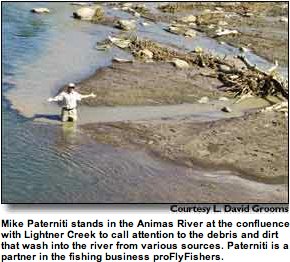
For years, water-protection groups and Trout Unlimited have been concerned about the chalky-colored water that from time to time enters the Animas River from Lightner Creek immediately south of the DoubleTree Hotel. In February 2009, Buck Skillen, a board member of Trout Unlimited, tested water turbidity at the confluence of the waterways. When he poured 60 cubic centimeters of water (the equivalent of two shot glasses or a medical syringe) in a filter, it became clogged by the time 45 centimeters had passed through.
Overall water quality and the effects of sediment on the Animas’ gold-medal trout fishery are the major concerns of the coalition of concerned groups that initiated the study last October.
First-phase work by Mark Oliver of Basin Hydrology established some potential sources of sediment, members of the Southwestern Water Conservation District learned Wednesday from Meghan Maloney, river campaign director at the San Juan Citizens Alliance, and Koren Nydick, executive director of the Mountain Studies Institute. At certain points along the creek Oliver measured the size and movement of the sediment. Oliver found the likeliest sources of Lightner Creek pollution is the Perins Canyon watershed and a stormwater retention basin on Tech Center Drive that gathers sediment. Other potential sources of sediment are along U.S. Highway 160 west…
The second phase of the study aims to determine how much sediment Lightner Creek carries, the sources and why it appears sporadically, Nydick and Maloney said. The coalition, which includes Trout Unlimited, Animas Riverkeepers, San Juan Citizens Alliance, U.S. Forest Service, U.S. Bureau of Land Management, Colorado Division of Wildlife, La Plata County and the Mountain Studies Institute, asked the water district for $3,600 to continue the work for a year beginning Tuesday. The water conservation district contributed $2,600 to the phase 1 work. In June 2011, funding will be available from the Animas Watershed Partnership, which is creating a watershed management plan for the Animas from Bakers Bridge to the confluence with the San Juan River in New Mexico.
More Animas River watershed coverage here.