Click here for water-saving tips from the Environmental Protection Agency.

Click here for water-saving tips from the Environmental Protection Agency.

From The Chaffee County Times:
Celebrating the demise of a plan to dam the Arkansas River near Granite, approximately 100 people gathered Thursday at Salida SteamPlant Event Center.
Colorado Springs Utilities filed a motion 2 weeks ago to withdraw its application for water storage and diversion rights for the proposed Elephant Rock Reservoir, said Brett Gracely, Colorado Springs Utilities water resources manager.
From Fox21News (Sade Malloy):
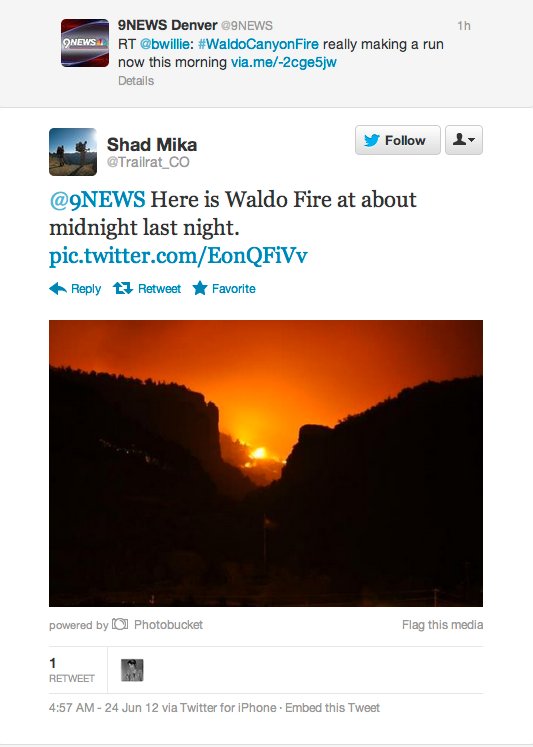
The Colorado Springs firefighters that worked tirelessly to spare our community from the most devastating fire in Colorado history are now working to replant and regrow the area it destroyed.
“I’m new to the community and it really just meant a lot to see how the community came together and helped support,” Laura Trivett a Colorado Springs resident said.
Colorado Springs locals have shown their support for the cause, and bought 1,000 water bottles off of http://www.regrowco.org.
But now that they’re narrowing in on their goal of selling 1,600 water bottles, a two-man crew with the Colorado Springs Professional Firefighters Local 5, worked the Women’s Expo Saturday to help push their sales and spread the world.
“I just think they did amazing work and I wanted to support them,” Bruce Roderick, a Colorado Springs resident said.
From the Summit County Citizens Voice (Bob Berwyn):
Each of the Department of the Interior’s eight Climate Science Centers worked with the universities supporting the CSCs, states, tribes, federal agencies, Landscape Conservation Cooperatives, and other regional partners to identify the highest priority management challenges in need of scientific input, and to solicit and select research projects.
The studies will be undertaken by teams of scientists from the universities that comprise each CSC, from USGS science centers, and from other partners such as the National Oceanic and Atmospheric Administration, USDA Forest Service, Indian tribes, and the Landscape Conservation Cooperatives in each region.
More Climate Change coverage here.

From The Pueblo Chieftain:
The Colorado Department of Agriculture is slated to hold a drought response and recovery workshop on Monday at the Colorado State Fairgrounds in the 4-H Building from 9 a.m. to 3:30 p.m. Officials from the U.S. Department of Agriculture, Department of Commerce, Small Business Administration and the Federal Emergency Management Agency will be among the federal agencies participating in the workshop. U.S. Sen. Michael Bennet said he encourages Colorado farmers and ranchers to attend the workshop.
“Colorado farmers and ranchers are working hard to recover from this summer’s drought, which had devastating consequences for livestock and crop production,” Bennet said. “This workshop will help producers learn about the different types of assistance available to them. The effects of the drought are widespread, and we need to make every effort to ensure a full recovery for Colorado farmers and ranchers.”

From YourHub via The Denver Post (Karen Groves):
After recently completing a 50-year financial plan, the district board is considering options on how to address the expected loss of roughly $1 million per year in operating costs, plus $12 million in capital costs over the next 10 years. That reduces the $35.5 million the district has in reserves to $15 million at the end of a 10-year period.
Scott Morse, assistant manager of Platte Canyon Water and Sanitation District, said Southwest eliminated property tax revenue in 1996 and has relied heavily on interest income generated on the reserve balance. “Southwest is relying on interest revenue on its reserves, but since interest rates have dropped to historic lows they are receiving very little revenue,” Morse said.
According to the district, expenses for rehabilitation and replacement of existing water and sewer infrastructure will be “inordinately high over the next 10 years. Anticipated costs are at $11,800,000.” Morse said while there is a little revenue coming in to offset operating costs, he added, “Our operating costs are $1.5 million, but we’re only receiving revenue off interest of about $500,000.”
Morse said the Southwest District will approach citizens next year on what strategies might work to increase the district’s revenues. “Imposing a surcharge is not something the district will jump into, and a mill levy would have to be voted upon. We can see what happens to the economy,” he said.
More infrastructure coverage here.
From The Pueblo Chieftain (Chris Woodka):
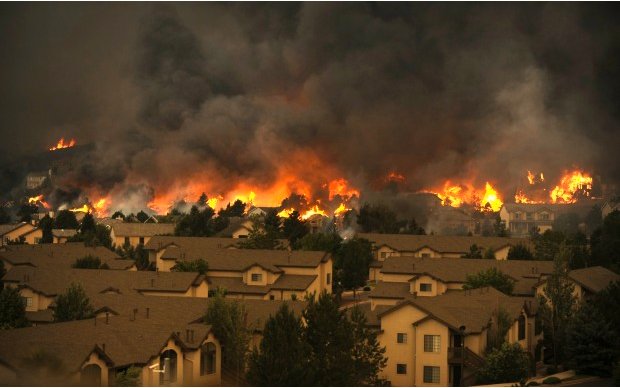
While Colorado Springs continues to meet with El Paso County and other communities on stormwater solutions, some of the money in its general fund and utilities budgets will be going to meet stormwater needs.
The city budget includes $2.5 million for critical stormwater projects, basically maintaining drainage systems to meet permit requirements.
Meanwhile, Colorado Springs Utilities has included $13 million in its budget to protect infrastructure from flooding.
However, until the stormwater task force completes its assessment, it’s unknown how much of the funding could be applied toward the $500 million backlog in stormwater projects. “It is our understanding that the primary purpose of most of the projects that make up the city’s backlog is to improve local drainage conditions and repair and improve local infrastructure, for example, bridges, streets and culverts,” said Janet Rummel, spokeswoman for Utilities.
About $6 million of the money for stormwater projects in Utilities’ budget would go toward protecting infrastructure from runoff from the Waldo Canyon Fire burn area. Another $2.4 million would go toward realignment of Fountain Creek near Pikes Peak International Raceway, a condition of the Pueblo County SDS permit. Utilities would spend $2.7 million to fortify lines within waterways.
“Utilities does not have direct oversight for stormwater management in Colorado Springs,” Rummel said. “However, we have a history of investing in improvements along area waterways, while partnering with the city, when there is a nexus to protecting utilities infrastructure.” Mayor Steve Bach, who has proposed that Utilities could find $15 million for stormwater in its $1 billion budget. Utilities, which is governed by City Council, maintains that its services are limited to water, wastewater, gas and electric, but not stormwater.
More Colorado Springs Utilities coverage here.

From The Greeley Tribune (Eric Brown):
The South Platte Roundtable — made up of water officials and experts in the region — meets quarterly to discuss what’s needed to avoid future water shortages, but John Stencel with the Rocky Mountain Farmers Union proposed Tuesday to meet at least every other month, beginning with its next meeting in January…
As was discussed on multiple occasions at the meeting, without new supply projects, municipalities and industries will continue buying up irrigated agriculture water as a way of meeting their growing water needs. Because new water supply projects are multi-year or even multi-decade endeavors, members said there needs to be more push to get them completed. Evans said the group will continue discussing its focus for 2013 at its next meeting on Jan. 8…
Reagan Waskom, director of the Colorado Water Institute, provided an update regarding the ongoing South Platte Basin groundwater study, which began in August. The study Waskom is heading, which will examine the relationships between groundwater and surface flows in the basin, was approved this summer when Gov. John Hickenlooper signed House Bill 1278 into law. Rep. Randy Fischer, D-Fort Collins, and Sen. Scott Renfroe, R-Eaton, sponsored the measure in an effort to better understand the cause of the high groundwater levels in the LaSalle and Gilcrest areas and other regions in the basin. The overflowing aquifers have flooded basements and fields in recent years, causing damage to homes and in lost agriculture production. Many local farmers believe the high groundwater levels are a result of wells being shut down or curtailed in 2006, when the state determined the pumping of those wells was depleting flows in the basin’s rivers.
The South Platte Roundtable is serving as an advisory group for Waskom and his research team during the study. Waskom told members he’s in favor of opening up dialogue as much as possible to make sure they’re looking at all needed data, and exploring all avenues of collecting information. As Waskom explained, he’s so far coming across “a lot of data gaps” as he collects information.
More IBCC — basin roundtables coverage here.

From the Windsor Beacon (Ashley Keesis-Wood):
The town’s current water system for single-system residential users features a base fee of $14.81 a month, with a $3.30 charge per 1,000 gallons a month until the users reach the first-tier threshold of 15,700 gallons a month. The second tier’s charge is $4.93 a month per 1,000 gallons. The new tier rate structure would increase the first-tier usage, raising it to 16,000 gallons a month before the second tier would begin. The new tier, at 2011 prices, would begin at 22,501 gallons a month at a cost of $7.35 per 1,000 gallons. The new rate will go into effect Jan. 15…
When developers build homes, they are required to pledge a certain amount of water from the Colorado Big Thompson, or CBT, project to account for the households’ use of water. The highest tier, the 22,501 gallons, equates to full usage of the allotted CBT water for each household. “This will still promote and encourage conservation,” said Mayor John Vazquez.
More infrastructure coverage here.

From the Grand Junction Free Press (Caitlin Row):
Outfitters said the statewide drought, below-average snowpack levels and Colorado’s many fires all attributed to a depressed rafting season in 2012. “We definitely saw an impact in numbers of people who came to play with us this year,” owner/operator of Grand Junction-based Adventure Bound River Expeditions Tom Kleinschnitz said…
Having a drought year, compounded by an impactful Colorado fire season, packed a “1-2 punch,” Kleinschnitz said, also noting that fires can be more harmful than drought to business regionally. It can be difficult for someone in Virginia, for example, to understand where Front Range fires are in relation to a Colorado rafting trip on the West Slope if they’re unfamiliar with the state, he explained.
Gateway Canyons Adventure Center also saw a deep dip in rafting trips on the Dolores River this summer. Adventure Center guide Nick Kroger said the outfitter normally hosts upwards of 30-40 trips a season, but this year it only hosted two commercial trips. “The season lasted a couple days this year for the Dolores River,” Kroger said. “Typically, the season lasts from mid-April into July if we’re lucky.”
More whitewater coverage here.

There are a lot of moving parts along our over allocated rivers, especially during drought. Here’s a report from Chris Woodka writing for The Pueblo Chieftain. From the article:
“It’s like a threedimensional Chinese checkers board that spins on an axis, and the marbles keep changing colors and sometimes disappear. And then you have to make your play under a stopwatch,” Water Division 2 Engineer Steve Witte told the Upper Arkansas Water Conservancy District Thursday. Witte was invited to the meeting to address the concerns of Upper Arkansas ditch users that their senior water rights are being curtailed for more junior calls downstream. The district also is concerned that the river is being managed in a way that would allow Colorado Springs or Aurora to exchange out of priority at the expense of upstream ditches. Witte said that’s not the case.
“We have been splitting calls more frequently than in the past because we’re trying to do a better job,” Witte said.
The river call is set each morning by the water commissioner in La Junta, Lonnie Spady, based on conditions. Most of the large canals in the Arkansas River basin are clustered in Pueblo-Otero counties. However, conditions along the river can change quickly if isolated thunderstorms hit a particular drainage.
In a normal year, that doesn’t matter as much, but the effects show up more profoundly in a drought, particularly in the Upper Arkansas, where there are fewer water rights that predate the most significant water rights in the Lower Arkansas Valley, Witte said.
This year, the call most often has been split between two or three reaches of the river in order to reflect varying conditions, Witte said.
The superintendents of four large canal companies in the Lower Arkansas River basin showed up and supported Spady’s decisions in this difficult year.
“This is the worst year we’ve ever had,” said Manny Torrez, superintendent of the Fort Lyon Canal.
“We’ve been out of water for the last 90-110 days.”
Fort Lyon saw some water a few weeks ago after a localized thunderstorm in the Rocky Ford area, an example of the type of situation creating a split call.
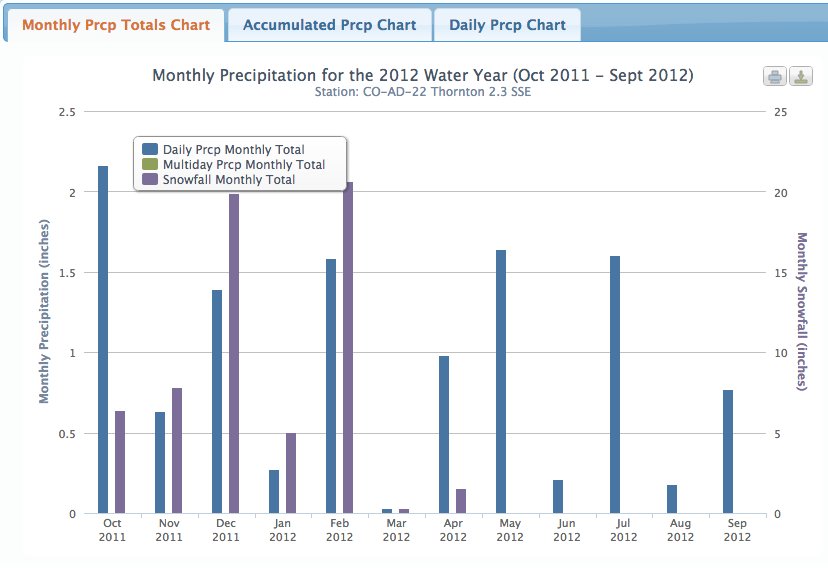
Here’s the link to the Colorado Summaries for your viewing pleasure.

Here’s the release from Governor Hickenlooper’s office:
Gov. John Hickenlooper today announced that $1.3 million from the Wildfire Preparedness Fund will be made available for recovery efforts in the Lower North Fork Fire burn area. Hickenlooper made the announcement at the 2012 Forest Health Summit.
“Colorado’s forests are a part of our identity and economic fabric, from industry to recreation, to where we work and play,” Hickenlooper said. “This summer’s wildfires reinforce why we must create proactive strategies to improve forest health and reduce the risk of catastrophic wildfires. Additionally, we must work quickly to rehabilitate burn areas after wildfires are extinguished. Today’s funding announcement will help residents in the Lower North Fork Fire burn area recover.”
The funding could pay for such things as to fell, remove or mulch burned trees in the burn area.
The Colorado State Forest Service and the Colorado Division of Homeland Security and Emergency Management will meet with residents affected by the Lower North Fork Fire and gather input on the best way to proceed with the recovery options. The Colorado Department of Corrections’ State Wildland Inmate Fire Team and the Colorado Division of Fire Prevention and Control will be available to assist in the recovery operations.
The 2012 Forest Health Summit held today at the History Colorado Center focused on bringing together the forestry industry, local communities, non-profit groups, conservation groups and policy makers to determine how to improve forest health and reduce the risk from catastrophic wildfires.
More restoration/reclamation coverage here.

From the Huffington Post (Zak Podmore):
When we talk about reasons to keep water in our rivers — as opposed to sinking it deep into fracking wells, spreading it on the lawns of new subdivisions, or sending it over the Rockies to other river basins — recreation is often found near the top of the list. Recreation is one of the few uses of water that doesn’t require pumping water out of our rivers. Instead, it encourages making our rivers as accessible, clean, and as naturally beautiful as possible.
In an election year like this one some candidates would like us to believe that to be pro-economy you have to be pro-growth, pro-drilling and in favor of new water projects such as reservoirs and diversions. According to this mentality, anything that’s going to protect our state’s natural resources is going to kill jobs and hurt our wallets. But there are other voices speaking up to say the direct opposite: that a strong, stable economy in Western Colorado is going to be built not on the booming and busting cycles of resource extraction, but on the seasonal, sustainable cycles of resource preservation. People who come to enjoy the Western Slope of Colorado to raft, fish, hunt, bike, camp, or simply to sightsee are drawn by the recreational opportunities the mountains and rivers have to offer as intact mountains and rivers.
As our expedition team floated down the length of the Colorado, we met with many river experts who commented on value of river recreation. First was Molly Mugglestone, the project coordinator for river-advocacy group Protect the Flows, who met with us to explain the river’s contribution to the regional economy. Mugglestone has spent the last year creating a coalition of over 500 businesses in the Colorado River Basin who rely on a healthy river for their livelihoods. Coalition members range from the obvious rafting and fishing companies to small businesses in tourist towns who need the yearly influx of people to stay in business. Together Protect the Flows and the businesses they represent have been speaking up for the needs of a recreation economy.
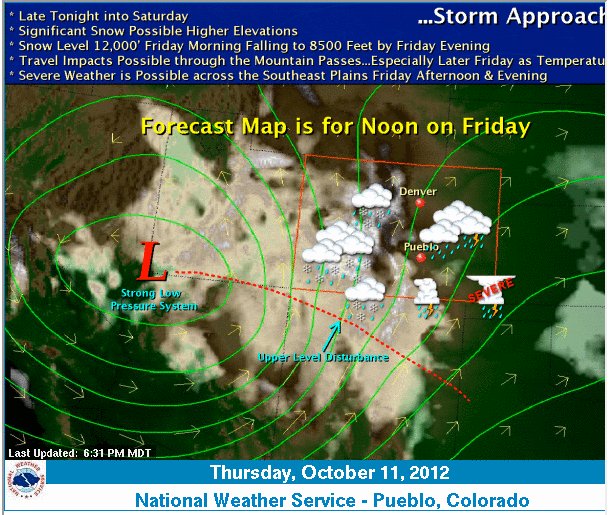
At the last CWCB Water Availability Task Force meeting Klaus Wolter told us that Colorado had a good chance for a storm with snow accumulation on October 12. Once in a while forecasters hit the nail on the head. The forecast across Colorado is for showers and thunderstorms with snow down to 8,500 feet in some of the mountain areas. Woot!
Click on the thumbnail graphic for the forecast map from the National Weather Service — Pueblo office for noon today.
Snow level could fall to 8,500 feet Friday night in mountains around #SanLuisValley per @NWSPueblo http://t.co/GkPSWCBk #cowx
— Matt Hildner (@mhildner) October 11, 2012
Active weather coming to much of Colorado Friday and Friday night. Follow here: http://t.co/IEPStPFM #cowx
— NWS Pueblo (@NWSPueblo) October 11, 2012
Parly sunny, chance of showers Friday in Morgan County: Friday will be another cool day in Morgan County, wi... http://t.co/qFBFvjdY #fb
— Fort Morgan Times (@FortMorganTimes) October 12, 2012
From the Grand Junction Free Press (Hannah Holm):
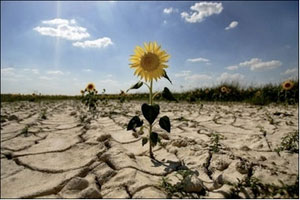
While [Dr. Jeff Lukas of the Western Water Assessment team at the University of Colorado] said precipitation is much more difficult to predict than temperature, he noted that warmer temperatures will certainly intensify the drought conditions brought on by any dry years. That’s because warmer temperatures increase evaporation rates. It doesn’t help that in general, dry years tend to be hotter than wet years. The average results of climate modeling for precipitation indicate that conditions are likely to get wetter to the north and drier to the south, with Colorado right on the dividing line between the two.
Lukas was careful to emphasize that climate change models are not crystal balls, especially at the local level. Different models give very different outputs, so analysts look at each of them individually as well as the average results. The variations result from different assumptions about, among other things, the feedback responses of different elements in the climate system (oceans, ice caps, etc.) to increasing greenhouse gasses and higher temperatures. Adding to the uncertainties about how climate change will play out in any given location are regular, cyclical climate variations, like the “El Niño” and “La Niña” shifts in South Pacific Ocean temperatures that influence the tracks of our winter storms.
Despite these uncertainties, Lukas noted that warming on a global scale is happening already, and observations indicate some clear trends for Colorado. These include increased warming in spring and summer, a higher portion of precipitation falling as rain rather than snow, and earlier melting of the snowpack we do get. Further climate change is likely to intensify these trends. Even if overall precipitation levels didn’t change at all, these trends would pose significant challenges for water managers trying to meet existing demands, as well as increasing demands from anticipated population growth in the state.
Lukas also pointed out that tree ring studies indicate that there have in the past been more severe and more prolonged droughts than anything since formal record-keeping began around 1900, so even if climate change weren’t a factor, we could see more challenging drought conditions in the future than we are used to.
The climate change modeling results and observations Lukas discussed are dealt with in great depth in the Bureau of Reclamation’s Colorado River Basin Supply and Demand Study, as well as water supply studies undertaken by the state of Colorado. State water officials are also using them as they work on building a set of plausible scenarios to plan around as they and basin roundtables of stakeholders around the state negotiate about how to balance water supply and demand in coming decades.

From the Montrose County Daily Press (Katharhynn Heidelberg):
District Judge J. Steven Patrick on Wednesday signed an order approving stipulations between the county, the Colorado Water Conservation Board and the state and division engineers. Patrick must yet issue a formal decree, which is expected soon.
The county filed in 2010 for water rights on the San Miguel River and said it acted quickly so that its application could come in ahead of the Colorado Water Conservation Board’s. Initially, the county wanted up to six reservoir sites and several thousand acre-feet of water. Controversy arose after environmental groups questioned the overall plan as a “water grab” and others raised questions about eminent domain.

From The Pueblo Chieftain (Chris Woodka):
While the state is preparing for a water gap 50 years in the future, the crisis could come much sooner for the Arkansas River basin.
“The agriculture gap is coming sooner,” said Alan Hamel, who represents the Arkansas River basin on the Colorado Water Conservation Board. “If you start thinking about it, even without any new ag demands or changes in crops, there is less water available.”
Hamel reviewed comments he made at last month’s CWCB meeting with the Arkansas Basin Roundtable on Wednesday.
Well augmentation rules adopted in 1996 and the 2010 surface irrigation rules have left farmers scrambling for additional water. They’ve found short-term supplies from Pueblo, Colorado Springs and Aurora, but those could dry up as the cities begin using more. “It’s become obvious that both of those programs have become dependent on the cities,” Hamel said.
The cities planned ahead following the 2002 drought, but another year of drought could accelerate the gap for the Arkansas Valley.
“I think people may be misled into thinking the gap will be critical in 2050, when it could hit us in 2013, 2014 or 2020,” Hamel said. “We may need more water to meet the demands we have today.” Hamel said the roundtable’s efforts to support water leaseland fallowing studies, coupled with more storage projects have identified a way the valley could cope with nearterm water shortages.
“If we had built 75,000 acre-feet of additional storage, we could have filled it in 1999, and again in 2011,” he said.
More Arkansas River Basin coverage here.

From The Pueblo Chieftain (Matt Hildner):
One of the main groups objecting to how irrigators in part of the San Luis Valley mitigate the harm caused by groundwater pumping has chosen not to withdraw a number of its claims from court. The move by surface water users from the Conejos River basin and the northwestern corner of the valley, which came in a Tuesday filing to the water court for the Rio Grande basin, means a scheduled trial is still on for Oct. 29.
The objectors reaffirmed their claim against the use of water from the Closed Basin Project, which pumps groundwater from the east side of the valley and sends it down the Rio Grande River to assist Colorado in meeting the Rio Grande Compact.
Subdistrict No. 1, which includes just under 3,400 groundwater wells in the north-central part of the valley, had proposed using up to 2,500 acre-feet from the federal reclamation project to replace an estimated 4,700 acre-feet in depletions this year.
The subdistrict also has leased rights to roughly 5,500 acre-feet from reservoirs and trans-basin diversions near the Rio Grande’s headwaters to meet the depletions.
Judge Pattie Swift said last week the issue concerning the reclamation project could not be decided without a trial since there were issues of fact that were in dispute.
Swift also said the proposal from objectors to have a special master appointed likely would not be decided until after the trial.
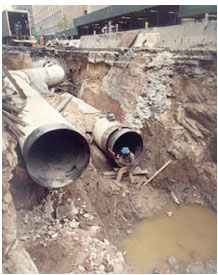
Here’s the link to the WaterForJobs.org website. Here’s an excerpt from the front page:
Investment in water infrastructure means jobs for Americans. Adequate investment in water infrastructure ensures safe and reliable water and wastewater systems to attract and retain industry, business, and qualified workers, which are essential to economic vitality and growth. As the gap between needs and investment grows, the impacts on jobs, lost business sales and GDP worsens. Unless the investment gap is addressed by 2040, 1.4 million jobs could be at risk. Postponing needed infrastructure investment raises the overall cost and increases the likelihood of water main breaks and other infrastructure failures.
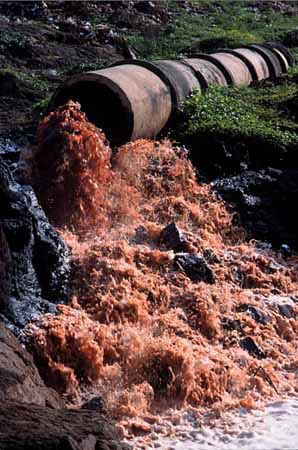
Here’s a list of things you can do to celebrate from the Environmental Protection Agency. Here’s an excerpt:
Volunteer in your community
Find a watershed or wellhead protection organization in your community and volunteer to help. If there are no active groups, consider starting one. Use EPA’s Adopt Your Watershed to locate groups in your community, or visit the Watershed Information Network’s How to Start a Watershed Team.
More EPA coverage here.
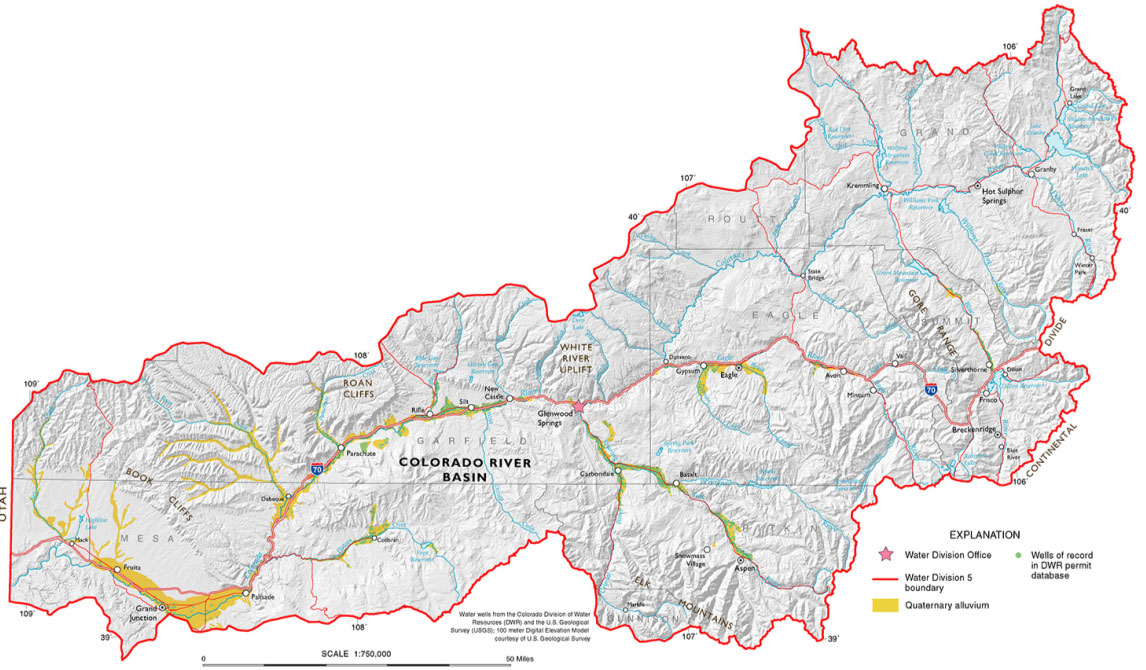
Here’s the latest installment of the Valley Courier’s Colorado Water 2012 series. Jim Pokrandt (Colorado River District) gives an update on the efforts of the Colorado Basin Roundtable. Here’s an excerpt:
the Colorado Basin Roundtable is watching and waiting for the results of the Colorado Water Availability Study, and for that matter, the Bureau of Reclamation’s Colorado Basin Study, the state’s compact administration study and the multi-party study of a West Slope Water Bank.
Basin leaders hope they create an understanding of:
• the range of water left to develop,
• the variables that could be caused by climate change and long-term drought,
• what methods that could be employed to forestall the day of compact administration and
• what compact administration might look like.
Leaders believe that if they can develop this body of knowledge, they can develop a better understanding of the risks associated with future water development…
Denver Water and 39 West Slope entities in the Colorado River mainstem negotiated the Colorado River Cooperative Agreement to open the door for the Moffat Project, which still must be permitted. In return for taking more water from the peak of the hydrograph, Denver offered significant funding for environmental projects, environmental water during low-flow times and consumptive water for the West Slope.
Northern Water (through its Municipal Subdistrict) is attempting to reach a similarly styled agreement with the West Slope to facilitate its project. Nothing is final, but it is worth noting that there could be a new paradigm being developed that goes a long way toward balancing consumptive and nonconsumptive needs.
More IBCC — basin roundtables coverage here.

From the Fort Collins Coloradoan (Bobby Magill):
Northern Colorado’s drought may be downgraded from “severe” to “moderate” this week, based on Colorado Climate Center recommendations issued Tuesday.
“I would say there was a fairly big improvement,” said Colorado Climate Center drought specialist Rebecca Smith. “We had one of our wetter Septembers. I don’t think that the drought was completely eliminated. That might take a little bit more time and a little bit more precipitation.”
City of Fort Collins rain gauges show the city has received between 1.1 inches and 2.6 inches of wet precipitation in the past 30 days, depending on location.
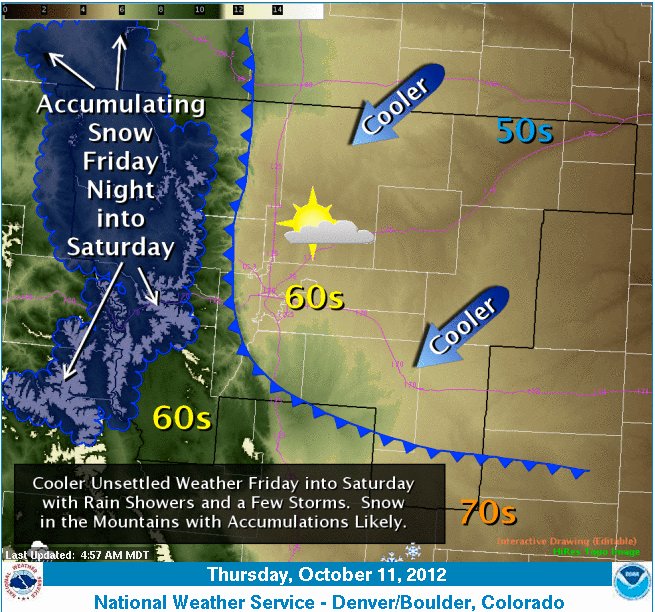
From NOAA for Grand Lake:
Friday: A 20 percent chance of showers and thunderstorms after noon. Mostly cloudy, with a high near 68. Breezy, with a light and variable wind becoming south southeast 11 to 16 mph in the morning. Winds could gust as high as 23 mph.
Friday night: Rain and snow showers likely, becoming all snow after midnight. Some thunder is also possible. Cloudy, with a low around 31. Breezy, with a west wind 15 to 20 mph, with gusts as high as 30 mph. Chance of precipitation is 60%. New snow accumulation of less than one inch possible.
Storm system heading our way will likely bring accumulating snow to mountains & chance of showers/storms plains #COwx http://t.co/W61AmEs6
— NWS Boulder (@NWSBoulder) October 11, 2012

Here’s the link to the web page where you can order a copy. Here’s the pitch:
Water Wranglers
The 75-Year History of the Colorado River District:
A Story About the Embattled Colorado River and the Growth of the WestThe Colorado River is one of America’s wildest rivers in terms of terrain and natural attributes, but is actually modest in terms of water quantity – the Mississippi surpasses the Colorado’s annual flow in a matter of days. Yet the Colorado provides some or all of the domestic water for some 35 million Southwesterners, most of whom live outside of the river’s natural course in rapidly growing desert cities. It fully or partially irrigates four-million acres of desert land that produces much of America’s winter fruits and vegetables. It also provides hundreds of thousands of people with recreational opportunities. To put a relatively small river like the Colorado to work, however, has resulted in both miracles and messes: highly controlled use and distribution systems with multiplying problems and conflicts to work out, historically and into the future.
Water Wranglers is the story of the Colorado River District’s first seventy-five years, using imagination, political shrewdness, legal facility, and appeals to moral rightness beyond legal correctness to find balance among the various entities competing for the use of the river’s water. It is ultimately the story of a minority seeking equity, justice, and respect under democratic majority rule – and willing to give quite a lot to retain what it needs.
The Colorado River District was created in 1937 with a dual mission: to protect the interests of the state of Colorado in the river’s basin and to defend local water interests in Western Colorado – a region that produces 70 percent of the river’s total water but only contains 10 percent of the state’s population.
To order the book, visit the Wolverine Publishing website at http://wolverinepublishing.com/water-wranglers. It can also be found at the online bookseller Amazon.
More Colorado River District coverage here.
From the Valley Courier (Ruth Heide):
The gauging station at Culebra Creek, outside of San Luis, has recorded water levels below 2002 drought levels for most of the summer…
Where the Rio Grande’s annual forecast was 415,000 acre feet last month, it is now 410,000 acre feet, Cotten reported to the Rio Grande Roundtable, which met in San Luis on Tuesday. Cotten said the forecast has gone down about every month this year. The 410,000-acre feet flow for the Rio Grande this year is 63 percent of the long-term average, Cotten added.
Although Colorado is still delivering some water downstream, its obligation on the Rio Grande is currently zero, so there are no curtailments on the irrigators along the Rio Grande.
The same is true for the Conejos River system, the other main contributor to the state’s Rio Grande Compact. The annual forecast on the Conejos River system is about 180,000 acre feet, or 55 percent of the long-term average, with zero curtailments made at this point and zero obligations required downstream…
Cotten also shared results of Allen Davey’s longitudinal unconfined aquifer study, which reflect a decrease of more than a million acre feet since 1976 to the present. Roundtable member Steve Vandiver said the latest figure is 1.2 million.
When asked if his office has been seeing a large number of applications for replacement wells because of the drought, Cotten said many people had already redrilled their domestic wells to deeper depths in 2002 and 2003 so his office is not seeing that many requests this year. He has had requests to redrill irrigation wells to deeper levels, which his office is objecting to, he said…

Here’s the release from the University of Colorado (Noah Molotch/Jim Scott):
The University of Colorado at Boulder has been awarded $1.4 million for a new study on how changes in land use, forest management and climate may affect trans-basin water diversions in Colorado and other semi-arid regions in the western United States.
The grant, part of the National Science Foundation-U.S. Department of Agriculture Water Sustainability Climate Program, was awarded to Assistant Professor Noah Molotch of the geography department. Molotch and his team will be identifying thresholds, or “tipping points,” of change in land use, forest management and climate that may compromise the sustainability of the policies and procedures that dictate the timing and quality of water diverted from Colorado’s West Slope to the Front Range.
Molotch said that in Colorado and semi-arid regions around the world, trans-basin water diversions that redirect water from areas of surplus to areas of demand are based on policy agreements and infrastructure operations made under climatic and land use conditions that may differ considerably from conditions in the near future. Measurements over the past 50 years, for example, suggest a broad-scale reduction in snowpack water storage in the western U.S. because of regional warming temperatures, a trend due in part to a shift from snowfall to rainfall, he said.
In addition, land-cover changes associated with population growth, fire suppression and mountain pine beetle outbreaks have altered the hydrology of mid-mountain ecosystems in the West, said Molotch, who also is a scientist at NASA’s Jet Propulsion Laboratory in Pasadena, Calif. CU is teaming up with the National Center for Atmospheric Research in Boulder on the NSF-funded project.
The NSF award comes on the heels of a May 2012 agreement between water managers in Summit and Grand counties on Colorado’s West Slope and in the Denver area on how best to share water from the Colorado River basin. “This is a great example of communities that historically battled for water resources coming to the table in a good faith effort to find solutions to water allocation issues,” said Molotch. “These groups have no pretenses about the potential impacts of climate change and realize we can’t afford to bury our heads in the sand on this issue.”
Collaborators on the project include Patrick Bourgeron and Mark Williams, fellows at CU-Boulder’s Institute of Arctic and Alpine Research, and David Gochis, Kathleen Miller and David Yates of NCAR.
A study led by Molotch published Sept. 10 in Nature Geoscience tied forest “greenness” in the western United States to fluctuating year-to-year snowpack. The study indicated mid-elevation mountain ecosystems — where people increasing are building second homes and participating in a myriad of outdoor recreational activities — are most sensitive to rising temperatures and changes in precipitation and snowmelt.
“We found that mid-elevation forests show a dramatic sensitivity to snow that fell the previous winter in terms of accumulation and subsequent melt,” said Molotch, also a fellow at INSTAAR. “If snowpack declines, forests become more stressed, which can lead to ecological changes that include alterations in the distribution and abundance of plant and animal species as well as vulnerability to perturbations like fire and beetle kill.”
As part of the new award, Molotch and his team will evaluate regional climate models in the mountain West developed at NCAR in an attempt to make temperature, precipitation and snowpack projections “more robust,” Molotch said. While the efficiency of water in trans-basin diversion projects in the western U.S. has in the past been enhanced by the natural storage of moisture in mountain snowpack that allowed for a slow, steady delivery of water into the system, warming temperatures are already causing this beneficial “drip effect” to be greatly reduced, he said.
If the winter temperatures are hovering around 15 degrees Fahrenheit and the climate warms by a few degrees, for example, there will be negligible impact on snowpack, Molotch said. But if temperatures hover near freezing, slight temperature increases can trigger earlier snowmelt, and precipitation that used to be in the form of snow turns to rain, significantly affecting trans-basin water diversion activities.
“One of the most interesting aspects of this project to me is the changes we are seeing in the ‘wildland-urban interface,’ particularly in Colorado,” he said. “There is some irony that Front Range people who have built second homes in Summit County, for example, may actually start to have an effect on the water they have relied on to be piped through the Continental Divide to the Denver area.”
In addition to providing land and water resource decision makers with projections on how future water supply and demand will change in the future, the NSF-funded project will provide a unique educational experience for graduate students, Molotch said.
“We have climate change, snowpack, changes in land use, all feeding into the pipeline that is bringing water to Colorado’s Front Range,” he said. “As the two main stressors, climate change and land use increase, there is the possibility of pushing the systems into an unsustainable state.”
More tranmountain/transbasin diversions coverage here.

From the Valley Courier (Laura Krizansky):
The Congreso will begin on Friday, October 19 with a welcome reception at Emma’s Hacienda on Main Street. Delmer Vialpando and Devon Peña, both of the Sangre de Cristo Water Association, and Costilla County Commissioner Crestina Martinez will kick off the event with hors de oeuvres and music beginning at 5 p.m.
On Saturday, the Congreso will start with a legislative update from Rep. Edward Vigil at 9 a.m. Following the update, acequia farmers from each county will discuss their local challenges and moderator and San Luis centennial farmer Joseph Gallegos will lead a discussion sharing issues and obstacles, such as abandonment and climate change…
The morning session will conclude with a presentation from water law professor Larry MacDonnell. He will discuss the legal challenges acequias face, using a real Costilla County case as an example. Peña and Greg Hicks will give background for and speak about the 2009 Colorado Acequia Recognition Law. Highlights of Peña and Hicks presentation include what the law means to an individual ditch and irrigator and actions that acequias must take in order to be recognized under the new law. Water attorney John McClure will speak about the legal differences between unincorporated ditches, mutual ditch companies and the Acequia Ditch Corporations.
Over lunch, Shirley Otero Romero will moderate a discussion about how to better incorporate women and youth into acequia leadership. Sangre de Cristo Acequia Association board member, Junita Martinez, will discuss her experience; Sandra Santa Cruz, of Sembrando Semillas, will discuss how her program engages youth with agriculture and Bernadette Lucero, director of the Rio Culebra Agricultural Cooperative, will talk about the role of creating economic opportunity to retain young farmers.
Next on the Congreso agenda is a presentation from the Valley’s southern neighbors. Paula Garcia and Janice Varela, of the New Mexico Acequia Association, and New Mexico Legal Aid attorney David Benavides will discuss their work with New Mexico acequias, highlighting their experience organizing at a statewide level, current programs and funding successes in addition to lessons in water rights protection.
The day is scheduled to conclude with presentations from water attorney Peter Nichols and Juan Marinez, of Michigan State University Agricultural Extension. Nichols will discuss the work that he has been doing with University of Colorado law students to create a handbook that includes water rights basics, sample bylaws and other important information for acequias. Marinez will moderate a resource roundtable that will give participants the opportunity to network and hear about programs and ask questions of different government agencies and non-governmental organizations.
The final day of the Congreso begins with an acequia tour heading out at 8 a.m. After the tour concludes, Sunday will round out with various sessions discussing the future of Colorado’s acequias and a lunch presentation recognizing winners of the youth essay contest and poster contest. Students will be presented with awards and the first prizewinners will read his or her essay and present his or her poster. Also during this time, Vigil and State Senator Gail Schwartz will be presented Acequia Advocate Awards will be presented.
Registration cost is $20 per person for farmers and ranchers and $100 per person for all others. If cost is a problem, payment options might be available. Visit http://www.sangreacequias.org to register and for more information.
More Rio Grande River Basin coverage here.

From The Aspen Times:
A key part of Aspen’s former hydroelectric plant will go on display Tuesday in the Silver Queen Gondola Plaza.
The Pelton wheel hydroelectric turbine will be displayed starting at 10 a.m. The machinery was used around 1890 to convert falling water into electricity at the Castle Creek Hydroelectric Plant.
The historic equipment will be unveiled by Sam Perry, the great-grandson of DRC Brown, the original owner and operator of the Castle Creek plant. Perry is a Roaring Fork Valley native who is now president of Sollos Energy, which operates hydroelectric plants in other parts of the country.
The Pelton runner going on display is a smaller version of the same type of equipment that would be used in a proposed new Castle Creek hydroelectric plant.

From email from Reclamation (Kara Lamb):
We will be cutting releases from Ruedi back again today, this time by only about 25 cfs. This will put a flow of about 50 cfs by the gage below the dam. The change is scheduled for 5 p.m. today, October 9. We are currently bypassing inflow, which is around 39 cfs, plus some contract water. We are no longer delivering water to the endangered fish Recovery Program.
More Fryingpan-Arkansas Project coverage here.

From email from Reclamation (Kara Lamb):
Earlier this afternoon [October 9], we reduced releases from Green Mountain Dam to the Lower Blue River by about 50 cfs. The reason for the change is because inflows to Green Mountain Reservoir continue to decline. We are doing our best to balance inflow and outflow at the reservoir. The change was made around 1 p.m., dropping releases from 320 to about 270 cfs.

Here’s the release from Colorado State University (Jennifer Dimas):
A Colorado State University expert in the movement of pollutants through soil and water has been named among “the new elite” in the field of environmental science and engineering.
The prestigious Journal of Environmental Monitoring recently recognized Thomas Borch, an associate professor in chemistry and soil and crop sciences, as an “Emerging Investigator.” He is one of just 15 international researchers commended for their work.
The emerging investigators represent “the best and brightest young minds in environmental sciences and engineering” – and the field’s future “is in good hands” with the work of this vanguard, the journal’s editors wrote.
As part of the honor, the journal published a research paper from Borch, titled “Determination of contaminant levels and remediation efficacy in groundwater at the former in situ recovery uranium mine.”“Never before have environmental scientists and engineers been more critical to sustainable global development,” the editors wrote in the June issue of the Journal of Environmental Monitoring, published by the Royal Society of Chemistry. “As society confronts grand challenges in climate change, access to safe and clean air and water resources, management of nutrients, the control of emerging infectious disease, the energy-water nexus, and other as yet unforeseen threats to environmental quality, environmental scientists and engineers must provide a sustainable path forward.”
In an interview with the journal, Borch said he decided to pursue environmental science because “I was motivated by the idea of being able to spend an entire career in trying to improve our fundamental understanding of mechanisms controlling the environmental fate and transport of pollutants in order to help develop new remediation strategies.”
Borch, a specialist in environmental chemistry and biogeochemistry, is a faculty member with the CSU graduate degree program in Ecology, the School of Global Environmental Sustainability and the Center for Environmental Medicine.

From The Pueblo Chieftain (Chris Woodka):
The Catlin Augmentation Association filed a change case in Division 2 water court last month to allow about twothirds of the shares on the canal to include augmentation for wells or surface-fed sprinklers as a use. “The well augmentation groups are having a harder time finding water,” said John Schweizer, Catlin Canal president. “They can use part of their own water by taking some acreage out of production.”
The practice has been occurring under a substitute water supply plan, but the state Division of Water Resources requires a court decree after 10 years of operating that type of plan. The decree specifies that Catlin Canal shares may only be used for replacement water within the ditch’s boundaries, which is following bylaws, Schweizer said…
The court case mentions both well augmentation and using the water for Rule 10 plans under the 2010 surface irrigation rules. Water rights owners include members of both the Colorado Water Protective and Development Association and the Arkansas Groundwater Users Association.
The change would not allow water rights to be used for the Arkansas Valley Super Ditch, which is operating a pilot program with Catlin, said Schweizer, who is also president of the Super Ditch.

From the Sterling Journal Advocate (David Marinez):
Water fund
Some major changes are coming to the water fund, as the city weans off major water line expenditures and increases its water plant expenditures.
Total expenditures for water line construction and improvements will drop from $16.5 million in 2011 and $14.3 million in 2012 to only $2.65 million in $2013.
The biggest changes in that budget come from a combined $786,000 drop in consultant fees and legal expenses. The city paid $236,000 this year for water consultants during construction — $25,000 in 2013 — and $575,000 in water court issues.
Kiolbasa said the city, like farms or other water users, has to protect its rights to use water for 15 to 20 years into the future. The court fees this year reflect an effort to secure the city’s rights to water until 2035.
On the other side, expenditures on the water plant will increase from $198,000 in 2012 to about $4.5 million in 2013, as almost every budget expenditure item will either be new or greatly increased for the coming year.
All things considered, the total water fund equity will decrease from about $10.6 million in 2012 to about $8.9 million next year.

From the Summit County Citizens Voice (Bob Berwyn):
A somewhat murky El Niño outlook is clouding the picture, with sea surface temperatures in the equatorial Pacific ranging above average, but cooling down from just a month ago. “It’s vexing … the models are just not up to the task,” Wolter said. Overall, he said he’s “guardedly optimistic” that Colorado will see at least close to an average snowfall year, which would would be critical to maintaining water supplies in the state’s depleted reservoirs.
Based on the current pattern and comparison with analogous situations in previous years, Wolter said he wouldn’t be completely surprised to see some decent moisture in October, though conditions look dry through the first half of the month…
Wolter said he’s not ready to write off this year’s El Niño completely yet, even though the Climate Prediction Center said in its Oct. 4 update that the trends toward El Niño slowed in September. Overall, Pacific basin conditions reflect borderline neutral conditions.
From the Associated Press (Jason Keyser) via The Denver Post:
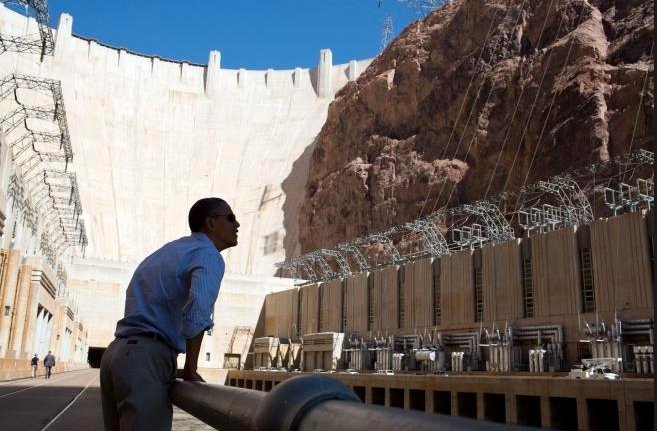
President Barack Obama has favored stimulus-style infrastructure spending plans, talking up highway, bridge and rail repairs as job creators, and pushed for innovations like high-speed rail and a national infrastructure bank to finance projects with the help of private capital. But Republican opposition to increased spending and taxes has blunted many such plans.
Mitt Romney favors less involvement by the federal government in infrastructure, preferring to let states lead the way. Romney shuns the idea that public-works spending is a good way to jumpstart the economy, saying decisions on worthy projects should be based on need and potential returns. Romney also wants to privatize Amtrak by ending federal subsidies for the money-losing passenger rail system. He’s OK with borrowing to pay for megaprojects if there’s a revenue stream to pay the money back, like tolls or port fees.

From The Wall Street Journal (Richard G. Little/Wenonah Hauter):
[Little] Is privatization the solution in every case? Of course not. We must strive to find what works best for the customers in a specific situation. Mismanagement is not a problem limited to private operators, just as good management is not intrinsic to public systems.
But private management can be successful much more often than its critics would like to believe. Private-sector managers focus on the cost of service and return on capital. The new and innovative technologies in which they invest may have a higher initial cost, but they offer savings, too, which can be shared with customers while improving service and quality. Privatization offers economies of scale wherein a single company can provide the financial and human resources to serve many small systems in a far more cost-effective manner.
Government-owned enterprises, by contrast, often don’t have rate structures that reflect the true cost of the service. Thus many small publicly owned water utilities lack the means not only to make capital investments but also to hire the professional staff needed to meet increasingly stringent water-quality standards.
Critics say private enterprise’s desire for profits leads directly to overcharging (particularly of the poor), deterioration of service, and a loss of public input and transparency. In practice, however, this is not the case…
[Hauter] Private water providers are businesses. They are motivated mainly by their bottom line. The pressure to deliver high rates of return for shareholders drives them to cut corners when they are operating under contracts, and to drive up costs when they are operating as regulated utilities. The latter is a well-established phenomenon known as the Averch-Johnson Effect, named for the economists who first modeled it in the 1960s. Under rate-of-return regulation, investor-owned water utilities make more money when they invest in infrastructure, giving them an incentive to “gold plate” systems. Yes, they are investing in improvements. But they may build an unnecessarily large treatment plant or choose a more capital-intensive treatment process, such as desalination.
Private companies that operate water systems have appalling track records of rate increases, poor system maintenance, faulty billing practices and other failures, sometimes even jeopardizing the health and safety of local residents…
Some municipalities have taken their water systems back from private water providers. Indeed, some are realizing what cities like New York, Baltimore and Boston realized a century ago—that water is best controlled by an entity that is accountable to the public, not outside shareholders.
Water service isn’t a business enterprise; it’s a basic human right, and what privatization proponents refer to as “political pressure” is actually our democratic processes at work. Our elected leaders should absolutely respond to public concern about the affordability of their water service. The provision of water service is a natural monopoly, and the public can exercise choice only at the ballot box through the election of the officials who oversee the service. How government-run utilities decide to allocate costs among different users is a local decision that should be made in an open and democratic manner.

From The Denver Post (Bruce Finley):
Suncor had proposed that Metro Wastewater help handle the cleanup. Metro declined. “Petroleum-contaminated groundwater is not what the wastewater-treatment facility is designed for,” Metro Wastewater Reclamation District operations director Steven Rogowski said. “It isn’t our ratepayers’ responsibility to treat Suncor’s water.”[…]
Colorado Department of Public Health and Environment regulators have set a May deadline for cleanup of all contaminated groundwater flowing from Suncor’s 300-acre refinery property…
The machinery set up by Suncor contractors, at a cost of $1 million, sits on Metro property along the river. Later this month, it will be ready to remove benzene and other toxic material as soon as it is detected in monitoring wells near Metro’s construction site. A permit issued by state regulators lets Suncor discharge 3,000 gallons per minute of treated groundwater pumped from Metro Wastewater property into either Sand Creek or the South Platte…
By May, Suncor must prove that groundwater migrating off Suncor’s property meets a state standard requiring the concentration of cancer-causing benzene to be below 5 parts per billion. That’s the federal health standard for drinking water. “The deadline to meet drinking-water standards next year is a very aggressive and challenging goal, and it is not certain that it can be achieved in this timeframe,” Suncor spokeswoman Lisha Burnett said Friday in an e-mailed response to queries. Suncor already has installed underground clay walls at the northern and western edges of its property — designed to hold back the thickest undissolved petroleum.
“Monitoring does not suggest that undissolved contaminants are escaping any longer,” CDPHE spokesman Mark Salley said…
The latest data show benzene also is still entering Sand Creek and the South Platte — with the concentration at 145 ppb this month in the river just below the confluence. That’s less than the benzene levels averaging above 200 ppb earlier in the year but still is 29 times higher than the 5 ppb federal health standard. Three monitoring wells in Sand Creek, near where the seepage was detected last fall, showed elevated benzene levels of 55 ppb, 212 ppb and 510 ppb.

From The Denver Post (Scott Willoughby):
After a lackluster opening week in the mountain/foothills zone, duck and coot season opened in Colorado’s northeast zone of the Central Flyway on Saturday, with a timely cold front pushing down from the north that is expected to drive some birds with it. The question is whether the change in the weather will be too little, or if those who weren’t out by sunrise Saturday morning are now too late.
“Due to the lack of moisture, many birds may fly quickly past Colorado in search of better conditions,” Jim Gammonley, avian research program leader for Colorado Parks and Wildlife, said earlier in the week. “This year’s drought is so extensive, there aren’t a lot of other options, so birds could move far south earlier than usual, or some may even move back north for a while until the weather pushes them back again.”
With drought conditions continuing to plague habitat regionwide, early reports from the foothills were spotty. The most promising report mentioned a good number of mallards and wood ducks around Fire stone/Longmont. Some redheads and teal were reported in the Loveland area, but observations decreased to the south.
From the Summit County Citizens Voice (Bob Berwyn):
The weather year also ends Sept. 30, and in Breckenridge — perhaps surprisingly, given all the drought talk — precipitation ended up at 18.56 inches of rain and melted snow combined, just about 89 percent of average (20.67 inches). Meteorologists use and Oct. 1 to Sept. 30 year because it matches up better with seasonal hydrological cycles than the calendar year. Big rains like in July helped Breckenridge catch up to the annual average. Winter winds and warm temps in late spring and early summer were a big factor in the drought conditions, along with generally below average snowfall during the late winter and spring. Precipitation was above average at Bly’s weather station for five months of the year: October, January, February, July and August, but that couldn’t make up for the deficits in the rest of the year, especially March and April, which usually deliver copious moisture. Total snowfall for the year was 164.8 inches, compared to the average 199,5 inches…
Precipitation for the month was also below average in Dillon, where Denver Water officials measure rainfall, snow and temperatures for the National Weather Service. According to the monthly report, total precipitation was just0.78 inches, compared to the average 1.36 inches, based on records dating back to 1909, although the location of the station changed when the dam was built…
The weather story was a little different on the other side of the Continental Divide, where Denver reported its fifth-wettest September on record, including two daily maximum precipitation records, with 0.95 inches on Sept. 12 (old record, 0.91 inches, 1875, and 1.41 inches on Sept. 25 (old record, 0.71 inches, 1908). For the month, Denver tallied 2.95 inches, which is 1.99 inches above the average of 0.96 inches. The city’s wettest September on record was in 1961, with 4.67 inches of precipitation.

From the Summit Daily News (Paige Blankenbuehler):
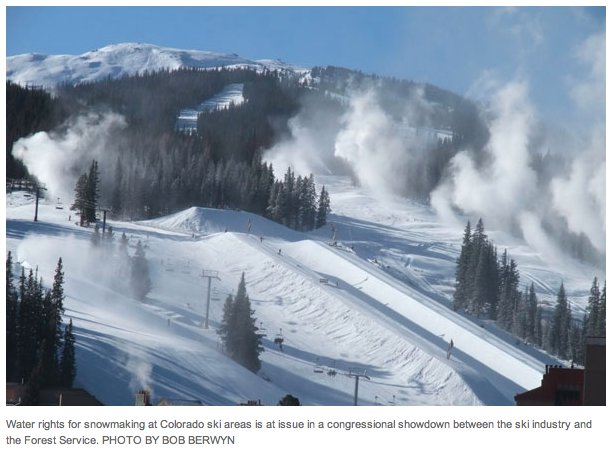
The science behind snowmaking though brings many factors into play, but snowmaking officials base their operations mostly on temperature and humidity, a combination that provides them with a “wet-bulb temperature.”
“The drier the air, the more likely it is to be cooler,” said Mike Looney, snowmaking manager for Copper Mountain Resort. “We start at about a 28 degree wet-bulb temperature — that can be anywhere from 28 degrees and 100 percent humidity or as much as 35 degrees and 10 to 20 percent humidity.”[…]
The ideal conditions for snowmaking fall between a wet-bulb temperature of 10 and 20 degrees with consistent winds of approximately 10 miles per hour, according to Looney…
The formula for the wet-bulb temperature is based on humidity and temperature. Temperatures vary as humidity increases or decreases but typically it’s about one degree per 10 percent humidity, Looney said.
Copper Mountain uses water from Ten Mile and West Ten Mile Creeks for its snowmaking operations. The naturally cold water is ideal for sustaining operations through the season, Looney says…
As the water is cooled and comes out of snowmaking guns, the compression of the water paired with compressed air creates a smaller water molecule that freezes as it’s expelled from the nozzle…
Rapid expansion also creates the snowmaking properties of the water in the air mix. When the water reacts with the compression, it turns into a smaller molecule with a better chance of freezing once contacting outside temperatures. Copper Mountain’s snowmaking product includes an additive called SnowMax made up of live cultures that serve as an ingredient for the water to cling onto…
The rate of snowmaking is also reliant on outside temperatures. Snow guns in peak conditions for snowmaking can transform upwards of 2000-3000 gallons of water per minute into man-made snow…
“Man-made snow is getting way better with technology,” Looney said. “Our snowmaking crews are extremely conscientious about the product we put out. They are constantly checking the snow while the guns are running and if it’s too dense, too wet or too heavy, they make adjustments.”

From the Dolores Star:
Town Manager Michael England gave an update on the water project progress. The pipeline installation is moving forward, but not at the established goals presented by the contractor-BWR. The town has installed approximately 4,000 feet of new 6-inch transmission line as of Aug. 13. BWR has assembled a second crew in the last week to increase installation of the 6-inch pipeline. Franklin Blasting has completed the needed work in the rock areas to keep the crews working in a timely manner.
Karmen King/Grayling Environmental LLC has been on site reviewing the wetlands area construction and reclamation. Ms. King stated the work has been successful and the grass is beginning to grow along with the willows that were planted for replacement. Ms. King will follow up this with the Army Corps and send them a Compliance Certificate. Ms. King will also send photos for their review and approval. The Wetland’s Permit was issued under the name of the Town, which the town is held responsible for the work performed. At this time the town is presenting the need to complete the project as presented and agreed to within the time frame of Oct. 31.

From The Pueblo Chieftain (Chris Woodka):
Pueblo County commissioners are concerned that Colorado Springs is not spending enough money on stormwater
issues, as it promised to do when obtaining county permits for the Southern Delivery System. “I was given information at the Fountain Creek district meeting Friday that Colorado Springs is looking at only $2 million in its budget next year,” said Commissioner Jeff Chostner. “That’s woefully inadequate.”Chostner said part of the reason for that may be because restoration for the Waldo Canyon Fire in June and July is estimated to be $10 million-$15 million. “That money will have some impact on stormwater, but we need solutions for the long-term welfare of the watershed,” he said. The concern is that flows on Fountain Creek will increase when SDS goes online.
Commissioner Anthony Nunez, who also sits on the Lower Arkansas Valley Water Conservancy District board, agreed with Chostner that Colorado Springs needs to be spending more on stormwater mitigation. “We have not seen the Colorado Springs budget, but we’ve got to force it to where they’re going to do something,” Nunez said.
The Lower Ark board has sent two letters to the Bureau of Reclamation requesting a supplemental environmental impact study to look at stormwater.
“We’re telling Colorado Springs that until you have stormwater, you The Colorado Springs City Council eliminated its stormwater enterprise in 2009, following voter approval of a Doug Bruce measure protesting a “rain tax.” City Attorney Chris Melcher told council earlier this year that the city is obligated by SDS requirements to spend $13 million-$15 million annually toward its $500 million backlog in stormwater projects.
From The Crested Butte News (Alissa Johnson):
Chris Corliss, mountain operations manager, explained that the Forest Service regulates the amount of water the resort can pump out of the East River. A minimum amount of water, which varies between November and December, must flow downstream—so whatever CBMR pumps out of the river must not interfere with that minimum flow.
“We have never not been able to pump any water,” Corliss said. He added that this summer, water levels have “been up and down a lot, so we’ve been comparing this summer’s drought to the closest summer pattern of this type. We were in the same scenario in 2002, but once it came time to make snow, the water levels were there and we had a normal year of snowmaking.”
What he can’t predict is exactly how much water will be in the East River by Halloween—the resort typically starts making snow between midnight on Halloween and sometime in early- to mid-November. Even in a typical year with normal water levels, the resort is sometimes restricted in the amount of water it can pump at any one time.
When snowmaking begins around 8 p.m., CBMR monitors water levels in the East River online. The pumps can be operating at full capacity and there can be plenty of water in the river, but if temperatures drop enough around 5:30 a.m. to slow ground water, they’ll have to slow snow production in order to maintain flows in the river.
“In our watershed, from Emerald Lake down through Schofield Pass and into the East River, if there’s no snow on the ground and it gets cold at night things lock up at 6 a.m., when we have the coldest temperatures of the night, and the ground water slows up,” Corliss explained.
He went on to admit, “There’s nothing more frustrating than being a snowmaker and turning the guns off. But that’s a reality in any year for early season snow-making. If we have snow on the ground, even a couple of inches, that insulates the ground enough to keep ground water moving.”
From The Crested Butte News (Alissa Johnson):
According to Kugel, the Gunnison Basin received 65 percent of its normal precipitation in September. Over the course of the 2012 water year beginning last October 1, it received only 71 percent of normal precipitation. The effects can be seen across the Gunnison Valley: flows into Blue Mesa Reservoir were 50 percent of normal during September, and the reservoir is currently at 41 percent of capacity. Flows into the Taylor Reservoir were 58 percent of normal last month, and that reservoir is at 53 percent of capacity. Last week’s rains brought about a modest increase in flows, Kugel said, but not enough to make a significant improvement in area stream flows. According to his manager’s report, prepared for the district board, “The Gunnison River at Gunnison is currently reporting a daily average flow of 137 cfs (the long-term average is 424 cfs and the record low flow for this date is 165 cfs, recorded in 1975). On September 23, flows in the Gunnison River dropped to a daily average of 80 cfs, tying the all-time low flow recorded on December 27, 1962.”
Kugel said in an effort to stem the flow of water out of Blue Mesa Reservoir, releases through the Gunnison Tunnel are being shut off two weeks early on October 15. The tunnel is currently running at 706 cfs…
Steve Fletcher of the Uncompahgre Valley Water Users Association said they’re trying to store as much water as possible before the tunnel diversions are shut off. “Basically, we are just trying to conserve on storage water to carry extra water over for next year because we used heavily out of storage water this year,” he said. “We should have a little more [water stored] than we did during the drought years of 2002-2003, is what we’re hoping.”
Closer to home, in the Gunnison Basin, water levels in the Taylor Reservoir are projected to reach 56,235 af by the end of October and 40,000 af by the end of March 2013.
Here’s a release from the Eagle River Valley Water and Sanitation District (Diane Johnson):
For the first time since March, drought conditions in part of Eagle County are no longer severe, according to the U.S. Drought Monitor.
Eastern Eagle County, along with all of Summit and Lake counties, was reduced to D1, moderate drought intensity, on the Oct. 2 monitor which was released Oct. 4. This headwaters region comprises 2 percent of Colorado and is the only area in the state not in severe, extreme, or exceptional drought (D2, D3, and D4, respectively, on the Drought Monitor’s D0 to D4 scale). Western Eagle County remains at D2, severe.
Drought conditions began locally in January due to poor snowpack. Conditions in Eagle County became severe in April after the driest March on record and elevated to extreme by early June. A wetter than normal July returned conditions back to severe by August, where they stayed until this week’s reduction to “moderate.”
July’s above average rainfall substantially helped local water supply conditions and avoided Eagle River Water & Sanitation District customers from having to limit water use beyond the normal, year-round regulations – which allow outdoor water use up to three days per week, before 10 a.m. or after 4 p.m. August saw just enough rain to moderate outdoor water demand during high irrigation season and many in the community decreased outdoor water use as local streamflows dropped in August and September.
The reduction in local drought intensity is tempered by the fact that drought persists throughout Colorado and has intensified on the eastern plains. Summer 2012 was the warmest on record in the state, according to National Oceanic and Atmospheric Administration data. This continues a 2012 trend as both the 3- and 6-month periods, of June through August, and March through August, were the warmest on record for Colorado.
The outlook for winter remains mixed. Snow provides a majority of Colorado’s water supply so Eagle River Water & Sanitation District always closely monitors conditions at local SNOTEL sites. Weekly snowpack graphs are available at www.erwsd.org.
From the Vail Daily (Lauren Glendenning):
El Nino, a weather phenomenon characterized by unusually warm water temperatures in parts of the Pacific Ocean, has brought huge amounts of snowfall to Colorado’s southern mountains in previous years, while La Nina, which features unusually cold water temperatures in the Pacific, has blessed the northern part of the state with massive snowfall. The Vail area and I-70 corridor, however, tend to fall in the middle of the storm tracks. Sometimes the northern storms will hit us, sometimes the southern storms will, and sometimes the Vail region is left out to dry. The weak El Nino pattern doesn’t tell weather forecasters any more about snowfall for the region, either. “Unfortunately, I think, (the weak El Nino) gives it toward equal chances instead of saying much about chances for excessive snowfall or a dry winter,” said Dennis Phillips, a forecaster with the National Weather Service in Grand Junction…
At the National Weather Service in Grand Junction, climate expert and meteorologist Joe Ramey recently looked at data for El Nino seasons that follow La Nina seasons, such as the upcoming season. Phillips said in that research, nothing stood out in terms of weather patterns…
And Gratz said not to put too much thought into early snowfall this month. He has researched whether snow in October is indicative of how the rest of the season turns out and has found no correlation. During the 2007-08 winter, for example, there was almost no snow throughout the fall and early winter, and then about two weeks into December it started falling and barely stopped for the rest of the season.
From the Summit County Citizens Voice (Bob Berwyn):
July in particular was wet in Summit County, with about double the average precipitation for the month. Eastern Eagle County, including the Vail area, is also in the area where the drought intensity has been reduced, according to the U.S. Drought Monitor. The Oct. 4 update marks the first time since March that drought conditions are not classified as severe in the area, but extreme to exceptional drought persists across large areas of the Colorado, especially on the eastern plains, where exceptional drought still prevails, and in the northwestern corner of the state, still experiencing extreme drought…
Drought conditions began locally in January due to poor snowpack and worsened after the driest march on record. Record high temperatures across much of the state worsened conditions in late spring and early summer, when much of the state was classified as being in extreme drought.
From The Fairplay Flume (Sonja Oliver):
Those words are echoed by hay retailer Ginger Bruvold, owner of Outpost Feed and Ranch Supply in Florissant. “But there isn’t a lot of hay in the entire country because of the drought,” Bruvold said. “The people I’ve bought my hay from for the last seven years – they had no hay. They had to sell off part of their cow herd,” she added.
Bruvold said her Colorado supplier, who is located in the Gunnison area, told her there was “absolutely no water for irrigation this year,” and his fields had suffered dramatically.
As part of a resulting chain reaction, Bruvold must spend a lot more time trying to locate hay from out-of-state suppliers – from areas including Wyoming, Idaho, North Dakota and Nebraska, to name a few…
According to Bruvold, the price range for the hay she is able to locate has increased by 30 to 50 percent compared with what she paid at this time last year. Lake George resident Ron Zaccagnini, district manager for Colorado Parks and Wildlife, said he was told by someone who attended a recent Ft. Collins hay auction that “grass hay went for over $500-600 a ton.” That’s roughly triple a price that averaged $200 per ton in 2009…
Governmental policies and export sales of hay to other countries such as China have placed even more stress on the market. According to a USDA Foreign Agricultural Service Global Agricultural Information Network memo dated May 26, 2009, the export of U.S. hay to other countries is encouraged.
“Five years ago (in 2004), the U.S. barely exported alfalfa hay (approximately 6,000 tons) to China,” says the introduction to the report. “In 2008, the United States exported over 17,613 tons valued (at) over $5 million to China – the result of … market activities that built appreciation of the product,” it says.
“South China’s appetite for U.S. alfalfa will grow given declines in Chinese hay supply and increased demand” and “with proper pricing, promotion and reasonable freight rates, the road is paved for sales.” Some estimates for shipping costs of hay from the West Coast to China approximate anywhere from $30 to $50 per ton. And it is to China’s advantage to import hay from the United States; rather than send an empty ship back to the mainland, hay and other commodities are a bonus.
Compare those freight costs to an approximate $2,000 to $3,000 added to a load of hay trucked into Colorado, depending on where it originated, says Bruvold. Tesch calculates a cost of $4 per mile per load, so 500 miles would translate to $2,000.
Good morning! Temps are in the teens in the #Colorado mountains and the 30s in #Tahoe right now. Does this make you smile? #WinterIsBack
— Snow.com (@snowdotcom) October 7, 2012

From The Crested Butte News (Mark Reaman/Alissa Johnson):
The Colorado Water Quality Control Commission voted September 11 to impose the stricter standards despite an argument from U.S. Energy that nearby domestic wells were pumping water from the Slate River instead of Coal Creek. “Frankly, I don’t even recognize my town in the diagrams presented to you from U.S. Energy,” said High Country Citizen’s Alliance (HCCA) water director Jennifer Bock in reference to the claim that the wells were pumping water from the Slate River. The portion of the creek affected by the decision starts at just below the town’s water supply intake to the confluence with the Slate River. By voting to put stricter regulations on that portion of Coal Creek, the commission voted in agreement with positions advocated by HCCA, Gunnison County, the Upper Gunnison River Water Conservancy District, and the Gunnison County Stockgrowers.
The segment of Coal Creek is out of compliance with state water quality standards, and has been since temporary modifications were first put in place in the early 1990s. Bock explained that temporary modifications are put in place when a discharger releasing pollutants into a water body cannot meet quality standards and needs more time to assess the situation. “The legal word in the regulations is uncertainty, so if there’s uncertainty about why there’s a pollution problem, it does give the discharger time to resolve it,” Bock said. In this case, U.S. Energy Corp. was requesting an extension of the temporary modifications and more lenient standards on cadmium, zinc and copper.
Initially, U.S. Energy proposed loosening the temporary modifications in addition to extending them. Yet the current temporary standards are already significantly above state standards: of 2.3 micrograms per liter for cadmium as opposed to the more typical range of .15 to 1.2 depending on water hardness, and 667 micrograms per liter for zinc. State standards for zinc are typically between 34 and 428 micrograms per liter, again depending on the hardness of the water. After some back and forth, U.S. Energy instead proposed a slight tightening of the temporary modifications to 2.1 micrograms per liter for cadmium and 440 for zinc. In HCCA’s eyes, that amounts to the status quo, but that’s acceptable for the time being if steps are taken to understand where that pollution is coming from.
In addition to standards for drinking water, the commission granted U.S. Energy’s request for temporary modifications on standards for copper, cadmium and zinc. As part of the decision the Water Quality Control Commission is asking U.S. Energy to develop a comprehensive study on metal loading from Mt. Emmons, which will be the subject of another hearing on December 10 in Denver.

Click on the thumbnail graphic for a photo of the bounty. With all this cold weather Mrs. Gulch went through the vegetable garden one last time.
You can read it here.
Here’s the link to GreatColoradoCleanup.org.
More Colorado Water 2012 coverage here.

Here’s the link to the website.
From the Fowler Tribune:
“Conservation Colorado represents the next chapter in protecting Colorado’s air, land, water and people,” said Pete Maysmith, future Executive Director of Conservation Colorado. “Different times require more nimble, strategic and effective organizations to address our conservation challenges. For Conservation Colorado – as we recognize our past accomplishments – we must move forward, knowing that The Future is Worth the Fight. Conservation Colorado’s new logo represents our priority issues – addressing climate change, transitioning to a clean energy future, protecting our rivers and outdoor heritage, and saving our few remaining public wildlands. These pressing priorities require us to engage Colorado citizens and policy makers in new ways to preserve the Colorado we love today for our kids and grandkids.”
Conservation Colorado is a result of the merging of two leading Colorado conservation groups – Colorado Conservation Voters (CCV) and Colorado Environmental Coalition (CEC). The merger combines the strengths of both groups — CEC’s strong policy, advocacy and organizing work, with CCV’s focus on electing pro-environment candidates to public office and holding them accountable.
From the Summit County Citizens Voice (Bob Berwyn):
The…merger has also resulted in some downsizing, partly through attrition and also through some layoffs on the administrative side of the operation, according to spokesman Chris Arend.
“Part of the benefit of the merger is that you create efficiencies,” Arend said, adding that there will be some “refocusing,” but that the new group has pledged to maintain a Western Slope presence to continue advocacy for the protection of wild lands.
Fundraising, which is a challenge for nonprofits in the best of times, has been especially tough during the stubborn recession and painfully slow recovery of the past few years.
The new organization announced this week that Pete Maysmith, formerly the head of Colorado Conservation Voters, will lead the new organization as director. Elise Jones, director of the Colorado Environmental Coalition, will run for elected office.
More conservation coverage here.
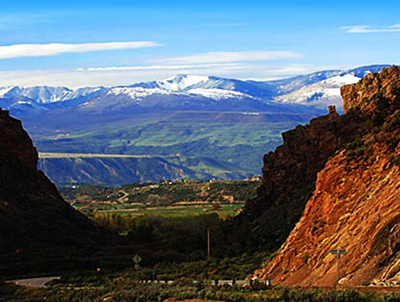
From the Glenwood Springs Post Independent (John Colson):
“At some point, is unusable,” [Doug Dennison, environmental and governmental affairs representative for the Bill Barrett Corp] said of the water that is being recycled and reused.
When that point is reached, he said, the liquid, which is high in salts, heavy metals and other dissolved solids, is either piped or trucked to disposal sites elsewhere in the West, or it is pumped into injection wells.
He said injection wells normally reach deeper into the ground than wells used to extract oil and gas, so that produced water does not mix with the oil and gas pools.
Injection wells are coming into increasing use in the Piceance Basin, which covers western Colorado, eastern Utah and southern Wyoming, Dennison said.
Barrett has four injection wells south of Silt, and may sink more into the ground if increased storage is needed.
He conceded that some companies still use evaporation ponds to dispose of waste water, but added, “I think that’s a thing of the past.”
The full presentations by Dennison and Bittner, as well as the remainder of the EAB meeting, will be televised on Rifle’s Cable Channel 10 at 6 a.m., 10 a.m., 5 p.m. and 8 p.m. on Sunday.

From the Valley Courier (Ruth Heide):
Chief District Judge Pattie Swift on Thursday decided some of the pending motions in the water cases involving the San Luis Valley’s first water management sub-district operating plan and the state’s approval of it. She scheduled another hearing for October 24 to deal with more of the pending motions and is still planning to go forward with the scheduled October 29th trial to hear evidence and testimony.
This is the first year of operation for the Rio Grande Water Conservation District sponsored sub-district that involves hundreds of irrigators in the Valley’s closed basin area north of the Rio Grande. The sub-district was designed to repair injuries to senior surface water rights and replenish the Valley’s aquifers, and to that end the sub-district board developed an annual replacement plan for this year.
Objectors asked the court to invoke retained jurisdiction over the sub-district and deal with concerns they have over its first annual replacement plan. Judge Swift earlier this summer denied a motion from objectors that would have shut down wells in the sub-district until concerns over the operating plan were resolved.
Given that decision by the court, the objectors recently filed a motion to amend their invocation to retain jurisdiction and asked the judge to vacate the trial. Sub-district supporters and the state engineer’s office asked the judge to make an immediate decision on these motions and argued in favor of going forward with the trial.
Since the trial is scheduled for the end of this month, Judge Swift agreed to make a quick decision.
“The objectors seek to amend their claims, to remove them from consideration of the court and vacate the trial because they believe the primary issues remaining to be determined are contained within the amended motion before the court,” Judge Swift summed up the situation Thursday afternoon in court.
She said there are two motions for summary judgment: 1) concerning augmentation plan wells; and 2) concerning the Closed Basin Project.
Two other motions are also outstanding: 1) to strike expert witness designations and reports; and 2) to appoint a special master…
Also on Thursday, Judge Swift ruled on the objectors’ motion opposing the use of Closed Basin Project water for replacement water for the sub-district. She denied the objectors’ motion, “as I find there are disputed issues of material fact that must be determined to decide whether the Closed Basin Project water is adequate and suitable to prevent injuries to senior water rights under the district plan.”
The judge outlined objectors’ concerns with Closed Basin Project water being used to replace injurious depletions to senior water rights, with the objectors arguing that the 1963 Closed Basin Project itself represented a junior water right that in the priority system of water administration was causing injury to senior water rights so could not be used to replace injurious depletions in the sub-district…
Also on Thursday the judge asked attorneys from both sides to give her some guidance by Friday, Oct. 19 on how they believed the retained jurisdiction process should work. She said she saw the court’s primary functions in its retained jurisdiction over the sub-district as reviewing: 1) whether the plan of water management is operated in conformance with the terms of the court’s decree; and 2) whether injury is prevented in conformity with the court’s decree.
From The Pueblo Chieftain (Matt Hildner):
Water Court Judge Pattie Swift ruled Thursday that opponents of a groundwater plan could withdraw some of their claims if they were willing to pay the attorney costs for the supporters. The court has scheduled a five-day trial beginning Oct. 29 to examine the state’s approval of a plan that laid out how groundwater irrigators in the north-central part of the San Luis Valley would mitigate the harm their pumping caused to senior surface water rights owners during the current irrigation season. One group of objectors made up of surface water users in the southwestern and northwestern parts of the valley had asked the court to rule on their clams without trial in the name of saving time and expense.
But Swift pointed to one issue — the proposed use of groundwater from the federal Closed Basin Project as a source of replacement water for the plan— as one that could not be resolved without trial. “I can only decide that issue after hearing evidence,” she said.
Opponents have argued against the plan’s call to use up to 2,500 acre-feet of water from the project, which pumps groundwater on the east side of the valley and sends it to the Rio Grande to help the state comply with the downstream obligations to Texas and New Mexico.
The opponents have until Tuesday to inform the court of whether they will withdraw any of their claims.