
From the Provo Daily Herald (Duane Jeffery)
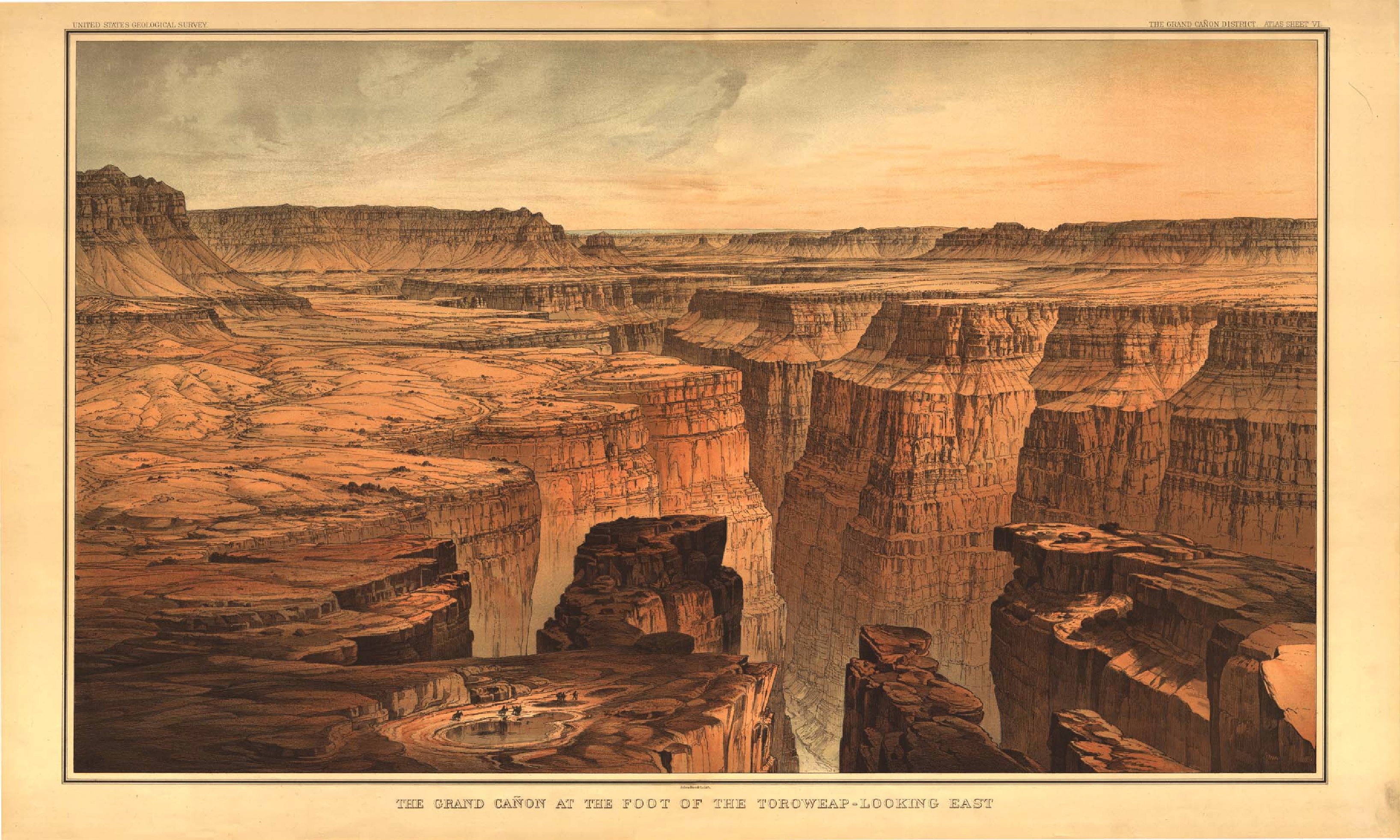
A related question — though it has no direct application to the present water usage — has to do with the geological origins and ages of both the Colorado River and its best-known production, the Grand Canyon. John Wesley Powell, the first person of European descent to navigate through the canyon, pondered on its age. Clearly it was the work of “rains and rivers,” said he, and though the present area is dry, he knew it had taken a long time — “centuries of centuries” — to make. But how long?
Historically, there has been a general consensus that the Grand Canyon itself has been being cut for about 6 million years. But it’s also clear that data are not definitive. So many of the overlying sediments that were likely present are now gone. A recent estimate indicates that the river has transported about 81,000 cubic miles of rock and earth to the ocean, and that took a lot of critical evidence with it. Researchers must worry about uplift and downdropping of geological strata which affect the direction of river flow and the intensity of down-cutting, about possible ancient rivers that may have done part of the job before the Colorado assumed the major role, and about climate variations which would also alter the amount of water coursing down the river. The river itself seems to have begun in western Colorado about 11 million years ago, but its course is unclear for its “early” years. But several good reasons existed to suggest that it began cutting the present canyon about 6 million years ago.
But then, a few months ago, a research team from the University of Colorado suggested that the canyon has really been in process of formation for some 70 million years! The argument was based on so-called thermochronology, measuring the amount of helium found in crystals of apatite in the canyon walls. We’ll skip the details of the method — the Jan. 25 issue of Science News pursues those for readers interested. This claim understandably created quite a sensation!
Other data using the apatite crystals validated the younger date. And now a group from the University of New Mexico has produced a persuasive integrated analysis.
Some parts of the canyon are indeed much older than others, and were cut by ancient rivers now long gone. Differential geological uplift exposed some portions of the present canyon to cutting, and a variety of “paleocanyons” formed. One section of today’s canyon is indeed about 70 million years old, another (the portion that most tourists see) dates to 15 to 25 million years old. The present Colorado River then formed, carving across all this eroded landscape and began cutting the present canyon about 6 million years ago. This synthesizes the previous disparate data.