Water rights and urban development are the two biggest impediments to the acequia system that has been a part of New Mexico’s unique history since shortly after the Spanish arrived in the American Southwest more than 400 years ago.
It is said that acequias, which refer both to the irrigation infrastructure itself and the organizational structure of the water-sharing network, formed one of the first democracies on the continent. Then, as they do now, the parciantes, or acequia members, elect the mayordomo, who is in charge of managing the acequia.
To be sure, Native Americans used a channel system to irrigate crops prior to the arrival of the Spanish in New Mexico. But it was the Europeans, who learned from the Moors of North Africa – “acequia” actually an Arabic word meaning “canal” – who developed expansive irrigation systems and a system of governance that has stood the test of time.
“The fact that they are still flowing, and are governed through ancient customs and modern law, through the Spanish-colonial period, and territorial period, to statehood, speaks to their resiliency,” said Paula Garcia, executive director of the New Mexico Acequia Association, a nonprofit organization that, according to its mission statement, works to protect water and acequias, grow healthy food for families and communities, and honor the cultural heritage.
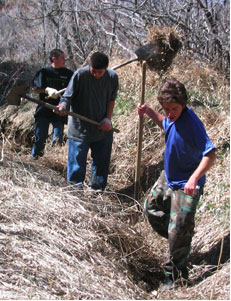
Part of that cultural heritage involves the annual spring cleaning of the acequias. That’s when the parciantes are mobilized to clear the ditches of debris, make any repairs to “compuertas,” or turnouts, and get the irrigation system ready for the growing season.
Acequia cleaning prior to running the first water of the season
“That’s an event of great cultural importance and it serves a practical need because there’s always a need to have people clean ditches,” Garcia said, adding that family members who have moved away often come home to pitch in. “It’s a part of someone’s identity to come home and help clean the ditches in March and April.”
It’s not just Hispanic families anymore. She said that members of other ethnic groups who have purchased property tied to acequias typically embrace the system.
“Today, it’s more multi-cultural,” she said.
Garcia said there are approximately 700 acequias currently operating in New Mexico, a good many more in southern Colorado and only a few left in Texas…
El agua es vida
The motto of the state acequia association is “el agua es vida,” water is life. It is what sustains us and, without it, we would not survive.
Each year, the acequia association holds a Congreso, its annual convention, at which there are workshops, seminars and an awards ceremony.
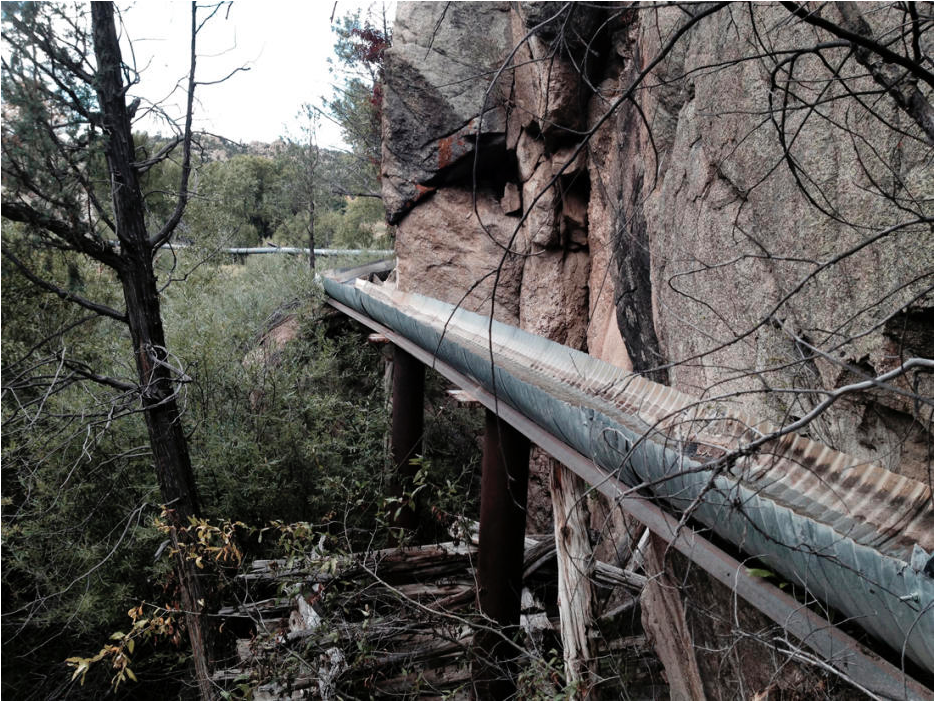
An acequia along the Las Trampas in northern New Mexico is suspended on a trestle. (Eddie Moore/Albuquerque Journal)

The answer to today’s problems and tomorrow’s sustainability, ironically lie often in yesterday’s solutions. Thanks for the good read and reminder.
You’re welcome, and thanks for commenting.
John Orr
http://coyotegulch.net/