
From The Business Times of Western Colorado (Kelly Sloan):
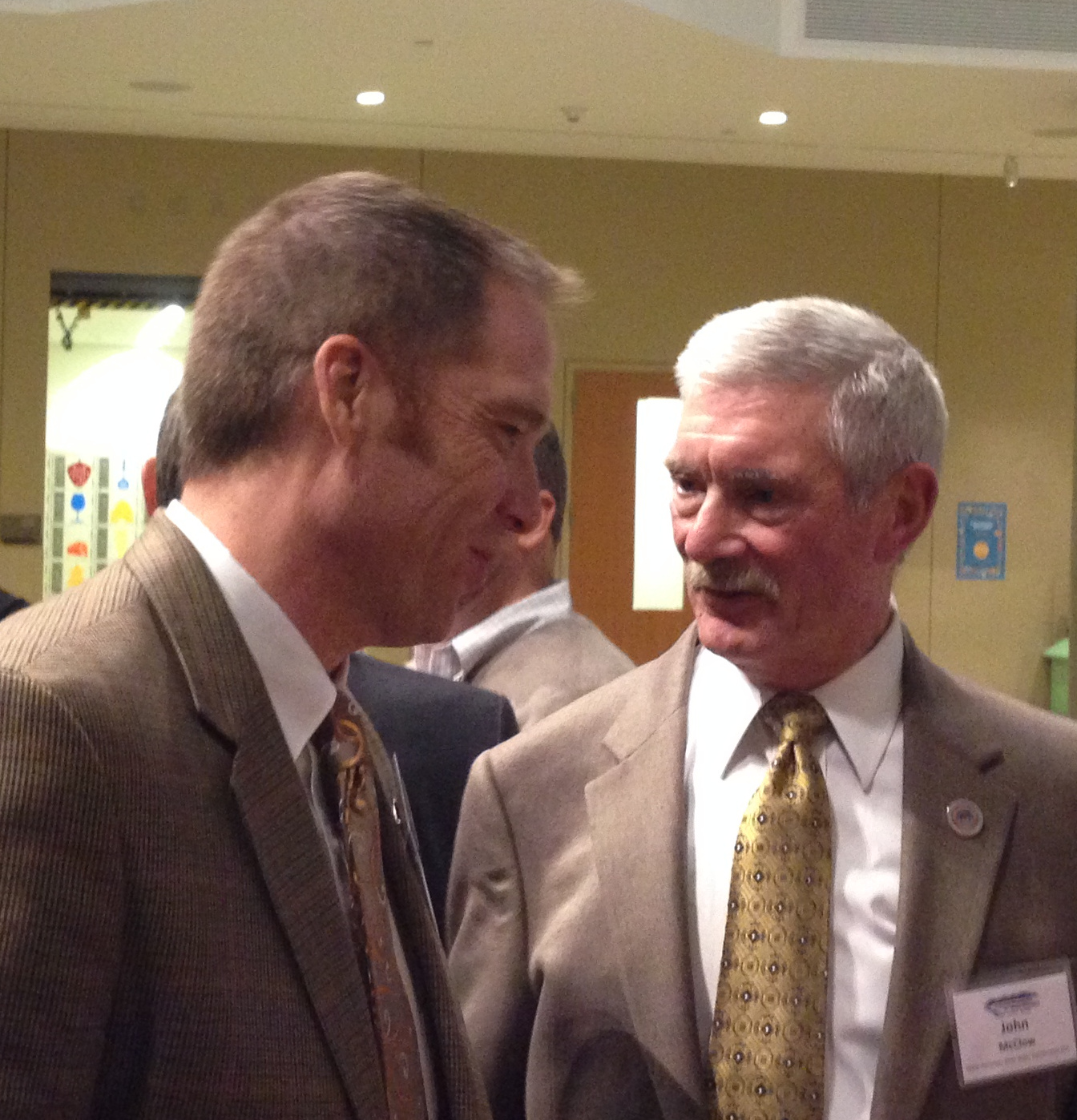
“We need a chance for legislators to digest this,” said John McClow, a representative of the Gunnison-Uncompaghre River District on the Colorado Water Conservation Board. “We need to get the big picture and make sure that everyone’s interests are represented in the conversations. We don’t want to be helter-skelter on this.”
[…]
While it’s non-binding and therefore lacks legal force, the plan outlines proposals to address a projected shortfall between future water needs and supplies in Colorado. Conservation is a priority and sets a goal that by 2025, 75 percent of residents will live in communities that have incorporated water conservation measures into land-use planning. The plan also calls for more water storage projects in the state.
“The plan calls for 400,000 acre-feet of conservation as well as 400,000 acre-feet of storage,” Ecklund said…
Officials said key components of the water plan protect water rights and prevent transmountain divisions.
Prior to the rollout of the water plan, a group of Western Colorado state legislators sent a letter to Hickenlooper calling for the plan to protect West Slope interests, including a rejection of any additional transmountain divisions and to set priorities for efficiency and conservation and promote water-sharing agreements.Hickenlooper said he believed the water plan addresses those concerns.
“They’re very worried about transmountain diversions, and that’s what I addressed up there … that the whole point of the water plan was that you try to make those superfluous,” Hickenlooper said. “We can’t take people’s property away, but we can make a system that provides alternatives that are beneficial to everyone.”
Most West Slope officials said that they needed time review the plan and examine the details.Mesa County Commissioner Scott McInnis took a pragmatic view. “It’s a planning tool, so from that perspective it is positive.”
But the plan doesn’t serve as the final word on water issues, McInnis added. “The courts will still have significant future involvement.”
State Rep. Yeulin Willett, a Republican from Grand Junction, said he would like to see the state’s executive branch consider such big issues as development and water use in a more inclusive manner.
“Rather than spending billions of dollars on further transmountain diversions and billions more on expansions of I-25 and I-70, why shouldn’t the state and private industry look to expand and start up on the West Slope, where we have plenty of water together with open roads and other transportation?” Willett asked. “Let’s collectively view the state more as a whole.”
Eklund said the plan would require state legislative action to implement its various parts, indicating that funding would be a key issue given the constraints on state budget.
He also pointed to a law passed two years ago that regulates the use of high-efficiency indoor water fixtures and suggested a similar law mandating the use of similar outdoor fixtures could be a possibility.
Gail Schwartz, a former state senator, agreed with McClow that the Legislature must proceed thoughtfully. Calling the water plan a “working document,” she said “the General Assembly needs to be careful how it weighs in.”
On the funding issue, Schwartz said severance tax should be a part of the conversation and funds should be put into water infrastructure. “We need to protect severance tax, especially as we see it diminish.”


