From The Wall Street Journal (Jim Carlton):
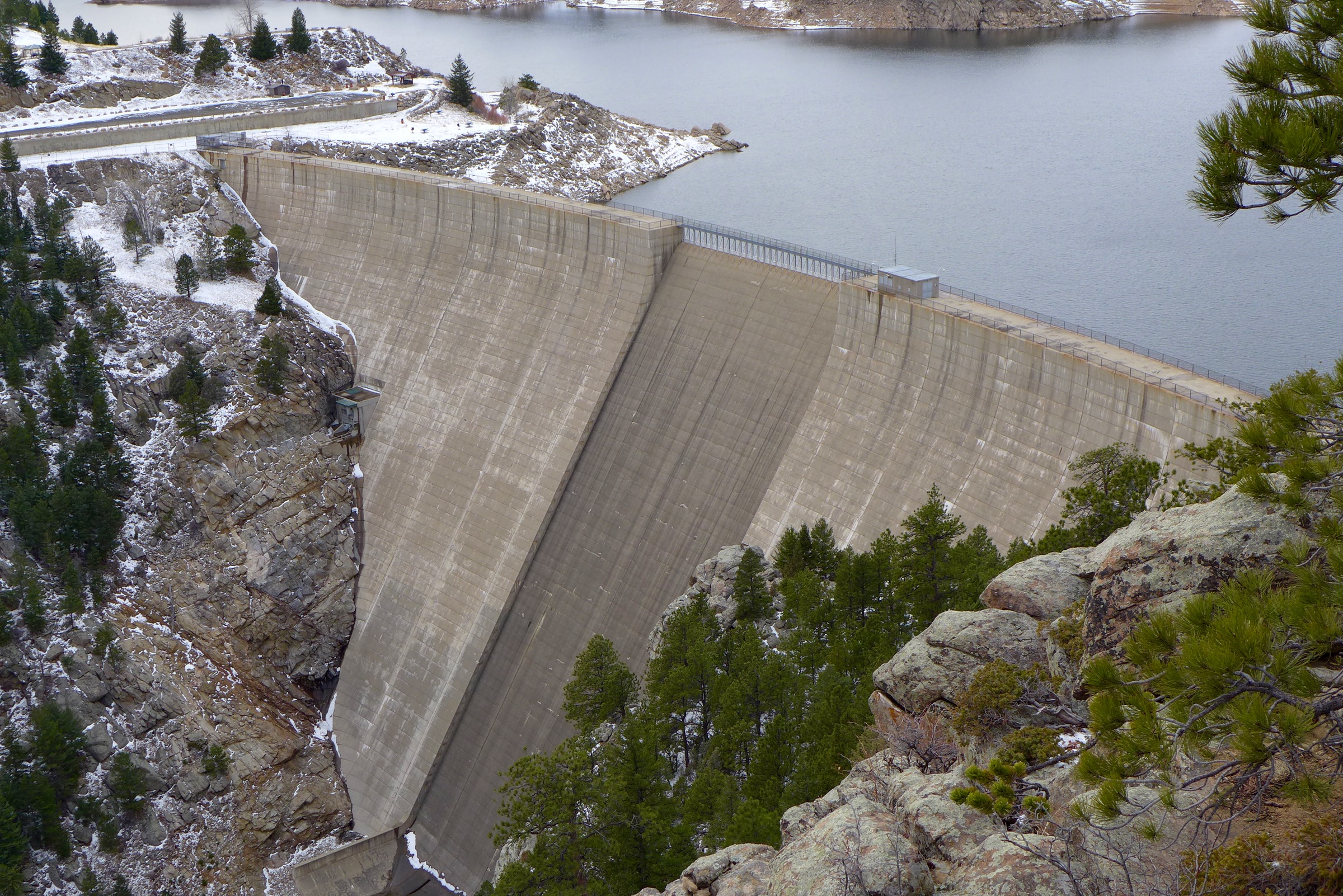
Next year, the U.S. Army Corps of Engineers is expected to decide whether to issue a permit to triple the capacity of Gross Reservoir in the Rocky Mountain foothills, with additional shipments of about 18,000 acre feet of water a year from the Colorado River watershed. An acre foot is enough water to meet the annual needs of an average family of five.
That is one of the last regulatory barriers for utility Denver Water’s $380 million project, for which district officials say they hope to break ground in 2019 to help ensure local water supplies.
“We have an obligation to supply water,” said Jeff Martin, Denver Water’s manager of the project, as he stood recently atop a 340-foot concrete dam that is to be raised by 131 feet under the plan. “It’s not an option to not have water.”
[…]
The Corps of Engineers is expected to decide next year on a proposed new “Windy Gap” project in Colorado, which would divert up to another 30,000 acre feet a year to the Front Range, the heavily populated area where the Rocky Mountains rise up from the plains.
In addition, more than 200,000 acre feet would be diverted for proposed projects in Utah and Wyoming…
Water officials in California and other lower basin states say they aren’t overly concerned about more diversions upstream, because a 1922 compact requires the upper basin states to deliver them about 7.5 million acre feet a year, or one half the river flow set aside for human use north of the U.S.-Mexico border. Much of that water is stockpiled in Lake Powell on the Arizona-Utah border.
With the Colorado running much lower than when the compact was signed, water experts say there is less water to divert.
“So long as their development doesn’t impinge on their release to us, that is their business,” said Chuck Cullom, a program manager at the Central Arizona Project in Phoenix, which pulls from the river and stands to lose a fifth of its deliveries if a shortage is declared on the Colorado. “If it falls below that, then they would have to figure out how to manage their demand.”
Don Ostler, executive director of the Upper Colorado River Commission, which oversees use of the river in the upper basin states of Colorado, Utah, Wyoming and New Mexico, agreed that new diversions increase the risk of shortages.
“The more you develop, the more a severe drought can affect you,” said Mr. Ostler. “But we are able to live with a certain amount of shortage.”
In Denver, water officials don’t feel they have much choice but to seek more Colorado water.
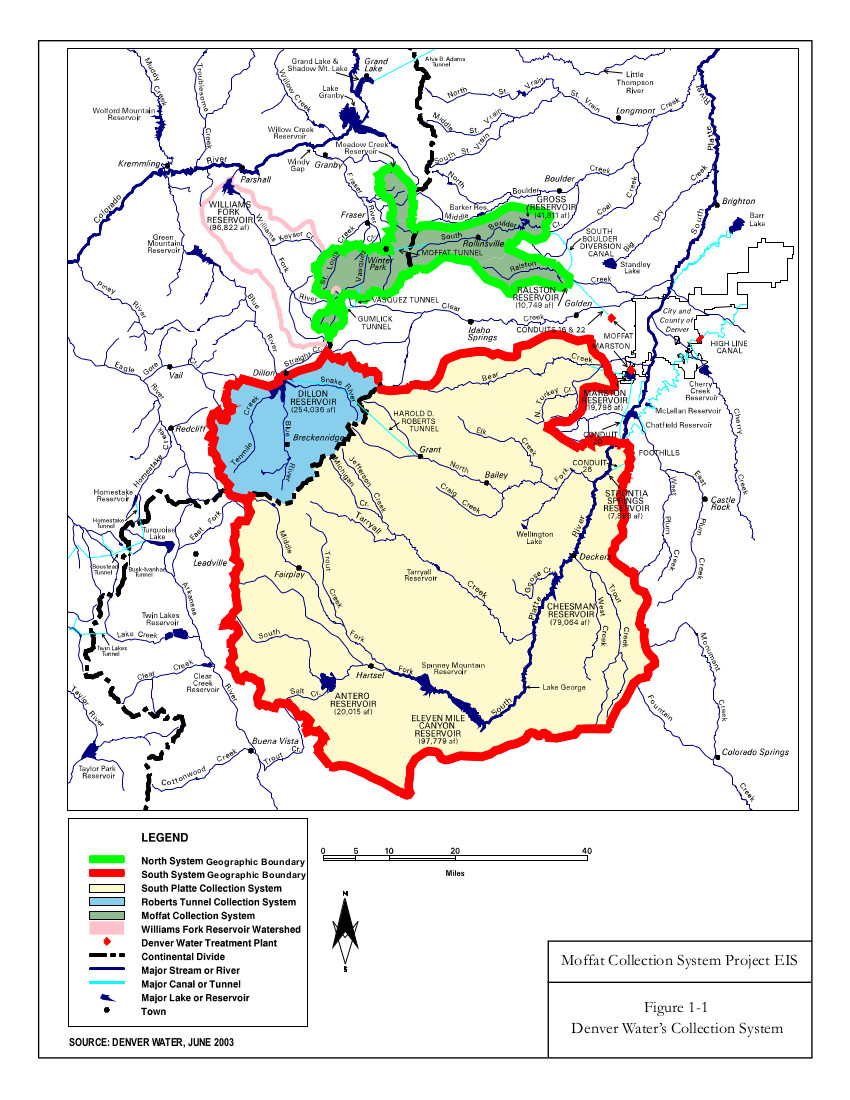
In 2002, tons of sediment from a forest fire clogged one of Denver Water’s reservoirs during a drought. “We came close to running out of water in the northern end of our system,” said Jim Lochhead, chief executive officer of Denver Water, a utility that serves 1.4 million people.
That crisis helped prompt the district in 2003 to undertake the Gross Reservoir expansion, which would store more water from an existing tunnel that transfers Colorado River water from the west side of the Continental Divide.
Denver officials pledged to only take the water in wet years and release more into streams when it is dry—measures that drew praise from some conservationists…
Gov. John Hickenlooper in July gave the state’s approval, calling the dam’s expansion vital. “The state’s responsibility is to ensure we do the right thing for Colorado’s future,” the Democratic governor said at the time, “and this project is vital infrastructure for our economy and the environment.”